EP0923283B1 - Methods for production of hybrid wheat - Google Patents
Methods for production of hybrid wheat Download PDFInfo
- Publication number
- EP0923283B1 EP0923283B1 EP98920720A EP98920720A EP0923283B1 EP 0923283 B1 EP0923283 B1 EP 0923283B1 EP 98920720 A EP98920720 A EP 98920720A EP 98920720 A EP98920720 A EP 98920720A EP 0923283 B1 EP0923283 B1 EP 0923283B1
- Authority
- EP
- European Patent Office
- Prior art keywords
- male
- chromosome
- plants
- allele
- seeds
- Prior art date
- Legal status (The legal status is an assumption and is not a legal conclusion. Google has not performed a legal analysis and makes no representation as to the accuracy of the status listed.)
- Expired - Lifetime
Links
- 238000000034 method Methods 0.000 title claims abstract description 114
- 238000004519 manufacturing process Methods 0.000 title claims abstract description 93
- 235000021307 Triticum Nutrition 0.000 title claims abstract description 59
- 241000209140 Triticum Species 0.000 title claims abstract 11
- 210000000349 chromosome Anatomy 0.000 claims abstract description 801
- 108700028369 Alleles Proteins 0.000 claims abstract description 640
- 244000098338 Triticum aestivum Species 0.000 claims abstract description 230
- 206010021929 Infertility male Diseases 0.000 claims abstract description 109
- 208000007466 Male Infertility Diseases 0.000 claims abstract description 109
- 235000007264 Triticum durum Nutrition 0.000 claims abstract description 91
- 230000002147 killing effect Effects 0.000 claims abstract description 21
- 238000012423 maintenance Methods 0.000 claims abstract description 21
- 241000209143 Triticum turgidum subsp. durum Species 0.000 claims abstract 28
- 241000196324 Embryophyta Species 0.000 claims description 526
- 239000003550 marker Substances 0.000 claims description 90
- JXCGFZXSOMJFOA-UHFFFAOYSA-N chlorotoluron Chemical compound CN(C)C(=O)NC1=CC=C(C)C(Cl)=C1 JXCGFZXSOMJFOA-UHFFFAOYSA-N 0.000 claims description 66
- 239000005494 Chlorotoluron Substances 0.000 claims description 65
- 238000004458 analytical method Methods 0.000 claims description 34
- 239000004009 herbicide Substances 0.000 claims description 27
- 108090000623 proteins and genes Proteins 0.000 claims description 27
- 230000002363 herbicidal effect Effects 0.000 claims description 26
- 241000894007 species Species 0.000 claims description 26
- 238000006467 substitution reaction Methods 0.000 claims description 26
- 238000003306 harvesting Methods 0.000 claims description 24
- 240000000581 Triticum monococcum Species 0.000 claims description 22
- VYPSYNLAJGMNEJ-UHFFFAOYSA-N Silicium dioxide Chemical compound O=[Si]=O VYPSYNLAJGMNEJ-UHFFFAOYSA-N 0.000 claims description 21
- 108010050181 aleurone Proteins 0.000 claims description 20
- 241000209757 Aegilops searsii Species 0.000 claims description 19
- 230000021121 meiosis Effects 0.000 claims description 18
- 241000209504 Poaceae Species 0.000 claims description 14
- 230000002950 deficient Effects 0.000 claims description 14
- 230000005945 translocation Effects 0.000 claims description 14
- 230000010153 self-pollination Effects 0.000 claims description 12
- 230000001678 irradiating effect Effects 0.000 claims description 10
- 239000000203 mixture Substances 0.000 claims description 8
- 230000006798 recombination Effects 0.000 claims description 8
- 238000005215 recombination Methods 0.000 claims description 8
- 230000010152 pollination Effects 0.000 claims description 7
- 238000005507 spraying Methods 0.000 claims description 3
- 230000004044 response Effects 0.000 claims description 2
- 230000001747 exhibiting effect Effects 0.000 claims 4
- 230000035558 fertility Effects 0.000 abstract description 13
- 230000005540 biological transmission Effects 0.000 abstract description 11
- 230000000644 propagated effect Effects 0.000 abstract description 3
- 238000007792 addition Methods 0.000 description 72
- 244000098345 Triticum durum Species 0.000 description 71
- 210000000805 cytoplasm Anatomy 0.000 description 35
- 210000002230 centromere Anatomy 0.000 description 12
- 238000006243 chemical reaction Methods 0.000 description 12
- 235000013339 cereals Nutrition 0.000 description 11
- 230000004927 fusion Effects 0.000 description 9
- 238000009877 rendering Methods 0.000 description 9
- 241000209756 Aegilops longissima Species 0.000 description 8
- 230000000694 effects Effects 0.000 description 8
- 238000012360 testing method Methods 0.000 description 8
- 239000003298 DNA probe Substances 0.000 description 7
- 230000000295 complement effect Effects 0.000 description 7
- 238000010276 construction Methods 0.000 description 7
- 238000012217 deletion Methods 0.000 description 6
- 230000037430 deletion Effects 0.000 description 6
- 230000001939 inductive effect Effects 0.000 description 6
- 241000209125 Thinopyrum elongatum Species 0.000 description 5
- 238000009395 breeding Methods 0.000 description 5
- 238000004040 coloring Methods 0.000 description 5
- 230000002068 genetic effect Effects 0.000 description 5
- 244000067538 Abutilon indicum Species 0.000 description 4
- 208000035199 Tetraploidy Diseases 0.000 description 4
- 235000007251 Triticum monococcum Nutrition 0.000 description 4
- 206010000210 abortion Diseases 0.000 description 4
- 231100000176 abortion Toxicity 0.000 description 4
- 238000013459 approach Methods 0.000 description 4
- 238000010348 incorporation Methods 0.000 description 4
- 238000012986 modification Methods 0.000 description 4
- 230000004048 modification Effects 0.000 description 4
- 230000035772 mutation Effects 0.000 description 4
- 238000005204 segregation Methods 0.000 description 4
- LUBJCRLGQSPQNN-UHFFFAOYSA-N 1-Phenylurea Chemical compound NC(=O)NC1=CC=CC=C1 LUBJCRLGQSPQNN-UHFFFAOYSA-N 0.000 description 3
- 108020003215 DNA Probes Proteins 0.000 description 3
- PLUBXMRUUVWRLT-UHFFFAOYSA-N Ethyl methanesulfonate Chemical compound CCOS(C)(=O)=O PLUBXMRUUVWRLT-UHFFFAOYSA-N 0.000 description 3
- 230000008901 benefit Effects 0.000 description 3
- 230000001965 increasing effect Effects 0.000 description 3
- 238000012552 review Methods 0.000 description 3
- 238000000926 separation method Methods 0.000 description 3
- 241000209758 Aegilops Species 0.000 description 2
- 208000035240 Disease Resistance Diseases 0.000 description 2
- 241000209219 Hordeum Species 0.000 description 2
- 235000007340 Hordeum vulgare Nutrition 0.000 description 2
- 244000082988 Secale cereale Species 0.000 description 2
- 235000007238 Secale cereale Nutrition 0.000 description 2
- 241000209126 Thinopyrum ponticum Species 0.000 description 2
- 230000004790 biotic stress Effects 0.000 description 2
- 239000001055 blue pigment Substances 0.000 description 2
- 230000001488 breeding effect Effects 0.000 description 2
- 230000001086 cytosolic effect Effects 0.000 description 2
- 230000007423 decrease Effects 0.000 description 2
- 230000002939 deleterious effect Effects 0.000 description 2
- 235000013601 eggs Nutrition 0.000 description 2
- 230000006353 environmental stress Effects 0.000 description 2
- 230000000646 gametocidal effect Effects 0.000 description 2
- 230000006872 improvement Effects 0.000 description 2
- 230000003993 interaction Effects 0.000 description 2
- 210000000661 isochromosome Anatomy 0.000 description 2
- 230000007935 neutral effect Effects 0.000 description 2
- 210000004940 nucleus Anatomy 0.000 description 2
- 238000012216 screening Methods 0.000 description 2
- 239000000126 substance Substances 0.000 description 2
- KGPGQDLTDHGEGT-JCIKCJKQSA-N zeven Chemical compound C=1C([C@@H]2C(=O)N[C@H](C(N[C@H](C3=CC(O)=C4)C(=O)NCCCN(C)C)=O)[C@H](O)C5=CC=C(C(=C5)Cl)OC=5C=C6C=C(C=5O[C@H]5[C@@H]([C@@H](O)[C@H](O)[C@H](O5)C(O)=O)NC(=O)CCCCCCCCC(C)C)OC5=CC=C(C=C5)C[C@@H]5C(=O)N[C@H](C(N[C@H]6C(=O)N2)=O)C=2C(Cl)=C(O)C=C(C=2)OC=2C(O)=CC=C(C=2)[C@H](C(N5)=O)NC)=CC=C(O)C=1C3=C4O[C@H]1O[C@H](CO)[C@@H](O)[C@H](O)[C@@H]1O KGPGQDLTDHGEGT-JCIKCJKQSA-N 0.000 description 2
- 241000886178 Aegilops peregrina Species 0.000 description 1
- 241001522110 Aegilops tauschii Species 0.000 description 1
- 240000003944 Arthrocnemum macrostachyum Species 0.000 description 1
- 235000017335 Hordeum vulgare subsp spontaneum Nutrition 0.000 description 1
- 241001299819 Hordeum vulgare subsp. spontaneum Species 0.000 description 1
- 208000020584 Polyploidy Diseases 0.000 description 1
- 244000110218 Secale montanum Species 0.000 description 1
- 235000012922 Secale montanum Nutrition 0.000 description 1
- 208000020221 Short stature Diseases 0.000 description 1
- 240000006394 Sorghum bicolor Species 0.000 description 1
- 244000062793 Sorghum vulgare Species 0.000 description 1
- 241000234640 Thinopyrum junceum Species 0.000 description 1
- 208000026487 Triploidy Diseases 0.000 description 1
- 241001329985 Triticeae Species 0.000 description 1
- 235000007249 Triticum timopheevi Nutrition 0.000 description 1
- 241000209153 Triticum timopheevii Species 0.000 description 1
- 241000006770 Xenia Species 0.000 description 1
- 240000008042 Zea mays Species 0.000 description 1
- 235000005824 Zea mays ssp. parviglumis Nutrition 0.000 description 1
- 235000002017 Zea mays subsp mays Nutrition 0.000 description 1
- 230000031016 anaphase Effects 0.000 description 1
- 235000010208 anthocyanin Nutrition 0.000 description 1
- 229930002877 anthocyanin Natural products 0.000 description 1
- 239000004410 anthocyanin Substances 0.000 description 1
- 150000004636 anthocyanins Chemical class 0.000 description 1
- 230000003466 anti-cipated effect Effects 0.000 description 1
- 235000008429 bread Nutrition 0.000 description 1
- 239000004202 carbamide Substances 0.000 description 1
- 230000008859 change Effects 0.000 description 1
- 239000003153 chemical reaction reagent Substances 0.000 description 1
- 239000003795 chemical substances by application Substances 0.000 description 1
- 235000005822 corn Nutrition 0.000 description 1
- 230000002380 cytological effect Effects 0.000 description 1
- 230000001419 dependent effect Effects 0.000 description 1
- 238000005516 engineering process Methods 0.000 description 1
- 239000003344 environmental pollutant Substances 0.000 description 1
- 238000002474 experimental method Methods 0.000 description 1
- 230000004720 fertilization Effects 0.000 description 1
- 230000035784 germination Effects 0.000 description 1
- 235000019239 indanthrene blue RS Nutrition 0.000 description 1
- UHOKSCJSTAHBSO-UHFFFAOYSA-N indanthrone blue Chemical compound C1=CC=C2C(=O)C3=CC=C4NC5=C6C(=O)C7=CC=CC=C7C(=O)C6=CC=C5NC4=C3C(=O)C2=C1 UHOKSCJSTAHBSO-UHFFFAOYSA-N 0.000 description 1
- 230000006698 induction Effects 0.000 description 1
- 239000000463 material Substances 0.000 description 1
- 230000031864 metaphase Effects 0.000 description 1
- DSRNRYQBBJQVCW-UHFFFAOYSA-N metoxuron Chemical compound COC1=CC=C(NC(=O)N(C)C)C=C1Cl DSRNRYQBBJQVCW-UHFFFAOYSA-N 0.000 description 1
- 244000005700 microbiome Species 0.000 description 1
- 235000019713 millet Nutrition 0.000 description 1
- 231100000350 mutagenesis Toxicity 0.000 description 1
- 210000000056 organ Anatomy 0.000 description 1
- 244000052769 pathogen Species 0.000 description 1
- 230000001717 pathogenic effect Effects 0.000 description 1
- 125000001997 phenyl group Chemical group [H]C1=C([H])C([H])=C(*)C([H])=C1[H] 0.000 description 1
- 239000000049 pigment Substances 0.000 description 1
- 231100000719 pollutant Toxicity 0.000 description 1
- 238000004321 preservation Methods 0.000 description 1
- 230000009467 reduction Effects 0.000 description 1
- 239000000523 sample Substances 0.000 description 1
- 239000002689 soil Substances 0.000 description 1
- 230000002269 spontaneous effect Effects 0.000 description 1
- 230000001954 sterilising effect Effects 0.000 description 1
- 238000012546 transfer Methods 0.000 description 1
Images










Classifications
-
- A—HUMAN NECESSITIES
- A01—AGRICULTURE; FORESTRY; ANIMAL HUSBANDRY; HUNTING; TRAPPING; FISHING
- A01H—NEW PLANTS OR NON-TRANSGENIC PROCESSES FOR OBTAINING THEM; PLANT REPRODUCTION BY TISSUE CULTURE TECHNIQUES
- A01H6/00—Angiosperms, i.e. flowering plants, characterised by their botanic taxonomy
- A01H6/46—Gramineae or Poaceae, e.g. ryegrass, rice, wheat or maize
- A01H6/4678—Triticum sp. [wheat]
-
- A—HUMAN NECESSITIES
- A01—AGRICULTURE; FORESTRY; ANIMAL HUSBANDRY; HUNTING; TRAPPING; FISHING
- A01H—NEW PLANTS OR NON-TRANSGENIC PROCESSES FOR OBTAINING THEM; PLANT REPRODUCTION BY TISSUE CULTURE TECHNIQUES
- A01H1/00—Processes for modifying genotypes ; Plants characterised by associated natural traits
- A01H1/04—Processes of selection involving genotypic or phenotypic markers; Methods of using phenotypic markers for selection
- A01H1/045—Processes of selection involving genotypic or phenotypic markers; Methods of using phenotypic markers for selection using molecular markers
Definitions
- the present invention concerns the production of hybrid seeds of common and durum wheat that yield hybrid plants that are highly heterozygous and phenotypically uniform. More specifically, the present invention concerns a new method, based on chromosome engineering, for maintaining a male-sterile female parental line for use in the production of hybrid wheat plants, which female line is homozygous for a recessive mutant male-sterility allele, for a recessive marker allele(s) and for a dominant pollen-killer allele, and a new maintainer line for maintaining the female parental line which is isogenic to the female line but has an additional alien engineered chromosome carrying a dominant male-fertility allele, a recessive pollen-killer allele susceptible for a pollen-killing of the dominant native pollen-killer allele, and a dominant selectable marker allele(s).
- All the alleles on the alien chromosome arm are permanently linked due to lack of pairing and recombination between the alien and the wheat chromosomes.
- the presence of the recessive pollen-killer allele on the alien engineered chromosome ensures that all the maintainer viable male gametes will lack this chromosome and consequently, the dominant male-fertility allele and the selectable marker allele.
- about 20-50% of the female gametes will carry the alien engineered chromosome.
- the selectable marker is an allele affecting plant height (plants carrying the engineered chromosome are taller by 8-10 cm from those not carrying it), it is possible to harvest the tall plants separately from the short plants.
- the selectable marker is a herbicide resistance gene (e.g., resistance to chlorotoluron)
- the selectable marker is blue aleurone (an endosperm coloring trait)
- the possibility to sort out the seeds of the male-sterile female line directly from the progeny of the selfed maintainer line simplifies the system and reduces to a great extent the production cost of the hybrid seeds.
- the invention further provides new methods for producing the maintainer line, new methods for converting a desired cultivar into a male-sterile female line and a maintainer line for the female line, and a new method for hybrid wheat production in which the resulting hybrid plants are all heterozygous for the recessive mutant male-sterility allele and are, therefore, male-fertile.
- CMS cytoplasmic male-sterility
- GMS genic male-sterility
- Genie male sterility is expressed in a normal common or durum wheat cytoplasm. Hence, no cytoplasm-induced deleterious effects on plant performance are expected. Further, using a female parent homozygous for a recessive male-sterility allele, any wheat cultivar which is by its nature homozygous for the dominant allele conferring male-fertility, can be used as a male parent that will restore complete fertility to the F 1 hybrids. There is no need to breed for male lines and no limitation exists for the number of males which can be crossed with the male-sterile females and evaluated for their combining ability.
- chromosome arms of group 4 the long arm of chromosome 4A (4AL), the short arm of chromosome 4B (4BS) and the short arm of chromosome 4D (4DS), carrying the normal male-fertility Ms-A1 , Ms-B1 and Ms-D1 genes, respectively, and the long arms of the group 5 chromosomes : 5A, 5B and 5D (SAL, 5BL and 5DL, respectively), carrying the Ms-A2, Ms-B2 and Ms-D2 genes, respectively.
- the female, male-sterile parent will have a male-fertility mutated allele and a D cytoplasm
- the maintainer will have the same mutated allele and a native (B) cytoplasm and the male parent will have the normal male-fertility allele and the B cytoplasm.
- Fertility in the hybrid is restored by crossing such male and female parents.
- such hybrids will all have the D cytoplasm derived from the female parent, this being undesirable in view of the fact that such a cytoplasm may have deleterious effects on the performance (yield, vigor, etc.) of the hybrids.
- the maintainer line for obtention in subsequent generations of the male-sterile female parent, is a line carrying the male-sterility mutation and a B cytoplasm to ensure fertility of the maintainer line.
- This system turned out to be unpractical in view of the fact that all the male-sterility mutants that were obtained were also sterile in the B cytoplasm (Sasakuma et al., 1978).
- the so-proposed 'maintainer' line was also male-sterile, and of no practical value. Accordingly, because of the absence of a suitable maintainer line, the system of Franckowiak et al. has been abandoned.
- the alien chromosome does not pair with its wheat homoeologous chromosomes and in the Y line (maintainer) is transmitted through the pollen in a very low frequency and thus the pollinated male-sterile female line produces seeds, most of which will germinate into male-sterile plants. Since the maintainer (Y) is not a true-breeding line, it is produced by pollinating the male-sterile female (Z) by the disomic alien addition line (X). This system was characterized by two major drawbacks: some transmission of the alien chromosome occurred through the pollen of the maintainer line which introduced male fertility to the new generation of the male-sterile female line; and addition decay occurred in the X line impairing its purity. These are possibly the reasons why this system has never come into practical (commercial) use.
- Driscoll (1985) proposed a modification of the above XYZ system of producing hybrid wheat.
- a selfed Y-line replaces the Y-line to maintain and propagate the male-sterile Z-line.
- This modification eliminates the need for the X-line which was originally needed to generate a large quantity of Y-line plants.
- the newly proposed Y-line carries an alien isochromosome so that the compensating male-fertility homoeoallele is in two doses.
- Such genetically-altered common wheat plants contain a modified chromosome with a dominant normal male-fertility allele from the diploid wheat Triticum monococcum as an addition or substitution for one of the wheat 4B chromosomes.
- the modified chromosome carries the short arm of chromosome 4A m of T .
- monococcum (4A m S) carrying the Ms-A m 1 allele and a second arm with a proximal segment from the long arm of either chromosome 4A m of T.
- the above hybrid-production system has a number of drawbacks as regards the efficient maintenance of the parental lines.
- pollination of female plants by the maintainer will yield a larger number of seeds with the recombinant alien/4BL chromosome which will develop into male-fertile plants.
- the maintenance of the male-sterile female parent involves a complex procedure of progeny selection based on marker genes.
- the maintainer line for the female (male-sterile) parental line is also a genetically unstable line in that it carries 20 pairs of normal common wheat chromosomes, one 4B chromosome carrying the male-sterility ( ms-B1-b ) mutant allele (known as 'Probus') (Wilson and Driscoll, 1983) and one recombinant alien group 4/4BL chromosome having the normal, male-fertility Ms-A m 1 allele and the seed coloration allele.
- the maintainer line is male-fertile, and upon selfing will yield fertile plants homozygous or heterozygous for the modified chromosome.
- the male-sterile female line is homozygous for both ms and Gc1 , which are tightly linked, while a male-fertile line (the maintainer) isogenic to the female line but having Ms and gc1 alleles, is used to pollinate the female line to yield a double heterozygote msMsGc1gc1. Due to abortion of gametes carrying gc1, all the progeny of such selfed line will be homozygote msmsGc1Gc1 and identical to the female line.
- the male line (R line) in the hybrid production system should also be bred to contain the Gc1 allele otherwise the fertility of the F 1 hybrid will be reduced.
- Gc1 causes the abortion of female as well as male gametes and therefore, a cross (between the female and the maintainer) and a self (of the double heterozygote) are required each year to renew the female seed stock. This is a drawback in time and cost.
- Another disadvantage of Endo's proposal stems from the fact that the male-sterile female parent contains an alien chromosome segment carrying the Gc1 allele that was derived from Ae. speltoides . This segment may carry also alleles with negative effect on the performance of the female, increasing the cost of hybrid seed production, or even affecting the yield of the hybrid.
- hybrids are based on current cultivars which, in turn, are improved continuously by conventional breeding methods, it is thus advantageous to be able to convert every newly developed or newly released cultivar into a potential female. This is essential not only to survey the combining ability of newly released plant material but, more importantly, to commercially produce new hybrids as their market is reserved only when a considerable gap is maintained between hybrids and the newly released pure lines.
- Yet another object of the present invention is to provide a maintainer line for use in the above method, which maintainer line is easily, rapidly and stably propagated.
- a further object of the present invention is to provide a method for producing said maintainer line.
- Still another object of the present invention is to provide new methods for converting any desired common or durum wheat cultivar into a male-sterile female line and into a maintainer line.
- the present invention makes possible the commercial production of hybrids of common and durum wheat.
- the invention provides a novel method for the maintenance of a male-sterile female parental line (A-line) that is homozygous for a recessive male-sterility mutant ( ms ) allele and for the dominant pollen-killer ( Ki ) allele.
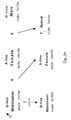
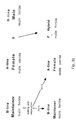
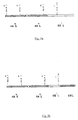
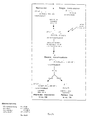
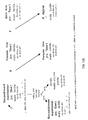
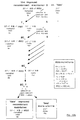
- the maintainer (B-line) (Fig. 1) is isogenic to the female line and has further an alien engineered chromosome carrying a dominant male-fertility allele (Ms) linked to a recessive pollen-killer allele ( ki ), and at least one selectable marker allele.
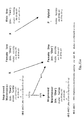
- the male-sterile female parental line (A-line) is maintained either by pollinating it with the male-fertile maintainer line (B-line), and all of the resulting progeny are male-sterile female plants (Fig. 1a), or preferably, sorting out from the selfed progeny of the maintainer, due to differential coloring, the seeds that will develop into male-sterile female line from those that will develop into male-fertile maintainer line (Fig. 1b).
- the maintainer line is itself easily maintained by self-pollination, resulting in a mixture of seeds in which about 20% carry the engineered chromosome and are therefore male-fertile, and about 80% lack this chromosome and are therefore, male-sterile.
- those maintainer lines carrying only the rht allele as a selectable marker it is possible to harvest first the taller plants containing the engineered chromosome. This selective harvest facilitates the preservation each year of a constant rate of about 20% male-fertile maintainer plants in the progeny of the selfed maintainer which includes male-sterile plants as well.
- maintainer lines carrying the rht and Su1 alleles as selectable markers it is possible to kill with the herbicide chlorotoluron the plants lacking the engineered chromosome. This assures that every year only the male-fertile maintainer plants will grow in plots sown with the progeny of the selfed maintainer.
- the improved maintainer lines carrying the Ba allele as a selectable marker it is possible to separate, by a seed sorter, the blue seeds, when grown, developing into male-fertile plants, from red/white seeds, when grown, developing into male-sterile plants. This facilitates planting each year a maintainer line with 100% male-fertile plants.
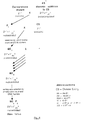
- the engineered chromosomes EC-H and EC-HR are translocated chromosomes that were derived from two alien chromosomes. One of their arms carries the Ms and the rht alleles and the other, the ki allele in EC-H and both Su-1 and ki alleles in EC-HR. Since the alien arms do not ordinarily pair with their wheat homoeologous chromosomes, the three alleles on EC-H and the four alleles on EC-HR are linked and do not segregate with respect to one another.
- EC-H (Fig.
- the maintainer is a monosomic addition line.
- the functional pollen grains of the maintainer do not contain the engineered chromosome.
- all the progeny resulting from a cross between the male-sterile female line and the maintainer line are male-sterile, while progeny derived from self-pollination of the maintainer line contains a mixture of genotypes of which about 20% are male-fertile and about 80% are male-sterile.
- searsii (4S s S) carrying the Ms-S s 1 allele proved to confer male-fertility to an hexaploid genotype homozygous for ms-B1-c, and the rht-S s 1 allele rendering taller plants, and the long arm of chromosome 6 of Ae. longissima (6S l L) carrying the recessive ki-S l 1-a allele, rendering pollen-grains carrying it amenable to killing in the presence of Ki-B1 allele.
- the Ms-S s 1, rht-S s 1 and ki-S l 1-a alleles are linked, and consequently, the transmission through the pollen-grains of Ms-S s 1 allele is then also prevented.
- This enables the production of a maintainer line which is homozygous for the Ki-B1 allele on 6BL and homozygous for one of the known recessive male-sterility mutant alleles (e.g. ms-B1-c ) located on the short arm of chromosome 4B, but which male-sterility is not expressed, i.e.
- the maintainer line is male-fertile due to the presence of an engineered chromosome carrying the Ms-S s 1 allele. Pollination of the male-sterile female line by the maintainer line yields only male-sterile plants, while selfing of the maintainer line results in about 20% male-fertile and 80% male-sterile plants.
- Another aspect of the present invention is to increase the proportion (from 20% to 50%) of the maintainer male-fertile genotype in the progeny of the selfed maintainer. While the proportion of 20% is sufficient for seed increase of the maintainer itself, it renders higher cost for the production of female seed because larger area of the maintainer is required for a given area of the female parent to ensure economically effective fertilization by the maintainer. Thus it is of great advantage to increase the proportion of the maintainer in its selfed progeny. This may be promoted to about 50% by a modification of the EC-H, i.e., construction of a recombinant engineered chromosome, herein designated REC-H. The REC-H containing the Ms allele from Ae.
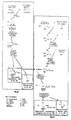
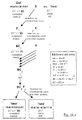
- searsii designated REC-H1 (Fig. 2b) is produced in common wheat in the following manner (Fig. 7b): a distal segment of the wheat chromosome arm 6BL is translocated to the 65 l L arm in which the translocation breakpoint is distal to the ki-S l 1-a allele, enabling it to pair with the 6BL chromosome.
- the translocation results from homoeologous pairing in double monosomic condition in the absence of Ph1 , i.e., in the genotype ph1bph1b , when the EC-H1 (4S s S/6S l L) and 6B can pair and recombine, resulting in the production of REC-H1, i.e., 4S s S/6S l L/6BL.
- another aspect of the present invention is to keep constant the ratio of 1 male-fertile : 4 male-sterile or 1 male-fertile : 1 male-sterile in the progeny of the selfed maintainer containing the EC-H1 or the REC-H1, respectively.
- the proportion of the male-sterile plants in the selfed progeny increases with generations since male-sterile plants are obtained not only in the progeny of the male-fertile ones but also all the progeny of the male-sterile plants which are pollinated by the male-fertile sibs growing together in mixture, are male-sterile.
- the proportion of the male-fertile plants (the maintainer) in the mixture decreases to a degree that the pollen load is insufficient to pollinate, in all the female production plots, all the male-sterile female flowers. It is very important therefore to keep constant, in each generation, the original ratio of male-sterile to male-fertile plants. This may be achieved by roguing, in each generation, the male-sterile plants from the selfed progeny of the maintainer. This step is laborious and increases the production cost of the female parent seeds. It is preferable therefore, to take advantage of the presence of the rht allele on the short arm of 4S s of the EC-H1 or the REC-H1.
- Sa maintainer plants of the cultivar Chinese Spring (CS) which are homozygous for ms-B1, su-B1 and Ki- B1 and carrying EC-H are pollinated by a line of Ae searsii carrying Su-S s 1 and the F 1 is backcrossed as female to CS.
- Herbicide resistant plants are selected in the resultant progeny of the backcross and then selfed to yield BC 1 F 2 progeny.
- incorporation of a disease resistance allele into the EC or the REC makes it possible to infect the field with a pathogen.
- the Ba allele determines the color (due to anthocyanine production) in the aleurone layer of the 3n endosperm.
- the expression of the Ba allele is dosage dependent: two doses of the Ba allele contributed by the female gamete to the 3n endosperm, determine a blue seed color that is distinct from the typical red/white color of wheat seeds.
- the seed color marker is permanently linked to the Ms allele and consequently distinguishes between blue seeds, when grown, developing into male-fertile plants (the maintainer) and red/white seeds, when grown, developing into male-sterile plants.
- the two types of seeds may be mechanically separated by means of a sorting apparatus.
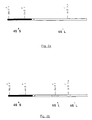
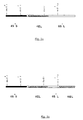
- IEC-HC Figs. 3a, 4a and 5a
- IREC-HC Figs. 3b, 4b and 5b
- IEC-HC2 carrying the Ms-S s 1 and rht-S s 1 alleles from Ae. searsii , the Ba-A m 1 allele from T. monococcum and the Ki-S l 1-a allele from Ae. longissima, is produced by the following steps (Fig.
- IEC-HC3 carrying the Ms-A m 1, rht-A m 1 and Ba-A m 1 alleles from T. monococcum and ki-S l 1-a from Ae. longissima, is produced by irradiation of the double monosomic addition 4A m and 6S l to common wheat and selection of the desired translocation among the progeny (Fig. 11).
- IEC-HC3 has the short arm and the proximal region of the long arm of chromosome 4 of T.
- the various RECs and IRECs are produced to increase the proportion (from 20% to 50%) of the maintainer male-fertile genotype in the progeny of the selfed maintainer and to prevent occasional centric breakage of the engineered chromosome due to its centromeric misdivision.
- Production of these recombinant engineered chromosomes is achieved by induction, via induced homoeologous pairing, of a recombination between any one of EC-H1, EC-HR1, IEC-HC1, IEC-HC2 or IEC-HC3 and 6B, in which the distal segment of 6BL is translocated to the 6S l L arm (the breakpoint is distal to the ki-S l 1-a allele) (Figs. 7b and 12).
- This translocation enables the REC and the IRECs to pair, almost in every meiocyte, with 6BL in lines of common wheat homozygous for Ph1 and monosomics for 6B and REC or one of the IRECs, and segregate to opposite poles, resulting in the inclusion of the REC or the IREC in one half of the gametes.
- the invention further provides a male-fertile maintainer line of common or durum wheat for the maintenance of a male-sterile female parental line for use in the production of hybrid wheat, and methods for the production thereof.
- Yet another aspect of the present invention relates to the selection of seeds of the male-sterile female parent directly from the progeny of the selfed maintainer carrying either the IEC-HC (Fig. 15a) or the IREC-HC (Fig. 15b).
- About 80% of the seeds produced by the maintainer with the IEC-HC are not blue, lacking the IEC-HC and therefore, when grown, develop into male-sterile plants, and 20% are blue, carrying the IEC-HC and, when grown, develop into male-fertile plants.
- Sorting out the seeds of the selfed maintainer by means of a color-sorting apparatus will separate the seeds of the female parent (red/white) from those of the maintainer (blue).
- seeds of the male-sterile female line are obtained directly from selling of the maintainer line; no alternate planting of the maintainer and the female lines is required and the production cost of the female line is considerably reduced.
- the invention provides methods for converting any desired cultivar of common or durum wheat into a male-sterile female parental line and a male-fertile maintainer line for said female line.
- the invention relates to a method for producing a hybrid plant line of common or durum wheat, wherein the male-sterile female parental line is crossed with any cultivar of the same species (R-line), which by its nature is male-fertile homozygous for the Ms-B1 allele, to yield F 1 hybrid progeny that are all fertile and heterozygous ( Ms-B1ms-B1 ).
- a simple system has been developed for common or durum wheat as depicted in Figs. 1a, 13a and 14a, by which the male-sterile female parental line (A-line) is maintained by pollinating it with the maintainer line (B-line), and all of the resulting progeny are male-sterile female plants.
- the maintainer line is itself easily maintained by self-pollination, resulting in a mixture of seeds of which about 20%, when grown, develop into male-fertile plants identical to the maintainer line and carrying the engineered chromosome, and about 80%, when grown, develop into male-sterile plants due to to the absence of the Ms-S s 1 allele.
- the proportion of 80% male-sterile to 20% male-fertile plants is kept in each generation of the progeny of the selfed maintainer line.
- the present invention provides an alternative improved and preferred system for the maintenance of both the male-sterile female parental line (A-line) and the male-fertile maintainer line (B-line) (Figs. 1b, c and 14a). Seeds of the two lines are obtained by self pollination of the maintainer: 80% of the seeds are red/white, and when grown, develop into male-sterile plants (A-line) and 20% are blue, and when grown, develop into male-fertile plants (B-line). Sorting out the seeds of the selfed maintainer by means of a color-sorting apparatus separates the two types of seeds.
- A-line male-sterile female parental line
- B-line male-fertile maintainer line
- seeds of the male-sterile female line are obtained directly from selfing of the maintainer line; no alternate planting of the maintainer and the female line is required and the production cost of seeds of the female parent is considerably reduced. Also, there is no decrease in the amount of the viable pollen in the maintainer plots since all the plants in the maintainer plots are male-fertile.
- the male-sterile female parental line is crossed with any common or durum wheat cultivar (R-line), which by its nature is male-fertile homozygous for the Ms-B1 allele, to yield F 1 hybrid offspring that are all heterozygous Ms-B1ms-B1 and therefore, male-fertile.
- R-line common or durum wheat cultivar
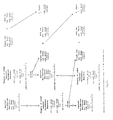
- the present invention provides a method for the maintenance of a male-sterile female parental line (Figs. 13a, 14a and 15a) of common or durum wheat for use in the production of hybrid wheat, said method comprising:
- the present invention further provides an alternative method for maintaining a male-sterile female parental line (Figs. 13b, 14b and 15b) of common or durum wheat for use in the production of hybrid wheat, said method comprising:
- the present invention also provides another alternative improved method for maintaining a male-sterile female parental line (Fig. 15a) of common or durum wheat for use in the production of F 1 hybrids of wheat, said method comprising:
- the present invention also provides another alternative improved method for maintaining a male-sterile female parental line (Fig. 15b) of common or durum wheat for use in the production of F 1 hybrids of wheat, said method comprising:
- Any male-sterility ms-B1 allele may be used according to the invention such as, for example, the ms-B1-a, ms-B1-b and ms-B1-c alleles or any other allele of this locus or another locus of common or durum wheat inducing male sterility.
- Any Ba allele of one of the species of the Gramineae may be used according to the invention such as, for example, the Ba-A m 1 of T . monococcum, the Ba-E1 of A . elongatum, the Ba-R1 of rye and the Ba-H1 of barley. Any allele affecting seed characteristics may be used according to the invention.
- Any rht allele of one of the species of the Gramineae may be used according to the invention, such as rht-S s 1 of Ae. searsii, rht-S l 1 of Ae. longissima and rht-A m 1 of T. monococcum.
- Any herbicide resistance allele of one of the species of the Gramineae may be used according to the invention, such as Su-S s 1 of Ae. searsii or Su-S l 1 of Ae . longissima.
- Any ki allele of one of the species of the Gramineae, susceptible to the killing effect of Ki-B1 or any other pollen-killer gene may be used according to the invention.
- the present invention provides a male-fertile maintainer line of common or durum wheat for the maintenance of a male-sterile female parental line for use in the production of hybrid wheat, said maintainer line being isogenic to the female parent and homozygous both for any one of the ms-B1 male-sterility alleles and for the pollen-killer Ki-B1 allele of the female parent, and having an additional alien engineered chromosome EC-H1 (4S s S/6S l L) carrying the Ms-S s 1, rht-S s 1 and ki-S l 1-a alleles.
- the present invention also provides a male-fertile maintainer line of common or durum wheat for the maintenance of a male-sterile female parental line for use in the production of hybrid wheat, said maintainer line being isogenic to the female parent and homozygous both for any one of the ms-B1 male-sterility alleles, for the su-B1 chlorotoluron susceptibility allele and for the pollen-killer Ki-B1 allele of the female parent, and having an additional alien engineered chromosome EC-HR1 (4S s S/6S l L) carrying the Ms-S s 1, rht-S s 1, Su-S s 1 and ki-S l 1-a alleles.
- the present invention further provides an alternative recombinant male-fertile maintainer line of common or durum wheat for maintaining a male-sterile female parental line for use in the production of hybrid wheat, said maintainer line being isogenic to the female line and homozygous for any one of the ms-B1 alleles, but is monosomic for chromosome 6B and therefore hemizygous for the Ki-B1 allele, and having an additional recombinant engineered chromosome REC-H1 (4S s S/6S l L/6BL), which further comprises, distally to the ki-S l 1-a allele, the distal region of 6BL that pairs regularly with its homologous region of the native 6BL.
- the REC will be included in 50% of the gametes. Since the male-fertility allele of the recombinant maintainer line is not transmitted through the pollen-grains, all of the offspring of a cross between the male-sterile female line and the recombinant male-fertile maintainer line are isogenic to the female parent and are male-sterile. On the other hand, 50% of the progeny of the selfed recombinant maintainer will have the REC and therefore be male-fertile.
- the present invention also provides an alternative recombinant male-fertile maintainer line of common or durum wheat for maintaining a male-sterile female parental line for use in the production of hybrid wheat, said maintainer line being isogenic to the female line and homozygous for any one of the ms-B1 and for the su-B1 alleles, but is monosomic for chromosome 6B and therefore hemizygous for the Ki-B1 allele, and having an additional recombinant engineered chromosome REC-HR1 (4S s S/6S l L/6BL), which further comprises, distally to the ki-S l 1-a allele, the distal region of 6BL that pairs regularly with its homologous region of the native 6BL.
- the REC-HR1 will be included in 50% of the gametes. Since the male-fertility allele of the recombinant maintainer line is not transmitted through the pollen-grains, all of the offspring of a cross between the male-sterile female line and the recombinant male-fertile maintainer line are isogenic to the female parent and are male-sterile. On the other hand, 50% of the progeny of the selfed recombinant maintainer will have the REC-HR1 and therefore be male-fertile.
- the present invention also provides an alternative improved maintainer line of common or durum wheat for the maintenance of a male-sterile female parental line for use in the production of hybrid wheat, said maintainer line being isogenic to the female parent and homozygous both for any one of the ms-B1 male-sterility alleles and for the pollen-killer Ki-B1 allele of the female parent, and having an additional improved engineered chromosome IEC-HC, either IEC-HC1 (4S s S/4EL/6S l L), IEC-HC2 (4S s S/4A m L/6S l L) or IEC-HC3 (4A m S-4A m L/6S l L) carrying the Ms-S s 1 , rht-S s 1 , Ba-E1 and the ki-S l 1-a , the Ms-S s 1 , rht-S s 1 , Ba-A m 1 and the ki-S l 1-a , and the Ms-A
- Any selectable marker allele can replace the Ba allele in the IEC-HC.
- the selectable marker is a seed characteristic, such as seed color
- progeny seed of the selfed maintainer developing into plants which are isogenic to the female parent and are male-sterile can be separated from those developing into the male-fertile maintainer line.
- the improved maintainer having such seed-selectable marker 80% of the progeny seed of the selfed improved maintainer line are red/white, and when grown, develop into male-sterile female parent plants, and 20% are blue, and when grown, develop into the male-fertile improved maintainer plants.
- the present invention also provides an alternative improved recombinant maintainer line of common or durum wheat for maintaining a male-sterile female parental line for use in the production of hybrid wheat, said maintainer line being isogenic to the female line and homozygous for any one of the ms-B1 alleles, but is monosomic for chromosome 6B and therefore hemizygous for Ki-B1 allele, and has an additional improved recombinant engineered chromosome IREC-HC, either IREC-HC1 (4S s S/4EL/6S l L/6BL), IREC-HC2 (4S s S/4A m L/6S l L/6BL) or IREC-HC3 (4A m S-4A m L/6S l L/6BL) carrying the Ms-S s 1, rht-S s 1 , Ba-E1 and the ki-S l 1-a , the Ms-S s 1 , rht-S s 1 , Ba-A m 1
- a male-fertile maintainer line of common or durum wheat having the engineered chromosome EC-H1 comprising:
- the present invention also provides a method for producing a male-fertile maintainer line of common or durum wheat having the engineered chromosome EC-HR1 (Fig. 8a), comprising :
- the present invention further provides a method for producing a male-fertile recombinant maintainer line of common or durum wheat having the recombinant engineered chromosome REC-H1 (Fig. 7b), comprising :
- the present invention also provides a method for producing a male-fertile recombinant maintainer line of common or durum wheat having the recombinant engineered chromosome REC-HR1 (Fig. 8b), comprising :
- the present invention further provides a method for producing a male-fertile improved maintainer line of common or durum wheat having the improved engineered chromosome IEC-HC1 (Figs. 9a-b), comprising :
- the present invention further provides another method for producing a male-fertile improved maintainer line of common or durum wheat having the improved engineered chromosome IEC-HC1 (Fig. 9c), comprising :
- the present invention also provides a method for producing a male-fertile improved maintainer line of common or durum wheat having the improved engineered chromosome IEC-HC2 (Fig. 10), comprising:
- the present invention also provides a method for producing a male-fertile maintainer line of common or durum wheat having the improved engineered chromosome IEC-HC3 (Fig. 11), comprising:
- the present invention further provides a method for producing a male-fertile maintainer line of common or durum wheat having an improved recombinant engineered chromosome IREC-HC (Fig. 12), comprising:
- the present invention provides a method for maintaining a constant ratio between male-fertile to male-sterile plants in each generation of the maintainer line or a recombinant maintainer line of common and durum wheat, comprising:
- the present invention further provides a method for maintaining a constant ratio between male-fertile to male-sterile plants in each generation of the maintainer line or a recombinant maintainer line of common and durum wheat, comprising:
- the present invention also provides a method for maintaining a constant ratio between male-fertile to male-sterile plants in each generation of the improved maintainer line or the improved recombinant maintainer line of common and durum wheat, comprising:
- the present invention provides a method for preventing the breakage, through centromeric misdivision at meiosis, of the engineered chromosome, into two telocentric (one arm) chromosomes carrying either the Ms and rht alleles of the short arm of the engineered chromosome or the ki-S l 1-a allele and, in the case of EC-HR, also the Su allele whereas in the case of IEC, also the Ba allele, of the long arm.
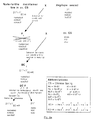
- the present invention provides a method for converting a desired cultivar of common and durum wheat into a male-sterile female parental line and a male-fertile maintainer line having an engineered chromosome EC-H, for said female line (Fig. 16a), said method comprising:
- the present invention also provides a method for converting a desired cultivar of common and durum wheat into a male-sterile female parental line and a male-fertile maintainer line having an engineered chromosome EC-HR, for said female line (Fig. 17a), said method comprising:
- the present invention further provides a method for converting a desired cultivar of common and durum wheat into a male-sterile female parental line and a male-fertile recombinant maintainer line having a recombinant engineered chromosome REC-H for said female line (Fig 16b), said method comprising:
- the present invention also provides a method for converting a desired cultivar of common and durum wheat into a male-sterile female parental line and a male-fertile recombinant maintainer line having a recombinant engineered chromosome REC-HR, for said female line (Fig. 17b), said method comprising:
- the present invention also provides a method for converting a desired cultivar of common and durum wheat into a male-sterile female parental line and a male-fertile improved maintainer line for said female line of the IEC-HC type (Fig. 18a), said method comprising:
- the present invention further provides a method for converting a desired cultivar of common and durum wheat into a male-sterile female parental line and a male-fertile improved recombinant maintainer line of the IREC-HC type for said female line (Fig 18b), said method comprising:
- the selection of the plants carrying the desired ms-B1 allele in any one of the progeny generations is by use of DNA probes that map on the distal end of chromosome arm 4BS, and serve to mark any mutant male sterility ms-B1 allele, permitting the selection of plants carrying said mutant allele.
- Any DNA probe which marks the sub-terminal region of 4BS can be used, such as for example PSR921 (M.D. Gale, Cambridge Laboratory, JII, Norwich, U.K.).
- the selection of the plants carrying the desired ki-S l 1-a allele in any one of the progeny generations is by the use of DNA probes that map to a locus tightly linked to the said allele on 6S l L, and serve to mark the said allele.
- An example of such DNA probe is PSR915 (M.D. Gale, Cambridge Laboratory, JII, Norwich, U.K.).
- the selection of plants carrying the desired ki-S l 1-a allele is carried out also by the proportion of aborted pollen grains.
- Yet another aspect of the present invention is a method for producing hybrid plants of common or durum wheat, comprising:
- the Aegilops lines used were a line of Aegilops searsii Feldman & Kislev ex Hammer, containing the Ms-S s 1 (male-fertility), the rht-S s 1 (taller plant) and the SuS s 1 (chlorotoluron resistance) alleles, herein designated AES-5, collected in Yattir, Southern Judea, Israel, and a line of Aegilops longissima Schweinf. & Muschl. containing the ki-S l 1-a (sensitive to the pollen killing effect of Ki-B1 ) allele, herein designated AEL-1, collected near Revivim, Central Negev, Israel.
- the three schemes for hybrid seed production from a male-sterile female parent and a male parent is depicted in a general way in Fig. 1.
- the conditions required for the successful production of hybrid seeds by genetic means are as follows : 1) complete and stable male-sterility of the female parent, called the 'A-line' or 'Female line'; 2) complete and stable male-fertility restoration by the male parent, called the 'R-line', or 'Male line'; and 3) easy propagation of the female A-line by a male-fertile maintainer line, called the 'B-line' or 'Maintainer line'.
- the F 1 hybrid seeds produced are all male-fertile.
- the female A-line is propagated either by pollination with the maintainer B-line, by selfing the maintainer B-line, or by both methods and the maintainer B-line is itself maintained by selfing, and the desired proportion of male-fertile plants among the progeny of the selfed maintainer is kept each generation by the use of a selectable marker(s) characterizing the maintainer.
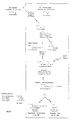
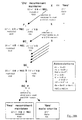
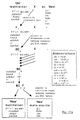
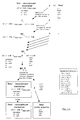
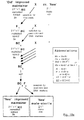
- FIGs. 13, 14 and 15 An example of such a scheme for the production of hybrid common or durum wheat is shown more specifically in Figs. 13, 14 and 15.
- a cultivar, herein designated cv. 'One' equipped with genes for male-sterility, i.e. homozygous for one of the male-sterility recessive mutant alleles ( ms-B1ms-B1 ) on the short arm of chromosome 4B and homozygous for the dominant pollen-killer allele ( Ki-B1 ) on the long arm of 6B, is used as the male-sterile female A-line.
- Three such male-sterility alleles have been described (review in Wilson and Driscoll, 1983).
- the EMS-treated mutants can be distinguished from the various deletions of the Ms-B1 locus by the presence in these mutants of a terminal C-band on 4BS.
- DNA markers such as Xpsr921 that are located on the distal region of 4BS, are absent in ms-B1-c and in several of our gamma-irradiated mutants (and possibly also in ms-B1-b ), i.e., it is located in the deleted segment and its absence can mark homozygosity for the deletion.
- the Ki-B1 allele present in the cultivar Chinese Spring, is located on the long arm of chromosome 6B about 50 cM from the centromere (Loegering & Sears, 1963).
- DNA markers such as Xpsr915 are tightly linked to the ki-B1 allele.
- the male-sterile female line is maintained by a maintainer that carries the engineered chromosome of the EC-HR type the female line should be also homozygous for the recessive chlorotoluron susceptibility allele su-B1.
- This allele present in the common wheat cultivar Chinese Spring and in several other genotypes of tetraploid wheat, is located on the long arm of chromosome 6B, about 0.5 cM from the centromere (Snape et al, 1991).
- the maintainer B-line is of the same cultivar as the A-line, i.e., cv. 'One', is homozygous for the same ms-B1 and Ki-B1 alleles present in the A-line but has an additional alien engineered chromosome of the EC-H type (Fig. 2a) consisting of 4S s S of Aegilops searsii, that carries the dominant male-fertility allele Ms-S s 1 and the dominant or semi-dominant rht-S s 1 allele that confers taller plants, and of 6S l L of Ae.
- Fig. 2a consisting of 4S s S of Aegilops searsii, that carries the dominant male-fertility allele Ms-S s 1 and the dominant or semi-dominant rht-S s 1 allele that confers taller plants, and of 6S l L of Ae.
- the male-fertile offspring of the maintainer are taller by 6-8 cm than the male-sterile offspring. This height difference facilitates the selective harvest, by combine harvester, of the male-fertile offspring, thus keeping constant, in each generation, the proportion of the male-fertile plants among the progeny of the selfed maintainer line.
- An alternative maintainer B-line is of the same cultivar as the A-line, i.e., cv. 'One', is homozygous for the same ms-B1, su-B1 and Ki-B1 alleles present in the A-line but has an additional alien engineered chromosome of the EC-HR type (Fig.
- the male-fertile offspring of the maintainer are resistant to the herbicide chlorotoluron and to other phenylurea derivatives, whereas the male-sterile offspring are susceptible to them. This resistance facilitates, in each generation, the killing of all the susceptible seedlings, lacking the engineered chromosome in the progeny of the selfed maintainer line.
- the maintainer line may be the same as the A-line but monosomic for chromosome 6B, i.e., is homozygous for ms-B1 and hemizygous for Ki-B1 , and has one dose of the recombinant engineered chromosome of the REC-H type (Fig. 2c) consisting of 4S s S of Aegilops searsii , that carries the dominant alleles Ms-S s 1 and rht-S s 1 , of 6S l L of Ae.
- pollinating the male-sterile female line (A-line) by the recombinant maintainer yields progeny, all of which are identical to the female line and are male-sterile.
- self pollination of the recombinant maintainer line yields 1 ⁇ 2 male-sterile and 1 ⁇ 2 male-fertile offspring (Fig. 13b).
- the male-fertile offspring having the rht-S s 1 allele, are taller by 6-8 cm than the male-sterile offspring and therefore can be harvested separately. This keeps constant, in each generation, the proportion of the male-fertile plants among the progeny of the selfed maintainer.
- Another maintainer line may be the same as the A-line but monosomic for chromosome 6B, i.e., is homozygous for ms-B1 and hemizygous for su-B1 and Ki-B1, and has one dose of the recombinant engineered chromosome of the REC-HR type (Fig. 2d) consisting of 4S s S of Aegilops searsii , that carries the dominant alleles Ms-S s 1 and rht-S s 1 , and of 6S l L of Aegilops longissima that carries the dominant chlorotoluron resistance allele Su-S s 1 allele that was transferred from 6S s L of Ae.
- pollinating the male-sterile female line (A-line) by the recombinant maintainer yields progeny, all of which are identical to the female line and are male-sterile.
- self pollination of the recombinant maintainer line yields 1 ⁇ 2 male-sterile and 1 ⁇ 2 male-fertile offspring (Fig. 14b).
- the male-fertile offspring having the Su-S s 1 allele, are resistant to chlorotoluron. Applying this herbicide to a maintainer plot will kill all the male-sterile offspring that lack the engineered chromosome, leaving only the male-fertile maintainer plants.
- IEC-HC1 consisting of 4S s S (carrying the Ms-S s 1 and rht-S s 1 alleles), 4EL (carrying the Ba-E1 allele), and 6S l L (carrying the ki-S l 1-a );
- IEC-HC2 consisting of 4S s S (carrying the Ms-S s 1 and rht-S s 1 alleles), 4A m L (carrying the Ba-A m 1 allele), and 6S l L (carrying the ki-S l 1-a );
- IEC-HC3, consisting of 4A m S (carrying the Ms-A m 1 and rht-A m 1 alleles), 4A m L (carrying the Ba-A m 1 allele), and 6S l L (carrying the ki-S l 1-a ).
- maintainers contain an improved recombinant engineered chromosome of the IREC-HC type (Figs. 3b, 4b and 5b) carrying on the long arm of the improved recombinant engineered chromosome a terminal segment of chromosome arm 6BL that pairs regularly with the native chromosome 6B which exists as a monosomic addition in this maintainer.
- This pairing ensures regular segregation of the improved recombinant engineered chromosomes during meiosis and consequently their inclusion in 50% of the gametes. Because of the presence of the ki-S l 1-a, the IRECs are not transmitted through the pollen grains.
- pollinating the male-sterile female line (A-line) by the improved recombinant maintainer (B-line) yields progeny, all of which are identical to the female line and are male-sterile (Fig. 15b).
- self pollination of the recombinant maintainer line yields 50% male-sterile and 50% male-fertile offspring (Fig. 15b).
- Due to the presence of the Ba allele it is feasible to separate, by sorting apparatus, the red/white seeds from the blue seeds. Thus, planting, in each generation, only the blue seeds, assures that all the maintainer plants will be male-fertile.
- the selfed progeny of the maintainer may contain plants having only one arm of the EC. Plants having the long arm, ECL (carrying Ba and ki-S l 1-a alleles) will be male-sterile. On the other hand, plants having the short arm, ECS (carrying the Ms and the rht alleles) will be male-fertile.
- plants with ECS do not carry the ki-S l 1-a allele, male gametes having the ECS may be functional and either by pollinating female plants or by selfing, and thus, contaminate the female line.
- plants having the short arm and lacking the long arm of the EC are susceptible to chlorotoluron and can be selected against by the application of this herbicide to the progeny of the selfed maintainer.
- plants having the short arm and lacking the long arm of the EC produce red/white seeds that can be separated by a sorting apparatus from the blue seeds in the progeny of the selfed maintainer.
- the recombinant engineered chromosome of both the REC-H and the IREC-HC types pairs regularly at meiosis with the native 6B chromosome, and consequently its centromere undergoes only a longitudinal division at second meiotic anaphase; telocentrics are not formed and the female line is not contaminated with male-fertile plants.
- the amount of desired seeds may be above 70%.
- the improved recombinant maintainer with the IREC-HC type it is possible to carry out two-step selection: to harvest the tall plants (carrying the IREC-HC with the rht allele) first. The short plants will be harvested in a second harvest and their seeds will be separated by seed sorter on the basis of their color. The red/white seeds lack the IREC-HC and, when grown, develop into the male-sterile female line.
- the male parent (R-line, cv. 'Two') is any normal common or durum wheat cultivar, which by its nature is homozygous for the male-fertility Ms-B1 allele, and homozygous either for the dominant Ki-B1 allele or for one of the recessive ki-B1 alleles ( ki-B1-a or ki-B1-n ).
- the resultant F 1 plants were all heterozygous Ms-B1ms-B1-c and carried one additional chromosome of 4S s with the Ms-S s 1 allele. These plants were selfed and F 2 plants homozygous for ms-B1-c (as was indicated by the phenotype of the DNA markers) were selected. All euploid homozygous ms-B1-cms-B1-c plants were, as expected, male-sterile, but those homozygous that had an additional 4S s chromosome carrying Ms-S s 1 were all male-fertile, indicating the complete dominance of Ms-S s 1 over two doses of ms-B1-c.
- Aegilops searsii is a short-stature plant. Nevertheless it contains the rht-S s 1 allele that promotes plant height. This allele is homoeoallelic to the rht alleles of common wheat that are located on the short arm of chromosomes of group 4, about 15 cM from the centromere (McIntosh, 1993). The rht-S s 1 is linked to the male-fertility Ms-S s 1 allele which is located on the terminal region of 4S s S.
- chromosome 4S s does not pair with its wheat homoeologues in normal common wheat background, the rht-S s 1 and the Ms-S s 1 alleles are permanently linked in the different types of the alien engineered chromosomes.
- the existence of the rht-S s 1 allele on the engineered chromosome may promote taller plants and hence, may serve as a selectable marker allele that facilitates the differential harvest of the male fertile offspring of the maintainer, i.e., those carrying the engineered chromosome. This will keep constant, in each generation, the proportion of the male-fertile plants in the progeny of the selfed maintainer.
- the Su-S s 1 allele is permanently linked to the other alleles of the engineered chromosome, i.e., Ms-S s 1 , rht-S s 1 and Ki-S l 1-a .
- the presence of the chlorotoluron resistance allele on the engineered chromosome facilitates the selective killing, in each generation, of the male-sterile plants that lack the engineered chromosome while unaffecting the male-fertile maintainer plants (with the engineered chromosome) in the progeny of the selfed maintainer. This will assure, that in each generation, only the male-fertile offspring of the selfed maintainer, will grow.
- Seed color of common or durum wheat is red or white; the red color results from the presence of a pigment in the testa.
- Several species related to common and durum wheat e.g., T. monococcum, A. elongatum, A. glaucum, A, tricophorum, A. junceum , Secale montanum , Secale cereale and Hordeum spontaneum , contain lines with blue seeds. The blue pigment results from production of anthocyanins in the triploid aleurone layer of the endosperm (for review see Zeven, 1991).
- the blue pigment indicates the genotype of the aleurone, a phenomenon known as xenia,, i.e., a red/white seeded plant pollinated with a blue aleurone plant produces blue seeds.
- the blue color is determined by the blue aleurone ( Ba ) allele (designation after Keppenne and Baenziger, 1990, in accordance with Dr. R.A. McIntosh, co-ordinator of gene symbol for wheat), located on the long arm of chromosome 4A m of T . monococcum or 4E of E. pontica (Zeven, 1991).
- the Ba locus in barley (designated Bl ) is located on the long arm of chromosome 4H, 29 cM from the centromere (Grain Genes data base, ref:BCN-25-93). Hence, based on the gene syntheny existing among the Triticeae species, it is assumed that, also in T. monococcum and E. pontica this gene is located at about the same distance from the centromere.
- the seeds of monosomic addition lines of 4A m or 4E to common wheat are blue indicating the complete dominance of the Ba allele.
- This allele has a dosage effect which is revealed by the intensity of the color: three doses of Ba give a dark blue seed, two doses (resulting from transmission of the allele through the female gamete) give a medium-blue seed, while one dose (resulting from transmission of the allele through the male gamete) gives a light-blue seed.
- the environment in which the plants were grown e.g., dry and warm conditions during grain-filling period, as well as the plant's genetic background, may reduce the expression of the Ba allele, causing some misclassification of seeds with one dose of Ba. Seeds with two or three doses of Ba have been always classified correctly.
- the Ba allele is translocated to the alien recombinant engineered chromosome that ordinarily does not pair with its wheat homoeologues.
- the Ba allele being permanently linked to the Ms-S s 1 and rht-S s 1 alleles or to the Ms-A m 1 and rht-A m 1 alleles as well as to the ki-S l 1-a allele can be used as an excellent selectable marker.
- the blue seeds can be separated from the red/white seeds by the use of a sorting apparatus (such as Sortex 5000). It can be used for separation of a large quantities of seeds and hence can be used for commercial applications.
- the dominant allele kills only pollen and not eggs, it can be used to block the transmission of pollen carrying the alien dominant male-sterility allele Ms-S s 1.
- Such linkage can be achieved by constructing an alien chromosome that carries these two alleles, and which does not ordinarily pair with its wheat homoeologous chromosomes.
- a prerequisite condition for the construction of such an engineered chromosome is the availability of a recessive pollen-killer allele in one of the wild relatives of wheat.
- chromosome 6 of Ae. longissima (6S l ) was transmitted through the pollen only in plant deficient for chromosome 6B.
- chromosome 6S l of several accessions of Ae. longissima carries a recessive pollen-killer allele, designated herein as ki-S l 1-a, which pollen-grains carrying it are amenable to killing by the Ki-B1 allele of common wheat.
- a chromosome either native or alien, that exists in common wheat in a single dose, as in monosomic or monosomic-addition lines, may undergo centromeric mis-division at meiosis, in low frequency, i.e. a transverse rather than a longitudinal division of the centromere, resulting in the production of one or two stable telocentric chromosomes. If two non-homologous chromosomes existing each in a single dose, undergo simultaneously mis-division, the resultant telocentrics of the different chromosomes may fuse to yield a translocated chromosome (Sears, 1972). The frequency of this centric fusion varies from less than 1% (Sears, 1972) to more than 23% (Lukaszewski, 1993).
- this chromosome is not transmitted through the pollen-grains and all pollinations of euploid plants by those carrying the engineered chromosome as a monosomic addition line, yielded only euploid progeny, while selfing of the monosomic addition line yielded about 20% seedlings with 43 chromosomes.
- the dominant chlorotoluron resistance allele Su-S s 1 is transferred from chromosome arm 6S s L of a selected line of Ae. searsii into the 6S l L arm of the engineered chromosome EC-H1.
- the F 1 plants with the engineered chromosome exhibit 26 univalents (26') and a trivalent (1"') at first meiotic metaphase due to the pairing of the engineered chromosome (4S s S/6S l L) with chromosome arms 4S s S and 6S s L of Ae. searsii. While pairing of 4S s of the EC with 4S s S of Ae. searsii does not change the allelic constitution of the short arm of the EC, that between 6S l L and 6S s L, yields, after crossing over between the centromere and the Su locus and a second crossing over between the Su and the ki loci, the desired EC-HR1 chromosome.
- the homoeologous chromosome arms 6BL and 6S l L do not pair in the presence of the Ph1 gene of common wheat. This dominant allele, located on the long arm of chromosome 5B, prevents pairing of homoeologous chromosomes while allowing regular pairing of homologues.
- a recessive mutation ( ph1b ) was induced in this locus by X-rays irradiation of the cultivar Chinese Spring which, in homozygous condition, does not suppress homoeologous pairing (Sears, 1977). This mutation was used to induce homoeologous pairing and recombination between 6BL and 6S l L.
- a 6S l (6B) disomic substitution line in which a pair of chromosomes 6S l of Ae. longissima replaced a pair of chromosomes 6B of the common wheat cv. Chinese Spring, was pollinated by the mutant line ph1bph1b.
- the F 1 hybrid which is monosomic 6B - monosomic substitution 6S l and heterozygous Ph1ph1b , was backcrossed as a female with the mutant line and double monosomics which are homozygous for ph1b were selected by the use of the DNA probe WPG90 (this probe was produced by us and can be obtained upon request).
- BC 1 progeny plants were pollinated by a ditelosomic 6BS line to yield progeny, some of which are monotelosomic 6BS and monosomic for a recombinant chromosome 6S l /6BL, i.e., the recombinant chromosome comprises the short arm of 6S l , the proximal region of the long arm of 6S l and the distal region of 6BL (the translocation breakpoint is distal to the locus of ki-S l 1-a on 6S l L).
- Selection for this translocated chromosome is carried out by the lack of pairing with 6BS and by the DNA markers located on 6S l L, distally to ki-S l 1-a and DNA markers on the distal region of 6BL.
- the selected genotype which is monotelosomic 6BS - monosomic 6S l /6BL and homozygous for the dominant male-fertility allele Ms-B1 , deficient for the Ki-B1 and hemizygous for ki-S l 1-a , was crossed as a male with a line carrying the engineered chromosome EC-H1 (see Example 6) as monosomic addition.
- progeny are triple monosomics, i.e., monosomics for 6B, 4S s S/6S l L and 6S l /6BL, and among these plants selection was made for heterozygous ms-B1-c Ms-B1 Ms-S s 1 and Ki-B1ki-S l 1-a, using DNA markers.
- pairing occurs in the proximal region of 6S l of the two translocated chromosomes, resulting in the production of the recombinant engineered chromosome REC-H1 (4S s S/6S l L/6BL).
- Selfing of the selected progeny yielded, among others, double monosomic plants, having 6B and REC-H1 which are homozygous ms-B1-c ms-B1-c , hemizygous for Ki-B1 and for ki-S l 1-a.
- the selected monotelosomic 6BS-monosomic 6S l /6BL was crossed as a male with lines carrying the improved engineered chromosome IEC-HC1, IEC-HC2 and IEC-HC3 as a monosomic addition.
- Some of the progeny of each cross are triple monosomics, i.e., monosomic for 6B, 6S l /6BL and for the improved engineered chromosome, and among these plants selection was carried out for heterozygous ms-B1Ms-B1 and Ki-B1Ki-B1, using DNA markers.
- pairing occurs in the proximal region of 6S l of the two translocated chromosomes, resulting in the production of the improved recombinant engineered chromosomes IREC-HC1 (4S s S/4EL/6S l L/6BL), IREC-HC2 (4S s S/4A m L/6S l L/6BL) and IREC-HC3 (4A m S-4A m L/6S l L/6BL).
- Selfing of the selected plants yielded, among others, double monosomic plants, having 6B and the improved recombinant engineered chromosome which are homozygous ms-B1-c ms-B1-c and hemizygous for Ki-B1 and for ki-S l 1-a.
- Production of REC-HR1 is done by crossing a monosomic addition line carrying the recombinant engineered chromosome REC-H1 with a line of Ae . searsii carrying the chlorotoluron resistance allele Su-S s 1 , selecting F 1 plants with 25'+1"' and pollinating them with Chinese Spring (similarly to Example 8).
- IEC-HC1 (4S s S/4EL/6S l L), IEC-HC2 (4S s S/4A m L/6S l L) and IEC-HC3 (4A m S-4A m L/6S l L)
- Production of these improved engineered chromosomes involves the production of a terminal translocation interchanging the distal region of 6S l L (containing the ki-S l 1-a allele) with the homoeologous region of 4EL or 4A m L of the centric-fused chromosomes.
- the translocation breakpoint is between the Ba allele of 4EL or 4A m L (which is located about 30 cM from the centromere) and the ki-S l 1-a allele of 6S l L (which is located about 50 cM from the centromere).
- Terminal translocations are induced on several occasions by the use of X-ray or thermal neutron irradiation of seeds or pollen grains (for review see Keppenne and Baenziger, 1990; Sharma and Knott, 1966).
- the thermal neutrons are considerably more effective in inducing translocations and do not cause any reduction in germination.
- Plants monosomic addition for the centric-fused chromosome 4S s S/6S l L are pollinated by either (i) monosomic addition for the fused chromosome 4S s S/4EL or 4S s S/4A m L homozygous for ms-B1 and Ki-B1 and carrying also Ms-S s 1, rht-S s 1 and Ba-E1 or Ba-A m 1, respectively, or (ii) by monosomic addition 4A m and carry also Ms-A m 1, rht-A m 1 and Ba-A m 1.
- the F 1 progeny contains also the disomic S addition and double monosomic L addition 4S s S/6S l L + 4S s S/4EL, 4S s S/6S l L + 4S s S/4A m L or 4S s S/6S l L + 4A m .
- a large number of blue seeds are selected and irradiated by 10 13 N th cm -2 of thermal neutrons.
- the treated seeds are germinated and selection is carried out by chromosome counts and by the use of DNA probes for monosomic addition. These plants are allowed to self and selection is carried out in their progeny for blue seeds, which seeds when grown, developing into male-fertile plants, all of which carries the desired translocation.
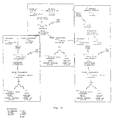
- a procedure for the conversion of a desired common wheat cultivar into a male-sterile female parental line and a maintainer line in which the allelic complement of existing female and maintainer lines is replaced by the allelic complement of the desired cultivar to provide a male-sterile female line and a maintainer line or an improved maintainer line having the desired cultivar's allelic complement is set forth schematically in Figs. 16a, 17a and 18a.
- a maintainer line either with EC-H1, EC-HR1 or one of the types of IEC-HC homozygous for the recessive male-sterility allele ms-B1-c and for the dominant pollen-killer allele Ki-B1 and having the alien engineered chromosome 4S s S/6S l L, that carries the dominant alleles Ms-S s 1 and rht-S s 1 and the recessive pollen-killer allele ki-S l 1-a and in the case of EC-HR1 also the Su-S s 1 allele, or the improved engineered chromosomes 4S s S/4EL/6S l L, 4S s S/4A m L/6S l L or 4A m S-4A m L/6S l L carrying the dominant alleles Ms-S s 1 and rht-S s 1, the dominant blue aleurone Ba-E1 and the recessive pollen-kill
- Heterozygosity in both loci is determined by the use of DNA markers and progeny test.
- the selected progeny plants are further backcrossed as female, with the desired cultivar, through four subsequent generations to yield fifth generation backcross progeny (BC 5 ).
- BC 5 fifth generation backcross progeny
- the progeny is analyzed as described for the BC 1 progeny and plants heterozygous Ms-B1ms-B1-cKi-B1ki-B1-a that have the engineered chromosome as a monosomic addition are selected.
- Selfing of the BC 5 yields progeny, 3 / 64 of which are homozygous ms-B1-cms-B1-cKi-B1Ki-B1 and are the desired male-sterile female line.
- Another group ( 1 / 80 ) of this progeny that has a similar genotype and has also the engineered chromosome is the desired maintainer.
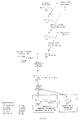
- a procedure for the conversion of a desired common wheat cultivar into a male-sterile female parental line and a recombinant maintainer line in which the allelic complement of existing female and maintainer lines is replaced by the allelic complement of the desired cultivar to provide a male-sterile female line and a recombinant maintainer line having the desired cultivar's allelic complement is set forth schematically in Fig 16b, 17b and 18b.
- a recombinant maintainer line which is monosomic 6B - monosomic substitution 4S s S/6S l L/6BL, is homozygous for the recessive male-sterility allele ms-B1-c , possesses the dominant male-fertility allele Ms-S s 1 and is hemizygous for the dominant pollen-killer allele Ki-B1 and for the recessive pollen-killer allele ki-S l 1-a and in the case of REC-HR1 also for the Su-S s 1 allele, or one of the improved recombinant maintainer lines which is monosomic substitution for the improved recombinant engineered chromosomes 4S s S/4EL/6S l L/6BL, 4S s S/4A m L/6S l L/6BL or 4A m S-4A m L/6S l L/6BL carrying either Ms-S s 1, rht-S s
- the F 1 hybrids are all heterozygous for the male-sterility alleles ( Ms-B1ms-B1-c ), 1 ⁇ 2 of which are double monosomics for 6B (receiving this chromosome from their male parent and therefore, hemizygous for ki-B1-a ) and for the REC or the IREC, and 1 ⁇ 2 are disomic 6B and heterozygous Ki-B1ki-B1-a.
- These disomic and double monosomic plants are selected and pollinated by the desired cultivar to yield BC 1 progeny, 1 ⁇ 2 of which are heterozygous Ms-B1ms-B1-c .
- This BC 1 progeny comprises two types: one type derived from pollinating the double monosomic F 1 plants 1 ⁇ 2 of which are double monosomic for 6B, and therefore, hemizygous for ki-B1-a , and for the REC or the IREC; and another type, derived from pollinating the disomic F 1 plants, one half of which are heterozygous Ki-B1ki-B1-a.
- the progeny is analyzed as described for the BC 1 progeny and plants heterozygous Ms-B1ms-B1-c and either hemizygous ki-B1-a , that have the REC or the IREC as monosomic substitution, or disomic 6B, heterozygous Ki-B1ki-B1-a , are selected.
- the selected double monosomic 6B - REC or IREC BC 5 plants are then pollinated by the disomic 6B BC 5 to yield BC 5 F 2 progeny, of which 1 ⁇ 8 are double monosomic 6B - REC or IREC carrying ms-B1-cms-B1-c Ms-S s 1 Ki-B1 and ki-S l 1-a and are either the desired recombinant maintainer line or the improved recombinant maintainer line, respectively, and 1 ⁇ 8 are disomic having ms-B1-cms-B1-c and Ki-B1ki-B1-a , and are the desired male-sterile female line.
Landscapes
- Life Sciences & Earth Sciences (AREA)
- Health & Medical Sciences (AREA)
- Environmental Sciences (AREA)
- Botany (AREA)
- Developmental Biology & Embryology (AREA)
- Genetics & Genomics (AREA)
- Physiology (AREA)
- Natural Medicines & Medicinal Plants (AREA)
- Physics & Mathematics (AREA)
- Spectroscopy & Molecular Physics (AREA)
- General Health & Medical Sciences (AREA)
- Breeding Of Plants And Reproduction By Means Of Culturing (AREA)
- Cereal-Derived Products (AREA)
- Organic Low-Molecular-Weight Compounds And Preparation Thereof (AREA)
- Noodles (AREA)
Abstract
Description
- Common wheat =
- bread wheat, Triticum aestivum var. aestivum, being an allohexaploid species (2n=42) having the three genomes ABD.
- Durum wheat =
- macaroni wheat, Triticum turgidum var. durum, being an allotetraploid species (2n=28) having the two genomes AB.
- Triticum monococcum =
- a diploid species (2n=14) containing wild (var.
boeoticum) and cultivated (var. monococcum) taxa, closely related to the
diploid donor of the A genome of durum and common wheat, having
genome Am whose
chromosome 4Am is homoeologous (partially homologous) tochromosome 4A as well as to other group-4 chromosomes of durum and common wheat. - Aegilops longissima and Aegilops searsii =
- diploid species (2n=14), closely related to the donor of the B genome of durum and common wheat having genomes Sl and Ss, respectively, whose chromosomes are homoeologous (partially homologous) to those of wheat.
- Agropyron elongatum =
- a complex species including diploid (2n=14), tetraploid (2n=28) and decaploid (2n=70) taxa, related to durum and common wheat, having the E genome (the polyploids are autopolyploids) whose chromosomes are homoeologous to those of durum and common wheat.
- 4BS =
- the short arm of
chromosome 4B (formerly 4A) of common and durum wheat. - 6BL =
- the long arm of
chromosome 6B of common and durum wheat. - 4AmS and 4AmL =
- the short and the long arms, respectively, of
chromosome 4Am of Triticum monococcum. - 4EL =
- the long arm of
chromosome 4E of Agropyron elongatum. - 4SsS =
- the short arm of
chromosome 4Ss of Aegilops searsii. - 4SlS =
- the short arm of
chromosome 4Sl of Aegilops longissima. - 6SsL =
- the long arm of
chromosome 6Ss of Aegilops searsii. - 6SlL =
- the long arm of
chromosome 6Sl of Aegilops longissima. - Ms =
- a dominant allele responsible for male-fertility in wheat.
- Ms-B1 =
- a dominant allele for male-fertility in durum and common wheat located on 4BS.
- ms =
- a recessive mutant allele of Ms that confers male-sterility.
- ms-B1 =
- a recessive mutant allele of Ms-B1, that confers male-sterility in durum and common wheat, when present in homozygous state.
- ms-B1-a =
- ms1a which is the 'Pugsley' mutant ms-B1 allele.
- ms-B1-b =
- ms1b which is the 'Probus' mutant ms-B1 allele.
- ms-B1-c =
- ms1c which is the 'Cornerstone' mutant ms-B1 allele.
- Ms-
S s1 = - a dominant allele for male-fertility, homoeoallelic to Ms-B1, on 4SsS.
- Ms-
S l1 = - a dominant allele for male-fertility, homoeoallelic to Ms-B1, on 4SlS.
- Ms-
A m1 = - a dominant allele for male-fertility, homoeoallelic to Ms-B1, on 4AmS.
- Ki-B1 =
- a dominant pollen-killer allele on 6BL of common wheat, inducing the killing of pollen carrying ki-B1-a or ki-Sl1-a.
- ki-B1-a =
- a recessive pollen-killer allele on 6BL of common wheat; pollen carrying it is killed in plants possessing Ki-B1.
- ki-B1-n =
- a neutral pollen-killer allele on 6BL of common wheat; pollen carrying it is neither killed in plants possessing Ki-B1 nor it induces killing of pollen carrying ki-B1-a or ki-Sl1-a.
- ki-Sl1-a =
- a pollen-killer allele on 6SlL of Aegilops longissima; pollen carrying it is killed in plants possessing Ki-B1.
- Rht1 and Rht2 =
- recessive or partially recessive alleles, located on chromosome arms 4BS and 4DS, respectively, that are inducing a reduced plant height.
- rht =
- a dominant or semi-dominant allele determining normal plant height (tall plant).
- rht-
S s1 = - a dominant or semi-dominant allele on 4SsS determining normal plant height (tall plant).
- rht-
S l1 = - a dominant or semi-dominant allele on 4SlS determining normal plant height (tall plant).
- rht-
A m1 = - a dominant or semi-dominant allele on 4AmS determining normal plant height (tall plant).
- Su-B1 =
- a dominant allele on 6BL of hexaploid and tetraploid wheat that confers resistance to the herbicide chlorotoluron [3-(3-chloro-p-tolyl)-1,1-dimethylurea] and to other phenylurea herbicides {e.g., metoxuron [3-(3-chloro-4-metoxyphenylyl)-1,1-dimethylurea]}.
- su-B1 =
- a recessive allele of Su-B1 found on 6BL of hexaploid and tetraploid wheat; plants carrying it are susceptible to chlorotoluron.
- su-
S l1 = - a recessive allele, homoeoallelic to Su-B1, found on 6SlL of Aegilops longissima; plants carrying it are susceptible to chlorotoluron.
- Su-
S s1 = - a dominant allele, homoeoallelic to Su-B1, found on 6SsL of Aegilops searsii; conferring resistance to chlorotoluron.
- Ba =
- a dominant allele determining blue coloring of the aleurone layer of the 3n endosperm.
- Ba-
A m1 = - a dominant allele for blue aleurone color on 4AmL.
- Ba-E1 =
- a dominant allele for blue aleurone color on 4EL.
- Ph1 =
- a dominant allele on the long arm of chromosome 5B of common and durum wheat that suppresses pairing of homoeologous chromosomes.
- ph1b =
- a recessive mutant allele that allows homoeologous pairing.
- cv. =
- cultivar.
- EC =
- an engineered chromosome consisting of segments derived from two or more different alien chromosomes, carrying a Ms allele, a ki allele and a selectable marker(s) by which plants having this chromosome can be selected.
- EC-H =
- an engineered chromosome carrying a rht allele (plant height) as a selectable marker.
- EC-H1 =
- an engineered chromosome consisting of 4SsS/6SlL carrying Ms-
S s1, rht-S s1 and ki-Sl1-a (Fig. 2a). - EC-HR =
- an engineered chromosome carrying a rht allele (plant height) and a Su allele (resistance to the herbicide chlorotoluron) as selectable markers.
- EC-HR1 =
- an engineered chromosome consisting of 4SsS/6SlL carrying Ms-
S s1, rht-S s1, Su-S s1 and ki-Sl1-a (Fig. 2b). - REC =
- a recombinant engineered chromosome consisting of segments derived from two or more different alien chromosomes and from the distal segment of the native chromosome-arm 6BL, carrying a Ms allele, a ki-Sl1-a allele and a selectable marker(s) by which plants having this chromosome can be selected.
- REC-H =
- a recombinant engineered chromosome carrying a rht allele as a selectable marker.
- REC-H1 =
- a recombinant engineered chromosome consisting of 4SsS/6SlL/6BL
carrying Ms-
S s1, rht-S s1 and ki-Sl1-a (Fig. 2c). - REC-HR =
- a recombinant engineered chromosome carrying a rht and a Su allele as selectable markers.
- REC-HR1 =
- a recombinant engineered chromosome consisting of 4SsS/6SlL/6BL
carrying Ms-
S s1, rht-S s1, Su-S s1 and ki-Sl1-a (Fig. 2d). - IEC =
- an improved engineered chromosome consisting of segments derived from two or more different alien chromosomes carrying, in addition to the Ms, ki and the selectable marker alleles, a seed marker by which seeds having this chromosome can be separated from seeds not having it.
- IEC-HC =
- an improved engineered chromosome carrying rht (plant height) and Ba (seed color) as selectable markers.
- IEC-HC1 =
- an improved engineered chromosome consisting of 4SsS/4EL/6SlL
carrying Ms-
S s1, rht-S s1, Ba-E1 and ki-Sl1-a (Fig. 3a). - IEC-HC2 =
- an improved engineered chromosome consisting of 4SsS/4AmL/6SlL
carrying Ms-
S s1, rht-S s1, Ba-A m1 and ki-Sl1-a (Fig. 4a). - IEC-HC3 =
- an improved engineered chromosome consisting of 4AmS-4AmL/6SlL
carrying Ms-
A m1, rht-A m1, Ba-A m1 and ki-Sl1-a (Fig. 5a). - IREC =
- an improved recombinant engineered chromosome consisting of segments derived from two or more different alien chromosomes and from the distal segment of the native chromosome-arm 6BL, carrying, in addition to the Ms, ki and the selectable marker alleles, a seed marker by which seeds having this chromosome can be separated from seeds not having it.
- IREC-HC =
- an improved recombinant engineered chromosome carrying rht and Ba as selectable markers.
- IREC-HC1 =
- an improved recombinant engineered chromosome consisting of
4SsS/4EL/6SlL/6BL carrying Ms-
S s1, rht-S s1, Ba-E1 and ki-Sl-a (Fig. 3b). - IREC-HC2 =
- an improved recombinant engineered chromosome consisting of
4SsS/4AmL/6SlL/6BL carrying Ms-
S s1, rht-S s1, Ba-A m1 and ki-Sl1-a (Fig. 4b). - IREC-HC3 =
- an improved recombinant engineered chromosome consisting of
4AmS-4AmL/6SlL/6BL carrying Ms-
A m1, rht-A m1, Ba-A m1 and ki-Sl1-a (Fig. 5b). - Maintainer line =
- a male-fertile line isogenic to the male-sterile female line but contains an additional engineered chromosome of the EC type.
- Recombinant maintainer line =
- a male-fertile line isogenic to the male-sterile
female line but is monosomic for
chromosome 6B and contains, as a monosomic substitution, an engineered chromosome of the REC type. - Improved maintainer line =
- a male-fertile line isogenic to the male-sterile female line but contains an additional engineered chromosome of the IEC type.
- Improved recombinant maintainer line =
- a male-fertile line isogenic to the
male-sterile female line but is monosomic for
chromosome 6B and contains, as a monosomic substitution, an engineered chromosome of the IREC type.
Claims (62)
- A method for the maintenance of a male-sterile female parental line of common or durum wheat for use in the production of hybrid wheat, said method comprising:(a) crossing a female parent with a male parent, said female parent being a male-sterile plant homozygous both for any one of the recessive ms-B1 male-sterility alleles on the short arm of chromosome 4B (4BS), and for the dominant pollen-killer Ki-B1 allele on the long arm of chromosome 6B (6BL), said male parent being the maintainer line and being isogenic to the female parent and homozygous for the same ms-B1 and Ki-B1 alleles of the female parent, and having an additional alien engineered chromosome selected from: (i) an engineered chromosome, herein referred to as EC, consisting of segments derived from two or more different alien chromosomes, carrying a dominant male-fertility allele Ms, a recessive allele ki which is susceptible to the killing action of the native pollen-killer allele on 6BL and one or two selectable markers by which plants having this chromosome can be selected; and (ii) an improved engineered chromosome, herein referred to as IEC, consisting of segments derived from two or more different alien chromosomes carrying, in addition to the Ms, ki and the selectable marker alleles, a seed marker by which seeds having this chromosome can be separated from seeds not having it; and(b) harvesting from the cross of (a) the progeny seed, all of which are homozygous for said male-sterility and pollen-killer alleles and lack the engineered chromosome EC or IEC, said seeds, when grown, developing into said male-sterile female line.
- The method according to claim 1 wherein said engineered chromosome, herein designated EC-H, carries as a selectable marker a rht allele determining normal plant height.
- The method according to claim 1 wherein said improved engineered chromosome, herein designated IEC-HC, carries as a selectable marker a rht allele and as a seed marker a Ba allele determining blue color of the seeds.
- The method according to claim 2 wherein said engineered chromosome EC-H is the engineered chromosome EC-H1 consisting of 4SsS/6SlL that carries Ms-Ss1 and rht-Ss1 on the short arm and ki-Sl1-a on the long arm.
- The method according to claim 3 wherein said improved engineered chromosome IEC-HC is selected from the group consisting of IEC-HC1, consisting of 4SsS/4EL/6SlL that carries Ms-Ss1, rht-Ss1, Ba-E1 and ki-Sl1-a; IEC-HC2 consisting of 4SsS/4AmL/6SlL that carries Ms-Ss1, rht-Ss1, Ba-Am1 and ki-Sl1-a; and IEC-HC3 consisting of 4AmS-4AmL/6SlL that carries Ms-Am1, rht-Am1, Ba-Am1 and ki-Sl1-a.
- A method for the maintenance of a male-sterile female parental line of common or durum wheat for use in the production of hybrid wheat, said method comprising:(a) crossing a female parent with a male parent, said female parent being a male-sterile plant homozygous both for any one of the recessive ms-B1 male-sterility alleles on the short arm of chromosome 4B (4BS), and for the dominant pollen-killer Ki-B1 allele on the long arm of chromosome 6B (6BL), said male parent being the maintainer line and being isogenic to the female parent and homozygous for the same ms-B1 allele of the female parent but monosomic both for chromosome 6B carrying the Ki-B1 allele and for a recombinant engineered chromosome selected from: (i) a recombinant engineered chromosome, herein referred to as REC, consisting of segments derived from two or more different alien chromosomes and from the distal segment of the native chromosome arm 6BL, carrying a Ms allele, a ki allele and one or two selectable markers by which plants having this chromosome can be selected; and (ii) an improved recombinant engineered chromosome, herein referred to as IREC, consisting of segments derived from two or more different alien chromosomes and from the distal segment of the native chromosome arm 6BL, carrying, in addition to the Ms, ki and the selectable marker alleles, a seed marker by which seeds having this chromosome can be separated from seeds not having it; and(b) harvesting from the cross of (a) the progeny seed, all of which are homozygous for said male-sterility and pollen-killer alleles and lack the recombinant engineered chromosome REC or IREC, said seeds, when grown, developing into said male-sterile female line.
- The method according to claim 6 wherein said recombinant engineered chromosome, herein designated REC-H, carries as a selectable marker a rht allele determining normal plant height.
- The method according to claim 6 wherein said improved recombinant engineered chromosome, herein designated IREC-HC, carries as a selectable marker a rht allele and as a seed marker a Ba allele determining blue color of the seeds.
- The method according to claim 7 wherein said recombinant engineered chromosome is REC-H is the recombinant engineered chromosome REC-H1, consisting of 4SsS/6SlL/6BL that carries Ms-Ss1 and rht-Ss1 on the short arm and ki-Sl1-a on the long arm.
- The method according to claim 8 wherein said improved recombinant engineered chromosome IREC is selected from the group consisting of IREC-HC1, consisting of 4SsS/4EL/6SlL/6BL that carries Ms-Ss1, rht-Ss1, Ba-E1 and ki-Sl1-a; IREC-HC2 consisting of 4SsS/4AmL/6SlL/6BL that carries Ms-Ss1, rht-Ss1, Ba-Am1 and ki-Sl1-a; and IREC-HC3 consisting of 4AmS-4AmL/6SlL/6BL that carries Ms-Am1, rht-Am1, Ba-Am1 and ki-Sl1-a.
- The method according to claim 2 wherein said engineered chromosome EC-H carries a chlorotoluron resistance allele Su as a further selectable marker, said engineered chromosome being herein designated EC-HR.
- The method according to claim 11 wherein said engineered chromosome EC-HR carries Ms-Ss1, rht-Ss1, Su-Ss1 and ki-Sl1-a, said engineered chromosome being herein designated EC-HR1.
- The method according to claim 7 wherein said recombinant engineered chromosome REC-H carries a chlorotoluron resistance allele Su as a further selectable marker, said recombinant engineered chromosome being herein designated REC-HR.
- The method according to claim 13 wherein said recombinant engineered chromosome REC-HR consists of 4SsS/6SlL/6BL that carries Ms-Ss1, rht-Ss1, Su-Ss1 and ki-Sl1-a, said recombinant engineered chromosome being herein designated REC-HR1.
- A method for the maintenance of a male-sterile female parental line of common or durum wheat for use in the production of hybrid wheat, said method comprising:(a) selfing a maintainer line which is isogenic to the female parent, i.e., homozygous both for any one of the recessive ms-B1 male-sterility alleles and for the dominant pollen-killer Ki-B1 allele, and having an additional improved engineered chromosome, herein designated IEC, carrying, in addition to Ms, ki and the selectable marker alleles, a seed marker by which seeds having said chromosome IEC can be separated from seeds not having it;(b) harvesting from the selfed plants of (a) the progeny seed, all of which are homozygous for said male-sterility and pollen-killer alleles; and(c) separating the seeds containing the IEC and therefore containing the seed marker (20%) from the seeds not containing the IEC and therefore lacking the seed marker (80%), said seeds lacking the seed marker developing into said male-sterile female line when grown.
- A method according to claim 15 wherein said seed marker allele is a Ba allele determining blue seed color and the blue seeds are separated by a sorting apparatus from the red/white seeds lacking the Ba allele.
- A method according to claim 15 or 16 wherein said improved engineered chromosome IEC is selected from the group consisting of IEC-HC1, consisting of 4SsS/4EL/6SlL that carries Ms-Ss1, rht-Ss1, Ba-E1 and ki-Sl1-a; IEC-HC2 consisting of 4SsS/4AmL/6SlL that carries Ms-Ss1, rht-Ss1, Ba-Am1 and ki-Sl1-a; and IEC-HC3 consisting of 4AmS-4AmL/6SlL that carries Ms-Am1, rht-Am1, Ba-Am1 and ki-Sl1-a.
- A method for the maintenance of a male-sterile female parental line of common or durum wheat for use in the production of hybrid wheat, said method comprising:(a) selfing an improved recombinant maintainer line which is isogenic to the female parent, i.e., homozygous for any one of the recessive ms-B1 male-sterility alleles on 4BS, but monosomic both for chromosome 6B carrying the Ki-B1 allele and for an improved recombinant engineered chromosome, herein designated IREC, carrying, in addition to Ms, ki and the selectable marker alleles, a seed marker by which seeds having said chromosome IREC can be separated from seeds not having it;(b) harvesting from the selfed plants of (a) the progeny seed, all of which are homozygous for said male-sterility allele, 50% of which are disomic for chromosome 6B and lack the IREC and the seed marker, and 50% containing the IREC and show the seed marker;(c) planting the progeny seed of (b) in mixture to allow pollination of the male-sterile plants by the male-fertile ones as well as for self-pollination of the male-fertile ones, resulting in a mixture of progeny seeds; and(d) separating about 75% of the seeds which are disomic for chromosome 6B and lack the IREC and the seed marker and develop into said male-sterile female line when grown, from the remainder 25% of seeds containing the IREC and the seed marker .
- The method according to claim 18 wherein said male seed marker allele is a Ba allele determining blue seed color, and the blue seeds are separated by a sorting apparatus from the red/white seeds lacking the Ba allele.
- The method according to claim 18 or 19 wherein said improved recombinant engineered chromosome IREC is selected from the group consisting of IREC-HC1, consisting of 4SsS/4EL/6SlL/6BL that carries Ms-Ss1, rht-Ss1, Ba-E1 and ki-Sl1-a; IREC-HC2, consisting of 4SsS/4AmL/6SlL/6BL that carries Ms-Ss1, rht-Ss1, Ba-Am1 and ki-Sl1-a; and IREC-HC3, consisting of 4AmS-4AmL/6SlL/6BL that carries Ms-Am1, rht-Am1, Ba-Am1 and ki-Sl1-a.
- A maintainer line selected from a male-fertile maintainer line and an improved male-fertile maintainer line of common or durum wheat for the maintenance of a male-sterile female parental line for use in the production of hybrid wheat, said maintainer line or improved maintainer line being isogenic to the female parent and homozygous both for any one of the ms-B1 male-sterility alleles and for the pollen-killer Ki-B1 allele of the female parent, and having an additional alien engineered chromosome selected from: (i) EC, consisting of segments derived from two or more different alien chromosomes, carrying a dominant male-fertility allele Ms, a recessive allele ki which is susceptible to the killing action of the native pollen-killer allele on 6BL and a selectable marker by which plants having said chromosome EC can be selected; and (ii) IEC, consisting of segments derived from two or more different alien chromosomes carrying, in addition to the Ms, ki and the selectable marker alleles, a seed marker by which seeds having said chromosome IEC can be separated from seeds not having it.
- A maintainer line selected from a recombinant male-fertile maintainer line and from an improved recombinant male-fertile maintainer line of common or durum wheat for the maintenance of a male-sterile female parental line for use in the production of hybrid wheat, said maintainer line or improved maintainer line being isogenic to the female parent, i.e., homozygous for any one of the ms-B1 male-sterility alleles but monosomic both for chromosome 6B carrying the Ki-B1 allele and for a recombinant or improved recombinant engineered chromosome selected from: (i) REC, consisting of segments derived from two or more different alien chromosomes and from the distal segment of the native chromosome arm 6BL, carrying a Ms allele, a ki allele and a selectable marker by which plants having said chromosome REC can be selected; and (ii) IREC, consisting of segments derived from two or more different alien chromosomes and from the distal segment of the native chromosome arm 6BL carrying, in addition to the Ms, ki and the selectable marker alleles, a seed marker by which seeds having said chromosome IREC can be separated from seeds not having it.
- The maintainer line according to claim 21 or 22 wherein said engineered chromosome EC-H, IEC-HC, REC-H or IREC-HC carryies as a selectable marker a rht allele determining normal plant height .
- The maintainer line according to claims 21-23 wherein said chromosome IEC-HC or IREC-HC carries as a selectable seed marker a Ba allele for blue aleurone color.
- The maintainer line according to claim 23 or 24 wherein the engineered chromosome is selected from: (i) REC-H1 carrying the Ms-Ss1, rht-Ss1 and ki-Sl1-a alleles, and (ii) one of the IREC-HCs carrying Ms-Ss1, rht-Ss1, Ba-E1 and ki-Sl1-a or Ms-Ss1, rht-Ss1, Ba-Am1 and ki-Sl1-a or Ms-Am1, rht-Am1, Ba-Am1 and ki-Sl1-a.
- A maintainer line selected from a male-fertile maintainer line of common or durum wheat for the maintenance of a male-sterile female parental line for use in the production of hybrid wheat, said maintainer line being isogenic to the female parent and homozygous both for any one of the ms-B1 male-sterility alleles, for the chlorotoluron herbicide susceptibility allele su-B1 and for the pollen-killer Ki-B1 allele of the female parent, and having an additional alien engineered chromosome selected from EC-HR type, consisting of segments derived from two or more different alien chromosomes, carrying a dominant male-fertility allele Ms, a recessive allele ki which is susceptible to the killing action of the native pollen-killer allele on 6BL and two selectable markers, a rht (determining normal plant height) and a Su (determining resistance to chlorotoluron) alleles by which plants having said chromosome EC-HR can be selected.
- The maintainer line according to claim 26 wherein said engineered chromosome is of the EC-HR1 type carrying as selectable markers the rht-Ss1 and the Su-Ss1 alleles.
- A maintainer line selected from a male-fertile recombinant maintainer line of common or durum wheat for the maintenance of a male-sterile female parental line for use in the production of hybrid wheat, said maintainer line being isogenic to the female parent, i.e., homozygous for any one of the ms-B1 male-sterility alleles but monosomic both for chromosome 6B carrying the su-B1 and Ki-B1 alleles and for a recombinant engineered chromosome selected from REC-HR type, consisting of segments derived from two or more different alien chromosomes and from the distal segment of the native chromosome arm 6BL, carrying a Ms allele, a ki allele and selectable markers by which plants having said chromosome REC-HR can be selected.
- The maintainer line according to claim 28 wherein said engineered chromosome is of the REC-HR1 type carrying as selectable markers the rht-Ss1 allele determining normal plant height and the Su-Ss1 allele conferring resistance to chlorotoluron.
- A method for maintaining a constant ratio between male-fertile to male-sterile plants in each generation of the maintainer line or the recombinant maintainer line of common and durum wheat, comprising:(a) selfing a male-fertile maintainer line containing an engineered chromosome selected from the group of the engineered chromosome EC-H and the recombinant engineered chromosome REC-H, carrying in addition to the Ms and ki alleles, at least one selectable marker allele that facilitates the selection of seeds of the male-fertile selfed progeny, said seeds, when grown, developing into said maintainer line;(b) collecting the progeny seeds of (a) and growing said seeds thus producing plants, 20% of which (progeny of the maintainer line having the engineered chromosome EC-H) and 50% of which (progeny of the maintainer line having the recombinant engineered chromosome REC-H) contain the said engineered chromosome, and are the same as the said maintainer line and therefore carry the selectable marker allele by which they can be selected from those lacking the said engineered chromosome; and(c) harvesting the plants exhibiting the selectable marker of (b), all of which are male-fertile, and obtaining the progeny seeds consisting of 20% (progeny of the maintainer line having the engineered chromosome EC-H) or 50% (progeny of the maintainer line having the recombinant engineered chromosome REC-H) seeds carrying the said engineered chromosome, thus keeping constant the ratio of male-fertile to male-sterile plants in each generation of the maintainer line or the recombinant maintainer line.
- The method according to claim 30 wherein the selectable marker is the rht allele that promotes plant height, thus facilitating the selective harvest of seeds of the male-fertile maintainer, said seeds, when grown, developing into said maintainer line.
- A method for maintaining a constant ratio between male-fertile to male-sterile plants in each generation of the maintainer line or a recombinant maintainer line of common and durum wheat, comprising:(a) selfing a male-fertile maintainer line containing an engineered chromosome selected from the group of the engineered chromosome EC-HR and the recombinant engineered chromosome REC-HR, carrying, in addition to the Ms-Ss1 and ki-Sl1-a alleles, a herbicide resistance allele as a selectable marker, facilitating the selection of plants having the same said maintainer genotype from the male-fertile progeny of the selfed maintainer line;(b) collecting the progeny seeds of (a), germinating said seeds into a seedling progeny, 20% of which (EC-HR) and 50% of which (REC-HR) contain the said engineered chromosome, and spraying the seedlings with the herbicide thus killing all the susceptible seedlings, i.e., those lacking the engineered chromosome; and(c) harvesting the herbicide resistant plants of (b), all of which carry said engineered chromosome and therefore are male-fertile, and obtaining the progeny seeds consisting of 20% (EC-HR) or 50% (REC-HR) seeds carrying the said engineered chromosome, thus keeping constant the ratio of male-fertile to male-sterile plants in each generation of the maintainer or the recombinant maintainer.
- The method according to claim 32 wherein the selectable herbicide resistance allele is the Su-Ss1 allele that confers resistance to chlorotoluron.
- A method for planting only male-fertile maintainer plants in each generation of the improved maintainer line or the improved recombinant maintainer line of common and durum wheat, comprising:(a) selfing a male-fertile maintainer line containing an engineered chromosome selected from the group of the improved engineered chromosome IEC-HC and the improved recombinant engineered chromosome IREC-HC, carrying, in addition to the Ms-Ss1 and ki-Sl1-a alleles, a seed marker, by which seeds having said engineered chromosome can be selected from seeds not having it in the progeny of the selfed said male-fertile maintainer, said seeds, when grown, developing into said maintainer line;(b) collecting the progeny seeds of (a), and separating the seeds exhibiting the seed marker from the seeds not exhibiting said marker, by a sorting apparatus; and(c) planting the seeds exhibiting the seed marker of (b), all of which develop into male-fertile improved maintainer or improved recombinant maintainer plants.
- The method according to claim 34 wherein the seed marker is a Ba allele that determines blue seed color.
- A method for producing a male-fertile maintainer line of common or durum wheat having the engineered chromosome EC-H1, said method comprising :(a) crossing a male-fertile female parent derived from the common wheat cultivar Chinese Spring, said female parent being homozygous for both the dominant Ms-B1 male-fertility allele on chromosome arm 4BS, and the dominant Ki-B1 pollen-killer allele on 6BL, and having an additional alien chromosome 6S1 carrying on its long arm the recessive pollen-killer allele ki-Sl1-a, with a male parent that is isogenic to the female parent and homozygous for the recessive ms-B1-c male-sterility allele and has, instead of chromosome 6Sl, an additional alien chromosome 4Ss carrying on its short arm the dominant alleles Ms-Ss1 and rht-Ss1;(b) collecting the progeny seed of the cross of (a) and growing said seeds, thus producing male-fertile F1 plants, some of which are double monosomic addition, i.e., they have the two alien chromosomes 4Ss carrying Ms-Ss1 and rht-Ss1 and 6Sl carrying ki-Sl1-a;(c) selfing said F1 progeny of (b), collecting a large number of the progeny seed thereof and growing said seeds, thus producing F2 plants, some of which are monosomic addition for an alien translocated engineered chromosome EC-H1, 25% of which are homozygous for the ms-B1-c male sterility allele and are the desired plants;(d) selecting said desired plants of (c) by chromosome count, C-banding and use of DNA markers and selfing them;(e) collecting the selfed progeny seed of (d) and growing said seeds, thus producing F3 plants, all of which are homozygous for the ms-B1-c male-sterility allele, 25% of which are male-fertile because they have also said additional alien engineered chromosome EC-H1, these being the desired maintainer line plants; and(f) selecting the desired maintainer line plants of (e) by chromosome count and use of DNA markers.
- A method for producing a male-fertile recombinant maintainer line of common or durum wheat having the recombinant engineered chromosome REC-H1, said method comprising :(a) crossing a male-fertile female parent derived from the common wheat cultivar Chinese Spring, said female parent being homozygous for the dominant Ms-B1 male-fertility allele on chromosome arm 4BS and for the dominant homoeologous-pairing suppressor allele Ph1 on chromosome arm 5BL, nullisomic for chromosome 6B and therefore deficient for the dominant Ki-B1 pollen-killer allele, and having a pair of 6Sl chromosomes carrying the recessive pollen-killer allele ki-Sl1-a, with a male parent that is isogenic to the female parent but is disomic 6B and therefore homozygous for Ki-B1, lacks chromosome 6Sl, and is also homozygous for the mutant homoeologous-pairing allele ph1b;(b) collecting the progeny seed of the cross of (a) and growing said seeds, thus producing male-fertile (Ms-B1Ms-B1) F1 plants heterozygous for the homoeologous-pairing alleles (Ph1ph1b), all of which are monosomic for both 6B and 6Sl chromosomes;(c) backcrossing said F1 plants of (b) to the male parent;(d) collecting the progeny seed of the cross of (c) and growing said seeds, thus producing BC1 plants, all of which are male-fertile (Ms-B1Ms-B1), 50% of which are homozygous for the ph1b allele, of which about 50% are double monosomic for both 6B and 6Sl chromosomes and are the desired BC1 plants;(e) selecting the desired BC1 plants of (d) by using DNA markers and analysis of chromosome pairing at meiosis, and pollinating them by a ditelosomic 6BS line which is isogenic to the BC1 plants but is homozygous Ph1Ph1;(f) collecting the progeny seed of the cross of (e) and growing said seeds, thus producing plants, all of which are monotelosomic for chromosome arm 6BS, some of which are also monosomic for a recombinant chromosome consisting of the short arm and the proximal region of the long arm of 6Sl (carrying ki-Sl1-a) and the distal region of chromosome arm 6BL (the recombination point is distal to ki-Sl1-a) and are the desired plants;(g) selecting said desired plants of (f) by C-banding, use of DNA markers and analysis of chromosome pairing and crossing them as males with a female line which is the non-recombinant maintainer line, i.e., homozygous for both any one of the recessive male-sterility allele ms-B1 and the dominant pollen-killer allele Ki-B1 and having the engineered chromosome EC-H1;(h) collecting the progeny seed of the cross of (g) and growing said seeds, thus producing F1 plants, some of which are triple monosomics, i.e., monosomic for 6B, for the alien engineered chromosome EC-H1 and for the recombinant chromosome (6Sl/6BL) and are heterozygous Ms-B1ms-B1, hemizygous Ki-B1 and homozygous ki-Sl1-aki-Sl1-a and are the desired plants; and(i) selecting said desired plants of (h) by chromosome count, C-banding and by the use of DNA markers and selfing them, collecting the progeny seed thereof and growing said seeds, thus producing F2 plants, some of which are double monosomics, having chromosome 6B and the recombinant engineered chromosome REC-H1, carrying Ms-Ss1, rht-Ss1 and ki-Sl1-a, these being the desired maintainer line plants.
- A method for producing a male-fertile maintainer line of common or durum wheat having the engineered chromosome EC-HR1, comprising :(a) crossing a male-fertile female parent derived from the male-fertile maintainer line in the common wheat cultivar Chinese Spring, said female parent being homozygous for the recessive ms-B1 male-sterility allele, the recessive su-B1 chlorotoluron susceptibility allele and the dominant Ki-B1 pollen-killer allele, and having, as a monosomic addition, the engineered chromosome EC-H1 carrying on its short arm the dominant male-fertility allele Ms-Ss1 and the semi-dominant rht-Ss1 allele and on its long arm the recessive chlorotoluron susceptibility allele su-Sl1 and the recessive pollen-killer allele ki-Sl1-a, with the line of the diploid species Aegilops searsii that possesses the dominant chlorotoluron resistance allele Su-Ss1 on 6SsL as well as the Ms-Ss1 and rht-Ss1 alleles on 4SsS;(b) collecting the progeny seed of the cross of (a) and growing said seeds, thus producing F1 plants, some of which have 2n=29 chromosomes, i.e., they have one chromosome set from Chinese Spring, the engineered chromosome EC-H1 and a chromosome set from Aegilops searsii, having the genotype ms-B1Ms-Ss1Ms-Ss1, ki-B1ki-Sl1-a and su-B1su-Sl1Su-Ss1;(c) selecting said F1 progeny of (b) with 2n=29 chromosomes and backcrossing them to cv. Chinese Spring as a male, collecting the progeny seed thereof and growing said seeds, thus producing BC1 plants, some of which that are resistant to chlorotoluron are monosomic addition for the engineered chromosome EC-HR1, all of which are heterozygous ms-B1Ms-B1 and homozygous for su-B1 and Ki-B1 and are the desired plants;(d) selecting said desired plants of (c) by chromosome count and use of DNA markers and selfing them;(e) collecting the selfed progeny seed of (d) and growing said seeds, thus producing BC1F2 plants, 20% of which are resistant to chlorotoluron, i.e., carry the engineered chromosome, 25% of the resistant plants are homozygous for ms-B1 but are male-fertile because they carry the Ms-Ss1 of the engineered chromosome EC-HR1, these being the desired maintainer line plants; and(f) selecting the desired maintainer line plants of (e) by their chlorotoluron resistance and use of DNA markers.
- A method for producing a male-fertile recombinant maintainer line of common or durum wheat having the recombinant engineered chromosome REC-HR1, comprising :(a) crossing a male-fertile female parent derived from the male-fertile recombinant maintainer line in the common wheat cultivar Chinese Spring, which is monosomic 6B monosomic addition REC-H1, said female parent being homozygous for the recessive ms-B1 male-sterility allele and hemizygous for the recessive chlorotoluron susceptibility allele su-B1 and the dominant Ki-B1 pollen-killer allele, and having, as a monosomic substitution, the engineered chromosome REC-H1 carrying on its short arm the dominant male-fertility allele Ms-Ss1 and the semi-dominant rht-Ss1 allele and on its long arm the recessive chlorotoluron susceptibility allele su-Sl1 and the recessive pollen-killer allele ki-Sl1-a, with the line of the diploid species Aegilops searsii that possesses the dominant chlorotoluron resistance allele Su-Ss1 as well as the Ms-Ss1 and rht-Ss1 alleles;(b) collecting the progeny seed of the cross of (a) and growing said seeds, thus producing F1 plants, 50% of which contain the recombinant engineered chromosome that pairs with 4SsS and 6SsS thus forms a trivalent at meiosis, having the genotype ms-B1Ms-Ss1Ms-Ss1, ki-Sl1-a su-Sl1 and Su-Ss1;(c) selecting said F1 progeny of (b) and backcrossing them to cv. Chinese Spring as a male;(d) collecting the progeny seed thereof and growing said seeds, thus producing BC1 plants, all of which are heterozygous ms-B1Ms-B1 and therefore male-fertile, some of which are monosomic 6B and therefore hemizygous for suB1 and Ki-B1 and having the recombinant engineered chromosome REC-HR1 as monosomic substitution carrying Ms-Ss1 and rht-Ss1 on the short arm and Su-S51 and ki-Sl1-a on the long arm and are the desired plants;(e) selecting said desired plants of (d) by their resistance to chlorotoluron and by the analysis of chromosome pairing at meiosis and selfing them;(f) collecting the selfed progeny seed of (e) and growing said seeds, thus producing BC1F2 plants, 50% of which are monosomic 6B and monosomic for the recombinant chromosome REC-HR1 consisting of the short arm of 4Ss (carrying Ms-Ss1 and rht-Ss1), the proximal region of the long arm of 6Sl (carrying Su-Ss1 and ki-Sl1-a) and the distal region of chromosome arm 6BL (the recombination point is distal to ki-Sl1-a), 25% of these plants are homozygous for ms-B1 and hemizygous for su-B1 and Ki-B1 these being the desired maintainer line plants; and(g) selecting the desired maintainer line plants of (f) by their chlorotoluron resistance and use of DNA markers.
- A method for producing a male-fertile improved maintainer line of common or durum wheat having the improved engineered chromosome IEC-HC1, said method comprising :(a) crossing a male-fertile female parent derived from the common wheat cultivar Chinese Spring, said female parent being the maintainer line, i.e., homozygous for both the recessive ms-B1 male-sterility allele on chromosome arm 4BS, and the dominant Ki-B1 pollen-killer allele on 6BL, and having an additional engineered chromosome EC-H1 carrying on its short arm the dominant alleles Ms-Ss1 and rht-Ss1 and on its long arm the recessive allele ki-Sl1-a, with a male parent that is isogenic to the female parent but is homozygous for the dominant male-fertility allele Ms-B1 and has an additional pair of the alien chromosomes 4E carrying on its long arm the dominant blue aleurone allele Ba-E1;(b) collecting the progeny seed of the cross of (a), all of which are blue, irradiating them by thermal neutrons, and growing said seeds, thus producing male-fertile F1 plants, all being heterozygous MsB1ms-B1 and homozygous for Ki-B1, 20% of which are double monosomic addition for the engineered chromosome EC-H1 and for chromosome 4E and are the desired plants;(c) selecting said desired F1 plants of (b) by chromosome count and by using DNA markers and selfing them;(d) collecting the progeny seeds of (c), selecting the blue seeds and growing said seeds, thus producing F2 plants, some of which have 43 chromosomes, some of these having the improved engineered chromosome IEC-HC1 containing 4SsS/4EL/6SlL carrying Ms-Ss1, rht-Ss1, Ba-E1 and ki-Sl1 and are the desired plants while some others contain the translocated chromosome 4SsS/4EL;(e) selecting the desired plants of (d) by chromosome count and by the use of DNA markers and selfing them;(f) collecting the progeny seed of (e) and selecting the blue seeds, which seeds when grown, develop into male-fertile plants carrying the improved engineered chromosome IEC-HC1, these being the desired improved maintainer line plants;(g) if in step (d) no desired plant is obtained, then selecting plants of (d) having the translocated chromosome 4SsS/4EL (originating from blue seeds and being male-fertile) by chromosome count and by the use of DNA markers and backcrossing them as male parent to the maintainer line having the EC-H1 to produce F1 seeds;(h) selecting from said F1 seeds of (g) the blue seeds, irradiating them by thermal neutrons and germinating them and selecting seedlings with 44 chromosomes, i.e., having two alien addition chromosomes 4SsS/4EL and EC-H1 (4SsS/6SlL); and(i) repeating steps (d)-(f), thus obtaining the desired improved maintainer line having the improved engineered chromosome IEC-HC1 containing 4SsS/4EL/6SlL carrying Ms-Ss1, rht-Ss1, Ba-E1 and ki-Sl1.
- A method for producing a male-fertile improved maintainer line of common or durum wheat having the improved engineered chromosome IEC-HC1, said method comprising :(a) crossing a male-fertile female parent derived from the common wheat cultivar Chinese Spring, said female parent being homozygous for both the dominant male-fertility allele Ms-B1 and for the dominant pollen-killer Ki-B1 allele and having an additional pair of the alien chromosome 4E carrying on its long arm the dominant blue aleurone allele Ba-E1, with a male parent that is isogenic to the female parent but is homozygous for the recessive male-sterility allele ms-B1-c and has an additional alien chromosome 4Ss carrying on its short arm the dominant alleles Ms-Ss1 and rht-Ss1;(b) collecting the progeny seed of the cross of (a) and growing said seeds, thus producing F1 plants, all of which are heterozygous Ms-B1ms-B1 and homozygous Ki-B1Ki-B1, 25% of which are double monosomic addition carrying chromosomes 4E and 4Ss and are the desired plants;(c) selecting said desired F1 plants of (b) by chromosome count and use of DNA markers and selfing them;(d) selecting from the selfed seeds of (c) the blue ones and growing said seeds, thus producing F2 plants, some of which having a translocated chromosome 4SsS/4EL and are the desired plants;(e) selecting said desired F2 plants of (d) by chromosome count and use of DNA markers and crossing them as male with the maintainer line having the EC-H1 (4SsS/6SlL) and obtaining F1 seeds, some of which are blue;(f) selecting the blue seeds of (e), irradiating them with thermal neutrons and growing them into F1 plants, all of which are homozygous for both ms-B1-c and Ki-B1, few of them having the double monosomic addition 4SsS/4EL and EC-H1 (4SsS/6SlL) and are the desired plants;(g) selecting said desired plants of (f) by chromosome count and use of DNA markers and selfing them;(h) collecting the progeny seed of (g), selecting the blue seeds and growing them, thus producing F2 plants, all of which are homozygous for both ms-B1-c and Ki-B1 alleles, some of which having 43 chromosomes, some of these having the improved engineered chromosome IEC-HC1 containing 4SsS/4EL/6SlL carrying Ms-Ss1, rht-Ss1, Ba-E1 and ki-Sl1 and are the desired plants;(i) selecting the desired plants of (h) by chromosome count, C-banding and male-fertility and selfing them; and(j) collecting the progeny seed of (i) and selecting the blue seeds, said seeds when grown, developing into male-fertile plants carrying the IEC-HC1, these being the desired improved maintainer line plants.
- A method for producing a male-fertile improved maintainer line of common or durum wheat having the improved engineered chromosome IEC-HC2, said method comprising:(a) crossing a male parent disomic substitution line of the common wheat cv. Chinese Spring in which chromosome 4Am of T. monococcum substitutes for chromosome 4B of common wheat and therefore said male parent is deficient for the male-fertility allele Ms-B1, homozygous for the pollen-killer allele Ki-B1 and for Ms-Am1 and rht-Am on 4AmS and Ba-Am1 on 4AmL, with a female parent, isogenic to the male parent but homozygous for the recessive ms-B1 male-sterility allele and having an additional alien chromosome 4Ss carrying on its short arm the dominant alleles Ms-Ss1 and rht-Ss1 ;(b) collecting the progeny seed of the cross of (a) all of which being blue and growing said seeds, thus producing F1 plants, all of which are hemizygous for ms-B1-c and homozygous for Ki-B1, some of which being triple monosomic 4B, 4Ss and 4Am and are the desired plants;(c) selecting said triple monosomic plants of (b) by chromosome count, thus producing male-fertile F1 plants, and allowing them to self-pollinate;(d) collecting F2 seeds of (c), selecting the blue seeds and growing said selected seeds, thus producing F2 plants, and further selecting from these F2 plants those having 44 chromosomes (showing 21"+2' at meiosis) being the desired double monosomic addition 4Ss and 4Am;(e) selfing said desired plants of (d), thus obtaining F3 seeds and selecting the blue ones;(f) growing the blue seeds of (e) and selecting plants having 43 chromosomes (21"+1), which are male-fertile and produce blue seeds, these plants having the translocated chromosome 4SsS/4AmL and are the desired plants;(g) crossing the desired plants of (f) as male with the maintainer line which is homozygous ms-B1msB1Ki-B1KiB1 and having EC-H1 (4SsS/6SlL) carrying Ms-Ss1rht-Ss1ki-Sl1-a as female and obtaining F1 seeds;(h) selecting from the F1 progeny seed of (g) blue seeds, irradiating them with thermal neutrons and growing them, and further selecting plants having 44 chromosomes (21"+1"), i.e., which are disomic for the short arm and double monosomic for the long arm of the alien addition chromosomes, and selfing them;(i) growing the blue seeds of (h) and selecting male-fertile plants having 43 chromosomes and producing blue and red/white seeds, these plants having the IEC-HC2 and are the desired plants; and(j) selfing the desired plants of (i), collecting seeds thereof and separating the blue seeds, said seeds, when grown, developing into male-fertile plants having the IEC-HC2, these being the desired improved maintainer line plants.
- A method for producing a male-fertile improved maintainer line of common or durum wheat having the improved engineered chromosome IEC-HC3, said method comprising:(a) crossing a male parent disomic substitution line of the common wheat cv. Chinese Spring in which chromosome 4Am of T. monococcum substitutes for chromosome 4B of common wheat and therefore said male parent is deficient for the male-fertility allele Ms-B1, homozygous for the pollen-killer allele Ki-B1 and for Ms-Am1 and rht-Am1 on 4AmS and Ba-Am1 on 4AmL, with a female parent isogenic to the male parent but homozygous for the recessive ms-B1 male-sterility allele and having an additional alien chromosome 4Ss carrying on its short arm the dominant alleles Ms-Ss1 and rht-Ss1 ;(b) collecting the F1 seeds of (a), all of which are blue, and growing said seeds all of which are hemizygous for ms-B1-c and homozygous for Ki-B1, of which 75% are monosomic 4B and monosomic substitution 4Am carrying Ms-Am1 and therefore male-fertile, and using said monosomic-monosomic substitution to pollinate a female parent heterozygous Ms-B1ms-B1 and homozygous for the Ki-B1 allele and having chromosome 6Sl as monosomic addition, wherein said female parent is obtained by crossing the 4Ss monosomic addition to ms-B1-cms-B1-c Chinese Spring as male with a female parent homozygous for Ms-B1 and Ki-B1 alleles and having chromosome 6Sl as a monosornic addition, 20% of the progeny having the desired constitution;(c) collecting the blue F1 seeds from the cross of (b) and irradiating them with thermal neutrons, growing them and selecting from the F1 plants those having 43 (21"+1') and 42 (20"+2') chromosomes and selfing these plants;(d) selecting from the selfed seeds of (c) the blue ones and. growing them and selecting plants that are male-fertile, have about 20% inviable pollen and produce blue and red/white seeds; and(e) collecting the seeds of (d) and separating the blue seeds, said seeds, when grown, developing into male-fertile plants with the IEC-HC3 (having 43 chromosomes), these being the desired improved maintainer line plants.
- A method for producing a male-fertile improved maintainer line of common or durum wheat having an improved recombinant engineered chromosomes IREC-HC, said method comprising:(a) crossing a male-fertile female parent derived from the common wheat cultivar Chinese spring, said female parent being homozygous for the dominant Ms-B1 male-fertility allele on chromosome arm 4BS and for the dominant homoeologous-pairing suppressor allele Ph1 on chromosome arm 5BL, nullisomic for chromosome 6B and therefore deficient for the dominant Ki-B1 pollen-killer allele, and having a pair of 6Sl chromosomes carrying the recessive pollen-killer allele ki-Sl1-a, with a male parent, that is isogenic to the female parent but is disomic 6B and therefore homozygous for Ki-B1, lacks chromosome 6Sl, and is also homozygous for the mutant homoeologous-pairing allele ph1b;(b) collecting the progeny seed of the cross of (a) and growing said seeds, thus producing male-fertile (Ms-B1Ms-B1) F1 plants heterozygous for the homoeologous-pairing alleles (Ph1ph1b), all of which are monosomic for both 6B and 6Sl chromosomes;(c) backcrossing said F1 plants of (b) to the male parent;(d) collecting the progeny seed of the cross of (c) and growing said seeds, thus producing BC1 plants, all of which are male-fertile (Ms-B1Ms-B1), ½ of which are homozygous for the ph1b allele, of which about ½ (because 6B pairs with 6Sl) are double monosomic for both 6B and 6Sl chromosomes and are the desired BC1 plants;(e) selecting the desired BC1 plants of (d) by chromosome pairing at meiosis and by DNA markers, and pollinating them by a ditelosomic 6BS line (i.e. deficient for 6BL arms) which is isogenic to the BC1 plants but is homozygous Ph1Ph1; and(f) collecting the progeny seed of the cross of (e) and growing said seeds, thus producing plants, which are monotelosomic for 6BS, some of which are also monosomic for a recombinant chromosome consisting of the short arm and the proximal region of the long arm of 6Sl (carrying ki-Sl1-a) and the distal region of chromosome arm 6BL (the translocation point is distal to ki-Sl1-a) and are the desired plants;(g) selecting said desired plants of (f) by C-banding and by analysis of chromosome pairing and use of DNA markers and crossing them as males with a female line which is the improved maintainer line, i.e., homozygous for both any one of the recessive male-sterility allele ms-B1 and the dominant pollen-killer allele Ki-B1 and has one of the improved engineered chromosomes IEC-HC1 (4SsS/4EL/6SlL), IEC-HC2 (4SsS/4AmL/6SlL) or IEC-HC3 (4AmS-4AmL/6SlL);(h) collecting the progeny seed of the cross of (g) and growing said seeds, thus producing F1 plants, some of which are triple monosomics, i.e., monosomic for 6B, for one of the improved engineered chromosomes IEC-HC1, IEC-HC2, or IEC-HC-3 and for the recombinant chromosome (6Sl/6BL) and are heterozygous ms-B1Ms-B1 and hemizygous Ki-B1 and are the desired plants; and(i) selecting said desired plants of (h) by chromosome count, C-banding and by the use of DNA markers and selfing them, collecting the progeny seed thereof and growing said seeds, some of which are double monosomics, having chromosome 6B and the improved recombinant engineered chromosome IREC-HC, either IREC-HC1 (4SsS/4EL/6SlL/6BL), IREC-HC2 (4SsS/4AmL/6SlL/ 6BL) or IREC-HC3 (4AmS-4AmL/6SlL/6BL), these being the desired maintainer lines plants with the IREC-HC.
- A method for converting a desired cultivar of common or durum wheat into a male-sterile female parental line and a male-fertile maintainer line for said female line as defined in claim 21, said method comprising(a) crossing a maintainer line being homozygous ms-B1ms-B1Ki-B1Ki-B1 and having the alien engineered chromosome EC-H1, carrying Ms-Ss1 and ki-Sl1-a, as female, with the desired cultivar which is homozygous Ms-B1Ms-B1ki-B1ki-B1;(b) collecting the progeny seed of the cross of (a) and growing said seeds, thus producing male-fertile F1 plants, all of which are heterozygous ms-B1Ms-B1Ki-B1ki-B1-a, 20% of which also carry the engineered chromosome EC-H1 and are the desired plants;(c) selecting by chromosome counts and by the use of DNA markers said desired F1 plants of (b) and pollinating them by the desired cultivar to produce BC1 progeny, 1/16 of which are heterozygous Ms-B1ms-B1Ki-B1ki-B1-a and carry the engineered chromosome EC-H1 and are the desired genotype;(d) growing said BC1 plants of (c) and selecting said desired genotype by chromosome counts and by the use of DNA markers, and further backcrossing them as female with the desired cultivar through four subsequent generations to yield fifth generation backcross progeny (BC5), while selecting at each generation for heterozygous Ms-B1ms-B1Ki-B1ki-B1-a offspring that have the engineered chromosome EC-H1 by chromosome counts and by the use of DNA markers; and(e) selfing the desired BC5 plants of (d), collecting the progeny seed thereof and growing said seeds thus growing BC5F2 plants, 1/20 of which are male-sterile homozygous both for the male-sterility ms-B1 and for the pollen-killer Ki-B1 alleles and are the desired male-sterile female line, and other BC5F2 plants with similar genotype but having also the engineered chromosome EC-H1, these being the desired male-fertile maintainer line plants.
- The method according to claim 45 wherein the maintainer is an improved maintainer line, having a chromosome IEC-HC, for said female line as defined in claim 21 and the selection at each generation (F1, BC1-BC5, BC5F2) in step (d), for the presence of the IEC-HC, is assisted by the blue seed marker.
- A method for converting a desired cultivar of common or durum wheat into a male-sterile female parental line and a male-fertile recombinant maintainer line for said female line as defined in claim 22, said method comprising :(a) crossing as female a maintainer line with the alien recombinant engineered chromosome REC-H1, being homozygous ms-B1ms-B1 and monosomic for both 6B and the recombinant engineered chromosome REC-H1 (4SsS/6SlL/6BL), carrying Ms-Ss1 and ki-Sl1-a, with the desired cultivar which is homozygous Ms-B1Ms-Blki-Blki-Bl;(b) collecting the progeny seed of the cross of (a) and growing said seeds, thus producing male-fertile F1 plants, all of which are heterozygous ms-B1Ms-B1, ½ of which are disomic for chromosome 6B and therefore are heterozygous Ki-B1ki-B1-a, and ½ of which are double monosomic for chromosome 6B and for the recombinant engineered chromosome REC-H1 and are hemizygous for the ki-B1-a but also carry Ms-Ss1 and ki-Sl1-a of the recombinant engineered chromosome;(c) selecting said two types of F1 progeny of (b) by analysis of chromosome pairing and use of DNA markers, and pollinating them by the desired cultivar to produce two types of BC1 progeny, those derived from the disomic F1, ¼ of which are heterozygous ms-B1Ms-B1Ki-B1ki-B1-a, and those derived from the double monosomic F1, ¼ of which are double monosomic, heterozygous ms-B1Ms-B1 and hemizygous for ki-B1-a and carry also Ms-Ss1 and ki-Sl1-a of the recombinant engineered chromosome REC-H1;(d) selecting said desired plants of the two groups of (c) by analysis of chromosome pairing and by use of DNA markers, and further backcrossing them as female with the desired cultivar through four subsequent generations to yield two types of fifth generation backcross progeny (BC5) while selecting at each generation for heterozygous ms-B1Ms-B1Ki-B1ki-B1-a in the disomic type and for ms-B1Ms-B1 in the double monosomic type that has the recombinant engineered chromosome REC-H1, by chromosome pairing analysis and by use of DNA markers;(e) pollinating the desired double monosomic BC5 plants of (d) by the desired disomic BC5 of (d) to produce two groups of BC5F2, a group of disomic plants, ⅛ of which are homozygous ms-B1ms-B1 and heterozygous Ki-B1ki-B1-a and are the desired disomic plants and a group of double monosomic plants, ⅛ of which is homozygous ms-B1ms-B1 and hemizygous for Ki-B1 and also carries Ms-Ss1 and ki-Sl1-a of the recombinant engineered chromosome REC-H1 and therefore are male-fertile and are the desired maintainer line; and(f) growing said double monosomic BC5F2 seeds of (e) and the disomic BC5F2 seeds of (e) and selecting, by analysis of chromosome pairing and by the use of DNA markers, the desired male-fertile maintainer line and the male-sterile female line, respectively.
- The method according to claim 47 wherein the maintainer is an improved recombinant maintainer line having an improved recombinant engineered chromosome IREC-HC, for said female line as defined in claim 24 and the selection at each generation (F1, BC1-BC5, BC5F2) in step (d), for the presence of the IREC-HC, is assisted by the blue seed marker.
- A method for converting a desired cultivar of common and durum wheat into a male-sterile female parental line and a male-fertile maintainer line having an engineered chromosome EC-HR, for said female line as defined in claim 26, said method comprising:(a) crossing a maintainer line being homozygous ms-B1ms-B1su-B1su-B1Ki-B1Ki-B1 and having an alien engineered chromosome EC-HR1, carrying Ms-Ss1, rht-Ss1, Su-Ss1 and ki-Sl1-a, with the desired cultivar which is homozygous Ms-B1Ms-B1Su-B1Su-B1ki-B1ki-B1;(b) collecting the progeny seed of the cross of (a) and growing said seeds, thus producing male-fertile F1 plants, all of which are heterozygous ms-B1Ms-B1Su-B1su-B1Ki-B1ki-B1, 20% of which also carry the engineered chromosome and are the desired plants;(c) selecting by chromosome counts and by the use of DNA markers said desired F1 plants of (b) and pollinating them by the desired cultivar to produce BC1 progeny, 1/32 of which are heterozygous ms-B1Ms-B1Su-B1su-B1Ki-B1ki-B1 and carry the engineered chromosome EC-HR1 and are the desired genotype;(d) growing said BC1 plants of (c) and selecting said desired genotype by chromosome counts and by the use of DNA markers, and further backcrossing them as female with the desired cultivar through four subsequent generations to yield fifth generation backcross progeny (BC5) while selecting at each generation for heterozygous ms-B1Ms-B1Su-B1su-B1Ki-B1ki-B1 offspring that have the engineered chromosome EC-HR1 by chromosome counts and by the use of DNA markers; and(e) selfing the desired BC5 plants of (d), collecting the progeny seed thereof and growing said seeds thus growing BC5F2 plants, 1/64 of which are male-sterile homozygous both for the male-sterility ms-B1, for the chlorotoluron susceptibility su-B1 and for the pollen-killer Ki-B1 alleles and are the desired male-sterile female line, and other BC5F2 plants with similar genotype but having also the engineered chromosome EC-HR1 carrying Ms-Ss1, rht-Ss1, Su-Ss1 and ki-Sl1-a, these being the desired male-fertile maintainer line plants.
- A method for converting a desired cultivar of common and durum wheat into a male-sterile female parental line and a male-fertile recombinant maintainer line having a recombinant engineered chromosome REC-HR, for said female line as defined in claim 28, said method comprising:(a) crossing as female a maintainer line with REC-HR1, being homozygous ms-B1ms-B1 and monosomic for both 6B (hemizygous for su-B1 and Ki-B1) and the recombinant engineered chromosome REC-HR1, carrying Ms-Ss1, rht-Ss1 Su-Ss1 and ki-Sl1-a, with the desired cultivar which is homozygous Ms-B1Ms-B1Su-B1Su-B1ki-B1ki-B1;(b) collecting the progeny seed of the cross of (a) and growing said seeds, thus producing male-fertile F1 plants, all of which are heterozygous ms-B1Ms-B1, ½ of which are disomic for chromosome 6B and therefore are heterozygous Su-B1su-B1Ki-B1ki-B1 and ½ of which are double monosomic for chromosome 6B and for the recombinant engineered chromosome REC-HR1 and are hemizygous for the Su-B1 and ki-B1-a but also carry Ms-Ss1, rht-Ss1, Su-Ss1 and ki-Sl1-a of the recombinant engineered chromosome REC-HR1;(c) selecting said two types of F1 progeny of (b) by analysis of chromosome pairing and use of DNA markers, and pollinating them by the desired cultivar to produce two types of BC1 progeny, those derived from the disomic F1, ¼ of which are heterozygous ms-B1Ms-B1 and those derived from the double monosomic F1, ¼ of which are double monosomic, heterozygous ms-B1Ms-B1 and hemizygous for Su-B1 and ki-B1 and carry also Ms-Ss1, rht-Ss1, Su-Ss1 and ki-Sl1-a of the recombinant engineered chromosome REC-HR1;(d) growing said BC1 of (c) and selecting said desired plants of the two groups of (c) by analysis of chromosome pairing and by use of DNA markers, and further backcrossing them as female with the desired cultivar through four subsequent generations to yield two types of fifth generation backcross progeny (BC5) while selecting at each generation for heterozygous ms-B1Ms-B1su-B1Su-B1Ki-B1ki-B1 in the disomic type and for ms-B1Ms-B1 in the double monosomic type that has the recombinant engineered chromosome REC-HR1, by chromosome pairing analysis and by use of DNA markers;(e) pollinating the desired double monosomic BC5 plants of (d) by the desired disomic BC5 of (d) to produce two groups of BC5F2, a group of disomic plants, 1/16 of which are homozygous ms-B1ms-B1 and heterozygous su-B1Su-B1Ki-B1ki-B1 and are the desired disomic plants and a group of double monosomic plants, 1/16 of which is homozygous ms-B1ms-B1 and hemizygous for su-B1 and Ki-B1 and also carries Ms-Ss1, rht-Ss1, Su-Ss1 and ki-Sl1-a of the recombinant engineered chromosome REC-HR1 and therefore are male-fertile and are the desired recombinant maintainer line;(f) growing said double monosomic BC5F2 seeds of (e) and the disomic BC5F2 seeds of (e) and selecting by analysis of chromosome pairing and by the response to chlorotoluron the desired male-fertile recombinant maintainer line and the male-sterile female line;(g) growing the progeny of the disomic plants, all of which are homozygous ms-B1ms-B1 and therefore male-sterile, ¼ of which are homozygous su-B1su-B1 and Ki-B1Ki-B1 and are the desired male-sterile female line; and(h) growing said disomic BC5F3 of (g) and selecting by the use of DNA markers the desired male-sterile female line.
- The method according to any one of claims 1-20 and 30-50 wherein the ms-B1 male-sterility allele is selected from the group comprising ms-B1-a, ms-B1-b and ms-B1-c or any other allele of MS-B1.
- The maintainer line according to any one of claims 21-29 wherein the ms-B1 male-sterility allele is selected from the group comprising ms-B1-a, ms-B1-b and ms-B1-c or any other allele of MS-B1.
- The method according to any one of claims 1-20 and 30-50 wherein the ki allele, susceptible to the action of Ki-B1 or any other pollen-killer gene, is selected from alleles of any species of the Gramineae.
- The maintainer line according to any one of claims 21-29 and 52 wherein the ki allele, susceptible to the action of Ki-B1 or any other pollen-killer gene, is selected from alleles of any species of the Gramineae.
- The method according to any one of claims 1-20, 30-51 and 53 wherein the rht allele or any other height-promoting gene is selected from alleles of any species of the Gramineae.
- The maintainer line according to any one of claims 21-29, 52 and 54 wherein the rht allele or any other height-promoting gene is selected from alleles of any species of the Gramineae.
- The method according to any one of claims 1-20, 30-51 and 53 wherein the Su allele is selected from alleles of any species of the Gramineae.
- The maintainer line according to any one of claims 21-29, 52 and 54 wherein the Su or any other herbicide resistance allele is selected from alleles of any species of the Gramineae.
- The method according to any one of claims 1-20, 30-51 and 53 wherein the Ba allele is selected from alleles of any species of the Gramineae.
- The maintainer line according to any one of claims 21-29, 52 and 54 wherein the Ba allele is selected from alleles of any species of the Gramineae.
- A method for producing a hybrid plant line of common or durum wheat, comprising :(a) crossing a male parent with a male-sterile female parent of the same species, wherein said male parent is selected from any desired common or durum wheat cultivar which, by its nature, is homozygous for the dominant wild-type male-fertility (Ms-B1) allele, and said male-sterile female parent is a line of said wheat species being homozygous for both any one of the recessive mutant male-sterility (ms-B1) allele and the dominant pollen-killer (Ki-B1) allele, said male-sterile female parent being maintained by a maintainer line according to any one of claims 21 to 29 ; and(b) collecting the progeny seed of the cross of (a), which seeds, when grown, develop into progeny hybrid plants all of which are male-fertile and are heterozygous ms-B1Ms-B1.
- Hybrid plant lines of common or durum wheat obtained by the method according to claim 61.
Applications Claiming Priority (3)
| Application Number | Priority Date | Filing Date | Title |
|---|---|---|---|
| IL12083597A IL120835A0 (en) | 1997-05-15 | 1997-05-15 | Method for production of hybrid wheat |
| IL12083597 | 1997-05-15 | ||
| PCT/IL1998/000220 WO1998051142A1 (en) | 1997-05-15 | 1998-05-14 | Methods for production of hybrid wheat |
Publications (2)
| Publication Number | Publication Date |
|---|---|
| EP0923283A1 EP0923283A1 (en) | 1999-06-23 |
| EP0923283B1 true EP0923283B1 (en) | 2002-07-31 |
Family
ID=11070131
Family Applications (1)
| Application Number | Title | Priority Date | Filing Date |
|---|---|---|---|
| EP98920720A Expired - Lifetime EP0923283B1 (en) | 1997-05-15 | 1998-05-14 | Methods for production of hybrid wheat |
Country Status (20)
| Country | Link |
|---|---|
| US (1) | US6407311B1 (en) |
| EP (1) | EP0923283B1 (en) |
| JP (1) | JP2000514664A (en) |
| CN (1) | CN1234722A (en) |
| AT (1) | ATE221308T1 (en) |
| AU (1) | AU743525B2 (en) |
| BG (1) | BG103090A (en) |
| BR (1) | BR9804915A (en) |
| CA (1) | CA2259949A1 (en) |
| CZ (1) | CZ1599A3 (en) |
| DE (1) | DE69806890T2 (en) |
| EA (1) | EA199900103A1 (en) |
| ES (1) | ES2182302T3 (en) |
| HU (1) | HUP0001941A3 (en) |
| IL (1) | IL120835A0 (en) |
| NZ (1) | NZ333633A (en) |
| PL (1) | PL331258A1 (en) |
| SK (1) | SK2099A3 (en) |
| TR (1) | TR199900125T1 (en) |
| WO (1) | WO1998051142A1 (en) |
Families Citing this family (25)
| Publication number | Priority date | Publication date | Assignee | Title |
|---|---|---|---|---|
| WO2002059269A2 (en) * | 2001-01-04 | 2002-08-01 | Yeda Research And Development Co. Ltd. | Maintenance of genic male-sterile female parental lines using a maintainer line with a stable engineered chromosome |
| AU2002248325A1 (en) * | 2001-01-04 | 2002-07-16 | Fleit, Lois | Method to maintain a genic male-sterile female parental lines for the production of hybrid wheat |
| AU2002364613A1 (en) * | 2001-12-31 | 2003-07-24 | Yeda Research And Development Co., Ltd | A method to maintain a genic male-sterile female parental line of wheat through selfing of the maintainer line |
| RU2279794C2 (en) * | 2004-05-31 | 2006-07-20 | Федеральное государственное образовательное учреждение высшего профессионального образования Иркутская государственная сельскохозяйственная академия | Method for preparation of seed fractions from soft wheat breeds having property of strong wheat |
| NZ601181A (en) * | 2010-01-06 | 2014-06-27 | Sg Biofuels Ltd | Jatropha hybrids through female only trait |
| CN102334415A (en) * | 2010-07-23 | 2012-02-01 | 沈天民 | Design method for high-yield wheat variety |
| WO2012142106A1 (en) | 2011-04-11 | 2012-10-18 | Targeted Growth, Inc. | Identification and the use of krp mutants in plants |
| WO2013123051A1 (en) * | 2012-02-14 | 2013-08-22 | The Board Of Trustees Of The Leland Stanford Junior University | Method for modulating the number of archesporial cells in a developing anther |
| WO2014066497A2 (en) | 2012-10-23 | 2014-05-01 | Montana State University | Production of high quality durum wheat having increased amylose content |
| EP4696781A3 (en) | 2014-09-26 | 2026-04-01 | Pioneer Hi-Bred International, Inc. | Wheat ms1 polynucleotides, polypeptides, and methods of use |
| CN107267527B (en) * | 2016-07-25 | 2021-03-19 | 未名兴旺系统作物设计前沿实验室(北京)有限公司 | The method of maintaining male fertility and its application |
| GB2552657A (en) * | 2016-07-29 | 2018-02-07 | Elsoms Dev Ltd | Wheat |
| WO2018067977A1 (en) | 2016-10-07 | 2018-04-12 | Kansas State University Research Foundation | Genetic system for promoting recombination and gene transfer in wheat |
| FI3675623T3 (en) * | 2017-08-29 | 2025-08-15 | Kws Saat Se & Co Kgaa | Improved blue aleurone and other segregation systems |
| CN108342502A (en) * | 2018-02-05 | 2018-07-31 | 西南大学 | It identifies the PCR primer pair of wheat ms1b recessiveness sterile genes and primer pair combines and its detection method |
| WO2019165199A1 (en) * | 2018-02-22 | 2019-08-29 | Elsoms Developments Ltd | Methods and compositions relating to maintainer lines |
| EP3575417A1 (en) * | 2018-05-30 | 2019-12-04 | Strube Research GmbH & Co. KG | Use of cms markers for cytoplasm testing |
| CA3110093A1 (en) * | 2018-09-14 | 2020-03-19 | Pioneer Hi-Bred International, Inc. | Fertility restoration in plants |
| CN111557237A (en) * | 2020-06-02 | 2020-08-21 | 西藏自治区农牧科学院农业研究所 | Parent matching method for wheat breeding |
| CA3226793A1 (en) * | 2021-07-26 | 2023-02-02 | Matthew John MILNER | Methods and compositions relating to maintainer lines for male-sterility |
| CN118354668A (en) * | 2021-07-26 | 2024-07-16 | 埃尔索姆斯发展有限公司 | Methods and compositions for male sterility maintainer lines |
| CN113557957B (en) | 2021-07-28 | 2023-03-14 | 西南大学 | Breeding method and application of blue-standard two-line hybrid wheat system |
| CN114369679B (en) * | 2022-01-19 | 2024-04-02 | 中国科学院遗传与发育生物学研究所 | Ten-fold elytrigia elongata molecular marker and development and application of tandem repeat probe thereof |
| EP4311430A1 (en) | 2022-07-28 | 2024-01-31 | Limagrain Europe | Chlorotoluron tolerance gene and methods of use thereof |
| CN117044616A (en) * | 2023-05-23 | 2023-11-14 | 贵州师范大学 | Method for improving wheat quality by using aegilops tauschii high-molecular gluten |
Family Cites Families (4)
| Publication number | Priority date | Publication date | Assignee | Title |
|---|---|---|---|---|
| US4143486A (en) | 1977-09-15 | 1979-03-13 | Research Corporation | Hybrid wheat |
| JPS6174526A (en) | 1984-09-18 | 1986-04-16 | 住友化学工業株式会社 | Growing of hybrid wheat variety of one generation by conditional plasma male sterility |
| GB9015671D0 (en) | 1990-07-17 | 1990-09-05 | Pacific Seeds Pty Limited | Production of hybrid cereal crops |
| EP0577794A4 (en) | 1992-01-16 | 1994-07-06 | Pacific Seeds Pty Ltd | Genetically modified wheat plants and progeny and method for production of hybrid wheat |
-
1997
- 1997-05-15 IL IL12083597A patent/IL120835A0/en unknown
-
1998
- 1998-05-14 EP EP98920720A patent/EP0923283B1/en not_active Expired - Lifetime
- 1998-05-14 HU HU0001941A patent/HUP0001941A3/en unknown
- 1998-05-14 US US09/214,914 patent/US6407311B1/en not_active Expired - Fee Related
- 1998-05-14 DE DE69806890T patent/DE69806890T2/en not_active Expired - Fee Related
- 1998-05-14 AT AT98920720T patent/ATE221308T1/en not_active IP Right Cessation
- 1998-05-14 SK SK20-99A patent/SK2099A3/en unknown
- 1998-05-14 CN CN98800970A patent/CN1234722A/en active Pending
- 1998-05-14 PL PL98331258A patent/PL331258A1/en unknown
- 1998-05-14 ES ES98920720T patent/ES2182302T3/en not_active Expired - Lifetime
- 1998-05-14 WO PCT/IL1998/000220 patent/WO1998051142A1/en not_active Ceased
- 1998-05-14 JP JP10548999A patent/JP2000514664A/en active Pending
- 1998-05-14 CA CA002259949A patent/CA2259949A1/en not_active Abandoned
- 1998-05-14 AU AU73495/98A patent/AU743525B2/en not_active Ceased
- 1998-05-14 TR TR1999/00125T patent/TR199900125T1/en unknown
- 1998-05-14 CZ CZ9915A patent/CZ1599A3/en unknown
- 1998-05-14 NZ NZ333633A patent/NZ333633A/en unknown
- 1998-05-14 BR BR9804915-1A patent/BR9804915A/en not_active Application Discontinuation
- 1998-05-14 EA EA199900103A patent/EA199900103A1/en unknown
-
1999
- 1999-01-15 BG BG103090A patent/BG103090A/en unknown
Also Published As
| Publication number | Publication date |
|---|---|
| JP2000514664A (en) | 2000-11-07 |
| US6407311B1 (en) | 2002-06-18 |
| DE69806890D1 (en) | 2002-09-05 |
| AU743525B2 (en) | 2002-01-31 |
| CZ1599A3 (en) | 1999-07-14 |
| BG103090A (en) | 2000-06-30 |
| SK2099A3 (en) | 2000-03-13 |
| NZ333633A (en) | 2000-09-29 |
| AU7349598A (en) | 1998-12-08 |
| DE69806890T2 (en) | 2003-03-27 |
| EA199900103A1 (en) | 1999-10-28 |
| CN1234722A (en) | 1999-11-10 |
| ATE221308T1 (en) | 2002-08-15 |
| EP0923283A1 (en) | 1999-06-23 |
| CA2259949A1 (en) | 1998-11-19 |
| PL331258A1 (en) | 1999-07-05 |
| IL120835A0 (en) | 1997-09-30 |
| HUP0001941A2 (en) | 2000-09-28 |
| WO1998051142A1 (en) | 1998-11-19 |
| ES2182302T3 (en) | 2003-03-01 |
| TR199900125T1 (en) | 1999-10-21 |
| HUP0001941A3 (en) | 2002-04-29 |
| BR9804915A (en) | 1999-09-14 |
Similar Documents
| Publication | Publication Date | Title |
|---|---|---|
| US6407311B1 (en) | Methods for production of hybrid wheat | |
| Laurie et al. | The production of haploid wheat plants from wheat x maize crosses | |
| Banks et al. | The use of cell culture for subchromosomal introgressions of barley yellow dwarf virus resistance from Thinopyrum intermedium to wheat | |
| Friebe et al. | Development of a complete set of Triticum aestivum-Aegilops speltoides chromosome addition lines | |
| Peffley et al. | Electrophoretic analysis of Allium alien addition lines | |
| WO1997010704A9 (en) | Apomixis for producing true-breeding plant progenies | |
| CN1678747B (en) | Clubroot Resistant Cabbage Plants | |
| AU2013224885B2 (en) | TSWV resistant capsicum plants | |
| Speckmann et al. | The production of alien monosomic additions in Beta vulgaris as a source for the introgression of resistance to beet root nematode (Heterodera schachtii) from Beta species of the section Patellares | |
| WO2003057848A2 (en) | A method to maintain a genic male-sterile female parental line of wheat through selfing of the maintainer line | |
| WO2002052924A2 (en) | Method to maintain a genic male-sterile female parental lines for the production of hybrid wheat | |
| AU615460B2 (en) | Improvements in or relating to hybrid seed production | |
| Link et al. | Detection and characterization of two new CMS systems in faba bean (Vicia faba) | |
| Stelmakh et al. | Alien introgression of spring habit dominant genes into bread wheat | |
| WO2002059269A2 (en) | Maintenance of genic male-sterile female parental lines using a maintainer line with a stable engineered chromosome | |
| US7074984B2 (en) | Cross-incompatibility traits from teosinte and their use in corn | |
| Verma et al. | Trends in hybrid cucumber development | |
| Bailey et al. | Transfer to bread wheat of resistance to common root rot [Cochliobolus sativus] identified in Triticum timopheevii and Aegilops ovata | |
| Knott | The transfer of rust resistance from alien species to wheat | |
| Namazova | Interspecific hybridization between bread wheat and Aegilops triuncialis L | |
| US5959173A (en) | Hybrid seed production | |
| Ramage | Chromosome manipulations in barley breeding | |
| Bagnara | Results and perspectives of mutagenesis applied to durum wheat | |
| US20130283462A1 (en) | Gene conferring tobacco streak virus resistance | |
| Euploidy | B. Chromosomal Aberrations—Numerical Chromosome Changes |
Legal Events
| Date | Code | Title | Description |
|---|---|---|---|
| PUAI | Public reference made under article 153(3) epc to a published international application that has entered the european phase |
Free format text: ORIGINAL CODE: 0009012 |
|
| 17P | Request for examination filed |
Effective date: 19990201 |
|
| AK | Designated contracting states |
Kind code of ref document: A1 Designated state(s): AT BE CH CY DE DK ES FI FR GB GR IE IT LI LU MC NL PT SE |
|
| AX | Request for extension of the european patent |
Free format text: AL PAYMENT 19990223;LT PAYMENT 19990223;LV PAYMENT 19990223;MK PAYMENT 19990223;RO PAYMENT 19990223;SI PAYMENT 19990223 |
|
| 17Q | First examination report despatched |
Effective date: 20010115 |
|
| GRAG | Despatch of communication of intention to grant |
Free format text: ORIGINAL CODE: EPIDOS AGRA |
|
| GRAG | Despatch of communication of intention to grant |
Free format text: ORIGINAL CODE: EPIDOS AGRA |
|
| GRAG | Despatch of communication of intention to grant |
Free format text: ORIGINAL CODE: EPIDOS AGRA |
|
| GRAH | Despatch of communication of intention to grant a patent |
Free format text: ORIGINAL CODE: EPIDOS IGRA |
|
| RAX | Requested extension states of the european patent have changed |
Free format text: AL PAYMENT 19990212;LT PAYMENT 19990212;LV PAYMENT 19990212;MK PAYMENT 19990212;RO PAYMENT 19990212;SI PAYMENT 19990212 |
|
| GRAH | Despatch of communication of intention to grant a patent |
Free format text: ORIGINAL CODE: EPIDOS IGRA |
|
| GRAA | (expected) grant |
Free format text: ORIGINAL CODE: 0009210 |
|
| AK | Designated contracting states |
Kind code of ref document: B1 Designated state(s): AT BE CH CY DE DK ES FI FR GB GR IE IT LI LU MC NL PT SE |
|
| AX | Request for extension of the european patent |
Free format text: AL PAYMENT 19990212;LT PAYMENT 19990212;LV PAYMENT 19990212;MK PAYMENT 19990212;RO PAYMENT 19990212;SI PAYMENT 19990212 |
|
| PG25 | Lapsed in a contracting state [announced via postgrant information from national office to epo] |
Ref country code: NL Free format text: LAPSE BECAUSE OF FAILURE TO SUBMIT A TRANSLATION OF THE DESCRIPTION OR TO PAY THE FEE WITHIN THE PRESCRIBED TIME-LIMIT Effective date: 20020731 Ref country code: GR Free format text: LAPSE BECAUSE OF FAILURE TO SUBMIT A TRANSLATION OF THE DESCRIPTION OR TO PAY THE FEE WITHIN THE PRESCRIBED TIME-LIMIT Effective date: 20020731 Ref country code: FI Free format text: LAPSE BECAUSE OF FAILURE TO SUBMIT A TRANSLATION OF THE DESCRIPTION OR TO PAY THE FEE WITHIN THE PRESCRIBED TIME-LIMIT Effective date: 20020731 Ref country code: BE Free format text: LAPSE BECAUSE OF FAILURE TO SUBMIT A TRANSLATION OF THE DESCRIPTION OR TO PAY THE FEE WITHIN THE PRESCRIBED TIME-LIMIT Effective date: 20020731 Ref country code: AT Free format text: LAPSE BECAUSE OF FAILURE TO SUBMIT A TRANSLATION OF THE DESCRIPTION OR TO PAY THE FEE WITHIN THE PRESCRIBED TIME-LIMIT Effective date: 20020731 |
|
| REF | Corresponds to: |
Ref document number: 221308 Country of ref document: AT Date of ref document: 20020815 Kind code of ref document: T |
|
| REG | Reference to a national code |
Ref country code: GB Ref legal event code: FG4D Ref country code: CH Ref legal event code: EP |
|
| REG | Reference to a national code |
Ref country code: IE Ref legal event code: FG4D |
|
| REF | Corresponds to: |
Ref document number: 69806890 Country of ref document: DE Date of ref document: 20020905 |
|
| PG25 | Lapsed in a contracting state [announced via postgrant information from national office to epo] |
Ref country code: SE Free format text: LAPSE BECAUSE OF FAILURE TO SUBMIT A TRANSLATION OF THE DESCRIPTION OR TO PAY THE FEE WITHIN THE PRESCRIBED TIME-LIMIT Effective date: 20021031 Ref country code: DK Free format text: LAPSE BECAUSE OF FAILURE TO SUBMIT A TRANSLATION OF THE DESCRIPTION OR TO PAY THE FEE WITHIN THE PRESCRIBED TIME-LIMIT Effective date: 20021031 |
|
| PG25 | Lapsed in a contracting state [announced via postgrant information from national office to epo] |
Ref country code: PT Free format text: LAPSE BECAUSE OF FAILURE TO SUBMIT A TRANSLATION OF THE DESCRIPTION OR TO PAY THE FEE WITHIN THE PRESCRIBED TIME-LIMIT Effective date: 20021114 |
|
| REG | Reference to a national code |
Ref country code: CH Ref legal event code: NV Representative=s name: ISLER & PEDRAZZINI AG |
|
| NLV1 | Nl: lapsed or annulled due to failure to fulfill the requirements of art. 29p and 29m of the patents act | ||
| ET | Fr: translation filed | ||
| LTIE | Lt: invalidation of european patent or patent extension |
Effective date: 20020731 |
|
| REG | Reference to a national code |
Ref country code: ES Ref legal event code: FG2A Ref document number: 2182302 Country of ref document: ES Kind code of ref document: T3 |
|
| PGFP | Annual fee paid to national office [announced via postgrant information from national office to epo] |
Ref country code: FR Payment date: 20030508 Year of fee payment: 6 |
|
| PG25 | Lapsed in a contracting state [announced via postgrant information from national office to epo] |
Ref country code: LU Free format text: LAPSE BECAUSE OF NON-PAYMENT OF DUE FEES Effective date: 20030514 Ref country code: IE Free format text: LAPSE BECAUSE OF NON-PAYMENT OF DUE FEES Effective date: 20030514 Ref country code: GB Free format text: LAPSE BECAUSE OF NON-PAYMENT OF DUE FEES Effective date: 20030514 Ref country code: CY Free format text: LAPSE BECAUSE OF FAILURE TO SUBMIT A TRANSLATION OF THE DESCRIPTION OR TO PAY THE FEE WITHIN THE PRESCRIBED TIME-LIMIT Effective date: 20030514 |
|
| PGFP | Annual fee paid to national office [announced via postgrant information from national office to epo] |
Ref country code: CH Payment date: 20030516 Year of fee payment: 6 |
|
| PGFP | Annual fee paid to national office [announced via postgrant information from national office to epo] |
Ref country code: DE Payment date: 20030522 Year of fee payment: 6 |
|
| PGFP | Annual fee paid to national office [announced via postgrant information from national office to epo] |
Ref country code: ES Payment date: 20030529 Year of fee payment: 6 |
|
| PG25 | Lapsed in a contracting state [announced via postgrant information from national office to epo] |
Ref country code: MC Free format text: LAPSE BECAUSE OF NON-PAYMENT OF DUE FEES Effective date: 20030531 |
|
| PLBE | No opposition filed within time limit |
Free format text: ORIGINAL CODE: 0009261 |
|
| STAA | Information on the status of an ep patent application or granted ep patent |
Free format text: STATUS: NO OPPOSITION FILED WITHIN TIME LIMIT |
|
| 26N | No opposition filed |
Effective date: 20030506 |
|
| GBPC | Gb: european patent ceased through non-payment of renewal fee |
Effective date: 20030514 |
|
| REG | Reference to a national code |
Ref country code: IE Ref legal event code: MM4A |
|
| PG25 | Lapsed in a contracting state [announced via postgrant information from national office to epo] |
Ref country code: ES Free format text: LAPSE BECAUSE OF NON-PAYMENT OF DUE FEES Effective date: 20040517 |
|
| PG25 | Lapsed in a contracting state [announced via postgrant information from national office to epo] |
Ref country code: LI Free format text: LAPSE BECAUSE OF NON-PAYMENT OF DUE FEES Effective date: 20040531 Ref country code: CH Free format text: LAPSE BECAUSE OF NON-PAYMENT OF DUE FEES Effective date: 20040531 |
|
| PG25 | Lapsed in a contracting state [announced via postgrant information from national office to epo] |
Ref country code: DE Free format text: LAPSE BECAUSE OF NON-PAYMENT OF DUE FEES Effective date: 20041201 |
|
| REG | Reference to a national code |
Ref country code: CH Ref legal event code: PL |
|
| PG25 | Lapsed in a contracting state [announced via postgrant information from national office to epo] |
Ref country code: FR Free format text: LAPSE BECAUSE OF NON-PAYMENT OF DUE FEES Effective date: 20050131 |
|
| REG | Reference to a national code |
Ref country code: FR Ref legal event code: ST |
|
| PG25 | Lapsed in a contracting state [announced via postgrant information from national office to epo] |
Ref country code: IT Free format text: LAPSE BECAUSE OF NON-PAYMENT OF DUE FEES Effective date: 20050514 |
|
| REG | Reference to a national code |
Ref country code: ES Ref legal event code: FD2A Effective date: 20040517 |