EP0919960A1 - System for issuing authentication data based on a specific time, medium for storing authentication data issued by the issuing system and system for authenticating authentication data - Google Patents
System for issuing authentication data based on a specific time, medium for storing authentication data issued by the issuing system and system for authenticating authentication data Download PDFInfo
- Publication number
- EP0919960A1 EP0919960A1 EP97907444A EP97907444A EP0919960A1 EP 0919960 A1 EP0919960 A1 EP 0919960A1 EP 97907444 A EP97907444 A EP 97907444A EP 97907444 A EP97907444 A EP 97907444A EP 0919960 A1 EP0919960 A1 EP 0919960A1
- Authority
- EP
- European Patent Office
- Prior art keywords
- unique
- subservient
- data
- computer
- computers
- Prior art date
- Legal status (The legal status is an assumption and is not a legal conclusion. Google has not performed a legal analysis and makes no representation as to the accuracy of the status listed.)
- Withdrawn
Links
Images







Classifications
-
- G—PHYSICS
- G06—COMPUTING OR CALCULATING; COUNTING
- G06F—ELECTRIC DIGITAL DATA PROCESSING
- G06F21/00—Security arrangements for protecting computers, components thereof, programs or data against unauthorised activity
- G06F21/30—Authentication, i.e. establishing the identity or authorisation of security principals
- G06F21/31—User authentication
- G06F21/34—User authentication involving the use of external additional devices, e.g. dongles or smart cards
-
- G—PHYSICS
- G06—COMPUTING OR CALCULATING; COUNTING
- G06Q—INFORMATION AND COMMUNICATION TECHNOLOGY [ICT] SPECIALLY ADAPTED FOR ADMINISTRATIVE, COMMERCIAL, FINANCIAL, MANAGERIAL OR SUPERVISORY PURPOSES; SYSTEMS OR METHODS SPECIALLY ADAPTED FOR ADMINISTRATIVE, COMMERCIAL, FINANCIAL, MANAGERIAL OR SUPERVISORY PURPOSES, NOT OTHERWISE PROVIDED FOR
- G06Q20/00—Payment architectures, schemes or protocols
- G06Q20/08—Payment architectures
- G06Q20/085—Payment architectures involving remote charge determination or related payment systems
-
- G—PHYSICS
- G06—COMPUTING OR CALCULATING; COUNTING
- G06Q—INFORMATION AND COMMUNICATION TECHNOLOGY [ICT] SPECIALLY ADAPTED FOR ADMINISTRATIVE, COMMERCIAL, FINANCIAL, MANAGERIAL OR SUPERVISORY PURPOSES; SYSTEMS OR METHODS SPECIALLY ADAPTED FOR ADMINISTRATIVE, COMMERCIAL, FINANCIAL, MANAGERIAL OR SUPERVISORY PURPOSES, NOT OTHERWISE PROVIDED FOR
- G06Q20/00—Payment architectures, schemes or protocols
- G06Q20/08—Payment architectures
- G06Q20/10—Payment architectures specially adapted for electronic funds transfer [EFT] systems; specially adapted for home banking systems
-
- G—PHYSICS
- G06—COMPUTING OR CALCULATING; COUNTING
- G06Q—INFORMATION AND COMMUNICATION TECHNOLOGY [ICT] SPECIALLY ADAPTED FOR ADMINISTRATIVE, COMMERCIAL, FINANCIAL, MANAGERIAL OR SUPERVISORY PURPOSES; SYSTEMS OR METHODS SPECIALLY ADAPTED FOR ADMINISTRATIVE, COMMERCIAL, FINANCIAL, MANAGERIAL OR SUPERVISORY PURPOSES, NOT OTHERWISE PROVIDED FOR
- G06Q20/00—Payment architectures, schemes or protocols
- G06Q20/30—Payment architectures, schemes or protocols characterised by the use of specific devices or networks
- G06Q20/34—Payment architectures, schemes or protocols characterised by the use of specific devices or networks using cards, e.g. integrated circuit [IC] cards or magnetic cards
- G06Q20/343—Cards including a counter
- G06Q20/3437—Cards including a counter the counter having non-monetary units, e.g. trips
-
- G—PHYSICS
- G06—COMPUTING OR CALCULATING; COUNTING
- G06Q—INFORMATION AND COMMUNICATION TECHNOLOGY [ICT] SPECIALLY ADAPTED FOR ADMINISTRATIVE, COMMERCIAL, FINANCIAL, MANAGERIAL OR SUPERVISORY PURPOSES; SYSTEMS OR METHODS SPECIALLY ADAPTED FOR ADMINISTRATIVE, COMMERCIAL, FINANCIAL, MANAGERIAL OR SUPERVISORY PURPOSES, NOT OTHERWISE PROVIDED FOR
- G06Q20/00—Payment architectures, schemes or protocols
- G06Q20/30—Payment architectures, schemes or protocols characterised by the use of specific devices or networks
- G06Q20/36—Payment architectures, schemes or protocols characterised by the use of specific devices or networks using electronic wallets or electronic money safes
- G06Q20/367—Payment architectures, schemes or protocols characterised by the use of specific devices or networks using electronic wallets or electronic money safes involving electronic purses or money safes
-
- G—PHYSICS
- G06—COMPUTING OR CALCULATING; COUNTING
- G06Q—INFORMATION AND COMMUNICATION TECHNOLOGY [ICT] SPECIALLY ADAPTED FOR ADMINISTRATIVE, COMMERCIAL, FINANCIAL, MANAGERIAL OR SUPERVISORY PURPOSES; SYSTEMS OR METHODS SPECIALLY ADAPTED FOR ADMINISTRATIVE, COMMERCIAL, FINANCIAL, MANAGERIAL OR SUPERVISORY PURPOSES, NOT OTHERWISE PROVIDED FOR
- G06Q20/00—Payment architectures, schemes or protocols
- G06Q20/30—Payment architectures, schemes or protocols characterised by the use of specific devices or networks
- G06Q20/36—Payment architectures, schemes or protocols characterised by the use of specific devices or networks using electronic wallets or electronic money safes
- G06Q20/367—Payment architectures, schemes or protocols characterised by the use of specific devices or networks using electronic wallets or electronic money safes involving electronic purses or money safes
- G06Q20/3672—Payment architectures, schemes or protocols characterised by the use of specific devices or networks using electronic wallets or electronic money safes involving electronic purses or money safes initialising or reloading thereof
-
- G—PHYSICS
- G06—COMPUTING OR CALCULATING; COUNTING
- G06Q—INFORMATION AND COMMUNICATION TECHNOLOGY [ICT] SPECIALLY ADAPTED FOR ADMINISTRATIVE, COMMERCIAL, FINANCIAL, MANAGERIAL OR SUPERVISORY PURPOSES; SYSTEMS OR METHODS SPECIALLY ADAPTED FOR ADMINISTRATIVE, COMMERCIAL, FINANCIAL, MANAGERIAL OR SUPERVISORY PURPOSES, NOT OTHERWISE PROVIDED FOR
- G06Q20/00—Payment architectures, schemes or protocols
- G06Q20/30—Payment architectures, schemes or protocols characterised by the use of specific devices or networks
- G06Q20/36—Payment architectures, schemes or protocols characterised by the use of specific devices or networks using electronic wallets or electronic money safes
- G06Q20/367—Payment architectures, schemes or protocols characterised by the use of specific devices or networks using electronic wallets or electronic money safes involving electronic purses or money safes
- G06Q20/3674—Payment architectures, schemes or protocols characterised by the use of specific devices or networks using electronic wallets or electronic money safes involving electronic purses or money safes involving authentication
-
- G—PHYSICS
- G06—COMPUTING OR CALCULATING; COUNTING
- G06Q—INFORMATION AND COMMUNICATION TECHNOLOGY [ICT] SPECIALLY ADAPTED FOR ADMINISTRATIVE, COMMERCIAL, FINANCIAL, MANAGERIAL OR SUPERVISORY PURPOSES; SYSTEMS OR METHODS SPECIALLY ADAPTED FOR ADMINISTRATIVE, COMMERCIAL, FINANCIAL, MANAGERIAL OR SUPERVISORY PURPOSES, NOT OTHERWISE PROVIDED FOR
- G06Q20/00—Payment architectures, schemes or protocols
- G06Q20/38—Payment protocols; Details thereof
- G06Q20/382—Payment protocols; Details thereof insuring higher security of transaction
-
- G—PHYSICS
- G06—COMPUTING OR CALCULATING; COUNTING
- G06Q—INFORMATION AND COMMUNICATION TECHNOLOGY [ICT] SPECIALLY ADAPTED FOR ADMINISTRATIVE, COMMERCIAL, FINANCIAL, MANAGERIAL OR SUPERVISORY PURPOSES; SYSTEMS OR METHODS SPECIALLY ADAPTED FOR ADMINISTRATIVE, COMMERCIAL, FINANCIAL, MANAGERIAL OR SUPERVISORY PURPOSES, NOT OTHERWISE PROVIDED FOR
- G06Q20/00—Payment architectures, schemes or protocols
- G06Q20/38—Payment protocols; Details thereof
- G06Q20/40—Authorisation, e.g. identification of payer or payee, verification of customer or shop credentials; Review and approval of payers, e.g. check credit lines or negative lists
- G06Q20/401—Transaction verification
-
- G—PHYSICS
- G06—COMPUTING OR CALCULATING; COUNTING
- G06Q—INFORMATION AND COMMUNICATION TECHNOLOGY [ICT] SPECIALLY ADAPTED FOR ADMINISTRATIVE, COMMERCIAL, FINANCIAL, MANAGERIAL OR SUPERVISORY PURPOSES; SYSTEMS OR METHODS SPECIALLY ADAPTED FOR ADMINISTRATIVE, COMMERCIAL, FINANCIAL, MANAGERIAL OR SUPERVISORY PURPOSES, NOT OTHERWISE PROVIDED FOR
- G06Q20/00—Payment architectures, schemes or protocols
- G06Q20/38—Payment protocols; Details thereof
- G06Q20/40—Authorisation, e.g. identification of payer or payee, verification of customer or shop credentials; Review and approval of payers, e.g. check credit lines or negative lists
- G06Q20/409—Device specific authentication in transaction processing
-
- G—PHYSICS
- G07—CHECKING-DEVICES
- G07F—COIN-FREED OR LIKE APPARATUS
- G07F17/00—Coin-freed apparatus for hiring articles; Coin-freed facilities or services
- G07F17/32—Coin-freed apparatus for hiring articles; Coin-freed facilities or services for games, toys, sports, or amusements
-
- G—PHYSICS
- G07—CHECKING-DEVICES
- G07F—COIN-FREED OR LIKE APPARATUS
- G07F7/00—Mechanisms actuated by objects other than coins to free or to actuate vending, hiring, coin or paper currency dispensing or refunding apparatus
- G07F7/08—Mechanisms actuated by objects other than coins to free or to actuate vending, hiring, coin or paper currency dispensing or refunding apparatus by coded identity card or credit card or other personal identification means
-
- G—PHYSICS
- G07—CHECKING-DEVICES
- G07F—COIN-FREED OR LIKE APPARATUS
- G07F7/00—Mechanisms actuated by objects other than coins to free or to actuate vending, hiring, coin or paper currency dispensing or refunding apparatus
- G07F7/08—Mechanisms actuated by objects other than coins to free or to actuate vending, hiring, coin or paper currency dispensing or refunding apparatus by coded identity card or credit card or other personal identification means
- G07F7/12—Card verification
- G07F7/122—Online card verification
-
- G—PHYSICS
- G06—COMPUTING OR CALCULATING; COUNTING
- G06F—ELECTRIC DIGITAL DATA PROCESSING
- G06F2211/00—Indexing scheme relating to details of data-processing equipment not covered by groups G06F3/00 - G06F13/00
- G06F2211/004—Notarisation, Time-Stamp, Date-Stamp
-
- G—PHYSICS
- G06—COMPUTING OR CALCULATING; COUNTING
- G06F—ELECTRIC DIGITAL DATA PROCESSING
- G06F2221/00—Indexing scheme relating to security arrangements for protecting computers, components thereof, programs or data against unauthorised activity
- G06F2221/21—Indexing scheme relating to G06F21/00 and subgroups addressing additional information or applications relating to security arrangements for protecting computers, components thereof, programs or data against unauthorised activity
- G06F2221/2137—Time limited access, e.g. to a computer or data
Definitions
- the present invention relates to an authentication data issuing system based on unique time generation, a recording media for storing authentication data issued by the authentication-data issuing system and an authentication data verifying system, which exercise general control of information issued by particular computers, verify authentication data issued by some of the computers and thereby effectively avoid damages that would be caused by any person stealing the authentication data.
- the present invention has been made in view of such inconveniences encountered by prior techniques and seeks to provide an improved technique which, using a unique time generating device previously proposed by the applicant of the present application (in PCT/JP/02433), can effectively avoid damages that would be caused by any person stealing authentication data.
- the present invention provides an authentication-data issuing system based on unique time
- the authentication-data issuing system including a plurality of computers connected with each other via communication lines with one of the computers set to function as a master computer
- the master computer comprising: a unique time generating device including time keeping means for sequentially outputting unit time values at predetermined intervals over a preset time-measuring period that begins at a given start point on a selected date and terminates at a given future end point and accumulating means for sequentially accumulating the unit time values output by the time keeping means so as to constantly measure a changing elapsed time within the time-measuring period; transmitter means for, during communication between the master computer and another of the computers subservient to the master computer, transmitting, from the master computer to the subservient computer, authentication data based on an elapsed time measurement, corresponding to a given time point, indicated by the unique time generating device; and register means for receiving and registering an issuance history of
- an authentication-data issuing system based on unique time
- the authentication-data issuing system including a plurality of computers connected with each other via communication lines with one of the computers set to function as a master computer
- the master computer including a unique time generating device including time keeping means for sequentially outputting unit time values at predetermined intervals over a preset time-measuring period that begins at a given start point on a selected date and terminates at a given future end point and accumulating means for sequentially accumulating the unit time values output by the time keeping means so as to constantly measure a changing elapsed time within the time-measuring period.
- Each of the computers subservient to the master computer comprises: receiver means for, during communication with the master computer, receiving authentication data based on an elapsed time measurement, corresponding to a given time point, indicated by the unique time generating device of the master computer; issuer means for creating and issuing unique authentication data by imparting additional data, unique to the subservient computer, to the authentication data received via the receiver means from the master computer; and transmitter means for transmitting, to the master computer, an issuance history of the unique authentication data created and issued by the issuer means.
- an authentication-data issuing system based on unique time
- the authentication-data issuing system including a plurality of computers connected with each other via communication lines with one of the computers set to function as a master computer, where each of the computers subservient to the master computer comprises: a unique time generating device including time keeping means for sequentially outputting unit time values at predetermined intervals over a preset time-measuring period unique to the computer that begins at a given start point on a selected date and terminates at a given future end point and accumulating means for sequentially accumulating the unit time values output by the time keeping means so as to constantly measure a changing elapsed time within the time-measuring period; issuer means for creating and issuing unique authentication data, peculiar to the subservient computer, on the basis of an elapsed time measurement indicated by the unique time generating device; and transmitter means for transmitting, to the master computer, an issuance history of the unique authentication data created and issued by the issuer means.
- an authentication-data issuing system based on unique time
- the authentication-data issuing system including a plurality of computers connected with each other via communication lines with one of the computers set to function as a master computer.
- Each of the computers subservient to the master computer comprises a unique time generating device including time keeping means for sequentially outputting unit time values at predetermined intervals over a preset time-measuring period unique to the computer that begins at a given start point on a selected date and terminates at a given future end point and accumulating means for sequentially accumulating the unit time values output by the time keeping means so as to constantly measure a changing elapsed time within the time-measuring period.
- the master computer exercising general control of the subservient computers, includes register means for receiving and registering an issuance history of data created and issued by each of the subservient computers on the basis of an elapsed time measurement indicated by the unique time generating device of the subservient computer.
- a recording media having stored thereon unique authentication data created by any one of the subservient computers, and the recording media is issued by the subservient computer.
- an authentication-data verifying system including a plurality of computers connected with each other via communication lines with one of the computers set to function as a master computer.
- Each of the computers subservient to the master computer comprises: reading means for reading unique authentication data issued by any one of the subservient computers on the basis of information received from another of the subservient computers, or reading unique authentication data issued by any one of the subservient computers and recorded on a recording media; transmitter means for transmitting the unique authentication data read by the reading means to the master computer for subsequent collation thereby; and receiver means for receiving from the master computer a result of collation between an issuance history of the unique authentication data by each of the subservient computers registered in the master computer and the unique authentication data transmitted by the transmitter means.
- an authentication-data verifying system including a plurality of computers connected with each other via communication lines with one of the computers set to function as a master computer, where the master computer comprises: receiver means for receiving unique authentication data transmitted by transmitter means of any one of the computers subservient to the master computer, the unique authentication data being issued by the subservient computer and read by reading means of the subservient computer; and collator means for collating between the unique authentication data received by the receiver means and an issuance history of the unique authentication data by each of the subservient computers that is registered in the master computer; and transmitter means for transmitting a result of collation by the collator means to receiver means of the subservient computer.
- the applicant of the present application proposed a unique time generating device and fully explained the concept of "unique time” generated by the device.
- the "unique time” is a time concept to linearly count a preset finite time period from the zeroth toward the last second thereof, i.e., to constantly a measure changing elapsed time toward the last second within the preset time-measuring period.
- the present invention provides for authentication of a given computer on a communication network or authentication of a recording media storing thereon authentication data issued by a given computer on the communication network.
- the present invention will be described hereinbelow in relation to a system for issuing and authenticating prepaid cards for use in Japanese pinball, i.e., "pachinko", game machines equipped with card readers (commonly known as CR-type pachinko game machines).
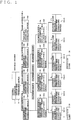
- reference numeral 1 represents a highest-level master computer of an original card issuer company that issues prepaid cards (prepaid pachinko cards), to which are connected, via network lines, subservient second-level computers 2A, 2B, 2C, ..., 2n of card distributor companies. Further, to the second-level computers 2A, 2B, 2C, ..., 2n of the card distributor companies are connected host computers (such as those denoted at 3A, 3B, ..., 3n) of affiliated pachinko houses. In each of the pachinko houses, the host computer (such as 3A) collectively manages or exercising general control of individual pachinko (CR-type) pachinko game machines 4 and prepaid card vending machines 5 located within the house. In addition, in each of the pachinko houses, third-level computers are provided within or connected with the host computer (such as 3A).
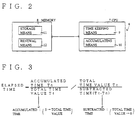
- the above-mentioned highest-level master computer 1 implements a unique time generating device 6 as shown in Fig. 2 by arranging its CPU 7 to provide a time keeping means 9 and accumulating means 10 and also setting a memory 8 to include a storage means 11 for storing a preset time-measuring period and a renewal means 12 for renewing the time-measuring period.
- Total time value to be counted over the preset time-measuring period may be optionally set, for example, to correspond to a total value of seconds over a period of ten or 100 years, and every elapsed time within the preset time-measuring period is measured by the time keeping means 9 constantly counting the total time value.
- the total time values for one, ten and 100 years will be as follows:
- the total time value to be counted is expressed in time units of 1/10,000 second measured by an atomic clock (cesium clock), and a “unique time” is given by constantly counting the total time value to identify a changing elapsed time within the preset time-measuring period.
- Elapsed time (unique time measurement) is typically calculated from both an accumulated time and a subtracted time, as shown in Fig. 3.
- the accumulated time is a time value measured forward or incrementally from the zeroth second toward the total time value to be counted
- the subtracted time is a time value measured rearward or decrementally from the total time value toward the zeroth second.
- a unique time measurement may be calculated from either the accumulated time or the subtracted time or by adding some variables to the time value.
- the accumulating means 10 sequentially accumulates successive unit time values measured the time keeping means 9; that is, the accumulating means 10 calculates an accumulated time Tn from the zeroth second toward the last second of the total time value Tt to be counted as well as a subtracted time from the last second toward the zeroth second (Tt - Tn), so as to constantly provide a changing elapsed time within the preset time-measuring period (see Fig. 3).
- the time period renewal means 12 in the memory 8 is activated to renew the time-measuring period for another 100 years and instructs the time keeping means 9 to count the renewed time-measuring period.
- the unique time generating device provided in the computer is updated once for every 100 years.
- Similar unique time generating device is provided in each of the second-level computers 2A, 2B, ..., 2n of card distributor companies A to n directly connected to or subservient to the highest-level master computer 1, the third-level computers 3A, 3B, ..., 3n of the pachinko houses connected to the second-level computers 2A, 2B, ..., 2n and the fourth-level computers of the individual pachinko game machines 4 and prepaid card vending machines 5 connected to the third-level computers 3A, 3B, ..., 3n. All these unique time generating devices provided in the above-mentioned computers are set to indicate unique elapsed time measurements, different from each other, at every given point.
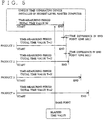
- the unique time generating devices are sequentially produced, at intervals of, for example, one second, and they are set to start measuring time at different points that depend on the production intervals and thus differ in measured elapsed time from each other by one second; for the same reason, they are set to end measuring time at different points that are displaced from each other by one second due to the differences of their time-measurement start points, although the total time value to be counted Tt, i.e., the length of the time-measuring period (e.g., 3,155,692,500.97 seconds), is the same for all the products, i.e., unique time generating devices.
- the length of the time-measuring period may be made different among these products or unique time generating devices.
- the unique time generating device 6 provided in the master computer 1 may be set as a master device and the total time values Tt of product 1 to product n sequentially produced or supplied on the basis of unique time generation by the master device may be set to progressively become great relative to that of the master device in such a way that each of the products has a total time value Tt greater by one second than that of the preceding product. It may be assumed that all these unique time generating devices including the master device are caused to start measuring time like a stopwatch.
- all the unique time generating devices including the master device are allowed to start measuring at a same start point up to their unique total time values (i.e., up to the end of different time-measuring periods); thus, they stop the counting at different end points that will sequentially arrive every second.
- all the unique time generating devices indicate different elapsed time measurement at every given time point within the different time-measuring periods, as shown in Fig. 5.
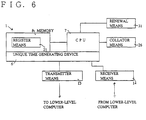
- the highest-level master computer 1 includes a transmitter means 13 that transmits, to the respective computers 2A, 2B, ..., 2n of the card distributor companies, authentication data based on an elapsed time measurement at a given time point indicated by the unique time generating device 6 thereof.
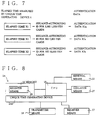
- the master computer 1 generates original authentication data X1a, X2a and X3a (Fig. 7) corresponding to elapsed times measured by the unique time generating device 6 and sequentially issues these original authentication data X1a, X2a and X3a to one of the second-level computers (e.g., computer 2A).
- each of the thus-issued original authentication data X1a, X2a and X3a is transmitted to the second-level computer (e.g., computer 2A), where it is used as identification (ID) data to authorize issuance of a prepaid card, i.e., issuance-authorizing identification data (see Fig. 7).
- ID identification
- each of the original authentication data X1a, X2a and X3a transmitted by the transmitter means 13 of the master computer 1 is received by the second-level computer of one of the card distributors requesting the issuance (e.g., card distributor A).
- this second-level computer 2A of card distributor A also includes a CPU 15, a memory 16 having provided therein the unique time generating device 2A6, a receiver means 17 and a transmitter means 18.
- Each of the original authentication data X1a, X2a and X3a received by the receiver means 17 of the second-level computer is temporarily stored into a register means 19 within the memory 16 and then read out from the register means 19 upon request from the host computer of any one of the pachinko houses.
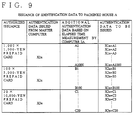
- the receiver means 17 of the second-level computer 2A receives a request for issuance of authentication data for 1,000 1,000-YEN-worth prepaid cards, 100 5,000-YEN-worth prepaid cards and 20 10,000-YEN-worth prepaid cards, then the computer 2A reads out the authentication data X1a, X2a and X3a from the register means 19 and imparts thereto unique additional authentication data A1 - A1000, B1 - B100 and C1 - C20, respectively, that are based on elapsed time measurements sequentially output by the unique time generating device 2A6 of the computer 2A.
- unique authentication data corresponding to the respective numbers of the 1,000-YEN, 5,000-YEN and 10,000-YEN prepaid cards are created on the basis of elapsed time measurements sequentially output by the unique time generating device 2A6; that is, the authentication data of the 1,000-YEN prepaid cards will be X1a+A1 to X1a+A1000, the authentication data of the 5,000-YEN prepaid cards will be X2a+B1 to X2a+B100, and the authentication data of the 10,000-YEN prepaid cards will be X3a+C1 to X3a+C20.
- the thus-created authentication data are then transmitted from the transmitter means 18 of the second-level computer 2A to the host computer 3A of the pachinko house A.
- the computer 2A of card distributor A erases the identification, actually issued to the pachinko house's host computer (e.g., host computer 3A), from among the issuance-authorizing identifications corresponding to the authentication data X1a, X2a and X3a.
- host computer 3A e.g., host computer 3A
- the receiver means of the host computer 3A receives the authentication data (e.g., X1a+A1, X2a+B1 and X3a+C1) transmitted by the card distributor A.
- the host computer of each of the pachinko houses is constructed in a similar manner to the second-level computer of Fig. 8 and imparts, to the received authentication data (e.g., X1a+A1, X2a+B1 and X3a+C1), identification based on elapsed time measurements sequentially indicated by the unique time generating device 3A6 of the host computer.
- the unique time generating device e.g., 5A1-6
- the vending machine 5 in pachinko house A can sell, to customers, prepaid magnetic cards 20 which have stored thereon unique authentication data (X1a+A1+3A****+5A****) as a result of sequential impartment of various unique data based on the respective elapsed time measurements indicated by the unique time generating devices at various hierarchical levels, as shown in Fig. 10.
- the ultimate unique authentication data thus recorded on each of the prepaid cards 20 (X1a+A1+3A****+5 A****) is transmitted from the lowest-level computer of the vending machine 5 to the receiver means of the host computer 3A of the pachinko house A, which in turn identifies, from the recorded ultimate unique authentication data, an up-to-date record or history of prepaid card issuance by the vending machine 5 and transmits the ultimate unique authentication data to the receiver means 17 of the second-level computer 2A of card distributor A shown in Fig. 8.
- the second-level computer 2A of card distributor A receives, by means of its receiver means 17, the ultimate unique authentication data transmitted from all the associated pachinko houses and stores them into the register means 19 thereof, via which the computer 2A transmits the ultimate authentication data to the receiver means 14 of the highest-level main computer 1. Then, the master computer 1 receives the ultimate unique authentication data transmitted from the computers 2A to 2n of the individual card distributor companies and stores them in the register means 21 within the memory 8.
- each of the master computer 1 and subservient computers 2A and 3A of card distributor A and pachinko house stores the received ultimate unique authentication data after collating it with the corresponding authentication data (issuance-authorizing identification) previously sent to the subservient computers.
- the master computer 1 has prestored therein various attributes of the unique time generating devices provided therein and in all the subservient computers as shown in Fig. 5, so that the master computer 1 rejects the registration, in its register means, of any ultimate unique authentication data containing an attribute that does not agree with the prestored attributes.
- each of the prepaid cards 20 sold by vending machine 1 of pachinko house A can be used as a common card universally usable in all the pachinko houses under the control of card distributor company A or of the master computer 1; for example, the issued prepaid card 20 can be used for "pachinko game machine 4" in pachinko house A.
- the pachinko game machine of each of pachinko houses A to n ((the following description will be made primarily about pachinko game machine 4) includes a card reader/writer 22 contained in or connected to the lowest-level computer of pachinko game machine 4 as shown in Fig. 11.
- Reading means 23 of the computer in Fig. 11 reads the ultimate unique authentication data recorded on the prepaid card 22 that is inserted in the card reader/writer 2.
- the ultimate unique authentication data (X1a+A1+3A****+5A****) read out from the prepaid card 22 by the reading means 23 is transmitted from the transmitter means 24 of the computer to the host computer 3A of pachinko house A.
- the ultimate unique authentication data received by the receiver means of the host computer 3A is then forwarded, through the receiver means 17 of the computer 2A of card distributor A, to the receiver means 14 of the master computer 1 for necessary collation.
- the computer 2A of card distributor A or the master computer 1 includes a collator means 26 or 27 as shown in Fig. 6 or 8, which determines whether the ultimate unique authentication data (X1a+A1+3A****+5A* ***) received by the receiver means 14 or 17 has been duly registered in the up-to-date record or history of issuance in the register means 19 or 21.
- the collator means 27 in the computer 2A of card distributor A determines that the unique authentication data received from the subservient computer (host computer 3A of pachinko house A) does not match the data stored in the register means 19, the unique authentication data is transmitted from the transmitter means 18 of the computer 2A to the receiver means 14 of the master computer 1, where the data is collated by the collator means 26.
- the collator means 26 or 27 of the master computer 1 or the computer 2A of card distributor A determines that the unique authentication data (X1a+A1+3A****+5A****) received from the subservient computer (host computer 3A of pachinko house A) matches the data stored in the register means 19 or 21, the means 26 or 27 passes the determination or collation result, through the host computer 3A, to the computer of the pachinko game machine.
- the collation result is received by the receiver means 25 shown in Fig. 11.
- the collation result, of the inserted prepaid card, by the collator means 26 or 27 thus received by the receiver means 25 is visually shown on a display 28 of pachinko game machine 4 shown in Fig. 11.
- an authorizing means 29 accepts the prepaid card 20 as authentic and displays various information, such as the type, issue date and remaining units, of the card (see Fig. 11) on the display that is typically in the form of an LCD (Liquid Crystal Display) or CRT (Cathode Ray Tube).
- LCD Liquid Crystal Display
- CRT Cathode Ray Tube
- a rejecting means 30 determines the inserted prepaid card 20 as not being an authentic card rightly issued by any one of the computers under the control of the master computer 1 and displays a rejection message "This card is unusable.” on a display 28A in the form of an LCD or CRT; in this case, the rejecting means 30 also instructs the card reader/writer 22 to reject the card as false.
- the prepaid card 20 determined as authentic or acceptable by the authorizing means 29 can be used in pachinko game machine 4 by the holder or user of the card. Specifically, if the user, holding a 1,000-YEN prepaid card 20, selectively depresses one of a plurality of buttons on pachinko game machine 4 to purchase pachinko balls for 500 YEN (50 units) while referring to the information of the card 20 shown on the display 28, the selected purchase information is transmitted from the pachinko game machine's computer, through the host computer 3A of pachinko house A and computer 2A of card distributor A, to the master computer 1 in association with the ultimate unique authentication data stored on the card 20.
- a renewal means 31 first confirms that the unique authentication data (X1a+A1+3A** **+5A****) received in association with the selected purchase information matches the data previously stored in the register 21 and then creates identification (ID) to authorize the selected purchase.
- ID identification
- the purchase-authorizing ID is created, as authentication-data-updating data Y1a, on the basis of an elapsed time measurement Y1 indicated by the unique time generating device 6 provided in the master computer 1, and the thus-created authentication-data-updating data Y1a is then transmitted from the receiver means 13 to the second-level computer 2A along with the unique authentication data (X1a+A1+3A****+5A****).
- a renewal means 32 first confirms that the unique authentication data matches the data stored in the register 19 and then creates identification data to authorize the selected purchase.
- the purchase-authorizing ID is created, as authentication-data-updating data P1a, on the basis of an elapsed time measurement P1 indicated by the unique time generating device 2A6 provided in the computer 2A, and the thus-created authentication-data-updating data P1a is then transmitted from the receiver means 18 to the host computer 3A subservient to the computer 2A along with the authentication data Y1a created by the master computer 1.
- further authentication-data-updating data Q1a is created on the basis of a current elapsed time measurement Q indicated by the unique time generating device 3A6 and added to the received data (Y1a+P1), and the added result is transmitted to the pachinko game machine 4.
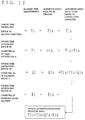
- further authentication-data-updating data R1a is created on the basis of a current elapsed time measurement R1 indicated by the unique time generating device 4A1-6 provided in its computer and added with the data Y1a, P1a and Q1a to provide ultimate authentication-data-updating data (Y1a+P1a+Q1a+R1a), as shown in Fig. 12.
- a renewal means 33 updates the last-stored unique authentication data (X1a+A1+3A****+5A****) on the prepaid card 20, on the basis of the updating data (Y1a+P1a+Q1a+R1a); the updating may be done by erasing the last unique authentication data or adding thereto the updating data. What is essential here is that the last-stored unique authentication data should be altered on the basis of the updating data (Y1a+P1a+Q1a+R1a).
- the alteration of the unique authentication data is effected via the card reader/writer 22, and thus the prepaid card 22 is discharged from the reader/writer 22 with its unique authentication data altered on the basis of the updating data corresponding to the selected purchase of pachinko balls for 500 YEN (50 units).
- the altered data (updated unique authentication data) is transmitted to the higher-order computers, one after another, in the hierarchical network structure.
- the renewal means 32 replaces the last unique authentication data, registered in the register means 19, with the updated unique authentication data.
- the renewal means 31 replaces the last unique authentication data, registered in the register means 21, with the updated unique authentication data. In this way, the up-to-date record or history of issuance of the unique authentication data by each of the higher-order computers is updated.
- the updated unique authentication data is read out from the card 20 and collated with the data stored in the registers 19 and 20 of the upper-order computers to ascertain its acceptability, in a similar manner to the above-mentioned.
- data indicative of the most recent use of the card 20 is displayed on the display 28 of the pachinko game machine 28, as shown in Fig. 13.
- each of the pachinko houses under the control of the master computer 1 imparts, to every inserted prepaid card 20, additional authentication data that is based on respective elapsed time measurements indicated by the individual unique time generating devices, so that various data relating to the issuance and use of the card can be recorded on the card substantially in a time-series fashion. Therefore, every issued prepaid card will have an utterly unique identification and its recorded data will be updated upon insertion into the reader/writer 22.
- the authentication-data-updating data are passed downward to the fourth-level computer in the above-described best mode as shown in Fig. 12, such updating data may be passed from the fourth-level computer upward to the higher-order computers so that same authentication-data-updating data is ultimately shared between the master computer 1 and the fourth-level computer and a prepaid card is issued with the updated unique authentication data.
- the above-described best mode is arranged such that the data to rewrite data to be recorded on a prepaid card 20 is transmitted to the higher-order computers after the necessary collation is performed on the card 20 inserted in the card reader/writer 22 and then the card 20 is judged to be a fairly issued card, it is preferable that such information exchanges be conducted collectively at one time.
- the unique time generating device is provided in each of the computers of the card distributors, pachinko houses and vending machines and pachinko game machines of the pachinko houses, all of these computers need not necessarily contain such a unique time generating device.
- the subservient computers under the control of the master computer 1 may impart, to authentication data based on an elapsed time measurement and received from the master computer 1, respective unique additional data (differing among the computers) so that unique authentication data created by combining these unique data is recorded on a prepaid card 20 to be newly issued or updated (as recited in claims 2 and 8 appended hereto).
- the master computer 1 at the highest level in the hierarchical structure should prestore the respective unique additional data of the individual subservient computers so as to be able to ascertain via which of the channels has been issued the unique authentication data ultimately recorded on the card 20 and registered or updated in the register means 21 (as recited in claim 8 appended hereto).
- the subservient computers under the control of the master computer 1 have been described above as providing the unique time generating devices that indicate different elapsed time measurements at every given time point.
- Each of these unique time generating devices may be implemented by a software program installed in the corresponding computer, or may be provided on an IC chip built in the computer, or may be a discrete driver or generator external to the computer.
- the unique time generating device may be provided in each of the subservient computers under the control of the master computer 1 with the master computer 1 or owner of the computer 1 operating as an initial or original card supplier (as recited in appended claims 6 and 7).
- the initial card supplier is arranged to prestore contents of data to be generated by the individual unique time generating devices which include their respective elapsed time measurements as well as their respective attributes relative to the master computer 1, it is possible to ascertain via which procedure has been issued the unique authentication data ultimately recorded on the card 20 and registered or updated in the register means 21 (as recited in appended claim 8).
- the computer of each of the card distributors may be set to operate as a secondary supplier which supplies the lower-order computers with unique time measurements received from the master computer 1.
- each of the vending machines 5 and pachinko game machines 4 has a computer or unique time generating device.
- the host computer of each of the pachinko houses may be set to operate as a lowest-level computer which collectively controls the individual vending machines 5 and pachinko game machines 4.
- the host computer creates and update the unique authentication data and then records the authentication data on a prepaid card that is issued by the vending machine 5 and used in the pachinko game machine 4.
- the highest-level computer in the hierarchical structure has been described above as the "master computer" 1 controlling a plurality of other computers.
- the master computer any one of the computers of the card distributors and host computers of the pachinko houses may be set to function as the master computer.
- the best mode has been described above in relation to prepaid cards for use in pachinko game machines, the present invention may be applied to other prepaid card instruments, such as those for railroads, ships, airplanes, telephones, amusement parks (as recited in appended claim 9).
- the system according to the above-described best mode may be provided in the host computers of the card distributors or in the computers of the vending machines or in computers of automatic ticket checkers, telephones or various equipment installed in the amusement parks (as recited in appended claims 38 and 39).
- the present invention achieves the superior benefit that it can effectively avoid damages which would be caused by any person stealing or tampering authentication data recorded on recording media.
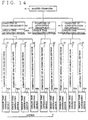
- FIG. 14 is a diagram illustrating a hierarchical network of computers installed within a company.
- a host or master computer 41 of the company does not itself contain a unique time generating device; instead, such a unique time generating device is provided in each of the lower-level computers subservient to the master computer 41 (as recited in appended claims 4, 5, 6 and 7).
- the computers 42, 43 and 44 of a sales department, accounting department and administration department are Directly connected to the master computer 41.
- the computers 45, 46, 47 and 48 of individual sales sections are connected to the sales department's computer 42, the computers 49 and 50 of individual accounting sections to the accounting department's computer 43, and the computers 51 and 52 of individual administration sections to the administration department's computer 44.
- the computers subservient to or under the control of the master computer 41 are interconnected via the network for intercommunication.
- Each of the computers other than the master computer 41 is provided with a unique time generating device 42A - 52A. As in the above-described best mode, all of these unique time generating devices 42A to 52A are set to measure unique or different elapsed times at every given time point.
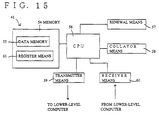
- Memory 54 of the master computer 41 includes a data memory 55 in which are prestored various data on the unique time generating devices 42A to 52A provided in the individual lower-level computers under the control of the master computer 41.
- the master computer 41 also includes a CPU 56, a renewal means 57, a collator means 58, a transmitter means 59 and a receiver means 60.
- the memory 54 of the master computer 41 further includes a register means 61.
- Each of the lower-level or subservient computers 42 to 53 includes a CPU 61, a renewal means 62, a transmitter means 63, a receiver means 64, a reading means 65, an authorizing means 66 and a rejecting means 67, as shown in Fig. 16.
- the CPU 61 of the computer 45 creates unique authentication data TKA, peculiar to the computer 45, based on an elapsed time measurement TK indicated by the unique time generating device 45A and transmits the thus-created unique authentication data to the higher-level sales department's computer 42 via the transmitter means 63 (see Fig. 16).
- the sales department's computer 42 forwards the unique authentication data to the receiver means 42 of the master computer 41.
- the collator means 58 connected to the CPU 56 collates the unique authentication data TKA, received by the master computer 41, with the information on the individual unique time generating devices prestored in the data memory 55, to find which of the subservient computers has created and issued the authentication data TKA.
- the master computer 41 registers the authentication data TKA in the register means 61 as part of an up-to-date record or history of unique authentication data issuance by the subservient computer (see Fig. 15).
- the transmitter means 59 of the master computer 41 transmits information, authorizing the desired access, to the receiver means 64 of the computer 45 of the first sales section by way of the sales department's computer 42.
- the computer 45 of the first sales section sends, via the transmitter means 63, data to initiate the access to the computer 50 of the second accounting section.
- the unique authentication data TKA is sent, as a unique identification of the computer 45, to the receiver means 64 of the computer 50 of the second accounting section along with a request for the accounting-related information.
- the reading section 65 reads the unique authentication data TKA from among the received information, and the thus-read authentication data TKA is transmitted from the transmitter means 63, via the accounting department's computer 43, to the receiver means 60 of the master computer 41, where the data TKA is subjected to the collation (see Fig. 16).
- the collator means 58 collates the received authentication data TKA to determine whether the received data duly matches the data registered in the register means 61. If the authentication data TKA matches the data registered as an up-to-date record or history of issuance of unique authentication data by the subservient computer, the master computer 41 transmits the collated result from its transmitter means 59 to the computer 50 of the second accounting section by way of the accounting department's computer 43.
- the receiver section 64 in the computer 50 of the second accounting section receives the collated unique authentication data TKA. If the collated unique authentication data TKA is judged to be proper data (that has been fairly created and issued by any one of the subservient computers), then the authorizing means 66 in the computer 50 permits further communication with the computer 45 of the first sales section, in response to which the requested accounting-related information is supplied to the computer 45.
- the rejecting means 67 in the computer 50 inhibits further communication with the computer 45 of the first sales section because there is a great likelihood that an unauthorized outsider' computer is pretending to be the computer 45.
- each of the computers on the hierarchical network can be authenticated reliably in accordance with data created and issued on the basis of an elapsed time measurement indicated by the unique time generating device provided therein.
- Example 1 unique authentication data TKA issued by the computer 45 of the first sales section has been described as being transmitted to the master computer 41 by way of the sales department's computer 42, such data may be transferred directly to the master computer 41. Similarly, data to be collated and resultant collated data may be communicated between the master computer 41 and the computer 50 of the second accounting section directly, rather than by way of the accounting department's computer 43.
- the unique authentication data TKA created and issued earlier may be altered by the renewal section 62 on the basis of an elapsed time measurement indicated by the unique time generating device 45A so that further communication is safely made between the two computers 45 and 50 on the basis of the thus-altered unique authentication data in a similar manner to the above-described best mode.
- the renewal means 57 in the master computer 41 may update the unique authentication data registered in the register means 61 (as recited in appended claims 31 and 32).
- the subservient computers may include a memory means (not shown) for storing the unique authentication data (including the altered unique authentication data) for use in next access.
- an alternative arrangement may be made such that the last-issued unique authentication data TKA is read out from register means 61 in the master computer 41 as the computer 45 of the first sales section requests access to the computer 50 of the second accounting section and additional data based on a new elapsed time measurement received from the computer 45 is imparted to the authentication data TKA to thereby create and issue unique authentication data that is updated in both the master and subservient computers.
- Example 1 has been described as carrying out the further access between the subservient computers on the basis of such updated unique authentication data
- unique authentication data may be created and issued, as a so-called one-time password, for each access on the basis of an elapsed time measurement indicated by the unique time generating device provided in the computer requesting the access (as recited in appended claim 9).
- the accessed subservient computer may also create and issue unique authentication data via its unique time generating device and transmit the unique authentication data to the accessing computer by way of same procedure as taken for the unique authentication data of the latter computer, so as to permit mutual authentication between the two computers.
- Example 1 has been described in relation to the case where the computers of the individual sections are the lowest-level computers in the company, still-lower-level computers may be connected to the sections' computers for use at various stations or by individual constituent members belonging to the sections and departments (as recited in appended claim 16).
- Fig. 17 is a diagram illustrating a hierarchical network of the computers in Example 2, where reference numeral 70 represents a host computer of the central bank (e.g., the Bank of Japan) that functions as a master computer exercising general control of the other computers in the hierarchical network.
- To the master computer 70 are connected computers of various lower-level or subservient banking agencies, such as host computers 71 of city banks, host computers 72 of local banks, host computers 73 of credit banks and host computers 74 of credit unions for simplicity, only one host computer is shown and will be described for each of the subservient banking agencies.
- Further, to the computer of each of the banking agencies are connected host computers of main and local offices and branches, actually performing banking operations, of the associated banking agencies.
- each of the main and local offices and branches are connected computers of on-line terminals (including cash dispensers).
- computers of the central bank down to the on-line terminals, there are provided unique time generating devices, one for each computer, which count time within different time-measuring periods to indicate different elapsed time measurements at every given time point, as described earlier in relation to the above-described best mode.
- Data relating to the individual unique time generating devices are stored together in a data memory of the host computer 70 of the central bank for general management by the host computer 70, similarly to the arrangement of Fig. 15.
- Each of the computers on the hierarchical network is arranged to create and issue unique authentication data in a similar manner to the best mode or Example 1, when conducting, via a given terminal computer, a transaction (such as settlement of a draft or check or remittance) with the computer of another banking agency or another office of the same banking agency.
- a transaction such as settlement of a draft or check or remittance
- the computer of another banking agency or another office of the same banking agency For example, when settlement of a check issued by one of the branches of the local bank 72 is requested thereto via the on-line terminal of one of the branches of the city bank 71, a request for access to the branch of the local bank 72 is sequentially made from the on-line terminal, through the city bank's host computer 71, to the central bank's host computer 70.
- the central bank's host computer 70 creates and issues authentication data TL1, representative of authorization of the requested access, on the basis of an elapsed time measurement indicated by the unique time generating device provided in that host computer. Then, the local bank's host computer 71 creates and issues authentication data TL2 on the basis of an elapsed time measurement indicated by its unique time generating device and adds the authentication data TL2 to the authentication data TL1 received from the central bank's host computer 70.
- the branch's computer creates and issues authentication data TL3 on the basis of an elapsed time measurement indicated by its unique time generating device and adds the authentication data TL3 to the authentication data TL2, and the terminal's computer creates and issues authentication data TL4 on the basis of an elapsed time measurement indicated by its unique time generating device and adds the authentication data TL4 to the authentication data TL3 so as to provide unique authentication data TL1+TL2+TL3+TL4.
- the terminal's computer transmits the unique authentication data TL1+TL2+TL3+TL4 to the computer of the local bank's branch as check-settling identification ID along with check settlement information.
- the issued unique authentication data Prior to the transmission, the issued unique authentication data is sequentially sent to the higher-order computers so that it is registered in register means (not shown) of the branch's and local bank's host computers and ultimately in register means (not shown) of the central bank's host computer 70.
- the computer of the local bank's branch having received the check settlement request, reads the unique authentication data TL1+TL2+TL3+TL4 from among the received information and transmits the thus-read data to the higher-order computers so that the data is ultimately collated in the central bank's host computer 70.
- a collator means (not shown) collates the the unique authentication data received from the computer of the local bank's branch in order to ascertain whether the data matches the authentic data registered in the register means.
- the collated result is transmitted to the lower-order computers so that it is ultimately received by the branch's computer. If the received data is authentic data, the branch's computer initiates procedures necessary for the check settlement on the basis of permission from the authorizing means; otherwise, it refuses to execute the check settlement procedures.
- the updated unique authentication data can be generated by updating the last unique authentication data registered in a renewal means (not shown) of the master computer (host computer 70 of the central bank), a similar renewal means may also be provided in each of the lower-order computers to update the content of the unique authentication data stored in the register means of the lower-order computer (as recited in appended claims 32 and 34).
- the renewal means of each of the lower-order computers may retrieve the updated authentication data registered in the highest-level computer of the central bank to thereby update the last unique authentication data stored in the register means of the lower-order computer (as recited in appended claim 33).
- each of the banking agencies uses unique authentication data not only in transactions with other banking agencies but also in direct transactions with their customers.
- Each of the customers normally holds one or more cards 75 (such as a cash card and credit card) associated with his or her account opened at the banking agency, and it is expected that in the near future the customers will also hold electronic money cards (so-called "electronic money") issued by their banking agencies.
- electronic money cards so-called "electronic money”
- magnetic or IC cards used as such money-equivalent cards are issued via the terminal computers as shown in Fig.
- the unique authentication data is collated and updated in the master computer 70 (or in any of the lower-order computers).
- terminal machines terminal computers
- the unique authentication data on the card 75 will be collated and renewed each time it is put to actual use.
- the money amount in the account corresponding to the card 75 is updated, i.e., increased or decreased, so that various data are created including the up-to-date record of use of the card 75.
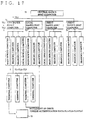
- Fig. 18 is a diagram showing a hierarchical network structure where the authentication-data issuing and verifying system is provided in each of a plurality of computers owned by a railroad company (as recited in appended claims 18, 19, 38, 39, etc.).
- reference numeral 80 represents a host computer of the railroad company, to which are connected subservient computers of individual stations, tourist bureaus and convenience stores --only one station, tourist bureau and convenience store are shown and will be described for simplicity-- that control issuance of railroad tickets.
- each of the subservient computers are connected computers contained in or attached to ticket vending machines that issue various tickets with magnetic data recorded thereon, such as ordinary railroad passenger tickets, coupon tickets, commuter passes and platform tickets, as well as prepaid (magnetic) cards for utilizing the railroad facilities.
- the host computer 80 of the railroad company is also connected with computers of automatic ticket checkers 81 that are placed at the ticket gates of the individual railroad stations to read information recorded on the prepaid cards and tickets.
- a unique time generating device is provided in each of the host computer 80 of the railroad company, computers of the station, tourist bureaus and convenience store and computers of the lowest-level vending machines and ticket checkers 81.
- unique authentication data created and issued by the unique time generating devices on the basis of unique elapsed time measurements in a similar manner to Example 2 above, will be recorded, along with railroad service information indicative of a travel section, type and No. of a reserved seat, term of validity, etc.), onto each of the tickets and prepaid cards sold via the vending machines.
- each of the computers of the vending machines and ticket checkers 81 is provided with a reader/writer which reads and write data on the tickets and prepaid cards.
- the tickets and prepaid cards issued via the vending machines can be used to pass through the automatic ticket checkers and the prepaid cards can be used to purchase tickets from the vending machines, during which time the unique authentication data recorded on each of these tickets and prepaid cards is read via the reader/writer and then transmitted to the host computer 80 of the railroad company for the subsequent collation. Namely, the host computer 80 collates the received unique authentication data with previously registered data in the register means and then sends the collated result to the ticket checker 81 or vending machine in which the ticket or prepaid card has been inserted.
- the ticket checker 81 or vending machine having received the collated result, permits the use of the ticket or prepaid card if the ticket or prepaid card has been determined as authentic, but otherwise it rejects the use of the ticket or prepaid card.
- Each of the tickets and prepaid cards thus accepted is subjected to necessary rewriting or updating of the recorded railroad service information and the unique authentication data on the basis of authentication data and the like imparted by the higher-order computers in a similar manner to the above-described best mode and examples.
- the updated data are sent to the host computer 80 of the railroad company to update the previously registered unique authentication data in the register means thereof.
- the recorded data may be automatically erased via the register means upon expiration of the term.
- Such a system for issuing and authenticating tickets and prepaid cards can of course be applied to other transportation companies than railroad companies, such as airline companies, shipping companies and bus companies. In every such application, it is only necessary that information indicative of the shipping, airline or bus services be recorded on the ticket or prepaid card along with the unique authentication data.
- Possible examples of the ticket and prepaid card for use with the present inventive system include cards and tickets for amusement parks, lottery tickets and gift certificates issued by department stores, tickets for various recreational facilities, and tickets for automatic vending machines. In every such case, each amount due is subtracted from the money amount (current balance) recorded on the card or ticket and simultaneously the unique authentication data is updated to thereby prevent unfair or unauthorized use of the card or ticket.
- the identification data issuing and verifying system in accordance with the present invention is also applicable to various other types of transaction card, such as cards issued by credit companies, securities companies, insurance companies, loan companies and trust companies.
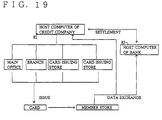
- each card issued by a credit company as shown in Fig. 19, on the basis of information on the customer's credit standing can be used in every member store of the credit company, and the unique authentication data recorded on the card is of course updated each time the card is used.
- information on every transaction in the member store is sent, along with the unique authentication data, to a host computer 83 of an associated bank as well as a host computer 82 of the credit company, so that necessary settlement procedures can be performed between the host computers of the bank and credit company on the basis of the unique authentication data.
- the authentication-data issuing and verifying system in accordance with the present invention is applicable to computers used by an administrative organ (as recited in appended claim 17) as well as companies and other profit-making and non-profit-making organizations as described earlier in relation to Example 1.
- a host computer of the administrative organ is set to function as a master computer, and the other computers used at various stations and by constituent members of the organ are made to function as lower-level computers subservient to the master computer. Access between these computers within the administrative organ is carried out on the basis of unique authentication data similarly to the best mode, examples and modifications as described above.
- the administrative organ supplies residents with ID cards 85 issued via a card issuing machine 84.
- the issuing machine 84 may record unique authentication data created on the basis of respective authentication data transmitted thereto from the host computer 86 and the computer 87 of a main office 86 and added together one after another (as recited in appended claims 11 and 38).
- Increased efficiency of the administrative management may be achieved by allowing the residents to get their desired service using the thus-issued ID cards 85 on terminal machines 90 positioned in the main, branch or local office of the administrative organ. In these cases, unfair use of the ID cards by unauthorized persons can be effectively prevented because the unique authentication data recorded on each of the cards is updated immediately every time the card is used on the terminal machine 90.
- the principle of the present invention may also be applied to various other storage media, such as floppy disk and writable CD-ROM.
- the present invention is applied to an IC card, it is possible to incorporate in the IC card a unique time generating device operating on the basis of data received from a higher-level computer, because the IC card can itself contain an electric cell. Further, by attaching the IC card to a handy-type personal computer for connection to communication lines, the computer can work as a lowest-level computer in the hierarchical network structure.
- the present invention having been described so far, authentication of any one of a plurality of computers interconnected via communication lines or mutual authentication between the computers can be performed with greatly increased accuracy. It is also possible to more accurately authenticate a recording media storing thereon authentication data issued from any of the computers. Further, because the unique authentication data is created and issued or updated or altered every time the recording media having the data stored thereon is put to actual use, the present invention can always grantee a secure transaction even when the unique authentication data is leaked to any third person. Thus, the present invention will find a variety of applications, such as authentication of various money-equivalent transaction instruments such as prepaid cards and cash cards, authentication of tickets, coupon tickets and electronic money, authentication of personalized ID cards, and computer-based authentication between companies, between banking agencies and between administrative organs.
Landscapes
- Business, Economics & Management (AREA)
- Accounting & Taxation (AREA)
- Engineering & Computer Science (AREA)
- Physics & Mathematics (AREA)
- General Physics & Mathematics (AREA)
- Finance (AREA)
- Theoretical Computer Science (AREA)
- Strategic Management (AREA)
- General Business, Economics & Management (AREA)
- Computer Security & Cryptography (AREA)
- Computer Networks & Wireless Communication (AREA)
- General Engineering & Computer Science (AREA)
- Software Systems (AREA)
- Computer Hardware Design (AREA)
- Microelectronics & Electronic Packaging (AREA)
- Development Economics (AREA)
- Economics (AREA)
- Pinball Game Machines (AREA)
- Control Of Vending Devices And Auxiliary Devices For Vending Devices (AREA)
Abstract
A system for issuing authentication data based on a specific time transmits authentication data formed sequentially with the lapse of
time counted by a specific time generating device (6) from a reference computer (1) to intermediate-order computers (2A) as shown in the
Figure. To the authentication data, the low-order computers (2A) and low-order computers (3A) add specific authentication data successively
and transmit the resultant data to the lowest-order vending machines. A computer of the vending machine (5) adds specific data to the
transmitted data, and generates and issues specific authentication data, and stores them in a prepaid card (20). At the same time, reversely to
the above process, the specific authentication data are transmitted to the reference computer (1) and are lastly registered in the reference
computer (1). When such an issued prepaid card (20) is used in a pachinko (pin-ball game) machine in a pachinko parlor affiliated to the
reference computer (1), the pachinko machine reads the specific authentication data stored in the card, refers to the reference computer for
the read data, and collates and authenticates it.
Description
The present invention relates to an authentication
data issuing system based on unique time generation, a
recording media for storing authentication data issued by
the authentication-data issuing system and an
authentication data verifying system, which exercise
general control of information issued by particular
computers, verify authentication data issued by some of
the computers and thereby effectively avoid damages that
would be caused by any person stealing the authentication
data.
Today, various prepaid cards, each prestoring money
amount information corresponding to a certain amount of
money paid in advance, are being widely used in various
commercial transactions, such as for using railroad
facilities and public telephones and playing with
Japanese pinball (hereinafter "pachinko") game machines.
These prepaid cards are inserted into card reader/writers
attached to or contained in various pieces of equipment,
such as automatic ticket checkers, automatic ticket
vending machines, public telephones and game machines,
where each amount due is subtracted from the remaining
balance on the card and the prestored money amount
information is rewritten accordingly.
Besides, in various banking agencies and the like,
account transfer services using personal computers and
public telephone lines have come into wide use, and it
is expected that every banking and currency settlement
service will be conducted through an electronic currency
system in the near future (as disclosed in, for example,
Japanese Patent Publication No. HEI-7-11723).
Recently, an increasing number of persons have
been attempting to tamper or copy the stored data on the
prepaid cards without due authorization, so that prepaid
card issuing companies are exercising, against such
fraudulent attempts, preventive measures that include
encryption and scrambling of the stored data. In the
account transfer and various electronic business
transactions, many persons have been attempting to
acquire other person's authentication data in a
fraudulent manner, in order to make unfair benefits by
pretending to be the true prepaid card holder.
The present invention has been made in view of
such inconveniences encountered by prior techniques and
seeks to provide an improved technique which, using a
unique time generating device previously proposed by the
applicant of the present application (in PCT/JP/02433),
can effectively avoid damages that would be caused by
any person stealing authentication data.
In order to accomplish the above-mentioned object,
the present invention provides an authentication-data
issuing system based on unique time, the authentication-data
issuing system including a plurality of computers
connected with each other via communication lines with
one of the computers set to function as a master
computer, the master computer comprising: a unique time
generating device including time keeping means for
sequentially outputting unit time values at predetermined
intervals over a preset time-measuring period that begins
at a given start point on a selected date and terminates
at a given future end point and accumulating means for
sequentially accumulating the unit time values output by
the time keeping means so as to constantly measure a
changing elapsed time within the time-measuring period;
transmitter means for, during communication between the
master computer and another of the computers subservient
to the master computer, transmitting, from the master
computer to the subservient computer, authentication data
based on an elapsed time measurement, corresponding to a
given time point, indicated by the unique time generating
device; and register means for receiving and registering
an issuance history of unique authentication data created
and issued by the subservient computer imparting
additional data, unique to the subservient computer, to
the authentication data transmitted by the master
computer.
According to another aspect of the present
invention, there is provided an authentication-data
issuing system based on unique time, the authentication-data
issuing system including a plurality of computers
connected with each other via communication lines with
one of the computers set to function as a master
computer, the master computer including a unique time
generating device including time keeping means for
sequentially outputting unit time values at predetermined
intervals over a preset time-measuring period that begins
at a given start point on a selected date and terminates
at a given future end point and accumulating means for
sequentially accumulating the unit time values output by
the time keeping means so as to constantly measure a
changing elapsed time within the time-measuring period.
Each of the computers subservient to the master computer
comprises: receiver means for, during communication with
the master computer, receiving authentication data based
on an elapsed time measurement, corresponding to a given
time point, indicated by the unique time generating
device of the master computer; issuer means for creating
and issuing unique authentication data by imparting
additional data, unique to the subservient computer, to
the authentication data received via the receiver means
from the master computer; and transmitter means for
transmitting, to the master computer, an issuance history
of the unique authentication data created and issued by
the issuer means.
According to still another aspect of the present
invention, there is provided an authentication-data
issuing system based on unique time, the authentication-data
issuing system including a plurality of computers
connected with each other via communication lines with
one of the computers set to function as a master
computer, where each of the computers subservient to the
master computer comprises: a unique time generating
device including time keeping means for sequentially
outputting unit time values at predetermined intervals
over a preset time-measuring period unique to the
computer that begins at a given start point on a
selected date and terminates at a given future end point
and accumulating means for sequentially accumulating the
unit time values output by the time keeping means so as
to constantly measure a changing elapsed time within the
time-measuring period; issuer means for creating and
issuing unique authentication data, peculiar to the
subservient computer, on the basis of an elapsed time
measurement indicated by the unique time generating
device; and transmitter means for transmitting, to the
master computer, an issuance history of the unique
authentication data created and issued by the issuer
means.
According to still another aspect of the present
invention, there is provided an authentication-data
issuing system based on unique time, the authentication-data
issuing system including a plurality of computers
connected with each other via communication lines with
one of the computers set to function as a master
computer. Each of the computers subservient to the
master computer comprises a unique time generating device
including time keeping means for sequentially outputting
unit time values at predetermined intervals over a preset
time-measuring period unique to the computer that begins
at a given start point on a selected date and terminates
at a given future end point and accumulating means for
sequentially accumulating the unit time values output by
the time keeping means so as to constantly measure a
changing elapsed time within the time-measuring period.
The master computer, exercising general control of the
subservient computers, includes register means for
receiving and registering an issuance history of data
created and issued by each of the subservient computers
on the basis of an elapsed time measurement indicated by
the unique time generating device of the subservient
computer.
According to still another aspect of the present
invention, there is provided a recording media having
stored thereon unique authentication data created by any
one of the subservient computers, and the recording media
is issued by the subservient computer.
According to still another aspect of the present
invention, there is provided an authentication-data
verifying system including a plurality of computers
connected with each other via communication lines with
one of the computers set to function as a master
computer. Each of the computers subservient to the
master computer comprises: reading means for reading
unique authentication data issued by any one of the
subservient computers on the basis of information
received from another of the subservient computers, or
reading unique authentication data issued by any one of
the subservient computers and recorded on a recording
media; transmitter means for transmitting the unique
authentication data read by the reading means to the
master computer for subsequent collation thereby; and
receiver means for receiving from the master computer a
result of collation between an issuance history of the
unique authentication data by each of the subservient
computers registered in the master computer and the
unique authentication data transmitted by the transmitter
means.
According to still another aspect of the present
invention, there is provided an authentication-data
verifying system including a plurality of computers
connected with each other via communication lines with
one of the computers set to function as a master
computer, where the master computer comprises: receiver
means for receiving unique authentication data
transmitted by transmitter means of any one of the
computers subservient to the master computer, the unique
authentication data being issued by the subservient
computer and read by reading means of the subservient
computer; and collator means for collating between the
unique authentication data received by the receiver means
and an issuance history of the unique authentication data
by each of the subservient computers that is registered
in the master computer; and transmitter means for
transmitting a result of collation by the collator means
to receiver means of the subservient computer.
In PCT Patent Application No. PCT/JP/02433 filed
at an earlier date, the applicant of the present
application proposed a unique time generating device and
fully explained the concept of "unique time" generated by
the device. Unlike the today's commonly-used time
concept based on Greenwich Mean Time, the "unique time"
is a time concept to linearly count a preset finite time
period from the zeroth toward the last second thereof,
i.e., to constantly a measure changing elapsed time
toward the last second within the preset time-measuring
period.
On the basis of such a unique time concept, the
present invention provides for authentication of a given
computer on a communication network or authentication of
a recording media storing thereon authentication data
issued by a given computer on the communication network.
First, the present invention will be described
hereinbelow in relation to a system for issuing and
authenticating prepaid cards for use in Japanese pinball,
i.e., "pachinko", game machines equipped with card
readers (commonly known as CR-type pachinko game
machines).
In Fig. 1, reference numeral 1 represents a
highest-level master computer of an original card issuer
company that issues prepaid cards (prepaid pachinko
cards), to which are connected, via network lines,
subservient second- level computers 2A, 2B, 2C, ..., 2n of
card distributor companies. Further, to the second- level
computers 2A, 2B, 2C, ..., 2n of the card distributor
companies are connected host computers (such as those
denoted at 3A, 3B, ..., 3n) of affiliated pachinko
houses. In each of the pachinko houses, the host
computer (such as 3A) collectively manages or exercising
general control of individual pachinko (CR-type) pachinko
game machines 4 and prepaid card vending machines 5
located within the house. In addition, in each of the
pachinko houses, third-level computers are provided
within or connected with the host computer (such as 3A).
The above-mentioned highest-level master computer 1
implements a unique time generating device 6 as shown in
Fig. 2 by arranging its CPU 7 to provide a time keeping
means 9 and accumulating means 10 and also setting a
memory 8 to include a storage means 11 for storing a
preset time-measuring period and a renewal means 12 for
renewing the time-measuring period. Total time value to
be counted over the preset time-measuring period may be
optionally set, for example, to correspond to a total
value of seconds over a period of ten or 100 years, and
every elapsed time within the preset time-measuring
period is measured by the time keeping means 9
constantly counting the total time value. For example,
the total time values for one, ten and 100 years will be
as follows:
Here, the "total time value to be counted" is
expressed in time units of 1/10,000 second measured by
an atomic clock (cesium clock), and a "unique time" is
given by constantly counting the total time value to
identify a changing elapsed time within the preset time-measuring
period. Elapsed time (unique time measurement)
is typically calculated from both an accumulated time and
a subtracted time, as shown in Fig. 3. Specifically,
the accumulated time is a time value measured forward or
incrementally from the zeroth second toward the total
time value to be counted, while the subtracted time is a
time value measured rearward or decrementally from the
total time value toward the zeroth second.
Alternatively, a unique time measurement may be
calculated from either the accumulated time or the
subtracted time or by adding some variables to the time
value.
The accumulating means 10 sequentially accumulates
successive unit time values measured the time keeping
means 9; that is, the accumulating means 10 calculates
an accumulated time Tn from the zeroth second toward the
last second of the total time value Tt to be counted as
well as a subtracted time from the last second toward
the zeroth second (Tt - Tn), so as to constantly provide
a changing elapsed time within the preset time-measuring
period (see Fig. 3). Once the time value accumulated by
the accumulating means 10 has reached the predetermined
total time value to be counted Tt (i.e., once the
counting of all the seconds in the 100 year period has
been completed), the time period renewal means 12 in the
memory 8 is activated to renew the time-measuring period
for another 100 years and instructs the time keeping
means 9 to count the renewed time-measuring period. In
this way, the unique time generating device provided in
the computer is updated once for every 100 years.
Similar unique time generating device is provided
in each of the second- level computers 2A, 2B, ..., 2n of
card distributor companies A to n directly connected to
or subservient to the highest-level master computer 1,
the third- level computers 3A, 3B, ..., 3n of the
pachinko houses connected to the second- level computers
2A, 2B, ..., 2n and the fourth-level computers of the
individual pachinko game machines 4 and prepaid card
vending machines 5 connected to the third- level computers
3A, 3B, ..., 3n. All these unique time generating
devices provided in the above-mentioned computers are set
to indicate unique elapsed time measurements, different
from each other, at every given point. For example, as
seen from "product 1" to "product n" in Fig. 4, the
unique time generating devices are sequentially produced,
at intervals of, for example, one second, and they are
set to start measuring time at different points that
depend on the production intervals and thus differ in
measured elapsed time from each other by one second; for
the same reason, they are set to end measuring time at
different points that are displaced from each other by
one second due to the differences of their time-measurement
start points, although the total time value
to be counted Tt, i.e., the length of the time-measuring
period (e.g., 3,155,692,500.97 seconds), is the same for
all the products, i.e., unique time generating devices.
Alternatively, the length of the time-measuring period
may be made different among these products or unique
time generating devices. As shown in Fig. 5, the unique
time generating device 6 provided in the master computer
1 may be set as a master device and the total time
values Tt of product 1 to product n sequentially
produced or supplied on the basis of unique time
generation by the master device may be set to
progressively become great relative to that of the master
device in such a way that each of the products has a
total time value Tt greater by one second than that of
the preceding product. It may be assumed that all these
unique time generating devices including the master
device are caused to start measuring time like a
stopwatch. This way, all the unique time generating
devices including the master device are allowed to start
measuring at a same start point up to their unique total
time values (i.e., up to the end of different time-measuring
periods); thus, they stop the counting at
different end points that will sequentially arrive every
second. As a result, all the unique time generating
devices indicate different elapsed time measurement at
every given time point within the different time-measuring
periods, as shown in Fig. 5.
As clearly shown in Fig. 6, the highest-level
master computer 1 includes a transmitter means 13 that
transmits, to the respective computers 2A, 2B, ..., 2n
of the card distributor companies, authentication data
based on an elapsed time measurement at a given time
point indicated by the unique time generating device 6
thereof. Let's assume here that the master computer 1
generates original authentication data X1a, X2a and X3a
(Fig. 7) corresponding to elapsed times measured by the
unique time generating device 6 and sequentially issues
these original authentication data X1a, X2a and X3a to
one of the second-level computers (e.g., computer 2A).
Specifically, each of the thus-issued original
authentication data X1a, X2a and X3a is transmitted to
the second-level computer (e.g., computer 2A), where it
is used as identification (ID) data to authorize issuance
of a prepaid card, i.e., issuance-authorizing
identification data (see Fig. 7).
More specifically, each of the original
authentication data X1a, X2a and X3a transmitted by the
transmitter means 13 of the master computer 1 is
received by the second-level computer of one of the card
distributors requesting the issuance (e.g., card
distributor A). As shown in Fig. 8, this second-level
computer 2A of card distributor A also includes a CPU
15, a memory 16 having provided therein the unique time
generating device 2A6, a receiver means 17 and a
transmitter means 18. Each of the original
authentication data X1a, X2a and X3a received by the
receiver means 17 of the second-level computer is
temporarily stored into a register means 19 within the
memory 16 and then read out from the register means 19
upon request from the host computer of any one of the
pachinko houses. If the receiver means 17 of the
second-level computer 2A receives a request for issuance
of authentication data for 1,000 1,000-YEN-worth prepaid
cards, 100 5,000-YEN-worth prepaid cards and 20 10,000-YEN-worth
prepaid cards, then the computer 2A reads out
the authentication data X1a, X2a and X3a from the
register means 19 and imparts thereto unique additional
authentication data A1 - A1000, B1 - B100 and C1 - C20,
respectively, that are based on elapsed time measurements
sequentially output by the unique time generating device
2A6 of the computer 2A. In this way, unique
authentication data corresponding to the respective
numbers of the 1,000-YEN, 5,000-YEN and 10,000-YEN
prepaid cards are created on the basis of elapsed time
measurements sequentially output by the unique time
generating device 2A6; that is, the authentication data
of the 1,000-YEN prepaid cards will be X1a+A1 to
X1a+A1000, the authentication data of the 5,000-YEN
prepaid cards will be X2a+B1 to X2a+B100, and the
authentication data of the 10,000-YEN prepaid cards will
be X3a+C1 to X3a+C20. The thus-created authentication
data are then transmitted from the transmitter means 18
of the second-level computer 2A to the host computer 3A
of the pachinko house A. At the same time, the computer
2A of card distributor A erases the identification,
actually issued to the pachinko house's host computer
(e.g., host computer 3A), from among the issuance-authorizing
identifications corresponding to the
authentication data X1a, X2a and X3a. Once the
identification authorizing issuance of a prepaid card
(issuance-authorizing identification) has run out as a
result of the erasure, new original authentication data
are supplied by the master computer 1.
In each of the pachinko houses (the following
description will be made primarily about the pachinko
house A), the receiver means of the host computer 3A
receives the authentication data (e.g., X1a+A1, X2a+B1
and X3a+C1) transmitted by the card distributor A. The
host computer of each of the pachinko houses is
constructed in a similar manner to the second-level
computer of Fig. 8 and imparts, to the received
authentication data (e.g., X1a+A1, X2a+B1 and X3a+C1),
identification based on elapsed time measurements
sequentially indicated by the unique time generating
device 3A6 of the host computer. Further, in each of
the vending machines 5 capable of dispensing 1,000-YEN,
5,000-YEN and 10,000-YEN prepaid cards to customers, the
unique time generating device (e.g., 5A1-6) provided in
its computer imparts additional identification data based
on elapsed time measurements sequentially indicated
thereby. Thus, the vending machine 5 in pachinko house
A can sell, to customers, prepaid magnetic cards 20
which have stored thereon unique authentication data
(X1a+A1+3A****+5A****) as a result of sequential
impartment of various unique data based on the respective
elapsed time measurements indicated by the unique time
generating devices at various hierarchical levels, as
shown in Fig. 10.
The ultimate unique authentication data thus
recorded on each of the prepaid cards 20 (X1a+A1+3A****+5
A****) is transmitted from the lowest-level computer of
the vending machine 5 to the receiver means of the host
computer 3A of the pachinko house A, which in turn
identifies, from the recorded ultimate unique
authentication data, an up-to-date record or history of
prepaid card issuance by the vending machine 5 and
transmits the ultimate unique authentication data to the
receiver means 17 of the second-level computer 2A of
card distributor A shown in Fig. 8. The second-level
computer 2A of card distributor A receives, by means of
its receiver means 17, the ultimate unique authentication
data transmitted from all the associated pachinko houses
and stores them into the register means 19 thereof, via
which the computer 2A transmits the ultimate
authentication data to the receiver means 14 of the
highest-level main computer 1. Then, the master computer
1 receives the ultimate unique authentication data
transmitted from the computers 2A to 2n of the
individual card distributor companies and stores them in
the register means 21 within the memory 8.
Note that each of the master computer 1 and
subservient computers 2A and 3A of card distributor A
and pachinko house stores the received ultimate unique
authentication data after collating it with the
corresponding authentication data (issuance-authorizing
identification) previously sent to the subservient
computers. Also, the master computer 1 has prestored
therein various attributes of the unique time generating
devices provided therein and in all the subservient
computers as shown in Fig. 5, so that the master
computer 1 rejects the registration, in its register
means, of any ultimate unique authentication data
containing an attribute that does not agree with the
prestored attributes.
In the above-mentioned manner, each of the prepaid
cards 20 sold by vending machine 1 of pachinko house A
can be used as a common card universally usable in all
the pachinko houses under the control of card distributor
company A or of the master computer 1; for example, the
issued prepaid card 20 can be used for "pachinko game
machine 4" in pachinko house A.
The pachinko game machine of each of pachinko
houses A to n ((the following description will be made
primarily about pachinko game machine 4) includes a card
reader/writer 22 contained in or connected to the lowest-level
computer of pachinko game machine 4 as shown in
Fig. 11. Reading means 23 of the computer in Fig. 11
reads the ultimate unique authentication data recorded on
the prepaid card 22 that is inserted in the card
reader/writer 2. The ultimate unique authentication data
(X1a+A1+3A****+5A****) read out from the prepaid card 22
by the reading means 23 is transmitted from the
transmitter means 24 of the computer to the host
computer 3A of pachinko house A. The ultimate unique
authentication data received by the receiver means of the
host computer 3A is then forwarded, through the receiver
means 17 of the computer 2A of card distributor A, to
the receiver means 14 of the master computer 1 for
necessary collation. The computer 2A of card distributor
A or the master computer 1 includes a collator means 26
or 27 as shown in Fig. 6 or 8, which determines whether
the ultimate unique authentication data (X1a+A1+3A****+5A*
***) received by the receiver means 14 or 17 has been
duly registered in the up-to-date record or history of
issuance in the register means 19 or 21. When, for
example, the collator means 27 in the computer 2A of
card distributor A determines that the unique
authentication data received from the subservient
computer (host computer 3A of pachinko house A) does not
match the data stored in the register means 19, the
unique authentication data is transmitted from the
transmitter means 18 of the computer 2A to the receiver
means 14 of the master computer 1, where the data is
collated by the collator means 26. Thus, as long as the
collator means 26 or 27 of the master computer 1 or the
computer 2A of card distributor A determines that the
unique authentication data (X1a+A1+3A****+5A****) received
from the subservient computer (host computer 3A of
pachinko house A) matches the data stored in the
register means 19 or 21, the means 26 or 27 passes the
determination or collation result, through the host
computer 3A, to the computer of the pachinko game
machine. Finally, the collation result is received by
the receiver means 25 shown in Fig. 11. The collation
result, of the inserted prepaid card, by the collator
means 26 or 27 thus received by the receiver means 25 is
visually shown on a display 28 of pachinko game machine
4 shown in Fig. 11. If, for example, the prepaid card
20 inserted in the card reader/writer 22 is collated
with the registered data and determined, by the collator
means 26 or 27 of the higher-level computer, as being a
genuine or authentic card rightly issued by any one of
the computers under the control of the master computer
1, an authorizing means 29 accepts the prepaid card 20
as authentic and displays various information, such as
the type, issue date and remaining units, of the card
(see Fig. 11) on the display that is typically in the
form of an LCD (Liquid Crystal Display) or CRT (Cathode
Ray Tube). If, on the other hand, the prepaid card 20
inserted in the card reader/writer 22 is collated with
the registered data, determined, by the collator means 26
or 27 of the higher-level computer, as not matching the
data stored in the register means 19 or 21 and such a
collation result is received by the receiver means 25, a
rejecting means 30 determines the inserted prepaid card
20 as not being an authentic card rightly issued by any
one of the computers under the control of the master
computer 1 and displays a rejection message "This card
is unusable." on a display 28A in the form of an LCD or
CRT; in this case, the rejecting means 30 also instructs
the card reader/writer 22 to reject the card as false.
The prepaid card 20 determined as authentic or
acceptable by the authorizing means 29 can be used in
pachinko game machine 4 by the holder or user of the
card. Specifically, if the user, holding a 1,000-YEN
prepaid card 20, selectively depresses one of a plurality
of buttons on pachinko game machine 4 to purchase
pachinko balls for 500 YEN (50 units) while referring to
the information of the card 20 shown on the display 28,
the selected purchase information is transmitted from the
pachinko game machine's computer, through the host
computer 3A of pachinko house A and computer 2A of card
distributor A, to the master computer 1 in association
with the ultimate unique authentication data stored on
the card 20.
In the master computer 1 having received the
selected purchase information, a renewal means 31 first
confirms that the unique authentication data (X1a+A1+3A**
**+5A****) received in association with the selected
purchase information matches the data previously stored
in the register 21 and then creates identification (ID)
to authorize the selected purchase. As shown in Fig.
12, the purchase-authorizing ID is created, as
authentication-data-updating data Y1a, on the basis of an
elapsed time measurement Y1 indicated by the unique time
generating device 6 provided in the master computer 1,
and the thus-created authentication-data-updating data Y1a
is then transmitted from the receiver means 13 to the
second-level computer 2A along with the unique
authentication data (X1a+A1+3A****+5A****).
Similarly, in the second-level computer 2A of card
distributor A, a renewal means 32 first confirms that
the unique authentication data matches the data stored in
the register 19 and then creates identification data to
authorize the selected purchase. As shown in Fig. 12,
the purchase-authorizing ID is created, as
authentication-data-updating data P1a, on the basis of an
elapsed time measurement P1 indicated by the unique time
generating device 2A6 provided in the computer 2A, and
the thus-created authentication-data-updating data P1a is
then transmitted from the receiver means 18 to the host
computer 3A subservient to the computer 2A along with
the authentication data Y1a created by the master
computer 1.
In the host computer 3A as well, further
authentication-data-updating data Q1a is created on the
basis of a current elapsed time measurement Q indicated
by the unique time generating device 3A6 and added to
the received data (Y1a+P1), and the added result is
transmitted to the pachinko game machine 4. Finally, in
the pachinko game machine 4, further authentication-data-updating
data R1a is created on the basis of a current
elapsed time measurement R1 indicated by the unique time
generating device 4A1-6 provided in its computer and
added with the data Y1a, P1a and Q1a to provide ultimate
authentication-data-updating data (Y1a+P1a+Q1a+R1a), as
shown in Fig. 12.
In the computer of the pachinko game machine 4, a
renewal means 33 updates the last-stored unique
authentication data (X1a+A1+3A****+5A****) on the prepaid
card 20, on the basis of the updating data
(Y1a+P1a+Q1a+R1a); the updating may be done by erasing
the last unique authentication data or adding thereto the
updating data. What is essential here is that the last-stored
unique authentication data should be altered on
the basis of the updating data (Y1a+P1a+Q1a+R1a). The
alteration of the unique authentication data is effected
via the card reader/writer 22, and thus the prepaid card
22 is discharged from the reader/writer 22 with its
unique authentication data altered on the basis of the
updating data corresponding to the selected purchase of
pachinko balls for 500 YEN (50 units).
The altered data (updated unique authentication
data) is transmitted to the higher-order computers, one
after another, in the hierarchical network structure.
Thus, in the computer 2A of card distributor A, the
renewal means 32 replaces the last unique authentication
data, registered in the register means 19, with the
updated unique authentication data. Then, in the master
computer 1 as well, the renewal means 31 replaces the
last unique authentication data, registered in the
register means 21, with the updated unique authentication
data. In this way, the up-to-date record or history of
issuance of the unique authentication data by each of
the higher-order computers is updated.
Next time the prepaid card 20 is used at any one
of the pachinko game machines under the control of the
master computer 1, the updated unique authentication data
is read out from the card 20 and collated with the data
stored in the registers 19 and 20 of the upper-order
computers to ascertain its acceptability, in a similar
manner to the above-mentioned. At this time, data
indicative of the most recent use of the card 20 is
displayed on the display 28 of the pachinko game machine
28, as shown in Fig. 13.
As described above, according to the prepaid card
issuing and authenticating system, each of the pachinko
houses under the control of the master computer 1
imparts, to every inserted prepaid card 20, additional
authentication data that is based on respective elapsed
time measurements indicated by the individual unique time
generating devices, so that various data relating to the
issuance and use of the card can be recorded on the card
substantially in a time-series fashion. Therefore, every
issued prepaid card will have an utterly unique
identification and its recorded data will be updated upon
insertion into the reader/writer 22. Thus, in a
situation where 1,000 or 10,000 false prepaid cards are
fabricated which have same data as recorded on a fairly
issued authentic card and when someone actually inserts
one of the cards into a pachinko game machine, the
recorded data on the inserted card is updated in the
above-described manner, so that all of the other cards
than the initially inserted one will be automatically
rejected as unusable or unacceptable (the original
authentic card will also be rendered unusable). With
such an arrangement, unfair alteration or tampering or
forgery of prepaid cards will end in meaningless effort
and thus a thorough self-defense (i.e., safeguard against
unfair transfer of the cards to other persons and theft
of the cards) is achieved by the present invention.
Whereas the authentication-data-updating data are
passed downward to the fourth-level computer in the
above-described best mode as shown in Fig. 12, such
updating data may be passed from the fourth-level
computer upward to the higher-order computers so that
same authentication-data-updating data is ultimately
shared between the master computer 1 and the fourth-level
computer and a prepaid card is issued with the updated
unique authentication data. Further, whereas the above-described
best mode is arranged such that the data to
rewrite data to be recorded on a prepaid card 20 is
transmitted to the higher-order computers after the
necessary collation is performed on the card 20 inserted
in the card reader/writer 22 and then the card 20 is
judged to be a fairly issued card, it is preferable that
such information exchanges be conducted collectively at
one time.
Moreover, whereas in the above-described best mode
the unique time generating device is provided in each of
the computers of the card distributors, pachinko houses
and vending machines and pachinko game machines of the
pachinko houses, all of these computers need not
necessarily contain such a unique time generating device.
Namely, in one alternative, the subservient computers
under the control of the master computer 1 may impart,
to authentication data based on an elapsed time
measurement and received from the master computer 1,
respective unique additional data (differing among the
computers) so that unique authentication data created by
combining these unique data is recorded on a prepaid
card 20 to be newly issued or updated (as recited in
claims 2 and 8 appended hereto). In this case, it is
preferable that the master computer 1 at the highest
level in the hierarchical structure should prestore the
respective unique additional data of the individual
subservient computers so as to be able to ascertain via
which of the channels has been issued the unique
authentication data ultimately recorded on the card 20
and registered or updated in the register means 21 (as
recited in claim 8 appended hereto).
Furthermore, the subservient computers under the
control of the master computer 1 have been described
above as providing the unique time generating devices
that indicate different elapsed time measurements at
every given time point. Each of these unique time
generating devices may be implemented by a software
program installed in the corresponding computer, or may
be provided on an IC chip built in the computer, or may
be a discrete driver or generator external to the
computer. Further, the unique time generating device may
be provided in each of the subservient computers under
the control of the master computer 1 with the master
computer 1 or owner of the computer 1 operating as an
initial or original card supplier (as recited in appended
claims 6 and 7). Namely, if the initial card supplier
is arranged to prestore contents of data to be generated
by the individual unique time generating devices which
include their respective elapsed time measurements as
well as their respective attributes relative to the
master computer 1, it is possible to ascertain via which
procedure has been issued the unique authentication data
ultimately recorded on the card 20 and registered or
updated in the register means 21 (as recited in appended
claim 8). In addition, the computer of each of the card
distributors may be set to operate as a secondary
supplier which supplies the lower-order computers with
unique time measurements received from the master
computer 1.
In the above-described best mode, each of the
vending machines 5 and pachinko game machines 4 has a
computer or unique time generating device.
Alternatively, without employing such a system, the host
computer of each of the pachinko houses may be set to
operate as a lowest-level computer which collectively
controls the individual vending machines 5 and pachinko
game machines 4. In this case, the host computer
creates and update the unique authentication data and
then records the authentication data on a prepaid card
that is issued by the vending machine 5 and used in the
pachinko game machine 4.
The highest-level computer in the hierarchical
structure has been described above as the "master
computer" 1 controlling a plurality of other computers.
In this sense, any one of the computers of the card
distributors and host computers of the pachinko houses
may be set to function as the master computer.
Furthermore, the best mode has been described
above in relation to prepaid cards for use in pachinko
game machines, the present invention may be applied to
other prepaid card instruments, such as those for
railroads, ships, airplanes, telephones, amusement parks
(as recited in appended claim 9). In this case, the
system according to the above-described best mode may be
provided in the host computers of the card distributors
or in the computers of the vending machines or in
computers of automatic ticket checkers, telephones or
various equipment installed in the amusement parks (as
recited in appended claims 38 and 39).
As obvious from the foregoing description, the
present invention achieves the superior benefit that it
can effectively avoid damages which would be caused by
any person stealing or tampering authentication data
recorded on recording media.
Now, the present invention will be described in
relation to a case where it is used for mutual
authentication between computers on a hierarchical
communication network. Fig. 14 is a diagram illustrating
a hierarchical network of computers installed within a
company. In this example, a host or master computer 41
of the company does not itself contain a unique time
generating device; instead, such a unique time generating
device is provided in each of the lower-level computers
subservient to the master computer 41 (as recited in
appended claims 4, 5, 6 and 7). Directly connected to
the master computer 41 are the computers 42, 43 and 44
of a sales department, accounting department and
administration department. Further, the computers 45,
46, 47 and 48 of individual sales sections are connected
to the sales department's computer 42, the computers 49
and 50 of individual accounting sections to the
accounting department's computer 43, and the computers 51
and 52 of individual administration sections to the
administration department's computer 44. The computers
subservient to or under the control of the master
computer 41 are interconnected via the network for
intercommunication. Each of the computers other than the
master computer 41 is provided with a unique time
generating device 42A - 52A. As in the above-described
best mode, all of these unique time generating devices
42A to 52A are set to measure unique or different
elapsed times at every given time point. Memory 54 of
the master computer 41 includes a data memory 55 in
which are prestored various data on the unique time
generating devices 42A to 52A provided in the individual
lower-level computers under the control of the master
computer 41. The master computer 41 also includes a CPU
56, a renewal means 57, a collator means 58, a
transmitter means 59 and a receiver means 60. The
memory 54 of the master computer 41 further includes a
register means 61.
Each of the lower-level or subservient computers
42 to 53 includes a CPU 61, a renewal means 62, a
transmitter means 63, a receiver means 64, a reading
means 65, an authorizing means 66 and a rejecting means
67, as shown in Fig. 16.
For example, when the computer 45 of the first
sales section desires to access the computer 50 of the
second accounting section to request supply of some
accounting-related information, the CPU 61 of the
computer 45 creates unique authentication data TKA,
peculiar to the computer 45, based on an elapsed time
measurement TK indicated by the unique time generating
device 45A and transmits the thus-created unique
authentication data to the higher-level sales
department's computer 42 via the transmitter means 63
(see Fig. 16). In turn, the sales department's computer
42 forwards the unique authentication data to the
receiver means 42 of the master computer 41. Thus, in
the master computer 41, the collator means 58 connected
to the CPU 56 collates the unique authentication data
TKA, received by the master computer 41, with the
information on the individual unique time generating
devices prestored in the data memory 55, to find which
of the subservient computers has created and issued the
authentication data TKA. Once the unique authentication
data TKA is determined as having been fairly created and
issued by any one of the subservient computers as a
result of the collation, the master computer 41 registers
the authentication data TKA in the register means 61 as
part of an up-to-date record or history of unique
authentication data issuance by the subservient computer
(see Fig. 15). Once the unique authentication data TKA
is duly registered in the register means 61, the
transmitter means 59 of the master computer 41 transmits
information, authorizing the desired access, to the
receiver means 64 of the computer 45 of the first sales
section by way of the sales department's computer 42.
Thus, in response to the acceptance or
authorization of the desired access, the computer 45 of
the first sales section sends, via the transmitter means
63, data to initiate the access to the computer 50 of
the second accounting section. At that time, the unique
authentication data TKA is sent, as a unique
identification of the computer 45, to the receiver means
64 of the computer 50 of the second accounting section
along with a request for the accounting-related
information.
Then, in the computer 50 of the second accounting
section, the reading section 65 reads the unique
authentication data TKA from among the received
information, and the thus-read authentication data TKA is
transmitted from the transmitter means 63, via the
accounting department's computer 43, to the receiver
means 60 of the master computer 41, where the data TKA
is subjected to the collation (see Fig. 16).
In the master computer 41, the collator means 58
collates the received authentication data TKA to
determine whether the received data duly matches the data
registered in the register means 61. If the
authentication data TKA matches the data registered as an
up-to-date record or history of issuance of unique
authentication data by the subservient computer, the
master computer 41 transmits the collated result from its
transmitter means 59 to the computer 50 of the second
accounting section by way of the accounting department's
computer 43.
In this way, the receiver section 64 in the
computer 50 of the second accounting section receives the
collated unique authentication data TKA. If the collated
unique authentication data TKA is judged to be proper
data (that has been fairly created and issued by any one
of the subservient computers), then the authorizing means
66 in the computer 50 permits further communication with
the computer 45 of the first sales section, in response
to which the requested accounting-related information is
supplied to the computer 45.
If, on the other hand, the collated unique
authentication data TKA is judged to be improper data
(that has not been fairly created and issued by any one
of the subservient computers), then the rejecting means
67 in the computer 50 inhibits further communication with
the computer 45 of the first sales section because there
is a great likelihood that an unauthorized outsider'
computer is pretending to be the computer 45.
With the authentication-data issuing and verifying
system in accordance with Example 1 above, each of the
computers on the hierarchical network can be
authenticated reliably in accordance with data created
and issued on the basis of an elapsed time measurement
indicated by the unique time generating device provided
therein. Thus, it is possible to effectively prevent
any third person's computer from unfairly conducting data
exchange by pretending to be one of the subservient
computers or intruding into the hierarchical network.
Whereas in Example 1 unique authentication data
TKA issued by the computer 45 of the first sales section
has been described as being transmitted to the master
computer 41 by way of the sales department's computer
42, such data may be transferred directly to the master
computer 41. Similarly, data to be collated and
resultant collated data may be communicated between the
master computer 41 and the computer 50 of the second
accounting section directly, rather than by way of the
accounting department's computer 43.
Further, when the computer 45 of the first sales
section desires further access to the computer 50 of the
second accounting section in Example 1, the unique
authentication data TKA created and issued earlier may be
altered by the renewal section 62 on the basis of an
elapsed time measurement indicated by the unique time
generating device 45A so that further communication is
safely made between the two computers 45 and 50 on the
basis of the thus-altered unique authentication data in a
similar manner to the above-described best mode. In
this case, the renewal means 57 in the master computer
41 may update the unique authentication data registered
in the register means 61 (as recited in appended claims
31 and 32). Also, in such a case, the subservient
computers may include a memory means (not shown) for
storing the unique authentication data (including the
altered unique authentication data) for use in next
access. Rather than providing such a memory means in
the subservient computers, an alternative arrangement may
be made such that the last-issued unique authentication
data TKA is read out from register means 61 in the
master computer 41 as the computer 45 of the first sales
section requests access to the computer 50 of the second
accounting section and additional data based on a new
elapsed time measurement received from the computer 45 is
imparted to the authentication data TKA to thereby create
and issue unique authentication data that is updated in
both the master and subservient computers.
Moreover, whereas Example 1 has been described as
carrying out the further access between the subservient
computers on the basis of such updated unique
authentication data, unique authentication data may be
created and issued, as a so-called one-time password, for
each access on the basis of an elapsed time measurement
indicated by the unique time generating device provided
in the computer requesting the access (as recited in
appended claim 9).
Furthermore, in addition to the arrangement of
Example 1, the accessed subservient computer may also
create and issue unique authentication data via its
unique time generating device and transmit the unique
authentication data to the accessing computer by way of
same procedure as taken for the unique authentication
data of the latter computer, so as to permit mutual
authentication between the two computers. Moreover,
whereas Example 1 has been described in relation to the
case where the computers of the individual sections are
the lowest-level computers in the company, still-lower-level
computers may be connected to the sections'
computers for use at various stations or by individual
constituent members belonging to the sections and
departments (as recited in appended claim 16).
Next, the authentication-data issuing and verifying
system of the present invention will be described in
relation to a case where it is applied to mutual
authentication among computers of various banking
agencies (as recited in appended claims 10 to 15, 20,
22, 38, 39, etc.) This example assumes that account
transfers, settlements of account, etc. between the
banking agencies are conducted via the respective
computers. Further, in each of the banking agencies,
various services to individual customers, such as money
changing, loaning, payment into accounts and money
withdrawal, are recorded in the computer in association
with their account numbers and the like. In Example 2,
such various operations between the banking agencies and
between the banking agencies and their customers are all
executed on the basis of unique authentication data.
Fig. 17 is a diagram illustrating a hierarchical
network of the computers in Example 2, where reference
numeral 70 represents a host computer of the central
bank (e.g., the Bank of Japan) that functions as a
master computer exercising general control of the other
computers in the hierarchical network. To the master
computer 70 are connected computers of various lower-level
or subservient banking agencies, such as host
computers 71 of city banks, host computers 72 of local
banks, host computers 73 of credit banks and host
computers 74 of credit unions for simplicity, only one
host computer is shown and will be described for each of
the subservient banking agencies. Further, to the
computer of each of the banking agencies are connected
host computers of main and local offices and branches,
actually performing banking operations, of the associated
banking agencies. Furthermore, to the host computer of
each of the main and local offices and branches are
connected computers of on-line terminals (including cash
dispensers). In the computers of the central bank down
to the on-line terminals, there are provided unique time
generating devices, one for each computer, which count
time within different time-measuring periods to indicate
different elapsed time measurements at every given time
point, as described earlier in relation to the above-described
best mode. Data relating to the individual
unique time generating devices are stored together in a
data memory of the host computer 70 of the central bank
for general management by the host computer 70, similarly
to the arrangement of Fig. 15.
Each of the computers on the hierarchical network
is arranged to create and issue unique authentication
data in a similar manner to the best mode or Example 1,
when conducting, via a given terminal computer, a
transaction (such as settlement of a draft or check or
remittance) with the computer of another banking agency
or another office of the same banking agency. For
example, when settlement of a check issued by one of the
branches of the local bank 72 is requested thereto via
the on-line terminal of one of the branches of the city
bank 71, a request for access to the branch of the local
bank 72 is sequentially made from the on-line terminal,
through the city bank's host computer 71, to the central
bank's host computer 70. In response to such a request,
the central bank's host computer 70 creates and issues
authentication data TL1, representative of authorization
of the requested access, on the basis of an elapsed time
measurement indicated by the unique time generating
device provided in that host computer. Then, the local
bank's host computer 71 creates and issues authentication
data TL2 on the basis of an elapsed time measurement
indicated by its unique time generating device and adds
the authentication data TL2 to the authentication data
TL1 received from the central bank's host computer 70.
Thereafter, the branch's computer creates and issues
authentication data TL3 on the basis of an elapsed time
measurement indicated by its unique time generating
device and adds the authentication data TL3 to the
authentication data TL2, and the terminal's computer
creates and issues authentication data TL4 on the basis
of an elapsed time measurement indicated by its unique
time generating device and adds the authentication data
TL4 to the authentication data TL3 so as to provide
unique authentication data TL1+TL2+TL3+TL4. Thus, the
terminal's computer transmits the unique authentication
data TL1+TL2+TL3+TL4 to the computer of the local bank's
branch as check-settling identification ID along with
check settlement information. Prior to the transmission,
the issued unique authentication data is sequentially
sent to the higher-order computers so that it is
registered in register means (not shown) of the branch's
and local bank's host computers and ultimately in
register means (not shown) of the central bank's host
computer 70. The computer of the local bank's branch,
having received the check settlement request, reads the
unique authentication data TL1+TL2+TL3+TL4 from among the
received information and transmits the thus-read data to
the higher-order computers so that the data is
ultimately collated in the central bank's host computer
70. Specifically, in the central bank's host computer
70, a collator means (not shown) collates the the unique
authentication data received from the computer of the
local bank's branch in order to ascertain whether the
data matches the authentic data registered in the
register means. The collated result is transmitted to
the lower-order computers so that it is ultimately
received by the branch's computer. If the received data
is authentic data, the branch's computer initiates
procedures necessary for the check settlement on the
basis of permission from the authorizing means;
otherwise, it refuses to execute the check settlement
procedures.
Details of the individual components in the
authentication-data issuing and verifying system are
similar to those described earlier in relation to Example
1 and will not be described here to avoid unnecessary
duplication.
In the case of a relatively continual transaction,
such as an account transfer, remittance or debiting,
occurring monthly between the banking agencies (including
transactions between the branches and between branches
and main office of a same banking agency), unique
authentication data used in the last transaction may be
updated, as in Example 1, for used in a next
transaction. To this end, it is only necessary that
authentication data be transmitted from the master
computer to the lower-order computers while being
imparted unique additional data in each of the lower-order
computers so that the lowest-level (terminal)
computer creates and issues updated unique authentication
data on the basis of the received authentication data,
similarly to the unique authentication data creating
procedures of Fig. 17. Registration and verification of
such updated unique authentication data are performed in
a similar manner to the above-described best mode,
Example 1 or modifications (as recited in appended claims
27 to 31) and will not be described here to avoid
unnecessary duplication.
Although the updated unique authentication data can
be generated by updating the last unique authentication
data registered in a renewal means (not shown) of the
master computer (host computer 70 of the central bank),
a similar renewal means may also be provided in each of
the lower-order computers to update the content of the
unique authentication data stored in the register means
of the lower-order computer (as recited in appended
claims 32 and 34). In such a case, the renewal means
of each of the lower-order computers may retrieve the
updated authentication data registered in the highest-level
computer of the central bank to thereby update the
last unique authentication data stored in the register
means of the lower-order computer (as recited in appended
claim 33).
Further, in the example of Fig. 17, each of the
banking agencies uses unique authentication data not only
in transactions with other banking agencies but also in
direct transactions with their customers. Each of the
customers normally holds one or more cards 75 (such as a
cash card and credit card) associated with his or her
account opened at the banking agency, and it is expected
that in the near future the customers will also hold
electronic money cards (so-called "electronic money")
issued by their banking agencies. Normally, magnetic or
IC cards used as such money-equivalent cards are issued
via the terminal computers as shown in Fig. 17, at which
time unique authentication data is created, for each of
the cards, in accordance with elapsed time measurements
indicated by the individual unique time generating
devices on the basis of original authentication data that
is passed from the central bank's computer 70 to the
lower-order computers while being imparted additional
data in each of the lower-order computers and the thus-created
time unique authentication data is recorded onto
the card along with other information such as account
information (including information on the current
balance) and credit information (including information on
the maximum limit of loan). Each time the thus-issued
card 75 is used in the terminal computer of a selected
banking agency to execute any one of various
transactions, such as payment into account, money
changing, money withdrawal from deposits and savings,
deposit of money and inquiry of the current remaining
balance, the unique authentication data is collated and
updated in the master computer 70 (or in any of the
lower-order computers). Further, for the electronic
money cards which are expected to be widely used in the
near future, terminal machines (terminal computers) will
be installed in shops, department stores, etc. and
connected to the network as shown in Fig. 17, and the
unique authentication data on the card 75 will be
collated and renewed each time it is put to actual use.
As a consequence, the money amount in the account
corresponding to the card 75 is updated, i.e., increased
or decreased, so that various data are created including
the up-to-date record of use of the card 75.
With such an arrangement, theft of the recorded
data on the card 75 will end in meaningless effort
because the recorded data are automatically altered
immediately when the card is put to use.
Further, even in a transaction between the central
bank and any one of the subservient banking agencies
(such as supply of money, particularly that of electronic
money, or inquiry or report between the two), reliable
authentication is permitted by creating and issuing
unique authentication data to carry out necessary
procedures on the thus-issued data. Especially, this
arrangement allows the central bank's computer to readily
know a total money supply (particularly, that of
electronic money), so that the monetary policy of the
central bank can be properly managed via its host
computer 70. Other arrangements and operation of the
example are similar to those of the above-described best
mode, example 1 or modifications and will not be
described here to avoid unnecessary duplication.
Fig. 18 is a diagram showing a hierarchical
network structure where the authentication-data issuing
and verifying system is provided in each of a plurality
of computers owned by a railroad company (as recited in
appended claims 18, 19, 38, 39, etc.). In the
illustrated example, reference numeral 80 represents a
host computer of the railroad company, to which are
connected subservient computers of individual stations,
tourist bureaus and convenience stores --only one
station, tourist bureau and convenience store are shown
and will be described for simplicity-- that control
issuance of railroad tickets. To each of the
subservient computers are connected computers contained
in or attached to ticket vending machines that issue
various tickets with magnetic data recorded thereon, such
as ordinary railroad passenger tickets, coupon tickets,
commuter passes and platform tickets, as well as prepaid
(magnetic) cards for utilizing the railroad facilities.
The host computer 80 of the railroad company is also
connected with computers of automatic ticket checkers 81
that are placed at the ticket gates of the individual
railroad stations to read information recorded on the
prepaid cards and tickets. In this example, a unique
time generating device is provided in each of the host
computer 80 of the railroad company, computers of the
station, tourist bureaus and convenience store and
computers of the lowest-level vending machines and ticket
checkers 81. Thus, unique authentication data, created
and issued by the unique time generating devices on the
basis of unique elapsed time measurements in a similar
manner to Example 2 above, will be recorded, along with
railroad service information indicative of a travel
section, type and No. of a reserved seat, term of
validity, etc.), onto each of the tickets and prepaid
cards sold via the vending machines. To this end, each
of the computers of the vending machines and ticket
checkers 81 is provided with a reader/writer which reads
and write data on the tickets and prepaid cards.
The tickets and prepaid cards issued via the
vending machines can be used to pass through the
automatic ticket checkers and the prepaid cards can be
used to purchase tickets from the vending machines,
during which time the unique authentication data recorded
on each of these tickets and prepaid cards is read via
the reader/writer and then transmitted to the host
computer 80 of the railroad company for the subsequent
collation. Namely, the host computer 80 collates the
received unique authentication data with previously
registered data in the register means and then sends the
collated result to the ticket checker 81 or vending
machine in which the ticket or prepaid card has been
inserted. The ticket checker 81 or vending machine,
having received the collated result, permits the use of
the ticket or prepaid card if the ticket or prepaid card
has been determined as authentic, but otherwise it
rejects the use of the ticket or prepaid card. Each of
the tickets and prepaid cards thus accepted is subjected
to necessary rewriting or updating of the recorded
railroad service information and the unique
authentication data on the basis of authentication data
and the like imparted by the higher-order computers in a
similar manner to the above-described best mode and
examples. The updated data are sent to the host
computer 80 of the railroad company to update the
previously registered unique authentication data in the
register means thereof. For tickets having a specific
term of validity, such as commuter passes and platform
tickets, the recorded data may be automatically erased
via the register means upon expiration of the term.
Such a system for issuing and authenticating
tickets and prepaid cards can of course be applied to
other transportation companies than railroad companies,
such as airline companies, shipping companies and bus
companies. In every such application, it is only
necessary that information indicative of the shipping,
airline or bus services be recorded on the ticket or
prepaid card along with the unique authentication data.
Possible examples of the ticket and prepaid card for use
with the present inventive system include cards and
tickets for amusement parks, lottery tickets and gift
certificates issued by department stores, tickets for
various recreational facilities, and tickets for
automatic vending machines. In every such case, each
amount due is subtracted from the money amount (current
balance) recorded on the card or ticket and
simultaneously the unique authentication data is updated
to thereby prevent unfair or unauthorized use of the
card or ticket.
The identification data issuing and verifying
system in accordance with the present invention is also
applicable to various other types of transaction card,
such as cards issued by credit companies, securities
companies, insurance companies, loan companies and trust
companies. For example, each card issued by a credit
company, as shown in Fig. 19, on the basis of
information on the customer's credit standing can be used
in every member store of the credit company, and the
unique authentication data recorded on the card is of
course updated each time the card is used. Further,
information on every transaction in the member store is
sent, along with the unique authentication data, to a
host computer 83 of an associated bank as well as a host
computer 82 of the credit company, so that necessary
settlement procedures can be performed between the host
computers of the bank and credit company on the basis of
the unique authentication data.
The authentication-data issuing and verifying
system in accordance with the present invention is
applicable to computers used by an administrative organ
(as recited in appended claim 17) as well as companies
and other profit-making and non-profit-making
organizations as described earlier in relation to Example
1. Namely, in Example 5, a host computer of the
administrative organ is set to function as a master
computer, and the other computers used at various
stations and by constituent members of the organ are
made to function as lower-level computers subservient to
the master computer. Access between these computers
within the administrative organ is carried out on the
basis of unique authentication data similarly to the best
mode, examples and modifications as described above.
The administrative organ, as shown in Fig. 20,
supplies residents with ID cards 85 issued via a card
issuing machine 84. At that time, the issuing machine
84 may record unique authentication data created on the
basis of respective authentication data transmitted
thereto from the host computer 86 and the computer 87 of
a main office 86 and added together one after another
(as recited in appended claims 11 and 38). Increased
efficiency of the administrative management may be
achieved by allowing the residents to get their desired
service using the thus-issued ID cards 85 on terminal
machines 90 positioned in the main, branch or local
office of the administrative organ. In these cases,
unfair use of the ID cards by unauthorized persons can
be effectively prevented because the unique
authentication data recorded on each of the cards is
updated immediately every time the card is used on the
terminal machine 90.
Whereas the best mode, examples and modifications
have been described above mainly in relation to magnetic-type
prepaid cards and cash cards, ID cards, etc., the
principle of the present invention may also be applied
to various other storage media, such as floppy disk and
writable CD-ROM. Where the present invention is applied
to an IC card, it is possible to incorporate in the IC
card a unique time generating device operating on the
basis of data received from a higher-level computer,
because the IC card can itself contain an electric cell.
Further, by attaching the IC card to a handy-type
personal computer for connection to communication lines,
the computer can work as a lowest-level computer in the
hierarchical network structure.
Moreover, whereas the best mode and examples have
been described above as communicating the level-specific
authentication data and the ultimate unique
authentication data with no particular modification made
thereto, it is preferable to encrypt these data via an
encoder device. Particularly, it is desirable that these
data be appropriately protected from being significantly
influenced in a direct manner by a lower-level computer
and that the unique time generating devices and their
behavior remain invisible.
With the present invention having been described
so far, authentication of any one of a plurality of
computers interconnected via communication lines or
mutual authentication between the computers can be
performed with greatly increased accuracy. It is also
possible to more accurately authenticate a recording
media storing thereon authentication data issued from any
of the computers. Further, because the unique
authentication data is created and issued or updated or
altered every time the recording media having the data
stored thereon is put to actual use, the present
invention can always grantee a secure transaction even
when the unique authentication data is leaked to any
third person. Thus, the present invention will find a
variety of applications, such as authentication of
various money-equivalent transaction instruments such as
prepaid cards and cash cards, authentication of tickets,
coupon tickets and electronic money, authentication of
personalized ID cards, and computer-based authentication
between companies, between banking agencies and between
administrative organs.
Claims (39)
- An authentication-data issuing system based on unique time, said authentication-data issuing system including a plurality of computers connected with each other via communication lines with one of said computers set to function as a master computer, said master computer comprising:a unique time generating device including time keeping means for sequentially outputting unit time values at predetermined intervals over a preset time-measuring period that begins at a given start point on a selected date and terminates at a given future end point and accumulating means for sequentially accumulating said unit time values output by said time keeping means so as to constantly measure a changing elapsed time within the time-measuring period;transmitter means for, during communication between said master computer and another of the computers subservient to said master computer, transmitting, from said master computer to the subservient computer, authentication data based on an elapsed time measurement, corresponding to a given time point, indicated by said unique time generating device; andregister means for receiving and registering an issuance history of unique authentication data created and issued by said subservient computer imparting additional data, unique to said subservient computer, to the authentication data transmitted by said master computer.
- An authentication-data issuing system based on unique time, said authentication-data issuing system including a plurality of computers connected with each other via communication lines with one of said computers set to function as a master computer, said master computer including a unique time generating device including time keeping means for sequentially outputting unit time values at predetermined intervals over a preset time-measuring period that begins at a given start point on a selected date and terminates at a given future end point and accumulating means for sequentially accumulating said unit time values output by said time keeping means so as to constantly measure a changing elapsed time within the time-measuring period,
each of the computers subservient to said master computer comprising:receiver means for, during communication with said master computer, receiving authentication data based on an elapsed time measurement, corresponding to a given time point, indicated by said unique time generating device of said master computer;issuer means for creating and issuing unique authentication data by imparting additional data, unique to said subservient computer, to the authentication data received via said receiver means from said master computer; andtransmitter means for transmitting, to said master computer, an issuance history of the unique authentication data created and issued by said issuer means. - An authentication-data issuing system as recited in claim 2 wherein said issuer means in each of the subservient computers includes imparting means for imparting the additional data, unique to said subservient computer, to the received authentication data, and said imparting means includes a unique time generating device that includes time keeping means for sequentially outputting unit time values at predetermined intervals over a preset time-measuring period that begins at a given start point on a selected date and terminates at a given future end point and accumulating means for sequentially accumulating said unit time values output by said time keeping means so as to constantly measure a changing elapsed time within the time-measuring period, and
wherein said unique time generating device in said imparting means indicates elapsed time measurements over the time-measuring period that is different from the time-measuring periods of the unique time generating devices provided in said master computer and other subservient computers and creates and issues unique authentication data peculiar to said subservient computer. - An authentication-data issuing system based on unique time, said authentication-data issuing system including a plurality of computers connected with each other via communication lines with one of said computers set to function as a master computer, each of the computers subservient to said master computer comprising:a unique time generating device including time keeping means for sequentially outputting unit time values at predetermined intervals over a preset time-measuring period unique to said computer that begins at a given start point on a selected date and terminates at a given future end point and accumulating means for sequentially accumulating said unit time values output by said time keeping means so as to constantly measure a changing elapsed time within the time-measuring period;issuer means for creating and issuing unique authentication data, peculiar to said subservient computer, on the basis of an elapsed time measurement indicated by said unique time generating device; andtransmitter means for transmitting, to said master computer, an issuance history of the unique authentication data created and issued by said issuer means.
- An authentication-data issuing system based on unique time, said authentication-data issuing system including a plurality of computers connected with each other via communication lines with one of said computers set to function as a master computer, each of the computers subservient to said master computer comprising a unique time generating device including time keeping means for sequentially outputting unit time values at predetermined intervals over a preset time-measuring period unique to said computer that begins at a given start point on a selected date and terminates at a given future end point and accumulating means for sequentially accumulating said unit time values output by said time keeping means so as to constantly measure a changing elapsed time within the time-measuring period,
said master computer, exercising general control of the subservient computers, including register means for receiving and registering an issuance history of data created and issued by each of said subservient computers on the basis of an elapsed time measurement indicated by said unique time generating device of said subservient computer. - An authentication-data issuing system as recited in claim 3 or 4 wherein said master computer functions as an original supplier of unique time to said subservient computers so that said unique time generating devices of said subservient computers are activated to indicate elapsed time measurements within their respective preset time-measuring periods different from each other.
- An authentication-data issuing system as recited in claim 3 or 4 wherein said master computer functions as an original supplier of unique time to said subservient computers so that said unique time generating devices of said subservient computers are activated to indicate elapsed time measurements within their respective preset time-measuring periods different from each other, and each of the computers that are immediately subservient to said master computer is a second-level computer that functions as a secondary supplier of unique time data to third-level computers subservient to said second-level computer so that the unique time generating devices of said third-level computers are activated to indicate elapsed time measurements within their respective preset time-measuring periods different from each other.
- An authentication-data issuing system as recited in any one of the preceding claims wherein said master computer includes storage means for storing data on said unique time generating device of each of the subservient computers which include data indicative of the time-measuring period of said unique time generating device, or
data on attributes of said unique time generating devices of said master computer and each of said subservient computers, or
unique additional data to be imparted, by each of said subservient computers, to the authentication data received from said master computer. - An authentication-data issuing system as recited in any one of claims 1 to 7 wherein the unique authentication data created and issued by each of said subservient computers is transmitted to and used by one or more other subservient computers under control of said master computer every time a transaction involving use of the unique authentication data is performed.
- An authentication-data issuing system as recited in any one of claims 1 to 7 wherein the unique authentication data created and issued by each of said subservient computers includes various information to be transmitted to one or more other subservient computers under control of said master computer, said various information including any of information representative of nature of a transaction, merchandise, settlement of account and credit standing.
- A recording media having stored thereon unique authentication data created by any one of said subservient computers as recited in any one of claims 1 to 7, said recording media being issued by said subservient computer.
- A recording media as recited in claim 11 which comprises a floppy disk, IC card, magnetic card or writable CD-ROM.
- A recording media as recited in claim 11 where the unique authentication data stored thereon includes any of monetary information, information on credit loan, money information indicative of a current balance of deposit or saving in a particular account, and information indicative of permission or refusal of use of an amusement part, game house, recreational facility, a railroad, bus, ship, airplane, telephone, facsimile, automatic vending machine or the like.
- An authentication-data issuing system as recited in any one of claims 1 to 7 wherein said mater computer is a host computer of a central bank exercising general control of banking operations and said subservient computers are computers of banking agencies such as city, local and credit banks under control of the host computer of the central bank, and wherein a transaction, such as money supply, settlement, loaning, money changing or payment into account, between any one of the banking agencies and a customer is performed on the basis of unique authentication data created and issued for each transaction.
- An authentication-data issuing system as recited in any one of claims 1 to 7 wherein said master computer is a host computer of a main office of a banking agency exercising general control of a plurality of branches, local offices and the like of the banking agency and said subservient computers are computers installed in the main office, branches and local offices of the banking agency, and wherein a transaction, such as money supply, settlement, loaning, money changing or payment into account, between any one of the subservient computers and a customer is performed on the basis of unique authentication data created and issued for each transaction.
- An authentication-data issuing system as recited in any one of claims 1 to 7 wherein said mater computer is a host computer of a main office exercising general control of an organization such as a company or corporation and said subservient computers are computers for use at various stations or by constituent members of the organization, and wherein an operation to be effected by each of the stations or constituent members is performed on the basis of unique authentication data created and issued by the corresponding subservient computer for each operation.
- An authentication-data issuing system as recited in any one of claims 1 to 7 wherein said mater computer is a host computer of an administrative organ exercising general control of administrative affairs and said subservient computers are computers for use at various stations or by constituent members of the administrative organ, and wherein an operation to be effected by each of the stations or constituent members is performed on the basis of unique authentication data created and issued by the corresponding subservient computer for each operation.
- A recording media as recited in claim 11 wherein said mater computer is a host computer of a transportation company exercising general control of operations for issuing various tickets, such as an ordinary passenger ticket, railroad and ship tickets, coupon ticket, commuter pass and airline ticket and said subservient computers are computers contained in vending machines installed in a station, airlines, shipping company, tourist bureau, convenience store and the like, said recording media being employed as the thicket issued by any one of the vending machines and having stored thereon unique authentication data that is created by said subservient computer of the vending machine every time the ticket is used.
- A recording media as recited in claim 11 wherein said mater computer is a host computer exercising general control of operations for issuing various prepaid cards for using a railroad, ship, airplane, pachinko game machine, telephone, amusement park and the like and said subservient computers are computers contained in vending machines for issuing the prepaid cards, said recording media being employed as the prepaid card issued by any one of the vending machines and having stored thereon unique authentication data that is created by said subservient computer of the vending machine every time the ticket is used.
- A recording media as recited in claim 11 wherein said mater computer is a host compute of a central bank exercising general control of operations for issuing electronic money and said subservient computers are computers contained in money issuing machines for issuing electronic money to users, said recording media being employed as the electronic money issued by any one of the money issuing machines and having stored thereon unique authentication data that is created by said subservient computer of the money issuing machine every time the electronic money is used.
- A recording media as recited in claim 11 wherein said mater computer is a host compute of an administrative organ exercising general control of public services to be provided to individual residents and said subservient computers are computers contained in card issuing machines for issuing personalized ID cards that are to be used by the individual residents to get the public services, said recording media being employed as the ID card issued by any one of the card issuing machines and having stored thereon unique authentication data that is created by said subservient computer of the vending machine every time the ID card is used.
- A recording media as recited in claim 11 wherein said mater computer is a host compute exercising general control of operations of a banking agency, credit company, securities company, insurance company, loan company and trust company issuing cards such as a cash card, loan card and credit card and said subservient computers are computers contained in card issuing machines for issuing cards to individual customers, and which is employed as said card issued by any one of the card issuing machines and has stored thereon in magnetic form unique authentication data that is created by said subservient computer of the money issuing machine every time the card is used.
- An authentication-data verifying system including a plurality of computers connected with each other via communication lines with one of said computers set to function as a master computer, each of the computers subservient to said master computer comprising:reading means for reading unique authentication data issued by any one of the subservient computers on the basis of information received from another of the subservient computers, or reading unique authentication data issued by any one of the subservient computers and recorded on a recording media;transmitter means for transmitting the unique authentication data read by said reading means to said master computer for subsequent collation thereby; andreceiver means for receiving from said master computer a result of collation between an issuance history of the unique authentication data by each of said subservient computers registered in said master computer and the unique authentication data transmitted by said transmitter means.
- An authentication-data verifying system including a plurality of computers connected with each other via communication lines with one of said computers set to function as a master computer, said master computer comprising:receiver means for receiving unique authentication data transmitted by transmitter means of any one of the computers subservient to said master computer, said unique authentication data being issued by the subservient computer and read by reading means of the subservient computer; andcollator means for collating between the unique authentication data received by said receiver means and an issuance history of the unique authentication data by each of said subservient computers that is registered in said master computer; andtransmitter means for transmitting a result of collation by said collator means to receiver means of the subservient computer.
- An authentication-data verifying system as recited in claim 23 wherein each of said subservient computers includes rejecting means which when a result of the collation by said collator means of said master computer indicates that the unique authentication data read by said reading means is not present in the issuance history, rejects subsequent access between said subservient computer and another of said subservient computers or rejects use, in said subservient computer, of a recording media having stored thereon the unique authentication data.
- An authentication-data verifying system as recited in claim 23 wherein each of said subservient computers includes authorizing means which when a result of the collation by said collator means of said master computer indicates that the unique authentication data read by said reading means is present in the issuance history, authorizes subsequent access between said subservient computer and another of said subservient computers or authorizes use, in said subservient computer, of a recording media having stored thereon the unique authentication data.
- An authentication-data issuing system based on unique time, said authentication-data issuing system including a plurality of computers connected with each other via communication lines with one of said computers set to function as a master computer, each of the computers subservient to said master computer being accessed by another of the subservient computers on the basis of unique authentication data authorized by said authorizing means recited in claim 26 or being connected with a recording media, having stored thereon the unique authentication data whose use is permitted by said authorizing means recited in claim 26,
said master computer comprising a unique time generating device including time keeping means provided in said master computer for sequentially outputting unit time values at predetermined intervals over a preset time-measuring period that begins at a given start point on a selected date and terminates at a given future end point and accumulating means for sequentially accumulating said unit time values output by said time keeping means so as to constantly measure a changing elapsed time within the time-measuring period,
each of said subservient computers comprising:receiver means for, during communication with said master computer, receiving authentication data based on an elapsed time measurement, corresponding to a given time point, indicated by said unique time generating device;issuer means for creating and issuing unique authentication data by imparting additional data, unique to said subservient computer, to the authentication data received via said receiver means; andtransmitter means for transmitting, to said master computer, the unique authentication data created and issued by said issuer means. - An authentication-data issuing system as recited in claim 27 wherein said issuer means in each of said subservient computers includes imparting means for imparting, to the received authentication data, the additional data unique to said subservient computer, and said imparting means includes a unique time generating device that includes time keeping means for sequentially outputting unit time values at predetermined intervals over a preset time-measuring period that begins at a given start point on a selected date and terminates at a given future end point and accumulating means for sequentially accumulating said unit time values output by said time keeping means so as to constantly measure a changing elapsed time within the time-measuring period, and
wherein said unique time generating device in said imparting means indicates elapsed time measurements over a time-measuring period that is different from time-measuring periods of the unique time generating devices provided in said master computer and other subservient computers and creates and issues unique authentication data peculiar to said subservient computer. - An authentication-data issuing system based on unique time, said authentication-data issuing system including a plurality of computers connected with each other via communication lines with one of said computers set to function as a master computer, each of the computers subservient to said master computer being accessed by another of the subservient computers on the basis of unique authentication data authorized by said authorizing means recited in claim 26 or being connected with a recording media, having stored thereon unique authentication data whose use is authorized by said authorizing means recited in claim 26,
each of said subservient computers comprising:a unique time generating device for sequentially outputting unit time values at predetermined intervals over a preset time-measuring period that begins at a given start point on a selected date and terminates at a given future end point and accumulating means for sequentially accumulating said unit time values output by said time keeping means so as to constantly measure a changing elapsed time within the time-measuring period;issuer means for creating and issuing unique-authentication-data updating data, corresponding to the authorized unique authentication data, on the basis of an elapsed time measurement indicated by said unique time generating device; andtransmitter means for transmitting, to said master computer, the unique-authentication-data updating created and issued by said issuer means. - An authentication-data issuing system based on unique time, said authentication-data issuing system including a plurality of computers connected with each other via communication lines with one of said computers set to function as a master computer, each of the computers subservient to said master computer being accessed by another of the subservient computers on the basis of unique authentication data authorized by said authorizing means recited in claim 26 or being connected with a recording media, having stored thereon unique authentication data whose use is authorized by said authorizing means recited in claim 26,
said master computer comprising:a unique time generating device including time keeping means for sequentially outputting unit time values at predetermined intervals over a preset time-measuring period that begins at a given start point on a selected date and terminates at a given future end point and accumulating means for sequentially accumulating said unit time values output by said time keeping means so as to constantly measure a changing elapsed time within the time-measuring period;transmitter means for transmitting to, any one of the subservient computers, authentication data based on an elapsed time measurement, corresponding to a given time point, indicated by said unique time generating device; andrenewal means for receiving unique-authentication-data updating data that is created and issued by the subservient computer imparting additional data, unique to the subservient computer, to the authentication data from said transmitter means of said master computer, and altering the unique authentication data on the basis of the received unique-authentication-data updating data to thereby update an issuance history of the unique authentication data by said subservient computer that is registered in said master computer. - An authentication-data issuing system based on unique time, said authentication-data issuing system including a plurality of computers connected with each other via communication lines with one of said computers set to function as a master computer, each of the computers subservient to said master computer being accessed by another of the subservient computers on the basis of unique authentication data permitted by said authorizing means recited in claim 26 or being connected with a recording media, having stored thereon the unique authentication data whose use is permitted by said authorizing means recited in claim 26,
said subservient computer including a unique time generating device which includes time keeping means for sequentially outputting unit time values at predetermined intervals over a preset time-measuring period that begins at a given start point on a selected date and terminates at a given future end point and accumulating means for sequentially accumulating said unit time values output by said time keeping means so as to constantly measure a changing elapsed time within the time-measuring period,
said master computer including renewal means for receiving unique-authentication-data updating data that is created and issued by the subservient computer in correspondence with the authorized unique authentication data and altering the unique authentication data on the basis of the received unique-authentication-data updating data to thereby update an issuance history of the unique authentication data by said subservient computer that is registered in said master computer. - An authentication-data issuing system as recited in claim 30 or 31 wherein said subservient computer includes renewal means, similar to said renewal means of said master computer, for altering the unique authentication data used for gaining authorization to access to another of the computers or to make use of the recording media, on the basis of the unique-authentication-data updating data.
- An authentication-data issuing system as recited in claim 32 wherein said renewal means of said subservient computer receives data relating to the issuance history updated by said renewal means of said master computer, in such a way that said subservient computer updates the unique authentication data on the basis of the received data relating to the issuance history.
- An authentication-data issuing system as recited in claim 32 wherein the unique authentication data updated by said renewal means is stored in memory of the subservient computer, having accessed using last-issued unique authentication data, so that the updated unique authentication data is used for next access to another of the subservient computers.
- An authentication-data issuing system as recited in claim 32 wherein said renewal means alters last-issued unique authentication data, stored on the recording media used in said subservient computer, on the basis of the created and issued unique-authentication-data updating data.
- An authentication-data issuing system as recited in any one of claims 14 to 17 wherein the unique authentication data created and issued by said subservient computer contains the unique authentication data updated by said renewal means recited in claim 34.
- A recording media having stored thereon unique authentication data updated by the unique-authentication-data updating data created and issued in claim 35.
- An authentication-data issuing system as recited in claim 37 wherein the recording media having stored thereon updated unique authentication data is the ticket recited in claim 18, prepaid card recited in claim 19, electronic money recited in claim 20, ID card recited in claim 21 or card recited in claim 22, and wherein the subservient computer that stores the updated unique authentication data on said recording media is contained in or attached to an automatic ticket checker or a card reader/writer for a prepaid card, ID card or electronic money.
- An authentication-data issuing system based on unique time or recording media issued by said authentication-data issuing system as recited in claim 38 wherein the recording media used in said subservient computer is a ticket, electronic money, prepaid card or other card, and wherein information indicative of a current balance calculated by subtracting, from a money amount stored on said recording media, a money amount spent at the time of creation of the updated unique authentication data.
Applications Claiming Priority (1)
| Application Number | Priority Date | Filing Date | Title |
|---|---|---|---|
| PCT/JP1997/000972 WO1998043210A1 (en) | 1997-03-24 | 1997-03-24 | System for issuing authentication data based on a specific time, medium for storing authentication data issued by the issuing system and system for authenticating authentication data |
Publications (2)
| Publication Number | Publication Date |
|---|---|
| EP0919960A1 true EP0919960A1 (en) | 1999-06-02 |
| EP0919960A4 EP0919960A4 (en) | 2004-08-25 |
Family
ID=14180280
Family Applications (1)
| Application Number | Title | Priority Date | Filing Date |
|---|---|---|---|
| EP97907444A Withdrawn EP0919960A4 (en) | 1997-03-24 | 1997-03-24 | System for issuing authentication data based on a specific time, medium for storing authentication data issued by the issuing system and system for authenticating authentication data |
Country Status (6)
| Country | Link |
|---|---|
| US (1) | US7162455B1 (en) |
| EP (1) | EP0919960A4 (en) |
| JP (1) | JP3555088B2 (en) |
| AU (1) | AU1944897A (en) |
| IL (1) | IL126911A (en) |
| WO (1) | WO1998043210A1 (en) |
Cited By (4)
| Publication number | Priority date | Publication date | Assignee | Title |
|---|---|---|---|---|
| EP1217497A2 (en) * | 2000-12-20 | 2002-06-26 | Sega Corporation | Security system for game devices connected with a server |
| EP1128249A3 (en) * | 1999-12-27 | 2003-01-08 | Hitachi, Ltd. | Method and system for electronic authentication |
| US7024552B1 (en) | 2000-08-04 | 2006-04-04 | Hewlett-Packard Development Company, L.P. | Location authentication of requests to a web server system linked to a physical entity |
| WO2017092731A1 (en) * | 2015-11-30 | 2017-06-08 | Harting Systems Gmbh | Method for communication of trading units in a system and associated system |
Families Citing this family (4)
| Publication number | Priority date | Publication date | Assignee | Title |
|---|---|---|---|---|
| US20020059532A1 (en) * | 2000-11-16 | 2002-05-16 | Teruaki Ata | Device and method for authentication |
| US20040073688A1 (en) * | 2002-09-30 | 2004-04-15 | Sampson Scott E. | Electronic payment validation using Transaction Authorization Tokens |
| US8655309B2 (en) | 2003-11-14 | 2014-02-18 | E2Interactive, Inc. | Systems and methods for electronic device point-of-sale activation |
| US20060217996A1 (en) * | 2005-03-23 | 2006-09-28 | E2Interactive, Inc. D/B/A E2Interactive, Inc. | Point-of-sale activation of media device account |
Family Cites Families (17)
| Publication number | Priority date | Publication date | Assignee | Title |
|---|---|---|---|---|
| US4792921A (en) * | 1986-03-18 | 1988-12-20 | Wang Laboratories, Inc. | Network event identifiers |
| CA1322422C (en) * | 1988-07-18 | 1993-09-21 | James P. Emmond | Single-keyed indexed file for tp queue repository |
| US5795161A (en) | 1988-10-20 | 1998-08-18 | Vogel; Peter S. | Apparatus and method for calculating an absolute time at which an event occurred |
| JPH0766428B2 (en) * | 1989-12-14 | 1995-07-19 | 大日本印刷株式会社 | IC card authentication method |
| US5109439A (en) * | 1990-06-12 | 1992-04-28 | Horst Froessl | Mass document storage and retrieval system |
| US5453601A (en) | 1991-11-15 | 1995-09-26 | Citibank, N.A. | Electronic-monetary system |
| JPH05143373A (en) * | 1991-11-18 | 1993-06-11 | Nec Corp | Shared data control system |
| JP2821306B2 (en) * | 1992-03-06 | 1998-11-05 | 三菱電機株式会社 | Authentication method and system between IC card and terminal |
| US5396558A (en) * | 1992-09-18 | 1995-03-07 | Nippon Telegraph And Telephone Corporation | Method and apparatus for settlement of accounts by IC cards |
| AU5869194A (en) * | 1992-12-03 | 1994-06-22 | Frank E. Frost | System of unique number assignment and genealogical data retrieval |
| CA2163365C (en) * | 1993-06-02 | 2004-04-20 | Lance S. Nakamura | System and method for revaluation of stored tokens in ic cards |
| JPH0711723A (en) | 1993-06-23 | 1995-01-13 | Central Glass Co Ltd | Unit panel and its installation structure |
| US5444780A (en) | 1993-07-22 | 1995-08-22 | International Business Machines Corporation | Client/server based secure timekeeping system |
| US5564038A (en) | 1994-05-20 | 1996-10-08 | International Business Machines Corporation | Method and apparatus for providing a trial period for a software license product using a date stamp and designated test period |
| DE69533328T2 (en) * | 1994-08-30 | 2005-02-10 | Kokusai Denshin Denwa Co., Ltd. | VERIFICATION DEVICE |
| JPH08129658A (en) * | 1994-11-02 | 1996-05-21 | Nippon Signal Co Ltd:The | Management device for stored fare card |
| US6125384A (en) * | 1996-12-23 | 2000-09-26 | International Business Machines Corporation | Computer apparatus and method for communicating between software applications and computers on the world-wide web |
-
1997
- 1997-03-24 US US09/194,051 patent/US7162455B1/en not_active Expired - Fee Related
- 1997-03-24 IL IL12691197A patent/IL126911A/en not_active IP Right Cessation
- 1997-03-24 JP JP54369698A patent/JP3555088B2/en not_active Expired - Fee Related
- 1997-03-24 WO PCT/JP1997/000972 patent/WO1998043210A1/en not_active Ceased
- 1997-03-24 EP EP97907444A patent/EP0919960A4/en not_active Withdrawn
- 1997-03-24 AU AU19448/97A patent/AU1944897A/en not_active Abandoned
Cited By (6)
| Publication number | Priority date | Publication date | Assignee | Title |
|---|---|---|---|---|
| EP1128249A3 (en) * | 1999-12-27 | 2003-01-08 | Hitachi, Ltd. | Method and system for electronic authentication |
| US6952775B1 (en) | 1999-12-27 | 2005-10-04 | Hitachi, Ltd. | Method and system for electronic authentification |
| US7024552B1 (en) | 2000-08-04 | 2006-04-04 | Hewlett-Packard Development Company, L.P. | Location authentication of requests to a web server system linked to a physical entity |
| EP1217497A2 (en) * | 2000-12-20 | 2002-06-26 | Sega Corporation | Security system for game devices connected with a server |
| US7721116B2 (en) | 2000-12-20 | 2010-05-18 | Kabushiki Kaisha Sega | Security system |
| WO2017092731A1 (en) * | 2015-11-30 | 2017-06-08 | Harting Systems Gmbh | Method for communication of trading units in a system and associated system |
Also Published As
| Publication number | Publication date |
|---|---|
| US7162455B1 (en) | 2007-01-09 |
| IL126911A0 (en) | 1999-09-22 |
| IL126911A (en) | 2002-04-21 |
| JP3555088B2 (en) | 2004-08-18 |
| EP0919960A4 (en) | 2004-08-25 |
| WO1998043210A1 (en) | 1998-10-01 |
| AU1944897A (en) | 1998-10-20 |
Similar Documents
| Publication | Publication Date | Title |
|---|---|---|
| US7516882B2 (en) | Remote validation system useful for financial transactions | |
| US5478993A (en) | Process as safety concept against unauthorized use of a payment instrument in cashless payment at payment sites | |
| US6999936B2 (en) | Electronic ticketing system and methods utilizing multi-service visitor cards | |
| US5269521A (en) | Expected value payment method and system for reducing the expected per unit costs of paying and/or receiving a given amount of a commodity | |
| EP1190396B1 (en) | Payment system | |
| JPH01222374A (en) | Online prize paying system | |
| US20110264572A1 (en) | Enabling remote financial transactions | |
| JP2001506031A (en) | Security procedure for transfer management of value unit in chip card game system | |
| BR112013010092B1 (en) | systems and network authentication method | |
| US20020029195A1 (en) | E-commerce payment system | |
| WO2005049158A2 (en) | Stored value lottery card and methods | |
| JPH1063884A (en) | Electronic ticket system and method of using electronic ticket using the system | |
| US7162455B1 (en) | Unique time generating device and authenticating device using the same | |
| JP2010207423A (en) | Game parlor management system | |
| JPWO1998043210A1 (en) | Issuing system for authentication data based on unique time, storage medium for authentication data issued by the issuing system, and authentication data authentication system | |
| US6856966B1 (en) | Product delivery methods | |
| JP4097723B2 (en) | Game system | |
| JP3710210B2 (en) | Game management system | |
| US20160217644A1 (en) | Lottery transaction mechainsm | |
| JP3527176B2 (en) | How to vote and transfer winnings using a debit card | |
| JPH1015225A (en) | Game management system | |
| JP2005007041A (en) | Visitor control system | |
| RU80042U1 (en) | LOTTERY EQUIPMENT SYSTEM FOR CONTAINING LOTTERIES WITH NON-MONEY WINS | |
| Rihaczek | OSIS open shops for information services | |
| JP2006158843A (en) | Game media dispensing system and ic coin issuing device arranged in the same |
Legal Events
| Date | Code | Title | Description |
|---|---|---|---|
| PUAI | Public reference made under article 153(3) epc to a published international application that has entered the european phase |
Free format text: ORIGINAL CODE: 0009012 |
|
| 17P | Request for examination filed |
Effective date: 19981124 |
|
| AK | Designated contracting states |
Kind code of ref document: A1 Designated state(s): CH DE DK FI FR GB IE LI SE |
|
| A4 | Supplementary search report drawn up and despatched |
Effective date: 20040709 |
|
| STAA | Information on the status of an ep patent application or granted ep patent |
Free format text: STATUS: THE APPLICATION HAS BEEN WITHDRAWN |
|
| 18W | Application withdrawn |
Effective date: 20041006 |