EP0917563B1 - Micro-organism which can desulphurise benzothiophenes - Google Patents
Micro-organism which can desulphurise benzothiophenes Download PDFInfo
- Publication number
- EP0917563B1 EP0917563B1 EP97933797A EP97933797A EP0917563B1 EP 0917563 B1 EP0917563 B1 EP 0917563B1 EP 97933797 A EP97933797 A EP 97933797A EP 97933797 A EP97933797 A EP 97933797A EP 0917563 B1 EP0917563 B1 EP 0917563B1
- Authority
- EP
- European Patent Office
- Prior art keywords
- organism
- strain
- micro
- bth
- sulphur
- Prior art date
- Legal status (The legal status is an assumption and is not a legal conclusion. Google has not performed a legal analysis and makes no representation as to the accuracy of the status listed.)
- Expired - Lifetime
Links
Images






Classifications
-
- C—CHEMISTRY; METALLURGY
- C10—PETROLEUM, GAS OR COKE INDUSTRIES; TECHNICAL GASES CONTAINING CARBON MONOXIDE; FUELS; LUBRICANTS; PEAT
- C10G—CRACKING HYDROCARBON OILS; PRODUCTION OF LIQUID HYDROCARBON MIXTURES, e.g. BY DESTRUCTIVE HYDROGENATION, OLIGOMERISATION, POLYMERISATION; RECOVERY OF HYDROCARBON OILS FROM OIL-SHALE, OIL-SAND, OR GASES; REFINING MIXTURES MAINLY CONSISTING OF HYDROCARBONS; REFORMING OF NAPHTHA; MINERAL WAXES
- C10G32/00—Refining of hydrocarbon oils by electric or magnetic means, by irradiation, or by using microorganisms
-
- C—CHEMISTRY; METALLURGY
- C12—BIOCHEMISTRY; BEER; SPIRITS; WINE; VINEGAR; MICROBIOLOGY; ENZYMOLOGY; MUTATION OR GENETIC ENGINEERING
- C12N—MICROORGANISMS OR ENZYMES; COMPOSITIONS THEREOF; PROPAGATING, PRESERVING, OR MAINTAINING MICROORGANISMS; MUTATION OR GENETIC ENGINEERING; CULTURE MEDIA
- C12N1/00—Microorganisms; Compositions thereof; Processes of propagating, maintaining or preserving microorganisms or compositions thereof; Processes of preparing or isolating a composition containing a microorganism; Culture media therefor
- C12N1/20—Bacteria; Culture media therefor
- C12N1/205—Bacterial isolates
-
- C—CHEMISTRY; METALLURGY
- C12—BIOCHEMISTRY; BEER; SPIRITS; WINE; VINEGAR; MICROBIOLOGY; ENZYMOLOGY; MUTATION OR GENETIC ENGINEERING
- C12P—FERMENTATION OR ENZYME-USING PROCESSES TO SYNTHESISE A DESIRED CHEMICAL COMPOUND OR COMPOSITION OR TO SEPARATE OPTICAL ISOMERS FROM A RACEMIC MIXTURE
- C12P17/00—Preparation of heterocyclic carbon compounds with only O, N, S, Se or Te as ring hetero atoms
- C12P17/02—Oxygen as only ring hetero atoms
- C12P17/04—Oxygen as only ring hetero atoms containing a five-membered hetero ring, e.g. griseofulvin, vitamin C
-
- C—CHEMISTRY; METALLURGY
- C12—BIOCHEMISTRY; BEER; SPIRITS; WINE; VINEGAR; MICROBIOLOGY; ENZYMOLOGY; MUTATION OR GENETIC ENGINEERING
- C12R—INDEXING SCHEME ASSOCIATED WITH SUBCLASSES C12C - C12Q, RELATING TO MICROORGANISMS
- C12R2001/00—Microorganisms ; Processes using microorganisms
- C12R2001/01—Bacteria or Actinomycetales ; using bacteria or Actinomycetales
Definitions
- the present invention relates to the desulphurisation of petrochemicals. More particularly the invention relates to micro-organisms which can break down benzothiophenes, a process for isolating the micro-organisms and the use of these organisms in the desulphurisation of petrochemicals.
- HDS hydrodesulphurisation
- organosulphur undergoes catalytic hydrogenation, resulting in the release of sulphur as H 2 S.
- HDS removes about 70% of the sulphur.
- the desulphurisation efficiency varies according to the type of compound, decreasing in the order: aliphatic»cycloalkyl»aromatic.
- the residual organosulphur left after conventional HDS treatment is mainly aromatic (thiophenic) sulphur.
- CONCAWE the Oil Companies' European Organization for Environment, Health and Safety estimates that the combined cost to refiners within the 12 member states of the EU will be 3 ⁇ 10 9 US$. This consideration alone has led to a market-opportunity for alternative, less costly, options for achieving the requisite levels of desulphurisation.
- Microbial desulphurisation offers the advantages normally associated with biotechnological process, viz. high specificity for the target compounds, safe operation at relatively low temperatures and pressures (hence no need for sophisticated plant) and inherently non-pollutive.
- MDS is not a new concept, the possibility of using bacteria to remove inorganic sulphide from coal was first suggested 30 years ago. Since then much has been written concerning the microbiological, engineering and economic aspect of this kind of technology. Nevertheless the development of MDS remains circumscribed at the present time by a lack of organisms capable of carrying out relevant desulphurisation reactions.
- strain IGTS8 is able to "desulphurise” dibenzothiophene (DBT) to 2-hydroxbiphenyl (HBP) and inorganic sulphite (Fig. 1). DBT is widely regarded as a model compound, representative of the aromatic organosulphur fraction of coal and crude oil. This is an interesting reaction for many reasons, not least because strain IGTS8 cannot metabolise HBP.
- the strain IGTS8 desulphurisation pathway has been the subject of considerable study.
- the DBT-desulphurisation phenotype is conferred by the plasmid-located dsz operon which encodes three proteins, Dsz A, B and C, which are necessary and sufficient for DBT desulphurisation.
- the operon has been cloned and sequenced (Denome et al, 1993, 1994), and the metabolic pathway has been elucidated (Olson et al, 1993; Oldfield et al, 1997).
- the enzymes have been purified and preliminary characterisation studies have been published (Lei & Tu, 1996; Gray et al, 1997).
- Rhodococcus sp. strain SY1 (Omori et al, 1995); first reported as Corynebacterium sp. strain SY1 (Omori et al, 1992), Rhodococcus erythropolis strain D-1 (Izumi et al, 1994), R. erythropolis strain H-2 (Ohshiro, Suzuki and Izumi, 1996a), R. erythropolis strain N1-36 (Wang et al, 1996a, b) and strain ECRD-1, initially classified as a strain of Arthrobacter sp. (Lee, Senius and Grossman, 1996), but more recently confirmed as a strain of Rhodococcus sp. (Denis-Larose et al, 1997).
- the DBT-desulphurisation enzymes have a fairly relaxed specificity for members of the DBT family (ie molecules which can be regarded as deriviates of dibenzothiophene generated by alkyl or aryl substitution at different points on the parent molecule, and desulphurisation always results in the formation of the corresponding monophenol (Lee, Senius and Grossman, 1995; Ohshiro, Suzuki and Izumi, 1996a).
- DBT desulphurisers ie organisms isolated by enrichment culture using DBT as sole sulphur source
- DBT desulphurisers ie organisms isolated by enrichment culture using DBT as sole sulphur source
- BTH desulphurising benzothiophene
- the desulphurisation activity of strains ECRD-1 and N1-36 towards BTH are negligible (Lee, Senius and Grossman, 1996; Wang and Krawiec, 1996a). None of the ten isolates obtained by the Applicant are capable of desulphurising DBT.
- IGTS8 has a number of properties which make it particularly attractive for the purpose of desulphurisation, not the least of which is that the sulphur is released as water-soluble sulphate, and that the organism cannot degrade hydrocarbons, and so cannot degrade the oil itself.
- IGTS8 desulphurises DBT, but not BT or thiopene (T), or any other compound relevant to fossil fuel desulphurisation, furthermore its ability to degrade alkyl-substituted dibenzothiophenes, which typically account for most of the dibenzothiophenic sulphur in oil, is considerably poorer than its ability to degrade DBT itself.
- the invention provides isolate NUE213E deposited under Accession No NCIMB40816 at The National Collections of Industrial and Marine Bacteria Limited, 23 St Machar Drive, Aberdeen, AB2 1RY on 29 July 1996.
- the invention provides isolate NUE213F deposited under Accession No NCIMB 40817 at the National Collections of Industrial and Marine Bacterial Limited, 23 St Machar Drive, Aberdeen, AB2 1RY on 29 July 1996.
- the invention provides a micro-organism which can desulphurise both benzothiophenes and dibenzothiopenes.
- micro-organism is rod-shaped and stains Gram-positive.
- the invention further provides a process for the isolation of an organism as previously defined, the process comprising the step of isolating the organism by selective enrichment of micro-organisms capable of utilising benzothiophene as a sole source of sulphur for growth.
- the process comprises the steps of obtaining soil samples from the base of an oil shale spoil heap, suspending soil in minerals medium with benzothiophene as sole source of sulphur, repeatedly passaging organisms in the soil in minerals medium containing benzothiophene as sole source of sulphur, streaking cultures on agar plates to obtain isolated colonies of micro-organisms capable of utilising benzothiophene as a sole source of sulphur for growth and preparing cultures from individual colonies.
- micro-organisms produced according to the above process accumulates large amounts of phenol and growth medium.
- strain 213E and 213F organisms which efficiently desulphurise BTH to a phenol, tentatively-identified as 2-[z-2'hydroxythenyl] phenol (HEP). Characterisation of BTH metabolites recovered from strain 213E culture media has permitted the outline characterisation of the metabolic pathway for BTH desulphurisation and this is compared with the detailed pathway for DBT desulphurisation (Oldfield et al, 1997 in press). Strain 213E is unable to desulphurise DBT, and strain IGTS8 is likewise unable to desulphurise BTH. The reasons for this are discussed in terms of the biochemistry of the desulphurisation reactions. Strain 213F is able to desulphurise DBT and BTH.
- Rhodococcus sp. strain IGTS8 Bacteria Rhodococcus sp. strain IGTS8 (ATCC 53968) was obtained from J. Kilbane (Institute of Gas Technology, Chicago, I11 USA). Rhodococcus sp. strain 213E (NCIMB 40816) was isolated as set out below. Strains IGTS8 and 213E were maintained for routine use on SRM agar plates (Difco Noble agar, 20 g/l) containing 200 ⁇ M DBT or 200 ⁇ M BTH, respectively, and were sub-cultured every week.
- SRM has the following composition (per litre): Na 2 HPO 4 , 4.33g; KH 2 PO 4 , 2.65g; glucose, 20g; NH 4 Cl, 2g; MgCl 2 . 6H 2 O, 0.64g; nitrilotriacetic acid, 0.1g; CaCl 2 .2H 2 O, 33 mg; ZnCl 2 , 2.6mg; FeCl 2 .4H 2 O, 2.6mg; EDTA, 1.25mg; MnCl 2 .4H 2 O, 1.0mg; CuCl 2 .2H 2 O, 0.15 mg; Co(NO 3 ) 2 .6H 2 O, 0.125 mg; Na 2 B 4 O 7 -10H 2 O, 0.10mg; (NH 4 ) 6 Mo 7 O 24 4H 2 O, 0.09mg.
- Fructose-Rhodococcus Medium contained fructose (10g/l) and Glycerol-Rhodococcus Medium (GlyRM) contained glycerol (10.22g/l).
- DBT 200 ⁇ M, added from a stock solution, 40 mM in acetone
- BTH 200 ⁇ M, added from a stock solution, 40 mM in acetone
- Sodium sulphate 200 ⁇ M was used as a sulphur source for cultures of IGTS8 and 213E expressing no desulphurising activity.
- Rhodococcus sp. strains 213E and 213F Rhodococcus sp. strains 213E and 213F were isolated by enrichment culture on GlyRM/BTH (benzothiophene as sole source of sulphur and glycerol as carbon source), using as an inoculum a soil sample taken from the vicinity of a oil shale spoil heap located at a disused Scottish mine. 100 ml GlyRM/BTH in a 250 ml Ehrlenmyer flask was inoculated with 20 g soil and incubated in an orbital shaker (120 rpm, 30°C) for 14 days.
- GlyRM/BTH benzothiophene as sole source of sulphur and glycerol as carbon source
- Substrate (25 ⁇ M final concentration, introduced from a 40mM stock in acetone) was added to 40 ml of freshly diluted 1.0 A 600 cell-suspension in a 100ml stoppered Ehrlenmeyer flask and incubated in an orbital shaker (240 rpm., 30°C) for 60 min. At 10 min intervals 1.5ml aliquots were removed to Eppendorf tubes and centrifuged (12,000 rpm, 5 min) to remove cells. 1.0 ml of the supernatant was transferred to a 1 ml disposable spectrophotometer cuvette and stored at 4°C until the end of the incubation.
- GC-MS analysis of benzothiophene metabolites was performed on a Hewlett Packard 5890 series II gas chromatograph coupled to a 5972 series mass selective detector.
- the GC was fitted with a Hewlett Packard capillary column HP-5MS, of length 30m.
- the carrier gas was helium. Run conditions were as follows: Start temperature 40°C held for 2 min, followed by 10°C/min ramp rate to final temperature 240°C. Total run time, 24 min.
- the mass scan range was 40 to 550 amu.
- Rhodococcus sp. strains 213E and 213F were and isolated by enrichment culture from an old oil-shale spoil heap In setting up the enrichment procedures which led to the isolation of strains 213E and 213F, a variety soilds, water and marine sediments, contaminated with oil or coal, either through natural process or human action, were used as inocula. Using the enrichment medium GlyRM, two organisms, strains 213E and 213F, were isolated which were capable of growing on BTH as sole sulphur source.
- Strain 213E was isolated from soil samples taken from the foot of an oil-shale spoil heap located at a disused mine. When grown on SRM/BTH Noble Agar plates, colonies of strain 213E were pink with entire margins and umbonate elevation. The organism grew in SRM/BTH (glucose as sole carbon source, BTH as sole sulphur source). Other carbon sources, notably fructose, mannitol, sodium pyruvate and tri-sodium citrate, and of course glycerol, could be substituted for glucose in this medium. Strains 213E grew in FruRM with faster doubling times than recorded for any other carbon source (data not shown). Sulphate could be substituted for BTH, but there was no growth when DBT was substituted for BTH. Strain IGTS8 grew equally well in FruRM and SRM (data not shown).
- Rhodococcus sp. strains 213E and 213F grew in mineral salts medium using BTH as a sole source of sulphur
- Strain 213F grew in FruRM/DBT with MGT 12h (Table 1). There was no significant growth of strain IGTS8 or of strain 213E in FruRM -only (i.e. no added sulphur compound), over a period of 100 h. There was no significant growth of strain 213E in FruRM/DBT, or of strain IGTS8 in SRM/BTH, over the same period.
- Strain IGTS8 stained as a Gram +ve coccobacillus when grown in both SRM/sulphate and SRM/DBT.
- Strains 213E and 213F stained as Gram +ve rods of irregular length when grown in both FruRM/sulphate and FruRM/BTH. In none of the cultures were age-dependent changes in size, shape of Gram-staining properties observed between onset and end of exponential growth.
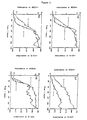
- a phenolic compound similarly accumulated during growth of strain 213E in SRM/BTH medium.
- This compound was likewise assumed to be the product of BTH desulphurisation.
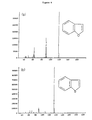
- this identity was assigned to the 10.9 min peak observed in the GC spectra of ethyl acetate extracts of SRM/BTH culture media.
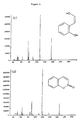
- the mass spectrum of this peak was consistent with its identity as 2-[z-2'hydroxyethenyl] phenol (HEP), as discussed below. No phenol was detectable in the supernatant of cultures of strain 213E grown on SRM/sulphate, as measured using the Gibbs reagent.
- Ethyl acetate extracts of strain 213F grown in FruRM/BTH yielded to same set of metabolites as did strain 213E. Furthermore, ethyl acetate extracts of strain 213F grown in FruRM/DBT yielded metabolites common to the DBT desulphurisation pathway of strain IGTS8 (data not shown). Therefore it was concluded that Strain 213F utilised the same BTH desulphurisation pathway as did strain 213E, and the same DBT desulphurisation pathway as did strain IGTS8.
- Rhodococcus sp. strains 213E and 213F were isolated by enrichment culture in glyRM/BTH (glycerol as sole source of sulphur, BTH as sole source of added sulphur).
- the background sulphur content of the base medium was kept to a minimum by using glycerol as the carbon source, since this has a lower sulphur content (0.0005 wt% sulphur as sulphate) than does, for example, fructose (0.005 wt%) or glucose (0.0025wt%) (manufacturers' data).
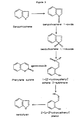
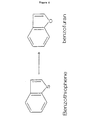
- Rhodococcus sp. strain 213E grew in a defined minerals medium with a sugar as a carbon source and BTH as sole source of sulphur. During growth a phenolic compound accumulated in the medium, as shown using the Gibbs Phenol assay (Fig 2a). There was no phenol production in cultures of strain 213E grown in SRM/sulphate (data not shown). On the basis of GC-MS analysis of ethyl acetate extracts of the culture medium (Fig-3), the Gibbs-reactive phenol was identified as peak (III), which had a mass-spectrum consistent with its identity as HEP. Since BFU was also present in ethyl acetate extracts it was concluded that HEP condenses to BFU. Effectively, therefore, strain 213E action results in the conversion of HEP to BFU ( Figure 6).
- HBPSi 2-[2'hydroxybenzene] ethen 1-sulphinate
- BPSi 2-hydroxybiphenyl 2'-sulphinate
- HBPSi - 2-hydroxybiphenyl 2'-sulphinate
- HBPSi - is desulphurised to the monophenol HBP and inorganic sulphite. This reaction is catalysed by Dsz B and is almost certainly an hydrolytic reaction (Oldfield et al, 1997).
- HBESi - is an alkylsulphinic acid and the sulphinate group may not be removed by hydrolysis. Therefore an enzyme equivalent to Dsz B is not expected in the BTH desulphurisation pathway. Since the final desulphurised product is HEP, it seems that removal of the sulphinate group is achieved by a mechanism which results in the hydroxylation of the C-S bond carbon.
- Peak (VII) is a minor peak which has been assigned as phenylene sultone (so).
- BPSo biphenylene sultone
- BPSo can be isolated from cultures of strain IGTS8 grown on DBT.
- BPSo is thought to arise by oxidation of HBPSi - , to give the corresponding sulphonate, HBPSo, followed by an itramolecular condensation to give BPSo (Oldfield et al 1997).
- the pathway HBESi - ⁇ HBESo - ⁇ PSi is proposed.
- BPSo is quantitatively desulphurised to DHBP and sulphite, a reaction is catalysed by Dsz A ( Figure 9, ie Fig 6 in Oldfield et al, 1997).
- Strains IGTS8 and 213E have a number of features in common. They both belong to the genus Rhodococcus (speciation of strain 213E is currently in progress). In both cases the function is to release the sulphur moity of the substrate; the carbon skeleton is not metabolised. The pathways do not operate in the presence of more readily bioavailable sulphur and this is consistent with a repression-based regulatory mechanism. If the proposed pathway for BTH desulphurisation is accepted, then it seems that the strategy leading to the cleavage of the first C-S bond, resulting in the opening of the thiophene ring with formation of a sulpinic acid, is identical to that used in the DBT desulphurisation pathway.
- Rhodococcus sp. strain 213E is analogous to the DBT desulphurisation reaction carried out by Rhodococcus sp. strain IGTS8, in the sense that the sulphur moiety is extracted, leaving behind the carbon skeleton, which is not further metabolised.
- Strain 213E does not desulphurise DBT
- strain IGTS8 does not desulphurise BTH. Therefore, from the point of view of petrochemicals desulphurisation, these organisms are complementary.
- strain 213F which appears to desulphurise both DBT and BTH may determine this strain as being the most useful organism.
- Strain IGTS8 was grown in SRM, strains 213E and 213F were grown in FruRM. Biomass is reported as the optical density (OD) recorded at 600nm in a 1cm pathlength spectrophotometer cuvette.
Landscapes
- Chemical & Material Sciences (AREA)
- Engineering & Computer Science (AREA)
- Life Sciences & Earth Sciences (AREA)
- Organic Chemistry (AREA)
- Zoology (AREA)
- Wood Science & Technology (AREA)
- Health & Medical Sciences (AREA)
- Bioinformatics & Cheminformatics (AREA)
- Microbiology (AREA)
- Biotechnology (AREA)
- Genetics & Genomics (AREA)
- Biochemistry (AREA)
- General Chemical & Material Sciences (AREA)
- General Health & Medical Sciences (AREA)
- General Engineering & Computer Science (AREA)
- Chemical Kinetics & Catalysis (AREA)
- Oil, Petroleum & Natural Gas (AREA)
- Medicinal Chemistry (AREA)
- Virology (AREA)
- Biomedical Technology (AREA)
- Tropical Medicine & Parasitology (AREA)
- Micro-Organisms Or Cultivation Processes Thereof (AREA)
- Preparation Of Compounds By Using Micro-Organisms (AREA)
- Immobilizing And Processing Of Enzymes And Microorganisms (AREA)
- Enzymes And Modification Thereof (AREA)
- Polysaccharides And Polysaccharide Derivatives (AREA)
- Medicines Containing Material From Animals Or Micro-Organisms (AREA)
Abstract
Description
In both cases the function is to release the sulphur moity of the substrate; the carbon skeleton is not metabolised. The pathways do not operate in the presence of more readily bioavailable sulphur and this is consistent with a repression-based regulatory mechanism. If the proposed pathway for BTH desulphurisation is accepted, then it seems that the strategy leading to the cleavage of the first C-S bond, resulting in the opening of the thiophene ring with formation of a sulpinic acid, is identical to that used in the DBT desulphurisation pathway. The pathways must diverge at the last stage however. In the DBT desulphurisation pathway it seems that the sulphinate C-S bond is cleaved by hydrolysis, whereas in BTH desulphurisation both the identity of the product, HEP, and the difficulty of removing an alkyl sulphinic acid group by hydrolysis, suggest that the last step of the BTH pathway is an "oxidative desulphination".
| Mean generation times and end-log phase biomass for strains IGTS8, 213E and 213F with various sulphur sources at a concentration of 200µM. Strain IGTS8 was grown in SRM, strains 213E and 213F were grown in FruRM. Biomass is reported as the optical density (OD) recorded at 600nm in a 1cm pathlength spectrophotometer cuvette. | |||
| Strain | Sulphur Source | Mean Generation time/hr | Biomass at end log phase/OD600 |
| IGTS8 | DBT | 7.0 | 6.0 |
| IGTS8 | sulphate | 3.2 | 7.1 |
| 213E | BTH | 9.0 | 4.2 |
| 213E | sulphate | 4.4 | 5.8 |
| 213F | DBT | 12.4 | 5.4 |
| 213F | BTH | 8.0 | 6.0 |
| 213F | Sulphate | 3.6 | 7.4 |
| Mean growth rate of Rhodococcus sp. strain 213E in FruRM containing either sulphate or BTH, at different concentrations. | |||
| Sulphur Source | Concentration /µM | Mean Generation time/hr | Biomass at end log phase/OD600 |
| sulphate | 200 | 4.4 | 5.8 |
| BT | 50 | 8.0 | 2.3 |
| | 100 | 8.6 | 3.0 |
| | 200 | 9.0 | 4.2 |
| Identification of BTH metabolites isolated by ethyl acetate extraction of culture medium (FruRM) used to grow Rhodococcus sp. strain 213E grown with BT as sole source of sulphur. | ||||
| Peak No | GC retention time/min | Relative molecular mass | Assignment | Abbrv. |
| (I) | 6.7 | 118 | benzofuran | BFU |
| (II) | 9.7 | 134 | benzothiophene | BTH |
| (III) | 10.9 | 136 | 2-[z-2' hydroxyethenyl] phenol | HEP |
| (IV) | 14.0 | 166 | Phenylene sultine | PSi |
| (V) | 14.8 | 150 | benzothiophene 1-oxide | BTHO |
| (VI) | 15.1 | 166 | | BTHO2 |
| (VII) | 15.3 | 182 | Phenylene sultone | SO |
- ACN
- acetone
- BFU
- benzofuran
- BPSi
- biphenylenesultine
- BPSo
- biphenylenesultone
- BTH
- benzothiophene
- BTHO
- benzothiphene 1-oxide
- BTHO2
-
benzothiophene 1,1-dioxide - DBT
- dibenzothiophene
- DBTO
- dibenzothiophene 5-oxide
- DBTO2
- dibenzothiophene 5,5-dioxide
- DHBP
- 2,2'-dihydroxybiphenyl
- FruRM
- Fructose Rhodococcus Medium
- GlyRM
- Glycerol Rhodococcus Medium
- HBP
- 2-hydroxybiphenyl
- HEP
- 2-[z-2'hydroxyethenyl] phenol
- HBESi-
- 2-[2'-hydroxybenzene) ethen 1-sulphinate
- HBESo-
- 2-[2'-hydroxybenzene] ethen 1-sulphonate
- HBPSi-
- 2-hydroxybiphenyl 2'-sulphinate
- HBPSo-
- 2-hydroxybiphenyl 2'-sulphonate
- MGT
- mean generation time
- Psi
- Phenylene sultine (benzo[c][1,2] oxathiin 6-oxide)
- So
- Phenylene sultone (benzo[c][1,2] oxathiin 6,6-dioxide)
- SRM
- Standard Rhodococcus Medium
Claims (7)
- A micro-organism wherein the micro-organism is strain NEU213E deposited under Accession No NCIMB 40816 at the National Collections of Industrial and Marine Bacteria Limited, 23 St Machar Drive, Aberdeen, AB2 1RY on 29 July 1996.
- A micro-organism wherein the micro-organism is strain NUE213F deposited under Accession No NCIMB 40817 at The National Collections of Industrial and Marine Bacteria Limited, 23 St Machar Drive, Aberdeen, AB2 1RY on 29 July 1996.
- A micro-organism as claimed in Claim 1 or Claim 2 wherein the micro-organism can desulphurise both benzothiopenes and dibenzothiopenes.
- A micro-organism as claimed in any of the preceding Claims wherein the micro-organism is rod-shaped and stains Gram positive.
- A process for the isolation of an organism as claimed in Claim 1 or Claim 2, the process comprising the step of isolating the organism by selective enrichment of micro-organisms capable of utilising benzothiopene as a sole source of sulphur for growth.
- A process as claimed in Claim 5 wherein the process comprises the steps of obtaining soil samples from the base of an oil shale spoil heap, suspending soil in minerals medium with benzothiopene as sole source of sulphur, repeatedly passaging organisms in the soil in minerals medium containing benzothiopene as sole source of sulphur, streaking cultures on agar plates to obtain isolated colonies of micro-organisms capable of utilising benzothiopene as a sole source of sulphur for growth and preparing cultures from individual colonies.
- A process as claimed in Claim 5 or 6 wherein the presence of a desulphurising organism is identified when the process accumulates large amounts of phenol in growth medium.
Applications Claiming Priority (3)
| Application Number | Priority Date | Filing Date | Title |
|---|---|---|---|
| GBGB9615928.0A GB9615928D0 (en) | 1996-07-30 | 1996-07-30 | Micro-organisms |
| GB9615928 | 1996-07-30 | ||
| PCT/GB1997/002055 WO1998004678A2 (en) | 1996-07-30 | 1997-07-30 | Micro-organism which can desulphurise benzothiophenes |
Publications (2)
| Publication Number | Publication Date |
|---|---|
| EP0917563A2 EP0917563A2 (en) | 1999-05-26 |
| EP0917563B1 true EP0917563B1 (en) | 2005-02-02 |
Family
ID=10797700
Family Applications (1)
| Application Number | Title | Priority Date | Filing Date |
|---|---|---|---|
| EP97933797A Expired - Lifetime EP0917563B1 (en) | 1996-07-30 | 1997-07-30 | Micro-organism which can desulphurise benzothiophenes |
Country Status (8)
| Country | Link |
|---|---|
| US (1) | US20010008770A1 (en) |
| EP (1) | EP0917563B1 (en) |
| JP (1) | JP2001501081A (en) |
| AT (1) | ATE288475T1 (en) |
| AU (1) | AU3703397A (en) |
| DE (1) | DE69732414T2 (en) |
| GB (1) | GB9615928D0 (en) |
| WO (1) | WO1998004678A2 (en) |
Families Citing this family (3)
| Publication number | Priority date | Publication date | Assignee | Title |
|---|---|---|---|---|
| FR2795090B1 (en) * | 1999-06-17 | 2003-03-21 | Inst Francais Du Petrole | ORGANIC CULTURE CONTAINING RHODOCOCCUS ERYTHROPOLIS AND / OR RHODOCOCCUS RHODNII AND METHOD FOR DESULFURIZING OIL FRACTIONS |
| CN102162910B (en) * | 2011-04-19 | 2013-01-09 | 中国科学院国家天文台南京天文光学技术研究所 | Permanent magnetic suspension support shafting structure suitable for Antarctic astronomical telescope |
| CN115074272B (en) * | 2022-06-10 | 2023-03-24 | 广西科学院 | Biological desulfurization bacillus aryabhattai and application thereof |
Family Cites Families (2)
| Publication number | Priority date | Publication date | Assignee | Title |
|---|---|---|---|---|
| US4562156A (en) * | 1983-07-11 | 1985-12-31 | Atlantic Research Corporation | Mutant microorganism and its use in removing organic sulfur compounds |
| US5104801A (en) * | 1990-01-05 | 1992-04-14 | Institute Of Gas Technology | Mutant microorganisms useful for cleavage of organic c-s bonds |
-
1996
- 1996-07-30 GB GBGB9615928.0A patent/GB9615928D0/en active Pending
-
1997
- 1997-07-30 AT AT97933797T patent/ATE288475T1/en not_active IP Right Cessation
- 1997-07-30 AU AU37033/97A patent/AU3703397A/en not_active Abandoned
- 1997-07-30 EP EP97933797A patent/EP0917563B1/en not_active Expired - Lifetime
- 1997-07-30 US US09/230,658 patent/US20010008770A1/en not_active Abandoned
- 1997-07-30 DE DE69732414T patent/DE69732414T2/en not_active Expired - Lifetime
- 1997-07-30 JP JP10508624A patent/JP2001501081A/en active Pending
- 1997-07-30 WO PCT/GB1997/002055 patent/WO1998004678A2/en not_active Ceased
Also Published As
| Publication number | Publication date |
|---|---|
| ATE288475T1 (en) | 2005-02-15 |
| DE69732414T2 (en) | 2006-01-26 |
| AU3703397A (en) | 1998-02-20 |
| EP0917563A2 (en) | 1999-05-26 |
| DE69732414D1 (en) | 2005-03-10 |
| US20010008770A1 (en) | 2001-07-19 |
| WO1998004678A3 (en) | 1998-06-25 |
| GB9615928D0 (en) | 1996-09-11 |
| JP2001501081A (en) | 2001-01-30 |
| WO1998004678A2 (en) | 1998-02-05 |
Similar Documents
| Publication | Publication Date | Title |
|---|---|---|
| Gilbert et al. | Isolation of a unique benzothiophene-desulphurizing bacterium, Gordona sp. strain 213E (NCIMB 40816), and characterization of the desulphurization pathway | |
| Kayser et al. | Isolation and characterization of a moderate thermophile, Mycobacterium phlei GTIS10, capable of dibenzothiophene desulfurization | |
| Kirimura et al. | Biodesulfurization of dibenzothiophene and its derivatives through the selective cleavage of carbon-sulfur bonds by a moderately thermophilic bacterim Bacillus subtilis WU-S2B | |
| Oldfield et al. | Desulphurisation of benzothiophene and dibenzothiophene by actinomycete organisms belonging to the genus Rhodococcus, and related taxa | |
| Konishi et al. | Thermophilic carbon-sulfur-bond-targeted biodesulfurization | |
| Alves et al. | Desulfurization of dibenzothiophene, benzothiophene, and other thiophene analogs by a newly isolated bacterium, Gordonia alkanivorans strain 1B | |
| Setti et al. | Developments in destructive and non-destructive pathways for selective desulfurizations in oil-biorefining processes | |
| Mohebali et al. | Biodesulfurization potential of a newly isolated bacterium, Gordonia alkanivorans RIPI90A | |
| Shennan | Microbial attack on sulphur‐containing hydrocarbons: Implications for the biodesulphurisation of oils and coals | |
| Bambauer et al. | Characterization of Aquamicrobium defluvii gen. nov. sp. nov., a thiophene-2-carboxylate-metabolizing bacterium from activated sludge | |
| Bressler et al. | Ring cleavage of sulfur heterocycles: how does it happen? | |
| US6124130A (en) | Microbial catalyst for desulfurization of fossil fuels | |
| Abbad-Andaloussi et al. | Multi-criteria comparison of resting cell activities of bacterial strains selected for biodesulfurization of petroleum compounds | |
| Ohshiro et al. | Characterization of dibenzothiophene desulfurization reaction by whole cells of Rhodococcus erythropolis H-2 in the presence of hydrocarbon | |
| Matsui et al. | Alkylated benzothiophene desulfurization by Rhodococcus sp. strain T09 | |
| Okada et al. | Analysis of dibenzothiophene metabolic pathway in Mycobacterium strain G3 | |
| Matsui et al. | Optimization of the copy number of dibenzothiophene desulfurizing genes to increase the desulfurization activity of recombinant Rhodococcus sp. | |
| US20010008770A1 (en) | Micro-organism which can desulphurise benzothiophenes | |
| EP0821982B1 (en) | High-Temperature Desulfurization by Microorganisms | |
| US6337204B1 (en) | Biological culture containing Rhodococcus erythropolis erythropolis and/or Rhodococcus rhodnii and process for desulfurization of petroleum fraction | |
| Wang et al. | Effects of surfactant on biodesulfurization by Corynebacterium sp. ZD-1 in the presence of organic phase | |
| JP3853459B2 (en) | Arthrobacter sp. , And its use for desulfurization of fossil fuels | |
| Li et al. | Biodesulfurization of dibenzothiophene by a newly isolated bacterium Mycobacterium sp. X7B | |
| Gogoi et al. | Microbial degradation of sulfur compounds present in coal and petroleum | |
| Guerinik et al. | Isolation and characterization of oil-desulphurizing bacteria |
Legal Events
| Date | Code | Title | Description |
|---|---|---|---|
| PUAI | Public reference made under article 153(3) epc to a published international application that has entered the european phase |
Free format text: ORIGINAL CODE: 0009012 |
|
| 17P | Request for examination filed |
Effective date: 19990226 |
|
| AK | Designated contracting states |
Kind code of ref document: A2 Designated state(s): AT BE CH DE DK ES FI FR GB GR IE IT LI LU MC NL PT SE |
|
| AX | Request for extension of the european patent |
Free format text: AL PAYMENT 19990226;LT PAYMENT 19990226;LV PAYMENT 19990226;RO PAYMENT 19990226;SI PAYMENT 19990226 |
|
| REG | Reference to a national code |
Ref country code: GB Ref legal event code: 712F |
|
| 17Q | First examination report despatched |
Effective date: 20030915 |
|
| GRAP | Despatch of communication of intention to grant a patent |
Free format text: ORIGINAL CODE: EPIDOSNIGR1 |
|
| GRAS | Grant fee paid |
Free format text: ORIGINAL CODE: EPIDOSNIGR3 |
|
| GRAA | (expected) grant |
Free format text: ORIGINAL CODE: 0009210 |
|
| AK | Designated contracting states |
Kind code of ref document: B1 Designated state(s): AT BE CH DE DK ES FI FR GB GR IE IT LI LU MC NL PT SE |
|
| AX | Request for extension of the european patent |
Extension state: AL LT LV RO SI |
|
| PG25 | Lapsed in a contracting state [announced via postgrant information from national office to epo] |
Ref country code: NL Free format text: LAPSE BECAUSE OF FAILURE TO SUBMIT A TRANSLATION OF THE DESCRIPTION OR TO PAY THE FEE WITHIN THE PRESCRIBED TIME-LIMIT Effective date: 20050202 Ref country code: LI Free format text: LAPSE BECAUSE OF FAILURE TO SUBMIT A TRANSLATION OF THE DESCRIPTION OR TO PAY THE FEE WITHIN THE PRESCRIBED TIME-LIMIT Effective date: 20050202 Ref country code: IT Free format text: LAPSE BECAUSE OF FAILURE TO SUBMIT A TRANSLATION OF THE DESCRIPTION OR TO PAY THE FEE WITHIN THE PRESCRIBED TIME-LIMIT;WARNING: LAPSES OF ITALIAN PATENTS WITH EFFECTIVE DATE BEFORE 2007 MAY HAVE OCCURRED AT ANY TIME BEFORE 2007. THE CORRECT EFFECTIVE DATE MAY BE DIFFERENT FROM THE ONE RECORDED. Effective date: 20050202 Ref country code: FI Free format text: LAPSE BECAUSE OF FAILURE TO SUBMIT A TRANSLATION OF THE DESCRIPTION OR TO PAY THE FEE WITHIN THE PRESCRIBED TIME-LIMIT Effective date: 20050202 Ref country code: CH Free format text: LAPSE BECAUSE OF FAILURE TO SUBMIT A TRANSLATION OF THE DESCRIPTION OR TO PAY THE FEE WITHIN THE PRESCRIBED TIME-LIMIT Effective date: 20050202 Ref country code: BE Free format text: LAPSE BECAUSE OF FAILURE TO SUBMIT A TRANSLATION OF THE DESCRIPTION OR TO PAY THE FEE WITHIN THE PRESCRIBED TIME-LIMIT Effective date: 20050202 Ref country code: AT Free format text: LAPSE BECAUSE OF FAILURE TO SUBMIT A TRANSLATION OF THE DESCRIPTION OR TO PAY THE FEE WITHIN THE PRESCRIBED TIME-LIMIT Effective date: 20050202 |
|
| REG | Reference to a national code |
Ref country code: GB Ref legal event code: FG4D |
|
| REG | Reference to a national code |
Ref country code: CH Ref legal event code: EP |
|
| REG | Reference to a national code |
Ref country code: IE Ref legal event code: FG4D |
|
| REF | Corresponds to: |
Ref document number: 69732414 Country of ref document: DE Date of ref document: 20050310 Kind code of ref document: P |
|
| PG25 | Lapsed in a contracting state [announced via postgrant information from national office to epo] |
Ref country code: SE Free format text: LAPSE BECAUSE OF FAILURE TO SUBMIT A TRANSLATION OF THE DESCRIPTION OR TO PAY THE FEE WITHIN THE PRESCRIBED TIME-LIMIT Effective date: 20050502 Ref country code: GR Free format text: LAPSE BECAUSE OF FAILURE TO SUBMIT A TRANSLATION OF THE DESCRIPTION OR TO PAY THE FEE WITHIN THE PRESCRIBED TIME-LIMIT Effective date: 20050502 Ref country code: DK Free format text: LAPSE BECAUSE OF FAILURE TO SUBMIT A TRANSLATION OF THE DESCRIPTION OR TO PAY THE FEE WITHIN THE PRESCRIBED TIME-LIMIT Effective date: 20050502 |
|
| PG25 | Lapsed in a contracting state [announced via postgrant information from national office to epo] |
Ref country code: ES Free format text: LAPSE BECAUSE OF FAILURE TO SUBMIT A TRANSLATION OF THE DESCRIPTION OR TO PAY THE FEE WITHIN THE PRESCRIBED TIME-LIMIT Effective date: 20050513 |
|
| LTIE | Lt: invalidation of european patent or patent extension |
Effective date: 20050202 |
|
| PG25 | Lapsed in a contracting state [announced via postgrant information from national office to epo] |
Ref country code: LU Free format text: LAPSE BECAUSE OF NON-PAYMENT OF DUE FEES Effective date: 20050730 |
|
| PG25 | Lapsed in a contracting state [announced via postgrant information from national office to epo] |
Ref country code: MC Free format text: LAPSE BECAUSE OF NON-PAYMENT OF DUE FEES Effective date: 20050731 |
|
| NLV1 | Nl: lapsed or annulled due to failure to fulfill the requirements of art. 29p and 29m of the patents act | ||
| PG25 | Lapsed in a contracting state [announced via postgrant information from national office to epo] |
Ref country code: IE Free format text: LAPSE BECAUSE OF NON-PAYMENT OF DUE FEES Effective date: 20050802 |
|
| REG | Reference to a national code |
Ref country code: CH Ref legal event code: PL |
|
| PLBE | No opposition filed within time limit |
Free format text: ORIGINAL CODE: 0009261 |
|
| STAA | Information on the status of an ep patent application or granted ep patent |
Free format text: STATUS: NO OPPOSITION FILED WITHIN TIME LIMIT |
|
| 26N | No opposition filed |
Effective date: 20051103 |
|
| ET | Fr: translation filed | ||
| REG | Reference to a national code |
Ref country code: IE Ref legal event code: MM4A |
|
| PG25 | Lapsed in a contracting state [announced via postgrant information from national office to epo] |
Ref country code: PT Free format text: LAPSE BECAUSE OF NON-PAYMENT OF DUE FEES Effective date: 20050702 |
|
| REG | Reference to a national code |
Ref country code: FR Ref legal event code: CD |
|
| REG | Reference to a national code |
Ref country code: FR Ref legal event code: TP |
|
| REG | Reference to a national code |
Ref country code: GB Ref legal event code: 732E Free format text: REGISTERED BETWEEN 20091210 AND 20091216 |
|
| REG | Reference to a national code |
Ref country code: FR Ref legal event code: PLFP Year of fee payment: 20 |
|
| PGFP | Annual fee paid to national office [announced via postgrant information from national office to epo] |
Ref country code: GB Payment date: 20160720 Year of fee payment: 20 Ref country code: DE Payment date: 20160718 Year of fee payment: 20 |
|
| PGFP | Annual fee paid to national office [announced via postgrant information from national office to epo] |
Ref country code: FR Payment date: 20160706 Year of fee payment: 20 |
|
| REG | Reference to a national code |
Ref country code: DE Ref legal event code: R071 Ref document number: 69732414 Country of ref document: DE |
|
| REG | Reference to a national code |
Ref country code: GB Ref legal event code: PE20 Expiry date: 20170729 |
|
| PG25 | Lapsed in a contracting state [announced via postgrant information from national office to epo] |
Ref country code: GB Free format text: LAPSE BECAUSE OF EXPIRATION OF PROTECTION Effective date: 20170729 |