EP0904283B1 - Human netrin-1 - Google Patents
Human netrin-1 Download PDFInfo
- Publication number
- EP0904283B1 EP0904283B1 EP97918715A EP97918715A EP0904283B1 EP 0904283 B1 EP0904283 B1 EP 0904283B1 EP 97918715 A EP97918715 A EP 97918715A EP 97918715 A EP97918715 A EP 97918715A EP 0904283 B1 EP0904283 B1 EP 0904283B1
- Authority
- EP
- European Patent Office
- Prior art keywords
- netrin
- neuron
- probe
- contacting
- nucleic acid
- Prior art date
- Legal status (The legal status is an assumption and is not a legal conclusion. Google has not performed a legal analysis and makes no representation as to the accuracy of the status listed.)
- Expired - Lifetime
Links
- 101001111308 Homo sapiens Netrin-1 Proteins 0.000 title description 13
- 102000052644 human NTN1 Human genes 0.000 title description 13
- 108010063605 Netrins Proteins 0.000 claims abstract description 71
- 102000010803 Netrins Human genes 0.000 claims abstract description 60
- 238000000034 method Methods 0.000 claims abstract description 30
- 239000000523 sample Substances 0.000 claims abstract description 28
- 108020004707 nucleic acids Proteins 0.000 claims abstract description 19
- 102000039446 nucleic acids Human genes 0.000 claims abstract description 19
- 150000007523 nucleic acids Chemical class 0.000 claims abstract description 19
- 239000000203 mixture Substances 0.000 claims abstract description 15
- 230000027455 binding Effects 0.000 claims abstract description 12
- 238000009396 hybridization Methods 0.000 claims abstract description 8
- 230000009870 specific binding Effects 0.000 claims abstract description 5
- 238000012216 screening Methods 0.000 claims abstract description 4
- JVJUWEFOGFCHKR-UHFFFAOYSA-N 2-(diethylamino)ethyl 1-(3,4-dimethylphenyl)cyclopentane-1-carboxylate;hydrochloride Chemical compound Cl.C=1C=C(C)C(C)=CC=1C1(C(=O)OCCN(CC)CC)CCCC1 JVJUWEFOGFCHKR-UHFFFAOYSA-N 0.000 claims description 54
- 108090000623 proteins and genes Proteins 0.000 claims description 17
- 210000002569 neuron Anatomy 0.000 claims description 12
- 239000003795 chemical substances by application Substances 0.000 claims description 9
- 150000001875 compounds Chemical class 0.000 claims description 4
- 239000003814 drug Substances 0.000 claims description 4
- 238000000338 in vitro Methods 0.000 claims description 4
- 238000001727 in vivo Methods 0.000 claims description 4
- 125000003275 alpha amino acid group Chemical group 0.000 claims description 3
- 229940079593 drug Drugs 0.000 claims description 3
- 239000002773 nucleotide Substances 0.000 claims description 3
- 125000003729 nucleotide group Chemical group 0.000 claims description 3
- 230000004069 differentiation Effects 0.000 claims 4
- 230000003993 interaction Effects 0.000 claims 1
- 239000013615 primer Substances 0.000 abstract description 31
- 239000003153 chemical reaction reagent Substances 0.000 abstract description 4
- 239000002831 pharmacologic agent Substances 0.000 abstract description 4
- 239000000126 substance Substances 0.000 abstract description 4
- 150000002611 lead compounds Chemical class 0.000 abstract description 3
- 239000002987 primer (paints) Substances 0.000 abstract description 3
- 238000003745 diagnosis Methods 0.000 abstract description 2
- 201000010099 disease Diseases 0.000 abstract description 2
- 208000037265 diseases, disorders, signs and symptoms Diseases 0.000 abstract description 2
- 230000003834 intracellular effect Effects 0.000 abstract description 2
- 230000010261 cell growth Effects 0.000 abstract 1
- 239000002299 complementary DNA Substances 0.000 description 24
- 238000006243 chemical reaction Methods 0.000 description 13
- 102000004169 proteins and genes Human genes 0.000 description 12
- 210000004027 cell Anatomy 0.000 description 11
- IAZDPXIOMUYVGZ-UHFFFAOYSA-N Dimethylsulphoxide Chemical compound CS(C)=O IAZDPXIOMUYVGZ-UHFFFAOYSA-N 0.000 description 9
- TWRXJAOTZQYOKJ-UHFFFAOYSA-L Magnesium chloride Chemical compound [Mg+2].[Cl-].[Cl-] TWRXJAOTZQYOKJ-UHFFFAOYSA-L 0.000 description 8
- 238000011160 research Methods 0.000 description 7
- 101001111309 Mus musculus Netrin-1 Proteins 0.000 description 6
- 239000000047 product Substances 0.000 description 6
- 210000003050 axon Anatomy 0.000 description 5
- 239000012634 fragment Substances 0.000 description 5
- 108091032973 (ribonucleotides)n+m Proteins 0.000 description 4
- 108020004414 DNA Proteins 0.000 description 4
- 108091036066 Three prime untranslated region Proteins 0.000 description 4
- 230000003321 amplification Effects 0.000 description 4
- 239000011230 binding agent Substances 0.000 description 4
- 238000001502 gel electrophoresis Methods 0.000 description 4
- 229910001629 magnesium chloride Inorganic materials 0.000 description 4
- 238000003199 nucleic acid amplification method Methods 0.000 description 4
- XLYOFNOQVPJJNP-UHFFFAOYSA-N water Substances O XLYOFNOQVPJJNP-UHFFFAOYSA-N 0.000 description 4
- 241001465754 Metazoa Species 0.000 description 3
- 150000001413 amino acids Chemical class 0.000 description 3
- 238000003556 assay Methods 0.000 description 3
- 230000028600 axonogenesis Effects 0.000 description 3
- 210000004556 brain Anatomy 0.000 description 3
- 239000000872 buffer Substances 0.000 description 3
- 238000012217 deletion Methods 0.000 description 3
- 230000037430 deletion Effects 0.000 description 3
- 230000001605 fetal effect Effects 0.000 description 3
- 239000000835 fiber Substances 0.000 description 3
- 230000002068 genetic effect Effects 0.000 description 3
- 238000011534 incubation Methods 0.000 description 3
- 230000002401 inhibitory effect Effects 0.000 description 3
- 230000001537 neural effect Effects 0.000 description 3
- 230000037361 pathway Effects 0.000 description 3
- 238000010839 reverse transcription Methods 0.000 description 3
- 230000001225 therapeutic effect Effects 0.000 description 3
- QKNYBSVHEMOAJP-UHFFFAOYSA-N 2-amino-2-(hydroxymethyl)propane-1,3-diol;hydron;chloride Chemical compound Cl.OCC(N)(CO)CO QKNYBSVHEMOAJP-UHFFFAOYSA-N 0.000 description 2
- 229920000936 Agarose Polymers 0.000 description 2
- 108700028369 Alleles Proteins 0.000 description 2
- 102000008186 Collagen Human genes 0.000 description 2
- 108010035532 Collagen Proteins 0.000 description 2
- 239000003155 DNA primer Substances 0.000 description 2
- 108010014303 DNA-directed DNA polymerase Proteins 0.000 description 2
- 102000016928 DNA-directed DNA polymerase Human genes 0.000 description 2
- ZHNUHDYFZUAESO-UHFFFAOYSA-N Formamide Chemical compound NC=O ZHNUHDYFZUAESO-UHFFFAOYSA-N 0.000 description 2
- 101001111307 Gallus gallus Netrin-1 Proteins 0.000 description 2
- 102100034343 Integrase Human genes 0.000 description 2
- 239000006137 Luria-Bertani broth Substances 0.000 description 2
- 208000012902 Nervous system disease Diseases 0.000 description 2
- 208000025966 Neurological disease Diseases 0.000 description 2
- 238000012408 PCR amplification Methods 0.000 description 2
- 108010092799 RNA-directed DNA polymerase Proteins 0.000 description 2
- 108010006785 Taq Polymerase Proteins 0.000 description 2
- BFNBIHQBYMNNAN-UHFFFAOYSA-N ammonium sulfate Chemical compound N.N.OS(O)(=O)=O BFNBIHQBYMNNAN-UHFFFAOYSA-N 0.000 description 2
- 229910052921 ammonium sulfate Inorganic materials 0.000 description 2
- 235000011130 ammonium sulphate Nutrition 0.000 description 2
- AVKUERGKIZMTKX-NJBDSQKTSA-N ampicillin Chemical compound C1([C@@H](N)C(=O)N[C@H]2[C@H]3SC([C@@H](N3C2=O)C(O)=O)(C)C)=CC=CC=C1 AVKUERGKIZMTKX-NJBDSQKTSA-N 0.000 description 2
- 229960000723 ampicillin Drugs 0.000 description 2
- 230000004009 axon guidance Effects 0.000 description 2
- 210000003169 central nervous system Anatomy 0.000 description 2
- 229920001436 collagen Polymers 0.000 description 2
- 238000002347 injection Methods 0.000 description 2
- 239000007924 injection Substances 0.000 description 2
- 238000013507 mapping Methods 0.000 description 2
- 239000012528 membrane Substances 0.000 description 2
- 108010081726 netrin-2 Proteins 0.000 description 2
- 238000011170 pharmaceutical development Methods 0.000 description 2
- 239000013612 plasmid Substances 0.000 description 2
- 239000011541 reaction mixture Substances 0.000 description 2
- 230000002829 reductive effect Effects 0.000 description 2
- 238000003757 reverse transcription PCR Methods 0.000 description 2
- 238000002560 therapeutic procedure Methods 0.000 description 2
- 108020000948 Antisense Oligonucleotides Proteins 0.000 description 1
- 102000000905 Cadherin Human genes 0.000 description 1
- 108050007957 Cadherin Proteins 0.000 description 1
- 101100371856 Caenorhabditis elegans unc-6 gene Proteins 0.000 description 1
- 102000016289 Cell Adhesion Molecules Human genes 0.000 description 1
- 108010067225 Cell Adhesion Molecules Proteins 0.000 description 1
- 108020004635 Complementary DNA Proteins 0.000 description 1
- 102000010834 Extracellular Matrix Proteins Human genes 0.000 description 1
- 108010037362 Extracellular Matrix Proteins Proteins 0.000 description 1
- 241000287828 Gallus gallus Species 0.000 description 1
- 229910021380 Manganese Chloride Inorganic materials 0.000 description 1
- GLFNIEUTAYBVOC-UHFFFAOYSA-L Manganese chloride Chemical compound Cl[Mn]Cl GLFNIEUTAYBVOC-UHFFFAOYSA-L 0.000 description 1
- 241001529936 Murinae Species 0.000 description 1
- 108050000637 N-cadherin Proteins 0.000 description 1
- 108010025020 Nerve Growth Factor Proteins 0.000 description 1
- 102000005951 Netrin Receptors Human genes 0.000 description 1
- 108010030865 Netrin Receptors Proteins 0.000 description 1
- 102000009065 Netrin-1 Human genes 0.000 description 1
- 108010074223 Netrin-1 Proteins 0.000 description 1
- 108091028043 Nucleic acid sequence Proteins 0.000 description 1
- 239000004677 Nylon Substances 0.000 description 1
- 108091034117 Oligonucleotide Proteins 0.000 description 1
- 238000009004 PCR Kit Methods 0.000 description 1
- 108020005067 RNA Splice Sites Proteins 0.000 description 1
- 238000012300 Sequence Analysis Methods 0.000 description 1
- FAPWRFPIFSIZLT-UHFFFAOYSA-M Sodium chloride Chemical compound [Na+].[Cl-] FAPWRFPIFSIZLT-UHFFFAOYSA-M 0.000 description 1
- 238000002105 Southern blotting Methods 0.000 description 1
- 241000251539 Vertebrata <Metazoa> Species 0.000 description 1
- 208000027418 Wounds and injury Diseases 0.000 description 1
- 239000000654 additive Substances 0.000 description 1
- 239000000443 aerosol Substances 0.000 description 1
- 230000000844 anti-bacterial effect Effects 0.000 description 1
- 239000000074 antisense oligonucleotide Substances 0.000 description 1
- 238000012230 antisense oligonucleotides Methods 0.000 description 1
- 238000013459 approach Methods 0.000 description 1
- 230000001580 bacterial effect Effects 0.000 description 1
- 239000003899 bactericide agent Substances 0.000 description 1
- 230000000975 bioactive effect Effects 0.000 description 1
- 238000002306 biochemical method Methods 0.000 description 1
- 239000008280 blood Substances 0.000 description 1
- 210000004369 blood Anatomy 0.000 description 1
- 230000008499 blood brain barrier function Effects 0.000 description 1
- 210000001218 blood-brain barrier Anatomy 0.000 description 1
- WQAQPCDUOCURKW-UHFFFAOYSA-N butanethiol Chemical compound CCCCS WQAQPCDUOCURKW-UHFFFAOYSA-N 0.000 description 1
- 210000004899 c-terminal region Anatomy 0.000 description 1
- 238000000423 cell based assay Methods 0.000 description 1
- 230000001413 cellular effect Effects 0.000 description 1
- 239000007795 chemical reaction product Substances 0.000 description 1
- 239000002975 chemoattractant Substances 0.000 description 1
- 239000002838 chemorepellent Substances 0.000 description 1
- 230000000663 chemotropic effect Effects 0.000 description 1
- 210000000349 chromosome Anatomy 0.000 description 1
- 238000010367 cloning Methods 0.000 description 1
- 239000013599 cloning vector Substances 0.000 description 1
- 239000011248 coating agent Substances 0.000 description 1
- 238000000576 coating method Methods 0.000 description 1
- 230000000295 complement effect Effects 0.000 description 1
- SUYVUBYJARFZHO-RRKCRQDMSA-N dATP Chemical compound C1=NC=2C(N)=NC=NC=2N1[C@H]1C[C@H](O)[C@@H](COP(O)(=O)OP(O)(=O)OP(O)(O)=O)O1 SUYVUBYJARFZHO-RRKCRQDMSA-N 0.000 description 1
- SUYVUBYJARFZHO-UHFFFAOYSA-N dATP Natural products C1=NC=2C(N)=NC=NC=2N1C1CC(O)C(COP(O)(=O)OP(O)(=O)OP(O)(O)=O)O1 SUYVUBYJARFZHO-UHFFFAOYSA-N 0.000 description 1
- RGWHQCVHVJXOKC-SHYZEUOFSA-J dCTP(4-) Chemical compound O=C1N=C(N)C=CN1[C@@H]1O[C@H](COP([O-])(=O)OP([O-])(=O)OP([O-])([O-])=O)[C@@H](O)C1 RGWHQCVHVJXOKC-SHYZEUOFSA-J 0.000 description 1
- HAAZLUGHYHWQIW-KVQBGUIXSA-N dGTP Chemical compound C1=NC=2C(=O)NC(N)=NC=2N1[C@H]1C[C@H](O)[C@@H](COP(O)(=O)OP(O)(=O)OP(O)(O)=O)O1 HAAZLUGHYHWQIW-KVQBGUIXSA-N 0.000 description 1
- NHVNXKFIZYSCEB-XLPZGREQSA-N dTTP Chemical compound O=C1NC(=O)C(C)=CN1[C@@H]1O[C@H](COP(O)(=O)OP(O)(=O)OP(O)(O)=O)[C@@H](O)C1 NHVNXKFIZYSCEB-XLPZGREQSA-N 0.000 description 1
- 230000006378 damage Effects 0.000 description 1
- 230000007547 defect Effects 0.000 description 1
- 238000011161 development Methods 0.000 description 1
- 230000018109 developmental process Effects 0.000 description 1
- 239000013024 dilution buffer Substances 0.000 description 1
- 230000000694 effects Effects 0.000 description 1
- 210000002889 endothelial cell Anatomy 0.000 description 1
- 238000005516 engineering process Methods 0.000 description 1
- 239000013604 expression vector Substances 0.000 description 1
- 210000002744 extracellular matrix Anatomy 0.000 description 1
- 230000002349 favourable effect Effects 0.000 description 1
- 239000012530 fluid Substances 0.000 description 1
- 238000001415 gene therapy Methods 0.000 description 1
- 238000013537 high throughput screening Methods 0.000 description 1
- 238000003018 immunoassay Methods 0.000 description 1
- 239000007943 implant Substances 0.000 description 1
- 238000000099 in vitro assay Methods 0.000 description 1
- 238000005462 in vivo assay Methods 0.000 description 1
- 238000011065 in-situ storage Methods 0.000 description 1
- 238000001802 infusion Methods 0.000 description 1
- 208000014674 injury Diseases 0.000 description 1
- 239000006101 laboratory sample Substances 0.000 description 1
- 239000011565 manganese chloride Substances 0.000 description 1
- 238000004519 manufacturing process Methods 0.000 description 1
- 239000000463 material Substances 0.000 description 1
- 239000002609 medium Substances 0.000 description 1
- 238000010369 molecular cloning Methods 0.000 description 1
- 238000012544 monitoring process Methods 0.000 description 1
- 230000005709 nerve cell growth Effects 0.000 description 1
- 210000000653 nervous system Anatomy 0.000 description 1
- 238000007857 nested PCR Methods 0.000 description 1
- 230000004770 neurodegeneration Effects 0.000 description 1
- 208000015122 neurodegenerative disease Diseases 0.000 description 1
- 230000000926 neurological effect Effects 0.000 description 1
- 230000007514 neuronal growth Effects 0.000 description 1
- 238000007899 nucleic acid hybridization Methods 0.000 description 1
- 229920001778 nylon Polymers 0.000 description 1
- 230000003204 osmotic effect Effects 0.000 description 1
- 229920000642 polymer Polymers 0.000 description 1
- 230000001737 promoting effect Effects 0.000 description 1
- 238000000159 protein binding assay Methods 0.000 description 1
- 230000001172 regenerating effect Effects 0.000 description 1
- 230000002940 repellent Effects 0.000 description 1
- 230000010076 replication Effects 0.000 description 1
- 230000000717 retained effect Effects 0.000 description 1
- 230000001953 sensory effect Effects 0.000 description 1
- 239000011780 sodium chloride Substances 0.000 description 1
- 239000001509 sodium citrate Substances 0.000 description 1
- NLJMYIDDQXHKNR-UHFFFAOYSA-K sodium citrate Chemical compound O.O.[Na+].[Na+].[Na+].[O-]C(=O)CC(O)(CC([O-])=O)C([O-])=O NLJMYIDDQXHKNR-UHFFFAOYSA-K 0.000 description 1
- 239000003381 stabilizer Substances 0.000 description 1
- 239000007858 starting material Substances 0.000 description 1
- 239000008223 sterile water Substances 0.000 description 1
- 239000000758 substrate Substances 0.000 description 1
- 238000001356 surgical procedure Methods 0.000 description 1
- 210000001179 synovial fluid Anatomy 0.000 description 1
- 230000000699 topical effect Effects 0.000 description 1
- 230000001988 toxicity Effects 0.000 description 1
- 231100000419 toxicity Toxicity 0.000 description 1
- 238000012546 transfer Methods 0.000 description 1
- 230000009261 transgenic effect Effects 0.000 description 1
- 230000005945 translocation Effects 0.000 description 1
- 210000005166 vasculature Anatomy 0.000 description 1
Classifications
-
- C—CHEMISTRY; METALLURGY
- C07—ORGANIC CHEMISTRY
- C07K—PEPTIDES
- C07K14/00—Peptides having more than 20 amino acids; Gastrins; Somatostatins; Melanotropins; Derivatives thereof
- C07K14/435—Peptides having more than 20 amino acids; Gastrins; Somatostatins; Melanotropins; Derivatives thereof from animals; from humans
- C07K14/475—Growth factors; Growth regulators
-
- A—HUMAN NECESSITIES
- A61—MEDICAL OR VETERINARY SCIENCE; HYGIENE
- A61P—SPECIFIC THERAPEUTIC ACTIVITY OF CHEMICAL COMPOUNDS OR MEDICINAL PREPARATIONS
- A61P25/00—Drugs for disorders of the nervous system
-
- A—HUMAN NECESSITIES
- A61—MEDICAL OR VETERINARY SCIENCE; HYGIENE
- A61K—PREPARATIONS FOR MEDICAL, DENTAL OR TOILETRY PURPOSES
- A61K38/00—Medicinal preparations containing peptides
Definitions
- the field of this invention is human netrin proteins and genes.
- Axons project considerable distances along stereotyped pathways to reach their targets. Axon growth and guidance depends partly on the recognition of cell-surface and extracellular matrix cues along these pathways. The identification of such nerve cell growth and guidance cues is the holy grail of neurobiology. These are the compounds that tell neurons when to grow, where to grow, and when to stop growing. The medical applications of such compounds are enormous and include modulating neuronal growth regenerative capacity, treating neurodegenerative disease, and mapping (e.g. diagnosing) genetic neurological defects.
- the invention provides methods and compositions relating to a human netrin protein and gene.
- Netrins are a class of proteins which are naturally involved in neural axon guidance.
- the subject compositions include nucleic acids which encode the specified netrin protein and hybridization probes and primers capable of hybridizing with the specified netrin gene.
- the netrin proteins finds particular use in modulating neural axon outgrowth.
- the disclosed compositions also find use variously in screening chemical libraries for regulators of axon outgrowth and orientation, in genetic mapping, as probes for netrin genes, as diagnostic reagents for genetic neurological disease and in the production of specific cellular and animal systems for the development of neurological disease therapy.
- the invention provides methods and compositions relating to a human netrin-1 protein and gene; including methods and compositions for identifying, purifying, characterizing, and producing the subject proteins and for identifying, characterizing, cloning, expressing, inhibiting the expression of and amplifying the subject nucleic acids.
- the subject proteins may be incomplete translates of the disclosed netrin cDNA sequence or deletion mutants of the corresponding conceptual translates, which translates or deletion mutants have the human netrin-1 binding activity and specificity described herein.
- the netrins are isolated, partially pure or pure and are typically recombinantly produced.
- An "isolated" protein for example, is unaccompanied by at least some of the material with which it is associated in its natural state; generally constituting at least about 0.5%, preferably at least about 2%, and more preferably at least about 10% by weight of the total protein in a given sample; and a pure protein constitutes at least about 50%, preferably at least about 90%, and more preferably at least about 99% by weight of the total protein in a given sample.
- Molecular Cloning A Laboratory Manual (Sambrook, et al. Cold Spring Harbor Laboratory), Current Protocols in Molecular Biology (Eds. Ausubel, et al., Greene Publ. Assoc., Wiley-Interscience, NY) or that are otherwise known in the art.
- the disclosed netrin compositions may be used to generate human netrin-1 specific antibodies, to modulate axon outgrowth or guidance in situ or in vivo, etc.
- the compositions are added to a retained physiological fluid such as blood r synovial fluid.
- a variety of techniques are available for promoting transfer of the therapeutic across the blood brain barrier including disruption by surgery or injection, drugs which transiently open adhesion contact between CNS vasculature endothelial cells, and compounds which facilitate translocation through such cells.
- Netrins may also be amenable to direct injection or infusion, topical, intratracheal/nasal administration e.g. through aerosol, intraocularly, or within/on implants e.g.
- fibers e.g. collagen, osmotic pumps, grafts comprising appropriately transformed cells, etc.
- a particular method of administration involves coating, embedding or derivatizing fibers, such as collagen fibers, protein polymers, etc. with therapeutic proteins.
- Other useful approaches are described in Otto et al. (1989) J Neuroscience Research 22, 83-91 and Otto and Unsicker (1990) J Neuroscience 10, 1912-1921.
- the amount administered will be empirically determined, typically in the range of about 10 to 1000 ⁇ g/kg of the recipient and the concentration will generally be in the range of about 50 to 500 ⁇ g/ml in the dose administered.
- Other additives may be included, such as stabilizers, bactericides, etc. will be present in conventional amounts.
- the invention provides netrin-specific binding agents including isolated binding targets such as membrane-bound netrin receptors and netrin-specific antibodies and binding agents identified in screens of natural and synthetic chemical libraries, and methods of identifying and making such agents, and their use in diagnosis, therapy and pharmaceutical development.
- netrin-specificity of the binding agent is shown by binding equilibrium constants.
- Such agents are capable of selectively binding the specified netrin, i.e. with an equilibrium constant at least about 10 7 M -1 , preferably at least about 10 8 M -1 , more preferably at least about 10 9 M -1 .
- a wide variety of cell-based and cell-free assays may be used to demonstrate netrin-specific binding; preferred are rapid in vitro, cell-free assays such as mediating or inhibiting netrin-cell/protein binding, immunoassays, etc.
- the invention also provides nucleic acids encoding the subject proteins, which nucleic acids may be part of netrin-expression vectors and may be incorporated into recombinant cells for expression and screening, transgenic animals for functional studies (e.g. the efficacy of candidate drugs for neural disease or injury), etc. and nucleic acid hybridization probes and replication/amplification primers having a disclosed netrin cDNA specific sequence.
- the hybridization probes contain a sequence common or complementary to the corresponding netrin gene sufficient to make the probe capable of specifically hybridizing to the corresponding netrin gene, and only to the corresponding netrin gene, in the presence of other netrin genes.
- the subject probes and primers are uniquely specific to the disclosed cDNA.
- Hybridization probes having in excess of 100 continuous bases of netrin gene sequence are generally capable of hybridizing to the corresponding netrin cDNA and remaining bound at a reduced final wash stringency of 0.2 X SSC (0.9 M saline/0.09 M sodium citrate) and 0.1% SDS buffer at a temperature of 65°C.
- the subject nucleic acids are isolated, meaning they comprise a sequence joined to a nucleotide other than that which it is joined to on a natural chromosome, and usually constitute at least about 0.5% , preferably at least about 2%, and more preferably at least about 5% by weight of total nucleic acid present in a given fraction.
- a pure nucleic acid constitutes at least about 50%, preferably at least about 90%, and more preferably at least about 95% by weight of total nucleic acid present in a given fraction.
- the subject nucleic acids find a wide variety of applications including use as translatable transcripts, hybridization probes, PCR primers, therapeutic nucleic acids, etc.; use in detecting the presence of netrin genes and gene transcripts, e.g.
- ASO allele-specific oligonucleotide
- the invention provides efficient methods of identifying pharmacological agents or lead compounds for agents capable of mimicking or modulating netrin function (e.g. bioactive netrin deletion mutants and netrin peptides).
- a wide variety of screens may be used; for example, cell-based assays may be used for monitoring netrin function and in vitro binding assays may be used to identify netrin-specific binding agents.
- Kennedy et al. (1994) Cell 78, 425-435 describe a particularly convenient COS cell-based netrin expression assay.
- Preferred methods are amenable to automated, cost-effective high throughput screening of natural and synthetic chemical libraries for lead compounds.
- Identified reagents find use in the pharmaceutical industries for animal and human trials; for example, the reagents may be derivatized and rescreened in in vitro and in vivo assays to optimize activity and minimize toxicity for pharmaceutical development.
- the starting material for PCR was 100 ng of human genomic DNA.
- Two rounds of PCR amplification were used. In the first round, the following program and conditions were used: 1. 94°C 30 sec.; 2. 50°C 45 sec; 3. 72°C, 1 minute; 4. go to 1, 30 times; 5. 4°C; 6. end.
- nested PCR and the following conditions and program were used: 1. 94°C 1 minute; 2. 42°C 1 minute; 3. increments of 1°C every 5 seconds to 72°C; 4. 72°C for 3 minutes; 5. go to 1, 2 times; 6. 94°C for 1 minute; 7.46°C for 1 minute; 8. increments of 1 °C every 6 seconds until 72°C; 9. 72°C 2 minutes; 10.
- PCR products were subcloned and individual clones containing inserts corresponding to human netrin sequence isolated using a Grunstein and Hogness screen (Sambrook, 1989). 32 P was incorporated into a probe using PCR with a portion of the mouse netrin-1 cDNA clone as a template. The final wash of the filters was at a reduced stringency of 1X SSC and 0.1%SDS at 65 °C (Sambrook et al., 1989).
- This screen isolated an approximately 140 base pair human netrin cDNA clone. This cDNA fragment was used to isolate a longer human netrin cDNA from a Human fetal brain cDNA library (Stratagene cat#936206). The ⁇ 140 base pair human netrin cDNA was used as a template and 32 P incorporated into a human netrin cDNA probe using PCR. 1X10 6 clones were screened at high stringency (Sambrook et al., 1989) identifying a single approximately 7 kb netrin cDNA (HBC-1, deposited with ATCC June 7, 1995, as plasmid HN-1, deposit number 97204).
- Sequence analysis determined that an EcoRI subclone of the 7 kb HBC-1 clone corresponded to a splice variant of human netrin-1.
- the first 1086 base pairs of sequence show high homology to mouse netrin-1 and the remaining 626 base pairs are highly divergent.
- a potential splice donor site is identified at the junction of the netrin and the divergent sequence.
- a clone that corresponds to the 3' end of human netrin-1 was isolated using reverse transcription and PCR with a 5' primer at position 999 of the human sequence and a 3' degenerate primer to the last 15 base pairs of the mouse netrin sequence. Three additional independent clones were isolated to confirm the sequence of the PCR reaction product.
- the region of overlap between this new clone and the HBC-1 Eco clone is 46 base pairs and is identical in sequence.
- an additional clone was isolated using a 5' primer at position 818 and a 3' primer at position 1582 of the human netrin-1 sequence.
- Two independent clones isolated using these primers confirm the structure of the cDNA.
- the sequence encoding the C-terminal 5 amino acids was confirmed.
- a primer was designed to a region within the 3' untranslated region that is conserved between chicken and mouse netrin-1.
- a PCR product was generated using this primer and a 5' primer in the human sequence at position 1568 and the sequence was verified.
- RT-PCR procedures were as follows: fetal brain RNA (19-23 weeks) was obtained from Clontech. RT-PCR was performed using the GeneAmp Thermostable rTth Reverse Transcriptase RNA PCR Kit from Perkin Elmer. A hot start technique was used to denature the RNA by mixing 50 ng with 30 pmol degenerate primer deg-1, 1 ⁇ l 10X rTth Reverse Transcriptase Buffer (Perkin Elmer) and water in a total volume of 7.2 ⁇ l; this mixture was heated to 95° C for 2 minutes, followed by a 5 minute incubation at 70°C.
- the reaction was cooled to 60°C and reverse transcription was begun by adding a mixture containing 1 ⁇ l 10 mM MnCl 2 , 1 ⁇ l rTth DNA polymerase (Perkin Elmer, 2.5 U), and 0.2 ⁇ l each 10mM dATP, dCTP, dGTP, and dTTP. The 60°C incubation was continued for 5 minutes, followed by two 5 minute incubations at 65°C and 70°C. The reaction was then chilled on ice.
- the reaction was analyzed by gel electrophoresis and transferred to nylon membrane. Netrin-specific products were detected by Southern hybridization using a mouse netrin probe corresponding to sequence from position 1342 to position 1875 of mouse netrin.
- a plug of agarose corresponding to the cross hybridizing fragment was extracted with a Pasteur pipet and reamplified as follows: the agarose plug was combined with a reaction mixture containing 1.25 ⁇ l formamide, 5 ⁇ l of 10X PCR Buffer II (Perkin Elmer), 5 ⁇ l of 25 mM MgCl 2 , 30 pmol human netrin-specific primer h-net-5'999, 30 pmol degenerate netrin primer deg-1, 5 U AmpliTaq DNA Polymerase (Perkin Elmer), and sterile water in a total volume of 49 ⁇ l.
- PCR was carried out in an MJ Research PTC-200 Peltier Thermal Cycler using the "Block" temperature control method and the following conditions: 1) 95° C for 2 minutes; 2) 50° C for 1 minute; 3) 75° C for 1 minute, 30 seconds; 4) 95° C for 20 seconds; 5) Repeat steps 2- 4, 39 times; 6) 75° C for 10 minutes; and 7) 4° C hold.
- the reaction was analyzed by gel electrophoresis and a band of DNA at approximately 850 bp was purified using the BioRad Prep-A-Gene system, ligated with the TA cloning vector (InVitroGen), and transformed into DH5 ⁇ competent bacterial cells. Colonies were analyzed for the correct size insert by colony PCR, grown overnight at 37° C in LB media containing 100 ⁇ g/ml ampicillin, and DNA was prepared from the culture using a Qiagen Tip-100 column. The inserts were confirmed by restriction digests and the sequence was generated using an ABI 377 automated sequencer.
- cDNA was synthesized as described in "Rapid Amplification of cDNA Ends," by Michael Frohman (In: PCR Primer: A Laboratory Manual, C.W. Dieffenbach and G.S. Dveksler, eds., Cold Spring Harbor Laboratory Press, 1995) using the protocol described in the section "3'-End cDNA Amplification" (pp.
- fetal brain poly A+ RNA (Clontech).
- 1 ⁇ l of the diluted cDNA was amplified in a 50 ⁇ l reaction containing 67 mM Tris HCl, pH 9.0, 6.7 mM magnesium chloride, 16.6 mM ammonium sulfate, 0.17 mg/ml BSA, 10 % DMSO, 1.5 mM each dNTP, 30 pmol 5' primer "h-net 5' 1449” and 30 pmol 3' primer "m-net 3' UT 2238".
- the primer "h-net 5'1449" corresponds to sequence beginning at position 1449 in the human netrin-1 clone.
- the primer "m-net 3' UT 2238" corresponds to sequence in the 3' untranslated region of mouse netrin-1, with the addition of an Xba I restriction site sequence at the 5' end.
- Taq DNA polymerase, 1 ⁇ l, (Perkin Elmer) was combined with 0.5 ⁇ l TaqStart Antibody (ClonTech) and 2.5 ⁇ l TaqStart Antibody Dilution Buffer, incubated at room temperature for 10 minutes, and added to the PCR reaction mixture.
- the reaction was amplified in an MJ Research PTC-200 Peltier Thermal Cycler using the "Calculated" temperature control method and the following conditions: 1) 95° C for 2 minutes; 2) 62° C for 30 seconds; 3) 57° C for 30 seconds; 4) 52° C for 10 seconds; 5) 72° C for 40 minutes; 6) 94° C for 10 seconds; 7) 62° C for 1 minute; 8) 72° C for 3 minutes; 9) Repeat steps 6-8, 4 times; 10) 94° C for 10 seconds; 11) 57° C for 1 minute; 12) 72° C for 3 minutes; 13) Repeat steps 10-12, 4 times; 14) 94° C for 10 seconds; 15) 52° C for 1 minute; 16) 72° C for 3 minutes; 17) Repeat steps 14-16, 24 times; 18) 75° C for 10 minutes; 19) 4° C hold.
- the reaction was diluted 1:20 in TE, and 1 ⁇ l was re-amplified in a 50 ⁇ l reaction containing 67 mM Tris HCl, pH 9.0, 6.7 mM magnesium chloride, 16.6 mM ammonium sulfate, 0.17 mg/ml BSA, 10 % DMSO, 1.5 mM each dNTP, 30 pmol of the 5' primer "h-net 5'1702,” 30 pmol of the 3' primer "m-net 3' UT 2238" and 0.25 ul Taq DNA Polymerase.
- the primer "m-net 5' 1702" corresponds to sequence beginning at position 1568 in the human netrin-1 clone.
- the reaction was amplified in an MJ Research PTC-200 Peltier Thermal Cycler using the "Calculated" temperature control method and the following conditions: 1) 95° C for 2 minutes; 2) 94° C for 10 seconds; 3) 58° C for 1 minute; 4) 72° C for 3 minutes; 5) Repeat steps 2-4, 4 times; 6) 94° C for 10 seconds; 7) 54° C for 45 seconds; 8) 72° C for 3 minutes; 9) Repeat steps 6-8, 4 times; 10) 94° C for 10 seconds; 11) 50° C for 30 seconds; 12) 72° C for 3 minutes; 13) Repeat steps 10-12, 24 times; 14) 75° C for 5 minutes; and 15) 4° C hold.
- the reaction was analyzed by gel electrophoresis and a 530 bp product was isolated from the gel using the Prep-A-Gene System (BioRad).
- the product was ligated into pCR 2.1 (InVitroGen) overnight at 14° C. Transformants were cultured overnight in LB media containing 100 ⁇ g/ml ampicillin and DNA was purified from cultures using Easy Pure Plasmid Preps (Super Mini, Primm Labs). DNA sequence was generated using an ABI 377 automated sequencer.
- the fragments were amplified in an MJ Research PTC-200 Peltier Thermal Cycler using the "Calculated" temperature control method and the following conditions: 1) 95° C for 2 minutes; 2) 94° C for 10 seconds; 3) 58° C for 1 minute; 4) 72° C for 3 minutes; 5) Repeat steps 2-4, 4 times; 6) 94° C for 10 seconds; 7) 54° C for 45 seconds; 8) 72° C for 3 minutes; 9) Repeat steps 6-8, 4 times; 10) 94° C for 10 seconds; 11) 50° C for 30 seconds; 12) 72° C for 3 minutes; 13) Repeat steps 10-12, 19 times; 14) 75° C for 5 minutes; and 15) 4° C hold.
- the reactions were analyzed by gel electrophoresis to confirm their size, and directly sequenced using an ABI 377 automated sequencer.
Landscapes
- Health & Medical Sciences (AREA)
- Chemical & Material Sciences (AREA)
- Life Sciences & Earth Sciences (AREA)
- Organic Chemistry (AREA)
- Medicinal Chemistry (AREA)
- General Health & Medical Sciences (AREA)
- Biochemistry (AREA)
- Biophysics (AREA)
- Gastroenterology & Hepatology (AREA)
- Genetics & Genomics (AREA)
- Zoology (AREA)
- Molecular Biology (AREA)
- Proteomics, Peptides & Aminoacids (AREA)
- Toxicology (AREA)
- Engineering & Computer Science (AREA)
- Animal Behavior & Ethology (AREA)
- Biomedical Technology (AREA)
- Neurology (AREA)
- Neurosurgery (AREA)
- Chemical Kinetics & Catalysis (AREA)
- General Chemical & Material Sciences (AREA)
- Nuclear Medicine, Radiotherapy & Molecular Imaging (AREA)
- Pharmacology & Pharmacy (AREA)
- Bioinformatics & Cheminformatics (AREA)
- Public Health (AREA)
- Veterinary Medicine (AREA)
- Measuring Or Testing Involving Enzymes Or Micro-Organisms (AREA)
- Peptides Or Proteins (AREA)
- Investigating Or Analysing Biological Materials (AREA)
- Acyclic And Carbocyclic Compounds In Medicinal Compositions (AREA)
- Medicines That Contain Protein Lipid Enzymes And Other Medicines (AREA)
Abstract
Description




Claims (12)
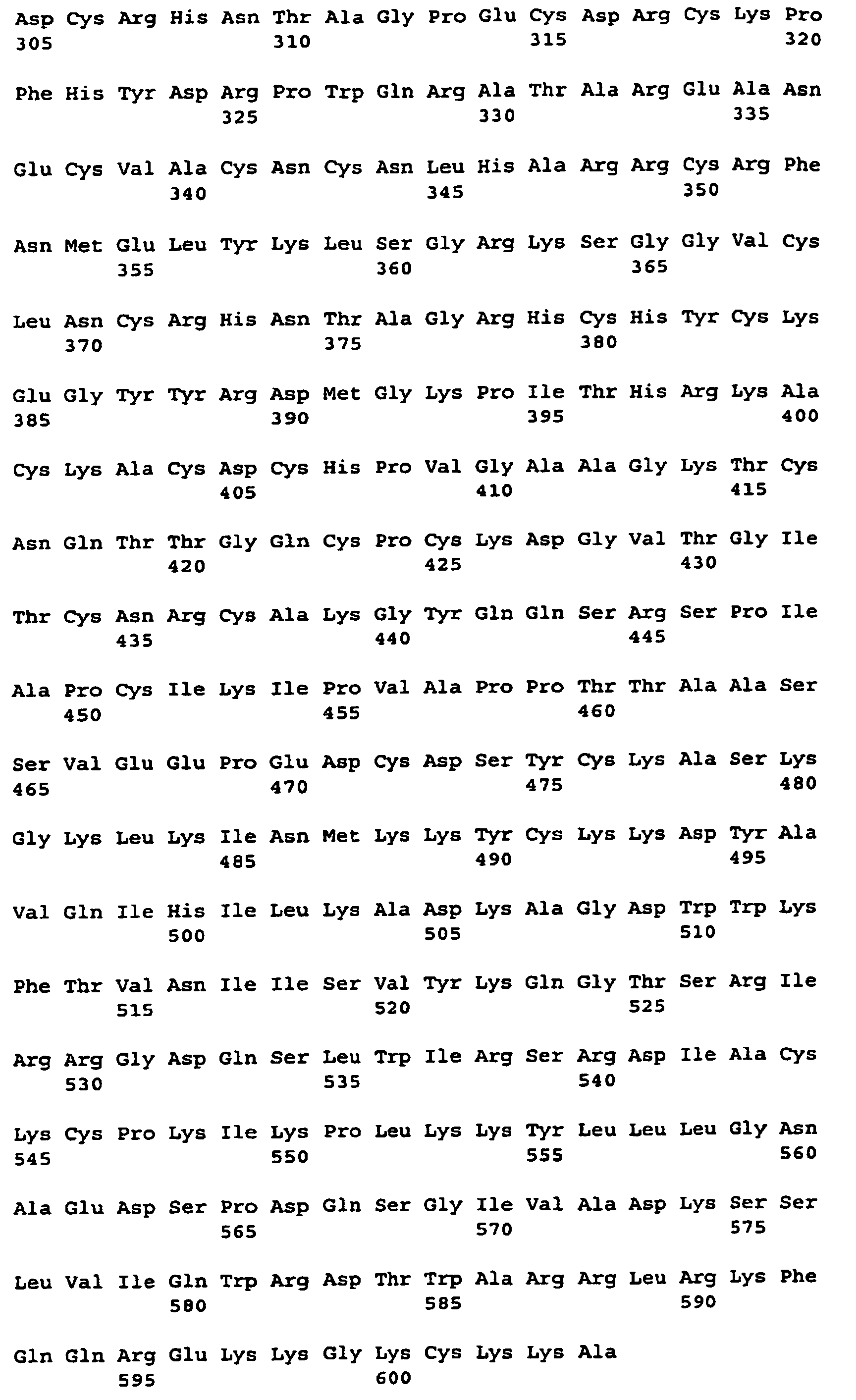
- An isolated netrin comprising the amino acid sequence of SEQ ID NO:2.
- An isolated nucleic acid encoding a netrin according to claim 1.
- An isolated nucleic acid according to claim 2, having the nucleotide sequence of SEQ ID NO:1.
- An isolated hybridization probe having complementarity to a nucleic acid according to claim 3 sufficient to specifically hybridize with said nucleic acid in the presence of other netrin genes.
- An isolated hybridization probe comprising more than 100 continuous bases of SEQ ID NO:1
- A method of modulating the growth, differentiation or morphology of a neuron, said method comprising contacting said neuron in vitro with a netrin according to claim 1.
- A method of modulating the growth, differentiation or morphology of a neuron, said method comprising contacting said neuron in vitro with a probe according to claim 4 under conditions whereby said probe hybridizes with an endogenous human netrin-encoding gene or transcript in said neuron.
- A method of determining the presence of a human netrin gene in a sample comprising a nucleic acid, said method comprising contacting said sample with a probe according to claim 4 and detecting the presence of specific hybridization of said probe to said nucleic acid.
- A method of determining the presence of a human netrin having the amino acid sequence of SEQ ID NO:2 in a sample, said method comprising contacting said sample with an agent which specifically binds said netrin and detecting the presence of specific binding of said agent to said netrin.
- A method of screening for candidate drugs, said method comprising the steps of:wherein a difference between said first and second association identifies said prospective agent as a lead pharmaceutical compound which modulates the interaction of said netrin and said netrin binding target.contacting a prospective agent with a mixture comprising a netrin according to claim 1 and a netrin binding target under conditions wherein, but for the presence of said prospective agent, said netrin and said netrin binding target have a first association;detecting a second association between said netrin and said netrin binding target;comparing said first and second association;
- A netrin according to claim 1 for use in a method of modulating the growth, differentiation or morphology of a neuron, said method comprising contacting said neuron with said netrin in vivo.
- A probe according to claim 4 for use in a method of modulating the growth, differentiation or morphology of a neuron, said method comprising contacting said neuron in vivo with said probe under conditions whereby said probe hybridizes with an endogenous human netrin-encoding gene or transcript in said neuron.
Applications Claiming Priority (3)
| Application Number | Priority Date | Filing Date | Title |
|---|---|---|---|
| US08/635,137 US5824775A (en) | 1996-04-19 | 1996-04-19 | Human netrin-1 |
| US635137 | 1996-04-19 | ||
| PCT/US1997/006452 WO1997040064A1 (en) | 1996-04-19 | 1997-04-19 | Human netrin-1 |
Publications (3)
| Publication Number | Publication Date |
|---|---|
| EP0904283A1 EP0904283A1 (en) | 1999-03-31 |
| EP0904283A4 EP0904283A4 (en) | 2002-06-19 |
| EP0904283B1 true EP0904283B1 (en) | 2005-09-14 |
Family
ID=24546597
Family Applications (1)
| Application Number | Title | Priority Date | Filing Date |
|---|---|---|---|
| EP97918715A Expired - Lifetime EP0904283B1 (en) | 1996-04-19 | 1997-04-19 | Human netrin-1 |
Country Status (8)
| Country | Link |
|---|---|
| US (2) | US5824775A (en) |
| EP (1) | EP0904283B1 (en) |
| JP (1) | JP2000516443A (en) |
| AT (1) | ATE304549T1 (en) |
| AU (1) | AU706565B2 (en) |
| CA (1) | CA2250263C (en) |
| DE (1) | DE69734199T2 (en) |
| WO (1) | WO1997040064A1 (en) |
Families Citing this family (8)
| Publication number | Priority date | Publication date | Assignee | Title |
|---|---|---|---|---|
| AU3667600A (en) * | 1999-03-10 | 2000-09-28 | Mcgill University | Methods for identifying compounds that modulate synaptic plasticity and cell motility |
| WO2001064837A2 (en) * | 2000-02-29 | 2001-09-07 | The General Hospital Corporation | β NETRIN AND USES THEREOF |
| US20060025335A1 (en) * | 2004-01-30 | 2006-02-02 | Kinane Thomas B | Netrin compositions and methods of using the same |
| CA2573720A1 (en) * | 2004-07-14 | 2006-02-23 | University Of Utah Research Foundation | Netrin-related compositions and uses |
| US7999072B2 (en) * | 2004-11-22 | 2011-08-16 | Centre National De La Recherche Scientifique (Cnrs) | Mutated netrin-4, fragments thereof and their use as medicines |
| JP5602368B2 (en) | 2006-02-28 | 2014-10-08 | サントル、ナショナール、ド、ラ、ルシェルシュ、シアンティフィク、(セーエヌエルエス) | Screening of anticancer compounds using netrin-1 activity |
| TWI334784B (en) * | 2006-04-14 | 2010-12-21 | Buck Inst For Age Res | Compositions and methods for suppression of amyloid plaque formation associated with neurodegenerative disorders |
| PE20180251A1 (en) | 2015-04-28 | 2018-02-02 | Mitsubishi Tanabe Pharma Corp | BINDING PROTEIN TO RGMA AND ITS USE |
Family Cites Families (1)
| Publication number | Priority date | Publication date | Assignee | Title |
|---|---|---|---|---|
| US5565331A (en) * | 1993-11-12 | 1996-10-15 | The Regents Of The University Of California | Nucleic acids encoding neural axon outgrowth modulators |
-
1996
- 1996-04-19 US US08/635,137 patent/US5824775A/en not_active Expired - Lifetime
-
1997
- 1997-04-19 AT AT97918715T patent/ATE304549T1/en not_active IP Right Cessation
- 1997-04-19 AU AU26752/97A patent/AU706565B2/en not_active Expired
- 1997-04-19 DE DE69734199T patent/DE69734199T2/en not_active Expired - Lifetime
- 1997-04-19 WO PCT/US1997/006452 patent/WO1997040064A1/en not_active Ceased
- 1997-04-19 EP EP97918715A patent/EP0904283B1/en not_active Expired - Lifetime
- 1997-04-19 JP JP09538190A patent/JP2000516443A/en not_active Ceased
- 1997-04-19 CA CA002250263A patent/CA2250263C/en not_active Expired - Lifetime
-
1998
- 1998-08-20 US US09/136,981 patent/US6218526B1/en not_active Expired - Lifetime
Also Published As
| Publication number | Publication date |
|---|---|
| EP0904283A1 (en) | 1999-03-31 |
| WO1997040064A1 (en) | 1997-10-30 |
| US6218526B1 (en) | 2001-04-17 |
| AU2675297A (en) | 1997-11-12 |
| AU706565B2 (en) | 1999-06-17 |
| CA2250263C (en) | 2002-08-20 |
| US5824775A (en) | 1998-10-20 |
| CA2250263A1 (en) | 1997-10-30 |
| EP0904283A4 (en) | 2002-06-19 |
| DE69734199T2 (en) | 2006-06-29 |
| ATE304549T1 (en) | 2005-09-15 |
| DE69734199D1 (en) | 2005-10-20 |
| JP2000516443A (en) | 2000-12-12 |
Similar Documents
| Publication | Publication Date | Title |
|---|---|---|
| US6610510B1 (en) | Morphogenic proteins | |
| AU7713098A (en) | Ntn-2 member of tnf ligand family | |
| EP0991759A1 (en) | Ntn-2 member of tnf ligand family | |
| WO1996020954A2 (en) | Functionally active domains of signal transducer and activators of transcription (stat) proteins | |
| AU6952498A (en) | Novel human delta3 compositions and therapeutic and diagnostic uses therefor | |
| WO1999007738A2 (en) | Human orphan receptor ntr-1 | |
| McGregor et al. | Molecular cloning of the cDNA for human TrkC (NTRK3), chromosomal assignment, and evidence for a splice variant | |
| US5824775A (en) | Human netrin-1 | |
| US20020160451A1 (en) | Novel orphan receptors | |
| US6660499B1 (en) | DCR5, a BMP-binding protein, and applications thereof | |
| DE60217651T2 (en) | POLYNUCLEOTIDE SUITABLE FOR MODULATING CANCER PRECURSION | |
| US20020049300A1 (en) | IRAK3 polypeptides, polynucleotides and methods | |
| WO1998033918A1 (en) | Morphogenic proteins | |
| AU2207999A (en) | Novel nucleic acid and polypeptide | |
| WO1998040487A1 (en) | Angiogenin receptor, compositions and methods related thereto | |
| US8039586B1 (en) | Cerebral organic anion transporter and its gene | |
| JP4357003B2 (en) | Morphogenic protein | |
| US20020164785A1 (en) | Novel orphan receptors | |
| US6207413B1 (en) | Nucleic acids encoding novel orphan cytokine receptors | |
| CA2271326A1 (en) | Dtf-a gene, diagnostic and therapeutic uses thereof | |
| Hennig et al. | Expression of a quail bHLH transcription factor is associated with adrenergic development in trunk neural crest cultures | |
| MXPA01003754A (en) | Bone morphogenic protein-induced genes and polypeptides, and their use in diagnostic and therapeutic methods | |
| JPH08256780A (en) | Genes encoding brain-specific tyrosine kinases | |
| CN1952132A (en) | Polynucleotide having influence on ELK1 activity and its encoded polypeptide and application |
Legal Events
| Date | Code | Title | Description |
|---|---|---|---|
| PUAI | Public reference made under article 153(3) epc to a published international application that has entered the european phase |
Free format text: ORIGINAL CODE: 0009012 |
|
| 17P | Request for examination filed |
Effective date: 19981106 |
|
| AK | Designated contracting states |
Kind code of ref document: A1 Designated state(s): AT BE CH DE DK ES FI FR GB GR IE IT LI LU MC NL PT SE |
|
| RAP1 | Party data changed (applicant data changed or rights of an application transferred) |
Owner name: THE REGENTS OF THE UNIVERSITY OF CALIFORNIA Owner name: EXELIXIS PHARMACEUTICALS, INC. |
|
| A4 | Supplementary search report drawn up and despatched |
Effective date: 20020507 |
|
| AK | Designated contracting states |
Kind code of ref document: A4 Designated state(s): AT BE CH DE DK ES FI FR GB GR IE IT LI LU MC NL PT SE |
|
| 17Q | First examination report despatched |
Effective date: 20040114 |
|
| GRAP | Despatch of communication of intention to grant a patent |
Free format text: ORIGINAL CODE: EPIDOSNIGR1 |
|
| GRAS | Grant fee paid |
Free format text: ORIGINAL CODE: EPIDOSNIGR3 |
|
| GRAA | (expected) grant |
Free format text: ORIGINAL CODE: 0009210 |
|
| AK | Designated contracting states |
Kind code of ref document: B1 Designated state(s): AT BE CH DE DK ES FI FR GB GR IE IT LI LU MC NL PT SE |
|
| PG25 | Lapsed in a contracting state [announced via postgrant information from national office to epo] |
Ref country code: NL Free format text: LAPSE BECAUSE OF FAILURE TO SUBMIT A TRANSLATION OF THE DESCRIPTION OR TO PAY THE FEE WITHIN THE PRESCRIBED TIME-LIMIT Effective date: 20050914 Ref country code: IT Free format text: LAPSE BECAUSE OF FAILURE TO SUBMIT A TRANSLATION OF THE DESCRIPTION OR TO PAY THE FEE WITHIN THE PRESCRIBED TIME-LIMIT;WARNING: LAPSES OF ITALIAN PATENTS WITH EFFECTIVE DATE BEFORE 2007 MAY HAVE OCCURRED AT ANY TIME BEFORE 2007. THE CORRECT EFFECTIVE DATE MAY BE DIFFERENT FROM THE ONE RECORDED. Effective date: 20050914 Ref country code: FI Free format text: LAPSE BECAUSE OF FAILURE TO SUBMIT A TRANSLATION OF THE DESCRIPTION OR TO PAY THE FEE WITHIN THE PRESCRIBED TIME-LIMIT Effective date: 20050914 Ref country code: BE Free format text: LAPSE BECAUSE OF FAILURE TO SUBMIT A TRANSLATION OF THE DESCRIPTION OR TO PAY THE FEE WITHIN THE PRESCRIBED TIME-LIMIT Effective date: 20050914 Ref country code: AT Free format text: LAPSE BECAUSE OF FAILURE TO SUBMIT A TRANSLATION OF THE DESCRIPTION OR TO PAY THE FEE WITHIN THE PRESCRIBED TIME-LIMIT Effective date: 20050914 |
|
| REG | Reference to a national code |
Ref country code: GB Ref legal event code: FG4D |
|
| REG | Reference to a national code |
Ref country code: CH Ref legal event code: EP |
|
| REG | Reference to a national code |
Ref country code: IE Ref legal event code: FG4D |
|
| REF | Corresponds to: |
Ref document number: 69734199 Country of ref document: DE Date of ref document: 20051020 Kind code of ref document: P |
|
| PG25 | Lapsed in a contracting state [announced via postgrant information from national office to epo] |
Ref country code: SE Free format text: LAPSE BECAUSE OF FAILURE TO SUBMIT A TRANSLATION OF THE DESCRIPTION OR TO PAY THE FEE WITHIN THE PRESCRIBED TIME-LIMIT Effective date: 20051214 Ref country code: GR Free format text: LAPSE BECAUSE OF FAILURE TO SUBMIT A TRANSLATION OF THE DESCRIPTION OR TO PAY THE FEE WITHIN THE PRESCRIBED TIME-LIMIT Effective date: 20051214 Ref country code: DK Free format text: LAPSE BECAUSE OF FAILURE TO SUBMIT A TRANSLATION OF THE DESCRIPTION OR TO PAY THE FEE WITHIN THE PRESCRIBED TIME-LIMIT Effective date: 20051214 |
|
| PG25 | Lapsed in a contracting state [announced via postgrant information from national office to epo] |
Ref country code: ES Free format text: LAPSE BECAUSE OF FAILURE TO SUBMIT A TRANSLATION OF THE DESCRIPTION OR TO PAY THE FEE WITHIN THE PRESCRIBED TIME-LIMIT Effective date: 20051225 |
|
| REG | Reference to a national code |
Ref country code: CH Ref legal event code: NV Representative=s name: R. A. EGLI & CO. PATENTANWAELTE |
|
| PG25 | Lapsed in a contracting state [announced via postgrant information from national office to epo] |
Ref country code: PT Free format text: LAPSE BECAUSE OF FAILURE TO SUBMIT A TRANSLATION OF THE DESCRIPTION OR TO PAY THE FEE WITHIN THE PRESCRIBED TIME-LIMIT Effective date: 20060214 |
|
| NLV1 | Nl: lapsed or annulled due to failure to fulfill the requirements of art. 29p and 29m of the patents act | ||
| PG25 | Lapsed in a contracting state [announced via postgrant information from national office to epo] |
Ref country code: IE Free format text: LAPSE BECAUSE OF NON-PAYMENT OF DUE FEES Effective date: 20060419 |
|
| PG25 | Lapsed in a contracting state [announced via postgrant information from national office to epo] |
Ref country code: MC Free format text: LAPSE BECAUSE OF NON-PAYMENT OF DUE FEES Effective date: 20060430 |
|
| ET | Fr: translation filed | ||
| PLBE | No opposition filed within time limit |
Free format text: ORIGINAL CODE: 0009261 |
|
| STAA | Information on the status of an ep patent application or granted ep patent |
Free format text: STATUS: NO OPPOSITION FILED WITHIN TIME LIMIT |
|
| 26N | No opposition filed |
Effective date: 20060615 |
|
| REG | Reference to a national code |
Ref country code: IE Ref legal event code: MM4A |
|
| PG25 | Lapsed in a contracting state [announced via postgrant information from national office to epo] |
Ref country code: LU Free format text: LAPSE BECAUSE OF NON-PAYMENT OF DUE FEES Effective date: 20060419 |
|
| REG | Reference to a national code |
Ref country code: FR Ref legal event code: PLFP Year of fee payment: 20 |
|
| PGFP | Annual fee paid to national office [announced via postgrant information from national office to epo] |
Ref country code: CH Payment date: 20160427 Year of fee payment: 20 Ref country code: DE Payment date: 20160427 Year of fee payment: 20 Ref country code: GB Payment date: 20160427 Year of fee payment: 20 |
|
| PGFP | Annual fee paid to national office [announced via postgrant information from national office to epo] |
Ref country code: FR Payment date: 20160425 Year of fee payment: 20 |
|
| REG | Reference to a national code |
Ref country code: DE Ref legal event code: R071 Ref document number: 69734199 Country of ref document: DE |
|
| REG | Reference to a national code |
Ref country code: CH Ref legal event code: PL |
|
| REG | Reference to a national code |
Ref country code: GB Ref legal event code: PE20 Expiry date: 20170418 |
|
| PG25 | Lapsed in a contracting state [announced via postgrant information from national office to epo] |
Ref country code: GB Free format text: LAPSE BECAUSE OF EXPIRATION OF PROTECTION Effective date: 20170418 |