EP0904067B1 - Transdermally administered dextromethorphan as antitussive agent - Google Patents
Transdermally administered dextromethorphan as antitussive agent Download PDFInfo
- Publication number
- EP0904067B1 EP0904067B1 EP97915801A EP97915801A EP0904067B1 EP 0904067 B1 EP0904067 B1 EP 0904067B1 EP 97915801 A EP97915801 A EP 97915801A EP 97915801 A EP97915801 A EP 97915801A EP 0904067 B1 EP0904067 B1 EP 0904067B1
- Authority
- EP
- European Patent Office
- Prior art keywords
- dextromethorphan
- transdermal
- drug
- anyone
- administration
- Prior art date
- Legal status (The legal status is an assumption and is not a legal conclusion. Google has not performed a legal analysis and makes no representation as to the accuracy of the status listed.)
- Expired - Lifetime
Links
Images

Classifications
-
- A—HUMAN NECESSITIES
- A61—MEDICAL OR VETERINARY SCIENCE; HYGIENE
- A61K—PREPARATIONS FOR MEDICAL, DENTAL OR TOILETRY PURPOSES
- A61K9/00—Medicinal preparations characterised by special physical form
- A61K9/70—Web, sheet or filament bases ; Films; Fibres of the matrix type containing drug
- A61K9/7023—Transdermal patches and similar drug-containing composite devices, e.g. cataplasms
- A61K9/703—Transdermal patches and similar drug-containing composite devices, e.g. cataplasms characterised by shape or structure; Details concerning release liner or backing; Refillable patches; User-activated patches
- A61K9/7038—Transdermal patches of the drug-in-adhesive type, i.e. comprising drug in the skin-adhesive layer
- A61K9/7046—Transdermal patches of the drug-in-adhesive type, i.e. comprising drug in the skin-adhesive layer the adhesive comprising macromolecular compounds
- A61K9/7053—Transdermal patches of the drug-in-adhesive type, i.e. comprising drug in the skin-adhesive layer the adhesive comprising macromolecular compounds obtained by reactions only involving carbon to carbon unsaturated bonds, e.g. polyvinyl, polyisobutylene, polystyrene
-
- A—HUMAN NECESSITIES
- A61—MEDICAL OR VETERINARY SCIENCE; HYGIENE
- A61K—PREPARATIONS FOR MEDICAL, DENTAL OR TOILETRY PURPOSES
- A61K31/00—Medicinal preparations containing organic active ingredients
- A61K31/33—Heterocyclic compounds
- A61K31/395—Heterocyclic compounds having nitrogen as a ring hetero atom, e.g. guanethidine or rifamycins
- A61K31/435—Heterocyclic compounds having nitrogen as a ring hetero atom, e.g. guanethidine or rifamycins having six-membered rings with one nitrogen as the only ring hetero atom
- A61K31/47—Quinolines; Isoquinolines
- A61K31/485—Morphinan derivatives, e.g. morphine, codeine
-
- A—HUMAN NECESSITIES
- A61—MEDICAL OR VETERINARY SCIENCE; HYGIENE
- A61K—PREPARATIONS FOR MEDICAL, DENTAL OR TOILETRY PURPOSES
- A61K9/00—Medicinal preparations characterised by special physical form
- A61K9/70—Web, sheet or filament bases ; Films; Fibres of the matrix type containing drug
- A61K9/7023—Transdermal patches and similar drug-containing composite devices, e.g. cataplasms
- A61K9/703—Transdermal patches and similar drug-containing composite devices, e.g. cataplasms characterised by shape or structure; Details concerning release liner or backing; Refillable patches; User-activated patches
- A61K9/7038—Transdermal patches of the drug-in-adhesive type, i.e. comprising drug in the skin-adhesive layer
- A61K9/7046—Transdermal patches of the drug-in-adhesive type, i.e. comprising drug in the skin-adhesive layer the adhesive comprising macromolecular compounds
- A61K9/7053—Transdermal patches of the drug-in-adhesive type, i.e. comprising drug in the skin-adhesive layer the adhesive comprising macromolecular compounds obtained by reactions only involving carbon to carbon unsaturated bonds, e.g. polyvinyl, polyisobutylene, polystyrene
- A61K9/7061—Polyacrylates
-
- A—HUMAN NECESSITIES
- A61—MEDICAL OR VETERINARY SCIENCE; HYGIENE
- A61K—PREPARATIONS FOR MEDICAL, DENTAL OR TOILETRY PURPOSES
- A61K9/00—Medicinal preparations characterised by special physical form
- A61K9/70—Web, sheet or filament bases ; Films; Fibres of the matrix type containing drug
- A61K9/7023—Transdermal patches and similar drug-containing composite devices, e.g. cataplasms
- A61K9/703—Transdermal patches and similar drug-containing composite devices, e.g. cataplasms characterised by shape or structure; Details concerning release liner or backing; Refillable patches; User-activated patches
- A61K9/7084—Transdermal patches having a drug layer or reservoir, and one or more separate drug-free skin-adhesive layers, e.g. between drug reservoir and skin, or surrounding the drug reservoir; Liquid-filled reservoir patches
Definitions
- This invention relates to use of dextromethorphan, optionally encompassing salts, prodrugs and metabolites thereof and, for the manufacturing of a medicament to be administered transdermally for achieving an antitussive effect, optionally encompassing salts, prodrugs and metabolites thereof.
- Dextromethorphan (+)-3-methoxy-17-methyl-9a,13a,14a-morphinan
- the preparation of (+)-3-methoxy-17-methyl-9a,13a,14a-morphinan was disclosed in US patent 2,676,177 (SCHNIDER ET AL.) and in Häfliger et al., Helv. Chim. Acta 39,1956: 2053.
- Dextromethorphan is a safe drug as concluded by Bem J.L., Peck R., Drug safety, 1992 (7): 190-199. Dextromethorphan has fewer side-effects than the other antitussive agents codeine and noscapine.
- Dextromethorphan is rapidly converted in the liver into inter alia dextrorphan, which also has a clinical activity, see above, however on other receptors than dextromethorphan.
- Pharmacokinetic studies have shown that populations can be divided into two main groups based on their ability to metabolize dextromethorphan, the so called poor metabolizers and the extensive metabolizers, see e.g. J.-C. Duché et al., "Dextromethorphan O-demethylation and dextrorphan glucoronidation in a French population", Int J. of Clin Pharm. Therapy and Tox, 1993; 31(8): 392-98, J.S.
- dextromethorphan The half-life of dextromethorphan is around 4 - 6 hours, which means that the plasma concentration varies substantially during day and night unless dextromethorphan is delivered frequently, by peroral administration at least 3 - 4 times daily. Even then the sleeping pattern of the patient will be disturbed by cough attacks as the antitussive effect will not remain through a whole night.
- the sleeping pattern disturbance, as well as the other adverse effects mentioned above, are removed or reduced with the present invention being transdermally administered dextromethorphan as antitussive agent.
- the above transdermal administration can be used for human beings as well as animals.
- dextromethorphan Transdermal administration of dextromethorphan, but not as antitussive agent, is known, e.g. from US 5,260,066 (CARLTON ET AL.) for cryogel bandages.
- dextromethorphan is administered only to sites of trauma, column 2, lines 59-60, whereas in the present invention dextromethorphan is only administered to intact skin.
- US 5,260,066 just mentions dextromethorphan in a long listing of drugs. There are no examples showing administration of dextromethorphan. Further US 5,260,066 does not even mention that an antitussive effect should be achieved. Supposedly this is not what is desired upon administration to sites of trauma.
- WO 91/15261 (MEDTRONIC) concerns iontophoretic devices which depend upon the physical activity of the patient and just mentions dextramethorphan on page 4, line 32-33, as a drug which could possibly be administered via said devices. But there are no examples showing that this is at all possible with said devices. Dextromethorphan is further not mentioned in the claims. Thus, WO 91/15261 simply concerns a very special device, requiring measurement of patient activity (page 4, lines 24-25), which means an activity sensor (page 11, lines 10-17). WO 91/15261 corresponds to US 5,213,568 (LATTIN ET AL.).
- WO 95/05416 discloses mucoadhesive devices for administration of drugs, inter alia dextromethorphan, to a body cavity, specifically to the oral cavity. It does not relate to transdermal administration.
- US 4,783,450 (FAWZI ET AL), corresponding to WO 88/07871 (WARNER LAMBERT) discloses the use of lecithin for enhancing transdermal penetration.
- US 4,645,502 (GRACE ET AL.) discloses a specific system for transdermal delivery of highly ionized fat insoluble drugs.
- WO 93/07902 (RICHARDSON-VICKS, INC.) discloses compositions for topical application comprising a drug and a non-ionic polyacrylamide.
- WO 93/07903 (RICHARDSON-VICKS, INC.) discloses compositions for topical application comprising a drug and a high molecular weight cationic polymer.
- EP 0 351 897 discloses pharmaceutical compositions comprising a drug, a fatty acid and an alkane diol.
- EP 0 349 763 discloses a composition for trans-dermal administration comprising a drug and an imidazole derivative as penetration enhancer.
- US 4,888,354 discloses compositions for topical administration of drugs present in both free and acid addition salt form.
- US 4,557,934 discloses topical compositions comprising a drug and 1-dodecyl-azacycloheptan-2-one as penetration enhancing agent. In all these patent documents dextromethorphan is just mentioned in lengthy listings of drugs which theoretically might be included in the claimed compositions.
- a first object of the present invention is to provide a device for transdermal administration use of dextromethorphan, optionally encompassing salts, prodrugs and metabolites thereof, for achieving an antitussive effect.
- the administration can be to a human being or to an animal.
- the antitussive effect is for treating, including suppressing, any kind of irritant cough, such as, but not exclusively, non-productive and dry coughs.
- a second object of the invention is to provide use of an antitussive compound comprising dextromethorphan for the manufacture of a composition to be administered transdermally for treating cough or conditions associated with cough.
- the present invention relates to transdermal administration of dextromethorphan, optionally encompassing salts, prodrugs and metabolites thereof for achieving an antitussive effect. This effect is primarily achieved through the systemic effect of dextromethorphan. Anyhow other actions are not excluded.
- Transdermal delivery of drugs can be achieved from topical products such as ointments or cremes or from transdermal devices.
- the present invention relates to administration via transdermal devices, which usually are called transdermal patches.
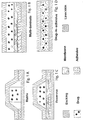
- transdermal devices usable as transdermal patches can be categorized in many different ways. A comprehensive categorization of transdermal devices is found in Steven Wick, "Developing A Drug-In-Adhesive Design For Transdermal Drug Delivery", Adhesives Age, 1995; 38(10):18 - 24. Wick essentially divides transdermal devices into the below four main groups:
- FIG. 1A - 1D The above four main types of transdermal devices are schematically illustrated in FIG, 1A - 1D.
- a fifth important type is the iontophoretic type , in which an electrical potential gradient is used for transferring the drug through the skin - see further e.g. Parminder Singh et al, "Iontophoresis in Drug Delivery: Basic Principles and Applications", Critical Reviews in Therapeutic Drug Carrier Systems, 1994; 11 (2&3):161-213.
- a multi-laminate type device encompass a device with many layers in a sandwich construction, such as the drug in one layer, excipients such as enhancers in a further layer, a membrane in another layer and an adhesive in still another layer. Or it could be composed of several drug-in-adhesive layers or combinations of the above layers.
- the liquid or gel used in the above reservoir type device could be hydrophilic or lipophilic, such as water, alcohols, mineral oils, silicone fluids, various copolymers, such as ethylene vinyl acetate, vinyl acetate or polyvinyl alcohol/polyvinyl pyrolidine.
- the reservoir may also include dyes, inert fillers, diluents, antioxidants, penetration enhancers, stabilizers, solubilizing agents and other pharmacologically inactive pharmaceutical agents being well known in the art.
- the adhesives used are generally of three types, being the rubber type, encompassing inter alia polyisobutylenes, the acrylate type and the silicone type.
- the adhesives may be chemically modified, may have a wide range of molecular weights.
- To the adhesive could be added several types of excipients such as fillers, stabilizers, plasticizers, buffering agents, penetration enhancers, penetration retarders, solubilizing agents and other pharmaceutical ingredients being well known in the art.
- Polymer films which may be used for making the rate-moderating membrane include, without limitation, those comprising low density polyethylene, high density polyethylene, ethyl vinyl acetate copolymers and other suitable polymers.
- the backing layer serves the purposes of preventing passage of the drug or environmental moisture through the surface of the patch distant from the skin, and also for providing support for the system, where needed.
- the backing layer may be chosen so that the end product is appealing to the users, whether children, adults, elderly people or other customer groups.
- the backing layer is impermeable to the passage of dextromethorphan or inactive ingredients being present in the formulation and can be flexible or nonflexible. Suitable materials include, without limitation, polyester, polyethylene terephthalate, some type of nylon, polypropylene, metallized polyester films, polyvinylidene chloride and aluminium foil.
- the release liner can be made of the same materials as the backing layer.
- the invention according to the present application encompasses administration of dextromethorphan via all hitherto known types of devices for transdermal administration.
- the above categorization will be adhered to in this application. Anyhow this does not exclude that transdermal devices which might fit better according to some other categorization also are included in the present invention.
- the properties of the skin as such influence the penetration of the drug through the skin into the systemic circulation. It could thus be said that the skin controls the drug penetration rate. Anyhow as the skin as such is no part of the present invention the behaviour of the skin in connection with transdermal administration will not be discussed in detail. It is also well accepted in the art that when rate controlling properties are attributed to a transdermal device is meant pro-perties associated with the release rate from the device as such. It is also evident that when a transdermal device is designed to exhibit a certain release performance the properties of the skin need be taken into consideration during the design process. The rate control ability is often a very important feature for a transdermal device in order to deliver the correct drug amount to the patient at the correct time.
- the reservoir type device and the multi-laminate type device, including several drug-containing layers, are presently considered to be the best modes for carrying out the present transdermal delivery of dextromethorphan.
- transdermal penetration enhancing substance(s) in order to increase the amount of dextromethorphan which may penetrate the skin and which eventually may reach the systemic circulation.
- Enhancers suitable in the present invention may be categorized in the below groups, although enhancers not belonging to any of these groups are not excluded.
- Combinations of enhancers from different groups in the above cathegorization may prove very useful and efficient.
- Coating equipment RP Print Coat Instrument LTD., Type KCC 202 Control Coater System with vacuum bed and rods (100 and 400 ⁇ m)
- the columns were eluted isocratically at ambient temperature with a mobile phase consisting of water-acetonitrile-acetic acid (600:400:1 v/v) with 0.02M potassium nitrate and 0.005M
- dextromethorphan base in the following called dextromethorphan.
- dextromethorphan hydrobromide 100 g was dissolved in 1000 ml of demineralized water. While stirring, the solution was heated to 60°C, until the solution was clear, and approximately 350 ml of sodium hydroxide (1M) was added (the addition of sodium hydroxide (1M) was stopped when precipitation no longer occurred). The precipitated mixture was refrigerated for at least 4 hours. The mixture was vacuum filtered and dried in a drying oven at 25°C. The resulting dextromethorphan passed the test of USP 23, p. 481.
- a saturated dextromethorphan solution in demineralized water A saturated dextromethorphan solution in demineralized water.
- a saturated dextromethorphan solution in demineralized water containing 10 mg/ml of b-cyclodextrine containing 10 mg/ml of b-cyclodextrine.
- dextromethorphan 50 mg dextromethorphan was dissolved in 5 ml isopropyl myristate.
- dextromethorphan 50 mg dextromethorphan was dissolved in 5 ml propylene glycol.
- dextromethorphan 50 mg dextromethorphan was dissolved in 5 ml propylene glycol containing 50 mg/ml of azone.
- Permeation of dextromethorphan was followed by removing samples periodically and measuring the concentration by the HPLC method according to Example 2.
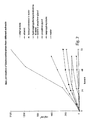
- the cumulative amount of dextromethorphan appearing in the receptor solution versus time is shown in FIG. 2.
- An increase in the permeated amount of dextromethorphan is seen in the following order: Water, isopropyl myristate, propylene glycol, propylene glycol containing 5 % azone, water containing 1% hydroxpropyl-b-cyclodextrine, water containing 1% b-cyclodextrine, ethanol and ethyl acetate used as solvents.
- the maximal observed flux of dextromethorphan is 21 ⁇ g/cm 2 /h and the range is from approximately 0.5 to 21 ⁇ g/cm 2 /h.
- dextromethorphan 50 mg dextromethorphan was dissolved in 5 ml propylene glycol.
- dextromethorphan 2.5 g was suspended in 20 g ETA-2 Medical Grade Adhesive to give the drug gel.
- dextromethorphan 5 g dextromethorphan was dissolved in 10 ml ethanol. The solution was added to 15 g Durotak 387-2287 to give the drug gel.
- dextromethorphan hydrobromide was dispersed in a mixture of 3 g Eudragit NE 30 D and 45 g Plastoid E35H to give the drug gel.
- the polyester film, S 2016, in contact with the drug gel was removed, and Scotchpak 1109 was laminated onto the drug gel as the backing.
- the resulting sheet was die-cut into patches which were kept at room temperature until use.
- the concentration of dextromethorphan was approximately 1 mg/cm 2 .
- dextromethorphan 2.5 g was suspended in 20 g Durotak 387-2287 to give the drug gel.
- dextromethorphan hydrobromide was dispersed in a mixture of 3 g Eudragit NE 30 D and 45 g Plastoid E35H to give the drug gel.
- the polyester film, S 2016, in contact with the drug gel was removed, and Scotchpak 1109 was laminated onto the drug gel as the backing.
- the resulting sheet was die-cut into patches which were kept at room temperature until use.
- the concentration of dextromethorphan was approximately 0.5 mg/cm 2 .
- dextromethorphan 2.5 g was suspended in 10 g MA-24 Medical Grade Adhesive to give the drug gel.
- the apparatus used was Apparatus 5, paddle over disk. described under Apparatus. Patches of 7.1 cm 2 were applied to the disk assembly, using a suitable adhesive, with the release surface facing up.
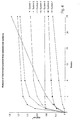
- the dissolution medium used was 600 ml of 0.05M phosphate buffer pH 7.4 equilibrated to 32 ⁇ 0.5°C. Samples were withdrawn at 1, 2, 4, 8 and 24 hours, respectively. The amount of dextromethorphan in the samples was determined by UV-spectrophotometry at 280 nm and the concentration of the respective systems was expressed in mg dextromethorphan per cm 2 .
- a reservoir type device may be manufactured by heat sealing a membrane such as described in the above Example 4 to a backing containing the drug in a suitable vehicle.
- a iontophoretic type device may be manufactured essentially according to embodiments disclosed in e.g. Parminder Singh et al, "Iontophoresis in Drug Delivery: Basic Principles and Applications", Critical Reviews in Therapeutic Drug Carrier Systems, 1994; 11 (2&3):161-213.
- the administration of dextromethorphan is not disclosed in this reference. Anyhow it lies within the present invention to modify, using the disclosure in the present application, the embodiments according to said reference to become suitable for the administration of dextromethorphan.
- Some prodrug type derivatives of dextromethorphan can be used according to the present invention for obtaining the desirable antitussive effect.
- Such derivatives may include other ethers in the 3-position than the methoxy-group.
- By modification in the 3-position compounds with favourable permeation rates through human and animal skin may be obtained.
- Upon permeation of stratum corneum dextromethorphan or dextrorphan may be generated through metabolic reactions.
- Other salts than the hydrobromide could be used as it is known that more lipophilic anions than bromide may generate ion-pairs with more favourable skin permeation rates.
- Various carriers and vehicles for dextromethorphan may be used in the transdermal adiministration.
- One such carrier is cyclodextrin, especially b-cyclodextrin.
- Dextromethorphan can be bound in the cavities of cyciodextrins to form so called inclusion complexes. Binding dextromethorphan to a cyclodextrin leads either to increased delivery rate or to decreased delivery rate depending on the dextromethorphan-cyclodextrine ratio.
- transdermal device substances being fragrances or other substances with agreeable smell in order to give the device a smell appealing to the user.
- a transdermal device As the period of time from the first application of a transdermal device according to the present invention until a therapeutically effective serum level of dextromethorphan is achieved is in the order of up to 3 hours the complementary and concomitant use of another administration form may be of value. Oral, sublingual, buccal, nasal, pulmonary and rectal, and possibly other transmucosal, administration of dextromethorphan results in that the drug reaches the system more rapidly than through the transdermal route.
- said non-transdermal administration forms have the disadvantage of a lower bioavailability than the transdermal form of administration. Anyhow this disadvantage, and problems related thereto, may be temporarily tolerated if an antitussive effect is desirable in the period of time before the therapeutic effect is achieved from the transdermal device.
- One suitable use of the mentioned forms of administration is to administer dextromethorphan through the oral, sublingual, buccal, nasal, pulmonary or rectal, or possibly other transmucosal routes approximately at the same time as the first transdermal device is applied. Thereafter new transdermal devices are applied to ensure the correct plasma level without further administration through the oral, sublingual, buccal, nasal, pulmonary and rectal, or possibly other transmucosal, route.
- the above concomitant use of different administration forms is especially useful in certain situations, such as, but not exclusively, some time prior to oral presentations, attendance to conferences and visits to theatres, concerts and church.
- Another envisageable concomitant use according to the present invention is to apply a second transdermal device while a priorly applied first transdermal device is still adhered to the patient's skin while still delivering some amount of the drug.
- the utility behind this use is as follows. Suppose that the transdermal devices used deliver the drug during 36 hours. The first evening one such device is applied. The following evening the device still delivers the drug, though usually with a lower flux rate than earlier. If now this second evening a second transdermal device is applied while the first one is left on the skin the fluxes from the first and second device will add to a useful flux as the flux from the first device successively decreases while the drug from the second device only reaches the systemic circulation after some hours.
- transdermal devices By using transdermal devices in this way a more stable therapeutically effective plasma level of the drug during an extended period of time is achieved than if for example are used devices delivering for 24 hours and being replaced every 24 hours. Also other useful combinations of concomitantly used transdermal devices are envisageable.
- the cough now and then should be allowed to occur it might be desirable not to treat or prevent cough during too long continuous periods of time. It is within the present invention to administer dextromethorphan in such a way that a therapeutically effective systemic level of dextromethorphan prevails mainly during those periods of time during day and night when it is desirable that cough should be treated or prevented, and, consequently, in such a way that a less than therapeutically effective systemic level of dextromethorphan prevails mainly during those periods of time during day and night when it is not desirable that cough should be treated or prevented.
- the above object is achievable by applying the transdermal device at the appropriate time during day or night in combination with designing the device with the appropriate release profile.
- the maximal dose of dextromethorphan to be given perorally according to Martindale, "The Extra Pharmacopoeia", London, 1993 is for adults 10 to 30 mg every 4 to 8 hours up to a maximum of 120 mg in every 24 hours. Children aged 6 to 12 years may be given 5 to 15 mg perorally every 4 to 8 hours to a maximum in 24 hours and children aged 1 to 6 years 2.5 to 7.5 mg every 4 to 8 hours to a maximum of 30 mg in 24 hours. Similar peroral dosages are recommended in "Handbook of Non-prescription Drugs", 10th ed., American Pharmaceutical Association, The National Professional Society of Pharmacists, Washington D.C., 1993.
- the area of a transdermal device being convenient for a patient to wear is in the range from 5 to 50 cm 2 .
- the corresponding patch loading should be at least 0,3 - 1,5 mg/cm 2 for a transdermal device with an area of 30 cm 2 .
- the above indicated loadings in mg/cm 2 are to be considered as average loadings for an average size device. It is known that the driving force for the release of a drug from a transdermal device is related to the drug concentration, i.e. number of mg of drug/cm 3 . Therefore the above indicated loadings in mg/cm 2 are to be adjusted according to the actual areal size and thickness of the device in order to arrive at the desirable therapeutic effect.
- Loadings for different sizes and types of devices for transdermal administration range from about 0.1 mg/cm 2 to about 10 mg/cm 2 of dextromethorphan.
- the hourly flux rate of dextromethorphan ranges from about 1 mg/cm 2 /hour to about 100 mg/cm 2 /hour.
- the effective transdermally delivered amount of dextromethorphan is from about 0.05 mg/kg bodyweight to about 5 mg/kg bodyweight.
- a device for transdermal delivery during 8 - 12 hours would be clinically more relevant than a device for delivery during 24 hours.
- Such a device with limited release duration may be used for the periods with worst cough during daytime and during the night allowing the patient to cough the bronchi clean therebetween.
- the mentioned device may either be taken off from the skin after 8 - 12 hours in order to stop further delivery, or be designed in such a way that its delivery drops to negligible or non-pharmacological levels after 8 - 12 hours. ln this latter case the device may remain on the skin after 8 - 12 hours without the patient risking further delivery thereafter which facilitates the patient's handling of the device.
- Such devices are known per se, see eg US 4,915,950 (MIRANDA ET AL.) - although not for delivery of dextromethorphan.
- dextromethorphan When dextromethorphan is administered in a transdermal device the latter should preferably be occlusive, which means that the device does not permit water to migrate outwardly from the patient. Thereby the hydration of the skin is increased which favours the penetration of dextromethorphan through the skin.
Landscapes
- Health & Medical Sciences (AREA)
- Engineering & Computer Science (AREA)
- Bioinformatics & Cheminformatics (AREA)
- Dermatology (AREA)
- Life Sciences & Earth Sciences (AREA)
- Medicinal Chemistry (AREA)
- Pharmacology & Pharmacy (AREA)
- Epidemiology (AREA)
- Chemical & Material Sciences (AREA)
- Animal Behavior & Ethology (AREA)
- General Health & Medical Sciences (AREA)
- Public Health (AREA)
- Veterinary Medicine (AREA)
- Emergency Medicine (AREA)
- Pharmaceuticals Containing Other Organic And Inorganic Compounds (AREA)
- Medicinal Preparation (AREA)
- Heterocyclic Carbon Compounds Containing A Hetero Ring Having Oxygen Or Sulfur (AREA)
Abstract
Description
- the reservoir type, in which the drug is placed in a liquid or a gel and delivered to the skin across a rate-moderating membrane;
- the matrix type, in which the drug is placed within a non-adhesive polymeric material, typically a hydrogel or soft polymer;
- the drug-in-adhesive type, in which the drug is placed within an adhesive polymer;
- the multi-laminate type, which is similar to the drug-in-adhesive design but which incorporates an additional layer of pressure sensitive adhesive to cover the entire device and affix it to the skin.
The rate control ability is often a very important feature for a transdermal device in order to deliver the correct drug amount to the patient at the correct time. Thereby maximum efficacy is achieved while side effects are minimized. Many factors influence the rate control ability of a transdermal device. In the below Table 1 the most important such factors are listed and their influence in the respective device type is marked. A plus sign indicates that the influence is strong. The absence of a plus sign does not exclude that the corresponding has at least some influence.
| Type of device | ||||
| Factor | Reservoir | Matrix | Drug-in-adhesive | Multilaminate |
| - Polymer type(s) | + | + | + | + |
| - Modification of the polymer(s) | + | + | + | |
| - Activity, i.e. concentration, of drug e.g. supersaturation | + | + | + | + |
| - Additives in polymer(s) | ||||
| Enhancer(s) | + | + | + | + |
| Cyclodextrine(s) | + | + | + | + |
| Retarder(s) | + | + | + | + |
| - pH-adjustment | + | + | + | + |
| - Solubilizer(s) | + | + | + | + |
| - Emulsifier(s) | + | + | + | + |
| - Membrane(s) | + | |||
| Hydrophilic | + | |||
| Lipophilic | + | |||
| Thickness | + | |||
| Pore size | + | |||
| Density | + | |||
| - Chemical stabilizer(s) | + | + | + | + |
- alcohols, such as short chain alcohols, e.g ethanol and the like, long chain fatty alcohols, e.g. lauryl alcohols, and the like, and polyalcohols, e.g. propylene glycol, glycerine and the like:
- amides, such as amides with long aliphatic chains, or aromatic amides like N,N-diethyl-m-toluamide;
- amino acids;
- azone and azone-like compounds;
- essential oils, i.e. essential oils or constituents thereof, such as 1-carvone, 1-menthone and the like;
- fatty acids and fatty acid esters, such as oleic acid, lauric acid and the like, further esters of fatty acids, such as isopropyl myristate, and various esters of lauric acid and of oleic acid and the like;
- macrocyclic compounds, such as cyclopentadecanone and cyclodextrins;
- phospholipid and phosphate compounds, such as phospholipids;
- 2-pyrrolidone compounds; and
- miscellaneous compounds, like sulphoxides, such as dimethyl sulphoxides, and fatty acid ethers, such as Laureth-9 and polyoxylaurylether.
LKB 2141 variable wavelength monitor
LKB 2221 integrator
LKB 2157 autosampler (20µl injected)
Precolumn, 4 cm x 4.6 mm i.d., packed with Nucleosil
5 C18
Analytical column, 12 cm x 4.0 mm i.d., packed with
Nucleosil 5 C18
Claims (13)
- Device for transdermal administration, characterized in that it administers dextromethorphan, (+)-3-methoxy-17-methyl-9a,13a,14a-morphinan, optionally encompassing salts, prodrugs and metabolites thereof, and optionally together with pharmaceutically acceptable carrier(s), to a human being or an animal in order to achieve an antitussive effect, and in that it comprises ethanol, ethyl acetate and/or cyclodextrins.
- Device for transdermal administration, characterized in that it administers dextromethorphan, (+)-3-methoxy-17-methyl-9a, 13a, 14a-morphinan, optionally encompassing salts, prodrugs and metabolites thereof, and optionally together with pharmaceutically acceptable carrier(s) to a human being or an animal in order to achieve an antitussive effect, and in that it is of drug-in-adhesive type and/or the multi-laminate type.
- Device for transdermal administration according to anyone of the preceding claims, characterized in that it has a loading of dextromethorphan from about 0.1 mg/cm2 to about 10 mg/cm2.
- Device for transdermal administration according to anyone of the preceding claims, characterized in that it has an hourly flux rate of dextromethorphan from about 1 mg/cm2/hour to about 100 mg/cm2/hour.
- Device for transdermal administration according to anyone of the preceding claims, characterized in that it delivers dextromethorphan for a predefined period of time, preferably 8, 12 or 24 hours.
- Device according to anyone of the preceding claims, characterized in that dextromethorphan is present in a complex with cyclodextrin, preferably b-cyclodextrin.
- Device according to anyone of the preceding claims, characterized in that it has a release profile being such that it, when applied on the skin at the appropriate time during day or night, administers dextromethorphan in such a way that a therapeutically effective systemic level of dextromethorphan prevails mainly during such periods of time during day and night when an antitussive effect is most desirable.
- Device according to anyone of the preceding claims, characterized in that it further comprises a fragrance or other substance with agreeable smell.
- Device according to anyone of the preceding claims, characterized in that it further comprises a substance enhancing transdermal penetration.
- Device according to anyone of the preceding claims, characterized in that it is occlusive.
- Set of formulations of dextromethorphan, (+)-3-methoxy-17-methyl-9a,13a,14a-morphinan, optionally encompassing salts, prodrugs and metabolites thereof, and optionally together with pharmaceutically acceptable carriers), characterized in that it comprises at least one device for transdermal administration and at least one formulation for oral, sublingual, buccal, nasal, pulmonary, rectal and/or other transmucosal administration.
- Use of an antitussive compound comprising dextromethorphan, (+)-3-methoxy-17-methyl-9a,13a,14a-morphinan, optionally encompassing salts, prodrugs and metabolites thereof, and optionally together with pharmaceutically acceptable carrier(s), for the manufacture of a composition to be administered transdermally for achieving an antitussive effect, whereby the transdermal delivery is carried out using a device for transdermal delivery comprising ethanol, ethyl acetate and/or cyclodextrins or whereby the transdermal delivery is carried out using a device being of the drug-in-adhesive type and/or the multi-laminate type.
- Use according to claim 12, characterized in that more than one device transdermal device is used at a time.
Applications Claiming Priority (3)
| Application Number | Priority Date | Filing Date | Title |
|---|---|---|---|
| SE9601528 | 1996-04-23 | ||
| SE9601528A SE9601528D0 (en) | 1996-04-23 | 1996-04-23 | Transdermally administered dextromethorphan as an antitissue agent |
| PCT/SE1997/000484 WO1997039742A1 (en) | 1996-04-23 | 1997-03-21 | Transdermally administered dextromethorphan as antitussive agent |
Publications (2)
| Publication Number | Publication Date |
|---|---|
| EP0904067A1 EP0904067A1 (en) | 1999-03-31 |
| EP0904067B1 true EP0904067B1 (en) | 2004-12-08 |
Family
ID=20402295
Family Applications (1)
| Application Number | Title | Priority Date | Filing Date |
|---|---|---|---|
| EP97915801A Expired - Lifetime EP0904067B1 (en) | 1996-04-23 | 1997-03-21 | Transdermally administered dextromethorphan as antitussive agent |
Country Status (14)
| Country | Link |
|---|---|
| US (1) | US6335030B1 (en) |
| EP (1) | EP0904067B1 (en) |
| JP (1) | JP2000509037A (en) |
| AT (1) | ATE284206T1 (en) |
| AU (1) | AU714942B2 (en) |
| CA (1) | CA2251966C (en) |
| DE (1) | DE69731882T2 (en) |
| DK (1) | DK0904067T3 (en) |
| ES (1) | ES2234012T3 (en) |
| NZ (1) | NZ332215A (en) |
| PT (1) | PT904067E (en) |
| SE (1) | SE9601528D0 (en) |
| WO (1) | WO1997039742A1 (en) |
| ZA (1) | ZA973444B (en) |
Families Citing this family (21)
| Publication number | Priority date | Publication date | Assignee | Title |
|---|---|---|---|---|
| US6846495B2 (en) * | 1999-01-11 | 2005-01-25 | The Procter & Gamble Company | Compositions having improved delivery of actives |
| DE19901085C2 (en) * | 1999-01-14 | 2003-12-18 | Lohmann Therapie Syst Lts | Transdermal therapeutic system with a self-adhesive matrix containing organic acid addition salts of morphine or morphine type alkaloids |
| GB9920167D0 (en) * | 1999-08-25 | 1999-10-27 | Avery Dennison Corp | Pressure sensitive adhesive compositions |
| US7138133B2 (en) | 2001-10-10 | 2006-11-21 | The Procter & Gamble Company | Orally administered liquid compositions |
| IL152574A (en) * | 2002-10-31 | 2009-09-22 | Transpharma Medical Ltd | Transdermal delivery system for dried particulate or lyophilized medications |
| US8133505B2 (en) * | 2002-10-31 | 2012-03-13 | Transpharma Medical Ltd. | Transdermal delivery system for dried particulate or lyophilized medications |
| US7662404B2 (en) * | 2002-10-31 | 2010-02-16 | Transpharma Medical Ltd. | Transdermal delivery system for dried particulate or lyophilized peptides and polypeptides |
| US7383084B2 (en) * | 2002-10-31 | 2008-06-03 | Transpharma Medical Ltd. | Transdermal delivery system for dried particulate or lyophilized medications |
| US8502681B2 (en) * | 2005-06-20 | 2013-08-06 | Biovigil, Llc | Hand cleanliness |
| JP5015620B2 (en) * | 2007-01-30 | 2012-08-29 | 株式会社クラレ | Topical skin preparation |
| US20100160368A1 (en) * | 2008-08-18 | 2010-06-24 | Gregory Jefferson J | Methods of Treating Dermatological Disorders and Inducing Interferon Biosynthesis With Shorter Durations of Imiquimod Therapy |
| EP2378876B1 (en) | 2008-12-19 | 2018-11-14 | Medicis Pharmaceutical Corporation | Lower dosage strength imiquimod formulations and short dosing regimens for treating actinic keratosis |
| MX336923B (en) | 2009-07-13 | 2016-02-05 | Medicis Pharmaceutical Corp | Lower dosage strength imiquimod formulations and short dosing regimens for treating genital and perianal warts. |
| US8461102B2 (en) * | 2010-03-02 | 2013-06-11 | George E. Royster, JR. | Methods and compositions for treating and preventing symptoms of hormonal variations |
| US10493049B2 (en) | 2016-02-10 | 2019-12-03 | Niracle LLC | Applicator-based transdermal drug delivery system for administration of drugs in combination with topical formulations |
| TWI795446B (en) * | 2017-10-04 | 2023-03-11 | 美商神經治療股份有限公司 | Dextromethorphan transdermal delivery device |
| EP4125902A4 (en) * | 2020-03-30 | 2024-05-22 | Shinkei Therapeutics, Inc. | TRANSDERMAL ADMINISTRATION OF DEXTROMETHORPHAN |
| JP2024540701A (en) | 2021-11-08 | 2024-11-01 | リー・ウェイヨン | Transdermal drug delivery system for delivering drugs to a patient - Patents.com |
| USD1097178S1 (en) | 2022-07-16 | 2025-10-07 | Aso Llc | Transdermal foot patch |
| USD1077245S1 (en) | 2022-07-16 | 2025-05-27 | Aso Llc | Transdermal foot patch |
| USD1094727S1 (en) | 2022-07-16 | 2025-09-23 | Aso Llc | Transdermal toe patch |
Family Cites Families (19)
| Publication number | Priority date | Publication date | Assignee | Title |
|---|---|---|---|---|
| US3275510A (en) * | 1966-09-27 | Topical antitussive preparations | ||
| US2676177A (en) | 1949-11-09 | 1954-04-20 | Hoffmann La Roche | Process for the preparation of optically active 3-methoxy-n-methyl morphinans and salts thereof |
| US4557934A (en) | 1983-06-21 | 1985-12-10 | The Procter & Gamble Company | Penetrating topical pharmaceutical compositions containing 1-dodecyl-azacycloheptan-2-one |
| US4645502A (en) * | 1985-05-03 | 1987-02-24 | Alza Corporation | Transdermal delivery of highly ionized fat insoluble drugs |
| JPS6351327A (en) * | 1986-08-22 | 1988-03-04 | Sato Seiyaku Kk | liquid composition |
| US4783450A (en) * | 1987-04-13 | 1988-11-08 | Warner-Lambert Company | Use of commercial lecithin as skin penetration enhancer |
| US4888354A (en) | 1987-12-21 | 1989-12-19 | Theratech, Inc. | Skin penetration enhancement using free base and acid addition salt combinations of active agents |
| US4915950A (en) | 1988-02-12 | 1990-04-10 | Cygnus Research Corporation | Printed transdermal drug delivery device |
| US5164406A (en) | 1988-06-02 | 1992-11-17 | Bristol-Myers Squibb Co. | Method for enhancing transdermal penetration and compositions useful therein |
| EP0351897A3 (en) | 1988-06-17 | 1990-03-21 | The Procter & Gamble Company | Skin penetration system for salts of amine-functional drugs |
| WO1991015261A1 (en) * | 1990-03-30 | 1991-10-17 | Medtronic, Inc. | Activity controlled electrotransport drug delivery device |
| US5213568A (en) | 1990-03-30 | 1993-05-25 | Medtronic Inc. | Activity controlled electrotransport drug delivery device |
| FI931934L (en) * | 1990-10-31 | 1993-05-31 | Procter & Gamble | Dextromethorphaninnehaollande hostmedicinkompositioner |
| GB9103302D0 (en) * | 1991-02-16 | 1991-04-03 | Smithkline Beecham Plc | Pharmaceutical formulations |
| EG20380A (en) | 1991-10-16 | 1999-02-28 | Richardson Vicks Inc | Enhanced skin penetration system for improved topical delivery of drugs |
| ES2114569T3 (en) | 1991-10-16 | 1998-06-01 | Richardson Vicks Inc | IMPROVED SKIN PENETRATION SYSTEM FOR THE IMPROVED TOPICAL ADMINISTRATION OF PHARMACES. |
| US5260066A (en) * | 1992-01-16 | 1993-11-09 | Srchem Incorporated | Cryogel bandage containing therapeutic agent |
| US5756117A (en) * | 1992-04-08 | 1998-05-26 | International Medical Asscociates, Inc. | Multidose transdermal drug delivery system |
| CN1134163A (en) | 1993-08-19 | 1996-10-23 | 辛勒斯治疗系统公司 | Water-soluble pressure-sensitive mucosal adhesives and devices equipped with the same for placement in mucous-lined body cavities |
-
1996
- 1996-04-23 SE SE9601528A patent/SE9601528D0/en unknown
-
1997
- 1997-03-21 WO PCT/SE1997/000484 patent/WO1997039742A1/en not_active Ceased
- 1997-03-21 AT AT97915801T patent/ATE284206T1/en not_active IP Right Cessation
- 1997-03-21 CA CA002251966A patent/CA2251966C/en not_active Expired - Fee Related
- 1997-03-21 JP JP9537974A patent/JP2000509037A/en active Pending
- 1997-03-21 ES ES97915801T patent/ES2234012T3/en not_active Expired - Lifetime
- 1997-03-21 DK DK97915801T patent/DK0904067T3/en active
- 1997-03-21 PT PT97915801T patent/PT904067E/en unknown
- 1997-03-21 DE DE69731882T patent/DE69731882T2/en not_active Expired - Fee Related
- 1997-03-21 EP EP97915801A patent/EP0904067B1/en not_active Expired - Lifetime
- 1997-03-21 AU AU23132/97A patent/AU714942B2/en not_active Ceased
- 1997-03-21 US US09/171,674 patent/US6335030B1/en not_active Expired - Lifetime
- 1997-03-21 NZ NZ332215A patent/NZ332215A/en unknown
- 1997-04-22 ZA ZA9703444A patent/ZA973444B/en unknown
Also Published As
| Publication number | Publication date |
|---|---|
| NZ332215A (en) | 2000-09-29 |
| CA2251966A1 (en) | 1997-10-30 |
| PT904067E (en) | 2005-02-28 |
| ZA973444B (en) | 1997-11-18 |
| ATE284206T1 (en) | 2004-12-15 |
| DK0904067T3 (en) | 2005-03-14 |
| WO1997039742A1 (en) | 1997-10-30 |
| AU2313297A (en) | 1997-11-12 |
| US6335030B1 (en) | 2002-01-01 |
| ES2234012T3 (en) | 2005-06-16 |
| JP2000509037A (en) | 2000-07-18 |
| CA2251966C (en) | 2008-01-15 |
| SE9601528D0 (en) | 1996-04-23 |
| EP0904067A1 (en) | 1999-03-31 |
| AU714942B2 (en) | 2000-01-13 |
| DE69731882D1 (en) | 2005-01-13 |
| DE69731882T2 (en) | 2005-12-15 |
Similar Documents
| Publication | Publication Date | Title |
|---|---|---|
| US6335030B1 (en) | Transdermally administered dextromethorphan as antitussive agent | |
| AU758399B2 (en) | Transdermally administered tolterodine as anti-muscarinic agent for the treatment of overactive bladder | |
| KR100507266B1 (en) | Transdermal Therapeutic System Containing Pergolide | |
| US6783769B1 (en) | Transdermal therapeutic system TTS containing tolterodine | |
| US6303141B1 (en) | Transdermally administrable medicament with ACE inhibitors | |
| EP1503743B1 (en) | Transdermal delivery system with two superimposed adhesive layers having different affinities to the active substance comprised | |
| EP0315219A2 (en) | Pharmaceutical compositions | |
| US6555129B1 (en) | Transdermal therapeutic system (TTS) containing oxybutynin | |
| JP2023520845A (en) | Oral delivery system containing hydroxychloroquine and/or chloroquine | |
| US20050181031A1 (en) | Solifenacin transdermal preparation and method for enhancing transdermal permeation thereof | |
| US6620428B1 (en) | Transdermally administered acetylcysteine as mucolytic agent | |
| WO2001047503A1 (en) | Transdermal administration of reboxetine | |
| KR100294084B1 (en) | Composition for transdermal administration of non-steroid drugs and formulation containing same | |
| JP2023521563A (en) | Transdermal and/or topical delivery system containing hydroxychloroquine and/or chloroquine | |
| JP2000515868A (en) | Formulation for treating and / or preventing dementia | |
| EP1328273B1 (en) | Felodipine transdermal device and methods | |
| KR20030000344A (en) | Transdermal delivery system for tulobuterol | |
| KR100272043B1 (en) | Percutaneous Absorption Agent for the Treatment of Alzheimer's Dementia | |
| HK40084062A (en) | Transdermal and/or topical delivery system comprising hydroxychloroquine and/or chloroquine | |
| HK1036594A1 (en) | Formulations for the transdermal administration of fenoldopam |
Legal Events
| Date | Code | Title | Description |
|---|---|---|---|
| PUAI | Public reference made under article 153(3) epc to a published international application that has entered the european phase |
Free format text: ORIGINAL CODE: 0009012 |
|
| 17P | Request for examination filed |
Effective date: 19980923 |
|
| AK | Designated contracting states |
Kind code of ref document: A1 Designated state(s): AT BE CH DE DK ES FI FR GB GR IE IT LI LU MC NL PT SE |
|
| 17Q | First examination report despatched |
Effective date: 20021121 |
|
| RAP1 | Party data changed (applicant data changed or rights of an application transferred) |
Owner name: PHARMACIA AB |
|
| GRAP | Despatch of communication of intention to grant a patent |
Free format text: ORIGINAL CODE: EPIDOSNIGR1 |
|
| RAP1 | Party data changed (applicant data changed or rights of an application transferred) |
Owner name: PFIZER HEALTH AB |
|
| GRAS | Grant fee paid |
Free format text: ORIGINAL CODE: EPIDOSNIGR3 |
|
| GRAA | (expected) grant |
Free format text: ORIGINAL CODE: 0009210 |
|
| PGFP | Annual fee paid to national office [announced via postgrant information from national office to epo] |
Ref country code: LU Payment date: 20041129 Year of fee payment: 9 |
|
| AK | Designated contracting states |
Kind code of ref document: B1 Designated state(s): AT BE CH DE DK ES FI FR GB GR IE IT LI LU MC NL PT SE |
|
| REG | Reference to a national code |
Ref country code: GB Ref legal event code: FG4D |
|
| PGFP | Annual fee paid to national office [announced via postgrant information from national office to epo] |
Ref country code: BE Payment date: 20041209 Year of fee payment: 9 |
|
| REG | Reference to a national code |
Ref country code: CH Ref legal event code: EP |
|
| REG | Reference to a national code |
Ref country code: CH Ref legal event code: NV Representative=s name: DIETLIN & CIE SA |
|
| PGFP | Annual fee paid to national office [announced via postgrant information from national office to epo] |
Ref country code: MC Payment date: 20050112 Year of fee payment: 9 |
|
| REG | Reference to a national code |
Ref country code: IE Ref legal event code: FG4D |
|
| REF | Corresponds to: |
Ref document number: 69731882 Country of ref document: DE Date of ref document: 20050113 Kind code of ref document: P |
|
| PGFP | Annual fee paid to national office [announced via postgrant information from national office to epo] |
Ref country code: AT Payment date: 20050207 Year of fee payment: 9 |
|
| REG | Reference to a national code |
Ref country code: PT Ref legal event code: SC4A Free format text: AVAILABILITY OF NATIONAL TRANSLATION Effective date: 20041217 |
|
| REG | Reference to a national code |
Ref country code: DK Ref legal event code: T3 |
|
| REG | Reference to a national code |
Ref country code: SE Ref legal event code: TRGR |
|
| REG | Reference to a national code |
Ref country code: GR Ref legal event code: EP Ref document number: 20050400403 Country of ref document: GR |
|
| REG | Reference to a national code |
Ref country code: ES Ref legal event code: FG2A Ref document number: 2234012 Country of ref document: ES Kind code of ref document: T3 |
|
| ET | Fr: translation filed | ||
| PLBE | No opposition filed within time limit |
Free format text: ORIGINAL CODE: 0009261 |
|
| STAA | Information on the status of an ep patent application or granted ep patent |
Free format text: STATUS: NO OPPOSITION FILED WITHIN TIME LIMIT |
|
| 26N | No opposition filed |
Effective date: 20050909 |
|
| PG25 | Lapsed in a contracting state [announced via postgrant information from national office to epo] |
Ref country code: AT Free format text: LAPSE BECAUSE OF NON-PAYMENT OF DUE FEES Effective date: 20060321 |
|
| PG25 | Lapsed in a contracting state [announced via postgrant information from national office to epo] |
Ref country code: MC Free format text: LAPSE BECAUSE OF NON-PAYMENT OF DUE FEES Effective date: 20060331 Ref country code: LU Free format text: LAPSE BECAUSE OF NON-PAYMENT OF DUE FEES Effective date: 20060331 Ref country code: BE Free format text: LAPSE BECAUSE OF NON-PAYMENT OF DUE FEES Effective date: 20060331 |
|
| BERE | Be: lapsed |
Owner name: *PFIZER HEALTH A.B. Effective date: 20060331 |
|
| PGFP | Annual fee paid to national office [announced via postgrant information from national office to epo] |
Ref country code: IE Payment date: 20090318 Year of fee payment: 13 Ref country code: DK Payment date: 20090313 Year of fee payment: 13 |
|
| PGFP | Annual fee paid to national office [announced via postgrant information from national office to epo] |
Ref country code: PT Payment date: 20090317 Year of fee payment: 13 Ref country code: NL Payment date: 20090303 Year of fee payment: 13 Ref country code: FI Payment date: 20090316 Year of fee payment: 13 |
|
| PGFP | Annual fee paid to national office [announced via postgrant information from national office to epo] |
Ref country code: GR Payment date: 20090212 Year of fee payment: 13 Ref country code: GB Payment date: 20090318 Year of fee payment: 13 Ref country code: CH Payment date: 20090331 Year of fee payment: 13 |
|
| PGFP | Annual fee paid to national office [announced via postgrant information from national office to epo] |
Ref country code: ES Payment date: 20090428 Year of fee payment: 13 |
|
| PGFP | Annual fee paid to national office [announced via postgrant information from national office to epo] |
Ref country code: SE Payment date: 20090306 Year of fee payment: 13 Ref country code: IT Payment date: 20090319 Year of fee payment: 13 Ref country code: DE Payment date: 20090319 Year of fee payment: 13 |
|
| PGFP | Annual fee paid to national office [announced via postgrant information from national office to epo] |
Ref country code: FR Payment date: 20090316 Year of fee payment: 13 |
|
| REG | Reference to a national code |
Ref country code: PT Ref legal event code: MM4A Free format text: LAPSE DUE TO NON-PAYMENT OF FEES Effective date: 20100921 |
|
| REG | Reference to a national code |
Ref country code: NL Ref legal event code: V1 Effective date: 20101001 |
|
| REG | Reference to a national code |
Ref country code: CH Ref legal event code: PL |
|
| EUG | Se: european patent has lapsed | ||
| REG | Reference to a national code |
Ref country code: DK Ref legal event code: EBP |
|
| GBPC | Gb: european patent ceased through non-payment of renewal fee |
Effective date: 20100321 |
|
| PG25 | Lapsed in a contracting state [announced via postgrant information from national office to epo] |
Ref country code: FI Free format text: LAPSE BECAUSE OF NON-PAYMENT OF DUE FEES Effective date: 20100321 |
|
| REG | Reference to a national code |
Ref country code: IE Ref legal event code: MM4A |
|
| REG | Reference to a national code |
Ref country code: FR Ref legal event code: ST Effective date: 20101130 |
|
| PG25 | Lapsed in a contracting state [announced via postgrant information from national office to epo] |
Ref country code: PT Free format text: LAPSE BECAUSE OF NON-PAYMENT OF DUE FEES Effective date: 20100921 Ref country code: NL Free format text: LAPSE BECAUSE OF NON-PAYMENT OF DUE FEES Effective date: 20101001 Ref country code: IE Free format text: LAPSE BECAUSE OF NON-PAYMENT OF DUE FEES Effective date: 20100322 Ref country code: FR Free format text: LAPSE BECAUSE OF NON-PAYMENT OF DUE FEES Effective date: 20100331 |
|
| PG25 | Lapsed in a contracting state [announced via postgrant information from national office to epo] |
Ref country code: LI Free format text: LAPSE BECAUSE OF NON-PAYMENT OF DUE FEES Effective date: 20100331 Ref country code: DE Free format text: LAPSE BECAUSE OF NON-PAYMENT OF DUE FEES Effective date: 20101001 Ref country code: CH Free format text: LAPSE BECAUSE OF NON-PAYMENT OF DUE FEES Effective date: 20100331 |
|
| PG25 | Lapsed in a contracting state [announced via postgrant information from national office to epo] |
Ref country code: IT Free format text: LAPSE BECAUSE OF NON-PAYMENT OF DUE FEES Effective date: 20100321 Ref country code: GB Free format text: LAPSE BECAUSE OF NON-PAYMENT OF DUE FEES Effective date: 20100321 Ref country code: GR Free format text: LAPSE BECAUSE OF NON-PAYMENT OF DUE FEES Effective date: 20101004 |
|
| PG25 | Lapsed in a contracting state [announced via postgrant information from national office to epo] |
Ref country code: DK Free format text: LAPSE BECAUSE OF NON-PAYMENT OF DUE FEES Effective date: 20100331 |
|
| REG | Reference to a national code |
Ref country code: ES Ref legal event code: FD2A Effective date: 20111121 |
|
| PG25 | Lapsed in a contracting state [announced via postgrant information from national office to epo] |
Ref country code: ES Free format text: LAPSE BECAUSE OF NON-PAYMENT OF DUE FEES Effective date: 20100322 |
|
| PG25 | Lapsed in a contracting state [announced via postgrant information from national office to epo] |
Ref country code: SE Free format text: LAPSE BECAUSE OF NON-PAYMENT OF DUE FEES Effective date: 20100322 |