EP0903146A1 - 21-Hydroy-6,19-oxidoprogesterone (210h-60p) as antiglucocorticoid - Google Patents
21-Hydroy-6,19-oxidoprogesterone (210h-60p) as antiglucocorticoid Download PDFInfo
- Publication number
- EP0903146A1 EP0903146A1 EP97116526A EP97116526A EP0903146A1 EP 0903146 A1 EP0903146 A1 EP 0903146A1 EP 97116526 A EP97116526 A EP 97116526A EP 97116526 A EP97116526 A EP 97116526A EP 0903146 A1 EP0903146 A1 EP 0903146A1
- Authority
- EP
- European Patent Office
- Prior art keywords
- steroid
- oxidoprogesterone
- cushing
- binding
- activity
- Prior art date
- Legal status (The legal status is an assumption and is not a legal conclusion. Google has not performed a legal analysis and makes no representation as to the accuracy of the status listed.)
- Withdrawn
Links
- 208000014311 Cushing syndrome Diseases 0.000 claims abstract description 16
- 239000003862 glucocorticoid Substances 0.000 claims abstract description 16
- 208000037265 diseases, disorders, signs and symptoms Diseases 0.000 claims abstract description 12
- 201000009395 primary hyperaldosteronism Diseases 0.000 claims abstract description 11
- 201000010099 disease Diseases 0.000 claims abstract description 10
- 238000011282 treatment Methods 0.000 claims abstract description 8
- 229940037128 systemic glucocorticoids Drugs 0.000 claims abstract description 7
- 239000003814 drug Substances 0.000 claims description 6
- 238000004519 manufacturing process Methods 0.000 claims description 6
- 230000000642 iatrogenic effect Effects 0.000 claims description 3
- 208000037171 Hypercorticoidism Diseases 0.000 claims description 2
- 201000005255 adrenal gland hyperfunction Diseases 0.000 claims description 2
- 239000000969 carrier Substances 0.000 claims description 2
- 238000011321 prophylaxis Methods 0.000 claims description 2
- 239000008194 pharmaceutical composition Substances 0.000 claims 1
- 150000003431 steroids Chemical class 0.000 abstract description 24
- 102000003676 Glucocorticoid Receptors Human genes 0.000 description 24
- 108090000079 Glucocorticoid Receptors Proteins 0.000 description 24
- 230000000694 effects Effects 0.000 description 18
- 108090000375 Mineralocorticoid Receptors Proteins 0.000 description 16
- 102100021316 Mineralocorticoid receptor Human genes 0.000 description 16
- 102000016540 Tyrosine aminotransferases Human genes 0.000 description 14
- 108010042606 Tyrosine transaminase Proteins 0.000 description 14
- 230000027455 binding Effects 0.000 description 13
- 241000700159 Rattus Species 0.000 description 12
- JYGXADMDTFJGBT-VWUMJDOOSA-N hydrocortisone Chemical compound O=C1CC[C@]2(C)[C@H]3[C@@H](O)C[C@](C)([C@@](CC4)(O)C(=O)CO)[C@@H]4[C@@H]3CCC2=C1 JYGXADMDTFJGBT-VWUMJDOOSA-N 0.000 description 12
- 101800000414 Corticotropin Proteins 0.000 description 11
- 239000000055 Corticotropin-Releasing Hormone Substances 0.000 description 11
- 102100027467 Pro-opiomelanocortin Human genes 0.000 description 11
- IDLFZVILOHSSID-OVLDLUHVSA-N corticotropin Chemical compound C([C@@H](C(=O)N[C@@H](CO)C(=O)N[C@@H](CCSC)C(=O)N[C@@H](CCC(O)=O)C(=O)N[C@@H](CC=1NC=NC=1)C(=O)N[C@@H](CC=1C=CC=CC=1)C(=O)N[C@@H](CCCNC(N)=N)C(=O)N[C@@H](CC=1C2=CC=CC=C2NC=1)C(=O)NCC(=O)N[C@@H](CCCCN)C(=O)N1[C@@H](CCC1)C(=O)N[C@@H](C(C)C)C(=O)NCC(=O)N[C@@H](CCCCN)C(=O)N[C@@H](CCCCN)C(=O)N[C@@H](CCCNC(N)=N)C(=O)N[C@@H](CCCNC(N)=N)C(=O)N1[C@@H](CCC1)C(=O)N[C@@H](C(C)C)C(=O)N[C@@H](CCCCN)C(=O)N[C@@H](C(C)C)C(=O)N[C@@H](CC=1C=CC(O)=CC=1)C(=O)N1[C@@H](CCC1)C(=O)N[C@@H](CC(N)=O)C(=O)NCC(=O)N[C@@H](C)C(=O)N[C@@H](CCC(O)=O)C(=O)N[C@@H](CC(O)=O)C(=O)N[C@@H](CCC(O)=O)C(=O)N[C@@H](CO)C(=O)N[C@@H](C)C(=O)N[C@@H](CCC(O)=O)C(=O)N[C@@H](C)C(=O)N[C@@H](CC=1C=CC=CC=1)C(=O)N1[C@@H](CCC1)C(=O)N[C@@H](CC(C)C)C(=O)N[C@@H](CCC(O)=O)C(=O)N[C@@H](CC=1C=CC=CC=1)C(O)=O)NC(=O)[C@@H](N)CO)C1=CC=C(O)C=C1 IDLFZVILOHSSID-OVLDLUHVSA-N 0.000 description 11
- 229960000258 corticotropin Drugs 0.000 description 11
- 102100032323 Corticosteroid-binding globulin Human genes 0.000 description 10
- 210000000172 cytosol Anatomy 0.000 description 9
- 229960003957 dexamethasone Drugs 0.000 description 9
- UREBDLICKHMUKA-CXSFZGCWSA-N dexamethasone Chemical compound C1CC2=CC(=O)C=C[C@]2(C)[C@]2(F)[C@@H]1[C@@H]1C[C@@H](C)[C@@](C(=O)CO)(O)[C@@]1(C)C[C@@H]2O UREBDLICKHMUKA-CXSFZGCWSA-N 0.000 description 9
- 102000003998 progesterone receptors Human genes 0.000 description 9
- 108090000468 progesterone receptors Proteins 0.000 description 9
- 210000003734 kidney Anatomy 0.000 description 8
- 102000005962 receptors Human genes 0.000 description 7
- 108020003175 receptors Proteins 0.000 description 7
- 230000037029 cross reaction Effects 0.000 description 6
- 229960000890 hydrocortisone Drugs 0.000 description 6
- 230000006698 induction Effects 0.000 description 6
- 229920002527 Glycogen Polymers 0.000 description 5
- 229940096919 glycogen Drugs 0.000 description 5
- 210000003494 hepatocyte Anatomy 0.000 description 5
- 239000003446 ligand Substances 0.000 description 5
- 238000000034 method Methods 0.000 description 5
- 102000004169 proteins and genes Human genes 0.000 description 5
- 108090000623 proteins and genes Proteins 0.000 description 5
- 210000001541 thymus gland Anatomy 0.000 description 5
- PQSUYGKTWSAVDQ-ZVIOFETBSA-N Aldosterone Chemical compound C([C@@]1([C@@H](C(=O)CO)CC[C@H]1[C@@H]1CC2)C=O)[C@H](O)[C@@H]1[C@]1(C)C2=CC(=O)CC1 PQSUYGKTWSAVDQ-ZVIOFETBSA-N 0.000 description 4
- PQSUYGKTWSAVDQ-UHFFFAOYSA-N Aldosterone Natural products C1CC2C3CCC(C(=O)CO)C3(C=O)CC(O)C2C2(C)C1=CC(=O)CC2 PQSUYGKTWSAVDQ-UHFFFAOYSA-N 0.000 description 4
- LFQSCWFLJHTTHZ-UHFFFAOYSA-N Ethanol Chemical compound CCO LFQSCWFLJHTTHZ-UHFFFAOYSA-N 0.000 description 4
- PEDCQBHIVMGVHV-UHFFFAOYSA-N Glycerine Chemical compound OCC(O)CO PEDCQBHIVMGVHV-UHFFFAOYSA-N 0.000 description 4
- RJKFOVLPORLFTN-LEKSSAKUSA-N Progesterone Chemical compound C1CC2=CC(=O)CC[C@]2(C)[C@@H]2[C@@H]1[C@@H]1CC[C@H](C(=O)C)[C@@]1(C)CC2 RJKFOVLPORLFTN-LEKSSAKUSA-N 0.000 description 4
- 229960002478 aldosterone Drugs 0.000 description 4
- 238000011534 incubation Methods 0.000 description 4
- 210000004185 liver Anatomy 0.000 description 4
- 230000001817 pituitary effect Effects 0.000 description 4
- 208000010067 Pituitary ACTH Hypersecretion Diseases 0.000 description 3
- 208000020627 Pituitary-dependent Cushing syndrome Diseases 0.000 description 3
- DNIAPMSPPWPWGF-UHFFFAOYSA-N Propylene glycol Chemical compound CC(O)CO DNIAPMSPPWPWGF-UHFFFAOYSA-N 0.000 description 3
- 210000004404 adrenal cortex Anatomy 0.000 description 3
- 239000005557 antagonist Substances 0.000 description 3
- 239000003418 antiprogestin Substances 0.000 description 3
- 239000003153 chemical reaction reagent Substances 0.000 description 3
- 150000001875 compounds Chemical class 0.000 description 3
- 238000011161 development Methods 0.000 description 3
- 238000006073 displacement reaction Methods 0.000 description 3
- VKHAHZOOUSRJNA-GCNJZUOMSA-N mifepristone Chemical compound C1([C@@H]2C3=C4CCC(=O)C=C4CC[C@H]3[C@@H]3CC[C@@]([C@]3(C2)C)(O)C#CC)=CC=C(N(C)C)C=C1 VKHAHZOOUSRJNA-GCNJZUOMSA-N 0.000 description 3
- 239000000700 radioactive tracer Substances 0.000 description 3
- OMFXVFTZEKFJBZ-UHFFFAOYSA-N Corticosterone Natural products O=C1CCC2(C)C3C(O)CC(C)(C(CC4)C(=O)CO)C4C3CCC2=C1 OMFXVFTZEKFJBZ-UHFFFAOYSA-N 0.000 description 2
- 102000004190 Enzymes Human genes 0.000 description 2
- 108090000790 Enzymes Proteins 0.000 description 2
- 206010028980 Neoplasm Diseases 0.000 description 2
- FAPWRFPIFSIZLT-UHFFFAOYSA-M Sodium chloride Chemical compound [Na+].[Cl-] FAPWRFPIFSIZLT-UHFFFAOYSA-M 0.000 description 2
- 108010085012 Steroid Receptors Proteins 0.000 description 2
- 108010011095 Transcortin Proteins 0.000 description 2
- 230000005856 abnormality Effects 0.000 description 2
- 230000001780 adrenocortical effect Effects 0.000 description 2
- 239000000556 agonist Substances 0.000 description 2
- 230000000708 anti-progestin effect Effects 0.000 description 2
- 230000004071 biological effect Effects 0.000 description 2
- 230000037396 body weight Effects 0.000 description 2
- OMFXVFTZEKFJBZ-HJTSIMOOSA-N corticosterone Chemical compound O=C1CC[C@]2(C)[C@H]3[C@@H](O)C[C@](C)([C@H](CC4)C(=O)CO)[C@@H]4[C@@H]3CCC2=C1 OMFXVFTZEKFJBZ-HJTSIMOOSA-N 0.000 description 2
- 230000001419 dependent effect Effects 0.000 description 2
- 208000035475 disorder Diseases 0.000 description 2
- 230000009977 dual effect Effects 0.000 description 2
- 238000002474 experimental method Methods 0.000 description 2
- 238000000338 in vitro Methods 0.000 description 2
- 238000001727 in vivo Methods 0.000 description 2
- 239000000463 material Substances 0.000 description 2
- 229960003248 mifepristone Drugs 0.000 description 2
- 239000002395 mineralocorticoid Substances 0.000 description 2
- YBYRMVIVWMBXKQ-UHFFFAOYSA-N phenylmethanesulfonyl fluoride Chemical compound FS(=O)(=O)CC1=CC=CC=C1 YBYRMVIVWMBXKQ-UHFFFAOYSA-N 0.000 description 2
- 230000036515 potency Effects 0.000 description 2
- 230000003389 potentiating effect Effects 0.000 description 2
- 239000000186 progesterone Substances 0.000 description 2
- 229960003387 progesterone Drugs 0.000 description 2
- 230000028327 secretion Effects 0.000 description 2
- 238000013222 sprague-dawley male rat Methods 0.000 description 2
- 102000005969 steroid hormone receptors Human genes 0.000 description 2
- 230000009897 systematic effect Effects 0.000 description 2
- 210000004291 uterus Anatomy 0.000 description 2
- VOXZDWNPVJITMN-ZBRFXRBCSA-N 17β-estradiol Chemical compound OC1=CC=C2[C@H]3CC[C@](C)([C@H](CC4)O)[C@@H]4[C@@H]3CCC2=C1 VOXZDWNPVJITMN-ZBRFXRBCSA-N 0.000 description 1
- QKNYBSVHEMOAJP-UHFFFAOYSA-N 2-amino-2-(hydroxymethyl)propane-1,3-diol;hydron;chloride Chemical compound Cl.OCC(N)(CO)CO QKNYBSVHEMOAJP-UHFFFAOYSA-N 0.000 description 1
- 208000009888 Adrenocortical Adenoma Diseases 0.000 description 1
- 108010039627 Aprotinin Proteins 0.000 description 1
- 201000009586 Basophil Adenoma Diseases 0.000 description 1
- 102000014914 Carrier Proteins Human genes 0.000 description 1
- 206010065941 Central obesity Diseases 0.000 description 1
- 208000034656 Contusions Diseases 0.000 description 1
- KCXVZYZYPLLWCC-UHFFFAOYSA-N EDTA Chemical compound OC(=O)CN(CC(O)=O)CCN(CC(O)=O)CC(O)=O KCXVZYZYPLLWCC-UHFFFAOYSA-N 0.000 description 1
- 208000007740 Ectopic ACTH Syndrome Diseases 0.000 description 1
- 208000035126 Facies Diseases 0.000 description 1
- 229910052688 Gadolinium Inorganic materials 0.000 description 1
- 208000002705 Glucose Intolerance Diseases 0.000 description 1
- 206010018429 Glucose tolerance impaired Diseases 0.000 description 1
- 101000926939 Homo sapiens Glucocorticoid receptor Proteins 0.000 description 1
- 206010020772 Hypertension Diseases 0.000 description 1
- 208000000913 Kidney Calculi Diseases 0.000 description 1
- GDBQQVLCIARPGH-UHFFFAOYSA-N Leupeptin Natural products CC(C)CC(NC(C)=O)C(=O)NC(CC(C)C)C(=O)NC(C=O)CCCN=C(N)N GDBQQVLCIARPGH-UHFFFAOYSA-N 0.000 description 1
- 206010062315 Lipohypertrophy Diseases 0.000 description 1
- 208000037093 Menstruation Disturbances Diseases 0.000 description 1
- 241001465754 Metazoa Species 0.000 description 1
- 208000010428 Muscle Weakness Diseases 0.000 description 1
- 206010028289 Muscle atrophy Diseases 0.000 description 1
- 206010028372 Muscular weakness Diseases 0.000 description 1
- 229910004619 Na2MoO4 Inorganic materials 0.000 description 1
- 206010029148 Nephrolithiasis Diseases 0.000 description 1
- 208000001132 Osteoporosis Diseases 0.000 description 1
- 206010040925 Skin striae Diseases 0.000 description 1
- 206010041067 Small cell lung cancer Diseases 0.000 description 1
- 102000040945 Transcription factor Human genes 0.000 description 1
- 108091023040 Transcription factor Proteins 0.000 description 1
- 206010047486 Virilism Diseases 0.000 description 1
- ZHKRXNQRHBGKHB-NQCUKVFCSA-N [(8s,9s,10r,13r,14s,17s)-17-ethyl-13-methyl-2,3,4,5,6,7,8,9,11,12,14,15,16,17-tetradecahydro-1h-cyclopenta[a]phenanthren-10-yl]methanol Chemical group C1CC2CCCC[C@]2(CO)[C@@H]2[C@@H]1[C@@H]1CC[C@H](CC)[C@@]1(C)CC2 ZHKRXNQRHBGKHB-NQCUKVFCSA-N 0.000 description 1
- 210000001015 abdomen Anatomy 0.000 description 1
- 230000009471 action Effects 0.000 description 1
- 210000000577 adipose tissue Anatomy 0.000 description 1
- 208000015234 adrenal cortex adenoma Diseases 0.000 description 1
- 208000020990 adrenal cortex carcinoma Diseases 0.000 description 1
- 201000003354 adrenal cortical adenoma Diseases 0.000 description 1
- 230000001919 adrenal effect Effects 0.000 description 1
- 208000007128 adrenocortical carcinoma Diseases 0.000 description 1
- 230000008841 allosteric interaction Effects 0.000 description 1
- 239000003098 androgen Substances 0.000 description 1
- 229940030486 androgens Drugs 0.000 description 1
- 230000003042 antagnostic effect Effects 0.000 description 1
- 230000002280 anti-androgenic effect Effects 0.000 description 1
- 229940046836 anti-estrogen Drugs 0.000 description 1
- 230000001833 anti-estrogenic effect Effects 0.000 description 1
- 239000000051 antiandrogen Substances 0.000 description 1
- 239000013059 antihormonal agent Substances 0.000 description 1
- 210000000709 aorta Anatomy 0.000 description 1
- 229960004405 aprotinin Drugs 0.000 description 1
- 208000006673 asthma Diseases 0.000 description 1
- 230000003190 augmentative effect Effects 0.000 description 1
- 230000036621 balding Effects 0.000 description 1
- 108091008324 binding proteins Proteins 0.000 description 1
- 238000004166 bioassay Methods 0.000 description 1
- 230000033228 biological regulation Effects 0.000 description 1
- 230000008512 biological response Effects 0.000 description 1
- 230000015572 biosynthetic process Effects 0.000 description 1
- 239000002981 blocking agent Substances 0.000 description 1
- 238000005119 centrifugation Methods 0.000 description 1
- 239000003795 chemical substances by application Substances 0.000 description 1
- 208000009339 chromophobe adenoma Diseases 0.000 description 1
- 230000000052 comparative effect Effects 0.000 description 1
- 230000002860 competitive effect Effects 0.000 description 1
- 239000002299 complementary DNA Substances 0.000 description 1
- 238000011109 contamination Methods 0.000 description 1
- 239000003433 contraceptive agent Substances 0.000 description 1
- 230000002254 contraceptive effect Effects 0.000 description 1
- 230000000939 contragestive effect Effects 0.000 description 1
- 230000009260 cross reactivity Effects 0.000 description 1
- 230000034994 death Effects 0.000 description 1
- 230000008021 deposition Effects 0.000 description 1
- 238000010494 dissociation reaction Methods 0.000 description 1
- 230000005593 dissociations Effects 0.000 description 1
- 231100000673 dose–response relationship Toxicity 0.000 description 1
- 208000011590 ectopic ACTH secretion syndrome Diseases 0.000 description 1
- 239000000328 estrogen antagonist Substances 0.000 description 1
- 230000029142 excretion Effects 0.000 description 1
- 238000009472 formulation Methods 0.000 description 1
- UIWYJDYFSGRHKR-UHFFFAOYSA-N gadolinium atom Chemical compound [Gd] UIWYJDYFSGRHKR-UHFFFAOYSA-N 0.000 description 1
- 230000012010 growth Effects 0.000 description 1
- 238000012615 high-resolution technique Methods 0.000 description 1
- 210000001320 hippocampus Anatomy 0.000 description 1
- 230000002962 histologic effect Effects 0.000 description 1
- 238000000265 homogenisation Methods 0.000 description 1
- 125000002887 hydroxy group Chemical group [H]O* 0.000 description 1
- 238000005805 hydroxylation reaction Methods 0.000 description 1
- 230000001900 immune effect Effects 0.000 description 1
- 208000015181 infectious disease Diseases 0.000 description 1
- 230000002757 inflammatory effect Effects 0.000 description 1
- 239000003112 inhibitor Substances 0.000 description 1
- ZPNFWUPYTFPOJU-LPYSRVMUSA-N iniprol Chemical compound C([C@H]1C(=O)NCC(=O)NCC(=O)N[C@H]2CSSC[C@H]3C(=O)N[C@@H](CCCCN)C(=O)N[C@@H](C)C(=O)N[C@@H](CCCNC(N)=N)C(=O)N[C@H](C(N[C@H](C(=O)N[C@@H](CCCNC(N)=N)C(=O)N[C@@H](CC=4C=CC(O)=CC=4)C(=O)N[C@@H](CC=4C=CC=CC=4)C(=O)N[C@@H](CC=4C=CC(O)=CC=4)C(=O)N[C@@H](CC(N)=O)C(=O)N[C@@H](C)C(=O)N[C@@H](CCCCN)C(=O)N[C@@H](C)C(=O)NCC(=O)N[C@@H](CC(C)C)C(=O)N[C@@H](CSSC[C@H](NC(=O)[C@H](CC(O)=O)NC(=O)[C@H](CCC(O)=O)NC(=O)[C@H](C)NC(=O)[C@H](CO)NC(=O)[C@H](CCCCN)NC(=O)[C@H](CC=4C=CC=CC=4)NC(=O)[C@H](CC(N)=O)NC(=O)[C@H](CC(N)=O)NC(=O)[C@H](CCCNC(N)=N)NC(=O)[C@H](CCCCN)NC(=O)[C@H](C)NC(=O)[C@H](CCCNC(N)=N)NC2=O)C(=O)N[C@@H](CCSC)C(=O)N[C@@H](CCCNC(N)=N)C(=O)N[C@@H]([C@@H](C)O)C(=O)N[C@@H](CSSC[C@H](NC(=O)[C@H](CC=2C=CC=CC=2)NC(=O)[C@H](CC(O)=O)NC(=O)[C@H]2N(CCC2)C(=O)[C@@H](N)CCCNC(N)=N)C(=O)N[C@@H](CC(C)C)C(=O)N[C@@H](CCC(O)=O)C(=O)N2[C@@H](CCC2)C(=O)N2[C@@H](CCC2)C(=O)N[C@@H](CC=2C=CC(O)=CC=2)C(=O)N[C@@H]([C@@H](C)O)C(=O)NCC(=O)N2[C@@H](CCC2)C(=O)N3)C(=O)NCC(=O)NCC(=O)N[C@@H](C)C(O)=O)C(=O)N[C@@H](CCC(N)=O)C(=O)N[C@H](C(=O)N[C@@H](CC=2C=CC=CC=2)C(=O)N[C@H](C(=O)N1)C(C)C)[C@@H](C)O)[C@@H](C)CC)=O)[C@@H](C)CC)C1=CC=C(O)C=C1 ZPNFWUPYTFPOJU-LPYSRVMUSA-N 0.000 description 1
- 238000002347 injection Methods 0.000 description 1
- 239000007924 injection Substances 0.000 description 1
- 230000003993 interaction Effects 0.000 description 1
- 102000027411 intracellular receptors Human genes 0.000 description 1
- 108091008582 intracellular receptors Proteins 0.000 description 1
- 238000011835 investigation Methods 0.000 description 1
- GDBQQVLCIARPGH-ULQDDVLXSA-N leupeptin Chemical compound CC(C)C[C@H](NC(C)=O)C(=O)N[C@@H](CC(C)C)C(=O)N[C@H](C=O)CCCN=C(N)N GDBQQVLCIARPGH-ULQDDVLXSA-N 0.000 description 1
- 108010052968 leupeptin Proteins 0.000 description 1
- 230000005923 long-lasting effect Effects 0.000 description 1
- 238000002595 magnetic resonance imaging Methods 0.000 description 1
- 230000014759 maintenance of location Effects 0.000 description 1
- 231100000544 menstrual irregularity Toxicity 0.000 description 1
- 239000000203 mixture Substances 0.000 description 1
- 201000000585 muscular atrophy Diseases 0.000 description 1
- 239000013642 negative control Substances 0.000 description 1
- 238000005457 optimization Methods 0.000 description 1
- 210000000056 organ Anatomy 0.000 description 1
- 238000012261 overproduction Methods 0.000 description 1
- 208000020351 pituitary gland basophil adenoma Diseases 0.000 description 1
- 210000002729 polyribosome Anatomy 0.000 description 1
- 229960005205 prednisolone Drugs 0.000 description 1
- OIGNJSKKLXVSLS-VWUMJDOOSA-N prednisolone Chemical compound O=C1C=C[C@]2(C)[C@H]3[C@@H](O)C[C@](C)([C@@](CC4)(O)C(=O)CO)[C@@H]4[C@@H]3CCC2=C1 OIGNJSKKLXVSLS-VWUMJDOOSA-N 0.000 description 1
- 229960004618 prednisone Drugs 0.000 description 1
- XOFYZVNMUHMLCC-ZPOLXVRWSA-N prednisone Chemical compound O=C1C=C[C@]2(C)[C@H]3C(=O)C[C@](C)([C@@](CC4)(O)C(=O)CO)[C@@H]4[C@@H]3CCC2=C1 XOFYZVNMUHMLCC-ZPOLXVRWSA-N 0.000 description 1
- 230000003623 progesteronic effect Effects 0.000 description 1
- 238000000159 protein binding assay Methods 0.000 description 1
- 238000000746 purification Methods 0.000 description 1
- 238000011002 quantification Methods 0.000 description 1
- 230000004044 response Effects 0.000 description 1
- 238000005316 response function Methods 0.000 description 1
- 230000003248 secreting effect Effects 0.000 description 1
- 208000000587 small cell lung carcinoma Diseases 0.000 description 1
- 239000011684 sodium molybdate Substances 0.000 description 1
- TVXXNOYZHKPKGW-UHFFFAOYSA-N sodium molybdate (anhydrous) Chemical compound [Na+].[Na+].[O-][Mo]([O-])(=O)=O TVXXNOYZHKPKGW-UHFFFAOYSA-N 0.000 description 1
- 239000000243 solution Substances 0.000 description 1
- 230000009870 specific binding Effects 0.000 description 1
- 229960002256 spironolactone Drugs 0.000 description 1
- LXMSZDCAJNLERA-ZHYRCANASA-N spironolactone Chemical compound C([C@@H]1[C@]2(C)CC[C@@H]3[C@@]4(C)CCC(=O)C=C4C[C@H]([C@@H]13)SC(=O)C)C[C@@]21CCC(=O)O1 LXMSZDCAJNLERA-ZHYRCANASA-N 0.000 description 1
- 230000000638 stimulation Effects 0.000 description 1
- 238000003860 storage Methods 0.000 description 1
- 230000002123 temporal effect Effects 0.000 description 1
- 230000001225 therapeutic effect Effects 0.000 description 1
- 210000001519 tissue Anatomy 0.000 description 1
- 230000001960 triggered effect Effects 0.000 description 1
- 230000029663 wound healing Effects 0.000 description 1
- DGVVWUTYPXICAM-UHFFFAOYSA-N β‐Mercaptoethanol Chemical compound OCCS DGVVWUTYPXICAM-UHFFFAOYSA-N 0.000 description 1
Images

Classifications
-
- A—HUMAN NECESSITIES
- A61—MEDICAL OR VETERINARY SCIENCE; HYGIENE
- A61K—PREPARATIONS FOR MEDICAL, DENTAL OR TOILETRY PURPOSES
- A61K31/00—Medicinal preparations containing organic active ingredients
- A61K31/56—Compounds containing cyclopenta[a]hydrophenanthrene ring systems; Derivatives thereof, e.g. steroids
- A61K31/58—Compounds containing cyclopenta[a]hydrophenanthrene ring systems; Derivatives thereof, e.g. steroids containing heterocyclic rings, e.g. danazol, stanozolol, pancuronium or digitogenin
-
- A—HUMAN NECESSITIES
- A61—MEDICAL OR VETERINARY SCIENCE; HYGIENE
- A61P—SPECIFIC THERAPEUTIC ACTIVITY OF CHEMICAL COMPOUNDS OR MEDICINAL PREPARATIONS
- A61P25/00—Drugs for disorders of the nervous system
- A61P25/24—Antidepressants
-
- A—HUMAN NECESSITIES
- A61—MEDICAL OR VETERINARY SCIENCE; HYGIENE
- A61P—SPECIFIC THERAPEUTIC ACTIVITY OF CHEMICAL COMPOUNDS OR MEDICINAL PREPARATIONS
- A61P5/00—Drugs for disorders of the endocrine system
- A61P5/38—Drugs for disorders of the endocrine system of the suprarenal hormones
- A61P5/46—Drugs for disorders of the endocrine system of the suprarenal hormones for decreasing, blocking or antagonising the activity of glucocorticosteroids
Definitions
- the present invention relates to the use of pure antiglucocorticoids for the treatment or profilaxis of diseases associated to an excess of glucocorticoids.
- the invention relates to the use of 21-hydroy-6,19-oxidoprogesterone (21OH-6OP) for treating Cushing's syndrome or depression.
- Cushing's syndrome or pituitary basophilism is a disorder resulting from increased adrenocortical secretion of cortisol.
- Hyperfunction of the adrenal cortex may be ACTH-dependent or it may be independent of ACTH regulation, eg, production of cortisol by an adrenocortical adenoma or carcinoma.
- the administration of supraphysiologic quantities of exogenous cortisol or related synthetic analogs suppresses adrenocortical function and mimics ACTH-independent hyperfunction.
- ACTH-dependent hyperfunction of the adrenal cortex may be due to hypersecretion of ACTH by the pituitary, secretion of ACTH by a nonpituitary tumor such as small cell carcinoma of the lung (the ectopic ACTH syndrome), or administration of exogenous ACTH. While the term Cushing's syndrome has been applied to the clinical picture resulting from cortisol excess regardless of the cause, hyperfunction of the adrenal cortex resulting from pituitary ACTH excess has frequently been referred to as Cushing's disease, implying a particular physiologic abnormality. Patients with Cushing's disease may have a basophilic adenoma of the pituitary or a chromophobe adenoma. Microadenomas can usually be visualized by CT or, preferably, MRI scan, using a high-resolution technique augmented by gadolinium. Some microadenomas are difficult to visualize even with these modalities.
- Reference to Cushing's syndrome is herein intended to mean the clinical picture resulting from cortisol excess regardless of the cause, which may be also iatrogenic, both by the injection of ACTH or by the direct administration of cortisol or synthetic analogs such as prednisone, prednisolone, dexamethasone or others that are widely used in various types of diseases including butic, asthmatic, inflammatory or immunologic.
- Cushing's syndrome includes in addition adrenal tumours secreting corticoids, ectopic ACTH production and Cushing's disease.
- Clinical manifestations include rounded "moon" facies with a plethoric appearance.
- Muscle wasting and weakness are present.
- the skin is thin and atrophic, with poor wound healing and easy bruising. Purple striae may appear on the abdomen.
- Hypertension, renal calculi, osteoporosis, glucose intolerance, reduced resistance to infection, and psychiatric disturbances are common. Cessation of linear growth is characteristic in children. Females usually have menstrual irregularities. An increased production of androgens, in addition to cortisol, may lead to hypertichosis, temporal balding, and other signs of virilism in the female.
- antiglucocorticoids e.g. Mifepristone
- Mifepristone both an anti-progesterone ad an anti-glucocorticoid
- a very high dose (20-800 mg per day) is needed for the effectiveness in this indication.
- the glucocorticoid receptor (GR), cloned in 1985 (1), is member of a protein super family of closely related intracellular receptors which function as ligand-activated transcription factors (2). Steroid ligands which are able to activate GRs and trigger a biological response exhibit a slightly torsioned steroid nucleus at the A/B-ring junction for optimal glucocorticoid (GC) activity (3,4).
- GC glucocorticoid
- MG mineralocorticoid
- MG mineralocorticoid
- progesterone receptor is the third member of a subfamily of these highly related steroid receptors. Its natural ligand, progesterone, exhibits cross-reaction with both MR and GR.
- 21-hydroxy-6,19-oxidoprogesterone 21OH-6OP, I
- 21OH-6OP 21-hydroxy-6,19-oxidoprogesterone
- 6OP- Figure 1 the highly bent -6,19-oxidoprogesterone (6OP- Figure 1) exhibited practically no Na + retaining properties (5).
- the pure antiglucocorticoid of the present invention is, therefore, used in the treatment of diseases associated to an excess of glucocorticoids, where an antiglucocorticoid virtually lacking mineralocorticoid or glucocorticoid properties as well as affinity for MR or PR is highly desirable.
- the antiglucocorticoid of the present invention is used for the treatment of Cushing syndrome and depression, which are associated with an excess of glucocorticoids in the body.
- the present invention thus, provides 21-hydroxy-6,19-oxidoprogesterone of Formula I for use as a medicament.
- the compound of Formula I is used in the manufacture of a medicament for the treatment of Cushing's syndrome, iatrogenic hypercortisolism or depression.
- the compound of Formula I may be formulated in accordance with usual steroid formulations with one or more suitable carriers thereof.
- Aldosterone (ALDO), corticosterone (B), progesterone (P 4 ), and dexamethasone (DXM) were purchased from Sigma Chemical Co. (St. Louis, MO). 6,19-oxidoprogesterone (6OP) and its 21-hydroxylated derivative (21OH-6OP) (Formula 1) were synthesized as previously described (12) and (13), respectively.
- 6OP 6,19-oxidoprogesterone
- 21OH-6OP 21-hydroxylated derivative
- 3 H)-ALDO S.A. 59 Ci/mmol
- 3 H)-P, (S.A. 90Ci/mmol)
- RU28362 was received from Roussel/Uclaf (Romainville, France). All reagents used were analytical grade
- Binding Assay Adrenalectomized male Sprague-Dawley rats were bled to death by heart puncture. Cold 0.9% NaCl was injected profusely through the aorta until organs were completely blanched. Thymuses were used as a source of GR and kidneys as a source of MR. Homogenization and incubation conditions were performed as previously described, (14) and (15), respectively.
- RU28362 was added to kidney- cytosols to impede ( 3 H)-ALDO cross-reacting with GR, and 1 ⁇ M cortisol (F), to uterus- cytosols to prevent ( 3 H)-P 4 cross-reactions with GR and transcortin (CBG).
- Relative binding affinity (RBA) for partially purified CBG was determined by steroid competition for ( 3 H)-B binding as described previously (14).
- Bioassay Liver glycogen deposition was measured on adrenalectomized male Sprague-Dawley rats (180-220 g) as follows: steroids were dissolved in ethanol/propylene glycol/0.9% NaCl solution (3:3:34) and 100 ⁇ g steroid/100 g body weight were injected i.m. the previous night. On the morning of the experiment this dose was reinjected intraperitoneally. Three hours later the rats were killed by cervical dislocation and livers were immediatly removed. Glycogen purification and quantification were carried out according to Krisman's method (17). Na + -retaining properties were measured as described (5). Tyrosine aminotransferase (TAT) was induced in rat hepatocytes isolated by the procedure of Fry et al (18). TAT activity was determined according to Granner and Tomkins (19).
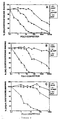
- Figure 2 shows the binding properties of 21OH-6OP to GR from rat thymus (panel A), CBG partially purified from rat plasma (panel B), and MR from rat kidney (panel C).
- the displacement curve of 6,19-oxidoprogesterone is included for comparative purposes.
- This steroid exhibits a moderate RBA for GR (125 nM) and a low RBA for CBG (1.27 ⁇ M). (Kd values in parentheses). It does not compete efficiently with ( 3 H)-ALDO for MR, even when a thousandfold excess was added.
- the introduction of a functional hydroxyl group at 21 increased binding properties of 6OP to GR over 40 times, and binding to CBG, hundred times. This introduction does not improve the binding of the 6, 19-oxidopregnane skeleton to MR, (panel 2-C).
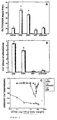
- Figure 3 shows biological properties using in vitro as well as in vivo methodology. Compared to ADX controls, DXM or B produce between three and four times more liver glycogen deposits and increases by a factor of five to is times TAT activity. In site of increasing RBA for GR, the 21-hydroxylation was unable to trigger GC-responses. In effect, Figs. 3-A and 3-B show the neither 6OP nor 21OH-6OP evoke these responses. 21OH-6OP is almost devoid of MC properties compared with the already weak Na + - retainer 6OP (Fig.3-C).
- 6OP and 21OH-6OP exhibit a parabolic dose-response function with maxima of 40% retention for 21OH-6OP and 50% for 6OP at high doses, then loosing activity at still higher doses (see also 51).
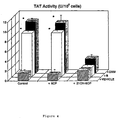
- Figure 4 shows the novel pregnanesteroid to antagonize TAT induction by corticosterone and decamethasone.
- vehicle final concentration: 0.2% ethanol
- Neither 6OP nor 21OH-6OP facilitate TAT induction (hatched bars) but 100 nM B (white bars) and 100 nM DXM (black bars) stimulate enzyme activity between five and six times.
- 2.5 ⁇ M 21OH-6OP inhibits 80% of TAT induction when concubated with B or DXM.
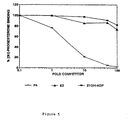
- Figure 5 shows that 21OH-6OP displaces ( 3 H)-P 4 from uterus- receptors as weakly as the negative control 17 ⁇ -estradiol (E 2 ). Unlabelled P 4 , in contrast, was able to displace the tracer efficiently.
- the RBA for GR refers to the mean affinity of ( 3 H) in thymus cytosols (125 nM).
- 21OH-6OP showed no ability to interact with MR nor PR. It was also able to block type II receptors in kidney cytosols where GR coexists not only with MR, but also with a high level of BG of dual origin (an unavoidable contamination by plasma (22, 23) and biosynthesis by the kidney (24).
- Fig.2 a shows only 75% of tracer displacement instead of the 95% saturation predicted according to mass action, probably because of that CBG of dual origin acting as a competitor for GR (22,23).
Landscapes
- Health & Medical Sciences (AREA)
- Pharmacology & Pharmacy (AREA)
- Veterinary Medicine (AREA)
- Public Health (AREA)
- General Health & Medical Sciences (AREA)
- Animal Behavior & Ethology (AREA)
- Chemical & Material Sciences (AREA)
- Life Sciences & Earth Sciences (AREA)
- Medicinal Chemistry (AREA)
- Chemical Kinetics & Catalysis (AREA)
- Engineering & Computer Science (AREA)
- Nuclear Medicine, Radiotherapy & Molecular Imaging (AREA)
- General Chemical & Material Sciences (AREA)
- Organic Chemistry (AREA)
- Epidemiology (AREA)
- Bioinformatics & Cheminformatics (AREA)
- Endocrinology (AREA)
- Pain & Pain Management (AREA)
- Psychiatry (AREA)
- Biomedical Technology (AREA)
- Neurology (AREA)
- Neurosurgery (AREA)
- Diabetes (AREA)
- Steroid Compounds (AREA)
- Pharmaceuticals Containing Other Organic And Inorganic Compounds (AREA)
Abstract
Description
- The present invention relates to the use of pure antiglucocorticoids for the treatment or profilaxis of diseases associated to an excess of glucocorticoids. In particular, the invention relates to the use of 21-hydroy-6,19-oxidoprogesterone (21OH-6OP) for treating Cushing's syndrome or depression.
- Cushing's syndrome or pituitary basophilism is a disorder resulting from increased adrenocortical secretion of cortisol. Hyperfunction of the adrenal cortex may be ACTH-dependent or it may be independent of ACTH regulation, eg, production of cortisol by an adrenocortical adenoma or carcinoma. The administration of supraphysiologic quantities of exogenous cortisol or related synthetic analogs suppresses adrenocortical function and mimics ACTH-independent hyperfunction. ACTH-dependent hyperfunction of the adrenal cortex may be due to hypersecretion of ACTH by the pituitary, secretion of ACTH by a nonpituitary tumor such as small cell carcinoma of the lung (the ectopic ACTH syndrome), or administration of exogenous ACTH. While the term Cushing's syndrome has been applied to the clinical picture resulting from cortisol excess regardless of the cause, hyperfunction of the adrenal cortex resulting from pituitary ACTH excess has frequently been referred to as Cushing's disease, implying a particular physiologic abnormality. Patients with Cushing's disease may have a basophilic adenoma of the pituitary or a chromophobe adenoma. Microadenomas can usually be visualized by CT or, preferably, MRI scan, using a high-resolution technique augmented by gadolinium. Some microadenomas are difficult to visualize even with these modalities.
- In some cases, no histologic abnormality is found in the pituitary despite clear evidence of ACTH overproduction.
- Reference to Cushing's syndrome is herein intended to mean the clinical picture resulting from cortisol excess regardless of the cause, which may be also iatrogenic, both by the injection of ACTH or by the direct administration of cortisol or synthetic analogs such as prednisone, prednisolone, dexamethasone or others that are widely used in various types of diseases including alergic, asthmatic, inflammatory or immunologic.
- Cushing's syndrome includes in addition adrenal tumours secreting corticoids, ectopic ACTH production and Cushing's disease.
- Clinical manifestations include rounded "moon" facies with a plethoric appearance. There is truncal obesity with prominent supraclavicular and dorsal cervical fat pads ("buffalo hump"); the distal extremities and fingers are usually quite slender.
- Muscle wasting and weakness are present. The skin is thin and atrophic, with poor wound healing and easy bruising. Purple striae may appear on the abdomen.
- Hypertension, renal calculi, osteoporosis, glucose intolerance, reduced resistance to infection, and psychiatric disturbances are common. Cessation of linear growth is characteristic in children. Females usually have menstrual irregularities. An increased production of androgens, in addition to cortisol, may lead to hypertichosis, temporal balding, and other signs of virilism in the female.
- To-date, the only therapeutical application for antiglucocorticoids (e.g. Mifepristone) that has been attempted in a clinical setting is to treat inoperable cases of nonpituitary Cushing's syndrome. In the case of Mifepristone (both an anti-progesterone ad an anti-glucocorticoid), a very high dose (20-800 mg per day) is needed for the effectiveness in this indication.
- The glucocorticoid receptor (GR), cloned in 1985 (1), is member of a protein super family of closely related intracellular receptors which function as ligand-activated transcription factors (2). Steroid ligands which are able to activate GRs and trigger a biological response exhibit a slightly torsioned steroid nucleus at the A/B-ring junction for optimal glucocorticoid (GC) activity (3,4). On the other hand, mineralocorticoid (MG) agonists require an overall flat conformation to acquire sodium-retaining activity (5). The mineralocorticoid receptor (MR), cloned by Arriza et al. (6) in 1987, showed to be highly homologus with GR. Due to that considerable homology, it was not too surprising that natural and even synthetic steroids exhibited cross-reaction between GR and MR. The progesterone receptor (PR) is the third member of a subfamily of these highly related steroid receptors. Its natural ligand, progesterone, exhibits cross-reaction with both MR and GR.
- Employing a systematic application of strategies to increase activity and decrease crossreactivity and undersirable side effects, impressive progress has been reported in the development of new antihormonal agents with greater potency and selectivity, especially in the antiestrogen and antiandrogen fields.
- The development of selective anti-corticoids is more restricted. Reference can be made to steroids of the spironolactone family which are used in therapeutics.
- Those inhibitors seem to belong to the class of rapidly dissociating anti-MCs (7). Another synthetic steroid described as an anti-MC, ZK91587, shows specific binding properties for kidney (8) and hippocampus type I MR (9), but not for type II GR. It may therefore be conveniently useful as a tool in the investigation of MR function in tissues containing both receptor systems.
- A long-lasting search for the GC antagonist finally succeeded with the development of the 11β-aminophenyl-substituted 19-norsteroid RU38486, later shortened to RU486, in the early 80's (10). It soon became apparent, however, that this compound also possessed strong antiprogestin activity, which led to its applications as a contraceptive/contragestive agent (11). Avoiding cross-reactions between GR and PR is still an unachieved goal for pharmacologists.
- We have now found that the synthetic steroid, 21-hydroxy-6,19-oxidoprogesterone (21OH-6OP, I),is a selective antiglucocorticoid which is unable to cross-react with uterus- PR or kidney-MR. The new structure has been developed as a result of systematic studies on MC potencies on a series of 21-deoxysteroids, among which the highly bent -6,19-oxidoprogesterone (6OP- Figure 1) exhibited practically no Na+ retaining properties (5).
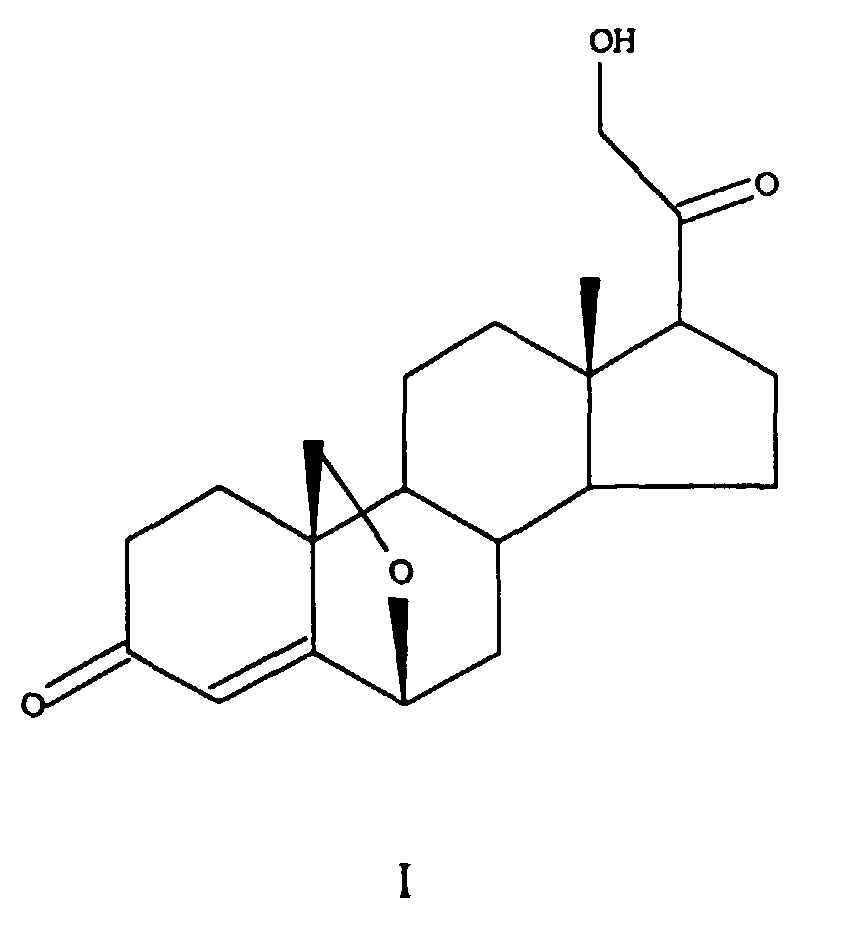
- Preliminary studies also showed lack of GC properties for this steroid. The 21-hydroxy introduced group into its structure conferred anti-GC properties to the 6,19-oxidopregnane skeleton.
- The pure antiglucocorticoid of the present invention is, therefore, used in the treatment of diseases associated to an excess of glucocorticoids, where an antiglucocorticoid virtually lacking mineralocorticoid or glucocorticoid properties as well as affinity for MR or PR is highly desirable. In particular, the antiglucocorticoid of the present invention is used for the treatment of Cushing syndrome and depression, which are associated with an excess of glucocorticoids in the body.
- The present invention, thus, provides 21-hydroxy-6,19-oxidoprogesterone of Formula I for use as a medicament.
- It is a further object of the present invention the use of 21-hydroxy-6,19-oxidoprogesterone of Formula I in the manufacture of a medicament for the treatment or prophylaxis of diseases associated to an excess of glucocorticoids.
- Preferably, the compound of Formula I is used in the manufacture of a medicament for the treatment of Cushing's syndrome, iatrogenic hypercortisolism or depression.
- The compound of Formula I may be formulated in accordance with usual steroid formulations with one or more suitable carriers thereof.
-
- Figure 1: Most stable conformer of 21-hydroxy-6,19-oxidoprogesterone (21OH-6OP): Geometry optimizations were carried out with AMPAC 5.0 (Semichem) using the AMI semiempirical rnethod.
- Figure 2: Binding Properties of 21OH-6OP: Displacement curves of 5 nM (3H)-B and increasing amounts of unlabelled steroid were performed for 12 h at 0°C using the following binding proteins: Panel A: thymus cytosol (6.0 mg protein/ml); Panel B: partially purified (Example 1, Materials and Methods) CBG (I mg protein/ml); Panel C: shows the competition of unlabelled steroids with 5 nM (3H)-ALDO for kidney cytosol (10 mg protein/ml) in the presence of 1.0 µM RU28362 to prevent cross-reactions with GRs.
- Figure 3: Biological Properties of 21OH-6OP: A) Glycogen storage in vivo: 100 µg steroid/100g body weight of male rats were injected as indicated in Example 1. Liver glycogen was purified and quantified with Krisman's reagent (17). Controls were injected with vehicle. Results are expressed as means ± SEM (n=6). (*): different from controls P < 0.02. B) TAT induction in vitro: rat hepatocytes were incubated for 5 h in HAM-F12 medium in the presence of 100 nM steroid and TAT activity was measured. Results are expressed as percentage of enzyme activity (means ± SEM n=4) over controls incubated in the presence of vehicle. (*) different from controls P < 0.01. C)Sodium-retaining activity: adrenalectomized rats were treated with the indicated dose of steroids. Results are expressed as the ratio of sodium-excretion rates of steroid-injected animals to the excretion rates of rats injected with vehicle. The figure shows one representative experiment performed with five rats per dose assayed.
- Figure 4: 21OH-6OP shows antagonist effect on TAT induction: TAT activity was induced in hepatocytes by 100 nM DXM (black bars) or 100 nM B (white bars), in the absence (control) or in presence of 2.5 µM 6OP (+ 6OP) or 21OH-6OP (+ 21OH-6OP). Hatched bars represent incubations performed in the presence of vehicle instead of agonist. Only TAT stimulation by DXM and B in incubations marked with asterisk (control and + 6OP) are significantly different (P < 0.01) from the basal activity. Results show means ± SEM (n=4).
- Figure 5: 21OH-6OP does not cross-react with progesterone receptor: (3H)-P4 binding to uterus cytosols (2.5 mg protein/ml) in TEGM was performed according to Jordan and Dix (16) for 12 h at 0°C, in the presence of different amounts of unlabelled competitors.
-
- The invention will now be described, by way of illustration only, with reference to the following examples:
- Reagents: Aldosterone (ALDO), corticosterone (B), progesterone (P4), and dexamethasone (DXM) were purchased from Sigma Chemical Co. (St. Louis, MO). 6,19-oxidoprogesterone (6OP) and its 21-hydroxylated derivative (21OH-6OP) (Formula 1) were synthesized as previously described (12) and (13), respectively. (3H)-Corticosterone (S.A.- 80 Ci/mmol), (3H)-ALDO S.A.= 59 Ci/mmol), (3H)-P, (S.A.= 90Ci/mmol), and (3H)-ZK91587 (S.A. = 86.5 Ci/mmol) were purchased from New England Nuclear (Boston, MA). RU28362 was received from Roussel/Uclaf (Romainville, France). All reagents used were analytical grade.
- Binding Assay: Adrenalectomized male Sprague-Dawley rats were bled to death by heart puncture. Cold 0.9% NaCl was injected profusely through the aorta until organs were completely blanched. Thymuses were used as a source of GR and kidneys as a source of MR. Homogenization and incubation conditions were performed as previously described, (14) and (15), respectively. Briefly, homogenates performed in cold TEGM buffer at pH 7.4 (0.1 M Tris-HCl, 10 mM EDTA, 10 mM β-mercaptoethanol, 20 mM Na2MoO4, 25 % glycerol, 0.1 mM PMSF, 2.0 TIU/ml aprotinin and 1 mg% Leupeptin) were centrifuged at 37,000 rev. for 30 min at 0°C. Supenatants from this centrifugation are referred to as "cytosol". Thymus or kidney cytosols were incubated 12 h at 0°C in the presence of 5 nM (3H)-B or (3H)-ALDO, and increasing amounts of unlabelled steroids. (3H)-P4, binding to uterus PR was assayed on immature female rats according to Jordan et al (16).
- 1.0 µM RU28362 was added to kidney- cytosols to impede (3H)-ALDO cross-reacting with GR, and 1 µM cortisol (F), to uterus- cytosols to prevent (3H)-P4 cross-reactions with GR and transcortin (CBG). Relative binding affinity (RBA) for partially purified CBG was determined by steroid competition for (3H)-B binding as described previously (14).
- Bioassay : Liver glycogen deposition was measured on adrenalectomized male Sprague-Dawley rats (180-220 g) as follows: steroids were dissolved in ethanol/propylene glycol/0.9% NaCl solution (3:3:34) and 100 µg steroid/100 g body weight were injected i.m. the previous night. On the morning of the experiment this dose was reinjected intraperitoneally. Three hours later the rats were killed by cervical dislocation and livers were immediatly removed. Glycogen purification and quantification were carried out according to Krisman's method (17). Na+ -retaining properties were measured as described (5). Tyrosine aminotransferase (TAT) was induced in rat hepatocytes isolated by the procedure of Fry et al (18). TAT activity was determined according to Granner and Tomkins (19).
- Figure 2 shows the binding properties of 21OH-6OP to GR from rat thymus (panel A), CBG partially purified from rat plasma (panel B), and MR from rat kidney (panel C). The displacement curve of 6,19-oxidoprogesterone is included for comparative purposes.
- This steroid exhibits a moderate RBA for GR (125 nM) and a low RBA for CBG (1.27 µM). (Kd values in parentheses). It does not compete efficiently with (3H)-ALDO for MR, even when a thousandfold excess was added. The introduction of a functional hydroxyl group at 21 increased binding properties of 6OP to GR over 40 times, and binding to CBG, hundred times. This introduction does not improve the binding of the 6, 19-oxidopregnane skeleton to MR, (panel 2-C).
- Figure 3 shows biological properties using in vitro as well as in vivo methodology. Compared to ADX controls, DXM or B produce between three and four times more liver glycogen deposits and increases by a factor of five to is times TAT activity. In site of increasing RBA for GR, the 21-hydroxylation was unable to trigger GC-responses. In effect, Figs. 3-A and 3-B show the neither 6OP nor 21OH-6OP evoke these responses. 21OH-6OP is almost devoid of MC properties compared with the already weak Na+- retainer 6OP (Fig.3-C). Like other weak Na+ retainers, 6OP and 21OH-6OP exhibit a parabolic dose-response function with maxima of 40% retention for 21OH-6OP and 50% for 6OP at high doses, then loosing activity at still higher doses (see also 51).
- To study the binding of ALDO to kidney- MR without the competitive influence of the relatively more abundant GR, GR was removed with the specific ligand RU28362 (7). This avoided ALDO cross-reacting with GR and hence a two slope Scatchard plot (20-22).
- The presence of 1.0 µM RU28862 reduces the plot to a single line corresponding to type I sites, as does the selective ligand for MR, ZK91587. The calculated Kd for type I sites in different conditions ranges between 0.4 and 1 nM (Table 1) which is at least eighty times higher than the affinity for type II sites. When the novel synthetic steroid 21OH-6OP was added to incubations performed in the presence of (3H)-ALDO, a single binding site with kinetic parameters compatible with MR was again observed. This suggests that 2.5 µM 21OH-6OP is able to mask the cross reaction of (3H)-ALDO with GR. Hill's coefficients (ng) calculated for each condition suggest a lack of allosteric interaction (Table 1).
- In agreement with these binding properties, an antagonistic effect of 21OH-6OP against GC was observed, Indeed, Figure 4 shows the novel pregnanesteroid to antagonize TAT induction by corticosterone and decamethasone. The basal TAT activity in hepatocytes, denominated control in the figure, was measured by adding vehicle (final concentration: 0.2% ethanol) to the culture. Neither 6OP nor 21OH-6OP facilitate TAT induction (hatched bars) but 100 nM B (white bars) and 100 nM DXM (black bars) stimulate enzyme activity between five and six times. 2.5 µM 21OH-6OP inhibits 80% of TAT induction when concubated with B or DXM.
- Figure 5 shows that 21OH-6OP displaces (3H)-P4 from uterus- receptors as weakly as the negative control 17β-estradiol (E2). Unlabelled P4, in contrast, was able to displace the tracer efficiently.
- The above data demonstrate that 21-hydroxy-6,19-oxidoprogesterone is also a useful tool to study steroid-receptor interactions in systems in which more than one type of receptors is present. The RBA for GR refers to the mean affinity of (3H) in thymus cytosols (125 nM). In spite of this moderate affinity, 21OH-6OP showed no ability to interact with MR nor PR. It was also able to block type II receptors in kidney cytosols where GR coexists not only with MR, but also with a high level of BG of dual origin (an unavoidable contamination by plasma (22, 23) and biosynthesis by the kidney (24). Fig. 2-B indicated that 2.5 µM 21OH-6OP can simultaneously block almost 60% of the CBG binding sites. Fig.2 a shows only 75% of tracer displacement instead of the 95% saturation predicted according to mass action, probably because of that CBG of dual origin acting as a competitor for GR (22,23).
- The induction of TAT activity in hepatocytes, triggered by both B and DXM, was be significantly inhibited by 21OH-6OP, indicating that this novel steroid is potent GC antagonist. As it does not cross-react with PR (Fig.5), the oxidopregnansteroid is a potent selective GR blocking agent. Since most of the antiprogestins and antiglucocorticoids available cross-react with other receptors (7), the pure anti-GC steroid of Formula I has been desired for a long time for the treatment of diseases, such as the Cushing's syndrome and depression, where a selective, pure antiglucocorticoid is needed to antagonize the excess of glucocorticoids which characterize these disorders.
Dissociation constants, apparent number of sites and Hill coefficients for type I receptors in the presence of RU-28362 and 21OH-6OP. TRACER RECEPTOR TYPE IN THE PRESENCE OF Kd (nM) Q (fmol/mg) nH (3H)-ZK91587 - 0.42 98 0.91 (3H)-ALDO - 0.44 104 0.97 (3H)-ALDO 10µM RU-28362 0.72 124.4 0.90 (3H)-ALDO 2.5 µM 21OH-6OP 0.80 110 0.88 (3H)-ALDO - 64.4 2900 0.86 -
- (1) Hollemberg S. M., C. Weinberger, E .S. Ong, G. Ceseli, A. Oro, R. Lebo, E. B. Thompson, M.G. Rosenfeld, and R. M. Evans. Primary structure and expression of a functional human glucocorticoid receptor cDNA. Nature 318: 635-641 (1985).
- (2) Forman B. M. and R. M. Evans. Nuclear hormone receptors activate direct, inverted, and repeats. Ann.N. Y. Acad.Sci. 761: 29-:17 (1995).
- (3) Lantos C. P., G. Burton, A. Roldàn, M. C. Damasco, and A. Aragonés. Structure-activity relationship in certain glucocorticoids and mineralocorticoids, in Physiopothology of Endocrine Diseases and Mechanism of Hormone Action (R.J.Soto, A.de Nicola, and J. Blaquier, eds.). Alan R. Liss, New York, 477494 (1981).
- (4) Duax W. L. V. Cady, J. F. Griffin, D. G. Rohrer, and C .M. Weeks. Molecular conformation and protein binding affinity of progestins. J..Toxicol. Environ. Health 4::205-227 (1978)
- (5) Burton G., M.D. Galigniana, S. de Lavallaz, A. L. Brachet -Cota, E. M. Sproviero, A. A. Ghini, C. P. Lantos and M. C. Damasco. Sodium-retaining activity of some natural and synthetic 21-deoxysteroids. Mol. Pharamacol 47:535-543 (1995).
- (6) Arriza J., C. Weinberg, G. Cerelli, T. Glaser, B. Handelin, D, Housman, and R. Evans. Cloning of human mineralocorticoid receptor complementary DNA: structural and functional kinship with the glucocorticoid receptor. Science 237: 268-275 (1987).
- (7) Teutsch G., F. Nique, G. Lemoine, F. Bouchoux, E. Cérède, D. Gofflo, and D. Philibert. General structure-activity correlations of antihormones. Ann. N. Y. Acad.Sci. 761: 5-28 (1995).
- (8) Grill H.J., Nickisch, P. E. Schulze, H. Laurent , W. Elger, A. Heubner, and K. Pollow: 3H-ZK91587: A new synthetic, highly specific ligand for mineralocorticoid receptor determination. J. Steroid Biochem. 23-Suppl., 19S (1985).
- (9) Sutanto W. and E. R. de Kloet. ZK91587: A novel synthetic antimineralocorticoid displays high affinity for corticosterone (Type I) receptors in the rat hippocampus. Life Sciences 43:1537-1543 (1988).
- (10) Philibert D., R. Deraedt, and G. Teutsch. RU38486: a potent antiglucocorticoid in vivo. "IIIV International Congress of Pharmacology, Tokyo, Japan", Abstract (1981).
- (11) Spitz I. M. and C. W, Bardin. Mefiprestone (RU486): a modulator of progestin and glucocorticoid action. N. Engl. J.Med. 329: 404-412 (1993).
- (12) Brachet-Cota A. L. and G. Burton. An improved preparation of 11.19-oxidopregn 4-ene-3,20-dione and 6,19-oxidopregnan 4-ene-3,11,20-trione. Z.Naturforsch.Teil (B) 45: 711-715 (1990).
- (13) Veleiro A. S. M. V. Nevado, M. C. Monteserin and G. Burton. Syntheses of 21-hydroxy-11,19-oxidopregn-4-ene-3,20-dione and 21-hydroxy-6,19-oxidopregn-4ene-3,20-dione. Steroids 60: 268-271 (1995).
- (14) Galigniana M. D., G. P. Vincent, G. Burton, and C. P. Lantos. Features of the shuttle pair 11β-hydroxyprogesterone/11-ketoprogesterone. Steroids (1996), in press.
- (15) Galigniana M. D. Stability study on renal type I mineralocorticoid receptor. Life Sci. 59: 511-521 (1996).
- (16) Jordan V. C. and C. J. Dix. Effect of oestradiol benzonate, tamoxifen and monohydroxytamoxifen on immature rat uterine progesterone receptor synthesis and endometrial cell division. Journal of Steroid Biochemistry 11: 285-291 (1979).
- (17) Krisman C. A method for the colorimetric estimation of glycogen with iodine. Anal. Biochem. 4: 17-23 (1962).
- (18) Fry J., C. Jones, P. Webkin, and J. Bridges. The enzymatic isolation of adult rat hepatocytes in a functional and viable state. Anal. Biochem. 71: 341-350 (1976).
- (19) Granner D. and G. Tomkins. Metabolism of amino acids and amines. Tyrosine amino-transferase. Methods in Enzymology 17-A: 633-637 (1975).
- (20) Gomez-Sanchez C. E. and E. P.Gomez-Sanchez. RU26988: a new tool for the study of the mineralocorticoid receptor. Endocrinology 113: 1004-1009 (1983).
- (21) Funder J. W. Glucocorticoid receptors. J. Steroid Biochem Molec. Biol. 43: 389-394 (1992).
- (22) Galigniana M. D., G. P. Vicent, C. P. Lantos and G. Burton. Ligand properties of 11,19-oxidoprogesterone: a preliminary report. An. Asoc.Quim. Argent. 81: 333-340 (1993).
- (23) Krozowski Z. S. and J. F. Funder.. Renal mineralocoritcoid receptors and hippocampal corticosterone binding species have identical intrinsic steroid specificity. Proc.Natl.Acad Sci (USA) 80: 6056-6060 (1983)
- (24) Kraujelis K.A. Ulinskaite, and V. Meilus. Transcortin in rat kidney: subcellular distibution of transcortin-synthesizing polyribosomes. J. Steroid Biochem. Molec. Biol. 38: 43-47 (1991).
-
Claims (6)
- 21-hydroxy-6,19-oxidoprogesterone of Formula I for use as a medicament.
- Use of 21-hydroxy-6,19-oxidoprogesterone of Formula 1 in the manufacture of a medicament for the treatment or prophylaxis of diseases associated to an excess of glucocorticoids.
- Use according to claim 2, wherein the disease is Cushing's syndrome.
- Use according to claim 2, wherein the disease is iatrogenic hypercortisolism.
- Use according to claim 2, wherein the disease is depression.
- Pharmaceutical compositions comprising 21-hydroxy-6,19-oxidoprogesterone of Formula 1 and one or more suitable carriers thereof
Priority Applications (14)
| Application Number | Priority Date | Filing Date | Title |
|---|---|---|---|
| EP97116526A EP0903146A1 (en) | 1997-09-23 | 1997-09-23 | 21-Hydroy-6,19-oxidoprogesterone (210h-60p) as antiglucocorticoid |
| ES98956833T ES2172937T3 (en) | 1997-09-23 | 1998-09-22 | 21-HYDROXI-6,19-OXIDOPROGESTERONE (21OH-6OP) AS A MEDICINAL PRODUCT TO TREAT THE EXCESS OF GLUCOCORTICOIDS. |
| ARP980104727A AR023008A1 (en) | 1997-09-23 | 1998-09-22 | 21-HYDROXI-6,19-OXIDOPROGESTERONE (21OH-6OP) TO TREAT THE EXCESS OF GLUCOCORTICOIDS |
| ZA988674A ZA988674B (en) | 1997-09-23 | 1998-09-22 | 21-Hydroy-6,19-oxidoprogesterone (21OH-6OP) for treating excess of glucocorticoids |
| IL13523298A IL135232A (en) | 1997-09-23 | 1998-09-22 | 21-hydroxy-6 19-oxidoprogesterone for treating excess of glucocorticoids |
| PT98956833T PT1033990E (en) | 1997-09-23 | 1998-09-22 | 21-HYDROXY-6,19-OXIDOPROGESTERONE (21OH-6OP) AND THEIR USE AS A MEDICATION FOR TREATING THE EXCESS OF GLUCOCORTICOIDS |
| DK98956833T DK1033990T3 (en) | 1997-09-23 | 1998-09-22 | 21-Hydroxy-6,19-oxidoprogesterone (21OH-6OP) its use as a drug in the treatment of glucocorticoid excess |
| EP98956833A EP1033990B1 (en) | 1997-09-23 | 1998-09-22 | 21-hydroxy-6,19-oxidoprogesterone (21oh-6op) and its use as medicament for treating excess of glucocorticoids |
| DE69804659T DE69804659T2 (en) | 1997-09-23 | 1998-09-22 | 21-HYDRO-6,19-OXIDOPROGESTERONE (21OH-60P) AND THE USE THEREOF AS A MEDICINE FOR TREATING GLUCOCORTICO excess |
| AU13341/99A AU738522B2 (en) | 1997-09-23 | 1998-09-22 | 21-hydroxy-6,19-oxidoprogesterone (21OH-6OP) and its use as medicament for treating excess of glucocorticoids |
| CA002303817A CA2303817C (en) | 1997-09-23 | 1998-09-22 | 21-hydroxy-6,19-oxidoprogesterone (21oh-6op) and its use as medicament for treating excess of glucocorticoids |
| AT98956833T ATE215373T1 (en) | 1997-09-23 | 1998-09-22 | 21-HYDRO-6,19-OXIDOPROGESTERONE (21OH-60P) AND THEIR USE AS A MEDICINAL PRODUCT FOR THE TREATMENT OF GLUCOCORTICOID EXCESS |
| PCT/EP1998/006021 WO1999015181A1 (en) | 1997-09-23 | 1998-09-22 | 21-hydroxy-6,19-oxidoprogesterone (21oh-6op) and its use as medicament for treating excess of glucocorticoids |
| US09/533,225 US6303591B1 (en) | 1997-09-23 | 2000-03-23 | 21-hydroxy-6,19-oxidoprogesterone (21OH-6OP) and its use as medicament for treating excess of glucocorticoids |
Applications Claiming Priority (1)
| Application Number | Priority Date | Filing Date | Title |
|---|---|---|---|
| EP97116526A EP0903146A1 (en) | 1997-09-23 | 1997-09-23 | 21-Hydroy-6,19-oxidoprogesterone (210h-60p) as antiglucocorticoid |
Publications (1)
| Publication Number | Publication Date |
|---|---|
| EP0903146A1 true EP0903146A1 (en) | 1999-03-24 |
Family
ID=8227390
Family Applications (2)
| Application Number | Title | Priority Date | Filing Date |
|---|---|---|---|
| EP97116526A Withdrawn EP0903146A1 (en) | 1997-09-23 | 1997-09-23 | 21-Hydroy-6,19-oxidoprogesterone (210h-60p) as antiglucocorticoid |
| EP98956833A Expired - Lifetime EP1033990B1 (en) | 1997-09-23 | 1998-09-22 | 21-hydroxy-6,19-oxidoprogesterone (21oh-6op) and its use as medicament for treating excess of glucocorticoids |
Family Applications After (1)
| Application Number | Title | Priority Date | Filing Date |
|---|---|---|---|
| EP98956833A Expired - Lifetime EP1033990B1 (en) | 1997-09-23 | 1998-09-22 | 21-hydroxy-6,19-oxidoprogesterone (21oh-6op) and its use as medicament for treating excess of glucocorticoids |
Country Status (13)
| Country | Link |
|---|---|
| US (1) | US6303591B1 (en) |
| EP (2) | EP0903146A1 (en) |
| AR (1) | AR023008A1 (en) |
| AT (1) | ATE215373T1 (en) |
| AU (1) | AU738522B2 (en) |
| CA (1) | CA2303817C (en) |
| DE (1) | DE69804659T2 (en) |
| DK (1) | DK1033990T3 (en) |
| ES (1) | ES2172937T3 (en) |
| IL (1) | IL135232A (en) |
| PT (1) | PT1033990E (en) |
| WO (1) | WO1999015181A1 (en) |
| ZA (1) | ZA988674B (en) |
Cited By (15)
| Publication number | Priority date | Publication date | Assignee | Title |
|---|---|---|---|---|
| WO2002022647A1 (en) * | 2000-09-18 | 2002-03-21 | Applied Research Systems Ars Holding N.V. | Sulphur analogues of 21-hydroxy-6,19-oxidoprogesterone (21oh-6op) for treating excess of glucocorticoids |
| US6380223B1 (en) | 1999-04-30 | 2002-04-30 | Pfizer Inc. | Glucocorticoid receptor modulators |
| US6852719B2 (en) | 2000-10-30 | 2005-02-08 | Pfizer Inc. | Glucocorticoid receptor modulators |
| US7071328B2 (en) | 2000-09-18 | 2006-07-04 | Applied Research System Ars Holding N.V. | Method for the preparation of 21-hydroxy-6,19-oxidoprogesterone (21 oh-6op) |
| EP1886695A1 (en) * | 2006-06-27 | 2008-02-13 | Speedel Experimenta AG | Pharmaceutical combination of an aldosterone synthase inhibitor and a glucocorticoid receptor antagonist or a cortisol synthesis inhibitor or a corticotropin releasing factor antagonist |
| US7713989B2 (en) | 2000-04-27 | 2010-05-11 | Dow Robert L | Glucocorticoid receptor modulators |
| US8426465B2 (en) | 2006-08-24 | 2013-04-23 | University Of Tennesse Research Foundation | Substituted acylanilides and methods of use thereof |
| US9604916B2 (en) | 2012-07-13 | 2017-03-28 | Gtx, Inc. | Method of treating androgen receptor (AR)-positive breast cancers with selective androgen receptor modulator (SARMs) |
| US9622992B2 (en) | 2012-07-13 | 2017-04-18 | Gtx, Inc. | Method of treating androgen receptor (AR)-positive breast cancers with selective androgen receptor modulator (SARMs) |
| US9744149B2 (en) | 2012-07-13 | 2017-08-29 | Gtx, Inc. | Method of treating androgen receptor (AR)-positive breast cancers with selective androgen receptor modulator (SARMs) |
| US9969683B2 (en) | 2012-07-13 | 2018-05-15 | Gtx, Inc. | Method of treating estrogen receptor (ER)-positive breast cancers with selective androgen receptor modulator (SARMS) |
| US10258596B2 (en) | 2012-07-13 | 2019-04-16 | Gtx, Inc. | Method of treating HER2-positive breast cancers with selective androgen receptor modulators (SARMS) |
| US10314807B2 (en) | 2012-07-13 | 2019-06-11 | Gtx, Inc. | Method of treating HER2-positive breast cancers with selective androgen receptor modulators (SARMS) |
| US10849873B2 (en) | 2012-07-13 | 2020-12-01 | Oncternal Therapeutics, Inc | Non-invasive method of evaluating breast cancers for selective androgen receptor modulator (SARM) therapy |
| EP3902549A4 (en) * | 2018-12-28 | 2022-09-14 | Panda Consulting LLC | SELECTIVE SHORT-ACTING GLUCOCORTICOID RECEPTOR MODULATORS |
Families Citing this family (8)
| Publication number | Priority date | Publication date | Assignee | Title |
|---|---|---|---|---|
| US8097606B2 (en) * | 2003-07-23 | 2012-01-17 | Corcept Therapeutics, Inc. | Antiglucocorticoids for the treatment of catatonia |
| PL2576582T3 (en) * | 2010-05-26 | 2020-06-29 | Corcept Therapeutics, Inc. | Treatment of muscular dystrophy |
| WO2016140867A1 (en) | 2015-03-02 | 2016-09-09 | Corcept Therapeutics, Inc. | Use of glucocorticoid receptor antagonist and somatostatin analogues to treat acth-secreting tumors |
| US10610534B2 (en) | 2015-03-30 | 2020-04-07 | Corcept Therapeutics, Inc. | Use of glucocorticoid receptor antagonists in combination with glucocorticoids to treat adrenal insufficiency |
| KR20180052120A (en) | 2015-08-13 | 2018-05-17 | 코어셉트 쎄라퓨틱스, 잉크. | Differential diagnosis of ACTH-dependent Cushing's syndrome |
| KR102197526B1 (en) | 2016-01-19 | 2020-12-31 | 코어셉트 쎄라퓨틱스 인코포레이티드 | Differential diagnosis of ectopic Cushing syndrome |
| MX393313B (en) | 2017-06-20 | 2025-03-24 | Corcept Therapeutics Inc | METHODS OF TREATMENT OF NEUROEPITHELIAL TUMORS USING SELECTIVE GLUCOCORTICOID RECEPTOR MODULATORS. |
| AU2020239920A1 (en) | 2019-03-18 | 2021-11-04 | Arnold L. Newman | Method of improving insulin sensitivity |
Citations (1)
| Publication number | Priority date | Publication date | Assignee | Title |
|---|---|---|---|---|
| EP0763541A1 (en) * | 1995-08-17 | 1997-03-19 | Akzo Nobel N.V. | 11-(Substituted phenyl)-estra-4,9-diene derivatives |
Family Cites Families (1)
| Publication number | Priority date | Publication date | Assignee | Title |
|---|---|---|---|---|
| CN1187053C (en) * | 1997-10-06 | 2005-02-02 | 利兰·斯坦福青年大学托管委员会 | Use of glucocorticoid receptor antagonists for the manufacture of drugs for the treatment of psychosis |
-
1997
- 1997-09-23 EP EP97116526A patent/EP0903146A1/en not_active Withdrawn
-
1998
- 1998-09-22 CA CA002303817A patent/CA2303817C/en not_active Expired - Fee Related
- 1998-09-22 EP EP98956833A patent/EP1033990B1/en not_active Expired - Lifetime
- 1998-09-22 WO PCT/EP1998/006021 patent/WO1999015181A1/en not_active Ceased
- 1998-09-22 AU AU13341/99A patent/AU738522B2/en not_active Ceased
- 1998-09-22 IL IL13523298A patent/IL135232A/en not_active IP Right Cessation
- 1998-09-22 ZA ZA988674A patent/ZA988674B/en unknown
- 1998-09-22 DE DE69804659T patent/DE69804659T2/en not_active Expired - Fee Related
- 1998-09-22 DK DK98956833T patent/DK1033990T3/en active
- 1998-09-22 PT PT98956833T patent/PT1033990E/en unknown
- 1998-09-22 AR ARP980104727A patent/AR023008A1/en unknown
- 1998-09-22 ES ES98956833T patent/ES2172937T3/en not_active Expired - Lifetime
- 1998-09-22 AT AT98956833T patent/ATE215373T1/en not_active IP Right Cessation
-
2000
- 2000-03-23 US US09/533,225 patent/US6303591B1/en not_active Expired - Fee Related
Patent Citations (1)
| Publication number | Priority date | Publication date | Assignee | Title |
|---|---|---|---|---|
| EP0763541A1 (en) * | 1995-08-17 | 1997-03-19 | Akzo Nobel N.V. | 11-(Substituted phenyl)-estra-4,9-diene derivatives |
Non-Patent Citations (1)
| Title |
|---|
| BURTON ET AL: "Sodium-retaining activity of some natural and synthetic 21-deoxysteroids", MOLECULAR PHARMACOLOGY, vol. 47, 1995, pages 535 - 43, XP002060219 * |
Cited By (21)
| Publication number | Priority date | Publication date | Assignee | Title |
|---|---|---|---|---|
| US6380223B1 (en) | 1999-04-30 | 2002-04-30 | Pfizer Inc. | Glucocorticoid receptor modulators |
| US6699893B2 (en) | 1999-04-30 | 2004-03-02 | Pfizer Inc | Glucocorticoid receptor modulators |
| US7166593B2 (en) | 1999-04-30 | 2007-01-23 | Pfizer, Inc. | Glucocorticoid receptor modulators |
| US7713989B2 (en) | 2000-04-27 | 2010-05-11 | Dow Robert L | Glucocorticoid receptor modulators |
| WO2002022647A1 (en) * | 2000-09-18 | 2002-03-21 | Applied Research Systems Ars Holding N.V. | Sulphur analogues of 21-hydroxy-6,19-oxidoprogesterone (21oh-6op) for treating excess of glucocorticoids |
| US7053228B2 (en) | 2000-09-18 | 2006-05-30 | Applied Research Systems Ars Holding N.V. | Sulfur analogues of 21-hydroxy-6,19-oxidoprogesterone (21OH-6OP) for treating excess of glucocorticoids |
| US7071328B2 (en) | 2000-09-18 | 2006-07-04 | Applied Research System Ars Holding N.V. | Method for the preparation of 21-hydroxy-6,19-oxidoprogesterone (21 oh-6op) |
| US6852719B2 (en) | 2000-10-30 | 2005-02-08 | Pfizer Inc. | Glucocorticoid receptor modulators |
| EP1886695A1 (en) * | 2006-06-27 | 2008-02-13 | Speedel Experimenta AG | Pharmaceutical combination of an aldosterone synthase inhibitor and a glucocorticoid receptor antagonist or a cortisol synthesis inhibitor or a corticotropin releasing factor antagonist |
| US8846756B2 (en) | 2006-08-24 | 2014-09-30 | University Of Tennessee Research Foundation | Substituted acylanilides and methods of use thereof |
| US8426465B2 (en) | 2006-08-24 | 2013-04-23 | University Of Tennesse Research Foundation | Substituted acylanilides and methods of use thereof |
| US9604916B2 (en) | 2012-07-13 | 2017-03-28 | Gtx, Inc. | Method of treating androgen receptor (AR)-positive breast cancers with selective androgen receptor modulator (SARMs) |
| US9622992B2 (en) | 2012-07-13 | 2017-04-18 | Gtx, Inc. | Method of treating androgen receptor (AR)-positive breast cancers with selective androgen receptor modulator (SARMs) |
| US9744149B2 (en) | 2012-07-13 | 2017-08-29 | Gtx, Inc. | Method of treating androgen receptor (AR)-positive breast cancers with selective androgen receptor modulator (SARMs) |
| US9969683B2 (en) | 2012-07-13 | 2018-05-15 | Gtx, Inc. | Method of treating estrogen receptor (ER)-positive breast cancers with selective androgen receptor modulator (SARMS) |
| US10258596B2 (en) | 2012-07-13 | 2019-04-16 | Gtx, Inc. | Method of treating HER2-positive breast cancers with selective androgen receptor modulators (SARMS) |
| US10314807B2 (en) | 2012-07-13 | 2019-06-11 | Gtx, Inc. | Method of treating HER2-positive breast cancers with selective androgen receptor modulators (SARMS) |
| US10849873B2 (en) | 2012-07-13 | 2020-12-01 | Oncternal Therapeutics, Inc | Non-invasive method of evaluating breast cancers for selective androgen receptor modulator (SARM) therapy |
| US10987334B2 (en) | 2012-07-13 | 2021-04-27 | University Of Tennessee Research Foundation | Method of treating ER mutant expressing breast cancers with selective androgen receptor modulators (SARMs) |
| US12115146B2 (en) | 2012-07-13 | 2024-10-15 | University Of Tennessee Research Foundation | Treatment of skeletal-related events for breast cancer patients |
| EP3902549A4 (en) * | 2018-12-28 | 2022-09-14 | Panda Consulting LLC | SELECTIVE SHORT-ACTING GLUCOCORTICOID RECEPTOR MODULATORS |
Also Published As
| Publication number | Publication date |
|---|---|
| EP1033990B1 (en) | 2002-04-03 |
| EP1033990A1 (en) | 2000-09-13 |
| CA2303817C (en) | 2008-04-01 |
| DK1033990T3 (en) | 2002-07-08 |
| US6303591B1 (en) | 2001-10-16 |
| ZA988674B (en) | 1999-06-28 |
| CA2303817A1 (en) | 1999-04-01 |
| ATE215373T1 (en) | 2002-04-15 |
| IL135232A0 (en) | 2001-05-20 |
| WO1999015181A1 (en) | 1999-04-01 |
| PT1033990E (en) | 2002-07-31 |
| AU1334199A (en) | 1999-04-12 |
| AU738522B2 (en) | 2001-09-20 |
| ES2172937T3 (en) | 2002-10-01 |
| AR023008A1 (en) | 2002-09-04 |
| DE69804659T2 (en) | 2002-10-02 |
| IL135232A (en) | 2005-05-17 |
| DE69804659D1 (en) | 2002-05-08 |
Similar Documents
| Publication | Publication Date | Title |
|---|---|---|
| EP1033990B1 (en) | 21-hydroxy-6,19-oxidoprogesterone (21oh-6op) and its use as medicament for treating excess of glucocorticoids | |
| JP3350048B2 (en) | Methods for treating androgen-related diseases | |
| EP0792152B1 (en) | Methods of contraception | |
| FI112167B (en) | Use of a dissociated competitive progesterone antagonist for the preparation of a contraceptive and useful new compounds | |
| US5372996A (en) | Method of treatment of androgen-related diseases | |
| TWI477276B (en) | Antiprogestin dosing regimens | |
| US20070078091A1 (en) | Pharmaceutical combinations for compensating for a testosterone deficiency in men while simultaneously protecting the prostate | |
| US9616074B2 (en) | Compositions and methods for suppressing endometrial proliferation | |
| US6147066A (en) | Use of antimineralocorticoid compounds against drug withdrawal syndrome | |
| Sutanto et al. | Mineralocorticoid receptor ligands: biochemical, pharmacological, and clinical aspects | |
| EP1499321B1 (en) | Methods for increasing the therapeutic response to electroconvulsive therapy ("ect") | |
| EP4019531A1 (en) | Peptide having hair growth promoting activity and use thereof | |
| Hammerstein et al. | Antiandrogens in the treatment of acne and hirsutism | |
| Vicent et al. | 21-Hydroxy-6, 19-oxidoprogesterone: a novel synthetic steroid with specific antiglucocorticoid properties in the rat | |
| JPS60161998A (en) | 1 alpha,2 alpha-methylene-6-methylene- or 6 alpha-methyl-pregnene, manufacture and antiandrogenic for local effect of skin disease treatment | |
| Sitruk-Ware | Hormone therapy and the cardiovascular system: the critical role of progestins | |
| Neumann | Pharmacology and clinical use of antiandrogens: a short review | |
| CA2163878A1 (en) | Agents containing a compound with an anti-androgen effect and a compound with a competitive, progesterone-antagonistic effect | |
| Van Wayjen et al. | Clinical-pharmacological investigation of cyproterone acetate | |
| TW200927137A (en) | Compositions and methods for treating dysfunctional uterine bleeding | |
| HUT59006A (en) | Process for producing pharmaceutical preparations containing compounds of anti-progestomine effect serving for controlling the birth-time breeding animals | |
| JP2003502270A (en) | 21-Hydroxy-6,19-oxideprogesterone (21OH-6OP) and its use as an agent to treat glucocorticoid excess | |
| Popper et al. | Steroids and Biologically Related Compounds | |
| Nomura et al. | Therapeutic Value of Mepitiostane in the Treatment of Advanced Breast | |
| HK1068783B (en) | Methods for increasing the therapeutic response to electroconvulsive therapy ("ect") |
Legal Events
| Date | Code | Title | Description |
|---|---|---|---|
| PUAI | Public reference made under article 153(3) epc to a published international application that has entered the european phase |
Free format text: ORIGINAL CODE: 0009012 |
|
| AK | Designated contracting states |
Kind code of ref document: A1 Designated state(s): AT |
|
| AX | Request for extension of the european patent |
Free format text: AL;LT;LV;RO;SI |
|
| AKX | Designation fees paid |
Free format text: AT |
|
| RAP1 | Party data changed (applicant data changed or rights of an application transferred) |
Owner name: APPLIED RESEARCH SYSTEMS ARS HOLDING N.V. |
|
| REG | Reference to a national code |
Ref country code: DE Ref legal event code: 8566 |
|
| STAA | Information on the status of an ep patent application or granted ep patent |
Free format text: STATUS: THE APPLICATION IS DEEMED TO BE WITHDRAWN |
|
| 18D | Application deemed to be withdrawn |
Effective date: 19990925 |