EP0897988B1 - Physiologically active substances tkr1785's, process for the preparation thereof, and microbe - Google Patents
Physiologically active substances tkr1785's, process for the preparation thereof, and microbe Download PDFInfo
- Publication number
- EP0897988B1 EP0897988B1 EP97907278A EP97907278A EP0897988B1 EP 0897988 B1 EP0897988 B1 EP 0897988B1 EP 97907278 A EP97907278 A EP 97907278A EP 97907278 A EP97907278 A EP 97907278A EP 0897988 B1 EP0897988 B1 EP 0897988B1
- Authority
- EP
- European Patent Office
- Prior art keywords
- tkr1785
- bioactive substance
- substance
- strain
- acid
- Prior art date
- Legal status (The legal status is an assumption and is not a legal conclusion. Google has not performed a legal analysis and makes no representation as to the accuracy of the status listed.)
- Expired - Lifetime
Links
- 238000000034 method Methods 0.000 title claims description 10
- 239000013543 active substance Substances 0.000 title 1
- 239000000126 substance Substances 0.000 claims description 79
- 230000000975 bioactive effect Effects 0.000 claims description 39
- 244000005700 microbiome Species 0.000 claims description 16
- 239000008194 pharmaceutical composition Substances 0.000 claims description 7
- 241000282414 Homo sapiens Species 0.000 claims description 6
- 229940121375 antifungal agent Drugs 0.000 claims description 6
- 239000002955 immunomodulating agent Substances 0.000 claims description 6
- 238000005516 engineering process Methods 0.000 claims description 5
- 229940121354 immunomodulator Drugs 0.000 claims description 5
- 241000228168 Penicillium sp. Species 0.000 claims description 4
- 239000003795 chemical substances by application Substances 0.000 claims description 3
- 238000012258 culturing Methods 0.000 claims description 3
- 230000002584 immunomodulator Effects 0.000 claims description 3
- 239000004480 active ingredient Substances 0.000 claims description 2
- 239000003429 antifungal agent Substances 0.000 claims description 2
- 125000001449 isopropyl group Chemical group [H]C([H])([H])C([H])(*)C([H])([H])[H] 0.000 claims description 2
- SGPGESCZOCHFCL-UHFFFAOYSA-N Tilisolol hydrochloride Chemical compound [Cl-].C1=CC=C2C(=O)N(C)C=C(OCC(O)C[NH2+]C(C)(C)C)C2=C1 SGPGESCZOCHFCL-UHFFFAOYSA-N 0.000 claims 1
- OKKJLVBELUTLKV-UHFFFAOYSA-N Methanol Chemical compound OC OKKJLVBELUTLKV-UHFFFAOYSA-N 0.000 description 27
- 150000003839 salts Chemical class 0.000 description 19
- 239000002609 medium Substances 0.000 description 16
- 238000004128 high performance liquid chromatography Methods 0.000 description 14
- XEKOWRVHYACXOJ-UHFFFAOYSA-N Ethyl acetate Chemical compound CCOC(C)=O XEKOWRVHYACXOJ-UHFFFAOYSA-N 0.000 description 12
- 210000004027 cell Anatomy 0.000 description 12
- 241000228143 Penicillium Species 0.000 description 11
- 235000010633 broth Nutrition 0.000 description 11
- 239000007788 liquid Substances 0.000 description 11
- 239000000843 powder Substances 0.000 description 11
- 241000233866 Fungi Species 0.000 description 10
- CSCPPACGZOOCGX-UHFFFAOYSA-N Acetone Chemical compound CC(C)=O CSCPPACGZOOCGX-UHFFFAOYSA-N 0.000 description 9
- WEVYAHXRMPXWCK-UHFFFAOYSA-N Acetonitrile Chemical compound CC#N WEVYAHXRMPXWCK-UHFFFAOYSA-N 0.000 description 9
- 239000002552 dosage form Substances 0.000 description 9
- IJGRMHOSHXDMSA-UHFFFAOYSA-N Atomic nitrogen Chemical compound N#N IJGRMHOSHXDMSA-UHFFFAOYSA-N 0.000 description 8
- HEDRZPFGACZZDS-UHFFFAOYSA-N Chloroform Chemical compound ClC(Cl)Cl HEDRZPFGACZZDS-UHFFFAOYSA-N 0.000 description 8
- 208000026935 allergic disease Diseases 0.000 description 8
- 230000000843 anti-fungal effect Effects 0.000 description 8
- 238000001460 carbon-13 nuclear magnetic resonance spectrum Methods 0.000 description 8
- 230000002401 inhibitory effect Effects 0.000 description 8
- 235000015097 nutrients Nutrition 0.000 description 8
- 238000000425 proton nuclear magnetic resonance spectrum Methods 0.000 description 8
- 238000004458 analytical method Methods 0.000 description 7
- 230000002829 reductive effect Effects 0.000 description 7
- ZIIUUSVHCHPIQD-UHFFFAOYSA-N 2,4,6-trimethyl-N-[3-(trifluoromethyl)phenyl]benzenesulfonamide Chemical compound CC1=CC(C)=CC(C)=C1S(=O)(=O)NC1=CC=CC(C(F)(F)F)=C1 ZIIUUSVHCHPIQD-UHFFFAOYSA-N 0.000 description 6
- 230000005526 G1 to G0 transition Effects 0.000 description 6
- 102000015439 Phospholipases Human genes 0.000 description 6
- 108010064785 Phospholipases Proteins 0.000 description 6
- 238000010521 absorption reaction Methods 0.000 description 6
- 239000013566 allergen Substances 0.000 description 6
- 239000000427 antigen Substances 0.000 description 6
- 150000001875 compounds Chemical class 0.000 description 6
- 239000003814 drug Substances 0.000 description 6
- HQKMJHAJHXVSDF-UHFFFAOYSA-L magnesium stearate Chemical compound [Mg+2].CCCCCCCCCCCCCCCCCC([O-])=O.CCCCCCCCCCCCCCCCCC([O-])=O HQKMJHAJHXVSDF-UHFFFAOYSA-L 0.000 description 6
- 238000004519 manufacturing process Methods 0.000 description 6
- VLKZOEOYAKHREP-UHFFFAOYSA-N n-Hexane Chemical compound CCCCCC VLKZOEOYAKHREP-UHFFFAOYSA-N 0.000 description 6
- 239000002674 ointment Substances 0.000 description 6
- 239000002904 solvent Substances 0.000 description 6
- 229940124597 therapeutic agent Drugs 0.000 description 6
- XLYOFNOQVPJJNP-UHFFFAOYSA-N water Substances O XLYOFNOQVPJJNP-UHFFFAOYSA-N 0.000 description 6
- 241000222120 Candida <Saccharomycetales> Species 0.000 description 5
- OKTJSMMVPCPJKN-UHFFFAOYSA-N Carbon Chemical compound [C] OKTJSMMVPCPJKN-UHFFFAOYSA-N 0.000 description 5
- 108090000790 Enzymes Proteins 0.000 description 5
- 102000004190 Enzymes Human genes 0.000 description 5
- 241001465754 Metazoa Species 0.000 description 5
- VYPSYNLAJGMNEJ-UHFFFAOYSA-N Silicium dioxide Chemical compound O=[Si]=O VYPSYNLAJGMNEJ-UHFFFAOYSA-N 0.000 description 5
- 108091007433 antigens Proteins 0.000 description 5
- 102000036639 antigens Human genes 0.000 description 5
- 238000010828 elution Methods 0.000 description 5
- GWNVDXQDILPJIG-NXOLIXFESA-N leukotriene C4 Chemical compound CCCCC\C=C/C\C=C/C=C/C=C/[C@H]([C@@H](O)CCCC(O)=O)SC[C@@H](C(=O)NCC(O)=O)NC(=O)CC[C@H](N)C(O)=O GWNVDXQDILPJIG-NXOLIXFESA-N 0.000 description 5
- 239000003960 organic solvent Substances 0.000 description 5
- IAZDPXIOMUYVGZ-WFGJKAKNSA-N Dimethyl sulfoxide Chemical compound [2H]C([2H])([2H])S(=O)C([2H])([2H])[2H] IAZDPXIOMUYVGZ-WFGJKAKNSA-N 0.000 description 4
- WQZGKKKJIJFFOK-GASJEMHNSA-N Glucose Natural products OC[C@H]1OC(O)[C@H](O)[C@@H](O)[C@@H]1O WQZGKKKJIJFFOK-GASJEMHNSA-N 0.000 description 4
- VEXZGXHMUGYJMC-UHFFFAOYSA-N Hydrochloric acid Chemical compound Cl VEXZGXHMUGYJMC-UHFFFAOYSA-N 0.000 description 4
- 230000009102 absorption Effects 0.000 description 4
- 238000000862 absorption spectrum Methods 0.000 description 4
- 230000004913 activation Effects 0.000 description 4
- 239000002585 base Substances 0.000 description 4
- WQZGKKKJIJFFOK-VFUOTHLCSA-N beta-D-glucose Chemical compound OC[C@H]1O[C@@H](O)[C@H](O)[C@@H](O)[C@@H]1O WQZGKKKJIJFFOK-VFUOTHLCSA-N 0.000 description 4
- 238000004992 fast atom bombardment mass spectroscopy Methods 0.000 description 4
- 244000053095 fungal pathogen Species 0.000 description 4
- 239000000499 gel Substances 0.000 description 4
- 239000008103 glucose Substances 0.000 description 4
- 210000003630 histaminocyte Anatomy 0.000 description 4
- 238000002156 mixing Methods 0.000 description 4
- 239000000203 mixture Substances 0.000 description 4
- 229910052757 nitrogen Inorganic materials 0.000 description 4
- -1 powdery Substances 0.000 description 4
- 238000000926 separation method Methods 0.000 description 4
- 239000007787 solid Substances 0.000 description 4
- QTBSBXVTEAMEQO-UHFFFAOYSA-N Acetic acid Chemical compound CC(O)=O QTBSBXVTEAMEQO-UHFFFAOYSA-N 0.000 description 3
- 241000228212 Aspergillus Species 0.000 description 3
- 206010017533 Fungal infection Diseases 0.000 description 3
- 241000555676 Malassezia Species 0.000 description 3
- 208000031888 Mycoses Diseases 0.000 description 3
- 240000004808 Saccharomyces cerevisiae Species 0.000 description 3
- IQFYYKKMVGJFEH-XLPZGREQSA-N Thymidine Chemical compound O=C1NC(=O)C(C)=CN1[C@@H]1O[C@H](CO)[C@@H](O)C1 IQFYYKKMVGJFEH-XLPZGREQSA-N 0.000 description 3
- 239000003463 adsorbent Substances 0.000 description 3
- 229940024606 amino acid Drugs 0.000 description 3
- 150000001413 amino acids Chemical class 0.000 description 3
- 230000003266 anti-allergic effect Effects 0.000 description 3
- 239000007864 aqueous solution Substances 0.000 description 3
- 239000006285 cell suspension Substances 0.000 description 3
- 230000001413 cellular effect Effects 0.000 description 3
- KRKNYBCHXYNGOX-UHFFFAOYSA-N citric acid Chemical compound OC(=O)CC(O)(C(O)=O)CC(O)=O KRKNYBCHXYNGOX-UHFFFAOYSA-N 0.000 description 3
- 239000003086 colorant Substances 0.000 description 3
- 201000010099 disease Diseases 0.000 description 3
- 208000037265 diseases, disorders, signs and symptoms Diseases 0.000 description 3
- 230000000694 effects Effects 0.000 description 3
- 239000000284 extract Substances 0.000 description 3
- 239000001866 hydroxypropyl methyl cellulose Substances 0.000 description 3
- 235000010979 hydroxypropyl methyl cellulose Nutrition 0.000 description 3
- 229920003088 hydroxypropyl methyl cellulose Polymers 0.000 description 3
- UFVKGYZPFZQRLF-UHFFFAOYSA-N hydroxypropyl methyl cellulose Chemical compound OC1C(O)C(OC)OC(CO)C1OC1C(O)C(O)C(OC2C(C(O)C(OC3C(C(O)C(O)C(CO)O3)O)C(CO)O2)O)C(CO)O1 UFVKGYZPFZQRLF-UHFFFAOYSA-N 0.000 description 3
- 208000026278 immune system disease Diseases 0.000 description 3
- 150000002617 leukotrienes Chemical class 0.000 description 3
- 235000019359 magnesium stearate Nutrition 0.000 description 3
- 238000005192 partition Methods 0.000 description 3
- 239000000546 pharmaceutical excipient Substances 0.000 description 3
- 229920000136 polysorbate Polymers 0.000 description 3
- 210000003491 skin Anatomy 0.000 description 3
- 239000000243 solution Substances 0.000 description 3
- 241000894007 species Species 0.000 description 3
- 239000006228 supernatant Substances 0.000 description 3
- 230000009885 systemic effect Effects 0.000 description 3
- 239000003826 tablet Substances 0.000 description 3
- YBJHBAHKTGYVGT-ZKWXMUAHSA-N (+)-Biotin Chemical compound N1C(=O)N[C@@H]2[C@H](CCCCC(=O)O)SC[C@@H]21 YBJHBAHKTGYVGT-ZKWXMUAHSA-N 0.000 description 2
- 229920001817 Agar Polymers 0.000 description 2
- 238000011740 C57BL/6 mouse Methods 0.000 description 2
- OYPRJOBELJOOCE-UHFFFAOYSA-N Calcium Chemical class [Ca] OYPRJOBELJOOCE-UHFFFAOYSA-N 0.000 description 2
- 241000222122 Candida albicans Species 0.000 description 2
- 201000007336 Cryptococcosis Diseases 0.000 description 2
- 241001337994 Cryptococcus <scale insect> Species 0.000 description 2
- 241000221204 Cryptococcus neoformans Species 0.000 description 2
- IAZDPXIOMUYVGZ-UHFFFAOYSA-N Dimethylsulphoxide Chemical compound CS(C)=O IAZDPXIOMUYVGZ-UHFFFAOYSA-N 0.000 description 2
- 241000196324 Embryophyta Species 0.000 description 2
- KRHYYFGTRYWZRS-UHFFFAOYSA-N Fluorane Chemical compound F KRHYYFGTRYWZRS-UHFFFAOYSA-N 0.000 description 2
- VZCYOOQTPOCHFL-OWOJBTEDSA-N Fumaric acid Chemical compound OC(=O)\C=C\C(O)=O VZCYOOQTPOCHFL-OWOJBTEDSA-N 0.000 description 2
- PEDCQBHIVMGVHV-UHFFFAOYSA-N Glycerine Chemical compound OCC(O)CO PEDCQBHIVMGVHV-UHFFFAOYSA-N 0.000 description 2
- NTYJJOPFIAHURM-UHFFFAOYSA-N Histamine Chemical compound NCCC1=CN=CN1 NTYJJOPFIAHURM-UHFFFAOYSA-N 0.000 description 2
- 206010020751 Hypersensitivity Diseases 0.000 description 2
- DGAQECJNVWCQMB-PUAWFVPOSA-M Ilexoside XXIX Chemical class C[C@@H]1CC[C@@]2(CC[C@@]3(C(=CC[C@H]4[C@]3(CC[C@@H]5[C@@]4(CC[C@@H](C5(C)C)OS(=O)(=O)[O-])C)C)[C@@H]2[C@]1(C)O)C)C(=O)O[C@H]6[C@@H]([C@H]([C@@H]([C@H](O6)CO)O)O)O.[Na+] DGAQECJNVWCQMB-PUAWFVPOSA-M 0.000 description 2
- KZSNJWFQEVHDMF-BYPYZUCNSA-N L-valine Chemical compound CC(C)[C@H](N)C(O)=O KZSNJWFQEVHDMF-BYPYZUCNSA-N 0.000 description 2
- 241000555688 Malassezia furfur Species 0.000 description 2
- AFVFQIVMOAPDHO-UHFFFAOYSA-N Methanesulfonic acid Chemical compound CS(O)(=O)=O AFVFQIVMOAPDHO-UHFFFAOYSA-N 0.000 description 2
- 241000699670 Mus sp. Species 0.000 description 2
- LRHPLDYGYMQRHN-UHFFFAOYSA-N N-Butanol Chemical compound CCCCO LRHPLDYGYMQRHN-UHFFFAOYSA-N 0.000 description 2
- NBIIXXVUZAFLBC-UHFFFAOYSA-N Phosphoric acid Chemical compound OP(O)(O)=O NBIIXXVUZAFLBC-UHFFFAOYSA-N 0.000 description 2
- ZLMJMSJWJFRBEC-UHFFFAOYSA-N Potassium Chemical class [K] ZLMJMSJWJFRBEC-UHFFFAOYSA-N 0.000 description 2
- 229920002472 Starch Polymers 0.000 description 2
- QAOWNCQODCNURD-UHFFFAOYSA-N Sulfuric acid Chemical compound OS(O)(=O)=O QAOWNCQODCNURD-UHFFFAOYSA-N 0.000 description 2
- XSQUKJJJFZCRTK-UHFFFAOYSA-N Urea Chemical compound NC(N)=O XSQUKJJJFZCRTK-UHFFFAOYSA-N 0.000 description 2
- 238000004847 absorption spectroscopy Methods 0.000 description 2
- 239000008272 agar Substances 0.000 description 2
- 230000000172 allergic effect Effects 0.000 description 2
- 239000000043 antiallergic agent Substances 0.000 description 2
- YZXBAPSDXZZRGB-DOFZRALJSA-N arachidonic acid Chemical compound CCCCC\C=C/C\C=C/C\C=C/C\C=C/CCCC(O)=O YZXBAPSDXZZRGB-DOFZRALJSA-N 0.000 description 2
- 208000010668 atopic eczema Diseases 0.000 description 2
- 210000003651 basophil Anatomy 0.000 description 2
- 230000004071 biological effect Effects 0.000 description 2
- 210000004556 brain Anatomy 0.000 description 2
- 239000011575 calcium Chemical class 0.000 description 2
- 229910052791 calcium Inorganic materials 0.000 description 2
- 229940095731 candida albicans Drugs 0.000 description 2
- 239000012225 czapek media Substances 0.000 description 2
- 150000002148 esters Chemical class 0.000 description 2
- 238000000605 extraction Methods 0.000 description 2
- 239000000945 filler Substances 0.000 description 2
- 235000013312 flour Nutrition 0.000 description 2
- 230000002538 fungal effect Effects 0.000 description 2
- 238000005469 granulation Methods 0.000 description 2
- 230000003179 granulation Effects 0.000 description 2
- 210000000987 immune system Anatomy 0.000 description 2
- 235000015141 kefir Nutrition 0.000 description 2
- JVTAAEKCZFNVCJ-UHFFFAOYSA-N lactic acid Chemical compound CC(O)C(O)=O JVTAAEKCZFNVCJ-UHFFFAOYSA-N 0.000 description 2
- 230000014759 maintenance of location Effects 0.000 description 2
- 238000001819 mass spectrum Methods 0.000 description 2
- BDAGIHXWWSANSR-UHFFFAOYSA-N methanoic acid Natural products OC=O BDAGIHXWWSANSR-UHFFFAOYSA-N 0.000 description 2
- 238000007799 mixed lymphocyte reaction assay Methods 0.000 description 2
- 230000017066 negative regulation of growth Effects 0.000 description 2
- 231100000252 nontoxic Toxicity 0.000 description 2
- 230000003000 nontoxic effect Effects 0.000 description 2
- 150000007524 organic acids Chemical class 0.000 description 2
- 235000005985 organic acids Nutrition 0.000 description 2
- 239000002304 perfume Substances 0.000 description 2
- 230000001766 physiological effect Effects 0.000 description 2
- 230000035790 physiological processes and functions Effects 0.000 description 2
- 239000011591 potassium Chemical class 0.000 description 2
- 229910052700 potassium Inorganic materials 0.000 description 2
- 239000001965 potato dextrose agar Substances 0.000 description 2
- 239000003755 preservative agent Substances 0.000 description 2
- 230000002335 preservative effect Effects 0.000 description 2
- 238000000746 purification Methods 0.000 description 2
- 239000011347 resin Substances 0.000 description 2
- 229920005989 resin Polymers 0.000 description 2
- 238000004007 reversed phase HPLC Methods 0.000 description 2
- 238000011218 seed culture Methods 0.000 description 2
- QZAYGJVTTNCVMB-UHFFFAOYSA-N serotonin Chemical compound C1=C(O)C=C2C(CCN)=CNC2=C1 QZAYGJVTTNCVMB-UHFFFAOYSA-N 0.000 description 2
- 239000000377 silicon dioxide Substances 0.000 description 2
- 229910052708 sodium Inorganic materials 0.000 description 2
- 239000011734 sodium Substances 0.000 description 2
- 238000001228 spectrum Methods 0.000 description 2
- 239000008107 starch Substances 0.000 description 2
- 235000019698 starch Nutrition 0.000 description 2
- 238000012916 structural analysis Methods 0.000 description 2
- 201000009862 superficial mycosis Diseases 0.000 description 2
- 239000004094 surface-active agent Substances 0.000 description 2
- 239000000725 suspension Substances 0.000 description 2
- 206010052366 systemic mycosis Diseases 0.000 description 2
- 230000001988 toxicity Effects 0.000 description 2
- 231100000419 toxicity Toxicity 0.000 description 2
- VZCYOOQTPOCHFL-UHFFFAOYSA-N trans-butenedioic acid Natural products OC(=O)C=CC(O)=O VZCYOOQTPOCHFL-UHFFFAOYSA-N 0.000 description 2
- MIOPJNTWMNEORI-GMSGAONNSA-N (S)-camphorsulfonic acid Chemical compound C1C[C@@]2(CS(O)(=O)=O)C(=O)C[C@@H]1C2(C)C MIOPJNTWMNEORI-GMSGAONNSA-N 0.000 description 1
- 238000001644 13C nuclear magnetic resonance spectroscopy Methods 0.000 description 1
- 238000005160 1H NMR spectroscopy Methods 0.000 description 1
- NHBKXEKEPDILRR-UHFFFAOYSA-N 2,3-bis(butanoylsulfanyl)propyl butanoate Chemical compound CCCC(=O)OCC(SC(=O)CCC)CSC(=O)CCC NHBKXEKEPDILRR-UHFFFAOYSA-N 0.000 description 1
- LBLYYCQCTBFVLH-UHFFFAOYSA-N 2-Methylbenzenesulfonic acid Chemical compound CC1=CC=CC=C1S(O)(=O)=O LBLYYCQCTBFVLH-UHFFFAOYSA-N 0.000 description 1
- BMYNFMYTOJXKLE-UHFFFAOYSA-N 3-azaniumyl-2-hydroxypropanoate Chemical compound NCC(O)C(O)=O BMYNFMYTOJXKLE-UHFFFAOYSA-N 0.000 description 1
- OSWFIVFLDKOXQC-UHFFFAOYSA-N 4-(3-methoxyphenyl)aniline Chemical compound COC1=CC=CC(C=2C=CC(N)=CC=2)=C1 OSWFIVFLDKOXQC-UHFFFAOYSA-N 0.000 description 1
- 241000238876 Acari Species 0.000 description 1
- 241000223600 Alternaria Species 0.000 description 1
- APKFDSVGJQXUKY-KKGHZKTASA-N Amphotericin-B Natural products O[C@H]1[C@@H](N)[C@H](O)[C@@H](C)O[C@H]1O[C@H]1C=CC=CC=CC=CC=CC=CC=C[C@H](C)[C@@H](O)[C@@H](C)[C@H](C)OC(=O)C[C@H](O)C[C@H](O)CC[C@@H](O)[C@H](O)C[C@H](O)C[C@](O)(C[C@H](O)[C@H]2C(O)=O)O[C@H]2C1 APKFDSVGJQXUKY-KKGHZKTASA-N 0.000 description 1
- 206010002199 Anaphylactic shock Diseases 0.000 description 1
- 241001225321 Aspergillus fumigatus Species 0.000 description 1
- 238000011725 BALB/c mouse Methods 0.000 description 1
- DKPFZGUDAPQIHT-UHFFFAOYSA-N Butyl acetate Natural products CCCCOC(C)=O DKPFZGUDAPQIHT-UHFFFAOYSA-N 0.000 description 1
- 0 CC(CC(C(C*NC(*)*NC(CO)CO)N)O)O Chemical compound CC(CC(C(C*NC(*)*NC(CO)CO)N)O)O 0.000 description 1
- RZZPDXZPRHQOCG-OJAKKHQRSA-O CDP-choline(1+) Chemical compound O[C@@H]1[C@H](O)[C@@H](COP(O)(=O)OP(O)(=O)OCC[N+](C)(C)C)O[C@H]1N1C(=O)N=C(N)C=C1 RZZPDXZPRHQOCG-OJAKKHQRSA-O 0.000 description 1
- 241000700199 Cavia porcellus Species 0.000 description 1
- 241000222290 Cladosporium Species 0.000 description 1
- 208000035473 Communicable disease Diseases 0.000 description 1
- 229920002261 Corn starch Polymers 0.000 description 1
- FBPFZTCFMRRESA-KVTDHHQDSA-N D-Mannitol Chemical compound OC[C@@H](O)[C@@H](O)[C@H](O)[C@H](O)CO FBPFZTCFMRRESA-KVTDHHQDSA-N 0.000 description 1
- 208000006313 Delayed Hypersensitivity Diseases 0.000 description 1
- 206010012438 Dermatitis atopic Diseases 0.000 description 1
- 229920001353 Dextrin Polymers 0.000 description 1
- 239000004375 Dextrin Substances 0.000 description 1
- FEWJPZIEWOKRBE-JCYAYHJZSA-N Dextrotartaric acid Chemical compound OC(=O)[C@H](O)[C@@H](O)C(O)=O FEWJPZIEWOKRBE-JCYAYHJZSA-N 0.000 description 1
- 229930091371 Fructose Natural products 0.000 description 1
- RFSUNEUAIZKAJO-ARQDHWQXSA-N Fructose Chemical compound OC[C@H]1O[C@](O)(CO)[C@@H](O)[C@@H]1O RFSUNEUAIZKAJO-ARQDHWQXSA-N 0.000 description 1
- 239000005715 Fructose Substances 0.000 description 1
- 244000068988 Glycine max Species 0.000 description 1
- 235000010469 Glycine max Nutrition 0.000 description 1
- UFHFLCQGNIYNRP-UHFFFAOYSA-N Hydrogen Chemical compound [H][H] UFHFLCQGNIYNRP-UHFFFAOYSA-N 0.000 description 1
- 229920002153 Hydroxypropyl cellulose Polymers 0.000 description 1
- 238000004566 IR spectroscopy Methods 0.000 description 1
- AGPKZVBTJJNPAG-WHFBIAKZSA-N L-isoleucine Chemical compound CC[C@H](C)[C@H](N)C(O)=O AGPKZVBTJJNPAG-WHFBIAKZSA-N 0.000 description 1
- 229930182844 L-isoleucine Natural products 0.000 description 1
- GUBGYTABKSRVRQ-QKKXKWKRSA-N Lactose Natural products OC[C@H]1O[C@@H](O[C@H]2[C@H](O)[C@@H](O)C(O)O[C@@H]2CO)[C@H](O)[C@@H](O)[C@H]1O GUBGYTABKSRVRQ-QKKXKWKRSA-N 0.000 description 1
- FYYHWMGAXLPEAU-UHFFFAOYSA-N Magnesium Chemical class [Mg] FYYHWMGAXLPEAU-UHFFFAOYSA-N 0.000 description 1
- 229930195725 Mannitol Natural products 0.000 description 1
- NTIZESTWPVYFNL-UHFFFAOYSA-N Methyl isobutyl ketone Chemical compound CC(C)CC(C)=O NTIZESTWPVYFNL-UHFFFAOYSA-N 0.000 description 1
- UIHCLUNTQKBZGK-UHFFFAOYSA-N Methyl isobutyl ketone Natural products CCC(C)C(C)=O UIHCLUNTQKBZGK-UHFFFAOYSA-N 0.000 description 1
- 241000046866 Metula Species 0.000 description 1
- BYBLEWFAAKGYCD-UHFFFAOYSA-N Miconazole Chemical compound ClC1=CC(Cl)=CC=C1COC(C=1C(=CC(Cl)=CC=1)Cl)CN1C=NC=C1 BYBLEWFAAKGYCD-UHFFFAOYSA-N 0.000 description 1
- 238000005481 NMR spectroscopy Methods 0.000 description 1
- GRYLNZFGIOXLOG-UHFFFAOYSA-N Nitric acid Chemical compound O[N+]([O-])=O GRYLNZFGIOXLOG-UHFFFAOYSA-N 0.000 description 1
- 239000004677 Nylon Substances 0.000 description 1
- 206010030111 Oedema mucosal Diseases 0.000 description 1
- 229910019142 PO4 Chemical class 0.000 description 1
- UULYVBBLIYLRCU-UHFFFAOYSA-N Palmitinsaeure-n-tetradecylester Natural products CCCCCCCCCCCCCCCC(=O)OCCCCCCCCCCCCCC UULYVBBLIYLRCU-UHFFFAOYSA-N 0.000 description 1
- 241001494479 Pecora Species 0.000 description 1
- 239000001888 Peptone Substances 0.000 description 1
- 108010080698 Peptones Proteins 0.000 description 1
- 239000002202 Polyethylene glycol Substances 0.000 description 1
- 239000004793 Polystyrene Substances 0.000 description 1
- OFOBLEOULBTSOW-UHFFFAOYSA-N Propanedioic acid Natural products OC(=O)CC(O)=O OFOBLEOULBTSOW-UHFFFAOYSA-N 0.000 description 1
- 206010039085 Rhinitis allergic Diseases 0.000 description 1
- 239000006159 Sabouraud's agar Substances 0.000 description 1
- KDYFGRWQOYBRFD-UHFFFAOYSA-N Succinic acid Natural products OC(=O)CCC(O)=O KDYFGRWQOYBRFD-UHFFFAOYSA-N 0.000 description 1
- 229930006000 Sucrose Natural products 0.000 description 1
- CZMRCDWAGMRECN-UGDNZRGBSA-N Sucrose Chemical compound O[C@H]1[C@H](O)[C@@H](CO)O[C@@]1(CO)O[C@@H]1[C@H](O)[C@@H](O)[C@H](O)[C@@H](CO)O1 CZMRCDWAGMRECN-UGDNZRGBSA-N 0.000 description 1
- 210000001744 T-lymphocyte Anatomy 0.000 description 1
- FEWJPZIEWOKRBE-UHFFFAOYSA-N Tartaric acid Natural products [H+].[H+].[O-]C(=O)C(O)C(O)C([O-])=O FEWJPZIEWOKRBE-UHFFFAOYSA-N 0.000 description 1
- 244000299461 Theobroma cacao Species 0.000 description 1
- 235000005764 Theobroma cacao ssp. cacao Nutrition 0.000 description 1
- 235000005767 Theobroma cacao ssp. sphaerocarpum Nutrition 0.000 description 1
- 241000473945 Theria <moth genus> Species 0.000 description 1
- 208000007712 Tinea Versicolor Diseases 0.000 description 1
- 206010056131 Tinea versicolour Diseases 0.000 description 1
- 241000223238 Trichophyton Species 0.000 description 1
- 240000008042 Zea mays Species 0.000 description 1
- 235000005824 Zea mays ssp. parviglumis Nutrition 0.000 description 1
- 235000002017 Zea mays subsp mays Nutrition 0.000 description 1
- 235000011054 acetic acid Nutrition 0.000 description 1
- 239000002253 acid Substances 0.000 description 1
- 230000002378 acidificating effect Effects 0.000 description 1
- 150000007513 acids Chemical class 0.000 description 1
- 239000000654 additive Substances 0.000 description 1
- 230000000996 additive effect Effects 0.000 description 1
- 150000001298 alcohols Chemical class 0.000 description 1
- 229910052783 alkali metal Inorganic materials 0.000 description 1
- 150000001340 alkali metals Chemical class 0.000 description 1
- 229910052784 alkaline earth metal Inorganic materials 0.000 description 1
- 150000001342 alkaline earth metals Chemical class 0.000 description 1
- 230000029936 alkylation Effects 0.000 description 1
- 238000005804 alkylation reaction Methods 0.000 description 1
- 201000010105 allergic rhinitis Diseases 0.000 description 1
- PNEYBMLMFCGWSK-UHFFFAOYSA-N aluminium oxide Inorganic materials [O-2].[O-2].[O-2].[Al+3].[Al+3] PNEYBMLMFCGWSK-UHFFFAOYSA-N 0.000 description 1
- 229910000147 aluminium phosphate Inorganic materials 0.000 description 1
- 238000010640 amide synthesis reaction Methods 0.000 description 1
- 150000003863 ammonium salts Chemical class 0.000 description 1
- APKFDSVGJQXUKY-INPOYWNPSA-N amphotericin B Chemical compound O[C@H]1[C@@H](N)[C@H](O)[C@@H](C)O[C@H]1O[C@H]1/C=C/C=C/C=C/C=C/C=C/C=C/C=C/[C@H](C)[C@@H](O)[C@@H](C)[C@H](C)OC(=O)C[C@H](O)C[C@H](O)CC[C@@H](O)[C@H](O)C[C@H](O)C[C@](O)(C[C@H](O)[C@H]2C(O)=O)O[C@H]2C1 APKFDSVGJQXUKY-INPOYWNPSA-N 0.000 description 1
- 229960003942 amphotericin b Drugs 0.000 description 1
- 208000003455 anaphylaxis Diseases 0.000 description 1
- 230000000844 anti-bacterial effect Effects 0.000 description 1
- 230000001387 anti-histamine Effects 0.000 description 1
- 239000002518 antifoaming agent Substances 0.000 description 1
- 230000000890 antigenic effect Effects 0.000 description 1
- 239000000739 antihistaminic agent Substances 0.000 description 1
- 229940125715 antihistaminic agent Drugs 0.000 description 1
- 229940114079 arachidonic acid Drugs 0.000 description 1
- 235000021342 arachidonic acid Nutrition 0.000 description 1
- 229940091771 aspergillus fumigatus Drugs 0.000 description 1
- 208000006673 asthma Diseases 0.000 description 1
- 201000008937 atopic dermatitis Diseases 0.000 description 1
- 244000052616 bacterial pathogen Species 0.000 description 1
- 230000008901 benefit Effects 0.000 description 1
- SRSXLGNVWSONIS-UHFFFAOYSA-N benzenesulfonic acid Chemical compound OS(=O)(=O)C1=CC=CC=C1 SRSXLGNVWSONIS-UHFFFAOYSA-N 0.000 description 1
- 229940092714 benzenesulfonic acid Drugs 0.000 description 1
- 239000011230 binding agent Substances 0.000 description 1
- 235000020958 biotin Nutrition 0.000 description 1
- 239000011616 biotin Substances 0.000 description 1
- 229960002685 biotin Drugs 0.000 description 1
- 230000037396 body weight Effects 0.000 description 1
- KDYFGRWQOYBRFD-NUQCWPJISA-N butanedioic acid Chemical compound O[14C](=O)CC[14C](O)=O KDYFGRWQOYBRFD-NUQCWPJISA-N 0.000 description 1
- 235000014121 butter Nutrition 0.000 description 1
- 235000001046 cacaotero Nutrition 0.000 description 1
- 229940041514 candida albicans extract Drugs 0.000 description 1
- 210000000692 cap cell Anatomy 0.000 description 1
- 239000002775 capsule Substances 0.000 description 1
- 239000004202 carbamide Substances 0.000 description 1
- 150000001720 carbohydrates Chemical class 0.000 description 1
- 235000014633 carbohydrates Nutrition 0.000 description 1
- 229910052799 carbon Inorganic materials 0.000 description 1
- 125000004432 carbon atom Chemical group C* 0.000 description 1
- 239000005018 casein Substances 0.000 description 1
- BECPQYXYKAMYBN-UHFFFAOYSA-N casein, tech. Chemical compound NCCCCC(C(O)=O)N=C(O)C(CC(O)=O)N=C(O)C(CCC(O)=N)N=C(O)C(CC(C)C)N=C(O)C(CCC(O)=O)N=C(O)C(CC(O)=O)N=C(O)C(CCC(O)=O)N=C(O)C(C(C)O)N=C(O)C(CCC(O)=N)N=C(O)C(CCC(O)=N)N=C(O)C(CCC(O)=N)N=C(O)C(CCC(O)=O)N=C(O)C(CCC(O)=O)N=C(O)C(COP(O)(O)=O)N=C(O)C(CCC(O)=N)N=C(O)C(N)CC1=CC=CC=C1 BECPQYXYKAMYBN-UHFFFAOYSA-N 0.000 description 1
- 235000021240 caseins Nutrition 0.000 description 1
- 230000007969 cellular immunity Effects 0.000 description 1
- 238000005119 centrifugation Methods 0.000 description 1
- 235000015165 citric acid Nutrition 0.000 description 1
- 150000001868 cobalt Chemical class 0.000 description 1
- 238000004440 column chromatography Methods 0.000 description 1
- 238000007906 compression Methods 0.000 description 1
- 230000006835 compression Effects 0.000 description 1
- 238000011109 contamination Methods 0.000 description 1
- 230000008602 contraction Effects 0.000 description 1
- 150000001879 copper Chemical class 0.000 description 1
- 235000005822 corn Nutrition 0.000 description 1
- 239000008120 corn starch Substances 0.000 description 1
- 235000012343 cottonseed oil Nutrition 0.000 description 1
- 239000006071 cream Substances 0.000 description 1
- 244000038559 crop plants Species 0.000 description 1
- 239000000287 crude extract Substances 0.000 description 1
- 230000006378 damage Effects 0.000 description 1
- 230000001419 dependent effect Effects 0.000 description 1
- 230000008021 deposition Effects 0.000 description 1
- 238000001514 detection method Methods 0.000 description 1
- 235000019425 dextrin Nutrition 0.000 description 1
- 235000013681 dietary sucrose Nutrition 0.000 description 1
- 239000003085 diluting agent Substances 0.000 description 1
- 238000003113 dilution method Methods 0.000 description 1
- 239000002270 dispersing agent Substances 0.000 description 1
- 239000008298 dragée Substances 0.000 description 1
- 239000006196 drop Substances 0.000 description 1
- 239000003480 eluent Substances 0.000 description 1
- 210000003979 eosinophil Anatomy 0.000 description 1
- 230000002327 eosinophilic effect Effects 0.000 description 1
- 210000000981 epithelium Anatomy 0.000 description 1
- 210000003743 erythrocyte Anatomy 0.000 description 1
- CCIVGXIOQKPBKL-UHFFFAOYSA-M ethanesulfonate Chemical compound CCS([O-])(=O)=O CCIVGXIOQKPBKL-UHFFFAOYSA-M 0.000 description 1
- 238000001914 filtration Methods 0.000 description 1
- RFHAOTPXVQNOHP-UHFFFAOYSA-N fluconazole Chemical compound C1=NC=NN1CC(C=1C(=CC(F)=CC=1)F)(O)CN1C=NC=N1 RFHAOTPXVQNOHP-UHFFFAOYSA-N 0.000 description 1
- 229960004884 fluconazole Drugs 0.000 description 1
- XRECTZIEBJDKEO-UHFFFAOYSA-N flucytosine Chemical compound NC1=NC(=O)NC=C1F XRECTZIEBJDKEO-UHFFFAOYSA-N 0.000 description 1
- 229960004413 flucytosine Drugs 0.000 description 1
- 235000013305 food Nutrition 0.000 description 1
- 235000019253 formic acid Nutrition 0.000 description 1
- 239000001530 fumaric acid Substances 0.000 description 1
- 235000011087 fumaric acid Nutrition 0.000 description 1
- 208000024386 fungal infectious disease Diseases 0.000 description 1
- 239000003349 gelling agent Substances 0.000 description 1
- 235000011187 glycerol Nutrition 0.000 description 1
- 239000008187 granular material Substances 0.000 description 1
- 229910001385 heavy metal Inorganic materials 0.000 description 1
- IPCSVZSSVZVIGE-VPMSBSONSA-N hexadecanoic acid Chemical compound CCCCCCCCCCCCCCC[14C](O)=O IPCSVZSSVZVIGE-VPMSBSONSA-N 0.000 description 1
- 239000002035 hexane extract Substances 0.000 description 1
- FUZZWVXGSFPDMH-UHFFFAOYSA-N hexanoic acid Chemical compound CCCCCC(O)=O FUZZWVXGSFPDMH-UHFFFAOYSA-N 0.000 description 1
- 229960001340 histamine Drugs 0.000 description 1
- 239000003906 humectant Substances 0.000 description 1
- 239000001863 hydroxypropyl cellulose Substances 0.000 description 1
- 235000010977 hydroxypropyl cellulose Nutrition 0.000 description 1
- 230000008105 immune reaction Effects 0.000 description 1
- 230000001939 inductive effect Effects 0.000 description 1
- 208000015181 infectious disease Diseases 0.000 description 1
- 238000002329 infrared spectrum Methods 0.000 description 1
- 238000001802 infusion Methods 0.000 description 1
- 239000003112 inhibitor Substances 0.000 description 1
- 230000005764 inhibitory process Effects 0.000 description 1
- 239000007924 injection Substances 0.000 description 1
- 238000002347 injection Methods 0.000 description 1
- 238000011081 inoculation Methods 0.000 description 1
- 229910052500 inorganic mineral Inorganic materials 0.000 description 1
- 230000003993 interaction Effects 0.000 description 1
- 238000007918 intramuscular administration Methods 0.000 description 1
- 238000001990 intravenous administration Methods 0.000 description 1
- 159000000014 iron salts Chemical class 0.000 description 1
- 229960000310 isoleucine Drugs 0.000 description 1
- 238000004898 kneading Methods 0.000 description 1
- 239000004310 lactic acid Substances 0.000 description 1
- 235000014655 lactic acid Nutrition 0.000 description 1
- 239000008101 lactose Substances 0.000 description 1
- UFPQIRYSPUYQHK-WAQVJNLQSA-N leukotriene A4 Chemical compound CCCCC\C=C/C\C=C/C=C/C=C/[C@@H]1O[C@H]1CCCC(O)=O UFPQIRYSPUYQHK-WAQVJNLQSA-N 0.000 description 1
- 229940065725 leukotriene receptor antagonists for obstructive airway diseases Drugs 0.000 description 1
- 239000003199 leukotriene receptor blocking agent Substances 0.000 description 1
- 239000008297 liquid dosage form Substances 0.000 description 1
- 244000144972 livestock Species 0.000 description 1
- 230000007774 longterm Effects 0.000 description 1
- 210000004072 lung Anatomy 0.000 description 1
- 239000011777 magnesium Chemical class 0.000 description 1
- 229910052749 magnesium Inorganic materials 0.000 description 1
- VZCYOOQTPOCHFL-UPHRSURJSA-N maleic acid Chemical compound OC(=O)\C=C/C(O)=O VZCYOOQTPOCHFL-UPHRSURJSA-N 0.000 description 1
- 239000011976 maleic acid Substances 0.000 description 1
- 235000020429 malt syrup Nutrition 0.000 description 1
- 239000000594 mannitol Substances 0.000 description 1
- 235000010355 mannitol Nutrition 0.000 description 1
- 238000004949 mass spectrometry Methods 0.000 description 1
- 235000013372 meat Nutrition 0.000 description 1
- 238000002844 melting Methods 0.000 description 1
- 239000012528 membrane Substances 0.000 description 1
- 229940098779 methanesulfonic acid Drugs 0.000 description 1
- 229960002509 miconazole Drugs 0.000 description 1
- 239000011707 mineral Substances 0.000 description 1
- 230000004048 modification Effects 0.000 description 1
- 238000012986 modification Methods 0.000 description 1
- 235000013379 molasses Nutrition 0.000 description 1
- PSZYNBSKGUBXEH-UHFFFAOYSA-N naphthalene-1-sulfonic acid Chemical compound C1=CC=C2C(S(=O)(=O)O)=CC=CC2=C1 PSZYNBSKGUBXEH-UHFFFAOYSA-N 0.000 description 1
- 229910017604 nitric acid Inorganic materials 0.000 description 1
- 125000004433 nitrogen atom Chemical group N* 0.000 description 1
- 229920001778 nylon Polymers 0.000 description 1
- 239000003921 oil Substances 0.000 description 1
- 235000019198 oils Nutrition 0.000 description 1
- 239000002420 orchard Substances 0.000 description 1
- 210000000496 pancreas Anatomy 0.000 description 1
- 238000007911 parenteral administration Methods 0.000 description 1
- 230000036961 partial effect Effects 0.000 description 1
- 239000006072 paste Substances 0.000 description 1
- 230000008506 pathogenesis Effects 0.000 description 1
- 235000019319 peptone Nutrition 0.000 description 1
- 229940124531 pharmaceutical excipient Drugs 0.000 description 1
- 235000021317 phosphate Nutrition 0.000 description 1
- WTJKGGKOPKCXLL-RRHRGVEJSA-N phosphatidylcholine Chemical compound CCCCCCCCCCCCCCCC(=O)OC[C@H](COP([O-])(=O)OCC[N+](C)(C)C)OC(=O)CCCCCCCC=CCCCCCCCC WTJKGGKOPKCXLL-RRHRGVEJSA-N 0.000 description 1
- 150000003904 phospholipids Chemical class 0.000 description 1
- 150000003013 phosphoric acid derivatives Chemical class 0.000 description 1
- 229920001521 polyalkylene glycol ether Polymers 0.000 description 1
- 229920001223 polyethylene glycol Polymers 0.000 description 1
- 229920000642 polymer Polymers 0.000 description 1
- 229920002223 polystyrene Polymers 0.000 description 1
- 230000002265 prevention Effects 0.000 description 1
- 108090000765 processed proteins & peptides Proteins 0.000 description 1
- 239000000047 product Substances 0.000 description 1
- 230000001737 promoting effect Effects 0.000 description 1
- 230000009467 reduction Effects 0.000 description 1
- 230000004044 response Effects 0.000 description 1
- 229940076279 serotonin Drugs 0.000 description 1
- 210000002966 serum Anatomy 0.000 description 1
- 239000000741 silica gel Substances 0.000 description 1
- 229910002027 silica gel Inorganic materials 0.000 description 1
- 238000010898 silica gel chromatography Methods 0.000 description 1
- 229920002545 silicone oil Polymers 0.000 description 1
- 210000002460 smooth muscle Anatomy 0.000 description 1
- 239000002689 soil Substances 0.000 description 1
- 238000001179 sorption measurement Methods 0.000 description 1
- 210000000952 spleen Anatomy 0.000 description 1
- 230000002269 spontaneous effect Effects 0.000 description 1
- 239000003381 stabilizer Substances 0.000 description 1
- 230000001954 sterilising effect Effects 0.000 description 1
- 150000003431 steroids Chemical class 0.000 description 1
- 239000006190 sub-lingual tablet Substances 0.000 description 1
- 238000007920 subcutaneous administration Methods 0.000 description 1
- 238000006467 substitution reaction Methods 0.000 description 1
- 229960004793 sucrose Drugs 0.000 description 1
- 239000012134 supernatant fraction Substances 0.000 description 1
- 239000000829 suppository Substances 0.000 description 1
- 208000024891 symptom Diseases 0.000 description 1
- 239000011975 tartaric acid Substances 0.000 description 1
- 235000002906 tartaric acid Nutrition 0.000 description 1
- BWMISRWJRUSYEX-SZKNIZGXSA-N terbinafine hydrochloride Chemical compound Cl.C1=CC=C2C(CN(C\C=C\C#CC(C)(C)C)C)=CC=CC2=C1 BWMISRWJRUSYEX-SZKNIZGXSA-N 0.000 description 1
- 238000012360 testing method Methods 0.000 description 1
- DPJRMOMPQZCRJU-UHFFFAOYSA-M thiamine hydrochloride Chemical compound Cl.[Cl-].CC1=C(CCO)SC=[N+]1CC1=CN=C(C)N=C1N DPJRMOMPQZCRJU-UHFFFAOYSA-M 0.000 description 1
- 239000003768 thromboxane synthase inhibitor Substances 0.000 description 1
- 150000003595 thromboxanes Chemical class 0.000 description 1
- 201000004647 tinea pedis Diseases 0.000 description 1
- 210000001519 tissue Anatomy 0.000 description 1
- 230000000699 topical effect Effects 0.000 description 1
- 230000008791 toxic response Effects 0.000 description 1
- 238000012546 transfer Methods 0.000 description 1
- 238000002211 ultraviolet spectrum Methods 0.000 description 1
- 210000001215 vagina Anatomy 0.000 description 1
- 229960004295 valine Drugs 0.000 description 1
- 210000005166 vasculature Anatomy 0.000 description 1
- 235000013311 vegetables Nutrition 0.000 description 1
- 210000001835 viscera Anatomy 0.000 description 1
- 239000011782 vitamin Substances 0.000 description 1
- 235000013343 vitamin Nutrition 0.000 description 1
- 229940088594 vitamin Drugs 0.000 description 1
- 229930003231 vitamin Natural products 0.000 description 1
- 239000011691 vitamin B1 Substances 0.000 description 1
- 238000005406 washing Methods 0.000 description 1
- 238000005303 weighing Methods 0.000 description 1
- 239000012138 yeast extract Substances 0.000 description 1
- 150000003751 zinc Chemical class 0.000 description 1
Images


Classifications
-
- C—CHEMISTRY; METALLURGY
- C07—ORGANIC CHEMISTRY
- C07C—ACYCLIC OR CARBOCYCLIC COMPOUNDS
- C07C237/00—Carboxylic acid amides, the carbon skeleton of the acid part being further substituted by amino groups
- C07C237/02—Carboxylic acid amides, the carbon skeleton of the acid part being further substituted by amino groups having the carbon atoms of the carboxamide groups bound to acyclic carbon atoms of the carbon skeleton
- C07C237/04—Carboxylic acid amides, the carbon skeleton of the acid part being further substituted by amino groups having the carbon atoms of the carboxamide groups bound to acyclic carbon atoms of the carbon skeleton the carbon skeleton being acyclic and saturated
- C07C237/12—Carboxylic acid amides, the carbon skeleton of the acid part being further substituted by amino groups having the carbon atoms of the carboxamide groups bound to acyclic carbon atoms of the carbon skeleton the carbon skeleton being acyclic and saturated having the nitrogen atom of at least one of the carboxamide groups bound to an acyclic carbon atom of a hydrocarbon radical substituted by carboxyl groups
-
- A—HUMAN NECESSITIES
- A61—MEDICAL OR VETERINARY SCIENCE; HYGIENE
- A61P—SPECIFIC THERAPEUTIC ACTIVITY OF CHEMICAL COMPOUNDS OR MEDICINAL PREPARATIONS
- A61P37/00—Drugs for immunological or allergic disorders
- A61P37/02—Immunomodulators
-
- A—HUMAN NECESSITIES
- A61—MEDICAL OR VETERINARY SCIENCE; HYGIENE
- A61P—SPECIFIC THERAPEUTIC ACTIVITY OF CHEMICAL COMPOUNDS OR MEDICINAL PREPARATIONS
- A61P37/00—Drugs for immunological or allergic disorders
- A61P37/08—Antiallergic agents
-
- C—CHEMISTRY; METALLURGY
- C07—ORGANIC CHEMISTRY
- C07K—PEPTIDES
- C07K5/00—Peptides containing up to four amino acids in a fully defined sequence; Derivatives thereof
- C07K5/02—Peptides containing up to four amino acids in a fully defined sequence; Derivatives thereof containing at least one abnormal peptide link
-
- C—CHEMISTRY; METALLURGY
- C12—BIOCHEMISTRY; BEER; SPIRITS; WINE; VINEGAR; MICROBIOLOGY; ENZYMOLOGY; MUTATION OR GENETIC ENGINEERING
- C12P—FERMENTATION OR ENZYME-USING PROCESSES TO SYNTHESISE A DESIRED CHEMICAL COMPOUND OR COMPOSITION OR TO SEPARATE OPTICAL ISOMERS FROM A RACEMIC MIXTURE
- C12P13/00—Preparation of nitrogen-containing organic compounds
- C12P13/02—Amides, e.g. chloramphenicol or polyamides; Imides or polyimides; Urethanes, i.e. compounds comprising N-C=O structural element or polyurethanes
-
- C—CHEMISTRY; METALLURGY
- C12—BIOCHEMISTRY; BEER; SPIRITS; WINE; VINEGAR; MICROBIOLOGY; ENZYMOLOGY; MUTATION OR GENETIC ENGINEERING
- C12P—FERMENTATION OR ENZYME-USING PROCESSES TO SYNTHESISE A DESIRED CHEMICAL COMPOUND OR COMPOSITION OR TO SEPARATE OPTICAL ISOMERS FROM A RACEMIC MIXTURE
- C12P21/00—Preparation of peptides or proteins
- C12P21/02—Preparation of peptides or proteins having a known sequence of two or more amino acids, e.g. glutathione
Definitions
- the present invention relates to the bioactive substance TKR1785 which is of value as a therapeutic agent for mycoses, allergic diseases, and immune diseases, a method of producing said bioactive substance, and further a microorganism producing the bioactive substance TKR1785.
- fungi infect man, animals, and plants to cause various diseases.
- some fungi cause superficial mycosis of the skin and mouth cavity, while others cause systemic mycosis of the viscera and brain.
- Fungi also cause similar infectious diseases in pet animals and livestock.
- fungi which induce various diseases in crop plants such as orchard trees and vegetables.
- pathogenic fungi which cause systemic mycosis in man are fungal species of the genera Candida , Cryptococcus , and Aspergillus .
- candidal species which infect the skin, mouth cavity, and vagina, trichophytons infecting the skin of the limbs (the causative organisms of athlete's foot), and Malassezia species (the causative organisms of tinea versicolor) are regarded as representative pathogenic fungi.
- a variety of other fungi also inhabit the earth's ecology and suspected to do harm to animals and plants.
- Some of them are the chemical mediators pre-existing in the granules of mast cells and eosinophils but released extracellularly by degranulation upon activation, such as histamine, serotonin and eosinophilic factors, while others are synthesized de novo by the activation of mast cells.
- activation of phospholipase A 2 entails activation of lipoxigenase and cyclooxigenase which act upon the arachidonic acid derived from the membrane phospholipid to produce various leukotrienes and thromboxanes.
- Those chemical mediators cause long-term allergic inflammentions such as contraction of bronchial smooth muscle and mucosal edema.
- Those events may be either systemic or local according to the route by which the antigen enters into the body and the pattern of deposition of IgE on the mast cells or basophils.
- the local symptoms generally occur on the surface of the epithelium at the site of entry of the allergen.
- the systemic event includes anaphylactic shock which is the result of response of the IgE-basophil to the antigen in the vasculature.
- allergic diseases in which various substances in the environment, inclusive of ticks and pollens, and antigenic substances contained in foods act as allergens.
- allergic diseases caused by fungi are also numerous and allergens derived from fungi of various genera such as Candida, Aspergillus , Alternaria , Cladosporium , Malassezia , and Penicillium act as the etiologic factors.
- antifungal agents are known today which can be used in the treatment and prevention of those fungal infections and contaminations for which such fungi are responsible.
- amphotericin B, flucytosine, miconazole and fluconazole can be mentioned as therapeutic agents for systemic infections in men and animals.
- those substances are not fully satisfactory in efficacy, toxicity, and/or antibacterial spectrum and have not proved sufficiently useful as therapeutic agents.
- OF4949-I and OF4949-II Two compounds of this general formula, named OF4949-I and OF4949-II, were isolated from micro-organisms belonging to the genus Penicillium isolated from soil samples. Other compounds of the series were derived from these two isolated compounds by various organic chemistry modifications, including reductions, alkylations, ester and amide formation reactions.
- the compounds of the series of U.S. patent 4,544,289 were found to be immunomodulating agents. They potentiated cellular immunity when tested by using delayed hypersensitivity caused by inoculation of erythrocytes of sheep as an antigen injected into the hind paws of mice.
- the object of the present invention is to provide a novel bioactive substance of value as a therapeutic agent for mycosis, allergic diseases, and immune diseases.
- the inventors of the present invention isolated a large number of microorganisms from the natural kingdom in their exploration of new bioactive substances, screened for the bioactive substances they produced, and studied their biological properties. As a result, they discovered bioactive substances showing antifungal activity against pathogenic fungi such as Candida, Aspergillus , Cryptococcus and Malassezia, in culture broths of a strain of microorganism belonging to the genus Penicillium . Then, the inventors isolated the bioactive substances and investigated their physicochemical properties.
- TKR1785-I novel substance having some unique physicochemical properties
- TKR1785-II novel substance having some unique physicochemical properties
- TKR1785-II novel substance having some unique physicochemical properties
- the present invention is directed, in the first aspect, to the novel bioactive substance TKR1785 which is represented by the following general formula (A): (wherein R represents -CH(CH 3 ) 2 or -CH(CH 3 )C 2 H 5 )
- the present invention is further directed, in the second aspect, to a method of producing the novel bioactive substance TKR1785 which comprises culturing a strain of microorganism belonging to the genus Penicillium and capable of elaborating said novel bioactive substance TKR1785 and isolating said substance from the resulting culture broth.
- the present invention is directed to a microorganism belonging to the genus Penicillium and capable of producing the bioactive substance TKR1785.
- the present invention is directed to a pharmaceutical composition comprising the bioactive substance TKR1785.
- the bioactive substance TKR1785-I has the following physicochemical characteristics (1), (2), (3), (4), (5), (6), and (7).
- the above TKR1785 can be produced by culturing a strain of microorganism belonging to the genus Penicillium and capable of elaborating said TKR1785 and isolating said substance from the resulting culture broth.
- the above-mentioned strain of microorganism is not particularly restricted provided that it belongs to the genus Penicillium and is capable of producing said TKR1785.
- Penicillium sp. TKR1785 (hereinafter referred to as the TKR1785 strain) can be mentioned.
- the TKR1785 strain is a novel fungal strain isolated from a sample collected in Hyogo Prefecture and characterized. It has the property to produce TKR1785 with good efficiency. The mycological characteristics of this TKR1785 strain are now described in detail.
- the TKR1785 strain cultures rapidly on malt extract agar, potato dextrose agar, and Czapek's agar, giving colonies showing a velvety surface texture and a slightly elevated center.
- the conidiophore of the TKR1785 strain measures 90 to 270 x 1.8 to 3.0 ⁇ m and has a glabrous surface, usually forming symmetrically bivertillate penicilli.
- the metula measures 12.0 to 14.0 x 2.8 to 3.2 ⁇ m, occurring in groups of 2 to 4, and the phialides are whorled and sized 9.0 to 10.0 x 1.8 to 2.4 ⁇ m.
- the conidia are globose to subglobose, each having a glabrous surface and measuring 2.2 to 3.2 x 2.4 to 4.0 ⁇ m.
- Temperature range for growth The temperature range for growth is 10 to 30°C and the optimum range of temperature for growth is about 25°C.
- the pH range for growth The pH range for growth is pH 3 to 9 and the optimum range of temperature for growth is pH about 5.
- the TKR1785 strain can be identified to be a strain belonging to the genus Penicillium .
- TKR1785 strain not only the above TKR1785 strain but also spontaneous or artificial mutants of the TKR1785 strain as well as other strains of the genus Penicillium which are capable of producing TKR1785 can be employed with success.
- the efficiency of production of the bioactive substance TKR1785 by the above-mentioned microorganism in a suitable culture system can be easily determined by the way of applying reversed phase partition high performance liquid chromatograph using the same conditions as used for generating the data plotted in Fig. 5 for confirming the elution position, measuring ultraviolet absorption spectrometry with a photodiode array device, comparison of the physicochemical properties of the product with those mentioned for TKR1785, and where necessary, measuring molecular weight of the eluate from the reversed phase partition high performance liquid chromatograph with a reasonable molecular-mass measuring apparatus.
- TKR1785 can be produced by inoculating a nutrient medium with said TKR1785-producing strain of microorganism and incubating the inoculated medium.
- the carbon source includes but is not limited to glucose, fructose, saccharose, starch, dextrin, glycerin, molasses, malt syrup, oils, and organic acids.
- the nitrogen source among said nutrients, includes but is not limited to soybean flour, cottonseed flour, corn steep liquor, casein, peptone, yeast extract, meat extract, germs, organic or inorganic nitrogeneous compounds such as urea, amino acids, and ammonium salts.
- the salt which is also among said nutrients, includes inorganic salts such as salts of sodium, potassium, calcium, magnesium, and phosphates. Those nutrients may respectively be used each independently or in a suitable combination.
- the above nutrient medium may be supplemented with heavy metals such as iron salts, copper salts, zinc salts, cobalt salts, vitamins such as biotin and vitamin B 1 , and other organic or inorganic substances for assisting in the growth of the microorganism and promoting the production of TKR1785.
- heavy metals such as iron salts, copper salts, zinc salts, cobalt salts, vitamins such as biotin and vitamin B 1 , and other organic or inorganic substances for assisting in the growth of the microorganism and promoting the production of TKR1785.
- the nutrient medium may be further supplemented with an antifoam or a surfactant, such as silicone oil or polyalkylene glycol ethers.
- an antifoam or a surfactant such as silicone oil or polyalkylene glycol ethers.
- Cultivation of said TKR1785-producing strain in the above nutrient medium can be carried out by the routine cultural technology for incubating microorganisms for the production of bioactive substances.
- Preferred is a liquid cultural method, particularly shake culture or submerged aerobic culture.
- the cultivation is preferably carried out in the temperature range of 15 to 25°C, and the pH of the medium is generally pH 3 to 8 and preferably about pH 5.
- a sufficient output can be expected generally within 3 to 11 days of culture.
- TKR1785 is accumulated in both the supernatant fraction and cellular fraction of the culture broth.
- the TKR1785 accumulated in the culture broth can be obtained by being separated from the broth by taking advantage of the physicochemical properties and biological characteristics of this bioactive substance and, where necessary, be further purified.
- the above-mentioned separation can be accomplished by extracting the whole culture broth with a non-hydrophilic organic solvent such as ethyl acetate, butyl acetate, chloroform, butanol, or methyl isobutyl ketone.
- a non-hydrophilic organic solvent such as ethyl acetate, butyl acetate, chloroform, butanol, or methyl isobutyl ketone.
- the broth can be fractionated into a supernatant and cells by filtration or centrifugation and the bioactive substance be then isolated from each of the supernatant and the cells.
- Separation of TKR1785 from the culture broth can be achieved not only by the above extraction procedure using a non-hydrophilic organic solvent but also by the procedure which comprises contacting the broth with an adsorbent stationary phase to let TKR1785 adsorbed and eluting the bioactive substances from the stationary phase with a solvent.
- the stationary phase includes but is not limited to activated carbon, cellulose powder, and adsorbent resin.
- the solvent can be used either singly or in a combination of two or more species according to the type and properties of the stationary phase selected.
- aqueous solutions of water-soluble organic solvents such as aqueous acetone and aqueous alcohols can be used.
- an extraction procedure using a hydrophilic organic solvent such as acetone may for example be used.
- a crude extract of TKR1785 thus separated from the culture broth can be further purified as desired.
- This purification can be carried out by the technology used generally in the separation and purification of lipid-soluble bioactive substances, for example by column chromatography or high performance liquid chromatography using such a stationary phase such as silica gel, activated alumina, activated carbon, or adsorbent resin.
- the eluent for use in silica gel column chromatography for instance, includes chloroform, ethyl acetate, methanol, acetone, and water, among other solvents, and those solvents can be used each alone or in combination.
- the stationary phase that can be used includes but is not limited to chemically bonded silica gels such as octadecylated, octylated, or phenylated silica gels and polystyrene series porous polymer gels.
- aqueous solutions of water-soluble organic solvents such as aqueous methanol, aqueous acetonitrile, can be used.
- TKR1785 according to the invention can be used in medicinal applications, either as it is or in the form of a pharmacologically acceptable salt.
- the pharmaceutical composition comprising TKR1785 or a pharmacologically acceptable salt thereof is not particularly restricted but includes antifungal, antiallergic, and immunomodulators. Although antiallergic and/or immunomodulators are preferred applications of the invention, the scope of applicability of the invention is not limited to such uses but all kinds of medicinal compositions comprising TKR1785 or its pharmacologically acceptable salt, even if intended for other applications, fall within the scope of the invention.
- the salt mentioned above is not particularly restricted provided that it is pharmacologically acceptable.
- the salt includes but is not limited to salts with mineral acids such as hydrochloric acid, sulfuric acid, nitric acid, phosphoric acid, hydrofluoric acid and hydrobromic acid; salts with organic acids such as formic acid, acetic acid, tartaric acid, lactic acid, citric acid, fumaric acid, maleic acid, succinic acid, methanesulfonic acid, ethanesulfonic acid, benzenesulfonic acid, toluenesulfonic acid, naphthalenesulfonic acid, camphorsulfonic acid and; and salts with alkali metals or alkaline earth metals such as sodium, potassium, and calcium.
- mineral acids such as hydrochloric acid, sulfuric acid, nitric acid, phosphoric acid, hydrofluoric acid and hydrobromic acid
- organic acids such as formic acid, acetic acid, tartaric acid,
- TKR1785 or its pharmacologically acceptable salt according to the invention can be administered either as it is or in the form of a pharmaceutical composition containing it in a proportion of 0.1 to 99.5%, preferably 0.5 to 90%, in a pharmaceutically acceptable, nontoxic and inert excipient, typically as an antifungal, an antiallergic agent or an immunomodulator, to animals including men.
- a pharmaceutically acceptable, nontoxic and inert excipient typically as an antifungal, an antiallergic agent or an immunomodulator
- excipient mentioned above includes solid, semi-solid, or liquid diluents, fillers, and other formulating auxiliaries and those substances can be used either singly or in combination.
- the above pharmaceutical composition is preferably administered in unit dosage forms and can be administered orally, parenterally, locally (e.g. transdermally), or rectally.
- the above-mentioned pharmaceutical composition is administered in dosage forms suited to respective routes of administration.
- the dosage as an antifungal, an antiallergic, or an immunomodulator is preferably adjusted according to patient factors such as age and body weight, the route of administration, and the nature and severity of illness, among other factors, but the usual daily dosage for an adult patient is 10 to 2000 mg as the active ingredient, namely TKR1785 or a pharmacologically acceptable salt thereof. Whereas doses below the above-mentioned range may be sufficient in certain cases, higher doses may be needed in other cases. In high-dose administration, the daily dosage is preferably administered in several divided doses.
- the oral administration can be made in solid, powdery, or liquid unit dosage forms such as bulk powders, powders, tablets, dragees, capsules, drops, and sublingual tablets, among other dosage forms.
- bulk powders can be manufactured by comminuting TKR1785 or its pharmacologically acceptable salt of the invention into a finely divided form.
- the above-mentioned powders can be manufactured by comminuting TKR1785 or its pharmacologically acceptable salt into a finely divided form and blending the resulting powder with a similarly comminuted pharmaceutical excipient, e.g. an edible carbohydrate such as starch, mannitol.
- a corrigent, preservative, dispersant, coloring agent, perfume, and/or other additive may also be formulated.
- the parenteral administration can be made by using liquid dosage form, for example, a solution or suspension for subcutaneous, intramuscular, or intravenous administration, among other forms.
- Those dosage forms can be manufactured by suspending or dissolving a predetermined amount of TKR1785 or its pharmacologically acceptable salt of the invention in a nontoxic liquid vehicle suited for injection of an aqueous or oily medium, and sterilizing the suspension or solution.
- the local administration can be made using external dosage forms such as a liquid, cream, powder, paste, gel, or ointment.
- Those dosage forms can be manufactured by formulating a predetermined amount of TKR1785 or its pharmacologically acceptable salt of the invention with at least one topical formulating agent selected from among a perfume, coloring agent, filler, surfactant, humectant, emolient, gelling agent, support, preservative and stabilizer.
- the rectal administration can be made using suppositories prepared by mixing a predetermined amount of TKR1785 or its pharmacologically acceptable salt of the invention into a low-melting solid base, e.g. a higher ester such as myristyl palmitate ester, polyethylene glycol, cacao butter, or a mixture thereof.
- a higher ester such as myristyl palmitate ester, polyethylene glycol, cacao butter, or a mixture thereof.
- TKR1785 strain From a slant culture of TKR1785 strain (FERM BP-5788), a loop was taken to inoculate a 500 ml conical flask containing 100 ml of a liquid medium [Difco yeast nitrogen base 0.67% (w/v) and glucose 2.0% (w/v)] and cultured under shaking at 25°C for 5 days to provide a seed culture. A 1.0 ml portion of this seed culture was inoculated into 18 conical flasks of 500 ml capacity cultured under shaking (220 rpm) at 25°C for 9 days. The resulting culture was centrifuged to separate a supernatant and a cellular fraction from each other.
- the cellular fraction was well mixed and extracted with 1 L of methanol and the extract was concentrated under reduced pressure.
- the residue was diluted with 300 ml of water and, after sufficient mixing, adjusted to pH 2.
- 300 ml of ethyl acetate was added and mixed thoroughly for washing.
- the aqueous layer was adjusted to pH 9 and extracted with 300 ml of ethyl acetate.
- the extract was concentrated under reduced pressure to provide 52 mg of a residue.
- JMS-DX302 Mass Spectrometer (Jeol Ltd.) was used for mass spectrometry.
- JNM-A500 Nuclear Magnetic Resonance Spectrometer (Jeol Ltd.) was used for 1 H-NMR spectrometry (in deuterated dimethyl sulfoxide; reference: deuterated dimethyl sulfoxide) and 13 C-NMR spectrometry (in deuterated dimethyl sulfoxide; reference: deuterated dimethyl sulfoxide).
- UV-250 self-recording spectrophotometer (Shimadzu) was used.
- L-8500 (Hitachi) was used for amino acid analysis.
- TKR1785-I The physicochemical properties of TKR1785-I are as follows.
- FAB-MS of the purified white powder of fraction-I obtained by high performance liquid chromatography and concentration under reduced pressure shows m/z 518 [M+H] + .
- Recording of 1 H-NMR and 13 C-NMR spectra and analysis thereof indicate that this substance has 27 carbon atoms and 3 nitrogen atoms.
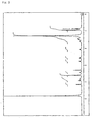
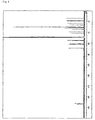
- the 1 H-NMR spectrum and 13 C-NMR spectrum are presented in Fig. 3 and Fig. 4, respectively.
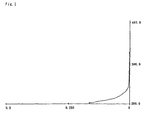
- the ultraviolet adsorption spectrum of this substance in methanol shows the terminal absorptions represented in Fig. 1.
- the KBr infrared absorption wavenumbers (KBr) are listed below.
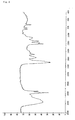
- the IR absorption spectrum of the substance is presented in Fig. 2.
- TKR1785-I was subjected to reversed phase partition high performance liquid chromatography (HPLC) using LC-10A High performance Liquid Chromatograph (Shimadzu). The high performance liquid chromatography was carried out under the following conditions.
- TKR1785-II The physicochemical constants of TKR1785-II are as follows.
- the purified white powder obtained by high performance liquid chromatography and concentration of active fraction II under reduced pressure was found to be TKR1785-II.
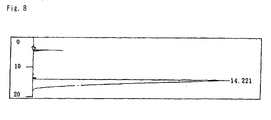
- TKR1785-II was subjected to HPLC analysis using LC-10A High performance Liquid Chromatograph (Shimadzu). The HPLC conditions were the same as those used in the analysis of TKR1785-I. The analysis revealed that TKR1785-II was eluted in the position indicated in Fig. 8.
- TKR1785 The antifungal activity of the above substance TKR1785 against various microorganisms was investigated. Using the liquid medium dilution method, the concentration which caused substantially complete inhibition of growth was determined as minimal inhibitory concentration ( ⁇ g/ml). The results are presented in Table 2. The concentration causing a partial inhibition of growth was also determined as 50% inhibitory concentration ( ⁇ g/ml) and is shown in parentheses of table 2.
- YNBG represents a medium containing 0.67% of yeast nitrogen base (Difco) and 1% of glucose.
- BHI represents a medium containing 0.5% of brain heart infusion bouillon (Nissui Pharmaceutical).
- YNBG-Tween represents a medium containing 0.67% of yeast nitrogen base, 0.5% bactocasitone.
- Tester strain Medium Minimal inhibitory concentration ( ⁇ g/ml) TKR1785-I TKR1785-II Candida albicans YNBG 12.5 12.5 TIMM0136 (6.25) (6.25) Candida kefir YNBG 6.25 12.5 TIMM0301 (6.25) Cryptococcus neoformans YNBG 6.25 12.5 TIMM0354 (3.13) (6.25) Aspergillus fumigatus BHI 25 50 TIMM1776 (3.13) (25) Malassezia furfur YNBG-Tween TIMM2782 (12.5)
- bioactive substances TKR1785 of the invention have antifungal activity against pathogenic fungi such as Candida albicans , Candida kefir , Cryptococcus neoformans , and Malassezia furfur .
- TKR1785-I against phospholipase A 2 (derived from porcine pancreas) and leukotriene (LT) C 4 synthase (derived from the guinea-pig lung), which are enzymes related to the immune system, was determined.
- Phospholipase A 2 activity was assayed for a hexane extract under acidic conditions by determining the [ 14 C]palmitic acid released from [ 14 C]phosphatidylcholine.
- LTC 4 synthase activity was assayed by determining the yield of LTC 4 from LTA 4 by the RIA method. The results are shown in Table 3.
- TKR1785-I inhibited phospholipase A 2 and LTC 4 synthase, both of which are enzymes associated with allergic reactions.
- the spleen was isolated and homogenized in a medium to provide a cell suspension.
- the cell suspension derived from C57BL/6 mice was passed through a nylon wool column to prepare a T cell-rich fraction (responder cells).
- the BALB/c-derived cell suspension was irradiated with X-rays to prepare stimulator cells.
- the responder cells and stimulator cells were mixed in a ratio of 1:1 and incubated in a CO 2 incubator for 4 days. Following addition of 3 H-thymidine, the cells were further culturen overnight. The cells were then recovered and the amount of 3 H-thymidine uptake was determined.
- the samples 500, 125, 31.2, and 7.8 ⁇ g/ml solutions of dimethyl sulfoxide diluted with the medium) were respectively added in a proportion of 0.5% at mixing the responder cells with the stimulator cells to final concentrations of 25 to 0.039 ⁇ g/ml.
- the inhibitory activity was determined by comparison with the 3 H-thymidine uptake in the sample-free group. TKR1785-I showed concentration-dependent MLR-inhibitory activity and its 50% inhibitory concentration was 0.41 ⁇ g/ml.
- TKR1785-I and TKR1785-II were respectively administered to ICR mice intraperitoneally in a dose of 50 mg/kg but no toxic response was found.
- TKR1785-I was thoroughly kneaded with a small amount of absorptive ointment and, then, the remainder of the ointment was added gradually, followed by thorough kneading to provide a homogeneous ointment. This ointment was to be applied to the affected area 4 to 5 times daily.
- the bioactive substances TKR1785 of clinical value as, for example, therapeutic agents for fungal infections, allergic diseases and immune diseases as well as a method for its production can be provided.
Landscapes
- Chemical & Material Sciences (AREA)
- Organic Chemistry (AREA)
- Life Sciences & Earth Sciences (AREA)
- Health & Medical Sciences (AREA)
- Engineering & Computer Science (AREA)
- Wood Science & Technology (AREA)
- Zoology (AREA)
- General Health & Medical Sciences (AREA)
- General Chemical & Material Sciences (AREA)
- Chemical Kinetics & Catalysis (AREA)
- Bioinformatics & Cheminformatics (AREA)
- Genetics & Genomics (AREA)
- Biochemistry (AREA)
- Microbiology (AREA)
- General Engineering & Computer Science (AREA)
- Biotechnology (AREA)
- Molecular Biology (AREA)
- Proteomics, Peptides & Aminoacids (AREA)
- Medicinal Chemistry (AREA)
- Immunology (AREA)
- Veterinary Medicine (AREA)
- Public Health (AREA)
- Animal Behavior & Ethology (AREA)
- Pharmacology & Pharmacy (AREA)
- Nuclear Medicine, Radiotherapy & Molecular Imaging (AREA)
- Pulmonology (AREA)
- Biophysics (AREA)
- Preparation Of Compounds By Using Micro-Organisms (AREA)
- Medicines Containing Material From Animals Or Micro-Organisms (AREA)
- Medicines That Contain Protein Lipid Enzymes And Other Medicines (AREA)
- Pharmaceuticals Containing Other Organic And Inorganic Compounds (AREA)
- Peptides Or Proteins (AREA)
Description




| Medium | Colony diameter (mm) | Colony color | Surface color of the colony | Texture of the colony |
| Malt extract agar | 32 | Dark grayish yellow green | Grayish yellow green | Velvety |
| 5GY4/2 | 10Y6/2 | |||
| Potato dextrose agar | 29 | Dark grayish green | Grayish yellow green | Velvety |
| 2.5G4/2 | 5GY6/2 | |||
| Czapek's agar | 29 | Grayish green | Greenish gray | Velvety |
| 10G5/2 | 5GY6/1 | |||
| Sabouraud's | 40 | Dark grayish green | Grayish yellow green | Velvety |
| 10GY4/3 | 5GY6/2 | |||
| Grayish yellow green | Dull yellow | Deeply Velvety | ||
| 5GY6/2 | 2.5Y8/4 |
Temperature range for growth: The temperature range for growth is 10 to 30°C and the optimum range of temperature for growth is about 25°C. The pH range for growth: The pH range for growth is
Apparatus: LC8A (Shimadzu)
Column: YMCpack C18 (2.0 cm x 25 cm) (Y.M.C.)
Mobile phase: 0.05% trifluoroacetic acid-55% (v/v) acetonitrile/water
IR (KBr) (cm-1): 3410, 2920, 2850, 1670, 1540, 1470, 1210, 1140, 1050, 840, 800, 720.
| Tester strain | Medium | Minimal inhibitory concentration (µg/ml) | |
| TKR1785-I | TKR1785-II | ||
| Candida albicans | YNBG | 12.5 | 12.5 |
| TIMM0136 | (6.25) | (6.25) | |
| Candida kefir | YNBG | 6.25 | 12.5 |
| TIMM0301 | (6.25) | ||
| Cryptococcus neoformans | YNBG | 6.25 | 12.5 |
| TIMM0354 | (3.13) | (6.25) | |
| Aspergillus fumigatus | BHI | 25 | 50 |
| TIMM1776 | (3.13) | (25) | |
| Malassezia furfur | YNBG-Tween | ||
| TIMM2782 | (12.5) |
| Enzyme | Test concentration | Inhibition |
| (µg/ml) | (%) | |
| | 100 | 92 |
| | 10 | 33 |
| Leukotriene C4 synthase | 300 | 98 |
| Leukotriene C4 synthase | 30 | 21 |
| Dosage Form Example 1 | |
| TKR1785- | 50 mg |
| Lactose | 46 |
| Corn starch | |
| 20 mg | |
| Low- | 8 |
| Hydroxypropylmethylcellulose | |
| 5 mg | |
| Magnesium stearate | 1 mg |
| Total 130 mg |
| Dosage Form Example 2 | |
| TKR1785-I | 1 g |
| Absorptive ointment (listed in The Pharmacopoeia of Japan) | 99 g |
| Total 100 g |
Claims (8)
- The bioactive substance TKR1785 of the following general formula (A):wherein R represents -CH(CH3)2 or -CH(CH3)C2H5.

- A method of producing the bioactive substance TKR1785 which comprises culturing the strain Penicillium sp. TKR1785 deposited at the National Institute of Bioscience and Human Technology under the number FERM BP-5788 and isolating the substance from the resulting culture broth.
- A microorganism belonging to the strain Penicillium sp. TKR1785 deposited at the National Institute of Bioscience and Human Technology under the number FERM BP-5788.
- A pharmaceutical composition comprising the bioactive substance TKR1785 according to claim 1.
- A pharmaceutical composition according to claim 4, which comprises the bioactive substance TKR1785 according to claim 1 as an active ingredient.
- The bioactive substance TKR1785 according to claim 1, for use as an antiallergenic agent.
- The bioactive substance TKR1785 according to daim 1, for use as an immunomodulator.
- The bioactive substance TKR1785 according to claim 1, for use as an antifungal agent.
Applications Claiming Priority (4)
| Application Number | Priority Date | Filing Date | Title |
|---|---|---|---|
| JP84712/96 | 1996-03-12 | ||
| JP8471296 | 1996-03-12 | ||
| JP8471296 | 1996-03-12 | ||
| PCT/JP1997/000770 WO1997034012A1 (en) | 1996-03-12 | 1997-03-12 | Physiologically active substances tkr1785's, process for the preparation thereof, and microbe |
Publications (3)
| Publication Number | Publication Date |
|---|---|
| EP0897988A1 EP0897988A1 (en) | 1999-02-24 |
| EP0897988A4 EP0897988A4 (en) | 2001-03-28 |
| EP0897988B1 true EP0897988B1 (en) | 2005-04-13 |
Family
ID=13838287
Family Applications (1)
| Application Number | Title | Priority Date | Filing Date |
|---|---|---|---|
| EP97907278A Expired - Lifetime EP0897988B1 (en) | 1996-03-12 | 1997-03-12 | Physiologically active substances tkr1785's, process for the preparation thereof, and microbe |
Country Status (7)
| Country | Link |
|---|---|
| US (1) | US6103767A (en) |
| EP (1) | EP0897988B1 (en) |
| JP (1) | JP3273948B2 (en) |
| KR (1) | KR100487703B1 (en) |
| AU (1) | AU1939697A (en) |
| DE (1) | DE69733016T2 (en) |
| WO (1) | WO1997034012A1 (en) |
Cited By (1)
| Publication number | Priority date | Publication date | Assignee | Title |
|---|---|---|---|---|
| WO2013049280A3 (en) * | 2011-09-29 | 2013-05-30 | Emory University | Sphingosine analogs, compositions, and methods related thereto |
Families Citing this family (3)
| Publication number | Priority date | Publication date | Assignee | Title |
|---|---|---|---|---|
| ATE314342T1 (en) | 1997-03-12 | 2006-01-15 | Takara Bio Inc | SPINGOSINE ANALOGUE |
| WO1999012890A1 (en) * | 1997-09-11 | 1999-03-18 | Takara Shuzo Co., Ltd. | Sphingosine derivatives and medicinal composition |
| WO1999032498A1 (en) * | 1997-12-22 | 1999-07-01 | Takara Shuzo Co., Ltd. | Antibiotic tkr2999, process for the preparation thereof and microbe |
Family Cites Families (1)
| Publication number | Priority date | Publication date | Assignee | Title |
|---|---|---|---|---|
| GB2135668B (en) * | 1982-12-25 | 1986-08-13 | Takara Shuzo Co | Of4949, a physiologically active substance and derivatives thereof |
-
1997
- 1997-03-12 US US09/142,689 patent/US6103767A/en not_active Expired - Fee Related
- 1997-03-12 WO PCT/JP1997/000770 patent/WO1997034012A1/en not_active Ceased
- 1997-03-12 EP EP97907278A patent/EP0897988B1/en not_active Expired - Lifetime
- 1997-03-12 AU AU19396/97A patent/AU1939697A/en not_active Abandoned
- 1997-03-12 KR KR10-1998-0707078A patent/KR100487703B1/en not_active Expired - Fee Related
- 1997-03-12 JP JP53243897A patent/JP3273948B2/en not_active Expired - Fee Related
- 1997-03-12 DE DE69733016T patent/DE69733016T2/en not_active Expired - Fee Related
Cited By (1)
| Publication number | Priority date | Publication date | Assignee | Title |
|---|---|---|---|---|
| WO2013049280A3 (en) * | 2011-09-29 | 2013-05-30 | Emory University | Sphingosine analogs, compositions, and methods related thereto |
Also Published As
| Publication number | Publication date |
|---|---|
| EP0897988A1 (en) | 1999-02-24 |
| EP0897988A4 (en) | 2001-03-28 |
| DE69733016D1 (en) | 2005-05-19 |
| KR19990087626A (en) | 1999-12-27 |
| DE69733016T2 (en) | 2006-01-26 |
| KR100487703B1 (en) | 2005-06-16 |
| JP3273948B2 (en) | 2002-04-15 |
| WO1997034012A1 (en) | 1997-09-18 |
| US6103767A (en) | 2000-08-15 |
| AU1939697A (en) | 1997-10-01 |
Similar Documents
| Publication | Publication Date | Title |
|---|---|---|
| JP3557212B2 (en) | Polycyclic anthelmintics, methods and strains for their production, and uses thereof | |
| EP1002793B1 (en) | Physiologically active substances tkr2449, process for producing the same, and microorganism | |
| JPWO1998056755A1 (en) | Physiologically active substance TKR2449, production method and microorganism | |
| US6103767A (en) | Physiologically active substances TKR1785's, process for the preparation thereof, and microbe | |
| US6333305B1 (en) | Antibiotic TKR2999, process for the preparation thereof and microbe | |
| US5801172A (en) | Antifungal agent from sporomiella minimoides | |
| JPWO1997034012A1 (en) | Physiologically active substance TKR1785, production method and microorganism | |
| US6337410B2 (en) | Antibiotic TKR459, production method, and microorganism | |
| EP0814086B1 (en) | Antibiotics tkr1912-i and tkr1912-ii and process for producing the same | |
| JPWO1999032498A1 (en) | Antibiotic TKR2999, production method and microorganism | |
| EP0937718B1 (en) | Antibiotic tkr2648 and process for producing the same | |
| EP0955376A1 (en) | Antibiotic tkr 459, production method, and microorganism | |
| JPH05331171A (en) | New metabolic product obtained from pseurochin f1/f2 aspergillus fumigatus, preparation thereof and its use | |
| JPWO1996028456A1 (en) | Antibiotics TKR1912-I, TKR1912-II and methods for producing them | |
| JPWO1998021196A1 (en) | Antibiotic TKR2648 and method for producing same | |
| FR2486399A1 (en) | Polyether antibiotic e.g. lasalocid zinc complexes - with animal growth promoter, coccidiostatic and cardiovascular stimulant activity | |
| JPH09249680A (en) | Antibiotic tkr842, its production and microorganism | |
| EP0394868A1 (en) | New antibiotics NK372135, process for the production thereof and use thereof | |
| JP2000290293A (en) | Antifungal active compounds | |
| JPH0925286A (en) | Antibiotic TKR2554 and method for producing the same | |
| WO1996004896A1 (en) | Antifungal agent | |
| JPWO1997026367A1 (en) | Antibiotics TKR400-A and TKR400-B and methods for producing them | |
| JPWO1998023767A1 (en) | Antibiotic TKR459, production method and microorganism |
Legal Events
| Date | Code | Title | Description |
|---|---|---|---|
| PUAI | Public reference made under article 153(3) epc to a published international application that has entered the european phase |
Free format text: ORIGINAL CODE: 0009012 |
|
| 17P | Request for examination filed |
Effective date: 19981012 |
|
| AK | Designated contracting states |
Kind code of ref document: A1 Designated state(s): CH DE ES FR GB IT LI |
|
| A4 | Supplementary search report drawn up and despatched |
Effective date: 20010213 |
|
| AK | Designated contracting states |
Kind code of ref document: A4 Designated state(s): CH DE ES FR GB IT LI |
|
| RIC1 | Information provided on ipc code assigned before grant |
Free format text: 7C 07C 237/12 A, 7C 12P 21/02 B, 7C 12R 1/80 B, 7A 61K 38/05 B |
|
| 17Q | First examination report despatched |
Effective date: 20030108 |
|
| RAP1 | Party data changed (applicant data changed or rights of an application transferred) |
Owner name: TAKARA BIO INC. |
|
| GRAP | Despatch of communication of intention to grant a patent |
Free format text: ORIGINAL CODE: EPIDOSNIGR1 |
|
| RIN1 | Information on inventor provided before grant (corrected) |
Inventor name: KATO, IKUNOSHIN,C.R.LAB. TAKARA S. CO. LTD. Inventor name: KOYAMA, EIKO,C.R.LAB. TAKARA S. CO. LTD. Inventor name: YOSHIKAWA, YOSHIE,C.R.LAB. TAKARA S. CO.LTD Inventor name: AWAZU, NAOYUKI,C.R.LAB.TAKARA S. CO.LTD. Inventor name: TAKESAKO, KAZUTOH,C.R.LAB.TAKARA S. CO.LTD. |
|
| GRAS | Grant fee paid |
Free format text: ORIGINAL CODE: EPIDOSNIGR3 |
|
| GRAA | (expected) grant |
Free format text: ORIGINAL CODE: 0009210 |
|
| AK | Designated contracting states |
Kind code of ref document: B1 Designated state(s): CH DE ES FR GB IT LI |
|
| PG25 | Lapsed in a contracting state [announced via postgrant information from national office to epo] |
Ref country code: LI Free format text: LAPSE BECAUSE OF FAILURE TO SUBMIT A TRANSLATION OF THE DESCRIPTION OR TO PAY THE FEE WITHIN THE PRESCRIBED TIME-LIMIT Effective date: 20050413 Ref country code: IT Free format text: LAPSE BECAUSE OF FAILURE TO SUBMIT A TRANSLATION OF THE DESCRIPTION OR TO PAY THE FEE WITHIN THE PRE;WARNING: LAPSES OF ITALIAN PATENTS WITH EFFECTIVE DATE BEFORE 2007 MAY HAVE OCCURRED AT ANY TIME BEFORE 2007. THE CORRECT EFFECTIVE DATE MAY BE DIFFERENT FROM THE ONE RECORDED.SCRIBED TIME-LIMIT Effective date: 20050413 Ref country code: CH Free format text: LAPSE BECAUSE OF FAILURE TO SUBMIT A TRANSLATION OF THE DESCRIPTION OR TO PAY THE FEE WITHIN THE PRESCRIBED TIME-LIMIT Effective date: 20050413 |
|
| REG | Reference to a national code |
Ref country code: GB Ref legal event code: FG4D |
|
| REG | Reference to a national code |
Ref country code: CH Ref legal event code: EP |
|
| REF | Corresponds to: |
Ref document number: 69733016 Country of ref document: DE Date of ref document: 20050519 Kind code of ref document: P |
|
| PG25 | Lapsed in a contracting state [announced via postgrant information from national office to epo] |
Ref country code: ES Free format text: LAPSE BECAUSE OF FAILURE TO SUBMIT A TRANSLATION OF THE DESCRIPTION OR TO PAY THE FEE WITHIN THE PRESCRIBED TIME-LIMIT Effective date: 20050724 |
|
| REG | Reference to a national code |
Ref country code: CH Ref legal event code: PL |
|
| PLBE | No opposition filed within time limit |
Free format text: ORIGINAL CODE: 0009261 |
|
| STAA | Information on the status of an ep patent application or granted ep patent |
Free format text: STATUS: NO OPPOSITION FILED WITHIN TIME LIMIT |
|
| ET | Fr: translation filed | ||
| 26N | No opposition filed |
Effective date: 20060116 |
|
| PGFP | Annual fee paid to national office [announced via postgrant information from national office to epo] |
Ref country code: GB Payment date: 20070307 Year of fee payment: 11 |
|
| PGFP | Annual fee paid to national office [announced via postgrant information from national office to epo] |
Ref country code: DE Payment date: 20070308 Year of fee payment: 11 |
|
| PGFP | Annual fee paid to national office [announced via postgrant information from national office to epo] |
Ref country code: FR Payment date: 20070308 Year of fee payment: 11 |
|
| GBPC | Gb: european patent ceased through non-payment of renewal fee |
Effective date: 20080312 |
|
| REG | Reference to a national code |
Ref country code: FR Ref legal event code: ST Effective date: 20081125 |
|
| PG25 | Lapsed in a contracting state [announced via postgrant information from national office to epo] |
Ref country code: DE Free format text: LAPSE BECAUSE OF NON-PAYMENT OF DUE FEES Effective date: 20081001 |
|
| PG25 | Lapsed in a contracting state [announced via postgrant information from national office to epo] |
Ref country code: FR Free format text: LAPSE BECAUSE OF NON-PAYMENT OF DUE FEES Effective date: 20080331 |
|
| PG25 | Lapsed in a contracting state [announced via postgrant information from national office to epo] |
Ref country code: GB Free format text: LAPSE BECAUSE OF NON-PAYMENT OF DUE FEES Effective date: 20080312 |