EP0894147B1 - Detection of variations in human h2 receptors - Google Patents
Detection of variations in human h2 receptors Download PDFInfo
- Publication number
- EP0894147B1 EP0894147B1 EP97917353A EP97917353A EP0894147B1 EP 0894147 B1 EP0894147 B1 EP 0894147B1 EP 97917353 A EP97917353 A EP 97917353A EP 97917353 A EP97917353 A EP 97917353A EP 0894147 B1 EP0894147 B1 EP 0894147B1
- Authority
- EP
- European Patent Office
- Prior art keywords
- human
- receptor
- lys
- dna
- seq
- Prior art date
- Legal status (The legal status is an assumption and is not a legal conclusion. Google has not performed a legal analysis and makes no representation as to the accuracy of the status listed.)
- Expired - Lifetime
Links
Images

Classifications
-
- C—CHEMISTRY; METALLURGY
- C12—BIOCHEMISTRY; BEER; SPIRITS; WINE; VINEGAR; MICROBIOLOGY; ENZYMOLOGY; MUTATION OR GENETIC ENGINEERING
- C12Q—MEASURING OR TESTING PROCESSES INVOLVING ENZYMES, NUCLEIC ACIDS OR MICROORGANISMS; COMPOSITIONS OR TEST PAPERS THEREFOR; PROCESSES OF PREPARING SUCH COMPOSITIONS; CONDITION-RESPONSIVE CONTROL IN MICROBIOLOGICAL OR ENZYMOLOGICAL PROCESSES
- C12Q1/00—Measuring or testing processes involving enzymes, nucleic acids or microorganisms; Compositions therefor; Processes of preparing such compositions
- C12Q1/68—Measuring or testing processes involving enzymes, nucleic acids or microorganisms; Compositions therefor; Processes of preparing such compositions involving nucleic acids
- C12Q1/6876—Nucleic acid products used in the analysis of nucleic acids, e.g. primers or probes
- C12Q1/6883—Nucleic acid products used in the analysis of nucleic acids, e.g. primers or probes for diseases caused by alterations of genetic material
-
- C—CHEMISTRY; METALLURGY
- C07—ORGANIC CHEMISTRY
- C07K—PEPTIDES
- C07K14/00—Peptides having more than 20 amino acids; Gastrins; Somatostatins; Melanotropins; Derivatives thereof
- C07K14/435—Peptides having more than 20 amino acids; Gastrins; Somatostatins; Melanotropins; Derivatives thereof from animals; from humans
- C07K14/705—Receptors; Cell surface antigens; Cell surface determinants
- C07K14/72—Receptors; Cell surface antigens; Cell surface determinants for hormones
- C07K14/723—G protein coupled receptor, e.g. TSHR-thyrotropin-receptor, LH/hCG receptor, FSH receptor
Definitions
- This invention relates to the detection of variations in human histamine H 2 receptors, and more particularly to the development of new compounds useful in the sequencing and identification of a human histamine H 2 receptor and their use in the diagnosis and treatment of certain human disorders, for example, brain disorders.
- the invention also relates to new compounds and a method for detecting an allelic polymorphic variation within the human population for the gene encoding the histamine H 2 receptor, and their use in the diagnosis and treatment of human disorders.
- the histamine H 2 receptor is one of many receptors in the body. Compounds used to treat many diseases work by activating a receptor or inhibiting the action of its natural ligand. Variations in some receptors amongst the population are known to be caused by allelic variation, and this variation can alter the response of a disease to a drug amongst patients. An example of this would be the response to clozapine, used to treat schizophrenia, associated with allelic variation in the 5-HT 2A receptor demonstrated by Arranz el al (1995) Lancet, 346(8970), 281-282.
- the present invention is concerned in one aspect with improvements in the diagnosis and/or treatment of human neurological and psychiatric disorders, and more particularly in the diagnosis and treatment of schizophrenia.
- the invention is concerned with improvements in the diagnosis and/or treatment of diseases of other systems or organs of the human body.
- oligonucleotides According to the invention, a further group of oligonucleotides has now been developed for the identification of sequences in a sample comprising a human histamine H 2 receptor DNA, cDNA or RNA originating from a tissue sample or body fluid.
- the invention provides new oligonucleotides, suitable for use as primers for the amplification of DNA corresponding to a region of a human histamine H 2 receptor, having nucleotide sequences selected from: and a diagnostic kit comprising one or more of the above mentioned oligonucleotides.
- the direction and base start numbers for the novel oligonucleotide primers are as follows: Primer Base Start No. 10) Upstream 281 11) Downstream 298 12) Upstream 501 13) Downstream 766 Information on the human histamine H 2 receptor was obtained from the MRC Daresbury database accessing "Genem 61" File no. M64799 - Human histamine H 2 receptor gene.
- base change site alters restriction map of: 398 AluI, Aval, BspWI, BsrI, CviJI 525 620 Eco57 649 Clal, Sau3A, TaqI 692 802 MnlI
- the invention provides a diagnostic kit comprising one or more of the new oligonucleotide primers and, preferably, one or more of the above mentioned endonucleases, optionally with one or more buffers.
- the invention provides a diagnostic kit comprising one or more of the new oligonucleotide primers whereby detection of human histamine subtypes can be achieved using single-stranded conformational polymorphism (SSCP).
- the kit can, for example, comprise one or more of the above mentioned oligonucleotide primers, and, optionally, formamide.
- a kit may be used to establish genotype or base variations. This information may be used in predicting an individual's disease susceptibility, disease course, prognosis and/or response to treatment, as would be understood by those skilled in the art from the disclosure contained herein.
- the treatment response or efficacy which may be predicted may include drug treatment such as for example, use of H 2 receptor antagonists, for example, famotidine, or other forms of treatment such as social or psychological intervention.
- Eucaryotic expression vectors and host cells transformed thereby can be prepared as described in the above mentioned co-pending patent specifications and the encoded protein analysed.
- This example describes the identification and sequencing of an allelic human H 2 receptor gene using certain novel oligonucleotide primers according to the invention.
- a polymerase chain reaction (PCR) product is prepared from human DNA.
- DNA was extracted from human brain tissue by first pulverizing approximately 1g of tissue in liquid nitrogen then adding to 10ml lysis buffer (0.32M sucrose, 10mM Tris, 5mM magnesium chloride 1% Triton X-100 pH8.0). This solution was centrifuged (9,000 rpm 15 mins) to pellet the tissue, the lysis buffer was drawn off and the pellet resuspended in 4.5ml 75 mM sodium chloride, 24mM EDTA. This solution was then incubated for 3 hours with 250 ⁇ l 10% SDS and 2mg proteinase K at 56°C. This aqueous phase was then extracted twice with 5ml of phenol:chloroform:isoamyl alcohol (25:24:1).
- the DNA was then amplified by the polymerase chain reaction using the oligonucleotide primers 1) and 2) (as hereinbefore described) for 36 cycles.
- the timing for each cycle was as follows; 1 min at 94°C, 1.5 min at 56°C and 2 mins at 72°C, this was then followed by a 10 min extension at 72°C (Amplitaq DNA polymerase Perkin-Elmer Cetus). This reaction produced a DNA fragment of 1047 base pair when analyzed by gel electrophoresis.
- the PCR products were immediately ligated and cloned into the TA cloning system (InvitroGen).
- the transformed cells were plated onto Luria-Bertani plates containing 50 ⁇ l/ml amplicillin and 1.6mg X-Gal. Plates were then incubated overnight at 37°C, then moved to 4°C for 4 hours to allow for colour development. Positive (white colonies) were then analyzed by growing a 5ml culture overnight at 37°C extracting the plasmids (Qiaspin minipreps (Qiagen)) and performing an EcoRI digest to ensure the correct size product was contained in the plasmid.
- the plasmid used to clone the PCR product is the pCRTMII Vector, which is transformed into One ShotTM INV ⁇ F' Competent cells.
- Both strands of the cloned PCR product were sequenced using the dideoxynucleotide chain-terminated method, carried out with Sequenase version 2.0 (Amersham/USB). Partial sequencing of short stretches of the cloned DNA utilised all the oligonucleotide primers 1) to 11) hereinbefore described.
- the cloned PCR product was shown to be identical to the gastric cDNA of Gantz et al except for the previously mentioned six single base changes.
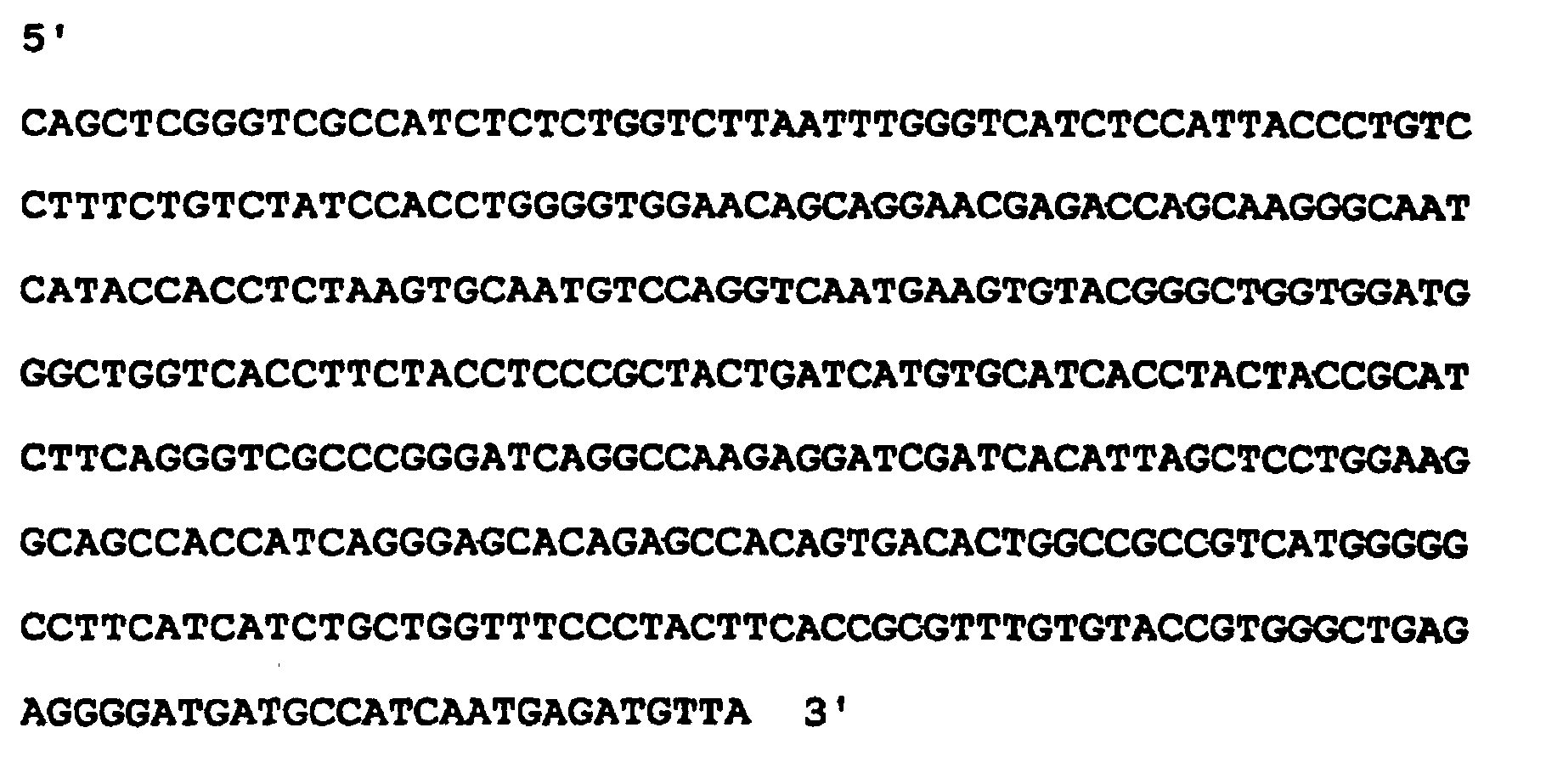
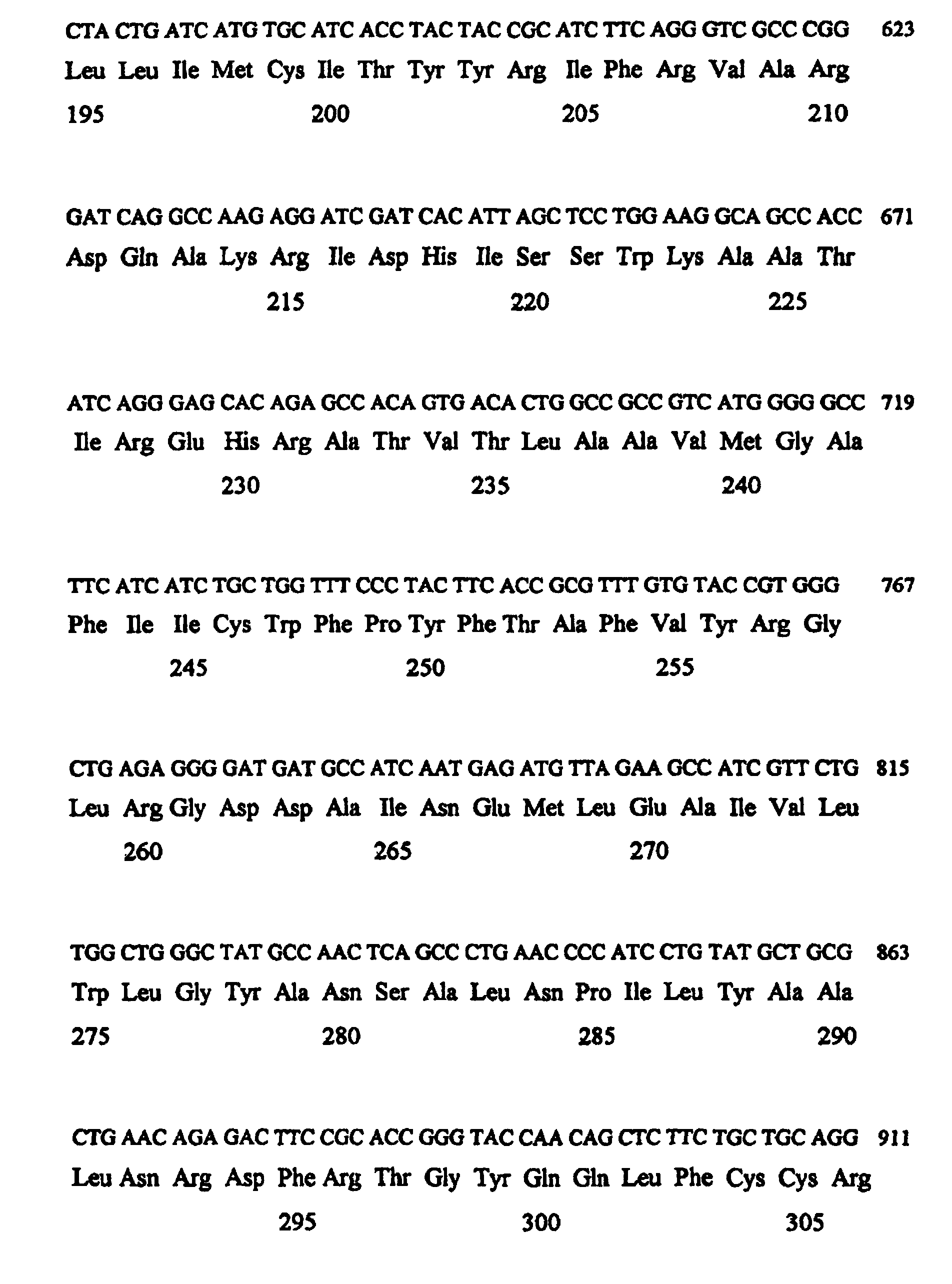
- H 2 R 649G allele SEQ ID NO:2
- H 2 R 649A allele SEQ ID NO:2
- the original form as described by Gantz et al is designated the H 2 R 649A allele, as described by Orange et al (1996) Neuro Report 7(7) (to be published).
- This example describes the identification and sequencing of an allelic human H 2 receptor gene using certain novel oligonucleotide primers according to the invention.
- the example describes confirmation of the existence of polymorphisms in the human histamine H 2 receptor gene utilising single-stranded conformational polymorphism (SSCP). This is made possible by an assay based upon amplification of a 266 base pair PCR fragment of the human histamine H 2 receptor gene, followed by specific acrylamide gel electrophoresis. (It will be apparent to those skilled in the art that single base changes may also be detected by other techniques known to those in the art, including, chemical cleavage, PCR thermoligase reactions, restriction endonuclease digestion of human histamine H 2 receptor gene PCR fragments etc.)
- Samples of blood are collected from human volunteers into EDTA coated tubes. 1ml of this blood is heated to 100°C for 15 minutes and then spun in a microcentrifuge at 13,000Xg for 15 minutes. The supernatant is collected and the cell debris is discarded. 1 ⁇ l of the supernatant is utilised as template DNA for a PCR reaction to amplify a portion of the human histamine H 2 receptor gene between bases 501 and 766.
- the conditions for this PCR reaction are 3mM MgCl 2 (Gibco BRL), 1XPCR buffer (Gibco BRL), 0.2mM of each dATP, dCTP, dTTP, dGTP (Gibco BRL) 10 pmoles of each of oligonucleotide primers 12) and 13) (hereinbefore described) and 1 unit Taq DNA polymerase, in a total volume adjusted to 50 ⁇ l by sterile DNAse free water.
- This mix is then subjected to the following conditions in a Progene thermal cycler (Techne); 96°C, 5 minutes, then 35 cycles of 96°C, 45 seconds, 56°C, 45 seconds, 72°C, 45 seconds.
- 10 ⁇ l of the resultant product is analysed on a 1% agarose gel to ensure that the above reaction is correctly amplifying the target DNA fragement. Then 7.5 ⁇ l of the PCR mix is added to 7.5 ⁇ l of 95% formamide, 10mM EDTA pH 8.0, heated to 100°C for 5-10 minute, and then quenched immediately in slushy ice for 5 minutes. 3 ⁇ l of 6X blue/orange loading dye is then added (Promega) and the mix is loaded into a 1mm thick 14% 59:1 (acrylamide:bis-acrylamide) electrophoresis gel containing 2% glycerol, prepared in 0.5X TBE buffer.
- the gel is run for 18-24 hours at a constant voltage of 260V, at room temperature.
- the gel is then fixed in 10% methanol, 10% ethanoic acid for 10 minutes.
- the gel is next placed into 1mg/ml silver nitrate for 15 minutes, then rinsed briefly with distilled water.
- the gel is then placed into 0.26% formaldehyde, 0.38M sodium hydroxide for 15 minutes.
- the gel is finally placed into 0.75% sodium carbonate for 10 minutes.
- Figure 1 shows a SSCP gel, prepared as above described, on which different samples have been loaded. The following patterns of banding are seen:
Landscapes
- Chemical & Material Sciences (AREA)
- Health & Medical Sciences (AREA)
- Life Sciences & Earth Sciences (AREA)
- Organic Chemistry (AREA)
- Proteomics, Peptides & Aminoacids (AREA)
- Genetics & Genomics (AREA)
- Zoology (AREA)
- Wood Science & Technology (AREA)
- Engineering & Computer Science (AREA)
- Biochemistry (AREA)
- Biophysics (AREA)
- General Health & Medical Sciences (AREA)
- Immunology (AREA)
- Analytical Chemistry (AREA)
- Molecular Biology (AREA)
- Endocrinology (AREA)
- Cell Biology (AREA)
- Pathology (AREA)
- Medicinal Chemistry (AREA)
- Physics & Mathematics (AREA)
- Toxicology (AREA)
- Biotechnology (AREA)
- Microbiology (AREA)
- Gastroenterology & Hepatology (AREA)
- Bioinformatics & Cheminformatics (AREA)
- General Engineering & Computer Science (AREA)
- Measuring Or Testing Involving Enzymes Or Micro-Organisms (AREA)
Description
| site of change | base change | amino acid alteration |
| 398 | T - C | Val - Gly |
| 525 | A - T | Lys - Asn |
| 620 | A - G | Lys - Asp |
| 649 | A - G | Asn - Asp |
| 692 | A - G | Lys - Arg |
| 802 | G - A | Val - Met |
| site of change | base |
| 398 | C |
| 525 | T |
| 620 | G |
| 649 | G |
| 692 | G |
| 802 | A |













| Primer | Base Start No. | |
| 10) | Upstream | 281 |
| 11) | Downstream | 298 |
| 12) | Upstream | 501 |
| 13) | Downstream | 766 |
| base change site | alters restriction map of: |
| 398 | AluI, Aval, BspWI, BsrI, CviJI |
| 525 | |
| 620 | Eco57 |
| 649 | Clal, Sau3A, TaqI |
| 692 | |
| 802 | MnlI |


- (A) NAME: Heath, Paul Roy
- (B) STREET: 91 Abbey Lane
- (C) CITY: Sheffield
- (D) STATE OR PROVINCE: South Yorkshire
- (E) COUNTRY: United Kingdom
- (F) POSTAL CODE: S8 OBR
- (A) NAME: Orange, Paul Richard
- (B) STREET: 56 Salisbury Road, Crookes,
- (C) CITY: Sheffield
- (D) STATE OR PROVINCE: South Yorkshire
- (E) COUNTRY: United Kingdom
- (F) POSTAL CODE: S10 1WB
- (A) NAME: Pearson, Ronald Carl Alan
- (B) STREET: 12 Kingswood Road, Jesmond,
- (C) CITY: Newcastle-upon-Tyne
- (D) STATE OR PROVINCE: Tyne and Wear
- (E) COUNTRY: United Kingdom
- (F) POSTAL CODE: NE2 3NS
- (A) NAME: Wright, Simon Ralph
- (B) STREET: 56 Hunter Hill Road, Hunter's Bar
- (C) CITY: Sheffield
- (D) STATE OR PROVINCE: South Yorkshire
- (E) COUNTRY: United Kingdom
- (F) POSTAL CODE: S11 8UE















Claims (8)
- Oligonucleotides, suitable for use as primers for the amplification or sequencing of DNA corresponding to a region of a human histamine H2 receptor, selected from:




- The use, as a primer for the amplification or sequencing of DNA corresponding to a region of a human histamine H2 receptor, of an oligonucleotide selected from:



- A process for the detection of a nucleotide sequence coding for a region of a human H2 receptor, or of cDNA corresponding to transcription products thereof, in a biological sample thereof, which comprises:a) the amplification of the DNA with at least a pair of primers selected from the oligonucleotides of Claim 1b) the detection of the amplified sequences on an electrophoretic gel.
- A diagnostic kit comprising at least one oligonucleotide according to Claim 1.
- A diagnostic kit according to Claim 4, which also comprises one or more specific restriction endonucleases capable of demonstrating one or more of the single base substitutions as set out below:
site of change base change amino acid alteration 398 T - C Val - Gly 525 A - T Lys - Asn 620 A - G Lys - Asp 649 A - G Asn - Asp 692 A - G Lys - Arg 802 G - A Val - Met - A method for the detection of one or more inherited or acquired allelic polymorphic variations in a sample of a DNA encoding the human H2 receptor comprising one or more of the six base substitutions as set out below:
site of change base change amino acid alteration 398 T - C Val - Gly 525 A - T Lys - Asn 620 A - G Lys - Asp 649 A - G Asn - Asp 692 A - G Lys - Arg 802 G - A Val - Met - A method according to Claim 6, wherein the step of PCR Amplification is followed by the step of detecting one or more single base variations in the human H2 receptor using SSCP.
- The use of at least one oligonucleotide according to Claim 1, for determining the base variations in the human H2 receptor of an individual for providing information relating to disease susceptibility, disease course, prognosis and/or response to treatment.
Applications Claiming Priority (3)
| Application Number | Priority Date | Filing Date | Title |
|---|---|---|---|
| GB9608168A GB2312211A (en) | 1996-04-19 | 1996-04-19 | Detection of variations in human histamine H2 receptors |
| GB9608168 | 1996-04-19 | ||
| PCT/GB1997/001075 WO1997040186A1 (en) | 1996-04-19 | 1997-04-18 | Detection of variations in human h2 receptors |
Publications (2)
| Publication Number | Publication Date |
|---|---|
| EP0894147A1 EP0894147A1 (en) | 1999-02-03 |
| EP0894147B1 true EP0894147B1 (en) | 2002-07-17 |
Family
ID=10792371
Family Applications (1)
| Application Number | Title | Priority Date | Filing Date |
|---|---|---|---|
| EP97917353A Expired - Lifetime EP0894147B1 (en) | 1996-04-19 | 1997-04-18 | Detection of variations in human h2 receptors |
Country Status (7)
| Country | Link |
|---|---|
| US (1) | US6346380B1 (en) |
| EP (1) | EP0894147B1 (en) |
| JP (1) | JP2000508547A (en) |
| AU (1) | AU2573097A (en) |
| DE (1) | DE69714031D1 (en) |
| GB (1) | GB2312211A (en) |
| WO (1) | WO1997040186A1 (en) |
Families Citing this family (3)
| Publication number | Priority date | Publication date | Assignee | Title |
|---|---|---|---|---|
| GB9503866D0 (en) * | 1995-01-30 | 1995-04-19 | Univ Sheffield | |
| US6440670B1 (en) | 1996-01-30 | 2002-08-27 | University Of Sheffield | Allele of human histamine H2 receptor and methods of detection of H2 receptor variants |
| CA2375047A1 (en) | 1999-05-28 | 2000-12-07 | Synaptic Pharmaceutical Corporation | Dna encoding snorf33 receptor |
Family Cites Families (2)
| Publication number | Priority date | Publication date | Assignee | Title |
|---|---|---|---|---|
| US5885824A (en) * | 1990-12-24 | 1999-03-23 | The Regents Of The University Of Michigan | Recombinant genomic clone encoding the histamine H2 receptor, methods for production thereof, and protein produced therefrom |
| GB9503866D0 (en) * | 1995-01-30 | 1995-04-19 | Univ Sheffield |
-
1996
- 1996-04-19 GB GB9608168A patent/GB2312211A/en not_active Withdrawn
-
1997
- 1997-04-18 AU AU25730/97A patent/AU2573097A/en not_active Abandoned
- 1997-04-18 EP EP97917353A patent/EP0894147B1/en not_active Expired - Lifetime
- 1997-04-18 JP JP9537822A patent/JP2000508547A/en active Pending
- 1997-04-18 WO PCT/GB1997/001075 patent/WO1997040186A1/en not_active Ceased
- 1997-04-18 DE DE69714031T patent/DE69714031D1/en not_active Expired - Lifetime
- 1997-04-18 US US09/171,456 patent/US6346380B1/en not_active Expired - Fee Related
Also Published As
| Publication number | Publication date |
|---|---|
| WO1997040186A1 (en) | 1997-10-30 |
| AU2573097A (en) | 1997-11-12 |
| GB2312211A (en) | 1997-10-22 |
| EP0894147A1 (en) | 1999-02-03 |
| DE69714031D1 (en) | 2002-08-22 |
| GB9608168D0 (en) | 1996-06-26 |
| US6346380B1 (en) | 2002-02-12 |
| JP2000508547A (en) | 2000-07-11 |
Similar Documents
| Publication | Publication Date | Title |
|---|---|---|
| EP0760002B1 (en) | Detection of mutation by resolvase cleavage | |
| Wilcox et al. | Use of 3'untranslated sequences of human cDNAs for rapid chromosome assignment and conversion to STSs: implications for an expression map of the genome | |
| US6692918B2 (en) | Methods and compositions for linear isothermal amplification of polynucleotide sequences | |
| US6051379A (en) | Cancer susceptibility mutations of BRCA2 | |
| CA2166117A1 (en) | Gene sequence for spinocerebellar ataxia type 1 and method for diagnosis | |
| WO1999036571A2 (en) | Method for the detection or nucleic acid of nucleic acid sequences | |
| Ward et al. | Alternative messenger RNA forms and open reading frames within an additional conserved region of the human PAX-2 gene. | |
| JP4163386B2 (en) | Amplification method for circular nucleic acid probe | |
| Ji et al. | The Plasmodium falciparum 6 kb element is polycistronically transcribed | |
| EP0809696A1 (en) | Novel allele of human histamine h2 receptor and methods of detection of h2 receptor variants | |
| KR101767524B1 (en) | Low-density SNP chip considering the economic costs in Berkshire | |
| EP2478118B1 (en) | Methods of genotyping livestock to determine haplotypes associated with meat quality traits and primer for amplification of a polymorphic region in nt5m | |
| AU8953991A (en) | Compositions and methods for analyzing genomic variation | |
| Bennett et al. | Looking for relationships between the most repeated dispersed DNA sequences in the mouse: small R elements are found associated consistently with long MIF repeats. | |
| US6346380B1 (en) | Detection of variations in human H2 receptors | |
| EP0613501A1 (en) | OLIGONUCLEOTIDES AND THEIR USE IN DETECTING ENCEPHALOPATHIES. | |
| WO2008143367A1 (en) | Haplotyping method by multiplex amplification | |
| KR101774275B1 (en) | Single nucleotide polymorphism marker set for marker-assisted breeding in Capsicum and uses thereof | |
| KR100552684B1 (en) | MultiPCR Primer Set for Amplifying Human MODX 1, 4, 5, 6 and 7 Genes | |
| EP0857219B1 (en) | Microsatellite sequences for canine genotyping | |
| Sun et al. | Precise mapping of breakpoints in conserved synteny between human chromosome 1 and pig chromosomes 4, 6 and 9 | |
| CA2403827A1 (en) | Compositions and methods for genetic analysis of polycystic kidney disease | |
| WO1992018646A1 (en) | Nucleotide probes and primers for genetic analysis | |
| US6440670B1 (en) | Allele of human histamine H2 receptor and methods of detection of H2 receptor variants | |
| Sun et al. | Isolation and identification of a novel STR (D17S2204) in the vicinity of NF1 locus |
Legal Events
| Date | Code | Title | Description |
|---|---|---|---|
| PUAI | Public reference made under article 153(3) epc to a published international application that has entered the european phase |
Free format text: ORIGINAL CODE: 0009012 |
|
| 17P | Request for examination filed |
Effective date: 19981112 |
|
| AK | Designated contracting states |
Kind code of ref document: A1 Designated state(s): BE CH DE DK ES FR GB IE IT LI NL SE |
|
| 17Q | First examination report despatched |
Effective date: 20010525 |
|
| GRAG | Despatch of communication of intention to grant |
Free format text: ORIGINAL CODE: EPIDOS AGRA |
|
| GRAG | Despatch of communication of intention to grant |
Free format text: ORIGINAL CODE: EPIDOS AGRA |
|
| GRAH | Despatch of communication of intention to grant a patent |
Free format text: ORIGINAL CODE: EPIDOS IGRA |
|
| GRAH | Despatch of communication of intention to grant a patent |
Free format text: ORIGINAL CODE: EPIDOS IGRA |
|
| GRAA | (expected) grant |
Free format text: ORIGINAL CODE: 0009210 |
|
| AK | Designated contracting states |
Kind code of ref document: B1 Designated state(s): BE CH DE DK ES FR GB IE IT LI NL SE |
|
| PG25 | Lapsed in a contracting state [announced via postgrant information from national office to epo] |
Ref country code: NL Free format text: LAPSE BECAUSE OF FAILURE TO SUBMIT A TRANSLATION OF THE DESCRIPTION OR TO PAY THE FEE WITHIN THE PRESCRIBED TIME-LIMIT Effective date: 20020717 Ref country code: LI Free format text: LAPSE BECAUSE OF FAILURE TO SUBMIT A TRANSLATION OF THE DESCRIPTION OR TO PAY THE FEE WITHIN THE PRESCRIBED TIME-LIMIT Effective date: 20020717 Ref country code: IT Free format text: LAPSE BECAUSE OF FAILURE TO SUBMIT A TRANSLATION OF THE DESCRIPTION OR TO PAY THE FEE WITHIN THE PRE;WARNING: LAPSES OF ITALIAN PATENTS WITH EFFECTIVE DATE BEFORE 2007 MAY HAVE OCCURRED AT ANY TIME BEFORE 2007. THE CORRECT EFFECTIVE DATE MAY BE DIFFERENT FROM THE ONE RECORDED.SCRIBED TIME-LIMIT Effective date: 20020717 Ref country code: FR Free format text: LAPSE BECAUSE OF NON-PAYMENT OF DUE FEES Effective date: 20020717 Ref country code: CH Free format text: LAPSE BECAUSE OF FAILURE TO SUBMIT A TRANSLATION OF THE DESCRIPTION OR TO PAY THE FEE WITHIN THE PRESCRIBED TIME-LIMIT Effective date: 20020717 Ref country code: BE Free format text: LAPSE BECAUSE OF FAILURE TO SUBMIT A TRANSLATION OF THE DESCRIPTION OR TO PAY THE FEE WITHIN THE PRESCRIBED TIME-LIMIT Effective date: 20020717 |
|
| REG | Reference to a national code |
Ref country code: GB Ref legal event code: FG4D |
|
| REG | Reference to a national code |
Ref country code: CH Ref legal event code: EP |
|
| REG | Reference to a national code |
Ref country code: IE Ref legal event code: FG4D |
|
| REF | Corresponds to: |
Ref document number: 69714031 Country of ref document: DE Date of ref document: 20020822 |
|
| PG25 | Lapsed in a contracting state [announced via postgrant information from national office to epo] |
Ref country code: SE Free format text: LAPSE BECAUSE OF FAILURE TO SUBMIT A TRANSLATION OF THE DESCRIPTION OR TO PAY THE FEE WITHIN THE PRESCRIBED TIME-LIMIT Effective date: 20021017 Ref country code: DK Free format text: LAPSE BECAUSE OF FAILURE TO SUBMIT A TRANSLATION OF THE DESCRIPTION OR TO PAY THE FEE WITHIN THE PRESCRIBED TIME-LIMIT Effective date: 20021017 |
|
| PG25 | Lapsed in a contracting state [announced via postgrant information from national office to epo] |
Ref country code: DE Free format text: LAPSE BECAUSE OF FAILURE TO SUBMIT A TRANSLATION OF THE DESCRIPTION OR TO PAY THE FEE WITHIN THE PRESCRIBED TIME-LIMIT Effective date: 20021018 |
|
| NLV1 | Nl: lapsed or annulled due to failure to fulfill the requirements of art. 29p and 29m of the patents act | ||
| PG25 | Lapsed in a contracting state [announced via postgrant information from national office to epo] |
Ref country code: ES Free format text: LAPSE BECAUSE OF FAILURE TO SUBMIT A TRANSLATION OF THE DESCRIPTION OR TO PAY THE FEE WITHIN THE PRESCRIBED TIME-LIMIT Effective date: 20030130 |
|
| REG | Reference to a national code |
Ref country code: CH Ref legal event code: PL |
|
| EN | Fr: translation not filed | ||
| PG25 | Lapsed in a contracting state [announced via postgrant information from national office to epo] |
Ref country code: IE Free format text: LAPSE BECAUSE OF NON-PAYMENT OF DUE FEES Effective date: 20030418 Ref country code: GB Free format text: LAPSE BECAUSE OF NON-PAYMENT OF DUE FEES Effective date: 20030418 |
|
| PLBE | No opposition filed within time limit |
Free format text: ORIGINAL CODE: 0009261 |
|
| STAA | Information on the status of an ep patent application or granted ep patent |
Free format text: STATUS: NO OPPOSITION FILED WITHIN TIME LIMIT |
|
| 26N | No opposition filed |
Effective date: 20030422 |
|
| GBPC | Gb: european patent ceased through non-payment of renewal fee |
Effective date: 20030418 |
|
| REG | Reference to a national code |
Ref country code: IE Ref legal event code: MM4A |