EP0894001B1 - Inhibitor of immunoglobulin e antibody production for the treatment of type i allergy-related diseases - Google Patents
Inhibitor of immunoglobulin e antibody production for the treatment of type i allergy-related diseases Download PDFInfo
- Publication number
- EP0894001B1 EP0894001B1 EP98900051A EP98900051A EP0894001B1 EP 0894001 B1 EP0894001 B1 EP 0894001B1 EP 98900051 A EP98900051 A EP 98900051A EP 98900051 A EP98900051 A EP 98900051A EP 0894001 B1 EP0894001 B1 EP 0894001B1
- Authority
- EP
- European Patent Office
- Prior art keywords
- capsule component
- treatment
- residue
- culture
- ige antibody
- Prior art date
- Legal status (The legal status is an assumption and is not a legal conclusion. Google has not performed a legal analysis and makes no representation as to the accuracy of the status listed.)
- Expired - Lifetime
Links
- 206010020751 Hypersensitivity Diseases 0.000 title claims abstract description 16
- 230000007815 allergy Effects 0.000 title claims abstract description 16
- 238000011282 treatment Methods 0.000 title claims abstract description 16
- 208000026935 allergic disease Diseases 0.000 title claims abstract description 12
- 201000010099 disease Diseases 0.000 title claims abstract description 9
- 208000037265 diseases, disorders, signs and symptoms Diseases 0.000 title claims abstract description 9
- 230000016784 immunoglobulin production Effects 0.000 title abstract description 10
- 239000003112 inhibitor Substances 0.000 title description 7
- 108060003951 Immunoglobulin Proteins 0.000 title description 2
- 102000018358 immunoglobulin Human genes 0.000 title description 2
- 150000004676 glycans Chemical class 0.000 claims abstract description 26
- 229920001282 polysaccharide Polymers 0.000 claims abstract description 25
- 239000005017 polysaccharide Substances 0.000 claims abstract description 25
- 239000012634 fragment Substances 0.000 claims abstract description 15
- 241000588749 Klebsiella oxytoca Species 0.000 claims abstract description 12
- 241000588747 Klebsiella pneumoniae Species 0.000 claims abstract description 9
- 238000011321 prophylaxis Methods 0.000 claims abstract description 6
- 239000002775 capsule Substances 0.000 claims description 38
- 244000005700 microbiome Species 0.000 claims description 31
- 239000000203 mixture Substances 0.000 claims description 23
- 239000002253 acid Substances 0.000 claims description 12
- 239000003638 chemical reducing agent Substances 0.000 claims description 12
- WQZGKKKJIJFFOK-GASJEMHNSA-N Glucose Chemical compound OC[C@H]1OC(O)[C@H](O)[C@@H](O)[C@@H]1O WQZGKKKJIJFFOK-GASJEMHNSA-N 0.000 claims description 10
- 102100033191 Teneurin-3 Human genes 0.000 claims description 6
- 101150032764 Tenm3 gene Proteins 0.000 claims description 6
- PNNNRSAQSRJVSB-BXKVDMCESA-N aldehydo-L-rhamnose Chemical compound C[C@H](O)[C@H](O)[C@@H](O)[C@@H](O)C=O PNNNRSAQSRJVSB-BXKVDMCESA-N 0.000 claims description 6
- 206010002198 Anaphylactic reaction Diseases 0.000 claims description 4
- SHZGCJCMOBCMKK-UHFFFAOYSA-N D-mannomethylose Natural products CC1OC(O)C(O)C(O)C1O SHZGCJCMOBCMKK-UHFFFAOYSA-N 0.000 claims description 4
- PNNNRSAQSRJVSB-UHFFFAOYSA-N L-rhamnose Natural products CC(O)C(O)C(O)C(O)C=O PNNNRSAQSRJVSB-UHFFFAOYSA-N 0.000 claims description 4
- 230000036783 anaphylactic response Effects 0.000 claims description 4
- 208000003455 anaphylaxis Diseases 0.000 claims description 4
- 239000008194 pharmaceutical composition Substances 0.000 claims description 4
- WQZGKKKJIJFFOK-SVZMEOIVSA-N (+)-Galactose Chemical compound OC[C@H]1OC(O)[C@H](O)[C@@H](O)[C@H]1O WQZGKKKJIJFFOK-SVZMEOIVSA-N 0.000 claims description 3
- 125000002353 D-glucosyl group Chemical group C1([C@H](O)[C@@H](O)[C@H](O)[C@H](O1)CO)* 0.000 claims description 3
- 206010039085 Rhinitis allergic Diseases 0.000 claims description 3
- 208000024780 Urticaria Diseases 0.000 claims description 3
- GZCGUPFRVQAUEE-KCDKBNATSA-N aldehydo-D-galactose Chemical group OC[C@@H](O)[C@H](O)[C@H](O)[C@@H](O)C=O GZCGUPFRVQAUEE-KCDKBNATSA-N 0.000 claims description 3
- 201000010105 allergic rhinitis Diseases 0.000 claims description 3
- AEMOLEFTQBMNLQ-WAXACMCWSA-N alpha-D-glucuronic acid Chemical group O[C@H]1O[C@H](C(O)=O)[C@@H](O)[C@H](O)[C@H]1O AEMOLEFTQBMNLQ-WAXACMCWSA-N 0.000 claims description 3
- 208000006673 asthma Diseases 0.000 claims description 3
- 229930182470 glycoside Natural products 0.000 claims description 3
- 208000030603 inherited susceptibility to asthma Diseases 0.000 claims description 3
- 150000002772 monosaccharides Chemical group 0.000 claims description 3
- 241000124008 Mammalia Species 0.000 claims description 2
- 125000003563 glycoside group Chemical group 0.000 claims 2
- 238000007911 parenteral administration Methods 0.000 claims 1
- 230000005875 antibody response Effects 0.000 abstract description 5
- 201000008225 Klebsiella pneumonia Diseases 0.000 abstract 1
- 206010035717 Pneumonia klebsiella Diseases 0.000 abstract 1
- 239000000306 component Substances 0.000 description 44
- 238000012360 testing method Methods 0.000 description 33
- 238000004519 manufacturing process Methods 0.000 description 31
- 230000003053 immunization Effects 0.000 description 30
- 238000002649 immunization Methods 0.000 description 30
- HEMHJVSKTPXQMS-UHFFFAOYSA-M Sodium hydroxide Chemical compound [OH-].[Na+] HEMHJVSKTPXQMS-UHFFFAOYSA-M 0.000 description 27
- 239000002504 physiological saline solution Substances 0.000 description 20
- 239000000243 solution Substances 0.000 description 20
- 239000000047 product Substances 0.000 description 19
- 238000000108 ultra-filtration Methods 0.000 description 19
- 230000005764 inhibitory process Effects 0.000 description 18
- 239000012528 membrane Substances 0.000 description 17
- 241000699666 Mus <mouse, genus> Species 0.000 description 14
- 210000004369 blood Anatomy 0.000 description 13
- 239000008280 blood Substances 0.000 description 13
- 238000000034 method Methods 0.000 description 13
- YBJHBAHKTGYVGT-ZKWXMUAHSA-N (+)-Biotin Chemical compound N1C(=O)N[C@@H]2[C@H](CCCCC(=O)O)SC[C@@H]21 YBJHBAHKTGYVGT-ZKWXMUAHSA-N 0.000 description 12
- CSNNHWWHGAXBCP-UHFFFAOYSA-L Magnesium sulfate Chemical compound [Mg+2].[O-][S+2]([O-])([O-])[O-] CSNNHWWHGAXBCP-UHFFFAOYSA-L 0.000 description 12
- DFPAKSUCGFBDDF-UHFFFAOYSA-N Nicotinamide Chemical compound NC(=O)C1=CC=CN=C1 DFPAKSUCGFBDDF-UHFFFAOYSA-N 0.000 description 12
- 239000000872 buffer Substances 0.000 description 12
- 241001465754 Metazoa Species 0.000 description 11
- 239000006228 supernatant Substances 0.000 description 11
- 241000588748 Klebsiella Species 0.000 description 10
- 230000002401 inhibitory effect Effects 0.000 description 10
- CSCPPACGZOOCGX-UHFFFAOYSA-N Acetone Chemical compound CC(C)=O CSCPPACGZOOCGX-UHFFFAOYSA-N 0.000 description 9
- 239000002585 base Substances 0.000 description 9
- WNROFYMDJYEPJX-UHFFFAOYSA-K aluminium hydroxide Chemical compound [OH-].[OH-].[OH-].[Al+3] WNROFYMDJYEPJX-UHFFFAOYSA-K 0.000 description 8
- 238000005194 fractionation Methods 0.000 description 8
- XLYOFNOQVPJJNP-UHFFFAOYSA-N water Substances O XLYOFNOQVPJJNP-UHFFFAOYSA-N 0.000 description 8
- 239000000427 antigen Substances 0.000 description 7
- 102000036639 antigens Human genes 0.000 description 7
- 108091007433 antigens Proteins 0.000 description 7
- 239000011790 ferrous sulphate Substances 0.000 description 7
- 235000003891 ferrous sulphate Nutrition 0.000 description 7
- 239000008103 glucose Substances 0.000 description 7
- 239000007928 intraperitoneal injection Substances 0.000 description 7
- BAUYGSIQEAFULO-UHFFFAOYSA-L iron(2+) sulfate (anhydrous) Chemical compound [Fe+2].[O-]S([O-])(=O)=O BAUYGSIQEAFULO-UHFFFAOYSA-L 0.000 description 7
- 229910000359 iron(II) sulfate Inorganic materials 0.000 description 7
- 210000002966 serum Anatomy 0.000 description 7
- 238000003756 stirring Methods 0.000 description 7
- 229960002685 biotin Drugs 0.000 description 6
- 235000020958 biotin Nutrition 0.000 description 6
- 239000011616 biotin Substances 0.000 description 6
- FAPWYRCQGJNNSJ-UBKPKTQASA-L calcium D-pantothenic acid Chemical compound [Ca+2].OCC(C)(C)[C@@H](O)C(=O)NCCC([O-])=O.OCC(C)(C)[C@@H](O)C(=O)NCCC([O-])=O FAPWYRCQGJNNSJ-UBKPKTQASA-L 0.000 description 6
- 229960002079 calcium pantothenate Drugs 0.000 description 6
- 238000005119 centrifugation Methods 0.000 description 6
- 239000012141 concentrate Substances 0.000 description 6
- ZPWVASYFFYYZEW-UHFFFAOYSA-L dipotassium hydrogen phosphate Chemical compound [K+].[K+].OP([O-])([O-])=O ZPWVASYFFYYZEW-UHFFFAOYSA-L 0.000 description 6
- 229910000396 dipotassium phosphate Inorganic materials 0.000 description 6
- 235000019797 dipotassium phosphate Nutrition 0.000 description 6
- 238000010438 heat treatment Methods 0.000 description 6
- 229910052943 magnesium sulfate Inorganic materials 0.000 description 6
- 235000019341 magnesium sulphate Nutrition 0.000 description 6
- 239000013028 medium composition Substances 0.000 description 6
- 229960003966 nicotinamide Drugs 0.000 description 6
- 235000005152 nicotinamide Nutrition 0.000 description 6
- 239000011570 nicotinamide Substances 0.000 description 6
- BASFCYQUMIYNBI-UHFFFAOYSA-N platinum Chemical compound [Pt] BASFCYQUMIYNBI-UHFFFAOYSA-N 0.000 description 6
- DPJRMOMPQZCRJU-UHFFFAOYSA-M thiamine hydrochloride Chemical compound Cl.[Cl-].CC1=C(CCO)SC=[N+]1CC1=CN=C(C)N=C1N DPJRMOMPQZCRJU-UHFFFAOYSA-M 0.000 description 6
- 108010042685 trinitrophenyl keyhole limpet hemocyanin Proteins 0.000 description 6
- 239000011691 vitamin B1 Substances 0.000 description 6
- 238000005273 aeration Methods 0.000 description 5
- 238000006243 chemical reaction Methods 0.000 description 5
- IJGRMHOSHXDMSA-UHFFFAOYSA-N Atomic nitrogen Chemical compound N#N IJGRMHOSHXDMSA-UHFFFAOYSA-N 0.000 description 4
- VTYYLEPIZMXCLO-UHFFFAOYSA-L Calcium carbonate Chemical compound [Ca+2].[O-]C([O-])=O VTYYLEPIZMXCLO-UHFFFAOYSA-L 0.000 description 4
- VEXZGXHMUGYJMC-UHFFFAOYSA-N Hydrochloric acid Chemical compound Cl VEXZGXHMUGYJMC-UHFFFAOYSA-N 0.000 description 4
- FAPWRFPIFSIZLT-UHFFFAOYSA-M Sodium chloride Chemical compound [Na+].[Cl-] FAPWRFPIFSIZLT-UHFFFAOYSA-M 0.000 description 4
- QAOWNCQODCNURD-UHFFFAOYSA-N Sulfuric acid Chemical compound OS(O)(=O)=O QAOWNCQODCNURD-UHFFFAOYSA-N 0.000 description 4
- 239000003795 chemical substances by application Substances 0.000 description 4
- 229940079593 drug Drugs 0.000 description 4
- 239000003814 drug Substances 0.000 description 4
- 238000013467 fragmentation Methods 0.000 description 4
- 238000006062 fragmentation reaction Methods 0.000 description 4
- 238000005259 measurement Methods 0.000 description 4
- 238000000746 purification Methods 0.000 description 4
- NWUYHJFMYQTDRP-UHFFFAOYSA-N 1,2-bis(ethenyl)benzene;1-ethenyl-2-ethylbenzene;styrene Chemical compound C=CC1=CC=CC=C1.CCC1=CC=CC=C1C=C.C=CC1=CC=CC=C1C=C NWUYHJFMYQTDRP-UHFFFAOYSA-N 0.000 description 3
- LFQSCWFLJHTTHZ-UHFFFAOYSA-N Ethanol Chemical compound CCO LFQSCWFLJHTTHZ-UHFFFAOYSA-N 0.000 description 3
- OKKJLVBELUTLKV-UHFFFAOYSA-N Methanol Chemical compound OC OKKJLVBELUTLKV-UHFFFAOYSA-N 0.000 description 3
- 239000003729 cation exchange resin Substances 0.000 description 3
- 239000012153 distilled water Substances 0.000 description 3
- 238000001035 drying Methods 0.000 description 3
- 239000000706 filtrate Substances 0.000 description 3
- XLYOFNOQVPJJNP-ZSJDYOACSA-N heavy water Substances [2H]O[2H] XLYOFNOQVPJJNP-ZSJDYOACSA-N 0.000 description 3
- 239000007788 liquid Substances 0.000 description 3
- 229910052697 platinum Inorganic materials 0.000 description 3
- 238000011084 recovery Methods 0.000 description 3
- 239000011734 sodium Substances 0.000 description 3
- 239000000126 substance Substances 0.000 description 3
- HVAUUPRFYPCOCA-AREMUKBSSA-N 2-O-acetyl-1-O-hexadecyl-sn-glycero-3-phosphocholine Chemical compound CCCCCCCCCCCCCCCCOC[C@@H](OC(C)=O)COP([O-])(=O)OCC[N+](C)(C)C HVAUUPRFYPCOCA-AREMUKBSSA-N 0.000 description 2
- OKTJSMMVPCPJKN-UHFFFAOYSA-N Carbon Chemical compound [C] OKTJSMMVPCPJKN-UHFFFAOYSA-N 0.000 description 2
- SRBFZHDQGSBBOR-IOVATXLUSA-N D-xylopyranose Chemical compound O[C@@H]1COC(O)[C@H](O)[C@H]1O SRBFZHDQGSBBOR-IOVATXLUSA-N 0.000 description 2
- KCXVZYZYPLLWCC-UHFFFAOYSA-N EDTA Chemical compound OC(=O)CN(CC(O)=O)CCN(CC(O)=O)CC(O)=O KCXVZYZYPLLWCC-UHFFFAOYSA-N 0.000 description 2
- ZGTMUACCHSMWAC-UHFFFAOYSA-L EDTA disodium salt (anhydrous) Chemical compound [Na+].[Na+].OC(=O)CN(CC([O-])=O)CCN(CC(O)=O)CC([O-])=O ZGTMUACCHSMWAC-UHFFFAOYSA-L 0.000 description 2
- PLUBXMRUUVWRLT-UHFFFAOYSA-N Ethyl methanesulfonate Chemical compound CCOS(C)(=O)=O PLUBXMRUUVWRLT-UHFFFAOYSA-N 0.000 description 2
- DHMQDGOQFOQNFH-UHFFFAOYSA-N Glycine Chemical compound NCC(O)=O DHMQDGOQFOQNFH-UHFFFAOYSA-N 0.000 description 2
- NTYJJOPFIAHURM-UHFFFAOYSA-N Histamine Chemical compound NCCC1=CN=CN1 NTYJJOPFIAHURM-UHFFFAOYSA-N 0.000 description 2
- 102000009438 IgE Receptors Human genes 0.000 description 2
- 108010073816 IgE Receptors Proteins 0.000 description 2
- KFZMGEQAYNKOFK-UHFFFAOYSA-N Isopropanol Chemical compound CC(C)O KFZMGEQAYNKOFK-UHFFFAOYSA-N 0.000 description 2
- TWRXJAOTZQYOKJ-UHFFFAOYSA-L Magnesium chloride Chemical compound [Mg+2].[Cl-].[Cl-] TWRXJAOTZQYOKJ-UHFFFAOYSA-L 0.000 description 2
- VZUNGTLZRAYYDE-UHFFFAOYSA-N N-methyl-N'-nitro-N-nitrosoguanidine Chemical compound O=NN(C)C(=N)N[N+]([O-])=O VZUNGTLZRAYYDE-UHFFFAOYSA-N 0.000 description 2
- 108010058846 Ovalbumin Proteins 0.000 description 2
- 108010003541 Platelet Activating Factor Proteins 0.000 description 2
- PXIPVTKHYLBLMZ-UHFFFAOYSA-N Sodium azide Chemical compound [Na+].[N-]=[N+]=[N-] PXIPVTKHYLBLMZ-UHFFFAOYSA-N 0.000 description 2
- XSQUKJJJFZCRTK-UHFFFAOYSA-N Urea Chemical compound NC(N)=O XSQUKJJJFZCRTK-UHFFFAOYSA-N 0.000 description 2
- RYVJQEZJUFRANT-UHFFFAOYSA-N [3-[4-(3-ethoxy-2-hydroxypropoxy)anilino]-3-oxopropyl]-dimethylsulfanium;4-methylbenzenesulfonate Chemical compound CC1=CC=C(S([O-])(=O)=O)C=C1.CCOCC(O)COC1=CC=C(NC(=O)CC[S+](C)C)C=C1 RYVJQEZJUFRANT-UHFFFAOYSA-N 0.000 description 2
- 239000002671 adjuvant Substances 0.000 description 2
- 239000000043 antiallergic agent Substances 0.000 description 2
- PYMYPHUHKUWMLA-UHFFFAOYSA-N arabinose Natural products OCC(O)C(O)C(O)C=O PYMYPHUHKUWMLA-UHFFFAOYSA-N 0.000 description 2
- 210000003651 basophil Anatomy 0.000 description 2
- SRBFZHDQGSBBOR-UHFFFAOYSA-N beta-D-Pyranose-Lyxose Natural products OC1COC(O)C(O)C1O SRBFZHDQGSBBOR-UHFFFAOYSA-N 0.000 description 2
- 229910000019 calcium carbonate Inorganic materials 0.000 description 2
- 229940041514 candida albicans extract Drugs 0.000 description 2
- 229910052799 carbon Inorganic materials 0.000 description 2
- 150000001875 compounds Chemical class 0.000 description 2
- 238000012258 culturing Methods 0.000 description 2
- 238000000502 dialysis Methods 0.000 description 2
- 238000010790 dilution Methods 0.000 description 2
- 239000012895 dilution Substances 0.000 description 2
- 238000005516 engineering process Methods 0.000 description 2
- 238000002474 experimental method Methods 0.000 description 2
- 239000000284 extract Substances 0.000 description 2
- 238000004128 high performance liquid chromatography Methods 0.000 description 2
- 210000003630 histaminocyte Anatomy 0.000 description 2
- 230000007062 hydrolysis Effects 0.000 description 2
- 238000006460 hydrolysis reaction Methods 0.000 description 2
- 238000001727 in vivo Methods 0.000 description 2
- 150000002500 ions Chemical class 0.000 description 2
- 239000012533 medium component Substances 0.000 description 2
- 239000013642 negative control Substances 0.000 description 2
- 229910052757 nitrogen Inorganic materials 0.000 description 2
- 235000015097 nutrients Nutrition 0.000 description 2
- 239000003960 organic solvent Substances 0.000 description 2
- 229940092253 ovalbumin Drugs 0.000 description 2
- 239000013641 positive control Substances 0.000 description 2
- 230000003389 potentiating effect Effects 0.000 description 2
- 239000002244 precipitate Substances 0.000 description 2
- 238000001556 precipitation Methods 0.000 description 2
- 238000002360 preparation method Methods 0.000 description 2
- 150000003839 salts Chemical class 0.000 description 2
- 239000011780 sodium chloride Substances 0.000 description 2
- 239000001488 sodium phosphate Substances 0.000 description 2
- 230000001954 sterilising effect Effects 0.000 description 2
- 238000004659 sterilization and disinfection Methods 0.000 description 2
- 239000012138 yeast extract Substances 0.000 description 2
- HDTRYLNUVZCQOY-UHFFFAOYSA-N α-D-glucopyranosyl-α-D-glucopyranoside Natural products OC1C(O)C(O)C(CO)OC1OC1C(O)C(O)C(O)C(CO)O1 HDTRYLNUVZCQOY-UHFFFAOYSA-N 0.000 description 1
- TUSDEZXZIZRFGC-UHFFFAOYSA-N 1-O-galloyl-3,6-(R)-HHDP-beta-D-glucose Natural products OC1C(O2)COC(=O)C3=CC(O)=C(O)C(O)=C3C3=C(O)C(O)=C(O)C=C3C(=O)OC1C(O)C2OC(=O)C1=CC(O)=C(O)C(O)=C1 TUSDEZXZIZRFGC-UHFFFAOYSA-N 0.000 description 1
- OWEGMIWEEQEYGQ-UHFFFAOYSA-N 100676-05-9 Natural products OC1C(O)C(O)C(CO)OC1OCC1C(O)C(O)C(O)C(OC2C(OC(O)C(O)C2O)CO)O1 OWEGMIWEEQEYGQ-UHFFFAOYSA-N 0.000 description 1
- ARQXEQLMMNGFDU-JHZZJYKESA-N 4-methylumbelliferone beta-D-glucuronide Chemical compound C1=CC=2C(C)=CC(=O)OC=2C=C1O[C@@H]1O[C@H](C(O)=O)[C@@H](O)[C@H](O)[C@H]1O ARQXEQLMMNGFDU-JHZZJYKESA-N 0.000 description 1
- ARQXEQLMMNGFDU-UHFFFAOYSA-N 4MUG Natural products C1=CC=2C(C)=CC(=O)OC=2C=C1OC1OC(C(O)=O)C(O)C(O)C1O ARQXEQLMMNGFDU-UHFFFAOYSA-N 0.000 description 1
- GUBGYTABKSRVRQ-XLOQQCSPSA-N Alpha-Lactose Chemical compound O[C@@H]1[C@@H](O)[C@@H](O)[C@@H](CO)O[C@H]1O[C@@H]1[C@@H](CO)O[C@H](O)[C@H](O)[C@H]1O GUBGYTABKSRVRQ-XLOQQCSPSA-N 0.000 description 1
- 241000894006 Bacteria Species 0.000 description 1
- 108091003079 Bovine Serum Albumin Proteins 0.000 description 1
- FBPFZTCFMRRESA-KVTDHHQDSA-N D-Mannitol Chemical compound OC[C@@H](O)[C@@H](O)[C@H](O)[C@H](O)CO FBPFZTCFMRRESA-KVTDHHQDSA-N 0.000 description 1
- 238000002965 ELISA Methods 0.000 description 1
- 239000001263 FEMA 3042 Substances 0.000 description 1
- 239000004471 Glycine Substances 0.000 description 1
- SHZGCJCMOBCMKK-JFNONXLTSA-N L-rhamnopyranose Chemical compound C[C@@H]1OC(O)[C@H](O)[C@H](O)[C@H]1O SHZGCJCMOBCMKK-JFNONXLTSA-N 0.000 description 1
- GUBGYTABKSRVRQ-QKKXKWKRSA-N Lactose Natural products OC[C@H]1O[C@@H](O[C@H]2[C@H](O)[C@@H](O)C(O)O[C@@H]2CO)[C@H](O)[C@@H](O)[C@H]1O GUBGYTABKSRVRQ-QKKXKWKRSA-N 0.000 description 1
- GUBGYTABKSRVRQ-PICCSMPSSA-N Maltose Natural products O[C@@H]1[C@@H](O)[C@H](O)[C@@H](CO)O[C@@H]1O[C@@H]1[C@@H](CO)OC(O)[C@H](O)[C@H]1O GUBGYTABKSRVRQ-PICCSMPSSA-N 0.000 description 1
- 229930195725 Mannitol Natural products 0.000 description 1
- 241000699670 Mus sp. Species 0.000 description 1
- 206010028980 Neoplasm Diseases 0.000 description 1
- 229910019142 PO4 Inorganic materials 0.000 description 1
- LRBQNJMCXXYXIU-PPKXGCFTSA-N Penta-digallate-beta-D-glucose Natural products OC1=C(O)C(O)=CC(C(=O)OC=2C(=C(O)C=C(C=2)C(=O)OC[C@@H]2[C@H]([C@H](OC(=O)C=3C=C(OC(=O)C=4C=C(O)C(O)=C(O)C=4)C(O)=C(O)C=3)[C@@H](OC(=O)C=3C=C(OC(=O)C=4C=C(O)C(O)=C(O)C=4)C(O)=C(O)C=3)[C@H](OC(=O)C=3C=C(OC(=O)C=4C=C(O)C(O)=C(O)C=4)C(O)=C(O)C=3)O2)OC(=O)C=2C=C(OC(=O)C=3C=C(O)C(O)=C(O)C=3)C(O)=C(O)C=2)O)=C1 LRBQNJMCXXYXIU-PPKXGCFTSA-N 0.000 description 1
- 229920001213 Polysorbate 20 Polymers 0.000 description 1
- MUPFEKGTMRGPLJ-RMMQSMQOSA-N Raffinose Natural products O(C[C@H]1[C@@H](O)[C@H](O)[C@@H](O)[C@@H](O[C@@]2(CO)[C@H](O)[C@@H](O)[C@@H](CO)O2)O1)[C@@H]1[C@H](O)[C@@H](O)[C@@H](O)[C@@H](CO)O1 MUPFEKGTMRGPLJ-RMMQSMQOSA-N 0.000 description 1
- CZMRCDWAGMRECN-UGDNZRGBSA-N Sucrose Chemical compound O[C@H]1[C@H](O)[C@@H](CO)O[C@@]1(CO)O[C@@H]1[C@H](O)[C@@H](O)[C@H](O)[C@@H](CO)O1 CZMRCDWAGMRECN-UGDNZRGBSA-N 0.000 description 1
- 229930006000 Sucrose Natural products 0.000 description 1
- HDTRYLNUVZCQOY-WSWWMNSNSA-N Trehalose Natural products O[C@@H]1[C@@H](O)[C@@H](O)[C@@H](CO)O[C@@H]1O[C@@H]1[C@H](O)[C@@H](O)[C@@H](O)[C@@H](CO)O1 HDTRYLNUVZCQOY-WSWWMNSNSA-N 0.000 description 1
- MUPFEKGTMRGPLJ-UHFFFAOYSA-N UNPD196149 Natural products OC1C(O)C(CO)OC1(CO)OC1C(O)C(O)C(O)C(COC2C(C(O)C(O)C(CO)O2)O)O1 MUPFEKGTMRGPLJ-UHFFFAOYSA-N 0.000 description 1
- 240000008042 Zea mays Species 0.000 description 1
- 235000005824 Zea mays ssp. parviglumis Nutrition 0.000 description 1
- 235000002017 Zea mays subsp mays Nutrition 0.000 description 1
- 230000005856 abnormality Effects 0.000 description 1
- 238000005903 acid hydrolysis reaction Methods 0.000 description 1
- 231100000215 acute (single dose) toxicity testing Toxicity 0.000 description 1
- 238000011047 acute toxicity test Methods 0.000 description 1
- 238000007605 air drying Methods 0.000 description 1
- 230000000172 allergic effect Effects 0.000 description 1
- HDTRYLNUVZCQOY-LIZSDCNHSA-N alpha,alpha-trehalose Chemical compound O[C@@H]1[C@@H](O)[C@H](O)[C@@H](CO)O[C@@H]1O[C@@H]1[C@H](O)[C@@H](O)[C@H](O)[C@@H](CO)O1 HDTRYLNUVZCQOY-LIZSDCNHSA-N 0.000 description 1
- 150000001413 amino acids Chemical class 0.000 description 1
- 150000003863 ammonium salts Chemical class 0.000 description 1
- BFNBIHQBYMNNAN-UHFFFAOYSA-N ammonium sulfate Chemical compound N.N.OS(O)(=O)=O BFNBIHQBYMNNAN-UHFFFAOYSA-N 0.000 description 1
- 229910052921 ammonium sulfate Inorganic materials 0.000 description 1
- 235000011130 ammonium sulphate Nutrition 0.000 description 1
- 238000004458 analytical method Methods 0.000 description 1
- 239000000739 antihistaminic agent Substances 0.000 description 1
- 239000007864 aqueous solution Substances 0.000 description 1
- PYMYPHUHKUWMLA-WDCZJNDASA-N arabinose Chemical compound OC[C@@H](O)[C@@H](O)[C@H](O)C=O PYMYPHUHKUWMLA-WDCZJNDASA-N 0.000 description 1
- 208000010668 atopic eczema Diseases 0.000 description 1
- 238000011888 autopsy Methods 0.000 description 1
- WQZGKKKJIJFFOK-VFUOTHLCSA-N beta-D-glucose Chemical compound OC[C@H]1O[C@@H](O)[C@H](O)[C@@H](O)[C@@H]1O WQZGKKKJIJFFOK-VFUOTHLCSA-N 0.000 description 1
- GUBGYTABKSRVRQ-QUYVBRFLSA-N beta-maltose Chemical compound OC[C@H]1O[C@H](O[C@H]2[C@H](O)[C@@H](O)[C@H](O)O[C@@H]2CO)[C@H](O)[C@@H](O)[C@@H]1O GUBGYTABKSRVRQ-QUYVBRFLSA-N 0.000 description 1
- 230000000903 blocking effect Effects 0.000 description 1
- 229940098773 bovine serum albumin Drugs 0.000 description 1
- 229910001424 calcium ion Inorganic materials 0.000 description 1
- 159000000007 calcium salts Chemical class 0.000 description 1
- 238000011088 calibration curve Methods 0.000 description 1
- 201000011510 cancer Diseases 0.000 description 1
- 239000004202 carbamide Substances 0.000 description 1
- 150000001720 carbohydrates Chemical class 0.000 description 1
- 210000004027 cell Anatomy 0.000 description 1
- 239000002962 chemical mutagen Substances 0.000 description 1
- 239000005482 chemotactic factor Substances 0.000 description 1
- 239000007979 citrate buffer Substances 0.000 description 1
- 238000004440 column chromatography Methods 0.000 description 1
- 239000000470 constituent Substances 0.000 description 1
- 238000001816 cooling Methods 0.000 description 1
- 235000005822 corn Nutrition 0.000 description 1
- 238000007865 diluting Methods 0.000 description 1
- LOKCTEFSRHRXRJ-UHFFFAOYSA-I dipotassium trisodium dihydrogen phosphate hydrogen phosphate dichloride Chemical compound P(=O)(O)(O)[O-].[K+].P(=O)(O)([O-])[O-].[Na+].[Na+].[Cl-].[K+].[Cl-].[Na+] LOKCTEFSRHRXRJ-UHFFFAOYSA-I 0.000 description 1
- BNIILDVGGAEEIG-UHFFFAOYSA-L disodium hydrogen phosphate Chemical compound [Na+].[Na+].OP([O-])([O-])=O BNIILDVGGAEEIG-UHFFFAOYSA-L 0.000 description 1
- 229910000397 disodium phosphate Inorganic materials 0.000 description 1
- 235000019800 disodium phosphate Nutrition 0.000 description 1
- 238000002036 drum drying Methods 0.000 description 1
- 230000000694 effects Effects 0.000 description 1
- 210000003979 eosinophil Anatomy 0.000 description 1
- 230000005284 excitation Effects 0.000 description 1
- 229960002089 ferrous chloride Drugs 0.000 description 1
- 238000001914 filtration Methods 0.000 description 1
- 238000004108 freeze drying Methods 0.000 description 1
- 238000002523 gelfiltration Methods 0.000 description 1
- 150000002338 glycosides Chemical group 0.000 description 1
- 229960001340 histamine Drugs 0.000 description 1
- 239000001257 hydrogen Substances 0.000 description 1
- 229910052739 hydrogen Inorganic materials 0.000 description 1
- -1 hydrogen ions Chemical class 0.000 description 1
- 238000011081 inoculation Methods 0.000 description 1
- 238000011835 investigation Methods 0.000 description 1
- 238000005342 ion exchange Methods 0.000 description 1
- NMCUIPGRVMDVDB-UHFFFAOYSA-L iron dichloride Chemical compound Cl[Fe]Cl NMCUIPGRVMDVDB-UHFFFAOYSA-L 0.000 description 1
- 108010045069 keyhole-limpet hemocyanin Proteins 0.000 description 1
- 239000008101 lactose Substances 0.000 description 1
- 150000002617 leukotrienes Chemical class 0.000 description 1
- 229910001629 magnesium chloride Inorganic materials 0.000 description 1
- 159000000003 magnesium salts Chemical class 0.000 description 1
- 150000002696 manganese Chemical class 0.000 description 1
- 239000000594 mannitol Substances 0.000 description 1
- 235000010355 mannitol Nutrition 0.000 description 1
- 235000013372 meat Nutrition 0.000 description 1
- HOVAGTYPODGVJG-UHFFFAOYSA-N methyl beta-galactoside Natural products COC1OC(CO)C(O)C(O)C1O HOVAGTYPODGVJG-UHFFFAOYSA-N 0.000 description 1
- 229910000403 monosodium phosphate Inorganic materials 0.000 description 1
- 235000019799 monosodium phosphate Nutrition 0.000 description 1
- 238000002703 mutagenesis Methods 0.000 description 1
- 231100000350 mutagenesis Toxicity 0.000 description 1
- 150000002823 nitrates Chemical class 0.000 description 1
- 239000005416 organic matter Substances 0.000 description 1
- 235000021317 phosphate Nutrition 0.000 description 1
- 239000002953 phosphate buffered saline Substances 0.000 description 1
- 150000003013 phosphoric acid derivatives Chemical class 0.000 description 1
- OXNIZHLAWKMVMX-UHFFFAOYSA-N picric acid Chemical compound OC1=C([N+]([O-])=O)C=C([N+]([O-])=O)C=C1[N+]([O-])=O OXNIZHLAWKMVMX-UHFFFAOYSA-N 0.000 description 1
- 239000000256 polyoxyethylene sorbitan monolaurate Substances 0.000 description 1
- 235000010486 polyoxyethylene sorbitan monolaurate Nutrition 0.000 description 1
- 150000004804 polysaccharides Polymers 0.000 description 1
- 239000011148 porous material Substances 0.000 description 1
- 159000000001 potassium salts Chemical class 0.000 description 1
- 108090000765 processed proteins & peptides Proteins 0.000 description 1
- 239000012264 purified product Substances 0.000 description 1
- 150000003242 quaternary ammonium salts Chemical class 0.000 description 1
- 230000005855 radiation Effects 0.000 description 1
- MUPFEKGTMRGPLJ-ZQSKZDJDSA-N raffinose Chemical compound O[C@H]1[C@H](O)[C@@H](CO)O[C@@]1(CO)O[C@@H]1[C@H](O)[C@@H](O)[C@H](O)[C@@H](CO[C@@H]2[C@@H]([C@@H](O)[C@@H](O)[C@@H](CO)O2)O)O1 MUPFEKGTMRGPLJ-ZQSKZDJDSA-N 0.000 description 1
- 230000001105 regulatory effect Effects 0.000 description 1
- 238000011160 research Methods 0.000 description 1
- 238000005185 salting out Methods 0.000 description 1
- AJPJDKMHJJGVTQ-UHFFFAOYSA-M sodium dihydrogen phosphate Chemical compound [Na+].OP(O)([O-])=O AJPJDKMHJJGVTQ-UHFFFAOYSA-M 0.000 description 1
- 229910001415 sodium ion Inorganic materials 0.000 description 1
- 239000007787 solid Substances 0.000 description 1
- 235000020712 soy bean extract Nutrition 0.000 description 1
- 238000001694 spray drying Methods 0.000 description 1
- 239000011550 stock solution Substances 0.000 description 1
- 238000007920 subcutaneous administration Methods 0.000 description 1
- 239000005720 sucrose Substances 0.000 description 1
- 150000003467 sulfuric acid derivatives Chemical class 0.000 description 1
- 208000024891 symptom Diseases 0.000 description 1
- 229920002258 tannic acid Polymers 0.000 description 1
- LRBQNJMCXXYXIU-NRMVVENXSA-N tannic acid Chemical compound OC1=C(O)C(O)=CC(C(=O)OC=2C(=C(O)C=C(C=2)C(=O)OC[C@@H]2[C@H]([C@H](OC(=O)C=3C=C(OC(=O)C=4C=C(O)C(O)=C(O)C=4)C(O)=C(O)C=3)[C@@H](OC(=O)C=3C=C(OC(=O)C=4C=C(O)C(O)=C(O)C=4)C(O)=C(O)C=3)[C@@H](OC(=O)C=3C=C(OC(=O)C=4C=C(O)C(O)=C(O)C=4)C(O)=C(O)C=3)O2)OC(=O)C=2C=C(OC(=O)C=3C=C(O)C(O)=C(O)C=3)C(O)=C(O)C=2)O)=C1 LRBQNJMCXXYXIU-NRMVVENXSA-N 0.000 description 1
- 229940033123 tannic acid Drugs 0.000 description 1
- 235000015523 tannic acid Nutrition 0.000 description 1
- 229950002929 trinitrophenol Drugs 0.000 description 1
- 238000002525 ultrasonication Methods 0.000 description 1
- 229940088594 vitamin Drugs 0.000 description 1
- 229930003231 vitamin Natural products 0.000 description 1
- 235000013343 vitamin Nutrition 0.000 description 1
- 239000011782 vitamin Substances 0.000 description 1
Classifications
-
- A—HUMAN NECESSITIES
- A61—MEDICAL OR VETERINARY SCIENCE; HYGIENE
- A61K—PREPARATIONS FOR MEDICAL, DENTAL OR TOILETRY PURPOSES
- A61K31/00—Medicinal preparations containing organic active ingredients
- A61K31/70—Carbohydrates; Sugars; Derivatives thereof
- A61K31/715—Polysaccharides, i.e. having more than five saccharide radicals attached to each other by glycosidic linkages; Derivatives thereof, e.g. ethers, esters
-
- A—HUMAN NECESSITIES
- A61—MEDICAL OR VETERINARY SCIENCE; HYGIENE
- A61P—SPECIFIC THERAPEUTIC ACTIVITY OF CHEMICAL COMPOUNDS OR MEDICINAL PREPARATIONS
- A61P37/00—Drugs for immunological or allergic disorders
- A61P37/08—Antiallergic agents
-
- A—HUMAN NECESSITIES
- A61—MEDICAL OR VETERINARY SCIENCE; HYGIENE
- A61P—SPECIFIC THERAPEUTIC ACTIVITY OF CHEMICAL COMPOUNDS OR MEDICINAL PREPARATIONS
- A61P43/00—Drugs for specific purposes, not provided for in groups A61P1/00-A61P41/00
-
- Y—GENERAL TAGGING OF NEW TECHNOLOGICAL DEVELOPMENTS; GENERAL TAGGING OF CROSS-SECTIONAL TECHNOLOGIES SPANNING OVER SEVERAL SECTIONS OF THE IPC; TECHNICAL SUBJECTS COVERED BY FORMER USPC CROSS-REFERENCE ART COLLECTIONS [XRACs] AND DIGESTS
- Y10—TECHNICAL SUBJECTS COVERED BY FORMER USPC
- Y10S—TECHNICAL SUBJECTS COVERED BY FORMER USPC CROSS-REFERENCE ART COLLECTIONS [XRACs] AND DIGESTS
- Y10S424/00—Drug, bio-affecting and body treating compositions
- Y10S424/831—Drug, bio-affecting and body treating compositions involving capsular polysaccharide of bacterium, e.g. polyribosyl ribitol phosphate
Definitions
- This invention relates to a composition that inhibits the immunoglobulin E (IgE) antibody production and response in vivo. It also relates to the use of such composition in the prophylaxis and treatment of type I allergy-related diseases.
- IgE immunoglobulin E
- EP-A 0 775 490 is concerned with immunoactivation for treating diseases such as cancer. To this end, it is tought that the polysaccharides produced by the bacteria of the genus Klebsiella have excellent immunoactivating activity.
- Type I allergy is a biological reaction in which IgE antibody is involved, and the mechanism of this type of allergy consists of the following events: (1) production of IgE antibody by immunization of a living body with an antigen, (2) binding of the IgE antibody via IgE receptor to mast cells and basophils, (3) upon re-invasion of the antigen, it binds to the previous IgE antibody bound to the surfaces of mast cells and basophils, thereby forming cross-linkages between IgE receptors on these cells, (4) via various reactions such as inflow of Ca ion, chemical mediators such as histamine, leukotriene, eosinophil chemotactic factor of anaphylaxis (BCF-A), platelet activating factor (PAF) are released to develop the allergic symptom.
- BCF-A eosinophil chemotactic factor of anaphylaxis
- PAF platelet activating factor
- anti-allergy agents are antihistamine agents or inhibitors of the release of chemical mediators. It is expected that a type of drugs whose working mechanism is based on the inhibition of the earliest step of occurrence of Type I allergy, i.e. production of IgE antibody, can be a superior drug against this type of allergies, but as such a type of drug, there is no drug with sufficient efficacy.
- IPD IPD-1151T, Suplatast Tosylate
- IPD is the only anti-allergy agent having some ability to inhibit the production of IgE antibody (Bio Industry, Vol. 13, No. 12, pp. 42-50 (1996)), and this compound has extremely weak inhibitory action on the production of IgE antibody.
- an object of the present invention to provide a composition which inhibits the IgE antibody production and response and which is more potent than known agents or compositions in the anti-IgE antibody production inhibitory activity.
- the above and other objects may be accomplished by proving a composition for inhibiting the IgE antibody production and response comprising a capsule component of Klebsiella oxytoca or Klebsiella pneumoniae, a fragment thereof produced by the treatment of said capsule component with an acid, a base or a reducing agent.
- the present invention relates to the use of a composition
- a composition comprising a capsule component of a microorganism selected from the group consisting of Klebsiella oxytoca and Klebsiella pneumoniae, or a fragment thereof produced by the treatment of said capsule component with an acid, a base or a reducing agent, for preparing a pharmaceutical composition for prophylaxis or treatment of type I allergy-related diseases.
- the type I allergy-related disease is bronchial asthma, urticaria, allergic rhinitis or anaphylaxis, especially in a mammal.
- Klebsiella oxytoca is Klebsiella oxytoca strain TNM3 (FERM BP-4669, deposited with the National Institute of Bioscience Human-Technology, Agency of Industrial Science and Technology, the Ministry of International Trade and Industry, Japan) or mutants thereof.
- Klebsiella pneumoniae is Klebsiella pneumoniae strain K19 (Michel Beurret et al.," Structural investigation of the capsular polysaccharide from Klebsiella K19 by chemical and N.M.R. analyses", Carbohydrate Research, 157:13-25 (1986)) or mutants thereof.
- mutants can be generated by known mutagenesis means including exposure of Klebsiella oxytoca strain TNM3 or Klebsiella pneumoniae strain K19 to radiation such as ultraviolet light, X-ray etc. or contacting it with chemical mutagens such as ethyl methane sulfonate (EMS), N-methyl-N'-nitro-N-nitrosoguanidine (MNNG) etc.
- EMS ethyl methane sulfonate
- MNNG N-methyl-N'-nitro-N-nitrosoguanidine
- the presence or absence and the degree of inhibitory activity on IgE antibody production, of the capsule component of these microorganisms or a fragment thereof obtainable by treating the capsule component with acid, base or a reducing agent, can be easily measured in the methods described below.
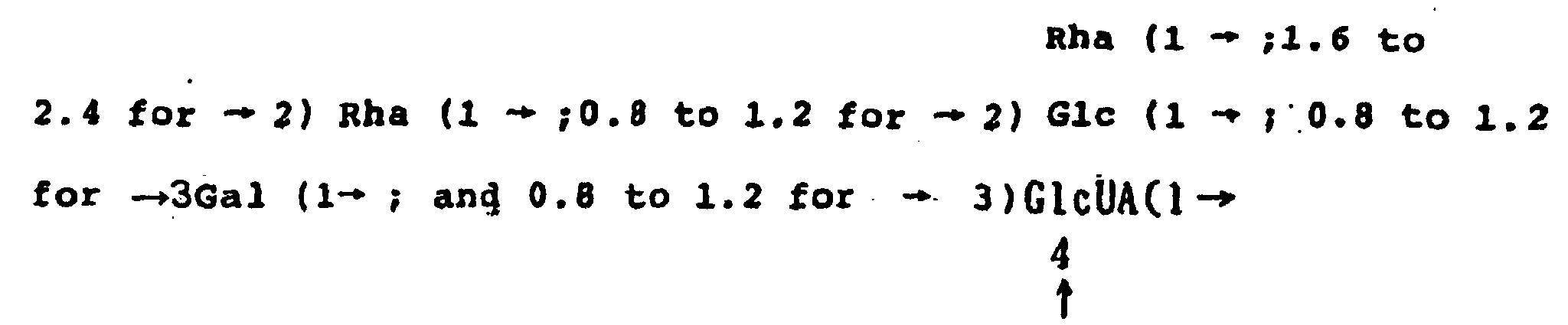
- Klebsiella oxytoca strain TNM3 and Klebsiella pneumoniae strain K19 have polysaccharides as a capsule component having the following linkage mode and constituent molar ratio. That is, the capsule component is a polysaccharide having a repeating unit represented by the following formula: wherein L-Rha is an L-rhamnose residue, D-Gal is a D-galactose residue, D-Glc is a D-glucose residue, and D-GlcUA is a D-glucuronic acid residue, and the numerical values in the small brackets indicate the positions of the glycoside linkage, and the proportions of respective monosaccharide residues constituting the polysaccharide chain in terms of moles are 0.8 to 1.2 for
- the above polysaccharide or fragments thereof produced by the treatment of the polysaccharide with an acid, a base or a reducing agent exhibit a potent inhibitory activity against IgE antibody production and response in vivo. Therefore, they are useful in the prophylaxis and treatment of type I allergy-related diseases.
- the capsular polysaccharide component is prepared by culturing the microorganism in a medium, wet sterilizing or ultrasonificating the microorganism to release the capsular component into the medium, centrifuging the culture to give a supernatant, ultrafiltering the supernatant through a membrane having a fractionation molecular weight of 1 x 10 3 such as available from Millipore.
- the polysaccharide occurs in the retainant fraction.
- the product resulting from the fragmentation of the capsule component can be obtained by treating the capsule component with an acid, a base or a reducing agent. Further, the treatment with a reducing agent can also be carried out by adding ferrous sulfate and EDTA to the medium while the microorganism is cultured.
- Klebsiella oxytoca strain TNM3 is particularly preferable in the present invention.
- Culture of microorganisms of the genus Klebsiella can be carried out generally according to the following method. That is, the medium for culture may be any medium insofar as the microorganisms of the genus Klebsiella can grow in it, and carbon and nitrogen sources, inorganic salts, and trace nutrient sources which are necessary for producing the desired capsule component are contained in it, and there is no other limitation to the medium.
- the carbon source used may be e.g. glucose, lactose, maltose, xylose, mannitol, sucrose, rhamnose, arabinose, trehalose, raffinose etc.
- the nitrogen source used may be e.g. synthetic compounds such as nitrates, ammonium salts, urea etc., natural organic matter such as polypeptone, corn steep liquor, yeast extract, meat extract, delipidated soybean extract, peptide, amino acid etc.
- the inorganic salts used may be e.g. phosphates, potassium salts, sulfates, magnesium salts etc.
- the trace nutrient sources used may be e.g. yeast extract, various vitamins etc. As necessary, calcium salts, manganese salts etc. may be added to the medium.
- the medium used may be a solid or liquid medium. If the liquid medium is used, stationary culture may be used, but shake culture or shake culture under aeration is more preferable to achieve the desired capsule component in higher yield.
- the pH of the medium during culture is not particularly limited inasmuch as the pH is suitable for growth of the microorganism and simultaneously does not prevent the target capsule component from being produced. However, the pH range of 4 to 8 is usually preferable.
- the culture temperature is not particularly limited, but usually 20 to 35°C is preferable. The period of culture is suitably determined so as to maximize the production of the target capsule component, but 1 to 7 days are usually preferable.
- the resulting culture itself can be used as an inhibitor of the production of IgE antibody after sterilization without purification. However, it is more preferable to remove the microorganism and to purify the desired capsule component.
- the removal of the microorganism can be carried out by releasing capsules from the microorganism by wet-sterilization, and subsequent centrifugation and/or filtration in a usual manner.
- the culture may be further subjected to purification procedures: that is, a water miscible organic solvent such as methanol, ethanol, isopropanol, acetone or the like is added to the culture to form precipitates which are then dissolved in water, dialyzed against water and the dialysate is dried by such means as air drying, drying in hot air, spray drying, drum drying, drying under reduced pressure, lyophilization etc.
- a water miscible organic solvent such as methanol, ethanol, isopropanol, acetone or the like
- the dialysate is dried by such means as air drying, drying in hot air, spray drying, drum drying, drying under reduced pressure, lyophilization etc.
- other methods may be carried out. For example, use can be made of ultrafiltration (e.g.
- the culture itself or the purified capsule component may be further subjected if desired to various treatments including addition of a reducing agent, acid or base hydrolysis, heating under pressure, ultrasonication etc.
- a reducing agent such as sulfuric acid, hydrochloric acid etc. or an base is added preferably under regulated conditions to the culture after culturing the microorganism or to the capsule component purified as described above.
- a reducing agent may be added to the medium to such a level as not to decrease the amount of capsule component produced in the medium.
- a combination of ferrous sulfate and/or ferrous chloride and EDTA is preferable.
- the polysaccharides as the capsule component, or fragments obtained by treatment with acid, base or reducing agent have an inhibitory activity on the production of IgE antibody, as described in the following test examples. Accordingly, these can be used as inhibitors of IgE antibody production or as agents for preventing or treating I type allergies. It was revealed that even after oral administration of 5 g/kg in an acute toxicity test on rat, the animal survived while the increase in weight of the animal was similar to that of the control animal, and further there were no abnormalities in the appearance and autopsy. Therefore, the safety of these components in oral administration is considered to be high.
- Example 1 Culture of a microorganism of the genus Klebsiella and recovery of capsule component
- Klebsiella oxytoca TNM3 (FERM BP-4669) was cultured in a liquid medium with the composition shown in Table 2 under shaking for 3 days in a test tube and then inoculated via a loop of platinum into the medium of Table 1.
- the microorganism was subjected to reciproshake culture at 28°C for 1 day with shaking at 110 strokes/min.
- the resulting culture 400 ml, was inoculated into 15 L jar fermenter containing 8 L medium with the composition shown in Table 2 sterilized in the same manner as described above, and the microorganism was cultured for 95 hours under aeration at 5 L/min. with stirring at 28°C , during which the pH in the system was maintained at 7 with aq. 5 M NaOH.
- the stirring was 200 rpm for the first 24 hours of culture, then 400 rpm until 33 hours of culture, and then 700 rpm until 95 hours of culture.
- the resulting culture was adjusted to pH 4.5 with 10 % sulfuric acid and wet-sterilized by heating at 121°C for 60 minutes to release the capsule component from the microorganism, and the majority of the microorganism was removed by centrifugation, and the supernatant was repeatedly filtered through a 0.45 ⁇ m membrane filter to remove the microorganism from it.
- the resulting filtrate was repeatedly subjected to ultrafiltration in a cross flow system until the remaining medium components were removed.
- an ultrafiltration membrane manufactured by Millipore fractionation molecular weight: 1 ⁇ 10 5
- the concentrate which did not pass through the ultrafiltration membrane was lyophilized to give 21 g extract based on the capsule polysaccharides per litter of medium.
- Example 2 F ragmentation of the capsular polysaccharides of the microorganism of the genus Klebsiella
- Example 2 The same procedure as in Example 1 was carried out until reciproshake culture. Then, the resulting culture, 400 ml, was inoculated into 10 L jar fermenter containing 6 L medium with the composition as shown in Table 3 sterilized in the same manner as in Example 1. The microorganism was cultured at 28°C for 86 hours with stirring under aeration while maintaining the pH in the system at pH 7 with 5 M aq. NaOH, where the aeration rate was 3.6 L/min. for the first 21 hours of culture and 4.8 L/min. thereafter. The stirring was 250 rpm for the first 20 hours of culture, then 500 rpm until 36 hours of culture, and then 650 rpm until 86 hours of culture.
- the resulting culture was wet-sterilized by heating at 121°C for 20 minutes, and the microorganism was removed by centrifugation. The resulting supernatant was repeatedly subjected to ultrafiltration in the cross-flow system until the remaining medium components etc. were removed.
- an ultrafiltration membrane manufactured by Millipore fractionation molecular weight: 1 ⁇ 10 5
- the concentrate which did not pass the ultrafiltration membrane was lyophilized to give 9.6 g product based on fragments from the capsular polysaccharides per litter of medium.
- Test Example 1 Measurement of inhibitory activity on the production of antigen-specific antibody
- the fragment-based product from capsule polysaccharides, obtained in Example 3, was dissolved in physiological saline and 150 ⁇ 1 of the solution was subcutaneously administered into the back of the above BDF1 mouse at a dosage of 100 mg/kg. This administration was carried out 5 times in total on the day before immunization and 3 days after immunization. The control group was given physiological saline in place of the above polysaccharide solution. Whole blood was collected 10 days later and determined for the amount of anti-TNP-IgE antibody produced in it.
- 6HD5(r) (mouse IgE antibody derived from rat, manufactured by Yamasa Co., Ltd.) was diluted at a concentration of 20 ⁇ g/ml with A1 buffer of Table 4 below and put to a 96-well plate in an amount of 50 ⁇ L/well and left at 4°C for 12 hours to be coated on it. The supernatant was removed and 250 ⁇ L of 0.2 weight-% BSA solution (bovine serum albumin) in A1 buffer was added to each well and left at 4°C for further 12 hours for blocking. The supernatant was removed, and the plate was used in the subsequent test.
- BSA solution bovine serum albumin
- the sample was diluted with 0.1 weight-% BSA solution in A2 buffer below at a concentration in such an suitable range as to enable the fluorescence measurement described below and then added in a volume of 50 ⁇ L to each well on the above plate, followed by being left at 4°C for 12 hours for reaction. The supernatant was removed, and the plate was washed twice with 0.01 weight-% BSA solution in A2 buffer. Then 50 ⁇ 1 of TNP- ⁇ -galactosidase solution at a suitable concentration (about a few ⁇ g/ml) in 0.1 weight-% in A2 buffer of Table 5 below was added to each well and the plate was allowed to react at 4 °C for 4 hours. The supernatant was removed, and the plate was washed 3 times with 0.02 vol.-% Tween 20 in A2 buffer. (A2 buffer) A1 buffer 100 ml sodium chloride 1.25 g
- the degree of inhibition of production of anti-TNP-IgE antibody was determined using the same procedure as in Test Example 1 except that the extracted capsular polysaccharides, obtained in Example 1, was used, and that whole blood was collected 9 days after immunization. The results are shown in Table 6.
- the degree of inhibition of production of anti-TNP-IgE antibody was determined using the same procedure as in Test Example 1 except that the fragmented product from capsule components, obtained in Example 2, was used, that the period of administration was from the day before immunization to 2 days after immunization, and that whole blood was collected 9 days after immunization. The results are shown in Table 6.
- the degree of inhibition of production of anti-TNP-IgE antibody was determined using the same procedure as in Test Example 1 except that the fragmented product from capsule components, obtained in Example 2, was used, that the sample or physiological saline (control) was administered 4 times in total over 1 to 4 days after immunization and that whole blood was collected 9 days after immunization. The results are shown in Table 6.
- the degree of inhibition of production of anti-TNP-IgE antibody was determined by the same procedure as in Test Example 1 except that the fragmented product from capsule components, obtained in Example 2, was dissolved in physiological saline and 150 ⁇ l of the solution was orally administered into a BDF1 mouse at a dosage of 100 mg/kg 4 times in total from the day before immunization to 3 days after immunization, and that whole blood was collected 9 days after immunization. The results are shown in Table 6.
- the degree of inhibition of production of anti-TNP-IgE antibody was determined by the same procedure as in Test Example 1 except that the fragmented product from capsular components, obtained in Example 2, was dissolved in physiological saline and 150 ⁇ l of the solution was subcutaneously administered into a BKF1 mouse at a dosage of 50 mg/kg 4 times in total from the day before immunization to 3 days after immunization, and that whole blood was collected 9 days after immunization. The results are shown in Table 6.
- the subcutaneous administration of the capsule component from the microorganism of the genus Klebsiella or its fragmented product inhibits production of anti-TNP-IgE antibody at higher degrees of inhibition.
- the inhibitory effects of these components on production of IgE antibody are similar regardless of whether administration of these components was initiated before or after immunization with the antigen.
- Serums obtained from the groups (each of 5 to 6 animals) of BDF1 mice used in Test Examples 2 and 3 were mixed in equal volumes.
- the antigenicity of these serums was examined using Passive Hemaggulutination method (tannic acid method) described on pages 125 to 126 in "Menekigaku Jikken Nyumon" (Introduction to Experiments in Immunology) published by Gakkai Shuppan Center.
- a mixture of 100 ⁇ g ovalbumin and 2 mg aluminum hydroxide as adjuvant was injected intraperitoneally into an 8-week-old male BDF1 mouse and serum from blood collected 9 days later was used.
- Example 4 Culture of the microorganism of the genus Klebsiella and recovery of capsule component
- 100 ml medium with the composition as shown in Table 8 was introduced into a 500 ml flask and wet-sterilized by heating at 121°C for 20 minutes.
- the microorganism was inoculated via a loop of platinum into the medium and subjected to reciproshake culture at 28°C for 3 days with shaking at 110 strokes/min.
- 100 ml medium with the composition as shown in Table 9 was introduced into a 500 ml flask and sterilized in the same manner as above, and 1 ml of the above culture was inoculated via a loop of platinum into the medium and subjected to reciproshake culture at 28°C for 1 day with shaking at 110 strokes/min.
- the resulting culture 300 ml, was inoculated into 15 L jar fermenter containing 8 L medium with the composition shown in Table 10 sterilized in the same manner as described above, and then cultured for 96 hours at 28 °C , where the medium was stirred at 200 rpm for the first 36 hours of culture and then at 400 rpm until 96 hours of culture. Aeration was carried out at 1.5 L/min. for the first 48 hours of culture and then at 4 L/min. until 96 hours of culture.
- the resulting culture was wet-sterilized by heating at 121°C for 20 minutes, and the microorganism was removed by centrifugation.
- the precipitates formed by the addition of acetone to the supernatant were washed with 70% aqueous acetone and then lyophilized whereby 19 g component containing fragments from capsular polysaccharides per 1 liter of medium was obtained.
- the ultrafiltration membrane manufactured by Millipore fractionation molecular weight: 1 ⁇ 10 4 .
- the concentrate which did not pass through the ultrafiltration membrane was passed through cation exchange resin, then neutralized with 1 M sodium hydroxide, passed through a 0.2 ⁇ m membrane filter, and lyophilized whereby 8.0 g purified product was obtained.
- the molecular weight was found to be 80,000 by HPLC.
- the molecular weight was found to be 15,000 by HPLC.
- An 8 week-old male mouse (BDF1, 7 to 8 animals/group) was immunized by intraperitoneal injection of 0.2 ml physiological saline containing a mixture of 7 ⁇ g of TNP-KLH and 1 mg aluminum hydroxide.
- Each of the low molecular weight products #1 and #2 obtained above was dissolved in physiological saline and 150 ⁇ l of this solution was subcutaneously administered into the back of the above BDF1 mouse at a dosage of 100 mg/kg 4 times in total from the day before immunization to 2 days after immunization.
- physiological saline was used in place of the above polysaccharide solution. 9 days later, blood was collected from the bottom of the eyes, and the degree of inhibition of production of anti-TNP-IgE antibody was determined.
- An 8 week-old male mouse (BDF1, 8 to 9 animals/group) was immunized by intraperitoneal injection of 0.2 ml physiological saline containing a mixture of 7 ⁇ g of TNP-OVA and 1 mg aluminum hydroxide.
- Example 4 The product of Example 4 was dissolved in physiological saline and 150 ⁇ 1 of this solution was subcutaneously administered into the back of the above BDF1 mouse at a dosage of 100 mg/kg 4 times in total from the day before immunization to 2 days after immunization.
- physiological saline was used in place of the above polysaccharide solution. 9 days later, blood was collected from the bottom of the eyes, and the degree of inhibition of production of anti-TNP-IgE antibody was determined.
- An 8 week-old male mouse (BDF1, 5 animals/group) was immunized by intraperitoneal injection of 0.2 ml physiological saline containing a mixture of 10 ⁇ g of TNP-KLH and 1 mg aluminum hydroxide. Further, the animal was subjected on day 21 after immunization to secondary immunization by intraperitoneal injection of 0.2 ml physiological saline containing a mixture of 3 ⁇ g of TNP-KLH and 1 mg aluminum hydroxide.
- Example 4 The product of Example 4 was dissolved in physiological saline and 150 ⁇ l of this solution was subcutaneously administered into the back of the above BDF1 mouse at a dosage of 100 mg/kg 4 times in total from the day before immunization to 2 days after immunization.
- physiological saline was used in place of the above polysaccharide solution. 9 days later, blood was collected from the bottom of the eyes, and on day 6 after secondary immunization, whole blood was collected, and the degree of inhibition of production of anti-TNP-IgE antibody was determined.
- An 8 week-old male mouse (BDF1, 8 to 9 animals/group) was immunized by intraperitoneal injection of 0.2 ml physiological saline containing a mixture of 7 ⁇ g of TNP-KLH and 1 mg aluminum hydroxide. Further, the animal was subjected on day 21 after immunization to secondary immunization by intraperitoneal injection of 0.2 ml physiological saline containing a mixture of 3 ⁇ g of TNP-KLH and 1 mg aluminum hydroxide.
- Example 4 The product of Example 4 was dissolved in physiological saline and 150 ⁇ 1 of this solution was subcutaneously administered into the back of the above BDF1 mouse at a dosage of 100 mg/kg 5 times in total from the day before secondary immunization to 3 days after secondary immunization.
- physiological saline was used in place of the above polysaccharide solution. 9 days later, blood was collected from the bottom of the eyes, and on day 6 after secondary immunization, whole blood was collected, and the degree of inhibition of production of anti-TNP-IgE antibody was determined.
Landscapes
- Health & Medical Sciences (AREA)
- Life Sciences & Earth Sciences (AREA)
- Public Health (AREA)
- Animal Behavior & Ethology (AREA)
- Veterinary Medicine (AREA)
- Chemical & Material Sciences (AREA)
- General Health & Medical Sciences (AREA)
- Pharmacology & Pharmacy (AREA)
- Medicinal Chemistry (AREA)
- Epidemiology (AREA)
- General Chemical & Material Sciences (AREA)
- Engineering & Computer Science (AREA)
- Bioinformatics & Cheminformatics (AREA)
- Chemical Kinetics & Catalysis (AREA)
- Molecular Biology (AREA)
- Organic Chemistry (AREA)
- Nuclear Medicine, Radiotherapy & Molecular Imaging (AREA)
- Immunology (AREA)
- Pulmonology (AREA)
- Medicines Containing Antibodies Or Antigens For Use As Internal Diagnostic Agents (AREA)
- Pharmaceuticals Containing Other Organic And Inorganic Compounds (AREA)
- Preparation Of Compounds By Using Micro-Organisms (AREA)
- Medicines Containing Material From Animals Or Micro-Organisms (AREA)
Abstract
Description
- This invention relates to a composition that inhibits the immunoglobulin E (IgE) antibody production and response in vivo. It also relates to the use of such composition in the prophylaxis and treatment of type I allergy-related diseases.
- EP-A 0 775 490 is concerned with immunoactivation for treating diseases such as cancer. To this end, it is tought that the polysaccharides produced by the bacteria of the genus Klebsiella have excellent immunoactivating activity.
- Allergies are classified into Types I to IV, and the type I allergy is frequently observed and brings about bronchial asthma, some urticaria, allergic rhinitis, anaphylaxis etc. Type I allergy is a biological reaction in which IgE antibody is involved, and the mechanism of this type of allergy consists of the following events: (1) production of IgE antibody by immunization of a living body with an antigen, (2) binding of the IgE antibody via IgE receptor to mast cells and basophils, (3) upon re-invasion of the antigen, it binds to the previous IgE antibody bound to the surfaces of mast cells and basophils, thereby forming cross-linkages between IgE receptors on these cells, (4) via various reactions such as inflow of Ca ion, chemical mediators such as histamine, leukotriene, eosinophil chemotactic factor of anaphylaxis (BCF-A), platelet activating factor (PAF) are released to develop the allergic symptom.
- The majority"of known anti-allergy agents are antihistamine agents or inhibitors of the release of chemical mediators. It is expected that a type of drugs whose working mechanism is based on the inhibition of the earliest step of occurrence of Type I allergy, i.e. production of IgE antibody, can be a superior drug against this type of allergies, but as such a type of drug, there is no drug with sufficient efficacy. IPD (IPD-1151T, Suplatast Tosylate) is the only anti-allergy agent having some ability to inhibit the production of IgE antibody (Bio Industry, Vol. 13, No. 12, pp. 42-50 (1996)), and this compound has extremely weak inhibitory action on the production of IgE antibody.
- It is, therefore, an object of the present invention to provide a composition which inhibits the IgE antibody production and response and which is more potent than known agents or compositions in the anti-IgE antibody production inhibitory activity.
- According to the present invention, the above and other objects may be accomplished by proving a composition for inhibiting the IgE antibody production and response comprising a capsule component of Klebsiella oxytoca or Klebsiella pneumoniae, a fragment thereof produced by the treatment of said capsule component with an acid, a base or a reducing agent.
- Thus, the present invention relates to the use of a composition comprising a capsule component of a microorganism selected from the group consisting of Klebsiella oxytoca and Klebsiella pneumoniae, or a fragment thereof produced by the treatment of said capsule component with an acid, a base or a reducing agent, for preparing a pharmaceutical composition for prophylaxis or treatment of type I allergy-related diseases.
- According to a particular embodiment, the type I allergy-related disease is bronchial asthma, urticaria, allergic rhinitis or anaphylaxis, especially in a mammal.
- Particularly preferable Klebsiella oxytoca is Klebsiella oxytoca strain TNM3 (FERM BP-4669, deposited with the National Institute of Bioscience Human-Technology, Agency of Industrial Science and Technology, the Ministry of International Trade and Industry, Japan) or mutants thereof. Particularly preferable Klebsiella pneumoniae is Klebsiella pneumoniae strain K19 (Michel Beurret et al.," Structural investigation of the capsular polysaccharide from Klebsiella K19 by chemical and N.M.R. analyses", Carbohydrate Research, 157:13-25 (1986)) or mutants thereof.
- These mutants can be generated by known mutagenesis means including exposure of Klebsiella oxytoca strain TNM3 or Klebsiella pneumoniae strain K19 to radiation such as ultraviolet light, X-ray etc. or contacting it with chemical mutagens such as ethyl methane sulfonate (EMS), N-methyl-N'-nitro-N-nitrosoguanidine (MNNG) etc.
- The presence or absence and the degree of inhibitory activity on IgE antibody production, of the capsule component of these microorganisms or a fragment thereof obtainable by treating the capsule component with acid, base or a reducing agent, can be easily measured in the methods described below.
- Klebsiella oxytoca strain TNM3 and Klebsiella pneumoniae strain K19 have polysaccharides as a capsule component having the following linkage mode and constituent molar ratio. That is, the capsule component is a polysaccharide having a repeating unit represented by the following formula:wherein L-Rha is an L-rhamnose residue, D-Gal is a D-galactose residue, D-Glc is a D-glucose residue, and D-GlcUA is a D-glucuronic acid residue, and the numerical values in the small brackets indicate the positions of the glycoside linkage, and the proportions of respective monosaccharide residues constituting the polysaccharide chain in terms of moles are 0.8 to 1.2 for

- The above polysaccharide or fragments thereof produced by the treatment of the polysaccharide with an acid, a base or a reducing agent exhibit a potent inhibitory activity against IgE antibody production and response in vivo. Therefore, they are useful in the prophylaxis and treatment of type I allergy-related diseases.
- The capsular polysaccharide component is prepared by culturing the microorganism in a medium, wet sterilizing or ultrasonificating the microorganism to release the capsular component into the medium, centrifuging the culture to give a supernatant, ultrafiltering the supernatant through a membrane having a fractionation molecular weight of 1 x 10³ such as available from Millipore. The polysaccharide occurs in the retainant fraction.
- The product resulting from the fragmentation of the capsule component can be obtained by treating the capsule component with an acid, a base or a reducing agent. Further, the treatment with a reducing agent can also be carried out by adding ferrous sulfate and EDTA to the medium while the microorganism is cultured.
- Klebsiella oxytoca strain TNM3 is particularly preferable in the present invention. Culture of microorganisms of the genus Klebsiella can be carried out generally according to the following method. That is, the medium for culture may be any medium insofar as the microorganisms of the genus Klebsiella can grow in it, and carbon and nitrogen sources, inorganic salts, and trace nutrient sources which are necessary for producing the desired capsule component are contained in it, and there is no other limitation to the medium.
- The carbon source used may be e.g. glucose, lactose, maltose, xylose, mannitol, sucrose, rhamnose, arabinose, trehalose, raffinose etc. The nitrogen source used may be e.g. synthetic compounds such as nitrates, ammonium salts, urea etc., natural organic matter such as polypeptone, corn steep liquor, yeast extract, meat extract, delipidated soybean extract, peptide, amino acid etc. The inorganic salts used may be e.g. phosphates, potassium salts, sulfates, magnesium salts etc. The trace nutrient sources used may be e.g. yeast extract, various vitamins etc. As necessary, calcium salts, manganese salts etc. may be added to the medium.
- The medium used may be a solid or liquid medium. If the liquid medium is used, stationary culture may be used, but shake culture or shake culture under aeration is more preferable to achieve the desired capsule component in higher yield. The pH of the medium during culture is not particularly limited inasmuch as the pH is suitable for growth of the microorganism and simultaneously does not prevent the target capsule component from being produced. However, the pH range of 4 to 8 is usually preferable. The culture temperature is not particularly limited, but usually 20 to 35°C is preferable. The period of culture is suitably determined so as to maximize the production of the target capsule component, but 1 to 7 days are usually preferable.
- The resulting culture itself can be used as an inhibitor of the production of IgE antibody after sterilization without purification. However, it is more preferable to remove the microorganism and to purify the desired capsule component. The removal of the microorganism can be carried out by releasing capsules from the microorganism by wet-sterilization, and subsequent centrifugation and/or filtration in a usual manner. After removal of the microorganism, the culture may be further subjected to purification procedures: that is, a water miscible organic solvent such as methanol, ethanol, isopropanol, acetone or the like is added to the culture to form precipitates which are then dissolved in water, dialyzed against water and the dialysate is dried by such means as air drying, drying in hot air, spray drying, drum drying, drying under reduced pressure, lyophilization etc. For purification, other methods may be carried out. For example, use can be made of ultrafiltration (e.g. a membrane with a cut off molecular weight of 1× 10³, manufacture by Millipore can be used for concentration) followed by drying the resulting concentrate, and as necessary, various kinds of column chromatography, such as ion exchange, gel filtration, and affinity and precipitation or salting-out with quaternary ammonium salts, precipitation with organic solvent etc. are also used.
- The culture itself or the purified capsule component may be further subjected if desired to various treatments including addition of a reducing agent, acid or base hydrolysis, heating under pressure, ultrasonication etc. For acid or base hydrolysis, an acid such as sulfuric acid, hydrochloric acid etc. or an base is added preferably under regulated conditions to the culture after culturing the microorganism or to the capsule component purified as described above.
- For culture, a reducing agent may be added to the medium to such a level as not to decrease the amount of capsule component produced in the medium. As the reducing agent, a combination of ferrous sulfate and/or ferrous chloride and EDTA is preferable.
- The polysaccharides as the capsule component, or fragments obtained by treatment with acid, base or reducing agent, have an inhibitory activity on the production of IgE antibody, as described in the following test examples. Accordingly, these can be used as inhibitors of IgE antibody production or as agents for preventing or treating I type allergies. It was revealed that even after oral administration of 5 g/kg in an acute toxicity test on rat, the animal survived while the increase in weight of the animal was similar to that of the control animal, and further there were no abnormalities in the appearance and autopsy. Therefore, the safety of these components in oral administration is considered to be high.
- Hereinafter, the present invention is described in more detail by reference to several typical examples and test examples, which however are not intended to limit the scope of the present invention.
- 100 ml medium with the composition as shown in Table 1 was introduced into a 500 ml flask and wet-sterilized for 20 minutes by heating at 121°C . Klebsiella oxytoca TNM3 (FERM BP-4669) was cultured in a liquid medium with the composition shown in Table 2 under shaking for 3 days in a test tube and then inoculated via a loop of platinum into the medium of Table 1. The microorganism was subjected to reciproshake culture at 28°C for 1 day with shaking at 110 strokes/min.
(Medium Composition (weight-%)) glucose 2 % polypeptone 0.1 % potassium monohydrogen phosphate 0.15 % magnesium sulfate, 7H2O 0.05 % vitamin B1 0.0005 % biotin 0.000006 % calcium pantothenate 0.001 % nicotinamide 0.0005 % pH 6.5 (Medium Composition (weight-%)) glucose 4 % polypeptone 0.1 % potassium monohydrogen phosphate 0.15 % magnesium sulfate, 7H2O 0.05 % vitamin B1 0.0005 % biotin 0.000006 % calcium pantothenate 0.001 % nicotinamide 0.0005 % pH 7 - The resulting culture, 400 ml, was inoculated into 15 L jar fermenter containing 8 L medium with the composition shown in Table 2 sterilized in the same manner as described above, and the microorganism was cultured for 95 hours under aeration at 5 L/min. with stirring at 28°C , during which the pH in the system was maintained at 7 with aq. 5 M NaOH.
- The stirring was 200 rpm for the first 24 hours of culture, then 400 rpm until 33 hours of culture, and then 700 rpm until 95 hours of culture.
- The resulting culture was adjusted to pH 4.5 with 10 % sulfuric acid and wet-sterilized by heating at 121°C for 60 minutes to release the capsule component from the microorganism, and the majority of the microorganism was removed by centrifugation, and the supernatant was repeatedly filtered through a 0.45µ m membrane filter to remove the microorganism from it. The resulting filtrate was repeatedly subjected to ultrafiltration in a cross flow system until the remaining medium components were removed. For the ultrafiltration, an ultrafiltration membrane manufactured by Millipore (fractionation molecular weight: 1 × 10⁵) was used. The concentrate which did not pass through the ultrafiltration membrane was lyophilized to give 21 g extract based on the capsule polysaccharides per litter of medium.
- 10 g of the capsule component obtained in the same manner as in Example 1 was dissolved in a buffer adjusted to pH 4.5, then subjected to gentle acid-hydrolysis at 121'C for 25 minutes, adjusted to pH 12.5 with 10 M sodium hydroxide, left at room temperature for 5 hours, and subjected to ultrafiltration in the cross-flow system (ultrafiltration membrane with a fractionation molecular weight of 1× 10⁵, manufactured by Millipore) repeatedly until the decomposed products were removed. The concentrate was desalted through cation exchange resin and adjusted to pH 6.8 with sodium hydroxide and lyophilized to give about 7 g product resulting from fragmentation of the capsule component.
- The same procedure as in Example 1 was carried out until reciproshake culture. Then, the resulting culture, 400 ml, was inoculated into 10 L jar fermenter containing 6 L medium with the composition as shown in Table 3 sterilized in the same manner as in Example 1. The microorganism was cultured at 28°C for 86 hours with stirring under aeration while maintaining the pH in the system at pH 7 with 5 M aq. NaOH, where the aeration rate was 3.6 L/min. for the first 21 hours of culture and 4.8 L/min. thereafter. The stirring was 250 rpm for the first 20 hours of culture, then 500 rpm until 36 hours of culture, and then 650 rpm until 86 hours of culture.
(Medium Composition (weight-%)) glucose 2 % ammonium sulfate 0.06 % potassium monohydrogen phosphate 0.15 % magnesium sulfate, 7H2O 0.05 % ferrous sulfate, 7H2O 0.003 % EDTA 2Na, 2H2O 0.01 % vitamin B1 0.0005 % biotin 0.000006 % calcium pantothenate 0.001 % nicotinamide 0.0005 % pH 7 - The resulting culture was wet-sterilized by heating at 121°C for 20 minutes, and the microorganism was removed by centrifugation. The resulting supernatant was repeatedly subjected to ultrafiltration in the cross-flow system until the remaining medium components etc. were removed. For the ultrafiltration, an ultrafiltration membrane manufactured by Millipore (fractionation molecular weight: 1 × 10⁵) was used. The concentrate which did not pass the ultrafiltration membrane was lyophilized to give 9.6 g product based on fragments from the capsular polysaccharides per litter of medium.
- Each product obtained in the Examples above was dissolved in water at a concentration of 1 weight-%, and cation exchange resin was added to the resulting aqueous solution to convert counter ions in acid groups contained in the culture into hydrogen ions and then removed, and the filtrate was neutralized with sodium hydroxide to replace the counter ions by sodium ions. Thereafter, it was filtered through a membrane filter of 0.2µ m in pore size and then lyophilized. Each of the test samples was subjected to the following experiments.
- An 8 week-old male mouse (BDF1, 5 to 6 animals/group) was immunized by intraperitoneal injection of 0.2 ml physiological saline containing a mixture of 2 mg aluminum hydroxide as adjuvant and 10 µ g TNP-KLH as antigen prepared by reacting keyhole limpet hemocyanin with trinitrophenol.
- The fragment-based product from capsule polysaccharides, obtained in Example 3, was dissolved in physiological saline and 150µ 1 of the solution was subcutaneously administered into the back of the above BDF1 mouse at a dosage of 100 mg/kg. This administration was carried out 5 times in total on the day before immunization and 3 days after immunization. The control group was given physiological saline in place of the above polysaccharide solution. Whole blood was collected 10 days later and determined for the amount of anti-TNP-IgE antibody produced in it.
- The determination of the amount of produced anti-TNP-IgE antibody was carried out according to the ELISA method reported by Ohomori, H., Immunol. Lett., 23: 251-256 (1990) , as follows.
- 6HD5(r) (mouse IgE antibody derived from rat, manufactured by Yamasa Co., Ltd.) was diluted at a concentration of 20µ g/ml with A1 buffer of Table 4 below and put to a 96-well plate in an amount of 50 µ L/well and left at 4°C for 12 hours to be coated on it. The supernatant was removed and 250µ L of 0.2 weight-% BSA solution (bovine serum albumin) in A1 buffer was added to each well and left at 4°C for further 12 hours for blocking. The supernatant was removed, and the plate was used in the subsequent test.
(A1 buffer) disodium phosphate, 12H2O 2.1 g monosodium phosphate, 2H2O 0.59 g sodium azide 0.96 g magnesium chloride, 6H2O 0.195 g sodium chloride 5.6 g distilled water 960 ml - The sample was diluted with 0.1 weight-% BSA solution in A2 buffer below at a concentration in such an suitable range as to enable the fluorescence measurement described below and then added in a volume of 50µ L to each well on the above plate, followed by being left at 4°C for 12 hours for reaction. The supernatant was removed, and the plate was washed twice with 0.01 weight-% BSA solution in A2 buffer. Then 50µ 1 of TNP-β -galactosidase solution at a suitable concentration (about a few µ g/ml) in 0.1 weight-% in A2 buffer of Table 5 below was added to each well and the plate was allowed to react at 4 °C for 4 hours. The supernatant was removed, and the plate was washed 3 times with 0.02 vol.-% Tween 20 in A2 buffer.
(A2 buffer) A1 buffer 100 ml sodium chloride 1.25 g - To each well was added 100 µ l solution prepared by diluting a stock solution of 10 mg/ml of 4-MUG (methylumbelliferyl- β -D-galactoside) in DMF (diemthylformamide) 100-fold with 0.1 weight-% BSA solution in A1 buffer. After reaction at 37°C for 45 minutes, the reaction was terminated by adding 100µ l of 0.1 M glycine buffer, pH 10.3 and then its fluorescence measurement (excitation wavelength of 365 nm, fluorescent wavelength 450 nm) was carried out.
- All procedures described above were carried out under cooling on ice unless otherwise specified.
- To prepare a calibration curve, the same operation was carried out using anti-TNP-IgE antibody at known concentrations.
- The degree of inhibition of production of IgE antibody was calculated using the following equation. The results are shown in Table 6.
- The degree of inhibition of production of anti-TNP-IgE antibody was determined using the same procedure as in Test Example 1 except that the extracted capsular polysaccharides, obtained in Example 1, was used, and that whole blood was collected 9 days after immunization. The results are shown in Table 6.
- The degree of inhibition of production of anti-TNP-IgE antibody was determined using the same procedure as in Test Example 1 except that the fragmented product from capsule components, obtained in Example 2, was used, that the period of administration was from the day before immunization to 2 days after immunization, and that whole blood was collected 9 days after immunization. The results are shown in Table 6.
- The degree of inhibition of production of anti-TNP-IgE antibody was determined using the same procedure as in Test Example 1 except that the fragmented product from capsule components, obtained in Example 2, was used, that the sample or physiological saline (control) was administered 4 times in total over 1 to 4 days after immunization and that whole blood was collected 9 days after immunization. The results are shown in Table 6.
- The degree of inhibition of production of anti-TNP-IgE antibody was determined by the same procedure as in Test Example 1 except that the fragmented product from capsule components, obtained in Example 2, was dissolved in physiological saline and 150µ l of the solution was orally administered into a BDF1 mouse at a dosage of 100 mg/kg 4 times in total from the day before immunization to 3 days after immunization, and that whole blood was collected 9 days after immunization. The results are shown in Table 6.
- The degree of inhibition of production of anti-TNP-IgE antibody was determined by the same procedure as in Test Example 1 except that the fragmented product from capsular components, obtained in Example 2, was dissolved in physiological saline and 150µ l of the solution was subcutaneously administered into a BKF1 mouse at a dosage of 50 mg/kg 4 times in total from the day before immunization to 3 days after immunization, and that whole blood was collected 9 days after immunization. The results are shown in Table 6.
- The average amounts (µ g/ml) of anti-TNP-IgE antibody and percents inhibition of production of the antibody, as determined for the test samples and the control in Test Examples 1 to 6, are summarized in Table 6 below.

- As shown in the results of Test Examples 1 to 4, the subcutaneous administration of the capsule component from the microorganism of the genus Klebsiella or its fragmented product inhibits production of anti-TNP-IgE antibody at higher degrees of inhibition. As can be seen from Test Examples 1 to Test Example 4, the inhibitory effects of these components on production of IgE antibody are similar regardless of whether administration of these components was initiated before or after immunization with the antigen.
- This indicates that the use of these components as an inhibitor of production of IgE antibody is extremely advantageous. Further, as shown in the result of Test Example 5, the inhibitory effect on production of IgE antibody has been achieved even by oral administration. This indicates that these components, even in the form of an oral agent, can be used as an inhibitor of production of IgE antibody, and thus as an agent for preventing or treating I type allergies.
- Serums obtained from the groups (each of 5 to 6 animals) of BDF1 mice used in Test Examples 2 and 3 were mixed in equal volumes. The antigenicity of these serums was examined using Passive Hemaggulutination method (tannic acid method) described on pages 125 to 126 in "Menekigaku Jikken Nyumon" (Introduction to Experiments in Immunology) published by Gakkai Shuppan Center. As the positive control, a mixture of 100 µ g ovalbumin and 2 mg aluminum hydroxide as adjuvant was injected intraperitoneally into an 8-week-old male BDF1 mouse and serum from blood collected 9 days later was used. As the negative control, phosphate buffered saline was used in place of ovalbumin, and serum was obtained in the same operation. The results are shown in the following table.
Intact serum 1/2-fold dilution 1/4-fold dilution Negative control - - - Positive control + + + Serum from Test Example 2 - - - Serum from Test Example 3 - - - - As shown in Table 7, no antigenicity was observed in the capsule component of the microorganism of the genus Klebsiella or in its fragmented product. Accordingly, inhibitor of production of IgE antibody of this invention is considered to be highly safe in this respect too.
- 100 ml medium with the composition as shown in Table 8 was introduced into a 500 ml flask and wet-sterilized by heating at 121°C for 20 minutes. The microorganism was inoculated via a loop of platinum into the medium and subjected to reciproshake culture at 28°C for 3 days with shaking at 110 strokes/min. 100 ml medium with the composition as shown in Table 9 was introduced into a 500 ml flask and sterilized in the same manner as above, and 1 ml of the above culture was inoculated via a loop of platinum into the medium and subjected to reciproshake culture at 28°C for 1 day with shaking at 110 strokes/min.
- The resulting culture, 300 ml, was inoculated into 15 L jar fermenter containing 8 L medium with the composition shown in Table 10 sterilized in the same manner as described above, and then cultured for 96 hours at 28 °C , where the medium was stirred at 200 rpm for the first 36 hours of culture and then at 400 rpm until 96 hours of culture. Aeration was carried out at 1.5 L/min. for the first 48 hours of culture and then at 4 L/min. until 96 hours of culture.
Medium Composition (weight-%) glucose 2 % polypeptone 0.1 % potassium monohydrogen phosphate 0.1 % magnesium sulfate, 7H2O 0.05 % vitamin B1 0.0005 % biotin 0.000006 % calcium pantothenate 0.001 % nicotinamide 0.0005 % calcium carbonate 1.0 % pH 7 Medium Composition (weight-%) glucose 2 % polypeptone 0.15 % potassium monohydrogen phosphate 0.15 % magnesium sulfate, 7H2 O 0.05 % vitamin B1 0.0005 % biotin 0.000006 % calcium pantothenate 0.001 % nicotinamide 0.0005 % pH 7 Medium Composition (weight-%) glucose 4 % polypeptone 0.2 % potassium monohydrogen phosphate 0.15 % magnesium sulfate, 7H2O 0.05 % ferrous sulfate, 7H2O 0.003 % EDTA 2Na, 2H2O 0.1 % vitamin B1 0.0005 % biotin 0.000006 % calcium pantothenate 0.001 % nicotinamide 0.0005 % calcium carbonate 1.5 % pH 7 - The resulting culture was wet-sterilized by heating at 121°C for 20 minutes, and the microorganism was removed by centrifugation. The precipitates formed by the addition of acetone to the supernatant were washed with 70% aqueous acetone and then lyophilized whereby 19 g component containing fragments from capsular polysaccharides per 1 liter of medium was obtained.
- For purification, 20 g of the resulting component was dissolved in 500 ml of 0.1 M citrate buffer, pH 4.5 and heated at 121 °C for 10 minutes under wet conditions and the insolubles were removed by centrifugation. The supernatant was passed through a 0.45µ m membrane filter and the filtrate was subjected repeatedly to ultrafiltration in the cross flow system until low molecular components etc. were removed. For the ultrafiltration, an ultrafiltration membrane manufactured by Millipore (fractionation molecular weight: 1× 10⁴) was used.
- Sodium hydroxide was added at a concentration of 0.01 M to the concentrate which did not pass through the ultrafiltration membrane and then stirred at room temperature for 6 hours. The supernatant from which insoluble components were removed by centrifugation was subjected to ultrafiltration in the cross flow system repeatedly until low molecular components etc. were removed.
- For the ultrafiltration, the ultrafiltration membrane manufactured by Millipore (fractionation molecular weight: 1 × 10⁴) was used. The concentrate which did not pass through the ultrafiltration membrane was passed through cation exchange resin, then neutralized with 1 M sodium hydroxide, passed through a 0.2µ m membrane filter, and lyophilized whereby 8.0 g purified product was obtained.
- 2 g of the product of Example 4 containing fragments from capsular polysaccharides was dissolved in 400 ml distilled water, and 0.04 g EDTA-2 Na and 0.04 g ferrous sulfate 7H2O were added to it under vigorous stirring. 5 minutes later, the solution was adjusted to pH 1.5 with 5 M aq. HCl, then introduced into a dialysis membrane tube with a fractionation molecular weight of 10,000 and dialyzed until low molecular components were completely removed, and the dialysate was neutralized with 1 M aqueous sodium hydroxide and lyophilized.
- The molecular weight was found to be 80,000 by HPLC.
- 2 g of the product of Example 4 containing fragments from capsular polysaccharides was dissolved in 400 ml distilled water, and 0.8 g EDTA-2 Na and 0.8 g ferrous sulfate 7H2O were added to it under vigorous stirring. 30 minutes later, 0.8 g EDTA-2 Na and 0.8 g ferrous sulfate 7H2O were further added to it under vigorous stirring. The solution was adjusted to pH 1.5 with 5 M aq. HCl, then introduced into a dialysis membrane tube with a fractionation molecular weight of 10,000 and dialyzed until low molecular components were completely removed, and the dialysate was neutralized with 1 M aqueous sodium hydroxide and lyophilized.
- The molecular weight was found to be 15,000 by HPLC.
- An 8 week-old male mouse (BDF1, 7 to 8 animals/group) was immunized by intraperitoneal injection of 0.2 ml physiological saline containing a mixture of 7µ g of TNP-KLH and 1 mg aluminum hydroxide.
- Each of the low molecular weight products #1 and #2 obtained above was dissolved in physiological saline and 150µ l of this solution was subcutaneously administered into the back of the above BDF1 mouse at a dosage of 100 mg/kg 4 times in total from the day before immunization to 2 days after immunization. For the control group, physiological saline was used in place of the above polysaccharide solution. 9 days later, blood was collected from the bottom of the eyes, and the degree of inhibition of production of anti-TNP-IgE antibody was determined.
- The average amounts (µ g/ml) of anti-TNP-IgE antibody produced and the degree of inhibition of production of the antibody, as determined for the samples and the control, are shown in the following Table 11.

- An 8 week-old male mouse (BDF1, 8 to 9 animals/group) was immunized by intraperitoneal injection of 0.2 ml physiological saline containing a mixture of 7 µ g of TNP-OVA and 1 mg aluminum hydroxide.
- The product of Example 4 was dissolved in physiological saline and 150µ 1 of this solution was subcutaneously administered into the back of the above BDF1 mouse at a dosage of 100 mg/kg 4 times in total from the day before immunization to 2 days after immunization. For the control group, physiological saline was used in place of the above polysaccharide solution. 9 days later, blood was collected from the bottom of the eyes, and the degree of inhibition of production of anti-TNP-IgE antibody was determined.
- The average amounts (ng/ml) of anti-TNP-IgE antibody produced and the degree of inhibition of production of the antibody, as determined for the sample and the control, are shown in the following Table 12.
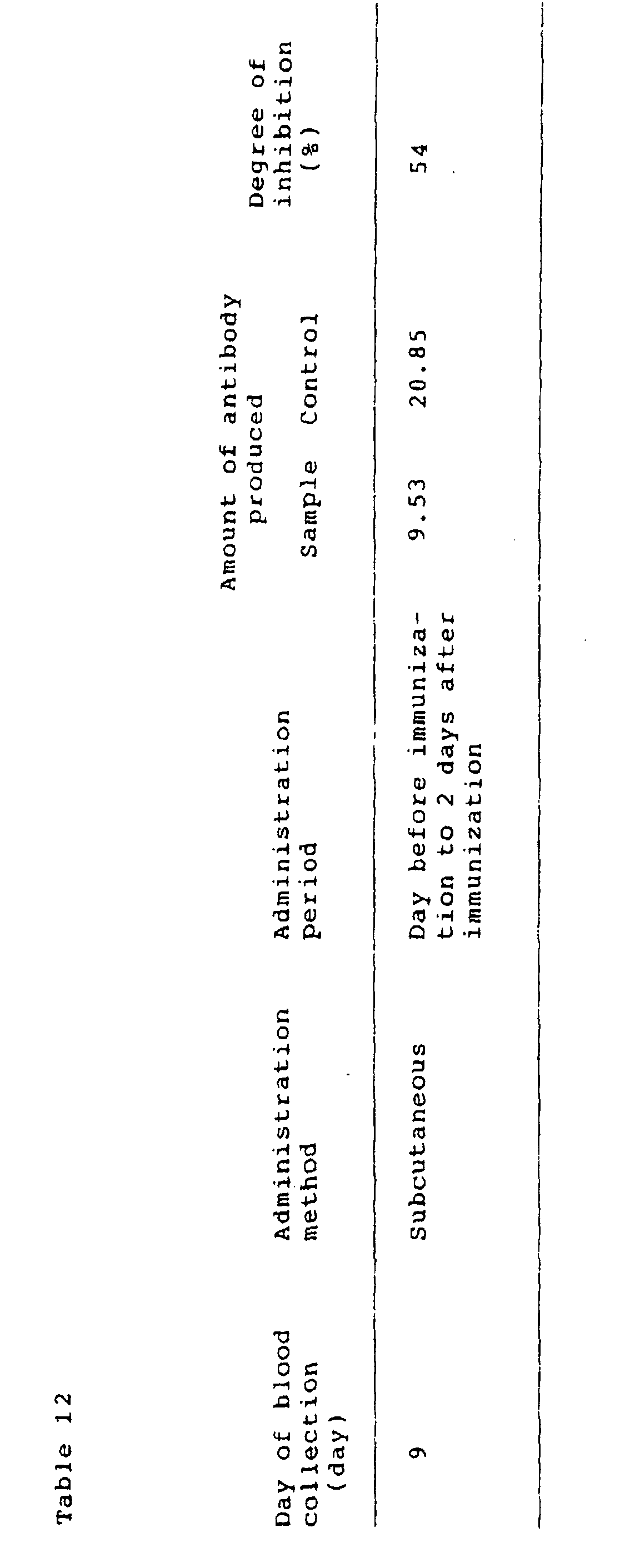
- An 8 week-old male mouse (BDF1, 5 animals/group) was immunized by intraperitoneal injection of 0.2 ml physiological saline containing a mixture of 10 µ g of TNP-KLH and 1 mg aluminum hydroxide. Further, the animal was subjected on day 21 after immunization to secondary immunization by intraperitoneal injection of 0.2 ml physiological saline containing a mixture of 3 µ g of TNP-KLH and 1 mg aluminum hydroxide.
- The product of Example 4 was dissolved in physiological saline and 150µ l of this solution was subcutaneously administered into the back of the above BDF1 mouse at a dosage of 100 mg/kg 4 times in total from the day before immunization to 2 days after immunization. For the control group, physiological saline was used in place of the above polysaccharide solution. 9 days later, blood was collected from the bottom of the eyes, and on day 6 after secondary immunization, whole blood was collected, and the degree of inhibition of production of anti-TNP-IgE antibody was determined.
- The average amounts (µ g/ml) of anti-TNP-IgE antibody produced and the degree of inhibition of production of the antibody, as determined for the sample and the control, are shown in the following Table 13.

- An 8 week-old male mouse (BDF1, 8 to 9 animals/group) was immunized by intraperitoneal injection of 0.2 ml physiological saline containing a mixture of 7 µ g of TNP-KLH and 1 mg aluminum hydroxide. Further, the animal was subjected on day 21 after immunization to secondary immunization by intraperitoneal injection of 0.2 ml physiological saline containing a mixture of 3µ g of TNP-KLH and 1 mg aluminum hydroxide.
- The product of Example 4 was dissolved in physiological saline and 150µ 1 of this solution was subcutaneously administered into the back of the above BDF1 mouse at a dosage of 100 mg/kg 5 times in total from the day before secondary immunization to 3 days after secondary immunization. For the control group, physiological saline was used in place of the above polysaccharide solution. 9 days later, blood was collected from the bottom of the eyes, and on day 6 after secondary immunization, whole blood was collected, and the degree of inhibition of production of anti-TNP-IgE antibody was determined.
- The average amounts (µ g/ml) of anti-TNP-IgE antibody produced and the degree of inhibition of production of the antibody, as determined for the sample and the control, are shown in the following Table 14.
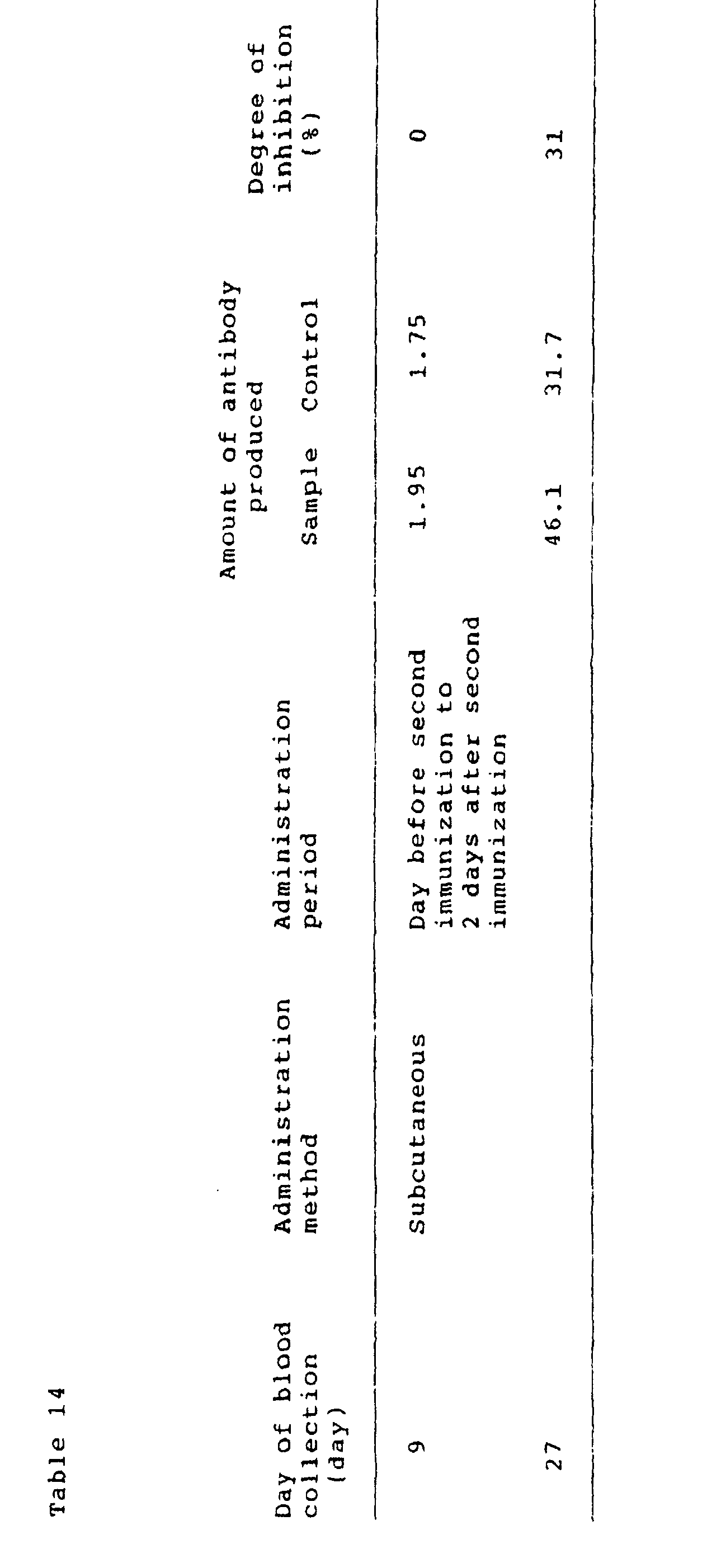
Claims (8)
- Use of a composition comprising a capsule component of a microorganism selected from the group consisting of Klebsiella oxytoca and Klebsiella pneumoniae, or a fragment thereof produced by the treatment of said capsule component with an acid, a base or a reducing agent, for preparing a pharmaceutical composition for prophylaxis or treatment of type I allergy-related diseases.
- The use of claim 1, wherein the disease is bronchial asthma, urticaria, allergic rhinitis, anaphylaxis.
- The use of claim 1 for prophylaxis or treatment of the type I allergy in a mammal.
- The use of any one of the preceding claims, wherein said microorganism is Klebsiella oxytoca TNM3 FERM BP-4669.
- The use of any one of the preceding claims, wherein said capsule component is a polysaccharide having a repeating unit of the formula:wherein L-Rha is an L-rhamnose residue, D-Gal is a D-galactose residue, D-Glc is a D-glucose residue, and D-GlcUA is a D-glucuronic acid residue, and the numerals in the small brackets indicate the positions of the glycoside linkages, said repeating unit being composed of the respective monosaccharide residues in molar proportions of 0.8 to 1.2 for

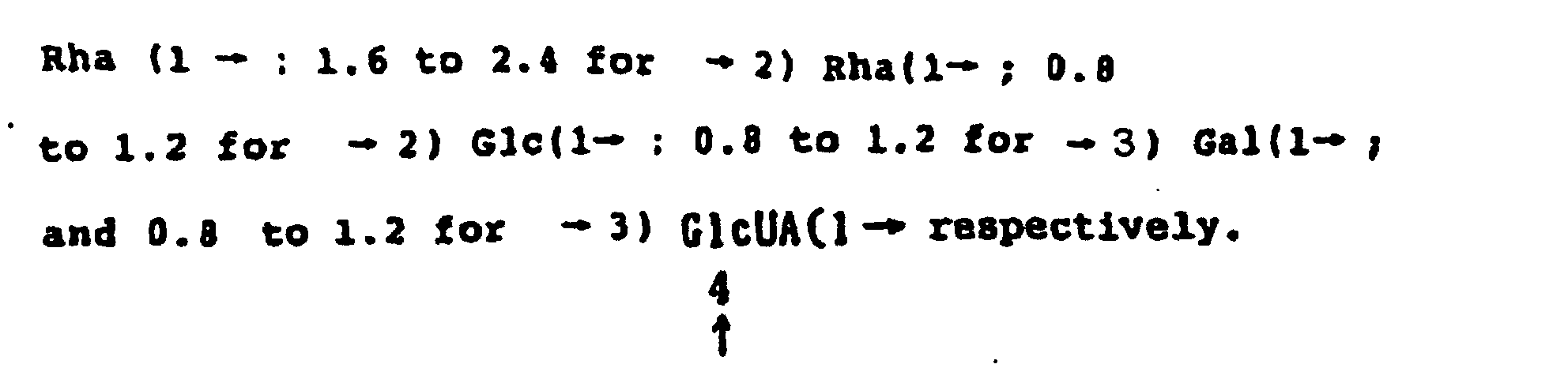
- The use of any one of the preceding claims, wherein the pharmaceutical composition is suitable for parenteral administration.
- The use of any one of the claims 1 to 5, wherein the pharmaceutical composition is suitable for oral administration.
- A composition comprising a capsule component of a microorganism selected from the group consisting of Klebsiella oxytoca and Klebsiella pneumoniae, or a fragment thereof produced by the treatment of said capsule component with an acid, a base or a reducing agent, wherein said capsule component is a polysaccharide having a repeating unit of the formula:wherein L-Rha is an L-rhamnose residue, D-Gal is a D-galactose residue, D-Glc is a D-glucose residue, and D-GlcUA is a D-glucuronic acid residue, and the numerals in the small brackets indicate the positions of the glycoside linkages, said repeating unit being composed of the respective monosaccharide residues in molar proportions of 0.8 to 1.2 for

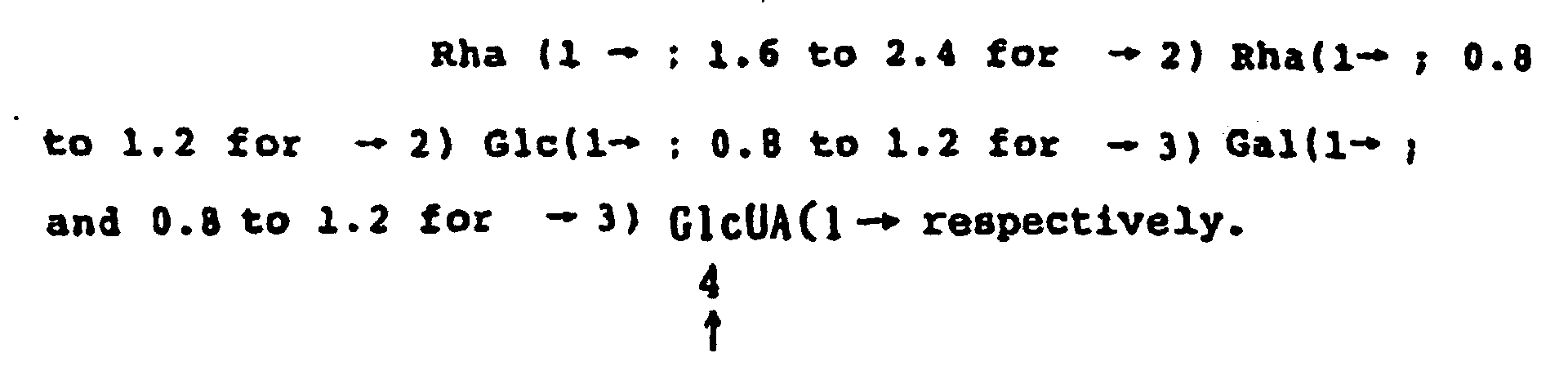
Applications Claiming Priority (4)
| Application Number | Priority Date | Filing Date | Title |
|---|---|---|---|
| JP9013125A JPH10194979A (en) | 1997-01-07 | 1997-01-07 | Immunoglobulin E antibody production inhibitor |
| JP1312597 | 1997-01-07 | ||
| JP13125/97 | 1997-01-07 | ||
| PCT/JP1998/000029 WO1998030224A1 (en) | 1997-01-07 | 1998-01-05 | Inhibitor of immunoglobulin e antibody production |
Publications (2)
| Publication Number | Publication Date |
|---|---|
| EP0894001A1 EP0894001A1 (en) | 1999-02-03 |
| EP0894001B1 true EP0894001B1 (en) | 2002-12-11 |
Family
ID=11824450
Family Applications (1)
| Application Number | Title | Priority Date | Filing Date |
|---|---|---|---|
| EP98900051A Expired - Lifetime EP0894001B1 (en) | 1997-01-07 | 1998-01-05 | Inhibitor of immunoglobulin e antibody production for the treatment of type i allergy-related diseases |
Country Status (6)
| Country | Link |
|---|---|
| US (1) | US6423320B1 (en) |
| EP (1) | EP0894001B1 (en) |
| JP (1) | JPH10194979A (en) |
| AT (1) | ATE229339T1 (en) |
| DE (1) | DE69810024T2 (en) |
| WO (1) | WO1998030224A1 (en) |
Families Citing this family (7)
| Publication number | Priority date | Publication date | Assignee | Title |
|---|---|---|---|---|
| AU2002364255A1 (en) | 2001-12-24 | 2003-07-15 | Digimarc Id Systems, Llc | Covert variable information on id documents and methods of making same |
| WO2003088144A2 (en) | 2002-04-09 | 2003-10-23 | Digimarc Id Systems, Llc | Image processing techniques for printing identification cards and documents |
| US20100111927A1 (en) * | 2002-08-23 | 2010-05-06 | Sunyoung Kim | Compositions Comprising Actinidia and Methods of Use Thereof |
| KR100615389B1 (en) * | 2002-08-23 | 2006-08-25 | (주)헬릭서 | Health food comprising the extract of Actinidia arguta and related species for the prevention and improvement of allergic disease and non-allergic inflammatory disease |
| US20080175888A1 (en) * | 2005-02-25 | 2008-07-24 | Julie Lindemann | Combination Therapy Comprising Actinidia and Steroids and Uses Thereof |
| JP5737646B2 (en) * | 2010-03-24 | 2015-06-17 | 森下仁丹株式会社 | Antiallergic agent |
| US10688169B2 (en) | 2015-03-27 | 2020-06-23 | MAX-PLANCK-Gesellschaft zur Förderung der Wissenschaften e.V. | Vaccines against carbapenem-resistant Klebsiella pneumoniae |
Citations (1)
| Publication number | Priority date | Publication date | Assignee | Title |
|---|---|---|---|---|
| EP0775490A1 (en) * | 1995-06-05 | 1997-05-28 | Tayca Corporation | Immunopotentiator |
Family Cites Families (8)
| Publication number | Priority date | Publication date | Assignee | Title |
|---|---|---|---|---|
| US4870053A (en) * | 1980-09-19 | 1989-09-26 | Roussel Uclaf | Novel compositions and processes |
| US4755381A (en) * | 1986-03-27 | 1988-07-05 | Swiss Serum And Vaccine Institute Berne | Klebsiella capsular polysaccharide vaccine |
| DE3683844D1 (en) * | 1986-03-27 | 1992-03-19 | Schweiz Serum & Impfinst | VACCINE OF KLEBSIELLA CAPSULPOLYSACCHARID. |
| FR2620130B1 (en) * | 1987-09-08 | 1990-01-12 | Lipha | NOVEL WATER-SOLUBLE POLYSACCHARIDES, PROCESS FOR OBTAINING THEM, USE THEREOF AS MEDICAMENTS AND PREPARATION CONTAINING THEM |
| EP0471016A4 (en) * | 1989-05-04 | 1993-01-13 | E.I. Du Pont De Nemours | Polymeric plasticizers for polyvinyl chloride |
| JPH0790003A (en) * | 1993-03-01 | 1995-04-04 | Teika Corp | Novel polysaccharide, method for producing the same, use of novel polysaccharide and Azotobacter beijerinky TNM1 strain |
| JP3453192B2 (en) * | 1994-06-01 | 2003-10-06 | テイカ株式会社 | Novel polysaccharide, its production method, use of novel polysaccharide and Agrobacterium radiobacter TNM2 strain |
| US5989874A (en) * | 1995-03-27 | 1999-11-23 | Tayca Corporation | Humectant, antistatic agent, dispersant and film-forming agent having polysaccharide as active principle, preparation process of polysaccharides, and Kliebsiella ocytoca TNM-3 strain |
-
1997
- 1997-01-07 JP JP9013125A patent/JPH10194979A/en active Pending
-
1998
- 1998-01-05 EP EP98900051A patent/EP0894001B1/en not_active Expired - Lifetime
- 1998-01-05 DE DE69810024T patent/DE69810024T2/en not_active Expired - Fee Related
- 1998-01-05 AT AT98900051T patent/ATE229339T1/en not_active IP Right Cessation
- 1998-01-05 WO PCT/JP1998/000029 patent/WO1998030224A1/en not_active Ceased
- 1998-01-05 US US09/125,424 patent/US6423320B1/en not_active Expired - Fee Related
Patent Citations (1)
| Publication number | Priority date | Publication date | Assignee | Title |
|---|---|---|---|---|
| EP0775490A1 (en) * | 1995-06-05 | 1997-05-28 | Tayca Corporation | Immunopotentiator |
Also Published As
| Publication number | Publication date |
|---|---|
| DE69810024T2 (en) | 2003-09-25 |
| EP0894001A1 (en) | 1999-02-03 |
| JPH10194979A (en) | 1998-07-28 |
| US6423320B1 (en) | 2002-07-23 |
| ATE229339T1 (en) | 2002-12-15 |
| US20020041885A1 (en) | 2002-04-11 |
| DE69810024D1 (en) | 2003-01-23 |
| WO1998030224A1 (en) | 1998-07-16 |
Similar Documents
| Publication | Publication Date | Title |
|---|---|---|
| EP0120532B1 (en) | Mucoid exopolysaccharide vaccine against pseudomonas aeruginosa | |
| US20160287648A1 (en) | Extract of algae for use as an immunomodulator agent | |
| SK32996A3 (en) | Pharmaceutical composition and its use | |
| US6423320B1 (en) | Inhibitor of immunoglobulin E antibody production | |
| EP1044221A1 (en) | Novel pectic polysaccharides purified from angelica gigas nakai and purification method and use as immuno-stimulating agent thereof | |
| CA1339111C (en) | Antiviral agent | |
| Gottschalk | On the mechanism underlying initiation of influenza virus infection | |
| CN113663065B (en) | Inositol-mannose-oligosaccharide conjugate, preparation method and application thereof as anti-tuberculosis saccharide vaccine | |
| US5760213A (en) | Immunoactivating agent | |
| US5846789A (en) | Process for preparing nontoxic lipopolysaccharides from acidiphilium species | |
| JPS58192898A (en) | Regulant for complements | |
| JPH10298084A (en) | Agent for suppressing formation of immunoglobulin e antibody | |
| JP2000143522A (en) | Immune tolerance inducer | |
| EP0184100B1 (en) | Use of spergualin or a pharmaceutically acceptable salt thereof for the preparation of a transplantation immunity suppressing and anti-allergic agent | |
| JPH06206893A (en) | New disaccharide derivative | |
| JPH03170503A (en) | Extracellular exopolymer, its preparation and pharmaceutical composition containing same | |
| JPH06509232A (en) | FR901451 substance, its manufacturing method and its use | |
| DE68929084T2 (en) | Medicines to prevent infection with the virus responsible for AIDS | |
| DE69222438T2 (en) | AIDS VIRUS INFECTIVE COMPOSITION | |
| US3060099A (en) | Complex polysaccharide, actinogan, and preparation thereof | |
| JPH11228427A (en) | Il-4 production inhibitor | |
| JPWO1999048510A1 (en) | Immunoglobulin M antibody production inhibitor and anti-rheumatoid arthritis agent | |
| GOTTSCHALK¹ | On the Mechanism Underlying Initiation | |
| HUT57236A (en) | Process for producing new sulfate derivatives of galactan extracted from klebsiella and pharmaceutical compositions comprising such products as active ingredient | |
| WO1999048510A1 (en) | Immunoglobulin m antibody production inhibitor and anti-rheumatoid arthritis drug |
Legal Events
| Date | Code | Title | Description |
|---|---|---|---|
| PUAI | Public reference made under article 153(3) epc to a published international application that has entered the european phase |
Free format text: ORIGINAL CODE: 0009012 |
|
| 17P | Request for examination filed |
Effective date: 19980923 |
|
| AK | Designated contracting states |
Kind code of ref document: A1 Designated state(s): AT BE CH DE DK ES FI FR GB GR IE IT LI LU MC NL PT SE |
|
| 17Q | First examination report despatched |
Effective date: 20010404 |
|
| GRAG | Despatch of communication of intention to grant |
Free format text: ORIGINAL CODE: EPIDOS AGRA |
|
| RIC1 | Information provided on ipc code assigned before grant |
Free format text: 7A 61K 31/715 A, 7A 61K 35/74 B, 7A 61P 37/08 B |
|
| RTI1 | Title (correction) |
Free format text: INHIBITOR OF IMMUNOGLOBULIN E ANTIBODY PRODUCTION FOR THE TREATMENT OF TYPE I ALLERGY-RELATED DISEASES |
|
| GRAG | Despatch of communication of intention to grant |
Free format text: ORIGINAL CODE: EPIDOS AGRA |
|
| GRAH | Despatch of communication of intention to grant a patent |
Free format text: ORIGINAL CODE: EPIDOS IGRA |
|
| GRAH | Despatch of communication of intention to grant a patent |
Free format text: ORIGINAL CODE: EPIDOS IGRA |
|
| GRAA | (expected) grant |
Free format text: ORIGINAL CODE: 0009210 |
|
| AK | Designated contracting states |
Kind code of ref document: B1 Designated state(s): AT BE CH DE DK ES FI FR GB GR IE IT LI LU MC NL PT SE |
|
| PG25 | Lapsed in a contracting state [announced via postgrant information from national office to epo] |
Ref country code: NL Free format text: LAPSE BECAUSE OF FAILURE TO SUBMIT A TRANSLATION OF THE DESCRIPTION OR TO PAY THE FEE WITHIN THE PRESCRIBED TIME-LIMIT Effective date: 20021211 Ref country code: LI Free format text: LAPSE BECAUSE OF FAILURE TO SUBMIT A TRANSLATION OF THE DESCRIPTION OR TO PAY THE FEE WITHIN THE PRESCRIBED TIME-LIMIT Effective date: 20021211 Ref country code: IT Free format text: LAPSE BECAUSE OF FAILURE TO SUBMIT A TRANSLATION OF THE DESCRIPTION OR TO PAY THE FEE WITHIN THE PRE;WARNING: LAPSES OF ITALIAN PATENTS WITH EFFECTIVE DATE BEFORE 2007 MAY HAVE OCCURRED AT ANY TIME BEFORE 2007. THE CORRECT EFFECTIVE DATE MAY BE DIFFERENT FROM THE ONE RECORDED.SCRIBED TIME-LIMIT Effective date: 20021211 Ref country code: GR Free format text: LAPSE BECAUSE OF FAILURE TO SUBMIT A TRANSLATION OF THE DESCRIPTION OR TO PAY THE FEE WITHIN THE PRESCRIBED TIME-LIMIT Effective date: 20021211 Ref country code: FI Free format text: LAPSE BECAUSE OF FAILURE TO SUBMIT A TRANSLATION OF THE DESCRIPTION OR TO PAY THE FEE WITHIN THE PRESCRIBED TIME-LIMIT Effective date: 20021211 Ref country code: CH Free format text: LAPSE BECAUSE OF FAILURE TO SUBMIT A TRANSLATION OF THE DESCRIPTION OR TO PAY THE FEE WITHIN THE PRESCRIBED TIME-LIMIT Effective date: 20021211 Ref country code: BE Free format text: LAPSE BECAUSE OF FAILURE TO SUBMIT A TRANSLATION OF THE DESCRIPTION OR TO PAY THE FEE WITHIN THE PRESCRIBED TIME-LIMIT Effective date: 20021211 Ref country code: AT Free format text: LAPSE BECAUSE OF FAILURE TO SUBMIT A TRANSLATION OF THE DESCRIPTION OR TO PAY THE FEE WITHIN THE PRESCRIBED TIME-LIMIT Effective date: 20021211 |
|
| REF | Corresponds to: |
Ref document number: 229339 Country of ref document: AT Date of ref document: 20021215 Kind code of ref document: T |
|
| REG | Reference to a national code |
Ref country code: GB Ref legal event code: FG4D |
|
| REG | Reference to a national code |
Ref country code: CH Ref legal event code: EP |
|
| PG25 | Lapsed in a contracting state [announced via postgrant information from national office to epo] |
Ref country code: LU Free format text: LAPSE BECAUSE OF NON-PAYMENT OF DUE FEES Effective date: 20030105 |
|
| PG25 | Lapsed in a contracting state [announced via postgrant information from national office to epo] |
Ref country code: IE Free format text: LAPSE BECAUSE OF NON-PAYMENT OF DUE FEES Effective date: 20030106 |
|
| REG | Reference to a national code |
Ref country code: IE Ref legal event code: FG4D |
|
| REF | Corresponds to: |
Ref document number: 69810024 Country of ref document: DE Date of ref document: 20030123 |
|
| PG25 | Lapsed in a contracting state [announced via postgrant information from national office to epo] |
Ref country code: MC Free format text: LAPSE BECAUSE OF NON-PAYMENT OF DUE FEES Effective date: 20030131 |
|
| PG25 | Lapsed in a contracting state [announced via postgrant information from national office to epo] |
Ref country code: SE Free format text: LAPSE BECAUSE OF FAILURE TO SUBMIT A TRANSLATION OF THE DESCRIPTION OR TO PAY THE FEE WITHIN THE PRESCRIBED TIME-LIMIT Effective date: 20030311 Ref country code: PT Free format text: LAPSE BECAUSE OF FAILURE TO SUBMIT A TRANSLATION OF THE DESCRIPTION OR TO PAY THE FEE WITHIN THE PRESCRIBED TIME-LIMIT Effective date: 20030311 Ref country code: DK Free format text: LAPSE BECAUSE OF FAILURE TO SUBMIT A TRANSLATION OF THE DESCRIPTION OR TO PAY THE FEE WITHIN THE PRESCRIBED TIME-LIMIT Effective date: 20030311 |
|
| NLV1 | Nl: lapsed or annulled due to failure to fulfill the requirements of art. 29p and 29m of the patents act | ||
| PG25 | Lapsed in a contracting state [announced via postgrant information from national office to epo] |
Ref country code: ES Free format text: LAPSE BECAUSE OF FAILURE TO SUBMIT A TRANSLATION OF THE DESCRIPTION OR TO PAY THE FEE WITHIN THE PRESCRIBED TIME-LIMIT Effective date: 20030627 |
|
| REG | Reference to a national code |
Ref country code: CH Ref legal event code: PL |
|
| ET | Fr: translation filed | ||
| PLBE | No opposition filed within time limit |
Free format text: ORIGINAL CODE: 0009261 |
|
| STAA | Information on the status of an ep patent application or granted ep patent |
Free format text: STATUS: NO OPPOSITION FILED WITHIN TIME LIMIT |
|
| REG | Reference to a national code |
Ref country code: IE Ref legal event code: MM4A |
|
| PG25 | Lapsed in a contracting state [announced via postgrant information from national office to epo] |
Ref country code: FR Free format text: LAPSE BECAUSE OF NON-PAYMENT OF DUE FEES Effective date: 20031127 |
|
| 26N | No opposition filed |
Effective date: 20030912 |
|
| REG | Reference to a national code |
Ref country code: FR Ref legal event code: ST |
|
| REG | Reference to a national code |
Ref country code: FR Ref legal event code: RN |
|
| REG | Reference to a national code |
Ref country code: FR Ref legal event code: FC |
|
| PGFP | Annual fee paid to national office [announced via postgrant information from national office to epo] |
Ref country code: GB Payment date: 20041230 Year of fee payment: 8 |
|
| PGFP | Annual fee paid to national office [announced via postgrant information from national office to epo] |
Ref country code: FR Payment date: 20050126 Year of fee payment: 8 |
|
| PGFP | Annual fee paid to national office [announced via postgrant information from national office to epo] |
Ref country code: DE Payment date: 20050131 Year of fee payment: 8 |
|
| PG25 | Lapsed in a contracting state [announced via postgrant information from national office to epo] |
Ref country code: GB Free format text: LAPSE BECAUSE OF NON-PAYMENT OF DUE FEES Effective date: 20060105 |
|
| PG25 | Lapsed in a contracting state [announced via postgrant information from national office to epo] |
Ref country code: DE Free format text: LAPSE BECAUSE OF NON-PAYMENT OF DUE FEES Effective date: 20060801 |
|
| GBPC | Gb: european patent ceased through non-payment of renewal fee |
Effective date: 20060105 |
|
| REG | Reference to a national code |
Ref country code: FR Ref legal event code: ST Effective date: 20060929 |