EP0892792B1 - Process to prepare oxazolidinones - Google Patents
Process to prepare oxazolidinones Download PDFInfo
- Publication number
- EP0892792B1 EP0892792B1 EP97915865A EP97915865A EP0892792B1 EP 0892792 B1 EP0892792 B1 EP 0892792B1 EP 97915865 A EP97915865 A EP 97915865A EP 97915865 A EP97915865 A EP 97915865A EP 0892792 B1 EP0892792 B1 EP 0892792B1
- Authority
- EP
- European Patent Office
- Prior art keywords
- alkyl
- process according
- phenyl
- formula
- carbamate
- Prior art date
- Legal status (The legal status is an assumption and is not a legal conclusion. Google has not performed a legal analysis and makes no representation as to the accuracy of the status listed.)
- Expired - Lifetime
Links
- IZXIZTKNFFYFOF-UHFFFAOYSA-N 2-Oxazolidone Chemical class O=C1NCCO1 IZXIZTKNFFYFOF-UHFFFAOYSA-N 0.000 title claims abstract description 33
- 238000000034 method Methods 0.000 title claims description 36
- 230000008569 process Effects 0.000 title claims description 27
- -1 5-hydroxymethyl-substituted oxazolidinone Chemical class 0.000 claims abstract description 36
- 150000001875 compounds Chemical class 0.000 claims description 44
- 239000000203 mixture Substances 0.000 claims description 36
- 125000002496 methyl group Chemical group [H]C([H])([H])* 0.000 claims description 31
- KXDHJXZQYSOELW-UHFFFAOYSA-M Carbamate Chemical compound NC([O-])=O KXDHJXZQYSOELW-UHFFFAOYSA-M 0.000 claims description 30
- NRKYWOKHZRQRJR-UHFFFAOYSA-N 2,2,2-trifluoroacetamide Chemical compound NC(=O)C(F)(F)F NRKYWOKHZRQRJR-UHFFFAOYSA-N 0.000 claims description 16
- CTKINSOISVBQLD-UHFFFAOYSA-N Glycidol Chemical compound OCC1CO1 CTKINSOISVBQLD-UHFFFAOYSA-N 0.000 claims description 13
- 125000004178 (C1-C4) alkyl group Chemical group 0.000 claims description 12
- 125000001997 phenyl group Chemical group [H]C1=C([H])C([H])=C(*)C([H])=C1[H] 0.000 claims description 10
- GQHTUMJGOHRCHB-UHFFFAOYSA-N 2,3,4,6,7,8,9,10-octahydropyrimido[1,2-a]azepine Chemical compound C1CCCCN2CCCN=C21 GQHTUMJGOHRCHB-UHFFFAOYSA-N 0.000 claims description 9
- 239000002253 acid Substances 0.000 claims description 9
- 125000006239 protecting group Chemical group 0.000 claims description 9
- 125000000956 methoxy group Chemical group [H]C([H])([H])O* 0.000 claims description 8
- 125000003118 aryl group Chemical group 0.000 claims description 7
- 125000002924 primary amino group Chemical group [H]N([H])* 0.000 claims description 6
- 125000006273 (C1-C3) alkyl group Chemical group 0.000 claims description 5
- 125000003545 alkoxy group Chemical group 0.000 claims description 5
- 150000001412 amines Chemical class 0.000 claims description 5
- 150000002440 hydroxy compounds Chemical class 0.000 claims description 5
- 125000006527 (C1-C5) alkyl group Chemical group 0.000 claims description 4
- PAMIQIKDUOTOBW-UHFFFAOYSA-N 1-methylpiperidine Chemical compound CN1CCCCC1 PAMIQIKDUOTOBW-UHFFFAOYSA-N 0.000 claims description 4
- HBBGRARXTFLTSG-UHFFFAOYSA-N Lithium ion Chemical compound [Li+] HBBGRARXTFLTSG-UHFFFAOYSA-N 0.000 claims description 4
- 125000000753 cycloalkyl group Chemical group 0.000 claims description 4
- 229940006487 lithium cation Drugs 0.000 claims description 4
- HBAQYPYDRFILMT-UHFFFAOYSA-N 8-[3-(1-cyclopropylpyrazol-4-yl)-1H-pyrazolo[4,3-d]pyrimidin-5-yl]-3-methyl-3,8-diazabicyclo[3.2.1]octan-2-one Chemical class C1(CC1)N1N=CC(=C1)C1=NNC2=C1N=C(N=C2)N1C2C(N(CC1CC2)C)=O HBAQYPYDRFILMT-UHFFFAOYSA-N 0.000 claims description 3
- 125000003277 amino group Chemical group 0.000 claims description 3
- DTGKSKDOIYIVQL-WEDXCCLWSA-N (+)-borneol Chemical group C1C[C@@]2(C)[C@@H](O)C[C@@H]1C2(C)C DTGKSKDOIYIVQL-WEDXCCLWSA-N 0.000 claims description 2
- 125000003837 (C1-C20) alkyl group Chemical group 0.000 claims description 2
- UUFQTNFCRMXOAE-UHFFFAOYSA-N 1-methylmethylene Chemical compound C[CH] UUFQTNFCRMXOAE-UHFFFAOYSA-N 0.000 claims description 2
- 125000004172 4-methoxyphenyl group Chemical group [H]C1=C([H])C(OC([H])([H])[H])=C([H])C([H])=C1* 0.000 claims description 2
- BVKZGUZCCUSVTD-UHFFFAOYSA-L Carbonate Chemical compound [O-]C([O-])=O BVKZGUZCCUSVTD-UHFFFAOYSA-L 0.000 claims description 2
- 125000006503 p-nitrobenzyl group Chemical group [H]C1=C([H])C(=C([H])C([H])=C1[N+]([O-])=O)C([H])([H])* 0.000 claims description 2
- 125000002914 sec-butyl group Chemical group [H]C([H])([H])C([H])([H])C([H])(*)C([H])([H])[H] 0.000 claims description 2
- 125000000999 tert-butyl group Chemical group [H]C([H])([H])C(*)(C([H])([H])[H])C([H])([H])[H] 0.000 claims description 2
- 125000001412 tetrahydropyranyl group Chemical group 0.000 claims description 2
- YOYAIZYFCNQIRF-UHFFFAOYSA-N 2,6-dichlorobenzonitrile Chemical compound ClC1=CC=CC(Cl)=C1C#N YOYAIZYFCNQIRF-UHFFFAOYSA-N 0.000 claims 1
- 125000000590 4-methylphenyl group Chemical group [H]C1=C([H])C(=C([H])C([H])=C1*)C([H])([H])[H] 0.000 claims 1
- ZBPQINATWSAYMB-UHFFFAOYSA-N CN1CCOCC1.OCC(Cl)(Cl)Cl Chemical compound CN1CCOCC1.OCC(Cl)(Cl)Cl ZBPQINATWSAYMB-UHFFFAOYSA-N 0.000 claims 1
- 125000003158 alcohol group Chemical group 0.000 claims 1
- LFQSCWFLJHTTHZ-UHFFFAOYSA-N Ethanol Chemical compound CCO LFQSCWFLJHTTHZ-UHFFFAOYSA-N 0.000 abstract description 12
- 150000001408 amides Chemical class 0.000 abstract description 2
- QGZKDVFQNNGYKY-UHFFFAOYSA-N Ammonia Chemical compound N QGZKDVFQNNGYKY-UHFFFAOYSA-N 0.000 abstract 2
- 229910021529 ammonia Inorganic materials 0.000 abstract 1
- BDHFUVZGWQCTTF-UHFFFAOYSA-M sulfonate Chemical compound [O-]S(=O)=O BDHFUVZGWQCTTF-UHFFFAOYSA-M 0.000 abstract 1
- 150000003871 sulfonates Chemical class 0.000 abstract 1
- OKKJLVBELUTLKV-UHFFFAOYSA-N Methanol Chemical compound OC OKKJLVBELUTLKV-UHFFFAOYSA-N 0.000 description 51
- 125000001424 substituent group Chemical group 0.000 description 38
- WYURNTSHIVDZCO-UHFFFAOYSA-N Tetrahydrofuran Chemical compound C1CCOC1 WYURNTSHIVDZCO-UHFFFAOYSA-N 0.000 description 24
- 238000006243 chemical reaction Methods 0.000 description 23
- IMNFDUFMRHMDMM-UHFFFAOYSA-N N-Heptane Chemical compound CCCCCCC IMNFDUFMRHMDMM-UHFFFAOYSA-N 0.000 description 18
- 229910052799 carbon Inorganic materials 0.000 description 17
- 150000001721 carbon Chemical group 0.000 description 16
- 239000000126 substance Substances 0.000 description 15
- MZRVEZGGRBJDDB-UHFFFAOYSA-N N-Butyllithium Chemical compound [Li]CCCC MZRVEZGGRBJDDB-UHFFFAOYSA-N 0.000 description 14
- MSXVEPNJUHWQHW-UHFFFAOYSA-N 2-methylbutan-2-ol Chemical compound CCC(C)(C)O MSXVEPNJUHWQHW-UHFFFAOYSA-N 0.000 description 12
- YMWUJEATGCHHMB-UHFFFAOYSA-N Dichloromethane Chemical compound ClCCl YMWUJEATGCHHMB-UHFFFAOYSA-N 0.000 description 12
- QTBSBXVTEAMEQO-UHFFFAOYSA-N Acetic acid Chemical compound CC(O)=O QTBSBXVTEAMEQO-UHFFFAOYSA-N 0.000 description 11
- 125000004432 carbon atom Chemical group C* 0.000 description 11
- CTKINSOISVBQLD-GSVOUGTGSA-N (R)-Glycidol Chemical compound OC[C@@H]1CO1 CTKINSOISVBQLD-GSVOUGTGSA-N 0.000 description 10
- 239000002904 solvent Substances 0.000 description 10
- XEKOWRVHYACXOJ-UHFFFAOYSA-N Ethyl acetate Chemical compound CCOC(C)=O XEKOWRVHYACXOJ-UHFFFAOYSA-N 0.000 description 9
- 238000004809 thin layer chromatography Methods 0.000 description 9
- HEDRZPFGACZZDS-MICDWDOJSA-N Trichloro(2H)methane Chemical compound [2H]C(Cl)(Cl)Cl HEDRZPFGACZZDS-MICDWDOJSA-N 0.000 description 8
- ZMXDDKWLCZADIW-UHFFFAOYSA-N N,N-Dimethylformamide Chemical compound CN(C)C=O ZMXDDKWLCZADIW-UHFFFAOYSA-N 0.000 description 7
- 229910052744 lithium Inorganic materials 0.000 description 7
- XLYOFNOQVPJJNP-UHFFFAOYSA-N water Substances O XLYOFNOQVPJJNP-UHFFFAOYSA-N 0.000 description 7
- WEVYAHXRMPXWCK-UHFFFAOYSA-N Acetonitrile Chemical compound CC#N WEVYAHXRMPXWCK-UHFFFAOYSA-N 0.000 description 6
- WVDDGKGOMKODPV-UHFFFAOYSA-N Benzyl alcohol Chemical compound OCC1=CC=CC=C1 WVDDGKGOMKODPV-UHFFFAOYSA-N 0.000 description 6
- 0 Cc1cc(*)c(C)c(*)c1 Chemical compound Cc1cc(*)c(C)c(*)c1 0.000 description 6
- HEDRZPFGACZZDS-UHFFFAOYSA-N Chloroform Chemical compound ClC(Cl)Cl HEDRZPFGACZZDS-UHFFFAOYSA-N 0.000 description 6
- WHXSMMKQMYFTQS-UHFFFAOYSA-N Lithium Chemical compound [Li] WHXSMMKQMYFTQS-UHFFFAOYSA-N 0.000 description 6
- ZMANZCXQSJIPKH-UHFFFAOYSA-N Triethylamine Chemical compound CCN(CC)CC ZMANZCXQSJIPKH-UHFFFAOYSA-N 0.000 description 6
- JWFPAVFBKRZOIQ-UHFFFAOYSA-N benzyl 2-[2-fluoro-4-(phenylmethoxycarbonylamino)phenyl]piperazine-1-carboxylate Chemical compound C=1C=C(C2N(CCNC2)C(=O)OCC=2C=CC=CC=2)C(F)=CC=1NC(=O)OCC1=CC=CC=C1 JWFPAVFBKRZOIQ-UHFFFAOYSA-N 0.000 description 6
- 125000004122 cyclic group Chemical group 0.000 description 6
- 239000007787 solid Substances 0.000 description 6
- YLQBMQCUIZJEEH-UHFFFAOYSA-N tetrahydrofuran Natural products C=1C=COC=1 YLQBMQCUIZJEEH-UHFFFAOYSA-N 0.000 description 6
- DGAQECJNVWCQMB-PUAWFVPOSA-M Ilexoside XXIX Chemical compound C[C@@H]1CC[C@@]2(CC[C@@]3(C(=CC[C@H]4[C@]3(CC[C@@H]5[C@@]4(CC[C@@H](C5(C)C)OS(=O)(=O)[O-])C)C)[C@@H]2[C@]1(C)O)C)C(=O)O[C@H]6[C@@H]([C@H]([C@@H]([C@H](O6)CO)O)O)O.[Na+] DGAQECJNVWCQMB-PUAWFVPOSA-M 0.000 description 5
- 125000004429 atom Chemical group 0.000 description 5
- 239000002002 slurry Substances 0.000 description 5
- 239000007858 starting material Substances 0.000 description 5
- CTKINSOISVBQLD-VKHMYHEASA-N (S)-Glycidol Chemical compound OC[C@H]1CO1 CTKINSOISVBQLD-VKHMYHEASA-N 0.000 description 4
- IJGRMHOSHXDMSA-UHFFFAOYSA-N Atomic nitrogen Chemical compound N#N IJGRMHOSHXDMSA-UHFFFAOYSA-N 0.000 description 4
- FXHOOIRPVKKKFG-UHFFFAOYSA-N N,N-Dimethylacetamide Chemical compound CN(C)C(C)=O FXHOOIRPVKKKFG-UHFFFAOYSA-N 0.000 description 4
- 229960000583 acetic acid Drugs 0.000 description 4
- 230000000844 anti-bacterial effect Effects 0.000 description 4
- 239000004599 antimicrobial Substances 0.000 description 4
- 230000015572 biosynthetic process Effects 0.000 description 4
- 125000002915 carbonyl group Chemical group [*:2]C([*:1])=O 0.000 description 4
- 239000003795 chemical substances by application Substances 0.000 description 4
- 238000002512 chemotherapy Methods 0.000 description 4
- VLKZOEOYAKHREP-UHFFFAOYSA-N n-Hexane Chemical class CCCCCC VLKZOEOYAKHREP-UHFFFAOYSA-N 0.000 description 4
- 125000004193 piperazinyl group Chemical group 0.000 description 4
- 239000011541 reaction mixture Substances 0.000 description 4
- 229910052708 sodium Inorganic materials 0.000 description 4
- 239000011734 sodium Substances 0.000 description 4
- WMFOQBRAJBCJND-UHFFFAOYSA-M Lithium hydroxide Chemical compound [Li+].[OH-] WMFOQBRAJBCJND-UHFFFAOYSA-M 0.000 description 3
- SJRJJKPEHAURKC-UHFFFAOYSA-N N-Methylmorpholine Chemical compound CN1CCOCC1 SJRJJKPEHAURKC-UHFFFAOYSA-N 0.000 description 3
- MHABMANUFPZXEB-UHFFFAOYSA-N O-demethyl-aloesaponarin I Natural products O=C1C2=CC=CC(O)=C2C(=O)C2=C1C=C(O)C(C(O)=O)=C2C MHABMANUFPZXEB-UHFFFAOYSA-N 0.000 description 3
- ZLMJMSJWJFRBEC-UHFFFAOYSA-N Potassium Chemical compound [K] ZLMJMSJWJFRBEC-UHFFFAOYSA-N 0.000 description 3
- KWYUFKZDYYNOTN-UHFFFAOYSA-M Potassium hydroxide Chemical compound [OH-].[K+] KWYUFKZDYYNOTN-UHFFFAOYSA-M 0.000 description 3
- VYPSYNLAJGMNEJ-UHFFFAOYSA-N Silicium dioxide Chemical compound O=[Si]=O VYPSYNLAJGMNEJ-UHFFFAOYSA-N 0.000 description 3
- 125000004453 alkoxycarbonyl group Chemical group 0.000 description 3
- 125000000217 alkyl group Chemical group 0.000 description 3
- 239000003242 anti bacterial agent Substances 0.000 description 3
- 239000012634 fragment Substances 0.000 description 3
- 229910052757 nitrogen Inorganic materials 0.000 description 3
- YLNSNVGRSIOCEU-UHFFFAOYSA-N oxiran-2-ylmethyl butanoate Chemical compound CCCC(=O)OCC1CO1 YLNSNVGRSIOCEU-UHFFFAOYSA-N 0.000 description 3
- 150000002924 oxiranes Chemical class 0.000 description 3
- 229910052700 potassium Inorganic materials 0.000 description 3
- 239000011591 potassium Substances 0.000 description 3
- 239000000047 product Substances 0.000 description 3
- 150000003333 secondary alcohols Chemical class 0.000 description 3
- 150000003431 steroids Chemical class 0.000 description 3
- 230000009466 transformation Effects 0.000 description 3
- SSZWWUDQMAHNAQ-GSVOUGTGSA-N (2s)-3-chloropropane-1,2-diol Chemical compound OC[C@H](O)CCl SSZWWUDQMAHNAQ-GSVOUGTGSA-N 0.000 description 2
- PAYRUJLWNCNPSJ-UHFFFAOYSA-N Aniline Chemical compound NC1=CC=CC=C1 PAYRUJLWNCNPSJ-UHFFFAOYSA-N 0.000 description 2
- FAPWRFPIFSIZLT-UHFFFAOYSA-M Sodium chloride Chemical compound [Na+].[Cl-] FAPWRFPIFSIZLT-UHFFFAOYSA-M 0.000 description 2
- WQDUMFSSJAZKTM-UHFFFAOYSA-N Sodium methoxide Chemical compound [Na+].[O-]C WQDUMFSSJAZKTM-UHFFFAOYSA-N 0.000 description 2
- DKGAVHZHDRPRBM-UHFFFAOYSA-N Tert-Butanol Chemical compound CC(C)(C)O DKGAVHZHDRPRBM-UHFFFAOYSA-N 0.000 description 2
- 238000013019 agitation Methods 0.000 description 2
- 125000006241 alcohol protecting group Chemical group 0.000 description 2
- 150000001298 alcohols Chemical class 0.000 description 2
- 150000008378 aryl ethers Chemical class 0.000 description 2
- 235000019445 benzyl alcohol Nutrition 0.000 description 2
- 150000004657 carbamic acid derivatives Chemical class 0.000 description 2
- 239000003054 catalyst Substances 0.000 description 2
- 238000001816 cooling Methods 0.000 description 2
- 238000010265 fast atom bombardment Methods 0.000 description 2
- 125000002887 hydroxy group Chemical group [H]O* 0.000 description 2
- 239000012948 isocyanate Substances 0.000 description 2
- 150000002513 isocyanates Chemical class 0.000 description 2
- 150000002596 lactones Chemical class 0.000 description 2
- AMXOYNBUYSYVKV-UHFFFAOYSA-M lithium bromide Chemical compound [Li+].[Br-] AMXOYNBUYSYVKV-UHFFFAOYSA-M 0.000 description 2
- KWGKDLIKAYFUFQ-UHFFFAOYSA-M lithium chloride Chemical compound [Li+].[Cl-] KWGKDLIKAYFUFQ-UHFFFAOYSA-M 0.000 description 2
- ZCSHNCUQKCANBX-UHFFFAOYSA-N lithium diisopropylamide Chemical compound [Li+].CC(C)[N-]C(C)C ZCSHNCUQKCANBX-UHFFFAOYSA-N 0.000 description 2
- 230000014759 maintenance of location Effects 0.000 description 2
- 238000004519 manufacturing process Methods 0.000 description 2
- BWHMMNNQKKPAPP-UHFFFAOYSA-L potassium carbonate Chemical compound [K+].[K+].[O-]C([O-])=O BWHMMNNQKKPAPP-UHFFFAOYSA-L 0.000 description 2
- LPNYRYFBWFDTMA-UHFFFAOYSA-N potassium tert-butoxide Chemical compound [K+].CC(C)(C)[O-] LPNYRYFBWFDTMA-UHFFFAOYSA-N 0.000 description 2
- 238000002360 preparation method Methods 0.000 description 2
- 150000003138 primary alcohols Chemical class 0.000 description 2
- 239000011369 resultant mixture Substances 0.000 description 2
- 238000007363 ring formation reaction Methods 0.000 description 2
- 238000007086 side reaction Methods 0.000 description 2
- 239000000741 silica gel Substances 0.000 description 2
- 229910002027 silica gel Inorganic materials 0.000 description 2
- HEMHJVSKTPXQMS-UHFFFAOYSA-M sodium hydroxide Inorganic materials [OH-].[Na+] HEMHJVSKTPXQMS-UHFFFAOYSA-M 0.000 description 2
- 238000004611 spectroscopical analysis Methods 0.000 description 2
- CZDYPVPMEAXLPK-UHFFFAOYSA-N tetramethylsilane Chemical compound C[Si](C)(C)C CZDYPVPMEAXLPK-UHFFFAOYSA-N 0.000 description 2
- IMNIMPAHZVJRPE-UHFFFAOYSA-N triethylenediamine Chemical compound C1CN2CCN1CC2 IMNIMPAHZVJRPE-UHFFFAOYSA-N 0.000 description 2
- 238000003828 vacuum filtration Methods 0.000 description 2
- QBYIENPQHBMVBV-HFEGYEGKSA-N (2R)-2-hydroxy-2-phenylacetic acid Chemical class O[C@@H](C(O)=O)c1ccccc1.O[C@@H](C(O)=O)c1ccccc1 QBYIENPQHBMVBV-HFEGYEGKSA-N 0.000 description 1
- 125000006274 (C1-C3)alkoxy group Chemical group 0.000 description 1
- 125000005913 (C3-C6) cycloalkyl group Chemical group 0.000 description 1
- SGUVLZREKBPKCE-UHFFFAOYSA-N 1,5-diazabicyclo[4.3.0]-non-5-ene Chemical compound C1CCN=C2CCCN21 SGUVLZREKBPKCE-UHFFFAOYSA-N 0.000 description 1
- PIEXCQIOSMOEOU-UHFFFAOYSA-N 1-bromo-3-chloro-5,5-dimethylimidazolidine-2,4-dione Chemical compound CC1(C)N(Br)C(=O)N(Cl)C1=O PIEXCQIOSMOEOU-UHFFFAOYSA-N 0.000 description 1
- KPWDGTGXUYRARH-UHFFFAOYSA-N 2,2,2-trichloroethanol Chemical compound OCC(Cl)(Cl)Cl KPWDGTGXUYRARH-UHFFFAOYSA-N 0.000 description 1
- SDTMFDGELKWGFT-UHFFFAOYSA-N 2-methylpropan-2-olate Chemical compound CC(C)(C)[O-] SDTMFDGELKWGFT-UHFFFAOYSA-N 0.000 description 1
- NCTCGHLIHJJIBK-UHFFFAOYSA-N 3-phenyl-1,3-oxazolidin-2-one Chemical compound O=C1OCCN1C1=CC=CC=C1 NCTCGHLIHJJIBK-UHFFFAOYSA-N 0.000 description 1
- DAOZBJCTEPJGES-UHFFFAOYSA-N 4-chloro-2-methylpyridine Chemical compound CC1=CC(Cl)=CC=N1 DAOZBJCTEPJGES-UHFFFAOYSA-N 0.000 description 1
- LSYOFPBORRARMF-UHFFFAOYSA-N 5-(hydroxymethyl)-1,3-oxazolidin-2-one Chemical class OCC1CNC(=O)O1 LSYOFPBORRARMF-UHFFFAOYSA-N 0.000 description 1
- FERIUCNNQQJTOY-UHFFFAOYSA-N Butyric acid Natural products CCCC(O)=O FERIUCNNQQJTOY-UHFFFAOYSA-N 0.000 description 1
- BMHMKWXYXFBWMI-UHFFFAOYSA-N CC(c(cc1)cc2c1OCO2)=O Chemical compound CC(c(cc1)cc2c1OCO2)=O BMHMKWXYXFBWMI-UHFFFAOYSA-N 0.000 description 1
- RMQMZHVAZGYDBS-UHFFFAOYSA-N COC1=CCCO1 Chemical compound COC1=CCCO1 RMQMZHVAZGYDBS-UHFFFAOYSA-N 0.000 description 1
- OKTJSMMVPCPJKN-UHFFFAOYSA-N Carbon Chemical compound [C] OKTJSMMVPCPJKN-UHFFFAOYSA-N 0.000 description 1
- YASYEJJMZJALEJ-UHFFFAOYSA-N Citric acid monohydrate Chemical compound O.OC(=O)CC(O)(C(O)=O)CC(O)=O YASYEJJMZJALEJ-UHFFFAOYSA-N 0.000 description 1
- AUKMKXXKWVZIKK-UHFFFAOYSA-N Cl[n]1cncc1 Chemical compound Cl[n]1cncc1 AUKMKXXKWVZIKK-UHFFFAOYSA-N 0.000 description 1
- OIFBSDVPJOWBCH-UHFFFAOYSA-N Diethyl carbonate Chemical compound CCOC(=O)OCC OIFBSDVPJOWBCH-UHFFFAOYSA-N 0.000 description 1
- 238000010268 HPLC based assay Methods 0.000 description 1
- 238000004566 IR spectroscopy Methods 0.000 description 1
- 229930194542 Keto Natural products 0.000 description 1
- YLNSNVGRSIOCEU-ZCFIWIBFSA-N [(2r)-oxiran-2-yl]methyl butanoate Chemical compound CCCC(=O)OC[C@H]1CO1 YLNSNVGRSIOCEU-ZCFIWIBFSA-N 0.000 description 1
- 230000010933 acylation Effects 0.000 description 1
- 238000005917 acylation reaction Methods 0.000 description 1
- 125000004183 alkoxy alkyl group Chemical group 0.000 description 1
- 229940088710 antibiotic agent Drugs 0.000 description 1
- 239000008346 aqueous phase Substances 0.000 description 1
- 230000009286 beneficial effect Effects 0.000 description 1
- 125000001797 benzyl group Chemical group [H]C1=C([H])C([H])=C(C([H])=C1[H])C([H])([H])* 0.000 description 1
- XKGUZGHMWUIYDR-UHFFFAOYSA-N benzyl n-(3-fluoro-4-morpholin-4-ylphenyl)carbamate Chemical compound C=1C=C(N2CCOCC2)C(F)=CC=1NC(=O)OCC1=CC=CC=C1 XKGUZGHMWUIYDR-UHFFFAOYSA-N 0.000 description 1
- 125000001584 benzyloxycarbonyl group Chemical group C(=O)(OCC1=CC=CC=C1)* 0.000 description 1
- 239000011203 carbon fibre reinforced carbon Substances 0.000 description 1
- 230000003197 catalytic effect Effects 0.000 description 1
- 238000009903 catalytic hydrogenation reaction Methods 0.000 description 1
- 230000008859 change Effects 0.000 description 1
- 238000000451 chemical ionisation Methods 0.000 description 1
- 238000004587 chromatography analysis Methods 0.000 description 1
- 229960002303 citric acid monohydrate Drugs 0.000 description 1
- 238000004440 column chromatography Methods 0.000 description 1
- 238000009833 condensation Methods 0.000 description 1
- 230000005494 condensation Effects 0.000 description 1
- 239000012043 crude product Substances 0.000 description 1
- 238000002425 crystallisation Methods 0.000 description 1
- 230000008025 crystallization Effects 0.000 description 1
- 150000001923 cyclic compounds Chemical class 0.000 description 1
- 150000004292 cyclic ethers Chemical class 0.000 description 1
- 230000005595 deprotonation Effects 0.000 description 1
- 238000010537 deprotonation reaction Methods 0.000 description 1
- 238000001514 detection method Methods 0.000 description 1
- 239000012973 diazabicyclooctane Substances 0.000 description 1
- PIZLBWGMERQCOC-UHFFFAOYSA-N dibenzyl carbonate Chemical compound C=1C=CC=CC=1COC(=O)OCC1=CC=CC=C1 PIZLBWGMERQCOC-UHFFFAOYSA-N 0.000 description 1
- 230000004069 differentiation Effects 0.000 description 1
- 239000003814 drug Substances 0.000 description 1
- 239000003480 eluent Substances 0.000 description 1
- 150000002148 esters Chemical class 0.000 description 1
- 238000003818 flash chromatography Methods 0.000 description 1
- 238000009472 formulation Methods 0.000 description 1
- 238000001640 fractional crystallisation Methods 0.000 description 1
- 239000012362 glacial acetic acid Substances 0.000 description 1
- 125000001072 heteroaryl group Chemical group 0.000 description 1
- 238000004896 high resolution mass spectrometry Methods 0.000 description 1
- 229910052739 hydrogen Inorganic materials 0.000 description 1
- 125000004435 hydrogen atom Chemical group [H]* 0.000 description 1
- 238000011065 in-situ storage Methods 0.000 description 1
- 239000000543 intermediate Substances 0.000 description 1
- 150000002500 ions Chemical class 0.000 description 1
- 125000000654 isopropylidene group Chemical group C(C)(C)=* 0.000 description 1
- 125000000468 ketone group Chemical group 0.000 description 1
- 239000007791 liquid phase Substances 0.000 description 1
- AFRJJFRNGGLMDW-UHFFFAOYSA-N lithium amide Chemical compound [Li+].[NH2-] AFRJJFRNGGLMDW-UHFFFAOYSA-N 0.000 description 1
- YNESATAKKCNGOF-UHFFFAOYSA-N lithium bis(trimethylsilyl)amide Chemical compound [Li+].C[Si](C)(C)[N-][Si](C)(C)C YNESATAKKCNGOF-UHFFFAOYSA-N 0.000 description 1
- 229910003002 lithium salt Inorganic materials 0.000 description 1
- 159000000002 lithium salts Chemical class 0.000 description 1
- DPFJMQRSUJYESX-UHFFFAOYSA-M lithium;1-dibutylphosphorylbutane;bromide Chemical compound Br[Li].CCCCP(=O)(CCCC)CCCC DPFJMQRSUJYESX-UHFFFAOYSA-M 0.000 description 1
- LTRVAZKHJRYLRJ-UHFFFAOYSA-N lithium;butan-1-olate Chemical compound [Li+].CCCC[O-] LTRVAZKHJRYLRJ-UHFFFAOYSA-N 0.000 description 1
- 238000004949 mass spectrometry Methods 0.000 description 1
- 239000000463 material Substances 0.000 description 1
- SNVLJLYUUXKWOJ-UHFFFAOYSA-N methylidenecarbene Chemical compound C=[C] SNVLJLYUUXKWOJ-UHFFFAOYSA-N 0.000 description 1
- 125000004433 nitrogen atom Chemical group N* 0.000 description 1
- 230000003287 optical effect Effects 0.000 description 1
- 239000012044 organic layer Substances 0.000 description 1
- 125000004430 oxygen atom Chemical group O* 0.000 description 1
- 239000008177 pharmaceutical agent Substances 0.000 description 1
- 230000000144 pharmacologic effect Effects 0.000 description 1
- 239000012071 phase Substances 0.000 description 1
- UYWQUFXKFGHYNT-UHFFFAOYSA-N phenylmethyl ester of formic acid Natural products O=COCC1=CC=CC=C1 UYWQUFXKFGHYNT-UHFFFAOYSA-N 0.000 description 1
- 229910052698 phosphorus Inorganic materials 0.000 description 1
- 229910000027 potassium carbonate Inorganic materials 0.000 description 1
- 239000002243 precursor Substances 0.000 description 1
- 125000000075 primary alcohol group Chemical group 0.000 description 1
- 238000000746 purification Methods 0.000 description 1
- 239000000376 reactant Substances 0.000 description 1
- 229920006395 saturated elastomer Polymers 0.000 description 1
- 238000000926 separation method Methods 0.000 description 1
- 239000011780 sodium chloride Substances 0.000 description 1
- 238000003786 synthesis reaction Methods 0.000 description 1
- 230000033772 system development Effects 0.000 description 1
- 230000002110 toxicologic effect Effects 0.000 description 1
- 231100000027 toxicology Toxicity 0.000 description 1
- 238000010792 warming Methods 0.000 description 1
Classifications
-
- C—CHEMISTRY; METALLURGY
- C07—ORGANIC CHEMISTRY
- C07D—HETEROCYCLIC COMPOUNDS
- C07D487/00—Heterocyclic compounds containing nitrogen atoms as the only ring hetero atoms in the condensed system, not provided for by groups C07D451/00 - C07D477/00
- C07D487/02—Heterocyclic compounds containing nitrogen atoms as the only ring hetero atoms in the condensed system, not provided for by groups C07D451/00 - C07D477/00 in which the condensed system contains two hetero rings
- C07D487/04—Ortho-condensed systems
-
- C—CHEMISTRY; METALLURGY
- C07—ORGANIC CHEMISTRY
- C07D—HETEROCYCLIC COMPOUNDS
- C07D231/00—Heterocyclic compounds containing 1,2-diazole or hydrogenated 1,2-diazole rings
- C07D231/02—Heterocyclic compounds containing 1,2-diazole or hydrogenated 1,2-diazole rings not condensed with other rings
- C07D231/10—Heterocyclic compounds containing 1,2-diazole or hydrogenated 1,2-diazole rings not condensed with other rings having two or three double bonds between ring members or between ring members and non-ring members
- C07D231/12—Heterocyclic compounds containing 1,2-diazole or hydrogenated 1,2-diazole rings not condensed with other rings having two or three double bonds between ring members or between ring members and non-ring members with only hydrogen atoms, hydrocarbon or substituted hydrocarbon radicals, directly attached to ring carbon atoms
-
- C—CHEMISTRY; METALLURGY
- C07—ORGANIC CHEMISTRY
- C07D—HETEROCYCLIC COMPOUNDS
- C07D233/00—Heterocyclic compounds containing 1,3-diazole or hydrogenated 1,3-diazole rings, not condensed with other rings
- C07D233/54—Heterocyclic compounds containing 1,3-diazole or hydrogenated 1,3-diazole rings, not condensed with other rings having two double bonds between ring members or between ring members and non-ring members
- C07D233/56—Heterocyclic compounds containing 1,3-diazole or hydrogenated 1,3-diazole rings, not condensed with other rings having two double bonds between ring members or between ring members and non-ring members with only hydrogen atoms or radicals containing only hydrogen and carbon atoms, attached to ring carbon atoms
-
- C—CHEMISTRY; METALLURGY
- C07—ORGANIC CHEMISTRY
- C07D—HETEROCYCLIC COMPOUNDS
- C07D249/00—Heterocyclic compounds containing five-membered rings having three nitrogen atoms as the only ring hetero atoms
- C07D249/02—Heterocyclic compounds containing five-membered rings having three nitrogen atoms as the only ring hetero atoms not condensed with other rings
- C07D249/08—1,2,4-Triazoles; Hydrogenated 1,2,4-triazoles
-
- C—CHEMISTRY; METALLURGY
- C07—ORGANIC CHEMISTRY
- C07D—HETEROCYCLIC COMPOUNDS
- C07D263/00—Heterocyclic compounds containing 1,3-oxazole or hydrogenated 1,3-oxazole rings
- C07D263/02—Heterocyclic compounds containing 1,3-oxazole or hydrogenated 1,3-oxazole rings not condensed with other rings
- C07D263/08—Heterocyclic compounds containing 1,3-oxazole or hydrogenated 1,3-oxazole rings not condensed with other rings having one double bond between ring members or between a ring member and a non-ring member
- C07D263/16—Heterocyclic compounds containing 1,3-oxazole or hydrogenated 1,3-oxazole rings not condensed with other rings having one double bond between ring members or between a ring member and a non-ring member with hetero atoms or with carbon atoms having three bonds to hetero atoms with at the most one bond to halogen, e.g. ester or nitrile radicals, directly attached to ring carbon atoms
- C07D263/18—Oxygen atoms
- C07D263/20—Oxygen atoms attached in position 2
-
- C—CHEMISTRY; METALLURGY
- C07—ORGANIC CHEMISTRY
- C07D—HETEROCYCLIC COMPOUNDS
- C07D263/00—Heterocyclic compounds containing 1,3-oxazole or hydrogenated 1,3-oxazole rings
- C07D263/02—Heterocyclic compounds containing 1,3-oxazole or hydrogenated 1,3-oxazole rings not condensed with other rings
- C07D263/08—Heterocyclic compounds containing 1,3-oxazole or hydrogenated 1,3-oxazole rings not condensed with other rings having one double bond between ring members or between a ring member and a non-ring member
- C07D263/16—Heterocyclic compounds containing 1,3-oxazole or hydrogenated 1,3-oxazole rings not condensed with other rings having one double bond between ring members or between a ring member and a non-ring member with hetero atoms or with carbon atoms having three bonds to hetero atoms with at the most one bond to halogen, e.g. ester or nitrile radicals, directly attached to ring carbon atoms
- C07D263/18—Oxygen atoms
- C07D263/20—Oxygen atoms attached in position 2
- C07D263/24—Oxygen atoms attached in position 2 with hydrocarbon radicals, substituted by oxygen atoms, attached to other ring carbon atoms
-
- C—CHEMISTRY; METALLURGY
- C07—ORGANIC CHEMISTRY
- C07D—HETEROCYCLIC COMPOUNDS
- C07D413/00—Heterocyclic compounds containing two or more hetero rings, at least one ring having nitrogen and oxygen atoms as the only ring hetero atoms
- C07D413/02—Heterocyclic compounds containing two or more hetero rings, at least one ring having nitrogen and oxygen atoms as the only ring hetero atoms containing two hetero rings
- C07D413/04—Heterocyclic compounds containing two or more hetero rings, at least one ring having nitrogen and oxygen atoms as the only ring hetero atoms containing two hetero rings directly linked by a ring-member-to-ring-member bond
-
- C—CHEMISTRY; METALLURGY
- C07—ORGANIC CHEMISTRY
- C07D—HETEROCYCLIC COMPOUNDS
- C07D413/00—Heterocyclic compounds containing two or more hetero rings, at least one ring having nitrogen and oxygen atoms as the only ring hetero atoms
- C07D413/02—Heterocyclic compounds containing two or more hetero rings, at least one ring having nitrogen and oxygen atoms as the only ring hetero atoms containing two hetero rings
- C07D413/10—Heterocyclic compounds containing two or more hetero rings, at least one ring having nitrogen and oxygen atoms as the only ring hetero atoms containing two hetero rings linked by a carbon chain containing aromatic rings
Definitions
- the present invention relates to a process for producing 5-hydroxymethyl substituted oxazolidinone alcohols that are useful in the production of oxazolidinone antibacterial pharmaceuticals.
- the enantiomerically pure R-diol is then converted into the corresponding 5R-hydroxymethyl substituted oxazolidinones (III) by condensation with diethylcarbonate in the presence of sodium methoxide.
- These 5R-hydroxymethyl substituted oxazolidinones are useful as synthetic precursors of pharmaceutically useful oxazolidinones. The large number of steps renders this process unattractive.
- F227 disclose the reaction of a carbamate with n -butyllithium, lithium diisopropylamide or lithium hexamethyldisilazide at -78° to -40° followed by glycidyl butyrate at -78° followed by warming to 20-25° to produce 5-hydroxymethyl substituted oxazolidinones (III) where the ester is cleaved during the reaction.
- US Patents 4,062,862 and 4,236,012 disclose a process to prepare oxazolidinones which comprises reacting an epoxide with a primary (lacking any substituent on the nitrogen atom) carbamate in the presence of a catalyst.
- the process is preferably conducted at a temperature of from 100° to 150° for several hours.
- Canadian Patent 681,830 discloses a process to prepare oxazolidinones which comprises reacting an aryl ether of glycidol with a primary carbamate in the presence of an alkaline catalyst (preferably lithium amide or lithium hydroxide). The process was performed in the "preferred temperature range of 150° to 165°". The products are aryl ethers of 5-hydroxymethyl substituted oxazolidinones and the yields are poor (40-78%).
- an alkaline catalyst preferably lithium amide or lithium hydroxide
- WO-A-95/25106 and WO-A-95107271 disclose the preparation of oxazolidinones of formula (III) involving the reaction of a deproteinated carbamate with glycidyl butyrate.
- the deprotonation of the carbamate is carried out at between -40 and -78°C, followed by addition of the glycidyl butyrate at the same temperature.
- the mixture is then stirred while the temperature is raised to room temperature.
- the process to produce the 5-hydroxymethyl substituted oxazolidinone alcohols (III) can use either the non-cyclic (S)-, (R)- dihydroxy compounds of formula (I) or any mixture thereof or (S)-, (R)- glycidol (IV) or any mixture to couple with the carbamate (IIA) or a trifluoroacetamide of formula (IIB).
- the 5-hydroxymethyl substituted oxazolidinone alcohols (III) are useful intermediates to produce 5-aminomethyl substituted oxazolidinone amines which can be acylated to prepare pharmaceutically useful 5-acylamidomethyl substituted oxazolidinone antibacterial agents. Because of an enantiomeric center, 5(R)- or 5(S)-acylamidomethyl substituted oxazolidinones and mixtures thereof can be produced.
- the 5-acylamidomethyl substituted oxazolidinone (S)-enantiomer has antibacterial activity, the (R)-enantiomer does not.
- the 5(S)-aminomethyl substituted oxazolidinone amine enantiomer is produced from the 5(R)-hydroxymethyl substituted oxazolidinone alcohol (III) enantiomer which is produced from the (S)-dihydroxy compound (I) or (S)-glycidol (IV).
- the desired and preferred enantiomeric sequence is to use enantiomerically pure (S)-dihydroxy compound (I) or (S)-glycidol (IV) to give (R)-5-hydroxymethyl substituted oxazolidinone alcohol (III) which is used to give enantiomerically pure (S)-5-aminomethyl substituted oxazolidinone amine which is transformed to enantiomerically pure (S)-5-acylamidomethyl substituted oxazolidinone.
- the dihydroxy compounds, M 1 -CH 2 -CH(OH)-CH 2 -OH, of formula (I) and glycidol compounds, C*H 2 -C*H-CH 2 -OH, of formula (IV) where the carbon atoms designated by an * are each bonded to the same oxygen atom (-O-) to form a three member ring, are known to those skilled in the art or can be readily prepared from known compounds by methods known to those skilled in the art.
- the hydroxy starting material be the dihydroxy compound (I).
- the dihydroxy compound (I) and the glycidol (IV) be the (S)-enantiomer.
- M 1 is Cl-; it is preferred that the dihydroxy compound (I) is (S)-(+)-3-chloro-1,2-propanediol which can be purchased commercially.
- R 1 -NH-CO-O-M 2 of formula (IIA) and the trifluoroacetamide, R 1 -NH-CO-CF 3 , of formula (IIB) are either known to those skilled in the art or can readily be prepared from known compounds by methods known to those skilled in the art.
- the nature of the leaving group M 2 is not important since it is lost during the course of the reaction as is known to those skilled in the art.
- Operable M 2 (leaving groups) are those where -O-M 2 is a base whose acid has a pk a of between about 8 and about 24.
- Preferred M 2 includes
- R 1 is phenyl substituted with one -F and one substituted amino group; it is more preferred that R 1 is 3-fluoro-4-[4-(benzyloxycarbonyl)-1-piperazinyl]phenyl or 3-fluoro-4-(4-morpholinyl)phenyl.
- the groups may have to be protected as is known to those skilled in the art, by means known to those skilled in the art to prevent undesirable side reactions.
- the R 1 substituent has a free primary or secondary hydroxy group, it is not necessary, but preferable to protect it with an alcohol protecting group in the formation of the 5-hydroxymethyl substituted oxazolidinone alcohols (III).
- the unprotected alcohol will not in general interfere with the reaction of the dihydroxy compound (I) or glycidol (IV) with the carbamate (IIA) or trifluoroacetamide (IIB) to give the 5-hydroxymethyl substituted oxazolidinone alcohols (III).
- an unprotected alcohol will in general interfere with the conversion of the 5-hydroxymethyl substituted oxazolidinone alcohols (III) to the corresponding 5-aminomethyl substituted oxazolidinone amines, because it is very difficult or impossible to selectively protect a primary or secondary alcohol. on the R 1 functionality in the presence of another primary or secondary alcohol.
- Suitable alcohol protecting groups are well known to those skilled in the art, preferred are C 1 -C 5 alkyl, ⁇ -CH 2 -, CH 3 -O-CH 2 -, CH 3 -, CH 3 -S-CH 2 -, ⁇ -CH 2 -O-CH 2 -, tetrahydropyranyl, CH 3 CH(-O-C 2 H 5 )-, p -methoxybenzyl, p -methoxyphenyl, p -nitrobenzyl, ( ⁇ ) 3 C-, (CH 3 ) 3 Si-, [CH 3 -CH(CH 3 )] 3 Si-, ⁇ (CH 3 ) 2 Si-. These protecting groups are removed by means known to those skilled in the art.
- R 1 containes a hydroxy substituent, it must be protected during the transformation of the 5-hydroxymethyl substituted oxazolidinone alcohol (III) to the 5-aminomethyl substituted oxazolidinone amine or the 5-acylamidomethyl substituted oxazolidinone. If the R 1 substituent contains a free primary or secondary amino substituent it does not have to be protected during formation of the 5-hydroxymethyl substituted oxazolidinone alcohols (III) but must be protected during transformation of the 5-hydroxymethyl substituted oxazolidinone alcohols (III) to the corresponding 5-aminomethyl substituted oxazolidinone amines and the 5-acylamidomethyl substituted oxazolidinones.
- amino group will in general undergo an undesired side reaction during one or more of the steps involved in the transformation of the 5-hydroxymethyl substituted oxazolidinone alcohols (III) to the corresponding 5-acylamidomethyl substituted oxazolidinones. Therefore, it is preferable to protect any free amino substituent in the R 1 functionality prior to the reaction of the dihydroxy compound (I) or glycidol (IV) with the carbamate (IIA) or trifluoroacetamide (IIB).
- Amino protecting groups are very well known to those skilled in the art. Preferred amino protecting groups include:
- One process of the present invention is the reaction of the dihydroxy compound (I) or glycidol (IV) with the carbamate (IIA) or trifluoroacetamides (IIB) in the presence of lithium cation (Li + ) and a base whose conjugate acid has a pK a of greater than about 8.
- the processes requires about one molar equivalent of either the dihydroxy compound (I) or glycidol (IV)/equivalent of carbamate (IIA) or trifluoroacetamides (IIB).
- the reaction requires a base, the nature of which is not critical so long as it is strong enough to deprotonate the carbamate (II).
- Operable bases are those whose conjugate acid has a pK a of greater than about 8.
- Preferred bases include compounds selected from the group consisting of:
- solvents include cyclic ethers such as THF, amides such as DMF and DMAC, amines such as triethylamine, acetonitrile, and alcohols such as t -amyl alcohol and t-butyl alcohol.
- cyclic ethers such as THF
- amides such as DMF and DMAC
- amines such as triethylamine
- acetonitrile and alcohols
- alcohols such as t -amyl alcohol and t-butyl alcohol.
- solvent depends on the solubility of the carbamate (IIA) or trifluoroacetamide (IIB) as is known to those skilled in the art.
- cyclizing agent refers to a base that cyclizes the dihydroxy compound (I) to glycidol (IV).
- Operable cyclizing agents include bases whose acid has a pk a of greater than about 7; preferred cyclizing agents are sodium, potassium or lithium butoxide, sodium or potassium hydroxide, potassium carbonate, DBU, lithium, sodium and potassium amylate; most preferred is potassium t -butoxide.
- the reaction can be performed at room temperature (about 20 to about 25°). At about 20°, the reaction requires about 8 hr to reach completion (in DMAC). If a faster reaction is desired, the reaction can be run at higher temperature. As stated above, differentiation between primary alcohols and secondary alcohols is difficult.
- a simple alcohol is formed. For instance, benzyl alcohol is formed when a benzyl carbonate is subjected to the cyclization conditions. Removal of this alcohol is necessary to the success of the alcohol to amine conversion. This is accomplished by crystallization using ethyl acetate/heptane (1/2). The benzyl alcohol stays in solution and the desired oxazolidinone alcohol is isolated as a solid.
- variable substituents contained in parentheses are bonded to the atom immediately to the left of the variable substituent enclosed in parenthesis.
- each of the consecutive variable substituents is bonded to the immediately preceding atom to the left which is not enclosed in parentheses.
- R i and R j are bonded to the preceding carbon atom.
- C i is the integer corresponding to the carbon atom number.
- C 6 represents the 6 position or carbon atom number in the steroid nucleus as traditionally designated by those skilled in the art of steroid chemistry.
- R 6 represents a variable substituent (either monovalent or bivalent) at the C 6 position.
- Chemical formulas of cyclic (ring) compounds or molecular fragments can be represented in a linear fashion.
- the cyclic molecular fragment, 4-(ethyl)-1-piperazinyl can be represented by -N*-(CH 2 ) 2 -N(C 2 H 5 )-CH 2 -C*H 2 .
- a rigid cyclic (ring) structure for any compounds herein defines an orientation with respect to the plane of the ring for substituents attached to each carbon atom of the rigid cyclic compound.
- the two substituents may be in either an axial or equatorial position relative to the ring and may change between axial/equatorial.
- the position of the two substituents relative to the ring and each other remains fixed. While either substituent at times may lie in the plane of the ring (equatorial) rather than above or below the plane (axial), one substituent is always above the other.
- a substituent (X 1 ) which is "below” another substituent (X 2 ) will be identified as being in the alpha ( ⁇ ) configuration and is identified by a broken, dashed or dotted line attachment to the carbon atom, i.e., by the symbol "---" or "!.
- the corresponding substituent attached “above” (X 2 ) the other (X 1 ) is identified as being in the beta ( ⁇ ) configuration and is indicated by an unbroken line attachment to the carbon atom.
- variable substituent when a variable substituent is bivalent, the valences may be taken together or separately or both in the definition of the variable.
- R i is defined to consist of two monovalent variable substituents
- the convention used to define the bivalent variable is of the form " ⁇ -R i-j : ⁇ -R i-k " or some variant thereof.
- both ⁇ -R i-j and ⁇ -R i-k are attached to the carbon atom to give -C( ⁇ -R i-j )( ⁇ -R i-k )-.
- the two monovalent variable substituents are ⁇ -R 6-1 : ⁇ -R 6-2 , .... ⁇ -R 6-9 : ⁇ -R 6-10 , etc, giving -C( ⁇ -R 6-1 )( ⁇ -R 6-2 )-, .... -C( ⁇ -R 6-9 )( ⁇ -R 6-10 )-, etc.
- bivalent variable may be defined as two separate monovalent variable substituents
- two separate monovalent variable substituents may be defined to be taken together to form a bivalent variable.
- R i and R j may be defined to be taken together to form (1) a second bond between C 1 and C 2 or (2) a bivalent group such as oxa (-O-) and the formula thereby describes an epoxide.
- the carbon atom content of variable substituents is indicated in one of two ways.
- the first method uses a prefix to the entire name of the variable such as "C 1 -C 4 ", where both "1" and "4" are integers representing the minimum and maximum number of carbon atoms in the variable.
- the prefix is separated from the variable by a space.
- C 1 -C 4 alkyl represents alkyl of 1 through 4 carbon atoms, (including isomeric forms thereof unless an express indication to the contrary is given).
- the prefix indicates the entire carbon atom content of the variable being defined.
- C 2 -C 4 alkoxycarbonyl describes a group CH 3 -(CH 2 ) n -O-CO- where n is zero, one or two.
- the carbon atom content of only each portion of the definition is indicated separately by enclosing the "C i -C j " designation in parentheses and placing it immediately (no intervening space) before the portion of the definition being defined.
- C 1 -C 3 )alkoxycarbonyl has the same meaning as C 2 -C 4 alkoxycarbonyl because the "C 1 -C 3 " refers only to the carbon atom content of the alkoxy group.
- C 2 -C 6 alkouyalkyl and (C 1 -C 3 )alkoxy(C 1 -C 3 )alkyl define alkoxyalkyl groups containing from 2 to 6 carbon atoms
- the two definitions differ since the former definition allows either the alkoxy or alkyl portion alone to contain 4 or 5 carbon atoms while the latter definition limits either of these groups to 3 carbon atoms.
- TLC refers to thin-layer chromatography
- THF refers to tetrahydrofuran
- DMF refers to dimethylformamide
- DBU refers to 1,8-diazabicyclo[5.4.0]undec-7-ene.
- DBN refers to 1,5-diazabicyclo[4.3.0]non-5-ene.
- DABCO refers to 1,4-diazabicyclo[2.2.2]octane.
- DMA refers to dimethylacetamide
- Saline refers to an aqueous saturated sodium chloride solution.
- Chromatography column and flash chromatography refers to purification/separation of compounds expressed as (support, eluent). It is understood that the appropriate fractions are pooled and concentrated to give the desired compound(s).
- IR refers to infrared spectroscopy.
- CMR 13 C magnetic resonance spectroscopy
- NMR nuclear (proton) magnetic resonance spectroscopy
- - ⁇ refers to phenyl (C 6 H 5 ).
- [ ⁇ ] D 25 refers to the angle of rotation of plane polarized light (specific optical rotation) at 25° with the sodium D line (589A).
- MS refers to mass spectrometry expressed as m/e, m/z or mass/charge unit.
- [M + H] + refers to the positive ion of a parent plus a hydrogen atom.
- EI refers to electron impact.
- CI refers to chemical ionization.
- FAB refers to fast atom bombardment.
- HRMS refers to high resolution mass spectrometry.
- Pharmaceutically acceptable refers to those properties and/or substances which are acceptable to the patient from a pharmacological/toxicological point of view and to the manufacturing pharmaceutical chemist from a physical/chemical point of view regarding composition, formulation, stability, patient acceptance and bioavailability.
- the ratios of solvents used are volume/volume (v/v).
- the ratio of the solid to the solvent is weight/volume (wt/v).
- NNNNNN-NN-N refers to Chemical Abstracts Service (CAS, Columbus, Ohio) registry numbers where each "N" is an integer from 0 thru 9, but deleting leading zeros in the 6-digit portion of the number. Registry numbers are assigned to a particular chemical compound by CAS criteria, provided that the compound has been found to exist and it has been characterized in some way. Compounds published from approximately 1967 to the present are registered publicly and the registry number is the key to finding references in the CAS data base for such a registered compound.
- the CAS data base is publicly available from several database vendors such as STN International, System Development Corporation (SDC) Orbit Search Service, Lockheed Dialog, bibliographic Retrieval Systems, Questrel, etc. CAS registry numbers are included in the EXAMPLES for some of the compounds which have been registered.
- the lithium t -amylate mixture is then added to the N-carbobenzoxy-3-fluoro-4-(N-carbobenzoxypiperazinyl)aniline (II) keeping the temperature below 10°.
- Neat S-(+)-3-chloro-1,2-propanediol (I, CAS #60827-45-4, 22 ml, 29.1 g, 0.263 moles, 1.24 eq) is then added, rinsing with a small amount of heptane.
- the reaction mixture is then stirred at 20-25° and monitored by TLC (methanol/methylene chloride; 5/95) until the reaction is complete.
- the reaction mixture is then added to a mixture of acetic acid (40 ml, 42.0 g, 0.699 moles, 3.29 eq) in methanol (700 ml) and water (700 ml).
- t -Amyl alcohol (0.967g, 10.97mmol, 2.571 eq) is cooled to -10°.
- Butyl lithium (4.3 ml, 2.5 M in hexanes, 10.8 mmol, 2.5 eq) is added with agitation while maintaining the temperature at less than 5°.
- N-Carbobenzoxy-3-fluoro-4-(N-carbobenzoxypiperazinyl)aniline (II, 1.9780 g, 4.267 mmol, 1.000 eq) and dimethylacetamide (6.2 ml) are mixed, agitated and cooled to -25° to give a thin slurry.
- the lithium t -amylate mixture is then added to the N-benzyloxycarbonyl-3-fluoro-4-((4-benzyloxycarbonyl)-1-piperazinyl)aniline (II) mixture while maintaining less than -20°.
- the resultant mixture is warmed to 0° and S-(+)-3-chloro-1,2-propanediol (I, 0.5672 g, 5.131 mmol, 1.20 eq) is added.
- the resultant mixture is warmed to 21° and stirred for 7.5 hrs.
- the reaction mixture is added to a methanol (28 ml) and glacial acetic acid (0.73 ml, 12.75 mmol) mixture at 20-22°.
- the resulting slurry is then cooled to -30° and the product collected by vacuum filtration and washed with -30° methanol.
- Tetrahydrofuran (3.0 ml) and t-amyl alcohol (0.66 ml, 6.03 mmol, 2.00 eq) are mixed.
- Butyl lithium (1.8 ml, 2.5 M in hexanes, 4.55 mmol, 1.5 eq) is added with agitation and while maintaining less than 2.5°.
- N-Carbobenzoxy-3-fluoro-4-morpholinylaniline (II, J. Med . Chem ., 39(3), 673 (1996), 0.9942 g, 3.009 mmol, 1.000 eq) and tetrahydrofuran (3.5 ml) are mixture agitated and cooled.
- the lithium t-amylate mixture is then added to the carbamate (II) mixture while maintaining the temperature less than 8° and rinsed in with tetrahydrofuran (1 ml).
- Tetrahydrofuran (3.2 ml) and S-(+)-3-chloro-1,2-propanediol (I, 0.299 ml, 3.58 mmol, 1.19 eq) are mixed.
- the mixture is cooled to -16° and potassium t -butoxide (3.2 ml, 1.0 M in tetrahydrofuran, 3.2 mmol, 1.07 eq) is added while maintaining the temperature at less than -10°.
- the resulting slurry is stirred at -14 to 0° for 1 hr then added to the lithium anion mixture while maintaining both mixtures at 0°, then rinsed in with THF (2 ml).
- the resultant slurry is stirred at 20-23° for 2 hr then cooled to 6° and a mixture of citric acid monohydrate (0.4459 g, 2.122 mmol, 0.705 eq) in water (10 ml) is added.
- the resultant liquid phases are separated and the lower aqueous phase is washed with ethyl acetate (12 ml).
- the organic layers are combined and solvent is removed under reduced pressure until a net weight of 9.73 g remains.
- Heptane (10 ml) and water (5 ml) are added and solvent is removed by reduced pressure until a total volume of 5 ml remains.
- the precipitated product is collected by vacuum filtration and washed with water (7 ml).
- the crude product can be extracted with methylene chloride. The solvent is removed under reduced pressure. The solids are redissolved in hot ethyl acetate, heptane is added, the mixture is cooled and the title compound is recovered.
- a solution of t-amyl alcohol (75 ml, 60.3 g, 0.68 m) and heptane (75 ml) is stirred and cooled to -10°.
- the mixture is treated with n -butyl lithium in heptane (1.6 M, 0.46 m, 290 ml) over a 30 min period while maintaining a temp ⁇ 10°.
- the mixture of lithium t-amylate is added to a mixture of N-carbobenzoxy-3-fluoro-4-(N-carbobenzoxypiperazinyl)aniline (II, 100 g, 0.22 m) and dimethylacetamide (300 ml) at 0° while maintaining a temp ⁇ 10°.
- the mixture is stirred 30 min, then treated with S-(+)-3-chloro-1,2-propanediol (I, 22 ml, 0.26 m). The cooling is removed, and the mixture is allowed to warm to 20-25°. The reaction is monitored by TLC and is judged complete after about 8 hr, The reaction mixture is poured into a mixture of methanol (700 ml), water (700 ml) and acetic acid (40 ml) and stirred for 30 min at 20-25°, then stirred for 30 min with cooling to 0°.
- N-carbobenzoxy-3-fluoro-4-(N-carbobenzoxypiperazinyl)aniline (II, 2.014 g, 4.345 mmol) and THF (10 ml) is cooled to -20°.
- a solution of t-amyl alcohol (0.71 ml, 6.48 mmol) in THF (10 ml) at -33° is treated with n-butyllithium in heptane (13.65 wt%, 2.53 g, 5.38 mmol) while maintaining the mixture at less than -20°.
- the resultant lithium t-amylate solution is then added to the N-carbobenzoxy-3-fluoro-4-(N-carbobenzoxypiperazinyl)aniline mixture while maintaining less than -20° and rinsed in with THF (4 ml).
- THF 4 ml
- S-glycidol IV, 0.3360 g, 4.536 mmol.
- the mixture is then stirred at -20° for 1.5 hrs, then at -16° for 17 hrs, at -11° for 4 hrs then at -1° for 2 hrs.
Landscapes
- Chemical & Material Sciences (AREA)
- Organic Chemistry (AREA)
- Heterocyclic Carbon Compounds Containing A Hetero Ring Having Nitrogen And Oxygen As The Only Ring Hetero Atoms (AREA)
- Agricultural Chemicals And Associated Chemicals (AREA)
- Pharmaceuticals Containing Other Organic And Inorganic Compounds (AREA)
Abstract
Description
- The present invention relates to a process for producing 5-hydroxymethyl substituted oxazolidinone alcohols that are useful in the production of oxazolidinone antibacterial pharmaceuticals.
- US Patents 5,164,510, 5,182,403 and 5,225,565 disclose 5'-indolinyloxazolidinones, 3-(5'-indazolyl)oxazolidinones, 3-(fused-ring substituted)phenyloxazolidinones respectively useful as antibacterial agents.
- US Patents 5,231,188 and 5,247,090 disclose various tricyclic [6.5.5] and [6.6.5]-fused ring oxazolidinones useful as antibacterial agents.
- International Publication WO93/09103 discloses mono- and di-halo phenyl oxazolidinone anti-bacterials which are useful as pharmaceutical agents for their anti-bacterial action.
- US 4,150,029, 4,250,318, 4,476,136, 4,340,606 and 4,461,773 disclose the synthesis of 5-hydroxymethyloxazolidinones from amines (R-NHX1, where X1 is -H or p-toluenesulfonyl) and R,S-glycidol (C*H2-O-C*H-CH2-OH where the carbon atoms marked* are bonded together, cyclized to form an epoxide). The mixture of enantiomers produced by this process (represented by the formula R-NH-CH2-CHOH-CH2-OH) are separated by fractional crystallization of the mandelic acid salts. The enantiomerically pure R-diol is then converted into the corresponding 5R-hydroxymethyl substituted oxazolidinones (III) by condensation with diethylcarbonate in the presence of sodium methoxide. These 5R-hydroxymethyl substituted oxazolidinones are useful as synthetic precursors of pharmaceutically useful oxazolidinones. The large number of steps renders this process unattractive.
- J. Med. Chem., 32, 1673 (1989), Tetrahedron 45, 1323 (1989) and US Patent 4,948,801 disclose a method of producing oxazolidinones which comprises reacting an isocyanate (R-N=C=O) with (R)-glycidyl butyrate in the presence of a catalytic amount of lithium bromide - tributylphosphine oxide complex to produce the corresponding 5R-butyryloxymethyl substituted oxazolidinone. The process is performed at 135-145°. The butyrate ester is then hydrolyzed in a subsequent step to give the corresponding 5-hydroxymethyl substituted oxazolidinone. The relative high cost and/or availability of the isocyanate starting material and requirement of high temperature detract significantly from the attractiveness of this method.
- Abstracts of Papers, 206th National Meeting of the American Chemical Society, Chicago, IL, August, 1993; American Chemical Society: Washington, DC, 1993; ORGN 089; J. Med. Chem. 39, 673 (1996); J. Med. Chem. 39, 680 (1996); International Publications WO93/09103, WO93/09103, WO95/07271 and WO93/23384; PCT applications PCT/US95/12751 and PCT/U595/10992; Abstracts of Papers, 35th Interscience Conference on Antimicrobial Agents and Chemotherapy, San Francisco, CA, September, 1995; American Society for Microbiology: Washington, DC, 1995; Abstract No. F208; Abstracts of Papers, 35th Interscience Conference on Antimicrobial Agents and Chemotherapy, San Francisco, CA, September, 1995; American Society for Microbiology: Washington, DC, 1995; Abstract No. F207; Abstracts of Papers, 35th Interscience Conference on Antimicrobial Agents and Chemotherapy, San Francisco, CA, September, 1995; American Society for Microbiology: Washington, DC, 1995; Abstract No. F206; Abstracts of Papers, 35th Interscience Conference on Antimicrobial Agents and Chemotherapy, San Francisco, CA, September, 1995; American Society for Microbiology: Washington, DC, 1995; Abstract No. F227; disclose the reaction of a carbamate with n-butyllithium, lithium diisopropylamide or lithium hexamethyldisilazide at -78° to -40° followed by glycidyl butyrate at -78° followed by warming to 20-25° to produce 5-hydroxymethyl substituted oxazolidinones (III) where the ester is cleaved during the reaction.
- US Patents 4,062,862 and 4,236,012 disclose a process to prepare oxazolidinones which comprises reacting an epoxide with a primary (lacking any substituent on the nitrogen atom) carbamate in the presence of a catalyst. The process "is preferably conducted at a temperature of from 100° to 150° for several hours."
- Canadian Patent 681,830 discloses a process to prepare oxazolidinones which comprises reacting an aryl ether of glycidol with a primary carbamate in the presence of an alkaline catalyst (preferably lithium amide or lithium hydroxide). The process was performed in the "preferred temperature range of 150° to 165°". The products are aryl ethers of 5-hydroxymethyl substituted oxazolidinones and the yields are poor (40-78%).
- 5-Hydroxymethyl substituted oxazolidinones of formula (III)are known.

- WO-A-95/25106 and WO-A-95107271 disclose the preparation of oxazolidinones of formula (III) involving the reaction of a deproteinated carbamate with glycidyl butyrate. The deprotonation of the carbamate is carried out at between -40 and -78°C, followed by addition of the glycidyl butyrate at the same temperature. The mixture is then stirred while the temperature is raised to room temperature.
- According to the present invention, a process for the preparation of 5-hydroxymethyl substituted oxazolidinones of formula (III)
- where R1 is

- where X1 is -H or -F;
- where X2 is -H or -F;
- where Q1 is:
- a)
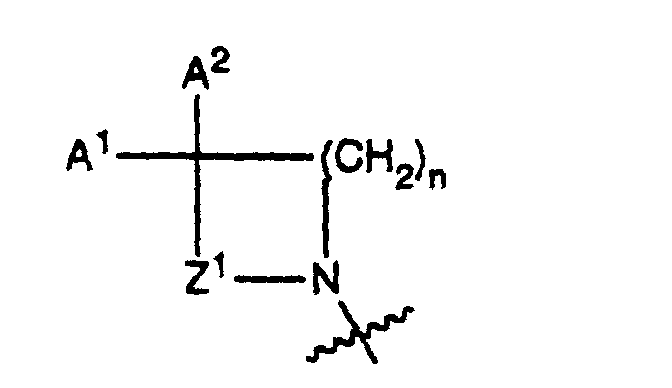
- b)

- c)

- d)
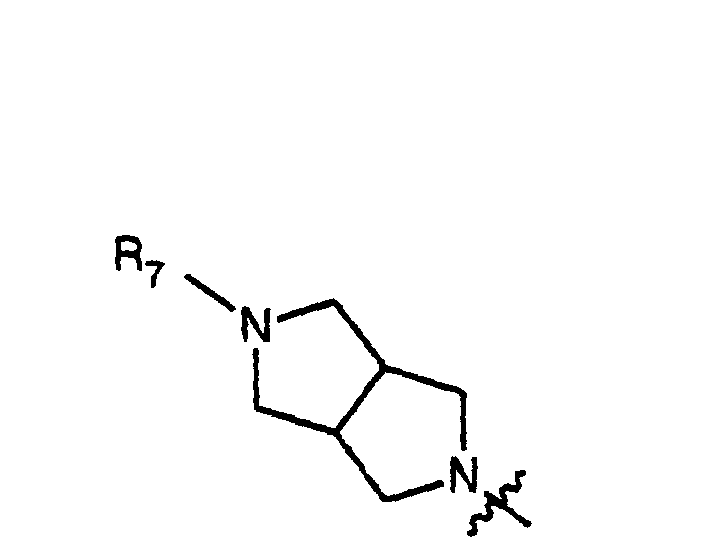
- f)

- g)

- h)

- i)

- j)
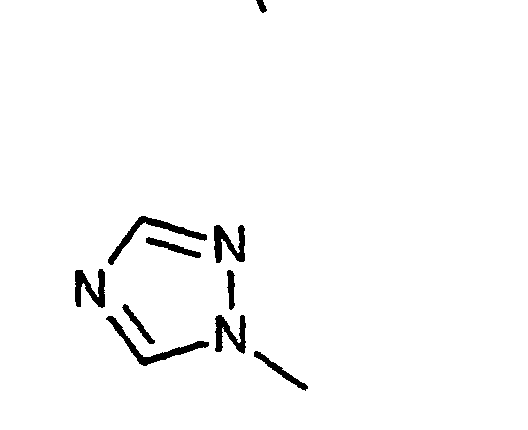
- k)
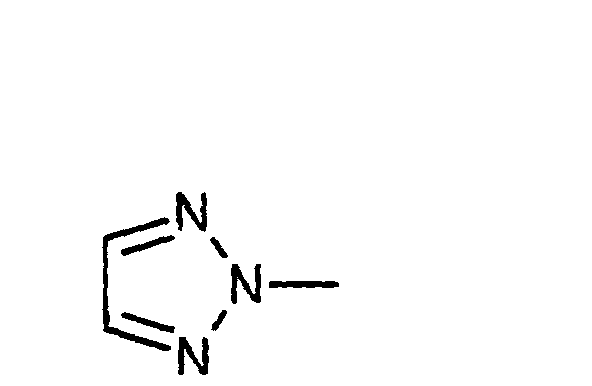
- m)
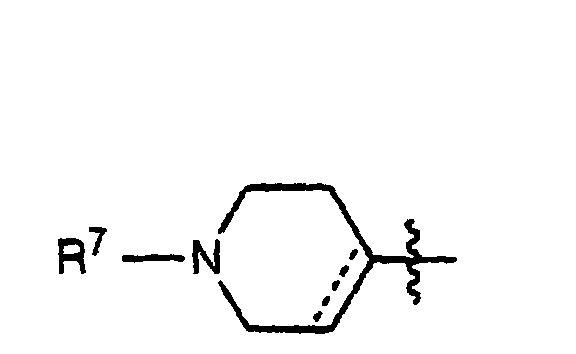
- Q1 and X2 taken together are:

- where Z1 is:
- a) -CH2-,
- b) -CH(R4)-CH2-,
- c) -C(O)-, or
- d) -CH2CH2CH2-;
- where Z2 is:
- a) -O2S-,
- b) -O-,
- c) -N(R7)-,
- d) -OS-, or
- e) -S-;
- where Z3 is:
- a) -O2S-,
- b) -O-,
- c) -OS-, or
- d) -S-;
- where A1 is:
- a) H- or
- b) CH3;
- where A2 is:
- a) H-,
- b) HO-,
- c) CH3-,
- d) CH3O-,
- e) R2O-CH2-C(O)-NH-
- f) R3O-C(O)-NH-,
- g) (C1-C2)alkyl-O-C(O)-,
- h) HO-CH2-,
- i) CH3O-NH-,
- j) (C1-C3)alkyl-O2C-
- k) CH3-C(O)-,
- l) CH3-C(O)-CH2-,
- m)

- n)

- A1 and A2 taken together are:
- a)

- b) o=
- c)
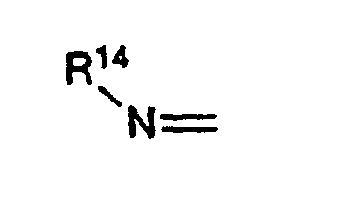
- where R2 is:
- a) H-,
- b) CH3-,
- c) phenyl-CH2-, or
- d) CH3C(O)-;
- where R3 is:
- a) (C1-C3)alkyl-, or
- b) phenyl-;
- where R4 is:
- a) H-, or
- b) HO-;
- where R6 is:
- a) CH3-C(O)-,
- b) H-C(O)-,
- c) Cl2CH-C(O)-,
- d) HOCH2-C(O)-,
- e) CH3SO2-,
- f)
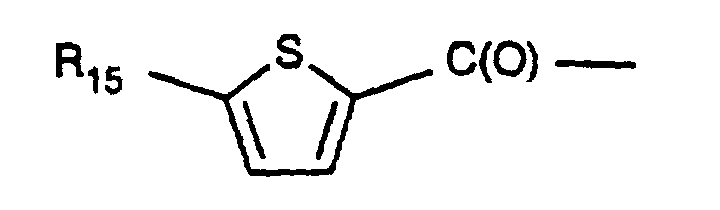
- g) F2CHC(O)-,
- h)
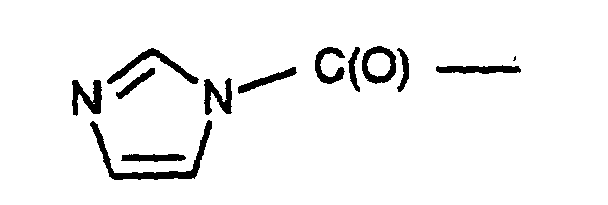
- i) H3C-C(O)-O-CH2-C(O)-,
- j) H-C(O)-O-CH2-C(O)-,
- k)

- l) HC≡ CH-CH2O-CH2-C(O)- or
- m) phenyl-CH2-O-CH2-C(O)-;
- where R7 is:
- a) R2O-C(R10)(R11)-C(O)-,
- b) R3O-C(O)-,
- c) R8-C(O)-,
- d)

- e)

- f) H3C-C(O)-(CH2)2-C(O)-,
- g) R9-SO2-,
- h)
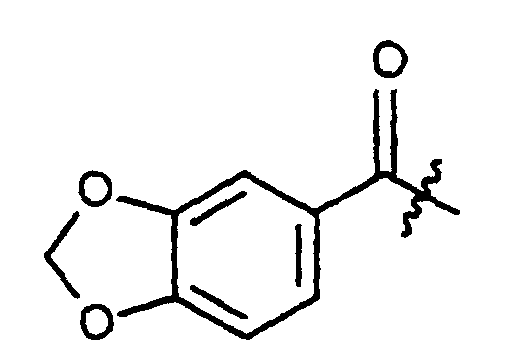
- i) HO-CH2-C(O)-,
- j) R16-(CH2)2-,
- k) R13-C(O)-O-CH2-C(O)-,
- l) (CH3)2N-CH2-C(O)-NH-,
- m) NC-CH2- or
- n) F2-CH-CH2-;
- where R8 is:
- a) H-,
- b) (C1-C4)alkyl,
- c) aryl -(CH2)p,
- d) ClH2C-,
- e) Cl2HC-,
- f) FH2C-,
- g) F2HC- or
- h) (C3-C6)cycloalkyl;
- where R9 is:
- a) -CH3,
- b) -CH2Cl,
- c) -CH2CH=CH2,
- d) aryl or
- e) -CH2CN;
- where R10 is H- or CH3-;
- where R11 is H- or CH3-;
- where R12 is:
- a) H-,
- b) CH3O-CH2O-CH2- or
- c) HOCH2-;
- where R13 is:
- a) CH3-,
- b) HOCH2-,
- c) (CH3)2N-phenyl, or
- d) (CH3)2N-CH2-;
- where R14 is:
- a) HO-,
- b) CH3O-,
- c) H2N-,
- d) CH3O-C(O)-O-,
- e) CH3-C(O)-O-CH2-C(O)-O-,
- f) phenyl-CH2-O-CH2-C(O)-O-,
- g) HO-(CH2)2-O-,
- h) CH3O-CH2-O-(CH2)2-O-, or
- i) CH3O-CH2-O-;
- where R15 is:
- a) H- or
- b) Cl-;
- where R16 is:
- a) HO-
- b) CH3O-, or
- c) F;
- where m is 0 or 1;
- where n is 1 thru 3;
- where p is 0 or 1;
- where aryl is phenyl substituted with zero (0) or one (1) of the following:
- a) -F,
- b) -Cl,
- c) -OCH3,
- d) -OH,
- e) -NH2,
- f) -(C1-C4)alkyl,
- g) -O-C(O)-OCH3, or
- h) -NO2, and protected forms thereof; comprises contacting a hydroxy compound selected from either enantiomer, or a mixture of enantiomers, of glycidol and dihydroxy compounds of formula (I)
-
- The process to produce the 5-hydroxymethyl substituted oxazolidinone alcohols (III) can use either the non-cyclic (S)-, (R)- dihydroxy compounds of formula (I) or any mixture thereof or (S)-, (R)- glycidol (IV) or any mixture to couple with the carbamate (IIA) or a trifluoroacetamide of formula (IIB).
- The 5-hydroxymethyl substituted oxazolidinone alcohols (III) are useful intermediates to produce 5-aminomethyl substituted oxazolidinone amines which can be acylated to prepare pharmaceutically useful 5-acylamidomethyl substituted oxazolidinone antibacterial agents. Because of an enantiomeric center, 5(R)- or 5(S)-acylamidomethyl substituted oxazolidinones and mixtures thereof can be produced. The 5-acylamidomethyl substituted oxazolidinone (S)-enantiomer has antibacterial activity, the (R)-enantiomer does not. The 5(S)-aminomethyl substituted oxazolidinone amine enantiomer is produced from the 5(R)-hydroxymethyl substituted oxazolidinone alcohol (III) enantiomer which is produced from the (S)-dihydroxy compound (I) or (S)-glycidol (IV). Therefore, the desired and preferred enantiomeric sequence is to use enantiomerically pure (S)-dihydroxy compound (I) or (S)-glycidol (IV) to give (R)-5-hydroxymethyl substituted oxazolidinone alcohol (III) which is used to give enantiomerically pure (S)-5-aminomethyl substituted oxazolidinone amine which is transformed to enantiomerically pure (S)-5-acylamidomethyl substituted oxazolidinone. However, it is readily apparent to one skilled in the art that one could easily perform the identical process steps with the opposite enantiomeric forms and at any point in the process invert an undesired enantiomeric configuration to the desired one. Therefore, using the chemistry of the claimed process with any of the enantiomeric forms is considered equivalent to the claimed processes.
- The dihydroxy compounds, M1-CH2-CH(OH)-CH2-OH, of formula (I) and glycidol compounds, C*H2-C*H-CH2-OH, of formula (IV) where the carbon atoms designated by an * are each bonded to the same oxygen atom (-O-) to form a three member ring, are known to those skilled in the art or can be readily prepared from known compounds by methods known to those skilled in the art. It is preferred that the hydroxy starting material be the dihydroxy compound (I). It is preferred that the dihydroxy compound (I) and the glycidol (IV) be the (S)-enantiomer. It is preferred that M1 is Cl-; it is preferred that the dihydroxy compound (I) is (S)-(+)-3-chloro-1,2-propanediol which can be purchased commercially.
- The carbamates, R1-NH-CO-O-M2, of formula (IIA) and the trifluoroacetamide, R1-NH-CO-CF3, of formula (IIB) are either known to those skilled in the art or can readily be prepared from known compounds by methods known to those skilled in the art. The nature of the leaving group M2 is not important since it is lost during the course of the reaction as is known to those skilled in the art. Operable M2 (leaving groups) are those where -O-M2 is a base whose acid has a pka of between about 8 and about 24. Preferred M2 includes
- C1-C20 alkyl,
- C3-C7 cycloalkyl,
- - optionally substituted with one or two C1-C3 alkyl or F-, Cl-, Br-, I-,
- CH2=CH-CH2-,
- CH3-CH=CH-CH2-,
- (CH3)2C=CH-CH2-,
- CH2=CH-,
- -CH=CH-CH2-,
- -CH2- optionally substituted on - with one or two -Cl, C1-C4 alkyl, -NO2, -CN, -CF3,
- 9-fluorenylmethyl,
- (Cl)3C-CH2-,
- 2-trimethylsilylethyl,
- -CH2-CH2-,
- 1-adamantyl,
- ()2CH-,
- CH≡C-C(CH3)2-
- 2-furanylmethyl,
-
- isobornyl, more preferred leaving groups are C1-C4 alkyl or benzyl. Any other leaving group which operates in a similar manner is considered equivalent to those identified above. The carbamate (IIA) and trifluoroacetamide (IIB) carry the aromatic/heteroaromatic group (R1-) of the 5-hydroxymethyl substituted oxazolidinone alcohol (III). It is preferred that R1 is phenyl substituted with one -F and one substituted amino group; it is more preferred that R1 is 3-fluoro-4-[4-(benzyloxycarbonyl)-1-piperazinyl]phenyl or 3-fluoro-4-(4-morpholinyl)phenyl. Depending on the particular substituents in R1, the groups may have to be protected as is known to those skilled in the art, by means known to those skilled in the art to prevent undesirable side reactions. For example, if the R1 substituent has a free primary or secondary hydroxy group, it is not necessary, but preferable to protect it with an alcohol protecting group in the formation of the 5-hydroxymethyl substituted oxazolidinone alcohols (III). The unprotected alcohol will not in general interfere with the reaction of the dihydroxy compound (I) or glycidol (IV) with the carbamate (IIA) or trifluoroacetamide (IIB) to give the 5-hydroxymethyl substituted oxazolidinone alcohols (III). However, an unprotected alcohol will in general interfere with the conversion of the 5-hydroxymethyl substituted oxazolidinone alcohols (III) to the corresponding 5-aminomethyl substituted oxazolidinone amines, because it is very difficult or impossible to selectively protect a primary or secondary alcohol. on the R1 functionality in the presence of another primary or secondary alcohol. Suitable alcohol protecting groups are well known to those skilled in the art, preferred are C1-C5 alkyl, -CH2-, CH3-O-CH2-, CH3-, CH3-S-CH2-, -CH2-O-CH2-, tetrahydropyranyl, CH3CH(-O-C2H5)-, p-methoxybenzyl, p-methoxyphenyl, p-nitrobenzyl, ()3C-, (CH3)3Si-, [CH3-CH(CH3)]3Si-, (CH3)2Si-. These protecting groups are removed by means known to those skilled in the art. For example, if R1 containes a hydroxy substituent, it must be protected during the transformation of the 5-hydroxymethyl substituted oxazolidinone alcohol (III) to the 5-aminomethyl substituted oxazolidinone amine or the 5-acylamidomethyl substituted oxazolidinone. If the R1 substituent contains a free primary or secondary amino substituent it does not have to be protected during formation of the 5-hydroxymethyl substituted oxazolidinone alcohols (III) but must be protected during transformation of the 5-hydroxymethyl substituted oxazolidinone alcohols (III) to the corresponding 5-aminomethyl substituted oxazolidinone amines and the 5-acylamidomethyl substituted oxazolidinones. The reason is that the amino group will in general undergo an undesired side reaction during one or more of the steps involved in the transformation of the 5-hydroxymethyl substituted oxazolidinone alcohols (III) to the corresponding 5-acylamidomethyl substituted oxazolidinones. Therefore, it is preferable to protect any free amino substituent in the R1 functionality prior to the reaction of the dihydroxy compound (I) or glycidol (IV) with the carbamate (IIA) or trifluoroacetamide (IIB). Amino protecting groups are very well known to those skilled in the art. Preferred amino protecting groups include:
- (I) C1-C4 alkyl,
- (II) -CH2-,
- (III) ()3C-,
- (IV) Ra-CO- where Ra is (A) H-, (B) C1-C4 alkyl, (C) C5-C7 cycloalkyl, (D) (C1-C5 alkyl)-O-, (E) Cl3C-CH2-O-, (F) H2C=CH-CH2-O-, (G) -CH=CH-CH2-O-, (H) -CH2-O-, (I) p-methoxyphenyl-CH2-O-, (J) p-nitrophenyl-CH2-O-, (K) -O-, (L) CH3-CO-CH2-, (M) (CH3)3Si-O-,
- (V) Rb-SO2- where Rb is: (A) (C1 alkyl)-, (B) -, (C) p-methylphenyl- and (D) -CH2-. A preferred amino protecting group is benzyloxycarbonyl which can be removed by catalytic hydrogenation as is known to those skilled in the art. There is nothing novel regarding the use of protecting groups in these reactions or the nature of the particular protecting groups. All this is well known to those skilled in the art. The protecting groups can be removed after the last reaction in which the protected substituent would be affected or carried along and removed after subsequent reactions as is known to those skilled in the art. For example, it my be preferable to carry the protecting group along until the final acylation step is completed, before removal, as is known to those skilled in the art. Optionally the R1 substituent can be modified after the 5-acylamidomethyl substituted oxazolidinones is produced, depending on what chemical reactions are required as is known to those skilled in the art.
-
- The reaction of either dihydroxy compounds (I) or glycidol (IV) with either the carbamates (IIA) or trifluoroacetamides (IIB) give the same 5-hydroxymethyl substituted oxazolidinone alcohols (III). The choice of whether to use a dihydroxy compound (I) or glycidol (IV) to produce a particular 5-hydroxymethyl substituted oxazolidinone alcohol (III) has to be made on a case by case basis. No starting material is preferred in all cases; there is no generally preferred way based on chemistry alone. The decision involves the commercial availability of the particular starting material, its chemical and enantiomeric purity, its cost, etc as is known to those skilled in the art.
- One process of the present invention is the reaction of the dihydroxy compound (I) or glycidol (IV) with the carbamate (IIA) or trifluoroacetamides (IIB) in the presence of lithium cation (Li+) and a base whose conjugate acid has a pKa of greater than about 8.
- The processes requires about one molar equivalent of either the dihydroxy compound (I) or glycidol (IV)/equivalent of carbamate (IIA) or trifluoroacetamides (IIB). The reaction requires a base, the nature of which is not critical so long as it is strong enough to deprotonate the carbamate (II). Operable bases are those whose conjugate acid has a pKa of greater than about 8. Preferred bases include compounds selected from the group consisting of:
- alkoxy compounds of one thru seven carbon atoms,
- carbonate,
- methyl, sec-butyl and t-butyl carbanions,
- tri(alkyl)amines where the alkyl group is from 1 thru 4 carbon atoms, conjugate base of the carbamate (II),
- DBU,
- DBN,
- N-methyl-piperidine,
- N-methyl morpholine,
- 2,2,2-trichloroethoxide and
-
- Cl3C-CH2-O-; most preferred bases are where the base is alkoxy of four or five carbon atoms. It is preferred that the four and five carbon alcohol bases be t-amylate or t-butoxide. Sodium or potassium bases in combination with a lithium salt (such as lithium chloride or lithium bromide) can be used forming the lithium cation and base in situ.
- The nature of the solvent is not critical. Operable solvents include cyclic ethers such as THF, amides such as DMF and DMAC, amines such as triethylamine, acetonitrile, and alcohols such as t-amyl alcohol and t-butyl alcohol. The choice of solvent depends on the solubility of the carbamate (IIA) or trifluoroacetamide (IIB) as is known to those skilled in the art.
- When the starting material is the dihydroxy compounds (I) it can be beneficial to react the dihydroxy compound (I) with an cyclizing agent prior to contacting with the carbamate (IIA) or trifluoroacetamide (IIB). The term "cyclizing agent" refers to a base that cyclizes the dihydroxy compound (I) to glycidol (IV). Operable cyclizing agents include bases whose acid has a pka of greater than about 7; preferred cyclizing agents are sodium, potassium or lithium butoxide, sodium or potassium hydroxide, potassium carbonate, DBU, lithium, sodium and potassium amylate; most preferred is potassium t-butoxide. It is preferable to perform the reaction at < 100°, more preferable to perform it at < 70°, even more preferable to perform it at < 50° and most preferable to perform it at < 25°. The reaction can be performed at room temperature (about 20 to about 25°). At about 20°, the reaction requires about 8 hr to reach completion (in DMAC). If a faster reaction is desired, the reaction can be run at higher temperature. As stated above, differentiation between primary alcohols and secondary alcohols is difficult. In the cyclization reaction, a simple alcohol is formed. For instance, benzyl alcohol is formed when a benzyl carbonate is subjected to the cyclization conditions. Removal of this alcohol is necessary to the success of the alcohol to amine conversion. This is accomplished by crystallization using ethyl acetate/heptane (1/2). The benzyl alcohol stays in solution and the desired oxazolidinone alcohol is isolated as a solid.
- The definitions and explanations below are for the terms as used throughout this entire document including both the specification and the claims.
- The chemical formulas representing various compounds or molecular fragments in the specification and claims may contain variable substituents in addition to expressly defined structural features. These variable substituents are identified by a letter or a letter followed by a numerical subscript, for example, "Z1" or "Ri" where "i" is an integer. These variable substituents are either monovalent or bivalent, that is, they represent a group attached to the formula by one or two chemical bonds. For example, a group Z1 would represent a bivalent variable if attached to the formula CH3-C(=Z1)H. Groups Ri and Rj would represent monovalent variable substituents if attached to the formula CH3-CH2-C(Ri)(Rj)-H. When chemical formulas are drawn in a linear fashion, such as those above, variable substituents contained in parentheses are bonded to the atom immediately to the left of the variable substituent enclosed in parenthesis. When two or more consecutive variable substituents are enclosed in parentheses, each of the consecutive variable substituents is bonded to the immediately preceding atom to the left which is not enclosed in parentheses. Thus, in the formula above, both Ri and Rj are bonded to the preceding carbon atom. Also, for any molecule with an established system of carbon atom numbering, such as steroids, these carbon atoms are designated as Ci, where "i" is the integer corresponding to the carbon atom number. For example, C6 represents the 6 position or carbon atom number in the steroid nucleus as traditionally designated by those skilled in the art of steroid chemistry. Likewise the term "R6" represents a variable substituent (either monovalent or bivalent) at the C6 position.
- Chemical formulas or portions thereof drawn in a linear fashion represent atoms in a linear chain. The symbol "-" in general represents a bond between two atoms in the chain. Thus CH3-O-CH2-CH(Ri)-CH3 represents a 2-substituted-1-methoxypropane compound. In a similar fashion, the symbol "=" represents a double bond, e.g., CH2=C(Ri)-O-CH3, and the symbol "≡" represents a triple bond, e.g., HC≡C-CH(Ri)-CH2-CH3. Carbonyl groups are represented in either one of two ways: -CO- or -C(=O)-, with the former being preferred for simplicity.
- Chemical formulas of cyclic (ring) compounds or molecular fragments can be represented in a linear fashion. Thus, the compound 4-chloro-2-methylpyridine can be represented in linear fashion by N*-C(CH3)-CH=CCl-CH=C*H with the convention that the atoms marked with an asterisk (*) are bonded to each other resulting in the formation of a ring. Likewise, the cyclic molecular fragment, 4-(ethyl)-1-piperazinyl can be represented by -N*-(CH2)2-N(C2H5)-CH2-C*H2.
- A rigid cyclic (ring) structure for any compounds herein defines an orientation with respect to the plane of the ring for substituents attached to each carbon atom of the rigid cyclic compound. For saturated compounds which have two substituents attached to a carbon atom which is part of a cyclic system, -C(X1)(X2)- the two substituents may be in either an axial or equatorial position relative to the ring and may change between axial/equatorial. However, the position of the two substituents relative to the ring and each other remains fixed. While either substituent at times may lie in the plane of the ring (equatorial) rather than above or below the plane (axial), one substituent is always above the other. In chemical structural formulas depicting such compounds, a substituent (X1) which is "below" another substituent (X2) will be identified as being in the alpha (α) configuration and is identified by a broken, dashed or dotted line attachment to the carbon atom, i.e., by the symbol "---" or "...". The corresponding substituent attached "above" (X2) the other (X1) is identified as being in the beta (β) configuration and is indicated by an unbroken line attachment to the carbon atom.
- When a variable substituent is bivalent, the valences may be taken together or separately or both in the definition of the variable. For example, a variable Ri attached to a carbon atom as -C(=Ri)- might be bivalent and be defined as oxo or keto (thus forming a carbonyl group (-CO-) or as two separately attached monovalent variable substituents α-Ri-j and β-Ri-k. When a bivalent variable, Ri, is defined to consist of two monovalent variable substituents, the convention used to define the bivalent variable is of the form "α-Ri-j:β-Ri-k" or some variant thereof. In such a case both α-Ri-j and β-Ri-k are attached to the carbon atom to give -C(α-Ri-j)(β-Ri-k)-. For example, when the bivalent variable R6, -C(=R6)- is defined to consist of two monovalent variable substituents, the two monovalent variable substituents are α-R6-1:β-R6-2, .... α-R6-9:β-R6-10, etc, giving -C(α-R6-1)(β-R6-2)-, .... -C(α-R6-9)(β-R6-10)-, etc. Likewise, for the bivalent variable R11, -C(=R11)-, two monovalent variable substituents are α-R11-1:β-R11-2. For a ring substituent for which separate a and β orientations do not exist (e.g. due to the presence of a carbon carbon double bond in the ring), and for a substituent bonded to a carbon atom which is not part of a ring the above convention is still used, but the α and β designations are omitted.
- Just as a bivalent variable may be defined as two separate monovalent variable substituents, two separate monovalent variable substituents may be defined to be taken together to form a bivalent variable. For example, in the formula -C1(Ri)H-C2(Rj)H- (C1 and C2 define arbitrarily a first and second carbon atom, respectively) Ri and Rj may be defined to be taken together to form (1) a second bond between C1 and C2 or (2) a bivalent group such as oxa (-O-) and the formula thereby describes an epoxide. When Ri and Rj are taken together to form a more complex entity, such as the group -X-Y-, then the orientation of the entity is such that C1 in the above formula is bonded to X and C2 is bonded to Y. Thus, by convention the designation "... Ri and Rj are taken together to form -CH2-CH2-O-CO- ..." means a lactone in which the carbonyl is bonded to C2. However, when designated "... Rj and Ri are taken together to form -CO-O-CH2-CH2-the convention means a lactone in which the carbonyl is bonded to C1.
- The carbon atom content of variable substituents is indicated in one of two ways. The first method uses a prefix to the entire name of the variable such as "C1-C4", where both "1" and "4" are integers representing the minimum and maximum number of carbon atoms in the variable. The prefix is separated from the variable by a space. For example, "C1-C4 alkyl" represents alkyl of 1 through 4 carbon atoms, (including isomeric forms thereof unless an express indication to the contrary is given). Whenever this single prefix is given, the prefix indicates the entire carbon atom content of the variable being defined. Thus C2-C4 alkoxycarbonyl describes a group CH3-(CH2)n-O-CO- where n is zero, one or two. By the second method the carbon atom content of only each portion of the definition is indicated separately by enclosing the "Ci-Cj" designation in parentheses and placing it immediately (no intervening space) before the portion of the definition being defined. By this optional convention (C1-C3)alkoxycarbonyl has the same meaning as C2-C4 alkoxycarbonyl because the "C1-C3" refers only to the carbon atom content of the alkoxy group. Similarly while both C2-C6 alkouyalkyl and (C1-C3)alkoxy(C1-C3)alkyl define alkoxyalkyl groups containing from 2 to 6 carbon atoms, the two definitions differ since the former definition allows either the alkoxy or alkyl portion alone to contain 4 or 5 carbon atoms while the latter definition limits either of these groups to 3 carbon atoms.
- When the claims contain a fairly complex (cyclic) substituent, at the end of the phrase naming/designating that particular substituent will be a notation in (parentheses) which will correspond to the same name/designation in one of the CHARTS which will also set forth the chemical structural formula of that particular substituent.
- All temperatures are in degrees Centigrade.
- TLC refers to thin-layer chromatography.
- THF refers to tetrahydrofuran.
- DMF refers to dimethylformamide.
- DBU refers to 1,8-diazabicyclo[5.4.0]undec-7-ene.
- DBN refers to 1,5-diazabicyclo[4.3.0]non-5-ene.
- DABCO refers to 1,4-diazabicyclo[2.2.2]octane.
- DMA refers to dimethylacetamide.
- Saline refers to an aqueous saturated sodium chloride solution.
- Chromatography (column and flash chromatography) refers to purification/separation of compounds expressed as (support, eluent). It is understood that the appropriate fractions are pooled and concentrated to give the desired compound(s).
- IR refers to infrared spectroscopy.
- CMR refers to 13C magnetic resonance spectroscopy, chemical shifts are reported in ppm (δ) downfield from TMS.
- NMR refers to nuclear (proton) magnetic resonance spectroscopy, chemical shifts are reported in ppm (δ) downfield from tetramethylsilane.
- - refers to phenyl (C6H5).
- [α]D 25 refers to the angle of rotation of plane polarized light (specific optical rotation) at 25° with the sodium D line (589A).
- MS refers to mass spectrometry expressed as m/e, m/z or mass/charge unit. [M + H]+ refers to the positive ion of a parent plus a hydrogen atom. EI refers to electron impact. CI refers to chemical ionization. FAB refers to fast atom bombardment.
- HRMS refers to high resolution mass spectrometry.
- Pharmaceutically acceptable refers to those properties and/or substances which are acceptable to the patient from a pharmacological/toxicological point of view and to the manufacturing pharmaceutical chemist from a physical/chemical point of view regarding composition, formulation, stability, patient acceptance and bioavailability.
- When solvent pairs are used, the ratios of solvents used are volume/volume (v/v).
- When the solubility of a solid in a solvent is used the ratio of the solid to the solvent is weight/volume (wt/v).
- NNNNNN-NN-N refers to Chemical Abstracts Service (CAS, Columbus, Ohio) registry numbers where each "N" is an integer from 0 thru 9, but deleting leading zeros in the 6-digit portion of the number. Registry numbers are assigned to a particular chemical compound by CAS criteria, provided that the compound has been found to exist and it has been characterized in some way. Compounds published from approximately 1967 to the present are registered publicly and the registry number is the key to finding references in the CAS data base for such a registered compound. The CAS data base is publicly available from several database vendors such as STN International, System Development Corporation (SDC) Orbit Search Service, Lockheed Dialog, Bibliographic Retrieval Systems, Questrel, etc. CAS registry numbers are included in the EXAMPLES for some of the compounds which have been registered.
- Without further elaboration, it is believed that one skilled in the art can, using the preceding description, practice the present invention to its fullest extent. The following detailed examples describe how to prepare the various compounds and/or perform the various processes of the invention and are to be construed as merely illustrative, and not limitations of the preceding disclosure in any way whatsoever. Those skilled in the art will promptly recognize appropriate variations from the procedures both as to reactants and as to reaction conditions and techniques.
- A mixture of N-carbobenzoxy-3-fluor-4-(N-carbobenzoxypiperazinyl)aniline (II, J. Med. Chem., 39(3), 673 (1996)), 100 g of 98.4% pure material, 0.2133 moles) in DMAC (300 ml) is cooled to 0°. In a separate flask, a mixture of t-amyl alcohol (75 ml, 60.37 g, 0.685 moles, 3.23 eq) and heptane (75 ml) is cooled to - 10° and treated with n-butyllithium in heptane (290 ml, 203 g of 14.4% wt/v solution, containing 29.2 g or 0.456 moles = 2/15 eq of n-butyllithium), keeping the temperature below 10°. The lithium t-amylate mixture is then added to the N-carbobenzoxy-3-fluoro-4-(N-carbobenzoxypiperazinyl)aniline (II) keeping the temperature below 10°.
- Neat S-(+)-3-chloro-1,2-propanediol (I, CAS #60827-45-4, 22 ml, 29.1 g, 0.263 moles, 1.24 eq) is then added, rinsing with a small amount of heptane. The reaction mixture is then stirred at 20-25° and monitored by TLC (methanol/methylene chloride; 5/95) until the reaction is complete. The reaction mixture is then added to a mixture of acetic acid (40 ml, 42.0 g, 0.699 moles, 3.29 eq) in methanol (700 ml) and water (700 ml). The slurry formed is stirred at 20-25° for 30 min, cooled to 0°, stirred at 0° for 30 min, and filtered. The cake is washed with methanol/water (50/50) and dried under reduced pressure to give the title compound, TLC (methylene chloride/methanol, 95/5) Rf = 0.43.
- t-Amyl alcohol (0.967g, 10.97mmol, 2.571 eq) is cooled to -10°. Butyl lithium (4.3 ml, 2.5 M in hexanes, 10.8 mmol, 2.5 eq) is added with agitation while maintaining the temperature at less than 5°.
- N-Carbobenzoxy-3-fluoro-4-(N-carbobenzoxypiperazinyl)aniline (II, 1.9780 g, 4.267 mmol, 1.000 eq) and dimethylacetamide (6.2 ml) are mixed, agitated and cooled to -25° to give a thin slurry. The lithium t-amylate mixture is then added to the N-benzyloxycarbonyl-3-fluoro-4-((4-benzyloxycarbonyl)-1-piperazinyl)aniline (II) mixture while maintaining less than -20°. The resultant mixture is warmed to 0° and S-(+)-3-chloro-1,2-propanediol (I, 0.5672 g, 5.131 mmol, 1.20 eq) is added. The resultant mixture is warmed to 21° and stirred for 7.5 hrs.
The reaction mixture is added to a methanol (28 ml) and glacial acetic acid (0.73 ml, 12.75 mmol) mixture at 20-22°. The resulting slurry is then cooled to -30° and the product collected by vacuum filtration and washed with -30° methanol. The solids are dried in a stream of nitrogen to give the title compound, TLC (eluant chloroform/methanol, 90/10), Rf = 0.67; CMR (CDCl3) 43.91, 46.39, 50.58, 62.60, 67.29, 72.89, 107.21, 107.56, 113.85, 119.36, 127.92, 128.09, 128.52, 133.51, 133.65, 136.05, 136.17, 136.57, 153.91, 154.80, 155.25 and 157.17 δ; NMR (CDCl3) 7.43, 7.31-7.37, 7.09, 6.88, 5.15, 4.67-4.90, 3.89-3.99, 3.67-3.74, 3.66, 3.25 and 2.98 δ; MS (CI, m/e) = 430 (100%, P+1). - Tetrahydrofuran (3.0 ml) and t-amyl alcohol (0.66 ml, 6.03 mmol, 2.00 eq) are mixed. Butyl lithium (1.8 ml, 2.5 M in hexanes, 4.55 mmol, 1.5 eq) is added with agitation and while maintaining less than 2.5°.
- N-Carbobenzoxy-3-fluoro-4-morpholinylaniline (II, J. Med. Chem., 39(3), 673 (1996), 0.9942 g, 3.009 mmol, 1.000 eq) and tetrahydrofuran (3.5 ml) are mixture agitated and cooled. The lithium t-amylate mixture is then added to the carbamate (II) mixture while maintaining the temperature less than 8° and rinsed in with tetrahydrofuran (1 ml).
- Tetrahydrofuran (3.2 ml) and S-(+)-3-chloro-1,2-propanediol (I, 0.299 ml, 3.58 mmol, 1.19 eq) are mixed. The mixture is cooled to -16° and potassium t-butoxide (3.2 ml, 1.0 M in tetrahydrofuran, 3.2 mmol, 1.07 eq) is added while maintaining the temperature at less than -10°. The resulting slurry is stirred at -14 to 0° for 1 hr then added to the lithium anion mixture while maintaining both mixtures at 0°, then rinsed in with THF (2 ml). The resultant slurry is stirred at 20-23° for 2 hr then cooled to 6° and a mixture of citric acid monohydrate (0.4459 g, 2.122 mmol, 0.705 eq) in water (10 ml) is added. The resultant liquid phases are separated and the lower aqueous phase is washed with ethyl acetate (12 ml). The organic layers are combined and solvent is removed under reduced pressure until a net weight of 9.73 g remains. Heptane (10 ml) and water (5 ml) are added and solvent is removed by reduced pressure until a total volume of 5 ml remains. The precipitated product is collected by vacuum filtration and washed with water (7 ml). The solids are dried in a stream of nitrogen to give the title compound, TLC (chloroform/methanol, 95/5) Rf = 0.23; CMR (CDCl3) 46.42, 51.01, 62.58, 73.07, 107.29, 107.64, 113.94, 118.80, 118.85, 128.28, 128.61, 133.15, 133.29, 136.26, 136.38, 153.82, 154.92 and 157.08 δ; NMR (CDCl3) 7.42, 7.32-7.37, 7.10, 4.67-4.75, 3.90-4.00, 3.86, 3.70-3.73, 3.44 and 3.03 δ; MS (EI, m/e) = 296.
- Alternatively, the crude product can be extracted with methylene chloride. The solvent is removed under reduced pressure. The solids are redissolved in hot ethyl acetate, heptane is added, the mixture is cooled and the title compound is recovered.
- A solution of t-amyl alcohol (75 ml, 60.3 g, 0.68 m) and heptane (75 ml) is stirred and cooled to -10°. The mixture is treated with n-butyl lithium in heptane (1.6 M, 0.46 m, 290 ml) over a 30 min period while maintaining a temp < 10°. After 30 min, the mixture of lithium t-amylate is added to a mixture of N-carbobenzoxy-3-fluoro-4-(N-carbobenzoxypiperazinyl)aniline (II, 100 g, 0.22 m) and dimethylacetamide (300 ml) at 0° while maintaining a temp < 10°. The mixture is stirred 30 min, then treated with S-(+)-3-chloro-1,2-propanediol (I, 22 ml, 0.26 m). The cooling is removed, and the mixture is allowed to warm to 20-25°. The reaction is monitored by TLC and is judged complete after about 8 hr, The reaction mixture is poured into a mixture of methanol (700 ml), water (700 ml) and acetic acid (40 ml) and stirred for 30 min at 20-25°, then stirred for 30 min with cooling to 0°. The mixture is filtered, washed with aqueous methanol (50/50) and dried under reduced pressure at 45° to give the title compound, TLC (silica gel; methanol/methylene chloride, 5/95) Rf = 0.5. (90.3% yield).
- A mixture of N-carbobenzoxy-3-fluoro-4-(N-carbobenzoxypiperazinyl)aniline (II, 2.014 g, 4.345 mmol) and THF (10 ml) is cooled to -20°. In a separate flask, a solution of t-amyl alcohol (0.71 ml, 6.48 mmol) in THF (10 ml) at -33° is treated with n-butyllithium in heptane (13.65 wt%, 2.53 g, 5.38 mmol) while maintaining the mixture at less than -20°. The resultant lithium t-amylate solution is then added to the N-carbobenzoxy-3-fluoro-4-(N-carbobenzoxypiperazinyl)aniline mixture while maintaining less than -20° and rinsed in with THF (4 ml). To the resulting mixture at -28° is then added S-glycidol (IV, 0.3360 g, 4.536 mmol). The mixture is then stirred at -20° for 1.5 hrs, then at -16° for 17 hrs, at -11° for 4 hrs then at -1° for 2 hrs. HPLC assay then showed the major component to have a retention time consistent with the title compound (90.4 area % at 254 nm detection; retention time = 1.30 min; column = Zorbax RX-C8, 250 X 4.6 mm; mobile phase = 650 ml acetonitrile, 1.85 ml triethylamine, 1.30 ml acetic acid and add sufficient water to make 1000 ml; flow rate = 3 ml/min) as did TLC (silica gel; methanol/chloroform 10/90) Rf = 0.60.


Claims (10)
- A process to prepare 5-hydroxymethyl substituted oxazolidinones of formula (III)
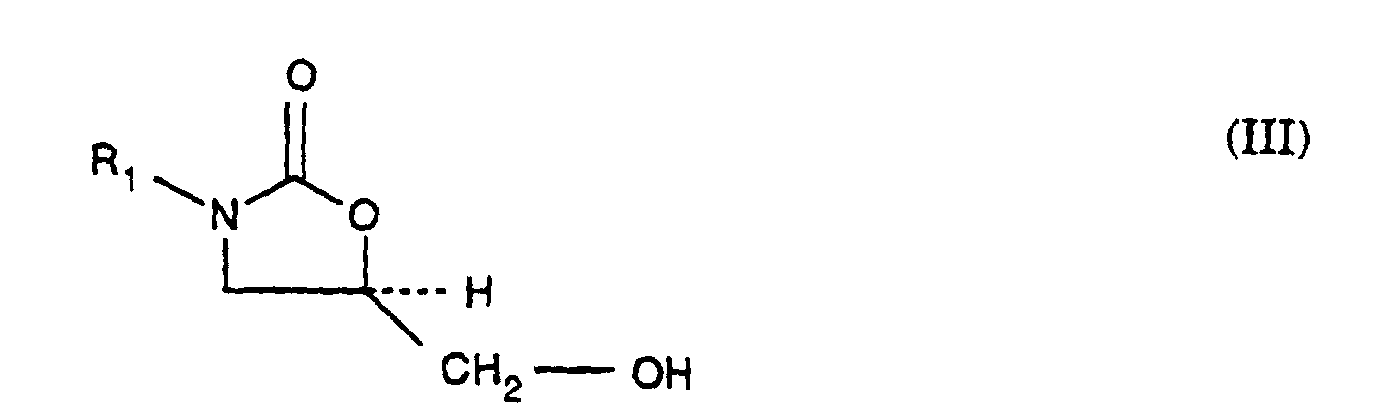 and protected forms thereof,where R1 is
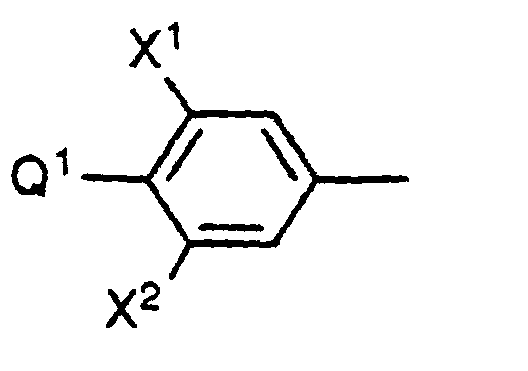 where X1 is -H or -F;where X2 is -H or -F;where Q1 is:a)
 b)
b)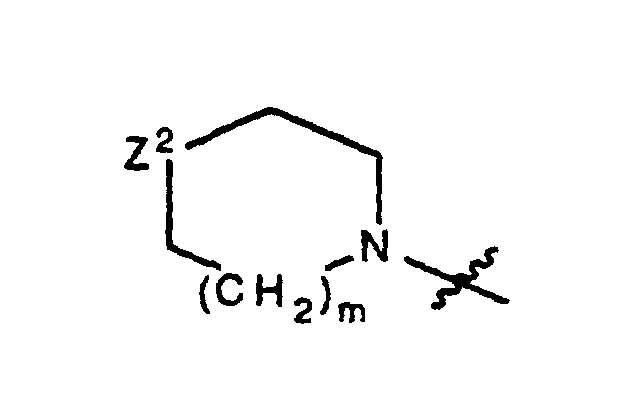 c)
c) d)
d) f)
f)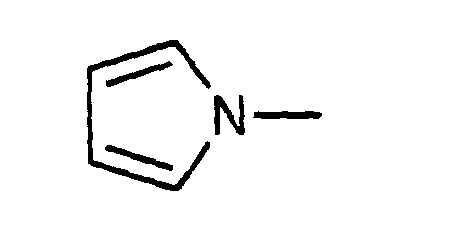 g)
g) h)
h)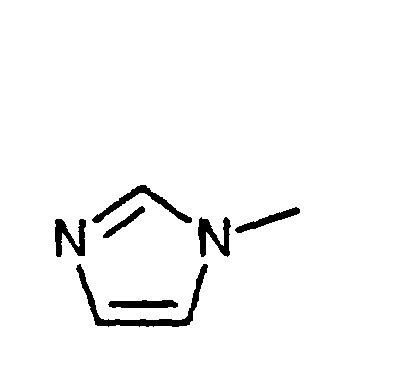 i)
i) j)
j) k)
k)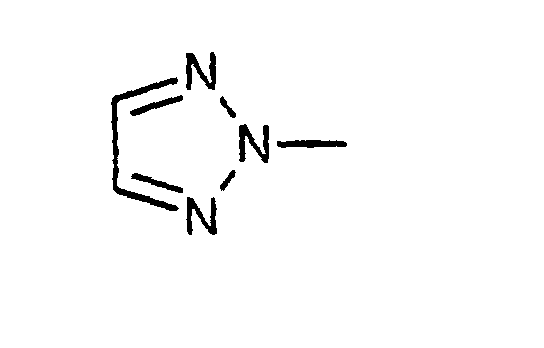 m)
m) Q1 and X2 taken together are:
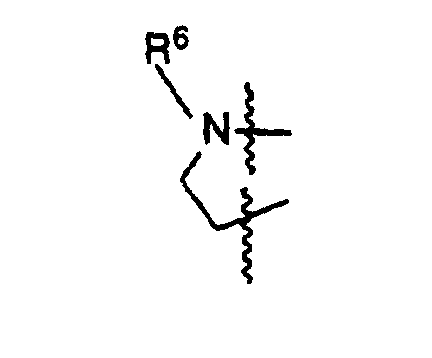 where Z1 is:a) -CH2-,b) -CH(R4)-CH2-,c) -C(O)-, ord) -CH2(CH2CH2-;where Z2 is:a) -O2S-,b) -O-,c) -N(R7)-,d) -OS-, ore) -S-;where Z3 is:a) -O2S-,b) -O-,c) -OS-, ord) -S-;where A1 is:a) H- orb) CH3;where A2 is:a) H-,b) HO-,c) CH3-,d) CH3O-,e) R2O-CH2-C(O)-NH-f) R3O-C(O)-NH-,g) (C1-C2)alkyl-O-C(O)-,h) HO-CH2-,i) CH3O-NH-,j) (C1-C3)alkyl-O2C-k) CH3-C(O)-,l) CH3-C(O)-CH2-,m)
 n)
n)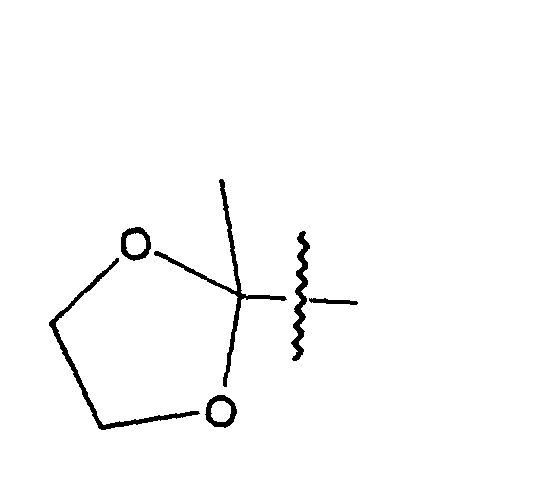 A1 and A2 taken together are:a)
 b) o=c)
 where R2 is:a) H-,b) CH3-,c) phenyl-CH2-, ord) CH3C(O)-;where R3 is:a) (C1-C3)alkyl-, orb) phenyl-;where R4 is:a) H-, orb) HO-;where R6 is:a) CH3-C(O)-,b) H-C(O)-,c) Cl2CH-C(O)-,d) HOCH2-C(O)-,e) CH3SO2-,f)
 g) F2CHC(O)-,h)
 i) H3C-C(O)-O-CH2-C(O)-,j) H-C(O)-O-CH2-C(O)-,k)
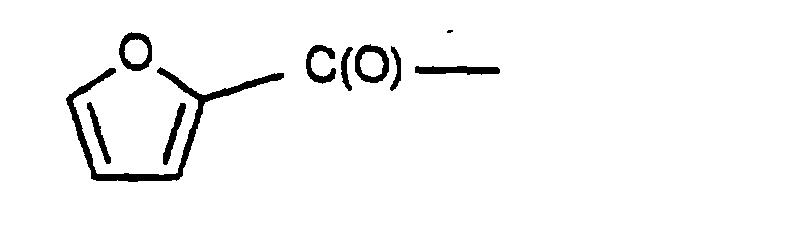 l) HC≡ CH-CH2O-CH2-C(O)- orm) phenyl-CH2-O-CH2-C(O)-;where R7 is:a) R2O-C(R10)(R11)-C(O)-,b) R3O-C(O)-,c) R8-C(O)-,d)
 e)
e)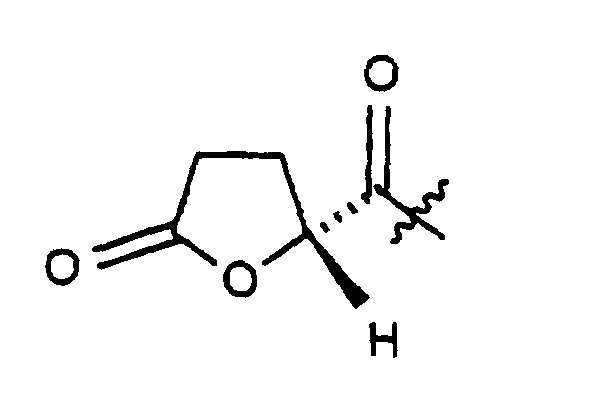 f) H3C-C(O)-(CH2)2-C(O)-,g) R9-SO2-,h)
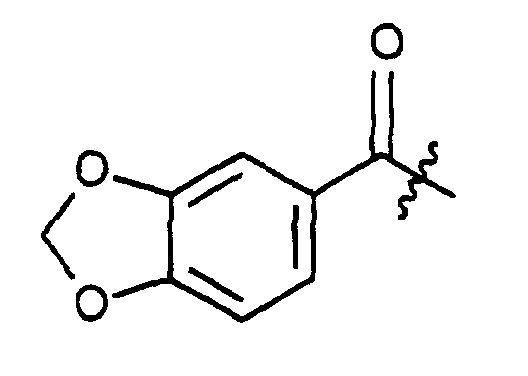 i) HO-CH2-C(O)-,j) R16-(CH2)2-,k) R13-C(O)-O-CH2-C(O)-,l) (CH3)2N-CH2-C(O)-NH-,m) NC-CH2- orn) F2-CH-CH2-;where R8 is:a) H-,b) (C1-C4)alkyl,c) aryl -(CH2)p,d) ClH2C-,e) Cl2HC-,f) FH2C-,g) F2HC- orh) (C3-C6)cycloakl;where R9 is:a) -CH3,b) -CH2Cl,c) -CH2CH=CH2,d) aryl ore) -CH2CN;where R10 is H- or CH3-;where R11 is H- or CH3-;where R12 is:a) H-,b) CH3O-CH2O-CH2- orc) HOCH2-;where R13 is:a) CH3-,b) HOCH2-,c) (CH3)2N-phenyl, ord) (CH3)2N-CH2-;where R14 is:a) HO-,b) CH3O-,c) H2N-,d) CH3O-C(O)-O-,e) CH3-C(O)-O-CH2-C(O)-O-,f) phenyl-CH2-O-CH2-C(O)-O-,g) HO-(CH2)2-O-,h) CH3O-CH2-O-(CH2)2-O-, ori) CH3O-CH2-O-;where R15 is:a) H- orb) Cl-;where R16 is:a) HO-b) CH3O-, orc) F;where m is 0 or 1;where n is 1 thru 3;where p is 0 or 1;where aryl is phenyl substituted with zero (0) or one (1) of the following:a) -F,b) -Cl,c) -OCH3,d) -OH,e) -NH2,f) -(C1-C4)alkyl,g) -O-C(O)-OCH3, orh) -NO2;
which comprises contacting a hydroxy compound selected from either enantiomer, or a mixture of enantiomers, of glycidol and dihydroxy compounds of formula (I) - A process according to claim 1, wherein the hydroxy compound is glycidol.
- A process according to claim 1, wherein the hydroxy compound is the dihydroxy compound of formula (I).
- A process according to claim 3, which additionally comprises contacting the dihydroxy compound (I) with a second base, wherein the conjugate acid of the second base has a pka of greater than about 7, prior to contact with the carbamate (IIA) or trifluoroacetamide (IIB).
- A process according to claim 3 or claim 4, wherein the dihydroxy compound (I) is the (S)-enantiomer.
- A process according to any preceding claim, wherein the hydroxy compound is contacted with the carbamate (IIA) and M2 is selected fromC1-C20 alkyl,C3-C7 cycloalkyl,- optionally substituted with one or two:C1-C3 alkyl,F-, Cl-, Br-, I-,CH2=CH-CH2-,CH3-CH =CH-CH2-,(CH3)2C = CH-CH2-,CH2=CH-,-CH=CH-CH2-,-CH2- optionally substituted on - with one or two -Cl, C1-C4 alkyl, -NO2, -CN or -CF3,9-fluorenylmethyl,(Cl)3C-CH2-,2-trimethylsilylethyl,-CH2-CH2-,1-adamantyl,()2CH-,CH≡C-C(CH3)2-2-furanylmethyl, andisobornyl.
- A process according to any preceding claim, where R1 is phenyl substituted with one -F and one substituted amino group.
- A process according to any preceding claim, where M2O or the base M2OH is selected fromC1-7 alkoxy compounds carbonate,methyl, sec-butyl and t-butyl carbanions,tri(C1-4alkyl)amines,conjugate bases of the carbamate (II),DBU,DBN,N-methylpiperidine,N-methylmorpholine2,2,2-trichloroethoxide, andCl3C-CH2-O.
- A process according to any preceding claim, where R1 has an alcohol group protected withC1-C5 alkyl,-CH2-,CH3-O-CH2-,S-CH2-,-CH2-O-CH2-,tetrahydropyranyl,CH3CH(-O-C2H5)-,p-methoxybenzyl,p-methoxyphenyl,p-nitrobenzyl,()3C-,(CH3)3Si-,[CH3-CH(CH3)]3Si- and(CH3)2Si-.
- A process according to any preceding claim, where R1 is the amino protecting group selected from the group consisting of:(I)C1-C4 alkyl,(II) -CH2-,(III) ()3C-,(IV) Ra-CO- where Ra is (A) H-, (B) C1-C4 alkyl, (C) C5-C7 cycloalkyl, (D) (C1-C5 alkyl)-O-, (E) Cl3C-CH2-O-, (F) H2C=CH-CH2-O-, (G) -CH=CH-CH2-O-, (H) -CH2-O-, (I) p-methoxyphenyl-CH2-O-, (J) p-nitrophenyl-CH2-O-, (K) -O-, (L) CH3-CO-CH2-, (M) (CH3)3Si-O-,(V) Rb-SO2- where Rb is: (A) methyl, (B) -, (C) p-methylphenyl or (D) -CH2-.
Priority Applications (1)
| Application Number | Priority Date | Filing Date | Title |
|---|---|---|---|
| EP01302264A EP1114819B1 (en) | 1996-04-11 | 1997-03-28 | Process to prepare oxazolidinones |
Applications Claiming Priority (3)
| Application Number | Priority Date | Filing Date | Title |
|---|---|---|---|
| US1549996P | 1996-04-11 | 1996-04-11 | |
| US15499P | 1996-04-11 | ||
| PCT/US1997/003458 WO1997037980A1 (en) | 1996-04-11 | 1997-03-28 | Process to prepare oxazolidinones |
Related Child Applications (1)
| Application Number | Title | Priority Date | Filing Date |
|---|---|---|---|
| EP01302264A Division EP1114819B1 (en) | 1996-04-11 | 1997-03-28 | Process to prepare oxazolidinones |
Publications (2)
| Publication Number | Publication Date |
|---|---|
| EP0892792A1 EP0892792A1 (en) | 1999-01-27 |
| EP0892792B1 true EP0892792B1 (en) | 2001-11-21 |
Family
ID=21771765
Family Applications (2)
| Application Number | Title | Priority Date | Filing Date |
|---|---|---|---|
| EP97915865A Expired - Lifetime EP0892792B1 (en) | 1996-04-11 | 1997-03-28 | Process to prepare oxazolidinones |
| EP01302264A Expired - Lifetime EP1114819B1 (en) | 1996-04-11 | 1997-03-28 | Process to prepare oxazolidinones |
Family Applications After (1)
| Application Number | Title | Priority Date | Filing Date |
|---|---|---|---|
| EP01302264A Expired - Lifetime EP1114819B1 (en) | 1996-04-11 | 1997-03-28 | Process to prepare oxazolidinones |
Country Status (24)
| Country | Link |
|---|---|
| US (1) | US5837870A (en) |
| EP (2) | EP0892792B1 (en) |
| JP (2) | JP2000508312A (en) |
| KR (1) | KR100530297B1 (en) |
| CN (3) | CN1167701C (en) |
| AT (2) | ATE383347T1 (en) |
| AU (1) | AU706117B2 (en) |
| CA (1) | CA2248143C (en) |
| CZ (2) | CZ298060B6 (en) |
| DE (2) | DE69738457T2 (en) |
| DK (2) | DK1114819T3 (en) |
| ES (2) | ES2298198T3 (en) |
| HU (1) | HUP0500044A3 (en) |
| NO (2) | NO311837B1 (en) |
| NZ (1) | NZ332278A (en) |
| PL (1) | PL192691B1 (en) |
| PT (2) | PT892792E (en) |
| RU (1) | RU2176643C2 (en) |
| SG (1) | SG85683A1 (en) |
| SI (1) | SI0892792T1 (en) |
| SK (1) | SK284703B6 (en) |
| TW (1) | TW449593B (en) |
| WO (1) | WO1997037980A1 (en) |
| ZA (1) | ZA972983B (en) |
Families Citing this family (56)
| Publication number | Priority date | Publication date | Assignee | Title |
|---|---|---|---|---|
| GB9601666D0 (en) * | 1996-01-27 | 1996-03-27 | Zeneca Ltd | Chemical compounds |
| GB9702213D0 (en) | 1996-02-24 | 1997-03-26 | Zeneca Ltd | Chemical compounds |
| GB9609919D0 (en) | 1996-05-11 | 1996-07-17 | Zeneca Ltd | Chemical compounds |
| GB9717807D0 (en) | 1997-08-22 | 1997-10-29 | Zeneca Ltd | Chemical compounds |
| GB9717804D0 (en) | 1997-08-22 | 1997-10-29 | Zeneca Ltd | Chemical compounds |
| GB9725244D0 (en) | 1997-11-29 | 1998-01-28 | Zeneca Ltd | Chemical compounds |
| KR20010052615A (en) | 1998-06-05 | 2001-06-25 | 다비드 에 질레스 | Oxazolidinone derivatives, process for their preparation and pharmaceutical compositions containing them |
| DE69933526D1 (en) * | 1998-12-07 | 2006-11-23 | Takasago Perfumery Co Ltd | Process for the preparation of optically active oxazolidinone derivatives |
| CN1495181A (en) | 1999-02-01 | 2004-05-12 | �������Ŷ���Լ��������˾ | Method for preparing cyclic oxazolidone containing sulfur and fluorine |
| US6413981B1 (en) | 1999-08-12 | 2002-07-02 | Ortho-Mcneil Pharamceutical, Inc. | Bicyclic heterocyclic substituted phenyl oxazolidinone antibacterials, and related compositions and methods |
| US6297242B1 (en) | 1999-08-12 | 2001-10-02 | Ortho-Mcneil Pharmaceutical, Inc. | N-substituted amidine and guanidine oxazolidinone antibacterials and methods of use thereof |
| US6608081B2 (en) | 1999-08-12 | 2003-08-19 | Ortho-Mcneil Pharmaceutical, Inc. | Bicyclic heterocyclic substituted phenyl oxazolidinone antibacterials, and related compositions and methods |
| GB9928568D0 (en) | 1999-12-03 | 2000-02-02 | Zeneca Ltd | Chemical compounds |
| US6518285B2 (en) | 1999-12-21 | 2003-02-11 | Ortho Mcneil Pharmaceutical, Inc. | Piperidinyloxy and pyrrolidinyloxy oxazolidinone antibacterials |
| AR027261A1 (en) * | 2000-02-02 | 2003-03-19 | Upjohn Co | LINEZOLID CRYSTAL FORM II |
| US6444813B2 (en) | 2000-02-02 | 2002-09-03 | Pharmacia & Upjohn Company | Linezolid-crystal form II |
| MY127336A (en) | 2000-03-22 | 2006-11-30 | Upjohn Co | Container for linezolid iv solution |
| US6514529B2 (en) | 2000-03-22 | 2003-02-04 | Pharmacia & Upjohn Company | Oxazolidinone tablet formulation |
| GB0009803D0 (en) * | 2000-04-25 | 2000-06-07 | Astrazeneca Ab | Chemical compounds |
| JP2004501965A (en) | 2000-06-30 | 2004-01-22 | ファルマシア・アンド・アップジョン・カンパニー | Compositions and methods for treating bacterial infections |
| PE20020300A1 (en) * | 2000-08-22 | 2002-05-10 | Pharmacia Corp | COMPOSITION OF SOLUTION OF AN ANTIBIOTIC DRUG BASED ON OXAZOLIDINONE WITH IMPROVEMENT OF DRUG LOAD |
| US6288239B1 (en) | 2000-09-19 | 2001-09-11 | Board Of Trustees Operating Michigan State University | 5-trityloxymethyl-oxazolidinones and process for the preparation thereof |
| AR031135A1 (en) | 2000-10-10 | 2003-09-10 | Upjohn Co | TOPIC ANTIBIOTIC COMPOSITIONS FOR THE TREATMENT OF OCULAR INFECTIONS |
| WO2002081470A1 (en) * | 2001-04-07 | 2002-10-17 | Astrazeneca Ab | Oxazolidinones containing a sulfonimid group as antibiotics |
| EP1380121B1 (en) * | 2001-04-20 | 2007-09-26 | Pharmacia & Upjohn Company LLC | Process to prepare oxazolidinones |
| ES2186550B2 (en) * | 2001-06-27 | 2003-11-16 | Vita Lab | NEW DERIVATIVES OF OXAZOLIDINONES AS ANTIBACTERIALS. |
| JP2005519996A (en) * | 2001-10-18 | 2005-07-07 | ミシガン ステイト ユニバーシティー | Method for producing oxazolidinones and method for using the same |
| US20040019012A1 (en) * | 2002-02-22 | 2004-01-29 | Singh Satish K. | Ophthalmic antibiotic drug formulations containing a cyclodextrin compound and cetyl pyridinium chloride |
| EP1476135A1 (en) * | 2002-02-22 | 2004-11-17 | Pharmacia Corporation | Ophthalmic formulation with gum system |
| ATE442364T1 (en) | 2003-10-16 | 2009-09-15 | Symed Labs Ltd | CRYSTALLINE FORM OF LINEZOLIDE |
| PL1737850T3 (en) | 2004-04-19 | 2008-02-29 | Symed Labs Ltd | A novel process for the preparation of linezolid and related compounds |
| WO2006008754A1 (en) | 2004-07-20 | 2006-01-26 | Symed Labs Limited | Novel intermediates for linezolid and related compounds |
| EP2007740A1 (en) * | 2006-04-07 | 2008-12-31 | Pfizer Products Incorporated | Process for preparing linezolid |
| CN100395270C (en) * | 2006-05-25 | 2008-06-18 | 湖北大学 | (4S)-5,5-disubstituted oxazolidinone supported by linear polystyrene and its preparation method and use |
| EP2033960A3 (en) * | 2007-09-04 | 2009-04-29 | Dipharma Francis S.r.l. | Linezolid crystalline hydrate form and linezolid salts |
| US20090093631A1 (en) * | 2007-09-06 | 2009-04-09 | Ben-Zion Dolitzky | Processes for the preparation of a linezolid intermediate, linezolid hydroxide |
| EP2163547A1 (en) | 2008-09-16 | 2010-03-17 | Unión Químico Farmacéutica, S.A. (UQUIFA) | Process for the preparation of an oxazolidinone antibacterial agent and intermediates thereof |
| JP5561462B2 (en) * | 2009-09-17 | 2014-07-30 | 日東化成株式会社 | Fishing net antifouling paint composition, antifouling coating film formed using the composition, method for forming the coating film, and fishing net, fishing net tool or underwater structure having the coating film on the surface |
| US20130137864A1 (en) | 2009-12-26 | 2013-05-30 | Jayaraman Venkat Raman | Process for the preparation of linezolid |
| WO2011080341A1 (en) | 2010-01-04 | 2011-07-07 | Enantia, S.L. | Process for the preparation of rivaroxaban and intermediates thereof |
| EP2603505A1 (en) | 2010-08-11 | 2013-06-19 | Synthon BV | Process for making linezolid |
| EP2690100A1 (en) | 2010-08-11 | 2014-01-29 | Synhton B.V. | Process for making linezolid |
| KR20130102614A (en) | 2010-11-03 | 2013-09-17 | 욱크하르트 리미티드 | Process for the preparation of phosphoric acid mono-(1-[4-[(s)-5-(acetylamino-methyl)-2-oxo-oxazolidin-3-yl]-2,6-difluorophenyl]-4-methoxymethyl-piperidin-4-yl) ester |
| US9567307B2 (en) * | 2011-01-07 | 2017-02-14 | The Regents Of The University Of California | Amination of aryl alcohol derivatives |
| CN102153521B (en) * | 2011-01-31 | 2012-09-12 | 宁波市鄞州百特佳医药科技有限公司 | Intermediate for preparing linezolid and preparation method thereof |
| PT2595968E (en) | 2011-02-24 | 2015-12-31 | Lee Pharma Ltd | Novel process for preparation of linezolid and its novel intermediates |
| EP2593440A1 (en) | 2011-02-24 | 2013-05-22 | Lee Pharma Limited | Anhydrous linezolid crystalline form-ii |
| CN102311402B (en) * | 2011-07-18 | 2013-08-21 | 苏州敬业医药化工有限公司 | Preparation method of 3-substituted phenyl-5-hydroxymethyl oxazolidine-2-ketone |
| CN102321042B (en) * | 2011-07-18 | 2013-12-04 | 苏州敬业医药化工有限公司 | Preparation method of 3-substituted phenyl-5-hydroxymethyloxazolidine-2-ketone |
| WO2013072923A1 (en) | 2011-09-19 | 2013-05-23 | Cadila Healthcare Limited | Process for the preparation of crystalline linezolid |
| EP2852580A1 (en) | 2012-01-24 | 2015-04-01 | Jubilant Life Sciences Ltd. | Improved process for the preparation of stable crystalline form-i of linezolid, substantially free of residual solvent |
| CN103626712B (en) * | 2012-08-23 | 2016-06-01 | 重庆药友制药有限责任公司 | A kind of intermediate for the preparation of Linezolid and its preparation method |
| WO2014071990A1 (en) | 2012-11-09 | 2014-05-15 | Synthon Bv | Process for making linezolid |
| WO2015173664A1 (en) | 2014-05-14 | 2015-11-19 | Wockhardt Limited | Process for the preparation of (5s)-n-{3-[3,5-difluoro-4-(4-hydroxy-4-methoxymethyl-piperidin-1-yl)-phenyl]-2-oxo-oxazolidin-5-ylmethyl}-acetamide |
| WO2021184339A1 (en) | 2020-03-20 | 2021-09-23 | Merck Sharp & Dohme Corp. | Oxazolidinone compound and methods of use thereof as an antibacterial agent |
| CN119119019B (en) * | 2024-09-11 | 2025-11-11 | 遵义医科大学 | Heterocyclic sulfonamide/sulfonate derivative and preparation method and application thereof |
Family Cites Families (23)
| Publication number | Priority date | Publication date | Assignee | Title |
|---|---|---|---|---|
| CA681830A (en) * | 1964-03-10 | X. Markley Francis | Process for 5-(aryloxymethyl)-2-oxazolidinones | |
| US3547951A (en) * | 1969-06-17 | 1970-12-15 | Waldo R Hardie | 1,3-dioxolan-4-yl-alkyl guanidines |
| FR2315925A1 (en) * | 1975-07-04 | 1977-01-28 | Nippon Chemiphar Co | NEW 5-BENZYL-2-OXAZOLIDONE DERIVATIVES, THEIR PREPARATION PROCESS AND THEIR THERAPEUTIC APPLICATION |
| FR2356422A1 (en) * | 1976-03-01 | 1978-01-27 | Delalande Sa | NEW HYDROXYMETHYL-5 OXAZOLIDINONE-2, THEIR PREPARATION PROCESS AND THEIR APPLICATION IN THERAPEUTICS |
| LU80081A1 (en) * | 1977-08-26 | 1979-05-15 | Delalande Sa | NEW HYDROXYMETHYL-5 OXAZOLIDINONES-2, THEIR PREPARATION PROCESS AND THEIR THERAPEUTIC APPLICATION |
| JPS6014032B2 (en) * | 1978-01-20 | 1985-04-11 | 日本ケミフア株式会社東京 | 5-phenethyl-2-oxazolidone derivative and its production method |
| US4340606A (en) * | 1980-10-23 | 1982-07-20 | E. I. Du Pont De Nemours And Company | 3-(p-Alkylsulfonylphenyl)oxazolidinone derivatives as antibacterial agents |
| FR2500450A1 (en) * | 1981-02-25 | 1982-08-27 | Delalande Sa | NOVEL AMINOMETHYL-5-OXAZOLIDINE DERIVATIVES, PROCESS FOR THEIR PREPARATION AND THERAPEUTIC USE THEREOF |
| US4461773A (en) * | 1982-09-15 | 1984-07-24 | E. I. Dupont De Nemours And Company | P-Oxooxazolidinylbenzene compounds as antibacterial agents |
| US4948801A (en) * | 1988-07-29 | 1990-08-14 | E. I. Du Pont De Nemours And Company | Aminomethyloxooxazolidinyl arylbenzene derivatives useful as antibacterial agents |
| US5225565A (en) * | 1988-09-15 | 1993-07-06 | The Upjohn Company | Antibacterial 3-(fused-ring substituted)phenyl-5β-amidomethyloxazolidin-2-ones |
| US5164510A (en) * | 1988-09-15 | 1992-11-17 | The Upjohn Company | 5'Indolinyl-5β-amidomethyloxazolidin-2-ones |
| US5182403A (en) * | 1988-09-15 | 1993-01-26 | The Upjohn Company | Substituted 3(5'indazolyl) oxazolidin-2-ones |
| US5231188A (en) * | 1989-11-17 | 1993-07-27 | The Upjohn Company | Tricyclic [6.5.51]-fused oxazolidinone antibacterial agents |
| JP2908510B2 (en) * | 1990-04-20 | 1999-06-21 | イハラケミカル工業株式会社 | Method for producing benzylamines |
| EP0677515A1 (en) * | 1991-09-05 | 1995-10-18 | Nippon Paint Co., Ltd. | Method for preparing 2-oxazolidinone derivatives |
| AU667198B2 (en) * | 1991-11-01 | 1996-03-14 | Pharmacia & Upjohn Company | Substituted aryl- and heteroarylphenyloxazolidinones useful as antibacterial agents |
| SK283420B6 (en) * | 1992-05-08 | 2003-07-01 | Pharmacia & Upjohn Company | Antimicrobial oxazolidinones containing substituted diazine groups |
| MY115155A (en) * | 1993-09-09 | 2003-04-30 | Upjohn Co | Substituted oxazine and thiazine oxazolidinone antimicrobials. |
| JPH0873455A (en) * | 1994-03-15 | 1996-03-19 | Upjohn Co:The | Oxazolidinone derivative and medicine composition containingit as effective component |
| DK0788498T3 (en) * | 1994-10-26 | 2001-11-05 | Upjohn Co | Phenyloxazolidinones with antimicrobial action |
| BR9509673A (en) * | 1994-11-15 | 1997-09-30 | Upjohn Co | Compounds and their use |
| AU702752B2 (en) * | 1995-05-11 | 1999-03-04 | Pharmacia & Upjohn Company | Spirocyclic and bicyclic diazinyl and carbazinyl oxazolidinones |
-
1997
- 1997-03-28 PT PT97915865T patent/PT892792E/en unknown
- 1997-03-28 DE DE69738457T patent/DE69738457T2/en not_active Expired - Fee Related
- 1997-03-28 ES ES01302264T patent/ES2298198T3/en not_active Expired - Lifetime
- 1997-03-28 AT AT01302264T patent/ATE383347T1/en not_active IP Right Cessation
- 1997-03-28 PT PT01302264T patent/PT1114819E/en unknown
- 1997-03-28 SK SK1336-98A patent/SK284703B6/en unknown
- 1997-03-28 WO PCT/US1997/003458 patent/WO1997037980A1/en not_active Ceased
- 1997-03-28 PL PL329295A patent/PL192691B1/en not_active IP Right Cessation
- 1997-03-28 DK DK01302264T patent/DK1114819T3/en active
- 1997-03-28 SI SI9730273T patent/SI0892792T1/en unknown
- 1997-03-28 EP EP97915865A patent/EP0892792B1/en not_active Expired - Lifetime
- 1997-03-28 AT AT97915865T patent/ATE209193T1/en not_active IP Right Cessation
- 1997-03-28 AU AU23182/97A patent/AU706117B2/en not_active Ceased
- 1997-03-28 RU RU98120398/04A patent/RU2176643C2/en not_active IP Right Cessation
- 1997-03-28 DK DK97915865T patent/DK0892792T3/en active
- 1997-03-28 JP JP9536189A patent/JP2000508312A/en not_active Ceased
- 1997-03-28 EP EP01302264A patent/EP1114819B1/en not_active Expired - Lifetime
- 1997-03-28 SG SG9905133A patent/SG85683A1/en unknown
- 1997-03-28 KR KR10-2004-7009934A patent/KR100530297B1/en not_active Expired - Fee Related
- 1997-03-28 NZ NZ332278A patent/NZ332278A/en unknown
- 1997-03-28 CN CNB011330031A patent/CN1167701C/en not_active Expired - Fee Related
- 1997-03-28 US US08/828,923 patent/US5837870A/en not_active Expired - Fee Related
- 1997-03-28 HU HU0500044A patent/HUP0500044A3/en unknown
- 1997-03-28 CZ CZ0287198A patent/CZ298060B6/en not_active IP Right Cessation
- 1997-03-28 CA CA002248143A patent/CA2248143C/en not_active Expired - Fee Related
- 1997-03-28 CN CN97193658A patent/CN1082953C/en not_active Expired - Fee Related
- 1997-03-28 CN CNB031594743A patent/CN1319952C/en not_active Expired - Fee Related
- 1997-03-28 ES ES97915865T patent/ES2166073T3/en not_active Expired - Lifetime
- 1997-03-28 CZ CZ2007-88A patent/CZ200788A3/en unknown
- 1997-03-28 DE DE69709718T patent/DE69709718T2/en not_active Expired - Fee Related
- 1997-04-02 TW TW086104216A patent/TW449593B/en not_active IP Right Cessation
- 1997-04-08 ZA ZA972983A patent/ZA972983B/en unknown
-
1998
- 1998-10-09 NO NO19984737A patent/NO311837B1/en unknown
-
2001
- 2001-10-26 NO NO20015253A patent/NO312728B1/en unknown
-
2008
- 2008-03-04 JP JP2008053675A patent/JP2008239621A/en not_active Withdrawn
Also Published As
Similar Documents
| Publication | Publication Date | Title |
|---|---|---|
| US5837870A (en) | Process to prepare oxazolidinones | |
| US6107519A (en) | Process to produce oxazolidinones | |
| KR100504304B1 (en) | Process to Prepare Oxazolidinones | |
| CA2557862A1 (en) | Process to prepare 5-aminomethyl substituted oxazolidinones | |
| HK1030938B (en) | Process to produce oxazolidinones |
Legal Events
| Date | Code | Title | Description |
|---|---|---|---|
| PUAI | Public reference made under article 153(3) epc to a published international application that has entered the european phase |
Free format text: ORIGINAL CODE: 0009012 |
|
| 17P | Request for examination filed |
Effective date: 19981028 |
|
| AK | Designated contracting states |
Kind code of ref document: A1 Designated state(s): AT BE CH DE DK ES FI FR GB GR IE IT LI LU MC NL PT SE |
|
| AX | Request for extension of the european patent |
Free format text: AL PAYMENT 981028;LT PAYMENT 981028;LV PAYMENT 981028;RO PAYMENT 981028;SI PAYMENT 981028 |
|
| 17Q | First examination report despatched |
Effective date: 19991027 |
|
| GRAG | Despatch of communication of intention to grant |
Free format text: ORIGINAL CODE: EPIDOS AGRA |
|
| GRAG | Despatch of communication of intention to grant |
Free format text: ORIGINAL CODE: EPIDOS AGRA |
|
| GRAH | Despatch of communication of intention to grant a patent |
Free format text: ORIGINAL CODE: EPIDOS IGRA |
|
| GRAH | Despatch of communication of intention to grant a patent |
Free format text: ORIGINAL CODE: EPIDOS IGRA |
|
| GRAA | (expected) grant |
Free format text: ORIGINAL CODE: 0009210 |
|
| AK | Designated contracting states |
Kind code of ref document: B1 Designated state(s): AT BE CH DE DK ES FI FR GB GR IE IT LI LU MC NL PT SE |
|
| AX | Request for extension of the european patent |
Free format text: AL PAYMENT 19981028;LT PAYMENT 19981028;LV PAYMENT 19981028;RO PAYMENT 19981028;SI PAYMENT 19981028 |
|
| REF | Corresponds to: |
Ref document number: 209193 Country of ref document: AT Date of ref document: 20011215 Kind code of ref document: T |
|
| REG | Reference to a national code |
Ref country code: CH Ref legal event code: EP |
|
| REG | Reference to a national code |
Ref country code: CH Ref legal event code: NV Representative=s name: E. BLUM & CO. PATENTANWAELTE |
|
| REG | Reference to a national code |
Ref country code: IE Ref legal event code: FG4D |
|
| REG | Reference to a national code |
Ref country code: GB Ref legal event code: IF02 |
|
| REF | Corresponds to: |
Ref document number: 69709718 Country of ref document: DE Date of ref document: 20020221 |
|
| ET | Fr: translation filed | ||
| REG | Reference to a national code |
Ref country code: ES Ref legal event code: FG2A Ref document number: 2166073 Country of ref document: ES Kind code of ref document: T3 |
|
| REG | Reference to a national code |
Ref country code: DK Ref legal event code: T3 |
|
| REG | Reference to a national code |
Ref country code: PT Ref legal event code: SC4A Free format text: AVAILABILITY OF NATIONAL TRANSLATION Effective date: 20020221 |
|
| REG | Reference to a national code |
Ref country code: GR Ref legal event code: EP Ref document number: 20020400673 Country of ref document: GR |
|
| PLBE | No opposition filed within time limit |
Free format text: ORIGINAL CODE: 0009261 |
|
| STAA | Information on the status of an ep patent application or granted ep patent |
Free format text: STATUS: NO OPPOSITION FILED WITHIN TIME LIMIT |
|
| 26N | No opposition filed | ||
| REG | Reference to a national code |
Ref country code: SI Ref legal event code: IF |
|
| REG | Reference to a national code |
Ref country code: CH Ref legal event code: PFA Owner name: PHARMACIA & UPJOHN COMPANY Free format text: PHARMACIA & UPJOHN COMPANY#301 HENRIETTA STREET#KALAMAZOO, MICHIGAN 49001 (US) -TRANSFER TO- PHARMACIA & UPJOHN COMPANY#301 HENRIETTA STREET#KALAMAZOO, MICHIGAN 49001 (US) |
|
| PGFP | Annual fee paid to national office [announced via postgrant information from national office to epo] |
Ref country code: LU Payment date: 20071228 Year of fee payment: 12 |
|
| PGFP | Annual fee paid to national office [announced via postgrant information from national office to epo] |
Ref country code: ES Payment date: 20080317 Year of fee payment: 12 Ref country code: DK Payment date: 20080212 Year of fee payment: 12 Ref country code: CH Payment date: 20080108 Year of fee payment: 12 |
|
| PGFP | Annual fee paid to national office [announced via postgrant information from national office to epo] |
Ref country code: SE Payment date: 20080310 Year of fee payment: 12 Ref country code: PT Payment date: 20080104 Year of fee payment: 12 Ref country code: NL Payment date: 20080219 Year of fee payment: 12 Ref country code: MC Payment date: 20080204 Year of fee payment: 12 Ref country code: IT Payment date: 20080320 Year of fee payment: 12 Ref country code: IE Payment date: 20080123 Year of fee payment: 12 Ref country code: GB Payment date: 20080211 Year of fee payment: 12 Ref country code: FI Payment date: 20080229 Year of fee payment: 12 |
|
| PGFP | Annual fee paid to national office [announced via postgrant information from national office to epo] |
Ref country code: AT Payment date: 20080211 Year of fee payment: 12 |
|
| PGFP | Annual fee paid to national office [announced via postgrant information from national office to epo] |
Ref country code: FR Payment date: 20080307 Year of fee payment: 12 Ref country code: DE Payment date: 20080331 Year of fee payment: 12 |
|
| PGFP | Annual fee paid to national office [announced via postgrant information from national office to epo] |
Ref country code: BE Payment date: 20080403 Year of fee payment: 12 |
|
| PGFP | Annual fee paid to national office [announced via postgrant information from national office to epo] |
Ref country code: GR Payment date: 20080116 Year of fee payment: 12 |
|
| BERE | Be: lapsed |
Owner name: *PHARMACIA & UPJOHN CY Effective date: 20090331 |
|
| REG | Reference to a national code |
Ref country code: PT Ref legal event code: MM4A Free format text: LAPSE DUE TO NON-PAYMENT OF FEES Effective date: 20090928 |
|
| PG25 | Lapsed in a contracting state [announced via postgrant information from national office to epo] |
Ref country code: PT Free format text: LAPSE BECAUSE OF NON-PAYMENT OF DUE FEES Effective date: 20090928 Ref country code: MC Free format text: LAPSE BECAUSE OF NON-PAYMENT OF DUE FEES Effective date: 20090331 Ref country code: FI Free format text: LAPSE BECAUSE OF NON-PAYMENT OF DUE FEES Effective date: 20090328 Ref country code: AT Free format text: LAPSE BECAUSE OF NON-PAYMENT OF DUE FEES Effective date: 20090328 |
|
| REG | Reference to a national code |
Ref country code: CH Ref legal event code: PL |
|
| REG | Reference to a national code |
Ref country code: DK Ref legal event code: EBP |
|
| EUG | Se: european patent has lapsed | ||
| GBPC | Gb: european patent ceased through non-payment of renewal fee |
Effective date: 20090328 |
|
| LTLA | Lt: lapse of european patent or patent extension |
Effective date: 20090328 |
|
| NLV4 | Nl: lapsed or anulled due to non-payment of the annual fee |
Effective date: 20091001 |
|
| REG | Reference to a national code |
Ref country code: FR Ref legal event code: ST Effective date: 20091130 |
|
| REG | Reference to a national code |
Ref country code: IE Ref legal event code: MM4A |
|
| PG25 | Lapsed in a contracting state [announced via postgrant information from national office to epo] |
Ref country code: LI Free format text: LAPSE BECAUSE OF NON-PAYMENT OF DUE FEES Effective date: 20090331 Ref country code: IE Free format text: LAPSE BECAUSE OF NON-PAYMENT OF DUE FEES Effective date: 20090330 Ref country code: DE Free format text: LAPSE BECAUSE OF NON-PAYMENT OF DUE FEES Effective date: 20091001 Ref country code: CH Free format text: LAPSE BECAUSE OF NON-PAYMENT OF DUE FEES Effective date: 20090331 |
|
| REG | Reference to a national code |
Ref country code: SI Ref legal event code: KO00 Effective date: 20091209 |
|
| PG25 | Lapsed in a contracting state [announced via postgrant information from national office to epo] |
Ref country code: BE Free format text: LAPSE BECAUSE OF NON-PAYMENT OF DUE FEES Effective date: 20090331 Ref country code: NL Free format text: LAPSE BECAUSE OF NON-PAYMENT OF DUE FEES Effective date: 20091001 |
|
| PG25 | Lapsed in a contracting state [announced via postgrant information from national office to epo] |
Ref country code: GB Free format text: LAPSE BECAUSE OF NON-PAYMENT OF DUE FEES Effective date: 20090328 Ref country code: FR Free format text: LAPSE BECAUSE OF NON-PAYMENT OF DUE FEES Effective date: 20091123 Ref country code: DK Free format text: LAPSE BECAUSE OF NON-PAYMENT OF DUE FEES Effective date: 20090331 |
|
| REG | Reference to a national code |
Ref country code: ES Ref legal event code: FD2A Effective date: 20090330 |
|
| PG25 | Lapsed in a contracting state [announced via postgrant information from national office to epo] |
Ref country code: GR Free format text: LAPSE BECAUSE OF NON-PAYMENT OF DUE FEES Effective date: 20091002 |
|
| PG25 | Lapsed in a contracting state [announced via postgrant information from national office to epo] |
Ref country code: ES Free format text: LAPSE BECAUSE OF NON-PAYMENT OF DUE FEES Effective date: 20090330 |
|
| PG25 | Lapsed in a contracting state [announced via postgrant information from national office to epo] |
Ref country code: IT Free format text: LAPSE BECAUSE OF NON-PAYMENT OF DUE FEES Effective date: 20090328 |
|
| PG25 | Lapsed in a contracting state [announced via postgrant information from national office to epo] |
Ref country code: LU Free format text: LAPSE BECAUSE OF NON-PAYMENT OF DUE FEES Effective date: 20090328 |
|
| PG25 | Lapsed in a contracting state [announced via postgrant information from national office to epo] |
Ref country code: SE Free format text: LAPSE BECAUSE OF NON-PAYMENT OF DUE FEES Effective date: 20090329 |