EP0891591B1 - An internet server and method of controlling an internet server - Google Patents
An internet server and method of controlling an internet server Download PDFInfo
- Publication number
- EP0891591B1 EP0891591B1 EP97914435A EP97914435A EP0891591B1 EP 0891591 B1 EP0891591 B1 EP 0891591B1 EP 97914435 A EP97914435 A EP 97914435A EP 97914435 A EP97914435 A EP 97914435A EP 0891591 B1 EP0891591 B1 EP 0891591B1
- Authority
- EP
- European Patent Office
- Prior art keywords
- file
- server
- identification signal
- supplied
- request
- Prior art date
- Legal status (The legal status is an assumption and is not a legal conclusion. Google has not performed a legal analysis and makes no representation as to the accuracy of the status listed.)
- Expired - Lifetime
Links
Images



Classifications
-
- G—PHYSICS
- G06—COMPUTING OR CALCULATING; COUNTING
- G06F—ELECTRIC DIGITAL DATA PROCESSING
- G06F21/00—Security arrangements for protecting computers, components thereof, programs or data against unauthorised activity
- G06F21/30—Authentication, i.e. establishing the identity or authorisation of security principals
- G06F21/31—User authentication
-
- G—PHYSICS
- G06—COMPUTING OR CALCULATING; COUNTING
- G06F—ELECTRIC DIGITAL DATA PROCESSING
- G06F16/00—Information retrieval; Database structures therefor; File system structures therefor
- G06F16/10—File systems; File servers
-
- G—PHYSICS
- G06—COMPUTING OR CALCULATING; COUNTING
- G06F—ELECTRIC DIGITAL DATA PROCESSING
- G06F16/00—Information retrieval; Database structures therefor; File system structures therefor
- G06F16/90—Details of database functions independent of the retrieved data types
- G06F16/95—Retrieval from the web
- G06F16/957—Browsing optimisation, e.g. caching or content distillation
Definitions
- the present invention relates to an internet server and method of controlling the internet server.
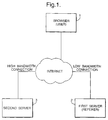
- FIG. 1 illustrates a typical internet configuration wherein a user is connected to the internet and uses the WWW service using a browser 1.
- a request for an HTML file must be transmitted by the browser 1 to the WWW server 2.
- the file is identified by a universal resource locator (URL).
- the URL is structured to identify the protocol (which in this case is HTTP), the internet server, the directory of the file in the internet server and the file name.
- HTTP universal resource locator
- the browser 1 When a URL is selected by a user, the browser 1 transmits a file request over the internet to the first server 2 which has the address identified in the URL of the file requested in a HTML file. The first server 2 will then send the HTML file to the browser 1. The browser 1 then interprets the HTML file in order to generate a web page.
- the HTML specification allows for text to be displayed and for hypertext links to be included in the web page.
- the HTML protocol allows graphics or image files to be included in the web page displayed by the browser 1.
- the HTML protocol thus allows for image files which are to be displayed by the browser 1 to be identified by their URL.
- the browser 1 interprets the HTML file returned from the first server 2, if the HTML file includes image URL's, the browser 1 will seek to retrieve the image files using the URL of the image file.
- the image or graphics files are retrieved separately to the HTML file and when a web page is displayed by the browser 1, the graphics included in the web page can take longer to display as the file is retrieved after the HTML file.
- the image file required to complete the web page is identified by a URL there is no requirement for the image file to be located at the first server 2 which supplied the HTML file. Because image or graphics files can be quite large files, the transmission of such files over the internet can take a significant period of time when transmitted over a route with a relatively limited data rate.
- the ability of a browser 1 to locate and retrieve image or graphics files which are referred to in the web page and which are located anywhere in the internet allows an internet server providing web pages to utilize this to avoid having to store image or graphics files required to complete the web page created by the HTML file. Further, such a first server can be connected to the internet over a low bandwidth connection without risking a bottleneck.
- a second server 3 in the internet which has a high storage and processor capacity which hosts the graphics or image files referred to in the web page is thus the subject of bandwidth-consuming graphic file requests from the browser.
- Such a second server 3 can for instance be an internet server which is connected to the internet over a high bandwidth connection.
- Figure 2 illustrates in more detail a method of operation when such a system of referring to graphics pages at another server is used.
- a URL for an HTML file is input or selected by a user in step S1.
- the browser requests connection to the server identified in the URL in step S2 and in step S3 the browser connects to the server.
- the browser then sends a request for the HTML file in step S4 and in step S5 the server sends the HTML file which is then interpreted by the browser in step S6.
- the web page generated by the interpretation of the HTML file is then displayed in step S7. At this point the web page will include only the text and the hypertext links.
- step S8 the browser determines whether the HTML file refers to any image URLs. If not, the browser will await to determine whether any URL is selected for instance using the hypertext links in step S9.
- step S9 the browser returns to step S2 to request a connection to the same or another server. If no new URL is selected the browser will end requesting files in step S10.
- step S8 it is determined that the HTML file refers to image or graphics URLs
- step S11 the browser requests connection to the second server 3 (or other servers) identified in the URL of the image file.
- step S12 the browser connects to the second server 3 (or other servers) and in step S13 the browser 1 sends a request for the image file.
- the second server 3 then sends the requested image file in step S14 and in step S15 the browser displays the image file within the web page.
- Step S8 and steps S11 to S15 will be carried out simultaneously to retrieve as many image files as are required, i.e. referred to in the HTML file, in order to complete the web page.
- the ability of the HTML protocol to allow an HTML file to refer to image files at any server connected to the internet using the URL allows the first server 2 to make use of image or graphics files in the second server 3 thus reducing the cost of storage at the first server 2.
- the first server requires less processing time and less bandwidth to deliver the complete web page to the browser 1.
- the development of web pages by the operator of the first server 2 is easier and cheaper, since there is no need for the operator to create custom artwork. They are simply able to use images available on other servers.
- a tool kit for enhancing WWW protocols, including security, is described in Computer Networks and ISDN Systems, vol. 27, no 6, April 1995, pages 765 - 771; Lewontin S.: "The DCE Web toolkit: enhancing WWW protocols with lower-layer services”.
- the present invention provides a method of operating a file server comprising the steps of
- the present invention therefore allows the control of access to image or graphics files, or any other high bandwidth files such as digitized sounds or movies.
- the file request may be a hypertext transfer protocol file request from a web browser over the internet and the identification signal may identify a web page from which the file request was made.
- the file to be transmitted is then transmitted to the web browser of the user.
- the file sent to a user may be customised by a server, thus customising the web page displayed by a user's browser, in dependence upon the route taken in arriving at the web page to be displayed i.e. in dependence upon the previous web page.
- the present invention provides a file server comprising:
- the HTTP protocol provides that the URL of the HTML file which refers to any image or digitised sound file is included as a 'referrer' address when a request for a file is made to an internet server. Also, the address of the web page is included as a referrer address when a further web page is requested i.e. a further HTML file is requested, using the hypertext links in the web page.
- a file request is made to an internet server
- most commercial web browsers e.g. Netscape (trade mark) will comply with the HTTP protocol and will transmit the URL for the web page currently being interpreted by the browser.
- the referrer address or URL can be used to identify the route taken in requesting the file from the internet server.
- a second server is able to control access to the requested files. This enables the second server to prevent the files being sent. Instead a warning message can be sent, warning that access to the file has been denied.
- the ability of a second server to identify the originating server allows an operator of a second server to require an operator of a first server to subscribe to allow access to files.
- the details on the access allowed to the originating server can be stored in a second server to allow the second server to determine at what level access should be allowed to what files.
- the referrer details transmitted with the file request may inform the server of the web page from which a file request is being made.
- the server is able to identify from which web page the HTML file request is made and customise the HTML file accordingly. For instance, if the browser requests a HTML file and generates a web page which includes details of a company, the details which are to be displayed can be tailored in dependence upon the current web page being displayed by the browser which could for instance be financial information.
- the HTML file then transmitted to the browser could be selected from amongst a library of HTML files or specifically generated or tailored to suit the originating web page.
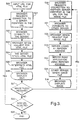
- FIG. 3 illustrates one general method in accordance with the present invention.
- step S20 a URL for a HTML file is input or selected by a user from the browser.
- the browser requests connection to a server identified in the URL in step S21 and in step S22 the browser connects to the server.
- the browser then sends a request for the HTML file in step S23 and the server sends the HTML file in step S24.
- the browser interprets the HTML file in step S25 and displays the web page in step S26. At this point the web page will include only the text and hypertext links.
- step S27 it is then determined whether the HTML file refers to any URL's for image files or sound files in step S27.
- the browser will determine whether there is a new URL selected in step S28 either manually or via a hypertext link. If a new URL is selected the browser returns to step S21 to request connection to a server. If no new URL is selected the browser will end requesting files in step S29.
- step S30 the browser requests connection to another server or servers identified in the URL for the image file.
- the browser then connects to the other server (or servers) in step S31 and in step S32 the browser sends a request for the image file.
- the request for a file includes referrer details which is the URL of the HTML file from which the request originated.
- step S33 the server looks at this referrer address and decides what file to send to the browser using the referrer address in step S34. Once the server has decided what file to send to the browser in step S35 the server sends the image file which is then displayed in the web page by the browser in step S36.
- Steps S27 and S30 to S36 are carried out with one or more servers to acquire all of the image files necessary in order to complete the web page.
- a web page refers to image files in another server for completing the web page displayed by the browser.
- the server which receives the request for the image file can determine the origin of the request i.e. which is the originating server, and can thus decide whether access to the image file is allowed.
- step S34 is shown in more detail by steps S34A, S34B and S34C.
- step S34A the server compares the referrer address with the allowed addresses i.e. the server stores a table of server addresses identifying the files which the servers are allowed access to.
- step S34B it is determined whether access is allowed or not. If access is allowed in step S35 the server sends the requested image file. If however in step S34B it is determined that access is not allowed, then the server will send a dummy file for display by the web page in step S34C.
- a dummy file can include a warning that access to the requested image file has not been allowed.
- the file is a sound file, instead of the requested digitized sound, a sound file transmitted could include a simple audio warning or statement that access to the requested file has been denied.
- a benefit of transmitting a dummy file instead of the requested file is that the size of the dummy file can be considerably smaller than the size of the requested file e.g. 1 Kbyte as opposed to 10's to 100's of Kbytes. This provides a bandwidth saving for the server.
- a server is able to control access to its files over the internet. If a server is accessed directly e.g. by typing in a URL, then there will be no referrer address sent. In this case, the server can recognise that no referrer address has been sent and allow a predetermined level of access to files. For instance, a URL which has been directly entered could be a URL for an image file i.e. the user is attempting to directly down load an image file from the server. It can thus be predetermined whether such direct access is allowed by setting the level of access to files for file requests which do not have a referrer address associated with them.
- a server containing image files which can either be directly accessed or referred to by other servers, to identify the origin of the request for a file allows the server to provide a subscription service for access to files.
- the server can i be segregated into areas that provide images for any subscriber, one particular subscriber only, subscribers paying for enhanced package, or anyone i.e. a free service.
- This control will also be beneficial to server owners who refer to other servers for files since owners of the servers containing the files would be encouraged to develop the library of files available to subscribers. Not all server ) owners would therefore need to generate their own library but can simply subscribe to the servers containing the desired files thereby gaining access to a large range of images, movies and sounds etc which can be incorporated into their web pages.
- This system also provides a platform for providing copyright protected images and sounds allowing authors or artists payment for their work. Further, the distribution of services over the internet in this manner allows for the efficient use of the internet since the server providing the files to a referrer can be connected to the internet over a high bandwidth connection thus allowing other servers to be connected over low bandwidth connections. This makes efficient use of internet connections and avoids bottlenecks.
- step S40 the URL for the HTML file is input or selected by the user via the browser.
- the browser requests connection to a server identified in the URL in step S41 and the browser connects to the server in step S42.
- the browser sends a request for the HTML file in step S43 and the server sends the HTML file in step S44.
- the browser interprets the HTML file in step S45 and in step S46 the browser displays the web page.
- the web page displayed in step S46 will include text and hypertext links.
- images can be included in the web page and can be retrieved from a server in a manner described hereinabove with reference to either the prior art Figure 2, or Figures 3 or 4.
- step S47 it is determined whether another HTML file is requested by a user who has selected a hypertext link in the web page. If another HTML file is requested, the HTML file has a URL and in step S50 the browser requests connection to another server identified in the URL. The browser then connects to the other server in step S51 and in step S52 the browser sends a request for the HTML file. The server then looks at the referrer address which refers to the URL of the HTML file which is currently being displayed by the web page (step S46) and the server runs an application using the referrer address in step S54 and in step S55 the server generates a HTML file which is then sent in step S56 to the browser. The browser can then interpret the HTML file in step S45 and display a new web page in step S46.
- the server since the server refers to the referrer address to determine which application to run, the HTML file sent to the browser can be customised in dependence upon the web page from which the request for a new web page was made.
- the server runs an application which takes in the referrer address and generates a new HTML file.
- Figure 6 an alternative method of sending a customised HTML file to the browser is illustrated in Figure 6.
- step S55 i.e. the generation of an HTML file is replaced with a step S57 of looking up an appropriate HTML file from a library of stored HTML files for referrer addresses.
- FIG. 7 shows an internet server 3 according to the invention.
- the internet server 3 has an input 301 for receiving via the internet a file request from a user, for instance by means of a browser 1.
- the file request is passed to an identification signal determiner 302 which determines if the file request includes an identification signal identifying the origin of the file request. For instance, if the file request conforms to the hypertext transfer protocol, the file request may include the URL of the page being displayed on the user's screen. This URL is the identification signal determined by the unit 302.
- a comparator 304 then compares the identified identification signal in the input file request with predetermined identification signals stored in a store 306. Whether or not there is a match will determine which file stored in the file store 308 is transmitted to the user.
- the comparator 304 and the decision means 310 are controlled by a control unit 312.
- the comparator 301 informs the decision means 310 of the result of the comparison.
- the decision means 310 then interrogates the store 306 to determine to which files access is allowed. If access to the requested file is allowed, the file is retrieved from the file store 308 and then transmitted to the user via an output 314 and the internet.
- the control of the decision means 310 has been described at length with reference to Figures 3 to 6.
- the functional elements of the internet server may be implemented in hardware or software or a combination of both.
- internet is used generically and refers not only to an international interconnected network of computers and servers but also to other interconnected networks, for instance so-called intranets - interconnected networks internal to an organisation.
- web is not intended to limit implementation of the invention to WWW applications. The invention may also be applicable to FTP (File Transfer Protocol) and Telnet applications and other such future applications. This list is not intended to be exhaustive.
Landscapes
- Engineering & Computer Science (AREA)
- Theoretical Computer Science (AREA)
- Databases & Information Systems (AREA)
- Physics & Mathematics (AREA)
- General Engineering & Computer Science (AREA)
- General Physics & Mathematics (AREA)
- Data Mining & Analysis (AREA)
- Computer Security & Cryptography (AREA)
- Software Systems (AREA)
- Computer Hardware Design (AREA)
- Information Transfer Between Computers (AREA)
- Information Retrieval, Db Structures And Fs Structures Therefor (AREA)
- Computer And Data Communications (AREA)
Description
http://internet server/directory/file name
Claims (18)
- A method of operating a file server comprising the steps ofreceiving a request for a file;determining if the file request includes an identification signal identifying an originating file from which said file request originated;comparing any said identification signal with one or more predetermined identification signals; anddeciding which file if any is to be supplied in dependence upon said determining and comparing steps, and if in the deciding step it is decided that a file is to be supplied, supplying said file.
- A method as claimed in claim 1 wherein said supplied file is supplied only if any said identification signal matches a said predetermined identification signal.
- A method as claimed in claim 1 or claim 2 wherein said file supplied is said file requested.
- A method as claimed in any one of claims 1 to 3 wherein if any said identification signal does not match a said predetermined identification signal, said file supplied is a dummy file.
- A method as claimed in one of claims 1 to 4 wherein a look-up table contains said one or more predetermined identification signals and identifies one or more files which can be supplied in accordance with the or each predetermined identification signal.
- A method as claimed in claim 1 wherein said deciding step further comprises generating a file for supply.
- A method as claimed in one of claims 1 to 6 wherein said file request conforms to the hypertext transfer protocol.
- A method as claimed in claim 7 wherein any said identification signal comprises the universal resource location address for said originating file from which the file request originated.
- A method as claimed in any one of claims 1 to 8 in which said file server is connected to the internet and wherein said file request is received via the internet.
- A file server comprisingreceiving means for receiving a file request;determining means for determining if the file request includes an identification signal identifying an orginating file from which said file request originated;comparison means for comparing any said identification signal with one or more predetermined identification signals;decision means responsive to said determining means and said comparison means for deciding which file if any is to be supplied; andan output for supplying a file if said decision means decides that a file is to be supplied.
- A file server as claimed in claim 10 wherein said decision means is adapted to decide that a file is to be supplied only if any said identification signal matches a said predetermined identification signal.
- A file server as claimed in claim 10 or claim 11 wherein said decision means is adapted to decide that the file requested is to be supplied if any said identification signal matches a said predetermined identification signal.
- A file server as claimed in any one of claims 10 to 12 wherein if any said identification signal does not match a said predetermined identification signal, a dummy file is supplied.
- A file server as claimed in any one of claims 10 to 13 further comprising storage means for storing a look-up table containing said one or more predetermined identification signals, said look-up table identifying one or more files which can be supplied in accordance with the or each predetermined identification signal.
- A file server as claimed in claim 10 wherein said deciding means further comprises generating means for generating a file for supply.
- A file server as claimed in any one of claims 10 to 15 wherein the receiving means is adapted to receive file requests conforming to the hypertext transfer protocol.
- A file server as claimed in any of claim 16 wherein said identification signal and said predetermined identification signal comprise the universal resource address location for said originating file from which said file request originated.
- A file server as claimed in any one of claims 10 to 17 in which said file server is connected to the internet and wherein said receiving means is adapted to receive said file request via the internet.
Applications Claiming Priority (3)
| Application Number | Priority Date | Filing Date | Title |
|---|---|---|---|
| GBGB9607152.7A GB9607152D0 (en) | 1996-04-04 | 1996-04-04 | An internet server and method of controlling an internet server |
| GB9607152 | 1996-04-04 | ||
| PCT/GB1997/000835 WO1997038375A1 (en) | 1996-04-04 | 1997-03-25 | An internet server and method of controlling an internet server |
Publications (2)
| Publication Number | Publication Date |
|---|---|
| EP0891591A1 EP0891591A1 (en) | 1999-01-20 |
| EP0891591B1 true EP0891591B1 (en) | 2000-02-09 |
Family
ID=10791629
Family Applications (1)
| Application Number | Title | Priority Date | Filing Date |
|---|---|---|---|
| EP97914435A Expired - Lifetime EP0891591B1 (en) | 1996-04-04 | 1997-03-25 | An internet server and method of controlling an internet server |
Country Status (7)
| Country | Link |
|---|---|
| EP (1) | EP0891591B1 (en) |
| JP (1) | JP2000508447A (en) |
| AU (1) | AU2168297A (en) |
| CA (1) | CA2250238C (en) |
| DE (1) | DE69701280T2 (en) |
| GB (1) | GB9607152D0 (en) |
| WO (1) | WO1997038375A1 (en) |
Families Citing this family (2)
| Publication number | Priority date | Publication date | Assignee | Title |
|---|---|---|---|---|
| JP2001154984A (en) * | 1999-11-16 | 2001-06-08 | Alchemedia Ltd | Method and system for protecting copyright of digital image transmitted through network |
| FR2843465B1 (en) * | 2002-08-06 | 2005-07-01 | Checkflow | METHOD FOR COMMUNICATING BETWEEN APPLICATIONS TO SECURE ACCESS TO APPLICATION DATA |
-
1996
- 1996-04-04 GB GBGB9607152.7A patent/GB9607152D0/en active Pending
-
1997
- 1997-03-25 CA CA002250238A patent/CA2250238C/en not_active Expired - Fee Related
- 1997-03-25 DE DE69701280T patent/DE69701280T2/en not_active Expired - Lifetime
- 1997-03-25 JP JP9535939A patent/JP2000508447A/en active Pending
- 1997-03-25 AU AU21682/97A patent/AU2168297A/en not_active Abandoned
- 1997-03-25 EP EP97914435A patent/EP0891591B1/en not_active Expired - Lifetime
- 1997-03-25 WO PCT/GB1997/000835 patent/WO1997038375A1/en not_active Ceased
Also Published As
| Publication number | Publication date |
|---|---|
| CA2250238C (en) | 2002-08-20 |
| DE69701280D1 (en) | 2000-03-16 |
| CA2250238A1 (en) | 1997-10-16 |
| GB9607152D0 (en) | 1996-06-12 |
| EP0891591A1 (en) | 1999-01-20 |
| AU2168297A (en) | 1997-10-29 |
| WO1997038375A1 (en) | 1997-10-16 |
| DE69701280T2 (en) | 2000-08-31 |
| JP2000508447A (en) | 2000-07-04 |
Similar Documents
| Publication | Publication Date | Title |
|---|---|---|
| US6081835A (en) | Internet server and method of controlling an internet server | |
| US5781901A (en) | Transmitting electronic mail attachment over a network using a e-mail page | |
| US6209048B1 (en) | Peripheral with integrated HTTP server for remote access using URL's | |
| US5903723A (en) | Method and apparatus for transmitting electronic mail attachments with attachment references | |
| US6959318B1 (en) | Method of proxy-assisted predictive pre-fetching with transcoding | |
| US5771355A (en) | Transmitting electronic mail by either reference or value at file-replication points to minimize costs | |
| US6757711B2 (en) | Method and apparatus for delivering data | |
| EP1088427B1 (en) | System and method for security of code | |
| US6704797B1 (en) | Method and system for distributing image-based content on the internet | |
| KR100307374B1 (en) | Filtered utilization of internet data transfers to reduce delay and increase user control | |
| US6343323B1 (en) | Resource retrieval over a source network determined by checking a header of the requested resource for access restrictions | |
| US6038603A (en) | Processing customized uniform resource locators | |
| JP3733218B2 (en) | RELAY DEVICE, ITS CONTROL METHOD, AND STORAGE MEDIUM | |
| US6405240B1 (en) | Data transfer method | |
| EP1130524A2 (en) | System and method for efficient content delivery | |
| EP1779636B1 (en) | Techniques for upstream failure detection and failure recovery | |
| US20030139934A1 (en) | Requesting and providing services via a registry | |
| US20050066196A1 (en) | Information processing apparatus, session recovery method, recording medium for storing session recovery program | |
| US20050044146A1 (en) | Protection of the distribution of digital documents in a peer to peer network | |
| KR980004094A (en) | Method and apparatus for providing proxies and transcoding of documents in distributed computer networks | |
| JP2000508153A (en) | General-purpose user authentication method for network computers | |
| HK1039192A1 (en) | A method and a system for transmitting a cookie | |
| JP2001117809A (en) | Media conversion method and storage medium | |
| JP2003536120A (en) | Apparatus and method for preventing unauthorized copying and distribution of electronic messages transmitted over a network | |
| US20040204073A1 (en) | Network technology augmented user device framework |
Legal Events
| Date | Code | Title | Description |
|---|---|---|---|
| PUAI | Public reference made under article 153(3) epc to a published international application that has entered the european phase |
Free format text: ORIGINAL CODE: 0009012 |
|
| 17P | Request for examination filed |
Effective date: 19980918 |
|
| AK | Designated contracting states |
Kind code of ref document: A1 Designated state(s): DE FR GB IE IT NL |
|
| GRAG | Despatch of communication of intention to grant |
Free format text: ORIGINAL CODE: EPIDOS AGRA |
|
| 17Q | First examination report despatched |
Effective date: 19990301 |
|
| GRAG | Despatch of communication of intention to grant |
Free format text: ORIGINAL CODE: EPIDOS AGRA |
|
| GRAG | Despatch of communication of intention to grant |
Free format text: ORIGINAL CODE: EPIDOS AGRA |
|
| GRAH | Despatch of communication of intention to grant a patent |
Free format text: ORIGINAL CODE: EPIDOS IGRA |
|
| GRAH | Despatch of communication of intention to grant a patent |
Free format text: ORIGINAL CODE: EPIDOS IGRA |
|
| GRAA | (expected) grant |
Free format text: ORIGINAL CODE: 0009210 |
|
| AK | Designated contracting states |
Kind code of ref document: B1 Designated state(s): DE FR GB IE IT NL |
|
| REF | Corresponds to: |
Ref document number: 69701280 Country of ref document: DE Date of ref document: 20000316 |
|
| ITF | It: translation for a ep patent filed | ||
| REG | Reference to a national code |
Ref country code: IE Ref legal event code: FG4D |
|
| ET | Fr: translation filed | ||
| PLBE | No opposition filed within time limit |
Free format text: ORIGINAL CODE: 0009261 |
|
| STAA | Information on the status of an ep patent application or granted ep patent |
Free format text: STATUS: NO OPPOSITION FILED WITHIN TIME LIMIT |
|
| 26N | No opposition filed | ||
| REG | Reference to a national code |
Ref country code: GB Ref legal event code: IF02 |
|
| PGFP | Annual fee paid to national office [announced via postgrant information from national office to epo] |
Ref country code: IE Payment date: 20020120 Year of fee payment: 6 |
|
| PGFP | Annual fee paid to national office [announced via postgrant information from national office to epo] |
Ref country code: NL Payment date: 20020225 Year of fee payment: 6 |
|
| PG25 | Lapsed in a contracting state [announced via postgrant information from national office to epo] |
Ref country code: IE Free format text: LAPSE BECAUSE OF NON-PAYMENT OF DUE FEES Effective date: 20030325 |
|
| PG25 | Lapsed in a contracting state [announced via postgrant information from national office to epo] |
Ref country code: NL Free format text: LAPSE BECAUSE OF NON-PAYMENT OF DUE FEES Effective date: 20031001 |
|
| NLV4 | Nl: lapsed or anulled due to non-payment of the annual fee |
Effective date: 20031001 |
|
| REG | Reference to a national code |
Ref country code: IE Ref legal event code: MM4A |
|
| REG | Reference to a national code |
Ref country code: FR Ref legal event code: PLFP Year of fee payment: 19 |
|
| PGFP | Annual fee paid to national office [announced via postgrant information from national office to epo] |
Ref country code: FR Payment date: 20150116 Year of fee payment: 19 |
|
| PGFP | Annual fee paid to national office [announced via postgrant information from national office to epo] |
Ref country code: IT Payment date: 20160224 Year of fee payment: 20 Ref country code: DE Payment date: 20160226 Year of fee payment: 20 |
|
| PGFP | Annual fee paid to national office [announced via postgrant information from national office to epo] |
Ref country code: GB Payment date: 20160921 Year of fee payment: 20 |
|
| REG | Reference to a national code |
Ref country code: FR Ref legal event code: ST Effective date: 20161130 |
|
| PG25 | Lapsed in a contracting state [announced via postgrant information from national office to epo] |
Ref country code: FR Free format text: LAPSE BECAUSE OF NON-PAYMENT OF DUE FEES Effective date: 20160331 |
|
| REG | Reference to a national code |
Ref country code: DE Ref legal event code: R071 Ref document number: 69701280 Country of ref document: DE |
|
| REG | Reference to a national code |
Ref country code: GB Ref legal event code: PE20 Expiry date: 20170324 |
|
| PG25 | Lapsed in a contracting state [announced via postgrant information from national office to epo] |
Ref country code: GB Free format text: LAPSE BECAUSE OF EXPIRATION OF PROTECTION Effective date: 20170324 |