EP0888130B1 - New ternary radiopharmaceutical complexes - Google Patents
New ternary radiopharmaceutical complexes Download PDFInfo
- Publication number
- EP0888130B1 EP0888130B1 EP97915928A EP97915928A EP0888130B1 EP 0888130 B1 EP0888130 B1 EP 0888130B1 EP 97915928 A EP97915928 A EP 97915928A EP 97915928 A EP97915928 A EP 97915928A EP 0888130 B1 EP0888130 B1 EP 0888130B1
- Authority
- EP
- European Patent Office
- Prior art keywords
- group
- independently selected
- substituted
- occurrence
- hydrogen
- Prior art date
- Legal status (The legal status is an assumption and is not a legal conclusion. Google has not performed a legal analysis and makes no representation as to the accuracy of the status listed.)
- Expired - Lifetime
Links
- 239000012217 radiopharmaceutical Substances 0.000 title claims abstract description 133
- 229940121896 radiopharmaceutical Drugs 0.000 title claims abstract description 133
- 230000002799 radiopharmaceutical effect Effects 0.000 title claims abstract description 133
- 239000003446 ligand Substances 0.000 claims abstract description 130
- 238000002360 preparation method Methods 0.000 claims abstract description 32
- 239000002738 chelating agent Substances 0.000 claims abstract description 28
- 230000000087 stabilizing effect Effects 0.000 claims abstract description 4
- SEQKRHFRPICQDD-UHFFFAOYSA-N N-tris(hydroxymethyl)methylglycine Chemical compound OCC(CO)(CO)[NH2+]CC([O-])=O SEQKRHFRPICQDD-UHFFFAOYSA-N 0.000 claims description 75
- 125000000623 heterocyclic group Chemical group 0.000 claims description 38
- UZMAPBJVXOGOFT-UHFFFAOYSA-N Syringetin Natural products COC1=C(O)C(OC)=CC(C2=C(C(=O)C3=C(O)C=C(O)C=C3O2)O)=C1 UZMAPBJVXOGOFT-UHFFFAOYSA-N 0.000 claims description 37
- 239000007997 Tricine buffer Substances 0.000 claims description 37
- KCFYHBSOLOXZIF-UHFFFAOYSA-N dihydrochrysin Natural products COC1=C(O)C(OC)=CC(C2OC3=CC(O)=CC(O)=C3C(=O)C2)=C1 KCFYHBSOLOXZIF-UHFFFAOYSA-N 0.000 claims description 37
- 125000004429 atom Chemical group 0.000 claims description 36
- 125000003118 aryl group Chemical group 0.000 claims description 35
- 239000003153 chemical reaction reagent Substances 0.000 claims description 33
- 229910052739 hydrogen Inorganic materials 0.000 claims description 31
- 239000001257 hydrogen Substances 0.000 claims description 31
- 230000027455 binding Effects 0.000 claims description 29
- 229910052799 carbon Inorganic materials 0.000 claims description 29
- 108090000765 processed proteins & peptides Proteins 0.000 claims description 26
- 102000004196 processed proteins & peptides Human genes 0.000 claims description 24
- UFHFLCQGNIYNRP-UHFFFAOYSA-N Hydrogen Chemical compound [H][H] UFHFLCQGNIYNRP-UHFFFAOYSA-N 0.000 claims description 23
- 108020003175 receptors Proteins 0.000 claims description 20
- 102000005962 receptors Human genes 0.000 claims description 20
- 229910052760 oxygen Inorganic materials 0.000 claims description 18
- 229910006069 SO3H Inorganic materials 0.000 claims description 16
- 239000003638 chemical reducing agent Substances 0.000 claims description 15
- 229910052751 metal Inorganic materials 0.000 claims description 13
- 239000002184 metal Substances 0.000 claims description 13
- 150000003839 salts Chemical class 0.000 claims description 13
- 125000004432 carbon atom Chemical group C* 0.000 claims description 11
- 125000000008 (C1-C10) alkyl group Chemical group 0.000 claims description 10
- 125000006273 (C1-C3) alkyl group Chemical group 0.000 claims description 10
- KXDHJXZQYSOELW-UHFFFAOYSA-N Carbamic acid Chemical compound NC(O)=O KXDHJXZQYSOELW-UHFFFAOYSA-N 0.000 claims description 10
- 125000000217 alkyl group Chemical group 0.000 claims description 10
- 150000001875 compounds Chemical class 0.000 claims description 10
- 239000003814 drug Substances 0.000 claims description 10
- 238000012546 transfer Methods 0.000 claims description 10
- 125000005842 heteroatom Chemical group 0.000 claims description 9
- 101710091342 Chemotactic peptide Proteins 0.000 claims description 8
- 241000124008 Mammalia Species 0.000 claims description 8
- 150000002431 hydrogen Chemical class 0.000 claims description 8
- 239000002464 receptor antagonist Substances 0.000 claims description 8
- 229940044551 receptor antagonist Drugs 0.000 claims description 8
- 230000006641 stabilisation Effects 0.000 claims description 8
- 238000011105 stabilization Methods 0.000 claims description 8
- 238000004108 freeze drying Methods 0.000 claims description 7
- 102000009123 Fibrin Human genes 0.000 claims description 6
- 108010073385 Fibrin Proteins 0.000 claims description 6
- BWGVNKXGVNDBDI-UHFFFAOYSA-N Fibrin monomer Chemical compound CNC(=O)CNC(=O)CN BWGVNKXGVNDBDI-UHFFFAOYSA-N 0.000 claims description 6
- 125000002877 alkyl aryl group Chemical group 0.000 claims description 6
- 239000000872 buffer Substances 0.000 claims description 6
- 230000008021 deposition Effects 0.000 claims description 6
- 229950003499 fibrin Drugs 0.000 claims description 6
- 210000000265 leukocyte Anatomy 0.000 claims description 6
- 125000002496 methyl group Chemical group [H]C([H])([H])* 0.000 claims description 5
- 230000007928 solubilization Effects 0.000 claims description 5
- 238000005063 solubilization Methods 0.000 claims description 5
- 229910052717 sulfur Inorganic materials 0.000 claims description 5
- 125000004169 (C1-C6) alkyl group Chemical group 0.000 claims description 4
- 125000003710 aryl alkyl group Chemical group 0.000 claims description 4
- 125000001301 ethoxy group Chemical group [H]C([H])([H])C([H])([H])O* 0.000 claims description 4
- 102000003800 Selectins Human genes 0.000 claims description 3
- 108090000184 Selectins Proteins 0.000 claims description 3
- 125000000592 heterocycloalkyl group Chemical group 0.000 claims description 3
- AAEVYOVXGOFMJO-UHFFFAOYSA-N prometryn Chemical compound CSC1=NC(NC(C)C)=NC(NC(C)C)=N1 AAEVYOVXGOFMJO-UHFFFAOYSA-N 0.000 claims description 3
- NHXLMOGPVYXJNR-ATOGVRKGSA-N somatostatin Chemical class C([C@H]1C(=O)N[C@H](C(N[C@@H](CO)C(=O)N[C@@H](CSSC[C@@H](C(=O)N[C@@H](CCCCN)C(=O)N[C@@H](CC(N)=O)C(=O)N[C@@H](CC=2C=CC=CC=2)C(=O)N[C@@H](CC=2C=CC=CC=2)C(=O)N[C@@H](CC=2C3=CC=CC=C3NC=2)C(=O)N[C@@H](CCCCN)C(=O)N[C@H](C(=O)N1)[C@@H](C)O)NC(=O)CNC(=O)[C@H](C)N)C(O)=O)=O)[C@H](O)C)C1=CC=CC=C1 NHXLMOGPVYXJNR-ATOGVRKGSA-N 0.000 claims description 3
- 125000006374 C2-C10 alkenyl group Chemical group 0.000 claims description 2
- 125000005865 C2-C10alkynyl group Chemical group 0.000 claims description 2
- 150000001723 carbon free-radicals Chemical class 0.000 claims description 2
- 238000002560 therapeutic procedure Methods 0.000 claims 1
- 208000015181 infectious disease Diseases 0.000 abstract description 14
- 206010028980 Neoplasm Diseases 0.000 abstract description 13
- 201000011510 cancer Diseases 0.000 abstract description 13
- 238000003745 diagnosis Methods 0.000 abstract description 13
- 208000035473 Communicable disease Diseases 0.000 abstract description 9
- 208000024172 Cardiovascular disease Diseases 0.000 abstract description 7
- 239000012216 imaging agent Substances 0.000 abstract description 7
- 229910052723 transition metal Inorganic materials 0.000 abstract description 7
- 150000003624 transition metals Chemical class 0.000 abstract description 7
- 125000005647 linker group Chemical group 0.000 abstract description 3
- 239000000243 solution Substances 0.000 description 50
- 238000000034 method Methods 0.000 description 36
- 230000015572 biosynthetic process Effects 0.000 description 35
- XLYOFNOQVPJJNP-UHFFFAOYSA-N water Substances O XLYOFNOQVPJJNP-UHFFFAOYSA-N 0.000 description 31
- 229910001868 water Inorganic materials 0.000 description 30
- 238000003786 synthesis reaction Methods 0.000 description 27
- FAPWRFPIFSIZLT-UHFFFAOYSA-M Sodium chloride Chemical compound [Na+].[Cl-] FAPWRFPIFSIZLT-UHFFFAOYSA-M 0.000 description 23
- 239000011780 sodium chloride Substances 0.000 description 22
- 239000000306 component Substances 0.000 description 19
- 239000000203 mixture Substances 0.000 description 19
- IJGRMHOSHXDMSA-UHFFFAOYSA-N Atomic nitrogen Chemical compound N#N IJGRMHOSHXDMSA-UHFFFAOYSA-N 0.000 description 18
- 239000011541 reaction mixture Substances 0.000 description 18
- -1 antibodies Proteins 0.000 description 17
- 238000004128 high performance liquid chromatography Methods 0.000 description 17
- 238000009007 Diagnostic Kit Methods 0.000 description 16
- 229910021626 Tin(II) chloride Inorganic materials 0.000 description 16
- 229910052713 technetium Inorganic materials 0.000 description 16
- GKLVYJBZJHMRIY-UHFFFAOYSA-N technetium atom Chemical compound [Tc] GKLVYJBZJHMRIY-UHFFFAOYSA-N 0.000 description 16
- 208000037265 diseases, disorders, signs and symptoms Diseases 0.000 description 15
- AXZWODMDQAVCJE-UHFFFAOYSA-L tin(II) chloride (anhydrous) Chemical compound [Cl-].[Cl-].[Sn+2] AXZWODMDQAVCJE-UHFFFAOYSA-L 0.000 description 14
- 238000003384 imaging method Methods 0.000 description 13
- 201000010099 disease Diseases 0.000 description 12
- RAXXELZNTBOGNW-UHFFFAOYSA-N imidazole Natural products C1=CNC=N1 RAXXELZNTBOGNW-UHFFFAOYSA-N 0.000 description 12
- 238000009472 formulation Methods 0.000 description 11
- 229910052757 nitrogen Inorganic materials 0.000 description 11
- 235000018102 proteins Nutrition 0.000 description 10
- 102000004169 proteins and genes Human genes 0.000 description 10
- 108090000623 proteins and genes Proteins 0.000 description 10
- WEVYAHXRMPXWCK-UHFFFAOYSA-N Acetonitrile Chemical group CC#N WEVYAHXRMPXWCK-UHFFFAOYSA-N 0.000 description 9
- XLYOFNOQVPJJNP-ZSJDYOACSA-N heavy water Substances [2H]O[2H] XLYOFNOQVPJJNP-ZSJDYOACSA-N 0.000 description 9
- 238000002372 labelling Methods 0.000 description 9
- 208000007536 Thrombosis Diseases 0.000 description 8
- MYMOFIZGZYHOMD-UHFFFAOYSA-N Dioxygen Chemical compound O=O MYMOFIZGZYHOMD-UHFFFAOYSA-N 0.000 description 7
- 238000006243 chemical reaction Methods 0.000 description 7
- 229910001882 dioxygen Inorganic materials 0.000 description 7
- 201000001320 Atherosclerosis Diseases 0.000 description 6
- GKLVYJBZJHMRIY-OUBTZVSYSA-N Technetium-99 Chemical compound [99Tc] GKLVYJBZJHMRIY-OUBTZVSYSA-N 0.000 description 6
- 208000001435 Thromboembolism Diseases 0.000 description 6
- QVGXLLKOCUKJST-UHFFFAOYSA-N atomic oxygen Chemical compound [O] QVGXLLKOCUKJST-UHFFFAOYSA-N 0.000 description 6
- 230000000694 effects Effects 0.000 description 6
- 238000002347 injection Methods 0.000 description 6
- 239000007924 injection Substances 0.000 description 6
- 239000001301 oxygen Substances 0.000 description 6
- 229920001184 polypeptide Polymers 0.000 description 6
- FVAUCKIRQBBSSJ-UHFFFAOYSA-M sodium iodide Chemical compound [Na+].[I-] FVAUCKIRQBBSSJ-UHFFFAOYSA-M 0.000 description 6
- 239000000126 substance Substances 0.000 description 6
- 229940056501 technetium 99m Drugs 0.000 description 6
- OAKJQQAXSVQMHS-UHFFFAOYSA-N Hydrazine Chemical compound NN OAKJQQAXSVQMHS-UHFFFAOYSA-N 0.000 description 5
- 102000008394 Immunoglobulin Fragments Human genes 0.000 description 5
- 108010021625 Immunoglobulin Fragments Proteins 0.000 description 5
- NINIDFKCEFEMDL-UHFFFAOYSA-N Sulfur Chemical group [S] NINIDFKCEFEMDL-UHFFFAOYSA-N 0.000 description 5
- 239000008280 blood Substances 0.000 description 5
- 239000012503 blood component Substances 0.000 description 5
- 239000006227 byproduct Substances 0.000 description 5
- 239000003480 eluent Substances 0.000 description 5
- 125000000717 hydrazino group Chemical group [H]N([*])N([H])[H] 0.000 description 5
- 238000001802 infusion Methods 0.000 description 5
- 230000003993 interaction Effects 0.000 description 5
- 125000001424 substituent group Chemical group 0.000 description 5
- 210000001519 tissue Anatomy 0.000 description 5
- BKAWJIRCKVUVED-UHFFFAOYSA-N 5-(2-hydroxyethyl)-4-methylthiazole Chemical compound CC=1N=CSC=1CCO BKAWJIRCKVUVED-UHFFFAOYSA-N 0.000 description 4
- KUEFXPHXHHANKS-UHFFFAOYSA-N 5-nitro-1h-1,2,4-triazole Chemical compound [O-][N+](=O)C1=NC=NN1 KUEFXPHXHHANKS-UHFFFAOYSA-N 0.000 description 4
- 241000282465 Canis Species 0.000 description 4
- OKTJSMMVPCPJKN-UHFFFAOYSA-N Carbon Chemical compound [C] OKTJSMMVPCPJKN-UHFFFAOYSA-N 0.000 description 4
- 206010061218 Inflammation Diseases 0.000 description 4
- XJWPISBUKWZALE-UHFFFAOYSA-N N-acetylhistamine Chemical compound CC(=O)NCCC1=CN=CN1 XJWPISBUKWZALE-UHFFFAOYSA-N 0.000 description 4
- SMWDFEZZVXVKRB-UHFFFAOYSA-N Quinoline Chemical compound N1=CC=CC2=CC=CC=C21 SMWDFEZZVXVKRB-UHFFFAOYSA-N 0.000 description 4
- 230000004872 arterial blood pressure Effects 0.000 description 4
- 210000004369 blood Anatomy 0.000 description 4
- 150000001721 carbon Chemical group 0.000 description 4
- 239000003795 chemical substances by application Substances 0.000 description 4
- 230000004054 inflammatory process Effects 0.000 description 4
- 230000004807 localization Effects 0.000 description 4
- 238000004519 manufacturing process Methods 0.000 description 4
- 239000000816 peptidomimetic Substances 0.000 description 4
- 239000000376 reactant Substances 0.000 description 4
- 239000000523 sample Substances 0.000 description 4
- 238000002603 single-photon emission computed tomography Methods 0.000 description 4
- 239000002904 solvent Substances 0.000 description 4
- 239000011593 sulfur Substances 0.000 description 4
- 230000002194 synthesizing effect Effects 0.000 description 4
- 0 *CCc1ccncc1 Chemical compound *CCc1ccncc1 0.000 description 3
- FFYTTYVSDVWNMY-UHFFFAOYSA-N 2-Methyl-5-nitroimidazole Chemical compound CC1=NC=C([N+]([O-])=O)N1 FFYTTYVSDVWNMY-UHFFFAOYSA-N 0.000 description 3
- VWSLLSXLURJCDF-UHFFFAOYSA-N 2-methyl-4,5-dihydro-1h-imidazole Chemical compound CC1=NCCN1 VWSLLSXLURJCDF-UHFFFAOYSA-N 0.000 description 3
- RKJUIXBNRJVNHR-UHFFFAOYSA-N 3H-indole Chemical compound C1=CC=C2CC=NC2=C1 RKJUIXBNRJVNHR-UHFFFAOYSA-N 0.000 description 3
- FBPFZTCFMRRESA-KVTDHHQDSA-N D-Mannitol Chemical compound OC[C@@H](O)[C@@H](O)[C@H](O)[C@H](O)CO FBPFZTCFMRRESA-KVTDHHQDSA-N 0.000 description 3
- RGHNJXZEOKUKBD-SQOUGZDYSA-M D-gluconate Chemical compound OC[C@@H](O)[C@@H](O)[C@H](O)[C@@H](O)C([O-])=O RGHNJXZEOKUKBD-SQOUGZDYSA-M 0.000 description 3
- LFQSCWFLJHTTHZ-UHFFFAOYSA-N Ethanol Chemical compound CCO LFQSCWFLJHTTHZ-UHFFFAOYSA-N 0.000 description 3
- SIKJAQJRHWYJAI-UHFFFAOYSA-N Indole Chemical compound C1=CC=C2NC=CC2=C1 SIKJAQJRHWYJAI-UHFFFAOYSA-N 0.000 description 3
- IPWKIXLWTCNBKN-UHFFFAOYSA-N Madelen Chemical compound CC1=NC=C([N+]([O-])=O)N1CC(O)CCl IPWKIXLWTCNBKN-UHFFFAOYSA-N 0.000 description 3
- 229930195725 Mannitol Natural products 0.000 description 3
- QGMRQYFBGABWDR-UHFFFAOYSA-M Pentobarbital sodium Chemical compound [Na+].CCCC(C)C1(CC)C(=O)NC(=O)[N-]C1=O QGMRQYFBGABWDR-UHFFFAOYSA-M 0.000 description 3
- 239000004698 Polyethylene Substances 0.000 description 3
- DNIAPMSPPWPWGF-UHFFFAOYSA-N Propylene glycol Chemical compound CC(O)CO DNIAPMSPPWPWGF-UHFFFAOYSA-N 0.000 description 3
- RWRDLPDLKQPQOW-UHFFFAOYSA-N Pyrrolidine Chemical compound C1CCNC1 RWRDLPDLKQPQOW-UHFFFAOYSA-N 0.000 description 3
- 108090000190 Thrombin Proteins 0.000 description 3
- 239000007983 Tris buffer Substances 0.000 description 3
- 239000007864 aqueous solution Substances 0.000 description 3
- XSCHRSMBECNVNS-UHFFFAOYSA-N benzopyrazine Natural products N1=CC=NC2=CC=CC=C21 XSCHRSMBECNVNS-UHFFFAOYSA-N 0.000 description 3
- 125000002619 bicyclic group Chemical group 0.000 description 3
- FATUQANACHZLRT-KMRXSBRUSA-L calcium glucoheptonate Chemical compound [Ca+2].OC[C@@H](O)[C@@H](O)[C@H](O)[C@@H](O)C(O)C([O-])=O.OC[C@@H](O)[C@@H](O)[C@H](O)[C@@H](O)C(O)C([O-])=O FATUQANACHZLRT-KMRXSBRUSA-L 0.000 description 3
- 208000035475 disorder Diseases 0.000 description 3
- 230000008030 elimination Effects 0.000 description 3
- 238000003379 elimination reaction Methods 0.000 description 3
- 229940012952 fibrinogen Drugs 0.000 description 3
- 239000012530 fluid Substances 0.000 description 3
- 230000006870 function Effects 0.000 description 3
- 125000000524 functional group Chemical group 0.000 description 3
- 230000005251 gamma ray Effects 0.000 description 3
- 229940050410 gluconate Drugs 0.000 description 3
- 230000014759 maintenance of location Effects 0.000 description 3
- 239000000594 mannitol Substances 0.000 description 3
- 235000010355 mannitol Nutrition 0.000 description 3
- 230000007246 mechanism Effects 0.000 description 3
- VAOCPAMSLUNLGC-UHFFFAOYSA-N metronidazole Chemical compound CC1=NC=C([N+]([O-])=O)N1CCO VAOCPAMSLUNLGC-UHFFFAOYSA-N 0.000 description 3
- 229960002313 ornidazole Drugs 0.000 description 3
- 230000003647 oxidation Effects 0.000 description 3
- 238000007254 oxidation reaction Methods 0.000 description 3
- 229960002275 pentobarbital sodium Drugs 0.000 description 3
- 239000008363 phosphate buffer Substances 0.000 description 3
- 230000000704 physical effect Effects 0.000 description 3
- 229920000573 polyethylene Polymers 0.000 description 3
- 239000013641 positive control Substances 0.000 description 3
- DVECLMOWYVDJRM-UHFFFAOYSA-N pyridine-3-sulfonic acid Chemical compound OS(=O)(=O)C1=CC=CN=C1 DVECLMOWYVDJRM-UHFFFAOYSA-N 0.000 description 3
- 241000894007 species Species 0.000 description 3
- 238000012360 testing method Methods 0.000 description 3
- YLQBMQCUIZJEEH-UHFFFAOYSA-N tetrahydrofuran Natural products C=1C=COC=1 YLQBMQCUIZJEEH-UHFFFAOYSA-N 0.000 description 3
- 229960004072 thrombin Drugs 0.000 description 3
- TXUICONDJPYNPY-UHFFFAOYSA-N (1,10,13-trimethyl-3-oxo-4,5,6,7,8,9,11,12,14,15,16,17-dodecahydrocyclopenta[a]phenanthren-17-yl) heptanoate Chemical compound C1CC2CC(=O)C=C(C)C2(C)C2C1C1CCC(OC(=O)CCCCCC)C1(C)CC2 TXUICONDJPYNPY-UHFFFAOYSA-N 0.000 description 2
- UWYZHKAOTLEWKK-UHFFFAOYSA-N 1,2,3,4-tetrahydroisoquinoline Chemical compound C1=CC=C2CNCCC2=C1 UWYZHKAOTLEWKK-UHFFFAOYSA-N 0.000 description 2
- LBUJPTNKIBCYBY-UHFFFAOYSA-N 1,2,3,4-tetrahydroquinoline Chemical compound C1=CC=C2CCCNC2=C1 LBUJPTNKIBCYBY-UHFFFAOYSA-N 0.000 description 2
- DNCYBUMDUBHIJZ-UHFFFAOYSA-N 1h-pyrimidin-6-one Chemical compound O=C1C=CN=CN1 DNCYBUMDUBHIJZ-UHFFFAOYSA-N 0.000 description 2
- WXTMDXOMEHJXQO-UHFFFAOYSA-N 2,5-dihydroxybenzoic acid Chemical compound OC(=O)C1=CC(O)=CC=C1O WXTMDXOMEHJXQO-UHFFFAOYSA-N 0.000 description 2
- BWLBGMIXKSTLSX-UHFFFAOYSA-M 2-hydroxyisobutyrate Chemical compound CC(C)(O)C([O-])=O BWLBGMIXKSTLSX-UHFFFAOYSA-M 0.000 description 2
- RGIIAYDCZSXHGL-UHFFFAOYSA-N 2-pyridin-4-ylethanesulfonic acid Chemical compound OS(=O)(=O)CCC1=CC=NC=C1 RGIIAYDCZSXHGL-UHFFFAOYSA-N 0.000 description 2
- PECYZEOJVXMISF-UHFFFAOYSA-N 3-aminoalanine Chemical compound [NH3+]CC(N)C([O-])=O PECYZEOJVXMISF-UHFFFAOYSA-N 0.000 description 2
- XPCTZQVDEJYUGT-UHFFFAOYSA-N 3-hydroxy-2-methyl-4-pyrone Chemical compound CC=1OC=CC(=O)C=1O XPCTZQVDEJYUGT-UHFFFAOYSA-N 0.000 description 2
- NYYSPVRERVXMLJ-UHFFFAOYSA-N 4,4-difluorocyclohexan-1-one Chemical compound FC1(F)CCC(=O)CC1 NYYSPVRERVXMLJ-UHFFFAOYSA-N 0.000 description 2
- VRJHQPZVIGNGMX-UHFFFAOYSA-N 4-piperidinone Chemical compound O=C1CCNCC1 VRJHQPZVIGNGMX-UHFFFAOYSA-N 0.000 description 2
- NSPMIYGKQJPBQR-UHFFFAOYSA-N 4H-1,2,4-triazole Chemical compound C=1N=CNN=1 NSPMIYGKQJPBQR-UHFFFAOYSA-N 0.000 description 2
- KDCGOANMDULRCW-UHFFFAOYSA-N 7H-purine Chemical compound N1=CNC2=NC=NC2=C1 KDCGOANMDULRCW-UHFFFAOYSA-N 0.000 description 2
- UJOBWOGCFQCDNV-UHFFFAOYSA-N 9H-carbazole Chemical compound C1=CC=C2C3=CC=CC=C3NC2=C1 UJOBWOGCFQCDNV-UHFFFAOYSA-N 0.000 description 2
- CIWBSHSKHKDKBQ-JLAZNSOCSA-N Ascorbic acid Natural products OC[C@H](O)[C@H]1OC(=O)C(O)=C1O CIWBSHSKHKDKBQ-JLAZNSOCSA-N 0.000 description 2
- QFOHBWFCKVYLES-UHFFFAOYSA-N Butylparaben Chemical compound CCCCOC(=O)C1=CC=C(O)C=C1 QFOHBWFCKVYLES-UHFFFAOYSA-N 0.000 description 2
- 241000282472 Canis lupus familiaris Species 0.000 description 2
- 241000700198 Cavia Species 0.000 description 2
- 241000700199 Cavia porcellus Species 0.000 description 2
- XXAXVMUWHZHZMJ-UHFFFAOYSA-N Chymopapain Chemical compound OC1=CC(S(O)(=O)=O)=CC(S(O)(=O)=O)=C1O XXAXVMUWHZHZMJ-UHFFFAOYSA-N 0.000 description 2
- DSLZVSRJTYRBFB-LLEIAEIESA-L D-glucarate(2-) Chemical compound [O-]C(=O)[C@@H](O)[C@@H](O)[C@H](O)[C@@H](O)C([O-])=O DSLZVSRJTYRBFB-LLEIAEIESA-L 0.000 description 2
- 208000035357 Focal Infection Diseases 0.000 description 2
- PEDCQBHIVMGVHV-UHFFFAOYSA-N Glycerine Chemical compound OCC(O)CO PEDCQBHIVMGVHV-UHFFFAOYSA-N 0.000 description 2
- 102000007625 Hirudins Human genes 0.000 description 2
- 108010007267 Hirudins Proteins 0.000 description 2
- XUJNEKJLAYXESH-REOHCLBHSA-N L-Cysteine Chemical compound SC[C@H](N)C(O)=O XUJNEKJLAYXESH-REOHCLBHSA-N 0.000 description 2
- JVTAAEKCZFNVCJ-UHFFFAOYSA-M Lactate Chemical compound CC(O)C([O-])=O JVTAAEKCZFNVCJ-UHFFFAOYSA-M 0.000 description 2
- 241001465754 Metazoa Species 0.000 description 2
- YNAVUWVOSKDBBP-UHFFFAOYSA-N Morpholine Chemical compound C1COCCN1 YNAVUWVOSKDBBP-UHFFFAOYSA-N 0.000 description 2
- KWYHDKDOAIKMQN-UHFFFAOYSA-N N,N,N',N'-tetramethylethylenediamine Chemical compound CN(C)CCN(C)C KWYHDKDOAIKMQN-UHFFFAOYSA-N 0.000 description 2
- PCNDJXKNXGMECE-UHFFFAOYSA-N Phenazine Natural products C1=CC=CC2=NC3=CC=CC=C3N=C21 PCNDJXKNXGMECE-UHFFFAOYSA-N 0.000 description 2
- OAICVXFJPJFONN-UHFFFAOYSA-N Phosphorus Chemical compound [P] OAICVXFJPJFONN-UHFFFAOYSA-N 0.000 description 2
- GLUUGHFHXGJENI-UHFFFAOYSA-N Piperazine Chemical compound C1CNCCN1 GLUUGHFHXGJENI-UHFFFAOYSA-N 0.000 description 2
- 239000002202 Polyethylene glycol Substances 0.000 description 2
- KYQCOXFCLRTKLS-UHFFFAOYSA-N Pyrazine Chemical compound C1=CN=CC=N1 KYQCOXFCLRTKLS-UHFFFAOYSA-N 0.000 description 2
- JUJWROOIHBZHMG-UHFFFAOYSA-N Pyridine Chemical compound C1=CC=NC=C1 JUJWROOIHBZHMG-UHFFFAOYSA-N 0.000 description 2
- KAESVJOAVNADME-UHFFFAOYSA-N Pyrrole Chemical compound C=1C=CNC=1 KAESVJOAVNADME-UHFFFAOYSA-N 0.000 description 2
- XUIMIQQOPSSXEZ-UHFFFAOYSA-N Silicon Chemical compound [Si] XUIMIQQOPSSXEZ-UHFFFAOYSA-N 0.000 description 2
- WYURNTSHIVDZCO-UHFFFAOYSA-N Tetrahydrofuran Chemical compound C1CCOC1 WYURNTSHIVDZCO-UHFFFAOYSA-N 0.000 description 2
- YTPLMLYBLZKORZ-UHFFFAOYSA-N Thiophene Chemical compound C=1C=CSC=1 YTPLMLYBLZKORZ-UHFFFAOYSA-N 0.000 description 2
- DZBUGLKDJFMEHC-UHFFFAOYSA-N acridine Chemical compound C1=CC=CC2=CC3=CC=CC=C3N=C21 DZBUGLKDJFMEHC-UHFFFAOYSA-N 0.000 description 2
- OIRDTQYFTABQOQ-KQYNXXCUSA-N adenosine Chemical compound C1=NC=2C(N)=NC=NC=2N1[C@@H]1O[C@H](CO)[C@@H](O)[C@H]1O OIRDTQYFTABQOQ-KQYNXXCUSA-N 0.000 description 2
- 150000001412 amines Chemical class 0.000 description 2
- 125000000129 anionic group Chemical group 0.000 description 2
- 235000010323 ascorbic acid Nutrition 0.000 description 2
- 229960005070 ascorbic acid Drugs 0.000 description 2
- 239000011668 ascorbic acid Substances 0.000 description 2
- 239000002975 chemoattractant Substances 0.000 description 2
- 150000001923 cyclic compounds Chemical class 0.000 description 2
- NLUNLVTVUDIHFE-UHFFFAOYSA-N cyclooctylcyclooctane Chemical compound C1CCCCCCC1C1CCCCCCC1 NLUNLVTVUDIHFE-UHFFFAOYSA-N 0.000 description 2
- 235000018417 cysteine Nutrition 0.000 description 2
- XUJNEKJLAYXESH-UHFFFAOYSA-N cysteine Natural products SCC(N)C(O)=O XUJNEKJLAYXESH-UHFFFAOYSA-N 0.000 description 2
- 238000013016 damping Methods 0.000 description 2
- NNBZCPXTIHJBJL-UHFFFAOYSA-N decalin Chemical compound C1CCCC2CCCCC21 NNBZCPXTIHJBJL-UHFFFAOYSA-N 0.000 description 2
- 238000001514 detection method Methods 0.000 description 2
- 229940079593 drug Drugs 0.000 description 2
- 238000001647 drug administration Methods 0.000 description 2
- 210000001105 femoral artery Anatomy 0.000 description 2
- 210000003191 femoral vein Anatomy 0.000 description 2
- WQPDUTSPKFMPDP-OUMQNGNKSA-N hirudin Chemical compound C([C@@H](C(=O)N[C@@H](CCC(O)=O)C(=O)N[C@@H](CCC(O)=O)C(=O)N[C@@H]([C@@H](C)CC)C(=O)N1[C@@H](CCC1)C(=O)N[C@@H](CCC(O)=O)C(=O)N[C@@H](CCC(O)=O)C(=O)N[C@@H](CC=1C=CC(OS(O)(=O)=O)=CC=1)C(=O)N[C@@H](CC(C)C)C(=O)N[C@@H](CCC(N)=O)C(O)=O)NC(=O)[C@H](CC(O)=O)NC(=O)CNC(=O)[C@H](CC(O)=O)NC(=O)[C@H](CC(N)=O)NC(=O)[C@H](CC=1NC=NC=1)NC(=O)[C@H](CO)NC(=O)[C@H](CCC(N)=O)NC(=O)[C@H]1N(CCC1)C(=O)[C@H](CCCCN)NC(=O)[C@H]1N(CCC1)C(=O)[C@@H](NC(=O)CNC(=O)[C@H](CCC(O)=O)NC(=O)CNC(=O)[C@@H](NC(=O)[C@@H](NC(=O)[C@H]1NC(=O)[C@H](CCC(N)=O)NC(=O)[C@H](CC(N)=O)NC(=O)[C@H](CCCCN)NC(=O)[C@H](CCC(O)=O)NC(=O)CNC(=O)[C@H](CC(O)=O)NC(=O)[C@H](CO)NC(=O)CNC(=O)[C@H](CC(C)C)NC(=O)[C@H]([C@@H](C)CC)NC(=O)[C@@H]2CSSC[C@@H](C(=O)N[C@@H](CCC(O)=O)C(=O)NCC(=O)N[C@@H](CO)C(=O)N[C@@H](CC(N)=O)C(=O)N[C@H](C(=O)N[C@H](C(NCC(=O)N[C@@H](CCC(N)=O)C(=O)NCC(=O)N[C@@H](CC(N)=O)C(=O)N[C@@H](CCCCN)C(=O)N2)=O)CSSC1)C(C)C)NC(=O)[C@H](CC(C)C)NC(=O)[C@H]1NC(=O)[C@H](CC(C)C)NC(=O)[C@H](CC(N)=O)NC(=O)[C@H](CCC(N)=O)NC(=O)CNC(=O)[C@H](CO)NC(=O)[C@H](CCC(O)=O)NC(=O)[C@H]([C@@H](C)O)NC(=O)[C@@H](NC(=O)[C@H](CC(O)=O)NC(=O)[C@@H](NC(=O)[C@H](CC=2C=CC(O)=CC=2)NC(=O)[C@@H](NC(=O)[C@@H](N)C(C)C)C(C)C)[C@@H](C)O)CSSC1)C(C)C)[C@@H](C)O)[C@@H](C)O)C1=CC=CC=C1 WQPDUTSPKFMPDP-OUMQNGNKSA-N 0.000 description 2
- 229940006607 hirudin Drugs 0.000 description 2
- 125000005597 hydrazone group Chemical group 0.000 description 2
- 125000004435 hydrogen atom Chemical group [H]* 0.000 description 2
- 150000002466 imines Chemical class 0.000 description 2
- 230000006872 improvement Effects 0.000 description 2
- 238000001727 in vivo Methods 0.000 description 2
- 238000010348 incorporation Methods 0.000 description 2
- 238000002955 isolation Methods 0.000 description 2
- 150000002527 isonitriles Chemical class 0.000 description 2
- AWJUIBRHMBBTKR-UHFFFAOYSA-N isoquinoline Chemical compound C1=NC=CC2=CC=CC=C21 AWJUIBRHMBBTKR-UHFFFAOYSA-N 0.000 description 2
- 210000004731 jugular vein Anatomy 0.000 description 2
- TYQCGQRIZGCHNB-JLAZNSOCSA-N l-ascorbic acid Chemical compound OC[C@H](O)[C@H]1OC(O)=C(O)C1=O TYQCGQRIZGCHNB-JLAZNSOCSA-N 0.000 description 2
- 229960000282 metronidazole Drugs 0.000 description 2
- 239000013642 negative control Substances 0.000 description 2
- 239000002245 particle Substances 0.000 description 2
- RDOWQLZANAYVLL-UHFFFAOYSA-N phenanthridine Chemical compound C1=CC=C2C3=CC=CC=C3C=NC2=C1 RDOWQLZANAYVLL-UHFFFAOYSA-N 0.000 description 2
- 125000001997 phenyl group Chemical group [H]C1=C([H])C([H])=C(*)C([H])=C1[H] 0.000 description 2
- 229910052698 phosphorus Inorganic materials 0.000 description 2
- 239000011574 phosphorus Substances 0.000 description 2
- 229920001983 poloxamer Polymers 0.000 description 2
- 229920001223 polyethylene glycol Polymers 0.000 description 2
- 230000000541 pulsatile effect Effects 0.000 description 2
- 238000000746 purification Methods 0.000 description 2
- 229910052702 rhenium Inorganic materials 0.000 description 2
- WUAPFZMCVAUBPE-UHFFFAOYSA-N rhenium atom Chemical compound [Re] WUAPFZMCVAUBPE-UHFFFAOYSA-N 0.000 description 2
- 229920006395 saturated elastomer Polymers 0.000 description 2
- 230000009919 sequestration Effects 0.000 description 2
- 229910052710 silicon Inorganic materials 0.000 description 2
- 239000010703 silicon Substances 0.000 description 2
- 235000009518 sodium iodide Nutrition 0.000 description 2
- 235000011150 stannous chloride Nutrition 0.000 description 2
- 239000001119 stannous chloride Substances 0.000 description 2
- 238000006467 substitution reaction Methods 0.000 description 2
- 230000009424 thromboembolic effect Effects 0.000 description 2
- 230000002885 thrombogenetic effect Effects 0.000 description 2
- 230000001960 triggered effect Effects 0.000 description 2
- BPICBUSOMSTKRF-UHFFFAOYSA-N xylazine Chemical compound CC1=CC=CC(C)=C1NC1=NCCCS1 BPICBUSOMSTKRF-UHFFFAOYSA-N 0.000 description 2
- 229960001600 xylazine Drugs 0.000 description 2
- AIFRHYZBTHREPW-UHFFFAOYSA-N β-carboline Chemical compound N1=CC=C2C3=CC=CC=C3NC2=C1 AIFRHYZBTHREPW-UHFFFAOYSA-N 0.000 description 2
- JNYAEWCLZODPBN-JGWLITMVSA-N (2r,3r,4s)-2-[(1r)-1,2-dihydroxyethyl]oxolane-3,4-diol Chemical compound OC[C@@H](O)[C@H]1OC[C@H](O)[C@H]1O JNYAEWCLZODPBN-JGWLITMVSA-N 0.000 description 1
- POTIYWUALSJREP-UHFFFAOYSA-N 1,2,3,4,4a,5,6,7,8,8a-decahydroquinoline Chemical compound N1CCCC2CCCCC21 POTIYWUALSJREP-UHFFFAOYSA-N 0.000 description 1
- LRGZZEOWQURWFK-UHFFFAOYSA-N 1,2,3,4,4a,5,6,7-octahydroisoquinoline Chemical compound C1NCCC2CCCC=C21 LRGZZEOWQURWFK-UHFFFAOYSA-N 0.000 description 1
- JYEUMXHLPRZUAT-UHFFFAOYSA-N 1,2,3-triazine Chemical compound C1=CN=NN=C1 JYEUMXHLPRZUAT-UHFFFAOYSA-N 0.000 description 1
- JIHQDMXYYFUGFV-UHFFFAOYSA-N 1,3,5-triazine Chemical compound C1=NC=NC=N1 JIHQDMXYYFUGFV-UHFFFAOYSA-N 0.000 description 1
- FLBAYUMRQUHISI-UHFFFAOYSA-N 1,8-naphthyridine Chemical compound N1=CC=CC2=CC=CN=C21 FLBAYUMRQUHISI-UHFFFAOYSA-N 0.000 description 1
- IIZPXYDJLKNOIY-JXPKJXOSSA-N 1-palmitoyl-2-arachidonoyl-sn-glycero-3-phosphocholine Chemical compound CCCCCCCCCCCCCCCC(=O)OC[C@H](COP([O-])(=O)OCC[N+](C)(C)C)OC(=O)CCC\C=C/C\C=C/C\C=C/C\C=C/CCCCC IIZPXYDJLKNOIY-JXPKJXOSSA-N 0.000 description 1
- WJFKNYWRSNBZNX-UHFFFAOYSA-N 10H-phenothiazine Chemical compound C1=CC=C2NC3=CC=CC=C3SC2=C1 WJFKNYWRSNBZNX-UHFFFAOYSA-N 0.000 description 1
- TZMSYXZUNZXBOL-UHFFFAOYSA-N 10H-phenoxazine Chemical compound C1=CC=C2NC3=CC=CC=C3OC2=C1 TZMSYXZUNZXBOL-UHFFFAOYSA-N 0.000 description 1
- WUAPFZMCVAUBPE-NJFSPNSNSA-N 188Re Chemical compound [188Re] WUAPFZMCVAUBPE-NJFSPNSNSA-N 0.000 description 1
- BAXOFTOLAUCFNW-UHFFFAOYSA-N 1H-indazole Chemical compound C1=CC=C2C=NNC2=C1 BAXOFTOLAUCFNW-UHFFFAOYSA-N 0.000 description 1
- AAQTWLBJPNLKHT-UHFFFAOYSA-N 1H-perimidine Chemical compound N1C=NC2=CC=CC3=CC=CC1=C32 AAQTWLBJPNLKHT-UHFFFAOYSA-N 0.000 description 1
- PTBDIHRZYDMNKB-UHFFFAOYSA-N 2,2-Bis(hydroxymethyl)propionic acid Chemical compound OCC(C)(CO)C(O)=O PTBDIHRZYDMNKB-UHFFFAOYSA-N 0.000 description 1
- VEPOHXYIFQMVHW-XOZOLZJESA-N 2,3-dihydroxybutanedioic acid (2S,3S)-3,4-dimethyl-2-phenylmorpholine Chemical compound OC(C(O)C(O)=O)C(O)=O.C[C@H]1[C@@H](OCCN1C)c1ccccc1 VEPOHXYIFQMVHW-XOZOLZJESA-N 0.000 description 1
- XRQBCUVCPHPWME-UHFFFAOYSA-N 2-(4-methyl-1,3-thiazol-2-yl)ethanol Chemical compound CC1=CSC(CCO)=N1 XRQBCUVCPHPWME-UHFFFAOYSA-N 0.000 description 1
- ZSXHABVLNSQDFP-UHFFFAOYSA-N 2-(dihydroxyamino)-2-phenylacetic acid;ethane-1,2-diamine Chemical compound NCCN.ON(O)C(C(O)=O)C1=CC=CC=C1 ZSXHABVLNSQDFP-UHFFFAOYSA-N 0.000 description 1
- URDCARMUOSMFFI-UHFFFAOYSA-N 2-[2-[bis(carboxymethyl)amino]ethyl-(2-hydroxyethyl)amino]acetic acid Chemical compound OCCN(CC(O)=O)CCN(CC(O)=O)CC(O)=O URDCARMUOSMFFI-UHFFFAOYSA-N 0.000 description 1
- UXGVMFHEKMGWMA-UHFFFAOYSA-N 2-benzofuran Chemical compound C1=CC=CC2=COC=C21 UXGVMFHEKMGWMA-UHFFFAOYSA-N 0.000 description 1
- RSEBUVRVKCANEP-UHFFFAOYSA-N 2-pyrroline Chemical compound C1CC=CN1 RSEBUVRVKCANEP-UHFFFAOYSA-N 0.000 description 1
- VHMICKWLTGFITH-UHFFFAOYSA-N 2H-isoindole Chemical compound C1=CC=CC2=CNC=C21 VHMICKWLTGFITH-UHFFFAOYSA-N 0.000 description 1
- MGADZUXDNSDTHW-UHFFFAOYSA-N 2H-pyran Chemical compound C1OC=CC=C1 MGADZUXDNSDTHW-UHFFFAOYSA-N 0.000 description 1
- JZIBVTUXIVIFGC-UHFFFAOYSA-N 2H-pyrrole Chemical compound C1C=CC=N1 JZIBVTUXIVIFGC-UHFFFAOYSA-N 0.000 description 1
- WIKVRBTVPSOQHJ-UHFFFAOYSA-N 2h-1,5,2-dithiazine Chemical compound C1SNC=CS1 WIKVRBTVPSOQHJ-UHFFFAOYSA-N 0.000 description 1
- LOTVQXNRIAEYCG-UHFFFAOYSA-N 3-hydroxy-2-(hydroxymethyl)-2-[hydroxymethyl(methyl)amino]propanoic acid Chemical compound OCN(C)C(CO)(CO)C(O)=O LOTVQXNRIAEYCG-UHFFFAOYSA-N 0.000 description 1
- GDRVFDDBLLKWRI-UHFFFAOYSA-N 4H-quinolizine Chemical compound C1=CC=CN2CC=CC=C21 GDRVFDDBLLKWRI-UHFFFAOYSA-N 0.000 description 1
- CYBHWCLUGRHMCK-UHFFFAOYSA-N 4aH-carbazole Chemical compound C1=CC=C2C3C=CC=CC3=NC2=C1 CYBHWCLUGRHMCK-UHFFFAOYSA-N 0.000 description 1
- BMZKZBWPMWEQAY-UHFFFAOYSA-N 6h-1,2,5-thiadiazine Chemical compound C1SN=CC=N1 BMZKZBWPMWEQAY-UHFFFAOYSA-N 0.000 description 1
- LGDFHDKSYGVKDC-UHFFFAOYSA-N 8-hydroxyquinoline-5-sulfonic acid Chemical compound C1=CN=C2C(O)=CC=C(S(O)(=O)=O)C2=C1 LGDFHDKSYGVKDC-UHFFFAOYSA-N 0.000 description 1
- GJCOSYZMQJWQCA-UHFFFAOYSA-N 9H-xanthene Chemical compound C1=CC=C2CC3=CC=CC=C3OC2=C1 GJCOSYZMQJWQCA-UHFFFAOYSA-N 0.000 description 1
- QTBSBXVTEAMEQO-UHFFFAOYSA-M Acetate Chemical compound CC([O-])=O QTBSBXVTEAMEQO-UHFFFAOYSA-M 0.000 description 1
- GUBGYTABKSRVRQ-XLOQQCSPSA-N Alpha-Lactose Chemical compound O[C@@H]1[C@@H](O)[C@@H](O)[C@@H](CO)O[C@H]1O[C@@H]1[C@@H](CO)O[C@H](O)[C@H](O)[C@H]1O GUBGYTABKSRVRQ-XLOQQCSPSA-N 0.000 description 1
- 208000024827 Alzheimer disease Diseases 0.000 description 1
- 102000013455 Amyloid beta-Peptides Human genes 0.000 description 1
- 108010090849 Amyloid beta-Peptides Proteins 0.000 description 1
- 206010002091 Anaesthesia Diseases 0.000 description 1
- 200000000007 Arterial disease Diseases 0.000 description 1
- 208000037260 Atherosclerotic Plaque Diseases 0.000 description 1
- 241000894006 Bacteria Species 0.000 description 1
- 239000002126 C01EB10 - Adenosine Substances 0.000 description 1
- PLCKQKHHQYBMAJ-UHFFFAOYSA-N CC(NCCC1=CN[I]=N1)=O Chemical compound CC(NCCC1=CN[I]=N1)=O PLCKQKHHQYBMAJ-UHFFFAOYSA-N 0.000 description 1
- WKYFEUKONPUDAD-UHFFFAOYSA-N CC1(C)N(CCO)C(N)=CN1 Chemical compound CC1(C)N(CCO)C(N)=CN1 WKYFEUKONPUDAD-UHFFFAOYSA-N 0.000 description 1
- 244000025254 Cannabis sativa Species 0.000 description 1
- 102000011632 Caseins Human genes 0.000 description 1
- 108010076119 Caseins Proteins 0.000 description 1
- KRKNYBCHXYNGOX-UHFFFAOYSA-K Citrate Chemical compound [O-]C(=O)CC(O)(CC([O-])=O)C([O-])=O KRKNYBCHXYNGOX-UHFFFAOYSA-K 0.000 description 1
- 102000008186 Collagen Human genes 0.000 description 1
- 108010035532 Collagen Proteins 0.000 description 1
- FBPFZTCFMRRESA-FSIIMWSLSA-N D-Glucitol Natural products OC[C@H](O)[C@H](O)[C@@H](O)[C@H](O)CO FBPFZTCFMRRESA-FSIIMWSLSA-N 0.000 description 1
- FBPFZTCFMRRESA-JGWLITMVSA-N D-glucitol Chemical compound OC[C@H](O)[C@@H](O)[C@H](O)[C@H](O)CO FBPFZTCFMRRESA-JGWLITMVSA-N 0.000 description 1
- 206010051055 Deep vein thrombosis Diseases 0.000 description 1
- 229920002307 Dextran Polymers 0.000 description 1
- 108090000790 Enzymes Proteins 0.000 description 1
- 102000004190 Enzymes Human genes 0.000 description 1
- CWYNVVGOOAEACU-UHFFFAOYSA-N Fe2+ Chemical class [Fe+2] CWYNVVGOOAEACU-UHFFFAOYSA-N 0.000 description 1
- 108010049003 Fibrinogen Proteins 0.000 description 1
- 102000008946 Fibrinogen Human genes 0.000 description 1
- 229920001917 Ficoll Polymers 0.000 description 1
- DHMQDGOQFOQNFH-UHFFFAOYSA-N Glycine Chemical class NCC(O)=O DHMQDGOQFOQNFH-UHFFFAOYSA-N 0.000 description 1
- SQUHHTBVTRBESD-UHFFFAOYSA-N Hexa-Ac-myo-Inositol Natural products CC(=O)OC1C(OC(C)=O)C(OC(C)=O)C(OC(C)=O)C(OC(C)=O)C1OC(C)=O SQUHHTBVTRBESD-UHFFFAOYSA-N 0.000 description 1
- 206010021143 Hypoxia Diseases 0.000 description 1
- DGAQECJNVWCQMB-PUAWFVPOSA-M Ilexoside XXIX Chemical compound C[C@@H]1CC[C@@]2(CC[C@@]3(C(=CC[C@H]4[C@]3(CC[C@@H]5[C@@]4(CC[C@@H](C5(C)C)OS(=O)(=O)[O-])C)C)[C@@H]2[C@]1(C)O)C)C(=O)O[C@H]6[C@@H]([C@H]([C@@H]([C@H](O6)CO)O)O)O.[Na+] DGAQECJNVWCQMB-PUAWFVPOSA-M 0.000 description 1
- WRYCSMQKUKOKBP-UHFFFAOYSA-N Imidazolidine Chemical compound C1CNCN1 WRYCSMQKUKOKBP-UHFFFAOYSA-N 0.000 description 1
- YQEZLKZALYSWHR-UHFFFAOYSA-N Ketamine Chemical compound C=1C=CC=C(Cl)C=1C1(NC)CCCCC1=O YQEZLKZALYSWHR-UHFFFAOYSA-N 0.000 description 1
- 229930194542 Keto Natural products 0.000 description 1
- FEWJPZIEWOKRBE-JCYAYHJZSA-L L-tartrate(2-) Chemical compound [O-]C(=O)[C@H](O)[C@@H](O)C([O-])=O FEWJPZIEWOKRBE-JCYAYHJZSA-L 0.000 description 1
- 108010007622 LDL Lipoproteins Proteins 0.000 description 1
- 102000007330 LDL Lipoproteins Human genes 0.000 description 1
- GUBGYTABKSRVRQ-QKKXKWKRSA-N Lactose Natural products OC[C@H]1O[C@@H](O[C@H]2[C@H](O)[C@@H](O)C(O)O[C@@H]2CO)[C@H](O)[C@@H](O)[C@H]1O GUBGYTABKSRVRQ-QKKXKWKRSA-N 0.000 description 1
- 102100028123 Macrophage colony-stimulating factor 1 Human genes 0.000 description 1
- 101710127797 Macrophage colony-stimulating factor 1 Proteins 0.000 description 1
- HYMLWHLQFGRFIY-UHFFFAOYSA-N Maltol Natural products CC1OC=CC(=O)C1=O HYMLWHLQFGRFIY-UHFFFAOYSA-N 0.000 description 1
- 239000012901 Milli-Q water Substances 0.000 description 1
- 102000015636 Oligopeptides Human genes 0.000 description 1
- 108010038807 Oligopeptides Proteins 0.000 description 1
- ZCQWOFVYLHDMMC-UHFFFAOYSA-N Oxazole Chemical compound C1=COC=N1 ZCQWOFVYLHDMMC-UHFFFAOYSA-N 0.000 description 1
- 229910019142 PO4 Inorganic materials 0.000 description 1
- 102000004211 Platelet factor 4 Human genes 0.000 description 1
- 108090000778 Platelet factor 4 Proteins 0.000 description 1
- 108010094028 Prothrombin Proteins 0.000 description 1
- 102100027378 Prothrombin Human genes 0.000 description 1
- 101000781681 Protobothrops flavoviridis Disintegrin triflavin Proteins 0.000 description 1
- 208000010378 Pulmonary Embolism Diseases 0.000 description 1
- WTKZEGDFNFYCGP-UHFFFAOYSA-N Pyrazole Chemical compound C=1C=NNC=1 WTKZEGDFNFYCGP-UHFFFAOYSA-N 0.000 description 1
- CZPWVGJYEJSRLH-UHFFFAOYSA-N Pyrimidine Chemical compound C1=CN=CN=C1 CZPWVGJYEJSRLH-UHFFFAOYSA-N 0.000 description 1
- BUGBHKTXTAQXES-UHFFFAOYSA-N Selenium Chemical compound [Se] BUGBHKTXTAQXES-UHFFFAOYSA-N 0.000 description 1
- VYPSYNLAJGMNEJ-UHFFFAOYSA-N Silicium dioxide Chemical compound O=[Si]=O VYPSYNLAJGMNEJ-UHFFFAOYSA-N 0.000 description 1
- DWAQJAXMDSEUJJ-UHFFFAOYSA-M Sodium bisulfite Chemical compound [Na+].OS([O-])=O DWAQJAXMDSEUJJ-UHFFFAOYSA-M 0.000 description 1
- LSNNMFCWUKXFEE-UHFFFAOYSA-N Sulfurous acid Chemical class OS(O)=O LSNNMFCWUKXFEE-UHFFFAOYSA-N 0.000 description 1
- 108010079617 Technetium Tc 99m Aggregated Albumin Proteins 0.000 description 1
- JZFICWYCTCCINF-UHFFFAOYSA-N Thiadiazin Chemical compound S=C1SC(C)NC(C)N1CCN1C(=S)SC(C)NC1C JZFICWYCTCCINF-UHFFFAOYSA-N 0.000 description 1
- FZWLAAWBMGSTSO-UHFFFAOYSA-N Thiazole Chemical compound C1=CSC=N1 FZWLAAWBMGSTSO-UHFFFAOYSA-N 0.000 description 1
- 206010052779 Transplant rejections Diseases 0.000 description 1
- 206010047249 Venous thrombosis Diseases 0.000 description 1
- DGEZNRSVGBDHLK-UHFFFAOYSA-N [1,10]phenanthroline Chemical compound C1=CN=C2C3=NC=CC=C3C=CC2=C1 DGEZNRSVGBDHLK-UHFFFAOYSA-N 0.000 description 1
- VYDWQPKRHOGLPA-UHFFFAOYSA-N [O-][N+](c1c[nH]cn1)=O Chemical compound [O-][N+](c1c[nH]cn1)=O VYDWQPKRHOGLPA-UHFFFAOYSA-N 0.000 description 1
- MZRUFMBFIKGOAL-UHFFFAOYSA-N [O-][N+](c1n[nH]cc1)=O Chemical compound [O-][N+](c1n[nH]cc1)=O MZRUFMBFIKGOAL-UHFFFAOYSA-N 0.000 description 1
- 239000002253 acid Substances 0.000 description 1
- 230000002378 acidificating effect Effects 0.000 description 1
- 125000005073 adamantyl group Chemical group C12(CC3CC(CC(C1)C3)C2)* 0.000 description 1
- 229960005305 adenosine Drugs 0.000 description 1
- 230000002411 adverse Effects 0.000 description 1
- 125000001931 aliphatic group Chemical group 0.000 description 1
- 150000001336 alkenes Chemical class 0.000 description 1
- 125000003342 alkenyl group Chemical group 0.000 description 1
- 150000001345 alkine derivatives Chemical class 0.000 description 1
- 125000003545 alkoxy group Chemical group 0.000 description 1
- 125000000304 alkynyl group Chemical group 0.000 description 1
- 208000026935 allergic disease Diseases 0.000 description 1
- 230000037005 anaesthesia Effects 0.000 description 1
- 238000004458 analytical method Methods 0.000 description 1
- 230000000890 antigenic effect Effects 0.000 description 1
- 239000003963 antioxidant agent Substances 0.000 description 1
- 235000006708 antioxidants Nutrition 0.000 description 1
- 229940058965 antiprotozoal agent against amoebiasis and other protozoal diseases nitroimidazole derivative Drugs 0.000 description 1
- 229910052785 arsenic Inorganic materials 0.000 description 1
- RQNWIZPPADIBDY-UHFFFAOYSA-N arsenic atom Chemical compound [As] RQNWIZPPADIBDY-UHFFFAOYSA-N 0.000 description 1
- 230000001746 atrial effect Effects 0.000 description 1
- XXRGLCKZBCIEKO-DLMDZQPMSA-N azocine Chemical compound C/1=C/C=C\N=C/C=C\1 XXRGLCKZBCIEKO-DLMDZQPMSA-N 0.000 description 1
- 230000008901 benefit Effects 0.000 description 1
- 229960000686 benzalkonium chloride Drugs 0.000 description 1
- 125000003785 benzimidazolyl group Chemical group N1=C(NC2=C1C=CC=C2)* 0.000 description 1
- 125000000499 benzofuranyl group Chemical group O1C(=CC2=C1C=CC=C2)* 0.000 description 1
- 125000004619 benzopyranyl group Chemical group O1C(C=CC2=C1C=CC=C2)* 0.000 description 1
- 125000004196 benzothienyl group Chemical group S1C(=CC2=C1C=CC=C2)* 0.000 description 1
- CADWTSSKOVRVJC-UHFFFAOYSA-N benzyl(dimethyl)azanium;chloride Chemical compound [Cl-].C[NH+](C)CC1=CC=CC=C1 CADWTSSKOVRVJC-UHFFFAOYSA-N 0.000 description 1
- 125000002618 bicyclic heterocycle group Chemical group 0.000 description 1
- 150000001602 bicycloalkyls Chemical group 0.000 description 1
- 102000023732 binding proteins Human genes 0.000 description 1
- 108091008324 binding proteins Proteins 0.000 description 1
- 230000004071 biological effect Effects 0.000 description 1
- 230000008827 biological function Effects 0.000 description 1
- 230000031018 biological processes and functions Effects 0.000 description 1
- 230000000740 bleeding effect Effects 0.000 description 1
- 229920001400 block copolymer Polymers 0.000 description 1
- 244000078885 bloodborne pathogen Species 0.000 description 1
- 230000037396 body weight Effects 0.000 description 1
- 229940067596 butylparaben Drugs 0.000 description 1
- GMHCBYJUJGWBBO-UHFFFAOYSA-N c1c[n]([BH]([n]2nccc2)[n]2nccc2)nc1 Chemical compound c1c[n]([BH]([n]2nccc2)[n]2nccc2)nc1 GMHCBYJUJGWBBO-UHFFFAOYSA-N 0.000 description 1
- 150000003857 carboxamides Chemical class 0.000 description 1
- 125000003178 carboxy group Chemical group [H]OC(*)=O 0.000 description 1
- 238000012754 cardiac puncture Methods 0.000 description 1
- 210000001715 carotid artery Anatomy 0.000 description 1
- 150000001768 cations Chemical class 0.000 description 1
- 210000004027 cell Anatomy 0.000 description 1
- 230000006041 cell recruitment Effects 0.000 description 1
- 230000008859 change Effects 0.000 description 1
- 231100000045 chemical toxicity Toxicity 0.000 description 1
- OSASVXMJTNOKOY-UHFFFAOYSA-N chlorobutanol Chemical compound CC(C)(O)C(Cl)(Cl)Cl OSASVXMJTNOKOY-UHFFFAOYSA-N 0.000 description 1
- 229960004926 chlorobutanol Drugs 0.000 description 1
- VZWXIQHBIQLMPN-UHFFFAOYSA-N chromane Chemical compound C1=CC=C2CCCOC2=C1 VZWXIQHBIQLMPN-UHFFFAOYSA-N 0.000 description 1
- QZHPTGXQGDFGEN-UHFFFAOYSA-N chromene Chemical compound C1=CC=C2C=C[CH]OC2=C1 QZHPTGXQGDFGEN-UHFFFAOYSA-N 0.000 description 1
- WCZVZNOTHYJIEI-UHFFFAOYSA-N cinnoline Chemical compound N1=NC=CC2=CC=CC=C21 WCZVZNOTHYJIEI-UHFFFAOYSA-N 0.000 description 1
- 238000012411 cloning technique Methods 0.000 description 1
- 229920001436 collagen Polymers 0.000 description 1
- 239000000084 colloidal system Substances 0.000 description 1
- 238000010668 complexation reaction Methods 0.000 description 1
- 239000000470 constituent Substances 0.000 description 1
- 239000013078 crystal Substances 0.000 description 1
- 125000004122 cyclic group Chemical group 0.000 description 1
- 125000000753 cycloalkyl group Chemical group 0.000 description 1
- 125000001995 cyclobutyl group Chemical group [H]C1([H])C([H])([H])C([H])(*)C1([H])[H] 0.000 description 1
- XSYZCZPCBXYQTE-UHFFFAOYSA-N cyclodecylcyclodecane Chemical compound C1CCCCCCCCC1C1CCCCCCCCC1 XSYZCZPCBXYQTE-UHFFFAOYSA-N 0.000 description 1
- 125000000582 cycloheptyl group Chemical group [H]C1([H])C([H])([H])C([H])([H])C([H])([H])C([H])(*)C([H])([H])C1([H])[H] 0.000 description 1
- 125000000113 cyclohexyl group Chemical group [H]C1([H])C([H])([H])C([H])([H])C([H])(*)C([H])([H])C1([H])[H] 0.000 description 1
- 125000000640 cyclooctyl group Chemical group [H]C1([H])C([H])([H])C([H])([H])C([H])([H])C([H])(*)C([H])([H])C([H])([H])C1([H])[H] 0.000 description 1
- 125000001511 cyclopentyl group Chemical group [H]C1([H])C([H])([H])C([H])([H])C([H])(*)C1([H])[H] 0.000 description 1
- 125000001559 cyclopropyl group Chemical group [H]C1([H])C([H])([H])C1([H])* 0.000 description 1
- 239000008367 deionised water Substances 0.000 description 1
- 229910021641 deionized water Inorganic materials 0.000 description 1
- 230000001419 dependent effect Effects 0.000 description 1
- 238000011161 development Methods 0.000 description 1
- 239000000032 diagnostic agent Substances 0.000 description 1
- 229940039227 diagnostic agent Drugs 0.000 description 1
- 238000000502 dialysis Methods 0.000 description 1
- 238000010790 dilution Methods 0.000 description 1
- 239000012895 dilution Substances 0.000 description 1
- ZWWCURLKEXEFQT-UHFFFAOYSA-N dinitrogen pentaoxide Chemical compound [O-][N+](=O)O[N+]([O-])=O ZWWCURLKEXEFQT-UHFFFAOYSA-N 0.000 description 1
- XPPKVPWEQAFLFU-UHFFFAOYSA-J diphosphate(4-) Chemical compound [O-]P([O-])(=O)OP([O-])([O-])=O XPPKVPWEQAFLFU-UHFFFAOYSA-J 0.000 description 1
- 235000011180 diphosphates Nutrition 0.000 description 1
- 238000009826 distribution Methods 0.000 description 1
- GRWZHXKQBITJKP-UHFFFAOYSA-L dithionite(2-) Chemical compound [O-]S(=O)S([O-])=O GRWZHXKQBITJKP-UHFFFAOYSA-L 0.000 description 1
- 238000013156 embolectomy Methods 0.000 description 1
- 229940088598 enzyme Drugs 0.000 description 1
- IFQUWYZCAGRUJN-UHFFFAOYSA-N ethylenediaminediacetic acid Chemical compound OC(=O)CNCCNCC(O)=O IFQUWYZCAGRUJN-UHFFFAOYSA-N 0.000 description 1
- 238000011156 evaluation Methods 0.000 description 1
- 210000003195 fascia Anatomy 0.000 description 1
- 230000002349 favourable effect Effects 0.000 description 1
- 239000002319 fibrinogen receptor antagonist Substances 0.000 description 1
- 235000013305 food Nutrition 0.000 description 1
- JKFAIQOWCVVSKC-UHFFFAOYSA-N furazan Chemical compound C=1C=NON=1 JKFAIQOWCVVSKC-UHFFFAOYSA-N 0.000 description 1
- 238000007429 general method Methods 0.000 description 1
- 229960005219 gentisic acid Drugs 0.000 description 1
- 230000009477 glass transition Effects 0.000 description 1
- 239000003292 glue Substances 0.000 description 1
- 235000011187 glycerol Nutrition 0.000 description 1
- 150000002332 glycine derivatives Chemical class 0.000 description 1
- 230000012010 growth Effects 0.000 description 1
- 239000003102 growth factor Substances 0.000 description 1
- UYTPUPDQBNUYGX-UHFFFAOYSA-N guanine Chemical class O=C1NC(N)=NC2=C1N=CN2 UYTPUPDQBNUYGX-UHFFFAOYSA-N 0.000 description 1
- 238000011554 guinea pig model Methods 0.000 description 1
- 238000011597 hartley guinea pig Methods 0.000 description 1
- 238000010438 heat treatment Methods 0.000 description 1
- 229940042795 hydrazides for tuberculosis treatment Drugs 0.000 description 1
- 150000002429 hydrazines Chemical class 0.000 description 1
- 125000002887 hydroxy group Chemical group [H]O* 0.000 description 1
- 125000002768 hydroxyalkyl group Chemical group 0.000 description 1
- 230000001146 hypoxic effect Effects 0.000 description 1
- MTNDZQHUAFNZQY-UHFFFAOYSA-N imidazoline Chemical compound C1CN=CN1 MTNDZQHUAFNZQY-UHFFFAOYSA-N 0.000 description 1
- NBZBKCUXIYYUSX-UHFFFAOYSA-N iminodiacetic acid Chemical compound OC(=O)CNCC(O)=O NBZBKCUXIYYUSX-UHFFFAOYSA-N 0.000 description 1
- 210000000987 immune system Anatomy 0.000 description 1
- 230000002163 immunogen Effects 0.000 description 1
- 238000000338 in vitro Methods 0.000 description 1
- PZOUSPYUWWUPPK-UHFFFAOYSA-N indole Natural products CC1=CC=CC2=C1C=CN2 PZOUSPYUWWUPPK-UHFFFAOYSA-N 0.000 description 1
- HOBCFUWDNJPFHB-UHFFFAOYSA-N indolizine Chemical compound C1=CC=CN2C=CC=C21 HOBCFUWDNJPFHB-UHFFFAOYSA-N 0.000 description 1
- 208000027866 inflammatory disease Diseases 0.000 description 1
- CDAISMWEOUEBRE-GPIVLXJGSA-N inositol Chemical compound O[C@H]1[C@H](O)[C@@H](O)[C@H](O)[C@H](O)[C@@H]1O CDAISMWEOUEBRE-GPIVLXJGSA-N 0.000 description 1
- 229960000367 inositol Drugs 0.000 description 1
- 238000003780 insertion Methods 0.000 description 1
- 230000037431 insertion Effects 0.000 description 1
- 230000002452 interceptive effect Effects 0.000 description 1
- 238000010253 intravenous injection Methods 0.000 description 1
- 150000002500 ions Chemical class 0.000 description 1
- HEBMCVBCEDMUOF-UHFFFAOYSA-N isochromane Chemical compound C1=CC=C2COCCC2=C1 HEBMCVBCEDMUOF-UHFFFAOYSA-N 0.000 description 1
- GWVMLCQWXVFZCN-UHFFFAOYSA-N isoindoline Chemical compound C1=CC=C2CNCC2=C1 GWVMLCQWXVFZCN-UHFFFAOYSA-N 0.000 description 1
- FZWBNHMXJMCXLU-BLAUPYHCSA-N isomaltotriose Chemical compound O[C@@H]1[C@@H](O)[C@H](O)[C@@H](CO)O[C@@H]1OC[C@@H]1[C@@H](O)[C@H](O)[C@@H](O)[C@@H](OC[C@@H](O)[C@@H](O)[C@H](O)[C@@H](O)C=O)O1 FZWBNHMXJMCXLU-BLAUPYHCSA-N 0.000 description 1
- 125000002183 isoquinolinyl group Chemical group C1(=NC=CC2=CC=CC=C12)* 0.000 description 1
- ZLTPDFXIESTBQG-UHFFFAOYSA-N isothiazole Chemical compound C=1C=NSC=1 ZLTPDFXIESTBQG-UHFFFAOYSA-N 0.000 description 1
- CTAPFRYPJLPFDF-UHFFFAOYSA-N isoxazole Chemical compound C=1C=NOC=1 CTAPFRYPJLPFDF-UHFFFAOYSA-N 0.000 description 1
- 229960003299 ketamine Drugs 0.000 description 1
- 125000000468 ketone group Chemical group 0.000 description 1
- 150000002576 ketones Chemical class 0.000 description 1
- 210000003734 kidney Anatomy 0.000 description 1
- BEJNERDRQOWKJM-UHFFFAOYSA-N kojic acid Chemical compound OCC1=CC(=O)C(O)=CO1 BEJNERDRQOWKJM-UHFFFAOYSA-N 0.000 description 1
- 229960004705 kojic acid Drugs 0.000 description 1
- WZNJWVWKTVETCG-UHFFFAOYSA-N kojic acid Natural products OC(=O)C(N)CN1C=CC(=O)C(O)=C1 WZNJWVWKTVETCG-UHFFFAOYSA-N 0.000 description 1
- 239000008101 lactose Substances 0.000 description 1
- 235000010445 lecithin Nutrition 0.000 description 1
- 239000000787 lecithin Substances 0.000 description 1
- 229940067606 lecithin Drugs 0.000 description 1
- QDLAGTHXVHQKRE-UHFFFAOYSA-N lichenxanthone Natural products COC1=CC(O)=C2C(=O)C3=C(C)C=C(OC)C=C3OC2=C1 QDLAGTHXVHQKRE-UHFFFAOYSA-N 0.000 description 1
- 238000004811 liquid chromatography Methods 0.000 description 1
- 210000004185 liver Anatomy 0.000 description 1
- 229920002521 macromolecule Polymers 0.000 description 1
- 229940043353 maltol Drugs 0.000 description 1
- 239000000463 material Substances 0.000 description 1
- MBKDYNNUVRNNRF-UHFFFAOYSA-N medronic acid Chemical compound OP(O)(=O)CP(O)(O)=O MBKDYNNUVRNNRF-UHFFFAOYSA-N 0.000 description 1
- 229910021645 metal ion Inorganic materials 0.000 description 1
- 229940102859 methylene diphosphonate Drugs 0.000 description 1
- 229960002216 methylparaben Drugs 0.000 description 1
- 102000035118 modified proteins Human genes 0.000 description 1
- 108091005573 modified proteins Proteins 0.000 description 1
- 125000002950 monocyclic group Chemical group 0.000 description 1
- PJUIMOJAAPLTRJ-UHFFFAOYSA-N monothioglycerol Chemical compound OCC(O)CS PJUIMOJAAPLTRJ-UHFFFAOYSA-N 0.000 description 1
- 230000002107 myocardial effect Effects 0.000 description 1
- 125000001624 naphthyl group Chemical group 0.000 description 1
- 230000007935 neutral effect Effects 0.000 description 1
- MGFYIUFZLHCRTH-UHFFFAOYSA-N nitrilotriacetic acid Chemical compound OC(=O)CN(CC(O)=O)CC(O)=O MGFYIUFZLHCRTH-UHFFFAOYSA-N 0.000 description 1
- 125000004433 nitrogen atom Chemical group N* 0.000 description 1
- 150000004957 nitroimidazoles Chemical class 0.000 description 1
- 238000002414 normal-phase solid-phase extraction Methods 0.000 description 1
- 238000009206 nuclear medicine Methods 0.000 description 1
- 210000000056 organ Anatomy 0.000 description 1
- 108010071584 oxidized low density lipoprotein Proteins 0.000 description 1
- LXCFILQKKLGQFO-UHFFFAOYSA-N p-hydroxybenzoic acid methyl ester Natural products COC(=O)C1=CC=C(O)C=C1 LXCFILQKKLGQFO-UHFFFAOYSA-N 0.000 description 1
- QELSKZZBTMNZEB-UHFFFAOYSA-N p-hydroxybenzoic acid propyl ester Natural products CCCOC(=O)C1=CC=C(O)C=C1 QELSKZZBTMNZEB-UHFFFAOYSA-N 0.000 description 1
- 230000037361 pathway Effects 0.000 description 1
- 210000003200 peritoneal cavity Anatomy 0.000 description 1
- 229950000688 phenothiazine Drugs 0.000 description 1
- GJSGGHOYGKMUPT-UHFFFAOYSA-N phenoxathiine Chemical compound C1=CC=C2OC3=CC=CC=C3SC2=C1 GJSGGHOYGKMUPT-UHFFFAOYSA-N 0.000 description 1
- WVDDGKGOMKODPV-ZQBYOMGUSA-N phenyl(114C)methanol Chemical compound O[14CH2]C1=CC=CC=C1 WVDDGKGOMKODPV-ZQBYOMGUSA-N 0.000 description 1
- NBIIXXVUZAFLBC-UHFFFAOYSA-K phosphate Chemical compound [O-]P([O-])([O-])=O NBIIXXVUZAFLBC-UHFFFAOYSA-K 0.000 description 1
- 239000010452 phosphate Substances 0.000 description 1
- 150000003003 phosphines Chemical class 0.000 description 1
- 125000005541 phosphonamide group Chemical group 0.000 description 1
- UEZVMMHDMIWARA-UHFFFAOYSA-M phosphonate Chemical compound [O-]P(=O)=O UEZVMMHDMIWARA-UHFFFAOYSA-M 0.000 description 1
- LFSXCDWNBUNEEM-UHFFFAOYSA-N phthalazine Chemical compound C1=NN=CC2=CC=CC=C21 LFSXCDWNBUNEEM-UHFFFAOYSA-N 0.000 description 1
- 230000004962 physiological condition Effects 0.000 description 1
- 125000003386 piperidinyl group Chemical group 0.000 description 1
- 230000018127 platelet degranulation Effects 0.000 description 1
- 125000003367 polycyclic group Polymers 0.000 description 1
- 238000006116 polymerization reaction Methods 0.000 description 1
- 239000000244 polyoxyethylene sorbitan monooleate Substances 0.000 description 1
- 235000010482 polyoxyethylene sorbitan monooleate Nutrition 0.000 description 1
- 229920000136 polysorbate Polymers 0.000 description 1
- 229920000053 polysorbate 80 Polymers 0.000 description 1
- 229940068965 polysorbates Drugs 0.000 description 1
- 229920006316 polyvinylpyrrolidine Polymers 0.000 description 1
- 230000008569 process Effects 0.000 description 1
- 239000000047 product Substances 0.000 description 1
- 230000002035 prolonged effect Effects 0.000 description 1
- 125000001436 propyl group Chemical group [H]C([*])([H])C([H])([H])C([H])([H])[H] 0.000 description 1
- 229960003415 propylparaben Drugs 0.000 description 1
- 229940039716 prothrombin Drugs 0.000 description 1
- CPNGPNLZQNNVQM-UHFFFAOYSA-N pteridine Chemical compound N1=CN=CC2=NC=CN=C21 CPNGPNLZQNNVQM-UHFFFAOYSA-N 0.000 description 1
- USPWKWBDZOARPV-UHFFFAOYSA-N pyrazolidine Chemical compound C1CNNC1 USPWKWBDZOARPV-UHFFFAOYSA-N 0.000 description 1
- DNXIASIHZYFFRO-UHFFFAOYSA-N pyrazoline Chemical compound C1CN=NC1 DNXIASIHZYFFRO-UHFFFAOYSA-N 0.000 description 1
- PBMFSQRYOILNGV-UHFFFAOYSA-N pyridazine Chemical compound C1=CC=NN=C1 PBMFSQRYOILNGV-UHFFFAOYSA-N 0.000 description 1
- UMJSCPRVCHMLSP-UHFFFAOYSA-N pyridine Natural products COC1=CC=CN=C1 UMJSCPRVCHMLSP-UHFFFAOYSA-N 0.000 description 1
- GGOZGYRTNQBSSA-UHFFFAOYSA-N pyridine-2,3-diol Chemical class OC1=CC=CN=C1O GGOZGYRTNQBSSA-UHFFFAOYSA-N 0.000 description 1
- 230000001698 pyrogenic effect Effects 0.000 description 1
- HNJBEVLQSNELDL-UHFFFAOYSA-N pyrrolidin-2-one Chemical compound O=C1CCCN1 HNJBEVLQSNELDL-UHFFFAOYSA-N 0.000 description 1
- ZVJHJDDKYZXRJI-UHFFFAOYSA-N pyrroline Natural products C1CC=NC1 ZVJHJDDKYZXRJI-UHFFFAOYSA-N 0.000 description 1
- 238000003908 quality control method Methods 0.000 description 1
- JWVCLYRUEFBMGU-UHFFFAOYSA-N quinazoline Chemical compound N1=CN=CC2=CC=CC=C21 JWVCLYRUEFBMGU-UHFFFAOYSA-N 0.000 description 1
- SBYHFKPVCBCYGV-UHFFFAOYSA-N quinuclidine Chemical compound C1CC2CCN1CC2 SBYHFKPVCBCYGV-UHFFFAOYSA-N 0.000 description 1
- 239000002516 radical scavenger Substances 0.000 description 1
- 150000003254 radicals Chemical class 0.000 description 1
- 238000001959 radiotherapy Methods 0.000 description 1
- 230000035484 reaction time Effects 0.000 description 1
- 238000010188 recombinant method Methods 0.000 description 1
- 238000012552 review Methods 0.000 description 1
- WUAPFZMCVAUBPE-IGMARMGPSA-N rhenium-186 Chemical compound [186Re] WUAPFZMCVAUBPE-IGMARMGPSA-N 0.000 description 1
- MOODSJOROWROTO-UHFFFAOYSA-N salicylsulfuric acid Chemical compound OC(=O)C1=CC=CC=C1OS(O)(=O)=O MOODSJOROWROTO-UHFFFAOYSA-N 0.000 description 1
- 210000003752 saphenous vein Anatomy 0.000 description 1
- CDAISMWEOUEBRE-UHFFFAOYSA-N scyllo-inosotol Natural products OC1C(O)C(O)C(O)C(O)C1O CDAISMWEOUEBRE-UHFFFAOYSA-N 0.000 description 1
- 229910052711 selenium Inorganic materials 0.000 description 1
- 239000011669 selenium Substances 0.000 description 1
- 238000007086 side reaction Methods 0.000 description 1
- 239000011734 sodium Substances 0.000 description 1
- 229910052708 sodium Inorganic materials 0.000 description 1
- 229940001607 sodium bisulfite Drugs 0.000 description 1
- 229940080237 sodium caseinate Drugs 0.000 description 1
- HRZFUMHJMZEROT-UHFFFAOYSA-L sodium disulfite Chemical compound [Na+].[Na+].[O-]S(=O)S([O-])(=O)=O HRZFUMHJMZEROT-UHFFFAOYSA-L 0.000 description 1
- 235000010267 sodium hydrogen sulphite Nutrition 0.000 description 1
- 229940001584 sodium metabisulfite Drugs 0.000 description 1
- 235000010262 sodium metabisulphite Nutrition 0.000 description 1
- 239000007787 solid Substances 0.000 description 1
- 230000003381 solubilizing effect Effects 0.000 description 1
- 238000000638 solvent extraction Methods 0.000 description 1
- 239000000600 sorbitol Substances 0.000 description 1
- 230000009870 specific binding Effects 0.000 description 1
- 150000003413 spiro compounds Chemical class 0.000 description 1
- 208000010110 spontaneous platelet aggregation Diseases 0.000 description 1
- ANOBYBYXJXCGBS-UHFFFAOYSA-L stannous fluoride Chemical compound F[Sn]F ANOBYBYXJXCGBS-UHFFFAOYSA-L 0.000 description 1
- 229960002799 stannous fluoride Drugs 0.000 description 1
- 239000008174 sterile solution Substances 0.000 description 1
- 238000003860 storage Methods 0.000 description 1
- 229940124530 sulfonamide Drugs 0.000 description 1
- 150000003456 sulfonamides Chemical class 0.000 description 1
- BDHFUVZGWQCTTF-UHFFFAOYSA-M sulfonate Chemical compound [O-]S(=O)=O BDHFUVZGWQCTTF-UHFFFAOYSA-M 0.000 description 1
- 125000001273 sulfonato group Chemical group [O-]S(*)(=O)=O 0.000 description 1
- 229940071103 sulfosalicylate Drugs 0.000 description 1
- 229940095064 tartrate Drugs 0.000 description 1
- 229910052714 tellurium Inorganic materials 0.000 description 1
- PORWMNRCUJJQNO-UHFFFAOYSA-N tellurium atom Chemical compound [Te] PORWMNRCUJJQNO-UHFFFAOYSA-N 0.000 description 1
- RAOIDOHSFRTOEL-UHFFFAOYSA-N tetrahydrothiophene Chemical compound C1CCSC1 RAOIDOHSFRTOEL-UHFFFAOYSA-N 0.000 description 1
- 125000003831 tetrazolyl group Chemical group 0.000 description 1
- 230000001225 therapeutic effect Effects 0.000 description 1
- GVIJJXMXTUZIOD-UHFFFAOYSA-N thianthrene Chemical compound C1=CC=C2SC3=CC=CC=C3SC2=C1 GVIJJXMXTUZIOD-UHFFFAOYSA-N 0.000 description 1
- 125000002813 thiocarbonyl group Chemical group *C(*)=S 0.000 description 1
- 229930192474 thiophene Natural products 0.000 description 1
- LOIYMIARKYCTBW-OWOJBTEDSA-N trans-urocanic acid Chemical compound OC(=O)\C=C\C1=CNC=N1 LOIYMIARKYCTBW-OWOJBTEDSA-N 0.000 description 1
- LOIYMIARKYCTBW-UHFFFAOYSA-N trans-urocanic acid Natural products OC(=O)C=CC1=CNC=N1 LOIYMIARKYCTBW-UHFFFAOYSA-N 0.000 description 1
- 150000003852 triazoles Chemical class 0.000 description 1
- 150000003667 tyrosine derivatives Chemical class 0.000 description 1
- 238000000108 ultra-filtration Methods 0.000 description 1
- 208000037997 venous disease Diseases 0.000 description 1
- PXXNTAGJWPJAGM-UHFFFAOYSA-N vertaline Natural products C1C2C=3C=C(OC)C(OC)=CC=3OC(C=C3)=CC=C3CCC(=O)OC1CC1N2CCCC1 PXXNTAGJWPJAGM-UHFFFAOYSA-N 0.000 description 1
- 238000012800 visualization Methods 0.000 description 1
- 229910052727 yttrium Inorganic materials 0.000 description 1
Classifications
-
- A—HUMAN NECESSITIES
- A61—MEDICAL OR VETERINARY SCIENCE; HYGIENE
- A61K—PREPARATIONS FOR MEDICAL, DENTAL OR TOILETRY PURPOSES
- A61K51/00—Preparations containing radioactive substances for use in therapy or testing in vivo
- A61K51/02—Preparations containing radioactive substances for use in therapy or testing in vivo characterised by the carrier, i.e. characterised by the agent or material covalently linked or complexing the radioactive nucleus
- A61K51/04—Organic compounds
- A61K51/08—Peptides, e.g. proteins, carriers being peptides, polyamino acids, proteins
- A61K51/088—Peptides, e.g. proteins, carriers being peptides, polyamino acids, proteins conjugates with carriers being peptides, polyamino acids or proteins
-
- A—HUMAN NECESSITIES
- A61—MEDICAL OR VETERINARY SCIENCE; HYGIENE
- A61K—PREPARATIONS FOR MEDICAL, DENTAL OR TOILETRY PURPOSES
- A61K51/00—Preparations containing radioactive substances for use in therapy or testing in vivo
- A61K51/02—Preparations containing radioactive substances for use in therapy or testing in vivo characterised by the carrier, i.e. characterised by the agent or material covalently linked or complexing the radioactive nucleus
- A61K51/04—Organic compounds
- A61K51/08—Peptides, e.g. proteins, carriers being peptides, polyamino acids, proteins
- A61K51/082—Peptides, e.g. proteins, carriers being peptides, polyamino acids, proteins the peptide being a RGD-containing peptide
-
- A—HUMAN NECESSITIES
- A61—MEDICAL OR VETERINARY SCIENCE; HYGIENE
- A61K—PREPARATIONS FOR MEDICAL, DENTAL OR TOILETRY PURPOSES
- A61K2123/00—Preparations for testing in vivo
Definitions
- This invention relates to novel radiopharmaceuticals which are useful as imaging agents for the diagnosis of cardiovascular disorders, infectious disease and cancer, and to kits useful for their preparation.
- the radiopharmaceuticals are comprised of nitrogen-containing heterocycle ligated technetium-99m labeled hydrazino or diazino modified biologically active molecules that selectively localize at sites of disease and thus allow an image to be obtained of the loci using gamma scintigraphy.
- Radiopharmaceuticals comprised of gamma-ray emitting radionuclide labeled biologically active molecules can fulfill the need.
- the biologically active molecules serve to localize the radionuclides at the sites of disease and thus allow the sites to be visualized by gamma scintigraphy.
- the molecules can be either proteins, antibodies, antibody fragments, peptides or polypeptides, or peptidomimetics.
- the molecules interact with a receptor or binding site expressed at the sites of the disease or with a receptor or binding site on an endogenous blood component, such as platelets and leukocytes, that accumulate at the sites.
- This interaction results in selective localization of a percentage of the injected radiopharmaceutical while the remainder is cleared either through the renal or hepatobiliary systems.
- the localized radiopharmaceutical is then imaged externally using gamma scintigraphy.
- the relative rates of sequestration, clearance and radionuclidic decay determine the ease of visualization, often expressed as the target-to-background ratio. Frequently, only certain portions of the biologically active molecules bind to the receptors; these portions are termed the recognition sequences or units.
- radiopharmaceuticals comprised of radionuclide labeled proteins, antibodies or antibody fragments are under development, however, to date only one has been approved by the Food and Drug Administration. This sparse record results from a combination of factors that make developing these radiopharmaceuticals difficult, including problems with manufacturing and quality control, non-optimal sequestration and clearance rates, and the occurence of antigenic or allergic responses to the radiopharmaceuticals. These problems are mainly due to the macromolecular nature of the proteins, antibodies and antibody fragments. Their high molecular weight makes direct chemical synthesis impractical, therefore they must be synthesized by recombinant or cloning techniques that typically give low yields and require extensive isolation and purification procedures.
- Direct labeling involves attaching the radionuclide to atoms on the biologically active molecule; while the indirect method involves attaching the radionuclide via a chelator.
- the chelator can either be attached to the biologically active molecule prior to reaction with the radionuclide or the radionuclide labeled chelator moiety can be attached to the biologically active molecule.
- hydrazines and hydrazides as chelators to modify proteins for labeling with radionuclides has been recently disclosed in Schwartz et. al., U.S. Patent 5,206,370.
- the hydrazino-modified protein is reacted with a reduced technetium species, formed by reacting pertechnetate with a reducing agent in the presence of a chelating dioxygen ligand.
- the technetium becomes bound to the protein through what are believed to be hydrazido or diazenido linkages with the coordination sphere completed by the ancillary dioxygen ligands.
- ancillary dioxygen ligands include glucoheptonate, gluconate, 2-hydroxyisobutyrate, and lactate.
- dioxygen ligands have been recently reported to be particularly advantageous for labeling hydrazino-modified proteins with technetium-99m.
- Bridger et. al., U. S. Patent 5,350,837 disclose a series of functionalized aminocarboxylates the use of which are reported to improve the labeling process of hydrazino-modified macromolecules such as monoclonal antibodies. The improvements are manifest by shorter reaction times and higher specific activities.
- these improved dioxygen ligands include hydroxyalkyl substituted glycine derivatives such as tricine.
- This invention provides novel radiopharmaceuticals which are useful as imaging agents for the diagnosis of cardiovascular disorders, such as thromboembolic disease or atherosclerosis, infectious disease and cancer.
- the radiopharmaceuticals are comprised of nitrogen-containing heterocycle ligated technetium-99m labeled hydrazino or diazenido modified biologically active molecules that selectively localize at sites of disease and thus allow an image to be obtained of the loci using gamma scintigraphy.
- the invention also provides methods of using said radiopharmaceuticals as imaging agents for the diagnosis of cardiovascular disorders, such as thromboembolic disease or atherosclerosis, infectious disease and cancer. It further provides kits for the preparation of said radiopharmaceuticals.
- the present invention is directed to novel radiopharmaceuticals for the diagnosis of cardiovascular disorders, such as thromboembolic disease and atherosclerosis, infectious disease or cancer of the formula [(Q) d' L n -C h' ] x -M t (A L1 ) y (A L2 ) 2 , methods of using said radiopharmaceuticals in the diagnosis of diseases and kits useful for the preparation of said radiopharmaceutical.
- the present invention provides a radiopharmaceutical of formula: [(Q) d' L n -C h' ] x -M t (A L1 ) y (A L2 ) z and pharmaceutically acceptable salts thereof wherein,
- the present invention provides a radiopharmaceutical wherein:
- Another embodiment of this invention is the use of a radiopharmaceutical, as defined hereinabove, for the preparation of a medicament for use in radioimaging a mammal.
- Another embodiment of this invention is the use of a radiopharmaceutical, as defined hereinabove, for the preparation of a medicament for use in visualizing sites of platelet deposition in a mammal by radioimaging.
- Another embodiment of this invention is the use of a radiopharmaceutical, as defined hereinabove, for the preparation of a medicament for use in determining platelet deposition in a mammal.
- Another embodiment of this invention is the use of a radiopharmaceutical, as defined hereinabove, for the preparation of a medicament for use in diagnosing a disorder associated with platelet deposition in a mammal.
- the present invention further provides a kit for preparing a radiopharmaceutical comprising:
- kits of the present invention are wherein:
- kits wherein:
- any variable occurs more than one time in any constituent or in any formula, its definition on each occurrence is independent of its definition at every other occurrence.
- a group is shown to be substituted with 0-2 R 52 , then said group may optionally be substituted with up to two R 52 and R 52 at each occurrence is selected independently from the defined list of possible R 52 .
- R 53 substituents on N is independently selected from the defined list of possible R 53 . Combinations of substituents and/or variables are permissible only if such combinations result in stable compounds.
- stable compound or “stable structure” is meant herein a compound that is sufficiently robust to survive isolation to a useful degree of purity from a reaction mixture, and formulation into an efficacious diagnostic agent.
- the term "capable of stabilizing”, as used herein to describe the second ancillary ligand A L2 , means that the ligand is capable of coordinating to the transition metal radionuclide in the presence of the first ancillary ligand and the transition metal chelator, under the conditions specified herein, resulting in a radiopharmaceutical of Formula 1 having a minimal number of isomeric forms, the relative ratios of which do not change significantly with time, and that remains substantially intact upon dilution.
- substituted means that one or more hydrogens on the designated atom or group is replaced with a selection from the indicated group, provided that the designated atom's or group's normal valency is not exceeded, and that the substitution results in a stable compound.
- 2 hydrogens on the atom are replaced.
- bond means either a single or double bond.
- salt as used herein, is used as defined in the CRC Handbook of Chemistry and Physics, 65th Edition , CRC Press, Boca Raton, Fla, 1984, as any substance which yields ions, other than hydrogen or hydroxyl ions.
- alkyl is intended to include both branched and straight-chain saturated aliphatic hydrocarbon groups having the specified number of carbon atoms;
- cycloalkyl or “carbocycle” is intended to include saturated and partially unsaturated ring groups, including mono-,bi- or poly-cyclic ring systems, such as cyclopropyl, cyclobutyl, cyclopentyl, cyclohexyl, cycloheptyl, cyclooctyl and adamantyl;
- bicycloalkyl is intended to include saturated bicyclic ring groups such as [3.3.0]bicyclooctane, [4.3.0]bicyclononane, [4.4.0]bicyclodecane (decalin), [2.2.2]bicyclooctane, and so forth.
- alkene or “alkenyl” is intended to include both branched and straight-chain groups of the formula C n H 2n-1 having the specified number of carbon atoms.
- alkyne or “alkynyl” is intended to include both branched and straight-chain groups of the formula C n H 2n-3 having the specified number of carbon atoms.
- aryl or “aromatic residue” is intended to mean phenyl or naphthyl, which when substituted, the substitution can be at any position.
- heterocycle or “heterocyclic ring system” is intended to mean a stable 5- to 7- membered monocyclic or bicyclic or 7- to 10-membered bicyclic heterocyclic ring which may be saturated, partially unsaturated, or aromatic, and which consists of carbon atoms and from 1 to 4 heteroatoms selected independently from the group consisting of N, O and S and wherein the nitrogen and sulfur heteroatoms may optionally be oxidized, and the nitrogen may optionally be quaternized, and including any bicyclic group in which any of the above-defined heterocyclic rings is fused to a benzene ring.
- the heterocyclic ring may be attached to its pendant group at any heteroatom or carbon atom which results in a stable structure.
- the heterocyclic rings described herein may be substituted on carbon or on a nitrogen atom if the resulting compound is stable.
- Examples of such heterocycles include, but are not limited to, benzopyranyl, thiadiazine, tetrazolyl, benzofuranyl, benzothiophenyl, indolene, quinoline, isoquinolinyl or benzimidazolyl, piperidinyl, 4-piperidone, 2-pyrrolidone, tetrahydrofuran, tetrahydroquinoline, tetrahydroisoquinoline, decahydroquinoline, octahydroisoquinoline, azocine, triazine (including 1,2,3-, 1,2,4-, and 1,3,5-triazine), 6 H -1,2,5-thiadiazine, 2 H ,6 H -1,
- alkaryl means an aryl group bearing an alkyl group of 1-10 carbon atoms
- aralkyl means an alkyl group of 1-10 carbon atoms bearing an aryl group
- arylalkaryl means an aryl group bearing an alkyl group of 1-10 carbon atoms bearing an aryl group
- heterocycloalkyl means an alkyl group of 1-10 carbon atoms bearing a heterocycle.
- a “reducing agent” is a compound that reacts with the radionuclide, which is typically obtained as a relatively unreactive, high oxidation state compound, to lower its oxidation state by transfering electron(s) to the radionuclide, thereby making it more reactive.
- Reducing agents useful in the preparation of radiopharmaceuticals and in diagnostic kits useful for the preparation of said radiopharmaceuticals include but are not limited to stannous chloride, stannous fluoride, formamidine sulfinic acid, ascorbic acid, cysteine, phosphines, and cuprous or ferrous salts. Other reducing agents are described in Brodack et. al., PCT Application 94/22496, which is incorporated herein by reference.
- a "transfer ligand” is a ligand that forms an intermediate complex with the radionuclide that is stable enough to prevent unwanted side-reactions but labile enough to be converted to the radiopharmaceutical.
- the formation of the intermediate complex is kinetically favored while the formation of the radiopharmaceutical is thermodynamically favored.
- Transfer ligands useful in the preparation of radiopharmaceuticals and in diagnostic kits useful for the preparation of said radiopharmaceuticals include but are not limited to gluconate, glucoheptonate, mannitol, glucarate, N,N,N',N'-ethylenediaminetetraacetic acid, pyrophosphate and methylenediphosphonate.
- transfer ligands are comprised of oxygen or nitrogen donor atoms.
- donor atom refers to the atom directly attached to a metal by a chemical bond.
- Radionuclide coordination sphere is composed of one or more chelators or bonding units from one or more reagents and one or more ancillary or co-ligands, provided that there are a total of two types of ligands, chelators or bonding units.
- a radiopharmaceutical comprised of one chelator or bonding unit from one reagent and two of the same ancillary or co-ligands and a radiopharmaceutical comprised of two chelators or bonding units from one or two reagents and one ancillary or co-ligand are both considered to be comprised of binary ligand systems.
- the radionuclide coordination sphere is composed of one or more chelators or bonding units from one or more reagents and one or more of two different types of ancillary or co-ligands, provided that there are a total of three types of ligands, chelators or bonding units.
- a radiopharmaceutical comprised of one chelator or bonding unit from one reagent and two different ancillary or co-ligands is considered to be comprised of a ternary ligand system.
- Ancillary or co-ligands useful in the preparation of radiopharmaceuticals and in diagnostic kits useful for the preparation of said radiopharmaceuticals are comprised of one or more oxygen, nitrogen, carbon, sulfur, phosphorus, arsenic, selenium, and tellurium donor atoms.
- a ligand can be a transfer ligand in the synthesis of a radiopharmaceutical and also serve as an ancillary or co-ligand in another radiopharmaceutical.
- a ligand is termed a transfer or ancillary or co-ligand depends on whether the ligand remains in the radionuclide coordination sphere in the radiopharmaceutical, which is determined by the coordination chemistry of the radionuclide and the chelator or bonding unit of the reagent or reagents.
- a “chelator” or “bonding unit” is the moiety or group on a reagent that binds to a metal radionuclide through the formation of chemical bonds with one or more donor atoms.
- binding site means the site in vivo or in vitro that binds a biologically active molecule.
- a “diagnostic kit” comprises a collection of components, termed the formulation, in one or more vials which are used by the practising end user in a clinical or pharmacy setting to synthesize the radiopharmaceutical.
- the kit provides all the requisite components to synthesize and use the radiopharmaceutical except those that are commonly available to the practising end user, such as water or saline for injection, a solution of the radionuclide, equipment for heating the kit during the synthesis of the radiopharmaceutical if required, equipment necessary for administering the radiopharmaceutical to the patient such as syringes and shielding, and imaging equipment.
- a “buffer” is a compound that is used to control the pH of the kit during its manufacture and during the synthesis of the radiopharmaceutical.
- a "lyophilization aid” is a component that has favorable physical properties for lyophilization, such as the glass transition temperature, and is added to the diagnostic kit to improve the physical properties of the combination of all the components of the kit for lyophilizacion.
- a “stabilization aid” is a component that is added to the radiopharmaceutical or to the diagnostic kit either to stabilize the radiopharmaceutical once it is synthesized or to prolong the shelf-life of the kit before it must be used.
- Stabilization aids can be antioxidants, reducing agents or radical scavengers and can provide improved stability by reacting preferentially with species that degrade other components or the radiopharmaceutical.
- a “solubilization aid” is a component that improves the solubility of one or more other components in the medium required for the synthesis of the radiopharmaceutical.
- a "bacteriostat” is a component that inhibits the growth of bacteria in the diagnostic kit either during its storage before use of after the kit is used to synthesize the radiopharmaceutical.
- the biologically active molecule Q can be a protein, antibody, antibody fragment, peptide or polypeptide, or peptidomimetic that is comprised of a recognition sequence or unit for a receptor or binding site expressed at the site of the disease, or for a receptor or binding site expressed on platelets or leukocytes.
- the exact chemical composition of Q is selected based on the disease state to be diagnosed, the mechanism of localization to be utilized, and to provide an optimium combination of rates of localization, clearance and radionuclidic decay.
- thromboembolic disease is taken to include both venous and arterial disorders and pulmonary embolism, resulting from the formation of blood clots.
- Q is selected from the group including the cyclic IIb/IIIa receptor antagonist compounds described in co-pending U.S. Ser. No.08/218,861 (equivalent to WO 94/22494); the RGD containing peptides described in U.S. Patents 4,578,079, 4,792,525, the applications PCT US88/04403, PCT US89/01742, PCT US90/03788, PCT US91/02356 and by Ojima et. al., 204th Meeting of the Amer. Chem.
- Patents 4,427,646 and 5,270,030 the hirudin-based peptides described in U.S. Patent 5,279,812; or the fibrin binding proteins described in U.S. Patent 5,217,705; the guanine derivatives that bind to the IIb/IIIa receptor described in U.S. Patent 5,086,069; or the tyrosine derivatives described in European Patent Application 0478328A1, and by Hartman et. al., J. Med. Chem., 1992, 35, 4640; or oxidized low density lipoprotein (LDL).
- LDL oxidized low density lipoprotein
- Q is selected from the group including the leukocyte binding peptides described in PCT WO93/17719 (excluding the technetium binding group), PCT WO92/13572 (excluding the technetium binding group) or U.S. Ser. No. 08/140000; the chemotactic peptides described in Eur. Pat. Appl. 90108734.6 or A. Fischman et. al., Semin. Nuc. Med., 1994, 24, 154; or the leukostimulatory agents described in U.S. Patent 5,277,892.
- Q is selected from the group of somatostatin analogs described in UK Application 8927255.3 or PCT WO94/00489, the selectin binding peptides described in PCT WO94/05269, the biological-function domains described in PCT WO93/12819, Platelet Factor 4 or the growth factors (PDGF, EGF, FGF, TNF, MCSF or Il-8).
- Q may also represent proteins, antibodies, antibody fragments, peptides, polypeptides, or peptidomimetics that bind to receptors or binding sites on other tissues, organs, enzymes or fluids.
- Examples include the ⁇ -amyloid proteins that have been demonstrated to accumulate in patients with Alzheimer's disease, atrial naturetic factor derived peptides that bind to myocardial and renal receptors, antimyosin antibodies that bind to areas of infarcted tissues, or nitroimidazole derivatives that localize in hypoxic areas in vivo.
- a diazenido group can be either terminal (only one atom of the group is bound to the radionuclide) or chelating. In order to have a chelating diazenido group at least one other atom of the group, located on R 40 , must also be bound to the radionuclide.
- the atoms bound to the metal are termed donor atoms.
- the transition metal radionuclide, M t is selected from the group: technetium-99m, rhenium-186 and rhenium-188.
- Tc-99m is the preferred isotope. Its 6 hour half-life and 140 keV gamma ray emission energy are almost ideal for gamma scintigraphy using equipment and procedures well established for those skilled in the art.
- the rhenium isotopes also have gamma ray emission energies that are compatible with gamma scintigraphy, however, they also emit high energy beta particles that are more damaging to living tissues. These beta particle emissions can be utilized for therapeutic purposes, for example, cancer radiotherapy.
- the coordination sphere of the radionuclide includes all the ligands or groups bound to the radionuclide.
- M t transition metal radionuclide
- M t typically has a coordination number (number of donor atoms) comprised of an integer greater than or equal to 4 and less than or equal to 8; that is there are 4 to 8 atoms bound to the metal and it is said to have a complete coordination sphere.
- the requisite coordination number for a stable radionuclide complex is determined by the identity of the radionuclide, its oxidation state, and the type of donor atoms.
- the coordination sphere is completed by donor atoms from other ligands, termed ancillary or co-ligands, which can also be either terminal or chelating.
- a large number of ligands can serve as ancillary or co-ligands, the choice of which is determined by a variety of considerations such as the ease of synthesis of the radiopharmaceutical, the chemical and physical properties of the ancillary ligand, the rate of formation, the yield, and the number of isomeric forms of the resulting radiopharmaceuticals, the ability to administer said ancillary or co-ligand to a patient without adverse physiological consequences to said patient, and the compatibility of the ligand in a lyophilized kit formulation.
- the charge and lipophilicity of the ancillary ligand will effect the charge and lipophilicity of the radiopharmaceuticals.
- 4,5-dihydroxy-1,3-benzene disulfonate results in radiopharmaceuticals with an additional two anionic groups because the sulfonate groups will be anionic under physiological conditions.
- N-alkyl substituted 3,4-hydroxypyridinones results in radiopharmaceuticals with varying degrees of lipophilicity depending on the size of the alkyl substituents.
- the radiopharmaceuticals of the present invention are comprised of two types of ancillary or co-ligands designated A L1 and A L2 .
- Ancillary ligands A L1 are comprised of two or more hard donor atoms such as oxygen and amine nitrogen (sp 3 hydribidized). The donor atoms occupy at least two of the sites in the coordination sphere of the radionuclide metal, M t ; the ancillary ligand A L1 serves as one of the three ligands in the ternary ligand system.
- Examples of ancillary ligands A L1 include but are not limited to dioxygen ligands and functionalized aminocarboxylates. A large number of such ligands are available from commercial sources.
- Ancillary dioxygen ligands include ligands that coordinate to the metal ion through at least two oxygen donor atoms. Examples include but are not limited to: glucoheptonate, gluconate, 2-hydroxyisobutyrate, lactate, tartrate, mannitol, glucarate, maltol, Kojic acid, 2,2-bis(hydroxymethyl)propionic acid, 4,5-dihydroxy-1,3-benzene disulfonate, or substituted or unsubstituted 1,2 or 3,4 hydroxypyridinones. (The names for the ligands in these examples refer to either the protonated or non-protonated forms of the ligands.)
- Functionalized aminocarboxylates include ligands that have a combination of amine nitrogen and oxygen donor atoms. Examples include but are not limited to: iminodiacetic acid, 2,3-diaminopropionic acid, nitrilotriacetic acid, N,N'-ethylenediamine diacetic acid, N,N,N'-ethylenediamine triacetic acid, hydroxyethylethylenediamine triacetic acid, and N,N'-ethylenediamine bis-hydroxyphenylglycine. (The names for the ligands in these examples refer to either the protonated or non-protonated forms of the ligands.)
- a series of functionalized aminocarboxylates are disclosed by Bridger et. al. in U.S. Patent 5,350,837, herein incorporated by reference, that result in improved rates of formation of technetium labeled hydrazino modified proteins. We have determined that certain of these aminocarboxylates result in improved yields of the radiopharmaceuticals of the present invention.
- the preferred ancillary ligands A L1 functionalized aminocarboxylates that are derivatives of glycine; the most preferred is tricine (tris(hydroxymethyl)methylglycine).
- the second type of ancillary ligands A L2 are comprised of one or more soft donor atoms selected from the group: imine nitrogen (sp 2 hydridized), sulfur (sp 2 hydridized) and carbon (sp hybridized); atoms which have ⁇ -acid character.
- Ligands A L2 can be monodentate, bidentate or tridentate, the denticity is defined by the number of donor atoms in the ligand.
- One of the two donor atoms in a bidentate ligand and one of the three donor atoms in a tridentate ligand must be a soft donor atom.
- the ligands A L2 that are comprised of imine nitrogen are unsaturated or aromatic nitrogen-containing, 5 or 6-membered heterocycles.
- the ligands comprised of carbon (sp hybridized) donor atoms are isonitriles, comprised of the moiety CNR, where R is an organic radical.
- Isonitriles can be synthesized as described in European Patent 0107734 and in U. S. Patent 5,279,811, herein incorporated by reference.
- Preferred ancillary ligands A L2 are unsaturated or aromatic 5 or 6 membered heterocycles.
- the most preferred ancillary ligands A L2 are unsaturated 5 membered heterocycles.
- the ancillary ligands A L2 may be substituted with alkyl, aryl, alkoxy, heterocycle, aralkyl, alkaryl and arylalkaryl groups and may or may not bear functional groups comprised of heteroatoms such as oxygen, nitrogen, phosphorus or sulfur.
- functional groups include but are not limited to: hydroxyl, carboxyl, carboxamide, nitro, ether, ketone, amino, ammonium, sulfonate, sulfonamide, phosphonate, and phosphonamide.
- the functional groups may be chosen to alter the lipophilicity and water solubility of the ligands which may affect the biological properties of the radiopharmaceuticals, such as altering the distribution into non-target tissues, cells or fluids, and the mechanism and rate of elimination from the body.
- the radiopharmaceuticals of the present invention can be easily prepared by admixing a salt of a radionuclide, a reagent of Formula 2, an ancillary ligand A L1 , an ancillary ligand A L2 , and a reducing agent, in an aqueous solution at temperatures from room temperature to 100 °C.
- C h When C h is a hydrazone group, then it must first be converted to a hydrazine of formula R 40 R 41 NNH 2 , which may or may not be protonated, prior to complexation with the metal radionuclide, M t .
- the chelator or bonding unit, C h when bound to the metal radionuclide, M t , is designated C h '.
- the conversion of the hydrazone group to the hydrazine can occur either prior to reaction with the radionuclide, in which case the radionuclide and the ancillary or co-ligand or ligands are combined not with the reagent but with a hydrolyzed form of the reagent bearing the chelator or bonding unit, C h , or in the presence of the radionuclide in which case the reagent itself is combined with the radionuclide and the ancillary or co-ligand or ligands. In the latter case, the pH of the reaction mixture must be neutral or acidic.
- the radiopharmaceuticals of the present invention can be prepared by first admixing a salt of a radionuclide, an ancillary ligand A L1 , and a reducing agent in an aqueous solution at temperatures from room temperature to 100 °C to form an intermediate radionuclide complex with the ancillary ligand A L1 then adding a reagent of Formula 2 and an ancillary ligand A L2 and reacting further at temperatures from room temperature to 100 °C.
- the radiopharmaceuticals of the present invention can be prepared by first admixing a salt of a radionuclide, an ancillary ligand A L1 , a reagent of Formula 2, and a reducing agent in an aqueous solution at temperatures from room temperature to 100 °C to form an intermediate radionuclide complex, and then adding an ancillary ligand A L2 and reacting further at temperatures from room temperature to 100 °C.
- the total time of preparation will vary depending on the identity of the radionuclide, the identities and amounts of the reactants and the procedure used for the preparation.
- the preparations may be complete, resulting in > 80% yield of the radiopharmaceutical, in 1 minute or may require more time. If higher purity radiopharmaceuticals are needed or desired, the products can be purified by any of a number of techniques well known to those skilled in the art such as liquid chromatography, solid phase extraction, solvent extraction, dialysis or ultrafiltration.
- the technetium and rhenium radionuclides are preferably in the chemical form of pertechnetate or perrhenate and a pharmaceutically acceptable cation.
- the pertechnetate salt form is preferably sodium pertechnetate such as obtained from commercial Tc-99m generators.
- the amount of pertechnetate used to prepare the radiopharmaceuticals of the present invention can range from 0.1 mCi to 1 Ci, or more preferably from 1 to 200 mCi.
- the amount of the reagent of formula 2 used to prepare the radiopharmaceuticals of the present invention can range from 0.1 ⁇ g to 10 mg, or more preferably from 0.5 ⁇ g to 100 ⁇ g. The amount used will be dictated by the amounts of the other reactants and the identity of the radiopharmaceuticals of Formula 1 to be prepared.
- the amounts of the ancillary ligands A L1 used can range from 0.1 mg to 1 g, or more preferrably from 1 mg to 100 mg.
- the exact amount for a particular radiopharmaceutical is a function of identity of the radiopharmaceuticals of Formula 1 to be prepared, the procedure used and the amounts and identities of the other reactants. Too large an amount of A L1 will result in the formation of by-products comprised of technetium labeled A L1 without a biologically active molecule or by-products comprised of technetium labeled biologically active molecules with the ancillary ligand A L1 but without the ancillary ligand A L2 .
- a L1 Too small an amount of A L1 will result in other by-products such as technetium labeled biologically active molecules with the ancillary ligand A L2 but without the ancillary ligand A L1 , or reduced hydrolyzed technetium, or technetium colloid.
- the amounts of the ancillary ligands A L2 used can range from 0.001 mg to 1 g, or more preferrably from 0.01 mg to 10 mg.
- the exact amount for a particular radiopharmaceutical is a function of the identity of the radiopharmaceuticals of Formula 1 to be prepared, the procedure used and the amounts and identities of the other reactants. Too large an amount of A L2 will result in the formation of by-products comprised of technetium labeled A L2 without a biologically active molecule or by-products comprised of technetium labeled biologically active molecules with the ancillary ligand A L2 but without the ancillary ligand A L1 .
- Suitable reducing agents for the synthesis of the radiopharmaceuticals of the present invention include stannous salts, dithionite or bisulfite salts, borohydride salts, and formamidinesulfinic acid, wherein the salts are of any pharmaceutically acceptable form.
- the preferred reducing agent is a stannous salt.
- the amount of a reducing agent used can range from 0.001 mg to 10 mg, or more preferably from 0.005 mg to 1 mg.
- radiopharmaceutical of the present invention will depend on the identity of the biologically active molecule Q, the number d', the identity of the linker L n , the identity of the chelator moiety C h' , the identity of the ancillary ligand A L1 , the identity of the ancillary ligand A L2 , and the identity of the radionuclide M t .
- the identities of Q, L n , and C h' and the number d' are determined by the choice of the reagent of Formulae 2 or 3.
- the amount of the reagent, the amount and identity of the ancillary ligands A L1 and A L2 , the identity of the radionuclide M t and the synthesis conditions employed will determine the structure of the radiopharmaceutical of Formula 1.
- Radiopharmaceuticals synthesized using concentrations of reagents of Formulae 2 or 3 of ⁇ 100 ⁇ g/mL, will be comprised of one hydrazido or diazenido group C h' ; the value of x will be 1.
- Those synthesized using >1 mg/mL concentrations will be comprised of two hydrazido or diazenido groups; the value of x will be 2.
- the two C h' groups may be the same or different.
- the radiopharmaceuticals with x equal to 2 which require higher concentrations of the reagents of Formula 2 comprised in part of the biologically active molecule, will have to be diluted or purified after synthesis to avoid such side-effects.
- the identities and amounts used of the ancillary ligands A L1 and A L2 will determine the values of the variables y and z.
- the values of y and z can independently be an integer from 1 to 2. In combination, the values of y and z will result in a technetium coordination sphere that is made up of at least five and no more than seven donor atoms.
- z can be an integer from 1 to 2; for bidentate or tridentate ancillary ligands A L2 , z is 1.
- the preferred combination for monodentate ligands is y equal to 1 or 2 and z equal to 1.
- the preferred combination for bidentate or tridentate ligands is y equal to 1 and z equal to 1.
- Diagnostic kits of the present invention comprise one or more vials containing the sterile, non-pyrogenic, formulation comprised of a predetermined amount of the reagent of formulae (Q) d' -L n -C h or (Q) d' -L n -H z , one or two ancillary or co-ligands and optionally other components such as reducing agents, transfer ligands, buffers, lyophilization aids, stabilization aids, solubilization aids and bacteriostats.
- the inclusion of one or more optional components in the formulation will frequently improve the ease of synthesis of the radiopharmaceutical by the practising end user, the ease of manufacturing the kit, the shelf-life of the kit, or the stability and shelf-life of the radiopharmaceutical.
- the improvement achieved by the inclusion of an optional component in the formulation must be weighed against the added complexity of the formulation and added cost to manufacture the kit.
- the one or more vials that contain all or part of the formulation can independently be in the form of a sterile solution or a lyophilized solid.
- Buffers useful in the preparation of radiopharmaceuticals and in diagnostic kits useful for the preparation of said radiopharmaceuticals include but are not limited to phosphate, citrate, sulfosalicylate, and acetate. A more complete list can be found in the United States Pharmacopeia.
- Lyophilization aids useful in the preparation of diagnostic kits useful for the preparation of radiopharmaceuticals include but are not limited to mannitol, lactose, sorbitol, dextran, Ficoll, and polyvinylpyrrolidine(PVP).
- Stabilization aids useful in the preparation of radiopharmaceuticals and in diagnostic kits useful for the preparation of said radiopharmaceuticals include but are not limited to ascorbic acid, cysteine, monothioglycerol, sodium bisulfite, sodium metabisulfite, gentisic acid, and inositol.
- Solubilization aids useful in the preparation of radiopharmaceuticals and in diagnostic kits useful for the preparation of said radiopharmaceuticals include but are not limited to ethanol, glycerin, polyethylene glycol, propylene glycol, polyoxyethylene sorbitan monooleate, sorbitan monoloeate, polysorbates, poly(oxyethylene)poly(oxypropylene)poly(oxyethylene) block copolymers (Pluronics) and lecithin.
- Preferred solubilizing aids are polyethylene glycol, and Pluronics.
- Bacteriostats useful in the preparation of radiopharmaceuticals and in diagnostic kits useful for the preparation of said radiopharmaceuticals include but are not limited to benzyl alcohol, benzalkonium chloride, chlorbutanol, and methyl, propyl or butyl paraben.
- a component in a diagnostic kit can also serve more than one function.
- a reducing agent can also serve as a stabilization aid
- a buffer can also serve as a transfer ligand
- a lyophilization aid can also serve as a transfer, ancillary or co-ligand and so forth.
- the predetermined amounts of each component in the formulation are determined by a variety of considerations that are in some cases specific for that component and in other cases dependent on the amount of another component or the presence and amount of an optional component. In general, the minimal amount of each component is used that will give the desired effect of the formulation.
- the desired effect of the formulation is that the practising end user can synthesize the radiopharmaceutical and have a high degree of certainty that the radiopharmaceutical can be safely injected into a patient and will provide diagnostic information about the disease state of that patient.
- the diagnostic kits of the present invention will also contain written instructions for the practising end user to follow to synthesize the radiopharmaceuticals. These instructions may be affixed to one or more of the vials or to the container in which the vial or vials are packaged for shipping or may be a separate insert, termed the package insert.
- the present invention may be used in a method of imaging the site of thrombotic disease in a patient involving: (1) synthesizing a radiopharmaceutical using a reagent of the present invention capable of localizing at sites of thrombotic disease due to an interaction between the biologically active group, Q, of the radiopharmaceutical and a receptor or binding site expressed at the site of the disease or with a receptor or binding site on an endogenous blood component that accumulates at the site; (2) administering said radiopharmaceutical to a patient by injection or infusion; (3) imaging the patient using either planar or SPECT gamma scintigraphy.
- the present invention may also be used in a method of imaging the site of infection or infectious disease in a patient involving: (1) synthesizing a radiopharmaceutical using a reagent of the present invention capable of localizing at sites of infection or infectious disease due to an interaction between the biologically active group, Q, of the radiopharmaceutical and a receptor or binding site expressed at the site of the disease or with a receptor or binding site on an endogenous blood component that accumulates at the site; (2) administering said radiopharmaceutical to a patient by injection or infusion; (3) imaging the patient using either planar or SPECT gamma scintigraphy.
- the present invention may also be used in a method of imaging the site of inflammation in a patient involving: (1) synthesizing a radiopharmaceutical using a reagent of the present invention capable of localizing at sites of inflammation due to an interaction between the biologically active group, Q, of the radiopharmaceutical and a receptor or binding site expressed at the site of inflammation or with a receptor or binding site on an endogenous blood component that accumulates at the site; (2) administering said radiopharmaceucical to a patient by injection or infusion; (3) imaging the patient using either planar or SPECT gamma scintigraphy.
- the present invention may also be used in a method of imaging the site of cancer in a patient involving: (1) synthesizing a radiopharmaceutical using a reagent of the present invention capable of localizing at sites of cancer due to an interaction between the biologically active group, Q, of the radiopharmaceutical and a receptor or binding site expressed at the site of the cancer or with a receptor or binding site on an endogenous blood component that accumulates at the site; (2) administering said radiopharmaceutical to a patient by injection or infusion; (3) imaging the patient using either planar or SPECT gamma scintigraphy.
- the radiopharmaceuticals are administered by intravenous injection, usually in saline solution, at a dose of 1 to 100 mCi per 70 kg body weight, or preferably at a dose of 5 to 50 mCi. Imaging is performed using known procedures.
- the ancillary ligands tricine, tris(1-pyrazoyl)borohydride, imidazole, 2-methyl-5-nitroimidazole, ornidazole, metronidazole, 1,2,4-triazole, 3-nitro-1,2,4-triazole, acetyl histamine, urocanic acid, 2-methylimidazoline, 4-methyl-5-thiazoleethanol, tris(3,5-dimethyl-1-pyrazolyl)borohydride, adenosine, 8-hydroxyquinoline-5-sulfonic acid, and stannous chloride were obtained from commercial sources and used as received. Deionized water was obtained from a Milli-Q Water System and was of > 18 M ⁇ quality. Technetium-99m-pertechnetate ( 99m TcO 4 -) was obtained from a DuPont Pharma 99 Mo/ 99m Tc generator.
- the radiopharmaceuticals provided herein are useful as imaging agents for the diagnosis of cardiovascular disorders, such as thromboembolic disease or atherosclerosis, infectious disease and cancer.
- the radiopharmaceuticals are comprised of technetium-99m labeled hydrazino or diazenido modified biologically active molecules that selectively localize at sites of disease and thus allow an image to be obtained of the loci using gamma scintigraphy.
- Canine Deep Vein Thrombosis Model This model incorporates the triad of events (hypercoagulatible state, period of stasis, low shear environment) essential for the formation of a venous fibrin-rich actively growing thrombus.
- the procedure was as follows: Adult mongrel dogs of either sex (9-13 kg) were anesthetized with pentobarbital sodium (35 mg/kg,i.v.) and ventilated with room air via an endotracheal tube (12 strokes/min, 25 ml/kg).
- the right femoral artery was cannulated with a saline-filled polyethylene catheter (PE-240) and connected to a Statham pressure transducer (P23ID; Oxnard,CA).
- Mean arterial blood pressure was determined via damping the pulsatile pressure signal.
- Heart rate was monitored using a cardiotachometer (Biotach, Grass Quincy, MA) triggered from a lead II electrocardiogram generated by limb leads.
- the right femoral vein was cannulated (PE-240) for drug administration.
- a 5 cm segment of both jugular veins was isolated, freed from fascia and circumscribed with silk suture.
- a microthermister probe was placed on the vessel which serves as an indirect measure of venous flow.
- a balloon embolectomy catheter was utilized to induce the 15 min period of stasis during which time a hypercoagulatible state was then induced using 5 U thrombin (American Diagnosticia, Greenwich CT) administered into the occluded segment. Fifteen minutes later, flow was reestablished by deflating the balloon.
- the radiopharmaceutical was infused during the first 5 minutes of reflow and the rate of incorporation monitored using gamma scintigraphy
- Canine Arteriovenous Shunt Model Adult mongrel dogs of either sex (9-13kg) were anesthetized with pentobarbital sodium (35 mg/kg,i.v.) and ventilated with room air via an endotracheal tube (12 strokes/min, 25 ml/kg).
- pentobarbital sodium 35 mg/kg,i.v.
- endotracheal tube 12 strokes/min, 25 ml/kg.
- the left carotid artery was cannulated with a saline-filled polyethylene catheter (PE-240) and connected to a Statham pressure transducer (P23ID; Oxnard,CA).
- Mean arterial blood pressure was determined via damping the pulsatile pressure signal.
- Heart rate was monitored using a cardiotachometer (Biotach, Grass Quincy, MA) triggered from a lead II electrocardiogram generated by limb leads.
- a jugular vein was cannulated (PE-240) for drug administration.
- the both femoral arteries and femoral veins were cannulated with silicon treated (Sigmacote, Sigma Chemical Co. St Louis, MO), saline filled polyethylene tubing (PE-200) and connected with a 5 cm section of silicon treated tubing (PE-240) to form an extracorporeal arterio-venous shunts (A-V).
- Shunt patency was monitored using a doppler flow system (model VF-1, Crystal Biotech Inc, Hopkinton, MA) and flow probe (2-2.3 mm, Titronics Med. Inst., Iowa City, IA) placed proximal to the locus of the shunt. All parameters were monitored continuously on a polygraph recorder (model 7D Grass) at a paper speed of 10 mm/min or 25 mm/sec.
- an occlusive thrombus was formed by the introduction of a thrombogenic surface ( 4-0 braided silk thread, 5 cm in length, Ethicon Inc., Somerville, NJ) into the shunt one shunt with the other serving as a control.
- a thrombogenic surface 4-0 braided silk thread, 5 cm in length, Ethicon Inc., Somerville, NJ
- Two consecutive lhr shunt periods were employed with the test agent administered as an infusion over 5 min beginning 5 min before insertion of the thrombogenic surface.
- the silk was carefully removed and weighed and the % incorporation determined via well counting. Thrombus weight was calculated by subtracting the weight of the silk prior to placement from the total weight of the silk on removal from the shunt.
- Arterial blood was withdrawn prior to the first shunt and every 30 min thereafter for determination of blood clearance, whole blood collagen-induced platelet aggregation, thrombin-induced platelet degranulation (platelet ATP release), prothrombin time and platelet count. Template bleeding time was also performed at 30 min intervals.
- Guinea Pig Focal Infection Model Hartley guinea pigs; unspecified sex; weight between 200-250 grams are fasted overnight prior to the procedure. Each guinea pig is anesthetized with a mixture of ketamine 25-55 mg/kg//IM and xylazine 2-5 mg/kg/IM. A #10 trochar needle is used to introduce a 2 inch piece of umbilical string that has been immersed in a 6% sodium caseinate solution (this is the chemoattractant) into the right flank and is placed on the left side of the peritoneal cavity. The placement of the chemoattractant serves as a focal site for white blood cell recruitment. The puncture site is sealed with Nexabain, a skin glue (if required). The animals are allowed to recover for 18 hrs.
- the guinea pigs are anesthetized with kettamine 25-55 mg/kg//IM and xylazine 2-5 mg/kg/IM to achieve Stage III/Plane III of anesthesia and insure proper injection of the test agent into the lateral saphenous vein .
- the test agent is administered the guinea pigs are placed behind a lead shield and monitored for 1-4 hours.
- the animals are euthanized with pentobarbital sodium 65 mg/kg, I.V.. and a biodistribution performed.
- blood samples are withdrawn via cardiac puncture.
- the results of the evaluation of the radiopharmaceutical of Example 1 in the Canine Arteriovenous Shunt model is shown in Figure 1. Included are results for the positive control, In-111-labeled autologous platelets and the negative controls, Tc-99m-albumin and I-125-fibrinogen. All values are for the first 1 hour shunt period. The data show that the radiopharmaceutical of Example 1 is taken up in thrombi under both mixed arterial and venous conditions equivalently to the positive control and to a significantly greater extent than the negative controls.
- the thrombus-to-blood ratios (target-to-background ratios), 114 (mixed arterial) and 3.1 (venous) indicate that the thrombi can be readily differentiated from the surrounding tissue and fluid by standard imaging techniques familiar to those skilled in the art.
- the important advantage of the radiopharmaceutical of Example 1 over the positive control, In-111-platelets, is that the laborious extracorporeal labeling procedure used to label autologous platelets with In-111 is not necessary. This shortens the time needed to obtain diagnostic information and avoids the potential risk of exposure of the nuclear medicine practitioner to blood -borne pathogens, such as HIV.
Landscapes
- Health & Medical Sciences (AREA)
- Life Sciences & Earth Sciences (AREA)
- Proteomics, Peptides & Aminoacids (AREA)
- Epidemiology (AREA)
- General Health & Medical Sciences (AREA)
- Medicinal Chemistry (AREA)
- Optics & Photonics (AREA)
- Pharmacology & Pharmacy (AREA)
- Physics & Mathematics (AREA)
- Animal Behavior & Ethology (AREA)
- Chemical & Material Sciences (AREA)
- Public Health (AREA)
- Veterinary Medicine (AREA)
- Medicines Containing Antibodies Or Antigens For Use As Internal Diagnostic Agents (AREA)
- Medicines That Contain Protein Lipid Enzymes And Other Medicines (AREA)
- Organic Low-Molecular-Weight Compounds And Preparation Thereof (AREA)
- Peptides Or Proteins (AREA)
Abstract
Description
- This invention relates to novel radiopharmaceuticals which are useful as imaging agents for the diagnosis of cardiovascular disorders, infectious disease and cancer, and to kits useful for their preparation. The radiopharmaceuticals are comprised of nitrogen-containing heterocycle ligated technetium-99m labeled hydrazino or diazino modified biologically active molecules that selectively localize at sites of disease and thus allow an image to be obtained of the loci using gamma scintigraphy.
- There is a current need for new methods for the non-invasive diagnosis of a variety of diseases such as thromboembolic disease, atherosclerosis, infection and cancer. Radiopharmaceuticals comprised of gamma-ray emitting radionuclide labeled biologically active molecules can fulfill the need. The biologically active molecules serve to localize the radionuclides at the sites of disease and thus allow the sites to be visualized by gamma scintigraphy. The molecules can be either proteins, antibodies, antibody fragments, peptides or polypeptides, or peptidomimetics. The molecules interact with a receptor or binding site expressed at the sites of the disease or with a receptor or binding site on an endogenous blood component, such as platelets and leukocytes, that accumulate at the sites. This interaction results in selective localization of a percentage of the injected radiopharmaceutical while the remainder is cleared either through the renal or hepatobiliary systems. The localized radiopharmaceutical is then imaged externally using gamma scintigraphy. The relative rates of sequestration, clearance and radionuclidic decay determine the ease of visualization, often expressed as the target-to-background ratio. Frequently, only certain portions of the biologically active molecules bind to the receptors; these portions are termed the recognition sequences or units.
- A number of radiopharmaceuticals comprised of radionuclide labeled proteins, antibodies or antibody fragments are under development, however, to date only one has been approved by the Food and Drug Administration. This sparse record results from a combination of factors that make developing these radiopharmaceuticals difficult, including problems with manufacturing and quality control, non-optimal sequestration and clearance rates, and the occurence of antigenic or allergic responses to the radiopharmaceuticals. These problems are mainly due to the macromolecular nature of the proteins, antibodies and antibody fragments. Their high molecular weight makes direct chemical synthesis impractical, therefore they must be synthesized by recombinant or cloning techniques that typically give low yields and require extensive isolation and purification procedures. Their molecular weight can slow their rates of localization and preclude their clearance by an active elimination mechanism via the kidneys or liver, resulting in prolonged retention in the circulation which causes a high background level during imaging. Also, the body's immune system tends to recognize more efficiently larger exogenous species.
- The use of lower molecular weight peptides, polypeptides or peptidomimetics as the biologically active molecules obviates a number of these problems. These molecules can be synthesized directly using classical solution chemistry or by an automated peptide synthesizer. They can be formed in higher yields and require less complicated purification procedures. They tend to clear more rapidly from the circulation by an active elimination pathway resulting in a lower background in the images. They are also usually not immunogenic. The first radionuclide labeled polypeptide radiopharmaceutical has been recently approved by the Food and Drug Administration.
- There are two general methods for labeling biologically active molecules with radionuclides for use as radiopharmaceuticals termed direct and indirect labeling. Direct labeling involves attaching the radionuclide to atoms on the biologically active molecule; while the indirect method involves attaching the radionuclide via a chelator. The chelator can either be attached to the biologically active molecule prior to reaction with the radionuclide or the radionuclide labeled chelator moiety can be attached to the biologically active molecule. Several recent reviews describe these labeling methods and are incorporated herein by reference: S. Jurisson et. al., Chem. Rev., 1993, 93, 1137; A. Verbruggen, Eur. J. Nuc. Med., 1990, 17, 346; and M. Derwanjee, Semin. Nuc. Med., 1990, 20, 5.
- The use of hydrazines and hydrazides as chelators to modify proteins for labeling with radionuclides has been recently disclosed in Schwartz et. al., U.S. Patent 5,206,370. For labeling with technetium-99m, the hydrazino-modified protein is reacted with a reduced technetium species, formed by reacting pertechnetate with a reducing agent in the presence of a chelating dioxygen ligand. The technetium becomes bound to the protein through what are believed to be hydrazido or diazenido linkages with the coordination sphere completed by the ancillary dioxygen ligands. Examples of ancillary dioxygen ligands include glucoheptonate, gluconate, 2-hydroxyisobutyrate, and lactate.
- Certain dioxygen ligands have been recently reported to be particularly advantageous for labeling hydrazino-modified proteins with technetium-99m. Bridger et. al., U. S. Patent 5,350,837, disclose a series of functionalized aminocarboxylates the use of which are reported to improve the labeling process of hydrazino-modified macromolecules such as monoclonal antibodies. The improvements are manifest by shorter reaction times and higher specific activities. Examples of these improved dioxygen ligands include hydroxyalkyl substituted glycine derivatives such as tricine.
- In co-pending U.S. Ser. No. 08/218,861 (equivalent to WO 94/22494) , filed March 28, 1994, the synthesis of novel radiolabeled platelet IIb/IIIa receptor antagonists as imaging agents for thromboembolic disorders is disclosed. These reagents comprise radionuclide labeled chelator modified cyclic compounds. A preferred chelator for modifying the cyclic compounds is the hydrazino or diazenido moiety. The preferred reagents are used to synthesize binary complexes comprised of the hydrazido or diazenido moiety and one of a series of ancillary ligands.
- This invention provides novel radiopharmaceuticals which are useful as imaging agents for the diagnosis of cardiovascular disorders, such as thromboembolic disease or atherosclerosis, infectious disease and cancer. The radiopharmaceuticals are comprised of nitrogen-containing heterocycle ligated technetium-99m labeled hydrazino or diazenido modified biologically active molecules that selectively localize at sites of disease and thus allow an image to be obtained of the loci using gamma scintigraphy. The invention also provides methods of using said radiopharmaceuticals as imaging agents for the diagnosis of cardiovascular disorders, such as thromboembolic disease or atherosclerosis, infectious disease and cancer. It further provides kits for the preparation of said radiopharmaceuticals.
-
- Figure 1. Data from the Canine Arteriovenous Shunt model for the Radiopharmaceutical of Example 1 (150 µCi/kg,i.v.), compared to 111In-platelets, 125I-fibrinogen and 99mTc-albumin.
-
- The present invention is directed to novel radiopharmaceuticals for the diagnosis of cardiovascular disorders, such as thromboembolic disease and atherosclerosis, infectious disease or cancer of the formula [(Q)d'Ln-Ch']x-Mt(AL1)y(AL2)2, methods of using said radiopharmaceuticals in the diagnosis of diseases and kits useful for the preparation of said radiopharmaceutical.
- The present invention provides a radiopharmaceutical of formula:
- Q is a biologically active molecule selected from the group: IIb/IIIa receptor antagonists. IIb/IIIa receptor ligands, fibrin binding peptides, leukocyte binding peptides, chemotactic peptides, somatostatin analogs, and selectin binding peptides;
- d' is 1 to 3;
- Ln is:
- g" is 0-5;
- f is 0-5;
- f' is 1-5;
- Y1 and Y2, at each occurrence, are independently selected from: O, NR56, C=O, C(=O)O, OC(=O)O, C(=O)NH, C=NR56, S, SO, SO2, SO3, NHC(=O), (NH)2C(=O), (NH)2C=S;
- R55 and R56 are independently selected at
each occurrence from:
hydrogen, C1-C10 alkyl and alkaryl; - x and y are 1;
- Z is 1 or 2;
- Mt is 99mTc;
- Ch' is selected from the group: R40N=N+= and
R40R41N-N=; wherein
- R40 is independently selected at each occurrence from the group: aryl substituted with 0-3 R52, and heterocycle substituted with 0-3 R52;
- R41 is independently selected from the group: hydrogen, aryl substituted with 0-1 R52, C1-C3 alkyl substituted with 0-1 R52, and a heterocycle substituted with 0-1 R52;
- R52 is independently selected at each occurrence from the group: a bond to Ln, -CO2R53, -CH2OR53, -SO3H, -SO2R53a, -N(R53)2, -N(R53)3+ -NHC(=NH)NHR53, and -OCH2CO2H;
- R53 and R53a are each independently selected at each occurrence from the group: hydrogen and C1-C3 alkyl;
- AL1 is a functionalized aminocarboxylate;
- AL2 is an ancillary ligand capable of stabilizing
the radiopharmaceutical selected from the
group:
wherein

- n is 0
- X1 is independently selected at each occurrence from the group: CR64 and N;
- X2 is independently selected at each occurrence from the group: CR64, CR64R64, N, NR64, 0 and S;
- X3 is independently selected at each occurrence from the group: C, CR64, and N;
- provided the total number of heteroatoms in each ring of the ligand AL2 is 1 to 4;
- Y is BR64-;
- and a, b, c, d, e and f indicate the positions of optional double bonds, provided that one of e and f is a double bond.
- R64 is independently selected at each
occurrence from the group:
H, C1-C3 alkyl substituted with 0-3 R65, aryl substituted with 0-3 R65, and R65; - or, alternatively, two R64 may be taken together with the atom or atoms to which they are attached to form a fused aromatic or heterocyclic ring, substituted with 0-3 R65;
- R65 is independently selected at each occurrence from the group: -NO2, -CO2R66, -OR66, -SO3H, and -OCH2CO2H; and
- R66 is hydrogen.
-
- Preferred radiopharmaceuticals of the present are wherein:
- Q is a biologically active molecule selected from the group: IIb/IIIa receptor antagonists and chemotactic peptides;
- d' is 1;
- Y1 and Y2, at each occurrence, are independently selected from:
- O, NR56, C=O, C(=O)O, OC(=O)O, C(=O)NH, C=NR56, NHC(=O), (NH)2C(=O);
- R55 and R56 are hydrogen;
- z is 1;
- R40 is heterocycle substituted with R52;
- R41 is hydrogen;
- R52 is a bond to Ln;
- AL1 is tricine;
- X2 is independently selected at each occurrence from the group: CR64, CR64R64, N, NR64 and O;
- X3 is N;
- provided the total number of heteroatoms in each ring of the ligand AL2 is 2 to 3;
- R64 is independently selected at each
occurrence from the group:
H, C1-C3 alkyl substituted with 0-1 R65, aryl substituted with 0-1 R65; and R65; - R65 is independently selected at each occurrence from the group: -NO2, -CO2R66, -OR66, and -SO3H.
-
- More preferably, the present invention provides a radiopharmaceutical wherein:
- Q is

- d' is 1;
- Ln is attached to Q at the carbon atom designated
with a * and has the formula:
- Ch' is
and is attached to Ln at the carbon atom designated with a *;

- Mt iS 99mTc;
- AL1 is tricine;
- x, y and z are l;
- and AL2 is selected from the group:

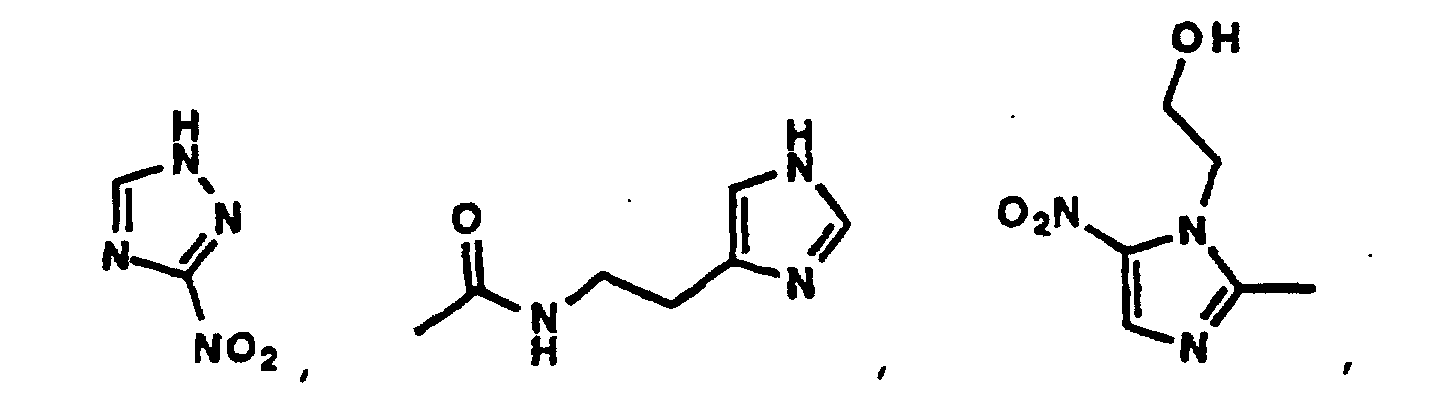
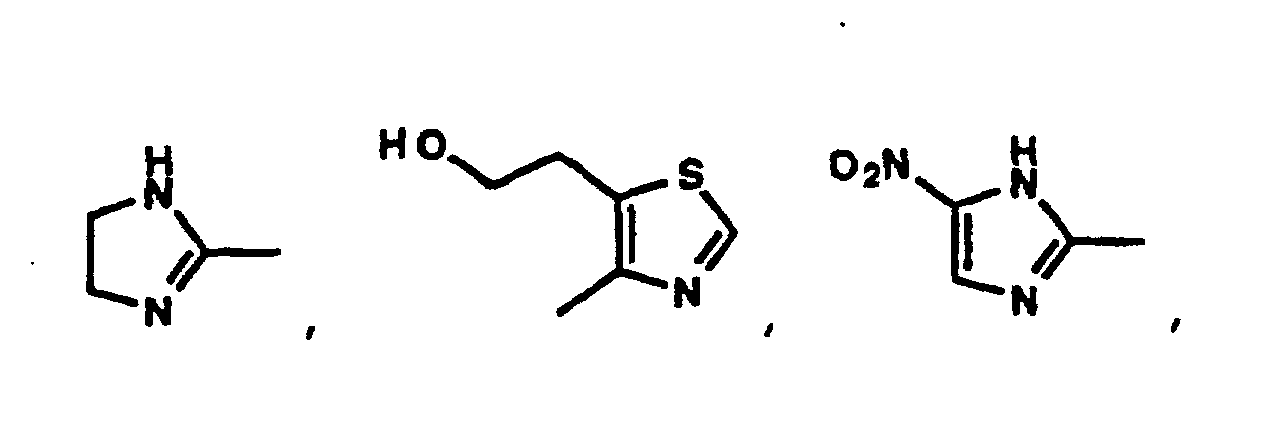

-
- Another embodiment of this invention is the use of a radiopharmaceutical, as defined hereinabove, for the preparation of a medicament for use in radioimaging a mammal.
- Another embodiment of this invention is the use of a radiopharmaceutical, as defined hereinabove, for the preparation of a medicament for use in visualizing sites of platelet deposition in a mammal by radioimaging.
- Another embodiment of this invention is the use of a radiopharmaceutical, as defined hereinabove, for the preparation of a medicament for use in determining platelet deposition in a mammal.
- Another embodiment of this invention is the use of a radiopharmaceutical, as defined hereinabove, for the preparation of a medicament for use in diagnosing a disorder associated with platelet deposition in a mammal.
- The present invention further provides a kit for preparing a radiopharmaceutical comprising:
- (a) a predetermined quantity of a sterile,
pharmaceutically acceptable reagent of
formula:
- (b) a predetermined quantity of a sterile, pharmaceutically acceptable first ancillary ligand, AL1, which is a functionalized aminocarboxylate;
- (c) a predetermined quantity of a sterile,
pharmaceutically acceptable second ancillary
ligand, AL2, selected from the group:

- (d) a predetermined quantity of a sterile, pharmaceutically acceptable reducing agent; and
- (e) optionally, a predetermined quantity of one or more sterile, pharmaceutically acceptable components selected from the group: transfer ligands, buffers, lyophilization aids, stabilization aids, solubilization aids and bacteriostats; wherein:
- Q, d', Ln, X1, X2, X3, n, Y, a, b, c, d, e and f are as defined hereinabove.
- Ch is a radionuclide metal chelator selected from
the group: R40R41N-N=C(C1-C3 alkyl)2 and
R40NNH2-, and R40R41N-N=CR80R81, wherein,
- R40 is independently selected at each occurrence from the group: a bond to Ln, C1-C10 alkyl substituted with 0-3 R52, aryl substituted with 0-3 R52, cycloaklyl substituted with 0-3 R52, heterocycle substituted with 0-3 R52, heterocycloalkyl substituted with 0-3 R52, aralkyl substituted with 0-3 R52 and alkaryl substituted with 0-3 R52;
- R41 is independently selected from the group: hydrogen, aryl substituted with 0-3 R52, C1-C10 alkyl substituted with 0-3 R52, and a heterocycle substituted with 0-3 R52;
- R52 is independently selected at each occurrence from the group: a bond to Ln, =O, F, Cl, Br, I, -CF3, -CN, -CO2R53, -C(=O)R53, -C(=O)N(R53)2, -CHO, -CH2OR53, -OC(=O)R53, -OC(=O)OR53a, -OR53, -OC(=O)N(R53)2, -NR53C(=O)R53, -NR54C(=O)OR53a, -N(R53)3 +, -NR53C(=O)N(R53)2, -NR54SO2N(R53)2, -NR54SO2R53a, -SO3H, -SO2R53a, -SR53, -S(=O)R53a, -SO2N(R53)2, -N(R53)2, -NHC(=NH)NHR53, -C(=NH)NHR53, =NOR53, NO2, -C(=O)NHOR53, -C(=O)NHNR53R53a, -OCH2CO2H, 2-(1-morpholino)ethoxy;
- R53, R53a, and R54 are each independently selected at each occurrence from the group: hydrogen, C1-C6 alkyl, and a bond to Ln;
- R80 and R81 are independently selected
from the group:
H, C1-C10 alkyl, -CN, -CO2R85, -C(=O)R85, -C(=O)N(R85)2, C2 - C10 1-alkene substituted with 0-3 R84, C2 - C10 1-alkyne substituted with 0-3 R84, aryl substituted with 0-3 R84, unsaturated heterocycle substituted with 0-3 R84, and unsaturated carbocycle substituted with 0-3 R84, provided that when one of R80 and R81 is H or alkyl, then the other is not H or alkyl; - or, alternatively, R80 and R81, may be
taken together with the shown
divalent carbon radical to form:
wherein:
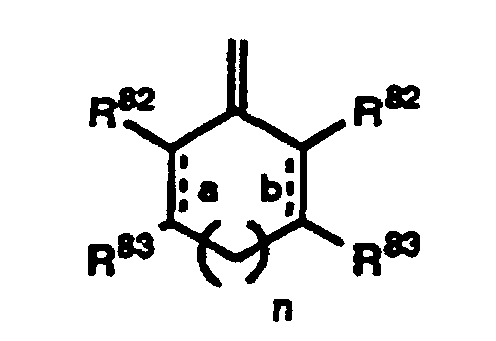
- R82 and R83 may be independently
selected from the group:
H, R84, C1-C10 alkyl substituted with 0-3 R84, C2-C10 alkenyl substituted with 0-3 R84, C2-C10 alkynyl substituted with 0-3 R84' aryl substituted with 0-3 R84' heterocycle substituted with 0-3 R84 and carbocycle substituted with 0-3 R84; - or, alternatively, R82, R83 may be
taken together to form a fused
aromatic or heterocyclic ring;
- R84 is independently selected at each occurrence from the group: =O, F, Cl, Br, I, -CF3, -CN, -CO2R85, -C(=O)R85, -C(=O)N(R85)2, -N(R85)3+ -CH2OR85, -OC(=O)R85, -OC(=O)OR85a, -OR85, -OC(=O)N(R85)2, -NR85C(=O)R85, -NR86C(=O)OR85a, -NR85C(=O)N(R85)2, -NR86SO2N(R85)2, -NR86SO2R85a, -SO3H, -SO2R85a, -SR85, -S(=O)R85a, -SO2N(R85)2, -N(R85)2, -NHC(=NH)NHR85, -C(=NH)NHR85, =NOR85, -C(=O)NHOR85, -OCH2CO2H, 2-(1-morpholino)ethoxy; and
- R85, R85a, and R86 are each independently selected at each occurrence from the group: hydrogen and C1-C6 alkyl.
-
- Preferred kits of the present invention are wherein:
- AL1 is a tricine;
- Q is a biologically active molecule selected from
the group: IIb/IIIa receptor antagonists, and
chemotactic peptides;
- d' is 1;
- Y1 and Y2, at each occurrence, are independently selected from:
- O, NR56, C=O, C(=O)O, OC(=O)O, C(=O)NH, C=NR56, NHC(=O), (NH)2C(=O);
- R55 and R56 are hydrogen;
- R40 is heterocycle substituted with R52;
- R41 is hydrogen;
- R52 is a bond to Ln;
- R80 is independently selected at each occurrence from the group: -CO2R85, C2 - C3 1-alkene substituted with 0-1 R84' aryl substituted with 0-1 R84' and unsaturated heterocycle substituted with 0-1 R84;
- R81 is H;
- R84 is independently selected at each occurrence from the group: -CO2R85, -OR85,
- -SO3H, and -N(R85)2;
- R85 is independently selected at each occurrence from the group: hydrogen and methyl;
- X1 is independently selected at each occurrence from the group: CR64 and N;
- X2 is independently selected at each occurrence from the group: CR64, CR64R64, N, NR64, and 0;
- X3 is N;
- Y is BR64-;
- provided the total number of heteroatoms in each ring of the ligand AL2 is 2 to 3;
- R64 is independently selected at each
occurrence from the group:
H, C1-C3 alkyl substituted with 0-1 R65' aryl substituted with 0-1 R65, and R65; - R65 is independently selected at each occurrence from the group: -NO2, -CO2R66, -OR66, and -SO3H;
- R66 is hydrogen;
- n is 0;
- and a, b, c, d, e and f indicate the positions of optional double bonds, provided that one of e and f is a double bond.
-
- More preferably, the present invention provides kits wherein:
- AL2 is selected from the group:

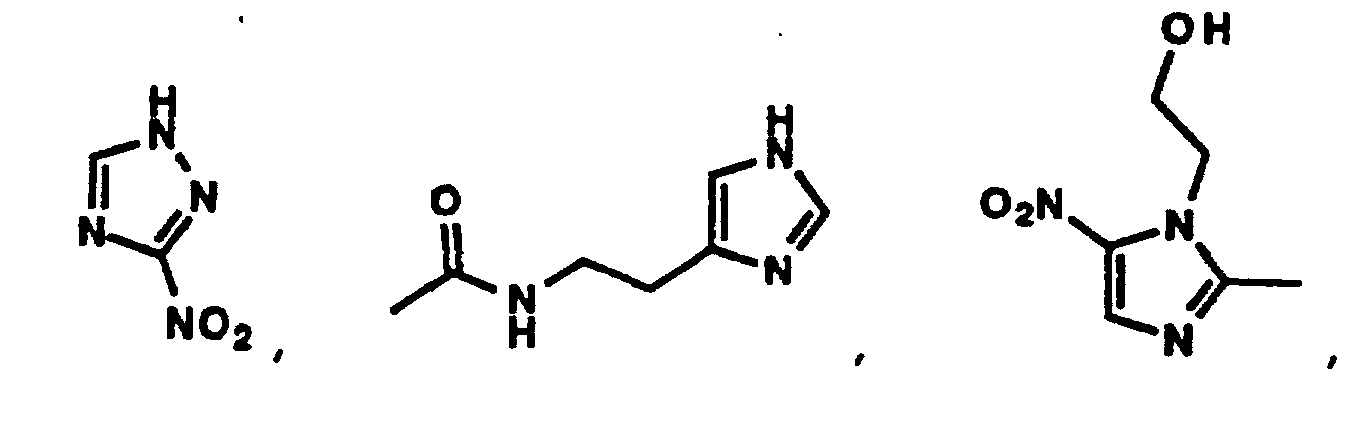


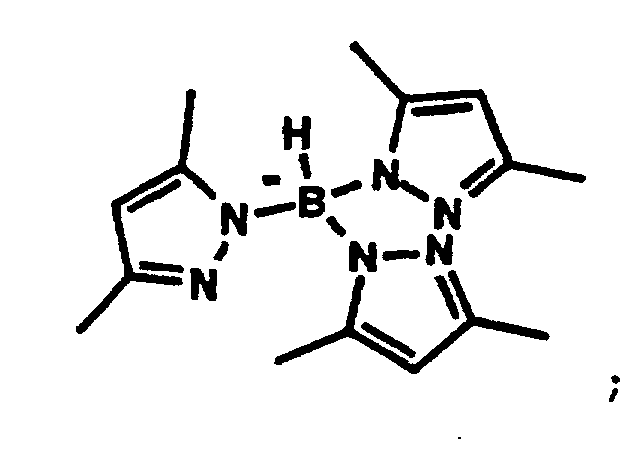
- Q is
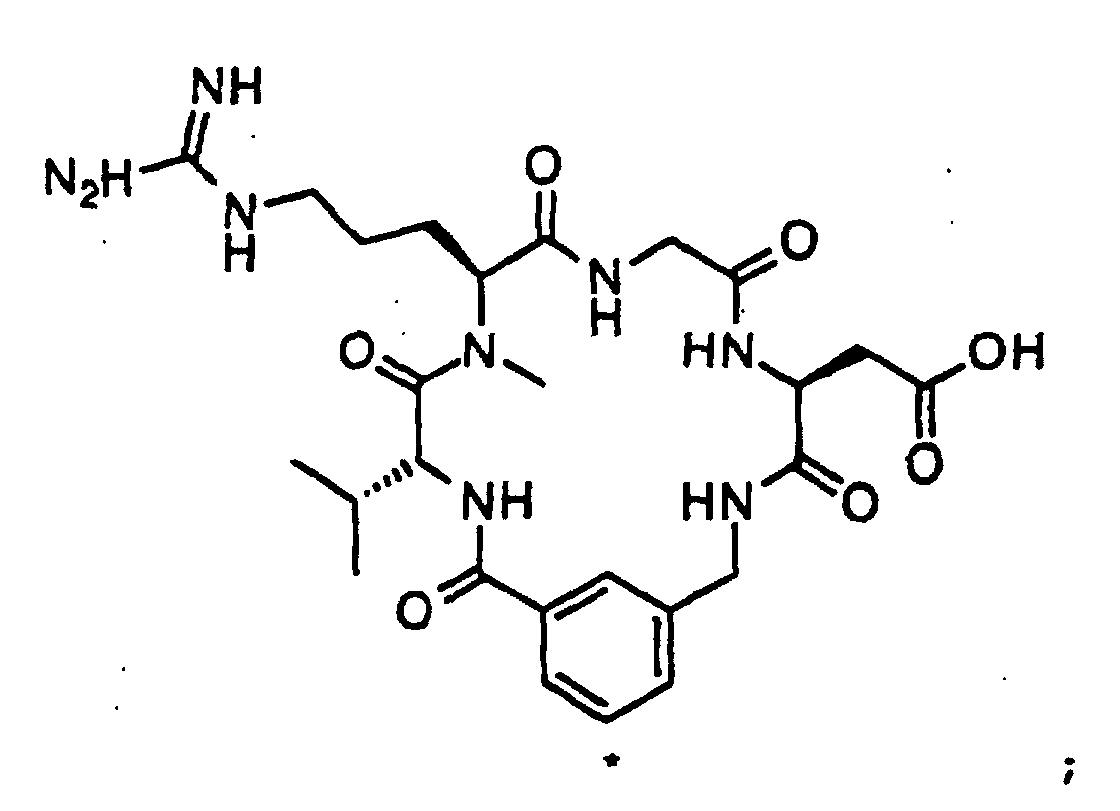
- d' is 1;
- Ln is attached to Q at the carbon atom
designated with a * and has the formula:
- Ch is selected from R40NNH2- and
R40R41N-N=CR80R81, wherein, - R40 is independently selected at each occurrence from the group: heterocycle substituted with R52;
- R41 is hydrogen;
- R52 is a bond to Ln;
- R80 is independently selected at each occurrence from the group: -CO2R85' C2 - C3 1-alkene substituted with 0-1 R84' aryl substituted with 0-1 R84 and unsaturated heterocycle substituted with 0-1 R84;
- R81 is H;
- R84 is independently selected at each occurrence from the group: -CO2R85, -OR85, -SO3H, and -N(R85)2;
- R85 is independently selected at each occurrence from the group: hydrogen and methyl.
-
- When any variable occurs more than one time in any constituent or in any formula, its definition on each occurrence is independent of its definition at every other occurrence. Thus, for example, if a group is shown to be substituted with 0-2 R52, then said group may optionally be substituted with up to two R52 and R52 at each occurrence is selected independently from the defined list of possible R52. Also, by way of example, for the group -N(R53)2, each of the two R53 substituents on N is independently selected from the defined list of possible R53. Combinations of substituents and/or variables are permissible only if such combinations result in stable compounds.
- By "stable compound" or "stable structure" is meant herein a compound that is sufficiently robust to survive isolation to a useful degree of purity from a reaction mixture, and formulation into an efficacious diagnostic agent.
- The term "capable of stabilizing", as used herein to describe the second ancillary ligand AL2, means that the ligand is capable of coordinating to the transition metal radionuclide in the presence of the first ancillary ligand and the transition metal chelator, under the conditions specified herein, resulting in a radiopharmaceutical of Formula 1 having a minimal number of isomeric forms, the relative ratios of which do not change significantly with time, and that remains substantially intact upon dilution.
- The term "substituted", as used herein, means that one or more hydrogens on the designated atom or group is replaced with a selection from the indicated group, provided that the designated atom's or group's normal valency is not exceeded, and that the substitution results in a stable compound. When a substituent is keto (i.e., =O), then 2 hydrogens on the atom are replaced.
- The term "bond", as used herein, means either a single or double bond.
- The term "salt", as used herein, is used as defined in the CRC Handbook of Chemistry and Physics, 65th Edition, CRC Press, Boca Raton, Fla, 1984, as any substance which yields ions, other than hydrogen or hydroxyl ions.
- As used herein, "alkyl" is intended to include both branched and straight-chain saturated aliphatic hydrocarbon groups having the specified number of carbon atoms; "cycloalkyl" or "carbocycle" is intended to include saturated and partially unsaturated ring groups, including mono-,bi- or poly-cyclic ring systems, such as cyclopropyl, cyclobutyl, cyclopentyl, cyclohexyl, cycloheptyl, cyclooctyl and adamantyl; "bicycloalkyl" is intended to include saturated bicyclic ring groups such as [3.3.0]bicyclooctane, [4.3.0]bicyclononane, [4.4.0]bicyclodecane (decalin), [2.2.2]bicyclooctane, and so forth.
- As used herein, the term "alkene" or "alkenyl" is intended to include both branched and straight-chain groups of the formula CnH2n-1 having the specified number of carbon atoms.
- As used herein, the term "alkyne" or "alkynyl" is intended to include both branched and straight-chain groups of the formula CnH2n-3 having the specified number of carbon atoms.
- As used herein, "aryl" or "aromatic residue" is intended to mean phenyl or naphthyl, which when substituted, the substitution can be at any position.
- As used herein, the term "heterocycle" or "heterocyclic ring system" is intended to mean a stable 5- to 7- membered monocyclic or bicyclic or 7- to 10-membered bicyclic heterocyclic ring which may be saturated, partially unsaturated, or aromatic, and which consists of carbon atoms and from 1 to 4 heteroatoms selected independently from the group consisting of N, O and S and wherein the nitrogen and sulfur heteroatoms may optionally be oxidized, and the nitrogen may optionally be quaternized, and including any bicyclic group in which any of the above-defined heterocyclic rings is fused to a benzene ring. The heterocyclic ring may be attached to its pendant group at any heteroatom or carbon atom which results in a stable structure. The heterocyclic rings described herein may be substituted on carbon or on a nitrogen atom if the resulting compound is stable. Examples of such heterocycles include, but are not limited to, benzopyranyl, thiadiazine, tetrazolyl, benzofuranyl, benzothiophenyl, indolene, quinoline, isoquinolinyl or benzimidazolyl, piperidinyl, 4-piperidone, 2-pyrrolidone, tetrahydrofuran, tetrahydroquinoline, tetrahydroisoquinoline, decahydroquinoline, octahydroisoquinoline, azocine, triazine (including 1,2,3-, 1,2,4-, and 1,3,5-triazine), 6H-1,2,5-thiadiazine, 2H,6H-1,5,2-dithiazine, thiophene, tetrahydrothiophene, thianthrene, furan, pyran, isobenzofuran, chromene, xanthene, phenoxathiin, 2H-pyrrole, pyrrole, imidazole, pyrazole, thiazole, isothiazole, oxazole (including 1,2,4- and 1,3,4-oxazole), isoxazole, triazole, pyridine, pyrazine, pyrimidine, pyridazine, indolizine, isoindole, 3H-indole, indole, 1H-indazole, purine, 4H-quinolizine, isoquinoline, quinoline, phthalazine, naphthyridine, quinoxaline, quinazoline, cinnoline, pteridine, 4aH-carbazole, carbazole, β-carboline, phenanthridine, acridine, perimidine, phenanthroline, phenazine, phenarsazine, phenothiazine, furazan, phenoxazine, isochroman, chroman, pyrrolidine, pyrroline, imidazolidine, imidazoline, pyrazolidine, pyrazoline, piperazine, indoline, isoindoline, quinuclidine, or morpholine. Also included are fused ring and spiro compounds containing, for example, the above heterocycles.
- As used herein, the term "alkaryl" means an aryl group bearing an alkyl group of 1-10 carbon atoms; the term "aralkyl" means an alkyl group of 1-10 carbon atoms bearing an aryl group; the term "arylalkaryl" means an aryl group bearing an alkyl group of 1-10 carbon atoms bearing an aryl group; and the term "heterocycloalkyl" means an alkyl group of 1-10 carbon atoms bearing a heterocycle.
- A "reducing agent" is a compound that reacts with the radionuclide, which is typically obtained as a relatively unreactive, high oxidation state compound, to lower its oxidation state by transfering electron(s) to the radionuclide, thereby making it more reactive. Reducing agents useful in the preparation of radiopharmaceuticals and in diagnostic kits useful for the preparation of said radiopharmaceuticals include but are not limited to stannous chloride, stannous fluoride, formamidine sulfinic acid, ascorbic acid, cysteine, phosphines, and cuprous or ferrous salts. Other reducing agents are described in Brodack et. al., PCT Application 94/22496, which is incorporated herein by reference.
- A "transfer ligand" is a ligand that forms an intermediate complex with the radionuclide that is stable enough to prevent unwanted side-reactions but labile enough to be converted to the radiopharmaceutical. The formation of the intermediate complex is kinetically favored while the formation of the radiopharmaceutical is thermodynamically favored. Transfer ligands useful in the preparation of radiopharmaceuticals and in diagnostic kits useful for the preparation of said radiopharmaceuticals include but are not limited to gluconate, glucoheptonate, mannitol, glucarate, N,N,N',N'-ethylenediaminetetraacetic acid, pyrophosphate and methylenediphosphonate. In general, transfer ligands are comprised of oxygen or nitrogen donor atoms.
- The term "donor atom" refers to the atom directly attached to a metal by a chemical bond.
- "Ancillary" or "co-ligands" are ligands that are incorporated into the radiopharmaceutical during its synthesis. They serve to complete the coordination sphere of the radionuclide together with the chelator or radionuclide bonding unit of the reagent. For radiopharmaceuticals comprised of a binary ligand system, the radionuclide coordination sphere is composed of one or more chelators or bonding units from one or more reagents and one or more ancillary or co-ligands, provided that there are a total of two types of ligands, chelators or bonding units. For example, a radiopharmaceutical comprised of one chelator or bonding unit from one reagent and two of the same ancillary or co-ligands and a radiopharmaceutical comprised of two chelators or bonding units from one or two reagents and one ancillary or co-ligand are both considered to be comprised of binary ligand systems. For radiopharmaceuticals comprised of a ternary ligand system, the radionuclide coordination sphere is composed of one or more chelators or bonding units from one or more reagents and one or more of two different types of ancillary or co-ligands, provided that there are a total of three types of ligands, chelators or bonding units. For example, a radiopharmaceutical comprised of one chelator or bonding unit from one reagent and two different ancillary or co-ligands is considered to be comprised of a ternary ligand system.
- Ancillary or co-ligands useful in the preparation of radiopharmaceuticals and in diagnostic kits useful for the preparation of said radiopharmaceuticals are comprised of one or more oxygen, nitrogen, carbon, sulfur, phosphorus, arsenic, selenium, and tellurium donor atoms. A ligand can be a transfer ligand in the synthesis of a radiopharmaceutical and also serve as an ancillary or co-ligand in another radiopharmaceutical. Whether a ligand is termed a transfer or ancillary or co-ligand depends on whether the ligand remains in the radionuclide coordination sphere in the radiopharmaceutical, which is determined by the coordination chemistry of the radionuclide and the chelator or bonding unit of the reagent or reagents.
- A "chelator" or "bonding unit" is the moiety or group on a reagent that binds to a metal radionuclide through the formation of chemical bonds with one or more donor atoms.
- The term "binding site" means the site in vivo or in vitro that binds a biologically active molecule.
- A "diagnostic kit" comprises a collection of components, termed the formulation, in one or more vials which are used by the practising end user in a clinical or pharmacy setting to synthesize the radiopharmaceutical. The kit provides all the requisite components to synthesize and use the radiopharmaceutical except those that are commonly available to the practising end user, such as water or saline for injection, a solution of the radionuclide, equipment for heating the kit during the synthesis of the radiopharmaceutical if required, equipment necessary for administering the radiopharmaceutical to the patient such as syringes and shielding, and imaging equipment.
- A "buffer" is a compound that is used to control the pH of the kit during its manufacture and during the synthesis of the radiopharmaceutical.
- A "lyophilization aid" is a component that has favorable physical properties for lyophilization, such as the glass transition temperature, and is added to the diagnostic kit to improve the physical properties of the combination of all the components of the kit for lyophilizacion.
- A "stabilization aid" is a component that is added to the radiopharmaceutical or to the diagnostic kit either to stabilize the radiopharmaceutical once it is synthesized or to prolong the shelf-life of the kit before it must be used. Stabilization aids can be antioxidants, reducing agents or radical scavengers and can provide improved stability by reacting preferentially with species that degrade other components or the radiopharmaceutical.
- A "solubilization aid" is a component that improves the solubility of one or more other components in the medium required for the synthesis of the radiopharmaceutical.
- A "bacteriostat" is a component that inhibits the growth of bacteria in the diagnostic kit either during its storage before use of after the kit is used to synthesize the radiopharmaceutical.
- The radiopharmaceuticals of the present invention are of the formula [(Q)d'Ln-Ch']x-Mt(AL1)y(AL2)z, wherein Q is a biologically active group, d' is an integer from 1 to 20, Ln is an optional linking group, Ch' is a radionuclide metal chelator or bonding unit bound to the transition metal radionuclide, Mt, of the formulae R40N=N+=, R40R41N-N=, or R40N=N(H)-, AL1 is a first ancillary or co-ligand, AL2 is a second ancillary or co-ligand, x, y and z are independently 1 or 2.
- The biologically active molecule Q can be a protein, antibody, antibody fragment, peptide or polypeptide, or peptidomimetic that is comprised of a recognition sequence or unit for a receptor or binding site expressed at the site of the disease, or for a receptor or binding site expressed on platelets or leukocytes. The exact chemical composition of Q is selected based on the disease state to be diagnosed, the mechanism of localization to be utilized, and to provide an optimium combination of rates of localization, clearance and radionuclidic decay.
- For the purposes of this invention, the term thromboembolic disease is taken to include both venous and arterial disorders and pulmonary embolism, resulting from the formation of blood clots.
- For the diagnosis of thromboembolic disorders or atherosclerosis, Q is selected from the group including the cyclic IIb/IIIa receptor antagonist compounds described in co-pending U.S. Ser. No.08/218,861 (equivalent to WO 94/22494); the RGD containing peptides described in U.S. Patents 4,578,079, 4,792,525, the applications PCT US88/04403, PCT US89/01742, PCT US90/03788, PCT US91/02356 and by Ojima et. al., 204th Meeting of the Amer. Chem. Soc., 1992, Abstract 44; the peptides that are fibrinogen receptor antagonists described in European Patent Applications 90202015.5, 90202030.4, 90202032.2, 90202032.0, 90311148.2, 90311151.6, 90311537.6, the specific binding peptides and polypeptides described as IIb/IIIa receptor ligands, ligands for the polymerization site of fibrin, laminin derivatives, ligands for fibrinogen, or thrombin ligands in PCT WO 93/23085 (excluding the technetium binding groups); the oligopeptides that correspond to the IIIa protein described in PCT WO90/00178; the hirudin-based peptides described in PCT WO90/03391; the IIb/IIIa receptor ligands described in PCT WO90/15818; the thrombus, platelet binding or atherosclerotic plaque binding peptides described in PCT WO92/13572 (excluding the technetium binding group) or GB 9313965.7; the fibrin binding peptides described in U.S. Patents 4,427,646 and 5,270,030; the hirudin-based peptides described in U.S. Patent 5,279,812; or the fibrin binding proteins described in U.S. Patent 5,217,705; the guanine derivatives that bind to the IIb/IIIa receptor described in U.S. Patent 5,086,069; or the tyrosine derivatives described in European Patent Application 0478328A1, and by Hartman et. al., J. Med. Chem., 1992, 35, 4640; or oxidized low density lipoprotein (LDL).
- For the diagnosis of infection, inflammation or transplant rejection, Q is selected from the group including the leukocyte binding peptides described in PCT WO93/17719 (excluding the technetium binding group), PCT WO92/13572 (excluding the technetium binding group) or U.S. Ser. No. 08/140000; the chemotactic peptides described in Eur. Pat. Appl. 90108734.6 or A. Fischman et. al., Semin. Nuc. Med., 1994, 24, 154; or the leukostimulatory agents described in U.S. Patent 5,277,892.
- For the diagnosis of cancer, Q is selected from the group of somatostatin analogs described in UK Application 8927255.3 or PCT WO94/00489, the selectin binding peptides described in PCT WO94/05269, the biological-function domains described in PCT WO93/12819, Platelet Factor 4 or the growth factors (PDGF, EGF, FGF, TNF, MCSF or Il-8).
- Q may also represent proteins, antibodies, antibody fragments, peptides, polypeptides, or peptidomimetics that bind to receptors or binding sites on other tissues, organs, enzymes or fluids. Examples include the β-amyloid proteins that have been demonstrated to accumulate in patients with Alzheimer's disease, atrial naturetic factor derived peptides that bind to myocardial and renal receptors, antimyosin antibodies that bind to areas of infarcted tissues, or nitroimidazole derivatives that localize in hypoxic areas in vivo.
- The group Ch' is termed a hydrazido (of formula R40R41N-N=), or diazenido (of formula R40N=N+= or R40N=N(H)-) group and serves as the point of attachment of the radionuclide to the remainder of the radiopharmaceutical designated by the formula (Q)d'-Ln or (Q)d'. A diazenido group can be either terminal (only one atom of the group is bound to the radionuclide) or chelating. In order to have a chelating diazenido group at least one other atom of the group, located on R40, must also be bound to the radionuclide. The atoms bound to the metal are termed donor atoms.
- The transition metal radionuclide, Mt, is selected from the group: technetium-99m, rhenium-186 and rhenium-188. For diagnostic purposes Tc-99m is the preferred isotope. Its 6 hour half-life and 140 keV gamma ray emission energy are almost ideal for gamma scintigraphy using equipment and procedures well established for those skilled in the art. The rhenium isotopes also have gamma ray emission energies that are compatible with gamma scintigraphy, however, they also emit high energy beta particles that are more damaging to living tissues. These beta particle emissions can be utilized for therapeutic purposes, for example, cancer radiotherapy.
- The coordination sphere of the radionuclide includes all the ligands or groups bound to the radionuclide. For a transition metal radionuclide, Mt, to be stable it typically has a coordination number (number of donor atoms) comprised of an integer greater than or equal to 4 and less than or equal to 8; that is there are 4 to 8 atoms bound to the metal and it is said to have a complete coordination sphere. The requisite coordination number for a stable radionuclide complex is determined by the identity of the radionuclide, its oxidation state, and the type of donor atoms. If the chelator or bonding unit Ch' does not provide all of the atoms necessary to stabilize the metal radionuclide by completing its coordination sphere, the coordination sphere is completed by donor atoms from other ligands, termed ancillary or co-ligands, which can also be either terminal or chelating.
- A large number of ligands can serve as ancillary or co-ligands, the choice of which is determined by a variety of considerations such as the ease of synthesis of the radiopharmaceutical, the chemical and physical properties of the ancillary ligand, the rate of formation, the yield, and the number of isomeric forms of the resulting radiopharmaceuticals, the ability to administer said ancillary or co-ligand to a patient without adverse physiological consequences to said patient, and the compatibility of the ligand in a lyophilized kit formulation. The charge and lipophilicity of the ancillary ligand will effect the charge and lipophilicity of the radiopharmaceuticals. For example, the use of 4,5-dihydroxy-1,3-benzene disulfonate results in radiopharmaceuticals with an additional two anionic groups because the sulfonate groups will be anionic under physiological conditions. The use of N-alkyl substituted 3,4-hydroxypyridinones results in radiopharmaceuticals with varying degrees of lipophilicity depending on the size of the alkyl substituents.
- The radiopharmaceuticals of the present invention are comprised of two types of ancillary or co-ligands designated AL1 and AL2. Ancillary ligands AL1 are comprised of two or more hard donor atoms such as oxygen and amine nitrogen (sp3 hydribidized). The donor atoms occupy at least two of the sites in the coordination sphere of the radionuclide metal, Mt; the ancillary ligand AL1 serves as one of the three ligands in the ternary ligand system. Examples of ancillary ligands AL1 include but are not limited to dioxygen ligands and functionalized aminocarboxylates. A large number of such ligands are available from commercial sources.
- Ancillary dioxygen ligands include ligands that coordinate to the metal ion through at least two oxygen donor atoms. Examples include but are not limited to: glucoheptonate, gluconate, 2-hydroxyisobutyrate, lactate, tartrate, mannitol, glucarate, maltol, Kojic acid, 2,2-bis(hydroxymethyl)propionic acid, 4,5-dihydroxy-1,3-benzene disulfonate, or substituted or unsubstituted 1,2 or 3,4 hydroxypyridinones. (The names for the ligands in these examples refer to either the protonated or non-protonated forms of the ligands.)
- Functionalized aminocarboxylates include ligands that have a combination of amine nitrogen and oxygen donor atoms. Examples include but are not limited to: iminodiacetic acid, 2,3-diaminopropionic acid, nitrilotriacetic acid, N,N'-ethylenediamine diacetic acid, N,N,N'-ethylenediamine triacetic acid, hydroxyethylethylenediamine triacetic acid, and N,N'-ethylenediamine bis-hydroxyphenylglycine. (The names for the ligands in these examples refer to either the protonated or non-protonated forms of the ligands.)
- A series of functionalized aminocarboxylates are disclosed by Bridger et. al. in U.S. Patent 5,350,837, herein incorporated by reference, that result in improved rates of formation of technetium labeled hydrazino modified proteins. We have determined that certain of these aminocarboxylates result in improved yields of the radiopharmaceuticals of the present invention. The preferred ancillary ligands AL1 functionalized aminocarboxylates that are derivatives of glycine; the most preferred is tricine (tris(hydroxymethyl)methylglycine).
- The second type of ancillary ligands AL2 are comprised of one or more soft donor atoms selected from the group: imine nitrogen (sp2 hydridized), sulfur (sp2 hydridized) and carbon (sp hybridized); atoms which have π-acid character. Ligands AL2 can be monodentate, bidentate or tridentate, the denticity is defined by the number of donor atoms in the ligand. One of the two donor atoms in a bidentate ligand and one of the three donor atoms in a tridentate ligand must be a soft donor atom.
- The ligands AL2 that are comprised of imine nitrogen are unsaturated or aromatic nitrogen-containing, 5 or 6-membered heterocycles. The ligands that are comprised of sulfur (sp2 hybridized) donor atoms are thiocarbonyls, comprised of the moiety C=S. The ligands comprised of carbon (sp hybridized) donor atoms are isonitriles, comprised of the moiety CNR, where R is an organic radical. A large number of such ligands are available from commercial sources. Isonitriles can be synthesized as described in European Patent 0107734 and in U. S. Patent 5,279,811, herein incorporated by reference. Preferred ancillary ligands AL2 are unsaturated or aromatic 5 or 6 membered heterocycles. The most preferred ancillary ligands AL2 are unsaturated 5 membered heterocycles.
- The ancillary ligands AL2 may be substituted with alkyl, aryl, alkoxy, heterocycle, aralkyl, alkaryl and arylalkaryl groups and may or may not bear functional groups comprised of heteroatoms such as oxygen, nitrogen, phosphorus or sulfur. Examples of such functional groups include but are not limited to: hydroxyl, carboxyl, carboxamide, nitro, ether, ketone, amino, ammonium, sulfonate, sulfonamide, phosphonate, and phosphonamide. The functional groups may be chosen to alter the lipophilicity and water solubility of the ligands which may affect the biological properties of the radiopharmaceuticals, such as altering the distribution into non-target tissues, cells or fluids, and the mechanism and rate of elimination from the body.
- The radiopharmaceuticals of the present invention can be easily prepared by admixing a salt of a radionuclide, a reagent of Formula 2, an ancillary ligand AL1, an ancillary ligand AL2, and a reducing agent, in an aqueous solution at temperatures from room temperature to 100 °C.
- When Ch is a hydrazone group, then it must first be converted to a hydrazine of formula R40R41NNH2, which may or may not be protonated, prior to complexation with the metal radionuclide, Mt. The chelator or bonding unit, Ch, when bound to the metal radionuclide, Mt, is designated Ch'. The conversion of the hydrazone group to the hydrazine can occur either prior to reaction with the radionuclide, in which case the radionuclide and the ancillary or co-ligand or ligands are combined not with the reagent but with a hydrolyzed form of the reagent bearing the chelator or bonding unit, Ch, or in the presence of the radionuclide in which case the reagent itself is combined with the radionuclide and the ancillary or co-ligand or ligands. In the latter case, the pH of the reaction mixture must be neutral or acidic.
- Alternatively, the radiopharmaceuticals of the present invention can be prepared by first admixing a salt of a radionuclide, an ancillary ligand AL1, and a reducing agent in an aqueous solution at temperatures from room temperature to 100 °C to form an intermediate radionuclide complex with the ancillary ligand AL1 then adding a reagent of Formula 2 and an ancillary ligand AL2 and reacting further at temperatures from room temperature to 100 °C.
- Alternatively, the radiopharmaceuticals of the present invention can be prepared by first admixing a salt of a radionuclide, an ancillary ligand AL1, a reagent of Formula 2, and a reducing agent in an aqueous solution at temperatures from room temperature to 100 °C to form an intermediate radionuclide complex, and then adding an ancillary ligand AL2 and reacting further at temperatures from room temperature to 100 °C.
- The total time of preparation will vary depending on the identity of the radionuclide, the identities and amounts of the reactants and the procedure used for the preparation. The preparations may be complete, resulting in > 80% yield of the radiopharmaceutical, in 1 minute or may require more time. If higher purity radiopharmaceuticals are needed or desired, the products can be purified by any of a number of techniques well known to those skilled in the art such as liquid chromatography, solid phase extraction, solvent extraction, dialysis or ultrafiltration.
- The technetium and rhenium radionuclides are preferably in the chemical form of pertechnetate or perrhenate and a pharmaceutically acceptable cation. The pertechnetate salt form is preferably sodium pertechnetate such as obtained from commercial Tc-99m generators. The amount of pertechnetate used to prepare the radiopharmaceuticals of the present invention can range from 0.1 mCi to 1 Ci, or more preferably from 1 to 200 mCi.
- The amount of the reagent of formula 2 used to prepare the radiopharmaceuticals of the present invention can range from 0.1 µg to 10 mg, or more preferably from 0.5 µg to 100 µg. The amount used will be dictated by the amounts of the other reactants and the identity of the radiopharmaceuticals of Formula 1 to be prepared.
- The amounts of the ancillary ligands AL1 used can range from 0.1 mg to 1 g, or more preferrably from 1 mg to 100 mg. The exact amount for a particular radiopharmaceutical is a function of identity of the radiopharmaceuticals of Formula 1 to be prepared, the procedure used and the amounts and identities of the other reactants. Too large an amount of AL1 will result in the formation of by-products comprised of technetium labeled AL1 without a biologically active molecule or by-products comprised of technetium labeled biologically active molecules with the ancillary ligand AL1 but without the ancillary ligand AL2. Too small an amount of AL1 will result in other by-products such as technetium labeled biologically active molecules with the ancillary ligand AL2 but without the ancillary ligand AL1, or reduced hydrolyzed technetium, or technetium colloid.
- The amounts of the ancillary ligands AL2 used can range from 0.001 mg to 1 g, or more preferrably from 0.01 mg to 10 mg. The exact amount for a particular radiopharmaceutical is a function of the identity of the radiopharmaceuticals of Formula 1 to be prepared, the procedure used and the amounts and identities of the other reactants. Too large an amount of AL2 will result in the formation of by-products comprised of technetium labeled AL2 without a biologically active molecule or by-products comprised of technetium labeled biologically active molecules with the ancillary ligand AL2 but without the ancillary ligand AL1. If the moiety (Q)d'-Ln-Ch' bears one or more substituents that are comprised of a soft donor atom, as defined above, at least a tenfold molar excess of the ancillary ligand AL2 to the reagent of formula 2 is required to prevent the substituent from interfering with the coordination of the ancillary ligand AL2 to the metal radionuclide, Mt.
- Suitable reducing agents for the synthesis of the radiopharmaceuticals of the present invention include stannous salts, dithionite or bisulfite salts, borohydride salts, and formamidinesulfinic acid, wherein the salts are of any pharmaceutically acceptable form. The preferred reducing agent is a stannous salt. The amount of a reducing agent used can range from 0.001 mg to 10 mg, or more preferably from 0.005 mg to 1 mg.
- The specific structure of a radiopharmaceutical of the present invention will depend on the identity of the biologically active molecule Q, the number d', the identity of the linker Ln, the identity of the chelator moiety Ch', the identity of the ancillary ligand AL1, the identity of the ancillary ligand AL2, and the identity of the radionuclide Mt. The identities of Q, Ln, and Ch' and the number d' are determined by the choice of the reagent of Formulae 2 or 3. For a given reagent of Formulae 2 or 3, the amount of the reagent, the amount and identity of the ancillary ligands AL1 and AL2, the identity of the radionuclide Mt and the synthesis conditions employed will determine the structure of the radiopharmaceutical of Formula 1.
- Radiopharmaceuticals synthesized using concentrations of reagents of Formulae 2 or 3 of <100 µg/mL, will be comprised of one hydrazido or diazenido group Ch'; the value of x will be 1. Those synthesized using >1 mg/mL concentrations will be comprised of two hydrazido or diazenido groups; the value of x will be 2. The two Ch' groups may be the same or different. For most applications, only a limited amount of the biologically active molecule can be injected and not result in undesired side-effects, such as chemical toxicity, interference with a biological process or an altered biodistibution of the radiopharmaceutical. Therefore, the radiopharmaceuticals with x equal to 2, which require higher concentrations of the reagents of Formula 2 comprised in part of the biologically active molecule, will have to be diluted or purified after synthesis to avoid such side-effects.
- The identities and amounts used of the ancillary ligands AL1 and AL2 will determine the values of the variables y and z. The values of y and z can independently be an integer from 1 to 2. In combination, the values of y and z will result in a technetium coordination sphere that is made up of at least five and no more than seven donor atoms. For monodentate ancillary ligands AL2, z can be an integer from 1 to 2; for bidentate or tridentate ancillary ligands AL2, z is 1. The preferred combination for monodentate ligands is y equal to 1 or 2 and z equal to 1. The preferred combination for bidentate or tridentate ligands is y equal to 1 and z equal to 1.
- Another aspect of the present invention are diagnostic kits for the preparation of radiopharmaceuticals useful as imaging agents for the diagnosis of cardiovascular disorders, infectious disease, inflammatory disease and cancer. Diagnostic kits of the present invention comprise one or more vials containing the sterile, non-pyrogenic, formulation comprised of a predetermined amount of the reagent of formulae (Q)d'-Ln-Ch or (Q)d'-Ln-Hz, one or two ancillary or co-ligands and optionally other components such as reducing agents, transfer ligands, buffers, lyophilization aids, stabilization aids, solubilization aids and bacteriostats. The inclusion of one or more optional components in the formulation will frequently improve the ease of synthesis of the radiopharmaceutical by the practising end user, the ease of manufacturing the kit, the shelf-life of the kit, or the stability and shelf-life of the radiopharmaceutical. The improvement achieved by the inclusion of an optional component in the formulation must be weighed against the added complexity of the formulation and added cost to manufacture the kit. The one or more vials that contain all or part of the formulation can independently be in the form of a sterile solution or a lyophilized solid.
- Buffers useful in the preparation of radiopharmaceuticals and in diagnostic kits useful for the preparation of said radiopharmaceuticals include but are not limited to phosphate, citrate, sulfosalicylate, and acetate. A more complete list can be found in the United States Pharmacopeia.
- Lyophilization aids useful in the preparation of diagnostic kits useful for the preparation of radiopharmaceuticals include but are not limited to mannitol, lactose, sorbitol, dextran, Ficoll, and polyvinylpyrrolidine(PVP).
- Stabilization aids useful in the preparation of radiopharmaceuticals and in diagnostic kits useful for the preparation of said radiopharmaceuticals include but are not limited to ascorbic acid, cysteine, monothioglycerol, sodium bisulfite, sodium metabisulfite, gentisic acid, and inositol.
- Solubilization aids useful in the preparation of radiopharmaceuticals and in diagnostic kits useful for the preparation of said radiopharmaceuticals include but are not limited to ethanol, glycerin, polyethylene glycol, propylene glycol, polyoxyethylene sorbitan monooleate, sorbitan monoloeate, polysorbates, poly(oxyethylene)poly(oxypropylene)poly(oxyethylene) block copolymers (Pluronics) and lecithin. Preferred solubilizing aids are polyethylene glycol, and Pluronics.
- Bacteriostats useful in the preparation of radiopharmaceuticals and in diagnostic kits useful for the preparation of said radiopharmaceuticals include but are not limited to benzyl alcohol, benzalkonium chloride, chlorbutanol, and methyl, propyl or butyl paraben.
- A component in a diagnostic kit can also serve more than one function. A reducing agent can also serve as a stabilization aid, a buffer can also serve as a transfer ligand, a lyophilization aid can also serve as a transfer, ancillary or co-ligand and so forth.
- The predetermined amounts of each component in the formulation are determined by a variety of considerations that are in some cases specific for that component and in other cases dependent on the amount of another component or the presence and amount of an optional component. In general, the minimal amount of each component is used that will give the desired effect of the formulation. The desired effect of the formulation is that the practising end user can synthesize the radiopharmaceutical and have a high degree of certainty that the radiopharmaceutical can be safely injected into a patient and will provide diagnostic information about the disease state of that patient.
- The diagnostic kits of the present invention will also contain written instructions for the practising end user to follow to synthesize the radiopharmaceuticals. These instructions may be affixed to one or more of the vials or to the container in which the vial or vials are packaged for shipping or may be a separate insert, termed the package insert.
- The present invention may be used in a method of imaging the site of thrombotic disease in a patient involving: (1) synthesizing a radiopharmaceutical using a reagent of the present invention capable of localizing at sites of thrombotic disease due to an interaction between the biologically active group, Q, of the radiopharmaceutical and a receptor or binding site expressed at the site of the disease or with a receptor or binding site on an endogenous blood component that accumulates at the site; (2) administering said radiopharmaceutical to a patient by injection or infusion; (3) imaging the patient using either planar or SPECT gamma scintigraphy.
- The present invention may also be used in a method of imaging the site of infection or infectious disease in a patient involving: (1) synthesizing a radiopharmaceutical using a reagent of the present invention capable of localizing at sites of infection or infectious disease due to an interaction between the biologically active group, Q, of the radiopharmaceutical and a receptor or binding site expressed at the site of the disease or with a receptor or binding site on an endogenous blood component that accumulates at the site; (2) administering said radiopharmaceutical to a patient by injection or infusion; (3) imaging the patient using either planar or SPECT gamma scintigraphy.
- The present invention may also be used in a method of imaging the site of inflammation in a patient involving: (1) synthesizing a radiopharmaceutical using a reagent of the present invention capable of localizing at sites of inflammation due to an interaction between the biologically active group, Q, of the radiopharmaceutical and a receptor or binding site expressed at the site of inflammation or with a receptor or binding site on an endogenous blood component that accumulates at the site; (2) administering said radiopharmaceucical to a patient by injection or infusion; (3) imaging the patient using either planar or SPECT gamma scintigraphy.
- The present invention may also be used in a method of imaging the site of cancer in a patient involving: (1) synthesizing a radiopharmaceutical using a reagent of the present invention capable of localizing at sites of cancer due to an interaction between the biologically active group, Q, of the radiopharmaceutical and a receptor or binding site expressed at the site of the cancer or with a receptor or binding site on an endogenous blood component that accumulates at the site; (2) administering said radiopharmaceutical to a patient by injection or infusion; (3) imaging the patient using either planar or SPECT gamma scintigraphy.
- The radiopharmaceuticals are administered by intravenous injection, usually in saline solution, at a dose of 1 to 100 mCi per 70 kg body weight, or preferably at a dose of 5 to 50 mCi. Imaging is performed using known procedures.
- The materials used to synthesize the radiopharmaceuticals of the present invention described in the following examples were obtained as follows. The reagent of Formula 2, Cyclo(D-Val-NMeArg-Gly-Asp-Mamb(hydrazino-nicotinyl-5-Aca)) was synthesized as described in co-pending U.S. Ser. No. 08/218,861 (equivalent to WO 94/22494). The ancillary ligands tricine, tris(1-pyrazoyl)borohydride, imidazole, 2-methyl-5-nitroimidazole, ornidazole, metronidazole, 1,2,4-triazole, 3-nitro-1,2,4-triazole, acetyl histamine, urocanic acid, 2-methylimidazoline, 4-methyl-5-thiazoleethanol, tris(3,5-dimethyl-1-pyrazolyl)borohydride, adenosine, 8-hydroxyquinoline-5-sulfonic acid, and stannous chloride were obtained from commercial sources and used as received. Deionized water was obtained from a Milli-Q Water System and was of > 18 MΩ quality. Technetium-99m-pertechnetate (99mTcO4-) was obtained from a DuPont Pharma 99Mo/99mTc generator.
- To a 10 mL vial was added 0.4 mL of 99mTcO4- (100 mCi/mL) eluent, followed by 0.1 mL of Cyclo(D-Val-NMeArg-Gly-Asp-Mamb(hydrazino-nicotinyl-5-Aca)) (100 µg/mL) in saline, 0.3 mL of tricine (100 mg/mL, pH 7), and 10 µL of SnCl2 (10 mg/mL) in 1N HCl. The reaction mixture was heated at 50 °C for 15 min. To the reaction solution above was added 0.25 mL of tris(1-pyrazolyl)borohydride (20 mg/mL) in saline. The mixture was heated at 50 °C for 30 min, and was then analyzed by HPLC Method 1.
- To a 10 mL vial was added 0.3 mL of 99mTcO4-solution (100 mCi/mL) in saline, 0.4 mL of tricine solution (100 mg/mL, pH ∼ 5.0) in H2O, 0.1 mL of Cyclo(D-Val-NMeArg-Gly-Asp-Mamb(hydrazino-nicotinyl-5-Aca))solution (100 µg/mL) in H2O, and 10 µL of SnCl2·2H2O solution (10 mg/mL) in 1.0 N HCl. The reaction mixture was allowed to stand at room temperature for 15 min. After addition of 0.4 mL of imidazole solution (10 mg/mL) in H2O, the reaction mixture was heated at 70 °C for 30 min, and was then analyzed by HPLC Method 1.
- To a 10 mL vial was added 0.3 mL of 99mTcO4 - solution (100 mCi/mL) in saline, 0.4 mL of tricine solution (100 mg/mL, pH ∼ 5.0) in H2O, 0.2 mL of Cyclo(D-Val-NMeArg-Gly-Asp-Mamb(hydrazino-nicotinyl-5-Aca)) solution (50 µg/mL) in H2O, 0.2 mL of 3-nitro-1,2,4-triazole solution (30 mg/mL) in H2O, and 5 µL of SnCl2·2H2O solution (10 mg/mL) in 1.0 N HCl. The reaction mixture was heated at 75 °C for 25 min, and was then analyzed by HPLC Method 1.
- To a 10 mL vial was added 0.3 mL of 99mTcO4 - solution (100 mCi/mL) in saline, 0.4 mL of tricine solution (100 mg/mL, pH ∼ 5.0) in H2O, 0.2 mL of Cyclo(D-Val-NMeArg-Gly-Asp-Mamb(hydrazino-nicotinyl-5-Aca)) solution (50 µg/mL) in H2O, 0.2 mL of 3-nitro-1,2,4-triazole solution (30 mg/mL) in H2O, and 5 µL of SnCl2·2H2O solution (10 mg/mL) in 1.0 N HCl. The reaction mixture was heated at 75 °C for 25 min, and was then analyzed by HPLC Method 1.
- To a 10 mL vial was added 0.4 mL of 99mTcO4 - (100 mCi/mL) eluent, followed by 0.2 mL of Cyclo(D-Val-NMeArg-Gly-Asp-Mamb(hydrazino-nicotinyl-5-Aca)) (50 µg/mL) in saline, 0.3 mL of tricine (100 mg/mL, pH 7), and 10 µL of SnCl2 (10 mg/mL) in 1 N HCl. The reaction mixture was heated at 55 °C for 15 min. To the reaction solution above was added 0.5 mL of acetyl histamine (20 mg/mL) in H2O. The mixture was heated at 55 °C for 60 min, and was then analyzed by HPLC Method 1.
- To a 10 mL vial was added 0.4 mL of 99mTcO4 - solution (100 mCi/mL) in saline, 0.3 mL of tricine solution (100 mg/mL, pH ∼ 5.0) in H2O, 0.2 mL of Cyclo(D-Val-NMeArg-Gly-Asp-Mamb(hydrazino-nicotinyl-5-Aca)) solution (50 µg/mL) in H2O, and 10 µL of SnCl2·2H2O solution (10 mg/mL) in 1.0 N HCl. The reaction mixture was heated at 50 °C for 30 min. After addition of 0.5 mL of metrornidazole solution (20 mg/mL) in H2O, the reaction mixture was heated at 70 °C for 30 min, and was then analyzed by HPLC Method 1.
- To a 10 mL vial was added 0.4 mL of 99mTcO4 - (100 mCi/mL) eluent, followed by 0.2 mL of Cyclo(D-Val-NMeArg-Gly-Asp-Mamb(hydrazino-nicotinyl-5-Aca)) (50 µg/mL) in saline, 0.3 mL of tricine (100 mg/mL, pH 7), and 10 µL of SnCl2 (10 mg/mL) in 1N HCl. The reaction mixture was heated at 50 °C for 15 min. To the reaction solution above was added 0.5 mL of 2-methylimidazoline (20 mg/mL) in in saline. The mixture was heated at 55 °C for 60 min, and was then analyzed by HPLC Method 1.
- To a 10 mL vial was added 0.4 mL of tricine solution (100 mg/mL, pH 5.0) in H2O, 0.4 mL of Cyclo(D-Val-NMeArg-Gly-Asp-Mamb(hydrazino-nicotinyl-5-Aca) solution (50 µg/mL) in H2O, 0.2 mL of 3-pyridinesulfonic acid solution (10 mg/mL) in H2O, 0.3 mL of 99mTcO4-solution (100 mCi/mL) in saline, and 25 µL of SnCl2·2H2O solution (10 mg/mL) in 0.1 N HCl.
The mixture was heated at 80 °C for 20 min, and was then analyzed by HPLC Method 2. - To a 10 mL vial was added 0.4 mL of 99mTcO4 - (100 mCi/mL) eluent, followed by 0.2 mL of Cyclo(D-Val-NMeArg-Gly-Asp-Mamb(hydrazino-nicotinyl-5-Aca)) (50 µg/mL) in saline, 0.3 mL of tricine (100 mg/mL, pH 7), and 10 µL of SnCl2 (10 mg/mL) in 1N HCl. The reaction mixture was heated at 50 °C for 30 min. To the reaction solution above was added 0.5 mL of 4-methylthiazoleethanol (10 mg/mL) in in saline. The mixture was heated at 75 °C for 30 min, and was then analyzed byHPLC Method 1.
- To a 10 mL vial was added 0.2 mL of 99mTcO4- (100 mCi/mL) eluent, followed by 0.2 mL of Cyclo(D-Val-NMeArg-Gly-Asp-Mamb(hydrazino-nicotinyl-5-Aca)) (50 µg/mL) in saline, 0.4 mL of tricine (100 mg/mL, pH 7), 0.2 mL of tris(3,5-dimethylpyrazoly)borohydride (20 mg/mL) in saline, and 10 µL of SnCl2 (10 mg/mL) in 1N HCl. The mixture was heated at 75 °C for 30 min, and was then analyzed by HPLC Method 1.
- To a 10 mL vial was added 0.4 mL of tricine solution (100 mg/mL, pH 5.0) in H2O, 0.4 mL of Cyclo(D-Val-NMeArg-Gly-Asp-Mamb(hydrazino-nicotinyl-5-Aca)) (50 µg/mL) in H2O, 0.4 mL of 4-pyridineethanesulfonic acid solution (35 mg/mL) in H2O, 0.2 mL of 99mTcO4 - solution (250 mCi/mL) in saline, and 25 µL of SnCl2·2H2O solution (10 mg/mL) in 0.1 N HCl. The reaction mixture was heated at 80 °C for 20 min, and was then analyzed by HPLC Method 1.
- To a 10 mL vial was added 0.4 mL of 99mTcO4 - solution (100 mCi/mL) in saline, 0.2 mL of tricine solution (100 mg/mL, pH ∼ 5.0) in H2O, 0.2 mL of Cyclo(D-Val-NMeArg-Gly-Asp-Mamb(hydrazino-nicotinyl-5-Aca)) solution (50 µg/mL) in H2O, and 10 µL of SnCl2·2H2O solution (10 mg/mL) in 1.0 N HCl. The reaction mixture was allowed to stand at room temperature for 20 min. After addition of 0.5 mL of ornidazole solution (20 mg/mL) in H2O, the reaction mixture was heated at 70 °C for 30 min, and was then analyzed by HPLC Method 1.
- To a 10 mL vial was added 0.4 mL of tricine solution (100 mg/mL, pH 5.0) in H2O, 0.4 mL of Cyclo(D-Val-NMeArg-Gly-Asp-Mamb(hydrazino-nicotinyl-5-Aca) (50 µg/mL) in H2O, 0.2 mL of 4-(3H)pyrimidone solution (10 mg/mL) in H2O, 0.3 mL of 99mTcO4 - solution (100 mCi/mL) in saline, and 25 µL of SnCl2·2H2O solution (10 mg/mL) in 0.1 N HCl. The reaction mixture was heated at 80 °C for 20 min, and was then analyzed by HPLC Method 2.
- To a 10 mL vial was added 0.4 mL of 99mTcO4- solution (100 mCi/mL) in saline, 0.2 mL of tricine solution (100 mg/mL, pH ∼ 5.0) in H2O, 0.2 mL of Cyclo(D-Val-NMeArg-Gly-Asp-Mamb(hydrazino-nicotinyl-5-Aca)) solution (50 µg/mL) in H2O, and 10 µL of SnCl2·2H2O solution (10 mg/mL) in 1.0 N HCl. The reaction mixture was allowed to stand at room temperature for 15 min. After addition of 0.2 mL of 2-methyl-5-nitroimidazole solution (10 mg/mL) in H2O, the reaction mixture was heated at 70 °C for 30 min, and was then analyzed by HPLC Method 1.
Analytical and Yield Data on Ternary Complexes Example Retention Time % Yield (min) 1 11.8 91 2 12.1, 12.5 86 3 12.7, 12.9 99 4 13.0, 13.2 95 5 12.6 97 6 14.4 89 7 12.3 97 8 8.8 91 9 13.4 92 10 14.9, 15.5 89 11 12.4 90 12 16.0, 16.5 81 13 8.1, 8.5 89 14 12.8 71 - The values reported in Table 1 were obtained using HPLC Methods 1 or 2. One retention time is shown for most of these examples. The two isomers that comprise these radiopharmaceuticals are usually not completely resolved by these HPLC methods. Typically there is a shoulder on the main peak reported.
-
- Column: Vydac C18 (4.6 mm x 25 cm)
- Flow rate: 1 mL/min
- Solvent A = 0.01 M pH 6 phosphate buffer
- Solvent B = acetonitrile
- Gradient:
t = 0 min 100% A
t = 15 min 70% A, 30% B
t = 25 min 25% A, 75% B
Detection by sodium iodide probe -
-
- Column: Zorbax Rx C18 (4.6 mm x 25 cm)
- Flow rate: 1 mL/min
- Solvent A = 90:10 0.025 M pH 8 phosphate buffer :acetonitrile
- Solvent B = 50:50 0.025 M pH 8 phosphate buffer :acetonitrile
- Gradient:
t = 0 min 100% A
t = 25 min 100% B
Detection by sodium iodide probe -
- The radiopharmaceuticals provided herein are useful as imaging agents for the diagnosis of cardiovascular disorders, such as thromboembolic disease or atherosclerosis, infectious disease and cancer. The radiopharmaceuticals are comprised of technetium-99m labeled hydrazino or diazenido modified biologically active molecules that selectively localize at sites of disease and thus allow an image to be obtained of the loci using gamma scintigraphy.
- Canine Deep Vein Thrombosis Model: This model incorporates the triad of events (hypercoagulatible state, period of stasis, low shear environment) essential for the formation of a venous fibrin-rich actively growing thrombus. The procedure was as follows: Adult mongrel dogs of either sex (9-13 kg) were anesthetized with pentobarbital sodium (35 mg/kg,i.v.) and ventilated with room air via an endotracheal tube (12 strokes/min, 25 ml/kg). For arterial pressure determination, the right femoral artery was cannulated with a saline-filled polyethylene catheter (PE-240) and connected to a Statham pressure transducer (P23ID; Oxnard,CA). Mean arterial blood pressure was determined via damping the pulsatile pressure signal. Heart rate was monitored using a cardiotachometer (Biotach, Grass Quincy, MA) triggered from a lead II electrocardiogram generated by limb leads. The right femoral vein was cannulated (PE-240) for drug administration. A 5 cm segment of both jugular veins was isolated, freed from fascia and circumscribed with silk suture. A microthermister probe was placed on the vessel which serves as an indirect measure of venous flow. A balloon embolectomy catheter was utilized to induce the 15 min period of stasis during which time a hypercoagulatible state was then induced using 5 U thrombin (American Diagnosticia, Greenwich CT) administered into the occluded segment. Fifteen minutes later, flow was reestablished by deflating the balloon. The radiopharmaceutical was infused during the first 5 minutes of reflow and the rate of incorporation monitored using gamma scintigraphy.
- Canine Arteriovenous Shunt Model: Adult mongrel dogs of either sex (9-13kg) were anesthetized with pentobarbital sodium (35 mg/kg,i.v.) and ventilated with room air via an endotracheal tube (12 strokes/min, 25 ml/kg). For arterial pressure determination, the left carotid artery was cannulated with a saline-filled polyethylene catheter (PE-240) and connected to a Statham pressure transducer (P23ID; Oxnard,CA). Mean arterial blood pressure was determined via damping the pulsatile pressure signal. Heart rate was monitored using a cardiotachometer (Biotach, Grass Quincy, MA) triggered from a lead II electrocardiogram generated by limb leads. A jugular vein was cannulated (PE-240) for drug administration. The both femoral arteries and femoral veins were cannulated with silicon treated (Sigmacote, Sigma Chemical Co. St Louis, MO), saline filled polyethylene tubing (PE-200) and connected with a 5 cm section of silicon treated tubing (PE-240) to form an extracorporeal arterio-venous shunts (A-V). Shunt patency was monitored using a doppler flow system (model VF-1, Crystal Biotech Inc, Hopkinton, MA) and flow probe (2-2.3 mm, Titronics Med. Inst., Iowa City, IA) placed proximal to the locus of the shunt. All parameters were monitored continuously on a polygraph recorder (model 7D Grass) at a paper speed of 10 mm/min or 25 mm/sec.
- On completion of a 15 min post surgical stabilization period, an occlusive thrombus was formed by the introduction of a thrombogenic surface ( 4-0 braided silk thread, 5 cm in length, Ethicon Inc., Somerville, NJ) into the shunt one shunt with the other serving as a control. Two consecutive lhr shunt periods were employed with the test agent administered as an infusion over 5 min beginning 5 min before insertion of the thrombogenic surface. At the end of each 1 hr shunt period the silk was carefully removed and weighed and the % incorporation determined via well counting. Thrombus weight was calculated by subtracting the weight of the silk prior to placement from the total weight of the silk on removal from the shunt. Arterial blood was withdrawn prior to the first shunt and every 30 min thereafter for determination of blood clearance, whole blood collagen-induced platelet aggregation, thrombin-induced platelet degranulation (platelet ATP release), prothrombin time and platelet count. Template bleeding time was also performed at 30 min intervals.
- Complexes in which the biologically active molecules, Q, are chemotactic peptides can be evaluated for potential clinical utility as radiopharmaceuticals for the diagnosis of infection by performing imaging studies in a guinea pig model of focal infection.
- Guinea Pig Focal Infection Model: Hartley guinea pigs; unspecified sex; weight between 200-250 grams are fasted overnight prior to the procedure. Each guinea pig is anesthetized with a mixture of ketamine 25-55 mg/kg//IM and xylazine 2-5 mg/kg/IM. A #10 trochar needle is used to introduce a 2 inch piece of umbilical string that has been immersed in a 6% sodium caseinate solution (this is the chemoattractant) into the right flank and is placed on the left side of the peritoneal cavity. The placement of the chemoattractant serves as a focal site for white blood cell recruitment. The puncture site is sealed with Nexabain, a skin glue (if required). The animals are allowed to recover for 18 hrs.
- Eighteen hours later the guinea pigs are anesthetized with kettamine 25-55 mg/kg//IM and xylazine 2-5 mg/kg/IM to achieve Stage III/Plane III of anesthesia and insure proper injection of the test agent into the lateral saphenous vein . Once the test agent is administered the guinea pigs are placed behind a lead shield and monitored for 1-4 hours. At the appropriate time postinjection, the animals are euthanized with pentobarbital sodium 65 mg/kg, I.V.. and a biodistribution performed. Throughout the course of the study, blood samples are withdrawn via cardiac puncture.
- The results of the evaluation of the radiopharmaceutical of Example 1 in the Canine Arteriovenous Shunt model is shown in Figure 1. Included are results for the positive control, In-111-labeled autologous platelets and the negative controls, Tc-99m-albumin and I-125-fibrinogen. All values are for the first 1 hour shunt period. The data show that the radiopharmaceutical of Example 1 is taken up in thrombi under both mixed arterial and venous conditions equivalently to the positive control and to a significantly greater extent than the negative controls. The thrombus-to-blood ratios (target-to-background ratios), 114 (mixed arterial) and 3.1 (venous) indicate that the thrombi can be readily differentiated from the surrounding tissue and fluid by standard imaging techniques familiar to those skilled in the art. The important advantage of the radiopharmaceutical of Example 1 over the positive control, In-111-platelets, is that the laborious extracorporeal labeling procedure used to label autologous platelets with In-111 is not necessary. This shortens the time needed to obtain diagnostic information and avoids the potential risk of exposure of the nuclear medicine practitioner to blood -borne pathogens, such as HIV.
Claims (11)
- A radiopharmaceutical of formula:Q is a biologically active molecule selected from the group: IIb/IIIa receptor antagonists, IIb/IIIa receptor ligands, fibrin binding peptides, leukocyte binding peptides, chemotactic peptides, somatostatin analogs, and selectin binding peptides;d' is 1 to 3;Ln is:g" is 0-5;f is 0-5;f' is 1-5;Y1 and Y2, at each occurrence, are independently selected from: O, NR56, C=O, C(=O)O, OC(=O)O, C(=O)NH, C=NR56, S, SO, SO2, SO3, NHC(=O), (NH)2C(=O), (NH)2C=S;R55 and R56 are independently selected at each occurrence from:
hydrogen, C1-C10 alkyl and alkaryl;x and y are 1;Z is 1 or 2;Mt is 99mTc;Ch' is selected from the group: R40N=N+= and R40R41N-N=; whereinR40 is independently selected at each occurrence from the group: aryl substituted with 0-3 R52, and heterocycle substituted with 0-3 R52;R41 is independently selected from the group: hydrogen, aryl substituted with 0-1 R52, C1-C3 alkyl substituted with 0-1 R52, anda heterocycle substituted with 0-1 R52;R52 is independently selected at each occurrence from the group: a bond to Ln, -CO2R53, -CH2OR53, -SO3H, -SO2R53a, -N(R53)2, -N(R53)3+ -NHC(=NH)NHR53, and -OCH2CO2H; R53 and R53a are each independently selected at each occurrence from the group: hydrogen and C1-C3 alkyl;AL1 is a functionalized aminocarboxylate;AL2 is an ancillary ligand capable of stabilizing the radiopharmaceutical selected from the group:wherein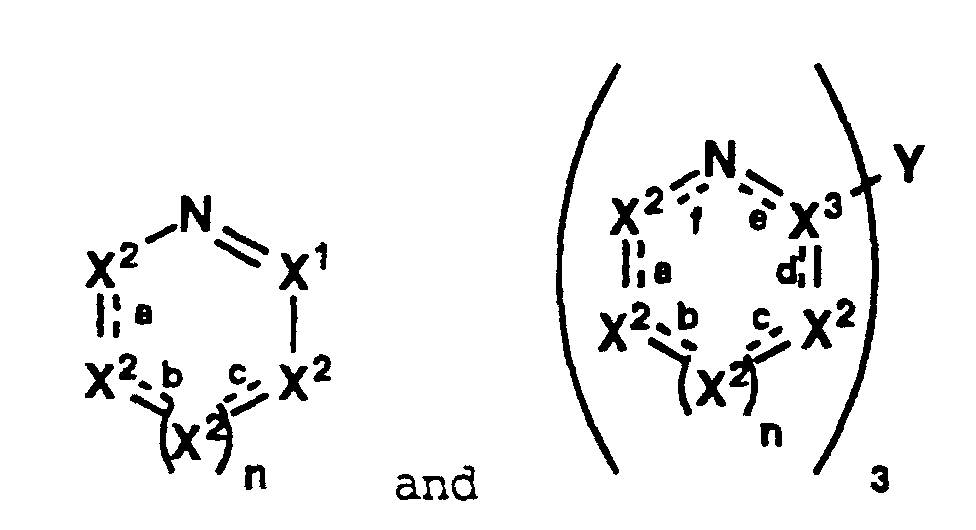 n is 0X1 is independently selected at each occurrence from the group: CR64 and N;X2 is independently selected at each occurrence from the group: CR64, CR64R64, N, NR64, O and S;X3 is independently selected at each occurrence from the group: C, CR64, and N;provided the total number of heteroatoms in each ring of the ligand AL2 is 1 to 4;Y is BR64-;and a, b, c, d, e and f indicate the positions of optional double bonds, provided that one of e and f is a double bond.R64 is independently selected at each occurrence from the group:
H, C1-C3 alkyl substituted with 0-3 R65, aryl substituted with 0-3 R65, and R65;or, alternatively, two R64 may be taken together with the atom or atoms to which they are attached to form a fused aromatic or heterocyclic ring, substituted with 0-3 R65;R65 is independently selected at each occurrence from the group: -NO2, -CO2R66, -OR66, -SO3H, and -OCH2CO2H; andR66 is hydrogen. - The radiopharmaceutical of Claim 1 wherein:Q is a biologically active molecule selected from the group: IIb/IIIa receptor antagonists and chemotactic peptides;d' is 1;Y1 and Y2, at each occurrence, are independently selected from:O, NR56, C=O, C(=O)O, OC(=O)O, C(=O)NH, C=NR56, NHC(=O), (NH)2C(=O);R55 and R56 are hydrogen;z is 1;R40 is heterocycle substituted with R52;R41 is hydrogen;R52 is a bond to Ln;AL1 is tricine;X2 is independently selected at each occurrence from the group: CR64, CR64R64, N, NR64 and O;X3 is N;provided the total number of heteroatoms in each ring of the ligand AL2 is 2 to 3;R64 is independently selected at each occurrence from the group:
H, C1-C3 alkyl substituted with 0-1 R65, aryl substituted with 0-1 R65; and R65;R65 is independently selected at each occurrence from the group: -NO2, -CO2R66, -OR66, and -SO3H. - The radiopharmaceutical of Claim 1 wherein:Q is
 d' is 1;Ln is attached to Q at the carbon atom designated with a * and has the formula:Ch' isand is attached to Ln at the carbon atom designated with a *;
 Mt is 99mTc;AL1 is tricine;x, y and z are 1;and AL2 is selected from the group:

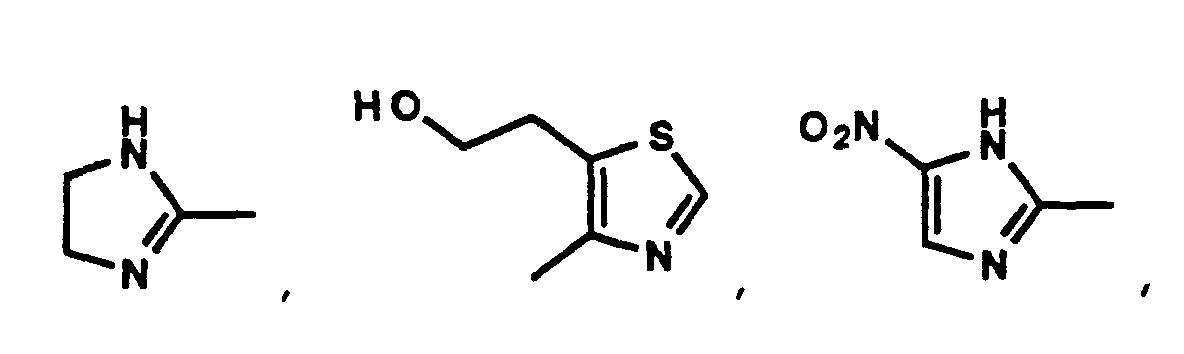 and
and
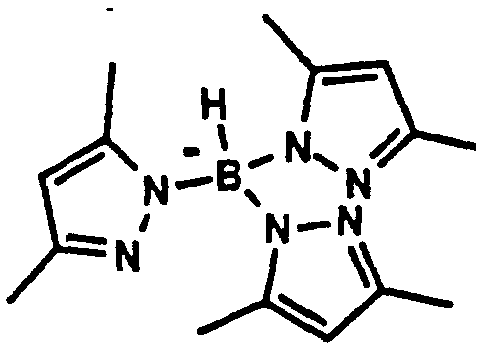
- A compound according to any one of Claim 1-3 for use in therapy.
- Use of radiopharmaceutical according to any one of claims 1-3 for the preparation of a medicament for use in radioimaging a mammal.
- Use of radiopharmaceutical according to any one of claims 1-3 for the preparation of a medicament for use in visualizing sites of platelet deposition in a mammal by radioimaging.
- Use of radiopharmaceutical according to any one of claims 1-3 for the preparation of a medicament for use in determining platelet deposition in a mammal.
- Use of radiopharmaceutical according to any one of claims 1-3 for the preparation of a medicament for use in diagnosing a disorder associated with platelet deposition in a mammal.
- A kit for preparing a radiopharmaceutical comprising:wherein:(a) a predetermined quantity of a sterile, pharmaceutically acceptable reagent of formula:(b) a predetermined quantity of a sterile, pharmaceutically acceptable first ancillary ligand, AL1, which is a functionalized aminocarboxylate;(c) a predetermined quantity of a sterile, pharmaceutically acceptable second ancillary ligand, AL2, selected from the group:
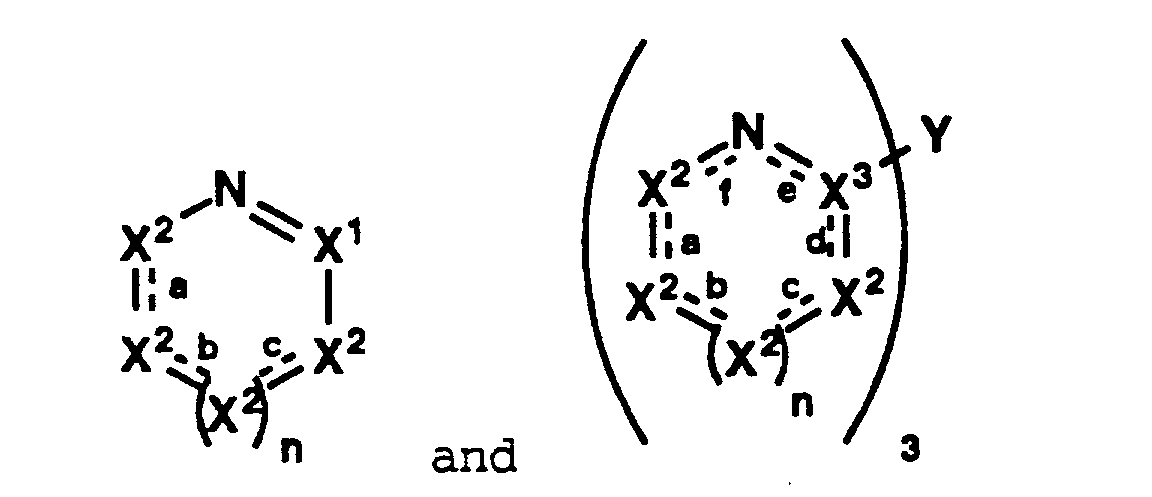 (d) a predetermined quantity of a sterile, pharmaceutically acceptable reducing agent; and(e) optionally, a predetermined quantity of one or more sterile, pharmaceutically acceptable components selected from the group: transfer ligands, buffers, lyophilization aids, stabilization aids, solubilization aids and bacteriostats;Q, d', Ln, X1, X2, X3, n, y, a, b, c, d, e and f are as defined in Claim 1;Ch is a radionuclide metal chelator selected from the group: R40R41N-N=C(C1-C3 alkyl)2 and R40NNH2-, and R40R41N-N=CR80R81, wherein,R40 is independently selected at each occurrence from the group: a bond to Ln, C1-C10 alkyl substituted with 0-3 R52, aryl substituted with 0-3 R52, cycloaklyl substituted with 0-3 R52, heterocycle substituted with 0-3 R52, heterocycloalkyl substituted with 0-3 R52, aralkyl substituted with 0-3 R52 and alkaryl substituted with 0-3 R52;R41 is independently selected from the group: hydrogen, aryl substituted with 0-3 R52, C1-C10 alkyl substituted with 0-3 R52, and a heterocycle substituted with 0-3 R52;R52 is independently selected at each occurrence from the group: a bond to Ln, =O, F, Cl, Br, I, -CF3, -CN, -CO2R53, -C(=O)R53, -C(=O)N(R53)2, -CHO, -CH2OR53, -OC(=O)R53, -OC(=O)OR53a, -OR53, -OC(=O)N(R53)2, -NR53C(=O)R53, -NR54C(=O)OR53a, -N(R53)3 +, -NR53C(=O)N(R53)2, -NR54SO2N(R53)2, -NR54SO2R53a, -SO3H, -SO2R53a, -SR53, -S(=O)R53a, -SO2N(R53)2, -N(R53)2, -NHC(=NH)NHR53, -C(=NH)NHR53, =NOR53, NO2, -C(=O)NHOR53, -C(=O)NHNR53R53a, -OCH2CO2H, 2-(1-morpholino)ethoxy;R53, R53a, and R54 are each independently selected at each occurrence from the group: hydrogen, C1-C6 alkyl, and a bond to Ln;R80 and R81 are independently selected from the group:
H, C1-C10 alkyl, -CN, -CO2R85, -C(=O)R85, -C(=O)N(R85)2, C2- C10 1-alkene substituted with 0-3 R84, C2 - C10 1-alkyne substituted with 0-3 R84, aryl substituted with 0-3 R84, unsaturated heterocycle substituted with 0-3 R84, and unsaturated carbocycle substituted with 0-3 R84, provided that when one of R80 and R81 is H or alkyl, then the other is not H or alkyl;or, alternatively, R80 and R81, may be taken together with the shown divalent carbon radical to form:wherein: R82 and R83 may be independently selected from the group: H, R84, C1-C10 alkyl substituted with 0-3 R84, C2-C10 alkenyl substituted with 0-3 R84, C2-C10 alkynyl substituted with 0-3 R84, aryl substituted with 0-3 R84, heterocycle substituted with 0-3 R84 and carbocycle substituted with 0-3 R84;or, alternatively, R82, R83 may be taken together to form a fused aromatic or heterocyclic ring;R84 is independently selected at each occurrence from the group: =O, F, Cl, Br, I, -CF3, -CN, -CO2R85, -C(=O)R85, -C(=O)N(R85)2, - N(R85)3+ -CH2OR85, -OC(=O)R85, -OC(=C)OR85a, -OR85, -OC(=O)N(R85)2, -NR85C(=O)R85, -NR86C(=O)OR85a, -NR85C(=O)N(R85)2, -NR86SO2N(R85)2, -NR86SO2R85a, -SO3H, -SO2R85a, -SR85, -S(=O)R85a, -SO2N(R85)2, -N(R85)2, -NHC(=NH)NHR85, -C(=NH)NHR85, =NOR85, -C(=O)NHOR85, -OCH2CO2H, 2-(1-morpholino)ethoxy; andR85, R85a, and R86 are each independently selected at each occurrence from the group: hydrogen and C1-C6 alkyl.
 - The kit of Claim 9, wherein:AL1 is a tricine;Q is a biologically active molecule selected from the group: IIb/IIIa receptor antagonists, and chemotactic peptides;d' is 1;Y1 and Y2, at each occurrence, are independently selected from:O, NR56, C=O, C(=O)O, OC(=O)O, C(=O)NH, C=NR56, NHC(=O), (NH)2C(=O);R55 and R56 are hydrogen;R40 is heterocycle substituted with R52;R41 is hydrogen;R52 is a bond to Ln;R80 is independently selected at each occurrence from the group: -CO2R85' C2 - C3 1-alkene substituted with 0-1 R84' aryl substituted with 0-1 R84' and unsaturated heterocycle substituted with 0-1 R84;R81 is H;R84 is independently selected at each occurrence from the group: -CO2R85, -OR85, -SO3H, and -N(R85)2;R85 is independently selected at each occurrence from the group: hydrogen and methyl;X1 is independently selected at each occurrence from the group: CR64 and N;X2 is independently selected at each occurrence from the group: CR64, CR64R64, N, NR64, and O;X3 is N;Y is BR64-;provided the total number of heteroatoms in each ring of the ligand AL2 is 2 to 3;R64 is independently selected at each occurrence from the group:
H, C1-C3 alkyl substituted with 0-1 R65, aryl substituted with 0-1 R65, and R65;R65 is independently selected at each occurrence from the group: -NO2, -CO2R66, -OR66, and -SO3H;R66 is hydrogen;n is 0;and a, b, c, d, e and f indicate the positions of optional double bonds, provided that one of e and f is a double bond. - The kit of Claim 9, wherein:AL2 is selected from the group:
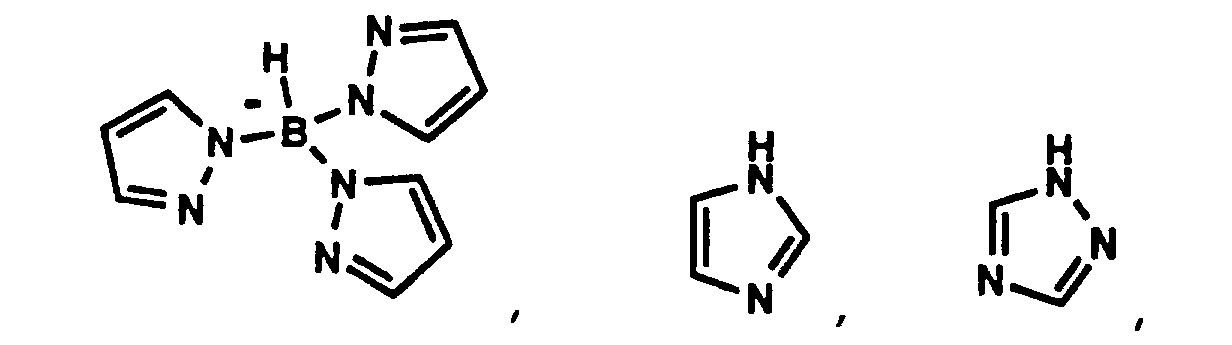

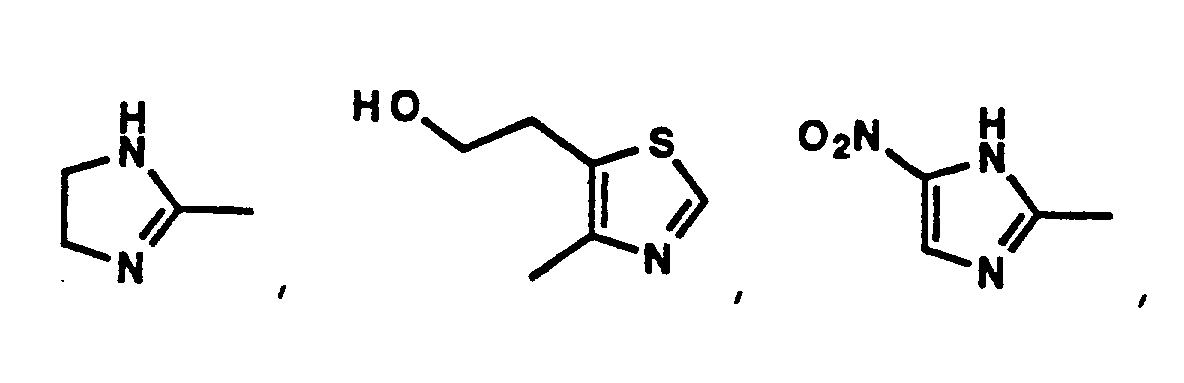

 Q is
Q is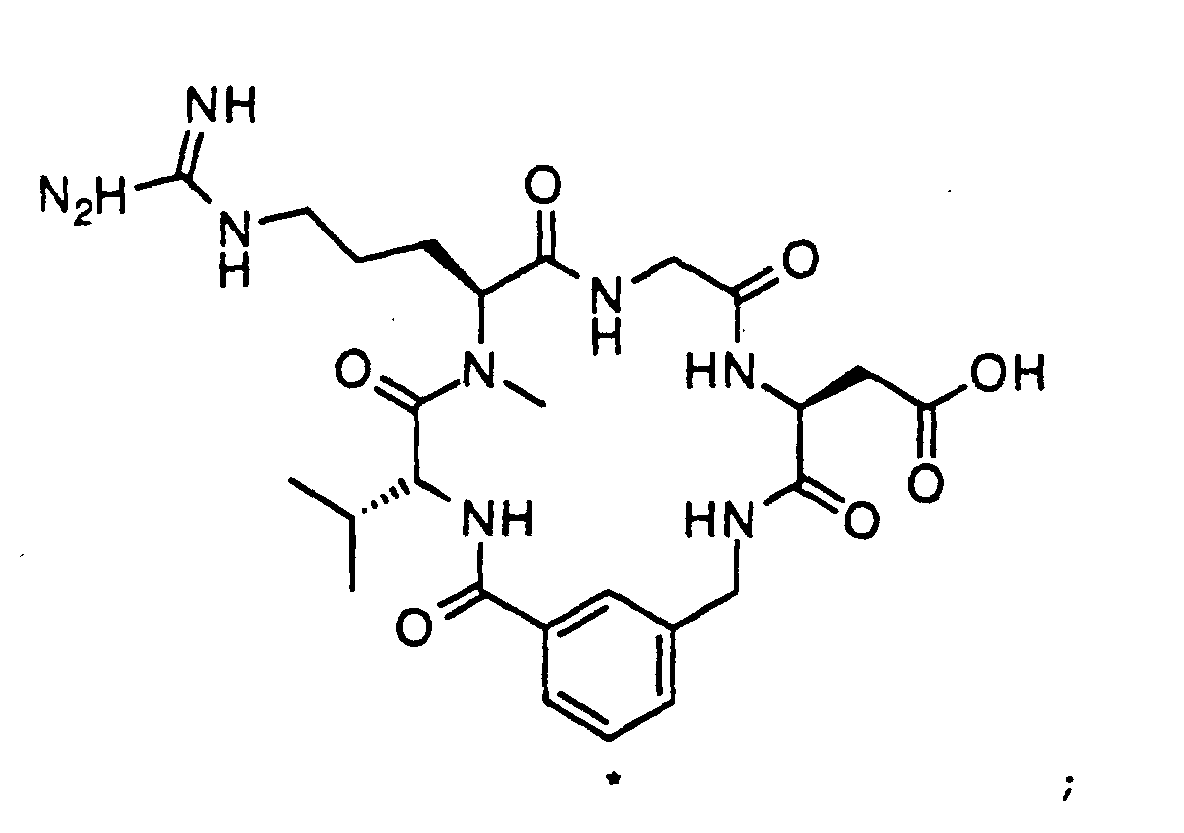 d' is 1;Ln is attached to Q at the carbon atom designated with a * and has the formula:Ch is selected from R40NNH2- and R40R41N-N=CR80R81, wherein,R40 is independently selected at each occurrence from the group: heterocycle substituted with R52;R41 is hydrogen;R52 is a bond to Ln;R80 is independently selected at each occurrence from the group: -CO2R85, C2 - C3 1-alkene substituted with 0-1 R84, aryl substituted with 0-1 R84 and unsaturated heterocycle substituted with 0-1 R84;R81 is H;R84 is independently selected at each occurrence from the group: -CO2R85, -OR85, -SO3H, and -N(R85)2;R85 is independently selected at each occurrence from the group: hydrogen and methyl.
Applications Claiming Priority (7)
| Application Number | Priority Date | Filing Date | Title |
|---|---|---|---|
| US1336096P | 1996-03-13 | 1996-03-13 | |
| US613360 | 1996-03-13 | ||
| US64686696A | 1996-05-08 | 1996-05-08 | |
| US646866 | 1996-05-08 | ||
| US808699 | 1997-02-28 | ||
| US08/808,699 US5879659A (en) | 1996-03-13 | 1997-02-28 | Ternary radiopharmaceutical complexes |
| PCT/US1997/003915 WO1997033627A2 (en) | 1996-03-13 | 1997-03-12 | New ternary radiopharmaceutical complexes |
Publications (2)
| Publication Number | Publication Date |
|---|---|
| EP0888130A2 EP0888130A2 (en) | 1999-01-07 |
| EP0888130B1 true EP0888130B1 (en) | 2003-07-02 |
Family
ID=27359839
Family Applications (1)
| Application Number | Title | Priority Date | Filing Date |
|---|---|---|---|
| EP97915928A Expired - Lifetime EP0888130B1 (en) | 1996-03-13 | 1997-03-12 | New ternary radiopharmaceutical complexes |
Country Status (8)
| Country | Link |
|---|---|
| EP (1) | EP0888130B1 (en) |
| JP (1) | JP2000507233A (en) |
| AT (1) | ATE244023T1 (en) |
| AU (1) | AU2323197A (en) |
| CA (1) | CA2249025A1 (en) |
| DE (1) | DE69723242T2 (en) |
| ES (1) | ES2201284T3 (en) |
| WO (1) | WO1997033627A2 (en) |
Cited By (2)
| Publication number | Priority date | Publication date | Assignee | Title |
|---|---|---|---|---|
| US8975082B2 (en) | 2008-05-13 | 2015-03-10 | University Of Kansas | Metal abstraction peptide (MAP) tag and associated methods |
| US9187735B2 (en) | 2012-06-01 | 2015-11-17 | University Of Kansas | Metal abstraction peptide with superoxide dismutase activity |
Families Citing this family (9)
| Publication number | Priority date | Publication date | Assignee | Title |
|---|---|---|---|---|
| US5739313A (en) | 1995-11-13 | 1998-04-14 | Regents Of The University Of Minnesota | Radionuclide labeling of vitamin B12 and coenzymes thereof |
| US6251364B1 (en) | 1999-03-29 | 2001-06-26 | Dupont Pharmaceuticals Company | Ternary ligand complexes useful as radiopharmaceuticals |
| US6806363B1 (en) | 1999-04-16 | 2004-10-19 | Mayo Foundation For Medical Education & Research | Cobalamin conjugates useful as antitumor agents |
| US7591995B2 (en) | 1999-10-15 | 2009-09-22 | Mayo Foundation For Medical Education And Research | Cobalamin conjugates useful as imaging and therapeutic agents |
| MXPA02003772A (en) | 1999-10-15 | 2005-04-28 | Mayo Foundation | Cobalamin conjugates useful as imaging and therapeutic agents. |
| TWI228512B (en) | 2000-10-25 | 2005-03-01 | Mayo Foundation | Transcobalamin binding conjugates useful for treating abnormal cellular proliferation |
| GB0031592D0 (en) * | 2000-12-28 | 2001-02-07 | Nycomed Amersham Plc | Stabilised radiopharmaceutical compositions |
| MXPA04001113A (en) | 2001-08-08 | 2004-07-08 | Bristol Myers Squibb Pharma Co | Simultaneous imaging of cardiac perfusion and a vitronectin receptor targeted imaging agent. |
| US6838074B2 (en) | 2001-08-08 | 2005-01-04 | Bristol-Myers Squibb Company | Simultaneous imaging of cardiac perfusion and a vitronectin receptor targeted imaging agent |
Family Cites Families (8)
| Publication number | Priority date | Publication date | Assignee | Title |
|---|---|---|---|---|
| WO1992005154A1 (en) * | 1990-09-14 | 1992-04-02 | Mallinckrodt Medical, Inc. | Novel nitrogen-sulfur ligands useful in radiographic imaging agents |
| EP0630264B1 (en) * | 1992-02-06 | 2002-11-06 | BioSynthema Inc. | Ligands for improving metal chelate formation kinetics |
| GB9209641D0 (en) * | 1992-05-02 | 1992-06-17 | Johnson Matthey Plc | Improvements in radiolabelling |
| CA2154896A1 (en) * | 1993-01-28 | 1994-08-04 | Robert Allen Snow | Immunoreactive reagents employing heterodimers |
| US5879657A (en) * | 1993-03-30 | 1999-03-09 | The Dupont Merck Pharmaceutical Company | Radiolabeled platelet GPIIb/IIIa receptor antagonists as imaging agents for the diagnosis of thromboembolic disorders |
| US5744120A (en) * | 1993-03-30 | 1998-04-28 | The Dupont Merick Pharmaceutical Company | Ternary radiopharmaceutical complexes |
| US5750088A (en) * | 1993-03-30 | 1998-05-12 | The Dupont Merck Pharmaceutical Company | Stable hydrazones linked to a peptide moiety as reagents for the preparation of radiopharmaceuticals |
| AU7261994A (en) * | 1993-07-19 | 1995-02-20 | Resolution Pharmaceuticals Inc. | Hydrazino-type radionuclide chelators having an n3s configuration |
-
1997
- 1997-03-12 EP EP97915928A patent/EP0888130B1/en not_active Expired - Lifetime
- 1997-03-12 AU AU23231/97A patent/AU2323197A/en not_active Abandoned
- 1997-03-12 JP JP9532814A patent/JP2000507233A/en not_active Ceased
- 1997-03-12 WO PCT/US1997/003915 patent/WO1997033627A2/en not_active Ceased
- 1997-03-12 DE DE69723242T patent/DE69723242T2/en not_active Expired - Fee Related
- 1997-03-12 AT AT97915928T patent/ATE244023T1/en not_active IP Right Cessation
- 1997-03-12 CA CA002249025A patent/CA2249025A1/en not_active Abandoned
- 1997-03-12 ES ES97915928T patent/ES2201284T3/en not_active Expired - Lifetime
Cited By (3)
| Publication number | Priority date | Publication date | Assignee | Title |
|---|---|---|---|---|
| US8975082B2 (en) | 2008-05-13 | 2015-03-10 | University Of Kansas | Metal abstraction peptide (MAP) tag and associated methods |
| US9096652B2 (en) | 2008-05-13 | 2015-08-04 | University Of Kansas | Metal abstraction peptide (MAP) tag and associated methods |
| US9187735B2 (en) | 2012-06-01 | 2015-11-17 | University Of Kansas | Metal abstraction peptide with superoxide dismutase activity |
Also Published As
| Publication number | Publication date |
|---|---|
| WO1997033627A3 (en) | 1998-02-26 |
| WO1997033627A2 (en) | 1997-09-18 |
| JP2000507233A (en) | 2000-06-13 |
| CA2249025A1 (en) | 1997-09-18 |
| DE69723242T2 (en) | 2004-06-03 |
| ATE244023T1 (en) | 2003-07-15 |
| AU2323197A (en) | 1997-10-01 |
| DE69723242D1 (en) | 2003-08-07 |
| EP0888130A2 (en) | 1999-01-07 |
| ES2201284T3 (en) | 2004-03-16 |
Similar Documents
| Publication | Publication Date | Title |
|---|---|---|
| EP0820312B1 (en) | Ternary radiopharmaceutical complexes | |
| EP0832068B1 (en) | Stable reagents for the preparation of radiopharmaceuticals | |
| US5879659A (en) | Ternary radiopharmaceutical complexes | |
| US6534038B2 (en) | Ternary ligand complexes useful as radiopharmaceuticals | |
| EP0888130A2 (en) | New ternary radiopharmaceutical complexes | |
| US7319149B2 (en) | Chelants and macrocyclic metal complex radiopharmaceuticals thereof | |
| US6251364B1 (en) | Ternary ligand complexes useful as radiopharmaceuticals | |
| US7317104B2 (en) | Chelants and macrocyclic metal complex radiopharmaceuticals thereof | |
| HRP970139A2 (en) | New ternary radiopharmaceutical complexes |
Legal Events
| Date | Code | Title | Description |
|---|---|---|---|
| PUAI | Public reference made under article 153(3) epc to a published international application that has entered the european phase |
Free format text: ORIGINAL CODE: 0009012 |
|
| 17P | Request for examination filed |
Effective date: 19980910 |
|
| AK | Designated contracting states |
Kind code of ref document: A2 Designated state(s): AT BE CH DE DK ES FI FR GB GR IE IT LI LU NL PT SE |
|
| 17Q | First examination report despatched |
Effective date: 20010124 |
|
| RAP1 | Party data changed (applicant data changed or rights of an application transferred) |
Owner name: BRISTOL-MYERS SQUIBB PHARMA COMPANY |
|
| GRAH | Despatch of communication of intention to grant a patent |
Free format text: ORIGINAL CODE: EPIDOS IGRA |
|
| GRAH | Despatch of communication of intention to grant a patent |
Free format text: ORIGINAL CODE: EPIDOS IGRA |
|
| GRAH | Despatch of communication of intention to grant a patent |
Free format text: ORIGINAL CODE: EPIDOS IGRA |
|
| GRAA | (expected) grant |
Free format text: ORIGINAL CODE: 0009210 |
|
| AK | Designated contracting states |
Designated state(s): AT BE CH DE DK ES FI FR GB GR IE IT LI LU NL PT SE |
|
| PG25 | Lapsed in a contracting state [announced via postgrant information from national office to epo] |
Ref country code: NL Free format text: LAPSE BECAUSE OF FAILURE TO SUBMIT A TRANSLATION OF THE DESCRIPTION OR TO PAY THE FEE WITHIN THE PRESCRIBED TIME-LIMIT Effective date: 20030702 Ref country code: LI Free format text: LAPSE BECAUSE OF FAILURE TO SUBMIT A TRANSLATION OF THE DESCRIPTION OR TO PAY THE FEE WITHIN THE PRESCRIBED TIME-LIMIT Effective date: 20030702 Ref country code: FI Free format text: LAPSE BECAUSE OF FAILURE TO SUBMIT A TRANSLATION OF THE DESCRIPTION OR TO PAY THE FEE WITHIN THE PRESCRIBED TIME-LIMIT Effective date: 20030702 Ref country code: CH Free format text: LAPSE BECAUSE OF FAILURE TO SUBMIT A TRANSLATION OF THE DESCRIPTION OR TO PAY THE FEE WITHIN THE PRESCRIBED TIME-LIMIT Effective date: 20030702 Ref country code: BE Free format text: LAPSE BECAUSE OF FAILURE TO SUBMIT A TRANSLATION OF THE DESCRIPTION OR TO PAY THE FEE WITHIN THE PRESCRIBED TIME-LIMIT Effective date: 20030702 Ref country code: AT Free format text: LAPSE BECAUSE OF FAILURE TO SUBMIT A TRANSLATION OF THE DESCRIPTION OR TO PAY THE FEE WITHIN THE PRESCRIBED TIME-LIMIT Effective date: 20030702 |
|
| REG | Reference to a national code |
Ref country code: GB Ref legal event code: FG4D |
|
| REG | Reference to a national code |
Ref country code: CH Ref legal event code: EP |
|
| REG | Reference to a national code |
Ref country code: IE Ref legal event code: FG4D |
|
| REF | Corresponds to: |
Ref document number: 69723242 Country of ref document: DE Date of ref document: 20030807 Kind code of ref document: P |
|
| PG25 | Lapsed in a contracting state [announced via postgrant information from national office to epo] |
Ref country code: SE Free format text: LAPSE BECAUSE OF FAILURE TO SUBMIT A TRANSLATION OF THE DESCRIPTION OR TO PAY THE FEE WITHIN THE PRESCRIBED TIME-LIMIT Effective date: 20031002 Ref country code: PT Free format text: LAPSE BECAUSE OF FAILURE TO SUBMIT A TRANSLATION OF THE DESCRIPTION OR TO PAY THE FEE WITHIN THE PRESCRIBED TIME-LIMIT Effective date: 20031002 Ref country code: GR Free format text: LAPSE BECAUSE OF FAILURE TO SUBMIT A TRANSLATION OF THE DESCRIPTION OR TO PAY THE FEE WITHIN THE PRESCRIBED TIME-LIMIT Effective date: 20031002 Ref country code: DK Free format text: LAPSE BECAUSE OF FAILURE TO SUBMIT A TRANSLATION OF THE DESCRIPTION OR TO PAY THE FEE WITHIN THE PRESCRIBED TIME-LIMIT Effective date: 20031002 |
|
| NLV1 | Nl: lapsed or annulled due to failure to fulfill the requirements of art. 29p and 29m of the patents act | ||
| REG | Reference to a national code |
Ref country code: CH Ref legal event code: PL |
|
| REG | Reference to a national code |
Ref country code: ES Ref legal event code: FG2A Ref document number: 2201284 Country of ref document: ES Kind code of ref document: T3 |
|
| ET | Fr: translation filed | ||
| PLBE | No opposition filed within time limit |
Free format text: ORIGINAL CODE: 0009261 |
|
| STAA | Information on the status of an ep patent application or granted ep patent |
Free format text: STATUS: NO OPPOSITION FILED WITHIN TIME LIMIT |
|
| 26N | No opposition filed |
Effective date: 20040405 |
|
| PGFP | Annual fee paid to national office [announced via postgrant information from national office to epo] |
Ref country code: GB Payment date: 20070307 Year of fee payment: 11 |
|
| PGFP | Annual fee paid to national office [announced via postgrant information from national office to epo] |
Ref country code: DE Payment date: 20070308 Year of fee payment: 11 |
|
| PGFP | Annual fee paid to national office [announced via postgrant information from national office to epo] |
Ref country code: ES Payment date: 20070417 Year of fee payment: 11 |
|
| PGFP | Annual fee paid to national office [announced via postgrant information from national office to epo] |
Ref country code: IT Payment date: 20070521 Year of fee payment: 11 |
|
| PGFP | Annual fee paid to national office [announced via postgrant information from national office to epo] |
Ref country code: FR Payment date: 20070308 Year of fee payment: 11 |
|
| GBPC | Gb: european patent ceased through non-payment of renewal fee |
Effective date: 20080312 |
|
| REG | Reference to a national code |
Ref country code: FR Ref legal event code: ST Effective date: 20081125 |
|
| PG25 | Lapsed in a contracting state [announced via postgrant information from national office to epo] |
Ref country code: DE Free format text: LAPSE BECAUSE OF NON-PAYMENT OF DUE FEES Effective date: 20081001 |
|
| PG25 | Lapsed in a contracting state [announced via postgrant information from national office to epo] |
Ref country code: FR Free format text: LAPSE BECAUSE OF NON-PAYMENT OF DUE FEES Effective date: 20080331 |
|
| PGFP | Annual fee paid to national office [announced via postgrant information from national office to epo] |
Ref country code: LU Payment date: 20090320 Year of fee payment: 13 Ref country code: IE Payment date: 20090318 Year of fee payment: 13 |
|
| REG | Reference to a national code |
Ref country code: ES Ref legal event code: FD2A Effective date: 20080313 |
|
| PG25 | Lapsed in a contracting state [announced via postgrant information from national office to epo] |
Ref country code: GB Free format text: LAPSE BECAUSE OF NON-PAYMENT OF DUE FEES Effective date: 20080312 |
|
| PG25 | Lapsed in a contracting state [announced via postgrant information from national office to epo] |
Ref country code: ES Free format text: LAPSE BECAUSE OF NON-PAYMENT OF DUE FEES Effective date: 20080313 |
|
| PG25 | Lapsed in a contracting state [announced via postgrant information from national office to epo] |
Ref country code: IT Free format text: LAPSE BECAUSE OF NON-PAYMENT OF DUE FEES Effective date: 20080312 |
|
| REG | Reference to a national code |
Ref country code: IE Ref legal event code: MM4A |
|
| PG25 | Lapsed in a contracting state [announced via postgrant information from national office to epo] |
Ref country code: IE Free format text: LAPSE BECAUSE OF NON-PAYMENT OF DUE FEES Effective date: 20100312 |
|
| PG25 | Lapsed in a contracting state [announced via postgrant information from national office to epo] |
Ref country code: LU Free format text: LAPSE BECAUSE OF NON-PAYMENT OF DUE FEES Effective date: 20100312 |