EP0884052B1 - Cartilage/bone inducing materials for reparation - Google Patents
Cartilage/bone inducing materials for reparation Download PDFInfo
- Publication number
- EP0884052B1 EP0884052B1 EP96938460A EP96938460A EP0884052B1 EP 0884052 B1 EP0884052 B1 EP 0884052B1 EP 96938460 A EP96938460 A EP 96938460A EP 96938460 A EP96938460 A EP 96938460A EP 0884052 B1 EP0884052 B1 EP 0884052B1
- Authority
- EP
- European Patent Office
- Prior art keywords
- bone morphogenetic
- bone
- cartilage
- polyoxyethylene
- protein
- Prior art date
- Legal status (The legal status is an assumption and is not a legal conclusion. Google has not performed a legal analysis and makes no representation as to the accuracy of the status listed.)
- Expired - Lifetime
Links
- 210000000845 cartilage Anatomy 0.000 title claims abstract description 36
- 239000000463 material Substances 0.000 title claims abstract description 26
- 210000000988 bone and bone Anatomy 0.000 title claims abstract description 17
- 230000001939 inductive effect Effects 0.000 title 1
- 108010007726 Bone Morphogenetic Proteins Proteins 0.000 claims abstract description 56
- 102000007350 Bone Morphogenetic Proteins Human genes 0.000 claims abstract description 56
- LYCAIKOWRPUZTN-UHFFFAOYSA-N Ethylene glycol Chemical compound OCCO LYCAIKOWRPUZTN-UHFFFAOYSA-N 0.000 claims abstract description 52
- 229920002503 polyoxyethylene-polyoxypropylene Polymers 0.000 claims abstract description 35
- 229940112869 bone morphogenetic protein Drugs 0.000 claims abstract description 33
- WGCNASOHLSPBMP-UHFFFAOYSA-N hydroxyacetaldehyde Natural products OCC=O WGCNASOHLSPBMP-UHFFFAOYSA-N 0.000 claims abstract description 26
- 239000007864 aqueous solution Substances 0.000 claims abstract description 12
- IAYPIBMASNFSPL-UHFFFAOYSA-N Ethylene oxide Chemical compound C1CO1 IAYPIBMASNFSPL-UHFFFAOYSA-N 0.000 claims abstract description 10
- 229920001451 polypropylene glycol Polymers 0.000 claims abstract description 10
- 208000010392 Bone Fractures Diseases 0.000 claims abstract description 7
- 230000007547 defect Effects 0.000 claims abstract description 4
- 101100472152 Trypanosoma brucei brucei (strain 927/4 GUTat10.1) REL1 gene Proteins 0.000 claims description 26
- 108010049931 Bone Morphogenetic Protein 2 Proteins 0.000 claims description 10
- 102100024506 Bone morphogenetic protein 2 Human genes 0.000 claims description 10
- 241000282414 Homo sapiens Species 0.000 claims description 6
- 241001465754 Metazoa Species 0.000 claims description 5
- 239000003795 chemical substances by application Substances 0.000 claims description 5
- 239000003937 drug carrier Substances 0.000 claims description 4
- 239000000470 constituent Substances 0.000 claims description 3
- 238000004519 manufacturing process Methods 0.000 claims description 3
- 239000008194 pharmaceutical composition Substances 0.000 claims 2
- 238000000034 method Methods 0.000 abstract description 11
- 230000002441 reversible effect Effects 0.000 abstract description 8
- 230000000694 effects Effects 0.000 abstract description 7
- 238000010521 absorption reaction Methods 0.000 abstract description 6
- 230000007704 transition Effects 0.000 abstract description 6
- 230000001419 dependent effect Effects 0.000 abstract description 5
- 229920001992 poloxamer 407 Polymers 0.000 description 26
- 108090000623 proteins and genes Proteins 0.000 description 25
- 102000004169 proteins and genes Human genes 0.000 description 25
- 238000002347 injection Methods 0.000 description 15
- 239000007924 injection Substances 0.000 description 15
- 238000002360 preparation method Methods 0.000 description 13
- FAPWRFPIFSIZLT-UHFFFAOYSA-M Sodium chloride Chemical compound [Na+].[Cl-] FAPWRFPIFSIZLT-UHFFFAOYSA-M 0.000 description 12
- 150000001413 amino acids Chemical class 0.000 description 12
- 241000588724 Escherichia coli Species 0.000 description 10
- 150000002334 glycols Chemical class 0.000 description 10
- WEVYAHXRMPXWCK-UHFFFAOYSA-N Acetonitrile Chemical compound CC#N WEVYAHXRMPXWCK-UHFFFAOYSA-N 0.000 description 9
- 239000000243 solution Substances 0.000 description 8
- 239000007788 liquid Substances 0.000 description 7
- 210000003141 lower extremity Anatomy 0.000 description 7
- 108010035532 Collagen Proteins 0.000 description 6
- 102000008186 Collagen Human genes 0.000 description 6
- 108020004414 DNA Proteins 0.000 description 6
- 241000699670 Mus sp. Species 0.000 description 6
- XSQUKJJJFZCRTK-UHFFFAOYSA-N Urea Chemical compound NC(N)=O XSQUKJJJFZCRTK-UHFFFAOYSA-N 0.000 description 6
- 210000004027 cell Anatomy 0.000 description 6
- 229920001436 collagen Polymers 0.000 description 6
- 239000000499 gel Substances 0.000 description 6
- RWSXRVCMGQZWBV-WDSKDSINSA-N glutathione Chemical compound OC(=O)[C@@H](N)CCC(=O)N[C@@H](CS)C(=O)NCC(O)=O RWSXRVCMGQZWBV-WDSKDSINSA-N 0.000 description 6
- 210000003000 inclusion body Anatomy 0.000 description 6
- 239000000203 mixture Substances 0.000 description 6
- 229920001983 poloxamer Polymers 0.000 description 6
- 239000011780 sodium chloride Substances 0.000 description 6
- KCXVZYZYPLLWCC-UHFFFAOYSA-N EDTA Chemical compound OC(=O)CN(CC(O)=O)CCN(CC(O)=O)CC(O)=O KCXVZYZYPLLWCC-UHFFFAOYSA-N 0.000 description 5
- 239000004480 active ingredient Substances 0.000 description 5
- 239000013604 expression vector Substances 0.000 description 5
- 239000000178 monomer Substances 0.000 description 5
- QKNYBSVHEMOAJP-UHFFFAOYSA-N 2-amino-2-(hydroxymethyl)propane-1,3-diol;hydron;chloride Chemical compound Cl.OCC(N)(CO)CO QKNYBSVHEMOAJP-UHFFFAOYSA-N 0.000 description 4
- TWRXJAOTZQYOKJ-UHFFFAOYSA-L Magnesium chloride Chemical compound [Mg+2].[Cl-].[Cl-] TWRXJAOTZQYOKJ-UHFFFAOYSA-L 0.000 description 4
- 210000002805 bone matrix Anatomy 0.000 description 4
- 230000034127 bone morphogenesis Effects 0.000 description 4
- 239000012634 fragment Substances 0.000 description 4
- 210000003205 muscle Anatomy 0.000 description 4
- 108020004707 nucleic acids Proteins 0.000 description 4
- 102000039446 nucleic acids Human genes 0.000 description 4
- 150000007523 nucleic acids Chemical class 0.000 description 4
- 230000001191 orthodromic effect Effects 0.000 description 4
- 239000013612 plasmid Substances 0.000 description 4
- 229920000642 polymer Polymers 0.000 description 4
- 238000010186 staining Methods 0.000 description 4
- 210000000689 upper leg Anatomy 0.000 description 4
- WQZGKKKJIJFFOK-GASJEMHNSA-N Glucose Natural products OC[C@H]1OC(O)[C@H](O)[C@@H](O)[C@@H]1O WQZGKKKJIJFFOK-GASJEMHNSA-N 0.000 description 3
- 241000699666 Mus <mouse, genus> Species 0.000 description 3
- 108091028043 Nucleic acid sequence Proteins 0.000 description 3
- 241000700159 Rattus Species 0.000 description 3
- 238000004458 analytical method Methods 0.000 description 3
- 230000003459 anti-dromic effect Effects 0.000 description 3
- QVGXLLKOCUKJST-UHFFFAOYSA-N atomic oxygen Chemical compound [O] QVGXLLKOCUKJST-UHFFFAOYSA-N 0.000 description 3
- 229920002988 biodegradable polymer Polymers 0.000 description 3
- 239000004621 biodegradable polymer Substances 0.000 description 3
- 210000001185 bone marrow Anatomy 0.000 description 3
- 239000004202 carbamide Substances 0.000 description 3
- 230000007355 cartilage morphogenesis Effects 0.000 description 3
- KRKNYBCHXYNGOX-UHFFFAOYSA-N citric acid Chemical compound OC(=O)CC(O)(C(O)=O)CC(O)=O KRKNYBCHXYNGOX-UHFFFAOYSA-N 0.000 description 3
- 229940079593 drug Drugs 0.000 description 3
- 239000003814 drug Substances 0.000 description 3
- 238000010353 genetic engineering Methods 0.000 description 3
- 239000008103 glucose Substances 0.000 description 3
- 229960003180 glutathione Drugs 0.000 description 3
- 238000001727 in vivo Methods 0.000 description 3
- 238000002955 isolation Methods 0.000 description 3
- 230000011164 ossification Effects 0.000 description 3
- 210000000963 osteoblast Anatomy 0.000 description 3
- 239000001301 oxygen Substances 0.000 description 3
- 229910052760 oxygen Inorganic materials 0.000 description 3
- 238000000746 purification Methods 0.000 description 3
- 230000000717 retained effect Effects 0.000 description 3
- 239000007787 solid Substances 0.000 description 3
- 210000001519 tissue Anatomy 0.000 description 3
- XLYOFNOQVPJJNP-UHFFFAOYSA-N water Chemical compound O XLYOFNOQVPJJNP-UHFFFAOYSA-N 0.000 description 3
- QGZKDVFQNNGYKY-UHFFFAOYSA-N Ammonia Chemical compound N QGZKDVFQNNGYKY-UHFFFAOYSA-N 0.000 description 2
- 206010002091 Anaesthesia Diseases 0.000 description 2
- WSFSSNUMVMOOMR-UHFFFAOYSA-N Formaldehyde Chemical compound O=C WSFSSNUMVMOOMR-UHFFFAOYSA-N 0.000 description 2
- 108010024636 Glutathione Proteins 0.000 description 2
- 125000001429 N-terminal alpha-amino-acid group Chemical group 0.000 description 2
- 108091081024 Start codon Proteins 0.000 description 2
- 238000011892 Von Kossa's method Methods 0.000 description 2
- 125000000539 amino acid group Chemical group 0.000 description 2
- 230000037005 anaesthesia Effects 0.000 description 2
- 238000010276 construction Methods 0.000 description 2
- 238000001816 cooling Methods 0.000 description 2
- 238000001962 electrophoresis Methods 0.000 description 2
- 238000005516 engineering process Methods 0.000 description 2
- 230000002349 favourable effect Effects 0.000 description 2
- 229910052588 hydroxylapatite Inorganic materials 0.000 description 2
- 229910001629 magnesium chloride Inorganic materials 0.000 description 2
- 238000002156 mixing Methods 0.000 description 2
- XYJRXVWERLGGKC-UHFFFAOYSA-D pentacalcium;hydroxide;triphosphate Chemical compound [OH-].[Ca+2].[Ca+2].[Ca+2].[Ca+2].[Ca+2].[O-]P([O-])([O-])=O.[O-]P([O-])([O-])=O.[O-]P([O-])([O-])=O XYJRXVWERLGGKC-UHFFFAOYSA-D 0.000 description 2
- 239000002244 precipitate Substances 0.000 description 2
- 238000001556 precipitation Methods 0.000 description 2
- 239000008213 purified water Substances 0.000 description 2
- 230000002829 reductive effect Effects 0.000 description 2
- 108091008146 restriction endonucleases Proteins 0.000 description 2
- FGDZQCVHDSGLHJ-UHFFFAOYSA-M rubidium chloride Chemical compound [Cl-].[Rb+] FGDZQCVHDSGLHJ-UHFFFAOYSA-M 0.000 description 2
- 239000002904 solvent Substances 0.000 description 2
- 238000003756 stirring Methods 0.000 description 2
- 239000006228 supernatant Substances 0.000 description 2
- 239000004094 surface-active agent Substances 0.000 description 2
- 230000002459 sustained effect Effects 0.000 description 2
- 231100000820 toxicity test Toxicity 0.000 description 2
- 230000009466 transformation Effects 0.000 description 2
- 239000012137 tryptone Substances 0.000 description 2
- 229910003208 (NH4)6Mo7O24·4H2O Inorganic materials 0.000 description 1
- LKKMLIBUAXYLOY-UHFFFAOYSA-N 3-Amino-1-methyl-5H-pyrido[4,3-b]indole Chemical compound N1C2=CC=CC=C2C2=C1C=C(N)N=C2C LKKMLIBUAXYLOY-UHFFFAOYSA-N 0.000 description 1
- UMCMPZBLKLEWAF-BCTGSCMUSA-N 3-[(3-cholamidopropyl)dimethylammonio]propane-1-sulfonate Chemical compound C([C@H]1C[C@H]2O)[C@H](O)CC[C@]1(C)[C@@H]1[C@@H]2[C@@H]2CC[C@H]([C@@H](CCC(=O)NCCC[N+](C)(C)CCCS([O-])(=O)=O)C)[C@@]2(C)[C@@H](O)C1 UMCMPZBLKLEWAF-BCTGSCMUSA-N 0.000 description 1
- 229920000936 Agarose Polymers 0.000 description 1
- 241000894006 Bacteria Species 0.000 description 1
- 241000283690 Bos taurus Species 0.000 description 1
- OYPRJOBELJOOCE-UHFFFAOYSA-N Calcium Chemical group [Ca] OYPRJOBELJOOCE-UHFFFAOYSA-N 0.000 description 1
- UXVMQQNJUSDDNG-UHFFFAOYSA-L Calcium chloride Chemical compound [Cl-].[Cl-].[Ca+2] UXVMQQNJUSDDNG-UHFFFAOYSA-L 0.000 description 1
- 241000282472 Canis lupus familiaris Species 0.000 description 1
- 229910021580 Cobalt(II) chloride Inorganic materials 0.000 description 1
- 108020004705 Codon Proteins 0.000 description 1
- 241000699802 Cricetulus griseus Species 0.000 description 1
- 102000012410 DNA Ligases Human genes 0.000 description 1
- 108010061982 DNA Ligases Proteins 0.000 description 1
- 108700039691 Genetic Promoter Regions Proteins 0.000 description 1
- 108700007698 Genetic Terminator Regions Proteins 0.000 description 1
- 108010053070 Glutathione Disulfide Proteins 0.000 description 1
- DHMQDGOQFOQNFH-UHFFFAOYSA-N Glycine Chemical compound NCC(O)=O DHMQDGOQFOQNFH-UHFFFAOYSA-N 0.000 description 1
- 239000004471 Glycine Substances 0.000 description 1
- 108010090290 Growth Differentiation Factor 2 Proteins 0.000 description 1
- 108010090254 Growth Differentiation Factor 5 Proteins 0.000 description 1
- 102100040892 Growth/differentiation factor 2 Human genes 0.000 description 1
- 102100035379 Growth/differentiation factor 5 Human genes 0.000 description 1
- 206010061218 Inflammation Diseases 0.000 description 1
- 102000015696 Interleukins Human genes 0.000 description 1
- 108010063738 Interleukins Proteins 0.000 description 1
- 239000007836 KH2PO4 Substances 0.000 description 1
- FFEARJCKVFRZRR-BYPYZUCNSA-N L-methionine Chemical compound CSCC[C@H](N)C(O)=O FFEARJCKVFRZRR-BYPYZUCNSA-N 0.000 description 1
- 108010086093 Mung Bean Nuclease Proteins 0.000 description 1
- 229910004835 Na2B4O7 Inorganic materials 0.000 description 1
- 241000283973 Oryctolagus cuniculus Species 0.000 description 1
- 208000002193 Pain Diseases 0.000 description 1
- RVGRUAULSDPKGF-UHFFFAOYSA-N Poloxamer Chemical compound C1CO1.CC1CO1 RVGRUAULSDPKGF-UHFFFAOYSA-N 0.000 description 1
- 108020005091 Replication Origin Proteins 0.000 description 1
- 239000012506 Sephacryl® Substances 0.000 description 1
- 229920002684 Sepharose Polymers 0.000 description 1
- 108010006785 Taq Polymerase Proteins 0.000 description 1
- 108020005038 Terminator Codon Proteins 0.000 description 1
- 229910001069 Ti alloy Inorganic materials 0.000 description 1
- 108090001012 Transforming Growth Factor beta Proteins 0.000 description 1
- 239000013504 Triton X-100 Substances 0.000 description 1
- 229920004890 Triton X-100 Polymers 0.000 description 1
- 238000002835 absorbance Methods 0.000 description 1
- 231100000215 acute (single dose) toxicity testing Toxicity 0.000 description 1
- 231100000403 acute toxicity Toxicity 0.000 description 1
- 230000007059 acute toxicity Effects 0.000 description 1
- 238000011047 acute toxicity test Methods 0.000 description 1
- 239000000654 additive Substances 0.000 description 1
- 230000000996 additive effect Effects 0.000 description 1
- 238000005273 aeration Methods 0.000 description 1
- 229910021529 ammonia Inorganic materials 0.000 description 1
- 230000003698 anagen phase Effects 0.000 description 1
- 238000000137 annealing Methods 0.000 description 1
- 230000003254 anti-foaming effect Effects 0.000 description 1
- 230000002587 anti-hemolytic effect Effects 0.000 description 1
- 239000002246 antineoplastic agent Substances 0.000 description 1
- 239000002473 artificial blood Substances 0.000 description 1
- 108010045569 atelocollagen Proteins 0.000 description 1
- 230000015572 biosynthetic process Effects 0.000 description 1
- 239000008280 blood Substances 0.000 description 1
- 210000004369 blood Anatomy 0.000 description 1
- 230000036760 body temperature Effects 0.000 description 1
- 244000309464 bull Species 0.000 description 1
- 229910052791 calcium Inorganic materials 0.000 description 1
- 239000011575 calcium Substances 0.000 description 1
- 239000001110 calcium chloride Substances 0.000 description 1
- 229910001628 calcium chloride Inorganic materials 0.000 description 1
- 229940041514 candida albicans extract Drugs 0.000 description 1
- 239000000969 carrier Substances 0.000 description 1
- 210000003321 cartilage cell Anatomy 0.000 description 1
- 230000022159 cartilage development Effects 0.000 description 1
- 238000005119 centrifugation Methods 0.000 description 1
- 229910052927 chalcanthite Inorganic materials 0.000 description 1
- 238000006243 chemical reaction Methods 0.000 description 1
- 239000012459 cleaning agent Substances 0.000 description 1
- 239000011248 coating agent Substances 0.000 description 1
- 238000000576 coating method Methods 0.000 description 1
- 239000002299 complementary DNA Substances 0.000 description 1
- 229920001577 copolymer Polymers 0.000 description 1
- 238000004925 denaturation Methods 0.000 description 1
- 230000036425 denaturation Effects 0.000 description 1
- 230000008021 deposition Effects 0.000 description 1
- 238000009792 diffusion process Methods 0.000 description 1
- 239000000539 dimer Substances 0.000 description 1
- ZPWVASYFFYYZEW-UHFFFAOYSA-L dipotassium hydrogen phosphate Chemical compound [K+].[K+].OP([O-])([O-])=O ZPWVASYFFYYZEW-UHFFFAOYSA-L 0.000 description 1
- 229910000396 dipotassium phosphate Inorganic materials 0.000 description 1
- 230000008034 disappearance Effects 0.000 description 1
- UQGFMSUEHSUPRD-UHFFFAOYSA-N disodium;3,7-dioxido-2,4,6,8,9-pentaoxa-1,3,5,7-tetraborabicyclo[3.3.1]nonane Chemical compound [Na+].[Na+].O1B([O-])OB2OB([O-])OB1O2 UQGFMSUEHSUPRD-UHFFFAOYSA-N 0.000 description 1
- 239000012153 distilled water Substances 0.000 description 1
- 230000000857 drug effect Effects 0.000 description 1
- 229910052564 epsomite Inorganic materials 0.000 description 1
- 238000005755 formation reaction Methods 0.000 description 1
- 238000009472 formulation Methods 0.000 description 1
- 239000003205 fragrance Substances 0.000 description 1
- YPZRWBKMTBYPTK-BJDJZHNGSA-N glutathione disulfide Chemical compound OC(=O)[C@@H](N)CCC(=O)N[C@H](C(=O)NCC(O)=O)CSSC[C@@H](C(=O)NCC(O)=O)NC(=O)CC[C@H](N)C(O)=O YPZRWBKMTBYPTK-BJDJZHNGSA-N 0.000 description 1
- XLYOFNOQVPJJNP-ZSJDYOACSA-N heavy water Substances [2H]O[2H] XLYOFNOQVPJJNP-ZSJDYOACSA-N 0.000 description 1
- 230000002962 histologic effect Effects 0.000 description 1
- 239000000710 homodimer Substances 0.000 description 1
- 125000001165 hydrophobic group Chemical group 0.000 description 1
- 230000002779 inactivation Effects 0.000 description 1
- 230000004054 inflammatory process Effects 0.000 description 1
- 229940047122 interleukins Drugs 0.000 description 1
- 230000000622 irritating effect Effects 0.000 description 1
- BPHPUYQFMNQIOC-NXRLNHOXSA-N isopropyl beta-D-thiogalactopyranoside Chemical compound CC(C)S[C@@H]1O[C@H](CO)[C@H](O)[C@H](O)[C@H]1O BPHPUYQFMNQIOC-NXRLNHOXSA-N 0.000 description 1
- 239000003589 local anesthetic agent Substances 0.000 description 1
- 229960005015 local anesthetics Drugs 0.000 description 1
- 231100000053 low toxicity Toxicity 0.000 description 1
- 210000001161 mammalian embryo Anatomy 0.000 description 1
- 229910000357 manganese(II) sulfate Inorganic materials 0.000 description 1
- SQQMAOCOWKFBNP-UHFFFAOYSA-L manganese(II) sulfate Chemical compound [Mn+2].[O-]S([O-])(=O)=O SQQMAOCOWKFBNP-UHFFFAOYSA-L 0.000 description 1
- 229910052603 melanterite Inorganic materials 0.000 description 1
- 238000002844 melting Methods 0.000 description 1
- 229910052751 metal Inorganic materials 0.000 description 1
- 239000002184 metal Substances 0.000 description 1
- 150000002739 metals Chemical class 0.000 description 1
- 229930182817 methionine Natural products 0.000 description 1
- 244000005700 microbiome Species 0.000 description 1
- 229910000402 monopotassium phosphate Inorganic materials 0.000 description 1
- 231100000956 nontoxicity Toxicity 0.000 description 1
- 239000003883 ointment base Substances 0.000 description 1
- 239000003960 organic solvent Substances 0.000 description 1
- 201000008482 osteoarthritis Diseases 0.000 description 1
- 210000001672 ovary Anatomy 0.000 description 1
- 230000036407 pain Effects 0.000 description 1
- 239000000546 pharmaceutical excipient Substances 0.000 description 1
- 230000000144 pharmacologic effect Effects 0.000 description 1
- 239000013600 plasmid vector Substances 0.000 description 1
- 229920001993 poloxamer 188 Polymers 0.000 description 1
- 229920000747 poly(lactic acid) Polymers 0.000 description 1
- 239000004626 polylactic acid Substances 0.000 description 1
- 238000003752 polymerase chain reaction Methods 0.000 description 1
- 238000006116 polymerization reaction Methods 0.000 description 1
- GNSKLFRGEWLPPA-UHFFFAOYSA-M potassium dihydrogen phosphate Chemical compound [K+].OP(O)([O-])=O GNSKLFRGEWLPPA-UHFFFAOYSA-M 0.000 description 1
- 239000002243 precursor Substances 0.000 description 1
- 108090000765 processed proteins & peptides Proteins 0.000 description 1
- 239000000047 product Substances 0.000 description 1
- 230000009467 reduction Effects 0.000 description 1
- 230000008439 repair process Effects 0.000 description 1
- 230000010076 replication Effects 0.000 description 1
- 238000004007 reversed phase HPLC Methods 0.000 description 1
- 229940102127 rubidium chloride Drugs 0.000 description 1
- 239000011734 sodium Substances 0.000 description 1
- 238000002415 sodium dodecyl sulfate polyacrylamide gel electrophoresis Methods 0.000 description 1
- GEHJYWRUCIMESM-UHFFFAOYSA-L sodium sulfite Chemical compound [Na+].[Na+].[O-]S([O-])=O GEHJYWRUCIMESM-UHFFFAOYSA-L 0.000 description 1
- 238000005063 solubilization Methods 0.000 description 1
- 230000007928 solubilization Effects 0.000 description 1
- 230000003381 solubilizing effect Effects 0.000 description 1
- 239000000126 substance Substances 0.000 description 1
- 238000006467 substitution reaction Methods 0.000 description 1
- 238000006277 sulfonation reaction Methods 0.000 description 1
- 239000000725 suspension Substances 0.000 description 1
- 239000003826 tablet Substances 0.000 description 1
- 238000002560 therapeutic procedure Methods 0.000 description 1
- 229960003495 thiamine Drugs 0.000 description 1
- DPJRMOMPQZCRJU-UHFFFAOYSA-M thiamine hydrochloride Chemical compound Cl.[Cl-].CC1=C(CCO)SC=[N+]1CC1=CN=C(C)N=C1N DPJRMOMPQZCRJU-UHFFFAOYSA-M 0.000 description 1
- 231100000331 toxic Toxicity 0.000 description 1
- 230000002588 toxic effect Effects 0.000 description 1
- 230000001131 transforming effect Effects 0.000 description 1
- 239000013598 vector Substances 0.000 description 1
- 239000012138 yeast extract Substances 0.000 description 1
- 229910000368 zinc sulfate Inorganic materials 0.000 description 1
- NWONKYPBYAMBJT-UHFFFAOYSA-L zinc sulfate Chemical compound [Zn+2].[O-]S([O-])(=O)=O NWONKYPBYAMBJT-UHFFFAOYSA-L 0.000 description 1
- 239000011686 zinc sulphate Substances 0.000 description 1
Images


Classifications
-
- A—HUMAN NECESSITIES
- A61—MEDICAL OR VETERINARY SCIENCE; HYGIENE
- A61K—PREPARATIONS FOR MEDICAL, DENTAL OR TOILETRY PURPOSES
- A61K38/00—Medicinal preparations containing peptides
- A61K38/16—Peptides having more than 20 amino acids; Gastrins; Somatostatins; Melanotropins; Derivatives thereof
- A61K38/17—Peptides having more than 20 amino acids; Gastrins; Somatostatins; Melanotropins; Derivatives thereof from animals; from humans
- A61K38/18—Growth factors; Growth regulators
-
- A—HUMAN NECESSITIES
- A61—MEDICAL OR VETERINARY SCIENCE; HYGIENE
- A61L—METHODS OR APPARATUS FOR STERILISING MATERIALS OR OBJECTS IN GENERAL; DISINFECTION, STERILISATION OR DEODORISATION OF AIR; CHEMICAL ASPECTS OF BANDAGES, DRESSINGS, ABSORBENT PADS OR SURGICAL ARTICLES; MATERIALS FOR BANDAGES, DRESSINGS, ABSORBENT PADS OR SURGICAL ARTICLES
- A61L27/00—Materials for grafts or prostheses or for coating grafts or prostheses
- A61L27/14—Macromolecular materials
- A61L27/22—Polypeptides or derivatives thereof, e.g. degradation products
- A61L27/227—Other specific proteins or polypeptides not covered by A61L27/222, A61L27/225 or A61L27/24
-
- A—HUMAN NECESSITIES
- A61—MEDICAL OR VETERINARY SCIENCE; HYGIENE
- A61F—FILTERS IMPLANTABLE INTO BLOOD VESSELS; PROSTHESES; DEVICES PROVIDING PATENCY TO, OR PREVENTING COLLAPSING OF, TUBULAR STRUCTURES OF THE BODY, e.g. STENTS; ORTHOPAEDIC, NURSING OR CONTRACEPTIVE DEVICES; FOMENTATION; TREATMENT OR PROTECTION OF EYES OR EARS; BANDAGES, DRESSINGS OR ABSORBENT PADS; FIRST-AID KITS
- A61F2/00—Filters implantable into blood vessels; Prostheses, i.e. artificial substitutes or replacements for parts of the body; Appliances for connecting them with the body; Devices providing patency to, or preventing collapsing of, tubular structures of the body, e.g. stents
- A61F2/02—Prostheses implantable into the body
- A61F2/28—Bones
-
- A—HUMAN NECESSITIES
- A61—MEDICAL OR VETERINARY SCIENCE; HYGIENE
- A61F—FILTERS IMPLANTABLE INTO BLOOD VESSELS; PROSTHESES; DEVICES PROVIDING PATENCY TO, OR PREVENTING COLLAPSING OF, TUBULAR STRUCTURES OF THE BODY, e.g. STENTS; ORTHOPAEDIC, NURSING OR CONTRACEPTIVE DEVICES; FOMENTATION; TREATMENT OR PROTECTION OF EYES OR EARS; BANDAGES, DRESSINGS OR ABSORBENT PADS; FIRST-AID KITS
- A61F2/00—Filters implantable into blood vessels; Prostheses, i.e. artificial substitutes or replacements for parts of the body; Appliances for connecting them with the body; Devices providing patency to, or preventing collapsing of, tubular structures of the body, e.g. stents
- A61F2/02—Prostheses implantable into the body
- A61F2/30—Joints
- A61F2/30756—Cartilage endoprostheses
-
- A—HUMAN NECESSITIES
- A61—MEDICAL OR VETERINARY SCIENCE; HYGIENE
- A61K—PREPARATIONS FOR MEDICAL, DENTAL OR TOILETRY PURPOSES
- A61K38/00—Medicinal preparations containing peptides
- A61K38/16—Peptides having more than 20 amino acids; Gastrins; Somatostatins; Melanotropins; Derivatives thereof
- A61K38/17—Peptides having more than 20 amino acids; Gastrins; Somatostatins; Melanotropins; Derivatives thereof from animals; from humans
- A61K38/18—Growth factors; Growth regulators
- A61K38/1875—Bone morphogenic factor; Osteogenins; Osteogenic factor; Bone-inducing factor
-
- A—HUMAN NECESSITIES
- A61—MEDICAL OR VETERINARY SCIENCE; HYGIENE
- A61P—SPECIFIC THERAPEUTIC ACTIVITY OF CHEMICAL COMPOUNDS OR MEDICINAL PREPARATIONS
- A61P19/00—Drugs for skeletal disorders
-
- A—HUMAN NECESSITIES
- A61—MEDICAL OR VETERINARY SCIENCE; HYGIENE
- A61P—SPECIFIC THERAPEUTIC ACTIVITY OF CHEMICAL COMPOUNDS OR MEDICINAL PREPARATIONS
- A61P3/00—Drugs for disorders of the metabolism
-
- A—HUMAN NECESSITIES
- A61—MEDICAL OR VETERINARY SCIENCE; HYGIENE
- A61P—SPECIFIC THERAPEUTIC ACTIVITY OF CHEMICAL COMPOUNDS OR MEDICINAL PREPARATIONS
- A61P43/00—Drugs for specific purposes, not provided for in groups A61P1/00-A61P41/00
-
- C—CHEMISTRY; METALLURGY
- C07—ORGANIC CHEMISTRY
- C07K—PEPTIDES
- C07K14/00—Peptides having more than 20 amino acids; Gastrins; Somatostatins; Melanotropins; Derivatives thereof
- C07K14/435—Peptides having more than 20 amino acids; Gastrins; Somatostatins; Melanotropins; Derivatives thereof from animals; from humans
- C07K14/475—Growth factors; Growth regulators
- C07K14/51—Bone morphogenetic factor; Osteogenins; Osteogenic factor; Bone-inducing factor
-
- A—HUMAN NECESSITIES
- A61—MEDICAL OR VETERINARY SCIENCE; HYGIENE
- A61F—FILTERS IMPLANTABLE INTO BLOOD VESSELS; PROSTHESES; DEVICES PROVIDING PATENCY TO, OR PREVENTING COLLAPSING OF, TUBULAR STRUCTURES OF THE BODY, e.g. STENTS; ORTHOPAEDIC, NURSING OR CONTRACEPTIVE DEVICES; FOMENTATION; TREATMENT OR PROTECTION OF EYES OR EARS; BANDAGES, DRESSINGS OR ABSORBENT PADS; FIRST-AID KITS
- A61F2/00—Filters implantable into blood vessels; Prostheses, i.e. artificial substitutes or replacements for parts of the body; Appliances for connecting them with the body; Devices providing patency to, or preventing collapsing of, tubular structures of the body, e.g. stents
- A61F2/02—Prostheses implantable into the body
- A61F2/28—Bones
- A61F2002/2817—Bone stimulation by chemical reactions or by osteogenic or biological products for enhancing ossification, e.g. by bone morphogenetic or morphogenic proteins [BMP] or by transforming growth factors [TGF]
-
- A—HUMAN NECESSITIES
- A61—MEDICAL OR VETERINARY SCIENCE; HYGIENE
- A61F—FILTERS IMPLANTABLE INTO BLOOD VESSELS; PROSTHESES; DEVICES PROVIDING PATENCY TO, OR PREVENTING COLLAPSING OF, TUBULAR STRUCTURES OF THE BODY, e.g. STENTS; ORTHOPAEDIC, NURSING OR CONTRACEPTIVE DEVICES; FOMENTATION; TREATMENT OR PROTECTION OF EYES OR EARS; BANDAGES, DRESSINGS OR ABSORBENT PADS; FIRST-AID KITS
- A61F2/00—Filters implantable into blood vessels; Prostheses, i.e. artificial substitutes or replacements for parts of the body; Appliances for connecting them with the body; Devices providing patency to, or preventing collapsing of, tubular structures of the body, e.g. stents
- A61F2/02—Prostheses implantable into the body
- A61F2/30—Joints
- A61F2002/30001—Additional features of subject-matter classified in A61F2/28, A61F2/30 and subgroups thereof
- A61F2002/30003—Material related properties of the prosthesis or of a coating on the prosthesis
- A61F2002/3006—Properties of materials and coating materials
- A61F2002/30062—(bio)absorbable, biodegradable, bioerodable, (bio)resorbable, resorptive
-
- A—HUMAN NECESSITIES
- A61—MEDICAL OR VETERINARY SCIENCE; HYGIENE
- A61F—FILTERS IMPLANTABLE INTO BLOOD VESSELS; PROSTHESES; DEVICES PROVIDING PATENCY TO, OR PREVENTING COLLAPSING OF, TUBULAR STRUCTURES OF THE BODY, e.g. STENTS; ORTHOPAEDIC, NURSING OR CONTRACEPTIVE DEVICES; FOMENTATION; TREATMENT OR PROTECTION OF EYES OR EARS; BANDAGES, DRESSINGS OR ABSORBENT PADS; FIRST-AID KITS
- A61F2210/00—Particular material properties of prostheses classified in groups A61F2/00 - A61F2/26 or A61F2/82 or A61F9/00 or A61F11/00 or subgroups thereof
- A61F2210/0004—Particular material properties of prostheses classified in groups A61F2/00 - A61F2/26 or A61F2/82 or A61F9/00 or A61F11/00 or subgroups thereof bioabsorbable
Definitions
- the present invention relates to a cartilage and bone morphogenetic repairing material for the treatment of bone fracture and bone defect.
- this invention is concerned with the cartilage and bone morphogenetic repairing material which contains a polyoxyethylene-polyoxypropylene glycol and a bone morphogenetic protein.
- a prosthetic material for defected sites of cartilage and bone composed of a combination of a bone morphogenetic protein and a suitable carrier was imbedded in the defected site.
- the defected site can be exposed on surgical operation to apply a cartilage and bone repairing material containing a bone morphogenetic protein directly to the defected site, and thus the materials in a solid form such as blocks, sponges, sheets and the like which are easy to handle have been widely applied.
- Those in a semisolid form such as gels or pastes can also be used.
- the carriers which make such solid or semisolid forms applicable there have been utilized, for example, metals such as stainless or titanium alloys or collagen and hydroxyapatite (HAP) or a mixture thereof.
- a carrier which may be in a liquid state capable of passing through a needle on administration and then phasetransited to a gel-like state after administration to retain the bone morphogenetic protein in the injected site.
- the carrier may have non-toxicity, a good bio-compatibility and a high bio-absorption in a living body.
- Collagen is a known carrier for a bone morphogenetic protein and is confirmed to possess favorable bio-compatibility and bio-absorption (Japanese Patent Publication No. 75425/1993). Collagen with an injectable character has also been reported, which may provide an injectable cartilage and bone morphogenetic material (Japanese Patent Publication Nos. 23322/1995 and 53140/1993).
- collagen now available for the use of medicines is derived from natural sources such as cattle or a pig, so that its properties such as a molecular weight, an amino acid composition and a moisture holding property are not always constant. In addition, it has some side-effects such as antigenicity because it is a heterologous protein to human.
- antigenicity cannot be completely eliminated even when atelocollagen; i.e., collagen from which teropeptide sites are removed, is used (J. American Academy of Dermatology 10 , 638-646 and 647-651, 1984 and ibid. 21 , 1203-1208, 1989).
- biodegradable polymers such as polylactic acid or polylactic acid-glycolic acid copolymers can be used as pharmaceutical carriers (U.S. Patent No. 5,385,887 and Japanese Patent Publication No. 22570/1994).
- the biodegradable polymers are in a solid or semisolid state which may maintain a given form, and in view of this, they are classified as a group of applicable materials to surgical operation.
- an organic solvent should be employed during the preparation process, which may easily anticipate the problem of inactivation of the active ingredient, a bone morphogenetic protein.
- the present inventors have made earnest studies on the relationship between the active ingredient, a bone morphogenetic protein, and a carrier therefor in the case of a bone repairing method without surgical operation and have found that a certain class of polyoxyethylene-polyoxypropylene glycols can show a high bio-absorption, a good affinity to a bone morphogenetic protein and temperature dependent sol-gel reversible transition.
- the present inventors have prepared a bone morphogenetic material by mixing an aqueous polyoxyethylene-polyoxypropylene glycol solution and a bone morphogenetic protein, which is an injectable liquid at a temperature of from 1°C to 30°C at the time of administration and may be gelatinized at around 37°C within 3 minutes after administration.
- This invention is concerned with a cartilage and bone morphogenetic repairing material which contains a polyoxyethylene-polyoxypropylene glycol and a bone morphogenetic protein.
- the polyoxyethylene-polyoxypropylene glycol(s) as used herein is a generic name of nonionic surface active agents of a polymer type having less hydrophilic polypropylene glycols as a hydrophobic group and ethylene oxide as a hydrophilic group. It may be feasible to prepare surface active agents having various properties by changing a molecular weight of the polypropylene glycol and a mixing ratio thereof to the ethylene oxide.
- the synthesizable polyoxyethylene-polyoxypropylene glycols have a molecular weight of the polypropylene glycol in the range of 900-4,000 and a percent by weight of the ethylene oxide in the total molecule of 5%-90%.
- polyoxyethylene-polyoxypropylene glycol block polymers manufactured by Asahi Denka Kogyo K.K. are systematically named according to a molecular weight of polypropylene glycol and a weight ratio of the ethylene oxide to be added and the classification list thereof is shown in Fig. 1.
- polyoxyethylene-polyoxypropylene glycols includes aperients, ointment bases, artificial blood, coating for tablets, excipients, solubilizers or solubilizing agents for injections and others in the field of pharmaceutics, in addition to the use as general cleaning agents or antifoamings.
- Pluronic F-68 a molecular weight of polypropylene glycol of 1,750 and an ethylene oxide content of 80%
- Polyoxyethylene-polyoxypropylene glycols are superior in terms of handiness to collagen showing non-reversible phase-transition by changes in temperatures in the point that they show reversible sol-gel phase-transition. This property may be controlled by selection of the optimum polyoxyethylene-polyoxypropylene glycol for the temperature to develop the phase-transition and by changing the concentration of an aqueous solution of said polyoxyethylene-polyoxyp ropylene glycol (Int. J. Pharm. 22 , 207-218,1984 and EP 0551626A1).
- polyoxyethylene-polyoxypropylene glycols have a superior nature as a drug carrier. Attempts have already been made to combine them with a low molecular weight drug such as local anesthetics, anticancer agents and so on (Int. J. Pharm. 8 , 89-99, 1981 and Chem. Pharm. Bull. 32 , 4205-4208, 1984) and to admix with a high molecular weight physiologically active protein such as interleukins and the like (Pharm. Res. 9 , 425-434, 1992).
- a low molecular weight drug such as local anesthetics, anticancer agents and so on
- a high molecular weight physiologically active protein such as interleukins and the like
- This invention relates to a cartilage and bone morphogenetic repairing material which contains a polyoxyethylene-polyoxypropylene glycol and a bone morphogenetic protein, wherein the polypropylene glycol as a constituent of said polyoxyethylene-polyoxypropylene glycol has a molecular weight of about 1,500-4,000 and an ethylene oxide content of about 40-80%/molecule.
- Pluronics capable of performing temperature- dependent sol-gel reversible transition, which characterized the present Pluronics.
- this invention relates to a cartilage and bone morphogenetic repairing material wherein a concentration of polyoxyethylene-polyoxypropylene glycols as described above in an aqueous solution is about 10-50%. It is known that the reversible phase transition temperature of polyoxyethylene-polyoxypropylene glycols varies in general depending on the concentration of their prepared aqueous solutions, and the polyoxyethylene-polyoxypropylene glycols within the above-mentioned constituent ranges may gelate at around body temperature, i.e., about 37°C at a concentration of about 10-90% in its aqueous solution.
- polyoxyethylene-polyoxypropylene glycol block polymer aqueous solution of 15-30% concentration having a molecular weight of polypropylene glycol of 3,850 and a ethylene oxide content of 70% (Pluronic F-127).
- the bone morphogenetic protein (BMP) as used herein is the protein having an activity to induce undifferentiated mesenchymal cells to cartilage cells, thereby performing bone morphogenesis.
- the bone morphogenetic proteins used in this invention include, but are not limited to, a series of proteins belonging to the TGF- ⁇ gene superfamily such as BMP-2 to BMP-9 and so on, the protein named MP52, the protein named GDF-5 and the like.
- BMP-2 is a protein produced using Chinese hamster ovary (CHO) cells according to the genetic engineering technology reported by Wang, et al. (Proc. Natl. Acad. Sci. USA, 87 , 2220-2224, 1990 and U.S. Patent No. 4,877,864)
- MP52 is a new protein produced according to the genetic engineering technology suggested by the present inventors (our copending Japanese Patent Application No. 93644/1995).
- This new protein can be produced by constructing a plasmid containing the DNA sequence coding the amino acid sequence as shown in SEQ ID No.:1 of the Sequence Listing derived from MP52 and having added the codon coding methionine at the N-terminal of said DNA sequence; transforming the plasmid into E . coli ; incubating the E . coli to obtain an inclusion body; and solubilizing and purifying the inclusion body to obtain a monomer protein, which is then dimerized and purified.
- An aqueous solution of 15-30% polyoxyethylene-polyoxypropylene glycol block polymer containing as an active ingredient BMP-2 or MP52 was intramuscularly injected to mice at the femoral muscle. MP52 was retained at the administered sites and then an ectopic cartilage and bone morphogenesis ability was observed in vivo .
- an injectable cartilage and bone morphogenetic repairing material comprising a polyoxyethylene-polyoxypropylene glycol in combination with a bone morphogenetic protein which may be useful for repair of cartilage and bone, especially as a treating agent for bone fracture.
- the present invention is further concerned with a cartilage and bone repairing agent containing a polyoxyethylene-polyoxypropylene glycol and a bone morphogenetic protein.
- the present invention is concerned with a method of treatment for a cartilage and bone repairing, by which a cartilage and bone morphogenetic agent comprising a polyoxyethylene-polyoxypropylene glycol in combination with a bone morphogenetic protein is administered locally to the site of bone fracture or bone defect of human or animal.
- ADEKA® Pluronic F-127 (Asahi Denka Kogyo K.K.) is known to be one of the least toxic polyoxyethylene-polyoxypropylene glycols ("SEIYAKU KOJO" 6 , 875-880, 1986). In 7.0 g of distilled water for injection was dissolved under ice-cooling 3.0 g of ADEKA® Pluronic F-127 to prepare a 30% aqueous solution of ADEKA® Pluronic F-127.
- the aqueous solution of ADEKA® Pluronic F-127 was poured portionwise under ice-cooling to a 96-well titer plate at 360 ⁇ l/well, 40 ⁇ l of 0.01 N HCl containing 80 ⁇ g of BMP-2 was added to each well and mixed. The mixture was sterilized by passing through a 0.22 ⁇ m filter at 4°C to form a BMP-2 injection of a total volume of about 400 ⁇ l (a final concentration of ADEKA® Pluronic F-127 of 27%). Similarly, the BMP-2 injections having final concentrations of ADEKA® Pluronic F-127 of 10, 15, 18 and 22.5% were prepared.
- ADEKA® Pluronic F-127 injection was feasible at 5°C or lower in the case of the final concentration of ADEKA® Pluronic F-127 of 27%, at 10°C or lower in the case of the final concentration of ADEKA® Pluronic F-127 of 22.5%, or at 25°C or lower in the case of the final concentration of ADEKA® Pluronic F-127 of 10%-18%, while the ADEKA® Pluronic F-127 injection phase-transited to a gel-like state at 37°C was a preparation having a final concentration of 15% or higher. Accordingly, the most preferable is a preparation of ADEKA® Pluronic F-127 with the final concentration of 18%, which was in a liquid state at room temperature and showed a gelatinized state at 37°C.
- the MP52 injections having final concentrations of ADEKA® Pluronic F-127 of 10, 15, 18, 22.5 and 27% were prepared according to the same procedure as described in Example 1.
- the same injectable preparations as described for the case of the BMP-2 was obtained according to MP52; that is to say, the injectable preparations applicable at 5°C or lower in the case of the final concentration of ADEKA® Pluronic F-127 of 27%, at 10°C or lower in the case of the final concentration of ADEKA® Pluronic F-127 of 22.5%, or at 25°C or lower in the case of the final concentration of ADEKA® Pluronic F-127 of 10%-18%.
- Example 3 Residual rates of MP52 in vivo after administration of cartilage and bone morphogenetic repairing material
- the MP52 injection of ADEKA® Pluronic F-127 final concentration of 18% as prepared in Example 2 was intramuscularly administered to male mice (ICR strain, 8 weeks old) under anesthesia at the femur of the right hind leg at 100 ⁇ l using a 23G needle (20 ⁇ g MP52/site).
- the ADEKA® Pluronic F-127 injection containing no MP52 was used as a control.
- Fig. 3-a deposition of calcium was observed at the shadowed portion by von-Kossa staining (Fig. 3-a) and osteoblasts, bone matrices and bone marrows were confirmed by Hematoxylin-Eosin staining (Fig. 3-b), whereby bone formation was confirmed. No inflammatory reaction was observed.
- BM, OB and MA bone matrix, osteoblast and bone marrow
- Human MP52cDNA was amplified by polymerization chain reaction (PCR) of the mature part only, using the plasmid vector containing cDNA described in WO93/16099 (pSK52s) as a template DNA.
- a part of the DNA of the mature type MP52 gene was substituted according to the method for increasing in the productivity of the desired protein by increasing the AT content around the initiation codon ATG (reported by M. Nobuhara et al., Agric. Biol. Chem., 52 (6), 1331-1338, 1988 ).
- PCR was carried out by adding in the same test tube the template DNA (10 ng), 50 picomoles each of the orthodromic and antidromic PCR primers, dNTP (0.2 mmol) and MgCl 2 (1.5 mmol), together with Taq DNA polymerase (5 U).
- the PCR of 30 cycles was performed, each cycle comprising denaturation (94°C, one minute), primer annealing (55°C, one minute) and primer elongation (72°C, 2 minutes) (All the following PCRs were performed under the above-defined conditions.).
- the product from the PCR method was separated by electrophoresis in 1.5% low-melting agarose (available from FMC) to cut out the DNA composed of about 360 bp corresponding to the amino acid sequence of SEQ ID NO.:1, which is defined as Fragment 1.
- the replication origin was altered from pBR cell line to pUC cell line.
- the tac promoter region of commercially available E . coli expression vector pKK223-3 (purchased from Pharmacia Biotech AB) was digested by the restriction enzymes SspI and EcoRI, treated with Mung Bean Nuclease (Takara Shuzo K.K., Catalogue No. 2420A), ligated to the initiation codon site of Fragment 1 with T4DNA Ligase (Takara Shuzo K.K., Catalogue No.
- the DNA of pKOT245 has a length of 3.7 kb.
- the expression vector for the present protein as constructed was determined for its base sequence by means of Pharmacia ALF DNA sequencer.
- the present protein producing E . coli was precultured in modified SOC medium (Bacto tryptone 20 g/l, Bacto yeast extract 5 g/l, NaCl 0.5 g/l, MgCl 2 ⁇ 6H 2 O 2.03 g/l, Glucose 3.6 g/l) and 100 ml of the mycelium suspension was added to 5 L of the productive medium (Bacto tryptone 5 g/l, Citric acid 4.3 g/l, K 2 HPO 4 4.675 g/l, KH 2 PO 4 1.275 g/l, NaCl 0.865 g/l, FeSO 4 ⁇ 7H 2 O 100 mg/l, CuSO 4 ⁇ 5H 2 O 1 mg/l, MnSO 4 ⁇ nH 2 O 0.5 mg/l, CaCl 2 ⁇ 2H 2 O 2 mg/l, Na 2 B 4 O 7 ⁇ 10H 2 O 0.225 mg/l, (NH 4 )6Mo 7 O 24 ⁇ 4H 2 O
- the temperature was controlled to 32°C and a pH value was adjusted to 7.15 by adding ammonia, while a dissolved oxygen concentration was controlled to 50% of air saturation by increasing a stirring speed to prevent any reduction in the dissolved oxygen concentration.
- cultivation was carried out by adding a 50% glucose solution at 0.2% concentrations using as a standard a rapid increase in the dissolved oxygen concentration in order to keep a high mycelium concentration.
- the cultured broth obtained as above was centrifuged to recover the mycelium, which was then suspended in 25 mM Tris-HCl buffer containing 10 mM ethylenediaminetetraacetic acid (pH 7.3) and then bacteria were broken by means of a mycelium breaking apparatus (available from Gohlin Co., Inc.) and centrifuged again to recover the precipitate containing the inclusion body.
- the E . coli inclusion body was washed thrice with 1% Triton X-100 and then centrifuged at 3,000 X g at 4°C for 30 minutes.
- the precipitate thus obtained was solubilized under ultrasonification with 20 mM Tris-HCl buffer, pH 8.3, 8 M urea, 10 mM DTT and 1 mM EDTA.
- the solubilized liquid thus obtained was centrifuged at 20,000 X g at 4°C for 30 minutes to recover the supernatant.
- the resultant supernatant was passed through SP-Sepharose FF (Pharmacia) which had been equilibrated with 20 mM Tris-HCl buffer (pH 8.3), 6 M urea, and 1 mM EDTA, washed with said solution and then eluted with said solution containing 0.5 M sodium chloride.
- To the eluate were added Na 2 SO 3 and Na 2 S 4 O 6 at the respective final concentrations of 111 mM and 13 mM and sulfonation was carried out at 4°C for 15 hours.
- the sulfonated solution was gel-filtrated with Sephacryl S-200 (Pharmacia) which had been equilibrated with 20 mM Tris-HCl buffer (pH 8.3), 6 M urea, 0.2 M sodium chloride and 1 mM EDTA to obtain a single sulfonated protein monomer of the invention.
- the sample was diluted into a two-times volume of purified water and then added by 6 N NaCl adjusting pH to approximately pH 7.4 and placed to isoelectric precipitation.
- the precipitation collected by centrifugation at 3,000 x g for 20 minutes was solubilized in a solution with 30% acetonitrile containing 0.1% TFA.
- the solution was diluted in to a two-times volume of purified water and loaded on RESOURCE RPC column (Pharmacia) of a reverse-phase HPLC which had been equilibrated with 25% acetonitrile containing 0.05% TFA, and then eluted with a linear gradient of 25-45% acetonitrile containing 0.05% TFA.
- the eluate was monitored at 280 nm absorbance.
- the purified homodimer protein fractions were collecte d and lyophilized by Speedback Concentrator (Servant Co.).
- the present purified protein obtained as above was analyzed for the N-terminal amino acid sequence by mean of an amino acid sequencer, Model 476A (Applied Biosystems) to confirm the amino acid sequence from the N-terminal up to the 30th amino acid as shown in SEQ ID NO.:1 of the Sequence Listing.
- the molecular weight of the present purified protein obtained above was confirmed by means of SDS-PAGE under non-reductive conditions to show a molecular weight of about 28KDa.
- the present protein is a protein consisting of 119 amino acid residues simply starting from the N-terminal of Pro.
- the cartilage and bone morphogenetic repairing material according to the invention can be applied to the affected site in the bone fracture therapy requiring no surgical operation in a simple and painless manner due to a high bio-absorption, a favorable affinity to the active ingredient, i.e., a bone morphogenetic protein, and a temperature dependent sol-gel reversible transition.
- a bone morphogenetic protein may be sustained and further a cartilage and bone morphogenetic repairing material with less side-effects may be provided.
Landscapes
- Health & Medical Sciences (AREA)
- Life Sciences & Earth Sciences (AREA)
- General Health & Medical Sciences (AREA)
- Chemical & Material Sciences (AREA)
- Veterinary Medicine (AREA)
- Public Health (AREA)
- Animal Behavior & Ethology (AREA)
- Engineering & Computer Science (AREA)
- Medicinal Chemistry (AREA)
- Orthopedic Medicine & Surgery (AREA)
- Organic Chemistry (AREA)
- Oral & Maxillofacial Surgery (AREA)
- Transplantation (AREA)
- Pharmacology & Pharmacy (AREA)
- Bioinformatics & Cheminformatics (AREA)
- Proteomics, Peptides & Aminoacids (AREA)
- Vascular Medicine (AREA)
- Heart & Thoracic Surgery (AREA)
- Biomedical Technology (AREA)
- Zoology (AREA)
- Gastroenterology & Hepatology (AREA)
- Cardiology (AREA)
- Epidemiology (AREA)
- Immunology (AREA)
- General Chemical & Material Sciences (AREA)
- Chemical Kinetics & Catalysis (AREA)
- Nuclear Medicine, Radiotherapy & Molecular Imaging (AREA)
- Genetics & Genomics (AREA)
- Rheumatology (AREA)
- Dermatology (AREA)
- Molecular Biology (AREA)
- Toxicology (AREA)
- Biochemistry (AREA)
- Biophysics (AREA)
- Diabetes (AREA)
- Hematology (AREA)
- Physical Education & Sports Medicine (AREA)
- Obesity (AREA)
- Medicines That Contain Protein Lipid Enzymes And Other Medicines (AREA)
- Materials For Medical Uses (AREA)
Abstract
Description
- The present invention relates to a cartilage and bone morphogenetic repairing material for the treatment of bone fracture and bone defect. In more detail, this invention is concerned with the cartilage and bone morphogenetic repairing material which contains a polyoxyethylene-polyoxypropylene glycol and a bone morphogenetic protein.
- For repairing cartilages and bones, in addition to auto-plasty, there has been practiced a procedure in which a prosthetic material for defected sites of cartilage and bone composed of a combination of a bone morphogenetic protein and a suitable carrier was imbedded in the defected site. In practicing this, the defected site can be exposed on surgical operation to apply a cartilage and bone repairing material containing a bone morphogenetic protein directly to the defected site, and thus the materials in a solid form such as blocks, sponges, sheets and the like which are easy to handle have been widely applied. Those in a semisolid form such as gels or pastes can also be used. As the carriers which make such solid or semisolid forms applicable, there have been utilized, for example, metals such as stainless or titanium alloys or collagen and hydroxyapatite (HAP) or a mixture thereof.
- On the other hand, an attempt has been made to administer a bone morphogenetic protein for the treatment of bone fracture or osteoarthritis without requiring any surgical operation. This administration mode has been earnestly desired from a viewpoint that non-invasive administration, namely injection mode, would alleviate pains from patients. However, the injection route of a simple aqueous liquid preparation of a bone morphogenetic protein causes diffusion and disappearance of the drug after administration, and so in order to achieve an effective administration, the bone morphogenetic protein should be retained in the injected site over a certain period of time. In view of the above, there has been envisaged a carrier which may be in a liquid state capable of passing through a needle on administration and then phasetransited to a gel-like state after administration to retain the bone morphogenetic protein in the injected site. Preferably, the carrier may have non-toxicity, a good bio-compatibility and a high bio-absorption in a living body.
- Collagen is a known carrier for a bone morphogenetic protein and is confirmed to possess favorable bio-compatibility and bio-absorption (Japanese Patent Publication No. 75425/1993). Collagen with an injectable character has also been reported, which may provide an injectable cartilage and bone morphogenetic material (Japanese Patent Publication Nos. 23322/1995 and 53140/1993). However, collagen now available for the use of medicines is derived from natural sources such as cattle or a pig, so that its properties such as a molecular weight, an amino acid composition and a moisture holding property are not always constant. In addition, it has some side-effects such as antigenicity because it is a heterologous protein to human. In particular, antigenicity cannot be completely eliminated even when atelocollagen; i.e., collagen from which teropeptide sites are removed, is used (J. American Academy of Dermatology 10, 638-646 and 647-651, 1984 and ibid. 21, 1203-1208, 1989).
- On the other hand, it was reported that biodegradable polymers such as polylactic acid or polylactic acid-glycolic acid copolymers can be used as pharmaceutical carriers (U.S. Patent No. 5,385,887 and Japanese Patent Publication No. 22570/1994). However, the biodegradable polymers are in a solid or semisolid state which may maintain a given form, and in view of this, they are classified as a group of applicable materials to surgical operation. Even if an injectable complex can be prepared using such biodegradable polymers, an organic solvent should be employed during the preparation process, which may easily anticipate the problem of inactivation of the active ingredient, a bone morphogenetic protein.
- It is an object of this invention to provide a cartilage and bone morphogenetic repairing material, which can overcome the prior art disadvantages or drawbacks as discussed above, which have a high bio-absorption and a good affinity to the active ingredient or a bone morphogenetic protein, and which show the sustained disposition of a bone morphogenetic protein by causing a temperature dependent sol-gel reversible transition with less side-effects such as antigenicity and so on.
- The present inventors have made earnest studies on the relationship between the active ingredient, a bone morphogenetic protein, and a carrier therefor in the case of a bone repairing method without surgical operation and have found that a certain class of polyoxyethylene-polyoxypropylene glycols can show a high bio-absorption, a good affinity to a bone morphogenetic protein and temperature dependent sol-gel reversible transition. The present inventors have prepared a bone morphogenetic material by mixing an aqueous polyoxyethylene-polyoxypropylene glycol solution and a bone morphogenetic protein, which is an injectable liquid at a temperature of from 1°C to 30°C at the time of administration and may be gelatinized at around 37°C within 3 minutes after administration. They have found that ectopic cartilage and bone morphogenesis are accomplished by administering said material to mice intramuscularly at the femoral muscle and then retaining a bone morphogenetic protein at the administration sites in vivo, upon which this invention has been completed.
- This invention is concerned with a cartilage and bone morphogenetic repairing material which contains a polyoxyethylene-polyoxypropylene glycol and a bone morphogenetic protein.
- The polyoxyethylene-polyoxypropylene glycol(s) as used herein is a generic name of nonionic surface active agents of a polymer type having less hydrophilic polypropylene glycols as a hydrophobic group and ethylene oxide as a hydrophilic group. It may be feasible to prepare surface active agents having various properties by changing a molecular weight of the polypropylene glycol and a mixing ratio thereof to the ethylene oxide. The synthesizable polyoxyethylene-polyoxypropylene glycols have a molecular weight of the polypropylene glycol in the range of 900-4,000 and a percent by weight of the ethylene oxide in the total molecule of 5%-90%. For instance, the polyoxyethylene-polyoxypropylene glycol block polymers (ADEKA®) manufactured by Asahi Denka Kogyo K.K. are systematically named according to a molecular weight of polypropylene glycol and a weight ratio of the ethylene oxide to be added and the classification list thereof is shown in Fig. 1.
- Industrial utilization of polyoxyethylene-polyoxypropylene glycols includes aperients, ointment bases, artificial blood, coating for tablets, excipients, solubilizers or solubilizing agents for injections and others in the field of pharmaceutics, in addition to the use as general cleaning agents or antifoamings. In particular, Pluronic F-68 (a molecular weight of polypropylene glycol of 1,750 and an ethylene oxide content of 80%) has a remarkable antihemolytic action and has been marketed in the name of EXOCORPOL® from the Green Cross Corporation as an additive for extracorporeal circulation of blood. It is apparent from the results of toxicity tests using various animals that polyoxyethylene-polyoxypropylene glycols have extremely low toxicity and low irritative property, with no reports on possible side-effects such as antigenicity and so on (Fragrance Journal, 7, 82-87, 1974). The results of toxicity tests are shown in Table 1.
Results of acute toxicity tests using ADEKA® Pluronics ADEKA® Pluronics Animal species LD50(g/kg) L-44, L-62, L-64 Rats 5 F-68 Mice >15 F-68 Rats, Rabbits, Dogs No acute toxicity P-85 Rats 34.6 - Polyoxyethylene-polyoxypropylene glycols are superior in terms of handiness to collagen showing non-reversible phase-transition by changes in temperatures in the point that they show reversible sol-gel phase-transition. This property may be controlled by selection of the optimum polyoxyethylene-polyoxypropylene glycol for the temperature to develop the phase-transition and by changing the concentration of an aqueous solution of said polyoxyethylene-polyoxyp ropylene glycol (Int. J. Pharm. 22, 207-218,1984 and EP 0551626A1).
- It is obvious from the foregoing that polyoxyethylene-polyoxypropylene glycols have a superior nature as a drug carrier. Attempts have already been made to combine them with a low molecular weight drug such as local anesthetics, anticancer agents and so on (Int. J. Pharm. 8, 89-99, 1981 and Chem. Pharm. Bull. 32, 4205-4208, 1984) and to admix with a high molecular weight physiologically active protein such as interleukins and the like (Pharm. Res. 9, 425-434, 1992).
- This invention relates to a cartilage and bone morphogenetic repairing material which contains a polyoxyethylene-polyoxypropylene glycol and a bone morphogenetic protein, wherein the polypropylene glycol as a constituent of said polyoxyethylene-polyoxypropylene glycol has a molecular weight of about 1,500-4,000 and an ethylene oxide content of about 40-80%/molecule. Within the above ranges, there will be provided the Pluronics capable of performing temperature- dependent sol-gel reversible transition, which characterized the present Pluronics.
- Moreover, this invention relates to a cartilage and bone morphogenetic repairing material wherein a concentration of polyoxyethylene-polyoxypropylene glycols as described above in an aqueous solution is about 10-50%. It is known that the reversible phase transition temperature of polyoxyethylene-polyoxypropylene glycols varies in general depending on the concentration of their prepared aqueous solutions, and the polyoxyethylene-polyoxypropylene glycols within the above-mentioned constituent ranges may gelate at around body temperature, i.e., about 37°C at a concentration of about 10-90% in its aqueous solution. As the most preferable example, there is prepared the polyoxyethylene-polyoxypropylene glycol block polymer aqueous solution of 15-30% concentration having a molecular weight of polypropylene glycol of 3,850 and a ethylene oxide content of 70% (Pluronic F-127).
- The bone morphogenetic protein (BMP) as used herein is the protein having an activity to induce undifferentiated mesenchymal cells to cartilage cells, thereby performing bone morphogenesis.
- The bone morphogenetic proteins used in this invention include, but are not limited to, a series of proteins belonging to the TGF-β gene superfamily such as BMP-2 to BMP-9 and so on, the protein named MP52, the protein named GDF-5 and the like. Particularly preferable BMP-2 is a protein produced using Chinese hamster ovary (CHO) cells according to the genetic engineering technology reported by Wang, et al. (Proc. Natl. Acad. Sci. USA, 87, 2220-2224, 1990 and U.S. Patent No. 4,877,864), and particularly preferable MP52 is a new protein produced according to the genetic engineering technology suggested by the present inventors (our copending Japanese Patent Application No. 93644/1995). This new protein can be produced by constructing a plasmid containing the DNA sequence coding the amino acid sequence as shown in SEQ ID No.:1 of the Sequence Listing derived from MP52 and having added the codon coding methionine at the N-terminal of said DNA sequence; transforming the plasmid into E. coli; incubating the E. coli to obtain an inclusion body; and solubilizing and purifying the inclusion body to obtain a monomer protein, which is then dimerized and purified.
- An aqueous solution of 15-30% polyoxyethylene-polyoxypropylene glycol block polymer containing as an active ingredient BMP-2 or MP52 was intramuscularly injected to mice at the femoral muscle. MP52 was retained at the administered sites and then an ectopic cartilage and bone morphogenesis ability was observed in vivo.
- There has not yet been reported to date an injectable cartilage and bone morphogenetic repairing material comprising a polyoxyethylene-polyoxypropylene glycol in combination with a bone morphogenetic protein which may be useful for repair of cartilage and bone, especially as a treating agent for bone fracture.
- The present invention is further concerned with a cartilage and bone repairing agent containing a polyoxyethylene-polyoxypropylene glycol and a bone morphogenetic protein.
- Moreover, the present invention is concerned with a method of treatment for a cartilage and bone repairing, by which a cartilage and bone morphogenetic agent comprising a polyoxyethylene-polyoxypropylene glycol in combination with a bone morphogenetic protein is administered locally to the site of bone fracture or bone defect of human or animal.
-
- Fig. 1 is a classification figure for ADEKA® Pluronics, wherein an ethylene oxide content in terms of % by weight in a total molecule of a polyoxyethylene-polyoxypropylene glycol is indicated on the abscissa, while a molecular weight of the component polypropylene glycol in a polyoxyethylene-polyoxypropylene glycol is indicated on the ordinate.
- Fig. 2 is soft X-ray photographs of the bone/cartilage calcified tissues of the femur in the right hind leg of the mouse as obtained by Example 4. The photographs (a) and (b) were taken after 2 weeks from the administration of ADEKA® Pluronic F-127 solely and ADEKA® Pluronic F-127 containing MP52, respectively. The apparently blackened parts in the muscle indicate ectopically formed bones.
- Fig. 3 is microscopic photographs of the stained tissues of the non-decalcified sections of the femur of the right hind leg of the mouse as obtained by Example 4. Formations of bone matrices and bone matrices together with osteoblasts and of bone marrows can be confirmed by von-Kossa staining (a) and Hematoxylin-Eosin staining (b), respectively.
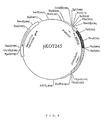
- Fig. 4 is a plasmid map of the expression vector of the protein MP52 (pKOT245) as obtained by Reference Example 1 (2).
-
- The effects of this invention will be illustratively explained by way of the following Examples and Reference Examples. However, this invention is not to be restricted by these Examples.
- ADEKA® Pluronic F-127 (Asahi Denka Kogyo K.K.) is known to be one of the least toxic polyoxyethylene-polyoxypropylene glycols ("SEIYAKU KOJO" 6, 875-880, 1986). In 7.0 g of distilled water for injection was dissolved under ice-cooling 3.0 g of ADEKA® Pluronic F-127 to prepare a 30% aqueous solution of ADEKA® Pluronic F-127. The aqueous solution of ADEKA® Pluronic F-127 was poured portionwise under ice-cooling to a 96-well titer plate at 360 µl/well, 40 µl of 0.01 N HCl containing 80 µg of BMP-2 was added to each well and mixed. The mixture was sterilized by passing through a 0.22 µm filter at 4°C to form a BMP-2 injection of a total volume of about 400 µl (a final concentration of ADEKA® Pluronic F-127 of 27%). Similarly, the BMP-2 injections having final concentrations of ADEKA® Pluronic F-127 of 10, 15, 18 and 22.5% were prepared.
- It was found that injection was feasible at 5°C or lower in the case of the final concentration of ADEKA® Pluronic F-127 of 27%, at 10°C or lower in the case of the final concentration of ADEKA® Pluronic F-127 of 22.5%, or at 25°C or lower in the case of the final concentration of ADEKA® Pluronic F-127 of 10%-18%, while the ADEKA® Pluronic F-127 injection phase-transited to a gel-like state at 37°C was a preparation having a final concentration of 15% or higher. Accordingly, the most preferable is a preparation of ADEKA® Pluronic F-127 with the final concentration of 18%, which was in a liquid state at room temperature and showed a gelatinized state at 37°C.
- The MP52 injections having final concentrations of ADEKA® Pluronic F-127 of 10, 15, 18, 22.5 and 27% were prepared according to the same procedure as described in Example 1. The same injectable preparations as described for the case of the BMP-2 was obtained according to MP52; that is to say, the injectable preparations applicable at 5°C or lower in the case of the final concentration of ADEKA® Pluronic F-127 of 27%, at 10°C or lower in the case of the final concentration of ADEKA® Pluronic F-127 of 22.5%, or at 25°C or lower in the case of the final concentration of ADEKA® Pluronic F-127 of 10%-18%.
- The 125I-labeled MP52 injections having the final concentrations of ADEKA® Pluronic F-127 of 18, 22.5 and 27%, which had been prepared following the same method and formulation as Example 2 except that 125I-labeled MP52 was further added, were intramuscularly administered to male mice (ICR strain, 8 weeks old) under anesthesia at the femur of the right hind leg at 100 µl using a 23G needle (about 37KBq 125I-MP52/site) and then the radioactivity in the right hind leg was counted at 0.5, 2 and 8 hours after administration. The injection of an 125I-MP52 aqueous solution was used as a control. The results are shown in Table 2.
125I-MP52 residual rates at the right hind leg after administration of ADEKA® Pluronic F-127 preparations (ADEKA® Pluronic F-127 final concentration of 18%)
or aqueous liquid preparationTime (hr) Pluronic preparation Aqueous liquid preparation 0.5 60.5% 32.7% 2 19.7% 13.8% 8 14.9% 7.9% - It was clearly shown in Table 2 that MP52 when a polyoxyethylene-polyoxypropylene glycol is used as a pharmaceutical carrier could apparently be retained more as compared with the case where a simple MP52 aqueous solution was injected. Also, similar results were obtained using the injection of Example 1.
- The MP52 injection of ADEKA® Pluronic F-127 final concentration of 18% as prepared in Example 2 was intramuscularly administered to male mice (ICR strain, 8 weeks old) under anesthesia at the femur of the right hind leg at 100 µl using a 23G needle (20 µg MP52/site). The ADEKA® Pluronic F-127 injection containing no MP52 was used as a control. Cartilage and bone formation was determined after two weeks from the administration. The mice were sacrificed by vertebral cervical dislocation and the right hind leg of the administration site was cut off and bone formation at the administration site was examined by using a soft X-ray irradiator. The results are shown in Fig. 2 (n=5). As apparent from the soft X-ray images, no shadow was observed in the muscles at the administration site in the case of ADEKA® Pluronic F-127 only (Fig. 2-a), while clear shadow was observed in 80% or more of the animals with ADEKA® Pluronic F-127 containing MP52 (Fig. 2-b).
- And then, after taking images using soft X-ray, the specimens were kept in 10% formalin and histologic examination was carried out. The microscopic photograph of the stained tissue of the mouse seen at the right end in Fig. 2-b is shown in Fig. 3. In Fig. 3, deposition of calcium was observed at the shadowed portion by von-Kossa staining (Fig. 3-a) and osteoblasts, bone matrices and bone marrows were confirmed by Hematoxylin-Eosin staining (Fig. 3-b), whereby bone formation was confirmed. No inflammatory reaction was observed. In these figures, bone matrix, osteoblast and bone marrow are abbreviated as BM, OB and MA, respectively.
- Similar test was carried out using the BMP-2 injection having a 18% final concentration of ADEKA® Pluronic F-127 to give similar results.
- From the aforesaid results, safety and usefulness of a polyoxyethylene-polyoxypropylene glycol were confirmed when used as a carrier for the bone forming factor.
- Human MP52cDNA was amplified by polymerization chain reaction (PCR) of the mature part only, using the plasmid vector containing cDNA described in WO93/16099 (pSK52s) as a template DNA.
- A part of the DNA of the mature type MP52 gene was substituted according to the method for increasing in the productivity of the desired protein by increasing the AT content around the initiation codon ATG (reported by M. Nobuhara et al., Agric. Biol. Chem., 52 (6), 1331-1338, 1988 ).
- Substitution was carried out according to the PCR method using an orthodromic PCR primer of SEQ ID NO.:2. The DNA sequence of the PCR primer utilized the DNA described in SEQ ID NO.:2 as an orthodromic primer and that described in SEQ ID NO.:3 as an antidromic primer.
- PCR was carried out by adding in the same test tube the template DNA (10 ng), 50 picomoles each of the orthodromic and antidromic PCR primers, dNTP (0.2 mmol) and MgCl2 (1.5 mmol), together with Taq DNA polymerase (5 U).
- The PCR of 30 cycles was performed, each cycle comprising denaturation (94°C, one minute), primer annealing (55°C, one minute) and primer elongation (72°C, 2 minutes) (All the following PCRs were performed under the above-defined conditions.).
- The product from the PCR method was separated by electrophoresis in 1.5% low-melting agarose (available from FMC) to cut out the DNA composed of about 360 bp corresponding to the amino acid sequence of SEQ ID NO.:1, which is defined as Fragment 1.
- In order to increase the replication number of plasmid, the replication origin was altered from pBR cell line to pUC cell line. The tac promoter region of commercially available E. coli expression vector pKK223-3 (purchased from Pharmacia Biotech AB) was digested by the restriction enzymes SspI and EcoRI, treated with Mung Bean Nuclease (Takara Shuzo K.K., Catalogue No. 2420A), ligated to the initiation codon site of Fragment 1 with T4DNA Ligase (Takara Shuzo K.K., Catalogue No. 2011A), and the rrnBT1T2 terminator region of pKK223-3 was digested with the restriction enzymes SalI and SspI, ligated to the termination codon site of Fragment 1 digested with SalI, integrated into the SmaI site of pUC18 to construct the expression vector for the production of the present protein [pKOT245 (Fig. 4)] which was depositted (Accession Number Bikokenki FERM-P 14895) at the National Institute of Bioscience and Human-Technology (NIBH), Agency of Industrial Science and Technology located in 1-3, Higashi 1-chome, Tsukuba-shi, Ibaraki-ken, Japan on April 14, 1995, and transferred to a deposit (Accession No. BIKOKEN-KI FERM BP. 5499) on April 10, 1996 according to Budapest Treaty on the International Recognition of the Deposit of Microorganisms. The DNA of pKOT245 has a length of 3.7 kb. The expression vector for the present protein as constructed was determined for its base sequence by means of Pharmacia ALF DNA sequencer.
- Transformation was performed according to the rubidium chloride method by Kushner et al. (Genetic Engineering, p. 17, Elsevier (1978)). That is to say, pKOT245 was migrated into a host E. coli W3110M according to the above-mentioned procedure to prepare the E. coli capable of producing the present protein.
- The present protein producing E. coli was precultured in modified SOC medium (Bacto tryptone 20 g/l, Bacto yeast extract 5 g/l, NaCl 0.5 g/l, MgCl2·6H2O 2.03 g/l, Glucose 3.6 g/l) and 100 ml of the mycelium suspension was added to 5 L of the productive medium (Bacto tryptone 5 g/l, Citric acid 4.3 g/l, K2HPO4 4.675 g/l, KH2PO4 1.275 g/l, NaCl 0.865 g/l, FeSO4·7H2O 100 mg/l, CuSO4·5H2O 1 mg/l, MnSO4·nH2O 0.5 mg/l, CaCl2·2H2O 2 mg/l, Na2B4O7·10H2O 0.225 mg/l, (NH4)6Mo7O24·4H2O 0.1 mg/l, ZnSO4·7H2O 2.25 mg/l, CoCl2·6H2O 6 mg/l, MgSO4·7H2O 2.2 g/l, Thiamine HCl 5.0 mg/l, Glucose 3 g/l) and then cultured with stirring and aeration in a 10 L culture tank and isopropyl-β-D-thiogalactopyranoside was added at a concentration of 1 mM at the stage of a logarithmic growth phase (OD550=5.0) and then cultivation was continued until the OD550 reached 150. During the cultivation, the temperature was controlled to 32°C and a pH value was adjusted to 7.15 by adding ammonia, while a dissolved oxygen concentration was controlled to 50% of air saturation by increasing a stirring speed to prevent any reduction in the dissolved oxygen concentration. On the other hand, cultivation was carried out by adding a 50% glucose solution at 0.2% concentrations using as a standard a rapid increase in the dissolved oxygen concentration in order to keep a high mycelium concentration.
- The cultured broth obtained as above was centrifuged to recover the mycelium, which was then suspended in 25 mM Tris-HCl buffer containing 10 mM ethylenediaminetetraacetic acid (pH 7.3) and then bacteria were broken by means of a mycelium breaking apparatus (available from Gohlin Co., Inc.) and centrifuged again to recover the precipitate containing the inclusion body.
- The E. coli inclusion body was washed thrice with 1% Triton X-100 and then centrifuged at 3,000 X g at 4°C for 30 minutes. The precipitate thus obtained was solubilized under ultrasonification with 20 mM Tris-HCl buffer, pH 8.3, 8 M urea, 10 mM DTT and 1 mM EDTA.
- The solubilized liquid thus obtained was centrifuged at 20,000 X g at 4°C for 30 minutes to recover the supernatant. The resultant supernatant was passed through SP-Sepharose FF (Pharmacia) which had been equilibrated with 20 mM Tris-HCl buffer (pH 8.3), 6 M urea, and 1 mM EDTA, washed with said solution and then eluted with said solution containing 0.5 M sodium chloride. To the eluate were added Na2SO3 and Na2S4O6 at the respective final concentrations of 111 mM and 13 mM and sulfonation was carried out at 4°C for 15 hours. The sulfonated solution was gel-filtrated with Sephacryl S-200 (Pharmacia) which had been equilibrated with 20 mM Tris-HCl buffer (pH 8.3), 6 M urea, 0.2 M sodium chloride and 1 mM EDTA to obtain a single sulfonated protein monomer of the invention.
- To a solution of the sulfonated protein monomer of the invention was added a 9 times volume of 50 mM Na-Glycine buffer (pH 9.8), 0.2 M sodium chloride, 16 mM CHAPS, 5 mM EDTA and 2 mM GSH (glutathione of reduced type) and 1 mM GSSG (glutathione of oxidized type), and then the mixture was stirred at 4°C for one day to perform refolding.
- The sample was diluted into a two-times volume of purified water and then added by 6 N NaCl adjusting pH to approximately pH 7.4 and placed to isoelectric precipitation. The precipitation collected by centrifugation at 3,000 x g for 20 minutes was solubilized in a solution with 30% acetonitrile containing 0.1% TFA. The solution was diluted in to a two-times volume of purified water and loaded on RESOURCE RPC column (Pharmacia) of a reverse-phase HPLC which had been equilibrated with 25% acetonitrile containing 0.05% TFA, and then eluted with a linear gradient of 25-45% acetonitrile containing 0.05% TFA. The eluate was monitored at 280 nm absorbance. The purified homodimer protein fractions were collecte d and lyophilized by Speedback Concentrator (Servant Co.).
- The present purified protein obtained as above was analyzed for the N-terminal amino acid sequence by mean of an amino acid sequencer, Model 476A (Applied Biosystems) to confirm the amino acid sequence from the N-terminal up to the 30th amino acid as shown in SEQ ID NO.:1 of the Sequence Listing.
- The present purified protein obtained as above was investigated by means of an amino acid analyzer [PICO TAG System (Waters Co., Ltd.)]. The results are shown in Table 3 wherein the numerical indication means the number of the amino acid residue per monomer.
Amino acid Practical No. Estimated No. Asx 11.5 12 Glx 10.9 11 Ser 8.4 9 Gly 4.3 4 His 4 . 0 4 Arg 7.7 7 Thr 5.4 6 Ala 7.3 7 Pro 10.2 10 Tyr 2.9 3 Val 5.7 7 Met 5.1 4 1/2Cys 2.6 7 Ile 4.9 6 Leu 10.0 10 Phe 4.0 4 Lys 5.9 6 Trp 2 Sequenece length 119 - The molecular weight of the present purified protein obtained above was confirmed by means of SDS-PAGE under non-reductive conditions to show a molecular weight of about 28KDa.
- It has been proved from the results shown in the aforesaid items (a), (b) and (c) that the present protein is a protein consisting of 119 amino acid residues simply starting from the N-terminal of Pro.
- The cartilage and bone morphogenetic repairing material according to the invention can be applied to the affected site in the bone fracture therapy requiring no surgical operation in a simple and painless manner due to a high bio-absorption, a favorable affinity to the active ingredient, i.e., a bone morphogenetic protein, and a temperature dependent sol-gel reversible transition. Thus, the drug effect of a bone morphogenetic protein may be sustained and further a cartilage and bone morphogenetic repairing material with less side-effects may be provided.
-
- SEQUENCE LENGTH:119
- SEQUENCE TYPE:amino acid
- TOPOLOGY:linear
- MOLECULE TYPE:peptide
- FRAGMENT TYPE:
- ORIGINAL SOURCE:
- ORGANISM:homo sapiens
- PROPERTIES:human embryo
- SEQUENCE FEATURE :
- LOCATION:
- OTHER INFORMATION:amino acid sequence from 383 to 501 in MP52 precursor amino acid sequence
- SEQUENCE DESCRIPTION:

-
-
- SEQUENCE LENGTH:27
- SEQUENCE TYPE:nucleic acid
- STRANDNESS:single
- TOPOLOGY:linear
- MOLECULE TYPE:other nucleic acid
- ORIGINAL SOURCE:none
- ORGANISM:none
- CELL LINE:none
- SEQUENCE FEATURE: orthodromic PCR primer for isolation of mature type MP52
- SEQUENCE DESCRIPTION:

-
-
- SEQUENCE LENGTH:26
- SEQUENCE TYPE:nucleic acid
- STRANDNESS:single
- TOPOLOGY:linear
- MOLECULE TYPE:other nucleic acid
- ORIGINAL SOURCE:none
- ORGANISM:none
- CELL LINE:none
- SEQUENCE FEATURE: antidromic PCR primer for isolation of mature type of MP52
- SEQUENCE DESCRIPTION:

-
Claims (7)
- A cartilage and bone morphogenetic repairing material which comprises a bone morphogenetic protein and a pharmaceutical carrier consisting of polyoxyethylene-polyoxypropylene glycol.
- The cartilage and bone morphogenetic repairing material as claimed in claim 1, wherein the polypropylene glycol as a constituent of said polyoxyethylene-polyoxypropylene glycol has a molecular weight of about 1,500-4,000 and an ethylene oxide content of about 40-80%/molecule.
- The cartilage and bone morphogenetic repairing material as claimed in claim 2, wherein a concentration of said polyoxyethylene-polyoxypropylene glycol in an aqueous solution is about 10-50%.
- The cartilage and bone morphogenetic repairing material as claimed in either one of claims 1-3, wherein said bone morphogenetic protein is BMP-2.
- The cartilage and bone morphogenetic repairing material as claimed in either one of claims 1-3, wherein said bone morphogenetic protein is MP52.
- A cartilage and bone repairing agent comprising a polyoxyethylene-polyoxypropylene glycol and a bone morphogenetic protein.
- Use of a cartilage and bone morphogenetic agent comprising a polyoxyethylene-polyoxypropylene glycol in combination with the bone morphogenetic protein for the production of a pharmaceutical composition for repairing cartilage and bone, wherein the pharmaceutical composition is intended to be administered locally to the site of bone fracture or bone defect of human or animal.
Applications Claiming Priority (4)
| Application Number | Priority Date | Filing Date | Title |
|---|---|---|---|
| JP7322402A JPH09143093A (en) | 1995-11-17 | 1995-11-17 | Cartilage/bone-inductive restoring material |
| JP32240295 | 1995-11-17 | ||
| JP322402/95 | 1995-11-17 | ||
| PCT/JP1996/003333 WO1997018829A1 (en) | 1995-11-17 | 1996-11-14 | Cartilage/bone inducing materials for reparation |
Publications (3)
| Publication Number | Publication Date |
|---|---|
| EP0884052A1 EP0884052A1 (en) | 1998-12-16 |
| EP0884052A4 EP0884052A4 (en) | 1999-05-06 |
| EP0884052B1 true EP0884052B1 (en) | 2003-11-19 |
Family
ID=18143268
Family Applications (1)
| Application Number | Title | Priority Date | Filing Date |
|---|---|---|---|
| EP96938460A Expired - Lifetime EP0884052B1 (en) | 1995-11-17 | 1996-11-14 | Cartilage/bone inducing materials for reparation |
Country Status (18)
| Country | Link |
|---|---|
| US (2) | US6903071B2 (en) |
| EP (1) | EP0884052B1 (en) |
| JP (1) | JPH09143093A (en) |
| KR (1) | KR100458413B1 (en) |
| CN (1) | CN1165340C (en) |
| AT (1) | ATE254470T1 (en) |
| AU (1) | AU712445C (en) |
| CA (1) | CA2235400C (en) |
| DE (1) | DE69630811T2 (en) |
| DK (1) | DK0884052T3 (en) |
| ES (1) | ES2211993T3 (en) |
| HU (1) | HU226201B1 (en) |
| NO (1) | NO325119B1 (en) |
| NZ (1) | NZ322188A (en) |
| PT (1) | PT884052E (en) |
| RU (1) | RU2180234C2 (en) |
| UA (1) | UA63896C2 (en) |
| WO (1) | WO1997018829A1 (en) |
Cited By (1)
| Publication number | Priority date | Publication date | Assignee | Title |
|---|---|---|---|---|
| US8920842B2 (en) | 1999-11-15 | 2014-12-30 | Piramal Healthcare (Canada) Ltd. | Temperature controlled and pH dependent self gelling biopolymeric aqueous solution |
Families Citing this family (19)
| Publication number | Priority date | Publication date | Assignee | Title |
|---|---|---|---|---|
| JPH09143093A (en) * | 1995-11-17 | 1997-06-03 | Hoechst Japan Ltd | Cartilage/bone-inductive restoring material |
| EP1350525A3 (en) * | 1997-02-07 | 2003-12-10 | Stryker Corporation | Matrix-free osteogenic devices, implants and methods thereof |
| US6309659B1 (en) | 1997-09-02 | 2001-10-30 | Gensci Orthobiologics, Inc. | Reverse phase connective tissue repair composition |
| US9616150B2 (en) | 1999-10-29 | 2017-04-11 | Children's Hospital Los Angeles | Bone hemostasis method and materials |
| DE60022776T2 (en) * | 1999-10-29 | 2006-08-24 | Childrens Hospital Los Angeles, Los Angeles | METHOD AND MATERIAL FOR BONE HEMOSTASIS |
| US7747332B2 (en) * | 2000-05-08 | 2010-06-29 | International Rehabilitative Sciences, Inc. | Electrical stimulation combined with a biologic to increase osteogenesis |
| CN1471412B8 (en) * | 2000-06-29 | 2016-06-15 | 生物合成技术加拿大公司 | For repairing and regeneration of cartilage and the composition of other tissue and the purposes of said composition |
| JP2002306163A (en) * | 2001-04-11 | 2002-10-22 | Chemo Sero Therapeut Res Inst | Method for preparing recombinant human thrombin using Escherichia coli as a host |
| ATE319760T1 (en) * | 2001-12-21 | 2006-03-15 | Isotis Orthobiologics Inc | COMPOSITIONS CONTAINING END-GROUP-CAPED POLYALKYLENE GLYCOLS |
| US7205337B2 (en) * | 2001-12-21 | 2007-04-17 | Isotis Orthobiologics, Inc. | End-capped polymers and compositions containing such compounds |
| US7994153B2 (en) * | 2002-05-20 | 2011-08-09 | Otsuka Pharmaceutical Co., Ltd. | Chloasma amelioration composition and dullness amelioration composition |
| AU2002337479A1 (en) * | 2002-09-04 | 2004-03-29 | Hadasit Medical Research Services & Development Ltd. | Compositions comprising bone marrow cells, demineralized bone matrix and rtg polymers for use in the induction of bone and cartilage formation |
| AU2004211991B2 (en) * | 2003-02-12 | 2011-03-31 | Syncera, Inc. | Random and non-random alkylene oxide polymer alloy compositions |
| WO2007107012A1 (en) * | 2006-03-23 | 2007-09-27 | Citagenix Inc. | Reverse phase osteoconductive composition |
| SI2121142T1 (en) * | 2007-01-25 | 2012-12-31 | Biopharm Gesellschaft Zur Biotechnologischen Entwicklung Von Pharmaka Mbh | Use of gdf-5 for the improvement or maintenance of dermal appearance |
| US8290780B2 (en) | 2009-06-24 | 2012-10-16 | International Business Machines Corporation | Dynamically extending the speech prompts of a multimodal application |
| KR101405104B1 (en) * | 2011-12-26 | 2014-06-10 | 한남대학교 산학협력단 | Bone cement with sustained drug release behavior |
| US10743996B2 (en) * | 2017-03-24 | 2020-08-18 | Robert L. Bundy | Amnion putty for cartilage repair |
| CN109125791B (en) * | 2018-09-29 | 2019-08-30 | 广州贝奥吉因生物科技有限公司 | A kind of absorbable bone wax and preparation method with promotion Bone Defect Repari function |
Family Cites Families (21)
| Publication number | Priority date | Publication date | Assignee | Title |
|---|---|---|---|---|
| US4857456A (en) * | 1985-04-30 | 1989-08-15 | The Regents Of The University Of California | Assay of Bone morphogenetic protein (BMP) and anti-BMP antibody for the diagnosis of bone disorders |
| JPS61277612A (en) * | 1985-05-31 | 1986-12-08 | Kiyoshi Morikawa | Sustained release composition for inoculation |
| JPH0723322B2 (en) * | 1985-12-07 | 1995-03-15 | 克之 藤井 | Injection solution consisting of liquid bone forming agent |
| NZ226171A (en) * | 1987-09-18 | 1990-06-26 | Ethicon Inc | Gel formulation containing polypeptide growth factor |
| US4863732A (en) * | 1987-12-16 | 1989-09-05 | Collagen Corporation | Injectable composition for inductive bone repair |
| US5162430A (en) * | 1988-11-21 | 1992-11-10 | Collagen Corporation | Collagen-polymer conjugates |
| US5059588A (en) * | 1989-10-13 | 1991-10-22 | Procyte Corporation, Incorporated | Methods and compositions for healing bone using gly his lys: copper |
| JPH045227A (en) * | 1990-04-17 | 1992-01-09 | Pharmetrix Corp | Gum disease treating system |
| CA2040460C (en) * | 1990-05-01 | 1997-06-10 | Tacey X. Viegas | Drug delivery with thermoreversible gels |
| US5067963A (en) * | 1990-08-21 | 1991-11-26 | Washington University | Method of making live autogenous skeletal replacement parts |
| AU662155B2 (en) * | 1991-05-10 | 1995-08-24 | Celtrix Pharmaceuticals, Inc. | Targeted delivery of bone growth factors |
| JP3351525B2 (en) * | 1991-06-21 | 2002-11-25 | ジェネティックス・インスティテュート・インコーポレイテッド | Osteogenic protein pharmaceutical formulation |
| EP0551626A1 (en) * | 1991-12-19 | 1993-07-21 | LEK, tovarna farmacevtskih in kemicnih izdelkov, d.d. | Thermoreversible gel as a liquid pharmaceutical carrier for a galenic formulation |
| US5211664A (en) * | 1992-01-14 | 1993-05-18 | Forschungsinstitut, Davos Laboratorium Fur Experimentelle Chirugie | Shell structure for bone replacement |
| AU677789B2 (en) * | 1992-07-02 | 1997-05-08 | Collagen Corporation | Biocompatible polymer conjugates |
| IL110589A0 (en) * | 1993-08-10 | 1994-11-11 | Bioph Biotech Entw Pharm Gmbh | Growth/differentiation factor of the TGF- beta family |
| JP3696265B2 (en) * | 1994-02-04 | 2005-09-14 | 日本オルガノン株式会社 | Nasal solution |
| DE4423396C2 (en) | 1994-07-04 | 2001-10-25 | Fraunhofer Ges Forschung | Method for producing a micromechanical surface structure |
| AU4652596A (en) * | 1995-01-09 | 1996-07-31 | Atrix Laboratories, Inc. | Liquid polymer delivery system |
| US5902785A (en) * | 1995-06-06 | 1999-05-11 | Genetics Institute, Inc. | Cartilage induction by bone morphogenetic proteins |
| JPH09143093A (en) * | 1995-11-17 | 1997-06-03 | Hoechst Japan Ltd | Cartilage/bone-inductive restoring material |
-
1995
- 1995-11-17 JP JP7322402A patent/JPH09143093A/en active Pending
-
1996
- 1996-11-14 AT AT96938460T patent/ATE254470T1/en active
- 1996-11-14 US US09/068,253 patent/US6903071B2/en not_active Expired - Fee Related
- 1996-11-14 WO PCT/JP1996/003333 patent/WO1997018829A1/en not_active Ceased
- 1996-11-14 AU AU75869/96A patent/AU712445C/en not_active Ceased
- 1996-11-14 RU RU98111599/14A patent/RU2180234C2/en not_active IP Right Cessation
- 1996-11-14 CN CNB961995645A patent/CN1165340C/en not_active Expired - Fee Related
- 1996-11-14 DK DK96938460T patent/DK0884052T3/en active
- 1996-11-14 NZ NZ322188A patent/NZ322188A/en not_active IP Right Cessation
- 1996-11-14 DE DE69630811T patent/DE69630811T2/en not_active Expired - Lifetime
- 1996-11-14 UA UA98063095A patent/UA63896C2/en unknown
- 1996-11-14 ES ES96938460T patent/ES2211993T3/en not_active Expired - Lifetime
- 1996-11-14 EP EP96938460A patent/EP0884052B1/en not_active Expired - Lifetime
- 1996-11-14 HU HU0000411A patent/HU226201B1/en not_active IP Right Cessation
- 1996-11-14 KR KR10-1998-0703705A patent/KR100458413B1/en not_active Expired - Fee Related
- 1996-11-14 PT PT96938460T patent/PT884052E/en unknown
- 1996-11-14 CA CA002235400A patent/CA2235400C/en not_active Expired - Fee Related
-
1998
- 1998-05-15 NO NO19982236A patent/NO325119B1/en not_active IP Right Cessation
-
2004
- 2004-07-07 US US10/885,099 patent/US7238657B2/en not_active Expired - Fee Related
Cited By (1)
| Publication number | Priority date | Publication date | Assignee | Title |
|---|---|---|---|---|
| US8920842B2 (en) | 1999-11-15 | 2014-12-30 | Piramal Healthcare (Canada) Ltd. | Temperature controlled and pH dependent self gelling biopolymeric aqueous solution |
Also Published As
| Publication number | Publication date |
|---|---|
| ES2211993T3 (en) | 2004-07-16 |
| UA63896C2 (en) | 2004-02-16 |
| CA2235400C (en) | 2007-12-18 |
| DK0884052T3 (en) | 2004-03-29 |
| HU226201B1 (en) | 2008-06-30 |
| CN1165340C (en) | 2004-09-08 |
| EP0884052A1 (en) | 1998-12-16 |
| US7238657B2 (en) | 2007-07-03 |
| NO982236L (en) | 1998-06-26 |
| HUP0000411A2 (en) | 2001-04-28 |
| EP0884052A4 (en) | 1999-05-06 |
| KR100458413B1 (en) | 2005-04-06 |
| KR19990067676A (en) | 1999-08-25 |
| RU2180234C2 (en) | 2002-03-10 |
| CN1207047A (en) | 1999-02-03 |
| NZ322188A (en) | 2000-10-27 |
| DE69630811T2 (en) | 2004-06-17 |
| PT884052E (en) | 2004-04-30 |
| NO982236D0 (en) | 1998-05-15 |
| NO325119B1 (en) | 2008-02-04 |
| DE69630811D1 (en) | 2003-12-24 |
| CA2235400A1 (en) | 1997-05-29 |
| WO1997018829A1 (en) | 1997-05-29 |
| AU712445B2 (en) | 1999-11-04 |
| HUP0000411A3 (en) | 2005-11-28 |
| US20020168381A1 (en) | 2002-11-14 |
| AU7586996A (en) | 1997-06-11 |
| ATE254470T1 (en) | 2003-12-15 |
| US20050013864A1 (en) | 2005-01-20 |
| HK1018205A1 (en) | 1999-12-17 |
| US6903071B2 (en) | 2005-06-07 |
| AU712445C (en) | 2002-03-28 |
| JPH09143093A (en) | 1997-06-03 |
Similar Documents
| Publication | Publication Date | Title |
|---|---|---|
| US6903071B2 (en) | Cartilage/bone inducing materials for reparation | |
| US7816103B2 (en) | Protein and process for preparing the same | |
| JP2845346B2 (en) | Bone former | |
| KR100259827B1 (en) | Recombinant bone morphogenetic protein heterodimer, composition thereof and method of use | |
| US6432919B1 (en) | Bone morphogenetic protein-3 and compositions | |
| US6679918B1 (en) | Implantable putty material | |
| IE75881B1 (en) | Novel osteoinductive factors | |
| JP2004002464A (en) | Bone morphogenetic protein-9 composition | |
| US9200048B2 (en) | High activity growth factor mutants | |
| JP4272357B2 (en) | Novel monomeric proteins with osteoinductive activity and preventive and therapeutic agents for bone / cartilage diseases comprising them | |
| CA2224289A1 (en) | New protein hmw human mp52s | |
| US9012401B2 (en) | Growth factor mutants with improved biological activity | |
| EP1844798A1 (en) | Implantable putty material | |
| ES2367035T3 (en) | BMP-12, BMP-13 AND COMPOSITIONS OF THE SAME TO INDUCE TENDONS. | |
| CN100448890C (en) | Novel protein derived from MP-52 protein and its preparation method and use | |
| HK1018205B (en) | Cartilage/bone inducing materials for preparation | |
| MXPA97008011A (en) | New protein and process for your preparation | |
| JPWO1996033215A1 (en) | Novel protein and its production method |
Legal Events
| Date | Code | Title | Description |
|---|---|---|---|
| PUAI | Public reference made under article 153(3) epc to a published international application that has entered the european phase |
Free format text: ORIGINAL CODE: 0009012 |
|
| 17P | Request for examination filed |
Effective date: 19980617 |
|
| AK | Designated contracting states |
Kind code of ref document: A1 Designated state(s): AT BE CH DE DK ES FI FR GB GR IE IT LI LU NL PT SE |
|
| A4 | Supplementary search report drawn up and despatched |
Effective date: 19990318 |
|
| AK | Designated contracting states |
Kind code of ref document: A4 Designated state(s): AT BE CH DE DK ES FI FR GB GR IE IT LI LU NL PT SE |
|
| 17Q | First examination report despatched |
Effective date: 20020214 |
|
| RAP1 | Party data changed (applicant data changed or rights of an application transferred) |
Owner name: BIOPHARM GESELLSCHAFT ZUR BIOTECHNOLOGISCHEN ENTWI |
|
| GRAH | Despatch of communication of intention to grant a patent |
Free format text: ORIGINAL CODE: EPIDOS IGRA |
|
| RIC1 | Information provided on ipc code assigned before grant |
Ipc: 7A 61P 43/00 B Ipc: 7A 61M 37/00 B Ipc: 7A 61B 17/56 B Ipc: 7A 61F 2/28 B Ipc: 7A 61K 47/32 B Ipc: 7A 61K 38/18 A |
|
| GRAS | Grant fee paid |
Free format text: ORIGINAL CODE: EPIDOSNIGR3 |
|
| GRAA | (expected) grant |
Free format text: ORIGINAL CODE: 0009210 |
|
| AK | Designated contracting states |
Kind code of ref document: B1 Designated state(s): AT BE CH DE DK ES FI FR GB GR IE IT LI LU NL PT SE |
|
| REG | Reference to a national code |
Ref country code: GB Ref legal event code: FG4D |
|
| REG | Reference to a national code |
Ref country code: CH Ref legal event code: EP |
|
| REG | Reference to a national code |
Ref country code: CH Ref legal event code: NV |
|
| REF | Corresponds to: |
Ref document number: 69630811 Country of ref document: DE Date of ref document: 20031224 Kind code of ref document: P |
|
| REG | Reference to a national code |
Ref country code: IE Ref legal event code: FG4D |
|
| REG | Reference to a national code |
Ref country code: GR Ref legal event code: EP Ref document number: 20040400185 Country of ref document: GR |
|
| REG | Reference to a national code |
Ref country code: SE Ref legal event code: TRGR |
|
| REG | Reference to a national code |
Ref country code: DK Ref legal event code: T3 |
|
| REG | Reference to a national code |
Ref country code: PT Ref legal event code: SC4A Free format text: AVAILABILITY OF NATIONAL TRANSLATION Effective date: 20040219 |
|
| REG | Reference to a national code |
Ref country code: ES Ref legal event code: FG2A Ref document number: 2211993 Country of ref document: ES Kind code of ref document: T3 |
|
| ET | Fr: translation filed | ||
| PLBE | No opposition filed within time limit |
Free format text: ORIGINAL CODE: 0009261 |
|
| STAA | Information on the status of an ep patent application or granted ep patent |
Free format text: STATUS: NO OPPOSITION FILED WITHIN TIME LIMIT |
|
| 26N | No opposition filed |
Effective date: 20040820 |
|
| REG | Reference to a national code |
Ref country code: CH Ref legal event code: PFA Owner name: BIOPHARM GESELLSCHAFT ZUR BIOTECHNOLOGISCHEN ENTW Free format text: BIOPHARM GESELLSCHAFT ZUR BIOTECHNOLOGISCHEN ENTWICKLUNG VON PHARMAKA MBH#CZERNYRING 22#69115 HEIDELBERG (DE) -TRANSFER TO- BIOPHARM GESELLSCHAFT ZUR BIOTECHNOLOGISCHEN ENTWICKLUNG VON PHARMAKA MBH#CZERNYRING 22#69115 HEIDELBERG (DE) |
|
| PGFP | Annual fee paid to national office [announced via postgrant information from national office to epo] |
Ref country code: DK Payment date: 20121120 Year of fee payment: 17 Ref country code: LU Payment date: 20121126 Year of fee payment: 17 |
|
| PGFP | Annual fee paid to national office [announced via postgrant information from national office to epo] |
Ref country code: FI Payment date: 20121113 Year of fee payment: 17 Ref country code: DE Payment date: 20120831 Year of fee payment: 17 Ref country code: IE Payment date: 20121120 Year of fee payment: 17 Ref country code: FR Payment date: 20121130 Year of fee payment: 17 Ref country code: CH Payment date: 20121122 Year of fee payment: 17 |
|
| PGFP | Annual fee paid to national office [announced via postgrant information from national office to epo] |
Ref country code: ES Payment date: 20121127 Year of fee payment: 17 Ref country code: IT Payment date: 20121123 Year of fee payment: 17 Ref country code: BE Payment date: 20121122 Year of fee payment: 17 Ref country code: GR Payment date: 20121128 Year of fee payment: 17 Ref country code: SE Payment date: 20121120 Year of fee payment: 17 Ref country code: GB Payment date: 20121120 Year of fee payment: 17 Ref country code: PT Payment date: 20120515 Year of fee payment: 17 |
|
| PGFP | Annual fee paid to national office [announced via postgrant information from national office to epo] |
Ref country code: AT Payment date: 20121113 Year of fee payment: 17 Ref country code: NL Payment date: 20121120 Year of fee payment: 17 |
|
| REG | Reference to a national code |
Ref country code: PT Ref legal event code: MM4A Free format text: LAPSE DUE TO NON-PAYMENT OF FEES Effective date: 20140514 |
|
| BERE | Be: lapsed |
Owner name: *BIOPHARM G.- ZUR BIOTECHNOLOGISCHEN ENTWICKLUNG V Effective date: 20131130 |
|
| REG | Reference to a national code |
Ref country code: NL Ref legal event code: V1 Effective date: 20140601 |
|
| REG | Reference to a national code |
Ref country code: DK Ref legal event code: EBP Effective date: 20131130 |
|
| REG | Reference to a national code |
Ref country code: CH Ref legal event code: PL |
|
| REG | Reference to a national code |
Ref country code: SE Ref legal event code: EUG |
|
| REG | Reference to a national code |
Ref country code: AT Ref legal event code: MM01 Ref document number: 254470 Country of ref document: AT Kind code of ref document: T Effective date: 20131114 |
|
| GBPC | Gb: european patent ceased through non-payment of renewal fee |
Effective date: 20131114 |
|
| PG25 | Lapsed in a contracting state [announced via postgrant information from national office to epo] |
Ref country code: LI Free format text: LAPSE BECAUSE OF NON-PAYMENT OF DUE FEES Effective date: 20131130 Ref country code: CH Free format text: LAPSE BECAUSE OF NON-PAYMENT OF DUE FEES Effective date: 20131130 |
|
| REG | Reference to a national code |
Ref country code: GR Ref legal event code: ML Ref document number: 20040400185 Country of ref document: GR Effective date: 20140603 |
|
| REG | Reference to a national code |
Ref country code: FR Ref legal event code: ST Effective date: 20140731 |
|
| REG | Reference to a national code |
Ref country code: IE Ref legal event code: MM4A |
|
| REG | Reference to a national code |
Ref country code: DE Ref legal event code: R119 Ref document number: 69630811 Country of ref document: DE Effective date: 20140603 |
|
| PG25 | Lapsed in a contracting state [announced via postgrant information from national office to epo] |
Ref country code: NL Free format text: LAPSE BECAUSE OF NON-PAYMENT OF DUE FEES Effective date: 20140601 Ref country code: DE Free format text: LAPSE BECAUSE OF NON-PAYMENT OF DUE FEES Effective date: 20140603 Ref country code: SE Free format text: LAPSE BECAUSE OF NON-PAYMENT OF DUE FEES Effective date: 20131115 Ref country code: IT Free format text: LAPSE BECAUSE OF NON-PAYMENT OF DUE FEES Effective date: 20131114 Ref country code: FI Free format text: LAPSE BECAUSE OF NON-PAYMENT OF DUE FEES Effective date: 20131114 Ref country code: PT Free format text: LAPSE BECAUSE OF NON-PAYMENT OF DUE FEES Effective date: 20140514 Ref country code: GR Free format text: LAPSE BECAUSE OF NON-PAYMENT OF DUE FEES Effective date: 20140603 Ref country code: AT Free format text: LAPSE BECAUSE OF NON-PAYMENT OF DUE FEES Effective date: 20131114 |
|
| PG25 | Lapsed in a contracting state [announced via postgrant information from national office to epo] |
Ref country code: BE Free format text: LAPSE BECAUSE OF NON-PAYMENT OF DUE FEES Effective date: 20131130 |
|
| PG25 | Lapsed in a contracting state [announced via postgrant information from national office to epo] |
Ref country code: DK Free format text: LAPSE BECAUSE OF NON-PAYMENT OF DUE FEES Effective date: 20131130 Ref country code: IE Free format text: LAPSE BECAUSE OF NON-PAYMENT OF DUE FEES Effective date: 20131114 |
|
| PG25 | Lapsed in a contracting state [announced via postgrant information from national office to epo] |
Ref country code: FR Free format text: LAPSE BECAUSE OF NON-PAYMENT OF DUE FEES Effective date: 20131202 Ref country code: GB Free format text: LAPSE BECAUSE OF NON-PAYMENT OF DUE FEES Effective date: 20131114 |
|
| REG | Reference to a national code |
Ref country code: ES Ref legal event code: FD2A Effective date: 20150327 |
|
| PG25 | Lapsed in a contracting state [announced via postgrant information from national office to epo] |
Ref country code: ES Free format text: LAPSE BECAUSE OF NON-PAYMENT OF DUE FEES Effective date: 20131115 |
|
| PG25 | Lapsed in a contracting state [announced via postgrant information from national office to epo] |
Ref country code: LU Free format text: LAPSE BECAUSE OF NON-PAYMENT OF DUE FEES Effective date: 20131114 |