EP0882712B1 - Process for preparing acid salts of gamma-(piperidyl)butyric acid - Google Patents
Process for preparing acid salts of gamma-(piperidyl)butyric acid Download PDFInfo
- Publication number
- EP0882712B1 EP0882712B1 EP97943149A EP97943149A EP0882712B1 EP 0882712 B1 EP0882712 B1 EP 0882712B1 EP 97943149 A EP97943149 A EP 97943149A EP 97943149 A EP97943149 A EP 97943149A EP 0882712 B1 EP0882712 B1 EP 0882712B1
- Authority
- EP
- European Patent Office
- Prior art keywords
- acid
- salt
- butyric acid
- pyridyl
- piperidyl
- Prior art date
- Legal status (The legal status is an assumption and is not a legal conclusion. Google has not performed a legal analysis and makes no representation as to the accuracy of the status listed.)
- Expired - Lifetime
Links
- 150000003839 salts Chemical class 0.000 title claims abstract description 113
- 239000002253 acid Substances 0.000 title claims abstract description 40
- 238000004519 manufacturing process Methods 0.000 title claims abstract description 7
- FERIUCNNQQJTOY-UHFFFAOYSA-N Butyric acid Chemical compound CCCC(O)=O FERIUCNNQQJTOY-UHFFFAOYSA-N 0.000 title abstract description 14
- 239000003054 catalyst Substances 0.000 claims abstract description 42
- -1 vinylpyridine compound Chemical class 0.000 claims abstract description 41
- OFOBLEOULBTSOW-UHFFFAOYSA-N Malonic acid Chemical compound OC(=O)CC(O)=O OFOBLEOULBTSOW-UHFFFAOYSA-N 0.000 claims abstract description 33
- KDLHZDBZIXYQEI-UHFFFAOYSA-N Palladium Chemical compound [Pd] KDLHZDBZIXYQEI-UHFFFAOYSA-N 0.000 claims abstract description 22
- ZSINKYLSBDSHSZ-UHFFFAOYSA-N 4-pyridin-2-yl-2-(2-pyridin-2-ylethyl)butanoic acid Chemical compound C=1C=CC=NC=1CCC(C(=O)O)CCC1=CC=CC=N1 ZSINKYLSBDSHSZ-UHFFFAOYSA-N 0.000 claims abstract description 21
- 150000005690 diesters Chemical class 0.000 claims abstract description 21
- 239000002904 solvent Substances 0.000 claims abstract description 20
- MHOVAHRLVXNVSD-UHFFFAOYSA-N rhodium atom Chemical compound [Rh] MHOVAHRLVXNVSD-UHFFFAOYSA-N 0.000 claims abstract description 12
- 229910052703 rhodium Inorganic materials 0.000 claims abstract description 7
- 229910052763 palladium Inorganic materials 0.000 claims abstract description 6
- RNUWCQALPWWLTH-UHFFFAOYSA-N 2-(2-pyridin-2-ylethyl)propanedioic acid Chemical compound OC(=O)C(C(O)=O)CCC1=CC=CC=N1 RNUWCQALPWWLTH-UHFFFAOYSA-N 0.000 claims abstract description 4
- HUWVYTTVLDALOP-UHFFFAOYSA-N 4-pyridin-1-ium-2-ylbutanoate Chemical compound OC(=O)CCCC1=CC=CC=N1 HUWVYTTVLDALOP-UHFFFAOYSA-N 0.000 claims description 93
- BGAVZPPPWLEAKZ-UHFFFAOYSA-N 4-piperidin-1-ylbutanoic acid Chemical compound OC(=O)CCCN1CCCCC1 BGAVZPPPWLEAKZ-UHFFFAOYSA-N 0.000 claims description 47
- 238000000034 method Methods 0.000 claims description 22
- UFHFLCQGNIYNRP-UHFFFAOYSA-N Hydrogen Chemical compound [H][H] UFHFLCQGNIYNRP-UHFFFAOYSA-N 0.000 claims description 20
- 229910052739 hydrogen Inorganic materials 0.000 claims description 20
- 239000001257 hydrogen Substances 0.000 claims description 20
- 239000007864 aqueous solution Substances 0.000 claims description 15
- 230000002378 acidificating effect Effects 0.000 claims description 9
- 230000000911 decarboxylating effect Effects 0.000 claims description 8
- 230000003301 hydrolyzing effect Effects 0.000 claims description 8
- 125000004178 (C1-C4) alkyl group Chemical group 0.000 claims description 7
- 125000004435 hydrogen atom Chemical group [H]* 0.000 claims description 4
- 239000002184 metal Substances 0.000 claims 1
- 229910052751 metal Inorganic materials 0.000 claims 1
- 239000010948 rhodium Substances 0.000 abstract description 20
- KJTLSVCANCCWHF-UHFFFAOYSA-N Ruthenium Chemical compound [Ru] KJTLSVCANCCWHF-UHFFFAOYSA-N 0.000 abstract description 2
- 239000011260 aqueous acid Substances 0.000 abstract 1
- 229910052707 ruthenium Inorganic materials 0.000 abstract 1
- 238000006243 chemical reaction Methods 0.000 description 37
- CYCQBYSNONAYRO-UHFFFAOYSA-N 4-pyridin-4-ylbutanoic acid;hydrochloride Chemical compound Cl.OC(=O)CCCC1=CC=NC=C1 CYCQBYSNONAYRO-UHFFFAOYSA-N 0.000 description 29
- YXFVVABEGXRONW-UHFFFAOYSA-N Toluene Chemical compound CC1=CC=CC=C1 YXFVVABEGXRONW-UHFFFAOYSA-N 0.000 description 21
- 238000003756 stirring Methods 0.000 description 20
- KGIGUEBEKRSTEW-UHFFFAOYSA-N 2-vinylpyridine Chemical compound C=CC1=CC=CC=N1 KGIGUEBEKRSTEW-UHFFFAOYSA-N 0.000 description 19
- VEXZGXHMUGYJMC-UHFFFAOYSA-N Hydrochloric acid Chemical compound Cl VEXZGXHMUGYJMC-UHFFFAOYSA-N 0.000 description 19
- 238000005984 hydrogenation reaction Methods 0.000 description 19
- XLYOFNOQVPJJNP-UHFFFAOYSA-N water Substances O XLYOFNOQVPJJNP-UHFFFAOYSA-N 0.000 description 18
- UTPNREIRALGKPW-UHFFFAOYSA-N 4-piperidin-4-ylbutanoic acid;hydrochloride Chemical compound Cl.OC(=O)CCCC1CCNCC1 UTPNREIRALGKPW-UHFFFAOYSA-N 0.000 description 16
- 239000000203 mixture Substances 0.000 description 16
- 239000011541 reaction mixture Substances 0.000 description 16
- 238000004458 analytical method Methods 0.000 description 15
- 239000013078 crystal Substances 0.000 description 14
- LFQSCWFLJHTTHZ-UHFFFAOYSA-N Ethanol Chemical compound CCO LFQSCWFLJHTTHZ-UHFFFAOYSA-N 0.000 description 10
- 238000006845 Michael addition reaction Methods 0.000 description 9
- 239000002585 base Substances 0.000 description 9
- 235000019441 ethanol Nutrition 0.000 description 9
- 239000000706 filtrate Substances 0.000 description 9
- 238000004128 high performance liquid chromatography Methods 0.000 description 9
- 238000002360 preparation method Methods 0.000 description 9
- 238000010992 reflux Methods 0.000 description 9
- LTMRRSWNXVJMBA-UHFFFAOYSA-L 2,2-diethylpropanedioate Chemical compound CCC(CC)(C([O-])=O)C([O-])=O LTMRRSWNXVJMBA-UHFFFAOYSA-L 0.000 description 7
- 239000012044 organic layer Substances 0.000 description 7
- OKTJSMMVPCPJKN-UHFFFAOYSA-N Carbon Chemical compound [C] OKTJSMMVPCPJKN-UHFFFAOYSA-N 0.000 description 6
- OKKJLVBELUTLKV-UHFFFAOYSA-N Methanol Chemical compound OC OKKJLVBELUTLKV-UHFFFAOYSA-N 0.000 description 6
- HEMHJVSKTPXQMS-UHFFFAOYSA-M Sodium hydroxide Chemical compound [OH-].[Na+] HEMHJVSKTPXQMS-UHFFFAOYSA-M 0.000 description 6
- QAOWNCQODCNURD-UHFFFAOYSA-N Sulfuric acid Chemical compound OS(O)(=O)=O QAOWNCQODCNURD-UHFFFAOYSA-N 0.000 description 6
- 150000007513 acids Chemical class 0.000 description 6
- 229910052799 carbon Inorganic materials 0.000 description 6
- 238000006114 decarboxylation reaction Methods 0.000 description 6
- 230000007062 hydrolysis Effects 0.000 description 6
- 238000006460 hydrolysis reaction Methods 0.000 description 6
- JOXIMZWYDAKGHI-UHFFFAOYSA-N toluene-4-sulfonic acid Chemical compound CC1=CC=C(S(O)(=O)=O)C=C1 JOXIMZWYDAKGHI-UHFFFAOYSA-N 0.000 description 6
- KFDVPJUYSDEJTH-UHFFFAOYSA-N 4-ethenylpyridine Chemical compound C=CC1=CC=NC=C1 KFDVPJUYSDEJTH-UHFFFAOYSA-N 0.000 description 5
- MUMZUERVLWJKNR-UHFFFAOYSA-N oxoplatinum Chemical compound [Pt]=O MUMZUERVLWJKNR-UHFFFAOYSA-N 0.000 description 5
- BASFCYQUMIYNBI-UHFFFAOYSA-N platinum Chemical compound [Pt] BASFCYQUMIYNBI-UHFFFAOYSA-N 0.000 description 5
- 229910003446 platinum oxide Inorganic materials 0.000 description 5
- QDRKDTQENPPHOJ-UHFFFAOYSA-N sodium ethoxide Chemical compound [Na+].CC[O-] QDRKDTQENPPHOJ-UHFFFAOYSA-N 0.000 description 5
- VXSOUXOZDIFPHH-UHFFFAOYSA-N 4-piperidin-4-yl-2-(2-piperidin-4-ylethyl)butanoic acid;hydrochloride Chemical compound Cl.C1CNCCC1CCC(C(=O)O)CCC1CCNCC1 VXSOUXOZDIFPHH-UHFFFAOYSA-N 0.000 description 4
- NBIIXXVUZAFLBC-UHFFFAOYSA-N Phosphoric acid Chemical compound OP(O)(O)=O NBIIXXVUZAFLBC-UHFFFAOYSA-N 0.000 description 4
- JUJWROOIHBZHMG-UHFFFAOYSA-N Pyridine Chemical group C1=CC=NC=C1 JUJWROOIHBZHMG-UHFFFAOYSA-N 0.000 description 4
- OCZLLKTXONXXKS-UHFFFAOYSA-N diethyl 2-(2-pyridin-4-ylethyl)propanedioate Chemical compound CCOC(=O)C(C(=O)OCC)CCC1=CC=NC=C1 OCZLLKTXONXXKS-UHFFFAOYSA-N 0.000 description 4
- 229910052500 inorganic mineral Inorganic materials 0.000 description 4
- 239000011707 mineral Substances 0.000 description 4
- 125000003386 piperidinyl group Chemical group 0.000 description 4
- 239000000047 product Substances 0.000 description 4
- 238000001953 recrystallisation Methods 0.000 description 4
- IZVIJYFRXDQEOR-UHFFFAOYSA-N 4-piperidin-1-ylbutanoic acid;hydrochloride Chemical compound Cl.OC(=O)CCCN1CCCCC1 IZVIJYFRXDQEOR-UHFFFAOYSA-N 0.000 description 3
- LTEOZJKVMBWJRT-UHFFFAOYSA-N 4-pyridin-1-ium-4-ylbutanoate Chemical compound OC(=O)CCCC1=CC=NC=C1 LTEOZJKVMBWJRT-UHFFFAOYSA-N 0.000 description 3
- NLELYCUJRSCLCX-UHFFFAOYSA-N 4-pyridin-4-yl-2-(2-pyridin-4-ylethyl)butanoic acid;hydrochloride Chemical compound Cl.C=1C=NC=CC=1CCC(C(=O)O)CCC1=CC=NC=C1 NLELYCUJRSCLCX-UHFFFAOYSA-N 0.000 description 3
- QTBSBXVTEAMEQO-UHFFFAOYSA-N Acetic acid Chemical compound CC(O)=O QTBSBXVTEAMEQO-UHFFFAOYSA-N 0.000 description 3
- KFZMGEQAYNKOFK-UHFFFAOYSA-N Isopropanol Chemical compound CC(C)O KFZMGEQAYNKOFK-UHFFFAOYSA-N 0.000 description 3
- 239000006227 byproduct Substances 0.000 description 3
- 239000010410 layer Substances 0.000 description 3
- ORUIBWPALBXDOA-UHFFFAOYSA-L magnesium fluoride Chemical compound [F-].[F-].[Mg+2] ORUIBWPALBXDOA-UHFFFAOYSA-L 0.000 description 3
- 150000007524 organic acids Chemical class 0.000 description 3
- 235000005985 organic acids Nutrition 0.000 description 3
- 230000035484 reaction time Effects 0.000 description 3
- 239000000243 solution Substances 0.000 description 3
- ITMCEJHCFYSIIV-UHFFFAOYSA-N triflic acid Chemical compound OS(=O)(=O)C(F)(F)F ITMCEJHCFYSIIV-UHFFFAOYSA-N 0.000 description 3
- AYBMHJIDLAUHPZ-UHFFFAOYSA-N 4-pyridin-2-ylbutanoic acid;hydrochloride Chemical compound Cl.OC(=O)CCCC1=CC=CC=N1 AYBMHJIDLAUHPZ-UHFFFAOYSA-N 0.000 description 2
- 0 C(C1CCCCC2)[C@@]1[C@@](CC1)C[C@]1C2C1[C@@](C2)[C@]2CC*CCC1 Chemical compound C(C1CCCCC2)[C@@]1[C@@](CC1)C[C@]1C2C1[C@@](C2)[C@]2CC*CCC1 0.000 description 2
- PXHVJJICTQNCMI-UHFFFAOYSA-N Nickel Chemical compound [Ni] PXHVJJICTQNCMI-UHFFFAOYSA-N 0.000 description 2
- 238000013019 agitation Methods 0.000 description 2
- 150000001298 alcohols Chemical class 0.000 description 2
- 229910052783 alkali metal Inorganic materials 0.000 description 2
- 229910000147 aluminium phosphate Inorganic materials 0.000 description 2
- 210000000692 cap cell Anatomy 0.000 description 2
- 230000000052 comparative effect Effects 0.000 description 2
- 238000001514 detection method Methods 0.000 description 2
- ZPWVASYFFYYZEW-UHFFFAOYSA-L dipotassium hydrogen phosphate Chemical compound [K+].[K+].OP([O-])([O-])=O ZPWVASYFFYYZEW-UHFFFAOYSA-L 0.000 description 2
- 229910000396 dipotassium phosphate Inorganic materials 0.000 description 2
- 238000004821 distillation Methods 0.000 description 2
- 238000001914 filtration Methods 0.000 description 2
- 229910000856 hastalloy Inorganic materials 0.000 description 2
- 238000002156 mixing Methods 0.000 description 2
- 230000002035 prolonged effect Effects 0.000 description 2
- BDERNNFJNOPAEC-UHFFFAOYSA-N propan-1-ol Chemical compound CCCO BDERNNFJNOPAEC-UHFFFAOYSA-N 0.000 description 2
- 238000000746 purification Methods 0.000 description 2
- 239000002994 raw material Substances 0.000 description 2
- GYNGUEFGAAPUKY-UHFFFAOYSA-N 2,2-bis(2-pyridin-2-ylethyl)propanedioic acid Chemical compound C=1C=CC=NC=1CCC(C(O)=O)(C(=O)O)CCC1=CC=CC=N1 GYNGUEFGAAPUKY-UHFFFAOYSA-N 0.000 description 1
- YQUDMNIUBTXLSX-UHFFFAOYSA-N 2-ethenyl-5-ethylpyridine Chemical compound CCC1=CC=C(C=C)N=C1 YQUDMNIUBTXLSX-UHFFFAOYSA-N 0.000 description 1
- LCFYCLRCIJDYQD-UHFFFAOYSA-N 2-ethenyl-5-methylpyridine Chemical compound CC1=CC=C(C=C)N=C1 LCFYCLRCIJDYQD-UHFFFAOYSA-N 0.000 description 1
- VMWGBWNAHAUQIO-UHFFFAOYSA-N 2-ethenyl-6-methylpyridine Chemical compound CC1=CC=CC(C=C)=N1 VMWGBWNAHAUQIO-UHFFFAOYSA-N 0.000 description 1
- MFYZACBRKCFXDV-UHFFFAOYSA-N 3-Pyridinebutanoic acid Chemical compound OC(=O)CCCC1=CC=CN=C1 MFYZACBRKCFXDV-UHFFFAOYSA-N 0.000 description 1
- RPNFBXZFXRYWKN-UHFFFAOYSA-N 3-ethenyl-4-methylpyridine Chemical compound CC1=CC=NC=C1C=C RPNFBXZFXRYWKN-UHFFFAOYSA-N 0.000 description 1
- DPZYLEIWHTWHCU-UHFFFAOYSA-N 3-ethenylpyridine Chemical compound C=CC1=CC=CN=C1 DPZYLEIWHTWHCU-UHFFFAOYSA-N 0.000 description 1
- XYUXKNPBLTVTLL-UHFFFAOYSA-N 4-(4-methylpyridin-3-yl)butanoic acid Chemical compound CC1=CC=NC=C1CCCC(O)=O XYUXKNPBLTVTLL-UHFFFAOYSA-N 0.000 description 1
- OHQFAOCHHHAIHJ-UHFFFAOYSA-N 4-(5-ethylpyridin-2-yl)butanoic acid Chemical compound CCC1=CC=C(CCCC(O)=O)N=C1 OHQFAOCHHHAIHJ-UHFFFAOYSA-N 0.000 description 1
- VXPGRIXXKJIDQU-UHFFFAOYSA-N 4-(5-methylpyridin-2-yl)butanoic acid Chemical compound CC1=CC=C(CCCC(O)=O)N=C1 VXPGRIXXKJIDQU-UHFFFAOYSA-N 0.000 description 1
- BOAMZCIYRWZITK-UHFFFAOYSA-N 4-(6-methylpyridin-2-yl)butanoic acid Chemical compound CC1=CC=CC(CCCC(O)=O)=N1 BOAMZCIYRWZITK-UHFFFAOYSA-N 0.000 description 1
- GENCOXDAZSHPMG-UHFFFAOYSA-N 4-(6-methylpyridin-3-yl)butanoic acid Chemical compound CC1=CC=C(CCCC(O)=O)C=N1 GENCOXDAZSHPMG-UHFFFAOYSA-N 0.000 description 1
- MSTPNVITZIFFEK-UHFFFAOYSA-N 4-piperidin-1-ium-4-ylbutanoate Chemical compound OC(=O)CCCC1CCNCC1 MSTPNVITZIFFEK-UHFFFAOYSA-N 0.000 description 1
- VJOWMORERYNYON-UHFFFAOYSA-N 5-ethenyl-2-methylpyridine Chemical compound CC1=CC=C(C=C)C=N1 VJOWMORERYNYON-UHFFFAOYSA-N 0.000 description 1
- DGAQECJNVWCQMB-PUAWFVPOSA-M Ilexoside XXIX Chemical compound C[C@@H]1CC[C@@]2(CC[C@@]3(C(=CC[C@H]4[C@]3(CC[C@@H]5[C@@]4(CC[C@@H](C5(C)C)OS(=O)(=O)[O-])C)C)[C@@H]2[C@]1(C)O)C)C(=O)O[C@H]6[C@@H]([C@H]([C@@H]([C@H](O6)CO)O)O)O.[Na+] DGAQECJNVWCQMB-PUAWFVPOSA-M 0.000 description 1
- WHXSMMKQMYFTQS-UHFFFAOYSA-N Lithium Chemical compound [Li] WHXSMMKQMYFTQS-UHFFFAOYSA-N 0.000 description 1
- ZLMJMSJWJFRBEC-UHFFFAOYSA-N Potassium Chemical compound [K] ZLMJMSJWJFRBEC-UHFFFAOYSA-N 0.000 description 1
- 230000002411 adverse Effects 0.000 description 1
- PNEYBMLMFCGWSK-UHFFFAOYSA-N aluminium oxide Inorganic materials [O-2].[O-2].[O-2].[Al+3].[Al+3] PNEYBMLMFCGWSK-UHFFFAOYSA-N 0.000 description 1
- 230000015572 biosynthetic process Effects 0.000 description 1
- SWBJZPDGKVYSLT-UHFFFAOYSA-N bis(2-methylpropyl) propanedioate Chemical compound CC(C)COC(=O)CC(=O)OCC(C)C SWBJZPDGKVYSLT-UHFFFAOYSA-N 0.000 description 1
- 229910052792 caesium Inorganic materials 0.000 description 1
- TVFDJXOCXUVLDH-UHFFFAOYSA-N caesium atom Chemical compound [Cs] TVFDJXOCXUVLDH-UHFFFAOYSA-N 0.000 description 1
- 125000004432 carbon atom Chemical group C* 0.000 description 1
- 239000000969 carrier Substances 0.000 description 1
- 238000009903 catalytic hydrogenation reaction Methods 0.000 description 1
- 150000001875 compounds Chemical class 0.000 description 1
- 238000007796 conventional method Methods 0.000 description 1
- 238000002425 crystallisation Methods 0.000 description 1
- 230000008025 crystallization Effects 0.000 description 1
- NFKGQHYUYGYHIS-UHFFFAOYSA-N dibutyl propanedioate Chemical compound CCCCOC(=O)CC(=O)OCCCC NFKGQHYUYGYHIS-UHFFFAOYSA-N 0.000 description 1
- BEPAFCGSDWSTEL-UHFFFAOYSA-N dimethyl malonate Chemical compound COC(=O)CC(=O)OC BEPAFCGSDWSTEL-UHFFFAOYSA-N 0.000 description 1
- QRVSDVDFJFKYKA-UHFFFAOYSA-N dipropan-2-yl propanedioate Chemical compound CC(C)OC(=O)CC(=O)OC(C)C QRVSDVDFJFKYKA-UHFFFAOYSA-N 0.000 description 1
- LWIWFCDNJNZEKB-UHFFFAOYSA-N dipropyl propanedioate Chemical compound CCCOC(=O)CC(=O)OCCC LWIWFCDNJNZEKB-UHFFFAOYSA-N 0.000 description 1
- HHFAWKCIHAUFRX-UHFFFAOYSA-N ethoxide Chemical compound CC[O-] HHFAWKCIHAUFRX-UHFFFAOYSA-N 0.000 description 1
- 238000010438 heat treatment Methods 0.000 description 1
- 229910001385 heavy metal Inorganic materials 0.000 description 1
- 229910003439 heavy metal oxide Inorganic materials 0.000 description 1
- 239000012535 impurity Substances 0.000 description 1
- 238000011835 investigation Methods 0.000 description 1
- 125000000959 isobutyl group Chemical group [H]C([H])([H])C([H])(C([H])([H])[H])C([H])([H])* 0.000 description 1
- 238000004811 liquid chromatography Methods 0.000 description 1
- 229910052744 lithium Inorganic materials 0.000 description 1
- NBTOZLQBSIZIKS-UHFFFAOYSA-N methoxide Chemical compound [O-]C NBTOZLQBSIZIKS-UHFFFAOYSA-N 0.000 description 1
- 239000011259 mixed solution Substances 0.000 description 1
- 229910052759 nickel Inorganic materials 0.000 description 1
- HBEQXAKJSGXAIQ-UHFFFAOYSA-N oxopalladium Chemical compound [Pd]=O HBEQXAKJSGXAIQ-UHFFFAOYSA-N 0.000 description 1
- SJLOMQIUPFZJAN-UHFFFAOYSA-N oxorhodium Chemical compound [Rh]=O SJLOMQIUPFZJAN-UHFFFAOYSA-N 0.000 description 1
- 229910003445 palladium oxide Inorganic materials 0.000 description 1
- 229910052697 platinum Inorganic materials 0.000 description 1
- 229920000768 polyamine Polymers 0.000 description 1
- 229910052700 potassium Inorganic materials 0.000 description 1
- 239000011591 potassium Substances 0.000 description 1
- 239000002244 precipitate Substances 0.000 description 1
- IKNCGYCHMGNBCP-UHFFFAOYSA-N propan-1-olate Chemical compound CCC[O-] IKNCGYCHMGNBCP-UHFFFAOYSA-N 0.000 description 1
- OGHBATFHNDZKSO-UHFFFAOYSA-N propan-2-olate Chemical compound CC(C)[O-] OGHBATFHNDZKSO-UHFFFAOYSA-N 0.000 description 1
- 229910003450 rhodium oxide Inorganic materials 0.000 description 1
- 238000007086 side reaction Methods 0.000 description 1
- 229910052708 sodium Inorganic materials 0.000 description 1
- 239000011734 sodium Substances 0.000 description 1
- 239000000126 substance Substances 0.000 description 1
Classifications
-
- C—CHEMISTRY; METALLURGY
- C07—ORGANIC CHEMISTRY
- C07D—HETEROCYCLIC COMPOUNDS
- C07D211/00—Heterocyclic compounds containing hydrogenated pyridine rings, not condensed with other rings
- C07D211/04—Heterocyclic compounds containing hydrogenated pyridine rings, not condensed with other rings with only hydrogen or carbon atoms directly attached to the ring nitrogen atom
- C07D211/06—Heterocyclic compounds containing hydrogenated pyridine rings, not condensed with other rings with only hydrogen or carbon atoms directly attached to the ring nitrogen atom having no double bonds between ring members or between ring members and non-ring members
- C07D211/08—Heterocyclic compounds containing hydrogenated pyridine rings, not condensed with other rings with only hydrogen or carbon atoms directly attached to the ring nitrogen atom having no double bonds between ring members or between ring members and non-ring members with hydrocarbon or substituted hydrocarbon radicals directly attached to ring carbon atoms
- C07D211/18—Heterocyclic compounds containing hydrogenated pyridine rings, not condensed with other rings with only hydrogen or carbon atoms directly attached to the ring nitrogen atom having no double bonds between ring members or between ring members and non-ring members with hydrocarbon or substituted hydrocarbon radicals directly attached to ring carbon atoms with substituted hydrocarbon radicals attached to ring carbon atoms
- C07D211/34—Heterocyclic compounds containing hydrogenated pyridine rings, not condensed with other rings with only hydrogen or carbon atoms directly attached to the ring nitrogen atom having no double bonds between ring members or between ring members and non-ring members with hydrocarbon or substituted hydrocarbon radicals directly attached to ring carbon atoms with substituted hydrocarbon radicals attached to ring carbon atoms with hydrocarbon radicals, substituted by carbon atoms having three bonds to hetero atoms with at the most one bond to halogen, e.g. ester or nitrile radicals
-
- C—CHEMISTRY; METALLURGY
- C07—ORGANIC CHEMISTRY
- C07D—HETEROCYCLIC COMPOUNDS
- C07D213/00—Heterocyclic compounds containing six-membered rings, not condensed with other rings, with one nitrogen atom as the only ring hetero atom and three or more double bonds between ring members or between ring members and non-ring members
- C07D213/02—Heterocyclic compounds containing six-membered rings, not condensed with other rings, with one nitrogen atom as the only ring hetero atom and three or more double bonds between ring members or between ring members and non-ring members having three double bonds between ring members or between ring members and non-ring members
- C07D213/04—Heterocyclic compounds containing six-membered rings, not condensed with other rings, with one nitrogen atom as the only ring hetero atom and three or more double bonds between ring members or between ring members and non-ring members having three double bonds between ring members or between ring members and non-ring members having no bond between the ring nitrogen atom and a non-ring member or having only hydrogen or carbon atoms directly attached to the ring nitrogen atom
- C07D213/24—Heterocyclic compounds containing six-membered rings, not condensed with other rings, with one nitrogen atom as the only ring hetero atom and three or more double bonds between ring members or between ring members and non-ring members having three double bonds between ring members or between ring members and non-ring members having no bond between the ring nitrogen atom and a non-ring member or having only hydrogen or carbon atoms directly attached to the ring nitrogen atom with substituted hydrocarbon radicals attached to ring carbon atoms
- C07D213/54—Radicals substituted by carbon atoms having three bonds to hetero atoms with at the most one bond to halogen, e.g. ester or nitrile radicals
- C07D213/55—Acids; Esters
Definitions
- the present invention relates to a novel process for preparing a salt of ⁇ -(piperidyl)butyric acid with an acid, the salt being represented by the formula (2) wherein R is a hydrogen atom or a C 1-4 alkyl group, and A is an acid [hereinafter referred to as "salt of ⁇ -(piperidyl)butyric acid (2)"].
- the salt of ⁇ -(piperidyl)butyric acid (2) is a compound which is useful as an intermediate for a pharmaceutical chemical by itself or in the form of a ⁇ -(piperidyl)butyric acid liberated from the acid.
- the salt of ⁇ -(piperidyl)butyric acid (2) can be prepared by hydrogenating a salt of ⁇ -(2-pyridyl)butyric acid with an acid for conversion of the pyridine ring to a piperidine ring. It is known to prepare the salt of ⁇ -(piperidyl)butyric acid (2) by hydrogenating a salt of ( ⁇ -pyridyl)butyric acid with an acid using a platinum oxide as a catalyst [J. Am. Chem. Soc., 69,2461 (1947)].
- WO-A-9628425 describes the preparation of piperidinyl-2-alkyl substituted linear polyamines by reduction of a corresponding pyridyl compound in the presence of a heavy metal or heavy metal oxide catalyst, for example platinum, platinum oxide, palladium, palladium oxide, rhodium, rhodium oxide or nickel.
- a heavy metal or heavy metal oxide catalyst for example platinum, platinum oxide, palladium, palladium oxide, rhodium, rhodium oxide or nickel.
- GB-A-1270061 discloses a process for preparing 4-alkoxypiperidines by catalytic hydrogenation of a corresponding 4-alkoxypyridine or a 4-alkoxypyridine-N-oxide, in the presence of a rhodium catalyst.
- the present inventors conducted extensive research to overcome the foregoing prior art problems and made the following findings about the catalyst and raw materials useful in preparing a salt of ⁇ -(piperidyl)-butyric acid (2).
- the present invention was completed based on the novel findings.
- Rh catalyst or a Pd catalyst When a Rh catalyst or a Pd catalyst is used as the catalyst in hydrogenating a salt of ⁇ -(pyridyl)butyric acid with an acid, the salt thereof being represented by the formula (1) wherein R is a hydrogen atom or a C 1-4 alkyl group, and A is an acid [hereinafter referred to as "salt of ⁇ -(pyridyl)butyric acid (1)"], the salt of ⁇ -(piperidyl)butyric acid (2) can be prepared in a relatively short time with a high productivity.
- the salt of ⁇ -(pyridyl)butyric acid (1) can be prepared by carrying out the steps of:
- the salt of ⁇ -(piperidyl)butyric acid (2) is prepared by hydrogenation of the salt of ⁇ -(pyridyl)butyric acid (1) obtained in the steps (a) and (b), the specific impurities present in the salt of ⁇ -(pyridyl)butyric acid (1) adversely affect the reaction time for hydrogenation and the purity of the obtained salt of ⁇ -(piperidyl)butyric acid (2).
- the process of preparing the salt of ⁇ -(pyridyl)butyric acid (1) produces, as a by-product, a salt of bis(pyridylethyl)acetic acid with an acid, the salt thereof being represented by the formula (3) wherein R and A are as defined above [hereinafter referred to as "salt of bis(pyridylethyl)acetic acid (3)"].
- a process for preparing the salt of ⁇ -(piperidyl)butyric acid (2) comprising the step of hydrogenating the salt of ⁇ -(pyridyl)butyric acid (1) [preferably the salt of ⁇ -(pyridyl)butyric acid (1) obtained by carrying out the undermentioned steps (a) and (b) and containing not more than 3% by weight of salt of bis(pyridylethyl)acetic acid (3)] in a solvent in the presence of a catalyst, the process being characterized in that the catalyst is a Rh catalyst or a Pd catalyst:
- the salt of ⁇ -(piperidyl)butyric acid (2) can be prepared in a relatively short time with a high productivity.
- the salt of ⁇ -(pyridyl)butyric acid (1) to be hydrogenated is one prepared in the steps (a) and (b) and containing not more than 3% by weight of salt of bis(pyridylethyl)acetic acid (3), the hydrogenation is completed in a shorter time and a high-purity salt of ⁇ -(piperidyl)butyric acid (2) can be easily prepared.
- the salt of ⁇ -(piperidyl)butyric acid (2) can be prepared by hydrogenation of the salt of ⁇ -(pyridyl)butyric acid (1).
- R in the formula (1) representing the salt of ⁇ -(pyridyl)butyric acid (1) is a hydrogen atom or a C 1-4 alkyl group.
- a in the formula (1) is an acid. Examples of the acid are mineral acids such as hydrochloric acid and sulfuric acid, and organic acids such as p-toluenesulfonic acid and trifluoromethanesulfonic acid.
- salt of ⁇ -(pyridyl)butyric acid (1) are salts of ⁇ -(pyridyl)butyric acids with other acids.
- Useful ⁇ -(pyridyl)butyric acids include, for example, ⁇ -(2-pyridyl)butyric acid, ⁇ -(3-pyridyl)butyric acid, ⁇ -(4-pyridyl)butyric acid, ⁇ -(5-methyl-2-pyridyl)butyric acid, ⁇ -(6-methyl-2-pyridyl)butyric acid, ⁇ -(4-methyl-3-pyridyl)butyric acid, ⁇ -(2-methyl-5-pyridyl)butyric acid, ⁇ -(5-ethyl-2-pyridyl)butyric acid, etc.
- Examples of other acids include hydrochloric acid, sulfuric acid and like mineral acids, p-toluenesulfonic acid, trifluor
- the salt of ⁇ -(pyridyl)butyric acid (1) can be prepared by conventional processes. For example, it can be prepared by hydrolysis and decarboxylation of 2-(pyridylethyl)malonic acid diester (6) in an acidic aqueous solution (step (b)).
- the 2-(pyridylethyl)-malonic acid diester (6) can be produced as by reacting the vinylpyridine (4) with the diester of malonic acid (5) in the presence of a base (step (a)).
- the reaction in the step (a) is so-called "Michael addition reaction".
- Examples of the vinylpyridine (4) are 2-vinylpyridine, 3-vinylpyridine, 4-vinylpyridine, 5-methyl-2-vinylpyridine, 6-methyl-2-vinylpyridine, 4-methyl-3-vinylpyridine, 2-methyl-5-vinylpyridine, 5-ethyl-2-vinylpyridine and the like.
- R 1 and R 2 in the formula (5) representing the diester of malonic acid (5) are the same or different and each represents a C 1-4 alkyl group.
- Examples of the diester of malonic acid (5) are dimethyl malonate, diethyl malonate, dipropyl malonate, diisopropyl malonate, dibutyl malonate and diisobutyl malonate.
- the 2-(pyridylethyl)malonic acid diester (6) can be efficiently formed when the diester of malonic acid (5) is used in an amount of at least 1 mole, preferably 1 to 3 moles, more preferably 1.5 to 2.5 moles, per mole of the vinylpyridine (4). If the amount of diester of malonic acid (5) used is less than 1 mole per mole of the vinylpyridine (4), the reaction is likely to produce by-products.
- Useful bases include those conventionally used in the Michael addition reaction.
- Preferred base is alkali metal alkoxide.
- Examples of the alkali metal alkoxide are methoxide, ethoxide, propoxide, isopropoxide, 2-methyl-1-propoxide or 2-methyl-2-propoxide of lithium, sodium, potassium or caesium.
- the reaction efficiently proceeds when the base is used in an amount of 0.05 to 1 mole, preferably 0.1 to 0.5 mole, per mole of the vinylpyridine (4).
- the amount of the base less than the above range is responsible for an extended reaction time, whereas the amount thereof exceeding the above range is liable to result in the formation of by-products.
- the Michael addition reaction in the step (a) can be carried out in a solvent.
- solvents are, for example, alcohols and the like.
- the alcohol are alcohols having 1 to 4 carbon atoms such as methyl alcohol, ethyl alcohol, propyl alcohol, isopropyl alcohol, 2-methyl-1-propyl alcohol and the like.
- the amount of the solvent used is 0.1 to 2 parts by weight, preferably 0.3 to 1 part by weight, per part by weight of the vinylpyridine (4).
- the Michael addition reaction in the step (a) can be conducted, for example, by adding dropwise the vinylpyridine (4) over a period of 0.5 to 2 hours to a mixture of a base, the diester of malonic acid (5) and optionally a solvent with stirring at 75 to 110°C. After dropwise addition of vinylpyridine (4), the mixture may be maintained at the same temperature for 2 to 8 hours to complete the reaction, giving 2-(pyridylethyl)malonic acid diester (6) in a high yield.
- the salt of ⁇ -(pyridyl)butyric acid (1) can be prepared by hydrolyzing and decarboxylating the 2-(pyridylethyl)malonic acid diester (6) in an acidic aqueous solution at the step (b).
- the salt of ⁇ -(pyridyl)butyric acid (1) can be prepared by hydrolyzing and decarboxylating the reaction mixture obtained in the step (a) and containing the 2-(pyridylethyl)malonic acid diester (6), or by hydrolyzing and decarboxylating the purified 2-(pyridylethyl)malonic acid diester (6) isolated from the reaction mixture obtained at the step (a).
- acidic aqueous solution examples include aqueous solutions of acids such as hydrochloric acid, sulfuric acid and like mineral acids, p-toluenesulfonic acid, trifluoromethanesulfonic acid and like organic acids.
- acids such as hydrochloric acid, sulfuric acid and like mineral acids, p-toluenesulfonic acid, trifluoromethanesulfonic acid and like organic acids.
- the hydrolysis and decarboxylation can be efficiently carried out when the acid (acidic aqueous solution) is used in an amount sufficient to acidify the mixed solution comprising the 2-(pyridylethyl)malonic acid diester (6) and the acidic aqueous solution.
- one equivalent, preferably 1.1 to 2 equivalents, of the acid is used relative to the total amount of 2-(pyridylethyl)malonic acid diester (6) and the base used in the Michael addition reaction, both contained in the reaction mixture.
- the hydrolysis and decarboxylation in the step (b) can be performed, for example, by mixing the 2-(pyridylethyl)malonic acid diester (6) and the acidic aqueous solution and maintaining the mixture with stirring at 60 to 120°C, preferably 90 to 110°C for 8 to 12 hours. After completion of the reaction, the reaction mixture is concentrated, the precipitate is separated by filtration and the filtrate is cooled, giving crystals of salt of ⁇ -(pyridyl)butyric acid (1).
- a side reaction occurs to react 2 molecules of vinylpyridine (4) with one molecule of diester of malonic acid (5), producing a diester of 2,2-bis(pyridylethyl)malonic acid represented by the formula (7) wherein R, R 1 and R 2 are as defined above (hereinafter referred to as "2,2-bis(pyridylethyl)malonic acid diester (7)").
- the 2,2-bis(pyridylethyl)malonic acid diester (7) is hydrolyzed and decarboxylated in the step (b), whereby the salt of bis(pyridylethyl)acetic acid (3) is produced.
- the 2-(pyridylethyl)malonic acid diester (6) isolated by distillation from the reaction mixture after the Michael addition reaction in the step (a) is hydrolyzed and decarboxylated, thereby producing the salt of ⁇ -(pyridyl)butyric acid (1) free of the salt of bis(pyridylethyl)acetic acid (3).
- the crystals of salt of ⁇ -(pyridyl)-butyric acid (1) obtained in the step (b) contain the salt of bis(pyridylethyl)acetic acid (3), desirably the concentration of the salt of bis(pyridylethyl)acetic acid (3) is reduced to not more than 3% by weight.
- the crystals of salt of ⁇ -(pyridyl)butyric acid (1) containing the salt of bis(pyridylethyl)acetic acid (3) can be purified by recrystallization.
- water, alcohol, an aqueous solution of a mineral acid or mixtures thereof can be used as a solvent.
- the salt of ⁇ -(pyridyl)butyric acid (1) is hydrogenated for conversion of the pyridine ring to a piperidine ring
- the corresponding salt of ⁇ -(piperidyl)butyric acid (2) can be prepared.
- the salt of ⁇ -(pyridyl)butyric acid (1) containing not more than 3% by weight of salt of bis(pyridylethyl)acetic acid (3) is hydrogenated, a high-purity salt of ⁇ -(piperidyl)butyric acid (2) can be easily formed in a short time.
- a salt formed from a free ⁇ -(pyridyl)butyric acid and an acid is usable as the salt of ⁇ -(pyridyl)butyric acid (1).
- the salt of ⁇ -(piperidyl)butyric acid (2) can also be prepared by mixing an acid and a ⁇ -(pyridyl)butyric acid, followed by hydrogenation of the mixture instead of hydrogenation of the salt of ⁇ -(pyridyl)butyric acid (1).
- Useful catalysts include Rh catalysts and Pd catalysts.
- Rh catalysts Using a Rh catalyst or a Pd catalyst, the salt of ⁇ -(pyridyl)butyric acid (1) can be hydrogenated under milder conditions in a shorter time for conversion of the pyridine ring to a piperidine ring.
- useful Rh catalysts and Pd catalysts include catalysts having Rh or Pd supported on a carrier.
- Useful carriers are, for example, carbon, alumina and the like among which carbon is preferred and active carbon is especially preferred.
- the amount of Rh or Pd to be supported on the carrier is not limited, but usually it is 1 to 10% by weight based on the carrier.
- the amount of a Rh catalyst or a Pd catalyst used is at least 0.05% by weight (preferably 0.05 to 0.3% by weight from the economical viewpoint) calculated as Rh or Pd on the basis of salt of ⁇ -(pyridyl)butyric acid (1), the hydrogenation of the salt of ⁇ -(pyridyl)butyric acid (1) easily proceeds.
- the hydrogenation entails difficulty in progress, consequently tending to involve a prolonged time and possibly producing the contemplated product in a lower yield for failure to complete the reaction.
- the salt of ⁇ -(pyridyl)butyric acid (1) can be hydrogenated in a solvent.
- Useful solvents are those capable of dissolving the salt of ⁇ -(pyridyl)butyric acid (1) without affecting the hydrogenation thereof.
- water is preferable for its ability to easily dissolve the salt of ⁇ -(pyridyl)butyric acid (1) and from the viewpoints of safety and economy.
- the amount of the solvent used should be in a range sufficient at least to dissolve the salt of ⁇ -(pyridyl)butyric acid (1).
- the amount of water used is 0.5 to 10 parts by weight, preferably 1 to 3 parts by weight, per part by weight of the salt of ⁇ -(pyridyl)butyric acid (1).
- the hydrogenation tends to involve a prolonged time because of its difficulty in the progress, and the desired product may be produced in a low yield due to incomplete reaction.
- the amount of water above said range raises no serious problem but leads to a low reactor efficiency. Accordingly the foregoing range is recommendable from the viewpoint of productivity.
- the hydrogenation can be performed at a temperature ranging from room temperature to 140°C, preferably 40 to 120°C.
- a lower reaction temperature tends to extend the reaction time and is responsible for a low yield of desired product for the incomplete reaction. Hence it is undesirable.
- a higher reaction temperature presents no problem about the yield, but leads to a high reaction rate, making it difficult to control the temperature. Consequently said range is recommendable from the viewpoints of safety and economy.
- the salt of ⁇ -(pyridyl)butyric acid (1), a catalyst and a solvent are placed into a pressure reactor equipped with a stirrer and a hydrogen inlet tube. Hydrogen is introduced through the hydrogen inlet tube with heating and stirring while the mixture is maintained at the above-mentioned hydrogen pressure and reaction temperature. Thereby the salt of ⁇ -(pyridyl)butyric acid (1) is hydrogenated, giving the salt of ⁇ -(piperidyl)butyric acid (2).
- the salt of ⁇ -(piperidyl)butyric acid (2) can also be produced when placing into the reactor a free ⁇ -(pyridyl)butyric acid and an acid in place of the salt of ⁇ -(pyridyl)butyric acid (1). This mode of process is included in the present invention.
- the salt of ⁇ -(piperidyl)butyric acid (2) produced by hydrogenating the salt of ⁇ -(pyridyl)-butyric acid (1) can be easily isolated from the reaction mixture and purified by conventional methods such as crystallization or recrystallization. For example, after completion of the hydrogenation, the reaction mixture is filtered to separate the catalyst, and the solvent is distilled off. The resulting residue is subjected to recrystallization, whereby a high-purity salt of ⁇ -(piperidyl)butyric acid (2) is isolated.
- a 100 ml-vol. electromagnetic agitation type autoclave (made of Hastelloy) was charged with 15.0 g (0.074 mole) of a ⁇ -(4-pyridyl)butyric acid hydrochloride with a purity of at least 99%, 300 g of water and 0.75 g of 5% Rh/C [0.25% by weight in terms of Rh based on the ⁇ -(4-pyridyl)butyric acid hydrochloride].
- the hydrogen pressure was maintained at 5 kgf/cm 2 (5 X 10 5 Pa) while hydrogen was introduced, and a reaction was conducted with stirring at 110°C for 1.5 hours. After completion of the reaction, the solvent was distilled off under reduced pressure. The residue was analyzed by high performance liquid chromatography. The analysis showed that a ⁇ -(4-piperidyl)butyric acid hydrochloride was produced in a yield of 99%.
- Example 1 The procedure of Example 1 was repeated except the following.
- the same reactor as used in Example 1 was charged with 25.0 g (0.124 mole) of a ⁇ -(4-pyridyl)butyric acid hydrochloride with a purity of at least 99%, 25.0 g of water and 1.25 g of 5% Rh/C [0.25% by weight in terms of Rh based on the ⁇ -(4-pyridyl)butyric acid hydrochloride].
- the reaction was conducted for 3 hours.
- a ⁇ -(4-piperidyl)butyric acid hydrochloride was produced in a yield of 98%.
- Example 2 The same procedure as in Example 1 was repeated except the following.
- the same reactor as used in Example 1 was charged with 13.5 g (0.067 mole) of a ⁇ -(4-pyridyl)butyric acid hydrochloride with a purity of at least 99%, 27.0 g of water and 0.67 g of 5% Rh/C [0.25% by weight in terms of Rh based on the ⁇ -(4-pyridyl)butyric acid hydrochloride].
- the reaction was conducted at 60°C for 8 hours.
- a ⁇ -(4-piperidyl)butyric acid hydrochloride was produced in a yield of 97%.
- Example 1 The procedure of Example 1 was repeated except the following.
- the same reactor as used in Example 1 was charged with 13.5 g (0.067 mole) of a ⁇ -(4-pyridyl)butyric acid hydrochloride with a purity of at least 99%, 27.0 g of water and 0.67 g of 5% Pd/C [0.25% by weight in terms of Pd based on the ⁇ -(4-pyridyl)butyric acid hydrochloride].
- the reaction was conducted at 80°C for 4.5 hours.
- a ⁇ -(4-piperidyl)butyric acid hydrochloride was produced in a yield of 97%.
- Example 1 The procedure of Example 1 was repeated except the following.
- the same reactor as used in Example 1 was charged with 13.5 g (0.067 mole) of a ⁇ -(4-pyridyl)butyric acid hydrochloride with a purity of at least 99%, 27.0 g of water and 0.67 g of 5% Ru/C [0.25% by weight in terms of Ru based on the ⁇ -(4-pyridyl)butyric acid hydrochloride].
- the hydrogen pressure was maintained at 50 kgf/cm 2 (5 X 10 6 Pa) while hydrogen was introduced, and a reaction was conducted with stirring at 110°C for 5 hours. Thereafter, the solvent was distilled off under reduced pressure. The residue was analyzed by high performance liquid chromatography. The analysis showed that a ⁇ -(4-piperidyl)butyric acid hydrochloride was produced in a yield of 98%.
- Example 2 The same procedure as in Example 1 was repeated except the following.
- the same reactor as used in Example 1 was charged with 15.0 g (0.091 mole) of ⁇ -(4-pyridyl)butyric acid with a purity of at least 99%, 30.0 g of water and 0.75 g of 5% Rh/C [0.25% by weight in terms of Rh based on the ⁇ -(4-pyridyl)butyric acid]. While hydrogen was introduced, a reaction was conducted with stirring at 110°C for 5 hours.
- the reaction involved a hydrogen pressure of 50 kgf/cm 2 (5 X 10 6 Pa) and produced ⁇ -(4-piperidyl)butyric acid in a yield of 99%.
- a hydrogen pressure of 5 kgf/cm 2 (5 X 10 5 Pa) hydrogen was slowly absorbed, making it difficult to hydrogenate the ⁇ -(4-pyridyl)butyric acid.
- reaction mixture was cooled to room temperature, 250 g of water and 111.5 g of 36 wt% hydrochloric acid (1.1 moles) were added. After addition of 93 g of toluene, the unreacted diethyl malonate was collected as the organic layer. Then 101.4 g of 36 wt% hydrochloric acid (1.0 mole) was added to the aqueous layer. The mixture was kept at the reflux temperature with stirring for 10 hours to accomplish hydrolysis and decarboxylation.
- the crystals were filtered and dried, giving 97.3 g of a ⁇ -(4-pyridyl)butyric acid hydrochloride (in a yield of 48.3% based on the 4-vinylpyridine).
- the obtained crystals were analyzed by high performance liquid chromatography. The analysis showed that a ⁇ -(4-pyridyl)butyric acid hydrochloride with a purity of 98% was produced and contained about 2% of bis[2-(4-pyridyl)ethyl]acetic acid hydrochloride.
- a 100 ml-vol., electromagnetic agitation type autoclave (made of Hastelloy) was charged with 15.0 g (0.074 mole) of the above-obtained ⁇ -(4-pyridyl)butyric acid hydrochloride, 30.0 g of water and 0.75 g of 5% Rh/C [0.25% by weight in terms of Rh based on the ⁇ -(4-pyridyl)butyric acid hydrochloride]. While hidrogen was introduced, the hydrogen pressure was maintained at 5 kgf/cm 2 (5 X 10 5 Pa), and a reaction was conducted with stirring at 110°C for 1.5 hours.
- the obtained residue was recrystallized, giving 13.0 g (yield 85%) of crystals of ⁇ -(4-piperidyl)butyric acid hydrochloride with a purity of at least 99%.
- the crystals contained up to 1% of bis[2-(4-piperidyl)ethyl]acetic acid hydrochloride.
- a ⁇ -(4-piperidyl)butyric acid hydrochloride was produced by repeating the same procedure as in Example 6 except that using 0.67 g of 5% Pd/C [0.25% by weight in terms of Pd based on the ⁇ -(4-pyridyl)butyric acid hydrochloride] in place of 5% Rh/C, a reaction was conducted at 80°C for 4.5 hours.
- the reaction gave a ⁇ -(4-piperidyl)butyric acid hydrochloride in a yield of 97%.
- the obtained product was recrystallized, giving crystals of ⁇ -(4-piperidyl)butyric acid hydrochloride with a purity of at least 99% in a yield of 90%.
- the crystals contained 1% or less of bis[2-(4-piperidyl)ethyl]acetic acid hydrochloride.
- a 1 liter-vol., 4-necked flask was charged with 34 g (0.1 mole) of an ethyl alcohol solution containing 20 wt% sodium ethoxide and 240 g (1.5 moles) of diethyl malonate.
- a 105 g (1.0 mole) quantity of 4-vinylpyridine was added dropwise over a period of 1 hour with stirring at the reflux temperature. Then, the mixture was maintained at the reflux temperature with stirring for a further 7 hours.
- reaction mixture was cooled to room temperature, followed by addition of 250 g of water and 111.5 g (1.1 moles) of 36 wt% hydrochloric acid. After addition of 140 g of toluene, the unreacted diethyl malonate was collected as the organic layer.
- diethyl 2-[2-(4-pyridyl)ethyl]malonate 233.5 g
- 220 g of water 178.4 g (1.76 moles) of 36 wt% hydrochloric acid.
- the mixture was maintained at the reflux temperature with stirring for 10 hours to accomplish hydrolysis and decarboxylation.
- 4.4 g of active carbon and 7.2 g of sellaite were added to the reaction mixture. After stirring for 1 hour, the mixture was filtered.
- the obtained filtrate was analyzed by high performance liquid chromatography (the same analysis conditions as in Example 6). The analysis showed that a ⁇ -(4-pyridyl)butyric acid hydrochloride was produced in a yield of 99%.
- the filtrate contained a ⁇ -(4-pyridyl)butyric acid hydrochloride in a concentration of 35% by weight.
- the ratio of the ⁇ -(4-pyridyl)butyric acid hydrochloride and the bis[2-(4-pyridyl)ethyl]acetic acid hydrochloride the former was 99% and the latter 1%.
- Example 2 The same reactor as used in Example 1 was charged with 42.9 g of the above-obtained filtrate containing the ⁇ -(4-pyridyl)butyric acid hydrochloride [15.0 g (0.074 mole) of the ⁇ -(4-pyridyl)butyric acid hydrochloride] and 0.75 g of 5% Rh/C [0.25% by weight in terms of Rh based on the ⁇ -(4-pyridyl)butyric acid hydrochloride].
- Example 7 The procedure of Example 7 was repeated except the following. Using 0.75 g of 5% Pt/C [0.25% by weight in terms of Pt based on the ⁇ -(4-pyridyl)butyric acid hydrochloride] in place of 5% Rh/C, a reaction was conducted for 14 hours.
- a 1 liter-vol., 4-necked flask was charged with 34 g of an ethyl alcohol solution containing 20 wt% sodium ethoxide (sodium ethoxide 0.1 mole) and 240 g (1.5 moles) of diethyl malonate.
- a 105 g (1.0 mole) quantity of 4-vinylpyridine was added dropwise over a period of 1 hour with stirring at the reflux temperature. The mixture was maintained at the reflux temperature with stirring for a further 7 hours.
- reaction mixture was cooled to room temperature. To the mixture were added 250 g of water and 111.5 g (1.1 moles) of 36 wt% hydrochloric acid. After addition of 140 g of toluene, the unreacted diethyl malonate was collected as the organic layer.
- the toluene was distilled off from the obtained organic layer.
- To the obtained residue were added 220 g of water and 178.4 g (1.76 moles) of 36 wt% hydrochloric acid.
- the mixture was maintained at the reflux temperature with stirring for 10 hours to accomplish hydrolysis and decarboxylation.
- 4.4 g of active carbon and 7.2 g of sellaite were added to the obtained reaction mixture. After stirring for 1 hour, the mixture was filtered.
- the obtained filtrate was analyzed by high performance liquid chromatography (the same analysis conditions as in Example 6). The analysis showed that a ⁇ -(4-pyridyl)butyric acid hydrochloride was produced in a yield of 92%.
- the filtrate contained ⁇ -(4-pyridyl)butyric acid hydrochloride in a concentration of 32.6% by weight.
- the ratio of the ⁇ -(4-pyridyl)butyric acid hydrochloride and the bis[2-(4-pyridyl)ethyl]-acetic acid hydrochloride the former was 93% and the latter 7%.
- a ⁇ -(piperidyl)butyric acid hydrochloride was produced in the same manner as in Example 8 with the exception of using the filtrate obtained above [15.0 g (0.074 mole) of the ⁇ -(pyridyl)butyric acid hydrochloride] as one containing the ⁇ -(pyridyl)butyric acid hydrochloride.
Landscapes
- Chemical & Material Sciences (AREA)
- Organic Chemistry (AREA)
- Pyridine Compounds (AREA)
- Low-Molecular Organic Synthesis Reactions Using Catalysts (AREA)
- Plural Heterocyclic Compounds (AREA)
- Organic Low-Molecular-Weight Compounds And Preparation Thereof (AREA)
- Hydrogenated Pyridines (AREA)
Abstract
Description
- The present invention relates to a novel process for preparing a salt of γ-(piperidyl)butyric acid with an acid, the salt being represented by the formula (2)wherein R is a hydrogen atom or a C1-4 alkyl group, and A is an acid [hereinafter referred to as "salt of γ-(piperidyl)butyric acid (2)"].

- The salt of γ-(piperidyl)butyric acid (2) is a compound which is useful as an intermediate for a pharmaceutical chemical by itself or in the form of a γ-(piperidyl)butyric acid liberated from the acid.
- The salt of γ-(piperidyl)butyric acid (2) can be prepared by hydrogenating a salt of γ-(2-pyridyl)butyric acid with an acid for conversion of the pyridine ring to a piperidine ring. It is known to prepare the salt of γ-(piperidyl)butyric acid (2) by hydrogenating a salt of (γ-pyridyl)butyric acid with an acid using a platinum oxide as a catalyst [J. Am. Chem. Soc., 69,2461 (1947)].
- WO-A-9628425 describes the preparation of piperidinyl-2-alkyl substituted linear polyamines by reduction of a corresponding pyridyl compound in the presence of a heavy metal or heavy metal oxide catalyst, for example platinum, platinum oxide, palladium, palladium oxide, rhodium, rhodium oxide or nickel.
- GB-A-1270061 discloses a process for preparing 4-alkoxypiperidines by catalytic hydrogenation of a corresponding 4-alkoxypyridine or a 4-alkoxypyridine-N-oxide, in the presence of a rhodium catalyst.
- However, the above-mentioned conventional process hydrogenates the salt of γ-(2-pyridyl)butyric acid with an acid at a concentration of 2% in the reaction mixture, namely a much diluted salt, consequently leading to a low reactor efficiency and a low productivity. Thus the process is not practical.
- The above-mentioned process poses a further problem of necessitating a large amount of platinum oxide as the catalyst. The foregoing publication teaches the use of platinum oxide in an amount of as large as 4.3% by weight in terms of Pt based on a γ-(2-pyridyl)butyric acid hydrochloride.
- No investigation has been heretofore made about the use of other catalysts than platinum oxide for the hydrogenation of a salt of γ-(pyridyl)butyric acid with an acid. It is an object of the present invention to provide a catalyst capable of hydrogenating a salt of γ-(pyridyl)butyric acid with an acid to efficiently convert the pyridine ring to a piperidine ring, providing a process for preparing a salt of γ-(piperidyl)butyric acid (2) with a high productivity.
- The present inventors conducted extensive research to overcome the foregoing prior art problems and made the following findings about the catalyst and raw materials useful in preparing a salt of γ-(piperidyl)-butyric acid (2). The present invention was completed based on the novel findings.
- When a Rh catalyst or a Pd catalyst is used as the catalyst in hydrogenating a salt of γ-(pyridyl)butyric acid with an acid, the salt thereof being represented by the formula (1)wherein R is a hydrogen atom or a C1-4 alkyl group, and A is an acid [hereinafter referred to as "salt of γ-(pyridyl)butyric acid (1)"], the salt of γ-(piperidyl)butyric acid (2) can be prepared in a relatively short time with a high productivity. When these catalysts are used, unexpectedly the hydrogenation of salt of γ-(pyridyl)butyric acid (1) is completed in a short time even at a very low hydrogen pressure as compared with the hydrogenation of a free γ-(pyridyl)butyric acid.

- The salt of γ-(pyridyl)butyric acid (1) can be prepared by carrying out the steps of:
- (a) reacting a vinylpyridine compound
represented by the formula (4)
wherein R is as defined above [hereinafter referred to as "vinylpyridine (4)"] with a diester of malonic acid represented by the formula (5)
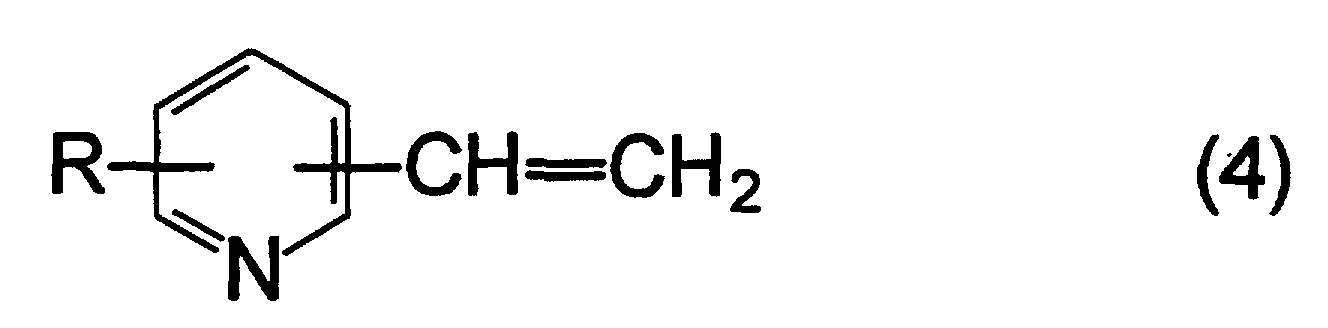 wherein R1 and R2 are the same or different and each represents a C1-4 alkyl group [hereinafter referred to as "diester of malonic acid (5)"] in the presence of a base to give a diester of 2-(pyridylethyl)malonic acid represented by the formula (6)
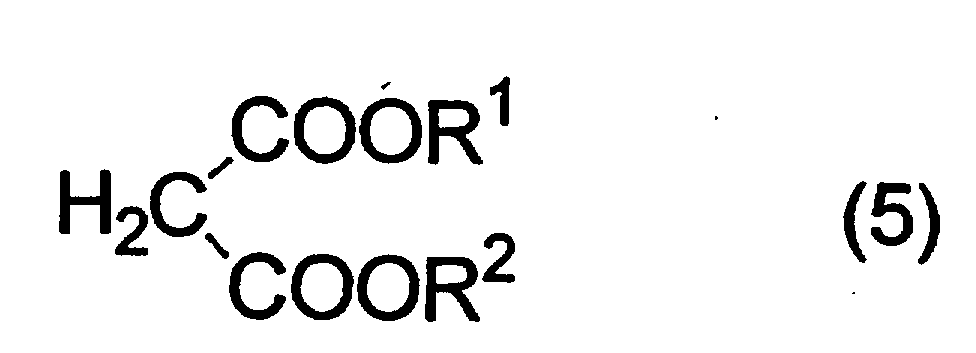 wherein R, R1 and R2 are as defined above [hereinafter referred to as "2-(pyridylethyl)malonic acid diester (6)"], and
- (b) hydrolyzing and decarboxylating the 2-(pyridylethyl)malonic acid diester (6) prepared in the step (a) in an acidic aqueous solution.
-
- When the salt of γ-(piperidyl)butyric acid (2) is prepared by hydrogenation of the salt of γ-(pyridyl)butyric acid (1) obtained in the steps (a) and (b), the specific impurities present in the salt of γ-(pyridyl)butyric acid (1) adversely affect the reaction time for hydrogenation and the purity of the obtained salt of γ-(piperidyl)butyric acid (2).
- Stated more specifically, the process of preparing the salt of γ-(pyridyl)butyric acid (1) produces, as a by-product, a salt of bis(pyridylethyl)acetic acid with an acid, the salt thereof being represented by the formula (3)wherein R and A are as defined above [hereinafter referred to as "salt of bis(pyridylethyl)acetic acid (3)"].
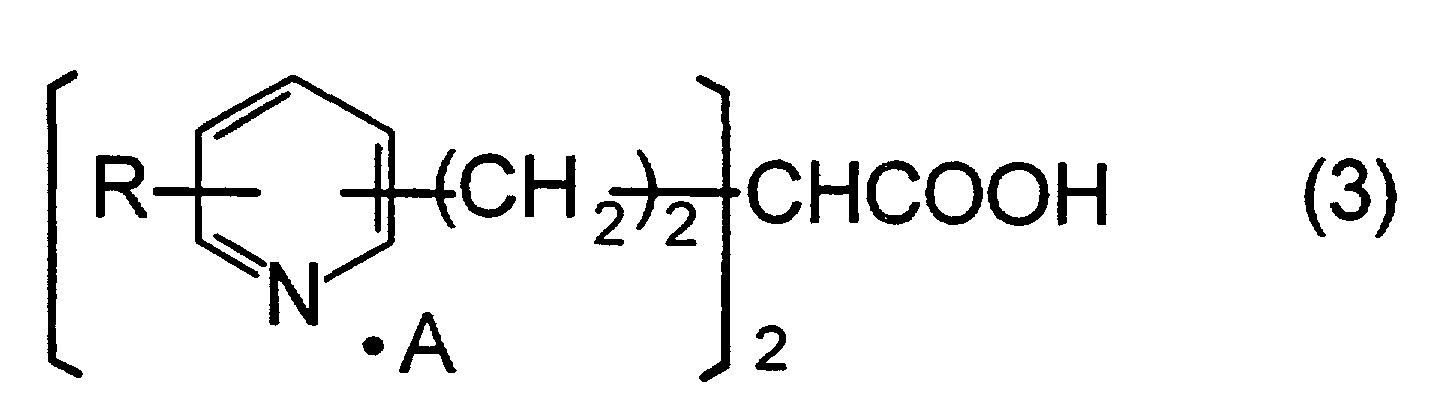
- When the salt of γ-(pyridyl)butyric acid (1) containing the salt of bis(pyridylethyl)acetic acid (3) is hydrogenated, the reaction tends to involve a longer time and a high-purity salt of γ-(piperidyl)butyric acid (2) is difficult to produce.
- If not more than 3% by weight of the salt of bis(pyridylethyl)acetic acid (3) is present in the salt of γ-(pyridyl)butyric acid (1), the hydrogenation is completed in a very short time and a high-purity salt of γ-(piperidyl)butyric acid (2) can be easily produced.
- According to the present invention, there is provided a process for preparing the salt of γ-(piperidyl)butyric acid (2), the process comprising the step of hydrogenating the salt of γ-(pyridyl)butyric acid (1) [preferably the salt of γ-(pyridyl)butyric acid (1) obtained by carrying out the undermentioned steps (a) and (b) and containing not more than 3% by weight of salt of bis(pyridylethyl)acetic acid (3)] in a solvent in the presence of a catalyst, the process being characterized in that the catalyst is a Rh catalyst or a Pd catalyst:
- (a) reacting the vinylpyridine (4) with the diester of malonic acid (5) in the presence of a base to give the 2-(pyridylethyl)malonic acid diester (6), and
- (b) hydrolyzing and decarboxylating the 2-(pyridylethyl)malonic acid diester (6) obtained in the step (a) in an acidic aqueous solution to give the salt of γ-(pyridyl)butyric acid (1).
-
- According to the present invention, the salt of γ-(piperidyl)butyric acid (2) can be prepared in a relatively short time with a high productivity. Especially if the salt of γ-(pyridyl)butyric acid (1) to be hydrogenated is one prepared in the steps (a) and (b) and containing not more than 3% by weight of salt of bis(pyridylethyl)acetic acid (3), the hydrogenation is completed in a shorter time and a high-purity salt of γ-(piperidyl)butyric acid (2) can be easily prepared.
- The salt of γ-(piperidyl)butyric acid (2) can be prepared by hydrogenation of the salt of γ-(pyridyl)butyric acid (1). R in the formula (1) representing the salt of γ-(pyridyl)butyric acid (1) is a hydrogen atom or a C1-4 alkyl group. A in the formula (1) is an acid. Examples of the acid are mineral acids such as hydrochloric acid and sulfuric acid, and organic acids such as p-toluenesulfonic acid and trifluoromethanesulfonic acid.
- Specific examples of the salt of γ-(pyridyl)butyric acid (1) are salts of γ-(pyridyl)butyric acids with other acids. Useful γ-(pyridyl)butyric acids include, for example, γ-(2-pyridyl)butyric acid, γ-(3-pyridyl)butyric acid, γ-(4-pyridyl)butyric acid, γ-(5-methyl-2-pyridyl)butyric acid, γ-(6-methyl-2-pyridyl)butyric acid, γ-(4-methyl-3-pyridyl)butyric acid, γ-(2-methyl-5-pyridyl)butyric acid, γ-(5-ethyl-2-pyridyl)butyric acid, etc. Examples of other acids include hydrochloric acid, sulfuric acid and like mineral acids, p-toluenesulfonic acid, trifluoro-methanesulfonic acid and like organic acids.
- The salt of γ-(pyridyl)butyric acid (1) can be prepared by conventional processes. For example, it can be prepared by hydrolysis and decarboxylation of 2-(pyridylethyl)malonic acid diester (6) in an acidic aqueous solution (step (b)). The 2-(pyridylethyl)-malonic acid diester (6) can be produced as by reacting the vinylpyridine (4) with the diester of malonic acid (5) in the presence of a base (step (a)).
- The reaction in the step (a) is so-called "Michael addition reaction". Examples of the vinylpyridine (4) are 2-vinylpyridine, 3-vinylpyridine, 4-vinylpyridine, 5-methyl-2-vinylpyridine, 6-methyl-2-vinylpyridine, 4-methyl-3-vinylpyridine, 2-methyl-5-vinylpyridine, 5-ethyl-2-vinylpyridine and the like.
- R1 and R2 in the formula (5) representing the diester of malonic acid (5) are the same or different and each represents a C1-4 alkyl group. Examples of the diester of malonic acid (5) are dimethyl malonate, diethyl malonate, dipropyl malonate, diisopropyl malonate, dibutyl malonate and diisobutyl malonate.
- The 2-(pyridylethyl)malonic acid diester (6) can be efficiently formed when the diester of malonic acid (5) is used in an amount of at least 1 mole, preferably 1 to 3 moles, more preferably 1.5 to 2.5 moles, per mole of the vinylpyridine (4). If the amount of diester of malonic acid (5) used is less than 1 mole per mole of the vinylpyridine (4), the reaction is likely to produce by-products.
- Useful bases include those conventionally used in the Michael addition reaction. Preferred base is alkali metal alkoxide. Examples of the alkali metal alkoxide are methoxide, ethoxide, propoxide, isopropoxide, 2-methyl-1-propoxide or 2-methyl-2-propoxide of lithium, sodium, potassium or caesium.
- The reaction efficiently proceeds when the base is used in an amount of 0.05 to 1 mole, preferably 0.1 to 0.5 mole, per mole of the vinylpyridine (4). The amount of the base less than the above range is responsible for an extended reaction time, whereas the amount thereof exceeding the above range is liable to result in the formation of by-products.
- The Michael addition reaction in the step (a) can be carried out in a solvent. Useful solvents are, for example, alcohols and the like. Examples of the alcohol are alcohols having 1 to 4 carbon atoms such as methyl alcohol, ethyl alcohol, propyl alcohol, isopropyl alcohol, 2-methyl-1-propyl alcohol and the like. The amount of the solvent used is 0.1 to 2 parts by weight, preferably 0.3 to 1 part by weight, per part by weight of the vinylpyridine (4).
- The Michael addition reaction in the step (a) can be conducted, for example, by adding dropwise the vinylpyridine (4) over a period of 0.5 to 2 hours to a mixture of a base, the diester of malonic acid (5) and optionally a solvent with stirring at 75 to 110°C. After dropwise addition of vinylpyridine (4), the mixture may be maintained at the same temperature for 2 to 8 hours to complete the reaction, giving 2-(pyridylethyl)malonic acid diester (6) in a high yield.
- The salt of γ-(pyridyl)butyric acid (1) can be prepared by hydrolyzing and decarboxylating the 2-(pyridylethyl)malonic acid diester (6) in an acidic aqueous solution at the step (b).
- For example, the salt of γ-(pyridyl)butyric acid (1) can be prepared by hydrolyzing and decarboxylating the reaction mixture obtained in the step (a) and containing the 2-(pyridylethyl)malonic acid diester (6), or by hydrolyzing and decarboxylating the purified 2-(pyridylethyl)malonic acid diester (6) isolated from the reaction mixture obtained at the step (a).
- Examples of the acidic aqueous solution are aqueous solutions of acids such as hydrochloric acid, sulfuric acid and like mineral acids, p-toluenesulfonic acid, trifluoromethanesulfonic acid and like organic acids.
- The hydrolysis and decarboxylation can be efficiently carried out when the acid (acidic aqueous solution) is used in an amount sufficient to acidify the mixed solution comprising the 2-(pyridylethyl)malonic acid diester (6) and the acidic aqueous solution.
- For example, when hydrolyzing and decarboxylating the purified 2-(pyridylethyl)malonic acid diester (6) isolated from the reaction mixture after Michael addition reaction in the step (a), at least one equivalent, preferably 1.1 to 2 equivalents, of the acid is used relative to the 2-(pyridylethyl)malonic acid diester (6).
- In hydrolyzing and decarboxylating the reaction mixture resulting from the Michael addition reaction in the step (a), one equivalent, preferably 1.1 to 2 equivalents, of the acid is used relative to the total amount of 2-(pyridylethyl)malonic acid diester (6) and the base used in the Michael addition reaction, both contained in the reaction mixture.
- The hydrolysis and decarboxylation in the step (b) can be performed, for example, by mixing the 2-(pyridylethyl)malonic acid diester (6) and the acidic aqueous solution and maintaining the mixture with stirring at 60 to 120°C, preferably 90 to 110°C for 8 to 12 hours. After completion of the reaction, the reaction mixture is concentrated, the precipitate is separated by filtration and the filtrate is cooled, giving crystals of salt of γ-(pyridyl)butyric acid (1).
- In the Michael addition reaction at the step (a), a side reaction occurs to react 2 molecules of vinylpyridine (4) with one molecule of diester of malonic acid (5), producing a diester of 2,2-bis(pyridylethyl)malonic acid represented by the formula (7)wherein R, R1 and R2 are as defined above (hereinafter referred to as "2,2-bis(pyridylethyl)malonic acid diester (7)"). The 2,2-bis(pyridylethyl)malonic acid diester (7) is hydrolyzed and decarboxylated in the step (b), whereby the salt of bis(pyridylethyl)acetic acid (3) is produced.
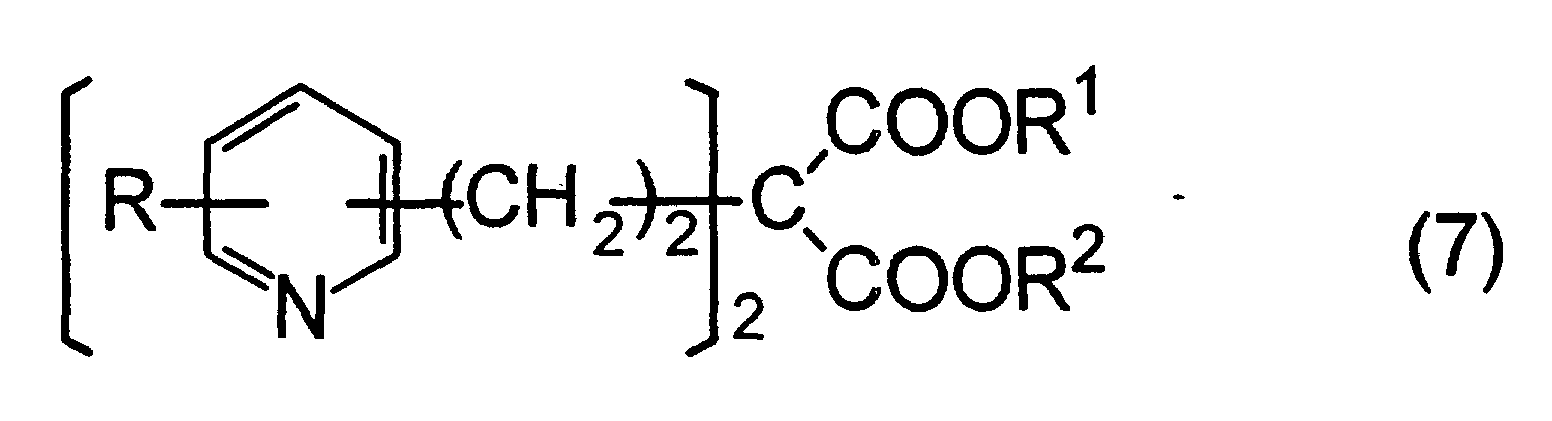
- The 2-(pyridylethyl)malonic acid diester (6) isolated by distillation from the reaction mixture after the Michael addition reaction in the step (a) is hydrolyzed and decarboxylated, thereby producing the salt of γ-(pyridyl)butyric acid (1) free of the salt of bis(pyridylethyl)acetic acid (3).
- When the crystals of salt of γ-(pyridyl)-butyric acid (1) obtained in the step (b) contain the salt of bis(pyridylethyl)acetic acid (3), desirably the concentration of the salt of bis(pyridylethyl)acetic acid (3) is reduced to not more than 3% by weight.
- The crystals of salt of γ-(pyridyl)butyric acid (1) containing the salt of bis(pyridylethyl)acetic acid (3) can be purified by recrystallization. In the recrystallization of salt of γ-(pyridyl)butyric acid (1), water, alcohol, an aqueous solution of a mineral acid or mixtures thereof can be used as a solvent.
- When the salt of γ-(pyridyl)butyric acid (1) is hydrogenated for conversion of the pyridine ring to a piperidine ring, the corresponding salt of γ-(piperidyl)butyric acid (2) can be prepared. When the salt of γ-(pyridyl)butyric acid (1) containing not more than 3% by weight of salt of bis(pyridylethyl)acetic acid (3) is hydrogenated, a high-purity salt of γ-(piperidyl)butyric acid (2) can be easily formed in a short time.
- A salt formed from a free γ-(pyridyl)butyric acid and an acid is usable as the salt of γ-(pyridyl)butyric acid (1). The salt of γ-(piperidyl)butyric acid (2) can also be prepared by mixing an acid and a γ-(pyridyl)butyric acid, followed by hydrogenation of the mixture instead of hydrogenation of the salt of γ-(pyridyl)butyric acid (1).
- Useful catalysts include Rh catalysts and Pd catalysts. Using a Rh catalyst or a Pd catalyst, the salt of γ-(pyridyl)butyric acid (1) can be hydrogenated under milder conditions in a shorter time for conversion of the pyridine ring to a piperidine ring.
- Examples of useful Rh catalysts and Pd catalysts include catalysts having Rh or Pd supported on a carrier. Useful carriers are, for example, carbon, alumina and the like among which carbon is preferred and active carbon is especially preferred. When a catalyst having Rh or Rd supported on a carrier is used, the amount of Rh or Pd to be supported on the carrier is not limited, but usually it is 1 to 10% by weight based on the carrier.
- If the amount of a Rh catalyst or a Pd catalyst used is at least 0.05% by weight (preferably 0.05 to 0.3% by weight from the economical viewpoint) calculated as Rh or Pd on the basis of salt of γ-(pyridyl)butyric acid (1), the hydrogenation of the salt of γ-(pyridyl)butyric acid (1) easily proceeds.
- If the amount of the catalyst used is less than said range, the hydrogenation entails difficulty in progress, consequently tending to involve a prolonged time and possibly producing the contemplated product in a lower yield for failure to complete the reaction.
- The salt of γ-(pyridyl)butyric acid (1) can be hydrogenated in a solvent. Useful solvents are those capable of dissolving the salt of γ-(pyridyl)butyric acid (1) without affecting the hydrogenation thereof. For example, water is preferable for its ability to easily dissolve the salt of γ-(pyridyl)butyric acid (1) and from the viewpoints of safety and economy.
- The amount of the solvent used should be in a range sufficient at least to dissolve the salt of γ-(pyridyl)butyric acid (1). For example, the amount of water used is 0.5 to 10 parts by weight, preferably 1 to 3 parts by weight, per part by weight of the salt of γ-(pyridyl)butyric acid (1).
- If the amount of water used is below said range, the hydrogenation tends to involve a prolonged time because of its difficulty in the progress, and the desired product may be produced in a low yield due to incomplete reaction. The amount of water above said range raises no serious problem but leads to a low reactor efficiency. Accordingly the foregoing range is recommendable from the viewpoint of productivity.
- The hydrogenation can be carried out at atmospheric pressure or higher pressure, preferably a hydrogen pressure of 1 to 50 kgf/cm2 (=0.1 to 5 MPa). If a Rh catalyst or a Pd catalyst is used, the hydrogenation can be efficiently conducted at a lower hydrogen pressure, e.g. 1 to 40 kgf/cm2, even 1 to 30 kgf/cm2.
- The hydrogenation can be performed at a temperature ranging from room temperature to 140°C, preferably 40 to 120°C. A lower reaction temperature tends to extend the reaction time and is responsible for a low yield of desired product for the incomplete reaction. Hence it is undesirable. A higher reaction temperature presents no problem about the yield, but leads to a high reaction rate, making it difficult to control the temperature. Consequently said range is recommendable from the viewpoints of safety and economy.
- For example, the salt of γ-(pyridyl)butyric acid (1), a catalyst and a solvent are placed into a pressure reactor equipped with a stirrer and a hydrogen inlet tube. Hydrogen is introduced through the hydrogen inlet tube with heating and stirring while the mixture is maintained at the above-mentioned hydrogen pressure and reaction temperature. Thereby the salt of γ-(pyridyl)butyric acid (1) is hydrogenated, giving the salt of γ-(piperidyl)butyric acid (2).
- The salt of γ-(piperidyl)butyric acid (2) can also be produced when placing into the reactor a free γ-(pyridyl)butyric acid and an acid in place of the salt of γ-(pyridyl)butyric acid (1). This mode of process is included in the present invention.
- The salt of γ-(piperidyl)butyric acid (2) produced by hydrogenating the salt of γ-(pyridyl)-butyric acid (1) can be easily isolated from the reaction mixture and purified by conventional methods such as crystallization or recrystallization. For example, after completion of the hydrogenation, the reaction mixture is filtered to separate the catalyst, and the solvent is distilled off. The resulting residue is subjected to recrystallization, whereby a high-purity salt of γ-(piperidyl)butyric acid (2) is isolated.
- The present invention is described below in greater detail with reference to the following examples.
- A 100 ml-vol. electromagnetic agitation type autoclave (made of Hastelloy) was charged with 15.0 g (0.074 mole) of a γ-(4-pyridyl)butyric acid hydrochloride with a purity of at least 99%, 300 g of water and 0.75 g of 5% Rh/C [0.25% by weight in terms of Rh based on the γ-(4-pyridyl)butyric acid hydrochloride].
- The hydrogen pressure was maintained at 5 kgf/cm2 (5 X 10⁵Pa) while hydrogen was introduced, and a reaction was conducted with stirring at 110°C for 1.5 hours. After completion of the reaction, the solvent was distilled off under reduced pressure. The residue was analyzed by high performance liquid chromatography. The analysis showed that a γ-(4-piperidyl)butyric acid hydrochloride was produced in a yield of 99%.
-
- Column: SHISEIDO Capcell C18 SG120 S-5 (4.6 mm (dimater) X 250 mm)
- Eluant: 0.02 mole/l Aqueous solution of K2HPO4 (adjusted to a pH of 7.0 with phosphoric acid)
- Flow rate: 1.0 ml/min.
- Temperature: 40°C
- Detection: UV 220 nm
-
- The procedure of Example 1 was repeated except the following. The same reactor as used in Example 1 was charged with 25.0 g (0.124 mole) of a γ-(4-pyridyl)butyric acid hydrochloride with a purity of at least 99%, 25.0 g of water and 1.25 g of 5% Rh/C [0.25% by weight in terms of Rh based on the γ-(4-pyridyl)butyric acid hydrochloride]. The reaction was conducted for 3 hours. A γ-(4-piperidyl)butyric acid hydrochloride was produced in a yield of 98%.
- The same procedure as in Example 1 was repeated except the following. The same reactor as used in Example 1 was charged with 13.5 g (0.067 mole) of a γ-(4-pyridyl)butyric acid hydrochloride with a purity of at least 99%, 27.0 g of water and 0.67 g of 5% Rh/C [0.25% by weight in terms of Rh based on the γ-(4-pyridyl)butyric acid hydrochloride]. The reaction was conducted at 60°C for 8 hours. A γ-(4-piperidyl)butyric acid hydrochloride was produced in a yield of 97%.
- The procedure of Example 1 was repeated except the following. The same reactor as used in Example 1 was charged with 13.5 g (0.067 mole) of a γ-(4-pyridyl)butyric acid hydrochloride with a purity of at least 99%, 27.0 g of water and 0.67 g of 5% Pd/C [0.25% by weight in terms of Pd based on the γ-(4-pyridyl)butyric acid hydrochloride]. The reaction was conducted at 80°C for 4.5 hours. A γ-(4-piperidyl)butyric acid hydrochloride was produced in a yield of 97%.
- The procedure of Example 1 was repeated except the following. The same reactor as used in Example 1 was charged with 13.5 g (0.067 mole) of a γ-(4-pyridyl)butyric acid hydrochloride with a purity of at least 99%, 27.0 g of water and 0.67 g of 5% Ru/C [0.25% by weight in terms of Ru based on the γ-(4-pyridyl)butyric acid hydrochloride].
- The hydrogen pressure was maintained at 50 kgf/cm2 (5 X 10⁶Pa) while hydrogen was introduced, and a reaction was conducted with stirring at 110°C for 5 hours. Thereafter, the solvent was distilled off under reduced pressure. The residue was analyzed by high performance liquid chromatography. The analysis showed that a γ-(4-piperidyl)butyric acid hydrochloride was produced in a yield of 98%.
- The same procedure as in Example 1 was repeated except the following. The same reactor as used in Example 1 was charged with 15.0 g (0.091 mole) of γ-(4-pyridyl)butyric acid with a purity of at least 99%, 30.0 g of water and 0.75 g of 5% Rh/C [0.25% by weight in terms of Rh based on the γ-(4-pyridyl)butyric acid]. While hydrogen was introduced, a reaction was conducted with stirring at 110°C for 5 hours.
- The reaction involved a hydrogen pressure of 50 kgf/cm2 (5 X 10⁶Pa) and produced γ-(4-piperidyl)butyric acid in a yield of 99%. At a hydrogen pressure of 5 kgf/cm2 (5 X 10⁵Pa), hydrogen was slowly absorbed, making it difficult to hydrogenate the γ-(4-pyridyl)butyric acid.
- A 1 liter-vol., 4-necked flask was charged with 34 g of an ethyl alcohol solution containing 20 wt% sodium ethoxide (sodium ethoxide 0.1 mole) and 240 g (1.5 moles) of diethyl malonate. A 105 g (1.0 mole) quantity of 4-vinylpyridine was added dropwise over a period of 1 hour with stirring at the reflux temperature. Then, the mixture was maintained at the reflux temperature with stirring for a further 7 hours.
- After the obtained reaction mixture was cooled to room temperature, 250 g of water and 111.5 g of 36 wt% hydrochloric acid (1.1 moles) were added. After addition of 93 g of toluene, the unreacted diethyl malonate was collected as the organic layer. Then 101.4 g of 36 wt% hydrochloric acid (1.0 mole) was added to the aqueous layer. The mixture was kept at the reflux temperature with stirring for 10 hours to accomplish hydrolysis and decarboxylation.
- Five grams of active carbon and 8.2 g of sellaite were added to the obtained reaction mixture. After stirring for 1 hour, the mixture was filtered. A 167 g quantity of water was distilled off from 500 g of the filtrate. The insolubles were removed by hot filtration. Then the filtrate was cooled and the crystals were separated out.
- The crystals were filtered and dried, giving 97.3 g of a γ-(4-pyridyl)butyric acid hydrochloride (in a yield of 48.3% based on the 4-vinylpyridine). The obtained crystals were analyzed by high performance liquid chromatography. The analysis showed that a γ-(4-pyridyl)butyric acid hydrochloride with a purity of 98% was produced and contained about 2% of bis[2-(4-pyridyl)ethyl]acetic acid hydrochloride.
-
- Column: SHISEIDO Capcell C18 SG120 S-5 (4.6 mm (dimater) X 250 mm)
- Eluant: Aqueous solution of 0.05 wt% K2HPO4 (adjusted to a pH of 7.0 with phosphoric acid)/methyl alcohol= 50/50 (volume ratio)
- Flow rate: 1.0 ml/min.
- Temperature: 40°C
- Detection: UV 254 nm
-
- A 100 ml-vol., electromagnetic agitation type autoclave (made of Hastelloy) was charged with 15.0 g (0.074 mole) of the above-obtained γ-(4-pyridyl)butyric acid hydrochloride, 30.0 g of water and 0.75 g of 5% Rh/C [0.25% by weight in terms of Rh based on the γ-(4-pyridyl)butyric acid hydrochloride]. While hidrogen was introduced, the hydrogen pressure was maintained at 5 kgf/cm2 (5 X 10⁵Pa), and a reaction was conducted with stirring at 110°C for 1.5 hours.
- After completion of the reaction, the solvent was distilled off under reduced pressure. The residue was analyzed by high performance liquid chromatography (the same analysis conditions as in Example 1). The analysis showed that the reaction gave a γ-(4-piperidyl)butyric acid hydrochloride in a yield of 99%.
- The obtained residue was recrystallized, giving 13.0 g (yield 85%) of crystals of γ-(4-piperidyl)butyric acid hydrochloride with a purity of at least 99%. The crystals contained up to 1% of bis[2-(4-piperidyl)ethyl]acetic acid hydrochloride.
- A γ-(4-piperidyl)butyric acid hydrochloride was produced by repeating the same procedure as in Example 6 except that using 0.67 g of 5% Pd/C [0.25% by weight in terms of Pd based on the γ-(4-pyridyl)butyric acid hydrochloride] in place of 5% Rh/C, a reaction was conducted at 80°C for 4.5 hours.
- The reaction gave a γ-(4-piperidyl)butyric acid hydrochloride in a yield of 97%. The obtained product was recrystallized, giving crystals of γ-(4-piperidyl)butyric acid hydrochloride with a purity of at least 99% in a yield of 90%. The crystals contained 1% or less of bis[2-(4-piperidyl)ethyl]acetic acid hydrochloride.
- A 1 liter-vol., 4-necked flask was charged with 34 g (0.1 mole) of an ethyl alcohol solution containing 20 wt% sodium ethoxide and 240 g (1.5 moles) of diethyl malonate. A 105 g (1.0 mole) quantity of 4-vinylpyridine was added dropwise over a period of 1 hour with stirring at the reflux temperature. Then, the mixture was maintained at the reflux temperature with stirring for a further 7 hours.
- The obtained reaction mixture was cooled to room temperature, followed by addition of 250 g of water and 111.5 g (1.1 moles) of 36 wt% hydrochloric acid. After addition of 140 g of toluene, the unreacted diethyl malonate was collected as the organic layer.
- Then 220 g (1.1 moles) of 20 wt% aqueous solution of sodium hydroxide was added to the aqueous layer. After addition of 140 g of toluene, diethyl 2-[2-(4-pyridyl)ethyl]malonate was collected as the organic layer. After distiling off the toluene from the obtained organic layer, further distillation gave 233.5 g (0.88 mole, yield 88%) of diethyl 2-[2-(4-pyridyl)ethyl]malonate.
- To the obtained diethyl 2-[2-(4-pyridyl)ethyl]malonate (233.5 g) were added 220 g of water and 178.4 g (1.76 moles) of 36 wt% hydrochloric acid. Then, the mixture was maintained at the reflux temperature with stirring for 10 hours to accomplish hydrolysis and decarboxylation. After completion of the reaction, 4.4 g of active carbon and 7.2 g of sellaite were added to the reaction mixture. After stirring for 1 hour, the mixture was filtered.
- The obtained filtrate was analyzed by high performance liquid chromatography (the same analysis conditions as in Example 6). The analysis showed that a γ-(4-pyridyl)butyric acid hydrochloride was produced in a yield of 99%. The filtrate contained a γ-(4-pyridyl)butyric acid hydrochloride in a concentration of 35% by weight. As to the ratio of the γ-(4-pyridyl)butyric acid hydrochloride and the bis[2-(4-pyridyl)ethyl]acetic acid hydrochloride, the former was 99% and the latter 1%.
- The same reactor as used in Example 1 was charged with 42.9 g of the above-obtained filtrate containing the γ-(4-pyridyl)butyric acid hydrochloride [15.0 g (0.074 mole) of the γ-(4-pyridyl)butyric acid hydrochloride] and 0.75 g of 5% Rh/C [0.25% by weight in terms of Rh based on the γ-(4-pyridyl)butyric acid hydrochloride].
- While hydrogen was introduced, the hydrogen pressure was maintained at 5 kgf/cm2 (5 X 10⁵Pa), and a reaction was conducted with stirring at 50°C for 4 hours. After completion of the reaction, the solvent was removed under reduced pressure. The residue was analyzed by high performance liquid chromatography (the same analysis conditions as in Example 1). The analysis showed that a γ-(4-piperidyl)butyric acid hydrochloride was produced in a yield of 98%. The obtained residue was recrystallized, giving crystals of γ-(4-piperidyl)butyric acid hydrochloride with a purity of at least 99% in a yield of 90%. The crystals contained 1% or less of bis[2-(4-piperidyl)ethyl]acetic acid hydrochloride.
- The procedure of Example 7 was repeated except the following. Using 0.75 g of 5% Pt/C [0.25% by weight in terms of Pt based on the γ-(4-pyridyl)butyric acid hydrochloride] in place of 5% Rh/C, a reaction was conducted for 14 hours.
- After completion of the reaction, the solvent was removed and the residue was analyzed. The analysis showed that a γ-(4-piperidyl)butyric acid hydrochloride was produced in a yield of 90% and contained 8% of the unreacted γ-(4-pyridyl)butyric acid hydrochloride.
- A 1 liter-vol., 4-necked flask was charged with 34 g of an ethyl alcohol solution containing 20 wt% sodium ethoxide (sodium ethoxide 0.1 mole) and 240 g (1.5 moles) of diethyl malonate. A 105 g (1.0 mole) quantity of 4-vinylpyridine was added dropwise over a period of 1 hour with stirring at the reflux temperature. The mixture was maintained at the reflux temperature with stirring for a further 7 hours.
- The obtained reaction mixture was cooled to room temperature. To the mixture were added 250 g of water and 111.5 g (1.1 moles) of 36 wt% hydrochloric acid. After addition of 140 g of toluene, the unreacted diethyl malonate was collected as the organic layer.
- Then 220 g (1.1 moles) of 20 wt% aqueous solution of sodium hydroxide was added to the aqueous layer. After addition of 140 g of toluene, diethyl 2-[2-(4-pyridyl)ethyl]malonate was collected as the organic layer.
- The toluene was distilled off from the obtained organic layer. To the obtained residue were added 220 g of water and 178.4 g (1.76 moles) of 36 wt% hydrochloric acid. The mixture was maintained at the reflux temperature with stirring for 10 hours to accomplish hydrolysis and decarboxylation. Then, 4.4 g of active carbon and 7.2 g of sellaite were added to the obtained reaction mixture. After stirring for 1 hour, the mixture was filtered.
- The obtained filtrate was analyzed by high performance liquid chromatography (the same analysis conditions as in Example 6). The analysis showed that a γ-(4-pyridyl)butyric acid hydrochloride was produced in a yield of 92%. The filtrate contained γ-(4-pyridyl)butyric acid hydrochloride in a concentration of 32.6% by weight. As to the ratio of the γ-(4-pyridyl)butyric acid hydrochloride and the bis[2-(4-pyridyl)ethyl]-acetic acid hydrochloride, the former was 93% and the latter 7%.
- A γ-(piperidyl)butyric acid hydrochloride was produced in the same manner as in Example 8 with the exception of using the filtrate obtained above [15.0 g (0.074 mole) of the γ-(pyridyl)butyric acid hydrochloride] as one containing the γ-(pyridyl)butyric acid hydrochloride.
- The reaction required 10 hours until completion. After completion of the reaction, the solvent was removed under reduced pressure and the residue was analyzed by liquid chromatography in the same manner as in Example 1. The analysis showed that a γ-(4-piperidyl)butyric acid hydrochloride was produced in a yield of 98%. The obtained residue was recrystallized, giving crystals of γ-(4-piperidyl)butyric acid hydrochloride with a purity of 93.5% in a yield of 83%. The crystals contained 6.5% of bis[2-(4-piperidyl)ethyl]acetic acid hydrochloride.
Claims (6)
- A process for preparing a salt of γ-(piperidyl)butyric acid with an acid, the salt being represented by the formula (2)wherein R is a hydrogen atom or a C1-4 alkyl group, and A is an acid, the process comprising the step of hydrogenating a salt of γ-(pyridyl)butyric acid with an acid, the salt being represented by the formula (1)
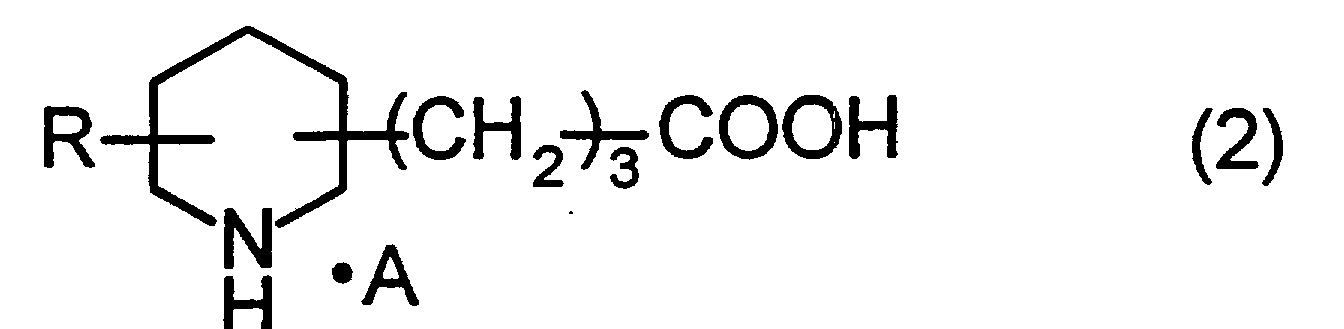 wherein R and A are as defined above in a solvent in the presence of a catalyst, the process being characterized in that the catalyst is a Rh catalyst or a Pd catalyst.
- The process according to claim 1, wherein the salt of γ-(pyridyl)butyric acid with an acid, the salt being represented by the formula (1) is prepared by carrying out the undermentioned steps (a) and (b) and contains not more than 3% by weight of a salt of bis(pyridylethyl)acetic acid with an acid, the salt being represented by the formula (3)wherein R and A are as defined in claim 1:
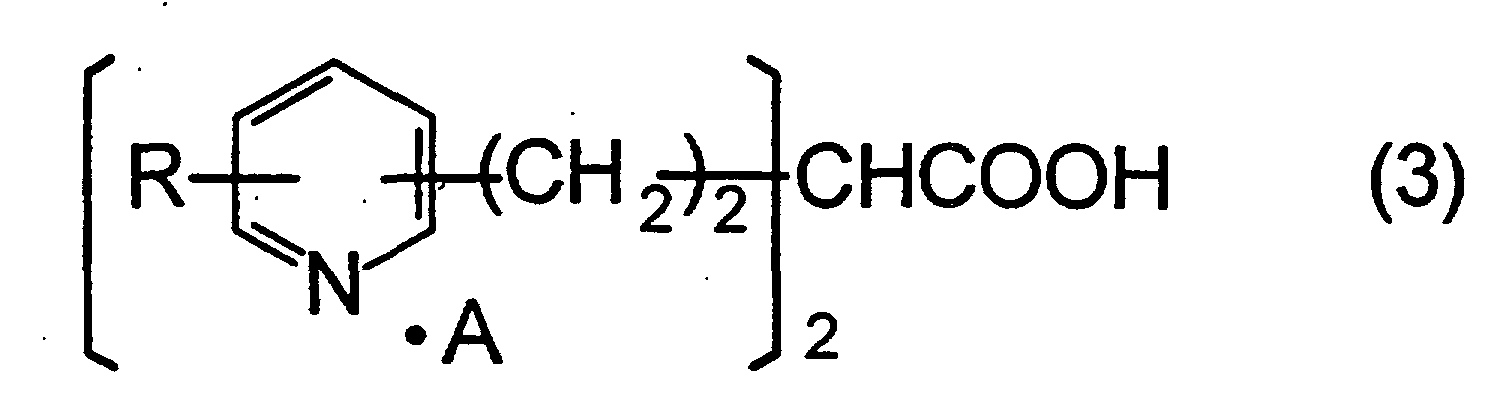 (a) reacting a vinylpyridine compound represented by the formula (4)wherein R is as defined in claim 1 with a diester of malonic acid represented by the formula (5)
 wherein R1 and R2 are the same or different and each represents a C1-4 alkyl group in the presence of a base to give a diester of 2-(pyridylethyl)malonic acid represented by the formula (6)
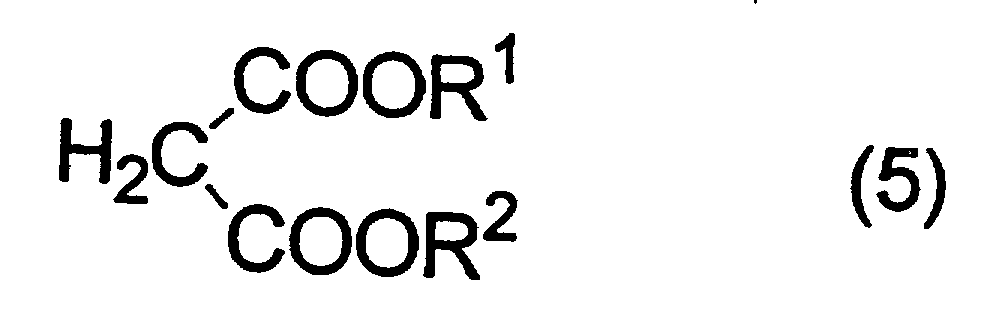 wherein R is as defined in claim 1, and R1 and R2 are as defined above and;
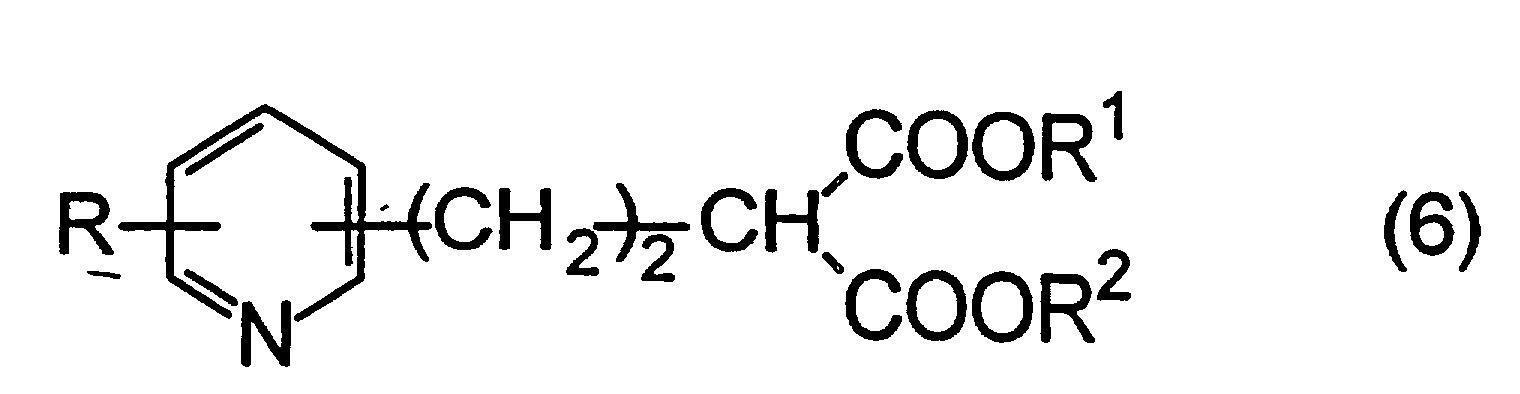 (b) hydrolyzing and decarboxylating the diester of 2-(pyridylethyl)malonic acid of the formula (6) prepared in the step (a) in an acidic aqueous solution to give the salt of γ-(pyridyl)butyric acid with an acid, the salt being represented by the formula (1).
 - The process according to claim 1 or 2, wherein the catalyst is Rh/C or Pd/C.
- The process according to any one of claims 1 to 3, wherein the amount of the catalyst used is 0.05 to 0.3% by weight in terms of a metal (Rh or Pd) based on the salt of γ-(pyridyl)butyric acid with an acid.
- The process according to any one of claims 1 to 4, wherein the salt of γ-(pyridyl)butyric acid with an acid is hydrogenated at a hydrogen pressure of 1 to 50 kgf/cm2.
- The process according to claim 5, wherein the salt of γ-(pyridyl)butyric acid with an acid is hydrogenated at a hydrogen pressure of 1 to 40 kgf/cm2.
Applications Claiming Priority (4)
| Application Number | Priority Date | Filing Date | Title |
|---|---|---|---|
| JP28611996 | 1996-10-07 | ||
| JP286119/96 | 1996-10-07 | ||
| JP28611996 | 1996-10-07 | ||
| PCT/JP1997/003594 WO1998015531A1 (en) | 1996-10-07 | 1997-10-07 | PROCESS FOR PREPARING ACID SALTS OF η-(PIPERIDYL)BUTYRIC ACID |
Publications (3)
| Publication Number | Publication Date |
|---|---|
| EP0882712A1 EP0882712A1 (en) | 1998-12-09 |
| EP0882712A4 EP0882712A4 (en) | 1999-12-08 |
| EP0882712B1 true EP0882712B1 (en) | 2003-04-23 |
Family
ID=17700185
Family Applications (1)
| Application Number | Title | Priority Date | Filing Date |
|---|---|---|---|
| EP97943149A Expired - Lifetime EP0882712B1 (en) | 1996-10-07 | 1997-10-07 | Process for preparing acid salts of gamma-(piperidyl)butyric acid |
Country Status (6)
| Country | Link |
|---|---|
| US (1) | US6197961B1 (en) |
| EP (1) | EP0882712B1 (en) |
| JP (1) | JP4247415B2 (en) |
| CA (1) | CA2239138C (en) |
| DE (1) | DE69721239T2 (en) |
| WO (1) | WO1998015531A1 (en) |
Family Cites Families (7)
| Publication number | Priority date | Publication date | Assignee | Title |
|---|---|---|---|---|
| US3875171A (en) * | 1968-07-02 | 1975-04-01 | Hoffmann La Roche | Trans-4-piperidine acetic acids and esters and racemic cis-4-piperidine acetic acids and esters |
| CH513161A (en) | 1969-06-11 | 1971-09-30 | Siegfried Ag | Process for the preparation of 4-alkoxypiperidines |
| US4012396A (en) * | 1973-05-21 | 1977-03-15 | Hoffmann-La Roche Inc. | Processes and intermediates for cis or trans 2-or 3-(1-acyl-3-vinyl-4-piperidine)acetic or propionic acid esters |
| US4433152A (en) | 1981-05-25 | 1984-02-21 | Nippon Chemiphar Co., Ltd. | Amidinopiperidine derivatives |
| JPS57193456A (en) | 1981-05-25 | 1982-11-27 | Nippon Chemiphar Co Ltd | Novel amidinopiperidine derivative and its preparation |
| US5700801A (en) * | 1994-12-23 | 1997-12-23 | Karl Thomae, Gmbh | Piperazine derivatives, pharmaceutical compositions containing these compounds, their use and processes for preparing them |
| US5834486A (en) | 1995-03-15 | 1998-11-10 | Novartis Ag | Piperidinyl-2-alkyl, substituted linear polyamines for the reduction of intracellular, endogenic polyamine levels such as putrescine, spermidine and spermine, and their impact on cell proliferation |
-
1997
- 1997-10-07 JP JP51738598A patent/JP4247415B2/en not_active Expired - Fee Related
- 1997-10-07 WO PCT/JP1997/003594 patent/WO1998015531A1/en not_active Ceased
- 1997-10-07 DE DE69721239T patent/DE69721239T2/en not_active Expired - Fee Related
- 1997-10-07 EP EP97943149A patent/EP0882712B1/en not_active Expired - Lifetime
- 1997-10-07 US US09/077,316 patent/US6197961B1/en not_active Expired - Fee Related
- 1997-10-07 CA CA002239138A patent/CA2239138C/en not_active Expired - Fee Related
Also Published As
| Publication number | Publication date |
|---|---|
| EP0882712A4 (en) | 1999-12-08 |
| CA2239138A1 (en) | 1998-04-16 |
| EP0882712A1 (en) | 1998-12-09 |
| WO1998015531A1 (en) | 1998-04-16 |
| CA2239138C (en) | 2006-11-28 |
| DE69721239T2 (en) | 2004-01-29 |
| DE69721239D1 (en) | 2003-05-28 |
| JP4247415B2 (en) | 2009-04-02 |
| US6197961B1 (en) | 2001-03-06 |
Similar Documents
| Publication | Publication Date | Title |
|---|---|---|
| US11697658B2 (en) | Method for preparing lornoxicam | |
| US8318942B2 (en) | Process for preparing Donepezil and its derivatives | |
| EP1612207B1 (en) | Processes and intermediates for preparing 2-substituted piperidine stereoisomers | |
| JP3261503B2 (en) | Method for producing N-substituted glycine or glycine ester and application to indigo synthesis method | |
| US6197961B1 (en) | Process for preparing acid salts of γ-(piperidyl)butyric acid | |
| CA1066288A (en) | Process for preparing 2-(2,2-dicyclohexylethyl)piperidine | |
| CN109956899B (en) | Preparation method of vitamin B6 | |
| JPH05286889A (en) | Production of arylacetic acid and its alkali metal salt | |
| JPWO1998015531A1 (en) | Method for producing acid salts of γ-(piperidyl)butyric acid | |
| EP1607388B1 (en) | An improved manufacturing process for methylphenidate and intermediates thereof | |
| JPH0791270B2 (en) | Method for producing 2,3,5-trichloropyridine | |
| US6486327B1 (en) | Method for producing hydroxymethylpyridines | |
| JP2829744B2 (en) | Method for producing piperidine carboxylic acids | |
| HU186528B (en) | Process for producing tetronnoic acid | |
| JP3114153B2 (en) | Method for producing α-pyridyl carbinols | |
| JPS61251663A (en) | Production of aminomethylpyridine | |
| JPH0816101B2 (en) | Process for producing 3,5-dichloropyridine | |
| JPS61251659A (en) | Production of 2-or 3-aminomethylpiperidine | |
| JPS61210072A (en) | Production of pyridinemethanol | |
| JPH05286935A (en) | Production of 2-chloro-5-substitutedaminomethylpyridines | |
| JP4836368B2 (en) | Method for producing methylhydroxyalkylpyridines | |
| JPH0717610B2 (en) | <1> -Method for racemizing octahydroisoquinoline derivative | |
| JP4314603B2 (en) | Process for producing optically active 3-alkoxycarbonylaminopyrrolidine derivative | |
| JPH04243867A (en) | Production of 2-chloro-4-pyridinemethanol | |
| JPH05294933A (en) | Halogenated pyridinecarbaldehyde derivative and its production |
Legal Events
| Date | Code | Title | Description |
|---|---|---|---|
| PUAI | Public reference made under article 153(3) epc to a published international application that has entered the european phase |
Free format text: ORIGINAL CODE: 0009012 |
|
| 17P | Request for examination filed |
Effective date: 19980626 |
|
| AK | Designated contracting states |
Kind code of ref document: A1 Designated state(s): DE ES FR GB IT |
|
| A4 | Supplementary search report drawn up and despatched |
Effective date: 19991027 |
|
| AK | Designated contracting states |
Kind code of ref document: A4 Designated state(s): DE ES FR GB IT |
|
| RIC1 | Information provided on ipc code assigned before grant |
Free format text: 6C 07D 211/34 A, 6B 01J 23/56 B |
|
| RTI1 | Title (correction) |
Free format text: PROCESS FOR PREPARING ACID SALTS OF GAMMA-(PIPERIDYL)BUTYRIC ACID |
|
| 17Q | First examination report despatched |
Effective date: 20020128 |
|
| GRAH | Despatch of communication of intention to grant a patent |
Free format text: ORIGINAL CODE: EPIDOS IGRA |
|
| GRAH | Despatch of communication of intention to grant a patent |
Free format text: ORIGINAL CODE: EPIDOS IGRA |
|
| GRAA | (expected) grant |
Free format text: ORIGINAL CODE: 0009210 |
|
| AK | Designated contracting states |
Designated state(s): DE ES FR GB IT |
|
| PG25 | Lapsed in a contracting state [announced via postgrant information from national office to epo] |
Ref country code: IT Free format text: LAPSE BECAUSE OF FAILURE TO SUBMIT A TRANSLATION OF THE DESCRIPTION OR TO PAY THE FEE WITHIN THE PRESCRIBED TIME-LIMIT;WARNING: LAPSES OF ITALIAN PATENTS WITH EFFECTIVE DATE BEFORE 2007 MAY HAVE OCCURRED AT ANY TIME BEFORE 2007. THE CORRECT EFFECTIVE DATE MAY BE DIFFERENT FROM THE ONE RECORDED. Effective date: 20030423 |
|
| REG | Reference to a national code |
Ref country code: GB Ref legal event code: FG4D |
|
| REF | Corresponds to: |
Ref document number: 69721239 Country of ref document: DE Date of ref document: 20030528 Kind code of ref document: P |
|
| PG25 | Lapsed in a contracting state [announced via postgrant information from national office to epo] |
Ref country code: GB Free format text: LAPSE BECAUSE OF NON-PAYMENT OF DUE FEES Effective date: 20031007 |
|
| PG25 | Lapsed in a contracting state [announced via postgrant information from national office to epo] |
Ref country code: ES Free format text: LAPSE BECAUSE OF FAILURE TO SUBMIT A TRANSLATION OF THE DESCRIPTION OR TO PAY THE FEE WITHIN THE PRESCRIBED TIME-LIMIT Effective date: 20031030 |
|
| ET | Fr: translation filed | ||
| PLBE | No opposition filed within time limit |
Free format text: ORIGINAL CODE: 0009261 |
|
| STAA | Information on the status of an ep patent application or granted ep patent |
Free format text: STATUS: NO OPPOSITION FILED WITHIN TIME LIMIT |
|
| 26N | No opposition filed |
Effective date: 20040126 |
|
| GBPC | Gb: european patent ceased through non-payment of renewal fee |
Effective date: 20031007 |
|
| PGFP | Annual fee paid to national office [announced via postgrant information from national office to epo] |
Ref country code: DE Payment date: 20071030 Year of fee payment: 11 |
|
| PGFP | Annual fee paid to national office [announced via postgrant information from national office to epo] |
Ref country code: FR Payment date: 20071015 Year of fee payment: 11 |
|
| REG | Reference to a national code |
Ref country code: FR Ref legal event code: ST Effective date: 20090630 |
|
| PG25 | Lapsed in a contracting state [announced via postgrant information from national office to epo] |
Ref country code: DE Free format text: LAPSE BECAUSE OF NON-PAYMENT OF DUE FEES Effective date: 20090501 |
|
| PG25 | Lapsed in a contracting state [announced via postgrant information from national office to epo] |
Ref country code: FR Free format text: LAPSE BECAUSE OF NON-PAYMENT OF DUE FEES Effective date: 20081031 |