EP0882138B1 - Stereoselective preparation of 2-substituted succinic derivatives - Google Patents
Stereoselective preparation of 2-substituted succinic derivatives Download PDFInfo
- Publication number
- EP0882138B1 EP0882138B1 EP96941546A EP96941546A EP0882138B1 EP 0882138 B1 EP0882138 B1 EP 0882138B1 EP 96941546 A EP96941546 A EP 96941546A EP 96941546 A EP96941546 A EP 96941546A EP 0882138 B1 EP0882138 B1 EP 0882138B1
- Authority
- EP
- European Patent Office
- Prior art keywords
- amino
- lower alkyl
- alkyl
- atoms
- alkoxy
- Prior art date
- Legal status (The legal status is an assumption and is not a legal conclusion. Google has not performed a legal analysis and makes no representation as to the accuracy of the status listed.)
- Expired - Lifetime
Links
Classifications
-
- C—CHEMISTRY; METALLURGY
- C07—ORGANIC CHEMISTRY
- C07B—GENERAL METHODS OF ORGANIC CHEMISTRY; APPARATUS THEREFOR
- C07B57/00—Separation of optically-active compounds
-
- C—CHEMISTRY; METALLURGY
- C07—ORGANIC CHEMISTRY
- C07C—ACYCLIC OR CARBOCYCLIC COMPOUNDS
- C07C69/00—Esters of carboxylic acids; Esters of carbonic or haloformic acids
- C07C69/62—Halogen-containing esters
- C07C69/65—Halogen-containing esters of unsaturated acids
-
- C—CHEMISTRY; METALLURGY
- C07—ORGANIC CHEMISTRY
- C07D—HETEROCYCLIC COMPOUNDS
- C07D213/00—Heterocyclic compounds containing six-membered rings, not condensed with other rings, with one nitrogen atom as the only ring hetero atom and three or more double bonds between ring members or between ring members and non-ring members
- C07D213/02—Heterocyclic compounds containing six-membered rings, not condensed with other rings, with one nitrogen atom as the only ring hetero atom and three or more double bonds between ring members or between ring members and non-ring members having three double bonds between ring members or between ring members and non-ring members
- C07D213/04—Heterocyclic compounds containing six-membered rings, not condensed with other rings, with one nitrogen atom as the only ring hetero atom and three or more double bonds between ring members or between ring members and non-ring members having three double bonds between ring members or between ring members and non-ring members having no bond between the ring nitrogen atom and a non-ring member or having only hydrogen or carbon atoms directly attached to the ring nitrogen atom
- C07D213/24—Heterocyclic compounds containing six-membered rings, not condensed with other rings, with one nitrogen atom as the only ring hetero atom and three or more double bonds between ring members or between ring members and non-ring members having three double bonds between ring members or between ring members and non-ring members having no bond between the ring nitrogen atom and a non-ring member or having only hydrogen or carbon atoms directly attached to the ring nitrogen atom with substituted hydrocarbon radicals attached to ring carbon atoms
- C07D213/36—Radicals substituted by singly-bound nitrogen atoms
- C07D213/38—Radicals substituted by singly-bound nitrogen atoms having only hydrogen or hydrocarbon radicals attached to the substituent nitrogen atom
-
- C—CHEMISTRY; METALLURGY
- C07—ORGANIC CHEMISTRY
- C07D—HETEROCYCLIC COMPOUNDS
- C07D277/00—Heterocyclic compounds containing 1,3-thiazole or hydrogenated 1,3-thiazole rings
- C07D277/02—Heterocyclic compounds containing 1,3-thiazole or hydrogenated 1,3-thiazole rings not condensed with other rings
- C07D277/20—Heterocyclic compounds containing 1,3-thiazole or hydrogenated 1,3-thiazole rings not condensed with other rings having two or three double bonds between ring members or between ring members and non-ring members
- C07D277/32—Heterocyclic compounds containing 1,3-thiazole or hydrogenated 1,3-thiazole rings not condensed with other rings having two or three double bonds between ring members or between ring members and non-ring members with hetero atoms or with carbon atoms having three bonds to hetero atoms with at the most one bond to halogen, e.g. ester or nitrile radicals, directly attached to ring carbon atoms
- C07D277/38—Nitrogen atoms
- C07D277/40—Unsubstituted amino or imino radicals
-
- C—CHEMISTRY; METALLURGY
- C12—BIOCHEMISTRY; BEER; SPIRITS; WINE; VINEGAR; MICROBIOLOGY; ENZYMOLOGY; MUTATION OR GENETIC ENGINEERING
- C12P—FERMENTATION OR ENZYME-USING PROCESSES TO SYNTHESISE A DESIRED CHEMICAL COMPOUND OR COMPOSITION OR TO SEPARATE OPTICAL ISOMERS FROM A RACEMIC MIXTURE
- C12P13/00—Preparation of nitrogen-containing organic compounds
- C12P13/02—Amides, e.g. chloramphenicol or polyamides; Imides or polyimides; Urethanes, i.e. compounds comprising N-C=O structural element or polyurethanes
-
- C—CHEMISTRY; METALLURGY
- C12—BIOCHEMISTRY; BEER; SPIRITS; WINE; VINEGAR; MICROBIOLOGY; ENZYMOLOGY; MUTATION OR GENETIC ENGINEERING
- C12P—FERMENTATION OR ENZYME-USING PROCESSES TO SYNTHESISE A DESIRED CHEMICAL COMPOUND OR COMPOSITION OR TO SEPARATE OPTICAL ISOMERS FROM A RACEMIC MIXTURE
- C12P41/00—Processes using enzymes or microorganisms to separate optical isomers from a racemic mixture
- C12P41/003—Processes using enzymes or microorganisms to separate optical isomers from a racemic mixture by ester formation, lactone formation or the inverse reactions
- C12P41/005—Processes using enzymes or microorganisms to separate optical isomers from a racemic mixture by ester formation, lactone formation or the inverse reactions by esterification of carboxylic acid groups in the enantiomers or the inverse reaction
-
- C—CHEMISTRY; METALLURGY
- C12—BIOCHEMISTRY; BEER; SPIRITS; WINE; VINEGAR; MICROBIOLOGY; ENZYMOLOGY; MUTATION OR GENETIC ENGINEERING
- C12P—FERMENTATION OR ENZYME-USING PROCESSES TO SYNTHESISE A DESIRED CHEMICAL COMPOUND OR COMPOSITION OR TO SEPARATE OPTICAL ISOMERS FROM A RACEMIC MIXTURE
- C12P7/00—Preparation of oxygen-containing organic compounds
- C12P7/40—Preparation of oxygen-containing organic compounds containing a carboxyl group including Peroxycarboxylic acids
-
- C—CHEMISTRY; METALLURGY
- C12—BIOCHEMISTRY; BEER; SPIRITS; WINE; VINEGAR; MICROBIOLOGY; ENZYMOLOGY; MUTATION OR GENETIC ENGINEERING
- C12P—FERMENTATION OR ENZYME-USING PROCESSES TO SYNTHESISE A DESIRED CHEMICAL COMPOUND OR COMPOSITION OR TO SEPARATE OPTICAL ISOMERS FROM A RACEMIC MIXTURE
- C12P7/00—Preparation of oxygen-containing organic compounds
- C12P7/62—Carboxylic acid esters
-
- C—CHEMISTRY; METALLURGY
- C07—ORGANIC CHEMISTRY
- C07B—GENERAL METHODS OF ORGANIC CHEMISTRY; APPARATUS THEREFOR
- C07B2200/00—Indexing scheme relating to specific properties of organic compounds
- C07B2200/07—Optical isomers
Definitions
- This invention relates to renin inhibiting compounds. More specifically, this invention relates to a process for the preparation of compounds with high enantiomeric purity which are useful intermediates in the synthesis of renin inhibiting compounds, and to the compounds with high enantiomeric purity prepared by this process.
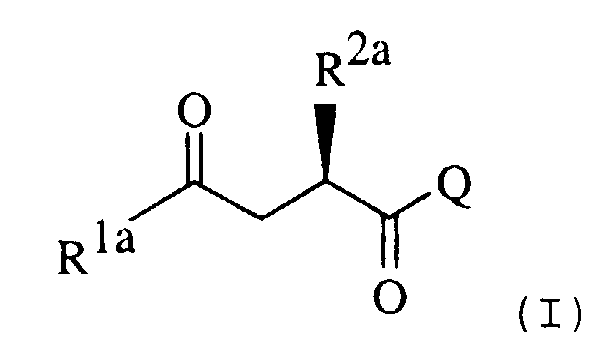
- Renin inhibiting compounds which have been found to be of particular interest are the compounds of formula I: wherein R 1a is A-NR 3 , wherein A is R 4 R 5 NC(O)CH 2 wherein, for example, R 4 is hydrogen or alkyl and R 5 is hydrogen, alkyl or a substituted alkyl such as 2-(2-pyridinyl)ethyl, or R 4 and R 5 together with the nitrogen atom to which they are attached form a pyrrolidino, piperidino, morpholino or thiomorpholino; R 3 is, for example, benzyl, alkyl or a substituted alkyl such as cyclohexylmethyl; R 2a is, for example, alkyl, cycloalkyl, 1 H -imidazol-4-yl, 4-thiazolyl or 2-amino-4-thiazolyl; and Q is a renin substrate transition state analog, for example, 1( S )-(2-methylpropyl)-2( S
- a renin inhibiting compound of most interest is the compound of formula Ia:
- the central portion of these renin inhibiting compounds is a chiral succinoyl derivative with an ( R )-configuration.
- the original synthesis of the compounds of formula I and Ia employed succinoyl intermediates derived from an asymmetric synthesis utilizing Evans' chiral auxiliary chemistry to introduce the chiral center with the proper configuration (Lavities et al., European Patent application EP 589445, published March 30, 1994).
- This methodology employs expensive chiral auxiliaries, as well as several cryogenic steps, making this last procedure difficult for the large scale preparations of these compounds. Therefore, efficient and low cost methods which are amenable to scale-up are needed for the preparation of intermediates useful for the preparation of compounds of formula I and Ia.
- the present process and compounds prepared by the present process can be distinguished readily from the prior art.
- the compounds prepared by the present process possess a different chemical structure than those in the prior art, and can be used as intermediates in the preparation of renin inhibiting compounds of formula I and Ia.
- the present invention relates to a process for the preparation of compounds with high enantiomeric purity of formula II: wherein R 1 is lower alkoxy, lower alkylamino, di(lower alkyl)amino or R 1 is A-NR 3 , wherein A is R 4 R 5 NC(O)CH 2 wherein,
- the process of the instant invention is preferably carried out at a temperature of 20 to 55°C, more preferably at a temperature of 20 to 37°C.
- the alkali metal hydroxide used in the instant process is preferably selected from NaOH, KOH and LiOH, and is added to the reaction mixture in a sufficient amount to maintain the pH of the reaction at about 7.0 to 8.5, more preferably 7.0 to 8.0.
- the process of the instant invention is carried out in H 2 O or a mixture of H 2 O and an H 2 O miscible inert organic solvent, preferably in H 2 O or a mixture of H 2 O and 0 to 30% (v/v) of an H 2 O miscible inert organic solvent.
- the inert organic solvent is preferably selected from acetone or acetonitrile.
- This invention also relates to compounds of formula II wherein R 1 and R 2 are as defined herein.
- the compounds of formula II prepared by the instant process can be subjected to standard transformations as disclosed by Lavencies et al., European Patent application EP 589445, published March 30, 1994, to prepare renin inhibiting compounds of formula I and Ia.
- halo as used herein means a halo radical selected from bromo, chloro, fluoro or iodo.
- lower alkyl as used herein, either alone or in combination with another radical, means straight chain alkyl radicals containing one to four carbon atoms and branched chain alkyl radicals containing three to four carbon atoms and includes methyl, ethyl, propyl, butyl, 1-methylethyl, 1-methylpropyl, 2-methylpropyl and 1,1-dimethylethyl.
- lower alkoxy as used herein means straight chain alkoxy radicals containing one to four carbon atoms and branched chain alkoxy radicals containing three to four carbon atoms and includes methoxy, ethoxy, propoxy, 1-methylethoxy, butoxy and 1,1-dimethylethoxy.
- lower cycloalkyl as used herein, either alone or in combination with another radical, means saturated cyclic hydrocarbon radicals containing from three to seven carbon atoms and includes cyclopropyl, cyclobutyl, cyclopentyl, cyclohexyl and cycloheptyl.
- Het as used herein means a monovalent radical derived by removal of a hydrogen from a five- or six-membered saturated or unsaturated heterocycle containing from one to two heteroatoms selected from nitrogen, oxygen and sulfur.
- the heterocycle may bear one or two substituents; for example, N-oxido, lower alkyl, lower alkoxy, halo, amino or lower alkylamino.
- heterocycles and optionally substituted heterocycles include pyrrolidine, tetrahydrofuran, thiazolidine, pyrrole, 1 H -imidazole, 1-methyl-1 H -imidazole, pyrazole, furan, thiophene, oxazole, isoxazole, thiazole, 2-methylthiazole, 2-aminothiazole, 2-(methylamino)-thiazole, piperidine, 1-methylpiperazine, 1,4-dioxane, morpholine, pyridine, pyridine N-oxide, pyrimidine and 2,4-dimethylpyrimidine.
- amino as used herein means an amino radical of formula -NH 2 .
- lower alkylamino as used herein means alkylamino radicals containing one to six carbon atoms and includes methylamino, propylamino, (1-methylethyl)amino and (2-methylbutyl)amino.
- di(lower alkyl)amino means an amino radical having two lower alkyl substituents each of which contains one to six carbon atoms and includes dimethylamino, diethylamino, ethylmethylamino and the like.
- amino protecting group means a group intended to protect an amino group or the N-terminus of an amino acid against undesirable reactions during synthetic procedures.
- amino protecting groups are disclosed in general textbooks of peptide chemistry; for instance, "The Peptides: Analysis, Synthesis, Biology”, E. Gross et al., Eds., Academic Press, New York, NY, USA, 1979-1987, Volumes 1 to 9, and M. Bodanszky, "Peptide Chemistry", 2nd rev ed, Springer-Verlag, Berlin, Germany, 1993.
- amino protecting groups include benzyloxycarbonyl, 4-methoxybenzyloxycarbonyl or 2,2,2-trichloroethoxycarbonyl and 1,1-dimethylethoxycarbonyl.
- high enantiomeric purity refers to a compound having at least 75% enantiomeric excess (ee) of one enantiomer, preferably at least 85% ee, more preferably at least 95% ee and most preferably at least 99% ee.
- Racemic mixtures of compounds of formula III which are used in the synthesis of compounds of formula II, can be prepared by a variety of processes involving known methods. Description of the methods are found in standard textbooks such as “Annual Reports In Organic Synthesis-1994", P.M. Weintraub et al., Eds., Academic Press, Inc., San Diego, CA, USA, 1994 (and the preceding annual reports), “Vogel's Textbook of Practical Organic Chemistry", B.S. Furniss et al., Eds., Longman Group Limited, Essex, UK, 1986, and “Comprehensive Organic Synthesis", B.M. Trost and I. Fleming, Eds., Pergaman Press, Oxford, UK, 1991, Volumes 1 to 8.
- an inert solvent for example MeOH, THF and the like
- a base for example NaOMe when the solvent is MeOH, or NaH, NaHMDS or potassium tert -butoxide when the solvent is THF, and the like
- the mono-alkylated malonate derivative of formula 3 is reacted with the compound of formula 4, wherein X 3 is selected from Br, Cl or I, and R 1 is as defined herein, in the presence of base (for example NaOH, NaH, KOtBu and the like) to give the corresponding di-alkylated malonate derivative of formula 5.
- base for example NaOH, NaH, KOtBu and the like
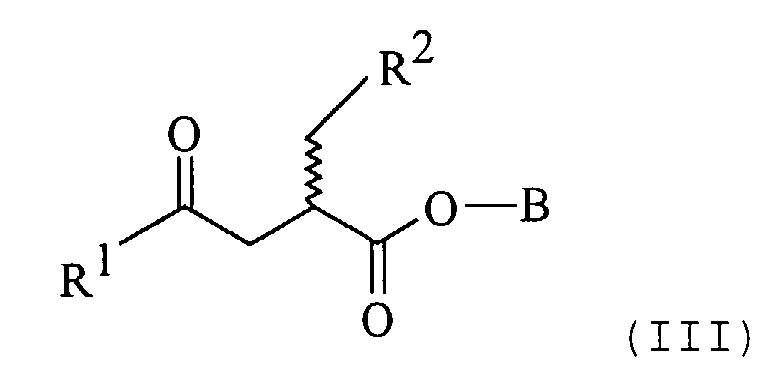
- racemic succinyl derivative of formula 6 Treatment of the racemic succinyl derivative of formula 6 with an esterase (for example, Subtilisin Carlsberg or ⁇ -chymotrypsin) in either H 2 O or a mixture of H 2 O and a H 2 O miscible solvent (for example, acetone and the like) in the presence of an alkali metal hydroxide (for example, NaOH, KOH, LiOH and the like) to maintain the pH at about 7 to 8.5, gives a mixture of the corresponding enantiomers of formula 7 and 8.
- an alkali metal hydroxide for example, NaOH, KOH, LiOH and the like
- the ( R )-ester of formula 7 can be recycled by racemization under basic conditions to give the corresponding racemic succinyl derivative of formula 6.
- the ( S )-acid of formula 8 is recovered by acidifying the aqueous phase and then extracting with an organic solvent (for example, EtOAc and the like).
- an organic solvent for example, EtOAc and the like.
- the succinyl derivative of formula 6 prepared as in scheme 1 is converted to the corresponding 2-aminothiazolyl derivative of formula 10 wherein R 2b is 2-amino-4-thiazolyl, 2-(1,1-dimethylethyloxycarbonyl)amino-4-thiazolyl or 2-(amino protecting group)amino-4-thiazolyl according to the method of Hsaio et al. (Synthetic Comm. 1990 , 20 , 33507) and Morton et al. (Tetrahedron Letters 1993 , 34 , 4481).
- the vinyl halide moiety of compound 6 is converted to an ⁇ -haloketone moiety by reacting the compound of formula 6 with N -bromosuccinimide or N -chlorosuccinimide or the like in a mixture of H 2 O and an inert solvent (for example, EtOAc/H 2 O, acetonitrile/H 2 O and the like).
- an inert solvent for example, EtOAc/H 2 O, acetonitrile/H 2 O and the like.
- Treatment of this latter ⁇ -haloketone derivative with thiourea gives the corresponding 2-aminothiazolyl derivative which can be further elaborated to 2-(amino protecting group)amino-4-thiazolyl by standard techniques.
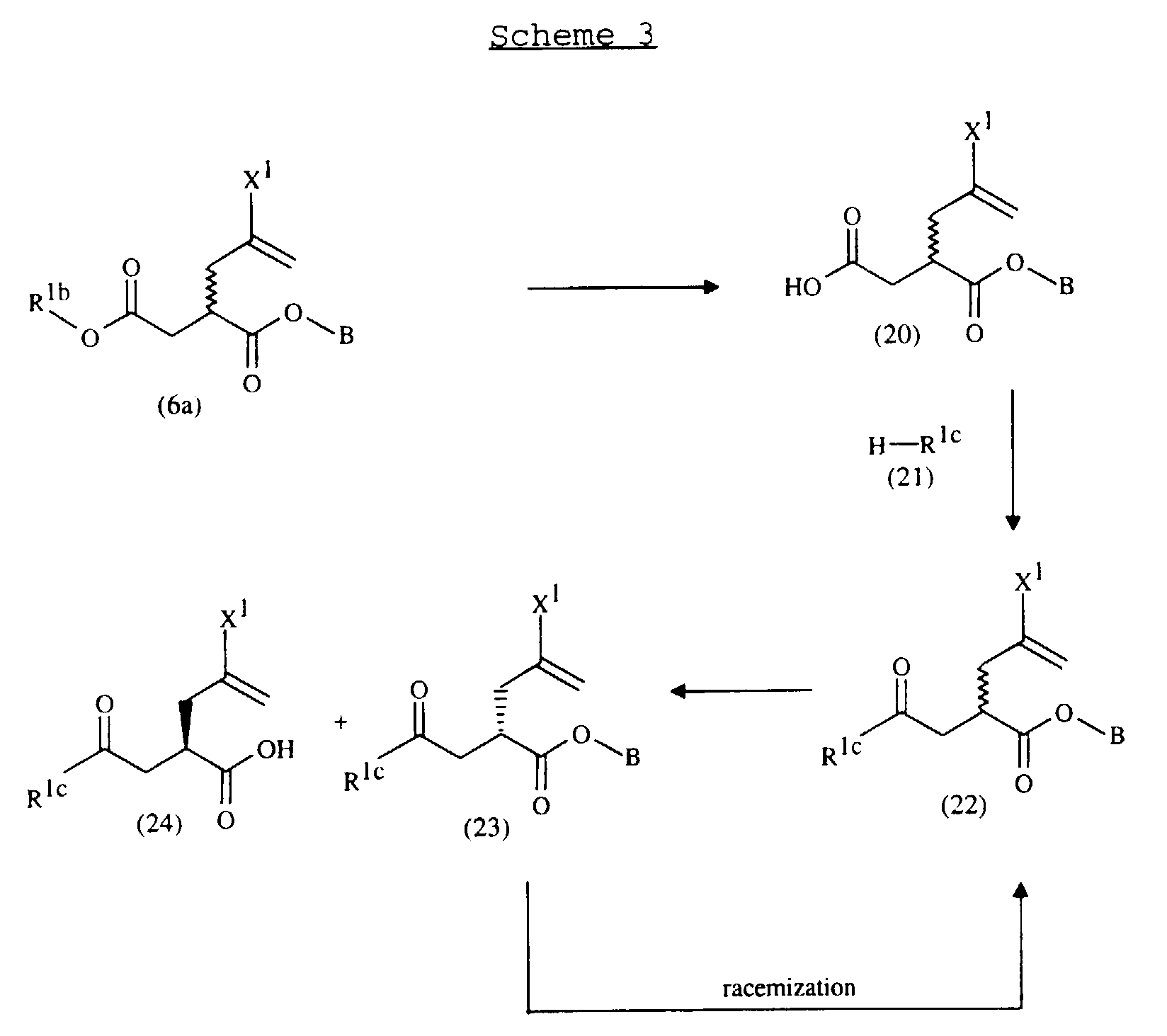
- the starting material in scheme 3 is the racemic compound 6a wherein R 1b and B are lower alkyl, which is prepared according to scheme 1 (when R 1 of scheme 1 is lower alkoxy).
- the substituents R 1b and B are selected such that R 1b can be selectively removed from compound 6a.
- R 1b is 1,1-dimethylethyl and B is methyl
- acid hydrolysis of 6a for example HCl, TFA and the like
- the free caboxylic acid derivative of formula 20 is coupled with the compound of formula 21 wherein R 1c is selected from lower alkylamino, di(loweralkyl)amino or the monovalent radical A-NR 3 wherein A and R 3 are as defined herein, to give the racemic amide derivative of formula 22.
- the coupling of the carboxylic acid derivative of formula 20 and the amine derivative of formula 21 is effected by the classical dehydrative coupling of a free carboxyl of one reactant with the free amino group of the other reactant in the presence of coupling agent to form a linking amide bond. Description of such coupling agents are found in general textbooks on peptide chemistry; for example, M.
- the (R)-ester of formula 23 can be recycled by racemization under basic conditions to give the amide derivative of formula 22.
- the ( S )-acid of formula 24, which is a compound of formula II, prepared in this manner can be used directly in the preparation of renin inhibiting compounds of formula I and Ia.
- Enantiomeric purities were determined using chiral HPLC columns, and are indicated as Condition A: Chiralpak® AS 25 cm column, 0.25% ethanol in hexane, 0.5 mL/min, isocratic; or Condition B: Chiralcel® OD-H 15 cm + 25 cm columns, 2% ethanol in hexane, 0.5 mL/min, isocratic.
- DBU 1,8-diazabicyclo[5.4.0]undec-7-ene
- DCC dicyclohexylcarbodiimide
- DCU dicyclohexylurea
- DMF dimethylformamide
- EtOH ethanol
- EtOAc ethyl acetate
- Et 2 O diethyl ether
- Hex hexane
- HOBt 1-hydroxybenzotriazole
- MeOH methanol
- NMM N-methylmorpholine
- THF tetrahydrofuran.
- Example 1A The title compound of Example 1A (0.5 g, 2 mmol) dissolved in THF (20 mL) was cooled to 0° under nitrogen. Potassium tert -butoxide (0.25 g, 2.2 mmol) was added all at once. After a further 20 min, tert-butyl bromoacetate (0.39 g, 2.2 mmol) was added dropwise from a syringe. The reaction mixture was stirred 16 h at room temperature. The excess base was destroyed by the addition of wet THF (2 ml) followed by the addition of H 2 O (40 mL) and EtOAc (40 mL). The organic phase was dried (MgSO 4 ) and concentrated under reduced pressure.
- Example 1C The purified title compound of Example 1C (0.513 g, 1.67 mmol) was dissolved in acetone (2 mL) and diluted with distilled H 2 O (5 mL). To this rapidly stirred solution was added ⁇ -chymotrypsin (5 mg) (type I-S from Bovine Pancreas, crystallized 3x, obtained from the Sigma Chemical Co.). Aqueous NaOH (0.1 N), added dropwise from a burette, was used to maintain the reaction at pH 8-9. The uptake of the NaOH solution was extremely slow ( ⁇ 2 drops of NaOH over 1 h) and after 1 h KCl salt (500 mg) was added as well as an extra 15 mg of the ⁇ -chymotrypsin.
- ⁇ -chymotrypsin 5 mg
- Aqueous NaOH 0.1 N
- the basic aqueous phase was rendered acidic (pH 5) by the addition of 10% (w/v) aqueous citric acid ( ⁇ 10 mL) and extracted three times with methylene chloride (3x 30 mL).
- the methylene chloride phase was dried (MgSO 4 ) and concentrated under reduced pressure to give 2( S )-(2-bromo-2-propenyl)-1,4-butanedioic acid 4-(1,1-dimethylethyl) ester (66 mg, 28% yield).
- Example 1C The title compound of Example 1C (5.01 g, 16.3 mmol) was dissolved in acetone (10 mL) and deionized H 2 O (30 mL). The system was equipped with an automatic pH titrator and a peristaltic pump connected to a 0.4M aqueous NaOH solution. The pH of the suspension was adjusted to 7.8. A crude preparation of Subtilisin Carlsberg (Alcalase® 2.4L "food grade” enzyme preparation, Novo Nordisk Bioindustrials, USA), was added (0.2 g) and the automatic titrating system started with the pH set at 7.2. After 12 h at pH 7.2, the pH on the automatic titrator was reset to 7.5 and the reaction continued until the pH stabilized.
- Subtilisin Carlsberg Alcalase® 2.4L "food grade” enzyme preparation, Novo Nordisk Bioindustrials, USA
- aqueous phase from the above extraction was rendered acidic by the addition of 10% aqueous HCl (20 mL) and then extracted twice with a 1:1 mixture of EtOAc/Et 2 O (2x 80 mL). The latter extracts were washed with brine and dried (MgSO 4 ). The solvent was removed under reduced pressure and the residue dried under vacuo to give 2( S )-(2-bromo-2-propenyl)-1,4-butanedioic acid 4-(1,1-dimethylethyl) ester (2.246 g, 47% yield).
- Example 1E To the unreacted ester of Example 1E (1.64 g, 5.34 mmol), which is a mixture of the ( R )- and ( S )-enantiomers in a ratio of 68:1, was added toluene (15 mL) and DBU (0.85 mL). This mixture was heated at reflux for 18 h and then diluted with H 2 O and extracted with EtOAc.
- Example 1C The organic phase was washed serially with 5% aqueous HCl and brine, dried (MgSO 4 ) and concentrated under reduced pressure to yield material (1.57 g, 96% yield) identical to that obtained in Example 1C, which was shown by HPLC using a chiral column (Condition A) to be a mixture of the ( R )- and ( S )-enantiomers in a ratio of 1.1:1.
- the residual material (800 g) was fractionally distilled under vacuum to give a number of fractions as indicated in the following table: Bp°C/Torr Weight %Malonate % Mono-alkylated % Di-alkylated 80-90/2 25 g 37 63 0 90-100/2 39 g 16 84 0 100/2 651 g 1 97.5 1.5 105-110/.25 44 g 0 12.5 87
- Example 2B The title compound of Example 2B (1502 g, 4.18 mol) was dissolved in MeOH (2650 mL). While maintaining a temperature of 30° or below for the ensuing mixture, a cold solution of KOH (329 g, 5.85 mol) in H 2 O (1335 mL) was added dropwise over 20 min. The mixture was stirred vigorously for 24 h. Thereafter, the MeOH was evaporated under reduced pressure. The resulting aqueous phase was extracted first with Hex (3x 750 mL), rendered acidic (pH 1) by the addition of concentrated HCl ( ⁇ 500 mL) and then extracted with toluene (3x 1 L).
- Example 2C The title compound of Example 2C (860.00 g, 3.273 mol) was placed in a 5 L flask and suspended in acetone (15 mL) and deionized H 2 O (1.5 L). The system was equipped with an automatic pH titrator and a peristaltic pump connected to a 3N aqueous NaOH solution (550 mL, ⁇ 0.5 equivalents). The pH of the suspension was adjusted to 7.5. A crude preparation of Subtilisin Carlsberg (Alcalase® 2.4L "food grade” enzyme preparation, Novo Nordisk Bioindustrials, USA) was added (10 g) and the automatic titrating system started with the pH set at 7.5.
- Subtilisin Carlsberg Alcalase® 2.4L "food grade” enzyme preparation, Novo Nordisk Bioindustrials, USA
- aqueous phase from the above extraction was rendered acidic (pH 1) by the addition of 6N aqueous HCl ( ⁇ 800 mL) and then extracted with EtOAc (3x 1 L). The latter extracts were washed serially with H 2 O and brine and then dried (MgSO 4 ). The solvent was removed under reduced pressure and the residue was dried under vacuo to give 2( S )-(2-chloro-2-propenyl)-1,4-butanedioic acid 4-(1,1-dimethylethyl) ester (390 g, 96% of theoretical amount) which was >96% homogeneous by HPLC.
- Example 2C The title compound of Example 2C (0.505 g, 1.92 mmol) was suspended in H 2 O (6 mL) and rapidly stirred.
- the system was equipped with an automatic pH titrator and a peristaltic pump connected to a 0.1N aqueous NaOH solution.
- the pH of the biphasic solution was adjusted to 7.6 and a crude preparation of Subtilisin Carlsberg (Alcalase® 2.4L "food grade” enzyme preparation, Novo Nordisk Bioindustrials, USA) was added (0.112 g) and the automatic titrating system started with the pH set at 7.5.
- the aqueous phase from the above extraction was rendered acidic (pH 3) by the addition of 5% aqueous HCl, and extracted with EtOAc (50 mL). The organic phase was dried (MgSO 4 ) and concentrated under reduced pressure to give 2( S )-(2-chloro-2-propenyl)-1,4-butanedioic acid 4-(1,1-dimethylethyl) ester (0.215 g, 45% yield). An aliquot of this material was reacted with diazomethane to give the corresponding methyl ester and analyzed by HPLC using a chiral column (Condition A). The optical purity of the ( S )-enantiomer was 97.5% ee.
- Example 2D The title compound of Example 2D (41.69 g, 167.6 mmol), 2( S )-2-amino-1-cyclohexyl-6-methyl-3( R ),4( S )-heptanediol (40.00 g, 164.4 mmol) (J.R. Luly et al., J. Org. Chem. 1988 , 53, 6109), HOBt (25.92 g, 169.3 mmol) and N-methylmorpholine (16.29 g, 161.1 mmol) were dissolved in THF (450 mL) and the solution cooled in an ice-water bath.
- THF 450 mL
- Example 2F The title compound of Example 2F (34.20 g, 72.1 mmol) was added to TFA (100 mL) and the mixture stirred 24 h at room temperature. The volatiles were removed under reduced pressure and the residue coevaporated twice with MeOH (100 mL). The residue was dissolved in MeOH (100 mL) and 3N aqueous NaOH (100 mL) was added. The mixture was stirred 4 h at room temperature. The MeOH was removed under reduced pressure and the residue rendered acidic (pH 1) with concentrated HCl.
- Example 2G The title compound of Example 2G (10.00 g, 23.92 mmol) and N-methylmorpholine (5.8 mL, 52.6 mmol) were suspended in cold (5°) THF (75 mL) and the mixture stirred until all solids were dissolved. Pivaloyl chloride (2.94 mL, 23.92 mmol) was added and the mixture stirred 10 min in an ice-water bath.
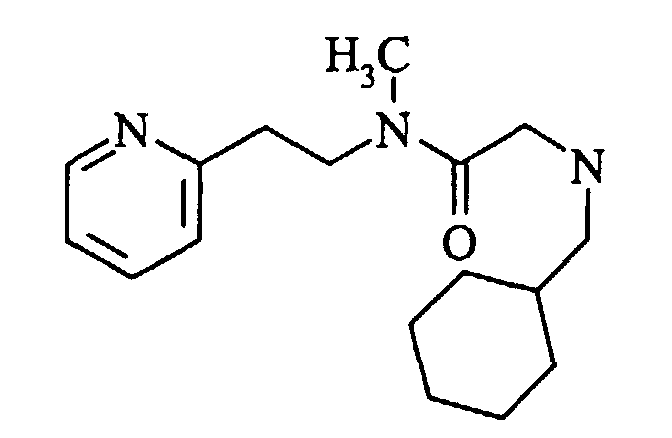
- N - ⁇ 2-(2-pyridinyl)ethyl ⁇ - N -methyl-2- ⁇ (cyclohexylmethyl)amino ⁇ acetamide (8.00 g, 27.5 mmol) (Lavhui et al, EP 589445, published March 30, 1994) in THF (15 mL) was added and the cooling bath removed. The mixture was stirred at room temperature for 2 h. The reaction was quenched with H 2 O (50 mL) and the THF removed under reduced pressure. The residue was extracted with EtOAc and the organic phase washed serially with 1N aqueous NaOH and H 2 O, dried (MgSO 4 ), concentrated under reduced pressure and the residue crystallized twice from hot EtOAc/Hex.
- Example 2H The title compound of Example 2H (1.069 g, 1.55 mmol) was dissolved in dichloromethane (30 mL), and para-toluenesulfonic acid monohydrate (0.019 g, 0.1 mmol) was added followed by 2-methoxypropene (0.745 mL, 7.75 mmol). The mixture was stirred for 60 h at room temperature. Volatiles were removed under reduced pressure and the residue dissolved in a mixture of 2:1 EtOAc:H 2 O (60 mL). After cooling in an ice-water bath, N -bromosuccinimide (0.32 g, 1.8 mmol) was added and the mixture stirred 3 h at 5° and 3 h at room temperature.
- Example 2C The title compound of Example 2C (607.76 g, 2.31 mol) was added to an ice-cold solution of aqueous 4N HCl in dioxane (1600 mL). The mixture was allowed to warm up to room temperature and stirred for 40 h. Volatiles were removed under vacuo to give a yellow oil which was dissolved in ether (250 mL). Hex was added until the solution became cloudy ( ⁇ 650 mL). After seeding, the product crystallized at room temperature. After cooling overnight to 5°, the product was collected, washed with 10% ether in Hex, then with Hex.
- Example 3B The title compound of Example 3B (196.2 g, 0.41 mole), was dissolved in warm acetone (150 mL) and diluted with H 2 O (350 mL). The solution was adjusted to pH 7 by the addition of aqueous KHSO 4 and a crude preparation of Subtilisin Carlsberg (Alcalase® 2.4L "food grade” enzyme preparation, Novo Nordisk Bioindustrials, USA) (5 g) was added. The solution was stirred vigorously and the pH of the solution was maintained between 7 and 8 using a pH titrator and a peristaltic pump connected to a 1N aqueous NaOH solution and the reaction was continued until the pH stabilized. The reaction mixture was concentrated under reduced pressure and extracted with EtOAc (4x 200 mL).
- the unreacted ( R )-ester obtained from the first extraction in Example 3C was racemized for recycling as follows.
- the (R)-ester (3.19 g, 6.67 mmol) was dissolved in MeOH (10 mL) and a 25% (w/w) solution of NaOMe in MeOH (152 ⁇ L, 0.66 mmol) was added.
- the reaction mixture was stirred 17 h at 60°.
- HPLC analysis using a chiral column Conditon B: ( R )-isomer, t R 163.2 min (50%); ( S )-isomer, t R 176.6 min (50%) indicated complete racemization.
- the title compound can be prepared following the procedures described in Example 1 with the following modifications: NaOMe/MeOH was replaced with NaHMDS (1 M in THF), and dimethyl malonate was replaced with diethyl malonate.
- the title compound was also prepared in the following manner.
- the title compound of Example 1C (3.0 g, 9.77 mmol) was dissolved in THF (12 mL) and H 2 O (4 mL) before being treated with LiOH (0.82 g, 19.5 mmol).
- the mixture was rapidly stirred for 15 h before being diluted with EtOAc (100 mL) and saturated aqueous NaHCO 3 (30 mL).
- the phases were separated and the aqueous phase rendered acidic by the addition of 6N aqueous HCl.
- the aqueous phase was then extracted with EtOAc (2x 80 mL).
- the combined organic phases were washed with saturated brine (1x 60 mL) and dried (MgSO 4 ).
- Example 2E The racemic compound from above was submitted to a kinetic resolution using Subtilisin Carlsberg following the procedure of Example 2E.
- the title compound was obtained with 75% ee (analysis performed by HPLC using a chiral column (Conditon A) after derivatization of an aliquot with diazomethane to the corresponding methyl ester) and 39.5% yield.
- Example 2C The title compound from Example 2C (5.0 g, 16.3 mmol) was dissolved in acetonitrile (20 mL) and deionized water (7 mL). N-bromosuccinimide (4.06 g, 23 mmol) was added in one portion. The mixture was stirred for 35 min before the excess N-bromosuccinimide was quenched with 2-methoxypropene (0.63 mL, 6.5 mmol). After 3 min the reaction mixture was treated with thiourea (1.5 g, 19.6 mmol) in one portion. The reaction was stirred for 1 h before being concentrated under reduced pressure.
- Example 2E The racemic compound from above was submitted to a kinetic resolution using Subtilisin Carlsberg following the procedure of Example 2E.
- the title compound was obtained with 97% ee (analysis performed by HPLC using a chiral column (Condition A) after derivatization of an aliquot with diazomethane to the corresponding methyl ester) and 26.5% yield.
- Example 2E The racemic compound from above was submitted to a kinetic resolution using Subtilisin Carlsberg following the procedure of Example 2E.
- the title compound was obtained with 82.5% ee (analysis performed by HPLC using a chiral column (Condition A) after derivatization of an aliquot with diazomethane to give the corresponding methyl ester) and 35.5% yield.
- the methyl ester derivative was characterized: 1 H NMR (400MHz, CDCl 3 ) ⁇ 8.85 (bs, 1H), 6.55 (s, 1H), 3.66 (s, 3H), 3.17 (m, 1H), 3.05 (m, 1H), 2.84 (m, 1H), 2.57 (m, 1H), 2.41 (m, 1H), 1.6 (s, 9H), 1.4 (s, 9H); MS (FAB) m/z 401.1 (MH) + .
Landscapes
- Chemical & Material Sciences (AREA)
- Organic Chemistry (AREA)
- Wood Science & Technology (AREA)
- Life Sciences & Earth Sciences (AREA)
- Engineering & Computer Science (AREA)
- Zoology (AREA)
- Bioinformatics & Cheminformatics (AREA)
- Genetics & Genomics (AREA)
- General Chemical & Material Sciences (AREA)
- Chemical Kinetics & Catalysis (AREA)
- Health & Medical Sciences (AREA)
- Biochemistry (AREA)
- Biotechnology (AREA)
- General Engineering & Computer Science (AREA)
- General Health & Medical Sciences (AREA)
- Microbiology (AREA)
- Analytical Chemistry (AREA)
- Organic Low-Molecular-Weight Compounds And Preparation Thereof (AREA)
- Thiazole And Isothizaole Compounds (AREA)
- Pharmaceuticals Containing Other Organic And Inorganic Compounds (AREA)
- Acyclic And Carbocyclic Compounds In Medicinal Compositions (AREA)
- Heterocyclic Carbon Compounds Containing A Hetero Ring Having Nitrogen And Oxygen As The Only Ring Hetero Atoms (AREA)
- Pyridine Compounds (AREA)
- Preparation Of Compounds By Using Micro-Organisms (AREA)
- Plural Heterocyclic Compounds (AREA)
Abstract
Description


(i) selectively hydrolyzing one enantiomer of a racemic mixture of an ester of formula III:



| Bp°C/Torr | Weight | %Malonate | % Mono-alkylated | % Di-alkylated |
| 80-90/2 | 25 g | 37 | 63 | 0 |
| 90-100/2 | 39 g | 16 | 84 | 0 |
| 100/2 | 651 g | 1 | 97.5 | 1.5 |
| 105-110/.25 | 44 g | 0 | 12.5 | 87 |
Claims (15)
- A process for the preparation of compounds of formula II:
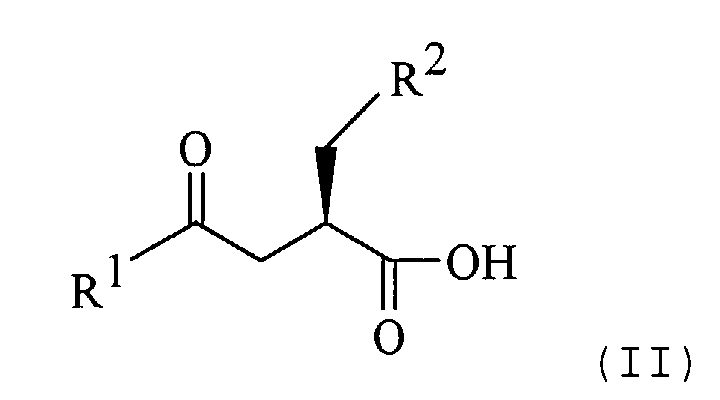 wherein the term "lower alkyl", either alone or in combination with another radical, means a straight chain alkyl radical containing from 1 to 4 C atoms or a branched chain alkyl radical containing 3 or 4 C atoms; the term "lower cycloalkyl", either alone or in combination with another radical, means a saturated cyclic hydrocarbon radical containing from 3 to 7 C atoms; the term "lower alkoxy" means a straight chain alkoxy radical containing for 1 to 4 C atoms or a branched chain alkoxy radical containing 3 or 4 C atoms; the term "lower alkylamino" means alkylamino radicals containing 1 to 6 C atoms; the term "di(lower alkyl)amino" means an amino radical having two lower alkyl substituents each of which contain from 1 to 6 C atoms; and the term "amino protecting group" means a group capable of protecting an amino group against undesirable reactions during synthetic procedures;wherein R1 is lower alkoxy, lower alkylamino, di(lower alkyl)amino or R1 is A-NR3, wherein A is R4R5NC(O)CH2 wherein,(a) R4 is hydrogen or lower alkyl and R5 is hydrogen, lower alkyl or lower alkyl monosubstituted with lower cycloalkyl, phenyl, or a heterocyclic ring (hereinafter designated as "Het") which is an unsubstituted, monosubstituted or disubstituted, five- or six-membered ring containing one or two heteroatoms selected from the group consisting of N, O and S, and wherein each substituent is selected independently from the group consisting of lower alkyl, lower alkoxy, halo, amino or lower alkylamino; or(b) R4 is lower alkyl and R5 is R6R7N-Alk wherein R6 and R7 each is hydrogen or lower alkyl and Alk is a divalent a straight or branched chain alkyl radical containing from one to six carbon atoms; or(c) R4 is lower alkyl and R5 is lower alkoxy; or(d) R4 and R5 together with the nitrogen atom to which they are attached form a pyrrolidino, piperidino, 4-{(lower alkoxy)-(lower alkoxy)}-1-piperidinyl, morpholino or thiomorpholino;R3 is lower alkyl or lower alkyl monosubstituted with lower cycloalkyl, phenyl, 4-(lower alkyl)phenyl, 4-(lower alkoxy)phenyl, 4-halophenyl, 3,4-methylenedioxyphenyl, 1-naphthyl, 2-naphthyl or Het wherein Het is as defined in this claim; andR2 is lower alkyl, CCl=CH2, CBr=CH2, lower cycloalkyl, 2-amino-4-thiazolyl, 2-(amino protecting group)amino-4-thiazolyl or Het wherein Het is as defined herein;
said process comprising:(i) selectively hydrolyzing one enantiomer of a racemic mixture of an ester of formula III:wherein R1 is as defined in this claim, R2 is as defined in this claim; and B is lower alkyl, with an effective amount of an esterase selected from Subtilisin Carlsberg or α-chymotrypsin, in a reaction medium comprising H2O or a mixture of H2O and an H2O miscible inert organic solvent, in the presence of an alkali metal hydroxide to maintain the pH of the medium from 7.0 - to 8.5, to form a reaction mixture containing compounds of formula II (as an alkali metal salt) and IIIa: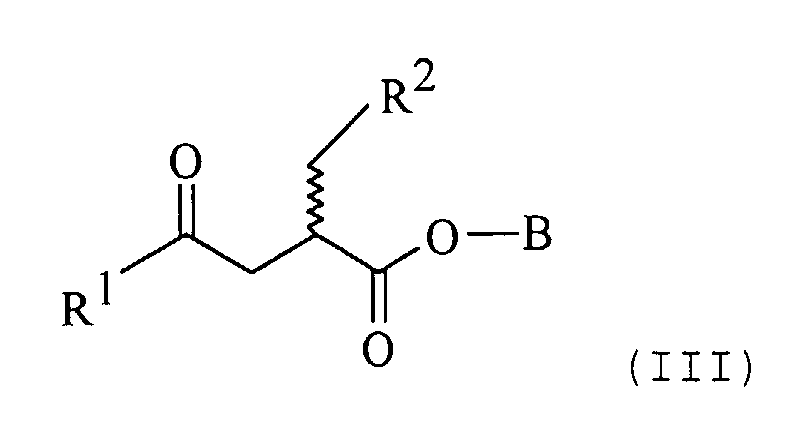 and
and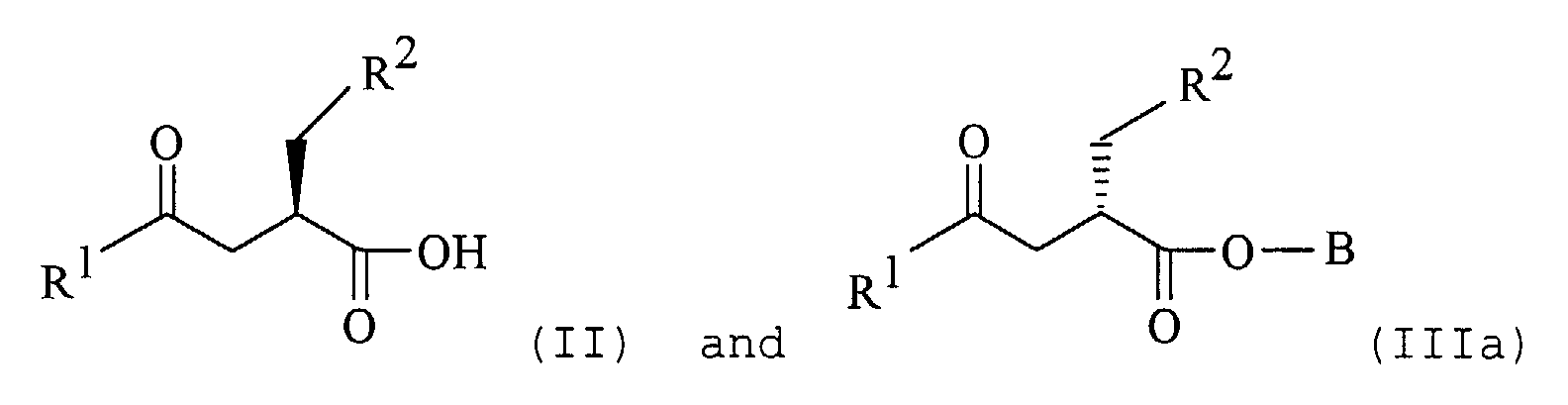 (ii) separating from the mixture resulting from step (i) the compound of formula II.
 - A process according to claim 1 wherein R1 is lower alkoxy, lower alkylamino, di(lower alkyl)amino or R1 is A-NR3, wherein A is R4R5NC(O)CH2 wherein R4 is methyl and R5 is methyl, 2-(2-pyridinyl)ethyl or 2-(3-pyridinyl)ethyl; R2 is CCl=CH2, CBr=CH2, 2-amino-4-thiazolyl, 2-(amino protecting group)amino-4-thiazolyl or a five-membered heterocyclic ring containing one or two heteroatoms selected from the group consisting of N, O and S; R3 is 1-ethylpropyl, cyclopentylmethyl, cyclohexylmethyl, 1(S)-cyclohexylethyl, cycloheptylmethyl, phenylmethyl, 1(S)-phenylethyl, (1-methylcyclohexyl)methyl; and B is methyl or ethyl.
- A process according to claim 1 wherein R1 is 1,1-dimethylethoxy or the monovalent radical:R2 is CCl=CH2, CBr=CH2, 2-amino-4-thiazolyl, or 2-(1,1-dimethylethoxycarbonyl)amino-4-thiazolyl and B is methyl.
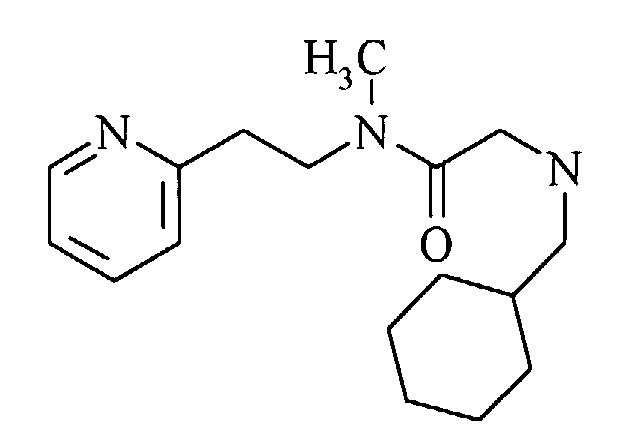
- A process according to claim 1 wherein R2 is CBr=CH2, CCl=CH2 or 2-amino-4-thiazolyl.
- A process according to claim 4 wherein R2 is CBr=CH2 or CCl=CH2.
- A process according to claim 1 wherein the esterase is Subtilisin Carlsberg.
- A process according to claim 1 wherein the reaction medium in step (i) contains from 0 to 30% (v/v) of a H2O miscible inert organic solvent.
- A process according to claim 7 wherein the H2O miscible inert organic solvent is selected from acetone and acetonitrile.
- A process according to claim 1 wherein the alkali metal hydroxide is selected from NaOH, KOH and LiOH.
- A process according to claim 1 wherein in step (i) a temperature of between 20-55°C is maintained.
- A process according to claim 10 wherein in step (i) a temperature of between 20-37°C is maintained.
- A compound of formula II:
 wherein the term "lower alkyl", either alone or in combination with another radical, means a straight chain alkyl radical containing from 1 to 4 C atoms or a branched chain alkyl radical containing 3 or 4 C atoms; the term "lower cycloalkyl", either alone or in combination with another radical, means a saturated cyclic hydrocarbon radical containing from 3 to 7 C atoms; the term "lower alkoxy" means a straight chain alkoxy radical containing for 1 to 4 C atoms or a branched chain alkoxy radical containing 3 or 4 C atoms; the term "lower alkylamino" means alkylamino radicals containing 1 to 6 C atoms; the term "di(lower alkyl)amino" means an amino radical having two lower alkyl substituents each of which contain from 1 to 6 C atoms.wherein R1 is lower alkoxy, lower alkylamino, di(loweralkyl)amino or R1 is A-NR3, wherein A is R4R5NC(O)CH2 wherein,(a) R4 is hydrogen or lower alkyl and R5 is hydrogen, lower alkyl or lower alkyl monosubstituted with lower cycloalkyl, phenyl, or a heterocyclic ring (hereinafter designated as "Het") which is an unsubstituted, monosubstituted or disubstituted, five- or six-membered ring containing one or two heteroatoms selected from the group consisting of N, O and S, and wherein each substituent is selected independently from the group consisting of lower alkyl, lower alkoxy, halo, amino or lower alkylamino; or(b) R4 is lower alkyl and R5 is R6R7N-Alk wherein R6 and R7 each is hydrogen or lower alkyl and Alk is a divalent straight or branched chain alkyl radical containing from one to six carbon atoms; or(c) R4 is lower alkyl and R5 is lower alkoxy; or(d) R4 and R5 together with the nitrogen atom to which they are attached form a pyrrolidino, piperidino, 4-{(lower alkoxy)-(lower alkoxy)}-1-piperidinyl, morpholino or thiomorpholino;R3 is lower alkyl or lower alkyl monosubstituted with lower cycloalkyl, phenyl, 4-(lower alkyl)phenyl, 4-(lower alkoxy)phenyl, 4-halophenyl, 3,4-methylenedioxyphenyl, 1-naphthyl, 2-naphthyl or Het wherein Het is as defined in this claim; andR2 is CCl=CH2 or CBr=CH2;
 - A compound as defined in claim 12 wherein R1 is lower alkoxy, lower alkylamino, di(lower alkyl)amino or R1 is A-NR3, wherein A is R4R5NC(O)CH2 wherein R4 is methyl and R5 is methyl, 2-(2-pyridinyl)ethyl or 2-(3-pyridinyl)ethyl; and R3 is 1-ethylpropyl, cyclopentylmethyl, cyclohexylmethyl, 1(S)-cyclohexylethyl, cycloheptylmethyl, phenylmethyl, 1(S)-phenylethyl or (1-methylcyclohexyl)methyl.
- A compound as defined in claim 12 wherein R1 is 1,1-dimethylethoxy or the monovalent radical:

- A process according to claim 1, wherein the amino protecting group is selected from the group consisting of benzyloxycarbonyl, 4-methoxybenzyloxycarbonyl, 2,2,2-tricholoroethoxy-carbonyl and 1,1-dimethylethoxycarbonyl.
Applications Claiming Priority (3)
| Application Number | Priority Date | Filing Date | Title |
|---|---|---|---|
| CA2165996 | 1995-12-22 | ||
| CA002165996A CA2165996C (en) | 1995-12-22 | 1995-12-22 | Stereoselective preparation of 2-substituted succinic derivatives |
| PCT/CA1996/000852 WO1997023641A1 (en) | 1995-12-22 | 1996-12-17 | Stereoselective preparation of 2-substituted succinic derivatives |
Publications (2)
| Publication Number | Publication Date |
|---|---|
| EP0882138A1 EP0882138A1 (en) | 1998-12-09 |
| EP0882138B1 true EP0882138B1 (en) | 2000-07-05 |
Family
ID=4157228
Family Applications (1)
| Application Number | Title | Priority Date | Filing Date |
|---|---|---|---|
| EP96941546A Expired - Lifetime EP0882138B1 (en) | 1995-12-22 | 1996-12-17 | Stereoselective preparation of 2-substituted succinic derivatives |
Country Status (12)
| Country | Link |
|---|---|
| US (1) | US5808085A (en) |
| EP (1) | EP0882138B1 (en) |
| JP (1) | JP4030583B2 (en) |
| AT (1) | ATE194388T1 (en) |
| CA (1) | CA2165996C (en) |
| DE (1) | DE69609202T2 (en) |
| DK (1) | DK0882138T3 (en) |
| ES (1) | ES2147944T3 (en) |
| GR (1) | GR3034465T3 (en) |
| MX (1) | MX9805061A (en) |
| PT (1) | PT882138E (en) |
| WO (1) | WO1997023641A1 (en) |
Families Citing this family (3)
| Publication number | Priority date | Publication date | Assignee | Title |
|---|---|---|---|---|
| US6323180B1 (en) * | 1998-08-10 | 2001-11-27 | Boehringer Ingelheim (Canada) Ltd | Hepatitis C inhibitor tri-peptides |
| US6232958B1 (en) | 1998-12-29 | 2001-05-15 | Microsoft Corporation | Input device with multiplexed switches |
| US11999757B2 (en) | 2017-11-01 | 2024-06-04 | Melinta Subsidiary Corp. | Synthesis of boronate ester derivatives and uses thereof |
Family Cites Families (5)
| Publication number | Priority date | Publication date | Assignee | Title |
|---|---|---|---|---|
| US5275950A (en) * | 1990-05-11 | 1994-01-04 | Abbott Laboratories | Process for the preparation of a renin inhibiting compound |
| US5215918A (en) * | 1992-06-19 | 1993-06-01 | Bend Research, Inc. | Enantiomeric enrichment of (R,S)-3-quinuclidinol |
| RU95113586A (en) * | 1992-09-25 | 1997-01-10 | Био-Мега/Берингер Ингельхейм Рисерч Инк. (CA) | Derivatives of n-(2-amino-2-oxoethyl)-butanediamide or their acid-additive salts and pharmaceutical composition showing property of rennin inhibitor |
| US5420283A (en) * | 1993-08-02 | 1995-05-30 | Pfizer Inc. | Resolution of (R)-2-benzylsuccinic acid 4-[4-(N-t-butoxycarbonylmethylamino)-piperidine] amide |
| US5508466A (en) * | 1994-04-13 | 1996-04-16 | G.D. Searle & Co. | Synthesis of N-protected-α-substituted-glycine racemic esters by zinc-mediated addition of organic halide to glycine cation equivalent |
-
1995
- 1995-12-22 CA CA002165996A patent/CA2165996C/en not_active Expired - Fee Related
-
1996
- 1996-12-17 US US08/767,917 patent/US5808085A/en not_active Expired - Lifetime
- 1996-12-17 PT PT96941546T patent/PT882138E/en unknown
- 1996-12-17 DE DE69609202T patent/DE69609202T2/en not_active Expired - Lifetime
- 1996-12-17 DK DK96941546T patent/DK0882138T3/en active
- 1996-12-17 EP EP96941546A patent/EP0882138B1/en not_active Expired - Lifetime
- 1996-12-17 AT AT96941546T patent/ATE194388T1/en active
- 1996-12-17 ES ES96941546T patent/ES2147944T3/en not_active Expired - Lifetime
- 1996-12-17 WO PCT/CA1996/000852 patent/WO1997023641A1/en not_active Ceased
- 1996-12-17 JP JP52317097A patent/JP4030583B2/en not_active Expired - Fee Related
-
1998
- 1998-06-22 MX MX9805061A patent/MX9805061A/en not_active IP Right Cessation
-
2000
- 2000-09-21 GR GR20000402154T patent/GR3034465T3/en not_active IP Right Cessation
Also Published As
| Publication number | Publication date |
|---|---|
| US5808085A (en) | 1998-09-15 |
| DK0882138T3 (en) | 2000-11-20 |
| WO1997023641A1 (en) | 1997-07-03 |
| ES2147944T3 (en) | 2000-10-01 |
| DE69609202T2 (en) | 2001-03-01 |
| EP0882138A1 (en) | 1998-12-09 |
| JP4030583B2 (en) | 2008-01-09 |
| DE69609202D1 (en) | 2000-08-10 |
| CA2165996C (en) | 2002-01-29 |
| ATE194388T1 (en) | 2000-07-15 |
| CA2165996A1 (en) | 1997-06-23 |
| PT882138E (en) | 2000-10-31 |
| JP2000502259A (en) | 2000-02-29 |
| MX9805061A (en) | 1998-10-31 |
| GR3034465T3 (en) | 2000-12-29 |
Similar Documents
| Publication | Publication Date | Title |
|---|---|---|
| US4716235A (en) | Process for preparing N-[1(S)-ethoxycarbonyl-3-phenylpropyl]-L-alanyl-L-proline | |
| EP3386955B1 (en) | Intermediates for the preparation of sacubitril and their preparation | |
| AT500490A1 (en) | METHOD FOR THE PRODUCTION OF SUBSTITUTED THIAZOLINES AND THEIR INTERMEDIATE PRODUCTS | |
| Avenoza et al. | A straightforward synthesis of both enantiomers of α-vinylalanine and α-ethynylalanine | |
| US5663341A (en) | Process for making HIV protease inhibitors | |
| US5808085A (en) | Stereoselective preparation of 2-substituted succinic acid derivatives | |
| AU2001230192B2 (en) | Method for the enzymatic resolution of the racemates of aminomethyl-aryl-cyclohexanol derivatives | |
| JP4197741B2 (en) | Method for producing 3-pyrroline-2-carboxylic acid derivatives | |
| JPH06296498A (en) | Enzymatic division of 2-piperidinecarboxylic acid alkyl and use of compound obtained as synthetic intermediate | |
| US5565476A (en) | N-(hydroxyethyl)butanediamide derivatives | |
| US5760238A (en) | 1,4-dihydropyridine derivatives | |
| EP2725012A1 (en) | 1-amino-2-vinyl cyclopropane carboxylic acid amide, salt of same, and method for producing same | |
| US20080003652A1 (en) | Novel enzymatic process for the manufacture of Boc-Dap-Oh priority to related application(s) | |
| KR100503443B1 (en) | Processes for preparing an optically active cetirizine or its salt | |
| JPH0649005A (en) | Simple method for producing vinylglycine (2-amino-3- butenoic acid) and simple method for dividing derivative | |
| AU680829B2 (en) | Renin inhibiting N-(2-amino-2-oxoethyl)butanediamide derivatives | |
| JP4712688B2 (en) | Process for producing enantiopure β-amino acid derivative and enantiopure β-amino acid derivative | |
| US6469173B1 (en) | Alkyl esters of 3-(3,4-dihalogenophenyl)-2,6-dioxopiperidine-3-propionic acid of use as intermediates | |
| AU748779B2 (en) | The preparation of 3-pyroline-2-carboxylic acid amine derivatives | |
| WO2007078176A1 (en) | The method of making optically active 2-chloromandelic acid esters and 2-chloromandelic acids by enzymatic method | |
| EP0646573A1 (en) | Preparation of protected and unprotected guanidino-substituted carboxylic acids | |
| EP0977742B1 (en) | The preparation of enantiomerically enriched oxazolones and alpha, alpha-disubstituted amino acids | |
| EP0638059A1 (en) | Process for the preparation of 3(s)-methylheptanoic acid and intermediates therefor | |
| Dastbaravardeh et al. | Mono-Selective Ortho-C–H Functionalizations of Mandelic Acid and α-Phenylglycine | |
| JPH0690790A (en) | Production of optically active 1,4-dihydropyridine-3,5-dicarboxilic acid monoester derivative |
Legal Events
| Date | Code | Title | Description |
|---|---|---|---|
| PUAI | Public reference made under article 153(3) epc to a published international application that has entered the european phase |
Free format text: ORIGINAL CODE: 0009012 |
|
| 17P | Request for examination filed |
Effective date: 19980722 |
|
| AK | Designated contracting states |
Kind code of ref document: A1 Designated state(s): AT BE CH DE DK ES FI FR GB GR IE IT LI LU MC NL PT SE |
|
| 17Q | First examination report despatched |
Effective date: 19981214 |
|
| GRAG | Despatch of communication of intention to grant |
Free format text: ORIGINAL CODE: EPIDOS AGRA |
|
| GRAG | Despatch of communication of intention to grant |
Free format text: ORIGINAL CODE: EPIDOS AGRA |
|
| GRAG | Despatch of communication of intention to grant |
Free format text: ORIGINAL CODE: EPIDOS AGRA |
|
| GRAH | Despatch of communication of intention to grant a patent |
Free format text: ORIGINAL CODE: EPIDOS IGRA |
|
| GRAH | Despatch of communication of intention to grant a patent |
Free format text: ORIGINAL CODE: EPIDOS IGRA |
|
| GRAA | (expected) grant |
Free format text: ORIGINAL CODE: 0009210 |
|
| AK | Designated contracting states |
Kind code of ref document: B1 Designated state(s): AT BE CH DE DK ES FI FR GB GR IE IT LI LU MC NL PT SE |
|
| REF | Corresponds to: |
Ref document number: 194388 Country of ref document: AT Date of ref document: 20000715 Kind code of ref document: T |
|
| REG | Reference to a national code |
Ref country code: CH Ref legal event code: NV Representative=s name: SCHMAUDER & PARTNER AG PATENTANWALTSBUERO Ref country code: CH Ref legal event code: EP |
|
| REG | Reference to a national code |
Ref country code: IE Ref legal event code: FG4D |
|
| REF | Corresponds to: |
Ref document number: 69609202 Country of ref document: DE Date of ref document: 20000810 |
|
| ET | Fr: translation filed | ||
| ITF | It: translation for a ep patent filed | ||
| REG | Reference to a national code |
Ref country code: ES Ref legal event code: FG2A Ref document number: 2147944 Country of ref document: ES Kind code of ref document: T3 |
|
| REG | Reference to a national code |
Ref country code: PT Ref legal event code: SC4A Free format text: AVAILABILITY OF NATIONAL TRANSLATION Effective date: 20000718 |
|
| REG | Reference to a national code |
Ref country code: DK Ref legal event code: T3 |
|
| PLBE | No opposition filed within time limit |
Free format text: ORIGINAL CODE: 0009261 |
|
| STAA | Information on the status of an ep patent application or granted ep patent |
Free format text: STATUS: NO OPPOSITION FILED WITHIN TIME LIMIT |
|
| 26N | No opposition filed | ||
| REG | Reference to a national code |
Ref country code: GB Ref legal event code: IF02 |
|
| PGFP | Annual fee paid to national office [announced via postgrant information from national office to epo] |
Ref country code: FI Payment date: 20041208 Year of fee payment: 9 |
|
| PGFP | Annual fee paid to national office [announced via postgrant information from national office to epo] |
Ref country code: SE Payment date: 20041209 Year of fee payment: 9 |
|
| PGFP | Annual fee paid to national office [announced via postgrant information from national office to epo] |
Ref country code: NL Payment date: 20041210 Year of fee payment: 9 Ref country code: MC Payment date: 20041210 Year of fee payment: 9 Ref country code: LU Payment date: 20041210 Year of fee payment: 9 Ref country code: DK Payment date: 20041210 Year of fee payment: 9 |
|
| PGFP | Annual fee paid to national office [announced via postgrant information from national office to epo] |
Ref country code: IE Payment date: 20041215 Year of fee payment: 9 |
|
| PGFP | Annual fee paid to national office [announced via postgrant information from national office to epo] |
Ref country code: GR Payment date: 20041223 Year of fee payment: 9 |
|
| PGFP | Annual fee paid to national office [announced via postgrant information from national office to epo] |
Ref country code: BE Payment date: 20050118 Year of fee payment: 9 |
|
| PGFP | Annual fee paid to national office [announced via postgrant information from national office to epo] |
Ref country code: PT Payment date: 20051124 Year of fee payment: 10 |
|
| PG25 | Lapsed in a contracting state [announced via postgrant information from national office to epo] |
Ref country code: FI Free format text: LAPSE BECAUSE OF NON-PAYMENT OF DUE FEES Effective date: 20051217 |
|
| PG25 | Lapsed in a contracting state [announced via postgrant information from national office to epo] |
Ref country code: SE Free format text: LAPSE BECAUSE OF NON-PAYMENT OF DUE FEES Effective date: 20051218 |
|
| PG25 | Lapsed in a contracting state [announced via postgrant information from national office to epo] |
Ref country code: IE Free format text: LAPSE BECAUSE OF NON-PAYMENT OF DUE FEES Effective date: 20051219 |
|
| PG25 | Lapsed in a contracting state [announced via postgrant information from national office to epo] |
Ref country code: MC Free format text: LAPSE BECAUSE OF NON-PAYMENT OF DUE FEES Effective date: 20051231 Ref country code: LU Free format text: LAPSE BECAUSE OF NON-PAYMENT OF DUE FEES Effective date: 20051231 Ref country code: BE Free format text: LAPSE BECAUSE OF NON-PAYMENT OF DUE FEES Effective date: 20051231 |
|
| PG25 | Lapsed in a contracting state [announced via postgrant information from national office to epo] |
Ref country code: DK Free format text: LAPSE BECAUSE OF NON-PAYMENT OF DUE FEES Effective date: 20060102 |
|
| PG25 | Lapsed in a contracting state [announced via postgrant information from national office to epo] |
Ref country code: NL Free format text: LAPSE BECAUSE OF NON-PAYMENT OF DUE FEES Effective date: 20060701 |
|
| REG | Reference to a national code |
Ref country code: DK Ref legal event code: EBP |
|
| EUG | Se: european patent has lapsed | ||
| NLV4 | Nl: lapsed or anulled due to non-payment of the annual fee |
Effective date: 20060701 |
|
| REG | Reference to a national code |
Ref country code: IE Ref legal event code: MM4A |
|
| PG25 | Lapsed in a contracting state [announced via postgrant information from national office to epo] |
Ref country code: PT Free format text: LAPSE BECAUSE OF NON-PAYMENT OF DUE FEES Effective date: 20070618 |
|
| REG | Reference to a national code |
Ref country code: PT Ref legal event code: MM4A Free format text: LAPSE DUE TO NON-PAYMENT OF FEES Effective date: 20070618 |
|
| BERE | Be: lapsed |
Owner name: *BOEHRINGER INGELHEIM (CANADA) LTD Effective date: 20051231 |
|
| PG25 | Lapsed in a contracting state [announced via postgrant information from national office to epo] |
Ref country code: GR Free format text: LAPSE BECAUSE OF NON-PAYMENT OF DUE FEES Effective date: 20000705 |
|
| REG | Reference to a national code |
Ref country code: CH Ref legal event code: PCAR Free format text: SCHMAUDER & PARTNER AG PATENT- UND MARKENANWAELTE VSP;ZWAENGIWEG 7;8038 ZUERICH (CH) |
|
| PGFP | Annual fee paid to national office [announced via postgrant information from national office to epo] |
Ref country code: FR Payment date: 20110104 Year of fee payment: 15 Ref country code: AT Payment date: 20101214 Year of fee payment: 15 |
|
| PGFP | Annual fee paid to national office [announced via postgrant information from national office to epo] |
Ref country code: CH Payment date: 20101224 Year of fee payment: 15 |
|
| PGFP | Annual fee paid to national office [announced via postgrant information from national office to epo] |
Ref country code: GB Payment date: 20101221 Year of fee payment: 15 |
|
| PGFP | Annual fee paid to national office [announced via postgrant information from national office to epo] |
Ref country code: IT Payment date: 20101229 Year of fee payment: 15 Ref country code: DE Payment date: 20101222 Year of fee payment: 15 |
|
| PGFP | Annual fee paid to national office [announced via postgrant information from national office to epo] |
Ref country code: ES Payment date: 20101223 Year of fee payment: 15 |
|
| REG | Reference to a national code |
Ref country code: CH Ref legal event code: PL |
|
| GBPC | Gb: european patent ceased through non-payment of renewal fee |
Effective date: 20111217 |
|
| REG | Reference to a national code |
Ref country code: FR Ref legal event code: ST Effective date: 20120831 |
|
| REG | Reference to a national code |
Ref country code: DE Ref legal event code: R119 Ref document number: 69609202 Country of ref document: DE Effective date: 20120703 |
|
| PG25 | Lapsed in a contracting state [announced via postgrant information from national office to epo] |
Ref country code: GB Free format text: LAPSE BECAUSE OF NON-PAYMENT OF DUE FEES Effective date: 20111217 Ref country code: DE Free format text: LAPSE BECAUSE OF NON-PAYMENT OF DUE FEES Effective date: 20120703 Ref country code: CH Free format text: LAPSE BECAUSE OF NON-PAYMENT OF DUE FEES Effective date: 20111231 Ref country code: LI Free format text: LAPSE BECAUSE OF NON-PAYMENT OF DUE FEES Effective date: 20111231 |
|
| PG25 | Lapsed in a contracting state [announced via postgrant information from national office to epo] |
Ref country code: IT Free format text: LAPSE BECAUSE OF NON-PAYMENT OF DUE FEES Effective date: 20111217 |
|
| REG | Reference to a national code |
Ref country code: AT Ref legal event code: MM01 Ref document number: 194388 Country of ref document: AT Kind code of ref document: T Effective date: 20111217 |
|
| PG25 | Lapsed in a contracting state [announced via postgrant information from national office to epo] |
Ref country code: AT Free format text: LAPSE BECAUSE OF NON-PAYMENT OF DUE FEES Effective date: 20111217 |
|
| PG25 | Lapsed in a contracting state [announced via postgrant information from national office to epo] |
Ref country code: FR Free format text: LAPSE BECAUSE OF NON-PAYMENT OF DUE FEES Effective date: 20120102 |
|
| REG | Reference to a national code |
Ref country code: ES Ref legal event code: FD2A Effective date: 20130704 |
|
| PG25 | Lapsed in a contracting state [announced via postgrant information from national office to epo] |
Ref country code: ES Free format text: LAPSE BECAUSE OF NON-PAYMENT OF DUE FEES Effective date: 20111218 |