EP0879062B1 - Nucleic acid delivery vehicle - Google Patents
Nucleic acid delivery vehicle Download PDFInfo
- Publication number
- EP0879062B1 EP0879062B1 EP96929504A EP96929504A EP0879062B1 EP 0879062 B1 EP0879062 B1 EP 0879062B1 EP 96929504 A EP96929504 A EP 96929504A EP 96929504 A EP96929504 A EP 96929504A EP 0879062 B1 EP0879062 B1 EP 0879062B1
- Authority
- EP
- European Patent Office
- Prior art keywords
- peptide
- liposome
- dna
- liposomes
- cells
- Prior art date
- Legal status (The legal status is an assumption and is not a legal conclusion. Google has not performed a legal analysis and makes no representation as to the accuracy of the status listed.)
- Expired - Lifetime
Links
- 150000007523 nucleic acids Chemical class 0.000 title claims abstract description 13
- 102000039446 nucleic acids Human genes 0.000 title claims abstract description 10
- 108020004707 nucleic acids Proteins 0.000 title claims abstract description 10
- 239000002502 liposome Substances 0.000 claims abstract description 107
- 108090000765 processed proteins & peptides Proteins 0.000 claims abstract description 91
- 239000000203 mixture Substances 0.000 claims abstract description 63
- 239000012528 membrane Substances 0.000 claims abstract description 24
- 238000001727 in vivo Methods 0.000 claims abstract description 13
- 108091033319 polynucleotide Proteins 0.000 claims abstract description 12
- 102000040430 polynucleotide Human genes 0.000 claims abstract description 12
- 230000002378 acidificating effect Effects 0.000 claims abstract description 8
- 210000004027 cell Anatomy 0.000 claims description 29
- 238000000034 method Methods 0.000 claims description 19
- 150000001413 amino acids Chemical class 0.000 claims description 16
- 238000002360 preparation method Methods 0.000 claims description 5
- 239000003814 drug Substances 0.000 claims description 3
- 210000005229 liver cell Anatomy 0.000 claims description 3
- 108700010900 influenza virus proteins Proteins 0.000 claims description 2
- 125000003275 alpha amino acid group Chemical group 0.000 claims 3
- 108010067390 Viral Proteins Proteins 0.000 claims 1
- 238000012546 transfer Methods 0.000 abstract description 15
- 238000000338 in vitro Methods 0.000 abstract description 4
- 108020004414 DNA Proteins 0.000 description 58
- 241000699670 Mus sp. Species 0.000 description 38
- 238000009472 formulation Methods 0.000 description 28
- 239000013604 expression vector Substances 0.000 description 26
- 150000002632 lipids Chemical class 0.000 description 21
- 108010054218 Factor VIII Proteins 0.000 description 18
- 102000001690 Factor VIII Human genes 0.000 description 18
- 108090000623 proteins and genes Proteins 0.000 description 18
- 229960000301 factor viii Drugs 0.000 description 17
- 210000004185 liver Anatomy 0.000 description 17
- 239000013612 plasmid Substances 0.000 description 16
- 241000699666 Mus <mouse, genus> Species 0.000 description 13
- 235000001014 amino acid Nutrition 0.000 description 13
- 102100022641 Coagulation factor IX Human genes 0.000 description 12
- 108010076282 Factor IX Proteins 0.000 description 12
- 229960004222 factor ix Drugs 0.000 description 12
- 210000003712 lysosome Anatomy 0.000 description 12
- 230000001868 lysosomic effect Effects 0.000 description 12
- 230000000694 effects Effects 0.000 description 11
- 238000005538 encapsulation Methods 0.000 description 10
- IPCSVZSSVZVIGE-UHFFFAOYSA-N hexadecanoic acid Chemical compound CCCCCCCCCCCCCCCC(O)=O IPCSVZSSVZVIGE-UHFFFAOYSA-N 0.000 description 10
- 229960000027 human factor ix Drugs 0.000 description 10
- 241000894006 Bacteria Species 0.000 description 9
- 102000004196 processed proteins & peptides Human genes 0.000 description 9
- 239000002245 particle Substances 0.000 description 8
- 239000000243 solution Substances 0.000 description 8
- XLYOFNOQVPJJNP-UHFFFAOYSA-N water Substances O XLYOFNOQVPJJNP-UHFFFAOYSA-N 0.000 description 8
- LFQSCWFLJHTTHZ-UHFFFAOYSA-N Ethanol Chemical compound CCO LFQSCWFLJHTTHZ-UHFFFAOYSA-N 0.000 description 7
- 150000003904 phospholipids Chemical class 0.000 description 7
- 241000712461 unidentified influenza virus Species 0.000 description 7
- 101710154606 Hemagglutinin Proteins 0.000 description 6
- 101710093908 Outer capsid protein VP4 Proteins 0.000 description 6
- 101710135467 Outer capsid protein sigma-1 Proteins 0.000 description 6
- 101710176177 Protein A56 Proteins 0.000 description 6
- UIIMBOGNXHQVGW-UHFFFAOYSA-M Sodium bicarbonate Chemical compound [Na+].OC([O-])=O UIIMBOGNXHQVGW-UHFFFAOYSA-M 0.000 description 6
- 238000002347 injection Methods 0.000 description 6
- 239000007924 injection Substances 0.000 description 6
- 235000021314 Palmitic acid Nutrition 0.000 description 5
- 230000036571 hydration Effects 0.000 description 5
- 238000006703 hydration reaction Methods 0.000 description 5
- 235000010445 lecithin Nutrition 0.000 description 5
- PORPENFLTBBHSG-MGBGTMOVSA-N 1,2-dihexadecanoyl-sn-glycerol-3-phosphate Chemical compound CCCCCCCCCCCCCCCC(=O)OC[C@H](COP(O)(O)=O)OC(=O)CCCCCCCCCCCCCCC PORPENFLTBBHSG-MGBGTMOVSA-N 0.000 description 4
- 101000911390 Homo sapiens Coagulation factor VIII Proteins 0.000 description 4
- FAPWRFPIFSIZLT-UHFFFAOYSA-M Sodium chloride Chemical compound [Na+].[Cl-] FAPWRFPIFSIZLT-UHFFFAOYSA-M 0.000 description 4
- DKGAVHZHDRPRBM-UHFFFAOYSA-N Tert-Butanol Chemical compound CC(C)(C)O DKGAVHZHDRPRBM-UHFFFAOYSA-N 0.000 description 4
- 239000000427 antigen Substances 0.000 description 4
- 239000007864 aqueous solution Substances 0.000 description 4
- 102000057593 human F8 Human genes 0.000 description 4
- 229960000900 human factor viii Drugs 0.000 description 4
- 230000001404 mediated effect Effects 0.000 description 4
- WQEPLUUGTLDZJY-UHFFFAOYSA-N n-Pentadecanoic acid Natural products CCCCCCCCCCCCCCC(O)=O WQEPLUUGTLDZJY-UHFFFAOYSA-N 0.000 description 4
- 239000008188 pellet Substances 0.000 description 4
- 235000018102 proteins Nutrition 0.000 description 4
- 102000004169 proteins and genes Human genes 0.000 description 4
- 230000009466 transformation Effects 0.000 description 4
- 241000402062 Dolphin rhabdovirus Species 0.000 description 3
- 238000002965 ELISA Methods 0.000 description 3
- 241001465754 Metazoa Species 0.000 description 3
- 241000714177 Murine leukemia virus Species 0.000 description 3
- 241000711408 Murine respirovirus Species 0.000 description 3
- 238000002105 Southern blotting Methods 0.000 description 3
- 241000700605 Viruses Species 0.000 description 3
- JLPULHDHAOZNQI-JLOPVYAASA-N [(2r)-3-hexadecanoyloxy-2-[(9e,12e)-octadeca-9,12-dienoyl]oxypropyl] 2-(trimethylazaniumyl)ethyl phosphate Chemical compound CCCCCCCCCCCCCCCC(=O)OC[C@H](COP([O-])(=O)OCC[N+](C)(C)C)OC(=O)CCCCCCC\C=C\C\C=C\CCCCC JLPULHDHAOZNQI-JLOPVYAASA-N 0.000 description 3
- 239000002253 acid Substances 0.000 description 3
- 102000036639 antigens Human genes 0.000 description 3
- 108091007433 antigens Proteins 0.000 description 3
- 238000003556 assay Methods 0.000 description 3
- 230000001580 bacterial effect Effects 0.000 description 3
- 239000002577 cryoprotective agent Substances 0.000 description 3
- 239000012634 fragment Substances 0.000 description 3
- 239000000185 hemagglutinin Substances 0.000 description 3
- 239000004615 ingredient Substances 0.000 description 3
- 238000004519 manufacturing process Methods 0.000 description 3
- 229910000030 sodium bicarbonate Inorganic materials 0.000 description 3
- 238000001890 transfection Methods 0.000 description 3
- 239000002691 unilamellar liposome Substances 0.000 description 3
- 230000003612 virological effect Effects 0.000 description 3
- 108091032973 (ribonucleotides)n+m Proteins 0.000 description 2
- IIZPXYDJLKNOIY-JXPKJXOSSA-N 1-palmitoyl-2-arachidonoyl-sn-glycero-3-phosphocholine Chemical compound CCCCCCCCCCCCCCCC(=O)OC[C@H](COP([O-])(=O)OCC[N+](C)(C)C)OC(=O)CCC\C=C/C\C=C/C\C=C/C\C=C/CCCCC IIZPXYDJLKNOIY-JXPKJXOSSA-N 0.000 description 2
- FWMNVWWHGCHHJJ-SKKKGAJSSA-N 4-amino-1-[(2r)-6-amino-2-[[(2r)-2-[[(2r)-2-[[(2r)-2-amino-3-phenylpropanoyl]amino]-3-phenylpropanoyl]amino]-4-methylpentanoyl]amino]hexanoyl]piperidine-4-carboxylic acid Chemical compound C([C@H](C(=O)N[C@H](CC(C)C)C(=O)N[C@H](CCCCN)C(=O)N1CCC(N)(CC1)C(O)=O)NC(=O)[C@H](N)CC=1C=CC=CC=1)C1=CC=CC=C1 FWMNVWWHGCHHJJ-SKKKGAJSSA-N 0.000 description 2
- 244000068988 Glycine max Species 0.000 description 2
- 235000010469 Glycine max Nutrition 0.000 description 2
- 241000283973 Oryctolagus cuniculus Species 0.000 description 2
- NBIIXXVUZAFLBC-UHFFFAOYSA-N Phosphoric acid Chemical compound OP(O)(O)=O NBIIXXVUZAFLBC-UHFFFAOYSA-N 0.000 description 2
- 239000008280 blood Substances 0.000 description 2
- 210000004369 blood Anatomy 0.000 description 2
- 210000004556 brain Anatomy 0.000 description 2
- -1 choline ester Chemical class 0.000 description 2
- 239000002299 complementary DNA Substances 0.000 description 2
- 210000000805 cytoplasm Anatomy 0.000 description 2
- 230000001419 dependent effect Effects 0.000 description 2
- 235000013601 eggs Nutrition 0.000 description 2
- 238000005516 engineering process Methods 0.000 description 2
- 238000001704 evaporation Methods 0.000 description 2
- 230000008020 evaporation Effects 0.000 description 2
- 238000002474 experimental method Methods 0.000 description 2
- 238000004108 freeze drying Methods 0.000 description 2
- 238000001476 gene delivery Methods 0.000 description 2
- 238000010353 genetic engineering Methods 0.000 description 2
- 210000002216 heart Anatomy 0.000 description 2
- 239000000787 lecithin Substances 0.000 description 2
- 229940067606 lecithin Drugs 0.000 description 2
- 239000002523 lectin Substances 0.000 description 2
- 239000003446 ligand Substances 0.000 description 2
- 210000004779 membrane envelope Anatomy 0.000 description 2
- 231100000252 nontoxic Toxicity 0.000 description 2
- 150000008105 phosphatidylcholines Chemical class 0.000 description 2
- 229920000729 poly(L-lysine) polymer Polymers 0.000 description 2
- 150000003839 salts Chemical class 0.000 description 2
- 239000011780 sodium chloride Substances 0.000 description 2
- 239000006228 supernatant Substances 0.000 description 2
- 238000011282 treatment Methods 0.000 description 2
- 239000013598 vector Substances 0.000 description 2
- 239000003981 vehicle Substances 0.000 description 2
- 125000003088 (fluoren-9-ylmethoxy)carbonyl group Chemical group 0.000 description 1
- XZKIHKMTEMTJQX-UHFFFAOYSA-N 4-Nitrophenyl Phosphate Chemical compound OP(O)(=O)OC1=CC=C([N+]([O-])=O)C=C1 XZKIHKMTEMTJQX-UHFFFAOYSA-N 0.000 description 1
- 229920001817 Agar Polymers 0.000 description 1
- 102000002260 Alkaline Phosphatase Human genes 0.000 description 1
- 108020004774 Alkaline Phosphatase Proteins 0.000 description 1
- 244000291564 Allium cepa Species 0.000 description 1
- 235000002732 Allium cepa var. cepa Nutrition 0.000 description 1
- 239000004475 Arginine Substances 0.000 description 1
- CURLTUGMZLYLDI-UHFFFAOYSA-N Carbon dioxide Chemical compound O=C=O CURLTUGMZLYLDI-UHFFFAOYSA-N 0.000 description 1
- 239000004971 Cross linker Substances 0.000 description 1
- 239000011627 DL-alpha-tocopherol Substances 0.000 description 1
- 235000001815 DL-alpha-tocopherol Nutrition 0.000 description 1
- 102000053602 DNA Human genes 0.000 description 1
- 102000002322 Egg Proteins Human genes 0.000 description 1
- 108010000912 Egg Proteins Proteins 0.000 description 1
- 241000196324 Embryophyta Species 0.000 description 1
- 241000588724 Escherichia coli Species 0.000 description 1
- WHUUTDBJXJRKMK-UHFFFAOYSA-N Glutamic acid Natural products OC(=O)C(N)CCC(O)=O WHUUTDBJXJRKMK-UHFFFAOYSA-N 0.000 description 1
- DHMQDGOQFOQNFH-UHFFFAOYSA-N Glycine Natural products NCC(O)=O DHMQDGOQFOQNFH-UHFFFAOYSA-N 0.000 description 1
- 239000004471 Glycine Substances 0.000 description 1
- 229930186217 Glycolipid Natural products 0.000 description 1
- 208000028782 Hereditary disease Diseases 0.000 description 1
- ODKSFYDXXFIFQN-BYPYZUCNSA-P L-argininium(2+) Chemical compound NC(=[NH2+])NCCC[C@H]([NH3+])C(O)=O ODKSFYDXXFIFQN-BYPYZUCNSA-P 0.000 description 1
- KDXKERNSBIXSRK-YFKPBYRVSA-N L-lysine Chemical compound NCCCC[C@H](N)C(O)=O KDXKERNSBIXSRK-YFKPBYRVSA-N 0.000 description 1
- 102000004856 Lectins Human genes 0.000 description 1
- 108090001090 Lectins Proteins 0.000 description 1
- 239000000232 Lipid Bilayer Substances 0.000 description 1
- 239000004472 Lysine Substances 0.000 description 1
- KDXKERNSBIXSRK-UHFFFAOYSA-N Lysine Natural products NCCCCC(N)C(O)=O KDXKERNSBIXSRK-UHFFFAOYSA-N 0.000 description 1
- 206010067482 No adverse event Diseases 0.000 description 1
- 108091028043 Nucleic acid sequence Proteins 0.000 description 1
- 108091034117 Oligonucleotide Proteins 0.000 description 1
- 108010039918 Polylysine Proteins 0.000 description 1
- 108091028664 Ribonucleotide Proteins 0.000 description 1
- 235000021355 Stearic acid Nutrition 0.000 description 1
- CZMRCDWAGMRECN-UGDNZRGBSA-N Sucrose Chemical compound O[C@H]1[C@H](O)[C@@H](CO)O[C@@]1(CO)O[C@@H]1[C@H](O)[C@@H](O)[C@H](O)[C@@H](CO)O1 CZMRCDWAGMRECN-UGDNZRGBSA-N 0.000 description 1
- 229930006000 Sucrose Natural products 0.000 description 1
- 108010059722 Viral Fusion Proteins Proteins 0.000 description 1
- 108700005077 Viral Genes Proteins 0.000 description 1
- 208000037919 acquired disease Diseases 0.000 description 1
- 239000008272 agar Substances 0.000 description 1
- 239000011543 agarose gel Substances 0.000 description 1
- 125000000217 alkyl group Chemical group 0.000 description 1
- 229910000147 aluminium phosphate Inorganic materials 0.000 description 1
- 125000000539 amino acid group Chemical group 0.000 description 1
- 239000003963 antioxidant agent Substances 0.000 description 1
- 235000006708 antioxidants Nutrition 0.000 description 1
- ODKSFYDXXFIFQN-UHFFFAOYSA-N arginine Natural products OC(=O)C(N)CCCNC(N)=N ODKSFYDXXFIFQN-UHFFFAOYSA-N 0.000 description 1
- 230000010310 bacterial transformation Effects 0.000 description 1
- 230000015572 biosynthetic process Effects 0.000 description 1
- 210000001124 body fluid Anatomy 0.000 description 1
- 239000010839 body fluid Substances 0.000 description 1
- 238000011088 calibration curve Methods 0.000 description 1
- 235000011089 carbon dioxide Nutrition 0.000 description 1
- 210000000170 cell membrane Anatomy 0.000 description 1
- 108091092356 cellular DNA Proteins 0.000 description 1
- 239000003795 chemical substances by application Substances 0.000 description 1
- 229960001231 choline Drugs 0.000 description 1
- 238000011109 contamination Methods 0.000 description 1
- GVJHHUAWPYXKBD-UHFFFAOYSA-N d-alpha-tocopherol Natural products OC1=C(C)C(C)=C2OC(CCCC(C)CCCC(C)CCCC(C)C)(C)CCC2=C1C GVJHHUAWPYXKBD-UHFFFAOYSA-N 0.000 description 1
- SUYVUBYJARFZHO-RRKCRQDMSA-N dATP Chemical compound C1=NC=2C(N)=NC=NC=2N1[C@H]1C[C@H](O)[C@@H](COP(O)(=O)OP(O)(=O)OP(O)(O)=O)O1 SUYVUBYJARFZHO-RRKCRQDMSA-N 0.000 description 1
- SUYVUBYJARFZHO-UHFFFAOYSA-N dATP Natural products C1=NC=2C(N)=NC=NC=2N1C1CC(O)C(COP(O)(=O)OP(O)(=O)OP(O)(O)=O)O1 SUYVUBYJARFZHO-UHFFFAOYSA-N 0.000 description 1
- 238000012217 deletion Methods 0.000 description 1
- 230000037430 deletion Effects 0.000 description 1
- 238000011161 development Methods 0.000 description 1
- 238000009826 distribution Methods 0.000 description 1
- 235000013345 egg yolk Nutrition 0.000 description 1
- 210000002969 egg yolk Anatomy 0.000 description 1
- 230000012202 endocytosis Effects 0.000 description 1
- 230000005284 excitation Effects 0.000 description 1
- 239000013613 expression plasmid Substances 0.000 description 1
- 150000002190 fatty acyls Chemical group 0.000 description 1
- 230000004927 fusion Effects 0.000 description 1
- 239000000499 gel Substances 0.000 description 1
- 230000014509 gene expression Effects 0.000 description 1
- 238000001415 gene therapy Methods 0.000 description 1
- 230000002068 genetic effect Effects 0.000 description 1
- 239000011521 glass Substances 0.000 description 1
- 235000013922 glutamic acid Nutrition 0.000 description 1
- 239000004220 glutamic acid Substances 0.000 description 1
- 125000000291 glutamic acid group Chemical group N[C@@H](CCC(O)=O)C(=O)* 0.000 description 1
- 150000002333 glycines Chemical class 0.000 description 1
- 239000012456 homogeneous solution Substances 0.000 description 1
- 230000002163 immunogen Effects 0.000 description 1
- 230000009851 immunogenic response Effects 0.000 description 1
- 230000005847 immunogenicity Effects 0.000 description 1
- 238000010253 intravenous injection Methods 0.000 description 1
- 238000005259 measurement Methods 0.000 description 1
- 239000000693 micelle Substances 0.000 description 1
- 238000002156 mixing Methods 0.000 description 1
- 238000012986 modification Methods 0.000 description 1
- 230000004048 modification Effects 0.000 description 1
- 238000010369 molecular cloning Methods 0.000 description 1
- 230000007935 neutral effect Effects 0.000 description 1
- 230000003000 nontoxic effect Effects 0.000 description 1
- 235000021313 oleic acid Nutrition 0.000 description 1
- 150000002889 oleic acids Chemical class 0.000 description 1
- 210000000056 organ Anatomy 0.000 description 1
- 150000002943 palmitic acids Chemical class 0.000 description 1
- 238000005502 peroxidation Methods 0.000 description 1
- WTJKGGKOPKCXLL-RRHRGVEJSA-N phosphatidylcholine Chemical compound CCCCCCCCCCCCCCCC(=O)OC[C@H](COP([O-])(=O)OCC[N+](C)(C)C)OC(=O)CCCCCCCC=CCCCCCCCC WTJKGGKOPKCXLL-RRHRGVEJSA-N 0.000 description 1
- 229920000656 polylysine Polymers 0.000 description 1
- 239000003755 preservative agent Substances 0.000 description 1
- 230000003252 repetitive effect Effects 0.000 description 1
- 238000011160 research Methods 0.000 description 1
- 239000002336 ribonucleotide Substances 0.000 description 1
- 125000002652 ribonucleotide group Chemical group 0.000 description 1
- 150000003384 small molecules Chemical class 0.000 description 1
- 238000000527 sonication Methods 0.000 description 1
- 238000001179 sorption measurement Methods 0.000 description 1
- 239000000126 substance Substances 0.000 description 1
- 238000006467 substitution reaction Methods 0.000 description 1
- 239000005720 sucrose Substances 0.000 description 1
- 239000000725 suspension Substances 0.000 description 1
- 238000003786 synthesis reaction Methods 0.000 description 1
- 230000008685 targeting Effects 0.000 description 1
- 150000003509 tertiary alcohols Chemical class 0.000 description 1
- 210000001519 tissue Anatomy 0.000 description 1
- AOBORMOPSGHCAX-DGHZZKTQSA-N tocofersolan Chemical compound OCCOC(=O)CCC(=O)OC1=C(C)C(C)=C2O[C@](CCC[C@H](C)CCC[C@H](C)CCCC(C)C)(C)CCC2=C1C AOBORMOPSGHCAX-DGHZZKTQSA-N 0.000 description 1
- 229960000984 tocofersolan Drugs 0.000 description 1
- 231100000331 toxic Toxicity 0.000 description 1
- 230000002588 toxic effect Effects 0.000 description 1
- 231100000419 toxicity Toxicity 0.000 description 1
- 230000001988 toxicity Effects 0.000 description 1
- 230000010474 transient expression Effects 0.000 description 1
- GPRLSGONYQIRFK-MNYXATJNSA-N triton Chemical compound [3H+] GPRLSGONYQIRFK-MNYXATJNSA-N 0.000 description 1
- 241000701161 unidentified adenovirus Species 0.000 description 1
- 229960005486 vaccine Drugs 0.000 description 1
- 210000003462 vein Anatomy 0.000 description 1
Images

Classifications
-
- A—HUMAN NECESSITIES
- A61—MEDICAL OR VETERINARY SCIENCE; HYGIENE
- A61K—PREPARATIONS FOR MEDICAL, DENTAL OR TOILETRY PURPOSES
- A61K38/00—Medicinal preparations containing peptides
- A61K38/16—Peptides having more than 20 amino acids; Gastrins; Somatostatins; Melanotropins; Derivatives thereof
- A61K38/43—Enzymes; Proenzymes; Derivatives thereof
- A61K38/46—Hydrolases (3)
- A61K38/48—Hydrolases (3) acting on peptide bonds (3.4)
- A61K38/482—Serine endopeptidases (3.4.21)
- A61K38/4846—Factor VII (3.4.21.21); Factor IX (3.4.21.22); Factor Xa (3.4.21.6); Factor XI (3.4.21.27); Factor XII (3.4.21.38)
-
- A—HUMAN NECESSITIES
- A61—MEDICAL OR VETERINARY SCIENCE; HYGIENE
- A61K—PREPARATIONS FOR MEDICAL, DENTAL OR TOILETRY PURPOSES
- A61K38/00—Medicinal preparations containing peptides
- A61K38/16—Peptides having more than 20 amino acids; Gastrins; Somatostatins; Melanotropins; Derivatives thereof
- A61K38/17—Peptides having more than 20 amino acids; Gastrins; Somatostatins; Melanotropins; Derivatives thereof from animals; from humans
- A61K38/36—Blood coagulation or fibrinolysis factors
- A61K38/37—Factors VIII
-
- A—HUMAN NECESSITIES
- A61—MEDICAL OR VETERINARY SCIENCE; HYGIENE
- A61K—PREPARATIONS FOR MEDICAL, DENTAL OR TOILETRY PURPOSES
- A61K48/00—Medicinal preparations containing genetic material which is inserted into cells of the living body to treat genetic diseases; Gene therapy
-
- A—HUMAN NECESSITIES
- A61—MEDICAL OR VETERINARY SCIENCE; HYGIENE
- A61K—PREPARATIONS FOR MEDICAL, DENTAL OR TOILETRY PURPOSES
- A61K9/00—Medicinal preparations characterised by special physical form
- A61K9/10—Dispersions; Emulsions
- A61K9/127—Synthetic bilayered vehicles, e.g. liposomes or liposomes with cholesterol as the only non-phosphatidyl surfactant
-
- Y—GENERAL TAGGING OF NEW TECHNOLOGICAL DEVELOPMENTS; GENERAL TAGGING OF CROSS-SECTIONAL TECHNOLOGIES SPANNING OVER SEVERAL SECTIONS OF THE IPC; TECHNICAL SUBJECTS COVERED BY FORMER USPC CROSS-REFERENCE ART COLLECTIONS [XRACs] AND DIGESTS
- Y10—TECHNICAL SUBJECTS COVERED BY FORMER USPC
- Y10T—TECHNICAL SUBJECTS COVERED BY FORMER US CLASSIFICATION
- Y10T428/00—Stock material or miscellaneous articles
- Y10T428/29—Coated or structually defined flake, particle, cell, strand, strand portion, rod, filament, macroscopic fiber or mass thereof
- Y10T428/2982—Particulate matter [e.g., sphere, flake, etc.]
- Y10T428/2984—Microcapsule with fluid core [includes liposome]
Definitions
- the present invention is generally in the field of gene delivery and concerns a delivery vehicle for delivery of nucleic acid molecules to cells, both in vivo and ex vivo.
- Another method for in vivo gene transfer uses a complex of positively charged liposomes (composed of synthetic lipids) that bind to the DNA (the DNA is not encapsulated in the liposomes) (Zhu, N., et al ., Science , 261 :209-211, 1993).
- the toxicity of positively charged liposomes limits the use of this method.
- liposomes are non-toxic, non-immunogenic and biodegradable (Storm et al. In: Gregoriadis, G. (Ed), Liposome Technology, 2nd Ed. CRC Press, Baca Rator, FL 1993, 00.345-383) and are therefore good candidates for repetitive high dose treatment.
- the gene transfer efficiency in these experiments was low.
- One possible explanation for the low efficiency is that the DNA, which is encapsulated in liposomes and enters the cytoplasm through the lysosome (Cudd, A., and Nicolau, C., Biochim. Biophys. Acta, 845 :477-491, 1985), is degraded by active DNases in the lysosome.
- treatments that inhibit lysosome activities can increase the amount of liposome-encapsulated DNA inside the cells.
- adenovirus particle and peptides derived from the N-terminal of the Influenza virus hemagglutinin subunit HA-2 which can disrupt membrane at low pH and therefore disrupt the lysosome membrane, were shown to enhance in vitro gene transfer efficiency when coupled to poly-L-lysine and DNA (Curiel, D.T., et al., Proc. Natl. Acad. Sci ., USA, 88 :8850-8854, 1993: Wagner, E.. et al., Proc. Natl. Acad. Sci ., USA, 89 :7934-7938, 1992).
- Liposomes containing modified reconstituted viral envelopes integrated in their lipid bilayer were also prepared by the protein-cochleate technique. Such liposomes were used for stable gene transfer and expression in animals.
- liposomes have large viral particles or reconstituted viral envelopes integrated in their lipid membrane which protrude outwards from the liposome membrane.
- Iiposomes carrying such large viral particles may be hindered by the high antigenicity of such large particles as well as occasionally by their toxic effects.
- the invention concerns a novel composition for liposome-mediated ex vivo transfer of nucleic acid sequences to cells (particularly to cells removed from the body and returned to the body following a genetic manipulation) and the use of such a composition for the preparation of a medicament for in vivo transfer of nucleic acid sequences to cells.
- the formulation comprises liposomes in which a nucleic acid sequence is co-capsulated with a short peptide that disrupts membranes at a low pH.
- the present invention thus provides a composition comprising:
- the polynucleic acid molecule may be a DNA molecule, an RNA molecule, a molecule consisting of both ribonucleotides and deoxynucleotides (RNA/DNA hybrid).
- the polynucleic acid molecule may be a large nucleic acid construct, such as a plasmid, an oligonucleotide, etc.
- the polynucleic acid is typically encapsulated within the aqueous interior of the liposome.
- the liposomes used in accordance with the invention may be multilamellar or unilamellars. Most types of liposomes belong to either one of the following three types: multilamellar vesicles (MLV), small unilamellar vesicles (SUV) and large unilamellar vesicles (LUV). MLVs typically form spontaneously upon hydration of dried phospholipids. SUVs, may be formed from MLVs by sonication and unlike the multilayered, onion skin-like structure of MLVs, they are single layered. SUVs are small with a high surface-to-volume ratio and thus have the lowest capture volume of aqueous space per weight of lipid.
- MLV multilamellar vesicles
- SUV small unilamellar vesicles
- LUV large unilamellar vesicles
- LUVs As distinct from SUVs, LUVs have a large aqueous compartment and a single, or at times a few, lipid layers.
- the liposomes may be comprised of a variety of lipids, including. phospholipids, glycolipids, etc.
- phospholipids constitute a major component in the liposomes' membranes.
- Preferred phospholipids are ⁇ -lecithines (also known as phosphatidyl-cholines), which are mixtures of diglyceride of stearic, palmitic and oleic acids linked to the choline ester of phosphoric acid.
- Lecithines are found in and obtainable from animals and plants.
- Preferred sources of lecithines are eggs, soybeans, animal tissues such as brain, heart, and the like. Lecithines can also be produced synthetically.
- the source of the phospholipid is immaterial to the present invention and any phospholipid will likely be suitable.
- Examples of specific phosphatides are L- ⁇ -(distearoyl) lecithin, L- ⁇ (diapalmitoyl) lecithin, L- ⁇ -phosphatide acid, L- ⁇ -(dilauroyl)-phosphatidic acid, L- ⁇ -(dimyristoyl) phosphatidic acid, L- ⁇ -(dioleoyl) phosphatidic acid, DL- ⁇ -(dipalmitoyl) phosphatidic acid, L- ⁇ -(distearoyl) phosphatidic acid, and the various types of L- ⁇ -phosphatidylcholines prepared from brain, liver, egg yolk, heart, soybean and the like, or synthetically, and salts thereof.
- PC phosphatidylcholines
- zwitterionic amphiphates which form micelles by themselves or when mixed with the PCs such as alkyl analogues of PC.
- the liposomes may also comprise various other lipophilic or amphophilic molecules.
- the composition of the lipid membrane may be tailored for a variety of specific uses, either to obtain certain stability, size distribution, etc.
- the lipids and the other lipophilic or amphophilic molecules constitute together about 1-30% of the composition's volume, preferably about 10%.
- the composition may also comprise various preservatives and antioxidants.
- compositions of the inventions are preferably dehydrated, rehydrated vesicles (DRV).
- DRVs are prepared by rehydration of a dehydrated composition which upon addition of water spontaneously forms the composition of the invention.
- DRVs may be prepared in a number of ways By one exemplary way, a mixture is first prepared consisting of SUVs, said agent, the polynucleic acid molecule and cryoprotectants.
- cryoprotectants are sucrose and amino acid (e.g. hystidine, lysine and arginine).
- the cryoprotectants are typically added at an osmolarity which is less than physiological (i.e. less than about 300 mOsm).
- the mixture is then lyophilized up to a water content of less than 2%.
- the reconstitution is typically a multi-stage procedure wherein the first step is a low volume rehydration, i.e., rehydration with a volume of an aqueous solution (which may be water or preferably an aqueous solution comprising salts (e.g. NaCI) or other solutes (e.g. sugar) to yield isotonicity with body fluids, i.e. osmolarity of about 300 mOsm), equal to about a third or less than the final water volume.
- an aqueous solution which may be water or preferably an aqueous solution comprising salts (e.g. NaCI) or other solutes (e.g. sugar) to yield isotonicity with body fluids, i.e. osmolarity of about 300 mOsm)
- body fluids i.e. osmolarity of about 300 mOsm
- the compositions of the invention comprises, on a weight per volume basis, about 10% lipids and a low volume of the aqueous solution in the first hydration step, is typically addition of water to yield a concentration of lipids of about 30% (w/v). Then aqueous solution is further added gradually to yield the final volume.
- DRVs can be prepared by mixing the ingredients of the composition with a tertiary alcohol (e.g. tert-butanol) - in-water solution, with the alcohol concentration being in the range of about 10-30%.
- the concentration of the alcohol typically correlates the hydrophobicity of the lipid ingredients, with higher hydrophobicity meaning a higher alcohol concentration.
- the mixture is then lyophilized (alcohol is more volatile than water and accordingly lyophilization is more rapid than that achieved with a solution comprising water alone).
- the rehydration is performed in a similar manner to that described above.
- liposomes The manner of preparation of liposomes and their tailoring to suit a specific need is generally known to the artisan and is outside the scope of the present writing.
- Non-limiting examples of methods for the preparation of liposomes are those mentioned above being reverse-phase evaporation (RPE) (Kameda et al, supra ) or the protein-cochleate technique (Gould-Fagerite et al, supra ).
- RPE reverse-phase evaporation
- Gould-Fagerite et al, supra the protein-cochleate technique
- the liposome of the invention may be targeted to a desired cell by various targeting methods known per se , such as by having a recognition molecule anchored in the liposome membrane, e.g. a member of a binding couple, the other member being one molecule on the surface of the target cell (examples of such binding couples are antibody-antigen, the antibody being anchored within the cell, and the antigen being antigen specifying the target cell; ligand-receptor couple, ligand being anchored in the liposome membrane and the receptor being a specific receptor for the target cell; sugar-lectin couple, the lectin being anchored in the cell membrane and the sugar being displayed on a cell surface; etc.).
- a recognition molecule anchored in the liposome membrane e.g. a member of a binding couple, the other member being one molecule on the surface of the target cell
- binding couples are antibody-antigen, the antibody being anchored within the cell, and the antigen being antigen specifying the target cell
- the peptide comprised in the composition of the invention is a small molecule comprising up to about 50 amino acids (a.a.).
- the peptide of the present invention is encapsulated within the liposome wherein it is either incorporated within the lipid layer of the liposome or is encapsulated in the liposomes inner aqueous part. Therefore, in vivo administration of a composition comprising a liposome of the invention does not projectit an immunogenic reaction and the composition also has no toxic effects.
- the peptide of the invention is such which changes its conformation under acidic conditions to conformation where it becomes active in disrupting membranes.
- Such a peptide typically undergoes a conformational change under acidic conditions to a conformation of an ⁇ -helix where it becomes membrane disruptive.
- a liposome is internalized into a cell by endocytosis, and eventually reaches the lysosome within the cell. Owing to the acidic conditions within the lysosome, the peptide becomes membrane disruptive and following disruption of the lysosome's membrane the DNA is released into the cytoplasm.
- peptides examples include peptides such as those described by Plank et al. J. Biol. Chem., 269 :12918-12924, 1994) a variety of virus-derived peptides having this property, such as the influenza virus hemagglutinin HA-2 N-terminal physiogenic peptides (Wagner et al, supra ) or Sendai virus derived particles (Kameda et al, supra).
- virus-derived peptides having this property, such as the influenza virus hemagglutinin HA-2 N-terminal physiogenic peptides (Wagner et al, supra ) or Sendai virus derived particles (Kameda et al, supra).
- Other peptides may also be derived from various bacteria or alternatively may be one synthesized by chemical or recombinant genetic engineering methods. It will be appreciated that these are but an example and there are a variety of other peptides which can be used for this purpose.
- the invention also provides a method for introducing nucleic acid molecules to cells ex vivo comprising:
- a specific embodiment in accordance with the invention is a method for the preparation of a medicament for in vivo delivery of polynuclcic acid molecules to liver cells.
- the compositions may be injected intravenously or intra peritoneally.
- Fig. 1 shows results of an experiment demonstrating the presence of plasmid DNA in mouse liver 7 days post-injection of liposome encapsulated plasmid DNA.
- Balb/c mice (8 weeks old) were injected i.v. through the tail vein with 500 ⁇ g of factor IX expression vector (pCI-FIX) encapsulated in liposome with (lane 4) or without (lane 3) a 22 mer peptide.
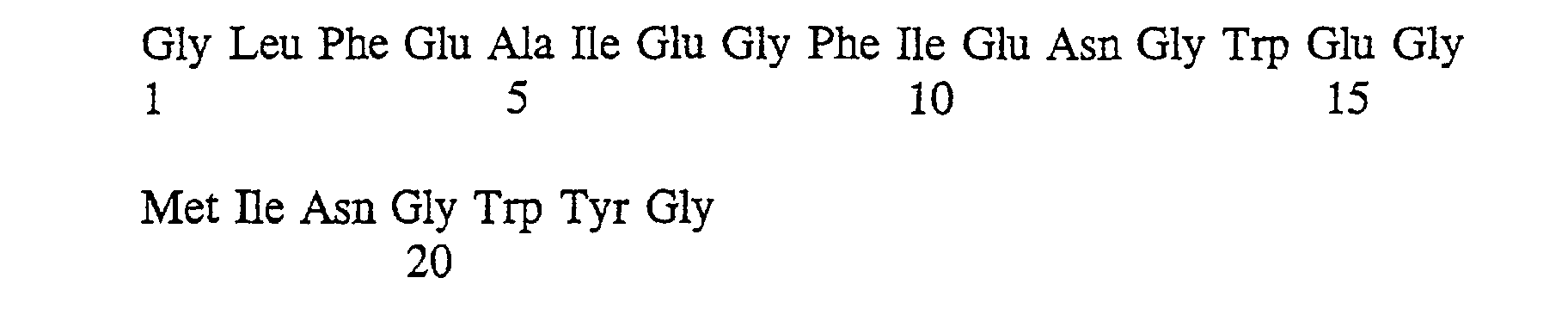
- a 22 mer peptide including 20 amino acids derived from the N-terminal sequence of the Influenza virus Hemagglutinin subunit HA-2, was synthesized by the Fmoc procedure using an Applied Biosystem 430A peptide synthesizer.
- the peptide had the following sequence (the first 20 amino acid residues are those of the Influenza virus Hemagglutinin protein with a substitution of glycine for glutamic acid at position 4):
- palmitic acid was covalently bound to the N-terminal of an aliquot of the synthesized peptide.
- EPC egg phosphatidylcholine
- the dry lipid was resuspended to 10% (w/v)) in H 2 O and homogenized, first in a high-shear mixer (Kinematica) and then in a high-pressure homogenizer (Rannie).
- the resulting solution contained small unilamellar vesicles (SUV), 30-50 nm in size as measured by particle analyzer (Counter Electronics).
- the free peptide or the peptide attached to palmitic acid was dissolved in 50 mM NaHCO 3 and mixed with the SUV suspension at a ratio of either 1 or 2.5% molar ratio of peptide to lipid.
- the mixture was shell-frozen to a thin layer in siliconized glass vials in a dry ice/ethanol bath and lyophilized.
- the dry lipids and peptide were hydrated in two stages. First, H 2 O was added to 30% of the final volume and the mixture was shaken until a homogeneous solution was obtained. The solution was then adjusted to 10% (w/v) lipid and 155 mM NaCl. Following hydration, a portion of the liposome solution was centrifuged at 15,000 x g for 10 min. at 4°C, and the supernatant containing free peptide was separated from the liposome pellet. The pelleted liposomes were then washed with 2 volumes of 155 mM NaCl and centrifuged as above.
- factor IX expression vector pCI-FIX EcoRI - BamHI fragment of the plasmid pLIXSNL-2 (Gerrard et al., Nature Genetic 3 :180-183 (1993) containing human factor IX cDNA inserted into the EcoRI and BamHI sites of the expression vector pCI (Promega, USA)
- 10 ng of nick translated factor IX expression vector labeled with ⁇ - 32 P dATP was then mixed with 0.56 ml of 5% SUV of EPC and 0.83 mg of peptide (1% molar ratio of peptide to lipid) dissolved in 50 mM NaHCO 3 .
- the final mixture was shell freezed and liposomes were prepared as described in Section 2. Following hydration, a portion of the liposome solution was centrifuged at 15,000 x g for 10 mins. at 4°C, and the supernatant containing free DNA was separated from the liposome pellet. The pelleted liposomes were then washed with 2 volumes of 155 mM NaCI and centrifuged as above. The DNA content in each fraction was determined using a ⁇ counter. Percentages of DNA associated with liposome were calculated by dividing 32 P counts in the washed liposome pellet by total 32 P counts in the initial liposome solution.
- the peptide content in each fraction was determined by dissolving 100 ⁇ l sample of fraction in 50 nM NaHCO 3 and 5.1% (v/v) reduced triton x-100 (Sigma), and measuring fluorescence of the peptide (excitation at 280 nm and emission at 340 nm) using a spectrofluorimeter machine (LS 50B, Parkin, Elmer, USA). Percentages of peptide associated with liposomes were calculated by dividing peptide fluorescention level in the washed liposome pellet by peptide fluorescention level in the initial liposome solution. The results are shown in Table II. It can be seen that 48% of the DNA was associated with liposomes which co-encapsulate peptide.
- the liposome formulations were prepared as described in Sections 2 and 3.
- the first formulation contains 1.5 mg of human factor IX expression vector and 120 mg of EPC.
- the second formulation contains 1.5 mg of factor IX expression vector, 120 mg of EPC and 3.5 mg of the peptide.
- the liposomes were injected i.v . into 8 weeks old male Balb/c mice (each formulation was injected into 3 mice). At 7 days post-injection the mice were sacrificed and DNA was purified from the livers of the mice. (The liver was the organ which adsorbed most of this kind of liposome following i.v. injection).
- Total DNA (50 ⁇ g) was extracted from the liver of liposome-injected mice and was used to transform competent E.coli (JM109) as described in Sambrook et al. (Molecular Cloning, A Laboratory Manual, 2nd ed., Cold Spring Harbor Laboratory Press, Cold Spring Harbor, N.Y. 1989). The transformed bacteria were plated on Luria-Bertani (medium) (LB) agar plates supplemented with 100 ⁇ g Ap/ml, grown overnight at 37°C and Ap R colonies were scored. Transformation efficiency and quantitation of plasmid DNA in the liver DNA was determined using a standard curve developed by transformation of competent bacteria with 500, 100 and 10 pg of factor IX expression vector mixed with 50 ⁇ g of liver DNA from untreated mice.
- the transformation efficiency was 5 x 10 5 colonies/ ⁇ g of purified plasmid DNA. Because only the injected factor IX expression vector could confer Ap resistance, the number of transformed Ap resistant (Ap R ) bacterial colonies was a direct indication of the plasmid DNA content within the total mouse liver DNA. As indicated in Table III, colonies of Ap R bacteria were found only in plates containing bacteria which had been transformed with DNA purified from livers of mice that had been injected with liposome-encapsulated factor IX expression plasmid.
- the first formulation contained 1.5 mg of human factor VIII expression vector pCI-FVIII [pCI vector (Promega) containing FVIII cDNA which encodes FVIII protein with a deletion of 695 amino acids of its B domain] and 150 mg of EPC.
- the second formulation contained 1.5 mg of the expression vector pCI-FVIII, 150 mg of EPC and 5.2 mg of a lysosome disrupting peptide which is derived from the Influenza virus hemagglutinin protein and which increased the transfection efficiency of a complex of DNA and polylysine into cells in vitro (Plank, C., et al., J. Biol. Chem. 269 : 12918-12924, 1994) and has the following amino acid sequence:
- the third formulation contained 1.5 mg of the factor VIII expression vector pCI-FVIII, 150 mg of EPC and 5.2 mg of a control peptide which contains the same amino acids as the peptide described above but in a scrambled order (hereinafter "scrambled peptide" ):
- the liposome formulations were injected i.v. into 6 week-old male Balb/c mice (each formulation was injected into 3 mice). As control, mice were injected with empty liposomes and a liposome-encapsulated pCI vector. At five days post-injection the mice were bled and plasma samples were prepared. Factor VIII activity in the mouse plasma was measured by a chromogenic assay (Baxter), and the level of human factor VIII in the mouse plasma was calculated as FVIII activity in the plasma of liposome-injected mice less the activity in the plasma of untreated mice.
Landscapes
- Health & Medical Sciences (AREA)
- Life Sciences & Earth Sciences (AREA)
- Chemical & Material Sciences (AREA)
- Medicinal Chemistry (AREA)
- Pharmacology & Pharmacy (AREA)
- Epidemiology (AREA)
- Animal Behavior & Ethology (AREA)
- General Health & Medical Sciences (AREA)
- Public Health (AREA)
- Veterinary Medicine (AREA)
- Engineering & Computer Science (AREA)
- Immunology (AREA)
- Proteomics, Peptides & Aminoacids (AREA)
- Bioinformatics & Cheminformatics (AREA)
- Gastroenterology & Hepatology (AREA)
- Molecular Biology (AREA)
- Hematology (AREA)
- Zoology (AREA)
- Biotechnology (AREA)
- Genetics & Genomics (AREA)
- Dispersion Chemistry (AREA)
- Medicinal Preparation (AREA)
- Medicines That Contain Protein Lipid Enzymes And Other Medicines (AREA)
- Micro-Organisms Or Cultivation Processes Thereof (AREA)
- Transition And Organic Metals Composition Catalysts For Addition Polymerization (AREA)
- Acyclic And Carbocyclic Compounds In Medicinal Compositions (AREA)
- Pyrane Compounds (AREA)
- Manufacturing Of Micro-Capsules (AREA)
- Preparation Of Compounds By Using Micro-Organisms (AREA)
- Peptides Or Proteins (AREA)
Abstract
Description
The peptide of the invention is such which changes its conformation under acidic conditions to conformation where it becomes active in disrupting membranes. Such a peptide typically undergoes a conformational change under acidic conditions to a conformation of an α-helix where it becomes membrane disruptive. A liposome is internalized into a cell by endocytosis, and eventually reaches the lysosome within the cell. Owing to the acidic conditions within the lysosome, the peptide becomes membrane disruptive and following disruption of the lysosome's membrane the DNA is released into the cytoplasm.

| Peptide type and concentration (molar ratio of peptide to lipid) | |
| 1% mole of | 100 |
| 2.5% mole of free peptide | 57 |
| 1% mole of palmitic acid-peptide | 75 |
| 2.5% mole of palmitic acid-peptide | 20 |
| Co-encapsulation of DNA and peptide in EPC liposomes | ||
| Type of liposome formulation | Percentage of liposome-associated DNA | Percentage of liposome-associated peptide |
| Liposomes and DNA | 48 | - |
| Liposomes, DNA and peptide | 42 | 63 |
| Bacterial transformation by total DNA purified from livers of mice injected with liposome-encapsulated plasmid DNA | |
| Injected formulation | pg plasmid DNA/ 50 µg liver DNA average ± SD (n=3) |
| liposomes + plasmid DNA | 53 ± 13 |
| liposomes + plasmid DNA + peptide | 117 ± 31 |
| | 0 |
| Human factor IX in mouse plasma | |
| Injected formulation | pg hFIX/ml mouse plasma average ± SD (n=2) |
| Factor IX expression vector encapsulated in liposomes | 45 ± 1.5 |
| Factor IX expression vector and membrane disrupting peptide encapsulated in liposomes | 97 ± 4.5 |
| | 0 |


| Factor VIII activity in | ||
| Injected formulation | Average factor VIII activity above base level (u/ml) (n=3) | ng human factor VIII/ml mouse plasma |
| | 0 | 0 |
| | 0 | 0 |
| Liposome-encapsulated | 0 | 0 |
| Liposome encapsulated factor VIII expression vector | 0.38 | 38-76 |
| Liposome encapsulated factor VIII expression vector and lysosome disrupting peptide | 1.08 | 108-216 |
| Liposome encapsulated factor VIII expression vector and control peptide | 0.36 | 36-72 |


Claims (10)
- A composition comprising:said peptide and the polynucleic acid molecule being encapsulated within the liposome.i) a polynucleic acid molecule;ii) a liposome; andiii) a peptide comprised of less than 50 amino acids which disrupts membranes under acidic conditions;
- A composition according to claim 1, wherein said peptide is derived from a viral protein.
- A composition according to Claim 2, wherein said peptide is derived from an influenza virus protein.
- A composition according to Claim 3, wherein said peptide comprises the following amino acid sequence:

- A composition according to" Claim 3, wherein said peptide comprises the following amino acid sequence:

- A composition according to claim 3, wherein said peptide comprises the following amino acid sequence:

- A method for introducing nucleic acid molecules to cells ex vivo comprising:(a) encapsulating a nucleic acid molecule with a liposome together with a peptide capable of disrupting membranes under acidic conditions, said peptide being comprised of less than 50 amino acids; and(b) delivering said liposomes to the cells.
- A method according to claim 7, comprising delivery to the cells of a composition according to any one of claims 1-6.
- Use of a composition according to any of the claims 1-6 for the preparation of a medicament for the delivery of nucleic acid molecules to cells in vivo.
- The use according to claim 9, wherein said cells are liver cells.
Applications Claiming Priority (3)
| Application Number | Priority Date | Filing Date | Title |
|---|---|---|---|
| IL11519995A IL115199A (en) | 1995-09-07 | 1995-09-07 | Composition comprising a polynucleic acid molecule in a liposome and method using said composition |
| IL11519995 | 1995-09-07 | ||
| PCT/IL1996/000101 WO1997010851A2 (en) | 1995-09-07 | 1996-09-05 | Nucleic acid delivery vehicle |
Publications (2)
| Publication Number | Publication Date |
|---|---|
| EP0879062A2 EP0879062A2 (en) | 1998-11-25 |
| EP0879062B1 true EP0879062B1 (en) | 2002-06-19 |
Family
ID=11067956
Family Applications (1)
| Application Number | Title | Priority Date | Filing Date |
|---|---|---|---|
| EP96929504A Expired - Lifetime EP0879062B1 (en) | 1995-09-07 | 1996-09-05 | Nucleic acid delivery vehicle |
Country Status (8)
| Country | Link |
|---|---|
| US (1) | US6207456B1 (en) |
| EP (1) | EP0879062B1 (en) |
| JP (1) | JPH11514349A (en) |
| AT (1) | ATE219380T1 (en) |
| CA (1) | CA2231172A1 (en) |
| DE (1) | DE69621953T2 (en) |
| IL (1) | IL115199A (en) |
| WO (1) | WO1997010851A2 (en) |
Families Citing this family (39)
| Publication number | Priority date | Publication date | Assignee | Title |
|---|---|---|---|---|
| US6890555B1 (en) * | 1992-02-05 | 2005-05-10 | Qlt, Inc. | Liposome compositions of porphyrin photosensitizers |
| DE19605548A1 (en) * | 1996-02-15 | 1997-09-04 | Boehringer Ingelheim Int | Composition for transfection of higher eukaryotic cells |
| FR2751222B1 (en) | 1996-07-16 | 1998-10-09 | Capsulis | COMPOSITIONS CONTAINING AT LEAST ONE NUCLEIC ACID AND THEIR APPLICATIONS IN THE BIOMEDICAL FIELD, PARTICULARLY IN GENE THERAPY |
| DE19740092A1 (en) * | 1997-09-12 | 1999-03-18 | Ulrich Dr Med Hengge | New liposome comprises lipid envelope based on natural or synthetic skin |
| WO1999042091A2 (en) * | 1998-02-19 | 1999-08-26 | Massachusetts Institute Of Technology | Use of polycations as endosomolytic agents |
| US7276359B1 (en) * | 1998-03-13 | 2007-10-02 | Wyeth | Polynucleotide composition, method of preparation, and use thereof |
| IL126681A0 (en) * | 1998-10-21 | 1999-08-17 | Opperbas Holding Bv | Treatment of trauma-related conditions |
| US20040086558A1 (en) * | 2001-02-22 | 2004-05-06 | Moshe Baru | Liposome mediated dna administration |
| ATE414099T1 (en) | 2001-07-13 | 2008-11-15 | Cms Peptides Patent Holding Co | BIOLOGICALLY ACTIVE PEPTIDES |
| CN1216072C (en) * | 2001-07-13 | 2005-08-24 | 一泰医药研究(深圳)有限公司 | Sequence number5 bioactive peptide |
| MXPA05003771A (en) * | 2002-10-09 | 2005-06-08 | Pfizer Prod Inc | Stabilized naked dna compositions. |
| EP1606313A2 (en) * | 2003-03-19 | 2005-12-21 | Isogenis, Inc. | Specific inhibition of allograft rejection |
| TWI353252B (en) | 2004-04-28 | 2011-12-01 | Cms Peptides Patent Holding Company Ltd | Biologically active peptide vapeehptllteaplnpk der |
| JP2008507282A (en) * | 2004-07-20 | 2008-03-13 | アイソジェニス・インコーポレイテッド | Specific inhibition of diseases related to autoimmunity and self-antigen |
| NZ591827A (en) | 2005-07-26 | 2012-10-26 | Cms Peptides Patent Holding Company Ltd | Biologically active peptides comprising PTTKTYFPHF and their uses in the manufacture of a medicament for modulating immune reaction in a radiotherapy-induced immuno-compromised subject |
| US20080184618A1 (en) * | 2005-08-03 | 2008-08-07 | Amcol International | Virus-Interacting Layered Phyllosilicates and Methods of Use |
| US20070031512A1 (en) * | 2005-08-03 | 2007-02-08 | Amcol International Corporation | Virus-interacting layered phyllosilicates and methods of inactivating viruses |
| US20100272769A1 (en) * | 2005-08-03 | 2010-10-28 | Amcol International | Virus-, Bacteria-, and Fungi-Interacting Layered Phyllosilicates and Methods of Use |
| WO2007051303A1 (en) | 2005-11-02 | 2007-05-10 | Protiva Biotherapeutics, Inc. | MODIFIED siRNA MOLECULES AND USES THEREOF |
| US8158152B2 (en) * | 2005-11-18 | 2012-04-17 | Scidose Llc | Lyophilization process and products obtained thereby |
| US20090317455A1 (en) * | 2006-08-31 | 2009-12-24 | Naoto Oku | Reverse targeting lipid vesicle |
| KR101333279B1 (en) * | 2006-10-06 | 2013-11-27 | 에스씨아이엘 테크놀로지 게엠베하 | Dried reconstituted vesicle formation for pharmaceutical application |
| PL2167069T3 (en) * | 2007-05-23 | 2012-04-30 | Amcol International Corp | Cholesterol-interacting layered phyllosilicates and methods of reducing hypercholesteremia in a mammal |
| JP5697988B2 (en) | 2007-12-27 | 2015-04-08 | プロチバ バイオセラピューティクス インコーポレイティッド | Method for silencing polo-like kinase expression using interfering RNA |
| AU2009236219B8 (en) | 2008-04-15 | 2015-06-25 | Arbutus Biopharma Corporation | Silencing of CSN5 gene expression using interfering RNA |
| WO2010033722A2 (en) | 2008-09-17 | 2010-03-25 | Isogenis, Inc. | Construction of fully-deleted adenovirus-based gene delivery vectors and uses thereof |
| AU2011268146A1 (en) | 2010-06-17 | 2013-01-10 | Actogenix Nv | Compositions and methods for treating inflammatory conditions |
| WO2012106490A1 (en) | 2011-02-03 | 2012-08-09 | The Government Of The U.S.A., As Represented By The Secretary, Department Of Health & Human Services | Multivalent vaccines for rabies virus and filoviruses |
| US20150240238A1 (en) | 2011-11-17 | 2015-08-27 | The Regents Of The University Of California | Therapeutic rna switches compositions and methods of use |
| US9035039B2 (en) | 2011-12-22 | 2015-05-19 | Protiva Biotherapeutics, Inc. | Compositions and methods for silencing SMAD4 |
| PT2897620T (en) | 2012-09-21 | 2020-09-03 | Intensity Therapeutics Inc | CANCER TREATMENT METHOD |
| KR20170075742A (en) | 2014-10-02 | 2017-07-03 | 프로티바 바이오쎄라퓨틱스, 인코포레이티드 | Compositions and methods for silencing hepatitis b virus gene expression |
| DE212016000074U1 (en) | 2015-04-09 | 2018-01-02 | Bikanta Corp. | Imaging systems with fluorescent nanodiamonds |
| US20180245074A1 (en) | 2015-06-04 | 2018-08-30 | Protiva Biotherapeutics, Inc. | Treating hepatitis b virus infection using crispr |
| HK1248278A1 (en) | 2015-07-29 | 2018-10-12 | Arbutus Biopharma Corporation | Compositions and methods for silencing hepatitis b virus gene expression |
| US12447166B2 (en) | 2016-02-25 | 2025-10-21 | Applied Biological Laboratories, Inc. | Compositions and methods for protecting against airborne pathogens and irritants |
| CA3014764A1 (en) | 2016-02-25 | 2017-08-31 | Applied Biological Laboratories, Inc. | Compositions and methods for protecting against airborne pathogens and irritants |
| US11041170B2 (en) | 2016-04-04 | 2021-06-22 | Thomas Jefferson University | Multivalent vaccines for rabies virus and coronaviruses |
| MA45999A (en) | 2016-08-22 | 2019-06-26 | Arbutus Biopharma Corp | ANTI-PD-1 ANTIBODIES, OR THEIR FRAGMENTS, FOR THE TREATMENT OF HEPATITIS B |
Family Cites Families (5)
| Publication number | Priority date | Publication date | Assignee | Title |
|---|---|---|---|---|
| US5283122A (en) | 1984-04-19 | 1994-02-01 | University Of Tennessee Research Corporation | Fused liposome and acid induced method for liposome fusion |
| US4789633A (en) * | 1984-04-19 | 1988-12-06 | University Of Tennessee Research Corporation | Fused liposome and acid induced method for liposome fusion |
| EP0452457B1 (en) | 1989-11-03 | 1997-08-20 | Vanderbilt University | Method of in vivo delivery of functioning foreign genes |
| NZ244306A (en) * | 1991-09-30 | 1995-07-26 | Boehringer Ingelheim Int | Composition for introducing nucleic acid complexes into eucaryotic cells, complex containing nucleic acid and endosomolytic agent, peptide with endosomolytic domain and nucleic acid binding domain and preparation |
| US5928944A (en) | 1994-02-04 | 1999-07-27 | The United States Of America As Represented By The Department Of Health And Human Services | Method of adenoviral-medicated cell transfection |
-
1995
- 1995-09-07 IL IL11519995A patent/IL115199A/en not_active IP Right Cessation
-
1996
- 1996-09-05 AT AT96929504T patent/ATE219380T1/en active
- 1996-09-05 CA CA002231172A patent/CA2231172A1/en not_active Abandoned
- 1996-09-05 WO PCT/IL1996/000101 patent/WO1997010851A2/en not_active Ceased
- 1996-09-05 DE DE69621953T patent/DE69621953T2/en not_active Expired - Lifetime
- 1996-09-05 EP EP96929504A patent/EP0879062B1/en not_active Expired - Lifetime
- 1996-09-05 US US09/029,376 patent/US6207456B1/en not_active Expired - Fee Related
- 1996-09-05 JP JP9512542A patent/JPH11514349A/en active Pending
Also Published As
| Publication number | Publication date |
|---|---|
| ATE219380T1 (en) | 2002-07-15 |
| IL115199A0 (en) | 1995-12-31 |
| CA2231172A1 (en) | 1997-03-27 |
| AU703271B2 (en) | 1999-03-25 |
| EP0879062A2 (en) | 1998-11-25 |
| US6207456B1 (en) | 2001-03-27 |
| WO1997010851A2 (en) | 1997-03-27 |
| AU6888496A (en) | 1997-04-09 |
| WO1997010851A3 (en) | 1997-06-05 |
| DE69621953T2 (en) | 2003-01-30 |
| IL115199A (en) | 2005-05-17 |
| DE69621953D1 (en) | 2002-07-25 |
| JPH11514349A (en) | 1999-12-07 |
Similar Documents
| Publication | Publication Date | Title |
|---|---|---|
| US6207456B1 (en) | Nucleic acid delivery vehicle | |
| TWI433693B (en) | Lipophilic drug delivery vehicle and methods of use thereof | |
| Baru et al. | Liposome-encapsulated DNA-mediated gene transfer and synthesis of human factor IX in mice | |
| JP2006517972A5 (en) | ||
| JP2010248255A6 (en) | Lipophilic drug delivery vehicle and methods of use thereof | |
| JP2010248255A (en) | Lipophilic drug delivery vehicle and methods of use thereof | |
| EP1668358B1 (en) | Reconstitution medium for protein and peptide formulations | |
| CZ290029B6 (en) | Phospholipid-protein preparation | |
| AU703271C (en) | Nucleic acid delivery vehicle | |
| EP0713387B1 (en) | A method for preparation of vesicles loaded with biological structures, biopolymers and/or oligomers | |
| US20070003480A1 (en) | Liposomal composition comprising haptotactic peptides | |
| EP1361862B1 (en) | Liposome-mediated dna administration | |
| HK1156863A (en) | Lipophilic drug delivery vehicle and methods of us thereof |
Legal Events
| Date | Code | Title | Description |
|---|---|---|---|
| PUAI | Public reference made under article 153(3) epc to a published international application that has entered the european phase |
Free format text: ORIGINAL CODE: 0009012 |
|
| 17P | Request for examination filed |
Effective date: 19980305 |
|
| AK | Designated contracting states |
Kind code of ref document: A2 Designated state(s): AT BE CH DE DK ES FI FR GB GR IE IT LI LU MC NL PT SE |
|
| 17Q | First examination report despatched |
Effective date: 20000921 |
|
| GRAG | Despatch of communication of intention to grant |
Free format text: ORIGINAL CODE: EPIDOS AGRA |
|
| GRAG | Despatch of communication of intention to grant |
Free format text: ORIGINAL CODE: EPIDOS AGRA |
|
| GRAH | Despatch of communication of intention to grant a patent |
Free format text: ORIGINAL CODE: EPIDOS IGRA |
|
| GRAH | Despatch of communication of intention to grant a patent |
Free format text: ORIGINAL CODE: EPIDOS IGRA |
|
| GRAA | (expected) grant |
Free format text: ORIGINAL CODE: 0009210 |
|
| AK | Designated contracting states |
Kind code of ref document: B1 Designated state(s): AT BE CH DE DK ES FI FR GB GR IE IT LI LU MC NL PT SE |
|
| PG25 | Lapsed in a contracting state [announced via postgrant information from national office to epo] |
Ref country code: NL Free format text: LAPSE BECAUSE OF FAILURE TO SUBMIT A TRANSLATION OF THE DESCRIPTION OR TO PAY THE FEE WITHIN THE PRESCRIBED TIME-LIMIT Effective date: 20020619 Ref country code: LI Free format text: LAPSE BECAUSE OF FAILURE TO SUBMIT A TRANSLATION OF THE DESCRIPTION OR TO PAY THE FEE WITHIN THE PRESCRIBED TIME-LIMIT Effective date: 20020619 Ref country code: IT Free format text: LAPSE BECAUSE OF FAILURE TO SUBMIT A TRANSLATION OF THE DESCRIPTION OR TO PAY THE FEE WITHIN THE PRESCRIBED TIME-LIMIT;WARNING: LAPSES OF ITALIAN PATENTS WITH EFFECTIVE DATE BEFORE 2007 MAY HAVE OCCURRED AT ANY TIME BEFORE 2007. THE CORRECT EFFECTIVE DATE MAY BE DIFFERENT FROM THE ONE RECORDED. Effective date: 20020619 Ref country code: GR Free format text: LAPSE BECAUSE OF FAILURE TO SUBMIT A TRANSLATION OF THE DESCRIPTION OR TO PAY THE FEE WITHIN THE PRESCRIBED TIME-LIMIT Effective date: 20020619 Ref country code: FI Free format text: LAPSE BECAUSE OF FAILURE TO SUBMIT A TRANSLATION OF THE DESCRIPTION OR TO PAY THE FEE WITHIN THE PRESCRIBED TIME-LIMIT Effective date: 20020619 Ref country code: CH Free format text: LAPSE BECAUSE OF FAILURE TO SUBMIT A TRANSLATION OF THE DESCRIPTION OR TO PAY THE FEE WITHIN THE PRESCRIBED TIME-LIMIT Effective date: 20020619 Ref country code: BE Free format text: LAPSE BECAUSE OF FAILURE TO SUBMIT A TRANSLATION OF THE DESCRIPTION OR TO PAY THE FEE WITHIN THE PRESCRIBED TIME-LIMIT Effective date: 20020619 Ref country code: AT Free format text: LAPSE BECAUSE OF FAILURE TO SUBMIT A TRANSLATION OF THE DESCRIPTION OR TO PAY THE FEE WITHIN THE PRESCRIBED TIME-LIMIT Effective date: 20020619 |
|
| REF | Corresponds to: |
Ref document number: 219380 Country of ref document: AT Date of ref document: 20020715 Kind code of ref document: T |
|
| REG | Reference to a national code |
Ref country code: GB Ref legal event code: FG4D |
|
| REG | Reference to a national code |
Ref country code: CH Ref legal event code: EP |
|
| REG | Reference to a national code |
Ref country code: IE Ref legal event code: FG4D |
|
| REF | Corresponds to: |
Ref document number: 69621953 Country of ref document: DE Date of ref document: 20020725 |
|
| PG25 | Lapsed in a contracting state [announced via postgrant information from national office to epo] |
Ref country code: LU Free format text: LAPSE BECAUSE OF NON-PAYMENT OF DUE FEES Effective date: 20020905 Ref country code: IE Free format text: LAPSE BECAUSE OF NON-PAYMENT OF DUE FEES Effective date: 20020905 |
|
| PG25 | Lapsed in a contracting state [announced via postgrant information from national office to epo] |
Ref country code: SE Free format text: LAPSE BECAUSE OF FAILURE TO SUBMIT A TRANSLATION OF THE DESCRIPTION OR TO PAY THE FEE WITHIN THE PRESCRIBED TIME-LIMIT Effective date: 20020919 Ref country code: DK Free format text: LAPSE BECAUSE OF FAILURE TO SUBMIT A TRANSLATION OF THE DESCRIPTION OR TO PAY THE FEE WITHIN THE PRESCRIBED TIME-LIMIT Effective date: 20020919 |
|
| PG25 | Lapsed in a contracting state [announced via postgrant information from national office to epo] |
Ref country code: PT Free format text: LAPSE BECAUSE OF FAILURE TO SUBMIT A TRANSLATION OF THE DESCRIPTION OR TO PAY THE FEE WITHIN THE PRESCRIBED TIME-LIMIT Effective date: 20020923 |
|
| ET | Fr: translation filed | ||
| NLV1 | Nl: lapsed or annulled due to failure to fulfill the requirements of art. 29p and 29m of the patents act | ||
| PG25 | Lapsed in a contracting state [announced via postgrant information from national office to epo] |
Ref country code: ES Free format text: LAPSE BECAUSE OF FAILURE TO SUBMIT A TRANSLATION OF THE DESCRIPTION OR TO PAY THE FEE WITHIN THE PRESCRIBED TIME-LIMIT Effective date: 20021220 |
|
| REG | Reference to a national code |
Ref country code: CH Ref legal event code: PL |
|
| PG25 | Lapsed in a contracting state [announced via postgrant information from national office to epo] |
Ref country code: MC Free format text: LAPSE BECAUSE OF NON-PAYMENT OF DUE FEES Effective date: 20030401 |
|
| PLBE | No opposition filed within time limit |
Free format text: ORIGINAL CODE: 0009261 |
|
| STAA | Information on the status of an ep patent application or granted ep patent |
Free format text: STATUS: NO OPPOSITION FILED WITHIN TIME LIMIT |
|
| 26N | No opposition filed |
Effective date: 20030320 |
|
| REG | Reference to a national code |
Ref country code: IE Ref legal event code: MM4A |
|
| PGFP | Annual fee paid to national office [announced via postgrant information from national office to epo] |
Ref country code: GB Payment date: 20090902 Year of fee payment: 14 |
|
| PGFP | Annual fee paid to national office [announced via postgrant information from national office to epo] |
Ref country code: DE Payment date: 20090903 Year of fee payment: 14 |
|
| PGFP | Annual fee paid to national office [announced via postgrant information from national office to epo] |
Ref country code: FR Payment date: 20091012 Year of fee payment: 14 |
|
| GBPC | Gb: european patent ceased through non-payment of renewal fee |
Effective date: 20100905 |
|
| REG | Reference to a national code |
Ref country code: FR Ref legal event code: ST Effective date: 20110531 |
|
| REG | Reference to a national code |
Ref country code: DE Ref legal event code: R119 Ref document number: 69621953 Country of ref document: DE Effective date: 20110401 |
|
| PG25 | Lapsed in a contracting state [announced via postgrant information from national office to epo] |
Ref country code: FR Free format text: LAPSE BECAUSE OF NON-PAYMENT OF DUE FEES Effective date: 20100930 Ref country code: DE Free format text: LAPSE BECAUSE OF NON-PAYMENT OF DUE FEES Effective date: 20110401 |
|
| PG25 | Lapsed in a contracting state [announced via postgrant information from national office to epo] |
Ref country code: GB Free format text: LAPSE BECAUSE OF NON-PAYMENT OF DUE FEES Effective date: 20100905 |