EP0878085B1 - Database access - Google Patents
Database access Download PDFInfo
- Publication number
- EP0878085B1 EP0878085B1 EP97901199A EP97901199A EP0878085B1 EP 0878085 B1 EP0878085 B1 EP 0878085B1 EP 97901199 A EP97901199 A EP 97901199A EP 97901199 A EP97901199 A EP 97901199A EP 0878085 B1 EP0878085 B1 EP 0878085B1
- Authority
- EP
- European Patent Office
- Prior art keywords
- representations
- vocabulary
- representation
- combination
- distinguishable
- Prior art date
- Legal status (The legal status is an assumption and is not a legal conclusion. Google has not performed a legal analysis and makes no representation as to the accuracy of the status listed.)
- Expired - Lifetime
Links
Images
Classifications
-
- H—ELECTRICITY
- H04—ELECTRIC COMMUNICATION TECHNIQUE
- H04M—TELEPHONIC COMMUNICATION
- H04M3/00—Automatic or semi-automatic exchanges
- H04M3/42—Systems providing special services or facilities to subscribers
- H04M3/487—Arrangements for providing information services, e.g. recorded voice services or time announcements
- H04M3/493—Interactive information services, e.g. directory enquiries ; Arrangements therefor, e.g. interactive voice response [IVR] systems or voice portals
-
- H—ELECTRICITY
- H04—ELECTRIC COMMUNICATION TECHNIQUE
- H04M—TELEPHONIC COMMUNICATION
- H04M3/00—Automatic or semi-automatic exchanges
- H04M3/42—Systems providing special services or facilities to subscribers
- H04M3/487—Arrangements for providing information services, e.g. recorded voice services or time announcements
- H04M3/493—Interactive information services, e.g. directory enquiries ; Arrangements therefor, e.g. interactive voice response [IVR] systems or voice portals
- H04M3/4931—Directory assistance systems
-
- G—PHYSICS
- G10—MUSICAL INSTRUMENTS; ACOUSTICS
- G10L—SPEECH ANALYSIS TECHNIQUES OR SPEECH SYNTHESIS; SPEECH RECOGNITION; SPEECH OR VOICE PROCESSING TECHNIQUES; SPEECH OR AUDIO CODING OR DECODING
- G10L15/00—Speech recognition
- G10L15/22—Procedures used during a speech recognition process, e.g. man-machine dialogue
- G10L2015/226—Procedures used during a speech recognition process, e.g. man-machine dialogue using non-speech characteristics
- G10L2015/228—Procedures used during a speech recognition process, e.g. man-machine dialogue using non-speech characteristics of application context
-
- H—ELECTRICITY
- H04—ELECTRIC COMMUNICATION TECHNIQUE
- H04M—TELEPHONIC COMMUNICATION
- H04M2201/00—Electronic components, circuits, software, systems or apparatus used in telephone systems
- H04M2201/40—Electronic components, circuits, software, systems or apparatus used in telephone systems using speech recognition
-
- Y—GENERAL TAGGING OF NEW TECHNOLOGICAL DEVELOPMENTS; GENERAL TAGGING OF CROSS-SECTIONAL TECHNOLOGIES SPANNING OVER SEVERAL SECTIONS OF THE IPC; TECHNICAL SUBJECTS COVERED BY FORMER USPC CROSS-REFERENCE ART COLLECTIONS [XRACs] AND DIGESTS
- Y10—TECHNICAL SUBJECTS COVERED BY FORMER USPC
- Y10S—TECHNICAL SUBJECTS COVERED BY FORMER USPC CROSS-REFERENCE ART COLLECTIONS [XRACs] AND DIGESTS
- Y10S707/00—Data processing: database and file management or data structures
- Y10S707/99931—Database or file accessing
-
- Y—GENERAL TAGGING OF NEW TECHNOLOGICAL DEVELOPMENTS; GENERAL TAGGING OF CROSS-SECTIONAL TECHNOLOGIES SPANNING OVER SEVERAL SECTIONS OF THE IPC; TECHNICAL SUBJECTS COVERED BY FORMER USPC CROSS-REFERENCE ART COLLECTIONS [XRACs] AND DIGESTS
- Y10—TECHNICAL SUBJECTS COVERED BY FORMER USPC
- Y10S—TECHNICAL SUBJECTS COVERED BY FORMER USPC CROSS-REFERENCE ART COLLECTIONS [XRACs] AND DIGESTS
- Y10S707/00—Data processing: database and file management or data structures
- Y10S707/99931—Database or file accessing
- Y10S707/99933—Query processing, i.e. searching
- Y10S707/99936—Pattern matching access
Definitions
- the present invention relates to a database access particularly, though not exclusively, employing speech recognition input and synthesised speech output.
- European patent application publication no. 433964 relates to a system which uses a text input. First of all an input word representing the surname is matched with the entries. If a match is found that is "comparable" but not exactly the same as the input, the initial characters of the input and the database entry are compared. If these match, a record of the data entry is made. The system then compares the required titles and the personal names required. The most likely entry is provided to the user.
- US patent no. 5204894 relates to a personal electronic directory in which the names of the entries are stored in the user's voice and associated numbers are input using either a multitone (DTMF) telephone keypad or a spoken input.
- DTMF multitone
- the directory system compares the first word of the input with the stored words and provides all possibilities in sequence to the user until the user confirms one.
- the systems provide to the user identified entries in a database in a sequential manner until a user confirms the data entry as being that required.
- a database access apparatus comprising:
- the included word output by the announcement means may be in any suitable form e.g. the included word may represent a whole word, a spelt word or alphanumerics.
- the invention provides a method of accessing a database system, said database system comprising a database containing entries each comprising a plurality of fields which contain machine representations of items of information pertaining to the entry, the said representations forming a first vocabulary; announcement means responsive to machine representations falling within a second vocabulary of such representations to generate audio signals representing spoken announcements; and input means operable to receive signals and to produce machine representations falling within a third vocabulary of such representations; the method of accessing the database system being characterised by comprising:
- a voice interactive apparatus will be described, which generates questions to a user and recognises the user's responses in order to access the contents of the database.
- a database of names, addresses and telephone numbers, as might be used for an automated telephone directory enquiry system, will be used as an example. Firstly, however, some basic concepts will be discussed which will be of value in understanding the operation of the apparatus.
- the database will be supposed to contain a number of entries, with each entry containing a number of fields each containing an item of information about the entry; for example the forename, surname, location and telephone number of the person to whom the entry refers.
- a complete entry is thus a tuple as also is a smaller set of fields extracted from one entry; thus a set of forename/surname pairs taken from the example database forms a set of extracted duples.
- the items of information stored in the database fields may be in any convenient representation; generally this description will assume the use of a text representation such as, for the surname Jonson, character codes corresponding to the letters of the name, but with a stylised representation for some fields; for example one might, for geographical locations, identify several distinct places having the same name with different representations - e.g. Southend1, Southend2 and Southend3 for three place in England called Southend.
- a text representation such as, for the surname Jonson, character codes corresponding to the letters of the name, but with a stylised representation for some fields; for example one might, for geographical locations, identify several distinct places having the same name with different representations - e.g. Southend1, Southend2 and Southend3 for three place in England called Southend.
- the words used in the dialogue between the apparatus and the user to represent field contents are conceptually distinct from the database representations and represent for each field a spoken vocabulary. If the database representations are text then there will be some overlap between them and the spoken vocabulary, but even then it may be desired to take account of the fact that the user might use, to describe an item of information, a different word from that actually contained in the database field; that is, some words may be regarded as synonyms.
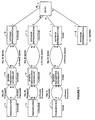
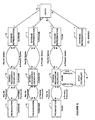
- Figure 1 is an "Entity Relationship Diagram", where we see a need for translation between representations as one moves from left to right or right to left.
- Box A represents a set of database entries.
- Box B represents a set of unique surnames, which have a 1:many relationship with the entries -i.e. one surname may appear in many entries but one entry will contain only one surname.
- Boxes C, D and E correspond to sets of representations of forenames, towns and telephone numbers, where similar comments apply.
- Box F represents the spoken vocabulary corresponding to forenames i.e. the set of all words that are permitted by the apparatus to be used to describe this field.
- Box G represents the spoken vocabulary corresponding to town names.
- Ipswich is a town in the county of Suffolk, England. Nearby is a small district called Kesgrave. A person living in Kesgrave might have his address recorded in the database either as Ipswich or as Kesgrave. Similarly an enquirer seeking the telephone number of such a person might give either name as the location.
- Ipswich and Kesgrave may be regarded as synonymous for the purposes of database retrieval. Note however that this geographical aliasing is complex: Ipswich may be regarded as synonymous with another local village such as Foxhall, but Kesgrave and Foxhall are not synonymous because they are different places.
- Box H represents, for completeness, a spoken vocabulary for surnames, though there is probably little scope for synonyms for this field.
- Box J represents a pronunciation vocabulary for surnames, to take account of homophones and homonyms.
- the surname Smith is generally pronounced with a short "i” as in the English word “pith”, whilst the name Smythe is pronounced with a long "i” as in “lithe”.
- Smyth may be pronounced either way.
- Other instances of varying pronunciation may arise, for example due to variations in regional accents. Again, “primary” and “may be” links are shown, for reasons to be explained later.
- Boxes K and L represent pronunciation vocabularies for forenames and geographical names respectively.
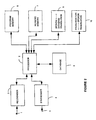
- FIG. 2 is a block diagram of an apparatus for conducting a dialogue.
- An audio signal input 1 is connected to a speech recogniser 2, whilst an audio signal output 3 is connected to a speech synthesiser 4.
- a control unit in the form of a stored-program controlled processor 5 controls the operation of the recogniser and synthesiser and also has access to a program memory 6, a working memory (RAM) 7, a database 8, a spoken vocabulary translation table 9 and a pronunciation table 10.
- the audio inputs and outputs are connected for two-way communication - perhaps via a telephone line - with a user.
- the database 8 is assumed to contain telephone directory entries, as discussed above, in text form.
- the spoken vocabulary translation table 9 is a store containing word pairs consisting of a directory representation and a spoken vocabulary representation, e.g., for the Ipswich example, Database Spoken representation representation IPSWICH IPSWICH IPSWICH KESGRAVE IPSWICH FOXHALL KESGRAVE KESGRAVE KESGRAVE IPSWICH FOXHALL FOXHALL IPSWICH
- the translation table 9 has a separate area for each type of field and may be accessed by the processor 5 to determine the database representation(s) corresponding to a given vocabulary word and vice versa. If desired (or if the database representations are not in text form) all items may be translated.
- the pronunciation table 10 is a store containing a look-up table (and, if desired, a set of rules to reduce the number of entries in the look-up table) so that the processor 5 may access it (for synthesis purposes or for identifying homophones) to obtain, for a given spoken vocabulary word, a phonetic representation of one or more ways of pronouncing it, and, conversely (for recognition purposes), to obtain, for a given phonetic representation, one or more spoken vocabulary words which correspond to that pronunciation.
- a separate area for each type of field may be desirable.
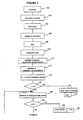
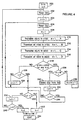
- the operation of the apparatus is illustrated in the flow-chart of Figure 3 - which is implemented as a program stored in the memory 6.
- the first steps involve the generation, using the synthesiser, of questions to the user, and recognition of the user's responses.
- the processor 5 sends to the synthesiser 4 commands instructing it to play announcements requesting the user to speak, respectively the surname, forename and town of the person whose telephone number he seeks.
- the processor sends to the recogniser 2 commands instructing it to recognise the user's responses by reference to phonetic vocabularies corresponding to those fields.
- the recogniser may access the translation table 9,10 to determine the vocabularies to be used for each recognition step, or may internally store or generate its own vocabularies; in the latter case the vocabularies used must correspond to those determined by the table 9,10 (and, if appropriate, the database) so that it can output only words included in the phonetic vocabulary.
- the recogniser is arranged so that it will produce as output, for each recognition step, as many phonetic representations as meet a predetermined criterion of similarity to the word actually spoken by the user. (The recogniser could of course perform a translation to spoken vocabulary representations, and many recognisers are capable of doing so).
- the recogniser may indicate that the word actually spoken by the user is too dissimilar to any of the phonetic representations in Table 10 and indicate this to the processor 5.
- the recogniser also produces a "score" or confidence measure for each representation indicating the relative probability or likelihood of correspondence to the word actually spoken.
- steps will be described which involve the matching of a number of scored tuples against database entries. From these matching entries a scored set of unique (or distinguishable) tuples are derived which correspond to a different set of (possibly overlapping) fields to the tuples used for the match.
- step 110 the processor 5 has available to it, for each of the three fields, one or more phonetic representations deemed to have been recognised. What is required now is a translation to spoken vocabulary representations - i.e. the translation illustrated to the left of Figure 1.
- the processor accesses the table 10 to determine, for each word, one or more corresponding spoken vocabulary representations, so that it now has three sets of spoken vocabulary representations, one for each field.
- the score for each spoken vocabulary representation is the score for the phonetic representation from which it was translated. If two phonetic representations translate to the same vocabulary representation, the more confident of the two scores may be taken. This is a specific example of the generalised matching process described above where the matching set of singles are pronunciations and the derived set of singles are spoken vocabulary items.
- step 114 the processor 5 now performs a translation to database representations - i.e. the translation illustrated in the centre of Figure 1 - using the table 9 to determine, for each spoken representation, one or more corresponding database representations, so that it now has three sets of database representations. Scores may be propagated as for the earlier translation.
- the database representations represent a number of triples (the actual number being the product of the number of representations in each of the three sets).
- the score for a triple is typically the product of the scores of the individual representations of which it is composed.
- the processor generates a list of these triples and passes it to the database which returns a count K of the number of database entries corresponding to these triples.
- step 118 the processor in step 120 sends a command to the synthesiser to play an announcement to the effect that no entry has been found, and terminates the program (step 122). Alternatively other action may be taken such as transferring the user to a manual operator.
- step 124 the full entry tuples which matched at step 116 are retrieved in turn from the database to determine whether there are three or fewer distinguishable entries.
- the tuples are retrieved in order of likelihood, most likely first. It is possible that more than one tuple may share the same score. In this case an arbitrary ranking may be selected between them or a priori knowledge may be used to determine the ranking.
- an assessment is made as to whether they represent three or fewer distinguishable entries. The meaning of "distinguishable" and the method of its determination will be explained presently. Once a count of four is reached the test is terminated.
- step 126) the processor retrieves these entries from the database and forwards them to the synthesiser 4 which reads them to the user in confidence order, highest first, using the tables 9, 10 for translation from database representation to primary phonetic representation.
- the process enters an iterative confirmation phase in which an attempt is made to identify lists of extracted tuples which contain three or fewer distinguishable tuples, and to offer the tuples in turn to the user for confirmation.
- the tuples are the duple corresponding to the name (i.e. forename + surname), and the single corresponding to the town. Note that, although the case in this example, it is not in principle necessary that the constituent words of these tuples correspond to fields for which the user has already been asked.
- step 130 a check is made as to whether the name duples have already been offered for confirmation; on the first pass the answer will always be "no", and at step 132 a list of extracted name duples is prepared from the list of triples.
- the name duples from the list are examined in similar fashion to that of the triples in step 124 to determine whether there are three or fewer distinguishable duples. (If desired the number of non-identical database representation duples in the list may be counted, and if this exceeds a predetermined limit, e.g. 30 the detailed examination process may be skipped (to step 144)).
- each of the scored duples are translated into a single primary phonetic representation and fed to the synthesiser in confidence order in step 136 so that the synthesiser speaks the question (e.g.) "is the name John Smith? please answer yes or no” one at a time with the recogniser forwarding the reply to the processor (138) for testing for "yes” or "no". If the user replies "yes”, then, in step 140:
- the process may then recommence from step 124.
- the corresponding members in the list of triples are deleted. Which ones are deleted depends upon the defined relationship between the phonetic representations and the database representations, as chosen by the system designer. For instance, if the user is asked “Is the name John Smith?" and the user replies "no", all members of the list of triples including John and Smith/Smyth/Smythe may be deleted or only those members including John and Smith/Smyth may be deleted, it having been decided by the system designer that Smythe is always pronounced differently to Smith or Smyth.
- step 142 If (step 142) the user has answered no to all the offered tuples, this is considered a failure and the process it terminated via steps 120 and 122.
- step 134 If in the test at step 134 the number of distinguishable name duples is too large for confirmation, or at step 130 on a second or subsequent pass the name confirmation has already occurred, and assuming (step 144) the town name has not yet been offered for confirmation, then a town name confirmation process is commenced, comprising steps 146 to 154 which are in all respects analogous to the steps 132 to 142 already described.
- the tuple in question may be an entire database entry (as in step 124 above), it may be an extracted tuple containing representations from two (or more) fields (as in step 132) or it may be an extracted single (as in step 146).
- Two tuples are considered indistinguishable if every field of one tuple is indistinguishable (as defined above) from the corresponding field of the other tuple.
- the list is ordered by score; i.e. the tuple having the highest confidence is D(1), the next D(2) and so on.
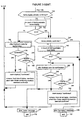
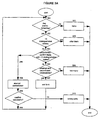
- the process to be described is illustrated in the flowchart of Figure 4 and involves taking the first tuple from the list, and comparing it with the tuple below it in the list to ascertain whether the two are distinguishable. If they are not, the tuple occupying the lower position is deleted from the list. This is repeated until all tuples have been examined. The same steps are then performed for the tuple now occupying the second position in the list, and so on; eventually every tuple remaining in the list is distinguishable from every other. If desired, the process may be terminated as soon as it is certain that the number of distinguishable tuples exceed that which can be handled by subsequent steps (i.e., in this example, 3).
- i points to a tuple in the list and j points to a tuple lower down the list.
- I is the number of tuples in the list.
- i is initialised to 1, and I is set to N, and in step 202 D(i) is read from the database.
- Step 204 sets j to point to the following tuple and in step 206 D(j) is read.
- a field pointer m is then initialised to 1 in step 208 and this is followed by a loop in which each field of the two tuples is taken in turn.
- B is the number of such representations, i.e. A multiplied by the number of homophones.
- each of the phonetic representations p1(b) is compared with each of the representations p2(d) (i.e. BD comparisons in total). If equality is not found in any of these comparisons, then the two tuples are considered distinguishable. If (step 226) j has not reached the last tuple in the list, it is incremented (228) prior to reading a further tuple in a repeat of step 206; otherwise the tuple pointer i is tested at step 230 as to whether it has reached the penultimate member of the list and either (if it has not) is incremented (232) prior to a return to step 202, or (if it has) the process ends. At this point, the list now contains only mutually distinguishable tuples - I in number - and thus the result k is set to I in step 233 prior to exit from this part of the process at step 234.
- step 236 If on the other hand the comparison at 218 indicates identity between one of the phonetic representations generated for one field of one tuple and one of the phonetic representations generated for the same field of the other tuple then it is necessary to increment m (step 236) and repeat steps 210 to 218 for a further field. If all fields of the two tuples have been compared and all are indistinguishable then this is recognised at step 238 and the tuples are deemed to be indistinguishable. In this case, the lower tuple D(j) is removed from the list and I is decremented so that it continues to represent the number of tuples remaining in the list (steps 240, 242). j is then tested at step 244 to determine whether it points beyond the end of the (now shortened) list and if not a further tuple is examined, continuing from step 206. Otherwise the process proceeds to step 230, already described.
- step 232 increments i to point to a tuple, it is known that there are at least i tuples which will not be removed from the list by step 240. Thus at this point i can be tested (step 246) to see if it has reached 3, and if so the process may be interrupted, k set to 4, and thence to the exit 234.
- step 140 the principle followed is that: where the user has confirmed a tuple (in this case a duple) which is one of a pair (or group) of tuples deemed indistinguishable, then this is considered to constitute confirmation also of the other tuple(s) of the pair or group. For example, if the list of name duples contains:
- each field p of the confirmed duple in phonetic representation i.e. the one generated in step 136) is translated using the tables 9, 10 into one or more database representation. All duples represented by combinations of these representations are to be confirmed - i.e. any of the list of triples which contains one of these duples is retained, and the other triples are deleted.
- the machine representations for the single input are converted to all possible data representations.
- the input is mapped to the spoken recognition vocabulary by the "May be pronounced" route.
- all possible spoken representations of the input are identified.
- These spoken vocabulary representations are then mapped onto all possible database representations which the spoken representations may represent (e.g. "May be spoken”). For example, say the forename "Dave'' is input and the phonetic representations D AI V and M AI V are generated by the speech recogniser 2. These phonetic representations are then converted to spoken vocabulary representations, for instance, "Dave” and "Mave”.
- Each of these spoken vocabulary representations is then converted, by means of the store 9, into all possible database representations ("May be spoken") e.g. Dave, David, Mave, Mavis.
- the processor 5 searches the database 8 for all entries including any of these entries in their forename field.
- the processor 5 For all entries found the processor 5 then examines each representation contained in the selected field to identify distinguishable ones of those combinations. The distinguishable entries may then be presented to the user for confirmation. To achieve this, the processor 5, with reference to the spoken vocabulary store 10 and according to the defined relationships, translates the identified database representations into spoken vocabulary via the "may be spoken" route. Thus all entries of Dave are translated to "Dave” and “David”, all entries for David are translated to “Dave” or “David”, all entries for Mave are translated to "Mave” or “Mavis" and all entries of Mavis are translated to "Mave” or “Mavis”. The processor 5 then translates the spoken vocabulary representations into phonetic representations ("may be pronounced") with reference to store 10.
- the phonetic representations which represent how "Dave”, “David”, “Mave” and “Mavis” are pronounced are determined as D AI V, D AI V I D, D AA V I D, M AI V and M AI VI S. These phonetic representations are then examined to identify distinguishable ones. For example, Dave and David are indistinguishable because they share at least one common pronunciation. However, Mave and Dave are distinguishable because they do not share any common phonetic representation. If two database representations are found to be indistinguishable, one of the representations is maintained and the other is discarded e.g. David may be selected over Dave and Mavis over Mave. This choice is determined by the system designer and stored in memory 6. The phonetic representation of the most probable of "David” and “Mavis” is presented by the processor 5 to the synthesiser 4 to a user using the "Is primarily spoken"/"is primarily pronounced" relationship.
- Figure 1 shows a situation in which the vocabulary of the announcement means e.g. the speech synthesiser is the same as the vocabulary of the input means e.g. the speech recogniser.
- spellings may also be used as an alternative input and/or confirmation medium to spoken forms.
- the techniques required for spelling are directly analogous to spoken forms.
- Figure 5 corresponds to Figure 1 with the inclusion of spelling (illustrated by box M) for town names (spelling may also be provided for surnames and forenames although, for simplicity, these mappings have not been shown in Figure 5). Translations of "may be spelt" and "is primarily spelt" must be provided in addition to the spoken recognition.
- spoken or spelt input or output is not essential - since the considerations concerning the offering and confirming still arise.
- keypad input could be used, which has ambiguity problems owing to the allocation of more than one letter to each button of a telephone keypad.
- a further vocabulary - of keypad input codes - is required, with "May be keyed ." translations analogous to the pronunciation and spelling translations described above.
- the machine representations of the input vocabulary and the database may be generated according to the same technique, for instance the database entries may be stored in text form and the input also be in text form, with the machine representations of the database and the output being generated according to a different technique e.g. a spoken output.
- Confusion may arise if a user is presented with an announcement which includes a synonym of the actual word said by the user. For instance, say a user asks for "Dave Smith” and the system geneates an output as follows: “Did you say David Smith?" In order to avoid this confusion, a check may be carried out to ensure that the word corresponding to the identified distinguishable database entry corresponds also to the word recognised by the input means.
Landscapes
- Engineering & Computer Science (AREA)
- Signal Processing (AREA)
- Machine Translation (AREA)
- Information Retrieval, Db Structures And Fs Structures Therefor (AREA)
- Telephonic Communication Services (AREA)
Description
the method of accessing the database system being characterised by comprising:
| Database | Spoken |
| representation | representation |
| IPSWICH | IPSWICH |
| IPSWICH | KESGRAVE |
| IPSWICH | FOXHALL |
| KESGRAVE | KESGRAVE |
| KESGRAVE | IPSWICH |
| FOXHALL | FOXHALL |
| FOXHALL | IPSWICH |
Start: If there are no database entries still active:
- Offer them.
- Finish algorithm.
If there are more than three distinguishable database entries, then: - Do the following for successive prioritised fields or combinations of
fields that have not already been confirmed until no such fields
remain:
- If for this there is a tuple list with 3 or less distinguishable
tuples then:
- Attempt to confirm this list.
- If positive confirmation, confirm it and go to JUMP.
- If negative confirmation give "wrong entry" message: go back to "do the following":
If there is an un-asked and un-confirmed vocab remaining:
- Ask for it.
- Goto start of algorithm.
- Give "too many" message.
- Finish algorithm
| Direction | Used in steps | Description | Typical Route for forenames |
| input to | 112, 114 | Mappings used to convert a recognition result into all possible database representations | MayBePronounced..../ MayBeSpoken..... (i.e. include synonyms and homophones) |
| database to | 124, 132, 146 | mappings used to decide on distinguishable database representations | IsPrimarilySpoken...../ MayBePronounced..... (i.e. results in synonyms but not homophones being included in the resulting list of distinguishable tuples) |
| 302, 304 | |||
| database to | 124, 132, 146 | mappings used to decide on distinguishable database representations | IsPrimarifySpoken/ IsPrimarilyPronounced (i.e. excludes homophones from output but includes synonyms and homonyms) |
| 302, 304 | |||
| database to | 136, 150 | mappings used for output of result e.g. synthesis | IsPrimarilySpoken/ IsPrimarilyPronounced (i.e.provides a primary output form for each database representation) |
| 128, 303, 308 | |||
| output to database | 140,154 | mappings used to confirm an output pronunciation back into database representation | MayBePronounced/ MayBeSpoken (i.e. include both synonyms and homophones) |
| 308 | |||
| output to | 140, 154, 308 | mappings used to exclude items rejected by user | Maybe Pronounced/ Is Primarily Spoken (i.e.excludes homophones but includes synonyms for subsequent database searches) |
Claims (14)
- A database access apparatus comprising:(a) a database (8) containing entries each comprising a plurality of fields which contain machine representations of items of information pertaining to the entry, the said representations forming a first vocabulary;(b) announcement means (4) responsive to machine representations falling within a second vocabulary of such representations to generate audio signals representing spoken announcements;(c) input means (2) operable to receive signals and to produce machine representations thereof falling within a third vocabulary of such representations; characterised by further comprising:(d) translation means (9,10) defining a relationship between the first vocabulary and the second vocabulary and between the first vocabulary and the third vocabulary; and(e) control means (5) operable(i) to generate, in accordance with the defined relationship, for each representation produced by the input means, one or more representations according to the first vocabulary;(ii) to identify database entries containing the generated representations;(iii) to examine each representation or combination of representations which is contained in a selected field or combination of fields of the identified entries to identify distinguishable one(s) of those representations or combinations, a distinguishable representation or combination being one which, when translated in accordance with the defined relationship into representations of the second vocabulary, differs from every other such distinguishable representation or combination when similarly translated; and(iv) to control the announcement means to generate an announcement including at least one word or combination of words which correspond(s) to one of the distinguishable representations or combinations.
- Apparatus according to claim 1 wherein the control means is operable to control the announcement means to generate successive announcements, each of which includes at least one word or combination of words which correspond(s) to one of the distinguishable representations or combinations, the control means being operable to control the announcement means to output the announcements in sequential confidence order, the first announcement including at least one word or combination or words which correspond(s) to the most likely distinguishable representation or combinations.
- An apparatus according to claim 1 or 2 in which the control means is operable, in step (iv), for the or each distinguishable representation or combination, to generate, using the translation means, from the distinguishable representation or combination, one representation or combination in the second vocabulary and to transmit this to the announcement means.
- An apparatus according to claim 1 or 2 in which the control means is operable, in step (iv), for the or each distinguishable representation or combination, to transmit to the announcement means one representation or combination in the second vocabulary which corresponds, in accordance with a relationship defined by the translation means, to the distinguishable representation or combination and which has already been generated in step (iii).
- An apparatus according to any of claims 1 to 4 in which the control means is operable in step (iv) to generate an announcement requesting confirmation of the included word or combination and is further arranged, in operation:(v) upon receipt of a confirmatory response, to generate from a representation or combination in the second vocabulary, which corresponds to the included word(s), one or more representations or combinations according to the first vocabulary and to identify the database entries or entry which contains such a representation or combination in the selected field(s).
- An apparatus according to any one of the preceding claims in which the input means is a speech recogniser operable to receive audio signals.
- An apparatus according to claim 6 in which the second and third vocabularies are identical.
- An apparatus according to any preceding claims wherein the first and third vocabularies are identical.
- An apparatus according to any preceding claim in which at least one of the selected field(s) is a field in which, in step (ii), a generated representation was found, and in which a word included at step (iv) is a word which corresponds to a representation generated by the input means.
- Apparatus according to any preceding claims further comprising an intermediate vocabulary and the translation means defines the relationships between the first and the intermediate vocabulary; the second and the intermediate vocabulary; and the third and the intermediate vocabulary.
- A method of accessing a database system, said database system comprising a database containing entries each comprising a plurality of fields which contain machine representations of items of information pertaining to the entry, the said representations forming a first vocabulary; announcement means responsive to machine representations falling within a second vocabulary of such representations to generate audio signals representing spoken announcements; and input means operable to receive signals and to produce machine representations falling within a third vocabulary of such representations;
the method of accessing the database system being characterised by comprising:(i) generating, in accordance with a defined relationship between the first vocabulary and the third vocabulary, for each representation produced by the input means, one or more representations according to the first vocabulary;(ii) identifying database entries containing the generated representations;(iii) examining each representation or combination of representations which is contained in a selected field or combination of fields of the identified entries to identify distinguishable one(s) of those representations or combinations, a distinguishable representation or combination being one which, when translated in accordance with the defined relationship into representations of the second vocabulary, differs from every other such distinguishable representation or combination when similarly translated; and(iv) controlling the announcement means to generate an announcement including at least one word or combination of words which correspond(s) to one of the distinguishable representations or combinations. - A method according to claim 11 further comprising, in step (iv), controlling the output means to output one or more announcement(s) in sequential confidence order, the first announcement including at least one word or combination of words which corresponds to the most likely distinguishable representation.
- A method according to Claim 11 or 12 further comprising:(a) generating at least one announcement requiring a response;(b) recognising the response(s);(c) identifying database entries containing fields matching the recognised responses;(d) in the event that the number of such entries exceeds a predetermined limit, generating an output containing at least one word corresponding to a selected field of an identified entry for a positive or negative response;(e) upon receipt of a positive response, identifying database entries which contain fields matching the recognised responses and whose selected fields match the said word; and(f) repeating steps (d) and (e) at least once.
- A method according to claim 11 or 12 comprising:(a) generating at least one announcement requiring a response;(b) recognising the response(s);(c) identifying database entries containing fields matching the recognised response(s);(d) in the event that the number of such entries is below or equal to a predetermined limit, generating an output presenting one or more of the entries each containing one or more of the field(s) of the matching entries, and exit;(e) in the event that the number of such entries exceeds a predetermined limit, for a particular field or selection of fields, examining a distinguishable representation or selection of representations, which is contained in the particular field or combination of fields of the identical entries;(f) in the event that the number of such distinguishable representations or combinations of representations is above a predetermined limit, repeat step (e), selecting another field or selection of fields, according to a pre-determined order, that has not already been considered until no such fields remain to be considered; and(g) generating at least one output requiring a response that has not already been requested or confirmed;(h) recognising the response(s);(i) repeat step (c) at least once;(j) in the event that the number of such distinguishable representations or combinations of representations is below or equal to a predetermined limit, generating an announcement containing at least one word corresponding to the selected field(s) of an identified entry for a positive or negative response;(k) upon receipt of a positive response, identifying database entries which contain fields matching the recognised responses and whose selected fields match the said words or combination of words; and(I) repeating steps (d) and (e) at least once;(m) upon receipt of a negative response for all such word or words, exiting the database accessing method.
Applications Claiming Priority (3)
| Application Number | Priority Date | Filing Date | Title |
|---|---|---|---|
| GBGB9601925.2A GB9601925D0 (en) | 1996-01-31 | 1996-01-31 | Database access |
| GB9601925 | 1996-01-31 | ||
| PCT/GB1997/000233 WO1997028634A1 (en) | 1996-01-31 | 1997-01-27 | Database access |
Publications (2)
| Publication Number | Publication Date |
|---|---|
| EP0878085A1 EP0878085A1 (en) | 1998-11-18 |
| EP0878085B1 true EP0878085B1 (en) | 2004-05-26 |
Family
ID=10787862
Family Applications (1)
| Application Number | Title | Priority Date | Filing Date |
|---|---|---|---|
| EP97901199A Expired - Lifetime EP0878085B1 (en) | 1996-01-31 | 1997-01-27 | Database access |
Country Status (12)
| Country | Link |
|---|---|
| US (1) | US5778344A (en) |
| EP (1) | EP0878085B1 (en) |
| JP (1) | JP2000504510A (en) |
| KR (1) | KR19990082252A (en) |
| CN (1) | CN1121777C (en) |
| CA (1) | CA2244116C (en) |
| DE (1) | DE69729277T2 (en) |
| GB (1) | GB9601925D0 (en) |
| MX (1) | MX9806168A (en) |
| NO (1) | NO983501L (en) |
| NZ (1) | NZ326441A (en) |
| WO (1) | WO1997028634A1 (en) |
Families Citing this family (20)
| Publication number | Priority date | Publication date | Assignee | Title |
|---|---|---|---|---|
| US6301560B1 (en) * | 1998-01-05 | 2001-10-09 | Microsoft Corporation | Discrete speech recognition system with ballooning active grammar |
| US6629069B1 (en) | 1998-07-21 | 2003-09-30 | British Telecommunications A Public Limited Company | Speech recognizer using database linking |
| US6185530B1 (en) | 1998-08-14 | 2001-02-06 | International Business Machines Corporation | Apparatus and methods for identifying potential acoustic confusibility among words in a speech recognition system |
| US6269335B1 (en) * | 1998-08-14 | 2001-07-31 | International Business Machines Corporation | Apparatus and methods for identifying homophones among words in a speech recognition system |
| US6192337B1 (en) | 1998-08-14 | 2001-02-20 | International Business Machines Corporation | Apparatus and methods for rejecting confusible words during training associated with a speech recognition system |
| EP1055228A1 (en) * | 1998-12-17 | 2000-11-29 | ScanSoft, Inc. | Speech operated automatic inquiry system |
| GB2347307B (en) * | 1999-02-26 | 2003-08-13 | Mitel Inc | Dial by name feature for messaging system |
| US6587818B2 (en) * | 1999-10-28 | 2003-07-01 | International Business Machines Corporation | System and method for resolving decoding ambiguity via dialog |
| GB2362746A (en) * | 2000-05-23 | 2001-11-28 | Vocalis Ltd | Data recognition and retrieval |
| US7013276B2 (en) * | 2001-10-05 | 2006-03-14 | Comverse, Inc. | Method of assessing degree of acoustic confusability, and system therefor |
| US7177814B2 (en) | 2002-02-07 | 2007-02-13 | Sap Aktiengesellschaft | Dynamic grammar for voice-enabled applications |
| KR20050056242A (en) * | 2002-10-16 | 2005-06-14 | 코닌클리케 필립스 일렉트로닉스 엔.브이. | Directory assistant method and apparatus |
| ATE386318T1 (en) * | 2003-03-01 | 2008-03-15 | Robert E Coifman | IMPROVING THE TRANSCRIPTION ACCURACY OF VOICE RECOGNITION SOFTWARE |
| US7603291B2 (en) | 2003-03-14 | 2009-10-13 | Sap Aktiengesellschaft | Multi-modal sales applications |
| JP3890326B2 (en) * | 2003-11-07 | 2007-03-07 | キヤノン株式会社 | Information processing apparatus, information processing method, recording medium, and program |
| US20060167920A1 (en) * | 2005-01-25 | 2006-07-27 | Listdex Corporation | System and Method for Managing Large-Scale Databases |
| US8383549B2 (en) | 2007-07-20 | 2013-02-26 | Bayer Cropscience Lp | Methods of increasing crop yield and controlling the growth of weeds using a polymer composite film |
| CN103477922B (en) | 2007-07-20 | 2017-10-10 | 伊玛弗莱克斯股份有限公司 | Polymer composites with biocide functionality |
| DE102014114845A1 (en) * | 2014-10-14 | 2016-04-14 | Deutsche Telekom Ag | Method for interpreting automatic speech recognition |
| US10650810B2 (en) * | 2016-10-20 | 2020-05-12 | Google Llc | Determining phonetic relationships |
Family Cites Families (10)
| Publication number | Priority date | Publication date | Assignee | Title |
|---|---|---|---|---|
| US4831654A (en) * | 1985-09-09 | 1989-05-16 | Wang Laboratories, Inc. | Apparatus for making and editing dictionary entries in a text to speech conversion system |
| GB8610809D0 (en) * | 1986-05-02 | 1986-06-11 | Smiths Industries Plc | Speech recognition apparatus |
| US5027406A (en) * | 1988-12-06 | 1991-06-25 | Dragon Systems, Inc. | Method for interactive speech recognition and training |
| AU631276B2 (en) * | 1989-12-22 | 1992-11-19 | Bull Hn Information Systems Inc. | Name resolution in a directory database |
| US5251129A (en) * | 1990-08-21 | 1993-10-05 | General Electric Company | Method for automated morphological analysis of word structure |
| US5204894A (en) * | 1990-11-09 | 1993-04-20 | Bell Atlantic Network Services, Inc. | Personal electronic directory |
| US5454062A (en) * | 1991-03-27 | 1995-09-26 | Audio Navigation Systems, Inc. | Method for recognizing spoken words |
| CA2088080C (en) * | 1992-04-02 | 1997-10-07 | Enrico Luigi Bocchieri | Automatic speech recognizer |
| WO1994014270A1 (en) * | 1992-12-17 | 1994-06-23 | Bell Atlantic Network Services, Inc. | Mechanized directory assistance |
| US5623578A (en) * | 1993-10-28 | 1997-04-22 | Lucent Technologies Inc. | Speech recognition system allows new vocabulary words to be added without requiring spoken samples of the words |
-
1996
- 1996-01-31 GB GBGB9601925.2A patent/GB9601925D0/en active Pending
- 1996-06-05 US US08/659,526 patent/US5778344A/en not_active Expired - Lifetime
-
1997
- 1997-01-27 WO PCT/GB1997/000233 patent/WO1997028634A1/en not_active Ceased
- 1997-01-27 CN CN97191984A patent/CN1121777C/en not_active Expired - Lifetime
- 1997-01-27 NZ NZ326441A patent/NZ326441A/en unknown
- 1997-01-27 JP JP9527399A patent/JP2000504510A/en active Pending
- 1997-01-27 CA CA002244116A patent/CA2244116C/en not_active Expired - Fee Related
- 1997-01-27 EP EP97901199A patent/EP0878085B1/en not_active Expired - Lifetime
- 1997-01-27 KR KR1019980705981A patent/KR19990082252A/en not_active Ceased
- 1997-01-27 DE DE69729277T patent/DE69729277T2/en not_active Expired - Lifetime
-
1998
- 1998-07-30 NO NO983501A patent/NO983501L/en not_active Application Discontinuation
- 1998-07-31 MX MX9806168A patent/MX9806168A/en unknown
Also Published As
| Publication number | Publication date |
|---|---|
| CA2244116A1 (en) | 1997-08-07 |
| AU3606897A (en) | 1997-08-22 |
| GB9601925D0 (en) | 1996-04-03 |
| NO983501D0 (en) | 1998-07-30 |
| NZ326441A (en) | 1999-09-29 |
| US5778344A (en) | 1998-07-07 |
| CN1121777C (en) | 2003-09-17 |
| NO983501L (en) | 1998-09-30 |
| CA2244116C (en) | 2001-11-27 |
| WO1997028634A1 (en) | 1997-08-07 |
| DE69729277D1 (en) | 2004-07-01 |
| EP0878085A1 (en) | 1998-11-18 |
| JP2000504510A (en) | 2000-04-11 |
| KR19990082252A (en) | 1999-11-25 |
| CN1210643A (en) | 1999-03-10 |
| DE69729277T2 (en) | 2005-06-02 |
| MX9806168A (en) | 1998-10-31 |
| AU707248B2 (en) | 1999-07-08 |
Similar Documents
| Publication | Publication Date | Title |
|---|---|---|
| CA2244116C (en) | Database access | |
| US6996531B2 (en) | Automated database assistance using a telephone for a speech based or text based multimedia communication mode | |
| KR100383352B1 (en) | Voice-operated service | |
| US7443960B2 (en) | Method and system for an automated departure strategy | |
| US6230132B1 (en) | Process and apparatus for real-time verbal input of a target address of a target address system | |
| US6324513B1 (en) | Spoken dialog system capable of performing natural interactive access | |
| US5917889A (en) | Capture of alphabetic or alphanumeric character strings in an automated call processing environment | |
| US20040193403A1 (en) | Disambiguating results within a speech based IVR session | |
| WO2009149340A1 (en) | A system and method utilizing voice search to locate a procuct in stores from a phone | |
| US7020612B2 (en) | Facility retrieval apparatus and method | |
| EP1099214B1 (en) | Speech recognition | |
| GB2304957A (en) | Voice-dialog system for automated output of information | |
| AU707248C (en) | Database access | |
| JP3316826B2 (en) | Information guidance method and device | |
| US7167545B2 (en) | Method and device for automatically issuing information using a search engine | |
| GB2263042A (en) | Voice activated system and method | |
| EP1397797B1 (en) | Speech recognition | |
| US20050238145A1 (en) | User interface for "how to use" application of automated self service call center | |
| Williams | Dialogue Management in a mixed-initiative, cooperative, spoken language system | |
| JP3576511B2 (en) | Voice interaction device | |
| JPS60249195A (en) | Interactive type vocie input/output unit | |
| JPH04200050A (en) | Telephone voice reply device |
Legal Events
| Date | Code | Title | Description |
|---|---|---|---|
| PUAI | Public reference made under article 153(3) epc to a published international application that has entered the european phase |
Free format text: ORIGINAL CODE: 0009012 |
|
| 17P | Request for examination filed |
Effective date: 19980717 |
|
| AK | Designated contracting states |
Kind code of ref document: A1 Designated state(s): BE CH DE DK ES FI FR GB IE IT LI NL PT SE |
|
| RBV | Designated contracting states (corrected) |
Designated state(s): BE CH DE DK ES FI FR GB IE IT LI NL PT SE |
|
| 17Q | First examination report despatched |
Effective date: 20030207 |
|
| GRAP | Despatch of communication of intention to grant a patent |
Free format text: ORIGINAL CODE: EPIDOSNIGR1 |
|
| GRAS | Grant fee paid |
Free format text: ORIGINAL CODE: EPIDOSNIGR3 |
|
| GRAA | (expected) grant |
Free format text: ORIGINAL CODE: 0009210 |
|
| AK | Designated contracting states |
Kind code of ref document: B1 Designated state(s): BE CH DE DK ES FI FR GB IE IT LI NL PT SE |
|
| PG25 | Lapsed in a contracting state [announced via postgrant information from national office to epo] |
Ref country code: LI Free format text: LAPSE BECAUSE OF FAILURE TO SUBMIT A TRANSLATION OF THE DESCRIPTION OR TO PAY THE FEE WITHIN THE PRESCRIBED TIME-LIMIT Effective date: 20040526 Ref country code: IT Free format text: LAPSE BECAUSE OF FAILURE TO SUBMIT A TRANSLATION OF THE DESCRIPTION OR TO PAY THE FEE WITHIN THE PRESCRIBED TIME-LIMIT;WARNING: LAPSES OF ITALIAN PATENTS WITH EFFECTIVE DATE BEFORE 2007 MAY HAVE OCCURRED AT ANY TIME BEFORE 2007. THE CORRECT EFFECTIVE DATE MAY BE DIFFERENT FROM THE ONE RECORDED. Effective date: 20040526 Ref country code: FI Free format text: LAPSE BECAUSE OF FAILURE TO SUBMIT A TRANSLATION OF THE DESCRIPTION OR TO PAY THE FEE WITHIN THE PRESCRIBED TIME-LIMIT Effective date: 20040526 Ref country code: CH Free format text: LAPSE BECAUSE OF FAILURE TO SUBMIT A TRANSLATION OF THE DESCRIPTION OR TO PAY THE FEE WITHIN THE PRESCRIBED TIME-LIMIT Effective date: 20040526 |
|
| REG | Reference to a national code |
Ref country code: GB Ref legal event code: FG4D |
|
| RIC1 | Information provided on ipc code assigned before grant |
Ipc: 7G 10L 13/00 B Ipc: 7G 06F 17/30 B Ipc: 7H 04M 3/50 A |
|
| REG | Reference to a national code |
Ref country code: CH Ref legal event code: EP |
|
| REG | Reference to a national code |
Ref country code: IE Ref legal event code: FG4D |
|
| REF | Corresponds to: |
Ref document number: 69729277 Country of ref document: DE Date of ref document: 20040701 Kind code of ref document: P |
|
| PG25 | Lapsed in a contracting state [announced via postgrant information from national office to epo] |
Ref country code: SE Free format text: LAPSE BECAUSE OF FAILURE TO SUBMIT A TRANSLATION OF THE DESCRIPTION OR TO PAY THE FEE WITHIN THE PRESCRIBED TIME-LIMIT Effective date: 20040826 Ref country code: DK Free format text: LAPSE BECAUSE OF FAILURE TO SUBMIT A TRANSLATION OF THE DESCRIPTION OR TO PAY THE FEE WITHIN THE PRESCRIBED TIME-LIMIT Effective date: 20040826 |
|
| PG25 | Lapsed in a contracting state [announced via postgrant information from national office to epo] |
Ref country code: ES Free format text: LAPSE BECAUSE OF FAILURE TO SUBMIT A TRANSLATION OF THE DESCRIPTION OR TO PAY THE FEE WITHIN THE PRESCRIBED TIME-LIMIT Effective date: 20040906 |
|
| REG | Reference to a national code |
Ref country code: CH Ref legal event code: PL |
|
| PG25 | Lapsed in a contracting state [announced via postgrant information from national office to epo] |
Ref country code: IE Free format text: LAPSE BECAUSE OF NON-PAYMENT OF DUE FEES Effective date: 20050127 |
|
| ET | Fr: translation filed | ||
| PLBE | No opposition filed within time limit |
Free format text: ORIGINAL CODE: 0009261 |
|
| STAA | Information on the status of an ep patent application or granted ep patent |
Free format text: STATUS: NO OPPOSITION FILED WITHIN TIME LIMIT |
|
| 26N | No opposition filed |
Effective date: 20050301 |
|
| REG | Reference to a national code |
Ref country code: HK Ref legal event code: WD Ref document number: 1017196 Country of ref document: HK |
|
| REG | Reference to a national code |
Ref country code: IE Ref legal event code: MM4A |
|
| PG25 | Lapsed in a contracting state [announced via postgrant information from national office to epo] |
Ref country code: PT Free format text: LAPSE BECAUSE OF NON-PAYMENT OF DUE FEES Effective date: 20041026 |
|
| PGFP | Annual fee paid to national office [announced via postgrant information from national office to epo] |
Ref country code: BE Payment date: 20080125 Year of fee payment: 12 |
|
| PG25 | Lapsed in a contracting state [announced via postgrant information from national office to epo] |
Ref country code: BE Free format text: LAPSE BECAUSE OF NON-PAYMENT OF DUE FEES Effective date: 20090131 |
|
| REG | Reference to a national code |
Ref country code: FR Ref legal event code: PLFP Year of fee payment: 20 |
|
| PGFP | Annual fee paid to national office [announced via postgrant information from national office to epo] |
Ref country code: NL Payment date: 20160120 Year of fee payment: 20 |
|
| PGFP | Annual fee paid to national office [announced via postgrant information from national office to epo] |
Ref country code: DE Payment date: 20160120 Year of fee payment: 20 |
|
| PGFP | Annual fee paid to national office [announced via postgrant information from national office to epo] |
Ref country code: GB Payment date: 20160120 Year of fee payment: 20 Ref country code: FR Payment date: 20160121 Year of fee payment: 20 |
|
| REG | Reference to a national code |
Ref country code: DE Ref legal event code: R071 Ref document number: 69729277 Country of ref document: DE |
|
| REG | Reference to a national code |
Ref country code: NL Ref legal event code: MK Effective date: 20170126 |
|
| REG | Reference to a national code |
Ref country code: GB Ref legal event code: PE20 Expiry date: 20170126 |
|
| PG25 | Lapsed in a contracting state [announced via postgrant information from national office to epo] |
Ref country code: GB Free format text: LAPSE BECAUSE OF EXPIRATION OF PROTECTION Effective date: 20170126 |