EP0874520A2 - Photographic image compression method and system - Google Patents
Photographic image compression method and system Download PDFInfo
- Publication number
- EP0874520A2 EP0874520A2 EP98201160A EP98201160A EP0874520A2 EP 0874520 A2 EP0874520 A2 EP 0874520A2 EP 98201160 A EP98201160 A EP 98201160A EP 98201160 A EP98201160 A EP 98201160A EP 0874520 A2 EP0874520 A2 EP 0874520A2
- Authority
- EP
- European Patent Office
- Prior art keywords
- collection
- images
- function
- image
- size
- Prior art date
- Legal status (The legal status is an assumption and is not a legal conclusion. Google has not performed a legal analysis and makes no representation as to the accuracy of the status listed.)
- Withdrawn
Links
Images



Classifications
-
- H—ELECTRICITY
- H04—ELECTRIC COMMUNICATION TECHNIQUE
- H04N—PICTORIAL COMMUNICATION, e.g. TELEVISION
- H04N1/00—Scanning, transmission or reproduction of documents or the like, e.g. facsimile transmission; Details thereof
- H04N1/41—Bandwidth or redundancy reduction
-
- G—PHYSICS
- G06—COMPUTING OR CALCULATING; COUNTING
- G06T—IMAGE DATA PROCESSING OR GENERATION, IN GENERAL
- G06T9/00—Image coding
- G06T9/007—Transform coding, e.g. discrete cosine transform
Definitions
- This invention relates to a method and apparatus for compressing a collection of images for storage.
- a lossless compression system will compress and decompress image data in such a way that decompressed image data is exactly the same as the originally input image data. In comparison, the decompressed image data resulting from a lossy compression system will be different from the originally input image data.
- the human visual system has a minimum detectable threshold that allows us to perceive as the same an original and its decompressed image that have some small amount of real difference between them. By taking advantage of this human visual system threshold, a lossy compression system can provide a higher compression rate without visible degradation in an image.
- Rate refers to the number of bits required after compression to represent a given spatial unit (for example, bits/pixel, bits/image, bits/image collection, and the like).
- a variable-rate compression system is one that produces a variable output data rate, depending on the properties of the input image data.
- a fixed-rate compression system is one that produces a constant output data rate, regardless of the input image data.
- a variable-rate system is well-suited to providing a constant level of image quality, since bits are expended as needed to match the image or image region characteristics. In comparison, a fixed-rate system must compromise on image quality for those images or image regions where the available number of bits is insufficient.
- variable-rate lossy compression method is the JPEG (Joint Photographic Experts Group) international standard, as described by W.B. Pennebaker and J. L. Mitchell, "JPEG: Still Image Data Compression Standard,” Van Nostrand Reinhold, New York 1993. This reference and all other references cited herein are incorporated by reference.
- JPEG system parameter that exerts the largest effect on the compressed data rate is the quantization table specification.
- JPEG quantization table There are many possible methods to adjust the JPEG quantization table in order to achieve a predictable file storage space for the image collection. The most straightforward method is to start with an initial quantization table, compress an image or collection of images, and then adjust the initial table by a multiplicative scaling factor if the desired rate is not achieved.
- a scaling factor greater than one results in more quantization and hence a lower rate than achieved with the initial quantization table.
- a scaling factor less than one results in less quantization and hence a higher rate than that achieved with the initial quantization table.
- each image results in a different final compressed file storage space due to the contents of the different images. This makes it impossible to predict how much file storage space is required to store a collection of images until the images have actually been compressed.
- the present invention provides a method for determining the minimum compression needed to fit a collection of images within a limited storage space without undue wasting of the available space. That is, the present invention provides the required degree of compression to fit the collection within the limited storage space, but with minimum image quality loss from a lossy compression method. Furthermore, the present invention provides a means for evaluating, for a given collection of images, when the compression required would produce unacceptable image quality loss, and for compensating for this situation.
- a method of compressing a collection of images using a variable compression function comprising:
- a method of compressing a collection of images using a variable compression function comprising:
- the apparatus and method of the present invention can provide the minimum necessary lossy image compression for all collections of images. That is, a collection of images can be compressed just enough to fit on the storage medium and not more. Because image compression is minimized while meeting the foregoing storage medium capacity constraint, image quality of the compressed images is maximized.
- the method of the present invention can automatically divide a collection of images into sub-collections when the resulting required compressed collection storage space exceeds the storage media capacity such that an unacceptably high degree of compression would be required (which leads to compressed images of unacceptable quality).
- each sub-collection of a divided collection of images can be stored by the method at a minimum necessary compression for each storage medium (such as each floppy disk), resulting in the maximum image quality for each image collection. Because all images in an image collection are compressed using the same parameters, the images are perceived to have a higher quality by users.
- the method and apparatus of the present invention while they can be used for various purposes, have particular application in scanning and storing images from a developed photographic film onto one or more fixed capacity media, such as diskettes.
- FIG. 3 shows a graph plotting the resulting compressed file storage space versus a JPEG scaling factor. Images containing little detail result in smaller compressed file storage space, while images containing lots of detail have dramatically larger compressed file storage spaces. Even using an average value (representing images with an average amount of detail) can result in large errors between the actual compressed file storage space and the estimated average compressed file storage space.
- FIG. 4 presents similar information, this time showing the rate of change in the compressed file storage space versus scaling factor (that is, FIG. 4 represents the change of slope in the plots of FIG. 3).
- the non-linear variability shown in these plots emphasizes the difficulty in predicting what the actual compressed image file storage space will be using any given fixed set of JPEG compression parameters.
- FIGS. 2 and 3 when photographic images are compressed using a variable rate lossy compression method, such as JPEG, it is difficult to predict what the final compressed file storage space will be since the actual image content of an individual image will impact the final file storage space of that image.
- the apparatus may be that used in a typical retail or wholesale photofinishing operation.
- a developer 10 which can chemically process an exposed silver halide photographic film 12 (delivered to developer 10 inside canister 11) bearing latent images, to provide a collection of physical images 14 in fixed form on the film.
- a scanner 20 is capable of scanning each of the series of images 14 on developed film 12 to yield a corresponding digital image signal, in a known manner using a source of illumination which passes through images 14 (or is reflected from images which may be on a reflective base, such as paper prints) onto a sensor.
- Scanner 20 is sometimes referred to as a film digitizer.
- An image signal processing apparatus 22 includes a digital processor 24 connected to receive the digital image signals (a digital image collection) corresponding to the film images and compress them using JPEG or some other lossy variable compression function algorithm.
- Processor 24 is preferably a general purpose digital computer processor suitably programmed to execute the steps of the method of the present invention.
- suitable programmed processor 24 could be provided in part or completely by fixed circuit elements.
- Apparatus 22 further includes a memory 26 for holding data required by processor 24 as well as a media writer 30.
- An optional monitor 27 and optional operator input 28 may be provided to allow a system operator to view progress of scanning rolls of film and input various commands (such as stop, start, redo a particular film 12, and the like).
- Writer 30 can preferably write onto one or more removable blank writable media 40 simultaneously, which may be fed automatically into and out of writer 30 under control of processor 24.
- the media on which writer 30 writes, is a fixed storage capacity media most typically in the form of a magnetic diskette. However, writer 30 can be such as to be capable of recording on other media, such as any optical or magnetic media, or solid state media, of fixed storage capacity.
- the components of the apparatus of FIG. 1 are typically found at the same location (that is, in the same building). However, one or more of the components can be positioned remotely from the other(s) (that is, in a different building which may be one or more miles away from the location housing other of the components).
- developer 10 may be remote from the location of apparatus 22 and connected thereto over a suitable wired or wireless communication channel, such as the internet, another public network connection, or a dedicated communication channel (including a dedicated computer network).
- a user brings or has sent to the location of developer 10, one or more exposed photographic canisters 11 each containing an undeveloped film carrying one or more latent images.
- Developer 10 then processes these to yield a collection (that is, more than one) of fixed images 14 on the film 12.
- the film 12 bearing the fixed image collection is then transferred to scanner 20 where a corresponding digital image collection is generated and transmitted to processor 24.
- a user may simply bring in an already developed film strip 12 for scanning.
- Processor 24 then compresses the image collection (it will be understood at this point that the signal representing the image collection is being referenced) in accordance with the steps of the method discussed below, and causes the compressed image collection to be written by writer 30 onto a single removable storage medium 40 or causes image sub-collections (typically all of which are compressed) onto one or more removable storage media 40.
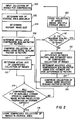
- the collection of images is input (100) to processor 24.
- the predetermined storage capacity in the form of the size of a storage medium 40 on which the compressed image set will be stored, is determined (102).
- the size from step 102 is divided by the number of images in the collection to determine the predetermined average image size (104).
- a look-up table consisting of compression scale factors and compressed average image sizes at the respective scale factor is used to determine an initial scale factor (108).
- the different scale factors in a single JPEG compression algorithm provide different compression functions.
- the table is traversed until a scale factor is found with an average size less than or equal to the predetermined average image size (from step 104).
- the collection of images is compressed using the initial scale factor determined from step 108 (110).
- the resulting size of the collection is determined (112) followed by a determination if the compressed image collection will fit within the size of the storage space (114). If the collection does fit the compression process is complete and the collection is stored (116) on a single storage medium 40 by writer 30. If the collection does not fit then the method determines if the maximum scale factor was used (118) (that is, if a predetermined maximum compression function exceeded).
- step 118 is answered negatively.
- images from a roll of a typical consumer's film for example, containing up to 12, 24 or 36 images
- step 118 will be answered negatively on the first or second cycle at most.
- the difference between the actual size of the collection (from step 112) and the predetermined average size (from step 104) is determined (122).
- the predetermined average image size is adjusted by this difference and the same look-up table again traversed to find a new scale factor (124).
- the compression function is altered based on the difference between the size of the resulting compressed image set and the predetermined storage capacity.
- the collection of images is then compressed using this new scale factor (126) (that is, the altered compression function).
- the actual size of the compressed image collection is then determined (back to step 112).
- the data for the look-up table described above is obtained as an average figure using a large group of images (such as several hundred, for example about 600) of a type to which the collection belongs. For example, if it is expected that the typical collection of images to be compressed are those of consumers, a very large group of many consumer images is obtained and each image of the group compressed using each compression scale factor in the table. The average size of the resulting compressed images is then associated with that compression scale factor in the table. Similarly, the predetermined maximum scale factor can be obtained using such a large group of images, the maximum allowable scale factor being the maximum value which still on average yields perceptibly adequate results for the class of users originating images of the type of which the large group is composed.
- look-up table and maximum scale factor will be set for a given resolution of the images in the collection, such as about 700 pixels by about 500 pixels. Whenever it is expected that images of a different resolution will be handled, a new look-up table and maximum allowable scale factor should be determined using a very large set of images having that new resolution.
- step 114 is answered affirmatively.
- steps 118, 120 until the maximum scale factor (“Q") is not used in step 118.
- Either or both iterations in the preceding paragraph can be performed a sufficient number of times so that not only does the compressed image collection fit within the storage media, but is of a size no less than a preselected proportion of the predetermined storage capacity (for example, no less than 75%, 80%, or 95% of the predetermined storage capacity). This ensures that close to all the storage space in a medium is utilized thereby maximizing the image quality.
- This additional step is illustrated in FIG. 4.
Landscapes
- Engineering & Computer Science (AREA)
- Physics & Mathematics (AREA)
- General Physics & Mathematics (AREA)
- Multimedia (AREA)
- Discrete Mathematics (AREA)
- Theoretical Computer Science (AREA)
- Signal Processing (AREA)
- Compression Or Coding Systems Of Tv Signals (AREA)
- Compression Of Band Width Or Redundancy In Fax (AREA)
Abstract
Description
- 10
- Developer
- 11
- Canister
- 12
- Film
- 14
- Images
- 20
- Scanner
- 22
- Apparatus
- 24
- Processor
- 26
- Memory
- 27
- Monitor
- 28
- Optional Operator Input
- 30
- Writer
- 40
- Storage Media
- 100-126
- Steps
Claims (10)
- A method of compressing a collection of images using a variable compression function, comprising:(a) compressing the set using an initial function;(b) comparing the size of the resulting compressed image set with a predetermined storage capacity;(c) altering the function based on the difference between the size of the resulting compressed image set and the predetermined storage capacity;(d) compressing the collection of images using the altered function.
- A method according to claim 1 wherein steps (b) through (d) are repeated as necessary until the size of the compressed image set is no greater than the predetermined storage capacity and is no less than a preselected proportion of the predetermined storage capacity.
- A method according to claim 1 wherein the initial function is based on a predetermined average image size.
- A method according to claim 3 wherein the initial function is based on an estimated compressed size of the image set selected from a look up table.
- A method according to claim 1 wherein the function is altered using interpolation, extrapolation, incremental adjustment, or stepwise adjustment.
- A product for compressing a collection of images using a variable compression function, defined by the steps of:(a) compressing the set using an initial function;(b) comparing the size of the resulting compressed image set with a predetermined storage capacity;(c) determining an altered compression function based on the difference between the size of the resulting compressed image set and the predetermined storage capacity; and(d) comparing the altered compression function with a predetermined maximum compression function and, when the maximum compression function is exceeded, splitting the collection of images into multiple image sub-collections.
- A product according to claim 7 additionally comprising, for at least one image sub-collection, repeating steps (a) to (c) using the image sub-collection as the collection of images.
- A product according to claim 7 additionally comprising, for at least one image sub-collection, repeating steps (a) to (d) using the image sub-collection as the collection of images.
- An apparatus for compressing a collection of images using a variable compression function, comprising:(a) a first image compressor to compress the set using an initial function;(b) a comparator to compare the size of the resulting compressed image set with a predetermined storage capacity;(c) a function modifier to alter the function based on the difference between the size of the resulting compressed image set and the predetermined storage capacity;(d) a second compressor to compress the collection of images using the altered function.
- An apparatus according to claim 12 additionally comprising repeating means for iteratively causing the image to be passed through components (a) through (d) as necessary until the size of the compressed image set is no greater than the predetermined storage capacity and is no less than a preselected proportion of the predetermined storage capacity.
Applications Claiming Priority (2)
| Application Number | Priority Date | Filing Date | Title |
|---|---|---|---|
| US08/842,453 US5974182A (en) | 1997-04-24 | 1997-04-24 | Photographic image compression method and system |
| US842453 | 1997-04-24 |
Publications (2)
| Publication Number | Publication Date |
|---|---|
| EP0874520A2 true EP0874520A2 (en) | 1998-10-28 |
| EP0874520A3 EP0874520A3 (en) | 1999-11-10 |
Family
ID=25287332
Family Applications (1)
| Application Number | Title | Priority Date | Filing Date |
|---|---|---|---|
| EP98201160A Withdrawn EP0874520A3 (en) | 1997-04-24 | 1998-04-11 | Photographic image compression method and system |
Country Status (3)
| Country | Link |
|---|---|
| US (1) | US5974182A (en) |
| EP (1) | EP0874520A3 (en) |
| JP (1) | JPH10327404A (en) |
Cited By (3)
| Publication number | Priority date | Publication date | Assignee | Title |
|---|---|---|---|---|
| EP1309174A2 (en) | 2001-11-01 | 2003-05-07 | Hewlett-Packard Company | Data compression |
| WO2003043349A1 (en) * | 2001-11-13 | 2003-05-22 | Diasemi Dialog Semiconductor Ab | Method for compressing digital images to a predetermined size by calculating an optimal quality factor |
| US7751633B1 (en) | 2006-08-31 | 2010-07-06 | Hewlett-Packard Development Company, L.P. | Method for compressing an image |
Families Citing this family (12)
| Publication number | Priority date | Publication date | Assignee | Title |
|---|---|---|---|---|
| US6321040B1 (en) * | 1998-06-04 | 2001-11-20 | Eastman Kodak Company | System and method of scanning, viewing and writing information on a magnetic layer of photosensitive film |
| JP4273586B2 (en) * | 1999-08-17 | 2009-06-03 | 株式会社ニコン | Electronic camera and recording medium on which image processing program is recorded |
| JP3406557B2 (en) * | 2000-02-18 | 2003-05-12 | パナソニック コミュニケーションズ株式会社 | MFP |
| JP2002196797A (en) * | 2000-12-27 | 2002-07-12 | Toshiba Corp | Recording / reproducing apparatus and recording / reproducing method thereof |
| US6965698B2 (en) * | 2001-12-21 | 2005-11-15 | Canon Kabushiki Kaisha | Image composition for use in lossy compression |
| US6976026B1 (en) * | 2002-03-14 | 2005-12-13 | Microsoft Corporation | Distributing limited storage among a collection of media objects |
| JP3716225B2 (en) * | 2002-04-05 | 2005-11-16 | 松下電器産業株式会社 | Code amount control apparatus and code amount control method |
| US7836021B2 (en) * | 2004-01-15 | 2010-11-16 | Xerox Corporation | Method and system for managing image files in a hierarchical storage management system |
| JP2008042401A (en) * | 2006-08-03 | 2008-02-21 | Canon Inc | Information processing apparatus and information processing method |
| US8145490B2 (en) * | 2007-10-24 | 2012-03-27 | Nuance Communications, Inc. | Predicting a resultant attribute of a text file before it has been converted into an audio file |
| US20100042655A1 (en) * | 2008-08-18 | 2010-02-18 | Xerox Corporation | Method for selective compression for planned degradation and obsolence of files |
| US10038902B2 (en) | 2009-11-06 | 2018-07-31 | Adobe Systems Incorporated | Compression of a collection of images using pattern separation and re-organization |
Family Cites Families (16)
| Publication number | Priority date | Publication date | Assignee | Title |
|---|---|---|---|---|
| US4903317A (en) * | 1986-06-24 | 1990-02-20 | Kabushiki Kaisha Toshiba | Image processing apparatus |
| EP0390421B1 (en) * | 1989-03-30 | 1994-07-06 | Canon Kabushiki Kaisha | Still video camera |
| JP2921879B2 (en) * | 1989-09-29 | 1999-07-19 | 株式会社東芝 | Image data processing device |
| DE69133320T2 (en) * | 1990-03-16 | 2004-07-22 | Canon K.K. | Image encoding and recording device and method |
| JPH0828820B2 (en) * | 1990-05-28 | 1996-03-21 | 村田機械株式会社 | Image data coding circuit |
| KR930000033B1 (en) * | 1990-10-18 | 1993-01-06 | 삼성전자 주식회사 | Quantification wide adjusting circuits using edge detection |
| EP0514663A3 (en) * | 1991-05-24 | 1993-07-14 | International Business Machines Corporation | An apparatus and method for motion video encoding employing an adaptive quantizer |
| US5265180A (en) * | 1991-06-13 | 1993-11-23 | Intel Corporation | Method of encoding a sequence of images of a digital motion video signal |
| US5355450A (en) * | 1992-04-10 | 1994-10-11 | Avid Technology, Inc. | Media composer with adjustable source material compression |
| KR0132894B1 (en) * | 1992-03-13 | 1998-10-01 | 강진구 | Image compression encoding and decoding method and apparatus |
| US5467134A (en) * | 1992-12-22 | 1995-11-14 | Microsoft Corporation | Method and system for compressing video data |
| US5426463A (en) * | 1993-02-22 | 1995-06-20 | Rca Thomson Licensing Corporation | Apparatus for controlling quantizing in a video signal compressor |
| JPH06268842A (en) * | 1993-03-15 | 1994-09-22 | Hitachi Ltd | Picture processor |
| US5666161A (en) * | 1993-04-26 | 1997-09-09 | Hitachi, Ltd. | Method and apparatus for creating less amount of compressd image data from compressed still image data and system for transmitting compressed image data through transmission line |
| JPH06334871A (en) * | 1993-05-18 | 1994-12-02 | Canon Inc | Image forming device |
| JP3302862B2 (en) * | 1995-09-20 | 2002-07-15 | 株式会社日立製作所 | Color image signal compression method, image encoding / decoding device, and image processing system |
-
1997
- 1997-04-24 US US08/842,453 patent/US5974182A/en not_active Expired - Fee Related
-
1998
- 1998-04-11 EP EP98201160A patent/EP0874520A3/en not_active Withdrawn
- 1998-04-24 JP JP10115274A patent/JPH10327404A/en active Pending
Cited By (5)
| Publication number | Priority date | Publication date | Assignee | Title |
|---|---|---|---|---|
| EP1309174A2 (en) | 2001-11-01 | 2003-05-07 | Hewlett-Packard Company | Data compression |
| EP1309174A3 (en) * | 2001-11-01 | 2004-10-20 | Hewlett-Packard Company | Data compression |
| US7003167B2 (en) | 2001-11-01 | 2006-02-21 | Hewlett-Packard Development Company, L.P. | Single-pass guaranteed-fit data compression using rate feedback |
| WO2003043349A1 (en) * | 2001-11-13 | 2003-05-22 | Diasemi Dialog Semiconductor Ab | Method for compressing digital images to a predetermined size by calculating an optimal quality factor |
| US7751633B1 (en) | 2006-08-31 | 2010-07-06 | Hewlett-Packard Development Company, L.P. | Method for compressing an image |
Also Published As
| Publication number | Publication date |
|---|---|
| EP0874520A3 (en) | 1999-11-10 |
| US5974182A (en) | 1999-10-26 |
| JPH10327404A (en) | 1998-12-08 |
Similar Documents
| Publication | Publication Date | Title |
|---|---|---|
| US6195462B1 (en) | Image compression | |
| US5974182A (en) | Photographic image compression method and system | |
| US6633685B1 (en) | Method, apparatus, and storage media for image processing | |
| US5757965A (en) | Image processing apparatus for performing compression of image data based on serially input effective size data | |
| US6976026B1 (en) | Distributing limited storage among a collection of media objects | |
| US5677689A (en) | Fixed rate JPEG compliant still image compression | |
| US8213747B2 (en) | Variable resolution images | |
| US7136193B2 (en) | Image processing technology performing designated processing on normal orthogonally transformed images | |
| US7257266B2 (en) | Lossy/lossless region-of-interest image coding | |
| US7545530B1 (en) | Automatically preparing an image for download | |
| US20090317010A1 (en) | Multiple Resolution Image Storage | |
| US6741746B2 (en) | Method and apparatus for processing image files | |
| EP1037165B1 (en) | Method and apparatus for processing image files | |
| US6909436B1 (en) | Radiologist workstation | |
| JP2002027256A (en) | Method for compressing digital document by controlling picture quality undergoing various compression rate constraint | |
| US20050008224A1 (en) | Image compression usable with animated images | |
| US7463782B2 (en) | Data encoding with an amplitude model and path between the data and corresponding decoding | |
| US6292587B1 (en) | Image encoding method and apparatus with adaptive prediction | |
| WO2002029983A2 (en) | A data-efficient and self adapting imaging spectrometry method and an apparatus thereof | |
| CN1321523C (en) | Two-step image compression with compression parameter adjustment | |
| US6822587B2 (en) | Digital signal coding and decoding | |
| US6339659B1 (en) | Fractal coding/decoding of picture data using memory capacity information | |
| US6373989B1 (en) | Iterated image transformation and decoding apparatus and method, and recording medium | |
| JP3330181B2 (en) | Image information processing apparatus and method | |
| JPH07262062A (en) | Filing equipment |
Legal Events
| Date | Code | Title | Description |
|---|---|---|---|
| PUAI | Public reference made under article 153(3) epc to a published international application that has entered the european phase |
Free format text: ORIGINAL CODE: 0009012 |
|
| AK | Designated contracting states |
Kind code of ref document: A2 Designated state(s): DE FR GB |
|
| AX | Request for extension of the european patent |
Free format text: AL;LT;LV;MK;RO;SI |
|
| PUAL | Search report despatched |
Free format text: ORIGINAL CODE: 0009013 |
|
| AK | Designated contracting states |
Kind code of ref document: A3 Designated state(s): AT BE CH CY DE DK ES FI FR GB GR IE IT LI LU MC NL PT SE |
|
| AX | Request for extension of the european patent |
Free format text: AL;LT;LV;MK;RO;SI |
|
| 17P | Request for examination filed |
Effective date: 20000414 |
|
| AKX | Designation fees paid |
Free format text: DE FR GB |
|
| 17Q | First examination report despatched |
Effective date: 20040802 |
|
| STAA | Information on the status of an ep patent application or granted ep patent |
Free format text: STATUS: THE APPLICATION IS DEEMED TO BE WITHDRAWN |
|
| 18D | Application deemed to be withdrawn |
Effective date: 20041102 |