EP0871734B1 - Polypeptide fragments capable of competition with streptococcus mutans antigen i/ii - Google Patents
Polypeptide fragments capable of competition with streptococcus mutans antigen i/ii Download PDFInfo
- Publication number
- EP0871734B1 EP0871734B1 EP96901431A EP96901431A EP0871734B1 EP 0871734 B1 EP0871734 B1 EP 0871734B1 EP 96901431 A EP96901431 A EP 96901431A EP 96901431 A EP96901431 A EP 96901431A EP 0871734 B1 EP0871734 B1 EP 0871734B1
- Authority
- EP
- European Patent Office
- Prior art keywords
- polypeptide
- sequence
- seq
- cell
- polypeptides
- Prior art date
- Legal status (The legal status is an assumption and is not a legal conclusion. Google has not performed a legal analysis and makes no representation as to the accuracy of the status listed.)
- Expired - Lifetime
Links
- 108090000765 processed proteins & peptides Proteins 0.000 title claims abstract description 271
- 101001114119 Streptococcus mutans Major cell-surface adhesin PAc Proteins 0.000 title claims abstract description 6
- 102000004196 processed proteins & peptides Human genes 0.000 title claims description 242
- 229920001184 polypeptide Polymers 0.000 title claims description 178
- 239000012634 fragment Substances 0.000 title description 27
- 241000194019 Streptococcus mutans Species 0.000 claims abstract description 45
- 208000002925 dental caries Diseases 0.000 claims abstract description 24
- 150000007523 nucleic acids Chemical group 0.000 claims description 56
- 210000004027 cell Anatomy 0.000 claims description 51
- 239000013598 vector Substances 0.000 claims description 38
- 150000001413 amino acids Chemical class 0.000 claims description 32
- 210000003719 b-lymphocyte Anatomy 0.000 claims description 32
- 108091028043 Nucleic acid sequence Proteins 0.000 claims description 30
- 239000000203 mixture Substances 0.000 claims description 29
- 230000004044 response Effects 0.000 claims description 21
- 230000004071 biological effect Effects 0.000 claims description 14
- 230000005867 T cell response Effects 0.000 claims description 10
- 229960005486 vaccine Drugs 0.000 claims description 10
- 238000006467 substitution reaction Methods 0.000 claims description 9
- 230000000699 topical effect Effects 0.000 claims description 9
- 238000002255 vaccination Methods 0.000 claims description 9
- 210000004899 c-terminal region Anatomy 0.000 claims description 7
- 238000012217 deletion Methods 0.000 claims description 7
- 230000037430 deletion Effects 0.000 claims description 7
- 239000008194 pharmaceutical composition Substances 0.000 claims description 7
- 238000003780 insertion Methods 0.000 claims description 6
- 230000037431 insertion Effects 0.000 claims description 6
- 230000002860 competitive effect Effects 0.000 claims description 5
- 239000003814 drug Substances 0.000 claims description 5
- 125000003368 amide group Chemical group 0.000 claims description 3
- 230000003467 diminishing effect Effects 0.000 claims description 3
- 230000021736 acetylation Effects 0.000 claims description 2
- 238000006640 acetylation reaction Methods 0.000 claims description 2
- 239000003937 drug carrier Substances 0.000 claims description 2
- 238000004519 manufacturing process Methods 0.000 claims description 2
- 125000003275 alpha amino acid group Chemical group 0.000 claims 4
- 239000003795 chemical substances by application Substances 0.000 abstract description 3
- 230000028993 immune response Effects 0.000 abstract 1
- 210000001744 T-lymphocyte Anatomy 0.000 description 29
- 230000027455 binding Effects 0.000 description 28
- 238000000034 method Methods 0.000 description 22
- 108090000623 proteins and genes Proteins 0.000 description 20
- 235000001014 amino acid Nutrition 0.000 description 18
- 108020004707 nucleic acids Proteins 0.000 description 17
- 102000039446 nucleic acids Human genes 0.000 description 17
- 210000003296 saliva Anatomy 0.000 description 16
- 239000000427 antigen Substances 0.000 description 14
- 102000036639 antigens Human genes 0.000 description 14
- 108091007433 antigens Proteins 0.000 description 14
- 230000005764 inhibitory process Effects 0.000 description 13
- 230000000890 antigenic effect Effects 0.000 description 12
- 238000009472 formulation Methods 0.000 description 12
- 108020004414 DNA Proteins 0.000 description 11
- 238000003556 assay Methods 0.000 description 11
- 235000018102 proteins Nutrition 0.000 description 10
- 102000004169 proteins and genes Human genes 0.000 description 10
- 238000004458 analytical method Methods 0.000 description 9
- 239000013604 expression vector Substances 0.000 description 9
- 238000002649 immunization Methods 0.000 description 9
- 210000002966 serum Anatomy 0.000 description 9
- IQFYYKKMVGJFEH-XLPZGREQSA-N Thymidine Chemical compound O=C1NC(=O)C(C)=CN1[C@@H]1O[C@H](CO)[C@@H](O)C1 IQFYYKKMVGJFEH-XLPZGREQSA-N 0.000 description 8
- 238000010369 molecular cloning Methods 0.000 description 8
- RTZKZFJDLAIYFH-UHFFFAOYSA-N Diethyl ether Chemical compound CCOCC RTZKZFJDLAIYFH-UHFFFAOYSA-N 0.000 description 7
- 241000588724 Escherichia coli Species 0.000 description 7
- 230000001580 bacterial effect Effects 0.000 description 7
- 230000000694 effects Effects 0.000 description 7
- YMWUJEATGCHHMB-UHFFFAOYSA-N Dichloromethane Chemical compound ClCCl YMWUJEATGCHHMB-UHFFFAOYSA-N 0.000 description 6
- ZMXDDKWLCZADIW-UHFFFAOYSA-N N,N-Dimethylformamide Chemical compound CN(C)C=O ZMXDDKWLCZADIW-UHFFFAOYSA-N 0.000 description 6
- 241000283973 Oryctolagus cuniculus Species 0.000 description 6
- 230000002378 acidificating effect Effects 0.000 description 6
- 239000000463 material Substances 0.000 description 6
- 238000002360 preparation method Methods 0.000 description 6
- 230000009696 proliferative response Effects 0.000 description 6
- 230000000638 stimulation Effects 0.000 description 6
- 241000894006 Bacteria Species 0.000 description 5
- KCXVZYZYPLLWCC-UHFFFAOYSA-N EDTA Chemical compound OC(=O)CN(CC(O)=O)CCN(CC(O)=O)CC(O)=O KCXVZYZYPLLWCC-UHFFFAOYSA-N 0.000 description 5
- 241000699670 Mus sp. Species 0.000 description 5
- 239000000872 buffer Substances 0.000 description 5
- 230000006957 competitive inhibition Effects 0.000 description 5
- 238000007796 conventional method Methods 0.000 description 5
- LOKCTEFSRHRXRJ-UHFFFAOYSA-I dipotassium trisodium dihydrogen phosphate hydrogen phosphate dichloride Chemical compound P(=O)(O)(O)[O-].[K+].P(=O)(O)([O-])[O-].[Na+].[Na+].[Cl-].[K+].[Cl-].[Na+] LOKCTEFSRHRXRJ-UHFFFAOYSA-I 0.000 description 5
- 239000003112 inhibitor Substances 0.000 description 5
- 230000003993 interaction Effects 0.000 description 5
- 210000003819 peripheral blood mononuclear cell Anatomy 0.000 description 5
- 239000002953 phosphate buffered saline Substances 0.000 description 5
- 239000013612 plasmid Substances 0.000 description 5
- 238000003786 synthesis reaction Methods 0.000 description 5
- 108091026890 Coding region Proteins 0.000 description 4
- 238000002965 ELISA Methods 0.000 description 4
- 239000002671 adjuvant Substances 0.000 description 4
- 238000005119 centrifugation Methods 0.000 description 4
- 230000000295 complement effect Effects 0.000 description 4
- 238000010790 dilution Methods 0.000 description 4
- 239000012895 dilution Substances 0.000 description 4
- 239000000499 gel Substances 0.000 description 4
- 238000011534 incubation Methods 0.000 description 4
- 208000015181 infectious disease Diseases 0.000 description 4
- 238000002347 injection Methods 0.000 description 4
- 239000007924 injection Substances 0.000 description 4
- 239000002502 liposome Substances 0.000 description 4
- 210000004698 lymphocyte Anatomy 0.000 description 4
- 230000001589 lymphoproliferative effect Effects 0.000 description 4
- 239000000725 suspension Substances 0.000 description 4
- 238000001262 western blot Methods 0.000 description 4
- 108091032973 (ribonucleotides)n+m Proteins 0.000 description 3
- OYPRJOBELJOOCE-UHFFFAOYSA-N Calcium Chemical compound [Ca] OYPRJOBELJOOCE-UHFFFAOYSA-N 0.000 description 3
- -1 Fmoc amino acids Chemical class 0.000 description 3
- 241000282412 Homo Species 0.000 description 3
- ZDXPYRJPNDTMRX-VKHMYHEASA-N L-glutamine Chemical compound OC(=O)[C@@H](N)CCC(N)=O ZDXPYRJPNDTMRX-VKHMYHEASA-N 0.000 description 3
- 241000124008 Mammalia Species 0.000 description 3
- JGFZNNIVVJXRND-UHFFFAOYSA-N N,N-Diisopropylethylamine (DIPEA) Chemical compound CCN(C(C)C)C(C)C JGFZNNIVVJXRND-UHFFFAOYSA-N 0.000 description 3
- 108700001237 Nucleic Acid-Based Vaccines Proteins 0.000 description 3
- 239000004793 Polystyrene Substances 0.000 description 3
- 235000004279 alanine Nutrition 0.000 description 3
- 125000000539 amino acid group Chemical group 0.000 description 3
- 239000011575 calcium Substances 0.000 description 3
- 229910052791 calcium Inorganic materials 0.000 description 3
- 238000013461 design Methods 0.000 description 3
- 201000010099 disease Diseases 0.000 description 3
- 208000037265 diseases, disorders, signs and symptoms Diseases 0.000 description 3
- 229940079593 drug Drugs 0.000 description 3
- 239000012530 fluid Substances 0.000 description 3
- 230000002068 genetic effect Effects 0.000 description 3
- 239000004615 ingredient Substances 0.000 description 3
- 230000002401 inhibitory effect Effects 0.000 description 3
- 238000010255 intramuscular injection Methods 0.000 description 3
- 239000007927 intramuscular injection Substances 0.000 description 3
- 238000002955 isolation Methods 0.000 description 3
- 210000004962 mammalian cell Anatomy 0.000 description 3
- 238000013507 mapping Methods 0.000 description 3
- 230000001404 mediated effect Effects 0.000 description 3
- 229940023146 nucleic acid vaccine Drugs 0.000 description 3
- 238000010647 peptide synthesis reaction Methods 0.000 description 3
- 229920002223 polystyrene Polymers 0.000 description 3
- 239000013641 positive control Substances 0.000 description 3
- 230000010076 replication Effects 0.000 description 3
- 239000000243 solution Substances 0.000 description 3
- 241000894007 species Species 0.000 description 3
- 241000701447 unidentified baculovirus Species 0.000 description 3
- JKMHFZQWWAIEOD-UHFFFAOYSA-N 2-[4-(2-hydroxyethyl)piperazin-1-yl]ethanesulfonic acid Chemical compound OCC[NH+]1CCN(CCS([O-])(=O)=O)CC1 JKMHFZQWWAIEOD-UHFFFAOYSA-N 0.000 description 2
- JDDWRLPTKIOUOF-UHFFFAOYSA-N 9h-fluoren-9-ylmethyl n-[[4-[2-[bis(4-methylphenyl)methylamino]-2-oxoethoxy]phenyl]-(2,4-dimethoxyphenyl)methyl]carbamate Chemical compound COC1=CC(OC)=CC=C1C(C=1C=CC(OCC(=O)NC(C=2C=CC(C)=CC=2)C=2C=CC(C)=CC=2)=CC=1)NC(=O)OCC1C2=CC=CC=C2C2=CC=CC=C21 JDDWRLPTKIOUOF-UHFFFAOYSA-N 0.000 description 2
- 108091003079 Bovine Serum Albumin Proteins 0.000 description 2
- 241000701022 Cytomegalovirus Species 0.000 description 2
- 239000003155 DNA primer Substances 0.000 description 2
- 241001198387 Escherichia coli BL21(DE3) Species 0.000 description 2
- WHUUTDBJXJRKMK-UHFFFAOYSA-N Glutamic acid Natural products OC(=O)C(N)CCC(O)=O WHUUTDBJXJRKMK-UHFFFAOYSA-N 0.000 description 2
- 239000007995 HEPES buffer Substances 0.000 description 2
- 108010058597 HLA-DR Antigens Proteins 0.000 description 2
- 102000006354 HLA-DR Antigens Human genes 0.000 description 2
- 108010093013 HLA-DR1 Antigen Proteins 0.000 description 2
- 241000238631 Hexapoda Species 0.000 description 2
- 101000662009 Homo sapiens UDP-N-acetylglucosamine pyrophosphorylase Proteins 0.000 description 2
- 239000000020 Nitrocellulose Substances 0.000 description 2
- 229910019142 PO4 Inorganic materials 0.000 description 2
- 229930182555 Penicillin Natural products 0.000 description 2
- JGSARLDLIJGVTE-MBNYWOFBSA-N Penicillin G Chemical compound N([C@H]1[C@H]2SC([C@@H](N2C1=O)C(O)=O)(C)C)C(=O)CC1=CC=CC=C1 JGSARLDLIJGVTE-MBNYWOFBSA-N 0.000 description 2
- 239000012980 RPMI-1640 medium Substances 0.000 description 2
- 108010071811 Simian immunodeficiency virus Gag protein p27 Proteins 0.000 description 2
- FAPWRFPIFSIZLT-UHFFFAOYSA-M Sodium chloride Chemical compound [Na+].[Cl-] FAPWRFPIFSIZLT-UHFFFAOYSA-M 0.000 description 2
- DTQVDTLACAAQTR-UHFFFAOYSA-N Trifluoroacetic acid Chemical compound OC(=O)C(F)(F)F DTQVDTLACAAQTR-UHFFFAOYSA-N 0.000 description 2
- 102100037921 UDP-N-acetylglucosamine pyrophosphorylase Human genes 0.000 description 2
- 125000003295 alanine group Chemical group N[C@@H](C)C(=O)* 0.000 description 2
- 230000004075 alteration Effects 0.000 description 2
- 239000011324 bead Substances 0.000 description 2
- 230000015572 biosynthetic process Effects 0.000 description 2
- 210000004369 blood Anatomy 0.000 description 2
- 239000008280 blood Substances 0.000 description 2
- 229940098773 bovine serum albumin Drugs 0.000 description 2
- 239000007975 buffered saline Substances 0.000 description 2
- 239000000969 carrier Substances 0.000 description 2
- 229940112822 chewing gum Drugs 0.000 description 2
- 235000015218 chewing gum Nutrition 0.000 description 2
- 238000010367 cloning Methods 0.000 description 2
- 239000003365 glass fiber Substances 0.000 description 2
- 238000009396 hybridization Methods 0.000 description 2
- 210000004408 hybridoma Anatomy 0.000 description 2
- 230000036039 immunity Effects 0.000 description 2
- 238000010348 incorporation Methods 0.000 description 2
- 229930027917 kanamycin Natural products 0.000 description 2
- 229960000318 kanamycin Drugs 0.000 description 2
- SBUJHOSQTJFQJX-NOAMYHISSA-N kanamycin Chemical compound O[C@@H]1[C@@H](O)[C@H](O)[C@@H](CN)O[C@@H]1O[C@H]1[C@H](O)[C@@H](O[C@@H]2[C@@H]([C@@H](N)[C@H](O)[C@@H](CO)O2)O)[C@H](N)C[C@@H]1N SBUJHOSQTJFQJX-NOAMYHISSA-N 0.000 description 2
- 229930182823 kanamycin A Natural products 0.000 description 2
- 239000003550 marker Substances 0.000 description 2
- 239000002324 mouth wash Substances 0.000 description 2
- 230000010807 negative regulation of binding Effects 0.000 description 2
- 229920001220 nitrocellulos Polymers 0.000 description 2
- 239000002245 particle Substances 0.000 description 2
- 229940049954 penicillin Drugs 0.000 description 2
- 239000013600 plasmid vector Substances 0.000 description 2
- 239000000843 powder Substances 0.000 description 2
- 239000013615 primer Substances 0.000 description 2
- 239000002987 primer (paints) Substances 0.000 description 2
- 230000008569 process Effects 0.000 description 2
- 230000035755 proliferation Effects 0.000 description 2
- 230000001681 protective effect Effects 0.000 description 2
- 239000000523 sample Substances 0.000 description 2
- 239000011734 sodium Substances 0.000 description 2
- 238000002415 sodium dodecyl sulfate polyacrylamide gel electrophoresis Methods 0.000 description 2
- UCSJYZPVAKXKNQ-HZYVHMACSA-N streptomycin Chemical compound CN[C@H]1[C@H](O)[C@@H](O)[C@H](CO)O[C@H]1O[C@@H]1[C@](C=O)(O)[C@H](C)O[C@H]1O[C@@H]1[C@@H](NC(N)=N)[C@H](O)[C@@H](NC(N)=N)[C@H](O)[C@H]1O UCSJYZPVAKXKNQ-HZYVHMACSA-N 0.000 description 2
- 229940126577 synthetic vaccine Drugs 0.000 description 2
- 239000003826 tablet Substances 0.000 description 2
- 230000001225 therapeutic effect Effects 0.000 description 2
- 239000000606 toothpaste Substances 0.000 description 2
- DGVVWUTYPXICAM-UHFFFAOYSA-N β‐Mercaptoethanol Chemical compound OCCS DGVVWUTYPXICAM-UHFFFAOYSA-N 0.000 description 2
- QRXMUCSWCMTJGU-UHFFFAOYSA-L (5-bromo-4-chloro-1h-indol-3-yl) phosphate Chemical compound C1=C(Br)C(Cl)=C2C(OP([O-])(=O)[O-])=CNC2=C1 QRXMUCSWCMTJGU-UHFFFAOYSA-L 0.000 description 1
- 125000003088 (fluoren-9-ylmethoxy)carbonyl group Chemical group 0.000 description 1
- NHBKXEKEPDILRR-UHFFFAOYSA-N 2,3-bis(butanoylsulfanyl)propyl butanoate Chemical compound CCCC(=O)OCC(SC(=O)CCC)CSC(=O)CCC NHBKXEKEPDILRR-UHFFFAOYSA-N 0.000 description 1
- QKNYBSVHEMOAJP-UHFFFAOYSA-N 2-amino-2-(hydroxymethyl)propane-1,3-diol;hydron;chloride Chemical compound Cl.OCC(N)(CO)CO QKNYBSVHEMOAJP-UHFFFAOYSA-N 0.000 description 1
- XZKIHKMTEMTJQX-UHFFFAOYSA-N 4-Nitrophenyl Phosphate Chemical compound OP(O)(=O)OC1=CC=C([N+]([O-])=O)C=C1 XZKIHKMTEMTJQX-UHFFFAOYSA-N 0.000 description 1
- HRPVXLWXLXDGHG-UHFFFAOYSA-N Acrylamide Chemical compound NC(=O)C=C HRPVXLWXLXDGHG-UHFFFAOYSA-N 0.000 description 1
- 102000002260 Alkaline Phosphatase Human genes 0.000 description 1
- 108020004774 Alkaline Phosphatase Proteins 0.000 description 1
- 238000011725 BALB/c mouse Methods 0.000 description 1
- 108010062580 Concanavalin A Proteins 0.000 description 1
- 150000008574 D-amino acids Chemical class 0.000 description 1
- 241000672609 Escherichia coli BL21 Species 0.000 description 1
- 241001646716 Escherichia coli K-12 Species 0.000 description 1
- 229920001917 Ficoll Polymers 0.000 description 1
- BDAGIHXWWSANSR-UHFFFAOYSA-M Formate Chemical compound [O-]C=O BDAGIHXWWSANSR-UHFFFAOYSA-M 0.000 description 1
- 101150062179 II gene Proteins 0.000 description 1
- 108700002232 Immediate-Early Genes Proteins 0.000 description 1
- 108091092195 Intron Proteins 0.000 description 1
- 239000007836 KH2PO4 Substances 0.000 description 1
- ONIBWKKTOPOVIA-BYPYZUCNSA-N L-Proline Chemical compound OC(=O)[C@@H]1CCCN1 ONIBWKKTOPOVIA-BYPYZUCNSA-N 0.000 description 1
- QNAYBMKLOCPYGJ-REOHCLBHSA-N L-alanine Chemical compound C[C@H](N)C(O)=O QNAYBMKLOCPYGJ-REOHCLBHSA-N 0.000 description 1
- CKLJMWTZIZZHCS-REOHCLBHSA-N L-aspartic acid Chemical compound OC(=O)[C@@H](N)CC(O)=O CKLJMWTZIZZHCS-REOHCLBHSA-N 0.000 description 1
- WHUUTDBJXJRKMK-VKHMYHEASA-N L-glutamic acid Chemical compound OC(=O)[C@@H](N)CCC(O)=O WHUUTDBJXJRKMK-VKHMYHEASA-N 0.000 description 1
- 229930182816 L-glutamine Natural products 0.000 description 1
- 239000006137 Luria-Bertani broth Substances 0.000 description 1
- 102000043131 MHC class II family Human genes 0.000 description 1
- 108091054438 MHC class II family Proteins 0.000 description 1
- 108010052285 Membrane Proteins Proteins 0.000 description 1
- 102000018697 Membrane Proteins Human genes 0.000 description 1
- 241001465754 Metazoa Species 0.000 description 1
- 241001529936 Murinae Species 0.000 description 1
- 241000699666 Mus <mouse, genus> Species 0.000 description 1
- 102000003505 Myosin Human genes 0.000 description 1
- 108060008487 Myosin Proteins 0.000 description 1
- 108091034117 Oligonucleotide Proteins 0.000 description 1
- 102000035195 Peptidases Human genes 0.000 description 1
- 108091005804 Peptidases Proteins 0.000 description 1
- 239000004743 Polypropylene Substances 0.000 description 1
- 229920001213 Polysorbate 20 Polymers 0.000 description 1
- ONIBWKKTOPOVIA-UHFFFAOYSA-N Proline Natural products OC(=O)C1CCCN1 ONIBWKKTOPOVIA-UHFFFAOYSA-N 0.000 description 1
- 239000004365 Protease Substances 0.000 description 1
- LCTONWCANYUPML-UHFFFAOYSA-M Pyruvate Chemical compound CC(=O)C([O-])=O LCTONWCANYUPML-UHFFFAOYSA-M 0.000 description 1
- 108020004511 Recombinant DNA Proteins 0.000 description 1
- 108010008281 Recombinant Fusion Proteins Proteins 0.000 description 1
- 102000007056 Recombinant Fusion Proteins Human genes 0.000 description 1
- 240000004808 Saccharomyces cerevisiae Species 0.000 description 1
- MTCFGRXMJLQNBG-UHFFFAOYSA-N Serine Natural products OCC(N)C(O)=O MTCFGRXMJLQNBG-UHFFFAOYSA-N 0.000 description 1
- 108091081024 Start codon Proteins 0.000 description 1
- 238000000692 Student's t-test Methods 0.000 description 1
- 108700005077 Viral Genes Proteins 0.000 description 1
- JLCPHMBAVCMARE-UHFFFAOYSA-N [3-[[3-[[3-[[3-[[3-[[3-[[3-[[3-[[3-[[3-[[3-[[5-(2-amino-6-oxo-1H-purin-9-yl)-3-[[3-[[3-[[3-[[3-[[3-[[5-(2-amino-6-oxo-1H-purin-9-yl)-3-[[5-(2-amino-6-oxo-1H-purin-9-yl)-3-hydroxyoxolan-2-yl]methoxy-hydroxyphosphoryl]oxyoxolan-2-yl]methoxy-hydroxyphosphoryl]oxy-5-(5-methyl-2,4-dioxopyrimidin-1-yl)oxolan-2-yl]methoxy-hydroxyphosphoryl]oxy-5-(6-aminopurin-9-yl)oxolan-2-yl]methoxy-hydroxyphosphoryl]oxy-5-(6-aminopurin-9-yl)oxolan-2-yl]methoxy-hydroxyphosphoryl]oxy-5-(6-aminopurin-9-yl)oxolan-2-yl]methoxy-hydroxyphosphoryl]oxy-5-(6-aminopurin-9-yl)oxolan-2-yl]methoxy-hydroxyphosphoryl]oxyoxolan-2-yl]methoxy-hydroxyphosphoryl]oxy-5-(5-methyl-2,4-dioxopyrimidin-1-yl)oxolan-2-yl]methoxy-hydroxyphosphoryl]oxy-5-(4-amino-2-oxopyrimidin-1-yl)oxolan-2-yl]methoxy-hydroxyphosphoryl]oxy-5-(5-methyl-2,4-dioxopyrimidin-1-yl)oxolan-2-yl]methoxy-hydroxyphosphoryl]oxy-5-(5-methyl-2,4-dioxopyrimidin-1-yl)oxolan-2-yl]methoxy-hydroxyphosphoryl]oxy-5-(6-aminopurin-9-yl)oxolan-2-yl]methoxy-hydroxyphosphoryl]oxy-5-(6-aminopurin-9-yl)oxolan-2-yl]methoxy-hydroxyphosphoryl]oxy-5-(4-amino-2-oxopyrimidin-1-yl)oxolan-2-yl]methoxy-hydroxyphosphoryl]oxy-5-(4-amino-2-oxopyrimidin-1-yl)oxolan-2-yl]methoxy-hydroxyphosphoryl]oxy-5-(4-amino-2-oxopyrimidin-1-yl)oxolan-2-yl]methoxy-hydroxyphosphoryl]oxy-5-(6-aminopurin-9-yl)oxolan-2-yl]methoxy-hydroxyphosphoryl]oxy-5-(4-amino-2-oxopyrimidin-1-yl)oxolan-2-yl]methyl [5-(6-aminopurin-9-yl)-2-(hydroxymethyl)oxolan-3-yl] hydrogen phosphate Polymers Cc1cn(C2CC(OP(O)(=O)OCC3OC(CC3OP(O)(=O)OCC3OC(CC3O)n3cnc4c3nc(N)[nH]c4=O)n3cnc4c3nc(N)[nH]c4=O)C(COP(O)(=O)OC3CC(OC3COP(O)(=O)OC3CC(OC3COP(O)(=O)OC3CC(OC3COP(O)(=O)OC3CC(OC3COP(O)(=O)OC3CC(OC3COP(O)(=O)OC3CC(OC3COP(O)(=O)OC3CC(OC3COP(O)(=O)OC3CC(OC3COP(O)(=O)OC3CC(OC3COP(O)(=O)OC3CC(OC3COP(O)(=O)OC3CC(OC3COP(O)(=O)OC3CC(OC3COP(O)(=O)OC3CC(OC3COP(O)(=O)OC3CC(OC3COP(O)(=O)OC3CC(OC3COP(O)(=O)OC3CC(OC3COP(O)(=O)OC3CC(OC3CO)n3cnc4c(N)ncnc34)n3ccc(N)nc3=O)n3cnc4c(N)ncnc34)n3ccc(N)nc3=O)n3ccc(N)nc3=O)n3ccc(N)nc3=O)n3cnc4c(N)ncnc34)n3cnc4c(N)ncnc34)n3cc(C)c(=O)[nH]c3=O)n3cc(C)c(=O)[nH]c3=O)n3ccc(N)nc3=O)n3cc(C)c(=O)[nH]c3=O)n3cnc4c3nc(N)[nH]c4=O)n3cnc4c(N)ncnc34)n3cnc4c(N)ncnc34)n3cnc4c(N)ncnc34)n3cnc4c(N)ncnc34)O2)c(=O)[nH]c1=O JLCPHMBAVCMARE-UHFFFAOYSA-N 0.000 description 1
- 238000002835 absorbance Methods 0.000 description 1
- 238000010521 absorption reaction Methods 0.000 description 1
- 239000004480 active ingredient Substances 0.000 description 1
- 230000010933 acylation Effects 0.000 description 1
- 238000005917 acylation reaction Methods 0.000 description 1
- 238000007112 amidation reaction Methods 0.000 description 1
- 150000001408 amides Chemical class 0.000 description 1
- 150000001412 amines Chemical class 0.000 description 1
- 229960000723 ampicillin Drugs 0.000 description 1
- AVKUERGKIZMTKX-NJBDSQKTSA-N ampicillin Chemical compound C1([C@@H](N)C(=O)N[C@H]2[C@H]3SC([C@@H](N3C2=O)C(O)=O)(C)C)=CC=CC=C1 AVKUERGKIZMTKX-NJBDSQKTSA-N 0.000 description 1
- 239000003242 anti bacterial agent Substances 0.000 description 1
- 230000000844 anti-bacterial effect Effects 0.000 description 1
- 229940088710 antibiotic agent Drugs 0.000 description 1
- 230000005875 antibody response Effects 0.000 description 1
- 239000003963 antioxidant agent Substances 0.000 description 1
- 235000006708 antioxidants Nutrition 0.000 description 1
- 239000007864 aqueous solution Substances 0.000 description 1
- 235000003704 aspartic acid Nutrition 0.000 description 1
- 239000012298 atmosphere Substances 0.000 description 1
- 239000000022 bacteriostatic agent Substances 0.000 description 1
- 230000003385 bacteriostatic effect Effects 0.000 description 1
- 239000007640 basal medium Substances 0.000 description 1
- WGNZRLMOMHJUSP-UHFFFAOYSA-N benzotriazol-1-yloxy(tripyrrolidin-1-yl)phosphanium Chemical compound C1CCCN1[P+](N1CCCC1)(N1CCCC1)ON1C2=CC=CC=C2N=N1 WGNZRLMOMHJUSP-UHFFFAOYSA-N 0.000 description 1
- OQFSQFPPLPISGP-UHFFFAOYSA-N beta-carboxyaspartic acid Natural products OC(=O)C(N)C(C(O)=O)C(O)=O OQFSQFPPLPISGP-UHFFFAOYSA-N 0.000 description 1
- 230000001588 bifunctional effect Effects 0.000 description 1
- 239000012503 blood component Substances 0.000 description 1
- 239000012888 bovine serum Substances 0.000 description 1
- 239000001506 calcium phosphate Substances 0.000 description 1
- 229910000389 calcium phosphate Inorganic materials 0.000 description 1
- 235000011010 calcium phosphates Nutrition 0.000 description 1
- 244000309466 calf Species 0.000 description 1
- 239000002775 capsule Substances 0.000 description 1
- 229960003669 carbenicillin Drugs 0.000 description 1
- FPPNZSSZRUTDAP-UWFZAAFLSA-N carbenicillin Chemical compound N([C@H]1[C@H]2SC([C@@H](N2C1=O)C(O)=O)(C)C)C(=O)C(C(O)=O)C1=CC=CC=C1 FPPNZSSZRUTDAP-UWFZAAFLSA-N 0.000 description 1
- 235000014633 carbohydrates Nutrition 0.000 description 1
- 150000001720 carbohydrates Chemical class 0.000 description 1
- 239000004075 cariostatic agent Substances 0.000 description 1
- 239000006285 cell suspension Substances 0.000 description 1
- 238000007385 chemical modification Methods 0.000 description 1
- 238000006243 chemical reaction Methods 0.000 description 1
- 238000012411 cloning technique Methods 0.000 description 1
- 239000011248 coating agent Substances 0.000 description 1
- 238000000576 coating method Methods 0.000 description 1
- 230000001332 colony forming effect Effects 0.000 description 1
- 239000002299 complementary DNA Substances 0.000 description 1
- 239000000306 component Substances 0.000 description 1
- 150000001875 compounds Chemical class 0.000 description 1
- 238000010276 construction Methods 0.000 description 1
- 230000008878 coupling Effects 0.000 description 1
- 239000007822 coupling agent Substances 0.000 description 1
- 238000010168 coupling process Methods 0.000 description 1
- 238000005859 coupling reaction Methods 0.000 description 1
- 238000012258 culturing Methods 0.000 description 1
- 210000000805 cytoplasm Anatomy 0.000 description 1
- 230000002939 deleterious effect Effects 0.000 description 1
- 238000009795 derivation Methods 0.000 description 1
- 238000011161 development Methods 0.000 description 1
- BNIILDVGGAEEIG-UHFFFAOYSA-L disodium hydrogen phosphate Chemical compound [Na+].[Na+].OP([O-])([O-])=O BNIILDVGGAEEIG-UHFFFAOYSA-L 0.000 description 1
- 229910000397 disodium phosphate Inorganic materials 0.000 description 1
- 238000010494 dissociation reaction Methods 0.000 description 1
- 230000005593 dissociations Effects 0.000 description 1
- MOTZDAYCYVMXPC-UHFFFAOYSA-N dodecyl hydrogen sulfate Chemical compound CCCCCCCCCCCCOS(O)(=O)=O MOTZDAYCYVMXPC-UHFFFAOYSA-N 0.000 description 1
- 238000004520 electroporation Methods 0.000 description 1
- 238000005516 engineering process Methods 0.000 description 1
- 239000003623 enhancer Substances 0.000 description 1
- 210000003527 eukaryotic cell Anatomy 0.000 description 1
- 238000002474 experimental method Methods 0.000 description 1
- 235000013861 fat-free Nutrition 0.000 description 1
- 238000010353 genetic engineering Methods 0.000 description 1
- 239000011521 glass Substances 0.000 description 1
- 235000013922 glutamic acid Nutrition 0.000 description 1
- 239000004220 glutamic acid Substances 0.000 description 1
- ZDXPYRJPNDTMRX-UHFFFAOYSA-N glutamine Natural products OC(=O)C(N)CCC(N)=O ZDXPYRJPNDTMRX-UHFFFAOYSA-N 0.000 description 1
- 230000013595 glycosylation Effects 0.000 description 1
- 238000006206 glycosylation reaction Methods 0.000 description 1
- 239000008187 granular material Substances 0.000 description 1
- 239000001963 growth medium Substances 0.000 description 1
- 238000003306 harvesting Methods 0.000 description 1
- 229910052588 hydroxylapatite Inorganic materials 0.000 description 1
- 230000003053 immunization Effects 0.000 description 1
- 230000005847 immunogenicity Effects 0.000 description 1
- 238000000338 in vitro Methods 0.000 description 1
- 238000001727 in vivo Methods 0.000 description 1
- 238000011065 in-situ storage Methods 0.000 description 1
- 230000002458 infectious effect Effects 0.000 description 1
- 230000010354 integration Effects 0.000 description 1
- 238000007918 intramuscular administration Methods 0.000 description 1
- 238000001990 intravenous administration Methods 0.000 description 1
- 150000002632 lipids Chemical class 0.000 description 1
- 239000007788 liquid Substances 0.000 description 1
- 239000012669 liquid formulation Substances 0.000 description 1
- 210000001165 lymph node Anatomy 0.000 description 1
- 239000011159 matrix material Substances 0.000 description 1
- 239000002609 medium Substances 0.000 description 1
- 235000013336 milk Nutrition 0.000 description 1
- 239000008267 milk Substances 0.000 description 1
- 210000004080 milk Anatomy 0.000 description 1
- 230000004048 modification Effects 0.000 description 1
- 238000012986 modification Methods 0.000 description 1
- 238000012544 monitoring process Methods 0.000 description 1
- 229910000402 monopotassium phosphate Inorganic materials 0.000 description 1
- 229940051866 mouthwash Drugs 0.000 description 1
- 210000000663 muscle cell Anatomy 0.000 description 1
- 210000004898 n-terminal fragment Anatomy 0.000 description 1
- JPXMTWWFLBLUCD-UHFFFAOYSA-N nitro blue tetrazolium(2+) Chemical compound COC1=CC(C=2C=C(OC)C(=CC=2)[N+]=2N(N=C(N=2)C=2C=CC=CC=2)C=2C=CC(=CC=2)[N+]([O-])=O)=CC=C1[N+]1=NC(C=2C=CC=CC=2)=NN1C1=CC=C([N+]([O-])=O)C=C1 JPXMTWWFLBLUCD-UHFFFAOYSA-N 0.000 description 1
- 239000012457 nonaqueous media Substances 0.000 description 1
- 239000002773 nucleotide Substances 0.000 description 1
- 125000003729 nucleotide group Chemical group 0.000 description 1
- 210000000056 organ Anatomy 0.000 description 1
- 238000007911 parenteral administration Methods 0.000 description 1
- XYJRXVWERLGGKC-UHFFFAOYSA-D pentacalcium;hydroxide;triphosphate Chemical compound [OH-].[Ca+2].[Ca+2].[Ca+2].[Ca+2].[Ca+2].[O-]P([O-])([O-])=O.[O-]P([O-])([O-])=O.[O-]P([O-])([O-])=O XYJRXVWERLGGKC-UHFFFAOYSA-D 0.000 description 1
- 210000005105 peripheral blood lymphocyte Anatomy 0.000 description 1
- NBIIXXVUZAFLBC-UHFFFAOYSA-K phosphate Chemical compound [O-]P([O-])([O-])=O NBIIXXVUZAFLBC-UHFFFAOYSA-K 0.000 description 1
- 239000010452 phosphate Substances 0.000 description 1
- 238000002264 polyacrylamide gel electrophoresis Methods 0.000 description 1
- 230000008488 polyadenylation Effects 0.000 description 1
- 238000003752 polymerase chain reaction Methods 0.000 description 1
- 239000000256 polyoxyethylene sorbitan monolaurate Substances 0.000 description 1
- 235000010486 polyoxyethylene sorbitan monolaurate Nutrition 0.000 description 1
- 229920001155 polypropylene Polymers 0.000 description 1
- GNSKLFRGEWLPPA-UHFFFAOYSA-M potassium dihydrogen phosphate Chemical compound [K+].OP(O)([O-])=O GNSKLFRGEWLPPA-UHFFFAOYSA-M 0.000 description 1
- 238000001556 precipitation Methods 0.000 description 1
- 238000000159 protein binding assay Methods 0.000 description 1
- 230000017854 proteolysis Effects 0.000 description 1
- 239000013014 purified material Substances 0.000 description 1
- 238000003259 recombinant expression Methods 0.000 description 1
- 230000002829 reductive effect Effects 0.000 description 1
- 238000011160 research Methods 0.000 description 1
- 239000011347 resin Substances 0.000 description 1
- 229920005989 resin Polymers 0.000 description 1
- 108091008146 restriction endonucleases Proteins 0.000 description 1
- 230000001177 retroviral effect Effects 0.000 description 1
- 239000012146 running buffer Substances 0.000 description 1
- 238000012216 screening Methods 0.000 description 1
- 125000003607 serino group Chemical group [H]N([H])[C@]([H])(C(=O)[*])C(O[H])([H])[H] 0.000 description 1
- 239000011780 sodium chloride Substances 0.000 description 1
- 239000007787 solid Substances 0.000 description 1
- 210000004988 splenocyte Anatomy 0.000 description 1
- 238000010561 standard procedure Methods 0.000 description 1
- 229960005322 streptomycin Drugs 0.000 description 1
- QTENRWWVYAAPBI-YCRXJPFRSA-N streptomycin sulfate Chemical compound OS(O)(=O)=O.OS(O)(=O)=O.OS(O)(=O)=O.CN[C@H]1[C@H](O)[C@@H](O)[C@H](CO)O[C@H]1O[C@@H]1[C@](C=O)(O)[C@H](C)O[C@H]1O[C@@H]1[C@@H](N=C(N)N)[C@H](O)[C@@H](N=C(N)N)[C@H](O)[C@H]1O.CN[C@H]1[C@H](O)[C@@H](O)[C@H](CO)O[C@H]1O[C@@H]1[C@](C=O)(O)[C@H](C)O[C@H]1O[C@@H]1[C@@H](N=C(N)N)[C@H](O)[C@@H](N=C(N)N)[C@H](O)[C@H]1O QTENRWWVYAAPBI-YCRXJPFRSA-N 0.000 description 1
- 238000007920 subcutaneous administration Methods 0.000 description 1
- 238000010254 subcutaneous injection Methods 0.000 description 1
- 239000007929 subcutaneous injection Substances 0.000 description 1
- 239000000126 substance Substances 0.000 description 1
- 239000000758 substrate Substances 0.000 description 1
- 238000002198 surface plasmon resonance spectroscopy Methods 0.000 description 1
- 239000000375 suspending agent Substances 0.000 description 1
- 230000009885 systemic effect Effects 0.000 description 1
- 238000012360 testing method Methods 0.000 description 1
- 239000002562 thickening agent Substances 0.000 description 1
- 229940034610 toothpaste Drugs 0.000 description 1
- 230000002103 transcriptional effect Effects 0.000 description 1
- 230000009466 transformation Effects 0.000 description 1
- 230000001131 transforming effect Effects 0.000 description 1
- QORWJWZARLRLPR-UHFFFAOYSA-H tricalcium bis(phosphate) Chemical compound [Ca+2].[Ca+2].[Ca+2].[O-]P([O-])([O-])=O.[O-]P([O-])([O-])=O QORWJWZARLRLPR-UHFFFAOYSA-H 0.000 description 1
- 230000003612 virological effect Effects 0.000 description 1
- 238000005406 washing Methods 0.000 description 1
- XLYOFNOQVPJJNP-UHFFFAOYSA-N water Substances O XLYOFNOQVPJJNP-UHFFFAOYSA-N 0.000 description 1
- 210000005253 yeast cell Anatomy 0.000 description 1
Images




Classifications
-
- C—CHEMISTRY; METALLURGY
- C07—ORGANIC CHEMISTRY
- C07K—PEPTIDES
- C07K14/00—Peptides having more than 20 amino acids; Gastrins; Somatostatins; Melanotropins; Derivatives thereof
- C07K14/195—Peptides having more than 20 amino acids; Gastrins; Somatostatins; Melanotropins; Derivatives thereof from bacteria
- C07K14/315—Peptides having more than 20 amino acids; Gastrins; Somatostatins; Melanotropins; Derivatives thereof from bacteria from Streptococcus (G), e.g. Enterococci
-
- A—HUMAN NECESSITIES
- A61—MEDICAL OR VETERINARY SCIENCE; HYGIENE
- A61P—SPECIFIC THERAPEUTIC ACTIVITY OF CHEMICAL COMPOUNDS OR MEDICINAL PREPARATIONS
- A61P1/00—Drugs for disorders of the alimentary tract or the digestive system
- A61P1/02—Stomatological preparations, e.g. drugs for caries, aphtae, periodontitis
-
- A—HUMAN NECESSITIES
- A61—MEDICAL OR VETERINARY SCIENCE; HYGIENE
- A61K—PREPARATIONS FOR MEDICAL, DENTAL OR TOILETRY PURPOSES
- A61K39/00—Medicinal preparations containing antigens or antibodies
- A61K2039/51—Medicinal preparations containing antigens or antibodies comprising whole cells, viruses or DNA/RNA
-
- A—HUMAN NECESSITIES
- A61—MEDICAL OR VETERINARY SCIENCE; HYGIENE
- A61K—PREPARATIONS FOR MEDICAL, DENTAL OR TOILETRY PURPOSES
- A61K39/00—Medicinal preparations containing antigens or antibodies
-
- C—CHEMISTRY; METALLURGY
- C07—ORGANIC CHEMISTRY
- C07K—PEPTIDES
- C07K2319/00—Fusion polypeptide
Definitions
- This invention relates to polypeptide fragments of the Streptococcus mutans I/II antigen that are useful in treating and preventing dental caries.
- Streptococcus mutans is the main etiological agent of dental caries, a disease which affects mammals including humans.
- SA I/II S. mutans I/II antigen
- M r M r of about 185kDa. It is believed to comprise several antigenic epitopes and to be at least partly responsible for S. mutans adhesion to teeth.
- SA I/II is described in British Patent No. 2,060,647, as are a number of antibodies to it.
- a putative 3.5 to 4.5 kDa fragment of SA I/II, "antigen X” has also been described in European Patent No. 0 116 472. See also EP-A-0 280,576 entitled “synthetic anti-caries vaccine”.
- antigen X is not a fragment of SA I/II at all. Rather, it is a separate protein that merely co-purifies with SA I/II. It is believed to be encoded by a separate gene.
- T-cell or B-cell epitopes No antigenic epitopes (T-cell or B-cell epitopes) or adhesion sites within SA I/II have been characterised, nor has the precise location of any such regions been suggested. Also, there has been no indication of the location of S. mutans' T-cell epitopes as the above-mentioned work has concentrated on S. mutans' ability to adhere to teeth and to generate a B-cell response.
- the inventors have identified a number of T-cell epitopes, B-cell epitopes and adhesion sites within residues 803 to 1114 of SA I/II. Some of the T-cell and B-cell epitopes overlap or are contiguous with each other and/or with one or more of the adhesion sites.
- the present invention provides a polypeptide having the ability to stimulate a T-cell response and one or more of the following properties:(i) the ability to adhere to a mammalian tooth in a competitive manner with naturally occurring Streptococcus mutans antigen I/II (SA I/II), thus preventing or diminishing the adhesion of S.mutans to the tooth; and (ii) the ability to stimulate a B-cell response; and selected from:
- nucleic acid sequence which codes upon expression in a prokaryotic or eukaryotic host cell for a polypeptide of the invention.
- Also provided is a vector comprising a nucleic acid sequence of the invention operably linked to a promoter capable of directing its expression in a host cell.
- compositions comprising a polypeptide of the invention and a pharmaceutically acceptable carrier.
- said composition is a vaccine composition.
- pharmaceutical compositions of the invention are formulated for topical application in the mouth.
- polypeptide of the invention for use in the treatment of dental caries.
- polypeptide of the invention for use in the treatment of dental caries, or in vaccination of a mammalian host against dental caries by means of topical application in the mouth.
- a polypeptide of the invention in the manufacture of a medicament for the treatment of dental caries, or in vaccination of a mammalian host against dental caries by means of topical application in the mouth.
- Preferred polypeptides of the invention are polypeptides whose amino acid sequence is that of any one of SEQ ID NOS : 1 to 9 or 11.
- polypeptide whose amino acid sequence is that of amino acids 2 to 21 of SEQ ID NO: 9.
- the polypeptides of the invention may have the ability to adhere to a mammalian tooth in a competitive manner with naturally occurring Streptococcus mutans antigen I/II, thus preventing or diminishing the adhesion of S. mutans to the tooth.
- Some of the peptides of the invention have been shown to inhibit adhesion of S. mutans to a tooth surface model (whole human saliva adsorbed to the wells of polystyrene microtitre plates or hydroxyapatite beads).
- these peptides comprise one or more adhesion sites and will adhere to a mammalian tooth in a competitive manner with naturally occurring SA I/II.
- peptides according to the invention that comprise the adhesion site prevent or diminish the adhesion of S. mutans to the tooth.
- Peptides of the invention that comprise one or more adhesion epitopes include SEQ. ID. Nos. 2 to 6, 8 and 9.
- Peptides according to the invention have the ability to stimulate a T-cell response.
- residues 803 to 854 and 925 to 1114 of SA I/II comprise a number of T-cell epitopes that are at least partially responsible for the T-cell response stimulated by the intact protein. Therefore, peptides according to the invention that comprise one or more of these T-cell epitopes stimulate a T-cell response against S. mutans infection.
- Peptides of the invention that stimulate a T-cell response include those shown in SEQ ID Nos. 2 to 9 and 11.
- the peptides of the invention may stimulate a B-cell response.
- residues 803 to 854 and 925 to 1114 of SA I/II comprise a number of B-cell epitopes and polypeptides according to the invention that comprise one or more B-cell epitopes stimulate a B-cell response against S. mutans infection.
- Peptides of the invention that comprise one or more B-cell epitopes include those shown in SEQ. ID. Nos. 2 and 3 to 7.
- Nucleic acid sequences of the invention encode polypeptides of the invention.
- the nucleic acid sequences of the present invention are preferably DNA, though they may be RNA. It will be obvious to those of skill in the art that, in RNA sequences according to the invention, the T residues shown in SEQ. ID. Nos. 13 to 20 and 22 will be replaced by U.
- Nucleic acid sequences of the invention will typically be in isolated or substantially isolated form. For example up to 80, up to 90, up to 95 or up to 100% of the nucleic acid material in a preparation of a nucleic acid of the invention will typically be nucleic acid according to the invention.
- nucleic acid sequences of the invention are those shown in SEQ. ID. Nos. 13 to 20 and 22.
- the nucleic acid sequences of the present invention are not limited to these sequences. Rather, the sequences of the invention include sequences that are closely related to these sequences and that encode a polypeptide having at least one of the biological properties of naturally occurring SA I/II.
- sequences may be prepared by altering those of SEQ ID Nos. 13 to 20 and 22 by any conventional method, or isolated from any organism or made synthetically. Such alterations, isolations or syntheses may be performed by any conventional method, for example by the methods of Sambrook et al (Molecular Cloning: A Laboratory Manual; 1989)
- sequences of the invention include sequences that are capable of selective hybridisation to those of SEQ. ID. Nos. 13 to 22 or the complementary strands thereof and that encode a polypeptide having one or more of the properties defined above.
- sequences capable of selectively hybridizing to the DNA of SEQ. ID. Nos. 13 to 20 and 22 will generally be at least 70%, preferably at least 80 or 90% and more preferably at least 95% homologous to the DNA of any one of SEQ. ID. Nos. 13 to 20 or 22 over a region of at least 10, preferably at least 20, 30, 40, 50 or more contiguous nucleotides.
- sequences that hybridise to those shown in SEQ. ID. Nos. 13 to 20 or 22 will typically be of similar size to them, though they may be longer or shorter. However, if they are longer, they may not simply encode large fragments of native SA I/II amino acid sequence. Also, sequences that hybridise to those of SEQ. ID. Nos. 13 to 20 or 22 must do so over at least 50% of their length, for example up to 60%, up to 70%, up to 80%, up to 90%, up to 95%, or up to 99% of their length.
- Such hybridisation may be carried out under any suitable conditions known in the art (see Sambrook et al (1989) : Molecular Cloning: A Laboratory Manual). For example, if high stringency is required, suitable conditions include 0.2 x SSC at 60°C. If lower stringency is required, suitable conditions include 2 x SSC at 60°C.
- sequences that differ from those defined above because of the degeneracy of the genetic code and encode the same polypeptide having one or more of the properties defined above, namely the polypeptide of SEQ. ID. Nos. 2 to 9 and 11 or a polypeptide related to one of these polypeptides in any of the ways defined below.
- nucleic acid sequences of the invention include sequences which, but for the degeneracy of the genetic code, would hybridise to those shown in SEQ. ID. Nos. 13 to 20 or 22 or the complementary strands thereof.
- sequences may not simply encode large fragments of native SA I/II amino acid sequences.
- their sequence must be such that, but for the degeneracy of the genetic code, they would hybridise to a sequence as shown in SEQ. ID. Nos. 13 to 20 or 22 over at least 50% of their length, for example, up to 60%, up to 70%, up to 80%, up to 90%, up to 95% or up to 99% of their length.
- nucleic acid sequences of the invention include the complementary strands of the sequences defined above, for example the complementary strands of the nucleic acid sequences shown in SEQ. ID. Nos. 13 to 20 or 22.
- Nucleic acid sequences of the invention will preferably be at least 50 bases in length, for example up to 100, up to 200, up to 300, up to 400, up to 500 or up to 600 bases.
- Nucleic acid sequences of the invention may be extended at either or both of the 5' and 3' ends. Such extensions may be of any length. For example, an extension may comprise up to 10, up to 20, up to 50, up to 100, up to 200 or up to 500 or more nucleic acids.
- a 5' extension may have any sequence apart from that which is immediately 5' to the sequence of the invention (or the native sequence from which it is derived) in native SA I/II.
- a 3' extension may have any sequence apart from that which is 3' to the sequence of SEQ. ID. No. 13 in native SA I/II.
- the nucleic acid sequences of the invention may be extended at either or both of the 5' and 3' ends by any non-wild-type sequence.
- polypeptides of the invention are encoded by the DNA sequences described above.
- the polypeptides of the invention are not limited to the polypeptides of SEQ. ID. Nos. 2 to 9 and 11 although these sequences represent preferred polypeptides.
- the polypeptides of the invention also include polypeptides with sequences closely related to those of SEQ. ID. Nos. 2 to 9 or 11 that have one or more of the biological properties of SA I/II. These sequences may be prepared by altering those of SEQ ID Nos. 2 to 9 and 11 by any conventional method, or isolated from any organism or made synthetically.
- polypeptides related to those of SEQ ID Nos. 2 to 9 and 11 may be prepared by modifying DNA sequences as shown in SEQ ID Nos. 13 to 20 and 22 expressing them recombinantly.
- polypeptides of the invention may be encoded by nucleic acid sequences that have less than 100% sequence identity with those of SEQ. ID. Nos. 13 to 20 and 22.
- polypeptides of the invention may include substitutions, deletions, or insertions, that distinguish them from SEQ. ID. Nos. 2 to 9 and 11 as long as these do not destroy the biological property or properties that the polypeptides have in common with SA I/II.
- a substitution, deletion or insertion may suitably involve one or more amino acids, typically from one to five, one to ten or one to twenty amino acids, for example, a substitution, deletion or insertion of one, two, three, four, five, eight, ten, fifteen, or twenty amino acids.
- a polypeptide of the invention has at least 60%, at least 80%, at least 90%, or at least 95% sequence identity to the sequence of any one of SEQ. ID. Nos. 2 to 9 or 11.
- sequences of SEQ. ID. Nos. 2 to 9 or 11 should be preserved in a polypeptide of the invention. Such sequences will generally be similar in charge hydrophobicity and size to that of SEQ. ID. Nos. 2 to 9 or 11. Examples of substitutions that do not greatly affect the physicochemical nature of amino acid sequences are those in which an amino acid from one of the following groups is substituted by a different amino acid from the same group:
- SEQ. ID. Nos. 1 to 11 it may be desirable to alter the physicochemical nature of the sequence of SEQ. ID. Nos. 1 to 11 in order to increase its therapeutic effectiveness.
- many of the amino acids in the polypeptides of the invention are acidic.
- residues 975 to 1044 (SEQ. ID. No. 8) as a whole are of an acidic nature. This acidity is believed to facilitate binding to a mammalian tooth.
- Acidic residues include aspartic acid and glutamic acid.
- D-amino acids may be incorporated into the amino acid sequence at sites where they do not affect the polypeptides biological properties. This reduces the polypeptides' susceptibility to proteolysis by the recipient's proteases.
- nucleic acid sequences encoding the polypeptides of the invention may be extended at one or both ends by any non-wild-type sequence.
- polypeptides of the invention may be extended at either or both of the C- and N- termini by an amino acid sequence of any length.
- an extension may comprise up to 5, up to 10, up to 20, up to 50, or up to 100 or 200 or more amino acids.
- An N-terminal extension may have any sequence apart from that which is N-terminal to the sequence of the invention (or the native sequence from which it is derived) in native SA I/II.
- a C-terminal extension may have any sequence apart from that which is C-terminal to the sequence of the invention (or the native sequence from which it is derived) in native SA I/II.
- the polypeptides of the invention may be extended at either or both of the C- and N- termini by any non-wild-type sequence.
- polypeptides of the invention may be attached to other polypeptides or proteins that enhance their antigenic properties.
- polypeptides of the invention may be attached to one or more other antigenic polypeptides.
- additional antigenic polypeptides may be derived from S. mutans or from another organism.
- Possible additional antigenic polypeptides include heterologous T-cell epitopes derived from other S. mutans proteins or from species other than S. mutans .
- Heterologous B-cell epitopes may also be used. Such heterologous T-cell and or B-cell epitopes may be of any length and epitopes of up to 5, up to 10 or up to 20 amino acids in length are particularly preferred.
- These additional antigenic polypeptides may be attached to the polypeptides of the invention chemically.
- one or more additional antigenic sequences may comprise an extension to a polypeptide of the invention.
- a polypeptide of the invention may be subjected to one or more chemical modifications, such as glycosylation, sulphation, COOH-amidation or acylation.
- polypeptides that are acetylated at the N-terminus are preferred, as are polypeptides having C-terminal amide groups.
- Preferred polypeptides may have one or more of these modifications.
- particularly preferred peptides may have a C-terminal amide group and N-terminal acetylation.
- a polypeptide of the invention may form part of a larger polypeptide comprising multiple copies of the sequence of one or more of SEQ. ID. Nos. 2 or 9 to 11 or a sequence related to them in any of the ways defined herein.
- Polypeptides of the invention typically comprise at least 15 amino acids, for example 15 to 20, 20 to 50, 50 to 100 or 100 to 200 or 200 to 300 amino acids.
- Preferred polypeptides include those shown in SEQ. ID. Nos. 2 to 9 and 11. Also preferred is a polypeptide whose sequence is that of amino acids 2 to 21 of SEQ ID No. 9.
- Polypeptides according to the invention may be purified or substantially purified. Such a polypeptide in substantially purified form will generally form part of a preparation in which more than 90%, for example up to 95%, up to 98% or up to 99% of the peptide material in the preparation is that of a polypeptide or polypeptides according to the invention.
- nucleic acid sequences and polypeptides of the invention were originally derived from S. mutans. However, nucleic acid sequences and/or polypeptides of the invention may also be obtained from other organisms, typically bacteria, especially other streptococci. They may be obtained either by conventional cloning techniques or by probing genomic or cDNA libraries with nucleic acid sequences according to the invention. This can be done by any conventional method, such as the methods of Sambrook et al (Molecular Cloning: A Laboratory Manual; 1989).
- a nucleic acid sequence according to the invention may be included within a vector, suitably a replicable vector, for instance a replicable expression vector.
- a replicable expression vector comprises an origin of replication so that the vector can be replicated in a host cell such as a bacterial host cell.
- a suitable vector will also typically comprise the following elements, usually in a 5' to 3' arrangement: a promoter for directing expression of the nucleic acid sequence and optionally a regulator of the promoter, a translational start codon and a nucleic acid sequence according to the invention encoding a polypeptide having one or more of the biological properties of SA I/II.
- a non-replicable vector lacks a suitable origin of replication whilst a non-expression vector lacks an effective promoter.
- the vector may also contain one or more selectable marker genes, for example an ampicillin resistance gene for the identification of bacterial transformants.
- One particular preferred marker gene is the kanamycin resistance gene.
- the vector may also comprise an enhancer for the promoter. If it is desired to express the nucleic acid sequence of the invention in a eukaryotic cell, the vector may also comprise a polyadenylation signal operably linked 3' to the nucleic acid encoding the functional protein. The vector may also comprise a transcriptional terminator 3' to the sequence encoding the polypeptide of the invention.
- the vector may also comprise one or more non-coding sequences 3' to the sequence encoding the polypeptide of the invention. These may be from S. mutans (the organism from which the sequences of the invention are derived) or the host organism which is to be transformed with the vector or from another organism.
- the nucleic acid sequence of the invention is operably linked to a promoter capable of expressing the sequence.
- "Operably linked” refers to a juxtaposition wherein the promoter and the nucleic acid sequence encoding the polypeptide of the invention are in a relationship permitting the coding sequence to be expressed under the control of the promoter.
- there may be elements such as 5' non-coding sequence between the promoter and coding sequence. These elements may be native either to S. mutans or to the organism from which the promoter sequence is derived or to neither organism. Such sequences can be included in the vector if they enhance or do not impair the correct control of the coding sequence by the promoter.
- the vector may be of any type.
- the vector may be in linear or circular form.
- the vector may be a plasmid vector.
- plasmid vector Those of skill in the art will be able to prepare suitable vectors comprising nucleic acid sequences encoding polypeptides of the invention starting with widely available vectors which will be modified by genetic engineering techniques such as those described by Sambrook et al (Molecular Cloning: A Laboratory Manual; 1989).
- Preferred starting vectors include plasmids that confer kanamycin resistance and direct expression of the polypeptide of the invention via a tac promoter.
- any promoter capable of directing expression of a sequence of the invention in a host cell may be operably linked to the nucleic acid sequence of the invention.
- Suitable promoters include the tac promoter.
- Such vectors may be used to transfect or transform a host cell. Depending on the type of vector, they may be used as cloning vectors to amplify DNA sequences according to the invention or to express this DNA in a host cell.
- a further embodiment of the invention provides host cells harbouring vectors of the invention, i.e. cells transformed or transfected with vectors for the replication and/or expression of nucleic acid sequences according to the invention, including the sequences shown in SEQ. ID. Nos. 13 to 20 and 22.
- the cells will be chosen to be compatible with the vector and may for example be bacterial cells.
- Transformed or transfected bacterial cells, for example E.coli cells, will be particularly useful for amplifying nucleic acid sequences of the invention as well as for expressing them as polypeptides.
- the cells may be transformed or transfected by any suitable method, such as the methods described by Sambrook et al (Molecular cloning: A Laboratory Manual; 1989).
- vectors comprising nucleic acid sequences according to the invention may be packaged into infectious viral particles, such as retroviral particles.
- the constructs may also be introduced, for example, by electroporation, calcium phosphate precipitation, biolistic methods or by contacting naked nucleic acid vectors with the cells in solution.
- the nucleic acid may be DNA or RNA, preferably DNA.
- the vectors with which the host cells are transformed or transfected may be of any suitable type.
- the vectors may be able to effect integration of nucleic acid sequences of the invention into the host cell genome or they may remain free in the cytoplasm.
- the vector used for transformation may be-an expression vector as defined herein.
- the present invention also relates to a process of producing polypeptides according to the invention.
- a process will typically comprise transforming or transfecting host cells with vectors comprising nucleic acid sequences according to the invention and expressing the nucleic acid sequence in these cells.
- the nucleic acid sequence will be operably linked to a promoter capable of directing its expression in the host cell.
- a promoter will be a "strong" promoter capable of achieving high levels of expression in the host cell.
- Suitable host cells for this purpose include yeast cells and bacterial cells, for example E. coli cells, a particularly preferred E. coli strain being E. coli K12 strain BL 21.
- expression systems can also be used, for example baculovirus systems in which the vector is a baculovirus having in its genome nucleic acid encoding a polypeptide of the invention and expression occurs when the baculovirus is allowed to infect insect cells.
- the thus produced polypeptide of the invention may he recovered by any suitable method known in the art.
- the thus recovered polypeptide may be purified by any suitable method, for example a method according to Sambrook et al (Molecular Cloning: A Laboratory Manual).
- polypeptides of the invention may also be synthesised chemically using standard techniques of peptide synthesis. For shorter polypeptides, chemical synthesis may be preferable to recombinant expression. In particular, peptides of up to 20 or up to 40 amino acid residues in length may desirably be synthesised chemically.
- the nucleic acid sequences of the invention may be used to prepare probes and primers. These will be useful, for example, in the isolation of genes having sequences similar to that of SEQ. ID. No. 24.
- probes and primers may be of any suitable length, desirably from 10 to 100, for example from 10 to 20, 20 to 50 or 50 to 100 bases in length.
- the present invention also relates to antibodies to the polypeptides of the invention. These antibodies may be monoclonal or polyclonal.
- the term "antibody” includes fragments of whole antibodies which retain their binding activity for a target antigen. Such fragments include Fv, F(ab') and F(ab') 2 fragments, as well as single chain antibodies.
- the antibodies may be produced by any method known in the art, such as the methods of Sambrook et al (Molecular Cloning: A Laboratory Manual; 1989). For example, they may be prepared by conventional hybridoma techniques or, in the case of modified antibodies or fragments, by recombinant DNA technology, for example by the expression in a suitable host vector of a DNA construct encoding the modified antibody or fragment operably linked to a promoter. Suitable host cells include bacterial (for example E. coli), yeast, insect and mammalian cells. Polyclonal antibodies may also be prepared by conventional means which comprise inoculating a host animal, for example a rat or a rabbit, with a peptide of the invention and recovering immune serum.
- compositions comprising polypeptides of the invention are particularly preferred. Firstly, compositions comprising polypeptides of the invention that include T-cell and/or B-cell epitopes may be used as vaccines against dental caries. Secondly, compositions comprising polypeptides of the invention that comprise adhesion sites will prevent or diminish adhesion of S. mutans to the tooth and can be used in the treatment of pre-existing cases of dental caries.
- compositions comprising polypeptides of the invention that include both one or more antigenic (T-cell or B-cell) epitopes and one or more adhesion epitopes can be used to effect vaccination against dental caries at the same time as curing pre-existing cases of the disease.
- a similar effect can be achieved by including in a composition one or more peptides comprising one or more antigenic epitopes and one or more peptides comprising one or more adhesion sites.
- a range of mammalian species can be vaccinated against dental caries using the polypeptides of the invention: vaccination of humans is particularly desirable.
- compositions of the invention may be administered to mammals including humans by any route appropriate. Suitable routes include topical application in the mouth, oral delivery by means of tablets or capsule and parenteral delivery, including subcutaneous, intramuscular, intravenous and intradermal delivery. Preferred routes of administration are topical application in the mouth and injection, typically subcutaneous or intramuscular injection, with a view to effecting systemic immunisation.
- polypeptides according to the invention may also be mixed with other antigens of different immunogenicity.
- compositions of the invention may be administered to the subject alone or in a liposome or associated with other delivery molecules.
- the effective dosage depends on many factors, such as whether a delivery molecule is used, the route of delivery and the size of the mammal being vaccinated.
- Typical doses are from 0.1 to 100 mg of the polypeptide of the invention per dose, for example 0.1 to 1mg, and 1 to 5mg, 5 to 10mg and 10 to 100mg per dose. Doses of from 1 to 5 mg are preferred.
- Dosage schedules will vary according to, for example, the route of administration, the species of the recipient and the condition of the recipient. However, single doses and multiple doses spread over periods of days, weeks or months are envisaged.
- a regime for administering a vaccine composition of the invention to young human patients will conveniently be :6 months, 2 years, 5 years and 10 years, with the initial dose being accompanied by adjuvant and the subsequent doses being about 1 ⁇ 2 to 1 ⁇ 4 the level of polypeptide in the initial dose.
- the frequency of administration can, however, be determined by monitoring the antibody levels in the patient.
- one preferred dosage regime is to apply one or more polypeptides of the invention on two or more occasions, for example 2 to 10 occasions over a period of a few weeks, for example one to six weeks.
- a particularly preferred regime of this type involves six applications of a polypeptide of the invention over a period of three weeks.
- Typical doses for each topical application are in the range of 0.1 to 100mg for example 0.1 to 1mg, 1 to 10mg and 10 to 100mg. Doses of from 1 to 5mg for each application are preferred.
- polypeptides of the invention While it is possible for polypeptides of the invention to be administered alone it is preferable to present them as pharmaceutical formulations.
- the formulations of the present invention comprise at least one active ingredient, a polypeptide of the invention, together with one or more acceptable carriers thereof and optionally other therapeutic ingredients.
- the carrier or carriers must be "acceptable” in the sense of being compatible with the other ingredients of the formulation and not deleterious to the recipients thereof, for example, liposomes.
- Formulations suitable for parenteral administration include aqueous and non-aqueous sterile injection solutions which may contain anti-oxidants, buffers, bacteriostatics, bactericidal antibiotics and solutes which render the formulation isotonic with the blood of the intended recipient; and aqueous and non-aqueous sterile suspensions which may include suspending agents and thickening agents, and liposomes or other microparticulate systems which are designed to target the compound to blood components or one or more organs.
- polypeptides of the invention may be coupled to lipids or carbohydrates. This increases their ability to adhere to teeth, either by prolonging the duration of the adhesion or increasing its affinity, or both. This is particularly desirable for shorter polypeptides of the invention, which comprise up to around 40 amino acid residues.
- sterile pyrogen-free aqueous and non-aqueous solutions are preferred.
- formulations in which the polypeptides of the invention are contained in liposomes.
- Injection solutions and suspensions may be prepared extemporaneously from sterile powders, granules and tablets of the kind previously described.
- Oral methods of administration may produce an effect systemically or locally in the mouth.
- Orally active preparations can be formulated in any suitable carrier, such as a gel, toothpaste, mouthwash or chewing gum.
- formulations of this invention may include other agents conventional in the art having regard to the type of formulation in question.
- the present invention relates to a method of vaccinating a mammalian host against dental caries or treating dental caries, which method comprises administering to the host an effective amount of a pharmaceutical composition as described above, for example a vaccine composition.
- Antibodies can be formulated for passive immunisation as indicated above for the formulation of polypeptides of the invention.
- Preferred formulations for passive immunisation include solid or liquid formulations such as gels, toothpastes, mouth-washes or chewing gum.
- a further aspect of the present invention is a naked nucleic acid vaccine.
- the vaccine composition comprises a nucleic acid, typically an isolated nucleic acid, preferably DNA, rather than a polypeptide.
- the nucleic acid is injected in to a mammalian host and expressed in vivo, generating a polypeptide of the invention. This stimulates a T-cell response, which leads to protective immunity against dental caries in the same way as direct vaccination with a polypeptide of the invention.
- Naked nucleic acid vaccination can be carried out with any nucleic acid according to the invention as long as it encodes a polypeptide that stimulates a T-cell and or B-cell response.
- Preferred polypeptides are those shown in SEQ. ID Nos. 2 to 9 and 11. These will typically be included within an expression vector as defined above.
- the nucleic acid according to the invention will typically be operably linked to a promoter capable of directing its expression in a mammalian host cell.
- promoters from viral genes that are expressed in the mammalian cells such as the cytomegalovirus (CMV) immediate early gene promoter are suitable.
- CMV cytomegalovirus
- promoters from mammalian genes that are expressed in many or all mammalian cell types such as the promoters of "housekeeping" genes.
- One such promoter is the p-hydroxymethyl-CoA-reductase(HMG) promoter (Gautier et al (1989): Nucleic Acids Research; 17,8839).
- nucleic acid sequence according to the invention is incorporated into a plasmid vector, since it has been found that covalent closed circle (CCC) plasmid DNA can be taken up directly by muscle cells and expressed without being integrated into the cells' genomic DNA (Ascadi et al (1991): The New Biologist; 3, 71-81).
- Naked nucleic acid vaccine may be prepared as any of the types of formulation mentioned above in respect of conventional polypeptide-based vaccines. However, formulations suitable for parenteral injection, especially intramuscular injection, are preferred. Naked nucleic acid vaccines may be delivered in any of the ways mentioned above in respect of conventional polypeptide-based vaccines but intramuscular injection is preferred.
- the present invention provides a vaccine composition comprising a nucleic acid sequence or vector as described above and an acceptable carrier.
- Fmoc amino acids benzotriazole-1-yl-oxy-tris-pyrrolidino-phosphonium hexaflurophosphate (PyBOP) and Rink Amide MBHA resin were purchased from Calbiochem-Novabiochem (UK) Ltd., (Nottingham, UK).
- Di-isopropylethylamine was from Aldrich Chemical Co. (Dorset, UK).
- Oligonucleotides were purchased from Oswel DNA Service (University of Edinburgh, Edinburgh, UK).
- S.mutans Guy's strain (serotype c) were grown in 10L basal medium supplemented as described previously (Russel et al (1978): Arch. Oral Biol., 2317; Russel et al (1980): Infect, Immun. 61, 5490) at 37°C for 72h for SA I/II preparation.
- S. mutans were grown in Todd-Hewitt broth (Difco Laboratories, Detroit, Mich.).
- Escherichia coli BL21 (DE3) (Novagen Inc., Madison, Wis.) harbouring pET15b were grown at 37°C in Luria-Bertani broth supplemented with carbenicillin (50 ⁇ g/ml) and recombinant protein expression was induced with isoppropyl- ⁇ -D-thiogalactopryanoside (1mM).
- Antigens. SA I/II was prepared from S. mutans (serotype c, Guy's strain) as described by Russel et al (1980: Infect.. Immun. 28, 486). Using the procedure of Munro et al (1993: Infect. Immun.
- the portion of the gene encoding residues 984-1161 was amplified by using the oligonucleotide primers: (5') ATACATATGCCAACTGTTCATTTCCATTACTTT (SEQ. ID. No. 25) and (3') GCCATTGTCGACTCATTCATTTTTATTAACCTTAGT (SEQ. ID. No. 26), cloned into pET15b (modified by the addition of a Sal I site) and expressed in E. coli .
- MAbs, L243 (anti-MHC class II) and W6/32 (anti-MHC class I) were produced from cultures of hybridomas obtained from the American Type Culture Collection (Rockville, Md, USA). ID4 an isotype (IgG2a) matched control of irrelevant specificity was provided by Dr. P. Shepherd (Department of Immunology, UMDS, Guys Hospital, London, UK). Rabbit anti-SA I/II antiserum was prepared as described previously (Russel et al (1980). Infect. Immun. 28, 486).
- PBMCs peripheral blood mononuclear cells
- RPMI 1640 Sigma Chemical Co., St. Louis, Mo, USA
- 2mM L-glutamine penicillin (100 IU/ml)
- streptomycin sulphate 100 ⁇ g/ml
- heat-inactivated autologous serum 100 ⁇ g/ml
- PBMCs (10 5 cells/well) were cultured in 96-well round-bottomed plates (Costar, Cambridge, Mo, USA) in a total volume of 200 ⁇ l.
- Proliferation was expressed as stimulation index which is mean counts per minute (cpm) of antigen-stimulated, divided by cpm of antigen-free cultures.
- Concanavalin A (10 ⁇ g/ml) (Sigma Chemical Co., St. Louis, Mo, USA) was used with every culture as a positive control but the results are not presented.
- MHC dependency of proliferative responses to SA I/II was determined by culturing cells with antigen (10 ⁇ g/ml) as above in the presence of MAbs L235, W6/32 or ID4 at 1, 10 and 20 ⁇ g/ml. Cultures were incubated with [ 3 H]-thymidine, harvested and [ 3 H]-thymidine uptake was determined as described above.
- ELISA for serum antibodies Antibody recognition of synthetic peptides was determined by ELISA. Peptides (10 ⁇ g/ml) in phosphate buffered saline (PBS) were adsorbed to wells of polystyrene microtitre plates (Dynatech) for 2h at room temperature. Plates were washed and wells were treated with 1.5% (w/v) bovine serum albumen (BSA) for 1h at room temperature to block unbound sites. After washing, bound peptides were incubated with serially diluted sera in duplicate.
- PBS phosphate buffered saline
- Bound IgG antibodies were determined by incubation with alkaline phosphate conjugated-goat antihuman Ig (Sigma Chemical Co.) and subsequent reaction with paranitrophenyl phosphate (Sigma Chemical Co.). Plates were read at 405nm using the microplate reader model 450 (Bio-Rad). After initial screening, the assay was repeated at least 3 times with each serum using a restricted set of peptides. SA I/II (2 ⁇ g/ml) was included in each assay as was an irrelevant peptide (HQAAMQIIRDIINEEAADWD(SEQ. ID. No. 27) derived from the sequence of SIV p27. Results are expressed as the highest dilution giving an absorbance ⁇ 0.2.
- Nitrocellulose strips were blocked with 5% (wt/vol) nonfat milk powder 2.5% (wt/vol) BSA in Tris-HCl-buffered saline (pH 8.0) containing 0.05% (wt/vol) Tween 20. Strips were subsequently incubated with human sera (1 in 20 dilution) or rabbit anti-SA I/II antiserum (10 -4 dilution) and bound antibody was visualised by using alkaline phosphatase-conjugated secondary antibody with 5-bromo-4-chloro-3- indolylphosphate and nitroblue tetrazolium (Sigma Chemical Co.) as substrates. Each sera was assayed three times and responses were considered as positive if bands were visible in at least two assays.
- Cells were harvested in late log phase (O.D. 700nm approximately 0.4) pelleted by centrifugation at 1000g for 10 min and washed three times in adherence buffer. The final suspension was vortexed with 0.5 volume glass beads to break up chains of cocci which was monitored microscopically (Munro et al (1993): Infect. Immun. 61, 4590). Cells were resuspended to 5x10 4 c.p.m. per 50 ⁇ l and BSA was added to 1.5% (wt/vol). Specific activity of the washed S. mutans cells was estimated to be 1.3x10 -3 c.p.m. per cell (Munro et al (1985): Infect. Immun.
- Proliferative responses of PBMCs from 30 subjects were determined by stimulation with peptides (see Figure 2). All subjects responded to at least one peptide with a band range of 1-8 peptides, and a mean of 4.4 peptides.
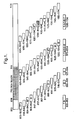
- SI ⁇ 3.0 c.p.m. >500 3 immunodominant epitopes were identified; peptides 803-822, 975-994 and 985-1004, each yielding frequencies >50% (Fig. 1).
- T-cell epitope Since most (13/15) subjects who responded to peptide 975-994 also responded to peptide 985-1004, it is probable that a single T-cell epitope is present within residues 975-1004. Minor T cell epitopes were also identified within peptides 1005-1024, 1015-1034, 1085-1104 and 1115-1134 with frequencies >20% and some of the adjacent peptides may represent single T cell epitopes.
- HLA restriction of the T cell response was first studied by dose-dependant inhibition with MAb to HLA class I and II antigen (Fig. 2).
- the lymphoproliferative response was inhibited by 50% with 1 ⁇ g of MAb to HLA class II (L243) and 10 ⁇ g of the MAb inhibited 100% of the responses (from SI 10.0 ⁇ 3.2 to SI 1.5 ⁇ 0.4).
- MAb to HLA class I (W6/32) nor the isotype control induced any inhibition of the lymphoproliferative response.
- the HLA-DR of 17 subjects were determined and 6 of these were homozygous.
- the responses of the immunodominant and minor epitopes were then studied in the 6 DR homologous subjects (Table 2).
- the other 6 peptides stimulated lymphocytes from HLA-DR1, 2 (except AA 1085-1104) and DR6 (except AA 803-822).
- DR5 was restricted by peptide 803-922, though the latter stimulated lymphocytes with DR1, 2 and 3 antigens. Lymphocytes with DR3 or 4 antigen responded to 3 or 4 peptides.
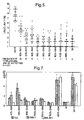
- the panel of peptides was screened with sera from 22 individuals and 8 peptides which were recognised by more than one individual, together with one peptide which was not recognised, were selected for further analyses (Fig.5).
- SA I/II was recognised by all subjects with mean log 2 titre of 7.6 ⁇ 1.2.
- the proportion of significant titres was also calculated (Fig. 5) and only peptide 824-843 showed high frequency (18/22).
- an immunodominant B cell epitope is present within peptide 824-843, possibly shared with the overlapping peptide 834-353, while peptides 925-944, 1035-1054 and 1085-1104 constitute minor B cell epitopes.
- peptides 925-944, 1035-1054 and 1085-1104 constitute minor B cell epitopes.
- a very low frequency of responses was observed to peptides within this region.
- Saliva samples from the subjects were cultured to determine levels of S. mutans .
- S. mutans was detected (range 10 3 -10 5 colony forming units/ml).
- SA I/II saliva samples from the subjects were cultured to determine levels of S. mutans .
- Adherence of S. mutans to saliva-coated microtitre wells was determined with [ 3 H]-thymidine labelled S. mutans .
- the proportion of adhering bacteria was in the range 1-5%. In the absence cf saliva, the proportion of adhering bacteria was ⁇ 0.1%.
- the portion of the SA I/II gene encoding residues 975-1044 was amplified by polymerase chain reaction.
- the amplified gene fragment (with introduced Nde I and Sal I restriction enzyme sites) was cloned using the Ta cloning system and was subcloned into the plasmid pET15b. The recombinant polypeptide was expressed in E. coli BL21 (DE3).
- Peripheral blood lymphocytes from human volunteers were prepared as described above. Cells were incubated with purified recombinant polypeptide 975-1044 at concentrations of 40, 10 and 1 ⁇ g/ml. Cells were also incuabted with a protein fraction prepared in the same way from E. coli harbouring non-recombinant plasmid. Proliferative responses of 17 subjects were determined. Mean stimulation index ( ⁇ sem) was 11.6 ⁇ 2.3 compared with 2.4 ⁇ 0.3 for the control. The frequency of subjects responding (i.e. those with stimulation index ⁇ control + 2SD) was 15/17.
- SA I/II and recombinant polypeptides were prepared as described above.
- Salivary receptor was prepared by absorption of whole saliva with intact cells of S . mutans (Lee et al (1989) Infect. Immun. 57:3306-3313). The cells were washed with KPBS (2.7 mM KCl, 137mM NaCl in 1.5mM KH 2 PO 4 , 6.5mM Na 2 HPO 4 , pH 7.2)and adsorbed material was eluted with 1mM EDTA in KPBS. Analysis of the purified material by polyacrylamide gel electrophoresis in the presence of Na dodecyl sulphate indicated the presence of components of Mr>200,000 and approximately 40,000.
- Peptides were prepared by the simultaneous multiple peptide synthesis procedure (Houghten (1985) Proc. Natl. Acad. Sci. USA 82: 5131-5135) as above. In addition, a series of peptides was synthesised corresponding to residues 1025-1044 in which each residue in turn was substituted by alanine.
- Purified SA I/II or salivary receptor was immobilised on the sensor chip surface at a concentration of 100 ⁇ g/ml in 10mM Na formate pH 3.5 using the amine coupling kit (Pharmacia Biosensor).
- Binding of immobilised SA I/II to receptors in whole saliva was determined in the absence and presence of inhibitors (at varying concentrations). Inhibition by alanine-substituted peptides was analysed at a peptide concentration of 50 ⁇ M.
- the running buffer was HEPES buffered saline (HBS) and the surface was regenerated with 100mM HCl.
- Purified salivary receptor was immobilised on the sensor chip and binding of SA I/II or purified recombinant polypeptide fragments was determined.
- binding to immobilised SA I/II varied from approximately 250 resonance units (RU) - 800 RU.
- RU resonance units
- binding was inhibited with maximal inhibition of 95% at a concentration of 10mM EDTA.
- Subsequent binding assays were performed in the presence of 5mM calcium.
- SA I/II or recombinant polypeptide fragments 1 were added to fluid phase saliva as competitive inhibitors at concentrations varying from 0-20 ⁇ M.
- SA I/II inhibited binding most efficiently with approximately 90% inhibition at a concentration of 6 ⁇ M (Fig.8).
- Fig.8 Of the recombinant fragments, only fragment 3 and r984-1161 inhibited binding co salivary receptors to a significantly greater extent than the control (bovine serum albumin) with maximal inhibition of 65% and 50%, respectively (Fig. 8).
- Peptide 1025-1044 was the most effective inhibitor although 10-20 fold higher concentrations were required than for polypeptides (Fig.9).
- substition of Gln 1025, Thr 1039, Phe 1041, Val 1042, Leu 1043 and Val 1044 reduced the inhibition of binding which was mediated by the peptide 1025-1044.
Landscapes
- Chemical & Material Sciences (AREA)
- Health & Medical Sciences (AREA)
- Organic Chemistry (AREA)
- Life Sciences & Earth Sciences (AREA)
- General Health & Medical Sciences (AREA)
- Medicinal Chemistry (AREA)
- Gastroenterology & Hepatology (AREA)
- Biochemistry (AREA)
- Biophysics (AREA)
- Genetics & Genomics (AREA)
- Molecular Biology (AREA)
- Proteomics, Peptides & Aminoacids (AREA)
- Engineering & Computer Science (AREA)
- Bioinformatics & Cheminformatics (AREA)
- Chemical Kinetics & Catalysis (AREA)
- General Chemical & Material Sciences (AREA)
- Nuclear Medicine, Radiotherapy & Molecular Imaging (AREA)
- Pharmacology & Pharmacy (AREA)
- Animal Behavior & Ethology (AREA)
- Public Health (AREA)
- Veterinary Medicine (AREA)
- Medicines Containing Antibodies Or Antigens For Use As Internal Diagnostic Agents (AREA)
- Peptides Or Proteins (AREA)
- Micro-Organisms Or Cultivation Processes Thereof (AREA)
- Cosmetics (AREA)
Abstract
Description
- This invention relates to polypeptide fragments of the Streptococcus mutans I/II antigen that are useful in treating and preventing dental caries.
- Streptococcus mutans is the main etiological agent of dental caries, a disease which affects mammals including humans.
- The S. mutans I/II antigen (SA I/II) is a cell surface protein with an Mr of about 185kDa. It is believed to comprise several antigenic epitopes and to be at least partly responsible for S. mutans adhesion to teeth.
- SA I/II is described in British Patent No. 2,060,647, as are a number of antibodies to it. A putative 3.5 to 4.5 kDa fragment of SA I/II, "antigen X", has also been described in European Patent No. 0 116 472. See also EP-A-0 280,576 entitled "synthetic anti-caries vaccine".
- However, it has now become clear that "antigen X" is not a fragment of SA I/II at all. Rather, it is a separate protein that merely co-purifies with SA I/II. It is believed to be encoded by a separate gene.
- Two large fragments of SA I/II, an N-terminal fragment (residues 39 to 481) and a 40kDa central fragment (residues 816 to 1213) are recognised by human serum antibodies. Within the central fragment, 80% of the sera tested recognise elements within a proline-rich region (residues 839-955) that comprises three tandem repeats. This suggests that this region includes one or more B-cell epitopes. According to Manro et al (Infection and Immunity, vol 61, No. 11, November 1993, pp 4590 - 4598, the central fragment (residues 816-1213) is also believed to comprise one or more adhesion sites that mediate S. mutans' attachment to the tooth. Evans et al also suggest that protective and adhesion-associated epitopes are located within residues 855-1161 (J. Dent. Res. 71 (IADR Abstract 1753), 1992.
- The aim of the above-mentioned work has been the development of vaccines for immunisation against dental caries. However, precise identification of the antigenic epitopes within SA I/II is a prerequisite for designing synthetic vaccines based on it. Similarly, precise identification of adhesion sites is essential for the design of drugs against dental caries that rely on inhibiting S. mutans' adhesion to the tooth.
- No antigenic epitopes (T-cell or B-cell epitopes) or adhesion sites within SA I/II have been characterised, nor has the precise location of any such regions been suggested. Also, there has been no indication of the location of S. mutans' T-cell epitopes as the above-mentioned work has concentrated on S. mutans' ability to adhere to teeth and to generate a B-cell response.
- The inventors have identified a number of T-cell epitopes, B-cell epitopes and adhesion sites within
residues 803 to 1114 of SA I/II. Some of the T-cell and B-cell epitopes overlap or are contiguous with each other and/or with one or more of the adhesion sites. - The presence of a number of antigenic epitopes of both types and a number of adhesion sites within the same region of SA I/II could not have been predicted and the finding that some of the adhesion sites and epitopes overlap or are contiguous with each other is particularly surprising.
- These findings make it possible to design effective synthetic vaccines against dental caries as well as drugs that engender resistance against the disease or alleviate pre-existing cases of it by preventing S. mutans' adhesion to the tooth. Further, the surprising finding that some of the T-antigenic epitopes and the adhesion site are contiguous or overlapping makes it possible to design bifunctional drugs that effect immunisation against dental caries as well as preventing adhesion of S. mutans to the tooth.
- Accordingly, the present invention provides a polypeptide having the ability to stimulate a T-cell response and one or more of the following properties:(i) the ability to adhere to a mammalian tooth in a competitive manner with naturally occurring Streptococcus mutans antigen I/II (SA I/II), thus preventing or diminishing the adhesion of S.mutans to the tooth; and (ii) the ability to stimulate a B-cell response; and selected from:
- (a) a polypeptide whose amino acid sequence is as shown in any one of SEQ . ID. Nos. 2. to 9 or 11;
- (b) a polypeptide whose sequence has at least 60% sequence identity to that of a polypeptide of (a); which polypeptide retains the biological properties that the polypeptide of (a) has in common with SAI/II;
- (c) a polypeptide comprising a sequence which differs from that of a polypeptide of (a) by up the substitution, deletion or insertion of from one to ten amino acids; which polypeptide retains the biological properties that the polypeptide of (a) has in common with SAI/II;
- (d) a polypeptide comprising the sequence of SEQ ID No. 3, 9 or 11 and comprising up to 50 amino acids in total, or a polypeptide comprising the sequence of SEQ ID No. 2, 5, 7 or 8 and comprising up to 100 amino acids in total, or a polypeptide comprising the sequence of SEQ ID No. 4 or 6 and comprising up to 200 amino acids in total; which polypeptide retains the biological properties that the polypeptide of SEQ ID No. 2 to 9 or 11 has in common with SAI/II; and
- (e) a polypeptide comprising a polypeptide of (a) or (b), extended at the C-terminus by non-wild-type sequence having any sequence apart from that which is C-terminal to the sequence of the polypeptide of (a) in native SAI/II, and/or extended at the N-terminus by non-wild-type sequence having any sequence apart from that which is N-terminal to the sequence of the polypeptide of (a) in native SAI/II; which polypeptide retains the biological properties that the polypeptide of (a) has in common with SAI/II.
- Also provided is a nucleic acid sequence which codes upon expression in a prokaryotic or eukaryotic host cell for a polypeptide of the invention.
- Also provided is a vector comprising a nucleic acid sequence of the invention operably linked to a promoter capable of directing its expression in a host cell.
- Also provided is an isolated cell harbouring a vector of the invention.
- Also provided is a pharmaceutical composition comprising a polypeptide of the invention and a pharmaceutically acceptable carrier. Preferably, said composition is a vaccine composition. Preferably, pharmaceutical compositions of the invention are formulated for topical application in the mouth. Also provided is a polypeptide of the invention for use in the treatment of dental caries.
- Also provided is a polypeptide of the invention for use in the treatment of dental caries, or in vaccination of a mammalian host against dental caries by means of topical application in the mouth.
- Also provided is the use of a polypeptide of the invention in the manufacture of a medicament for the treatment of dental caries, or in vaccination of a mammalian host against dental caries by means of topical application in the mouth.
- Preferred polypeptides of the invention are polypeptides whose amino acid sequence is that of any one of SEQ ID NOS : 1 to 9 or 11.
- Also preferred is a polypeptide whose amino acid sequence is that of
amino acids 2 to 21 of SEQ ID NO: 9. -
- Figure 1. Depiction of the panel of overlapping 20mers used to map T-cell, B-cell and adhesion epitopes within SA I/II.
- Figure 2. Proliferative responses to overlapping synthetic peptides (20ers) of SA I/II.
- a Mean S.I. (±sem) of PBMC from 30 subjects. Mean cpm with medium only was 538±112.
- b) Frequency of positive responses (S.I.≥3.0, cpm>500).
- Figure 3. MHC class II dependency of proliferative responses to SA I/II.
- Figure 4. Serum recognition of SA I/II and recombinant polypeptide fragments. Western blots from 3 subjects are shown (panels a-c) together with rabbit anti-SA I/II antiserum (panel d). Lanes, 1, SA I/II;
lane 5, recombinant 984-1161. - Figure 5. Human serum recognition of synthetic peptides of SA I/II.
- a) Titres were determined by ELISA in 22 subjects to selected peptides of SA I/II and an irrelevant control peptide from SIVp27(SIV). The frequencies of sera binding the peptides with a titre >mean+2S.D. the control peptide are also indicated.
- Figure 6. Inhibition of adhesion of S. mutans.
- a) SA I/II and recombinant fragment 984-1161.
- b) Synthetic peptides.
- Figure 7. Proliferative responses of murine splenocytes following immunization with recombinant 975-1044 (SEQ. ID. No. 8)
- Figure 8. Competitive inhibition of SA I/II binding by various polypeptides.
- Figure 9. Dependence of competitive inhibition of SA I/II binding on concentration of two peptides.
- Figure 10. Effects of substitution of certain residues on competitive inhibition.
- Figure 11. Comparison of various recombinant polypeptides with respect to binding.
- The polypeptides of the invention may have the ability to adhere to a mammalian tooth in a competitive manner with naturally occurring Streptococcus mutans antigen I/II, thus preventing or diminishing the adhesion of S. mutans to the tooth. Some of the peptides of the invention have been shown to inhibit adhesion of S. mutans to a tooth surface model (whole human saliva adsorbed to the wells of polystyrene microtitre plates or hydroxyapatite beads). Thus, these peptides comprise one or more adhesion sites and will adhere to a mammalian tooth in a competitive manner with naturally occurring SA I/II. Therefore, peptides according to the invention that comprise the adhesion site prevent or diminish the adhesion of S. mutans to the tooth. Peptides of the invention that comprise one or more adhesion epitopes include SEQ. ID. Nos. 2 to 6, 8 and 9.
- Peptides according to the invention have the ability to stimulate a T-cell response. The inventors have shown that
residues 803 to 854 and 925 to 1114 of SA I/II comprise a number of T-cell epitopes that are at least partially responsible for the T-cell response stimulated by the intact protein. Therefore, peptides according to the invention that comprise one or more of these T-cell epitopes stimulate a T-cell response against S. mutans infection. Peptides of the invention that stimulate a T-cell response include those shown in SEQ ID Nos. 2 to 9 and 11. - The peptides of the invention may stimulate a B-cell response. The inventors have shown that
residues 803 to 854 and 925 to 1114 of SA I/II comprise a number of B-cell epitopes and polypeptides according to the invention that comprise one or more B-cell epitopes stimulate a B-cell response against S. mutans infection. Peptides of the invention that comprise one or more B-cell epitopes include those shown in SEQ. ID. Nos. 2 and 3 to 7. - Nucleic acid sequences of the invention encode polypeptides of the invention. The nucleic acid sequences of the present invention are preferably DNA, though they may be RNA. It will be obvious to those of skill in the art that, in RNA sequences according to the invention, the T residues shown in SEQ. ID. Nos. 13 to 20 and 22 will be replaced by U. Nucleic acid sequences of the invention will typically be in isolated or substantially isolated form. For example up to 80, up to 90, up to 95 or up to 100% of the nucleic acid material in a preparation of a nucleic acid of the invention will typically be nucleic acid according to the invention.
- Some preferred nucleic acid sequences of the invention are those shown in SEQ. ID. Nos. 13 to 20 and 22. However, the nucleic acid sequences of the present invention are not limited to these sequences. Rather, the sequences of the invention include sequences that are closely related to these sequences and that encode a polypeptide having at least one of the biological properties of naturally occurring SA I/II. These sequences may be prepared by altering those of SEQ ID Nos. 13 to 20 and 22 by any conventional method, or isolated from any organism or made synthetically. Such alterations, isolations or syntheses may be performed by any conventional method, for example by the methods of Sambrook et al (Molecular Cloning: A Laboratory Manual; 1989)
- For example, the sequences of the invention include sequences that are capable of selective hybridisation to those of SEQ. ID. Nos. 13 to 22 or the complementary strands thereof and that encode a polypeptide having one or more of the properties defined above. Such sequences capable of selectively hybridizing to the DNA of SEQ. ID. Nos. 13 to 20 and 22 will generally be at least 70%, preferably at least 80 or 90% and more preferably at least 95% homologous to the DNA of any one of SEQ. ID. Nos. 13 to 20 or 22 over a region of at least 10, preferably at least 20, 30, 40, 50 or more contiguous nucleotides.
- Such sequences that hybridise to those shown in SEQ. ID. Nos. 13 to 20 or 22 will typically be of similar size to them, though they may be longer or shorter. However, if they are longer, they may not simply encode large fragments of native SA I/II amino acid sequence. Also, sequences that hybridise to those of SEQ. ID. Nos. 13 to 20 or 22 must do so over at least 50% of their length, for example up to 60%, up to 70%, up to 80%, up to 90%, up to 95%, or up to 99% of their length.
- Such hybridisation may be carried out under any suitable conditions known in the art (see Sambrook et al (1989) : Molecular Cloning: A Laboratory Manual). For example, if high stringency is required, suitable conditions include 0.2 x SSC at 60°C. If lower stringency is required, suitable conditions include 2 x SSC at 60°C.
- Also included within the scope of the invention are sequences that differ from those defined above because of the degeneracy of the genetic code and encode the same polypeptide having one or more of the properties defined above, namely the polypeptide of SEQ. ID. Nos. 2 to 9 and 11 or a polypeptide related to one of these polypeptides in any of the ways defined below.
- Thus, the nucleic acid sequences of the invention include sequences which, but for the degeneracy of the genetic code, would hybridise to those shown in SEQ. ID. Nos. 13 to 20 or 22 or the complementary strands thereof. However, such sequences may not simply encode large fragments of native SA I/II amino acid sequences. Also, their sequence must be such that, but for the degeneracy of the genetic code, they would hybridise to a sequence as shown in SEQ. ID. Nos. 13 to 20 or 22 over at least 50% of their length, for example, up to 60%, up to 70%, up to 80%, up to 90%, up to 95% or up to 99% of their length.
- Also, the nucleic acid sequences of the invention include the complementary strands of the sequences defined above, for example the complementary strands of the nucleic acid sequences shown in SEQ. ID. Nos. 13 to 20 or 22.
- Nucleic acid sequences of the invention will preferably be at least 50 bases in length, for example up to 100, up to 200, up to 300, up to 400, up to 500 or up to 600 bases.
- Nucleic acid sequences of the invention may be extended at either or both of the 5' and 3' ends. Such extensions may be of any length. For example, an extension may comprise up to 10, up to 20, up to 50, up to 100, up to 200 or up to 500 or more nucleic acids. A 5' extension may have any sequence apart from that which is immediately 5' to the sequence of the invention (or the native sequence from which it is derived) in native SA I/II. A 3' extension may have any sequence apart from that which is 3' to the sequence of SEQ. ID. No. 13 in native SA I/II. Thus, the nucleic acid sequences of the invention may be extended at either or both of the 5' and 3' ends by any non-wild-type sequence.
- The polypeptides of the invention are encoded by the DNA sequences described above. Thus, the polypeptides of the invention are not limited to the polypeptides of SEQ. ID. Nos. 2 to 9 and 11 although these sequences represent preferred polypeptides. Rather, the polypeptides of the invention also include polypeptides with sequences closely related to those of SEQ. ID. Nos. 2 to 9 or 11 that have one or more of the biological properties of SA I/II. These sequences may be prepared by altering those of SEQ ID Nos. 2 to 9 and 11 by any conventional method, or isolated from any organism or made synthetically. Such alterations, isolations or syntheses may be performed by any conventional method, for example by the methods of Sambrook et al (Molecular Cloning: A Laboratory Manual; 1989). In particular, polypeptides related to those of SEQ ID Nos. 2 to 9 and 11 may be prepared by modifying DNA sequences as shown in SEQ ID Nos. 13 to 20 and 22 expressing them recombinantly.
- The polypeptides of the invention may be encoded by nucleic acid sequences that have less than 100% sequence identity with those of SEQ. ID. Nos. 13 to 20 and 22. Thus, polypeptides of the invention may include substitutions, deletions, or insertions, that distinguish them from SEQ. ID. Nos. 2 to 9 and 11 as long as these do not destroy the biological property or properties that the polypeptides have in common with SA I/II.
- A substitution, deletion or insertion may suitably involve one or more amino acids, typically from one to five, one to ten or one to twenty amino acids, for example, a substitution, deletion or insertion of one, two, three, four, five, eight, ten, fifteen, or twenty amino acids. Typically, a polypeptide of the invention has at least 60%, at least 80%, at least 90%, or at least 95% sequence identity to the sequence of any one of SEQ. ID. Nos. 2 to 9 or 11.
- In general, the physicochemical nature of the sequence of SEQ. ID. Nos. 2 to 9 or 11 should be preserved in a polypeptide of the invention. Such sequences will generally be similar in charge hydrophobicity and size to that of SEQ. ID. Nos. 2 to 9 or 11. Examples of substitutions that do not greatly affect the physicochemical nature of amino acid sequences are those in which an amino acid from one of the following groups is substituted by a different amino acid from the same group:
- H, R and K
- I, L, V and M
- A, G, S and T
- D, E, Q and N.
- However, it may be desirable to alter the physicochemical nature of the sequence of SEQ. ID. Nos. 1 to 11 in order to increase its therapeutic effectiveness. For example, many of the amino acids in the polypeptides of the invention are acidic. For example, residues 975 to 1044 (SEQ. ID. No. 8) as a whole are of an acidic nature. This acidity is believed to facilitate binding to a mammalian tooth. Thus, it may be desirable to increase the acidity of polypeptides of the invention by adding acidic residues or by substituting acidic residues for non-acidic ones. Acidic residues include aspartic acid and glutamic acid.
- Where polypeptides of the invention are synthesised chemically, D-amino acids (which do not occur in nature) may be incorporated into the amino acid sequence at sites where they do not affect the polypeptides biological properties. This reduces the polypeptides' susceptibility to proteolysis by the recipient's proteases.
- The nucleic acid sequences encoding the polypeptides of the invention may be extended at one or both ends by any non-wild-type sequence.
- Thus, the polypeptides of the invention may be extended at either or both of the C- and N- termini by an amino acid sequence of any length. For example, an extension may comprise up to 5, up to 10, up to 20, up to 50, or up to 100 or 200 or more amino acids. An N-terminal extension may have any sequence apart from that which is N-terminal to the sequence of the invention (or the native sequence from which it is derived) in native SA I/II. A C-terminal extension may have any sequence apart from that which is C-terminal to the sequence of the invention (or the native sequence from which it is derived) in native SA I/II. Thus, the polypeptides of the invention may be extended at either or both of the C- and N- termini by any non-wild-type sequence.
- The polypeptides of the invention may be attached to other polypeptides or proteins that enhance their antigenic properties. Thus, polypeptides of the invention may be attached to one or more other antigenic polypeptides. These additional antigenic polypeptides may be derived from S. mutans or from another organism. Possible additional antigenic polypeptides include heterologous T-cell epitopes derived from other S. mutans proteins or from species other than S. mutans. Heterologous B-cell epitopes may also be used. Such heterologous T-cell and or B-cell epitopes may be of any length and epitopes of up to 5, up to 10 or up to 20 amino acids in length are particularly preferred. These additional antigenic polypeptides may be attached to the polypeptides of the invention chemically. Alternatively, one or more additional antigenic sequences may comprise an extension to a polypeptide of the invention.
- A polypeptide of the invention may be subjected to one or more chemical modifications, such as glycosylation, sulphation, COOH-amidation or acylation. In particular, polypeptides that are acetylated at the N-terminus are preferred, as are polypeptides having C-terminal amide groups. Preferred polypeptides may have one or more of these modifications. For example, particularly preferred peptides may have a C-terminal amide group and N-terminal acetylation.
- A polypeptide of the invention may form part of a larger polypeptide comprising multiple copies of the sequence of one or more of SEQ. ID. Nos. 2 or 9 to 11 or a sequence related to them in any of the ways defined herein.
- Polypeptides of the invention typically comprise at least 15 amino acids, for example 15 to 20, 20 to 50, 50 to 100 or 100 to 200 or 200 to 300 amino acids. Preferred polypeptides include those shown in SEQ. ID. Nos. 2 to 9 and 11. Also preferred is a polypeptide whose sequence is that of
amino acids 2 to 21 of SEQ ID No. 9. - Polypeptides according to the invention may be purified or substantially purified. Such a polypeptide in substantially purified form will generally form part of a preparation in which more than 90%, for example up to 95%, up to 98% or up to 99% of the peptide material in the preparation is that of a polypeptide or polypeptides according to the invention.
- The nucleic acid sequences and polypeptides of the invention were originally derived from S. mutans. However, nucleic acid sequences and/or polypeptides of the invention may also be obtained from other organisms, typically bacteria, especially other streptococci. They may be obtained either by conventional cloning techniques or by probing genomic or cDNA libraries with nucleic acid sequences according to the invention. This can be done by any conventional method, such as the methods of Sambrook et al (Molecular Cloning: A Laboratory Manual; 1989).
- A nucleic acid sequence according to the invention may be included within a vector, suitably a replicable vector, for instance a replicable expression vector.
- A replicable expression vector comprises an origin of replication so that the vector can be replicated in a host cell such as a bacterial host cell. A suitable vector will also typically comprise the following elements, usually in a 5' to 3' arrangement: a promoter for directing expression of the nucleic acid sequence and optionally a regulator of the promoter, a translational start codon and a nucleic acid sequence according to the invention encoding a polypeptide having one or more of the biological properties of SA I/II. A non-replicable vector lacks a suitable origin of replication whilst a non-expression vector lacks an effective promoter.
- The vector may also contain one or more selectable marker genes, for example an ampicillin resistance gene for the identification of bacterial transformants. One particular preferred marker gene is the kanamycin resistance gene. Optionally, the vector may also comprise an enhancer for the promoter. If it is desired to express the nucleic acid sequence of the invention in a eukaryotic cell, the vector may also comprise a polyadenylation signal operably linked 3' to the nucleic acid encoding the functional protein. The vector may also comprise a transcriptional terminator 3' to the sequence encoding the polypeptide of the invention.
- The vector may also comprise one or more non-coding sequences 3' to the sequence encoding the polypeptide of the invention. These may be from S. mutans (the organism from which the sequences of the invention are derived) or the host organism which is to be transformed with the vector or from another organism.
- In an expression vector, the nucleic acid sequence of the invention is operably linked to a promoter capable of expressing the sequence. "Operably linked" refers to a juxtaposition wherein the promoter and the nucleic acid sequence encoding the polypeptide of the invention are in a relationship permitting the coding sequence to be expressed under the control of the promoter. Thus, there may be elements such as 5' non-coding sequence between the promoter and coding sequence. These elements may be native either to S. mutans or to the organism from which the promoter sequence is derived or to neither organism. Such sequences can be included in the vector if they enhance or do not impair the correct control of the coding sequence by the promoter.
- The vector may be of any type. The vector may be in linear or circular form. For example, the vector may be a plasmid vector. Those of skill in the art will be able to prepare suitable vectors comprising nucleic acid sequences encoding polypeptides of the invention starting with widely available vectors which will be modified by genetic engineering techniques such as those described by Sambrook et al (Molecular Cloning: A Laboratory Manual; 1989). Preferred starting vectors include plasmids that confer kanamycin resistance and direct expression of the polypeptide of the invention via a tac promoter.
- In an expression vector, any promoter capable of directing expression of a sequence of the invention in a host cell may be operably linked to the nucleic acid sequence of the invention. Suitable promoters include the tac promoter.
- Such vectors may be used to transfect or transform a host cell. Depending on the type of vector, they may be used as cloning vectors to amplify DNA sequences according to the invention or to express this DNA in a host cell.
- A further embodiment of the invention provides host cells harbouring vectors of the invention, i.e. cells transformed or transfected with vectors for the replication and/or expression of nucleic acid sequences according to the invention, including the sequences shown in SEQ. ID. Nos. 13 to 20 and 22. The cells will be chosen to be compatible with the vector and may for example be bacterial cells. Transformed or transfected bacterial cells, for example E.coli cells, will be particularly useful for amplifying nucleic acid sequences of the invention as well as for expressing them as polypeptides.
- The cells may be transformed or transfected by any suitable method, such as the methods described by Sambrook et al (Molecular cloning: A Laboratory Manual; 1989). For example, vectors comprising nucleic acid sequences according to the invention may be packaged into infectious viral particles, such as retroviral particles. The constructs may also be introduced, for example, by electroporation, calcium phosphate precipitation, biolistic methods or by contacting naked nucleic acid vectors with the cells in solution.
- In the said nucleic acid vectors with which the host cells are transformed or transfected, the nucleic acid may be DNA or RNA, preferably DNA.
- The vectors with which the host cells are transformed or transfected may be of any suitable type. The vectors may be able to effect integration of nucleic acid sequences of the invention into the host cell genome or they may remain free in the cytoplasm. For example, the vector used for transformation may be-an expression vector as defined herein.
- The present invention also relates to a process of producing polypeptides according to the invention. Such a process will typically comprise transforming or transfecting host cells with vectors comprising nucleic acid sequences according to the invention and expressing the nucleic acid sequence in these cells. In this case, the nucleic acid sequence will be operably linked to a promoter capable of directing its expression in the host cell. Desirably, such a promoter will be a "strong" promoter capable of achieving high levels of expression in the host cell. It may be desirable to overexpress the polypeptide according to the invention in the host cell. Suitable host cells for this purpose include yeast cells and bacterial cells, for example E. coli cells, a particularly preferred E. coli strain being E. coli K12 strain BL 21. However, other expression systems can also be used, for example baculovirus systems in which the vector is a baculovirus having in its genome nucleic acid encoding a polypeptide of the invention and expression occurs when the baculovirus is allowed to infect insect cells.
- The thus produced polypeptide of the invention may he recovered by any suitable method known in the art. Optionally, the thus recovered polypeptide may be purified by any suitable method, for example a method according to Sambrook et al (Molecular Cloning: A Laboratory Manual).
- The polypeptides of the invention may also be synthesised chemically using standard techniques of peptide synthesis. For shorter polypeptides, chemical synthesis may be preferable to recombinant expression. In particular, peptides of up to 20 or up to 40 amino acid residues in length may desirably be synthesised chemically.
- The nucleic acid sequences of the invention may be used to prepare probes and primers. These will be useful, for example, in the isolation of genes having sequences similar to that of SEQ. ID. No. 24. Such probes and primers may be of any suitable length, desirably from 10 to 100, for example from 10 to 20, 20 to 50 or 50 to 100 bases in length.
- The present invention also relates to antibodies to the polypeptides of the invention. These antibodies may be monoclonal or polyclonal. For the purposes of this invention, the term "antibody", includes fragments of whole antibodies which retain their binding activity for a target antigen. Such fragments include Fv, F(ab') and F(ab')2 fragments, as well as single chain antibodies.
- The antibodies may be produced by any method known in the art, such as the methods of Sambrook et al (Molecular Cloning: A Laboratory Manual; 1989). For example, they may be prepared by conventional hybridoma techniques or, in the case of modified antibodies or fragments, by recombinant DNA technology, for example by the expression in a suitable host vector of a DNA construct encoding the modified antibody or fragment operably linked to a promoter. Suitable host cells include bacterial (for example E. coli), yeast, insect and mammalian cells. Polyclonal antibodies may also be prepared by conventional means which comprise inoculating a host animal, for example a rat or a rabbit, with a peptide of the invention and recovering immune serum.
- The present invention also provides pharmaceutical compositions comprising polypeptides of the invention. Three types of pharmaceutical compositions are particularly preferred. Firstly, compositions comprising polypeptides of the invention that include T-cell and/or B-cell epitopes may be used as vaccines against dental caries. Secondly, compositions comprising polypeptides of the invention that comprise adhesion sites will prevent or diminish adhesion of S. mutans to the tooth and can be used in the treatment of pre-existing cases of dental caries. Thirdly, compositions comprising polypeptides of the invention that include both one or more antigenic (T-cell or B-cell) epitopes and one or more adhesion epitopes can be used to effect vaccination against dental caries at the same time as curing pre-existing cases of the disease. A similar effect can be achieved by including in a composition one or more peptides comprising one or more antigenic epitopes and one or more peptides comprising one or more adhesion sites.
- A range of mammalian species can be vaccinated against dental caries using the polypeptides of the invention: vaccination of humans is particularly desirable.
- The compositions of the invention may be administered to mammals including humans by any route appropriate. Suitable routes include topical application in the mouth, oral delivery by means of tablets or capsule and parenteral delivery, including subcutaneous, intramuscular, intravenous and intradermal delivery. Preferred routes of administration are topical application in the mouth and injection, typically subcutaneous or intramuscular injection, with a view to effecting systemic immunisation.
- As previously indicated, polypeptides according to the invention may also be mixed with other antigens of different immunogenicity.
- The compositions of the invention may be administered to the subject alone or in a liposome or associated with other delivery molecules. The effective dosage depends on many factors, such as whether a delivery molecule is used, the route of delivery and the size of the mammal being vaccinated. Typical doses are from 0.1 to 100 mg of the polypeptide of the invention per dose, for example 0.1 to 1mg, and 1 to 5mg, 5 to 10mg and 10 to 100mg per dose. Doses of from 1 to 5 mg are preferred.
- Dosage schedules will vary according to, for example, the route of administration, the species of the recipient and the condition of the recipient. However, single doses and multiple doses spread over periods of days, weeks or months are envisaged. A regime for administering a vaccine composition of the invention to young human patients will conveniently be :6 months, 2 years, 5 years and 10 years, with the initial dose being accompanied by adjuvant and the subsequent doses being about ½ to ¼ the level of polypeptide in the initial dose. The frequency of administration can, however, be determined by monitoring the antibody levels in the patient.
- Where the peptides of the invention are to be applied topically in the mouth, one preferred dosage regime is to apply one or more polypeptides of the invention on two or more occasions, for example 2 to 10 occasions over a period of a few weeks, for example one to six weeks. A particularly preferred regime of this type involves six applications of a polypeptide of the invention over a period of three weeks.
- Typical doses for each topical application are in the range of 0.1 to 100mg for example 0.1 to 1mg, 1 to 10mg and 10 to 100mg. Doses of from 1 to 5mg for each application are preferred.
- While it is possible for polypeptides of the invention to be administered alone it is preferable to present them as pharmaceutical formulations. The formulations of the present invention comprise at least one active ingredient, a polypeptide of the invention, together with one or more acceptable carriers thereof and optionally other therapeutic ingredients. The carrier or carriers must be "acceptable" in the sense of being compatible with the other ingredients of the formulation and not deleterious to the recipients thereof, for example, liposomes.
- Formulations suitable for parenteral administration include aqueous and non-aqueous sterile injection solutions which may contain anti-oxidants, buffers, bacteriostatics, bactericidal antibiotics and solutes which render the formulation isotonic with the blood of the intended recipient; and aqueous and non-aqueous sterile suspensions which may include suspending agents and thickening agents, and liposomes or other microparticulate systems which are designed to target the compound to blood components or one or more organs.
- In particular, the polypeptides of the invention may be coupled to lipids or carbohydrates. This increases their ability to adhere to teeth, either by prolonging the duration of the adhesion or increasing its affinity, or both. This is particularly desirable for shorter polypeptides of the invention, which comprise up to around 40 amino acid residues.
- Of the possible formulations, sterile pyrogen-free aqueous and non-aqueous solutions are preferred. Also preferred are formulations in which the polypeptides of the invention are contained in liposomes. Injection solutions and suspensions may be prepared extemporaneously from sterile powders, granules and tablets of the kind previously described.
- Oral methods of administration may produce an effect systemically or locally in the mouth. Orally active preparations can be formulated in any suitable carrier, such as a gel, toothpaste, mouthwash or chewing gum.
- It should be understood that in addition to the ingredients particularly mentioned above the formulations of this invention may include other agents conventional in the art having regard to the type of formulation in question.
- Accordingly, the present invention relates to a method of vaccinating a mammalian host against dental caries or treating dental caries, which method comprises administering to the host an effective amount of a pharmaceutical composition as described above, for example a vaccine composition.
- Antibodies, including monoclonal antibodies, can be formulated for passive immunisation as indicated above for the formulation of polypeptides of the invention. Preferred formulations for passive immunisation include solid or liquid formulations such as gels, toothpastes, mouth-washes or chewing gum.
- A further aspect of the present invention is a naked nucleic acid vaccine. In this embodiment, the vaccine composition comprises a nucleic acid, typically an isolated nucleic acid, preferably DNA, rather than a polypeptide. The nucleic acid is injected in to a mammalian host and expressed in vivo, generating a polypeptide of the invention. This stimulates a T-cell response, which leads to protective immunity against dental caries in the same way as direct vaccination with a polypeptide of the invention.
- Naked nucleic acid vaccination can be carried out with any nucleic acid according to the invention as long as it encodes a polypeptide that stimulates a T-cell and or B-cell response. Preferred polypeptides are those shown in SEQ. ID Nos. 2 to 9 and 11. These will typically be included within an expression vector as defined above. In such an expression vector, the nucleic acid according to the invention will typically be operably linked to a promoter capable of directing its expression in a mammalian host cell. For example, promoters from viral genes that are expressed in the mammalian cells such as the cytomegalovirus (CMV) immediate early gene promoter are suitable. Also suitable are promoters from mammalian genes that are expressed in many or all mammalian cell types such as the promoters of "housekeeping" genes. One such promoter is the p-hydroxymethyl-CoA-reductase(HMG) promoter (Gautier et al (1989): Nucleic Acids Research; 17,8839).
- For naked nucleic acid vaccination, it is preferred that the nucleic acid sequence according to the invention is incorporated into a plasmid vector, since it has been found that covalent closed circle (CCC) plasmid DNA can be taken up directly by muscle cells and expressed without being integrated into the cells' genomic DNA (Ascadi et al (1991): The New Biologist; 3, 71-81). Naked nucleic acid vaccine may be prepared as any of the types of formulation mentioned above in respect of conventional polypeptide-based vaccines. However, formulations suitable for parenteral injection, especially intramuscular injection, are preferred. Naked nucleic acid vaccines may be delivered in any of the ways mentioned above in respect of conventional polypeptide-based vaccines but intramuscular injection is preferred.
- Accordingly, the present invention provides a vaccine composition comprising a nucleic acid sequence or vector as described above and an acceptable carrier.
- The following examples illustrate the invention.
- Materials. Fmoc amino acids, benzotriazole-1-yl-oxy-tris-pyrrolidino-phosphonium hexaflurophosphate (PyBOP) and Rink Amide MBHA resin were purchased from Calbiochem-Novabiochem (UK) Ltd., (Nottingham, UK). Dimethylformamide, trifluoroacetic acid, diethyl ether, dichloromethane and piperidene were purchased from Romil Chemicals Ltd (Loughborough, UK). Di-isopropylethylamine was from Aldrich Chemical Co. (Dorset, UK). Oligonucleotides were purchased from Oswel DNA Service (University of Edinburgh, Edinburgh, UK).
- S.mutans Guy's strain (serotype c) were grown in 10L basal medium supplemented as described previously (Russel et al (1978): Arch. Oral Biol., 2317; Russel et al (1980): Infect, Immun. 61, 5490) at 37°C for 72h for SA I/II preparation. For the adhesion assay, S. mutans were grown in Todd-Hewitt broth (Difco Laboratories, Detroit, Mich.). Escherichia coli BL21 (DE3) (Novagen Inc., Madison, Wis.) harbouring pET15b were grown at 37°C in Luria-Bertani broth supplemented with carbenicillin (50µg/ml) and recombinant protein expression was induced with isoppropyl-β-D-thiogalactopryanoside (1mM).
Antigens. SA I/II was prepared from S. mutans (serotype c, Guy's strain) as described by Russel et al (1980: Infect.. Immun. 28, 486). Using the procedure of Munro et al (1993: Infect. Immun. 61, 4590), the portion of the gene encoding residues 984-1161 was amplified by using the oligonucleotide primers: (5') ATACATATGCCAACTGTTCATTTCCATTACTTT (SEQ. ID. No. 25) and (3') GCCATTGTCGACTCATTCATTTTTATTAACCTTAGT (SEQ. ID. No. 26), cloned into pET15b (modified by the addition of a Sal I site) and expressed in E. coli. - Synthetic peptides. Peptide amides (20 mers overlapping by 10 residues) were synthesised on Rink amide MBHA resin in sealed porous polypropylene bags by the manual simultaneous multiple peptide synthesis procedure (Houghten (1985) PNAS 892, 5131) using Fmoc chemistry. PyBOP was used as coupling agent and Fmoc amino acids were activated in situ by addition of diisopropylethylamine. Following 20 cycles of synthesis, resin was washed with dimethylformamide followed by dichloromethane and peptides were cleaved by incubation in trifluoroacetic acid- ethanedithiol-anisole-phenol-H2O (82.5:2.5:5:5:5; v/v/v/w/v) for 2h at room temperature. Peptides were precipitated by the addition of 5 volumes ether, recovered by centrifugation and washed three times with ether. Finally, peptides were dissolved in water and lyophilised. The scale of synthesis was 50µmol. Aliquots of each peptide were hydrolysed in 6M HCl at 110°C for 24h and compositions were determined using the Beckman 121MB automated analyser (Beckman Instruments Ltd, Bucks, UK). In each case the composition matched that predicted.
- Antibodies. MAbs, L243 (anti-MHC class II) and W6/32 (anti-MHC class I) were produced from cultures of hybridomas obtained from the American Type Culture Collection (Rockville, Md, USA). ID4 an isotype (IgG2a) matched control of irrelevant specificity was provided by Dr. P. Shepherd (Department of Immunology, UMDS, Guys Hospital, London, UK). Rabbit anti-SA I/II antiserum was prepared as described previously (Russel et al (1980). Infect. Immun. 28, 486).
- Lymphoproliferative assay. Defibrinated blood from volunteers was separated on a Ficoll gradient. Sera was used for antibody assays (see below) while peripheral blood mononuclear cells (PBMCs) were washed and resuspended in RPMI 1640 (Sigma Chemical Co., St. Louis, Mo, USA) supplemented with 2mM L-glutamine, penicillin (100 IU/ml), streptomycin sulphate (100 µg/ml) and 10% heat-inactivated autologous serum. PBMCs (105 cells/well) were cultured in 96-well round-bottomed plates (Costar, Cambridge, Mo, USA) in a total volume of 200 µl. Three replicates of each culture were incubated with three concentrations (1, 10 and 40 µg/ml) of SA I/II, recombinant fragments, non-recombinant control or synthetic peptides. Incubation was at 37°C in a humidified atmosphere with 5% CO2 for 6 days. Each culture received 0.2 µCi (7.4kBq) of [3H]-thymidine (Amersham International, Bucks, UK) 6h before harvesting. Cultures were harvested onto glass fibre filters using a Dynatech (Chantilly, VA, USA) Minimal Cell harvester and [3H]-thymidine incorporation was measured using the LKB liquid scintillation counter (Bromma, Sweden). Proliferation was expressed as stimulation index which is mean counts per minute (cpm) of antigen-stimulated, divided by cpm of antigen-free cultures. Concanavalin A (10 µg/ml) (Sigma Chemical Co., St. Louis, Mo, USA) was used with every culture as a positive control but the results are not presented.
- MHC dependency of proliferative responses to SA I/II was determined by culturing cells with antigen (10 µg/ml) as above in the presence of MAbs L235, W6/32 or ID4 at 1, 10 and 20 µg/ml. Cultures were incubated with [3H]-thymidine, harvested and [3H]-thymidine uptake was determined as described above.
- ELISA for serum antibodies. Antibody recognition of synthetic peptides was determined by ELISA. Peptides (10 µg/ml) in phosphate buffered saline (PBS) were adsorbed to wells of polystyrene microtitre plates (Dynatech) for 2h at room temperature. Plates were washed and wells were treated with 1.5% (w/v) bovine serum albumen (BSA) for 1h at room temperature to block unbound sites. After washing, bound peptides were incubated with serially diluted sera in duplicate. Bound IgG antibodies were determined by incubation with alkaline phosphate conjugated-goat antihuman Ig (Sigma Chemical Co.) and subsequent reaction with paranitrophenyl phosphate (Sigma Chemical Co.). Plates were read at 405nm using the microplate reader model 450 (Bio-Rad). After initial screening, the assay was repeated at least 3 times with each serum using a restricted set of peptides. SA I/II (2 µg/ml) was included in each assay as was an irrelevant peptide (HQAAMQIIRDIINEEAADWD(SEQ. ID. No. 27) derived from the sequence of SIV p27. Results are expressed as the highest dilution giving an absorbance ≥0.2.
- Western blotting. Serum antibody responses were also assayed by Western blotting using SA I/II, the recombinant polypeptides and a control fraction from E. coli BL21 harbouring non-recombinant pET15b. Purified antigens were separated by sodium dodecyl sulphate-polyacrylamide gel electrophoresis (SDS-PAGE) with gels of 10% acrylamide, by using a mini-gel system (Hoeffer Scientific Instruments, San Francisco, Co, USA). Proteins were transferred to nitrocellulose with a semi-dry blotter (Sartorius A.G., Gottingen, Germany). Nitrocellulose strips were blocked with 5% (wt/vol) nonfat milk powder 2.5% (wt/vol) BSA in Tris-HCl-buffered saline (pH 8.0) containing 0.05% (wt/vol)
Tween 20. Strips were subsequently incubated with human sera (1 in 20 dilution) or rabbit anti-SA I/II antiserum (10-4 dilution) and bound antibody was visualised by using alkaline phosphatase-conjugated secondary antibody with 5-bromo-4-chloro-3- indolylphosphate and nitroblue tetrazolium (Sigma Chemical Co.) as substrates. Each sera was assayed three times and responses were considered as positive if bands were visible in at least two assays. - Bacterial adherence assay. SA I/II mediated adherence of S. mutans (Guy's strain) to saliva was assayed by determining binding of [3H]-thymidine labelled bacteria to saliva adsorbed to microtitre wells. Freshly collected human saliva from a single donor was clarified by centrifugation for 10 min at 3000g, heat-inactivated at 60°C for 30 min and finally clarified by centrifugation at 17,000g for 20 min. Treated saliva was diluted with an equal volume of PBS and adsorbed to the wells of a polystyrene 96-well flat-bottomed microtitre plate (
Immulon 4; Dynatech) for 2h at room temperature. After coating, wells were washed three times with PBS and unbound sites were blocked by incubation with 1.5% (wt/vol) BSA in PBS for 1h at room temperature. Plates were then washed three times with 50 mM KCl-1mM CaCl2-38 mM MgCl2-1 mM KH2PO4-1.2 mM K2PO4 (pH 7.2; adherence buffer). S. mutans cells from an overnight culture in Todd-Hewitt broth were used to inoculate (1/10 volume) a further culture in Todd-Hewitt broth containing 100µCi (3.7 MBq) [3H]-thymidine (Amersham International plc) per ml. Cells were harvested in late log phase (O.D. 700nm approximately 0.4) pelleted by centrifugation at 1000g for 10 min and washed three times in adherence buffer. The final suspension was vortexed with 0.5 volume glass beads to break up chains of cocci which was monitored microscopically (Munro et al (1993): Infect. Immun. 61, 4590). Cells were resuspended to 5x10⁴ c.p.m. per 50 µl and BSA was added to 1.5% (wt/vol). Specific activity of the washed S. mutans cells was estimated to be 1.3x10⁻³ c.p.m. per cell (Munro et al (1985): Infect. Immun. 61, 4590). In competitive inhibition of adherence, the various synthetic peptides were added to the wells (at final concentrations 62.5-500µM) in 50 µl adherence buffer containing 1.5% (wt/vol) BSA together with 50 µl radiolabelled S. mutans suspension. Microtitre plates were incubated at 37°C for 2h with gentle shaking and subsequently were washed ten times with adherence buffer. Bound S. mutans cells were eluted with 1% (wt/vol) SDS and transferred to glass fibre filters by using the Micromate 196 cell harvester (Canberra Packard, Berks, UK). Filters were counted using the Matrix 96 direct beta counter (Canberra Packard). Background binding was determined on wells to which no saliva was adsorbed. The percentage of binding of S. mutans to saliva was calculated by the formula [(test c.p.m.) - (control c.p.m.) / total c.p.m.] x100. Percent inhibition of adherence was calculated as [(percent adherence without inhibitor-percent adherence with inhibitor) / percent adherence without inhibitor] x100. For proteins, determinations of streptococcal adhesion were made in triplicate or quadruplicate at each protein concentration while for peptides, duplicate determinations were made. In each case the assay was performed at least three times. - The student's t test was used to analyse results.
- A panel of 32 overlapping synthetic peptides, spanning residues 803-1174 of SA I/II, was prepared, as described above (See Figure 1). Proliferative responses of PBMCs from 30 subjects were determined by stimulation with peptides (see Figure 2). All subjects responded to at least one peptide with a band range of 1-8 peptides, and a mean of 4.4 peptides. On the basis of frequency of response to each peptide (SI≥3.0 c.p.m. >500) 3 immunodominant epitopes were identified; peptides 803-822, 975-994 and 985-1004, each yielding frequencies >50% (Fig. 1). Since most (13/15) subjects who responded to peptide 975-994 also responded to peptide 985-1004, it is probable that a single T-cell epitope is present within residues 975-1004. Minor T cell epitopes were also identified within peptides 1005-1024, 1015-1034, 1085-1104 and 1115-1134 with frequencies >20% and some of the adjacent peptides may represent single T cell epitopes.
- HLA restriction of the T cell response was first studied by dose-dependant inhibition with MAb to HLA class I and II antigen (Fig. 2). The lymphoproliferative response was inhibited by 50% with 1µg of MAb to HLA class II (L243) and 10µg of the MAb inhibited 100% of the responses (from SI 10.0±3.2 to SI 1.5±0.4). Neither MAb to HLA class I (W6/32) nor the isotype control induced any inhibition of the lymphoproliferative response.
- The HLA-DR of 17 subjects were determined and 6 of these were homozygous. The responses of the immunodominant and minor epitopes were then studied in the 6 DR homologous subjects (Table 2). Only peptide 975-994 appeared to be restricted by HLA-DR1. The other 6 peptides stimulated lymphocytes from HLA-DR1, 2 (except AA 1085-1104) and DR6 (except AA 803-822). DR5 was restricted by peptide 803-922, though the latter stimulated lymphocytes with DR1, 2 and 3 antigens. Lymphocytes with DR3 or 4 antigen responded to 3 or 4 peptides. The results suggest that except for peptide 975-994, the remaining 6 peptides appear to be promiscuous as they stimulated lymphocytes with 3 to 5 HLA-DR antigens.
Table 1 DR 803-822 975-994 985-1004 1005-1024 1014-1034 1085-1104 1115-1134 1 4.1±1.0 4.0±1.3 5.8±1.8 3.2±0.6 3.3±1.1 3.3±1.3 3.2±0.6 2 19.3±6.6 2.2±0.4 16.7±1.7 14.6±5.7 11.2±5.2 0.6±0.3 14.7±3.3 3 6.1±2.7 0.7±0.2 4.1±2.3 1.0±0.2 2.1±1.7 4.3±1.2 1.9±2.3 4 2.5±0.8 1.8±0.7 3.0±0.3 3.2±0.5 1.6±0.1 3.7±0.6 1.5±0.7 5 6.8±1.0 1.8±1.3 2.0±0.8 2.3±0.5 1.3±0.3 1.2±0.4 2.9±2.8 6 2.6±1.5 2.9±0.9 3.5±0.5 8.3±3.1 5.7±2.4 5.6±1.4 5.0±2.0 Table 1 The relationship between HLA-DR1-6 and the T cell responses to 7 synthetic peptides.
S.I (±sem) values of subjects homozygous for DR are shown.
Positive responses (S.I.>3.0,c.p.m.>500) are in bold. - Recognition of the recombinant fragments was assessed by Western blotting. Representative blots obtained with sera from 3 individuals are shown in Fig. 3 together with a positive control using rabbit anti-SA I/II antiserum. In panel a, SA I/II, and 984-1161 were recognised strongly. Rabbit anti-SA I/II antiserum used as a positive control (panel d) recognised recombinant 984-1161. The recombinant polypeptide corresponding to residues 984-1161 was also analysed. SA I/II was recognised by all subjects. B cell epitopes were mapped by ELISA using the panel of synthetic peptides. The panel of peptides was screened with sera from 22 individuals and 8 peptides which were recognised by more than one individual, together with one peptide which was not recognised, were selected for further analyses (Fig.5). SA I/II was recognised by all subjects with mean log2 titre of 7.6±1.2. Titres against peptides were lower, with only that against peptide 824-843 (mean log2 titre 4.7±1.1) being significantly greater than the titre against the control SIV p27 peptide (t=7.28 p<0.01). The proportion of significant titres (>mean +2 standard derivations) was also calculated (Fig. 5) and only peptide 824-843 showed high frequency (18/22). Indeed, an immunodominant B cell epitope is present within peptide 824-843, possibly shared with the overlapping peptide 834-353, while peptides 925-944, 1035-1054 and 1085-1104 constitute minor B cell epitopes. Despite the high frequency of responses to the recombinant polypeptide 984-1161 described above), a very low frequency of responses was observed to peptides within this region.
- Saliva samples from the subjects were cultured to determine levels of S. mutans. In 66% of individuals S. mutans was detected (range 103-105 colony forming units/ml). There was no correlation between S. mutans levels and recognition of particular epitopes or titre against SA I/II.
- Adherence of S. mutans to saliva-coated microtitre wells (a model of the tooth surface) was determined with [3H]-thymidine labelled S. mutans. The proportion of adhering bacteria was in the range 1-5%. In the absence cf saliva, the proportion of adhering bacteria was <0.1%.
- In a series of competitive inhibition assays, the panel of synthetic peptides was assayed for inhibition of adhesion of S. mutans to saliva-coated microtitre wells. Peptides 1005-1024, 1025-1044 and 1085-1104 consistently inhibited adhesion with maximal inhibition ≥ 90% at concentrations of 500 µM (Fig. 6). Adjacent peptides 1015-1034 and 1095 1114 showed more variable and lower inhibition, and may be part of the adhesion epitopes.
- Using the oligonucleotide primers TAT CAT ATG CAA GAT CTT CCA ACA CCT CCA TCT ATA (5') (SEQ. ID. NO. 29) and GTC GAC TCA TAC CAA GAC AAA GGA AGT TGT (3') (SEQ. ID. No.30) the portion of the SA I/II gene encoding residues 975-1044 (SEQ. ID. No.8) was amplified by polymerase chain reaction. The amplified gene fragment (with introduced Nde I and Sal I restriction enzyme sites) was cloned using the Ta cloning system and was subcloned into the plasmid pET15b. The recombinant polypeptide was expressed in E. coli BL21 (DE3).
- Peripheral blood lymphocytes from human volunteers were prepared as described above. Cells were incubated with purified recombinant polypeptide 975-1044 at concentrations of 40, 10 and 1µg/ml. Cells were also incuabted with a protein fraction prepared in the same way from E. coli harbouring non-recombinant plasmid. Proliferative responses of 17 subjects were determined. Mean stimulation index (±sem) was 11.6±2.3 compared with 2.4±0.3 for the control. The frequency of subjects responding (i.e. those with stimulation index ≥ control + 2SD) was 15/17.
-
- i) Groups of mice (3-4 per group) were immunised with 975-1044 (SEQ. ID. No. 8) by two routes:
- a)intraperitoneally with 50/µg polypeptide in incomplete Freund's adjuvant with a boost after 4 weeks (also 50µg in incomplete Freund's adjuvant and intraperitoneally).
- b) subcutaneously. A single immunisation with 50µg polypeptide in incomplete Freund's adjuvant.
- ii) Draining lymph nodes were removed 10 to 14 days after immunisation, pooled and homogenised to give a single cell suspension in RPMI 1640 culture medium supplemented with 2mM glutamine, 1mM pyruvate, 50mM 2-mercaptoethanol, 100u/ml penicillin, 100µg/ml streptomycin, 100mM HEPES and 5% foetal calf serum. Cells (2x10⁵/well) were cultured with antigen and proliferation was measured by incorporation of [3H]-thymidine as described above. Antigens were SA I/II recombinant polypeptides, peptides spanning residues 975-1044 and a control protein fraction from E. coli harbouring non-recombinant plasmid.
- As in Fig 7, all mouse strains responded to SA I/II and the recombinant polypeptide 975-1044 (SEQ. ID. No. 8). Positive responses to peptides were those of stimulation index ≥3.0 (cpm>500). SJL mice responded to peptide 985-1004 and DBA/a mice responded to peptide 975-995 and 985-1004. For BALB/c mice, no significant responses to peptides were observed although the response to peptide 985-1004 was greater than responses to the remaining peptides.
- Sera from mice immunised intraperitoneally with polypeptide 975-1044 recognised intact cells of S.mutans, intact SA I/II and recombinant 975-1044. Peptides 995-1014 and 1025-1044 were also recognised. The titre for each strain was as in Table 2, which shows log2 titres where initial dilution was 1 in 50 (titre = 1).
Table 2 Antibody recognition of S.mutans, SA I/II and peptides. STRAIN ANTIGEN S.mutans SA I/II 975-1044 NR Control PEPTIDES 975-994 985-1004 995-1014 995-1014 1015-1034 1025-1044 SJL 4.0 4.0 10.3 - - - 8.7 1.0 - 5.7 DBA/1 3.0 2.7 10.7 - 0.7 0.7 4.7 2.0 - 7.3 BALB/C 2.0 2.8 10.7 - - - 5.7 3.0 - 4.7 Numbers in the table are log2 titres (1=1:50) - In this study, we have used surface plasmon resonance (spr) to analyse the interaction between purified SA I/II and whole human saliva or purified salivary receptor. In addition we have investigated the calcium dependence of binding, identified individual amino acid residues which may be involved in binding and determined the affinity of the interaction between SA I/II and salivary receptor.
- SA I/II and recombinant polypeptides were prepared as described above. Salivary receptor was prepared by absorption of whole saliva with intact cells of S. mutans (Lee et al (1989) Infect. Immun. 57:3306-3313). The cells were washed with KPBS (2.7 mM KCl, 137mM NaCl in 1.5mM KH2PO4, 6.5mM Na2HPO4, pH 7.2)and adsorbed material was eluted with 1mM EDTA in KPBS. Analysis of the purified material by polyacrylamide gel electrophoresis in the presence of Na dodecyl sulphate indicated the presence of components of Mr>200,000 and approximately 40,000. Peptides were prepared by the simultaneous multiple peptide synthesis procedure (Houghten (1985) Proc. Natl. Acad. Sci. USA 82: 5131-5135) as above. In addition, a series of peptides was synthesised corresponding to residues 1025-1044 in which each residue in turn was substituted by alanine.
- Purified SA I/II or salivary receptor was immobilised on the sensor chip surface at a concentration of 100 µg/ml in 10mM Na formate pH 3.5 using the amine coupling kit (Pharmacia Biosensor).
- Binding of immobilised SA I/II to receptors in whole saliva was determined in the absence and presence of inhibitors (at varying concentrations). Inhibition by alanine-substituted peptides was analysed at a peptide concentration of 50 µM. The running buffer was HEPES buffered saline (HBS) and the surface was regenerated with 100mM HCl.
- Purified salivary receptor was immobilised on the sensor chip and binding of SA I/II or purified recombinant polypeptide fragments was determined.
- In separate determinations with whole saliva, binding to immobilised SA I/II varied from approximately 250 resonance units (RU) - 800 RU. In the presence of EDTA, binding was inhibited with maximal inhibition of 95% at a concentration of 10mM EDTA. Subsequent binding assays were performed in the presence of 5mM calcium.
- Purified SA I/II or recombinant polypeptide fragments 1 (residues 39-481), 2 (residues 475-824), 3 (residues 816-1213), 4 (residues 1155- 1538) and recombinant 984-1161 were added to fluid phase saliva as competitive inhibitors at concentrations varying from 0-20µM. SA I/II inhibited binding most efficiently with approximately 90% inhibition at a concentration of 6 µM (Fig.8). Of the recombinant fragments, only fragment 3 and r984-1161 inhibited binding co salivary receptors to a significantly greater extent than the control (bovine serum albumin) with maximal inhibition of 65% and 50%, respectively (Fig. 8).
- A panel of synthetic peptides (20mers overlapping by 10) spanning residues 803-1174 was assayed for inhibitory activity. Peptide 1025-1044 was the most effective inhibitor although 10-20 fold higher concentrations were required than for polypeptides (Fig.9). A panel of peptides in which each of the residues 1025-1044 in turn were substituted with alanine (alanine was substituted by serine where it occurred naturally) was also analysed for inhibitory activity. Substitution of Glu (1037) consistently abolished inhibition mediated by the peptide (Fig.10). Similarly, substition of
Gln 1025, Thr 1039, Phe 1041, Val 1042, Leu 1043 andVal 1044 reduced the inhibition of binding which was mediated by the peptide 1025-1044. - For these analyses, purified salivary receptor was immobilised on the sensor chip and binding to fluid phase SA I/II or recombinant polypeptides was determined. At a concentration of approximately 5 µM both SA I/II and recombinant SA I/II bound to salivary receptor in the range 500-600 RU (Fig.11). Binding of recombinant polypeptides was determined at a concentration of approximately 20µM and highest binding was obtained with fragment 3 (1256 RU) (Fig.11). Binding of other fragments although significantly greater than the myosin control was not greater than the bovine serum albumin control and thus does not appear to be specific. Addition of EDTA (10 µM) in this assay completely inhibited binding of fluid phase SA I/II.
Affinity and rate constants for the adhesin-receptor interaction were determined for SA I/II, recombinant SA I/IT and fragment 3 (Table 3). The values indicate a low affinity interaction with a slow association rate constant and a relatively rapid dissociation constant. - These analyses confirm that residues 816-1213 of SA I/II form an adhesion binding region and that within this region, peptide 1025-1044 forms an adhesion epitope. We have now extended these findings by identifying specific residues which may be essential for binding to salivary receptor, namely
residues 1025, 1037, 1039 and 1041-1045. The binding is EDTA sensitive and, under the assay conditions, is of relatively low affinity.TABLE 3 SA I/II recomb.SA I/II FRAG 3 ka (M-1 s-1) n.d. 20.9 x 10³ 1.5 x 10³ kd (s-1) 2 x 10⁻² 4.2 x 10⁻³ 8.1 x 10⁻³ KA (M-1) n.d. 5.0 x 10⁶ 0.2 x 10⁶ n.d. not determined - As a result of the experiments detailed above, the following sequences have been identified as being of particular interest.
- (i) Residues 925 to 1114 (SEQ. ID. No. 1). This sequence comprises sequences (iv) and (v) below and includes 2 series of overlapping T-cell, B-cell and adhesion epitopes, a further B-cell epitope, a further T-cell epitope and an adhesion site.
Its DNA sequence is (SEQ.ID.No. 12):
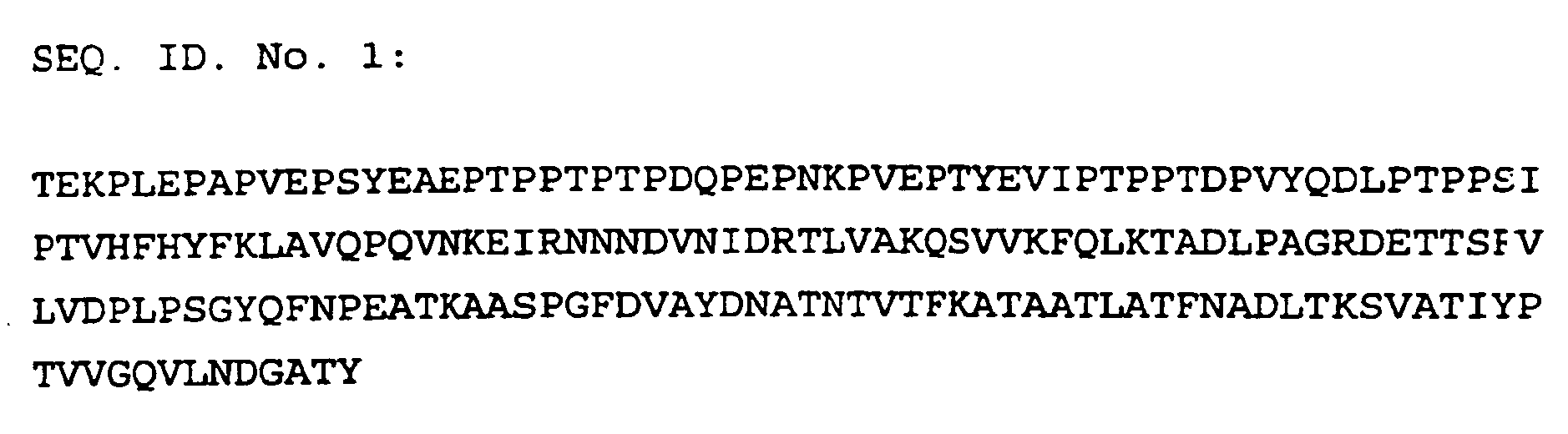

- (ii) Residues 1005 to 1044 (SEQ. ID. No. 2). This comprises a T-cell epitope overlapping two adhesion sites.
Its DNA sequence is (SEQ. ID. No. 13):


- (iii) Residues 1085-1104 (SEQ. ID. No. 3). Here, a T-cell epitope, a B-cell epitope and an adhesion site overlap.
Its DNA sequence is (SEQ. ID. No. 14):


- (iv) Residues 1005 to 1114 (SEQ. ID. No. 4). This comprises sequences (ii) and (iii) above and therefore includes two sequences in which a B-cell epitope a T-cell epitopes and an adhesion site overlap.
Its DNA sequence is (SEQ. ID. No. 15):


- (v) Residues 925 to 1004 (SEQ. ID. No. 5). This comprises a B-cell epitope, an immunodominant T-cell epitope and an adhesion site.
Its DNA sequence is (SEQ. ID. No. 16):


- (vi) Residues 925 to 1054 (SEQ. ID. No. 6). This comprises sequence (v) above, together with a further adjacent adhesion site and a further overlapping B-cell epitope.
Its DNA sequence is (SEQ. ID. No. 17):


- (vii) Residues 803-854 (SEQ. ID. No. 7). This comprises a major T-cell epitope and adjacent immunodominant B-cell epitope.
Its DNA sequence is (SEQ. ID. No. 18)


- (viii) Residues 975 to 1044 (SEQ. ID. No. 8). This comprises a T-cell epitope, a B-cell epitope and an adhesion site.
Its DNA sequence is (SEQ. ID. No. 19):


- (ix) Residues 1024 to 1044 (SEQ. ID. No. 9). This comprises a T-cell epitope overlapping with an adhesion site.
Its DNA Sequence is (SEQ. ID. No. 20):


- (x)
Residues 803 to 1114 (SEQ. ID. No. 10). This comprises sequences (i) and (vii) above and some intervening sequence.Residues 803 to 1114comprise 2 series of overlapping T-cell, B-cell and adhesion epitopes, a further T-cell epitope and a further adhesion site and an immunodominant B-cell epitope and a major T-cell epitope.Its DNA Sequence is (SEQ. ID. NO. 21):

- (xi) Residues 975 to 1004 (SEQ. ID. No. 11), which comprise a T-cell epitope.
Its DNA Sequence is (SEQ. ID. NO. 22):
 The amino acid sequence of SA I/II is as follows, beginning with residue No. 1 (SEQ ID No. 23).
 Its DNA sequence is as follows (SEQ ID No. 24):


Claims (17)
- A polypeptide having the ability to stimulate a T-cell response and one or more of the following properties: (i) the ability to adhere to a mammalian tooth in a competitive manner with naturally occurring Streptococcus mutans antigen I/II (SA I/II), thus preventing or diminishing the adhesion of S.mutans to the tooth; and (ii) the ability to stimulate a B-cell response; and selected from:(a) a polypeptide whose amino acid sequence is as shown in any one of SEQ. ID. Nos. 2 to 9 or 11(b) a polypeptide whose sequence has at least 60% sequence identity to that of a polypeptide of (a),; which polypeptide retains the biological properties that the polypeptide of (a) has in common with SAI/II;(c) a polypeptide comprising a sequence which differs from that of a polypeptide of (a) by the substitution, deletion or insertion of from one to ten amino acids; which polypeptide retains the biological properties that the polypeptide of (a) has in common with SAI/II;(d) a polypeptide comprising the sequence of SEQ ID No. 3, 9 or 11 and comprising up to 50 amino acids in total, or a polypeptide comprising the sequence of SEQ ID No. 2, 5, 7 or 8 and comprising up to 100 amino acids in total, or a polypeptide comprising the sequence of SEQ ID No. 4 or 6 and comprising up to 200 amino acids in total; which polypeptide retains the biological properties that the polypeptide of SEQ ID No. 2 to 9 or 11 has in common with SAI/II; and(e) a polypeptide comprising a polypeptide of (a) or (b), extended at the C-terminus by non-wild-type sequence having any sequence apart from that which is C-terminal to the sequence of the polypeptide of (a) in native SAI/II, and/or extended at the N-terminus by non-wild-type sequence having any sequence apart from that which is N-terminal to the sequence of the polypeptide of (a) in native SAI/II; which polypeptide retains the biological properties that the polypeptide of (a) has in common with SAI/II.
- A polypeptide according to claim 1, wherein, in part (b), the level of sequence identity is at least 80%, at least 90% or at least 95%.
- A polypeptide according to claim 1, wherein, in part (c), there is a substitution, deletion or insertion of from one to five amino acids.
- A polypeptide according to claim 1 whose amino acid sequence is that of any one of SEQ ID No. 2 to 9 or 11.
- A polypeptide according to claim 4 whose amino acid sequence is that of SEQ ID No. 9.
- A polypeptide according to claim 4 or 5 but differing therefrom by the deletion of one amino acid.
- A polypeptide according to any one of the preceding claims whose amino acid sequence is that of amino acids 2 to 21 of SEQ ID NO: 9.
- A polypeptide according to any one of the preceding claims which is glycosylated or sulphated; or has a C-terminal amide group and/or N-terminal acetylation.
- A nucleic acid sequence which codes upon expression in a prokaryotic or eukaryotic host cell for a polypeptide of any of claims 1 to 7.
- A vector comprising a nucleic acid sequence according to claim 9 operably linked to a promoter capable of directing its expression in a host cell.
- An isolated cell harbouring a vector according to claim 10.
- A pharmaceutical composition comprising a polypeptide according to any one of claims 1 to 8 and a pharmaceutically acceptable carrier.
- A composition according to claim 12 that is a vaccine composition.
- A composition according to claim 12 or 13 which is formulated for topical application in the mouth.
- A polypeptide according to any one of claims 1 to 8 for use in the treatment of dental caries.
- A polypeptide according to any one of claims 1 to 8 for use in the treatment of dental caries, or in vaccination of a mammalian host against dental caries by means of topical application in the mouth.
- Use of a polypeptide according to any one of claims 1 to 8 in the manufacture of a medicament for the treatment of dental caries, or in a vaccination of a mammalian host against dental caries by means of topical application in the mouth.
Applications Claiming Priority (3)
| Application Number | Priority Date | Filing Date | Title |
|---|---|---|---|
| GBGB9501826.3A GB9501826D0 (en) | 1995-01-31 | 1995-01-31 | Polypeptide fragments |
| GB9501826 | 1995-01-31 | ||
| PCT/GB1996/000207 WO1996023886A1 (en) | 1995-01-31 | 1996-01-31 | Polypeptide fragments capable of competition with streptococcus mutans antigen i/ii |
Publications (2)
| Publication Number | Publication Date |
|---|---|
| EP0871734A1 EP0871734A1 (en) | 1998-10-21 |
| EP0871734B1 true EP0871734B1 (en) | 2007-05-09 |
Family
ID=10768834
Family Applications (1)
| Application Number | Title | Priority Date | Filing Date |
|---|---|---|---|
| EP96901431A Expired - Lifetime EP0871734B1 (en) | 1995-01-31 | 1996-01-31 | Polypeptide fragments capable of competition with streptococcus mutans antigen i/ii |
Country Status (8)
| Country | Link |
|---|---|
| US (2) | US6024958A (en) |
| EP (1) | EP0871734B1 (en) |
| AT (1) | ATE361980T1 (en) |
| AU (1) | AU4545096A (en) |
| DE (1) | DE69637078T2 (en) |
| ES (1) | ES2285709T3 (en) |
| GB (1) | GB9501826D0 (en) |
| WO (1) | WO1996023886A1 (en) |
Families Citing this family (12)
| Publication number | Priority date | Publication date | Assignee | Title |
|---|---|---|---|---|
| US5882871A (en) * | 1996-09-24 | 1999-03-16 | Smithkline Beecham Corporation | Saliva binding protein |
| GB9924351D0 (en) | 1999-10-14 | 1999-12-15 | Brennan Frank | Immunomodulation methods and compositions |
| US6923962B2 (en) * | 2000-04-10 | 2005-08-02 | Dennis Cvitkovitch | Signal peptides, nucleic acid molecules and methods for treatment of caries |
| US7556807B2 (en) | 2001-02-20 | 2009-07-07 | Kane Biotech, Inc. | Signal peptides, nucleic acid molecules and methods for treatment of caries |
| US7597895B2 (en) * | 2001-02-20 | 2009-10-06 | The Governing Council Of The University Of Toronto | Signal peptides, nucleic acid molecules and methods for treatment of caries |
| US8876532B2 (en) | 2002-07-31 | 2014-11-04 | Dentsply International Inc. | Bone repair putty |
| EP1634948A1 (en) | 2004-09-10 | 2006-03-15 | Basf Aktiengesellschaft | Means and methods for preventing and/or treating caries |
| US9127045B2 (en) * | 2005-11-17 | 2015-09-08 | University Of Southern California | Method of inhibiting bacterial growth and biofilm formation with natural quorum sensing peptides |
| WO2007079755A1 (en) | 2006-01-12 | 2007-07-19 | Janus Beierholm Holding Aps | Reimmunization and antibody design |
| PL2027158T3 (en) * | 2006-05-02 | 2013-02-28 | Carviar Aps | Method for immunizing an avian species |
| RU2446208C9 (en) | 2006-12-19 | 2012-11-10 | Басф Се | Application and method for preventing and treating caries caused by mutans streptococci different from streptococcus mutans |
| EP2418284A1 (en) * | 2010-08-13 | 2012-02-15 | ERA Biotech, S.A. | Protein body-inducing polypeptide sequences |
Family Cites Families (4)
| Publication number | Priority date | Publication date | Assignee | Title |
|---|---|---|---|---|
| GB2060647B (en) * | 1979-10-18 | 1983-04-13 | Russell M W | Antigens ex streptococcus mutans |
| GB8303994D0 (en) * | 1983-02-14 | 1983-03-16 | Council Of Governors Of United | Antigenic materials |
| US5258368A (en) * | 1984-04-19 | 1993-11-02 | Scios Nova, Inc. | Atrial natriuretic/vasodilator peptide compounds |
| GB8704647D0 (en) * | 1987-02-27 | 1987-04-01 | Guy S & St Thomas S Hospitals | Vaccine |
-
1995
- 1995-01-31 GB GBGB9501826.3A patent/GB9501826D0/en active Pending
-
1996
- 1996-01-31 US US08/894,017 patent/US6024958A/en not_active Expired - Lifetime
- 1996-01-31 WO PCT/GB1996/000207 patent/WO1996023886A1/en not_active Ceased
- 1996-01-31 EP EP96901431A patent/EP0871734B1/en not_active Expired - Lifetime
- 1996-01-31 ES ES96901431T patent/ES2285709T3/en not_active Expired - Lifetime
- 1996-01-31 AU AU45450/96A patent/AU4545096A/en not_active Abandoned
- 1996-01-31 DE DE69637078T patent/DE69637078T2/en not_active Expired - Fee Related
- 1996-01-31 AT AT96901431T patent/ATE361980T1/en not_active IP Right Cessation
-
1999
- 1999-12-09 US US09/456,474 patent/US6500433B1/en not_active Expired - Fee Related
Also Published As
| Publication number | Publication date |
|---|---|
| US6500433B1 (en) | 2002-12-31 |
| WO1996023886A1 (en) | 1996-08-08 |
| ES2285709T3 (en) | 2007-11-16 |
| DE69637078D1 (en) | 2007-06-21 |
| EP0871734A1 (en) | 1998-10-21 |
| AU4545096A (en) | 1996-08-21 |
| ATE361980T1 (en) | 2007-06-15 |
| DE69637078T2 (en) | 2008-01-10 |
| US6024958A (en) | 2000-02-15 |
| GB9501826D0 (en) | 1995-03-22 |
Similar Documents
| Publication | Publication Date | Title |
|---|---|---|
| CA2653566C (en) | Compounds and methods for immunotherapy and diagnosis of tuberculosis | |
| KR20010071138A (en) | Fusion proteins of mycobacterium tuberculosis antigens and their uses | |
| JPH10327880A (en) | Human sodium-dependent phosphate carrier (ipt-1) | |
| AU718047B2 (en) | Cloned porphyromonas gingivalis genes and probes for the detection of periodontal disease | |
| AU758576B2 (en) | Chemokines with amino-terminal modifications | |
| US6500433B1 (en) | Polypeptide fragments capable of competition with Streptococcus mutans antigen I/II | |
| KR20210009296A (en) | Peptide immunogen of IL-31 and formulations thereof for the treatment and/or prevention of atopic dermatitis | |
| US20030157122A1 (en) | Streptococcal streptolysin S vaccines | |
| US20020086023A1 (en) | Streptococcal streptolysin S vaccines | |
| JPH09504167A (en) | T cell epitopes of the wheat allergen | |
| AU762100B2 (en) | Protective antigen of group A Streptococci (SPA) | |
| US20060246083A1 (en) | Protective antigen of group a streptococci | |
| CA2247072A1 (en) | Bacterial elastin binding protein, nucleic acid sequence encoding same and diagnostic and therapeutic methods of use thereof | |
| JPH1169985A (en) | Crfg-1a as target and marker of chronic renal insufficiency | |
| JPH1118795A (en) | licC | |
| JPH10327882A (en) | New LicB | |
| JPH10201484A (en) | New ftsl | |
| EP0814661A1 (en) | UBIQUITIN CONJUGATING ENZYMES 7, 8 and 9 | |
| KR20080052693A (en) | Genes, Proteins and Their Uses | |
| JPH11164693A (en) | Novel sMAD3 splice variants as targets for chronic renal failure, atherosclerosis and fibrosis | |
| JPH10512145A (en) | Human geranylgeranyl pyrophosphate synthetase | |
| JPH11103870A (en) | New compound | |
| CA2324981A1 (en) | Peptides | |
| JPH1132781A (en) | Human pelota homologue | |
| US5945321A (en) | Ubiquitin conjugating enzymes 7, 8 and 9 |
Legal Events
| Date | Code | Title | Description |
|---|---|---|---|
| PUAI | Public reference made under article 153(3) epc to a published international application that has entered the european phase |
Free format text: ORIGINAL CODE: 0009012 |
|
| 17P | Request for examination filed |
Effective date: 19970825 |
|
| AK | Designated contracting states |
Kind code of ref document: A1 Designated state(s): AT BE CH DE DK ES FR GB GR IE IT LI LU MC NL PT SE |
|
| 17Q | First examination report despatched |
Effective date: 20040405 |
|
| RAP1 | Party data changed (applicant data changed or rights of an application transferred) |
Owner name: KING'S COLLEGE LONDON |
|
| GRAP | Despatch of communication of intention to grant a patent |
Free format text: ORIGINAL CODE: EPIDOSNIGR1 |
|
| GRAS | Grant fee paid |
Free format text: ORIGINAL CODE: EPIDOSNIGR3 |
|
| GRAA | (expected) grant |
Free format text: ORIGINAL CODE: 0009210 |
|
| AK | Designated contracting states |
Kind code of ref document: B1 Designated state(s): AT BE CH DE DK ES FR GB GR IE IT LI LU MC NL PT SE |
|
| REG | Reference to a national code |
Ref country code: GB Ref legal event code: FG4D |
|
| REG | Reference to a national code |
Ref country code: CH Ref legal event code: EP |
|
| REG | Reference to a national code |
Ref country code: IE Ref legal event code: FG4D |
|
| REF | Corresponds to: |
Ref document number: 69637078 Country of ref document: DE Date of ref document: 20070621 Kind code of ref document: P |
|
| PG25 | Lapsed in a contracting state [announced via postgrant information from national office to epo] |
Ref country code: SE Free format text: LAPSE BECAUSE OF FAILURE TO SUBMIT A TRANSLATION OF THE DESCRIPTION OR TO PAY THE FEE WITHIN THE PRESCRIBED TIME-LIMIT Effective date: 20070809 |
|
| REG | Reference to a national code |
Ref country code: CH Ref legal event code: NV Representative=s name: ANDRE ROLAND S.A. |
|
| ET | Fr: translation filed | ||
| NLV1 | Nl: lapsed or annulled due to failure to fulfill the requirements of art. 29p and 29m of the patents act | ||
| REG | Reference to a national code |
Ref country code: ES Ref legal event code: FG2A Ref document number: 2285709 Country of ref document: ES Kind code of ref document: T3 |
|
| PG25 | Lapsed in a contracting state [announced via postgrant information from national office to epo] |
Ref country code: PT Free format text: LAPSE BECAUSE OF FAILURE TO SUBMIT A TRANSLATION OF THE DESCRIPTION OR TO PAY THE FEE WITHIN THE PRESCRIBED TIME-LIMIT Effective date: 20071009 Ref country code: NL Free format text: LAPSE BECAUSE OF FAILURE TO SUBMIT A TRANSLATION OF THE DESCRIPTION OR TO PAY THE FEE WITHIN THE PRESCRIBED TIME-LIMIT Effective date: 20070509 Ref country code: DK Free format text: LAPSE BECAUSE OF FAILURE TO SUBMIT A TRANSLATION OF THE DESCRIPTION OR TO PAY THE FEE WITHIN THE PRESCRIBED TIME-LIMIT Effective date: 20070509 |
|
| PLBE | No opposition filed within time limit |
Free format text: ORIGINAL CODE: 0009261 |
|
| STAA | Information on the status of an ep patent application or granted ep patent |
Free format text: STATUS: NO OPPOSITION FILED WITHIN TIME LIMIT |
|
| 26N | No opposition filed |
Effective date: 20080212 |
|
| PG25 | Lapsed in a contracting state [announced via postgrant information from national office to epo] |
Ref country code: GR Free format text: LAPSE BECAUSE OF FAILURE TO SUBMIT A TRANSLATION OF THE DESCRIPTION OR TO PAY THE FEE WITHIN THE PRESCRIBED TIME-LIMIT Effective date: 20070810 |
|
| BERE | Be: lapsed |
Owner name: KING'S COLLEGE LONDON Effective date: 20080131 |
|
| PG25 | Lapsed in a contracting state [announced via postgrant information from national office to epo] |
Ref country code: MC Free format text: LAPSE BECAUSE OF NON-PAYMENT OF DUE FEES Effective date: 20080131 |
|
| REG | Reference to a national code |
Ref country code: CH Ref legal event code: PL |
|
| GBPC | Gb: european patent ceased through non-payment of renewal fee |
Effective date: 20080131 |
|
| PG25 | Lapsed in a contracting state [announced via postgrant information from national office to epo] |
Ref country code: LI Free format text: LAPSE BECAUSE OF NON-PAYMENT OF DUE FEES Effective date: 20080131 Ref country code: DE Free format text: LAPSE BECAUSE OF NON-PAYMENT OF DUE FEES Effective date: 20080801 Ref country code: CH Free format text: LAPSE BECAUSE OF NON-PAYMENT OF DUE FEES Effective date: 20080131 |
|
| REG | Reference to a national code |
Ref country code: FR Ref legal event code: ST Effective date: 20081029 |
|
| PG25 | Lapsed in a contracting state [announced via postgrant information from national office to epo] |
Ref country code: GB Free format text: LAPSE BECAUSE OF NON-PAYMENT OF DUE FEES Effective date: 20080131 |
|
| PG25 | Lapsed in a contracting state [announced via postgrant information from national office to epo] |
Ref country code: IE Free format text: LAPSE BECAUSE OF NON-PAYMENT OF DUE FEES Effective date: 20080131 |
|
| PG25 | Lapsed in a contracting state [announced via postgrant information from national office to epo] |
Ref country code: BE Free format text: LAPSE BECAUSE OF NON-PAYMENT OF DUE FEES Effective date: 20080131 |
|
| REG | Reference to a national code |
Ref country code: ES Ref legal event code: FD2A Effective date: 20080201 |
|
| PG25 | Lapsed in a contracting state [announced via postgrant information from national office to epo] |
Ref country code: FR Free format text: LAPSE BECAUSE OF NON-PAYMENT OF DUE FEES Effective date: 20080131 Ref country code: AT Free format text: LAPSE BECAUSE OF NON-PAYMENT OF DUE FEES Effective date: 20080131 |
|
| PG25 | Lapsed in a contracting state [announced via postgrant information from national office to epo] |
Ref country code: ES Free format text: LAPSE BECAUSE OF NON-PAYMENT OF DUE FEES Effective date: 20080201 |
|
| PG25 | Lapsed in a contracting state [announced via postgrant information from national office to epo] |
Ref country code: IT Free format text: LAPSE BECAUSE OF NON-PAYMENT OF DUE FEES Effective date: 20080131 |
|
| PG25 | Lapsed in a contracting state [announced via postgrant information from national office to epo] |
Ref country code: LU Free format text: LAPSE BECAUSE OF NON-PAYMENT OF DUE FEES Effective date: 20080131 |