EP0871649B1 - Conjugates of a polypeptide and a biocompatible polymer - Google Patents
Conjugates of a polypeptide and a biocompatible polymer Download PDFInfo
- Publication number
- EP0871649B1 EP0871649B1 EP96932915A EP96932915A EP0871649B1 EP 0871649 B1 EP0871649 B1 EP 0871649B1 EP 96932915 A EP96932915 A EP 96932915A EP 96932915 A EP96932915 A EP 96932915A EP 0871649 B1 EP0871649 B1 EP 0871649B1
- Authority
- EP
- European Patent Office
- Prior art keywords
- factor viii
- mpeg
- viii
- polypeptide
- factor
- Prior art date
- Legal status (The legal status is an assumption and is not a legal conclusion. Google has not performed a legal analysis and makes no representation as to the accuracy of the status listed.)
- Expired - Lifetime
Links
- 229920000249 biocompatible polymer Polymers 0.000 title claims abstract description 33
- 108090000765 processed proteins & peptides Proteins 0.000 title claims description 59
- 102000004196 processed proteins & peptides Human genes 0.000 title claims description 58
- 229920001184 polypeptide Polymers 0.000 title claims description 55
- 238000000034 method Methods 0.000 claims abstract description 45
- 230000008569 process Effects 0.000 claims abstract description 24
- 239000003463 adsorbent Substances 0.000 claims abstract description 23
- 238000001727 in vivo Methods 0.000 claims abstract description 15
- 239000003446 ligand Substances 0.000 claims abstract description 13
- 230000003993 interaction Effects 0.000 claims abstract description 12
- 230000001268 conjugating effect Effects 0.000 claims abstract description 8
- 230000003100 immobilizing effect Effects 0.000 claims abstract description 8
- 230000003213 activating effect Effects 0.000 claims abstract description 5
- 108010054218 Factor VIII Proteins 0.000 claims description 87
- 102000001690 Factor VIII Human genes 0.000 claims description 87
- 229960000301 factor viii Drugs 0.000 claims description 84
- 108010025139 recombinant factor VIII SQ Proteins 0.000 claims description 49
- 230000000694 effects Effects 0.000 claims description 45
- 108090000623 proteins and genes Proteins 0.000 claims description 27
- 102000004169 proteins and genes Human genes 0.000 claims description 27
- 229920001223 polyethylene glycol Polymers 0.000 claims description 14
- 239000000203 mixture Substances 0.000 claims description 9
- 229920001519 homopolymer Polymers 0.000 claims description 8
- 229920000233 poly(alkylene oxides) Polymers 0.000 claims description 8
- 239000002202 Polyethylene glycol Substances 0.000 claims description 6
- 229920001577 copolymer Polymers 0.000 claims description 4
- 125000004202 aminomethyl group Chemical group [H]N([H])C([H])([H])* 0.000 claims description 3
- 229920001400 block copolymer Polymers 0.000 claims description 3
- 229920001451 polypropylene glycol Polymers 0.000 claims description 3
- 125000000022 2-aminoethyl group Chemical group [H]C([*])([H])C([H])([H])N([H])[H] 0.000 claims description 2
- 238000005349 anion exchange Methods 0.000 claims 1
- 102100022641 Coagulation factor IX Human genes 0.000 abstract description 12
- 108010076282 Factor IX Proteins 0.000 abstract description 12
- 229960004222 factor ix Drugs 0.000 abstract description 11
- 238000002360 preparation method Methods 0.000 description 25
- 235000018102 proteins Nutrition 0.000 description 25
- 230000021615 conjugation Effects 0.000 description 24
- 238000005859 coupling reaction Methods 0.000 description 24
- 238000010168 coupling process Methods 0.000 description 21
- 230000008878 coupling Effects 0.000 description 20
- 239000000126 substance Substances 0.000 description 16
- 239000003814 drug Substances 0.000 description 15
- 230000006870 function Effects 0.000 description 15
- 230000004048 modification Effects 0.000 description 14
- 238000012986 modification Methods 0.000 description 14
- FAPWRFPIFSIZLT-UHFFFAOYSA-M Sodium chloride Chemical compound [Na+].[Cl-] FAPWRFPIFSIZLT-UHFFFAOYSA-M 0.000 description 12
- 239000000872 buffer Substances 0.000 description 12
- 238000007920 subcutaneous administration Methods 0.000 description 12
- 235000001014 amino acid Nutrition 0.000 description 11
- HNDVDQJCIGZPNO-YFKPBYRVSA-N L-histidine Chemical compound OC(=O)[C@@H](N)CC1=CN=CN1 HNDVDQJCIGZPNO-YFKPBYRVSA-N 0.000 description 10
- 229940024606 amino acid Drugs 0.000 description 10
- 150000001413 amino acids Chemical group 0.000 description 10
- 238000001990 intravenous administration Methods 0.000 description 10
- 230000006320 pegylation Effects 0.000 description 10
- UXVMQQNJUSDDNG-UHFFFAOYSA-L Calcium chloride Chemical compound [Cl-].[Cl-].[Ca+2] UXVMQQNJUSDDNG-UHFFFAOYSA-L 0.000 description 9
- 239000001110 calcium chloride Substances 0.000 description 9
- 229910001628 calcium chloride Inorganic materials 0.000 description 9
- 150000008064 anhydrides Chemical class 0.000 description 8
- 229920001222 biopolymer Polymers 0.000 description 8
- 238000004519 manufacturing process Methods 0.000 description 8
- 229920000642 polymer Polymers 0.000 description 8
- 239000000243 solution Substances 0.000 description 8
- KDYFGRWQOYBRFD-UHFFFAOYSA-L succinate(2-) Chemical compound [O-]C(=O)CCC([O-])=O KDYFGRWQOYBRFD-UHFFFAOYSA-L 0.000 description 8
- 230000000875 corresponding effect Effects 0.000 description 7
- 229940068917 polyethylene glycols Drugs 0.000 description 7
- 241000282414 Homo sapiens Species 0.000 description 6
- 230000004913 activation Effects 0.000 description 6
- 239000002981 blocking agent Substances 0.000 description 6
- 239000003153 chemical reaction reagent Substances 0.000 description 6
- 239000000701 coagulant Substances 0.000 description 6
- 238000012217 deletion Methods 0.000 description 6
- 230000037430 deletion Effects 0.000 description 6
- 238000005227 gel permeation chromatography Methods 0.000 description 6
- 229960002885 histidine Drugs 0.000 description 6
- 238000007918 intramuscular administration Methods 0.000 description 6
- 239000011159 matrix material Substances 0.000 description 6
- 239000011780 sodium chloride Substances 0.000 description 6
- 238000003786 synthesis reaction Methods 0.000 description 6
- 101000911390 Homo sapiens Coagulation factor VIII Proteins 0.000 description 5
- 125000000129 anionic group Chemical group 0.000 description 5
- 238000006243 chemical reaction Methods 0.000 description 5
- 238000010828 elution Methods 0.000 description 5
- 230000000717 retained effect Effects 0.000 description 5
- 229960004072 thrombin Drugs 0.000 description 5
- 108010047303 von Willebrand Factor Proteins 0.000 description 5
- 102100036537 von Willebrand factor Human genes 0.000 description 5
- 229960001134 von willebrand factor Drugs 0.000 description 5
- 102100026735 Coagulation factor VIII Human genes 0.000 description 4
- 108090000190 Thrombin Proteins 0.000 description 4
- 230000008901 benefit Effects 0.000 description 4
- 230000008827 biological function Effects 0.000 description 4
- 239000008280 blood Substances 0.000 description 4
- 210000004369 blood Anatomy 0.000 description 4
- 230000015556 catabolic process Effects 0.000 description 4
- 238000006731 degradation reaction Methods 0.000 description 4
- 229940079593 drug Drugs 0.000 description 4
- 230000023597 hemostasis Effects 0.000 description 4
- 238000000338 in vitro Methods 0.000 description 4
- 230000002779 inactivation Effects 0.000 description 4
- QTBSBXVTEAMEQO-UHFFFAOYSA-N Acetic acid Chemical compound CC(O)=O QTBSBXVTEAMEQO-UHFFFAOYSA-N 0.000 description 3
- 229920000936 Agarose Polymers 0.000 description 3
- LYCAIKOWRPUZTN-UHFFFAOYSA-N Ethylene glycol Chemical compound OCCO LYCAIKOWRPUZTN-UHFFFAOYSA-N 0.000 description 3
- 108010048049 Factor IXa Proteins 0.000 description 3
- 241000699670 Mus sp. Species 0.000 description 3
- -1 Poly(Ethylene Glycol) Polymers 0.000 description 3
- 238000003556 assay Methods 0.000 description 3
- 239000007795 chemical reaction product Substances 0.000 description 3
- 229940105778 coagulation factor viii Drugs 0.000 description 3
- 230000003247 decreasing effect Effects 0.000 description 3
- 230000002950 deficient Effects 0.000 description 3
- 239000000284 extract Substances 0.000 description 3
- 125000003588 lysine group Chemical group [H]N([H])C([H])([H])C([H])([H])C([H])([H])C([H])([H])C([H])(N([H])[H])C(*)=O 0.000 description 3
- 230000006337 proteolytic cleavage Effects 0.000 description 3
- 230000002829 reductive effect Effects 0.000 description 3
- 239000011347 resin Substances 0.000 description 3
- 229920005989 resin Polymers 0.000 description 3
- 230000001225 therapeutic effect Effects 0.000 description 3
- JKMHFZQWWAIEOD-UHFFFAOYSA-N 2-[4-(2-hydroxyethyl)piperazin-1-yl]ethanesulfonic acid Chemical compound OCC[NH+]1CCN(CCS([O-])(=O)=O)CC1 JKMHFZQWWAIEOD-UHFFFAOYSA-N 0.000 description 2
- 241000282472 Canis lupus familiaris Species 0.000 description 2
- 229920002307 Dextran Polymers 0.000 description 2
- 102000004190 Enzymes Human genes 0.000 description 2
- 108090000790 Enzymes Proteins 0.000 description 2
- 201000003542 Factor VIII deficiency Diseases 0.000 description 2
- 108010014173 Factor X Proteins 0.000 description 2
- 208000009292 Hemophilia A Diseases 0.000 description 2
- 241000282567 Macaca fascicularis Species 0.000 description 2
- 241001465754 Metazoa Species 0.000 description 2
- 108091005804 Peptidases Proteins 0.000 description 2
- 102000035195 Peptidases Human genes 0.000 description 2
- 241001415846 Procellariidae Species 0.000 description 2
- 239000004365 Protease Substances 0.000 description 2
- 108020004511 Recombinant DNA Proteins 0.000 description 2
- 241000906446 Theraps Species 0.000 description 2
- 208000007536 Thrombosis Diseases 0.000 description 2
- 241000700605 Viruses Species 0.000 description 2
- 239000013566 allergen Substances 0.000 description 2
- 238000004458 analytical method Methods 0.000 description 2
- 230000027455 binding Effects 0.000 description 2
- 150000001720 carbohydrates Chemical group 0.000 description 2
- 238000004113 cell culture Methods 0.000 description 2
- 238000004587 chromatography analysis Methods 0.000 description 2
- 230000015271 coagulation Effects 0.000 description 2
- 238000005345 coagulation Methods 0.000 description 2
- 239000012141 concentrate Substances 0.000 description 2
- 238000007796 conventional method Methods 0.000 description 2
- 238000001212 derivatisation Methods 0.000 description 2
- XBDQKXXYIPTUBI-UHFFFAOYSA-N dimethylselenoniopropionate Natural products CCC(O)=O XBDQKXXYIPTUBI-UHFFFAOYSA-N 0.000 description 2
- 229940088598 enzyme Drugs 0.000 description 2
- 239000006167 equilibration buffer Substances 0.000 description 2
- 239000013604 expression vector Substances 0.000 description 2
- HNDVDQJCIGZPNO-UHFFFAOYSA-N histidine Natural products OC(=O)C(N)CC1=CN=CN1 HNDVDQJCIGZPNO-UHFFFAOYSA-N 0.000 description 2
- 230000005847 immunogenicity Effects 0.000 description 2
- 238000002347 injection Methods 0.000 description 2
- 239000007924 injection Substances 0.000 description 2
- 235000018977 lysine Nutrition 0.000 description 2
- 229920002521 macromolecule Polymers 0.000 description 2
- 229910021645 metal ion Inorganic materials 0.000 description 2
- 108020004707 nucleic acids Proteins 0.000 description 2
- 102000039446 nucleic acids Human genes 0.000 description 2
- 150000007523 nucleic acids Chemical group 0.000 description 2
- 229920000620 organic polymer Polymers 0.000 description 2
- 235000010482 polyoxyethylene sorbitan monooleate Nutrition 0.000 description 2
- 229920000053 polysorbate 80 Polymers 0.000 description 2
- 239000000047 product Substances 0.000 description 2
- 230000002797 proteolythic effect Effects 0.000 description 2
- 230000009257 reactivity Effects 0.000 description 2
- JQWHASGSAFIOCM-UHFFFAOYSA-M sodium periodate Chemical compound [Na+].[O-]I(=O)(=O)=O JQWHASGSAFIOCM-UHFFFAOYSA-M 0.000 description 2
- 238000001179 sorption measurement Methods 0.000 description 2
- 230000000087 stabilizing effect Effects 0.000 description 2
- KDYFGRWQOYBRFD-UHFFFAOYSA-N succinic acid Chemical compound OC(=O)CCC(O)=O KDYFGRWQOYBRFD-UHFFFAOYSA-N 0.000 description 2
- 210000001519 tissue Anatomy 0.000 description 2
- STCOOQWBFONSKY-UHFFFAOYSA-N tributyl phosphate Chemical compound CCCCOP(=O)(OCCCC)OCCCC STCOOQWBFONSKY-UHFFFAOYSA-N 0.000 description 2
- 238000005406 washing Methods 0.000 description 2
- ZJIFDEVVTPEXDL-UHFFFAOYSA-N (2,5-dioxopyrrolidin-1-yl) hydrogen carbonate Chemical compound OC(=O)ON1C(=O)CCC1=O ZJIFDEVVTPEXDL-UHFFFAOYSA-N 0.000 description 1
- AASBXERNXVFUEJ-UHFFFAOYSA-N (2,5-dioxopyrrolidin-1-yl) propanoate Chemical compound CCC(=O)ON1C(=O)CCC1=O AASBXERNXVFUEJ-UHFFFAOYSA-N 0.000 description 1
- JPNBVWIRDQVGAC-UHFFFAOYSA-N (2-nitrophenyl) hydrogen carbonate Chemical class OC(=O)OC1=CC=CC=C1[N+]([O-])=O JPNBVWIRDQVGAC-UHFFFAOYSA-N 0.000 description 1
- ASUGWWOMVNVWAW-UHFFFAOYSA-N 1-(2-methoxyethyl)pyrrole-2,5-dione Chemical compound COCCN1C(=O)C=CC1=O ASUGWWOMVNVWAW-UHFFFAOYSA-N 0.000 description 1
- BMVXCPBXGZKUPN-UHFFFAOYSA-N 1-hexanamine Chemical compound CCCCCCN BMVXCPBXGZKUPN-UHFFFAOYSA-N 0.000 description 1
- AYKYXWQEBUNJCN-UHFFFAOYSA-N 3-methylfuran-2,5-dione Chemical compound CC1=CC(=O)OC1=O AYKYXWQEBUNJCN-UHFFFAOYSA-N 0.000 description 1
- KHURTEAYLZEQHD-UHFFFAOYSA-N 3-n-propylpropane-1,1,3-triamine Chemical compound CCCNCCC(N)N KHURTEAYLZEQHD-UHFFFAOYSA-N 0.000 description 1
- QXZGLTYKKZKGLN-UHFFFAOYSA-N 4-(2,5-dioxopyrrolidin-1-yl)oxy-4-oxobutanoic acid Chemical compound OC(=O)CCC(=O)ON1C(=O)CCC1=O QXZGLTYKKZKGLN-UHFFFAOYSA-N 0.000 description 1
- 101710169336 5'-deoxyadenosine deaminase Proteins 0.000 description 1
- 102000055025 Adenosine deaminases Human genes 0.000 description 1
- 239000004475 Arginine Substances 0.000 description 1
- 102000004506 Blood Proteins Human genes 0.000 description 1
- 108010017384 Blood Proteins Proteins 0.000 description 1
- BHPQYMZQTOCNFJ-UHFFFAOYSA-N Calcium cation Chemical compound [Ca+2] BHPQYMZQTOCNFJ-UHFFFAOYSA-N 0.000 description 1
- 102000013831 Coagulation factor IX Human genes 0.000 description 1
- 206010053567 Coagulopathies Diseases 0.000 description 1
- 241000699802 Cricetulus griseus Species 0.000 description 1
- 102100024746 Dihydrofolate reductase Human genes 0.000 description 1
- BWGNESOTFCXPMA-UHFFFAOYSA-N Dihydrogen disulfide Chemical compound SS BWGNESOTFCXPMA-UHFFFAOYSA-N 0.000 description 1
- 108010062466 Enzyme Precursors Proteins 0.000 description 1
- 102000010911 Enzyme Precursors Human genes 0.000 description 1
- 108010074860 Factor Xa Proteins 0.000 description 1
- 102000009123 Fibrin Human genes 0.000 description 1
- 108010073385 Fibrin Proteins 0.000 description 1
- BWGVNKXGVNDBDI-UHFFFAOYSA-N Fibrin monomer Chemical compound CNC(=O)CNC(=O)CN BWGVNKXGVNDBDI-UHFFFAOYSA-N 0.000 description 1
- 108010015133 Galactose oxidase Proteins 0.000 description 1
- 102000003886 Glycoproteins Human genes 0.000 description 1
- 108090000288 Glycoproteins Proteins 0.000 description 1
- 102000000588 Interleukin-2 Human genes 0.000 description 1
- 108010002350 Interleukin-2 Proteins 0.000 description 1
- FBOZXECLQNJBKD-ZDUSSCGKSA-N L-methotrexate Chemical compound C=1N=C2N=C(N)N=C(N)C2=NC=1CN(C)C1=CC=C(C(=O)N[C@@H](CCC(O)=O)C(O)=O)C=C1 FBOZXECLQNJBKD-ZDUSSCGKSA-N 0.000 description 1
- 241000124008 Mammalia Species 0.000 description 1
- NIPNSKYNPDTRPC-UHFFFAOYSA-N N-[2-oxo-2-(2,4,6,7-tetrahydrotriazolo[4,5-c]pyridin-5-yl)ethyl]-2-[[3-(trifluoromethoxy)phenyl]methylamino]pyrimidine-5-carboxamide Chemical compound O=C(CNC(=O)C=1C=NC(=NC=1)NCC1=CC(=CC=C1)OC(F)(F)F)N1CC2=C(CC1)NN=N2 NIPNSKYNPDTRPC-UHFFFAOYSA-N 0.000 description 1
- 102000015636 Oligopeptides Human genes 0.000 description 1
- 108010038807 Oligopeptides Proteins 0.000 description 1
- 108091006006 PEGylated Proteins Proteins 0.000 description 1
- 108010022999 Serine Proteases Proteins 0.000 description 1
- 102000012479 Serine Proteases Human genes 0.000 description 1
- 238000000692 Student's t-test Methods 0.000 description 1
- 229930006000 Sucrose Natural products 0.000 description 1
- CZMRCDWAGMRECN-UGDNZRGBSA-N Sucrose Chemical compound O[C@H]1[C@H](O)[C@@H](CO)O[C@@]1(CO)O[C@@H]1[C@H](O)[C@@H](O)[C@H](O)[C@@H](CO)O1 CZMRCDWAGMRECN-UGDNZRGBSA-N 0.000 description 1
- 239000012505 Superdex™ Substances 0.000 description 1
- 108010022394 Threonine synthase Proteins 0.000 description 1
- 229930003448 Vitamin K Natural products 0.000 description 1
- 208000027276 Von Willebrand disease Diseases 0.000 description 1
- 230000009471 action Effects 0.000 description 1
- 230000002776 aggregation Effects 0.000 description 1
- 238000004220 aggregation Methods 0.000 description 1
- 125000003172 aldehyde group Chemical group 0.000 description 1
- 125000003545 alkoxy group Chemical group 0.000 description 1
- 150000003973 alkyl amines Chemical class 0.000 description 1
- 125000003277 amino group Chemical group 0.000 description 1
- 239000003146 anticoagulant agent Substances 0.000 description 1
- 229940127219 anticoagulant drug Drugs 0.000 description 1
- 239000000427 antigen Substances 0.000 description 1
- 230000000890 antigenic effect Effects 0.000 description 1
- 102000036639 antigens Human genes 0.000 description 1
- 108091007433 antigens Proteins 0.000 description 1
- ODKSFYDXXFIFQN-UHFFFAOYSA-N arginine Natural products OC(=O)C(N)CCCNC(N)=N ODKSFYDXXFIFQN-UHFFFAOYSA-N 0.000 description 1
- 230000009286 beneficial effect Effects 0.000 description 1
- 230000015572 biosynthetic process Effects 0.000 description 1
- DSEORJACOQDMQX-UHFFFAOYSA-N bis(2,3,4-trichlorophenyl) carbonate Chemical compound ClC1=C(Cl)C(Cl)=CC=C1OC(=O)OC1=CC=C(Cl)C(Cl)=C1Cl DSEORJACOQDMQX-UHFFFAOYSA-N 0.000 description 1
- 230000023555 blood coagulation Effects 0.000 description 1
- 125000000484 butyl group Chemical group [H]C([*])([H])C([H])([H])C([H])([H])C([H])([H])[H] 0.000 description 1
- 229910001424 calcium ion Inorganic materials 0.000 description 1
- OZMJXAQDMVDWBK-UHFFFAOYSA-N carbamic acid;ethyl carbamate Chemical compound NC(O)=O.CCOC(N)=O OZMJXAQDMVDWBK-UHFFFAOYSA-N 0.000 description 1
- 235000014633 carbohydrates Nutrition 0.000 description 1
- 125000002091 cationic group Chemical group 0.000 description 1
- 210000004027 cell Anatomy 0.000 description 1
- 239000001913 cellulose Substances 0.000 description 1
- 229920002678 cellulose Polymers 0.000 description 1
- 230000008859 change Effects 0.000 description 1
- 210000004978 chinese hamster ovary cell Anatomy 0.000 description 1
- 238000011210 chromatographic step Methods 0.000 description 1
- 230000035602 clotting Effects 0.000 description 1
- 229940105774 coagulation factor ix Drugs 0.000 description 1
- 230000000052 comparative effect Effects 0.000 description 1
- 230000000295 complement effect Effects 0.000 description 1
- 239000003636 conditioned culture medium Substances 0.000 description 1
- 230000002596 correlated effect Effects 0.000 description 1
- XUJNEKJLAYXESH-UHFFFAOYSA-N cysteine Natural products SCC(N)C(O)=O XUJNEKJLAYXESH-UHFFFAOYSA-N 0.000 description 1
- 125000000151 cysteine group Chemical group N[C@@H](CS)C(=O)* 0.000 description 1
- 230000000593 degrading effect Effects 0.000 description 1
- 230000001419 dependent effect Effects 0.000 description 1
- 238000003795 desorption Methods 0.000 description 1
- 239000003599 detergent Substances 0.000 description 1
- 230000001627 detrimental effect Effects 0.000 description 1
- 108020001096 dihydrofolate reductase Proteins 0.000 description 1
- 230000003292 diminished effect Effects 0.000 description 1
- 238000011038 discontinuous diafiltration by volume reduction Methods 0.000 description 1
- AFOSIXZFDONLBT-UHFFFAOYSA-N divinyl sulfone Chemical compound C=CS(=O)(=O)C=C AFOSIXZFDONLBT-UHFFFAOYSA-N 0.000 description 1
- 231100000673 dose–response relationship Toxicity 0.000 description 1
- 238000005516 engineering process Methods 0.000 description 1
- 230000001747 exhibiting effect Effects 0.000 description 1
- 230000002349 favourable effect Effects 0.000 description 1
- 210000003191 femoral vein Anatomy 0.000 description 1
- 229950003499 fibrin Drugs 0.000 description 1
- 239000000706 filtrate Substances 0.000 description 1
- 238000001914 filtration Methods 0.000 description 1
- 239000013020 final formulation Substances 0.000 description 1
- 239000012467 final product Substances 0.000 description 1
- 238000005194 fractionation Methods 0.000 description 1
- VOZRXNHHFUQHIL-UHFFFAOYSA-N glycidyl methacrylate Chemical compound CC(=C)C(=O)OCC1CO1 VOZRXNHHFUQHIL-UHFFFAOYSA-N 0.000 description 1
- 239000003102 growth factor Substances 0.000 description 1
- 125000002795 guanidino group Chemical group C(N)(=N)N* 0.000 description 1
- 208000009429 hemophilia B Diseases 0.000 description 1
- 102000057593 human F8 Human genes 0.000 description 1
- 229960000900 human factor viii Drugs 0.000 description 1
- 230000002209 hydrophobic effect Effects 0.000 description 1
- 125000002887 hydroxy group Chemical group [H]O* 0.000 description 1
- 238000009169 immunotherapy Methods 0.000 description 1
- 230000001771 impaired effect Effects 0.000 description 1
- 238000000099 in vitro assay Methods 0.000 description 1
- 238000010348 incorporation Methods 0.000 description 1
- 238000011534 incubation Methods 0.000 description 1
- 238000001802 infusion Methods 0.000 description 1
- 239000003112 inhibitor Substances 0.000 description 1
- 238000003780 insertion Methods 0.000 description 1
- 230000037431 insertion Effects 0.000 description 1
- 238000005342 ion exchange Methods 0.000 description 1
- 230000000670 limiting effect Effects 0.000 description 1
- 210000004185 liver Anatomy 0.000 description 1
- 210000004072 lung Anatomy 0.000 description 1
- FPYJFEHAWHCUMM-UHFFFAOYSA-N maleic anhydride Chemical compound O=C1OC(=O)C=C1 FPYJFEHAWHCUMM-UHFFFAOYSA-N 0.000 description 1
- 238000013507 mapping Methods 0.000 description 1
- 239000000463 material Substances 0.000 description 1
- 239000002609 medium Substances 0.000 description 1
- 239000012528 membrane Substances 0.000 description 1
- 229960000485 methotrexate Drugs 0.000 description 1
- KQTSOJHOCCWAEH-UHFFFAOYSA-N n'-(2,5-dioxopyrrolidin-1-yl)butanediamide Chemical compound NC(=O)CCC(=O)NN1C(=O)CCC1=O KQTSOJHOCCWAEH-UHFFFAOYSA-N 0.000 description 1
- 210000001672 ovary Anatomy 0.000 description 1
- 230000003647 oxidation Effects 0.000 description 1
- 238000007254 oxidation reaction Methods 0.000 description 1
- 238000012856 packing Methods 0.000 description 1
- OJUGVDODNPJEEC-UHFFFAOYSA-N phenylglyoxal Chemical class O=CC(=O)C1=CC=CC=C1 OJUGVDODNPJEEC-UHFFFAOYSA-N 0.000 description 1
- 150000003904 phospholipids Chemical class 0.000 description 1
- SHUZOJHMOBOZST-UHFFFAOYSA-N phylloquinone Natural products CC(C)CCCCC(C)CCC(C)CCCC(=CCC1=C(C)C(=O)c2ccccc2C1=O)C SHUZOJHMOBOZST-UHFFFAOYSA-N 0.000 description 1
- 210000002381 plasma Anatomy 0.000 description 1
- 239000001267 polyvinylpyrrolidone Substances 0.000 description 1
- 229920000036 polyvinylpyrrolidone Polymers 0.000 description 1
- 235000013855 polyvinylpyrrolidone Nutrition 0.000 description 1
- 239000005373 porous glass Substances 0.000 description 1
- 239000002243 precursor Substances 0.000 description 1
- 125000002924 primary amino group Chemical group [H]N([H])* 0.000 description 1
- 238000007639 printing Methods 0.000 description 1
- 238000012545 processing Methods 0.000 description 1
- 235000019260 propionic acid Nutrition 0.000 description 1
- 238000001742 protein purification Methods 0.000 description 1
- 239000012460 protein solution Substances 0.000 description 1
- 238000000425 proton nuclear magnetic resonance spectrum Methods 0.000 description 1
- 238000000746 purification Methods 0.000 description 1
- IUVKMZGDUIUOCP-BTNSXGMBSA-N quinbolone Chemical compound O([C@H]1CC[C@H]2[C@H]3[C@@H]([C@]4(C=CC(=O)C=C4CC3)C)CC[C@@]21C)C1=CCCC1 IUVKMZGDUIUOCP-BTNSXGMBSA-N 0.000 description 1
- 230000002285 radioactive effect Effects 0.000 description 1
- 239000011541 reaction mixture Substances 0.000 description 1
- 108091008146 restriction endonucleases Proteins 0.000 description 1
- 230000002441 reversible effect Effects 0.000 description 1
- 150000003839 salts Chemical class 0.000 description 1
- 239000006152 selective media Substances 0.000 description 1
- 210000002966 serum Anatomy 0.000 description 1
- 239000012679 serum free medium Substances 0.000 description 1
- 238000002741 site-directed mutagenesis Methods 0.000 description 1
- 239000002002 slurry Substances 0.000 description 1
- 239000001509 sodium citrate Substances 0.000 description 1
- NLJMYIDDQXHKNR-UHFFFAOYSA-K sodium citrate Chemical compound O.O.[Na+].[Na+].[Na+].[O-]C(=O)CC(O)(CC([O-])=O)C([O-])=O NLJMYIDDQXHKNR-UHFFFAOYSA-K 0.000 description 1
- 125000006850 spacer group Chemical group 0.000 description 1
- 241000894007 species Species 0.000 description 1
- 230000009870 specific binding Effects 0.000 description 1
- 210000000952 spleen Anatomy 0.000 description 1
- 238000013112 stability test Methods 0.000 description 1
- 239000007858 starting material Substances 0.000 description 1
- 238000007619 statistical method Methods 0.000 description 1
- 238000006467 substitution reaction Methods 0.000 description 1
- 239000001384 succinic acid Substances 0.000 description 1
- 239000005720 sucrose Substances 0.000 description 1
- 239000006228 supernatant Substances 0.000 description 1
- 230000004083 survival effect Effects 0.000 description 1
- 239000000725 suspension Substances 0.000 description 1
- 238000012360 testing method Methods 0.000 description 1
- 229940124597 therapeutic agent Drugs 0.000 description 1
- 229960003766 thrombin (human) Drugs 0.000 description 1
- 238000000108 ultra-filtration Methods 0.000 description 1
- 210000003462 vein Anatomy 0.000 description 1
- 235000019168 vitamin K Nutrition 0.000 description 1
- 239000011712 vitamin K Substances 0.000 description 1
- 150000003721 vitamin K derivatives Chemical class 0.000 description 1
- 229940046010 vitamin k Drugs 0.000 description 1
- 208000012137 von Willebrand disease (hereditary or acquired) Diseases 0.000 description 1
- 239000011534 wash buffer Substances 0.000 description 1
- XLYOFNOQVPJJNP-UHFFFAOYSA-N water Chemical compound O XLYOFNOQVPJJNP-UHFFFAOYSA-N 0.000 description 1
- 239000008215 water for injection Substances 0.000 description 1
Images

Classifications
-
- A—HUMAN NECESSITIES
- A61—MEDICAL OR VETERINARY SCIENCE; HYGIENE
- A61K—PREPARATIONS FOR MEDICAL, DENTAL OR TOILETRY PURPOSES
- A61K47/00—Medicinal preparations characterised by the non-active ingredients used, e.g. carriers or inert additives; Targeting or modifying agents chemically bound to the active ingredient
- A61K47/50—Medicinal preparations characterised by the non-active ingredients used, e.g. carriers or inert additives; Targeting or modifying agents chemically bound to the active ingredient the non-active ingredient being chemically bound to the active ingredient, e.g. polymer-drug conjugates
- A61K47/51—Medicinal preparations characterised by the non-active ingredients used, e.g. carriers or inert additives; Targeting or modifying agents chemically bound to the active ingredient the non-active ingredient being chemically bound to the active ingredient, e.g. polymer-drug conjugates the non-active ingredient being a modifying agent
- A61K47/56—Medicinal preparations characterised by the non-active ingredients used, e.g. carriers or inert additives; Targeting or modifying agents chemically bound to the active ingredient the non-active ingredient being chemically bound to the active ingredient, e.g. polymer-drug conjugates the non-active ingredient being a modifying agent the modifying agent being an organic macromolecular compound, e.g. an oligomeric, polymeric or dendrimeric molecule
- A61K47/59—Medicinal preparations characterised by the non-active ingredients used, e.g. carriers or inert additives; Targeting or modifying agents chemically bound to the active ingredient the non-active ingredient being chemically bound to the active ingredient, e.g. polymer-drug conjugates the non-active ingredient being a modifying agent the modifying agent being an organic macromolecular compound, e.g. an oligomeric, polymeric or dendrimeric molecule obtained otherwise than by reactions only involving carbon-to-carbon unsaturated bonds, e.g. polyureas or polyurethanes
- A61K47/60—Medicinal preparations characterised by the non-active ingredients used, e.g. carriers or inert additives; Targeting or modifying agents chemically bound to the active ingredient the non-active ingredient being chemically bound to the active ingredient, e.g. polymer-drug conjugates the non-active ingredient being a modifying agent the modifying agent being an organic macromolecular compound, e.g. an oligomeric, polymeric or dendrimeric molecule obtained otherwise than by reactions only involving carbon-to-carbon unsaturated bonds, e.g. polyureas or polyurethanes the organic macromolecular compound being a polyoxyalkylene oligomer, polymer or dendrimer, e.g. PEG, PPG, PEO or polyglycerol
-
- C—CHEMISTRY; METALLURGY
- C07—ORGANIC CHEMISTRY
- C07K—PEPTIDES
- C07K1/00—General methods for the preparation of peptides, i.e. processes for the organic chemical preparation of peptides or proteins of any length
- C07K1/107—General methods for the preparation of peptides, i.e. processes for the organic chemical preparation of peptides or proteins of any length by chemical modification of precursor peptides
- C07K1/1072—General methods for the preparation of peptides, i.e. processes for the organic chemical preparation of peptides or proteins of any length by chemical modification of precursor peptides by covalent attachment of residues or functional groups
- C07K1/1077—General methods for the preparation of peptides, i.e. processes for the organic chemical preparation of peptides or proteins of any length by chemical modification of precursor peptides by covalent attachment of residues or functional groups by covalent attachment of residues other than amino acids or peptide residues, e.g. sugars, polyols, fatty acids
-
- C—CHEMISTRY; METALLURGY
- C07—ORGANIC CHEMISTRY
- C07K—PEPTIDES
- C07K14/00—Peptides having more than 20 amino acids; Gastrins; Somatostatins; Melanotropins; Derivatives thereof
- C07K14/435—Peptides having more than 20 amino acids; Gastrins; Somatostatins; Melanotropins; Derivatives thereof from animals; from humans
- C07K14/745—Blood coagulation or fibrinolysis factors
- C07K14/755—Factors VIII, e.g. factor VIII C (AHF), factor VIII Ag (VWF)
-
- C—CHEMISTRY; METALLURGY
- C12—BIOCHEMISTRY; BEER; SPIRITS; WINE; VINEGAR; MICROBIOLOGY; ENZYMOLOGY; MUTATION OR GENETIC ENGINEERING
- C12N—MICROORGANISMS OR ENZYMES; COMPOSITIONS THEREOF; PROPAGATING, PRESERVING, OR MAINTAINING MICROORGANISMS; MUTATION OR GENETIC ENGINEERING; CULTURE MEDIA
- C12N9/00—Enzymes; Proenzymes; Compositions thereof; Processes for preparing, activating, inhibiting, separating or purifying enzymes
- C12N9/14—Hydrolases (3)
- C12N9/48—Hydrolases (3) acting on peptide bonds (3.4)
- C12N9/50—Proteinases, e.g. Endopeptidases (3.4.21-3.4.25)
- C12N9/64—Proteinases, e.g. Endopeptidases (3.4.21-3.4.25) derived from animal tissue
- C12N9/6421—Proteinases, e.g. Endopeptidases (3.4.21-3.4.25) derived from animal tissue from mammals
- C12N9/6424—Serine endopeptidases (3.4.21)
- C12N9/644—Coagulation factor IXa (3.4.21.22)
-
- C—CHEMISTRY; METALLURGY
- C12—BIOCHEMISTRY; BEER; SPIRITS; WINE; VINEGAR; MICROBIOLOGY; ENZYMOLOGY; MUTATION OR GENETIC ENGINEERING
- C12N—MICROORGANISMS OR ENZYMES; COMPOSITIONS THEREOF; PROPAGATING, PRESERVING, OR MAINTAINING MICROORGANISMS; MUTATION OR GENETIC ENGINEERING; CULTURE MEDIA
- C12N9/00—Enzymes; Proenzymes; Compositions thereof; Processes for preparing, activating, inhibiting, separating or purifying enzymes
- C12N9/14—Hydrolases (3)
- C12N9/48—Hydrolases (3) acting on peptide bonds (3.4)
- C12N9/50—Proteinases, e.g. Endopeptidases (3.4.21-3.4.25)
- C12N9/64—Proteinases, e.g. Endopeptidases (3.4.21-3.4.25) derived from animal tissue
- C12N9/6421—Proteinases, e.g. Endopeptidases (3.4.21-3.4.25) derived from animal tissue from mammals
- C12N9/6424—Serine endopeptidases (3.4.21)
- C12N9/647—Blood coagulation factors not provided for in a preceding group or according to more than one of the proceeding groups
-
- C—CHEMISTRY; METALLURGY
- C12—BIOCHEMISTRY; BEER; SPIRITS; WINE; VINEGAR; MICROBIOLOGY; ENZYMOLOGY; MUTATION OR GENETIC ENGINEERING
- C12N—MICROORGANISMS OR ENZYMES; COMPOSITIONS THEREOF; PROPAGATING, PRESERVING, OR MAINTAINING MICROORGANISMS; MUTATION OR GENETIC ENGINEERING; CULTURE MEDIA
- C12N9/00—Enzymes; Proenzymes; Compositions thereof; Processes for preparing, activating, inhibiting, separating or purifying enzymes
- C12N9/96—Stabilising an enzyme by forming an adduct or a composition; Forming enzyme conjugates
-
- C—CHEMISTRY; METALLURGY
- C12—BIOCHEMISTRY; BEER; SPIRITS; WINE; VINEGAR; MICROBIOLOGY; ENZYMOLOGY; MUTATION OR GENETIC ENGINEERING
- C12Y—ENZYMES
- C12Y304/00—Hydrolases acting on peptide bonds, i.e. peptidases (3.4)
- C12Y304/21—Serine endopeptidases (3.4.21)
- C12Y304/21022—Coagulation factor IXa (3.4.21.22)
-
- A—HUMAN NECESSITIES
- A61—MEDICAL OR VETERINARY SCIENCE; HYGIENE
- A61K—PREPARATIONS FOR MEDICAL, DENTAL OR TOILETRY PURPOSES
- A61K38/00—Medicinal preparations containing peptides
-
- Y—GENERAL TAGGING OF NEW TECHNOLOGICAL DEVELOPMENTS; GENERAL TAGGING OF CROSS-SECTIONAL TECHNOLOGIES SPANNING OVER SEVERAL SECTIONS OF THE IPC; TECHNICAL SUBJECTS COVERED BY FORMER USPC CROSS-REFERENCE ART COLLECTIONS [XRACs] AND DIGESTS
- Y10—TECHNICAL SUBJECTS COVERED BY FORMER USPC
- Y10S—TECHNICAL SUBJECTS COVERED BY FORMER USPC CROSS-REFERENCE ART COLLECTIONS [XRACs] AND DIGESTS
- Y10S530/00—Chemistry: natural resins or derivatives; peptides or proteins; lignins or reaction products thereof
- Y10S530/81—Carrier - bound or immobilized peptides or proteins and the preparation thereof, e.g. biological cell or cell fragment as carrier
- Y10S530/812—Peptides or proteins is immobilized on, or in, an organic carrier
-
- Y—GENERAL TAGGING OF NEW TECHNOLOGICAL DEVELOPMENTS; GENERAL TAGGING OF CROSS-SECTIONAL TECHNOLOGIES SPANNING OVER SEVERAL SECTIONS OF THE IPC; TECHNICAL SUBJECTS COVERED BY FORMER USPC CROSS-REFERENCE ART COLLECTIONS [XRACs] AND DIGESTS
- Y10—TECHNICAL SUBJECTS COVERED BY FORMER USPC
- Y10S—TECHNICAL SUBJECTS COVERED BY FORMER USPC CROSS-REFERENCE ART COLLECTIONS [XRACs] AND DIGESTS
- Y10S530/00—Chemistry: natural resins or derivatives; peptides or proteins; lignins or reaction products thereof
- Y10S530/81—Carrier - bound or immobilized peptides or proteins and the preparation thereof, e.g. biological cell or cell fragment as carrier
- Y10S530/812—Peptides or proteins is immobilized on, or in, an organic carrier
- Y10S530/813—Carrier is a saccharide
-
- Y—GENERAL TAGGING OF NEW TECHNOLOGICAL DEVELOPMENTS; GENERAL TAGGING OF CROSS-SECTIONAL TECHNOLOGIES SPANNING OVER SEVERAL SECTIONS OF THE IPC; TECHNICAL SUBJECTS COVERED BY FORMER USPC CROSS-REFERENCE ART COLLECTIONS [XRACs] AND DIGESTS
- Y10—TECHNICAL SUBJECTS COVERED BY FORMER USPC
- Y10S—TECHNICAL SUBJECTS COVERED BY FORMER USPC CROSS-REFERENCE ART COLLECTIONS [XRACs] AND DIGESTS
- Y10S530/00—Chemistry: natural resins or derivatives; peptides or proteins; lignins or reaction products thereof
- Y10S530/81—Carrier - bound or immobilized peptides or proteins and the preparation thereof, e.g. biological cell or cell fragment as carrier
- Y10S530/812—Peptides or proteins is immobilized on, or in, an organic carrier
- Y10S530/815—Carrier is a synthetic polymer
Definitions
- the present invention relates to a process for improving the in-vivo function of a recombinant factor VIII SQ polypeptide by shielding exposed targets of said polypeptide, by immobilizing the polypeptide to a group-specific adsorbent carrying anionic exchange ligands manufactured by organic-chemical synthesis, activating the biocompatible polymer, conjugating the thus activated biocompatible polymer to the immobilized polypeptide, and thereafter eluting the conjugate from the adsorbent.
- the present invention further relates to conjugates of a polypeptide and a biocompatible polymer obtainable by the present process, and use of said conjugates as medicaments.
- the invention is particularly advantageous for conjugates where the polypeptide is factor VIII with a high specific activity using mono-methoxy polyalkyleneoxide (mPEG) as the biocompatible polymer.
- mPEG mono-methoxy polyalkyleneoxide
- Pegylation i.e. coupling of various polyethyleneglycols (PEG) to a polypeptide
- PEG polyethyleneglycols
- Pegylation many techniques have been proposed over the years. Reference is here made to Zalipsky, S. et al in Poly(Ethylene Glycol) Chemistry, Biotechnical and Biomedical Applications, Plenum, New York (1992), and Katre N.V., Adv. Drug Deliv. Rev., 10 , 91-114 (1993).
- the polymer can be directed towards glycosylated sites of a protein, e.g. factor IX as disclosed in WO 94/29370 (Enzon) or factor VIII as disclosed in WO 94/15625.
- factor IX as disclosed in WO 94/29370 (Enzon)
- factor VIII as disclosed in WO 94/15625.
- the glycosylated sites intended for conjugation were located at a factor IX peptide sequence which is removed during proteolytic activation in-vivo .
- the biocompatible polymer does not influence the function of the active polypeptide.
- WO 94/13322 (Farmitalia Carlo Erba) it is shown that pegylation can be carried out without impairing the function of certain sites essential for the function of the particular protein ("first substance"). This is achieved by protecting the sites by contacting the first substance with a second substance which specifically binds to the said sites. More particularly, the pegylation is carried out by immobilizing the particular protein on a resin with ligands having specific affinity to the said protein. Second substances are for instance complementary biological molecules. Examples of.couples disclosed in WO 94/13322 are antibody (first substance) - corresponding antigen (second substance); specific inhibitor (first substance) - enzyme (second substance); growth factor (first substance) - corresponding receptor (second substance), or the reverse of each of these couples.
- DE 3717210 relates to a process for modification of biopolymers, preferably charge-carrying biopolymers, by immobilizing the biopolymer on for instance an ion-exchange adsorbent, reacting the biopolymer with reagents, e.g. enzymes or other biochemical reagents, for obtaining a reaction product and subsequently desorbing the reaction product from the adsorbent.
- the reaction product is preferably a nucleic acid cleaved with a restriction enzyme.
- the adsorbed state of the biopolymer is utilized to better expose the biopolymer to reagents, thereby increasing the efficiency of the modification.
- the invention of DE 3717210 is merely aimed at mapping properties of biomolecules, such as nucleic acids, changing the original character by actual processing or increasing the number of functional entities of the macromolecule, such as incorporation of radioactive isotopes.
- Factor VIII is a protein which participates in the intrinsic blood coagulation. It is a cofactor in the reaction where the enzyme factor IXa in the presence of phospholipid and calcium ions converts the proenzyme factor X to the active form, factor Xa, ultimately leading to a fibrin clot.
- Human factor VIII is synthesized as a single-chain molecule of approximately 300 kDa and consists of the structural domains A1-A2-B-A3-C1-C2 (Gitschier et al., 1984, Nature 312 , p. 326; Wood et al., 1984, Nature 312 , p. 330; Vehar et al., 1984, Nature 312 , p.
- the precursor product is processed into two polypeptide chains of 200 and 80 kDa in the Golgi and the two chains held together by metal ion(s) are expressed in the blood (Kaufman et al., 1988, J. Biol. Chem., 263 , p. 6352; Andersson et al., 1986, Proc. Natl. Acad. Sci., 83 , p. 2979).
- the B-domain of factor VIII seems to be dispensable as regards the factor VIII cofactor function while the A and C domains have several interaction sites for other macromolecules playing a role in the hemostasis (Sandberg et al., 1993, Thrombos. Haemostas., 69 , p. 1204 and Lind et al., 1995, Eur. J. Biochem., 232 , p. 19).
- the von Willebrand factor is a multifunctional polymeric plasma protein consisting of disulfide-linked subunits of about 240 kDa. The subunits form a heterogeneous population of multimers that have a range of molecular weights from c. 1 MDa to 20 MDa.
- the function of vWf in primary hemostasis is to promote platelet adhesion to the vessel wall in conditions of high shear rate.
- vWf also binds factor VIII tightly but noncovalently. In normal human plasma factor VIII and vWf circulate complexed to each other.
- vWf has an important stabilizing effect on the factor VIII molecule in that it protects the molecule from degradation by proteases (Koedam et al., 1987, Doctoral Thesis, ICG Printing, Dordrecht, 1986, p 83; Hamer et al., 1986, Haemostasis, 1987, 58 , p. 223).
- proteases Kermedam et al., 1987, Doctoral Thesis, ICG Printing, Dordrecht, 1986, p 83; Hamer et al., 1986, Haemostasis, 1987, 58 , p. 223
- the human in-vivo half-life of factor VIII is usually 10-15 hours.
- the reduced levels of vWf are accompanied by reduced levels of factor VIII due to an impaired release and increased rate of degradation of factor VIII. Tuddenham et al., 1982, Br. J. Haematol., 52 p.
- Factor IX is the proenzyme of factor IXa described above. It is a serine protease and is one of the vitamin K dependent coagulation proteins. The molecular mass is about 55 kDa (DiScipio et al., 1977, Biochemistry, 16 , p. 698). Factor IXa interacts specifically with other components participating in the factor X activation (In: Haemostasis and Thrombosis, 1994, vol. 1, third edition, ed. Bloom A. et al.)
- factor VIII is a protein with several interaction sites, each responsible for a specific function. Therefore, it is difficult to modify factor VIII with fully retained biological function.
- factor VIII One important protein usually present in factor VIII preparations of low purity is the von Willebrand factor, which has a stabilizing function for factor VIII and could also very well contribute to the protection of the corresponding functional site during the process of conjugation.
- mPEG can be located on any of the proteins present in the protein mixture of which factor VIII normally constitutes only a small portion.
- the pegylated protein mixture containing factor VIII was used for intravenous administration.
- a well defined starting material is one of the essential factors constituting the controlled conditions required for pharmaceutical production.
- the polymer reagent reacts with ⁇ -amino groups of lysine residues of the polypeptide. These are often spread all over the polypeptide surface, and may very well result in a conjugation adjacent to a functional site. As a consequence, by random coupling, the activity or function is often disturbed. It is our experience, that when applying such techniques to very pure preparations, such as a B domain-deleted recombinant factor VIII with coagulant activity, this activity is severely diminished already at a modification degree of about 5 mPEG/factor VIII molecule.
- the inventors of the present invention have found that the specific activity of conjugated polypeptides can be retained to a high degree, purely by immobilizing the polypeptide on a group-specific adsorbent prior to the coupling reaction, which is followed by desorption of the conjugate by conventional techniques. This is quite surprising since previously it has been considered essential to use adsorbents with specific binding properties with respect to the polypeptide at issue to achieve a protection of certain domains, important for the biological functions.
- biocompatible polymers often depends on the degree of modification.
- a high degree of modification i.e. a high number of biocompatible polymers per polypeptide molecule
- the biocompatible polymers are introduced more selectively, the specific activity has been better retained.
- the inventors of the present invention have found that factor VIII can be efficiently protected against degradation in an in-vitro environment shown to have. a degrading effect on this molecule. This effect can be accomplished at a modification degree of only 4-5 mPEG/factor VIII.
- group-specific adsorbents according to the present invention is more economically favorable compared to the adsorbents disclosed in the prior art
- group-specific adsorbents will also facilitate registration of the conjugates as therapeutic agents.
- the present process makes it possible to improve the in-vivo function of recombinant factor VIII SQ polypeptides, especially by improving the pharmacokinetic function including the bioavailability, and by reducing the immunogenicity exhibited by the poly-peptides.
- the present invention relates to a process for improving the in-vivo function of a recombinant factor VIII SQ polypeptide by shielding exposed targets of said polypeptide, by
- interaction site relates to various sites essential for the biological function of the particular polypeptide.
- exposed targets relate to external sites on the polypeptide at issue liable to unwanted reactions in-vivo.
- exposed targets include antigenic epitopes and sites for proteolytic cleavage. Certain sites for proteolytic cleavage are though referred to as interaction sites.
- the present invention makes it possible, to a hitherto unattainable extent, to reduce the influence of unwanted reactions in-vivo , e.g. proteolytic cleavage and possibly aggregation, while at the same time leaving the interaction sites fundamental to the biological function of the polypeptide, unaffected.
- This has been disclosed in the application of mPEG conjugation of (recombinant) factor VIII. More specifically, by immobilizing the polypeptide by interaction with a group-specific adsorbent carrying ligands manufactured by organic-chemical synthesis, the interaction sites on the polypeptide are excluded from conjugation to the biocompatible polymer. Furthermore, by conjugating the activated biocompatible polymer to the polypeptide at the desired, external sites, the exposed targets are concealed from the action of e.g. proteases.
- polypeptides refer to proteins and oligopeptides with at least 20 amino acids in the chain.
- the number of amino acids of the polypeptide produced according to the present invention suitably lies in the range of from 30 up to 4,500 amino acids, and preferably in the range of from 40 up to 3,000 amino acids.
- the polypeptides can be of mammalian, more specifically human, origin or produced by recombinant DNA techniques.
- Polypeptides which can be conjugated according to the present invention include poly-peptides exhibiting coagulant activity or having a supporting function for coagulation.
- the polypeptides can be full-length, i.e. the sequence of amino adds is identical to the corresponding sequence found in mammals in general, and in human beings in particular.
- the polypeptides can also be deletion derivatives of the full-length polypeptides, where one or more amino acid is missing.
- the polypeptide is suitably coagulation factor VIII, the von Willebrand factor (vWf) or a combination thereof, or coagulation factor IX, and preferably coagulation factor VIII.
- Full-length factor VIII present in human plasma has a molecular mass of about 300 kDa.
- Factor VIII concentrates derived from human plasma contain several fragmented fully active factor VIII forms as described by Andersson et al (see above).
- the smallest active form has a molecular mass of about 170 kDa and consists of two chains of about 90 kDa and about 80 kDa held together by metal ion(s) ( cf. EP-A-0197 901).
- the biologically active factor VIII produced according to the present invention therefore, suitably has a molecular mass in the range of from about 170 kDa up to about 300 kDa.
- r-VIII SQ The truncated recombinant factor VIII molecule is termed r-VIII SQ and is produced by Chinese Hamster Ovary (CHO) cells in a cell culture process in serum-free medium.
- the specific activity of r-VIII SQ is about 15,000 IU VIII:C per mg of total protein.
- the structure and biochemistry of r-VIII SQ have been described in WO-A-91/09122 assigned to Pharmacia AB.
- factor VIII is a deletion derivative of full-length factor VIII having coagulant activity.
- the deletion derivative is recombinant factor VIII SQ (r-VIII SQ).
- a deletion derivative is defined as a coagulation factor VIII, in which the whole or a part of the B domain is missing while the coagulant activity is maintained. The remaining domains are suitably linked by an amino acid linker. Examples of various linker constructs are given in P. Lind et al, Eur. J. Biochem., vol. 232 (1995) pp. 19-27.
- the specific factor VIII activity in the coupling procedure of the present invention should be at least about 1,000 IU/mg of total protein, and suitably at least 2,000 IU/mg of total protein.
- the specific factor VIII activity lies preferably in the range of from 5,000 up to 20,000 IU/mg of total protein, and more preferably in the range of from 10,000 up to 17,000 IU/mg of total protein.
- the factor VIII activity in the coupling procedure can be at least about 1,000 IU/ml, and suitably at least 2,000 IU/ml.
- the factor VIII activity lies preferably in the range of from 5,000 up to 50,000 IU/ml, and more preferably from 20,000 up to 40,000 IU/ml.
- the biocompatible polymer of the present invention can be selected from the group consisting of homopolymers, copolymers or block copolymers of monoalkyl-capped polyalkyleneoxides.
- the biocompatible. polymers can be straight or branched.
- the monoalkyl-capped polyalkyleneoxide is suitably selected from the groupconsisting of polyethyleneglycol homopolymers and polypropyleneglycol homopolymers.
- the biocompatible polymer is preferably a polyethyleneglycol (PEG) homoplymer.
- the molecular weight of the PEG can be in the range of from about 300 up to 20,000, suitably in the range of from 1,500 up to 10,000, and preferably in the range of from 3,000 up to 5,000.
- the biocompatible polymer should be end-capped at one end to avoid cross derivatization.
- groups suitable for this purpose are straight or branched lower alkoxy groups, preferably the monomethoxy group.
- a particularly preferred biocompatible polymer in the present invention is monomethoxy polyethyleneglycol (mPEG).
- biocompatible polymers are also conceivable, e.g. dextran, polyvinylpyrrolidone and DL amino acids.
- the biocompatible polymer must be activated prior to the coupling reac-tion, to make possible the formation of covalent bonds.
- the end of the biocompatible polymer facing the polypeptide should have attached a hydroxyl group being susceptible to activation.
- activating the biocompatible polymer depending on the amino acid selected for covalent binding.
- Suitable mPEG derivatives for coupling to amino groups are mPEG succinimidyl succinate, mPEG succinimidyl succinamide, mPEG succinimidyl propionate, succinimidyl carbonate of mPEG, succinimidyl ester of carboxymethylated mPEG, mPEG-oxycarbonylimidazole, mPEG nitrophenyl carbonates, mPEG trichlorophenyl carbonate, mPEG tresylate (the latter disclosed by Nilsson K., Mosbach K., Methods in Enzymology, Vol 104, pp 56-69 (1984)), (all the mentioned reagents marketed by Shearwater Polymers, Inc., Huntsville, AL, USA), mPEG maleic anhydride and mPEG methylmaleic anhydride (Garman A., Kalindjian S.B., FEB Vol 223: 2, pp 361-365), and mixed anhydrides of
- Cysteine residues can be conjugated with mPEG maleimide, mPEG vinylsulfone and mPEG-orthopyridyldisulfide (marketed by Shearwater Polymers, Inc., Huntsville, AL, USA).
- Suitable reagents in the case of conjugation of the guanidino group of arginine is mPEG derivatives of phenylglyoxal (Zalipski see above).
- Carbohydrates must first be oxidized so that aldehyde groups are present and then they can be conjugated with mPEG hydrazide (Zalipski see above).
- the coupling procedure is performed at a pH suitable for the amino acid to be conjugated. Consideration must also be given to the pH suitable for the polypeptide at large, as well as the pH-dependency of the reactivity of the bio-compatibie polymer. Normally, therefore, the pH for coupling lies in the range of from about 7 up to about 8, the lower limit being set to avoid an exten-ded coupling procedure and the upper limit to provide mild conditions for the polypeptide.
- the above pH range is suitable in conjugation involving lysines. Therefore, in the examples of the present application, we have conjugated a substance having FVIII activity under such mild conditions. pH values outside this range may also be suitable in certain cases.
- conjugation involving cysteins are suitably performed at a pH below about 7, whereas arginins are suitably conjugated at a pH in the range of from about 5.5 up to about 9.3.
- the coupling procedure should be performed at a temperature above 0°C, suitably in the range of from about 5 up to about 40°C, and preferably in the range of from 10 up to 30°C. Again consideration must be given to a temperature suitable to the polypeptide at large, as well as the influence of the temperature on the reactivity of the biocompatible polymer. In the examples of the present application, all coupling steps were performed at room temperature.
- the adsorbent used in the present invention is group-specific in relation to the polypeptide to be immobilized.
- Group-specific adsorbents have affinity to several polypeptides. Furthermore, they often bind less strongly and elution can be performed under milder conditions than with mono-specific adsorbents, the latter binding to a single or a very small number of polypeptides. Examples of suitable group-specific adsorbents are given in Jansson, J.-C. et al, Protein Purification, Principles. High Resolution Methods, and Applications, VCH Publishers, pp. 274-285(1989).
- the adsorbent of the present invention is furthermore characterized by carrying ligands manufactured by organic-chemical synthesis.
- ligands suitable for use in the present invention are anionic exchange groups, preferably strong, like quaternary aminoethyl (QAE), tri-methylaminoethyl (TMAE) or quaternary aminomethyl (Q), more preferably quaternary aminomethyl (Q).
- the ligands can furthermore be coupled tightly to the matrix, or with a spacer, like alkylamine, hexylamine, diaminodipropyl-amine, ethylaminesuccinamide (Persson & Lagerström, in Packings and static-nary phases in chromatographic techniques, Unger, K.K., ed., Marcel Dekker Inc. 1990, p. 754), or with a branched tentacle to which the ligands are attached (a suitable example is FractogelTM EMD, produced by Merck of Germany).
- the conjugated polypeptide is eluted by conventional techniques.
- the coupling route involves a conjugating bond labile within a certain pH range, this should be avoided.
- the polypeptide when the polypeptide is immobilized on the adsorbent, the polypeptide can be contacted with a soluble blocking agent, with the purpose of excluding additional sites from conjugation.
- a blocking agent should be manufactured by organic-chemical synthesis, and in addition be conjugated to any of the above-identified ligands bound to a polymer selected e.g. from monoalkyl-capped polyalkyleneoxides, copolymers or block copolymers of polyalkyleneoxides, polyethyleneglycol homopolymers or polypropyleneglycol homopolymers.
- the blocking agent can also carry entities having specific affinity for the polypeptide.
- the contacted soluble blocking agent is desorbed by applying suitable chemical conditions. For example if the blocking agent was adsorbed by hydrophobic interaction, it could be desorbed by decreasing the ionic strength, or simply by decreasing the temperature.
- the soluble blocking agent is thereafter separated from the conjugate by gel-permeation chromatography under conventional conditions.
- the matrix of the adsorbent in the present invention can be any commercial resin known to be compatible with biological molecules.
- the matrix can be selected from various strongly hydrophilic matrices e.g. agarose matrices such as a wide variety of SepharoseTM matrices sold by Pharmacia Biotech of Uppsala, Sweden, organic polymer matrices such as TSK-GEL:s sold by Tosoh Corp. of Tokyo, Japan, or highly porous organic polymer matrices sold by Per Septive Biosystems of Boston, USA.
- Membrane matrices are also suitable, e.g. SartobindTM sold by Sartorius of Germany and MemSepTM sold by Millipore of USA.
- the matrix is preferably an agarose matrix.
- Suitable agarose matrices in the present invention are, apart from SepharoseTM, MinileakTM sold by Kem-En-Tec A/S of Copenhagen, Denmark and Bio-Gel A sold by Bio-Rad, of Brussels, Belgium.
- the matrix is cross-linked allowing for a fast flow (FF) and thereby high production capacity.
- chromatography of the present invention is carried out on a Q SepharoseTM FF gel.
- resins composed of copolymers of oligoethyleneglycol, glycidyl methacrylate and pentaerythroldimethacrylate, like FractogelTM (marketed by Merck of Germany), cellulose and porous glass can also be used to advantage.
- the conjugates of a polypeptide and a biocompatible polymer obtainable by the present process are new.
- the polypeptide activity after the conjugation can be retained to at least 30% of the activity prior to said conjugation, suitably at least 50% and preferably at least 70% of the activity prior to said conjugation.
- the conjugates of a polypeptide and a biocompatible polymer obtainable by the present process can be used as medicaments.
- conjugates of factor VIII, the von Willebrand factor or a combination thereof, or factor IX, and a biocompatible polymer produced according to the present process can be used as a medicament.
- the conjugated factor VIII is suitably produced by recombinant DNA technique, preferably a recombinant deletion derivative of full-length factor VIII having coagulant activity, and more preferably deletion derivative recombinant factor VIII SQ (r-VIII SQ).
- conjugated polypeptides of the present invention are suitably used for subcutaneous, intramuscular, intradermal or intravenous administration.
- conjugated factor VIII can be used for the manufacture of a medicament for treatment of hemophilia A, and in particular for subcutaneous, intramuscular, intradermal or intravenous administration of such a medicament.
- conjugated vWf can be used for the manufacture of a medicament for treatment of the von Willebrand disease, and in particular for subcutaneous, intramuscular, intradermal or intravenous administration of such a medicament.
- Factor VIII and the von Willebrand factor both of which have been conjugated according to the present process, can also be used in combination.
- conjugated factor IX can be used for the manufacture of a medicament for treatment of hemophilia B, and in particular for subcutaneous, intramuscular, intradermal or intravenous administration of such a medicament.
- the present invention further relates to a method for treatment of hemophilia A by subcutaneous, intramuscular, intradermal or intravenous administration of a conjugate of factor VIII and a biocompatible polymer produced according to the present process.
- r-VIII SQ recombinant factor VIII SQ
- a DHFR deficient CHO cell line DG44N.Y.
- DG44N.Y. DHFR deficient CHO cell line
- an expression vector containing the r-VIII SQ gene was electroporated with an expression vector containing the r-VIII SQ gene and an expression vector containing the dihydrofolate-reductase gene.
- Selection on selective media surviving colonies were amplified through growth in stepwise increasing amounts of methotrexate.
- Supematant from the resulting colonies were individually screened for factor VIII activity.
- a production done was chosen and this was subsequently adapted to serum free suspension growth in a defined medium and finally a large scale cell cultivation process was developed. Supernatant is collected after certain time periods and further purified as described below.
- the conditioned medium was clarified by filtration, pH was adjusted, and then the filtrate was loaded onto a S SepharoseTM FF column (column volume 31). After washing, factor VIII was eluted with a salt buffer containing 5 mM CaCl 2 and 0.02 % TritonTM X-100. This cationic exchange chromatography step was performed at 2-8°C. The eluate from the S SepharoseTM FF step (S-eluate) was frozen until further purification.
- Virus inactivation was performed by incubation for 30 min with tri-n-butyl phosphate (TNBP) and TritonTM X-100 at a final concentration of 0.3 % (v/v) and 1.0 % (v/v), respectively.
- TNBP tri-n-butyl phosphate
- mAb monoclonal antibody
- S-eluate buffer containing the corresponding amounts of virus inactivation chemicals.
- the factor VIII solution was then loaded onto the mAb column, which was subsequently washed. Elution was performed with a buffer containing 50 % ethylene glycol.
- a Q SepharoseTM column was preequilibrated at a high concentration of sodium chloride, and then equilibrated with a buffer of the same composition as the immunoaffinity column was eluted with.
- the mAb-eluate was loaded, and the column was then washed with equilibration buffer followed by a washing buffer of physiological ionic strength.
- the column was eluted by raising the sodium chloride concentration to 0.6 M. No detergent was used for the washing and elution of the Q-column.
- Butyl SepharoseTM 4 FF column was equilibrated with a buffer containing 50 mM histidine, 1.4 M NH 4 Ac, 50 mM CaCl 2 , and 0.02 % TweenTM 80, pH 6.8. NH 4 Ac was added to the Q-eluate to a final concentration of 1.0 M and TweenTM 80 to 0.02 %. This solution was loaded onto the butyl-gel column at a linear flow rate of 60 cm/h.
- the column was then washed by 5 column volumes of equilibration buffer and then eluted at a linear flow rate of 35 cm/h with a buffer containing 50 mM histidine, 0.5 M NH 4 Ac, 50 mM CaCl 2 and 0.02 % TweenTM 80, pH 6.8.
- the purity of this preparation was very high, giving a specific activity of 12,000-17,000 IU/mg protein.
- the factor VIII activity was analyzed with a chromogenic assay (Chromogenix AB of Mölndal, Sweden) unless otherwise stated.
- the amount of factor VIII was determined spectrophotometrically at A280 and by amino acid analysis.
- the amount of mPEG coupled to the polypeptide was measured with a proton NMR method (Dreborg, S. and ⁇ kerblom, E.B., Crit. Rew. Therap. Drug Carr. Sys. 6(4), 315-365 (1990)).
- a buffer of the following composition 0.25 M hepes, 4 mM CaCl 2 , pH 7.8.
- Reactive lysines surrounded by negative charges on the factor VIII molecule were protected from mPEG conjugation by adsorption of the factor VIII on an anionic exchange gel.
- a column packed with Q SepharoseTM FF (marketed by Pharmacia Biotech of Uppsala, Sweden), equilibrated with a buffer of the following composition: 50 mM L-histidine, 0.15 M NaCl, 4 mM CaCl 2 , pH 6.5, was used to adsorb factor VIII.
- a HIC eluate prepared according to Example 1 was loaded onto the column.
- the column was washed with a buffer containing 0.25 M hepes, 4 mM CaCl 2 , pH 7.8 before the addition of the mPEG.
- the gel was transferred to a reaction vessel, a mixed anhydride of mPEG succinate (MW 3,000) was added to the slurry at an amount corresponding to the molar excess relative to factor VIII as indicated in Table II.
- the reaction was incubated under rotation for 1.5 hours.
- the column was then repacked and the conjugated rVIII was eluted with a buffer of 50 mM L-histidine, 0.6 M NaCl, 4 mM CaCl 2 , pH 6.8.
- Thrombin activation of conjugated r-VIII SQ was tested in an in-vitro assay well known to those skilled in the art.
- the conjugated r-VIII SQ could be activated by human thrombin in a dose dependent manner. Inactivation was subsequently followed.
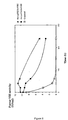
- Fig. 1 the curve of activity changes obtained is shown when 1 NIH unit of thrombin per 1 unit of conjugated r-VIII SQ was added.
- a one-stage clotting method performed essentially according to Mikaelsson et al., 1983, Blood 62, p.
- volume reduction of the factor VIII solutions prior to the second gel-permeation chromatography was performed in autoclaved Centriplus 30 concentrators; centrifugal ultrafiltration devices (cutoff 30 kDa, marketed by Amicon Inc. MA, USA). The solutions were concentrated three times at 2,500xg for 45 min. The pooled fractions obtained after the second gel-permeation chromatography were subsequently diluted in a buffer conforming to the final formulation; 19 mM L-Histidine, 0.31 M NaCl, 3.4 mM CaCl 2 , 0.02 % Tween 80, 17.5 mM sucrose, pH 7.0.
- the protein solutions were finally filtered using 0.22 ⁇ m Millex GV filters ( marketed by Millipore, MA, USA) and subsequently filled in autoclaved bottles. The solutions were stored at -70°C until use.
- Six female cynomolgus monkeys were administered single intravenous doses of Preparation 1 of 250 IU/kg and single subcutaneous doses of Preparation 1 and Preparation 2 of 1,500 IU/kg at different occasions. All solutions were diluted 1:1 with water for injection before administration.
- the injection site for subcutaneous administration was in the left or the right dorsal region of the animal, and for intravenous administration in the left or the right cephalic veins respectively.
- Blood samples were collected from all animals via femoral vein puncture into tubes containing sodium citrate as anticoagulant (10 % of the total volume) at the following durations after injection:
Landscapes
- Health & Medical Sciences (AREA)
- Chemical & Material Sciences (AREA)
- Life Sciences & Earth Sciences (AREA)
- Organic Chemistry (AREA)
- Engineering & Computer Science (AREA)
- Genetics & Genomics (AREA)
- Bioinformatics & Cheminformatics (AREA)
- Zoology (AREA)
- General Health & Medical Sciences (AREA)
- Wood Science & Technology (AREA)
- Medicinal Chemistry (AREA)
- Biochemistry (AREA)
- Biomedical Technology (AREA)
- Molecular Biology (AREA)
- General Engineering & Computer Science (AREA)
- Microbiology (AREA)
- Biotechnology (AREA)
- Biophysics (AREA)
- Hematology (AREA)
- Proteomics, Peptides & Aminoacids (AREA)
- Toxicology (AREA)
- Epidemiology (AREA)
- General Chemical & Material Sciences (AREA)
- Chemical Kinetics & Catalysis (AREA)
- Veterinary Medicine (AREA)
- Pharmacology & Pharmacy (AREA)
- Gastroenterology & Hepatology (AREA)
- Public Health (AREA)
- Animal Behavior & Ethology (AREA)
- Analytical Chemistry (AREA)
- Peptides Or Proteins (AREA)
- Medicines That Contain Protein Lipid Enzymes And Other Medicines (AREA)
- Medicinal Preparation (AREA)
- Medicines Containing Antibodies Or Antigens For Use As Internal Diagnostic Agents (AREA)
- Polyesters Or Polycarbonates (AREA)
- Polyamides (AREA)
- Measuring Or Testing Involving Enzymes Or Micro-Organisms (AREA)
- Preparation Of Compounds By Using Micro-Organisms (AREA)
Abstract
Description
- The present invention relates to a process for improving the in-vivo function of a recombinant factor VIII SQ polypeptide by shielding exposed targets of said polypeptide, by immobilizing the polypeptide to a group-specific adsorbent carrying anionic exchange ligands manufactured by organic-chemical synthesis, activating the biocompatible polymer, conjugating the thus activated biocompatible polymer to the immobilized polypeptide, and thereafter eluting the conjugate from the adsorbent. The present invention further relates to conjugates of a polypeptide and a biocompatible polymer obtainable by the present process, and use of said conjugates as medicaments. The invention is particularly advantageous for conjugates where the polypeptide is factor VIII with a high specific activity using mono-methoxy polyalkyleneoxide (mPEG) as the biocompatible polymer.
- It is well known, that the in-vitro stability and in-vivo half-life of poly-peptides can be increased by covalent attachment of biocompatible polymers (in the following referred to as conjugation or modification). Modification of the polypeptide surface also has the advantage of decreasing the immunogenicity exhibited by the polypeptide.
- Pegylation, i.e. coupling of various polyethyleneglycols (PEG) to a polypeptide, is a technique widely used for increasing the in-vitro stability and in-vivo half-life of e.g. proteins. In pegylation, many techniques have been proposed over the years. Reference is here made to Zalipsky, S. et al in Poly(Ethylene Glycol) Chemistry, Biotechnical and Biomedical Applications, Plenum, New York (1992), and Katre N.V., Adv. Drug Deliv. Rev., 10, 91-114 (1993).
- For some polypeptides, a loss of activity or function has been recognized as a consequence of this conjugation, an effect that increases by degree of modification (Inada, Y. et al, Trends in Biotechnology, 13, 86-91 (1995)). Methods have been developed for making coupling more selective, to circumvent this problem. Site-directed mutagenesis for instance, has been applied for recombinant interleukin-2 (rIL-2). A specific target can be created by insertion of a cystein (Goodson, R. J. and Katre, N.V., Bio/Technology 8, 344-346(1990); Katre 1993, see above). Such a route is not generally applicable for therapeutic proteins, since amino acid substitution may change the original characteristics of the molecule, and is therefore controversial. Alternatively, the polymer can be directed towards glycosylated sites of a protein, e.g. factor IX as disclosed in WO 94/29370 (Enzon) or factor VIII as disclosed in WO 94/15625. This involves, however, oxidation of the carbohydrate moieties which can be achieved by reacting the glycoprotein with sodium periodate or enzymatically by galactose oxidase. These conditions are often detrimental for the molecule. In this particular case, the glycosylated sites intended for conjugation were located at a factor IX peptide sequence which is removed during proteolytic activation in-vivo. Hence, the biocompatible polymer does not influence the function of the active polypeptide.
- In WO 94/13322 (Farmitalia Carlo Erba) it is shown that pegylation can be carried out without impairing the function of certain sites essential for the function of the particular protein ("first substance"). This is achieved by protecting the sites by contacting the first substance with a second substance which specifically binds to the said sites. More particularly, the pegylation is carried out by immobilizing the particular protein on a resin with ligands having specific affinity to the said protein. Second substances are for instance complementary biological molecules. Examples of.couples disclosed in WO 94/13322 are antibody (first substance) - corresponding antigen (second substance); specific inhibitor (first substance) - enzyme (second substance); growth factor (first substance) - corresponding receptor (second substance), or the reverse of each of these couples.
- In a process intended for pharmaceutical production it is however advantageous if the use of substances of biological complexity can be kept at a minimum. This is primarily due to the strict requirements for documentation on biochemical homogeneity and safety for the use of said substances. Therefore, the use of affinity ligands produced by organic-chemical synthesis would be advantageous.
- DE 3717210 relates to a process for modification of biopolymers, preferably charge-carrying biopolymers, by immobilizing the biopolymer on for instance an ion-exchange adsorbent, reacting the biopolymer with reagents, e.g. enzymes or other biochemical reagents, for obtaining a reaction product and subsequently desorbing the reaction product from the adsorbent. The reaction product is preferably a nucleic acid cleaved with a restriction enzyme. In DE 3717210 the adsorbed state of the biopolymer is utilized to better expose the biopolymer to reagents, thereby increasing the efficiency of the modification. There is no indication of shielding exposed targets nor a purpose of retaining activity of the biopolymer, that would come to advantage for a function of the biopolymer in-vivo. The invention of DE 3717210 is merely aimed at mapping properties of biomolecules, such as nucleic acids, changing the original character by actual processing or increasing the number of functional entities of the macromolecule, such as incorporation of radioactive isotopes.
- Many proteins intended for therapeutic use have been conjugated, commonly by use of various pegylation techniques (Francis, G.E. et al, in Stability of Protein Pharmaceuticals/Series: Pharmaceutical Biotechnology 3, 235-263 (1992); Inada, Y. et al, Trends in Biotechnology, 13, 86-91 (1995)). Most examples concern intravenous administration. However, uptake after subcutaneous administration to plasma, lung, liver, and spleen of some mPEG-conjugated allergens has been disclosed and immunotherapy with mPEG- conjugated allergens given subcutaneously has proven to be effective (Dreborg, S. and Åkerblom, E.B., Crit. Rew. Therap. Drug Carr. Sys. 6(4), 315-365 (1990)). Also, intramuscular administration has been used in clinical trials of adenosine deaminase (Hershfield, M.S. et al, New Eng. J. Med. 316, 589-596 (1987). Pegylation has also been claimed, in a few cases, to be beneficial for the oral route. Thus, pegylation of IgG for oral administration has been disclosed in EP-A-0 614 373 to Mount Sinai School of Medicine. Pegylation of factor VIII and factor IX for oral administration has been disclosed in Sakuragawa et al, Acta Med. Biol., 34(3), 77-84 (1987) and in Japanese Patent Application No. 44509/ 83 to Nippon Chemifar Company.
- Factor VIII is a protein which participates in the intrinsic blood coagulation. It is a cofactor in the reaction where the enzyme factor IXa in the presence of phospholipid and calcium ions converts the proenzyme factor X to the active form, factor Xa, ultimately leading to a fibrin clot. Human factor VIII is synthesized as a single-chain molecule of approximately 300 kDa and consists of the structural domains A1-A2-B-A3-C1-C2 (Gitschier et al., 1984, Nature 312, p. 326; Wood et al., 1984, Nature 312, p. 330; Vehar et al., 1984, Nature 312, p. 337; Toole et al., 1984, Nature, 312, p. 342). The precursor product is processed into two polypeptide chains of 200 and 80 kDa in the Golgi and the two chains held together by metal ion(s) are expressed in the blood (Kaufman et al., 1988, J. Biol. Chem., 263, p. 6352; Andersson et al., 1986, Proc. Natl. Acad. Sci., 83, p. 2979). The B-domain of factor VIII seems to be dispensable as regards the factor VIII cofactor function while the A and C domains have several interaction sites for other macromolecules playing a role in the hemostasis (Sandberg et al., 1993, Thrombos. Haemostas., 69, p. 1204 and Lind et al., 1995, Eur. J. Biochem., 232, p. 19).
- The von Willebrand factor (vWf) is a multifunctional polymeric plasma protein consisting of disulfide-linked subunits of about 240 kDa. The subunits form a heterogeneous population of multimers that have a range of molecular weights from c. 1 MDa to 20 MDa. The function of vWf in primary hemostasis is to promote platelet adhesion to the vessel wall in conditions of high shear rate. vWf also binds factor VIII tightly but noncovalently. In normal human plasma factor VIII and vWf circulate complexed to each other. vWf has an important stabilizing effect on the factor VIII molecule in that it protects the molecule from degradation by proteases (Koedam et al., 1987, Doctoral Thesis, ICG Printing, Dordrecht, 1986, p 83; Hamer et al., 1986, Haemostasis, 1987, 58, p. 223). The human in-vivo half-life of factor VIII is usually 10-15 hours. In vWf deficient patients the reduced levels of vWf are accompanied by reduced levels of factor VIII due to an impaired release and increased rate of degradation of factor VIII. Tuddenham et al., 1982, Br. J. Haematol., 52 p. 259 and Brinkhous et al., 1985, Proc. Natl. Acad. Sci., 82, p. 8752 showed that the presence of vWf has an important effect on the in-vivo survival of factor VIII. When factor VIII was infused in hemophilic dogs a half-life of 7-10 hours was obtained while the half-life was c. 1 hour after infusion in vWf deficient dogs (Brinkhous et al., see above).
- Factor IX is the proenzyme of factor IXa described above. It is a serine protease and is one of the vitamin K dependent coagulation proteins. The molecular mass is about 55 kDa (DiScipio et al., 1977, Biochemistry, 16, p. 698). Factor IXa interacts specifically with other components participating in the factor X activation (In: Haemostasis and Thrombosis, 1994, vol. 1, third edition, ed. Bloom A. et al.)
- It is evident from the above paragraphs, that factor VIII is a protein with several interaction sites, each responsible for a specific function. Therefore, it is difficult to modify factor VIII with fully retained biological function.
- The pegylation technique has been applied previously to protein mixtures containing factor VIII. Thus, it has been disclosed in WO 94/15625 (Enzon) that pegylation of factor VIII using a carbamate (urethane) linkage at an undetermined modification degree resulting from a 100 fold molar excess of mPEG relative to factor VIII, can increase the in-vivo half-life in mice from 13 hours to 55 hours. Conventionally, the half-life in mice is considered to be about 1 hour. Thus, 13 hours is an unusually long half-life in mice. Furthermore, it must be taken into account, that with the extremely low purity of the starting factor VIII preparation (20-50 IU/mg protein), other proteins than factor VIII were predominant during the coupling reaction. One important protein usually present in factor VIII preparations of low purity is the von Willebrand factor, which has a stabilizing function for factor VIII and could also very well contribute to the protection of the corresponding functional site during the process of conjugation. After conjugation, mPEG can be located on any of the proteins present in the protein mixture of which factor VIII normally constitutes only a small portion. The pegylated protein mixture containing factor VIII was used for intravenous administration. A well defined starting material, however, is one of the essential factors constituting the controlled conditions required for pharmaceutical production.
- Other polymers have also been used for conjugating factor VIII. Thus, it has been disclosed in U.S. Patent 4,970,300, that dextran conjugation can be applied to prolong the half-life of factor VIII.
- In most coupling techniques, the polymer reagent reacts with ε-amino groups of lysine residues of the polypeptide. These are often spread all over the polypeptide surface, and may very well result in a conjugation adjacent to a functional site. As a consequence, by random coupling, the activity or function is often disturbed. It is our experience, that when applying such techniques to very pure preparations, such as a B domain-deleted recombinant factor VIII with coagulant activity, this activity is severely diminished already at a modification degree of about 5 mPEG/factor VIII molecule.
- The inventors of the present invention have found that the specific activity of conjugated polypeptides can be retained to a high degree, purely by immobilizing the polypeptide on a group-specific adsorbent prior to the coupling reaction, which is followed by desorption of the conjugate by conventional techniques. This is quite surprising since previously it has been considered essential to use adsorbents with specific binding properties with respect to the polypeptide at issue to achieve a protection of certain domains, important for the biological functions.
- The benefit of modifying biocompatible polymers often depends on the degree of modification. Thus, a high degree of modification, i.e. a high number of biocompatible polymers per polypeptide molecule, is usually required for an efficient protection against proteolytic activity. With the aid of the present invention, in which the biocompatible polymers are introduced more selectively, the specific activity has been better retained. Thus, the inventors of the present invention have found that factor VIII can be efficiently protected against degradation in an in-vitro environment shown to have. a degrading effect on this molecule. This effect can be accomplished at a modification degree of only 4-5 mPEG/factor VIII.
- The use of group-specific adsorbents according to the present invention is more economically favorable compared to the adsorbents disclosed in the prior art The use of group-specific adsorbents will also facilitate registration of the conjugates as therapeutic agents.
- The present process makes it possible to improve the in-vivo function of recombinant factor VIII SQ polypeptides, especially by improving the pharmacokinetic function including the bioavailability, and by reducing the immunogenicity exhibited by the poly-peptides.
- Thus, the present invention relates to a process for improving the in-vivo function of a recombinant factor VIII SQ polypeptide by shielding exposed targets of said polypeptide, by
- a) immobilizing the recombinant factor VIII SQ polypeptide by interaction with a group-specific adsorbent carrying anionic-exchange ligands manufactured by organic-chemical synthesis;
- b) activating the biocompatible polymer;
- c) conjugating the activated biocompatible polymer to the immobilized recombinant factor VIII SQ; and thereafter
- d) eluting the conjugate from the adsorbent.
-
- In the present invention, the term interaction site relates to various sites essential for the biological function of the particular polypeptide.
- In the present invention, the term exposed targets relate to external sites on the polypeptide at issue liable to unwanted reactions in-vivo. Examples of exposed targets include antigenic epitopes and sites for proteolytic cleavage. Certain sites for proteolytic cleavage are though referred to as interaction sites.
- The present invention makes it possible, to a hitherto unattainable extent, to reduce the influence of unwanted reactions in-vivo, e.g. proteolytic cleavage and possibly aggregation, while at the same time leaving the interaction sites fundamental to the biological function of the polypeptide, unaffected. This has been disclosed in the application of mPEG conjugation of (recombinant) factor VIII. More specifically, by immobilizing the polypeptide by interaction with a group-specific adsorbent carrying ligands manufactured by organic-chemical synthesis, the interaction sites on the polypeptide are excluded from conjugation to the biocompatible polymer. Furthermore, by conjugating the activated biocompatible polymer to the polypeptide at the desired, external sites, the exposed targets are concealed from the action of e.g. proteases.
- In the present application, polypeptides refer to proteins and oligopeptides with at least 20 amino acids in the chain. The number of amino acids of the polypeptide produced according to the present invention suitably lies in the range of from 30 up to 4,500 amino acids, and preferably in the range of from 40 up to 3,000 amino acids. The polypeptides can be of mammalian, more specifically human, origin or produced by recombinant DNA techniques. Polypeptides which can be conjugated according to the present invention include poly-peptides exhibiting coagulant activity or having a supporting function for coagulation. The polypeptides can be full-length, i.e. the sequence of amino adds is identical to the corresponding sequence found in mammals in general, and in human beings in particular. The polypeptides can also be deletion derivatives of the full-length polypeptides, where one or more amino acid is missing. The polypeptide is suitably coagulation factor VIII, the von Willebrand factor (vWf) or a combination thereof, or coagulation factor IX, and preferably coagulation factor VIII.
- Full-length factor VIII present in human plasma has a molecular mass of about 300 kDa. Factor VIII concentrates derived from human plasma contain several fragmented fully active factor VIII forms as described by Andersson et al (see above). The smallest active form has a molecular mass of about 170 kDa and consists of two chains of about 90 kDa and about 80 kDa held together by metal ion(s) (cf. EP-A-0197 901). The biologically active factor VIII produced according to the present invention, therefore, suitably has a molecular mass in the range of from about 170 kDa up to about 300 kDa.
- Pharmacia AB of Stockholm, Sweden, has developed a recombinant factor VIII product which corresponds to the 170 kDa plasma factor VIII form in therapeutic factor VIII concentrates. The truncated recombinant factor VIII molecule is termed r-VIII SQ and is produced by Chinese Hamster Ovary (CHO) cells in a cell culture process in serum-free medium. The specific activity of r-VIII SQ is about 15,000 IU VIII:C per mg of total protein. The structure and biochemistry of r-VIII SQ have been described in WO-A-91/09122 assigned to Pharmacia AB.
- In the present invention, factor VIII is a deletion derivative of full-length factor VIII having coagulant activity. Specifically, the deletion derivative is recombinant factor VIII SQ (r-VIII SQ). In this context, a deletion derivative is defined as a coagulation factor VIII, in which the whole or a part of the B domain is missing while the coagulant activity is maintained. The remaining domains are suitably linked by an amino acid linker. Examples of various linker constructs are given in P. Lind et al, Eur. J. Biochem., vol. 232 (1995) pp. 19-27.
- It is preferable that the final product is well defined. Therefore, the specific factor VIII activity in the coupling procedure of the present invention should be at least about 1,000 IU/mg of total protein, and suitably at least 2,000 IU/mg of total protein. The specific factor VIII activity lies preferably in the range of from 5,000 up to 20,000 IU/mg of total protein, and more preferably in the range of from 10,000 up to 17,000 IU/mg of total protein.
- The factor VIII activity in the coupling procedure can be at least about 1,000 IU/ml, and suitably at least 2,000 IU/ml. The factor VIII activity lies preferably in the range of from 5,000 up to 50,000 IU/ml, and more preferably from 20,000 up to 40,000 IU/ml.
- The biocompatible polymer of the present invention can be selected from the group consisting of homopolymers, copolymers or block copolymers of monoalkyl-capped polyalkyleneoxides. The biocompatible. polymers can be straight or branched. The monoalkyl-capped polyalkyleneoxide is suitably selected from the groupconsisting of polyethyleneglycol homopolymers and polypropyleneglycol homopolymers. The biocompatible polymer is preferably a polyethyleneglycol (PEG) homoplymer. The molecular weight of the PEG can be in the range of from about 300 up to 20,000, suitably in the range of from 1,500 up to 10,000, and preferably in the range of from 3,000 up to 5,000.
- The biocompatible polymer should be end-capped at one end to avoid cross derivatization. Examples of groups suitable for this purpose are straight or branched lower alkoxy groups, preferably the monomethoxy group. A particularly preferred biocompatible polymer in the present invention is monomethoxy polyethyleneglycol (mPEG).
- Other biocompatible polymers are also conceivable, e.g. dextran, polyvinylpyrrolidone and DL amino acids.
- The biocompatible polymer must be activated prior to the coupling reac-tion, to make possible the formation of covalent bonds. For this purpose, the end of the biocompatible polymer facing the polypeptide should have attached a hydroxyl group being susceptible to activation. There are several ways of activating the biocompatible polymer depending on the amino acid selected for covalent binding. Suitable mPEG derivatives for coupling to amino groups are mPEG succinimidyl succinate, mPEG succinimidyl succinamide, mPEG succinimidyl propionate, succinimidyl carbonate of mPEG, succinimidyl ester of carboxymethylated mPEG, mPEG-oxycarbonylimidazole, mPEG nitrophenyl carbonates, mPEG trichlorophenyl carbonate, mPEG tresylate (the latter disclosed by Nilsson K., Mosbach K., Methods in Enzymology, Vol 104, pp 56-69 (1984)), (all the mentioned reagents marketed by Shearwater Polymers, Inc., Huntsville, AL, USA), mPEG maleic anhydride and mPEG methylmaleic anhydride (Garman A., Kalindjian S.B., FEB Vol 223: 2, pp 361-365), and mixed anhydrides of mPEG succinate, mPEG acetic acid or mPEG propionic acid, respectively (Dreborg S. and Akerblom E., see above).
- Cysteine residues can be conjugated with mPEG maleimide, mPEG vinylsulfone and mPEG-orthopyridyldisulfide (marketed by Shearwater Polymers, Inc., Huntsville, AL, USA). Suitable reagents in the case of conjugation of the guanidino group of arginine is mPEG derivatives of phenylglyoxal (Zalipski see above).
- Carbohydrates must first be oxidized so that aldehyde groups are present and then they can be conjugated with mPEG hydrazide (Zalipski see above).
- The coupling procedure is performed at a pH suitable for the amino acid to be conjugated. Consideration must also be given to the pH suitable for the polypeptide at large, as well as the pH-dependency of the reactivity of the bio-compatibie polymer. Normally, therefore, the pH for coupling lies in the range of from about 7 up to about 8, the lower limit being set to avoid an exten-ded coupling procedure and the upper limit to provide mild conditions for the polypeptide. The above pH range is suitable in conjugation involving lysines. Therefore, in the examples of the present application, we have conjugated a substance having FVIII activity under such mild conditions. pH values outside this range may also be suitable in certain cases. Thus, conjugation involving cysteins are suitably performed at a pH below about 7, whereas arginins are suitably conjugated at a pH in the range of from about 5.5 up to about 9.3.
- The coupling procedure should be performed at a temperature above 0°C, suitably in the range of from about 5 up to about 40°C, and preferably in the range of from 10 up to 30°C. Again consideration must be given to a temperature suitable to the polypeptide at large, as well as the influence of the temperature on the reactivity of the biocompatible polymer. In the examples of the present application, all coupling steps were performed at room temperature.
- The adsorbent used in the present invention is group-specific in relation to the polypeptide to be immobilized. Group-specific adsorbents have affinity to several polypeptides. Furthermore, they often bind less strongly and elution can be performed under milder conditions than with mono-specific adsorbents, the latter binding to a single or a very small number of polypeptides. Examples of suitable group-specific adsorbents are given in Jansson, J.-C. et al, Protein Purification, Principles. High Resolution Methods, and Applications, VCH Publishers, pp. 274-285(1989). The adsorbent of the present invention is furthermore characterized by carrying ligands manufactured by organic-chemical synthesis.
- Specifically, ligands suitable for use in the present invention are anionic exchange groups, preferably strong, like quaternary aminoethyl (QAE), tri-methylaminoethyl (TMAE) or quaternary aminomethyl (Q), more preferably quaternary aminomethyl (Q). The ligands can furthermore be coupled tightly to the matrix, or with a spacer, like alkylamine, hexylamine, diaminodipropyl-amine, ethylaminesuccinamide (Persson & Lagerström, in Packings and static-nary phases in chromatographic techniques, Unger, K.K., ed., Marcel Dekker Inc. 1990, p. 754), or with a branched tentacle to which the ligands are attached (a suitable example is Fractogel™ EMD, produced by Merck of Germany).
- After the said coupling procedure, the conjugated polypeptide is eluted by conventional techniques. In this context it is essential that physico-chemical conditions are considered to avoid degradation of the conjugated polypeptides. Thus, if the coupling route involves a conjugating bond labile within a certain pH range, this should be avoided.
- In the coupling procedure, when the polypeptide is immobilized on the adsorbent, the polypeptide can be contacted with a soluble blocking agent, with the purpose of excluding additional sites from conjugation. Such a blocking agent should be manufactured by organic-chemical synthesis, and in addition be conjugated to any of the above-identified ligands bound to a polymer selected e.g. from monoalkyl-capped polyalkyleneoxides, copolymers or block copolymers of polyalkyleneoxides, polyethyleneglycol homopolymers or polypropyleneglycol homopolymers. The blocking agent can also carry entities having specific affinity for the polypeptide.
- After the elution, the contacted soluble blocking agent is desorbed by applying suitable chemical conditions. For example if the blocking agent was adsorbed by hydrophobic interaction, it could be desorbed by decreasing the ionic strength, or simply by decreasing the temperature. The soluble blocking agent is thereafter separated from the conjugate by gel-permeation chromatography under conventional conditions.
- The matrix of the adsorbent in the present invention, can be any commercial resin known to be compatible with biological molecules. Thus, the matrix can be selected from various strongly hydrophilic matrices e.g. agarose matrices such as a wide variety of Sepharose™ matrices sold by Pharmacia Biotech of Uppsala, Sweden, organic polymer matrices such as TSK-GEL:s sold by Tosoh Corp. of Tokyo, Japan, or highly porous organic polymer matrices sold by Per Septive Biosystems of Boston, USA. Membrane matrices are also suitable, e.g. Sartobind™ sold by Sartorius of Germany and MemSep™ sold by Millipore of USA. The matrix is preferably an agarose matrix. Suitable agarose matrices in the present invention are, apart from Sepharose™, Minileak™ sold by Kem-En-Tec A/S of Copenhagen, Denmark and Bio-Gel A sold by Bio-Rad, of Brussels, Belgium. Preferably, the matrix is cross-linked allowing for a fast flow (FF) and thereby high production capacity. More preferably, chromatography of the present invention is carried out on a Q Sepharose™ FF gel. Furthermore, resins composed of copolymers of oligoethyleneglycol, glycidyl methacrylate and pentaerythroldimethacrylate, like Fractogel™ (marketed by Merck of Germany), cellulose and porous glass can also be used to advantage.
- The conjugates of a polypeptide and a biocompatible polymer obtainable by the present process are new. With the present process, the polypeptide activity after the conjugation can be retained to at least 30% of the activity prior to said conjugation, suitably at least 50% and preferably at least 70% of the activity prior to said conjugation.
- The conjugates of a polypeptide and a biocompatible polymer obtainable by the present process can be used as medicaments. Especially, conjugates of factor VIII, the von Willebrand factor or a combination thereof, or factor IX, and a biocompatible polymer produced according to the present process can be used as a medicament. It is especially advantageous to use a conjugate of factor VIII and a biocompatible polymer, where the degree of conjugation lies in the range of from 1 up to 15 monoalkyl-capped PEG/factor VIII molecule, suitably in the range of from 2 up to 10 monoalkyl-capped PEG/factor VIII molecule, preferably in the range of from 3 up to 7 monoalkyl-capped PEG/factor VIII molecule. In this context, the conjugated factor VIII is suitably produced by recombinant DNA technique, preferably a recombinant deletion derivative of full-length factor VIII having coagulant activity, and more preferably deletion derivative recombinant factor VIII SQ (r-VIII SQ).
- The conjugated polypeptides of the present invention are suitably used for subcutaneous, intramuscular, intradermal or intravenous administration. Especially, conjugated factor VIII can be used for the manufacture of a medicament for treatment of hemophilia A, and in particular for subcutaneous, intramuscular, intradermal or intravenous administration of such a medicament. Furthermore, conjugated vWf can be used for the manufacture of a medicament for treatment of the von Willebrand disease, and in particular for subcutaneous, intramuscular, intradermal or intravenous administration of such a medicament. Factor VIII and the von Willebrand factor, both of which have been conjugated according to the present process, can also be used in combination. Also, conjugated factor IX can be used for the manufacture of a medicament for treatment of hemophilia B, and in particular for subcutaneous, intramuscular, intradermal or intravenous administration of such a medicament.
- The present invention further relates to a method for treatment of hemophilia A by subcutaneous, intramuscular, intradermal or intravenous administration of a conjugate of factor VIII and a biocompatible polymer produced according to the present process.
- The following Examples are provided for purposes of illustration only and are not to be construed as in any way limiting the scope of the present invention, which is defined by the appended claims.
- The production of recombinant factor VIII SQ (r-VIII SQ) was essentially performed as described in patent WO-A-9109122, example 1-3. A DHFR deficient CHO cell line (DG44N.Y.) was electroporated with an expression vector containing the r-VIII SQ gene and an expression vector containing the dihydrofolate-reductase gene. Following selection on selective media surviving colonies were amplified through growth in stepwise increasing amounts of methotrexate. Supematant from the resulting colonies were individually screened for factor VIII activity. A production done was chosen and this was subsequently adapted to serum free suspension growth in a defined medium and finally a large scale cell cultivation process was developed. Supernatant is collected after certain time periods and further purified as described below.
- The conditioned medium was clarified by filtration, pH was adjusted, and then the filtrate was loaded onto a S Sepharose™ FF column (column volume 31). After washing, factor VIII was eluted with a salt buffer containing 5 mM CaCl2 and 0.02 % Triton™ X-100. This cationic exchange chromatography step was performed at 2-8°C. The eluate from the S Sepharose™ FF step (S-eluate) was frozen until further purification.
- 700 ml of the S-eluate was thawed and the temperature adjusted to room temperature. Virus inactivation was performed by incubation for 30 min with tri-n-butyl phosphate (TNBP) and Triton™ X-100 at a final concentration of 0.3 % (v/v) and 1.0 % (v/v), respectively. A monoclonal antibody (mAb) immunoaffinity column with a volume of 260 ml was equilibrated with an S-eluate buffer containing the corresponding amounts of virus inactivation chemicals. The factor VIII solution was then loaded onto the mAb column, which was subsequently washed. Elution was performed with a buffer containing 50 % ethylene glycol.
- A Q Sepharose™ column was preequilibrated at a high concentration of sodium chloride, and then equilibrated with a buffer of the same composition as the immunoaffinity column was eluted with. The mAb-eluate was loaded, and the column was then washed with equilibration buffer followed by a washing buffer of physiological ionic strength. The column was eluted by raising the sodium chloride concentration to 0.6 M. No detergent was used for the washing and elution of the Q-column. A
Butyl Sepharose™ 4 FF column was equilibrated with a buffer containing 50 mM histidine, 1.4 M NH4Ac, 50 mM CaCl2, and 0.02 % Tween™ 80, pH 6.8. NH4Ac was added to the Q-eluate to a final concentration of 1.0 M and Tween™ 80 to 0.02 %. This solution was loaded onto the butyl-gel column at a linear flow rate of 60 cm/h. The column was then washed by 5 column volumes of equilibration buffer and then eluted at a linear flow rate of 35 cm/h with a buffer containing 50 mM histidine, 0.5 M NH4Ac, 50 mM CaCl2 and 0.02 % Tween™ 80, pH 6.8. The purity of this preparation was very high, giving a specific activity of 12,000-17,000 IU/mg protein. - In Examples 1-8, the factor VIII activity was analyzed with a chromogenic assay (Chromogenix AB of Mölndal, Sweden) unless otherwise stated. The amount of factor VIII was determined spectrophotometrically at A280 and by amino acid analysis. The amount of mPEG coupled to the polypeptide was measured with a proton NMR method (Dreborg, S. and Åkerblom, E.B., Crit. Rew. Therap. Drug Carr. Sys. 6(4), 315-365 (1990)).
- The buffer composition of the HIC eluate, prepared according to Example 1, was exchanged by gel permeation chromatography performed on a Superose 12 column (marketed by Pharmacia Biotech of Uppsala, Sweden), previously equilibrated with a buffer of the following composition: 0.25 M hepes, 4 mM CaCl2, pH 7.8. To aliquots of the r-VIII SQ solution were added a 35, 60 and 100 fold molar excess (based on rVIII) of a mixed anhydride of mPEG succinate (MW 3,000). The mixtures were allowed to react for 1.5 hours on a rotating device in room temperature. To remove the excess of mPEG succinic acid and to separate the heterogeneous population of conjugated rVIII according to size, gel permeation chromatography was performed, now using a Superose 6 column (marketed by Pharmacia Biotech of Uppsala, Sweden). From each coupling reaction the fractions corresponding to the first and second half of the protein peak were analyzed separately (denoted pool 1 and
pool 2 in Table I). Table I presents the results of conjugating r-VIII SQ with the mixed anhydride of mPEG succinate.r-VIII SQ (mg) Amount added mPEG (molar excess) Degree of modification (mPEG/rVIII) Spec. activity (IU/mg) Spec. act (% of native r-VIII SQ) Native r-VIII SQ - 0 0 15,000 100 35*mPEG pool 1 1.2 35 2.5 4,200 28 35 *mPEG pool 21.2 35 1.2 6,800 45 60*mPEG pool 1 1.6 60 2.4 2,000 13 60 *mPEG pool 21.6 60 na 4,800 32 100*mPEG pool 1 1.1 100 4.8 1,300 9 100 *mPEG pool 21.1 100 3.8 2,700 18 - As is evident from Table I, the specific activity of rVIII was reduced dramatically even at this low degree of conjugation.
- Reactive lysines surrounded by negative charges on the factor VIII molecule were protected from mPEG conjugation by adsorption of the factor VIII on an anionic exchange gel. A column packed with Q Sepharose™ FF (marketed by Pharmacia Biotech of Uppsala, Sweden), equilibrated with a buffer of the following composition: 50 mM L-histidine, 0.15 M NaCl, 4 mM CaCl2, pH 6.5, was used to adsorb factor VIII. A HIC eluate prepared according to Example 1 was loaded onto the column. In order to get appropriate conditions for mPEG coupling, the column was washed with a buffer containing 0.25 M hepes, 4 mM CaCl2, pH 7.8 before the addition of the mPEG. The gel was transferred to a reaction vessel, a mixed anhydride of mPEG succinate (MW 3,000) was added to the slurry at an amount corresponding to the molar excess relative to factor VIII as indicated in Table II. The reaction was incubated under rotation for 1.5 hours. The column was then repacked and the conjugated rVIII was eluted with a buffer of 50 mM L-histidine, 0.6 M NaCl, 4 mM CaCl2, pH 6.8. Four preparations were made, at a constant amount r-VIII SQ loaded per amount of gel. All steps were performed at room temperature. Table II presents the results from the conjugated r-VIII SQ adsorbed on a Q Sepharose™ FF gel.
r-VIII SQ (mg) Amount added mPEG (molar excess) Degree of modification (mPEG/rVIII) Spec. act. (IU/mg) Spec. act (% of native r-VIII SQ) Native r-VIII SQ - 0 0 15,000 100 Preparation 1 1.9 300 3.9 8,400 56 Preparation 21.9 370 4.4 7,800 52 Preparation 3 1.9 430 5.6 6,800 45 Preparation 41.9 530 9.5 2,800 19 - As is evident from Table II, the specific activity of the conjugated r-VIII SQ is retained to a significantly higher degree compared to the r-VIII SQ conjugated in Example 2.
- In this example all steps of adsorption, coupling and elution of r-VIII SQ on Q Sepharose™ FF gel were performed as in Example 3. mPEG tresylate (MW 5,000) was used to conjugate factor VIII. Table III presents the results from conjugated r-VIII SQ adsorbed on a Q Sepharose™ FF gel with mPEG tresylate according to the invention.
r-VIII SQ (mg) Amount added mPEG (molar excess) Degree of modification (mPEG/rVIII) Spec. act. (IU/mg) Spec. act. (% native r-VIII SQ) Native r-VIII SQ - 0 0 15,000 100 Preparation 1 1.8 300 2.2 9,600 64 Preparation 21.8 400 na 8,300 55 Preparation 3 1.8 500 5.8 3,400 23 - The specific activity in this case was slightly lower than in Example 3, probably due to the higher molecular weight of mPEG.
- A column packed with Fractogel™ EMD TMAE 650 (marketed by Merck), was used to adsorb r-VIII SQ. All steps were performed as in Example 3. Table IV presents the results from conjugation of r-VIII SQ adsorbed on a tentacle anionic exchange gel with a mixed anhydride of mPEG succinate according to the invention.
r-VIII SQ (mg) Amount added mPEG (molar excess) Degree of modification (mPEG/rVIII) Spec. act. (IU/mg) Spec. act. (% native r-VIII SQ) Native r-VIII SQ - 0 0 15,000 100 Preparation 1 2.0 300 na na Preparation 22.0 500 na 2,100 14 - Thrombin activation of conjugated r-VIII SQ was tested in an in-vitro assay well known to those skilled in the art. A sample prepared according to Example 3, resulting in a derivatization degree of 4 mPEG/r-VIII SQ, was assayed. The conjugated r-VIII SQ could be activated by human thrombin in a dose dependent manner. Inactivation was subsequently followed. In Fig. 1, the curve of activity changes obtained is shown when 1 NIH unit of thrombin per 1 unit of conjugated r-VIII SQ was added. A one-stage clotting method performed essentially according to Mikaelsson et al., 1983, Blood 62, p. 1006, was used for immediate assay of samples from the reaction mixture. A thirty-fold activation was obtained within one minute, which was followed by inactivation. The activation-inactivation patterns obtained with thrombin were in agreement with previously reported studies on the factor VIII-thrombin interaction (Fulcher et al., 1983, Blood, 61, p. 807, Andersson et al., 1986, Proc. Natl. Acad. Sci., 83, p. 2979, Eaton et al., 1986, Biochemistry, 25, p. 505, Rotblat et al., 1985, Biochemistry, 24, p. 4294).
- To evaluate the influence of the mPEG conjugation on the stability of factor VIII in a solution representative of the subcutaneous environment, an in-vitro test using extract of porcine tissue was undertaken. Two preparations of mPEG conjugated factor VIII were produced as described in Example 3 and incubated in the extract and aliquots were analyzed at 0,2,4,6 and 24 hours for coagulant activity using a chromogenic assay. During the first 6 hours the degree of conjugation correlated to the remaining activity.
Remaining activity (%) 0h Remaining activity (%) 2h Remaining activity (%) 4h Remaining activity (%) 6h Remaining activity (%) 24h Native r-VIII SQ (control) 100 45 13 6 0 4.4 mPEG/rVIII 100 96 93 78 32 9.5 mPEG/rVIII 100 100 107 102 47 - The results in Table V and Fig. 2 show clearly that mPEG conjugation significantly enhanced the stability of factor VIII.
- To evaluate the influence of the mPEG conjugation on the in-vivo stability of factor VIII a pharmacokinetic study was performed. Two preparations of mPEG conjugated factor VIII were produced as described in Example 3 and their specific activities were determined, as indicated in Table VI. To achieve high homogeneity of the derivatized material produced by the coupling procedure, fractionation of each preparation was performed twice by gel-permeation chromatography. A Superdex 200 PG XK 16/60 column (marketed by Pharmacia Biotech of Uppsala, Sweden) equilibrated with 19 mM L-histidine, 0.31 M NaCl, 3.4 mM CaCl2, 0.02 % Tween 80, pH 7.0 was used. Volume reduction of the factor VIII solutions prior to the second gel-permeation chromatography was performed in autoclaved
Centriplus 30 concentrators; centrifugal ultrafiltration devices (cutoff 30 kDa, marketed by Amicon Inc. MA, USA). The solutions were concentrated three times at 2,500xg for 45 min. The pooled fractions obtained after the second gel-permeation chromatography were subsequently diluted in a buffer conforming to the final formulation; 19 mM L-Histidine, 0.31 M NaCl, 3.4 mM CaCl2, 0.02 % Tween 80, 17.5 mM sucrose, pH 7.0. The protein solutions were finally filtered using 0.22 µm Millex GV filters ( marketed by Millipore, MA, USA) and subsequently filled in autoclaved bottles. The solutions were stored at -70°C until use.
Six female cynomolgus monkeys were administered single intravenous doses of Preparation 1 of 250 IU/kg and single subcutaneous doses of Preparation 1 andPreparation 2 of 1,500 IU/kg at different occasions. All solutions were diluted 1:1 with water for injection before administration. The injection site for subcutaneous administration was in the left or the right dorsal region of the animal, and for intravenous administration in the left or the right cephalic veins respectively. Blood samples were collected from all animals via femoral vein puncture into tubes containing sodium citrate as anticoagulant (10 % of the total volume) at the following durations after injection: - Intravenous administration: 0 (predose), 0.25, 1, 2, 4, 8, 24, 30, 48 h.
- Subcutaneous administration: 0 (predose), 3, 6, 9, 12, 15, 24, 30, 48 h.
-
- A pharmacokinetic study of non-conjugated factor VIII was performed in a separate study in the same species. The doses, route of administration and results (mean (± standard deviation (SD))) are shown in Table VI.
Specific activity (IU/mg) Route of administration Doses (IU/kg) Half- life (h) Bioavailability (F (mean ± SD) Non-conjugated r-VIII SQ 15,000 I.V. 250 6.7 - mPEG - rVIII Preparation 1 10,000 LV. 250 8.3 - Non-conjugated r-VIII SQ 15,000 S.C. 2,500 - 0.053 (0.021) mPEG - r VIII Preparation 1 10,000 S.C. 1,500 - 0.22 (0.13) mPEG - r VIII Preparation 26,700 S.C. 1,500 - 0.19 (0.15) - As is evident from Table VI subcutaneous administration of both preparations of the mPEG conjugated factor VIII resulted in a markedly higher bioavailability compared to subcutaneous administration of non-conjugated r-VIII SQ. Statistical analysis using the Student's t-test confirmed that the difference was significant.
Claims (9)
- A process for improving the in vivo function of recombinant factor VIII SQ by shielding exposed targets of said polypeptide, characterized by(a) immobilizing the recombinant factor VIII SQ by interaction with a group-specific adsorbent carrying anionic-exchange ligands;(b) activating a biocompatible polymer;(c) conjugating the activated biocompatible polymer to external sites of the immobilized recombinant factor VIII SQ; and thereafter(d) eluting the conjugate from the adsorbent.
- A process according to claim 1, wherein the specific activity of factor VIII SQ is at least 2,000 IU/mg of total protein prior to immobilization.
- A process according to claim 2, wherein the specific activity of factor VIII SQ lies in the range of from 5,000 up to 20,000 IU/mg of total protein prior to immobilization.
- A process according to any one of claims 1 to 3, herein the activity of factor VIII SQ is at least 2,000 IU/ml prior to immobilization.
- A process according to claim 4, wherein the activity of factor VIII SQ lies in the range of from 5,000 up to 50,000 IU/ml prior to immobilization.
- A process according to any one of claims 1 to 5, wherein the biocompatible polymer is selected from the group consisting of homopolymers, copolymers or block copolymers of monoalkyl-capped polyalkyleneoxides.
- A process according to claim 6, wherein the mono-alkyl-capped polyalkyleneoxide is selected from the group consisting of polyethyleneglycol homopolymers and polypropyleneglycol homopolymers.
- A process according to claim 7, wherein the mono-alkyl-capped polyalkyleneoxide is a monomethoxy polyethyleneglycol (mPEG).
- A process according to any one of claims 1 to 8, wherein the anion-exchange ligands are selected from the group consisting of quaternary amino-methyl, quaternary aminoethyl and trimethylaminoethyl, or a mixture thereof.
Priority Applications (3)
| Application Number | Priority Date | Filing Date | Title |
|---|---|---|---|
| EP02013613A EP1258497B1 (en) | 1995-09-29 | 1996-09-27 | Method to prepare conjugates of factor VIII and a biocompatible polymer |
| DK02013613T DK1258497T3 (en) | 1995-09-29 | 1996-09-27 | Process for Preparation of Factor VIII Conjugates and a Biocompatible Polymer |
| EP02013607A EP1260582B1 (en) | 1995-09-29 | 1996-09-27 | Conjugates of factor IX and a biocompatible polymer |
Applications Claiming Priority (3)
| Application Number | Priority Date | Filing Date | Title |
|---|---|---|---|
| SE9503380 | 1995-09-29 | ||
| SE9503380A SE9503380D0 (en) | 1995-09-29 | 1995-09-29 | Protein derivatives |
| PCT/SE1996/001215 WO1997011957A1 (en) | 1995-09-29 | 1996-09-27 | Conjugates of a polypeptide and a biocompatible polymer |
Related Child Applications (2)
| Application Number | Title | Priority Date | Filing Date |
|---|---|---|---|
| EP02013607A Division EP1260582B1 (en) | 1995-09-29 | 1996-09-27 | Conjugates of factor IX and a biocompatible polymer |
| EP02013613A Division EP1258497B1 (en) | 1995-09-29 | 1996-09-27 | Method to prepare conjugates of factor VIII and a biocompatible polymer |
Publications (2)
| Publication Number | Publication Date |
|---|---|
| EP0871649A1 EP0871649A1 (en) | 1998-10-21 |
| EP0871649B1 true EP0871649B1 (en) | 2002-11-27 |
Family
ID=20399642
Family Applications (3)
| Application Number | Title | Priority Date | Filing Date |
|---|---|---|---|
| EP02013607A Expired - Lifetime EP1260582B1 (en) | 1995-09-29 | 1996-09-27 | Conjugates of factor IX and a biocompatible polymer |
| EP02013613A Expired - Lifetime EP1258497B1 (en) | 1995-09-29 | 1996-09-27 | Method to prepare conjugates of factor VIII and a biocompatible polymer |
| EP96932915A Expired - Lifetime EP0871649B1 (en) | 1995-09-29 | 1996-09-27 | Conjugates of a polypeptide and a biocompatible polymer |
Family Applications Before (2)
| Application Number | Title | Priority Date | Filing Date |
|---|---|---|---|
| EP02013607A Expired - Lifetime EP1260582B1 (en) | 1995-09-29 | 1996-09-27 | Conjugates of factor IX and a biocompatible polymer |
| EP02013613A Expired - Lifetime EP1258497B1 (en) | 1995-09-29 | 1996-09-27 | Method to prepare conjugates of factor VIII and a biocompatible polymer |
Country Status (18)
| Country | Link |
|---|---|
| US (1) | US6048720A (en) |
| EP (3) | EP1260582B1 (en) |
| JP (1) | JP3911023B2 (en) |
| AT (3) | ATE283351T1 (en) |
| AU (1) | AU706246B2 (en) |
| BR (1) | BR9610695A (en) |
| CA (1) | CA2231801C (en) |
| DE (3) | DE69633952T2 (en) |
| DK (3) | DK1260582T3 (en) |
| ES (3) | ES2238522T3 (en) |
| HU (1) | HU221208B1 (en) |
| NO (2) | NO321096B1 (en) |
| NZ (1) | NZ319322A (en) |
| PL (1) | PL185821B1 (en) |
| PT (3) | PT871649E (en) |
| SE (1) | SE9503380D0 (en) |
| WO (1) | WO1997011957A1 (en) |
| ZA (1) | ZA968139B (en) |
Cited By (2)
| Publication number | Priority date | Publication date | Assignee | Title |
|---|---|---|---|---|
| US9107902B2 (en) | 2007-06-13 | 2015-08-18 | Csl Behring Gmbh | Use of VWF stabilized FVIII preparations and of VWF preparations without FVIII for extravascular administration in the therapy and prophylactic treatment of bleeding disorders |
| US9878017B2 (en) | 2013-04-22 | 2018-01-30 | Csl Ltd. | Covalent complex of von Willebrand Factor and factor VIII, compositions, and uses relating thereto |
Families Citing this family (175)
| Publication number | Priority date | Publication date | Assignee | Title |
|---|---|---|---|---|
| AT405740B (en) * | 1996-12-13 | 1999-11-25 | Immuno Ag | FROM WILLEBRAND FACTOR DERIVATIVE AND A METHOD FOR ISOLATING PROTEINS |
| TR200101751T2 (en) * | 1998-04-28 | 2002-05-21 | Applied Research Systems Ars Holding N.V. | Polyol-IFN-beta conjugates |
| US7425541B2 (en) * | 1998-12-11 | 2008-09-16 | Medarex, Inc. | Enzyme-cleavable prodrug compounds |
| CA2634663C (en) | 1999-02-22 | 2009-08-25 | University Of Connecticut | Novel albumin-free factor viii formulations |
| US6635676B2 (en) * | 1999-04-28 | 2003-10-21 | Regents Of The University Of Michigan | Non-toxic antimicrobial compositions and methods of use |
| US7655252B2 (en) | 1999-04-28 | 2010-02-02 | The Regents Of The University Of Michigan | Antimicrobial nanoemulsion compositions and methods |
| IT1318484B1 (en) * | 2000-04-21 | 2003-08-25 | Univ Roma | COLINA DERIVATIVES FOR THE TREATMENT OF ALZHEIMER DISEASE. |
| US20030211094A1 (en) | 2001-06-26 | 2003-11-13 | Nelsestuen Gary L. | High molecular weight derivatives of vitamin k-dependent polypeptides |
| US6423826B1 (en) * | 2000-06-30 | 2002-07-23 | Regents Of The University Of Minnesota | High molecular weight derivatives of vitamin K-dependent polypeptides |
| US7160540B2 (en) | 2000-06-30 | 2007-01-09 | Regents Of The University Of Minnesota | Methods for detecting activity of clottings factors |
| AU2001279301A1 (en) * | 2000-07-07 | 2002-01-21 | Leonid Z. Iakoubov | Biologically active protein conjugates formed by first protecting active site |
| AU2002225681A1 (en) * | 2000-11-15 | 2002-05-27 | Globe Immune, Inc. | Yeast-dentritic cell vaccines and uses thereof |
| JP2010209109A (en) * | 2001-06-25 | 2010-09-24 | Regents Of The Univ Of Michigan | Composition and method for anti-microbial nanoemulsion |
| ATE468862T1 (en) * | 2001-07-11 | 2010-06-15 | Maxygen Inc | G-CSF CONJUGATES |
| US7214660B2 (en) * | 2001-10-10 | 2007-05-08 | Neose Technologies, Inc. | Erythropoietin: remodeling and glycoconjugation of erythropoietin |
| US7173003B2 (en) | 2001-10-10 | 2007-02-06 | Neose Technologies, Inc. | Granulocyte colony stimulating factor: remodeling and glycoconjugation of G-CSF |
| US8008252B2 (en) * | 2001-10-10 | 2011-08-30 | Novo Nordisk A/S | Factor VII: remodeling and glycoconjugation of Factor VII |
| EP2042196B1 (en) * | 2001-10-10 | 2016-07-13 | ratiopharm GmbH | Remodelling and glycoconjugation of Granulocyte Colony Stimulating Factor (G-CSF) |
| US7157277B2 (en) | 2001-11-28 | 2007-01-02 | Neose Technologies, Inc. | Factor VIII remodeling and glycoconjugation of Factor VIII |
| SE0104186D0 (en) * | 2001-12-12 | 2001-12-12 | Darcy Birse | Method and device |
| DK3025726T3 (en) * | 2002-01-18 | 2019-12-09 | Biogen Ma Inc | POLYALKYLENE POLYMER COMPOUNDS AND APPLICATIONS THEREOF |
| US20030149246A1 (en) * | 2002-02-01 | 2003-08-07 | Russell John C. | Macromolecular conjugates and processes for preparing the same |
| JP2005526505A (en) * | 2002-03-02 | 2005-09-08 | エフ.ホフマン−ラ ロシュ アーゲー | Conjugate of human gelatinase A C domain and polyethylene glycol, purification method and use thereof |
| MXPA04012496A (en) | 2002-06-21 | 2005-09-12 | Novo Nordisk Healthcare Ag | Pegylated factor vii glycoforms. |
| ES2544527T3 (en) | 2002-07-31 | 2015-09-01 | Seattle Genetics, Inc. | Drug conjugates and their use to treat cancer, an autoimmune disease or an infectious disease |
| WO2004075923A2 (en) * | 2003-02-26 | 2004-09-10 | Nektar Therapeutics Al, Corporation | Polymer-factor viii moiety conjugates |
| US7217794B2 (en) * | 2003-04-02 | 2007-05-15 | Daiamed, Inc. | Compounds and methods for treatment of thrombosis |
| NZ542586A (en) | 2003-04-09 | 2009-11-27 | Biogenerix Ag | Method of forming a covalent conjugate between a G-CSF peptide and PEG |
| WO2006127896A2 (en) | 2005-05-25 | 2006-11-30 | Neose Technologies, Inc. | Glycopegylated factor ix |
| US8791070B2 (en) | 2003-04-09 | 2014-07-29 | Novo Nordisk A/S | Glycopegylated factor IX |
| TWI353991B (en) | 2003-05-06 | 2011-12-11 | Syntonix Pharmaceuticals Inc | Immunoglobulin chimeric monomer-dimer hybrids |
| EP1626983B8 (en) * | 2003-05-12 | 2010-12-22 | Affymax, Inc. | Novel poly (ethylene glycol) modified erythropoietin agonists and uses thereof |
| US7947261B2 (en) | 2003-05-23 | 2011-05-24 | Nektar Therapeutics | Conjugates formed from polymer derivatives having particular atom arrangements |
| ES2725808T3 (en) * | 2003-05-23 | 2019-09-27 | Nektar Therapeutics | PEG derivatives containing two PEG chains |
| US9005625B2 (en) | 2003-07-25 | 2015-04-14 | Novo Nordisk A/S | Antibody toxin conjugates |
| EP3434275A1 (en) | 2003-11-06 | 2019-01-30 | Seattle Genetics, Inc. | Assay for cancer cells based on the use of auristatin conjugates with antibodies |
| US20080305992A1 (en) | 2003-11-24 | 2008-12-11 | Neose Technologies, Inc. | Glycopegylated erythropoietin |
| US20060040856A1 (en) | 2003-12-03 | 2006-02-23 | Neose Technologies, Inc. | Glycopegylated factor IX |
| AU2004296860B2 (en) * | 2003-12-03 | 2010-04-22 | Novo Nordisk A/S | Glycopegylated factor IX |
| US20050171002A1 (en) * | 2004-02-03 | 2005-08-04 | Mohanty Dillip K. | Polyoxyalkylene compound and method for making |
| US7425539B2 (en) | 2004-03-19 | 2008-09-16 | Baxter International Inc. | Factor IXa for the treatment of bleeding disorders |
| ZA200609930B (en) * | 2004-06-08 | 2009-01-28 | Alza Corp | Macromolecular peg conjucates by four-component condensation |
| CA2571292C (en) | 2004-06-30 | 2013-05-21 | Nektar Therapeutics Al, Corporation | Polymer-factor ix moiety conjugates |
| AU2014280936B2 (en) * | 2004-06-30 | 2016-12-15 | Nektar Therapeutics | Polymer-factor ix moiety conjugates |
| WO2006010143A2 (en) | 2004-07-13 | 2006-01-26 | Neose Technologies, Inc. | Branched peg remodeling and glycosylation of glucagon-like peptide-1 [glp-1] |
| WO2006039326A2 (en) * | 2004-09-29 | 2006-04-13 | The Administrators Of The Tulane Educational Fund | Inhibitors of hepatitits c virus |
| EP3061461A1 (en) | 2004-10-29 | 2016-08-31 | ratiopharm GmbH | Remodeling and glycopegylation of fibroblast growth factor (fgf) |
| AU2012203813B2 (en) * | 2004-11-12 | 2013-10-24 | Bayer Healthcare Llc | Site-directed modification of FVIII |
| AU2016203693B2 (en) * | 2004-11-12 | 2018-08-23 | Bayer Healthcare Llc | Site-directed modification of FVIII |
| KR101468345B1 (en) | 2004-11-12 | 2014-12-03 | 바이엘 헬스케어 엘엘씨 | Site-directed modification of fviii |
| AU2013203348B2 (en) * | 2004-11-12 | 2016-03-03 | Bayer Healthcare Llc | Site-directed modification of FVIII |
| JP2008519863A (en) * | 2004-11-12 | 2008-06-12 | シアトル ジェネティクス インコーポレイティッド | Auristatin having an aminobenzoic acid unit at the N-terminus |
| BRPI0519562A2 (en) * | 2004-12-27 | 2009-01-27 | Baxter Int | proteinaceous construct, complex, method for prolonging the in vivo half-life of factor viii (fviii) or a biologically active derivative of the same pharmaceutical composition, and method for forming a proteinaceous construct |
| US9029331B2 (en) | 2005-01-10 | 2015-05-12 | Novo Nordisk A/S | Glycopegylated granulocyte colony stimulating factor |
| WO2006076471A2 (en) * | 2005-01-12 | 2006-07-20 | Nobex Corporation | Bnp conjugates and methods of use |
| EP1871795A4 (en) | 2005-04-08 | 2010-03-31 | Biogenerix Ag | Compositions and methods for the preparation of protease resistant human growth hormone glycosylation mutants |
| WO2007008848A2 (en) * | 2005-07-07 | 2007-01-18 | Seattle Genetics, Inc. | Monomethylvaline compounds having phenylalanine carboxy modifications at the c-terminus |
| JP5171621B2 (en) | 2005-07-07 | 2013-03-27 | シアトル ジェネティックス, インコーポレイテッド | Monomethylvaline compound having phenylalanine side chain modification at C-terminus |
| US7395967B2 (en) * | 2005-07-21 | 2008-07-08 | University Of Washington | Methods and systems for counterbalancing a scanning beam device |
| US20070105755A1 (en) | 2005-10-26 | 2007-05-10 | Neose Technologies, Inc. | One pot desialylation and glycopegylation of therapeutic peptides |
| US7855279B2 (en) | 2005-09-27 | 2010-12-21 | Amunix Operating, Inc. | Unstructured recombinant polymers and uses thereof |
| WO2007056191A2 (en) | 2005-11-03 | 2007-05-18 | Neose Technologies, Inc. | Nucleotide sugar purification using membranes |
| EP1816201A1 (en) | 2006-02-06 | 2007-08-08 | CSL Behring GmbH | Modified coagulation factor VIIa with extended half-life |
| US7750116B1 (en) | 2006-02-18 | 2010-07-06 | Seattle Genetics, Inc. | Antibody drug conjugate metabolites |
| US7985839B2 (en) * | 2006-03-31 | 2011-07-26 | Baxter International Inc. | Factor VIII polymer conjugates |
| US7645860B2 (en) | 2006-03-31 | 2010-01-12 | Baxter Healthcare S.A. | Factor VIII polymer conjugates |
| KR20080108147A (en) | 2006-03-31 | 2008-12-11 | 백스터 인터내셔널 인코포레이티드 | Pegylated Factor VIII |
| US7982010B2 (en) * | 2006-03-31 | 2011-07-19 | Baxter International Inc. | Factor VIII polymer conjugates |
| US20080242607A1 (en) | 2006-07-21 | 2008-10-02 | Neose Technologies, Inc. | Glycosylation of peptides via o-linked glycosylation sequences |
| US8969532B2 (en) | 2006-10-03 | 2015-03-03 | Novo Nordisk A/S | Methods for the purification of polypeptide conjugates comprising polyalkylene oxide using hydrophobic interaction chromatography |
| BRPI0717505B8 (en) * | 2006-10-04 | 2021-05-25 | Novo Nordisk As | peptide conjugate and pharmaceutical formulation |
| AU2007333049B2 (en) | 2006-12-15 | 2014-02-20 | Takeda Pharmaceutical Company Limited | Factor VIIa-(poly)sialic acid conjugate having prolonged in vivo half-life |
| CA2673459C (en) | 2006-12-22 | 2016-09-13 | Stefan Schulte | Modified coagulation factors with prolonged in vivo half-life |
| MX2009007145A (en) | 2006-12-27 | 2009-08-27 | Nektar Therapeutics Al Corp | Von willebrand factor- and factor viii-polymer conjugates having a releasable linkage. |
| NZ577397A (en) * | 2006-12-27 | 2012-01-12 | Nektar Therapeutics | Factor ix moiety-polymer conjugates having a releasable linkage |
| CN101796063B (en) | 2007-04-03 | 2017-03-22 | 拉蒂奥法姆有限责任公司 | methods of treatment using glycopegylated G-CSF |
| JP5401446B2 (en) * | 2007-04-26 | 2014-01-29 | バイエル ヘルスケア エルエルシー | Stabilization of recombinant protein solutions for cryopreservation |
| US8747872B2 (en) | 2007-05-02 | 2014-06-10 | The Regents Of The University Of Michigan | Nanoemulsion therapeutic compositions and methods of using the same |
| US9493499B2 (en) | 2007-06-12 | 2016-11-15 | Novo Nordisk A/S | Process for the production of purified cytidinemonophosphate-sialic acid-polyalkylene oxide (CMP-SA-PEG) as modified nucleotide sugars via anion exchange chromatography |
| ES2528922T3 (en) | 2007-07-16 | 2015-02-13 | Genentech, Inc. | Humanized and immunoconjugate anti-CD79b antibodies and methods of use |
| ATE543835T1 (en) | 2007-07-16 | 2012-02-15 | Genentech Inc | ANTI-CD79B ANTIBODIES AND IMMUNE CONJUGATES AND METHODS OF APPLICATION |
| US20090035848A1 (en) * | 2007-08-03 | 2009-02-05 | Robert Hickey | Moving bed biofilm reactor (mbbr) system for conversion of syngas components to liquid products |
| AU2008323768A1 (en) * | 2007-11-09 | 2009-05-14 | Baxter Healthcare S.A. | Modified recombinant Factor VIII and von Willebrand Factor and methods of use |
| PT2247620T (en) | 2008-01-31 | 2016-08-23 | Genentech Inc | ANTIBODIES AND IMMUNOCONJUGATES ANTI-CD79B AND METHODS OF USE |
| DK2257311T3 (en) | 2008-02-27 | 2014-06-30 | Novo Nordisk As | Conjugated Factor VIII Molecules |
| AU2009256093A1 (en) | 2008-06-04 | 2009-12-10 | Bayer Healthcare Llc | FVIII muteins for treatment of von Willebrand disease |
| DK2865760T3 (en) | 2008-06-24 | 2018-01-15 | Csl Behring Gmbh | Factor VIII, Von Willebrand Factor or complexes thereof with extended in vivo half-life |
| AU2009303368B2 (en) * | 2008-10-15 | 2012-04-05 | Takeda Pharmaceutical Company Limited | Pegylation of recombinant blood coagulation factors in the presence of bound antibodies |
| KR20110093775A (en) * | 2008-11-03 | 2011-08-18 | 바이엘 헬스케어 엘엘씨 | How to treat hemophilia |
| EP2385825B1 (en) | 2008-11-07 | 2018-10-10 | University of Connecticut | Factor viii formulations |
| EP2376089B1 (en) | 2008-11-17 | 2018-03-14 | The Regents of the University of Michigan | Cancer vaccine compositions and methods of using the same |
| CN108530543B (en) | 2009-02-03 | 2023-06-23 | 阿穆尼克斯制药公司 | Extended recombinant polypeptides and compositions comprising the extended recombinant polypeptides |
| WO2011012850A2 (en) | 2009-07-27 | 2011-02-03 | Lipoxen Technologies Limited | Glycopolysialylation of non-blood coagulation proteins |
| US8809501B2 (en) | 2009-07-27 | 2014-08-19 | Baxter International Inc. | Nucleophilic catalysts for oxime linkage |
| US8637640B2 (en) * | 2009-07-27 | 2014-01-28 | Baxter International Inc. | Blood coagulation protein conjugates |
| US8642737B2 (en) | 2010-07-26 | 2014-02-04 | Baxter International Inc. | Nucleophilic catalysts for oxime linkage |
| RU2744370C2 (en) | 2009-07-27 | 2021-03-05 | Баксалта Инкорпорейтед | Blood coagulation protein conjugates |
| CN102741275B (en) | 2009-08-24 | 2016-08-03 | 阿穆尼克斯运营公司 | Plasma thromboplastin component compositions and preparation and application thereof |
| WO2011069164A2 (en) | 2009-12-06 | 2011-06-09 | Biogen Idec Ma Inc. | Factor viii-fc chimeric and hybrid polypeptides, and methods of use thereof |
| EP4450523A3 (en) | 2010-04-02 | 2025-03-12 | Amunix Pharmaceuticals, Inc. | Binding fusion proteins, binding fusion protein-drug conjugates, xten-drug conjugates and methods of making and using same |
| GB201007356D0 (en) | 2010-04-30 | 2010-06-16 | Leverton Licence Holdings Ltd | Conjugated factor VIIa |
| HRP20191305T1 (en) | 2010-07-09 | 2019-10-18 | Bioverativ Therapeutics Inc. | Processable single chain molecules and polypeptides made using same |
| EP3508573A1 (en) | 2010-07-09 | 2019-07-10 | Bioverativ Therapeutics Inc. | Systems for factor viii processing and methods thereof |
| EP2651433A1 (en) * | 2010-12-16 | 2013-10-23 | Novo Nordisk A/S | Aqueous factor viii solution |
| PL2654794T3 (en) | 2010-12-22 | 2020-07-27 | Baxalta GmbH | Materials and methods for conjugating a water soluble fatty acid derivative to a protein |
| CA2838833A1 (en) | 2011-06-10 | 2012-12-13 | Biogen Idec Ma Inc. | Pro-coagulant compounds and methods of use thereof |
| AU2012282875B2 (en) | 2011-07-08 | 2016-04-21 | Bioverativ Therapeutics Inc. | Factor VIII chimeric and hybrid polypeptides, and methods of use thereof |
| WO2013016454A1 (en) | 2011-07-25 | 2013-01-31 | Biogen Idec Hemophilia Inc. | Assays to monitor bleeding disorders |
| EP2804623B1 (en) | 2012-01-12 | 2019-08-07 | Bioverativ Therapeutics Inc. | Chimeric factor viii polypeptides and uses thereof |
| SMT201800586T1 (en) | 2012-01-12 | 2019-01-11 | Bioverativ Therapeutics Inc | Reducing immunogenicity against factor viii in individuals undergoing factor viii therapy |
| EP2822577B1 (en) | 2012-02-15 | 2019-02-06 | Bioverativ Therapeutics Inc. | Recombinant factor viii proteins |
| LT3564260T (en) | 2012-02-15 | 2023-01-10 | Bioverativ Therapeutics Inc. | Factor viii compositions and methods of making and using same |
| WO2013120939A1 (en) | 2012-02-15 | 2013-08-22 | Csl Behring Gmbh | Von willebrand factor variants having improved factor viii binding affinity |
| CA2865578C (en) | 2012-02-27 | 2023-01-17 | Amunix Operating Inc. | Xten conjugate compositions and methods of making same |
| GB201910190D0 (en) * | 2012-04-16 | 2019-08-28 | Cantab Biopharmaceuticals Patents Ltd | Optimised subsutaneous therapeutic agents |
| WO2013083858A1 (en) | 2012-04-24 | 2013-06-13 | Novo Nordisk A/S | Compounds suitable for treatment of haemophilia |
| AU2013270682A1 (en) | 2012-06-08 | 2014-12-11 | Biogen Ma Inc. | Procoagulant compounds |
| EP2863940A4 (en) | 2012-06-08 | 2016-08-10 | Biogen Ma Inc | CHIMERIC COAGULATION FACTORS |
| EP3404105A1 (en) | 2012-07-06 | 2018-11-21 | Bioverativ Therapeutics Inc. | Cell line expressing single chain factor viii polypeptides and uses thereof |
| CN110054699A (en) | 2012-07-11 | 2019-07-26 | 比奥贝拉蒂治疗公司 | Factor IX compound with XTEN and vWF ELISA albumen, and application thereof |
| US10001495B2 (en) | 2012-07-25 | 2018-06-19 | Bioverativ Therapeutics Inc. | Blood factor monitoring assay and uses thereof |
| US10391152B2 (en) | 2012-10-18 | 2019-08-27 | Bioverativ Therapeutics Inc. | Methods of using a fixed dose of a clotting factor |
| EP3446700A1 (en) | 2012-10-30 | 2019-02-27 | Bioverativ Therapeutics Inc. | Methods of using fviii polypeptide |
| AU2012395148B2 (en) | 2012-11-24 | 2016-10-27 | Hangzhou Dac Biotech Co., Ltd. | Hydrophilic linkers and their uses for conjugation of drugs to cell binding molecules |
| FI3889173T3 (en) | 2013-02-15 | 2023-10-02 | Bioverativ Therapeutics Inc | Optimized factor viii gene |
| TWI828269B (en) | 2013-03-15 | 2024-01-01 | 美商百歐維拉提夫治療公司 | Factor ix polypeptide formulations |
| ES2926798T3 (en) | 2013-03-15 | 2022-10-28 | Bioverativ Therapeutics Inc | Factor VIII Polypeptide Formulations |
| MX2015016567A (en) | 2013-06-28 | 2016-03-31 | Biogen Ma Inc | Thrombin cleavable linker with xten and its uses thereof. |
| WO2015021423A2 (en) | 2013-08-08 | 2015-02-12 | Biogen Idec Ma Inc. | Purification of chimeric fviii molecules |
| TWI667255B (en) | 2013-08-14 | 2019-08-01 | 美商生物化學醫療公司 | Factor viii-xten fusions and uses thereof |
| WO2015070014A1 (en) | 2013-11-08 | 2015-05-14 | Biogen Idec Ma Inc. | Procoagulant fusion compound |
| EP3082848B1 (en) | 2013-12-06 | 2023-10-18 | Bioverativ Therapeutics Inc. | Population pharmacokinetics tools and uses thereof |
| SG11201605242YA (en) | 2014-01-10 | 2016-07-28 | Biogen Ma Inc | Factor viii chimeric proteins and uses thereof |
| EP3102589A1 (en) | 2014-02-04 | 2016-12-14 | Biogen MA Inc. | Use of cation-exchange chromatography in the flow-through mode to enrich post-translational modifications |
| FI3122757T3 (en) | 2014-02-28 | 2023-10-10 | Hangzhou Dac Biotech Co Ltd | Charged linkers and their uses for conjugation |
| WO2016004113A1 (en) | 2014-06-30 | 2016-01-07 | Biogen Ma Inc. | Optimized factor ix gene |
| BR112016030950A2 (en) | 2014-07-02 | 2018-03-27 | Csl Ltd | modified factor viii binding polypeptide, complex, pharmaceutical composition, methods for treating a coagulopathy, to produce a polypeptide comprising a modified vwf, and to increase vwf factor viii binding affinity and factor viii half-life, use of a modified polypeptide or complex, polynucleotide, plasmid or vector, and host cell. |
| DK3262071T3 (en) | 2014-09-23 | 2020-06-15 | Hoffmann La Roche | Method of using anti-CD79b immune conjugates |
| MA40864A (en) | 2014-10-31 | 2017-09-05 | Biogen Ma Inc | HYPOTAURINE, GABA, BETA-ALANINE AND CHOLINE FOR THE REGULATION OF THE ACCUMULATION OF RESIDUAL BY-PRODUCTS IN MAMMAL CELL CULTURE PROCESSES |
| CA2978374A1 (en) | 2015-03-06 | 2016-09-15 | Csl Behring Recombinant Facility Ag | Modified von willebrand factor having improved half-life |
| SG10201910896UA (en) | 2015-05-22 | 2020-01-30 | CSL Behring Lengnau AG | Truncated von willebrand factor polypeptides for treating hemophilia |
| US10772936B2 (en) | 2015-05-22 | 2020-09-15 | CSL Behring Lengnau AG | Methods for preparing modified von Willebrand factor |
| CA2989269C (en) | 2015-06-15 | 2020-09-22 | Robert Yongxin Zhao | Hydrophilic linkers for conjugation of a cytotoxic agent or chromophore molecule to a cell-binding molecule |
| EP3319936B1 (en) | 2015-07-12 | 2025-12-17 | Hangzhou Dac Biotech Co., Ltd. | Bridge linkers for conjugation of cell-binding molecules |
| US9839687B2 (en) | 2015-07-15 | 2017-12-12 | Suzhou M-Conj Biotech Co., Ltd. | Acetylenedicarboxyl linkers and their uses in specific conjugation of a cell-binding molecule |
| IL257231B (en) | 2015-08-03 | 2022-09-01 | Bioverativ Therapeutics Inc | Factor ix fusion proteins and methods for their preparation and use |
| TWI823830B (en) | 2015-11-13 | 2023-12-01 | 日商武田藥品工業股份有限公司 | Viral vectors encoding recombinant fviii variants with increased expression for gene therapy of hemophilia a |
| CN116479001A (en) | 2015-11-13 | 2023-07-25 | 武田药品工业株式会社 | Viral vectors encoding recombinant FVIII variants with increased expression for gene therapy of hemophilia a |
| AU2017205776B2 (en) | 2016-01-07 | 2020-09-10 | CSL Behring Lengnau AG | Mutated von Willebrand factor |
| MX2018008337A (en) | 2016-01-07 | 2018-09-17 | CSL Behring Lengnau AG | Mutated truncated von willebrand factor. |
| KR20180118659A (en) | 2016-02-01 | 2018-10-31 | 바이오버라티브 테라퓨틱스 인크. | Optimized Factor VIII Factor |
| JP6877469B2 (en) | 2016-06-24 | 2021-05-26 | モガム・インスティテュート・フォー・バイオメディカル・リサーチMogam Institute For Biomedical Research | Chimeric proteins, including FVIII and VWF factors, and their use |
| TW201828974A (en) | 2016-11-11 | 2018-08-16 | 瑞士商Csl貝林重組技能公司 | Truncated von Willebrand factor polypeptides for extravascular administration in the treatment or prophylaxis of a blood coagulation disorder |
| KR20190085021A (en) | 2016-11-11 | 2019-07-17 | 체에스엘 베링 렝나우 아게 | A cut von Willebrand factor polypeptide to treat hemophilia |
| AU2016429272A1 (en) | 2016-11-14 | 2019-05-02 | Hangzhou Dac Biotech Co., Ltd. | Conjugation linkers, cell binding molecule-drug conjugates containing the likers, methods of making and uses such conjugates with the linkers |
| JP2019536794A (en) | 2016-12-02 | 2019-12-19 | バイオベラティブ セラピューティクス インコーポレイテッド | Methods for inducing immune tolerance to coagulation factors |
| MX2019006444A (en) | 2016-12-02 | 2019-10-30 | Bioverativ Therapeutics Inc | HEMOPHILIC ARTHROPATHY TREATMENT METHODS USING CHEMERIC COAGULATION FACTORS. |
| BR112020002394A2 (en) | 2017-08-09 | 2020-07-28 | Bioverativ Therapeutics Inc. | nucleic acid molecules and uses thereof |
| AU2019215063B2 (en) | 2018-02-01 | 2025-10-16 | Bioverativ Therapeutics, Inc. | Use of lentiviral vectors expressing Factor VIII |
| WO2019195055A1 (en) | 2018-04-04 | 2019-10-10 | Sigilon Therapeutics, Inc. | Implantable particles and related methods |
| SI3793588T1 (en) | 2018-05-18 | 2025-07-31 | Bioverativ Therapeutics Inc. | Methods of treating hemophilia a |
| KR20210034013A (en) | 2018-07-16 | 2021-03-29 | 박스알타 인코퍼레이티드 | Genetic treatment of hemophilia using viral vectors encoding recombinant FVIII variants with increased expression |
| KR102925832B1 (en) | 2018-08-09 | 2026-02-11 | 바이오버라티브 테라퓨틱스 인크. | Nucleic acid molecules and their use in non-viral gene therapy |
| UY38389A (en) | 2018-09-27 | 2020-04-30 | Sigilon Therapeutics Inc | IMPLANTABLE DEVICES FOR CELLULAR THERAPY AND RELATED METHODS |
| TWI851647B (en) | 2019-01-16 | 2024-08-11 | 日商武田藥品工業股份有限公司 | Viral vectors encoding recombinant fviii variants with increased expression for gene therapy of hemophilia a |
| BR112021025426A2 (en) | 2019-06-19 | 2022-06-21 | Bioverativ Therapeutics Inc | Recombinant factor viii-fc for the treatment of hemophilia and low bone mineral density |
| US12403164B2 (en) | 2019-09-30 | 2025-09-02 | Bioverativ Therapeutics Inc. | Lentiviral vector formulations |
| CN114981299A (en) | 2019-12-12 | 2022-08-30 | 武田药品工业株式会社 | Gene therapy for hemophilia A using viral vectors encoding recombinant FVIII variants with increased expression |
| KR20230074703A (en) | 2020-06-24 | 2023-05-31 | 바이오버라티브 테라퓨틱스 인크. | Method for removing free factor VIII from preparations of lentiviral vectors modified to express the protein |
| US20240269241A1 (en) | 2021-06-14 | 2024-08-15 | Takeda Pharmaceutical Company Limited | Gene therapy of hemophilia a using viral vectors encoding recombinant fviii variants with increased expression |
| IL310997A (en) | 2021-08-23 | 2024-04-01 | Bioverativ Therapeutics Inc | Optimized factor viii genes |
| EP4408874A1 (en) | 2021-09-30 | 2024-08-07 | Bioverativ Therapeutics Inc. | Nucleic acids encoding factor viii polypeptides with reduced immunogenicity |
| CN117980327A (en) | 2021-11-03 | 2024-05-03 | 杭州多禧生物科技有限公司 | Specific conjugation of antibodies |
| CN120035657A (en) | 2022-10-11 | 2025-05-23 | 西吉隆医疗股份有限公司 | Engineered cells and implantable devices for treating disease |
| TW202517669A (en) | 2023-07-05 | 2025-05-01 | 日商武田藥品工業股份有限公司 | Viral vectors encoding recombinant fviii variants with increased expression for gene therapy of hemophilia a |
Family Cites Families (11)
| Publication number | Priority date | Publication date | Assignee | Title |
|---|---|---|---|---|
| JPS59172425A (en) * | 1983-03-18 | 1984-09-29 | Nippon Chemiphar Co Ltd | Novel blood coagulation factor derivative, its preparation and blood coagulation promoting agent containing the same |
| US4970300A (en) * | 1985-02-01 | 1990-11-13 | New York University | Modified factor VIII |
| SE8501050D0 (en) * | 1985-03-05 | 1985-03-05 | Kabivitrum Ab | BIOLOGICALLY ACTIVE FRAGMENTS OF HUMAN ANTIHEMOPHILIC FACTOR AND METHOD FOR PREPARATION THEREOF |
| DE3717210C2 (en) * | 1987-05-22 | 1993-11-25 | Diagen Inst Molekularbio | Process for modifying nucleic acids |
| US4904584A (en) * | 1987-12-23 | 1990-02-27 | Genetics Institute, Inc. | Site-specific homogeneous modification of polypeptides |
| SE465222C5 (en) * | 1989-12-15 | 1998-02-10 | Pharmacia & Upjohn Ab | A recombinant human factor VIII derivative and process for its preparation |
| WO1992016555A1 (en) * | 1991-03-18 | 1992-10-01 | Enzon, Inc. | Hydrazine containing conjugates of polypeptides and glycopolypeptides with polymers |
| US5169627A (en) * | 1991-10-28 | 1992-12-08 | Mount Sinai School Of Medicine Of The City University Of New York | Oral pharmaceutical composition containing a polyethylene glycol-immunoglobulin G conjugate for reconstitution of secretory immunity and method of reconstituting secretory immunity |
| GB9225448D0 (en) * | 1992-12-04 | 1993-01-27 | Erba Carlo Spa | Improved synthesis of polymer bioactive conjugates |
| WO1994015625A1 (en) * | 1993-01-15 | 1994-07-21 | Enzon, Inc. | Factor viii - polymeric conjugates |
| US5621039A (en) * | 1993-06-08 | 1997-04-15 | Hallahan; Terrence W. | Factor IX- polymeric conjugates |
-
1995
- 1995-09-29 SE SE9503380A patent/SE9503380D0/en unknown
-
1996
- 1996-09-27 PL PL96325958A patent/PL185821B1/en unknown
- 1996-09-27 DE DE69633952T patent/DE69633952T2/en not_active Expired - Lifetime
- 1996-09-27 PT PT96932915T patent/PT871649E/en unknown
- 1996-09-27 EP EP02013607A patent/EP1260582B1/en not_active Expired - Lifetime
- 1996-09-27 DE DE69634373T patent/DE69634373T2/en not_active Expired - Lifetime
- 1996-09-27 EP EP02013613A patent/EP1258497B1/en not_active Expired - Lifetime
- 1996-09-27 ES ES02013613T patent/ES2238522T3/en not_active Expired - Lifetime
- 1996-09-27 ES ES96932915T patent/ES2187676T3/en not_active Expired - Lifetime
- 1996-09-27 BR BR9610695A patent/BR9610695A/en unknown
- 1996-09-27 DK DK02013607T patent/DK1260582T3/en active
- 1996-09-27 AT AT02013607T patent/ATE283351T1/en active
- 1996-09-27 WO PCT/SE1996/001215 patent/WO1997011957A1/en not_active Ceased
- 1996-09-27 US US09/029,672 patent/US6048720A/en not_active Expired - Lifetime
- 1996-09-27 PT PT02013607T patent/PT1260582E/en unknown
- 1996-09-27 PT PT02013613T patent/PT1258497E/en unknown
- 1996-09-27 JP JP51336397A patent/JP3911023B2/en not_active Expired - Lifetime
- 1996-09-27 NZ NZ319322A patent/NZ319322A/en not_active IP Right Cessation
- 1996-09-27 ZA ZA968139A patent/ZA968139B/en unknown
- 1996-09-27 AT AT96932915T patent/ATE228531T1/en active
- 1996-09-27 CA CA2231801A patent/CA2231801C/en not_active Expired - Lifetime
- 1996-09-27 DE DE69625085T patent/DE69625085T2/en not_active Expired - Lifetime
- 1996-09-27 EP EP96932915A patent/EP0871649B1/en not_active Expired - Lifetime
- 1996-09-27 AU AU71517/96A patent/AU706246B2/en not_active Expired
- 1996-09-27 AT AT02013613T patent/ATE289321T1/en active
- 1996-09-27 DK DK96932915T patent/DK0871649T3/en active
- 1996-09-27 DK DK02013613T patent/DK1258497T3/en active
- 1996-09-27 HU HU9901203A patent/HU221208B1/en unknown
- 1996-09-27 ES ES02013607T patent/ES2236396T3/en not_active Expired - Lifetime
-
1998
- 1998-03-27 NO NO19981408A patent/NO321096B1/en not_active IP Right Cessation
-
2005
- 2005-04-21 NO NO20051950A patent/NO20051950L/en not_active Application Discontinuation
Cited By (2)
| Publication number | Priority date | Publication date | Assignee | Title |
|---|---|---|---|---|
| US9107902B2 (en) | 2007-06-13 | 2015-08-18 | Csl Behring Gmbh | Use of VWF stabilized FVIII preparations and of VWF preparations without FVIII for extravascular administration in the therapy and prophylactic treatment of bleeding disorders |
| US9878017B2 (en) | 2013-04-22 | 2018-01-30 | Csl Ltd. | Covalent complex of von Willebrand Factor and factor VIII, compositions, and uses relating thereto |
Also Published As
Similar Documents
| Publication | Publication Date | Title |
|---|---|---|
| US6048720A (en) | Conjugates of a polypeptide and a biocompatible polymer | |
| AU2007333049B2 (en) | Factor VIIa-(poly)sialic acid conjugate having prolonged in vivo half-life | |
| CN103497246B (en) | Conjugated factor viii molecules | |
| US20120121613A1 (en) | Protein conjugate having an endopeptidase- cleavable bioprotective moiety | |
| US5969040A (en) | Factor IX -- polymeric conjugates | |
| AU743102B2 (en) | Pharmaceutical substance containing various vitamin K-dependent factors | |
| AU611932B2 (en) | Novel complex | |
| MXPA98002416A (en) | Conjugates of a polypeptide and a biocompati polymer |
Legal Events
| Date | Code | Title | Description |
|---|---|---|---|
| PUAI | Public reference made under article 153(3) epc to a published international application that has entered the european phase |
Free format text: ORIGINAL CODE: 0009012 |
|
| 17P | Request for examination filed |
Effective date: 19980311 |
|
| AK | Designated contracting states |
Kind code of ref document: A1 Designated state(s): AT BE CH DE DK ES FI FR GB GR IE IT LI LU MC NL PT SE |
|
| 17Q | First examination report despatched |
Effective date: 20010117 |
|
| RAP1 | Party data changed (applicant data changed or rights of an application transferred) |
Owner name: PHARMACIA AKTIEBOLAG |
|
| RAP1 | Party data changed (applicant data changed or rights of an application transferred) |
Owner name: BIOVITRUM AB |
|
| GRAG | Despatch of communication of intention to grant |
Free format text: ORIGINAL CODE: EPIDOS AGRA |
|
| GRAG | Despatch of communication of intention to grant |
Free format text: ORIGINAL CODE: EPIDOS AGRA |
|
| GRAH | Despatch of communication of intention to grant a patent |
Free format text: ORIGINAL CODE: EPIDOS IGRA |
|
| GRAH | Despatch of communication of intention to grant a patent |
Free format text: ORIGINAL CODE: EPIDOS IGRA |
|
| GRAA | (expected) grant |
Free format text: ORIGINAL CODE: 0009210 |
|
| AK | Designated contracting states |
Kind code of ref document: B1 Designated state(s): AT BE CH DE DK ES FI FR GB GR IE IT LI LU MC NL PT SE |
|
| REF | Corresponds to: |
Ref document number: 228531 Country of ref document: AT Date of ref document: 20021215 Kind code of ref document: T |
|
| REG | Reference to a national code |
Ref country code: GB Ref legal event code: FG4D |
|
| REG | Reference to a national code |
Ref country code: CH Ref legal event code: EP |
|
| REG | Reference to a national code |
Ref country code: IE Ref legal event code: FG4D |
|
| REF | Corresponds to: |
Ref document number: 69625085 Country of ref document: DE Date of ref document: 20030109 |
|
| REG | Reference to a national code |
Ref country code: CH Ref legal event code: NV Representative=s name: BRAUN & PARTNER PATENT-, MARKEN-, RECHTSANWAELTE |
|
| REG | Reference to a national code |
Ref country code: DK Ref legal event code: T3 |
|
| REG | Reference to a national code |
Ref country code: GR Ref legal event code: EP Ref document number: 20030400545 Country of ref document: GR |
|
| REG | Reference to a national code |
Ref country code: PT Ref legal event code: SC4A Free format text: AVAILABILITY OF NATIONAL TRANSLATION Effective date: 20030225 |
|
| REG | Reference to a national code |
Ref country code: ES Ref legal event code: FG2A Ref document number: 2187676 Country of ref document: ES Kind code of ref document: T3 |
|
| ET | Fr: translation filed | ||
| PLBE | No opposition filed within time limit |
Free format text: ORIGINAL CODE: 0009261 |
|
| STAA | Information on the status of an ep patent application or granted ep patent |
Free format text: STATUS: NO OPPOSITION FILED WITHIN TIME LIMIT |
|
| 26N | No opposition filed |
Effective date: 20030828 |
|
| REG | Reference to a national code |
Ref country code: FR Ref legal event code: PLFP Year of fee payment: 20 |
|
| PGFP | Annual fee paid to national office [announced via postgrant information from national office to epo] |
Ref country code: DE Payment date: 20150903 Year of fee payment: 20 Ref country code: IE Payment date: 20150903 Year of fee payment: 20 Ref country code: FI Payment date: 20150903 Year of fee payment: 20 Ref country code: ES Payment date: 20150921 Year of fee payment: 20 Ref country code: LU Payment date: 20150903 Year of fee payment: 20 Ref country code: CH Payment date: 20150904 Year of fee payment: 20 Ref country code: PT Payment date: 20150910 Year of fee payment: 20 Ref country code: GB Payment date: 20150904 Year of fee payment: 20 Ref country code: MC Payment date: 20150904 Year of fee payment: 20 |
|
| PGFP | Annual fee paid to national office [announced via postgrant information from national office to epo] |
Ref country code: GR Payment date: 20150903 Year of fee payment: 20 Ref country code: BE Payment date: 20150903 Year of fee payment: 20 Ref country code: FR Payment date: 20150916 Year of fee payment: 20 Ref country code: SE Payment date: 20150916 Year of fee payment: 20 Ref country code: AT Payment date: 20150903 Year of fee payment: 20 |
|
| PGFP | Annual fee paid to national office [announced via postgrant information from national office to epo] |
Ref country code: DK Payment date: 20150904 Year of fee payment: 20 Ref country code: IT Payment date: 20150910 Year of fee payment: 20 |
|
| PGFP | Annual fee paid to national office [announced via postgrant information from national office to epo] |
Ref country code: NL Payment date: 20150903 Year of fee payment: 20 |
|
| REG | Reference to a national code |
Ref country code: DE Ref legal event code: R071 Ref document number: 69625085 Country of ref document: DE |
|
| REG | Reference to a national code |
Ref country code: NL Ref legal event code: MK Effective date: 20160926 |
|
| REG | Reference to a national code |
Ref country code: DK Ref legal event code: EUP Effective date: 20160927 |
|
| REG | Reference to a national code |
Ref country code: CH Ref legal event code: PL |
|
| REG | Reference to a national code |
Ref country code: GB Ref legal event code: PE20 Expiry date: 20160926 |
|
| PG25 | Lapsed in a contracting state [announced via postgrant information from national office to epo] |
Ref country code: GB Free format text: LAPSE BECAUSE OF EXPIRATION OF PROTECTION Effective date: 20160926 |
|
| REG | Reference to a national code |
Ref country code: SE Ref legal event code: EUG |
|
| REG | Reference to a national code |
Ref country code: IE Ref legal event code: MK9A |
|
| REG | Reference to a national code |
Ref country code: AT Ref legal event code: MK07 Ref document number: 228531 Country of ref document: AT Kind code of ref document: T Effective date: 20160927 |
|
| REG | Reference to a national code |
Ref country code: ES Ref legal event code: FD2A Effective date: 20170103 |
|
| PG25 | Lapsed in a contracting state [announced via postgrant information from national office to epo] |
Ref country code: IE Free format text: LAPSE BECAUSE OF EXPIRATION OF PROTECTION Effective date: 20160927 |
|
| REG | Reference to a national code |
Ref country code: GR Ref legal event code: MA Ref document number: 20030400545 Country of ref document: GR Effective date: 20160928 |
|
| PG25 | Lapsed in a contracting state [announced via postgrant information from national office to epo] |
Ref country code: ES Free format text: LAPSE BECAUSE OF EXPIRATION OF PROTECTION Effective date: 20160928 Ref country code: PT Free format text: LAPSE BECAUSE OF EXPIRATION OF PROTECTION Effective date: 20161005 |