EP0871473B1 - Use of il-10 for wound healing with reduced scarring - Google Patents
Use of il-10 for wound healing with reduced scarring Download PDFInfo
- Publication number
- EP0871473B1 EP0871473B1 EP96926507A EP96926507A EP0871473B1 EP 0871473 B1 EP0871473 B1 EP 0871473B1 EP 96926507 A EP96926507 A EP 96926507A EP 96926507 A EP96926507 A EP 96926507A EP 0871473 B1 EP0871473 B1 EP 0871473B1
- Authority
- EP
- European Patent Office
- Prior art keywords
- wounds
- fragment
- healing
- modified form
- partially modified
- Prior art date
- Legal status (The legal status is an assumption and is not a legal conclusion. Google has not performed a legal analysis and makes no representation as to the accuracy of the status listed.)
- Expired - Lifetime
Links
Images
Classifications
-
- A—HUMAN NECESSITIES
- A61—MEDICAL OR VETERINARY SCIENCE; HYGIENE
- A61K—PREPARATIONS FOR MEDICAL, DENTAL OR TOILETRY PURPOSES
- A61K38/00—Medicinal preparations containing peptides
- A61K38/16—Peptides having more than 20 amino acids; Gastrins; Somatostatins; Melanotropins; Derivatives thereof
- A61K38/17—Peptides having more than 20 amino acids; Gastrins; Somatostatins; Melanotropins; Derivatives thereof from animals; from humans
- A61K38/19—Cytokines; Lymphokines; Interferons
- A61K38/20—Interleukins [IL]
- A61K38/2066—IL-10
-
- A—HUMAN NECESSITIES
- A61—MEDICAL OR VETERINARY SCIENCE; HYGIENE
- A61P—SPECIFIC THERAPEUTIC ACTIVITY OF CHEMICAL COMPOUNDS OR MEDICINAL PREPARATIONS
- A61P17/00—Drugs for dermatological disorders
-
- A—HUMAN NECESSITIES
- A61—MEDICAL OR VETERINARY SCIENCE; HYGIENE
- A61P—SPECIFIC THERAPEUTIC ACTIVITY OF CHEMICAL COMPOUNDS OR MEDICINAL PREPARATIONS
- A61P17/00—Drugs for dermatological disorders
- A61P17/02—Drugs for dermatological disorders for treating wounds, ulcers, burns, scars, keloids, or the like
-
- A—HUMAN NECESSITIES
- A61—MEDICAL OR VETERINARY SCIENCE; HYGIENE
- A61P—SPECIFIC THERAPEUTIC ACTIVITY OF CHEMICAL COMPOUNDS OR MEDICINAL PREPARATIONS
- A61P25/00—Drugs for disorders of the nervous system
-
- A—HUMAN NECESSITIES
- A61—MEDICAL OR VETERINARY SCIENCE; HYGIENE
- A61P—SPECIFIC THERAPEUTIC ACTIVITY OF CHEMICAL COMPOUNDS OR MEDICINAL PREPARATIONS
- A61P29/00—Non-central analgesic, antipyretic or antiinflammatory agents, e.g. antirheumatic agents; Non-steroidal antiinflammatory drugs [NSAID]
-
- A—HUMAN NECESSITIES
- A61—MEDICAL OR VETERINARY SCIENCE; HYGIENE
- A61P—SPECIFIC THERAPEUTIC ACTIVITY OF CHEMICAL COMPOUNDS OR MEDICINAL PREPARATIONS
- A61P43/00—Drugs for specific purposes, not provided for in groups A61P1/00-A61P41/00
Definitions
- the present invention concerns the preparation of pharmaceutical compositions for promoting the healing of wounds or fibrotic disorders, in particular for promoting the healing of wounds or fibrotic disorders with reduced scarring.
- wounds or fibrotic disorders any condition which may result in the formation of scar tissue.
- this includes the healing of skin wounds, the repair of tendon damage, the healing of crush injuries, the healing of wounds to the eye, including wounds to the cornea, the healing of central nervous system (CNS) injuries, conditions which result in the formation of scar tissue in the CNS, scar tissue formation resulting from strokes, and tissue adhesion, for example, as a result of injury or surgery (this may apply to e.g. tendon healing and abdominal strictures and adhesions).
- fibrotic disorders include pulmonary fibrosis, glomerulonephritis, cirrhosis of the liver, systemic sclerosis, scleroderma and proliferative vitreoretinopathy.
- reduced scarring is meant reduced level of scarring relative to an untreated wound or fibrotic disorder.
- compositions for treating and promoting the healing of chronic wounds for example venous ulcers, diabetic ulcers and bed sores (decubitus ulcers), especially in the elderly and wheel chair bound patients.
- Such compositions may be extremely useful in patients where wound healing is either slow or in whom the wound healing process has not yet started.
- Such compositions may be used to "kick-start" wound healing and may then be used in combination with compositions for promoting healing with reduced scarring. Hence not only may a chronic wound be healed, but it may be healed with reduced scarring.
- IL-10 Interleukin-10
- Th2 cells Fiorentino, D.F. and Moddman, T.R., 1989, J. Exp. Med., 170 : 2081-2095
- O'Garra, A. et al ., 1990, Internal Immunol., 2 : 821-823 was originally identified as a product of B - cell lymphomas that prolonged the survival of mast cells and enhanced proliferation of thymocytes.
- Mouse IL-10 (mIL-10) protein consists of 157 amino acids with two potential N- glycosylation sites although glycosylation is not essential for the biological activities of mIL-10.
- Human IL-10 (hIL-10) protein consists of 160 amino acids with one potential N-glycosylation site which is not used (Vieira et al ., 1991).
- Both mIL-10 and hIL-10 contain four cysteine residues that form two intramolecular disulphide bonds generating biologically active homodimers with molecular weights of 32 kDa and 39 kDa respectively, and it is not clear whether monomeric forms of IL-10 are biologically active. Although there is 80% homology between hIL-10 and mIL-10, only hIL-10 acts on both human and mouse cells, whereas mIL-10 has species specificity activity (Vieira et al ., 1991; Kim, J.M. et al ., 1992, J. Immunol., 148 : 3618-3623).
- IL-10 has many stimulatory and inhibitory effects - van Vlasselar et al. (1994, J. Cell Biol., 124 : 569-577) showed that IL-10 inhibited TGF- ⁇ synthesis required for osteogenic commitment of mouse bone marrow cells, and hence the resulting mineralised matrix, whereas Go et al (1990, J. Exp. Med., 172 : 1625-1631) showed IL-10 to be a novel B-cell stimulatory factor. IL-10 has also been shown by Bogdan et al. (1991, J. Exp.
- IL-10 may be used to promote the healing of wounds or fibrotic disorders with reduced scarring. It appears that by inhibiting inflammation at a wound site or site of a fibrotic disorder, in particular at an early stage after wounding/onset, there is a "knock-on" effect upon the resulting collagen matrix, resulting in an improved architecture and reduced scarring. This result is particularly surprising since in the short-term, there was no inhibition of re-epithelialisation or early wound repair, whilst in the longer-term, it improved the quality of later scar formation and reduced scarring.
- WO93/19970 discloses that IL-10 modulates inflammation whereas WO/9526203 (published after the priority date of the present application) discloses IL-10 promotes the healing of wounds with reduced scarring.
- IL-10 or a fragment or a partially modified form thereof in the manufacture of a medicament for promoting the healing of wounds with reduced scarring, wherein the medicament is to be administered to a wound site within 7 days of wounding.
- IL-10 or a fragment or a partially modified form thereof in the manufacture of a medicament for promoting the healing of fibrotic disorders with reduced scarring, wherein the medicament is to be administered to a site of a fibrotic disorder at a concentration of between about 1 ⁇ M and about 10 ⁇ M.
- fragment or partially modified form thereof is meant a fragment or partially modified form of IL-10 which retains the anti-inflammatory healing functionality of IL-10, although it may of course have additional functionality.
- Partial modification may, for example, be by way of addition, deletion or substitution of amino acid residues.
- a substitution may be a conserved substitution.
- the partially modified molecules may be homologues of IL-10. They may, for example, have at least 40% homology with IL-10. They may for example have at least 50, 60, 70, 80, 90 or 95% homology with IL-10.
- IL-10 or a fragment or a partially modified form thereof may be for use in conjunction with a pharmaceutically acceptable carrier, diluent or excipient.
- IL-10 or a fragment or a partially modified form thereof may be for use in conjunction with a composition for promoting the healing of wounds of fibrotic disorders with reduced scarring.
- IL-10 or a fragment or a partially modified form thereof may be for use in conjunction with a composition for promoting the healing of chronic wounds.
- IL-10 or a fragment or a partially modified form thereof may be administered to a wound site or site of a fibrotic disorder.
- IL-10 or a fragment or a partially modified form thereof may be administered at a concentration of between about 1 ⁇ M and about 10 ⁇ M. It may be administered at a concentration of between about 2.5 ⁇ M and about 5 ⁇ M.
- IL-10 or a fragment or a partially modified form thereof may be administered immediately prior to wound healing, but may be effective if administered within about 7 days of wounding. It could be administered on at least two occasions.
- Rats were wounded and treated with various compositions and then harvested and the wounds analysed in order to analyse the effects of anti-inflammatory cytokines upon wound healing. Results show that in the short-term, there was no inhibition of re-epithelialisation or early wound repair, whilst in the longer-term, it improves the quality of later scar formation and reduced scarring.
- group B were injected with IL-10 or PBS on day 0 prior to wounding and day 7 post wounding (pw).
- a third group (C) had the same injection regime as group B although they were treated with double the dose of IL-10 (5 ⁇ g/ml). Animals were killed on days 3 (group A only), 7, 14 and 84 post wounding. Wounds and approximately 0.5 cm of normal skin either side, were excised and bisected for routine wax histology and immunocytochemistry.
- a further group of eight animals were injected with 100 ⁇ l of IL-10 (1.25 ⁇ g/ml) on days 0 and 7 only. Animals were killed on 7 and 84 days post wounding. After macroscopic analysis wounds were excised for routine histology and immunocytochemistry as before. A repeat group of eight animals were injected with 100 ⁇ l of IL-10 (2.5 ⁇ g/ml) and killed at 84 days post wounding. After macroscopic analysis wounds were excised and treated as before.
- Macroscopic appearances of treated and control wounds were captured using a PC image analysis system. The wounds were scored on a linear scale from 0-5 with 0 being normal dermis and 5 a bad scar. 90% of treated wounds score 2 or less, whereas 10% were in the 3 and 4 bracket. 90% of control wounds scored 3 or more and 10% scored 2 or less. Macroscopically there appears to be less scar formation with treatment of IL-10 compared to controls.
- H&E Haemotoxylin and eosin
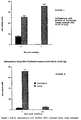
- IL-10 treatment decrease the number of inflammatory cells influxing into the wound at day 3 and 7 post wounding when compared to PBS treatment (control).
- the degree of scarring is qualitatively assessed by studying Masson's trichrome stained wound sections at 84 days post wounding and grading features of the neodermis such as fibre size, length and density. Wounds treated with IL-10 (2.5 ⁇ g/ml) on day 0 only show improved restitution of the dermal architecture when compared with control wounds.
- the IL-10 treated wounds have larger, less densely packed fibres in a more random orientation (basket weave) compared with control wounds where the collagen fibres are finer, more densely packed and aligned parallel to the epidermis.
- the resultant dermal architecture resembles normal skin with a more basket weave configuration of the collagen fibres within the wound.
- the appearance of the scar is far superior to control wounds and wounds treated with IL-10 on day 0 only.
- 2.5 ⁇ g/ml of IL-10 appears to be the maximal dose as wounds treated with the higher dose (5 ⁇ g/ml) have a more visible macroscopic scar.
- Elastin architecture was assessed using Gomori aldehyde fushin stain. In early control or treated wounds there was little elastin staining when compared to normal dermis but at 84 days although there were fewer fibres in wounds compared to normal dermis there was an increase in elastin staining in IL-10 treated wounds compared to controls. The elastin fibres were associated with the collagen fibres in the scar. Whilst IL-10 treatment appears to inhibit inflammation and improve the quality of later scar formation, it does not inhibit re-epithelialisation or early wound repair.
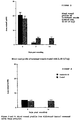
- IL-10 inhibits the infiltration of monocytes and macrophages into the wound when compared to controls ( Figures 1 and 2), although IL-10 has no effect on angiogenesis within the wound when compared to controls ( Figures 3 and 4).
- Staining for fibronectin shows that IL-10 treated wounds have less fibronectin present in the wound area at 3 and 7 days when compared with control wounds.
- Immunostaining for transforming growth factor beta 1 (TGF ⁇ 1 ) showed little differences in cellular staining (mainly monocytic) between control and treated wounds although there were fewer cells in the IL-10 treated wounds.
Landscapes
- Health & Medical Sciences (AREA)
- Life Sciences & Earth Sciences (AREA)
- Medicinal Chemistry (AREA)
- Chemical & Material Sciences (AREA)
- Pharmacology & Pharmacy (AREA)
- Animal Behavior & Ethology (AREA)
- General Health & Medical Sciences (AREA)
- Public Health (AREA)
- Veterinary Medicine (AREA)
- Engineering & Computer Science (AREA)
- Bioinformatics & Cheminformatics (AREA)
- Chemical Kinetics & Catalysis (AREA)
- General Chemical & Material Sciences (AREA)
- Nuclear Medicine, Radiotherapy & Molecular Imaging (AREA)
- Organic Chemistry (AREA)
- Epidemiology (AREA)
- Gastroenterology & Hepatology (AREA)
- Dermatology (AREA)
- Proteomics, Peptides & Aminoacids (AREA)
- Immunology (AREA)
- Zoology (AREA)
- Biomedical Technology (AREA)
- Rheumatology (AREA)
- Pain & Pain Management (AREA)
- Neurology (AREA)
- Neurosurgery (AREA)
- Medicines That Contain Protein Lipid Enzymes And Other Medicines (AREA)
- Pharmaceuticals Containing Other Organic And Inorganic Compounds (AREA)
- Medicines Containing Material From Animals Or Micro-Organisms (AREA)
- Medicinal Preparation (AREA)
- Acyclic And Carbocyclic Compounds In Medicinal Compositions (AREA)
- Invalid Beds And Related Equipment (AREA)
- Eye Examination Apparatus (AREA)
- Prostheses (AREA)
Abstract
Description
| (Figure 1) Inflammatory cell (ED1) profile of incisional wounds treated with IL-10 (injected at day 0) | ||
| IL-10 | | |
| 3 days pw | 15.269 (1.578) | 51.004 (2.246) |
| 7 days pw | 0.321 (0) | 71.704 (3.384) |
| (Figure 2) Inflammatory cell profile of incisional wounds treated with IL-10 (injected at | ||
| IL-10 | | |
| 7 days pw | 3.123 (1.109) | 71.704 (3.384) |
| 14 | 0 | 5.041(0.697) |
| (Figure 3) Blood vessel profile of incisional wounds treated with IL-10 (Injected at day 0) | ||
| IL-10 | | |
| 3 days pw | 20.456 (1.855) | 18.118 (1.700) |
| 7 days pw | 1.355 (0.719) | 4.368 (0.712) |
| 14 | 0 | 4.432 (0.948) |
| (Figure 4) Blood vessel profile of incisional wounds treated with IL-10 (injected at | ||
| IL-10 | | |
| 7 days pw | 5.128 (0.069) | 4.368 (0.712) |
| 14 | 0 | 4.432 (0.948) |
Claims (10)
- The use of IL-10 or a fragment or a partially modified form thereof in the manufacture of a medicament for promoting the healing of wounds with reduced scarring, wherein the medicament is to be administered to a wound site within 7 days of wounding.
- The use of IL-10 or a fragment or a partially modified form thereof according to claim 1 in conjunction with a pharmaceutically acceptable carrier, diluent or excipient.
- The use of IL-10 or a fragment or a partially modified form thereof according to any one of the preceding claims in conjunction with a composition for promoting the healing of wounds with reduced scarring.
- The use of IL-10 or a fragment or a partially modified form thereof according to any one of the preceding claims in conjunction with a composition for promoting the healing of chronic wounds.
- The use according to claim 4 wherein the IL-10 or a fragment or a partially modified form thereof is to be administered at a concentration of between about 1 µM and about 10 µM.
- The use according to claim 5 wherein the IL-10 or a fragment or a partially modified form thereof is to be administered at a concentration of between about 2.5 µM and about 5 µM.
- The use of IL-10 or a fragment or a partially modified form thereof in the manufacture of a medicament for promoting the healing of fibrotic disorders with reduced scarring, wherein the medicament is to be administered to a site of a fibrotic disorder at a concentration of between about 1 µM and about 10 µM.
- The use according to claim 7 wherein the IL-10 or a fragment or a partially modified form thereof is to be administered at a concentration of between about 2.5 µM and about 5 µM.
- The use of IL-10 or a fragment or a partially modified form thereof according to claims 7 or 8 in conjunction with a pharmaceutically acceptable carrier, diluent or excipient.
- The use of IL-10 or a fragment or a partially modified form thereof according to any one of claims 7 - 9 in conjunction with a composition for promoting the healing of fibrotic disorders with reduced scarring
Applications Claiming Priority (3)
| Application Number | Priority Date | Filing Date | Title |
|---|---|---|---|
| GB9516287A GB2304047A (en) | 1995-08-09 | 1995-08-09 | Pharmaceutical compositions containing cytokines |
| GB9516287 | 1995-08-09 | ||
| PCT/GB1996/001930 WO1997005894A1 (en) | 1995-08-09 | 1996-08-08 | Pharmaceutical composition containing il-10 |
Publications (2)
| Publication Number | Publication Date |
|---|---|
| EP0871473A1 EP0871473A1 (en) | 1998-10-21 |
| EP0871473B1 true EP0871473B1 (en) | 2002-12-18 |
Family
ID=10778967
Family Applications (1)
| Application Number | Title | Priority Date | Filing Date |
|---|---|---|---|
| EP96926507A Expired - Lifetime EP0871473B1 (en) | 1995-08-09 | 1996-08-08 | Use of il-10 for wound healing with reduced scarring |
Country Status (13)
| Country | Link |
|---|---|
| US (2) | US6387364B1 (en) |
| EP (1) | EP0871473B1 (en) |
| JP (1) | JP4050317B2 (en) |
| AT (1) | ATE229814T1 (en) |
| AU (1) | AU719089B2 (en) |
| CA (1) | CA2229078C (en) |
| DE (1) | DE69625516T2 (en) |
| DK (1) | DK0871473T3 (en) |
| ES (1) | ES2187665T3 (en) |
| GB (1) | GB2304047A (en) |
| PT (1) | PT871473E (en) |
| WO (1) | WO1997005894A1 (en) |
| ZA (1) | ZA966744B (en) |
Cited By (2)
| Publication number | Priority date | Publication date | Assignee | Title |
|---|---|---|---|---|
| CN101951941A (en) * | 2007-12-12 | 2011-01-19 | 瑞诺弗有限责任公司 | Ways to Inhibit Scarring |
| WO2013172721A1 (en) * | 2012-05-18 | 2013-11-21 | Wise Lyn Marie | Combination treatments and compositions for wound healing |
Families Citing this family (34)
| Publication number | Priority date | Publication date | Assignee | Title |
|---|---|---|---|---|
| DK0941108T3 (en) * | 1996-12-04 | 2002-11-18 | Renovo Ltd | Wound healing and treatment of fibrosis |
| AU6045198A (en) * | 1997-02-05 | 1998-08-25 | Schering Corporation | Use of il-4 and/or il-10 to treat proliferative glomerulonephritis |
| AU6951300A (en) * | 1999-09-08 | 2001-04-10 | Schering Corporation | Novel uses of mammalian ccr6 receptors and related reagents |
| US20060258562A1 (en) * | 2000-07-31 | 2006-11-16 | Healor Ltd. | Methods and pharmaceutical compositions for healing wounds |
| US7052686B2 (en) | 2000-09-29 | 2006-05-30 | Schering Corporation | Pegylated interleukin-10 |
| WO2003062373A2 (en) * | 2001-10-18 | 2003-07-31 | The Children's Hospital Of Philadelphia | Methods and materials for the recruitment of endothelial cells |
| JP4790609B2 (en) * | 2003-07-15 | 2011-10-12 | バーイラン ユニバーシティー | Methods and pharmaceutical compositions for wound healing |
| ES2375565T3 (en) | 2003-08-07 | 2012-03-02 | Healor Ltd. | PHARMACEUTICAL COMPOSITIONS AND METHODS TO ACCELERATE WOUND HEALING. |
| GB0500643D0 (en) * | 2005-01-13 | 2005-02-23 | Renovo Ltd | Medicaments |
| GB0524103D0 (en) * | 2005-11-26 | 2006-01-04 | Medical Res Council | Healing |
| NZ597098A (en) | 2006-09-28 | 2013-05-31 | Merck Sharp & Dohme | Use of pegylated il-10 to treat cancer |
| RU2542471C2 (en) | 2006-11-15 | 2015-02-20 | Коуда Терапьютикс, Инк. | Improved methods and compositions for wound healing |
| KR20100040912A (en) * | 2007-07-30 | 2010-04-21 | 힐로 리미티드 | Pharmaceutical composition for treating wounds and related methods |
| EP2234656A2 (en) | 2007-12-21 | 2010-10-06 | Coda Therapeutics, Inc. | Improved medical devices |
| EP2252690A2 (en) * | 2007-12-21 | 2010-11-24 | Coda Therapeutics, Inc. | Use of anti-connexin 43 polynucleotides for the treatment of abnormal or excessive scars |
| AU2008343840A1 (en) * | 2007-12-21 | 2009-07-09 | Coda Therapeutics, Inc. | Use of anti-connexin polynucleotides, peptides or antibodies for the treatment of orthopedic conditions |
| WO2009120799A2 (en) * | 2008-03-25 | 2009-10-01 | Paloma Pharmaceuticals, Inc. | Methods of treating fibrotic disorders |
| ES2957546T3 (en) | 2008-12-17 | 2024-01-22 | Merck Sharp & Dohme | Production of mono- and di-PEG-IL10; and uses |
| NZ600583A (en) * | 2009-02-24 | 2013-08-30 | Healor Ltd | Visfatin therapeutic agents for the treatment of acne and other conditions |
| US9381187B2 (en) | 2011-02-16 | 2016-07-05 | Paloma Pharmaceuticals, Inc. | Radiation countermeasure agents |
| EP2691515A2 (en) * | 2011-03-31 | 2014-02-05 | President and Fellows of Harvard College | A unique population of regulatory t cells that regulate tissue regeneration and wound healing |
| EP2986306A4 (en) | 2013-04-18 | 2016-12-07 | Armo Biosciences Inc | METHODS OF USING INTERLEUKIN-10 FOR THE TREATMENT OF DISEASES AND DISORDERS |
| CA2914837A1 (en) | 2013-06-17 | 2014-12-24 | Armo Biosciences, Inc. | Method for assessing protein identity and stability |
| US10098929B2 (en) | 2013-08-02 | 2018-10-16 | Children's Hospital Medical Center | Method of reducing scar formation in healing of dermal wounds by administering interleukin-10 and hyaluronan |
| US10010588B2 (en) | 2013-08-30 | 2018-07-03 | Armo Biosciences, Inc. | Methods of using pegylated interleukin-10 for treating hyperlipidemia |
| KR20160079114A (en) | 2013-11-11 | 2016-07-05 | 아르모 바이오사이언시스 인코포레이티드 | Methods of using interleukin-10 for treating diseases and disorders |
| WO2015187295A2 (en) | 2014-06-02 | 2015-12-10 | Armo Biosciences, Inc. | Methods of lowering serum cholesterol |
| WO2016029191A2 (en) | 2014-08-22 | 2016-02-25 | Auckland Uniservices Limited | Channel modulators |
| EP3206713A4 (en) | 2014-10-14 | 2018-06-27 | Armo Biosciences, Inc. | Interleukin-15 compositions and uses thereof |
| AU2015336101A1 (en) | 2014-10-22 | 2017-04-20 | Armo Biosciences, Inc. | Methods of using interleukin-10 for treating diseases and disorders |
| US10618970B2 (en) | 2015-02-03 | 2020-04-14 | Armo Biosciences, Inc. | Method of treating cancer with IL-10 and antibodies that induce ADCC |
| WO2016191587A1 (en) | 2015-05-28 | 2016-12-01 | Armo Biosciences, Inc. | Pegylated interleukin-10 for use in treating cancer |
| CA2995120A1 (en) | 2015-08-25 | 2017-03-02 | Armo Biosciences, Inc. | Methods of using interleukin-10 for treating diseases and disorders |
| US12667586B2 (en) | 2023-03-07 | 2026-06-30 | Glaukos Corporation | Treatments for ocular surface disorders |
Family Cites Families (17)
| Publication number | Priority date | Publication date | Assignee | Title |
|---|---|---|---|---|
| US4929442A (en) | 1986-09-26 | 1990-05-29 | Exovir, Inc. | Compositions suitable for human topical application including a growth factor and/or related materials |
| EP0280560B1 (en) | 1987-02-27 | 1994-05-11 | EASTMAN KODAK COMPANY (a New Jersey corporation) | Membrane structure coated with low pI protein and methods of making and using |
| JPH0611706B2 (en) * | 1989-01-20 | 1994-02-16 | ザ ユニバーシティ オブ メルボルン | Fibrin lysis |
| US5242902A (en) | 1989-09-06 | 1993-09-07 | The Regents Of The University Of California | Defensin peptide compositions and methods for their use |
| WO1991007186A1 (en) * | 1989-11-21 | 1991-05-30 | The University Of Melbourne | Anti-inflammatory compositions and methods |
| ES2124702T3 (en) | 1990-04-11 | 1999-02-16 | Brigham & Womens Hospital | THERAPEUTIC USES OF COMPOUNDS BINDING ACTINA. |
| JPH0747545B2 (en) * | 1991-01-10 | 1995-05-24 | シェリング・コーポレーション | Use of IL-4 to promote the repair stage of wound healing and repair and to promote healing of infected wounds and wounds of diabetic mammals |
| GB9106678D0 (en) | 1991-03-28 | 1991-05-15 | Ferguson Mark W J | Wound healing |
| WO1993004164A1 (en) | 1991-08-26 | 1993-03-04 | THE STATE OF OREGON acting by and through THE STATE OF BOARD OF HIGHER EDUCATION on behalf of THE OREGON HEALTH SCIENCES UNIVERSITY | Keratinocyte-derived conditioned medium as a source of growth factors |
| GB9206861D0 (en) | 1992-03-28 | 1992-05-13 | Univ Manchester | Wound healing and treatment of fibrotic disorders |
| GB9207732D0 (en) * | 1992-04-06 | 1992-05-27 | Isis Innovation | Wound repair |
| AU7043694A (en) * | 1993-05-27 | 1994-12-20 | Regents Of The University Of Michigan, The | Method of treatment and prevention of immune complex-induced lung injury |
| IL110413A0 (en) | 1993-07-26 | 1994-10-21 | Schering Corp | Agonists and antagonists of human interleukin-10 |
| EP0968723B1 (en) * | 1994-03-29 | 2009-07-01 | Renovo Limited | Healing of wounds or fibrotic disorders using at least one agent against a growth factor |
| CA2205572A1 (en) * | 1994-12-12 | 1996-06-20 | Beth Israel Hospital Association | Chimeric cytokines and uses thereof |
| GB9516012D0 (en) | 1995-08-04 | 1995-10-04 | Univ Manchester | Pharmaceutical composition |
| GB2304045A (en) | 1995-08-04 | 1997-03-12 | Univ Manchester | Betaglycan compositions for promoting the healing of wounds and fibrotic diseases |
-
1995
- 1995-08-09 GB GB9516287A patent/GB2304047A/en not_active Withdrawn
-
1996
- 1996-08-08 EP EP96926507A patent/EP0871473B1/en not_active Expired - Lifetime
- 1996-08-08 JP JP50824697A patent/JP4050317B2/en not_active Expired - Fee Related
- 1996-08-08 PT PT96926507T patent/PT871473E/en unknown
- 1996-08-08 ZA ZA9606744A patent/ZA966744B/en unknown
- 1996-08-08 WO PCT/GB1996/001930 patent/WO1997005894A1/en not_active Ceased
- 1996-08-08 AT AT96926507T patent/ATE229814T1/en active
- 1996-08-08 CA CA2229078A patent/CA2229078C/en not_active Expired - Fee Related
- 1996-08-08 DE DE69625516T patent/DE69625516T2/en not_active Expired - Lifetime
- 1996-08-08 DK DK96926507T patent/DK0871473T3/en active
- 1996-08-08 US US09/011,027 patent/US6387364B1/en not_active Expired - Lifetime
- 1996-08-08 ES ES96926507T patent/ES2187665T3/en not_active Expired - Lifetime
- 1996-08-08 AU AU66660/96A patent/AU719089B2/en not_active Ceased
-
2002
- 2002-02-26 US US10/082,221 patent/US7052684B2/en not_active Expired - Fee Related
Cited By (3)
| Publication number | Priority date | Publication date | Assignee | Title |
|---|---|---|---|---|
| CN101951941A (en) * | 2007-12-12 | 2011-01-19 | 瑞诺弗有限责任公司 | Ways to Inhibit Scarring |
| WO2013172721A1 (en) * | 2012-05-18 | 2013-11-21 | Wise Lyn Marie | Combination treatments and compositions for wound healing |
| AU2013263502B2 (en) * | 2012-05-18 | 2018-02-08 | Otago Innovation Limited | Combination treatments and compositions for wound healing |
Also Published As
| Publication number | Publication date |
|---|---|
| AU719089B2 (en) | 2000-05-04 |
| CA2229078C (en) | 2010-04-20 |
| US7052684B2 (en) | 2006-05-30 |
| EP0871473A1 (en) | 1998-10-21 |
| US20020128447A1 (en) | 2002-09-12 |
| AU6666096A (en) | 1997-03-05 |
| PT871473E (en) | 2003-03-31 |
| CA2229078A1 (en) | 1997-02-20 |
| GB2304047A (en) | 1997-03-12 |
| ZA966744B (en) | 1998-02-09 |
| DK0871473T3 (en) | 2003-04-14 |
| JP4050317B2 (en) | 2008-02-20 |
| US6387364B1 (en) | 2002-05-14 |
| JPH11510505A (en) | 1999-09-14 |
| ATE229814T1 (en) | 2003-01-15 |
| DE69625516T2 (en) | 2003-09-25 |
| GB9516287D0 (en) | 1995-10-11 |
| WO1997005894A1 (en) | 1997-02-20 |
| DE69625516D1 (en) | 2003-01-30 |
| ES2187665T3 (en) | 2003-06-16 |
Similar Documents
| Publication | Publication Date | Title |
|---|---|---|
| CA2229078C (en) | Pharmaceutical composition containing il-10 | |
| ES2426420T3 (en) | Bioactive Keratin Peptides | |
| DE69424576T2 (en) | BIOLOGICALLY ACTIVE TGF-BETA1 AND TGF-BETA2 PEPTIDES | |
| EP0968723B1 (en) | Healing of wounds or fibrotic disorders using at least one agent against a growth factor | |
| DE69119879T2 (en) | Epitheliocyte growth accelerator | |
| JP4102437B2 (en) | Pharmaceutical composition containing activin and inhibin stimulating factor | |
| JP2008239625A (en) | Pharmaceutical composition | |
| Yang et al. | Depletion of eosinophil infiltration by anti-IL-5 monoclonal antibody (TRFK-5) accelerates open skin wound epithelial closure | |
| US20020025316A1 (en) | Pharmaceutical composition containing inhibitors of interferon-gamma | |
| EP1719522B1 (en) | Medicinal composition comprising TCF-II | |
| CA2817373A1 (en) | Methods and compositions comprising cyclic analogues of histatin 5 for treating wounds | |
| DE69626050T2 (en) | PHARMACEUTICAL COMPOSITION CONTAINING INTERFERON GAMMA STIMULATORS | |
| DE60017793T2 (en) | METHOD FOR PREVENTING AND TREATING DAMAGE TO THE TISSUE TISSUE | |
| DE69209051T2 (en) | USE OF IL-4 TO ENHANCE Wounds Healing And Improving And Healing Infected Wounds And Wounds In DIABETIC MAMMALS | |
| WO1989005653A1 (en) | Topical wound-healing preparations comprising interleukin-1 proteins | |
| US20080031879A1 (en) | Pharmaceutical composition containing inhibitors of interferon-gamma | |
| WO2000004873A1 (en) | Dermatological compositions for the treatment of scars | |
| WO1995007710A1 (en) | Remedy for wound | |
| DE69916022T2 (en) | Method of using IL-11 to enhance cell-mediated immunity to treat various viral and parasitic infections and cancer | |
| JPH0656692A (en) | Wound therapeutic agent comprising tcf-ii as active ingredient | |
| WO2000057902A1 (en) | Method and pharmaceutical composition for wound healing | |
| EP2089050A2 (en) | Il- 17b for use in wound healing | |
| KR20120071736A (en) | Composition for treating skin wound or anti-bacterial composition comprising peptide derived from copris tripartitus | |
| HK1024419A (en) | Healing of wounds or fibrotic disorders using at least one agent against a growth factor | |
| SAHARA et al. | The Effect of GM-CSF of the Inhibition of Contraction of Excisional Wounds Caused by Bacterial Contamination |
Legal Events
| Date | Code | Title | Description |
|---|---|---|---|
| PUAI | Public reference made under article 153(3) epc to a published international application that has entered the european phase |
Free format text: ORIGINAL CODE: 0009012 |
|
| 17P | Request for examination filed |
Effective date: 19980217 |
|
| AK | Designated contracting states |
Kind code of ref document: A1 Designated state(s): AT BE CH DE DK ES FI FR GB GR IE IT LI LU MC NL PT SE |
|
| RAP1 | Party data changed (applicant data changed or rights of an application transferred) |
Owner name: RENOVO LIMITED |
|
| 17Q | First examination report despatched |
Effective date: 20010125 |
|
| GRAG | Despatch of communication of intention to grant |
Free format text: ORIGINAL CODE: EPIDOS AGRA |
|
| RIC1 | Information provided on ipc code assigned before grant |
Free format text: 7A 61K 38/20 A, 7A 61P 17/02 B |
|
| RTI1 | Title (correction) |
Free format text: USE OF IL-10 FOR WOUND HEALING WITH REDUCED SCARRING |
|
| GRAG | Despatch of communication of intention to grant |
Free format text: ORIGINAL CODE: EPIDOS AGRA |
|
| GRAH | Despatch of communication of intention to grant a patent |
Free format text: ORIGINAL CODE: EPIDOS IGRA |
|
| GRAH | Despatch of communication of intention to grant a patent |
Free format text: ORIGINAL CODE: EPIDOS IGRA |
|
| GRAA | (expected) grant |
Free format text: ORIGINAL CODE: 0009210 |
|
| AK | Designated contracting states |
Kind code of ref document: B1 Designated state(s): AT BE CH DE DK ES FI FR GB GR IE IT LI LU MC NL PT SE |
|
| REF | Corresponds to: |
Ref document number: 229814 Country of ref document: AT Date of ref document: 20030115 Kind code of ref document: T |
|
| REG | Reference to a national code |
Ref country code: GB Ref legal event code: FG4D |
|
| REG | Reference to a national code |
Ref country code: CH Ref legal event code: EP |
|
| REG | Reference to a national code |
Ref country code: IE Ref legal event code: FG4D |
|
| REF | Corresponds to: |
Ref document number: 69625516 Country of ref document: DE Date of ref document: 20030130 Kind code of ref document: P Ref document number: 69625516 Country of ref document: DE Date of ref document: 20030130 |
|
| REG | Reference to a national code |
Ref country code: CH Ref legal event code: NV Representative=s name: RITSCHER & PARTNER AG PATENTANWAELTE |
|
| REG | Reference to a national code |
Ref country code: GR Ref legal event code: EP Ref document number: 20030400303 Country of ref document: GR |
|
| REG | Reference to a national code |
Ref country code: PT Ref legal event code: SC4A Free format text: AVAILABILITY OF NATIONAL TRANSLATION Effective date: 20030117 |
|
| REG | Reference to a national code |
Ref country code: SE Ref legal event code: TRGR |
|
| REG | Reference to a national code |
Ref country code: DK Ref legal event code: T3 |
|
| ET | Fr: translation filed | ||
| REG | Reference to a national code |
Ref country code: ES Ref legal event code: FG2A Ref document number: 2187665 Country of ref document: ES Kind code of ref document: T3 |
|
| PLBE | No opposition filed within time limit |
Free format text: ORIGINAL CODE: 0009261 |
|
| STAA | Information on the status of an ep patent application or granted ep patent |
Free format text: STATUS: NO OPPOSITION FILED WITHIN TIME LIMIT |
|
| 26N | No opposition filed |
Effective date: 20030919 |
|
| REG | Reference to a national code |
Ref country code: CH Ref legal event code: PCAR Free format text: RITSCHER & PARTNER AG;RESIRAIN 1;8125 ZOLLIKERBERG (CH) |
|
| PGFP | Annual fee paid to national office [announced via postgrant information from national office to epo] |
Ref country code: LU Payment date: 20130823 Year of fee payment: 18 |
|
| PGFP | Annual fee paid to national office [announced via postgrant information from national office to epo] |
Ref country code: GR Payment date: 20130827 Year of fee payment: 18 Ref country code: DE Payment date: 20130830 Year of fee payment: 18 Ref country code: NL Payment date: 20130819 Year of fee payment: 18 Ref country code: SE Payment date: 20130821 Year of fee payment: 18 Ref country code: PT Payment date: 20130211 Year of fee payment: 18 Ref country code: CH Payment date: 20130823 Year of fee payment: 18 Ref country code: FI Payment date: 20130819 Year of fee payment: 18 Ref country code: IE Payment date: 20130826 Year of fee payment: 18 Ref country code: AT Payment date: 20130826 Year of fee payment: 18 Ref country code: ES Payment date: 20130826 Year of fee payment: 18 Ref country code: MC Payment date: 20130826 Year of fee payment: 18 Ref country code: DK Payment date: 20130821 Year of fee payment: 18 |
|
| PGFP | Annual fee paid to national office [announced via postgrant information from national office to epo] |
Ref country code: FR Payment date: 20130821 Year of fee payment: 18 Ref country code: GB Payment date: 20130801 Year of fee payment: 18 |
|
| REG | Reference to a national code |
Ref country code: CH Ref legal event code: PFA Owner name: RENOVO LIMITED, GB Free format text: FORMER OWNER: RENOVO LIMITED, GB |
|
| PGFP | Annual fee paid to national office [announced via postgrant information from national office to epo] |
Ref country code: IT Payment date: 20130826 Year of fee payment: 18 |
|
| PGFP | Annual fee paid to national office [announced via postgrant information from national office to epo] |
Ref country code: BE Payment date: 20130911 Year of fee payment: 18 |
|
| REG | Reference to a national code |
Ref country code: PT Ref legal event code: MM4A Free format text: LAPSE DUE TO NON-PAYMENT OF FEES Effective date: 20150209 |
|
| REG | Reference to a national code |
Ref country code: DE Ref legal event code: R119 Ref document number: 69625516 Country of ref document: DE |
|
| REG | Reference to a national code |
Ref country code: NL Ref legal event code: V1 Effective date: 20150301 |
|
| REG | Reference to a national code |
Ref country code: DK Ref legal event code: EBP Effective date: 20140831 |
|
| PG25 | Lapsed in a contracting state [announced via postgrant information from national office to epo] |
Ref country code: MC Free format text: LAPSE BECAUSE OF NON-PAYMENT OF DUE FEES Effective date: 20140901 Ref country code: LU Free format text: LAPSE BECAUSE OF NON-PAYMENT OF DUE FEES Effective date: 20140808 |
|
| REG | Reference to a national code |
Ref country code: CH Ref legal event code: PL Ref country code: SE Ref legal event code: EUG |
|
| REG | Reference to a national code |
Ref country code: AT Ref legal event code: MM01 Ref document number: 229814 Country of ref document: AT Kind code of ref document: T Effective date: 20140808 |
|
| REG | Reference to a national code |
Ref country code: GR Ref legal event code: ML Ref document number: 20030400303 Country of ref document: GR Effective date: 20150304 |
|
| GBPC | Gb: european patent ceased through non-payment of renewal fee |
Effective date: 20140808 |
|
| PG25 | Lapsed in a contracting state [announced via postgrant information from national office to epo] |
Ref country code: IT Free format text: LAPSE BECAUSE OF NON-PAYMENT OF DUE FEES Effective date: 20140808 Ref country code: PT Free format text: LAPSE BECAUSE OF NON-PAYMENT OF DUE FEES Effective date: 20150209 Ref country code: FI Free format text: LAPSE BECAUSE OF NON-PAYMENT OF DUE FEES Effective date: 20140808 Ref country code: NL Free format text: LAPSE BECAUSE OF NON-PAYMENT OF DUE FEES Effective date: 20150301 Ref country code: BE Free format text: LAPSE BECAUSE OF NON-PAYMENT OF DUE FEES Effective date: 20140831 Ref country code: LI Free format text: LAPSE BECAUSE OF NON-PAYMENT OF DUE FEES Effective date: 20140831 Ref country code: CH Free format text: LAPSE BECAUSE OF NON-PAYMENT OF DUE FEES Effective date: 20140831 |
|
| REG | Reference to a national code |
Ref country code: DE Ref legal event code: R119 Ref document number: 69625516 Country of ref document: DE Effective date: 20150303 |
|
| PG25 | Lapsed in a contracting state [announced via postgrant information from national office to epo] |
Ref country code: SE Free format text: LAPSE BECAUSE OF NON-PAYMENT OF DUE FEES Effective date: 20140809 Ref country code: GR Free format text: LAPSE BECAUSE OF NON-PAYMENT OF DUE FEES Effective date: 20150304 Ref country code: AT Free format text: LAPSE BECAUSE OF NON-PAYMENT OF DUE FEES Effective date: 20140808 |
|
| REG | Reference to a national code |
Ref country code: FR Ref legal event code: ST Effective date: 20150430 |
|
| REG | Reference to a national code |
Ref country code: IE Ref legal event code: MM4A |
|
| PG25 | Lapsed in a contracting state [announced via postgrant information from national office to epo] |
Ref country code: DE Free format text: LAPSE BECAUSE OF NON-PAYMENT OF DUE FEES Effective date: 20150303 Ref country code: GB Free format text: LAPSE BECAUSE OF NON-PAYMENT OF DUE FEES Effective date: 20140808 Ref country code: DK Free format text: LAPSE BECAUSE OF NON-PAYMENT OF DUE FEES Effective date: 20140831 |
|
| PG25 | Lapsed in a contracting state [announced via postgrant information from national office to epo] |
Ref country code: FR Free format text: LAPSE BECAUSE OF NON-PAYMENT OF DUE FEES Effective date: 20140901 Ref country code: IE Free format text: LAPSE BECAUSE OF NON-PAYMENT OF DUE FEES Effective date: 20140808 |
|
| REG | Reference to a national code |
Ref country code: ES Ref legal event code: FD2A Effective date: 20150925 |
|
| PG25 | Lapsed in a contracting state [announced via postgrant information from national office to epo] |
Ref country code: ES Free format text: LAPSE BECAUSE OF NON-PAYMENT OF DUE FEES Effective date: 20140809 |