EP0870048B1 - Host adaptation of retroviral vectors - Google Patents
Host adaptation of retroviral vectors Download PDFInfo
- Publication number
- EP0870048B1 EP0870048B1 EP96942463A EP96942463A EP0870048B1 EP 0870048 B1 EP0870048 B1 EP 0870048B1 EP 96942463 A EP96942463 A EP 96942463A EP 96942463 A EP96942463 A EP 96942463A EP 0870048 B1 EP0870048 B1 EP 0870048B1
- Authority
- EP
- European Patent Office
- Prior art keywords
- retroviral vector
- retrovirus
- retroviral
- starting
- selection
- Prior art date
- Legal status (The legal status is an assumption and is not a legal conclusion. Google has not performed a legal analysis and makes no representation as to the accuracy of the status listed.)
- Expired - Lifetime
Links
- 239000013598 vector Substances 0.000 title claims abstract description 158
- 230000001177 retroviral effect Effects 0.000 title claims abstract description 109
- 230000006978 adaptation Effects 0.000 title description 2
- 241001430294 unidentified retrovirus Species 0.000 claims abstract description 77
- 238000000034 method Methods 0.000 claims abstract description 67
- 230000008569 process Effects 0.000 claims abstract description 35
- 238000004519 manufacturing process Methods 0.000 claims abstract description 34
- 208000015181 infectious disease Diseases 0.000 claims abstract description 29
- 238000001415 gene therapy Methods 0.000 claims abstract description 17
- 238000000338 in vitro Methods 0.000 claims abstract description 15
- 210000004027 cell Anatomy 0.000 claims description 139
- 238000004806 packaging method and process Methods 0.000 claims description 22
- 241000282414 Homo sapiens Species 0.000 claims description 21
- 108010027225 gag-pol Fusion Proteins Proteins 0.000 claims description 17
- 108010052285 Membrane Proteins Proteins 0.000 claims description 13
- 210000002966 serum Anatomy 0.000 claims description 12
- 102000018697 Membrane Proteins Human genes 0.000 claims description 8
- 239000003550 marker Substances 0.000 claims description 6
- 206010028980 Neoplasm Diseases 0.000 claims description 3
- 201000011510 cancer Diseases 0.000 claims description 3
- 210000004698 lymphocyte Anatomy 0.000 claims description 3
- 210000003494 hepatocyte Anatomy 0.000 claims description 2
- 241000700605 Viruses Species 0.000 description 52
- 230000035772 mutation Effects 0.000 description 20
- 230000003612 virological effect Effects 0.000 description 19
- 239000013612 plasmid Substances 0.000 description 18
- 102100034349 Integrase Human genes 0.000 description 17
- 239000002245 particle Substances 0.000 description 17
- 108090000623 proteins and genes Proteins 0.000 description 16
- 239000012634 fragment Substances 0.000 description 12
- 108010092799 RNA-directed DNA polymerase Proteins 0.000 description 11
- 239000006228 supernatant Substances 0.000 description 10
- 108700004025 env Genes Proteins 0.000 description 9
- 101150030339 env gene Proteins 0.000 description 9
- 230000010076 replication Effects 0.000 description 9
- 241001529936 Murinae Species 0.000 description 8
- 238000010361 transduction Methods 0.000 description 8
- 230000026683 transduction Effects 0.000 description 8
- 210000005260 human cell Anatomy 0.000 description 7
- 238000002360 preparation method Methods 0.000 description 7
- 230000006798 recombination Effects 0.000 description 7
- 238000005215 recombination Methods 0.000 description 7
- 230000002463 transducing effect Effects 0.000 description 7
- 241000701022 Cytomegalovirus Species 0.000 description 6
- 108020004414 DNA Proteins 0.000 description 5
- 101710091045 Envelope protein Proteins 0.000 description 5
- 101710188315 Protein X Proteins 0.000 description 5
- 238000012546 transfer Methods 0.000 description 5
- 108091032973 (ribonucleotides)n+m Proteins 0.000 description 4
- 206010006187 Breast cancer Diseases 0.000 description 4
- 208000026310 Breast neoplasm Diseases 0.000 description 4
- 238000006243 chemical reaction Methods 0.000 description 4
- 230000007773 growth pattern Effects 0.000 description 4
- 238000001727 in vivo Methods 0.000 description 4
- 230000010354 integration Effects 0.000 description 4
- 102000004169 proteins and genes Human genes 0.000 description 4
- 108020003175 receptors Proteins 0.000 description 4
- 102000005962 receptors Human genes 0.000 description 4
- 238000002976 reverse transcriptase assay Methods 0.000 description 4
- 230000003321 amplification Effects 0.000 description 3
- 230000008901 benefit Effects 0.000 description 3
- 238000010276 construction Methods 0.000 description 3
- 238000002474 experimental method Methods 0.000 description 3
- 239000013613 expression plasmid Substances 0.000 description 3
- 210000004185 liver Anatomy 0.000 description 3
- 239000002609 medium Substances 0.000 description 3
- 238000003199 nucleic acid amplification method Methods 0.000 description 3
- 238000010839 reverse transcription Methods 0.000 description 3
- 102000040650 (ribonucleotides)n+m Human genes 0.000 description 2
- 102400000058 Neuregulin-1 Human genes 0.000 description 2
- 108090000556 Neuregulin-1 Proteins 0.000 description 2
- 238000009004 PCR Kit Methods 0.000 description 2
- 238000004113 cell culture Methods 0.000 description 2
- 238000005119 centrifugation Methods 0.000 description 2
- 230000000295 complement effect Effects 0.000 description 2
- 230000002950 deficient Effects 0.000 description 2
- 238000001914 filtration Methods 0.000 description 2
- 238000001476 gene delivery Methods 0.000 description 2
- 230000002779 inactivation Effects 0.000 description 2
- 101150066555 lacZ gene Proteins 0.000 description 2
- 208000032839 leukemia Diseases 0.000 description 2
- 238000013508 migration Methods 0.000 description 2
- 230000005012 migration Effects 0.000 description 2
- 150000007523 nucleic acids Chemical group 0.000 description 2
- 239000000047 product Substances 0.000 description 2
- 239000007858 starting material Substances 0.000 description 2
- 239000013595 supernatant sample Substances 0.000 description 2
- 230000001225 therapeutic effect Effects 0.000 description 2
- 238000001890 transfection Methods 0.000 description 2
- 230000010415 tropism Effects 0.000 description 2
- FWMNVWWHGCHHJJ-SKKKGAJSSA-N 4-amino-1-[(2r)-6-amino-2-[[(2r)-2-[[(2r)-2-[[(2r)-2-amino-3-phenylpropanoyl]amino]-3-phenylpropanoyl]amino]-4-methylpentanoyl]amino]hexanoyl]piperidine-4-carboxylic acid Chemical compound C([C@H](C(=O)N[C@H](CC(C)C)C(=O)N[C@H](CCCCN)C(=O)N1CCC(N)(CC1)C(O)=O)NC(=O)[C@H](N)CC=1C=CC=CC=1)C1=CC=CC=C1 FWMNVWWHGCHHJJ-SKKKGAJSSA-N 0.000 description 1
- 208000030507 AIDS Diseases 0.000 description 1
- 108050005273 Amino acid transporters Proteins 0.000 description 1
- 102000034263 Amino acid transporters Human genes 0.000 description 1
- 241000714266 Bovine leukemia virus Species 0.000 description 1
- 241001603164 Carp edema virus Species 0.000 description 1
- 208000035473 Communicable disease Diseases 0.000 description 1
- 102000053602 DNA Human genes 0.000 description 1
- 101710121417 Envelope glycoprotein Proteins 0.000 description 1
- 101800001467 Envelope glycoprotein E2 Proteins 0.000 description 1
- 241000713730 Equine infectious anemia virus Species 0.000 description 1
- 208000028782 Hereditary disease Diseases 0.000 description 1
- 229920000209 Hexadimethrine bromide Polymers 0.000 description 1
- 241000282412 Homo Species 0.000 description 1
- 101000869517 Homo sapiens Phosphatidylinositol-3-phosphatase SAC1 Proteins 0.000 description 1
- 241000713666 Lentivirus Species 0.000 description 1
- 241001465754 Metazoa Species 0.000 description 1
- 241001045988 Neogene Species 0.000 description 1
- 108091028043 Nucleic acid sequence Proteins 0.000 description 1
- 108091034117 Oligonucleotide Proteins 0.000 description 1
- 206010033128 Ovarian cancer Diseases 0.000 description 1
- 206010061535 Ovarian neoplasm Diseases 0.000 description 1
- 108010092528 Phosphate Transport Proteins Proteins 0.000 description 1
- 102000016462 Phosphate Transport Proteins Human genes 0.000 description 1
- 102100032286 Phosphatidylinositol-3-phosphatase SAC1 Human genes 0.000 description 1
- 101800001271 Surface protein Proteins 0.000 description 1
- 241000713325 Visna/maedi virus Species 0.000 description 1
- 239000002253 acid Substances 0.000 description 1
- 150000007513 acids Chemical class 0.000 description 1
- 208000037919 acquired disease Diseases 0.000 description 1
- 150000001413 amino acids Chemical class 0.000 description 1
- 230000003698 anagen phase Effects 0.000 description 1
- 238000013459 approach Methods 0.000 description 1
- 238000000376 autoradiography Methods 0.000 description 1
- 230000015572 biosynthetic process Effects 0.000 description 1
- 229910000389 calcium phosphate Inorganic materials 0.000 description 1
- 239000001506 calcium phosphate Substances 0.000 description 1
- 235000011010 calcium phosphates Nutrition 0.000 description 1
- 230000001413 cellular effect Effects 0.000 description 1
- 238000010367 cloning Methods 0.000 description 1
- 238000005094 computer simulation Methods 0.000 description 1
- 239000012141 concentrate Substances 0.000 description 1
- 239000012228 culture supernatant Substances 0.000 description 1
- 230000007812 deficiency Effects 0.000 description 1
- 230000002939 deleterious effect Effects 0.000 description 1
- 238000013461 design Methods 0.000 description 1
- 230000001627 detrimental effect Effects 0.000 description 1
- 238000011161 development Methods 0.000 description 1
- 230000018109 developmental process Effects 0.000 description 1
- 238000010790 dilution Methods 0.000 description 1
- 239000012895 dilution Substances 0.000 description 1
- 201000010099 disease Diseases 0.000 description 1
- 208000037265 diseases, disorders, signs and symptoms Diseases 0.000 description 1
- 230000000694 effects Effects 0.000 description 1
- 239000003623 enhancer Substances 0.000 description 1
- 239000013604 expression vector Substances 0.000 description 1
- 239000012737 fresh medium Substances 0.000 description 1
- 230000002068 genetic effect Effects 0.000 description 1
- 230000007614 genetic variation Effects 0.000 description 1
- 230000012010 growth Effects 0.000 description 1
- 230000010005 growth-factor like effect Effects 0.000 description 1
- 238000010166 immunofluorescence Methods 0.000 description 1
- 230000006698 induction Effects 0.000 description 1
- 239000003112 inhibitor Substances 0.000 description 1
- 102000006495 integrins Human genes 0.000 description 1
- 108010044426 integrins Proteins 0.000 description 1
- 230000002503 metabolic effect Effects 0.000 description 1
- 238000012986 modification Methods 0.000 description 1
- 230000004048 modification Effects 0.000 description 1
- 238000012544 monitoring process Methods 0.000 description 1
- 101150091879 neo gene Proteins 0.000 description 1
- 239000002777 nucleoside Substances 0.000 description 1
- 229940127073 nucleoside analogue Drugs 0.000 description 1
- 125000003835 nucleoside group Chemical group 0.000 description 1
- 238000005457 optimization Methods 0.000 description 1
- 238000007747 plating Methods 0.000 description 1
- 230000001566 pro-viral effect Effects 0.000 description 1
- 102000004196 processed proteins & peptides Human genes 0.000 description 1
- 108090000765 processed proteins & peptides Proteins 0.000 description 1
- 238000009790 rate-determining step (RDS) Methods 0.000 description 1
- 230000009467 reduction Effects 0.000 description 1
- 230000022532 regulation of transcription, DNA-dependent Effects 0.000 description 1
- 230000003362 replicative effect Effects 0.000 description 1
- 239000003419 rna directed dna polymerase inhibitor Substances 0.000 description 1
- 239000000523 sample Substances 0.000 description 1
- 238000005070 sampling Methods 0.000 description 1
- 238000010008 shearing Methods 0.000 description 1
- 238000002922 simulated annealing Methods 0.000 description 1
- 238000004088 simulation Methods 0.000 description 1
- 241000894007 species Species 0.000 description 1
- 238000010561 standard procedure Methods 0.000 description 1
- 239000000126 substance Substances 0.000 description 1
- 230000008685 targeting Effects 0.000 description 1
- QORWJWZARLRLPR-UHFFFAOYSA-H tricalcium bis(phosphate) Chemical compound [Ca+2].[Ca+2].[Ca+2].[O-]P([O-])([O-])=O.[O-]P([O-])([O-])=O QORWJWZARLRLPR-UHFFFAOYSA-H 0.000 description 1
Images



Classifications
-
- C—CHEMISTRY; METALLURGY
- C12—BIOCHEMISTRY; BEER; SPIRITS; WINE; VINEGAR; MICROBIOLOGY; ENZYMOLOGY; MUTATION OR GENETIC ENGINEERING
- C12N—MICROORGANISMS OR ENZYMES; COMPOSITIONS THEREOF; PROPAGATING, PRESERVING, OR MAINTAINING MICROORGANISMS; MUTATION OR GENETIC ENGINEERING; CULTURE MEDIA
- C12N15/00—Mutation or genetic engineering; DNA or RNA concerning genetic engineering, vectors, e.g. plasmids, or their isolation, preparation or purification; Use of hosts therefor
- C12N15/09—Recombinant DNA-technology
- C12N15/63—Introduction of foreign genetic material using vectors; Vectors; Use of hosts therefor; Regulation of expression
- C12N15/79—Vectors or expression systems specially adapted for eukaryotic hosts
- C12N15/85—Vectors or expression systems specially adapted for eukaryotic hosts for animal cells
- C12N15/86—Viral vectors
-
- C—CHEMISTRY; METALLURGY
- C12—BIOCHEMISTRY; BEER; SPIRITS; WINE; VINEGAR; MICROBIOLOGY; ENZYMOLOGY; MUTATION OR GENETIC ENGINEERING
- C12N—MICROORGANISMS OR ENZYMES; COMPOSITIONS THEREOF; PROPAGATING, PRESERVING, OR MAINTAINING MICROORGANISMS; MUTATION OR GENETIC ENGINEERING; CULTURE MEDIA
- C12N15/00—Mutation or genetic engineering; DNA or RNA concerning genetic engineering, vectors, e.g. plasmids, or their isolation, preparation or purification; Use of hosts therefor
- C12N15/01—Preparation of mutants without inserting foreign genetic material therein; Screening processes therefor
-
- C—CHEMISTRY; METALLURGY
- C12—BIOCHEMISTRY; BEER; SPIRITS; WINE; VINEGAR; MICROBIOLOGY; ENZYMOLOGY; MUTATION OR GENETIC ENGINEERING
- C12N—MICROORGANISMS OR ENZYMES; COMPOSITIONS THEREOF; PROPAGATING, PRESERVING, OR MAINTAINING MICROORGANISMS; MUTATION OR GENETIC ENGINEERING; CULTURE MEDIA
- C12N2740/00—Reverse transcribing RNA viruses
- C12N2740/00011—Details
- C12N2740/10011—Retroviridae
- C12N2740/13011—Gammaretrovirus, e.g. murine leukeamia virus
- C12N2740/13041—Use of virus, viral particle or viral elements as a vector
- C12N2740/13043—Use of virus, viral particle or viral elements as a vector viral genome or elements thereof as genetic vector
Definitions
- a starting retroviral vector comprising the env gene and a genome having a selectable marker is subjected to a selection process designed to achieve more efficient infection of a particular target cell.
- the env gene from the retroviral vector which emerges after the selection process may then be transferred into a packaging cell line which can then be used to produce retroviral vectors having the selected characteristic and suitable for use in a desired application.
- the retroviral vectors produced by the packaging cell do not carry the env gene, but comprise envelope proteins encoded by the env gene.
- the error rate of the MLV reverse transcriptase should be increased to maximise the production of advantageous mutations during the high mutation rate stages. In order that selection works efficiently it is essential to have enough genetic variation. If mutation rates are too low advantageous variants may not appear fast enough and the in-vitro evolution will take too long. On the other hand, for very high mutation rates an advantageous mutation may often be accompanied by a deleterious mutation somewhere else in the genome. In between there is an optimal mutation rate. A very rough estimate shows that the optimal mutation rate is of the order of 1 over the length of the genome (number of bases)( Nowak 1990, Nature 347,522 ). For a genome of the size of MLV the optimal mutation rate is approximately 10 -3 -10 -4 .
- a major goal in gene therapy is the transduction of human primary blood lymphocytes (PBLs) for the treatment of inherited diseases such as SCID, acquired diseases such as leukaemia and infectious diseases such as AIDS.
- PBLs primary blood lymphocytes
- SCID acquired diseases
- leukaemia a major blood lymphocytes
- AIDS infectious diseases
- amphotropic vector preparations can be produced readily with titres of 10 6 -10 7 on NIH 3T3 or HeLa cells these same preparations transduce PBLs at efficencies 3-4 orders of magnitude lower.
- An MLV vector derivative with a high transduction efficiency is needed urgently therefore.
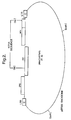
- pMoC(4070A) contains the CMV-IE promoter in place of the MLV promoter in the U3 region of both LTRs ( Figure 2).
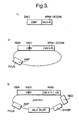
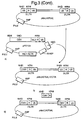
- pMoC(4070A) was constructed according to the scheme shown in Figure 3 although other strategies could be used to produce the same molecule or to produce molecules with other efficient promoters in the U3 regions.
- This derivative was produced in order to increase the production of genomes in human cells thereby achieving larger populations and therefore greater diversity.
- Any amphotropic provirus in any plasmid would be equally suitable but it is likely that enhanced expression from the LTRs would be required to generate the population sizes necessary for the evolution strategies.
- Plasmid pMoC(4070A) is used to transfect 293T cells to produce a primary virus stock.
- RT reverse transcriptase
- levels are measured and compared with those of a vector preparation of known transducing titre.
- Levels of reverse transcriptase are typically 100-200 units/ml which corresponds to a transducing titre of about 10 6 -10 7 cfu/ml. This represents the starting master stock to be used for the selection process and as a reference stock against which new variants are compared.
- MLV PBL-V1 is then used to produce plasmids for helper-free vector production following standard procedures described in papers such as Soneoka et al. (1995) and Miller and Rossman (1989) and references therein. These have the characteristics of the plasmids shown in Figure 4. These are designated pRV-V1-51 (gag - pol) and pRV-V1-52 (env). These two plasmids are then used to transduce 293T cells with pHIT111 (a lac Z carrying vector genome plasmid) (Soneoka et al., 1995) to produce a vector stock which is titred on NIH 3T3 cells and HeLa cells and then used to transduce PBLs.
- pHIT111 a lac Z carrying vector genome plasmid
- the PBLs are then stained for expression of B-galactosidase.
- a similar experiment is carried out with a standard amphotropic vector system and the numbers of blue cells compared.
- the vector produced from the MLV PBL-V1 components gives substantially greater numbers of blue PBLs demonstrating that the new vector system has increased transducing potential for PBLs. This vector system will be of greater use therefore in gene therapy protocols requiring gene transfer into PBLs.
- TORVs Target Optimised Retroviral Vectors
- the producer cell line 293T was transiently transfected with 5 ⁇ g of pMoC(4070A) using the overnight calcium phosphate method described by Gorman et al. (1985). Viral supernatant was harvested 48 hours post-transfection and filtered using a 0.45 ⁇ m filter (Sartorius). MLV RT levels (Goff et al. 1981) were converted to the viral titre from a standard curve relating RT activity to viral titre.
- the infected cells were split 5 times during this time period on days 3, 5, 11, 16 and 22 and triplicate viral supernatant samples were taken on days 3, 5, 8, 9, 11, 12, 15, 16, 17, 22 and 25. It should be noted that no new (uninfected) cells were added to the system during this time period. Cells were monitored continuously for phenotypic changes to determine whether the virus had a detrimental effect on them.
- the viral growth pattern of MOLV4070A in SW626 cells was analysed by MLV RT assays and viral titres were determined ( Figure 5) as described before. Virus production in SW626 cells produced titres up to 1.5 x10 4 on days 10 and 20. The peaks and troughs of viral titre observed from the infected SW626 cells reflects the splitting of these. However it was clear from these data that a chronically infected cell line had been established. A sample of virus was stored at this time and designated MLV626-0.
- Virus from SW626 cells chronically infected with MOLV4070A was used to infect new uninfected cells which were plated out at a density of 2 x10 6 in a 75 cm flask. Triplicate viral supernatant samples were taken every 2 to 3 days. Once the cells had reached 90% confluency the virus supernatant was harvested, filtered (0.45 ⁇ m filter, Sartorius) and used to infect new uninfected SW626 cells plated at the same density as before. Samples of virus supernatant were collected routinely and stored at -70°C. MLV RT assays and hence viral titres were determined every 14 days in order assess the growth pattern of the virus. This pattern of infecting new SW626 cells was maintained continuously until there was evidence of a new MOLV4070A variant ( Figure 6).
- the virus MLV626-2 had a viral titre of 2.4 x10 4 which was higher than the titre of MLV626-1. It appears that MLV626-1 and MLV626-2 are in fact new variants of MOLV4070A and that these variants have the ability to infect SW626 cells more efficiently than the starter virus MLV626-0.
- SW626 cells infected with either MLV626-1 or MLV626-2 were diluted so that 10 cell populations were isolated in a well of a forty-eight well plate and allowed to grow to 80% -85% confluence.
- a MLV RT assay was performed on virus supernatant from each isolated SW626 cellular population. Products of the reaction were spotted onto DE81 paper and examined by autoradiography. The MLV626-2 clones producing the strongest signals were selected. These clones were then expanded and total DNA prepared according to the method of Blin and Stafford (Nucl. Acids. Res 3, 2303.1976). This DNA was then used as a template for two PCR reactions.
- the first reaction carried out using Advantage PCR kit (Clontech), used a 5' primer CGCGGATCCGAATTCATGGGCCAGACTGTTACCACTCCC [SEQ ID NO: 1] and a 3' primer CGCGTCGACTCTAGATTAGGGGGCCTCGCGGGTTTAACCTTA [SEQ ID NO: 2] and produced a fragment of 5.2kb comprising the gag-pol cassette.
- the second reaction again using the Advantage PCR kit, used a 5' primer CGCGCTAGCTCTAGAATGGCGCGTTCAACGCTCTCAAAA [SEQ ID NO: 3] and a 3' primer CGCGGATCCTCATGGCTCGTACTCTATGGGTTTT [SEQ ID NO: 4] and produced a 2 kb fragment comprising the amphotropic env cassette.
- the 5.2 kb fragment was cut with EcoRI and Sall and inserted into pCIneo (Promega) to produce a gag-pol expression plasmid designated pE6262 and the 2 kb fragment was cut with Nhel and EcoRI and also inserted into pCIneo to produce and env expression plasmid designated pGP6262.
- Plasmids pE6262 and pGP6262 were then used as the gag-pol and env expression plasmids in a 3-plasmid transfection system to produce lacZ transducing retroviral particles (Soneoka et al).
- Murine retroviruses are known to be inactivated by complement components present in human serum (Takeuchi et al., 1994). This seriously limits the ability to use MLV-based retrovirus vectors in vivo. This is known to be partially alleviated by preparation of the vector particles in non-murine cells (James Respess, pers. comm.; Takeuchi et al., 1994) although the particles are still somewhat sensitive.
- Using similar strategies to those used in Examples 1 and 2 we produce a retroviral vector system that has increased resistance to inactivation by human complement. Instead of using target cell types for the selection stage we use exposure to human serum.
- high titre retrovirus preparations produced in either murine 3T3 cells or HeLa cells or any other cell type are passed through a gauge 10 syringe needle from a 5ml. syringe.
- the remaining virus is plated onto fresh cells in order to allow amplification of the selected population. This represents one round of selection. Many rounds of selection are carried out until the maximum resistance to shearing is achieved.
- Example 1 several parallel variant populations will be selected and then combined in order to allow for recombination.
- Highly resistant MLV variants will then be used to produce new vector systems as described in Examples 1 and 2.
- the resulting vector system has greater utility for human gene therapy because higher titres can be achieved by concentration by centrifugation or filtration.
- a long standing goal of retroviral vector design has been the development of targeted vectors that are able to transduce specific cell types.
- the advantages of targeted vectors are that vector particles are not 'wasted' on non-target cells and it may be possible to increase the efficiency of gene transfer following administration of the vectors in vivo.
- a common strategy that has been employed by several laboratories has been the use of vectors bearing manipulated surface proteins. These proteins are generally hybrid molecules comprising the retroviral surface protein backbone with a sequence of amino acids inserted that binds to a specific cell surface molecule on the target cell.
- Several targeting systems have been produced and these include EPO (Kasahara et al. 1995), single chain antibodies (Somia et al.
- manipulated surface protein gene is incorporated into a replication competent provirus then increased efficiency can be selected by passaging the virus on the target cells.
- a manipulated surface protein gene can be incorporated into a retroviral vector genome and increased efficiency selected by component specific evolution ( Figure 1).
Landscapes
- Health & Medical Sciences (AREA)
- Genetics & Genomics (AREA)
- Life Sciences & Earth Sciences (AREA)
- Engineering & Computer Science (AREA)
- Bioinformatics & Cheminformatics (AREA)
- Organic Chemistry (AREA)
- Chemical & Material Sciences (AREA)
- Biomedical Technology (AREA)
- Biotechnology (AREA)
- General Engineering & Computer Science (AREA)
- Zoology (AREA)
- Wood Science & Technology (AREA)
- Biophysics (AREA)
- Microbiology (AREA)
- Plant Pathology (AREA)
- Molecular Biology (AREA)
- Physics & Mathematics (AREA)
- Biochemistry (AREA)
- General Health & Medical Sciences (AREA)
- Virology (AREA)
- Micro-Organisms Or Cultivation Processes Thereof (AREA)
- Medicines That Contain Protein Lipid Enzymes And Other Medicines (AREA)
- Medicines Containing Material From Animals Or Micro-Organisms (AREA)
- Traffic Control Systems (AREA)
- Transition And Organic Metals Composition Catalysts For Addition Polymerization (AREA)
- Collating Specific Patterns (AREA)
- Preparation Of Compounds By Using Micro-Organisms (AREA)
- Developing Agents For Electrophotography (AREA)
Abstract
Description
- This invention rotates to improvements in retroviral vectors for gene therapy and other uses. In particular the invention relates to methods for producing improved retroviral vectors, and for producing improved retroviruses which may be used to make retroviral vectors.
- Within the field of gene therapy retroviral vectors are the most widely used gene delivery system. The most commonly used retroviral vectors are based on murine leukaemia virus (MLV). Furthermore, MLV-based vectors are the only retroviral vectors that have been used in human clinical trials (Morgan & Anderson 1993). MLV is a simple C-type retrovirus, the molecular biology of which has been reviewed extensively. The commonly used vectors are usually produced using packaging cells lines containing integrated copies of a gag-pol expression cassette and an env expression cassette (McClaughlin et al 1990). A plasmid encoding the vector genome (RNA) is transfected into the packaging cell to produce the RNA species that is packaged into the viral particles encoded by gag-pol and env. The retroviral particles so produced generally have one of two distinct tropisms. If the env gene in the packaging cell encodes envelope proteins from an ecotropic virus then the retroviral vector will transduce only murine and rat cells. If the env gene is from an amphotropic virus then the vector will transduce a broader range of cell types including human cells. The determinants of tropism residue substantially, therefore, in the envelope protein(s) (Hunter & Swanstrom, 1990). In particular the variable regions known as VRA and VRB determine whether the surface protein (SU, gp70) binds the ecotropic or amphotropic receptors (Battini et al, 1992). The ecotropic receptor is the murine basic amino acid transporter (Albritton et al 1989) and the amphotropic receptor is a widely distributed phosphate transporter (Miller et al 1994; VanZeijl et al, 1994). In order to transduce human cells for therapeutic purposes amphotropic vectors are used.
- Amphotropic vectors derived from natural amphotropic MLV variants, isolated in 1976, that are capable of infecting a wide range of cell types (Rasheed et al., 1976; Hartley and Rowe, 1976). These vectors were first produced in the mid-1980s (e.g. Cone and Mulligan, 1984) using components from the original viruses. Although amphotropic vectors transduce human cells these vectors are generally an order of magnitude less efficient at tranducing human cell lines compared with their efficiency on murine cells. Also, even though they are being used widely for gene therapy trials in man the efficiency of transduction is very variable from primary cell type to cell type (Rosenberg et al., 1990; Grossman et al., 1994) and this seriously limits the usefulness of these systems. The origin of this variability is not known.
- There is a need for retroviral vectors which are more efficient at transducing human cells. There is also a need for retroviral vectors which are more suited than existing vectors for gene therapy in humans or other uses of retroviral vectors such as induction of disease mimics in animals. The invention addresses these needs.
- The invention provides in one aspect a method of making a retroviral vector having an increased ability to infect a chosen target cell, which method comprises:
- (i) providing a starting retrovirus or retroviral vector, and a host cell for the retrovirus or the retroviral vector;
- (ii) subjecting the starting retrovirus or retroviral vector to a selection process in vitro which selection process involves a plurality of rounds of infection of the host cell during which there is selection for variants having an increased ability to infect the host cell; and
- (iii) where a starting retrovirus is provided in (i), using the retrovirus resulting from (ii) in at least one component of a retroviral vector production system for producing retroviral vectors having an increased ability to infect the chosen target cell.
- The invention provides in a further aspect a method of making a retroviral vector having increased resistance to shear forces, which method comprises:
- (i) providing a starting retrovirus or retroviral vector, and a host cell for the retrovirus or the retroviral vector;
- (ii) subjecting the starting retrovirus or retroviral vector to a selection process in vitro which selection process involves a plurality of rounds of the following selection step:
- (a) exposing the retrovirus or retroviral vector to shear forces; and
- (b) infection of the host cell
- (iii) where a starting retrovirus is provided in (i), the retrovirus resulting from (ii) is used in at least one component of a retroviral vector production system for producing retroviral vectors having increased resistance to shear forces.
- The invention provides in a further aspect a method of making a retroviral vector having increased resistance to human serum, which method comprises:
- (i) providing a starting retrovirus or retroviral vector, and a host cell for the retrovirus or the retroviral vector;
- (ii) subjecting the starting retrovirus or retroviral vector to a selection process in vitro which selection process involves a plurality of rounds of the following selection step:
- (a) exposing the retrovirus or retroviral vector to human serum; and
- (b) infection of the host cell
- (iii) where a starting retrovirus is provided in (i), the retrovirus resulting from (ii) is used in at least one component of a retroviral vector production system for producing retroviral vectors having increased resistance to human serum.
- Thus, by a process which may generally be described as evolution in vitro, a retroviral vector can be produced which has characteristics more suited to a chosen purpose. A selected characteristic according to the invention will be associated with the genome of the retrovirus or retroviral vector resulting from the selection process (ii). The starting retrovirus or retrovirus vector will generally be a population of retrovirus or retrovirus vectors, which population evolves in vitro in the method according to the invention.
- The starting retrovirus or retroviral vector may be derived from any suitable retrovirus or retroviruses. MLV is presently the most extensively studied retrovirus in this field and MLV-based vectors have been used in gene therapy. The invention is not however limited to the use of MLV-based vectors. Suitable retroviruses include other oncorertroviruses (the sub-group of retroviruses of which MLV is a member), or lentiviruses (which include HIV, SIV, FIV" BLV, EIAV, CEV and visna virus), or retroviruses from other subgroups.
- The term retroviral vector is used here to describe a defective retrovirus which is not by itself replication competent. However, it is capable of infection of a host cell, and thus has a genome which is capable of integrating into the host cell genome and has a packaging signal. Thus, a retroviral vector usually lacks at least one of the packaging components gag-pol, and env. When a starting retroviral vector is used in the method according to the invention, the host cell will need to contain the missing packaging component or components in order that infection of the host cell by the vector may result in the production of further retroviral vector particles.
- A starting retrovirus contains functional env and gag-pol in its genome and its replication competent. Even so, a starting retrovirus is not necessarily a wild type retrovirus, generally it will have been modified in some way while still remaining replication competent. The use of modified retroviruses is preferred because these can be well-characterised and designed to meet certain needs. For example, for practical reasons it may be necessary to include a selectable marker in the genome of the starting virus, so that infected host cells can be selected for. Also, it may be preferable for the virus genome to be under the transcriptional control of a high efficiency promoter such as the cytomegalovirus (CMV) promoter, in place of the viral LTR U3 promoter. The purpose of this would be to ensure that viral genome production in infected cells is not a rate-limiting step during the selection process, so that a characteristic such as more efficient infection can be effectively selected for. These features of the genome may be employed in the genome of a starting retroviral vector as well as a starting retrovirus.
- Selection conditions are imposed in the method of the invention according to the characteristic or characteristics it is desired to achieve. A preferred characteristic for selection according to the invention is an improved ability to infect a particular target cell type. However, the invention is not limited to characteristics relating to infection. Other desired characteristics may be selected for such as an improved ability to withstand harsh conditions, either chemical or physical. Selection processes for characteristics such as these are also described in detail herein.
- The basic steps of infection of a target cell by a retrovirus or retroviral vector include attachment to the target cell and entry into the cell via surface proteins in particular the envelope protein encoded by env, unpackaging of the RNA genome, reverse transcription of the genome to produce a double-stranded DNA version or provirus, migration to the nucleus and integration of the DNA into the target cell genome. The gene products of gag-pol are also involved in the infection process. Transduction is a term used to describe this process for retroviral vectors and for replication competent retroviruses carrying heterologous genetic material in the genome. Generally, transduction is used to refer to the process of introducing a foreign gene, particularly a therapeutically active gene, into a target cell by means of a retroviral vector.
- Thus, improved infection of a target cell may be associated with env or with gag-pol, or it may be associated with a part of the viral or vector genome which is not env or gag-pol, or it may be associated with a combination of any or all of these.
- In particular for the purpose of gene therapy, there is a need for retroviral vectors which are better able to infect certain cell types than existing vectors. Such cell types include for example human primary blood lymphocytes and cancer cells. When generating virus or vectors better able to infect a chosen cell type, it will be preferable to do so using host cells which are as similar as possible to the chosen cell type. For practical reasons, the host cells will generally be from a cell line, which may be derived from primary cells of the chosen cell type. Alternatively, it may be possible to use a supply of primary cells of the chosen cell type. One possible strategy is to use a two stage selection process, evolving the virus or vector first on a cell line and then on fresh primary cells.
- The retroviral vectors resulting from the selection process in the method according to the invention may be immediately useful in applications such as gene therapy. Usually however modifications will first of all be required. Typically, the retrovirus or retroviral vector resulting from the selection process of step (ii) of the method according to the invention is used to provide one or more components of a retroviral vector production system for producing retroviral vectors useful for gene therapy or other medical applications. A retroviral vector production system requires packaging components for packaging a suitable vector genome. Depending on the characteristics selected for, the retrovirus or retroviral vector may be used to contribute to the packaging components or the genome or both.
- In one particular embodiment of the method according to the invention a starting retroviral vector comprising the env gene and a genome having a selectable marker is subjected to a selection process designed to achieve more efficient infection of a particular target cell. The env gene from the retroviral vector which emerges after the selection process may then be transferred into a packaging cell line which can then be used to produce retroviral vectors having the selected characteristic and suitable for use in a desired application. The retroviral vectors produced by the packaging cell do not carry the env gene, but comprise envelope proteins encoded by the env gene.
- In another embodiment, a starting retrovirus having a selectable marker us used. Following a process of selection during which the retrovirus evolves to become more efficient at infecting a chosen target cell, the env and gag-pol genes of the virus which emerges are transferred into expression vectors for use in a retroviral vector production system.
- A retroviral vector production system as referred to herein comprises packaging components, that is a set of nucleic acid sequences which encode the packaging proteins need to package a defective retroviral vector genome. When a nucleic acid sequence encoding a compatible packagable RNA genome is introduced into the system, retroviral vectors may be produced by the system. The packaging components are maintained in cells into which they have been either transiently or stably transfected. Most commonly these are cell lines in which the packaging components are stably maintained.
- It is a particular aim of this invention to provide a method of making new retroviral vector systems derived from new variants of amphotropic and ecotropic viruses produced by in vitro evolution. These variants are selected for their ability to infect specific target cell types or to have specific properties that are desirable. Selection protocols vary with different desired end-points but several general principals are taken into account.
- One of the most powerful optimisation procedures in physics/computing is "simulated annealing" (Kirkpatrick S et al, Science 220, 671, 1983, Gillespie D T, J Comp Phys 22, 403, 1976), Varying temperature gradients are used to aid the search for the global minimum and avoid the chance of being trapped in a local minimum. For our system, temperature is equivalent to mutation rate. Alternating the mutation rate in serial passages could greatly improve the chances of finding optimal variants. (For a theoretical description see Fontana W et al, .) The idea is to use a very high mutation rate in one culture, in order to produce many mutants and subsequently to use a very low mutation rate in the next culture, in order to provide a chance for the best variants to outgrow the others without accumulating too many additional mutations.
- As far as possible the error rate of the MLV reverse transcriptase should be increased to maximise the production of advantageous mutations during the high mutation rate stages. In order that selection works efficiently it is essential to have enough genetic variation. If mutation rates are too low advantageous variants may not appear fast enough and the in-vitro evolution will take too long. On the other hand, for very high mutation rates an advantageous mutation may often be accompanied by a deleterious mutation somewhere else in the genome. In between there is an optimal mutation rate. A very rough estimate shows that the optimal mutation rate is of the order of 1 over the length of the genome (number of bases)(Nowak 1990, Nature 347,522). For a genome of the size of MLV the optimal mutation rate is approximately 10-3-10-4.
- Given the considerations above it is important to be able to vary mutation rate during the evolution protocols so that the system goes through alternating rounds of generation of diversity and selection. Adding high concentrations of nucleosides or sub-inhibitory concentrations of nucleoside analogues to producer cell cultures increases the error rate of reverse transcriptase (e.g. Pathak and Temin 1992 J.Virol. 66, 3093). This technique is used, therefore, to alter the mutation rate during the selection protocols. Mutation rates can be measured by the procedures described by Pathak and Temin (1992) in experiments that are run in parallel with the selection protocols.
- In some cases it may be important to evolve components of the vector selectively. Essentially we want to find a variant that is well adapted to infect human cells rather than a variant that is capable of higher level production. Thus we want to maximise the rate and efficiency of the first half of the life-cycle, that is infection, including virus entry, unpacking, reverse transcripton, migration to the nucleus, and integration. By straightforward selection for fast replicating strains we do not differentiate between applying selection pressure to improve infection or improve virus production from infected cells. We can adopt, therefore, various strategies to separate infection from production in the evolution protocol.
- i. Infection pulse. In this strategy we would allow infection to occur for only a short time by adding a retrovirus inhibitor eg AZT or other reverse transcriptase inhibitor to inhibit further infection. This procedure would select for those viruses that could infect rapidly.
- ii. Component specific evolution. In this system each of the three components, gag-pol, env and genome, of the retroviral vector can be evolved separately in a selection protocol that substantially reduces the probability of selecting for increased virus production in the context of the whole virus. For example, if one wishes to select env variants that increase the infection of a particular target cell line a system such as that shown in Figure 1 may be used. The key component in the system shown in Figure 1 is the vector genome which contains both the env gene that is to be the subject of the evolution procedure and a selectable marker such as the neor gene. First a virus vector population is generated by transfecting 293T, or other cells, with a plasmid containing the proviral version of this vector genome. The cells contain a gag-pol expression cassette. The vector genome is transiently expressed and packaged into virus vector particles that can be recovered in the cell culture supernatant. This population of particles is then used to start the rounds of diversity generation and selection. Target cells, again expressing a gag-pol cassette, are transduced and transductants are selected on G418. This step is both a diversity generation step and a selection step. Diversity is generated because of the error-prone reverse transcription step necessary for integration and selection for envelope 'efficiency' is achieved because receptor binding and entry is essential for transfer of the neo gene. The G418' population of transduced cells is then used to produce more virus vector particles and these are used to transduce a fresh batch of target cells for second round of selection. This can go on for many rounds until the efficiency of the transduction is seen to increase. At this stage the envelope component can be separated from the genome and used in a 'conventional' vector production system. The resulting new vector production system has an env gene component that is now optimised for infection/transduction of the target cells. Similar strategies can be used for the genome alone to optimise packaging, for example, and for gag-pol to optimise particle formation, reverse transcription and integration.
- It might be essential to keep the virus in exponential growth phase. This means that there should always be enough infectable cells in the culture. In other words sampling should occur early on in the infection selection process.
- Running several lines in parallel (e.g. Schober A et al, ) and ocassionally recombining them should greatly enhance the efficacy of the search process for optimally adapted viruses. The theory of genetic algorithms (Holland J H, Adaptation in natural and artificial systems, Ann Arbor: Univ of Michigan Press, 1975) suggests that under specific circumstances recombination leads to better optimization procedures (Kauffman S, The origins of order, OUP, 1993). Recombination may be achieved in vivo by using virus derived from several selection strategies in a single selection scheme or recombination in vitro may be achieved using PCR.
- All diversity/selection systems can be modelled on a computer to give an estimate of rates and probabilities of achieving specific evolutionary endpoints. We refer to this as CATORV (computer aided target optimized retroviral vector). The simulations are based on quasi-species theory (Eigen M, Schuster P, The Hypercycle, Springer, Berlin 1979, Eigen M, McCaskill J, Schuster P, J Phys Chem, 92, 6881, 1988) using concepts like sequence space and fitness landscape.
- The invention is further illustrated in the attached figures in which:
- Figure 1 shows the principle of selective evolution of a retroviral component;
- Figure 2 shows a plasmid designated pMoC(4070A) containing an amphotropic MLV provirus;
- Figure 3 shows a scheme for the construction of the plasmid shown in Figure 2;
- Figure 4 shows retroviral vector plasmids derived from retroviruses selected by evolution in vitro.
- Figures 5 to 7 show viral titres obtained in the viral evolution method described in Example 2.
-
- Figure 1 - A plasmid containing a retroviral vector genome containing an env gene and a neo' gene is transiently expressed in a producer cell such as 293T, containing the necessary packaging components. Retroviral vector particles are produced and are contacted with a chosen host cell for successive rounds of infection. Infected host cells are selected for using G418R.
- Figure 2 - pMoC(4070A) is a derivative of pMo(4070A) (Ott et al 1992) in which the U3 regions of the LTRs contain the CMV-IE enhancer.
- Figure 3 - Construction of pMoC(4070A) is carried out as follows:
- 1) Double stranded oligonucleotide was synthesised to span the SAC1 site at -13 in the CMV promoter to the KPN1 site at +36 in the MLV R region such that +1 for the CMV promoter and +1 for the MLV R region coincide (Shinnick et al, 1981, Nature 293, 543). This was inserted into pSP46 (Ogden et al., 1986, )
- 2) Remaining CMV promoter sequences restored by inserting 530 bp XBAi-SACl fragment from pKV461 (Adams et al., 1988, NAR 16, 4287) into the pSP46 plasmid containing the fragment described in 1)
- 3) The PVUI-KPNI fragment from above containing the CMV promoter replaces the corresponding sequence of pLNSX (Miller and Rosman, 1989, Biotechniques 7, 980) to create pRV104.
- 4) Replace PVUI-KPNI fragment in pMo(4070A) with PVUI-KPNI fragment from pRV104.
- 5) Excise XBAI-ECORI fragment from pRV104 and add NHEI linkers. Cut with KPNI to produce the fragment shown.
- 6) Insert this fragment into pMo(4070A)-5'CTR cut with NHEi and KPNI. Partial digests are required. This gives the plasmid shown.
- Figure 4 - A general scheme showing retroviral vector plasmids which may be derived from retroviruses selected by evolution in vitro. They may be for example a) pHITIII, or derived from a selected genome; b) pRV-VI-51; c) pRV-VI-52, all of which are described in Example 1.
- The invention will now be further described in the examples which follow.
- A major goal in gene therapy is the transduction of human primary blood lymphocytes (PBLs) for the treatment of inherited diseases such as SCID, acquired diseases such as leukaemia and infectious diseases such as AIDS. Although, amphotropic vector preparations can be produced readily with titres of 106-107 on NIH 3T3 or HeLa cells these same preparations transduce PBLs at efficencies 3-4 orders of magnitude lower. An MLV vector derivative with a high transduction efficiency is needed urgently therefore.
- As a first step towards this goal, a replication competent amphotropic MLV provirus is needed. We have used a derivative of a construction designated Mo (4070A) described by Ott et al. (1992). This is a chimeric genome in which the amphotropic envelope gene from virus isolate 4070A (Rasheed et al., 1976) replaces the ecotropic envelope gene in a Mo-MLV backbone. This provirus, together with some genomic flanking sequences is present in a pSV2neo plasmid the whole molecule being designated pMo(4070A). The derivative that we have produced, designated pMoC(4070A) contains the CMV-IE promoter in place of the MLV promoter in the U3 region of both LTRs (Figure 2). pMoC(4070A) was constructed according to the scheme shown in Figure 3 although other strategies could be used to produce the same molecule or to produce molecules with other efficient promoters in the U3 regions. This derivative was produced in order to increase the production of genomes in human cells thereby achieving larger populations and therefore greater diversity. In addition, by ensuring that genome production is not limiting we reduce the probability of selecting variants that simply have a greater capacity for production. Any amphotropic provirus in any plasmid would be equally suitable but it is likely that enhanced expression from the LTRs would be required to generate the population sizes necessary for the evolution strategies.
- Plasmid pMoC(4070A) is used to transfect 293T cells to produce a primary virus stock. As an index of the virus concentration in this stock reverse transcriptase (RT) levels are measured and compared with those of a vector preparation of known transducing titre. Levels of reverse transcriptase are typically 100-200 units/ml which corresponds to a transducing titre of about 106-107 cfu/ml. This represents the starting master stock to be used for the selection process and as a reference stock against which new variants are compared.
- One milliliter of this stock is used to infect 5 x 10⁵ HeLa cells and 5 x 10⁵ PBLs. Two hours later the medium is changed and 6 days later RT levels are measured. Typically the levels from virus plated on PBLs is 3-4 orders of magnitude lower than with HeLa cells. This represents the difference in plating efficiency of the two cell types. The PBLs are maintained for 20 days in order to allow replication and selection to occur and then 5ml supernatant from the PBLs is plated on 5 x 10⁵ HeLa cells to amplify the population over a period of a few days until the supernatant RT levels are equivalent to a particle titre of about 106/ml. 2ml of this HeLa supernatant is plated on 5 x 10⁵ PBLs and the PBLs are maintained for 20 days to allow further selection to occur. During both the amplification stage on HeLa cells and the selection on PBLs the infection is monitored every 4 days by immunofluorescence using anti-env antibody and RT to detect any emerging virus. This cycle of PBL-Hela-PBL is designated one round of selection.
- After several rounds of
selection 1 ml of the virus supernatant is plated on PBLs and HeLa and 2 hours later the medium is changed and 6 days afterwards RT levels are measured. A reduction of the difference between the two cell types shows that an MLV variant is emerging with increased infectivity for PBLs. This strategy is employed in 10 parallel tracks of selection in order to produce 10 different selected populations. These new populations presumably comprising variants with increased replication capability on PBLs are designated MLVPBL1-10. These are then combined and several rounds of selection are carried out with the mixed virus populations at high multiplicities of infection in order to facilitate recombination and competition. At the end a virus maximally adapted to growth on PBLs emerges. This virus is designated MLVPBL-V1. - MLVPBL-V1 is then used to produce plasmids for helper-free vector production following standard procedures described in papers such as Soneoka et al. (1995) and Miller and Rossman (1989) and references therein. These have the characteristics of the plasmids shown in Figure 4. These are designated pRV-V1-51 (gag-pol) and pRV-V1-52 (env). These two plasmids are then used to transduce 293T cells with pHIT111 (a lacZ carrying vector genome plasmid) (Soneoka et al., 1995) to produce a vector stock which is titred on NIH 3T3 cells and HeLa cells and then used to transduce PBLs. The PBLs are then stained for expression of B-galactosidase. A similar experiment is carried out with a standard amphotropic vector system and the numbers of blue cells compared. The vector produced from the MLVPBL-V1 components gives substantially greater numbers of blue PBLs demonstrating that the new vector system has increased transducing potential for PBLs. This vector system will be of greater use therefore in gene therapy protocols requiring gene transfer into PBLs.
- We have called these new vectors Target Optimised Retroviral Vectors (TORVs)
- The
producer cell line 293T was transiently transfected with 5 µg of pMoC(4070A) using the overnight calcium phosphate method described by Gorman et al. (1985). Viral supernatant was harvested 48 hours post-transfection and filtered using a 0.45µm filter (Sartorius). MLV RT levels (Goff et al. 1981) were converted to the viral titre from a standard curve relating RT activity to viral titre. - The target cancer cell line SW626 was plated at a density of 1.0 x10⁶ cells in a 75 cm flask and infected with 3 mls of filtered viral supernatant in a total of 5mls of complete medium containing 8µg/ml of polybrene. Twelve hours later fresh medium was added to the infected cells. Once the cells had reached 90% confluency the cells were split 1:5. Samples of virus supernatant were collected routinely throughout the experiment and stored at -70°C. The growth pattern of the virus MOLV4040A in SW626 cells was followed over a 25 day period. The infected cells were split 5 times during this time period on
days days days - Virus from SW626 cells chronically infected with MOLV4070A was used to infect new uninfected cells which were plated out at a density of 2 x10⁶ in a 75 cm flask. Triplicate viral supernatant samples were taken every 2 to 3 days. Once the cells had reached 90% confluency the virus supernatant was harvested, filtered (0.45 µm filter, Sartorius) and used to infect new uninfected SW626 cells plated at the same density as before. Samples of virus supernatant were collected routinely and stored at -70°C. MLV RT assays and hence viral titres were determined every 14 days in order assess the growth pattern of the virus. This pattern of infecting new SW626 cells was maintained continuously until there was evidence of a new MOLV4070A variant (Figure 6).
- In Figure 6 it appeared that by day 34 a new MOLV4070A variant population had emerged, this variant was designated MLV626-1. The new variant population was grown for a further 41 days using the same passaging protocol. The resulting population was designated MLV626-2. Populations MLV626-0, MLV626-1 and MLV626-2 were then compared by infecting new uninfected SW626 cells and monitoring growth patterns over a 5 day period. MLV RT assays were performed and the viral titres calculated. The results are shown in Figure 7. It appears that the new variant MLV626-1 infected SW626 cells more efficiently than the starter virus MLV626-0 with viral titres of 1.2 x10⁴ for MLV626-1 and 3.9 x10³ for MLV626-0 on
day 5. Interestingly, however, the virus MLV626-2 had a viral titre of 2.4 x10⁴ which was higher than the titre of MLV626-1. It appears that MLV626-1 and MLV626-2 are in fact new variants of MOLV4070A and that these variants have the ability to infect SW626 cells more efficiently than the starter virus MLV626-0. - SW626 cells infected with either MLV626-1 or MLV626-2 were diluted so that 10 cell populations were isolated in a well of a forty-eight well plate and allowed to grow to 80% -85% confluence. A MLV RT assay was performed on virus supernatant from each isolated SW626 cellular population. Products of the reaction were spotted onto DE81 paper and examined by autoradiography. The MLV626-2 clones producing the strongest signals were selected. These clones were then expanded and total DNA prepared according to the method of Blin and Stafford (Nucl. Acids.
Res 3, 2303.1976). This DNA was then used as a template for two PCR reactions. The first reaction, carried out using Advantage PCR kit (Clontech), used a 5' primer
CGCGGATCCGAATTCATGGGCCAGACTGTTACCACTCCC [SEQ ID NO: 1] and a 3' primer
CGCGTCGACTCTAGATTAGGGGGCCTCGCGGGTTTAACCTTA [SEQ ID NO: 2] and produced a fragment of 5.2kb comprising the gag-pol cassette. The second reaction, again using the Advantage PCR kit, used a 5' primer CGCGCTAGCTCTAGAATGGCGCGTTCAACGCTCTCAAAA [SEQ ID NO: 3] and a 3' primer CGCGGATCCTCATGGCTCGTACTCTATGGGTTTT [SEQ ID NO: 4] and produced a 2 kb fragment comprising the amphotropic env cassette. The 5.2 kb fragment was cut with EcoRI and Sall and inserted into pCIneo (Promega) to produce a gag-pol expression plasmid designated pE6262 and the 2 kb fragment was cut with Nhel and EcoRI and also inserted into pCIneo to produce and env expression plasmid designated pGP6262. - Plasmids pE6262 and pGP6262 were then used as the gag-pol and env expression plasmids in a 3-plasmid transfection system to produce lacZ transducing retroviral particles (Soneoka et al).
- Many metabolic deficiencies are the result of low or absent levels of proteins in the liver. Efficient gene transfer to the liver is an important aspect, therefore, of future gene therapy strategies. Using similar strategies to those used in Examples 1 and 2 we produce a TORV for hepatocytes. This will increase the ability to deliver genes to the liver.
- Murine retroviruses are known to be inactivated by complement components present in human serum (Takeuchi et al., 1994). This seriously limits the ability to use MLV-based retrovirus vectors in vivo. This is known to be partially alleviated by preparation of the vector particles in non-murine cells (James Respess, pers. comm.; Takeuchi et al., 1994) although the particles are still somewhat sensitive. Using similar strategies to those used in Examples 1 and 2 we produce a retroviral vector system that has increased resistance to inactivation by human complement. Instead of using target cell types for the selection stage we use exposure to human serum. In particular high titre retrovirus preparations produced in either murine 3T3 cells or HeLa cells or any other cells type are exposed to different concentrations of human serum. Concentrations are from neat to a 1/1000 dilution in buffer (Takeuchi et al., 1994). After 2 hours exposure, and therefore selection, remaining virus is plated onto fresh cells in order to allow amplification of the selected population. This represents one round of selection. Many rounds of selection are carried out until the maximum resistance to exposure to human serum is achieved. As with Example 1 several parallel variant populations will be selected and then combined in order to allow for recombination. Highly resistant MLV variants will then be used to produce new vector systems as described in Examples 1 and 2. The resulting vector system has greater utility for human gene therapy particularly for those protocols that require delivery in vivo.
- In many gene therapy situations high titre transducing virus stocks are required. In order to achieve these high titres it is necessary to concentrate the preparation. However, retroviruses are susceptible to the shear forces that occur in most centrifugation or filtration methods (see Burns et al., 1993)). This means that while virus particles are concentrated many of the particles lose their envelope glycoproteins and so the effective transducing titre is reduced. Using similar strategies to those used in Examples 1 and 2 we produce a retroviral vector system that has increased resistance to inactivation by shear forces. In this example selection is imposed on the population by exposing the virus to the shear forces inherent in passing through a
gauge 10 syringe needle. Instead of using target cell types for the selection stage we use passage through the syringe needle. In particular, high titre retrovirus preparations produced in either murine 3T3 cells or HeLa cells or any other cell type are passed through agauge 10 syringe needle from a 5ml. syringe. The remaining virus is plated onto fresh cells in order to allow amplification of the selected population. This represents one round of selection. Many rounds of selection are carried out until the maximum resistance to shearing is achieved. As with Example 1 several parallel variant populations will be selected and then combined in order to allow for recombination. Highly resistant MLV variants will then be used to produce new vector systems as described in Examples 1 and 2. The resulting vector system has greater utility for human gene therapy because higher titres can be achieved by concentration by centrifugation or filtration. - A long standing goal of retroviral vector design has been the development of targeted vectors that are able to transduce specific cell types. The advantages of targeted vectors are that vector particles are not 'wasted' on non-target cells and it may be possible to increase the efficiency of gene transfer following administration of the vectors in vivo. A common strategy that has been employed by several laboratories has been the use of vectors bearing manipulated surface proteins. These proteins are generally hybrid molecules comprising the retroviral surface protein backbone with a sequence of amino acids inserted that binds to a specific cell surface molecule on the target cell. Several targeting systems have been produced and these include EPO (Kasahara et al. 1995), single chain antibodies (Somia et al. 1995; Chu and Dornberg 1995), growth factor-like sequences (Han et al. 1995; Cosset et al. 1995) and integrin-binding peptides (Valsesia-Wittman et al. 1994). In some of these cases transduction of the specific target cell is achieved. However, in many of these cases efficiencies are low and there is a need for the inclusion of the wild-type surface protein in the targeted particles. This makes them of very limited use in therapeutic applications.
- It is possible to increase the efficiency of these manipulated targeted systems by applying the principles described in the previous examples. If the manipulated surface protein gene is incorporated into a replication competent provirus then increased efficiency can be selected by passaging the virus on the target cells. Alternatively, a manipulated surface protein gene can be incorporated into a retroviral vector genome and increased efficiency selected by component specific evolution (Figure 1).
- Using these strategies, for example, in the system described by Han et al. (1995) it is possible to substantially increase the efficiency of gene delivery to breast cancer cells by retroviral vector particles bearing a hybrid surface protein containing heregulin. Replication competent retroviruses in which the natural surface protein gene is replaced by the heregulin hybrid are passaged on MDA-MB-453 or other breast cancer cell lines. These cell lines could include the gene for wild-type ecotropic envelope proteins in the early stages of selection in order to facilitate infection of the target cells. Later in the selection scheme it may be possible to use unmanipulated cells if the selection process had yielded virus that no longer requires the wild-type surface protein to infect the target cells. When vector systems are produced from these selected viruses they transduce breast cancer cells at efficiencies that make them clinically useful for the treating of breast cancer by gene therapy.
-
- Albritton, L. M., Tseng, L., Scadden, D., & Cunningham, J.M. (1989) Cell 57, 659-666.
- Battini, J-L., Heard, J.M., & Danos, O. (1992) J. Virol 66, 1468-1475.
- Burns, J., Friedmann, T., Driever, W., Burrascano, M., Yee, J-K. (1993) Proc. Natl. Acad. Sci. USA 90:8033-37.
- Chu and Dornberg (1995) J.Virol. 69,2659
- Cone, R. D. & Mulligan, R. C. (1984) Proc. Natl. Acad. Sci. USA 81: 6349-53. Cosset et al (1995) J.Virol. 69, 6314.
- Goff et al. (1981) J.Virol. 38, 239
- German et al. (1986) DNA Cloning VolII. A Practical Approach. IRL Press
- Grossman, M., Raper, S. E., Kozarsky, K., Stein, E. A., Engelhardt, J. F., Muller, D., Lupien, P. J. & Wilson, J. M. (1994) .
- Han et al (1995) Proc. Natl. Acad.Sci.USA 92,9747
- Hartley, J. W. & Rowe, W. P. (1976) J. Virol. 19: 19-25
- Hunter, E. & Swanstrom, R. (1990). Curr. Top. Microbiol. and Immunol. 157: 187-253.
- Kasahara et al (1995) Science 266, 1373
- McClaughlin, J.R., Cornetta, K., Eglitist, M.A., & Anderson, W.F. (1990) Prog. Nucl. Acids Mol. Biol. 38: 91-135..
- Miller, D.G., Edwards, R.H., & Miller, D. (1994) Proc. Natl. Acad. Sci.U.S.A. 91, 78-82.
- Moen, R., Karson, E. M., Lotze, M. T., Yang, J. C., Topalian, S. L., Merino, M. J., Culver, K., Miller, A. D., Blaese, R. M., & Anderson, W. F. (1990). N. Eng. J. Med. 323, 570-78.
- Morgan, R.A. & Anderson, R.F. (1993) Annu. Rev. Biochem. 62, 192-217.
- Ott, D. E., Keller, J., Sill, K. & Rein, A. (1992) J. Virol. 66 6107-116.
- Rasheed, S., Gardner, M. B., Chan, E. (1976) J. Virol. 19: 13-18.
- Rosenberg, S. A., Aebersold, P., Cornetta, K., Kasid, A., Morgan, R. A., Sanes et al. (1986)
- Somia et al (1995) Proc.Natl.Acad.Sci.USA 92, 7570.
- Soneoka, Y. Cannon, P. M., Ramsdale, E. E., Griffiths, J. C., Romano, G., Kingsman, S. M. & Kingsman, A.J. (1995) Nucl. Acids Res. 23 628-33.
- Takeuchi, Y., Cosset, F-L. C., Lachmann, P. J., Okada, H., Weiss, R. A., Collins, M. K. L. (1994) J. Virol. 68: 8001-8007.
- Valsesia-Wittman et al (1994) J.Virol. 68,4609.
- Van Zeijl, M., Johann, S. V., Closs, E., Cunningham, J., Eddy, R., Shows, T. B. & O'Hara, B. (1994) Proc. Natl. Acad. Sci., 91, 1168-1172 (1994).
Claims (13)
- A method of making a retroviral vector having an increased ability to infect a chosen target cell, which method comprises:(i) providing a starting retrovirus or retroviral vector, and a host cell for the retrovirus or the retroviral vector;(ii) subjecting the starting retrovirus or retroviral vector to a selection process in vitro which selection process involves a plurality of rounds of infection of the host cell during which there is selection for variants having an increased ability to infect the host cell, wherein the host cell is of the same type as the target cell; and(iii) where a starting retrovirus is provided in (i), the retrovirus resulting from (ii) is used in at least one component of a retroviral vector production system for producing retroviral vectors having an increased ability to infect the chosen target cell.
- A method of making a retroviral vector having increased resistance to shear forces, which method comprises:(i) providing a starting retrovirus or retroviral vector, and a host cell for the retrovirus or the retroviral vector;(ii) subjecting the starting retrovirus or retroviral vector to a selection process in vitro which selection process involves a plurality of rounds of the following selection step:(a) exposing the retrovirus or retroviral vector to shear forces; and(b) infection of the host cellduring which process there is selection for variants having increased resistance to shear forces; and(iii) where a starting retrovirus is provided in (i), the retrovirus resulting from (ii) is used in at least one component of a retroviral vector production system for producing retroviral vectors having increased resistance to shear forces.
- A method of making a retroviral vector having increased resistance to human serum, which method comprises;(i) providing a starting retrovirus or retroviral vector, and a host cell for the retrovirus or the retroviral vector;(ii) subjecting the starting retrovirus or retroviral vector to a selection process in vitro which selection process involves a plurality of rounds of the following selection step:(a) exposing the retrovirus or retroviral vector to human serum; and(b) infection of the host cellduring which process there is selection for variants having increased resistance to human serum; and(iii) where a starting retrovirus is provided in (i), the retrovirus resulting from (ii) is used in at least one component of a retroviral vector production system for producing retroviral vectors having increased resistance to human serum.
- A method as claimed in claim 1, wherein the starting retrovirus or retroviral vector comprises a manipulated surface protein gene and the selected characteristic is an increased ability to infect the target cell via the surface protein encoded by the manipulated surface protein gene.
- A method as claimed in claim 1 or 4, wherein human lymphocytes or hepatocytes or cancer cells are the chosen target cell.
- A method as claimed in any one of claims 1 to 5, wherein the selected characteristic is associated with a packaging component or components of the retrovirus or the retroviral vector.
- A method as claimed in claim 6, wherein a starting retroviral vector is used which comprises a selectable marker and the packaging component or components.
- A method as claimed in claim 7, wherein the packaging component or components of the retroviral vector resulting from the selection process (ii) is or are used in a retroviral vector production system to produce retroviral vectors having the selected characteristics.
- A method as claimed in any one of claims 6, 7 or 8, wherein the packaging component is env.
- A method as claimed in any one of claims 6,7 or 8, wherein the packaging components are env and gag-pol.
- A method as claimed in any one of claims 1 to 10, wherein the retrovirus or retroviral vector is, or is derived from, MLV.
- A method as claimed in any one of claims 1 to 11, for making a retroviral vector for use in gene therapy.
- A method as claimed in any one of claims 1 to 12, wherein the starting retrovirus or retroviral vector comprises a selectable marker.
Applications Claiming Priority (3)
| Application Number | Priority Date | Filing Date | Title |
|---|---|---|---|
| GBGB9525639.2A GB9525639D0 (en) | 1995-12-15 | 1995-12-15 | Improved retroviral vectors |
| GB9525639 | 1995-12-15 | ||
| PCT/GB1996/003104 WO1997022709A1 (en) | 1995-12-15 | 1996-12-16 | Host adaptation of retroviral vectors |
Publications (2)
| Publication Number | Publication Date |
|---|---|
| EP0870048A1 EP0870048A1 (en) | 1998-10-14 |
| EP0870048B1 true EP0870048B1 (en) | 2008-01-23 |
Family
ID=10785464
Family Applications (1)
| Application Number | Title | Priority Date | Filing Date |
|---|---|---|---|
| EP96942463A Expired - Lifetime EP0870048B1 (en) | 1995-12-15 | 1996-12-16 | Host adaptation of retroviral vectors |
Country Status (12)
| Country | Link |
|---|---|
| US (1) | US6168916B1 (en) |
| EP (1) | EP0870048B1 (en) |
| JP (1) | JP2000501286A (en) |
| KR (1) | KR20000064409A (en) |
| AT (1) | ATE384801T1 (en) |
| AU (1) | AU719271B2 (en) |
| CA (1) | CA2239783A1 (en) |
| DE (1) | DE69637414T2 (en) |
| GB (1) | GB9525639D0 (en) |
| IL (1) | IL124541A0 (en) |
| NZ (1) | NZ330536A (en) |
| WO (1) | WO1997022709A1 (en) |
Families Citing this family (15)
| Publication number | Priority date | Publication date | Assignee | Title |
|---|---|---|---|---|
| CA2304983A1 (en) * | 1997-09-24 | 1999-04-01 | The Regents Of The University Of California | Non-primate lentiviral vectors and packaging systems |
| GB9803351D0 (en) | 1998-02-17 | 1998-04-15 | Oxford Biomedica Ltd | Anti-viral vectors |
| US6958226B1 (en) | 1998-09-11 | 2005-10-25 | The Children's Medical Center Corp. | Packaging cells comprising codon-optimized gagpol sequences and lacking lentiviral accessory proteins |
| US6365410B1 (en) * | 1999-05-19 | 2002-04-02 | Genencor International, Inc. | Directed evolution of microorganisms |
| US6762031B2 (en) | 2000-06-16 | 2004-07-13 | University Of Medicine And Dentistry Of New Jersey | Targeting viral vectors to specific cells |
| AU2001292711A1 (en) * | 2000-09-18 | 2002-03-26 | Genetic Therapy, Inc. | Stress resistant retroviruses |
| US7575924B2 (en) | 2000-11-13 | 2009-08-18 | Research Development Foundation | Methods and compositions relating to improved lentiviral vectors and their applications |
| WO2002072790A2 (en) | 2001-03-14 | 2002-09-19 | Myriad Genetics, Inc | Tsg101-gag interaction and use thereof |
| US6613534B2 (en) | 2001-03-20 | 2003-09-02 | Wake Forest University Health Sciences | MAP-2 as a determinant of metastatic potential |
| WO2003012054A2 (en) * | 2001-08-02 | 2003-02-13 | Institut Clayton De La Recherche | Methods and compositions relating to improved lentiviral vector production systems |
| CA2462628C (en) | 2001-10-02 | 2019-08-20 | Institut Clayton De La Recherche | Restricted expression lentiviral vectors |
| WO2004020627A2 (en) * | 2002-08-29 | 2004-03-11 | Andreas Beck | Improved dna and proteins |
| DK1563069T3 (en) * | 2002-11-22 | 2012-07-23 | Inst Clayton De La Rech | COMPOSITIONS AND SYSTEMS FOR REGULATION |
| WO2007123579A2 (en) | 2005-12-28 | 2007-11-01 | Translational Therapeutics | Translational dysfunction based therapeutics |
| WO2007150069A2 (en) | 2006-06-23 | 2007-12-27 | Myriad Genetics, Inc. | Dpyd gene variants and use thereof |
Family Cites Families (6)
| Publication number | Priority date | Publication date | Assignee | Title |
|---|---|---|---|---|
| US4211843A (en) * | 1977-11-30 | 1980-07-08 | L'institut Armand-Frappier | Strain of measles virus and process of producing the same |
| AT392480B (en) * | 1988-12-13 | 1991-04-10 | Koelbl Oskar | LIVING VACCINE AGAINST SVC (SPRING VIRAEMIE OF THE CARP) AND THEIR PRODUCTION |
| WO1993025698A1 (en) | 1992-06-10 | 1993-12-23 | The United States Government As Represented By The | Vector particles resistant to inactivation by human serum |
| EP0746625B1 (en) * | 1992-11-09 | 2004-03-31 | THE UNITED STATES GOVERNMENT as represented by THE SECRETARY OF THE DEPARTMENT OF HEALTH AND HUMAN SERVICES | Targetable vector particles |
| AU7097494A (en) | 1993-06-01 | 1994-12-20 | Targeted Genetics Corporation | Envelope fusion vectors for use in gene delivery |
| WO1995007358A1 (en) | 1993-07-30 | 1995-03-16 | University Of Medicine & Dentistry Of New Jersey | Efficient gene transfer into primary lymphocytes |
-
1995
- 1995-12-15 GB GBGB9525639.2A patent/GB9525639D0/en active Pending
-
1996
- 1996-12-16 KR KR1019980704498A patent/KR20000064409A/en not_active Ceased
- 1996-12-16 JP JP9519976A patent/JP2000501286A/en not_active Ceased
- 1996-12-16 AT AT96942463T patent/ATE384801T1/en not_active IP Right Cessation
- 1996-12-16 US US09/091,305 patent/US6168916B1/en not_active Expired - Fee Related
- 1996-12-16 NZ NZ330536A patent/NZ330536A/en not_active IP Right Cessation
- 1996-12-16 AU AU28628/97A patent/AU719271B2/en not_active Ceased
- 1996-12-16 EP EP96942463A patent/EP0870048B1/en not_active Expired - Lifetime
- 1996-12-16 DE DE69637414T patent/DE69637414T2/en not_active Expired - Fee Related
- 1996-12-16 CA CA002239783A patent/CA2239783A1/en not_active Abandoned
- 1996-12-16 IL IL12454196A patent/IL124541A0/en unknown
- 1996-12-16 WO PCT/GB1996/003104 patent/WO1997022709A1/en not_active Ceased
Also Published As
| Publication number | Publication date |
|---|---|
| WO1997022709A1 (en) | 1997-06-26 |
| KR20000064409A (en) | 2000-11-06 |
| CA2239783A1 (en) | 1997-06-26 |
| EP0870048A1 (en) | 1998-10-14 |
| AU719271B2 (en) | 2000-05-04 |
| DE69637414T2 (en) | 2009-01-22 |
| ATE384801T1 (en) | 2008-02-15 |
| DE69637414D1 (en) | 2008-03-13 |
| JP2000501286A (en) | 2000-02-08 |
| AU2862897A (en) | 1997-07-14 |
| IL124541A0 (en) | 1998-12-06 |
| US6168916B1 (en) | 2001-01-02 |
| GB9525639D0 (en) | 1996-02-14 |
| NZ330536A (en) | 1999-11-29 |
Similar Documents
| Publication | Publication Date | Title |
|---|---|---|
| Naviaux et al. | The pCL vector system: rapid production of helper-free, high-titer, recombinant retroviruses | |
| JP4640742B2 (en) | Method and means for producing a high-titer and safe recombinant lentiviral vector | |
| AU719271B2 (en) | Host adaptation of retroviral vectors | |
| US20200063144A1 (en) | Transient transfection method for retroviral production | |
| IL110182A (en) | Retroviral carrier for the transference and introduction of genes for therapeutic aims into eukaryotic cells | |
| EP0432216A1 (en) | Recombinant retroviruses with amphotropic and ecotropic host ranges | |
| AU6407694A (en) | Improved vectors for gene therapy | |
| US6200800B1 (en) | Natural or synthetic retroelement sequence enabling nucleotide sequence insertion into a eukaryotic cell | |
| Morgenstern et al. | Choice and manipulation of retroviral vectors | |
| AU729690B2 (en) | Alphavirus-retrovirus vectors | |
| WO1998015636A9 (en) | Alphavirus-retrovirus vectors | |
| WO1994029437A1 (en) | Highly-efficient, self-inactivating, recombination-free, u3-free retroviral vectors | |
| Bernstein et al. | Gene transfer with retrovirus vectors | |
| Danos | Construction of retro viral packaging cell lines | |
| Bunnell et al. | Retrovirus-mediated gene transfer | |
| US5766945A (en) | 10A1 Retroviral packaging cells and uses thereof | |
| Somia | Gene transfer by retroviral vectors: an overview | |
| Metz et al. | Harvey Murine Sarcoma Virus/MDR1 Retrovital Vectors: Efficient Virus Production and Foreign Gene Transduction Using MDR1 as a Selectable Marker | |
| Tsuyoshi et al. | Murine retroviral vectors expressing the tax1 gene of human T-cell leukemia virus type 1 | |
| US11965173B2 (en) | Plasmid system | |
| Jolly et al. | [2] High-efficiency gene transfer into cells | |
| US20020102537A1 (en) | Retroviral production | |
| US20020119562A1 (en) | Method for selecting improved vectors | |
| Ghani et al. | Characterization of an alternative packaging system derived from the cat RD114 retrovirus for gene delivery | |
| Staplin | Assessment of Vl30 Erythropoietin Responsive Promoters for Erthyroid Gene Therapy |
Legal Events
| Date | Code | Title | Description |
|---|---|---|---|
| PUAI | Public reference made under article 153(3) epc to a published international application that has entered the european phase |
Free format text: ORIGINAL CODE: 0009012 |
|
| 17P | Request for examination filed |
Effective date: 19980709 |
|
| AK | Designated contracting states |
Kind code of ref document: A1 Designated state(s): AT BE CH DE DK ES FI FR GB GR IE IT LI LU MC NL PT SE |
|
| 17Q | First examination report despatched |
Effective date: 20030813 |
|
| REG | Reference to a national code |
Ref country code: HK Ref legal event code: WD Ref document number: 1013200 Country of ref document: HK |
|
| GRAP | Despatch of communication of intention to grant a patent |
Free format text: ORIGINAL CODE: EPIDOSNIGR1 |
|
| GRAS | Grant fee paid |
Free format text: ORIGINAL CODE: EPIDOSNIGR3 |
|
| GRAA | (expected) grant |
Free format text: ORIGINAL CODE: 0009210 |
|
| AK | Designated contracting states |
Kind code of ref document: B1 Designated state(s): AT BE CH DE DK ES FI FR GB GR IE IT LI LU MC NL PT SE |
|
| REG | Reference to a national code |
Ref country code: GB Ref legal event code: FG4D |
|
| REG | Reference to a national code |
Ref country code: CH Ref legal event code: EP |
|
| REG | Reference to a national code |
Ref country code: IE Ref legal event code: FG4D |
|
| REF | Corresponds to: |
Ref document number: 69637414 Country of ref document: DE Date of ref document: 20080313 Kind code of ref document: P |
|
| REG | Reference to a national code |
Ref country code: CH Ref legal event code: NV Representative=s name: MICHELI & CIE SA |
|
| NLV1 | Nl: lapsed or annulled due to failure to fulfill the requirements of art. 29p and 29m of the patents act | ||
| PG25 | Lapsed in a contracting state [announced via postgrant information from national office to epo] |
Ref country code: FI Free format text: LAPSE BECAUSE OF FAILURE TO SUBMIT A TRANSLATION OF THE DESCRIPTION OR TO PAY THE FEE WITHIN THE PRESCRIBED TIME-LIMIT Effective date: 20080123 Ref country code: ES Free format text: LAPSE BECAUSE OF FAILURE TO SUBMIT A TRANSLATION OF THE DESCRIPTION OR TO PAY THE FEE WITHIN THE PRESCRIBED TIME-LIMIT Effective date: 20080504 |
|
| PG25 | Lapsed in a contracting state [announced via postgrant information from national office to epo] |
Ref country code: AT Free format text: LAPSE BECAUSE OF FAILURE TO SUBMIT A TRANSLATION OF THE DESCRIPTION OR TO PAY THE FEE WITHIN THE PRESCRIBED TIME-LIMIT Effective date: 20080123 |
|
| PG25 | Lapsed in a contracting state [announced via postgrant information from national office to epo] |
Ref country code: PT Free format text: LAPSE BECAUSE OF FAILURE TO SUBMIT A TRANSLATION OF THE DESCRIPTION OR TO PAY THE FEE WITHIN THE PRESCRIBED TIME-LIMIT Effective date: 20080623 |
|
| ET | Fr: translation filed | ||
| PG25 | Lapsed in a contracting state [announced via postgrant information from national office to epo] |
Ref country code: SE Free format text: LAPSE BECAUSE OF FAILURE TO SUBMIT A TRANSLATION OF THE DESCRIPTION OR TO PAY THE FEE WITHIN THE PRESCRIBED TIME-LIMIT Effective date: 20080423 Ref country code: NL Free format text: LAPSE BECAUSE OF FAILURE TO SUBMIT A TRANSLATION OF THE DESCRIPTION OR TO PAY THE FEE WITHIN THE PRESCRIBED TIME-LIMIT Effective date: 20080123 Ref country code: DK Free format text: LAPSE BECAUSE OF FAILURE TO SUBMIT A TRANSLATION OF THE DESCRIPTION OR TO PAY THE FEE WITHIN THE PRESCRIBED TIME-LIMIT Effective date: 20080123 |
|
| PLBE | No opposition filed within time limit |
Free format text: ORIGINAL CODE: 0009261 |
|
| STAA | Information on the status of an ep patent application or granted ep patent |
Free format text: STATUS: NO OPPOSITION FILED WITHIN TIME LIMIT |
|
| 26N | No opposition filed |
Effective date: 20081024 |
|
| PGFP | Annual fee paid to national office [announced via postgrant information from national office to epo] |
Ref country code: IE Payment date: 20081127 Year of fee payment: 13 Ref country code: CH Payment date: 20081215 Year of fee payment: 13 |
|
| PGFP | Annual fee paid to national office [announced via postgrant information from national office to epo] |
Ref country code: BE Payment date: 20081127 Year of fee payment: 13 |
|
| PGFP | Annual fee paid to national office [announced via postgrant information from national office to epo] |
Ref country code: DE Payment date: 20090225 Year of fee payment: 13 |
|
| PGFP | Annual fee paid to national office [announced via postgrant information from national office to epo] |
Ref country code: GB Payment date: 20081210 Year of fee payment: 13 |
|
| PG25 | Lapsed in a contracting state [announced via postgrant information from national office to epo] |
Ref country code: MC Free format text: LAPSE BECAUSE OF NON-PAYMENT OF DUE FEES Effective date: 20081231 |
|
| PG25 | Lapsed in a contracting state [announced via postgrant information from national office to epo] |
Ref country code: IT Free format text: LAPSE BECAUSE OF FAILURE TO SUBMIT A TRANSLATION OF THE DESCRIPTION OR TO PAY THE FEE WITHIN THE PRESCRIBED TIME-LIMIT Effective date: 20080123 |
|
| PGFP | Annual fee paid to national office [announced via postgrant information from national office to epo] |
Ref country code: FR Payment date: 20081217 Year of fee payment: 13 |
|
| BERE | Be: lapsed |
Owner name: OXFORD BIOMEDICA (UK) LTD Effective date: 20091231 |
|
| PG25 | Lapsed in a contracting state [announced via postgrant information from national office to epo] |
Ref country code: LU Free format text: LAPSE BECAUSE OF NON-PAYMENT OF DUE FEES Effective date: 20081216 |
|
| REG | Reference to a national code |
Ref country code: CH Ref legal event code: PL |
|
| GBPC | Gb: european patent ceased through non-payment of renewal fee |
Effective date: 20091216 |
|
| REG | Reference to a national code |
Ref country code: FR Ref legal event code: ST Effective date: 20100831 |
|
| PG25 | Lapsed in a contracting state [announced via postgrant information from national office to epo] |
Ref country code: LI Free format text: LAPSE BECAUSE OF NON-PAYMENT OF DUE FEES Effective date: 20091231 Ref country code: IE Free format text: LAPSE BECAUSE OF NON-PAYMENT OF DUE FEES Effective date: 20091216 Ref country code: GR Free format text: LAPSE BECAUSE OF FAILURE TO SUBMIT A TRANSLATION OF THE DESCRIPTION OR TO PAY THE FEE WITHIN THE PRESCRIBED TIME-LIMIT Effective date: 20080424 Ref country code: FR Free format text: LAPSE BECAUSE OF NON-PAYMENT OF DUE FEES Effective date: 20091231 Ref country code: CH Free format text: LAPSE BECAUSE OF NON-PAYMENT OF DUE FEES Effective date: 20091231 Ref country code: BE Free format text: LAPSE BECAUSE OF NON-PAYMENT OF DUE FEES Effective date: 20091231 |
|
| PG25 | Lapsed in a contracting state [announced via postgrant information from national office to epo] |
Ref country code: DE Free format text: LAPSE BECAUSE OF NON-PAYMENT OF DUE FEES Effective date: 20100701 |
|
| PG25 | Lapsed in a contracting state [announced via postgrant information from national office to epo] |
Ref country code: GB Free format text: LAPSE BECAUSE OF NON-PAYMENT OF DUE FEES Effective date: 20091216 |