EP0868542B1 - Diffusion barriers for preventing high temperature hydrogen attack - Google Patents
Diffusion barriers for preventing high temperature hydrogen attack Download PDFInfo
- Publication number
- EP0868542B1 EP0868542B1 EP96928859A EP96928859A EP0868542B1 EP 0868542 B1 EP0868542 B1 EP 0868542B1 EP 96928859 A EP96928859 A EP 96928859A EP 96928859 A EP96928859 A EP 96928859A EP 0868542 B1 EP0868542 B1 EP 0868542B1
- Authority
- EP
- European Patent Office
- Prior art keywords
- hydrogen
- steel
- intermetallic
- tin
- barrier layer
- Prior art date
- Legal status (The legal status is an assumption and is not a legal conclusion. Google has not performed a legal analysis and makes no representation as to the accuracy of the status listed.)
- Expired - Lifetime
Links
- 229910052739 hydrogen Inorganic materials 0.000 title claims description 182
- 239000001257 hydrogen Substances 0.000 title claims description 182
- UFHFLCQGNIYNRP-UHFFFAOYSA-N Hydrogen Chemical compound [H][H] UFHFLCQGNIYNRP-UHFFFAOYSA-N 0.000 title claims description 166
- 230000004888 barrier function Effects 0.000 title claims description 50
- 238000009792 diffusion process Methods 0.000 title claims description 48
- 229910000831 Steel Inorganic materials 0.000 claims description 131
- 239000010959 steel Substances 0.000 claims description 131
- ATJFFYVFTNAWJD-UHFFFAOYSA-N Tin Chemical compound [Sn] ATJFFYVFTNAWJD-UHFFFAOYSA-N 0.000 claims description 53
- 229910052718 tin Inorganic materials 0.000 claims description 46
- 238000000576 coating method Methods 0.000 claims description 45
- 238000000034 method Methods 0.000 claims description 39
- OKTJSMMVPCPJKN-UHFFFAOYSA-N Carbon Chemical compound [C] OKTJSMMVPCPJKN-UHFFFAOYSA-N 0.000 claims description 38
- 229910052751 metal Inorganic materials 0.000 claims description 37
- 239000002184 metal Substances 0.000 claims description 37
- 239000003973 paint Substances 0.000 claims description 33
- 239000011248 coating agent Substances 0.000 claims description 30
- 229910052799 carbon Inorganic materials 0.000 claims description 26
- 229910045601 alloy Inorganic materials 0.000 claims description 20
- 239000000956 alloy Substances 0.000 claims description 20
- 229910000975 Carbon steel Inorganic materials 0.000 claims description 17
- 229910000851 Alloy steel Inorganic materials 0.000 claims description 16
- NINIDFKCEFEMDL-UHFFFAOYSA-N Sulfur Chemical compound [S] NINIDFKCEFEMDL-UHFFFAOYSA-N 0.000 claims description 12
- 229910001134 stannide Inorganic materials 0.000 claims description 12
- 229910052787 antimony Inorganic materials 0.000 claims description 11
- 239000000203 mixture Substances 0.000 claims description 11
- WATWJIUSRGPENY-UHFFFAOYSA-N antimony atom Chemical compound [Sb] WATWJIUSRGPENY-UHFFFAOYSA-N 0.000 claims description 10
- 229910052732 germanium Inorganic materials 0.000 claims description 10
- 239000007789 gas Substances 0.000 claims description 9
- GNPVGFCGXDBREM-UHFFFAOYSA-N germanium atom Chemical compound [Ge] GNPVGFCGXDBREM-UHFFFAOYSA-N 0.000 claims description 9
- 150000003606 tin compounds Chemical class 0.000 claims description 7
- 229910000765 intermetallic Inorganic materials 0.000 claims description 6
- 238000007747 plating Methods 0.000 claims description 6
- 238000005253 cladding Methods 0.000 claims description 5
- 238000010438 heat treatment Methods 0.000 claims description 4
- 229910001128 Sn alloy Inorganic materials 0.000 claims description 2
- 229940058905 antimony compound for treatment of leishmaniasis and trypanosomiasis Drugs 0.000 claims description 2
- 150000001463 antimony compounds Chemical class 0.000 claims description 2
- 239000010962 carbon steel Substances 0.000 claims description 2
- 150000002291 germanium compounds Chemical class 0.000 claims description 2
- 239000005864 Sulphur Substances 0.000 claims 1
- 239000011135 tin Substances 0.000 description 44
- 238000012360 testing method Methods 0.000 description 36
- 239000010949 copper Substances 0.000 description 30
- XEEYBQQBJWHFJM-UHFFFAOYSA-N Iron Chemical compound [Fe] XEEYBQQBJWHFJM-UHFFFAOYSA-N 0.000 description 24
- 229910052802 copper Inorganic materials 0.000 description 21
- RYGMFSIKBFXOCR-UHFFFAOYSA-N Copper Chemical compound [Cu] RYGMFSIKBFXOCR-UHFFFAOYSA-N 0.000 description 20
- 239000000463 material Substances 0.000 description 18
- 150000002431 hydrogen Chemical class 0.000 description 17
- PXHVJJICTQNCMI-UHFFFAOYSA-N Nickel Chemical compound [Ni] PXHVJJICTQNCMI-UHFFFAOYSA-N 0.000 description 14
- 239000000243 solution Substances 0.000 description 13
- 230000007797 corrosion Effects 0.000 description 11
- 238000005260 corrosion Methods 0.000 description 11
- 229910052742 iron Inorganic materials 0.000 description 11
- 229910052717 sulfur Inorganic materials 0.000 description 11
- 239000011593 sulfur Substances 0.000 description 11
- 239000010935 stainless steel Substances 0.000 description 10
- 229910001220 stainless steel Inorganic materials 0.000 description 10
- 238000006243 chemical reaction Methods 0.000 description 8
- 150000002739 metals Chemical class 0.000 description 8
- VNWKTOKETHGBQD-UHFFFAOYSA-N methane Chemical compound C VNWKTOKETHGBQD-UHFFFAOYSA-N 0.000 description 8
- 229910052759 nickel Inorganic materials 0.000 description 7
- -1 water Chemical class 0.000 description 7
- 239000011651 chromium Substances 0.000 description 6
- 239000000945 filler Substances 0.000 description 6
- 229930195733 hydrocarbon Natural products 0.000 description 6
- 150000002430 hydrocarbons Chemical class 0.000 description 6
- 239000000523 sample Substances 0.000 description 6
- 238000012216 screening Methods 0.000 description 6
- 239000007787 solid Substances 0.000 description 6
- 239000000126 substance Substances 0.000 description 6
- XOLBLPGZBRYERU-UHFFFAOYSA-N tin dioxide Chemical compound O=[Sn]=O XOLBLPGZBRYERU-UHFFFAOYSA-N 0.000 description 6
- KFZMGEQAYNKOFK-UHFFFAOYSA-N Isopropanol Chemical compound CC(C)O KFZMGEQAYNKOFK-UHFFFAOYSA-N 0.000 description 5
- 229910052804 chromium Inorganic materials 0.000 description 5
- 229910044991 metal oxide Inorganic materials 0.000 description 5
- 150000004706 metal oxides Chemical class 0.000 description 5
- 150000002902 organometallic compounds Chemical class 0.000 description 5
- 239000003208 petroleum Substances 0.000 description 5
- IJGRMHOSHXDMSA-UHFFFAOYSA-N Atomic nitrogen Chemical compound N#N IJGRMHOSHXDMSA-UHFFFAOYSA-N 0.000 description 4
- VYZAMTAEIAYCRO-UHFFFAOYSA-N Chromium Chemical compound [Cr] VYZAMTAEIAYCRO-UHFFFAOYSA-N 0.000 description 4
- 230000001464 adherent effect Effects 0.000 description 4
- 238000002474 experimental method Methods 0.000 description 4
- 238000007749 high velocity oxygen fuel spraying Methods 0.000 description 4
- 150000001247 metal acetylides Chemical class 0.000 description 4
- 150000002736 metal compounds Chemical class 0.000 description 4
- 238000005272 metallurgy Methods 0.000 description 4
- 239000000843 powder Substances 0.000 description 4
- 229910001887 tin oxide Inorganic materials 0.000 description 4
- 229910000619 316 stainless steel Inorganic materials 0.000 description 3
- YPIFGDQKSSMYHQ-UHFFFAOYSA-M 7,7-dimethyloctanoate Chemical compound CC(C)(C)CCCCCC([O-])=O YPIFGDQKSSMYHQ-UHFFFAOYSA-M 0.000 description 3
- 239000004215 Carbon black (E152) Substances 0.000 description 3
- QVGXLLKOCUKJST-UHFFFAOYSA-N atomic oxygen Chemical compound [O] QVGXLLKOCUKJST-UHFFFAOYSA-N 0.000 description 3
- 230000015572 biosynthetic process Effects 0.000 description 3
- 150000001875 compounds Chemical class 0.000 description 3
- 230000007246 mechanism Effects 0.000 description 3
- 229910052760 oxygen Inorganic materials 0.000 description 3
- 239000001301 oxygen Substances 0.000 description 3
- YPIFGDQKSSMYHQ-UHFFFAOYSA-N 7,7-dimethyloctanoic acid Chemical compound CC(C)(C)CCCCCC(O)=O YPIFGDQKSSMYHQ-UHFFFAOYSA-N 0.000 description 2
- 241001441571 Hiodontidae Species 0.000 description 2
- ZOKXTWBITQBERF-UHFFFAOYSA-N Molybdenum Chemical compound [Mo] ZOKXTWBITQBERF-UHFFFAOYSA-N 0.000 description 2
- 150000001721 carbon Chemical class 0.000 description 2
- 238000009472 formulation Methods 0.000 description 2
- 239000000446 fuel Substances 0.000 description 2
- 238000007689 inspection Methods 0.000 description 2
- 238000003754 machining Methods 0.000 description 2
- 229910052750 molybdenum Inorganic materials 0.000 description 2
- 239000011733 molybdenum Substances 0.000 description 2
- 239000010955 niobium Substances 0.000 description 2
- 229910052757 nitrogen Inorganic materials 0.000 description 2
- WWZKQHOCKIZLMA-UHFFFAOYSA-N octanoic acid Chemical compound CCCCCCCC(O)=O WWZKQHOCKIZLMA-UHFFFAOYSA-N 0.000 description 2
- 238000010422 painting Methods 0.000 description 2
- 238000002407 reforming Methods 0.000 description 2
- 239000000758 substrate Substances 0.000 description 2
- OAICVXFJPJFONN-UHFFFAOYSA-N Phosphorus Chemical compound [P] OAICVXFJPJFONN-UHFFFAOYSA-N 0.000 description 1
- HCHKCACWOHOZIP-UHFFFAOYSA-N Zinc Chemical compound [Zn] HCHKCACWOHOZIP-UHFFFAOYSA-N 0.000 description 1
- 239000008186 active pharmaceutical agent Substances 0.000 description 1
- 239000000654 additive Substances 0.000 description 1
- OBETXYAYXDNJHR-UHFFFAOYSA-N alpha-ethylcaproic acid Natural products CCCCC(CC)C(O)=O OBETXYAYXDNJHR-UHFFFAOYSA-N 0.000 description 1
- 238000004458 analytical method Methods 0.000 description 1
- 239000012298 atmosphere Substances 0.000 description 1
- 125000004429 atom Chemical group 0.000 description 1
- 239000010953 base metal Substances 0.000 description 1
- 229910021386 carbon form Inorganic materials 0.000 description 1
- 230000015556 catabolic process Effects 0.000 description 1
- 239000003054 catalyst Substances 0.000 description 1
- 238000004517 catalytic hydrocracking Methods 0.000 description 1
- 229910001567 cementite Inorganic materials 0.000 description 1
- 238000001311 chemical methods and process Methods 0.000 description 1
- 238000005229 chemical vapour deposition Methods 0.000 description 1
- 239000008199 coating composition Substances 0.000 description 1
- 239000000571 coke Substances 0.000 description 1
- 238000010960 commercial process Methods 0.000 description 1
- 238000005536 corrosion prevention Methods 0.000 description 1
- 238000005336 cracking Methods 0.000 description 1
- 230000001351 cycling effect Effects 0.000 description 1
- 238000006731 degradation reaction Methods 0.000 description 1
- 230000001419 dependent effect Effects 0.000 description 1
- 238000006477 desulfuration reaction Methods 0.000 description 1
- 230000023556 desulfurization Effects 0.000 description 1
- JQZRVMZHTADUSY-UHFFFAOYSA-L di(octanoyloxy)tin Chemical compound [Sn+2].CCCCCCCC([O-])=O.CCCCCCCC([O-])=O JQZRVMZHTADUSY-UHFFFAOYSA-L 0.000 description 1
- 238000010410 dusting Methods 0.000 description 1
- 238000009713 electroplating Methods 0.000 description 1
- 238000004880 explosion Methods 0.000 description 1
- 230000009969 flowable effect Effects 0.000 description 1
- 238000011065 in-situ storage Methods 0.000 description 1
- 230000006698 induction Effects 0.000 description 1
- 238000002347 injection Methods 0.000 description 1
- 239000007924 injection Substances 0.000 description 1
- 238000009434 installation Methods 0.000 description 1
- 239000007788 liquid Substances 0.000 description 1
- 239000011572 manganese Substances 0.000 description 1
- WPBNNNQJVZRUHP-UHFFFAOYSA-L manganese(2+);methyl n-[[2-(methoxycarbonylcarbamothioylamino)phenyl]carbamothioyl]carbamate;n-[2-(sulfidocarbothioylamino)ethyl]carbamodithioate Chemical compound [Mn+2].[S-]C(=S)NCCNC([S-])=S.COC(=O)NC(=S)NC1=CC=CC=C1NC(=S)NC(=O)OC WPBNNNQJVZRUHP-UHFFFAOYSA-L 0.000 description 1
- 238000004519 manufacturing process Methods 0.000 description 1
- 239000011159 matrix material Substances 0.000 description 1
- 229910001092 metal group alloy Inorganic materials 0.000 description 1
- 229910001507 metal halide Inorganic materials 0.000 description 1
- 150000005309 metal halides Chemical class 0.000 description 1
- 229910052987 metal hydride Inorganic materials 0.000 description 1
- 150000004681 metal hydrides Chemical class 0.000 description 1
- 229910052976 metal sulfide Inorganic materials 0.000 description 1
- 229910052758 niobium Inorganic materials 0.000 description 1
- GUCVJGMIXFAOAE-UHFFFAOYSA-N niobium atom Chemical compound [Nb] GUCVJGMIXFAOAE-UHFFFAOYSA-N 0.000 description 1
- 239000012299 nitrogen atmosphere Substances 0.000 description 1
- XZZXKVYTWCYOQX-UHFFFAOYSA-J octanoate;tin(4+) Chemical compound [Sn+4].CCCCCCCC([O-])=O.CCCCCCCC([O-])=O.CCCCCCCC([O-])=O.CCCCCCCC([O-])=O XZZXKVYTWCYOQX-UHFFFAOYSA-J 0.000 description 1
- 230000001590 oxidative effect Effects 0.000 description 1
- 150000002927 oxygen compounds Chemical class 0.000 description 1
- 239000002245 particle Substances 0.000 description 1
- 229910001562 pearlite Inorganic materials 0.000 description 1
- 239000012466 permeate Substances 0.000 description 1
- 229910052698 phosphorus Inorganic materials 0.000 description 1
- 239000011574 phosphorus Substances 0.000 description 1
- 239000002574 poison Substances 0.000 description 1
- 231100000614 poison Toxicity 0.000 description 1
- 238000002360 preparation method Methods 0.000 description 1
- 238000012545 processing Methods 0.000 description 1
- 238000007670 refining Methods 0.000 description 1
- 238000005096 rolling process Methods 0.000 description 1
- 238000005070 sampling Methods 0.000 description 1
- 229910052710 silicon Inorganic materials 0.000 description 1
- 239000010703 silicon Substances 0.000 description 1
- 239000002904 solvent Substances 0.000 description 1
- 238000001179 sorption measurement Methods 0.000 description 1
- 238000004901 spalling Methods 0.000 description 1
- 238000004544 sputter deposition Methods 0.000 description 1
- 230000000087 stabilizing effect Effects 0.000 description 1
- 238000005728 strengthening Methods 0.000 description 1
- 238000004347 surface barrier Methods 0.000 description 1
- 238000010408 sweeping Methods 0.000 description 1
- 238000010998 test method Methods 0.000 description 1
- AFNRRBXCCXDRPS-UHFFFAOYSA-N tin(ii) sulfide Chemical compound [Sn]=S AFNRRBXCCXDRPS-UHFFFAOYSA-N 0.000 description 1
- DOICFEXUJKISKP-UHFFFAOYSA-L triphenylstannyl n-[2-(triphenylstannylsulfanylcarbothioylamino)ethyl]carbamodithioate Chemical class C=1C=CC=CC=1[Sn](C=1C=CC=CC=1)(C=1C=CC=CC=1)SC(=S)NCCNC(=S)S[Sn](C=1C=CC=CC=1)(C=1C=CC=CC=1)C1=CC=CC=C1 DOICFEXUJKISKP-UHFFFAOYSA-L 0.000 description 1
- 239000011800 void material Substances 0.000 description 1
- XLYOFNOQVPJJNP-UHFFFAOYSA-N water Substances O XLYOFNOQVPJJNP-UHFFFAOYSA-N 0.000 description 1
- 230000003313 weakening effect Effects 0.000 description 1
- 238000003466 welding Methods 0.000 description 1
- 239000011701 zinc Substances 0.000 description 1
- 229910052725 zinc Inorganic materials 0.000 description 1
- 229910000859 α-Fe Inorganic materials 0.000 description 1
Images
Classifications
-
- C—CHEMISTRY; METALLURGY
- C10—PETROLEUM, GAS OR COKE INDUSTRIES; TECHNICAL GASES CONTAINING CARBON MONOXIDE; FUELS; LUBRICANTS; PEAT
- C10G—CRACKING HYDROCARBON OILS; PRODUCTION OF LIQUID HYDROCARBON MIXTURES, e.g. BY DESTRUCTIVE HYDROGENATION, OLIGOMERISATION, POLYMERISATION; RECOVERY OF HYDROCARBON OILS FROM OIL-SHALE, OIL-SAND, OR GASES; REFINING MIXTURES MAINLY CONSISTING OF HYDROCARBONS; REFORMING OF NAPHTHA; MINERAL WAXES
- C10G9/00—Thermal non-catalytic cracking, in the absence of hydrogen, of hydrocarbon oils
- C10G9/14—Thermal non-catalytic cracking, in the absence of hydrogen, of hydrocarbon oils in pipes or coils with or without auxiliary means, e.g. digesters, soaking drums, expansion means
- C10G9/16—Preventing or removing incrustation
-
- C—CHEMISTRY; METALLURGY
- C10—PETROLEUM, GAS OR COKE INDUSTRIES; TECHNICAL GASES CONTAINING CARBON MONOXIDE; FUELS; LUBRICANTS; PEAT
- C10G—CRACKING HYDROCARBON OILS; PRODUCTION OF LIQUID HYDROCARBON MIXTURES, e.g. BY DESTRUCTIVE HYDROGENATION, OLIGOMERISATION, POLYMERISATION; RECOVERY OF HYDROCARBON OILS FROM OIL-SHALE, OIL-SAND, OR GASES; REFINING MIXTURES MAINLY CONSISTING OF HYDROCARBONS; REFORMING OF NAPHTHA; MINERAL WAXES
- C10G49/00—Treatment of hydrocarbon oils, in the presence of hydrogen or hydrogen-generating compounds, not provided for in a single one of groups C10G45/02, C10G45/32, C10G45/44, C10G45/58 or C10G47/00
- C10G49/002—Apparatus for fixed bed hydrotreatment processes
-
- C—CHEMISTRY; METALLURGY
- C23—COATING METALLIC MATERIAL; COATING MATERIAL WITH METALLIC MATERIAL; CHEMICAL SURFACE TREATMENT; DIFFUSION TREATMENT OF METALLIC MATERIAL; COATING BY VACUUM EVAPORATION, BY SPUTTERING, BY ION IMPLANTATION OR BY CHEMICAL VAPOUR DEPOSITION, IN GENERAL; INHIBITING CORROSION OF METALLIC MATERIAL OR INCRUSTATION IN GENERAL
- C23C—COATING METALLIC MATERIAL; COATING MATERIAL WITH METALLIC MATERIAL; SURFACE TREATMENT OF METALLIC MATERIAL BY DIFFUSION INTO THE SURFACE, BY CHEMICAL CONVERSION OR SUBSTITUTION; COATING BY VACUUM EVAPORATION, BY SPUTTERING, BY ION IMPLANTATION OR BY CHEMICAL VAPOUR DEPOSITION, IN GENERAL
- C23C26/00—Coating not provided for in groups C23C2/00 - C23C24/00
-
- C—CHEMISTRY; METALLURGY
- C23—COATING METALLIC MATERIAL; COATING MATERIAL WITH METALLIC MATERIAL; CHEMICAL SURFACE TREATMENT; DIFFUSION TREATMENT OF METALLIC MATERIAL; COATING BY VACUUM EVAPORATION, BY SPUTTERING, BY ION IMPLANTATION OR BY CHEMICAL VAPOUR DEPOSITION, IN GENERAL; INHIBITING CORROSION OF METALLIC MATERIAL OR INCRUSTATION IN GENERAL
- C23F—NON-MECHANICAL REMOVAL OF METALLIC MATERIAL FROM SURFACE; INHIBITING CORROSION OF METALLIC MATERIAL OR INCRUSTATION IN GENERAL; MULTI-STEP PROCESSES FOR SURFACE TREATMENT OF METALLIC MATERIAL INVOLVING AT LEAST ONE PROCESS PROVIDED FOR IN CLASS C23 AND AT LEAST ONE PROCESS COVERED BY SUBCLASS C21D OR C22F OR CLASS C25
- C23F15/00—Other methods of preventing corrosion or incrustation
-
- Y—GENERAL TAGGING OF NEW TECHNOLOGICAL DEVELOPMENTS; GENERAL TAGGING OF CROSS-SECTIONAL TECHNOLOGIES SPANNING OVER SEVERAL SECTIONS OF THE IPC; TECHNICAL SUBJECTS COVERED BY FORMER USPC CROSS-REFERENCE ART COLLECTIONS [XRACs] AND DIGESTS
- Y10—TECHNICAL SUBJECTS COVERED BY FORMER USPC
- Y10S—TECHNICAL SUBJECTS COVERED BY FORMER USPC CROSS-REFERENCE ART COLLECTIONS [XRACs] AND DIGESTS
- Y10S423/00—Chemistry of inorganic compounds
- Y10S423/08—Corrosion or deposition inhibiting
Definitions
- the present invention is a novel method of protecting carbon and low-alloy steels from hydrogen attack.
- the method reduces hydrogen attack and fissuring in steel that is used in gaseous, high-temperature hydrogen environments by providing an intermetallic diffusion barrier layer to the steel surface.
- the present invention is related to one specific type of corrosion - high-temperature hydrogen attack of carbon and low-alloy steels.
- the term "hydrogen attack” is well known in the art. For example, in the book, “Corrosion in the Petrochemical Industry” edited by L. Garverick (1994), it is defined on pp. 59:
- Hydrogen attack is a significant problem in petroleum refineries and chemical plants. This problem is compounded in that it is difficult to monitor or observe hydrogen attack by inspection of in-place equipment. Moreover, there is an induction period before hydrogen attack occurs. Yet, failure to replace equipment that is or has suffered hydrogen attack can lead to metallurgical failure, with hydrogen and/or hydrocarbons release. This can lead to fires and even explosions.
- Hydrogen attack should not be confused with other types of corrosion caused by hydrogen in different environments and under different reaction conditions.
- hydrogen embrittlement of steel is a totally different process. It is an low-temperature, low pressure, aqueous process that starts with proton (H +) adsorption and diffusion into the interstitial spaces between the iron molecules in the steel structure. This aqueous, cathodic corrosion changes the way the steel responds to stress; after embrittlement, the steel ductility is reduced, and it may fracture rather than bend.
- carburization Another type of corrosion which is unrelated to hydrogen attack is carburization.
- Carburization occurs in high temperature hydrocarbon environments. In mechanism, carburization is almost the opposite of hydrogen attack. Carburization is the injection of carbon into the steel.
- One object of the present invention is to provide such a solution.
- the present invention is a method for protecting carbon and low-alloy steels from high temperature hydrogen attack and fissuring according to claim 1.
- a carbon or low-alloy steel portion of a reactor system that is to be contacted with a hydrogen-containing gas at elevated temperatures is provided with an intermetallic, diffusion barrier layer that is effective for reducing the rate of hydrogen attack.
- the invention is related to a method for protecting carbon and low-alloy steels from high temperature, high pressure, hydrogen attack and fissuring, comprising:
- Preferred diffusion barrier layers are prepared from metals selected from tin, antimony, germanium, and compounds, mixtures, alloys, and intermetallic compounds thereof.
- An especially preferred intermetallic, diffusion barrier layer is prepared from coatings comprising tin, or tin compounds, or tin alloys or intermetallic compounds of tin, preferably tin or tin compounds.
- One preferred coating is a tin paint, more preferably in the form of a reducible paint.
- an iron-stannide diffusion barrier layer is pre-formed on the steel prior to subjecting the steel to hydrogen attack conditions.
- the invention is applied to carbon and low-alloy steels already in service in a hydrogen attack environment.
- the present invention is a method for protecting carbon and low-alloy steels from high temperature hydrogen attack and fissuring at a hydrogen pressure greater than 690 kPa (100 psig), comprising:
- the steel portion is then able to withstand additional exposures to high-temperature (and also high-pressure) hydrogen, and might even withstand more severe hydrogen attack conditions.
- the present invention is based on the discovery that a thin (e.g, less than 100 microns, preferably, between 10-40 micron) intermetallic tin layer on the surface a carbon or low-alloy steel is surprisingly effective in preventing hydrogen diffusion through to the underlying steel under high temperature hydrogen attack conditions.
- a thin (e.g, less than 100 microns, preferably, between 10-40 micron) intermetallic tin layer on the surface a carbon or low-alloy steel is surprisingly effective in preventing hydrogen diffusion through to the underlying steel under high temperature hydrogen attack conditions.
- Carbon is added to mild steels to impart strength. Hydrogen attack is a high temperature reaction that occurs between hydrogen and the added carbon in carbon and low-alloy steels. This carbon is believed to exist as iron carbides (e.g., Fe 3 C) or dissolved carbon. At elevated temperature (above about 204°C (400°F)) and at hydrogen (partial) guage pressures above about 690 kPa (100 psi) this carbon somehow reacts with hydrogen (atoms) to produce methane and elemental iron. Reaction of the carbides along with evolution of methane leaves void spaces and bubbles in the steel, thereby weakening it. Tensile strength, creep strength, ductility, and fracture toughness are all reduced.
- One object of the present invention is to prevent or reduce the rate of hydrogen attack.
- the present invention is a process which comprises forming an intermetallic, barrier layer on a carbon or low-alloy steel so as to reduce or prevent hydrogen attack.
- the barrier layer is formed by contacting a metal-containing paint, preferably a reducible paint (such as a tin paint) with a hydrogen-containing stream at temperatures and flow rates effective for converting the paint to an intermetallic barrier layer.
- the diffusion barrier layer of this invention effectively protects the steel from hydrogen attack.
- An effective barrier layer reduces the rate of hydrogen diffusion through the steel by a factor of 10 or more compared to the uncoated steel, preferably by a factor of 20 or more, and more preferably by a factor of 100 or more.
- the effectiveness of the barrier layer will vary with the temperature and hydrogen pressure. Simple test procedures, such as those described in the examples below, can be used to determined if the diffusion barrier layer effectively protects the steel from hydrogen attack under specific processing conditions.
- reactor system is intended to include any equipment that is subject to hydrogen attack conditions.
- this equipment comprises one or more hydrocarbon conversion reactors, their associated piping, heat exchangers, furnace tubes, etc.
- metal-containing coating or “coating” is intended to include claddings, platings, paints and other coatings which contain either elemental metals, metal oxides, organometallic compounds, metal alloys, mixtures of these components and the like.
- the metal(s) or metal compounds are preferably a key component(s) of the coating.
- high pressure encompasses hydrogen partial guage pressures greater than 2758 kPa (400 psig), preferably greater than 4137 kPa (600 psi).
- high pressure encompasses hydrogen partial guage pressures greater than 2758 kPa (400 psig), preferably greater than 4137 kPa (600 psi).
- hydrogen attack is observed at high hydrogen pressures, including pressures greater than 1500 psig
- intermetallic layer encompasses mixtures of zero valent iron with other zero valent metals.
- Preferred mixtures include iron stannides (Fe/Sn); iron germanides (Fe/Ge); and iron antimonides (Fe/Sb).
- the ratio of metals in the intermetallic layer varies depending on the metal and the way the intermetallic layer is prepared.
- Preferred Intermetallic layers have iron to metal ratios between 0.1 and 100, more preferably between 0.3 and 4.
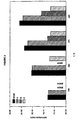
- Figure 2 compares an uncoated C-0.5 Mo steel (baseline), with a copper coated steel (A), a stannided steel (B), and a pure copper tube (C).
- A copper coated steel
- B stannided steel
- C pure copper tube
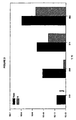
- Figure 3 shows that at a guage pressure of 13790 kPa (2000 psi) hydrogen, the tin intermetallic reduced the rate of hydrogen permeation through the steel by a factor of 10 or more compared to the base steel.
- Hydrogen attack occurs in carbon and low-alloy steels in which iron carbides are subject to degradation by high-pressure hydrogen. Once these carbides are degraded, the strength and ductility of the steel are reduced. In other types of steel, chromium combines with the carbon to form stable chromium carbides which are not attacked by hydrogen.
- carbon steels is intended to include steels which contain carbon (typically less than 1 wt %) as the main strengthening element, up to 1.65 wt % manganese, up to 0.6 wt % silicon, and up to 0.6 wt % copper. Elements such as chromium and molybdenum are not purposely added to these steels. Examples of carbon steels include steel plate meeting ASTM Standard A 516, and steel pipe meeting ASTM Standard A 106.
- low-alloy steel is intended to include steels which contain carbon and to which chromium (up to about 3 wt %) and/or molybdenum (up to about 1 wt %) have been purposely added to improve mechanical properties and hydrogen attack resistance.
- Examples of low-alloy steels include steel plate meeting ASTM Standard A 204 or A 387 (Grades 2, 11, 12, 21 and 22), and steel pipe meting ASTM Standard A 335 (Grades P1, P2, P11, P12, P21 and P22). These steels include but are not limited to C-0.5 Mo steel, 1.0 Cr-0.5 Mo steel, 1.25 Cr-0.5 Mo steel, 2.25 Cr-1.0 Mo steel, and 3.0 Cr-1.0 Mo steel.
- the invention is especially applicable to carbon and C-0.5 Mo steel.
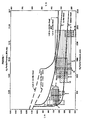
- Figure 1 shows process conditions from Table 1 overlaid on standard "Nelson” curves.
- "Nelson” curves for various steels are published in American Petroleum Institute Publication 941 (API 941), titled “Steels for Hydrogen Service at Elevated Temperatures and Pressures in Petroleum Refineries and Petrochemical Plants”.
- API 941 American Petroleum Institute Publication 941
- Figure 1 shows process conditions from Table 1 overlaid on standard “Nelson” curves.
- “Nelson” curves for various steels are published in American Petroleum Institute Publication 941 (API 941), titled “Steels for Hydrogen Service at Elevated Temperatures and Pressures in Petroleum Refineries and Petrochemical Plants”.
- API 941 American Petroleum Institute Publication 941
- carbon and low-alloy steel process equipment is typically operated at temperatures between 93°C (200°F) and 452°C (845°F), generally between 204°C (400°F) and 438°C (820°F) as shown on the Table 1.
- carbon steel process equipment is operated at lower temperatures than C-0.5 Mo steel. This equipment includes conversion reactors (reactor hot loops), heat exchangers, gas/liquid separators, steam generators, and associated piping as shown above.
- Hydrogen attack is not a concern in the hotter sections of most reactor systems. Those sections operated at 454°C (850°F) and higher are designed using higher alloy or special steels. Equipment made of carbon and C-1/2 Mo steels is designed to operate in the lower temperature environments described above.
- Process conditions. for hydrogen attack are very different from those where carburization of the steel occurs.
- this invention is not limited to or even related to the sulfur level of the feed.
- sulfur levels are well above 0.1 ppm, generally above 0.2 ppm, and often above 0.5 ppm.
- sulfur levels in desulfurizers and hydrofiners are generally between 1 and 500 ppm, and sometimes much higher. Sulfur levels can be as high as 500, 1000 or 5000 ppm, depending on the process.
- the preferred intermetallic depends the amount of sulfur in the hydrogen-containing stream. It is preferred to use tin intermetallics at the lower sulfur levels (below about 500 ppm S). Either antimony or germanium intermetallics are preferred at sulfur levels above about 500 ppm S.
- This invention is especially applicable to retrofit situations.
- steel that has already been in contact with high temperature hydrogen e.g., at temperatures greater than 204°C (400°F) and hydrogen guage pressures greater than 690 kPa (100 psi.)
- the invention is also applicable to new equipment, for example where equipment designed and purchased for one use is brought into service for a different use.
- an intermetallic, diffusion barrier layer to a carbon or low-alloy steel portion of a reactor system, it is believed that the pressure and/or the operating temperature can be increased.
- the intermetallic, diffusion barrier layer should allow the equipment to operate at increased severity.
- the diffusion barrier layer is prepared on the hydrogen side of the equipment.
- the coating may be applied to the inside, outside or both sides of a vessel or pipe. Where the barrier layer is applied depends on the process configuration and hazards associated with hydrogen diffusion through the metallurgy as will be appreciated by those skilled in the art.
- the intermetallic, surface diffusion barrier layer of this invention comprises a continuous and uninterrupted intermetallic layer.
- a variety of coating materials may be used to prepare the intermetallic, diffusion barrier layer. In a preferred embodiment the coatings are reduced to produce reactive metal that interacts with the steel to form an intermetallic layer.
- Preferred coating metals include tin, antimony, and germanium. Examples of tin, antimony, and germanium materials that may be used to prepare the intermetallic layer include metal powders (such as metallic tin powder), metal oxides, metal sulfides, metal hydrides, metal halides and organometallic compounds.
- Preferred materials include metallic tin powder, tin oxide, tin sulfide, tin organometallic compounds, metallic antimony, antimony compounds, antimony organometallic compounds, metallic germanium, germanium compounds and germanium organometallic compounds.
- An especially preferred coating comprises metallic tin, or tin compounds.
- Metal-containing coatings can be applied in a variety of ways, which are well known in the art, such as electroplating, chemical vapor deposition, and sputtering, to name just a few.
- Preferred methods of applying coatings include painting and plating. Where practical, it is preferred that the coating be applied in a paint-like formulation (hereinafter "paint"). Such a paint can be sprayed, brushed, pigged, etc. on reactor system surfaces.
- One preferred diffusion barrier layer is prepared from a metal-containing paint.
- the paint is a decomposable, reactive, metal-containing paint which produces a reactive metal which interacts with the steel.
- Tin is a preferred metal and is exemplified herein; disclosures herein about, tin are generally applicable to antimony and germanium.
- Preferred paints comprise a metal component selected from the group consisting of: a hydrogen decomposable metal compound (such as an organometallic compound), finely divided metal and a metal oxide, preferably a reducible metal oxide.
- the surface diffusion barrier layer can be obtained using a variety of processes.
- a tin paint (such as described in WO 92/15653) can be applied to the inside surface of a carbon or low-alloy steel pipe that has been previously contacted with high pressure hydrogen. It can be cured in-situ at about 538°C (1000°F), for example, using low or high pressure hydrogen. After curing the steel has an intermetallic tin surface barrier layer that protects the steel against hydrogen attack.
- an iron-stannide layer on the steel prior to subjecting the steel to hydrogen attack conditions. This may be done, for example by heating at 371-704°C (700-1300°F) in hydrogen, preferably by heating at 482-593°C (900-1100°F).
- One especially preferred tin paint composition contains at least four components or their functional equivalents: (I) a hydrogen decomposable tin compound, (ii) a solvent system, (iii) finely divided tin metal and (iv) tin oxide.
- a hydrogen decomposable tin compound organometallic compounds such as tin octanoate or neodecanoate are particularly useful.
- the tin oxide is a porous tin-containing compound which can sponge-up the organometallic tin compound, and can be reduced to metallic tin.
- the paints preferably contain finely divided solids to minimize settling.
- Finely divided tin metal, component (iii) above, is also added to insure that metallic tin is available to react with the surface to be coated at as low a temperature as possible.
- the particle size of the tin is preferably small, for example one to five microns. Tin forms intermetallic stannides (e.g. , iron stannides and nickel/iron stannides) when heated in streams containing hydrogen and hydrocarbons.
- tin paint containing stannic oxide, tin metal powder, isopropyl alcohol and 20% Tin Ten-Cem (manufactured by Mooney Chemical Inc., Cleveland, Ohio). Twenty percent Tin Ten-Cem contains 20% tin as stannous octanoate in octanoic acid or stannous neodecanoate in neodecanoic acid.
- tin paints are applied at appropriate thicknesses, typical reactor start-up conditions will result in tin migrating to cover small regions ( e.g. , welds) which were not painted. This will completely coat the base metal.
- the coatings be sufficiently thick that they completely cover the base metallurgy and that the resulting barrier layers remain intact over years of operation. This thickness depends on the intended use conditions and the coating metal.
- tin paints may be applied to a (wet) thickness of between 0.0254 to 0.1524 mm (1 to 6 mils), preferably between about 0.0508 to 0.1016 mm (2 to 4 mils).
- the thickness after curing is preferably between about 0.00254 to 1.27 mm (0.1 to 50 mils), more preferably between about 0.0127 to 0.254 mm (0.5 to 10 mils), and most preferably between about 0.0127 to 0.0508 mm (0.5 to 2 mils).
- Thin barrier layers are preferred since they are more compliant with the substrate and thus reduce the risk of thermal-mechanical cracking or spalling.
- Coated materials are preferably cured in a hydrogen-containing atmosphere at elevated temperatures. Cure conditions depend on the coating metal and are selected so they produce a continuous and uninterrupted diffusion barrier layer which adheres to the steel substrate. Hydrogen contacting preferably occurs while the diffusion barrier layer is being formed. The resulting diffusion barrier layer is able to withstand repeated temperature cycling, and does not degrade in the reaction environment. Preferred diffusion barrier layers are also useful in oxidizing environments, such as those associated with coke burn-off.
- Cure conditions depend on the particular metal coating as well,as the process conditions where the barrier layer is to be used. For example, gas flow rates and contacting time depend on the cure temperature, the coating metal and the components of the coating composition. Cure conditions are selected so as to produce an adherent diffusion barrier layer. In general, the contacting of the reactor system having a metal-containing coating, plating, cladding, paint or other coating applied to a portion thereof with hydrogen is done for a time and at a temperature sufficient to produce an intermetallic diffusion barrier layer. These conditions may be readily determined. For example, coated coupons may be heated in the presence of hydrogen in a simple test apparatus; the formation of the diffusion barrier layer may be determined using petrographic analysis.
- the curing can be done prior to subjecting the apparatus to hydrogen attack environment or during start-up of the process.
- the primary requirement is that reaction conditions are sufficient to convert the coating to a continuous and adherent intermetallic diffusion barrier layer. It is preferred to cure prior to start-up, since mobile metals can potentially poison catalysts and the equipment is may not be rated for use at cure temperatures with hydrogen pressures greater than 690 kPa (100 psi).
- cure conditions result in a diffusion barrier layer that is firmly bonded to the steel. This may be accomplished, for example, by curing the applied coating at elevated temperatures.
- Metal or metal compounds contained in the paint, plating, cladding or other coating are preferably cured under conditions effective to produce molten or mobile metals and/or compounds.
- Tin paints are preferably cured between 482 and 593°C (900 and 1100°F)
- Germanium and antimony paints are preferably cured between 538 and 760°C (100 and 1400°F).
- Metallic antimony may be cured between 704 and 760°C (1300 and 1400°F), SbS between 482 and 538°C (900 and 1000°F). Curing is preferably done over a period of hours, often with temperatures increasing over time.
- the presence of hydrogen is especially advantageous when the paint contains reducible metal oxides and/or oxygen-containing organometallic compounds.
- the system including painted portions can be pressurized with flowing nitrogen, followed by the addition of a hydrogen-containing stream.
- the steel temperature can be raised to 427°C (800°F) at a rate of 28-56°C/hr (50-100°F/hr). Thereafter the temperature can be raised to a level of 510-524°C (950-975°F) at a rate of 28°C/hr (50°F/hr), and held within that range for about 48 hours.
- the chemical composition of the steel included by weight: C, 0.18%; Mn, 0.75%; S, 0.027%; P, 0.014%; Si, 0.20%; Cr, 0.18%; Ni, 0.29%; Mo, 0.54%; Cu, 0.12%; V, 0.02%; Al, 0.02%; and Cb (niobium), 0.06%.
- the microstructure consisted of pearlite in a ferrite matrix. An as-rolled steel high in sulfur and phosphorus with little to no carbide stabilizing elements was selected so that a reasonable worst case susceptibility to high-temperature hydrogen attack could be observed.
- Coated test specimens included high-velocity, oxygen fuel sprayed copper (HVOF Cu, Specimen A), twin wire arc-deposited copper (TWA Cu, Specimen D), twin wire arc-deposited nickel (TWA Ni, Specimen E), all on C-0.5 Mo steel.
- the twin wire arc coatings were deposited to a thickness of 0.381 mm to 0.508 mm (0.015 inch to 0.020 inch), and the high-velocity, oxygen fuel sprayed coating was deposited to a thickness of 1.016 mm to 1.143 mm (0.040 inch to 0.045 inch).
- the effectiveness of the two coating methods could be compared (TWA Cu versus HVOF Cu) and the effectiveness of a copper coating versus a nickel coating could also be compared (TWA Cu versus TWA Ni).
- Stannided specimens were prepared by painting the outside of the C-0.5 Mo steel with a tin-containing paint.
- the paint consisted of a mixture of 2 parts powdered tin oxide, 2 parts finely powdered tin (1-5 microns), 1 part stannous neodecanoate in neodecanoic acid (20% Tin Tem-Cem sold by Mooney Chemical Company) mixed with isopropanol, as described in WO 92/15653 to Heyse et al.
- the painted specimen was heated in a hydrogen/nitrogen atmosphere at 593°C (1100°F) for 24 hours.
- a continuous and adherent intermetallic (iron stannide) layer having a thickness of about 30 microns was produced on the steel surface.
- the Cu material used in these tests was 99.99 percent pure and met the specifications of ASTM B170, Grade 1.
- the material was hard regular oxygen-free grade, in round bar form prior to machining into test specimens.
- the build-up of hydrogen pressure on the tube inner diameter was monitored. Using the tube volume, the number of moles of hydrogen which permeated through the tube from the outside was calculated from the idea gas law equation.
- Example 1A-E The specimens of Example 1A-E were tested for hydrogen permeation and compared to the baseline C-0.5 Mo steel.
- the test apparatus consisted of a autoclave into which high-pressure hydrogen (up to a gauge pressure of 13790 kPa (2000 psi)) was introduced. Hydrogen permeation rates were determined by exposing a secured closed-end tube (test specimen) to a combination of externally applied hydrogen pressure and temperature.
- a threaded stainless steel plug was welded on one end of the test specimens, and screwed onto a threaded stud at the bottom of the autoclave. This fixed the test specimen in place. The opposite end of the test specimen exited the autoclave cover through an annulus. A pressure transducer was installed on this specimen end.
- a cylindrical heater was placed around the test specimen.
- the heater allowed the specimen to be heated to test temperature (149°C-482°C (300°-900°F)).
- test temperature 149°C-482°C (300°-900°F)
- the autoclave was sealed and filled with hydrogen.
- the hydrogen contacted the specimen OD, which was either coated with a candidate coating, or was left bare. Power leads for the cylindrical heater exited the autoclave cover.
- the amount of built-up hydrogen on the tube ID was determined using the pressure transducer. Using the measured gas pressure (from the transducer), the known test temperature, and the known volume within the specimen tube (due to the filler bar configuration), the number of moles of hydrogen which had permeated the tube wall was calculated.
- the C-0.5 Mo steel specimens used in the test were fabricated by machining a hollow C-0.5 Mo tube from plate material aligned parallel with the rolling direction. The tube was then welded to a solid Type 316 stainless steel plug on one end, and a thicker-walled Type 316 stainless steel tube on the other end. Since hydrogen permeation through Type 316 stainless is orders of magnitude less than through C-0.5 Mo steel, this configuration ensure that the hydrogen which permeated to the tube ID entered through the C-0.5 Mo steel.
- the relatively thin 0.0625 inch (1.6 mm) wall thickness of the C-0.5 Mo steel compared to the adjacent and thicker Type 316 stainless steel tube section, guaranteed that permeation through the stainless steel was minimal compared to that through the C-0.5 Mo steel. Additionally, heat was only applied to the C-0.5 Mo steel portion. Since the temperature of the adjoining stainless steel tube was lower, its hydrogen permeation rate was further reduced.
- the coated test specimens were prepared from the C-0.5 Mo steel hollow tube specimens described above. They were coated on the outside of the C-0.5 Mo portion, after welding of the stainless steel portions onto the ends of the C-0.5 Mo portion.
- Cool down to room temperature was conducted slowly [approximately 50°C (80°F) per hour] to minimize or prevent disbonding of the coatings due to rapid changes in temperature.
- the samples were inspected microscopically for hydrogen induced fissuring.
- the test results are shown in Table 1.
- the hydrogen permeation rate through the stannided sample is about two orders of magnitude less than through either the bare baseline C-0.5 Mo steel specimen, or any of the other coated steel specimens.
- the solid Cu specimen shows much lower hydrogen permeation than the bare C-0.5 Mo specimen, the Cu and Ni coatings did not effectively reduce hydrogen permeation.
- Only the stannided (1B) and pure copper (1 C) specimens showed a reduction in permeation rate of an order of magnitude or more compared to the C-0.5 Mo steel. Based on the results of these screening tests, the two Cu and Ni TWA coated specimens (D and E) were excluded from the next round of testing.
- a tin-coated specimen was cured to produce a stannide intermetallic layer it was subjected to a gauge pressure of 13790 kPa (2000 psi) hydrogen pressure at 149°C (300°F), 260°C (500°F), 371°C (700°F), and 482°C (900°F) to see if the stannide layer reduces hydrogen permeation at this high hydrogen pressure.
- Figure 3 shows that hydrogen permeation through a stannided C-0.5 Mo steel specimen was one or more orders of magnitude less than through a bare baseline specimen. This example shows that the tin intermetallic layer prevents hydrogen permeation at high hydrogen pressures over a wide temperature range.
- a piece of uncoated bare pipe (as in Example 5) was fitted with a hydrogen patch probe on its outer surface.
- the pressure gauges on this probe and on the probe attached to the piece of pipe from Example 5 allowed hydrogen permeation through the pipe walls to be monitored and compared.
- the two pipe sections were welded into a line in a refinery steam-naphtha reformer.
- the sections were welded adjacent to one another so that the operating conditions in each pipe were approximately the same: a gauge hydrogen par pressure of 1379-2413 kPa (200-350 psi) at 313°C-343°C (575°-650°F). Hydrogen pressures were recorded over a 20-day period; the results are shown in Table 4.
Landscapes
- Chemical & Material Sciences (AREA)
- Organic Chemistry (AREA)
- Engineering & Computer Science (AREA)
- Oil, Petroleum & Natural Gas (AREA)
- Chemical Kinetics & Catalysis (AREA)
- Mechanical Engineering (AREA)
- Metallurgy (AREA)
- General Chemical & Material Sciences (AREA)
- Materials Engineering (AREA)
- Physics & Mathematics (AREA)
- Thermal Sciences (AREA)
- Other Surface Treatments For Metallic Materials (AREA)
- Solid-Phase Diffusion Into Metallic Material Surfaces (AREA)
- Hydrogen, Water And Hydrids (AREA)
Description
Examples of low-alloy steels include steel plate meeting ASTM Standard A 204 or A 387 (

| Diffusion Rates | |
| Specimen | H2 Diffusion Rate, 10-12 moles/sec/cm2 |
| Pure copper | 2 |
| Base C-0.5 Mo steel | 1390 |
| HVOF Cu coating | 703 |
| TWA Cu coating | 1040 |
| TWA Ni coating | 1110 |
| Stannided (Tin painted) | 15 |
| Screening Test Materials | |
| Base | Bare C-0.5 Mo steel |
| AB | HVOF Cu-coated C-0.5 Mo steel |
| C | Stannided C-0.5 Mo steel |
| DE | Pure Cu tube TWA Cu-coated C-0.5 Mo steel TWA Ni-coated C-0.5 Mo steel |
| Days in Test | Bare Pipe | Stannided Pipe | ||
| °C(°F) | Guage pressure kPa (psi) | °C (°F) | Guage pressure kPa (psi) | |
| 0 | 226 (438) | 0 (0) | 268 (514) | 0 (0) |
| 1 | 221 (430) | 0 (0) | 270 (518) | 0 (0) |
| 3 | 296 (564) | 21 (3) | 330 (626) | 0 (0) |
| 6 | 304 (579) | 36 (5.3) | 336 (637) | 0 (0) |
| 9 | 300 (572) | 43 (6.3) | 335 (635) | 0 (0) |
| 10 | 301 (573) | 45 (6.5) | 337 (638) | 0 (0) |
| 14 | 307 (584) | 45 (6.5) | 341 (646) | 0 (0) |
| 15 | 294 (562) | 54 (7.8) | 334 (634) | 0 (0) |
| 16 | 302 (576) | 57 (8.3) | 338 (640) | 0 (0) |
| 17 | 299 (570) | 59 8.5 | 337 (639) | 0 (0) |
| 20 | 292 (558) | 59 8.5 | 318 (605) | 0 (0) |
Claims (12)
- A method for protecting carbon and low alloy steels from high temperature hydrogen attact and fissuring at a hydrogen pressure greater than 690 kPa (100 psig), comprisinga) applying a metal plating, paint, cladding or other coating to a steel portion of a reactor system made of carbon or low-alloy steel that has been subjected to hydrogen attack conditions; andb) forming an intermetallic, diffusion barrier layer on the steel surface by heating; thereby reducing the rate of hydrogen permeation through the steel portion by a factor of at least 10 compared to a steel portion without the barrier layer.
- A method of using a carbon or low-alloy steel portion of a reactor system having an intermetallic diffusion barrier layer thereon, comprising the steps of providing a reactor system comprising carbon or low-alloy steel portions having an intermetallic, diffusion barrier layer thereon; and contacting said portions with a hydrogen-containing gas at hydrogen attack conditions comprising a temperature between 204°C to 556°C (400°F to 1050°F) and a hydrogen partial gauge pressure above 2758 kPa (400 psi), wherein said steel portions are protected against hydrogen attack and fissuring by said intermetallic, diffusion barrier layer.
- A method according to Claim 2 wherein the intermetallic, diffusion barrier layer reduces the rate of hydrogen permeation through the steel by a factor of at least 10.
- A method according to any one of Claims 1, 2 or 3, wherein the intermetallic, diffusion barrier layer is prepared from coatings selected from tin, tin compounds, antimony, antimony compounds, germanium, germanium compounds, and mixtures, alloys, and intermetallic compounds thereof.
- A method according to any one of Claims 1 to 4 wherein the intermetallic, diffusion barrier layer is prepared from tin, or tin compounds, or tin alloys or intermetallic compounds of tin.
- A method according to any one of Claims 1 to 5, further comprising pre-forming an iron-stannide layer on said steel, prior to subjecting the steel to hydrogen attack conditions.
- A method according to any one of Claims 1, 2, 3, 4,5 or 6 wherein the thickness of the barrier layer is between 0.5 and 10 mil.
- A method according to any one of Claims 1, 2, 3, 4, 5, 6 or 7 wherein the steel is carbon steel or C-0.5 Mo steel.
- A method according to any one of Claims 1, 2, 3.4, 5, 6, 7, or 8 wherein the hydrogen guage pressure is above about 2758 kPa (400 psig).
- A method according to Claim 9, wherein the hydrogen gauge pressure is above about 4137 kPa (600 psi).
- A method according to any one of Claims 1 to 10, wherein the equipment has already been contacted with hydrogen at temperatures greater than 204°C (400°F) and guage pressures greater than 689.5 kPa (100 psi) prior to forming the barrier layer.
- A method according to any one of Claims 1 to 11, wherein the intermetallic layer comprises antimony or germanium, and the hydrogen-containing gas comprises greater than 10 ppm sulphur.
Applications Claiming Priority (3)
| Application Number | Priority Date | Filing Date | Title |
|---|---|---|---|
| US297195P | 1995-08-18 | 1995-08-18 | |
| US2971 | 1995-08-18 | ||
| PCT/US1996/013168 WO1997007255A1 (en) | 1995-08-18 | 1996-08-14 | Diffusion barriers for preventing high temperature hydrogen attack |
Publications (3)
| Publication Number | Publication Date |
|---|---|
| EP0868542A4 EP0868542A4 (en) | 1998-10-07 |
| EP0868542A1 EP0868542A1 (en) | 1998-10-07 |
| EP0868542B1 true EP0868542B1 (en) | 2003-06-04 |
Family
ID=21703444
Family Applications (1)
| Application Number | Title | Priority Date | Filing Date |
|---|---|---|---|
| EP96928859A Expired - Lifetime EP0868542B1 (en) | 1995-08-18 | 1996-08-14 | Diffusion barriers for preventing high temperature hydrogen attack |
Country Status (9)
| Country | Link |
|---|---|
| US (1) | US6019943A (en) |
| EP (1) | EP0868542B1 (en) |
| JP (1) | JP3983287B2 (en) |
| AU (1) | AU6846096A (en) |
| CA (1) | CA2229655C (en) |
| DE (1) | DE69628583T2 (en) |
| ES (1) | ES2201194T3 (en) |
| MX (1) | MX9801345A (en) |
| WO (1) | WO1997007255A1 (en) |
Cited By (1)
| Publication number | Priority date | Publication date | Assignee | Title |
|---|---|---|---|---|
| DE102016201337A1 (en) * | 2016-01-29 | 2017-08-03 | Bayerische Motoren Werke Aktiengesellschaft | Hydrogen-carrying steel component for use in motor vehicles, motor vehicle with hydrogen-carrying steel component and method for producing a hydrogen-carrying steel component |
Families Citing this family (16)
| Publication number | Priority date | Publication date | Assignee | Title |
|---|---|---|---|---|
| SA05260056B1 (en) | 1991-03-08 | 2008-03-26 | شيفرون فيليبس كيميكال كمبني ال بي | Hydrocarbon processing device |
| USRE38532E1 (en) * | 1993-01-04 | 2004-06-08 | Chevron Phillips Chemical Company Lp | Hydrodealkylation processes |
| US6258256B1 (en) | 1994-01-04 | 2001-07-10 | Chevron Phillips Chemical Company Lp | Cracking processes |
| US6274113B1 (en) | 1994-01-04 | 2001-08-14 | Chevron Phillips Chemical Company Lp | Increasing production in hydrocarbon conversion processes |
| US6419986B1 (en) | 1997-01-10 | 2002-07-16 | Chevron Phillips Chemical Company Ip | Method for removing reactive metal from a reactor system |
| WO2002028770A1 (en) | 2000-10-02 | 2002-04-11 | Chevron U.S.A. Inc. | Process for reducing coke formation in hydrocarbon processing by application of radio frequency electromagnetic radiation |
| WO2003072491A1 (en) * | 2002-02-22 | 2003-09-04 | Chevron U.S.A. Inc. | Process for reducing metal catalyzed coke formation in hydrocarbon processing |
| US7032412B2 (en) * | 2003-03-13 | 2006-04-25 | Corning Incorporated | Methods of manufacturing glass sheets with reduced blisters |
| US20060037660A1 (en) * | 2004-08-20 | 2006-02-23 | Kinnally Kevin J | Hydrogen conduit and process for producing same |
| US8119203B2 (en) * | 2005-06-02 | 2012-02-21 | Chevron Phillips Chemical Company Lp | Method of treating a surface to protect the same |
| US20100183816A1 (en) * | 2006-02-17 | 2010-07-22 | Steward Advanced Materials, Inc. | Low velocity oxygen-fueled flame spray method and apparatus for making ferrite material products and products produced thereby |
| US20090166259A1 (en) * | 2007-12-28 | 2009-07-02 | Steven Bradley | Metal-based coatings for inhibiting metal catalyzed coke formation in hydrocarbon conversion processes |
| US8128887B2 (en) * | 2008-09-05 | 2012-03-06 | Uop Llc | Metal-based coatings for inhibiting metal catalyzed coke formation in hydrocarbon conversion processes |
| DE102019202424A1 (en) * | 2019-02-22 | 2020-08-27 | Fraunhofer-Gesellschaft zur Förderung der angewandten Forschung e.V. | Method and device for recording mechanical characteristics of a material influenced by pressurized hydrogen, hollow sample for use in the device and uses of the hollow sample |
| US12228547B2 (en) | 2022-04-07 | 2025-02-18 | Saudi Arabian Oil Company | Online inspection for early HTHA detection using a hybrid sensory system |
| US12130256B2 (en) * | 2022-04-07 | 2024-10-29 | Saudi Arabian Oil Company | Flexible and adaptable hybrid sensor for HTHA detection |
Family Cites Families (3)
| Publication number | Priority date | Publication date | Assignee | Title |
|---|---|---|---|---|
| JP3836499B2 (en) * | 1991-03-08 | 2006-10-25 | シェブロン リサーチ アンド テクノロジー カンパニー | Low sulfur reforming method |
| US5405525A (en) * | 1993-01-04 | 1995-04-11 | Chevron Research And Technology Company | Treating and desulfiding sulfided steels in low-sulfur reforming processes |
| KR100331021B1 (en) * | 1993-01-04 | 2002-11-27 | 셰브론케미칼컴파니 | Dehydrogenation Method |
-
1996
- 1996-08-14 ES ES96928859T patent/ES2201194T3/en not_active Expired - Lifetime
- 1996-08-14 AU AU68460/96A patent/AU6846096A/en not_active Abandoned
- 1996-08-14 EP EP96928859A patent/EP0868542B1/en not_active Expired - Lifetime
- 1996-08-14 US US08/696,672 patent/US6019943A/en not_active Expired - Fee Related
- 1996-08-14 MX MX9801345A patent/MX9801345A/en not_active IP Right Cessation
- 1996-08-14 WO PCT/US1996/013168 patent/WO1997007255A1/en not_active Ceased
- 1996-08-14 CA CA002229655A patent/CA2229655C/en not_active Expired - Fee Related
- 1996-08-14 DE DE69628583T patent/DE69628583T2/en not_active Expired - Lifetime
- 1996-08-14 JP JP50944897A patent/JP3983287B2/en not_active Expired - Lifetime
Cited By (1)
| Publication number | Priority date | Publication date | Assignee | Title |
|---|---|---|---|---|
| DE102016201337A1 (en) * | 2016-01-29 | 2017-08-03 | Bayerische Motoren Werke Aktiengesellschaft | Hydrogen-carrying steel component for use in motor vehicles, motor vehicle with hydrogen-carrying steel component and method for producing a hydrogen-carrying steel component |
Also Published As
| Publication number | Publication date |
|---|---|
| JP3983287B2 (en) | 2007-09-26 |
| WO1997007255A1 (en) | 1997-02-27 |
| US6019943A (en) | 2000-02-01 |
| JP2001510507A (en) | 2001-07-31 |
| DE69628583D1 (en) | 2003-07-10 |
| MX9801345A (en) | 1998-07-31 |
| EP0868542A4 (en) | 1998-10-07 |
| AU6846096A (en) | 1997-03-12 |
| CA2229655A1 (en) | 1997-02-27 |
| ES2201194T3 (en) | 2004-03-16 |
| EP0868542A1 (en) | 1998-10-07 |
| DE69628583T2 (en) | 2003-12-11 |
| CA2229655C (en) | 2004-11-23 |
Similar Documents
| Publication | Publication Date | Title |
|---|---|---|
| CA2229655C (en) | Diffusion barriers for preventing high temperature hydrogen attack | |
| EP0738313B1 (en) | Protective layer for a steel portion of a reactor system for hydrocarbon processing | |
| US6548030B2 (en) | Apparatus for hydrocarbon processing | |
| JP4664908B2 (en) | Composite material surface on steel substrate | |
| EP0798363A2 (en) | Low-sulphur reforming processes | |
| CZ319998A3 (en) | Surface alloyed refractory alloys | |
| WO2005021255A1 (en) | Composite tube | |
| CA2243957C (en) | Hydrocarbon processing in equipment having increased halide stress-corrosion cracking resistance | |
| Tawancy et al. | Effect of materials selection and design on the performance of an engineering product–An example from petrochemical industry | |
| US8128887B2 (en) | Metal-based coatings for inhibiting metal catalyzed coke formation in hydrocarbon conversion processes | |
| US6063264A (en) | Zeolite L catalyst in a furnace reactor | |
| EP0903424B1 (en) | Corrosion resistance of high temperature alloys | |
| US20090166259A1 (en) | Metal-based coatings for inhibiting metal catalyzed coke formation in hydrocarbon conversion processes | |
| EP0962436B1 (en) | Process for the conversion of hydrocarbons | |
| Zychlinski et al. | Characterization of material samples for coking behavior of HP40 material both coated and uncoated using naphtha and ethane feedstock | |
| US6258256B1 (en) | Cracking processes | |
| Petrone et al. | A Low Coking Environment for Pyrolysis Furnaces-Coatalloy™ | |
| McGill et al. | Using the Aluminum Diffusion Process to Reduce Dependence on Chromium | |
| Page et al. | A Low Coking and Carburization Resistant Coating for Ethylene Pyrolysis Furnaces | |
| KR20070017941A (en) | Metal Dust Resistant Products |
Legal Events
| Date | Code | Title | Description |
|---|---|---|---|
| PUAI | Public reference made under article 153(3) epc to a published international application that has entered the european phase |
Free format text: ORIGINAL CODE: 0009012 |
|
| 17P | Request for examination filed |
Effective date: 19980310 |
|
| A4 | Supplementary search report drawn up and despatched |
Effective date: 19980814 |
|
| AK | Designated contracting states |
Kind code of ref document: A4 Designated state(s): BE DE ES FR GB IT NL Kind code of ref document: A1 Designated state(s): BE DE ES FR GB IT NL |
|
| 17Q | First examination report despatched |
Effective date: 19991227 |
|
| RAP1 | Party data changed (applicant data changed or rights of an application transferred) |
Owner name: CHEVRON CHEMICAL COMPANY LLC |
|
| GRAH | Despatch of communication of intention to grant a patent |
Free format text: ORIGINAL CODE: EPIDOS IGRA |
|
| RAP1 | Party data changed (applicant data changed or rights of an application transferred) |
Owner name: CHEVRON PHILLIPS CHEMICAL COMPANY LP |
|
| GRAH | Despatch of communication of intention to grant a patent |
Free format text: ORIGINAL CODE: EPIDOS IGRA |
|
| RAP1 | Party data changed (applicant data changed or rights of an application transferred) |
Owner name: CHEVRON PHILLIPS CHEMICAL COMPANY LP |
|
| GRAA | (expected) grant |
Free format text: ORIGINAL CODE: 0009210 |
|
| AK | Designated contracting states |
Designated state(s): BE DE ES FR GB IT NL |
|
| REG | Reference to a national code |
Ref country code: GB Ref legal event code: FG4D |
|
| REF | Corresponds to: |
Ref document number: 69628583 Country of ref document: DE Date of ref document: 20030710 Kind code of ref document: P |
|
| REG | Reference to a national code |
Ref country code: ES Ref legal event code: FG2A Ref document number: 2201194 Country of ref document: ES Kind code of ref document: T3 |
|
| ET | Fr: translation filed | ||
| PLBE | No opposition filed within time limit |
Free format text: ORIGINAL CODE: 0009261 |
|
| STAA | Information on the status of an ep patent application or granted ep patent |
Free format text: STATUS: NO OPPOSITION FILED WITHIN TIME LIMIT |
|
| 26N | No opposition filed |
Effective date: 20040305 |
|
| PGFP | Annual fee paid to national office [announced via postgrant information from national office to epo] |
Ref country code: FR Payment date: 20090817 Year of fee payment: 14 Ref country code: ES Payment date: 20090826 Year of fee payment: 14 |
|
| PGFP | Annual fee paid to national office [announced via postgrant information from national office to epo] |
Ref country code: NL Payment date: 20090824 Year of fee payment: 14 Ref country code: GB Payment date: 20090825 Year of fee payment: 14 |
|
| PGFP | Annual fee paid to national office [announced via postgrant information from national office to epo] |
Ref country code: DE Payment date: 20090827 Year of fee payment: 14 |
|
| PGFP | Annual fee paid to national office [announced via postgrant information from national office to epo] |
Ref country code: BE Payment date: 20090915 Year of fee payment: 14 |
|
| PGFP | Annual fee paid to national office [announced via postgrant information from national office to epo] |
Ref country code: IT Payment date: 20090827 Year of fee payment: 14 |
|
| BERE | Be: lapsed |
Owner name: *CHEVRON PHILLIPS CHEMICAL CY LP Effective date: 20100831 |
|
| REG | Reference to a national code |
Ref country code: NL Ref legal event code: V1 Effective date: 20110301 |
|
| GBPC | Gb: european patent ceased through non-payment of renewal fee |
Effective date: 20100814 |
|
| REG | Reference to a national code |
Ref country code: FR Ref legal event code: ST Effective date: 20110502 |
|
| PG25 | Lapsed in a contracting state [announced via postgrant information from national office to epo] |
Ref country code: IT Free format text: LAPSE BECAUSE OF NON-PAYMENT OF DUE FEES Effective date: 20100814 Ref country code: NL Free format text: LAPSE BECAUSE OF NON-PAYMENT OF DUE FEES Effective date: 20110301 |
|
| REG | Reference to a national code |
Ref country code: DE Ref legal event code: R119 Ref document number: 69628583 Country of ref document: DE Effective date: 20110301 |
|
| PG25 | Lapsed in a contracting state [announced via postgrant information from national office to epo] |
Ref country code: BE Free format text: LAPSE BECAUSE OF NON-PAYMENT OF DUE FEES Effective date: 20100831 Ref country code: DE Free format text: LAPSE BECAUSE OF NON-PAYMENT OF DUE FEES Effective date: 20110301 Ref country code: FR Free format text: LAPSE BECAUSE OF NON-PAYMENT OF DUE FEES Effective date: 20100831 |
|
| PG25 | Lapsed in a contracting state [announced via postgrant information from national office to epo] |
Ref country code: GB Free format text: LAPSE BECAUSE OF NON-PAYMENT OF DUE FEES Effective date: 20100814 |
|
| REG | Reference to a national code |
Ref country code: ES Ref legal event code: FD2A Effective date: 20111019 |
|
| PG25 | Lapsed in a contracting state [announced via postgrant information from national office to epo] |
Ref country code: ES Free format text: LAPSE BECAUSE OF NON-PAYMENT OF DUE FEES Effective date: 20100815 |