EP0863172B1 - Poly(N-acrylalkyleneimine) modified Organopolysiloxanes - Google Patents
Poly(N-acrylalkyleneimine) modified Organopolysiloxanes Download PDFInfo
- Publication number
- EP0863172B1 EP0863172B1 EP98104020A EP98104020A EP0863172B1 EP 0863172 B1 EP0863172 B1 EP 0863172B1 EP 98104020 A EP98104020 A EP 98104020A EP 98104020 A EP98104020 A EP 98104020A EP 0863172 B1 EP0863172 B1 EP 0863172B1
- Authority
- EP
- European Patent Office
- Prior art keywords
- organopolysiloxane
- segment
- weight
- poly
- acylalkyleneimine
- Prior art date
- Legal status (The legal status is an assumption and is not a legal conclusion. Google has not performed a legal analysis and makes no representation as to the accuracy of the status listed.)
- Expired - Lifetime
Links
Images

Classifications
-
- A—HUMAN NECESSITIES
- A61—MEDICAL OR VETERINARY SCIENCE; HYGIENE
- A61Q—SPECIFIC USE OF COSMETICS OR SIMILAR TOILETRY PREPARATIONS
- A61Q5/00—Preparations for care of the hair
- A61Q5/12—Preparations containing hair conditioners
-
- A—HUMAN NECESSITIES
- A61—MEDICAL OR VETERINARY SCIENCE; HYGIENE
- A61K—PREPARATIONS FOR MEDICAL, DENTAL OR TOILETRY PURPOSES
- A61K8/00—Cosmetics or similar toiletry preparations
- A61K8/18—Cosmetics or similar toiletry preparations characterised by the composition
- A61K8/72—Cosmetics or similar toiletry preparations characterised by the composition containing organic macromolecular compounds
- A61K8/84—Cosmetics or similar toiletry preparations characterised by the composition containing organic macromolecular compounds obtained by reactions otherwise than those involving only carbon-carbon unsaturated bonds
- A61K8/89—Polysiloxanes
- A61K8/896—Polysiloxanes containing atoms other than silicon, carbon, oxygen and hydrogen, e.g. dimethicone copolyol phosphate
- A61K8/898—Polysiloxanes containing atoms other than silicon, carbon, oxygen and hydrogen, e.g. dimethicone copolyol phosphate containing nitrogen, e.g. amodimethicone, trimethyl silyl amodimethicone or dimethicone propyl PG-betaine
-
- A—HUMAN NECESSITIES
- A61—MEDICAL OR VETERINARY SCIENCE; HYGIENE
- A61Q—SPECIFIC USE OF COSMETICS OR SIMILAR TOILETRY PREPARATIONS
- A61Q5/00—Preparations for care of the hair
- A61Q5/06—Preparations for styling the hair, e.g. by temporary shaping or colouring
-
- C—CHEMISTRY; METALLURGY
- C08—ORGANIC MACROMOLECULAR COMPOUNDS; THEIR PREPARATION OR CHEMICAL WORKING-UP; COMPOSITIONS BASED THEREON
- C08G—MACROMOLECULAR COMPOUNDS OBTAINED OTHERWISE THAN BY REACTIONS ONLY INVOLVING UNSATURATED CARBON-TO-CARBON BONDS
- C08G77/00—Macromolecular compounds obtained by reactions forming a linkage containing silicon with or without sulfur, nitrogen, oxygen or carbon in the main chain of the macromolecule
- C08G77/42—Block-or graft-polymers containing polysiloxane sequences
- C08G77/452—Block-or graft-polymers containing polysiloxane sequences containing nitrogen-containing sequences
Definitions
- This invention relates to novel organopolysiloxanes. More particularly, it relates to organopolysiloxanes which are soluble or stably dispersible in solvents, in particular, water and, after removing solvents, form a film with an inherent excellent texture of silicone, thus being appropriate particularly as additives for cosmetic products.
- organopolysiloxanes (hereinafter sometimes referred to as "silicones”) have been widely employed in lubricating agents, heat media, electrical insulating materials, leveling agents for paints, mold releasing agents, cosmetic additives, fiber-treating agents, shock absorbing materials, sealings, templating agents, glazing agents, foam stabilizers, defoaming agent, etc.
- silicone oils are frequently employed as cosmetic additives in skin care products, foundations, shampoos, hair rinses, hair conditioners, mainly for improving texture.
- Silicone resins are also used in the form of spherical fine particles in skin care products.
- film-forming polymers are used in hair setting agents.
- silicone polymers capable of forming a film would generally undergo crosslinkage via covalent bonding, which restricts the solvent types usable therefor.
- These silicone bases have another disadvantage that they cannot be easily washed away, when employed in skin or hair care products.
- hydrophilic silicone emulsions are highly soluble in solvents but cannot form any film capable of imparting an excellent texture.
- Organopolysiloxanes having poly(N-acylalkyleneimine) segments are disclosed in EP-524612A, JP-A-3-287509 and JP-A-5-112423. Those publications relate to a polymer compound wherein the weight ratio of the organopolysiloxane segument/the poly(N-acylalkyleneimine) segument is 1/20 to 20/1, and the weight-average molecular weight is 500 to 500,000, for obtaining a modified silicone having characteristics of silicon oils and excellent solubility to polar solvents as well as water.
- the concrete products disclosed in the above publications are those having a comparatively low molecular weight or having a low content of poly(N-acylalkyleneimine) segument, which can not always provide excellent texture when used for a hair care product.
- EP-640643A further discloses that an organopolysiloxane grafted with the same type poly(N-acylalkyleneimine) is soluble in ethanol and can be easily added to hair cosmetics so as to achieve good setting performance.
- this material has no self-dispersibility in water. Even though an aqueous dispersion thereof is formed forcibly, it shows only a poor stability being unsuitable for cosmetics in practice.
- an object of the present invention is to provide organopolysiloxanes which are capable of forming a film imparting an excellent texture while being usable in aqueous preparations and can be easily washed away when employed in skin or hair care products.
- organopolysiloxanes composed of the above-mentioned organopolysiloxane segment and a poly(N-acylalkyleneimine) segument bonded thereto, those having a specific composition and molecular weight are soluble or dispersible in solvent, in particular, water, can form a film with an excellent texture, can be easily washed away and, therefore, are appropriately usable as additives for skin or hair care products.
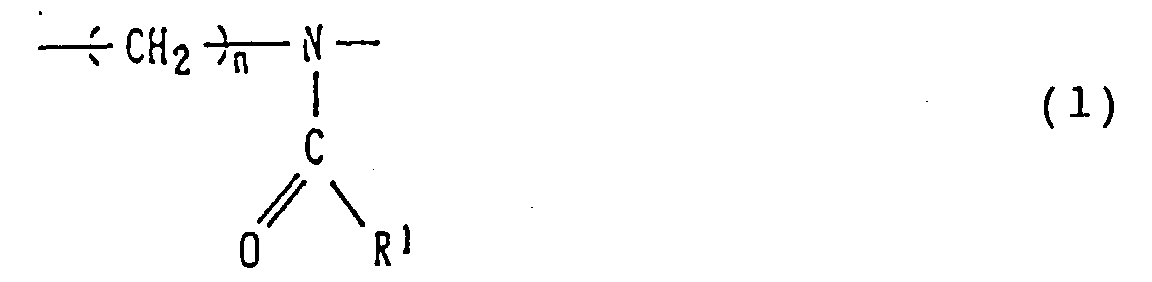
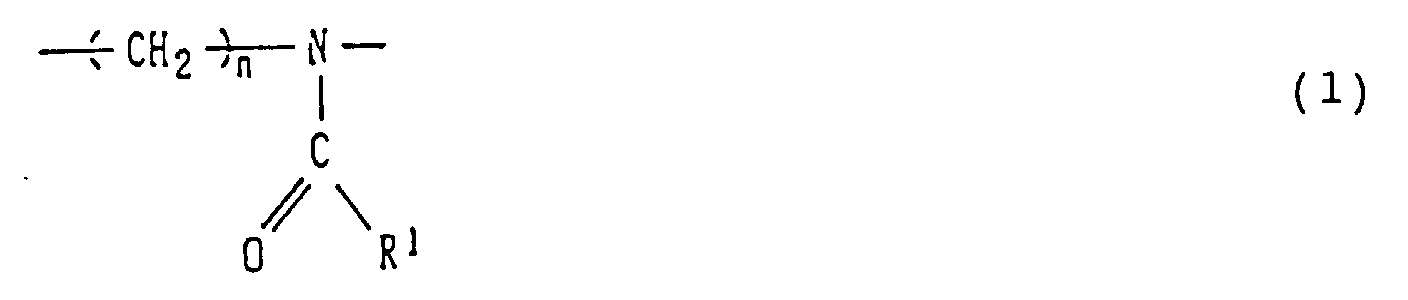
- the present invention provides an organopolysiloxane composed of an organopolysiloxane segment and a poly(N-acylalkyleneimine) segment which is bonded to at least one silicone atom of said organopolysiloxane segment via an alkylene group containing heteroatom(s) and consists of repeating units represented by formula (1): wherein R 1 represents a hydrogen atom or an alkyl group having 1 to 3 carbon atoms; and n is a number of 2 or 3; wherein the weight ratio of the organopolysiloxane segment (a) to the poly(N-acylalkyleneimine) segment (b) [(a)/(b)] is at least 5/95 and less than 40/60, and the weight-average molecular weight is from 10,000 to 500,000.
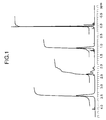
- Fig. 1 is a proton NMR chart of the organopolysiloxane A obtained in Example 1.
- Fig. 2 is a diagram showing a stirring rod employed in the preparation of the dispersion in Test Example 1.
- the weight ratio of the organopolysiloxane segment (a) to the poly(N-acylalkyleneimine) segment (b) [(a)/(b)] is at least 5/95 and less than 40/60, preferably at least 20/80 and less than 40/60 and more preferably at least 25/75 and less than 40/60, while weight-average molecular weight thereof is from 10,000 to 500,000, preferably from 20,000 to 200,000 and more preferably from 50,000 to 150,000.
- this weight ratio (a)/(b) is 40/60 or more or the weight-average molecular weight exceeds 500,000, the solubility of the organopolysiloxane in solvents is lowered.
- the weight ratio (a)/(b) is less than 5/95 or the weight-average molecular weight is less than 10,000, the organopolysiloxane can give no inherent excellent texture characteristic of silicones.
- alkylene groups containing heteroatom(s) which mediates between the organopolysiloxane segment and the poly(N-acylalkyleneimine) segment alkylene groups having from 2 to 20 carbon atoms and containing 1 to 3 nitrogen, oxygen and/or sulfur atoms are exemplified.
- alkylene groups having 2 to 20 carbon atoms and containing, between carbon atoms in the alkylene chain and/or at the end thereof, a group of (i) a secondary amine or a tertiary amine; (ii) an ammonium salt formed by adding H + to a secondary or tertiary amine; (iii) a quaternary ammonium salt; (iv) an oxygen atom; and/or (v) a sulfur atom.
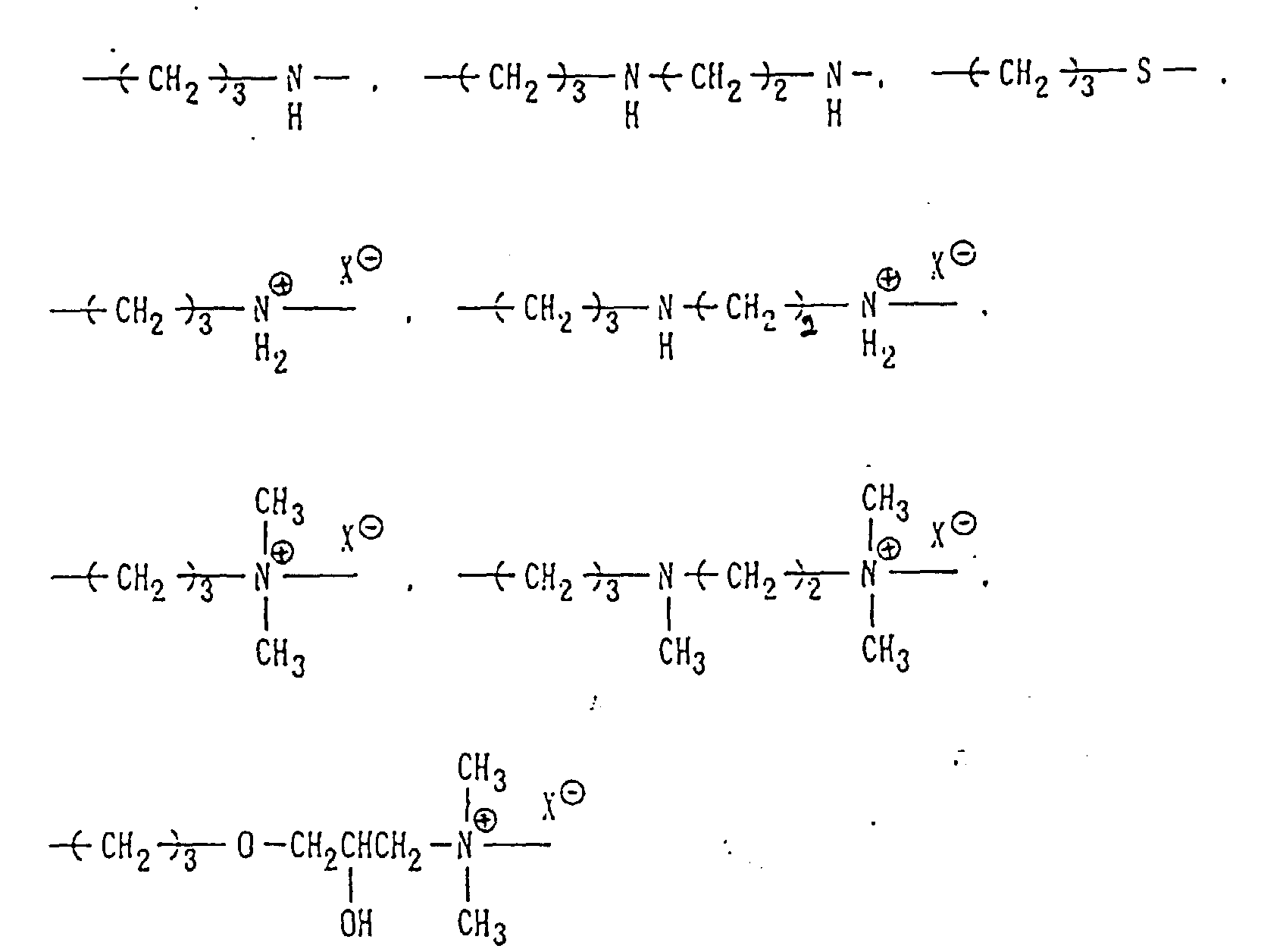
- alkylene groups preferable examples are as follows: wherein X ⁇ represents the counter ion of the quaternary ammonium salt.
- alkyl group R 1 having 1 to 3 carbon atoms include methyl, ethyl and propyl groups.
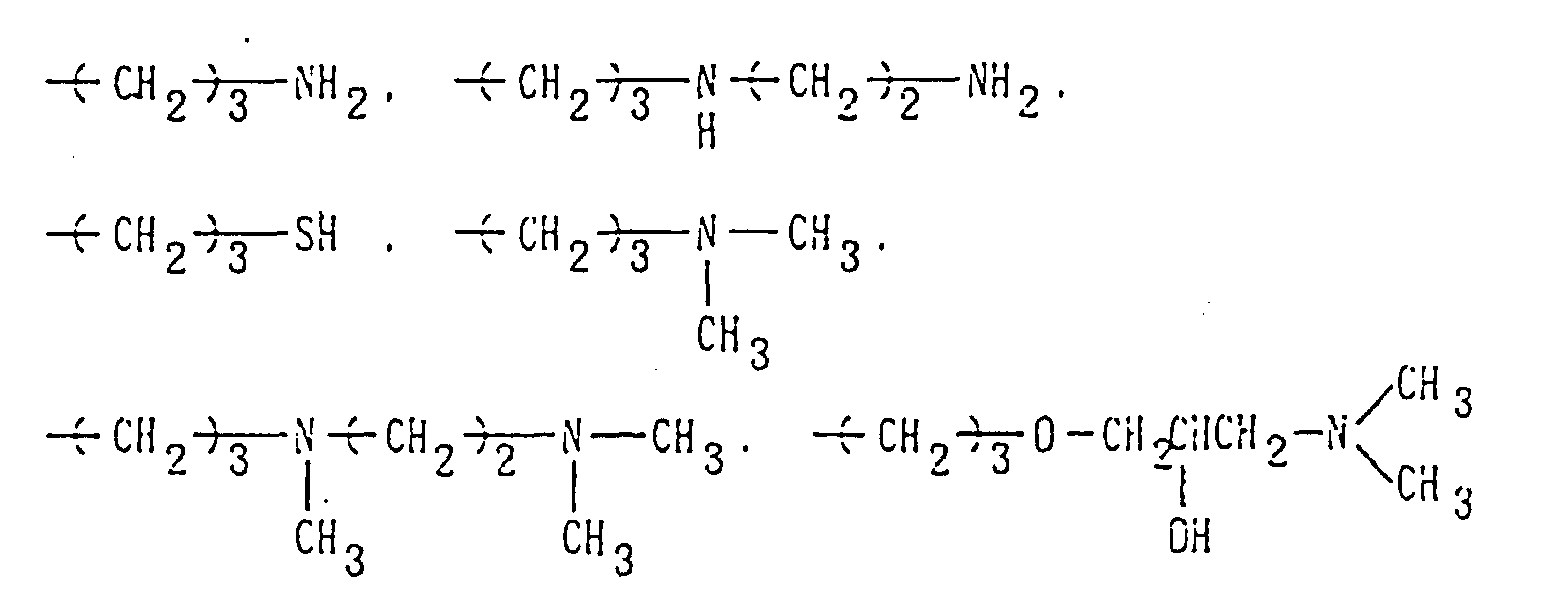
- the organopolysiloxane of the present invention is produced by, for example, reacting an organopolysiloxane having functional groups represented by the following formulae: with a terminal reactive poly(N-acylalkyleneimine) obtained by subjecting a cyclic imino ether represented by formula (2) to ring opening polymerization: wherein R 1 and n have the same meaning as defined above.
- the ring opening polymerization of the cyclic imino ether (2) is performed by using, as an initiator, a highly electrophilic compound, for example, methyl, ethyl, propyl or benzyl esters of strong acids such as benzenesulfonic acid, p-toluenesulfonic acid, trifluoromethanesulfonic acid, trifluoroacetic acid or sulfuric acid.
- 2-R 1 -substituted-2-oxazoline is employed as the cyclic imino ether, for example, then poly(N-acylethyleneimine) [in the formula (1), n being 2] is obtained.
- 2-R 1 -substituted-2-oxazine is employed, then poly(N-acyltrimethyleneimine) [in the formula (1), n being 3] is obtained.
- the organopolysiloxane of the present invention is in the form of a solid at 10-40°C under atmospheric pressure (1 atm). It is soluble or stably dispersible in solvents, for example, water or C 1 -C 6 alcohols and the dispersion thereof is highly stable. It is particularly preferable that the organopolysiloxane of the present invention is soluble or stably dispersible in water, being capable of giving a dispersion when it is mixed with water at a solid content of 10 % by weight and stirred while heating to 80 °C.
- the organopolysiloxane of the present invention is used especially in hair care products and thus imparts an appropriate texture, conditioning properties, improved combability as well as a natural appearance to the hair treated.
- hair care products involves, for example, hair-setting agents, shampoos, rinses, treatments and hair dyes in the form of spray, mist, gel, lotion, tonic, blowing agent, cream or post-foaming gel.
- the content of the organopolysiloxane of the present invention in the hair care products preferably ranges from 0.05 to 20 % by weight, more preferably from 0.1 to 10 % by weight.
- the hair care products of the present invention may contain small amounts of solvents such as C 1 -C 6 alcohols. It is preferred that these alcohols are used in small amounts (i.e., about 1 % by weight).
- solvents such as C 1 -C 6 alcohols. It is preferred that these alcohols are used in small amounts (i.e., about 1 % by weight).
- Other components commonly employed in hair care products are also used: such as surfactants, oils, polyhydric alcohols, various medicinal components, preservatives and perfumes depending on the purpose, usage and form of each product.
- organopolysiloxane of the present invention When the organopolysiloxane of the present invention is used in the hair care products, it is preferable to employ one or more nonionic or ionic polymers therewith.
- nonionic polymer use can be made of, for example, "Luviskol” manufactured by BASF AG.
- the content of the nonionic polymer(s) ranges from 0.1 to 10 % by weight, preferably from 0.25 to 5 % by weight and more preferably from 0.5 to 3 % by weight.
- examples of cationic polymers include "Gafquat” manufactured by ISP and "Luviquat” manufactured by BASF AG.
- amphoteric polymers examples include “Amphomer” manufactured by National Starch and "Yukaformer” and “Yukaformer Am 75” manufactured Mitsubishi Chemical Industries, Ltd.
- anionic polymers examples include "Gantrez AN”, “Gantrez ES” and “Gantrez ES 225" manufactured by ISP and “Resyn” manufactured by National Starch.
- the content of the cationic, amphoteric or anionic polymer(s) ranges from 0.1 to 5 % by weight, preferably from 0.25 to 2.5 % by weight and more preferably from 0.5 to 1.5 % by weight.
- an organopolysiloxane segment content means a value obtained by determining Si by plasma emission spectrochemical analysis
- a weight-average molecular weight means the average molecular weight in terms of polystyrene determined by gel permeation liquid chromatography with the use of chloroform as the eluent.
- X 1 , X 2 and X 3 mean each the number of repeating units and the ratio of X 1 /X 2 /X 3 is 1/33/30.
- Fig. 1 shows the proton NMR chart of the organopolysiloxane A thus obtained.
- the weight ratio of the organopolysiloxane segment (a) to the poly(N-acylalkyleneimine) segment (b) [(a)/(b)] as will be shown hereinafter was determined from the ratio of the content of methyl groups bonded to Si (corresponding to the area of the peak around 0.1 ppm in NMR) to the contents of ethylene and ethyl groups in (b) (corresponding to the areas of the peaks around 1.1 ppm, 2.2 to 2.4 ppm and 3.4 ppm in NMR).
- X 4 , X 5 , X 6 and X 7 mean each the number of repeating units and the ratio of X 4 /X 5 /X 6 /X 7 is 3/165/150/2.
- X 8 , X 9 and X 10 mean each the number of repeating units and the ratio of X 8 /X 9 /X 10 is 1/82/75.
- X 11 , X 12 and X 13 mean each the number of repeating units and the ratio of X 11 /X 12 /X 13 is 1/33/47.
- organopolysiloxanes obtained in the above Examples 1 to 4 and Comparative Example 1 and a commercially. available organopolysiloxane x (Silicone Elastomer KE-10, manufactured by Shin-Etsu Chemical Co., Ltd.) were evaluated in solubility or dispersibility in water or ethanol by the following methods. The results are shown in Table 1.
- each organopolysiloxane 20 g was introduced into a 500 ml three-necked separable flask and 180 g of deionized water was added thereto. Next, the obtained mixture was stirred at the bulk temperature of 80 °C for 6 hours and then at 60 °C for 6 hours at 200 rpm by using a Teflon stirring rod as shown in Fig. 2. The aqueous dispersion thus obtained was allowed to stand at room temperature for 24 hours. When the supernatant showed a solid content concentration of 9 % by weight or more, the organopolysiloxane was judged as being self-dispersible in water. The solid content concentration was determined by sampling 2 g of the supernatant into a weighing bottle, drying it at 105 °C under 30 Torr for 2 hours and then weighing.
- the aqueous dispersions obtained in the above (1) were filtered through a filter paper (ADVANTEC No. 2: manufactured by Toyo Roshi K.K., retention particle size 5 ⁇ m) to give samples for evaluating the stability of the aqueous dispersions.
- a filter paper ADVANTEC No. 2: manufactured by Toyo Roshi K.K., retention particle size 5 ⁇ m
- Each sample was centrifuged (5,200 rpm, 5 minutes) and the solid content concentration of the supernatant was determined by the same method as described in the above (1). When the supernatant showed a solid content concentration of 9 % by weight or more, the aqueous dispersion of the organopolysiloxane was judged as being highly stable after centrifugation.
- the organopolysiloxanes of the present invention are each dispersible in water to give a highly stable aqueous dispersion. Also, these organopolysiloxanes are highly soluble in ethanol.
- hair care products (hair foams, hair gels, set lotions, shampoos and rinses) of the following formulations were prepared.
- the organopolysiloxane of Comparative Example 1 was insoluble in water in the formulations 1 to 9 and thus could not be adequately added thereto.
- Organopolysiloxanes of Examples 1 to 4 imparted each a highly slippery and favorable texture.
- Formulation Example 1 (Pump foam spray) % by wt.
- Organopolysiloxane 5.0 Polyquaternium-46 3.0 Vinyl pyrrolidone/vinyl acetate copolymer (Luviskol R VA64) 2.0 Certrimonium chloride 1.0 PEG-40-hydrogenated castor oil 0.1 Perfume 0.2 Water ad 100.0
- Formulation Example 2 (Pump foam spray) % by wt.
- Organopolysiloxane 5.0 Vinyl pyrrolidone/vinyl acetate copolymer (Luviskol R VA64) 2.0 Decyl polyglucoside (P.D.:1.5) 1.0 PEG-40-hydrogenated castor oil 0.1 Perfume 0.2 Water ad 100.0 Formulation Example 3 (Pump hair spray) % by wt. Organopolysiloxane 15.0 1,3-Butanediol 2.0 PEG-40-hydrogenated castor oil 0.1 Perfume 0.2 Water ad 100.0 Formulation Example 4 (Styling aerosol foam) % by wt. Organopolysiloxane 3.0 Methacrylic acid/ethyl acrylate/tert.
- butyl acrylate copolymer (Luviskol R 36D) 5.0 2-Amino-2-methyl-1-propanol 1.1 Ceteareth-25 0.3 Laureth-4 0.2 PEG-40-hydrogenated castor oil 0.1 Perfume 0.2 Propane/butane propellant mixture 10.0 Water ad 100.0 Formulation Example 5 (Hair spray) % by wt.
- Organopolysiloxane 2.0 Polyvinyl pyrrolidone-(Luviskol R K30) 1.0 Polyacrylic acid (Carbomer) 1.0 Sodium hydroxide 0.4 PEG-35-hydrogenated castor oil 0.1 Perfume 0.2 Water ad 100.0 Formulation Example 7 (Hair gel) % by wt. Organopolysiloxane 1.5 Oleth-3-phosphate 16.0 Highly viscous mineral oil 14.0 Glycerol 0.5 Potassium hydroxide 1.4 Perfume 0.2 Water ad 100.0 Formulation Example 8 (Hair shampoo) % by wt. Laurylpolyoxyethylene sulfate triethanolamine salt (40 wt. % aq.
- Organopolysiloxane C 5.0 Polyquaternium-46 3.0 Vinyl pyrrolidone/vinyl acetate copolymer 2.0 (Luviskol R VA64) Cetrimonium chloiride 1.0 PEG-40-hydrogenated castor oil 0.1 Perfume 0.2 Water ad. 100.0
- An identical example 6A was prepared, which, however, contained an organopolysiloxane, where the proportion of the organopolysiloxane segment (a) to the poly(N-acyl alkyleneimine) segment was 51 to 49.
- Example 6A Appearance Transparent solution Turbid, insoluble deposit Stability No flocculation after six months storage at 40°C Intensive flocculation after one day Feeling of hair after application Soft Rough due to insoluble deposit Application Good, valve not clogged Valve clogged after several operations of the pump
Landscapes
- Health & Medical Sciences (AREA)
- Life Sciences & Earth Sciences (AREA)
- Animal Behavior & Ethology (AREA)
- General Health & Medical Sciences (AREA)
- Public Health (AREA)
- Veterinary Medicine (AREA)
- Chemical & Material Sciences (AREA)
- Dermatology (AREA)
- Epidemiology (AREA)
- Birds (AREA)
- Chemical Kinetics & Catalysis (AREA)
- Medicinal Chemistry (AREA)
- Polymers & Plastics (AREA)
- Organic Chemistry (AREA)
- Cosmetics (AREA)
- Silicon Polymers (AREA)
Description
- This invention relates to novel organopolysiloxanes. More particularly, it relates to organopolysiloxanes which are soluble or stably dispersible in solvents, in particular, water and, after removing solvents, form a film with an inherent excellent texture of silicone, thus being appropriate particularly as additives for cosmetic products.
- Because of having various characteristics including low surface tension, good lubricating properties and mold releasing characteristics, high heat stability, low glass transition point and high gas permeability, organopolysiloxanes (hereinafter sometimes referred to as "silicones") have been widely employed in lubricating agents, heat media, electrical insulating materials, leveling agents for paints, mold releasing agents, cosmetic additives, fiber-treating agents, shock absorbing materials, sealings, templating agents, glazing agents, foam stabilizers, defoaming agent, etc.
- Among these, silicone oils are frequently employed as cosmetic additives in skin care products, foundations, shampoos, hair rinses, hair conditioners, mainly for improving texture. Silicone resins are also used in the form of spherical fine particles in skin care products.
- Moreover, film-forming polymers are used in hair setting agents. However, the silicone polymers capable of forming a film would generally undergo crosslinkage via covalent bonding, which restricts the solvent types usable therefor. These silicone bases have another disadvantage that they cannot be easily washed away, when employed in skin or hair care products. On the other hand, hydrophilic silicone emulsions are highly soluble in solvents but cannot form any film capable of imparting an excellent texture.
- Organopolysiloxanes having poly(N-acylalkyleneimine) segments are disclosed in EP-524612A, JP-A-3-287509 and JP-A-5-112423. Those publications relate to a polymer compound wherein the weight ratio of the organopolysiloxane segument/the poly(N-acylalkyleneimine) segument is 1/20 to 20/1, and the weight-average molecular weight is 500 to 500,000, for obtaining a modified silicone having characteristics of silicon oils and excellent solubility to polar solvents as well as water.
- However, the concrete products disclosed in the above publications are those having a comparatively low molecular weight or having a low content of poly(N-acylalkyleneimine) segument, which can not always provide excellent texture when used for a hair care product.
- EP-640643A further discloses that an organopolysiloxane grafted with the same type poly(N-acylalkyleneimine) is soluble in ethanol and can be easily added to hair cosmetics so as to achieve good setting performance. However, this material has no self-dispersibility in water. Even though an aqueous dispersion thereof is formed forcibly, it shows only a poor stability being unsuitable for cosmetics in practice.
- Accord-ingly, an object of the present invention is to provide organopolysiloxanes which are capable of forming a film imparting an excellent texture while being usable in aqueous preparations and can be easily washed away when employed in skin or hair care products.
- Under these circumstances, the present inventors have found out that, among organopolysiloxanes composed of the above-mentioned organopolysiloxane segment and a poly(N-acylalkyleneimine) segument bonded thereto, those having a specific composition and molecular weight are soluble or dispersible in solvent, in particular, water, can form a film with an excellent texture, can be easily washed away and, therefore, are appropriately usable as additives for skin or hair care products.
- Accordingly, the present invention provides an organopolysiloxane composed of an organopolysiloxane segment and a poly(N-acylalkyleneimine) segment which is bonded to at least one silicone atom of said organopolysiloxane segment via an alkylene group containing heteroatom(s) and consists of repeating units represented by formula (1):wherein R1 represents a hydrogen atom or an alkyl group having 1 to 3 carbon atoms; and n is a number of 2 or 3;
wherein the weight ratio of the organopolysiloxane segment (a) to the poly(N-acylalkyleneimine) segment (b) [(a)/(b)] is at least 5/95 and less than 40/60, and the weight-average molecular weight is from 10,000 to 500,000. - Fig. 1 is a proton NMR chart of the organopolysiloxane A obtained in Example 1.
- Fig. 2 is a diagram showing a stirring rod employed in the preparation of the dispersion in Test Example 1.
- In the organopolysiloxane of the present invention, the weight ratio of the organopolysiloxane segment (a) to the poly(N-acylalkyleneimine) segment (b) [(a)/(b)] is at least 5/95 and less than 40/60, preferably at least 20/80 and less than 40/60 and more preferably at least 25/75 and less than 40/60, while weight-average molecular weight thereof is from 10,000 to 500,000, preferably from 20,000 to 200,000 and more preferably from 50,000 to 150,000. When this weight ratio (a)/(b) is 40/60 or more or the weight-average molecular weight exceeds 500,000, the solubility of the organopolysiloxane in solvents is lowered. When the weight ratio (a)/(b) is less than 5/95 or the weight-average molecular weight is less than 10,000, the organopolysiloxane can give no inherent excellent texture characteristic of silicones.
- As the alkylene group containing heteroatom(s) which mediates between the organopolysiloxane segment and the poly(N-acylalkyleneimine) segment, alkylene groups having from 2 to 20 carbon atoms and containing 1 to 3 nitrogen, oxygen and/or sulfur atoms are exemplified. Concrete examples thereof include alkylene groups having 2 to 20 carbon atoms and containing, between carbon atoms in the alkylene chain and/or at the end thereof, a group of (i) a secondary amine or a tertiary amine; (ii) an ammonium salt formed by adding H+ to a secondary or tertiary amine; (iii) a quaternary ammonium salt; (iv) an oxygen atom; and/or (v) a sulfur atom. Among these alkylene groups, preferable examples are as follows:wherein X⊖ represents the counter ion of the quaternary ammonium salt.
Examples of the alkyl group R1 having 1 to 3 carbon atoms include methyl, ethyl and propyl groups. - The organopolysiloxane of the present invention is produced by, for example, reacting an organopolysiloxane having functional groups represented by the following formulae:with a terminal reactive poly(N-acylalkyleneimine) obtained by subjecting a cyclic imino ether represented by formula (2) to ring opening polymerization:
 wherein R1 and n have the same meaning as defined above.
- The ring opening polymerization of the cyclic imino ether (2) is performed by using, as an initiator, a highly electrophilic compound, for example, methyl, ethyl, propyl or benzyl esters of strong acids such as benzenesulfonic acid, p-toluenesulfonic acid, trifluoromethanesulfonic acid, trifluoroacetic acid or sulfuric acid.
When 2-R1-substituted-2-oxazoline is employed as the cyclic imino ether, for example, then poly(N-acylethyleneimine) [in the formula (1), n being 2] is obtained.
When 2-R1-substituted-2-oxazine is employed, then poly(N-acyltrimethyleneimine) [in the formula (1), n being 3] is obtained. - It is preferable that the organopolysiloxane of the present invention is in the form of a solid at 10-40°C under atmospheric pressure (1 atm). It is soluble or stably dispersible in solvents, for example, water or C1-C6 alcohols and the dispersion thereof is highly stable. It is particularly preferable that the organopolysiloxane of the present invention is soluble or stably dispersible in water, being capable of giving a dispersion when it is mixed with water at a solid content of 10 % by weight and stirred while heating to 80 °C.
- The organopolysiloxane of the present invention is used especially in hair care products and thus imparts an appropriate texture, conditioning properties, improved combability as well as a natural appearance to the hair treated.
- The term "hair care products" as used herein involves, for example, hair-setting agents, shampoos, rinses, treatments and hair dyes in the form of spray, mist, gel, lotion, tonic, blowing agent, cream or post-foaming gel.
- The content of the organopolysiloxane of the present invention in the hair care products preferably ranges from 0.05 to 20 % by weight, more preferably from 0.1 to 10 % by weight.
- In addition to the organopolysiloxane and water, the hair care products of the present invention may contain small amounts of solvents such as C1-C6 alcohols. It is preferred that these alcohols are used in small amounts (i.e., about 1 % by weight). Other components commonly employed in hair care products are also used: such as surfactants, oils, polyhydric alcohols, various medicinal components, preservatives and perfumes depending on the purpose, usage and form of each product.
- More particularly, the various components, film-forming polymers, propellants, etc. described in EP-640643A can be used.
- When the organopolysiloxane of the present invention is used in the hair care products, it is preferable to employ one or more nonionic or ionic polymers therewith.
- As the above-mentioned nonionic polymer, use can be made of, for example, "Luviskol" manufactured by BASF AG. The content of the nonionic polymer(s) ranges from 0.1 to 10 % by weight, preferably from 0.25 to 5 % by weight and more preferably from 0.5 to 3 % by weight.
- Among the ionic polymers as-described above, examples of cationic polymers include "Gafquat" manufactured by ISP and "Luviquat" manufactured by BASF AG.
- Examples of amphoteric polymers include "Amphomer" manufactured by National Starch and "Yukaformer" and "Yukaformer Am 75" manufactured Mitsubishi Chemical Industries, Ltd.
- Examples of anionic polymers include "Gantrez AN", "Gantrez ES" and "Gantrez ES 225" manufactured by ISP and "Resyn" manufactured by National Starch.
- The content of the cationic, amphoteric or anionic polymer(s) ranges from 0.1 to 5 % by weight, preferably from 0.25 to 2.5 % by weight and more preferably from 0.5 to 1.5 % by weight.
- To further illustrate the present invention, and not by way of limitation, the following Examples will be given. In these Examples, an organopolysiloxane segment content means a value obtained by determining Si by plasma emission spectrochemical analysis, while a weight-average molecular weight means the average molecular weight in terms of polystyrene determined by gel permeation liquid chromatography with the use of chloroform as the eluent.
- wherein X1, X2 and X3 mean each the number of repeating units and the ratio of X1/X2/X3 is 1/33/30.

- 12.78 g (0.0829 mol) of diethyl sulfate and 246.6 g (2.488 mol) of 2-ethyl-2-oxazoline were dissolved in 519 g of dry ethyl acetate and the resulting solution was heated under reflux in a nitrogen atmosphere for 15 hours to synthesize terminal reactive poly(N-propionylethyleneimine).
To the obtained product was added at once 166.7 g (0.0829 mol in terms of amino group) of a 33 % solution of branched primary aminopropyl-modified polydimethylsiloxane (molecular weight: 30,000, amine equivalent: 2,010) in ethyl acetate and the obtained mixture was heated under reflux for 12 hours. The reaction mixture was concentrated under reduced pressure to give an N-propionylethyleneimine/dimethylsiloxane copolymer as a pale yellow solid (422 g, yield 99 %). This product had a weight-average molecular weight of 108,000. As the result of neutralization titration by hydrochloric acid with use of methanol as the solvent, it was found out that no amino group remained therein. - Fig. 1 shows the proton NMR chart of the organopolysiloxane A thus obtained.
- In the organopolysiloxane A, the weight ratio of the organopolysiloxane segment (a) to the poly(N-acylalkyleneimine) segment (b) [(a)/(b)] as will be shown hereinafter was determined from the ratio of the content of methyl groups bonded to Si (corresponding to the area of the peak around 0.1 ppm in NMR) to the contents of ethylene and ethyl groups in (b) (corresponding to the areas of the peaks around 1.1 ppm, 2.2 to 2.4 ppm and 3.4 ppm in NMR).


- wherein X4, X5, X6 and X7 mean each the number of repeating units and the ratio of X4/X5/X6/X7 is 3/165/150/2.

- 7.67 g (0.0497 mol) of diethyl sulfate and 246.6 g (2.488 mol) of 2-ethyl-2-oxazoline were dissolved in 519 g of dry ethyl acetate and the resulting solution was heated under reflux in a nitrogen atmosphere for 15 hours to synthesize terminal reactive poly(N-propionylethyleneimine). To the obtained product was added at once 166.7 g (0.0829 mol in terms of amino group) of a 33 % solution of branched primary aminopropyl-modified polydimethylsiloxane (molecular weight: 30,000, amine equivalent: 2,010) in ethyl acetate and the obtained mixture was heated under reflux for 12 hours. The reaction mixture was concentrated under reduced pressure to give an N-propionylethyleneimine/dimethylsiloxane copolymer as a pale yellow solid (417 g, yield 99 %). This product had a weight-average molecular weight of 154,000. As the result of neutralization titration by hydrochloric acid with use of methanol as the solvent, it was found out that amino groups remained therein at a ratio of 40 %.
- wherein X8, X9 and X10 mean each the number of repeating units and the ratio of X8/X9/X10 is 1/82/75.

- 5.16 g (0.0335 mol) of diethyl sulfate and 249 g (2.51 mol) of 2-ethyl-2-oxazoline were dissolved in 508 g of dry ethyl acetate and the resulting solution was heated under reflux in a nitrogen atmosphere for 15 hours to synthesize terminal reactive poly(N-propionylethyleneimine). To the obtained product was added at once 166.7 g (0.0335 mol in terms of amino group) of a 33 % solution of branched primary aminopropyl-modified polydimethylsiloxane (molecular weight: 40,000, amine equivalent: 4,980) in ethyl acetate and the obtained mixture was heated under reflux for 12 hours. The reaction mixture was concentrated under reduced pressure to give an N-propionylethyleneimine/dimethylsiloxane copolymer as a pale yellow solid (409 g, yield 97 %). This product had a weight-average molecular weight of 101,000. As the result of neutralization titration by hydrochloric acid with use of methanol as the solvent, it was found out that no amino group remained therein.
- wherein X11, X12 and X13 mean each the number of repeating units and the ratio of X11/X12/X13 is 1/33/47.

- 10.02 g (0.0650 mol) of diethyl sulfate and 385 g (3.88 mol) of 2-ethyl-2-oxazoline were dissolved in 770 g of dry ethyl acetate and the resulting solution was heated under reflux in a nitrogen atmosphere for 15 hours to synthesize terminal reactive poly(N-propionylethyleneimine). To the obtained product was added at once 167 g (0.0831 mol in terms of amino group) of a 33 % solution of branched primary aminopropyl-modified polydimethylsiloxane (molecular weight: 30,000, amine equivalent: 2,010) in ethyl acetate and the obtained mixture was heated under reflux for 12 hours. The reaction mixture was concentrated under reduced pressure to give an N-propionylethyleneimine/dimethylsiloxane copolymer as a pale yellow solid (468 g, yield 97 %). This product had a weight-average molecular weight of 105,000. As the result of neutralization titration by hydrochloric acid with use of methanol as the solvent, it was found out that no amino group remained therein.
- 30.6 g (0.199 mol) of diethyl sulfate and 945 g (9.53 mol) of 2-ethyl-2-oxazoline were dissolved in 1,950 g of dry ethyl acetate and the resulting solution was heated under reflux in a nitrogen atmosphere for 8 hours to synthesize terminal reactive poly(N-propionylethyleneimine).
To the obtained product was added at once 800 g (0.165 mol in terms of amino group) of a 50 % solution of branched primary aminopropyl-modified polydimethylsiloxane (molecular weight: 110,000, amine equivalent: 4,840) in ethyl acetate and the obtained mixture was heated under reflux for 12 hours. The reaction mixture was concentrated under reduced pressure to thereby give an N-propionylethyleneimine/dimethylsiloxane copolymer as a pale yellow, rubbery solid (1,720 g, yield 97 %). This product had a weight-average molecular weight of 122,000. As the result of neutralization titration by hydrochloric acid with use of methanol as the solvent, it was found out that no amino group remained therein. - The organopolysiloxanes obtained in the above Examples 1 to 4 and Comparative Example 1 and a commercially. available organopolysiloxane x (Silicone Elastomer KE-10, manufactured by Shin-Etsu Chemical Co., Ltd.) were evaluated in solubility or dispersibility in water or ethanol by the following methods. The results are shown in Table 1.
- 20 g of each organopolysiloxane was introduced into a 500 ml three-necked separable flask and 180 g of deionized water was added thereto. Next, the obtained mixture was stirred at the bulk temperature of 80 °C for 6 hours and then at 60 °C for 6 hours at 200 rpm by using a Teflon stirring rod as shown in Fig. 2. The aqueous dispersion thus obtained was allowed to stand at room temperature for 24 hours. When the supernatant showed a solid content concentration of 9 % by weight or more, the organopolysiloxane was judged as being self-dispersible in water. The solid content concentration was determined by sampling 2 g of the supernatant into a weighing bottle, drying it at 105 °C under 30 Torr for 2 hours and then weighing.
- The aqueous dispersions obtained in the above (1) were filtered through a filter paper (ADVANTEC No. 2: manufactured by Toyo Roshi K.K., retention particle size 5 µm) to give samples for evaluating the stability of the aqueous dispersions. Each sample was centrifuged (5,200 rpm, 5 minutes) and the solid content concentration of the supernatant was determined by the same method as described in the above (1). When the supernatant showed a solid content concentration of 9 % by weight or more, the aqueous dispersion of the organopolysiloxane was judged as being highly stable after centrifugation.
- Each sample obtained in the above (2) was allowed to stand in a freezer at - 25 °C for 24 hours and then brought back to room temperature followed by allowing to stand for 24 hours. Next, the solid content concentration of the supernatant was determined by the same method as described in the above (1). When the supernatant showed a solid concentration of 9 % by weight or more, the aqueous dispersion of the organopolysiloxane was judged as having a high freeze stability.
- 10 g of each organopolysiloxane was introduced into a 500 ml three-necked separable flask and 190 g of ethanol was added thereto. Next, the obtained mixture was stirred at room temperature for 12 hours in the same manner as described in the above (1). The obtained solution was allowed to stand at room temperature for 24 hours followed by the determination of the solid content concentration of the supernatant as in the above (1). When the supernatant showed a solid content concentration of 4.5 % by weight or more, the organopolysiloxane was judged as being soluble or dispersible in ethanol.
Oorganopolysiloxane Evaluation method A B C D a x Wt. ratio (a)/(b) 39.4/60.6 39.8/60.2 39.7/60.3 29.7/70.3 45.3/54.7 - (1) (%) 9.3 9.5 9.4 9.7 9.1 0.6 (2) (%) 9.2 9.3 9.2 9.6 9.0 0.4 (3) (%) 9.3 9.4 9.3 9.6 6.8 0.3 (4) (%) 4.9 5.0 5.0 5.0 4.9 0.9 - As is apparent from the results of Table 1, the organopolysiloxanes of the present invention are each dispersible in water to give a highly stable aqueous dispersion. Also, these organopolysiloxanes are highly soluble in ethanol.
- By using the organopolysiloxanes obtained in the above Examples 1 to 4 and Comparative Example 1, hair care products (hair foams, hair gels, set lotions, shampoos and rinses) of the following formulations were prepared.
- In the case of the shampoos and rinses, the texture of the hair after rinsing was evaluated. In the case of other setting products, the texture of the hair after the evaporation of the solvent was evaluated. These evaluations were each made by 10 panelists.
- The organopolysiloxane of Comparative Example 1 was insoluble in water in the formulations 1 to 9 and thus could not be adequately added thereto.
- In contrast, the organopolysiloxanes of Examples 1 to 4 imparted each a highly slippery and favorable texture.
Formulation Example 1
(Pump foam spray)% by wt. Organopolysiloxane 5.0 Polyquaternium-46 3.0 Vinyl pyrrolidone/vinyl acetate copolymer (LuviskolR VA64) 2.0 Certrimonium chloride 1.0 PEG-40-hydrogenated castor oil 0.1 Perfume 0.2 Water ad 100.0 Formulation Example 2
(Pump foam spray)% by wt. Organopolysiloxane 5.0 Vinyl pyrrolidone/vinyl acetate copolymer (LuviskolR VA64) 2.0 Decyl polyglucoside (P.D.:1.5) 1.0 PEG-40-hydrogenated castor oil 0.1 Perfume 0.2 Water ad 100.0 Formulation Example 3
(Pump hair spray)% by wt. Organopolysiloxane 15.0 1,3-Butanediol 2.0 PEG-40-hydrogenated castor oil 0.1 Perfume 0.2 Water ad 100.0 Formulation Example 4
(Styling aerosol foam)% by wt. Organopolysiloxane 3.0 Methacrylic acid/ethyl acrylate/tert. butyl acrylate copolymer (LuviskolR 36D) 5.0 2-Amino-2-methyl-1-propanol 1.1 Ceteareth-25 0.3 Laureth-4 0.2 PEG-40-hydrogenated castor oil 0.1 Perfume 0.2 Propane/butane propellant mixture 10.0 Water ad 100.0 Formulation Example 5
(Hair spray)% by wt. Organopolysiloxane 1.0 N-octyl acrylamide/tert-butyl aminoethyl methacrylate/acrylic acid copolymer (AmphomerR) 5.0 2-Amino-2-methyl-1-propanol 1.0 PEG-40-hydrogenated castor oil 0.1 Perfume 0.2 Dimethyl ether 33.0 Water ad 100.0 Formulation Example 6
(Hair gel)% by wt. Organopolysiloxane 2.0 Polyvinyl pyrrolidone-(LuviskolR K30) 1.0 Polyacrylic acid (Carbomer) 1.0 Sodium hydroxide 0.4 PEG-35-hydrogenated castor oil 0.1 Perfume 0.2 Water ad 100.0 Formulation Example 7
(Hair gel)% by wt. Organopolysiloxane 1.5 Oleth-3-phosphate 16.0 Highly viscous mineral oil 14.0 Glycerol 0.5 Potassium hydroxide 1.4 Perfume 0.2 Water ad 100.0 Formulation Example 8
(Hair shampoo)% by wt. Laurylpolyoxyethylene sulfate triethanolamine salt (40 wt. % aq. solution) (Emul 20C, manufactured by Kao) 32.0 Lauroyl diethanolamide 4.0 Polyethylene glycol (PEG 6000, manufactured by Sanyo Chemical Industries) 1.0 Organopolysiloxane 1.0 Perfume trace Purified water ad. 100.0 Formulation Example 9
(Hair rinse)% by wt. Stearyltrimethylammonium chloride 2.0 Organopolysiloxane 1.0 Cetyl alcohol 2.0 Perfume trace Purified water ad. 100.0 Formulation Example 10
(Set lotion)% by wt. Organopolysiloxane 1.0 Perfume trace Purified water 10.0 Ethanol ad. 100.0 Example 6
(Pump foam spray)% by wt. Organopolysiloxane C 5.0 Polyquaternium-46 3.0 Vinyl pyrrolidone/vinyl acetate copolymer 2.0 (LuviskolR VA64) Cetrimonium chloiride 1.0 PEG-40-hydrogenated castor oil 0.1 Perfume 0.2 Water ad. 100.0 - An identical example 6A was prepared, which, however, contained an organopolysiloxane, where the proportion of the organopolysiloxane segment (a) to the poly(N-acyl alkyleneimine) segment was 51 to 49.
- A comparison of the properties of both products is shown in the following table.
Composition according to Example 6 Example 6A Appearance Transparent solution Turbid, insoluble deposit Stability No flocculation after six months storage at 40°C Intensive flocculation after one day Feeling of hair after application Soft Rough due to insoluble deposit Application Good, valve not clogged Valve clogged after several operations of the pump
Claims (8)
- An organopolysiloxane composed of an organopolysiloxane segment and a poly(N-acylalkyleneimine) segment which is bonded to at least one silicone atom of said organopolysiloxane segment via an alkylene group containing heteroatom(s) and which consists of repeating units represented by formula (1):wherein R1 represents a hydrogen atom or an alkyl group having 1 to 3 carbon atoms; and n is a number of 2 or 3;
wherein the weight ratio of the organopolysiloxane segment (a) to the poly(N-acylalkyleneimine) segment (b) [(a)/(b)] is at least 5/95 and less than 40/60, and the weight-average molecular weight is from 10,000 to 500,000. - The organopolysiloxane as claimed in Claim 1, wherein the weight ratio of the organopolysiloxane segment (a) to the poly(N-acylalkyleneimine) segment (b) [(a)/(b)] is at least 20/80 and less than 40/60, and the weight-average molecular weight is from 20,000 to 200,000.
- The organopolysiloxane as claimed in Claim 1, wherein said alkylene group containing heteroatom(s) is an alkylene group having from 2 to 20 carbon atoms and containing, between carbon atoms in the alkylene chain and/or at the end thereof, a group of (i) a secondary amine or a tertiary amine; (ii) an ammonium salt formed by adding H+ to a secondary or tertiary amine; (iii) a quaternary ammonium salt; (iv) an oxygen atom; and/or (v) a sulfur atom.
- The organopolysiloxane as claimed in Claim 1, which is in the form of a solid at 10-40°C under atmospheric pressure and soluble or stably dispersible in water.
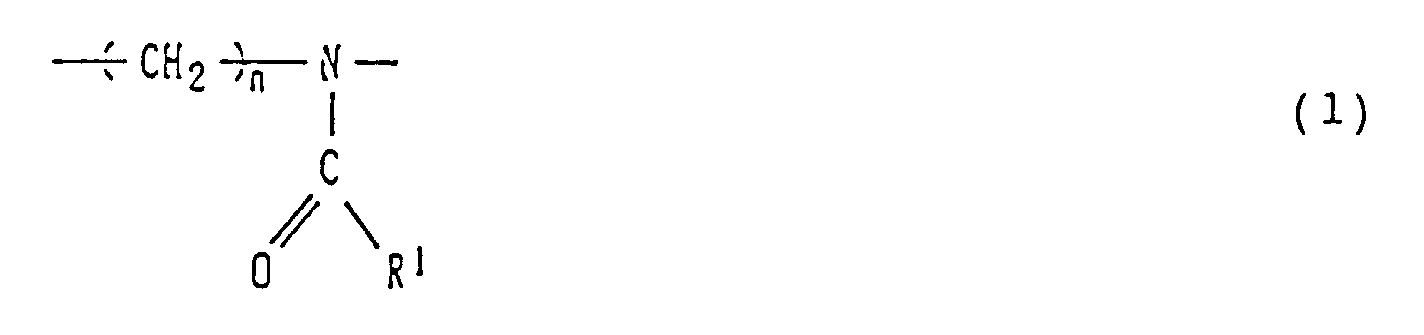
- A hair care product comprising an organopolysiloxane composed of an organopolysiloxane segment and a poly(N-acylalkyleneimine) segment which is bonded to at least one silicone atom of said organopolysiloxane segment via an alkylene group containing heteroatom(s) and which consists of repeating units represented by formula (1):wherein R1 represents a hydrogen atom or an alkyl group having 1 to 3 carbon atoms; and n is a number of 2 or 3;
wherein the weight ratio of the organopolysiloxane segment (a) to the poly(N-acylalkyleneimine) segment (b) [(a)/(b)] is at least 5/95 and less than 40/60, and the weight-average molecular weight is from 10,000 to 500,000. - The hair care product as claimed in Claim 5, which further contains an ionic polymer.
- The hair care product as claimed in Claim 5, which is an aqueous aerosol foaming composition.
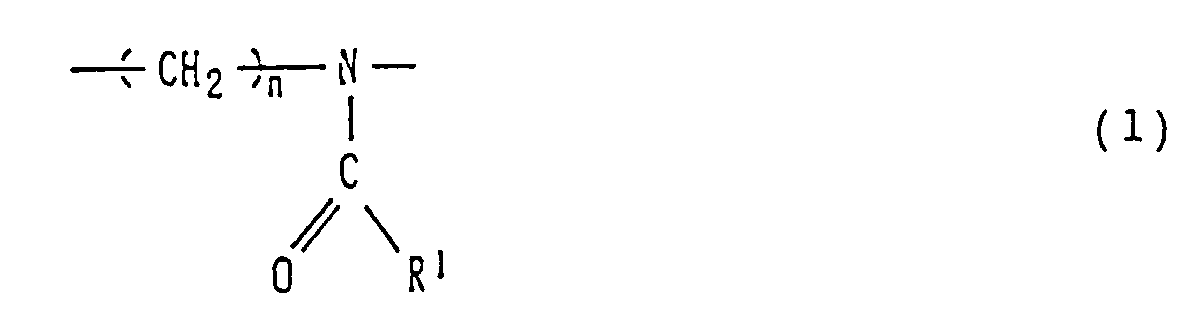
- The hair care product as claimed in claim 5, in an aqueous carrier material, containing less than 1 % by weight of C1-C6 alcohols, and from 0.05 to 20 % by weight, calculated to the total composition, of at least one water-soluble or water-dispersible organopolysiloxane, which is connected via an alkylene group containing one oxygen, sulfur or nitrogen atom with a poly(N-acylalkyleneimine) having repeating units represented by formula (1):wherein R1 represents a hydrogen atom or an alkyl group having 1 to 3 carbon atoms; and n is a number of 2 or 3;
wherein the weight ratio of the organopolysiloxane segment (a) to the poly(N-acylalkyleneimine) segment (b) [(a)/(b)] is at least 5/95 and less than 40/60, and the weight-average molecular weight is from 10,000 to 500,000.
Applications Claiming Priority (5)
| Application Number | Priority Date | Filing Date | Title |
|---|---|---|---|
| JP51440/97 | 1997-03-06 | ||
| JP5144097 | 1997-03-06 | ||
| JP5144097 | 1997-03-06 | ||
| DE1997118185 DE19718185C1 (en) | 1997-04-30 | 1997-04-30 | New poly-N-acyl-alkylene-imine modified organo poly:siloxane compounds |
| DE19718185 | 1997-04-30 |
Publications (2)
| Publication Number | Publication Date |
|---|---|
| EP0863172A1 EP0863172A1 (en) | 1998-09-09 |
| EP0863172B1 true EP0863172B1 (en) | 1999-12-15 |
Family
ID=26036186
Family Applications (1)
| Application Number | Title | Priority Date | Filing Date |
|---|---|---|---|
| EP98104020A Expired - Lifetime EP0863172B1 (en) | 1997-03-06 | 1998-03-06 | Poly(N-acrylalkyleneimine) modified Organopolysiloxanes |
Country Status (3)
| Country | Link |
|---|---|
| US (1) | US6027718A (en) |
| EP (1) | EP0863172B1 (en) |
| DE (1) | DE69800050T2 (en) |
Families Citing this family (8)
| Publication number | Priority date | Publication date | Assignee | Title |
|---|---|---|---|---|
| JP2001240533A (en) | 2000-02-29 | 2001-09-04 | Kao Corp | Transdermal formulation |
| JP2002154938A (en) * | 2000-11-17 | 2002-05-28 | Kao Corp | Hair dye composition |
| TWI413530B (en) * | 2007-07-20 | 2013-11-01 | Kao Corp | Organopolysiloxane |
| TWI475051B (en) * | 2009-11-18 | 2015-03-01 | 花王股份有限公司 | Organic polysiloxane |
| JP2011144366A (en) | 2009-12-16 | 2011-07-28 | Kao Corp | Method for producing organopolysiloxane compound |
| JP5663289B2 (en) * | 2009-12-16 | 2015-02-04 | 花王株式会社 | Method for producing organopolysiloxane compound |
| JP5791335B2 (en) * | 2010-04-07 | 2015-10-07 | 花王株式会社 | Method for producing organopolysiloxane compound |
| EP2868309B1 (en) * | 2013-10-31 | 2019-03-06 | Kao Corporation | Hair styling composition |
Family Cites Families (3)
| Publication number | Priority date | Publication date | Assignee | Title |
|---|---|---|---|---|
| JP2716851B2 (en) * | 1990-07-26 | 1998-02-18 | 花王株式会社 | Method for producing novel organopolysiloxane |
| JPH0525025A (en) * | 1991-07-22 | 1993-02-02 | Kao Corp | Hair cosmetics |
| DE69424100T2 (en) * | 1993-08-10 | 2000-10-12 | Kao Corp | Organopolysiloxanes and a method of setting hair using the same |
-
1998
- 1998-03-05 US US09/035,300 patent/US6027718A/en not_active Expired - Lifetime
- 1998-03-06 EP EP98104020A patent/EP0863172B1/en not_active Expired - Lifetime
- 1998-03-06 DE DE69800050T patent/DE69800050T2/en not_active Expired - Lifetime
Also Published As
| Publication number | Publication date |
|---|---|
| EP0863172A1 (en) | 1998-09-09 |
| DE69800050D1 (en) | 2000-01-20 |
| US6027718A (en) | 2000-02-22 |
| DE69800050T2 (en) | 2000-05-25 |
Similar Documents
| Publication | Publication Date | Title |
|---|---|---|
| EP1624851B1 (en) | Hair care applications of emulsions containing elastomeric silanes and siloxanes with nitrogen atoms | |
| EP0524612B1 (en) | Modified silicone containing hair cosmetic | |
| US5166276A (en) | Polymer for hair-care products | |
| US6165446A (en) | Cosmetic composition containing an aqueous polymer dispersion and an insoluble silicone, and process and use thereof | |
| EP2024423B1 (en) | Amino-acid functional siloxanes, methods of preparation and applications | |
| US6350439B1 (en) | Aqueous lacquer packaged in an aerosol device and including at least one silicone graft polymer for treating keratinous materials, and uses thereof | |
| KR19990028659A (en) | Topical composition containing grafted silicone polymer and amino silicone and / or silicone rubber or resin | |
| HUT74601A (en) | Hair fixing cosmetic compositions suitable for fixing hairform with improved setting properties | |
| US6503494B1 (en) | Composition comprising silicone polymer containing non-silicone backbone and at least one thickening polymer or copolymer of (meth) crylamide or of a (meth) acrylamide derivative | |
| KR100270833B1 (en) | Composition for treating keratinous materaial, including at least one silicone-grafted pilymer with a polysiloxane ba..... | |
| US6027718A (en) | Organopolysiloxanes | |
| JPH06509807A (en) | Hairspray composition containing ionic styling polymer | |
| JPH10306163A (en) | Organopolysiloxane | |
| WO1995032703A1 (en) | Hair cosmetic compositions | |
| JPH03287509A (en) | Cosmetic | |
| AU619280B2 (en) | Heterocyclic containing cellulosic graft polymers | |
| WO1995000106A1 (en) | Hair cosmetic compositions | |
| US5108738A (en) | Organosilicon hair care products | |
| US5225190A (en) | Organosilicon hair care products | |
| US6524596B1 (en) | Cosmetic composition containing an aqueous dispersion of insoluble polymer material particles, use and method | |
| JP4454856B2 (en) | Cationic polymers and their use | |
| JPH07316010A (en) | Cosmetic composition containing polysiloxane-polyoxyalkylene linear block copolymer, non-volatile insoluble conditioning agent and water-soluble alcohol and method of using the same | |
| EP1450755B1 (en) | Hair styling composition | |
| JPH0482820A (en) | hair cosmetics | |
| CA2088543A1 (en) | Hairstyling preparations containing amidofunctional siloxanes |
Legal Events
| Date | Code | Title | Description |
|---|---|---|---|
| PUAI | Public reference made under article 153(3) epc to a published international application that has entered the european phase |
Free format text: ORIGINAL CODE: 0009012 |
|
| 17P | Request for examination filed |
Effective date: 19980706 |
|
| AK | Designated contracting states |
Kind code of ref document: A1 Designated state(s): DE FR GB |
|
| AX | Request for extension of the european patent |
Free format text: AL;LT;LV;MK;RO;SI |
|
| 17Q | First examination report despatched |
Effective date: 19981012 |
|
| GRAG | Despatch of communication of intention to grant |
Free format text: ORIGINAL CODE: EPIDOS AGRA |
|
| AKX | Designation fees paid |
Free format text: DE FR GB |
|
| RBV | Designated contracting states (corrected) |
Designated state(s): DE FR GB |
|
| GRAG | Despatch of communication of intention to grant |
Free format text: ORIGINAL CODE: EPIDOS AGRA |
|
| GRAH | Despatch of communication of intention to grant a patent |
Free format text: ORIGINAL CODE: EPIDOS IGRA |
|
| GRAH | Despatch of communication of intention to grant a patent |
Free format text: ORIGINAL CODE: EPIDOS IGRA |
|
| GRAA | (expected) grant |
Free format text: ORIGINAL CODE: 0009210 |
|
| AK | Designated contracting states |
Kind code of ref document: B1 Designated state(s): DE FR GB |
|
| REF | Corresponds to: |
Ref document number: 69800050 Country of ref document: DE Date of ref document: 20000120 |
|
| ET | Fr: translation filed | ||
| PLBE | No opposition filed within time limit |
Free format text: ORIGINAL CODE: 0009261 |
|
| STAA | Information on the status of an ep patent application or granted ep patent |
Free format text: STATUS: NO OPPOSITION FILED WITHIN TIME LIMIT |
|
| 26N | No opposition filed | ||
| REG | Reference to a national code |
Ref country code: GB Ref legal event code: IF02 |
|
| REG | Reference to a national code |
Ref country code: FR Ref legal event code: PLFP Year of fee payment: 19 |
|
| REG | Reference to a national code |
Ref country code: FR Ref legal event code: PLFP Year of fee payment: 20 |
|
| PGFP | Annual fee paid to national office [announced via postgrant information from national office to epo] |
Ref country code: DE Payment date: 20170228 Year of fee payment: 20 Ref country code: FR Payment date: 20170213 Year of fee payment: 20 |
|
| PGFP | Annual fee paid to national office [announced via postgrant information from national office to epo] |
Ref country code: GB Payment date: 20170301 Year of fee payment: 20 |
|
| REG | Reference to a national code |
Ref country code: DE Ref legal event code: R071 Ref document number: 69800050 Country of ref document: DE |
|
| REG | Reference to a national code |
Ref country code: GB Ref legal event code: PE20 Expiry date: 20180305 |
|
| PG25 | Lapsed in a contracting state [announced via postgrant information from national office to epo] |
Ref country code: GB Free format text: LAPSE BECAUSE OF EXPIRATION OF PROTECTION Effective date: 20180305 |