EP0860700A2 - Use of HSV-1 UL-15 and VP5 in identifying anti-viral agents - Google Patents
Use of HSV-1 UL-15 and VP5 in identifying anti-viral agents Download PDFInfo
- Publication number
- EP0860700A2 EP0860700A2 EP98301123A EP98301123A EP0860700A2 EP 0860700 A2 EP0860700 A2 EP 0860700A2 EP 98301123 A EP98301123 A EP 98301123A EP 98301123 A EP98301123 A EP 98301123A EP 0860700 A2 EP0860700 A2 EP 0860700A2
- Authority
- EP
- European Patent Office
- Prior art keywords
- homologue
- test compound
- functional derivative
- complex
- derivative
- Prior art date
- Legal status (The legal status is an assumption and is not a legal conclusion. Google has not performed a legal analysis and makes no representation as to the accuracy of the status listed.)
- Withdrawn
Links
Classifications
-
- G—PHYSICS
- G01—MEASURING; TESTING
- G01N—INVESTIGATING OR ANALYSING MATERIALS BY DETERMINING THEIR CHEMICAL OR PHYSICAL PROPERTIES
- G01N33/00—Investigating or analysing materials by specific methods not covered by groups G01N1/00 - G01N31/00
- G01N33/48—Biological material, e.g. blood, urine; Haemocytometers
- G01N33/50—Chemical analysis of biological material, e.g. blood, urine; Testing involving biospecific ligand binding methods; Immunological testing
- G01N33/53—Immunoassay; Biospecific binding assay; Materials therefor
- G01N33/569—Immunoassay; Biospecific binding assay; Materials therefor for microorganisms, e.g. protozoa, bacteria, viruses
- G01N33/56983—Viruses
- G01N33/56994—Herpetoviridae, e.g. cytomegalovirus, Epstein-Barr virus
-
- A—HUMAN NECESSITIES
- A61—MEDICAL OR VETERINARY SCIENCE; HYGIENE
- A61P—SPECIFIC THERAPEUTIC ACTIVITY OF CHEMICAL COMPOUNDS OR MEDICINAL PREPARATIONS
- A61P31/00—Antiinfectives, i.e. antibiotics, antiseptics, chemotherapeutics
- A61P31/12—Antivirals
-
- A—HUMAN NECESSITIES
- A61—MEDICAL OR VETERINARY SCIENCE; HYGIENE
- A61P—SPECIFIC THERAPEUTIC ACTIVITY OF CHEMICAL COMPOUNDS OR MEDICINAL PREPARATIONS
- A61P31/00—Antiinfectives, i.e. antibiotics, antiseptics, chemotherapeutics
- A61P31/12—Antivirals
- A61P31/20—Antivirals for DNA viruses
- A61P31/22—Antivirals for DNA viruses for herpes viruses
Definitions
- This invention relates generally to the field of anti-viral agents, and particularly to methods of identifying anti-viral agents active against members of the herpes family.
- Herpesviridae family include the human pathogens herpes simplex virus types 1 and 2 (HSV-1 and HSV-2), varicella-zoster virus (VZV), human cytomegalovirus (HCMV), human herpes viruses 6 and 7 (HHV-6 and HHV-7), Epstein-Barr virus (EBV) [reviewed in The Human Herpesviruses , ed. B. Roizman et al, Raven Press, NY (1993), pp. 1-9], and the Kaposi-sarcoma herpesvirus (KSHV) or HHV-8 [P. S. Moore et al, J. Virol. , 70 : 549-558 (1996)].
- HSV-1 and HSV-2 varicella-zoster virus
- HCMV human cytomegalovirus
- HHV-6 and HHV-7 human herpes viruses 6 and 7
- Epstein-Barr virus Epstein-Barr virus
- KSHV Kaposi-sarcoma herpe
- viruses all have a large (approximately 100-270 kilobase pairs), linear, double-stranded DNA genome [reviewed in D. J. McGeoch, Annu. Rev. Microbiol. , 43 :235-265 (1989)].
- viral DNA replication occurs via a proposed rolling circle mechanism producing concatameric copies of the viral genome.
- a capsid particle self assembles, and the newly replicated viral DNA is cleaved into a unit length genome and subsequently packaged into the empty capsid (B-capsid) [See, The Human Herpesviruses , cited above, at pp. 11-68].
- the genomic sequences for UL15 and UL19, as well as the sequences for the UL15 and UL19 gene products are available from GenBank under Accession No. 14112 (D00317). Further, the UL15 and UL19 sequences have been published [J. Baines et al, J. Virol. , 68 (12):8118-8124 (Dec. 1994) and Perry and Mcgeoch, J. Gen. Virol. , 69 :2831-2846 (1988), respectively].
- the protein product of UL19 is VP5, also known as the major capsid protein.
- the present invention provides a method for identifying an antiviral agent useful in treating infection with herpes viruses.
- the method involves allowing HSV-1 UL15 or a functional derivative or homologue thereof to come into association with a test compound.
- HSV-1 VP5 or a functional derivative or homologue thereof is then allowed to come into association with the HSV-1 UL15 or its derivative or homologue.
- Inhibition of the interaction between UL15 or its derivative or homologue and VP5 or its derivative or homologue is then determined, wherein said inhibition is indicative that the test compound is an antiviral agent.
- the present invention provides a method for identifying an antiviral agent useful in treating infection with herpes viruses.
- the method involves allowing HSV-1 VP5 or a functional derivative or homologue thereof to come into association with a test compound.
- HSV-1 UL15 or a functional derivative or homologue thereof is then allowed to come into association with the HSV-1 VP5 or its derivative or homologue.
- Inhibition of the interaction between VP5 or its derivative or homologue and UL15 or its derivative or homologue is then determined, wherein said inhibition is indicative that the test compound is an antiviral agent.
- the present invention provides a method for identifying antiviral agents which inhibit the function of the UL15/VP5 complex. This method involves allowing a sample containing a test compound to come into association with a herpes-infected cell and screening for viral inhibition. A test compound so identified is then screened for the ability to block the function of a complex comprising UL15 or a functional derivative or homologue thereof and VP5 or a functional derivative or homologue thereof.
- the present invention provides compounds identified by the above methods.
- the present invention provides a method for identifying antiviral agents, particularly agents useful in preventing and treating infection with members of the herpes family, and compounds identified by the method of the invention.
- the method of the invention involves identifying molecules which prevent UL15/VP5 interaction and/or function.
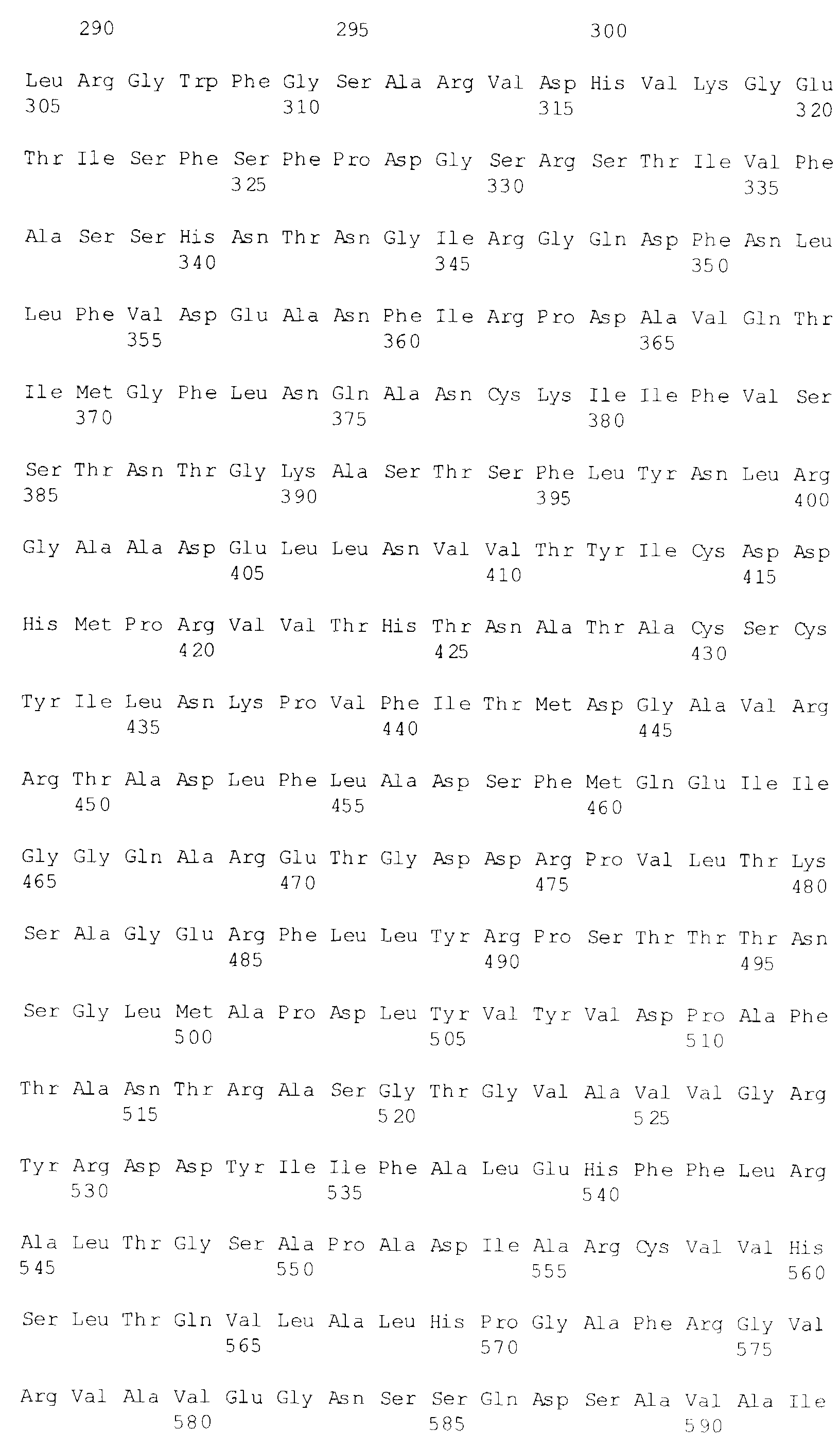
- amino acid sequences of UL15 and VP5 as provided in GenBank are reproduced in SEQ ID NO: 1 and SEQ ID NO:2, respectively.
- the present invention is not limited to the use of these amino acids sequences, as described below.
- BINDING MOLECULE refers to molecules or ions which bind or interact specifically with UL15 protein or functional derivatives or homologues thereof and/or, bind or interact specifically with VP5 or functional derivatives or homologues thereof, and/or bind or interact with the complex formed by UL15/VP5 (or functional derivatives or homologues thereof).
- binding molecules include, for example, small organic molecules, peptides, polypeptides, antibodies, particularly intracellular antibodies, antibody proteins and other antibody-derived reagents, chemical agents, nucleic acid sequences, enzyme substrates, cell membrane components and classical receptors. Interaction between the UL15 and/or UL19 gene products and such binding molecules, is indicative of anti-viral activity of the binding molecule.
- the molecule Prior to identification of a molecule as a binding molecule through the method of the invention, the molecule is referred to as a test compound.
- UL15 or VP5 includes fragments of these proteins, including peptides.
- a UL15 peptide is characterized by the ability to form a complex with VP5 or a functional derivative or homologue thereof (e.g., by binding or otherwise interacting), and a VP5 peptide is characterized by the ability to form a complex with UL15 or a functional derivative or homologue thereof.
- suitable fragments include, but are not limited to, fragments of UL15 located between about amino acid residue 1 to about amino acid residue 409 of SEQ ID NO:1, and between about residues 1 to about residues 508 of UL15 of SEQ ID NO:1.
- UL15 proteins and peptides include those encoded by other splice variants of the UL15 gene.
- splice variants include those encoded by other splice variants of the UL15 gene.
- Functional derivatives also include UL15 and VP5 proteins and peptides which have been fused to or otherwise provided with a tag, e.g., an epitope tag, a polyHis tag, or the like, or a selectable marker or other detection means, for use in the various methods described herein. Suitable tags, markers and other means of detection are well known and can be readily selected by one of skill in the art.
- fusion proteins containing these UL15 or VP5 proteins or, preferably, peptides fused directly or indirectly (i.e. via linkers) to a fusion partner may be chosen for convenience in expression and/or purification. Suitable linkers may be readily selected by one of skill in the art. Similarly, suitable fusion partners, e.g., GST, Ga14, lexA, maltose-binding protein (MBP), lacZ, trp, and the like, may be readily selected by one of skill in the art. Also included within the definition of functional derivatives are UL15 and VP5 proteins which have been modified for ease of expression and/or purification.
- the inventors have found that the UL15 gene product specifically interacts with the major capsid protein VP5 (the gene product of UL19). As shown herein, experiments employing UL15 and VP5 proteins expressed using recombinant baculoviruses show that these two viral proteins are sufficient for this interaction. Furthermore, sequences contained within the amino terminus of UL15 appear to be critical for this interaction. This discovery, coupled with the knowledge that the UL15 gene and its homologues are the most highly conserved amongst all members of the Herpesviridae, permitted the inventors to develop the method of the invention. For convenience, the specification will refer to UL19 and VP5.
- HSV-1 UL15 in other human herpesviruses, which include, but are not limited to, ORF42/45 in VZV, UL89 in HCMV, BD/BGRF1 in EBV, and NCBIgi 325496 in HHV-6, or suitable non-human herpesviruses. Similar methods can be performed with functional derivatives of UL19 or UL19 homologues derived from human or suitable non-human herpesviruses.
- the present invention provides methods for screening and identifying agents which are active as anti-viral compounds for members of herpesviridae. Because UL15 and VP5 and their homologues are the most highly conserved proteins among the herpesvirus family, it is anticipated that an anti-viral agent identified by the method of the invention will be useful in prevention and treatment of a, b and g herpes viruses. However, any selected anti-viral agent of the invention may exhibit greater activity against viruses in one of these subgroups in comparison to its activity against viruses from another subgroup.
- the method of the invention involves the use of assays which detect or measure protein-protein associations.
- the assays detect a molecule which binds to and occupies the binding site of UL15 thereby preventing binding to VP5, such that normal viral activity is prevented.
- assays which detect a molecule which binds to and occupies the binding site of VP5 thereby preventing binding to UL15 and prevent normal viral activity can be used.
- an assay may identify a molecule which inhibits the function of a UL15/VP5 complex.
- the assays may detect a molecule which binds to a site on UL15 or VP5 different from the normal binding site, which nevertheless inhibits the ability of UL15 and VP5 to interact and function normally, via allosteric effect.
- test compounds which interfere with the interaction between UL15 and VP5, or interfere with their function have been found by the inventors to be useful as anti-viral agents for treatment and prophylaxis of herpes family viral infections.
- the test compound interacts with UL15 (or VP5) and inhibits its interaction with VP5 (or UL15).
- UL15 and VP5 can be used to identify and assess the binding of small molecule substrates and ligands in, for example, cells, cell-free preparations, chemical libraries, and natural product mixtures.
- substrates and ligands may be natural substrates and ligands; may be structural or functional mimetics; or may be unrelated to the natural binding events.
- the method of the invention may involve employing a suitable computer program to determine compounds having structures complementary to that of UL15, VP5, or portions thereof and screening those compounds for competitive binding to the protein.
- an assay is desirably a protein based assay which would isolate UL15 and/or VP5 from interference by other assay components, particularly when utilizing cell-based assays.
- the assay is adaptable to automation.
- Such assays are well known to those of skill in the art and are not intended to be a limitation on the present invention.
- UL15 may be immobilized on a suitable surface.
- immobilization surfaces are well known.
- a wettable inert bead may be used in order to facilitate multivalent interaction with UL15 (or VP5).
- an antibody to UL15 (or VP5) may be used.
- the surface containing UL15 (or VP5) is permitted to come into contact with a solution containing the test compound and a solution containing VP5 (or UL15) and binding is measured using an appropriate detection system.
- Suitable detection systems include the streptavidin horse radish peroxidase conjugate, direct conjugation by a tag, e.g., fluorescein. Other systems are well known to those of skill in the art. This invention is not limited by the detection system used.
- the methods of the invention are readily adaptable to combinatorial technology, where multiple molecules are contained on an immobilized support system.
- a solution containing UL15 (or, in an alternative embodiment, VP5) is provided to the support system, followed by a solution containing VP5 (or UL15).
- a solution containing VP5 (or UL15).
- the method of the invention permits screening of chemical compound and peptide based libraries.
- a solution containing the suspected inhibitors i.e., the test compounds
- immobilized UL15 or, in an alternative embodiment, VP5
- the solution containing the inhibitors may be obtained from any appropriate source, including, for example, extracts of supernatants from culture of bioorganisms, extracts from organisms collected from natural sources, chemical compounds, and mixtures thereof.
- the inhibitor solution may be added prior to or after addition of VP5 (or UL15) to the immobilized UL15 (or VP5).
- VP5 or UL15
- similar methods may be performed using homologues to UL15 or VP5, such as those identified above.
- yeast two-hybrid system provides methods for detecting the interaction between a first test protein (i.e., UL15 or vice-versa) and a second test protein (i.e., VP5 or vice-versa) using reconstitution of the activity of a transcriptional activator.
- the method is disclosed in U.S. Patent No.5,283,173; reagents are available from Clontech and Stratagene. Briefly, UL15 (or UL19) cDNA is fused to a Ga14 transcription factor DNA binding domain and expressed in yeast cells. Conversely, UL15 (or UL19) is fused to a transactivation domain of Ga14. Interaction of the fusion proteins via the UL15 and VP5 domains will lead to reconstitution of Ga14 activity and transactivation of expression of a reporter gene such as Ga11-lacZ.
- an enzyme-linked immunoassay or another immunoassay format may be utilized in which UL15 (or, in an alternative embodiment, VP5) is immobilized, directly or indirectly to a suitable surface.
- a immunoassay will typically involve use of specific antibodies (e.g., anti-UL15 or anti-VP5) or incubation of radiolabeled UL15 or VP5 with filter separation steps.
- specific antibodies e.g., anti-UL15 or anti-VP5
- filter separation steps e.g., filter separation steps.
- an increased amount of free UL15 or VP5 will be determined relative to a control lacking the test substance.
- Yet another alternative method involves screening of peptide libraries for binding partners.
- Recombinant tagged or labeled UL15 (or, in an alternative embodiment, VP5) is used to select peptides from a peptide or phosphopeptide library which interact with the UL15 (or, in an alternative embodiment, VP5). Sequencing of the peptides leads to identification of consensus peptide sequences which might be found in interacting proteins.
- Another method is immunoaffinity purification.
- Recombinant UL15 (or, alternatively VP5) is incubated with labeled or unlabeled cell extracts and immunoprecipitated with anti-UL15 (or anti-VP5) antibodies.
- the immunoprecipitate is recovered with protein A-Sepharose and analyzed by SDS-PAGE. Unlabelled proteins are labeled by biotinylation and detected on SDS gels with streptavidin. The binding molecules are then analyzed for inhibition of the UL15/VP5 interaction.
- test compounds identified as binding molecules can be performed using standard assays. Such assays will be readily apparent to one of skill in the art. Examples of such assays include, without limitation, plaque reduction assays and virus yield reduction assays.
- methods for identifying antiviral agents by screening for inhibition of the function of the UL15/VP5 complex are provided. Suitable assays for performance of these methods are well known to those of skill in the art. For example, a cell-free system containing the UL15/VP5 complex may be utilized.
- cell-based assays are utilized in these screens.
- the host cells may be modified to transiently or stably express UL15 and/or VP5.
- such an assay utilizes a cell infected with a herpes virus.
- a sample containing one or more test compounds is then brought into association with the infected cell and inhibition of normal herpes viral function is detected using methods such as those described herein and which are well known in the art.
- the test compound(s) identified are then screened for the ability to inhibit a complex comprising UL15 and VP5. This inhibition may be indirect, e.g., the compound may inhibit the function of the complex, or direct, e.g., by blocking binding of UL15 and VP5.
- Test compounds identified by the methods described herein, which directly or indirectly (e.g., functionally) inhibit UL15/VP5 may be assayed using standard techniques.
- the present invention further provides compounds identified by the methods of the invention and the use of the compounds as anti-viral agents useful in pharmaceutical compositions for the prophylaxis or treatment of infection with a member of the herpesvirus family.
- the anti-viral agents identified by the method of the invention may be formulated into pharmaceutical compositions which may be used prophylactically or therapeutically, and preferably post-infection, to treat a herpes viral infection.
- the amount employed of the binding molecule/anti-viral agent will vary with the manner of administration, the employment of other active compounds, and the like, generally being in the range of about 1 mg to 10 mg, formulated in a solution of about 0.5 ml to 5 ml of a suitable carrier.
- the anti-viral agents of the present invention may be employed in combination with a non-sterile or sterile carrier or carriers for use with cells, tissues or organisms, such as a pharmaceutical carrier suitable for administration to a subject.
- compositions comprise, for instance, a media additive or a therapeutically effective amount of an anti-viral agent of the invention and a pharmaceutically acceptable carrier or excipient.
- a media additive or a therapeutically effective amount of an anti-viral agent of the invention and a pharmaceutically acceptable carrier or excipient.
- Such carriers may include, but are not limited to, saline, buffered saline, dextrose, water, glycerol, ethanol and combinations thereof.
- the formulation should suit the mode of administration.
- compositions may be administered in any effective, convenient manner including, for instance, administration by topical, oral, anal, vaginal, intravenous, intraperitoneal, intramuscular, subcutaneous, intranasal or intradermal routes, among others.
- UL15 was immunoprecipitated from HSV-1 infected Vero cells [ATCC, CCL81], and the immunoprecipitate was immunoblotted with antisera to the various capsid proteins. More particularly, Vero cells were infected with 10 PFU per cell of HSV-1 (KOS) [K. O. Smith, Proc. Soc. Exp. Biol. Med. , 115 :814-816 (1964); P. A. Schaffer et al, Virology , 52 :57-71 (1973)] and were harvested 20 hours post infection. Cells were lysed by freeze-thawing three times in phosphate buffered saline (PBS) followed by centrifugation to pellet debris.
- PBS phosphate buffered saline
- the supernatant was pre-cleared with normal rabbit serum and protein-A bound to sepharose.
- the resulting supernatant was immunoprecipitated with five microliters of UL15-specific antisera (NC-1) [J. D. Baines, J. Virol. , 68 (12):8118-8124 (December 1994)], immunoblotted, and probed with NC-1 antisera to the HSV-1 capsid proteins [G. H. Cohen et al, J. Virol. , 34 (2):521-531 (May 1980)].
- NC-1 UL15-specific antisera
- the UL15 polyclonal antisera directed against the carboxy-terminal portion of the UL15 protein that was used has been previously shown to react with two proteins of 75 kD and 35 kD molecular weight [Baines et al, cited above].
- Immunoprecipitates of UL15 from HSV-1 infected Vero cells were also found to contain a 155 kD protein which immunoreacts with antisera against the major capsid protein VP5 and corresponds with the reported size of VP5. This band was not present in uninfected Vero cells.
- Example 1 To determine if the UL15/VP5-containing complex identified in Example 1 contains any other proteins, whether UL15 and VP5 directly interact within the complex, or whether only UL15 and VP5 are sufficient for complex formation, the following study was performed.
- UL15 and VP5 were expressed recombinantly using a baculovirus expression system.
- the open reading frames (ORFs) of the UL15 (VP5) gene was derived as partial cDNA from Vero cells infected form HSV-1 (KOS) and pSG10 and pSG16 plasmids containing the gene [described in A. L. Goldin et al, J. Virol. , 38 (10):50-58 (April 1981)].
- the UL19 ORF was similarly derived, using plasmid pSG16 [Goldin et al, cited above].
- the UL15 and UL19 ORFs were cloned into the baculovirus expression vector pVL 1393 [Pharminogen] and used to generate recombinant baculoviruses.
- Susceptible Sf9 cells [ATCC] were co-infected with these two recombinant baculoviruses (BAC-UL 15 and BAC-VP5) at a multiplicity-of-infection (MOI) of 5 PFU of each virus per cell.
- MOI multiplicity-of-infection
- Uninfected Sf9 cells, cells infected wild type baculovirus, cells infected with wild-type baculovirus and BAC-UL15, and cells infected with wild type baculovirus and BAC-VP5 were used as controls. Twenty-five microliters of this sample was loaded onto a 4-20% gradient polyacrylamide gel containing 0.1% SDS, and electrophoresed in Tris-glycine buffer. Following electrophoresis and electrotransfer, the gel was immunoblotted and probed with rabbit polyclonal antisera specific for either VP5 (NC1) (using UL15 antisera) or UL15 (using VP5 antisera).
- NC1 using UL15 antisera
- UL15 using VP5 antisera
- VP5 is a rather large protein (155 kD)
- UL15:VP5 complex formation was due to a non-specific sticking of the two proteins.
- UL15 and several other unrelated polypeptides were synthesized in vitro by coupled transcription/translation and tested for their ability to interact with VP5 expressed by baculovirus as follows.
- HSV-1 UL12 alkaline exonuclease
- HPV type 6b E1 HPV-6b E1
- HPV-16 E1 HPV-18 E2
- HPV-16 E2 HPV-16 E2 proteins
- Truncated UL15 proteins which contained amino acids 409-735 [SEQ ID NO:1] were still able to coimmunoprecipitate with VP5.
- UL15 proteins which further deleted amino acids between 1 - 409 [SEQ ID NO: 1] were unable to interact with VP5, suggesting that amino acids in the amino-terminus of UL15 are critical for VP5 interaction.
- This finding is also confirmed by the observation that the 35kD form of UL15 which lacks the amino-terminal of the 75 kD protein, but shares only the carboxy-terminal region does not coimmunoprecipitate with VP5.
- the data presented in Examples 1-4 show that the 75 kD protein from the UL15 gene coimmunoprecipitates with the major capsid protein VP5.
- This interaction may provide a means for linking the terminase complex with the empty capsid so that the newly replicated DNA can be easily packaged.
- Inspection of the UL15 sequence reveals the presence of a potential cleavage site for the UL26 protease located at amino acids 332-339 [SEQ ID NO:1]. If this site represents a genuine substrate for the UL26 protease, it may explain the generation of the 35 kD protein, and also provide a means by which UL15 terminase activity could be inactivated signalling the completion of DNA packaging.
- the following assay format may be used to identify molecules which inhibit UL15:VP5 binding by screening a large bank of chemical compounds and natural products.
- the VP5 protein is biotinylated for simplicity of assay and for ease of detection. Biotinylation is carried out essentially as described in Avidin-Biotin Chemistry: A handbook , M. D. Savage et al., Pierce Chemical Company (1992). All steps of the assay after coating are carried out at room temperature.
- the wells are washed with PBS (phosphate buffered saline) and blocked with 0.5% gelatin in PBS for 1 hour. Following an additional PBS wash, biotinylated VP5 is serially diluted in PBS containing 1 mg/ml BSA, 0.05% Tween directly in the wells in a final volume of 0.1 ml and incubated for 1 hour.
- PBS phosphate buffered saline
- VP5 protein is measured by the addition of 0.1 ml of strepavidin-HRP (streptavidin conjugated with horseradish peroxidase (Southern Biotech)) at a 1:2000 dilution for 1 hour, followed by washing and color development with 100 ml ABTS substrate (Kierkegaard and Perry Laboratories Inc., Maryland) and measurement of absorbance at 405 nm. In some cases the color reactions are arrested by addition of 100 ml of 1% SDS prior to measurement of absorbance.
- strepavidin-HRP streptavidin conjugated with horseradish peroxidase (Southern Biotech)
Landscapes
- Health & Medical Sciences (AREA)
- Life Sciences & Earth Sciences (AREA)
- Virology (AREA)
- Engineering & Computer Science (AREA)
- Chemical & Material Sciences (AREA)
- Molecular Biology (AREA)
- Immunology (AREA)
- General Health & Medical Sciences (AREA)
- Medicinal Chemistry (AREA)
- Organic Chemistry (AREA)
- Pharmacology & Pharmacy (AREA)
- Hematology (AREA)
- Urology & Nephrology (AREA)
- Veterinary Medicine (AREA)
- Public Health (AREA)
- Biotechnology (AREA)
- Animal Behavior & Ethology (AREA)
- Nuclear Medicine, Radiotherapy & Molecular Imaging (AREA)
- General Chemical & Material Sciences (AREA)
- Biomedical Technology (AREA)
- Chemical Kinetics & Catalysis (AREA)
- Oncology (AREA)
- Communicable Diseases (AREA)
- Physics & Mathematics (AREA)
- Biochemistry (AREA)
- Analytical Chemistry (AREA)
- Tropical Medicine & Parasitology (AREA)
- Microbiology (AREA)
- Cell Biology (AREA)
- Pathology (AREA)
- General Physics & Mathematics (AREA)
- Food Science & Technology (AREA)
- Medicines That Contain Protein Lipid Enzymes And Other Medicines (AREA)
- Measuring Or Testing Involving Enzymes Or Micro-Organisms (AREA)
- Medicines Containing Antibodies Or Antigens For Use As Internal Diagnostic Agents (AREA)
- Micro-Organisms Or Cultivation Processes Thereof (AREA)
- Peptides Or Proteins (AREA)
Abstract
Description




Claims (26)
- A method for identifying an antiviral agent useful in treating infection with herpes viruses,(a) providing UL15 of herpes simplex virus-1 (HSV-1) or a functional derivative or homologue thereof;(b) permitting UL15 or its derivative or homologue to come into association with a test compound;(c) providing VP5 of HSV-1 or a functional derivative or homologue thereof;(d) screening for inhibition of the interaction between UL15 or its derivative or homologue and VP5 or its derivative or homologue, wherein said inhibition is indicative that the test compound is an antiviral agent.
- A method for identifying an antiviral agent useful in treating infection with herpes viruses,(a) providing VP5 of herpes simplex virus-1 (HSV-1) or a functional derivative or homologue thereof;(b) permitting VP5 or its derivative or homologue to come into association with a test compound;(c) providing UL15 of HSV-1 or a functional derivative or homologue thereof;(d) screening for inhibition of the interaction between the VP5 or its derivative or homologue and UL15 or its derivative or homologue, wherein said inhibition is indicative that the test compound is an antiviral agent.
- The method according to claim 1 or 2 wherein a UL15/VP5 complex comprising UL15 or a functional derivative or homologue thereof and VP5 or a functional derivative or homologue thereof is permitted to come into association with a test compound.
- The method according to claim 1 or 2 wherein the test compound binds the UL15/VP5 complex.
- The method according to claim 1 or 2 wherein the test compound binds UL15 or a functional derivative or homologue thereof.
- The method according to claim 1 or 2 wherein the test compound binds VP5 or a functional derivative or homologue thereof.
- The method according to claim 1 or 2 wherein the functional derivative of UL15 is selected from the group consisting of:(a) SEQ ID NO:1;(b) a peptide from SEQ ID NO:1;(c) a fusion protein comprising (a) or (b) and a selected fusion partner;
and(d) a tagged protein comprising (a) or (b) and a selected marker or tag. - The method according to claim 7, wherein the UL15 peptide is selected from the group consisting of:(a) about amino acid 1 to about amino acid 409 of SEQ ID NO:1;
and(b) about amino acid 1 to about amino acid 508 of SEQ ID NO:1. - The method according to claim 7, wherein the fusion partner is selected from the group consisting of: GST, Ga14, lexA, maltose-binding protein, lacZ, and Trp.
- The method according to claim 1 or 2, wherein the functional derivative of VP5 is selected from the group consisting of:(a) SEQ ID NO:2;(b) a peptide from SEQ ID NO:2;(c) a fusion protein comprising (a) or (b) and a selected fusion partner.(d) a tagged protein comprising (a) or (b) and a and a selected marker or epitope tag.
- The method according to claim 1 or 2 wherein the UL15 homologue is selected from the group consisting of:varicella-zoster virus ORF42/45;human cytomegalovirus UL89;epstein-barr virus BD/BGRF1; andhuman herpes virus 6 in NCBIgi 325496.
- The method according to claim 1 or 2 wherein UL15 is immobilized on a solid support.
- The method according to claim 1 or 2 wherein VP5 is immobilized on a solid support.
- The method according to claim 1 or 2 wherein said screen is a yeast 2-hybrid screen.
- The method according to claim 1 or 2 wherein said screen is an enzyme-linked immunosorbent assay.
- The method according to claim 1 or 2 wherein the test compound is immobilized on a support system.
- The method according to claim 1 or 2, wherein said test compound is a chemical agent.
- The method according to claim 1 or 2, wherein said test compound is a polypeptide.
- The method according to claim 1 or 2, wherein said test compound is an intracellular antibody.
- The method according to claim 1 or 2 wherein steps (b) and (c) occur substantially simultaneously.
- A compound identified by the method according to claim 1 or 2.
- A pharmaceutical composition comprising a compound according to claim 21 and a pharmaceutically acceptable carrier.
- A method for identifying antiviral agents which functionally inhibit a UL15/VP5 complex comprising UL15 or a functional derivative or homologue thereof and VP5 or a functional derivative or homologue thereof, said method comprising the steps of:(a) providing a cell infected with a herpes virus;(b) permitting a sample containing a test compound to come into association with the herpes-infected cell;(c) identifying a test compound which inhibits the herpes virus;(d) screening the test compound which is identified in (c) for the ability to block the function of the UL15/VP5 complex.
- A method for identifying antiviral agents which functionally inhibit a UL15/VP5 complex comprising UL15 or a functional derivative or homologue thereof and VP5 or a functional derivative or homologue thereof, said method comprising the steps of:(a) providing a cell-free system containing the UL15/VP5 complex;(b) permitting a sample containing a test compound to come into association with the complex; and(c) identifying a test compound which inhibits the function of the UL15/VP5 complex.
- A method for identifying antiviral agents which functionally inhibit a UL15/VP5 complex comprising UL15 or a functional derivative or homologue thereof and VP5 or a functional derivative or homologue thereof, said method comprising the steps of:(a) providing a cell expressing UL15 and VP5;(b) permitting a sample containing a test compound to come into association with the UL15-, VP5-expressing cell; and(c) identifying a test compound which inhibits the function of the UL15/VP5 complex.
- An antiviral agent identified by any of the methods of claim 23 - 25.
Applications Claiming Priority (2)
| Application Number | Priority Date | Filing Date | Title |
|---|---|---|---|
| US3891497P | 1997-02-21 | 1997-02-21 | |
| US38914P | 1997-02-21 |
Publications (2)
| Publication Number | Publication Date |
|---|---|
| EP0860700A2 true EP0860700A2 (en) | 1998-08-26 |
| EP0860700A3 EP0860700A3 (en) | 1998-09-09 |
Family
ID=21902621
Family Applications (1)
| Application Number | Title | Priority Date | Filing Date |
|---|---|---|---|
| EP98301123A Withdrawn EP0860700A3 (en) | 1997-02-21 | 1998-02-16 | Use of HSV-1 UL-15 and VP5 in identifying anti-viral agents |
Country Status (3)
| Country | Link |
|---|---|
| EP (1) | EP0860700A3 (en) |
| JP (1) | JPH10276800A (en) |
| CA (1) | CA2223032A1 (en) |
Cited By (5)
| Publication number | Priority date | Publication date | Assignee | Title |
|---|---|---|---|---|
| WO2001096874A1 (en) * | 2000-06-15 | 2001-12-20 | Bayer Aktiengesellschaft | Method for identifying compounds with anti-herpes activity |
| WO2004060860A3 (en) * | 2003-01-07 | 2005-02-10 | Bayer Healthcare Ag | Method for inhibiting the replication of herpes viruses |
| US7105553B2 (en) | 1999-12-23 | 2006-09-12 | Bayer Aktiengesellschaft | Thiazolyl amide derivatives |
| US7883713B2 (en) | 2001-06-22 | 2011-02-08 | Aicuris Gmbh & Co. Kg | Topical application of thiazolyl amides |
| US8784887B2 (en) | 2005-03-30 | 2014-07-22 | Aicuris Gmbh & Co. Kg | Pharmaceutical preparation of N-[5-(aminosulfonyl)-4-methyl-1,3-thiazol-2-yl]-N-methyl-2-[4-(2-pyridinyl)phenyl]acetamide |
Family Cites Families (3)
| Publication number | Priority date | Publication date | Assignee | Title |
|---|---|---|---|---|
| JPH06500469A (en) * | 1990-08-15 | 1994-01-20 | ジンタ・インコーポレイテッド | Suppression of herpesidae virus infection using antisense oligonucleotides |
| JPH067174A (en) * | 1992-03-13 | 1994-01-18 | Monsanto Co | Production of recombinant protein using herpesvirus promoter and VP16 transactivator |
| AU699168B2 (en) * | 1993-07-09 | 1998-11-26 | University Of Pittsburgh | Selection and use of antiviral peptides |
-
1998
- 1998-02-11 CA CA002223032A patent/CA2223032A1/en not_active Abandoned
- 1998-02-16 EP EP98301123A patent/EP0860700A3/en not_active Withdrawn
- 1998-02-23 JP JP10084861A patent/JPH10276800A/en active Pending
Cited By (5)
| Publication number | Priority date | Publication date | Assignee | Title |
|---|---|---|---|---|
| US7105553B2 (en) | 1999-12-23 | 2006-09-12 | Bayer Aktiengesellschaft | Thiazolyl amide derivatives |
| WO2001096874A1 (en) * | 2000-06-15 | 2001-12-20 | Bayer Aktiengesellschaft | Method for identifying compounds with anti-herpes activity |
| US7883713B2 (en) | 2001-06-22 | 2011-02-08 | Aicuris Gmbh & Co. Kg | Topical application of thiazolyl amides |
| WO2004060860A3 (en) * | 2003-01-07 | 2005-02-10 | Bayer Healthcare Ag | Method for inhibiting the replication of herpes viruses |
| US8784887B2 (en) | 2005-03-30 | 2014-07-22 | Aicuris Gmbh & Co. Kg | Pharmaceutical preparation of N-[5-(aminosulfonyl)-4-methyl-1,3-thiazol-2-yl]-N-methyl-2-[4-(2-pyridinyl)phenyl]acetamide |
Also Published As
| Publication number | Publication date |
|---|---|
| CA2223032A1 (en) | 1998-08-21 |
| EP0860700A3 (en) | 1998-09-09 |
| JPH10276800A (en) | 1998-10-20 |
Similar Documents
| Publication | Publication Date | Title |
|---|---|---|
| Kinchington et al. | Nuclear accumulation of IE62, the varicella-zoster virus (VZV) major transcriptional regulatory protein, is inhibited by phosphorylation mediated by the VZV open reading frame 66 protein kinase | |
| US6200577B1 (en) | Anti-herpesviral agents and assays therefor | |
| Chee et al. | Human cytomegalovirus encodes three G protein-coupled receptor homologues | |
| US6013433A (en) | Baculovirus expression vectors and recombinant antigens for detecting type-specific antibodies to herpes simplex virus | |
| Nozawa et al. | Subcellular localization of herpes simplex virus type 1 UL51 protein and role of palmitoylation in Golgi apparatus targeting | |
| Eisfeld et al. | Phosphorylation of the varicella-zoster virus (VZV) major transcriptional regulatory protein IE62 by the VZV open reading frame 66 protein kinase | |
| Webster et al. | Activation of adenovirus-coded protease and processing of preterminal protein | |
| Shelton et al. | Retention of the herpes simplex virus type 1 (HSV-1) UL37 protein on single-stranded DNA columns requires the HSV-1 ICP8 protein | |
| US20050164163A1 (en) | Assay for screening for an anti-viral agent | |
| Kelly et al. | Identification of a single amino acid residue which is critical for the interaction between HSV-1 inner tegument proteins pUL36 and pUL37 | |
| Albright et al. | The herpes simplex virus UL37 protein is phosphorylated in infected cells | |
| Plachter et al. | Procaryotic expression of phosphorylated tegument protein pp65 of human cytomegalovirus and application of recombinant peptides for immunoblot analyses | |
| DE69618080T2 (en) | Epstein-Barr virus peptides, and antibodies against these peptides | |
| EP0842430B1 (en) | Herpes simplex virus diagnostics | |
| EP0860700A2 (en) | Use of HSV-1 UL-15 and VP5 in identifying anti-viral agents | |
| Liu et al. | The tegument protein UL94 of human cytomegalovirus as a binding partner for tegument protein pp28 identified by intracellular imaging | |
| McNABB et al. | Posttranslational modification and subcellular localization of the p12 capsid protein of herpes simplex virus type 1 | |
| Rothe et al. | An antigen fragment encompassing the AD2 domains of glycoprotein B from two different strains is sufficient for differentiation of primary vs. recurrent human cytomegalovirus infection by ELISA | |
| Möhl et al. | Intracellular localization of the pseudorabies virus large tegument protein pUL36 | |
| EP2269069B1 (en) | Use of synthetic peptide derived from zebra protein for the in vivo diagnosis of the epstein-barr virus (ebv) reactivation | |
| Moriuchi et al. | The acidic amino-terminal region of varicella-zoster virus open reading frame 4 protein is required for transactivation and can functionally replace the corresponding region of herpes simplex virus ICP27 | |
| Ottosen et al. | Phosphorylation of the VP16 transcriptional activator protein during herpes simplex virus infection and mutational analysis of putative phosphorylation sites | |
| Powell et al. | Comparative analysis of polypeptides induced by type 1 and type 2 strains of herpes simplex virus | |
| Grzesik et al. | Incorporation of the Kaposi’s sarcoma-associated herpesvirus capsid vertex-specific component (CVSC) into self-assembled capsids | |
| Silva et al. | Sites and roles of phosphorylation of the human cytomegalovirus DNA polymerase subunit UL44 |
Legal Events
| Date | Code | Title | Description |
|---|---|---|---|
| PUAI | Public reference made under article 153(3) epc to a published international application that has entered the european phase |
Free format text: ORIGINAL CODE: 0009012 |
|
| PUAL | Search report despatched |
Free format text: ORIGINAL CODE: 0009013 |
|
| AK | Designated contracting states |
Kind code of ref document: A2 Designated state(s): BE CH DE DK FR GB IT LI NL |
|
| AX | Request for extension of the european patent |
Free format text: AL;LT;LV;MK;RO;SI |
|
| AK | Designated contracting states |
Kind code of ref document: A3 Designated state(s): AT BE CH DE DK ES FI FR GB GR IE IT LI LU MC NL PT SE |
|
| AX | Request for extension of the european patent |
Free format text: AL;LT;LV;MK;RO;SI |
|
| 17P | Request for examination filed |
Effective date: 19990309 |
|
| AKX | Designation fees paid |
Free format text: BE CH DE DK FR GB IT LI NL |
|
| RBV | Designated contracting states (corrected) |
Designated state(s): BE CH DE DK FR GB IT LI NL |
|
| 17Q | First examination report despatched |
Effective date: 19991206 |
|
| STAA | Information on the status of an ep patent application or granted ep patent |
Free format text: STATUS: THE APPLICATION IS DEEMED TO BE WITHDRAWN |
|
| 18D | Application deemed to be withdrawn |
Effective date: 20060203 |