EP0857004A2 - System for remote access - Google Patents
System for remote access Download PDFInfo
- Publication number
- EP0857004A2 EP0857004A2 EP98200262A EP98200262A EP0857004A2 EP 0857004 A2 EP0857004 A2 EP 0857004A2 EP 98200262 A EP98200262 A EP 98200262A EP 98200262 A EP98200262 A EP 98200262A EP 0857004 A2 EP0857004 A2 EP 0857004A2
- Authority
- EP
- European Patent Office
- Prior art keywords
- pbx
- remote user
- isdn
- connection
- pmbs
- Prior art date
- Legal status (The legal status is an assumption and is not a legal conclusion. Google has not performed a legal analysis and makes no representation as to the accuracy of the status listed.)
- Granted
Links
Images

Classifications
-
- H—ELECTRICITY
- H04—ELECTRIC COMMUNICATION TECHNIQUE
- H04Q—SELECTING
- H04Q11/00—Selecting arrangements for multiplex systems
- H04Q11/04—Selecting arrangements for multiplex systems for time-division multiplexing
- H04Q11/0428—Integrated services digital network, i.e. systems for transmission of different types of digitised signals, e.g. speech, data, telecentral, television signals
- H04Q11/0435—Details
- H04Q11/0457—Connection protocols
-
- H—ELECTRICITY
- H04—ELECTRIC COMMUNICATION TECHNIQUE
- H04Q—SELECTING
- H04Q11/00—Selecting arrangements for multiplex systems
- H04Q11/04—Selecting arrangements for multiplex systems for time-division multiplexing
- H04Q11/0428—Integrated services digital network, i.e. systems for transmission of different types of digitised signals, e.g. speech, data, telecentral, television signals
- H04Q11/0435—Details
- H04Q11/0442—Exchange access circuits
-
- H—ELECTRICITY
- H04—ELECTRIC COMMUNICATION TECHNIQUE
- H04Q—SELECTING
- H04Q3/00—Selecting arrangements
- H04Q3/58—Arrangements providing connection between main exchange and sub-exchange or satellite
- H04Q3/62—Arrangements providing connection between main exchange and sub-exchange or satellite for connecting to private branch exchanges
-
- H—ELECTRICITY
- H04—ELECTRIC COMMUNICATION TECHNIQUE
- H04M—TELEPHONIC COMMUNICATION
- H04M15/00—Arrangements for metering, time-control or time indication ; Metering, charging or billing arrangements for voice wireline or wireless communications, e.g. VoIP
-
- H—ELECTRICITY
- H04—ELECTRIC COMMUNICATION TECHNIQUE
- H04M—TELEPHONIC COMMUNICATION
- H04M3/00—Automatic or semi-automatic exchanges
- H04M3/42—Systems providing special services or facilities to subscribers
- H04M3/42314—Systems providing special services or facilities to subscribers in private branch exchanges
- H04M3/4234—Remote access to features of PBX or home telephone systems-teleworking in a PBX
-
- H—ELECTRICITY
- H04—ELECTRIC COMMUNICATION TECHNIQUE
- H04Q—SELECTING
- H04Q2213/00—Indexing scheme relating to selecting arrangements in general and for multiplex systems
- H04Q2213/09—Subscriber related equipment; Analog terminal
-
- H—ELECTRICITY
- H04—ELECTRIC COMMUNICATION TECHNIQUE
- H04Q—SELECTING
- H04Q2213/00—Indexing scheme relating to selecting arrangements in general and for multiplex systems
- H04Q2213/1309—Apparatus individually associated with a subscriber line, line circuits
-
- H—ELECTRICITY
- H04—ELECTRIC COMMUNICATION TECHNIQUE
- H04Q—SELECTING
- H04Q2213/00—Indexing scheme relating to selecting arrangements in general and for multiplex systems
- H04Q2213/13176—Common channel signaling, CCS7
-
- H—ELECTRICITY
- H04—ELECTRIC COMMUNICATION TECHNIQUE
- H04Q—SELECTING
- H04Q2213/00—Indexing scheme relating to selecting arrangements in general and for multiplex systems
- H04Q2213/13209—ISDN
-
- H—ELECTRICITY
- H04—ELECTRIC COMMUNICATION TECHNIQUE
- H04Q—SELECTING
- H04Q2213/00—Indexing scheme relating to selecting arrangements in general and for multiplex systems
- H04Q2213/1322—PBX
-
- H—ELECTRICITY
- H04—ELECTRIC COMMUNICATION TECHNIQUE
- H04Q—SELECTING
- H04Q2213/00—Indexing scheme relating to selecting arrangements in general and for multiplex systems
- H04Q2213/13224—Off-net subscriber, dial in to/out from network, teleworking
-
- H—ELECTRICITY
- H04—ELECTRIC COMMUNICATION TECHNIQUE
- H04Q—SELECTING
- H04Q2213/00—Indexing scheme relating to selecting arrangements in general and for multiplex systems
- H04Q2213/13296—Packet switching, X.25, frame relay
-
- H—ELECTRICITY
- H04—ELECTRIC COMMUNICATION TECHNIQUE
- H04Q—SELECTING
- H04Q2213/00—Indexing scheme relating to selecting arrangements in general and for multiplex systems
- H04Q2213/13384—Inter-PBX traffic, PBX networks, e.g. corporate networks
-
- H—ELECTRICITY
- H04—ELECTRIC COMMUNICATION TECHNIQUE
- H04Q—SELECTING
- H04Q2213/00—Indexing scheme relating to selecting arrangements in general and for multiplex systems
- H04Q2213/136—Collect call, e.g. 800 service
-
- H—ELECTRICITY
- H04—ELECTRIC COMMUNICATION TECHNIQUE
- H04Q—SELECTING
- H04Q2213/00—Indexing scheme relating to selecting arrangements in general and for multiplex systems
- H04Q2213/176—Common channel signalling
-
- H—ELECTRICITY
- H04—ELECTRIC COMMUNICATION TECHNIQUE
- H04Q—SELECTING
- H04Q2213/00—Indexing scheme relating to selecting arrangements in general and for multiplex systems
- H04Q2213/22—PBX
-
- H—ELECTRICITY
- H04—ELECTRIC COMMUNICATION TECHNIQUE
- H04Q—SELECTING
- H04Q2213/00—Indexing scheme relating to selecting arrangements in general and for multiplex systems
- H04Q2213/384—Inter-PBX traffic; PBX networks
Definitions
- the invention is related to a system for connecting a local user to a private network, via an ISDN.
- a central network It is now possible to give remote users such as teleworkers access to a central network.
- customers call a company for information. To this end they call a central number of that company, whereupon the company exchange switches the call through to a local teleworker.
- the latter provided with an ISDN-connection, then maintains contact with the customer via one of the ISDN B channels, while simultaneously data are exchanged with the company database via the ISDN D channel and the X.25 network, making use of the PMBS (Packet Mode Bearer Service) of the ISDN.
- PMBS Packet Mode Bearer Service
- the invention is based on the insight that the ISDN PMBS lends itself superbly for the transmission of, for example, QSIG signals which are normally only used for signalling within modern company exchanges (PBXs).
- PBXs modern company exchanges
- control signals are transmitted to and from the remote user by means of the PMBS of the ISDN through which the remote user is connected to the PBX network.
- a remote user Via the PMBS, a remote user can use the same (short) internal telephone numbers as at a work site within the company.
- PBX services such as *21, follow-me, call-me-back, etc. can also be used in the same way as within the company.
- the costs of communication can be charged entirely to the company.
- the remote user establishes connection with the PBX via the PMBS.
- the PMBS it is possible to charge the costs for setting up the PMBS connection to the called party, in this case the PBX.
- Data or voice transmission can subsequently take place via a normal ISDN connection (B channel) between the PBX and the remote user for whom the call is initiated by the PBX.
- B channel normal ISDN connection
- the remote user wishes to effect an off-net call, that is, a call to outside the PBX - without having to pay for said call - a QSIG code is sent to the PBX to that end via the PMBS, which subsequently initiates the desired off-net call as well as a connection with the remote user.
- the second system requirement that of the remote user being able to use internal numbers, is also realised by the PBX detecting whether a number dialled by the remote user is an internal number (for example having five digits) or an external number (having ten digits). Apart from that, this is also detected in calls initiated by internal users who are connected directly (that is, not via the PMBS) to the PBX.
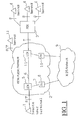
- FIG. 1 diagrammatically shows an implementation of the system according to the invention.
- a remote user 1 a teleworker, is connected to an ISDN 2.
- the user also has a subscription for the PMBS.
- the user Via an S and a T interface (ISDN 2 and 30 respectively), the user can establish a connection with the company network via PBX 3 of the company for which he/she works.
- PBX 3 of the company for which he/she works.
- a large number of internal terminals 4 (telephone sets, etc.) is also connected to said PBX 3.
- the ISDN terminal 1 making use of the PMBS, establishes a connection with a local exchange (LEX) 5 of the ISDN.
- LX local exchange
- a connection is established, in conformance with the PMBS, via the signalling channel (D channel), from said terminal 1, via said LEX 5, a packet handler (PH) 8, the X.25 network 9, a PH 11 and an LEX 10, to the PBX 3.
- QSIG signals signals for the (internal) control of the PBX, can be exchanged with the remote user's terminal.
- the remote terminal 1 Via the PMBS route, the remote terminal 1 is regarded by the PBX as a fully fledged "internal" terminal, even though it is physically located outside the PBX. From the moment the remote terminal, via the PMBS route, has reported itself as an "internal" terminal, the terminal also has all the facilities which the other, physically internal terminals 4 have.
- terminal 1 can suffice by sending the (abbreviated) internal number.
- QSIG protocol of which an example is given in the application mentioned earlier, and which application therefore, insofar that is necessary, is deemed to be incorporated in this application
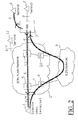
- a connection is established on the one hand with the desired terminal 4 and with said terminal 1 on the other hand.
- the connection of said PBX 3 to the remote terminal 1 is in this regard a normal ISDN connection via a B channel. Since the latter is requested by the PBX 3, however, the connection costs are charged to the PBX, that is, to the company for which the remote user works.
- connection is thus requested at the PBX by means of QSIG signalling, via the D channel and the X.25 network (in conformance with the PMBS) by the remote user, who subsequently establishes two connections: one external connection via the ISDN B channel to said remote user 1, and one connection to said internal terminal 4.
- FIG. 2 illustrates this.
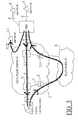
- the remote user wishes to establish a connection with a terminal 12 outside the PBX (off-net call), then that request is also transmitted to the PBX by means of the PMBS.
- the PBX recognises the requested number (for example 07033 23134) as an external number and initiates a connection with said external number 12 on the one hand, and a connection, via the ISDN B channel, to said remote user 1 on the other hand.
- the costs for the connection between the PBX and said external number 12 are charged to the PBX. This situation is illustrated in FIG. 3.
- the remote user can also be called from outside the PBX network, via the PBX.
- the PBX is dialled, and this connects the call through to the remote user, making use of the QSIG signalling by means of the PMBS via the ISDN D channel and X.25, as though his/her terminal were an internal PBX terminal.
- Switching services etc. are also realised in the same way, by means of QSIG over PMBS.
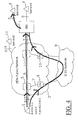
- said remote user 1 establishes a data connection with the PBX via the PMBS (in this case at the cost of the remote user, however), and also a connection via the ISDN B channel. Both are initiated in this case by the remote user, who therefore also bears the connection costs.
- the remote user can indeed - via QSIG exchange via ISDN PMBS - function as a fully fledged PBX terminal, including options such as dialling of (short) internal numbers, follow-me, *21, etc.
- the PBX is completely excluded here.
- the invention is, of course, not restricted to this protocol.
- the PBX functionality is, as it were, extended to remote users by making use of the PMBS, whereby the PBX signalling messages between the remote user and the PBX - although only intended for internal PBX use - can be exchanged, so that the remote user has the same possibilities as an internal terminal connected to the PBX network directly.
Landscapes
- Engineering & Computer Science (AREA)
- Computer Networks & Wireless Communication (AREA)
- Physics & Mathematics (AREA)
- Astronomy & Astrophysics (AREA)
- General Physics & Mathematics (AREA)
- Data Exchanges In Wide-Area Networks (AREA)
- Telephonic Communication Services (AREA)
Abstract
Description
Claims (1)
- System for connecting, via an ISDN, a local user with a private network, characterised in that the local user (1), making use of the PMBS of the ISDN (2), is connected to the private network (3), whereby, via said connection, signalling messages between the local user and the central network are exchanged.
Applications Claiming Priority (2)
| Application Number | Priority Date | Filing Date | Title |
|---|---|---|---|
| NL1005178A NL1005178C2 (en) | 1997-02-04 | 1997-02-04 | Remote access system. |
| NL1005178 | 1997-02-04 |
Publications (3)
| Publication Number | Publication Date |
|---|---|
| EP0857004A2 true EP0857004A2 (en) | 1998-08-05 |
| EP0857004A3 EP0857004A3 (en) | 2002-10-16 |
| EP0857004B1 EP0857004B1 (en) | 2005-12-07 |
Family
ID=19764341
Family Applications (1)
| Application Number | Title | Priority Date | Filing Date |
|---|---|---|---|
| EP98200262A Expired - Lifetime EP0857004B1 (en) | 1997-02-04 | 1998-01-29 | System for remote access |
Country Status (4)
| Country | Link |
|---|---|
| EP (1) | EP0857004B1 (en) |
| AT (1) | ATE312493T1 (en) |
| DE (1) | DE69832648T2 (en) |
| NL (1) | NL1005178C2 (en) |
Cited By (3)
| Publication number | Priority date | Publication date | Assignee | Title |
|---|---|---|---|---|
| EP0967830A1 (en) * | 1998-06-25 | 1999-12-29 | Alcatel | Signalling data transmission method |
| GB2350010A (en) * | 1999-05-13 | 2000-11-15 | Mitel Corp | Digital telephony |
| WO2002021856A3 (en) * | 2000-09-04 | 2003-02-13 | Siemens Ag | Device and method for connecting terminals with proprietary signaling to any switching center |
Family Cites Families (6)
| Publication number | Priority date | Publication date | Assignee | Title |
|---|---|---|---|---|
| GB9201540D0 (en) * | 1992-01-24 | 1992-03-11 | Plessey Telecomm | Speech/signalling overlay |
| JPH05219225A (en) * | 1992-02-05 | 1993-08-27 | Meisei Electric Co Ltd | Caller callback device for private branch exchange |
| DE4329172A1 (en) * | 1993-08-30 | 1995-03-02 | Sel Alcatel Ag | Call routing method for a private, virtual network, as well as service computer and switching center therefor |
| NL9500339A (en) * | 1995-02-22 | 1996-10-01 | Nederland Ptt | Device for remote participation in a virtual private network. |
| NL1001458C2 (en) * | 1995-10-20 | 1997-04-22 | Nederland Ptt | System for signal transmission between business centers. |
| US5764639A (en) * | 1995-11-15 | 1998-06-09 | Staples; Leven E. | System and method for providing a remote user with a virtual presence to an office |
-
1997
- 1997-02-04 NL NL1005178A patent/NL1005178C2/en not_active IP Right Cessation
-
1998
- 1998-01-29 DE DE69832648T patent/DE69832648T2/en not_active Expired - Lifetime
- 1998-01-29 EP EP98200262A patent/EP0857004B1/en not_active Expired - Lifetime
- 1998-01-29 AT AT98200262T patent/ATE312493T1/en not_active IP Right Cessation
Cited By (7)
| Publication number | Priority date | Publication date | Assignee | Title |
|---|---|---|---|---|
| EP0967830A1 (en) * | 1998-06-25 | 1999-12-29 | Alcatel | Signalling data transmission method |
| FR2780592A1 (en) * | 1998-06-25 | 1999-12-31 | Alsthom Cge Alcatel | METHOD FOR TRANSMITTING SIGNALING DATA |
| US7031298B2 (en) | 1998-06-25 | 2006-04-18 | Alcatel | Method of transmitting signaling data |
| GB2350010A (en) * | 1999-05-13 | 2000-11-15 | Mitel Corp | Digital telephony |
| GB2350010B (en) * | 1999-05-13 | 2001-06-20 | Mitel Corp | Dnic peripheral extender |
| US6628776B1 (en) | 1999-05-13 | 2003-09-30 | Mitel Networks Corporation | DNIC peripheral extender |
| WO2002021856A3 (en) * | 2000-09-04 | 2003-02-13 | Siemens Ag | Device and method for connecting terminals with proprietary signaling to any switching center |
Also Published As
| Publication number | Publication date |
|---|---|
| DE69832648D1 (en) | 2006-01-12 |
| DE69832648T2 (en) | 2006-07-27 |
| NL1005178C2 (en) | 1998-08-06 |
| ATE312493T1 (en) | 2005-12-15 |
| EP0857004A3 (en) | 2002-10-16 |
| EP0857004B1 (en) | 2005-12-07 |
Similar Documents
| Publication | Publication Date | Title |
|---|---|---|
| US5422943A (en) | Private branch exchange networks | |
| US5559855A (en) | System and method for recognizing and routing telephone calls involving hearing or speech impaired persons | |
| US7106848B1 (en) | Method and apparatus for in-progress call forwarding | |
| US7440561B2 (en) | Method and apparatus for selectively establishing communication with one of plural devices associated with a single telephone number | |
| FI109744B (en) | Ways of establishing connection and system for carrying out the procedure | |
| JP2624591B2 (en) | Information validity research method and device | |
| US5119415A (en) | Method of displaying called party information on calling party terminal and communication network using the method | |
| US5559857A (en) | System and method for recognizing and routing telephone calls involving hearing or speech impaired persons | |
| US6292551B1 (en) | Call reestablishment system | |
| JPH08500954A (en) | Remote communication follow-me service | |
| US5559856A (en) | System and method for recognizing and routing telephone calls involving hearing or speech impaired persons | |
| SE517451C2 (en) | Device for short range radio systems | |
| US6882862B1 (en) | Method for interfacing a private branch exchange with a wireless communications network and also with the public switched telephone network | |
| TW437243B (en) | Wireline telephony on a cellular switch | |
| EP0857004B1 (en) | System for remote access | |
| EP0649265A1 (en) | Telephone call handling system | |
| KR100640367B1 (en) | Voice Mail Service Processing Method of Incoming Mobile Network Subscriber in Mobile Communication System | |
| JP2825435B2 (en) | Virtual parent-child telephone system | |
| JPH06291849A (en) | Originating number transmitting method in communications system | |
| EP0936795A2 (en) | System and method for bridging wireless and wireline subscribers | |
| WO1998010581A1 (en) | Share charging method | |
| JP3272524B2 (en) | Incoming call notification connection method | |
| JP3453047B2 (en) | Mass call receiving method and system | |
| JPH08265435A (en) | Telemarketing system | |
| JP3686823B2 (en) | ISDN communication system |
Legal Events
| Date | Code | Title | Description |
|---|---|---|---|
| PUAI | Public reference made under article 153(3) epc to a published international application that has entered the european phase |
Free format text: ORIGINAL CODE: 0009012 |
|
| AK | Designated contracting states |
Kind code of ref document: A2 Designated state(s): AT BE CH DE DK ES FI FR GB GR IE IT LI LU MC NL PT SE |
|
| AX | Request for extension of the european patent |
Free format text: AL;LT;LV;MK;RO;SI |
|
| RAP3 | Party data changed (applicant data changed or rights of an application transferred) |
Owner name: KONINKLIJKE KPN N.V. |
|
| PUAL | Search report despatched |
Free format text: ORIGINAL CODE: 0009013 |
|
| AK | Designated contracting states |
Kind code of ref document: A3 Designated state(s): AT BE CH DE DK ES FI FR GB GR IE IT LI LU MC NL PT SE |
|
| AX | Request for extension of the european patent |
Free format text: AL;LT;LV;MK;RO;SI |
|
| 17P | Request for examination filed |
Effective date: 20030416 |
|
| AKX | Designation fees paid |
Designated state(s): AT BE CH DE DK ES FI FR GB GR IE IT LI LU NL PT SE |
|
| 17Q | First examination report despatched |
Effective date: 20031030 |
|
| GRAP | Despatch of communication of intention to grant a patent |
Free format text: ORIGINAL CODE: EPIDOSNIGR1 |
|
| GRAS | Grant fee paid |
Free format text: ORIGINAL CODE: EPIDOSNIGR3 |
|
| GRAA | (expected) grant |
Free format text: ORIGINAL CODE: 0009210 |
|
| AK | Designated contracting states |
Kind code of ref document: B1 Designated state(s): AT BE CH DE DK ES FI FR GB GR IE IT LI LU NL PT SE |
|
| PG25 | Lapsed in a contracting state [announced via postgrant information from national office to epo] |
Ref country code: IT Free format text: LAPSE BECAUSE OF FAILURE TO SUBMIT A TRANSLATION OF THE DESCRIPTION OR TO PAY THE FEE WITHIN THE PRE;WARNING: LAPSES OF ITALIAN PATENTS WITH EFFECTIVE DATE BEFORE 2007 MAY HAVE OCCURRED AT ANY TIME BEFORE 2007. THE CORRECT EFFECTIVE DATE MAY BE DIFFERENT FROM THE ONE RECORDED.SCRIBED TIME-LIMIT Effective date: 20051207 Ref country code: FI Free format text: LAPSE BECAUSE OF FAILURE TO SUBMIT A TRANSLATION OF THE DESCRIPTION OR TO PAY THE FEE WITHIN THE PRESCRIBED TIME-LIMIT Effective date: 20051207 Ref country code: AT Free format text: LAPSE BECAUSE OF FAILURE TO SUBMIT A TRANSLATION OF THE DESCRIPTION OR TO PAY THE FEE WITHIN THE PRESCRIBED TIME-LIMIT Effective date: 20051207 |
|
| REG | Reference to a national code |
Ref country code: GB Ref legal event code: FG4D |
|
| REG | Reference to a national code |
Ref country code: CH Ref legal event code: NV Representative=s name: ISLER & PEDRAZZINI AG Ref country code: CH Ref legal event code: EP |
|
| REG | Reference to a national code |
Ref country code: IE Ref legal event code: FG4D |
|
| REF | Corresponds to: |
Ref document number: 69832648 Country of ref document: DE Date of ref document: 20060112 Kind code of ref document: P |
|
| PG25 | Lapsed in a contracting state [announced via postgrant information from national office to epo] |
Ref country code: IE Free format text: LAPSE BECAUSE OF NON-PAYMENT OF DUE FEES Effective date: 20060130 |
|
| PG25 | Lapsed in a contracting state [announced via postgrant information from national office to epo] |
Ref country code: LU Free format text: LAPSE BECAUSE OF NON-PAYMENT OF DUE FEES Effective date: 20060131 |
|
| PG25 | Lapsed in a contracting state [announced via postgrant information from national office to epo] |
Ref country code: SE Free format text: LAPSE BECAUSE OF FAILURE TO SUBMIT A TRANSLATION OF THE DESCRIPTION OR TO PAY THE FEE WITHIN THE PRESCRIBED TIME-LIMIT Effective date: 20060307 Ref country code: GR Free format text: LAPSE BECAUSE OF FAILURE TO SUBMIT A TRANSLATION OF THE DESCRIPTION OR TO PAY THE FEE WITHIN THE PRESCRIBED TIME-LIMIT Effective date: 20060307 Ref country code: DK Free format text: LAPSE BECAUSE OF FAILURE TO SUBMIT A TRANSLATION OF THE DESCRIPTION OR TO PAY THE FEE WITHIN THE PRESCRIBED TIME-LIMIT Effective date: 20060307 |
|
| PG25 | Lapsed in a contracting state [announced via postgrant information from national office to epo] |
Ref country code: ES Free format text: LAPSE BECAUSE OF FAILURE TO SUBMIT A TRANSLATION OF THE DESCRIPTION OR TO PAY THE FEE WITHIN THE PRESCRIBED TIME-LIMIT Effective date: 20060318 |
|
| PG25 | Lapsed in a contracting state [announced via postgrant information from national office to epo] |
Ref country code: PT Free format text: LAPSE BECAUSE OF FAILURE TO SUBMIT A TRANSLATION OF THE DESCRIPTION OR TO PAY THE FEE WITHIN THE PRESCRIBED TIME-LIMIT Effective date: 20060508 |
|
| ET | Fr: translation filed | ||
| PLBE | No opposition filed within time limit |
Free format text: ORIGINAL CODE: 0009261 |
|
| STAA | Information on the status of an ep patent application or granted ep patent |
Free format text: STATUS: NO OPPOSITION FILED WITHIN TIME LIMIT |
|
| REG | Reference to a national code |
Ref country code: IE Ref legal event code: MM4A |
|
| 26N | No opposition filed |
Effective date: 20060908 |
|
| REG | Reference to a national code |
Ref country code: CH Ref legal event code: PCAR Free format text: ISLER & PEDRAZZINI AG;POSTFACH 1772;8027 ZUERICH (CH) |
|
| PGFP | Annual fee paid to national office [announced via postgrant information from national office to epo] |
Ref country code: CH Payment date: 20100125 Year of fee payment: 13 |
|
| PGFP | Annual fee paid to national office [announced via postgrant information from national office to epo] |
Ref country code: NL Payment date: 20100118 Year of fee payment: 13 Ref country code: BE Payment date: 20100315 Year of fee payment: 13 |
|
| BERE | Be: lapsed |
Owner name: KONINKLIJKE *KPN N.V. Effective date: 20110131 |
|
| REG | Reference to a national code |
Ref country code: NL Ref legal event code: V1 Effective date: 20110801 |
|
| REG | Reference to a national code |
Ref country code: CH Ref legal event code: PL |
|
| PG25 | Lapsed in a contracting state [announced via postgrant information from national office to epo] |
Ref country code: CH Free format text: LAPSE BECAUSE OF NON-PAYMENT OF DUE FEES Effective date: 20110131 Ref country code: LI Free format text: LAPSE BECAUSE OF NON-PAYMENT OF DUE FEES Effective date: 20110131 |
|
| PG25 | Lapsed in a contracting state [announced via postgrant information from national office to epo] |
Ref country code: BE Free format text: LAPSE BECAUSE OF NON-PAYMENT OF DUE FEES Effective date: 20110131 |
|
| PG25 | Lapsed in a contracting state [announced via postgrant information from national office to epo] |
Ref country code: NL Free format text: LAPSE BECAUSE OF NON-PAYMENT OF DUE FEES Effective date: 20110801 |
|
| REG | Reference to a national code |
Ref country code: FR Ref legal event code: PLFP Year of fee payment: 18 |
|
| PGFP | Annual fee paid to national office [announced via postgrant information from national office to epo] |
Ref country code: DE Payment date: 20150121 Year of fee payment: 18 |
|
| PGFP | Annual fee paid to national office [announced via postgrant information from national office to epo] |
Ref country code: GB Payment date: 20150121 Year of fee payment: 18 Ref country code: FR Payment date: 20150122 Year of fee payment: 18 |
|
| REG | Reference to a national code |
Ref country code: DE Ref legal event code: R119 Ref document number: 69832648 Country of ref document: DE |
|
| GBPC | Gb: european patent ceased through non-payment of renewal fee |
Effective date: 20160129 |
|
| REG | Reference to a national code |
Ref country code: FR Ref legal event code: ST Effective date: 20160930 |
|
| PG25 | Lapsed in a contracting state [announced via postgrant information from national office to epo] |
Ref country code: DE Free format text: LAPSE BECAUSE OF NON-PAYMENT OF DUE FEES Effective date: 20160802 Ref country code: GB Free format text: LAPSE BECAUSE OF NON-PAYMENT OF DUE FEES Effective date: 20160129 |
|
| PG25 | Lapsed in a contracting state [announced via postgrant information from national office to epo] |
Ref country code: FR Free format text: LAPSE BECAUSE OF NON-PAYMENT OF DUE FEES Effective date: 20160201 |