EP0854674B1 - Insecticide adjuvants - Google Patents
Insecticide adjuvants Download PDFInfo
- Publication number
- EP0854674B1 EP0854674B1 EP96930908A EP96930908A EP0854674B1 EP 0854674 B1 EP0854674 B1 EP 0854674B1 EP 96930908 A EP96930908 A EP 96930908A EP 96930908 A EP96930908 A EP 96930908A EP 0854674 B1 EP0854674 B1 EP 0854674B1
- Authority
- EP
- European Patent Office
- Prior art keywords
- use according
- adjuvant
- ester
- anyone
- active ingredient
- Prior art date
- Legal status (The legal status is an assumption and is not a legal conclusion. Google has not performed a legal analysis and makes no representation as to the accuracy of the status listed.)
- Expired - Lifetime
Links
- 0 *=*CC1C2C1CCC2 Chemical compound *=*CC1C2C1CCC2 0.000 description 1
Images




Classifications
-
- A—HUMAN NECESSITIES
- A01—AGRICULTURE; FORESTRY; ANIMAL HUSBANDRY; HUNTING; TRAPPING; FISHING
- A01N—PRESERVATION OF BODIES OF HUMANS OR ANIMALS OR PLANTS OR PARTS THEREOF; BIOCIDES, e.g. AS DISINFECTANTS, AS PESTICIDES OR AS HERBICIDES; PEST REPELLANTS OR ATTRACTANTS; PLANT GROWTH REGULATORS
- A01N53/00—Biocides, pest repellants or attractants, or plant growth regulators containing cyclopropane carboxylic acids or derivatives thereof
Definitions
- This invention relates to compositions that are used as adjuvants to facilitate the effectiveness of insecticides.
- these adjuvants have application to pyrethroid insecticides.
- spray adjuvants are an illustration of how this approach is being applied by farmers who wish to reduce costs and protect the environment by reducing pesticide inputs on their farms.
- Most research to date concerns spray additives to enhance the performance of herbicides in crop protection. These materials include surfactants and petroleum oils which can be harmful to the environment.
- a particular insecticide is Fastac TM (American Cyanamid Company) which has alpha-cypermethrin as its active insecticide ingredient.
- This product is available in an emulsifiable concentrate (EC) or as an ultra low volume (ULV) formulation for specialist low volume aerial application.
- the bulking agent is usually a paraffinic oil.
- EP 0 311 180 describes the use of some spreading agents together with pyrethroids.
- an adjuvant for use with a pyrethroid insecticide including one or more alkyl esters of fatty acids having a level of unsaturation of at least 40%. Higher levels of unsaturation are preferred (eg. at least 50%) being more effective as penetrants.
- the alkyl esters are ethyl or methyl esters. The ethyl esters are most preferred.
- the ethyl esters of fatty acids may be produced from the natural oils and fats such as lard, tallow and vegetable oils or from specific blends produced by fatty acid manufacturers or from fatty acids produced by synthetic means.
- oils and fats such as lard, tallow and vegetable oils or from specific blends produced by fatty acid manufacturers or from fatty acids produced by synthetic means.
- Readily available commercial vegetable oils such as canola, corn, sunflower and soyabean oils are also sources for fatty acids.
- Such fatty acids will generally be described in this patent specification as unsaturated fatty acids or oleates.
- an adjuvant for use with a pyrethroid insecticide including one or more alkyl esters of dibasic acids.
- a preferred ester is a maleate ester (eg. di-isooctylmaleate).
- the adjuvant of the invention may be incorporated with the active insecticide and be applied or diluted prior to application. Alternatively, the adjuvant may be added to a mixture of insecticide and diluent that is otherwise ready for application.
- the adjuvant is added to an insecticide in an amount of at least 0.5% v/v.
- the adjuvant may exceed 80%, as the adjuvant is also acting as the diluent of the insecticide.
- the addition of the adjuvant is not for diluent purposes, it is preferably present in amounts of from 0.5 to 25 % v/v, more preferably 1 to 10% v/v and most preferably about 2 to 5% v/v.
- the concentration of adjuvant means the adjuvant concentration on a v/v basis of the final mixture ready to be applied eg. sprayed.
- the composition includes a non-ionic emulsifier.
- a non-ionic emulsifier are well known to those skilled in the art and it is recognised that there are a multitude of combinations.
- a non-ionic ester of the fatty acid moiety provides unexpected emulsification and coupling effects to furnish a finished homogeneous product.
- the non-ionic emulsifier works to provide the preferred emulsification characteristics for the alkyl esters.
- the non-ionic emulsifiers are a combination of alkylaryl ethoxylate and a polyethyleneglycol (PEG) ester of fatty acids.
- PEG polyethyleneglycol
- the alkylaryl ethoxylate is obtained by reacting any one of the group of alcohols selected from octyl-, nonyl- or dodecylphenol with 3 to 13 moles of ethylene oxide, whilst the PEG ester is of molecular weight range 200-600 with either one or two moles of unsaturated fatty acids.
- emulsifiers outlined above cover a wide range of physical properties and provide wide ranging emulsification abilities, it is important to note that a balance between two quite different emulsifiers can produce a far greater effect than an intermediate emulsifier.
- alkylaryl ethoxylates and PEG esters can provide adequate emulsification of alkyl esters of unsaturated fatty acids for adjuvant systems.
- a preferred combination is ethoxylated nonylphenol with 9 moles of ethylene oxide and PEG 400 di-oleate in the ratio 1:2 by weight.
- the non-ionic emulsifier is the ethoxylated soy-amine base.
- a preferred emulsifier would have 15 moles of ethoxylation.
- non-ionic emulsifiers of interest are those selected from the group of fatty alcohols.
- a preferred emulsifier would comprise a fatty acid having 6 moles of ethoxylation on the 12 carbon alcohol.
- a method of treating insects which includes the application to a crop of a pyrethroid insecticide and an adjuvant including one or more alkyl esters of fatty acids having a level of unsaturation of at least 40% or one or more alkyl esters of dibasic acids.
- Esterol 123 is the proprietary product made by Georgia Chemical Company and is substantially ethyl oleate material.
- Vicchem EOP is the proprietary product made by medieval Chemical Company and is a combination of Esterol 123 and non-ionic emulsifiers such that the proportions of constituents (% w/w) are: Esterol 123 /ethyl oleate 76 PEG 400 di-oleate 16 Nonylphenol ethoxylate (9EO) 8
- Vicchem DOP is the proprietary product made by medieval Chemical Company and is a combination of di-isooctylmaleate and nun-ionic emulsifiers such that the proportions of constituents (% w/w) are: Di-isooctylmaleate 76 PEG 400 di-oleate 16 Nonylphenol ethoxylate (9EO) 8
- Alpha-cypermethrin is a commercially available emulsifiable concentrate Fastac TM EC, 100g a.i./l.
- Esterol 123, Vicchem EOP and Vicchem DOP were added to the Fastac TM EC already diluted to 1% a.i, w/v with distilled water to give final solutions containing 1, 5, 10 or 25% v/v of adjuvant. Droplets (20 ⁇ l) of each solution were applied to glass microscope slides and left to dry. For comparison, droplets of pure Vicchem EOP and Vicchem DOP were also prepared. The effect of deposit ageing was assessed throughout a 24 hour period.
- the EC formulation formed a liquid deposit from which the pyrethroid insecticide crystallised slowly with time.
- Addition of Esterol 123 , Vicchem EOP and Vicchem DOP slowed the ageing process and prevented crystallisation so that deposits remained liquid 24 hours after application to glass.
- pyrethroid insecticide deposits are known to be more available for transfer to contacting insects.
- Esterol 123 was the most effective treatment when the adjuvants were added at a concentration of 1% v/v; increasing the adjuvant concentration to 5% v/v increased the transfer of alpha-cypermethrin from the Vicchem EOP and Vicchem DOP formulations to the level attained by Esterol 123 at 1% v/v.
- Vicchem EOP as a carrier solvent for alpha-cypermethrin resulted in a more effective treatment than Fastac TM EC applied at an equivalent concentration (0.001% a.i. w/v). It should therefore be possible to reduce the quantity of pyrethroid insecticide sprayed either by adding an appropriate adjuvant to the tank mix or by reformulating alpha-cypermethrin in a novel carrier such as Vicchem EOP.
- Esterol 112 is the proprietary product made by Georgia Chemical Company and is substantially methyl oleate material.
- Vicchem MOP is the proprietary product made by medieval Chemical Company and is a combination of Esterol 112 and non-ionic emulsifiers such that the proportions of constituents are: Esterol 112 /methyl oleate 76 PEG 400 di-oleate 16 Nonylphenol ethoxylate (9EO) 8
- Figures 7 and 8 show that a mixture containing 50% by volume 1% a.i. w/v Fastac TM ULV and 50% by volume Shellsol D100 gave 100% knockdown and was faster acting than either the Fastac TM ULV blank or the Shellsol D100 bulking oil. Neither of the alpha-cypermethrin blanks gave complete knockdown.
- each of the insecticides and adjuvant mixtures was very effective compared with the pyrethroid lambda-cyhalothrin alone as shown in Series 3, Figure 16.
- the insecticide with Esterol 112 and Esterol 123 at 5% v/v were the most effective initially exhibiting a higher knock down rate than insecticide compositions having 1% of these adjuvants.
- all the adjuvant and insecticide mixtures showed superior knock down rates to the insecticide not mixed with the adjuvants. This shows that these adjuvants improve the insecticidal performance of lambda-cyhalothrin.
- the black field cricket ( Teleogryllus commodus ) is a chewing insect and the first instars (i.e. newly emerged crickets) from a laboratory culture were used to test these pyrethroids.
- the culture was maintained at 24°C in a controlled-temperature room.
- the adults were reared from nymphs in ventilated plastic containers.
- the crickets were fed grain pellets throughout their life stages. Equal numbers of males and females were present and first instars were removed daily for bioassays.
- Insecticides in all treatments were applied using a Potter tower (Burkard) to ensure consistent application rates.
- the tower was run at 40 kPa and delivered droplets at about 50 ⁇ m in diameter. Plain cabbage was used for the bioassays.
- Cabbage leaves were sectioned and placed onto the base of a petri dish (9 cm diam). One side only was sprayed and the leaf section was air-dried for 20 min. in a fume-hood. Controls were sprayed with water only. Five sections (replicates) were prepared for each dose. A sharpened steel cutter (18 mm in diam) was used to cut 3 discs from each sprayed section and these were placed into the base of the glass petri disc (9 cm in diam.). First instars were placed into each disc using a camel hair brush, before replacing the lid. Each replicate contained 10 crickets. The bioassays were conducted at 25°C and cricket mortality was assessed after 24 hours.
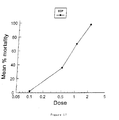
- Vicchem EOP shows insecticidal activity when crickets were placed onto bare treated glass as shown in Series 4, Figure 17 and mortality increased with the increasing concentrations of Vicchem EOP.
- Vicchem EOP at a concentration of 2.0% shifted the dose-response curve for the synthetic pyrethroids, Bulldock EC as illustrated in Series 4, Figure 18 and for Decis Forte EC shown in Series 4, Figure 19 revealing a significant increase in the relative efficacy of these pyrethroids.
Landscapes
- Life Sciences & Earth Sciences (AREA)
- Agronomy & Crop Science (AREA)
- Pest Control & Pesticides (AREA)
- Plant Pathology (AREA)
- Health & Medical Sciences (AREA)
- Engineering & Computer Science (AREA)
- Dentistry (AREA)
- General Health & Medical Sciences (AREA)
- Wood Science & Technology (AREA)
- Zoology (AREA)
- Environmental Sciences (AREA)
- Agricultural Chemicals And Associated Chemicals (AREA)
Abstract
Description
- This invention relates to compositions that are used as adjuvants to facilitate the effectiveness of insecticides. In particular, these adjuvants have application to pyrethroid insecticides.
- To maximise crop yields it has become essential to eliminate or substantially reduce the damage that pests inflict on crops. To this end, the chemical industry has developed a range of pesticides to combat most insects.
- However, the man on the land daily faces the competing tension between the persistent pests which would reduce his crop yields and the environmental impact which can occur through use of pesticides. Accordingly, there has long been a continuing investigation into the best means to maximise pesticidal efficacy whilst minimising environmental damage.
- Current general concerns to reduce pesticide input in farming have raised questions about how this can be achieved quickly, cost effectively and in a manner which is environmentally acceptable. It is now recognised that by integrating formulation and application procedures, increased efficacy of agrochemical treatments is possible thereby reducing the mass of application of active ingredient (a.i.) necessary to control weeds, pests and diseases as disclosed in "The Behaviour of Pyrethroid Insecticide Deposits and their Transfer from Plant to Insect Surfaces," Ford, M.G. and Salt, D.W., in "Pesticides on Plant Surfaces," Critical Reviews in Applied Chemistry, (1987), 18, 26-28, Ed. Cottrell, H.J..
- Furthermore, integration of these procedures may lead to selective treatments based on broad spectrum products as disclosed in "Pyrethroid Insecticide Exposure, Pick-up and Pharmacokinetics with Target and Non-target Insects," Ford, M.G. in "Interpretation of Pesticide Affects on Beneficial Anthropods," Aspects of Applied Biology, (1992), 24, 29-41, Ed. Brown, R.A., Jepson. P.C., Sotherton, N.W. Association of Applied Biologists, Wellesbourne.
- The use of spray adjuvants is an illustration of how this approach is being applied by farmers who wish to reduce costs and protect the environment by reducing pesticide inputs on their farms. Most research to date concerns spray additives to enhance the performance of herbicides in crop protection. These materials include surfactants and petroleum oils which can be harmful to the environment.
- A particular insecticide is Fastac™ (American Cyanamid Company) which has alpha-cypermethrin as its active insecticide ingredient. This product is available in an emulsifiable concentrate (EC) or as an ultra low volume (ULV) formulation for specialist low volume aerial application. The bulking agent is usually a paraffinic oil.
- Materials derived from plant oils which are non-toxic, biodegradable and therefore less hazardous are being considered for use as adjuvants in farming operations as disclosed in WO 94/24858 by Victorian Chemical Co. Pty. Ltd. and Wilbur-Ellis Company. In that patent application, ethylated esterified seed oils are used to improve the efficacy of herbicide, crop desiccant and defoliant treatments by softening the leaf waxes and enhancing penetration.
-
EP 0 311 180 describes the use of some spreading agents together with pyrethroids. - It has now been surprisingly found that certain adjuvants enhance the activity of pyrethroid insecticides. In particular the synthetic pyrethroids have been enhanced. Typical of these pyrethroids are alpha-cypermethrin and lambda-eyhalothin, the latter being the active insecticide ingredient in the emulsifiable concentrate. Karate® (ICI Australia Limited).
- According to the invention, an adjuvant is provided for use with a pyrethroid insecticide including one or more alkyl esters of fatty acids having a level of unsaturation of at least 40%. Higher levels of unsaturation are preferred (eg. at least 50%) being more effective as penetrants. Preferably, the alkyl esters are ethyl or methyl esters. The ethyl esters are most preferred.
- There are innumerable variations of the preferred ethyl ester since the ethyl esters of fatty acids may be produced from the natural oils and fats such as lard, tallow and vegetable oils or from specific blends produced by fatty acid manufacturers or from fatty acids produced by synthetic means. Readily available commercial vegetable oils such as canola, corn, sunflower and soyabean oils are also sources for fatty acids. Such fatty acids will generally be described in this patent specification as unsaturated fatty acids or oleates.
- In another embodiment of the invention, an adjuvant is provided for use with a pyrethroid insecticide including one or more alkyl esters of dibasic acids. A preferred ester is a maleate ester (eg. di-isooctylmaleate).
- The adjuvant of the invention may be incorporated with the active insecticide and be applied or diluted prior to application. Alternatively, the adjuvant may be added to a mixture of insecticide and diluent that is otherwise ready for application.
- Preferably, the adjuvant is added to an insecticide in an amount of at least 0.5% v/v. Where the application of the insecticide is as a ULV formulation, the adjuvant may exceed 80%, as the adjuvant is also acting as the diluent of the insecticide. However, when the addition of the adjuvant is not for diluent purposes, it is preferably present in amounts of from 0.5 to 25 % v/v, more preferably 1 to 10% v/v and most preferably about 2 to 5% v/v.
- In this specification when reference is made to the concentration of adjuvant, it means the adjuvant concentration on a v/v basis of the final mixture ready to be applied eg. sprayed.
- In another preferred embodiment of the invention, the composition includes a non-ionic emulsifier. These are well known to those skilled in the art and it is recognised that there are a multitude of combinations. Preferably, a non-ionic ester of the fatty acid moiety provides unexpected emulsification and coupling effects to furnish a finished homogeneous product. The non-ionic emulsifier works to provide the preferred emulsification characteristics for the alkyl esters.
- In another preferred embodiment, the non-ionic emulsifiers are a combination of alkylaryl ethoxylate and a polyethyleneglycol (PEG) ester of fatty acids. Preferably, the alkylaryl ethoxylate is obtained by reacting any one of the group of alcohols selected from octyl-, nonyl- or dodecylphenol with 3 to 13 moles of ethylene oxide, whilst the PEG ester is of molecular weight range 200-600 with either one or two moles of unsaturated fatty acids.
- Whilst it is acknowledged that the emulsifiers outlined above cover a wide range of physical properties and provide wide ranging emulsification abilities, it is important to note that a balance between two quite different emulsifiers can produce a far greater effect than an intermediate emulsifier. With this in mind, many combinations of alkylaryl ethoxylates and PEG esters can provide adequate emulsification of alkyl esters of unsaturated fatty acids for adjuvant systems. A preferred combination is ethoxylated nonylphenol with 9 moles of ethylene oxide and
PEG 400 di-oleate in the ratio 1:2 by weight. - In another preferred embodiment, the non-ionic emulsifier is the ethoxylated soy-amine base. A preferred emulsifier would have 15 moles of ethoxylation.
- In other preferred embodiments, other non-ionic emulsifiers of interest are those selected from the group of fatty alcohols. A preferred emulsifier would comprise a fatty acid having 6 moles of ethoxylation on the 12 carbon alcohol.
- In another preferred embodiment of the invention, a method of treating insects is provided which includes the application to a crop of a pyrethroid insecticide and an adjuvant including one or more alkyl esters of fatty acids having a level of unsaturation of at least 40% or one or more alkyl esters of dibasic acids.
- The invention will now be further illustrated with reference to the following non-limiting examples.
- An investigation was carried out to show how the processes of dose transfer, penetration and distribution of alpha-cypetmethrin are affected by the use of the adjuvants Esterol 123, Vicchem EOP and Vicchem DOP (Victorian Chemical Company, Richmond, Victoria; Australia) and how any changes might modify the effectiveness of alpha-cypermethrin as a contact pyrethroid insecticide.
- Esterol 123 is the proprietary product made by Victorian Chemical Company and is substantially ethyl oleate material.
- Vicchem EOP is the proprietary product made by Victorian Chemical Company and is a combination of
Esterol 123 and non-ionic emulsifiers such that the proportions of constituents (% w/w) are:Esterol 123/ethyl oleate76 PEG 400 di-oleate16 Nonylphenol ethoxylate (9EO) 8 - Vicchem DOP is the proprietary product made by Victorian Chemical Company and is a combination of di-isooctylmaleate and nun-ionic emulsifiers such that the proportions of constituents (% w/w) are:
Di-isooctylmaleate 76 PEG 400 di-oleate16 Nonylphenol ethoxylate (9EO) 8 - Alpha-cypermethrin is a commercially available emulsifiable concentrate Fastac™ EC, 100g a.i./l.
- Penetration of topically applied alpha-cypermethrin (4 µl of an aqueous solution of Fastac™ EC containing 1% a.i. w/v) across isolated cuticles of final instar larvae of Spodoptera littoralis Boisd. was studied using a diffusion flow cell. Changes in the solute concentrations in the receptor solvent were monitored at 220 nm wavelength at 10 second intervals. The penetration rates for Fastac™ EC (1% w/v of a.i. as above) with and without
Esterol 123, Vicchem EOP or Vicchem DOP (1% v/v) were compared to establish whether these adjuvants modify cuticle permeability. -
Esterol 123, Vicchem EOP and Vicchem DOP were added to the Fastac™ EC already diluted to 1% a.i, w/v with distilled water to give final solutions containing 1, 5, 10 or 25% v/v of adjuvant. Droplets (20 µl) of each solution were applied to glass microscope slides and left to dry. For comparison, droplets of pure Vicchem EOP and Vicchem DOP were also prepared. The effect of deposit ageing was assessed throughout a 24 hour period. - Pick-up of alpha-cypermethrin from droplets placed on glass slides was investigated to determine whether addition of adjuvant enhanced dose transfer. Adult mustard beetles held dorsally by a suction pooter were placed in contact with the centre of a deposit for 2 seconds, removed to a petri dish and left for 2 hours before being immersed in Analar acetone to remove transferred pyrethroid insecticide. The beetles were removed and the washings analysed for alpha-cypermethrin using electron capture detection (ECD) on a Hewlett Packard 1580 gas chromatograph (GC). The washed beetles were then frozen in liquid nitrogen to remove tissue water, crushed and further extracted in acetone to determine the internal concentrations of penetrated alpha-cypermethrin using ECD GC.
- Beetles were held as before in order to contact deposits containing the diluted EC (1% w/v alpha-cypermethrin) and known amounts of adjuvant (Vicchem EOP or Vicchem DOP). Redeposition of alpha-cypermethrin onto glass surfaces was followed for five successive contacts (2 sec per contact) in order to estimate the retained fraction. The contaminated beetles and glass surfaces were washed immediately with acetone and analysed for alpha-cypermethrin using a Hewlett Packard GCD (ion-selective mode).
- Beetles were held for 2 seconds in contact with deposits prepared earlier from solutions containing known amounts of alpha-cypermethrin and adjuvant. The treated insects were then confined to filter paper lined petri dishes. Knockdown and mortality were observed at frequent intervals after treatment.
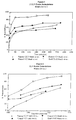
- Penetration profiles for EC formulations containing 1% w/v alpha-cypermethrin with and without
Esterol 123, Vicchem EOP and Vicchem DOP (1% v/v) are presented inSeries 1, Figure 1. All four formulations penetrated the cuticle at matching rates to produce similar absorbency profiles with time. These profiles measure the penetration of all of the formulation components including the active ingredient. - The results suggest that these adjuvants make little difference to the overall permeability of the cuticle as a result of surface effects, for example by modifying the organisation of the epicuticular waxes as suggested for plant cuticles.
- On drying, the EC formulation formed a liquid deposit from which the pyrethroid insecticide crystallised slowly with time. Addition of
Esterol 123, Vicchem EOP and Vicchem DOP slowed the ageing process and prevented crystallisation so that deposits remained liquid 24 hours after application to glass. In this fluid state, pyrethroid insecticide deposits are known to be more available for transfer to contacting insects. - Addition of the adjuvants Esterol 123 and Vicchem EOP increased the amount of alpha-cypermethrin initially transferred following a single 2 second contact with deposits aged for four hours after application of 20 µl droplets to glass slides (Table 1).
Esterol 123 was the most effective treatment when the adjuvants were added at a concentration of 1% v/v; increasing the adjuvant concentration to 5% v/v increased the transfer of alpha-cypermethrin from the Vicchem EOP and Vicchem DOP formulations to the level attained byEsterol 123 at 1% v/v.Recoveries (µg/insect) of alpha-cypermethrin from the transfer to adult mustard beetles following a single 2 second contact between the deposit and the tarsi. Adjuvant concentration (% v/v) 0 1 5 Esterol 1230.26 14.4 15.8 Vicchem EOP 0.26 6.1 14.5 - Redeposition of alpha-cypermethrin following initial contact with deposits prepared from a solution of alpha-cypermethrin and Vicchem EOP (1% w/v) was investigated in a similar manner. Adult beetles were held in contact with deposits for 2 seconds, as before, and then brought into contact with 5 successive clean glass surfaces for the same time to allow any redeposition from the tarsi onto the glass to take place. The contaminated surfaces were washed with acetone and the washings analysed by GCD. Although initial contact with such deposits resulted in an average transfer of 3 µg/insect, no subsequent redeposition was detected. Thus, the initial amount transferred remained on the insect where it was available for poisoning.
Recoveries (µg/insect) of alpha-cypermethrin from the surface and internal tissues of adults of Phaedon cochleariae Fab. following contact (2 sec) with deposits containing ethylated esterified seed oils. Adjuvant concentration (% v/v) 0 1 5 10 25 External Esterol 123 0.94 1.92 3.30 2.84 2.06 Vicchem EOP 0.94 1.96 3.52 2.08 3.62 Internal Esterol 123 0.33 1.02 2.58 1.20 1.32 Vicchem EOP 0.33 0.33 5.90 3.72 1.59 - Penetration of acquired alpha-cypermethrin was investigated following 2 second contacts of beetles with deposits formed from formulations containing different amounts of adjuvant. Analysis of the quantities recovered from the beetle surface and the internal extracts (Table 2) suggests an optimum adjuvant concentration (5% v/v) which gave maximal dose transfer and internal accumulation of alpha-
cypermethrin 4 hours after contact. Thus, the adjuvant is seen to have some effect on cuticular penetration and the concentration sprayed is also significant. - The influence of ethylated esterified seed oils on the insect response was investigated and is depicted in
Series 1, Figures 2, 3 and 4. - At the recommended field rate of 1 % w/v alpha-cypermethrin, a Fastac™ EC formulation containing adjuvants such as
Esterol 123 produce quicker knockdown in adult mustard beetles, Phaedon cochleariae Fab., than the same formulation applied alone. Similar results were obtained when the adjuvant Vicchem EOP was used as a carrier solvent. Thus, Vicchem EOP has potential as an pyrethroid insecticide carrier (Figures 3 and 4). This use of Vicchem EOP, for example, gave 100% knockdown at a concentration of alpha-cypermethrin of 0.001% a.i. w/v. The same concentration of a.i. resulted in only 60-80% knockdown (the upper response limit) following contact with deposits containing Fastac™ EC, suggesting that use of the adjuvant as a carrier increases insecticidal efficacy (Figure 4). Thus, effective treatments are possible using less pyrethroid insecticide. - This study suggests that the use of adjuvants derived from ethylated esterified seed oils increases the efficacy of the contact pyrethroid insecticide alpha-cypermethrin in a dose-related manner. The effect results primarily from an increased transfer of pyrethroid insecticide to adult mustard beetles, Phaedon cochleariae Fab. following contact with residual deposits. The higher internal levels of toxin which are observed 4 hours after encountering a deposit and associated changes in the speed of intoxication probably reflect this enhanced pick-up, although changes in the rate of cuticular penetration cannot be entirely discounted. Use of Vicchem EOP as a carrier solvent for alpha-cypermethrin resulted in a more effective treatment than Fastac™ EC applied at an equivalent concentration (0.001% a.i. w/v). It should therefore be possible to reduce the quantity of pyrethroid insecticide sprayed either by adding an appropriate adjuvant to the tank mix or by reformulating alpha-cypermethrin in a novel carrier such as Vicchem EOP.
- These studies were undertaken to investigate the efficacy of Esterol 112 (also obtained from Victoria Chemical Company) and
Esterol 123 as bulking oils. -
Esterol 112 is the proprietary product made by Victorian Chemical Company and is substantially methyl oleate material. - Vicchem MOP is the proprietary product made by Victorian Chemical Company and is a combination of
Esterol 112 and non-ionic emulsifiers such that the proportions of constituents are:Esterol 112/methyl oleate76 PEG 400 di-oleate16 Nonylphenol ethoxylate (9EO) 8 -
Esterol 123, Vicchem EOP and Vicchem DOP are as described in theSeries 1 examples. - Fastac™ ultra low volume (ULV) containing 1% w/v alpha-cypermethrin, (obtained from Cyanamid, Gosport, UK) was used as the commercial pyrethroid insecticide. This ULV formulation was mixed with the following oil adjuvants (co-diluents):
- Shellsol D100 (a petroleum derived solvent which has been highly refined to convert aromatics to cycloparaffins (Shell International));
-
Esterol 123 andEsterol 112. -
- Penetration studies using isolated insect cuticles, the pick-up, penetration and redeposition of alpha-cypermethrin and the response of mustard beetles following contact with aged deposits were as described in the
Series 1 examples. - The results from
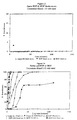
Series 2, Figures 5 and 6, show that each oil induces knockdown in adult mustard beetles brought into contact with a 4 hour old deposit placed on a glass slide. Complete recovery was observed twelve hours after contact with the Fastac™ ULV blank. However, there was no significant recovery after contact withEsterol 123,Esterol 112 or Shellsol D100. These results demonstrate that undiluted oils can themselves exert some insecticidal activity. - In
Series 2, Figures 7 and 8 show that a mixture containing 50% byvolume 1% a.i. w/v Fastac™ ULV and 50% by volume Shellsol D100 gave 100% knockdown and was faster acting than either the Fastac™ ULV blank or the Shellsol D100 bulking oil. Neither of the alpha-cypermethrin blanks gave complete knockdown. - When
Esterol 123 was mixed in different proportions with commercial bulking oil, Shellsol D100, for use as for the ULV formulation Fastac™ (1% a.i.), changing the ratio of adjuvants but maintaining the Fastac™ at 50% v/v had no effect on the speed of knockdown as illustrated inSeries 2, Figures 9 and 10. This result shows thatEsterol 123 and Shellsol D100 are equally effective as bulking oils for this formulation of alpha-cypermethrin. - However, all four mixtures of adjuvants gave 100% mortality after 12 hours, whereas that containing only Shellsol D100 gave approximately 17% recovery of the mustard beetles. This result indicates that greater dose transfer of alpha-cypermethrin is obtained in the presence of the adjuvants.
- In another experiment,
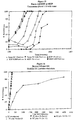
Fastac ™ ULV 1% w/v was diluted by 50% and 20% v/v, respectively withEsterol 112 to give mixtures containing different concentrations of Fastac™ formulation components including alpha-cypermethrin. The results fromSeries 2, Figures 11 and 12, confirm that mixtures containing a.i. are much faster acting than the blanks. Furthermore, the formulation containing the smallest amounts ofEsterol 112, and therefore the greatest concentration of alpha-cypermethrin appears to be the fastest acting mixture. Only the mixtures containing a.i. gave 100% mortality. - The responses due to alpha-cypermethrin dissolved in Vicchem EOP, Vicchem MOP or Fastac™ EC blank prior to final dilution with water to give concentrations of a.i. of 0.001% and 1% w/v were also compared directly. The results show that at both concentrations of alpha-cypermethrin, the addition of adjuvants produced faster knockdown. The results at 0.001% w/v a.i. demonstrate the benefits of addition of adjuvants most clearly in
Series 2, Figures 13, 14 and 15. - The formulation containing alpha-cypermethrin dissolved in Vicchem EOP gave the most rapid knockdown, followed by that dissolved in Vicchem MOP; the Fastac™ blank gave the slowest knockdown. This ranking was also observed at the higher concentration of a.i. (1% w/v). Percentage mortality follows the same trend. At 0.001% a.i., Fastac™ EC alone gave only 47% kill 24 hours after contact. Addition of Vicchem EOP and Vicchem MOP always resulted in 100% kill with 0.001% a.i. alpha-cypermethrin.
- The materials and methods, the pick-up, penetration and redeposition of lambda-cyhalothrin and the response of mustard beetles following contact with aged deposits were as described in the
Series 1 examples. - Each of the insecticides and adjuvant mixtures was very effective compared with the pyrethroid lambda-cyhalothrin alone as shown in
Series 3, Figure 16. The insecticide withEsterol 112 andEsterol 123 at 5% v/v were the most effective initially exhibiting a higher knock down rate than insecticide compositions having 1% of these adjuvants. However, all the adjuvant and insecticide mixtures showed superior knock down rates to the insecticide not mixed with the adjuvants. This shows that these adjuvants improve the insecticidal performance of lambda-cyhalothrin. - A series of laboratory bioassays was carried out to determine if Vicchem EOP could improve the efficacy of the synthetic pyrethroids Bulldock EC (Bayer; betacyfluthrin at 25g a.i./litre) and Decis Forte EC (AgrEvo; deltamethrin at 27.5g a.i./litre). Black field crickets were treated with 2.0% composition of Vicchem EOP.
- The black field cricket (Teleogryllus commodus) is a chewing insect and the first instars (i.e. newly emerged crickets) from a laboratory culture were used to test these pyrethroids. The culture was maintained at 24°C in a controlled-temperature room. The adults were reared from nymphs in ventilated plastic containers. The crickets were fed grain pellets throughout their life stages. Equal numbers of males and females were present and first instars were removed daily for bioassays.
- Insecticides in all treatments were applied using a Potter tower (Burkard) to ensure consistent application rates. The tower was run at 40 kPa and delivered droplets at about 50 µm in diameter. Plain cabbage was used for the bioassays.
- Cabbage leaves were sectioned and placed onto the base of a petri dish (9 cm diam). One side only was sprayed and the leaf section was air-dried for 20 min. in a fume-hood. Controls were sprayed with water only. Five sections (replicates) were prepared for each dose. A sharpened steel cutter (18 mm in diam) was used to cut 3 discs from each sprayed section and these were placed into the base of the glass petri disc (9 cm in diam.). First instars were placed into each disc using a camel hair brush, before replacing the lid. Each replicate contained 10 crickets. The bioassays were conducted at 25°C and cricket mortality was assessed after 24 hours.
- An initial comparison was made between sprayed leaf discs and the contact toxicity of the adjuvant and Bulldock EC, sprayed onto the glass only. The adjuvant and Bulldock EC were applied separately at varying rates in order to determine a dose response curve. Petri dish bases (9 cm diam.) were sprayed and then air-dried for 20 min. Controls were sprayed with water only. Five replicates were prepared and each plate was innoculated with 10 crickets. The bioassays were conducted at 25°C and cricket mortality was assessed after 24 hours.
- Vicchem EOP shows insecticidal activity when crickets were placed onto bare treated glass as shown in
Series 4, Figure 17 and mortality increased with the increasing concentrations of Vicchem EOP. - No cricket mortality was recorded when the leaf discs were sprayed with either 0.5% or 2.0% Vicchem EOP. It would appear that this result is due to lower effective doses being available on the leaf discs than on bare glass, or because of penetration of the Vicchem EOP into the leaf tissue, or a combination of both factors.
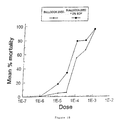
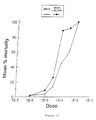
- Vicchem EOP at a concentration of 2.0% shifted the dose-response curve for the synthetic pyrethroids, Bulldock EC as illustrated in
Series 4, Figure 18 and for Decis Forte EC shown inSeries 4, Figure 19 revealing a significant increase in the relative efficacy of these pyrethroids. - From the above results as shown in
Series
Claims (26)
- Use of:(i) at least one alkyl ester of a fatty acid having a level of insaturation of at least 40%, or at least one alkyl ester of a dibasic acid, and(ii) at least one non-ionic emulsifier, as an adjuvant for improving the effectiveness or minimising the amount of a pyrethroid active ingredient.
- Use according to claim 1, in an insecticide composition comprising a pyrethroid active ingredient.
- Use according to claim 1 or 2, wherein said adjuvant comprises said at least one alkyl ester of a fatty acid (i), representing at least 50% of said adjuvant, and said at least one non-ionic emulsifier.
- Use according to claim 1 or 2, wherein said at least one alkyl ester of a fatty acid (i) has a level of insaturation of at least 50%.
- Use according to claim 3 or 4, wherein said at least one alkyl ester of a fatty acid (i) is methyl or ethyl ester.
- Use according to claim 5, wherein said at least one alkyl ester of a fatty acid (i) is ethyl ester.
- Use according to claim 1 or 2, wherein said at least one alkyl ester of a dibasic ester is maleate ester.
- Use according to claim 1 or 2, wherein said at least one alkyl ester of a dibasic ester is di-isooctylmaleate ester.
- Use according to anyone of claims 1 to 8, wherein said at least one non-ionic emulsifier (ii) is a non-ionic ester of the fatty acid moiety.
- Use according to anyone of claims 1 to 9, wherein said at least one non-ionic emulsifier (ii) is a polyethyleneglycol (PEG) ester of fatty acids.
- Use according to anyone of claims 1 to 10, wherein said adjuvant comprises a combination of two or more non-ionic emulsifiers.
- Use according to claim 11, wherein said at least one non-ionic emulsifier (ii) is a combination of alkylaryl ethoxylate and a polyethyleneglycol (PEG) ester of unsaturated fatty acids.
- Use according to claim 12, wherein said alkylaryl ethoxylate is obtainable by reacting at least one member of the group consisting of octyl-, nonyl- or dodecylphenol with 3 to 13 moles of ethylene oxide, and wherein the PEG ester has a molecular weight range of 200-600 with either one or two moles of unsaturated fatty acids.
- Use according to claim 12, wherein said alkylaryl ethoxylate is obtainable by reacting ethoxylated nonylphenol with 9 moles of ethylene oxide and PEG 400 di-oleate, in the ration 1:2 by weight of said alkylaryl ethoxylate to said PEG 400 di-oleate.
- Use according to anyone of claims 1 to 8, wherein said at least one non-ionic emulsifier (ii) is an ethoxylated soy-amine base.
- Use according to claim 15, wherein said ethoxylated soy-amine base has 15 moles of ethoxylation.
- Use according to anyone of claims 1 to 8, wherein said at least one non-ionic emulsifier (ii) is a fatty alcohol.
- Use according to claim 17, wherein the fatty alcohol has 6 moles of ethoxylation on a 12 carbon alcohol.
- Use according to anyone of claims 1 to 18, wherein said insecticide composition comprises at least about 0.5% v/v of said adjuvant and a pyrethroid active ingredient.
- Use according to anyone of claims 1 to 18, wherein said insecticide composition comprises at least about 80% v/v of said adjuvant and a pyrethroid active ingredient.
- Use according to anyone of claims 1 to 18, wherein said insecticide composition comprises at least from about 0.5 to 25% v/v of said adjuvant and a pyrethroid active ingredient.
- Use according to anyone of claims 1 to 18, wherein said insecticide composition comprises at least about 1 to 10% v/v of said adjuvant and a pyrethroid active ingredient.
- Use according to anyone of claims 1 to 18, wherein said insecticide composition comprises at least about 2 to 5% v/v of said adjuvant and a pyrethroid active ingredient.
- A method for treating insects comprising applying to a crop an insecticide composition comprising a pyrethroid active ingredient, and an adjuvant comprising:(i) at least one alkyl ester of a fatty acid having a level of insaturation of at least 40%, or at least one alkyl ester of a dibasic ester, and (ii) at least one non-ionic emulsifier.
- Method according to claim 24, wherein said adjuvant is incorporated with said insecticide composition and applied to said crop, or diluted prior to application.
- A method according to claim 24, wherein said adjuvant is added to said insecticide composition and a diluent.
Applications Claiming Priority (4)
| Application Number | Priority Date | Filing Date | Title |
|---|---|---|---|
| AUPN5698/95 | 1995-09-29 | ||
| AUPN569895 | 1995-09-29 | ||
| AUPN5698A AUPN569895A0 (en) | 1995-09-29 | 1995-09-29 | Insecticide adjuvants |
| PCT/AU1996/000603 WO1997012515A1 (en) | 1995-09-29 | 1996-09-25 | Insecticide adjuvants |
Publications (3)
| Publication Number | Publication Date |
|---|---|
| EP0854674A1 EP0854674A1 (en) | 1998-07-29 |
| EP0854674A4 EP0854674A4 (en) | 2001-03-07 |
| EP0854674B1 true EP0854674B1 (en) | 2003-04-23 |
Family
ID=3790025
Family Applications (1)
| Application Number | Title | Priority Date | Filing Date |
|---|---|---|---|
| EP96930908A Expired - Lifetime EP0854674B1 (en) | 1995-09-29 | 1996-09-25 | Insecticide adjuvants |
Country Status (10)
| Country | Link |
|---|---|
| EP (1) | EP0854674B1 (en) |
| JP (1) | JPH11512725A (en) |
| CN (1) | CN1162073C (en) |
| AR (1) | AR003741A1 (en) |
| AT (1) | ATE237940T1 (en) |
| AU (3) | AUPN569895A0 (en) |
| BR (1) | BR9610734A (en) |
| CA (1) | CA2229812C (en) |
| DE (1) | DE69627682T2 (en) |
| WO (1) | WO1997012515A1 (en) |
Families Citing this family (4)
| Publication number | Priority date | Publication date | Assignee | Title |
|---|---|---|---|---|
| ES2182048T3 (en) | 1996-10-25 | 2003-03-01 | Monsanto Technology Llc | COMPOSITION AND PROCEDURE TO TREAT PLANTS WITH EXOGENOUS CHEMICAL SUBSTANCES. |
| EP2181594A1 (en) | 2008-10-28 | 2010-05-05 | Cognis IP Management GmbH | Agricultural compositions |
| GB201512041D0 (en) | 2015-07-09 | 2015-08-19 | Apreslabs Ltd | Synergists for pesticides |
| AR123485A1 (en) | 2020-09-18 | 2022-12-07 | Bayer Ag | PYRETHROID SUSPENSION CONCENTRATES WITH ADJUVANT PACKAGED |
Family Cites Families (7)
| Publication number | Priority date | Publication date | Assignee | Title |
|---|---|---|---|---|
| FR2533412B2 (en) * | 1982-01-12 | 1986-05-09 | Virbac Laboratoires | IMPROVEMENTS ON PEST CONTROL COLLARS FOR ANIMALS |
| FR2526632B1 (en) * | 1982-05-14 | 1988-08-12 | Saphyr Sarl | IMPROVEMENT IN THE EXTRACTION OF PLANT INSECTICIDES |
| CA1306188C (en) * | 1987-10-05 | 1992-08-11 | Alan Robert Garden | Ectoparasiticidal pour-on formulation |
| US5084087A (en) * | 1989-04-26 | 1992-01-28 | Basf Corporation | Ready to dilute adjuvant-containing postemergent herbicide formulations |
| JPH06305904A (en) * | 1993-04-26 | 1994-11-01 | Takeda Engei Kk | Aqueous insecticidal preparation |
| AU6640094A (en) * | 1993-05-05 | 1994-11-21 | Victorian Chemicals International Pty Ltd | Herbicide, crop desiccant and defoliant adjuvants |
| BR9406529A (en) * | 1993-05-05 | 1996-01-02 | Victorian Chemical Internation | Crop desiccant and defoliant additives |
-
1995
- 1995-09-29 AU AUPN5698A patent/AUPN569895A0/en not_active Abandoned
-
1996
- 1996-09-25 DE DE69627682T patent/DE69627682T2/en not_active Expired - Lifetime
- 1996-09-25 AT AT96930908T patent/ATE237940T1/en not_active IP Right Cessation
- 1996-09-25 JP JP9513777A patent/JPH11512725A/en active Pending
- 1996-09-25 CA CA002229812A patent/CA2229812C/en not_active Expired - Fee Related
- 1996-09-25 AU AU65835/96A patent/AU722986B2/en not_active Expired
- 1996-09-25 AU AU69801/96A patent/AU6980196A/en not_active Abandoned
- 1996-09-25 WO PCT/AU1996/000603 patent/WO1997012515A1/en not_active Ceased
- 1996-09-25 EP EP96930908A patent/EP0854674B1/en not_active Expired - Lifetime
- 1996-09-25 CN CNB961972211A patent/CN1162073C/en not_active Expired - Fee Related
- 1996-09-25 BR BR9610734A patent/BR9610734A/en active Search and Examination
- 1996-09-27 AR ARP960104535A patent/AR003741A1/en active IP Right Grant
Also Published As
| Publication number | Publication date |
|---|---|
| AUPN569895A0 (en) | 1995-10-26 |
| EP0854674A1 (en) | 1998-07-29 |
| DE69627682T2 (en) | 2004-03-18 |
| CA2229812C (en) | 2009-02-03 |
| JPH11512725A (en) | 1999-11-02 |
| ATE237940T1 (en) | 2003-05-15 |
| CA2229812A1 (en) | 1997-04-10 |
| AU6980196A (en) | 1997-04-28 |
| AU6583596A (en) | 1997-04-10 |
| WO1997012515A1 (en) | 1997-04-10 |
| AU722986B2 (en) | 2000-08-17 |
| CN1162073C (en) | 2004-08-18 |
| AR003741A1 (en) | 1998-09-09 |
| EP0854674A4 (en) | 2001-03-07 |
| BR9610734A (en) | 1999-07-13 |
| CN1197372A (en) | 1998-10-28 |
| DE69627682D1 (en) | 2003-05-28 |
Similar Documents
| Publication | Publication Date | Title |
|---|---|---|
| Foy | Adjuvants: terminology, classification, and mode of action | |
| US5631205A (en) | Herbicide, crop desiccant and defolliant adjuvants comprising an unsaturated fatty acid ethyl ester and a non-ionic emulsifier | |
| US10130101B2 (en) | Sabadilla oil | |
| DE68913754T2 (en) | PESTICIDAL CONTROL. | |
| CA2584208C (en) | Adjuvant composition for use with herbicides, pesticides, insecticides, ovicides and fungicides and method of application | |
| US5700473A (en) | Triglyceride enhanced pyrethrin-based arthropodicidal composition | |
| US5942542A (en) | Insecticide adjuvants | |
| Mortada et al. | LAND SNAILS ATTACKING PEA FIELDS: II-EFFICIENCY OF CERTAIN BIOCIDES AND MOLLUSCICIDES AGAINST Monacha SP. LAND SNAILS AT DAKAHLIA GOVERNORATE. | |
| CA2229812C (en) | Insecticide adjuvants | |
| Etheridge et al. | Laboratory evaluation of new insecticides and bait matrices for the control of leaf-cutting ants (Hymenoptera, Formicidae) | |
| US20250024840A1 (en) | Ready-to-use barrier and knockdown pesticides | |
| EP0028611A1 (en) | Engineering improved chemical performance in plants | |
| CA1187409A (en) | Insecticide mixtures containing fatty acids | |
| Knowles | Preservation of agrochemicals | |
| Stock et al. | Foliar penetration of agrochemicals: limitations imposed by formulation type and some interactions with adjuvants | |
| Moore et al. | Tests of Insecticides for the Control Goat Lice in 1957 and 1958 c | |
| McCall et al. | Influence of foam adjuvants on activity of selected herbicides | |
| KR101950575B1 (en) | Agricultural chemical composition comprising pigments | |
| AU724302B2 (en) | Herbicide, crop desiccant and defoliant adjuvants | |
| AU751940B2 (en) | Herbicide, crop desiccant and defoliant adjuvants | |
| Wiltz et al. | A novel delivery method for ant (Hymenoptera: Formicidae) toxicants | |
| Chapman et al. | Pink bollworm resistance to DDT in the Laguna area of Mexico | |
| Xia | Toxicity of natural and synthetic sugar esters against tobacco insects with an emphasis on the tobacco aphid, Myzus nicotianae Blackman,(Homoptera: Aphididae) | |
| AU6640094A (en) | Herbicide, crop desiccant and defoliant adjuvants | |
| Knight | Targeting Cydia pomonella (L.)(Lepidoptera: Tortricidae) adults with low-volume applications of insecticides alone and |
Legal Events
| Date | Code | Title | Description |
|---|---|---|---|
| PUAI | Public reference made under article 153(3) epc to a published international application that has entered the european phase |
Free format text: ORIGINAL CODE: 0009012 |
|
| 17P | Request for examination filed |
Effective date: 19980224 |
|
| AK | Designated contracting states |
Kind code of ref document: A1 Designated state(s): AT BE CH DE DK ES FI FR GB GR IE IT LI LU MC NL PT SE |
|
| RIC1 | Information provided on ipc code assigned before grant |
Free format text: 7A 01N 53/00 A, 7A 01N 25/30 B, 7A 01N 53/00 J, 7A 01N 37:06 J, 7A 01N 37:04 J, 7A 01N 25:30 J, 7A 01N 25/30 K, 7A 01N 37:06 K, 7A 01N 37:04 K |
|
| A4 | Supplementary search report drawn up and despatched |
Effective date: 20010119 |
|
| AK | Designated contracting states |
Kind code of ref document: A4 Designated state(s): AT BE CH DE DK ES FI FR GB GR IE IT LI LU MC NL PT SE |
|
| 17Q | First examination report despatched |
Effective date: 20010516 |
|
| GRAH | Despatch of communication of intention to grant a patent |
Free format text: ORIGINAL CODE: EPIDOS IGRA |
|
| GRAH | Despatch of communication of intention to grant a patent |
Free format text: ORIGINAL CODE: EPIDOS IGRA |
|
| GRAA | (expected) grant |
Free format text: ORIGINAL CODE: 0009210 |
|
| AK | Designated contracting states |
Designated state(s): AT BE CH DE DK ES FI FR GB GR IE IT LI LU MC NL PT SE |
|
| PG25 | Lapsed in a contracting state [announced via postgrant information from national office to epo] |
Ref country code: NL Free format text: LAPSE BECAUSE OF FAILURE TO SUBMIT A TRANSLATION OF THE DESCRIPTION OR TO PAY THE FEE WITHIN THE PRESCRIBED TIME-LIMIT Effective date: 20030423 Ref country code: LI Free format text: LAPSE BECAUSE OF FAILURE TO SUBMIT A TRANSLATION OF THE DESCRIPTION OR TO PAY THE FEE WITHIN THE PRESCRIBED TIME-LIMIT Effective date: 20030423 Ref country code: IT Free format text: LAPSE BECAUSE OF FAILURE TO SUBMIT A TRANSLATION OF THE DESCRIPTION OR TO PAY THE FEE WITHIN THE PRE;WARNING: LAPSES OF ITALIAN PATENTS WITH EFFECTIVE DATE BEFORE 2007 MAY HAVE OCCURRED AT ANY TIME BEFORE 2007. THE CORRECT EFFECTIVE DATE MAY BE DIFFERENT FROM THE ONE RECORDED.SCRIBED TIME-LIMIT Effective date: 20030423 Ref country code: FI Free format text: LAPSE BECAUSE OF FAILURE TO SUBMIT A TRANSLATION OF THE DESCRIPTION OR TO PAY THE FEE WITHIN THE PRESCRIBED TIME-LIMIT Effective date: 20030423 Ref country code: CH Free format text: LAPSE BECAUSE OF FAILURE TO SUBMIT A TRANSLATION OF THE DESCRIPTION OR TO PAY THE FEE WITHIN THE PRESCRIBED TIME-LIMIT Effective date: 20030423 Ref country code: AT Free format text: LAPSE BECAUSE OF FAILURE TO SUBMIT A TRANSLATION OF THE DESCRIPTION OR TO PAY THE FEE WITHIN THE PRESCRIBED TIME-LIMIT Effective date: 20030423 |
|
| REG | Reference to a national code |
Ref country code: GB Ref legal event code: FG4D |
|
| REG | Reference to a national code |
Ref country code: CH Ref legal event code: EP |
|
| REF | Corresponds to: |
Ref document number: 69627682 Country of ref document: DE Date of ref document: 20030528 Kind code of ref document: P |
|
| REG | Reference to a national code |
Ref country code: IE Ref legal event code: FG4D |
|
| PG25 | Lapsed in a contracting state [announced via postgrant information from national office to epo] |
Ref country code: SE Free format text: LAPSE BECAUSE OF FAILURE TO SUBMIT A TRANSLATION OF THE DESCRIPTION OR TO PAY THE FEE WITHIN THE PRESCRIBED TIME-LIMIT Effective date: 20030723 Ref country code: PT Free format text: LAPSE BECAUSE OF FAILURE TO SUBMIT A TRANSLATION OF THE DESCRIPTION OR TO PAY THE FEE WITHIN THE PRESCRIBED TIME-LIMIT Effective date: 20030723 Ref country code: GR Free format text: LAPSE BECAUSE OF FAILURE TO SUBMIT A TRANSLATION OF THE DESCRIPTION OR TO PAY THE FEE WITHIN THE PRESCRIBED TIME-LIMIT Effective date: 20030723 Ref country code: DK Free format text: LAPSE BECAUSE OF FAILURE TO SUBMIT A TRANSLATION OF THE DESCRIPTION OR TO PAY THE FEE WITHIN THE PRESCRIBED TIME-LIMIT Effective date: 20030723 |
|
| PG25 | Lapsed in a contracting state [announced via postgrant information from national office to epo] |
Ref country code: LU Free format text: LAPSE BECAUSE OF NON-PAYMENT OF DUE FEES Effective date: 20030925 Ref country code: IE Free format text: LAPSE BECAUSE OF NON-PAYMENT OF DUE FEES Effective date: 20030925 |
|
| PG25 | Lapsed in a contracting state [announced via postgrant information from national office to epo] |
Ref country code: MC Free format text: LAPSE BECAUSE OF NON-PAYMENT OF DUE FEES Effective date: 20030930 |
|
| NLV1 | Nl: lapsed or annulled due to failure to fulfill the requirements of art. 29p and 29m of the patents act | ||
| PG25 | Lapsed in a contracting state [announced via postgrant information from national office to epo] |
Ref country code: ES Free format text: LAPSE BECAUSE OF FAILURE TO SUBMIT A TRANSLATION OF THE DESCRIPTION OR TO PAY THE FEE WITHIN THE PRESCRIBED TIME-LIMIT Effective date: 20031030 |
|
| REG | Reference to a national code |
Ref country code: CH Ref legal event code: PL |
|
| ET | Fr: translation filed | ||
| PLBE | No opposition filed within time limit |
Free format text: ORIGINAL CODE: 0009261 |
|
| STAA | Information on the status of an ep patent application or granted ep patent |
Free format text: STATUS: NO OPPOSITION FILED WITHIN TIME LIMIT |
|
| 26N | No opposition filed |
Effective date: 20040126 |
|
| REG | Reference to a national code |
Ref country code: IE Ref legal event code: MM4A |
|
| PGFP | Annual fee paid to national office [announced via postgrant information from national office to epo] |
Ref country code: BE Payment date: 20051017 Year of fee payment: 10 |
|
| PGFP | Annual fee paid to national office [announced via postgrant information from national office to epo] |
Ref country code: FR Payment date: 20060918 Year of fee payment: 11 |
|
| PGFP | Annual fee paid to national office [announced via postgrant information from national office to epo] |
Ref country code: GB Payment date: 20060925 Year of fee payment: 11 |
|
| PG25 | Lapsed in a contracting state [announced via postgrant information from national office to epo] |
Ref country code: BE Free format text: LAPSE BECAUSE OF NON-PAYMENT OF DUE FEES Effective date: 20060930 |
|
| BERE | Be: lapsed |
Owner name: *VICTORIAN CHEMICAL INTERNATIONAL PTY. LTD Effective date: 20060930 |
|
| GBPC | Gb: european patent ceased through non-payment of renewal fee |
Effective date: 20070925 |
|
| REG | Reference to a national code |
Ref country code: FR Ref legal event code: ST Effective date: 20080531 |
|
| PG25 | Lapsed in a contracting state [announced via postgrant information from national office to epo] |
Ref country code: FR Free format text: LAPSE BECAUSE OF NON-PAYMENT OF DUE FEES Effective date: 20071001 |
|
| PG25 | Lapsed in a contracting state [announced via postgrant information from national office to epo] |
Ref country code: GB Free format text: LAPSE BECAUSE OF NON-PAYMENT OF DUE FEES Effective date: 20070925 |
|
| PGFP | Annual fee paid to national office [announced via postgrant information from national office to epo] |
Ref country code: DE Payment date: 20100929 Year of fee payment: 15 |
|
| PG25 | Lapsed in a contracting state [announced via postgrant information from national office to epo] |
Ref country code: DE Free format text: LAPSE BECAUSE OF NON-PAYMENT OF DUE FEES Effective date: 20130403 |
|
| REG | Reference to a national code |
Ref country code: DE Ref legal event code: R119 Ref document number: 69627682 Country of ref document: DE Effective date: 20130403 |