EP0848003B1 - Optically active (R)-(E)-(4-substituted-phenyl-1,3-dithiolan-2-ylidene)-1-imidazolylacetonitrile derivative, and their use as fungicides - Google Patents
Optically active (R)-(E)-(4-substituted-phenyl-1,3-dithiolan-2-ylidene)-1-imidazolylacetonitrile derivative, and their use as fungicides Download PDFInfo
- Publication number
- EP0848003B1 EP0848003B1 EP97121747A EP97121747A EP0848003B1 EP 0848003 B1 EP0848003 B1 EP 0848003B1 EP 97121747 A EP97121747 A EP 97121747A EP 97121747 A EP97121747 A EP 97121747A EP 0848003 B1 EP0848003 B1 EP 0848003B1
- Authority
- EP
- European Patent Office
- Prior art keywords
- optically active
- substituted
- phenyl
- imidazolylacetonitrile
- dithiolan
- Prior art date
- Legal status (The legal status is an assumption and is not a legal conclusion. Google has not performed a legal analysis and makes no representation as to the accuracy of the status listed.)
- Expired - Lifetime
Links
- KOPLCKXTSFUQOM-UHFFFAOYSA-N N#CCN1C=CNC1 Chemical compound N#CCN1C=CNC1 KOPLCKXTSFUQOM-UHFFFAOYSA-N 0.000 description 1
Classifications
-
- C—CHEMISTRY; METALLURGY
- C07—ORGANIC CHEMISTRY
- C07D—HETEROCYCLIC COMPOUNDS
- C07D409/00—Heterocyclic compounds containing two or more hetero rings, at least one ring having sulfur atoms as the only ring hetero atoms
- C07D409/02—Heterocyclic compounds containing two or more hetero rings, at least one ring having sulfur atoms as the only ring hetero atoms containing two hetero rings
- C07D409/06—Heterocyclic compounds containing two or more hetero rings, at least one ring having sulfur atoms as the only ring hetero atoms containing two hetero rings linked by a carbon chain containing only aliphatic carbon atoms
-
- A—HUMAN NECESSITIES
- A01—AGRICULTURE; FORESTRY; ANIMAL HUSBANDRY; HUNTING; TRAPPING; FISHING
- A01N—PRESERVATION OF BODIES OF HUMANS OR ANIMALS OR PLANTS OR PARTS THEREOF; BIOCIDES, e.g. AS DISINFECTANTS, AS PESTICIDES OR AS HERBICIDES; PEST REPELLANTS OR ATTRACTANTS; PLANT GROWTH REGULATORS
- A01N43/00—Biocides, pest repellants or attractants, or plant growth regulators containing heterocyclic compounds
- A01N43/48—Biocides, pest repellants or attractants, or plant growth regulators containing heterocyclic compounds having rings with two nitrogen atoms as the only ring hetero atoms
- A01N43/50—1,3-Diazoles; Hydrogenated 1,3-diazoles
Definitions
- the present invention relates to an optically active antifungal agent having a more improved antifungal activity than the racemic mixture thereof in the field of medical antifungal compounds.
- the optically active composition according to the present invention is an antifungal agent useful for preventing or treating mycoses of human and animals.
- the composition can be used for preventing or treating local mycotic infection, mucosa infection, or generalized mycotic infection caused by the genus of Trichophyton, Candida or Aspergillus.
- JP-A-60-218387 and JP-A-62-93227 disclose that the imidazole derivatives are useful as an antifungal agent.
- JP-A-2-275877 discloses that specified optically active compounds among the above imidazole derivatives have an antifungal activity against Trichophyton mentagrophytes about 1.4 times the activity of racemates thereof.
- WO 97/02821 being a PCT application published after the filing date of the priority application of the present application describes compounds having an antifungal activity. These compounds carry a 2,4-dichloro group.
- JP-62-0933227 and JP-62-093204 describe racemic forms of a similar class of compounds as the ones claimed in the present invention.
- JP-62-093227 discloses specific compounds that can be used for the remedy of local mycosis, mucous infection and systemic mycosis caused by fungi belonging to Trichophyton genus or. Candida genus.
- JP-62-093204 relating to non-medical fungicidal uses provides a fungicide containing a specific compound synthesized from one 1-cyanomethylimidazole and carbon disulfide, which is useful for the control of various plant blights.
- An object of the present invention is to provide optically active compounds of imidazole derivatives having a more excellent antifungal activity than racemates thereof.
- a further object of the present invention is to provide a process for producing the optically active compounds and a method for using them.
- an antifungal composition comprising as an active ingredient the optically active (R)-(E)-(4-substituted-phenyl-1,3-dithiolan-2-ylidene)-1-imidazolylacetonitrile derivative as defined above or a pharmaceutically acceptable salt thereof, optionally together with a pharmaceutically acceptable carrier or diluent.
- optically active (R)-enantiomer compounds having an antifungal activity represented by formula (I) are selectively produced by an asymmetric synthesis.
- the compound thus produced and pharmaceutically acceptable salts thereof have an antifungal activity against fungi such as dermatophytes, Trichophyton mentagrophytes and Trichophyton rubrum several times the activity of the racemic mixture thereof.
- M in the formula (III) represents an alkali metal atom such as sodium and potassium.
- Optically active compounds represented by formula (I) can be produced by the process shown in Reaction 1 according to the production method of a racemate described in JP-A-2-275877.
- X represents a 2,4-dibromo-group or a 2-chloro-4-bromo group
- X 1 and X 2 are the same or different and each represents a methanesulfonyloxy group, a benzenesulfonyloxy group, a p-toluenesulfonyloxy group or a halogen atom
- M represents an alkali metal atom.
- the objective compound represented by formula (I) can be produced by reacting an optically active glycol derivative having stereoconfiguration (S) represented by formula (II) of which stereoconfiguration is specified or an equivalent thereof with a dithiolate salt represented by formula (III)-.
- the compound represented by formula (II) can be used in an equimolar amount or an excess molar amount per the dithiolate salt represented by formula (III).
- the equivalent of the optically active glycol derivative represented by formula (II) means a compound having reactivity similar thereto (that is, a compound which is not included in glycol derivatives, but provides the same product and has the similar reactivity).
- the equivalent includes those wherein one of X 1 and X 2 represents a halogen atom such as Cl, Br and I, and the other represents a halogen atom, a methanesulfonyloxy group, a benzenesulfonyloxy group, or a p-toluenesulfonyloxy group.
- the compounds represented by formula (II) can be used as the starting material in the reaction according to the present invention.
- a reaction temperature can be selected from the range of 0 to 100°C. Preferably, the reaction is carried out at around room temperature.
- the reaction time can be selected from the range of 0.5 to 24 hours.
- the resulting compound is a mixture of geometrical isomers E and Z to the double bond in the compound, and the objective E-isomer represented by formula (I) can be readily isolated and purified by, e.g., silica gel column chromatography or fractional crystallization.
- solvent used for purification by fractional crystallization and recrystallization include ethanol, ethyl acetate, ether, hexane, acetone, and mixed solvents thereof. wherein M is the same as defined above.
- the dithiolate salt represented by formula (III) can be produced by reacting 1-cyanomethylimidazole with carbon disulfide as shown in Reaction 2 in the presence of a base and an inert solvent.
- Any inert solvents can be used in the above reaction as long as they do not inhibit the progress of the reaction. Examples thereof include alcohols (e.g., methanol, ethanol, isopropanol), polar solvents (e.g., dimethyl sulfoxide (DMSO), dimethylformamide (DMF), acetonitrile), water, and mixed solvents thereof.
- the base include sodium carbonate, potassium carbonate, sodium hydroxide and potassium hydroxide.
- the amount (mol) of the base can be selected from the range of 2 to 8 times, preferably 4 to 6 times, the amount (mol) of 1-cyanomethylimidazole.
- An optically active glycol derivative having stereoconfiguration (S) represented by formula (II) of which stereoconfiguration is specified can be produced according to Reactions 3 to 5 shown below.
- X represents a 2,4-dibromo-group or a 2-chloro-4-bromo group. and X 1 and X 2 are the same as defined above.
- the compound represented by formula (IIa) can be produced by reacting an (R)-1-(substituted-phenyl)styrene oxide which can be produced stereoselectively from a substituted styrene according to the method described in J. Am. Chem. Soc.
- a haloalcohol represented by formula (IV) a haloalcohol represented by formula (IV), and then reacting the haloalcohol thus obtained with a suitable halogenating agent (e.g., thionyl chloride, phosphorus tribromide, carbon tetrachloride/triphenylphosphine) or an activating agent (e.g., methanesulfonyl chloride, toluenesulfonyl chloride, benzenesulfonyl chloride).
- a suitable halogenating agent e.g., thionyl chloride, phosphorus tribromide, carbon tetrachloride/triphenylphosphine
- an activating agent e.g., methanesulfonyl chloride, toluenesulfonyl chloride, benzenesulfonyl chloride.
- the compound represented by formula (IIb) can be produced by reacting a haloalcohol represented by formula (V) which can be produced stereoselectively from a substituted acetophenone derivative according to the method described in Modem Synthetic Method, 5 :115 (1989) with a suitable halogenating agent (i.e., thionyl chloride, phosphorus tribromide, carbon tetrachloride/ triphenylphosphine) or an activating agent (i.e., methanesulfonyl chloride, toluenesulfonyl chloride, benzenesulfonyl chloride).
- a suitable halogenating agent i.e., thionyl chloride, phosphorus tribromide, carbon tetrachloride/ triphenylphosphine
- an activating agent i.e., methanesulfonyl chloride, toluenesulfonyl chloride
- the “salt” or “pharmaceutically acceptable salt” of the compound represented by formula (I) in the present invention includes a salt of the compound and an inorganic acid (e.g., hydrochloric acid, hydrobromic acid, sulfuric acid, nitric acid, phosphoric acid) or an organic acid (e.g., oxalic acid, succinic acid, tartaric acid, citric acid, valeric acid, methanesulfonic acid, p-toluenesulfonic acid).
- an inorganic acid e.g., hydrochloric acid, hydrobromic acid, sulfuric acid, nitric acid, phosphoric acid
- an organic acid e.g., oxalic acid, succinic acid, tartaric acid, citric acid, valeric acid, methanesulfonic acid, p-toluenesulfonic acid.
- the compound according to the present invention and pharmaceutically acceptable salts thereof are formed into pharmaceutically acceptable preparations suitable for oral administration or those suitable for painting treatment.
- preparation form examples include liquid formulation, tablet, emulsion, ointment, cream, lotion and poultice.
- the amount to be administered varies depending upon age, body weight and administration form. In generalized treatment, the amount is normally at least 0.05 mg, preferably from 0.5 to 50 mg, per kg of body weight of adult and per day, and the preparation can be administered at one time or several times in parts in one day.
- the preparation is used as a painting preparation comprising an active ingredient of at least 0.001%, preferably 0.1 to 2%.
- the preparation is applied in an amount of 30 to 100 mg per cm 2 .
- the antifungal composition according to the present invention may be used in admixture with other antifungal agents or antibacterial agents (e.g., amphotericin B, trichomycin, varitotin, clotrimazole).
- other antifungal agents or antibacterial agents e.g., amphotericin B, trichomycin, varitotin, clotrimazole.
- Optically active imidazole derivatives and salts thereof produced according to the present invention have a more excellent antifungal activity than the racemic mixture thereof. Thus, they are useful as preparations for preventing or treating mycoses of human and animals.
- One part of the compound of the invention 5 parts of benzyl alcohol, 30 parts of ethanol and 47 parts of propylene glycol were mixed and dissolved. Then, an aqueous solution composed of 1 part of Hiviskwako 104 and 15 parts of purified water was added thereto to obtain a uniform solution. Next, 1 part of diisopropanolamine was added thereto with stirring to obtain a gel preparation.
- One part of the compound of the invention was dissolved into 5 parts of benzyl alcohol and 5 parts of diethyl sebacate. Then, 5 parts of ethyl alcohol, 6 parts of stearyl alcohol, 1 part of sorbitan monostearate and 8 parts of polyoxyethylene monostearate were added thereto, and dissolved under heating at 70°C. While keeping at 70°C, 69 parts of purified water which had been heated to 70°C were added to the resulting uniform solution, and then cooled with stirring to obtain a cream composition.
- DMSO dimethyl sulfoxide
- a SGA plate medium containing a given amount of a compound (20 ml/dish) was prepared.
- a loopful of the inoculation fungal solution was applied in the form of a line to each plate medium at a length of about 15 mm, and was allowed to stand for cultivation at 27°C for 7 days.
- the minimum inhibitory concentration (MIC) of the compound at which a growth of a microorganism cannot be visually recognized was determined. The results are shown in Table 3.
Landscapes
- Chemical & Material Sciences (AREA)
- Organic Chemistry (AREA)
- Life Sciences & Earth Sciences (AREA)
- Agronomy & Crop Science (AREA)
- Pest Control & Pesticides (AREA)
- Plant Pathology (AREA)
- Health & Medical Sciences (AREA)
- Engineering & Computer Science (AREA)
- Dentistry (AREA)
- General Health & Medical Sciences (AREA)
- Wood Science & Technology (AREA)
- Zoology (AREA)
- Environmental Sciences (AREA)
- Pharmaceuticals Containing Other Organic And Inorganic Compounds (AREA)
Description
- The present invention relates to an optically active antifungal agent having a more improved antifungal activity than the racemic mixture thereof in the field of medical antifungal compounds. The optically active composition according to the present invention is an antifungal agent useful for preventing or treating mycoses of human and animals. For example, the composition can be used for preventing or treating local mycotic infection, mucosa infection, or generalized mycotic infection caused by the genus of Trichophyton, Candida or Aspergillus.
- Conventionally, various azole compounds having an antifungal activity are known. For example, JP-A-60-218387 and JP-A-62-93227 (the term "JP-A" as used herein means an "unexamined published Japanese patent application") disclose that the imidazole derivatives are useful as an antifungal agent. Furthermore, JP-A-2-275877 discloses that specified optically active compounds among the above imidazole derivatives have an antifungal activity against Trichophyton mentagrophytes about 1.4 times the activity of racemates thereof.
- WO 97/02821, being a PCT application published after the filing date of the priority application of the present application describes compounds having an antifungal activity. These compounds carry a 2,4-dichloro group.
- JP-62-0933227 and JP-62-093204 describe racemic forms of a similar class of compounds as the ones claimed in the present invention. JP-62-093227 discloses specific compounds that can be used for the remedy of local mycosis, mucous infection and systemic mycosis caused by fungi belonging to Trichophyton genus or. Candida genus. JP-62-093204 relating to non-medical fungicidal uses provides a fungicide containing a specific compound synthesized from one 1-cyanomethylimidazole and carbon disulfide, which is useful for the control of various plant blights.
- An object of the present invention is to provide optically active compounds of imidazole derivatives having a more excellent antifungal activity than racemates thereof.
- A further object of the present invention is to provide a process for producing the optically active compounds and a method for using them.
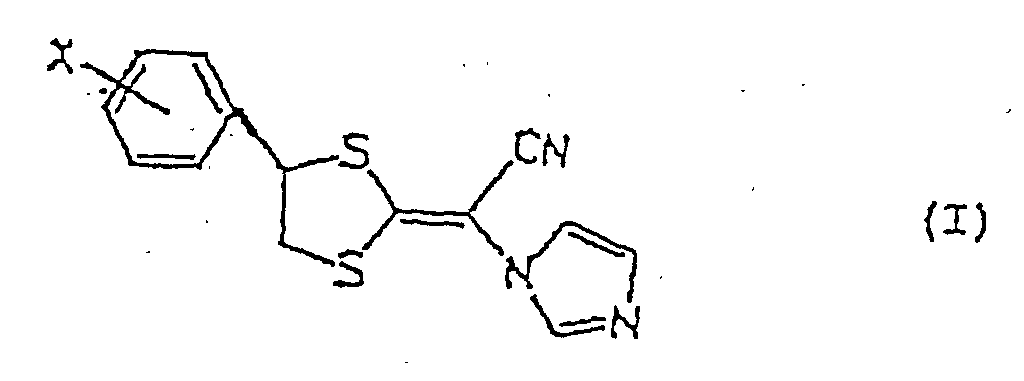
- These and other objects of the present invention have been accomplished by an optically active (R)-(E)-(4-substituted-phenyl-1,3-dithiolan-2-ylidene)-1-imidazolylacetonitrile derivative represented by the following formula (I) or a salt thereof:wherein X represents a 2,4-dibromo-group or a 2-chloro-4-bromo group.

- Furthermore, these and other objects of the present invention have been accomplished by an antifungal composition comprising as an active ingredient the optically active (R)-(E)-(4-substituted-phenyl-1,3-dithiolan-2-ylidene)-1-imidazolylacetonitrile derivative as defined above or a pharmaceutically acceptable salt thereof, optionally together with a pharmaceutically acceptable carrier or diluent.
- Moreover, these and other objects of the present invention have been accomplished by a process for producing the (R)-(E)-(4-substituted-phenyl-1,3-dithiolan-2-ylidene)-1-imidazolylacetonitrile as defined above or a salt thereof, comprising
reacting an optically active glycol derivative represented by the following formula (II) or an equivalent thereof:wherein X represents a 2,4-dibromo-group or a 2-chloro-4-bromo group and X1 and X2 are the same or different and each represents a methanesulfonyloxy group, a benzenesulfonyloxy group, a p-toluenesulfonyloxy group or a halogen atom,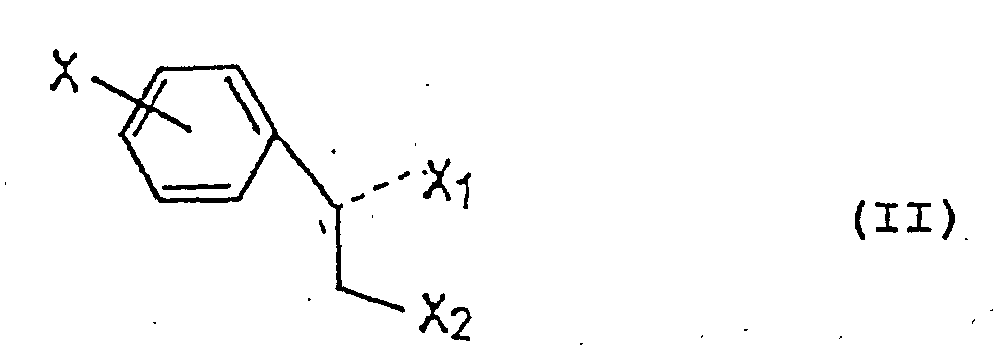
with a dithiolate salt represented by the following formula (III):wherein M represents an alkali metal atom.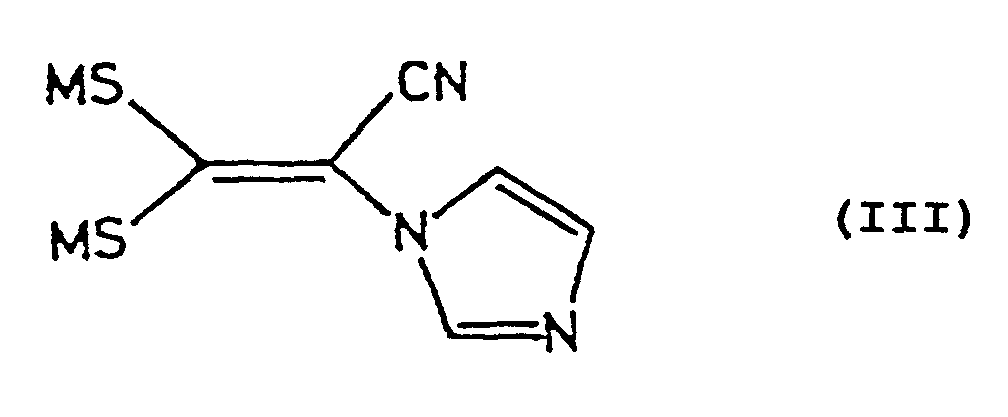
- Also, these and other objects of the present invention have been accomplished by a method for preventing or treating local or generalized mycoses comprising administrating to human or animals in need of such prevention or treatment a pharmaceutically effective amount of the optically active (R )-(E)-(4-substituted-phenyl-1,3-dithiolan-2-ylidene)-1-imidazolylacetonitrile derivative as defined above or a pharmaceutically acceptable salt thereof, optionally together with a pharmaceutical acceptable carrier or a diluent.
- Still furthermore, these and other objects of the present invention have been accomplished by use of the optically active (R)-(E)-(4-substituted-phenyl-1,3-dithiolan-2-ylidene)-1-imidazolylacetonitrile derivative as defined above or a pharmaceutically acceptable salt thereof for preparing an antifungal composition.
- In the present invention, optically active (R)-enantiomer compounds having an antifungal activity represented by formula (I) are selectively produced by an asymmetric synthesis. The compound thus produced and pharmaceutically acceptable salts thereof have an antifungal activity against fungi such as dermatophytes, Trichophyton mentagrophytes and Trichophyton rubrum several times the activity of the racemic mixture thereof.
- M in the formula (III) represents an alkali metal atom such as sodium and potassium.
- Optically active compounds represented by formula (I) can be produced by the process shown in Reaction 1 according to the production method of a racemate described in JP-A-2-275877.wherein X represents a 2,4-dibromo-group or a 2-chloro-4-bromo group;
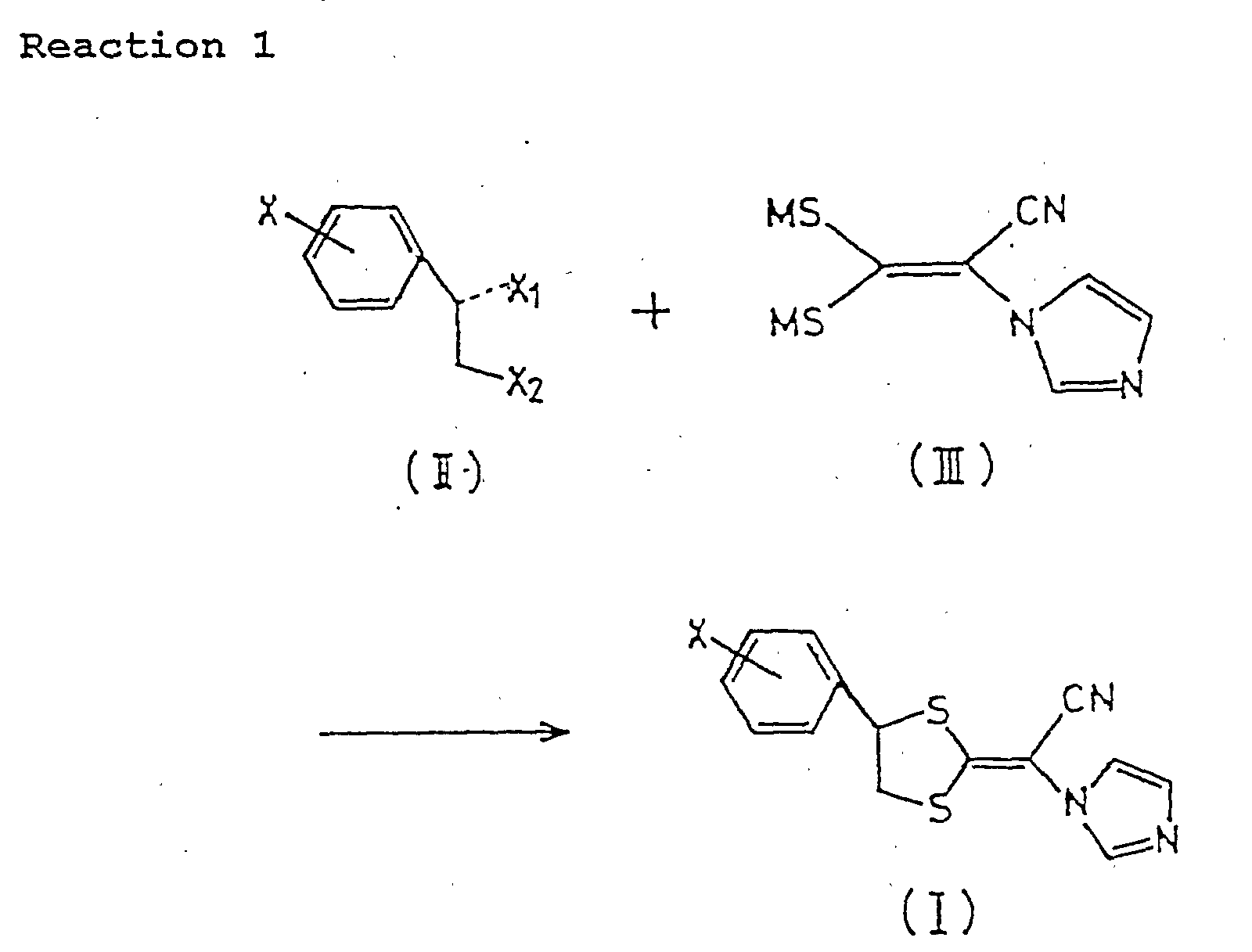
X1 and X2 are the same or different and
each represents a methanesulfonyloxy group, a benzenesulfonyloxy group, a p-toluenesulfonyloxy group or a halogen atom; and M represents an alkali metal atom. - That is, the objective compound represented by formula (I) can be produced by reacting an optically active glycol derivative having stereoconfiguration (S) represented by formula (II) of which stereoconfiguration is specified or an equivalent thereof with a dithiolate salt represented by formula (III)-. The compound represented by formula (II) can be used in an equimolar amount or an excess molar amount per the dithiolate salt represented by formula (III).
- The equivalent of the optically active glycol derivative represented by formula (II) means a compound having reactivity similar thereto (that is, a compound which is not included in glycol derivatives, but provides the same product and has the similar reactivity). For example, the equivalent includes those wherein one of X1 and X2 represents a halogen atom such as Cl, Br and I, and the other represents a halogen atom, a methanesulfonyloxy group, a benzenesulfonyloxy group, or a p-toluenesulfonyloxy group. In other words, the compounds represented by formula (II) can be used as the starting material in the reaction according to the present invention.
- A reaction temperature can be selected from the range of 0 to 100°C. Preferably, the reaction is carried out at around room temperature. The reaction time can be selected from the range of 0.5 to 24 hours.
- The resulting compound is a mixture of geometrical isomers E and Z to the double bond in the compound, and the objective E-isomer represented by formula (I) can be readily isolated and purified by, e.g., silica gel column chromatography or fractional crystallization. Examples of solvent used for purification by fractional crystallization and recrystallization include ethanol, ethyl acetate, ether, hexane, acetone, and mixed solvents thereof.wherein M is the same as defined above.

- The dithiolate salt represented by formula (III) can be produced by reacting 1-cyanomethylimidazole with carbon disulfide as shown in Reaction 2 in the presence of a base and an inert solvent. Any inert solvents can be used in the above reaction as long as they do not inhibit the progress of the reaction. Examples thereof include alcohols (e.g., methanol, ethanol, isopropanol), polar solvents (e.g., dimethyl sulfoxide (DMSO), dimethylformamide (DMF), acetonitrile), water, and mixed solvents thereof. Examples of the base include sodium carbonate, potassium carbonate, sodium hydroxide and potassium hydroxide. They can be used as they are in the form of solid or as a solution in an inert solvent. The amount (mol) of the base can be selected from the range of 2 to 8 times, preferably 4 to 6 times, the amount (mol) of 1-cyanomethylimidazole.
- An optically active glycol derivative having stereoconfiguration (S) represented by formula (II) of which stereoconfiguration is specified can be produced according to Reactions 3 to 5 shown below.wherein X represents a 2,4-dibromo-group or a 2-chloro-4-bromo group. and X1 and X2 are the same as defined above.

- That is, it can be produced by reacting an (S)-(substituted-phenyl)ethane-1,2-diol which can be produced stereoselectively from a substituted styrene according to the method described in J. Org. Chem., 57:2768 (1992) with a suitable halogenating agent (e.g., thionyl chloride, phosphorus tribromide, carbon tetrachloride/triphenylphosphine), or an activating agent (i.e., methanesulfonyl chloride, toluenesulfonyl chloride, benzenesulfonyl chloride).wherein Y represents a chlorine atom or a bromine atom; and X and X2 are the same as defined above.

- The compound represented by formula (IIa) can be produced by reacting an (R)-1-(substituted-phenyl)styrene oxide which can be produced stereoselectively from a substituted styrene according to the method described in J. Am. Chem. Soc., 113:7063 (1991) with a halogenated hydrogen to prepare a haloalcohol represented by formula (IV), and then reacting the haloalcohol thus obtained with a suitable halogenating agent (e.g., thionyl chloride, phosphorus tribromide, carbon tetrachloride/triphenylphosphine) or an activating agent (e.g., methanesulfonyl chloride, toluenesulfonyl chloride, benzenesulfonyl chloride).wherein Y represents a chlorine atom or a bromine atom; and X and X1 are the same as defined above.
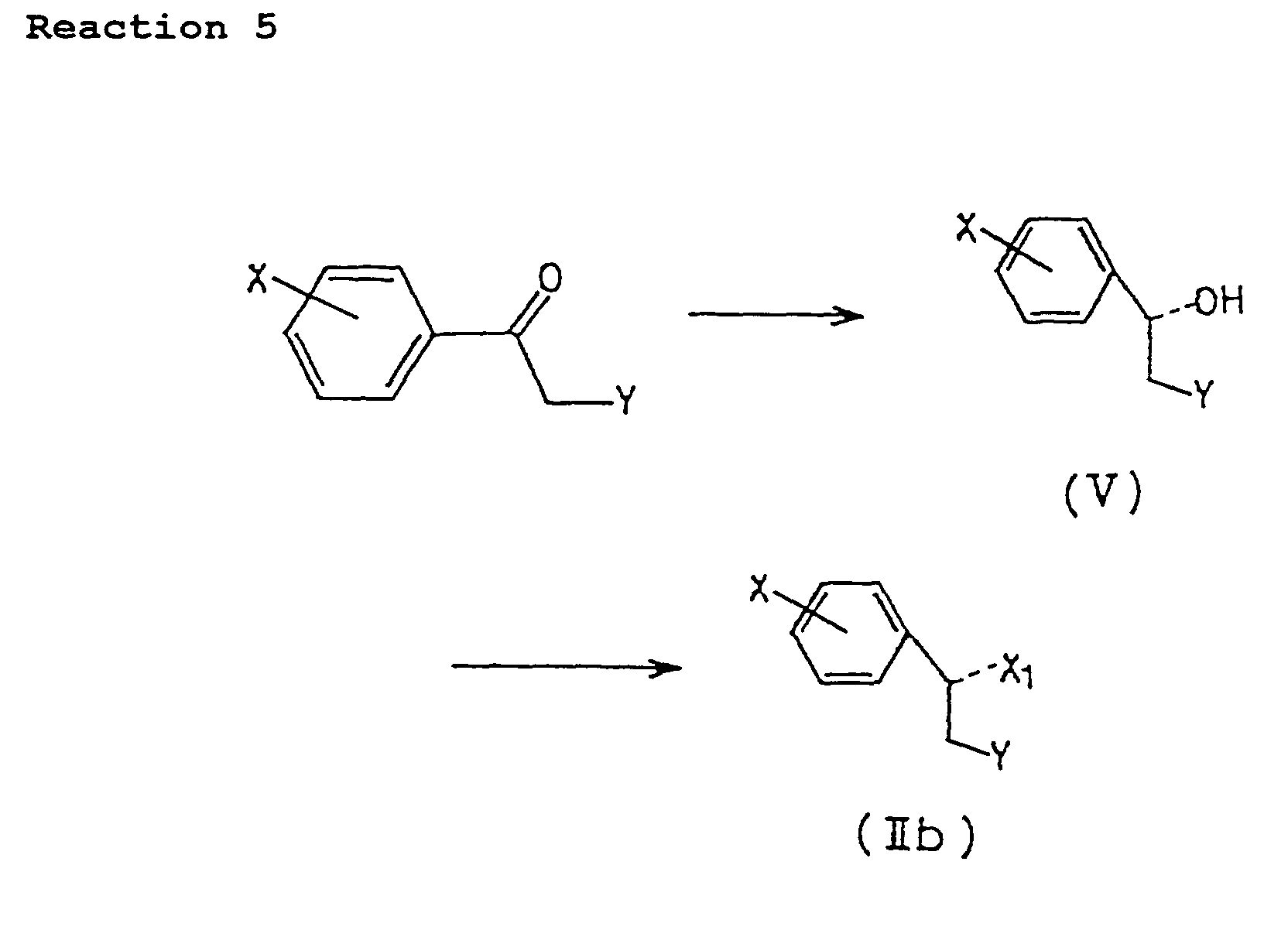
- The compound represented by formula (IIb) can be produced by reacting a haloalcohol represented by formula (V) which can be produced stereoselectively from a substituted acetophenone derivative according to the method described in Modem Synthetic Method, 5:115 (1989) with a suitable halogenating agent (i.e., thionyl chloride, phosphorus tribromide, carbon tetrachloride/ triphenylphosphine) or an activating agent (i.e., methanesulfonyl chloride, toluenesulfonyl chloride, benzenesulfonyl chloride).
- The "salt" or "pharmaceutically acceptable salt" of the compound represented by formula (I) in the present invention includes a salt of the compound and an inorganic acid (e.g., hydrochloric acid, hydrobromic acid, sulfuric acid, nitric acid, phosphoric acid) or an organic acid (e.g., oxalic acid, succinic acid, tartaric acid, citric acid, valeric acid, methanesulfonic acid, p-toluenesulfonic acid).
- The compound according to the present invention and pharmaceutically acceptable salts thereof are formed into pharmaceutically acceptable preparations suitable for oral administration or those suitable for painting treatment.
- Examples of the preparation form include liquid formulation, tablet, emulsion, ointment, cream, lotion and poultice.
- The amount to be administered varies depending upon age, body weight and administration form. In generalized treatment, the amount is normally at least 0.05 mg, preferably from 0.5 to 50 mg, per kg of body weight of adult and per day, and the preparation can be administered at one time or several times in parts in one day.
- In a local treatment, the preparation is used as a painting preparation comprising an active ingredient of at least 0.001%, preferably 0.1 to 2%. The preparation is applied in an amount of 30 to 100 mg per cm2.
- The antifungal composition according to the present invention may be used in admixture with other antifungal agents or antibacterial agents (e.g., amphotericin B, trichomycin, varitotin, clotrimazole).
- Optically active imidazole derivatives and salts thereof produced according to the present invention have a more excellent antifungal activity than the racemic mixture thereof. Thus, they are useful as preparations for preventing or treating mycoses of human and animals.
- Preparation Examples, Formulation Examples and Test Example of the present invention will be shown below.
Parts are all by weight unless otherwise indicated.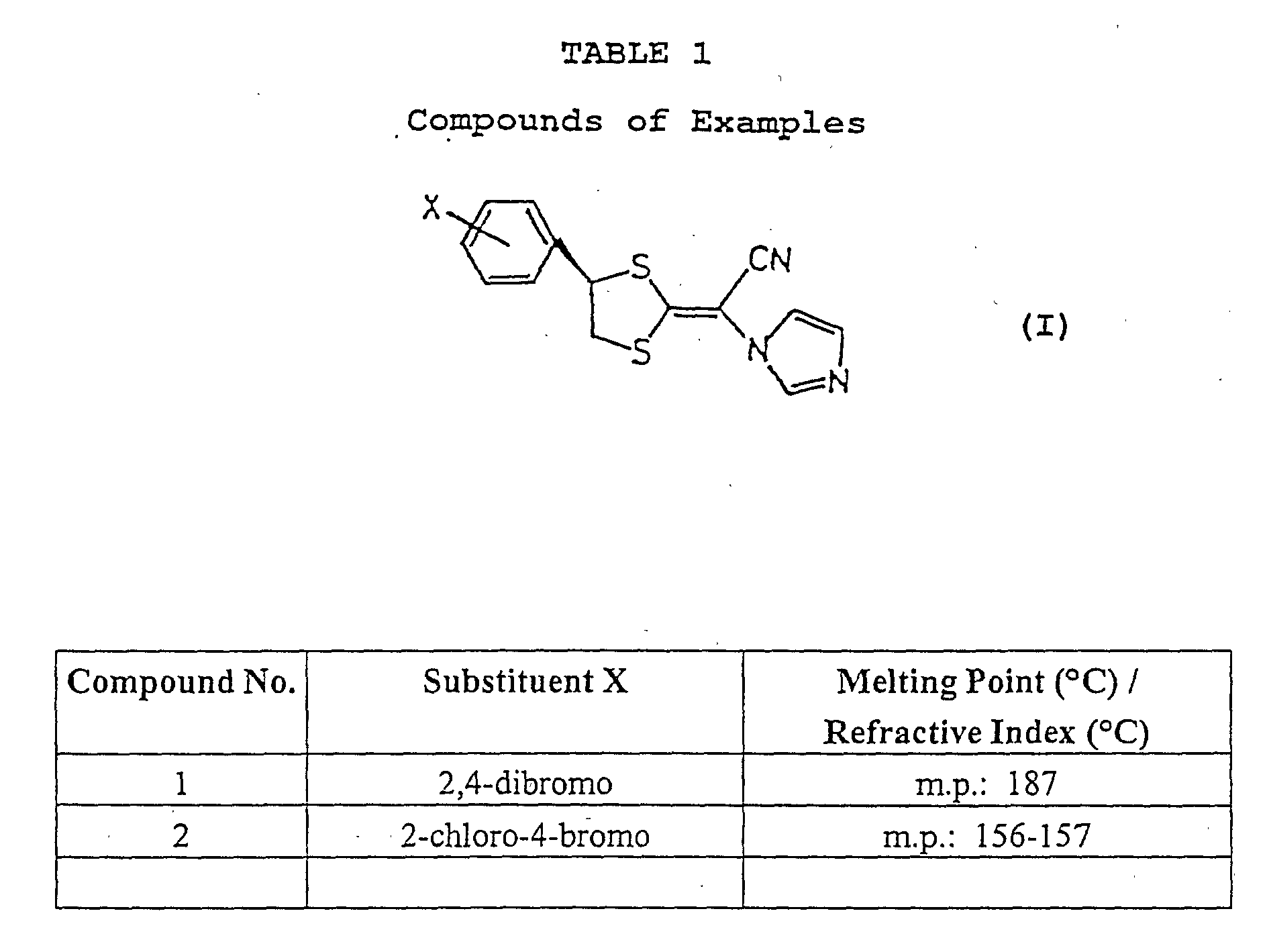
Compounds of Comparative Examples (racemates of compounds No. 1' and 2') Compound No. Substituent X Melting Point (°C) / Refractive Index (°C) 1' 2,4-dibromo m.p.: 165-166 2' 2-chloro-4-bromo m.p.: 129-131 - Formulation Examples of preparations will be shown below. However, the present invention is not limited thereto, but is limited by the scope of the claims.
FORMULATION EXAMPLE 1 Compound of the invention 10 parts Magnesium stearate 10 parts Lactose 80 parts - The above ingredients were uniformly mixed and the mixture was made into powders or fine particles to obtain a powder preparation.
FORMULATION EXAMPLE 2 Compound of the invention 20 parts Starch 10 parts Lactose 15 parts Ethylcellulose 20 parts Polyvinyl alcohol 5 parts Water 30 parts - The above ingredients were uniformly mixed and kneaded, the mixture was ground and made into particles, and the particles were sifted to obtain a granular preparation.
FORMULATION EXAMPLE 3 Compound of the invention 0.5 part Nonionic surfactant 2.5 parts Physiological saline solution 97 parts - The above ingredients were mixed under heating, and then sterilized to obtain an injection.
FORMULATION EXAMPLE 4 Compound of the invention 0.01 part 0.5% Carboxymethylcelluolse 99.99 parts - The above ingredients were suspended to obtain a suspension.
FORMULATION EXAMPLE 5 Compound of the invention 1 part Polyethylene glycol 400 99 parts - The above ingredients were mixed and dissolved to obtain a liquid preparation for painting.
PREPARATION EXAMPLE 6 Compound of the invention 2 parts Polyethylene glycol 400 49 parts Polyethylene glycol 4000 49 parts - The above ingredients were mixed and dissolved under heating and then cooled to obtain an ointment.
FORMULATION EXAMPLE 7 Compound of the invention 3 parts 1.2-Propanediol 5 parts Glycerol stearate 5 parts Spermaceti 5 parts Isopropyl myristate 10 parts Polysorbate 4 parts - The above ingredients were mixed under heating, and then cooled. While stirring, 68 parts of water is added thereto to obtain a cream.
- One part of the compound of the invention, 5 parts of benzyl alcohol, 30 parts of ethanol and 47 parts of propylene glycol were mixed and dissolved. Then, an aqueous solution composed of 1 part of Hiviskwako 104 and 15 parts of purified water was added thereto to obtain a uniform solution. Next, 1 part of diisopropanolamine was added thereto with stirring to obtain a gel preparation.
- One part of the compound of the invention was dissolved into 5 parts of benzyl alcohol and 5 parts of diethyl sebacate. Then, 5 parts of ethyl alcohol, 6 parts of stearyl alcohol, 1 part of sorbitan monostearate and 8 parts of polyoxyethylene monostearate were added thereto, and dissolved under heating at 70°C. While keeping at 70°C, 69 parts of purified water which had been heated to 70°C were added to the resulting uniform solution, and then cooled with stirring to obtain a cream composition.
-
- Trichophyton mentagrophytes IFO 5811
- Trichophyton mentagrophytes TIMM 2789
- Trichophyton rubrum IFO 6204
- Trichophyton rubrum IFO 5808
-
- To a strain cultured on Sabouraud's glucose agar (SGA) slant medium at 27°C for 1 to 2 weeks was added 0.1% (v/v) Tween 80-added sterilized physiological saline solution, followed by rubbing with a platinum spatula. The resulting suspension of conidia was filtered through a sterilized gauze to eliminate mycelium mass. Thereafter, the conidia was counted by an erythrocytometer (Thoma). The suspension of the conidia was diluted with 0.1% (v/v) Tween 80-added sterilized physiological saline solution so as to have a concentration of 1×10⁶ conidia/ml to obtain an inoculation fungal solution.
- Each compound was dissolved into dimethyl sulfoxide (DMSO) to prepare a diluent having a half concentration. The concentration of DMSO in a medium was adjusted to have 1% (v/v).
- A SGA plate medium containing a given amount of a compound (20 ml/dish) was prepared. A loopful of the inoculation fungal solution was applied in the form of a line to each plate medium at a length of about 15 mm, and was allowed to stand for cultivation at 27°C for 7 days. The minimum inhibitory concentration (MIC) of the compound at which a growth of a microorganism cannot be visually recognized was determined. The results are shown in Table 3.
MIC value against Trichophyton (µg / ml) Compound No. T. mentagrophytes T. rubrum IFO 5811 TIMM 2789 IFO 6204 IFO 5805 1 (R) 0.04 0.02 0.01 0.02 1' Racemic 0.04 0.02 0.02 0.04 2 (R) 0.02 0.01 0.01 0.01 2' Racemic 0.04 0.02 0.02 0.02 - The invention has been described in detail and with reference to specific embodiments thereof.
- This application is based on Japanese application No. Hei 8-346692.
Claims (5)
- An optically active (R) - (E) - (4-substituted-phenyl-1,3-dithiolan-2-ylidene)-1-imidazolylacetonitrile derivative represented by the following formula (I) or a salt thereofwherein X represents a 2,4-dibromo-group or a 2-chloro-4-bromo group.
- An antifungal composition comprising as an active ingredient the optically active (R) - (E) - (4-substituted-phenyl-1,3-dithiolan-2-ylidene)-1-imidazolylacetonitrile derivative according to claim 1 or a pharmaceutically acceptable salt thereof, optionally together with a pharmaceutically acceptable carrier or diluent.
- Use of the optically active (R)-(E)-(4-substituted-phenyl-1,3-dithiolan-2-ylidene)-1-imidazolylacetonitrile derivative according to claim 1 or a pharmaceutically acceptable salt thereof, together with a pharmaceutically acceptable carrier or a diluent for the preparation of a medicament for preventing or treating local or generalized mycoses.
- Use according to claim 3, wherein the medicament is for preventing or treating local mycotic infection, mucosa
infection or generalized mycotic infection caused by the genus Trichophyton, Candida or Aspergillus. - Use of the optically active (R) - (E) - (4-substituted-phenyl-1,3-dithiolan-2-ylidene)-1-imidazolylacetonitrile derivative according to claim 1 or a pharmaceutically acceptable salt thereof for preparing an antifungal composition.
Applications Claiming Priority (3)
| Application Number | Priority Date | Filing Date | Title |
|---|---|---|---|
| JP34669296 | 1996-12-10 | ||
| JP346692/96 | 1996-12-10 | ||
| JP34669296 | 1996-12-10 |
Publications (2)
| Publication Number | Publication Date |
|---|---|
| EP0848003A1 EP0848003A1 (en) | 1998-06-17 |
| EP0848003B1 true EP0848003B1 (en) | 2003-03-05 |
Family
ID=18385176
Family Applications (1)
| Application Number | Title | Priority Date | Filing Date |
|---|---|---|---|
| EP97121747A Expired - Lifetime EP0848003B1 (en) | 1996-12-10 | 1997-12-10 | Optically active (R)-(E)-(4-substituted-phenyl-1,3-dithiolan-2-ylidene)-1-imidazolylacetonitrile derivative, and their use as fungicides |
Country Status (6)
| Country | Link |
|---|---|
| US (1) | US6127397A (en) |
| EP (1) | EP0848003B1 (en) |
| KR (1) | KR19980063975A (en) |
| CN (1) | CN1075071C (en) |
| AU (1) | AU729088B2 (en) |
| DE (1) | DE69719473T2 (en) |
Families Citing this family (2)
| Publication number | Priority date | Publication date | Assignee | Title |
|---|---|---|---|---|
| AU2003242235A1 (en) * | 2002-06-18 | 2003-12-31 | Pola Chemical Industries Inc. | Antifungal medicinal composition |
| US20070249546A1 (en) * | 2006-04-22 | 2007-10-25 | Sawaya Assad S | Ophthalmic and related aqueous solutions containing antifungal agents, uses therefor and methods for preparing them |
Family Cites Families (8)
| Publication number | Priority date | Publication date | Assignee | Title |
|---|---|---|---|---|
| ATE87920T1 (en) * | 1985-10-09 | 1993-04-15 | Nihon Nohyaku Co Ltd | KETEN-S,S,-ACETAL DERIVATIVES, PROCESS FOR THEIR PREPARATION AND METHOD FOR CUREING MYCOSIS USING THESE DERIVATIVES. |
| EP0218736B1 (en) * | 1985-10-10 | 1993-04-07 | Nihon Nohyaku Co., Ltd. | A ketene s,s-acetal derivative, a process for manufacturing thereof and a method for curing mycosis by administering it |
| US4738976A (en) * | 1985-10-10 | 1988-04-19 | Nihon Nohyaku Co., Ltd. | Antimycotic agent and fungicidal agent |
| JPS6293227A (en) * | 1985-10-19 | 1987-04-28 | Nippon Nohyaku Co Ltd | antifungal agent |
| JPS6293204A (en) * | 1985-10-19 | 1987-04-28 | Nippon Nohyaku Co Ltd | Non-medical fungicide and production thereof |
| JPH01242525A (en) * | 1988-03-25 | 1989-09-27 | Nippon Nohyaku Co Ltd | Antifungal topical agent |
| JP3030780B2 (en) * | 1988-12-29 | 2000-04-10 | 日本農薬株式会社 | Optically active ketene dithioacetal derivative and method for producing the same |
| GB2317615B (en) * | 1995-07-08 | 1998-09-02 | Nihon Nohyaku Co Ltd | Antifungal agent compound therefor process for producing the same |
-
1997
- 1997-12-05 US US08/986,168 patent/US6127397A/en not_active Expired - Fee Related
- 1997-12-09 AU AU47624/97A patent/AU729088B2/en not_active Ceased
- 1997-12-10 CN CN97126375A patent/CN1075071C/en not_active Expired - Fee Related
- 1997-12-10 DE DE69719473T patent/DE69719473T2/en not_active Expired - Lifetime
- 1997-12-10 EP EP97121747A patent/EP0848003B1/en not_active Expired - Lifetime
- 1997-12-10 KR KR1019970067220A patent/KR19980063975A/en not_active Ceased
Also Published As
| Publication number | Publication date |
|---|---|
| DE69719473D1 (en) | 2003-04-10 |
| KR19980063975A (en) | 1998-10-07 |
| AU729088B2 (en) | 2001-01-25 |
| DE69719473T2 (en) | 2003-11-20 |
| US6127397A (en) | 2000-10-03 |
| CN1075071C (en) | 2001-11-21 |
| CN1192438A (en) | 1998-09-09 |
| AU4762497A (en) | 1998-06-11 |
| EP0848003A1 (en) | 1998-06-17 |
Similar Documents
| Publication | Publication Date | Title |
|---|---|---|
| KR100386491B1 (en) | Antifungal agents, compounds and methods for their preparation | |
| JP3278738B2 (en) | Antifungal agent | |
| FR2458545A1 (en) | PROCESS FOR THE PREPARATION OF BENZYLIMIDAZOLE DERIVATIVES, NEW PRODUCTS SO OBTAINED, AND THEIR USE FOR THEIR ANTIMYCOTIC AND FUNGICIDE ACTIVITIES | |
| EP1474422B1 (en) | R-(-)-1-¬2-(7-CHLOROBENZO-¬B -THIOPHEN-3-Yl-METHOXY)-2-(2,4-DICHLOROPHENYL)ETHYL -1H-IMIDAZOLE | |
| EP0848003B1 (en) | Optically active (R)-(E)-(4-substituted-phenyl-1,3-dithiolan-2-ylidene)-1-imidazolylacetonitrile derivative, and their use as fungicides | |
| JPH10226686A (en) | (R)-(E)-(4-substituted phenyl-1,3-dithiolan-2-ylidene) -1-imidazoleacetonitrile derivatives which are optically active substances, antifungal agents and methods for producing them | |
| US4375474A (en) | Dioxalane containing imidazole compounds, compositions and use | |
| EP0370300B1 (en) | Cyclopropyl-substituted azolyl methyl carbinoles, process for their preparation and their use as therapeutic agents | |
| EP0679647B1 (en) | Novel antifungal triazole compound and production and use thereof | |
| EP0241232A1 (en) | Isoxazolylethanol derivatives | |
| JP3437695B2 (en) | Azolylamine derivative | |
| JPS63284186A (en) | 4-trialkylsilylbenzylamine derivative, production and use thereof | |
| EP0314478A1 (en) | Novel imidazole compounds, process for preparation thereof antifungal agent and mildewproof agent | |
| AU697571C (en) | Antifungal agent, compound therefor, process for producing the same | |
| JPH085847B2 (en) | Benzyloxybenzylamine derivative, production method thereof and use thereof | |
| MXPA97010401A (en) | Antifungic agent, composed for the same, procedure for its production and method for suutilizac | |
| KR830002277B1 (en) | Method for preparing hydroxyethyl-azole compound | |
| WO1999033826A1 (en) | Triazole derivatives, antimycotic agents, and uses thereof | |
| JP2002179677A (en) | Optically active imidazolylacetonitrile derivative and method for producing the same | |
| JPH08104680A (en) | 2-aryl-1-(1h-1,2,4-triazol-1-yl)butane-2-ol derivative | |
| JPH08253475A (en) | 2,3-dihydrobenzo(b)thiophene derivative | |
| JPS63284152A (en) | 4-substituted benzylamine derivative, its production and use | |
| JPH07188185A (en) | 1-aryl-2-(1h-1,2,4-triazol-1-yl)ethanol derivative |
Legal Events
| Date | Code | Title | Description |
|---|---|---|---|
| PUAI | Public reference made under article 153(3) epc to a published international application that has entered the european phase |
Free format text: ORIGINAL CODE: 0009012 |
|
| AK | Designated contracting states |
Kind code of ref document: A1 Designated state(s): CH DE FR GB LI |
|
| AX | Request for extension of the european patent |
Free format text: AL;LT;LV;MK;RO;SI |
|
| 17P | Request for examination filed |
Effective date: 19980921 |
|
| AKX | Designation fees paid |
Free format text: CH DE FR GB LI |
|
| RBV | Designated contracting states (corrected) |
Designated state(s): CH DE FR GB LI |
|
| 17Q | First examination report despatched |
Effective date: 19991027 |
|
| GRAG | Despatch of communication of intention to grant |
Free format text: ORIGINAL CODE: EPIDOS AGRA |
|
| GRAG | Despatch of communication of intention to grant |
Free format text: ORIGINAL CODE: EPIDOS AGRA |
|
| GRAH | Despatch of communication of intention to grant a patent |
Free format text: ORIGINAL CODE: EPIDOS IGRA |
|
| GRAH | Despatch of communication of intention to grant a patent |
Free format text: ORIGINAL CODE: EPIDOS IGRA |
|
| GRAA | (expected) grant |
Free format text: ORIGINAL CODE: 0009210 |
|
| AK | Designated contracting states |
Designated state(s): CH DE FR GB LI |
|
| REG | Reference to a national code |
Ref country code: GB Ref legal event code: FG4D |
|
| REG | Reference to a national code |
Ref country code: CH Ref legal event code: NV Representative=s name: BOVARD AG PATENTANWAELTE Ref country code: CH Ref legal event code: EP |
|
| REF | Corresponds to: |
Ref document number: 69719473 Country of ref document: DE Date of ref document: 20030410 Kind code of ref document: P |
|
| ET | Fr: translation filed | ||
| PLBE | No opposition filed within time limit |
Free format text: ORIGINAL CODE: 0009261 |
|
| STAA | Information on the status of an ep patent application or granted ep patent |
Free format text: STATUS: NO OPPOSITION FILED WITHIN TIME LIMIT |
|
| 26N | No opposition filed |
Effective date: 20031208 |
|
| PGFP | Annual fee paid to national office [announced via postgrant information from national office to epo] |
Ref country code: CH Payment date: 20091215 Year of fee payment: 13 |
|
| PGFP | Annual fee paid to national office [announced via postgrant information from national office to epo] |
Ref country code: GB Payment date: 20091209 Year of fee payment: 13 Ref country code: FR Payment date: 20091221 Year of fee payment: 13 |
|
| PGFP | Annual fee paid to national office [announced via postgrant information from national office to epo] |
Ref country code: DE Payment date: 20091203 Year of fee payment: 13 |
|
| REG | Reference to a national code |
Ref country code: CH Ref legal event code: PFA Owner name: NIHON NOHYAKU CO., LTD. Free format text: NIHON NOHYAKU CO., LTD.#1-2-5, NIHONBASHI#CHUO-KU TOKYO100-0027 (JP) -TRANSFER TO- NIHON NOHYAKU CO., LTD.#1-2-5, NIHONBASHI#CHUO-KU TOKYO100-0027 (JP) |
|
| REG | Reference to a national code |
Ref country code: CH Ref legal event code: PL |
|
| GBPC | Gb: european patent ceased through non-payment of renewal fee |
Effective date: 20101210 |
|
| REG | Reference to a national code |
Ref country code: FR Ref legal event code: ST Effective date: 20110831 |
|
| PG25 | Lapsed in a contracting state [announced via postgrant information from national office to epo] |
Ref country code: CH Free format text: LAPSE BECAUSE OF NON-PAYMENT OF DUE FEES Effective date: 20101231 Ref country code: LI Free format text: LAPSE BECAUSE OF NON-PAYMENT OF DUE FEES Effective date: 20101231 Ref country code: FR Free format text: LAPSE BECAUSE OF NON-PAYMENT OF DUE FEES Effective date: 20110103 |
|
| REG | Reference to a national code |
Ref country code: DE Ref legal event code: R119 Ref document number: 69719473 Country of ref document: DE Effective date: 20110701 |
|
| PG25 | Lapsed in a contracting state [announced via postgrant information from national office to epo] |
Ref country code: DE Free format text: LAPSE BECAUSE OF NON-PAYMENT OF DUE FEES Effective date: 20110701 Ref country code: GB Free format text: LAPSE BECAUSE OF NON-PAYMENT OF DUE FEES Effective date: 20101210 |