EP0841334B1 - Process for producing 1,4-benzodioxane derivatives - Google Patents
Process for producing 1,4-benzodioxane derivatives Download PDFInfo
- Publication number
- EP0841334B1 EP0841334B1 EP96906901A EP96906901A EP0841334B1 EP 0841334 B1 EP0841334 B1 EP 0841334B1 EP 96906901 A EP96906901 A EP 96906901A EP 96906901 A EP96906901 A EP 96906901A EP 0841334 B1 EP0841334 B1 EP 0841334B1
- Authority
- EP
- European Patent Office
- Prior art keywords
- alkyl
- formula
- compound
- carbon atoms
- phenyl
- Prior art date
- Legal status (The legal status is an assumption and is not a legal conclusion. Google has not performed a legal analysis and makes no representation as to the accuracy of the status listed.)
- Expired - Lifetime
Links
- BNBQRQQYDMDJAH-UHFFFAOYSA-N benzodioxan Chemical class C1=CC=C2OCCOC2=C1 BNBQRQQYDMDJAH-UHFFFAOYSA-N 0.000 title claims abstract description 35
- 238000000034 method Methods 0.000 title claims description 34
- -1 cyano, formyl Chemical group 0.000 claims abstract description 60
- 150000001875 compounds Chemical class 0.000 claims abstract description 49
- 125000000217 alkyl group Chemical group 0.000 claims abstract description 16
- 125000001997 phenyl group Chemical group [H]C1=C([H])C([H])=C(*)C([H])=C1[H] 0.000 claims abstract description 16
- 125000006239 protecting group Chemical group 0.000 claims abstract description 15
- 150000003461 sulfonyl halides Chemical class 0.000 claims abstract description 8
- 125000004453 alkoxycarbonyl group Chemical group 0.000 claims abstract description 5
- 125000005194 alkoxycarbonyloxy group Chemical group 0.000 claims abstract description 5
- 125000004448 alkyl carbonyl group Chemical group 0.000 claims abstract description 5
- 125000003178 carboxy group Chemical group [H]OC(*)=O 0.000 claims abstract description 5
- 229910052736 halogen Inorganic materials 0.000 claims abstract description 5
- 150000002367 halogens Chemical class 0.000 claims abstract description 5
- 125000000449 nitro group Chemical group [O-][N+](*)=O 0.000 claims abstract description 5
- 238000004519 manufacturing process Methods 0.000 claims abstract 10
- 239000000203 mixture Substances 0.000 claims description 31
- 125000004432 carbon atom Chemical group C* 0.000 claims description 22
- 125000004178 (C1-C4) alkyl group Chemical group 0.000 claims description 18
- 150000005206 1,2-dihydroxybenzenes Chemical class 0.000 claims description 17
- 125000002887 hydroxy group Chemical group [H]O* 0.000 claims description 14
- SSZWWUDQMAHNAQ-UHFFFAOYSA-N 3-chloropropane-1,2-diol Chemical compound OCC(O)CCl SSZWWUDQMAHNAQ-UHFFFAOYSA-N 0.000 claims description 13
- 125000003903 2-propenyl group Chemical group [H]C([*])([H])C([H])=C([H])[H] 0.000 claims description 6
- 229910052799 carbon Inorganic materials 0.000 claims description 6
- 239000001257 hydrogen Substances 0.000 claims description 6
- 229910052739 hydrogen Inorganic materials 0.000 claims description 6
- 125000001797 benzyl group Chemical group [H]C1=C([H])C([H])=C(C([H])=C1[H])C([H])([H])* 0.000 claims description 5
- 125000001584 benzyloxycarbonyl group Chemical group C(=O)(OCC1=CC=CC=C1)* 0.000 claims description 5
- 230000008030 elimination Effects 0.000 claims description 5
- 238000003379 elimination reaction Methods 0.000 claims description 5
- 239000003960 organic solvent Substances 0.000 claims description 5
- UYWQUFXKFGHYNT-UHFFFAOYSA-N phenylmethyl ester of formic acid Chemical group O=COCC1=CC=CC=C1 UYWQUFXKFGHYNT-UHFFFAOYSA-N 0.000 claims description 5
- 125000004765 (C1-C4) haloalkyl group Chemical group 0.000 claims description 4
- 125000000229 (C1-C4)alkoxy group Chemical group 0.000 claims description 4
- HDECRAPHCDXMIJ-UHFFFAOYSA-N 2-methylbenzenesulfonyl chloride Chemical group CC1=CC=CC=C1S(Cl)(=O)=O HDECRAPHCDXMIJ-UHFFFAOYSA-N 0.000 claims description 4
- KDLHZDBZIXYQEI-UHFFFAOYSA-N Palladium Chemical compound [Pd] KDLHZDBZIXYQEI-UHFFFAOYSA-N 0.000 claims description 4
- 125000003282 alkyl amino group Chemical group 0.000 claims description 4
- ILMRJRBKQSSXGY-UHFFFAOYSA-N tert-butyl(dimethyl)silicon Chemical group C[Si](C)C(C)(C)C ILMRJRBKQSSXGY-UHFFFAOYSA-N 0.000 claims description 4
- 125000004430 oxygen atom Chemical group O* 0.000 claims description 3
- 238000005984 hydrogenation reaction Methods 0.000 claims description 2
- 150000001721 carbon Chemical group 0.000 claims 4
- 150000002431 hydrogen Chemical class 0.000 claims 3
- 125000004769 (C1-C4) alkylsulfonyl group Chemical group 0.000 claims 1
- 150000002009 diols Chemical class 0.000 claims 1
- 239000003814 drug Substances 0.000 abstract description 6
- 229940079593 drug Drugs 0.000 abstract description 6
- 206010029333 Neurosis Diseases 0.000 abstract description 3
- 208000015238 neurotic disease Diseases 0.000 abstract description 3
- FNQIYTUXOKTMDM-UHFFFAOYSA-N 3-phenoxypropane-1,2-diol Chemical compound OCC(O)COC1=CC=CC=C1 FNQIYTUXOKTMDM-UHFFFAOYSA-N 0.000 abstract 1
- 125000003545 alkoxy group Chemical group 0.000 abstract 1
- 125000001188 haloalkyl group Chemical group 0.000 abstract 1
- 238000006277 sulfonation reaction Methods 0.000 abstract 1
- XEKOWRVHYACXOJ-UHFFFAOYSA-N Ethyl acetate Chemical compound CCOC(C)=O XEKOWRVHYACXOJ-UHFFFAOYSA-N 0.000 description 42
- 238000006243 chemical reaction Methods 0.000 description 25
- ZMXDDKWLCZADIW-UHFFFAOYSA-N N,N-Dimethylformamide Chemical compound CN(C)C=O ZMXDDKWLCZADIW-UHFFFAOYSA-N 0.000 description 23
- YMWUJEATGCHHMB-UHFFFAOYSA-N Dichloromethane Chemical compound ClCCl YMWUJEATGCHHMB-UHFFFAOYSA-N 0.000 description 18
- LFQSCWFLJHTTHZ-UHFFFAOYSA-N Ethanol Chemical compound CCO LFQSCWFLJHTTHZ-UHFFFAOYSA-N 0.000 description 17
- RTZKZFJDLAIYFH-UHFFFAOYSA-N Diethyl ether Chemical compound CCOCC RTZKZFJDLAIYFH-UHFFFAOYSA-N 0.000 description 15
- 239000002585 base Substances 0.000 description 13
- XLYOFNOQVPJJNP-UHFFFAOYSA-N water Substances O XLYOFNOQVPJJNP-UHFFFAOYSA-N 0.000 description 13
- OKKJLVBELUTLKV-UHFFFAOYSA-N Methanol Chemical compound OC OKKJLVBELUTLKV-UHFFFAOYSA-N 0.000 description 12
- VLKZOEOYAKHREP-UHFFFAOYSA-N n-Hexane Chemical compound CCCCCC VLKZOEOYAKHREP-UHFFFAOYSA-N 0.000 description 12
- VEXZGXHMUGYJMC-UHFFFAOYSA-N Hydrochloric acid Chemical compound Cl VEXZGXHMUGYJMC-UHFFFAOYSA-N 0.000 description 10
- CCZCXFHJMKINPE-UHFFFAOYSA-N 2-phenylmethoxyphenol Chemical compound OC1=CC=CC=C1OCC1=CC=CC=C1 CCZCXFHJMKINPE-UHFFFAOYSA-N 0.000 description 9
- ZMANZCXQSJIPKH-UHFFFAOYSA-N Triethylamine Chemical compound CCN(CC)CC ZMANZCXQSJIPKH-UHFFFAOYSA-N 0.000 description 9
- JUJWROOIHBZHMG-UHFFFAOYSA-N Pyridine Chemical compound C1=CC=NC=C1 JUJWROOIHBZHMG-UHFFFAOYSA-N 0.000 description 8
- 238000002360 preparation method Methods 0.000 description 8
- KEAYESYHFKHZAL-UHFFFAOYSA-N Sodium Chemical compound [Na] KEAYESYHFKHZAL-UHFFFAOYSA-N 0.000 description 7
- 239000012312 sodium hydride Substances 0.000 description 7
- 229910000104 sodium hydride Inorganic materials 0.000 description 7
- HEDRZPFGACZZDS-UHFFFAOYSA-N Chloroform Chemical compound ClC(Cl)Cl HEDRZPFGACZZDS-UHFFFAOYSA-N 0.000 description 6
- KWYUFKZDYYNOTN-UHFFFAOYSA-M Potassium hydroxide Chemical compound [OH-].[K+] KWYUFKZDYYNOTN-UHFFFAOYSA-M 0.000 description 6
- HEMHJVSKTPXQMS-UHFFFAOYSA-M Sodium hydroxide Chemical compound [OH-].[Na+] HEMHJVSKTPXQMS-UHFFFAOYSA-M 0.000 description 6
- WQDUMFSSJAZKTM-UHFFFAOYSA-N Sodium methoxide Chemical compound [Na+].[O-]C WQDUMFSSJAZKTM-UHFFFAOYSA-N 0.000 description 6
- WYURNTSHIVDZCO-UHFFFAOYSA-N Tetrahydrofuran Chemical compound C1CCOC1 WYURNTSHIVDZCO-UHFFFAOYSA-N 0.000 description 6
- 239000003921 oil Substances 0.000 description 6
- 230000003287 optical effect Effects 0.000 description 6
- 239000000243 solution Substances 0.000 description 6
- 0 C*c1ccc(C*(C)=CC)c(CO)c1OCC(*)CO* Chemical compound C*c1ccc(C*(C)=CC)c(CO)c1OCC(*)CO* 0.000 description 5
- CSNNHWWHGAXBCP-UHFFFAOYSA-L Magnesium sulfate Chemical compound [Mg+2].[O-][S+2]([O-])([O-])[O-] CSNNHWWHGAXBCP-UHFFFAOYSA-L 0.000 description 5
- 239000007864 aqueous solution Substances 0.000 description 5
- 238000004440 column chromatography Methods 0.000 description 5
- 238000001816 cooling Methods 0.000 description 5
- 239000002904 solvent Substances 0.000 description 5
- MEKOFIRRDATTAG-UHFFFAOYSA-N 2,2,5,8-tetramethyl-3,4-dihydrochromen-6-ol Chemical compound C1CC(C)(C)OC2=C1C(C)=C(O)C=C2C MEKOFIRRDATTAG-UHFFFAOYSA-N 0.000 description 4
- OTGAYUCEDFKLHW-UHFFFAOYSA-N 2,3-dihydro-1,4-benzodioxin-3-ylmethyl 4-methylbenzenesulfonate Chemical compound C1=CC(C)=CC=C1S(=O)(=O)OCC1OC2=CC=CC=C2OC1 OTGAYUCEDFKLHW-UHFFFAOYSA-N 0.000 description 4
- YYROPELSRYBVMQ-UHFFFAOYSA-N 4-toluenesulfonyl chloride Chemical compound CC1=CC=C(S(Cl)(=O)=O)C=C1 YYROPELSRYBVMQ-UHFFFAOYSA-N 0.000 description 4
- NLXLAEXVIDQMFP-UHFFFAOYSA-N Ammonia chloride Chemical compound [NH4+].[Cl-] NLXLAEXVIDQMFP-UHFFFAOYSA-N 0.000 description 4
- IAZDPXIOMUYVGZ-UHFFFAOYSA-N Dimethylsulphoxide Chemical compound CS(C)=O IAZDPXIOMUYVGZ-UHFFFAOYSA-N 0.000 description 4
- BRLQWZUYTZBJKN-UHFFFAOYSA-N Epichlorohydrin Chemical compound ClCC1CO1 BRLQWZUYTZBJKN-UHFFFAOYSA-N 0.000 description 4
- KFZMGEQAYNKOFK-UHFFFAOYSA-N Isopropanol Chemical compound CC(C)O KFZMGEQAYNKOFK-UHFFFAOYSA-N 0.000 description 4
- VYPSYNLAJGMNEJ-UHFFFAOYSA-N Silicium dioxide Chemical compound O=[Si]=O VYPSYNLAJGMNEJ-UHFFFAOYSA-N 0.000 description 4
- CDBYLPFSWZWCQE-UHFFFAOYSA-L Sodium Carbonate Chemical compound [Na+].[Na+].[O-]C([O-])=O CDBYLPFSWZWCQE-UHFFFAOYSA-L 0.000 description 4
- DKGAVHZHDRPRBM-UHFFFAOYSA-N Tert-Butanol Chemical compound CC(C)(C)O DKGAVHZHDRPRBM-UHFFFAOYSA-N 0.000 description 4
- 239000012043 crude product Substances 0.000 description 4
- 239000000543 intermediate Substances 0.000 description 4
- BWHMMNNQKKPAPP-UHFFFAOYSA-L potassium carbonate Chemical compound [K+].[K+].[O-]C([O-])=O BWHMMNNQKKPAPP-UHFFFAOYSA-L 0.000 description 4
- 239000000047 product Substances 0.000 description 4
- UMJSCPRVCHMLSP-UHFFFAOYSA-N pyridine Natural products COC1=CC=CN=C1 UMJSCPRVCHMLSP-UHFFFAOYSA-N 0.000 description 4
- 239000011541 reaction mixture Substances 0.000 description 4
- 239000000741 silica gel Substances 0.000 description 4
- 229910002027 silica gel Inorganic materials 0.000 description 4
- SCYULBFZEHDVBN-UHFFFAOYSA-N 1,1-Dichloroethane Chemical compound CC(Cl)Cl SCYULBFZEHDVBN-UHFFFAOYSA-N 0.000 description 3
- RYHBNJHYFVUHQT-UHFFFAOYSA-N 1,4-Dioxane Chemical compound C1COCCO1 RYHBNJHYFVUHQT-UHFFFAOYSA-N 0.000 description 3
- GWQOQQVKVOOHTI-UHFFFAOYSA-N 2,3-dihydro-1,4-benzodioxin-3-ylmethanol Chemical compound C1=CC=C2OC(CO)COC2=C1 GWQOQQVKVOOHTI-UHFFFAOYSA-N 0.000 description 3
- QTBSBXVTEAMEQO-UHFFFAOYSA-N Acetic acid Chemical compound CC(O)=O QTBSBXVTEAMEQO-UHFFFAOYSA-N 0.000 description 3
- UHOVQNZJYSORNB-UHFFFAOYSA-N Benzene Chemical compound C1=CC=CC=C1 UHOVQNZJYSORNB-UHFFFAOYSA-N 0.000 description 3
- CTKINSOISVBQLD-UHFFFAOYSA-N Glycidol Chemical compound OCC1CO1 CTKINSOISVBQLD-UHFFFAOYSA-N 0.000 description 3
- BZLVMXJERCGZMT-UHFFFAOYSA-N Methyl tert-butyl ether Chemical compound COC(C)(C)C BZLVMXJERCGZMT-UHFFFAOYSA-N 0.000 description 3
- YXFVVABEGXRONW-UHFFFAOYSA-N Toluene Chemical compound CC1=CC=CC=C1 YXFVVABEGXRONW-UHFFFAOYSA-N 0.000 description 3
- 125000004435 hydrogen atom Chemical group [H]* 0.000 description 3
- 229920006395 saturated elastomer Polymers 0.000 description 3
- QDRKDTQENPPHOJ-UHFFFAOYSA-N sodium ethoxide Chemical compound [Na+].CC[O-] QDRKDTQENPPHOJ-UHFFFAOYSA-N 0.000 description 3
- 239000007858 starting material Substances 0.000 description 3
- YLQBMQCUIZJEEH-UHFFFAOYSA-N tetrahydrofuran Natural products C=1C=COC=1 YLQBMQCUIZJEEH-UHFFFAOYSA-N 0.000 description 3
- SSZWWUDQMAHNAQ-VKHMYHEASA-N (R)-3-chloro-1,2-propanediol Chemical compound OC[C@@H](O)CCl SSZWWUDQMAHNAQ-VKHMYHEASA-N 0.000 description 2
- YFTRBASNPFHPAJ-UHFFFAOYSA-N 3-(2-hydroxyphenoxy)propane-1,2-diol Chemical compound OCC(O)COC1=CC=CC=C1O YFTRBASNPFHPAJ-UHFFFAOYSA-N 0.000 description 2
- IJGRMHOSHXDMSA-UHFFFAOYSA-N Atomic nitrogen Chemical compound N#N IJGRMHOSHXDMSA-UHFFFAOYSA-N 0.000 description 2
- UDQICTINOKZOEJ-UHFFFAOYSA-N CC([CH2-])=O.CC1=CC=C(S(=O)(=O)OCC(O)CO)C=C1 Chemical compound CC([CH2-])=O.CC1=CC=C(S(=O)(=O)OCC(O)CO)C=C1 UDQICTINOKZOEJ-UHFFFAOYSA-N 0.000 description 2
- 239000012359 Methanesulfonyl chloride Substances 0.000 description 2
- JGFZNNIVVJXRND-UHFFFAOYSA-N N,N-Diisopropylethylamine (DIPEA) Chemical compound CCN(C(C)C)C(C)C JGFZNNIVVJXRND-UHFFFAOYSA-N 0.000 description 2
- NQRYJNQNLNOLGT-UHFFFAOYSA-N Piperidine Chemical compound C1CCNCC1 NQRYJNQNLNOLGT-UHFFFAOYSA-N 0.000 description 2
- UIIMBOGNXHQVGW-UHFFFAOYSA-M Sodium bicarbonate Chemical compound [Na+].OC([O-])=O UIIMBOGNXHQVGW-UHFFFAOYSA-M 0.000 description 2
- 229910052783 alkali metal Inorganic materials 0.000 description 2
- 229910000288 alkali metal carbonate Inorganic materials 0.000 description 2
- 150000008041 alkali metal carbonates Chemical class 0.000 description 2
- 229910000102 alkali metal hydride Inorganic materials 0.000 description 2
- 150000008046 alkali metal hydrides Chemical class 0.000 description 2
- 150000008044 alkali metal hydroxides Chemical class 0.000 description 2
- 229910052784 alkaline earth metal Inorganic materials 0.000 description 2
- 229910001860 alkaline earth metal hydroxide Inorganic materials 0.000 description 2
- 150000003973 alkyl amines Chemical class 0.000 description 2
- 235000019270 ammonium chloride Nutrition 0.000 description 2
- 238000004458 analytical method Methods 0.000 description 2
- 239000000010 aprotic solvent Substances 0.000 description 2
- CSKNSYBAZOQPLR-UHFFFAOYSA-N benzenesulfonyl chloride Chemical compound ClS(=O)(=O)C1=CC=CC=C1 CSKNSYBAZOQPLR-UHFFFAOYSA-N 0.000 description 2
- 239000002876 beta blocker Substances 0.000 description 2
- AXCZMVOFGPJBDE-UHFFFAOYSA-L calcium dihydroxide Chemical compound [OH-].[OH-].[Ca+2] AXCZMVOFGPJBDE-UHFFFAOYSA-L 0.000 description 2
- 239000000920 calcium hydroxide Substances 0.000 description 2
- 229910001861 calcium hydroxide Inorganic materials 0.000 description 2
- 239000003054 catalyst Substances 0.000 description 2
- 230000007423 decrease Effects 0.000 description 2
- 238000010511 deprotection reaction Methods 0.000 description 2
- 230000000694 effects Effects 0.000 description 2
- 238000001704 evaporation Methods 0.000 description 2
- 230000008020 evaporation Effects 0.000 description 2
- GNOIPBMMFNIUFM-UHFFFAOYSA-N hexamethylphosphoric triamide Chemical compound CN(C)P(=O)(N(C)C)N(C)C GNOIPBMMFNIUFM-UHFFFAOYSA-N 0.000 description 2
- QARBMVPHQWIHKH-UHFFFAOYSA-N methanesulfonyl chloride Chemical compound CS(Cl)(=O)=O QARBMVPHQWIHKH-UHFFFAOYSA-N 0.000 description 2
- NOQXXYIGRPAZJC-UHFFFAOYSA-N oxiran-2-ylmethyl 4-methylbenzenesulfonate Chemical compound C1=CC(C)=CC=C1S(=O)(=O)OCC1OC1 NOQXXYIGRPAZJC-UHFFFAOYSA-N 0.000 description 2
- 150000002924 oxiranes Chemical class 0.000 description 2
- 229910000027 potassium carbonate Inorganic materials 0.000 description 2
- NROKBHXJSPEDAR-UHFFFAOYSA-M potassium fluoride Chemical compound [F-].[K+] NROKBHXJSPEDAR-UHFFFAOYSA-M 0.000 description 2
- 230000006340 racemization Effects 0.000 description 2
- 229910000029 sodium carbonate Inorganic materials 0.000 description 2
- PUZPDOWCWNUUKD-UHFFFAOYSA-M sodium fluoride Chemical compound [F-].[Na+] PUZPDOWCWNUUKD-UHFFFAOYSA-M 0.000 description 2
- HPALAKNZSZLMCH-UHFFFAOYSA-M sodium;chloride;hydrate Chemical class O.[Na+].[Cl-] HPALAKNZSZLMCH-UHFFFAOYSA-M 0.000 description 2
- HXJUTPCZVOIRIF-UHFFFAOYSA-N sulfolane Chemical compound O=S1(=O)CCCC1 HXJUTPCZVOIRIF-UHFFFAOYSA-N 0.000 description 2
- 239000000725 suspension Substances 0.000 description 2
- FPGGTKZVZWFYPV-UHFFFAOYSA-M tetrabutylammonium fluoride Chemical compound [F-].CCCC[N+](CCCC)(CCCC)CCCC FPGGTKZVZWFYPV-UHFFFAOYSA-M 0.000 description 2
- SSZWWUDQMAHNAQ-GSVOUGTGSA-N (2s)-3-chloropropane-1,2-diol Chemical compound OC[C@H](O)CCl SSZWWUDQMAHNAQ-GSVOUGTGSA-N 0.000 description 1
- ZXBOHAXYXMAIAE-UHFFFAOYSA-N (5-fluoro-2,3-dihydro-1,4-benzodioxin-2-yl)methyl 4-methylbenzenesulfonate Chemical compound C1=CC(C)=CC=C1S(=O)(=O)OCC1OC2=CC=CC(F)=C2OC1 ZXBOHAXYXMAIAE-UHFFFAOYSA-N 0.000 description 1
- LGSBWXFPDNJGKH-UHFFFAOYSA-N (5-hydroxy-2,3-dihydro-1,4-benzodioxin-3-yl)methyl 4-methylbenzenesulfonate Chemical compound C1=CC(C)=CC=C1S(=O)(=O)OCC1OC2=C(O)C=CC=C2OC1 LGSBWXFPDNJGKH-UHFFFAOYSA-N 0.000 description 1
- FXKKOCNPTIJDIG-UHFFFAOYSA-N (5-methoxy-2,3-dihydro-1,4-benzodioxin-3-yl)methyl 4-methylbenzenesulfonate Chemical compound O1C=2C(OC)=CC=CC=2OCC1COS(=O)(=O)C1=CC=C(C)C=C1 FXKKOCNPTIJDIG-UHFFFAOYSA-N 0.000 description 1
- LXENBAQOUSPSIN-UHFFFAOYSA-N (6-nitro-2,3-dihydro-1,4-benzodioxin-2-yl)methyl 4-methylbenzenesulfonate Chemical compound C1=CC(C)=CC=C1S(=O)(=O)OCC1OC2=CC=C([N+]([O-])=O)C=C2OC1 LXENBAQOUSPSIN-UHFFFAOYSA-N 0.000 description 1
- 238000005160 1H NMR spectroscopy Methods 0.000 description 1
- HXMBAEBQBJPOLX-UHFFFAOYSA-N 2,2-dichloropropane-1,1-diol Chemical compound ClC(C(O)O)(C)Cl HXMBAEBQBJPOLX-UHFFFAOYSA-N 0.000 description 1
- LVBVXYZBEVCJJQ-UHFFFAOYSA-N 2-fluoro-6-phenylmethoxyphenol Chemical compound OC1=C(F)C=CC=C1OCC1=CC=CC=C1 LVBVXYZBEVCJJQ-UHFFFAOYSA-N 0.000 description 1
- LZZIROJMKOQURE-UHFFFAOYSA-N 3-methoxy-2-phenylmethoxyphenol Chemical compound COC1=CC=CC(O)=C1OCC1=CC=CC=C1 LZZIROJMKOQURE-UHFFFAOYSA-N 0.000 description 1
- VFBCZWWOPQRBRF-UHFFFAOYSA-N 3-methyl-2-phenylmethoxyphenol Chemical compound CC1=CC=CC(O)=C1OCC1=CC=CC=C1 VFBCZWWOPQRBRF-UHFFFAOYSA-N 0.000 description 1
- XKTYXVDYIKIYJP-UHFFFAOYSA-N 3h-dioxole Chemical compound C1OOC=C1 XKTYXVDYIKIYJP-UHFFFAOYSA-N 0.000 description 1
- ZVNBVZQNVNWAOS-UHFFFAOYSA-N 5-nitro-2-phenylmethoxyphenol Chemical compound OC1=CC([N+]([O-])=O)=CC=C1OCC1=CC=CC=C1 ZVNBVZQNVNWAOS-UHFFFAOYSA-N 0.000 description 1
- VKUVZUBYUNOFHH-UHFFFAOYSA-N 6-phenylmethoxy-1,3-benzodioxol-5-ol Chemical compound OC1=CC=2OCOC=2C=C1OCC1=CC=CC=C1 VKUVZUBYUNOFHH-UHFFFAOYSA-N 0.000 description 1
- QWOJMRHUQHTCJG-UHFFFAOYSA-N CC([CH2-])=O Chemical compound CC([CH2-])=O QWOJMRHUQHTCJG-UHFFFAOYSA-N 0.000 description 1
- UFHFLCQGNIYNRP-UHFFFAOYSA-N Hydrogen Chemical compound [H][H] UFHFLCQGNIYNRP-UHFFFAOYSA-N 0.000 description 1
- CTQNGGLPUBDAKN-UHFFFAOYSA-N O-Xylene Chemical compound CC1=CC=CC=C1C CTQNGGLPUBDAKN-UHFFFAOYSA-N 0.000 description 1
- MTALHLKSEFWFAI-UHFFFAOYSA-N OCC(CO1)OC2C1=CC=CC2 Chemical compound OCC(CO1)OC2C1=CC=CC2 MTALHLKSEFWFAI-UHFFFAOYSA-N 0.000 description 1
- ASJVTCLMGOTICE-QMMMGPOBSA-N [(3s)-5-methyl-2,3-dihydro-1,4-benzodioxin-3-yl]methanol Chemical compound O1C[C@H](CO)OC2=C1C=CC=C2C ASJVTCLMGOTICE-QMMMGPOBSA-N 0.000 description 1
- OEJNTJWTGDGRAF-AWEZNQCLSA-N [(3s)-5-methyl-2,3-dihydro-1,4-benzodioxin-3-yl]methyl 4-methylbenzenesulfonate Chemical compound C1=CC(C)=CC=C1S(=O)(=O)OC[C@H]1OC2=C(C)C=CC=C2OC1 OEJNTJWTGDGRAF-AWEZNQCLSA-N 0.000 description 1
- 239000002253 acid Substances 0.000 description 1
- 230000002378 acidificating effect Effects 0.000 description 1
- 239000002160 alpha blocker Substances 0.000 description 1
- 150000004945 aromatic hydrocarbons Chemical class 0.000 description 1
- 230000009286 beneficial effect Effects 0.000 description 1
- 239000006227 byproduct Substances 0.000 description 1
- 238000009903 catalytic hydrogenation reaction Methods 0.000 description 1
- 239000012230 colorless oil Substances 0.000 description 1
- 125000003700 epoxy group Chemical group 0.000 description 1
- NWDRRKKWRUFDHW-UHFFFAOYSA-N ethyl 3-[(4-methylphenyl)sulfonyloxymethyl]-2,3-dihydro-1,4-benzodioxine-6-carboxylate Chemical compound O1C2=CC(C(=O)OCC)=CC=C2OCC1COS(=O)(=O)C1=CC=C(C)C=C1 NWDRRKKWRUFDHW-UHFFFAOYSA-N 0.000 description 1
- FAENFNUEKOZHCS-UHFFFAOYSA-N ethyl 3-hydroxy-4-phenylmethoxybenzoate Chemical compound OC1=CC(C(=O)OCC)=CC=C1OCC1=CC=CC=C1 FAENFNUEKOZHCS-UHFFFAOYSA-N 0.000 description 1
- 239000000706 filtrate Substances 0.000 description 1
- 239000007789 gas Substances 0.000 description 1
- 238000007327 hydrogenolysis reaction Methods 0.000 description 1
- 238000002955 isolation Methods 0.000 description 1
- 239000007788 liquid Substances 0.000 description 1
- 238000005259 measurement Methods 0.000 description 1
- UKVIEHSSVKSQBA-UHFFFAOYSA-N methane;palladium Chemical compound C.[Pd] UKVIEHSSVKSQBA-UHFFFAOYSA-N 0.000 description 1
- PSHKMPUSSFXUIA-UHFFFAOYSA-N n,n-dimethylpyridin-2-amine Chemical compound CN(C)C1=CC=CC=N1 PSHKMPUSSFXUIA-UHFFFAOYSA-N 0.000 description 1
- 229910052757 nitrogen Inorganic materials 0.000 description 1
- 150000007530 organic bases Chemical class 0.000 description 1
- 239000011698 potassium fluoride Substances 0.000 description 1
- 235000003270 potassium fluoride Nutrition 0.000 description 1
- 238000000746 purification Methods 0.000 description 1
- 230000005855 radiation Effects 0.000 description 1
- 238000010992 reflux Methods 0.000 description 1
- 238000007363 ring formation reaction Methods 0.000 description 1
- 150000003839 salts Chemical class 0.000 description 1
- 238000000926 separation method Methods 0.000 description 1
- 229910000030 sodium bicarbonate Inorganic materials 0.000 description 1
- 235000017557 sodium bicarbonate Nutrition 0.000 description 1
- 239000011775 sodium fluoride Substances 0.000 description 1
- 235000013024 sodium fluoride Nutrition 0.000 description 1
- 239000000126 substance Substances 0.000 description 1
- 125000001424 substituent group Chemical group 0.000 description 1
- 125000002088 tosyl group Chemical group [H]C1=C([H])C(=C([H])C([H])=C1C([H])([H])[H])S(*)(=O)=O 0.000 description 1
- 238000007070 tosylation reaction Methods 0.000 description 1
- 239000008096 xylene Substances 0.000 description 1
Classifications
-
- C—CHEMISTRY; METALLURGY
- C07—ORGANIC CHEMISTRY
- C07D—HETEROCYCLIC COMPOUNDS
- C07D319/00—Heterocyclic compounds containing six-membered rings having two oxygen atoms as the only ring hetero atoms
- C07D319/10—1,4-Dioxanes; Hydrogenated 1,4-dioxanes
- C07D319/14—1,4-Dioxanes; Hydrogenated 1,4-dioxanes condensed with carbocyclic rings or ring systems
- C07D319/16—1,4-Dioxanes; Hydrogenated 1,4-dioxanes condensed with carbocyclic rings or ring systems condensed with one six-membered ring
- C07D319/20—1,4-Dioxanes; Hydrogenated 1,4-dioxanes condensed with carbocyclic rings or ring systems condensed with one six-membered ring with substituents attached to the hetero ring
-
- Y—GENERAL TAGGING OF NEW TECHNOLOGICAL DEVELOPMENTS; GENERAL TAGGING OF CROSS-SECTIONAL TECHNOLOGIES SPANNING OVER SEVERAL SECTIONS OF THE IPC; TECHNICAL SUBJECTS COVERED BY FORMER USPC CROSS-REFERENCE ART COLLECTIONS [XRACs] AND DIGESTS
- Y02—TECHNOLOGIES OR APPLICATIONS FOR MITIGATION OR ADAPTATION AGAINST CLIMATE CHANGE
- Y02P—CLIMATE CHANGE MITIGATION TECHNOLOGIES IN THE PRODUCTION OR PROCESSING OF GOODS
- Y02P20/00—Technologies relating to chemical industry
- Y02P20/50—Improvements relating to the production of bulk chemicals
- Y02P20/55—Design of synthesis routes, e.g. reducing the use of auxiliary or protecting groups
Definitions
- the present invention relates to a process for the preparation of a 1,4-benzodioxane derivative useful for the intermediate of circulatory drugs and drugs for psychoneurosis which are alpha and beta-adrenergic antagonists.
- a 1,4-benzodioxane derivative is used for the intermediate for the preparation of circulatory drugs and drugs for psychoneurosis having alpha and beta-adrenergic antagonist-activity and its various kind of processes are known.
- the method by reacting a catechol derivative with glycidyl tosylate in the presence of sodium hydride Japanese patent publication No.9613/1994
- the method by reacting a catechol derivative with epichlorohydrin in the presence of pyridine J. Org. Chem. 46,3846 (1981)
- the method is also known to make a 1,4-benzodioxane skeleton by reacting a catechol derivative with glycerol 1-tosylate acetonide and after removing the protective group, the acetonide, by introducing two tosyl groups onto it and then by isolating it, and further by cyclizing it (J. Chem. Soc., Chem. Commun., 921 (1976)).
- the present inventors taking into consideration the above fact, extensively engaged in the study to find the improved method for the preparation of a 1,4-benzodioxane derivative, and it is found to be completed the present invention that after sulfonating the phenoxypropanediol compound, by cyclizing the resulted product in the presence of a base, the desired 1,4-benzodioxane derivative is favorably obtained in the industrial scale.
- the present invention relates to the process of preparing a 1,4-benzodioxane derivative as shown in the following formula(1) wherein R 1 is hydrogen atom or RSO 2 in which R is C 1 -C 4 alkyl, or phenyl which may be substituted by C 1 -C 4 alkyl, R 2 , R 3 and R 4 are respectively hydrogen, halogen, hydroxy, nitro, cyano, formyl, carboxyl, alkoxycarbonyloxy having 1-4 carbon atoms in the alkyl portion, C 1 -C 4 alkyl, C 1 -C 4 alkoxy, C 1 -C 4 haloalkyl, N,N-di C 1 -C 4 alkylamino, alkylcarbonyl having 1-4 carbon atoms in the alkyl portion, alkoxycarbonyl having 1-4 carbon atoms in the alkyl portion or phenyl which may be substituted by C 1 -C 4 alkyl, or two groups among R 2 ,
- R 5 may be constituted methylenedioxy, isopropylidenedioxy, cyclohexylidenedioxy or diphenylmethylenedioxy together with oxygen atom in the hydroxy or the R 5 O-group, provided that when any one of R 2 , R 3 and R 4 is hydroxy and the hydroxy is bound on the carbon atom adjacent to the carbon atom substituted by R 5 O-group, with a sulfonyl halide in the presence of a base to give a sulfonated compound(s) as shown in the following formulae (3) and/or (4) wherein R, R 1 , R 2 , R 3 , R 4 and R 5 are the same as defined - above, and after the elimination of the protective group R 5 of the sulfonated compound, cyclizing the compound by treating with a base.
- a diol compound (2) is reacted with a sulfonyl halide for example, an arylsulfonyl halide such as benzenesulfonyl chloride, toluenesulfonyl chloride, etc. or C 1 -C 4 alkylsulfonyl halide such as methanesulfonyl chloride, etc. in the presence of a base to give a monosulfonated compound (3) or a disulfonated compound (4) or a mixture of both compounds.
- a base an organic base such as triethylamine, pyridine, etc. is used.
- This reaction is carried out in the absence of a solvent or in the presence of a solvent, for example, an ether such as tetrahydrofuran, dioxane, t-butylmethyl ether, diethyl ether, etc., a chlorinated compound such as methylene chloride, chloroform, dichloroethane, etc., or an aromatic hydrocarbon such as benzene, toluene, etc.
- the reaction temperature is 0 - 100°C, preferably 10 - 50°C.
- This reaction proceeds in the absence of the catalyst, and the reaction is accelerated by using N,N-dimethylaminopyridine etc. as a catalyst and that the yield is improved.
- the mixture can be separated by liquid column chromatography etc. But the mixture may be used without the separation in the next step.
- the elimination of the protective group R 5 on the sulfonated compound (3) or (4) is carried out.
- the protective group R 5 is benzyl, allyl or benzyloxycarbonyl
- the protective group is deprotected by being subjected to catalytic hydrogenation with palladium-carbon at room temperature in an organic solvent such as methanol, ethanol, ethyl acetate, etc.
- an o-nitrobenzyl is used as a protective group, the group is eliminated by the radiation on it in an organic solvent such as methanol, ethanol, etc.
- the protective group R 5 is t-butyldimethylsilyl
- the protective group is removed by using a salt of a fluoro compound such as sodium fluoride, potassium fluoride or tetrabutylammonium fluoride in an organic solvent such as N,N-dimetylformamide, tetrahydrofuran, etc. or a mixture of the organic solvent and water.
- a fluoro compound such as sodium fluoride, potassium fluoride or tetrabutylammonium fluoride
- an organic solvent such as N,N-dimetylformamide, tetrahydrofuran, etc. or a mixture of the organic solvent and water.
- the protective group R 5 is methylenedioxy, isopropylidenedioxy, cyclohexylidenedioxy or diphenylmethylenedioxy
- the protective group is eliminated under the acidic condition usually used in the deprotection of such a protective group.
- the solvent examples include a dipolar aprotic solvent such as N,N-dimethylformamide, dimethyl sulfoxide, sulfolane, hexamethylphosphoramide, etc., an ether such as tetrahydrofuran, dioxane, t-butylmethyl ether, diethyl ether, etc., a chlorinated compound such as methylene chloride, chloroform, dichloroethane, etc., an alcohol such as methanol, ethanol, isopropanol, t-butanol, etc., water, and so on.
- a dipolar aprotic solvent such as N,N-dimethylformamide, dimethyl sulfoxide, sulfolane, hexamethylphosphoramide, etc.
- an ether such as tetrahydrofuran, dioxane, t-butylmethyl ether, diethyl ether, etc.
- a chlorinated compound such
- Examples of the base are an alkali metal hydride, an alkali metal hydroxide, an alkaline earth metal hydroxide, an alkali metal carbonate, an alkaline earth metal carbonate, an alkali metal salt of C 1 -C 4 alkanol, or tri C 1 -C 4 alkylamine.
- Sodium hydride, sodium hydroxide, potassium hydroxide, calcium hydroxide, sodium carbonate, potassium carbonate, sodium methoxide, sodium ethoxide, triethylamine and ethyldiisopropylamine are illustrated.
- the amount of the base is 1-5 mol, preferably 1-3 mol per compound (5) or (6).
- the reaction temperature is -20 - 80°C, preferably 0 - 50°C. It is thought that on the cyclization of a compound (5), an epoxide is produced and then the epoxide reacts with a hydroxy on the benzene ring to give the cyclized compound. In this reaction there is a possibility to produce a 6 membered ring and a 7 membered ring, but the 6 membered ring is preferentially produced.
- an arylsulfonyl halide such as benzenesulfonyl chloride, toluenesulfonylchloride, etc.
- a C 1 -C 4 alkylsulfonyl halide such as methanes
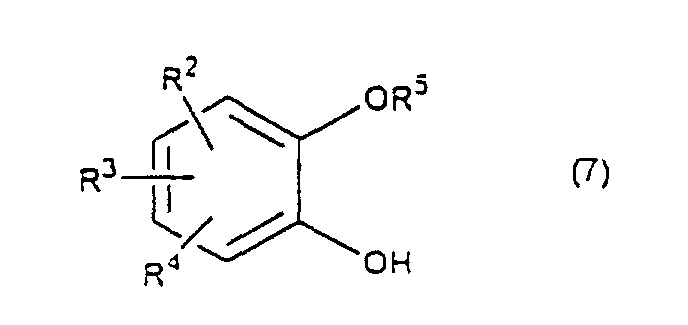
- a diol compound (2), a starting material of the present invention is synthesized according to the reaction scheme as mentioned below. wherein R 2 , R 3 , R 4 and R 5 are the same as defined above.
- a catechol derivative (7) is reacted with 3 -chloro-1,2-propanediol (8) in the presence of a base in a solvent to produce a diol compound (2).
- the solvent is a dipolar aprotic solvent such as N,N-dimethylformamide, dimethyl sulfoxide, sulfolane, hexamethylphosphoramide, etc., an ether such as tetrahhdrofuran, dioxane, t-butylmethyl ether, diethyl ether, etc., a chlorinated compound such as methylene chloride, chloroform, dichloroethane, etc., an alcohol such as methanol, ethanol, isopropanol, t-butanol, etc., water, and so on.
- a dipolar aprotic solvent such as N,N-dimethylformamide, dimethyl sulfoxide, sulfolane, hexamethylphospho
- Examples of the base are an alkali metal hydride, an alkali metal hydroxide, an alkaline earth metal hydroxide, an alkali metal carbonate, an alkaline earth metal carbonate, an alkali metal salt of C 1 -C 4 alkanol, or tri C 1 -C 4 alkylamine.
- Sodium hydride, sodium hydroxide, potassium hydroxide, calcium hydroxide, sodium carbonate, potassium carbonate, sodium methoxide, sodium ethoxide, triethylamine and ethyldiisopropylamine are illustrated.
- Sodium hydride, sodium methoxide or sodium ethoxide is preferably used and sodium hydride among them is more preferably used.
- the amount of the base is 1 - 4 mol, preferably 1.1 - 2.5 mol per compound (7).
- the reaction temperature is -20 - 150°C, preferably 20 - 100°C. When the reaction temperature is too low, the reaction rate decreases and that is not practical. On the other hand, when the temperature is too high, a glycidol produced during the reaction may be polymerized and the yield is significantly reduced.
- a diol compound (2), a starting material, used in the present invention may be prepared by the known method, that is by reacting a catechol derivative (7) with glycidol.
- Glycidol is unstable and is readily polymerized, but 3-chloro-1,2-propanediol (8) is stable and not expensive and the method consisting of the use of this compound (8) as mentioned above, therefore, is beneficial in the industrial scale.
- an optically active 1,4-benzodioxane derivative is prepared.
- Such an optically active diol compound (2) is prepared, for instance, by reacting a catechol derivative (7) with optically active 3-chloro-1,2-propanediol under the same condition mentioned above.
- 3-chloro-1,2-propanediol having high optical purity is used as a starting material, the racemization is not markedly occurred during the reaction and therefore, a 1,4- benzodioxane derivative is obtainable in the high optical purity.
- 3-Chloro-1,2-propanediol having the high optical purity (more than 98% ee), for example, is obtained by using the method described in Japanese patent publication No.73998/1992 or No.73999/1992 developed by the present applicant. According to the process of the present invention , a (S)-1,4-benzodioxane derivative is obtained from (R)-3-chloro-1,2-propanediol, and a (R)-1,4-benzodioxane derivative is obtained from (S)-3-chloro-1,2-propanediol.
- the diol compound (7.88g, 0.029mol) obtained above (i) was dissolved in pyridine (10ml) and to the solution was added p-toluenesulfonyl chloride (12.16g, 0.064mol) under ice cooling and then the mixture was stirred at room temperature for 12 hours. After the reaction was over, to the reaction mixture was added a 3% aqueous solution of hydrochloric acid (300ml) and the mixture was extracted with ethyl acetate.
- the ratio of the ditosylated compound and the monotosylated compound was 6:1 according to analysis on H-NMR.
- the ethyl acetate phase was washed with saturated brine and water, dried over anhydrous magnesium sulfate and concentrated in vacuo to give 7.5g of a crude mixture of 2-tosyloxymethyl-1,4-benzodioxane and 2-hydroxymethyl-1,4-benzodioxane as a oil.
- the mixture might be purified with column chromatography (silica gel, n-hexane/ethyl acetate (3:2)), but the mixture was used for the next step without purification.
- a 1,4-benzodioxane derivative is prepared in the high yield and by the convenient procedures in the industrial scale without the isolation of the intermediate produced during the reaction, by using a diol compound which is synthesized from a catechol derivative.
- a diol compound by reacting a catechol derivative with 3-chloro-1,2-propanediol.
- a 1,4-benzodioxane in the high optical purity is obtainable without the marked racemizaion during the reaction.
Landscapes
- Chemical & Material Sciences (AREA)
- Organic Chemistry (AREA)
- Heterocyclic Compounds That Contain Two Or More Ring Oxygen Atoms (AREA)
- Heterocyclic Carbon Compounds Containing A Hetero Ring Having Nitrogen And Oxygen As The Only Ring Hetero Atoms (AREA)
- Organic Low-Molecular-Weight Compounds And Preparation Thereof (AREA)
- Pharmaceuticals Containing Other Organic And Inorganic Compounds (AREA)
- Light Receiving Elements (AREA)
- Macromolecular Compounds Obtained By Forming Nitrogen-Containing Linkages In General (AREA)
Abstract
Description
- The present invention relates to a process for the preparation of a 1,4-benzodioxane derivative useful for the intermediate of circulatory drugs and drugs for psychoneurosis which are alpha and beta-adrenergic antagonists.
- A 1,4-benzodioxane derivative is used for the intermediate for the preparation of circulatory drugs and drugs for psychoneurosis having alpha and beta-adrenergic antagonist-activity and its various kind of processes are known. For example, the method by reacting a catechol derivative with glycidyl tosylate in the presence of sodium hydride (Japanese patent publication No.9613/1994) or the method by reacting a catechol derivative with epichlorohydrin in the presence of pyridine (J. Org. Chem. 46,3846 (1981)) is known. The method is also known to make a 1,4-benzodioxane skeleton by reacting a catechol derivative with glycerol 1-tosylate acetonide and after removing the protective group, the acetonide, by introducing two tosyl groups onto it and then by isolating it, and further by cyclizing it (J. Chem. Soc., Chem. Commun., 921 (1976)).
- Among the above methods, besides the method comprising the use of glycidyl tosylate is costly because of expensiveness of that compound, the epoxy group is also reduced on the deprotection by hydrogenolysis and the yield decreases. In the method comprising the use of epichlorohydrin, the excess of epichlorohydrin and dichloropropanediol as a by-product must be eliminated by the evaporation of them with xylene and the hydrochloric acid and acetic acid used must be eliminated by the evaporation with ethanol, and therefore such procedures are troublesome. Moreover the reaction is carried out under reflux of piperidine or hydrochloric acid, therefore the compound having unstable substituents to a acid or a base can not be used. In case of using a optically active epichlorohydrin, the racemization occurs and the optically pure product can not be obtained. In the method which comprises the reaction of a catechol derivative with glycerol 1-tosylate acetonide, the resulting ditosylated product after the tosylation must be separated and therefore the yield of the ditosylated product is resulted in 55%,lower yield. These methods have many demerits in the application of the industrial scale. The more excellent method has been desired.
- The present inventors, taking into consideration the above fact, extensively engaged in the study to find the improved method for the preparation of a 1,4-benzodioxane derivative, and it is found to be completed the present invention that after sulfonating the phenoxypropanediol compound, by cyclizing the resulted product in the presence of a base, the desired 1,4-benzodioxane derivative is favorably obtained in the industrial scale.
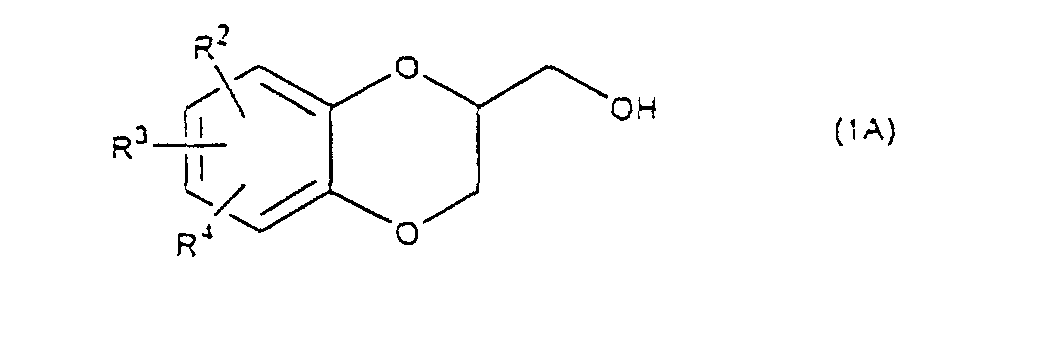
- The present invention relates to the process of preparing a 1,4-benzodioxane derivative as shown in the following formula(1)wherein R1 is hydrogen atom or RSO2 in which R is C1-C4 alkyl, or phenyl which may be substituted by C1-C4 alkyl, R2, R3 and R4 are respectively hydrogen, halogen, hydroxy, nitro, cyano, formyl, carboxyl, alkoxycarbonyloxy having 1-4 carbon atoms in the alkyl portion, C1-C4 alkyl, C1-C4 alkoxy, C1-C4 haloalkyl, N,N-di C1-C4 alkylamino, alkylcarbonyl having 1-4 carbon atoms in the alkyl portion, alkoxycarbonyl having 1-4 carbon atoms in the alkyl portion or phenyl which may be substituted by C1-C4 alkyl, or two groups among R2, R3, and R4 may be combined together to constitute methylenedioxy on the adjacent carbon atoms, or two groups among R2, R3 and R4 may be combined together to constitute phenyl on the adjacent carbon atoms,
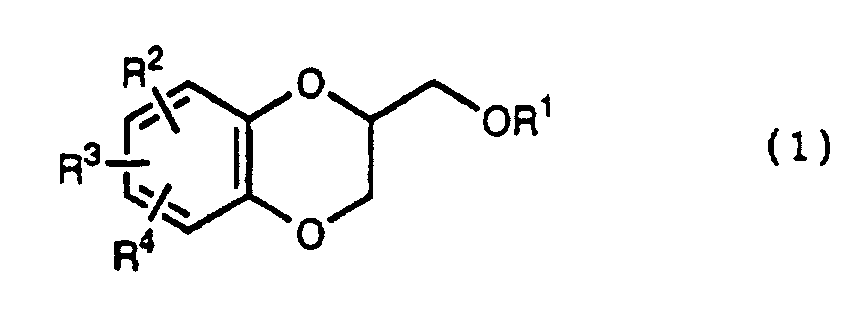
which is characterized in reacting a diol compound as shown in the following formula(2)wherein R2, R3 and R4 are the same as defined above, R5 is benzyl, allyl (e.g. 2-propenyl etc.), o-nitrobenzyl, t-butyldimethylsilyl or benzyloxycarbonyl, or R5 may be constituted methylenedioxy, isopropylidenedioxy, cyclohexylidenedioxy or diphenylmethylenedioxy together with oxygen atom in the hydroxy or the R5O-group, provided that when any one of R2, R3 and R4 is hydroxy and the hydroxy is bound on the carbon atom adjacent to the carbon atom substituted by R5O-group,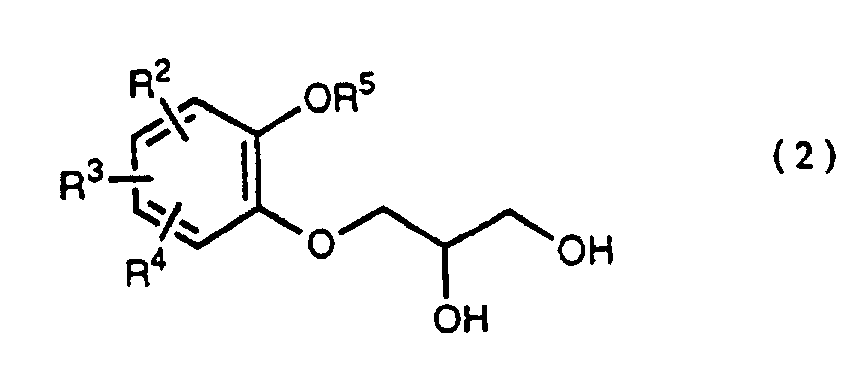
with a sulfonyl halide in the presence of a base to give a sulfonated compound(s) as shown in the following formulae (3) and/or (4) wherein R, R1, R2, R3, R4 and R5 are the same as defined - above,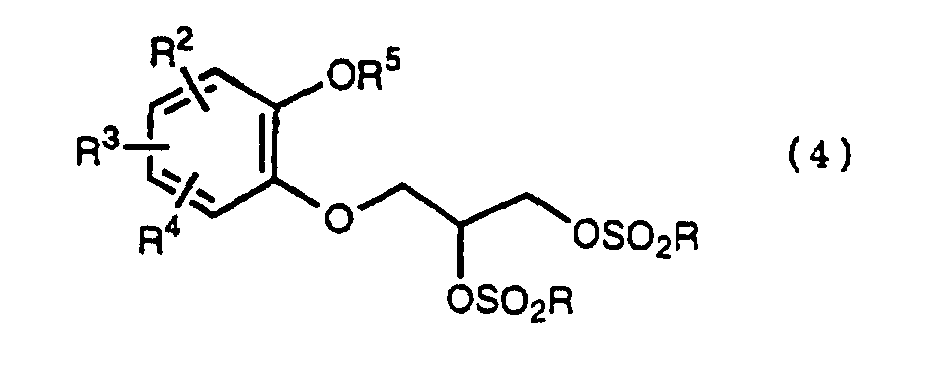
and after the elimination of the protective group R5 of the sulfonated compound, cyclizing the compound by treating with a base. - The present invention is described in detail as shown in the following reaction scheme.wherein R, R2, R3, R4 and R5 are the same as defined above.
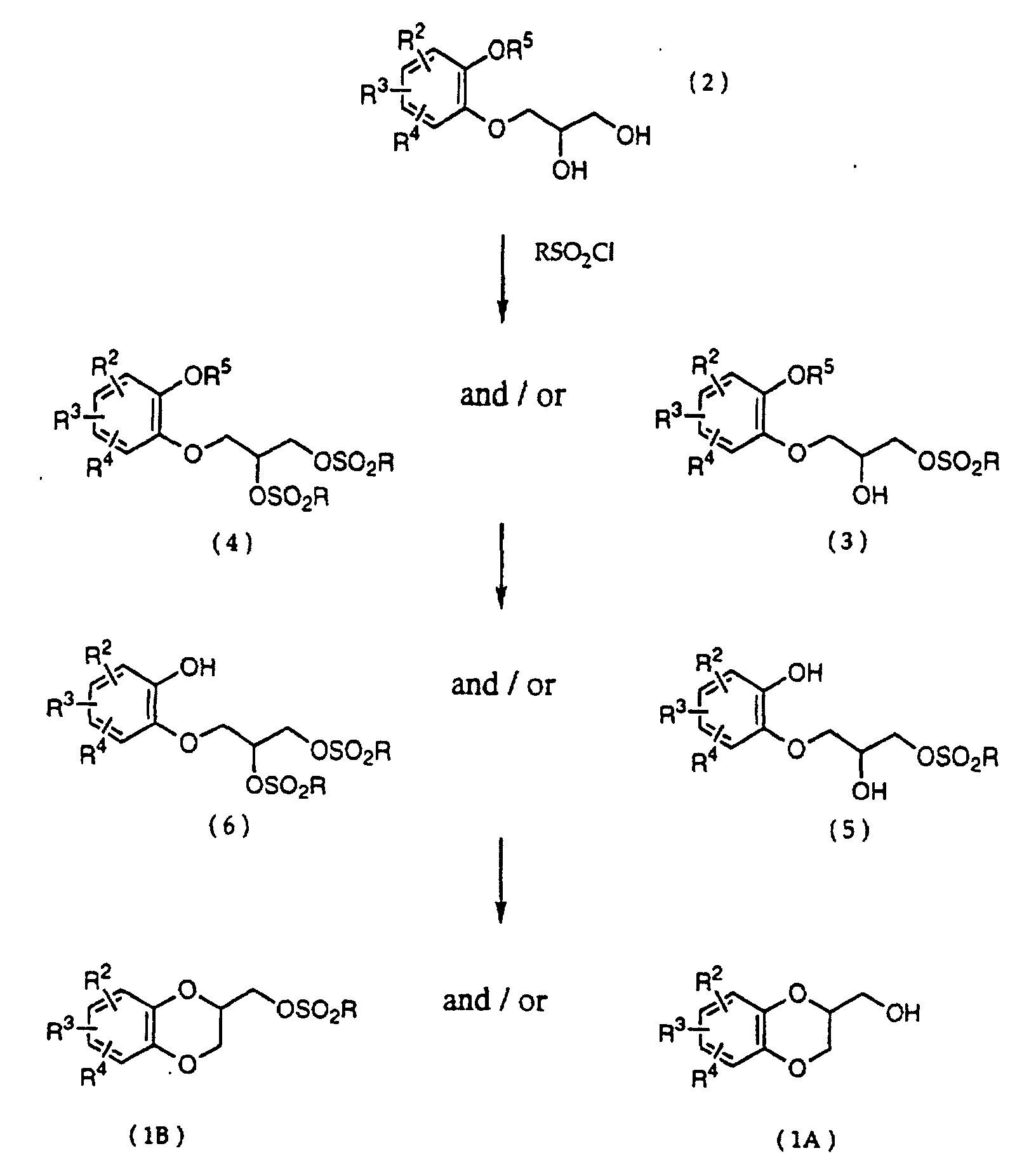
- First, a diol compound (2) is reacted with a sulfonyl halide for example, an arylsulfonyl halide such as benzenesulfonyl chloride, toluenesulfonyl chloride, etc. or C1-C4 alkylsulfonyl halide such as methanesulfonyl chloride, etc. in the presence of a base to give a monosulfonated compound (3) or a disulfonated compound (4) or a mixture of both compounds. As a base, an organic base such as triethylamine, pyridine, etc. is used. This reaction is carried out in the absence of a solvent or in the presence of a solvent, for example, an ether such as tetrahydrofuran, dioxane, t-butylmethyl ether, diethyl ether, etc., a chlorinated compound such as methylene chloride, chloroform, dichloroethane, etc., or an aromatic hydrocarbon such as benzene, toluene, etc. The reaction temperature is 0 - 100°C, preferably 10 - 50°C. This reaction proceeds in the absence of the catalyst, and the reaction is accelerated by using N,N-dimethylaminopyridine etc. as a catalyst and that the yield is improved. When a mixture of a monosulfonated compound (3) and a disulfonated compound (4) is produced, the mixture can be separated by liquid column chromatography etc. But the mixture may be used without the separation in the next step.
- Next, the elimination of the protective group R5 on the sulfonated compound (3) or (4) is carried out. When the protective group R5 is benzyl, allyl or benzyloxycarbonyl, the protective group is deprotected by being subjected to catalytic hydrogenation with palladium-carbon at room temperature in an organic solvent such as methanol, ethanol, ethyl acetate, etc. When an o-nitrobenzyl is used as a protective group, the group is eliminated by the radiation on it in an organic solvent such as methanol, ethanol, etc. When the protective group R5 is t-butyldimethylsilyl, the protective group is removed by using a salt of a fluoro compound such as sodium fluoride, potassium fluoride or tetrabutylammonium fluoride in an organic solvent such as N,N-dimetylformamide, tetrahydrofuran, etc. or a mixture of the organic solvent and water. When the protective group R5 is methylenedioxy, isopropylidenedioxy, cyclohexylidenedioxy or diphenylmethylenedioxy, the protective group is eliminated under the acidic condition usually used in the deprotection of such a protective group. A compound (5), a compound (6) or a mixture of them thus obtained, is cyclized by treating it with a base to produce a desired 1,4-benzodioxane derivative (1A) (R1=H) and/or (1B) (R1=RSO2). Examples of the solvent are a dipolar aprotic solvent such as N,N-dimethylformamide, dimethyl sulfoxide, sulfolane, hexamethylphosphoramide, etc., an ether such as tetrahydrofuran, dioxane, t-butylmethyl ether, diethyl ether, etc., a chlorinated compound such as methylene chloride, chloroform, dichloroethane, etc., an alcohol such as methanol, ethanol, isopropanol, t-butanol, etc., water, and so on.
- Examples of the base are an alkali metal hydride, an alkali metal hydroxide, an alkaline earth metal hydroxide, an alkali metal carbonate, an alkaline earth metal carbonate, an alkali metal salt of C1-C4 alkanol, or tri C1-C4 alkylamine. Sodium hydride, sodium hydroxide, potassium hydroxide, calcium hydroxide, sodium carbonate, potassium carbonate, sodium methoxide, sodium ethoxide, triethylamine and ethyldiisopropylamine are illustrated. The amount of the base is 1-5 mol, preferably 1-3 mol per compound (5) or (6). The reaction temperature is -20 - 80°C, preferably 0 - 50°C. It is thought that on the cyclization of a compound (5), an epoxide is produced and then the epoxide reacts with a hydroxy on the benzene ring to give the cyclized compound. In this reaction there is a possibility to produce a 6 membered ring and a 7 membered ring, but the 6 membered ring is preferentially produced.
- A 1,4-benzodioxane derivative (1A) (R1=H) thus prepared, is reacted with an arylsulfonyl halide such as benzenesulfonyl chloride, toluenesulfonylchloride, etc., or a C1-C4 alkylsulfonyl halide such as methanesulfonyl chloride etc. in the presence of a base to produce a 1,4-benzodioxane derivative (1B) (R1 is RSO2, R is C1-C4 alkyl, phenyl which may be substituted by C1-C4 alkyl). When a mixture of a compound (5) and a compound (6) is cyclized, a mixture of a 1,4-benzodioxane derivative (1) wherein R1 is H, and a 1,4-benzodioxane derivative (1) wherein R1 is RSO2, is obtained, but this mixture is subjected to the next reaction with an arylsulfonyl halide or a C1-C4 alkylsulfonyl halide in the same method as mentioned above to give only a compound wherein R1 is RSO2.
- A diol compound (2), a starting material of the present invention is synthesized according to the reaction scheme as mentioned below.wherein R2, R3, R4 and R5 are the same as defined above.
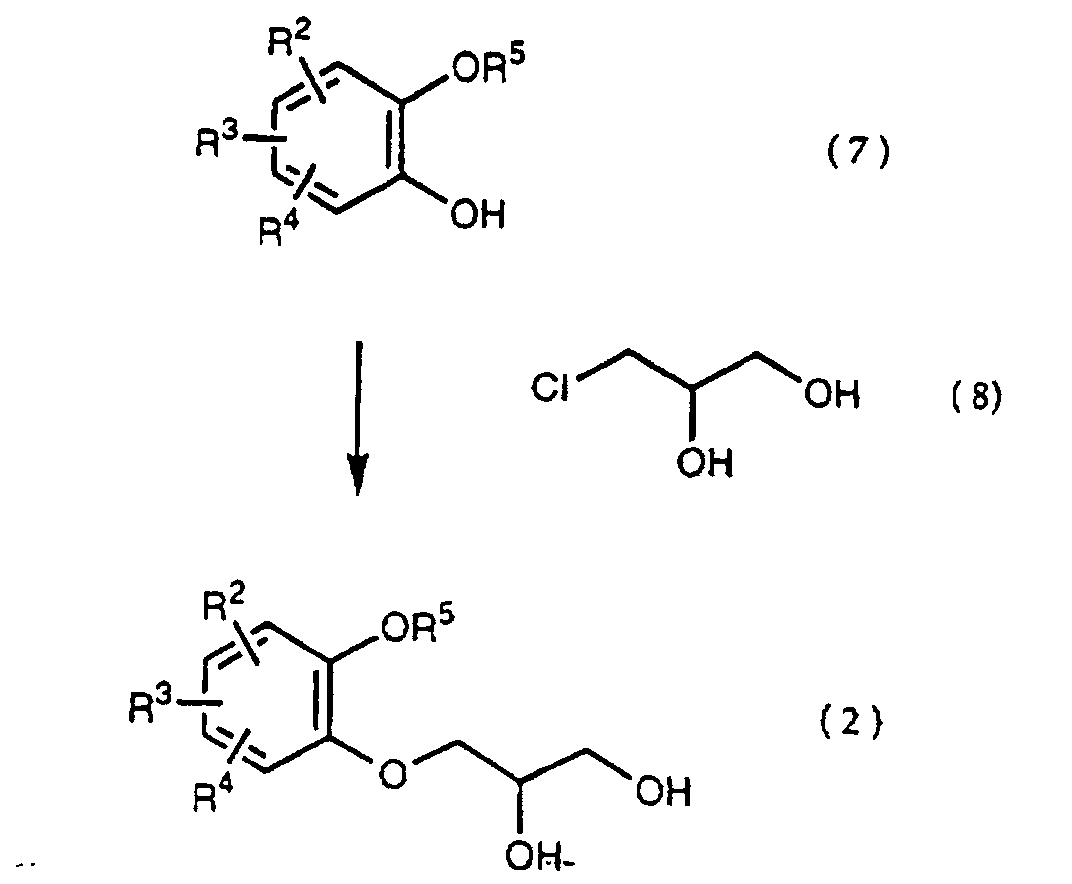
- That is, a catechol derivative (7) is reacted with 3 -chloro-1,2-propanediol (8) in the presence of a base in a solvent to produce a diol compound (2). The solvent is a dipolar aprotic solvent such as N,N-dimethylformamide, dimethyl sulfoxide, sulfolane, hexamethylphosphoramide, etc., an ether such as tetrahhdrofuran, dioxane, t-butylmethyl ether, diethyl ether, etc., a chlorinated compound such as methylene chloride, chloroform, dichloroethane, etc., an alcohol such as methanol, ethanol, isopropanol, t-butanol, etc., water, and so on.
- Examples of the base are an alkali metal hydride, an alkali metal hydroxide, an alkaline earth metal hydroxide, an alkali metal carbonate, an alkaline earth metal carbonate, an alkali metal salt of C1-C4 alkanol, or tri C1-C4 alkylamine. Sodium hydride, sodium hydroxide, potassium hydroxide, calcium hydroxide, sodium carbonate, potassium carbonate, sodium methoxide, sodium ethoxide, triethylamine and ethyldiisopropylamine are illustrated. Sodium hydride, sodium methoxide or sodium ethoxide is preferably used and sodium hydride among them is more preferably used. The amount of the base is 1 - 4 mol, preferably 1.1 - 2.5 mol per compound (7). The reaction temperature is -20 - 150°C, preferably 20 - 100°C. When the reaction temperature is too low, the reaction rate decreases and that is not practical. On the other hand, when the temperature is too high, a glycidol produced during the reaction may be polymerized and the yield is significantly reduced.
- A diol compound (2), a starting material, used in the present invention, may be prepared by the known method, that is by reacting a catechol derivative (7) with glycidol. Glycidol is unstable and is readily polymerized, but 3-chloro-1,2-propanediol (8) is stable and not expensive and the method consisting of the use of this compound (8) as mentioned above, therefore, is beneficial in the industrial scale.
- Also, by using an optically active diol compound (2), an optically active 1,4-benzodioxane derivative is prepared. Such an optically active diol compound (2) is prepared, for instance, by reacting a catechol derivative (7) with optically active 3-chloro-1,2-propanediol under the same condition mentioned above. When 3-chloro-1,2-propanediol having high optical purity is used as a starting material, the racemization is not markedly occurred during the reaction and therefore, a 1,4- benzodioxane derivative is obtainable in the high optical purity. 3-Chloro-1,2-propanediol having the high optical purity (more than 98% ee), for example, is obtained by using the method described in Japanese patent publication No.73998/1992 or No.73999/1992 developed by the present applicant. According to the process of the present invention , a (S)-1,4-benzodioxane derivative is obtained from (R)-3-chloro-1,2-propanediol, and a (R)-1,4-benzodioxane derivative is obtained from (S)-3-chloro-1,2-propanediol.
- The present invention is in detail explained in the following Examples.
- Sodium hydride (2.07g, 0.05mol in oil (60%w/w)) was washed with n-hexane, and anhydrous N,N-dimethylformamide (15ml) was added to it. To the suspension was dropped 2-benzyloxyphenol (6g, 0.03mol) in anhydrous N,N-dimethylformamide (10ml) under ice cooling in over a 10 minute period. After the emission of gas was over, to the solution was dropped monochlorohydrin (3.98g, 0.036mol) in anhydrous N,N-dimethylformamide (5ml) under ice cooling. The solution was stirred for 3 hours at 60°C. After the reaction was completed, to the reaction mixture was added a saturated aqueous solution of ammonium chloride (500ml) and the mixture was extracted with ethyl acetate, and the ethyl acetate phase was washed with saturated brine and water, dried over anhydrous magnesium sulfate and concentrated in vacuo to give a crude product as a pale yellow oil. The crude product was purified with column chromatography (silica gel, n-hexane/ethyl acetate (6:1)) to give 3-(2-benzyloxy)phenoxy-1,2-propanediol (7.88g) as a colorless oil.
- The diol compound (7.88g, 0.029mol) obtained above (i) was dissolved in pyridine (10ml) and to the solution was added p-toluenesulfonyl chloride (12.16g, 0.064mol) under ice cooling and then the mixture was stirred at room temperature for 12 hours. After the reaction was over, to the reaction mixture was added a 3% aqueous solution of hydrochloric acid (300ml) and the mixture was extracted with ethyl acetate. The ethyl acetate phase was washed twice with water, dried over anhydrous magnesium sulfate and concentrated in vacuo to give 15.2g of a mixture of a ditosylated compound and a monotosylated compound (ratio,6:1) as a pale yellow oil.
- In a mixture of ethanol (600ml) and ethyl acetate (100ml) was dissolved 15.2g of a mixture of a ditosylated compound and a monosylated compound prepared above (ii) and the solution was subjected to hydrogenation under hydrogen in the presence of 10% palladium on carbon (1g). After the reaction was finished, palladium/carbon was filtered off and the filtrate was concentrated in vacuo to give 12.9g of a mixture of 1,2-ditosylated 3-(2-hydroxyphenoxy)-1,2-propanediol and 1-monotosylated 3-(2-hydroxyphenoxy)-1,2-propanediol.
- The ratio of the ditosylated compound and the monotosylated compound was 6:1 according to analysis on H-NMR.
- Sodium hydride (1.59g, 0.04mol in oil (60%w/w)) was washed with n-hexane and to it was added 10ml of anhydrous N,N-dimethylformamide. To the suspension was added 12.9g of a mixture of a 1,2-ditosylated compound and a 1-tosylated compound prepared above (iii) in anhydrous N,N-dimethylformamide (100ml) under an atmosphere of nitrogen under ice cooling in over a 10 minute period and then the mixture was stirred for 3 hours at room temperature. To the solution was added a saturated aqueous solution of ammonium chloride and the solution was extracted with ethyl acetate. The ethyl acetate phase was washed with saturated brine and water, dried over anhydrous magnesium sulfate and concentrated in vacuo to give 7.5g of a crude mixture of 2-tosyloxymethyl-1,4-benzodioxane and 2-hydroxymethyl-1,4-benzodioxane as a oil. The mixture might be purified with column chromatography (silica gel, n-hexane/ethyl acetate (3:2)), but the mixture was used for the next step without purification.
- By the same method as mentioned above, there was obtained a mixture of 2-tosyloxymethyl-1,4-benzodioxane and 2-hydroxymethyl-1,4-benzodioxane, the ratio of which was 6:1 according to analysis with column chromatography (silica gel, n-hexane/ethyl acetate (3:2)).
- To 7.5g of the mixture of 2-tosyloxymethyl-1,4-benzodioxane and 2-hydroxymethyl-1,4-benzodioxane in dichloromethane (15ml) and pyridine (3.16g, 0.04mol) was added p-toluenesulfonyl chloride (0.76g, 0.04mol) under ice cooling and the mixture was stirred at room temperature for 12 hours. After the completion of the reaction, a 3% aqueous solution of hydrochloric acid (200ml) was added to the reaction mixture and the reaction mixture was extracted with ethyl acetate and the ethyl acetate phase was washed twice with water, dried over anhydrous magnesium sulfate, and concentrated in vacuo to give a crude product as a oil. The crude product was purified with column chromatography (silica gel, n-hexane/ethyl acetate (3:1)) to give 7.89g of 2-tosyloxymethyl-1,4-benzodioxane (yield 83% : based on 2-benzyloxyphenol).
- By using 2-benzyloxy-3-methylphenol (6.43g) instead of 2-benzyloxyphenol and by using optically active (R)-monochlorohydrin (optical purity :99.0% ee), according to the method of example 1 there was obtained (S)-2-tosyloxymethyl-8-methyl-1,4-benzodioxane (8.02g, yield 80%). During the reaction the optical purity of (S)-2-hydroxymethyl-8-methyl-1,4-benzodioxane was 97.4% ee by the measurement with the chiral column OD ( Daisel Chemical Industries Ltd.)
- By using 2-benzyloxy-4,5-methylenedioxyphenol (7.33g) instead of 2-benzyloxyphenol in the same method described in Example 1, there was obtained 2-tosyloxymethyl-6, 7-methylened-ioxy-1,4-benzodioxane (8.5g, yield 78%).
- By using 2-benzyloxy-3-methoxyphenol (6.91g) instead of 2-benzyloxyphenol in the same method described in Example 1, there was obtained 2-tosyloxymethyl-8-methoxy-1,4-benzodioxane (8.51g, yield 81%).
- By using 2-benzyloxy-6-fluorophenol (6.55g) instead of 2-benzyloxyphenol in the same method described in Example 1, there was obtained 2-tosyloxymethyl-5-fluoro-1,4-benzodioxane (7.04g, yield 69%).
- By using 2-benzyloxy-5-nitrophenol (7.36g) instead of 2-benzyloxyphenol in the same method described in Example 1, there was obtained 2-tosyloxymethyl-6-nitro-1,4-benzodioxane (7.92g, yield 72%).
- By using 2-benzyloxy-5-ethoxycarbonylphenol (8.17g) instead of 2-benzyloxyphenol in the same method described in Example 1, there was obtained 2-tosyloxymethyl-7-ethoxycarbonyl-1,4-benzodioxane (8.85g, yield 75%).
- On the occasion of the preparation of 2-tosyloxymethyl-8-hydroxy-1,4-benzodioxane, by using 4-hydroxy-2,2-dimethyl-1,3-benzo[d]dioxole (4.98g) instead of 2-benzyloxyphenol, the objective compound was obtained, according to the method described in Example 1, provided that, intermediates (5) and (6) wherein R is p-CH3C6H4, R2 is 3-OH, R3 and R4 are H, were prepared as the following procedure.
- A mixture (14.3g) of a compound (3) and a compound (4) wherein R is p-CH3C6H4, R2 and R5 are -OC(CH3)2-, R3 and R4 are hydrogen, was refluxed in 6 N hydrochloric acid for 4 hours. After the reaction was over, to the mixture is added methylene chloride and the methylene chloride phase was washed with a saturated aqueous solution of sodium hydrogen carbonate and water, dried over anhydrous magnesium sulfate and concentrated in vacuo to give 11.8g of a mixture of a compound (5) and a compound (6).
- This mixture was treated in the same method described in Example 1 to give the objective compound (6.55g, yield 65%).
- According to the present invention, a 1,4-benzodioxane derivative is prepared in the high yield and by the convenient procedures in the industrial scale without the isolation of the intermediate produced during the reaction, by using a diol compound which is synthesized from a catechol derivative. Especially, it is economical to prepare a diol compound by reacting a catechol derivative with 3-chloro-1,2-propanediol. And in this reaction, by using an optically active 3-chloro-1,2-propanediol, a 1,4-benzodioxane in the high optical purity is obtainable without the marked racemizaion during the reaction.
Claims (10)
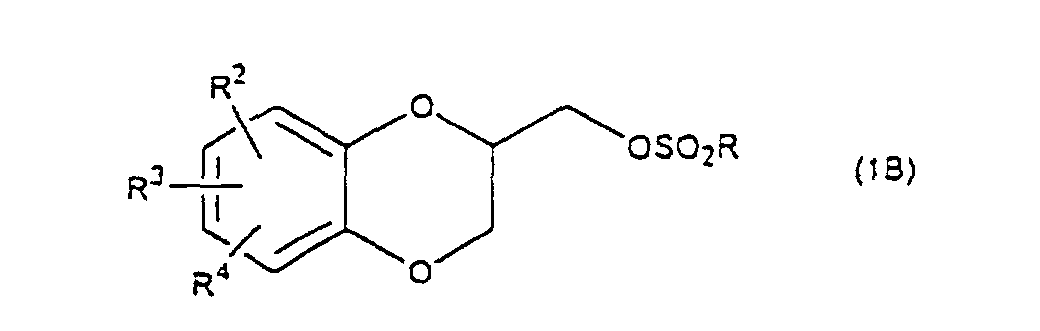
- A process for preparing a mixture of a 1,4-benzodioxane derivative of the formula (1A) and a 1,4-benzodioxane derivative or the formula (1B)
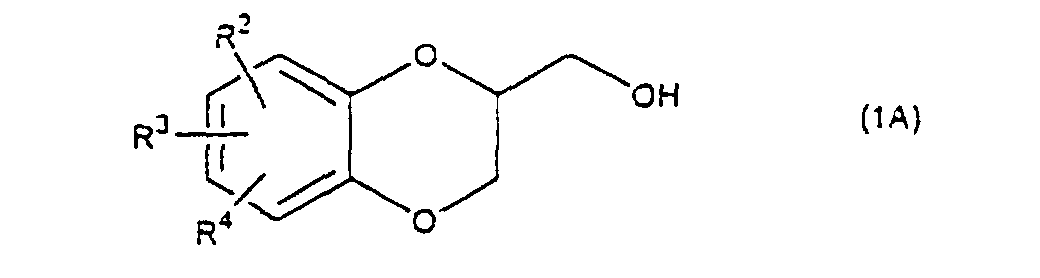 wherein R is C1-C4 alkyl, or phenyl 'which may be substituted by C1-C4 alkyl, R2, R3 and R4 are respectively hydrogen, halogen, hydroxy, nitro, cyano, formyl, carboxyl, alkoxycarbonyloxy having 1-4 carbon atoms in the alkyl portion, C1-C4 alkyl, C1-C4 alkoxy, C1-C4 haloalkyl, N,N-di C1-C4 alkylamino, alkylcarbonyl having 1-4 carbon atoms in the alkyl portion, alkoxycarbonyl having 1-4 carbon atoms in the alkyl portion or phenyl which may be substituted by C1-C4 alkyl, or two groups among R2, R3 and R4 may be combined together to form methylenedioxy on adjacent carbon atoms, or two groups among R2, R3 and R4 may be combined together to form phenyl on adjacent carbon atoms, which is characterized in that a diol compound of the formula (2)
 wherein R2, R3 and R4 are the same as defined above, R5 is benzyl, allyl, o-nitrobenzyl, t-butyldimethylsilyl or benzyloxycarbonyl, or R5 may form methylenedioxy, isopropylidenedioxy, cyclohexylidenedioxy or diphenylmethylenedioxy together with the oxygen atoms in the hydroxy and the R5O-group, provided that any one of R2, R3 and R4 is hydroxy and the hydroxy is bound on the carbon atom adjacent to the carbon atom substituted by the R5O-group, is reacted with a sulfonyl halide in the presence of a base to obtain a mixture of a monosulfonated compound of the formula (3) and a disulfonated compound of the formula (4)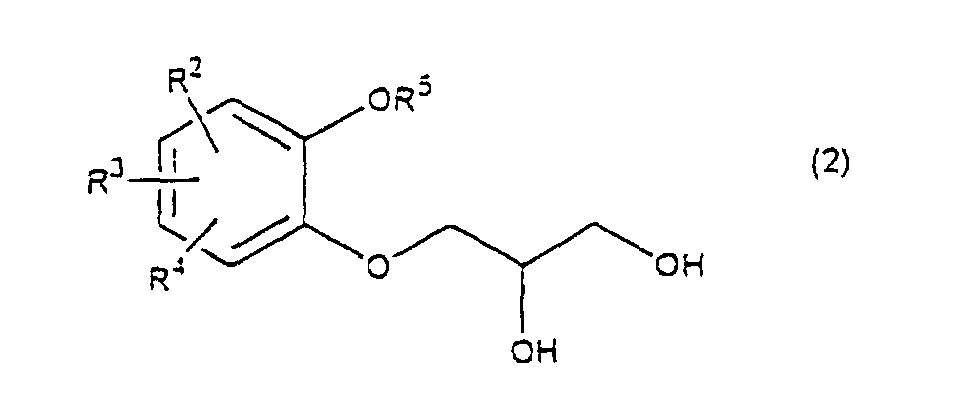
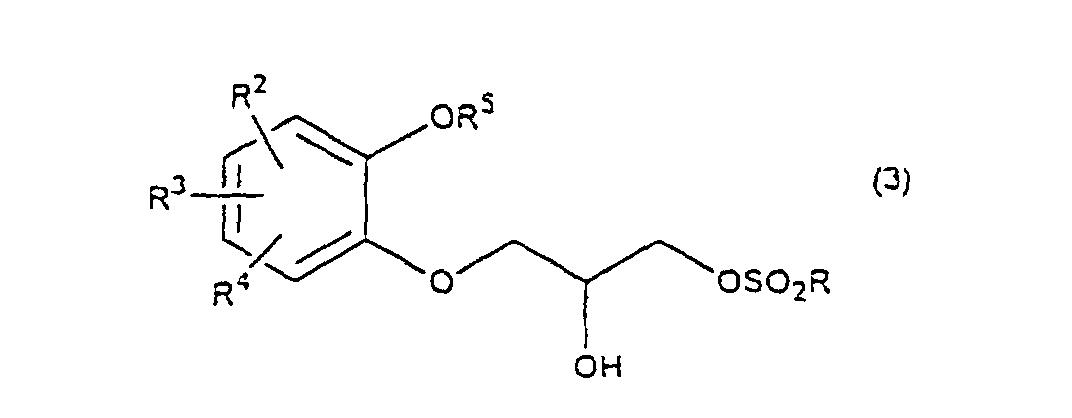 wherein R, R2, R3, R4 and R5 are the same as defined above,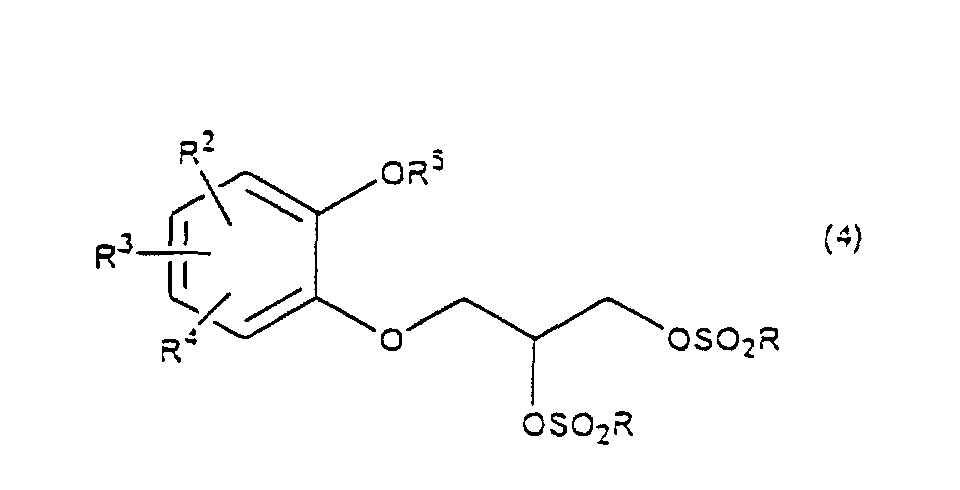
and after the elimination of the protective group R5 in the sulfonated compounds, the deprotected compounds are cyclized by treating them with a base. - A process for preparing a 1,4-benzodioxane derivative of the formula (1A)wherein R2, R3 and R4 are respectively hydrogen, halogen, hydroxy, nitro, cyano, formyl, carboxyl, alkoxycarbonyloxy having 1-4 carbon atoms in the alkyl portion, C1-C4 alkyl, C1-C4 alkoxy, C1-C4 haloalkyl, N,N-di C1-C4 alkylamino, alkylcarbonyl having 1-4 carbon atoms in the alkyl portion, alkoxycarbonyl having 1-4 carbon atoms in the alkyl portion or phenyl which may be substituted by C1-C4 alkyl, or two groups among R2, R3 and R4 may be combined together to form methylenedioxy on adjacent carbon atoms, or two groups among R2, R3 and R4 may be combined together to form phenyl on adjacent carbon atoms,
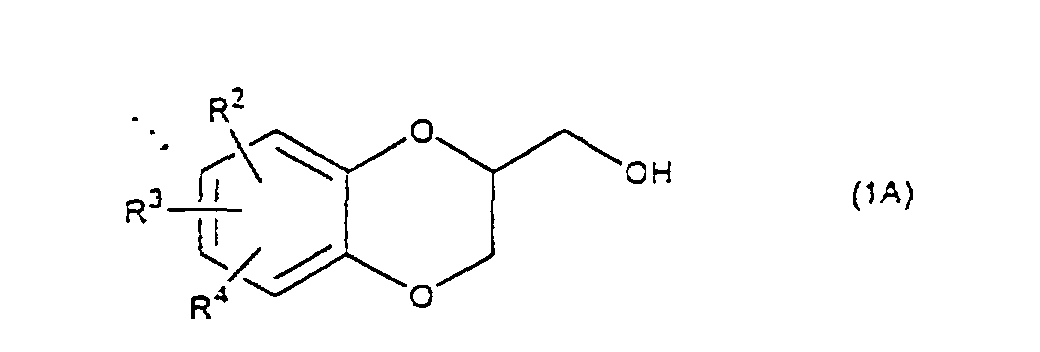
which is characterized in that a diol compound of the formula (2)wherein R2, R3 and R4 are the same as defined above, R5 is benzyl, allyl, o-nitrobenzyl, t-butyldimethylsilyl or benzyloxycarbonyl, or R5 may form methylenedioxy, isopropylidenedioxy, cyclohexylidenedioxy or diphenylmethylenedioxy together with the oxygen atoms in the hydroxy and the R5O-group, provided that any one of R2, R3 and R4 is hydroxy and the hydroxy is bound on the carbon atom adjacent to the carbon atom substituted by R5O-group, is reacted with a sulfonyl halide in the presence of a base to obtain a monosulfonated compound of the formula (3)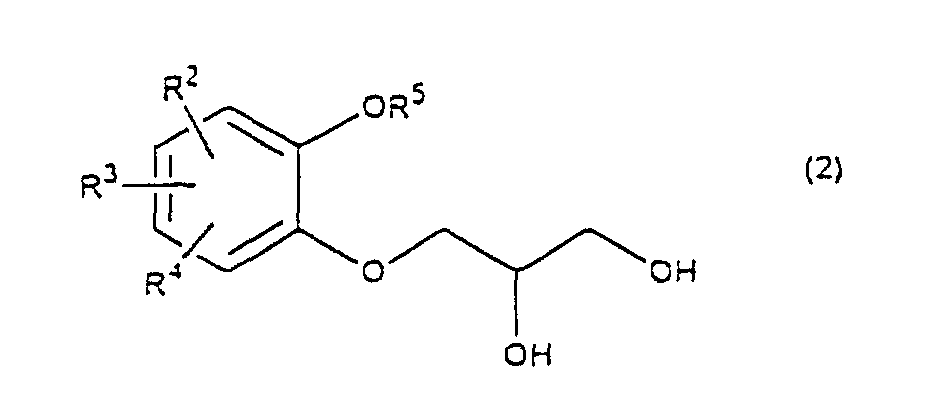 wherein R is C1-C4 alkyl, or phenyl which may be substituted by C1-C4 alkyl, R2, R3, R4 and R5 are the same as defined above,
and after the elimination of the protective group R5 from the sulfonated compound, the deprotected compound is cyclized by treatingit with a base. - The process of
claim 1 or 2 for prepararing a 1,4-benzodioxane derivative of the formula (1B) characterized in that the mixture prepared by the process of claim 1 or the compound prepared by the process of claim 2 is further reacted with a sulfonyl halide. - The process for preparing a 1,4-benzodioxane derivative(s) as claimed in any one of claims 1 - 3 which is characterized in that an optically active 1,4-benzodioxane derivative(s) is prepared by using an optically active diol of the formula (2).
- The process for preparing a 1,4-benzodioxane derivative(s)as claimed in any one of claims 1 - 4 which is characterized in that the sulfonyl halide is toluenesulfonyl chloride or a C1-C4 alkyl sulfonyl chloride.
- The process for preparing a 1,4-benzodioxane derivative(s)as claimed in claim 5 wherein the sulfonyl halide is toluenesulfonyl chloride.
- The process for preparing a 1,4-benzodioxane derivative(s) as claimed in any one of claims 1 - 5 characterized. in that the elimination of the protective group R5 wherein R5 is benzyl, allyl or benzyloxycarbonyl, from the sulfonated compound(s) is performed by hydrogenation with palladium/carbon in an organic solvent.
- The process for preparing a 1,4-benzodioxane derivative(s) as claimed in any one of claims 1 - 7 characterized in that a catechol derivative of the formula (7)wherein R2, R3, R4 and R5 are the same as defined above, is reacted with 3-chloro-1,2-propanediol of the formula (8)
 in the presence of a base to obtain a diol compound of the formula (2).
- The process for preparing an optically active 1,4-benzodioxane derivative(s) as claimed in any one of claims 1 - 8 characterized in that a catechol derivative of the formula (7)wherein R2, R3, R4 and R5 are the same as defined above, is reacted with an optically active 3-chloro-1,2-propanediol of the formula (8)
 in the presence of a base to obtain an optically active diol compound of the formula (2).
- A process for preparing a 1,4-benzodioxane derivative of the formula (1A)wherein R2, R3 and R4 are respectively hydrogen, halogen, hydroxy, nitro, cyano, formyl, carboxyl, alkoxycarbonyloxy having 1-4 carbon atoms in the alkyl portion, C1-C4 alkyl, C1-C4 alkoxy, C1-C4 haloalkyl, N,N-di C1-C4 alkylamino, alkylcarbonyl having 1-4 carbon atoms in the alkyl portion, alkoxycarbonyl having 1-4 carbon atoms in the alkyl portion or phenyl which may be substituted by C1-C4 alkyl, or two groups among R2, R3 and R4 may be combined together to form methylenedioxy on adjacent carbon atoms, or two groups among R2, R3 and R4 may be combined together to form phenyl on adjacent carbon atoms,
which is characterized in that: a monosulfonated compound of the formula (5),wherein R is C1-C4 alkyl, or phenyl which may be substituted by C1-C4 alkyl, R2, R3 and R4 are the same as defined above,
is cyclized by treating with a base.
Applications Claiming Priority (7)
| Application Number | Priority Date | Filing Date | Title |
|---|---|---|---|
| JP6627095 | 1995-03-24 | ||
| JP6627095 | 1995-03-24 | ||
| JP66270/95 | 1995-03-24 | ||
| JP39458/96 | 1996-02-27 | ||
| JP3945896 | 1996-02-27 | ||
| JP03945896A JP3235448B2 (en) | 1995-03-24 | 1996-02-27 | Method for producing 1,4-benzodioxane derivative |
| PCT/JP1996/000727 WO1996030360A1 (en) | 1995-03-24 | 1996-03-21 | Process for producing 1,4-benzodioxane derivatives |
Publications (3)
| Publication Number | Publication Date |
|---|---|
| EP0841334A1 EP0841334A1 (en) | 1998-05-13 |
| EP0841334A4 EP0841334A4 (en) | 1998-07-08 |
| EP0841334B1 true EP0841334B1 (en) | 2001-10-04 |
Family
ID=26378853
Family Applications (1)
| Application Number | Title | Priority Date | Filing Date |
|---|---|---|---|
| EP96906901A Expired - Lifetime EP0841334B1 (en) | 1995-03-24 | 1996-03-21 | Process for producing 1,4-benzodioxane derivatives |
Country Status (12)
| Country | Link |
|---|---|
| US (1) | US5780650A (en) |
| EP (1) | EP0841334B1 (en) |
| JP (1) | JP3235448B2 (en) |
| KR (1) | KR100383300B1 (en) |
| AT (1) | ATE206417T1 (en) |
| AU (1) | AU5013896A (en) |
| CA (1) | CA2215604C (en) |
| DE (1) | DE69615695T2 (en) |
| ES (1) | ES2165489T3 (en) |
| NO (1) | NO316990B1 (en) |
| TW (1) | TW472052B (en) |
| WO (1) | WO1996030360A1 (en) |
Families Citing this family (29)
| Publication number | Priority date | Publication date | Assignee | Title |
|---|---|---|---|---|
| EP0928791B1 (en) * | 1997-05-12 | 2003-07-30 | Daiso Co., Ltd. | Process for producing 1,4-benzodioxane derivatives |
| JP3483458B2 (en) | 1998-03-13 | 2004-01-06 | 富士通株式会社 | CBR band sharing device and method |
| JP3634635B2 (en) | 1998-07-31 | 2005-03-30 | 富士通株式会社 | Cell switching device for controlling fixed rate connections |
| JP4572475B2 (en) * | 2000-03-03 | 2010-11-04 | ダイソー株式会社 | Process for producing 1,4-benzodioxane derivatives |
| CN100454857C (en) | 2001-08-09 | 2009-01-21 | 松下电器产业株式会社 | Transmission device and transmission method |
| EP1553095A1 (en) * | 2002-07-29 | 2005-07-13 | Kaneka Corporation | Process for industrially producing optically active 1,4-benzodioxane derivative |
| MY147767A (en) * | 2004-06-16 | 2013-01-31 | Janssen Pharmaceutica Nv | Novel sulfamate and sulfamide derivatives useful for the treatment of epilepsy and related disorders |
| AR049646A1 (en) * | 2004-06-16 | 2006-08-23 | Janssen Pharmaceutica Nv | USEFUL SULFAMATE AND SULFAMIDE DERIVATIVES FOR THE TREATMENT OF EPILEPSY AND RELATED DISORDERS |
| JP4604583B2 (en) * | 2004-07-20 | 2011-01-05 | ダイソー株式会社 | Process for producing 1-amido-3- (2-hydroxyphenoxy) -2-propanol derivatives and 2-amidomethyl-1,4-benzodioxane derivatives |
| DE602005008084D1 (en) * | 2004-08-24 | 2008-08-21 | Janssen Pharmaceutica Nv | NEW BENZO-CONDENSED HETEROARYLSULFAMID DERIVATIVES SUITABLE AS ANTICONVULSIVE AGENTS |
| CA2605580A1 (en) * | 2005-04-22 | 2006-11-02 | Wyeth | Benzodioxane and benzodioxolane derivatives and uses thereof |
| KR20080012360A (en) * | 2005-05-20 | 2008-02-11 | 얀센 파마슈티카 엔.브이. | Process for preparing sulfamide derivatives |
| US7846131B2 (en) * | 2005-09-30 | 2010-12-07 | Covidien Ag | Administration feeding set and flow control apparatus with secure loading features |
| US8716231B2 (en) * | 2005-12-19 | 2014-05-06 | Janssen Pharmaceutica Nv | Use of benzo-fused heterocycle sulfamide derivatives for the treatment of pain |
| US20070155823A1 (en) * | 2005-12-19 | 2007-07-05 | Smith-Swintosky Virginia L | Use of benzo-fused heterocycle sulfamide derivatives as neuroprotective agents |
| US8497298B2 (en) * | 2005-12-19 | 2013-07-30 | Janssen Pharmaceutica Nv | Use of benzo-fused heterocycle sulfamide derivatives for lowering lipids and lowering blood glucose levels |
| US8492431B2 (en) * | 2005-12-19 | 2013-07-23 | Janssen Pharmaceutica, N.V. | Use of benzo-fused heterocycle sulfamide derivatives for the treatment of obesity |
| US8937096B2 (en) * | 2005-12-19 | 2015-01-20 | Janssen Pharmaceutica Nv | Use of benzo-fused heterocyle sulfamide derivatives for the treatment of mania and bipolar disorder |
| US8691867B2 (en) * | 2005-12-19 | 2014-04-08 | Janssen Pharmaceutica Nv | Use of benzo-fused heterocycle sulfamide derivatives for the treatment of substance abuse and addiction |
| US20070155827A1 (en) * | 2005-12-19 | 2007-07-05 | Smith-Swintosky Virginia L | Use of benzo-fused heterocycle sulfamide derivatives for the treatment of depression |
| EA200870556A1 (en) * | 2006-05-19 | 2009-06-30 | Янссен Фармацевтика Н.В. | COMBINED THERAPY IN THE TREATMENT OF EPILEPSY AND RELATED DISORDERS |
| KR100780538B1 (en) * | 2006-08-02 | 2007-11-30 | 안국약품 주식회사 | Method for preparing chiral 2-hydroxymethyl-1,4-benzodioxane compound |
| US20090247616A1 (en) * | 2008-03-26 | 2009-10-01 | Smith-Swintosky Virginia L | Use of benzo-fused heterocyle sulfamide derivatives for the treatment of anxiety |
| US20090247617A1 (en) * | 2008-03-26 | 2009-10-01 | Abdel-Magid Ahmed F | Process for the preparation of benzo-fused heteroaryl sulfamates |
| US20090247618A1 (en) * | 2008-03-26 | 2009-10-01 | Ballentine Scott A | Process for preparation of benzo-fused heteroaryl derivatives |
| EA018567B1 (en) * | 2008-06-23 | 2013-08-30 | Янссен Фармацевтика Нв | Crystalline form of (2s)-(-)-n-(6-chloro-2,3-dihydrobenzo[1,4]dioxin-2-ylmethyl)sulfamide |
| US8815939B2 (en) * | 2008-07-22 | 2014-08-26 | Janssen Pharmaceutica Nv | Substituted sulfamide derivatives |
| US8180891B1 (en) | 2008-11-26 | 2012-05-15 | Free Stream Media Corp. | Discovery, access control, and communication with networked services from within a security sandbox |
| US20100152160A1 (en) * | 2008-12-12 | 2010-06-17 | Khamrai Uttam | Novel benzodioxane and benzoxazine derivatives useful as cc chemokine receptor ligands |
Family Cites Families (1)
| Publication number | Priority date | Publication date | Assignee | Title |
|---|---|---|---|---|
| JP3136206B2 (en) * | 1991-10-22 | 2001-02-19 | 中外製薬株式会社 | Benzodioxane derivatives |
-
1996
- 1996-02-27 JP JP03945896A patent/JP3235448B2/en not_active Expired - Fee Related
- 1996-03-21 DE DE69615695T patent/DE69615695T2/en not_active Expired - Fee Related
- 1996-03-21 ES ES96906901T patent/ES2165489T3/en not_active Expired - Lifetime
- 1996-03-21 AU AU50138/96A patent/AU5013896A/en not_active Abandoned
- 1996-03-21 KR KR1019970706553A patent/KR100383300B1/en not_active Expired - Fee Related
- 1996-03-21 EP EP96906901A patent/EP0841334B1/en not_active Expired - Lifetime
- 1996-03-21 AT AT96906901T patent/ATE206417T1/en not_active IP Right Cessation
- 1996-03-21 CA CA002215604A patent/CA2215604C/en not_active Expired - Fee Related
- 1996-03-21 US US08/913,882 patent/US5780650A/en not_active Expired - Fee Related
- 1996-03-21 WO PCT/JP1996/000727 patent/WO1996030360A1/en not_active Ceased
- 1996-03-22 TW TW085103457A patent/TW472052B/en not_active IP Right Cessation
-
1997
- 1997-09-23 NO NO19974386A patent/NO316990B1/en unknown
Non-Patent Citations (1)
| Title |
|---|
| W. L. NELSON: "Absolute configuration of 2-Alkylaminomethylbenzodioxanes.", JOURNAL OF THE CHEMICAL SOCIETY, CHEMICAL COMMUNICATIONS, 1976, OXFORD, GB, pages 921 - 2 * |
Also Published As
| Publication number | Publication date |
|---|---|
| US5780650A (en) | 1998-07-14 |
| DE69615695D1 (en) | 2001-11-08 |
| NO974386D0 (en) | 1997-09-23 |
| CA2215604C (en) | 2006-05-23 |
| EP0841334A1 (en) | 1998-05-13 |
| DE69615695T2 (en) | 2002-07-11 |
| JPH08325260A (en) | 1996-12-10 |
| CA2215604A1 (en) | 1996-10-03 |
| ATE206417T1 (en) | 2001-10-15 |
| EP0841334A4 (en) | 1998-07-08 |
| KR100383300B1 (en) | 2004-02-11 |
| ES2165489T3 (en) | 2002-03-16 |
| JP3235448B2 (en) | 2001-12-04 |
| NO974386L (en) | 1997-11-21 |
| WO1996030360A1 (en) | 1996-10-03 |
| NO316990B1 (en) | 2004-07-19 |
| KR19980703150A (en) | 1998-10-15 |
| AU5013896A (en) | 1996-10-16 |
| TW472052B (en) | 2002-01-11 |
Similar Documents
| Publication | Publication Date | Title |
|---|---|---|
| EP0841334B1 (en) | Process for producing 1,4-benzodioxane derivatives | |
| US4582918A (en) | Preparation of intermediates for (threo)-1-aryl-2-acylamido-3-fluoro-1-propanols | |
| FI91528C (en) | Optically active alkylaryl ketals and a process for their preparation | |
| EP0984000B1 (en) | Process for producing amide derivatives and intermediate compounds | |
| JPWO1997011938A1 (en) | Method for producing amide derivatives and intermediate compounds | |
| JP3253634B2 (en) | Method for producing glycidyl sulfonate derivative | |
| KR100429320B1 (en) | Stereoselective Preparation Method of Hetero-bicyclic Alcohol Enantiomers | |
| US6194589B1 (en) | Production of amide derivatives and intermediate compounds therefor | |
| US6057476A (en) | Process for the preparation of 3-amino-2-hydroxy-1-propyl ethers | |
| US4946974A (en) | Optically active derivatives of glycidol | |
| US4677214A (en) | Intermediates for preparation of (threo)-1-aryl-2-acylamido-3-fluoro-1-propanols | |
| US5153338A (en) | Optically active derivatives of glycidol | |
| WO1988000190A1 (en) | Optically active derivatives of glycidol | |
| ES2387901T3 (en) | Synthesis of a compound that is appropriate as an intermediate in the synthesis of oxindoledioxane derivatives | |
| JP3904491B2 (en) | Method for producing amide derivative and intermediate compound | |
| US5344947A (en) | Optically active derivatives of glycidol | |
| EP0928791B1 (en) | Process for producing 1,4-benzodioxane derivatives | |
| JP2001081086A (en) | Production of 1,4-benzodioxanes | |
| KR100780538B1 (en) | Method for preparing chiral 2-hydroxymethyl-1,4-benzodioxane compound | |
| EP0930312A1 (en) | Production method of optically active amino alcohols | |
| WO2003097624A1 (en) | Process for preparing (r)-3,4-epoxy-1-butanol | |
| JPH0686404B2 (en) | Method for producing α-hydroxyarylalkanoic acid |
Legal Events
| Date | Code | Title | Description |
|---|---|---|---|
| PUAI | Public reference made under article 153(3) epc to a published international application that has entered the european phase |
Free format text: ORIGINAL CODE: 0009012 |
|
| 17P | Request for examination filed |
Effective date: 19971017 |
|
| AK | Designated contracting states |
Kind code of ref document: A1 Designated state(s): AT BE CH DE DK ES FI FR GB IT LI NL SE |
|
| A4 | Supplementary search report drawn up and despatched | ||
| AK | Designated contracting states |
Kind code of ref document: A4 Designated state(s): AT BE CH DE DK ES FI FR GB IT LI NL SE |
|
| 17Q | First examination report despatched |
Effective date: 19990114 |
|
| GRAG | Despatch of communication of intention to grant |
Free format text: ORIGINAL CODE: EPIDOS AGRA |
|
| GRAG | Despatch of communication of intention to grant |
Free format text: ORIGINAL CODE: EPIDOS AGRA |
|
| GRAH | Despatch of communication of intention to grant a patent |
Free format text: ORIGINAL CODE: EPIDOS IGRA |
|
| GRAH | Despatch of communication of intention to grant a patent |
Free format text: ORIGINAL CODE: EPIDOS IGRA |
|
| GRAA | (expected) grant |
Free format text: ORIGINAL CODE: 0009210 |
|
| AK | Designated contracting states |
Kind code of ref document: B1 Designated state(s): AT BE CH DE DK ES FI FR GB IT LI NL SE |
|
| PG25 | Lapsed in a contracting state [announced via postgrant information from national office to epo] |
Ref country code: FI Free format text: LAPSE BECAUSE OF FAILURE TO SUBMIT A TRANSLATION OF THE DESCRIPTION OR TO PAY THE FEE WITHIN THE PRESCRIBED TIME-LIMIT Effective date: 20011004 |
|
| REF | Corresponds to: |
Ref document number: 206417 Country of ref document: AT Date of ref document: 20011015 Kind code of ref document: T |
|
| REG | Reference to a national code |
Ref country code: CH Ref legal event code: EP |
|
| REG | Reference to a national code |
Ref country code: CH Ref legal event code: NV Representative=s name: A. BRAUN, BRAUN, HERITIER, ESCHMANN AG PATENTANWAE |
|
| REF | Corresponds to: |
Ref document number: 69615695 Country of ref document: DE Date of ref document: 20011108 |
|
| REG | Reference to a national code |
Ref country code: GB Ref legal event code: IF02 |
|
| PG25 | Lapsed in a contracting state [announced via postgrant information from national office to epo] |
Ref country code: SE Free format text: LAPSE BECAUSE OF FAILURE TO SUBMIT A TRANSLATION OF THE DESCRIPTION OR TO PAY THE FEE WITHIN THE PRESCRIBED TIME-LIMIT Effective date: 20020104 Ref country code: DK Free format text: LAPSE BECAUSE OF FAILURE TO SUBMIT A TRANSLATION OF THE DESCRIPTION OR TO PAY THE FEE WITHIN THE PRESCRIBED TIME-LIMIT Effective date: 20020104 |
|
| ET | Fr: translation filed | ||
| REG | Reference to a national code |
Ref country code: ES Ref legal event code: FG2A Ref document number: 2165489 Country of ref document: ES Kind code of ref document: T3 |
|
| PLBE | No opposition filed within time limit |
Free format text: ORIGINAL CODE: 0009261 |
|
| STAA | Information on the status of an ep patent application or granted ep patent |
Free format text: STATUS: NO OPPOSITION FILED WITHIN TIME LIMIT |
|
| 26N | No opposition filed | ||
| PGFP | Annual fee paid to national office [announced via postgrant information from national office to epo] |
Ref country code: BE Payment date: 20050217 Year of fee payment: 10 |
|
| PGFP | Annual fee paid to national office [announced via postgrant information from national office to epo] |
Ref country code: AT Payment date: 20050323 Year of fee payment: 10 |
|
| PGFP | Annual fee paid to national office [announced via postgrant information from national office to epo] |
Ref country code: ES Payment date: 20050331 Year of fee payment: 10 |
|
| PG25 | Lapsed in a contracting state [announced via postgrant information from national office to epo] |
Ref country code: AT Free format text: LAPSE BECAUSE OF NON-PAYMENT OF DUE FEES Effective date: 20060321 |
|
| PG25 | Lapsed in a contracting state [announced via postgrant information from national office to epo] |
Ref country code: ES Free format text: LAPSE BECAUSE OF NON-PAYMENT OF DUE FEES Effective date: 20060322 |
|
| PG25 | Lapsed in a contracting state [announced via postgrant information from national office to epo] |
Ref country code: BE Free format text: LAPSE BECAUSE OF NON-PAYMENT OF DUE FEES Effective date: 20060331 |
|
| PGFP | Annual fee paid to national office [announced via postgrant information from national office to epo] |
Ref country code: IT Payment date: 20060331 Year of fee payment: 11 |
|
| PGFP | Annual fee paid to national office [announced via postgrant information from national office to epo] |
Ref country code: CH Payment date: 20070125 Year of fee payment: 12 |
|
| PGFP | Annual fee paid to national office [announced via postgrant information from national office to epo] |
Ref country code: NL Payment date: 20070330 Year of fee payment: 12 |
|
| PGFP | Annual fee paid to national office [announced via postgrant information from national office to epo] |
Ref country code: DE Payment date: 20070427 Year of fee payment: 12 |
|
| REG | Reference to a national code |
Ref country code: ES Ref legal event code: FD2A Effective date: 20060322 |
|
| BERE | Be: lapsed |
Owner name: *DAISO CO. LTD Effective date: 20060331 |
|
| REG | Reference to a national code |
Ref country code: CH Ref legal event code: PFA Owner name: DAISO CO., LTD. Free format text: DAISO CO., LTD.#10-8, EDOBORI 1-CHOME, NISHI-KU#OSAKA-SHI, OSAKA 550-0002 (JP) -TRANSFER TO- DAISO CO., LTD.#10-8, EDOBORI 1-CHOME, NISHI-KU#OSAKA-SHI, OSAKA 550-0002 (JP) |
|
| REG | Reference to a national code |
Ref country code: CH Ref legal event code: PL |
|
| PG25 | Lapsed in a contracting state [announced via postgrant information from national office to epo] |
Ref country code: NL Free format text: LAPSE BECAUSE OF NON-PAYMENT OF DUE FEES Effective date: 20081001 |
|
| NLV4 | Nl: lapsed or anulled due to non-payment of the annual fee |
Effective date: 20081001 |
|
| PG25 | Lapsed in a contracting state [announced via postgrant information from national office to epo] |
Ref country code: LI Free format text: LAPSE BECAUSE OF NON-PAYMENT OF DUE FEES Effective date: 20080331 Ref country code: DE Free format text: LAPSE BECAUSE OF NON-PAYMENT OF DUE FEES Effective date: 20081001 Ref country code: CH Free format text: LAPSE BECAUSE OF NON-PAYMENT OF DUE FEES Effective date: 20080331 |
|
| PGFP | Annual fee paid to national office [announced via postgrant information from national office to epo] |
Ref country code: GB Payment date: 20090320 Year of fee payment: 14 |
|
| PG25 | Lapsed in a contracting state [announced via postgrant information from national office to epo] |
Ref country code: IT Free format text: LAPSE BECAUSE OF NON-PAYMENT OF DUE FEES Effective date: 20070321 |
|
| PGFP | Annual fee paid to national office [announced via postgrant information from national office to epo] |
Ref country code: FR Payment date: 20090311 Year of fee payment: 14 |
|
| GBPC | Gb: european patent ceased through non-payment of renewal fee |
Effective date: 20100321 |
|
| REG | Reference to a national code |
Ref country code: FR Ref legal event code: ST Effective date: 20101130 |
|
| PG25 | Lapsed in a contracting state [announced via postgrant information from national office to epo] |
Ref country code: FR Free format text: LAPSE BECAUSE OF NON-PAYMENT OF DUE FEES Effective date: 20100331 |
|
| PG25 | Lapsed in a contracting state [announced via postgrant information from national office to epo] |
Ref country code: GB Free format text: LAPSE BECAUSE OF NON-PAYMENT OF DUE FEES Effective date: 20100321 |