EP0837935B1 - 3' utr of the human prohibitin gene - Google Patents
3' utr of the human prohibitin gene Download PDFInfo
- Publication number
- EP0837935B1 EP0837935B1 EP96921425A EP96921425A EP0837935B1 EP 0837935 B1 EP0837935 B1 EP 0837935B1 EP 96921425 A EP96921425 A EP 96921425A EP 96921425 A EP96921425 A EP 96921425A EP 0837935 B1 EP0837935 B1 EP 0837935B1
- Authority
- EP
- European Patent Office
- Prior art keywords
- prohibitin
- seq
- nucleic acid
- sequence
- acid fragment
- Prior art date
- Legal status (The legal status is an assumption and is not a legal conclusion. Google has not performed a legal analysis and makes no representation as to the accuracy of the status listed.)
- Expired - Lifetime
Links
Images


Classifications
-
- C—CHEMISTRY; METALLURGY
- C07—ORGANIC CHEMISTRY
- C07K—PEPTIDES
- C07K14/00—Peptides having more than 20 amino acids; Gastrins; Somatostatins; Melanotropins; Derivatives thereof
- C07K14/435—Peptides having more than 20 amino acids; Gastrins; Somatostatins; Melanotropins; Derivatives thereof from animals; from humans
- C07K14/46—Peptides having more than 20 amino acids; Gastrins; Somatostatins; Melanotropins; Derivatives thereof from animals; from humans from vertebrates
- C07K14/47—Peptides having more than 20 amino acids; Gastrins; Somatostatins; Melanotropins; Derivatives thereof from animals; from humans from vertebrates from mammals
- C07K14/4701—Peptides having more than 20 amino acids; Gastrins; Somatostatins; Melanotropins; Derivatives thereof from animals; from humans from vertebrates from mammals not used
- C07K14/4702—Regulators; Modulating activity
- C07K14/4703—Inhibitors; Suppressors
-
- C—CHEMISTRY; METALLURGY
- C12—BIOCHEMISTRY; BEER; SPIRITS; WINE; VINEGAR; MICROBIOLOGY; ENZYMOLOGY; MUTATION OR GENETIC ENGINEERING
- C12Q—MEASURING OR TESTING PROCESSES INVOLVING ENZYMES, NUCLEIC ACIDS OR MICROORGANISMS; COMPOSITIONS OR TEST PAPERS THEREFOR; PROCESSES OF PREPARING SUCH COMPOSITIONS; CONDITION-RESPONSIVE CONTROL IN MICROBIOLOGICAL OR ENZYMOLOGICAL PROCESSES
- C12Q1/00—Measuring or testing processes involving enzymes, nucleic acids or microorganisms; Compositions therefor; Processes of preparing such compositions
- C12Q1/68—Measuring or testing processes involving enzymes, nucleic acids or microorganisms; Compositions therefor; Processes of preparing such compositions involving nucleic acids
- C12Q1/6876—Nucleic acid products used in the analysis of nucleic acids, e.g. primers or probes
- C12Q1/6883—Nucleic acid products used in the analysis of nucleic acids, e.g. primers or probes for diseases caused by alterations of genetic material
- C12Q1/6886—Nucleic acid products used in the analysis of nucleic acids, e.g. primers or probes for diseases caused by alterations of genetic material for cancer
-
- C—CHEMISTRY; METALLURGY
- C12—BIOCHEMISTRY; BEER; SPIRITS; WINE; VINEGAR; MICROBIOLOGY; ENZYMOLOGY; MUTATION OR GENETIC ENGINEERING
- C12Q—MEASURING OR TESTING PROCESSES INVOLVING ENZYMES, NUCLEIC ACIDS OR MICROORGANISMS; COMPOSITIONS OR TEST PAPERS THEREFOR; PROCESSES OF PREPARING SUCH COMPOSITIONS; CONDITION-RESPONSIVE CONTROL IN MICROBIOLOGICAL OR ENZYMOLOGICAL PROCESSES
- C12Q2600/00—Oligonucleotides characterized by their use
- C12Q2600/156—Polymorphic or mutational markers
Definitions
- the present invention relates to the 3' untranslated region of the human antiproliferative gene prohibitin.
- the present invention also relates to use of the 3' untranslated region as a screening tool for determining susceptibility to cancer and as a therapeutic agent.
- Tumor suppressor genes are a class of genes identified on the basis of an association between neoplasia and the loss of function in both copies of the gene. Of the 15 to 20 tumor suppressor genes identified to date, retinoblastoma, p53, and Wilms' tumor have been investigated to the greatest extent.
- Prohibitin an evolutionarily conserved gene that possesses antiproliferative activity, is postulated to be a tumor-suppressor gene whose expression, when lost, contributes to the immortalization of cells from one or more of the four complementation groups proposed by Pereira-Smith. Jupe et al., Exp Cell Res 218:577-580 (1995). Its sequence, however, is unrelated to that of any previously cloned tumor suppressor gene. Nuell et al., Mol Cell Biol 11:1372-1381 (1991).
- prohibitin gene Because of the intracellular, antiproliferative activity of its gene product and its tumor-suppression potential, the prohibitin gene has been widely studied.
- a rat prohibitin has been described by McClung et al. McClung et al., Biochem Biophys Res Comm 164:1316-1322 (1989).
- the first full length prohibitin cDNA was isolated on the basis of a higher expression of prohibitin mRNA in non-dividing rat liver cells than in regenerating rat liver cells. It was subsequently reported that prohibitin mRNA microinjected into a cell blocked DNA synthesis and that microinjection of an antisense oligonucleotide stimulated cells to divide.
- the full length sequence of the rat prohibitin cDNA was described by Nuell et al. Nuell et al., Mol Cell Biol 11:1372-1381 (1991).
- the human prohibitin gene was localized to chromosome 17q21 using both mouse-human hybrid cell line mapping and in situ hybridization to human metaphase chromosomes.
- This region is very near the location of the familial breast cancer (BRCA 1) locus, and prohibitin was initially considered a candidate gene (Black, D. and Solomon, E., Trends in Genetics 9:22-26 (1993)); however, more recent genetic and cytogenetic mapping studies have ruled out prohibitin as the BRCA 1 gene.
- the human prohibitin gene is expressed as two transcripts of 1.2 kb and 1.9 kb in normal human cells. Liu, et al., Biochem Biophys Res Comm 201:409-414 (1994). The difference between the two transcripts is an approximately 750 nucleotide sequence 3' to the end of the 1.2 kb transcript. Despite these differences, both code for the identical protein.
- prohibitin is apparently involved in the process of immortalization in a group of human cells that are classified in complementation Group B proposed by Olivia Pereira-Smith. Cells classified in this group exhibit a unique prohibitin genotype.
- DNA from Group B cells exhibit only one band at 5 kb.
- Normal DNA analyzed in the same way exhibits one of three banding patterns: two bands, one at 5 and one at 7 kb; one band at 5 kb; or one band at 7 kb.
- DNA from cells classified in the other groups exhibit one of two banding patterns, either one 7 kb band, or one 7 kb and one 5 kb band with the 7 kb band yielding a stronger signal; however, no sample from these complementation groups exhibit only the 5 kb band.
- a human prohibitin cDNA including 134 nucleotides immediately 3' to the stop codon of the coding sequence, has been reported.
- mutations occurring in exon 4 and exon 5 of this sequence were found in material derived from four of twenty-three sporadic human breast tumors. Sato et al., Cancer Res 52:1643-1646 (1992).
- an RNase protection assay was used to screen 120 primary breast tumors that showed a loss of heterozygosity for the long arm of chromosome 17 and/or were derived from patients younger than age thirty-five. This assay was also used to test for prohibitin alterations in a number of ovarian, liver, and lung tumors. One additional mutation in one of the breast tumors and no mutations in any of the other samples were found. The investigators concluded that somatic mutations in prohibitin may be associated with sporadic breast tumors, but may not be a factor in a large number of other tumors, including early onset breast cancer. Sato et al., Genomics 17:762-764 (1993). This conclusion was reinforced by two additional studies.
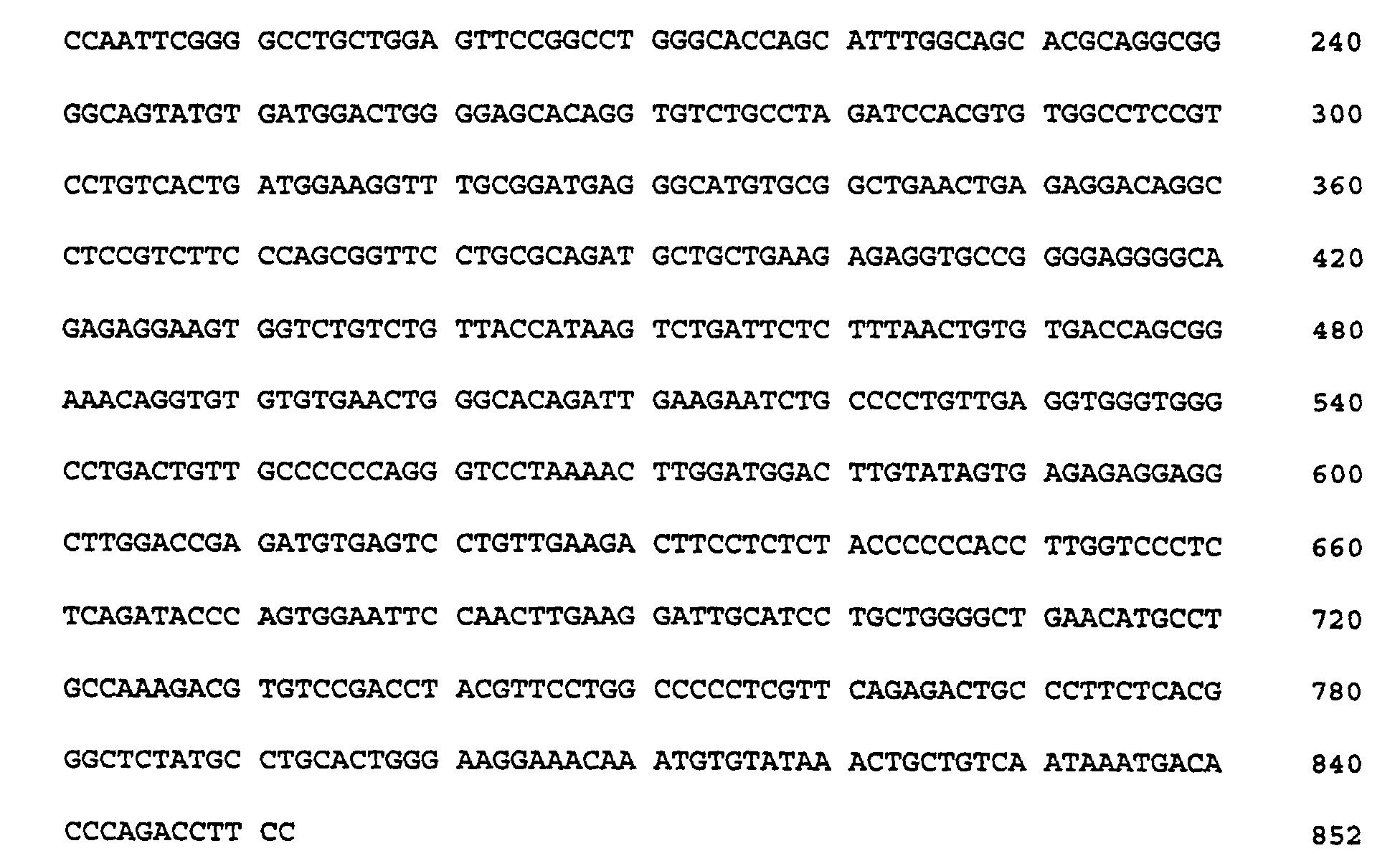
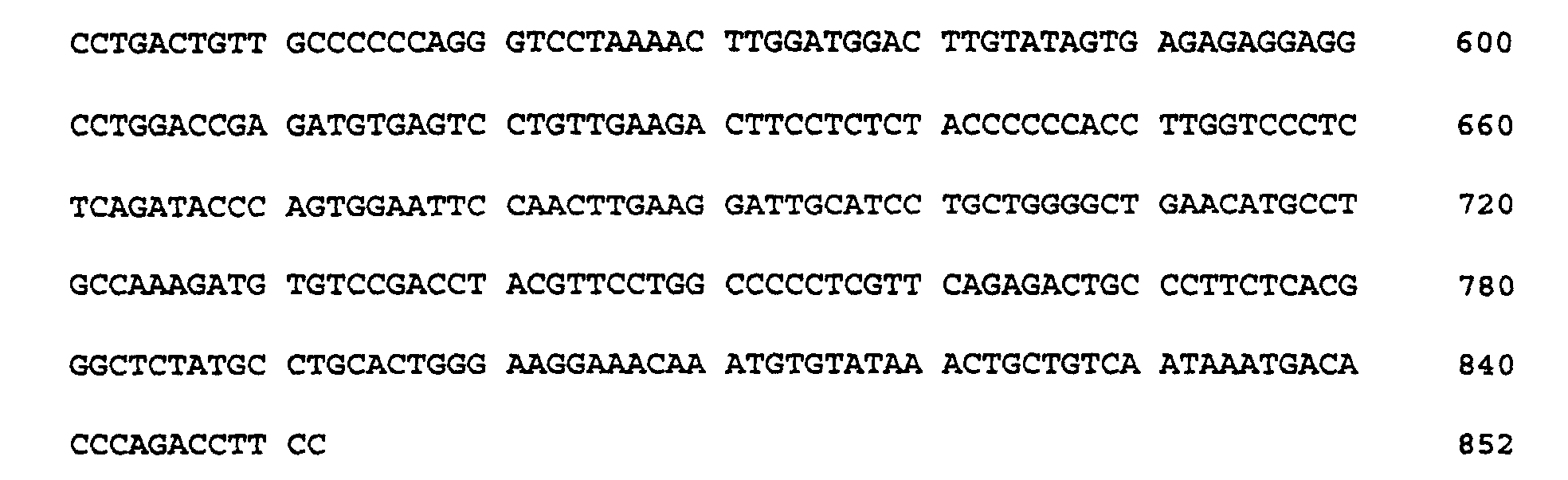
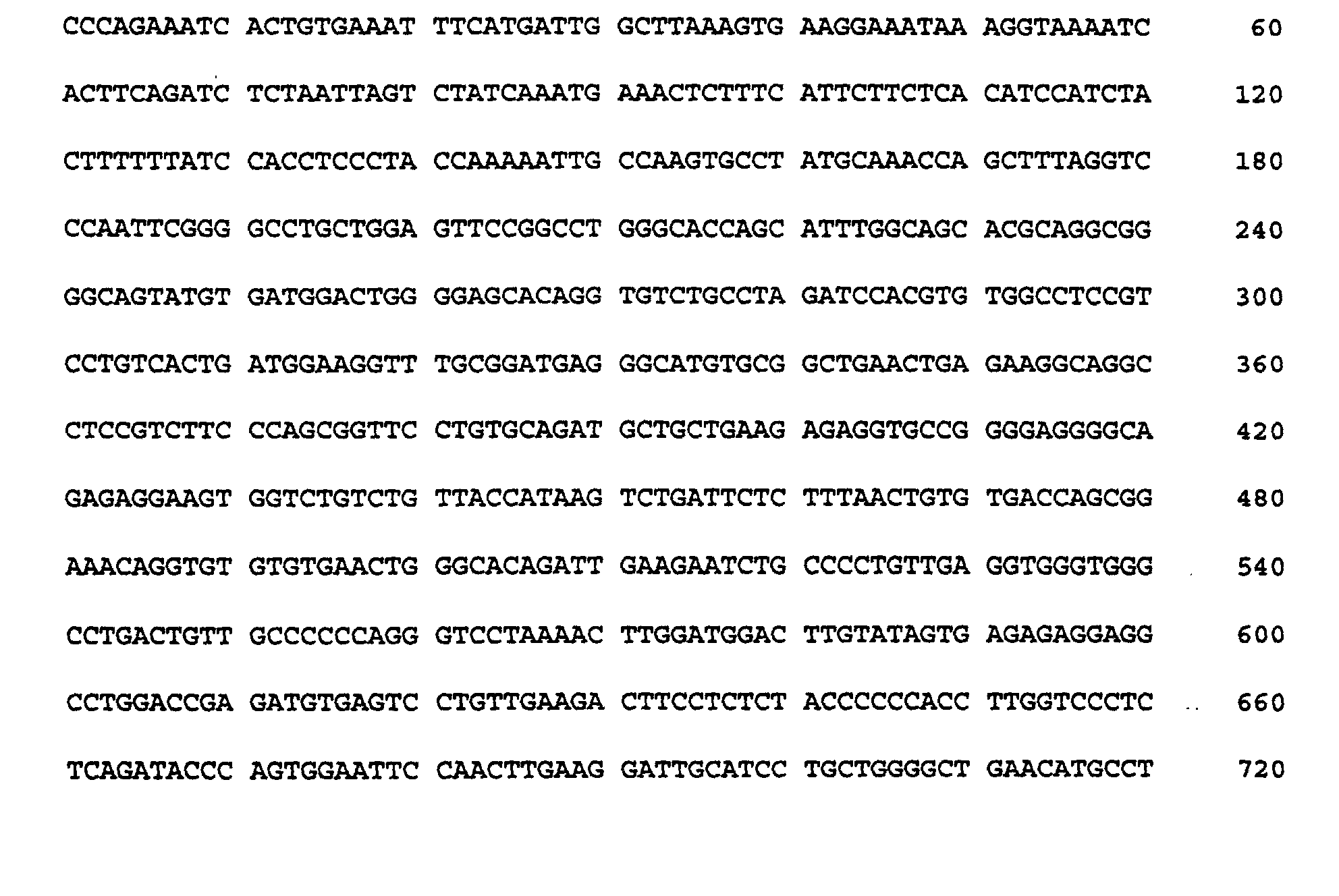
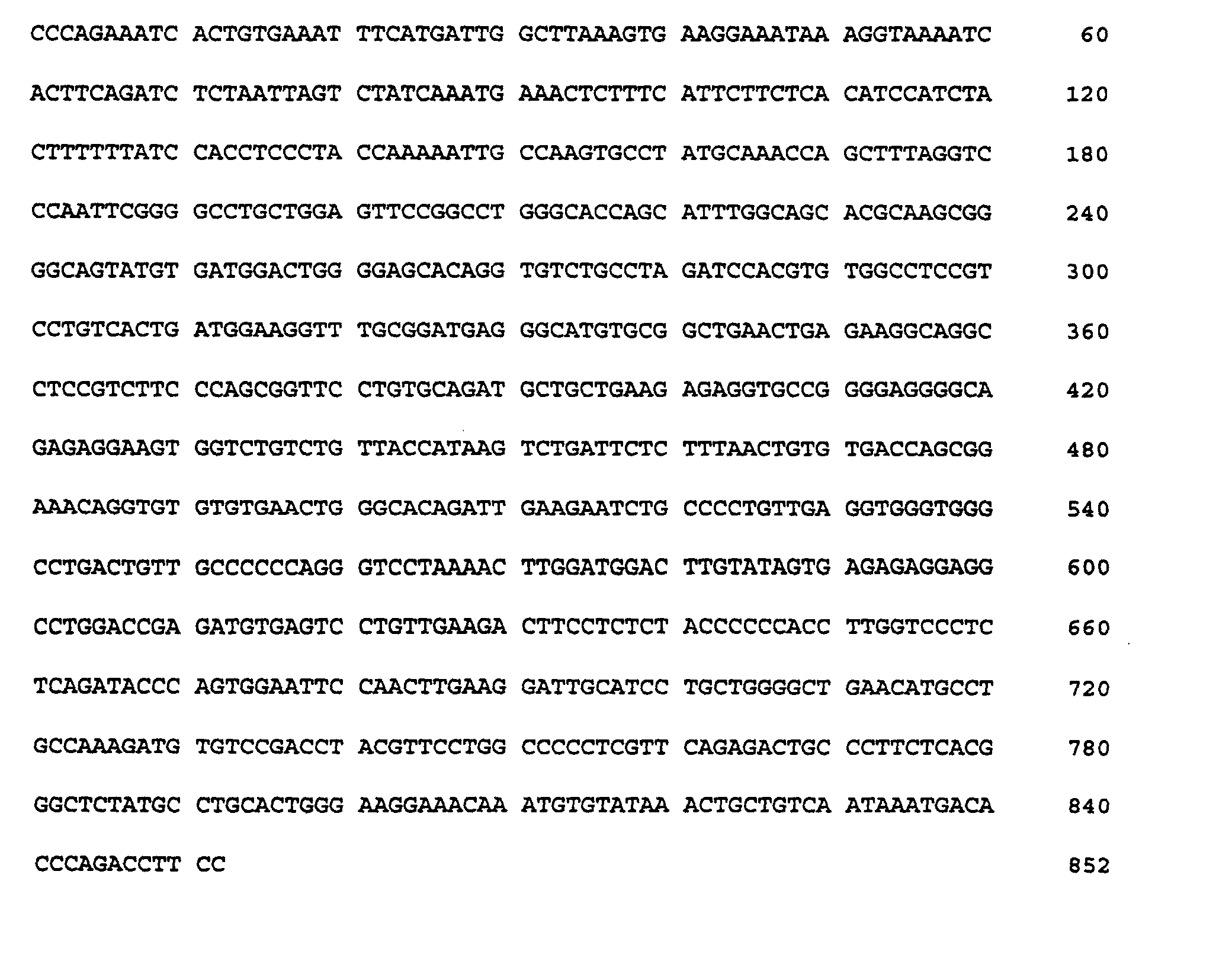
- the invention relates to a purified nucleic acid fragment comprising an isolated portion of the 3' untranslated region (3'UTR) of the prohibitin gene, said portion beginning 1 nucleotide 3' to the stop codon of the coding region of the prohibitin gene and ending 939 nucleotides 3' to the stop codon of the coding region of the prohibitin gene.
- this invention relates to a purified nucleic acid fragment comprising an isolated portion of the 3'UTR of the prohibitin gene, said portion begining 155 nucleotides 3' to the stop codon of the coding region of the prohibitin gene and ending 939 nucleotides 3' to the stop codon of the coding region of the prohibitin gene.
- this invention relates to certain nucleic acid fragments of the wild-type and mutated 3'UTR of the human prohibitin gene.
- this invention relates to the use of the wild-type 3'UTR of the prohibitin gene in assays diagnostic for susceptibility to cancer and as therapeutic agents for the treatment of cancer.
- the distribution of the prohibitin genotype in the general population and its distribution in tumors, preferably breast tumors, can be used to perform a two part screening by which the probability of an individual developing cancer can be predicted. These probabilities would range from those with a very low probability to those with an extremely high probability. Individuals who are heterozygous for the two prohibitin alleles would be predicted to have little risk for developing cancer. This probability would increase for those who are homozygous for the B type allele and who have a defect in the 3' UTR of at least one of the alleles. Therefore, the screening would be in two parts.
- the first part would be a determination of the individual's prohibitin genotype using, e.g., one of the following techniques: polymerase chain reaction (PCR) amplification of a 191 bp region surrounding the intron 5/exon 6 junction and single strand conformation polymorphism (SSCP) analysis of the resulting fragment; PCR amplification of a 76 bp region surrounding the intron 5/exon 6 splice site and digestion of the resulting fragment with BsmAI endonuclease; and/or RFLP assays of genomic DNA on Southern blots if sufficient amounts of DNA are available. For those identified as being homozygous for the B type allele, a second screening for alterations in the 3' UTR would be conducted.
- PCR polymerase chain reaction
- SSCP single strand conformation polymorphism
- sequencing of the 3' UTR would identify specific base changes from the wild type sequence.
- sequence analyses identify specific base changes in the majority of the samples, a RFLP analysis could be developed if these base changes resulted in the loss or the gain of a specific cut site.
- SSCP analyses of various portions of the entire 3' UTR would be undertaken after PCR amplification of the regions.
- genomic DNA can be isolated, e.g., from blood lymphocytes by standard techniques as described by Castilla et al. (Castilla et al., Nature Genetics 8:387-391 (1993)).
- the region containing intron 5/exon 6 is amplified using PCR.
- PCR is performed under the conditions set forth in Example 1. More preferably, either a 76 bp fragment or a 191 bp fragment encompassing intron 5/exon 6 is produced using the sense and antisense primers disclosed in Example 6.
- the genotype is determined by using a restriction fragment length polymorphism (RFLP) analysis, and/or a single strand conformation polymorphism (SSCP) assay, preferably as described in Examples 8 and 9, respectively.
- RFLP restriction fragment length polymorphism
- SSCP single strand conformation polymorphism
- the prohibitin genotype can be determined by Southern analysis of human genomic DNA digested with EcoRI and probed with a labeled fragment from intron 4. A Southern analysis identifies two distinct restriction fragment length polymorphisms in the human population.
- Genomic DNA from human cells is isolated by standard methods such as those described in Example 1.
- the restriction digests are performed according to the manufacturer's instructions and analyzed using agarose gel electrophoresis.
- the intron 4 probe can be prepared by standard PCR amplification.
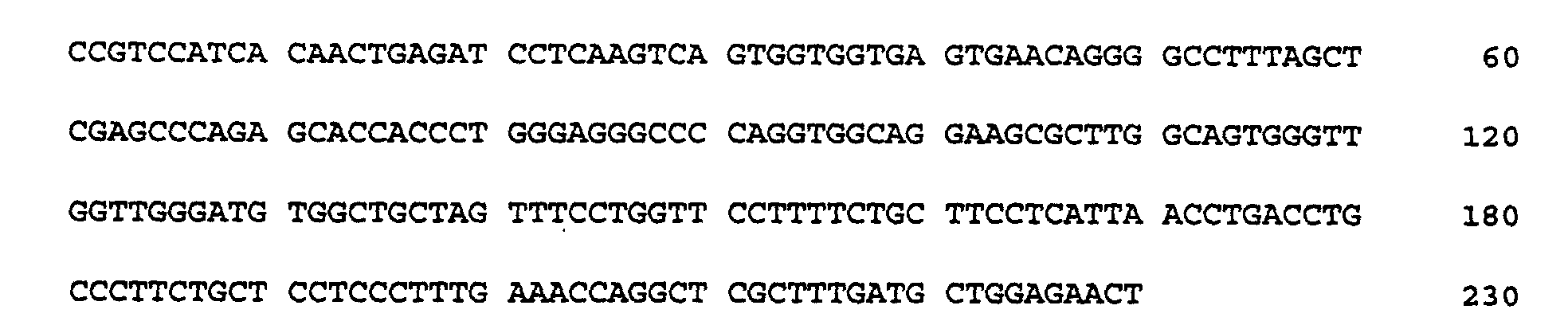
- Example 1 Procedures are described in Example 1 using a sense primer consisting of the first 18 bases at the 5' end of a 230 bp segment of intron 4 (SEQ ID NO: 1) and an antisense primer consisting of the bases complementary to the last 18 bases at the 3' end of this 230 bp segment.
- alterations in the 3' UTR can be determined by amplifying the 3' UTR by PCR and then assaying it using a SSCP and/or a RFLP assay, preferably a SSCP assay.
- PCR amplification of the 3' UTR is preferably performed under the conditions set forth in Example 1 using the sense and antisense primers set forth in Example 4, while the SSCP analysis of the 3'UTR is preferably performed as described in Example 13.
- alterations in the 3' UTR can be ascertained by sequencing the 3' UTR region, preferably as described in Example 1.
- a wild-type 3' UTR can be reintroduced into the tumors, preferably according to Example 11.
- the relationship between homozygosity for the B type allele, i.e., the 5 kb allele, and cells classified as belonging to complementation Group B was pursued using single strand conformational polymorphism (SSCP) analysis following PCR amplification of the coding region of the human prohibitin gene from several immortalized populations, including the following four cell lines classified as belonging to Group B: cervical carcinoma, transformed skin fibroblasts, glioblastoma, and bladder carcinoma (Table 1).
- SSCP single strand conformational polymorphism
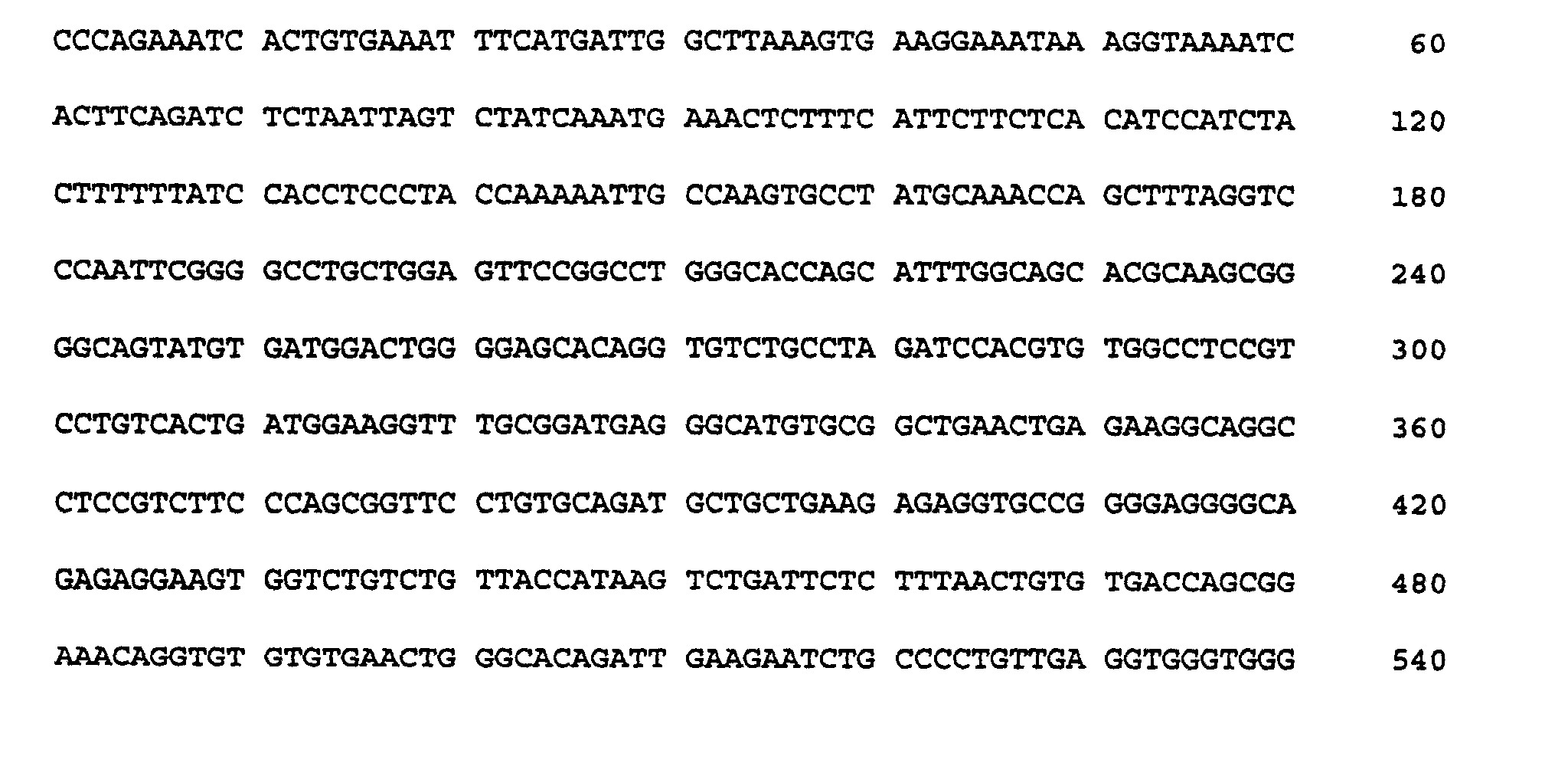
- Nucleotide sequence information from three cell lines that were derived from breast tumors was also obtained. Each of these cell lines, BT-20, MCF-7, and SK-BR-3 are homozygous for the B type prohibitin allele and are, therefore, classified in complementation group B. Additionally, each exhibit 3' UTR sequences that are different from the wild-type prohibitin gene. Mutated bases were found at positions 236 and 729 in MCF-7 (SEQ ID NO:4) and at positions 758 and 814 in BT-20 (SEQ ID NO:5). In SK-BR-3 cells, 35 base changes were detected. (See Table 8)
- the three breast cancer cell lines expressing the B-type genotype were classified by Olivia Pereira-Smith as belonging to Group B, while the one cell line that was homozygous for the non-B type allele was classified in Group D on the basis of the cells mortalin staining patterns. Wadhwa, et al., Exp Cell Res 216:101-106 (1995).
- RNAs and 3'UTR specific wild-type and mutated RNAs were also examined using the microinjection assay in CF-3 cells.
- Transcripts were made in both the sense and the antisense orientations from a truncated clone missing approximately 150 bp from the 5' end of the prohibitin mRNA, the 852-base wild-type 3'UTR, and the 852-base mutated HeLa 3'UTR.
- the sense truncated transcript is missing translational signals as well as the AUG start site and the RNA coding for the first 40 amino acids of prohibitin protein.
- the sense transcript of this clone was able to strongly inhibit cell cycle progression while the antisense transcript had essentially no effect.
- the truncated RNA containing only 3'UTR sequence begins approximately 80 bases downstream of the UGA stop codon.
- the wild-type 3'UTR specific RNA inhibits cell proliferation at a level similar to that seen for the full-length 1.9-kb mRNA and the sense transcript of the longer truncated RNA.
- the mutated 3'UTR from HeLa has little or no inhibitory activity.
- these functional assays show that the wild-type prohibitin 3'UTR alone has a significant inhibitory activity and that mutations in this region eliminate this activity. (See Fig. 2)
- Group B cell lines Designation Origin 1. HeLa Cervical carcinoma 2. GM2096SV9 Origin-defective SV40-immortalized xeroderma pigmentosum skin fibroblasts 3. T98G Glioblastoma 4. J82 Bladder carcinoma Normal human fibroblast-like cell lines. Designation Origin 1. CF-1 Newborn Foreskin 2. CF-2 Newborn Foreskin 3. HFMD Newborn Foreskin 4. AG4525 Embryonic Skin 5. IMR90 Embryonic Lung 6.
- BT-474 Solid tumor - ductal carcinoma 3.
- BT-483 Solid tumor - ductal carcinoma 4.
- MCF-7 Pleural effusion - adenocarcinoma 5.
- Hs 578T Solid tumor - ductal carcinoma 6.
- SK-BR-3 Pleural effusion - adenocarcinoma 7.
- UACC-812 Solid tumor - ductal carcinoma 9.
- ZR-75-30 Ascites fluid - ductal carcinoma 10.
- ZR-75-1 Ascites fluid - ductal carcinoma 11.
- MDA-MB-330 Pleural effusion - lobular carcinoma 12.
- MDA-MB-361 Brain metastasis - adenocarcinoma 13.
- MDA-MB-415 Pleural effusion - adenocarcinoma 14.
- MDA-MB-453 Pleural effusion - adenocarcinoma 15.
- MDA-MB-435S Pleural effusion - ductal carcinoma 16.
- MDA-MB-436 Pleural effusion - adenocarcinoma Prohibitin Genotype of Breast Cancer Cell Lines Homozygous B Type Allele (17) BT-20 T-47D MDA-MB-330 BT-474 UACC-812 MDA-MB-415 BT-483 ZR-75-30 MDA-MB-453 MCF7 Du 4475 MDA-MB-468 Hs 578T MDA-MB-157 MDA-MB-175 VII SK-BR-3 MDA-MB-231 Homozygous non-B type Allele (5) BT-549 MDA-MB-436 MDA-MB-134 VI UACC-893 MDA-MB-361 Heterozygous (0) Prohibitin 3'UTR Mutations in Three Homozygous B Breast Cancer Cell Lines Cell Line Positions of Base Change Base Change BT-20 758 G to A 814 T to C MCF7 236 G to A 729 C to T SK-BR-3 23 C to T 24 A to G 32 C to T 35 A
- the human prohibitin gene 3' UTR was identified and isolated based on the high level of conservation between the rat and human genes. Oligonucleotides designed from the highly conserved exon 7 non-coding region of the rat and human gene were used as a 5' primer (SEQ ID NO:8) along with a 3' primer designed from the published rat sequence (SEQ ID NO:9).
- the 3' UTR specific fragment was synthesized using the polymerase chain reaction (PCR) (Saiki et al., Science 230:1350-1354 (1985)) (incorporated herein by reference) carried out under standard reaction conditions using the manufacturer's recommendations for Stoffel polymerase (Perkin Elmer).
- Genomic DNA from normal human diploid fibroblasts isolated by standard methods (Groos-Bellard et al., Eur J Biochem 36:32) (incorporated herein by reference) was used as the template for PCR. Following an initial denaturation at 95°C for 2 minutes, 35 cycles of 95°C, 55°C and 72°C for 1 minute each were done in a Perkin Elmer 480 thermal cycler. The reaction products were checked for specificity by analysis on agarose gels stained with ethidium bromide and visualized using ultraviolet light.
- PCR products from the initial wild type and subsequent mutated samples were all cloned into the TA cloning vector pCR-IITM (Invitrogen Corp., San Diego, CA) following the manufacturer's instructions and recombinant clones were recovered using standard antibiotic selection protocols supplied with the pCR-IITM (Invitrogen Corp., San Diego, CA) cloning kit.
- pCR-IITM Invitrogen Corp., San Diego, CA
- Candidate human prohibitin cDNA clones containing the full length 3' UTR portion of the transcript were also isolated from a cDNA library screen using an oligonucleotide probe (SEQ ID NO:9). Suggs et al., Proc Natl Acad Sci 78:6613 (1981), incorporated herein by reference. Positive clones isolated from the screen were characterized by restriction mapping. Human clones from the genomic PCR product and cDNAs representing transcripts containing the entire 3' UTR were sequenced using the ABI Taq cycle sequencing protocol (Perkin Elmer, Norwalk, CT). Sequences were aligned using the University of Wisconsin GCG packages. The cDNA and genomic sequences were identical, thus showing that the full 3' UTR (SEQ ID NO: 10) is transcribed from the genome without introns.
- the two human prohibitin transcripts were initially detected and their expression levels characterized by Northern analysis. Liu et al., Biochem Biophy Res Comm 201:409-414 (1944), incorporated herein by reference; Jupe et al., Exp Cell Res 218:577-580 (1995), incorporated herein by reference.
- the cloning and isolation of the cDNA's from the 1.9 kb transcripts is described above in Example 1. In the process of these screenings, clones of the 1.2 kb transcript that match the previously described human clone were independently obtained. Sato et al., Cancer Res 52:1643-1646 (1992).
- the human prohibitin cDNAs were isolated and characterized as described in Example 1 above. All plasmid clones described in this application were purified using a standard boiling lysis preparation (Holmes and Quigley, Anal Biochem 114:193-197 (1981), incorporated herein by reference) or the alkaline lysis method combined with anion exchange column purification using Quiagen Tips. (Quiagen, Incorporated, Chatsworth, CA).
- the PCR reactions were performed under the same temperature and cycling conditions outlined in Example 1.
- the primers used to produce a 191 bp fragment were as follows:
- the primers used to produce a 76 bp fragment were as follows:
- the sequence polymorphism identified in exon 6 leads to differential cleavage by the restriction enzyme BsmAI available from New England Biolabs (Beverly, MA).
- BsmAI available from New England Biolabs (Beverly, MA).
- the B type allele is not cleaved by the enzyme while the non-B type allele is.
- Single strand conformation polymorphism (SSCP) screening was originally used to detect exon 6 polymorphisms in prohibitin.
- Jupe et al. Exp Cell Res 218:577-580 (1995), incorporated herein by reference.
- the method used was a cold SSCP protocol.
- Hongyo et al. Nuc Acids Res 21:3637-3642 (1993), incorporated herein by reference.
- PCR products were synthesized and checked as described above, and only those displaying a single predicted band were chosen for SSCP analysis.
- the DNA products for SSCP analysis were then subjected to denaturation in formamide solution at 95°C and rapidly cooled on ice.
- the samples were then separated on 10 or 20% polyacrylamide gels, stained with ethidium bromide and visualized with UV light.
- Example 10 Isolation and Sequencing of DNA from additional 3' UTR samples.
- the human full length transcripts or portions containing only the 3' UTR are maintained in the pCRIITM vector described above. These sequences are available for transfer into appropriate mammalian vectors for gene transfer. The current technology for human gene therapy is rapidly emerging and appropriate vectors for these applications are being developed. See, e.g., Deisseroth et al., Proc Am Assoc Can Res 36:655-656 (1995), incorporated herein by reference.
- RNA transcripts The antiproliferative activity of prohibitin was assayed following the microinjection of various in vitro produced RNA transcripts. Nuell, M.J., et al., Mol. Cell Biol .11:1372-1381 (1991). Briefly, cells were synchronized in early G1 with lovastatin (provided by A.W. Alberts of Merck, Sharp and Dohme Research Pharmaceuticls, Rahway, NJ) by the method of Keyomarsi et al. Keyomarsi, K., et al., Cancer Res. 51:3602-3609 (1991).
- lovastatin provided by A.W. Alberts of Merck, Sharp and Dohme Research Pharmaceuticls, Rahway, NJ
- Synchronized cells (200-300 per experiment) from all of the lines described above were microinjected with in vitro produced transcript at a concentration of 1 mg/ml using an Eppendorf Model 5242 microinjector.
- the full-length 1.9-kilobase (kb) cDNA and several truncated cDNAs cloned into either pBSIISK+ (Stratagene, La Jolla, CA) or pCRII (Invitrogen, San Diego, CA) were used to synthesize in vitro transcripts using the mMESSAGE mMACHINE (Ambion, Inc., Austin, TX).
- Truncated transcripts syntehsized in both the sense and antisense orientation from a clone missing approximately 150 bp of the 5' end of the cDNA were utilized.
- the sense transcript was missing translational signals as well as the AUG start site and the region coding for the first 40 amino acids of the prohibitin protein.
- Transcripts containing only 3'UTR sequences were also tested in this assay. These 850 base transcripts begin approximately 80 bases downstream from the UGA stop codon and were generated from a 3'UTR clone with wild-type sequence and a clone with mutated sequence (HeLa).
- Microinjected cells were stimulated to move through the cell cycle in the presence of [ 3 H]thymadine, and inhibitory activity was calculated following autoradiography. Nuell, M.J., et al., Mol. Cell Biol. 11:1372-1381 (1991).
Landscapes
- Chemical & Material Sciences (AREA)
- Health & Medical Sciences (AREA)
- Life Sciences & Earth Sciences (AREA)
- Organic Chemistry (AREA)
- Proteomics, Peptides & Aminoacids (AREA)
- Genetics & Genomics (AREA)
- Zoology (AREA)
- Engineering & Computer Science (AREA)
- General Health & Medical Sciences (AREA)
- Biophysics (AREA)
- Analytical Chemistry (AREA)
- Molecular Biology (AREA)
- Biochemistry (AREA)
- Pathology (AREA)
- Wood Science & Technology (AREA)
- Immunology (AREA)
- Hospice & Palliative Care (AREA)
- Toxicology (AREA)
- Medicinal Chemistry (AREA)
- Physics & Mathematics (AREA)
- Gastroenterology & Hepatology (AREA)
- Biotechnology (AREA)
- Microbiology (AREA)
- Oncology (AREA)
- Bioinformatics & Cheminformatics (AREA)
- General Engineering & Computer Science (AREA)
- Measuring Or Testing Involving Enzymes Or Micro-Organisms (AREA)
- Medicines That Contain Protein Lipid Enzymes And Other Medicines (AREA)
- Medicines Containing Material From Animals Or Micro-Organisms (AREA)
- Peptides Or Proteins (AREA)
- Saccharide Compounds (AREA)
Abstract
Description
| Group B cell lines | |||
| Designation | Origin | ||
| 1. | | Cervical carcinoma | |
| 2. | GM2096SV9 | Origin-defective SV40-immortalized xeroderma pigmentosum skin fibroblasts | |
| 3. | T98G | Glioblastoma | |
| 4. | J82 | Bladder carcinoma |
| Normal human fibroblast-like cell lines. | |||
| Designation | Origin | ||
| 1. | CF-1 | | |
| 2. | CF-2 | Newborn Foreskin | |
| 3. | HFMD | Newborn Foreskin | |
| 4. | AG4525 | Embryonic Skin | |
| 5. | IMR90 | Embryonic Lung | |
| 6. | IMR91 | Embryonic Lung | |
| 7. | | Newborn Foreskin | |
| 8. | FeSin | Embryonic Skin | |
| 9. | | Adult Foreskin | |
| 10 | GM-1 | Adult Skin | |
| 11. | GM-2 | Adult Skin | |
| 12. | GM970B | Newborn Skin | |
| 13. | SW1427 | Embryonic Lung | |
| 14. | OS38A | Adult Foreskin | |
| 15. | OS40A | Adult Foreskin | |
| 16. | OS53A | Adult Foreskin | |
| 17. | OSFP | Fetal Skin | |
| 18. | CF-3 | Newborn Foreskin | |
| 19. | WI-38 | Embryonic Lung |
| DNA samples from normal human tissue | |||
| Vendor | Number | Origin | |
| 1. | Sigma | D3160-088F3843 | Placenta - |
| 2. | Sigma | D6537-089F3860 | Chorionic membrane - Male |
| 3. | Sigma | D3035-088F3844 | Placenta - Female |
| 4. | Sigma | D3035-039F3825 | Placenta - Female |
| 5. | Sigma | D5037-89F3861 | Chorionic membrane - Female |
| 6. | Sigma | D4642-42H6667 | Placenta |
| 7. | Promega | G304-42416 | |
| 8. | Clontech | 6550-1-45641 | Placenta |
| DNA samples from lymphocyte cultures from extended family pedigrees. | |||
| Designation | Pedigree | Family | |
| 1. | 6995 | K-1329 | 981 |
| 2. | 6997 | K-1329 | 981 |
| 3. | 7042 | K-1329 | 981 |
| 4. | 7014 | K-1329 | 981 |
| 5. | 7018 | K-1329 | 981 |
| 6. | 7036 | K-1329 | 981 |
| 7. | 6981 | K-1329 | 981 |
| 8. | 6980 | K-1329 | 981 |
| 9. | 7047 | K-1329 | 981 |
| 10. | 7433 | K-1329 | 981 |
| 11. | 7085 | K-1329 | 981 |
| 12. | 6990 | K-1331 | 982 |
| 13. | 7057 | K-1331 | 982 |
| 14. | 6987 | K-1333 | 983 |
| 15. | 7038 | K-1333 | 983 |
| 16. | 7348 | K-1345 | 1029 |
| 17. | 7349 | K-1345 | 1029 |
| DNA from blood samples. | |||
| Designation | Origin | ||
| 1. | | Blood | |
| 2. | CF148-1 | Blood | |
| 3. | CF142-3 | Blood | |
| 4. | CF147 | Blood | |
| 5. | CF140 | Blood | |
| 6. | CF152-1 | Blood | |
| 7. | | Blood | |
| 8. | CF156-1 | Blood | |
| 9. | | Blood | |
| 10. | CF139 | Blood | |
| 11. | CF153 | Blood | |
| 12. | CF138 | Blood | |
| 13. | CF150-1 | Blood | |
| 14. | CF151-1 | Blood | |
| 15. | CF143 | Blood | |
| 16. | CF137 | Blood | |
| 17. | CF145-2 | Blood | |
| 18. | CF159 | Blood | |
| 19. | CF146-1 | | |
| 20. | CF157 | Blood |
| Human breast cancer cell lines. | ||
| Designation | Origin | |
| 1. | BT-20 | Solid tumor - |
| 2. | BT-474 | Solid tumor - ductal carcinoma |
| 3. | BT-483 | Solid tumor - ductal carcinoma |
| 4. | MCF-7 | Pleural effusion - adenocarcinoma |
| 5. | Hs 578T | Solid tumor - ductal carcinoma |
| 6. | SK-BR-3 | Pleural effusion - adenocarcinoma |
| 7. | T-47D | Pleural effusion - |
| 8. | UACC-812 | Solid tumor - ductal carcinoma |
| 9. | ZR-75-30 | Ascites fluid - |
| 10. | ZR-75-1 | Ascites fluid - ductal carcinoma |
| 11. | MDA-MB-330 | Pleural effusion - lobular carcinoma |
| 12. | MDA-MB-361 | Brain metastasis - adenocarcinoma |
| 13. | MDA-MB-415 | Pleural effusion - adenocarcinoma |
| 14. | MDA-MB-453 | Pleural effusion - adenocarcinoma |
| 15. | MDA-MB-435S | Pleural effusion - ductal carcinoma |
| 16. | BT-549 | Lymph node - ductal carcinoma |
| 17. | MDA-MB-436 | Pleural effusion - adenocarcinoma |
| Prohibitin Genotype of Breast Cancer Cell Lines | ||
| Homozygous B Type Allele (17) | ||
| BT-20 | T-47D | MDA-MB-330 |
| BT-474 | UACC-812 | MDA-MB-415 |
| BT-483 | ZR-75-30 | MDA-MB-453 |
| MCF7 | Du 4475 | MDA-MB-468 |
| Hs 578T | MDA-MB-157 | MDA-MB-175 VII |
| SK-BR-3 | MDA-MB-231 | |
| Homozygous non-B type Allele (5) | ||
| BT-549 | MDA-MB-436 | MDA-MB-134 VI |
| UACC-893 | MDA-MB-361 | |
| Heterozygous (0) |
| Prohibitin 3'UTR Mutations in Three Homozygous B Breast Cancer Cell Lines | ||
| Cell Line | Positions of Base Change | Base Change |
| BT-20 | 758 | G to A |
| 814 | T to C | |
| MCF7 | 236 | G to A |
| 729 | C to T | |
| SK-BR-3 | 23 | C to T |
| 24 | A to G | |
| 32 | C to T | |
| 35 | A to C | |
| 52 | G to A | |
| 64 | T to C | |
| 691 | G to T | |
| 696 | C to A | |
| 702 | G to T | |
| 711 | G to A | |
| 729 | C to T | |
| 734 | C to A | |
| 736 | G to A | |
| 373 | A to T | |
| 741 | A to C | |
| 742 | C to T | |
| 752 | C to T | |
| 753 | C to T | |
| 757 | C to T | |
| 771 | C to T | |
| 778 | A to C | |
| 779 | C to A | |
| 787 | A to G | |
| 794 | C to T | |
| 795 | A to G | |
| 798 | G to T | |
| 799 | G to T | |
| 802 | ΔA | |
| 803 | ΔG | |
| 804 | ΔG | |
| 808 | C to T | |
| 810 | A to G | |
| 813 | G to C | |
| 825 | C to T | |
| 829 | C to T | |
| The sequence of breast cancer cell lines was compared to wild type sequence from normal human diploid fibroblasts (4, GenBank Acc. #U49725). Two base changes are present in both the BT-20 and MCF7 cells, but 35 base changes (including a 3 base deletion) are detected in the SK-BR-3 cells. Seventy-five percent of the alterations occur in the last 200 bases of the sequence, and 36% of the base changes are C to T transitions. |


























Claims (17)
- A purified nucleic acid fragment comprising an isolated portion of the 3' untranslated region of the human prohibitin gene, which prohibitin gene has a stop codon at the 3' end of the coding region, said portion of the 3' untranslated region begins 1 nucleotide 3' to the stop codon of the coding region of the prohibitin gene and ends 939 nucleotides 3' to the stop codon of the coding region of the prohibitin gene.
- The nucleic acid fragment of claim 1 wherein the nucleotide sequence of the 3' untranslated region is as depicted in SEQ ID NO:10 between nucleotide 4 and nucleotide 942.
- A purified nucleic acid fragment comprising an isolated portion of the 3' untranslated region of the prohibitin gene, which prohibitin gene has a stop codon at the 3' end of the coding region, said portion of the 3' untranslated region begins 155 nucleotides 3' to the stop codon of the coding region of the prohibitin gene and ends 939 nucleotides 3' to the stop codon of the coding region of the prohibitin gene.
- The nucleic acid fragment of claim 3 wherein the nucleotide sequence of the 3' untranslated region is as depicted in SEQ ID NO:10 between nucleotide 158 and nucleotide 942.
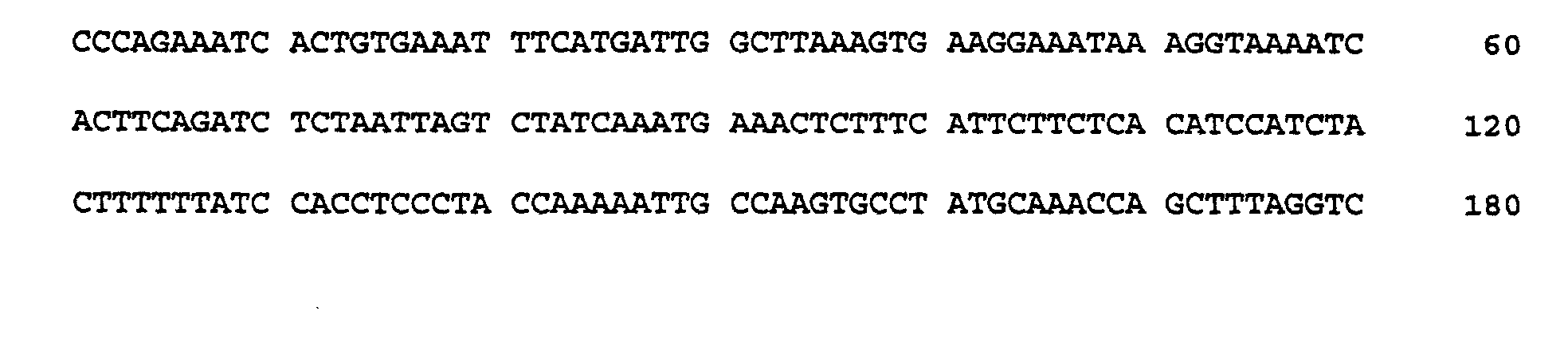
- A nucleic acid fragment having the sequence as depicted in SEQ ID NO:3.
- A nucleic acid fragment having the sequence as depicted in SEQ ID NO:2.
- A nucleic acid fragment having the sequence as depicted in SEQ ID NO:4.
- A nucleic acid fragment having the sequence as depicted in SEQ ID NO:5.
- A nucleic acid fragment having the sequence as depicted in SEQ ID NO:6.
- A nucleic acid fragment having the sequence as depicted in SEQ ID NO:7.
- A mammalian expression vector comprising the nucleic acid fragment of claim 1.
- A mammalian expression vector comprising the nucleic acid fragment of claim 3.
- An in vitro diagnostic assay for determining an individual's susceptibility to developing cancer comprising the steps of:(a) determining the individual's prohibitin genotype; and(b) screening for mutations in the 3' untranslated region of the human prohibitin gene.
- The diagnostic assay of claim 13 wherein the determination of the individual's prohibitin genotype is accomplished by a PCR/SSCP analysis of intron 5/exon 6, a PCR/restriction analysis of intron 5/exon 6, or a RFLP assay of genomic DNA.
- The diagnostic assay of claim 14 wherein the screening for mutations in the 3' untranslated region is accomplished using a PCR/SSCP analysis, sequencing, or the loss or gain of restriction sites in the 3' untranslated region.
- Use of the wild-type 3' untranslated region of the human prohibitin gene for the manufacturing of a medicament for treating cancer.
- Use of the entire wild-type 3' untranslated region of the human prohibitin gene for the manufacturing of a medicament for treating cancer.
Applications Claiming Priority (3)
| Application Number | Priority Date | Filing Date | Title |
|---|---|---|---|
| US08/473,486 US5922852A (en) | 1995-06-07 | 1995-06-07 | 3' untranslated region of the human prohibitin gene |
| US473486 | 1995-06-07 | ||
| PCT/US1996/009687 WO1996040919A1 (en) | 1995-06-07 | 1996-06-07 | 3' utr of the human prohibitin gene |
Publications (2)
| Publication Number | Publication Date |
|---|---|
| EP0837935A1 EP0837935A1 (en) | 1998-04-29 |
| EP0837935B1 true EP0837935B1 (en) | 2003-08-20 |
Family
ID=23879728
Family Applications (1)
| Application Number | Title | Priority Date | Filing Date |
|---|---|---|---|
| EP96921425A Expired - Lifetime EP0837935B1 (en) | 1995-06-07 | 1996-06-07 | 3' utr of the human prohibitin gene |
Country Status (9)
| Country | Link |
|---|---|
| US (3) | US5922852A (en) |
| EP (1) | EP0837935B1 (en) |
| AT (1) | ATE247709T1 (en) |
| AU (1) | AU713814B2 (en) |
| CA (1) | CA2224014A1 (en) |
| DE (1) | DE69629570T2 (en) |
| DK (1) | DK0837935T3 (en) |
| ES (1) | ES2205046T3 (en) |
| WO (1) | WO1996040919A1 (en) |
Families Citing this family (19)
| Publication number | Priority date | Publication date | Assignee | Title |
|---|---|---|---|---|
| US5922852A (en) * | 1995-06-07 | 1999-07-13 | Oklahoma Medical Research Foundation | 3' untranslated region of the human prohibitin gene |
| AU774116B2 (en) * | 1995-06-07 | 2004-06-17 | Oklahoma Medical Research Foundation | Use of prohibitin RNA in treatment of cancer |
| CA2269664C (en) * | 1996-11-07 | 2007-08-07 | Oklahoma Medical Research Foundation | Diagnostic assay for breast cancer susceptibility |
| DE69828647T2 (en) * | 1997-11-06 | 2005-12-01 | Oklahoma Medical Research Foundation, Oklahoma | DIAGNOSTIC ASSAY TO CANCER DISEASE |
| EP1100892B1 (en) * | 1998-07-24 | 2008-04-09 | Oklahoma Medical Research Foundation | Use of prohibitin rna in treatment of cancer |
| ATE462725T1 (en) * | 1998-08-25 | 2010-04-15 | Merck Patent Gmbh | EXPRESSION AND EXPORT OF ANGIOSTATIN AND ENDOSTATIN AS IMMUNOFUSINS |
| US7273855B2 (en) * | 1999-07-24 | 2007-09-25 | Oklahoma Medical Research Foundation | Use of prohibitin RNA in treatment of cancer |
| US20040002071A1 (en) * | 2001-09-19 | 2004-01-01 | Intergenetics, Inc. | Genetic analysis for stratification of cancer risk |
| US8426194B2 (en) | 2003-01-21 | 2013-04-23 | Ptc Therapeutics, Inc. | Methods and agents for screening for compounds capable of modulating VEGF expression |
| US9068234B2 (en) * | 2003-01-21 | 2015-06-30 | Ptc Therapeutics, Inc. | Methods and agents for screening for compounds capable of modulating gene expression |
| EP2500437B1 (en) | 2003-01-21 | 2016-11-30 | PTC Therapeutics, Inc. | Methods for identifying compounds that modulate untranslated region-dependent gene expression and methods of using same |
| ATE466104T1 (en) * | 2003-03-19 | 2010-05-15 | Univ British Columbia | HAPLOTYPES OF PLASMINOGEN ACTIVATOR-INHIBITOR-1 (PAI-1) SUITABLE AS INDICATORS FOR PATIENT PROGNOSIS |
| JP4634371B2 (en) * | 2003-03-27 | 2011-02-16 | ピーティーシー セラピューティクス,インコーポレーテッド | Methods for identifying compounds that target tRNA splicing endonucleases and their use as antiproliferative agents |
| WO2004087884A2 (en) * | 2003-03-27 | 2004-10-14 | Ptc Therapeutics, Inc | TARGETING ENZYMES OF THE tRNA SPLICING PATHWAY FOR IDENTIFICATION OF ANTI-FUNGAL AND/OR ANTI-PROLIFERATIVE MOLECULES |
| EP1613159A4 (en) * | 2003-03-27 | 2007-08-01 | Ptc Therapeutics Inc | Methods of identifying compounds that target trna splicing endonuclease and uses of said compounds as anti-fungal agents |
| CA2531321A1 (en) * | 2003-07-02 | 2005-01-13 | Ptc Therapeutics, Inc. | Rna processing protein complexes and uses thereof |
| WO2005049868A1 (en) * | 2003-11-17 | 2005-06-02 | Pct Therapeutics, Inc. | Methods and agents for screening for compounds capable of modulating her2 expression |
| US8283115B1 (en) | 2007-06-20 | 2012-10-09 | Ptc Therapeutics, Inc. | Methods of screening for compounds for treating muscular dystrophy using UTRN mRNA translation regulation |
| US8283116B1 (en) | 2007-06-22 | 2012-10-09 | Ptc Therapeutics, Inc. | Methods of screening for compounds for treating spinal muscular atrophy using SMN mRNA translation regulation |
Family Cites Families (2)
| Publication number | Priority date | Publication date | Assignee | Title |
|---|---|---|---|---|
| JPH05271294A (en) * | 1992-01-24 | 1993-10-19 | Japan Found Cancer Res | Human Prohibitin and DNA Encoding it |
| US5922852A (en) * | 1995-06-07 | 1999-07-13 | Oklahoma Medical Research Foundation | 3' untranslated region of the human prohibitin gene |
-
1995
- 1995-06-07 US US08/473,486 patent/US5922852A/en not_active Expired - Lifetime
-
1996
- 1996-06-07 ES ES96921425T patent/ES2205046T3/en not_active Expired - Lifetime
- 1996-06-07 DE DE69629570T patent/DE69629570T2/en not_active Expired - Fee Related
- 1996-06-07 DK DK96921425T patent/DK0837935T3/en active
- 1996-06-07 AU AU62653/96A patent/AU713814B2/en not_active Ceased
- 1996-06-07 WO PCT/US1996/009687 patent/WO1996040919A1/en not_active Ceased
- 1996-06-07 AT AT96921425T patent/ATE247709T1/en not_active IP Right Cessation
- 1996-06-07 CA CA002224014A patent/CA2224014A1/en not_active Abandoned
- 1996-06-07 EP EP96921425A patent/EP0837935B1/en not_active Expired - Lifetime
- 1996-06-07 US US08/973,689 patent/US7259251B1/en not_active Expired - Fee Related
- 1996-10-08 US US08/728,259 patent/US5776738A/en not_active Expired - Lifetime
Also Published As
| Publication number | Publication date |
|---|---|
| EP0837935A1 (en) | 1998-04-29 |
| ATE247709T1 (en) | 2003-09-15 |
| DK0837935T3 (en) | 2003-12-15 |
| AU713814B2 (en) | 1999-12-09 |
| DE69629570D1 (en) | 2003-09-25 |
| US5776738A (en) | 1998-07-07 |
| CA2224014A1 (en) | 1996-12-19 |
| DE69629570T2 (en) | 2004-06-17 |
| US7259251B1 (en) | 2007-08-21 |
| WO1996040919A1 (en) | 1996-12-19 |
| ES2205046T3 (en) | 2004-05-01 |
| US5922852A (en) | 1999-07-13 |
| AU6265396A (en) | 1996-12-30 |
Similar Documents
| Publication | Publication Date | Title |
|---|---|---|
| US7259251B1 (en) | 3′ UTR of the human prohibitin gene | |
| MacGrogan et al. | Comparative mutational analysis of DPC4 (Smad4) in prostatic and colorectal carcinomas | |
| McMahon et al. | Characterization of c-Ki-ras and N-ras oncogenes in aflatoxin B1-induced rat liver tumors. | |
| Liu et al. | Cloning of two candidate tumor suppressor genes within a 10 kb region on chromosome 13q14, frequently deleted in chronic lymphocytic leukemia | |
| Carroll et al. | p53 oncogene mutations in three human prostate cancer cell lines | |
| US5352775A (en) | APC gene and nucleic acid probes derived therefrom | |
| EP0699754B2 (en) | Method for diagnosing a predisposition for breast and ovarian cancer | |
| EP1762619B1 (en) | Multiple-tumor aberrant growth genes | |
| Hosoi et al. | Low frequency of the p53 gene mutations in neuroblastoma | |
| US6248523B1 (en) | Mammalian tumor susceptibility genes and their uses | |
| WO1997029213A1 (en) | Coding sequences of the human brca1 gene | |
| WO1992013103A1 (en) | Inherited and somatic mutations of apc gene in colorectal cancer of humans | |
| Liu et al. | Molecular analysis of the retinoblastoma gene in primary ovarian cancer cells | |
| AU3038189A (en) | Diagnosis of retinoblastoma | |
| AU752701B2 (en) | Tumour suppressor gene DBCCR1 at 9q32-33 | |
| EP0943017B1 (en) | Diagnostic assay for breast cancer susceptibility | |
| Baysal et al. | A high-resolution integrated map spanning the SDHD gene at 11q23: a 1.1-Mb BAC contig, a partial transcript map and 15 new repeat polymorphisms in a tumour-suppressor region | |
| US5955279A (en) | Ataxia-telangiectasia: mutations in the ATM gene | |
| AU3477697A (en) | Isolated nucleic acid molecules which are members of the mage-b family and uses thereof | |
| Rizos et al. | Differential expression of p16INK4a and p16β transcripts in B-lymphoblastoid cells from members of hereditary melanoma families without CDKN2A exon mutations | |
| Champeme et al. | Association between restriction fragment length polymorphism of the L‐myc gene and lung metastasis in human breast cancer | |
| US5756288A (en) | Ataxia-telangiectasai gene | |
| EP0825198A1 (en) | Plag gene family and tumorigenesis | |
| Van Camp et al. | Identification of chromosome 21 DNA polymorphisms for genetic studies in Alzheimer's disease and Down syndrome | |
| Bejaoui et al. | Genetic fine mapping of the Miyoshi myopathy locus and exclusion of eight candidate genes |
Legal Events
| Date | Code | Title | Description |
|---|---|---|---|
| PUAI | Public reference made under article 153(3) epc to a published international application that has entered the european phase |
Free format text: ORIGINAL CODE: 0009012 |
|
| 17P | Request for examination filed |
Effective date: 19971224 |
|
| AK | Designated contracting states |
Kind code of ref document: A1 Designated state(s): AT BE CH DE DK ES FI FR GB IE IT LI LU NL SE |
|
| 17Q | First examination report despatched |
Effective date: 20000218 |
|
| GRAH | Despatch of communication of intention to grant a patent |
Free format text: ORIGINAL CODE: EPIDOS IGRA |
|
| GRAH | Despatch of communication of intention to grant a patent |
Free format text: ORIGINAL CODE: EPIDOS IGRA |
|
| D17P | Request for examination filed (deleted) | ||
| GRAA | (expected) grant |
Free format text: ORIGINAL CODE: 0009210 |
|
| AK | Designated contracting states |
Designated state(s): AT BE CH DE DK ES FI FR GB IE IT LI LU NL SE |
|
| REG | Reference to a national code |
Ref country code: GB Ref legal event code: FG4D |
|
| REG | Reference to a national code |
Ref country code: CH Ref legal event code: EP |
|
| REG | Reference to a national code |
Ref country code: IE Ref legal event code: FG4D |
|
| REF | Corresponds to: |
Ref document number: 69629570 Country of ref document: DE Date of ref document: 20030925 Kind code of ref document: P |
|
| REG | Reference to a national code |
Ref country code: SE Ref legal event code: TRGR |
|
| REG | Reference to a national code |
Ref country code: DK Ref legal event code: T3 Ref country code: CH Ref legal event code: NV Representative=s name: FELBER, SEIFERT & PARTNER |
|
| REG | Reference to a national code |
Ref country code: ES Ref legal event code: FG2A Ref document number: 2205046 Country of ref document: ES Kind code of ref document: T3 |
|
| ET | Fr: translation filed | ||
| PLBE | No opposition filed within time limit |
Free format text: ORIGINAL CODE: 0009261 |
|
| 26N | No opposition filed |
Effective date: 20040524 |
|
| PGFP | Annual fee paid to national office [announced via postgrant information from national office to epo] |
Ref country code: LU Payment date: 20080618 Year of fee payment: 13 Ref country code: DK Payment date: 20080612 Year of fee payment: 13 Ref country code: CH Payment date: 20080611 Year of fee payment: 13 |
|
| PGFP | Annual fee paid to national office [announced via postgrant information from national office to epo] |
Ref country code: AT Payment date: 20080612 Year of fee payment: 13 |
|
| PGFP | Annual fee paid to national office [announced via postgrant information from national office to epo] |
Ref country code: IT Payment date: 20080626 Year of fee payment: 13 Ref country code: FI Payment date: 20080613 Year of fee payment: 13 |
|
| PGFP | Annual fee paid to national office [announced via postgrant information from national office to epo] |
Ref country code: SE Payment date: 20080609 Year of fee payment: 13 Ref country code: NL Payment date: 20080603 Year of fee payment: 13 Ref country code: IE Payment date: 20080613 Year of fee payment: 13 Ref country code: ES Payment date: 20080717 Year of fee payment: 13 |
|
| PGFP | Annual fee paid to national office [announced via postgrant information from national office to epo] |
Ref country code: FR Payment date: 20080617 Year of fee payment: 13 |
|
| PGFP | Annual fee paid to national office [announced via postgrant information from national office to epo] |
Ref country code: GB Payment date: 20080611 Year of fee payment: 13 |
|
| PGFP | Annual fee paid to national office [announced via postgrant information from national office to epo] |
Ref country code: BE Payment date: 20080813 Year of fee payment: 13 |
|
| PGFP | Annual fee paid to national office [announced via postgrant information from national office to epo] |
Ref country code: DE Payment date: 20090604 Year of fee payment: 14 |
|
| BERE | Be: lapsed |
Owner name: OKLAHOMA *MEDICAL RESEARCH FOUNDATION Effective date: 20090630 |
|
| PG25 | Lapsed in a contracting state [announced via postgrant information from national office to epo] |
Ref country code: FI Free format text: LAPSE BECAUSE OF NON-PAYMENT OF DUE FEES Effective date: 20090607 |
|
| REG | Reference to a national code |
Ref country code: CH Ref legal event code: PL |
|
| REG | Reference to a national code |
Ref country code: DK Ref legal event code: EBP |
|
| GBPC | Gb: european patent ceased through non-payment of renewal fee |
Effective date: 20090607 |
|
| NLV4 | Nl: lapsed or anulled due to non-payment of the annual fee |
Effective date: 20100101 |
|
| REG | Reference to a national code |
Ref country code: FR Ref legal event code: ST Effective date: 20100226 |
|
| REG | Reference to a national code |
Ref country code: IE Ref legal event code: MM4A |
|
| PG25 | Lapsed in a contracting state [announced via postgrant information from national office to epo] |
Ref country code: LI Free format text: LAPSE BECAUSE OF NON-PAYMENT OF DUE FEES Effective date: 20090630 Ref country code: IE Free format text: LAPSE BECAUSE OF NON-PAYMENT OF DUE FEES Effective date: 20090608 Ref country code: FR Free format text: LAPSE BECAUSE OF NON-PAYMENT OF DUE FEES Effective date: 20090630 Ref country code: CH Free format text: LAPSE BECAUSE OF NON-PAYMENT OF DUE FEES Effective date: 20090630 |
|
| PG25 | Lapsed in a contracting state [announced via postgrant information from national office to epo] |
Ref country code: GB Free format text: LAPSE BECAUSE OF NON-PAYMENT OF DUE FEES Effective date: 20090607 |
|
| PG25 | Lapsed in a contracting state [announced via postgrant information from national office to epo] |
Ref country code: BE Free format text: LAPSE BECAUSE OF NON-PAYMENT OF DUE FEES Effective date: 20090630 Ref country code: AT Free format text: LAPSE BECAUSE OF NON-PAYMENT OF DUE FEES Effective date: 20090607 |
|
| PG25 | Lapsed in a contracting state [announced via postgrant information from national office to epo] |
Ref country code: NL Free format text: LAPSE BECAUSE OF NON-PAYMENT OF DUE FEES Effective date: 20100101 Ref country code: DK Free format text: LAPSE BECAUSE OF NON-PAYMENT OF DUE FEES Effective date: 20090630 |
|
| REG | Reference to a national code |
Ref country code: ES Ref legal event code: FD2A Effective date: 20090608 |
|
| PG25 | Lapsed in a contracting state [announced via postgrant information from national office to epo] |
Ref country code: ES Free format text: LAPSE BECAUSE OF NON-PAYMENT OF DUE FEES Effective date: 20090608 |
|
| PG25 | Lapsed in a contracting state [announced via postgrant information from national office to epo] |
Ref country code: IT Free format text: LAPSE BECAUSE OF NON-PAYMENT OF DUE FEES Effective date: 20090607 |
|
| PG25 | Lapsed in a contracting state [announced via postgrant information from national office to epo] |
Ref country code: DE Free format text: LAPSE BECAUSE OF NON-PAYMENT OF DUE FEES Effective date: 20110101 Ref country code: LU Free format text: LAPSE BECAUSE OF NON-PAYMENT OF DUE FEES Effective date: 20090607 |
|
| PG25 | Lapsed in a contracting state [announced via postgrant information from national office to epo] |
Ref country code: SE Free format text: LAPSE BECAUSE OF NON-PAYMENT OF DUE FEES Effective date: 20090608 |