EP0833833B1 - Administration of valienamine-related disaccharide compounds in reducing inflammation in a sensitized mammal arising from exposure to an antigen - Google Patents
Administration of valienamine-related disaccharide compounds in reducing inflammation in a sensitized mammal arising from exposure to an antigen Download PDFInfo
- Publication number
- EP0833833B1 EP0833833B1 EP96917312A EP96917312A EP0833833B1 EP 0833833 B1 EP0833833 B1 EP 0833833B1 EP 96917312 A EP96917312 A EP 96917312A EP 96917312 A EP96917312 A EP 96917312A EP 0833833 B1 EP0833833 B1 EP 0833833B1
- Authority
- EP
- European Patent Office
- Prior art keywords
- valienamine
- compound
- glucose
- group
- anhydroglucose
- Prior art date
- Legal status (The legal status is an assumption and is not a legal conclusion. Google has not performed a legal analysis and makes no representation as to the accuracy of the status listed.)
- Expired - Lifetime
Links
- 0 C*[C@@](C(C1O)O)C=C(CO)[C@]1O Chemical compound C*[C@@](C(C1O)O)C=C(CO)[C@]1O 0.000 description 3
Images

Classifications
-
- A—HUMAN NECESSITIES
- A61—MEDICAL OR VETERINARY SCIENCE; HYGIENE
- A61K—PREPARATIONS FOR MEDICAL, DENTAL OR TOILETRY PURPOSES
- A61K31/00—Medicinal preparations containing organic active ingredients
- A61K31/70—Carbohydrates; Sugars; Derivatives thereof
- A61K31/7008—Compounds having an amino group directly attached to a carbon atom of the saccharide radical, e.g. D-galactosamine, ranimustine
-
- C—CHEMISTRY; METALLURGY
- C07—ORGANIC CHEMISTRY
- C07H—SUGARS; DERIVATIVES THEREOF; NUCLEOSIDES; NUCLEOTIDES; NUCLEIC ACIDS
- C07H15/00—Compounds containing hydrocarbon or substituted hydrocarbon radicals directly attached to hetero atoms of saccharide radicals
- C07H15/18—Acyclic radicals, substituted by carbocyclic rings
Definitions
- the present invention is directed, in pact, to the discovery that valienamine-related disaccharide compounds reduce, in vivo, the degree of inflammation arising from a secondary immune response in a mammal due to antigen exposure (challenge).
- this invention is directed to methods of reducing the degree of inflammation arising from a secondary immune response in a mammal due to antigen exposure (challenge) and in particular to the preparation of valienamine-related compounds and to pharmaceutical compositions comprising such valienamine-related compounds.
- oligosaccharide glycosides have been disclosed in the art to reduce inflammation in the mammal arising from a variety of conditions such as injury, infection, exposure to an antigen, etc. These disclosures are based on the fact that an integral step in the inflammatory process in a mammal is the adherence of leukocytes to one or more selectins and the discovery that such oligosaccharide glycosides adhere/bind to one or more selectins involved in the inflammatory response thereby interfering with the binding of the leukocyte to those selectins.
- U.S. Patent No 5 664 123 discloses that in order to reduce inflammation in the case of an antigen challenge (exposure) in a sensitized mammal, the oligosaccharide glycoside must be administered after initiation of the mammal's secondary immune response to the antigen challenge but at or prior to one-half the period of time where the mammal experiences maximal inflammatory response.
- valienamine-related disaccharide compounds are able to reduce the degree of inflammation arising from a secondary immune response. Further advantages of the present invention will become apparent from the following description of the invention with reference to the attached drawings.
- this invention is directed to a composition for reducing the degree of inflammation in a mammal arising from the initiation of a mammal's secondary immune response due to antigen exposure which comprises an effective amount of an valienamine-related disaccharide compound and pharmaceutically acceptable salts thereof.
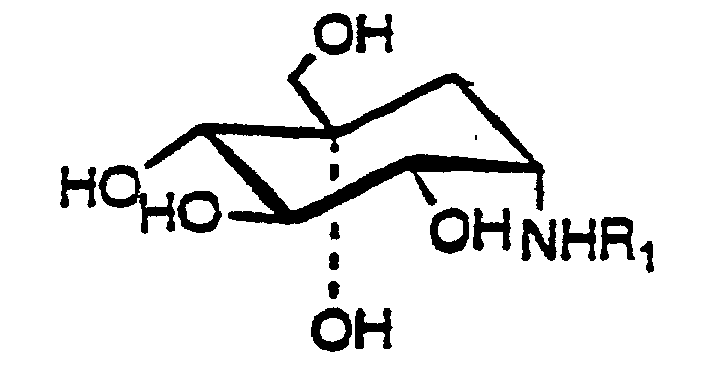
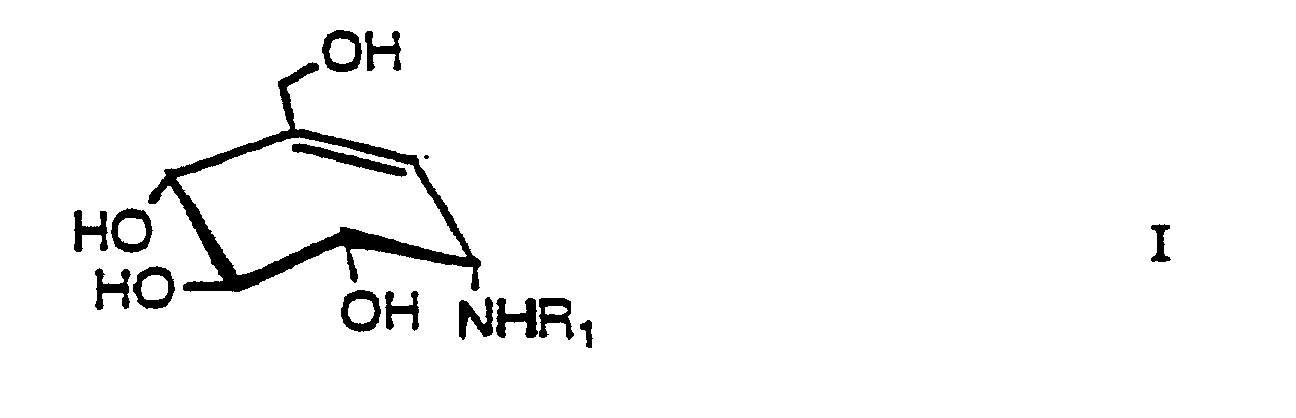
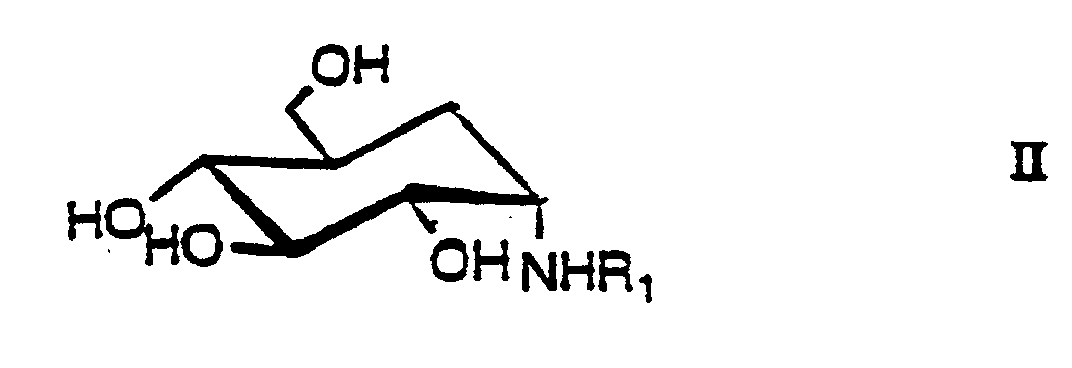
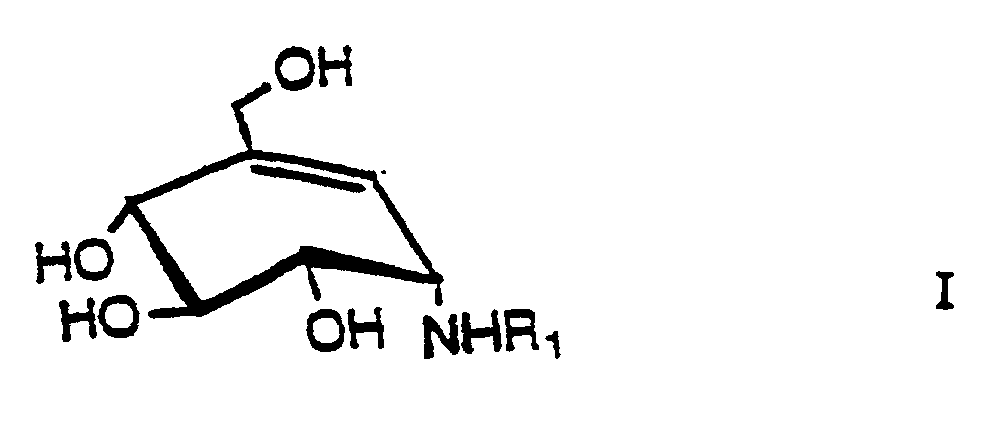
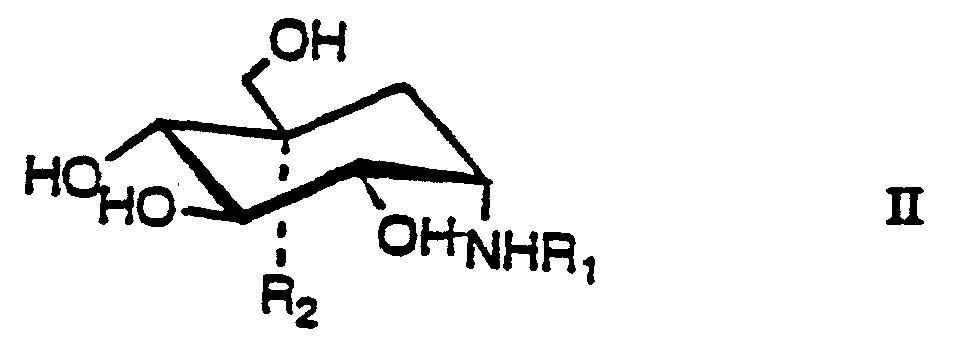
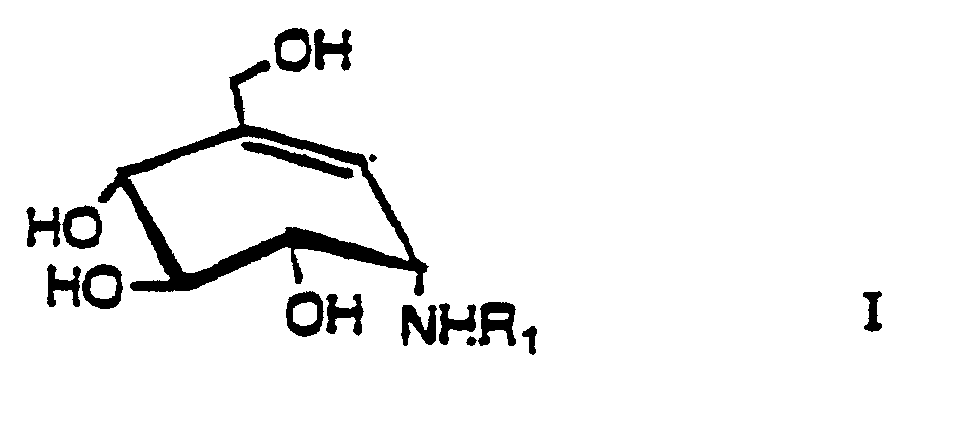
- this invention is directed to a composition for reducing the degree of inflammation in a mammal arising from the initiation of a mammal's secondary immune response due to antigen exposure which comprises a valienamine-related disaccharide compound selected from the group consisting of Formula I and Formula II where R 1 is selected from the group consisting of glucose and 1,6-anhydroglucose; where R 2 is selected from the group consisting of -H and -OH; and pharmaceutically acceptable salts thereof.
- a valienamine-related disaccharide compound selected from the group consisting of Formula I and Formula II where R 1 is selected from the group consisting of glucose and 1,6-anhydroglucose; where R 2 is selected from the group consisting of -H and -OH; and pharmaceutically acceptable salts thereof.
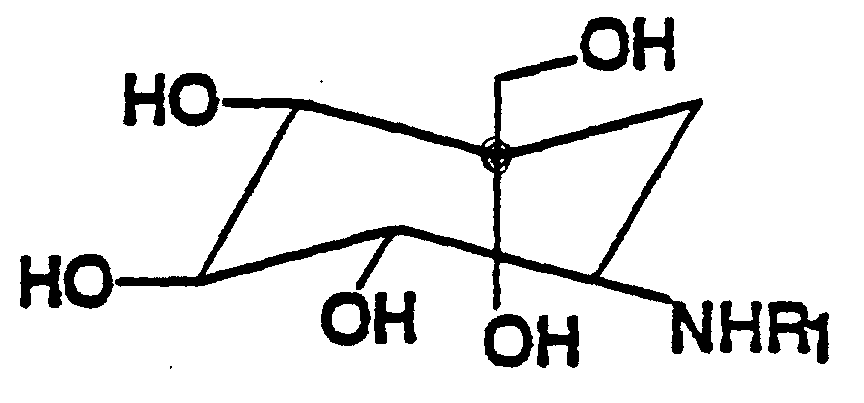
- this invention is directed to ⁇ -5,2-valiolamine disaccharides comprising where R 1 is selected from the group consisting of glucose and 1,6-anhydroglucose; and pharmaceutically acceptable salts thereof.
- this invention is directed to ⁇ -1,2-valienamine-related disaccharides selected from the group consisting of Formula I and Formula II where R 1 is selected from the group consisting of glucose and 1,6-anhydroglucose; and pharmaceutically acceptable salts thereof.
- this invention is directed to pharmaceutical compositions comprising a pharmaceutically inert carrier and an ⁇ -5,2-valiolamine disaccharide comprising where R 1 is selected from the group consisting of glucose and 1,6-anhydroglucose; and pharmaceutically acceptable salts thereof.
- this invention is directed to pharmaceutical compositions comprising a pharmaceutically inert carrier and an ⁇ -1,2-valienamine-related disaccharide selected from the group consisting of and Formula II where R 1 is selected from the group consisting of glucose and 1,6-anhydroglucose; and pharmaceutically acceptable salts thereof.
- the valienamine-related disaccharide compounds comprise from 1 to about 95 weight percent of the total weight of the pharmaceutical composition.
- this invention is directed to the discovery that a reduction in antigen induced inflammation in sensitized mammals can be achieved by the administration of valienamine-related disaccharide compounds.
- sensitized mammal refers to those mammals which have been previously exposed to an antigen and, accordingly, their immune systems have become educated to that antigen. Typically, initial exposure of an antigen to a mammal primes or educates the mammal's immune response to later exposure to that antigen with minimal inflammation during such initial exposure.
- secondary immune response refers to the effector phase of a mammal's immune response to an antigen to which it has been previously been sensitized.
- a mammal's secondary immune response is typically accompanied by inflammation at the point of antigen exposure.
- antigen refers to any protein, peptide, carbohydrate, nucleic acid or other non-endogenous substance which when exposed to a mammal induces an immune response in that mammal.
- peripheral for maximal inflammation refers to the period of time typically required to achieve maximal exposure to a specific antigen. This period of time depends on several factors such as the specific antigen to which the mammal has been exposed, the particular mammalian species exposed to the antigen, etc. Accordingly, the period of time required to effect maximal antigen induced inflammation in a sensitized mammal will vary for, by way of example, asthma as opposed to rheumatoid arthritis.
- Disease conditions attributable to antigen exposure include, by way of example, psoriasis, asthma, dermatitis, rheumatoid arthritis, delayed type hypersensitivity, inflammatory bowel disease, multiple sclerosis, viral pneumonia, bacterial pneumonia, and the like.
- pharmaceutically acceptable salts includes the pharmaceutically acceptable addition salts of valienamine-related disaccharide compounds capable of forming salts and are derived from a variety of organic and inorganic counter salts well known in the art and include, by way of example only, sodium, potassium, calcium, magnesium, ammonium, tetralkylammonium, chloride, fluoride, bromide, hydroxide and the like.
- removable blocking group refers to any group which when bound to one or more hydroxyl and/or amine groups of valienamine-related compounds and valienamine-related disaccharide compounds prevents reactions from occurring at these hydroxyl and/or amine groups and which protecting group can be removed by conventional chemical or enzymatic steps to reestablish the hydroxyl or amine group.
- removable blocking group employed is not critical and preferred removable hydroxyl blocking groups include conventional substituents such as benzyl, acetyl, chloroacetyl, benzylidene, t-butyl-diphenylsilyl and any other group that can be introduced either enzymatically or chemically onto a hydroxyl functionality and later selectively removed either by enzymatic or chemical methods in mild conditions compatible with the nature of the product.
- Preferred amine blocking groups include these well known in the art such as carboxybenzyloxy (CBZ), t-butyloxy carbonyl (t-Boc), and any other group that can be introduced either enzymatically or chemically onto an amine functionality and later selectively removed either by enzymatic or chemical methods in mild conditions compatible with the nature of the product.
- CBZ carboxybenzyloxy
- t-Boc t-butyloxy carbonyl
- valienamine-related compounds means all naturally occurring structures related to valienamine and analogues of structures related to valienamine.
- Naturally occurring structures related to valienamine include, by way of example, valiolamine and validamine.
- a complete list of naturally occurring structures related to valienamine known to date are provided by Kameda et al., J . Antibiol . 37 :1301-1307 7 .
- Analogues of structures related to valienamine refers to analogues of naturally occurring structures of valienamine, valiolamine and validamine including those wherein the valienamine, valiolamine or validamine has been chemically modified so as to introduce and/or remove one or more functionalities from such structures.
- modification can result in the removal of an -OH functionality (i.e. the formation of a deoxy substituent), the introduction of an amine functionality, the introduction of a halo functionality, conversion of one or more hydroxyl groups to ester, ether or carbamate functional groups, and the like; provided that such chemical modifications do not destroy the biological activity of the valienamine-related disaccharide analogues.
- valienamine-related disaccharide compounds means all disaccharide compounds containing valienamine-related compounds.
- Preferred valienamine-related disaccharide compounds include compounds having Formula I and Formula II where R 1 is selected from the group consisting of glucose and anhydroglucose; where R 2 is selected from the group consisting of -H and -OH; and pharmaceutically acceptable salts thereof. Particularly preferred are compounds of Formula I having an ⁇ -1,2-linkage and those of Formula II where R 2 is -OH having an ⁇ -5,2-linkage and where R 2 is -H having an ⁇ -1,2-linkage.
- valienamine-related disaccharide compounds are effective in reducing the degree of antigen induced inflammation in a sensitized mammal.
- the valienamine-related disaccharide compounds are preferably administered to a mammalian patient after initiation of the mammal's secondary immune response to that antigen and more preferably at least about 0.5 hours after exposure to an antigen; still more preferably, from at least about 0.5 to about 10 hours after exposure to the antigen and most preferably from at least about 3 hours to 7 hours after antigen exposure.
- the valienamine-related disaccharide compound is administered to the patient after initiation of that patient's secondary immune response to antigen exposure but prior to one-half period of time required for maximal inflammation due to antigen exposure.
- the valienamine-related disaccharide compounds are effective in reducing antigen induced inflammation in a sensitized mammal when administered at a dosage range of from about 5 mg to about 20 mg/kg of body weight, and preferably from about 7 mg to about 15 mg/kg of body weight.
- the specific dose employed is regulated by the particular antigen induced inflammation being treated as well as by the judgement of the attending clinician depending upon factors such as the severity of the inflammation, the age and general condition of the patient, and the like.
- the pharmaceutical compositions described herein can be administered in a single dose or in multiple doses or in a continuous infusion over the critical time frame.
- valienamine-related disaccharide compounds above are usually administered in the form of pharmaceutical compositions.
- Pharmaceutical compositions having valienamine-related disaccharide compounds are preferably administered parenterally, intranasally, intrapulmonarily, transdermally and intravenously, although other forms of administration are contemplated. These compounds are effective as both injectable and oral compositions.
- Such compositions are prepared in a manner well known in the pharmaceutical art and comprise at least one active compound.
- compositions suitable for use in the parenteral administration of an effective amount of a valienamine-related disaccharide compound comprise a pharmaceutically inert carrier such as water, buffered saline, etc. and an effective amount of a valienamine-related disaccharide compound (or mixtures thereof) so as to provide the above-noted dosage of the valienamine-related compound when administered to a patient.
- suitable pharmaceutical compositions can additionally contain optional components such as a preservative, etc.
- compositions can include oral compositions, transdermal compositions or bandages etc., which are well known in the art. Therefore, the compositions can be in the form of tablets, pills, powders, lozenges, sachets, cachets, elixirs, suspensions, emulsions, solutions, syrups, aerosols, ointments, soft and hard gelatin capsules, suppositories, sterile injectable solutions and sterile packaged powders.
- valienamine-related disaccharide compound can be incorporated as a part of a liposome or a micelle which can then be formulated into a pharmaceutical composition.
- the active compound is effective over a wide dosage range and is generally administered in a pharmaceutically effective amount. It will be understood, however, that the amount of the compound actually administered will be determined by a physician, in the light of relevant circumstances, including the condition to be treated, the chosen routes of administration, the actual compound administered, the age, weight and response of the individual patient, the severity of the patient's symptoms and the like.
- valienamine-related disaccharide compounds are readily prepared by complete chemical syntheses known in the art.
- Chemical modifications include the introduction of a chloro, methoxy or amino group or other amino functionalities or the removal of an -OH functionality (i.e. the formation of a deoxy substituent), preferably to the 5-hydroxymethyl position of the valienamine and validamine or the 1-hydroxymethyl position of valiolamine.
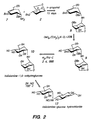
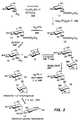
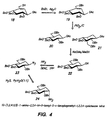
- Figures 1-4 illustrate the synthesis of valienamine-1,6-anhydroglucose, valienamine-glucose, valiolamine-1,6-anhydroglucose and protected validamine.
- valienamine-1,6-anhydroglucose can be carried out in three steps, Coupling of known (1R)-(l,2,4/3)-2,3,4-tribenzyl-5-benzyloxy-methylcyclohex-5-enylamine (compound 1 ) 3 with the known epoxide, 1,6-anhydro-4-O-benzyl-2,3-epoxy-glucose (compound 2 ) 4 in N-propanol at 90°C for four days affords preferentially the desired amine (compound 3 ). Compound ( 3 ) can then be treated with sodium in liquid ammonia in tetrahydrofuran to provide the debenzylated derivative (not shown).
- valienamine-glucose hydrochloride can be carried out by the complete deprotection of compound ( 5 ). This can be effected by reacting compound ( 5 ) with 2N HCl and heating at 100°C to provide valienamine-glucose hydrochloride (compound 6 ). Formation of the free base follows conventional methods, e.g.,adjustment of pH.
- valiolamine-1,6-anhydroglucose can be carried out using two different schemes.
- known compound ( 7 ) 5 can be coupled with the known epoxide (compound 2 ) by reacting the compounds in N-propanol for 10 days to provide the 1-6-anhydrodisaccharide (compound 8 ).
- Oxidation of compound ( 8 ) with osmium tetraoxide in the presence of trimethylamine N-oxide 6 provides for compound ( 9 ).
- Compound ( 9 ) can be hydrogenated with 5% palladium on carbon for simultaneous removal of the benzyl and trityl groups to obtain valiolamine-1,6-anhydroglucose (compound 10 )
- compound ( 7 ) 5 can be converted into its N-trichloroethylformate derivative (compound 11 ) by reacting with trichloroethylchloroformate in a mixture of dichloromethane and pyridine.
- Compound 11 is then oxidized at 60-70 °C with a catalytic amount of osmium tetraoxide in the presence of trimethylamine-N-oxide 6 giving a valiolamine derivative (compound 12 ).
- the resulting compound ( 12 ) can be acetylated with acetic anhydride and pyridine to provide compound ( 13 ).
- Removal of the trichloroethylformyl group can then be carried out using zinc in acetic acid to obtain compound ( 14 ).
- Coupling of compound ( 14 ) and known epoxide (compound 2 ) 4 can then be carried out in N-propanol at 90°C for a week to obtain the protected disaccharide (compound 15 ).
- Saponification of compound 15 with sodium methoxide in methanol will provide the disaccharide, compound ( 16 ).
- Compound ( 16 ) can be catalytically hydrogenated with 5% palladium on carbon for simultaneous removal of the benzyl and trityl groups to obtain compound ( 10 ).
- valiolamine-glucose hydrochloride can be carried out by the complete deprotection of compound ( 10 ). This can be effected by reacting compound ( 10 ) with 2N HCl and heating at 100°C to provide valiolamine-glucose hydrochloride (compound 17 ).
- validamine-1,6 anhydroglucose and validamine-glucose can be carried out in a manner similar to that described above for valienamine-1,6-anhydroglucose and valienamine-glucose except the starting compound would be 1D-(1,2,4/3,5)-1-amino-2,3,4-tri-O-benzyl-5-C-benzyloxymethyl-1,2,3,4-cyclohexane tetrol (compound 24) rather than (1R)-(1,2,4/3)-2,3,4-tribenxyloxy-5-C1 -benzyloxy-methylcyclohex-5-enylamine (compound 1 ) 3 .
- Examples A - C illustrate the suppression of antigen-induced inflammation in a mammal by administration of a valienamine-related compounds.
- DTH inflammatory responses were measured using the mouse footpad swelling assay as described by Smith and Ziola 2 . Briefly, groups of Balb/c mice (about 19-20 grams each) were immunized with 100 ⁇ g of the OVA antigen (Albumin, Chicken Egg, Sigma, St. Louis, MO) containing 20 ⁇ g of the adjuvant (DDA - dimethyldioctadecyl-ammonium bromide, Eastman Kodak, Rochester, NY) which also induces a strong inflammatory DTH response in PBS (phosphate buffer saline).
- OVA antigen Albumin, Chicken Egg, Sigma, St. Louis, MO
- the adjuvant DDA - dimethyldioctadecyl-ammonium bromide, Eastman Kodak, Rochester, NY
- mice Seven days later, each group of mice was footpad-challenged with 20 ⁇ g of the OVA antigen (without adjuvant).
- mice received 100 ⁇ g of valienamine-glucose five hours after challenge. Control groups were left untreated or received 100 ⁇ l of phosphate-buffered saline (PBS). Any resulting inflammatory footpad swelling was measured with a Mitutoyo Engineering micrometer 24 hours after challenge. The amount of footpad swelling observed with treatment with valienamine-glucose was approximately 52% that observed with the control evidencing a significant reduction in inflammation as compared to control.
- PBS phosphate-buffered saline
- valienamine-glucose is effective in reducing antigen induced inflammation in a sensitized mammal.
- mice were immunized with 100 ⁇ g of the OVA antigen containing 20 ⁇ g of the adjuvant DDA in PBS.
- mice Seven days later, each group of mice was footpad-chailenged with 20 ⁇ g of the OVA antigen (without adjuvant).
- mice injected with valiolamine-glucose showed the greatest reduction in the footpad swelling compared to control mice.
- Mice injected with valiolamine-1,6-anhydroglucose and valienamine-glucose also exhibited reductions in swelling compared to the footpad swelling of control mice.
- mice from Example A Forty days after the mice from Example A were footpad-challenged with the OVA antigen, the mice were again footpad-challenged with 20 ⁇ g of the OVA antigen (without adjuvant) in the absence of valienamine compounds.
- the resulting inflammatory footpad swelling was measured with a Mitutoyo Engineering micrometer 24 hours after challenge.
- the amount of footpad swelling observed with treatment with valienamine-glucose was approximately 60% of that observed with the control.
- mice from Example B Fourteen days after the mice from Example B were footpad-challenged each group of mice was again footpad-challenged with 20 ⁇ g of the OVA antigen (without adjuvant) in the absence of the valienamine compounds. The resulting inflammatory footpad swelling was measured with a Mitutoyo Engineering micrometer 24 hours after the second challenge. The results are shown in Table II. Again the greatest reduction in foot-pad inflammation was observed with valiolamine-glucose.
- valienamine-related compounds are effective in inducing tolerance to the antigen, thereby resulting in reduced inflammation.
- valienamine-related compounds could be tested to determine whether they could be used to suppress a cell-mediated immune response to an antigen by mere substitution for the valienamine-related compounds described in these examples.
- Examples 1-6 illustrate the synthesis of numerous valienamine-related disaccharide compounds.
- Step A) Synthesis of 1,6-anhydro-4-O-benzyl-2-deoxy-2-[1D-(1N,2,4/3)-(2,3,4-tri-O-benzyl-5-C-benzyloxymethyl-2,3,4-trihydroxy-5-cyclohexen-1-yl)amino]- ⁇ -D-glucopyranose (compound 3 )
- Step B) Synthesis of 1,6-anhydro-3-4-di-O-acetyl-2-deoxy-2-[1D-(1N,2,4/3)-(2,3,4-tri-O-acetyl-5-C-acetoxymethyl-2,3,4-trihydroxy-5-cyclohexen-1-yl)amino]- ⁇ -D-glucopyranose (compound 4 )
- the syrup was purified by chromatography on silica gel using toluene:ethylacetate (3:1) as eluent to provide 1,6-anhydro-3-4-di-O-acetyl-2-deoxy-2-[lD-(1N,2,4/3)-(2,3,4-tri-O-acetyl-5-C-acetoxymethyl-2,3,4-trihydroxy-5-cyclohexen-1-yl)amino]- ⁇ -D-glucopyranose (compound 4 ) (613 mg, 75.8%).
- Step B) Synthesis of 1,6-anhydro-4-O-benzyl-2-deoxy-2[1D-(1,2,4,5/3)-3,4-di-O-benzyl-(1-C-trityloxymethyl-1,2,3,4-tetrahydroxy-cyclohexyl)-amino]- ⁇ -D-glucopyranose (compound 9 )
- Osmium tetroxide (2.0 mg) was added to a solution of compound 8 (120 mg, 0.15 mmol) and trimethylamine-N-oxide 6 (32.7 mg, 0.29 mmol) in t-butanol (5 ml) containing pyridine (0.25 ml); the mixture was stirred in argon atmosphere for 6 hours at 60 - 70°C, treated with a 20% aqueous solution of sodium hydrogen sulfite (1.0 ml) at room temperature, diluted with saturated brine (10.0 ml) and extracted with dichloromethane (3x20 ml). The extract was washed with water, dried and concentrated.
- Step C) Synthesis of 1,6-anhydro-2-deoxy-2-[1D-(1,2,4,5/3)-(1-C-hydroxymethyl-1,2,3,4-tetrahydroxy-cyclohexyl) amino]- ⁇ -D-glucopyranose (compound 10 )
- Step A Synthesis of 1D-(1/2,3)-1,2-di-O-benzyl-3-(trichloroethylamino)-5-(trityloxymemyl)-6-cyclohexene-1,2-diol (compound 11 ).
- Step B Synthesis of IL-(1,2,4,5/3)-3,4-di-O-benzyl-5-(trichloroethylamino)-1-C-(trityloxymethyl)-cyclohexane-1,2,3,4-tetrol (compound 12 ).
- Osmium tetroxide (3.0 mg, 0.01 mmol) was added to a solution of compound ( 11 ) (350 mg, 0.47 mmol) and trimethylamine-N-oxide made according to the method of Ray and Matteson Tetrahedron Lett . 21 :449 (1980) 6 (104.7 mg, 0.94 mmol) in t-butanol (10 ml) containing pyridine (0.5 ml). The mixture was stirred in argon atmosphere for 6 hours at 60-70°C, treated with 20% aqueous solution of sodium hydrogen sulfite (2 ml) at room temperature, diluted with saturated brine (20 ml) and extracted with dichloromethane (3 x 20 ml).
- Step C) Synthesis of IL-(1,2,4,5/3)-2-O-acetyl-3,4-di-O-benzyl-5-(trichloroethylamino)-1-C-(trityloxymethyl)-cyclohexane-1,2,3,4-tetrol (compound 13 ).
- Step D Synthesis of 1L-(1,2,4,5/3)-2-O-acetyl-3,4-di-O-benzyl-5-amino-1-C-(trityloxy-methyl)-cyclohexane-1,2,3,4-tetrol (compound 14 )
- Step E Synthesis of 1,6-anhydro-4-O-benzyl-2-deoxy-2-[1D-(1,2,4,5/3)-2-O-acetyl-3,4-di-O-benzyl-(1-C-trityloxymethyl-1,2,3,4-tetrahydroxy-cyclohexyl)-amino]-glucopyranose (compound 15 ).
- Step F Synthesis of 1,6-anhydro-4-O-benzyl-2-[1D-(1,2,4,5/3)-3,4-di-O-benzyl-(1-C-trityloxymethyl-1,2,3,4-tetrahydroxy-cyclohexyl)-amino]-glucopyranose (compound 16 ).
- Step G Synthesis of 1,6-anhydro-2-deoxy-2-[1D-(1,2,4,5/3)-(1-C-hydroxymethyl-1,2,3,4-tetrahydroxy-cyclohexyl)-amino]- ⁇ -D-glucopyranose (compound 10 ).
- Solvent was removed by co-evaporation with water and the residue was purified by chromatography on an latrobeads column (Iatron Laboratories, Japan) using toluene:chloroform:methanol:water, (65:38:3) as eluent to provide valiolamine-glucose-hydrochloride (compound 17 ) after lyophilization (15 mg, 71.2%).
- the syrup was purified by chromatography on silica gel using hexane:ethyl acetate (6:1) as eluent. Pure compound 19 (852 mg, 84% based on consumption of the starting material) was obtained along with recovered starting material (347 mg).
- Step B Synthesis of 1L-(1,3,5/2,4)1-O-acetyl-5-C-benzyloxymethyl-2,3,4-tri-O-benzyl-1,2,3,4-cyclohexane tetrol (20) and Pseudo-L-iodopyranose isomer (21).
- Step D Synthesis of 1D-(1,2,4/3,5)-1-azido-2,3,4-tri-O-benzyl-5-C-benzyloxymethyl-1,2,3,4-cyclohexane tetrol (compound 23 )
- Step E Synthesis of 1D-(1,2,4/3,5)-1-amino-2,3,4-tri-O-benzyl-5-C-benzyloxymethyl-1,2,3,4-cyclohexane tetrol (compound 24 )
- Compound 24 can be used in a method of synthesis similar to that provided above for the synthesis of valienamine-1,6-anhydroglucose and valienamine-glucose hydrochloride to synthesize validamine-1,6-anhydroglucose and validamine-glucose hydrochloride.
Landscapes
- Health & Medical Sciences (AREA)
- Chemical & Material Sciences (AREA)
- Life Sciences & Earth Sciences (AREA)
- General Health & Medical Sciences (AREA)
- Molecular Biology (AREA)
- Organic Chemistry (AREA)
- Pharmacology & Pharmacy (AREA)
- Biotechnology (AREA)
- Epidemiology (AREA)
- Public Health (AREA)
- Veterinary Medicine (AREA)
- Engineering & Computer Science (AREA)
- Biochemistry (AREA)
- Animal Behavior & Ethology (AREA)
- Genetics & Genomics (AREA)
- Medicinal Chemistry (AREA)
- Pharmaceuticals Containing Other Organic And Inorganic Compounds (AREA)
- Saccharide Compounds (AREA)
- Peptides Or Proteins (AREA)
- Medicines That Contain Protein Lipid Enzymes And Other Medicines (AREA)
- Acyclic And Carbocyclic Compounds In Medicinal Compositions (AREA)
- Medicines Containing Antibodies Or Antigens For Use As Internal Diagnostic Agents (AREA)
Abstract
Description


where R2 is selected from the group consisting of -H and -OH; and pharmaceutically acceptable salts thereof.
pharmaceutically acceptable salts thereof.
pharmaceutically acceptable salts thereof.

pharmaceutically acceptable salts thereof.

pharmaceutically acceptable salts thereof.

- Ac =
- acetyl
- Bn =
- benzyl
- DTH =
- delayed type hypersensitivity
- THF =
- tetrahydrofuran
- TR =
- trityl
- g =
- gram
- kg =
- kilogram
- µg =
- microgram
- mmol =
- millimolar
- l =
- liter
- ml =
- milliliter
- µl =
- microliter
| Compound | Amount of Swelling |
| valienamine-glucose | 0.24 mm +/- 0.04 mm |
| valiolamine-glucose | 0.14 mm +/- 0.03 mm |
| valiolamine-1,6-anhydroglucose | 0.28 mm +/- 0.06 mm |
| OVA/PBS | 0.35 mm +/- 0.07 mm |
| Compound | Amount of Swelling |
| valienamine-glucose | 0.28 mm +/- 0.02 mm |
| valiolamine-glucose | 0.17 mm +/- 0.07 mm |
| valiolamine-1,6-anhydroglucose | 0.28 mm +/- 0.05 mm |
| OVA/PBS | 0.37 mm +/- 0.06 mm |
Claims (18)
- Use of a compound selected from valienanine-related disaccharide compounds and pharmaceutically acceptable thereof salts in the manufacture of a medicament for reducing the degree of inflammation in a mammal arising from the initiation of a mammal's secondary immune response due to antigen exposure.
- The use of claim 1 wherein the amount of valienamine-related disaccharide compound to be administered to said mammal comprises from 5 mg to about 20 mg/kg.
- The use according to claim 1 wherein the valienamine-related disaccharide compound is selected from the group consisting of Formula Iand Formula II
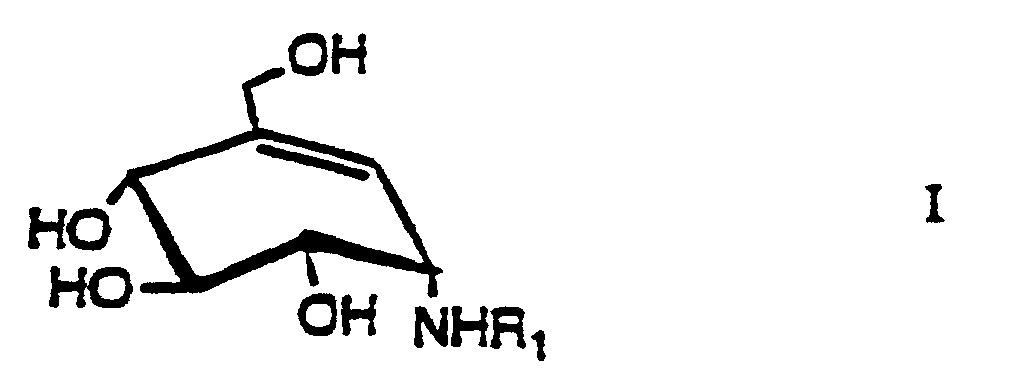 where R1 is seleted from the group consisting of glucose and 1,6-anhydroglucose;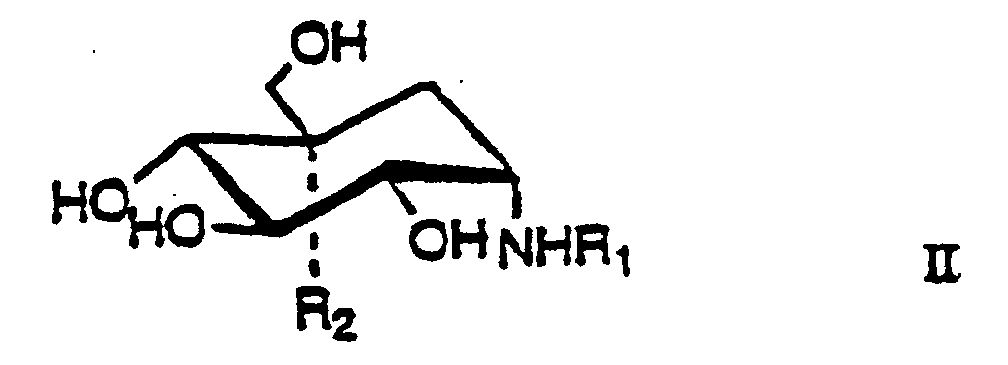
where R2 is selected from the group consisting of -H and -OH; and pharmaceutically acceptable salts thereof. - The use of claim 3 wherein the amount of valienamine-related disaccharide compound is to be administered to said mammal comprises from 5 mg to about 20 mg/kg.
- The use of claim 3 wherein the inflammation arising from the initiation of a mammal's secondary immune response due to antigen exposure is inflammation due to psoriasis, asthma, dermatitis, rheumatoid arthritis, delayed type hypersensitivity, inflammatory bowel disease, multiple sclerosis, viral pneumonia or bacterial pneumonia.
- The use of claim 3 wherein said valienamine-related disaccharide compound is to be administered at least 0.5 hours after initiation of said mammal's immune response.
- The use according to claim 1 wherein the valienamine-related disaccharide compound is selected from the group consisting of valienamine-glucose, valiolamine-1,6-anhydroglucose and valiolamine-glucose and pharmaceutically acceptable salts thereof.
- The use of claim 7 wherein said valienamine-related disaccharide compound is valienamine-glucose.
- A valienamine-related disaccharide comprising an α-5,2-valiolamine disaccharide ofwhere R1 is selected from the group consisting of glucose and 1,6-anhydroglucose; and

pharmaceutically acceptable salts thereof. - A valienamine-related disaccharide comprising an α-1,2-valienamine-related disaccharide selected from the group consisting of Formula Iand Formula II
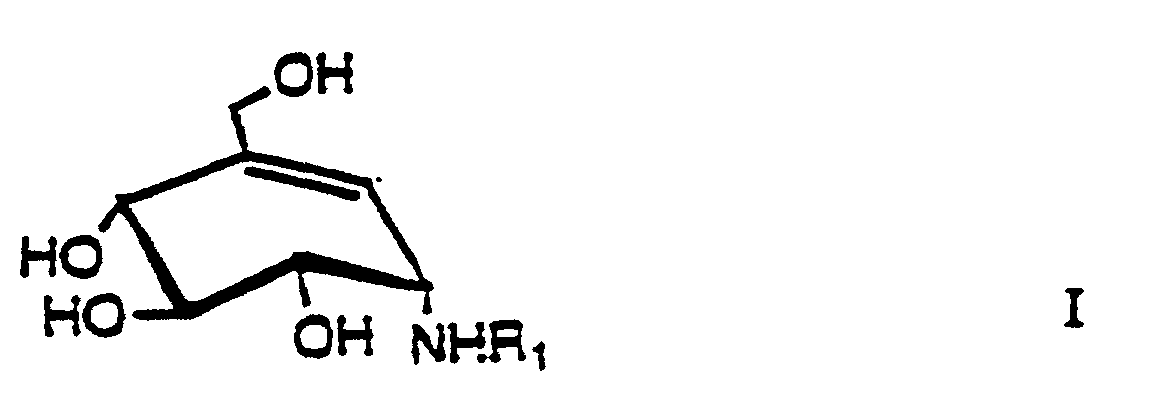 where R1 is selected from the group consisting of glucose and 1,6-anhydroglucose; and
pharmaceutically acceptable salts thereof. - A pharmaceutical composition comprising a pharmaceutically inert carrier and an α-5,2-valiolamine disaccharide ofwhere R1 is selected from the group consisting of glucose and 1,6-anhydroglucose; and
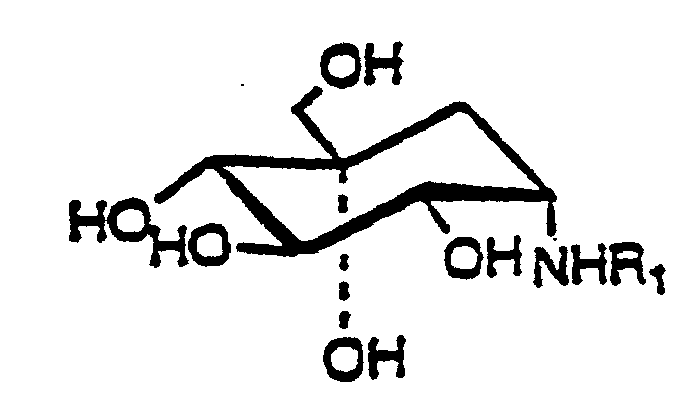
pharmaceutically acceptable salts thereof. - A pharmaceutical composition comprising a pharmaceutically inert carrier and an α-1,2-valienamine-related disaccharide selected from the group consisting ofand Formula II
 where R1 is selected from the group consisting of glucose and 1,6-anhydroglucose; and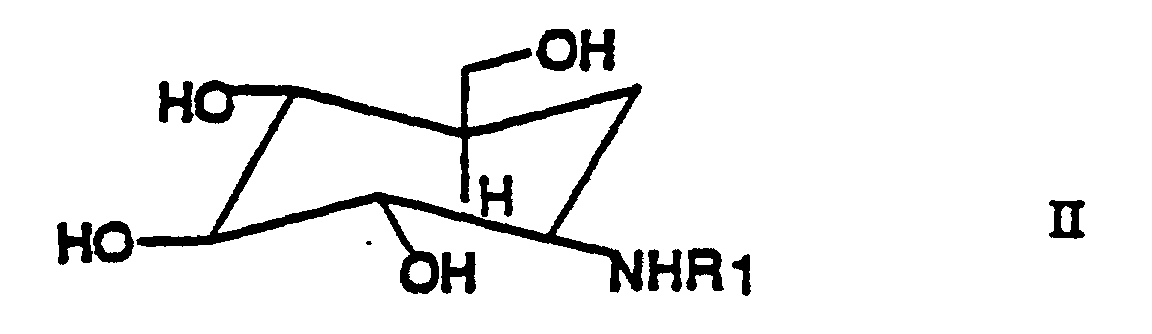
pharmaceutically acceptable salts thereof. - An α-5,2-valiolamine disaccharide of the structurewhere R1 is selected from the group consisting of glucose and 1,6-anhydroglucose; and pharmaceutically acceptable salts thereof.
- An α-1,2-valienamine-related disaccharide selected from the group consisting of Formula Iand Formula II
 where R1 is selected from the group consisting of glucose and 1,6-anhydroglucose; and pharmaceutically acceptable salts thereof.
- Compound according to any of claims 9-10, 13-14 for use as a medicament.
- Compound according to any of claims 9-10, 13-14 for use in reducing inflammation arising from a secondary immune response due to antigen exposure.
- Medicament including a compound according to any of claims 9-10, 13-14.
- Use of a compound according to any of claims 9-10, 13-14 for preparing a medicament.
Applications Claiming Priority (3)
| Application Number | Priority Date | Filing Date | Title |
|---|---|---|---|
| US08/466,621 US5571796A (en) | 1995-06-06 | 1995-06-06 | Administration of valienamine-related disaccharide compounds in reducing inflammation in a sensitized mammal arising from exposure to an antigen |
| US466621 | 1995-06-06 | ||
| PCT/CA1996/000388 WO1996039412A1 (en) | 1995-06-06 | 1996-06-06 | Administration of valienamine-related disaccharide compounds in reducing inflammation in a sensitized mammal arising from exposure to an antigen |
Publications (2)
| Publication Number | Publication Date |
|---|---|
| EP0833833A1 EP0833833A1 (en) | 1998-04-08 |
| EP0833833B1 true EP0833833B1 (en) | 2001-12-12 |
Family
ID=23852477
Family Applications (1)
| Application Number | Title | Priority Date | Filing Date |
|---|---|---|---|
| EP96917312A Expired - Lifetime EP0833833B1 (en) | 1995-06-06 | 1996-06-06 | Administration of valienamine-related disaccharide compounds in reducing inflammation in a sensitized mammal arising from exposure to an antigen |
Country Status (7)
| Country | Link |
|---|---|
| US (2) | US5571796A (en) |
| EP (1) | EP0833833B1 (en) |
| AT (1) | ATE210672T1 (en) |
| AU (1) | AU5994596A (en) |
| CA (1) | CA2257100A1 (en) |
| DE (1) | DE69617951T2 (en) |
| WO (1) | WO1996039412A1 (en) |
Families Citing this family (7)
| Publication number | Priority date | Publication date | Assignee | Title |
|---|---|---|---|---|
| US5571796A (en) * | 1995-06-06 | 1996-11-05 | Alberta Research Council | Administration of valienamine-related disaccharide compounds in reducing inflammation in a sensitized mammal arising from exposure to an antigen |
| US6828119B2 (en) * | 2001-01-04 | 2004-12-07 | Bristol Myers Squibb Company | Enzymatic deprotection of amines and hydroxides |
| WO2004101493A1 (en) * | 2003-05-19 | 2004-11-25 | Seikagaku Corporation | Acid addition salt of carbasugar amine derivative |
| US8101732B2 (en) * | 2008-09-17 | 2012-01-24 | State Of Oregon Acting By And Through The State Board Of Higher Education On Behalf Of Oregon State University | Methods of producing validamycin A analogs and uses thereof |
| KR20160124764A (en) * | 2014-02-14 | 2016-10-28 | 도아 에이요 가부시키가이샤 | Cyclic hydrocarbon compound |
| AU2021213822A1 (en) * | 2020-01-31 | 2022-09-22 | Avilar Therapeutics, Inc. | ASGPR-binding compounds for the degradation of extracellular proteins |
| EP4334360A2 (en) | 2021-05-03 | 2024-03-13 | Avilar Therapeutics, Inc. | Potent asgpr-binding compounds for the degradation of immunoglobulins and other proteins |
Family Cites Families (8)
| Publication number | Priority date | Publication date | Assignee | Title |
|---|---|---|---|---|
| JPS5754593A (en) * | 1980-09-16 | 1982-04-01 | Takeda Chem Ind Ltd | Preparation of valienamine |
| JPS5764648A (en) * | 1980-10-06 | 1982-04-19 | Takeda Chem Ind Ltd | N-substituted derivative of valienamine, its preparation, and alpha-glucosidase inhibitor |
| US4595678A (en) * | 1982-03-19 | 1986-06-17 | Takeda Chemical Industries, Ltd. | N-substituted pseudo-aminosugars and pharmaceutical compositions containing same |
| WO1986005094A1 (en) * | 1985-03-08 | 1986-09-12 | Takeda Chemical Industries, Ltd. | Antiobesity agent and composition |
| US5211937A (en) * | 1990-07-30 | 1993-05-18 | Glycomed Incorporated | Method of determining a site of inflammation utilizing elam-1 ligands |
| JPH05247078A (en) * | 1992-03-03 | 1993-09-24 | Japan Tobacco Inc | Sugar compound, sialic acid-containing sugar chain biosyhnthesis inhibitor, its production, and new intermediate |
| GB2265475A (en) * | 1992-03-18 | 1993-09-29 | Yang Tai Her | Dc motor-generator dynamic feedback control circuit |
| US5571796A (en) * | 1995-06-06 | 1996-11-05 | Alberta Research Council | Administration of valienamine-related disaccharide compounds in reducing inflammation in a sensitized mammal arising from exposure to an antigen |
-
1995
- 1995-06-06 US US08/466,621 patent/US5571796A/en not_active Expired - Fee Related
-
1996
- 1996-06-06 CA CA002257100A patent/CA2257100A1/en not_active Abandoned
- 1996-06-06 EP EP96917312A patent/EP0833833B1/en not_active Expired - Lifetime
- 1996-06-06 AU AU59945/96A patent/AU5994596A/en not_active Abandoned
- 1996-06-06 DE DE69617951T patent/DE69617951T2/en not_active Expired - Fee Related
- 1996-06-06 AT AT96917312T patent/ATE210672T1/en active
- 1996-06-06 WO PCT/CA1996/000388 patent/WO1996039412A1/en not_active Ceased
- 1996-11-05 US US08/744,203 patent/US5814616A/en not_active Expired - Fee Related
Also Published As
| Publication number | Publication date |
|---|---|
| DE69617951D1 (en) | 2002-01-24 |
| AU5994596A (en) | 1996-12-24 |
| US5571796A (en) | 1996-11-05 |
| US5814616A (en) | 1998-09-29 |
| CA2257100A1 (en) | 1996-12-12 |
| EP0833833A1 (en) | 1998-04-08 |
| ATE210672T1 (en) | 2001-12-15 |
| DE69617951T2 (en) | 2002-08-01 |
| WO1996039412A1 (en) | 1996-12-12 |
Similar Documents
| Publication | Publication Date | Title |
|---|---|---|
| JP3865411B2 (en) | Anti-endotoxin compounds | |
| KR100281264B1 (en) | New Spinosaccharide Lipids and Their Uses | |
| CS205027B2 (en) | Method of producing glucosamine derivatives | |
| JPH01501628A (en) | Acid-stable dideoxy nucleosides effective against the cytotoxic effects of human immunodeficiency virus | |
| JPWO2000017216A1 (en) | Carboxymethyl galactose derivatives | |
| JPH10500393A (en) | Structure of lipid A and method of using the same | |
| US20040219158A1 (en) | Compositions and methods for diagnosis and therapy of medical conditions involving infection with pseudomonas bacteria | |
| US4868155A (en) | Dipeptidyl 4-0-,6-0-acyl-2-amino-2-deoxy-D-glucose compositions and methods of use in AIDS-immunocompromised human hosts | |
| US5571796A (en) | Administration of valienamine-related disaccharide compounds in reducing inflammation in a sensitized mammal arising from exposure to an antigen | |
| US5441932A (en) | Sugar compounds for inhibition of the biosynthesis of sugar chains containing sialic acid | |
| US20250340580A1 (en) | Tetrasaccharides for the diagnosis, prevention, and treatment of melioidosis and glanders | |
| EP1049706A1 (en) | New pentasaccharides, their methods of production and pharmaceutical compositions containing same | |
| US4868157A (en) | Dipeptidyl 2-amino-1,2-dideoxy-D-glucose derivatives as host resistance enhancers in AIDS-immunocompromised hosts and methods of use | |
| US5382709A (en) | Alpha-mannosidase and fucosidase inhibitors | |
| JPS62185093A (en) | Saccharide derivative and drug containing the same | |
| JPH07502011A (en) | Immunosuppressive and tolerogenic oligosaccharide derivatives | |
| US4866035A (en) | Dipeptidyl saccharides as host resistance enhancers in AIDS-immuno-compromised hosts and methods of use | |
| EP0451834B1 (en) | Alpha-mannosidase and fucosidase inhibitors | |
| EP0650492A1 (en) | Reducing inflammation by time dependent administration of oligosaccharides glycosides related to blood group determinants | |
| EP0643718A1 (en) | IMMUNOSUPPRESSIVE AND TOLEROGENIC MODIFIED LEWIS?C AND LacNAc COMPOUNDS | |
| JPH06504550A (en) | Novel glucohydrolase inhibitors useful as antidiabetic agents | |
| US4866036A (en) | Dipeptidyl 5-0,6-0-acyl-2-amino-2-deoxy-D-glucofuranose compositions and methods of use in aids-immunocompromised human hosts | |
| US5929037A (en) | Modified α-D-Glcρ-(1-2)-α-D-Glcρ-(1-3)-α-D-Glcρ-analogues | |
| CA2110707A1 (en) | Immunosuppressive and tolerogenic oligosaccharide modified lewis x and lewis a compounds | |
| AU601552B2 (en) | N-acetyl-3-fluoro-neuraminic acid derivatives and preparation thereof |
Legal Events
| Date | Code | Title | Description |
|---|---|---|---|
| PUAI | Public reference made under article 153(3) epc to a published international application that has entered the european phase |
Free format text: ORIGINAL CODE: 0009012 |
|
| 17P | Request for examination filed |
Effective date: 19980106 |
|
| AK | Designated contracting states |
Kind code of ref document: A1 Designated state(s): AT BE CH DE DK ES FI FR GB GR IE IT LI LU MC NL PT SE |
|
| AX | Request for extension of the european patent |
Free format text: AL PAYMENT 980106;LT PAYMENT 980106;LV PAYMENT 980106;SI PAYMENT 980106 |
|
| 17Q | First examination report despatched |
Effective date: 19990507 |
|
| GRAG | Despatch of communication of intention to grant |
Free format text: ORIGINAL CODE: EPIDOS AGRA |
|
| GRAG | Despatch of communication of intention to grant |
Free format text: ORIGINAL CODE: EPIDOS AGRA |
|
| GRAH | Despatch of communication of intention to grant a patent |
Free format text: ORIGINAL CODE: EPIDOS IGRA |
|
| GRAH | Despatch of communication of intention to grant a patent |
Free format text: ORIGINAL CODE: EPIDOS IGRA |
|
| GRAA | (expected) grant |
Free format text: ORIGINAL CODE: 0009210 |
|
| AK | Designated contracting states |
Kind code of ref document: B1 Designated state(s): AT BE CH DE DK ES FI FR GB GR IE IT LI LU MC NL PT SE |
|
| AX | Request for extension of the european patent |
Free format text: AL PAYMENT 19980106;LT PAYMENT 19980106;LV PAYMENT 19980106;SI PAYMENT 19980106 |
|
| PG25 | Lapsed in a contracting state [announced via postgrant information from national office to epo] |
Ref country code: NL Free format text: LAPSE BECAUSE OF FAILURE TO SUBMIT A TRANSLATION OF THE DESCRIPTION OR TO PAY THE FEE WITHIN THE PRESCRIBED TIME-LIMIT Effective date: 20011212 Ref country code: IT Free format text: LAPSE BECAUSE OF FAILURE TO SUBMIT A TRANSLATION OF THE DESCRIPTION OR TO PAY THE FEE WITHIN THE PRESCRIBED TIME-LIMIT;WARNING: LAPSES OF ITALIAN PATENTS WITH EFFECTIVE DATE BEFORE 2007 MAY HAVE OCCURRED AT ANY TIME BEFORE 2007. THE CORRECT EFFECTIVE DATE MAY BE DIFFERENT FROM THE ONE RECORDED. Effective date: 20011212 Ref country code: GR Free format text: LAPSE BECAUSE OF FAILURE TO SUBMIT A TRANSLATION OF THE DESCRIPTION OR TO PAY THE FEE WITHIN THE PRESCRIBED TIME-LIMIT Effective date: 20011212 Ref country code: FI Free format text: LAPSE BECAUSE OF FAILURE TO SUBMIT A TRANSLATION OF THE DESCRIPTION OR TO PAY THE FEE WITHIN THE PRESCRIBED TIME-LIMIT Effective date: 20011212 Ref country code: BE Free format text: LAPSE BECAUSE OF FAILURE TO SUBMIT A TRANSLATION OF THE DESCRIPTION OR TO PAY THE FEE WITHIN THE PRESCRIBED TIME-LIMIT Effective date: 20011212 Ref country code: AT Free format text: LAPSE BECAUSE OF FAILURE TO SUBMIT A TRANSLATION OF THE DESCRIPTION OR TO PAY THE FEE WITHIN THE PRESCRIBED TIME-LIMIT Effective date: 20011212 |
|
| REF | Corresponds to: |
Ref document number: 210672 Country of ref document: AT Date of ref document: 20011215 Kind code of ref document: T |
|
| REG | Reference to a national code |
Ref country code: CH Ref legal event code: EP |
|
| REG | Reference to a national code |
Ref country code: GB Ref legal event code: IF02 |
|
| REG | Reference to a national code |
Ref country code: IE Ref legal event code: FG4D |
|
| REF | Corresponds to: |
Ref document number: 69617951 Country of ref document: DE Date of ref document: 20020124 |
|
| PG25 | Lapsed in a contracting state [announced via postgrant information from national office to epo] |
Ref country code: SE Free format text: LAPSE BECAUSE OF FAILURE TO SUBMIT A TRANSLATION OF THE DESCRIPTION OR TO PAY THE FEE WITHIN THE PRESCRIBED TIME-LIMIT Effective date: 20020312 Ref country code: PT Free format text: LAPSE BECAUSE OF FAILURE TO SUBMIT A TRANSLATION OF THE DESCRIPTION OR TO PAY THE FEE WITHIN THE PRESCRIBED TIME-LIMIT Effective date: 20020312 Ref country code: DK Free format text: LAPSE BECAUSE OF FAILURE TO SUBMIT A TRANSLATION OF THE DESCRIPTION OR TO PAY THE FEE WITHIN THE PRESCRIBED TIME-LIMIT Effective date: 20020312 |
|
| REG | Reference to a national code |
Ref country code: CH Ref legal event code: NV Representative=s name: BOVARD AG PATENTANWAELTE |
|
| NLV1 | Nl: lapsed or annulled due to failure to fulfill the requirements of art. 29p and 29m of the patents act | ||
| PG25 | Lapsed in a contracting state [announced via postgrant information from national office to epo] |
Ref country code: MC Free format text: LAPSE BECAUSE OF NON-PAYMENT OF DUE FEES Effective date: 20020606 Ref country code: LU Free format text: LAPSE BECAUSE OF NON-PAYMENT OF DUE FEES Effective date: 20020606 |
|
| PG25 | Lapsed in a contracting state [announced via postgrant information from national office to epo] |
Ref country code: ES Free format text: LAPSE BECAUSE OF FAILURE TO SUBMIT A TRANSLATION OF THE DESCRIPTION OR TO PAY THE FEE WITHIN THE PRESCRIBED TIME-LIMIT Effective date: 20020627 |
|
| PLBE | No opposition filed within time limit |
Free format text: ORIGINAL CODE: 0009261 |
|
| STAA | Information on the status of an ep patent application or granted ep patent |
Free format text: STATUS: NO OPPOSITION FILED WITHIN TIME LIMIT |
|
| 26N | No opposition filed | ||
| NLV1 | Nl: lapsed or annulled due to failure to fulfill the requirements of art. 29p and 29m of the patents act | ||
| PGFP | Annual fee paid to national office [announced via postgrant information from national office to epo] |
Ref country code: GB Payment date: 20030604 Year of fee payment: 8 |
|
| PGFP | Annual fee paid to national office [announced via postgrant information from national office to epo] |
Ref country code: FR Payment date: 20030610 Year of fee payment: 8 |
|
| PGFP | Annual fee paid to national office [announced via postgrant information from national office to epo] |
Ref country code: CH Payment date: 20030616 Year of fee payment: 8 |
|
| PGFP | Annual fee paid to national office [announced via postgrant information from national office to epo] |
Ref country code: DE Payment date: 20030618 Year of fee payment: 8 |
|
| PGFP | Annual fee paid to national office [announced via postgrant information from national office to epo] |
Ref country code: IE Payment date: 20030626 Year of fee payment: 8 |
|
| PG25 | Lapsed in a contracting state [announced via postgrant information from national office to epo] |
Ref country code: GB Free format text: LAPSE BECAUSE OF NON-PAYMENT OF DUE FEES Effective date: 20040606 |
|
| PG25 | Lapsed in a contracting state [announced via postgrant information from national office to epo] |
Ref country code: IE Free format text: LAPSE BECAUSE OF NON-PAYMENT OF DUE FEES Effective date: 20040607 |
|
| PG25 | Lapsed in a contracting state [announced via postgrant information from national office to epo] |
Ref country code: LI Free format text: LAPSE BECAUSE OF NON-PAYMENT OF DUE FEES Effective date: 20040630 Ref country code: CH Free format text: LAPSE BECAUSE OF NON-PAYMENT OF DUE FEES Effective date: 20040630 |
|
| PG25 | Lapsed in a contracting state [announced via postgrant information from national office to epo] |
Ref country code: DE Free format text: LAPSE BECAUSE OF NON-PAYMENT OF DUE FEES Effective date: 20050101 |
|
| GBPC | Gb: european patent ceased through non-payment of renewal fee |
Effective date: 20040606 |
|
| REG | Reference to a national code |
Ref country code: CH Ref legal event code: PL |
|
| PG25 | Lapsed in a contracting state [announced via postgrant information from national office to epo] |
Ref country code: FR Free format text: LAPSE BECAUSE OF NON-PAYMENT OF DUE FEES Effective date: 20050228 |
|
| REG | Reference to a national code |
Ref country code: IE Ref legal event code: MM4A |
|
| REG | Reference to a national code |
Ref country code: FR Ref legal event code: ST |