EP0831688B1 - Process for the preparation of antiviral plant transformed with lactoferrin gene - Google Patents
Process for the preparation of antiviral plant transformed with lactoferrin gene Download PDFInfo
- Publication number
- EP0831688B1 EP0831688B1 EP96920044A EP96920044A EP0831688B1 EP 0831688 B1 EP0831688 B1 EP 0831688B1 EP 96920044 A EP96920044 A EP 96920044A EP 96920044 A EP96920044 A EP 96920044A EP 0831688 B1 EP0831688 B1 EP 0831688B1
- Authority
- EP
- European Patent Office
- Prior art keywords
- plant
- lactoferrin
- gene
- transformed
- tobacco
- Prior art date
- Legal status (The legal status is an assumption and is not a legal conclusion. Google has not performed a legal analysis and makes no representation as to the accuracy of the status listed.)
- Expired - Lifetime
Links
Images




Classifications
-
- C—CHEMISTRY; METALLURGY
- C07—ORGANIC CHEMISTRY
- C07K—PEPTIDES
- C07K14/00—Peptides having more than 20 amino acids; Gastrins; Somatostatins; Melanotropins; Derivatives thereof
- C07K14/435—Peptides having more than 20 amino acids; Gastrins; Somatostatins; Melanotropins; Derivatives thereof from animals; from humans
- C07K14/79—Transferrins, e.g. lactoferrins, ovotransferrins
-
- C—CHEMISTRY; METALLURGY
- C12—BIOCHEMISTRY; BEER; SPIRITS; WINE; VINEGAR; MICROBIOLOGY; ENZYMOLOGY; MUTATION OR GENETIC ENGINEERING
- C12N—MICROORGANISMS OR ENZYMES; COMPOSITIONS THEREOF; PROPAGATING, PRESERVING, OR MAINTAINING MICROORGANISMS; MUTATION OR GENETIC ENGINEERING; CULTURE MEDIA
- C12N15/00—Mutation or genetic engineering; DNA or RNA concerning genetic engineering, vectors, e.g. plasmids, or their isolation, preparation or purification; Use of hosts therefor
- C12N15/09—Recombinant DNA-technology
- C12N15/63—Introduction of foreign genetic material using vectors; Vectors; Use of hosts therefor; Regulation of expression
- C12N15/79—Vectors or expression systems specially adapted for eukaryotic hosts
- C12N15/82—Vectors or expression systems specially adapted for eukaryotic hosts for plant cells, e.g. plant artificial chromosomes (PACs)
- C12N15/8241—Phenotypically and genetically modified plants via recombinant DNA technology
- C12N15/8261—Phenotypically and genetically modified plants via recombinant DNA technology with agronomic (input) traits, e.g. crop yield
- C12N15/8271—Phenotypically and genetically modified plants via recombinant DNA technology with agronomic (input) traits, e.g. crop yield for stress resistance, e.g. heavy metal resistance
- C12N15/8279—Phenotypically and genetically modified plants via recombinant DNA technology with agronomic (input) traits, e.g. crop yield for stress resistance, e.g. heavy metal resistance for biotic stress resistance, pathogen resistance, disease resistance
- C12N15/8283—Phenotypically and genetically modified plants via recombinant DNA technology with agronomic (input) traits, e.g. crop yield for stress resistance, e.g. heavy metal resistance for biotic stress resistance, pathogen resistance, disease resistance for virus resistance
-
- A—HUMAN NECESSITIES
- A01—AGRICULTURE; FORESTRY; ANIMAL HUSBANDRY; HUNTING; TRAPPING; FISHING
- A01H—NEW PLANTS OR NON-TRANSGENIC PROCESSES FOR OBTAINING THEM; PLANT REPRODUCTION BY TISSUE CULTURE TECHNIQUES
- A01H1/00—Processes for modifying genotypes ; Plants characterised by associated natural traits
- A01H1/06—Processes for producing mutations, e.g. treatment with chemicals or with radiation
-
- A—HUMAN NECESSITIES
- A01—AGRICULTURE; FORESTRY; ANIMAL HUSBANDRY; HUNTING; TRAPPING; FISHING
- A01H—NEW PLANTS OR NON-TRANSGENIC PROCESSES FOR OBTAINING THEM; PLANT REPRODUCTION BY TISSUE CULTURE TECHNIQUES
- A01H1/00—Processes for modifying genotypes ; Plants characterised by associated natural traits
- A01H1/12—Processes for modifying agronomic input traits, e.g. crop yield
- A01H1/122—Processes for modifying agronomic input traits, e.g. crop yield for stress resistance, e.g. heavy metal resistance
- A01H1/1245—Processes for modifying agronomic input traits, e.g. crop yield for stress resistance, e.g. heavy metal resistance for biotic stress resistance, e.g. pathogen, pest or disease resistance
- A01H1/126—Processes for modifying agronomic input traits, e.g. crop yield for stress resistance, e.g. heavy metal resistance for biotic stress resistance, e.g. pathogen, pest or disease resistance for virus resistance
-
- A—HUMAN NECESSITIES
- A01—AGRICULTURE; FORESTRY; ANIMAL HUSBANDRY; HUNTING; TRAPPING; FISHING
- A01H—NEW PLANTS OR NON-TRANSGENIC PROCESSES FOR OBTAINING THEM; PLANT REPRODUCTION BY TISSUE CULTURE TECHNIQUES
- A01H6/00—Angiosperms, i.e. flowering plants, characterised by their botanic taxonomy
- A01H6/82—Solanaceae, e.g. pepper, tobacco, potato, tomato or eggplant
-
- A—HUMAN NECESSITIES
- A01—AGRICULTURE; FORESTRY; ANIMAL HUSBANDRY; HUNTING; TRAPPING; FISHING
- A01H—NEW PLANTS OR NON-TRANSGENIC PROCESSES FOR OBTAINING THEM; PLANT REPRODUCTION BY TISSUE CULTURE TECHNIQUES
- A01H6/00—Angiosperms, i.e. flowering plants, characterised by their botanic taxonomy
- A01H6/82—Solanaceae, e.g. pepper, tobacco, potato, tomato or eggplant
- A01H6/823—Nicotiana, e.g. tobacco
Definitions
- the present invention relates to an antiviral plant producing lactoferrin and process for the preparation thereof. More specifically, it pertains to an antiviral plant producing lactoferrin, which is transformed with a lactoferrin(Lf) gene; a process for the preparation of the antiviral plant, which comprises transforming a plant with an expression vector containing a lactoferrin gene and culturing the transformed plant.
- Lactoferrin is a conjugated protein found in mammals, e.g., in human milk, saliva, tear, semen and leukocyte. It affects the growth and differentiation of cells and has an antibacterial and immunopotentiative activity(Arold et al., Science, 197, 263-265(1977)). Further, it shows an antiviral activity against Friend virus(Lu et al., Cancer Res., 47 , 4184-4188(1987)), human immunodeficiency virus(HIV) and human cytomegalovirus(HCMV)(Meijer et al., J. Disease, 172 , 380-388(1995)).
- Mitra and Zhang reported a method for providing a plant having an antibacterial activity by introducing thereto a cDNA encoding human lactoferrin( Plant Physiol. , 106 , 977-981(1994)). They confirmed the production of human lactoferrin in a tobacco cell by conducting a western blotting analysis of a tobacco cell transformed with human lactoferrin cDNA and anti-human lactoferrin antibody. They also reported that the proliferation of bacteria was significantly suppressed when the extract of the transformed tobacco cell was added to a culture of bacteria, e.g., Pseudomonas sp., which is pathogenic to tobacco. However, Mitra and Zhang did not, or failed to produce a transformed tobacco plant from the transformed tobacco cells.
- human lactoferrin produced in the transformed tobacco cell was defective, i.e., significant parts thereof were missing, while the antibacterial activity was confirmed only in vitro. Accordingly, the question of whether or not an antiviral plant can be produced from a transformed tobacco cell was left unanswered in the prior art.
- Another object of the present invention is to provide a process for preparing said antiviral plant.
- a further object of the present invention is to provide a process for producing lactoferrin in a plant.
- a process for preparing an antiviral plant producing lactoferrin which comprises transforming a plant with an expression vector containing lactoferrin(Lf) gene.
- the present invention provides an antiviral plant producing lactoferrin and a process for preparing the antiviral plant, which comprises transforming a plant with an expression vector containing a lactoferrin(Lf) gene and culturing the transformed plant using a suitable medium.
- the lactoferrin gene of the present invention may be any one of the mammalian lactoferrin genes, preferably, human lactoferrin gene(HLf).
- the lactoferrin gene may be prepared by a conventional chemical DNA synthesis method using the known nucleotide sequence of the lactoferrin gene.
- HLf gene may be chemically synthesized using the nucleotide sequence of HLf gene disclosed by, e.g., Powell and Ogden( Nucleic Acids Research, 18 , 4013(1990)).
- the lactoferrin gene of the present invention may also be obtained by digesting with suitable restriction enzymes a plasmid comprising the gene and, in case of human lactoferrin gene, it may be obtained by digesting with suitable restriction enzymes a plasmid, e.g., plasmid pBHL-1 wherein the HLf gene is inserted in plasmid pBSK(Yong-Yeon Cho, Cloning of Human Lactoferrin Gene and Its Polymorphism in Normal and Cancer Cells, August, 1993, a master's thesis in Science, Biology dept., Chungnam Univ., Korea). Any nucleotide substitution, deletion or addition in the nucleotide sequence of the lactoferrin gene may be made provided that the property and function thereof remains substantially unchanged.
- an expression vector comprising the lactoferrin gene may be prepared in accordance with a conventional DNA manipulation technique, e.g., by inserting the gene to a suitable vector which may be selected from known vectors based on its compatibility with the intended host plant cell.
- a suitable vector which may be selected from known vectors based on its compatibility with the intended host plant cell.
- the HLf gene prepared by digesting plasmid pBHL-1 with HindIII and BamHI may be inserted into the HindIII/BglII digestion site of a plant vector containing controllable CaMV(cauliflower mosaic virus) 35S promoter, e.g., plasmid pGA748( Pap. Am. Chem. Soc. , 205(1993)), to obtain plasmid pLSM1.
- An Agrobacterium sp. cell may then be transformed with the expression vector prepared above in accordance with a conventional method, e.g., the freeze-thaw method of Holsters et al.( Mol. Gen. Genet. , 163 , 181-187(1978)).
- the transformed Agrobacterium may in turn be used to transform a plant cell by employing, e.g., the Agrobacterium -mediated transformation method described by Robert, B. H., et al. ( Plant Molecular Biology Manual, A42 , 1-9(1988)).
- the resulting transformed plant cell may be cultured using a suitable medium, e.g., the MS(Murashige and Skoog) medium ( Physiol. Plant, 15 , 473-497(1962)) which contains BAP(6-benzylaminopurine), NAA(naphthaleneacetic acid) and kanamycin.
- a suitable medium e.g., the MS(Murashige and Skoog) medium ( Physiol. Plant, 15 , 473-497(1962)) which contains BAP(6-benzylaminopurine), NAA(naphthaleneacetic acid) and kanamycin.
- This medium induces shoot growth from the transformed plant cell.
- the induced shoots may be further cultured using the MS medium containing kanamycin to induce roots.
- the resulting transformed plant shoot having a root may be transplanted in soil to obtain a complete plant having resistance against viral infection.
- Suitable plants for use in the present invention include plants belonging to the family Solanaceae, e.g., a tobacco plant.
- the antiviral plant prepared in the present invention produces an intact lactoferrin and shows an antiviral activity against the cucumovirus, e.g., CMV(cucumber mosaic virus).
- the present invention also provides a process for producing lactoferrin in a plant, which comprises culturing a plant transformed with an expression vector containing a lactoferrin gene.
- human lactoferrin may be mass-produced by culturing a plant transformed with an expression vector containing human lactoferrin gene, e.g., plasmid pLSM1.
- a human lactoferrin(HLf) gene containing 3' and 5' UTRs(untranslated regions) (GenBank accession No.: UO7642), which was isolated from human mammary gland tissue cDNA library(Clontech, U.S.A.), was subcloned into the EcoRI site of plasmid pBluescript II SK(pBSK, Promega, U.S.A.) to construct a plasmid designated pBHL-1(Yong-Yeon Cho, supra ).
- Plasmid pBHL-1 was digested with restriction enzymes HindIII and BamHI to obtain a 2.4 kb HLf gene.
- the HLf gene was inserted into the HindIII/BglII digestion site of plasmid pGA748( Pap. Am. Chem. Soc., 205(1993)), said digestion site being downstream from the CaMV(cauliflower mosaic virus) 35S promoter site.
- the resulting plasmid was designated plasmid pLSM1 and its structure is shown in Fig. 1, wherein NPTII represents kanamycin resistant gene; 35S, CaMV 35S promoter; and HLf, human lactoferrin gene.
- E. coli DH5 ⁇ (Clontech) was transformed with plasmid pLSM1 in accordance with the CaCl 2 method(Cohen et al., P. N. A. S. , 69 , 2110(1972)).
- E. coli DH5 ⁇ transformed with plasmid pLSM1 was deposited on May 10, 1995 with the Korean Collection for Type Cultures(KCTC)(Address: GERI, KIST, P.O. Box 115, Yusong, Taejon, 305-600, Republic of Korea) under the accession number of KCTC 0159BP in accordance with the terms of Budapest Treaty on the International Recognition of the Deposit of Microorganism for the Purpose of Patent Procedure.
- Fig. 2 The result of restriction enzyme analyses is shown in Fig. 2, wherein a 11.6 kb DNA fragment is observed when plasmid pGA748 is digested with EcoRI and HindIII(lane 1); a 11.8 kb DNA fragment and additional 2.2 kb DNA are observed when plasmid pLSM1 is digested with EcoRI and HindIII(lane 2); and, when plasmid pLSM1 is digested with BglII, which has a restriction site in the HLf gene segment, 13.4 kb and 0.6 kb DNA fragments are observed(lane 3) as expected from the restriction enzyme map. Lane M shows a standard DNA size marker.
- Plasmid pLSM1 was introduced to Agrobacterium LBA4404(Clontech, U.S.A.) in accordance with the freeze-thaw method of Holsters et al.( Mol. Gen. Genet. , 163 , 181-187(1978)).
- the resulting transformed Agrobacterium LBA4404 was cultured together with leaf disks of a tobacco plant, Nicotiana tabacum L. Wisconsin 38, in order to transform the tobacco leaves with HLf gene, in accordance with the combination culture method(Horsch et al., Science, 227, 1229-1231(1985)).
- the transformed leaf disks were cultured in a shoot-inducing medium, i.e., MS(Murashige and Skoog) medium ( Physiol. Plant, 15 , 473-497(1962)) containing 0.1 mg/l of BAP(6-benzylaminopurine), 1.0 mg/l of NAA(naphthaleneacetic acid), and 150 ⁇ g/ml of kanamycin.
- MS(Murashige and Skoog) medium Physiol. Plant, 15 , 473-497(1962)
- BAP(6-benzylaminopurine BAP(6-benzylaminopurine
- NAA naphthaleneacetic acid
- Selected shoots resistant to kanamycin were further cultured in the MS medium containing 200 ⁇ g/ml of kanamycin to obtain tobacco plants having roots.
- PCR polymerase chain reactions
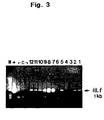
- Observable in Fig. 3 are 1 kb-sized PCR bands associated with 9 out of the 12 plants tested, wherein lanes 1 to 12 represent the transformed tobacco plants; C, an untransformed tobacco plant; +, plasmid pLSM1; and M, standard DNA size markers.
- the transformants confirmed in (Step 3) were transplanted in soil and grown at 25°C for 2 to 4 weeks under a 16-light hours/day condition.
- a 1 g leaf sample of each of the plants was ground and the genomic DNA was separated therefrom in accordance with the modified Shure's method( Cell , 35 , 225-233(1985)).
- Total RNA was also separated from the genomic DNA in accordance with the modified Sambrook's method( Molecular Cloning: A Laboratory Manual, 2nd Ed., pp 7.19-7.22, 1989, Cold Spring Harbor Laboratory Press, New York, U.S.A.) using CsCl.
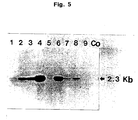
- each of the genomic DNA from each tobacco plant was digested with HindIII and subjected to a electrophoresis on 0.8% agarose gel.
- 40 ⁇ g each of the total RNA from each tobacco plant was electrophoresed on 1% agarose gel containing formaldehyde.
- a 100 mg leaf sample of selected transformed tobacco plants was ground and suspended in phosphate buffered saline(PBS) containing 1 mM phenylmethylsulfonyl fluoride(PMSF). The resulting suspension was centrifuged at 12,000 rpm for 10 min. to obtain a supernatant containing water-soluble proteins.
- PBS phosphate buffered saline
- PMSF phenylmethylsulfonyl fluoride
- each of the water-soluble proteins was subjected to 10% SDS-PAGE by employing Laemmli's method (Nature 227, 680(1970)).
- the proteins separated by size on the gel were transferred onto a nitrocellulose membrane (Hoefer) by employing an electrophoretic transferrer (Bio-Rad).
- the membrane was put into Tris-buffered saline (TBS) containing 3% bovine serum albumin(BSA) to block the unbound portion of the membrane.
- TBS Tris-buffered saline
- BSA bovine serum albumin
- the membrane was then washed with TBS, placed in an anti-human antibody solution, which was prepared by diluting goat anti-human IgG labeled with alkaline phosphatase(Sigma Co., U.S.A.) with 10,000-fold volume of TBS containing 1% BSA, and reacted at room temperature for 1.5 hour.
- the membrane was washed thoroughly with TBS and added thereto was 10 ml of BCIP/NBT(5-bromo-4-chloro-3-indolylphosphate/ nitro blue tetrozorium) solution. The resultant was reacted at room temperature for 10 min. to develop a color reaction.
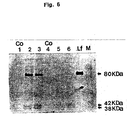
- Fig. 6 shows that all transformants produced lactoferrin, while the untransformed tobacco did not.
- lanes 1 to 3 represent the result obtained with 100 ⁇ g protein samples, and lanes 4 to 6, 50 ⁇ g protein samples. Further, lanes 1 and 4 correspond to the untransformed tobacco and lanes 2, 3, 5 and 6, the transformed tobacco.
- the transformed tobacco plants produce not only a 80 kDa protein which is identical in size with human lactoferrin(Sigma) but also 38 or 42 kDa lactoferrin fragments.
- Step 1 First Viral Infection with CMV-Y Virus
- Step 2 Second Viral Infection with CMV-Y Virus
- the six tobacco plants which remained healthy in (Step 1) were subjected to a second viral infection with 10 ⁇ g/ml of CMV-Y virus in accordance with the same procedure as in (Step 1). After 3 days from the infection, additional disease symptoms were observed in one of the two untransformed tobacco plants as well as in the tobacco plant transformed with plasmid pGA748, while one remaining untransformed tobacco plant and the three tobacco plants transformed with plasmid pLSM1 were healthy even after 2 weeks from the second infection.
- the tobacco plants transformed with plasmid pLSM1 or pGA748 were self-pollinated to obtain seeds, and then, the transformants growing on MS medium containing 150 ⁇ g/ml kanamycin were selected.
- the kanamycin resistant progenies were transplanted in soil, grown at 25°C for 2 to 4 weeks under a 16-light hours/day condition, and then, subjected to a viral infection in accordance with the same procedure as in (Step 6) of Example 1.
- the tobacco plants transformed with pGA748 showed disease symptoms at the third day from the infection.
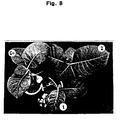
- the tobacco plants transformed with PLSM1 exhibited localized, mild symptoms only on the infected leaf and a systemic infection was not observed even after 4 weeks from the infection. Further, they showed a growth rate similar to that of uninfected tobacco plants.
- Fig. 8 wherein 1 is a tobacco plant transformed with plasmid pGA748; 2, a tobacco plant transformed with plasmid pLSM1; and Co, an uninfected tobacco plant transformed with plasmid pGA748.
- a callus was induced from the pLSM1-transformed tobacco progeny plant of Example 3 in accordance with the method of J. Draper et al.( Plant Genetic Transformation and Gene Expression, Chap. 2, 1988, Blackwell).
- a leaf sample from the tobacco progeny plant transformed with plasmid pLSM1 was treated with 0.5-1.0 % of hypochlorite and washed several times with the sterilized water to remove the hypochlorite.
- the disinfected leaf sample prepared above was cut by 0.5 cm x 1 cm size and placed on the MS medium containing NAA, BAP and kanamycin in a Petri dish.
- the Petri dish was sealed and maintained at 25°C in the dark. Two weeks after, undifferentiation of the leaf was observed; i.e., a callus was formed at the edge of the leaf pieces.
- the callus was preserved on the same medium with subculturing monthly.
- a callus of the tobacco plant transformed with plasmid pLSM1, i.e., Nicotiana tabacum W38(pLSM1) was deposited on May 16, 1996 with the Korea Research Institute of Bioscience and Biotechnology, Korean Collection for Type Cultures(KCTC) (Address: KCTC, KRIBB, #52, Oun-dong, Yusong-ku, Taejon, 305-333, Republic of Korea) under the accession number of KCTC 0248BP in accordance with the terms of Budapest Treaty on the International Recognition of the Deposit of Microorganism for the Purpose of Patent Procedure.
- KCTC Korean Collection for Type Cultures
- An antiviral tobacco plant may be derived from the above callus by inducing shoot and root therefrom in accordance with the procedure of (Step 2) of Example 1, and then culturing the resulting plantlets in soil to develop into a whole plant(J. Draper et al., supra).
Landscapes
- Life Sciences & Earth Sciences (AREA)
- Health & Medical Sciences (AREA)
- Genetics & Genomics (AREA)
- Chemical & Material Sciences (AREA)
- Organic Chemistry (AREA)
- Molecular Biology (AREA)
- Engineering & Computer Science (AREA)
- Zoology (AREA)
- General Health & Medical Sciences (AREA)
- Bioinformatics & Cheminformatics (AREA)
- Biotechnology (AREA)
- Wood Science & Technology (AREA)
- Biomedical Technology (AREA)
- General Engineering & Computer Science (AREA)
- Biochemistry (AREA)
- Biophysics (AREA)
- Environmental Sciences (AREA)
- Developmental Biology & Embryology (AREA)
- Botany (AREA)
- Virology (AREA)
- Plant Pathology (AREA)
- Microbiology (AREA)
- Physics & Mathematics (AREA)
- Cell Biology (AREA)
- Natural Medicines & Medicinal Plants (AREA)
- Physiology (AREA)
- Toxicology (AREA)
- Gastroenterology & Hepatology (AREA)
- Medicinal Chemistry (AREA)
- Proteomics, Peptides & Aminoacids (AREA)
- Breeding Of Plants And Reproduction By Means Of Culturing (AREA)
- Micro-Organisms Or Cultivation Processes Thereof (AREA)
- Preparation Of Compounds By Using Micro-Organisms (AREA)
Description
Claims (13)
- A process for preparing an antiviral plant producing lactoferrin which comprises transforming a plant with an expression vector containing a lactoferrin(Lf) gene.
- The process of claim 1, wherein the plant belongs to the family Solanaceae.
- The process of claim 2, wherein the plant is a tobacco plant.
- The process of claim 1, wherein the expression vector is plasmid pLSM1(KCTC 0159BP).
- The process of claim 1, wherein the antiviral activity is against cucumovirus.
- The process of claim 5, wherein the cucumovirus is cucumber mosaic virus.
- The process of claim 1, wherein the lactoferrin gene is human lactoferrin gene.
- An antiviral plant producing lactoferrin, which is prepared by transforming a plant with an expression vector containing a lactoferrin gene.
- The antiviral plant of claim 8, which belongs to the family Solanaceae.
- The antiviral plant of claim 8, wherein the lactoferrin is human lactoferrin.
- A process for producing lactoferrin in a plant, which comprises culturing a plant transformed with an expression vector containing a lactoferrin gene.
- The process of claim 11, wherein the plant belongs to the family Solanaceae.
- The process of claim 11, wherein the lactoferrin gene is human lactoferrin gene.
Applications Claiming Priority (3)
| Application Number | Priority Date | Filing Date | Title |
|---|---|---|---|
| KR1019950012724A KR0154495B1 (en) | 1995-05-22 | 1995-05-22 | Method for producing antiviral plant transformed with human lactoferrin gene |
| KR1995127 | 1995-05-22 | ||
| PCT/KR1996/000074 WO1996037094A1 (en) | 1995-05-22 | 1996-05-22 | Process for the preparation of antiviral plant transformed with lactoferrin gene |
Publications (2)
| Publication Number | Publication Date |
|---|---|
| EP0831688A1 EP0831688A1 (en) | 1998-04-01 |
| EP0831688B1 true EP0831688B1 (en) | 2002-03-13 |
Family
ID=19415024
Family Applications (1)
| Application Number | Title | Priority Date | Filing Date |
|---|---|---|---|
| EP96920044A Expired - Lifetime EP0831688B1 (en) | 1995-05-22 | 1996-05-22 | Process for the preparation of antiviral plant transformed with lactoferrin gene |
Country Status (6)
| Country | Link |
|---|---|
| US (1) | US5914448A (en) |
| EP (1) | EP0831688B1 (en) |
| JP (1) | JP3302695B2 (en) |
| KR (1) | KR0154495B1 (en) |
| DE (1) | DE69619814T2 (en) |
| WO (1) | WO1996037094A1 (en) |
Families Citing this family (5)
| Publication number | Priority date | Publication date | Assignee | Title |
|---|---|---|---|---|
| TR199900312T2 (en) * | 1996-08-14 | 1999-04-21 | Novartis Ag | Peptide with inhibitory action against plant pathogenic fungi. |
| FR2762850B1 (en) | 1997-05-02 | 2000-02-11 | Biocem | RECOMBINANT LACTOFERRINS, THEIR METHODS OF PRODUCTION BY PLANTS AND THEIR USES |
| IT1299565B1 (en) * | 1998-07-17 | 2000-03-16 | Plantechno S R L | SYNTHETIC POLYNUCLEOTIDE CODING FOR HUMAN LATTOFERRIN, VECTORS, CELLS AND TRANSGENIC PLANTS THAT CONTAIN IT. |
| US20080261282A1 (en) * | 2004-02-16 | 2008-10-23 | Biongene Co., Ltd. | Fermentation Process for Preparing Coenzyme Q10 by the Recombinant Agrobacterium tumefaciens |
| KR100578282B1 (en) * | 2004-02-16 | 2006-05-11 | 주식회사 바이오앤진 | Fermentation method of coenzyme Q10 using transformed Agrobacterium tumefaciens strain |
Family Cites Families (2)
| Publication number | Priority date | Publication date | Assignee | Title |
|---|---|---|---|---|
| IL72666A0 (en) * | 1983-08-15 | 1984-11-30 | Stauffer Chemical Co | Plasmid vector |
| EP0279433B1 (en) * | 1987-02-20 | 1991-10-23 | Takeda Chemical Industries, Ltd. | Plants resistant to cucumber mosaic virus infection |
-
1995
- 1995-05-22 KR KR1019950012724A patent/KR0154495B1/en not_active Expired - Fee Related
-
1996
- 1996-05-22 DE DE69619814T patent/DE69619814T2/en not_active Expired - Fee Related
- 1996-05-22 WO PCT/KR1996/000074 patent/WO1996037094A1/en not_active Ceased
- 1996-05-22 EP EP96920044A patent/EP0831688B1/en not_active Expired - Lifetime
- 1996-05-22 US US08/952,429 patent/US5914448A/en not_active Expired - Fee Related
- 1996-05-22 JP JP53557796A patent/JP3302695B2/en not_active Expired - Fee Related
Also Published As
| Publication number | Publication date |
|---|---|
| DE69619814T2 (en) | 2002-06-27 |
| EP0831688A1 (en) | 1998-04-01 |
| JPH10506540A (en) | 1998-06-30 |
| KR0154495B1 (en) | 1998-10-15 |
| US5914448A (en) | 1999-06-22 |
| DE69619814D1 (en) | 2002-04-18 |
| WO1996037094A1 (en) | 1996-11-28 |
| KR960041368A (en) | 1996-12-19 |
| JP3302695B2 (en) | 2002-07-15 |
Similar Documents
| Publication | Publication Date | Title |
|---|---|---|
| US5834268A (en) | Stilbene synthase genes for grapevine | |
| RU2140985C1 (en) | Isolated and purified nucleic acid molecule, not occurring in nature nucleic acid molecule and method of confering resistance to tobacco mosaic virus to plant (variants) | |
| JP3272031B2 (en) | Caffeoyl-CoA3-O-methyltransferase gene | |
| CN105624188B (en) | Application of a kind of SPL18 gene in improving plant yield | |
| KR970007864B1 (en) | Process of plant which expressing pip of phytolacca insularis nakai | |
| CA2264962C (en) | Transcription factor controlling phenylpropanoid biosynthesis pathway | |
| CN108137658A (en) | Generation of maize plants with enhanced resistance to northern leaf blight | |
| CN109111514B (en) | Method for cultivating transgenic wheat with resistance to sheath blight and root rot and related biological material thereof | |
| US5418153A (en) | Process for production of exogenous gene or its product in plant cells | |
| EP0126546B2 (en) | Plant structural gene expression | |
| CN107641627B (en) | H gene and H protein for regulating formation of tomato type I glandular hairs and application of H gene and H protein | |
| US5914448A (en) | Process for the preparation of antiviral plant transformed with lactoferrin gene | |
| US5824856A (en) | Process for production of exogenous gene or its product in plant cells | |
| JP2002525033A (en) | Pi-ta gene that confers disease resistance to plants | |
| JP4134281B2 (en) | Promoters with specific activity in pistil tissues and use thereof | |
| US6388068B1 (en) | Method for producing foreign polypeptide in plant intercellular fluid | |
| Kiernan et al. | Transformation and regeneration of Nicotiana edwardsonii | |
| US20040191912A1 (en) | New constitutive plant promoter | |
| JPWO1993020686A1 (en) | Plants resistant to multiple viruses and method for producing same | |
| EP0585554B1 (en) | Process for preparing a transgenic plant expressing phytolacca antiviral protein | |
| EP1115744A1 (en) | Regulatory sequences for root specific or root abundant gene expression in plants | |
| CN114716522A (en) | Application of KIN10 protein and related biological materials thereof in saline-alkali tolerance of plants | |
| Kuehnle et al. | Genetic transformation in anthurium | |
| JPH07274974A (en) | Bibenzyl synthase gene | |
| WO2000044915A9 (en) | Method for conveying bnyvv resistance to sugar beet plants |
Legal Events
| Date | Code | Title | Description |
|---|---|---|---|
| PUAI | Public reference made under article 153(3) epc to a published international application that has entered the european phase |
Free format text: ORIGINAL CODE: 0009012 |
|
| 17P | Request for examination filed |
Effective date: 19971118 |
|
| AK | Designated contracting states |
Kind code of ref document: A1 Designated state(s): BE DE FR GB IT NL SE |
|
| GRAG | Despatch of communication of intention to grant |
Free format text: ORIGINAL CODE: EPIDOS AGRA |
|
| 17Q | First examination report despatched |
Effective date: 20010409 |
|
| GRAG | Despatch of communication of intention to grant |
Free format text: ORIGINAL CODE: EPIDOS AGRA |
|
| GRAG | Despatch of communication of intention to grant |
Free format text: ORIGINAL CODE: EPIDOS AGRA |
|
| GRAH | Despatch of communication of intention to grant a patent |
Free format text: ORIGINAL CODE: EPIDOS IGRA |
|
| GRAH | Despatch of communication of intention to grant a patent |
Free format text: ORIGINAL CODE: EPIDOS IGRA |
|
| REG | Reference to a national code |
Ref country code: GB Ref legal event code: IF02 |
|
| GRAA | (expected) grant |
Free format text: ORIGINAL CODE: 0009210 |
|
| AK | Designated contracting states |
Kind code of ref document: B1 Designated state(s): BE DE FR GB IT NL SE |
|
| PG25 | Lapsed in a contracting state [announced via postgrant information from national office to epo] |
Ref country code: NL Free format text: LAPSE BECAUSE OF FAILURE TO SUBMIT A TRANSLATION OF THE DESCRIPTION OR TO PAY THE FEE WITHIN THE PRESCRIBED TIME-LIMIT Effective date: 20020313 Ref country code: BE Free format text: LAPSE BECAUSE OF FAILURE TO SUBMIT A TRANSLATION OF THE DESCRIPTION OR TO PAY THE FEE WITHIN THE PRESCRIBED TIME-LIMIT Effective date: 20020313 |
|
| REF | Corresponds to: |
Ref document number: 69619814 Country of ref document: DE Date of ref document: 20020418 |
|
| PG25 | Lapsed in a contracting state [announced via postgrant information from national office to epo] |
Ref country code: SE Free format text: LAPSE BECAUSE OF FAILURE TO SUBMIT A TRANSLATION OF THE DESCRIPTION OR TO PAY THE FEE WITHIN THE PRESCRIBED TIME-LIMIT Effective date: 20020613 |
|
| NLV1 | Nl: lapsed or annulled due to failure to fulfill the requirements of art. 29p and 29m of the patents act | ||
| ET | Fr: translation filed | ||
| PLBE | No opposition filed within time limit |
Free format text: ORIGINAL CODE: 0009261 |
|
| STAA | Information on the status of an ep patent application or granted ep patent |
Free format text: STATUS: NO OPPOSITION FILED WITHIN TIME LIMIT |
|
| 26N | No opposition filed |
Effective date: 20021216 |
|
| PGFP | Annual fee paid to national office [announced via postgrant information from national office to epo] |
Ref country code: FR Payment date: 20040528 Year of fee payment: 9 |
|
| PGFP | Annual fee paid to national office [announced via postgrant information from national office to epo] |
Ref country code: GB Payment date: 20040607 Year of fee payment: 9 |
|
| PGFP | Annual fee paid to national office [announced via postgrant information from national office to epo] |
Ref country code: DE Payment date: 20040629 Year of fee payment: 9 |
|
| PG25 | Lapsed in a contracting state [announced via postgrant information from national office to epo] |
Ref country code: IT Free format text: LAPSE BECAUSE OF NON-PAYMENT OF DUE FEES Effective date: 20050522 Ref country code: GB Free format text: LAPSE BECAUSE OF NON-PAYMENT OF DUE FEES Effective date: 20050522 |
|
| PG25 | Lapsed in a contracting state [announced via postgrant information from national office to epo] |
Ref country code: DE Free format text: LAPSE BECAUSE OF NON-PAYMENT OF DUE FEES Effective date: 20051201 |
|
| GBPC | Gb: european patent ceased through non-payment of renewal fee |
Effective date: 20050522 |
|
| PG25 | Lapsed in a contracting state [announced via postgrant information from national office to epo] |
Ref country code: FR Free format text: LAPSE BECAUSE OF NON-PAYMENT OF DUE FEES Effective date: 20060131 |
|
| REG | Reference to a national code |
Ref country code: FR Ref legal event code: ST Effective date: 20060131 |