EP0830427B1 - Highly-filled, moldable polyaryletherketones - Google Patents
Highly-filled, moldable polyaryletherketones Download PDFInfo
- Publication number
- EP0830427B1 EP0830427B1 EP96917943A EP96917943A EP0830427B1 EP 0830427 B1 EP0830427 B1 EP 0830427B1 EP 96917943 A EP96917943 A EP 96917943A EP 96917943 A EP96917943 A EP 96917943A EP 0830427 B1 EP0830427 B1 EP 0830427B1
- Authority
- EP
- European Patent Office
- Prior art keywords
- filler
- composite
- immobilizing
- polymer
- peek
- Prior art date
- Legal status (The legal status is an assumption and is not a legal conclusion. Google has not performed a legal analysis and makes no representation as to the accuracy of the status listed.)
- Expired - Lifetime
Links
- 229920006260 polyaryletherketone Polymers 0.000 title claims abstract description 20
- 239000002131 composite material Substances 0.000 claims abstract description 84
- 239000000945 filler Substances 0.000 claims abstract description 80
- 229920000642 polymer Polymers 0.000 claims abstract description 64
- 230000003100 immobilizing effect Effects 0.000 claims abstract description 25
- 239000012783 reinforcing fiber Substances 0.000 claims abstract description 14
- 229920001169 thermoplastic Polymers 0.000 claims abstract description 14
- 239000004416 thermosoftening plastic Substances 0.000 claims abstract description 13
- 238000002844 melting Methods 0.000 claims abstract description 10
- 230000008018 melting Effects 0.000 claims abstract description 10
- 238000002347 injection Methods 0.000 claims abstract description 9
- 239000007924 injection Substances 0.000 claims abstract description 9
- 239000004696 Poly ether ether ketone Substances 0.000 claims description 79
- 229920002530 polyetherether ketone Polymers 0.000 claims description 79
- 239000002245 particle Substances 0.000 claims description 23
- 239000000463 material Substances 0.000 claims description 15
- OKTJSMMVPCPJKN-UHFFFAOYSA-N Carbon Chemical compound [C] OKTJSMMVPCPJKN-UHFFFAOYSA-N 0.000 claims description 12
- 239000003365 glass fiber Substances 0.000 claims description 12
- 229920000049 Carbon (fiber) Polymers 0.000 claims description 11
- 239000004917 carbon fiber Substances 0.000 claims description 11
- 239000000155 melt Substances 0.000 claims description 11
- 239000010439 graphite Substances 0.000 claims description 9
- 229910002804 graphite Inorganic materials 0.000 claims description 9
- VNWKTOKETHGBQD-UHFFFAOYSA-N methane Chemical compound C VNWKTOKETHGBQD-UHFFFAOYSA-N 0.000 claims description 9
- 238000001746 injection moulding Methods 0.000 claims description 8
- 239000000314 lubricant Substances 0.000 claims description 7
- 239000010445 mica Substances 0.000 claims description 7
- 229910052618 mica group Inorganic materials 0.000 claims description 7
- 239000000843 powder Substances 0.000 claims description 7
- 239000000835 fiber Substances 0.000 claims description 6
- 239000007787 solid Substances 0.000 claims description 6
- 229920001643 poly(ether ketone) Polymers 0.000 claims description 5
- 229920001652 poly(etherketoneketone) Polymers 0.000 claims description 5
- 229910052582 BN Inorganic materials 0.000 claims description 4
- PZNSFCLAULLKQX-UHFFFAOYSA-N Boron nitride Chemical compound N#B PZNSFCLAULLKQX-UHFFFAOYSA-N 0.000 claims description 4
- AAEHPKIXIIACPQ-UHFFFAOYSA-L calcium;terephthalate Chemical compound [Ca+2].[O-]C(=O)C1=CC=C(C([O-])=O)C=C1 AAEHPKIXIIACPQ-UHFFFAOYSA-L 0.000 claims description 3
- CWQXQMHSOZUFJS-UHFFFAOYSA-N molybdenum disulfide Chemical compound S=[Mo]=S CWQXQMHSOZUFJS-UHFFFAOYSA-N 0.000 claims description 3
- 229910052982 molybdenum disulfide Inorganic materials 0.000 claims description 3
- 239000008240 homogeneous mixture Substances 0.000 claims 1
- 239000011159 matrix material Substances 0.000 abstract description 11
- 230000009477 glass transition Effects 0.000 abstract description 6
- 238000013459 approach Methods 0.000 abstract description 4
- 238000004519 manufacturing process Methods 0.000 abstract description 3
- 239000013078 crystal Substances 0.000 abstract description 2
- 239000000203 mixture Substances 0.000 description 17
- 239000004693 Polybenzimidazole Substances 0.000 description 13
- 229920002480 polybenzimidazole Polymers 0.000 description 13
- 238000003860 storage Methods 0.000 description 9
- 238000000034 method Methods 0.000 description 8
- 238000000465 moulding Methods 0.000 description 8
- 238000001125 extrusion Methods 0.000 description 5
- 238000012360 testing method Methods 0.000 description 5
- 239000011347 resin Substances 0.000 description 4
- 229920005989 resin Polymers 0.000 description 4
- 229920004695 VICTREX™ PEEK Polymers 0.000 description 3
- 238000013329 compounding Methods 0.000 description 3
- 230000007423 decrease Effects 0.000 description 3
- 230000007774 longterm Effects 0.000 description 3
- 230000008569 process Effects 0.000 description 3
- 239000012763 reinforcing filler Substances 0.000 description 3
- VTYYLEPIZMXCLO-UHFFFAOYSA-L Calcium carbonate Chemical compound [Ca+2].[O-]C([O-])=O VTYYLEPIZMXCLO-UHFFFAOYSA-L 0.000 description 2
- VYPSYNLAJGMNEJ-UHFFFAOYSA-N Silicium dioxide Chemical compound O=[Si]=O VYPSYNLAJGMNEJ-UHFFFAOYSA-N 0.000 description 2
- 230000008901 benefit Effects 0.000 description 2
- 230000015572 biosynthetic process Effects 0.000 description 2
- 239000011248 coating agent Substances 0.000 description 2
- 238000000576 coating method Methods 0.000 description 2
- 239000012765 fibrous filler Substances 0.000 description 2
- 230000033001 locomotion Effects 0.000 description 2
- 238000005259 measurement Methods 0.000 description 2
- 230000007246 mechanism Effects 0.000 description 2
- 238000010128 melt processing Methods 0.000 description 2
- 230000001590 oxidative effect Effects 0.000 description 2
- 230000000704 physical effect Effects 0.000 description 2
- 239000004033 plastic Substances 0.000 description 2
- 229920003023 plastic Polymers 0.000 description 2
- 238000001179 sorption measurement Methods 0.000 description 2
- 206010013642 Drooling Diseases 0.000 description 1
- 239000004593 Epoxy Substances 0.000 description 1
- 229920008285 Poly(ether ketone) PEK Polymers 0.000 description 1
- 208000008630 Sialorrhea Diseases 0.000 description 1
- 238000005299 abrasion Methods 0.000 description 1
- 230000009471 action Effects 0.000 description 1
- 230000002730 additional effect Effects 0.000 description 1
- PNEYBMLMFCGWSK-UHFFFAOYSA-N aluminium oxide Inorganic materials [O-2].[O-2].[O-2].[Al+3].[Al+3] PNEYBMLMFCGWSK-UHFFFAOYSA-N 0.000 description 1
- 125000003118 aryl group Chemical group 0.000 description 1
- 239000010425 asbestos Substances 0.000 description 1
- 229910021538 borax Inorganic materials 0.000 description 1
- 229910000019 calcium carbonate Inorganic materials 0.000 description 1
- 230000008859 change Effects 0.000 description 1
- 230000006835 compression Effects 0.000 description 1
- 238000007906 compression Methods 0.000 description 1
- 238000001816 cooling Methods 0.000 description 1
- PMHQVHHXPFUNSP-UHFFFAOYSA-M copper(1+);methylsulfanylmethane;bromide Chemical compound Br[Cu].CSC PMHQVHHXPFUNSP-UHFFFAOYSA-M 0.000 description 1
- 229920006351 engineering plastic Polymers 0.000 description 1
- 230000001747 exhibiting effect Effects 0.000 description 1
- 238000011049 filling Methods 0.000 description 1
- 238000007710 freezing Methods 0.000 description 1
- 230000008014 freezing Effects 0.000 description 1
- 239000011521 glass Substances 0.000 description 1
- 231100000092 inhalation hazard Toxicity 0.000 description 1
- 239000011256 inorganic filler Substances 0.000 description 1
- 229910003475 inorganic filler Inorganic materials 0.000 description 1
- 230000003993 interaction Effects 0.000 description 1
- 238000011068 loading method Methods 0.000 description 1
- 238000005461 lubrication Methods 0.000 description 1
- 229920002521 macromolecule Polymers 0.000 description 1
- ZLNQQNXFFQJAID-UHFFFAOYSA-L magnesium carbonate Chemical compound [Mg+2].[O-]C([O-])=O ZLNQQNXFFQJAID-UHFFFAOYSA-L 0.000 description 1
- 239000001095 magnesium carbonate Substances 0.000 description 1
- 229910000021 magnesium carbonate Inorganic materials 0.000 description 1
- 238000005272 metallurgy Methods 0.000 description 1
- 238000002156 mixing Methods 0.000 description 1
- 229910001562 pearlite Inorganic materials 0.000 description 1
- 239000008188 pellet Substances 0.000 description 1
- 238000012545 processing Methods 0.000 description 1
- 230000008707 rearrangement Effects 0.000 description 1
- 230000003014 reinforcing effect Effects 0.000 description 1
- 229910052895 riebeckite Inorganic materials 0.000 description 1
- HBMJWWWQQXIZIP-UHFFFAOYSA-N silicon carbide Chemical compound [Si+]#[C-] HBMJWWWQQXIZIP-UHFFFAOYSA-N 0.000 description 1
- 229910010271 silicon carbide Inorganic materials 0.000 description 1
- 239000000377 silicon dioxide Substances 0.000 description 1
- 239000004328 sodium tetraborate Substances 0.000 description 1
- 235000010339 sodium tetraborate Nutrition 0.000 description 1
- 239000000454 talc Substances 0.000 description 1
- 229910052623 talc Inorganic materials 0.000 description 1
- UYISKGVFPMWFJV-UHFFFAOYSA-N terephthalic acid;zinc Chemical compound [Zn].OC(=O)C1=CC=C(C(O)=O)C=C1 UYISKGVFPMWFJV-UHFFFAOYSA-N 0.000 description 1
- 230000000930 thermomechanical effect Effects 0.000 description 1
- 238000009757 thermoplastic moulding Methods 0.000 description 1
- AZJYLVAUMGUUBL-UHFFFAOYSA-A u1qj22mc8e Chemical compound [F-].[F-].[F-].[F-].[F-].[F-].[F-].[F-].[F-].[F-].[F-].[F-].[F-].[F-].[F-].[F-].[F-].[F-].[Na+].[Na+].[Na+].[Na+].[Na+].[Na+].[Na+].[Na+].[Na+].[Na+].[Mg+2].[Mg+2].[Mg+2].[Mg+2].[Mg+2].[Mg+2].[Mg+2].[Mg+2].[Mg+2].[Mg+2].[Mg+2].[Mg+2].[Mg+2].[Mg+2].[Mg+2].[Mg+2].O=[Si]=O.O=[Si]=O.O=[Si]=O.O1[Si](O2)([O-])O[Si]3([O-])O[Si]1([O-])O[Si]2([O-])O3.O1[Si](O2)([O-])O[Si]3([O-])O[Si]1([O-])O[Si]2([O-])O3.O1[Si](O2)([O-])O[Si]3([O-])O[Si]1([O-])O[Si]2([O-])O3.O1[Si](O2)([O-])O[Si]3([O-])O[Si]1([O-])O[Si]2([O-])O3.O1[Si](O2)([O-])O[Si]3([O-])O[Si]1([O-])O[Si]2([O-])O3.O1[Si](O2)([O-])O[Si]3([O-])O[Si]1([O-])O[Si]2([O-])O3 AZJYLVAUMGUUBL-UHFFFAOYSA-A 0.000 description 1
Images
Classifications
-
- C—CHEMISTRY; METALLURGY
- C08—ORGANIC MACROMOLECULAR COMPOUNDS; THEIR PREPARATION OR CHEMICAL WORKING-UP; COMPOSITIONS BASED THEREON
- C08L—COMPOSITIONS OF MACROMOLECULAR COMPOUNDS
- C08L71/00—Compositions of polyethers obtained by reactions forming an ether link in the main chain; Compositions of derivatives of such polymers
-
- C—CHEMISTRY; METALLURGY
- C08—ORGANIC MACROMOLECULAR COMPOUNDS; THEIR PREPARATION OR CHEMICAL WORKING-UP; COMPOSITIONS BASED THEREON
- C08K—Use of inorganic or non-macromolecular organic substances as compounding ingredients
- C08K7/00—Use of ingredients characterised by shape
-
- C—CHEMISTRY; METALLURGY
- C08—ORGANIC MACROMOLECULAR COMPOUNDS; THEIR PREPARATION OR CHEMICAL WORKING-UP; COMPOSITIONS BASED THEREON
- C08K—Use of inorganic or non-macromolecular organic substances as compounding ingredients
- C08K7/00—Use of ingredients characterised by shape
- C08K7/02—Fibres or whiskers
Definitions
- This invention relates to moldable thermoplastics and particularly to highly filled injection moldable polyaryletherketones suitable for use as engineering plastics.
- Polyaryletherketone polymers comprise a number of closely related polymers including polyetherketone (PEK), polyetheretherketone (PEEK), polyetheretherketoneketone (PEEKK), polyetherketonetherketoneketone (PEKEKK) and polyetherketoneketone (PEKK). These polymers are moldable, and thus easily formed into usable parts. They exhibit excellent long term oxidative stabilities at elevated temperatures (see U.S. Patent No. 4,320,224 issued March 16, 1982 for "Thermoplastic Aromatic Polyetherketones"). Of the polyaryletherketones, polyetheretherketone (PEEK) is widely commercially available and has been found to be an excellent thermoplastic molding resin.
- the amorphous phase which comprises 52 to 70 % of the polymer softens at temperatures of about 143°C - 155°C, corresponding to the glass transition temperature, Tg, of the amorphous phase.
- the remaining 48-30% of the polymer exists as a crystalline phase with a melting temperature, Tm, of ⁇ 335°C which is dispersed in the amorphous phase.
- Tm melting temperature
- the polymer softens when heated above Tg and melts at temperatures above Tm.
- Unfilled grades of partially crystalline polymers like PEEK are not useful in molded part forms at temperatures much above their Tg since the softening that occurs leads to a sharp loss in polymer mechanical properties, especially stiffness (i.e., modulus). This lowered stiffness is reflected in reduced dimensional stability under stress at temperatures above Tg.
- the heat capacity of the completely amorphous PEEK phase increases by maximum amount [78 J / (K*mol)] at the PEEK glass transition temperature, Tg, as motions in the amorphous phase are thermally activated. That portion of the amorphous phase that is mobilized at the glass transition temperature is referred to as the mobile amorphous phase . It has been noted however ( B. Wunderlich, et.al., Macromolecules (1986), 19, 1868-1876 ) that the actual heat capacity increase that is observed may be less than the maximum. The actual increase is dependant on processing history and the amount and morphology of the crystalline phase that is also present.
- a phase referred to as a rigid amorphous phase .
- This phase remains rigid to temperatures well above Tg and eventually melts as the temperature rises to near the crystalline melting temeprature.
- a rigid amorphous phase is believed to be formed from amorphous phase polymer that has been immobilizeed at the interface of the amorphous and crystalline phases in the partially crystalline PEEK materials.
- the HDT of a polymer or polymer composite is the temperature at which a test specimen begins to bend by a defined amount under a defined load 1820 kPa (264 psi).
- the HDT of unfilled PEEK is relatively low (160°C) due to the softening that occurs above its Tg.
- unfilled PEEK cannot be considered for molded part applications that require use temperatures above about 160°C even though it exhibits long term oxidative stability at higher temperatures and a much higher crystalline melting temperature.
- PEEK would be useful at higher temperatures if its low thermal-mechanical stability could be enhanced.
- the HDT of partially crystalline polymers can be raised by incorporating filler materials, especially reinforcing fiber fillers.
- filler materials especially reinforcing fiber fillers.
- PEEK grades with glass or carbon fiber fillers are commercially available (for example: Victrex PEEK, grade 150GL30, is a PEEK composite filled with 30 wt% chopped glass fiber.
- HDT is a relatively crude measure of polymer rigidity. More rigorous tests reveal that simple glass or carbon fiber-filled PEEK composites still suffer varying degrees of stiffness loss at temperatures above Tg. For certain critical applications it is desired that molded parts exhibit highest dimensional stabilities under stress at elevated temperatures. For these applications the greater rigidity, in terms of the stiffness or modulus of a composition that more sensitive tests reveal, is a useful property.
- Rigidity or dimensional stability in a polymer and its composites is a function of the moduli, E, of the polymer and fillers it contains.
- E moduli
- the strain produced by short duration (instantaneous), small amplitude stresses is said to be elastic (elastic strain denoted as ⁇ o ) since the original part dimension is regained when the stress is removed.
- the apparent modulus of a material, E a decreases with time as the continually applied stress induces greater and greater strains primarily due to plastic flow in the polymer.
- the creep component, ⁇ t , and its change with time that will be induced by applied stress can be estimated from E a , and ⁇ t via a rearrangement of equation 2 :
- ( ⁇ o + ⁇ t ) ⁇ t / E a
- the elastic strain and creep induced by an applied stress is minimized in materials with high moduli. It is an object of this invention to provide polymer composites with enhanced moduli that exhibit greater dimensional stabilities under applied stresses.
- the dimensional stability of polymer and polymer composites is lower (creep is higher) at elevated temperatures because the stiffness of the polymer matrix in these composites is lower at elevated temperatures.
- the moduli of polymer composites at elevated temperatures can be characterized by one or more methods; for example:
- Filled polymer parts can be economically fabricated in a simple three step process that comprises: compounding, melt extrusion, and molding.
- compounding dry filler and polymer powders are intimately mixed.
- melt extrusion the powder blend is melted and further mixed and kneaded by the action of an extruder screw and formed into a strand on exiting the extruder through a orifice.
- the extruded strand can be cooled by a variety of means and cut into convenient sizes for use as fed to a molding machine.
- a variety of molding methods are practiced but injection molding is the most important of these, commercially, because of the high productivity of this approach.
- injection molding the extruded pellets from the extruder are remelted in an extruder section of an injection molder and forced into a mold where the melt is cooled and solidified.
- the melt viscosity of a polymer composite is an important determinant of success in extrusion and molding.
- the melt viscosity of polymers and polymer composites can be measured with a capillary melt viscometer.
- filled polymer compositions should have a melt viscosities between about 200 and 1500 Pa.s (2000 and 15,000 poise)at attainable melt temperatures. Lower viscosities lead to drooling and flashing problems. Higher viscosities cannot be handled with the power, pressures, and metallurgy available in most commercial equipment.
- Simple filled polymer composites have melt viscosities that approach the limit of melt processability at about 30 wt% loading levels. This is the limit of filling in most commercially available filled resins.
- the addition of greater amounts of filler makes the composites so stiff as to be unworkable by conventional high volume molding techniques, such as injection molding. When the composite can be handled only by special molding techniques, the cost becomes impractical.
- the present invention is directed to producing PEEK composites that exhibit highest possible dimensional stabilities at elevated temperatures while also possessing melt viscosities in a range that is processable on extrusion and injection molding machines.
- the enhanced dimensional stability is observed in the high HDT's, the high flexural moduli at elevated temperatures, the high storage moduli at elevated temperatures, and the low creep of these composites of this invention.
- unfilled PEEK is a polymer with crystalline and amorphous phase components.
- PEEK crystallites form in a matrix of amorphous PEEK.
- filler particles When filler particles are present they are found in the amorphous phase of the polymer and rarely, if ever, found within the crystalline phase. This occurs since PEEK crystallites form from molten polymer residing between filler particles when a filled PEEK composite is cooled to freezing. The crystallites do not grow and engulf the filler particles. (Some filler particles can nucleate the formation of crystallites which then appear to grow from the filler particle surface.)
- the composites of this invention exhibit their enhanced dimensional/thermal stability because a larger fraction of the PEEK amorphous phase is immobilized; by association with the crystalline phase but also by adsorpton on the filler partciles. Filler particles provide an additional immobilizing surface for the formation of a rigid amorphous phase.
- the amount of rigid amorphous phase that can form is determined by the amount and morphology of the filler particles that are present as well as by the PEEK crystallites. Shapes formed from these filled PEEK composites exhibit greater dimensional stabilities at temperatures above the Tg of PEEK because more of the amorphous phase exists as a rigid amorphous material that does not soften at the Tg of the amorphous phase. Both the filler particles and the PEEK crystallites are surrounded by amorphous phase PEEK. The thermo-mechanical properties of the filled composite are limited by the Tg of this amorphous phase.
- the amorphous phase in filled PEEK composites is in close proximity to filler particles and can adsorb on the surface via non-specific, physical (Van der Waals) interactions. This adsorption reduces the mobility of the polymer. Hence, the adsorption of polymer on filler (and on PEEK crystallites) stiffens the polymer and increases its dimensional stability. As a result, filled PEEK composites soften at higher temperatures than un-filled PEEK.
- the highly filled PEEK composites of this invention exhibit very high HDT's, approaching 335°C , the melting temperature of the crystalline phase.
- PBI is a thermoplastic polymer in the sense that it can be compression molded at elevated temperatures. It can not be generally considered for applications as filler, unless it provides a specific benefit that common fillers do not provide. It is an object of the present invention to show that common, inexpensive fillers can be used in lieu of PBI. Rather the present invention uses inexpensive, non-thermoplastic fillers as a described in detail below.
- the present invention overcomes the limitations of commonly available filled PEEK's and the high cost of highly-filled, PBI-containing PEEK composites while providing composites that are processable with standard extrusion and injection molding equipment.
- the highly filled polymer composites of the present invention exhibit high dimensional stability at temperatures above the glass transition temperature of the matrix polymer.
- the heat distortion temperature of the composites approaches that of the crystal melting temperature of the matrix polymer, beyond which no further increase is possible.
- the composite includes a polyaryletherketone matrix and two types of fillers each providing unique properties.
- the first filler is a reinforcing fiber filler which provides high strength and stiffness.
- the second filler is a non-thermoplastic immobilizing filler to immobilize the amorphous portion of the partially crystalline polyaryletherketone polymer and provide resistance to high temperature distortion. Notwithstanding its improved mechanical and heat resistant properties, the composite remains injection moldable and thus capable of low cost manufacturing. The improved composites also raise the stiffness and strength of the PEEK and reduce creep.
- the polymers used as the matrix for the filled composites of the present invention are the polyaryletherketones, which have the general formula: where X, Y and N are integers.
- An exemplary polyaryleneketone is polyetherketone having the repeating unit: Polyetheretherketone, having the repeating unit: is also a crystalline thermoplastic having properties similar to those of polyetherketones.
- a third exemplary polyarlyeneketone is polyetheretherketoneketone having the repeating unit:
- a fourth exemplary polyaryleneketone is polyetherketoneketone having the repeating unit:
- the present invention replaces the single filler (e.g., glass fibers) of prior art polyaryletherketone composites with a reinforcing fiber and a non thermoplastic immobilizing filler to provide maximum performance at elevated temperatures.
- the Heat Distortion Temperatures can be raised to within a few degrees of the crystalline melting temperature which is the absolute limit. This is accomplished while retaining the ability to form the material by inexpensive molding processes such as injection molding. If necessary for the application to which the material is to be put, lubricants can be added to the composite.
- the present invention provides highly-filled polyaryletherketone composites that are formed with at least two types of fillers.
- the types are defined as:
- the reinforcing filler can be used up to the levels normally used (typically 15-20 vol%).
- the immobilizing filler can be added in amounts of 30 to 45 vol % . Total filler contents ranging from 45 to 65 vol % are possible without exceeding processable melt viscosities.
- Fillers with exceptionally small particles have large surface areas (typically > 20 m 2 /g) which stiffen the composite by the high PEEK-immobilizing surface they provide. This additional PEEK-immobilizing surface assures that the amorphous PEEK component will be more completely adsorbed and stiffened.
- Fillers based on relatively large, high modulus particles i.e., 50 - 200 micrometer particle dimension
- have modest particle surface areas typically 1-20 m 2 /g.
- These stiffen a composite by two mechanisms: 1) the modest additional surface they provide leads to a modest stiffening via the PEEK-immobilizing mechanism, and 2) the higher stiffness that most high modulus, inorganic filler materials exhibit compared to PEEK and other polymers contributes composite stiffness in proportion to their content on a volume fraction basis.
- the non thermoplastic immobilizing filler can be selected from the broad range of materials with equiaxed, or platelet morphologies. Examples include:
- the composite can also contain a third filler type, one provided to confer an additional property.
- Properties that can be enhanced by addition of minor amounts of fillers include: lubrication, wear resistance, electrical conductivity, thermal conductivity, enhanced abrasion.
- Suitable lubricant fillers are crystalline graphite, boron nitride and molybdenum disulfide.
- Tables 1 and 2 present a number of example compositions (Codes C-K) formulated in accordance with the present invention in comparison to commercially available unfilled PEEK (Code A) and filled PEEK (Code B). Also included, for comparison, is a composition (Code L) which utilizes the thermoplastic PBI as an immobilizing filler.
- a number of the compositions have a HDT of 10-20° C greater than that of the filled PEEK, have higher strength at cheaper cost yet retain a melt viscosity of less than 850 Pa.s (8500 poise) which permits articles to be injection molded from the compositions which significantly reduces manufacturing costs.
- the PBI filled PEEK composite while having an elevated HDT, has a relatively high melt viscosity and a high cost. It is seen that the composition may be varied to provide the physical properties needed by the article to be manufactured.
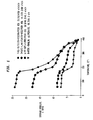
- Fig. 1 is based on dynamic mechanical analysis (DMA).
- DMA scans storage modulus, E', vs temperature
- codes F,G,L and B are superimposed in the Figure 1 plot to illustrate the information that can be extracted.
- Codes F and G are composites formulated in accordance with the present invention, code B is commercillay filled PEEK and code L is PBI filled PEEK.
- Each curve is a plot of the storage modulus, E', of a PEEK composite in molded bar form versus temperature.
- the composites differ in stiffness both at low and high temperatures.
- each composite exhibits a relatively high E', typically 5 GPa or more.
- the composites exhibit lower moduli, typically less than 5 GPa.
- the decline in E' occurs at temperatures around the Tg of PEEK and reflect the increased mobility that the PEEK amorphous component acquires at temperatures above the glass transition temperature.
- Figure 1 indicates that the amount and type of fillers in a partially crystalline polymer, like PEEK, can have a significant impact on the modulus of the polymer composite, above as well as below, the Tg of the polymer.
- PEEK composites of this invention (Codes F and G) the decline in modulus at temperatures above 150°C is minimized through use of high concentrations of combinations of fillers. DMA scans of the storage modulii as function of temperature of these composites can be used to predict the dimensional stability that these composites will exhibit. This information can be summarized by reporting the storage modulus at a single temperature. For PEEK composites, 300°C was chosen since the composites of this invention exhibit useful dimensional stabilities to temperatures in this range.
- compositions in accordance with the present invention may be made by any suitable means, typically by melt blending in an extruder.
- the inventions compositions exhibit HDT's (264 psi) within 20°C of the T m of the matrix polymer, while within 15°C preferred and within 10°C of the melting point of the crystalline is even more preferred.
- at least 40 volume per cent fiber and filler are used, but the high temperature dimensional stability may be achieved with as low as 15 vol% in very crystalline polyarylether ketones.
- the inventive composition include less than 25 vol % of the fiber filler with less than 21 volume per cent or so being preferred.
Landscapes
- Chemical & Material Sciences (AREA)
- Health & Medical Sciences (AREA)
- Chemical Kinetics & Catalysis (AREA)
- Medicinal Chemistry (AREA)
- Polymers & Plastics (AREA)
- Organic Chemistry (AREA)
- Compositions Of Macromolecular Compounds (AREA)
- Injection Moulding Of Plastics Or The Like (AREA)
Abstract
Description
- This invention relates to moldable thermoplastics and particularly to highly filled injection moldable polyaryletherketones suitable for use as engineering plastics.
- Polyaryletherketone polymers comprise a number of closely related polymers including polyetherketone (PEK), polyetheretherketone (PEEK), polyetheretherketoneketone (PEEKK), polyetherketonetherketoneketone (PEKEKK) and polyetherketoneketone (PEKK). These polymers are moldable, and thus easily formed into usable parts. They exhibit excellent long term oxidative stabilities at elevated temperatures (see
U.S. Patent No. 4,320,224 issued March 16, 1982 for "Thermoplastic Aromatic Polyetherketones"). Of the polyaryletherketones, polyetheretherketone (PEEK) is widely commercially available and has been found to be an excellent thermoplastic molding resin. At ambient temperatures PEEK exists as a solid with crystalline and amorphous phases. The amorphous phase, which comprises 52 to 70 % of the polymer softens at temperatures of about 143°C - 155°C, corresponding to the glass transition temperature, Tg, of the amorphous phase. - The remaining 48-30% of the polymer exists as a crystalline phase with a melting temperature, Tm, of ~335°C which is dispersed in the amorphous phase. The polymer softens when heated above Tg and melts at temperatures above Tm. Unfilled grades of partially crystalline polymers like PEEK are not useful in molded part forms at temperatures much above their Tg since the softening that occurs leads to a sharp loss in polymer mechanical properties, especially stiffness (i.e., modulus). This lowered stiffness is reflected in reduced dimensional stability under stress at temperatures above Tg.
- Molded objects will undergo a creep process and become temporarily or permanently deformed. The heat capacity of the completely amorphous PEEK phase increases by maximum amount [78 J / (K*mol)] at the PEEK glass transition temperature, Tg, as motions in the amorphous phase are thermally activated. That portion of the amorphous phase that is mobilized at the glass transition temperature is referred to as the mobile amorphous phase. It has been noted however (B. Wunderlich, et.al., Macromolecules (1986), 19, 1868-1876) that the actual heat capacity increase that is observed may be less than the maximum. The actual increase is dependant on processing history and the amount and morphology of the crystalline phase that is also present. Increases of less than the maximum amount at Tg indicate that fewer polymer motions are thermally activated as the Tg is exceeded. The magnitude of the difference between the actual heat capacity increase and the maximum increase is an indication of the presence and amount of a phase referred to as a rigid amorphous phase. This phase remains rigid to temperatures well above Tg and eventually melts as the temperature rises to near the crystalline melting temeprature. Similarly, in the invention described below, a rigid amorphous phase is believed to be formed from amorphous phase polymer that has been immobilizeed at the interface of the amorphous and crystalline phases in the partially crystalline PEEK materials.
- Practical measures have been developed to characterize the maximum temperature to which a polymer retains useful mechanical properties. Widely used examples are the "Heat Distortion Temperature" (HDT) or "Deflection Under Load Temperature" (DTUL) tests. The HDT of a polymer or polymer composite is the temperature at which a test specimen begins to bend by a defined amount under a defined load 1820 kPa (264 psi). The HDT of unfilled PEEK is relatively low (160°C) due to the softening that occurs above its Tg. Thus unfilled PEEK cannot be considered for molded part applications that require use temperatures above about 160°C even though it exhibits long term oxidative stability at higher temperatures and a much higher crystalline melting temperature. Thus PEEK would be useful at higher temperatures if its low thermal-mechanical stability could be enhanced.
- It is well known that the HDT of partially crystalline polymers, such as PEEK, can be raised by incorporating filler materials, especially reinforcing fiber fillers. For example, PEEK grades containing 10-30 wt% (corresponding to 5-17 % on a volume basis) short glass fibers exhibit increased HDT's, as follows:
gf (wt.) gf (vol.%) HDT ° C 0 0 160 10 5 200 20 10 285 30 17 315 - HDT is a relatively crude measure of polymer rigidity. More rigorous tests reveal that simple glass or carbon fiber-filled PEEK composites still suffer varying degrees of stiffness loss at temperatures above Tg. For certain critical applications it is desired that molded parts exhibit highest dimensional stabilities under stress at elevated temperatures. For these applications the greater rigidity, in terms of the stiffness or modulus of a composition that more sensitive tests reveal, is a useful property.
- Rigidity or dimensional stability in a polymer and its composites is a function of the moduli, E, of the polymer and fillers it contains. Rigid materials, materials with high moduli, exhibit small changes in dimension (strain) when stresses are applied. This is defined by the relationship in equation 1:

The strain produced by short duration (instantaneous), small amplitude stresses is said to be elastic (elastic strain denoted as εo) since the original part dimension is regained when the stress is removed. - In polymers and polymer composites, the strain produced when the stress is applied for a longer duration can have another component, a permanent deformation or creep component, ε t , which is not recovered when the applied stress is removed. Equation 1 can be modified to include the plastic flow component of strain:

where ε t is the apparent modulus of the polymer or composite, σt, is the stress applied over time. The apparent modulus of a material, Ea, decreases with time as the continually applied stress induces greater and greater strains primarily due to plastic flow in the polymer. - The creep component, ε t , and its change with time that will be induced by applied stress can be estimated from Ea, and σ t via a rearrangement of equation 2 :

For example, a material exhibiting a modulus, Ea, 1 GPa at time, t, exhibits a strain (εo + ε t ) of 0.7% under an applied stress of 1000 psi, since:
- The dimensional stability of polymer and polymer composites is lower (creep is higher) at elevated temperatures because the stiffness of the polymer matrix in these composites is lower at elevated temperatures. However, it is possible to formulate polymer composites with greater dimensional stabilities at elevated temperatures because of the greater high temperature moduli that can be designed into composites using the techniques of this invention.
- The moduli of polymer composites at elevated temperatures can be characterized by one or more methods; for example:
- Dynamic Mechanical Analysis (DMA) scans of the storage modulus, E', over a temperature range up to ~350°C,
- Short term DMA measurements of the apparent flexural modulus, Ea, over a sequence of temperatures, coupled with a time/temperature superposition analysis to estimate the apparent flexural moduli, Ea, and creep (εo + ε t ) at a reference temperature (300°C in the case of PEEK composites).
- Long term direct measurement of the flexural moduli, Ea , and creep (εo + ε t ) in tests in ovens at elevated temperatures (500, 600, and 650°C for PEEK composites).
- Filled polymer parts can be economically fabricated in a simple three step process that comprises: compounding, melt extrusion, and molding. In compounding, dry filler and polymer powders are intimately mixed. In melt extrusion, the powder blend is melted and further mixed and kneaded by the action of an extruder screw and formed into a strand on exiting the extruder through a orifice. The extruded strand can be cooled by a variety of means and cut into convenient sizes for use as fed to a molding machine. A variety of molding methods are practiced but injection molding is the most important of these, commercially, because of the high productivity of this approach. In injection molding, the extruded pellets from the extruder are remelted in an extruder section of an injection molder and forced into a mold where the melt is cooled and solidified.
- The melt viscosity of a polymer composite is an important determinant of success in extrusion and molding. The melt viscosity of polymers and polymer composites can be measured with a capillary melt viscometer. For melt processing by standard widely available extruder and injection molding equipment, filled polymer compositions should have a melt viscosities between about 200 and 1500 Pa.s (2000 and 15,000 poise)at attainable melt temperatures. Lower viscosities lead to drooling and flashing problems. Higher viscosities cannot be handled with the power, pressures, and metallurgy available in most commercial equipment.
- Simple filled polymer composites have melt viscosities that approach the limit of melt processability at about 30 wt% loading levels. This is the limit of filling in most commercially available filled resins. The addition of greater amounts of filler makes the composites so stiff as to be unworkable by conventional high volume molding techniques, such as injection molding. When the composite can be handled only by special molding techniques, the cost becomes impractical.
- The present invention is directed to producing PEEK composites that exhibit highest possible dimensional stabilities at elevated temperatures while also possessing melt viscosities in a range that is processable on extrusion and injection molding machines. The enhanced dimensional stability is observed in the high HDT's, the high flexural moduli at elevated temperatures, the high storage moduli at elevated temperatures, and the low creep of these composites of this invention.
- As noted above, unfilled PEEK is a polymer with crystalline and amorphous phase components. Upon cooling unfilled PEEK, PEEK crystallites form in a matrix of amorphous PEEK. When filler particles are present they are found in the amorphous phase of the polymer and rarely, if ever, found within the crystalline phase. This occurs since PEEK crystallites form from molten polymer residing between filler particles when a filled PEEK composite is cooled to freezing. The crystallites do not grow and engulf the filler particles. (Some filler particles can nucleate the formation of crystallites which then appear to grow from the filler particle surface.)
- It is believed that the composites of this invention exhibit their enhanced dimensional/thermal stability because a larger fraction of the PEEK amorphous phase is immobilized; by association with the crystalline phase but also by adsorpton on the filler partciles. Filler particles provide an additional immobilizing surface for the formation of a rigid amorphous phase.
- In unfilled PEEK, the amount of rigid amorphous phase that can form is limited by the crystallinity that is present.
- In the filled PEEK specimens the amount of rigid amorphous phase that can form is determined by the amount and morphology of the filler particles that are present as well as by the PEEK crystallites. Shapes formed from these filled PEEK composites exhibit greater dimensional stabilities at temperatures above the Tg of PEEK because more of the amorphous phase exists as a rigid amorphous material that does not soften at the Tg of the amorphous phase. Both the filler particles and the PEEK crystallites are surrounded by amorphous phase PEEK. The thermo-mechanical properties of the filled composite are limited by the Tg of this amorphous phase. However, in contrast to unfilled PEEK, the amorphous phase in filled PEEK composites is in close proximity to filler particles and can adsorb on the surface via non-specific, physical (Van der Waals) interactions. This adsorption reduces the mobility of the polymer. Hence, the adsorption of polymer on filler (and on PEEK crystallites) stiffens the polymer and increases its dimensional stability. As a result, filled PEEK composites soften at higher temperatures than un-filled PEEK. The highly filled PEEK composites of this invention exhibit very high HDT's, approaching 335°C , the melting temperature of the crystalline phase. The amount of surface area provided by the filler content in commonly available filled PEEK's, even at 30% (wt.) filled levels, is not sufficient to completely immobilize the amorphous PEEK and hence do not provide all the benefits of the high filler contents in the PEEK composites of this invention. Simply increasing the content of an equiaxed or fibrous filler will not be effective since this will lead to brittle or unprocessable compositions.
- More recently composites of polybenzimidazole (PBI) in polyaryletherketones and other polymers have been described (see
U.S. Patents Nos. 5,070,153 ; and5,139,862 ). Highly-filled PEEK composites with PBI and solid lubricant fillers, have been described (U.S. Patent No. 5,391,605 ). Finally, highly-filled, processable, PEEK composites with PBI and glass or carbon fiber fillers were described (U.S. Patents No. 4,912,176 andU.S. Patent Application Serial No. 07/883,838, filed May 15, 1992 - The present invention overcomes the limitations of commonly available filled PEEK's and the high cost of highly-filled, PBI-containing PEEK composites while providing composites that are processable with standard extrusion and injection molding equipment. The highly filled polymer composites of the present invention exhibit high dimensional stability at temperatures above the glass transition temperature of the matrix polymer. The heat distortion temperature of the composites approaches that of the crystal melting temperature of the matrix polymer, beyond which no further increase is possible. The composite includes a polyaryletherketone matrix and two types of fillers each providing unique properties. The first filler is a reinforcing fiber filler which provides high strength and stiffness. The second filler is a non-thermoplastic immobilizing filler to immobilize the amorphous portion of the partially crystalline polyaryletherketone polymer and provide resistance to high temperature distortion. Notwithstanding its improved mechanical and heat resistant properties, the composite remains injection moldable and thus capable of low cost manufacturing. The improved composites also raise the stiffness and strength of the PEEK and reduce creep.
- For a better understanding of the invention, reference is made to the following drawings which are to be taken in conjunction with the detailed description to follow:
- Figure 1 is a composite of DMA scans of Storage modulus vs temperature.
- The polymers used as the matrix for the filled composites of the present invention are the polyaryletherketones, which have the general formula:


- A third exemplary polyarlyeneketone is polyetheretherketoneketone having the repeating unit:

- A fourth exemplary polyaryleneketone is polyetherketoneketone having the repeating unit:

- The present invention replaces the single filler (e.g., glass fibers) of prior art polyaryletherketone composites with a reinforcing fiber and a non thermoplastic immobilizing filler to provide maximum performance at elevated temperatures. Indeed, the Heat Distortion Temperatures can be raised to within a few degrees of the crystalline melting temperature which is the absolute limit. This is accomplished while retaining the ability to form the material by inexpensive molding processes such as injection molding. If necessary for the application to which the material is to be put, lubricants can be added to the composite.
- The present invention provides highly-filled polyaryletherketone composites that are formed with at least two types of fillers. The types are defined as:
- Type (a): a reinforcing fiber filler. The primary function of the reinforcing filler is to strengthen the composite. reinforcing fiber fillers can be selected from a variety of widely-available fibrous filler materials which includes most predominantly: chopped glass and chopped carbon fiber fillers. These fillers typically have fiber diameters in the
range 5 to 15 micrometers and initial lengths of 0.159, 0.138, 0.635 (1/16, 1/8, 1/4 inch). (The reinforcing fiber length is often reduced by the shear of compounding and molding to lengths in the 200 - 500 micrometer range.) Because of their length these fiber fillers can not be easily incorporated at levels above about 30 wt% (17 vol%) because the molten composite is then too viscous for standard melt processing equipment. - Type (b): a non-thermoplastic immobilizing filler: The function of the immobilizing filler is to provide additional surface area or volume in the composite without a proportionately increasing the melt viscosity of the composite. Immobilizing fillers can have a variety of morphologies, including equiaxed or platelet shapes. Immobilizing fillers are chosen to pack well with the reinforcing filler particle. Combinations that pack well exhibit lowest melt viscosities hence retain good melt processability.
- Through combinations of reinforcing and immobilizing fillers the fraction of the volume of a composite occupied by filler particles can be substantially increased.
- The reinforcing filler can be used up to the levels normally used (typically 15-20 vol%). In addition the immobilizing filler can be added in amounts of 30 to 45 vol % . Total filler contents ranging from 45 to 65 vol % are possible without exceeding processable melt viscosities.
- Fillers with exceptionally small particles (i.e., sub micrometer average particle dimension) have large surface areas (typically > 20 m2/g) which stiffen the composite by the high PEEK-immobilizing surface they provide. This additional PEEK-immobilizing surface assures that the amorphous PEEK component will be more completely adsorbed and stiffened.
- Fillers based on relatively large, high modulus particles (i.e., 50 - 200 micrometer particle dimension) have modest particle surface areas (typically 1-20 m2/g). These stiffen a composite by two mechanisms: 1) the modest additional surface they provide leads to a modest stiffening via the PEEK-immobilizing mechanism, and 2) the higher stiffness that most high modulus, inorganic filler materials exhibit compared to PEEK and other polymers contributes composite stiffness in proportion to their content on a volume fraction basis.
- The non thermoplastic immobilizing filler can be selected from the broad range of materials with equiaxed, or platelet morphologies. Examples include:
- equiaxed particles: calcium carbonate, magnesium carbonate, silica, alumina, aluminum nitride, borax, activated carbon, pearlite, zinc terephthalate, Bucky balls and
- platelet particles: graphite, talc, mica, synthetic Hectorite, silicon carbide platelets, (Note: melt-derived PBI thermoplastic particles are roughly platelet shaped).
- The composite can also contain a third filler type, one provided to confer an additional property. Properties that can be enhanced by addition of minor amounts of fillers include: lubrication, wear resistance, electrical conductivity, thermal conductivity, enhanced abrasion. Suitable lubricant fillers are crystalline graphite, boron nitride and molybdenum disulfide.
- The following Tables 1 and 2 present a number of exemplery compositions (Codes C-K) formulated in accordance with the present invention in comparison to commercially available unfilled PEEK (Code A) and filled PEEK (Code B). Also included, for comparison, is a composition (Code L) which utilizes the thermoplastic PBI as an immobilizing filler. As can be seen from the table, a number of the compositions have a HDT of 10-20° C greater than that of the filled PEEK, have higher strength at cheaper cost yet retain a melt viscosity of less than 850 Pa.s (8500 poise) which permits articles to be injection molded from the compositions which significantly reduces manufacturing costs. In comparison,the PBI filled PEEK composite, while having an elevated HDT, has a relatively high melt viscosity and a high cost. It is seen that the composition may be varied to provide the physical properties needed by the article to be manufactured.
- The following Examples illustrate several embodiments of the present invention.
Table 1 Code Composition V% HDT at 1820 kPa (264 psi)°C Melt Viscosity at 430°C Tensile Strength (KSI) $/lb. A PEEK 150 169 15 35.00 100 B GF/PEEK (450 GL-30) 313 22.9 24.82 18.7/81.3 C GF/MICA/PEEK 307 17 16.50 16/30/54 D GF/MICA/PEEK 323 17 17.77 21/26/53 E MCF/GR-A/BN/PEEK 320 8114 16.7 21/26/4/53 F FCF/GR-BBN/PEEK 331 6129 20 25.33 21/16/4/59 G CF/CAT/GR-B/BN/PEEK 333 4136 21 22.50 14.7/11.2/11.2/2.8/60 H CF/CAT/GR-B/BN/PEEK 330 4088 25.8 25.50 14.7/20.2/2.3/2.8/60 I CF/CAT/PEEK 329 3666 25.9 24.00 14.7/25.3/60 J CF/CAT/PEEK 329 4572 25.1 20.75 15/35/50 K CF/CAT/PEEK 323 6184 21.7 17.62 15/45/40 L GF/PBI/PEEK 324 12920 19.7 33.48 18.5/41.3/40.1 PEEK = ICI Victrex Peek Resin 150 fp, fine powder
PEEK(450 GL-30) = ICI Victrex Peek 450 GL-30, 30wt% chopped glass fiber in PEEK 450 resin
GF = Glass Fiber, Corning 731 ED
CF = Carbon Fiber
MCF= Milled Carbon Fiber, Hercules Magnemite, 1/8" chopped, with an Ultem™ surface coating
MICA = Suzorite Mica, grade 200HK powder, 150 µm max.particle dimension
CAT = Calcium Terephthalate powder
GR-A = Superior Graphite, Crystalline Graphite Flake, 5 µm max. particle dimension
GR-B = Superior Graphite, Crystalline Graphite Flake, 150 µm max. particle dimension
FCF = Akzo Fortafil, 1/8" chopped, carbon fiber with an epoxy surface coating
BN = Boron Nitride powderTable 2 Composition Code Storage Modulus @ 25°C (M psi) Storage Modulus @ 300°C (M psi) Flex Modulus @ 500°F (M psi) A - - B - - C 0.57 D - - - - E 3.2 .52 - - F 3.60 .76 - - G 2.66 .88 .98 H 1.05 .53 .95 I 1.70 .55 .80 J 2.30 80 .95 K 2.30 .85 1.19 L 1.41 .49 0.56 - The improved physical properties of the inventive composites are further illustrated in Fig. 1 which is based on dynamic mechanical analysis (DMA). Several DMA scans (storage modulus, E', vs temperature) of composition codes F,G,L and B are superimposed in the Figure 1 plot to illustrate the information that can be extracted. Codes F and G are composites formulated in accordance with the present invention, code B is commercillay filled PEEK and code L is PBI filled PEEK. Each curve is a plot of the storage modulus, E', of a PEEK composite in molded bar form versus temperature. The composites differ in stiffness both at low and high temperatures.
- At temperatures below 150°C each composite exhibits a relatively high E', typically 5 GPa or more. At temperatures above 150°C the composites exhibit lower moduli, typically less than 5 GPa. The decline in E' occurs at temperatures around the Tg of PEEK and reflect the increased mobility that the PEEK amorphous component acquires at temperatures above the glass transition temperature. For dimension stability and creep resistance it is necessary that a material retain a significant fraction of its low temperature modulus at temperatures above the Tg of the matrix polymer. Figure 1 indicates that the amount and type of fillers in a partially crystalline polymer, like PEEK, can have a significant impact on the modulus of the polymer composite, above as well as below, the Tg of the polymer.
- In PEEK composites of this invention (Codes F and G) the decline in modulus at temperatures above 150°C is minimized through use of high concentrations of combinations of fillers. DMA scans of the storage modulii as function of temperature of these composites can be used to predict the dimensional stability that these composites will exhibit. This information can be summarized by reporting the storage modulus at a single temperature. For PEEK composites, 300°C was chosen since the composites of this invention exhibit useful dimensional stabilities to temperatures in this range.
- The compositions in accordance with the present invention may be made by any suitable means, typically by melt blending in an extruder. Generally the inventions compositions exhibit HDT's (264 psi) within 20°C of the Tm of the matrix polymer, while within 15°C preferred and within 10°C of the melting point of the crystalline is even more preferred. In general at least 40 volume per cent fiber and filler are used, but the high temperature dimensional stability may be achieved with as low as 15 vol% in very crystalline polyarylether ketones. 50 volume per cent or more filler may be used so long as the melt viscosity of the composition does not become too high, that is below about 1000 Pa.s (10,000 poise) at 1000 sec-1 at 430°C and below 750 Pa s (7500 poise)at these conditions being preferred. Typically, the inventive composition include less than 25 vol % of the fiber filler with less than 21 volume per cent or so being preferred.
Claims (18)
- An injection moldable polymer composite for injection molding articles having improved strength and resistance to heat distortion comprising:- a partially crystalline and partially amorphous polyaryletherketone polymer,- a chopped glass or carbon fiber filler for providing strength and stiffness to the molded article,- a non-thermoplastic immobilizing filler for immobilizing the amorphous portion of the polyaryletherketone polymer to provide additional stiffness and dependant dimensional stability at elevated temperatures and said filler being selected from the group consisting of equi-axed and platelet shaped particles,- said reinforcing fiber and said immobilizing filler forming at least 40% of the volume of the composite and raising the heat distortion temperature at 1820 kPa (264 psi) of the molded article to within 20°C of the crystalline melting temperature of the polyaryletherketone polymer.
- A composite as claimed in Claim 1 wherein the polyaryletherketone is selected from the group consisting of polyetherketone, polyetheretherketone, polyetherketoneetherketoneketone, polyetheretherketoneketone and polyetherketoneketone.
- A composite as claimed in Claim 1 wherein the reinforcing fiber filler is selected from the group consisting of glass fibers and carbon fibers.
- A composite as claimed in. Claim 1 wherein the immobilizing filler is selected from the group consisting of mica, graphite flakes and calcium terephthalate.
- A composite as claimed in claim 4 wherein the immobilizing filler has no dimension larger than 200 µm.
- A composite as claimed in claim 1 wherein the volume percentage of reinforcing fiber does not exceed 25%.
- A composite as claimed in claim 1 further including a solid lubricant filler.
- A composite as claimed in claim 7 wherein the solid lubricant is selected from the group consisting of graphite, molybdenum disulfide, or boron nitride in fi n e powder forms.
- A composite as claimed in claim 1 wherein the total volume content contributed by the reinforcing fiber and the immobilizing fiber is between 40 and 60%.
- A composite as claimed in claim 1 wherein the composite has a melt viscosity of less than 8500 poise at 10,000 1/sec at 430°C.
- An injection molded article having improved strength and resistance to heat distortion formed from a homogenous mixture comprising:- a partially crystalline and partially amorphous polyaryletherketone polymer,- a chopped glass or carbon fiber filler for providing strength and stiffness, said filler comprising less than 25% by volume of the article,- a non-thermoplastic immobilizing filler for immobilizing the amorphous portion of the polyaryletherketone polymer, said immobilizing filler being selected from the group consisting of equi-axed and platelet shaped materials; and- said reinforcing fiber and said immobilizing filler forming at least 40% of the volume of the composite and raising the heat distortion temperature of the composite at 1820 kPa (264 psi) within 20° C of the crystalline melting point of the polyaryletherketone polymer and having a melt viscosity of less than 10,000 poise at 1000 sec-1 at 430° C.
- A article as claimed in Claim 11 wherein the polyarylekerketone is selected from the group consisting of polyetherketone, polyetheretherketone, polyetherketoneetherketoneketone, polyetheretherketoneketone and, polyetherketoneketone.
- A article as claimed in Claim 11 wherein the reinforcing fiber is selected from the group consisting of glass fibers and carbon fibers.
- A article claimed in Claim 11 wherein the immobilizing filler is selected from the group consisting of mica, graphite flakes and calcium terephthalate.
- A article as claimed in claim 11 wherein the immobilizing filler has no dimension larger than 200 µm.
- A article as claimed in claim 11 further including a solid lubricant filler.
- A article as claimed in claim 16 wherein the solid lubricant is selected from the group consisting of graphite powder, molybdenum disulfide and boron nitride.
- A article as claimed in claim 11 wherein the volume percentage of the reinforcing fiber and the immobilizing filler is between 40 and 60%.
Applications Claiming Priority (3)
| Application Number | Priority Date | Filing Date | Title |
|---|---|---|---|
| US48931495A | 1995-06-09 | 1995-06-09 | |
| US489314 | 1995-06-09 | ||
| PCT/US1996/008449 WO1996041836A1 (en) | 1995-06-09 | 1996-06-03 | Highly-filled, moldable polyaryletherketones |
Publications (2)
| Publication Number | Publication Date |
|---|---|
| EP0830427A1 EP0830427A1 (en) | 1998-03-25 |
| EP0830427B1 true EP0830427B1 (en) | 2007-07-25 |
Family
ID=23943335
Family Applications (1)
| Application Number | Title | Priority Date | Filing Date |
|---|---|---|---|
| EP96917943A Expired - Lifetime EP0830427B1 (en) | 1995-06-09 | 1996-06-03 | Highly-filled, moldable polyaryletherketones |
Country Status (5)
| Country | Link |
|---|---|
| US (1) | US5844036A (en) |
| EP (1) | EP0830427B1 (en) |
| JP (2) | JP3856831B2 (en) |
| DE (1) | DE69637180T2 (en) |
| WO (1) | WO1996041836A1 (en) |
Families Citing this family (44)
| Publication number | Priority date | Publication date | Assignee | Title |
|---|---|---|---|---|
| DE19702590A1 (en) * | 1997-01-24 | 1998-07-30 | Basf Ag | Thermoplastic molding compounds |
| WO1999001676A1 (en) * | 1997-07-01 | 1999-01-14 | Koyo Seiko Co., Ltd. | Bearing retainer of synthetic resin, method of manufacturing the same, and roller bearing |
| US6162849A (en) * | 1999-01-11 | 2000-12-19 | Ferro Corporation | Thermally conductive thermoplastic |
| US6465561B1 (en) * | 1999-05-14 | 2002-10-15 | Merrill A. Yarbrough | Corrosion-resistant composition of matter having enhanced thermal conductivity, heat exchangers made therefrom, and method of making same |
| GB0004347D0 (en) * | 2000-02-25 | 2000-04-12 | Victrex Mfg Ltd | Lightweight ablative materials |
| WO2002024791A2 (en) | 2000-09-20 | 2002-03-28 | World Properties, Inc. | Electrostatic deposition of high temperature, high performance thermoplastics |
| WO2002079606A1 (en) * | 2001-03-29 | 2002-10-10 | Greene, Tweed Of Deleware, Inc. | Method for producing sealing and anti-extrusion components for use in downhole tools and components produced thereby |
| US7514144B2 (en) | 2001-05-24 | 2009-04-07 | Toray Industries, Inc. | Tablet, process for producing the same, and molded article obtained therefrom |
| US7804994B2 (en) * | 2002-02-15 | 2010-09-28 | Kla-Tencor Technologies Corporation | Overlay metrology and control method |
| US7227179B2 (en) * | 2002-09-30 | 2007-06-05 | World Properties, Inc. | Circuit materials, circuits, multi-layer circuits, and methods of manufacture thereof |
| US7354887B2 (en) * | 2002-12-18 | 2008-04-08 | E. I. Du Pont De Nemours And Company | High temperature LCP for wear resistance |
| US20040158005A1 (en) * | 2002-12-18 | 2004-08-12 | Bloom Joy Sawyer | Low coefficient of friction thermoplastic containing filler |
| GB0322598D0 (en) | 2003-09-26 | 2003-10-29 | Victrex Mfg Ltd | Polymeric material |
| GB0506937D0 (en) * | 2005-04-06 | 2005-05-11 | Victrex Mfg Ltd | Polymeric materials |
| US20050210996A1 (en) * | 2004-03-12 | 2005-09-29 | Quinn John G | Flow channel structure and method |
| US7686994B2 (en) * | 2005-03-02 | 2010-03-30 | Cabot Microelectronics Corporation | Method of preparing a conductive film |
| EP1813292A1 (en) * | 2006-01-25 | 2007-08-01 | Inion Oy | Surgical implant and manufacturing method |
| JP2008015491A (en) * | 2006-06-06 | 2008-01-24 | Canon Inc | Intermediate transfer belt and electrophotographic apparatus |
| US7915351B2 (en) | 2007-02-05 | 2011-03-29 | Pbi Performance Products, Inc. | Polybenzimidazole-polyetherketoneketone blends and miscible blends |
| US8268001B2 (en) * | 2007-10-29 | 2012-09-18 | Life Spine, Inc. | Foldable orthopedic implant |
| US8003014B2 (en) * | 2008-07-02 | 2011-08-23 | Eaton Corporation | Dielectric isolators |
| US8956556B2 (en) * | 2008-07-02 | 2015-02-17 | Eaton Corporation | Dielectric isolators |
| US9136036B2 (en) * | 2008-07-02 | 2015-09-15 | Miller Waster Mills | Injection moldable, thermoplastic composite materials |
| WO2010091135A1 (en) | 2009-02-05 | 2010-08-12 | Arkema Inc. | Fibers sized with polyetherketoneketones |
| US8663524B2 (en) | 2009-05-12 | 2014-03-04 | Miller Waste Mills | Controlled geometry composite micro pellets for use in compression molding |
| DE102009045892A1 (en) | 2009-10-21 | 2011-04-28 | Evonik Degussa Gmbh | Polyarylene ether ketone film |
| TW201219447A (en) * | 2010-10-12 | 2012-05-16 | Solvay | Polymer compositions comprising poly(arylether ketone)s and graphene materials |
| KR101368315B1 (en) * | 2010-12-31 | 2014-02-27 | 제일모직주식회사 | High thermal conductive resin composition including a milled pitch based carbon fiber |
| CN102250446B (en) * | 2011-06-10 | 2012-09-19 | 吉林大学 | High-dimension-stability and friction-resistant polyether-ether-ketone composite material and preparation method thereof |
| CN103173845B (en) * | 2012-01-12 | 2015-06-03 | 江苏爱特恩高分子材料有限公司 | Production method and application of terephthalic metal slat whisker |
| BR112015001500A2 (en) | 2012-07-23 | 2017-07-04 | Emerson Climate Technologies | wear resistant coatings for compressor wear surfaces |
| CN108240335B (en) | 2012-07-23 | 2019-09-20 | 艾默生环境优化技术有限公司 | Injection molding sealing element for compressor |
| WO2014065910A1 (en) * | 2012-10-26 | 2014-05-01 | Laird Technologies, Inc. | Thermally conductive polymer composites containing magnesium silicate and boron nitride |
| WO2015093443A1 (en) * | 2013-12-16 | 2015-06-25 | 旭有機材工業株式会社 | Sliding member resin composition, and sliding member |
| WO2015091588A1 (en) * | 2013-12-18 | 2015-06-25 | Solvay Specialty Polymers Usa, Llc | Oil and gas recovery articles |
| US20170198104A1 (en) * | 2014-03-12 | 2017-07-13 | Arevo, Inc. | Compositions for use in fused filament 3d fabrication and method for manufacturing same |
| US20180236702A1 (en) * | 2015-01-26 | 2018-08-23 | Toskabano'k Co., Ltd. | Injection molding method using peek material and molded item |
| US10537667B2 (en) * | 2015-01-28 | 2020-01-21 | Ethicon Llc | High temperature material for use in medical devices |
| US9908978B2 (en) | 2015-04-08 | 2018-03-06 | Arevo Inc. | Method to manufacture polymer composite materials with nano-fillers for use in additive manufacturing to improve material properties |
| EP3298071B1 (en) | 2015-05-21 | 2024-09-04 | Solvay Specialty Polymers USA, LLC. | Poly(aryletherketone) compositions |
| US11117311B2 (en) * | 2015-10-05 | 2021-09-14 | Arevo, Inc. | Amorphous polyaryletherketone and blends thereof for use in additive manufacturing |
| US11014337B2 (en) * | 2016-12-14 | 2021-05-25 | The Boeing Company | Laminate structures comprising fiber-reinforced thermoplastic prepreg plies |
| GB2597063A (en) * | 2020-07-09 | 2022-01-19 | Invibio Device Component Mfg Limited | Composite materials |
| JP2023021876A (en) * | 2021-08-02 | 2023-02-14 | 帝人株式会社 | Thermoplastic resin prepreg and method for manufacturing the same |
Family Cites Families (7)
| Publication number | Priority date | Publication date | Assignee | Title |
|---|---|---|---|---|
| DE3069036D1 (en) * | 1979-12-14 | 1984-09-27 | Ici Plc | Compositions of aromatic polyetherketones and glass and/or carbon fibres |
| DE3241444A1 (en) * | 1981-11-14 | 1983-05-26 | Basf Ag, 6700 Ludwigshafen | Aromatic copolyether ketones |
| GB8429608D0 (en) * | 1984-11-23 | 1985-01-03 | Ici Plc | Aromatic polymer composition |
| JPS63301258A (en) * | 1987-05-29 | 1988-12-08 | Otsuka Chem Co Ltd | Resin composition for scroll type compressor member and production of scroll type compressor member |
| FR2652943B1 (en) * | 1989-10-05 | 1994-07-01 | Electricite De France | CONDUCTIVE MATERIAL FOR ELECTRODE, ELECTRICAL COMPONENT AND MANUFACTURING METHOD THEREOF. |
| JPH03151220A (en) * | 1989-11-08 | 1991-06-27 | Unitika Ltd | Extrusion-molded sheet and electrical insulating board |
| US5106680A (en) * | 1990-05-08 | 1992-04-21 | Hoechst Celanese Corporation | Adhesion between carbon fibers and thermoplastic matrix materials in carbon fiber composites by using multifunctional amine and azo compounds as bridging agents |
-
1996
- 1996-06-03 WO PCT/US1996/008449 patent/WO1996041836A1/en not_active Ceased
- 1996-06-03 JP JP50311097A patent/JP3856831B2/en not_active Expired - Lifetime
- 1996-06-03 EP EP96917943A patent/EP0830427B1/en not_active Expired - Lifetime
- 1996-06-03 DE DE69637180T patent/DE69637180T2/en not_active Expired - Lifetime
-
1997
- 1997-03-31 US US08/829,625 patent/US5844036A/en not_active Expired - Lifetime
-
2006
- 2006-05-31 JP JP2006152607A patent/JP4143099B2/en not_active Expired - Lifetime
Also Published As
| Publication number | Publication date |
|---|---|
| JPH11507693A (en) | 1999-07-06 |
| JP2006291217A (en) | 2006-10-26 |
| EP0830427A1 (en) | 1998-03-25 |
| WO1996041836A1 (en) | 1996-12-27 |
| JP4143099B2 (en) | 2008-09-03 |
| DE69637180T2 (en) | 2008-04-10 |
| JP3856831B2 (en) | 2006-12-13 |
| DE69637180D1 (en) | 2007-09-06 |
| US5844036A (en) | 1998-12-01 |
Similar Documents
| Publication | Publication Date | Title |
|---|---|---|
| US5844036A (en) | Highly filled injection moldable polyetherketones | |
| US20100204380A1 (en) | Thermally Conductive Polymer Composites and Articles Made Using the Same | |
| EP0031198B1 (en) | Compositions of aromatic polyetherketones and glass and/or carbon fibres | |
| US5021497A (en) | Polyarylene sulfide resin composition | |
| EP1866372A1 (en) | Polymeric material | |
| KR101355472B1 (en) | High thermal conductive resin composition | |
| CN117327370A (en) | Short glass fiber reinforced polyether-ether-ketone resin matrix composite material | |
| JPS6239657A (en) | Reinforcement of poly (aryl ether ketone) by silicon carbide | |
| CA2046761A1 (en) | Polyarylene sulfide resin molding composition | |
| US4476265A (en) | Pigmented compositions | |
| KR102162256B1 (en) | Mixed resin compositions comprising polyketon for the IC tray | |
| KR100771181B1 (en) | Polyphenylene Sulfide Resin Composition and Plastic Molded Article | |
| CA2009945A1 (en) | Fiber-reinforced thermoplastic composite and moldings produced therefrom | |
| JPH01254766A (en) | Electrically conductive polyaylene sulfide resin composition | |
| JPH06104758B2 (en) | Thermoplastic composition for injection molding | |
| Chiang et al. | Modification of polypropylene, blending with resole type phenol-formaldehyde resins | |
| JPH0545629B2 (en) | ||
| JP2010100740A (en) | Phenolic resin-molding material and brake piston | |
| Bigg et al. | The impact performance of thermoplastic sheet composites | |
| JP4265328B2 (en) | Polyarylene sulfide resin composition and molded article using the same | |
| KR100513976B1 (en) | Polyphenylene Sulfide Thermoplastic Resin Composition | |
| CA2036136A1 (en) | Poly(arylene thioether) resin compositions and extruded products thereof | |
| JP3458651B2 (en) | Aromatic polysulfone resin composition and microwave cooking container | |
| KR100241278B1 (en) | Polypropylene Resin Composition for Mounting Plate | |
| JP3407756B2 (en) | Phenolic resin molding materials |
Legal Events
| Date | Code | Title | Description |
|---|---|---|---|
| PUAI | Public reference made under article 153(3) epc to a published international application that has entered the european phase |
Free format text: ORIGINAL CODE: 0009012 |
|
| 17P | Request for examination filed |
Effective date: 19980109 |
|
| AK | Designated contracting states |
Kind code of ref document: A1 Designated state(s): BE DE FR GB IT NL |
|
| RAP1 | Party data changed (applicant data changed or rights of an application transferred) |
Owner name: CELANESE ACETATE, LLC. |
|
| 17Q | First examination report despatched |
Effective date: 20021213 |
|
| APBN | Date of receipt of notice of appeal recorded |
Free format text: ORIGINAL CODE: EPIDOSNNOA2E |
|
| APBR | Date of receipt of statement of grounds of appeal recorded |
Free format text: ORIGINAL CODE: EPIDOSNNOA3E |
|
| APBV | Interlocutory revision of appeal recorded |
Free format text: ORIGINAL CODE: EPIDOSNIRAPE |
|
| GRAP | Despatch of communication of intention to grant a patent |
Free format text: ORIGINAL CODE: EPIDOSNIGR1 |
|
| GRAS | Grant fee paid |
Free format text: ORIGINAL CODE: EPIDOSNIGR3 |
|
| RAP1 | Party data changed (applicant data changed or rights of an application transferred) |
Owner name: PBI PERFORMANCE PRODUCTS, INC. |
|
| GRAA | (expected) grant |
Free format text: ORIGINAL CODE: 0009210 |
|
| AK | Designated contracting states |
Kind code of ref document: B1 Designated state(s): BE DE FR GB IT NL |
|
| REG | Reference to a national code |
Ref country code: GB Ref legal event code: FG4D |
|
| REF | Corresponds to: |
Ref document number: 69637180 Country of ref document: DE Date of ref document: 20070906 Kind code of ref document: P |
|
| ET | Fr: translation filed | ||
| PLBE | No opposition filed within time limit |
Free format text: ORIGINAL CODE: 0009261 |
|
| STAA | Information on the status of an ep patent application or granted ep patent |
Free format text: STATUS: NO OPPOSITION FILED WITHIN TIME LIMIT |
|
| 26N | No opposition filed |
Effective date: 20080428 |
|
| REG | Reference to a national code |
Ref country code: FR Ref legal event code: PLFP Year of fee payment: 20 |
|
| PGFP | Annual fee paid to national office [announced via postgrant information from national office to epo] |
Ref country code: GB Payment date: 20150526 Year of fee payment: 20 |
|
| PGFP | Annual fee paid to national office [announced via postgrant information from national office to epo] |
Ref country code: NL Payment date: 20150616 Year of fee payment: 20 Ref country code: BE Payment date: 20150605 Year of fee payment: 20 Ref country code: FR Payment date: 20150528 Year of fee payment: 20 Ref country code: IT Payment date: 20150611 Year of fee payment: 20 |
|
| PGFP | Annual fee paid to national office [announced via postgrant information from national office to epo] |
Ref country code: DE Payment date: 20150630 Year of fee payment: 20 |
|
| REG | Reference to a national code |
Ref country code: DE Ref legal event code: R071 Ref document number: 69637180 Country of ref document: DE |
|
| REG | Reference to a national code |
Ref country code: NL Ref legal event code: MK Effective date: 20160602 |
|
| REG | Reference to a national code |
Ref country code: GB Ref legal event code: PE20 Expiry date: 20160602 |
|
| PG25 | Lapsed in a contracting state [announced via postgrant information from national office to epo] |
Ref country code: GB Free format text: LAPSE BECAUSE OF EXPIRATION OF PROTECTION Effective date: 20160602 |