EP0828844B1 - Promoters for gene expression - Google Patents
Promoters for gene expression Download PDFInfo
- Publication number
- EP0828844B1 EP0828844B1 EP96912181A EP96912181A EP0828844B1 EP 0828844 B1 EP0828844 B1 EP 0828844B1 EP 96912181 A EP96912181 A EP 96912181A EP 96912181 A EP96912181 A EP 96912181A EP 0828844 B1 EP0828844 B1 EP 0828844B1
- Authority
- EP
- European Patent Office
- Prior art keywords
- protein
- recombinant dna
- dna construct
- promoter
- host cell
- Prior art date
- Legal status (The legal status is an assumption and is not a legal conclusion. Google has not performed a legal analysis and makes no representation as to the accuracy of the status listed.)
- Expired - Lifetime
Links
Images
Classifications
-
- C—CHEMISTRY; METALLURGY
- C12—BIOCHEMISTRY; BEER; SPIRITS; WINE; VINEGAR; MICROBIOLOGY; ENZYMOLOGY; MUTATION OR GENETIC ENGINEERING
- C12N—MICROORGANISMS OR ENZYMES; COMPOSITIONS THEREOF; PROPAGATING, PRESERVING, OR MAINTAINING MICROORGANISMS; MUTATION OR GENETIC ENGINEERING; CULTURE MEDIA
- C12N15/00—Mutation or genetic engineering; DNA or RNA concerning genetic engineering, vectors, e.g. plasmids, or their isolation, preparation or purification; Use of hosts therefor
- C12N15/09—Recombinant DNA-technology
- C12N15/63—Introduction of foreign genetic material using vectors; Vectors; Use of hosts therefor; Regulation of expression
- C12N15/70—Vectors or expression systems specially adapted for E. coli
- C12N15/72—Expression systems using regulatory sequences derived from the lac-operon
-
- C—CHEMISTRY; METALLURGY
- C07—ORGANIC CHEMISTRY
- C07K—PEPTIDES
- C07K14/00—Peptides having more than 20 amino acids; Gastrins; Somatostatins; Melanotropins; Derivatives thereof
- C07K14/435—Peptides having more than 20 amino acids; Gastrins; Somatostatins; Melanotropins; Derivatives thereof from animals; from humans
- C07K14/575—Hormones
- C07K14/635—Parathyroid hormone, i.e. parathormone; Parathyroid hormone-related peptides
-
- C—CHEMISTRY; METALLURGY
- C12—BIOCHEMISTRY; BEER; SPIRITS; WINE; VINEGAR; MICROBIOLOGY; ENZYMOLOGY; MUTATION OR GENETIC ENGINEERING
- C12N—MICROORGANISMS OR ENZYMES; COMPOSITIONS THEREOF; PROPAGATING, PRESERVING, OR MAINTAINING MICROORGANISMS; MUTATION OR GENETIC ENGINEERING; CULTURE MEDIA
- C12N1/00—Microorganisms; Compositions thereof; Processes of propagating, maintaining or preserving microorganisms or compositions thereof; Processes of preparing or isolating a composition containing a microorganism; Culture media therefor
- C12N1/20—Bacteria; Culture media therefor
-
- C—CHEMISTRY; METALLURGY
- C12—BIOCHEMISTRY; BEER; SPIRITS; WINE; VINEGAR; MICROBIOLOGY; ENZYMOLOGY; MUTATION OR GENETIC ENGINEERING
- C12N—MICROORGANISMS OR ENZYMES; COMPOSITIONS THEREOF; PROPAGATING, PRESERVING, OR MAINTAINING MICROORGANISMS; MUTATION OR GENETIC ENGINEERING; CULTURE MEDIA
- C12N15/00—Mutation or genetic engineering; DNA or RNA concerning genetic engineering, vectors, e.g. plasmids, or their isolation, preparation or purification; Use of hosts therefor
- C12N15/09—Recombinant DNA-technology
- C12N15/11—DNA or RNA fragments; Modified forms thereof; Non-coding nucleic acids having a biological activity
-
- C—CHEMISTRY; METALLURGY
- C07—ORGANIC CHEMISTRY
- C07K—PEPTIDES
- C07K2319/00—Fusion polypeptide
Definitions
- This invention relates to the art of genetic engineering as applied to bacterial hosts. More particularly,the invention relates to expression systems for production of proteins in bacterial hosts.
- Recombinant DNA technology is continually developing to achieve production of proteins in commercially acceptable yields.
- a limiting factor in recombinant production of proteins is the rate at which the gene encoding the desired protein is expressed.
- the promoter region of a gene is critical in the transcription process of gene expression.
- An efficient promoter such as the trp promoter found in E . coli , binds tightly to DNA-directed RNA polymerase to initiate transcription of the gene in generating mRNA.
- a less efficient promoter such as the lac promoter binds RNA polymerase less tightly, resulting in a lower rate of mRNA generation.
- the trp promoter has been widely used in the production of heterologous proteins because of its ability to efficiency initiate transcription. Despite its efficiency, an inherent shortcoming of the trp promoter is that it is not easily controlled. Specifically, the trp promoter is not fully repressible, i.e. it can drive transcription before the host is grown in culture to a phase appropriate for protein production. Another widely used promoter is lac which is less efficient than trp , but is more controllable.
- portions of the bacteriophage T7 promoter A 1 (P A1 ) were combined with two lac operators. Specifically, the spacer region between the so called -35 and -10 regions of the bacteriophage T7 promoter was replaced with a modified lac operator sequence, and to control the resulting promoter hybrid, a second lac operator was introduced downstream.
- the resulting promoter/operator system which is incorporated on the commercially available pUHE plasmids was found to initiate transcription efficiently upon induction and yet is highly repressed before induction.
- Another promoter described by Tsung et al comprises the efficient trp -35 region, the -10 region from the highly efficient Ipp P-5 promoter (a variant of lpp promoter) and a spacer derived from the lac promoter.
- This promoter was shown to be so highly efficient in initiating transcription as to result in cell lethality. While various promoters have allowed improved yields of proteins in microbial hosts, there still remains a need for promoters that drive production of commercially valued proteins more efficiently.
- a novel recombinant DNA construct useful for expressing a protein in a bacterial host.
- the construct comprises a coding region for a protein and linked operably therewith, a control region comprising a promoter having the following DNA sequence:
- the present invention provides DNA sequences useful in driving DNA expression with high efficiency in bacterial hosts such as E . coli .
- the use of expression vectors comprising these sequences provides a valuable means for achieving increased production of expressible proteins, both endogenous and heterologous.
- a novel recombinant DNA construct useful for expressing a protein in a bacterial host comprises a coding region for the protein operably linked with a control region comprising a promoter to enable expression of said protein in the host, wherein the promoter comprises the following DNA sequence:
- promoters have in common a -35 region of the consensus sequence TTGACA and a -10 region of the sequence TATACT.
- the spacer sequence i.e. the sequence of 18 bases which is intervening, is according to the invention the sequence ACATAAAAAACTTTGTGT. Accordingly, the invention provides DNA constructs in which DNA coding for a desired protein is linked operably under expression control to a promoter of the sequence 5'-TTGACAACATAAAAAACTTTGTGTTATACT-3'.
- promoters of the invention constitute one essential element of the components required, within the functional control region, to drive expression.
- these promoters can be inserted using standard procedures into any suitable expression vector which can replicate in Gram -ve or +ve bacteria. More particularly, and to form a gene expression control region, the present promoters will be incorporated with such other control elements as are typically required for that expression, including a ribosome binding site and in embodiments of the invention, an operator that functions to control promoter function.
- control region of the construct incorporates an operator.
- Operators that can be used include those directly inducible by chemical inducers and those, such as lac which are de-repressible. Examples of suitable operators include the E. coli lactose, galactose, tryptophan and tetracycline operators (see Miller et al "The Operon", Cold Spring Harbour Laboratory, 1980 and Hillen et al, J. Mol. Biol., 1984, 172:185). Preferred operators are highly repressible so that expression of DNA coding for the protein can be controlled.
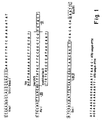
- the control region comprises the lac operator (fig. 1) which prevents expression from the promoter in the absence of the synthetic inducer isopropyl- ⁇ -D-thiogalactopyranoside (IPTG) and the natural inducer lactose.
- the control region further comprises a ribosome binding site (RBS) sequence to facilitate the binding of ribosomes to the mRNA transcript and thereby initiate the translation of the RNA coding region to generate the protein.
- RBS ribosome binding site
- Suitable ribosome binding sites include lac and bacteriophage T5.
- the RBS is a sequence derived from the T5 bacteriophage RBS having the sequence 5'-ATTAAAGAGGAGAAATTAAGC-3'.
- heterologous protein refers to a polypeptide or protein which, although not naturally produced by the bacterial host, is expressed by this host when suitably transformed with DNA coding for the protein; genomic DNA, cDNA and synthetic DNA can be used to transform the host.
- Proteins that may be produced using the system herein described include, but are not limited to, hormones such as parathyroid hormone (PTH), glucagon or fragments thereof and related peptides such as GLP-1 and GLP-2; growth factors such as epidermal growth factor (EGF); and lymphokines such as interleukin-6 and -8 (IL-6, -8).
- fusion proteins may also be produced which are cleaved subsequent to expression.
- DNA encoding a protein of interest may be preceded by DNA encoding a signal peptide, such as the E . coli outer membrane protein ompA.
- the expressed gene yields a fusion protein comprising a N-Met-containing ompA signal peptide which is followed by the desired protein.
- the signal peptide carries the fusion protein through the intermembrane of the bacterium where the signal peptide is cleaved.
- Other signal peptides which may be used include alkaline phosphatase, E.
- GST glutathione-S-transferase
- the coding region comprises DNA encoding human PTH, the amino acid sequence of which is described by Hendy et al (Proc. Natl. Acad. Sci. USA, 1981, 78:7365).
- the DNA sequence coding for PTH is coupled directly to and in reading frame with DNA coding for the ompA signal peptide.
- the preferred recombinant DNA constructs illustrated in Figure 1, having the Ipp or lacUV5 spacer, were produced from single-stranded oligonucleotides synthesized by the phosphoramidite method.
- the gel-purified strand comprising the sequences from the Xhol to EcoRI restriction site was then used as an initial PCR target and was PCR amplified into a double stranded DNA fragment using complementary single stranded DNA oligonucleotides which hybridized specifically to the ends of either of the initial oligonucleotide sequence shown or its complementary strand.
- constructs are prepared using standard gene synthesis methodology, as described for example by Maniatis et al ("Molecular Cloning” Cold Spring Harbour Laboratories, 1982) and Innis et al ("PCR Protocols, A Guide to Methods and Applications”).
- DNA constructs according to the invention may be incorporated as a "cassette" into a vector, preferably a plasmid vector, by established techniques. Generally, a vector is cleaved at restriction sites that correspond with restriction sites on either end on the cassette. The cassette is then introduced by ligating the ends to the complementary cleaved sites on the vector.
- plasmid vectors are preferred such as the pBR322 and pUC series of plasmids.
- the resulting plasmid may be amplified in a host to provide amounts sufficient for subsequent cloning work. It will be appreciated that DNA coding for the selected protein is conveniently incorporated on the plasmid with multiple cloning sites provided thereon, using standard cloning/ligation methods.
- a plasmid will necessarily incorporate an origin of replication and most desirably will incorporate a marker such as the ampicillin or tetracycline resistance genes to allow the selection of transformed cells.
- Suitable transcriptional terminators include the transcriptional terminators of the E. coli trpA, thr, his and phe genes.
- a selected bacterial host is transformed therewith using standard calcium chloride mediated transformation techniques.
- Suitable bacterial hosts include gram negative bacteria such as E . coli and Salmonella .
- the host is a commercially available E . coli strain and most preferably JM101 and derivatives thereof.
- the transformed host strain should be capable of expressing, and desirably in some cases overproducing, the lac I product so that promoter function and hence expression of the protein, can be regulated.
- the need for lac I overproduction by some transformants can be met, according to one embodiment of the invention, by using hosts that already harbour the lac I q gene responsible for overproduction of the lac I product.
- Lac I overproducing strains of E . coli that may be employed as hosts include the JM series of strains available from Clontech Laboratories Inc., California, USA. Specific host strains suitable for use include JM101, JM105 and JM107.
- lac I overproduction in the transformant may be met by incorporating the lac I q gene on vectors of the invention. Since, in this situation, the over-production of lac I is mediated by the vector, any of a variety of commercially available bacterial host strains may be employed, including E . coli strains DH1, RR1, C600, CMK603 and EB505.
- the lac I q gene to be incorporated on the vector may be obtained as a 1.2 kb HindIII fragment of plasmid pMMB22 (described by Bagdasarian et al (Gene, 1983, 26:273) and then incorporated non-disruptively at any site on the plasmid vector.
- a partition element (par) functional in E . coli may also be incorporated on the vector.
- One such par element may be liberated from pSC101 as a 380bp HincII/AvaI fragment and then cloned into a suitable site on the vector.
- bacterial hosts harbouring the expression vector are cultured in a culturing medium most appropriate for the selected host.
- a culturing medium most appropriate for the selected host.
- E . coli LB broth or 2YT medium (yeast extract/tryptone) can be used to culture those strains herein preferred.
- Selective pressure for plasmid transformants should be maintained by providing a cytotoxic agent which kills the untransformed host strain.
- a transformant with a plasmid harbouring the gene for tetracycline resistance should be cultured in medium containing tetracycline. Medium concentrations of tetracycline around 5-15 ⁇ g/mL are suitable.
- the promoter on the construct is preferably regulatable through binding of a repressor molecule to an operator located adjacent to the promoter in the control region.
- the lac I gene product binds to a lac operator located adjacent the promoter.
- binding of lac I product represses the promoter, lowering expression levels of coding DNA under its control.
- the chemical IPTG isopropyl- ⁇ -D-thiogalactopyranoside
- IPTG is added to the culture medium when the cells have reached mid log growth phase.
- the desired protein can be purified by techniques established in the art as being appropriate for that protein.
- expressed PTH is excreted beyond the periplasmic space and into the culture medium where it is recovered directly.
- the spent medium can be isolated using biochemical techniques that reflect the nature of the protein in terms of its molecular size, net charge, isoelectric point, etc.
- the medium may be first concentrated, for example by lyophilization. Further, when antibodies are available or a natural ligand for the protein is available, affinity columns may be used.
- PTH is an 84-amino acid peptide that acts in humans to raise blood calcium and modulate bone formation.
- DNA coding for human PTH was synthesized using the established techniques and according to the amino acid sequence published by Hendy et al., supra , and incorporated within the constructs described below, as shown in Figure 1.
- Preferred recombinant DNA constructs incorporating promoter #1 and #2 as well as reference promoters #3 and #4, illustrated in table 1 and figure 1, to which reference is now made were produced from a single-stranded oligonucleotide synthesized by the phosphoramidite method.
- the gel-purified strand comprising the sequences from the Xhol to EcoRI restriction site was then used as a initial PCR target and was PCR amplified into a double stranded DNA fragment using complementary single stranded DNA oligonucleotides which hybridized specifically to the ends of either the initial oligonucleotide sequence shown or its complementary strand.
- the constructs are prepared using standard gene synthesis methodology, as described for example by Maniatis ("Molecular Cloning" Cold Spring Harbour Laboratories, 1982) and Innis et al ("PCR Protocols, A Guide to Methods and Applications").
- constructs were then cloned into a pUC18 derived plasmid which confers tetracycline resistance in place of ampicillin resistance.
- a JM101 derived E . coli host strain was then transfected according established techniques (see Maniatus et al "Molecular Cloning", Cold Spring Harbour Laboratory, 1982)
- the transformants containing the PTH vectors were cultured overnight at 30°C in 2YT broth containing 0.5% glucose and tetracycline and then inoculated into fresh medium of the same composition, with continued culturing at 30°C until reaching mid log phase. Cultures were then induced (1mM IPTG) at 1 hour growth intervals, aliquots of culture were withdrawn and fractionated to produce samples of culture medium to identify excreted PTH products using a standard Allegro assay.
- promoters incorporating the 18 bp Ipp and lac UV5 sequences facilitate enhanced levels of heterologous PTH protein.
- Promoter #1 and #2 compare favourably to promoter #3 wherein the spacer was substituted with a modified lac operator sequence (lacO); and promoter #4 wherein the -35 and -10 regions are from bacteriophage T7 and the spacer is lac O promoter.
- lacO lac operator sequence
- promoter #4 wherein the -35 and -10 regions are from bacteriophage T7 and the spacer is lac O promoter.
- Studies with the same promoters expressing the gene coding for chloramphenicol acetyl transferase (CAT) showed similar results of enhanced expression for promoters #1 and #2.
- CAT chloramphenicol acetyl transferase
Landscapes
- Health & Medical Sciences (AREA)
- Life Sciences & Earth Sciences (AREA)
- Genetics & Genomics (AREA)
- Chemical & Material Sciences (AREA)
- Organic Chemistry (AREA)
- Engineering & Computer Science (AREA)
- Zoology (AREA)
- Biotechnology (AREA)
- Bioinformatics & Cheminformatics (AREA)
- Wood Science & Technology (AREA)
- Biomedical Technology (AREA)
- General Engineering & Computer Science (AREA)
- Molecular Biology (AREA)
- Biochemistry (AREA)
- General Health & Medical Sciences (AREA)
- Biophysics (AREA)
- Endocrinology (AREA)
- Microbiology (AREA)
- Physics & Mathematics (AREA)
- Plant Pathology (AREA)
- Medicinal Chemistry (AREA)
- Toxicology (AREA)
- Gastroenterology & Hepatology (AREA)
- Proteomics, Peptides & Aminoacids (AREA)
- Tropical Medicine & Parasitology (AREA)
- Virology (AREA)
- Micro-Organisms Or Cultivation Processes Thereof (AREA)
- Preparation Of Compounds By Using Micro-Organisms (AREA)
- Saccharide Compounds (AREA)
- Peptides Or Proteins (AREA)
- Medicines Containing Material From Animals Or Micro-Organisms (AREA)
Abstract
Description


| Promoter | RBS | Max PTH (mg/L) 6-8 hrs | |||
| # | -35 region | spacer | -10 region | ||
| 1 | trp | Ipp | IppP-5 | T5 | 245 |
| lac | 148 | ||||
| 2 | trp | lacUV5 | IppP-5 | T5 | 121 |
| | 10 | ||||
| 3 | trp | lacO | IppP-5 | T5 | 50 |
| | 5 | ||||
| 4 | T7 | IacO | T7 | T5 | 100 |
| | 10 |
Claims (13)
- A recombinant DNA construct which expresses a protein in a bacterial host cell, the construct comprising a coding region for the protein operably linked with a control region comprising a promoter which promotes expression of said protein in the host cell, wherein the promoter comprises the following DNA sequence:

- The recombinant DNA construct according to claim 1, wherein said bacterial cell is an E. coli cell.
- The recombinant DNA construct according to claims 1 or 2, wherein said control region further comprises an operator for regulating expression of the protein.
- The recombinant DNA construct according to claim 3, wherein the operator is the lac operator.
- The recombinant DNA construct according to any one of claims 1 to 4, wherein the protein is human parathyroid hormone.
- The recombinant DNA construct of any of claims 1 to 4 wherein said construct encodes for the protein GLP-2 which is expressable in a bacterial host cell.
- The recombinant DNA construct according to any one of claims 1 to 6, further comprising DNA coding for the OmpA signal peptide in reading frame with the coding region, thereby promoting secretion of the protein to the periplasm of the host cell.
- The recombinant DNA construct according to any one of claims 1 to 7, wherein the control region comprises a T5 ribosome binding site having the DNA sequence ATTAAAGAGGAGAAATTAAGC.
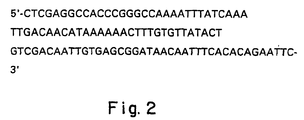
- The recombinant DNA construct according to any one of claims 1 to 8, wherein the control region comprises the sequence set forth in Figure 2.
- A vector comprising the recombinant DNA construct according to any one of claims 1 to 9.
- A bacterial host cell transformed with a vector according to claim 10.
- A bacterial host cell according to claim 11 which is an E. coli cell.
- A process for the production of a recombinant protein, comprising culturing a host cell according to claim 11 or 12 under conditions whereby said protein is produced, and recovering said protein.
Applications Claiming Priority (3)
| Application Number | Priority Date | Filing Date | Title |
|---|---|---|---|
| US08/445,133 US5629205A (en) | 1995-05-19 | 1995-05-19 | Promoters for gene expression |
| US445133 | 1995-05-19 | ||
| PCT/IB1996/000462 WO1996036721A1 (en) | 1995-05-19 | 1996-05-16 | Promoters for gene expression |
Publications (2)
| Publication Number | Publication Date |
|---|---|
| EP0828844A1 EP0828844A1 (en) | 1998-03-18 |
| EP0828844B1 true EP0828844B1 (en) | 2003-09-03 |
Family
ID=23767732
Family Applications (1)
| Application Number | Title | Priority Date | Filing Date |
|---|---|---|---|
| EP96912181A Expired - Lifetime EP0828844B1 (en) | 1995-05-19 | 1996-05-16 | Promoters for gene expression |
Country Status (24)
| Country | Link |
|---|---|
| US (1) | US5629205A (en) |
| EP (1) | EP0828844B1 (en) |
| JP (2) | JP3828576B2 (en) |
| KR (1) | KR19990014906A (en) |
| CN (1) | CN1131313C (en) |
| AT (1) | ATE248923T1 (en) |
| AU (1) | AU698656B2 (en) |
| BR (1) | BR9609102A (en) |
| CA (1) | CA2221587C (en) |
| CZ (1) | CZ357997A3 (en) |
| DE (1) | DE69629808T2 (en) |
| DK (1) | DK0828844T3 (en) |
| EE (1) | EE9700355A (en) |
| ES (1) | ES2202436T3 (en) |
| HU (1) | HUP9900750A3 (en) |
| IS (1) | IS4609A (en) |
| MX (1) | MX9708689A (en) |
| NO (1) | NO325879B1 (en) |
| NZ (1) | NZ306536A (en) |
| PL (1) | PL324226A1 (en) |
| PT (1) | PT828844E (en) |
| SK (1) | SK154997A3 (en) |
| TR (1) | TR199701394T1 (en) |
| WO (1) | WO1996036721A1 (en) |
Families Citing this family (16)
| Publication number | Priority date | Publication date | Assignee | Title |
|---|---|---|---|---|
| US6194168B1 (en) * | 1997-09-30 | 2001-02-27 | Human Genome Sciences, Inc. | Expression control sequences |
| WO2003099854A2 (en) * | 2002-05-24 | 2003-12-04 | Nps Allelix Corp. | Method for enzymatic production of glp-2(1-33) and glp-2-(1-34) peptides |
| WO2005046798A1 (en) * | 2003-11-12 | 2005-05-26 | Nps Allelix Corp. | Treatment of bone loss utilizing full length parathyroid hormone |
| HRP20120315T1 (en) | 2003-11-21 | 2012-05-31 | Nps Pharmaceuticals | Production of glucagon like peptide 2 and analogs |
| WO2005058946A2 (en) * | 2003-12-12 | 2005-06-30 | Zymogenetics, Inc. | Methods for enhancing expression of recombinant proteins |
| JP6362543B2 (en) | 2012-02-23 | 2018-07-25 | ジュノ セラピューティクス ゲーエムベーハー | Chromatographic isolation of cells and other complex biological materials |
| HK1258932A1 (en) | 2015-10-22 | 2019-11-22 | Juno Therapeutics Gmbh | Methods, kits, agents and apparatuses for transduction |
| CN108474791B (en) | 2015-10-22 | 2022-07-08 | 朱诺治疗学有限公司 | Method for culturing cells, and kit and apparatus for use in the method |
| MA49288A (en) | 2017-04-27 | 2020-03-04 | Juno Therapeutics Gmbh | SPECIAL OLIGOMERIC REAGENTS AND THEIR METHODS OF USE |
| CN108060168B (en) * | 2017-12-29 | 2021-06-29 | 苏州金唯智生物科技有限公司 | An improved promoter and its T vector and application |
| CN108118058B (en) | 2017-12-29 | 2021-06-29 | 苏州金唯智生物科技有限公司 | An improved promoter and its application |
| CN108165551B (en) * | 2017-12-30 | 2021-06-29 | 苏州金唯智生物科技有限公司 | An improved promoter and its T vector and application |
| CN108118059B (en) | 2017-12-30 | 2021-03-19 | 苏州金唯智生物科技有限公司 | An improved promoter and its composition vector and application |
| WO2020053285A1 (en) * | 2018-09-11 | 2020-03-19 | Boehringer Ingelheim Rcv Gmbh & Co Kg | Inducible expression system for plasmid-free production of a protein of interest |
| EP3874024A1 (en) | 2018-10-31 | 2021-09-08 | Juno Therapeutics GmbH | Methods for selection and stimulation of cells and apparatus for same |
| CN118995554B (en) * | 2024-09-09 | 2025-07-04 | 江南大学 | An Escherichia coli integrated expression system and its application in efficient enzyme expression |
Family Cites Families (5)
| Publication number | Priority date | Publication date | Assignee | Title |
|---|---|---|---|---|
| GB8517071D0 (en) * | 1985-07-05 | 1985-08-14 | Hoffmann La Roche | Gram-positive expression control sequence |
| DK443288A (en) * | 1987-08-17 | 1989-02-18 | Hoffmann La Roche | EXPRESSION CONTROL SEQUENCES |
| US5223407A (en) * | 1988-08-31 | 1993-06-29 | Allelix Inc. | Excretion of heterologous proteins from e. coli |
| US5171670A (en) * | 1989-05-12 | 1992-12-15 | The General Hospital Corporation | Recombinant dna method for production of parathyroid hormone |
| AU8492291A (en) * | 1990-08-28 | 1992-03-17 | E.I. Du Pont De Nemours And Company | A method for rapid selection of efficient secretion vectors |
-
1995
- 1995-05-19 US US08/445,133 patent/US5629205A/en not_active Expired - Lifetime
-
1996
- 1996-05-16 WO PCT/IB1996/000462 patent/WO1996036721A1/en not_active Ceased
- 1996-05-16 CZ CZ973579A patent/CZ357997A3/en unknown
- 1996-05-16 KR KR1019970708251A patent/KR19990014906A/en not_active Withdrawn
- 1996-05-16 MX MX9708689A patent/MX9708689A/en unknown
- 1996-05-16 DE DE69629808T patent/DE69629808T2/en not_active Expired - Lifetime
- 1996-05-16 EE EE9700355A patent/EE9700355A/en unknown
- 1996-05-16 JP JP53467596A patent/JP3828576B2/en not_active Expired - Lifetime
- 1996-05-16 DK DK96912181T patent/DK0828844T3/en active
- 1996-05-16 SK SK1549-97A patent/SK154997A3/en unknown
- 1996-05-16 AT AT96912181T patent/ATE248923T1/en active
- 1996-05-16 PT PT96912181T patent/PT828844E/en unknown
- 1996-05-16 PL PL96324226A patent/PL324226A1/en unknown
- 1996-05-16 NZ NZ306536A patent/NZ306536A/en not_active IP Right Cessation
- 1996-05-16 CN CN96195518A patent/CN1131313C/en not_active Expired - Lifetime
- 1996-05-16 BR BR9609102A patent/BR9609102A/en unknown
- 1996-05-16 HU HU9900750A patent/HUP9900750A3/en unknown
- 1996-05-16 CA CA002221587A patent/CA2221587C/en not_active Expired - Lifetime
- 1996-05-16 ES ES96912181T patent/ES2202436T3/en not_active Expired - Lifetime
- 1996-05-16 EP EP96912181A patent/EP0828844B1/en not_active Expired - Lifetime
- 1996-05-16 AU AU55116/96A patent/AU698656B2/en not_active Expired
- 1996-05-16 TR TR97/01394T patent/TR199701394T1/en unknown
-
1997
- 1997-11-07 IS IS4609A patent/IS4609A/en unknown
- 1997-11-18 NO NO19975286A patent/NO325879B1/en not_active IP Right Cessation
-
2006
- 2006-03-13 JP JP2006066844A patent/JP3837154B2/en not_active Expired - Lifetime
Also Published As
Similar Documents
| Publication | Publication Date | Title |
|---|---|---|
| LaVallie et al. | [21] Thioredoxin as a fusion partner for production of soluble recombinant proteins in Escherichia coli | |
| US5629205A (en) | Promoters for gene expression | |
| US5849576A (en) | Tetracycline promoter for the stringently regulated production of recombinant proteins in prokaryotic cells | |
| US5460954A (en) | Production of human proinsulin using a novel vector system | |
| KR860001305B1 (en) | Expression linkers | |
| CN102690834B (en) | Expression system | |
| US20040106118A1 (en) | Method for exposing peptides and polypeptides on the cell surface of bacteria | |
| JPH09510611A (en) | Secretion of polypeptide | |
| CA2271230A1 (en) | Improved expression vectors | |
| JPH10229878A (en) | Production of polypeptide | |
| EP1019487A1 (en) | Expression control sequences | |
| US5232840A (en) | Enhanced protein production in bacteria by employing a novel ribosome binding site | |
| MXPA97008689A (en) | Promoters of the expression of ge | |
| US4795706A (en) | Novel expression control sequences | |
| SG178293A1 (en) | Fermentation process | |
| HU197937B (en) | Process for producing new cloning carriers usable for the expression of polypeptides in microbiological host cells | |
| WO2000060103A2 (en) | Dna construct comprising a cyanophage of cyanobacteria promoter and its use | |
| CN100359001C (en) | Compartmentalization of recombinant polypeptides in host cells | |
| CA1283374C (en) | Recombinant dna expression vectors and method for gene expression | |
| CA2438074C (en) | Process for production of polypeptides | |
| HK1004148B (en) | Promoters for gene expression | |
| AU2019337392B2 (en) | Inducible expression system for plasmid-free production of a protein of interest | |
| CA2085447A1 (en) | A novel translational activating sequence | |
| IE912853A1 (en) | IMPROVED BACTERIOPHAGE LAMBDA pL PROMOTERS |
Legal Events
| Date | Code | Title | Description |
|---|---|---|---|
| PUAI | Public reference made under article 153(3) epc to a published international application that has entered the european phase |
Free format text: ORIGINAL CODE: 0009012 |
|
| 17P | Request for examination filed |
Effective date: 19971219 |
|
| AK | Designated contracting states |
Kind code of ref document: A1 Designated state(s): AT BE CH DE DK ES FI FR GB GR IE IT LI LU MC NL PT SE |
|
| AX | Request for extension of the european patent |
Free format text: LT PAYMENT 971219;LV PAYMENT 971219;SI PAYMENT 971219 |
|
| RAP1 | Party data changed (applicant data changed or rights of an application transferred) |
Owner name: ALLELIX BIOPHARMACEUTICALS INC. |
|
| 17Q | First examination report despatched |
Effective date: 20010427 |
|
| GRAH | Despatch of communication of intention to grant a patent |
Free format text: ORIGINAL CODE: EPIDOS IGRA |
|
| GRAH | Despatch of communication of intention to grant a patent |
Free format text: ORIGINAL CODE: EPIDOS IGRA |
|
| GRAA | (expected) grant |
Free format text: ORIGINAL CODE: 0009210 |
|
| RAP1 | Party data changed (applicant data changed or rights of an application transferred) |
Owner name: NPS ALLELIX CORP. |
|
| AK | Designated contracting states |
Kind code of ref document: B1 Designated state(s): AT BE CH DE DK ES FI FR GB GR IE IT LI LU MC NL PT SE |
|
| AX | Request for extension of the european patent |
Extension state: LT LV SI |
|
| REG | Reference to a national code |
Ref country code: GB Ref legal event code: FG4D |
|
| REG | Reference to a national code |
Ref country code: CH Ref legal event code: EP |
|
| REG | Reference to a national code |
Ref country code: CH Ref legal event code: NV Representative=s name: ROTTMANN, ZIMMERMANN + PARTNER AG |
|
| REF | Corresponds to: |
Ref document number: 69629808 Country of ref document: DE Date of ref document: 20031009 Kind code of ref document: P |
|
| REG | Reference to a national code |
Ref country code: IE Ref legal event code: FG4D |
|
| REG | Reference to a national code |
Ref country code: SE Ref legal event code: TRGR |
|
| REG | Reference to a national code |
Ref country code: GR Ref legal event code: EP Ref document number: 20030404448 Country of ref document: GR |
|
| REG | Reference to a national code |
Ref country code: DK Ref legal event code: T3 |
|
| LTIE | Lt: invalidation of european patent or patent extension |
Effective date: 20030903 |
|
| REG | Reference to a national code |
Ref country code: ES Ref legal event code: FG2A Ref document number: 2202436 Country of ref document: ES Kind code of ref document: T3 |
|
| ET | Fr: translation filed | ||
| PLBE | No opposition filed within time limit |
Free format text: ORIGINAL CODE: 0009261 |
|
| STAA | Information on the status of an ep patent application or granted ep patent |
Free format text: STATUS: NO OPPOSITION FILED WITHIN TIME LIMIT |
|
| 26N | No opposition filed |
Effective date: 20040604 |
|
| REG | Reference to a national code |
Ref country code: PT Ref legal event code: PC4A Owner name: NPS PHARMACEUTICALS, INC., US Effective date: 20080813 |
|
| REG | Reference to a national code |
Ref country code: GB Ref legal event code: 732E |
|
| REG | Reference to a national code |
Ref country code: FR Ref legal event code: TP |
|
| NLS | Nl: assignments of ep-patents |
Owner name: NPS PHARMACEUTICALS, INC. Effective date: 20081024 |
|
| REG | Reference to a national code |
Ref country code: CH Ref legal event code: PCAR Free format text: SCHMAUDER & PARTNER AG PATENT- UND MARKENANWAELTE VSP;ZWAENGIWEG 7;8038 ZUERICH (CH) |
|
| REG | Reference to a national code |
Ref country code: CH Ref legal event code: PUE Owner name: NPS PHARMACEUTICALS, INC. Free format text: NPS ALLELIX CORP.#6850 GOREWAY DRIVE#MISSISSAUGA ONTARIO, L4V 1V7 (CA) -TRANSFER TO- NPS PHARMACEUTICALS, INC.#550 HILLS DRIVE, THIRD FLOOR#BEDMINSTER, NJ 07921 (US) |
|
| REG | Reference to a national code |
Ref country code: ES Ref legal event code: PC2A |
|
| REG | Reference to a national code |
Ref country code: DE Ref legal event code: R082 Ref document number: 69629808 Country of ref document: DE Representative=s name: MAIWALD PATENTANWALTSGESELLSCHAFT MBH, DE |
|
| REG | Reference to a national code |
Ref country code: DE Ref legal event code: R082 Ref document number: 69629808 Country of ref document: DE Representative=s name: MAIWALD PATENTANWALTSGESELLSCHAFT MBH, DE Effective date: 20130312 Ref country code: DE Ref legal event code: R081 Ref document number: 69629808 Country of ref document: DE Owner name: NPS PHARMACEUTICALS,INC., 07921 BEDMINSTER, US Free format text: FORMER OWNER: NPS PHARMACEUTICALS,INC., 07921 BEDMINSTER, N.J., US Effective date: 20130312 Ref country code: DE Ref legal event code: R081 Ref document number: 69629808 Country of ref document: DE Owner name: TAKEDA GMBH, DE Free format text: FORMER OWNER: NPS PHARMACEUTICALS,INC., 07921 BEDMINSTER, US Effective date: 20130312 Ref country code: DE Ref legal event code: R081 Ref document number: 69629808 Country of ref document: DE Owner name: NPS PHARMACEUTICALS,INC., US Free format text: FORMER OWNER: NPS PHARMACEUTICALS,INC., 07921 BEDMINSTER, US Effective date: 20130312 |
|
| REG | Reference to a national code |
Ref country code: AT Ref legal event code: PC Ref document number: 248923 Country of ref document: AT Kind code of ref document: T Owner name: NPS PHARMACEUTICALS, INC., US Effective date: 20130327 |
|
| REG | Reference to a national code |
Ref country code: DE Ref legal event code: R082 Ref document number: 69629808 Country of ref document: DE Representative=s name: MAIWALD PATENTANWALTSGESELLSCHAFT MBH, DE |
|
| REG | Reference to a national code |
Ref country code: DE Ref legal event code: R082 Ref document number: 69629808 Country of ref document: DE Representative=s name: MAIWALD PATENTANWALTSGESELLSCHAFT MBH, DE Effective date: 20131029 Ref country code: DE Ref legal event code: R081 Ref document number: 69629808 Country of ref document: DE Owner name: NPS PHARMACEUTICALS,INC., 07921 BEDMINSTER, US Free format text: FORMER OWNERS: NPS PHARMACEUTICALS,INC., 07921 BEDMINSTER, N.J., US; TAKEDA GMBH, 78467 KONSTANZ, DE Effective date: 20131029 Ref country code: DE Ref legal event code: R081 Ref document number: 69629808 Country of ref document: DE Owner name: NPS PHARMACEUTICALS,INC., 07921 BEDMINSTER, US Free format text: FORMER OWNER: NPS PHARMACEUTICALS,INC., TAKEDA GMBH, , US Effective date: 20131029 Ref country code: DE Ref legal event code: R081 Ref document number: 69629808 Country of ref document: DE Owner name: NPS PHARMACEUTICALS,INC., US Free format text: FORMER OWNER: NPS PHARMACEUTICALS,INC., TAKEDA GMBH, , US Effective date: 20131029 |
|
| REG | Reference to a national code |
Ref country code: FR Ref legal event code: PLFP Year of fee payment: 20 |
|
| PGFP | Annual fee paid to national office [announced via postgrant information from national office to epo] |
Ref country code: FI Payment date: 20150630 Year of fee payment: 20 Ref country code: DK Payment date: 20150630 Year of fee payment: 20 Ref country code: CH Payment date: 20150629 Year of fee payment: 20 Ref country code: SE Payment date: 20150629 Year of fee payment: 20 Ref country code: GB Payment date: 20150629 Year of fee payment: 20 |
|
| PGFP | Annual fee paid to national office [announced via postgrant information from national office to epo] |
Ref country code: IE Payment date: 20150629 Year of fee payment: 20 Ref country code: GR Payment date: 20150630 Year of fee payment: 20 Ref country code: LU Payment date: 20150701 Year of fee payment: 20 Ref country code: AT Payment date: 20150629 Year of fee payment: 20 |
|
| PGFP | Annual fee paid to national office [announced via postgrant information from national office to epo] |
Ref country code: NL Payment date: 20150629 Year of fee payment: 20 |
|
| PGFP | Annual fee paid to national office [announced via postgrant information from national office to epo] |
Ref country code: ES Payment date: 20150630 Year of fee payment: 20 Ref country code: MC Payment date: 20150708 Year of fee payment: 20 Ref country code: PT Payment date: 20150701 Year of fee payment: 20 Ref country code: DE Payment date: 20150630 Year of fee payment: 20 |
|
| PGFP | Annual fee paid to national office [announced via postgrant information from national office to epo] |
Ref country code: BE Payment date: 20150629 Year of fee payment: 20 Ref country code: FR Payment date: 20150624 Year of fee payment: 20 |
|
| PGFP | Annual fee paid to national office [announced via postgrant information from national office to epo] |
Ref country code: IT Payment date: 20150630 Year of fee payment: 20 |
|
| REG | Reference to a national code |
Ref country code: DE Ref legal event code: R071 Ref document number: 69629808 Country of ref document: DE |
|
| REG | Reference to a national code |
Ref country code: NL Ref legal event code: MK Effective date: 20160515 |
|
| REG | Reference to a national code |
Ref country code: PT Ref legal event code: MM4A Free format text: MAXIMUM VALIDITY LIMIT REACHED Effective date: 20160516 Ref country code: DK Ref legal event code: EUP Effective date: 20160516 |
|
| REG | Reference to a national code |
Ref country code: CH Ref legal event code: PL |
|
| REG | Reference to a national code |
Ref country code: GB Ref legal event code: PE20 Expiry date: 20160515 |
|
| REG | Reference to a national code |
Ref country code: IE Ref legal event code: MK9A |
|
| REG | Reference to a national code |
Ref country code: AT Ref legal event code: MK07 Ref document number: 248923 Country of ref document: AT Kind code of ref document: T Effective date: 20160516 |
|
| PG25 | Lapsed in a contracting state [announced via postgrant information from national office to epo] |
Ref country code: GB Free format text: LAPSE BECAUSE OF EXPIRATION OF PROTECTION Effective date: 20160515 Ref country code: IE Free format text: LAPSE BECAUSE OF EXPIRATION OF PROTECTION Effective date: 20160516 |
|
| REG | Reference to a national code |
Ref country code: ES Ref legal event code: FD2A Effective date: 20160826 |
|
| PG25 | Lapsed in a contracting state [announced via postgrant information from national office to epo] |
Ref country code: PT Free format text: LAPSE BECAUSE OF EXPIRATION OF PROTECTION Effective date: 20160523 |
|
| REG | Reference to a national code |
Ref country code: GR Ref legal event code: MA Ref document number: 20030404448 Country of ref document: GR Effective date: 20160517 |
|
| PG25 | Lapsed in a contracting state [announced via postgrant information from national office to epo] |
Ref country code: ES Free format text: LAPSE BECAUSE OF EXPIRATION OF PROTECTION Effective date: 20160517 |