EP0827946A1 - Inhibitors for the differentiation of cells, in particular hepatic stellate cells - Google Patents
Inhibitors for the differentiation of cells, in particular hepatic stellate cells Download PDFInfo
- Publication number
- EP0827946A1 EP0827946A1 EP96202461A EP96202461A EP0827946A1 EP 0827946 A1 EP0827946 A1 EP 0827946A1 EP 96202461 A EP96202461 A EP 96202461A EP 96202461 A EP96202461 A EP 96202461A EP 0827946 A1 EP0827946 A1 EP 0827946A1
- Authority
- EP
- European Patent Office
- Prior art keywords
- cells
- group
- nitro
- hydroxy
- amino
- Prior art date
- Legal status (The legal status is an assumption and is not a legal conclusion. Google has not performed a legal analysis and makes no representation as to the accuracy of the status listed.)
- Withdrawn
Links
- 210000004024 hepatic stellate cell Anatomy 0.000 title abstract description 5
- 239000003112 inhibitor Substances 0.000 title abstract description 5
- 230000024245 cell differentiation Effects 0.000 title abstract description 3
- 150000001875 compounds Chemical class 0.000 claims abstract description 12
- -1 hydroxy, amino Chemical group 0.000 claims abstract description 12
- 125000000449 nitro group Chemical group [O-][N+](*)=O 0.000 claims abstract description 9
- 125000000217 alkyl group Chemical group 0.000 claims abstract description 8
- 229910052739 hydrogen Inorganic materials 0.000 claims abstract description 7
- 239000001257 hydrogen Substances 0.000 claims abstract description 7
- 239000004593 Epoxy Substances 0.000 claims abstract description 6
- 125000002252 acyl group Chemical group 0.000 claims abstract description 6
- 125000004423 acyloxy group Chemical group 0.000 claims abstract description 6
- 125000003545 alkoxy group Chemical group 0.000 claims abstract description 6
- 125000004453 alkoxycarbonyl group Chemical group 0.000 claims abstract description 6
- 125000004414 alkyl thio group Chemical group 0.000 claims abstract description 6
- 125000002485 formyl group Chemical group [H]C(*)=O 0.000 claims abstract description 6
- 125000003051 glycosyloxy group Chemical group 0.000 claims abstract description 6
- 125000001188 haloalkyl group Chemical group 0.000 claims abstract description 6
- 229910052736 halogen Inorganic materials 0.000 claims abstract description 6
- 150000002367 halogens Chemical class 0.000 claims abstract description 6
- 125000002887 hydroxy group Chemical group [H]O* 0.000 claims abstract description 6
- 125000002924 primary amino group Chemical group [H]N([H])* 0.000 claims abstract description 6
- 206010016654 Fibrosis Diseases 0.000 claims abstract description 5
- 230000004761 fibrosis Effects 0.000 claims abstract description 5
- 239000004480 active ingredient Substances 0.000 claims abstract description 4
- 150000002431 hydrogen Chemical class 0.000 claims abstract description 4
- 125000001997 phenyl group Chemical group [H]C1=C([H])C([H])=C(*)C([H])=C1[H] 0.000 claims abstract description 4
- UFHFLCQGNIYNRP-UHFFFAOYSA-N Hydrogen Chemical compound [H][H] UFHFLCQGNIYNRP-UHFFFAOYSA-N 0.000 claims abstract description 3
- 125000001424 substituent group Chemical group 0.000 claims abstract description 3
- 208000019425 cirrhosis of liver Diseases 0.000 claims description 5
- 239000008194 pharmaceutical composition Substances 0.000 claims description 3
- 238000000034 method Methods 0.000 claims description 2
- 238000002360 preparation method Methods 0.000 claims description 2
- 239000000546 pharmaceutical excipient Substances 0.000 claims 1
- 210000004027 cell Anatomy 0.000 description 8
- 229940126062 Compound A Drugs 0.000 description 6
- NLDMNSXOCDLTTB-UHFFFAOYSA-N Heterophylliin A Natural products O1C2COC(=O)C3=CC(O)=C(O)C(O)=C3C3=C(O)C(O)=C(O)C=C3C(=O)OC2C(OC(=O)C=2C=C(O)C(O)=C(O)C=2)C(O)C1OC(=O)C1=CC(O)=C(O)C(O)=C1 NLDMNSXOCDLTTB-UHFFFAOYSA-N 0.000 description 6
- 108090000623 proteins and genes Proteins 0.000 description 4
- 102000008186 Collagen Human genes 0.000 description 3
- 108010035532 Collagen Proteins 0.000 description 3
- 102000003964 Histone deacetylase Human genes 0.000 description 3
- 108090000353 Histone deacetylase Proteins 0.000 description 3
- 108010033040 Histones Proteins 0.000 description 3
- 229920001436 collagen Polymers 0.000 description 3
- 230000000694 effects Effects 0.000 description 3
- 230000006195 histone acetylation Effects 0.000 description 3
- 210000004185 liver Anatomy 0.000 description 3
- FPIPGXGPPPQFEQ-UHFFFAOYSA-N 13-cis retinol Natural products OCC=C(C)C=CC=C(C)C=CC1=C(C)CCCC1(C)C FPIPGXGPPPQFEQ-UHFFFAOYSA-N 0.000 description 2
- 108010077544 Chromatin Proteins 0.000 description 2
- 102000010834 Extracellular Matrix Proteins Human genes 0.000 description 2
- 108010037362 Extracellular Matrix Proteins Proteins 0.000 description 2
- 102000003893 Histone acetyltransferases Human genes 0.000 description 2
- 108090000246 Histone acetyltransferases Proteins 0.000 description 2
- RTKIYFITIVXBLE-UHFFFAOYSA-N Trichostatin A Natural products ONC(=O)C=CC(C)=CC(C)C(=O)C1=CC=C(N(C)C)C=C1 RTKIYFITIVXBLE-UHFFFAOYSA-N 0.000 description 2
- FPIPGXGPPPQFEQ-BOOMUCAASA-N Vitamin A Natural products OC/C=C(/C)\C=C\C=C(\C)/C=C/C1=C(C)CCCC1(C)C FPIPGXGPPPQFEQ-BOOMUCAASA-N 0.000 description 2
- FPIPGXGPPPQFEQ-OVSJKPMPSA-N all-trans-retinol Chemical compound OC\C=C(/C)\C=C\C=C(/C)\C=C\C1=C(C)CCCC1(C)C FPIPGXGPPPQFEQ-OVSJKPMPSA-N 0.000 description 2
- 210000003483 chromatin Anatomy 0.000 description 2
- 230000004069 differentiation Effects 0.000 description 2
- 230000003993 interaction Effects 0.000 description 2
- 210000000651 myofibroblast Anatomy 0.000 description 2
- UCSJYZPVAKXKNQ-HZYVHMACSA-N streptomycin Chemical compound CN[C@H]1[C@H](O)[C@@H](O)[C@H](CO)O[C@H]1O[C@@H]1[C@](C=O)(O)[C@H](C)O[C@H]1O[C@@H]1[C@@H](NC(N)=N)[C@H](O)[C@@H](NC(N)=N)[C@H](O)[C@H]1O UCSJYZPVAKXKNQ-HZYVHMACSA-N 0.000 description 2
- RTKIYFITIVXBLE-QEQCGCAPSA-N trichostatin A Chemical compound ONC(=O)/C=C/C(/C)=C/[C@@H](C)C(=O)C1=CC=C(N(C)C)C=C1 RTKIYFITIVXBLE-QEQCGCAPSA-N 0.000 description 2
- 235000019155 vitamin A Nutrition 0.000 description 2
- 239000011719 vitamin A Substances 0.000 description 2
- 229940045997 vitamin a Drugs 0.000 description 2
- 125000004169 (C1-C6) alkyl group Chemical group 0.000 description 1
- 108091032973 (ribonucleotides)n+m Proteins 0.000 description 1
- 108091003079 Bovine Serum Albumin Proteins 0.000 description 1
- 102000012422 Collagen Type I Human genes 0.000 description 1
- 108010022452 Collagen Type I Proteins 0.000 description 1
- 108020004414 DNA Proteins 0.000 description 1
- 239000006144 Dulbecco’s modified Eagle's medium Substances 0.000 description 1
- 208000031637 Erythroblastic Acute Leukemia Diseases 0.000 description 1
- 208000036566 Erythroleukaemia Diseases 0.000 description 1
- 230000037057 G1 phase arrest Effects 0.000 description 1
- 230000037060 G2 phase arrest Effects 0.000 description 1
- 102000006947 Histones Human genes 0.000 description 1
- KDXKERNSBIXSRK-UHFFFAOYSA-N Lysine Natural products NCCCCC(N)C(O)=O KDXKERNSBIXSRK-UHFFFAOYSA-N 0.000 description 1
- 239000004472 Lysine Substances 0.000 description 1
- 108010047956 Nucleosomes Proteins 0.000 description 1
- 229930182555 Penicillin Natural products 0.000 description 1
- JGSARLDLIJGVTE-MBNYWOFBSA-N Penicillin G Chemical compound N([C@H]1[C@H]2SC([C@@H](N2C1=O)C(O)=O)(C)C)C(=O)CC1=CC=CC=C1 JGSARLDLIJGVTE-MBNYWOFBSA-N 0.000 description 1
- 241000700157 Rattus norvegicus Species 0.000 description 1
- 240000004808 Saccharomyces cerevisiae Species 0.000 description 1
- 241000527181 Sisor Species 0.000 description 1
- 108091023040 Transcription factor Proteins 0.000 description 1
- 102000040945 Transcription factor Human genes 0.000 description 1
- 238000009825 accumulation Methods 0.000 description 1
- 230000021736 acetylation Effects 0.000 description 1
- 238000006640 acetylation reaction Methods 0.000 description 1
- 208000021841 acute erythroid leukemia Diseases 0.000 description 1
- 238000004458 analytical method Methods 0.000 description 1
- 230000033228 biological regulation Effects 0.000 description 1
- 230000015572 biosynthetic process Effects 0.000 description 1
- 230000008859 change Effects 0.000 description 1
- 229910052801 chlorine Inorganic materials 0.000 description 1
- 239000000460 chlorine Substances 0.000 description 1
- 125000001309 chloro group Chemical group Cl* 0.000 description 1
- 201000010099 disease Diseases 0.000 description 1
- 208000037265 diseases, disorders, signs and symptoms Diseases 0.000 description 1
- 239000003814 drug Substances 0.000 description 1
- 239000012894 fetal calf serum Substances 0.000 description 1
- 210000002950 fibroblast Anatomy 0.000 description 1
- 230000000893 fibroproliferative effect Effects 0.000 description 1
- 230000014509 gene expression Effects 0.000 description 1
- 230000002068 genetic effect Effects 0.000 description 1
- 238000009396 hybridization Methods 0.000 description 1
- 230000001900 immune effect Effects 0.000 description 1
- 238000001114 immunoprecipitation Methods 0.000 description 1
- 230000005764 inhibitory process Effects 0.000 description 1
- 238000002955 isolation Methods 0.000 description 1
- 210000003734 kidney Anatomy 0.000 description 1
- 238000002372 labelling Methods 0.000 description 1
- 210000004072 lung Anatomy 0.000 description 1
- 125000003588 lysine group Chemical group [H]N([H])C([H])([H])C([H])([H])C([H])([H])C([H])([H])C([H])(N([H])[H])C(*)=O 0.000 description 1
- 210000004962 mammalian cell Anatomy 0.000 description 1
- 230000007246 mechanism Effects 0.000 description 1
- 239000002609 medium Substances 0.000 description 1
- 108020004999 messenger RNA Proteins 0.000 description 1
- 125000002496 methyl group Chemical group [H]C([H])([H])* 0.000 description 1
- 210000001623 nucleosome Anatomy 0.000 description 1
- 210000000056 organ Anatomy 0.000 description 1
- 229940049954 penicillin Drugs 0.000 description 1
- 210000003668 pericyte Anatomy 0.000 description 1
- 230000000144 pharmacologic effect Effects 0.000 description 1
- 238000003322 phosphorimaging Methods 0.000 description 1
- 239000002244 precipitate Substances 0.000 description 1
- 230000008569 process Effects 0.000 description 1
- 230000002062 proliferating effect Effects 0.000 description 1
- 230000001105 regulatory effect Effects 0.000 description 1
- 210000003491 skin Anatomy 0.000 description 1
- 238000002415 sodium dodecyl sulfate polyacrylamide gel electrophoresis Methods 0.000 description 1
- 210000004500 stellate cell Anatomy 0.000 description 1
- 229960005322 streptomycin Drugs 0.000 description 1
- 238000001308 synthesis method Methods 0.000 description 1
- 238000003786 synthesis reaction Methods 0.000 description 1
- 229940124597 therapeutic agent Drugs 0.000 description 1
- 230000001225 therapeutic effect Effects 0.000 description 1
- 230000009466 transformation Effects 0.000 description 1
- 230000007704 transition Effects 0.000 description 1
Classifications
-
- C—CHEMISTRY; METALLURGY
- C07—ORGANIC CHEMISTRY
- C07C—ACYCLIC OR CARBOCYCLIC COMPOUNDS
- C07C59/00—Compounds having carboxyl groups bound to acyclic carbon atoms and containing any of the groups OH, O—metal, —CHO, keto, ether, groups, groups, or groups
- C07C59/40—Unsaturated compounds
- C07C59/76—Unsaturated compounds containing keto groups
- C07C59/88—Unsaturated compounds containing keto groups containing halogen
Definitions
- Eukaryotic gene expression has been mainly studied in the context of transacting transcription factors and their interaction with regulatory cis-elements. Evidence is accumulating, however, that high order structure of chromatin plays an essential role in eukaryotic gene regulation.
- One major process by which chromatin structure is modulated is histone acetylation. Lysine residues in the N-terminal domain of histone molecules are reversibly acetylated, the level of which is determined by an equilibrium between histone acetyltransferase and deacetylase. It is thought that acetylation of lysine reduces the positive charge of the N-terminal tail domain of histone to weaken their interaction with DNA in the nucleosome.
- Trichostatin A an inhibitor of histone deacetylase has been shown to cause G1 and G2 phase cell cycle arrest in fibroblasts, to induce differentiation in erythroleukemia cells, and to inhibit sisor ras-induced transformation of NIH3T3 cells.
- liver fibrosis hepatic stellate cells are the major cell type responsible for the excessive accumulation of extracellular matrix proteins.
- these cells are liver-specific pericytes which serve as major vitamin A storage sites and show little proliferative activity.
- stellate cells change their phenotype and differentiate into myofibroblasts. During this transition they lose their vitamin A-containing fat-droplets, and acquire the capacity to proliferate and to produce excessive quantities of extracellular matrix proteins.
- active myofibroblasts are central to fibrogenesis in other organs, such as skin, lung and kidney. Thus inhibition of myofibroblastic differentiation appears to be an attractive common target for therapeutic intervention in fibroproliferative diseases.
- Trichostatin A a compound which were structurally related with Trichostatin A were useful as inhibitors for differentiation of cells, in particular hepatic stellate cells.
- compound A was prepared.
- R 1 hydrogen
- R 2 methyl
- R 3 chlorine
- R 4 phenyl
- isolation cells were suspended in Dulbecco's modified Eagle's medium supplemented with 10 % fetal calf serum, 100 U/ml penicillin, and 100 ⁇ g/ml streptomycin, and cultured at 37°C in a humidified atmosphere with 5 % CO 2 and 95 % air.
- Table 1 shows the results which were expressed as percentage value relative to the control culture. 100 nM 10 nM 1 nM collagen I 45.0 ⁇ 6.4 78.3 ⁇ 5.6 98.4 ⁇ 10.2 collagen III 39.0 ⁇ 10.6 80.3 ⁇ 21.8 83.8 ⁇ 24.1
- compound A is an active ingredient for the preparation of a pharmaceutical composition for the treatment of fibrosis, in particular liver fibrosis.
- Similar analogue compounds - compounds of claim 1 - will give similar results.
Landscapes
- Chemical & Material Sciences (AREA)
- Organic Chemistry (AREA)
- Acyclic And Carbocyclic Compounds In Medicinal Compositions (AREA)
- Pharmaceuticals Containing Other Organic And Inorganic Compounds (AREA)
Abstract
This invention relates to new compounds as
inhibitors for the differentiation of cells, in
particular hepatic stellate cells.
It was surprisingly found that new compounds of
the following formula:
 wherein:
Description
Eukaryotic gene expression has been mainly
studied in the context of transacting transcription
factors and their interaction with regulatory cis-elements.
Evidence is accumulating, however, that high order
structure of chromatin plays an essential role in eukaryotic
gene regulation. One major process by which chromatin
structure is modulated is histone acetylation. Lysine
residues in the N-terminal domain of histone molecules
are reversibly acetylated, the level of which is determined
by an equilibrium between histone acetyltransferase
and deacetylase. It is thought that acetylation of lysine
reduces the positive charge of the N-terminal tail domain
of histone to weaken their interaction with DNA in the
nucleosome. Importance of histone acetylation was high-lighted
by the recent findings that the genes encoding
histone acetyltransferase and deacetylase are homologous
to yeast gene regulators, Gcn5p and Rpd3p, respectively.
Although many genetic, biochemical, and immunological
studies have shown that actively transcribed
genes are generally associated with hyperacetylated
histones, the exact biologic significance of histone
acetylation in mammalian cells is still unclear. In this
respect use of specific pharmacologic inhibitors may
provide further insight. Trichostatin A, an inhibitor of
histone deacetylase has been shown to cause G1 and G2
phase cell cycle arrest in fibroblasts, to induce differentiation
in erythroleukemia cells, and to inhibit sisor
ras-induced transformation of NIH3T3 cells.
Our laboratory has been investigating the
mechanisms underlying liver fibrosis, especially with the
aim of developing new therapeutic agents. In liver fibrosis,
hepatic stellate cells are the major cell type
responsible for the excessive accumulation of extracellular
matrix proteins. In normal liver, these cells are
liver-specific pericytes which serve as major vitamin A
storage sites and show little proliferative activity. In
injured livers, however, stellate cells change their
phenotype and differentiate into myofibroblasts. During
this transition they lose their vitamin A-containing fat-droplets,
and acquire the capacity to proliferate and to
produce excessive quantities of extracellular matrix
proteins. Furthermore, growing evidence indicates that
active myofibroblasts are central to fibrogenesis in
other organs, such as skin, lung and kidney. Thus inhibition
of myofibroblastic differentiation appears to be an
attractive common target for therapeutic intervention in
fibroproliferative diseases.
Surprisingly it was found that new compounds
which were structurally related with Trichostatin A were
useful as inhibitors for differentiation of cells, in
particular hepatic stellate cells.
These compounds have the following general
structural formula:

Using conventional synthesis methods compound A
was prepared. Compound A is a compound of the above given
formula wherein R1 = hydrogen, R2 = methyl, R3 = chlorine
and R4 = phenyl. The effect of this compound A on the
synthesis of collagens type I and III was tested using
hepatic stellate cells from adult Wistar rats.
After isolation cells were suspended in Dulbecco's
modified Eagle's medium supplemented with 10 % fetal
calf serum, 100 U/ml penicillin, and 100 µg/ml streptomycin,
and cultured at 37°C in a humidified atmosphere
with 5 % CO2 and 95 % air.
At day 3 cells were exposed to compound A (1-100
nmol/L) for 24 h. During the subsequent 24 h cells
were metabolically labeled with 25 µCi/ml of Trans 35S-label
(specific activity of 35S-methionine > 1,000 Ci/mmol,
ICN Biomedicals, Costa Mesa CA) while exposure to
the compounds was continued. After labelling medium was
collected, and subjected to immunoprecipitation using
antibodies against collagens type I and III. The precipitates
were fractionated by SDS-PAGE and radioactivity of
specific bands were measured by the PhosphorImaging
technology. For the effect at mRNA level, cells were
exposed to 100 nmol/L compound A for 24 h. RNA was then
extracted and analyzed by Northern hybridization analysis.
Table 1 shows the results which were expressed
as percentage value relative to the control culture.
| 100 nM | 10 nM | 1 nM | |
| collagen I | 45.0±6.4 | 78.3±5.6 | 98.4±10.2 |
| collagen III | 39.0±10.6 | 80.3±21.8 | 83.8±24.1 |
These results show that compound A is an active
ingredient for the preparation of a pharmaceutical composition
for the treatment of fibrosis, in particular liver
fibrosis. Similar analogue compounds - compounds of claim
1 - will give similar results.
Claims (5)
- Compounds of the formula:wherein:
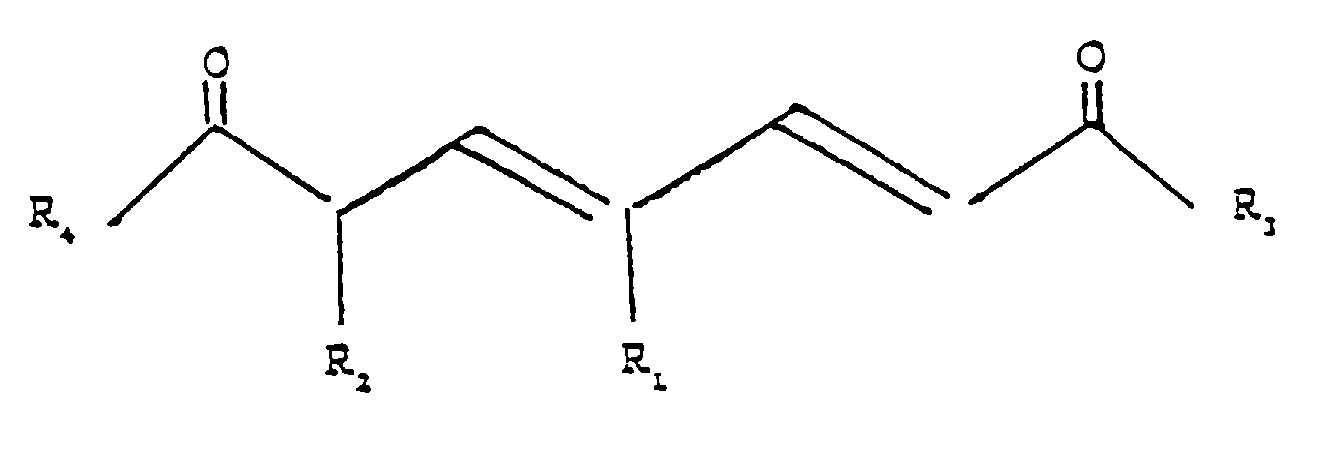 R1 and R2 are independently selected from the group comprising of hydrogen, alkyl, hydroxy, amino and nitro;R3 is selected from the group comprising of halogen, alkyl, halogenalkyl, formyl, alkoxycarbonyl, acyl, hydroxy, alkoxy, acyloxy, glycosyloxy, amino, alkylamino mercapto, alkylthio, nitro, alkylnitro, epoxy and alkylepoxy; andR4 is selected from the group comprising of hydrogen; phenyl, p-benzoquinonyl or cumarinyl which may have at least one substituent selected from the group comprising of halogen, alkyl, halogenalkyl, formyl, alkoxycarbonyl, acyl, hydroxy, alkoxy, acyloxy, glycosyloxy, amino, alkylamino mercapto, alkylthio, nitro, alkylnitro, epoxy and alkylepoxy.
 - Compound as claimed in claim 1 for use in the treatment of fibrosis, in particular liver fibrosis.
- Pharmaceutical compositions comprising compounds of claim 1 and a suitable excipient.
- Use of compounds of claim 1 as active ingredient for the preparation of a pharmaceutical composition for the treatment of fibrosis, in particular liver fibrosis.
- Method of treatment of fibrosis by using as active ingredient an effective amount of a compound of claim 1.
Priority Applications (1)
| Application Number | Priority Date | Filing Date | Title |
|---|---|---|---|
| EP96202461A EP0827946A1 (en) | 1996-09-04 | 1996-09-04 | Inhibitors for the differentiation of cells, in particular hepatic stellate cells |
Applications Claiming Priority (1)
| Application Number | Priority Date | Filing Date | Title |
|---|---|---|---|
| EP96202461A EP0827946A1 (en) | 1996-09-04 | 1996-09-04 | Inhibitors for the differentiation of cells, in particular hepatic stellate cells |
Publications (1)
| Publication Number | Publication Date |
|---|---|
| EP0827946A1 true EP0827946A1 (en) | 1998-03-11 |
Family
ID=8224351
Family Applications (1)
| Application Number | Title | Priority Date | Filing Date |
|---|---|---|---|
| EP96202461A Withdrawn EP0827946A1 (en) | 1996-09-04 | 1996-09-04 | Inhibitors for the differentiation of cells, in particular hepatic stellate cells |
Country Status (1)
| Country | Link |
|---|---|
| EP (1) | EP0827946A1 (en) |
Cited By (2)
| Publication number | Priority date | Publication date | Assignee | Title |
|---|---|---|---|---|
| WO2016210292A1 (en) | 2015-06-25 | 2016-12-29 | Children's Medical Center Corporation | Methods and compositions relating to hematopoietic stem cell expansion, enrichment, and maintenance |
| WO2017161001A1 (en) | 2016-03-15 | 2017-09-21 | Children's Medical Center Corporation | Methods and compositions relating to hematopoietic stem cell expansion |
Citations (3)
| Publication number | Priority date | Publication date | Assignee | Title |
|---|---|---|---|---|
| EP0196415A2 (en) * | 1985-01-30 | 1986-10-08 | Teruhiko Beppu | Trichostatins A and C as antitumour drugs |
| EP0331524A2 (en) * | 1988-03-04 | 1989-09-06 | Japan Tobacco Inc. | Synthesis of trichostatins |
| JPH01299264A (en) * | 1988-05-26 | 1989-12-04 | Ajinomoto Co Inc | Novel substance fl-657c and preparation thereof |
-
1996
- 1996-09-04 EP EP96202461A patent/EP0827946A1/en not_active Withdrawn
Patent Citations (3)
| Publication number | Priority date | Publication date | Assignee | Title |
|---|---|---|---|---|
| EP0196415A2 (en) * | 1985-01-30 | 1986-10-08 | Teruhiko Beppu | Trichostatins A and C as antitumour drugs |
| EP0331524A2 (en) * | 1988-03-04 | 1989-09-06 | Japan Tobacco Inc. | Synthesis of trichostatins |
| JPH01299264A (en) * | 1988-05-26 | 1989-12-04 | Ajinomoto Co Inc | Novel substance fl-657c and preparation thereof |
Non-Patent Citations (4)
| Title |
|---|
| BEILSTEIN INFORMATION SERVICE, FILE: X-FIRE, XP002025165 * |
| DATABASE WPI Week 9003, Derwent World Patents Index; AN 90-019313, XP002025166 * |
| N. TSUJI AND M. KOBAYASHI: "Tricostatin C, a glucopyranosyl hydroxamate.", J. ANTIBIOTICS, vol. 31, no. 10, 1978, pages 939 - 944, XP000616100 * |
| XIAOLILI ET AL.: "Modulation of growth and differentiation of human colon carcinoma cells hy histone deacetylase inhibitory trichostatins.", INT. J. ONCOLOGY, vol. 8, no. 3, 1 March 1996 (1996-03-01), pages 431 - 437, XP000614528 * |
Cited By (3)
| Publication number | Priority date | Publication date | Assignee | Title |
|---|---|---|---|---|
| WO2016210292A1 (en) | 2015-06-25 | 2016-12-29 | Children's Medical Center Corporation | Methods and compositions relating to hematopoietic stem cell expansion, enrichment, and maintenance |
| WO2017161001A1 (en) | 2016-03-15 | 2017-09-21 | Children's Medical Center Corporation | Methods and compositions relating to hematopoietic stem cell expansion |
| EP4049665A1 (en) | 2016-03-15 | 2022-08-31 | Children's Medical Center Corporation | Methods and compositions relating to hematopoietic stem cell expansion |
Similar Documents
| Publication | Publication Date | Title |
|---|---|---|
| Li et al. | Exosomal miR-301 derived from mesenchymal stem cells protects myocardial infarction by inhibiting myocardial autophagy | |
| Sowa et al. | Inactivation of menin, the product of the multiple endocrine neoplasia type 1 gene, inhibits the commitment of multipotential mesenchymal stem cells into the osteoblast lineage | |
| West-Mays et al. | Competence for collagenase gene expression by tissue fibroblasts requires activation of an interleukin 1 alpha autocrine loop. | |
| Murphy et al. | Hypoxia. HIF-mediated articular chondrocyte function: prospects for cartilage repair | |
| Koken et al. | Expression of the ubiquitin-conjugating DNA repair enzymes HHR6A and B suggests a role in spermatogenesis and chromatin modification | |
| Paffenholz | Correlation between DNA repair of embryonic fibroblasts and different life span of 3 inbred mouse strains | |
| Bayer et al. | Arrest of cultured cells in the G1 phase of the cell cycle by indomethacin. | |
| EP0827742A1 (en) | Use of histone deacetylase inhibitors for treating fribosis or cirrhosis | |
| Knight et al. | Cell-cycle-specific interaction of nuclear DNA-binding proteins with a CCAAT sequence from the human thymidine kinase gene. | |
| Schley et al. | Selective stabilization of HIF-1α in renal tubular cells by 2-oxoglutarate analogues | |
| JPH03128310A (en) | Hair cultivation composition | |
| Reisher et al. | Increased expression of apolipoprotein genes accompanies differentiation in the intestinal cell line Caco-2. | |
| US20190284306A1 (en) | Bifunctional peptide having capability to permeate cells and capability to regenerate muscles and use thereof | |
| Bürger et al. | Constitutive expression of 8‐lipoxygenase in papillomas and clastogenic effects of lipoxygenase‐derived arachidonic acid metabolites in keratinocytes | |
| Chandrasekhar et al. | Osteonectin/SPARC is a product of articular chondrocytes/cartilage and is regulated by cytokines and growth factors | |
| US20170266157A1 (en) | Methods for wound healing and scar prevention | |
| Woo et al. | Specificity and inhibition of the epidermal cell detachment induced by pemphigus IgG in vitro | |
| US5756094A (en) | Methods for stimulating follicular growth | |
| Lee et al. | Inhibitory effect of Eucommia ulmoides Oliver on adipogenic differentiation through proteome analysis | |
| US5011687A (en) | Purified Mullerian inhibiting substance and process for treating human ovarian cancer cells | |
| Gillis et al. | Deposition of cellular fibronectin increases before stellate cell activation in rat liver during ethanol feeding | |
| KR20220062716A (en) | Pharmaceutical composition for preventing or treating fibrosis comprising isolated mitochondria | |
| Stein et al. | Initiation of a chromatin‐based transcriptionally repressive state in the preimplantation mouse embryo: Lack of a primary role for expression of somatic histone H1 | |
| Schäffer et al. | Wound fluid inhibits wound fibroblast nitric oxide synthesis | |
| Kaptein et al. | Cotranslational inhibition of apoB-100 synthesis by cyclosporin A in the human hepatoma cell line HepG2. |
Legal Events
| Date | Code | Title | Description |
|---|---|---|---|
| PUAI | Public reference made under article 153(3) epc to a published international application that has entered the european phase |
Free format text: ORIGINAL CODE: 0009012 |
|
| AK | Designated contracting states |
Kind code of ref document: A1 Designated state(s): AT BE CH DE DK ES FI FR GB GR IE IT LI LU MC NL PT SE |
|
| AX | Request for extension of the european patent |
Free format text: AL;LT;LV;SI |
|
| AKX | Designation fees paid | ||
| RBV | Designated contracting states (corrected) | ||
| STAA | Information on the status of an ep patent application or granted ep patent |
Free format text: STATUS: THE APPLICATION IS DEEMED TO BE WITHDRAWN |
|
| 18D | Application deemed to be withdrawn |
Effective date: 19980912 |