EP0822985B1 - Variable fragments of immunoglobulins - use for therapeutic or veterinary purposes - Google Patents
Variable fragments of immunoglobulins - use for therapeutic or veterinary purposes Download PDFInfo
- Publication number
- EP0822985B1 EP0822985B1 EP96913525A EP96913525A EP0822985B1 EP 0822985 B1 EP0822985 B1 EP 0822985B1 EP 96913525 A EP96913525 A EP 96913525A EP 96913525 A EP96913525 A EP 96913525A EP 0822985 B1 EP0822985 B1 EP 0822985B1
- Authority
- EP
- European Patent Office
- Prior art keywords
- fragments
- antigen
- linker
- camel
- specificity
- Prior art date
- Legal status (The legal status is an assumption and is not a legal conclusion. Google has not performed a legal analysis and makes no representation as to the accuracy of the status listed.)
- Expired - Lifetime
Links
Images











Classifications
-
- C—CHEMISTRY; METALLURGY
- C07—ORGANIC CHEMISTRY
- C07K—PEPTIDES
- C07K16/00—Immunoglobulins [IG], e.g. monoclonal or polyclonal antibodies
- C07K16/12—Immunoglobulins [IG], e.g. monoclonal or polyclonal antibodies against material from bacteria
- C07K16/1267—Gram-positive bacteria
- C07K16/1282—Clostridium (G)
-
- A—HUMAN NECESSITIES
- A61—MEDICAL OR VETERINARY SCIENCE; HYGIENE
- A61P—SPECIFIC THERAPEUTIC ACTIVITY OF CHEMICAL COMPOUNDS OR MEDICINAL PREPARATIONS
- A61P31/00—Antiinfectives, i.e. antibiotics, antiseptics, chemotherapeutics
- A61P31/04—Antibacterial agents
-
- C—CHEMISTRY; METALLURGY
- C07—ORGANIC CHEMISTRY
- C07K—PEPTIDES
- C07K16/00—Immunoglobulins [IG], e.g. monoclonal or polyclonal antibodies
-
- C—CHEMISTRY; METALLURGY
- C07—ORGANIC CHEMISTRY
- C07K—PEPTIDES
- C07K16/00—Immunoglobulins [IG], e.g. monoclonal or polyclonal antibodies
- C07K16/005—Immunoglobulins [IG], e.g. monoclonal or polyclonal antibodies constructed by phage libraries
-
- C—CHEMISTRY; METALLURGY
- C07—ORGANIC CHEMISTRY
- C07K—PEPTIDES
- C07K16/00—Immunoglobulins [IG], e.g. monoclonal or polyclonal antibodies
- C07K16/40—Immunoglobulins [IG], e.g. monoclonal or polyclonal antibodies against enzymes
-
- C—CHEMISTRY; METALLURGY
- C07—ORGANIC CHEMISTRY
- C07K—PEPTIDES
- C07K16/00—Immunoglobulins [IG], e.g. monoclonal or polyclonal antibodies
- C07K16/46—Hybrid immunoglobulins
- C07K16/468—Immunoglobulins having two or more different antigen binding sites, e.g. multifunctional antibodies
-
- A—HUMAN NECESSITIES
- A61—MEDICAL OR VETERINARY SCIENCE; HYGIENE
- A61K—PREPARATIONS FOR MEDICAL, DENTAL OR TOILETRY PURPOSES
- A61K39/00—Medicinal preparations containing antigens or antibodies
- A61K2039/505—Medicinal preparations containing antigens or antibodies comprising antibodies
-
- A—HUMAN NECESSITIES
- A61—MEDICAL OR VETERINARY SCIENCE; HYGIENE
- A61K—PREPARATIONS FOR MEDICAL, DENTAL OR TOILETRY PURPOSES
- A61K38/00—Medicinal preparations containing peptides
-
- C—CHEMISTRY; METALLURGY
- C07—ORGANIC CHEMISTRY
- C07K—PEPTIDES
- C07K2317/00—Immunoglobulins specific features
- C07K2317/20—Immunoglobulins specific features characterized by taxonomic origin
- C07K2317/22—Immunoglobulins specific features characterized by taxonomic origin from camelids, e.g. camel, llama or dromedary
-
- C—CHEMISTRY; METALLURGY
- C07—ORGANIC CHEMISTRY
- C07K—PEPTIDES
- C07K2317/00—Immunoglobulins specific features
- C07K2317/30—Immunoglobulins specific features characterized by aspects of specificity or valency
- C07K2317/31—Immunoglobulins specific features characterized by aspects of specificity or valency multispecific
-
- C—CHEMISTRY; METALLURGY
- C07—ORGANIC CHEMISTRY
- C07K—PEPTIDES
- C07K2317/00—Immunoglobulins specific features
- C07K2317/50—Immunoglobulins specific features characterized by immunoglobulin fragments
- C07K2317/56—Immunoglobulins specific features characterized by immunoglobulin fragments variable (Fv) region, i.e. VH and/or VL
- C07K2317/569—Single domain, e.g. dAb, sdAb, VHH, VNAR or nanobody®
-
- Y—GENERAL TAGGING OF NEW TECHNOLOGICAL DEVELOPMENTS; GENERAL TAGGING OF CROSS-SECTIONAL TECHNOLOGIES SPANNING OVER SEVERAL SECTIONS OF THE IPC; TECHNICAL SUBJECTS COVERED BY FORMER USPC CROSS-REFERENCE ART COLLECTIONS [XRACs] AND DIGESTS
- Y02—TECHNOLOGIES OR APPLICATIONS FOR MITIGATION OR ADAPTATION AGAINST CLIMATE CHANGE
- Y02A—TECHNOLOGIES FOR ADAPTATION TO CLIMATE CHANGE
- Y02A50/00—TECHNOLOGIES FOR ADAPTATION TO CLIMATE CHANGE in human health protection, e.g. against extreme weather
- Y02A50/30—Against vector-borne diseases, e.g. mosquito-borne, fly-borne, tick-borne or waterborne diseases whose impact is exacerbated by climate change
Definitions
- the present invention relates to protein constructs using fragments, especially variable fragments of immunoglobulins which are by nature devoid of light chains these fragments being nevertheless capable of exhibiting a recognition and binding activity toward specific antigens.
- fragments of immunoglobulins can for example be obtained by the expression in host cells for example in prokaryotic cells or eukaryotic cells of nucleotide sequences obtained from animals naturally expressing so-called "two-chain immunoglobulins", for instance from animals of the camelid family.
- the present invention further relates to the use of such protein construct with immunoglobulin fragments formed of at least one heavy chain variable fragment or derived therefrom, for therapeutic or veterinary purposes and especially for passive immunotherapy or serotherapy.
- the protein constructs of the invention have binding specificity for one or several antigen(s), wherein a first variable fragment (V HH ) of a heavy polypeptide chain of an immunoglobulin devoid of light chains for instance obtainable from animals of the Camelid family is linked through a linker sequence, to one further variable fragment (V HH ) of a heavy polypeptide chain of an immunoglobulin devoid of light chains, wherein said linker sequence between the variable fragments is derived from the sequence of a hinge domain of an immunoglobulin devoid of light chain, said linker being devoid of the cysteine residues responsible for dimerisation.
- a protein construct is further linked to at least one hinge linker- V HH , wherein said hinge linker and V HH V HH are as defined above.
- immunoglobulins having only two chains neither correspond to fragments obtained for instance by the degradation in particular the enzymatic degradation of a natural four-chain model immunoglobulin, nor correspond to the expression in host cells, of DNA coding for the constant or the variable regions of a natural four-chain model immunoglobulin or a part of these regions, nor correspond to antibodies produced in lymphopaties for example in mice, rats or human.
- variable domains of their heavy chains have properties differing from those of the four-chain immunoglobulin variable heavy chain (V H ).
- V H variable heavy chain
- this variable domain according to the invention will be called V HH in this text to distinguish it from the classical V H of four-chain immunoglobulins.
- the variable domain of a heavy-chain immunoglobulin according to the invention has no normal interaction sites with the V L or with the C H 1 domain which do not exist in the heavy-chain immunoglobulins. It is hence a novel fragment in many of its properties such as solubility and conformation of main chains.
- V HH of the invention can adopt a three-dimensional organization which distinguishes from the three-dimensional organization of known four-chain immunoglobulins according to the description which is given by Chothier C. and Lesk A. M, (1987- J.Mol. Biol. 197, 901-917 ).
- each heavy chain variable region of these two-chain immunoglobulins can comprise an antigen binding site.
- V HH variable region
- C H constant region
- immunoglobulins of the type described hereabove can comprise type G immunoglobulins and especially immunoglobulins which are termed immunoglobulins of class 2 (IgG2) or immunoglobulins of class 3 (IgG3), according to the classification established in patent application WO 94/04678 or in the publication of Muyldermans et al (Protein Engineering Vol.7, N°9, pp 1129-1135-1994 ).
- Fc and pFc on the one hand, Fc' and pFc' on the other hand corresponding respectively to the papain and pepsin digestion fragments are maintained.
- Fab, F(ab) 2 ,F(ab') 2 ,Fabc, Fd and fv are no longer applicable in their original sense as these fragments have either a light chain, the variable part of the light chain or the CH 1 domain.
- the fragments obtained by papain digestion or by V8 digestion, composed of the V HH domain of the hinge region will be called FV HH h or F(V HH h)2 depending upon whether or not they remain linked by the disulphide bonds.
- the immunoglobulins referring to the hereabove given definitions can be originating from animals especially from animals of the camelid family. These heavy-chain immunoglobulins which are present in camelids are not associated with a pathological situation which would induce the production of abnormal - antibodies with respect to the four-chain immunoblobulins.
- camelids for example Lama Paccos, Lama Glama, and Lama Vicugna
- Lama Paccos, Lama Glama, and Lama Vicugna the inventors have shown that the immunoglobulins devoid of light polypeptide chains are found in all species.
- molecular weight of these immunobglobulins can be from approximately 43 kd to approximately 47 kd, in particular 45 kd.
- the heavy-chain immunoglobulins of the invention are secreted in blood of camelids.
- variable fragments of heavy chains of Immunoglobulins devoid of light chains can be prepared starting from immunoglobulins obtainable by purification from serum of camelids according to the process for the purification as described in detail in the examples of WO 94/04678 .
- the variable fragments can also be obtained from heavy-chain immunoglobulins by digestion with papain or V8 enzymes.
- fragments can also be generated in host cells by genetic engineering or by chemical synthesis.
- Appropriate host cells are for instance bacteria (e.g. E. coli) eucaryotic cells including yeasts or animal cells including mammalian cells, or plant cells.
- V HH fragments were displayed on bacteriophages for selection and in bacteria for the large scale production of the soluble proteins, and were shown to possess a superior solubility behaviour and affinity properties compared to the mouse or human V H equivalents (Muyldermans et al, 1994). Following this strategy, one would obtain small ligand binding molecules (MW around 16,000 D) which are not hindered by the presence of an oligopeptide linker (Borrebaeck et al., 1992) or not inactivated by the disassembly of the VH-VL complex (Glockshuber et al., 1990).
- the camel V HH fragments have the additional advantage that they are characteristic of the heavy chain antibodies which are matured in vivo in the absence of light chains.
- variable fragments of high chains of immunoglobulins devoid of light chains can display an effective therapeutic activity when they are generated against a determined antigen.
- camels can be immunized with a variety of antigens
- camel V HH genes can be cloned and expressed on filamenteous phages and in E.coli for easy selection with the immobilized antigen by panning
- the expressed camel V HH 's are properly folded
- they have good solubility properties and possess high affinities and specificities towards their antigen.
- Camel V HH genes derived from the heavy chain immunoglobins lacking the light chains were previously cloned and analysed (Muyldermans et al., 1994).
- a comparison of the amino acid sequences of these camel V HH clones clearly showed that the key features for preserving the characteristic immunoglobulin fold are all present.
- the specific amino acid replacements observed in the camel V HH clones could correlate with the absence of the VL (variable light chains) and the functionality of the camel single V HH domain (Muyldermans et al., 1994).
- V HH variable fragment of a heavy chain of an immunoglobulin devoid of light chains, which is encoded by_a nucleotide sequence obtainable by the following process:
- variable V HH fragments are obtainable by adding to the hereabove described amplification step of the cDNA with BACK and FOR primers (p1), a further amplification step with a BACK primer corresponding to the oligonucleotide sequence which has been described hereabove (back p1) and the FOR primer (for p2) having the following nucleotide sequence: 5'- CG ACT AGT GCG GCC GCG TGA GGA GAC GGT GAC C TG-3'. Not and BstEll sites which can be used for cloning in the pHEN4 vector have been underlined.
- This FOR primer allows hybridization to the codon position of framework 4 (FR4) region of the V HH nucleotide sequences (amino acid position 113-103).
- this additional amplification step can replace the amplification step which has been described with BACK primer and a FOR primer having respectively the following nucleotide sequences:
- the V HH fragments of the invention are immediately and specifically amplified by a single amplification (for instance PCR reaction) step when the mixture of FOR primers is used.
- variable V HH fragments corresponding to this definition can also be obtained from other sources of animal cells, providing that these animals are capable of naturally producing immunoglobulins devoid of light chains according to those described in the previous patent application WO 94/04678 .
- variable fragments can also be obtained by chemical synthesis or by genetic engineering starting from DNA sequences which can be obtained by the above described process.
- variable fragment of a heavy chain of an immunoglobulin devoid of light chains is specifically directed against an antigen against which the animal has been previously immunized, either by natural contact with this antigen or by administration of this antigen in order to generate an immune response directed against it.
- the process which is proposed hereabove to prepare a nucleotide sequence coding for the variable fragments of the invention contains steps of phage display library construction which allow the selection of nucleotide sequences coding for variable fragments of heavy chains having the desired specificity.
- variable fragments of a heavy chain of a immunoglobulin is obtainable from an animal having been previously immunized with a toxin, especially a toxin of a bacteria or a part of this toxin sufficient to enable the production of immunoglobulins directed against this toxin and especially immunoglobulins devoid of light chains.
- variable fragments of a heavy chain of a immunoglobulin is obtainable from an animal having been previously immunized with substances contained in venom of animals.
- the antigen used for immunization of the animals is usually under a non toxic form.
- variable fragments according to the invention can be derived from immunoglobulins belonging to different classes especially belonging to IGg2 or IGg3 immunoglobulin classes, according to the classification given in patent application WO/04676 .
- variable fragment of a heavy-chain of an immunoglobulin devoid of light chains is directed against the tetanus toxin of Clostridium tetani or against a fragment thereof.
- variable fragments of heavy chains of immunoglobulins devoid of light chains can be also generated against toxins or part thereof from pathogenic organisms such as bacteria and especially can be chosen among the toxins or toxoids of the following bacteria: Clostridium, especially Clostridium Botulinum or Clostridium Pertringens, Staphylococcus Pseudomonas, Pasteurella, Yersinia, Bacillus Anthracis , Neisseria, Vibrio, especially Vibrio cholera, enterotoxic E. Coli. Salmonella, Shigella, Listeria.
- V HH fragments of the invention can be obtained from the following organism: anemonies, coral, jellyfish, spiders, beas, wasps, scorpions, snakes, including those belonging to the families of Viperidae, Crotalidae, Lapidea.
- variable fragment V HH of a heavy chain of an immunoglobulin devoid of light chains is characterized in that it comprises the following aminoacid sequences: or wherein CDR1, CDR2 and CDR3 represent variable amino acid sequences providing for the recognition of a determined epitope of the antigen used for the immunization of Camelids, CDR1, CDR2 and CDR3 sequences comprising from 5 to 25 amino acid residues preferably CDR1 contains from 7 to 12 amino acid residues, CDR2 contains from 16 to 21 amino acid residues and CDR3 contains from 7 to 25 amino acid residues.
- the camel V HH specific amino acid residues Ser 11, Phe 37, Glu 44, Arg 45, Glu 46, Gly 47 are underlined.
- One preferred variable fragment according to the invention is encoded by a nucleotide sequence present in recombinant phasmid pHEN4- ⁇ TT2(WK6) deposited at the BCCM/LMBP (Belgium) under accession number LMBP3247.
- the pHEN4 ⁇ TT2 (described on Figure 2 ) is a phasmid carrying a PelB leader signal, a camel V HH gene of which the protein binds tetanus toxoid, a decapeptide tag (from ImmunoZAP H of Stratacyte) and gene IIIp of M13 in the pUC 119 polylinker between the HindIII and EcoRI sites. This phasmid was transformed in E. coli WK6 cells.
- a specific variable fragment according to the invention is for instance characterized in that it comprises the following ⁇ TT1 aminoacid sequence:
- variable fragment comprises the following ⁇ TT2 aminacid sequence :
- variable V HH fragment of the invention is altered in order to diminish its immunogenic properties.
- Such a modification can lead to an alternated immunological reaction against the V HH fragments of the invention when they are administered to a host either human or animal, for passive immunoprotection for example.
- the invention further relates to a pharmaceutical composition
- a pharmaceutical composition comprising a protein construct according to those which have been defined hereabove, in admixture with a physiologically acceptable vehicle.
- Such pharmaceutical composition can be used for the treatment by passive immunisation, of infections or acute intoxications by toxins such as those of Clostridium, especially Clostridium Botulinum or Clostridium Perfringens, Staphylococcus, Pseudomonas, Pasteurella, Yersinia, Bacillus Anthracis, Neisseria, Vibrio, especially Vibrio cholera, enterotoxic E. Coli, Salmonella, Shigella, Listeria or anemonies, coral, jellyfish, spiders, beas, wasps, scorpions, snakes, including those belonging to the families of Viperidae, Crotalidae, Lapidea.
- toxins such as those of Clostridium, especially Clostridium Botulinum or Clostridium Perfringens, Staphylococcus, Pseudomonas, Pasteurella, Yersinia, Bacillus Anthracis, Neisseria, Vibrio,
- the present invention further discloses nucleotide sequences coding for a variable fragment (V HH ) of a heavy chain of an immunoglobulin devoid of light chains, obtainable by the process which has been described hereabove.
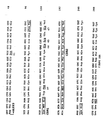
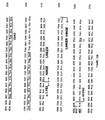
- nucleotide sequences are those corresponding to ⁇ TT1 and ⁇ TT2 as described on figures 4A and 4B .
- a particular nucleotide sequence is the sequence contained on phasmid pHEN4- ⁇ TT2 deposited at the BCCM/LMBP collection in Belgium on January 31, 1995 under no. LMBP3247.
- the invention further provides means for the preparation of bivalent or even multivalent monospecific DNA constructs of variable fragments of an immunoglobulin devoid of light chains and their expression products. It thus gives access to the preparation of monovalent bispecific or multi specific variable constructs obtained from sequences encoding V HH fragments combined with a linker sequence.
- Bivalent monospecific constructs contain 2 nucleotide sequences coding for V HH fragments directed against the same antigen or epitope.
- Monovalent bispecific constructs contain on one molecule one nucleotide sequence coding for a V HH fragment directed against one antigen or epitope and another nucleotide sequence coding for a fragment directed against another antigen or epitope.
- the corresponding expression products can be obtained by genetic engeneering especially by expression in host cells, like bacteria (e.g. E. coli) or eukaryotic cells, of the above DNA constructs.
- variable fragment of the V HH type having a determined antigen specificity can be linked to at least one further variable fragment V HH having a determined similar or different specificity in terms of antigen-and/or epitope specificity.
- the obtained constructs (in terms of expression products) and especially the bivalent monospecific constructs advantageously offer means to improve the affinity for the antigen(s) against which they are obtained.
- the linker sequence between the V HH fragments can be for example a sequence corresponding to the coding sequence of the hinge domain of immunoglobulin devoid of light chains (e.g. the long hinge domain) as described by (Hamers-Casterman C. et al, 1993) or a sequence derived therefrom.
- the sequence coding for the hinge and CH 2 domains especially coding for the long hinge and CH 2 domains of an Immunoglobulin devoid of light chains can be used. These domains have been described in WO 94/04678 .
- the sequence used as linker between the V HH fragments is derived from the coding sequence of the hinge and is devoid of the terminal part containing nucleotides coding for the cysteine residue, or more generally devoid of the codons enabling dimerisation of the V HH fragment.
- Preferred linkers include: the sequence starting at nucleotide 400 and ending at nucleotide 479 or between nucleotides 479 and 486 of the nucleotide sequence disclosed on figure 15 or the sequence starting at nucleotide 400 and ending at nucleotide 495 or between nucleotides 487 and 495 of the nucleotide sequence of figure 15 .
- the linkers can be for instance obtained by digestion of a plasmid containing the coding sequence for the V HH , hinge and CH2 domains of an immunoglobulin devoid of light chains, with Bst Ell and Xmnl (or Kpnl) endonucleases and further amplification of the sequence with primers annealing to each end of the hinge coding sequence as described above and illustrated in the examples.
- constructs (monovalent or multivalent, monospecific or multispecific) can be obtained having a specificity with respect to two or more different toxins or generally antigens of different pathogen organisms including bacteria, viruses...
- the invention also relates to a process for the preparation of monovalent bispecific constructs of variable fragments of a heavy chain of an immunoglobulins which comprises the following steps:
- V HH fragments variable fragments having the same specificity or a different specificity with respect to the above fragments.
- V HH -hinge linker - V HH fragment coding sequences recovered from step b) must be digested so as to produce a nucleotide sequence having the following structure hing linker - V HH .
- n coding sequences are obtained wherein n is a number higher than 2.
- the sequence encoding the hinge domain preferably the long hinge domain of the immunoglobulins devoid of light chains is the nucleotide sequence comprising or corresponding to nucleotides 400 to 479 or up to nucleotides 486 of the sequence of figure 15 .
- the V HH fragment coding sequence linked to a nucleotide sequence encoding the hinge domain has to be amplified.
- Oligonucleotide primers have been defined which permit the amplification of the sequence of interest. These oligonucleotides anneal respectively with their 3' end to the beginning of the V HH gene or coding sequence and to the terminal part of the hinge coding sequence. Appropriate primers are for instance:
- These chosen primers contain target sequences for specific endonucleases, thus allowing the cloning of the digestion products of the amplified fragments in a suitable vector.
- the obtained DNA constructs are then used to transform host cells, for instance E. coli and the expressed proteins are then isolated and purified.
- the expression products of these DNA constructs are within the scope of the invention.
- the heavy-chain antibodies such as those derived from camel, and their fragments present clear advantages over other antibodies or fragments thereof derived from other animals. These are linked to the distinctive features of the heavy chain antibodies and in particular the novel fragments which can be produced by proteolytic cleavage within the hinge of these heavy-chain antibodies to generate the V HH and the (V HH h)2 fragments.
- the V HH domain of a heavy chain has distinct genetic entities which confer properties of solubility not found in VH fragments derived from conventional antibodies. This property, in addition to its small size and to the fact that the amino acid sequence of the framework region is very homologous to that of human, ensures a minimum of immunogenicity.
- V HH and the (V HH h)2 fragments can easily be produced by proteolytic cleavage of camel immunoglobulins or via recombinant DNA technology.
- V HH fragment to proteolytic cleavage by digestive enzymes (e.g. pepsin, trypsin) offer the possibility of treatment against important gut pathogens, such as Vibrio cholera and other vibrios, enterotoxic E.Coli, Salmonella species and Shigella or pathogens ingested with food such as Listeria.
- digestive enzymes e.g. pepsin, trypsin
- invertebrates are sea anemonies, coral and jellyfish, spiders, beas and wasps, scorpions.
- the venemous snakes are of particular importance and in particular those belonging to the families of Viperidae, Crotalidae and lapidea.
- Another field of application is in combination with the therapeutic use of toxins in medical or surgical practice where neurotoxins such as botulinum toxin are increasingly used.
- the invention also relates to the oligonucleotide primers described hereabove, either alone or in kits.
- results are presented, which prove the feasibility of generating specific camel V HH fragments with demonstrated folding and good binding affinity.
- antigen we choose the tetanus toxoid was chosen because comparisons are possible with published data.
- the tetanus toxoid is a highly immunogenic protein that is routinely used as a vaccine in humans to elicit neutralizing antibodies.
- the two camel V HH fragments that were identified were specific and- of high affinity.
- the affinities of the two camel V HH fragments appear to be comparable with those from the human anti-tetanus toxoid F AB 's recently obtained by Mullinas et al. (1990) and by Persson et at. (1991).
- the serum of a camel (Camelus dromedarius) was shown to be non-reacting with tetanus toxoid (RIT,Smith Kline Beecham, Rixensart, Belgium). This camel was injected with 100 ⁇ gr tetanus toxoid at days 9, 30,52, 90 and with 50 ⁇ gr at days 220, 293 and 449. The blood was collected 3 days after each injection.
- Peripheral blood lymphocytes were purified with Lymphoprep (Nycomed, Pharma) from the bleeding at day 452. Aliquots of 1.10 6 -5.10 6 cells were pelleted and frozen at - 85°C and subsequently used as an enriched source of B-cell mRNA for anti-tetanus toxoid.
- the mRNA was prepared from a total of 10 6 peripheral blood lymphocytes either by the "Micro FastTrack” mRNA isolation kit (invitrogen) or the “QuickPrep Micro mRNA Purification” kit of Pharmacia following the recommendations of the manufacturer. With both protocols, up to a few ⁇ gr of mRNA was obtained which was used in the subsequent cDNA synthesis step.
- the first-strand cDNA was synthesized with the Invitrogen "cDNA-cycle” or the Pharmacia “Ready-To-Go”kit.
- the first-strand cDNA was used immediately afterwards for the specific amplification of the camel V HH region by PCR.
- the primers used have following sequences : the BACK primer (5'-GA TGTGCAG CTGCAG GCGTCTGG(A/G)GGAGG-3'), the internal Pstl site is underlined) is designed to hybridize to the framework 1 region (codons 1 to 10) of the camel V HH , while the FOR primer (5'-CGCCATCAAGGTACCAGTTGA-3') hybridizes in the CH2 region.
- the PCR was carried out with the Taq polymerase from Boehringer Mannheim.
- the PCR product was purified according to standard protocols (Sambrook et al., 1989) and digested with the Pstl restriction enzyme of which the target site occurred in the BACK primer, and with BstEll which has a naturally occurring site in the framework 4 of the camel V HH regions.
- the resulting fragments of approximately 360 bp ( FIGURE 1 ) were ligated into the pHEN4 vector cut with the same restriction enzymes.
- the pHEN4 vector ( FIGURE 2 ) is the pHEN1 phasmid (Hoogenboom et al., 1991) - a pUC119 based vector -where the myc-tag was replaced by the decapeptide tag present in the ImmunoZAP H vector (Stratacyte).
- polylinker was modified to allow the cloning of the camel V HH gene between a Pstl and a BstEll site located after the PelB leader signal and in front of the decapeptide tag and gene III of bacteriophage M13.
- the ligated DNA material was precipitated with 10 volumes and resuspended in 10 ⁇ l water and electrotransformed in E.coli XL1 Blue MRF' cells (Strataaene). After electroporation according to the recommended protocol ( Stratagene ) we kept the cells for 1 hour at 37°C in 1 ml SOC medium before plating on LB plates containing 100 ⁇ g ampicilline/ml. After an over night incubation at 37°C the transformed cells were grown out into colonies and some 500,000 recombinant clones were obtained. About 20 colonies, randomly selected, were toothpicked and grown in selective medium (LB/Ampicilline) to prepare plasmid DNA and to check their insert by sequencing.
- selective medium LB/Ampicilline
- V HH region For each clone tested, we found a different V HH region with the aminoacid sequence and contents characteristic for a V HH originating from- a camel heavy chain immunoglobulin (Muyldermans et al., 1994). This indicates that a vast camel V HH library was generated.
- the cells were harvested by centrifugation and washed in LB medium supplemented with ampicilline and kanamycin (25 ⁇ g/ml). The cells were incubated overnight at 37°C to secrete the recombinant pHEN phasmid packaged within the M13virion containing a camel V HH fused to some of its M13gene III proteins (Hoogenboom et al., 1991).
- the phagemid virions were prepared according to the protocol described by Barbas et al. (1991).
- the phage pellets were resuspended in blocking solution (1% casein in phosphate buffered saline, PBS), filtered through a 0.2 ⁇ m filter into a sterile tube and used for panning.
- blocking solution 1% casein in phosphate buffered saline, PBS
- filtered through a 0.2 ⁇ m filter into a sterile tube For the panning the Falcon 3046' plates were coated overnight with 0.25 mg/ml or 2 mg/ml tetanus toxoid dissolved in PBS or hydrogencarbonate pH 9.6. The wells were subsequently washed and residual protein binding sites were blocked with blocking solution at room temperature for 2 hours.
- the adsorption of the phagemid virions on the immobilized antigen and the washing and elution conditions were according to Marks et al (1991) or were taken from the protocol described by the «Recombinant Phage Antibody System » of Pharmacia 4 consecutive rounds of panning were performed. After the fourth round of panning the eluted phagemid virions were added to exponentially growing TGI cells (Hoogenboom et al. 1991) and plated onampicilline containing LB plates. After overnight growth several colonies were grown individually in LB medium to midlogarithmic growing phase, and infected with M13K07 helper phage.
- the virions were prepared and tested for their binding activity against tetanus toxoid immobilised on microtiter plates.
- the presence of the virion binding to the immobilized antigen was revealed by ELISA using a Horse RadishPeroxidase/anti-M13 conjugate (Pharmacia).
- the percentage of binders was increasing after each round of panning. In the original library we found 3 clones out of 96 which showed binding with the immobilizes tetanus toxoid. This number was increased to 11, 48 and 80 after the first, second and third round of panning. All of the individual clones which were tested after the fourth round of panning were capable to recognize the antigen, as measured by ELISA ( FIGURE 3 ).
- the phasmid DNA of the two clones which scored positive in the tetanus toxoid ELISA were transformed into WK6 cells. These cells are unable to suppress the stopcodon present in the vector between the decapeptide tag and the gene III protein.
- the WK6 E . coli cells harboring the pHEN4-aTT1 or pHEN4-aTT2 phasmid were grown at 37°C in 1 liter of TB medium with 100 mgr ampicillin/ml and 0.1% glucose. When the cells reached an OD 550 of 1.0 we harvested the cells by centrifugation at 5000 rpm,10 minutes. The cell pellet was washed once in TB medium with ampicillin, but ommitting the glucose.
- the cells were finally resuspended in 1 liter of TB medium with ampicillin (100 ⁇ gr/ml). We induced the expression of the camel V HH domain by the addition of 1 mM IPTG and further growth of the cells at 28°C for 16 hours.
- the expressed proteins were extracted from the periplasmic space following the protocol described by Skerra and Plucthun (1988). We pelleted the E.coli cells by centrifugation at 4000g for 10 min. (4°C).
- the cells were resuspended in 10 ml TES buffer (0.2 M Tris-HCl pH 8.0, 0.5 mMEDTA, 0.5 M sucrose). The suspension was kept on ice for 2 hours.
- the periplasmic proteins were removed by osmotic shock by addition of 20 ml TES diluted 1/4 with water. The suspension was kept on ice for 1. hour and subsequently centrifuged at 12,000 g for 30 minutes at 4°C. The supernatant contained the expressed camel V HH domain.
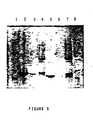
- the extract corresponding to 400 ⁇ l cell culture was applied under reducing conditions on a SDS/polyacrylamide protein gel. The extracted proteins were visualized in the SDS/polyacrylamide gels by Coomassie blue staining ( FIGURE 5 ). A protein band with an apparent molecular weight of 16,000 D was clearly present in the E.col i cultures containing the recombinant clones and induced with IPTG.
- the presence of the camel V HH proteins in the extract was revealed with IPTG.
- the presence of the camel V HH proteins in the extract was revealed by Western blot using a specific rabbit anti-camel V HH or rabbit anti-dromedary IgG serum or the anti-tag antibody.
- the fractions containing the pure V HH were pooled and the concentration was measured spectrophotometrically using a calculated E 280 (0.1 %) of 1.2 and 2.3 respectively for the ⁇ TT1 and ⁇ TT2. From the UV absorption at 280 nm of the pooled fraction we could calculate a yield of 6 mgr of purified protein per liter of bacterial culture. The purified protein could be further concentrated by ultrafiltration to 6 mgr/ml in PBS or water without any sign of aggregation, as seen on the UV spectrum.
- the ⁇ TT2 was brought at a concentration of 3.9 x 10 -6 M and used it for CD measurement ( FIGURE 7 ).
- the CD spectrum is characteristic for a polypeptide with a b-pleated sheet folding as expected for a well structurated immunoglobulin fold (Johnson, 1990).
- the binding of the camel V HH antibody to the tetanus toxoid immobilised on the microtiter plates was revealed by the successive incubation with firstly, the rabbit anti-camel V HH or rabbit anti-dromedary IgG and secondly a goat anti-rabbit/atkaline phosphatase conjugated antibodies (Sigma).
- the apparent affinity of the camel V HH proteins against tetanus toxoid was estimated by inhibition ELISA exactly as described by Persson et al. (1991) for the human anti-tetanus toxoid F AB fragments they produced in E.coli
- affinity constant by ELISA is however, more reliable if determined according to the procedure of Friguet et al. (.1987). With this protocol we found an affinity constant of 6.10 7 M -1 and 2.10 7 M -1 for the ⁇ TT1 and ⁇ TT2 respectively. These affinities are consistent with a specific V HH -antigen interaction (the polyspecific antibodies generally bind their antigen with affinities of 10 6 M -1 or less (Casali et al. 1989)).
- Tetanus toxin consists of three domains.
- the C fragment binds to the neuronal cells, it is said to be the neurospecific binding domain.
- the B domain appears to be involved in the neuronal penetration of the A domain or L chain (Montecucco & Schiavo, 1993).
- the L chain is responsible for the intracellular activity.
- the C fragment is the most immunogenic part of the tetanus neurotoxin, and a recombinant C fragment is commercially available ( Boehringer and Callbiochem).
- aTT1 bacterial extract binds equally well both to the complete tetanus toxoid and to the recombinant C fragment. Therefore the epitope of this camel V HH is present on the C fragment.
- the ⁇ TT2 extract binds to the complete tetanus toxoid, but not to the C fragment. Therefore the ⁇ TT2 recognizes an epitope located on the A or B domain.
- the neutralizing activity of the purified camel ⁇ TT1 or ⁇ TT2 V HH domains against tetanus toxin was tested.
- 400 ngr tetanus toxin SmithKline Beecham Biologicals
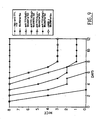
- mice The survival of the mice was followed over a period of 2 weeks ( FIGURE 9 ). It is clear that all mice injected with the tetanus toxin alone or in the presence of a non-specific purified camel V HH (cVH21 of Muyldermans et al., 1994) were killed within 3 days. The survival of the mice injected with the tetanus toxin was increased significantly by the co-injection of only 4 mgr of the purified camel ⁇ TT1 or ⁇ TT2. The survival was even more pronounced for the co-injection of tetanus toxin with 40 mgr of camel V HH . It appears that the ⁇ TT1 had a sligthly higher neutralizing activity than the ⁇ TT2.
- V HH fragments have been obtained against lysozyme.
- Hen Egg Lysozyme HEL
- camel Camelus dromedarius
- the serum of a camel was shown to be non-reacting with lysosyme.
- We injected this camel with 100 ⁇ g lysozyme (Boehringer) at days 9, 30, 52, 90 and with 50 ⁇ g at days 220, 293 and 449.
- the blood was collected on average 3 days after each injection.
- the virions were prepared and tested for their binding activity against lysozyme immobilised on microtiter plates.
- the percentage of binders was increasing after each round of panning. Twenty positive clones were grown and tested by PCR to checks the presence of an insert with the proper size of the V HH gene, and their DNA was finally sequenced. The sequencing data revealed that two different clones were present among this set of 10 clones. The phasmid DNA of these clones was named pHEN4-aLYS2 and pHEN4- ⁇ LYS3. and it was shown that these two different clones contained a cDNA coding for a camel V HH ( Figures 11 , 12 ).
- V HH For the purification of the anti-lysozyme camel V HH we concentrated the periplasmic extract 10 times by ultrafiltration (Milipore membrane with a cut off of 5000 Da). After filtration the concentrated extract from the pHEN4- ⁇ LYS2 can be purified by Protein A-Sepharose chromatography. Elution of the ⁇ LYS2 V HH is done with 100 mM Tri-ethanol amine. The pH of eluate is immediately neutralized with 1 M Tris-HCl (pH 7.4). Unfortunately the expressed ⁇ -LYS3 V HH does not bind to Protein A Therefore the purification has to be performed by affinity chromatography.
- the concentrated extract is applied on a colmumn of lysozyme immobilized on CNBr-Sepharose (Pharmacia). Elution of the anti-lysozyme V HH is obtained with 100 mM Tri-ethanolamine. The eluate has to be neutralized as described above. Further purification of both anti-lysozyme V HN 's can obtained by gelfiltration on Superdex-75 (Pharmacia) equilibrated with PBS (10 mM phosphate buffer pH7.2, 150 mM NaCl). The peak containing the anti-lysozyme activity eluted at the expected molecular weight of 16,000 Da indicating that the protein behaved as a monomer and doesn't dimerize in solution.
- the fractions containing the pure V HH were pooled and the concentration was measured spectrophotometrically. A yield of 5 mg of purified protein per liter of bacterial culture was calculated. The purified protein could be further concentrated by ultrafiltration to 10 mg/ml in PBS or water without any sign of aggregation, as seen on the UV spectrum.
- the (pHEN4- ⁇ -LYS3) or the (pHEN4-a-TT2) plasmids were digested with BstEll and Xmn I.
- BstEll cuts in the framework 4 of the camel V HH
- Xmn I cuts in the ⁇ -lactamase gene of pHEN4.
- the DNA fragment containing the camel V HH was isolated from agarose gel.
- a clone containing a camel V HH with unknown specificity, the camel long hinge and the first part of the CH2 domain cloned in pBluescript (Statagene) was cut with the same enzymes (Bst Ell and Xmn I) and the DNA resulting fragment containing the hinge and CH2 parts was isolated from agarose gel.
- the two DNA fragments (one containing the V HH of determined specificity, the other containing the coding sequence of the hinge and CH 2 domains) were mixed and ligated to each other and used to transform E. coli cells.
- a (pHEN4- ⁇ -LYS3-iong hinge-CH2) plasmid and a (pHEN4- ⁇ -TT2-long hinge-CH2) plasmid have been obtained.
- the (pHEN4- ⁇ -LYS3-iong hinge-CH2) plasmid was taken as template for amplification with primers A4 and AM007.
- the PCR fragment is double digested with Sfi I and Not I, and the resulting fragments are cloned in the pHEN-4 vector cleaved with the same enzymes.
- the ligated material is transformed in WK6 E. coli cells and selected on ampicillin.
- the transformed clones are checked for their insert by PCR and by sequencing.
- the plasmid (pHEN4- ⁇ -LYS3-long hinge/Cys) and (pHEN4- ⁇ -TT2-long hinge/Cys) were generated.
- V HH ⁇ -LYS3-long hinge/Cys or ⁇ -TT2-long hinge/Cys proteins lead to isolation of a dimerised molecule because of the formation of the disulfide bridge between the Cys residue within the long hinge.
- camel V HH dimer constructs ( ⁇ -LYS3 long hinge/Cys) 2 and ⁇ -TT2 long hinge/Cys) 2 are well expressed in E. coli upon induction with IPTG, and are easily obtained from the periplasm. They were quite soluble and bound the original antigen with high affinity and high specificity.
- bispecific proteins consisting of the camel V HH of ⁇ -LYS3 linked to the camel V HH of ⁇ -LYS2 and the that of camel V HH of ⁇ -LYS3 linked to the camel V HH of ⁇ -TT2 can be isolated. Both proteins are expressed well in E. coli and can be extracted from the periplasm. In ELISA the binding properties of the latter protein to the tetanus toxoid and to the lysosyme can be shown.
Landscapes
- Chemical & Material Sciences (AREA)
- Health & Medical Sciences (AREA)
- Organic Chemistry (AREA)
- Immunology (AREA)
- Life Sciences & Earth Sciences (AREA)
- General Health & Medical Sciences (AREA)
- Medicinal Chemistry (AREA)
- Biochemistry (AREA)
- Biophysics (AREA)
- Genetics & Genomics (AREA)
- Molecular Biology (AREA)
- Proteomics, Peptides & Aminoacids (AREA)
- Virology (AREA)
- Animal Behavior & Ethology (AREA)
- Oncology (AREA)
- Chemical Kinetics & Catalysis (AREA)
- General Chemical & Material Sciences (AREA)
- Nuclear Medicine, Radiotherapy & Molecular Imaging (AREA)
- Pharmacology & Pharmacy (AREA)
- Communicable Diseases (AREA)
- Public Health (AREA)
- Veterinary Medicine (AREA)
- Medicines Containing Antibodies Or Antigens For Use As Internal Diagnostic Agents (AREA)
- Peptides Or Proteins (AREA)
- Micro-Organisms Or Cultivation Processes Thereof (AREA)
- Preparation Of Compounds By Using Micro-Organisms (AREA)
Abstract
Description
- The present invention relates to protein constructs using fragments, especially variable fragments of immunoglobulins which are by nature devoid of light chains these fragments being nevertheless capable of exhibiting a recognition and binding activity toward specific antigens. These fragments of immunoglobulins can for example be obtained by the expression in host cells for example in prokaryotic cells or eukaryotic cells of nucleotide sequences obtained from animals naturally expressing so-called "two-chain immunoglobulins", for instance from animals of the camelid family.
- The present invention further relates to the use of such protein construct with immunoglobulin fragments formed of at least one heavy chain variable fragment or derived therefrom, for therapeutic or veterinary purposes and especially for passive immunotherapy or serotherapy.
- The protein constructs of the invention have binding specificity for one or several antigen(s), wherein a first variable fragment (VHH) of a heavy polypeptide chain of an immunoglobulin devoid of light chains for instance obtainable from animals of the Camelid family is linked through a linker sequence, to one further variable fragment (VHH) of a heavy polypeptide chain of an immunoglobulin devoid of light chains, wherein said linker sequence between the variable fragments is derived from the sequence of a hinge domain of an immunoglobulin devoid of light chain, said linker being devoid of the cysteine residues responsible for dimerisation.
- According to a particular embodiment of the invention, a protein construct is further linked to at least one hinge linker- VHH, wherein said hinge linker and VHH VHH are as defined above.
- Functional immunoglobulins devoid of light polypeptide chains termed «two-chain immunoglobulin » or « heavy-chain immunoglobulin » have been obtained from animals of the family of camelids and have been described in an international patent application published under number
WO 94/04678 - The isolation and characterization of these immunoglobulins, together with their cloning and sequencing have been described in the above referrenced documents which are incorporated by reference in the present application.
- According to
WO 94/04678 - These immunoglobulins having only two chains, neither correspond to fragments obtained for instance by the degradation in particular the enzymatic degradation of a natural four-chain model immunoglobulin, nor correspond to the expression in host cells, of DNA coding for the constant or the variable regions of a natural four-chain model immunoglobulin or a part of these regions, nor correspond to antibodies produced in lymphopaties for example in mice, rats or human.
- The immunoglobulins devoid of light chains are such that the variable domains of their heavy chains have properties differing from those of the four-chain immunoglobulin variable heavy chain (VH). For clarity reasons, this variable domain according to the invention will be called VHH in this text to distinguish it from the classical VH of four-chain immunoglobulins.The variable domain of a heavy-chain immunoglobulin according to the invention has no normal interaction sites with the VL or with the
C H1 domain which do not exist in the heavy-chain immunoglobulins. It is hence a novel fragment in many of its properties such as solubility and conformation of main chains. Indeed the VHH of the invention can adopt a three-dimensional organization which distinguishes from the three-dimensional organization of known four-chain immunoglobulins according to the description which is given by Chothier C. and Lesk A. M, (1987- J.Mol. Biol. 197, 901-917). - According to the results presented in patent application
WO 94/04678 - A further characteristic of these two-chain immunoglobulins is that their heavy polypeptide chains contain a variable region (VHH) and a constant region (CH) according to the definition of Roitt et al but are devoid of the first domain of the constant region is called
C H1. - These immunoglobulins of the type described hereabove can comprise type G immunoglobulins and especially immunoglobulins which are termed immunoglobulins of class 2 (IgG2) or immunoglobulins of class 3 (IgG3), according to the classification established in patent application
WO 94/04678 - The absence of the light chain and of the first constant domain lead to a modification of the nomenclature of the immunoglobulin fragments obtained by enzymatic digestion, according to Roitt et al.
- The terms Fc and pFc on the one hand, Fc' and pFc' on the other hand corresponding respectively to the papain and pepsin digestion fragments are maintained.
- The terms Fab, F(ab)2,F(ab')2,Fabc, Fd and fv are no longer applicable in their original sense as these fragments have either a light chain, the variable part of the light chain or the CH1 domain.
- The fragments obtained by papain digestion or by V8 digestion, composed of the VHH domain of the hinge region will be called FVHHh or F(VHHh)2 depending upon whether or not they remain linked by the disulphide bonds.
- The immunoglobulins referring to the hereabove given definitions can be originating from animals especially from animals of the camelid family. These heavy-chain immunoglobulins which are present in camelids are not associated with a pathological situation which would induce the production of abnormal - antibodies with respect to the four-chain immunoblobulins. On the basis of a comparative study of old world camelids (Camelus bactrianus and Camelus dromaderius) and new world camelids (for example Lama Paccos, Lama Glama, and Lama Vicugna) the inventors have shown that the immunoglobulins devoid of light polypeptide chains are found in all species. Nevertheless differences may be apparent in molecular weight of these immunobglobulins depending on the animals. Especially the molecular weight of a heavy chain contained in these immunoglobulins can be from approximately 43 kd to approximately 47 kd, in particular 45 kd.
- Advantageously the heavy-chain immunoglobulins of the invention are secreted in blood of camelids.
- The variable fragments of heavy chains of Immunoglobulins devoid of light chains can be prepared starting from immunoglobulins obtainable by purification from serum of camelids according to the process for the purification as described in detail in the examples of
WO 94/04678 - These fragments can also be generated in host cells by genetic engineering or by chemical synthesis. Appropriate host cells are for instance bacteria (e.g. E. coli) eucaryotic cells including yeasts or animal cells including mammalian cells, or plant cells.
- The observation by the inventors that Camelidae produce a substantial proportion of their functional immunoglobulins as a homodimer of heavy chains lacking the
C H1 domain and devoid of light chains(Hamers-Casterman et al, 1993), led to the proposal of having recourse to an immunized camel to generate and select single variable antibody fragments (VHH) and furthermore give access to the corresponding nucleotide sequences. - Cloned camel single VHH fragments were displayed on bacteriophages for selection and in bacteria for the large scale production of the soluble proteins, and were shown to possess a superior solubility behaviour and affinity properties compared to the mouse or human VH equivalents (Muyldermans et al, 1994). Following this strategy, one would obtain small ligand binding molecules (MW around 16,000 D) which are not hindered by the presence of an oligopeptide linker (Borrebaeck et al., 1992) or not inactivated by the disassembly of the VH-VL complex (Glockshuber et al., 1990). The camel VHH fragments have the additional advantage that they are characteristic of the heavy chain antibodies which are matured in vivo in the absence of light chains.
- The inventors have obtained evidence that variable fragments of high chains of immunoglobulins devoid of light chains can display an effective therapeutic activity when they are generated against a determined antigen.
- To develop this technology of preparing and identifying usefull camel VHH fragments, it is critical (i) that camels can be immunized with a variety of antigens, (ii) that the camel VHH genes can be cloned and expressed on filamenteous phages and in E.coli for easy selection with the immobilized antigen by panning, (iii) that the expressed camel VHH's are properly folded, and (iv) that they have good solubility properties and possess high affinities and specificities towards their antigen.
- Camel VHH genes derived from the heavy chain immunoglobins lacking the light chains were previously cloned and analysed (Muyldermans et al., 1994). A comparison of the amino acid sequences of these camel VHH clones clearly showed that the key features for preserving the characteristic immunoglobulin fold are all present. The specific amino acid replacements observed in the camel VHH clones could correlate with the absence of the VL (variable light chains) and the functionality of the camel single VHH domain (Muyldermans et al., 1994).
- The invention discloses a variable fragment (VHH) of a heavy chain of an immunoglobulin devoid of light chains, which is encoded by_a nucleotide sequence obtainable by the following process:
- treating blood lymphocytes or other appropriate cells of an animal of the Camelid family previously immunized with a determined antigen, in order to give access to their mRNA,
- synthesizing a first strand of cDNA starting from the obtained mRNA,
- contacting the obtained cDNA with at least two different primer oligonucleotides in conditions allowing their hybridization to at least two complementary nucleotide sequences contained in the cDNA, said primers comprising a BACK primer (back p1) having the following nucleotide sequence 5'-GATGTGCAGCTGCAGGCGTCTGG(A/G)GGAGG-3' and a FOR primer (forp 1) replying to the following nucleotide sequence 5'-CGCCATCAAGGTACCGTTGA-3' or 5'-CGCCATCAAGGTACCAGTTGA-3 '
- amplifying the DNA fragment located between the nucleotide sequence hybridized with said primers and,
- recovering amplified DNA corresponding to bands of different size orders including:
- a band of around 750 basepairs which is the amplified product of the variable heavy chain (VH), CH1, hinge and part of CH2 region of a four-chain immunoglobin,
- a band of around 620 basepairs which is the amplified product of the variable heavy-chain (VHH), long hinge, and part of the CH2 of the camel two-chain immunoglobulin IgG2,
- a band of around 550 basepairs which is the amplified product of the variable heavy-chain (VHH), short hinge, and part of the CH2 of the camel two-chain immunoglobulin IgG3,
- - purifying the two shortest bands of around 620 and 550 basepairs from agarose gel, for example by Gene Clean,
- - recovering the amplified DNA fragments containing nucleotide sequences encoding the VHH fragments,
- - digesting the amplified products with restriction enzymes having target sites within the amplified fragments and/or in the nucleotide primers, for example with Pstl and BstEll,
- - recovering the digested amplified DNA fragments,
- - ligating the amplified DNA fragments to a phasmid vector, for example in a pHEN4 vector, in conditions allowing the expression of the amplified fragments when the obtained recombinant vector is used to transform a host cell,
- - transforming a determined bacterial host cell for example an E. Coli cell with the obtained recombinant phasmid vector, and growing the cells on selective medium, to form a library,
- - infecting the obtained library of recombinant host cells after culture in an appropriate selective medium, with bacteriophages, for instance M13K07 bacteriophages to obtain recombinant phagemid virions,
- - incubating the recombinant host cells in conditions allowing secretion of recombinant phagemid virions particles containing the recombinant phasmid, for instance the pHEN4 phasmid packaged within the M13 virion.
- - isolating and concentrating the recombinant phagemid virions,
- -submitting the phagemid virions to several rounds of panning with the antigen of interest previously immobilized, in conditions allowing the adsorption of the phagemid virions on the immobilized antigen,
- - eluting the adsorbed phagemid virions, and growing them on appropriate cells,
- - amplifying the phagemid virions by infecting the cells with helper bacteriophage,
- - recovering the virions and testing them for their binding activity against the antigen of interest, for example by ELISA,
- - recovering the phagemid virions having the appropriate binding activity,
- - isolating the nucleotide sequence contained in the phasmid vector and capable of being expressed on the phagemid virions as a VHH aminoacid sequence having the appropriate binding activity.
- In a preferred embodiment of the invention, the variable VHH fragments are obtainable by adding to the hereabove described amplification step of the cDNA with BACK and FOR primers (p1), a further amplification step with a BACK primer corresponding to the oligonucleotide sequence which has been described hereabove (back p1) and the FOR primer (for p2) having the following nucleotide sequence: 5'- CG ACT AGT GCG GCC GCG TGA GGA GAC GGT GAC CTG-3'. Not and BstEll sites which can be used for cloning in the pHEN4 vector have been underlined. This FOR primer allows hybridization to the codon position of framework 4 (FR4) region of the VHH nucleotide sequences (amino acid position 113-103).
- According to another variant of the process described, this additional amplification step can replace the amplification step which has been described with BACK primer and a FOR primer having respectively the following nucleotide sequences:
- 5'-GATGTGCAGCTGCAGGCGTCTGG(A/G)GGAGG-3'
- 5'-CGCCATCAAGGTACCGTTGA-3' or
- 5'-CGCCATCAAGGTACCAGTTGA-3'
- In another embodiment of the invention the amplification step of the synthetized cDNA is performed with oligonucleotide primers including hereabove described BACK primer and FOR primer having the following sequences:
- FOR primer 3: 5'- TGT CTT GGG TTC TGA GGA GAC GGT -3'
- FOR primer 4: 5'- TTC ATT CGT TCC TGA GGA GAC GGT -3'
- According to this latter embodiment, the VHH fragments of the invention are immediately and specifically amplified by a single amplification (for instance PCR reaction) step when the mixture of FOR primers is used.
- These latter primers hybridize with the hinge/
framework 4 and short hinge/framework 4 respectively. Each of these FOR primers allows the amplification of one IgG class according to the classification given in patent applicationWO 94/04678 - The variable VHH fragments corresponding to this definition can also be obtained from other sources of animal cells, providing that these animals are capable of naturally producing immunoglobulins devoid of light chains according to those described in the previous patent application
WO 94/04678 - These variable fragments (VHH) can also be obtained by chemical synthesis or by genetic engineering starting from DNA sequences which can be obtained by the above described process.
- The variable fragment of a heavy chain of an immunoglobulin devoid of light chains according to the preceding definitions is specifically directed against an antigen against which the animal has been previously immunized, either by natural contact with this antigen or by administration of this antigen in order to generate an immune response directed against it.
- The process which is proposed hereabove to prepare a nucleotide sequence coding for the variable fragments of the invention contains steps of phage display library construction which allow the selection of nucleotide sequences coding for variable fragments of heavy chains having the desired specificity.
- According to one preferred embodiment of the invention, the variable fragments of a heavy chain of a immunoglobulin is obtainable from an animal having been previously immunized with a toxin, especially a toxin of a bacteria or a part of this toxin sufficient to enable the production of immunoglobulins directed against this toxin and especially immunoglobulins devoid of light chains.
- According to another embodiment of the invention, the variable fragments of a heavy chain of a immunoglobulin is obtainable from an animal having been previously immunized with substances contained in venom of animals.
- The antigen used for immunization of the animals is usually under a non toxic form.
- The variable fragments according to the invention can be derived from immunoglobulins belonging to different classes especially belonging to IGg2 or IGg3 immunoglobulin classes, according to the classification given in patent application
WO/04676 - In a preferred embodiment of the invention, the variable fragment of a heavy-chain of an immunoglobulin devoid of light chains is directed against the tetanus toxin of Clostridium tetani or against a fragment thereof.
- The variable fragments of heavy chains of immunoglobulins devoid of light chains can be also generated against toxins or part thereof from pathogenic organisms such as bacteria and especially can be chosen among the toxins or toxoids of the following bacteria: Clostridium, especially Clostridium Botulinum or Clostridium Pertringens, Staphylococcus Pseudomonas, Pasteurella, Yersinia, Bacillus Anthracis, Neisseria, Vibrio, especially Vibrio cholera, enterotoxic E. Coli. Salmonella, Shigella, Listeria.
- Other antigens appropriate for the preparation of the VHH fragments of the invention can be obtained from the following organism: anemonies, coral, jellyfish, spiders, beas, wasps, scorpions, snakes, including those belonging to the families of Viperidae, Crotalidae, Lapidea.
- According to another embodiment of the invention, the variable fragment VHH of a heavy chain of an immunoglobulin devoid of light chains is characterized in that it comprises the following aminoacid sequences:
 or
or wherein CDR1, CDR2 and CDR3 represent variable amino acid sequences providing for the recognition of a determined epitope of the antigen used for the immunization of Camelids, CDR1, CDR2 and CDR3 sequences comprising from 5 to 25 amino acid residues preferably CDR1 contains from 7 to 12 amino acid residues, CDR2 contains from 16 to 21 amino acid residues and CDR3 contains from 7 to 25 amino acid residues.
- The camel VHH specific amino acid residues Ser 11,
Phe 37,Glu 44,Arg 45, Glu 46,Gly 47 are underlined. - One preferred variable fragment according to the invention is encoded by a nucleotide sequence present in recombinant phasmid pHEN4-αTT2(WK6) deposited at the BCCM/LMBP (Belgium) under accession number LMBP3247.
- The pHEN4αTT2 (described on
Figure 2 ) is a phasmid carrying a PelB leader signal, a camel VHH gene of which the protein binds tetanus toxoid, a decapeptide tag (from ImmunoZAP H of Stratacyte) and gene IIIp of M13 in the pUC 119 polylinker between the HindIII and EcoRI sites. This phasmid was transformed in E. coli WK6 cells. - A specific variable fragment according to the invention is for instance characterized in that it comprises the following αTT1 aminoacid sequence:

- According to another preferred embodiment of the present invention, the variable fragment comprises the following αTT2 aminacid sequence :


- In a preferred embodiment of the invention, the variable VHH fragment of the invention is altered in order to diminish its immunogenic properties. Such a modification can lead to an alternated immunological reaction against the VHH fragments of the invention when they are administered to a host either human or animal, for passive immunoprotection for example.
- The invention further relates to a pharmaceutical composition comprising a protein construct according to those which have been defined hereabove, in admixture with a physiologically acceptable vehicle.
- Such pharmaceutical composition can be used for the treatment by passive immunisation, of infections or acute intoxications by toxins such as those of Clostridium, especially Clostridium Botulinum or Clostridium Perfringens, Staphylococcus, Pseudomonas, Pasteurella, Yersinia, Bacillus Anthracis, Neisseria, Vibrio, especially Vibrio cholera, enterotoxic E. Coli, Salmonella, Shigella, Listeria or anemonies, coral, jellyfish, spiders, beas, wasps, scorpions, snakes, including those belonging to the families of Viperidae, Crotalidae, Lapidea.
- The present invention further discloses nucleotide sequences coding for a variable fragment (VHH) of a heavy chain of an immunoglobulin devoid of light chains, obtainable by the process which has been described hereabove.
- Specific nucleotide sequences are those corresponding to αTT1 and αTT2 as described on
figures 4A and4B . - A particular nucleotide sequence is the sequence contained on phasmid pHEN4-αTT2 deposited at the BCCM/LMBP collection in Belgium on January 31, 1995 under no. LMBP3247.
- The invention further provides means for the preparation of bivalent or even multivalent monospecific DNA constructs of variable fragments of an immunoglobulin devoid of light chains and their expression products. It thus gives access to the preparation of monovalent bispecific or multi specific variable constructs obtained from sequences encoding VHH fragments combined with a linker sequence. Bivalent monospecific constructs contain 2 nucleotide sequences coding for VHH fragments directed against the same antigen or epitope. Monovalent bispecific constructs contain on one molecule one nucleotide sequence coding for a VHH fragment directed against one antigen or epitope and another nucleotide sequence coding for a fragment directed against another antigen or epitope.
- The corresponding expression products (protein constructs) can be obtained by genetic engeneering especially by expression in host cells, like bacteria (e.g. E. coli) or eukaryotic cells, of the above DNA constructs.
- Accordingly a variable fragment of the VHH type having a determined antigen specificity, can be linked to at least one further variable fragment VHH having a determined similar or different specificity in terms of antigen-and/or epitope specificity.
- The obtained constructs (in terms of expression products) and especially the bivalent monospecific constructs advantageously offer means to improve the affinity for the antigen(s) against which they are obtained.
- The linker sequence between the VHH fragments can be for example a sequence corresponding to the coding sequence of the hinge domain of immunoglobulin devoid of light chains (e.g. the long hinge domain) as described by (Hamers-Casterman C. et al, 1993) or a sequence derived therefrom.
- As an example, in order to ligate these two variable coding sequences of VHH fragments to obtain monovalent bispecific construct, the sequence coding for the hinge and CH2 domains, especially coding for the long hinge and CH2 domains of an Immunoglobulin devoid of light chains can be used. These domains have been described in
WO 94/04678 - As another example, for instance for the preparation of bispecific or multispecific DNA constructs, the sequence used as linker between the VHH fragments is derived from the coding sequence of the hinge and is devoid of the terminal part containing nucleotides coding for the cysteine residue, or more generally devoid of the codons enabling dimerisation of the VHH fragment.
- Preferred linkers include: the sequence starting at
nucleotide 400 and ending at nucleotide 479 or between nucleotides 479 and 486 of the nucleotide sequence disclosed onfigure 15 or the sequence starting atnucleotide 400 and ending at nucleotide 495 or between nucleotides 487 and 495 of the nucleotide sequence offigure 15 . - The linkers can be for instance obtained by digestion of a plasmid containing the coding sequence for the VHH, hinge and CH2 domains of an immunoglobulin devoid of light chains, with Bst Ell and Xmnl (or Kpnl) endonucleases and further amplification of the sequence with primers annealing to each end of the hinge coding sequence as described above and illustrated in the examples.
- As an example, constructs (monovalent or multivalent, monospecific or multispecific) can be obtained having a specificity with respect to two or more different toxins or generally antigens of different pathogen organisms including bacteria, viruses...
- The invention also relates to a process for the preparation of monovalent bispecific constructs of variable fragments of a heavy chain of an immunoglobulins which comprises the following steps:
- a. ligating a nucleotide sequence coding for a variable VHH fragment having a determined antigen- or epitope- specificity to a linker nucleotide sequence to form a VHH-linker fragment;
- b. ligating the formed nucleotide sequence coding for the VHH-linker fragment to a nucleotide sequence coding for another VHH fragment having a different antigen- and/or epitope-specificity,
- c. optional, ligating further sequences coding for variable fragments of an immunoglobulin devoid of light chain, via a linker,
- d. expressing the obtained DNA construct of step b or c. in an appropriate host cell and isolating and purifying the resulting molecule,
- According to a preferred embodiment, additional steps of ligation are performed with sequences coding for variable fragments (VHH fragments) having the same specificity or a different specificity with respect to the above fragments.
- In such a case the VHH-hinge linker - VHH fragment coding sequences recovered from step b) must be digested so as to produce a nucleotide sequence having the following structure hing linker - VHH. In accordance (VHH - hinge linker)n coding sequences are obtained wherein n is a number higher than 2.
- Preferably, the sequence encoding the hinge domain preferably the long hinge domain of the immunoglobulins devoid of light chains is the nucleotide sequence comprising or corresponding to
nucleotides 400 to 479 or up to nucleotides 486 of the sequence offigure 15 . - In a particular embodiment of the process for the preparation of bivalent or multivalent monospecific or multispecific constructs, the VHH fragment coding sequence linked to a nucleotide sequence encoding the hinge domain has to be amplified. Oligonucleotide primers have been defined which permit the amplification of the sequence of interest. These oligonucleotides anneal respectively with their 3' end to the beginning of the VHH gene or coding sequence and to the terminal part of the hinge coding sequence. Appropriate primers are for instance:
- A4 (Sf I site underlined):

- AM007:
5'GGCCATTTGCGGCCGCATTCCATGGGTTCAGGTTTTGG-3' - These chosen primers contain target sequences for specific endonucleases, thus allowing the cloning of the digestion products of the amplified fragments in a suitable vector.
- The obtained DNA constructs are then used to transform host cells, for instance E. coli and the expressed proteins are then isolated and purified. The expression products of these DNA constructs are within the scope of the invention.
- The heavy-chain antibodies, such as those derived from camel, and their fragments present clear advantages over other antibodies or fragments thereof derived from other animals. These are linked to the distinctive features of the heavy chain antibodies and in particular the novel fragments which can be produced by proteolytic cleavage within the hinge of these heavy-chain antibodies to generate the VHH and the (VHHh)2 fragments. The VHH domain of a heavy chain has distinct genetic entities which confer properties of solubility not found in VH fragments derived from conventional antibodies. This property, in addition to its small size and to the fact that the amino acid sequence of the framework region is very homologous to that of human, ensures a minimum of immunogenicity. These properties would allow repetitive treatment with heavy chain VHH fragments for passive immunisation or antibody therapy. As mentioned above, VHH and the (VHHh)2 fragments can easily be produced by proteolytic cleavage of camel immunoglobulins or via recombinant DNA technology.
- The most important field of passive immunisation is intoxication due to bacterial toxins and in particular acute intoxication or intoxication due to drug resistant bacteria. Passive immunisation or treatment by antibodies is justified in those cases where vaccination is unpractical or its effects short-lived. They are particularly justified for acute intoxication which if left untreated would have lethal or cripling effects.
The following list of indications is non-exhaustive: - Tetanos due to infection by Clostridium tetani is an important post-trauma infection and current immunisations are not long lasting. It is also important in the veterinary field.
- Botulism due to ingestion of toxins produced by Clostridium Botulinum and related species.
- Gangrene due to infection by Clostridium.
- Necrotic Enteritis and Enterotoxemia in humans and livestock due to Clostridium Perfringens ingestion.
- Food poisoning due to Staphylococcal endotoxins in those cases where antibiotics are not recommended.
- Pseudomonas infection refractory to antibiotic treatment and in particular ocular infections where rapid intervention is warranted.
- Diphteria toxin infection
- Pasteurella and Yersinia infection causing lethal outcomes in human and livestock.
- Anthrax toxin produced by Bacillus Anthraxis and responsible for one of the five major livestock diseases.
- Infections due to other bacterial agents such as Neisseria or viral agents.
- Furthermore, the relative resistance of the VHH fragment to proteolytic cleavage by digestive enzymes (e.g. pepsin, trypsin) offer the possibility of treatment against important gut pathogens, such as Vibrio cholera and other vibrios, enterotoxic E.Coli, Salmonella species and Shigella or pathogens ingested with food such as Listeria.
- Another major target for immunotherapy is in the treatment of intoxication due to bites or contact with toxic invertebrates and vertebrates. Among the invertebrates are sea anemonies, coral and jellyfish, spiders, beas and wasps, scorpions. In the vertebrates, the venemous snakes are of particular importance and in particular those belonging to the families of Viperidae, Crotalidae and lapidea.
- Passive immunisation with partially purified immunoglobulins from immunized animals are allready being used. In developing countries, antitetanos and antidiphteria antisera are still produced on a very large scale, usually in horses. Anti-venom antibodies are produced, although on a much smaller scale, against venoms, especially snake venoms.
- Another field of application is in combination with the therapeutic use of toxins in medical or surgical practice where neurotoxins such as botulinum toxin are increasingly used.
- The invention also relates to the oligonucleotide primers described hereabove, either alone or in kits.
- Other characteristics of the invention will appear from the figures and the examples which are described hereafter.
-
FIGURE 1 : 1% agarose gel electrophoresis of the Pstl/BstEII digested PCR amplification product of the camel VHH gene (lanes 1 and 2) next to the 123 bp ladder of BRL used as a size marker (lane 4). The PCR product comigrates with the 3rd band of the marker, 369 bp in length. -
FIGURE 2 : Map of the pHEN4 with the nucleotide sequence of the VHH cloning site shown in the lower part of the figure. The Pstl and BstEII sites can be used to clone the camel VHH PCR product shown inFigure 1 . -
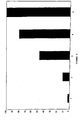
FIGURE 3 : 100 individual clones were randomly selected from the original camel VHH library (0), or after the first (1), second (2), third (3) or fourth (4) round of panning. After M13 infection the virions were tested for binding activity against immobilized tetanus toxoid. The number of positive clones are shown as a function of number of pannings. -
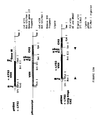
FIGURE 4 : Nucleotide sequence and the corresponding amino acid sequence of the two identified camel VHH anti tetanus toxoid clones pHEN4-αTT1 and pHEN4-αTT2. The framework Serll, Phe37 and Arg orCys 45 characteristic for the camel VHH heavy chain antibodies (Muyldermans et al, 1994) are double underlined. The three hypervariable or CDR's according to Kabat et al, (1991) are underlined. -
FIGURE 5 : SDS-polyacrylamide gel electrophoresis of the proteins extracted from the periplasm of WK6 cultures induced with IPTG.Lane 1 & 8, protein size marker (Pharmacia) MW are (from top of to bottom) 94,000; 67,000; 43,000; 30,000; 20,100 and 14,400D. Lanes Lane 3 & 4, Purified VHH domain of pHEN4-αTT2 at 10 and 1 microgram.Lanes 5 & 6, Purified VHH domain of pHEN4-αTT1 at 10 and 1 migrogram. The position of the expressed soluble camel VH protein is indicated with an arrow. It is clearly absent in the second lane. -
FIGURE 6 : The total periplasmic extract of 1 liter of culture of WK6 cells carrying the pHEN4-αΠ2 was concentrated to 5 ml and fractionated by gel filtration on Superdex 75 (Pharmacia) using 150mM NaCL, 10 mM sodiumphosphate pH7.2 as eluent. The pure VHH is eluted at the fractions between the arrows. -
FIGURE 7 : CD (Circular dichroism) spectrum (Absorbance versus wavelength in nm) of the purified VHH domain αTT2 at 3.9 x 10⁻⁶ Min water measured in a cuvette with a pathlength of 0.2 cm. The negative band near 217 and 180 nm and the positive band around 195 nm are characteristic for β structures (Johnson, 1990). -
FIGURE 8 : Specificity of antigen binding shown by competitive ELISA. The experiments were carried out in triplicate with the bacterial periplasmic extracts of pHEN4-αTT1 and pHEN4-αTT2. -
FIGURE 9 : Number of mice surviving after I.P injection of 100 ngr tetanus toxin (10 x LD50) or co-injection of tetanus toxin with the purified VHHαTT1, αTT2 or the non-specific cVH21 (Muyldermans et al., 1994) at 4 or 40. microgram. -
FIGURE 10 : Variability plot of the camelid VHH sequence (CDR3 andframework 4 regions are not included).
The alignment of the VHH amino acid sequences of camel and lama (a total of 45 sequences) was performed according to Kabat et al. The variability at each position was calculated as the number of different amino acids occuring at a given position, divided by the frequency of the most common amino acid at that position. Positions are numbered according to Kabat et al. The positions above the horizontal bar indicate the amino acids which are referrred to as (CDR1) and (CDR2) in the consensus sequence.
A variability number equal to 1 indicates a perfectly conserved amino acid at that position. The higher the variability number the more likely it will be that the amino acid at this position will deviate from the consensus sequence. -
FIGURE 11 : Nucleic acid sequence of LYS2 VHH and translation product thereof. -
FIGURE 12 : Nucleic acid sequence of LYS3 VHH and translation product thereof. -
FIGURE 13 : Scheme to construct the bivalent monospecific anti-LYS3 camel VHH. -
FIGURE 14 : Scheme to construct the monovalent bispecific anti-LYS3-long hinge linker-anti-LYS2-Tag. -
FIGURE 15 : Nucleotide and amino acid sequence of the anti-LYS3-long hinge/Cys-Tag. This protein will spontaneously dimerise double underlined: amino acids specific for camellid VHH
Boxed: CDR's
underlined with dashes: long hinge linker
underlined: Tag
Boxed S: Cysteine which is involved in the interdomain disulfide bond. -
FIGURE 16 : Nucleotide and amino acid sequence of the anti-LYS3-long hinge linker-anti-LYS2-Tag polypeptide.
For underlining and boxes see legendfigure 15 . - In this application, results are presented, which prove the feasibility of generating specific camel VHH fragments with demonstrated folding and good binding affinity. This was done by generating a library of camel VHH fragments derived from the dromedary IgG2 and IgG3 isotype, display of the VHH library on phage as fusion proteins with the gene III protein of bacteriophage M13 to allow selection of the antigen binders, and finally of expressing and extracting the soluble and functional VHH fragments from E.coli. As antigen, we choose the tetanus toxoid was chosen because comparisons are possible with published data. In addition, the tetanus toxoid is a highly immunogenic protein that is routinely used as a vaccine in humans to elicit neutralizing antibodies. The two camel VHH fragments that were identified were specific and- of high affinity. The affinities of the two camel VHH fragments appear to be comparable with those from the human anti-tetanus toxoid FAB's recently obtained by Mullinas et al. (1990) and by Persson et at. (1991).
- The serum of a camel (Camelus dromedarius) was shown to be non-reacting with tetanus toxoid (RIT,Smith Kline Beecham, Rixensart, Belgium). This camel was injected with 100 µgr tetanus toxoid at
days days 220, 293 and 449. The blood was collected 3 days after each injection. - Peripheral blood lymphocytes were purified with Lymphoprep (Nycomed, Pharma) from the bleeding at day 452. Aliquots of 1.106-5.106 cells were pelleted and frozen at - 85°C and subsequently used as an enriched source of B-cell mRNA for anti-tetanus toxoid.
- The mRNA was prepared from a total of 106 peripheral blood lymphocytes either by the "Micro FastTrack" mRNA isolation kit (invitrogen) or the "QuickPrep Micro mRNA Purification" kit of Pharmacia following the recommendations of the manufacturer. With both protocols, up to a few µgr of mRNA was obtained which was used in the subsequent cDNA synthesis step.
- The first-strand cDNA was synthesized with the Invitrogen "cDNA-cycle" or the Pharmacia "Ready-To-Go"kit. The first-strand cDNA was used immediately afterwards for the specific amplification of the camel VHH region by PCR. The primers used have following sequences : the BACK primer (5'-GA TGTGCAGCTGCAGGCGTCTGG(A/G)GGAGG-3'), the internal Pstl site is underlined) is designed to hybridize to the
framework 1 region (codons 1 to 10) of the camel VHH, while the FOR primer (5'-CGCCATCAAGGTACCAGTTGA-3') hybridizes in the CH2 region. The PCR was carried out with the Taq polymerase from Boehringer Mannheim. - The PCR product was purified according to standard protocols (Sambrook et al., 1989) and digested with the Pstl restriction enzyme of which the target site occurred in the BACK primer, and with BstEll which has a naturally occurring site in the
framework 4 of the camel VHH regions. The resulting fragments of approximately 360 bp (FIGURE 1 ) were ligated into the pHEN4 vector cut with the same restriction enzymes. The pHEN4 vector (FIGURE 2 ) is the pHEN1 phasmid (Hoogenboom et al., 1991) - a pUC119 based vector -where the myc-tag was replaced by the decapeptide tag present in the ImmunoZAP H vector (Stratacyte). Also the polylinker was modified to allow the cloning of the camel VHH gene between a Pstl and a BstEll site located after the PelB leader signal and in front of the decapeptide tag and gene III of bacteriophage M13. - The ligated DNA material was precipitated with 10 volumes and resuspended in 10 µl water and electrotransformed in E.coli XL1 Blue MRF' cells (Strataaene). After electroporation according to the recommended protocol (Stratagene) we kept the cells for 1 hour at 37°C in 1 ml SOC medium before plating on LB plates containing 100 µg ampicilline/ml. After an over night incubation at 37°C the transformed cells were grown out into colonies and some 500,000 recombinant clones were obtained. About 20 colonies, randomly selected, were toothpicked and grown in selective medium (LB/Ampicilline) to prepare plasmid DNA and to check their insert by sequencing. For each clone tested, we found a different VHH region with the aminoacid sequence and contents characteristic for a VHH originating from- a camel heavy chain immunoglobulin (Muyldermans et al., 1994). This indicates that a vast camel VHH library was generated.
- The remaining 500,000 clones were scraped from the plates with a minimal amount of LB containing 50% glycerol and stored at -85°C until further use.
- The library was screened for the presence of anti-tetanus toxoid camel VHH' s by panning. To this end, approximately 109 cells (=5 ml suspension of the frozen recombinant clones) were grown to midlogarithmic phase in 200 ml of LB medium supplemented with 1% glucose and 100 µg ampicilline/ml before infection with M13K07 bacteriophages. After adsorption of the bacteriophages on the E.coli cells for 30 min at room temperature, the cells were harvested by centrifugation and washed in LB medium supplemented with ampicilline and kanamycin (25µg/ml).The cells were incubated overnight at 37°C to secrete the recombinant pHEN phasmid packaged within the M13virion containing a camel VHH fused to some of its M13gene III proteins (Hoogenboom et al., 1991). The phagemid virions were prepared according to the protocol described by Barbas et al. (1991). The phage pellets were resuspended in blocking solution (1% casein in phosphate buffered saline, PBS), filtered through a 0.2 µm filter into a sterile tube and used for panning. For the panning the Falcon 3046' plates were coated overnight with 0.25 mg/ml or 2 mg/ml tetanus toxoid dissolved in PBS or hydrogencarbonate pH 9.6.The wells were subsequently washed and residual protein binding sites were blocked with blocking solution at room temperature for 2 hours. The adsorption of the phagemid virions on the immobilized antigen and the washing and elution conditions were according to Marks et al (1991) or were taken from the protocol described by the «Recombinant Phage Antibody System » of
Pharmacia 4 consecutive rounds of panning were performed. After the fourth round of panning the eluted phagemid virions were added to exponentially growing TGI cells (Hoogenboom et al. 1991) and plated onampicilline containing LB plates. After overnight growth several colonies were grown individually in LB medium to midlogarithmic growing phase, and infected with M13K07 helper phage. The virions were prepared and tested for their binding activity against tetanus toxoid immobilised on microtiter plates. The presence of the virion binding to the immobilized antigen was revealed by ELISA using a Horse RadishPeroxidase/anti-M13 conjugate (Pharmacia). The percentage of binders was increasing after each round of panning. In the original library we found 3 clones out of 96 which showed binding with the immobilizes tetanus toxoid. This number was increased to 11, 48 and 80 after the first, second and third round of panning. All of the individual clones which were tested after the fourth round of panning were capable to recognize the antigen, as measured by ELISA (FIGURE 3 ). Ten positive clones were grown and tested by PCR to check the presence of an insert with the proper size of the VHH gene, and their DNA was finally sequenced. The sequencing data revealed that two different clones were present among this set of 10 clones. The phasmid DNA of these clones was named pHEN4-αTT1 and pHEN4-αTT2, (The pHEN4-αTT2. phasmid DNA was deposited at the "BelgianCoordinated Collections of Microorganisms" BCCM/LMBP on January 31, 1995 under accession number LMBP3247), and it was shown that these two different clones contained a cDNA coding for a camel VHH (FIGURE 4 ). Comparison of the amino acids in these clones with the camel VHH clones analysed before (Muyldermans et al., 1994) clearly indicated that the anti-tetanus camel VHH originated from a heavy chain immunoglobulin lack the CH1 domain and light chains. Especially the identity of the key residues at position 11 (Ser), 37 (Phe) and 45 (Arg or Cys) and 47 (Leu or Gly) prooved this statement (Muyldermans et al., 1994). - The phasmid DNA of the two clones which scored positive in the tetanus toxoid ELISA were transformed into WK6 cells. These cells are unable to suppress the stopcodon present in the vector between the decapeptide tag and the gene III protein. The WK6 E.coli cells harboring the pHEN4-aTT1 or pHEN4-aTT2 phasmid were grown at 37°C in 1 liter of TB medium with 100 mgr ampicillin/ml and 0.1% glucose. When the cells reached an OD550 of 1.0 we harvested the cells by centrifugation at 5000 rpm,10 minutes. The cell pellet was washed once in TB medium with ampicillin, but ommitting the glucose. The cells were finally resuspended in 1 liter of TB medium with ampicillin (100 µgr/ml). We induced the expression of the camel VHH domain by the addition of 1 mM IPTG and further growth of the cells at 28°C for 16 hours. The expressed proteins were extracted from the periplasmic space following the protocol described by Skerra and Plucthun (1988). We pelleted the E.coli cells by centrifugation at 4000g for 10 min. (4°C). The cells were resuspended in 10 ml TES buffer (0.2 M Tris-HCl pH 8.0, 0.5 mMEDTA, 0.5 M sucrose). The suspension was kept on ice for 2 hours. The periplasmic proteins were removed by osmotic shock by addition of 20 ml TES diluted 1/4 with water. The suspension was kept on ice for 1. hour and subsequently centrifuged at 12,000 g for 30 minutes at 4°C. The supernatant contained the expressed camel VHH domain. The extract corresponding to 400 µl cell culture was applied under reducing conditions on a SDS/polyacrylamide protein gel. The extracted proteins were visualized in the SDS/polyacrylamide gels by Coomassie blue staining (
FIGURE 5 ). A protein band with an apparent molecular weight of 16,000 D was clearly present in the E.coli cultures containing the recombinant clones and induced with IPTG. Alternatively, the presence of the camel VHH proteins in the extract was revealed with IPTG. Altematively,the presence of the camel VHH proteins in the extract was revealed by Western blot using a specific rabbit anti-camel VHH or rabbit anti-dromedary IgG serum or the anti-tag antibody. - We estimate from the band intensity observed in the Coomassie stained gel that more than 10 mg of the camel VHH protein (non-purified) can be extracted from the periplasm of 1 liter induced E.coli cells.
- For the purification of the anti-tetanus toxoid camel VHH we concentrated the
periplasmic extract 10 times by ultrafiltration (Milipore membrane with a cut off of 5000 Da). After filtration the concentrated extract from the pHEN4-αTT2 was separated according its molecular weight by gelfiltration on Superdex-75 (Pharmacia) (FIGURE 6 ) equilibrated with PBS (10 mM phosphate buffer pH7.2. 150 mM NaCI). The peak containing the anti-tetanus toxoid activity eluted at the expected molecular weight of 16,000 Da indicating that the protein behaved as a monomer and doesn't dimerize in solution. The fractions containing the pure VHH (as determined by SDS-PAGE) were pooled and the concentration was measured spectrophotometrically using a calculated E280 (0.1 %) of 1.2 and 2.3 respectively for the αTT1 and αTT2. From the UV absorption at 280 nm of the pooled fraction we could calculate a yield of 6 mgr of purified protein per liter of bacterial culture. The purified protein could be further concentrated by ultrafiltration to 6 mgr/ml in PBS or water without any sign of aggregation, as seen on the UV spectrum. - Concerning the expression yield in E.coli it should be realized that at this stage we didn't try to optimize the expression or the protein extraction conditions. However, as the yield of the purified αTT2 camel VHH reached 6 mgr per liter of bacterial culture, and as we obtained the soluble protein at a concentration of 6 mgr/ml, it is clear that the expression is comparable or better than other scFv's or FAB's expressed in E.coli. Furthermore, the solubility of the camel VHH aTT2 is certainly better than that obtained for the mouse VH fragments. The yield and solubility is certainly in the range needed for most applications.
- To proove the proper folding of the purified protein, the αTT2 was brought at a concentration of 3.9 x 10⁻⁶ M and used it for CD measurement (
FIGURE 7 ). The CD spectrum is characteristic for a polypeptide with a b-pleated sheet folding as expected for a well structurated immunoglobulin fold (Johnson, 1990). - The binding of the camel VHH antibody to the tetanus toxoid immobilised on the microtiter plates was revealed by the successive incubation with firstly, the rabbit anti-camel VHH or rabbit anti-dromedary IgG and secondly a goat anti-rabbit/atkaline phosphatase conjugated antibodies (Sigma). The apparent affinity of the camel VHH proteins against tetanus toxoid was estimated by inhibition ELISA exactly as described by Persson et al. (1991) for the human anti-tetanus toxoid FAB fragments they produced in E.coli
- The specificity of the soluble camel VHH for the tetanus toxoid was suggested from the ELISA experiments in which we competed the binding with free antigen was competed. An apparent inhibition constant of around 10-7,10-8 M was observed for both VHH fragments (
FIGURE 8 ). This compares favorable with the inhibition constants for the human anti-tetanus toxoid FAB fragments cloned by Persson et al. (1991) which were in the range of 10-7 to 10-9 M. - The measurement of the affinity constant by ELISA is however, more reliable if determined according to the procedure of Friguet et al. (.1987). With this protocol we found an affinity constant of 6.107 M-1 and 2.107 M-1 for the αTT1 and αTT2 respectively. These affinities are consistent with a specific VHH-antigen interaction (the polyspecific antibodies generally bind their antigen with affinities of 106 M-1 or less (Casali et al. 1989)).
- Tetanus toxin consists of three domains. The C fragment binds to the neuronal cells, it is said to be the neurospecific binding domain. The B domain appears to be involved in the neuronal penetration of the A domain or L chain (Montecucco & Schiavo, 1993). The L chain is responsible for the intracellular activity.
- The C fragment is the most immunogenic part of the tetanus neurotoxin, and a recombinant C fragment is commercially available (Boehringer and Callbiochem). We showed by ELISA that the aTT1 bacterial extract binds equally well both to the complete tetanus toxoid and to the recombinant C fragment. Therefore the epitope of this camel VHH is present on the C fragment. By contrast, the αTT2 extract binds to the complete tetanus toxoid, but not to the C fragment. Therefore the αTT2 recognizes an epitope located on the A or B domain.
- The neutralizing activity of the purified camel αTT1 or αTT2 VHH domains against tetanus toxin was tested. As a control, eight NMRI mice of 8 to 12 weeks (80 to 100 gr) were injected I.P. with 400 ngr tetanus toxin (SmithKline Beecham Biologicals) (= 10 times the LD50) in 0.1 ml PBS. To test the neutralizing activity of the camel VHH αTT1 or αTT2 we preincubated 4 or 40 mgr of this purified recombinant protein with 400 ngr of the tetanus toxin in 0.1 ml of PBS for 30 minutes before I.P. injection into the mice. The survival of the mice was followed over a period of 2 weeks (
FIGURE 9 ). It is clear that all mice injected with the tetanus toxin alone or in the presence of a non-specific purified camel VHH (cVH21 of Muyldermans et al., 1994) were killed within 3 days. The survival of the mice injected with the tetanus toxin was increased significantly by the co-injection of only 4 mgr of the purified camel αTT1 or αTT2. The survival was even more pronounced for the co-injection of tetanus toxin with 40 mgr of camel VHH. It appears that the αTT1 had a sligthly higher neutralizing activity than the αTT2. This could originate from its intrinsic higher affinity for binding the tetanus toxin (Simpson et al., 1990). Alternatively it might result from the binding of the αTT1 VHH to the fragment C of the tetanus toxin which inhibits more the toxic effect than the binding of the αTT2 to its epitope outside the C fragment. - Using the same protocol as the one described in Example I (specific steps or conditions modifying those of example I are indicated hereafter) for the generation of specific camel VHH fragments having a specificity and an affinity for tetanus toxoid, VHH fragments have been obtained against lysozyme.
- We choosed the Hen Egg Lysozyme (HEL) as an antigen to immunize a camel (Camelus dromedarius). This protein was selected for the reason that comparisons can be made with several other mouse monoclonal antibody fragments recognizing the same antigen and of which the structure even in complex with its antigen are known.
- The serum of a camel was shown to be non-reacting with lysosyme. We injected this camel with 100 µg lysozyme (Boehringer) at
days days 220, 293 and 449. The blood was collected on average 3 days after each injection. - The following steps were then performed as in Example I.
- mRNA purification of camel blood lymphocytes.
- cDNA synthesis and PCR amplification of camel VHH gene.
- Construction of Camel VHH library.
- Panning with lysozyme (the Falcon 3046' plates were coated with 1 mg/ml lysozyme).
- 96 colonies were randomly chosen and grown individually in LB medium.
- The virions were prepared and tested for their binding activity against lysozyme immobilised on microtiter plates.
- The percentage of binders was increasing after each round of panning. Twenty positive clones were grown and tested by PCR to checks the presence of an insert with the proper size of the VHH gene, and their DNA was finally sequenced. The sequencing data revealed that two different clones were present among this set of 10 clones. The phasmid DNA of these clones was named pHEN4-aLYS2 and pHEN4-αLYS3. and it was shown that these two different clones contained a cDNA coding for a camel VHH (
Figures 11 ,12 ). Comparison of the amino acids in these clones with the camel VHH clones we analysed before (Muyldermans et al., 1994) clearly indicated that the anti-lysozyme camel VHH originated from a heavy chain immunoglobulin lacking the CH1 domain and light chains. Especially the identity of the key residues at position 11 (Ser), 37 (Phe), 44 (Glu), 45 (Arg) and 47 (Gly) prooved this statement (Muyldermans et al., 1994). - For the purification of the anti-lysozyme camel VHH we concentrated the
periplasmic extract 10 times by ultrafiltration (Milipore membrane with a cut off of 5000 Da). After filtration the concentrated extract from the pHEN4-αLYS2 can be purified by Protein A-Sepharose chromatography. Elution of the αLYS2 VHH is done with 100 mM Tri-ethanol amine. The pH of eluate is immediately neutralized with 1 M Tris-HCl (pH 7.4). Unfortunately the expressed α-LYS3 VHH does not bind to Protein A Therefore the purification has to be performed by affinity chromatography. The concentrated extract is applied on a colmumn of lysozyme immobilized on CNBr-Sepharose (Pharmacia). Elution of the anti-lysozyme VHH is obtained with 100 mM Tri-ethanolamine. The eluate has to be neutralized as described above. Further purification of both anti-lysozyme VHN's can obtained by gelfiltration on Superdex-75 (Pharmacia) equilibrated with PBS (10 mM phosphate buffer pH7.2, 150 mM NaCl). The peak containing the anti-lysozyme activity eluted at the expected molecular weight of 16,000 Da indicating that the protein behaved as a monomer and doesn't dimerize in solution. The fractions containing the pure VHH (as determined by SDS-PAGE) were pooled and the concentration was measured spectrophotometrically. A yield of 5 mg of purified protein per liter of bacterial culture was calculated. The purified protein could be further concentrated by ultrafiltration to 10 mg/ml in PBS or water without any sign of aggregation, as seen on the UV spectrum. - The specificity of the soluble camel VHH for the lysozyme was suggested from the ELISA experiments in which we competed the binding with free antigen. An apparent inhibition constant of around 5.10-7 and 5.10-8 M was observed for the α-LYS3 and α-LYS2 respectively. These affinities are consistent with a specific VHH-antigen interaction (the polyspecific antibodies generallly bind their antigen with affinities of 106 M-1 or less (Casali et al. 1989).
- To analyse whether the two camel VHH with anti-lysozyme activity bind to the same or to different epitopes we used the techniques of additive binding in ELISA (Friguet et al., 1989). An addivity index of more than 40 indicates pairs of antibodies that can bind simultaneously on the antigen, while addivity indices of less than 20 is characteristic for pairs of antibodies with overlapping epitopes. Our camel α-LYS2 and α-LYS3 had an addivity index of 45. From this experiment it appears that the α-LYS2 and α-LYS3 bind to different epitopes on the lysozyme molecule.
- From the camel VHH's with specificity to tetanus toxin α-TT1 or α-TT2) or with specificity to lysozyme (α-LYS2 or α-LYS3) cloned in the pHEN-4 bacterial expression vector, we made constructs with following characteristics:
- 1. VHH with ProX repeat sequences of the camel long hinge including the 3 Cys and part of the CH2 domain. These constructs can be also used as an intermediate for the next constructs.
- 2. VHH with ProX repeat sequences of the hong hinge of camel with one Cys followed by a stopcodon in the pHEN4. These are bivalent constructs with monospecificity.
- 3. VHH linked with the ProX repeat sequences of the long hinge of camel (without Cys) followed by a second VHH. These are monovalent constructs with bispecificity, or bivalent constructs with monospecificity depending on the VHH's:
- The (pHEN4-α-LYS3) or the (pHEN4-a-TT2) plasmids were digested with BstEll and Xmn I. BstEll cuts in the
framework 4 of the camel VHH, and Xmn I cuts in the β-lactamase gene of pHEN4. The DNA fragment containing the camel VHH was isolated from agarose gel. - A clone containing a camel VHH with unknown specificity, the camel long hinge and the first part of the CH2 domain cloned in pBluescript (Statagene) was cut with the same enzymes (Bst Ell and Xmn I) and the DNA resulting fragment containing the hinge and CH2 parts was isolated from agarose gel.
- The two DNA fragments (one containing the VHH of determined specificity, the other containing the coding sequence of the hinge and CH2 domains) were mixed and ligated to each other and used to transform E. coli cells. As a result a (pHEN4-α-LYS3-iong hinge-CH2) plasmid and a (pHEN4-α-TT2-long hinge-CH2) plasmid have been obtained.
- The (pHEN4-α-LYS3-iong hinge-CH2) plasmid was taken as template for amplification with primers A4 and AM007.
- A4 (Sf I site underlined):

- AM007:
5'GGCCATTTGCGGCCGCATTCCATGGGTTCAGGTTTTGG-3' - The PCR fragment is double digested with Sfi I and Not I, and the resulting fragments are cloned in the pHEN-4 vector cleaved with the same enzymes. The ligated material is transformed in WK6 E. coli cells and selected on ampicillin. The transformed clones are checked for their insert by PCR and by sequencing. The plasmid (pHEN4-α-LYS3-long hinge/Cys) and (pHEN4-α-TT2-long hinge/Cys) were generated.
- The extraction of the expressed VHH α-LYS3-long hinge/Cys or α-TT2-long hinge/Cys proteins lead to isolation of a dimerised molecule because of the formation of the disulfide bridge between the Cys residue within the long hinge. Both camel VHH dimer constructs (α-LYS3 long hinge/Cys)2 and α-TT2 long hinge/Cys)2 are well expressed in E. coli upon induction with IPTG, and are easily obtained from the periplasm. They were quite soluble and bound the original antigen with high affinity and high specificity.
- In the previous plasmid constructs (pHEN4-α-LYS3-long hinge/Cys) and (pHEN4-α-TT2-long hinge/Cys), we have two restriction sites for Nco I. Digestion of the plasmid with this enzyme allows the isolation of the camel VHH gene followed by the long hinge without the Cys codon. Ligation of the (α-LYS3-long hinge) fragment into the pHEN4-α-LYS2 or in the pHEN4-α-TT2 plasmids linearised with Ncol creates the plasmids (pHEN4-α-LYS3-long hinge iinker-α-LYS2) or (pHEN4-α-LYS3-long hinge linker-α-TT2). Expression of the gene leads to the production of the α-LYS3 VHH linked to the α-LYS2 VHH or linked to the α-TT2 VHH by the intermediate of a linker based on the structural upper hinge of the camel long hinge.
- Following this protocol monovalent bispecific proteins consisting of the camel VHH of α-LYS3 linked to the camel VHH of α-LYS2 and the that of camel VHH of α-LYS3 linked to the camel VHH of α-TT2 can be isolated. Both proteins are expressed well in E. coli and can be extracted from the periplasm. In ELISA the binding properties of the latter protein to the tetanus toxoid and to the lysosyme can be shown.
- With these gene constructs at hand it becomes possible and straightforward to exchange either VHH with any other VHH with another specificity.
- For example we can exchange the second camel VHH by digesting the plasmid with Pst I, or with Nco I and to ligate the DNA fragment containing the VHH-long hinge linker into the pHEN4-VHH linearised with either Pst I or Nco I.
- Similarly, we exchanged the first camel VHH α-LYS3 gene from the (pHEN4-α-LYS3-long hinge linker-α-LYS2) plasmid construct into (pHEN4-α-TT1 -long hinge linker-α-LYS2). This was done by cutting the plasmid with Bst Ell and further ligating the DNA fragment containing the (long hinge linker-α-LYS2) into the (pHEN4-α-TT1) plasmid linearised with Bst Ell.
- With a slight modification of this protocol it becomes even possible to generate multivalent constructs. In this case the (VHH-long hinge linker-VHH) plasmid needs to be digested with Bst Ell and the DNA fragment containing the (long hinge linker-VHH) gene should be isolated from agarose gel. Because of the asymmetry in the recognition site of Bst Ell, it is only possible to obtain head-to tail ligations upon self ligation. The self-ligated DNA should thereafter (with or without prior size selection) be ligated into the pHEN4-VHH plasmid linearised with Bst Ell. This will create a plasmid of the type (pHEN4-[VHH-long hinge linker]n).
- REFERENCES cited in the preceding examples
- Borrebaeck et al., (1992) Bio/.
- Casali et al., (1989)Annu. Rev. Immunol. 7, 513-536.
- Friguet et al, (1983) J.Immunol. Meth. 60, 351 et (1989) Protein Structure.
- A practical approach (Ed. T.E. Creighton) IRL Press p. 287-310)
- Glockshuber et al., (1990) .
- Hamers-Casterman et al., (1993) Nature 363, 446-448.
- Hoogenboom et al., (1991) Nucl. Acids Res. 19, 4133-4137.
- Johnson W.C., (1990) Proteins: Structure, Func & .
- Kabat et al. (1991) Sequences of Proteins of Immunological Interest (US Dept. Health Human Services, Washington) 5th Ed.
- Marks et al., (1991) J.Mol. Biol. 222, 581-597. Montecucco & Schiavo (1993) TIBS 18, 324-329.
- Mullinax et al., (1990) Proc.Natl.Acad.Sci USA 87, 8095-8099.
- Persson et al., (1991) Proc.Natl.Acad.Sci USA 88, 2432-2436.
- Sambrook et al., (1989) Molecular Cloning CSHL Press
- Simpson et al., (1990) J.Pharmacol. & Exp. Therap. 254, 98-103.
- Skerra and Pluckthun, (1988) .
Claims (13)
- A protein construct having binding specificity for one or several antigen(s), wherein a first variable fragment (VHH) of a heavy polypeptide chain of an immunoglobulin devoid of light chains for instance obtainable from animals of the camelid family is linked through a linker sequence, to one further variable fragment (VHH) of a heavy polypeptide chain of an immunoglobulin devoid of light chains, wherein said linker sequence between the variable fragments is derived from the sequence of a hinge domain of an immunoglobulin devoid of light chain, said linker being devoid of the cysteine residues responsible for dimerisation and wherein said first and further VHH have similar or different antigen specificity.
- A protein construct according to claim 1, which is further linked to at least one hinge linker-VHH, wherein said hinge linker and VHH are as defined in claim 1.
- A protein construct according to claim 1, wherein the cysteine residues, responsible for dimerisation, within the hinge domain are deleted.
- A protein construct according to any one of claims 1 to 3, wherein said first and at least one further variable fragment(s) have different specificity in terms of antigen.
- A protein construct according to any one of claims 1 to 3, wherein said first and at least one further variable fragment(s) have similar antigen specificity and different epitope specificity.
- A protein construct according to any one of claims 1 to 3, wherein said first and at least one further variable fragment(s) have similar antigen specificity and the same epitope specificity
- The protein construct according to any of claims 1 to 6, wherein said variable fragments have antigen specificity with respect to a toxin of a bacteria or the corresponding toxoïd.
- The protein construct according to claim 7, wherein said antigen is bacterial toxin selected among those of the following bacteria: Clostridium, especially Clostridium tetani, Clostridium botulinum or Clostridium perfringens, Staphylococcus, Pseudomonas, Pasteurella, Yersinia, Bacillus anthracis, Neisseria, Vibrio, especially Vibrio cholera, enterotoxic E. coli, Salmonella, Shigella, Listeria.
- The protein construct according to any of claims 1 to 6, wherein said variable fragments have antigen specificity with respect to a toxin or a venom of an animal.
- The protein construct according to claim 9, wherein said antigen is toxin or venom selected among those produced by anemonies, coral, jellyfish, spiders, beas, wasps, scorpions, snakes, including those belonging to the families of Viperidae, Crotalidae and Lapidae.
- A DNA construct which encodes a protein construct according to any of claims 1 to 10.
- A process for producing a protein construct according to any of claims 1 to 10, said process comprising the steps of:a. ligating a nucleotide sequence coding for a first variable fragment of an immunoglobulin devoid of light chain, having a determined antigen- or epitope- specificity to a linker nucleotide sequence to form a VHH-linker fragment;b. ligating the formed nucleotide sequence coding for the VHH-linker fragment to a nucleotide sequence coding for another VHH fragment of an immunoglobulin devoid of light chain having the same or a different antigen- and/or epitope-specificity,c. optionally, ligating further sequences coding for variable fragments of an immunoglobulin devoid of light chain, via a linker, andd. expressing the obtained DNA construct of step b. or c. in an appropriate host cell and isolating and purifying the resulting molecule,wherein said linker sequence between the variable fragments is derived from the sequence of a hinge domain of an immunoglobulin devoid of light chain, said linker being devoid of codons enabling the dimerisation of VHH fragments.
- A pharmaceutical composition comprising a protein construct according to any one of claims 1 to 10 and a physiologically acceptable vehicle and/or adjuvant(s).
Priority Applications (2)
| Application Number | Priority Date | Filing Date | Title |
|---|---|---|---|
| EP06020795A EP1816198A1 (en) | 1995-04-25 | 1996-04-25 | Variable fragments of immunoglobulins-use for therapeutic or veterinary purposes |
| EP96913525A EP0822985B1 (en) | 1995-04-25 | 1996-04-25 | Variable fragments of immunoglobulins - use for therapeutic or veterinary purposes |
Applications Claiming Priority (4)
| Application Number | Priority Date | Filing Date | Title |
|---|---|---|---|
| EP95400932A EP0739981A1 (en) | 1995-04-25 | 1995-04-25 | Variable fragments of immunoglobulins - use for therapeutic or veterinary purposes |
| EP95400932 | 1995-04-25 | ||
| EP96913525A EP0822985B1 (en) | 1995-04-25 | 1996-04-25 | Variable fragments of immunoglobulins - use for therapeutic or veterinary purposes |
| PCT/EP1996/001725 WO1996034103A1 (en) | 1995-04-25 | 1996-04-25 | Variable fragments of immunoglobulins - use for therapeutic or veterinary purposes |
Related Child Applications (1)
| Application Number | Title | Priority Date | Filing Date |
|---|---|---|---|
| EP06020795A Division EP1816198A1 (en) | 1995-04-25 | 1996-04-25 | Variable fragments of immunoglobulins-use for therapeutic or veterinary purposes |
Publications (2)
| Publication Number | Publication Date |
|---|---|
| EP0822985A1 EP0822985A1 (en) | 1998-02-11 |
| EP0822985B1 true EP0822985B1 (en) | 2008-04-02 |
Family
ID=8221483
Family Applications (3)
| Application Number | Title | Priority Date | Filing Date |
|---|---|---|---|
| EP95400932A Withdrawn EP0739981A1 (en) | 1995-04-25 | 1995-04-25 | Variable fragments of immunoglobulins - use for therapeutic or veterinary purposes |
| EP96913525A Expired - Lifetime EP0822985B1 (en) | 1995-04-25 | 1996-04-25 | Variable fragments of immunoglobulins - use for therapeutic or veterinary purposes |
| EP06020795A Withdrawn EP1816198A1 (en) | 1995-04-25 | 1996-04-25 | Variable fragments of immunoglobulins-use for therapeutic or veterinary purposes |
Family Applications Before (1)
| Application Number | Title | Priority Date | Filing Date |
|---|---|---|---|
| EP95400932A Withdrawn EP0739981A1 (en) | 1995-04-25 | 1995-04-25 | Variable fragments of immunoglobulins - use for therapeutic or veterinary purposes |
Family Applications After (1)
| Application Number | Title | Priority Date | Filing Date |
|---|---|---|---|
| EP06020795A Withdrawn EP1816198A1 (en) | 1995-04-25 | 1996-04-25 | Variable fragments of immunoglobulins-use for therapeutic or veterinary purposes |
Country Status (7)
| Country | Link |
|---|---|
| US (2) | US7655759B2 (en) |
| EP (3) | EP0739981A1 (en) |
| JP (1) | JP4394162B2 (en) |
| AT (1) | ATE391179T1 (en) |
| AU (1) | AU5647896A (en) |
| DE (1) | DE69637483T2 (en) |
| WO (1) | WO1996034103A1 (en) |
Families Citing this family (444)
| Publication number | Priority date | Publication date | Assignee | Title |
|---|---|---|---|---|
| US6765087B1 (en) | 1992-08-21 | 2004-07-20 | Vrije Universiteit Brussel | Immunoglobulins devoid of light chains |
| EP0739981A1 (en) * | 1995-04-25 | 1996-10-30 | Vrije Universiteit Brussel | Variable fragments of immunoglobulins - use for therapeutic or veterinary purposes |
| JP2000515002A (en) * | 1996-06-27 | 2000-11-14 | フラームス・インテルウニフェルジテール・インスティテュート・フォール・ビオテヒノロジー・ヴェーゼットウェー | Recognition molecules that specifically interact with the active site or cleft of the target molecule |
| WO1999023221A2 (en) | 1997-10-27 | 1999-05-14 | Unilever Plc | Multivalent antigen-binding proteins |
| WO1999037681A2 (en) * | 1998-01-26 | 1999-07-29 | Unilever Plc | Method for producing antibody fragments |
| EP0954978B1 (en) | 1998-03-12 | 2011-11-30 | VHsquared Limited | New products comprising inactivated yeasts or moulds provided with active antibodies |
| ATE535154T1 (en) | 1998-03-12 | 2011-12-15 | Vhsquared Ltd | PRODUCTS THAT CONTAIN INACTIVATED YEAST OR MOLD THAT HAVE ACTIVE ANTIBODIES ON THEIR EXTERNAL SURFACE |
| FR2798291B1 (en) * | 1999-09-10 | 2005-01-14 | Pasteur Institut | IMMUNOGENIC ACELLULAR COMPOSITIONS AND VACCINE ACELLULAR COMPOSITIONS AGAINST BACILLUS ANTHRACIS |
| GB2400558B (en) * | 1999-09-10 | 2004-12-15 | Pasteur Institut | Passive immunisation against bacillus anthracis |
| US7943129B2 (en) * | 2000-05-26 | 2011-05-17 | National Research Council Of Canada | Single-domain brain-targeting antibody fragments derived from llama antibodies |
| US20030190598A1 (en) | 2000-05-26 | 2003-10-09 | Jasmid Tanha | Single-domain antigen-binding antibody fragments derived from llama antibodies |
| CA2429544C (en) | 2000-11-17 | 2010-10-19 | University Of Rochester | In vitro methods of producing and identifying immunoglobulin molecules in eukaryotic cells |
| ATE513854T1 (en) * | 2000-12-13 | 2011-07-15 | Bac Ip B V | PROTEIN GRID OF VARIABLE DOMAIN OF THE CAMEL IMMUNOGLOBULIN HEAVY CHAIN |
| US7754208B2 (en) | 2001-01-17 | 2010-07-13 | Trubion Pharmaceuticals, Inc. | Binding domain-immunoglobulin fusion proteins |
| US20030133939A1 (en) | 2001-01-17 | 2003-07-17 | Genecraft, Inc. | Binding domain-immunoglobulin fusion proteins |
| US7829084B2 (en) | 2001-01-17 | 2010-11-09 | Trubion Pharmaceuticals, Inc. | Binding constructs and methods for use thereof |
| US20040058445A1 (en) * | 2001-04-26 | 2004-03-25 | Ledbetter Jeffrey Alan | Activation of tumor-reactive lymphocytes via antibodies or genes recognizing CD3 or 4-1BB |
| WO2003055527A2 (en) * | 2002-01-03 | 2003-07-10 | Vlaams Interuniversitair Instituut Voor Biotechnologie Vzw | Immunoconjugates useful for treatment of tumours |
| US20030219436A1 (en) * | 2002-03-15 | 2003-11-27 | Ledbetter Jeffrey A. | Compositions and methods to regulate an immune response using CD83 gene expressed in tumors and using soluble CD83-Ig fusion protein |
| EP1600459A3 (en) | 2002-06-28 | 2005-12-07 | Domantis Limited | Ligand |
| US9321832B2 (en) | 2002-06-28 | 2016-04-26 | Domantis Limited | Ligand |
| US20060034845A1 (en) | 2002-11-08 | 2006-02-16 | Karen Silence | Single domain antibodies directed against tumor necrosis factor alpha and uses therefor |
| EP2284192A3 (en) | 2002-11-08 | 2011-07-20 | Ablynx N.V. | Camelidae antibodies for sublingual administration |
| JP2011256169A (en) * | 2002-11-08 | 2011-12-22 | Ablynx Nv | Method for administering therapeutic polypeptide and polypeptide therefor |
| US9320792B2 (en) | 2002-11-08 | 2016-04-26 | Ablynx N.V. | Pulmonary administration of immunoglobulin single variable domains and constructs thereof |
| EP1558647B1 (en) * | 2002-11-08 | 2015-06-10 | Ablynx N.V. | Single domain antibodies directed against tumour necrosis factor-alpha and uses therefor |
| US7754209B2 (en) | 2003-07-26 | 2010-07-13 | Trubion Pharmaceuticals | Binding constructs and methods for use thereof |
| PT1687338E (en) | 2003-11-07 | 2011-01-20 | Ablynx Nv | Camelidae single domain antibodies vhh directed against epidermal growth factor receptor and uses thereof |
| DK2330121T3 (en) | 2004-06-02 | 2014-12-15 | Adalta Pty Ltd | Binding moieties based on shark IgNar domains |
| GB2416768A (en) * | 2004-07-22 | 2006-02-08 | Univ Erasmus | Heavy chain immunoglobulin complexes |
| EP1978032A3 (en) | 2004-07-22 | 2009-02-18 | Erasmus University Medical Center Rotterdam | Binding molecules |
| WO2006040153A2 (en) * | 2004-10-13 | 2006-04-20 | Ablynx N.V. | Single domain camelide anti -amyloid beta antibodies and polypeptides comprising the same for the treatment and diagnosis of degenarative neural diseases such as alzheimer's disease |
| AP2007004019A0 (en) | 2004-11-25 | 2007-06-30 | Unilever Plc | Heavy chain and single domain antibodies |
| FR2879605B1 (en) | 2004-12-16 | 2008-10-17 | Centre Nat Rech Scient Cnrse | PRODUCTION OF ANTIBODY FORMATS AND IMMUNOLOGICAL APPLICATIONS OF THESE FORMATS |
| CA2593328C (en) | 2005-01-14 | 2018-02-06 | Ablynx N.V. | Methods and assays for distinguishing between different forms of diseases and disorders characterized by thrombocytopenia and/or by spontaneous interaction between von willebrand factor (vwf) and platelets |
| AU2006249144B2 (en) | 2005-05-18 | 2011-11-17 | Ablynx Nv | Improved NanobodiesTM against Tumor Necrosis Factor-alpha |
| MX2007014564A (en) | 2005-05-20 | 2008-02-07 | Ablynx Nv | VHH ANTIBODIES OF SINGLE DOMAIN AGAINST VON WILLEBRAND FACTOR. |
| US7875465B2 (en) * | 2005-05-31 | 2011-01-25 | Canon Kabushiki Kaisha | Target substance capturing molecule |
| EP2295080A3 (en) | 2005-07-25 | 2011-06-22 | Emergent Product Development Seattle, LLC | B-cell reduction using CD37-specific and CD20-specific binding molecules |
| ZA200800978B (en) * | 2005-08-19 | 2009-08-26 | Unilever Plc | Food products comprising probiotic micro-organisms and antibodies |
| EP1999147A1 (en) * | 2006-03-27 | 2008-12-10 | Ablynx N.V. | Medical delivery device for therapeutic proteins based on single domain antibodies |
| RU2008147398A (en) | 2006-05-02 | 2010-06-10 | Актогеникс Н.В. (Be) | DELIVERY OF PEPTIDES ASSOCIATED WITH OBESITY THROUGH THE INTESTINES BY MEANS OF MICRO-ORGANISMS |
| CN105837690A (en) | 2006-06-12 | 2016-08-10 | 新兴产品开发西雅图有限公司 | Single-chain multivalent binding proteins with effector function |
| SI3028716T1 (en) | 2006-10-10 | 2021-01-29 | Regenesance B.V. | Complement inhibition for improved nerve regeneration |
| AU2007336243B2 (en) | 2006-12-19 | 2012-07-26 | Ablynx N.V. | Amino acid sequences directed against a metalloproteinase from the ADAM family and polypeptides comprising the same for the treatment of ADAM-related diseases and disorders |
| CA2673331A1 (en) | 2006-12-19 | 2008-06-26 | Ablynx N.V. | Amino acid sequences directed against gpcrs and polypeptides comprising the same for the treatment of gpcr-related diseases and disorders |
| SI2308514T1 (en) | 2007-03-23 | 2013-09-30 | To-Bbb Holding B.V. | Conjugates for targeted drug delivery across the blood-brain barrier |
| AU2008270274B2 (en) | 2007-07-03 | 2012-06-28 | Ablynx N.V. | Providing improved immunoglobulin sequences by mutating CDR and/or FR positions |
| JP5710978B2 (en) | 2007-11-08 | 2015-04-30 | ネオジェニックス オンコロジー, インコーポレイテッド | Recombinant monoclonal antibodies and corresponding antigens for colon and pancreatic cancer |
| WO2009068631A1 (en) | 2007-11-27 | 2009-06-04 | Ablynx N.V. | Method for obtaining polypeptide constructs comprising two or more single domain antibodies |
| JP5889533B2 (en) | 2008-01-31 | 2016-03-22 | ザ ガバメント オブ ザ ユナイテッド ステイツ オブ アメリカ, アズ リプレゼンテッド バイ ザ セクレタリー, デパートメント オブ ヘルス アンド ヒューマン サービシーズ | Modified antibody constant domain molecule |
| CA2717015A1 (en) | 2008-03-05 | 2009-09-11 | Ablynx Nv | Novel antigen binding dimer-complexes, methods of making and uses thereof |
| GB0809069D0 (en) | 2008-05-19 | 2008-06-25 | Univ Leuven Kath | Gene signatures |
| AU2009235467A1 (en) | 2008-04-07 | 2009-10-15 | Ablynx Nv | Single variable domains against the Notch pathways |
| PT2132228E (en) | 2008-04-11 | 2011-10-11 | Emergent Product Dev Seattle | Cd37 immunotherapeutic and combination with bifunctional chemotherapeutic thereof |
| CN102089325A (en) | 2008-04-17 | 2011-06-08 | 埃博灵克斯股份有限公司 | Peptides capable of binding to serum proteins and compounds, constructs and polypeptides comprising the same |
| GB0809474D0 (en) * | 2008-05-27 | 2008-07-02 | Prendergast Patrick T | Comosition and method for teh assay and treatment of anthrax |
| WO2009150539A2 (en) * | 2008-06-10 | 2009-12-17 | Institut Pasteur | Variable domains of camelid heavy-chain antibodies directed against androctonus autralis hector toxins |
| KR101593285B1 (en) | 2008-10-29 | 2016-02-11 | 아블린쓰 엔.브이. | Formulations of single domain antigen binding molecules |
| CA2739352C (en) * | 2008-10-29 | 2021-07-13 | Wyeth Llc | Methods for purification of single domain antigen binding molecules |
| CA3008720C (en) | 2008-12-05 | 2020-07-28 | University Of Guelph | Anti-cobra toxin antibody fragments and method of producing a vhh library |
| AU2009329501B2 (en) | 2008-12-19 | 2015-11-26 | Ablynx N.V. | Genetic immunization for producing immunoglobulins against cell-associated antigens such as P2X7, CXCR7 or CXCR4 |
| AU2010205627B2 (en) | 2009-01-14 | 2015-04-02 | Ablynx Nv | Pulmonary administration of immunoglobulin single variable domains and constructs thereof |
| WO2010100135A1 (en) | 2009-03-05 | 2010-09-10 | Ablynx N.V. | Novel antigen binding dimer-complexes, methods of making/avoiding and uses thereof |
| US8748581B2 (en) | 2009-04-10 | 2014-06-10 | Ablynx N.V. | Anti-IL-6R polypeptides and pharmaceutical compositions thereof |
| HUE053480T2 (en) | 2009-04-30 | 2021-06-28 | Ablynx Nv | Method for the production of domain antibodies |
| KR101852204B1 (en) | 2009-06-05 | 2018-04-26 | 아블린쓰 엔.브이. | Monovalent, bivalent and trivalent anti human respiratory syncytial virus (hrsv) nanobody constructs for the prevention and/or treatment of respiratory tract infections |
| US9150640B2 (en) | 2009-07-10 | 2015-10-06 | Ablynx N.V. | Method for the production of variable domains |
| JP5426026B2 (en) | 2009-07-28 | 2014-02-26 | エフ・ホフマン−ラ・ロシュ・アクチェンゲゼルシャフト | Non-invasive in vivo optical imaging method |
| HUE028878T2 (en) | 2009-09-03 | 2017-01-30 | Cancer Res Tech Ltd | Clec14a inhibitors |
| LT2805731T (en) | 2009-09-03 | 2019-02-11 | Ablynx N.V. | Stable formulations of polypeptides and uses thereof |
| UY32920A (en) | 2009-10-02 | 2011-04-29 | Boehringer Ingelheim Int | BISPECIFIC UNION MOLECULES FOR ANTI-ANGIOGENESIS THERAPY |
| US20110195494A1 (en) | 2009-10-02 | 2011-08-11 | Boehringer Ingelheim International Gmbh | Dll4-binging molecules |
| WO2011045079A1 (en) | 2009-10-15 | 2011-04-21 | Intercell Ag | Hepatitis b virus specific human antibodies |
| US9340605B2 (en) | 2009-10-22 | 2016-05-17 | Universiteit Twente | VHH for application in tissue repair, organ regeneration, organ replacement and tissue engineering |
| WO2011064382A1 (en) | 2009-11-30 | 2011-06-03 | Ablynx N.V. | Improved amino acid sequences directed against human respiratory syncytial virus (hrsv) and polypeptides comprising the same for the prevention and/or treatment of respiratory tract infections |
| HRP20251657T1 (en) | 2009-12-14 | 2026-02-13 | Ablynx N.V. | SINGLE VARIABLE DOMAIN IMMUNOGLOBULIN ANTIBODIES AGAINST OX40L, CONSTRUCTS AND THEIR THERAPEUTIC USE |
| WO2011083141A2 (en) | 2010-01-08 | 2011-07-14 | Ablynx Nv | Method for generation of immunoglobulin sequences by using lipoprotein particles |
| CN102781959A (en) | 2010-02-05 | 2012-11-14 | 埃博灵克斯股份有限公司 | Peptides capable of binding to serum albumin and compounds, constructs and polypeptides comprising the same |
| US9120855B2 (en) | 2010-02-10 | 2015-09-01 | Novartis Ag | Biologic compounds directed against death receptor 5 |
| ES2738114T3 (en) | 2010-02-11 | 2020-01-20 | Ablynx Nv | Methods and compositions for aerosol preparation |
| EP2533814A2 (en) | 2010-02-11 | 2012-12-19 | Ablynx N.V. | Delivery of immunoglobulin variable domains and constructs thereof |
| US8337845B2 (en) | 2010-03-03 | 2012-12-25 | Boehringer Ingelheim International Gmbh | A-beta binding polypeptides |
| EP2552962B1 (en) | 2010-03-26 | 2016-03-23 | Ablynx N.V. | Immunoglobulin single variable domains directed against cxcr7 |
| CA2794551A1 (en) | 2010-03-26 | 2011-09-29 | Westfaelische Wilhelms-Universitaet Muenster | Substitute therapy for glucocorticoids |
| US9101674B2 (en) | 2010-03-29 | 2015-08-11 | Vib Vzw | Targeting and in vivo imaging of tumor-associated macrophages |
| US9556273B2 (en) | 2010-03-29 | 2017-01-31 | Vib Vzw | Anti-macrophage mannose receptor single variable domains for targeting and in vivo imaging of tumor-associated macrophages |
| CN102939538A (en) | 2010-05-07 | 2013-02-20 | 霍夫曼-拉罗奇有限公司 | Diagnostic method for the detection of cells ex vivo |
| MX2012013490A (en) | 2010-05-20 | 2013-01-29 | Ablynx Nv | BIOLOGICAL MATERIALS RELATED TO HER3. |
| WO2011161263A1 (en) | 2010-06-25 | 2011-12-29 | Ablynx Nv | Pharmaceutical compositions for cutaneous administration |
| KR102306967B1 (en) | 2010-08-02 | 2021-10-01 | 리제너론 파아마슈티컬스, 인크. | Mice that make binding proteins comprising vl domains |
| US20120225081A1 (en) | 2010-09-03 | 2012-09-06 | Boehringer Ingelheim International Gmbh | Vegf-binding molecules |
| US20120244141A1 (en) | 2010-09-28 | 2012-09-27 | Boehringer Ingelheim International Gmbh | Stratification of cancer patients for susceptibility to therapy with PTK2 inhibitors |
| EP2621953B1 (en) | 2010-09-30 | 2017-04-05 | Ablynx N.V. | Biological materials related to c-met |
| ES2660895T3 (en) | 2010-10-29 | 2018-03-26 | Ablynx N.V. | Method for the production of individual variable domains of immunoglobulin |
| EA037063B1 (en) | 2010-11-08 | 2021-02-01 | Аблинкс Н.В. | Cxcr2 binding polypeptides |
| EP2683413A1 (en) | 2011-03-07 | 2014-01-15 | F.Hoffmann-La Roche Ag | In vivo selection of therapeutically active antibodies |
| US20140099264A1 (en) | 2011-03-07 | 2014-04-10 | F. Hoffman-La Roche Ag | Means and methods for in vivo testing of therapeutic antibodies |
| US9468679B2 (en) | 2011-03-28 | 2016-10-18 | Ablynx N.V. | Method for producing solid formulations comprising immunoglobulin single variable domains |
| EP2691418A1 (en) | 2011-03-28 | 2014-02-05 | Ablynx N.V. | Bispecific anti-cxcr7 immunoglobulin single variable domains |
| US20130078247A1 (en) | 2011-04-01 | 2013-03-28 | Boehringer Ingelheim International Gmbh | Bispecific binding molecules binding to dii4 and ang2 |
| US9527925B2 (en) | 2011-04-01 | 2016-12-27 | Boehringer Ingelheim International Gmbh | Bispecific binding molecules binding to VEGF and ANG2 |
| UA117218C2 (en) | 2011-05-05 | 2018-07-10 | Мерк Патент Гмбх | POLYPEPTIDE AGAINST IL-17A, IL-17F AND / OR IL17-A / F |
| US9534039B2 (en) | 2011-05-09 | 2017-01-03 | Ablynx N.V. | Method for the production of immunoglobulin single variable domains |
| WO2012158818A2 (en) | 2011-05-16 | 2012-11-22 | Fabion Pharmaceuticals, Inc. | Multi-specific fab fusion proteins and methods of use |
| KR102072250B1 (en) | 2011-05-27 | 2020-03-02 | 아블린쓰 엔.브이. | Inhibition of bone resorption with rankl binding peptides |
| US9580480B2 (en) | 2011-05-31 | 2017-02-28 | Massachusetts Institute Of Technology | Cell-directed synthesis of multifunctional nanopatterns and nanomaterials |
| EP3466972B1 (en) | 2011-06-23 | 2026-03-04 | Ablynx NV | Serum albumin binding proteins |
| JP2014525736A (en) | 2011-06-23 | 2014-10-02 | アブリンクス エン.ヴェー. | Immunoglobulin single variable domain for IgE |
| EP2747782B1 (en) | 2011-09-23 | 2018-01-17 | Ablynx NV | Prolonged inhibition of interleukin-6 mediated signaling |
| CN103889451B (en) | 2011-09-30 | 2016-06-29 | 埃博灵克斯股份有限公司 | Biological substances associated with C-Met |
| CA3233142A1 (en) | 2011-11-30 | 2013-06-06 | Chugai Seiyaku Kabushiki Kaisha | Drug containing carrier into cell for forming immune complex |
| WO2013106489A1 (en) | 2012-01-09 | 2013-07-18 | The Scripps Research Institute | Humanized antibodies with ultralong cdr3s |
| US10774132B2 (en) | 2012-01-09 | 2020-09-15 | The Scripps Research Instittue | Ultralong complementarity determining regions and uses thereof |
| CN104245735B (en) | 2012-02-27 | 2018-02-23 | 勃林格殷格翰国际有限公司 | CX3CR1-binding polypeptides |
| US9328174B2 (en) | 2012-05-09 | 2016-05-03 | Novartis Ag | Chemokine receptor binding polypeptides |
| AU2013265665B2 (en) | 2012-05-24 | 2017-10-26 | Vib Vzw | Anti-macrophage mannose receptor single variable domains for targeting and in vivo imaging of tumor-associated macrophages |
| SG10202006507XA (en) | 2012-05-30 | 2020-08-28 | Chugai Pharmaceutical Co Ltd | Target-tissue-specific antigen-binding molecule |
| US11339208B1 (en) | 2012-05-31 | 2022-05-24 | United States Of America As Represented By The Secretary Of The Air Force | Camelidae single-domain antibodies against Yersinia pestis and methods of use |
| WO2014087010A1 (en) | 2012-12-07 | 2014-06-12 | Ablynx N.V. | IMPROVED POLYPEPTIDES DIRECTED AGAINST IgE |
| CN105073781A (en) | 2013-01-11 | 2015-11-18 | 加州生物医学研究所 | Bovine fusion antibodies |
| CN112858672A (en) | 2013-01-30 | 2021-05-28 | 弗拉芒区生物技术研究所 | Novel chimeric polypeptides for screening and drug discovery purposes |
| EP2762496A1 (en) | 2013-02-05 | 2014-08-06 | EngMab AG | Method for the selection of antibodies against BCMA |
| US9963513B2 (en) | 2013-02-05 | 2018-05-08 | Engmab Sàrl | Method for the selection of antibodies against BCMA |
| PL2953973T3 (en) | 2013-02-05 | 2020-01-31 | Vib Vzw | Muscarinic acetylcholine receptor binding agents and uses thereof |
| WO2014140376A1 (en) | 2013-03-15 | 2014-09-18 | Vib Vzw | Anti-macrophage mannose receptor single variable domains for use in cardiovascular diseases |
| TWI636062B (en) | 2013-04-02 | 2018-09-21 | 中外製藥股份有限公司 | Fc region variant |
| EP2789630A1 (en) | 2013-04-09 | 2014-10-15 | EngMab AG | Bispecific antibodies against CD3e and ROR1 |
| JP6967347B2 (en) | 2013-04-29 | 2021-11-17 | バイオタリス・エン・フェー | Agricultural chemical composition containing an antibody that binds to sphingolipids |
| NL1040254C2 (en) | 2013-05-17 | 2014-11-24 | Ablynx Nv | Stable formulations of immunoglobulin single variable domains and uses thereof. |
| ES2698375T3 (en) | 2013-06-27 | 2019-02-04 | Inst Nat Sante Rech Med | Interleukin 15 (IL-15) antagonists and uses thereof for the treatment of autoimmune diseases and inflammatory diseases |
| EP3016973A1 (en) | 2013-07-05 | 2016-05-11 | INSERM - Institut National de la Santé et de la Recherche Médicale | Novel alternative splice transcripts for mhc class i related chain alpha (mica) and uses thereof |
| US10640574B2 (en) | 2013-07-18 | 2020-05-05 | Taurus Biosciences, Llc | Humanized antibodies with ultralong complementary determining regions |
| CN104623637A (en) | 2013-11-07 | 2015-05-20 | 健能隆医药技术(上海)有限公司 | Application of IL-22 dimer in preparation of intravenous injection drugs |
| AU2014358191B2 (en) | 2013-12-04 | 2020-12-24 | Chugai Seiyaku Kabushiki Kaisha | Antigen-binding molecules, the antigen-binding activity of which varies according to the concentration of compounds, and libraries of said molecules |
| EP2883883A1 (en) | 2013-12-16 | 2015-06-17 | Cardio3 Biosciences S.A. | Therapeutic targets and agents useful in treating ischemia reperfusion injury |
| CA2936728C (en) | 2014-01-30 | 2023-06-20 | Vib Vzw | Opioid receptor binding agents and uses thereof |
| CN106164092A (en) | 2014-03-21 | 2016-11-23 | 瑞泽恩制药公司 | VL antigen-binding proteins exhibiting different binding characteristics |
| CN106255410B (en) | 2014-03-21 | 2020-01-10 | 瑞泽恩制药公司 | Non-human animals producing single domain binding proteins |
| NL2013661B1 (en) | 2014-10-21 | 2016-10-05 | Ablynx Nv | KV1.3 Binding immunoglobulins. |
| WO2016012363A1 (en) | 2014-07-22 | 2016-01-28 | Vib Vzw | Methods to select for agents that stabilize protein complexes |
| US20180036442A1 (en) | 2014-07-29 | 2018-02-08 | Vrije Universiteit Brussel | Radio-labelled antibody fragments for use in the prognosis, diagnosis of cancer as well as for the prediction of cancer therapy response |
| JP6289733B2 (en) | 2014-07-29 | 2018-03-07 | フレイエ ユニヴェルシテイト ブリュッセルVrije Universiteit Brussel | Radiolabeled antibody fragments for use in the prevention and / or treatment of cancer |
| CA2963692A1 (en) | 2014-10-09 | 2016-04-14 | Engmab Ag | Bispecific antibodies against cd3epsilon and ror1 |
| AR102550A1 (en) | 2014-11-05 | 2017-03-08 | Agrosavfe Nv | TRANSGENIC PLANT THAT INCLUDES A POLINUCLEOTIDE THAT CODIFIES A VARIABLE DOMAIN OF HEAVY CHAIN ANTIBODY |
| CN107406497A (en) | 2014-12-19 | 2017-11-28 | 埃博灵克斯股份有限公司 | The nano antibody dimer of cysteine connection |
| GB201501004D0 (en) | 2015-01-21 | 2015-03-04 | Cancer Rec Tech Ltd | Inhibitors |
| CN107531780B (en) | 2015-02-03 | 2021-11-02 | 国家健康与医学研究院 | Anti-Rho GTPase conformational single domain antibody and its use |
| WO2016128549A1 (en) | 2015-02-13 | 2016-08-18 | INSERM (Institut National de la Santé et de la Recherche Médicale) | Polypeptides for engineering integrase chimeric proteins and their use in gene therapy |
| WO2016135041A1 (en) | 2015-02-26 | 2016-09-01 | INSERM (Institut National de la Santé et de la Recherche Médicale) | Fusion proteins and antibodies comprising thereof for promoting apoptosis |
| US11111314B2 (en) | 2015-03-19 | 2021-09-07 | Regeneron Pharmaceuticals, Inc. | Non-human animals that select for light chain variable regions that bind antigen |
| JP2018511346A (en) | 2015-03-31 | 2018-04-26 | ブイエイチスクエアード リミテッド | Polypeptide |
| MX2017012662A (en) | 2015-03-31 | 2018-05-11 | Vhsquared Ltd | POLYPEPTIDES |
| KR102789821B1 (en) * | 2015-03-31 | 2025-04-02 | 소리소 파마슈티컬스 인크. | Peptide constructs having protease-cleavable linkers |
| PT3294768T (en) | 2015-05-13 | 2019-11-05 | Ablynx Nv | T cell recruiting polypeptides based on tcr alpha/beta reactivity |
| US11046767B2 (en) | 2015-05-13 | 2021-06-29 | Ablynx N.V. | T cell recruiting polypeptides based on CD3 reactivity |
| WO2016207313A1 (en) | 2015-06-24 | 2016-12-29 | INSERM (Institut National de la Santé et de la Recherche Médicale) | Methods and kits for detecting protein-protein interactions |
| WO2017013026A1 (en) | 2015-07-17 | 2017-01-26 | Vrije Universiteit Brussel | Radiolabelled antibody fragments for use in treating cancer |
| AU2016302881B2 (en) | 2015-08-03 | 2022-09-15 | Bristol-Myers Squibb Company | Monoclonal antibodies against BCMA |
| CN105384825B (en) | 2015-08-11 | 2018-06-01 | 南京传奇生物科技有限公司 | A kind of bispecific chimeric antigen receptor and its application based on single domain antibody |
| KR102784293B1 (en) | 2015-09-21 | 2025-03-20 | 압테보 리서치 앤드 디벨롭먼트 엘엘씨 | CD3 binding polypeptide |
| NO2768984T3 (en) | 2015-11-12 | 2018-06-09 | ||
| ES2905912T3 (en) | 2015-11-13 | 2022-04-12 | Ablynx Nv | Enhanced serum albumin-binding immunoglobulin variable domains |
| CA3132021C (en) | 2015-11-18 | 2024-03-12 | Merck Sharp & Dohme Corp. | Pd1 and/or lag3 binders |
| EP3377525A2 (en) | 2015-11-18 | 2018-09-26 | Ablynx NV | Improved serum albumin binders |
| MY189590A (en) | 2015-11-18 | 2022-02-18 | Merck Sharp & Dohme | Ctla4 binders |
| CN108473561B (en) | 2015-11-27 | 2022-12-16 | 埃博灵克斯股份有限公司 | Polypeptide inhibiting CD40L |
| KR102802241B1 (en) | 2015-12-04 | 2025-05-07 | 베링거 인겔하임 인터내셔날 게엠베하 | Biparatopic polypeptides that antagonize WNT signaling in tumor cells |
| CN116769054A (en) | 2016-02-05 | 2023-09-19 | 奥里尼斯生物科学私人有限公司 | Bispecific signaling agents and uses thereof |
| EP4276114A3 (en) | 2016-03-07 | 2024-02-21 | Vib Vzw | Cd20 binding single domain antibodies |
| JP7034489B2 (en) | 2016-03-15 | 2022-03-14 | アイタブメッド (エイチケイ) リミテッド | Multispecific Fab fusion protein and its use |
| EP3442993B1 (en) | 2016-04-13 | 2021-01-20 | INSERM (Institut National de la Santé et de la Recherche Médicale) | Methods and kits for the rapid detection of the escherichia coli o25b-st131 clone |
| ES2930351T3 (en) | 2016-04-15 | 2022-12-09 | Evive Biotechnology Shanghai Ltd | An IL-22 dimer for use in the treatment of necrotizing enterocolitis |
| US11243214B2 (en) | 2016-04-22 | 2022-02-08 | Université Libre de Bruxelles | Biomarker expressed in pancreatic beta cells useful in imaging or targeting beta cells |
| WO2017182605A1 (en) | 2016-04-22 | 2017-10-26 | Université Libre de Bruxelles | A new biomarker expressed in pancreatic beta cells useful in imaging or targeting beta cells |
| CA3022697A1 (en) | 2016-05-02 | 2017-11-09 | Ablynx Nv | Treatment of rsv infection |
| US11753463B2 (en) | 2016-05-13 | 2023-09-12 | Orionis Biosciences BV | Therapeutic targeting of non-cellular structures |
| EP3463452A1 (en) | 2016-05-24 | 2019-04-10 | Institut National de la Sante et de la Recherche Medicale (INSERM) | Methods and pharmaceutical compositions for the treatment of non small cell lung cancer (nsclc) that coexists with chronic obstructive pulmonary disease (copd) |
| WO2018007442A1 (en) | 2016-07-06 | 2018-01-11 | Ablynx N.V. | Treatment of il-6r related diseases |
| WO2018014260A1 (en) | 2016-07-20 | 2018-01-25 | Nanjing Legend Biotech Co., Ltd. | Multispecific antigen binding proteins and methods of use thereof |
| WO2018029182A1 (en) | 2016-08-08 | 2018-02-15 | Ablynx N.V. | Il-6r single variable domain antibodies for treatment of il-6r related diseases |
| KR102512934B1 (en) | 2016-08-10 | 2023-03-23 | 레전드 바이오테크 아일랜드 리미티드 | Chimeric antigen receptors targeting BCMA and methods for their use |
| US11098113B2 (en) | 2016-09-15 | 2021-08-24 | Vib Vzw | Immunoglobulin single variable domains directed against macrophage migration inhibitory factor |
| WO2018060453A1 (en) | 2016-09-30 | 2018-04-05 | Vhsquared Limited | Compositions |
| WO2018068201A1 (en) | 2016-10-11 | 2018-04-19 | Nanjing Legend Biotech Co., Ltd. | Single-domain antibodies and variants thereof against ctla-4 |
| PL3529262T3 (en) | 2016-10-21 | 2021-12-27 | Inserm - Institut National De La Santé Et De La Recherche Médicale | Methods for promoting t cells response |
| EP3535295A1 (en) | 2016-11-02 | 2019-09-11 | EngMab Sàrl | Bispecific antibody against bcma and cd3 and an immunological drug for combined use in treating multiple myeloma |
| IL317416A (en) | 2016-11-16 | 2025-02-01 | Ablynx Nv | T cell recruiting polypeptides capable of binding cd123 and tcr alpha/beta |
| WO2018091720A1 (en) | 2016-11-21 | 2018-05-24 | INSERM (Institut National de la Santé et de la Recherche Médicale) | Methods and pharmaceutical compositions for the prophylactic treatment of metastases |
| WO2018099968A1 (en) | 2016-11-29 | 2018-06-07 | Ablynx N.V. | Treatment of infection by respiratory syncytial virus (rsv) |
| EP3551656A1 (en) | 2016-12-07 | 2019-10-16 | Ablynx NV | Improved serum albumin binding immunoglobulin single variable domains |
| DK3571224T3 (en) | 2017-01-17 | 2024-11-11 | Ablynx Nv | IMPROVED SERUM ALBUMIN BINDERS |
| CN117285623A (en) | 2017-01-17 | 2023-12-26 | 埃博灵克斯股份有限公司 | Improved serum albumin conjugate |
| MX2019009255A (en) | 2017-02-06 | 2019-11-05 | Orionis Biosciences Nv | Targeted chimeric proteins and uses thereof. |
| BR112019017853A2 (en) | 2017-02-28 | 2021-04-27 | Vib Vzw | MEANS AND METHODS FOR ORAL RELEASE OF PROTEIN |
| CN106929513A (en) * | 2017-04-07 | 2017-07-07 | 东南大学 | The nano antibody of mRNA codings and its application |
| EP3612648A1 (en) | 2017-04-18 | 2020-02-26 | Université Libre de Bruxelles | Biomarkers and targets for proliferative diseases |
| IL270138B2 (en) | 2017-04-26 | 2025-08-01 | Eureka Therapeutics Inc | Constructs specifically recognizing glypican 3 and uses thereof |
| CA3062238A1 (en) | 2017-05-11 | 2018-11-15 | Vib Vzw | Glycosylation of variable immunoglobulin domains |
| TWI887192B (en) | 2017-05-31 | 2025-06-21 | 比利時商艾伯林克斯公司 | Polypeptides antagonizing wnt signaling in tumor cells |
| MX2019014397A (en) | 2017-06-02 | 2020-02-10 | Merck Patent Gmbh | Polypeptides binding adamts5, mmp13 and aggrecan. |
| MX2019014504A (en) | 2017-06-02 | 2020-07-20 | Merck Patent Gmbh | AGRECAN-BINDING IMMUNOGLOBULINS. |
| CN110997001A (en) | 2017-06-02 | 2020-04-10 | 默克专利股份有限公司 | MMP13 binding to immunoglobulins |
| CN111032695B (en) | 2017-06-02 | 2024-06-25 | 默克专利股份有限公司 | ADAMTS-binding immunoglobulin |
| WO2019000223A1 (en) | 2017-06-27 | 2019-01-03 | Nanjing Legend Biotech Co., Ltd. | Chimeric antibody immune effctor cell engagers and methods of use thereof |
| CN111201246B (en) | 2017-07-11 | 2023-10-27 | 亚力兄制药公司 | Polypeptides that bind complement component C5 or serum albumin and their fusion proteins |
| CA3070253A1 (en) | 2017-07-19 | 2019-01-24 | Vib Vzw | Serum albumin binding agents |
| JP7330174B2 (en) | 2017-09-20 | 2023-08-21 | アンスティチュ ナショナル ドゥ ラ サンテ エ ドゥ ラ ルシェルシュ メディカル | Methods and pharmaceutical compositions for modulating autophagy |
| EP3694890A4 (en) | 2017-10-12 | 2021-11-03 | Immunowake Inc. | VEGFR ANTIBODY LIGHT CHAIN FUSION PROTEIN |
| US11713356B2 (en) | 2017-10-13 | 2023-08-01 | Ose Immunotherapeutics | Modified bifunctional anti-human signal regulatory protein alpha (SIRPa) antibody and method of use thereof for treating cancer |
| EP4635987A3 (en) | 2017-10-31 | 2026-01-14 | Vib Vzw | Novel antigen-binding chimeric proteins and methods and uses thereof |
| TW201930358A (en) | 2017-12-28 | 2019-08-01 | 大陸商南京傳奇生物科技有限公司 | Single-domain antibodies and variants thereof against TIGIT |
| JP7383617B2 (en) | 2017-12-28 | 2023-11-20 | ナンジン レジェンド バイオテック カンパニー,リミテッド | Antibodies against PD-L1 and variants thereof |
| KR102839330B1 (en) | 2018-01-15 | 2025-07-30 | 난징 레전드 바이오테크 씨오., 엘티디. | Single-domain antibodies to PD-1 and variants thereof |
| EP3743096A1 (en) | 2018-01-25 | 2020-12-02 | INSERM (Institut National de la Santé et de la Recherche Médicale) | Antagonists of il-33 for use in methods for preventing ischemia reperfusion injury in an organ |
| WO2019148089A1 (en) | 2018-01-26 | 2019-08-01 | Orionis Biosciences Inc. | Xcr1 binding agents and uses thereof |
| CN112074267B (en) | 2018-02-05 | 2024-06-28 | 奥里尼斯生物科学公司股份有限公司 | Fibroblast binding agent and use thereof |
| WO2019155041A1 (en) | 2018-02-12 | 2019-08-15 | Vib Vzw | Gβγ COMPLEX ANTIBODIES AND USES THEREOF |
| WO2019158512A1 (en) | 2018-02-13 | 2019-08-22 | INSERM (Institut National de la Santé et de la Recherche Médicale) | Methods for the prognosis and the treatment of glioblastoma |
| TW202000238A (en) | 2018-02-26 | 2020-01-01 | 比利時商艾伯林克斯公司 | Improved nucleotide sequences encoding peptide linkers |
| EP3758742A1 (en) | 2018-03-01 | 2021-01-06 | Vrije Universiteit Brussel | Human pd-l1-binding immunoglobulins |
| MX2020009507A (en) * | 2018-03-13 | 2020-10-22 | Smivet B V | Single domain antibodies binding to tetanus neurotoxin. |
| JP7390729B2 (en) | 2018-03-23 | 2023-12-04 | ユニヴェルシテ リブル ドゥ ブリュッセル | Wnt signaling agonist molecules |
| MX2020010091A (en) | 2018-03-27 | 2021-01-15 | Umc Utrecht Holding Bv | Targeted thrombolysis for treatment of microvascular thrombosis. |
| JP7346790B2 (en) | 2018-03-30 | 2023-09-20 | ナンジン レジェンド バイオテック カンパニー,リミテッド | Single domain antibodies against LAG-3 and their uses |
| WO2019193375A1 (en) | 2018-04-04 | 2019-10-10 | INSERM (Institut National de la Santé et de la Recherche Médicale) | Use of fzd7 inhibitors for the treatment of retinal neovascularization |
| WO2019207030A1 (en) | 2018-04-26 | 2019-10-31 | INSERM (Institut National de la Santé et de la Recherche Médicale) | Methods for predicting a response with an immune checkpoint inhibitor in a patient suffering from a lung cancer |
| TWI848953B (en) | 2018-06-09 | 2024-07-21 | 德商百靈佳殷格翰國際股份有限公司 | Multi-specific binding proteins for cancer treatment |
| EP3807321A4 (en) | 2018-06-18 | 2022-03-02 | Anwita Biosciences, Inc. | ANTI-MESOTHELIN CONSTRUCTIONS AND ASSOCIATED USES |
| GB2576914A (en) | 2018-09-06 | 2020-03-11 | Kymab Ltd | Antigen-binding molecules comprising unpaired variable domains produced in mammals |
| US12460000B2 (en) | 2018-09-07 | 2025-11-04 | Itabmed (Hk) Limited | Anti-CD19 and anti-CD3 bispecific antigen binding proteins and uses thereof |
| WO2020052542A1 (en) | 2018-09-10 | 2020-03-19 | Nanjing Legend Biotech Co., Ltd. | Single-domain antibodies against cll1 and constructs thereof |
| WO2020064702A1 (en) | 2018-09-25 | 2020-04-02 | INSERM (Institut National de la Santé et de la Recherche Médicale) | Use of antagonists of th17 cytokines for the treatment of bronchial remodeling in patients suffering from allergic asthma |
| WO2020070062A1 (en) | 2018-10-01 | 2020-04-09 | INSERM (Institut National de la Santé et de la Recherche Médicale) | Use of tim-3 inhibitors for the treatment of exacerbations in patients suffering from severe asthma |
| US20210355216A1 (en) | 2018-10-05 | 2021-11-18 | INSERM (Institut National de la Santé et de la Recherche Médicale | Methods and systems for controlling the agonistic properties of antibody variable domains by light |
| EP3636657A1 (en) | 2018-10-08 | 2020-04-15 | Ablynx N.V. | Chromatography-free antibody purification method |
| US12016885B2 (en) | 2018-11-06 | 2024-06-25 | Alsatech, Inc. | Method of solubilizing TDP-43 protein aggregates in amyotrophic lateral sclerosis using a microvascular endothelial cell expressing an anti-TDP-43 Fab |
| CA3118892A1 (en) | 2018-11-08 | 2020-05-14 | Orionis Biosciences, Inc. | Modulation of dendritic cell lineages |
| EP3894438A1 (en) | 2018-12-13 | 2021-10-20 | INSERM (Institut National de la Santé et de la Recherche Médicale) | New anti tau svqivykpv epitope single domain antibody |
| JP7797198B2 (en) | 2018-12-21 | 2026-01-13 | オーエスイー・イミュノセラピューティクス | Bifunctional molecules against human PD-1 |
| CN113614109A (en) | 2018-12-21 | 2021-11-05 | Ose免疫疗法公司 | Bifunctional anti-PD-1/IL-7 molecules |
| BR112021012040A2 (en) | 2018-12-21 | 2021-11-03 | Ose Immunotherapeutics | Bifunctional anti-PD-1/SIRPA molecule |
| WO2020132810A1 (en) | 2018-12-24 | 2020-07-02 | Generon (Shanghai) Corporation Ltd. | Multispecific antigen binding proteins capable of binding cd19 and cd3, and use thereof |
| WO2020141199A1 (en) | 2019-01-03 | 2020-07-09 | INSERM (Institut National de la Santé et de la Recherche Médicale) | Methods and pharmaceutical compositions for enhancing cd8+ t cell-dependent immune responses in subjects suffering from cancer |
| KR20210121077A (en) | 2019-01-15 | 2021-10-07 | 인쎄름 (엥스띠뛰 나씨오날 드 라 쌍떼 에 드 라 흐쉐르슈 메디깔) | Mutated Interleukin-34 (IL-34) Polypeptides and Uses thereof in Therapy |
| WO2020165374A1 (en) | 2019-02-14 | 2020-08-20 | Ose Immunotherapeutics | Bifunctional molecule comprising il-15ra |
| CN113613676A (en) | 2019-03-19 | 2021-11-05 | 中外制药株式会社 | Antigen binding molecule comprising antigen binding domain whose binding activity to antigen is changed by MTA and library for obtaining the same |
| JP7773372B2 (en) | 2019-03-28 | 2025-11-19 | オリオニス バイオサイエンシズ,インコーポレイテッド | Fibroblast activation protein binding substances and uses thereof |
| CN114041057A (en) | 2019-04-29 | 2022-02-11 | 康福治疗有限公司 | Chimeric proteins and methods for screening compounds and ligands that bind to GPCRs |
| US20220289837A1 (en) | 2019-04-30 | 2022-09-15 | Vib Vzw | Cystic Fibrosis Transmembrane Conductance Regulator Stabilizing Agents |
| WO2020239934A1 (en) | 2019-05-28 | 2020-12-03 | Vib Vzw | Cd8+ t-cells lacking plexins and their application in cancer treatment |
| EP3976650A1 (en) | 2019-05-28 | 2022-04-06 | Vib Vzw | Cancer treatment by targeting plexins in the immune compartment |
| WO2020245663A1 (en) | 2019-06-01 | 2020-12-10 | Institut Pasteur | Nanobody-based ns1 assay for the specific diagnosis of acute zika virus infection |
| WO2020254619A1 (en) | 2019-06-20 | 2020-12-24 | INSERM (Institut National de la Santé et de la Recherche Médicale) | Anti- protease nexin-1 conformational single domain antibodies and uses thereof |
| EP3986570A1 (en) | 2019-06-21 | 2022-04-27 | Sorriso Pharmaceuticals, Inc. | Compositions |
| CN114514243B (en) | 2019-06-21 | 2025-01-24 | 索瑞索制药公司 | Polypeptides |
| EP3986571A1 (en) | 2019-06-21 | 2022-04-27 | Sorriso Pharmaceuticals, Inc. | Polypeptides |
| TWI878355B (en) | 2019-10-02 | 2025-04-01 | 德商百靈佳殷格翰國際股份有限公司 | Multi-specific binding proteins for cancer treatment |
| EP4048703A1 (en) | 2019-10-21 | 2022-08-31 | Vib Vzw | Nanodisc-specific antigen-binding chimeric proteins |
| IL292879B2 (en) | 2019-11-11 | 2025-08-01 | Ibi Ag Innovative Bio Insecticides Ltd | Insect control nanobodies and uses thereof |
| EP4065603A1 (en) | 2019-11-27 | 2022-10-05 | Vib Vzw | Positive allosteric modulators of the calcium-sensing receptor |
| CA3159155A1 (en) | 2019-12-05 | 2021-06-10 | Ose Immunotherapeutics | Anti-clec-1a antibodies and antigen-binding fragment thereof |
| JP7657797B2 (en) | 2019-12-06 | 2025-04-07 | アブリンクス エン.ヴェー. | Polypeptides Comprising Immunoglobulin Single Variable Domains That Target TNFα and IL-23 - Patent application |
| MX2022006881A (en) | 2019-12-06 | 2022-07-11 | Ablynx Nv | POLYPEPTIDES COMPRISING SINGLE VARIABLE DOMAINS OF IMMUNOGLOBULIN TARGETTING TNF ALFA AND OX40L. |
| US12577324B2 (en) | 2019-12-09 | 2026-03-17 | Inserm (Institut National De La Sante Et De La Recherche Medicale) | Antibodies having specificity to HER4 and uses thereof |
| IL293548A (en) | 2019-12-09 | 2022-08-01 | Ablynx Nv | Polypeptides comprising immunoglobulin single variable domains targeting il-13 and tslp |
| GB201918279D0 (en) | 2019-12-12 | 2020-01-29 | Vib Vzw | Glycosylated single chain immunoglobulin domains |
| AU2020406083A1 (en) | 2019-12-17 | 2022-06-16 | Boehringer Ingelheim International Gmbh | Bifunctional molecules comprising an IL-7 variant |
| EP4077372A1 (en) | 2019-12-20 | 2022-10-26 | Vib Vzw | Nanobody exchange chromatography |
| WO2021140205A1 (en) | 2020-01-10 | 2021-07-15 | Confo Therapeutics N.V. | Methods for generating antibodies and antibody fragments and libraries comprising same |
| WO2021156490A2 (en) | 2020-02-06 | 2021-08-12 | Vib Vzw | Corona virus binders |
| WO2021164744A1 (en) | 2020-02-19 | 2021-08-26 | Evive Biotechnology (Shanghai) Ltd | Methods for treating graft versus host disease |
| JP7814714B2 (en) | 2020-02-25 | 2026-02-17 | ブイアイビー ブイゼットダブリュ | Allosteric regulator of leucine-rich repeat kinase 2 |
| CN115151573A (en) | 2020-02-28 | 2022-10-04 | 上海复宏汉霖生物技术股份有限公司 | anti-CD 137 constructs, multispecific antibodies, and uses thereof |
| KR20220148209A (en) | 2020-02-28 | 2022-11-04 | 상하이 헨리우스 바이오테크, 인크. | Anti-CD137 constructs and uses thereof |
| CA3175873A1 (en) | 2020-03-30 | 2021-10-07 | Ablynx Nv | Method for the production and purification of multivalent immunoglobulin single variable domains |
| EP4125379B1 (en) | 2020-03-31 | 2024-08-21 | Biotalys NV | Anti-fungal polypeptides |
| CN113527488B (en) | 2020-04-22 | 2026-04-17 | 迈威(上海)生物科技股份有限公司 | A monovariable domain antibody targeting human programmed death-ligand 1 (PD-L1) and its derivatives |
| WO2021229104A1 (en) | 2020-05-15 | 2021-11-18 | Université de Liège | Anti-cd38 single-domain antibodies in disease monitoring and treatment |
| EP3916088A1 (en) | 2020-05-28 | 2021-12-01 | INSERM (Institut National de la Santé et de la Recherche Médicale) | Fusion proteins comprising the sars-cov-2 3clpro catalytic domain and their uses for screening anti-sars-cov-2 agents |
| CN116529260A (en) | 2020-06-02 | 2023-08-01 | 当康生物技术有限责任公司 | anti-CD 93 constructs and uses thereof |
| AU2021283345A1 (en) | 2020-06-02 | 2023-02-02 | Dynamicure Biotechnology Llc | Anti-CD93 constructs and uses thereof |
| CN116157510A (en) | 2020-06-17 | 2023-05-23 | 詹森生物科技公司 | Materials and methods for the production of pluripotent stem cells |
| CN115884986A (en) | 2020-06-29 | 2023-03-31 | Inserm(法国国家健康医学研究院) | Anti-protein S single domain antibodies and polypeptides comprising the same |
| WO2022003156A1 (en) | 2020-07-02 | 2022-01-06 | Oncurious Nv | Ccr8 non-blocking binders |
| WO2022012680A1 (en) | 2020-07-16 | 2022-01-20 | Nanjing Legend Biotech Co., Ltd. | Cd20 binding molecules and uses thereof |
| US20230322935A1 (en) | 2020-07-29 | 2023-10-12 | Dynamicure Biotechnology Llc | Anti-cd93 constructs and uses thereof |
| WO2022023583A1 (en) | 2020-07-31 | 2022-02-03 | Biotalys NV | Expression host |
| WO2022063957A1 (en) | 2020-09-24 | 2022-03-31 | Vib Vzw | Biomarker for anti-tumor therapy |
| WO2022063947A1 (en) | 2020-09-24 | 2022-03-31 | Vib Vzw | Combination of p2y6 inhibitors and immune checkpoint inhibitors |
| WO2022063984A1 (en) | 2020-09-25 | 2022-03-31 | Ablynx Nv | Polypeptides comprising immunoglobulin single variable domains targeting il-13 and ox40l |
| CN118146383A (en) | 2020-09-28 | 2024-06-07 | 安济盛生物医药有限公司 | Anti-sclerostin constructs and uses thereof |
| AU2021362007A1 (en) | 2020-10-16 | 2023-06-22 | Invisishield Technologies Ltd. | Compositions for preventing or treating viral and other microbial infections |
| EP4255929A2 (en) | 2020-12-02 | 2023-10-11 | Vib Vzw | An ltbr agonist in combination therapy against cancer |
| WO2022117569A1 (en) | 2020-12-02 | 2022-06-09 | Oncurious Nv | A ccr8 antagonist antibody in combination with a lymphotoxin beta receptor agonist antibody in therapy against cancer |
| PH12023500013A1 (en) | 2020-12-04 | 2024-03-11 | Tidal Therapeutics Inc | Ionizable cationic lipids and lipi nanoparticles, and methods of synthesis and use thereof |
| EP4263606A1 (en) | 2020-12-17 | 2023-10-25 | Ose Immunotherapeutics | Bifunctional anti-pd1/il-7 molecules |
| JP7842101B2 (en) | 2020-12-18 | 2026-04-07 | アブリンクス エン.ヴェー. | polypeptide containing a single variable immunoglobulin domain that targets IL-6 and TNF-α |
| TW202241947A (en) | 2020-12-18 | 2022-11-01 | 比利時商艾伯霖克斯公司 | Polypeptides comprising immunoglobulin single variable domains targeting glypican-3 and t cell receptor |
| CA3203141A1 (en) | 2020-12-18 | 2022-06-23 | Ablynx Nv | T cell recruiting polypeptides based on tcr alpha/beta reactivity |
| WO2022140797A1 (en) | 2020-12-23 | 2022-06-30 | Immunowake Inc. | Immunocytokines and uses thereof |
| GB202020502D0 (en) | 2020-12-23 | 2021-02-03 | Vib Vzw | Antibody composistion for treatment of corona virus infection |
| EP4267617A1 (en) | 2020-12-24 | 2023-11-01 | Vib Vzw | Human ccr8 binders |
| US20240052044A1 (en) | 2020-12-24 | 2024-02-15 | Vib Vzw | Non-blocking human ccr8 binders |
| EP4267621A1 (en) | 2020-12-24 | 2023-11-01 | Vib Vzw | Murine cross-reactive human ccr8 binders |
| CN112920273B (en) * | 2020-12-30 | 2022-07-01 | 中国人民解放军海军军医大学 | Anti-jellyfish toxin nanobody COZO32, preparation method and use |
| KR20230147092A (en) | 2021-01-22 | 2023-10-20 | 바이원큐어 테라퓨틱스, 인크. | Anti-HER-2/TROP-2 constructs and uses thereof |
| CA3207548A1 (en) | 2021-02-05 | 2022-08-11 | Xavier Saelens | Sarbecovirus binders |
| CN117794566A (en) | 2021-02-05 | 2024-03-29 | Vib研究所 | Sabei virus binding agent |
| EP4294407A1 (en) | 2021-02-17 | 2023-12-27 | Vib Vzw | Inhibition of slc4a4 in the treatment of cancer |
| WO2022177393A1 (en) | 2021-02-19 | 2022-08-25 | (주)샤페론 | Single domain antibody against pd-l1 and use thereof |
| BR112023016713A2 (en) | 2021-02-19 | 2023-10-31 | Seoul Nat Univ R&Db Foundation | Antibody or an antigen-binding fragment thereof, nucleic acid molecule, methods for producing an antibody or an antigen-binding fragment thereof and for detecting cluster of differentiation 47 or determining an amount of cluster of differentiation 47 in a sample, and, use of the antibody or an antigen-binding fragment thereof |
| KR102836733B1 (en) | 2021-02-19 | 2025-07-21 | (주)샤페론 | Bispecific single domain antibodies against PD-L1 and CD47 and use thereof |
| IL305318A (en) | 2021-02-19 | 2023-10-01 | Vib Vzw | Cation-independent mannose-6-phosphate receptor binders |
| CN117321076A (en) | 2021-02-19 | 2023-12-29 | 美国卫生及公众服务部代表 | Single domain antibodies that neutralize SARS-CoV-2 |
| US20240392004A1 (en) | 2021-03-10 | 2024-11-28 | Immunowake Inc. | Immunomodulatory molecules and uses thereof |
| WO2022199804A1 (en) | 2021-03-24 | 2022-09-29 | Vib Vzw | Nek6 inhibition to treat als and ftd |
| WO2022204724A1 (en) | 2021-03-25 | 2022-09-29 | Dynamicure Biotechnology Llc | Anti-igfbp7 constructs and uses thereof |
| WO2022214653A1 (en) | 2021-04-09 | 2022-10-13 | Ose Immunotherapeutics | New scaffold for bifunctional molecules with improved properties |
| US20240182572A1 (en) | 2021-04-09 | 2024-06-06 | Ose Immunotherapeutics | Scaffold for bifunctional molecules comprising pd-1 or cd28 and sirp binding domains |
| US20240261446A1 (en) | 2021-05-17 | 2024-08-08 | Université de Liège | Anti-cd38 single domain antibodies in disease monitoring and treatment |
| US12227574B2 (en) | 2021-06-17 | 2025-02-18 | Amberstone Biosciences, Inc. | Anti-CD3 constructs and uses thereof |
| WO2022268993A1 (en) | 2021-06-23 | 2022-12-29 | Vib Vzw | Means and methods for selection of specific binders |
| WO2022269473A1 (en) | 2021-06-23 | 2022-12-29 | Janssen Biotech, Inc. | Materials and methods for hinge regions in functional exogenous receptors |
| US20240343811A1 (en) | 2021-06-29 | 2024-10-17 | Shandong Simcere Biopharmacutical Co., Ltd. | Cd16 antibody and use thereof |
| CN116120449A (en) * | 2021-07-09 | 2023-05-16 | 苏州晟济药业有限公司 | Antibody, binding agent containing same, immunoadsorption material and application thereof |
| WO2023016828A2 (en) | 2021-07-30 | 2023-02-16 | Vib Vzw | Cation-independent mannose-6-phosphate receptor binders for targeted protein degradation |
| EP4378954A4 (en) | 2021-07-30 | 2025-05-21 | Shandong Simcere Biopharmaceutical Co., Ltd. | BISPECIFIC ANTI-PVRIG/ANTI-TIGIT ANTIBODY AND USE |
| WO2023057601A1 (en) | 2021-10-06 | 2023-04-13 | Biotalys NV | Anti-fungal polypeptides |
| CN118510534A (en) | 2021-11-09 | 2024-08-16 | Ose免疫疗法 | Identification and use of CLEC-1 ligands |
| US20260045320A1 (en) | 2021-11-22 | 2026-02-12 | Ablynx N.V. | Obtaining Sequence Information For Target Multivalent Immunoglobulin Single Variable Domains |
| CN118696058A (en) | 2021-12-03 | 2024-09-24 | 山东先声生物制药有限公司 | Anti-BCMA nanoantibodies and their applications |
| AU2022409733A1 (en) | 2021-12-17 | 2024-08-01 | Ablynx Nv | POLYPEPTIDES COMPRISING IMMUNOGLOBULIN SINGLE VARIABLE DOMAINS TARGETING TCRαβ, CD33 AND CD123 |
| US20250145705A1 (en) | 2021-12-31 | 2025-05-08 | Shandong Simcere Biopharmaceutical Co., Ltd. | Gprc5d antibody and application thereof |
| CA3248241A1 (en) | 2022-01-12 | 2023-07-20 | Vib Vzw | Human ntcp binders for therapeutic use and liver-specific targeted delivery |
| EP4473108A1 (en) | 2022-02-02 | 2024-12-11 | Biotalys NV | Methods for genome editing |
| EP4476250A1 (en) | 2022-02-07 | 2024-12-18 | Vib Vzw | Engineered stabilizing aglycosylated fc-regions |
| US20250235534A1 (en) | 2022-04-13 | 2025-07-24 | Vib Vzw | An LTBR Agonist In Combination Therapy Against Cancer |
| CN119013290A (en) | 2022-04-13 | 2024-11-22 | Ose免疫疗法公司 | Novel molecules for selective clearance of antibodies |
| WO2023201306A1 (en) | 2022-04-14 | 2023-10-19 | Invisishield Technologies Ltd. | Compositions for preventing or treating influenza infections |
| WO2023198851A1 (en) | 2022-04-14 | 2023-10-19 | Institut National de la Santé et de la Recherche Médicale | Methods for controlling the tumor cell killing by light |
| JP2025512512A (en) | 2022-04-14 | 2025-04-17 | インビジシールド テクノロジーズ リミテッド | Composition for preventing or treating coronavirus infection |
| EP4519324A1 (en) | 2022-05-02 | 2025-03-12 | UMC Utrecht Holding B.V. | Single domain antibodies for the detection of plasmin-cleaved vwf |
| US20250223326A1 (en) | 2022-05-10 | 2025-07-10 | Institut National de la Santé et de la Recherche Médicale | Syncitin-1 fusion proteins and uses thereof for cargo delivery into target cells |
| EP4526340A1 (en) | 2022-05-18 | 2025-03-26 | Vib Vzw | Sarbecovirus spike s2 subunit binders |
| KR20230163305A (en) | 2022-05-19 | 2023-11-30 | (주)샤페론 | Bispecific humanized single domain antibodies against PD-L1 and CD47 and use thereof |
| ES3023172T3 (en) | 2022-05-30 | 2025-05-30 | Ose Immunotherapeutics | Biomarkers of il7r modulator activity |
| KR20250021313A (en) | 2022-06-06 | 2025-02-12 | 산둥심시어 바이오파마슈티칼 씨오., 엘티디. | Multispecific antibodies targeting BCMA, GPRC5D and T cells and their applications |
| AR129560A1 (en) | 2022-06-08 | 2024-09-04 | Tidal Therapeutics Inc | IONIZABLE CATIONIC LIPIDS AND LIPID NANOPARTICLES, AND METHODS OF THEIR SYNTHESIS AND USE |
| CA3259417A1 (en) | 2022-06-14 | 2023-12-21 | Ablynx Nv | Immunoglobulin single variable domains targeting t cell receptor |
| EP4299125A1 (en) | 2022-06-30 | 2024-01-03 | Universite De Montpellier | Anti-mglur2 biparatopic nanobodies and uses thereof |
| EP4299124A1 (en) | 2022-06-30 | 2024-01-03 | Universite De Montpellier | Anti-mglur2 nanobodies for use as biomolecule transporter |
| JP2025523630A (en) | 2022-07-04 | 2025-07-23 | ブイアイビー ブイゼットダブリュ | Blood-cerebrospinal fluid barrier crossing antibodies |
| WO2024017915A1 (en) | 2022-07-18 | 2024-01-25 | Ablynx N.V. | Cx3cr1-binding compounds, uses thereof and related methods |
| US20250188492A1 (en) | 2022-07-22 | 2025-06-12 | Janssen Biotech, Inc. | Enhanced Transfer of Genetic Instructions to Effector Immune Cells |
| KR20250042176A (en) | 2022-07-27 | 2025-03-26 | 아블린쓰 | A polypeptide that binds to a specific epitope of the neonatal FC receptor |
| WO2024028347A1 (en) | 2022-08-01 | 2024-02-08 | Ose Immunotherapeutics | Heterodimeric fc-clec-1 fusion molecule and uses thereof |
| EP4565610A1 (en) | 2022-08-02 | 2025-06-11 | Ose Immunotherapeutics | Multifunctional molecule directed against cd28 |
| US20260053742A1 (en) | 2022-08-19 | 2026-02-26 | Evive Biotechnology (Shanghai) Ltd | Formulations comprising g-csf and uses thereof |
| EP4594348A1 (en) | 2022-09-27 | 2025-08-06 | Vib Vzw | Antivirals against human parainfluenza virus |
| TW202430561A (en) | 2022-09-30 | 2024-08-01 | 法商賽諾菲公司 | Anti-cd28 antibodies |
| WO2024083843A1 (en) | 2022-10-18 | 2024-04-25 | Confo Therapeutics N.V. | Amino acid sequences directed against the melanocortin 4 receptor and polypeptides comprising the same for the treatment of mc4r-related diseases and disorders |
| WO2024105091A1 (en) | 2022-11-15 | 2024-05-23 | Imec Vzw | Method and system for droplet manipulation |
| WO2024126363A1 (en) | 2022-12-12 | 2024-06-20 | Institut National de la Santé et de la Recherche Médicale | Image-based high-content screening methods for identifying compounds targeting apicomplexan parasites |
| US20240200085A1 (en) | 2022-12-15 | 2024-06-20 | Aarhus Universitet | Synthetic activation of multimeric transmembrane receptors |
| US12195546B2 (en) | 2022-12-19 | 2025-01-14 | Sanofi | CD28/OX40 bispecific antibodies |
| KR20250124145A (en) | 2022-12-21 | 2025-08-19 | 젠자임 코포레이션 | anti-PD-1×4-1BB binding protein |
| WO2024133937A1 (en) | 2022-12-22 | 2024-06-27 | Biotalys NV | Methods for genome editing |
| US20260026500A1 (en) | 2022-12-29 | 2026-01-29 | Biotalys NV | Agrochemical compositions |
| WO2024141638A1 (en) | 2022-12-30 | 2024-07-04 | Biotalys NV | Self-emulsifiable concentrate |
| EP4642916A2 (en) | 2022-12-30 | 2025-11-05 | Biotalys NV | Secretion signals |
| EP4642233A1 (en) | 2022-12-30 | 2025-11-05 | Biotalys NV | Agglomerate |
| EP4655323A1 (en) | 2023-01-27 | 2025-12-03 | Vrije Universiteit Brussel | Cd8b-binding polypeptides |
| WO2024156888A1 (en) | 2023-01-27 | 2024-08-02 | Vib Vzw | Cd163-binding conjugates |
| WO2024165710A1 (en) | 2023-02-09 | 2024-08-15 | Seni-Preps B.V. | Immunoglobulin single variable domains that inhibit urease and use thereof |
| IL322575A (en) | 2023-02-10 | 2025-10-01 | Amunix Pharmaceuticals Inc | Compositions targeting prostate-specific membrane antigen (psma) and methods for making and using the same |
| AR131869A1 (en) | 2023-02-17 | 2025-05-07 | Ablynx Nv | POLYPEPTIDES THAT BIND TO THE NEONATAL Fc RECEPTOR |
| WO2024175787A1 (en) | 2023-02-24 | 2024-08-29 | Vrije Universiteit Brussel | Anti-inflammatory pannexin 1 channel inhibitors |
| EP4676951A1 (en) | 2023-03-10 | 2026-01-14 | Genentech Inc. | Fusions with proteases and uses thereof |
| AU2024236537A1 (en) | 2023-03-14 | 2025-09-04 | Aarhus Universitet | Genetically altered nfr5 receptor kinases |
| CN120917051A (en) | 2023-03-16 | 2025-11-07 | 天劢源和有限公司(开曼) | Multispecific antigen-binding proteins and uses thereof |
| WO2024194649A1 (en) | 2023-03-22 | 2024-09-26 | Quell Therapeutics Limited | Engineered t cells and uses thereof |
| CN120958023A (en) | 2023-03-24 | 2025-11-14 | 赛诺菲 | Treating asthma by blocking IL-13 and TSLP |
| EP4435005A1 (en) | 2023-03-24 | 2024-09-25 | Sanofi | Asthma treatment by blocking il-13 and tslp |
| WO2024208816A1 (en) | 2023-04-03 | 2024-10-10 | Vib Vzw | Blood-brain barrier crossing antibodies |
| AU2024267410A1 (en) | 2023-05-08 | 2026-01-08 | Sanofi | Glycosylation of immunoglobulin single variable domains |
| CN121511260A (en) | 2023-05-11 | 2026-02-10 | 非营利性组织佛兰芒综合大学生物技术研究所 | SLC4A4/NBCe1 inhibitors |
| AU2024274792A1 (en) | 2023-05-23 | 2025-10-23 | Sana Biotechnology, Inc. | Tandem fusogens and related lipid particles |
| AU2024276787A1 (en) | 2023-05-23 | 2026-01-15 | Allygen Group | Pd-l1 and trop-2 targeting conjugates comprising effector molecules and uses thereof |
| WO2024251783A1 (en) | 2023-06-05 | 2024-12-12 | Sanofi | Predicting thermal stabilities of immunoglobulin single variable domains using machine-learning models |
| CN119143869A (en) | 2023-06-16 | 2024-12-17 | 复旦大学 | Hepatitis B virus surface antibody and application thereof |
| CN121532425A (en) | 2023-06-22 | 2026-02-13 | 阿布林克斯有限公司 | Immunoglobulin single variable domain targeting PD-L1 |
| EP4731770A1 (en) | 2023-06-22 | 2026-04-29 | Ablynx NV | Chimeric proteins for modulating cytokine receptor activity |
| WO2024261344A1 (en) | 2023-06-23 | 2024-12-26 | Vib Vzw | Novel binders targeting the multi-drug resistant pathogen acinetobacter baumannii |
| EP4483951A1 (en) | 2023-06-30 | 2025-01-01 | Université de Liège | Single-domain antibody for inhibition of neutrophil elastase activity |
| EP4735020A1 (en) | 2023-06-30 | 2026-05-06 | Evive Biotechnology (Shanghai) Ltd | G-csf dimer for use in the treatment or prevention of chemotherapy or radiotherapy induced neutropenia |
| CN121443644A (en) | 2023-07-05 | 2026-01-30 | 阿布林克斯有限公司 | FcRn antagonists for the treatment of IgG-related diseases and disorders. |
| WO2025032213A1 (en) | 2023-08-10 | 2025-02-13 | Ose Immunotherapeutics | Identification of hla-dra as a ligand of clec-1 and uses thereof |
| EP4512243A1 (en) | 2023-08-21 | 2025-02-26 | Kymab Limited | Binding molecules |
| AR133648A1 (en) | 2023-08-25 | 2025-10-22 | Proteologix Us Inc | ANTI-TSLP ANTIBODY CONSTRUCTS AND THEIR USES |
| CN122003435A (en) | 2023-09-03 | 2026-05-08 | 科越医药(美国)有限责任公司 | Multispecific constructs comprising anti-factor D moieties |
| TW202525856A (en) | 2023-09-08 | 2025-07-01 | 美商Mlab生物科學有限公司 | Bifunctional proteins and uses thereof |
| CN121986112A (en) | 2023-09-22 | 2026-05-05 | 阿布林克斯有限公司 | Divalent and multivalent albumin binders |
| NL2036011B1 (en) | 2023-10-12 | 2025-04-30 | Synapse Res Institute | Molecules for reversing anti-coagulant activity of direct oral anticoagulants |
| WO2025093541A1 (en) | 2023-10-31 | 2025-05-08 | Ose Immunotherapeutics | Combination of interleukin 7 and tumour associated antigen vaccine |
| WO2025093683A1 (en) | 2023-11-03 | 2025-05-08 | Neuvasq Biotechnologies Sa | Wnt7 signaling agonists |
| WO2025109176A1 (en) | 2023-11-22 | 2025-05-30 | Exevir Bio Bv | Optimized sarbecovirus spike s2 subunit binders and compositions comprising the same |
| AR134512A1 (en) | 2023-12-01 | 2026-01-21 | Ablynx Nv | PRECISION-ACTIVATED POLYPEPTIDES |
| WO2025125577A1 (en) | 2023-12-14 | 2025-06-19 | Vib Vzw | Antibodies against influenza b virus |
| WO2025132833A1 (en) | 2023-12-20 | 2025-06-26 | Institut National de la Santé et de la Recherche Médicale | Anti trypsin-3 single domain antibody |
| AR134802A1 (en) | 2023-12-22 | 2026-04-01 | Ablynx Nv | UNIQUE VARIABLE IMMUNOGLOBULIN DOMAINS TARGETED AT CEACAM5 |
| US12378306B2 (en) | 2023-12-22 | 2025-08-05 | Biotalys NV | Anti-fungal VHH antibodies |
| WO2025154056A1 (en) | 2024-01-21 | 2025-07-24 | Ibi-Ag Innovative Bio Insecticides Ltd. | Anti-insect cda nanobodies and uses thereof |
| WO2025154058A1 (en) | 2024-01-21 | 2025-07-24 | Ibi-Ag Innovative Bio Insecticides Ltd. | Anti-insect hsp70 nanobodies and uses thereof |
| TW202543581A (en) | 2024-02-12 | 2025-11-16 | 美商艾伊拉醫療公司 | Delivery compositions |
| WO2025178959A1 (en) | 2024-02-20 | 2025-08-28 | University Of Georgia Research Foundation, Inc. | Single-domain antibodies and variants thereof against tab1 |
| WO2025181155A1 (en) | 2024-02-26 | 2025-09-04 | Vib Vzw | Human beta-glucocerebrosidase binders and uses thereof |
| WO2025196308A1 (en) | 2024-03-22 | 2025-09-25 | Vib Vzw | Means and methods for displaying fc-containing proteins on cells and selection thereof |
| WO2025207946A1 (en) | 2024-03-28 | 2025-10-02 | Genzyme Corporation | Polypeptides binding to a specific epitope of the transferrin receptor 1 |
| WO2025219231A1 (en) | 2024-04-15 | 2025-10-23 | Vib Vzw | Computer-implemented means and methods for the de novo design of antibodies targeting a specific epitope |
| WO2025231185A1 (en) | 2024-05-01 | 2025-11-06 | Legend Biotech Ireland Limited | Viral glycoprotein variants and uses thereof |
| WO2025238157A1 (en) | 2024-05-15 | 2025-11-20 | Katholieke Universiteit Leuven | Multispecific binding agent suitable for use in cancer immune therapy |
| WO2025242836A1 (en) | 2024-05-22 | 2025-11-27 | Ose Immunotherapeutics | Molecules comprising masking linkers and uses thereof for the treatment of auto-immune or inflammatory diseases and disorders |
| WO2025242835A1 (en) | 2024-05-22 | 2025-11-27 | Ose Immunotherapeutics | Molecules comprising masking linkers and uses thereof for the treatment of cancer |
| WO2025257408A1 (en) | 2024-06-14 | 2025-12-18 | Sanofi | Treatment of solid organ transplant subjects with cd28/ox40 bispecific antibodies |
| WO2026008665A1 (en) | 2024-07-01 | 2026-01-08 | Vib Vzw | Binders of the pd-1•pd-l1 complex and their use |
| WO2026008785A1 (en) | 2024-07-03 | 2026-01-08 | Biotalys NV | Agrochemical compositions |
| WO2026024863A2 (en) | 2024-07-24 | 2026-01-29 | Amunix Pharmaceuticals, Inc. | Compositions targeting prostate-specific membrane antigen (psma) in combination with androgen receptor antagonists |
| WO2026030375A2 (en) | 2024-07-30 | 2026-02-05 | Genzyme Corporation | Lipid nanoparticles and methods of manufacture and use thereof |
| WO2026027659A1 (en) | 2024-07-31 | 2026-02-05 | Seni-Preps B.V. | Improved immunoglobulin single variable domains that inhibit urease and use thereof |
| WO2026037175A1 (en) | 2024-08-16 | 2026-02-19 | 上海宝济药业股份有限公司 | Target cell-targeting complex and use thereof |
| WO2026041740A1 (en) | 2024-08-21 | 2026-02-26 | Sanofi | Treatment of high-risk asthma by blocking il-13 and tslp |
| WO2026052756A1 (en) | 2024-09-05 | 2026-03-12 | Ablynx Nv | Her2 binding immunoglobulin single variable domains, constructs comprising the same and uses thereof |
| WO2026062214A1 (en) | 2024-09-19 | 2026-03-26 | Sanofi | Formulations comprising lunsekimig |
| WO2026072557A2 (en) | 2024-09-24 | 2026-04-02 | Genzyme Corporation | Ionizable cationic lipids and lipid nanoparticles, and methods of synthesis and use thereof |
| WO2026068705A1 (en) | 2024-09-26 | 2026-04-02 | Ose Immunotherapeutics | Lipid-based nanoparticles comprising non-glycosylated fc domains and uses thereof |
| WO2026068859A1 (en) | 2024-09-30 | 2026-04-02 | Université Libre de Bruxelles | Wnt signaling agonist molecules in the treatment of a bone-related disease or disorder |
| WO2026078159A1 (en) | 2024-10-10 | 2026-04-16 | Ablynx Nv | Immune cell engagers and methods comprising the same |
| EP4730342A1 (en) | 2024-10-18 | 2026-04-22 | Sanofi | Method, system and apparatus for estimating titer for immunoglobulin single variable domain molecules |
| CN121896173A (en) | 2024-10-21 | 2026-04-21 | 深圳市湾岛细胞科技有限公司 | Eukaryotic cells expressing exogenous inosine monophosphate dehydrogenase |
| WO2026087355A1 (en) | 2024-10-22 | 2026-04-30 | Biotalys NV | Downstream processing |
| WO2026086936A1 (en) | 2024-10-24 | 2026-04-30 | Itabmed Co., Ltd. | Uses of multispecific antigen binding proteins capable of binding cd19 and cd3 |
| WO2026087207A1 (en) | 2024-10-25 | 2026-04-30 | Sanofi | Training structure prediction neural networks using active learning |
| WO2026096515A1 (en) | 2024-10-28 | 2026-05-07 | Legend Biotech Ireland Limited | Viral glycoprotein variants and uses thereof |
Family Cites Families (18)
| Publication number | Priority date | Publication date | Assignee | Title |
|---|---|---|---|---|
| US4689299A (en) | 1982-09-30 | 1987-08-25 | University Of Rochester | Human monoclonal antibodies against bacterial toxins |
| DK255887D0 (en) | 1987-05-20 | 1987-05-20 | Claus Koch | IMMUNOASSAY |
| US5919665A (en) * | 1989-10-31 | 1999-07-06 | Ophidian Pharmaceuticals, Inc. | Vaccine for clostridium botulinum neurotoxin |
| US5719267A (en) * | 1989-10-31 | 1998-02-17 | Ophidian Pharmaceuticals Inc. | Clostridial toxin disease therapy |
| US5124249A (en) | 1989-11-28 | 1992-06-23 | Khan Rashid H | Method for evaluating protection to bee venom |
| US6225447B1 (en) * | 1991-05-15 | 2001-05-01 | Cambridge Antibody Technology Ltd. | Methods for producing members of specific binding pairs |
| DE4122599C2 (en) * | 1991-07-08 | 1993-11-11 | Deutsches Krebsforsch | Phagemid for screening antibodies |
| CA2118508A1 (en) * | 1992-04-24 | 1993-11-11 | Elizabeth S. Ward | Recombinant production of immunoglobulin-like domains in prokaryotic cells |
| GB2270076A (en) | 1992-08-18 | 1994-03-02 | Univ Manchester | Human HSP 90 Epitopes |
| US6005079A (en) | 1992-08-21 | 1999-12-21 | Vrije Universiteit Brussels | Immunoglobulins devoid of light chains |
| US6765087B1 (en) * | 1992-08-21 | 2004-07-20 | Vrije Universiteit Brussel | Immunoglobulins devoid of light chains |
| PT1621554E (en) * | 1992-08-21 | 2009-07-13 | Univ Bruxelles | IMMUNOGLOBTAINES OF LIGHT CHAINS |
| US6838254B1 (en) * | 1993-04-29 | 2005-01-04 | Conopco, Inc. | Production of antibodies or (functionalized) fragments thereof derived from heavy chain immunoglobulins of camelidae |
| US6103521A (en) * | 1995-02-06 | 2000-08-15 | Cell Genesys, Inc. | Multispecific chimeric receptors |
| EP0739981A1 (en) * | 1995-04-25 | 1996-10-30 | Vrije Universiteit Brussel | Variable fragments of immunoglobulins - use for therapeutic or veterinary purposes |
| WO1997014719A1 (en) * | 1995-10-16 | 1997-04-24 | Unilever N.V. | A bifunctional or bivalent antibody fragment analogue |
| ATE535154T1 (en) * | 1998-03-12 | 2011-12-15 | Vhsquared Ltd | PRODUCTS THAT CONTAIN INACTIVATED YEAST OR MOLD THAT HAVE ACTIVE ANTIBODIES ON THEIR EXTERNAL SURFACE |
| US6610472B1 (en) * | 2000-10-31 | 2003-08-26 | Genetastix Corporation | Assembly and screening of highly complex and fully human antibody repertoire in yeast |
-
1995
- 1995-04-25 EP EP95400932A patent/EP0739981A1/en not_active Withdrawn
-
1996
- 1996-04-25 WO PCT/EP1996/001725 patent/WO1996034103A1/en not_active Ceased
- 1996-04-25 AU AU56478/96A patent/AU5647896A/en not_active Abandoned
- 1996-04-25 DE DE69637483T patent/DE69637483T2/en not_active Expired - Lifetime
- 1996-04-25 EP EP96913525A patent/EP0822985B1/en not_active Expired - Lifetime
- 1996-04-25 EP EP06020795A patent/EP1816198A1/en not_active Withdrawn
- 1996-04-25 AT AT96913525T patent/ATE391179T1/en not_active IP Right Cessation
- 1996-04-25 JP JP53217196A patent/JP4394162B2/en not_active Expired - Lifetime
-
2002
- 2002-05-28 US US10/154,971 patent/US7655759B2/en not_active Expired - Fee Related
-
2006
- 2006-09-13 US US11/520,128 patent/US20070009512A1/en not_active Abandoned
Non-Patent Citations (5)
| Title |
|---|
| CONRATH,K.E. ET AL.: "Camel Single -domain Antibodies as Modular Building Units in Bispecific and Bivalent Antibody Constructs", THE JOURNAL OF BIOLOGICAL CHEMISTRY, vol. 276, no. 10, 2001, pages 7346 - 7350 * |
| JOHN DE KRUIF AND TON LOGTENBERG: "Leucine Zipper Dimerized Bivalent and Bispecific scFv Antibodies from a Semi-synthetic Antibody Phage Display Library", THE JOURNAL OF BIOLOGICAL CHEMISTRY, vol. 271, no. 13, 1996, pages 7630 - 7634 * |
| ROUX,K.H. ET AL.: "Structural analysis of the nurse shark (new) antigen receptor (NAR): Molecular convergence of NAR and unusual mammalian immunoglobulins", PROC. NATL. ACAD. SCI., vol. 95, 1998, pages 11804 - 11809 * |
| STANFIELD,R.L. ET AL.: "Crystal Structure of a Shark Single-Domain Antibody V Region in Complex with Lysozyme", SCIENCE, vol. 305, 2004, pages 1770 - 1773 * |
| WILLIAM E. PAUL,M.D.: "Fundamental Immunology", LIPPINCOTT WILLIAMS & WILKINS * |
Also Published As
| Publication number | Publication date |
|---|---|
| JP4394162B2 (en) | 2010-01-06 |
| AU5647896A (en) | 1996-11-18 |
| DE69637483D1 (en) | 2008-05-15 |
| ATE391179T1 (en) | 2008-04-15 |
| WO1996034103A1 (en) | 1996-10-31 |
| EP0739981A1 (en) | 1996-10-30 |
| DE69637483T2 (en) | 2009-08-06 |
| EP0822985A1 (en) | 1998-02-11 |
| US7655759B2 (en) | 2010-02-02 |
| EP1816198A1 (en) | 2007-08-08 |
| US20030088074A1 (en) | 2003-05-08 |
| JPH11503918A (en) | 1999-04-06 |
| US20070009512A1 (en) | 2007-01-11 |
Similar Documents
| Publication | Publication Date | Title |
|---|---|---|
| US7655759B2 (en) | Recombinant bivalent monospecific immunoglobulin having at least two variable fragments of heavy chains of an immunoglobulin devoid of light chains | |
| US5759808A (en) | Immunoglobulins devoid of light chains | |
| Romao et al. | Identification of useful nanobodies by phage display of immune single domain libraries derived from camelid heavy chain antibodies | |
| JP5133494B2 (en) | Antigen binding domain | |
| US7722871B2 (en) | Immunoglobulins devoid of light chains | |
| AU740043B2 (en) | Recognition molecules interacting specifically with the active site or cleft of a target molecule | |
| JP2011024581A (en) | SINGLE DOMAIN ANTIBODY DIRECTED TO TUMOUR NECROSIS FACTOR-alpha AND USE THEREFOR | |
| JP2014525736A (en) | Immunoglobulin single variable domain for IgE | |
| TW201107470A (en) | Gram-positive bacteria specific binding compounds | |
| CN113416249A (en) | Compositions against tetanus toxin | |
| AU738133B2 (en) | Immunoglobulins devoid of light chains | |
| Richard | Isolation and characterization of high affinity VHH antibody fragments against alpha-cobratoxin | |
| Muyldermans et al. | Single-domain antibodies | |
| Usuwanthim | Production of humanized-murine monoclonal antibodies that neutralize diphtheria toxin |
Legal Events
| Date | Code | Title | Description |
|---|---|---|---|
| PUAI | Public reference made under article 153(3) epc to a published international application that has entered the european phase |
Free format text: ORIGINAL CODE: 0009012 |
|
| 17P | Request for examination filed |
Effective date: 19971010 |
|
| AK | Designated contracting states |
Kind code of ref document: A1 Designated state(s): AT BE CH DE DK ES FI FR GB GR IE IT LI LU MC NL PT SE |
|
| 17Q | First examination report despatched |
Effective date: 20030616 |
|
| GRAP | Despatch of communication of intention to grant a patent |
Free format text: ORIGINAL CODE: EPIDOSNIGR1 |
|
| RIN1 | Information on inventor provided before grant (corrected) |
Inventor name: MUYLDERMANS, SERGEVRIJE UNIVERSITEIT BRUSSEL Inventor name: HAMERS, RAYMOND |
|
| GRAS | Grant fee paid |
Free format text: ORIGINAL CODE: EPIDOSNIGR3 |
|
| GRAA | (expected) grant |
Free format text: ORIGINAL CODE: 0009210 |
|
| AK | Designated contracting states |
Kind code of ref document: B1 Designated state(s): AT BE CH DE DK ES FI FR GB GR IE IT LI LU MC NL PT SE |
|
| REG | Reference to a national code |
Ref country code: GB Ref legal event code: FG4D |
|
| REG | Reference to a national code |
Ref country code: IE Ref legal event code: FG4D Ref country code: CH Ref legal event code: EP |
|
| REF | Corresponds to: |
Ref document number: 69637483 Country of ref document: DE Date of ref document: 20080515 Kind code of ref document: P |
|
| REG | Reference to a national code |
Ref country code: CH Ref legal event code: NV Representative=s name: MICHELI & CIE SA |
|
| ET | Fr: translation filed | ||
| PG25 | Lapsed in a contracting state [announced via postgrant information from national office to epo] |
Ref country code: PT Free format text: LAPSE BECAUSE OF FAILURE TO SUBMIT A TRANSLATION OF THE DESCRIPTION OR TO PAY THE FEE WITHIN THE PRESCRIBED TIME-LIMIT Effective date: 20080902 Ref country code: FI Free format text: LAPSE BECAUSE OF FAILURE TO SUBMIT A TRANSLATION OF THE DESCRIPTION OR TO PAY THE FEE WITHIN THE PRESCRIBED TIME-LIMIT Effective date: 20080402 Ref country code: ES Free format text: LAPSE BECAUSE OF FAILURE TO SUBMIT A TRANSLATION OF THE DESCRIPTION OR TO PAY THE FEE WITHIN THE PRESCRIBED TIME-LIMIT Effective date: 20080713 |
|
| PG25 | Lapsed in a contracting state [announced via postgrant information from national office to epo] |
Ref country code: MC Free format text: LAPSE BECAUSE OF NON-PAYMENT OF DUE FEES Effective date: 20080430 Ref country code: AT Free format text: LAPSE BECAUSE OF FAILURE TO SUBMIT A TRANSLATION OF THE DESCRIPTION OR TO PAY THE FEE WITHIN THE PRESCRIBED TIME-LIMIT Effective date: 20080402 |
|
| PG25 | Lapsed in a contracting state [announced via postgrant information from national office to epo] |
Ref country code: SE Free format text: LAPSE BECAUSE OF FAILURE TO SUBMIT A TRANSLATION OF THE DESCRIPTION OR TO PAY THE FEE WITHIN THE PRESCRIBED TIME-LIMIT Effective date: 20080702 Ref country code: DK Free format text: LAPSE BECAUSE OF FAILURE TO SUBMIT A TRANSLATION OF THE DESCRIPTION OR TO PAY THE FEE WITHIN THE PRESCRIBED TIME-LIMIT Effective date: 20080402 |
|
| PLBE | No opposition filed within time limit |
Free format text: ORIGINAL CODE: 0009261 |
|
| STAA | Information on the status of an ep patent application or granted ep patent |
Free format text: STATUS: NO OPPOSITION FILED WITHIN TIME LIMIT |
|
| 26N | No opposition filed |
Effective date: 20090106 |
|
| PG25 | Lapsed in a contracting state [announced via postgrant information from national office to epo] |
Ref country code: IE Free format text: LAPSE BECAUSE OF NON-PAYMENT OF DUE FEES Effective date: 20080425 |
|
| PG25 | Lapsed in a contracting state [announced via postgrant information from national office to epo] |
Ref country code: LU Free format text: LAPSE BECAUSE OF NON-PAYMENT OF DUE FEES Effective date: 20080425 |
|
| PG25 | Lapsed in a contracting state [announced via postgrant information from national office to epo] |
Ref country code: GR Free format text: LAPSE BECAUSE OF FAILURE TO SUBMIT A TRANSLATION OF THE DESCRIPTION OR TO PAY THE FEE WITHIN THE PRESCRIBED TIME-LIMIT Effective date: 20080703 |
|
| REG | Reference to a national code |
Ref country code: FR Ref legal event code: PLFP Year of fee payment: 20 |
|
| PGFP | Annual fee paid to national office [announced via postgrant information from national office to epo] |
Ref country code: NL Payment date: 20150420 Year of fee payment: 20 |
|
| PGFP | Annual fee paid to national office [announced via postgrant information from national office to epo] |
Ref country code: DE Payment date: 20150421 Year of fee payment: 20 Ref country code: GB Payment date: 20150420 Year of fee payment: 20 Ref country code: CH Payment date: 20150420 Year of fee payment: 20 |
|
| PGFP | Annual fee paid to national office [announced via postgrant information from national office to epo] |
Ref country code: FR Payment date: 20150421 Year of fee payment: 20 Ref country code: IT Payment date: 20150427 Year of fee payment: 20 Ref country code: BE Payment date: 20150420 Year of fee payment: 20 |
|
| REG | Reference to a national code |
Ref country code: DE Ref legal event code: R071 Ref document number: 69637483 Country of ref document: DE |
|
| REG | Reference to a national code |
Ref country code: NL Ref legal event code: MK Effective date: 20160424 |
|
| REG | Reference to a national code |
Ref country code: CH Ref legal event code: PL |
|
| REG | Reference to a national code |
Ref country code: GB Ref legal event code: PE20 Expiry date: 20160424 |
|
| PG25 | Lapsed in a contracting state [announced via postgrant information from national office to epo] |
Ref country code: GB Free format text: LAPSE BECAUSE OF EXPIRATION OF PROTECTION Effective date: 20160424 |