EP0819798A1 - Seat device - Google Patents
Seat device Download PDFInfo
- Publication number
- EP0819798A1 EP0819798A1 EP96900730A EP96900730A EP0819798A1 EP 0819798 A1 EP0819798 A1 EP 0819798A1 EP 96900730 A EP96900730 A EP 96900730A EP 96900730 A EP96900730 A EP 96900730A EP 0819798 A1 EP0819798 A1 EP 0819798A1
- Authority
- EP
- European Patent Office
- Prior art keywords
- toilet seat
- memory
- cleansing
- seat apparatus
- operating conditions
- Prior art date
- Legal status (The legal status is an assumption and is not a legal conclusion. Google has not performed a legal analysis and makes no representation as to the accuracy of the status listed.)
- Withdrawn
Links
Images




Classifications
-
- A—HUMAN NECESSITIES
- A47—FURNITURE; DOMESTIC ARTICLES OR APPLIANCES; COFFEE MILLS; SPICE MILLS; SUCTION CLEANERS IN GENERAL
- A47K—SANITARY EQUIPMENT; ACCESSORIES THEREFOR, e.g. TOILET ACCESSORIES
- A47K13/00—Seats or covers for all kinds of closets
- A47K13/24—Parts or details not covered in, or of interest apart from, groups A47K13/02 - A47K13/22
-
- E—FIXED CONSTRUCTIONS
- E03—WATER SUPPLY; SEWERAGE
- E03D—WATER-CLOSETS OR URINALS WITH FLUSHING DEVICES; FLUSHING VALVES THEREFOR
- E03D9/00—Sanitary or other accessories for lavatories ; Devices for cleaning or disinfecting the toilet room or the toilet bowl; Devices for eliminating smells
- E03D9/08—Devices in the bowl producing upwardly-directed sprays; Modifications of the bowl for use with such devices ; Bidets; Combinations of bowls with urinals or bidets; Hot-air or other devices mounted in or on the bowl, urinal or bidet for cleaning or disinfecting
Definitions
- the present invention relates to a toilet seat apparatus comprising a cleansing function means for cleansing excretory parts of the human body.
- a toilet seat apparatus conventionally known of this type is such as an apparatus comprising a shower nozzle which is driven by a motor to advance and retreat and performing posterior part cleansing, genital part cleansing and other functions by spouting warm water from spouting opening after transferring the shower nozzle to an advanced position at cleansing time.
- a shower nozzle which is driven by a motor to advance and retreat and performing posterior part cleansing, genital part cleansing and other functions by spouting warm water from spouting opening after transferring the shower nozzle to an advanced position at cleansing time.
- the diverse functions are, for example, a massage cleansing function to stimulate the posterior parts rhythmically to accelerate smooth defecation through varying the water spouting force approximately every one second during posterior part cleansing, a movable cleansing function to enhance the effect with rocking the shower nozzle back and forth, a cleansing position adjustment function to transfer the shower nozzle back and forth minutely and temperature setting function to select the temperatures of the cleansing water.
- various operating conditions are prescribed pertaining to advancement and retreat of the shower nozzle, valve operation for spouting of warm water, and so on.
- the object of the present invention pertaining to the toilet seat apparatus equipped with diverse functions and resolving the problems of the prior art is to provide a toilet seat apparatus which allows accurate investigation into causes of the troubles therein.
- the actual operating conditions of the cleansing function means for cleansing excretory parts of the human body are monitored by the cleansing state information generating means and made into cleansing state information to state the operating conditions thereof.
- the operating conditions to be monitored, or the actual phenomena occurring from operation of the cleansing function means are such as cleansing water spouting force, cleansing water temperatures, cleansing water spouting modes and duration of cleansing water spouting time, and these operating conditions are monitored with various sensors appropriate to monitoring and made into cleansing state information.
- the cleansing state information to be generated includes, for example, the HIGH/LOW of the cleansing water spouting force, the HIGH/LOW of the cleansing water temperatures (or exact cleansing water temperatures, such as 45 ° or 43 °), the MOVE/MASSAGE of the cleansing water spouting modes and the LONG/SHORT of the duration of cleansing water spouting time (or exact duration of cleansing water spouting time, such as 8 seconds or 10 seconds). These contents of information are stored by the first memory means and kept even at the time of no power supply.
- the actual operating conditions of the cleansing function means are detectable even after expiration of some duration of no power supply to the toilet seat apparatus, and the actual operating conditions stated in the stored and kept information can be utilized as data to be analyzed for investigation into causes of troubles in the cleansing function means. For this reason, investigation into the causes of troubles and repairs based thereon can be executed promptly.
- an appropriate device for example, a data reader
- the toilet seat apparatus having the above-described structure comprises:
- the above-described operating conditions for example, the ON/OFF of the cleansing function, the HIGH/LOW of the cleansing water spouting force, the HIGH/LOW of the cleansing water temperatures (or exact cleansing water temperatures), the MOVE/MASSAGE of the cleansing water spouting modes and the LONG/SHORT of the duration of cleansing water spouting time (or exact duration of cleansing water spouting time) are set by the first setting means through the operations by the user, and the setting of the operating conditions (hereinafter referred to as set operating conditions, for convenience of description) are made into cleansing setting information by the cleansing setting information generating means.
- the cleansing setting information is stored by the first memory means for storing the above-described cleansing state information and kept even at the time of no power supply.
- the set operating conditions in addition to the actual operating conditions of the cleansing function means are detectable even after expiration of some duration of no power supply to the toilet seat apparatus, and the operating conditions stated in the stored and kept information (both of actual operating conditions and set operating conditions) can be utilized as data to be analyzed for investigation into causes of troubles in the cleansing function means. Congruity and incongruity between the set operating conditions and actual operating conditions can be also stored and kept. For this reason, investigation into the causes of troubles and repairs based thereon can be executed more promptly.
- the above-described present invention may adopt the following modes.
- the toilet seat apparatus according to the present invention described above comprises:
- the actual operating conditions of the drying means, or the actual phenomena occurring from operation of the drying means, such as warm air temperatures, warm air flow rates and duration of warm air blowing time, and other operating conditions are monitored with various sensors appropriate to monitoring and information to be added to the cleansing state information is generated.
- the information to be added to the cleansing state information includes the HIGH/LOW of the warm air temperatures (or exact warm air temperatures, such as 40° or 42°), the HIGH/LOW of the warm air flow rates (or exact warm air flow rates, such as 5 lit./min or 8 lit./min), the LONG/SHORT of the duration of warm air blowing time (or exact duration of warm air blowing time, such as 10 seconds or 20 seconds) and other operating conditions.
- the operating conditions of the drying means for example, the ON/OFF of drying, the HIGH/LOW of the warm air temperatures (or exact warm air temperatures), the HIGH/LOW of the warm air flow rates (or exact warm air flow rates) and the LONG/SHORT of the duration of warm air blowing time (or exact duration of warm air blowing time) are set by the second setting means through operation of the user and these set operating conditions are added to the cleansing setting information by the cleansing setting information generating means.
- the cleansing state information and the cleansing setting information with addition of the information concerning the drying means is stored by the first memory means and kept even when no electric power is supplied.
- the operating conditions of the drying means in addition to the cleansing function means are detectable even after expiration of some duration of no power supply to the toilet seat apparatus, and the actual operating conditions stated in the stored and kept information can be utilized as data to be analyzed for investigation into causes of troubles in these means to promptly execute the investigation into the causes of troubles and the repairs based thereon.
- the first memory means comprises;
- malfunction of the cleansing state information generating means itself for example, faulty monitoring of the operating conditions of the cleansing function means or drying means and faulty generation of the cleansing state information or, more concretely, circumstances of occurrence of failures in various sensors monitoring the cleansing water spouting force are stored and kept in addition to the operating conditions of the cleansing function means and the drying means. Therefore, since the circumstances of occurrence of failures in the operating conditions of the cleansing state information generating means itself can be utilized as data to be analyzed for investigation into causes of troubles in the cleansing function means and drying means, the reliability of the analyzed data can be enhanced with the more accurate investigation into the causes of troubles in the apparatus.
- the first memory means comprises:
- the cleansing setting information when the malfunctioning occurred for example, the information stating the set operating conditions, such as the HIGH/LOW of the above-described cleansing water spouting force and the HIGH/LOW of the warm air temperature
- the cleansing setting information when the malfunctioning occurred can be utilized as data to be analyzed for investigation into causes of troubles in the cleansing function means and drying means, the of the analyzed data can be enhanced further with the more accurate investigation into the causes of troubles in the apparatus.
- the toilet seat apparatus according to the present invention described above comprises:
- the state of the ambient environment of the toilet bowl for example, the ambient temperatures of the toilet bowl (room temperatures) and humidities, are stored and kept in addition to the operating conditions of the cleansing function means and the drying means. Therefore, the operating conditions of the cleansing state information generating means and the drying means (either or both of the actual operating conditions and set operating conditions) can be compared with the ambient environment of the toilet bowl and thus causes of the trouble in the apparatus can be investigated from various aspects through utilization of the data concerning the environment wherein the toilet bowl is located at the time of investigating into the causes of the troubles in the cleansing function means and the drying means.
- the toilet seat apparatus according to the present invention described above comprises:
- the use circumstances of the cleansing function means for example, circumstances of power supply to the toilet seat apparatus, circumstances of continuation of attachment of the toilet seat apparatus to the toilet bowl, number of times to use the cleansing function means, and number of times to attach and detach the toilet seat apparatus to and from the toilet bowl, are monitored by the use circumstance monitoring means. Therefore, the monitored results prove whether usual use circumstances wherein the toilet seat apparatus is attached to the toilet bowl and used in usual ways or unusual use circumstances, for example, test use circumstances of functional tests in a production process or in a repairing process.
- Modification of the memory results in the first memory means can produce such effects as described below.
- each functional parts that constitutes the cleansing function means and drying means, for example, the shower nozzle, valves, and warm air blowing device in the drying apparatus till occurrence of a trouble and to utilize the data.
- Actual machine tests are normally performed on each of the cleansing function parts of this type of toilet seat apparatus, such as the nozzle apparatus, the spouting water temperature control apparatus and the drying apparatus, in the production processes. The tests are performed respectively in each process along the production line; for example, if the first process is the assembly process of the drying-associated parts, the operating conditions are tested with power supplied to the fully assembled drying-associated parts in this process.
- the operating conditions are tested with power supplied to the fully assembled cleansing-associated parts.
- the toilet seat is normally removed for better working efficiency at the time of tests, the toilet seat is assembled in the final process.
- the cleansing-associated parts that are not assembled completely yet are treated as in a wire breakage states since power cannot be supplied to and the tests are performed in the drying-associated parts. Therefore, simple data accumulation concerning the cleansing-associated parts will include the data at this test and such data may be utilized in investigation into the causes of the troubles. Consequently, some fear is aroused that confusion in the investigation into the causes of the troubles and in measures taken on the basis of the investigation results at the time of repair and thus delay in recovery from the troubles may be resulted in.
- these cleansing function parts may be situated in such operating conditions as the parts are not used for usual uses.
- the temperature may be increased once beyond the appropriate range of normal uses. Accumulation of the data of such a case as above arouses some fear that, if the data is utilized by mistake for investigation into the causes of the troubles of a succeeding case, confusion may arise in the investigation into the causes of the troubles and in measures based on the investigation at the time of repair and result in failure in recovery from the troubles.
- the toilet seat apparatus in the above-described mode modifies the memory results in the first memory means according to the monitored results of the monitoring of the use circumstances of the cleansing function means
- the operating conditions of the cleansing function means either or both of the actual operating conditions and the set operating conditions
- the operating conditions of the cleansing function means and drying means either or both of the actual operating conditions and the set operating conditions
- actual operating conditions and set operating conditions are added to are stored and kept in the memory means under the usual use circumstances of the toilet seat apparatus while the above-described operating conditions of the cleansing function means and drying means are modified from the memory results in the memory means by a method of modification, such as deletion or exclusion, under the unusual use circumstances at the time of production processes or repair.
- the memory results of the operating conditions in the production processes and during the repair can be deleted or excluded from the object of analysis at the time of investigation into the causes of troubles in the toilet seat apparatus. Consequently, the toilet seat apparatus in this mode can enhance reliability in the utilization of the operating conditions stored and kept even at the time of no power supply as analysis data to investigate into the causes of troubles in the cleansing function means and the drying means, and thus the causes of the troubles in the apparatus can be investigated accurately.
- the toilet seat apparatus according to the present invention described above comprises:
- the above-described monitored results of the use circumstances of the cleansing function means and the drying means prove whether the use circumstances of the toilet seat apparatus were the usual use circumstances or the unusual use circumstances. Modification of the information to be stored by the first memory means, based on the monitored results of the use circumstance monitoring means, will produce such effects as described below.
- the toilet seat apparatus in this mode can annihilate the information to be stored by the first memory means while in the production processes or during the repair. That is, it is possible that the toilet seat apparatus in this mode stores the operating conditions of the cleansing function means and drying means (either or both of the actual operating conditions and the set operating conditions) in the usual use circumstances except for any information while in the production processes or during the repair. Consequently, the toilet seat apparatus in this mode can also enhance reliability in the utilization of the operating conditions stored and kept even at the time of no power supply as analysis data to investigate into the causes of troubles in the cleansing function means and the drying means, and thus the causes of the troubles in the apparatus can be investigated accurately.
- the annihilation of the information to be stored by the first memory means denotes inhibition of storing in the first memory means and suspension of the annihilation of such information denotes authorization of storage in the first memory means. Therefore, a structure wherein the storing of the information of the above-described operating conditions of the cleansing function means and the drying means in the first memory means is authorized under the usual use circumstances whereas the storing of the information in the first memory means is inhibited while in the production processes or during the repair excludes the operating conditions while in the production processes or during the repair from the analysis data for investigation into the causes of troubles in the cleansing function means and the drying means from the start. Therefore, this structure can also enhance the reliability in utilization of the operating conditions stored and kept even at the time of no power supply as analysis data to investigate into the causes of troubles in the cleansing function means and the drying means, and thus the causes of the troubles in the apparatus can be investigated accurately.
- the toilet seat apparatus according to the present invention described above comprises:
- the operating conditions of the cleansing function means and the drying means are memory results of the first memory means, for example, the HIGH/LOW of the above-described cleansing water force, the HIGH/LOW of the warm air temperature and other similar information are modified forcibly by the forced modification means.
- the operating conditions of the cleansing function means and the drying means which are directly connected to the causes of the troubles that occur under usual use circumstances or under long-time use, are stored and kept in the first memory means so long as they are not modified forcibly by the forced modification means.
- the operating conditions of the cleansing function means and drying means under unusual use circumstances of the toilet seat apparatus for example, the operating conditions in the production processes or during the repair are forcibly modified from the memory results in the first memory means by the forced modification means, such as deletion or exclusion as a method of modification by an operator in charge of production or repair or by a timer.
- the memory results of the operating conditions in the production processes or during the repair can be forcibly deleted or excluded from the object of the analysis at the time of investigation into the causes of the troubles in the toilet seat apparatus. Consequently, the toilet seat apparatus in this mode can also enhance the reliability in utilization of the operating conditions stored and kept even at the time of no power supply as analysis data to investigate into the causes of troubles in the cleansing function means and the drying means, and thus the causes of the troubles in the apparatus can be investigated accurately.
- the toilet seat apparatus according to the present invention described above comprises:
- the actual operating conditions of the toilet seat heating means are monitored by the toilet seat state information generating means and made into the toilet seat state information to state the operating conditions thereof.
- the operating conditions to be monitored, or actual phenomena which occur through operation of the toilet seat heating means are such as toilet seat temperatures and duration of toilet seat heating time, and these operating conditions are monitored with various sensors appropriate to monitoring and made into the toilet seat state information.
- the toilet seat state information to be generated are, for example, the HIGH/LOW of the toilet seat temperatures (or exact toilet seat temperatures, such as 45° or 43 °) and the duration of the toilet seat heating time (a concrete toilet seat heating time excluding the hours in the middle of the night).
- the actual operating conditions of the toilet seat heating means in addition to the cleansing function means and the drying means are detectable even after expiration of some duration of no power supply to the toilet seat apparatus, and the actual operating conditions stated in the stored and kept information can be utilized as data to be analyzed for investigation into causes of troubles in the toilet seat heating means as well as in the cleansing function means and the drying means. For this reason, investigation into the causes of troubles in the apparatus and repairs based thereon can be executed promptly.
- the toilet seat apparatus having the above-described structure desirably comprises:
- the above-described operating conditions for example, the ON/OFF of the cleansing function, the HIGH/LOW of the cleansing water spouting force, the HIGH/LOW of the cleansing water temperatures (or exact cleansing water temperatures), the MOVE/MASSAGE of the cleansing water spouting modes and the LONG/SHORT of the duration of cleansing water spouting time (or exact duration of cleansing water spouting time) are set by the first setting means through the operations by the user, and the setting of the operating conditions (hereinafter referred to as set operating conditions, for convenience of description) are made into cleansing setting information by the cleansing setting information generating means.
- the cleansing setting information is stored by the first memory means for storing the above-described cleansing state information and kept even at the time of no power supply.
- the actual operating conditions and the set operating conditions of the toilet seat heating means in addition to the cleansing function means and the drying means are detectable even after expiration of some duration of no power supply to the toilet seat apparatus, and the operating conditions stated in the stored and kept information (both of actual operating conditions and set operating conditions) can be utilized as data to be analyzed for investigation into causes of troubles in the cleansing function means, the drying means and the toilet seat heating means. Therefore, congruity and incongruity between the set operating conditions and actual operating conditions can be also stored and kept. For this reason, investigation into the causes of troubles and repairs based thereon can be executed more promptly.
- the toilet seat apparatus according to the present invention described above comprises:
- the use circumstances of the toilet seat heating means in addition to the cleansing function means and the drying means such as circumstances of power supply to the toilet seat apparatus, circumstances of continuation of attachment of the toilet seat apparatus to the toilet bowl, number of times to use the cleansing function means and number of times to attach and detach the toilet seat apparatus to and from the toilet bowl, are monitored by the use circumstance monitoring means. Since the monitored results prove whether the toilet seat apparatus was used under usual use circumstances or unusual use circumstances, modification of the memory results in the first and second memory means, based on the monitored results of the use circumstance monitoring means, can produce such effects as described below.
- the toilet seat apparatus in this mode also can store and keep the operating conditions of the cleansing function means, the drying means and the toilet seat heating means (either or both of the actual operating conditions and the set operating conditions), which are directly connected to the causes of the trouble, in the first and second memory means under the usual use circumstances of the toilet seat apparatus while the above-described operating conditions of the cleansing function means, drying means and the toilet seat heating means are modified from the memory results in these memory means by a method of modification, such as deletion or exclusion, under the unusual use circumstances at the time of production processes or repair. Therefore, the memory results of the operating conditions in the production processes and during the repair can be deleted or excluded from the object of analysis at the time of investigation into the causes of troubles in the toilet seat apparatus.
- the toilet seat apparatus in this mode can enhance reliability in the utilization of the operating conditions stored and kept even at the time of no power supply as analysis data to investigate into the causes of troubles in the cleansing function means and drying means, and thus the causes of the troubles in the apparatus can be investigated accurately.
- the toilet seat apparatus according to the present invention described above comprises:
- the above-described monitored results of the use circumstances of the cleansing function means and the toilet seat heating means prove whether the use circumstances of the toilet seat apparatus were the usual use circumstances or the unusual use circumstances. Modification of the information to be stored by the first and second memory means, based on the monitored results of the use circumstance monitoring means, will produce such effects as described below.
- the toilet seat apparatus in this mode stores the operating conditions of the cleansing function means, drying means and the toilet seat heating means (either or both of the actual operating conditions and the set operating conditions) in the usual use circumstances except for any information while in the production processes or during the repair. Consequently, the toilet seat apparatus in this mode can also enhance reliability in the utilization of the operating conditions stored and kept even at the time of no power supply as analysis data to investigate into the causes of troubles in the cleansing function means, the drying means and the toilet seat heating means, and thus the causes of the troubles in the apparatus can be investigated accurately.
- the toilet seat apparatus according to the present invention described above comprises:
- the actual operating conditions of the ambient heating means are monitored by the ambient state information generating means and made into the ambient state information to state the operating conditions thereof.
- the operating conditions to be monitored, or actual phenomena which occur through operation of the ambient heating means are such as ambient temperatures (room temperatures) and duration of ambient heating time, and these operating conditions are monitored with various sensors appropriate to monitoring and made into the ambient state information.
- the ambient state information to be generated are, for example, the HIGH/LOW of the ambient temperatures (or exact ambient temperatures, such as 45° or 43°) and the duration of the ambient heating time (or exact ambient heating time).
- the actual operating conditions of the ambient heating means in addition to the cleansing function means and the drying means are detectable even after expiration of some duration of no power supply to the toilet seat apparatus, and the actual operating conditions stated in the stored and kept information can be utilized as data to be analyzed for investigation into causes of troubles in the cleansing function means, the drying means and the ambient heating means. For this reason, investigation into the causes of troubles in the apparatus and repairs based thereon can be executed promptly.
- the toilet seat apparatus having the above-described structure desirably comprises:
- the above-described operating conditions for example, the ON/OFF of the ambient heating, the HIGH/LOW of the ambient temperatures (or exact ambient temperatures), the ON/OFF of the ambient heater timer, the duration of ambient heating time and other conditions are set by the fourth setting means through the operations by the user, and the setting of the operating conditions are made into the ambient setting information by the ambient setting information generating means.
- the ambient setting information is stored by the third memory means for storing the above-described ambient state information and kept even at the time of no power supply.
- the actual operating conditions and the set operating conditions of the ambient heating means in addition to the cleansing function means and the drying means are detectable even after expiration of some duration of no power supply to the toilet seat apparatus, and the operating conditions stated in the stored and kept information (both of actual operating conditions and set operating conditions) can be utilized as data to be analyzed for investigation into causes of troubles in the cleansing function means, the drying means and the ambient heating means. Therefore, congruity and incongruity between the set operating conditions and actual operating conditions can be also stored and kept. For this reason, investigation into the causes of troubles and repairs based thereon can be executed more promptly.
- the toilet seat apparatus according to the present invention described above comprises:
- the use circumstances of the ambient heating means in addition to the cleansing function means and the drying means such as circumstances of power supply to the toilet seat apparatus, circumstances of continuation of attachment of the toilet seat apparatus to the toilet bowl, number of times to use the cleansing function means and the ambient heating means and number of times to attach and detach the toilet seat apparatus to and from the toilet bowl, are monitored by the use circumstance monitoring means. Since the monitored results prove whether the toilet seat apparatus was used under usual use circumstances or unusual use circumstances, modification of the memory results in the first and third memory means, based on the monitored results of the use circumstance monitoring means, can produce such effects as described below.
- the toilet seat apparatus in this mode also can store and keep the operating conditions of the cleansing function means, the drying means and the ambient heating means (either or both of the actual operating conditions and the set operating conditions), which are directly connected to the causes of the trouble, in the first and third memory means under the usual use circumstances of the toilet seat apparatus while the above-described operating conditions of the cleansing function means, drying means and the ambient heating means are modified from the memory results in these memory means by a method of modification, such as deletion or exclusion, under the unusual use circumstances at the time of production processes or repair. Therefore, the memory results of the operating conditions in the production processes and during the repair can be deleted or excluded from the object of analysis at the time of investigation into the causes of troubles in the toilet seat apparatus.
- the toilet seat apparatus in this mode can enhance reliability in the utilization of the operating conditions stored and kept even at the time of no power supply as analysis data to investigate into the causes of troubles in the cleansing function means and drying means, and thus the causes of the troubles in the apparatus can be investigated accurately.
- the toilet seat apparatus in the twelfth mode, the toilet seat apparatus according to the present invention described above comprises:
- the above-described monitored results of the use circumstances of the cleansing function means and the ambient heating means prove whether the use circumstances of the toilet seat apparatus were the usual use circumstances or the unusual use circumstances. Modification of the information to be stored by the first and third memory means, based on the monitored results of the use circumstance monitoring means, will produce such effects as described below.
- the toilet seat apparatus in this mode stores the operating conditions of the cleansing function means, drying means and the ambient heating means (either or both of the actual operating conditions and the set operating conditions) in the usual use circumstances except for any information while in the production processes or during the repair. Consequently, the toilet seat apparatus in this mode can also enhance reliability in the utilization of the operating conditions stored and kept even at the time of no power supply as analysis data to investigate into the causes of troubles in the cleansing function means, the drying means and the ambient heating means, and thus the causes of the troubles in the apparatus can be investigated accurately.
- the toilet seat apparatus according to the present invention described above comprises:
- the actual operating conditions of the deodorizing means are monitored by the deodorizing state information generating means and made into the deodorizing state information to state the operating conditions thereof.
- the operating conditions to be monitored, or actual phenomena which Occur through operation of the deodorizing means are such as existence of odious smell and discharge of ozonizer, and these operating conditions are monitored with various sensors appropriate to monitoring and made into the deodorizing state information.
- the deodorizing state information is stored and kept even at the time of no power supply by the fourth memory means of the first memory means.
- the actual operating conditions of the deodorizing means in addition to the cleansing function means and the drying means are detectable even after expiration of some duration of no power supply to the toilet seat apparatus, and the actual operating conditions stated in the stored and kept information can be utilized as data to be analyzed for investigation into causes of troubles in the cleansing function means, the drying means and the deodorizing means. For this reason, investigation into the causes of troubles in the apparatus and repairs based thereon can be executed promptly.
- the toilet seat apparatus having the above-described structure desirably comprises:
- the above-described operating conditions for example, the ON/OFF of the deodorizer, the ON/OFF of the deodorizer timer, the duration of deodorizing time and other conditions are set by the fifth setting means through the operations by the user, and the setting of the operating conditions are made into the deodorizing setting information by the deodorizing setting information generating means.
- the deodorizing setting information is stored by the fourth memory means for storing the above-described deodorizing state information and kept even at the time of no power supply.
- the actual operating conditions and the set operating conditions of the deodorizing means in addition to the cleansing function means and the drying means are detectable even after expiration of some duration of no power supply to the toilet seat apparatus, and the operating conditions stated in the stored and kept information (both of actual operating conditions and set operating conditions) can be utilized as data to be analyzed for investigation into causes of troubles in the cleansing function means, the drying means and the deodorizing means. Therefore, congruity and incongruity between the set operating conditions and actual operating conditions can be also stored and kept. For this reason, investigation into the causes of troubles and repairs based thereon can be executed more promptly.
- the toilet seat apparatus according to the present invention described above comprises:
- the use circumstances of the deodorizing means in addition to the cleansing function means and the drying means such as circumstances of power supply to the toilet seat apparatus, circumstances of continuation of attachment of the toilet seat apparatus to the toilet bowl, number of times to use the cleansing function means and the deodorizing means and number of times to attach and detach the toilet seat apparatus to and from the toilet bowl, are monitored by the use circumstance monitoring means. Since the monitored results prove whether the toilet seat apparatus was used under usual use circumstances or unusual use circumstances, modification of the memory results in the first and fourth memory means, based on the monitored results of the use circumstance monitoring means, can produce such effects as described below.
- the toilet seat apparatus in this mode also can store and keep the operating conditions of the cleansing function means, the drying means and the deodorizing means (either or both of the actual operating conditions and the set operating conditions), which are directly connected to the causes of the trouble, in the first and fourth memory means under the usual use circumstances of the toilet seat apparatus while the above-described operating conditions of the cleansing function means, drying means and the deodorizing means are modified from the memory results in these memory means by a method of modification, such as deletion or exclusion, under the unusual use circumstances at the time of production processes or repair. Therefore, the memory results of the operating conditions in the production processes and during the repair can be deleted or excluded from the object of analysis at the time of investigation into the causes of troubles in the toilet seat apparatus.
- the toilet seat apparatus in this mode can enhance reliability in the utilization of the operating conditions stored and kept even at the time of no power supply as analysis data to investigate into the causes of troubles in the cleansing function means and drying means, and thus the causes of the troubles in the apparatus can be investigated accurately.
- the toilet seat apparatus according to the present invention described above comprises:
- the above-described monitored results of the use circumstances of the cleansing function means and the deodorizing means prove whether the use circumstances of the toilet seat apparatus were the usual use circumstances or the unusual use circumstances. Modification of the information to be stored by the first and fourth memory means, based on the monitored results of the use circumstance monitoring means, will produce such effects as described below.
- the toilet seat apparatus in this mode stores the operating conditions of the cleansing function means, drying means and the deodorizing means (either or both of the actual operating conditions and the set operating conditions) in the usual use circumstances except for any information while in the production processes or during the repair. Consequently, the toilet seat apparatus in this mode can also enhance reliability in the utilization of the operating conditions stored and kept even at the time of no power supply as analysis data to investigate into the causes of troubles in the cleansing function means, the drying means and the deodorizing means, and thus the causes of the troubles in the apparatus can be investigated accurately.
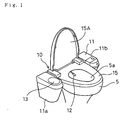
- Fig. 1 is an external view of a western style toilet bowl with a toilet seat apparatus 10 attached thereto as an embodiment of the present invention
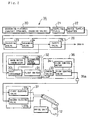
- Fig. 2 is a block diagram showing the warm water/shower nozzle controller of the toilet seat apparatus
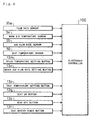
- Fig. 3 is a block diagram showing the electronic controller and the input/output devices thereof.
- the toilet seat apparatus 10 which comprises basic functions of the toilet seat (excretory part cleansing, drying and seat heating), can be equipped with either or both of a heater for heating the ambience of the toilet bowl by blowing warm air to the ambience of the toilet bowl and a deodorizer for removing odious smell with ozone generated by an ozonizer which sucks air inside the bowl part of the toilet bowl.
- the heater and the deodorizer are incorporated in the wings of the toilet seat apparatus 10 on the right and left of a toilet bowl 5.
- the toilet seat apparatus 10 which is designed so as to be mounted on the toilet bowl 5 comprises a casing main body 11, a nozzle unit 12 that is attached to the casing main body 11 to spout cleansing water toward excretory parts, an operation unit 13 that is equipped with operation buttons 13A (see Fig. 3) and indicator lamps 13B, a warm water/nozzle controller 14 (see Fig. 2) to control the spouting of warm water and the shower nozzle positions according to the operations of the operating buttons 13A on the operation unit 13, a toilet seat 15 and a seat cover 15A.
- a dryer 80 (see Fig. 3) that dries the excretory parts of the human body by blowing warm air is incorporated.
- the dryer 80 comprises a dryer heater 81 for heating the air and a dryer fan 82 for blowing the heated air.
- An external water source is connected with pipeline to a flushing water tank (not shown in the drawings) which stores flushing water to be flushed to a bowl part 5a of the toilet bowl 5 and, as in Fig. 2, is also connected with pipeline to supply water to the toilet seat apparatus 10 via coupling pipes 21 from a branching fixture 20 on the way.
- a flushing water tank (not shown in the drawings) which stores flushing water to be flushed to a bowl part 5a of the toilet bowl 5 and, as in Fig. 2, is also connected with pipeline to supply water to the toilet seat apparatus 10 via coupling pipes 21 from a branching fixture 20 on the way.
- the toilet seat apparatus 10 comprises, to start with the upstream side, a valve unit 26 which consists of a water supply adapter 22, a reducing valve 23, a solenoid valve 24 and a safety valve 25, a heat exchanger unit 32 which consists of a heat exchanger 30 that heats up the supplied water to an appropriate temperature with a cleansing water heater 29 while detecting the water temperature with a warm water thermistor 28a and a float switch 31 for detection of spout water state, a flow control unit 36 which consists of a check valve 33 and a flow control valve 35 that is driven by a flow control motor 34 and a closing valve unit 37 which consists of a first closing valve 37a and a second closing valve 37b, and a nozzle unit 12 is connected at the end.
- the nozzle unit 12 includes a drive unit 41 for driving a shower nozzle 40 in the axial direction.
- a seat sensor 15a (see Fig. 3) outputs a signal of this information.
- the operation unit 13 is operated afterward to press, for example, a posterior part cleansing button 13a, the drive unit 41 is driven to advance the shower nozzle 24 to the cleansing position as an integral unit and the first closing valve 37a of the valve unit 26 is opened to start spouting the cleansing water.
- the spouting force of the cleansing water is monitored, or detected, by a flow rate sensor 35a located on a downstream position of the flow control valve 35.
- the electronic controller 100 signal to express the information that the cleansing shower nozzle 40 has advanced to the posterior part cleansing position is made into a data code with presence of output of a drive signal to the drive unit 41 and the signal to express the information that the cleansing shower nozzle 40 has not advanced to the posterior part cleansing position is made into a data code with absence of output of the drive signal to the drive unit 41 by a CPU 102 of the electronic controller 100 and stored at predetermined addresses in a backup RAM 107.
- the toilet seat 15 is provided with a seat heater 53 to maintain the seat surface warm.
- the seat heating by the seat heater 53 is operated by pressing the ON/OFF button and the temperature setting is available.
- the ON signals of the dryer button 13d and the stop button 13c and the other information, such as that the shower nozzle 40 has advanced to the cleansing position are utilized for various kinds of processing by the electronic controller 100 and stored respectively.
- a circuit for controlling the cleansing water heater 29 and the seat heater 53 of the warm water/nozzle controller 14 has a structure centered with the electronic controller 100 which contains a micro computer shown in Fig. 3.
- the electronic controller 100 shown in Fig. 3, comprises a CPU 102 wherein a variety of computational processing for such a purpose as a cleansing water temperature control based on preset programs are executed, a ROM 104 wherein control programs and control data that are necessary for executing the computational processing at the CPU 102 are stored in advance, a RAM 106 wherein data that are necessary for executing the computational processing at the CPU 102 are read and written temporarily, a backup RAM 107 wherein data are retained in memory even if no power is supplied, an input processing circuit 108 wherein signals from sensors and switches pertaining to the sanitary cleansing apparatus 20 are input and converted into the signals that can be processed by the CPU 102 and an output processing circuit 109 wherefrom signals are output to such as the solenoid valve 24 based on the operational result of the CPU 102.
- a variety of devices may be utilized as the backup RAM 107 wherein the data are not erased even if power supply is shut off, which can be backed up with an internal battery, including a device writable and readable electronically,
- the operating buttons 13A on the operation unit 13, shown in Fig. 3, have various switches. Namely, a posterior part cleansing button 13a, a genital part cleansing button 13b, a stop button 13c, a dryer button 13d for blowing out warm air, a massage setting button 13e for selection of massage cleansing, a movable setting button 13f for selection of movable cleansing, a spout water temperature setting button 13g for spouting water temperature control, a flow control button 13h for flow rate control, a nozzle position adjustment button 13i for moving the shower nozzle 24 back and forth, and a reset button 13k for instructing a data resetting in a failure determination routine described below are provided.
- this information ON signals
- this information is input into the electronic controller 100 and stored at predetermined addresses in the backup RAM 107.
- the operation unit 13 is provided with a timer 16 for output of a predetermined ON signal (ON signal for continuous power supply) to the electronic controller 100 on expiration of a predetermined duration of time, for example about two hours, after start of power supply to the function parts, such as the cleansing water heater 29 and the seat heater 53.
- the timer 16 is designed for setting of the duration of time (two hours as described above) at the time of shipping from a factory or installation in a toilet and not designed for adjustment of the set time by a user at the time of normal use.
- the toilet seat 15 is provided with the seat sensor 15a for the detection of sitting on such toilet seat 15, and the signal of such sensor (ON signal) is also input to the electronic controller 100 and stored at predetermined addresses in the backup RAM 107.
- the seat sensor 15a for example, a sensor for the detection of presence of the user on the toilet seat 15 by measuring transition in the capacitance of the seat heater 53 on the surface of the toilet seat 15 or a pressure sensor may be utilized.
- the setting conditions of the toilet seat apparatus 10 are indicated by the indicator lamps 13B consisting of LED and other components.
- the indicator lamps 13B are provided with various indicating functions to inform various operating conditions, abnormalities and presence of reservation in the timer.
- An attachment state sensor 17 for detecting the attachment and detachment of the toilet seat 15 to and from the toilet bowl 5 is also provided the backside of the toilet seat 15.
- the attachment state sensor 17 outputs a predetermined ON signal (ON signal for attachment) to the electronic controller 100 when the toilet seat 15 is attached to the toilet bowl 5, and stops input of such signal when the toilet sea 15 is detached.
- a flow rate sensor 35a for detecting the spouting force of cleansing water from the shower nozzle 40 with the flow rate is connected to beside those shown in Fig. 3.
- a dryer temperature setting button 13m for setting the temperatures of warm air blown out for drying excretory parts Pertaining to the dryer unit 80, a dryer temperature setting button 13m for setting the temperatures of warm air blown out for drying excretory parts, a warm air temperature sensor 54 for detecting the warm air temperatures blown out and an air flow rate sensor 55 for detecting the air flow rate are connected to. Turning ON and OFF the excretory part drying is performed, as described above, with the dryer button 13d and the stop button 13c. When a fixed air flow rate is used for the excretory part drying, the dryer air flow rate setting button 13n is not necessary.
- a seat temperature setting button 13p for setting the temperatures of the seat heater 53
- a seat ON button 13q for turning on the seat heater 53
- a seat OFF button 13s for turning off the same
- a seat heater timer button 13t for maintaining the seat heater 53 on for a time zone except for the middle of the night
- a seat temperature sensor 56 for detecting surface temperatures of the toilet seat 15 are connected to.
- the ON and OFF of the seat heater and the temperature setting buttons which are not operated frequently under usual use circumstances are located in such a place as the lateral side of a wing of the casing main body 11.
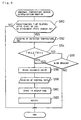
- step S52 the various sensors and the timer are scanned and data of the entire toilet seat apparatus 10, not only respective cleansing function parts, such as the nozzle unit 12, the valve unit 26, the heat exchanger unit 32, the flow control unit 36 and the closing valve unit 37 but also the excretory part drying and the seat heating, are read.
- the various data pertaining to the cleansing function parts and the entire toilet seat apparatus 10 include occurrence of wire break based on the presence or absence of signals from the sensors, data which expresses the information of completion of attachment based on the ON signal of the attachment from the attachment state sensor 17 (attachment completion data) and data which expresses the information of the continuous use based on the ON signal of continuous power supply from the timer 16 (continuous in-use data), and also the detected temperature TMs of the warm water thermistor 28a, are read.
- the information on occurrence of wire break is a piece of information generated by the cleansing state information generating means for monitoring the excretory part cleansing and drying means in the present invention and generating the data expressing the operating conditions of the means and is informative information which expresses the operating condition that the operations are disordered.
- the signals from various sensors are the data pertaining to the cleansing state information monitored and generated by the cleansing state information generating means in the present invention.
- the signals from the warm water thermistor 28a is a piece of cleansing state information which expresses the operating conditions whereunder the cleansing water heater 29 has heated up the cleansing water warm.
- the signals from the timer 16 and the attachment state sensor 17 are the data pertaining to the monitored results of the use circumstance monitoring means in the present invention, and the time measurements prove whether in production process, under repair or usual use.
- the number of times of turning ON and OFF of the attachment state sensor 17 proves number of times of attachment and detachment of the toilet seat apparatus 10 to and from the toilet bowl 5.
- step S54 whether or not the detected temperature TMs of the warm water thermistor 28a is not lower than the predetermined temperature TMsc.
- the sequence proceeds to step S55 and whether or not the wire is broken is determined. If the wire is not broken, the program comes to the end of this routine; if the wire is broken, since the wire breakage should be noted in investigation into the causes of the trouble, the sequence proceeds to step S56 to store this information in a routine described below.
- the solenoid valve 24 is closed at step S 56. This inhibits spouting of hot water equal or higher than the predetermined temperature from the shower nozzle 40.
- An alternative means for preventing hot water from being spouted from the shower nozzle 40 is to provide both a bypass channel (not shown in the drawings) which bypasses the shower nozzle 40 and a bypass valve on the bypass channel, wherein the bypass valve may be opened to discharge the hot water through the bypass channel.
- the detected data and control data include the setting conditions of the various buttons of the operating buttons 13A and the above-described buttons pertaining to the seat heating, detected temperature peak values THs of the warm water thermistor 28a, signals that indicate the sitting conditions of the seat sensor 15a, signals that indicate whether or not water is being spout from the opened solenoid valve 24, signals that indicate whether or not the shower nozzle 40 advances either to the posterior part cleansing position or genital part cleansing position, warm air temperatures for excretory part drying and signals that indicate air flow rates.
- the signals from the above-described setting buttons are the data pertaining to cleansing setting information that is generated by the cleansing setting information generating means in the present invention
- the signals from the seat sensor 15a are the data pertaining to the monitored results of the use circumstance monitoring means in the present invention, wherein the signals prove the number of times of use of the nozzle unit 12 and the dryer unit 80.
- the signals of information on whether or not the shower nozzle 40 advances either to the posterior part cleansing position or genital part cleansing position and the signals that indicate whether or not water is being spout from the opened solenoid valve 24 are the data pertaining to the cleansing state information monitored and generated by the cleansing state information generating means in the present invention.
- reading of these control data may be performed before the closing process of the solenoid valve 24 (that is, output of valve closing signal) at step S56 or performed at the same time as such processing.
- step S60 various data are stored in the backup RAM 107, and then, at step S61, whether or not the resetting of the memory is necessary is determined; at step S62, resetting of unnecessary data which are supposed not to pertain to the investigation into causes of trouble since they cannot occur during continuous use.
- step S60 if the detected temperature TMs of the warm water thermistor 28a is not lower than the predetermined temperature, it is probable that the heat exchange unit 32 which performs the temperature control is not operating effectively; therefore, the information that the detected temperature TMs is not lower than the predetermined temperature is added to the data pertaining to the cleansing function parts and units, which have been read at steps S42 and S58, such as detected data and control data of various conditions, attachment completion data based on the ON signal of the attachment state sensor 17 and continuous in-use data based on the ON signal of the continuous power supply at the timer 16, and stored in the backup RAM 107 together with the data of information on the wire breakage which has been determined at step S55.
- the data which have been read at the steps, such as S52, S55 and S58, are also stored at this time since these data are useful in investigation into the causes of troubles in case of various malfunctioning (for example, the above-described faulty temperature control).
- the memory When data are stored in the backup RAM 107, the memory is available in various modes. For example, a set of all the data to be stored may be accumulated and stored in a time series as a unit and, if a memory area that has been assigned in advance is fully used by storage of the units, the stored data of the past may be updated in a consecutive order to start with the oldest one. That is, the data for the period entirely covering both before and after the abnormal cleansing water temperature are accumulated and stored in a time series for a predetermined period of time (for example, from a few hours to tens of hours). In this case, the data leading to the abnormal cleansing water temperature can be obtained in a time series. Each unit of memory may be updated and stored consecutively.
- the data pertaining to the seat heating and the excretory part drying may be designed so as not to be stored.
- the data related to the seat heater 53, the dryer heater 81 and others are also stored if, in addition to the abnormal cleansing water temperatures, the abnormal seat temperatures or the abnormal drying temperatures are determined on the basis of the outputs and set values of the concerned sensors.
- step S61 whether or not reset of the data stored in the back up RAM 107 is determined through the determination on whether or not both the attachment completion data and the continuous in-use data are stored is determined. That is, presence of both the above-described data proves that power has been supplied continuously to the function parts, such as the cleansing water heater 29 and the seat heater 53, for a predetermined period of time after completion of attachment of the toilet seat 15 to the toilet bowl 5.
- the various data stored at this time are not the data stored in the backup RAM 107 at the tests in the production processes or during repair of the toilet seat 15 but the data stored at the time of normal use with the toilet seat apparatus 10 attached to the toilet bowl 5.
- the various data stored at this time are reset at step S62. Because the various data stored at this time are not the data under usual use circumstances of the toilet seat 15, so that, the various data stored at this time will not be involved investigation into the causes of the troubles. Since production of each toilet seat 15 that is equipped with the toilet seat apparatus 10 is usually completed approximately in one hour, it is reasonable to consider that data storage based on the ON signal of the continuous power supply of the timer 16 cannot be performed during continuous use.
- the above-described reset is performed once based on the attachment completion data and the continuous in-use data
- the information that the reset based on both the data is stored for storage of various subsequent data and no more reset based on both the data will be performed.
- the above-described reset is performed based on both of the data.
- the ON signal of the reset button 13k is read at step S58, the data stored at the tests in the production processes are forcibly reset (or erased) by turning this button to ON at the time of shipping after completion of the production processes.
- the signal of the reset button 13k is read at step S58, so that, the data stored at the tests in the production processes and the data stored at before time under usual use are forcibly reset (or erased). Therefore, the data to be stored in the backup RAM 107 thereafter are the data pertaining to the causes of the troubles.
- the contents of instructions through various buttons at the operating buttons 13A for example, instruction of the posterior part cleansing through the posterior part cleansing button 13a, and the signal of whether or not the shower nozzle 40 has advanced to the posterior part cleansing position are stored in the backup RAM 107. If the data in the backup RAM 107 is not reset, congruity and incongruity between the contents of instructions from various buttons under usual use circumstances of the toilet seat 15 and the results of the operation based on the instructions can be also stored and kept
- step S63 which succeeds the above-described step S62, in addition to the information on detection of the temperatures not lower than the predetermined temperature or of wire breakage together with the locations of the wire breaks, the information on resetting of the data which will not be involved in the investigation into the causes of the troubles and other information are indicated with the indicator lamps 13B, and this is notified.
- the various data stored at step S60 are continuously stored not only at the time of no power supply but also after resumption of the power supply, it is possible to continue the water spouting inhibition state, based on these data.
- the warm water thermistor 28a detects the temperatures not lower than the predetermined temperature or when other failures, such as a wire break, occur
- the information is stored together with the detection data, control data and other various data at that time in the backup RAM 107, and these data are modified according to the presence or absence of the attachment completion data and the continuous in-use data.
- This modification enables disuse of the data that were not obtained during the continual use but obtained at the tests in the production processes of the toilet seat apparatus as data for investigation into the causes of the troubles when failures occur. In other words, only the data obtained during use are utilized as the data for investigation into the causes of troubles.
- setting conditions of the operating buttons 13A can indicate the accurate time and the conditions wherein whether or not the warm water thermistor 28a has detected temperatures not lower than the predetermined temperature, based on the control data, such as whether or not the posterior part cleansing button 13b was on, whether or not the stop button 13c was pressed and whether on or off the dryer button 13d was. It is also possible to indicate accurately whether or not the shower nozzle 40 and other parts were driven as instructed by the buttons.
- the sitting data detected by the seat sensor 15a can indicate accurately whether or not the failure occurred while the user was sitting on the toilet seat 15, and the detected temperature peak value THs if the warm water thermistor 28a and other data can indicate accurately whether or not the faulty part is the warm water thermistor 28a itself.
- signals from the float switch 31 can indicate accurately whether or not the warm water thermistor 28a failed when the heat exchanger 30 was full of water and the control amount of the cleansing water heater 29 can indicate whether or not the cause was the heater control.
- the failure determination routine is partly changed as follows.
- step S50 which is the first step of this routine, whether or not a predetermined time has elapsed after starting to use the toilet seat 15 attached to the toilet bowl is determined with presence or absence of the ON signal of continuous power supply from the timer 16, or whether or not the attachment state sensor 17 is turned to ON is determined with presence or absence of the ON signal of attachment.
- the routine comes to the end since the data pertaining to the function parts are determined so as not of continual use but of tests in the production processes. That is, in this case, the objects of storage in the backup RAM 107 are determined as zero and no data storage is performed.
- step S50 An affirmative determination at step S50 is followed by the above-described step S 52 to investigate into the causes of the troubles with the data of the function parts which have been obtained during the continuous use.
- the detected temperature TMs of the warm water thermistor 28a is read.
- step S60 The same processing as the above-described embodiment is performed at the steps from S52 to S58, which is followed by step S60.
- step S60 of the above-described embodiment the information that the detected temperature TMs of the warm water thermistor 28a was not lower than the predetermined temperature and various detected data and the control data of various conditions which were read at steps S58 are also stored in the backup RAM 107.
- the sequence shifts from this step S60 to step S63 of the above-described embodiment.
- the data obtained for the function parts during continuous use are also utilized in the investigation into the causes of the troubles, the causes of the troubles in the apparatus can be investigated accurately.
- the processing load can be reduced since the data are not stored if a negative determination is made at step S50.
- the toilet seat apparatus 10 which performs ambient heating to heat the ambience of the toilet bowl by blowing out warm air around the toilet bowl (toilet room heating) and deodorization to suck the air inside the toilet bowl surface and remove odious smell from the air with ozone which is generated by the ozonizer besides basic functions of the toilet seat, such as excretory part cleansing, drying and seat heating, may have the following structure.
- the heater unit 60 for ambient heating and the deodorizer unit 70 for deodorization are installed respectively in a left wing 11a and a right wing 11b of the casing main body 11 shown in Fig. 1.
- the heater unit 60 comprises a heater 61 for heating the air (see Fig. 7) and a fan 62 for blowing the heated air.
- the deodorizer unit 70 comprises a suction fan 71 for sucking the air and an ozonizer 72 for generating ozone by electrically discharging to the air. These units are connected to the electronic controller 100.
- a heating temperature setting button 13u for setting the heating temperatures
- a heater ON button 13v for turning on the heater 61
- a heater OFF button 13x for turning off the same
- an ambient heater timer button 13y for keeping the heater 61 turned on for a time zone except for the middle of the night
- a temperature sensor 57 for detecting ambient temperatures of the toilet bowl 5
- an ozone/temperature sensor 58 for detecting the generation of ozone by the ozonizer 72 indirectly from the ambient temperatures is connected to.
- the ON and OFF of the deodorizer unit 70 is performed by the ON and OFF of the seat sensor 15a.
- the signals from the setting buttons and the sensors are processed in the same way as those from the above-described flow rate sensor 35a and the posterior part cleansing button 13a and utilized as the analysis data of the causes of the troubles in the heater unit 60 and the deodorizer unit 70.
- the reset button 13k for forcibly resetting the data is one of the operating buttons 13A in this structure
- the reset button 13k may be provided on a remote controller.
- a receiving means for receiving the signals transmitted from the remote controller (reset signal) may be provided on the operation unit 13 or other parts so that the signals are input into the electronic controller 100.
- the processing in this modification of the embodiment comprises a routine for setting the identification code in the toilet seat apparatus main body and another routine for setting the same identification code in the remote controller.
- the first step S402 is an input mode standby process. If any one of the posterior part cleansing button 13a, the dryer button 13d and the stop button 13c is pressed in this state, the sequence proceeds to the next step S404 to determine which button is pressed or not.
- an identification code which corresponds to the selected button, is selected at steps S406, S408 and S410.
- a standard code C0 is selected at step S406 if the posterior part cleansing button 13a has been pressed, and a standard code C1 is selected at step S408 if the dryer button 13d has been pressed, while a standard code C2 is selected at step S410 if the stop button 13c has been pressed.
- These codes are stored beforehand in the ROM 104 and selectively read when the above-described corresponding buttons are pressed.
- the selected identification code is stored at a predetermined address in the backup RAM 107.
- the identification code setting on the remote controller side is carried out in almost the same way as the above-described processes.
- the remote controller code setting mode is available.
- the same button as pressed on the toilet bowl among the buttons, which correspond, to the identification codes allocated in advance and then the entry button is pressed. This makes the same identification code, as set on the main body of the toilet seat apparatus is stored in the backup RAM 107 for the remote controller.
- the setting of the same identification code on the toilet seat apparatus main body side and on the remote controller by selecting one code from a plurality of identification codes that have been allocated beforehand enables setting of an identification code which is selected from a plurality of identification codes and which is different from the one that has been set on the adjoining toilet seat apparatus 10.
- the identification code which has been set in this way is stored in the backup RAM 107 and cannot be erased even at power failure can be data to specify the apparatus.
- the identification codes are set both on the toilet seat apparatus main body and the remote controller, the following structure may be adopted to simplify further the operation so as to set only on the toilet seat apparatus main body. That is, the power switch is turned on while the genital part cleansing button 13b on the operation unit 13 of the toilet seat apparatus 10 is being pressed for shift to the remote controller identification code setting routine. Then, on transmission from the remote controller, the identification code contained in the transmission code is determined and stored in the backup RAM 107 in the toilet seat apparatus main body.
- the identification code which is educed according to the signal that the toilet seat apparatus main body has received from the remote controller, is stored in the backup RAM 107 of the toilet seat apparatus main body; and thus the operations become much simpler with the identification code setting operations for the toilet seat apparatus 10 and the remote controller no longer needed. It is also possible to select one from the operation unit 13 of the toilet seat apparatus 10 for transmission to the remote controller. Besides the above, a special external input device may be utilized for setting the set codes for the toilet seat apparatus 10 and the remote controllers.
- the toilet seat apparatus related to the present invention is appropriate for simplification of the investigation into the causes when troubles occur in the instruments and devices for realization of the various functions of the apparatus.
Landscapes
- Health & Medical Sciences (AREA)
- Public Health (AREA)
- Molecular Biology (AREA)
- Epidemiology (AREA)
- Life Sciences & Earth Sciences (AREA)
- Engineering & Computer Science (AREA)
- Hydrology & Water Resources (AREA)
- Water Supply & Treatment (AREA)
- Bidet-Like Cleaning Device And Other Flush Toilet Accessories (AREA)
- Toilet Supplies (AREA)
Abstract
Detected temperature TMs of warm water thermistor 28a,
presence of any or no wire break in nozzle unit 12, attachment
completion data by attachment state sensor 17, continuous in-use
data by timer 16 and data related to other cleansing function
parts and units are read (step S52). If there any abnormal
temperatures and wire breaks, these data and other detection data
in various conditions are stored in backup RAM while unnecessary
data (data at tests in production processes) which are considered
as not contributing to investigation of causes of troubles are
reset according to function part data, such as attachment
completion data and continuous in-use data (step S62). This
modification eliminates utilization of data obtained at tests
in production process, not during continuous use, as data for
investigation into causes when trouble occurs and thus enhances
reliability of data.
Description
The present invention relates to a toilet seat apparatus
comprising a cleansing function means for cleansing excretory
parts of the human body.
A toilet seat apparatus conventionally known of this type
is such as an apparatus comprising a shower nozzle which is driven
by a motor to advance and retreat and performing posterior part
cleansing, genital part cleansing and other functions by
spouting warm water from spouting opening after transferring the
shower nozzle to an advanced position at cleansing time. In
recent years, addition of diverse functions besides posterior
part cleansing and genital part cleansing has been proposed. The
diverse functions are, for example, a massage cleansing function
to stimulate the posterior parts rhythmically to accelerate
smooth defecation through varying the water spouting force
approximately every one second during posterior part cleansing,
a movable cleansing function to enhance the effect with rocking
the shower nozzle back and forth, a cleansing position adjustment
function to transfer the shower nozzle back and forth minutely
and temperature setting function to select the temperatures of
the cleansing water. To exercise these functions, various
operating conditions are prescribed pertaining to advancement
and retreat of the shower nozzle, valve operation for spouting
of warm water, and so on.
Since the operating conditions concerning the shower nozzle,
valves and other parts range a wide variety, varied inventions
have been made to cope with malfunctioning caused by their
abnormal operating conditions, such as ineffective adjustment
of spouting water temperatures. For example, since abnormal
operating conditions are found in the shower nozzle or the valves
when a trouble occurs in such functions as a nozzle apparatus
and a spouting water temperature control apparatus, a function
to urge repairing it with blinking of an indicator lamp to notify
the information.
Provision of a number of indicator lamps, however, to notify
warning on the abnormalities is difficult in the aspect of both
functions and costs and notification of some information does
not demand urgency. Another problem is that it takes long to
be repaired when an abnormality occurs since it is difficult to
find out the condition of occurrence of the abnormality.
Although the above-described toilet seat apparatus exercises
diverse functions in response to settings of a user, it is not
convenient to use since the settings of the functions are lost
at the time of electric power failure and thus data cannot be
utilized to analyzes the causes of the troubles.
The object of the present invention pertaining to the toilet
seat apparatus equipped with diverse functions and resolving the
problems of the prior art is to provide a toilet seat apparatus
which allows accurate investigation into causes of the troubles
therein.
As a solution to such problems as above, a toilet seat
apparatus according to the present invention comprising a
cleansing function means for cleansing excretory parts of the
human body sitting on a toilet seat on a toilet bowl comprises:
In toilet seat apparatus according to the present invention
of the above-described structure, the actual operating
conditions of the cleansing function means for cleansing
excretory parts of the human body are monitored by the cleansing
state information generating means and made into cleansing state
information to state the operating conditions thereof. In this
case, the operating conditions to be monitored, or the actual
phenomena occurring from operation of the cleansing function
means, are such as cleansing water spouting force, cleansing
water temperatures, cleansing water spouting modes and duration
of cleansing water spouting time, and these operating conditions
are monitored with various sensors appropriate to monitoring and
made into cleansing state information. The cleansing state
information to be generated includes, for example, the HIGH/LOW
of the cleansing water spouting force, the HIGH/LOW of the
cleansing water temperatures (or exact cleansing water
temperatures, such as 45 ° or 43 °), the MOVE/MASSAGE of the
cleansing water spouting modes and the LONG/SHORT of the duration
of cleansing water spouting time (or exact duration of cleansing
water spouting time, such as 8 seconds or 10 seconds). These
contents of information are stored by the first memory means and
kept even at the time of no power supply.
Therefore, if the information stored in the first memory
means is read with an appropriate device, for example, a data
reader, the actual operating conditions of the cleansing
function means are detectable even after expiration of some
duration of no power supply to the toilet seat apparatus, and
the actual operating conditions stated in the stored and kept
information can be utilized as data to be analyzed for
investigation into causes of troubles in the cleansing function
means. For this reason, investigation into the causes of
troubles and repairs based thereon can be executed promptly.
The toilet seat apparatus having the above-described
structure comprises:
wherein the first memory means comprises a means for storing the cleansing setting information and keeping such memory results even at the time of no power supply.
In this structure, the above-described operating conditions,
for example, the ON/OFF of the cleansing function, the HIGH/LOW
of the cleansing water spouting force, the HIGH/LOW of the
cleansing water temperatures (or exact cleansing water
temperatures), the MOVE/MASSAGE of the cleansing water spouting
modes and the LONG/SHORT of the duration of cleansing water
spouting time (or exact duration of cleansing water spouting
time) are set by the first setting means through the operations
by the user, and the setting of the operating conditions
(hereinafter referred to as set operating conditions, for
convenience of description) are made into cleansing setting
information by the cleansing setting information generating
means. The cleansing setting information is stored by the first
memory means for storing the above-described cleansing state
information and kept even at the time of no power supply.
Therefore, when the stored information in the first memory
means is read by the data reader or a similar device, the set
operating conditions in addition to the actual operating
conditions of the cleansing function means are detectable even
after expiration of some duration of no power supply to the toilet
seat apparatus, and the operating conditions stated in the stored
and kept information (both of actual operating conditions and
set operating conditions) can be utilized as data to be analyzed
for investigation into causes of troubles in the cleansing
function means. Congruity and incongruity between the set
operating conditions and actual operating conditions can be also
stored and kept. For this reason, investigation into the causes
of troubles and repairs based thereon can be executed more
promptly.
The above-described present invention may adopt the
following modes.
In the first mode, the toilet seat apparatus according to
the present invention described above comprises:
wherein the cleansing state information generating means comprises a means for monitoring the actual operating states of the drying means as well and generating the cleansing state information with addition of the information stating the operating conditions thereof; and
wherein the cleansing setting information generating means comprises a means for generating the cleansing setting information with addition of the information stating the operating conditions set by the second setting means.
In the toilet seat apparatus of this mode, the actual
operating conditions of the drying means, or the actual phenomena
occurring from operation of the drying means, such as warm air
temperatures, warm air flow rates and duration of warm air
blowing time, and other operating conditions are monitored with
various sensors appropriate to monitoring and information to be
added to the cleansing state information is generated. The
information to be added to the cleansing state information
includes the HIGH/LOW of the warm air temperatures (or exact warm
air temperatures, such as 40° or 42°), the HIGH/LOW of the warm
air flow rates (or exact warm air flow rates, such as 5 lit./min
or 8 lit./min), the LONG/SHORT of the duration of warm air blowing
time (or exact duration of warm air blowing time, such as 10
seconds or 20 seconds) and other operating conditions. The
operating conditions of the drying means, for example, the ON/OFF
of drying, the HIGH/LOW of the warm air temperatures (or exact
warm air temperatures), the HIGH/LOW of the warm air flow rates
(or exact warm air flow rates) and the LONG/SHORT of the duration
of warm air blowing time (or exact duration of warm air blowing
time) are set by the second setting means through operation of
the user and these set operating conditions are added to the
cleansing setting information by the cleansing setting
information generating means.
In the toilet seat apparatus of this mode, the cleansing
state information and the cleansing setting information with
addition of the information concerning the drying means (the
information stating the actual operating conditions and the set
operating conditions of the drying means) is stored by the first
memory means and kept even when no electric power is supplied.
For this reason, in the toilet seat apparatus of this mode, the
operating conditions of the drying means in addition to the
cleansing function means are detectable even after expiration
of some duration of no power supply to the toilet seat apparatus,
and the actual operating conditions stated in the stored and kept
information can be utilized as data to be analyzed for
investigation into causes of troubles in these means to promptly
execute the investigation into the causes of troubles and the
repairs based thereon.
In the second mode of the toilet seat apparatus of the
above-described structure,
the first memory means comprises;
the first memory means comprises;
In the toilet seat apparatus of this mode, malfunction of
the cleansing state information generating means itself, for
example, faulty monitoring of the operating conditions of the
cleansing function means or drying means and faulty generation
of the cleansing state information or, more concretely,
circumstances of occurrence of failures in various sensors
monitoring the cleansing water spouting force are stored and kept
in addition to the operating conditions of the cleansing function
means and the drying means. Therefore, since the circumstances
of occurrence of failures in the operating conditions of the
cleansing state information generating means itself can be
utilized as data to be analyzed for investigation into causes
of troubles in the cleansing function means and drying means,
the reliability of the analyzed data can be enhanced with the
more accurate investigation into the causes of troubles in the
apparatus.
An alternative modification of this mode is as follows. That
is,
the first memory means comprises:
the first memory means comprises:
In this structure, since the cleansing setting information
when the malfunctioning occurred (for example, the information
stating the set operating conditions, such as the HIGH/LOW of
the above-described cleansing water spouting force and the
HIGH/LOW of the warm air temperature) in addition to the
circumstances wherein malfunction of the cleansing state
information generating means itself occurred can be utilized as
data to be analyzed for investigation into causes of troubles
in the cleansing function means and drying means, the of the
analyzed data can be enhanced further with the more accurate
investigation into the causes of troubles in the apparatus.
In the third mode, the toilet seat apparatus according to
the present invention described above comprises:
In the toilet seat apparatus of this mode, the state of the
ambient environment of the toilet bowl, for example, the ambient
temperatures of the toilet bowl (room temperatures) and
humidities, are stored and kept in addition to the operating
conditions of the cleansing function means and the drying means.
Therefore, the operating conditions of the cleansing state
information generating means and the drying means (either or both
of the actual operating conditions and set operating conditions)
can be compared with the ambient environment of the toilet bowl
and thus causes of the trouble in the apparatus can be
investigated from various aspects through utilization of the
data concerning the environment wherein the toilet bowl is
located at the time of investigating into the causes of the
troubles in the cleansing function means and the drying means.
In the fourth mode, the toilet seat apparatus according to
the present invention described above comprises:
In the toilet seat apparatus of this mode, the use
circumstances of the cleansing function means, for example,
circumstances of power supply to the toilet seat apparatus,
circumstances of continuation of attachment of the toilet seat
apparatus to the toilet bowl, number of times to use the cleansing
function means, and number of times to attach and detach the
toilet seat apparatus to and from the toilet bowl, are monitored
by the use circumstance monitoring means. Therefore, the
monitored results prove whether usual use circumstances wherein
the toilet seat apparatus is attached to the toilet bowl and used
in usual ways or unusual use circumstances, for example, test
use circumstances of functional tests in a production process
or in a repairing process. Modification of the memory results
in the first memory means, based on the monitored results of the
use circumstance monitoring means, can produce such effects as
described below.
For the investigation into the causes, it is effective to
accumulate various data of operating conditions of each
functional parts that constitutes the cleansing function means
and drying means, for example, the shower nozzle, valves, and
warm air blowing device in the drying apparatus till occurrence
of a trouble and to utilize the data. Actual machine tests are
normally performed on each of the cleansing function parts of
this type of toilet seat apparatus, such as the nozzle apparatus,
the spouting water temperature control apparatus and the drying
apparatus, in the production processes. The tests are performed
respectively in each process along the production line; for
example, if the first process is the assembly process of the
drying-associated parts, the operating conditions are tested
with power supplied to the fully assembled drying-associated
parts in this process. In the succeeding second process
(assembly process of the cleansing-associated parts), the
operating conditions are tested with power supplied to the fully
assembled cleansing-associated parts. In these processes, the
toilet seat is normally removed for better working efficiency
at the time of tests, the toilet seat is assembled in the final
process.
In the first process, the cleansing-associated parts that
are not assembled completely yet are treated as in a wire breakage
states since power cannot be supplied to and the tests are
performed in the drying-associated parts. Therefore, simple
data accumulation concerning the cleansing-associated parts
will include the data at this test and such data may be utilized
in investigation into the causes of the troubles. Consequently,
some fear is aroused that confusion in the investigation into
the causes of the troubles and in measures taken on the basis
of the investigation results at the time of repair and thus delay
in recovery from the troubles may be resulted in.
At the time of actual repair, for the convenience of repair
and inspection of the cleansing function parts, for example, the
spouting water temperature control apparatus or drying apparatus,
these cleansing function parts, or the object of repair, may be
situated in such operating conditions as the parts are not used
for usual uses. For example, in a case of the spouting water
temperature control apparatus, the temperature may be increased
once beyond the appropriate range of normal uses. Accumulation
of the data of such a case as above arouses some fear that, if
the data is utilized by mistake for investigation into the causes
of the troubles of a succeeding case, confusion may arise in the
investigation into the causes of the troubles and in measures
based on the investigation at the time of repair and result in
failure in recovery from the troubles.
The above-described production line operations and repair
work are performed with the toilet seat apparatus detached from
the toilet bowl, and the toilet seat apparatus is not in the usual
use circumstances.
However, since the toilet seat apparatus in the above-described
mode modifies the memory results in the first memory
means according to the monitored results of the monitoring of
the use circumstances of the cleansing function means, it is
possible that the operating conditions of the cleansing function
means (either or both of the actual operating conditions and the
set operating conditions), which are directly connected to the
causes of the trouble, and the operating conditions of the
cleansing function means and drying means (either or both of the
actual operating conditions and the set operating conditions)
in a case wherein actual operating conditions and set operating
conditions are added to are stored and kept in the memory means
under the usual use circumstances of the toilet seat apparatus
while the above-described operating conditions of the cleansing
function means and drying means are modified from the memory
results in the memory means by a method of modification, such
as deletion or exclusion, under the unusual use circumstances
at the time of production processes or repair. Therefore, the
memory results of the operating conditions in the production
processes and during the repair can be deleted or excluded from
the object of analysis at the time of investigation into the
causes of troubles in the toilet seat apparatus. Consequently,
the toilet seat apparatus in this mode can enhance reliability
in the utilization of the operating conditions stored and kept
even at the time of no power supply as analysis data to investigate
into the causes of troubles in the cleansing function means and
the drying means, and thus the causes of the troubles in the
apparatus can be investigated accurately.
In the fifth mode, the toilet seat apparatus according to
the present invention described above comprises:
In the toilet seat apparatus of this mode, the above-described
monitored results of the use circumstances of the
cleansing function means and the drying means prove whether the
use circumstances of the toilet seat apparatus were the usual
use circumstances or the unusual use circumstances.
Modification of the information to be stored by the first memory
means, based on the monitored results of the use circumstance
monitoring means, will produce such effects as described below.
Although the simple data accumulation includes the data of
operating conditions at the time of the actual machine tests in
production lines, repair or inspection, as described above, the
toilet seat apparatus in this mode can annihilate the information
to be stored by the first memory means while in the production
processes or during the repair. That is, it is possible that
the toilet seat apparatus in this mode stores the operating
conditions of the cleansing function means and drying means
(either or both of the actual operating conditions and the set
operating conditions) in the usual use circumstances except for
any information while in the production processes or during the
repair. Consequently, the toilet seat apparatus in this mode
can also enhance reliability in the utilization of the operating
conditions stored and kept even at the time of no power supply
as analysis data to investigate into the causes of troubles in
the cleansing function means and the drying means, and thus the
causes of the troubles in the apparatus can be investigated
accurately.
The annihilation of the information to be stored by the first
memory means denotes inhibition of storing in the first memory
means and suspension of the annihilation of such information
denotes authorization of storage in the first memory means.
Therefore, a structure wherein the storing of the information
of the above-described operating conditions of the cleansing
function means and the drying means in the first memory means
is authorized under the usual use circumstances whereas the
storing of the information in the first memory means is inhibited
while in the production processes or during the repair excludes
the operating conditions while in the production processes or
during the repair from the analysis data for investigation into
the causes of troubles in the cleansing function means and the
drying means from the start. Therefore, this structure can also
enhance the reliability in utilization of the operating
conditions stored and kept even at the time of no power supply
as analysis data to investigate into the causes of troubles in
the cleansing function means and the drying means, and thus the
causes of the troubles in the apparatus can be investigated
accurately.
In the sixth mode, the toilet seat apparatus according to
the present invention described above comprises:
In the toilet seat apparatus of this mode, the operating
conditions of the cleansing function means and the drying means
(either or both of the actual operating conditions and the set
operating conditions) that are memory results of the first memory
means, for example, the HIGH/LOW of the above-described
cleansing water force, the HIGH/LOW of the warm air temperature
and other similar information are modified forcibly by the forced
modification means.
Therefore, the operating conditions of the cleansing
function means and the drying means, which are directly connected
to the causes of the troubles that occur under usual use
circumstances or under long-time use, are stored and kept in the
first memory means so long as they are not modified forcibly by
the forced modification means. However, the operating
conditions of the cleansing function means and drying means under
unusual use circumstances of the toilet seat apparatus, for
example, the operating conditions in the production processes
or during the repair are forcibly modified from the memory
results in the first memory means by the forced modification
means, such as deletion or exclusion as a method of modification
by an operator in charge of production or repair or by a timer.
Accordingly, the memory results of the operating conditions in
the production processes or during the repair can be forcibly
deleted or excluded from the object of the analysis at the time
of investigation into the causes of the troubles in the toilet
seat apparatus. Consequently, the toilet seat apparatus in this
mode can also enhance the reliability in utilization of the
operating conditions stored and kept even at the time of no power
supply as analysis data to investigate into the causes of
troubles in the cleansing function means and the drying means,
and thus the causes of the troubles in the apparatus can be
investigated accurately.
In the seventh mode, the toilet seat apparatus according to
the present invention described above comprises:
wherein the first memory means contains a second memory means for storing the toilet seat state information and keeping such memory results even at the time of no power supply.
In the toilet seat apparatus in this mode, the actual
operating conditions of the toilet seat heating means are
monitored by the toilet seat state information generating means
and made into the toilet seat state information to state the
operating conditions thereof. In this case, the operating
conditions to be monitored, or actual phenomena which occur
through operation of the toilet seat heating means are such as
toilet seat temperatures and duration of toilet seat heating time,
and these operating conditions are monitored with various
sensors appropriate to monitoring and made into the toilet seat
state information. The toilet seat state information to be
generated are, for example, the HIGH/LOW of the toilet seat
temperatures (or exact toilet seat temperatures, such as 45°
or 43 °) and the duration of the toilet seat heating time (a
concrete toilet seat heating time excluding the hours in the
middle of the night). These contents of information is stored
and kept even at the time of no power supply by the second memory
means of the first memory means.
Therefore, when the information stored in the first and
second memory means is read by the data reader or a similar device,
the actual operating conditions of the toilet seat heating means
in addition to the cleansing function means and the drying means
are detectable even after expiration of some duration of no power
supply to the toilet seat apparatus, and the actual operating
conditions stated in the stored and kept information can be
utilized as data to be analyzed for investigation into causes
of troubles in the toilet seat heating means as well as in the
cleansing function means and the drying means. For this reason,
investigation into the causes of troubles in the apparatus and
repairs based thereon can be executed promptly.
The toilet seat apparatus having the above-described
structure desirably comprises:
wherein the second memory means comprises a means for storing the toilet seat setting information and keeping such memory results even at the time of no power supply.
In this structure, the above-described operating conditions,
for example, the ON/OFF of the cleansing function, the HIGH/LOW
of the cleansing water spouting force, the HIGH/LOW of the
cleansing water temperatures (or exact cleansing water
temperatures), the MOVE/MASSAGE of the cleansing water spouting
modes and the LONG/SHORT of the duration of cleansing water
spouting time (or exact duration of cleansing water spouting
time) are set by the first setting means through the operations
by the user, and the setting of the operating conditions
(hereinafter referred to as set operating conditions, for
convenience of description) are made into cleansing setting
information by the cleansing setting information generating
means. The cleansing setting information is stored by the first
memory means for storing the above-described cleansing state
information and kept even at the time of no power supply.
Therefore, when the stored information in the first and
second memory means is read by the data reader or a similar device,
the actual operating conditions and the set operating conditions
of the toilet seat heating means in addition to the cleansing
function means and the drying means are detectable even after
expiration of some duration of no power supply to the toilet seat
apparatus, and the operating conditions stated in the stored and
kept information (both of actual operating conditions and set
operating conditions) can be utilized as data to be analyzed for
investigation into causes of troubles in the cleansing function
means, the drying means and the toilet seat heating means.
Therefore, congruity and incongruity between the set operating
conditions and actual operating conditions can be also stored
and kept. For this reason, investigation into the causes of
troubles and repairs based thereon can be executed more promptly.
In the eighth mode, the toilet seat apparatus according to
the present invention described above comprises:
In the toilet seat apparatus of this mode, the use
circumstances of the toilet seat heating means in addition to
the cleansing function means and the drying means, such as
circumstances of power supply to the toilet seat apparatus,
circumstances of continuation of attachment of the toilet seat
apparatus to the toilet bowl, number of times to use the cleansing
function means and number of times to attach and detach the toilet
seat apparatus to and from the toilet bowl, are monitored by the
use circumstance monitoring means. Since the monitored results
prove whether the toilet seat apparatus was used under usual use
circumstances or unusual use circumstances, modification of the
memory results in the first and second memory means, based on
the monitored results of the use circumstance monitoring means,
can produce such effects as described below.
That is, the toilet seat apparatus in this mode also can store
and keep the operating conditions of the cleansing function means,
the drying means and the toilet seat heating means (either or
both of the actual operating conditions and the set operating
conditions), which are directly connected to the causes of the
trouble, in the first and second memory means under the usual
use circumstances of the toilet seat apparatus while the
above-described operating conditions of the cleansing function
means, drying means and the toilet seat heating means are
modified from the memory results in these memory means by a method
of modification, such as deletion or exclusion, under the unusual
use circumstances at the time of production processes or repair.
Therefore, the memory results of the operating conditions in the
production processes and during the repair can be deleted or
excluded from the object of analysis at the time of investigation
into the causes of troubles in the toilet seat apparatus.
Consequently, the toilet seat apparatus in this mode can enhance
reliability in the utilization of the operating conditions
stored and kept even at the time of no power supply as analysis
data to investigate into the causes of troubles in the cleansing
function means and drying means, and thus the causes of the
troubles in the apparatus can be investigated accurately.
In the ninth mode, the toilet seat apparatus according to
the present invention described above comprises:
In the toilet seat apparatus of this mode, the above-described
monitored results of the use circumstances of the
cleansing function means and the toilet seat heating means prove
whether the use circumstances of the toilet seat apparatus were
the usual use circumstances or the unusual use circumstances.
Modification of the information to be stored by the first and
second memory means, based on the monitored results of the use
circumstance monitoring means, will produce such effects as
described below.
That is, it is possible that the toilet seat apparatus in
this mode stores the operating conditions of the cleansing
function means, drying means and the toilet seat heating means
(either or both of the actual operating conditions and the set
operating conditions) in the usual use circumstances except for
any information while in the production processes or during the
repair. Consequently, the toilet seat apparatus in this mode
can also enhance reliability in the utilization of the operating
conditions stored and kept even at the time of no power supply
as analysis data to investigate into the causes of troubles in
the cleansing function means, the drying means and the toilet
seat heating means, and thus the causes of the troubles in the
apparatus can be investigated accurately.
In the tenth mode, the toilet seat apparatus according to
the present invention described above comprises:
wherein the first memory means comprises a third memory means for storing the ambient state information and keeping such memory results even at the time of no power supply.
In the toilet seat apparatus in this mode, the actual
operating conditions of the ambient heating means are monitored
by the ambient state information generating means and made into
the ambient state information to state the operating conditions
thereof. In this case, the operating conditions to be monitored,
or actual phenomena which occur through operation of the ambient
heating means are such as ambient temperatures (room
temperatures) and duration of ambient heating time, and these
operating conditions are monitored with various sensors
appropriate to monitoring and made into the ambient state
information. The ambient state information to be generated are,
for example, the HIGH/LOW of the ambient temperatures (or exact
ambient temperatures, such as 45° or 43°) and the duration of
the ambient heating time (or exact ambient heating time). These
contents of information is stored and kept even at the time of
no power supply by the third memory means of the first memory
means.
Therefore, when the information stored in the first and third
memory means is read by the data reader or a similar device, the
actual operating conditions of the ambient heating means in
addition to the cleansing function means and the drying means
are detectable even after expiration of some duration of no power
supply to the toilet seat apparatus, and the actual operating
conditions stated in the stored and kept information can be
utilized as data to be analyzed for investigation into causes
of troubles in the cleansing function means, the drying means
and the ambient heating means. For this reason, investigation
into the causes of troubles in the apparatus and repairs based
thereon can be executed promptly.
The toilet seat apparatus having the above-described
structure desirably comprises:
wherein the third memory means comprises a means for storing the ambient setting information and keeping such memory results even at the time of no power supply.
In this structure, the above-described operating conditions,
for example, the ON/OFF of the ambient heating, the HIGH/LOW of
the ambient temperatures (or exact ambient temperatures), the
ON/OFF of the ambient heater timer, the duration of ambient
heating time and other conditions are set by the fourth setting
means through the operations by the user, and the setting of the
operating conditions are made into the ambient setting
information by the ambient setting information generating means.
The ambient setting information is stored by the third memory
means for storing the above-described ambient state information
and kept even at the time of no power supply.
Therefore, when the stored information in the first and third
memory means is read by the data reader or a similar device, the
actual operating conditions and the set operating conditions of
the ambient heating means in addition to the cleansing function
means and the drying means are detectable even after expiration
of some duration of no power supply to the toilet seat apparatus,
and the operating conditions stated in the stored and kept
information (both of actual operating conditions and set
operating conditions) can be utilized as data to be analyzed for
investigation into causes of troubles in the cleansing function
means, the drying means and the ambient heating means. Therefore,
congruity and incongruity between the set operating conditions
and actual operating conditions can be also stored and kept. For
this reason, investigation into the causes of troubles and
repairs based thereon can be executed more promptly.
In the eleventh mode, the toilet seat apparatus according
to the present invention described above comprises:
In the toilet seat apparatus of this mode, the use
circumstances of the ambient heating means in addition to the
cleansing function means and the drying means, such as
circumstances of power supply to the toilet seat apparatus,
circumstances of continuation of attachment of the toilet seat
apparatus to the toilet bowl, number of times to use the cleansing
function means and the ambient heating means and number of times
to attach and detach the toilet seat apparatus to and from the
toilet bowl, are monitored by the use circumstance monitoring
means. Since the monitored results prove whether the toilet seat
apparatus was used under usual use circumstances or unusual use
circumstances, modification of the memory results in the first
and third memory means, based on the monitored results of the
use circumstance monitoring means, can produce such effects as
described below.
That is, the toilet seat apparatus in this mode also can store
and keep the operating conditions of the cleansing function means,
the drying means and the ambient heating means (either or both
of the actual operating conditions and the set operating
conditions), which are directly connected to the causes of the
trouble, in the first and third memory means under the usual use
circumstances of the toilet seat apparatus while the above-described
operating conditions of the cleansing function means,
drying means and the ambient heating means are modified from the
memory results in these memory means by a method of modification,
such as deletion or exclusion, under the unusual use
circumstances at the time of production processes or repair.
Therefore, the memory results of the operating conditions in the
production processes and during the repair can be deleted or
excluded from the object of analysis at the time of investigation
into the causes of troubles in the toilet seat apparatus.
Consequently, the toilet seat apparatus in this mode can enhance
reliability in the utilization of the operating conditions
stored and kept even at the time of no power supply as analysis
data to investigate into the causes of troubles in the cleansing
function means and drying means, and thus the causes of the
troubles in the apparatus can be investigated accurately.
In the twelfth mode, the toilet seat apparatus according to
the present invention described above comprises:
In the toilet seat apparatus of this mode, the above-described
monitored results of the use circumstances of the
cleansing function means and the ambient heating means prove
whether the use circumstances of the toilet seat apparatus were
the usual use circumstances or the unusual use circumstances.
Modification of the information to be stored by the first and
third memory means, based on the monitored results of the use
circumstance monitoring means, will produce such effects as
described below.
That is, it is possible that the toilet seat apparatus in
this mode stores the operating conditions of the cleansing
function means, drying means and the ambient heating means
(either or both of the actual operating conditions and the set
operating conditions) in the usual use circumstances except for
any information while in the production processes or during the
repair. Consequently, the toilet seat apparatus in this mode
can also enhance reliability in the utilization of the operating
conditions stored and kept even at the time of no power supply
as analysis data to investigate into the causes of troubles in
the cleansing function means, the drying means and the ambient
heating means, and thus the causes of the troubles in the
apparatus can be investigated accurately.
In the thirteenth mode, the toilet seat apparatus according
to the present invention described above comprises:
wherein the first memory means comprises a fourth memory means for storing the deodorizing state information and keeping such memory results even at the time of no power supply.
In the toilet seat apparatus in this mode, the actual
operating conditions of the deodorizing means are monitored by
the deodorizing state information generating means and made into
the deodorizing state information to state the operating
conditions thereof. In this case, the operating conditions to
be monitored, or actual phenomena which Occur through operation
of the deodorizing means are such as existence of odious smell
and discharge of ozonizer, and these operating conditions are
monitored with various sensors appropriate to monitoring and
made into the deodorizing state information. The deodorizing
state information is stored and kept even at the time of no power
supply by the fourth memory means of the first memory means.
Therefore, when the information stored in the first and
fourth memory means is read by the data reader or a similar device,
the actual operating conditions of the deodorizing means in
addition to the cleansing function means and the drying means
are detectable even after expiration of some duration of no power
supply to the toilet seat apparatus, and the actual operating
conditions stated in the stored and kept information can be
utilized as data to be analyzed for investigation into causes
of troubles in the cleansing function means, the drying means
and the deodorizing means. For this reason, investigation into
the causes of troubles in the apparatus and repairs based thereon
can be executed promptly.
The toilet seat apparatus having the above-described
structure desirably comprises:
wherein the fourth memory means comprises a means for storing the deodorizing setting information and keeping such memory results even at the time of no power supply.
In this structure, the above-described operating conditions,
for example, the ON/OFF of the deodorizer, the ON/OFF of the
deodorizer timer, the duration of deodorizing time and other
conditions are set by the fifth setting means through the
operations by the user, and the setting of the operating
conditions are made into the deodorizing setting information by
the deodorizing setting information generating means. The
deodorizing setting information is stored by the fourth memory
means for storing the above-described deodorizing state
information and kept even at the time of no power supply.
Therefore, when the stored information in the first and third
memory means is read by the data reader or a similar device, the
actual operating conditions and the set operating conditions of
the deodorizing means in addition to the cleansing function means
and the drying means are detectable even after expiration of some
duration of no power supply to the toilet seat apparatus, and
the operating conditions stated in the stored and kept
information (both of actual operating conditions and set
operating conditions) can be utilized as data to be analyzed for
investigation into causes of troubles in the cleansing function
means, the drying means and the deodorizing means. Therefore,
congruity and incongruity between the set operating conditions
and actual operating conditions can be also stored and kept. For
this reason, investigation into the causes of troubles and
repairs based thereon can be executed more promptly.
In the fourteenth mode, the toilet seat apparatus according
to the present invention described above comprises:
In the toilet seat apparatus of this mode, the use
circumstances of the deodorizing means in addition to the
cleansing function means and the drying means, such as
circumstances of power supply to the toilet seat apparatus,
circumstances of continuation of attachment of the toilet seat
apparatus to the toilet bowl, number of times to use the cleansing
function means and the deodorizing means and number of times to
attach and detach the toilet seat apparatus to and from the toilet
bowl, are monitored by the use circumstance monitoring means.
Since the monitored results prove whether the toilet seat
apparatus was used under usual use circumstances or unusual use
circumstances, modification of the memory results in the first
and fourth memory means, based on the monitored results of the
use circumstance monitoring means, can produce such effects as
described below.
That is, the toilet seat apparatus in this mode also can store
and keep the operating conditions of the cleansing function means,
the drying means and the deodorizing means (either or both of
the actual operating conditions and the set operating
conditions), which are directly connected to the causes of the
trouble, in the first and fourth memory means under the usual
use circumstances of the toilet seat apparatus while the
above-described operating conditions of the cleansing function
means, drying means and the deodorizing means are modified from
the memory results in these memory means by a method of
modification, such as deletion or exclusion, under the unusual
use circumstances at the time of production processes or repair.
Therefore, the memory results of the operating conditions in the
production processes and during the repair can be deleted or
excluded from the object of analysis at the time of investigation
into the causes of troubles in the toilet seat apparatus.
Consequently, the toilet seat apparatus in this mode can enhance
reliability in the utilization of the operating conditions
stored and kept even at the time of no power supply as analysis
data to investigate into the causes of troubles in the cleansing
function means and drying means, and thus the causes of the
troubles in the apparatus can be investigated accurately.
In the fifteenth mode, the toilet seat apparatus according
to the present invention described above comprises:
In the toilet seat apparatus of this mode, the above-described
monitored results of the use circumstances of the
cleansing function means and the deodorizing means prove whether
the use circumstances of the toilet seat apparatus were the usual
use circumstances or the unusual use circumstances.
Modification of the information to be stored by the first and
fourth memory means, based on the monitored results of the use
circumstance monitoring means, will produce such effects as
described below.
That is, it is possible that the toilet seat apparatus in
this mode stores the operating conditions of the cleansing
function means, drying means and the deodorizing means (either
or both of the actual operating conditions and the set operating
conditions) in the usual use circumstances except for any
information while in the production processes or during the
repair. Consequently, the toilet seat apparatus in this mode
can also enhance reliability in the utilization of the operating
conditions stored and kept even at the time of no power supply
as analysis data to investigate into the causes of troubles in
the cleansing function means, the drying means and the
deodorizing means, and thus the causes of the troubles in the
apparatus can be investigated accurately.
The modes of implementing the toilet seat apparatus related
to the present invention are described below with references to
the embodiments. Fig. 1 is an external view of a western style
toilet bowl with a toilet seat apparatus 10 attached thereto as
an embodiment of the present invention; Fig. 2 is a block diagram
showing the warm water/shower nozzle controller of the toilet
seat apparatus; and Fig. 3 is a block diagram showing the
electronic controller and the input/output devices thereof.
The toilet seat apparatus 10 which comprises basic functions of
the toilet seat (excretory part cleansing, drying and seat
heating), can be equipped with either or both of a heater for
heating the ambience of the toilet bowl by blowing warm air to
the ambience of the toilet bowl and a deodorizer for removing
odious smell with ozone generated by an ozonizer which sucks air
inside the bowl part of the toilet bowl. In this case, the heater
and the deodorizer are incorporated in the wings of the toilet
seat apparatus 10 on the right and left of a toilet bowl 5.
In these drawings, the toilet seat apparatus 10 which is
designed so as to be mounted on the toilet bowl 5 comprises a
casing main body 11, a nozzle unit 12 that is attached to the
casing main body 11 to spout cleansing water toward excretory
parts, an operation unit 13 that is equipped with operation
buttons 13A (see Fig. 3) and indicator lamps 13B, a warm
water/nozzle controller 14 (see Fig. 2) to control the spouting
of warm water and the shower nozzle positions according to the
operations of the operating buttons 13A on the operation unit
13, a toilet seat 15 and a seat cover 15A. At an intermediate
part (not shown in the drawings) of the casing main body 11 which
supports the seat cover 15A, a dryer 80 (see Fig. 3) that dries
the excretory parts of the human body by blowing warm air is
incorporated. The dryer 80 comprises a dryer heater 81 for
heating the air and a dryer fan 82 for blowing the heated air.
An external water source is connected with pipeline to a
flushing water tank (not shown in the drawings) which stores
flushing water to be flushed to a bowl part 5a of the toilet bowl
5 and, as in Fig. 2, is also connected with pipeline to supply
water to the toilet seat apparatus 10 via coupling pipes 21 from
a branching fixture 20 on the way.
The toilet seat apparatus 10 comprises, to start with the
upstream side, a valve unit 26 which consists of a water supply
adapter 22, a reducing valve 23, a solenoid valve 24 and a safety
valve 25, a heat exchanger unit 32 which consists of a heat
exchanger 30 that heats up the supplied water to an appropriate
temperature with a cleansing water heater 29 while detecting the
water temperature with a warm water thermistor 28a and a float
switch 31 for detection of spout water state, a flow control unit
36 which consists of a check valve 33 and a flow control valve
35 that is driven by a flow control motor 34 and a closing valve
unit 37 which consists of a first closing valve 37a and a second
closing valve 37b, and a nozzle unit 12 is connected at the end.
The nozzle unit 12 includes a drive unit 41 for driving a shower
nozzle 40 in the axial direction.
The operations of the units related to the cleansing of the
excretory parts of the human body sitting on the toilet bowl 5
are outlined respectively below. When a user sits on the toilet
seat 15, a seat sensor 15a (see Fig. 3) outputs a signal of this
information. When the operation unit 13 is operated afterward
to press, for example, a posterior part cleansing button 13a,
the drive unit 41 is driven to advance the shower nozzle 24 to
the cleansing position as an integral unit and the first closing
valve 37a of the valve unit 26 is opened to start spouting the
cleansing water. The spouting force of the cleansing water is
monitored, or detected, by a flow rate sensor 35a located on a
downstream position of the flow control valve 35.
Not only the ON signals of the seat sensor 15a and the ON
signals of the posterior part cleansing button 13a but also the
signals to express the information that the cleansing shower
nozzle 40 has or has not advanced to the posterior part cleansing
position and the valve opening or valve closing signals of the
first closing valve 37a are utilized by an electronic controller
100 for various kinds of processing. The electronic controller
100 signal to express the information that the cleansing shower
nozzle 40 has advanced to the posterior part cleansing position
is made into a data code with presence of output of a drive signal
to the drive unit 41 and the signal to express the information
that the cleansing shower nozzle 40 has not advanced to the
posterior part cleansing position is made into a data code with
absence of output of the drive signal to the drive unit 41 by
a CPU 102 of the electronic controller 100 and stored at
predetermined addresses in a backup RAM 107. This is the same
with the valve opening and valve closing signals of the first
closing valve 37a, which are made into a data code according to
the circumstance of the output of the drive signal to the first
closing valve 37a.
After completion of cleansing, when termination of cleansing
is instructed by pressing a stop button 13c (see Fig. 3) on the
operation unit 13, power supply to the cleansing water heater
29 is stopped and the solenoid valve 24 and the first closing
valve 37a are closed to stop spouting of the cleansing water,
and then the drive unit 141 is turned reverse to retreat the shower
nozzle 40 to a storing position. When the genital cleansing
button 13b is pressed, the shower nozzle 40 is advanced to a
genital cleansing position and the second closing valve 137b is
opened to start spouting of the cleansing water whereas cleansing
is terminated by pressing the stop button 13c.
When a dryer button 13d is pressed after completion of
cleansing, power is supplied to the dryer heater 81 and the dryer
fan 82 of the dryer unit 80. The air heated by the dryer heater
81 is blown out as warm air by the dryer fan 82 toward the excretory
parts of the human body to perform the excretory part drying.
The drying is stopped by pressing the stop button 13c.
The toilet seat 15 is provided with a seat heater 53 to
maintain the seat surface warm. The seat heating by the seat
heater 53 is operated by pressing the ON/OFF button and the
temperature setting is available.
In the above-described cases, the ON signals of the dryer
button 13d and the stop button 13c and the other information,
such as that the shower nozzle 40 has advanced to the cleansing
position are utilized for various kinds of processing by the
electronic controller 100 and stored respectively.
A circuit for controlling the cleansing water heater 29 and
the seat heater 53 of the warm water/nozzle controller 14 has
a structure centered with the electronic controller 100 which
contains a micro computer shown in Fig. 3.
The electronic controller 100, shown in Fig. 3, comprises
a CPU 102 wherein a variety of computational processing for such
a purpose as a cleansing water temperature control based on
preset programs are executed, a ROM 104 wherein control programs
and control data that are necessary for executing the
computational processing at the CPU 102 are stored in advance,
a RAM 106 wherein data that are necessary for executing the
computational processing at the CPU 102 are read and written
temporarily, a backup RAM 107 wherein data are retained in memory
even if no power is supplied, an input processing circuit 108
wherein signals from sensors and switches pertaining to the
sanitary cleansing apparatus 20 are input and converted into the
signals that can be processed by the CPU 102 and an output
processing circuit 109 wherefrom signals are output to such as
the solenoid valve 24 based on the operational result of the CPU
102. A variety of devices may be utilized as the backup RAM 107
wherein the data are not erased even if power supply is shut off,
which can be backed up with an internal battery, including a
device writable and readable electronically, such as a flash
memory.
The operating buttons 13A on the operation unit 13, shown
in Fig. 3, have various switches. Namely, a posterior part
cleansing button 13a, a genital part cleansing button 13b, a stop
button 13c, a dryer button 13d for blowing out warm air, a massage
setting button 13e for selection of massage cleansing, a movable
setting button 13f for selection of movable cleansing, a spout
water temperature setting button 13g for spouting water
temperature control, a flow control button 13h for flow rate
control, a nozzle position adjustment button 13i for moving the
shower nozzle 24 back and forth, and a reset button 13k for
instructing a data resetting in a failure determination routine
described below are provided. When these buttons are operated,
this information (ON signals) is input into the electronic
controller 100 and stored at predetermined addresses in the
backup RAM 107.
Furthermore, the operation unit 13 is provided with a timer
16 for output of a predetermined ON signal (ON signal for
continuous power supply) to the electronic controller 100 on
expiration of a predetermined duration of time, for example about
two hours, after start of power supply to the function parts,
such as the cleansing water heater 29 and the seat heater 53.
The timer 16 is designed for setting of the duration of time (two
hours as described above) at the time of shipping from a factory
or installation in a toilet and not designed for adjustment of
the set time by a user at the time of normal use.
The toilet seat 15 is provided with the seat sensor 15a for
the detection of sitting on such toilet seat 15, and the signal
of such sensor (ON signal) is also input to the electronic
controller 100 and stored at predetermined addresses in the
backup RAM 107. For the seat sensor 15a, for example, a sensor
for the detection of presence of the user on the toilet seat 15
by measuring transition in the capacitance of the seat heater
53 on the surface of the toilet seat 15 or a pressure sensor may
be utilized. The setting conditions of the toilet seat apparatus
10 are indicated by the indicator lamps 13B consisting of LED
and other components. The indicator lamps 13B are provided with
various indicating functions to inform various operating
conditions, abnormalities and presence of reservation in the
timer. An attachment state sensor 17 for detecting the
attachment and detachment of the toilet seat 15 to and from the
toilet bowl 5 is also provided the backside of the toilet seat
15. The attachment state sensor 17 outputs a predetermined ON
signal (ON signal for attachment) to the electronic controller
100 when the toilet seat 15 is attached to the toilet bowl 5,
and stops input of such signal when the toilet sea 15 is detached.
In addition to the above, the following sensors and buttons
are connected to the input processing circuit 108 of the
electronic controller 100. As shown in Fig. 4, pertaining to
cleansing, a flow rate sensor 35a for detecting the spouting
force of cleansing water from the shower nozzle 40 with the flow
rate is connected to beside those shown in Fig. 3. Pertaining
to the dryer unit 80, a dryer temperature setting button 13m for
setting the temperatures of warm air blown out for drying
excretory parts, a warm air temperature sensor 54 for detecting
the warm air temperatures blown out and an air flow rate sensor
55 for detecting the air flow rate are connected to. Turning
ON and OFF the excretory part drying is performed, as described
above, with the dryer button 13d and the stop button 13c. When
a fixed air flow rate is used for the excretory part drying, the
dryer air flow rate setting button 13n is not necessary.
Pertaining to heating of the toilet seat 15, a seat
temperature setting button 13p for setting the temperatures of
the seat heater 53, a seat ON button 13q for turning on the seat
heater 53, a seat OFF button 13s for turning off the same, a seat
heater timer button 13t for maintaining the seat heater 53 on
for a time zone except for the middle of the night and a seat
temperature sensor 56 for detecting surface temperatures of the
toilet seat 15 are connected to. The ON and OFF of the seat heater
and the temperature setting buttons which are not operated
frequently under usual use circumstances are located in such a
place as the lateral side of a wing of the casing main body 11.
In the following paragraphs, a failure processing routine,
pertaining to the toilet seat apparatus 10 and executed by the
electronic controller 100, is described with references to Fig.
5.
To start with, at step S52, the various sensors and the timer
are scanned and data of the entire toilet seat apparatus 10, not
only respective cleansing function parts, such as the nozzle unit
12, the valve unit 26, the heat exchanger unit 32, the flow control
unit 36 and the closing valve unit 37 but also the excretory part
drying and the seat heating, are read. Concretely, the various
data pertaining to the cleansing function parts and the entire
toilet seat apparatus 10 include occurrence of wire break based
on the presence or absence of signals from the sensors, data which
expresses the information of completion of attachment based on
the ON signal of the attachment from the attachment state sensor
17 (attachment completion data) and data which expresses the
information of the continuous use based on the ON signal of
continuous power supply from the timer 16 (continuous in-use
data), and also the detected temperature TMs of the warm water
thermistor 28a, are read.
Among the diverse information, the information on occurrence
of wire break is a piece of information generated by the cleansing
state information generating means for monitoring the excretory
part cleansing and drying means in the present invention and
generating the data expressing the operating conditions of the
means and is informative information which expresses the
operating condition that the operations are disordered. The
signals from various sensors are the data pertaining to the
cleansing state information monitored and generated by the
cleansing state information generating means in the present
invention. For example, the signals from the warm water
thermistor 28a is a piece of cleansing state information which
expresses the operating conditions whereunder the cleansing
water heater 29 has heated up the cleansing water warm. The
signals from the timer 16 and the attachment state sensor 17 are
the data pertaining to the monitored results of the use
circumstance monitoring means in the present invention, and the
time measurements prove whether in production process, under
repair or usual use. The number of times of turning ON and OFF
of the attachment state sensor 17 proves number of times of
attachment and detachment of the toilet seat apparatus 10 to and
from the toilet bowl 5.
At next step S54, whether or not the detected temperature
TMs of the warm water thermistor 28a is not lower than the
predetermined temperature TMsc. At this step, if the detected
temperature TMs of the warm water thermistor 28a is lower than
the predetermined temperature TMsc, the sequence proceeds to
step S55 and whether or not the wire is broken is determined.
If the wire is not broken, the program comes to the end of this
routine; if the wire is broken, since the wire breakage should
be noted in investigation into the causes of the trouble, the
sequence proceeds to step S56 to store this information in a
routine described below.
If the detected temperature TMs of the warm water thermistor
28a has been determined as not to be lower than the predetermined
temperature TMsc at step S54, or, if an affirmative determination
is made at step S55, the solenoid valve 24 is closed at step S
56. This inhibits spouting of hot water equal or higher than
the predetermined temperature from the shower nozzle 40.
An alternative means for preventing hot water from being
spouted from the shower nozzle 40 is to provide both a bypass
channel (not shown in the drawings) which bypasses the shower
nozzle 40 and a bypass valve on the bypass channel, wherein the
bypass valve may be opened to discharge the hot water through
the bypass channel.
At next step S58, other detected data of various conditions
or control data, which are temporarily stored in the RAM 106,
are read. The detected data and control data include the setting
conditions of the various buttons of the operating buttons 13A
and the above-described buttons pertaining to the seat heating,
detected temperature peak values THs of the warm water thermistor
28a, signals that indicate the sitting conditions of the seat
sensor 15a, signals that indicate whether or not water is being
spout from the opened solenoid valve 24, signals that indicate
whether or not the shower nozzle 40 advances either to the
posterior part cleansing position or genital part cleansing
position, warm air temperatures for excretory part drying and
signals that indicate air flow rates.
In this case, the signals from the above-described setting
buttons are the data pertaining to cleansing setting information
that is generated by the cleansing setting information
generating means in the present invention, and the signals from
the seat sensor 15a are the data pertaining to the monitored
results of the use circumstance monitoring means in the present
invention, wherein the signals prove the number of times of use
of the nozzle unit 12 and the dryer unit 80. The signals of
information on whether or not the shower nozzle 40 advances
either to the posterior part cleansing position or genital part
cleansing position and the signals that indicate whether or not
water is being spout from the opened solenoid valve 24 are the
data pertaining to the cleansing state information monitored and
generated by the cleansing state information generating means
in the present invention. In an alternative structure, reading
of these control data (step S58) may be performed before the
closing process of the solenoid valve 24 (that is, output of valve
closing signal) at step S56 or performed at the same time as such
processing.
At next step S60, various data are stored in the backup RAM
107, and then, at step S61, whether or not the resetting of the
memory is necessary is determined; at step S62, resetting of
unnecessary data which are supposed not to pertain to the
investigation into causes of trouble since they cannot occur
during continuous use. That is, at step S60, if the detected
temperature TMs of the warm water thermistor 28a is not lower
than the predetermined temperature, it is probable that the heat
exchange unit 32 which performs the temperature control is not
operating effectively; therefore, the information that the
detected temperature TMs is not lower than the predetermined
temperature is added to the data pertaining to the cleansing
function parts and units, which have been read at steps S42 and
S58, such as detected data and control data of various conditions,
attachment completion data based on the ON signal of the
attachment state sensor 17 and continuous in-use data based on
the ON signal of the continuous power supply at the timer 16,
and stored in the backup RAM 107 together with the data of
information on the wire breakage which has been determined at
step S55. The data which have been read at the steps, such as
S52, S55 and S58, are also stored at this time since these data
are useful in investigation into the causes of troubles in case
of various malfunctioning (for example, the above-described
faulty temperature control).
When data are stored in the backup RAM 107, the memory is
available in various modes. For example, a set of all the data
to be stored may be accumulated and stored in a time series as
a unit and, if a memory area that has been assigned in advance
is fully used by storage of the units, the stored data of the
past may be updated in a consecutive order to start with the oldest
one. That is, the data for the period entirely covering both
before and after the abnormal cleansing water temperature are
accumulated and stored in a time series for a predetermined
period of time (for example, from a few hours to tens of hours).
In this case, the data leading to the abnormal cleansing water
temperature can be obtained in a time series. Each unit of memory
may be updated and stored consecutively. It is also possible
to confine the data to be stored to those that pertain to the
investigation into the cause of the abnormal cleansing water
temperature. Concretely, since the seat temperatures based on
the seat heater 53 and the warm air temperatures based on the
dryer heater 81 scarcely contribute to the causes of abnormal
cleansing water temperatures, the data pertaining to the seat
heating and the excretory part drying may be designed so as not
to be stored. However, it is natural that, at step S54, the data
related to the seat heater 53, the dryer heater 81 and others
are also stored if, in addition to the abnormal cleansing water
temperatures, the abnormal seat temperatures or the abnormal
drying temperatures are determined on the basis of the outputs
and set values of the concerned sensors.
At next step S61, whether or not reset of the data stored
in the back up RAM 107 is determined through the determination
on whether or not both the attachment completion data and the
continuous in-use data are stored is determined. That is,
presence of both the above-described data proves that power has
been supplied continuously to the function parts, such as the
cleansing water heater 29 and the seat heater 53, for a
predetermined period of time after completion of attachment of
the toilet seat 15 to the toilet bowl 5. The various data stored
at this time are not the data stored in the backup RAM 107 at
the tests in the production processes or during repair of the
toilet seat 15 but the data stored at the time of normal use with
the toilet seat apparatus 10 attached to the toilet bowl 5.
Therefore, so long as both of the above-described data are
present, the above-described various data remain stored in the
back up RAM 107. If both of the above-described data are not
present, the various data stored at this time are reset at step
S62. Because the various data stored at this time are not the
data under usual use circumstances of the toilet seat 15, so that,
the various data stored at this time will not be involved
investigation into the causes of the troubles. Since production
of each toilet seat 15 that is equipped with the toilet seat
apparatus 10 is usually completed approximately in one hour, it
is reasonable to consider that data storage based on the ON signal
of the continuous power supply of the timer 16 cannot be performed
during continuous use.
After the above-described reset is performed once based on
the attachment completion data and the continuous in-use data,
the information that the reset based on both the data is stored
for storage of various subsequent data and no more reset based
on both the data will be performed. However, if power supply
is resumed after stop of power supply due to repair or for other
reasons, the above-described reset is performed based on both
of the data.
When the ON signal of the reset button 13k is read at step
S58, the data stored at the tests in the production processes
are forcibly reset (or erased) by turning this button to ON at
the time of shipping after completion of the production processes.
In other cases, when the button is turned to ON at the time of
attaching the toilet seat 15 to the toilet bowl 5 or at the time
on completion of the work to recover from troubles, the signal
of the reset button 13k is read at step S58, so that, the data
stored at the tests in the production processes and the data
stored at before time under usual use are forcibly reset (or
erased). Therefore, the data to be stored in the backup RAM 107
thereafter are the data pertaining to the causes of the troubles.
In this case, the contents of instructions through various
buttons at the operating buttons 13A, for example, instruction
of the posterior part cleansing through the posterior part
cleansing button 13a, and the signal of whether or not the shower
nozzle 40 has advanced to the posterior part cleansing position
are stored in the backup RAM 107. If the data in the backup RAM
107 is not reset, congruity and incongruity between the contents
of instructions from various buttons under usual use
circumstances of the toilet seat 15 and the results of the
operation based on the instructions can be also stored and kept
At step S63 which succeeds the above-described step S62, in
addition to the information on detection of the temperatures not
lower than the predetermined temperature or of wire breakage
together with the locations of the wire breaks, the information
on resetting of the data which will not be involved in the
investigation into the causes of the troubles and other
information are indicated with the indicator lamps 13B, and this
is notified. The various data stored at step S60 are
continuously stored not only at the time of no power supply but
also after resumption of the power supply, it is possible to
continue the water spouting inhibition state, based on these
data.
As described above, in this embodiment, when the warm water
thermistor 28a detects the temperatures not lower than the
predetermined temperature or when other failures, such as a wire
break, occur, the information is stored together with the
detection data, control data and other various data at that time
in the backup RAM 107, and these data are modified according to
the presence or absence of the attachment completion data and
the continuous in-use data. This modification enables disuse
of the data that were not obtained during the continual use but
obtained at the tests in the production processes of the toilet
seat apparatus as data for investigation into the causes of the
troubles when failures occur. In other words, only the data
obtained during use are utilized as the data for investigation
into the causes of troubles. For this reason, in the toilet seat
apparatus 10 of this embodiment, reliability of the data
pertaining to the function parts, such as the cleansing water
heater 29 and the toilet seat heater 53, is enhanced when utilized
as the analysis data for investigation into the causes of
troubles and the causes of such troubles in the apparatus as
described below can be investigated accurately.
That is, among the data stored in the backup RAM 107, setting
conditions of the operating buttons 13A can indicate the accurate
time and the conditions wherein whether or not the warm water
thermistor 28a has detected temperatures not lower than the
predetermined temperature, based on the control data, such as
whether or not the posterior part cleansing button 13b was on,
whether or not the stop button 13c was pressed and whether on
or off the dryer button 13d was. It is also possible to indicate
accurately whether or not the shower nozzle 40 and other parts
were driven as instructed by the buttons.
Additionally, the sitting data detected by the seat sensor
15a can indicate accurately whether or not the failure occurred
while the user was sitting on the toilet seat 15, and the detected
temperature peak value THs if the warm water thermistor 28a and
other data can indicate accurately whether or not the faulty part
is the warm water thermistor 28a itself.
More over, signals from the float switch 31 can indicate
accurately whether or not the warm water thermistor 28a failed
when the heat exchanger 30 was full of water and the control amount
of the cleansing water heater 29 can indicate whether or not the
cause was the heater control.
A modification of the above-described embodiment is
described below. As shown Fig. 6, the failure determination
routine is partly changed as follows. At step S50 which is the
first step of this routine, whether or not a predetermined time
has elapsed after starting to use the toilet seat 15 attached
to the toilet bowl is determined with presence or absence of the
ON signal of continuous power supply from the timer 16, or whether
or not the attachment state sensor 17 is turned to ON is determined
with presence or absence of the ON signal of attachment. When
either of the above is determined negatively, the routine comes
to the end since the data pertaining to the function parts are
determined so as not of continual use but of tests in the
production processes. That is, in this case, the objects of
storage in the backup RAM 107 are determined as zero and no data
storage is performed. An affirmative determination at step S50
is followed by the above-described step S 52 to investigate into
the causes of the troubles with the data of the function parts
which have been obtained during the continuous use. In this case,
the detected temperature TMs of the warm water thermistor 28a
is read.
The same processing as the above-described embodiment is
performed at the steps from S52 to S58, which is followed by step
S60. In the same way as step S60 of the above-described
embodiment, the information that the detected temperature TMs
of the warm water thermistor 28a was not lower than the
predetermined temperature and various detected data and the
control data of various conditions which were read at steps S58
are also stored in the backup RAM 107. The sequence shifts from
this step S60 to step S63 of the above-described embodiment. In
this modification of the embodiment, since the data obtained for
the function parts during continuous use are also utilized in
the investigation into the causes of the troubles, the causes
of the troubles in the apparatus can be investigated accurately.
The processing load can be reduced since the data are not stored
if a negative determination is made at step S50.
The present invention is not restricted to the above
embodiments or applications, but there may be many modifications,
changes, and alterations without departing from the scope or
spirit of the main characteristics of the present invention.
For example, the toilet seat apparatus 10 which performs
ambient heating to heat the ambience of the toilet bowl by blowing
out warm air around the toilet bowl (toilet room heating) and
deodorization to suck the air inside the toilet bowl surface and
remove odious smell from the air with ozone which is generated
by the ozonizer besides basic functions of the toilet seat, such
as excretory part cleansing, drying and seat heating, may have
the following structure.
The heater unit 60 for ambient heating and the deodorizer
unit 70 for deodorization are installed respectively in a left
wing 11a and a right wing 11b of the casing main body 11 shown
in Fig. 1.
As a block diagram of the input/output devices pertaining
to the ambient heating and deodorization in Fig. 7 shows, the
heater unit 60 comprises a heater 61 for heating the air (see
Fig. 7) and a fan 62 for blowing the heated air. The deodorizer
unit 70 comprises a suction fan 71 for sucking the air and an
ozonizer 72 for generating ozone by electrically discharging to
the air. These units are connected to the electronic controller
100. For the heating unit 60 for heating the ambience of the
toilet bowl 5, a heating temperature setting button 13u for
setting the heating temperatures, a heater ON button 13v for
turning on the heater 61, a heater OFF button 13x for turning
off the same, an ambient heater timer button 13y for keeping the
heater 61 turned on for a time zone except for the middle of the
night and a temperature sensor 57 for detecting ambient
temperatures of the toilet bowl 5 are connected to. For the
deodorizer 70 for deodorizing the inside of the toilet bowl 5,
an ozone/temperature sensor 58 for detecting the generation of
ozone by the ozonizer 72 indirectly from the ambient temperatures
is connected to. The ON and OFF of the deodorizer unit 70 is
performed by the ON and OFF of the seat sensor 15a.
In this structure, the signals from the setting buttons and
the sensors are processed in the same way as those from the
above-described flow rate sensor 35a and the posterior part
cleansing button 13a and utilized as the analysis data of the
causes of the troubles in the heater unit 60 and the deodorizer
unit 70.
Although the reset button 13k for forcibly resetting the data
is one of the operating buttons 13A in this structure, the reset
button 13k may be provided on a remote controller. In this case,
a receiving means for receiving the signals transmitted from the
remote controller (reset signal) may be provided on the operation
unit 13 or other parts so that the signals are input into the
electronic controller 100.
An alternative modification of the embodiment wherein
various buttons of the operating buttons 13A, starting with the
reset button 13k, are provided on the remote controller so as
to set the shower unit 12 and others with this remote controller
is described below.
When a plurality of the toilet seat apparatus 10 of this
modification wherein the setting is performed with the remote
controller are installed closely together in such a place as a
public facility, it is necessary to prevent operations acted by
the signals of the remote controller of adjoining toilets. The
identification codes for identifying the toilet seat apparatus
10 need to be set and modified simply irrelevant to the place
of installation, and the identification codes need to be retained
after the toilet seat apparatus 10 are removed from the toilet
bowls 5 for such a purpose as repair when they are set up once.
The processing in this modification of the embodiment
comprises a routine for setting the identification code in the
toilet seat apparatus main body and another routine for setting
the same identification code in the remote controller.
First, with reference to the flowchart in Fig. 8, the setting
of the identification code in the toilet seat apparatus main body
is described. This routine is started when the power switch is
turned on which the genital part cleansing button 13b is being
pressed. The first step S402 is an input mode standby process.
If any one of the posterior part cleansing button 13a, the dryer
button 13d and the stop button 13c is pressed in this state, the
sequence proceeds to the next step S404 to determine which button
is pressed or not.
Through the determination process at step S404, an
identification code, which corresponds to the selected button,
is selected at steps S406, S408 and S410. A standard code C0
is selected at step S406 if the posterior part cleansing button
13a has been pressed, and a standard code C1 is selected at step
S408 if the dryer button 13d has been pressed, while a standard
code C2 is selected at step S410 if the stop button 13c has been
pressed. These codes are stored beforehand in the ROM 104 and
selectively read when the above-described corresponding buttons
are pressed. At next step S412, if an entry button is determined
to have been pressed, the selected identification code is stored
at a predetermined address in the backup RAM 107.
The identification code setting on the remote controller
side is carried out in almost the same way as the above-described
processes. When battery cells are inserted into a battery box
in the remote controller while the posterior part cleansing
button is being pressed, the remote controller code setting mode
is available. The same button as pressed on the toilet bowl among
the buttons, which correspond, to the identification codes
allocated in advance and then the entry button is pressed. This
makes the same identification code, as set on the main body of
the toilet seat apparatus is stored in the backup RAM 107 for
the remote controller.
As described above, the setting of the same identification
code on the toilet seat apparatus main body side and on the remote
controller by selecting one code from a plurality of
identification codes that have been allocated beforehand enables
setting of an identification code which is selected from a
plurality of identification codes and which is different from
the one that has been set on the adjoining toilet seat apparatus
10. The identification code which has been set in this way is
stored in the backup RAM 107 and cannot be erased even at power
failure can be data to specify the apparatus.
According to this variation, when the toilet seat apparatus
10 with the remote controller are installed closely together in
such a place as a public facility, different identification codes
can be set for adjoining ones by a simple operation on the
installation site toilets. Therefore, such complicated
operations as cutting the patterns inside the control units of
the toilet seat apparatuses main body and setting the
identification codes with addition of jumper wires and resistors
in production line or at installation site of the toilet seat
apparatuses are no longer needed.
Although the identification codes are set both on the toilet
seat apparatus main body and the remote controller, the following
structure may be adopted to simplify further the operation so
as to set only on the toilet seat apparatus main body. That is,
the power switch is turned on while the genital part cleansing
button 13b on the operation unit 13 of the toilet seat apparatus
10 is being pressed for shift to the remote controller
identification code setting routine. Then, on transmission
from the remote controller, the identification code contained
in the transmission code is determined and stored in the backup
RAM 107 in the toilet seat apparatus main body.
Therefore, if one remote controller, which is selected from
a plurality of remote controllers wherein the identification
codes have been set beforehand, is used for a transmission, the
identification code, which is educed according to the signal that
the toilet seat apparatus main body has received from the remote
controller, is stored in the backup RAM 107 of the toilet seat
apparatus main body; and thus the operations become much simpler
with the identification code setting operations for the toilet
seat apparatus 10 and the remote controller no longer needed.
It is also possible to select one from the operation unit 13 of
the toilet seat apparatus 10 for transmission to the remote
controller. Besides the above, a special external input device
may be utilized for setting the set codes for the toilet seat
apparatus 10 and the remote controllers.
As described above, the toilet seat apparatus related to the
present invention is appropriate for simplification of the
investigation into the causes when troubles occur in the
instruments and devices for realization of the various functions
of the apparatus.
Claims (25)
- A toilet seat apparatus comprising a cleansing function means for cleansing excretory parts of the human body sitting on a toilet seat on a toilet bowl, said toilet seat apparatus comprises:a cleansing state information generating means for monitoring actual operating conditions of said cleansing function means and generating cleansing state information to state the operating conditions thereof; anda first memory means for storing said cleansing state information and keeping such memory results even at the time of no power supply.
- A toilet seat apparatus in accordance with claim 1, which comprises:a first setting means for setting the operating conditions of said cleansing function means; anda cleansing setting information generating means for generating cleansing setting information to state the operating conditions set by said first setting means;
wherein said first memory means comprises a means for storing said cleansing setting information and keeping such memory results even at the time of no power supply. - A toilet seat apparatus in accordance with claim 2, which comprises:a drying means for drying the excretory parts of the human body sitting on said toilet seat on said toilet bowl; anda second setting means for setting the operating conditions of said drying means;
wherein said cleansing state information generating means comprises a means for monitoring the actual operating states of said drying means as well and generating said cleansing state information with addition of the information stating the operating conditions thereof; and
wherein said cleansing setting information generating means comprises a means for generating said cleansing setting information with addition of the information stating the operating conditions set by said second setting means. - A toilet seat apparatus in accordance with claim 1 or claim 2, wherein said first memory means comprises;a first malfunction memory means for storing and keeping the circumstances wherein malfunctioning of said cleansing state information generating means occurred.
- A toilet seat apparatus in accordance with claim 2 or claim 3, wherein said first memory means comprises:a second malfunction memory means for storing and keeping the circumstances wherein malfunctioning of said cleansing state information generating means occurred and said cleansing setting information at the time of occurrence of such malfunctioning.
- A toilet seat apparatus in accordance with either claim 1 or claim 3, which comprises:an environment monitoring means for monitoring the state of the ambient environment of said toilet bowl;
wherein said first memory means comprises:an environment memory means for storing and keeping said monitored ambient environment of the toilet bowl. - A toilet seat apparatus in accordance with either claim 1 or claim 3, which comprises:a use circumstance monitoring means for monitoring the use circumstances of said cleansing function means; anda memory result modification means for modifying the memory results in said first memory means according to the monitored results of said use circumstance monitoring means.
- A toilet seat apparatus in accordance with either claim 1 or claim 3, which comprises:a use circumstance monitoring means for monitoring the use circumstances of said cleansing function means; anda memory result modification means for modifying the information to be stored by said first memory means according to the monitored results of said use circumstance monitoring means.
- A toilet seat apparatus in accordance with claim 7 or claim 8, wherein said use circumstance monitoring means comprises:a monitoring means for monitoring at least any one of the use circumstances which are circumstances of power supply to said toilet seat apparatus, circumstances of continuation of attachment of said toilet seat apparatus to said toilet bowl, number of times to use said cleansing function means, and number of times to attach and detach said toilet seat apparatus to and from said toilet bowl.
- A toilet seat apparatus in accordance with either claim 1 or claim 3, which comprises:a forced modification means for forcibly modifying the memory results in said first memory means.
- A toilet seat apparatus in accordance with either claim 1 or claim 3, which comprises:a toilet seat heating means for heating said toilet seat on said toilet bowl; anda toilet seat state information generating means for monitoring the actual operating conditions of said toilet seat heating means and generating toilet seat state information to state the operating conditions thereof;
wherein said the first memory means comprises a second memory means for storing said toilet seat state information and keeping such memory results even at the time of no power supply. - A toilet seat apparatus in accordance with claim 11, which comprises:a third setting means for setting the operating conditions of said toilet seat heating means; anda toilet seat setting information generating means for generating toilet seat setting information to state the operating conditions set by said third setting means;
wherein said second memory means comprises a means for storing said toilet seat setting information and keeping such memory results even at the time of no power supply. - A toilet seat apparatus in accordance with either claim 11 or claim 12, which comprises:a use circumstance monitoring means for monitoring the use circumstances of said cleansing function means and said toilet seat heating means; anda memory result modification means for modifying the memory results in said first and second memory means according to the monitored results of said use circumstance monitoring means.
- A toilet seat apparatus in accordance with either claim 11 or claim 12, which comprises:a use circumstance monitoring means for monitoring the use circumstances of said cleansing function means and said toilet seat heating means; anda memory result modification means for modifying the information to be stored by said first and second memory means according to the monitored results of said use circumstance monitoring means.
- A toilet seat apparatus in accordance with either claim 13 or claim 14, wherein said use circumstance monitoring means comprises:a monitoring means for monitoring at least any one of the use circumstances which are circumstances of power supply to said toilet seat apparatus, circumstances of continuation of attachment of said toilet seat apparatus to said toilet bowl, number of times to use said cleansing function means and said toilet seat heating means, and number of times to attach and detach said toilet seat apparatus to and from said toilet bowl.
- A toilet seat apparatus in accordance with either claim 1 or claim 3, which comprises:an ambient heating means for heating the ambient environment on said toilet bowl; andan ambient state information generating means for monitoring the actual operating conditions of said ambient heating means and generating ambient state information to state the operating conditions thereof;
wherein said the first memory means comprises a third memory means for storing said ambient state information and keeping such memory results even at the time of no power supply. - A toilet seat apparatus in accordance with claim 16, which comprises:a fourth setting means for setting the operating conditions of said ambient heating means; andan ambient setting information generating means for generating ambient setting information to state the operating conditions set by said fourth setting means;
wherein said third memory means comprises a means for storing said ambient setting information and keeping such memory results even at the time of no power supply. - A toilet seat apparatus in accordance with either claim 16 or claim 17, which comprises:a use circumstance monitoring means for monitoring the use circumstances of said cleansing function means and said ambient heating means; anda memory result modification means for modifying the memory results in said first and third memory means according to the monitored results of said use circumstance monitoring means.
- A toilet seat apparatus in accordance with either claim 16 or claim 17, which comprises:a use circumstance monitoring means for monitoring the use circumstances of said cleansing function means and said ambient heating means; anda memory result modification means for modifying the information to be stored by said first and third memory means according to the monitored results of said use circumstance monitoring means.
- A toilet seat apparatus in accordance with claim 18 or claim 19, wherein said use circumstance monitoring means comprises:a monitoring means for monitoring at least any one of the use circumstances which are circumstances of power supply to said toilet seat apparatus, circumstances of continuation of attachment of said toilet seat apparatus to said toilet bowl, number of times to use said cleansing function means and said ambient heating means, number of times to attach and detach said toilet seat apparatus to and from said toilet bowl, and the season of the ambient environment.
- A toilet seat apparatus in accordance with either claim 1 or claim 3, which comprises:a deodorizing means for deodorizing odious smell inside said toilet bowl; anda deodorizing state information generating means for monitoring the actual operating conditions of said deodorizing means and generating deodorizing state information to state the operating conditions thereof;
wherein said the first memory means comprises a fourth memory means for storing said deodorizing state information and keeping such memory results even at the time of no power supply. - A toilet seat apparatus in accordance with claim 21, which comprises:a fifth setting means for setting the operating conditions of said deodorizing means; anda deodorizing setting information generating means for generating deodorizing setting information to state the operating conditions set by said fifth setting means;
wherein said fourth memory means comprises a means for storing said deodorizing setting information and keeping such memory results even at the time of no power supply. - A toilet seat apparatus in accordance with either claim 21 or claim 22, which comprises:a use circumstance monitoring means for monitoring the use circumstances of said cleansing function means and said deodorizing means; anda memory result modification means for modifying the memory results in said first and fourth memory means according to the monitored results of said use circumstance monitoring means.
- A toilet seat apparatus in accordance with either claim 21 or claim 22, which comprises:a use circumstance monitoring means for monitoring the use circumstances of said cleansing function means and said deodorizing means; anda memory result modification means for modifying the information to be stored by said first and fourth memory means according to the monitored results of said use circumstance monitoring means.
- A toilet seat apparatus in accordance with claim 23 or claim 24, wherein said use circumstance monitoring means comprises:a monitoring means for monitoring at least any one of the use circumstances which are circumstances of power supply to said toilet seat apparatus, circumstances of continuation of attachment of said toilet seat apparatus to said toilet bowl, number of times to use said cleansing function means and said deodorizing means, number of times to attach and detach said toilet seat apparatus to and from said toilet bowl, and the season of the ambient environment.
Applications Claiming Priority (5)
| Application Number | Priority Date | Filing Date | Title |
|---|---|---|---|
| JP66784/95 | 1995-02-28 | ||
| JP6678495 | 1995-02-28 | ||
| JP317451/95 | 1995-11-10 | ||
| JP31745195 | 1995-11-10 | ||
| PCT/JP1996/000102 WO1996027053A1 (en) | 1995-02-28 | 1996-01-18 | Seat device |
Publications (2)
| Publication Number | Publication Date |
|---|---|
| EP0819798A1 true EP0819798A1 (en) | 1998-01-21 |
| EP0819798A4 EP0819798A4 (en) | 1999-02-24 |
Family
ID=26407983
Family Applications (1)
| Application Number | Title | Priority Date | Filing Date |
|---|---|---|---|
| EP96900730A Withdrawn EP0819798A4 (en) | 1995-02-28 | 1996-01-18 | Seat device |
Country Status (5)
| Country | Link |
|---|---|
| US (1) | US5898956A (en) |
| EP (1) | EP0819798A4 (en) |
| KR (1) | KR19980702517A (en) |
| CN (1) | CN1105216C (en) |
| WO (1) | WO1996027053A1 (en) |
Cited By (1)
| Publication number | Priority date | Publication date | Assignee | Title |
|---|---|---|---|---|
| EP3461960A1 (en) * | 2017-09-28 | 2019-04-03 | Toto Ltd. | Sanitary washing device |
Families Citing this family (28)
| Publication number | Priority date | Publication date | Assignee | Title |
|---|---|---|---|---|
| US6051305A (en) * | 1997-01-22 | 2000-04-18 | Cryovac, Inc. | Printed polymeric film and process for making same |
| US6397405B1 (en) | 2000-04-11 | 2002-06-04 | Thetford Corporation | Flush toilet for RV's and boats |
| KR100939144B1 (en) * | 2002-01-15 | 2010-01-28 | 파나소닉 주식회사 | Sanitary washing device |
| JP3859153B2 (en) * | 2003-04-07 | 2006-12-20 | 勲 武永 | Body wash unit for toilet |
| US20050098192A1 (en) * | 2003-11-12 | 2005-05-12 | Helen Of Troy L.P. | Electronic controlled hair styling appliance with display device |
| US7120946B1 (en) * | 2004-08-19 | 2006-10-17 | Lazar Saurel J | Bidet apparatus |
| TW200806854A (en) * | 2006-07-21 | 2008-02-01 | Wen-Qing Li | Automatic washing hygiene seat |
| US20130247777A1 (en) * | 2010-12-02 | 2013-09-26 | Nestec S.A. | Low-inertia thermal sensor in a beverage machine |
| US9168199B2 (en) * | 2012-04-09 | 2015-10-27 | Jianhua Li | Household medicated-bath treatment device |
| US11458260B2 (en) | 2016-07-16 | 2022-10-04 | Bemis Manufacturing Company | Spray canister device with removable sleeved cover |
| US10563390B2 (en) | 2017-12-19 | 2020-02-18 | Whole Bath, Llc | Wash and clean apparatus |
| CA3061241C (en) | 2016-05-06 | 2022-06-07 | Whole Bath, Llc | Spraying nozzle apparatus |
| US10869583B2 (en) | 2016-07-16 | 2020-12-22 | Whole Bath, Llc | Wash, clean and dry system with removable spray canister device |
| WO2017193114A1 (en) | 2016-05-06 | 2017-11-09 | Whole Bath, Llc | A medicine delivery, wash, clean and air dry system |
| US11253114B2 (en) | 2016-05-06 | 2022-02-22 | Whole Bath, Llc | Wash, clean and dry system with removable spray canister device |
| US10982422B2 (en) | 2016-08-11 | 2021-04-20 | Whole Bath, Llc | Wash system with a cleanser assembly |
| WO2017193113A1 (en) | 2016-05-06 | 2017-11-09 | Whole Bath, Llc | A seat and cover system with medicine units |
| WO2017193112A1 (en) | 2016-05-06 | 2017-11-09 | Whole Bath, Llc | Dynamic drying mechanism for a wash and clean system |
| JP2018159197A (en) * | 2017-03-22 | 2018-10-11 | Toto株式会社 | Sanitary washing device |
| CN106943071A (en) * | 2017-03-24 | 2017-07-14 | 中山市美图塑料工业有限公司 | A body weight detection intelligent toilet system and human body fat composition analysis method |
| JP6932330B2 (en) * | 2017-03-30 | 2021-09-08 | Toto株式会社 | Warm water washing toilet seat |
| JP2018184750A (en) * | 2017-04-25 | 2018-11-22 | アイシン精機株式会社 | Sanitary washing device |
| JP6284070B1 (en) * | 2017-09-28 | 2018-02-28 | Toto株式会社 | Sanitary washing device |
| CN108760364A (en) * | 2018-05-17 | 2018-11-06 | 江苏大学 | A kind of intelligent closestool sprinkler performance test system and test method |
| US11242192B2 (en) | 2019-05-30 | 2022-02-08 | Whole Bath, Llc | Spray canister device |
| JP6765644B1 (en) * | 2019-06-14 | 2020-10-07 | Toto株式会社 | Sanitary cleaning equipment |
| US11739516B2 (en) | 2019-07-15 | 2023-08-29 | Bemis Manufacturing Company | Toilet seat assembly |
| US11445869B2 (en) | 2019-07-15 | 2022-09-20 | Bemis Manufacturing Company | Toilet seat assembly |
Family Cites Families (8)
| Publication number | Priority date | Publication date | Assignee | Title |
|---|---|---|---|---|
| US4628548A (en) * | 1985-03-23 | 1986-12-16 | Toto Ltd. | Device and method of moving and controlling the position of a slidable body such as used for body cleansing |
| JP3090665B2 (en) * | 1988-08-30 | 2000-09-25 | 小糸工業株式会社 | Sanitary washing equipment |
| JP2797784B2 (en) * | 1991-11-15 | 1998-09-17 | 松下電器産業株式会社 | Toilet equipment |
| JPH05220061A (en) * | 1992-02-18 | 1993-08-31 | Matsushita Electric Ind Co Ltd | Toilet device |
| JPH0657807A (en) * | 1992-08-04 | 1994-03-01 | Toto Ltd | Sanitary washing device |
| JP3149893B2 (en) * | 1992-08-05 | 2001-03-26 | 東陶機器株式会社 | Sanitary washing equipment |
| JP3246566B2 (en) * | 1992-08-05 | 2002-01-15 | 東陶機器株式会社 | Sanitary washing equipment |
| JPH06136807A (en) * | 1992-10-22 | 1994-05-17 | Inax Corp | Water closet with privates-washing device |
-
1996
- 1996-01-18 CN CN96192231A patent/CN1105216C/en not_active Expired - Fee Related
- 1996-01-18 EP EP96900730A patent/EP0819798A4/en not_active Withdrawn
- 1996-01-18 US US08/894,110 patent/US5898956A/en not_active Expired - Fee Related
- 1996-01-18 KR KR1019970705917A patent/KR19980702517A/en not_active Withdrawn
- 1996-01-18 WO PCT/JP1996/000102 patent/WO1996027053A1/en not_active Ceased
Cited By (3)
| Publication number | Priority date | Publication date | Assignee | Title |
|---|---|---|---|---|
| EP3461960A1 (en) * | 2017-09-28 | 2019-04-03 | Toto Ltd. | Sanitary washing device |
| EP3461960B1 (en) | 2017-09-28 | 2020-06-10 | Toto Ltd. | Sanitary washing device |
| US11225785B2 (en) | 2017-09-28 | 2022-01-18 | Toto Ltd. | Sanitary washing device |
Also Published As
| Publication number | Publication date |
|---|---|
| KR19980702517A (en) | 1998-07-15 |
| EP0819798A4 (en) | 1999-02-24 |
| US5898956A (en) | 1999-05-04 |
| CN1176676A (en) | 1998-03-18 |
| CN1105216C (en) | 2003-04-09 |
| WO1996027053A1 (en) | 1996-09-06 |
Similar Documents
| Publication | Publication Date | Title |
|---|---|---|
| US5898956A (en) | Sanitary cleansing apparatus | |
| US6369714B2 (en) | Water leak detection and correction device | |
| US20020108440A1 (en) | Automatic boiler level controller | |
| CN101133370B (en) | Redundant control circuit for hot melt hose assembly heater circuit and temperature sensor | |
| US6674363B2 (en) | System for physical location of field devices in process plants | |
| JP3085297B2 (en) | Sanitary equipment | |
| US6612323B1 (en) | Safety valve for appliances utilizing water from a pressurized source | |
| KR101487334B1 (en) | Water providing apparatus having external interface and diagnosis system for the water providing apparatus | |
| CN111895514A (en) | Humidifying device, air conditioner and humidifying device drainage control method | |
| JPWO1996027053A1 (en) | Toilet seat device | |
| JP4973934B2 (en) | Linked hot water system | |
| KR101408121B1 (en) | Water providing apparatus having external interface and diagnosis system for the water providing apparatus | |
| CN118849672A (en) | Vehicle tire pressure active adjustment system and abnormality detection method, controller and vehicle | |
| JPH08215222A (en) | Steam washer for dental technician | |
| CN222474456U (en) | Function indicating device of aircraft sanitation system | |
| JP7630301B2 (en) | Automatic reset system for gas appliances | |
| JP2658760B2 (en) | Water supply control device and hot air control device | |
| CN117347843B (en) | An online self-testing system and self-testing method | |
| CN109263580A (en) | A kind of automobile control method | |
| KR20060110265A (en) | How to automatically detect valid playback signals | |
| JP2004150655A (en) | Hot water supply device | |
| JPS6013137A (en) | sanitary cleaning equipment | |
| CN117369423A (en) | Railway locomotive toilet controller fault detection system and method | |
| JPH0462303A (en) | Abnormality monitoring device for thermal equipment | |
| JP5021559B2 (en) | Power failure detection device and electronic device system |
Legal Events
| Date | Code | Title | Description |
|---|---|---|---|
| PUAI | Public reference made under article 153(3) epc to a published international application that has entered the european phase |
Free format text: ORIGINAL CODE: 0009012 |
|
| 17P | Request for examination filed |
Effective date: 19970929 |
|
| AK | Designated contracting states |
Kind code of ref document: A1 Designated state(s): CH DE LI |
|
| A4 | Supplementary search report drawn up and despatched |
Effective date: 19990108 |
|
| AK | Designated contracting states |
Kind code of ref document: A4 Designated state(s): CH DE LI |
|
| STAA | Information on the status of an ep patent application or granted ep patent |
Free format text: STATUS: THE APPLICATION HAS BEEN WITHDRAWN |
|
| 18W | Application withdrawn |
Withdrawal date: 20011211 |