EP0816491A1 - Process for producing nucleic acids - Google Patents
Process for producing nucleic acids Download PDFInfo
- Publication number
- EP0816491A1 EP0816491A1 EP96906930A EP96906930A EP0816491A1 EP 0816491 A1 EP0816491 A1 EP 0816491A1 EP 96906930 A EP96906930 A EP 96906930A EP 96906930 A EP96906930 A EP 96906930A EP 0816491 A1 EP0816491 A1 EP 0816491A1
- Authority
- EP
- European Patent Office
- Prior art keywords
- inosine
- gene
- protein
- guanosine
- guanosine kinase
- Prior art date
- Legal status (The legal status is an assumption and is not a legal conclusion. Google has not performed a legal analysis and makes no representation as to the accuracy of the status listed.)
- Granted
Links
- 238000000034 method Methods 0.000 title claims abstract description 82
- 108020004707 nucleic acids Proteins 0.000 title description 3
- 150000007523 nucleic acids Chemical class 0.000 title description 3
- 102000039446 nucleic acids Human genes 0.000 title description 3
- 108090000623 proteins and genes Proteins 0.000 claims abstract description 224
- 229940029575 guanosine Drugs 0.000 claims abstract description 181
- 108091000080 Phosphotransferase Proteins 0.000 claims abstract description 134
- 230000000694 effects Effects 0.000 claims abstract description 104
- 102000004169 proteins and genes Human genes 0.000 claims abstract description 99
- 102000020233 phosphotransferase Human genes 0.000 claims abstract description 96
- NYHBQMYGNKIUIF-UUOKFMHZSA-N Guanosine Chemical compound C1=NC=2C(=O)NC(N)=NC=2N1[C@@H]1O[C@H](CO)[C@@H](O)[C@H]1O NYHBQMYGNKIUIF-UUOKFMHZSA-N 0.000 claims abstract description 88
- GRSZFWQUAKGDAV-KQYNXXCUSA-N IMP Chemical compound O[C@@H]1[C@H](O)[C@@H](COP(O)(O)=O)O[C@H]1N1C(NC=NC2=O)=C2N=C1 GRSZFWQUAKGDAV-KQYNXXCUSA-N 0.000 claims abstract description 53
- 244000005700 microbiome Species 0.000 claims abstract description 53
- GRSZFWQUAKGDAV-UHFFFAOYSA-N Inosinic acid Natural products OC1C(O)C(COP(O)(O)=O)OC1N1C(NC=NC2=O)=C2N=C1 GRSZFWQUAKGDAV-UHFFFAOYSA-N 0.000 claims abstract description 51
- 235000013902 inosinic acid Nutrition 0.000 claims abstract description 51
- UGQMRVRMYYASKQ-KQYNXXCUSA-N Inosine Chemical compound O[C@@H]1[C@H](O)[C@@H](CO)O[C@H]1N1C2=NC=NC(O)=C2N=C1 UGQMRVRMYYASKQ-KQYNXXCUSA-N 0.000 claims abstract description 46
- 229930010555 Inosine Natural products 0.000 claims abstract description 46
- 229960003786 inosine Drugs 0.000 claims abstract description 46
- MIKUYHXYGGJMLM-GIMIYPNGSA-N Crotonoside Natural products C1=NC2=C(N)NC(=O)N=C2N1[C@H]1O[C@@H](CO)[C@H](O)[C@@H]1O MIKUYHXYGGJMLM-GIMIYPNGSA-N 0.000 claims abstract description 44
- NYHBQMYGNKIUIF-UHFFFAOYSA-N D-guanosine Natural products C1=2NC(N)=NC(=O)C=2N=CN1C1OC(CO)C(O)C1O NYHBQMYGNKIUIF-UHFFFAOYSA-N 0.000 claims abstract description 44
- RQFCJASXJCIDSX-UHFFFAOYSA-N 14C-Guanosin-5'-monophosphat Natural products C1=2NC(N)=NC(=O)C=2N=CN1C1OC(COP(O)(O)=O)C(O)C1O RQFCJASXJCIDSX-UHFFFAOYSA-N 0.000 claims abstract description 38
- RQFCJASXJCIDSX-UUOKFMHZSA-N guanosine 5'-monophosphate Chemical compound C1=2NC(N)=NC(=O)C=2N=CN1[C@@H]1O[C@H](COP(O)(O)=O)[C@@H](O)[C@H]1O RQFCJASXJCIDSX-UUOKFMHZSA-N 0.000 claims abstract description 38
- 235000013928 guanylic acid Nutrition 0.000 claims abstract description 38
- 108020004511 Recombinant DNA Proteins 0.000 claims abstract description 24
- 239000002243 precursor Substances 0.000 claims abstract description 15
- 238000006243 chemical reaction Methods 0.000 claims description 67
- 241000588724 Escherichia coli Species 0.000 claims description 59
- 241000131747 Exiguobacterium acetylicum Species 0.000 claims description 58
- 102000004190 Enzymes Human genes 0.000 claims description 45
- 108090000790 Enzymes Proteins 0.000 claims description 45
- 241000186145 Corynebacterium ammoniagenes Species 0.000 claims description 33
- 239000002773 nucleotide Substances 0.000 claims description 30
- 125000003729 nucleotide group Chemical group 0.000 claims description 30
- 239000002777 nucleoside Substances 0.000 claims description 27
- 125000003275 alpha amino acid group Chemical group 0.000 claims description 25
- 241000186216 Corynebacterium Species 0.000 claims description 17
- -1 nucleoside triphosphate Chemical class 0.000 claims description 17
- 150000003833 nucleoside derivatives Chemical class 0.000 claims description 16
- 229910019142 PO4 Inorganic materials 0.000 claims description 12
- 150000001413 amino acids Chemical class 0.000 claims description 12
- 229910021645 metal ion Inorganic materials 0.000 claims description 11
- 239000010452 phosphate Substances 0.000 claims description 11
- 125000002467 phosphate group Chemical group [H]OP(=O)(O[H])O[*] 0.000 claims description 11
- NBIIXXVUZAFLBC-UHFFFAOYSA-K phosphate Chemical compound [O-]P([O-])([O-])=O NBIIXXVUZAFLBC-UHFFFAOYSA-K 0.000 claims description 9
- 239000000758 substrate Substances 0.000 claims description 9
- 239000001226 triphosphate Substances 0.000 claims description 9
- 235000011178 triphosphate Nutrition 0.000 claims description 9
- XEEYBQQBJWHFJM-UHFFFAOYSA-N iron Substances [Fe] XEEYBQQBJWHFJM-UHFFFAOYSA-N 0.000 claims description 6
- 229910052751 metal Inorganic materials 0.000 claims description 6
- 239000002184 metal Substances 0.000 claims description 6
- 238000012546 transfer Methods 0.000 claims description 6
- 241000222120 Candida <Saccharomycetales> Species 0.000 claims description 5
- 241000588722 Escherichia Species 0.000 claims description 5
- JLVVSXFLKOJNIY-UHFFFAOYSA-N Magnesium ion Chemical compound [Mg+2] JLVVSXFLKOJNIY-UHFFFAOYSA-N 0.000 claims description 5
- 241000235070 Saccharomyces Species 0.000 claims description 5
- 241000191940 Staphylococcus Species 0.000 claims description 5
- 229910052742 iron Inorganic materials 0.000 claims description 5
- 229910001425 magnesium ion Inorganic materials 0.000 claims description 5
- 229910001437 manganese ion Inorganic materials 0.000 claims description 5
- 238000002415 sodium dodecyl sulfate polyacrylamide gel electrophoresis Methods 0.000 claims description 5
- JPVYNHNXODAKFH-UHFFFAOYSA-N Cu2+ Chemical compound [Cu+2] JPVYNHNXODAKFH-UHFFFAOYSA-N 0.000 claims description 4
- WAEMQWOKJMHJLA-UHFFFAOYSA-N Manganese(2+) Chemical compound [Mn+2] WAEMQWOKJMHJLA-UHFFFAOYSA-N 0.000 claims description 4
- PTFCDOFLOPIGGS-UHFFFAOYSA-N Zinc dication Chemical compound [Zn+2] PTFCDOFLOPIGGS-UHFFFAOYSA-N 0.000 claims description 4
- WLZRMCYVCSSEQC-UHFFFAOYSA-N cadmium(2+) Chemical compound [Cd+2] WLZRMCYVCSSEQC-UHFFFAOYSA-N 0.000 claims description 4
- 229910001429 cobalt ion Inorganic materials 0.000 claims description 4
- XLJKHNWPARRRJB-UHFFFAOYSA-N cobalt(2+) Chemical compound [Co+2] XLJKHNWPARRRJB-UHFFFAOYSA-N 0.000 claims description 4
- 229910001431 copper ion Inorganic materials 0.000 claims description 4
- BQPIGGFYSBELGY-UHFFFAOYSA-N mercury(2+) Chemical compound [Hg+2] BQPIGGFYSBELGY-UHFFFAOYSA-N 0.000 claims description 3
- 230000003362 replicative effect Effects 0.000 claims description 2
- 108020004414 DNA Proteins 0.000 abstract description 85
- ZKHQWZAMYRWXGA-KQYNXXCUSA-J ATP(4-) Chemical compound C1=NC=2C(N)=NC=NC=2N1[C@@H]1O[C@H](COP([O-])(=O)OP([O-])(=O)OP([O-])([O-])=O)[C@@H](O)[C@H]1O ZKHQWZAMYRWXGA-KQYNXXCUSA-J 0.000 abstract description 72
- ZKHQWZAMYRWXGA-UHFFFAOYSA-N Adenosine triphosphate Natural products C1=NC=2C(N)=NC=NC=2N1C1OC(COP(O)(=O)OP(O)(=O)OP(O)(O)=O)C(O)C1O ZKHQWZAMYRWXGA-UHFFFAOYSA-N 0.000 abstract description 72
- 239000004278 EU approved seasoning Substances 0.000 abstract description 3
- 235000011194 food seasoning agent Nutrition 0.000 abstract description 3
- LFQSCWFLJHTTHZ-UHFFFAOYSA-N Ethanol Chemical compound CCO LFQSCWFLJHTTHZ-UHFFFAOYSA-N 0.000 description 114
- 235000018102 proteins Nutrition 0.000 description 83
- 239000013612 plasmid Substances 0.000 description 80
- 239000012634 fragment Substances 0.000 description 74
- ISWSIDIOOBJBQZ-UHFFFAOYSA-N Phenol Chemical compound OC1=CC=CC=C1 ISWSIDIOOBJBQZ-UHFFFAOYSA-N 0.000 description 64
- 239000000872 buffer Substances 0.000 description 61
- TWRXJAOTZQYOKJ-UHFFFAOYSA-L Magnesium chloride Chemical compound [Mg+2].[Cl-].[Cl-] TWRXJAOTZQYOKJ-UHFFFAOYSA-L 0.000 description 54
- 210000004027 cell Anatomy 0.000 description 45
- 239000000203 mixture Substances 0.000 description 44
- WCUXLLCKKVVCTQ-UHFFFAOYSA-M Potassium chloride Chemical compound [Cl-].[K+] WCUXLLCKKVVCTQ-UHFFFAOYSA-M 0.000 description 36
- FAPWRFPIFSIZLT-UHFFFAOYSA-M Sodium chloride Chemical compound [Na+].[Cl-] FAPWRFPIFSIZLT-UHFFFAOYSA-M 0.000 description 34
- 239000000243 solution Substances 0.000 description 32
- 239000000284 extract Substances 0.000 description 31
- QKNYBSVHEMOAJP-UHFFFAOYSA-N 2-amino-2-(hydroxymethyl)propane-1,3-diol;hydron;chloride Chemical compound Cl.OCC(N)(CO)CO QKNYBSVHEMOAJP-UHFFFAOYSA-N 0.000 description 30
- 239000011541 reaction mixture Substances 0.000 description 29
- PEDCQBHIVMGVHV-UHFFFAOYSA-N Glycerine Chemical compound OCC(O)CO PEDCQBHIVMGVHV-UHFFFAOYSA-N 0.000 description 27
- 229910001629 magnesium chloride Inorganic materials 0.000 description 27
- 108091034117 Oligonucleotide Proteins 0.000 description 23
- HEMHJVSKTPXQMS-UHFFFAOYSA-M Sodium hydroxide Chemical compound [OH-].[Na+] HEMHJVSKTPXQMS-UHFFFAOYSA-M 0.000 description 23
- VHJLVAABSRFDPM-QWWZWVQMSA-N dithiothreitol Chemical compound SC[C@@H](O)[C@H](O)CS VHJLVAABSRFDPM-QWWZWVQMSA-N 0.000 description 23
- 238000003752 polymerase chain reaction Methods 0.000 description 22
- 239000002609 medium Substances 0.000 description 20
- 239000013611 chromosomal DNA Substances 0.000 description 19
- WQZGKKKJIJFFOK-GASJEMHNSA-N Glucose Natural products OC[C@H]1OC(O)[C@H](O)[C@@H](O)[C@@H]1O WQZGKKKJIJFFOK-GASJEMHNSA-N 0.000 description 18
- CSNNHWWHGAXBCP-UHFFFAOYSA-L Magnesium sulfate Chemical compound [Mg+2].[O-][S+2]([O-])([O-])[O-] CSNNHWWHGAXBCP-UHFFFAOYSA-L 0.000 description 18
- 239000008103 glucose Substances 0.000 description 18
- 239000001103 potassium chloride Substances 0.000 description 18
- 235000011164 potassium chloride Nutrition 0.000 description 18
- 108091008146 restriction endonucleases Proteins 0.000 description 17
- 239000011780 sodium chloride Substances 0.000 description 17
- 241001468127 Exiguobacterium aurantiacum Species 0.000 description 15
- 239000013598 vector Substances 0.000 description 15
- JLCPHMBAVCMARE-UHFFFAOYSA-N [3-[[3-[[3-[[3-[[3-[[3-[[3-[[3-[[3-[[3-[[3-[[5-(2-amino-6-oxo-1H-purin-9-yl)-3-[[3-[[3-[[3-[[3-[[3-[[5-(2-amino-6-oxo-1H-purin-9-yl)-3-[[5-(2-amino-6-oxo-1H-purin-9-yl)-3-hydroxyoxolan-2-yl]methoxy-hydroxyphosphoryl]oxyoxolan-2-yl]methoxy-hydroxyphosphoryl]oxy-5-(5-methyl-2,4-dioxopyrimidin-1-yl)oxolan-2-yl]methoxy-hydroxyphosphoryl]oxy-5-(6-aminopurin-9-yl)oxolan-2-yl]methoxy-hydroxyphosphoryl]oxy-5-(6-aminopurin-9-yl)oxolan-2-yl]methoxy-hydroxyphosphoryl]oxy-5-(6-aminopurin-9-yl)oxolan-2-yl]methoxy-hydroxyphosphoryl]oxy-5-(6-aminopurin-9-yl)oxolan-2-yl]methoxy-hydroxyphosphoryl]oxyoxolan-2-yl]methoxy-hydroxyphosphoryl]oxy-5-(5-methyl-2,4-dioxopyrimidin-1-yl)oxolan-2-yl]methoxy-hydroxyphosphoryl]oxy-5-(4-amino-2-oxopyrimidin-1-yl)oxolan-2-yl]methoxy-hydroxyphosphoryl]oxy-5-(5-methyl-2,4-dioxopyrimidin-1-yl)oxolan-2-yl]methoxy-hydroxyphosphoryl]oxy-5-(5-methyl-2,4-dioxopyrimidin-1-yl)oxolan-2-yl]methoxy-hydroxyphosphoryl]oxy-5-(6-aminopurin-9-yl)oxolan-2-yl]methoxy-hydroxyphosphoryl]oxy-5-(6-aminopurin-9-yl)oxolan-2-yl]methoxy-hydroxyphosphoryl]oxy-5-(4-amino-2-oxopyrimidin-1-yl)oxolan-2-yl]methoxy-hydroxyphosphoryl]oxy-5-(4-amino-2-oxopyrimidin-1-yl)oxolan-2-yl]methoxy-hydroxyphosphoryl]oxy-5-(4-amino-2-oxopyrimidin-1-yl)oxolan-2-yl]methoxy-hydroxyphosphoryl]oxy-5-(6-aminopurin-9-yl)oxolan-2-yl]methoxy-hydroxyphosphoryl]oxy-5-(4-amino-2-oxopyrimidin-1-yl)oxolan-2-yl]methyl [5-(6-aminopurin-9-yl)-2-(hydroxymethyl)oxolan-3-yl] hydrogen phosphate Polymers Cc1cn(C2CC(OP(O)(=O)OCC3OC(CC3OP(O)(=O)OCC3OC(CC3O)n3cnc4c3nc(N)[nH]c4=O)n3cnc4c3nc(N)[nH]c4=O)C(COP(O)(=O)OC3CC(OC3COP(O)(=O)OC3CC(OC3COP(O)(=O)OC3CC(OC3COP(O)(=O)OC3CC(OC3COP(O)(=O)OC3CC(OC3COP(O)(=O)OC3CC(OC3COP(O)(=O)OC3CC(OC3COP(O)(=O)OC3CC(OC3COP(O)(=O)OC3CC(OC3COP(O)(=O)OC3CC(OC3COP(O)(=O)OC3CC(OC3COP(O)(=O)OC3CC(OC3COP(O)(=O)OC3CC(OC3COP(O)(=O)OC3CC(OC3COP(O)(=O)OC3CC(OC3COP(O)(=O)OC3CC(OC3COP(O)(=O)OC3CC(OC3CO)n3cnc4c(N)ncnc34)n3ccc(N)nc3=O)n3cnc4c(N)ncnc34)n3ccc(N)nc3=O)n3ccc(N)nc3=O)n3ccc(N)nc3=O)n3cnc4c(N)ncnc34)n3cnc4c(N)ncnc34)n3cc(C)c(=O)[nH]c3=O)n3cc(C)c(=O)[nH]c3=O)n3ccc(N)nc3=O)n3cc(C)c(=O)[nH]c3=O)n3cnc4c3nc(N)[nH]c4=O)n3cnc4c(N)ncnc34)n3cnc4c(N)ncnc34)n3cnc4c(N)ncnc34)n3cnc4c(N)ncnc34)O2)c(=O)[nH]c1=O JLCPHMBAVCMARE-UHFFFAOYSA-N 0.000 description 13
- 238000000246 agarose gel electrophoresis Methods 0.000 description 13
- 229930027917 kanamycin Natural products 0.000 description 13
- 229960000318 kanamycin Drugs 0.000 description 13
- SBUJHOSQTJFQJX-NOAMYHISSA-N kanamycin Chemical compound O[C@@H]1[C@@H](O)[C@H](O)[C@@H](CN)O[C@@H]1O[C@H]1[C@H](O)[C@@H](O[C@@H]2[C@@H]([C@@H](N)[C@H](O)[C@@H](CO)O2)O)[C@H](N)C[C@@H]1N SBUJHOSQTJFQJX-NOAMYHISSA-N 0.000 description 13
- 229930182823 kanamycin A Natural products 0.000 description 13
- 229910000402 monopotassium phosphate Inorganic materials 0.000 description 13
- 235000019796 monopotassium phosphate Nutrition 0.000 description 13
- PJNZPQUBCPKICU-UHFFFAOYSA-N phosphoric acid;potassium Chemical compound [K].OP(O)(O)=O PJNZPQUBCPKICU-UHFFFAOYSA-N 0.000 description 13
- QTBSBXVTEAMEQO-UHFFFAOYSA-N Acetic acid Chemical compound CC(O)=O QTBSBXVTEAMEQO-UHFFFAOYSA-N 0.000 description 12
- 229920001817 Agar Polymers 0.000 description 12
- 239000008272 agar Substances 0.000 description 12
- 229930024421 Adenine Natural products 0.000 description 11
- GFFGJBXGBJISGV-UHFFFAOYSA-N Adenine Chemical compound NC1=NC=NC2=C1N=CN2 GFFGJBXGBJISGV-UHFFFAOYSA-N 0.000 description 11
- 241000894006 Bacteria Species 0.000 description 11
- 108010061982 DNA Ligases Proteins 0.000 description 11
- 102000012410 DNA Ligases Human genes 0.000 description 11
- 125000001429 N-terminal alpha-amino-acid group Chemical group 0.000 description 11
- 229960000643 adenine Drugs 0.000 description 11
- 235000001014 amino acid Nutrition 0.000 description 11
- 239000002244 precipitate Substances 0.000 description 11
- XSQUKJJJFZCRTK-UHFFFAOYSA-N Urea Chemical compound NC(N)=O XSQUKJJJFZCRTK-UHFFFAOYSA-N 0.000 description 10
- 229940041514 candida albicans extract Drugs 0.000 description 10
- SUYVUBYJARFZHO-RRKCRQDMSA-N dATP Chemical compound C1=NC=2C(N)=NC=NC=2N1[C@H]1C[C@H](O)[C@@H](COP(O)(=O)OP(O)(=O)OP(O)(O)=O)O1 SUYVUBYJARFZHO-RRKCRQDMSA-N 0.000 description 10
- SUYVUBYJARFZHO-UHFFFAOYSA-N dATP Natural products C1=NC=2C(N)=NC=NC=2N1C1CC(O)C(COP(O)(=O)OP(O)(=O)OP(O)(O)=O)O1 SUYVUBYJARFZHO-UHFFFAOYSA-N 0.000 description 10
- HAAZLUGHYHWQIW-KVQBGUIXSA-N dGTP Chemical compound C1=NC=2C(=O)NC(N)=NC=2N1[C@H]1C[C@H](O)[C@@H](COP(O)(=O)OP(O)(=O)OP(O)(O)=O)O1 HAAZLUGHYHWQIW-KVQBGUIXSA-N 0.000 description 10
- 239000000725 suspension Substances 0.000 description 10
- 239000012138 yeast extract Substances 0.000 description 10
- BFNBIHQBYMNNAN-UHFFFAOYSA-N ammonium sulfate Chemical compound N.N.OS(O)(=O)=O BFNBIHQBYMNNAN-UHFFFAOYSA-N 0.000 description 9
- 229910052921 ammonium sulfate Inorganic materials 0.000 description 9
- 235000011130 ammonium sulphate Nutrition 0.000 description 9
- 230000009089 cytolysis Effects 0.000 description 9
- 229910052943 magnesium sulfate Inorganic materials 0.000 description 9
- 235000019341 magnesium sulphate Nutrition 0.000 description 9
- 235000021317 phosphate Nutrition 0.000 description 9
- 239000000047 product Substances 0.000 description 9
- YBJHBAHKTGYVGT-ZKWXMUAHSA-N (+)-Biotin Chemical compound N1C(=O)N[C@@H]2[C@H](CCCCC(=O)O)SC[C@@H]21 YBJHBAHKTGYVGT-ZKWXMUAHSA-N 0.000 description 8
- 108020005091 Replication Origin Proteins 0.000 description 8
- 210000000349 chromosome Anatomy 0.000 description 8
- 238000005516 engineering process Methods 0.000 description 8
- 239000000523 sample Substances 0.000 description 8
- 239000006228 supernatant Substances 0.000 description 8
- 108010072454 CTGCAG-specific type II deoxyribonucleases Proteins 0.000 description 7
- 238000003776 cleavage reaction Methods 0.000 description 7
- 238000004520 electroporation Methods 0.000 description 7
- 239000011521 glass Substances 0.000 description 7
- 210000004897 n-terminal region Anatomy 0.000 description 7
- 230000000865 phosphorylative effect Effects 0.000 description 7
- 239000013600 plasmid vector Substances 0.000 description 7
- 230000007017 scission Effects 0.000 description 7
- 241000186226 Corynebacterium glutamicum Species 0.000 description 6
- 241001468180 Kurthia gibsonii Species 0.000 description 6
- 241000186035 Kurthia zopfii Species 0.000 description 6
- KRKNYBCHXYNGOX-UHFFFAOYSA-N citric acid Chemical compound OC(=O)CC(O)(C(O)=O)CC(O)=O KRKNYBCHXYNGOX-UHFFFAOYSA-N 0.000 description 6
- 239000000843 powder Substances 0.000 description 6
- 150000003839 salts Chemical class 0.000 description 6
- 239000000126 substance Substances 0.000 description 6
- YKBGVTZYEHREMT-KVQBGUIXSA-N 2'-deoxyguanosine Chemical compound C1=NC=2C(=O)NC(N)=NC=2N1[C@H]1C[C@H](O)[C@@H](CO)O1 YKBGVTZYEHREMT-KVQBGUIXSA-N 0.000 description 5
- YKBGVTZYEHREMT-UHFFFAOYSA-N 2'-deoxyguanosine Natural products C1=2NC(N)=NC(=O)C=2N=CN1C1CC(O)C(CO)O1 YKBGVTZYEHREMT-UHFFFAOYSA-N 0.000 description 5
- 108091003079 Bovine Serum Albumin Proteins 0.000 description 5
- XKMLYUALXHKNFT-UUOKFMHZSA-N Guanosine-5'-triphosphate Chemical compound C1=2NC(N)=NC(=O)C=2N=CN1[C@@H]1O[C@H](COP(O)(=O)OP(O)(=O)OP(O)(O)=O)[C@@H](O)[C@H]1O XKMLYUALXHKNFT-UUOKFMHZSA-N 0.000 description 5
- IMQLKJBTEOYOSI-GPIVLXJGSA-N Inositol-hexakisphosphate Chemical compound OP(O)(=O)O[C@H]1[C@H](OP(O)(O)=O)[C@@H](OP(O)(O)=O)[C@H](OP(O)(O)=O)[C@H](OP(O)(O)=O)[C@@H]1OP(O)(O)=O IMQLKJBTEOYOSI-GPIVLXJGSA-N 0.000 description 5
- IMQLKJBTEOYOSI-UHFFFAOYSA-N Phytic acid Natural products OP(O)(=O)OC1C(OP(O)(O)=O)C(OP(O)(O)=O)C(OP(O)(O)=O)C(OP(O)(O)=O)C1OP(O)(O)=O IMQLKJBTEOYOSI-UHFFFAOYSA-N 0.000 description 5
- 240000004808 Saccharomyces cerevisiae Species 0.000 description 5
- 235000014680 Saccharomyces cerevisiae Nutrition 0.000 description 5
- CZMRCDWAGMRECN-UGDNZRGBSA-N Sucrose Chemical compound O[C@H]1[C@H](O)[C@@H](CO)O[C@@]1(CO)O[C@@H]1[C@H](O)[C@@H](O)[C@H](O)[C@@H](CO)O1 CZMRCDWAGMRECN-UGDNZRGBSA-N 0.000 description 5
- 229930006000 Sucrose Natural products 0.000 description 5
- RZCIEJXAILMSQK-JXOAFFINSA-N TTP Chemical compound O=C1NC(=O)C(C)=CN1[C@H]1[C@H](O)[C@H](O)[C@@H](COP(O)(=O)OP(O)(=O)OP(O)(O)=O)O1 RZCIEJXAILMSQK-JXOAFFINSA-N 0.000 description 5
- 239000002253 acid Substances 0.000 description 5
- 229940098773 bovine serum albumin Drugs 0.000 description 5
- 239000004202 carbamide Substances 0.000 description 5
- 238000005119 centrifugation Methods 0.000 description 5
- 230000002759 chromosomal effect Effects 0.000 description 5
- 238000004440 column chromatography Methods 0.000 description 5
- RGWHQCVHVJXOKC-SHYZEUOFSA-J dCTP(4-) Chemical compound O=C1N=C(N)C=CN1[C@@H]1O[C@H](COP([O-])(=O)OP([O-])(=O)OP([O-])([O-])=O)[C@@H](O)C1 RGWHQCVHVJXOKC-SHYZEUOFSA-J 0.000 description 5
- NHVNXKFIZYSCEB-XLPZGREQSA-N dTTP Chemical compound O=C1NC(=O)C(C)=CN1[C@@H]1O[C@H](COP(O)(=O)OP(O)(=O)OP(O)(O)=O)[C@@H](O)C1 NHVNXKFIZYSCEB-XLPZGREQSA-N 0.000 description 5
- VGONTNSXDCQUGY-UHFFFAOYSA-N desoxyinosine Natural products C1C(O)C(CO)OC1N1C(NC=NC2=O)=C2N=C1 VGONTNSXDCQUGY-UHFFFAOYSA-N 0.000 description 5
- 238000003780 insertion Methods 0.000 description 5
- 230000037431 insertion Effects 0.000 description 5
- 238000004519 manufacturing process Methods 0.000 description 5
- 235000002949 phytic acid Nutrition 0.000 description 5
- 239000000467 phytic acid Substances 0.000 description 5
- 229940068041 phytic acid Drugs 0.000 description 5
- 210000001938 protoplast Anatomy 0.000 description 5
- 238000003756 stirring Methods 0.000 description 5
- 239000005720 sucrose Substances 0.000 description 5
- 238000011144 upstream manufacturing Methods 0.000 description 5
- IJGRMHOSHXDMSA-UHFFFAOYSA-N Atomic nitrogen Chemical compound N#N IJGRMHOSHXDMSA-UHFFFAOYSA-N 0.000 description 4
- 101100283604 Caenorhabditis elegans pigk-1 gene Proteins 0.000 description 4
- UXVMQQNJUSDDNG-UHFFFAOYSA-L Calcium chloride Chemical compound [Cl-].[Cl-].[Ca+2] UXVMQQNJUSDDNG-UHFFFAOYSA-L 0.000 description 4
- 108010010803 Gelatin Proteins 0.000 description 4
- LRHPLDYGYMQRHN-UHFFFAOYSA-N N-Butanol Chemical compound CCCCO LRHPLDYGYMQRHN-UHFFFAOYSA-N 0.000 description 4
- 108010009736 Protein Hydrolysates Proteins 0.000 description 4
- 241000191967 Staphylococcus aureus Species 0.000 description 4
- 229920002472 Starch Polymers 0.000 description 4
- 108010006785 Taq Polymerase Proteins 0.000 description 4
- OIRDTQYFTABQOQ-KQYNXXCUSA-N adenosine Chemical compound C1=NC=2C(N)=NC=NC=2N1[C@@H]1O[C@H](CO)[C@@H](O)[C@H]1O OIRDTQYFTABQOQ-KQYNXXCUSA-N 0.000 description 4
- 150000001298 alcohols Chemical class 0.000 description 4
- 230000003321 amplification Effects 0.000 description 4
- WQZGKKKJIJFFOK-VFUOTHLCSA-N beta-D-glucose Chemical compound OC[C@H]1O[C@@H](O)[C@H](O)[C@@H](O)[C@@H]1O WQZGKKKJIJFFOK-VFUOTHLCSA-N 0.000 description 4
- 229960002685 biotin Drugs 0.000 description 4
- 235000020958 biotin Nutrition 0.000 description 4
- 239000011616 biotin Substances 0.000 description 4
- FAPWYRCQGJNNSJ-UBKPKTQASA-L calcium D-pantothenic acid Chemical compound [Ca+2].OCC(C)(C)[C@@H](O)C(=O)NCCC([O-])=O.OCC(C)(C)[C@@H](O)C(=O)NCCC([O-])=O FAPWYRCQGJNNSJ-UBKPKTQASA-L 0.000 description 4
- 239000001110 calcium chloride Substances 0.000 description 4
- 229910001628 calcium chloride Inorganic materials 0.000 description 4
- 229960002079 calcium pantothenate Drugs 0.000 description 4
- 150000001720 carbohydrates Chemical class 0.000 description 4
- 238000010367 cloning Methods 0.000 description 4
- 230000000295 complement effect Effects 0.000 description 4
- 230000003247 decreasing effect Effects 0.000 description 4
- 239000011790 ferrous sulphate Substances 0.000 description 4
- 235000003891 ferrous sulphate Nutrition 0.000 description 4
- 239000008273 gelatin Substances 0.000 description 4
- 229920000159 gelatin Polymers 0.000 description 4
- 235000019322 gelatine Nutrition 0.000 description 4
- 235000011852 gelatine desserts Nutrition 0.000 description 4
- 238000009396 hybridization Methods 0.000 description 4
- BAUYGSIQEAFULO-UHFFFAOYSA-L iron(2+) sulfate (anhydrous) Chemical compound [Fe+2].[O-]S([O-])(=O)=O BAUYGSIQEAFULO-UHFFFAOYSA-L 0.000 description 4
- 229910000359 iron(II) sulfate Inorganic materials 0.000 description 4
- 229940099596 manganese sulfate Drugs 0.000 description 4
- 239000011702 manganese sulphate Substances 0.000 description 4
- 235000007079 manganese sulphate Nutrition 0.000 description 4
- SQQMAOCOWKFBNP-UHFFFAOYSA-L manganese(II) sulfate Chemical compound [Mn+2].[O-]S([O-])(=O)=O SQQMAOCOWKFBNP-UHFFFAOYSA-L 0.000 description 4
- 235000013379 molasses Nutrition 0.000 description 4
- 238000010369 molecular cloning Methods 0.000 description 4
- 238000003199 nucleic acid amplification method Methods 0.000 description 4
- 125000003835 nucleoside group Chemical group 0.000 description 4
- 150000007524 organic acids Chemical class 0.000 description 4
- 235000005985 organic acids Nutrition 0.000 description 4
- 235000011007 phosphoric acid Nutrition 0.000 description 4
- 238000000746 purification Methods 0.000 description 4
- 239000008107 starch Substances 0.000 description 4
- 235000019698 starch Nutrition 0.000 description 4
- DPJRMOMPQZCRJU-UHFFFAOYSA-M thiamine hydrochloride Chemical compound Cl.[Cl-].CC1=C(CCO)SC=[N+]1CC1=CN=C(C)N=C1N DPJRMOMPQZCRJU-UHFFFAOYSA-M 0.000 description 4
- 229960000344 thiamine hydrochloride Drugs 0.000 description 4
- 235000019190 thiamine hydrochloride Nutrition 0.000 description 4
- 239000011747 thiamine hydrochloride Substances 0.000 description 4
- LWIHDJKSTIGBAC-UHFFFAOYSA-K tripotassium phosphate Chemical compound [K+].[K+].[K+].[O-]P([O-])([O-])=O LWIHDJKSTIGBAC-UHFFFAOYSA-K 0.000 description 4
- DGVVWUTYPXICAM-UHFFFAOYSA-N β‐Mercaptoethanol Chemical compound OCCS DGVVWUTYPXICAM-UHFFFAOYSA-N 0.000 description 4
- CSCPPACGZOOCGX-UHFFFAOYSA-N Acetone Chemical compound CC(C)=O CSCPPACGZOOCGX-UHFFFAOYSA-N 0.000 description 3
- 102000002260 Alkaline Phosphatase Human genes 0.000 description 3
- 108020004774 Alkaline Phosphatase Proteins 0.000 description 3
- 244000063299 Bacillus subtilis Species 0.000 description 3
- 235000014469 Bacillus subtilis Nutrition 0.000 description 3
- 108010017826 DNA Polymerase I Proteins 0.000 description 3
- 102000004594 DNA Polymerase I Human genes 0.000 description 3
- OKKJLVBELUTLKV-UHFFFAOYSA-N Methanol Chemical compound OC OKKJLVBELUTLKV-UHFFFAOYSA-N 0.000 description 3
- 108091028043 Nucleic acid sequence Proteins 0.000 description 3
- 239000001888 Peptone Substances 0.000 description 3
- 108010080698 Peptones Proteins 0.000 description 3
- 229920005654 Sephadex Polymers 0.000 description 3
- 239000012507 Sephadex™ Substances 0.000 description 3
- 239000007983 Tris buffer Substances 0.000 description 3
- 239000008351 acetate buffer Substances 0.000 description 3
- 229960000723 ampicillin Drugs 0.000 description 3
- AVKUERGKIZMTKX-NJBDSQKTSA-N ampicillin Chemical compound C1([C@@H](N)C(=O)N[C@H]2[C@H]3SC([C@@H](N3C2=O)C(O)=O)(C)C)=CC=CC=C1 AVKUERGKIZMTKX-NJBDSQKTSA-N 0.000 description 3
- 230000001580 bacterial effect Effects 0.000 description 3
- 238000012258 culturing Methods 0.000 description 3
- XLYOFNOQVPJJNP-ZSJDYOACSA-N heavy water Substances [2H]O[2H] XLYOFNOQVPJJNP-ZSJDYOACSA-N 0.000 description 3
- 238000004128 high performance liquid chromatography Methods 0.000 description 3
- 238000002955 isolation Methods 0.000 description 3
- 239000012528 membrane Substances 0.000 description 3
- 238000012544 monitoring process Methods 0.000 description 3
- 235000019319 peptone Nutrition 0.000 description 3
- 150000003016 phosphoric acids Chemical class 0.000 description 3
- UNXRWKVEANCORM-UHFFFAOYSA-N triphosphoric acid Chemical compound OP(O)(=O)OP(O)(=O)OP(O)(O)=O UNXRWKVEANCORM-UHFFFAOYSA-N 0.000 description 3
- LTFMZDNNPPEQNG-KVQBGUIXSA-N 2'-deoxyguanosine 5'-monophosphate Chemical compound C1=2NC(N)=NC(=O)C=2N=CN1[C@H]1C[C@H](O)[C@@H](COP(O)(O)=O)O1 LTFMZDNNPPEQNG-KVQBGUIXSA-N 0.000 description 2
- NYHBQMYGNKIUIF-APZSIREWSA-N 2-amino-9-[(2r,3r,4s,5r)-3,4-dihydroxy-5-(hydroxymethyl)oxolan-2-yl]-3h-purin-6-one Chemical compound C1=2NC(N)=NC(=O)C=2N=[14CH]N1[C@@H]1O[C@H](CO)[C@@H](O)[C@H]1O NYHBQMYGNKIUIF-APZSIREWSA-N 0.000 description 2
- OLXZPDWKRNYJJZ-UHFFFAOYSA-N 5-(6-aminopurin-9-yl)-2-(hydroxymethyl)oxolan-3-ol Chemical compound C1=NC=2C(N)=NC=NC=2N1C1CC(O)C(CO)O1 OLXZPDWKRNYJJZ-UHFFFAOYSA-N 0.000 description 2
- UGQMRVRMYYASKQ-USSWDBROSA-N 9-[(2r,3r,4s,5r)-3,4-dihydroxy-5-(hydroxymethyl)oxolan-2-yl]-3h-purin-6-one Chemical compound O[C@@H]1[C@H](O)[C@@H](CO)O[C@H]1N1C(NC=NC2=O)=C2N=[14CH]1 UGQMRVRMYYASKQ-USSWDBROSA-N 0.000 description 2
- 239000002126 C01EB10 - Adenosine Substances 0.000 description 2
- OKTJSMMVPCPJKN-UHFFFAOYSA-N Carbon Chemical compound [C] OKTJSMMVPCPJKN-UHFFFAOYSA-N 0.000 description 2
- 229910021580 Cobalt(II) chloride Inorganic materials 0.000 description 2
- 241001131785 Escherichia coli HB101 Species 0.000 description 2
- 241001468125 Exiguobacterium Species 0.000 description 2
- ZHNUHDYFZUAESO-UHFFFAOYSA-N Formamide Chemical compound NC=O ZHNUHDYFZUAESO-UHFFFAOYSA-N 0.000 description 2
- 229910021380 Manganese Chloride Inorganic materials 0.000 description 2
- GLFNIEUTAYBVOC-UHFFFAOYSA-L Manganese chloride Chemical compound Cl[Mn]Cl GLFNIEUTAYBVOC-UHFFFAOYSA-L 0.000 description 2
- 229910021586 Nickel(II) chloride Inorganic materials 0.000 description 2
- 108700026244 Open Reading Frames Proteins 0.000 description 2
- NBIIXXVUZAFLBC-UHFFFAOYSA-N Phosphoric acid Chemical compound OP(O)(O)=O NBIIXXVUZAFLBC-UHFFFAOYSA-N 0.000 description 2
- 239000002202 Polyethylene glycol Substances 0.000 description 2
- 108010021757 Polynucleotide 5'-Hydroxyl-Kinase Proteins 0.000 description 2
- 102000008422 Polynucleotide 5'-hydroxyl-kinase Human genes 0.000 description 2
- 239000004372 Polyvinyl alcohol Substances 0.000 description 2
- VYPSYNLAJGMNEJ-UHFFFAOYSA-N Silicium dioxide Chemical compound O=[Si]=O VYPSYNLAJGMNEJ-UHFFFAOYSA-N 0.000 description 2
- CDBYLPFSWZWCQE-UHFFFAOYSA-L Sodium Carbonate Chemical compound [Na+].[Na+].[O-]C([O-])=O CDBYLPFSWZWCQE-UHFFFAOYSA-L 0.000 description 2
- 238000002105 Southern blotting Methods 0.000 description 2
- 235000010724 Wisteria floribunda Nutrition 0.000 description 2
- 241000192370 [Candida] psychrophila Species 0.000 description 2
- SLIUELDPAPMQIB-IDIVVRGQSA-N [Na].[Na].[C@@H]1([C@H](O)[C@H](O)[C@@H](COP(=O)(O)O)O1)N1C=NC=2C(O)=NC=NC12 Chemical compound [Na].[Na].[C@@H]1([C@H](O)[C@H](O)[C@@H](COP(=O)(O)O)O1)N1C=NC=2C(O)=NC=NC12 SLIUELDPAPMQIB-IDIVVRGQSA-N 0.000 description 2
- 238000009825 accumulation Methods 0.000 description 2
- LIPOUNRJVLNBCD-UHFFFAOYSA-N acetyl dihydrogen phosphate Chemical compound CC(=O)OP(O)(O)=O LIPOUNRJVLNBCD-UHFFFAOYSA-N 0.000 description 2
- 229960005305 adenosine Drugs 0.000 description 2
- 239000011543 agarose gel Substances 0.000 description 2
- QGZKDVFQNNGYKY-UHFFFAOYSA-N ammonia Natural products N QGZKDVFQNNGYKY-UHFFFAOYSA-N 0.000 description 2
- 239000003242 anti bacterial agent Substances 0.000 description 2
- 229940088710 antibiotic agent Drugs 0.000 description 2
- 239000011324 bead Substances 0.000 description 2
- YKYOUMDCQGMQQO-UHFFFAOYSA-L cadmium dichloride Chemical compound Cl[Cd]Cl YKYOUMDCQGMQQO-UHFFFAOYSA-L 0.000 description 2
- 229910052799 carbon Inorganic materials 0.000 description 2
- 238000010276 construction Methods 0.000 description 2
- 230000030609 dephosphorylation Effects 0.000 description 2
- 238000006209 dephosphorylation reaction Methods 0.000 description 2
- 238000001514 detection method Methods 0.000 description 2
- 235000013890 disodium inosinate Nutrition 0.000 description 2
- 239000003480 eluent Substances 0.000 description 2
- 238000002523 gelfiltration Methods 0.000 description 2
- 230000002068 genetic effect Effects 0.000 description 2
- 229910052588 hydroxylapatite Inorganic materials 0.000 description 2
- 239000011565 manganese chloride Substances 0.000 description 2
- 238000005259 measurement Methods 0.000 description 2
- QMMRZOWCJAIUJA-UHFFFAOYSA-L nickel dichloride Chemical compound Cl[Ni]Cl QMMRZOWCJAIUJA-UHFFFAOYSA-L 0.000 description 2
- 229910052757 nitrogen Inorganic materials 0.000 description 2
- 235000015097 nutrients Nutrition 0.000 description 2
- 239000003960 organic solvent Substances 0.000 description 2
- XYJRXVWERLGGKC-UHFFFAOYSA-D pentacalcium;hydroxide;triphosphate Chemical compound [OH-].[Ca+2].[Ca+2].[Ca+2].[Ca+2].[Ca+2].[O-]P([O-])([O-])=O.[O-]P([O-])([O-])=O.[O-]P([O-])([O-])=O XYJRXVWERLGGKC-UHFFFAOYSA-D 0.000 description 2
- 238000006366 phosphorylation reaction Methods 0.000 description 2
- 229920001223 polyethylene glycol Polymers 0.000 description 2
- 229920002451 polyvinyl alcohol Polymers 0.000 description 2
- SCVFZCLFOSHCOH-UHFFFAOYSA-M potassium acetate Chemical compound [K+].CC([O-])=O SCVFZCLFOSHCOH-UHFFFAOYSA-M 0.000 description 2
- 229910000160 potassium phosphate Inorganic materials 0.000 description 2
- 235000011009 potassium phosphates Nutrition 0.000 description 2
- 238000002360 preparation method Methods 0.000 description 2
- 238000002731 protein assay Methods 0.000 description 2
- 230000001172 regenerating effect Effects 0.000 description 2
- 230000010076 replication Effects 0.000 description 2
- 239000000741 silica gel Substances 0.000 description 2
- 229910002027 silica gel Inorganic materials 0.000 description 2
- 229960001866 silicon dioxide Drugs 0.000 description 2
- BHZOKUMUHVTPBX-UHFFFAOYSA-M sodium acetic acid acetate Chemical compound [Na+].CC(O)=O.CC([O-])=O BHZOKUMUHVTPBX-UHFFFAOYSA-M 0.000 description 2
- CIJQGPVMMRXSQW-UHFFFAOYSA-M sodium;2-aminoacetic acid;hydroxide Chemical compound O.[Na+].NCC([O-])=O CIJQGPVMMRXSQW-UHFFFAOYSA-M 0.000 description 2
- 238000000527 sonication Methods 0.000 description 2
- ATHGHQPFGPMSJY-UHFFFAOYSA-N spermidine Chemical compound NCCCCNCCCN ATHGHQPFGPMSJY-UHFFFAOYSA-N 0.000 description 2
- 239000004094 surface-active agent Substances 0.000 description 2
- 238000011426 transformation method Methods 0.000 description 2
- LENZDBCJOHFCAS-UHFFFAOYSA-N tris Chemical compound OCC(N)(CO)CO LENZDBCJOHFCAS-UHFFFAOYSA-N 0.000 description 2
- PIEPQKCYPFFYMG-UHFFFAOYSA-N tris acetate Chemical compound CC(O)=O.OCC(N)(CO)CO PIEPQKCYPFFYMG-UHFFFAOYSA-N 0.000 description 2
- XLYOFNOQVPJJNP-UHFFFAOYSA-N water Substances O XLYOFNOQVPJJNP-UHFFFAOYSA-N 0.000 description 2
- 239000011592 zinc chloride Substances 0.000 description 2
- JIAARYAFYJHUJI-UHFFFAOYSA-L zinc dichloride Chemical compound [Cl-].[Cl-].[Zn+2] JIAARYAFYJHUJI-UHFFFAOYSA-L 0.000 description 2
- FQVLRGLGWNWPSS-BXBUPLCLSA-N (4r,7s,10s,13s,16r)-16-acetamido-13-(1h-imidazol-5-ylmethyl)-10-methyl-6,9,12,15-tetraoxo-7-propan-2-yl-1,2-dithia-5,8,11,14-tetrazacycloheptadecane-4-carboxamide Chemical compound N1C(=O)[C@@H](NC(C)=O)CSSC[C@@H](C(N)=O)NC(=O)[C@H](C(C)C)NC(=O)[C@H](C)NC(=O)[C@@H]1CC1=CN=CN1 FQVLRGLGWNWPSS-BXBUPLCLSA-N 0.000 description 1
- NWUYHJFMYQTDRP-UHFFFAOYSA-N 1,2-bis(ethenyl)benzene;1-ethenyl-2-ethylbenzene;styrene Chemical compound C=CC1=CC=CC=C1.CCC1=CC=CC=C1C=C.C=CC1=CC=CC=C1C=C NWUYHJFMYQTDRP-UHFFFAOYSA-N 0.000 description 1
- SADPCIINLASURY-UHFFFAOYSA-N 2-morpholin-4-ylethanesulfonic acid;sodium Chemical compound [Na].OS(=O)(=O)CCN1CCOCC1 SADPCIINLASURY-UHFFFAOYSA-N 0.000 description 1
- 108020005065 3' Flanking Region Proteins 0.000 description 1
- XZKIHKMTEMTJQX-UHFFFAOYSA-N 4-Nitrophenyl Phosphate Chemical compound OP(O)(=O)OC1=CC=C([N+]([O-])=O)C=C1 XZKIHKMTEMTJQX-UHFFFAOYSA-N 0.000 description 1
- 108020005029 5' Flanking Region Proteins 0.000 description 1
- XTWYTFMLZFPYCI-KQYNXXCUSA-N 5'-adenylphosphoric acid Chemical compound C1=NC=2C(N)=NC=NC=2N1[C@@H]1O[C@H](COP(O)(=O)OP(O)(O)=O)[C@@H](O)[C@H]1O XTWYTFMLZFPYCI-KQYNXXCUSA-N 0.000 description 1
- 241000186361 Actinobacteria <class> Species 0.000 description 1
- XTWYTFMLZFPYCI-UHFFFAOYSA-N Adenosine diphosphate Natural products C1=NC=2C(N)=NC=NC=2N1C1OC(COP(O)(=O)OP(O)(O)=O)C(O)C1O XTWYTFMLZFPYCI-UHFFFAOYSA-N 0.000 description 1
- 102100034035 Alcohol dehydrogenase 1A Human genes 0.000 description 1
- 102100038910 Alpha-enolase Human genes 0.000 description 1
- VHUUQVKOLVNVRT-UHFFFAOYSA-N Ammonium hydroxide Chemical compound [NH4+].[OH-] VHUUQVKOLVNVRT-UHFFFAOYSA-N 0.000 description 1
- 208000002109 Argyria Diseases 0.000 description 1
- 101000755953 Bacillus subtilis (strain 168) Ribosome maturation factor RimP Proteins 0.000 description 1
- 101100441252 Caenorhabditis elegans csp-2 gene Proteins 0.000 description 1
- 229920002134 Carboxymethyl cellulose Polymers 0.000 description 1
- 108020004705 Codon Proteins 0.000 description 1
- UDMBCSSLTHHNCD-UHFFFAOYSA-N Coenzym Q(11) Natural products C1=NC=2C(N)=NC=NC=2N1C1OC(COP(O)(O)=O)C(O)C1O UDMBCSSLTHHNCD-UHFFFAOYSA-N 0.000 description 1
- 229910021592 Copper(II) chloride Inorganic materials 0.000 description 1
- PJWWRFATQTVXHA-UHFFFAOYSA-N Cyclohexylaminopropanesulfonic acid Chemical compound OS(=O)(=O)CCCNC1CCCCC1 PJWWRFATQTVXHA-UHFFFAOYSA-N 0.000 description 1
- PCDQPRRSZKQHHS-CCXZUQQUSA-N Cytarabine Triphosphate Chemical compound O=C1N=C(N)C=CN1[C@H]1[C@@H](O)[C@H](O)[C@@H](COP(O)(=O)OP(O)(=O)OP(O)(O)=O)O1 PCDQPRRSZKQHHS-CCXZUQQUSA-N 0.000 description 1
- 102100033195 DNA ligase 4 Human genes 0.000 description 1
- 108010047524 Deoxyribonuclease HindIII Proteins 0.000 description 1
- 229920002307 Dextran Polymers 0.000 description 1
- KCXVZYZYPLLWCC-UHFFFAOYSA-N EDTA Chemical compound OC(=O)CN(CC(O)=O)CCN(CC(O)=O)CC(O)=O KCXVZYZYPLLWCC-UHFFFAOYSA-N 0.000 description 1
- 101710181040 Endonuclease 5 Proteins 0.000 description 1
- 241001522878 Escherichia coli B Species 0.000 description 1
- 241001302584 Escherichia coli str. K-12 substr. W3110 Species 0.000 description 1
- 241000701959 Escherichia virus Lambda Species 0.000 description 1
- 101150094690 GAL1 gene Proteins 0.000 description 1
- 101150038242 GAL10 gene Proteins 0.000 description 1
- 102100028501 Galanin peptides Human genes 0.000 description 1
- 102100024637 Galectin-10 Human genes 0.000 description 1
- 102100039555 Galectin-7 Human genes 0.000 description 1
- 101000892220 Geobacillus thermodenitrificans (strain NG80-2) Long-chain-alcohol dehydrogenase 1 Proteins 0.000 description 1
- 101000780443 Homo sapiens Alcohol dehydrogenase 1A Proteins 0.000 description 1
- 101000882335 Homo sapiens Alpha-enolase Proteins 0.000 description 1
- 101000927810 Homo sapiens DNA ligase 4 Proteins 0.000 description 1
- 101100121078 Homo sapiens GAL gene Proteins 0.000 description 1
- 101000608772 Homo sapiens Galectin-7 Proteins 0.000 description 1
- 101000579123 Homo sapiens Phosphoglycerate kinase 1 Proteins 0.000 description 1
- HAEJPQIATWHALX-KQYNXXCUSA-N ITP Chemical compound O[C@@H]1[C@H](O)[C@@H](COP(O)(=O)OP(O)(=O)OP(O)(O)=O)O[C@H]1N1C(N=CNC2=O)=C2N=C1 HAEJPQIATWHALX-KQYNXXCUSA-N 0.000 description 1
- UBORTCNDUKBEOP-UHFFFAOYSA-N L-xanthosine Natural products OC1C(O)C(CO)OC1N1C(NC(=O)NC2=O)=C2N=C1 UBORTCNDUKBEOP-UHFFFAOYSA-N 0.000 description 1
- FYYHWMGAXLPEAU-UHFFFAOYSA-N Magnesium Chemical compound [Mg] FYYHWMGAXLPEAU-UHFFFAOYSA-N 0.000 description 1
- 239000004677 Nylon Substances 0.000 description 1
- KJWZYMMLVHIVSU-IYCNHOCDSA-N PGK1 Chemical compound CCCCC[C@H](O)\C=C\[C@@H]1[C@@H](CCCCCCC(O)=O)C(=O)CC1=O KJWZYMMLVHIVSU-IYCNHOCDSA-N 0.000 description 1
- 102000035195 Peptidases Human genes 0.000 description 1
- 108091005804 Peptidases Proteins 0.000 description 1
- 102100028251 Phosphoglycerate kinase 1 Human genes 0.000 description 1
- 102000004160 Phosphoric Monoester Hydrolases Human genes 0.000 description 1
- 108090000608 Phosphoric Monoester Hydrolases Proteins 0.000 description 1
- ZLMJMSJWJFRBEC-UHFFFAOYSA-N Potassium Chemical compound [K] ZLMJMSJWJFRBEC-UHFFFAOYSA-N 0.000 description 1
- 102000001253 Protein Kinase Human genes 0.000 description 1
- 108010073771 Soybean Proteins Proteins 0.000 description 1
- 239000012505 Superdex™ Substances 0.000 description 1
- PGAVKCOVUIYSFO-XVFCMESISA-N UTP Chemical compound O[C@@H]1[C@H](O)[C@@H](COP(O)(=O)OP(O)(=O)OP(O)(O)=O)O[C@H]1N1C(=O)NC(=O)C=C1 PGAVKCOVUIYSFO-XVFCMESISA-N 0.000 description 1
- UBORTCNDUKBEOP-HAVMAKPUSA-N Xanthosine Natural products O[C@@H]1[C@H](O)[C@H](CO)O[C@H]1N1C(NC(=O)NC2=O)=C2N=C1 UBORTCNDUKBEOP-HAVMAKPUSA-N 0.000 description 1
- 241000319304 [Brevibacterium] flavum Species 0.000 description 1
- 241000222295 [Candida] zeylanoides Species 0.000 description 1
- ZKHQWZAMYRWXGA-KNYAHOBESA-N [[(2r,3s,4r,5r)-5-(6-aminopurin-9-yl)-3,4-dihydroxyoxolan-2-yl]methoxy-hydroxyphosphoryl] dihydroxyphosphoryl hydrogen phosphate Chemical compound C1=NC=2C(N)=NC=NC=2N1[C@@H]1O[C@H](COP(O)(=O)OP(O)(=O)O[32P](O)(O)=O)[C@@H](O)[C@H]1O ZKHQWZAMYRWXGA-KNYAHOBESA-N 0.000 description 1
- UDMBCSSLTHHNCD-KQYNXXCUSA-N adenosine 5'-monophosphate Chemical compound C1=NC=2C(N)=NC=NC=2N1[C@@H]1O[C@H](COP(O)(O)=O)[C@@H](O)[C@H]1O UDMBCSSLTHHNCD-KQYNXXCUSA-N 0.000 description 1
- 229950006790 adenosine phosphate Drugs 0.000 description 1
- 150000003863 ammonium salts Chemical class 0.000 description 1
- 239000002280 amphoteric surfactant Substances 0.000 description 1
- 125000000129 anionic group Chemical group 0.000 description 1
- 239000003945 anionic surfactant Substances 0.000 description 1
- 239000007864 aqueous solution Substances 0.000 description 1
- 229910001626 barium chloride Inorganic materials 0.000 description 1
- WDIHJSXYQDMJHN-UHFFFAOYSA-L barium chloride Chemical compound [Cl-].[Cl-].[Ba+2] WDIHJSXYQDMJHN-UHFFFAOYSA-L 0.000 description 1
- FFQKYPRQEYGKAF-UHFFFAOYSA-N carbamoyl phosphate Chemical compound NC(=O)OP(O)(O)=O FFQKYPRQEYGKAF-UHFFFAOYSA-N 0.000 description 1
- 239000001768 carboxy methyl cellulose Substances 0.000 description 1
- 235000010948 carboxy methyl cellulose Nutrition 0.000 description 1
- 239000008112 carboxymethyl-cellulose Substances 0.000 description 1
- 125000002091 cationic group Chemical group 0.000 description 1
- 239000003093 cationic surfactant Substances 0.000 description 1
- 230000001413 cellular effect Effects 0.000 description 1
- 229960005091 chloramphenicol Drugs 0.000 description 1
- WIIZWVCIJKGZOK-RKDXNWHRSA-N chloramphenicol Chemical compound ClC(Cl)C(=O)N[C@H](CO)[C@H](O)C1=CC=C([N+]([O-])=O)C=C1 WIIZWVCIJKGZOK-RKDXNWHRSA-N 0.000 description 1
- ORTQZVOHEJQUHG-UHFFFAOYSA-L copper(II) chloride Chemical compound Cl[Cu]Cl ORTQZVOHEJQUHG-UHFFFAOYSA-L 0.000 description 1
- 239000000287 crude extract Substances 0.000 description 1
- 238000002425 crystallisation Methods 0.000 description 1
- 230000008025 crystallization Effects 0.000 description 1
- 101150064416 csp1 gene Proteins 0.000 description 1
- 230000002950 deficient Effects 0.000 description 1
- 230000000593 degrading effect Effects 0.000 description 1
- 238000000432 density-gradient centrifugation Methods 0.000 description 1
- 235000014113 dietary fatty acids Nutrition 0.000 description 1
- 230000029087 digestion Effects 0.000 description 1
- XPPKVPWEQAFLFU-UHFFFAOYSA-N diphosphoric acid Chemical compound OP(O)(=O)OP(O)(O)=O XPPKVPWEQAFLFU-UHFFFAOYSA-N 0.000 description 1
- PVBRXXAAPNGWGE-LGVAUZIVSA-L disodium 5'-guanylate Chemical compound [Na+].[Na+].C1=2NC(N)=NC(=O)C=2N=CN1[C@@H]1O[C@H](COP([O-])([O-])=O)[C@@H](O)[C@H]1O PVBRXXAAPNGWGE-LGVAUZIVSA-L 0.000 description 1
- 239000004193 disodium 5'-ribonucleotide Substances 0.000 description 1
- 235000013896 disodium guanylate Nutrition 0.000 description 1
- 229910052564 epsomite Inorganic materials 0.000 description 1
- 239000000194 fatty acid Substances 0.000 description 1
- 229930195729 fatty acid Natural products 0.000 description 1
- 150000004665 fatty acids Chemical class 0.000 description 1
- VLMZMRDOMOGGFA-WDBKCZKBSA-N festuclavine Chemical compound C1=CC([C@H]2C[C@H](CN(C)[C@@H]2C2)C)=C3C2=CNC3=C1 VLMZMRDOMOGGFA-WDBKCZKBSA-N 0.000 description 1
- 239000000499 gel Substances 0.000 description 1
- 238000001502 gel electrophoresis Methods 0.000 description 1
- 230000014509 gene expression Effects 0.000 description 1
- 238000012252 genetic analysis Methods 0.000 description 1
- 239000001963 growth medium Substances 0.000 description 1
- 239000000413 hydrolysate Substances 0.000 description 1
- 230000002209 hydrophobic effect Effects 0.000 description 1
- XLYOFNOQVPJJNP-UHFFFAOYSA-M hydroxide Chemical compound [OH-] XLYOFNOQVPJJNP-UHFFFAOYSA-M 0.000 description 1
- 210000001822 immobilized cell Anatomy 0.000 description 1
- 238000011534 incubation Methods 0.000 description 1
- 229910052500 inorganic mineral Inorganic materials 0.000 description 1
- 238000005342 ion exchange Methods 0.000 description 1
- 239000003456 ion exchange resin Substances 0.000 description 1
- 229920003303 ion-exchange polymer Polymers 0.000 description 1
- 239000007788 liquid Substances 0.000 description 1
- XIXADJRWDQXREU-UHFFFAOYSA-M lithium acetate Chemical compound [Li+].CC([O-])=O XIXADJRWDQXREU-UHFFFAOYSA-M 0.000 description 1
- 101150035025 lysC gene Proteins 0.000 description 1
- 239000011777 magnesium Substances 0.000 description 1
- 229910052749 magnesium Inorganic materials 0.000 description 1
- UEGPKNKPLBYCNK-UHFFFAOYSA-L magnesium acetate Chemical compound [Mg+2].CC([O-])=O.CC([O-])=O UEGPKNKPLBYCNK-UHFFFAOYSA-L 0.000 description 1
- 239000011654 magnesium acetate Substances 0.000 description 1
- 235000011285 magnesium acetate Nutrition 0.000 description 1
- 229940069446 magnesium acetate Drugs 0.000 description 1
- 150000002696 manganese Chemical class 0.000 description 1
- 239000003550 marker Substances 0.000 description 1
- 239000000463 material Substances 0.000 description 1
- 229910052603 melanterite Inorganic materials 0.000 description 1
- 229910052753 mercury Inorganic materials 0.000 description 1
- LWJROJCJINYWOX-UHFFFAOYSA-L mercury dichloride Chemical compound Cl[Hg]Cl LWJROJCJINYWOX-UHFFFAOYSA-L 0.000 description 1
- 235000010755 mineral Nutrition 0.000 description 1
- 239000011707 mineral Substances 0.000 description 1
- 150000007522 mineralic acids Chemical class 0.000 description 1
- 108091005573 modified proteins Proteins 0.000 description 1
- 102000035118 modified proteins Human genes 0.000 description 1
- 229920001778 nylon Polymers 0.000 description 1
- CMPQUABWPXYYSH-UHFFFAOYSA-N phenyl phosphate Chemical compound OP(O)(=O)OC1=CC=CC=C1 CMPQUABWPXYYSH-UHFFFAOYSA-N 0.000 description 1
- 239000008363 phosphate buffer Substances 0.000 description 1
- 150000008300 phosphoramidites Chemical class 0.000 description 1
- 150000003013 phosphoric acid derivatives Chemical class 0.000 description 1
- 230000026731 phosphorylation Effects 0.000 description 1
- 229920001983 poloxamer Polymers 0.000 description 1
- 229920002401 polyacrylamide Polymers 0.000 description 1
- 229920001184 polypeptide Polymers 0.000 description 1
- 229920000137 polyphosphoric acid Polymers 0.000 description 1
- 239000011591 potassium Substances 0.000 description 1
- 229910052700 potassium Inorganic materials 0.000 description 1
- 235000011056 potassium acetate Nutrition 0.000 description 1
- 239000008057 potassium phosphate buffer Substances 0.000 description 1
- 102000004196 processed proteins & peptides Human genes 0.000 description 1
- 108090000765 processed proteins & peptides Proteins 0.000 description 1
- 230000035755 proliferation Effects 0.000 description 1
- 235000019833 protease Nutrition 0.000 description 1
- 239000003531 protein hydrolysate Substances 0.000 description 1
- 108060006633 protein kinase Proteins 0.000 description 1
- 229940005657 pyrophosphoric acid Drugs 0.000 description 1
- 238000011084 recovery Methods 0.000 description 1
- 229920002477 rna polymer Polymers 0.000 description 1
- 102220277134 rs776745497 Human genes 0.000 description 1
- 238000012163 sequencing technique Methods 0.000 description 1
- 239000011734 sodium Substances 0.000 description 1
- 229910052708 sodium Inorganic materials 0.000 description 1
- 229910000029 sodium carbonate Inorganic materials 0.000 description 1
- 239000001509 sodium citrate Substances 0.000 description 1
- NLJMYIDDQXHKNR-UHFFFAOYSA-K sodium citrate Chemical compound O.O.[Na+].[Na+].[Na+].[O-]C(=O)CC(O)(CC([O-])=O)C([O-])=O NLJMYIDDQXHKNR-UHFFFAOYSA-K 0.000 description 1
- ZEDAGFBWUVYFQU-UHFFFAOYSA-M sodium;3-morpholin-4-ylpropane-1-sulfonate;hydrate Chemical compound [OH-].[Na+].OS(=O)(=O)CCCN1CCOCC1 ZEDAGFBWUVYFQU-UHFFFAOYSA-M 0.000 description 1
- 238000001179 sorption measurement Methods 0.000 description 1
- 235000019710 soybean protein Nutrition 0.000 description 1
- 229940063673 spermidine Drugs 0.000 description 1
- 230000002194 synthesizing effect Effects 0.000 description 1
- 230000009897 systematic effect Effects 0.000 description 1
- 230000009466 transformation Effects 0.000 description 1
- 229950010342 uridine triphosphate Drugs 0.000 description 1
- PGAVKCOVUIYSFO-UHFFFAOYSA-N uridine-triphosphate Natural products OC1C(O)C(COP(O)(=O)OP(O)(=O)OP(O)(O)=O)OC1N1C(=O)NC(=O)C=C1 PGAVKCOVUIYSFO-UHFFFAOYSA-N 0.000 description 1
- 108700026220 vif Genes Proteins 0.000 description 1
- 229940088594 vitamin Drugs 0.000 description 1
- 235000013343 vitamin Nutrition 0.000 description 1
- 239000011782 vitamin Substances 0.000 description 1
- 229930003231 vitamin Natural products 0.000 description 1
- UBORTCNDUKBEOP-UUOKFMHZSA-N xanthosine Chemical compound O[C@@H]1[C@H](O)[C@@H](CO)O[C@H]1N1C(NC(=O)NC2=O)=C2N=C1 UBORTCNDUKBEOP-UUOKFMHZSA-N 0.000 description 1
Classifications
-
- C—CHEMISTRY; METALLURGY
- C12—BIOCHEMISTRY; BEER; SPIRITS; WINE; VINEGAR; MICROBIOLOGY; ENZYMOLOGY; MUTATION OR GENETIC ENGINEERING
- C12N—MICROORGANISMS OR ENZYMES; COMPOSITIONS THEREOF; PROPAGATING, PRESERVING, OR MAINTAINING MICROORGANISMS; MUTATION OR GENETIC ENGINEERING; CULTURE MEDIA
- C12N9/00—Enzymes; Proenzymes; Compositions thereof; Processes for preparing, activating, inhibiting, separating or purifying enzymes
- C12N9/10—Transferases (2.)
- C12N9/12—Transferases (2.) transferring phosphorus containing groups, e.g. kinases (2.7)
-
- C—CHEMISTRY; METALLURGY
- C12—BIOCHEMISTRY; BEER; SPIRITS; WINE; VINEGAR; MICROBIOLOGY; ENZYMOLOGY; MUTATION OR GENETIC ENGINEERING
- C12N—MICROORGANISMS OR ENZYMES; COMPOSITIONS THEREOF; PROPAGATING, PRESERVING, OR MAINTAINING MICROORGANISMS; MUTATION OR GENETIC ENGINEERING; CULTURE MEDIA
- C12N15/00—Mutation or genetic engineering; DNA or RNA concerning genetic engineering, vectors, e.g. plasmids, or their isolation, preparation or purification; Use of hosts therefor
- C12N15/09—Recombinant DNA-technology
- C12N15/11—DNA or RNA fragments; Modified forms thereof; Non-coding nucleic acids having a biological activity
- C12N15/52—Genes encoding for enzymes or proenzymes
-
- C—CHEMISTRY; METALLURGY
- C12—BIOCHEMISTRY; BEER; SPIRITS; WINE; VINEGAR; MICROBIOLOGY; ENZYMOLOGY; MUTATION OR GENETIC ENGINEERING
- C12P—FERMENTATION OR ENZYME-USING PROCESSES TO SYNTHESISE A DESIRED CHEMICAL COMPOUND OR COMPOSITION OR TO SEPARATE OPTICAL ISOMERS FROM A RACEMIC MIXTURE
- C12P19/00—Preparation of compounds containing saccharide radicals
- C12P19/26—Preparation of nitrogen-containing carbohydrates
- C12P19/28—N-glycosides
- C12P19/30—Nucleotides
- C12P19/32—Nucleotides having a condensed ring system containing a six-membered ring having two N-atoms in the same ring, e.g. purine nucleotides, nicotineamide-adenine dinucleotide
Definitions
- the present invention relates to a process for producing 5'-inosinic acid or 5'-guanylic acid for use in seasonings or the like from inosine or guanosine or a precursor thereof using adenosine triphosphate (ATP)-producing microorganisms containing a DNA encoding a protein that has the activity of forming 5'-inosinic acid or 5'-guanylic acid from inosine or guanosine.
- ATP adenosine triphosphate
- the present invention relates to a novel protein having the inosine-guanosine kinase activity, a gene encoding said protein, a recombinant DNA containing said gene, and a microorganism which is transformed with said recombinant DNA.
- a method which comprises obtaining a gene encoding inosine-guanosine kinase of Escherichia coli , preparing an E. coli strain having the increased inosine-guanosine kinase activity by recombinant DNA technique, and phosphorylating inosine or guanosine using this strain to produce 5'-inosinic acid or 5'-guanylic acid, has been also developed (WO 91/08286).
- this method requires that a microorganism for regenerating ATP to be consumed in the reaction is separately cultured and that its cells are added to the reaction solution. Accordingly, a method of obtaining 5'-inosinic acid or 5'-guanylic acid more efficiently has been in demand.
- inosine-guanosine kinase gene is present in some microorganisms such as E . coli [J. Gen. Microbiol., 135, 1263 - 1273 (1989)].
- the present inventors have developed a process for producing 5'-inosinic acid and/or 5'-guanylic acid more efficiently. Consequently, they have found that 5'-inosinic acid and/or 5'-guanylic acid can be produced easily in a high yield by introducing a gene encoding an inosine-guanosine kinase into a microorganism having sufficient ability to regenerate ATP to be consumed in the reaction. They have also found a novel inosine-guanosine kinase having an amino-acid sequence which is different from that of an inosine-guanosine kinase derived from E . coli .
- the present invention relates to a process for producing 5'-inosinic acid or 5'-guanylic acid for use in seasonings or the like from inosine or guanosine or a precursor thereof easily in a high yield. More specifically, the present invention is to provide a process in which a gene encoding a protein that has the activity of converting inosine and/or guanosine into 5'-inosinic acid and/or 5'-guanylic acid is introduced into a microorganism having a sufficient ability to regenerate ATP to be consumed in the reaction, whereby 5'-inosinic acid and/or 5'-guanylic acid is easily obtained efficiently in a high yield in the presence of only the microorganism having the gene introduced therein without separately culturing another microorganism for regenerating ATP to be consumed in the reaction and adding it to the reaction solution.
- the present invention is to provide a novel protein which can be obtained from microorganisms belonging to Exiguobacterium acetylicum and which has the activity of converting inosine and guanosine into 5'-inosinic acid and 5'-guanylic acid, respectively, a gene encoding said protein, a recombinant DNA containing said gene, a microorganism which is transformed with said recombinant DNA, and a process for producing 5'-inosinic acid and/or 5'-guanylic acid using this microorganism.
- the protein of the present invention is novel in that the amino-acid sequence of the protein of the present invention is vastly different from that of a known protein having inosine-guanosine kinase activity.
- An inosine-guanosine kinase derived from E . coli has been already known.
- the present inventors have found that a protein having the inosine-guanosine kinase activity is also produced in microorganisms belonging to the genus Exiguobacterium which were not known before to have the inosine-guanosine kinase activity, and they have succeeded in isolating this protein and cloning the gene encoding the protein. This protein is much different from the known protein with respect to the amino-acid sequence.
- the present invention relates to the following:
- the activity of phosphorylating inosine and guanosine with ATP and forming 5'-inosinic acid and 5'-guanylic acid, respectively, is referred to as "inosine-guanosine kinase activity".
- the protein having this activity is referred to as “an inosine-guanosine kinase”.
- the microorganism having sufficient ability to regenerate ATP to be consumed in the reaction is referred to as "an ATP-producing strain”.
- the inosine-guanosine kinase referred to in the present invention is an enzyme that catalyzes the reaction of phosphorylating inosine and guanosine with ATP or the like to form 5'-inosinic acid and 5'-guanylic acid, respectively.
- the origin of this enzyme is not particularly limited but inosine-guanosine kinase derived from a microorganism is preferred. It includes not only a novel enzyme obtained from a microorganism belonging to Exiguobacterium acetylicum or the like but also a known inosine-guanosine kinase obtained from E . coli .
- the novel protein which can be obtained from a microorganism belonging to Exiguobacterium acetylicum or the like and which has the inosine-guanosine kinase activity can be obtained by culturing the microorganism, disrupting the obtained cells to prepare a crude enzyme extract, and purifying the enzyme from the crude enzyme extract.
- Exiguobacterium acetylicum ATCC 953 can be mentioned.
- Exiguobacterium acetylicum had been called Brevibacterium acetylicum [Bergey's Manual of Systematic Bacteriology, pp. 1301 - 1313 (1986)]. However, as a result of the genetic analysis, it is proposed that Brevibacterium acetylicum should be transferred to the genus Exiguobacterium as Exiguobacterium acetylicum [Int. J. Syst. Bacteriol., 44, 74 - 82 (1994)].
- the inosine-guanosine kinase can be purified by any method that does not impair the inosine-guanosine kinase activity.
- the purification is generally performed through liquid column chromatography. Specifically, ion-exchange column chromatography using a potassium chloride concentration gradient, hydrophobic column chromatography using an ammonium sulfate concentration gradient, and adsorption column chromatography using a phosphate buffer concentration gradient may be used in combination.
- the enzyme which can be obtained from the microorganism belonging to Exiguobacterium acetylicum and which has the inosine-guanosine kinase activity has the following properties.
- a DNA fragment containing the structural gene encoding the protein that has inosine-guanosine kinase activity can be obtained by a known method using a purified protein.
- the known method include a method in which an antibody against the above-mentioned protein is prepared and a chromosomal gene expression library is screened, and a method in which the amino-acid sequence of the protein purified is analyzed and the gene library is screened using a probe which is synthesized based on this amino acid sequence.
- the amino acid sequence an internal amino acid sequence of the protein determined from a polypeptide generated by an appropriate proteinase digestion of the protein, in addition to N-terminal amino acid sequence of the protein.
- the probe examples include oligonucleotides synthesized based on the N-terminal amino-acid sequence or the internal amino-acid sequence, those obtained by amplifying a region corresponding to the N-terminal amino-acid sequence or the internal amino-acid sequence through the polymerase chain reaction (PCR) using a oligonucleotide synthesized based on the sequence, and those obtained by amplifying the region corresponding to a portion from N-terminal to the internal amino acid using oligonucleotides synthesized based on the N-terminal amino-acid sequence and the internal amino-acid sequence as primers.
- PCR polymerase chain reaction
- a chromosome is ligated with a double-stranded oligonucleotide which is called a cassette, and the desired fragment is obtained by PCR using a primer of an oligonucleotide formed according to the N-terminal amino-acid sequence and a primer formed according to the sequence of the cassette [Molecular and Cellular Probes, 6, 467 (1992)].
- a gene encoding a protein that has the inosine-guanine kinase activity of Exiguobacterium acetylicum can be obtained by amplifying a DNA fragment corresponding to the N-terminal region using PCR, synthesizing a primer based on the DNA fragment, and amplifying the fragment using PCR with the cassette.
- the determined sequence of 28 amino acids in the N-terminal of the protein obtained from Exiguobacterium acetylicum ATCC 953 is represented by SEQ ID NO:3 in Sequence Listing. The 18th amino acid was not identified.
- the protein of Exiguobacterium acetylicum is quite different from the known inosine-guanosine kinase derived from E . coli as described in WO 91/08286.
- the DNA encoding the N-terminal portion of the protein having the inosine-guanosine kinase activity is specifically amplified by PCR using the primer synthesized based on the above-mentioned N-terminal amino-acid sequence and using the chromosome of the microorganism belonging to Exiguobacterium acetylicum as a template, and is cloned.
- a primer in which the base composition is random, the G+C content is approximately 50 %, no specific secondary structure is formed, the chains are not complementary to each other and the length is from 16 to 30 bases.
- the sequences of the primers are located at both terminals of the nucleotide sequence corresponding to the N-terminal region of the protein and are shown in SEQ ID No: 4 and 5 in Sequence Listing.
- the 6th nucleotide is a mixture of T and C
- 9th nucleotide is a mixture of A and G
- 12th nucleotide is a mixture of T, C and A
- 15th nucleotide is a mixture of T, C, A and G.
- the 3rd and 12th nucleotides are a mixture of T and C
- 6th nucleotide is a mixture of T, C, A and G
- 9th and 15th nucleotides are a mixture of A and G.
- the chromosome of the microorganism belonging to Exiguobacterium acetylicum is cleaved with an appropriate restriction endonuclease.
- This cleaved substance is ligated with the cassette to form a template.
- a DNA fragment containing a structural gene portion or the upstream region of the protein having the inosine-guanosine kinase activity is specifically amplified by PCR using the above-mentioned template and the primer synthesized according to the nucleotide sequence corresponding to the N-terminal amino-acid sequence and the primer synthesized according to the cassette, and is cloned.
- the primer that satisfies the above-mentioned conditions as shown in SEQ ID NO:6 and 7 in Sequence Listing, can be used.
- a vector which is autonomously replicable in E . coli used as a host can be employed as a vector for cloning the gene.
- the vector include pUC19, pHSG298, pHSG398 and pBR322.
- Any strain which is suitable for the replication of the vector can be used as a recipient strain of the resulting recombinant DNA.
- the recipient strain include E . coli strains such as HB101, JM109 and DH5.
- the nucleotide sequence of the inosine-guanosine kinase gene present in the DNA fragment inserted into the vector and the amino-acid sequence of the protein encoded by this gene can be determined by analyzing the nucleotide sequence of this DNA fragment.
- the nucleotide sequence and the amino-acid sequence of the inosine-guanosine kinase of Exiguobacterium acetylicum ATCC 953 are represented by SEQ ID NO:1 and 2 in Sequence Listing, respectively.
- the protein of the present invention comprises 303 amino acids, and the molecular weight is approximately 32.5 kilodaltons.
- the protein of the present invention includes not only the protein represented by SEQ ID NO:2 in Sequence Listing but also proteins obtained from other strains belonging to Exiguobacterium acetylicum and other natural mutants that have the inosine-guanosine kinase activity.
- proteins in which a part of the amino-acid sequence is substituted or deleted, proteins in which amino acids are added thereto and partially modified proteins may be used so far as these proteins have the inosine-guanosine kinase activity.
- a gene which is capable of hybridizing the gene can be used so far as it encodes the inosine-guanosine kinase.
- the gene which is capable of hybridizing the gene derived from Exiguobacterium acetylicum can be obtained from the following strains.
- the gene as mentioned above can be obtained by a known method using the homology. Specifically, the following method can be employed.
- the chromosomal DNA of any of the above-mentioned microorganisms is cleaved with an appropriate restriction endonuclease, and the cleaved fragments are subjected to agarose gel electrophoresis. The cleaved fragments are blotted on an appropriate transfer filter. The homologous fragments are detected by the Southern hybridization using the inosine-guanosine kinase gene derived from Exiguobacterium acetylicum as the probe to determine the length.
- the fragments having the aimed length is purified.
- the purification is generally conducted through sucrose density gradient centrifugation or recovery from an agarose gel with a glass powder.
- the thus-purified fragments are ligated with an appropriate vector, and an E . coli strain is transformed with the thus-obtained recombinant vector.
- the clone containing the aimed fragment having the inosine-guanosine kinase gene can be selected from among the resulting transformants using the colony hybridization method.
- a gene encoding a known inosine-guanosine kinase can be used instead of the above-mentioned gene encoding the novel inosine-guanosine kinase.
- E . coli As the known inosine-guanosine kinase gene, the gene derived from E . coli can be used [J. Gen. Microbiol., 135, 1263 - 1273 (1989); J. Bacteriol. 177, 2236-2240 (1995)], and it can be obtained from, for example, E . coli ATCC 27325.
- the known gene encoding the inosine-guanosine kinase can be obtained using a known method.
- the gene encoding the inosine-guanosine kinase which can be used in the present invention can be also obtained from a chromosomal DNA of E . coli ATCC 27325 using the following method.
- primers are synthesized according to the sequence of the inosine-guanosine kinase gene derived from E . coli as represented by SEQ ID No:10 in Sequence Listing (WO 91/08286). Ordinarily used are primers in which the base composition is random, the G+C content is approximately 50%, no specific secondary structure is formed, the chains are not complementary to each other and the length is from 15 to 30 bases.
- the sequences of the primers are located at both terminals of the inosine-guanosine kinase structural gene as shown in SEQ ID Nos. 11 and 12.
- the inosine-guanosine kinase structural gene can be amplified from the chromosomal DNA of E . coli by PCR using these primers and cloned.
- a vector derived from E . coli such as pUC19 and pBR322 is used.
- Any recipient strain which is suitable for the replication of the vector may be used for the resulting recombinant DNA. Examples of this recipient strain include E . coli strains such as HB101, JM109 and DH5. In this manner, the recombinant vector having the insertion of the DNA fragment containing the inosine-guanosine kinase gene of E . coli is obtained.
- a gene which is homologous to the above-mentioned gene derived from E . coli and is capable of hybridizing the gene can be used, as in Exiguobacterium acetylicum , so far as it encodes the inosine-guanosine kinase.
- the thus-obtained DNA fragment containing the gene encoding the protein that has the inosine-guanosine kinase activity is introduced into a host cell which can regenerate ATP after recombining it again with the other suitable vector or inserting the replication origin.
- a microorganism which has the sufficient ability to regenerate ATP to be consumed in the reaction from an ATP precursor (ATP-producing ability) is used as the host cell.
- the microorganism having the ATP-producing ability may be any microorganism having the ability to regenerate ATP to be consumed in the reaction of converting inosine and/or guanosine into 5'-inosinic acid and/or 5'-guanylic acid from the ATP precursor in the reaction system whereby the reaction can proceed.
- this microorganism include microorganisms belonging to the genus Corynebacterium , Escherichia , Staphylococcus , Saccharomyces or Candida .
- the microorganisms belonging to Corynebacterium ammoniagenes which have a high ability to produce ATP are especially preferable. Incidentally, Corynebacterium ammoniagenes was classified before as Brevibacterium ammoniagenes .
- microorganisms having the ATP-producing ability which are used in the present invention are strains shown below and mutants derived therefrom.
- microorganisms having the ATP-producing activity wherein the degrading activity of inosine and/or guanosine is weak or deficient are preferable.
- the following microorganisms are taken up from among the above-mentioned microorganisms.
- strains having the ability to produce inosine or guanosine from the precursor of inosine or guanosine in addition to the ATP-producing ability can be also used.
- 5'-inosinic acid or 5'-guanylic acid can be produced from the inosine or guanosine precursor instead of inosine or guanosine.
- this precursor include saccharides such as glucose, sucrose, molasses and starch hydrolysate, organic acids such as acetic acid, and alcohols such as glycerol and ethanol.
- the ATP-producing strains having the ability to produce inosine or guanosine include:
- the vector into which the gene encoding the inosine-guanosine kinase is integrated is not particularly limited so long as it can be replicated in the ATP-producing strains which are the recipient strains.
- plasmids which can be autonomously replicated in these bacteria are mentioned. Specific examples thereof include pAM330 (Japanese Patent Application Laid-Open No. 67,699/1983), pHM1519 (Japanese Patent Application Laid-Open No. 77,895/1983), pAJ655, pAJ611, pAJ1844 (Japanese Patent Application Laid-Open No.
- Co1E1 plasmid When Escherichia coli is used as the ATP-producing strain, for example, Co1E1 plasmid, P15A plasmid, R-factor plasmid, F-factor plasmid and a phage plasmid can be used. Specific examples thereof include pBR322 [Gene, 2, 95 (1977)], pUC19 [Gene, 33, 103 (1985)], pACYC184 [J. Bacteriol, 134, 1141 (1978)], and pSC101 [Proc. Natl. Acad. Sci., U.S.A., 70, 3240 (1973)].
- YEp plasmid When Saccharomyces cerevisiae is used as the ATP-producing strain, YEp plasmid, YCp plasmid, YRp plasmid and YLp plasmid can be used. Specific examples thereof include YEp24, YRp7 and YCp50.
- pRIT5 When Staphylococcus aureus is used as the ATP-producing strain, pRIT5 [EMBO J., 4, 1075 (1985)] can be used.
- the promoter sequence and the SD sequence be located upstream of the gene encoding the inosine-guanosine kinase.
- a method of introducing these sequences is not particularly limited.
- the promoter sequence and the SD sequence can be introduced by a method in which the above-mentioned gene is inserted downstream of these sequences using the vector having these sequences, or a method in which these sequences are synthesized and inserted upstream of the above-mentioned gene.
- the promoter sequence and the SD sequence are not particularly limited.
- a method of introducing into the ATP-producing microorganism the recombinant DNA containing the gene encoding the protein that has the activity of converting inosine and/or guanosine into 5'-inosinic acid and/or 5'-guanylic acid is not particularly limited.
- This introduction can be performed by a usual method.
- the bacteria of the genus Corynebacterium are used as the ATP-producing strain, the protoplast method (Japanese Patent Application Laid-Open No. 183,799/1982) and electroporation (Japanese Patent Application Laid-Open No. 207,791/1990) are especially effective.
- a method in which cells of a DNA recipient strain are formed into protoplasts or spheroplasts that easily incorporate a recombinant DNA and the recombinant DNA is introduced into this DNA recipient strain as reported with respect to Bacillus subtilis , actinomycetes, and yeasts [Molec. Gen. Genet., 168 , 111 (1979), Nature, 274, 398 (1978), and Proc. Natl. Acad. Sci. USA, 75 , 1929 (1978)] can be also used.
- Saccharomyces cerevisiae is used as the ATP-producing strain
- the recombinant DNA can be introduced by the spheroplast method [Proc. Natl. Acad.
- the high frequency can be obtained by the above-mentioned method which is used in Bacillus subtilis .
- a method in which a DNA is incorporated into a state where protoplasts of cells of bacteria belonging to the genus Corynebacterium are brought into contact with either polyethylene glycol or polyvinyl alcohol and divalent metal ions can be also utilized.
- the uptake of the DNA can be enhanced by the addition of carboxymethyl cellulose, dextran, Ficol or Pluronic (made by Serva Co.) or the like instead of polyethylene glycol or polyvinyl alcohol.
- the recombinant DNA can be introduced into the recipient strain by the electroporation method (refer to Japanese Patent Application Laid-Open No. 207,791/1990).
- the transformation method used in Examples of the present invention is electroporation.
- the inosine-guanosine kinase gene can be integrated into the chromosomal DNA of the ATP-producing microorganisms.
- the method of integrating this gene into the chromosomal DNA is not particularly limited.
- a temperature-sensitive replication origin derived from bacteria of the genus Corynebacterium an inosine-guanosine kinase gene and a marker which gives resistance to antibiotics such as chloramphenicol are inserted into a plasmid vector to form a recombinant DNA.
- the bacterium of the genus Corynebacterium is transformed with this recombinant DNA.
- the transformant is cultured in a medium containing antibiotics at a temperature at which the temperature-sensitive replication origin does not function, to form a transformant strain in which the recombinant DNA has been integrated into the chromosomal DNA [J. Bacteriol., 162, 1196 (1985), and Japanese Patent Application Laid-Open No. 7,491/1993]. Or a method using a movable genetic element derived from bacteria of the genus Corynebacterium can be also used ["Mobile Genetic Elements", Academic Press, New York (1983), and WO 93/18151].
- the inosine-guanosine kinase activity can be expressed at high level by culturing the thus-obtained transformant of the present invention into which the recombinant DNA containing the gene encoding the protein which has the inosine-guanosine kinase activity has been introduced, in an ordinary culture medium containing a carbon source, a nitrogen source, inorganic salts and optionally trace organic nutrients.
- Examples of the carbon source include saccharides such as glucose, sucrose, molasses and starch hydrolysate; organic acids such as acetic acid and citric acid; and alcohols such as ethanol.
- Examples of the nitrogen source include urea, ammonium salts, aqueous ammonia and ammonia gas.
- Examples of the inorganic salts include phosphates, and potassium, magnesium, iron and manganese salts.
- Examples of the trance organic nutrients include amino acids, vitamins, fatty acids and nucleic acids as well as peptone, yeast extract and soybean protein hydrolysate containing any of these.
- the cultivation is aerobically carried out at a temperature of from 25 to 37°C for 10 to 40 hours while adjusting pH between 5 and 9.
- the activity of the inosine-guanosine kinase accumulated in the culture is measured to confirm the titer.
- the activity can be measured by the method described in Molec. Gen. Genet. 143 , 85 - 91 (1975) using a substance obtained by disrupting the cells recovered from the culture through centrifugation or the like using sonication or French-press treatment, centrifuging the disrupted cells to remove the cell residues, and removing low-molecular substances through gel filtration.
- the culture of the microorganism containing the gene encoding the inosine-guanosine kinase and having the ability to biologically synthesize ATP from the ATP precursor, the cells separated from this culture, or the treated product of the cells is contacted with inosine or guanosine or the precursor thereof in the presence of the energy donor and the phosphate group donor, thereby forming 5'-inosinic acid or 5'-guanylic acid in the reaction solution.
- the cells can be separated from the culture through centrifugation or the like.
- the treated product of the cells includes acetone-treated cells, immobilized cells, disrupted cells, etc.
- Examples of the precursor of inosine or guanosine include saccharides such as glucose, sucrose, molasses, starch hydrolysate, etc.; organic acids such as acetic acid. etc.; and alcohols such as glycerol, ethanol, etc.
- Examples of the energy donor include saccharides such as glucose, sucrose, starch hydrolysate, molasses, etc.; organic acids such as acetic acid, citric acid, etc.; and alcohols such as ethanol, etc.
- Examples of the phosphate group donor include inorganic phosphoric acids such as orthophosphoric acid, pyrophosphoric acid, polyphosphoric acid, tripolyphosphoric acid, polymethaphosphoric acid, hexamethaphosphoric acid, etc.; salts of these inorganic acids; and organic phosphoric acids such as phenyl phosphate, acetyl phosphate, carbamyl phosphate, etc.
- inorganic phosphoric acids such as orthophosphoric acid, pyrophosphoric acid, polyphosphoric acid, tripolyphosphoric acid, polymethaphosphoric acid, hexamethaphosphoric acid, etc.
- salts of these inorganic acids and organic phosphoric acids such as phenyl phosphate, acetyl phosphate, carbamyl phosphate, etc.
- the efficiency of the reaction can be improved by adding an ATP precursor, a surfactant, a metal ion, etc., to the reaction solution.
- ATP precursor examples include adenosine diphosphate, adenylic acid, adenosine, adenine, adenine mineral acid salt, a ribonucleic acid hydrolysate, etc.
- the surfactant may be a cationic, anionic or amphoteric surfactant so far as it enhances the phosphorylation of inosine or guanosine.
- the metal ion include magnesium ion, manganese ion, etc.
- the reaction is aerobically performed at a temperature of from 25 to 37°C for 10 to 30 hours while adjusting pH between 6 and 8.
- 5'-inosinic acid or 5'-guanylic acid accumulated in the reaction solution can be collected by ion-exchange resin treatment, crystallization, or the like.
- Example 1 Construction of a plasmid for expressing an inosine-guanosine kinase gene derived from E . coli and introduction of the same into Corynebacterium ammoniagenes )
- Tris N-tris(hydroxymethyl)methyl-2-aminoethane
- PCR was carried out in which a three-temperature cycle, namely at 94°C for 30 seconds, 55°C for 30 seconds and at 72°C for 30 seconds was repeated 25 times.
- the reaction solution was subjected to agarose gel electrophoresis, and the aimed DNA fragment was recovered using a glass powder (made by Takara Shuzo Co.).
- Approximately 2 ⁇ g of this DNA fragment 20 units of endonuclease Pst I and 20 units of Hin dIII were mixed with 50 mM Tris-hydrochloride buffer (pH 7.5) containing 10 mM magnesium chloride, 100 mM sodium chloride and 1 mM dithiothreitol, and the mixture was incubated at 37°C for 2 hours.
- This digest was extracted with phenol and precipitated with ethanol in a usual manner.
- plasmid pHSG298 made by Takara Shuzo Co.
- 20 units of restriction endonuclease Pst I and 20 units of restriction endonuclease Hin dIII were mixed with 50 mM Tris-hydrochloride buffer (pH 7.5) containing 10 mM magnesium chloride, 100 mM sodium chloride and 1 mM dithiothreitol, and the mixture was incubated at 37°C for 2 hours. After the completion of the incubation, the reaction mixture was extracted with phenol and precipitated with ethanol in a usual manner to obtain plasmid pHSG298 digested with Pst I and Hin dIII.
- Plasmids were extracted from the thus-obtained transformants by the alkaline lysis method described in Molecular Cloning 2nd edition, by J. Sambrook, E. F. Fritsch and T. Maniatis, Cold Spring Harbour Laboratory Press, p. 1.25 (1989), and were subjected to agarose gel electrophoresis in a usual manner.
- the recombinant plasmid in which the inosine-guanosine kinase gene was inserted into plasmid pHSG298 was selected. This plasmid was designated "pIGK-1".
- oligonucleotide having restriction endonuclease Bam HI and Pst I cleavage sites at the 5'- and 3'-terminals, respectively, as shown in SEQ ID NO:13, and an oligonucleotide having the complementary sequence were synthesized. These oligonucleotides in amounts of 1 ⁇ g each were mixed, treated at 100°C for 5 minutes, and then cooled gradually to be annealed.
- This oligonucleotide solution and 20 units of Bam HI were mixed with 20 mM Tris-hydrochloride buffer (pH 8.5) containing 10 mM magnesium chloride, 100 mM potassium chloride and 1 mM dithiothreitol, and the mixture was incubated at 30°C for 2 hours.
- the resulting digest was extracted with phenol, and precipitated with ethanol.
- Pst I precipitate was digested with Pst I in the same manner as in (1)
- the digest was extracted with phenol, and the extract was precipitated with ethanol to obtain the DNA fragment containing trp promoter of E . coli and cleaved with Bam HI and Pst I.
- One microgram of recombinant plasmid pIGK-1 containing the inosine-guanosine kinase gene obtained in (1) was likewise digested with Bam HI and Pst I.
- the reaction solution was extracted with phenol and precipitated with ethanol in a usual manner to obtain the plasmid digested with Bam HI and Pst I.
- Plasmids were extracted from the thus-obtained transformants by the alkaline lysis method, and was subjected to agarose gel electrophoresis in a usual manner to select a recombinant plasmid in which the E . coli trp promoter was inserted in plasmid pIGK-1. This plasmid was designated "pIGK-2".
- plasmid pIGK-2 containing the inosine-guanosine kinase gene and the trp promoter obtained in (2) was digested with Bam HI in the same manner as in (2), and the digest was extracted with phenol, and the extract was precipitated with ethanol.
- plasmid pIGK-2 digested with Bam HI was subjected to dephosphorylation of the DNA fragment by the treatment using the bacterial alkaline phosphatase according to the method described in Molecular Cloning 2nd edition, by J. Sambrook, E. F. Fritsch and T. Maniatis, Cold Spring Harbour Laboratory Press, p. 1.60 (1989).
- plasmid pHC4 Japanese Patent Application Laid-Open 7,491/1993 obtained by inserting a region of a replication origin derived from Corynebacterium glutamicum into pHSG399 (made by Takara Shuzo Co.) and 10 units of restriction endonuclease Kpn I were added to 10 mM Tris-hydrochloride buffer (pH 7.5) containing 10 mM magnesium chloride and 1 mM dithiothreitol, and the mixture was incubated at 37°C for 2 hours. The reaction solution was extracted with phenol, and the extract was precipitated with ethanol.
- pHC4 cleaved with Kpn I were blunted by a prescribed method using a DNA Blunting Kit (made by Takara Shuzo Co.).
- a phosphorylated Bam HI linker (made by Takara Shuzo Co.) was linked with this plasmid using T4 polynucleotide ligase to obtain a DNA fragment having the Bam HI cleavage site on both sides of a region containing the plasmid replication origin derived from Corynebacterium glutamicum .
- This DNA fragment and 20 units of Bam HI were mixed in the same buffer as that used in (2), and the mixture was incubated at 30°C for 2 hours.
- the reaction solution was extracted with phenol, and the extract was precipitated with ethanol.
- 0.1 ⁇ g of the above-obtained plasmid pIGK-2 digested with Bam HI, 0.2 ⁇ g of the DNA fragment derived from plasmid pHC4 digested with Bam HI and 1 unit of T4 DNA ligase (made by Takara Shuzo Co.) were mixed in the same buffer as that used in (1). The mixture was incubated at 16°C for 8 hours to ligate the DNA. Subsequently, E . coli JM109 (made by Takara Shuzo Co.) was transformed with this DNA mixture, and was inoculated on an L-agar plate medium containing 100 ⁇ g/ml of kanamycin to obtain transformants.
- Plasmids were extracted from the thus-obtained transformants by the alkaline lysis, and was subjected to agarose gel electrophoresis in a usual manner to select a recombinant plasmid in which the DNA fragment that is autonomously replicable within Corynebacterium was inserted in plasmid pIGK-2. This plasmid was designated "pIGK-3".
- E . coli AJ 12617 containing plasmid pHC4 was deposited at the National Institute of Bioscience and Human Technology of the Agency of Industrial Science and Technology, 1-3, Higashi 1-chome, Tsukuba-shi, Ibaraki-ken 305, Japan, on April 24, 1991 under deposit No. FERM P-12215. It was transferred to deposit under the Budapest Treaty as of August 26, 1991, and was assigned deposit No. FERM BP-3532.
- 0.1 ⁇ g of pIGK-3 obtained in (3) was introduced into Corynebacterium ammoniagenes ATCC 21477 by a usual transformation method using electroporation (Japanese Patent Application Laid-Open No. 207,791/1990).
- the cells was inoculated on an agar plate medium containing 1 % peptone, 1 % yeast extract, 0.5 % sodium chloride, 0.5 % glucose and 50 ⁇ g/ml of kanamycin to obtain transformant ATCC 21477/pIGK-3.
- Corynebacterium ammoniagenes ATCC 21477/pIGK-3 obtained in (4) was inoculated in 50 ml of a medium (pH 7.2) containing 1 % polypeptone, 1 % yeast extract, 5 % glucose, 0.4 % potassium dihydrogen phosphate, 0.1 % magnesium sulfate, 0.5 % ammonium sulfate, 0.5 % urea, 0.001 % ferrous sulfate, 0.001 % manganese sulfate, 0.005 g/liter of thiamine hydrochloride, 0.01 g/liter of calcium pantothenate, 30 ⁇ g of biotin, 0.05 % adenine and 50 mg/liter of kanamycin, and was cultured at 32°C for 24 hours. The culture was centrifuged in a usual manner to collect the cells.
- a step of suspending the cells in a 0.9 % sodium chloride solution and centrifuging the suspension was repeated twice to wash the cells.
- the resulting cells were suspended in 50 mM Tris-hydrochloride buffer (pH 7.9) containing 20 % glycerol, 100 mM potassium chloride and 5 mM 2-mercaptoethanol, and the suspension was sonicated at 150 W for 20 minutes using a device manufactured by Kubota K.K.
- the thus-treated suspension was centrifuged at 15,000 rpm for 30 minutes to obtain a supernatant. This supernatant was applied to column chromatography using a Sephadex G-15 column (manufactured by Pharmacia Co.) to remove low-molecular weight substances and the resultant solution was used as a crude enzyme solution.
- the inosine-guanosine kinase activity of the resulting crude enzyme solution was measured in a reaction mixture containing 100 mM Tris, 10 mM magnesium chloride, 1 mM ATP, 250 mM potassium chloride and 0.2 mM [8- 14 C]-inosine.
- the crude enzyme solution was added to the reaction mixture, and incubated at 30°C for 30 minutes.
- a part of the reaction mixture was spotted on a silica gel plate (manufactured by Merck Co.) to terminate the reaction, and was developed with an eluent containing n-butanol, ethanol and water at a volume ratio of 2:1:1.
- the spot of 5'-inosinic acid was detected and determined using a Bio-Image Analyzer (manufactured by Fuji Photo Film Co.).
- the protein concentration of the crude enzyme solution was determined by means of a protein assay kit (manufactured by Bio-Rad Co.) using bovine serum albumin as a standard, and the specific activity of the enzyme was calculated.
- As a control the specific activity of ATCC 21477/pHK4, the transformant with plasmid pHK4, was measured.
- Table 1 Corynebacterium ammoniagenes ATCC 21477/pIGK-3 exhibited a high level of the activity, whereas the activity of ATCC 21477/pHK4 was not detected. From these results, it was demonstrated that the introduced gene derived from E . coli expressed the inosine-guanosine kinase activity in Corynebacterium ammoniagenes .
- Plasmid pHK4 has the structure in which the trp promoter and the inosine-guanosine kinase gene are removed from pIGK-3, and was used as a control.
- the strain harboring pHK4 in E . coli HB101 was designated as AJ 13136 and deposited at National Institute of Bioscience and Human-Technology, Agency of Industrial Science and Technology, 1-3, Higashi 1-chome, Tsukuba-shi, Ibaraki-ken 305, Japan, on August 1, 1995 under the Budapest Treaty with the accession No. FERM BP-5186.
- Example 2 Production of 5'-inosinic acid from inosine using the strain containing inosine-guanosine kinase gene derived from E . coli )
- Corynebacterium ammoniagenes ATCC 21477/pIGK-3 was inoculated in 450 ml of a medium (pH 7.2) containing 1 % polypeptone, 1 % yeast extract, 5 % glucose, 0.4 % potassium dihydrogen phosphate, 0.1 % magnesium sulfate, 0.5 % ammonium sulfate, 0.5 % urea, 0.001 % ferrous sulfate, 0.001 % manganese sulfate, 0.005 g/liter of thiamine hydrochloride, 0.01 g/liter of calcium pantothenate, 30 ⁇ g/liter of biotin, 0.05 % adenine and 50 mg/liter of kanamycin, and was cultured at 32°C for 24 hours. This culture was centrifuged at 7,000 rpm for 10 minutes to obtain 20 g of wet cells as a precipitate.
- the thus-obtained cells were suspended in amounts of 200 g/liter in 20 ml of a reaction solution (pH 7.2) containing 50 g/liter of inosine, 20 g/liter of potassium dihydrogen phosphate, 30 g/liter of glucose, 5 g/liter of magnesium sulfate, 10 g/liter of phytic acid (weight ratio 50%), 4 g/liter of Nymeen S-215 and 1 g/liter of adenine.
- the mixture was incubated at 32°C with stirring.
- the pH was adjusted to 7.2 using 4 N sodium hydroxide at times, and a decreased amount of potassium dihydrogen phosphate was added to the reaction mixture.
- the reaction was conducted using ATCC 21477/pHK4 as a control.
- the amount of 5'-inosinic acid in the reaction solution was determined by high-performance liquid chromatography. The results are shown in Table 2. The amount of 5'-inosinic acid accumulated was indicated in terms of the amount of disodium 5'-inosinate 7.5-hydrate. From the results, it was found that inosine was converted to 5'-inosinic acid by ATCC 21477/pIGK-3 containing the inosine-guanosine kinase gene derived from E . coli . Strain Amount of 5'-inosinic acid accumulated (g/liter) ATCC 21477/pHK4 not detected ATCC 21477/pIGK-3 72.9
- Example 3 Production of 5'-inosinic acid from inosine using the strain containing the inosine-guanosine kinase gene derived from E . coli )
- Example 2 The cells obtained in Example 2 was suspended in an amount of 200 g/liter in 50 ml of a reaction solution (pH 7.2) containing 60 g/liter of inosine, 20 g/liter of potassium dihydrogen phosphate, 30 g/liter of glucose, 5 g/liter of magnesium sulfate, 10 g/liter of phytic acid (weight ratio 50%), 4 g/liter of Nymeen S-215 and 1 g/liter of adenine. The mixture was incubated at 32°C by aerobically stirring. The pH was adjusted to 7.2 using 4 N sodium hydroxide throughout the reaction by monitoring using a pH meter, and a decreased amount of potassium dihydrogen phosphate was added to the reaction mixture. After 22 hours of the reaction, the accumulation amount of 5'-inosinic acid was 113.8 g/liter, and the molar yield thereof based on inosine added was approximately 100%.
- a reaction solution pH 7.2
- Example 4 Production of 5'-guanylic acid from guanosine using the strain containing the inosine-guanosine kinase gene derived from E . coli )
- the reaction was conducted in the same manner as in Example 2 except that 1 g/liter of guanosine was used instead of inosine in the reaction solution. After 30 hours of the reaction, the amount of 5'-guanylic acid in the reaction mixture was determined by high-performance liquid chromatography. As a result, 0.05 g/liter of 5'-guanylic acid were accumulated as calculated in terms of disodium 5'-guanylate 6.5-hydrate in the reaction mixture using ATCC 21477/pIGK-3.
- Example 5 Purification of the protein having the inosine-guanosine kinase activity from Exiguobacterium acetylicum and properties thereof.
- Exiguobacterium acetylicum ATCC 953 was inoculated in 100 ml of a medium (pH 7.2) containing 1 % polypeptone, 1 % bacto yeast extract, 0.5 % glucose and 0.5 % sodium chloride, and was cultured at 30°C for 24 hours. This culture was inoculated in 2 liters of the above-mentioned medium, and was incubated at 30°C for 8 hours. The thus-obtained culture was centrifuged at 7,000 rpm for 10 minutes, and the precipitate was washed twice with 0.9 % sodium chloride to obtain 10 g of wet cells.
- a medium pH 7.2
- This culture was inoculated in 2 liters of the above-mentioned medium, and was incubated at 30°C for 8 hours.
- the thus-obtained culture was centrifuged at 7,000 rpm for 10 minutes, and the precipitate was washed twice with 0.9 % sodium chloride to obtain 10
- the cells were suspended in 10 ml of 100 mM Tris-hydrochloride buffer (pH 7.5) containing 100 mM calcium chloride and 1 mM dithiothreitol (buffer A), and was milled by means of a bead beater (manufactured by Biospeck Co.) using glass beads having a diameter of 0.1 mm.
- the suspension was centrifuged at 15,000 rpm for 10 minutes, and the supernatant was dialyzed against the above-mentioned buffer to obtain approximately 20 ml of a crude enzyme extract.
- the inosine-guanosine kinase activity of the crude enzyme extract was measured by the following method. Five microliters of the crude enzyme extract were added to 50 ⁇ l of 100 mM Tris-hydrochloride buffer (pH 7.5) containing 5 mM magnesium chloride, 5 mM ATP, 100 mM potassium chloride and 0.2 mM [8- 14 C]-inosine. This reaction mixture was incubated at 30°C for 30 minutes. Two microliters of the reaction mixture were spotted on a silica-gel plate (manufactured by Merck Co.) to terminate the reaction, and was developed with an eluent containing n-butanol, ethanol and water at a volume ratio of 2:1:1.
- the spot of 5'-inosinic acid was detected and the amount of 5'-inosinic acid was determined using a Bio-Image Analyzer (manufactured by Fuji Photo Film Co.).
- the concentration of the protein of the crude enzyme solution was determined by means of a protein assay (manufactured by Bio-Rad Co.) using bovine serum albumin as a standard, and the specific activity of the enzyme was calculated.
- the inosine-guanosine kinase activity of the crude enzyme extract was 0.45 nmol/min/mg ⁇ protein.
- the crude extract obtained in (1) was applied to a DEAE-Toyopearl (made by Tosoh Co.) column which had been equilibrated with the buffer A. After being washed with the buffer A, the protein having the inosine-guanosine kinase activity was eluted with the buffer A containing 200 mM potassium chloride. To 25 ml of the thus-obtained active fraction, ammonium sulfate was added to 30 % saturation. After the mixture was stirred at 4°C for 30 minutes, the precipitate was removed by centrifugation.
- the resulting supernatant was applied to a Butyl-Toyopearl (made by Tosoh Co.) column which had been equilibrated with the buffer A containing 30 % ammonium sulfate. After being washed with the above-mentioned buffer, the protein having the inosine-guanosine kinase activity was eluted using a linear concentration gradient of 200 ml of the buffer A containing from 30% to 15% of ammonium sulfate.
- the thus-obtained active fraction was dialyzed against 2 liters of 10 mM potassium phosphate buffer (pH 7.4) containing 1 mM dithiothreitol and 20 % glycerol (buffer C), and was applied to a hydroxylapatite TSK-GEL HA-1000 (made by Tosoh Co.) column which had been equilibrated with the above-mentioned buffer. After being washed with the above-mentioned buffer, the protein having the inosine-guanosine kinase activity was eluted using a linear concentration gradient of 30 ml of the buffer C containing from 10 mM to 500 mM of potassium phosphate.
- the purified inosine-guanosine kinase was added to 100 mM Tris-hydrochloride buffer (pH 7.5) containing 5 mM magnesium chloride, 5 mM ATP, 100 mM potassium chloride, 0.16 mM guanosine and 0.04 mM [8- 14 C]-guanosine. Fifty microliter of this reaction mixture was used as a basic composition and the reaction was carried out at 30°C for 10 minutes.
- the enzyme had the following properties.
- the enzyme transfers a phosphate group to a nucleoside selected from the group consisting of guanosine, inosine and 2'-deoxyguanosine using as a phosphate donor a nucleoside triphosphate selected from the group consisting of ATP, 2'-deoxyadenosine triphosphate, guanosine triphosphate, 2'-deoxyguanosine triphosphate and thymidine triphosphate, and it forms a 5'-monophosphate of the nucleoside selected from the group consisting of 5'-guanylate, 5'-inosinate and 2'-deoxy-5'-guanylate, respectively.
- the reaction was performed by using 0.5 mM of each of various nucleosides instead of guanosine and [ ⁇ - 32 P]-ATP instead of ATP.
- the thus-formed nucleoside 5'-phosphate was measured.
- the results are shown in Table 3.
- Guanosine, inosine and 2'-deoxyguanosine were used as a phosphate receptor.
- the reaction was performed by using 5 mM of each of various nucleoside triphosphates instead of ATP, and the possible phosphate donors were examined. The results are shown in Table 4.
- the reaction was performed by changing the buffer to 100 mM of sodium acetate-acetic acid buffer (pH 4.2 - 5.6), 2-morphorinoethanesulfonic acid (hereinafter referred to as "MES")-sodium, hydroxide buffer (pH 5.4 - 6.3), 3-morphorinopropanesulfonic acid (MOPS)-sodium hydroxide buffer (pH 6.3 - 7.2), Tris-hydrochloride buffer (pH 7.2 - 8.8), cyclohexylaminopropanesulfonic acid (hereinafter referred to as "CAPS”)- sodium hydroxide buffer (pH 8.8 - 10.4) or glycine-sodium hydroxide buffer (pH 10.3 - 11.0).
- the optimum pH was between 7.7 and 9.9.
- the enzyme was treated at room temperature for 30 minutes with 250 mM sodium acetate-acetate buffer (pH 1.5 - 5.6), MES-sodium hydroxide buffer (pH 5.4 - 6.4), MOPS-sodium hydroxide buffer (pH 6.3 - 7.3), Tris-hydrochloride buffer (pH 7.2 - 8.8), CAPS-sodium hydroxide buffer (pH 8.9 - 10.4) or glycine-sodium hydroxide buffer (pH 10.5 - 13.3), each containing 2.5 mg/ml of bovine serum albumin, 25 mM potassium chloride, 0.25 mM dithiothreitol and 5 % glycerol. Then, the activity of the enzyme was measured. As a result, the activity of the enzyme was stable within the pH range between 6.7 and 12.1
- the reaction was performed within the temperature range between 16°C and 60°C. As a result, the optimum temperature was between 30°C to 50°C.
- the enzyme was treated with 12.5 mM Tris-hydrochloride buffer (pH 7.5) containing 5 mg/ml of bovine serum albumin, 50 mM potassium chloride, 0.5 mM dithiothreitol and 10 % glycerol at 4 to 60°C for 30 minutes, and the residual activity of the enzyme was measured. The activity of 50% or more was maintained upon the treatment at 25°C or lower, and the enzyme was inactivated at 40°C or higher.
- the reaction was performed by changing magnesium chloride to various metal ions in the reaction solution. The results are shown in Table 5. It was found that the metal ions were required for the activity, and that the reaction proceeded with manganese ions, cobalt ions and iron ions other than magnesium ions.
- Metal salts (5 mM) Relative activity (%) not added 1 MgCl 2 ⁇ 6H 2 O 100 MnCl 2 ⁇ 4H 2 O 55 ZnCl 2 1 NiCl 2 ⁇ 6H 2 O 1 CaCl 2 ⁇ 2H 2 O 1 CoCl 2 ⁇ 6H 2 O 36 MgSO 2 ⁇ 7H 2 O 107 FeSO 2 ⁇ 7H 2 O 24
- the relative activity of the enzyme in the presence of 1 mM of various metal ions in the reaction mixture is shown in Table 6.
- the enzyme was strongly inhibited by copper ions and mercury ions, and was also inhibited by zinc ions and cadmium ions.
- Metal salts (1 mM) Relative viscosity (%) not added 100 MnCl 2 ⁇ 4H 2 O 81 ZnCl 2 58 NiCl 2 ⁇ 6H 2 O 113 CaCl 2 ⁇ 2H 2 O 71 CoCl 2 ⁇ 6H 2 O 103 BaCl 2 106 CuCl 2 ⁇ 2H 2 O 25 CdCl 2 43 HgCl 2 22 MgSO 4 ⁇ 7H 2 O 110 FeSO 4 ⁇ 7H 2 O 95
- the Km values of the enzyme which were measured by changing the substrate concentration of the reaction composition were 0.03 mM for guanosine, 1 mM for inosine, and 1.6 mM for ATP when guanosine was used as a substrate.
- the enzyme had a molecular weight of approximately 36 kilodaltons as measured by SDS-polyacrylamide gel electrophoresis.
- Example 6 Isolation of the gene from the chromosome of Exiguobacterium acetylicum .
- Example 5 Approximately 2 ml of the active fraction obtained in Example 5 (2) was concentrated to approximately 0.2 ml through centrifugation at 6,000 rpm for 3 hours using Centricon-10 (manufactured by Amicon Co.). The protein was blotted on a filter through centrifugation using Prospin (manufactured by Applied Biosystem Co.). This filter was washed three times with 20 % methanol, and then dried. The N-terminal amino-acid sequence of the protein was determined using a protein sequencer 476A (manufactured by Applied Biosystem Co.). The amino-acid sequence determined is represented by SEQ ID NO:3 in Sequence Listing. In this Sequence Listing, Xaa represents an unidentified amino acid. Twenty-eight amino acids including one unidentified amino acid at the N-terminal were determined.
- oligonucleotides were synthesized.
- mixtures of oligonucleotides shown in SEQ ID NO: 4 and 5 were used in consideration of degeneracy of codons.
- oligonucleotides 0.25 ⁇ mols of the oligonucleotides as primers, 0.1 ⁇ g of chromosomal DNA of Exiguobacterium acetylicum as a template and 2.5 units of taq DNA polymerase (made by Takara Shuzo Co.) were added to 0.1 ml of 10 mM Tris-hydrochloride buffer (pH 8.3) containing 200 ⁇ M dATP, 200 ⁇ M dCTP, 200 ⁇ M dGTP, 200 ⁇ M dTTP, 50 mM potassium chloride, 1.5 mM magnesium chloride and 0.0001 % gelatin.
- Tris-hydrochloride buffer pH 8.3 containing 200 ⁇ M dATP, 200 ⁇ M dCTP, 200 ⁇ M dGTP, 200 ⁇ M dTTP, 50 mM potassium chloride, 1.5 mM magnesium chloride and 0.0001 % gelatin.
- PCR was performed in which a three-temperature cycle, namely at 94°C for 30 seconds, at 55°C for 30 seconds and at 72°C for 1 minute was repeated 30 times.
- the reaction solution was subjected to agarose gel electrophoresis, and the amplified DNA fragment having a length of approximately 80 bases was recovered using a glass powder (made by Takara Shuzo Co.).
- the thus-precipitated DNA fragment having the blunt ends was dissolved in 50 mM Tris-hydrochloride buffer (pH 7.6) containing 10 units of T4 polynucleotide kinase, 10 mM magnesium chloride, 5 mM dithiothreitol, 0.1 mM spermidine and 0.1 mM EDTA, and was subjected to a reaction of phosphorylating ends at 37°C for 1 hour. The reaction mixture was extracted with phenol, and the extract was precipitated with ethanol. The PCR product having the phosphorylated blunt ends was recovered as a precipitate.
- plasmid vector pUC18 made by Takara Shuzo Co.
- 20 units of restriction endonuclease Sma I were mixed with 33 mM Tris-acetate buffer (pH 7.9) containing 10 mM magnesium acetate, 66 mM potassium acetate, 0.5 mM dithiothreitol and 0.01 % bovine serum albumin, and the mixture was incubated at 30°C for 2 hours to obtain a digest.
- This digest was extracted with phenol and precipitated with ethanol in a usual manner.
- the DNA fragment was dephosphorylated.
- the resulting fragment was extracted with phenol and precipitated with ethanol in a usual manner.
- Plasmids were extracted from the transformants by the alkaline lysis method.
- the plasmids contained a DNA fragment of approximately 80 bases derived from the chromosomal DNA of Exiguobacterium acetylicum ATCC 953.
- the nucleotide sequence of the DNA fragment was determined using this plasmid DNA. The determination of the nucleotide sequence was conducted according to the method of Sanger [J. Mol. Biol., 143, 161 (1980)] using Taq, DyeDeoxy Terminator Cycle Sequencing Kit (made by Perkin Elmer Co.). Thus, the nucleotide sequence of 83 bases of the DNA corresponding to the N-terminal region of the inosine-guanosine kinase protein of Exiguobacterium acetylicum ATCC 953 was determined.
- Oligonucleotides S1 and S2 having the nucleotide sequences shown in SEQ ID NO:6 and 7 were synthesized according to the sequence determined in (2).
- oligonucleotide S1 and 0.2 ⁇ mols of cassette primer C1 (made by Takara Shuzo Co.) as primers
- 0.2 ⁇ g of the chromosomal DNA digest of Exiguobacterium acetylicum ATCC 953 ligated with Eco RI cassette as a template and 2.5 units of taq DNA polymerase (made by Takara Shuzo Co.) were added to 0.1 ml of 10 mM Tris-hydrochloride buffer (pH 8.3) containing 200 ⁇ M dATP, 200 ⁇ M dCTP, 200 ⁇ M dGTP, 200 ⁇ M dTTP, 50 mM potassium chloride, 1.5 mM magnesium chloride and 0.0001 % gelatin.
- PCR was performed in which a three-temperature cycle, namely at 94°C for 30 seconds, at 55°C for 2 minutes and at 72°C for 3 minutes was repeated 25 times. PCR was performed under the above-mentioned conditions using 1 ⁇ l of the reaction mixture as a template, and 0.2 ⁇ mols of oligonucleotide S2 and 0.2 ⁇ mols of cassette primer C2 (made by Takara Shuzo Co.) as primers. A part of the reaction mixture was subjected to agarose gel electrophoresis. As a result, a fragment of approximately 1,000 base pairs was specifically amplified. The DNA fragment extending from the N-terminal region of the protein to the Eco RI cleavage site in downstream of the gene was obtained.
- This DNA fragment was recovered using a glass powder (made by Takara Shuzo Co.). Approximately 0.2 ⁇ g of this DNA fragment were subjected to a blunting reaction at 37°C for 30 minutes using Klenow fragment. The reaction mixture was extracted with phenol, and the extract was precipitated with ethanol. The DNA fragment recovered as a precipitate was subjected to a reaction of phosphorylating ends at 37°C for 1 hour using T4 polynucleotide kinase. The reaction mixture was extracted with phenol, and the extract was precipitated with ethanol. The PCR product having the phosphorylated blunt ends were recovered as a precipitate.
- plasmid vector pUC18 made by Takara Shuzo Co.
- Sma I restriction endonuclease Sma I at 30°C for 2 hours
- This digest was extracted with phenol and precipitated with ethanol in a usual manner.
- the DNA fragment was dephosphorylated by the treatment with bacterial alkaline phosphatase, extracted with phenol, and precipitated with ethanol.
- Plasmids were extracted from the thus-obtained transformants by the alkaline lysis method and the plasmid containing the PCR-amplified fragment was selected. This plasmid was designated "pCS2".
- Oligonucleotides complementary to the oligonucleotides S1 and S2 were synthesized and designated S4 and S3 respectively.
- the amplification was performed by PCR under the same conditions as mentioned above using oligonucleotide S3 and cassette primer C1 (made by Takara Shuzo Co.) as primers and the chromosomal DNA digest of Exiguobacterium acetylicum ATCC 953 ligated with Eco RI cassette as a template.
- PCR was performed using the thus-obtained reaction mixture as a template and oligonucleotide S4 and cassette primer C2 (made by Takara Shuzo Co.) as primers.
- the DNA fragment of approximately 2,300 base pairs extending from the N-terminal region of the protein to the Eco RI cleavage site in upstream of the gene was amplified.
- plasmid vector pUC18 made by Takara Shuzo Co.
- 5 units of restriction endonuclease Kpn I and 5 units of restriction endonuclease Hinc II were mixed with 50 ⁇ l of 33 mM Tris-acetate buffer (pH 7.9) containing 10 mM magnesium chloride, 50 mM sodium chloride and 1 mM dithiothreitol.
- the mixture was incubated at 37°C for 2 hours to obtain a digest.
- the digest was extracted with phenol, and the extract was precipitated with ethanol.
- Plasmids were extracted from the thus-obtained transformants through the alkaline lysis method.
- a plasmid containing a DNA fragment of approximately 600 base pairs extending from the N-terminal region of the protein to the Kpn I cleavage site in upstream of the gene was selected. This plasmid was designated "pKS4".
- the nucleotide sequences of plasmids pCS2 and pKS4 obtained in (3) were determined.
- the nucleotide sequence of the open reading frame to be presumed therefrom is represented by SEQ ID NO:1 in Sequence Listing.
- the amino-acid sequence of the product to be presumed from this nucleotide sequence is represented by SEQ ID NO:2 in Sequence Listing. That is, the gene encoding the protein having the amino-acid sequence represented by SEQ ID NO:2 in Sequence Listing is the inosine-guanosine kinase gene of Exiguobacterium acetylicum ATCC 953.
- the nucleotide sequence and the amino-acid sequence were compared with the known sequences with respect to homology. EMBL and SWISS-PROT were used as data base. As a result, it was found that the DNA represented by SEQ ID NO:1 in Sequence Listing and the protein encoded by this DNA are novel, and that the nucleotide sequence is less homologous to the sequence encoding the E . coli inosine-guanosine kinase which is the only one known as a gene encoding the inosine-guanosine kinase, and is quite different therefrom.
- the protein encoded by this gene was composed of 303 amino acids, and the molecular weight of the protein presumed from the amino acid sequence was 32.5 kilodaltons.
- Example 7 Construction of a plasmid for expressing the inosine-guanosine kinase derived from Exiguobacterium acetylicum ATCC 953 and introduction of the same into Corynebacterium ammoniagenes )
- Oligonucleotides having the 5'- and 3'- flanking sequence of the inosine-guanosine kinase gene of Exiguobacterium acetylicum and restriction endonuclease Pst I and Sph I cleavage sites, respectively, as shown in SEQ ID NO:8 and 9 were synthesized.
- PCR was carried out in which a three-temperature cycle, namely at 94°C for 30 seconds, at 55°C for 30 seconds and at 72°C for 30 seconds, was repeated 25 times.
- the reaction mixture was subjected to agarose gel electrophoresis, and the aimed DNA fragment was recovered using a glass powder (made by Takara Shuzo Co.).
- Approximately 2 ⁇ g of this DNA fragment 10 units of restriction endonuclease Pst I and 10 units of restriction endonuclease Sph I were mixed with 50 ⁇ l of 50 mM Tris-hydrochloride buffer (pH 7.5) containing 10 mM magnesium chloride, 100 mM sodium chloride and 1 mM dithiothreitol.
- the mixture was incubated at 37°C for 2 hours to obtain a digest. This digest was extracted with phenol, and the extract was precipitated with ethanol.
- plasmid pHSG298 made by Takara Shuzo Co.
- 20 units of restriction endonuclease Pst I and 20 units of restriction endonuclease Sph I were mixed with 50 mM Tris-hydrochloride buffer (pH 7.5) containing 10 mM magnesium chloride, 100 mM sodium chloride and 1 mM dithiothreitol.
- the mixture was incubated at 37°C for 2 hours.
- the reaction mixture was extracted with phenol and precipitated with ethanol in a usual manner to obtain plasmid pHSG298 digested with Pst I and Sph I.
- Plasmids were extracted from the thus-obtained transformants by the alkaline lysis method, and was subjected to agarose gel electrophoresis.
- a DNA fragment containing E . coli trp promoter cleaved with Bam HI and Pst I was prepared in the same manner as in Example 1 (2).
- One microgram of the recombinant plasmid pBA-1 having inserted therein the DNA fragment containing the inosine-guanosine kinase gene as obtained in (1) was digested with Bam HI and Pst I.
- the reaction mixture was extracted with phenol and precipitated with ethanol in a usual manner to obtain a plasmid digested with Bam HI and Pst I.
- 0.1 ⁇ g of this plasmid digested with Bam HI and Pst I were ligated with the DNA fragment containing the E . coli trp promoter digested with Bam HI and Pst I using 1 unit of T4 DNA ligase (made by Takara Shuzo Co.).
- E . coli JM109 (made by Takara Shuzo Co.) was transformed with this DNA mixture, and was inoculated on a L-agar plate medium containing 100 ⁇ g/ml of kanamycin to obtain transformants.
- Plasmids were extracted from the thus-obtained transformants, and were subjected to agarose gel electrophoresis.
- a recombinant plasmid in which the E . coli trp promoter was inserted into the plasmid pBA-1 was selected. This plasmid was designated "pBA-2".
- E . coli AJ 13094 containing plasmid pBA-2 was deposited at National Institute of Bioscience and Human Technology, Agency of Industrial Science and Technology, 1-3, Higashi 1 chome, Tsukuba-shi, Ibaraki-ken 305, Japan, on April 27, 1995 under the Budapest Treaty with the accession No. FERM BP-5089.
- plasmid pHC4 Japanese Patent Application Laid-Open 7,491/1993 was digested likewise with Bam HI and Kpn I. The digest was extracted with phenol, and the extract was precipitated with ethanol. 0.1 ⁇ g of the above-obtained plasmid pBA-2 digested with Bam HI and Kpn I was ligated with 0.2 ⁇ g of the DNA fragment derived from the plasmid pHC4 digested with Bam HI and Kpn I using T4 DNA ligase (made by Takara Shuzo Co.). Subsequently, E . coli JM109 (made by Takara Shuzo Co.) was transformed with this DNA mixture, and was inoculated on an L-agar plate medium containing 100 ⁇ g/ml of kanamycin to obtain transformants.
- T4 DNA ligase made by Takara Shuzo Co.
- Plasmids were extracted from the thus-obtained transformants by the alkaline lysis method, and was subjected to agarose gel electrophoresis.
- 0.1 ⁇ g of pBA-3 obtained in (3) was introduced into Corynebacterium ammoniagenes ATCC 21477 by the usual electroporation method (Japanese Patent Application Laid-Open No. 207,791/1990).
- the transformed cells were inoculated on an agar medium containing 1 % peptone, 1 % yeast extract, 0.5 % sodium chloride, 0.5 % glucose and 50 ⁇ g/ml of kanamycin to obtain the transformant ATCC 21477/pBA-3.
- Corynebacterium ammoniagenes ATCC 21477/pBA-3 obtained in (4) was inoculated in 50 ml of a medium (pH 7.2) containing 1 % polypeptone, 1 % yeast extract, 5 % glucose, 0.4 % potassium dihydrogen phosphate, 0.1 % magnesium sulfate, 0.5 % ammonium sulfate, 0.5 % urea, 0.001 % ferrous sulfate, 0.001 % manganese sulfate, 0.005 g/liter of thiamine hydrochloride, 0.01 g/liter of calcium pantothenate, 30 ⁇ g/liter of biotin, 0.05 % adenine and 50 mg/liter of kanamycin, and was cultured at 32°C for 24 hours. The culture was centrifuged in a usual manner to collect the cells.
- a step of suspending the cells in 0.9 % sodium chloride aqueous solution and centrifuging the suspension was repeated twice to wash the cells.
- the resulting cells were suspended in 50 mM Tris-hydrochloride buffer (pH 7.9) containing 20 % glycerol and 100 mM potassium chloride, and the suspension was sonicated at 150 W for 20 minutes and then centrifuged at 15,000 rpm for 30 minutes to obtain a supernatant.
- This supernatant was applied to a Sephadex G-15 column (made by Pharmacia Co.) to remove low-molecular substances and the resultant solution was used as a crude enzyme solution.
- the inosine-guanosine kinase activity of the crude enzyme solution was measured by the method described in Example 5 (1).
- ATCC 21477/pHK4 which was obtained by the transformation with plasmid pHK4 was used as a control.
- the results are shown in Table 7.
- ATCC 21477/pBA-3 exhibited a high level of the activity, whereas no activity was observed in ATCC 21477/pHK4. From these results, it was demonstrated that the introduced gene derived from Exiguobacterium acetylicum expressed inosine-guanosine kinase activity in Corynebacterium ammoniagenes .
- Plasmid pHK4 was used as a control because it has a structure in which the trp promoter and inosine-guanosine kinase gene regions are removed from pBA-3.
- the strain harboring pHK4 in E . coli HB101 was designated as AJ 13136 and deposited at National Institute of Bioscience and Human-Technology, Agency of Industrial Science and Technology, 1-3, Higashi 1 chome, Tsukuba-shi, Ibaraki-ken 305, Japan, on August 1, 1995 under the Budapest Treaty with the accession No. FERM BP-5186.
- Example 8 Provide of 5'-inosinic acid from inosine using the cells containing the inosine-guanosine kinase gene of Exiguobacterium acetylicum .
- Corynebacterium ammoniagenes ATCC 21477/pBA-3 was inoculated in 450 ml of a medium (pH 7.2) containing 1 % polypeptone, 1 % yeast extract, 5 % glucose, 0.4 % potassium dihydrogen phosphate, 0.1 % magnesium sulfate, 0.5 % ammonium sulfate, 0.5 % urea, 0.001 % ferrous sulfate, 0.001 % manganese sulfate, 0.005 g/liter of thiamine hydrochloride, 0.01 g/liter of calcium pantothenate, 30 ⁇ g/liter of biotin, 0.05 % adenine and 50 mg/liter of kanamycin, and was cultured at 32°C for 24 hours. The resulting culture was centrifuged at 7,000 rpm for 10 minutes, to collect 20 g of wet cells as a precipitate.
- the thus-obtained cells were suspended in amounts of 200 g/liter in 20 ml of a reaction solution (pH 7.2) containing 50 g/liter of inosine, 20 g/liter of potassium dihydrogen phosphate, 30 g/liter of glucose, 5 g/lite of magnesium sulfate, 10 g/liter of phytic acid (weight ratio of 50 %), 4 g/liter of Nymeen S-215 and 1 g/liter of adenine.
- the suspension was incubated at 32°C with stirring.
- the pH was adjusted to 7.2 with 4 N sodium hydroxide at times, and a decreased amount of potassium dihydrogen phosphate was added to the reaction mixture.
- the reaction using ATCC 21477/pHK4 was carried out as a control. After 30 hours of the reaction, the amount of 5'-inosinic acid in the reaction solution was determined through high-performance liquid chromatography.
- Example 9 Provide of 5'-inosinic acid from inosine using the cells containing the inosine-guanosine kinase gene of Exiguobacterium acetylicum .
- the cells obtained in Example 8 were suspended in amounts of 200 g/liter in 50 ml of a reaction solution (pH 7.2) containing 60 g/liter of inosine, 20 g/liter of potassium dihydrogen phosphate, 30 g/liter of glucose, 5 g/lite of magnesium sulfate, 10 g/liter of phytic acid (weight ratio of 50%), 1 g/liter of Nymeen S-215 and 1 g/liter of adenine.
- the suspension was incubated at 32°C with aerobically stirring.
- the pH was adjusted to 7.2 with 4 N sodium hydroxide by monitoring using a pH meter, and a decreased amount of potassium dihydrogen phosphate was added to the reaction mixture. After 30 hours of the reaction, the amount of 5'-inosinic acid accumulated was 111.3 g/liter, and the molar yield thereof based on inosine added was approximately 100%.
- Example 10 (Conversion of guanosine to 5'-guanylic acid using the cells containing the inosine-guanosine kinase gene)
- the cells obtained in Example 8 were suspended in amounts of 200 g/liter in 50 ml of a reaction solution (pH 7.2) containing 25 g/liter of guanosine, 20 g/liter of potassium dihydrogen phosphate, 30 g/liter of glucose, 5 g/lite of magnesium sulfate, 10 g/liter of phytic acid (weight ratio of 50%), 4 g/liter of Nymeen S-215 and 1 g/liter of adenine.
- the suspension was incubated at 32°C with aerobically stirring.
- the pH was adjusted to 7.2 with 4 N sodium hydroxide by monitoring using a pH meter. After 8 hours of the reaction, the amount of 5'-guanylic acid accumulated was 7.3 g/liter, and the molar yield thereof based on guanosine added was approximately 14%.
- Example 11 (Detection of the inosine-guanosine kinase activity in Exiguobacterium aurantiacum , Kurthia gibsonii and Kurthia zopfii )
- Exiguobacterium aurantiacum ATCC 35652 was inoculated in 50 ml of a medium (pH 9.7) containing 1 % polypeptone, 1 % bacto yeast extract, 0.5 % glucose, 0.5 % sodium chloride and 1 % sodium carbonate.
- a medium pH 9.7
- Kurthia gibsonii ATCC 43195 and Kurthia zopfii ATCC 33403 was inoculated in 50 ml of a medium (pH 7.2) containing 1 % polypeptone, 1 % bacto yeast extract, 0.5 % glucose and 0.5 % sodium chloride. The cultivation was carried out at 30°C for 4 hours.
- Each of the cultures obtained was centrifuged at 7,000 rpm for 10 minutes, and the precipitate was washed twice with 0.9 % sodium chloride to obtain wet cells.
- the cells were suspended in 3 ml of the buffer A and disrupted by sonication. The suspension was centrifuged at 15,000 rpm for 30 minutes, and the supernatant was desalted using a Sephadex G-25 column (manufactured by Pharmacia Co.), to obtain approximately 3.5 ml of a crude enzyme extract.
- Example 12 Detection of fragments having homology to the inosine-guanosine kinase gene of Exiguobacterium acetylicum in chromosomes of Exiguobacterium aurantiacum, Kurthia gibsonii and Kurthia zopfii )
- Exiguobacterium aurantiacum ATCC 35652, Kurthia gibsonii ATCC 3195 and Kurthia zopfii ATCC 33403 were cultured at 30°C for 16 hours in the same manner as in Example 11.
- the chromosomal DNAs were prepared from the respective cultures in the same manner as in Example 5 (2).
- Ten micrograms of each of the chromosomal DNAs and 100 units of restriction endonuclease Eco RI were mixed with 50 mM Tris-hydrochloride buffer (pH 7.5) containing 10 mM magnesium chloride, 100 mM sodium chloride and 1 mM dithiothreitol, and were incubated at 37°C for 14 hours.
- the membrane was subjected to the hybridization at 42°C for 14 hours in the presence of 20 % formamide using as the probe the fragment containing the inosine-guanosine kinase gene derived from Exiguobacterium acetylicum .
- this membrane was washed with 0.2 x SSC (0.03 M sodium chloride and 3 mM sodium citrate) and 0.1 % SDS, homologous fragments were detected in all of the strains. Especially, the fragment of approximately 4.6 kb which exhibited the strongest homology was detected in the chromosome of Exiguobacterium aurantiacum .
- Example 13 Isolation of the fragment homologous to the inosine-guanosine kinase gene derived from Exiguobacterium acetylicum from the chromosome of Exiguobacterium aurantiacum ATCC 35652)
- plasmid vector pMW218 made by Nippon Gene Co.
- 20 units of restriction endonuclease Eco RI at 37°C for 3 hours.
- the digest was extracted with phenol, and the extract was precipitated with ethanol.
- the DNA fragment was dephosphorylated by the alkaline phosphatase treatment.
- the thus-treated fragment was extracted with phenol, and the extract was precipitated with ethanol.
- the transformant to be hybridized with the probe DNA was selected by the colony hybridization method.
- a plasmid DNA was extracted from this transformant by the alkaline lysis method. This plasmid DNA contained a DNA fragment of approximately 4.6 kb derived from the chromosome of Exiguobacterium aurantiacum .
- Example 14 Determination of the nucleotide sequence of the inosine-guanosine kinase gene derived from Exiguobacterium aurantiacum .
- the plasmid obtained in Example 13 was cleaved with restriction endonucleases, and was then subjected to the Southern hybridization, thereby identifying the fragment to be hybridized with the probe DNA. As a result, it was found that a fragment of approximately 2.7 kb which was cleaved with Eco RI and Pst I was hybridized. This DNA fragment was ligated with plasmid vector pSTV28 (made by Takara Shuzo Co.) cleaved with Eco RI and Pst I, and introduced into E . coli JM109. From among the transformants obtained, the fragment to be hybridized with the probe DNA was cloned by the colony hybridization method described in Molecular Cloning 2nd edition, by J.
- the nucleotide sequence of the fragment cleaved with Eco RI and Pst I was determined using the thus-obtained plasmid DNA.
- the nucleotide sequence of the open reading frame to be presumed from the determined nucleotide sequence is represented by SEQ ID NO:14 in Sequence Listing.
- the amino acid sequence of the product to be presumed from this nucleotide sequence is represented by SEQ ID NO:15 in Sequence Listing.
- Both of the nucleotide sequence and the amino acid sequence showed a strong homology to the inosine-guanosine kinase derived from Exiguobacterium acetylicum .
- the gene was no doubt a novel gene. That is, the gene encoding the protein having the amino acid sequence represented by SEQ ID NO:15 in Sequence Listing is the inosine-guanosine kinase gene of Exiguobacterium aurantiacum ATCC 35652.
Landscapes
- Life Sciences & Earth Sciences (AREA)
- Health & Medical Sciences (AREA)
- Chemical & Material Sciences (AREA)
- Organic Chemistry (AREA)
- Engineering & Computer Science (AREA)
- Genetics & Genomics (AREA)
- Zoology (AREA)
- Wood Science & Technology (AREA)
- Bioinformatics & Cheminformatics (AREA)
- Biotechnology (AREA)
- Molecular Biology (AREA)
- General Engineering & Computer Science (AREA)
- Microbiology (AREA)
- Biomedical Technology (AREA)
- Biochemistry (AREA)
- General Health & Medical Sciences (AREA)
- Medicinal Chemistry (AREA)
- Chemical Kinetics & Catalysis (AREA)
- General Chemical & Material Sciences (AREA)
- Physics & Mathematics (AREA)
- Biophysics (AREA)
- Plant Pathology (AREA)
- Preparation Of Compounds By Using Micro-Organisms (AREA)
- Micro-Organisms Or Cultivation Processes Thereof (AREA)
- Enzymes And Modification Thereof (AREA)
Abstract
Description
| Strain | Specific activity (nmol/min/mg·protein) |
| ATCC 21477/pHK4 | not detected |
| ATCC 21477/pIGK-3 | 186.6 |
| Strain | Amount of 5'-inosinic acid accumulated (g/liter) |
| ATCC 21477/pHK4 | not detected |
| ATCC 21477/pIGK-3 | 72.9 |
| Nucleoside (0.5 mM) | Relative activity (%) |
| guanosine | 100 |
| 2'-deoxyguanosine | 4 |
| inosine | 5 |
| xanthosine | 0 |
| adenosine | 0 |
| 2'-deoxyadenosine | 0 |
| Nucleoside triphosphate (5 mM) | Relative activity (%) |
| adenosine triphosphate | 100 |
| 2'-deoxyadenosine triphosphate | 71 |
| guanosine triphosphate | 59 |
| 2'-deoxyguanosine triphosphate | 61 |
| cytidine triphosphate | 6 |
| uridine triphosphate | 4 |
| thymidine triphosphate | 35 |
| not added | 0 |
| Metal salts (5 mM) | Relative activity (%) |
| not added | 1 |
| MgCl2·6H2O | 100 |
| MnCl2·4H2O | 55 |
| ZnCl2 | 1 |
| NiCl2·6H2O | 1 |
| CaCl2·2H2O | 1 |
| CoCl2·6H2O | 36 |
| MgSO2·7H2O | 107 |
| FeSO2·7H2O | 24 |
| Metal salts (1 mM) | Relative viscosity (%) |
| not added | 100 |
| MnCl2·4H2O | 81 |
| ZnCl2 | 58 |
| NiCl2·6H2O | 113 |
| CaCl2·2H2O | 71 |
| CoCl2·6H2O | 103 |
| BaCl2 | 106 |
| CuCl2·2H2O | 25 |
| CdCl2 | 43 |
| HgCl2 | 22 |
| MgSO4·7H2O | 110 |
| FeSO4·7H2O | 95 |
| Strain | Specific activity (nmol/min/mg·protein) |
| ATCC 21477/pHK4 | not detected |
| ATCC 21477/pBA-3 | 50.4 |
| Strain | Amount of 5'-inosinic acid accumulated (g/liter) |
| ATCC 21477/pHK4 | not detected |
| ATCC 21477/pBA-3 | 69.8 |
| Strain | Specific activity (nmol/min/mg·protein) |
| Exiguobacterium aurantiacum | 46.3 |
| Kurthia gibsonii | 6.64 |
| Kurthia zopfii | 1.19 |


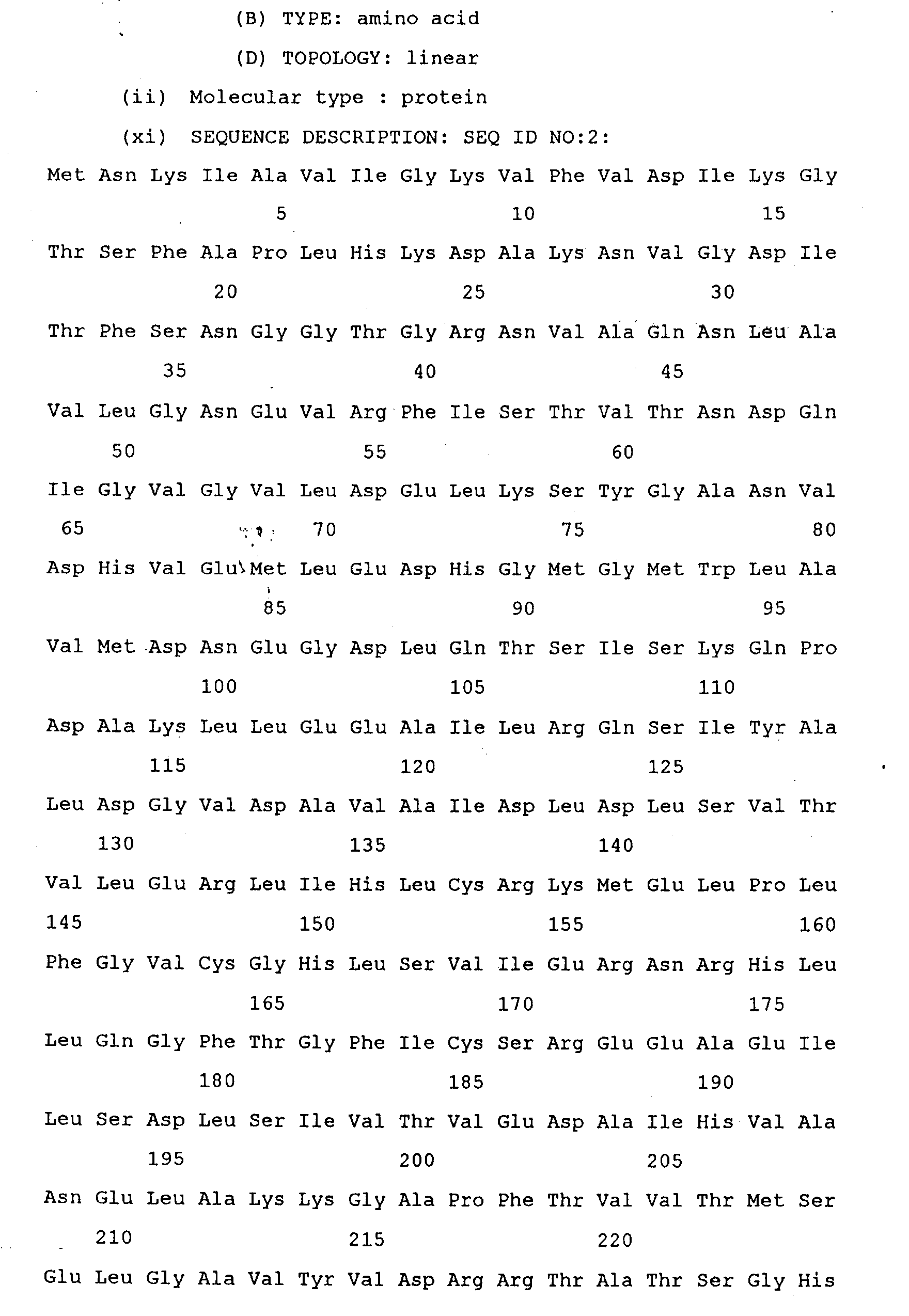


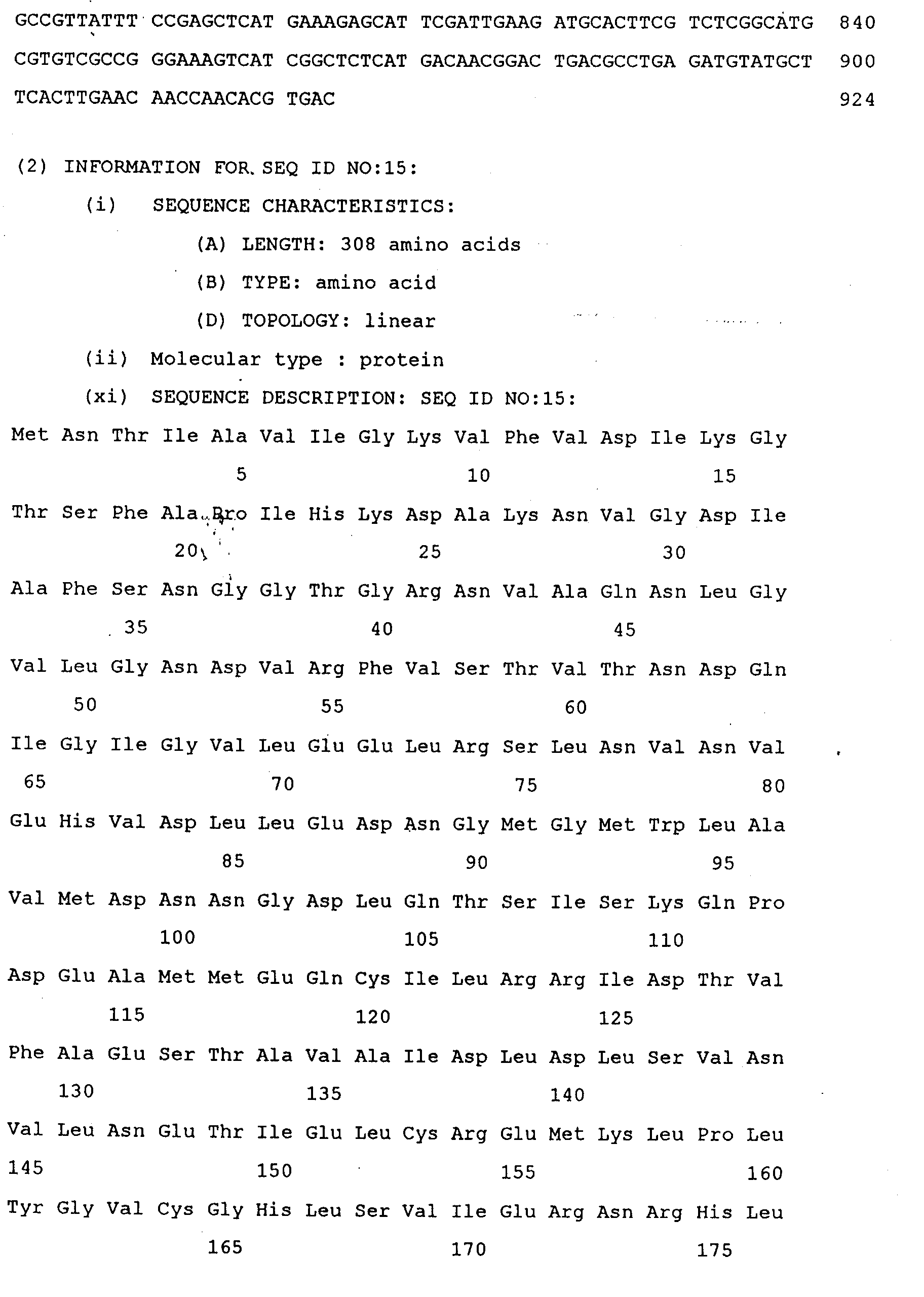

Claims (17)
- A process for producing 5'-inosinic acid or 5'-guanylic acid, which comprises contacting a transformant obtained by introducing a gene encoding a protein having inosine-guanosine kinase activity into a microorganism capable of reproducing ATP, with inosine or guanosine or a precursor thereof, an energy source and a phosphate donor, accumulating 5'-inosinic acid or 5'-guanylic acid in the reaction solution, and collecting the same therefrom.
- The process for producing 5'-inosinic acid or 5'-guanylic acid according to Claim 1, wherein the microorganism capable of reproducing ATP belongs to a genus selected from the group consisting of Corynebacterium, Escherichia, Saccharomyces, Staphylococcus and Candida.
- The process for producing 5'-inosinic acid or 5'-guanylic acid according to Claim 1, wherein the microorganism capable of reproducing ATP belongs to Corynebacterium ammoniagenes.
- The process for producing 5'-inosinic acid or 5'-guanylic acid according to any one of Claims 1 to 3, wherein the gene encoding the protein having inosine-guanosine kinase activity is a gene derived from Exiguobacterium acetylicum or a gene capable of hybridizing said gene.
- The process for producing 5'-inosinic acid or 5'-guanylic acid according to any one of Claims 1 to 3, wherein the gene encoding the protein having inosine-guanosine kinase activity is a gene derived from Escherichia coli or a gene capable of hybridizing said gene.
- A transformant obtained by introducing a gene encoding a protein having inosine-guanosine kinase activity into a microorganism capable of reproducing ATP.
- The transformant according to Claims 6, wherein the microorganism capable of reproducing ATP belongs to a genus selected from the group consisting of Corynebacterium, Escherichia, Saccharomyces, Staphylococcus and Candida.
- The transformant according to Claims 6, wherein the microorganism capable of reproducing ATP belongs to Corynebacterium ammoniagenes.
- The transformant according to any of Claims 6 to 8, wherein the gene encoding a protein having inosine-guanosine kinase activity is a gene derived from Exiguobacterium acetylicum or a gene capable of hybridizing said gene.
- The transformant according to any of Claims 6 to 8, wherein the gene encoding a protein having inosine-guanosine kinase activity is a gene derived from Escherichia coli or a gene capable of hybridizing said gene.
- A recombinant DNA being capable of replicating in Corynebacterium ammoniagenes and containing a gene encoding a protein having inosine-guanosine kinase activity.
- The recombinant DNA according to Claim 11, wherein the gene encoding a protein having inosine-guanosine kinase activity is a gene derived from Exiguobacterium acetylicum or a gene capable of hybridizing said gene.
- The recombinant DNA according to Claim 11, wherein the gene encoding a protein having inosine-guanosine kinase activity is a gene derived from Escherichia coli or a gene capable of hybridizing said gene.
- A protein obtainable from a microorganism belonging to Exiguobacterium acetylicum having inosine-guanosine kinase activity and the following characteristics:(1) Action
The enzyme transfers a phosphate group into a nucleoside in the presence of a phosphate donor and forms a nucleoside 5'-monophosphate.(2) Substrate specificity
A phosphate group in the γ-position of a nucleoside triphosphate is transferred to the other nucleoside.(3) Optimum pH
pH 7.7 - 9.9.(4) pH stability
pH 6.7 - 12.1.(5) Optimum temperature
30 - 50°C.(6) Metal requirement
Magnesium ion, manganese ion, cobalt ion or iron ion(7) Influence of metal ions
The activity of the enzyme is strongly inhibited by copper ion and mercury ion, and is also inhibited by zinc ion and cadmium ion.(8) Km value
Km value is 0.03 mM for guanosine, 1 mM for inosine, and 1.6 mM for ATP when guanosine is used as a substrate.(9) Molecular weight.
The enzyme has a molecular weight of approximately 36 kilodaltons as measured by SDS-polyacrylamide gel electrophoresis. - A protein having inosine-guanosine kinase activity and having the amino acid sequence which is shown in SEQ ID NO:2 or in which a part of amino acids are deleted, substituted or added in the amino acid sequence shown in SEQ ID NO:2.
- A gene encoding a protein according to Claim 14 or 15.
- A gene encoding a protein having inosine-guanosine activity, and having a nucleotide sequence shown in SEQ ID NO:1 or being capable of hybridizing a gene having said nucleotide sequence.
Applications Claiming Priority (5)
| Application Number | Priority Date | Filing Date | Title |
|---|---|---|---|
| JP102888/95 | 1995-03-24 | ||
| JP10288895 | 1995-03-24 | ||
| JP177900/95 | 1995-06-09 | ||
| JP17790095 | 1995-06-09 | ||
| PCT/JP1996/000761 WO1996030501A1 (en) | 1995-03-24 | 1996-03-22 | Process for producing nucleic acids |
Publications (3)
| Publication Number | Publication Date |
|---|---|
| EP0816491A1 true EP0816491A1 (en) | 1998-01-07 |
| EP0816491A4 EP0816491A4 (en) | 2000-11-22 |
| EP0816491B1 EP0816491B1 (en) | 2008-07-30 |
Family
ID=26443578
Family Applications (1)
| Application Number | Title | Priority Date | Filing Date |
|---|---|---|---|
| EP96906930A Expired - Lifetime EP0816491B1 (en) | 1995-03-24 | 1996-03-22 | Process for producing nucleic acids |
Country Status (12)
| Country | Link |
|---|---|
| US (1) | US6673576B1 (en) |
| EP (1) | EP0816491B1 (en) |
| JP (1) | JP3948027B2 (en) |
| KR (1) | KR100376635B1 (en) |
| CN (1) | CN1130457C (en) |
| BR (1) | BR9607745A (en) |
| CA (1) | CA2216172A1 (en) |
| DE (1) | DE69637616D1 (en) |
| ES (1) | ES2311289T3 (en) |
| HU (1) | HUP9801687A3 (en) |
| PL (1) | PL184520B1 (en) |
| WO (1) | WO1996030501A1 (en) |
Cited By (3)
| Publication number | Priority date | Publication date | Assignee | Title |
|---|---|---|---|---|
| EP1029926A1 (en) * | 1999-02-08 | 2000-08-23 | Kyowa Hakko Kogyo Co., Ltd. | Process for producing purine nucleotides |
| EP1346026A4 (en) * | 2000-12-26 | 2004-06-23 | Cheil Jedang Corp | MICROORGANISM PRODUCING 5'-INOSINIC ACID AND PROCESS FOR PRODUCING 5'-INOSINIC ACID USING THE MICROORGANISM |
| KR100463983B1 (en) * | 1998-03-14 | 2005-06-02 | 씨제이 주식회사 | Method for preparing 5'-guanylic acid by recombinant microorganism |
Families Citing this family (10)
| Publication number | Priority date | Publication date | Assignee | Title |
|---|---|---|---|---|
| BRPI0509056A (en) * | 2004-03-31 | 2007-08-21 | Ajinomoto Kk | bacteria belonging to the genus bacillus or genus escherichia, and methods for producing a purine nucleoside, for producing a purine nucleotide, and for producing 5'-guanylic acid |
| KR100694427B1 (en) * | 2005-12-02 | 2007-03-12 | 씨제이 주식회사 | Microorganisms of Corynebacterium and Preparation Method of 5'-inosinic Acid Using the Same |
| ES2401607T3 (en) | 2006-04-24 | 2013-04-23 | Ajinomoto Co., Inc. | Bacteria that can produce a purine substance and procedure to produce a purine substance |
| WO2007125783A1 (en) | 2006-04-24 | 2007-11-08 | Ajinomoto Co., Inc. | Bacterium capable of producing purine substance, and process for production of purine substance |
| JP2010110216A (en) | 2007-02-20 | 2010-05-20 | Ajinomoto Co Inc | Method for producing l-amino acid or nucleic acid |
| JP2011067095A (en) | 2008-01-10 | 2011-04-07 | Ajinomoto Co Inc | Method for producing target substance by fermentation process |
| KR101599977B1 (en) | 2008-02-25 | 2016-03-04 | 아지노모토 가부시키가이샤 | Process for production of 5'-guanylic acid |
| US9234226B2 (en) | 2008-10-14 | 2016-01-12 | Wayne M. Barnes | In vitro recombination methods using 5′ exonuclease |
| EP3061828B1 (en) | 2013-10-23 | 2024-08-28 | Ajinomoto Co., Inc. | Method for producing target substance |
| KR102284843B1 (en) | 2019-10-08 | 2021-08-02 | 씨제이제일제당 주식회사 | Method of producing 5'-guanylic acid disodium 7 hydrate crystals |
Family Cites Families (6)
| Publication number | Priority date | Publication date | Assignee | Title |
|---|---|---|---|---|
| JPS4944350B1 (en) * | 1967-06-16 | 1974-11-27 | ||
| NL7209936A (en) | 1972-07-19 | 1974-01-22 | ||
| JPS5682098A (en) | 1979-12-06 | 1981-07-04 | Ajinomoto Co Inc | Production of purine nucleoside-5'-monophosphate |
| JPH0669386B2 (en) | 1987-03-18 | 1994-09-07 | 協和醗酵工業株式会社 | Process for producing 5'-inosinic acid |
| US5756315A (en) * | 1989-12-05 | 1998-05-26 | Kyowa Hakko Kogyo Co., Ltd. | Inosine-guanosine kinase |
| EP0458971B1 (en) | 1989-12-05 | 1996-01-03 | Kyowa Hakko Kogyo Co., Ltd. | Inosine guanosine kinase |
-
1996
- 1996-03-22 HU HU9801687A patent/HUP9801687A3/en not_active Application Discontinuation
- 1996-03-22 US US08/913,816 patent/US6673576B1/en not_active Expired - Fee Related
- 1996-03-22 PL PL96322580A patent/PL184520B1/en not_active IP Right Cessation
- 1996-03-22 CN CN96194140A patent/CN1130457C/en not_active Expired - Fee Related
- 1996-03-22 WO PCT/JP1996/000761 patent/WO1996030501A1/en not_active Ceased
- 1996-03-22 ES ES96906930T patent/ES2311289T3/en not_active Expired - Lifetime
- 1996-03-22 JP JP52915796A patent/JP3948027B2/en not_active Expired - Fee Related
- 1996-03-22 DE DE69637616T patent/DE69637616D1/en not_active Expired - Lifetime
- 1996-03-22 CA CA002216172A patent/CA2216172A1/en not_active Abandoned
- 1996-03-22 EP EP96906930A patent/EP0816491B1/en not_active Expired - Lifetime
- 1996-03-22 KR KR1019970706658A patent/KR100376635B1/en not_active Expired - Fee Related
- 1996-03-22 BR BR9607745A patent/BR9607745A/en not_active IP Right Cessation
Cited By (4)
| Publication number | Priority date | Publication date | Assignee | Title |
|---|---|---|---|---|
| KR100463983B1 (en) * | 1998-03-14 | 2005-06-02 | 씨제이 주식회사 | Method for preparing 5'-guanylic acid by recombinant microorganism |
| EP1029926A1 (en) * | 1999-02-08 | 2000-08-23 | Kyowa Hakko Kogyo Co., Ltd. | Process for producing purine nucleotides |
| EP1346026A4 (en) * | 2000-12-26 | 2004-06-23 | Cheil Jedang Corp | MICROORGANISM PRODUCING 5'-INOSINIC ACID AND PROCESS FOR PRODUCING 5'-INOSINIC ACID USING THE MICROORGANISM |
| US7244608B2 (en) | 2000-12-26 | 2007-07-17 | Cheil Jedang Corporation | Microorganism producing 5′-inosinic acid and process for producing 5′-inosinic acid using the same |
Also Published As
| Publication number | Publication date |
|---|---|
| US6673576B1 (en) | 2004-01-06 |
| EP0816491B1 (en) | 2008-07-30 |
| EP0816491A4 (en) | 2000-11-22 |
| WO1996030501A1 (en) | 1996-10-03 |
| DE69637616D1 (en) | 2008-09-11 |
| HUP9801687A3 (en) | 2000-06-28 |
| KR100376635B1 (en) | 2003-06-12 |
| KR19980703254A (en) | 1998-10-15 |
| PL322580A1 (en) | 1998-02-02 |
| CN1185174A (en) | 1998-06-17 |
| PL184520B1 (en) | 2002-11-29 |
| JP3948027B2 (en) | 2007-07-25 |
| BR9607745A (en) | 1998-06-23 |
| HUP9801687A2 (en) | 1998-10-28 |
| CN1130457C (en) | 2003-12-10 |
| ES2311289T3 (en) | 2009-02-01 |
| CA2216172A1 (en) | 1996-10-03 |
Similar Documents
| Publication | Publication Date | Title |
|---|---|---|
| US6207435B1 (en) | Method for producing nucleoside-5′-phosphate ester | |
| EP0832970B1 (en) | Process for producing nucleoside-5'-phosphate ester | |
| EP0816491B1 (en) | Process for producing nucleic acids | |
| JPWO1996030501A1 (en) | Method for producing nucleic acids | |
| EP1029926A1 (en) | Process for producing purine nucleotides | |
| JP2000295996A (en) | Purine nucleotide production method | |
| EP2100956A1 (en) | Method of enzymatically synthesizing 3'-phosphoadenosine-5'-phophosulfate | |
| JP3941390B2 (en) | Mutant acid phosphatase | |
| CA2046865C (en) | Inosine-guanosine kinase | |
| US5874272A (en) | Inosine-guanosine kinase | |
| JP4663631B2 (en) | AMP deaminase derived from actinomycetes and use thereof | |
| JP3117707B2 (en) | Method for producing 5'-inosinic acid | |
| US20050170470A1 (en) | Process for producing 2'-deoxyguanosine | |
| CA2024554A1 (en) | Process for producing thiamine phosphates | |
| JP2999256B2 (en) | Inosine anosine kinase | |
| JP2003250570A (en) | Method for producing 2'-deoxyribonucleoside compound, method for producing this intermediate, and 2-deoxyribose 5-phosphate aldolase gene used therein | |
| KR19990074792A (en) | Method for preparing 5'-guanylic acid by recombinant microorganism | |
| HK1027381A (en) | Process for producing purine nucleotides |
Legal Events
| Date | Code | Title | Description |
|---|---|---|---|
| PUAI | Public reference made under article 153(3) epc to a published international application that has entered the european phase |
Free format text: ORIGINAL CODE: 0009012 |
|
| 17P | Request for examination filed |
Effective date: 19971022 |
|
| AK | Designated contracting states |
Kind code of ref document: A1 Designated state(s): CH DE ES FR GB IT LI NL |
|
| A4 | Supplementary search report drawn up and despatched |
Effective date: 20001011 |
|
| AK | Designated contracting states |
Kind code of ref document: A4 Designated state(s): CH DE ES FR GB IT LI NL |
|
| 17Q | First examination report despatched |
Effective date: 20030805 |
|
| GRAP | Despatch of communication of intention to grant a patent |
Free format text: ORIGINAL CODE: EPIDOSNIGR1 |
|
| RIC1 | Information provided on ipc code assigned before grant |
Ipc: C12N 15/54 20060101ALI20080208BHEP Ipc: C12N 9/12 20060101AFI20080208BHEP |
|
| GRAS | Grant fee paid |
Free format text: ORIGINAL CODE: EPIDOSNIGR3 |
|
| GRAA | (expected) grant |
Free format text: ORIGINAL CODE: 0009210 |
|
| AK | Designated contracting states |
Kind code of ref document: B1 Designated state(s): CH DE ES FR GB IT LI NL |
|
| REG | Reference to a national code |
Ref country code: GB Ref legal event code: FG4D |
|
| REG | Reference to a national code |
Ref country code: CH Ref legal event code: EP |
|
| REF | Corresponds to: |
Ref document number: 69637616 Country of ref document: DE Date of ref document: 20080911 Kind code of ref document: P |
|
| REG | Reference to a national code |
Ref country code: CH Ref legal event code: NV Representative=s name: NOVAGRAAF INTERNATIONAL SA |
|
| REG | Reference to a national code |
Ref country code: ES Ref legal event code: FG2A Ref document number: 2311289 Country of ref document: ES Kind code of ref document: T3 |
|
| PLBE | No opposition filed within time limit |
Free format text: ORIGINAL CODE: 0009261 |
|
| STAA | Information on the status of an ep patent application or granted ep patent |
Free format text: STATUS: NO OPPOSITION FILED WITHIN TIME LIMIT |
|
| 26N | No opposition filed |
Effective date: 20090506 |
|
| REG | Reference to a national code |
Ref country code: CH Ref legal event code: PFA Owner name: AJINOMOTO CO., INC. Free format text: AJINOMOTO CO., INC.#NO. 15-1, KYOBASHI 1-CHOME, CHUO-KU#TOKYO 104 (JP) -TRANSFER TO- AJINOMOTO CO., INC.#NO. 15-1, KYOBASHI 1-CHOME, CHUO-KU#TOKYO 104 (JP) |
|
| PGFP | Annual fee paid to national office [announced via postgrant information from national office to epo] |
Ref country code: IT Payment date: 20120317 Year of fee payment: 17 |
|
| PGFP | Annual fee paid to national office [announced via postgrant information from national office to epo] |
Ref country code: FR Payment date: 20130325 Year of fee payment: 18 Ref country code: ES Payment date: 20130314 Year of fee payment: 18 Ref country code: CH Payment date: 20130312 Year of fee payment: 18 Ref country code: GB Payment date: 20130320 Year of fee payment: 18 Ref country code: DE Payment date: 20130320 Year of fee payment: 18 |
|
| PGFP | Annual fee paid to national office [announced via postgrant information from national office to epo] |
Ref country code: NL Payment date: 20130316 Year of fee payment: 18 |
|
| REG | Reference to a national code |
Ref country code: DE Ref legal event code: R119 Ref document number: 69637616 Country of ref document: DE |
|
| REG | Reference to a national code |
Ref country code: NL Ref legal event code: V1 Effective date: 20141001 |
|
| REG | Reference to a national code |
Ref country code: CH Ref legal event code: PL |
|
| GBPC | Gb: european patent ceased through non-payment of renewal fee |
Effective date: 20140322 |
|
| REG | Reference to a national code |
Ref country code: FR Ref legal event code: ST Effective date: 20141128 |
|
| REG | Reference to a national code |
Ref country code: DE Ref legal event code: R119 Ref document number: 69637616 Country of ref document: DE Effective date: 20141001 |
|
| PG25 | Lapsed in a contracting state [announced via postgrant information from national office to epo] |
Ref country code: GB Free format text: LAPSE BECAUSE OF NON-PAYMENT OF DUE FEES Effective date: 20140322 Ref country code: FR Free format text: LAPSE BECAUSE OF NON-PAYMENT OF DUE FEES Effective date: 20140331 Ref country code: DE Free format text: LAPSE BECAUSE OF NON-PAYMENT OF DUE FEES Effective date: 20141001 Ref country code: CH Free format text: LAPSE BECAUSE OF NON-PAYMENT OF DUE FEES Effective date: 20140331 Ref country code: LI Free format text: LAPSE BECAUSE OF NON-PAYMENT OF DUE FEES Effective date: 20140331 |
|
| PG25 | Lapsed in a contracting state [announced via postgrant information from national office to epo] |
Ref country code: NL Free format text: LAPSE BECAUSE OF NON-PAYMENT OF DUE FEES Effective date: 20141001 |
|
| PG25 | Lapsed in a contracting state [announced via postgrant information from national office to epo] |
Ref country code: IT Free format text: LAPSE BECAUSE OF NON-PAYMENT OF DUE FEES Effective date: 20140322 |
|
| REG | Reference to a national code |
Ref country code: ES Ref legal event code: FD2A Effective date: 20150427 |
|
| PG25 | Lapsed in a contracting state [announced via postgrant information from national office to epo] |
Ref country code: ES Free format text: LAPSE BECAUSE OF NON-PAYMENT OF DUE FEES Effective date: 20140323 |