EP0811011B1 - Carbohydrate conjugated bio-active compounds - Google Patents
Carbohydrate conjugated bio-active compounds Download PDFInfo
- Publication number
- EP0811011B1 EP0811011B1 EP96944345A EP96944345A EP0811011B1 EP 0811011 B1 EP0811011 B1 EP 0811011B1 EP 96944345 A EP96944345 A EP 96944345A EP 96944345 A EP96944345 A EP 96944345A EP 0811011 B1 EP0811011 B1 EP 0811011B1
- Authority
- EP
- European Patent Office
- Prior art keywords
- linker
- drugs
- compound
- link
- bam
- Prior art date
- Legal status (The legal status is an assumption and is not a legal conclusion. Google has not performed a legal analysis and makes no representation as to the accuracy of the status listed.)
- Expired - Lifetime
Links
Images





Classifications
-
- C—CHEMISTRY; METALLURGY
- C07—ORGANIC CHEMISTRY
- C07H—SUGARS; DERIVATIVES THEREOF; NUCLEOSIDES; NUCLEOTIDES; NUCLEIC ACIDS
- C07H9/00—Compounds containing a hetero ring sharing at least two hetero atoms with a saccharide radical
- C07H9/02—Compounds containing a hetero ring sharing at least two hetero atoms with a saccharide radical the hetero ring containing only oxygen as ring hetero atoms
- C07H9/04—Cyclic acetals
-
- A—HUMAN NECESSITIES
- A61—MEDICAL OR VETERINARY SCIENCE; HYGIENE
- A61K—PREPARATIONS FOR MEDICAL, DENTAL OR TOILETRY PURPOSES
- A61K47/00—Medicinal preparations characterised by the non-active ingredients used, e.g. carriers or inert additives; Targeting or modifying agents chemically bound to the active ingredient
- A61K47/50—Medicinal preparations characterised by the non-active ingredients used, e.g. carriers or inert additives; Targeting or modifying agents chemically bound to the active ingredient the non-active ingredient being chemically bound to the active ingredient, e.g. polymer-drug conjugates
- A61K47/51—Medicinal preparations characterised by the non-active ingredients used, e.g. carriers or inert additives; Targeting or modifying agents chemically bound to the active ingredient the non-active ingredient being chemically bound to the active ingredient, e.g. polymer-drug conjugates the non-active ingredient being a modifying agent
- A61K47/54—Medicinal preparations characterised by the non-active ingredients used, e.g. carriers or inert additives; Targeting or modifying agents chemically bound to the active ingredient the non-active ingredient being chemically bound to the active ingredient, e.g. polymer-drug conjugates the non-active ingredient being a modifying agent the modifying agent being an organic compound
- A61K47/549—Sugars, nucleosides, nucleotides or nucleic acids
-
- A—HUMAN NECESSITIES
- A61—MEDICAL OR VETERINARY SCIENCE; HYGIENE
- A61P—SPECIFIC THERAPEUTIC ACTIVITY OF CHEMICAL COMPOUNDS OR MEDICINAL PREPARATIONS
- A61P25/00—Drugs for disorders of the nervous system
-
- A—HUMAN NECESSITIES
- A61—MEDICAL OR VETERINARY SCIENCE; HYGIENE
- A61P—SPECIFIC THERAPEUTIC ACTIVITY OF CHEMICAL COMPOUNDS OR MEDICINAL PREPARATIONS
- A61P31/00—Antiinfectives, i.e. antibiotics, antiseptics, chemotherapeutics
- A61P31/12—Antivirals
-
- A—HUMAN NECESSITIES
- A61—MEDICAL OR VETERINARY SCIENCE; HYGIENE
- A61P—SPECIFIC THERAPEUTIC ACTIVITY OF CHEMICAL COMPOUNDS OR MEDICINAL PREPARATIONS
- A61P35/00—Antineoplastic agents
-
- A—HUMAN NECESSITIES
- A61—MEDICAL OR VETERINARY SCIENCE; HYGIENE
- A61P—SPECIFIC THERAPEUTIC ACTIVITY OF CHEMICAL COMPOUNDS OR MEDICINAL PREPARATIONS
- A61P43/00—Drugs for specific purposes, not provided for in groups A61P1/00-A61P41/00
-
- C—CHEMISTRY; METALLURGY
- C07—ORGANIC CHEMISTRY
- C07H—SUGARS; DERIVATIVES THEREOF; NUCLEOSIDES; NUCLEOTIDES; NUCLEIC ACIDS
- C07H19/00—Compounds containing a hetero ring sharing one ring hetero atom with a saccharide radical; Nucleosides; Mononucleotides; Anhydro-derivatives thereof
- C07H19/02—Compounds containing a hetero ring sharing one ring hetero atom with a saccharide radical; Nucleosides; Mononucleotides; Anhydro-derivatives thereof sharing nitrogen
- C07H19/04—Heterocyclic radicals containing only nitrogen atoms as ring hetero atom
- C07H19/056—Triazole or tetrazole radicals
-
- C—CHEMISTRY; METALLURGY
- C07—ORGANIC CHEMISTRY
- C07H—SUGARS; DERIVATIVES THEREOF; NUCLEOSIDES; NUCLEOTIDES; NUCLEIC ACIDS
- C07H19/00—Compounds containing a hetero ring sharing one ring hetero atom with a saccharide radical; Nucleosides; Mononucleotides; Anhydro-derivatives thereof
- C07H19/02—Compounds containing a hetero ring sharing one ring hetero atom with a saccharide radical; Nucleosides; Mononucleotides; Anhydro-derivatives thereof sharing nitrogen
- C07H19/04—Heterocyclic radicals containing only nitrogen atoms as ring hetero atom
- C07H19/06—Pyrimidine radicals
Definitions
- the field of the invention is delivery and targeting of bioactive materials, including especially the use of increased bioavailability and cellular uptake to affect such delivery and targeting.
- a significant problem in clinical pharmacology is the selective delivery of specific bio-active compounds to target cells of an organism.
- desirable compounds are only passively and partially diffused into target cells, and the plasma concentrations required to achieve significant intracellular levels are difficult to achieve due to toxicity, clearance and degradation by the liver, kidneys and other bodily organs or fluids.
- BBB blood brain barrier
- neoplasms the problem may be further exacerbated due to poor or inefficient vascularization.
- Additional further difficulties may result from digestion or degradation of bio-active compounds within the gut, and/or poor transport of many such compounds across the intestinal wall. Still further difficulties arise from the inadvertent delivery of the bio-active compounds to non-targeted cells.
- Carbohydrate moieties of glycoproteins are known to play an important role in absorption, transport, and subsequent tissue distribution in the body, and several researchers have previously addressed the delivery problem by administering sugars in conjunction with bioactive materials. Significant results have already been achieved in this area.
- mannitol to overcome the blood brain barrier.
- Concentrated solutions of mannitol for example, have been infused into the carotid arteries to disrupt the blood brain barrier long enough to allow methotrexate and other potent chemotherapeutic agents to penetrate brain tumors. While significant results have been reported with this approach, it suffers from several drawbacks.
- the opening of the blood brain barrier is clearly non-specific, and permits numerous harmful compounds to enter the brain along with the desired compound.
- the technique targets primarily the central nervous system, and is largely inapplicable to other systems.
- MTC methotrexate
- BSA mannosylated bovine serum albumin
- Insulin has been glycosylated to take advantage of the competitive binding between glucose and the glycosylated insulin (Seminoff, L.A.
- the anti-inflammatory agent, naproxin has also been glucosidically bound to sugar terminated HSA (Franssen, E.J.F., Hepatic and Intrahepatic Targeting of an Anti-inflammatory Agent With Human Serum Albumin and Neoglycoproteins as Carrier Molecules, Biochem, Pharm. , 45(6) 1215-1226 (1993)).
- HSA sugar terminated HSA
- the glycosidic bond is formed to HSA, and thus only indirectly to the drugs, AZT or naproxin.
- glycosides are condensation products of sugars with various kinds of organic hydroxy (or occasionally amino or thiol) compounds, in which the OH of the hemiacetal portion of the carbohydrate participates in the condensation (Remington, The Science and Practice of Pharmacy , 19th ed.386-387 (Mack Publ., Co., Easton, PA, 1995)).
- many well-known biologically active compounds are glycosides, including amygdalin, cymarin, digitoxin, ouabain, rutin, and salicin.
- glycosides including gangliosides, sugar nucleotides and neural cell adhesion molecules.
- glycosidic bonding of sugars to drugs is a successful strategy for delivery of the drugs.
- sugar-coupled bio-active compounds the compounds which can be developed through use of the standard glycosidic bond is limited.
- linkage is entirely unsuitable because the size and steric hindrance of the resulting conjugated compound may no longer be recognized or properly transported by the respective cellular transporters.
- glycosidic bonds are too labile and are easily hydrolyzed by glycosidases.
- glycoside-bearing liposomes can be used in vivo to deliver drugs specifically to macrophages (Medda, S. et al., Sugar-coated Liposomes: a Novel Delivery System for Increasing Drug Efficacy and Reduced Drug Toxicity, Biotechnol. Appl. Biochem , 17 37-47 (1993)).
- Anionic amphiphiles with a phosphate ester junction between a fluorophilic-lipophilic tail and a sugar-based hydrophilic head have also been synthesized (Guillod, F., et al., Amphiphilic Sugar Phosphates with Single or Double Perfluoroalkylated Hydrophobie Chains for Usc in Oxygen and Drug Delivery Systems, Art. Cells. Blood Subs., and Immob. Biotech. , 22(4)1273-1279 (1994)).
- glinkosides are preferentially taken up by glucose receptors and/or other monosaccharide cellular receptors, and once inside the cells, the glinkosides are cleaved into a sugar derivative, a linker or linker fragments, and a biologically active compound.
- Various aspects of the invention include glinkoside compositions, processes for synthesizing glinkosides, and treating diseases using glinkosides.
- glinkosides have the general structure of MS-LINK-BAM, where MS is a monosaccharide, LINK is a linker, BAM is a drug, MS is covalently bound to LINK at a position other than the MS C 1 , and LINK is covalently linked to BAM.
- MS-LINK-BAM where MS is a monosaccharide
- LINK is a linker
- BAM is a drug
- MS is covalently bound to LINK at a position other than the MS C 1
- LINK is covalently linked to BAM.
- the LINK portion of a glinkoside is also subject to great variation, and comprises a straight chain alkane having between 4 and 16 carbons.
- the BAM portion is selected from the following:
- the BAM may also be cleavable by a target call.
- Suitable MS-LINK and LINK-BAM bonds also vary widely, and by way of example may independently consist of ether, ester, amide, disulfide, hemiacetal, hemiketal, acetal, and ketal bonds.
- glinkosides utilize naturally occurring ribose (5 carbon) or hexose (6 carbon) sugars, four to sixteen carbon straight chain linkers, bifunctional ⁇ , ⁇ linkers such as hexane, and known bio-active drugs.
- the MS-LINK and LINK-BAM bonds are each preferably cleavable under physiologic conditions such that a glinkoside acts as a prodrug, delivering an active or activatable drug to a target position on or within a target cell.
- Presently preferred embodiments involve glinkosides in which the LINK-BAM bond is stronger than the MS-LINK bond.
- the MS-LINK bond may be differentially cleavable from the Link-BAM bond.
- the Link recluces steric distance of the conpound compared to the same compound without Link.
- MS may comprise a milose, hexose, or a pentose.
- glycosides have numerous advantages over glycosides, including the following:
- glinkosides can be prepared using the following steps: (1) Prepare an appropriate linker. In the case of a bifunctional ⁇ , ⁇ linker, the ⁇ - end would be reactive and the ⁇ - end would be protected; (2) Select a monosaccharide and chemically bind one of its non-C 1 -OH groups to the linker; and (3) Chemically bind the linker to a bio-active material.
- a method of synthesizing a compound having the general form MS-LINK-BAM comprises the following steps: providing a monosaccharide, a linker having a first functional group on a first end and a second functional group on a second end, and a bioactive material; protecting the second functional group of the linker; forming a non-glycosidic chemical bond between the monosaccharide and the first functional group of the linker; deprotecting the second functional group of the linker; and forming a chemical bond between the second functional group of the linker and the boactive material.
- 6-HD 44 g, 0.372 mol
- Py/CH 2 Cl 2 (1:1) mixture 80 ml
- the resulting solution was cooled to 0°C, and TsCl (20 g, 0.105 mol) was added.
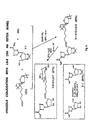
- the third row shows an exemplary synthesis of 1-O-(2'-tetrahydropyranyl)-6-iodo-1-hexanol (L-3) using the following reagents: L-2; Nal; and Acetone.
- L-2 9.0 g, 25.2 mM
- NaI 11.3 g, 75 mM
- dry acetone 100 ml
- Acetone was evaporated and the residue was treated with water (100 ml).
- the product was extracted with CH 2 Cl 2 (3 x 50 ml).
- the organic layer was
- IPGF (2.0 g, 9.08 mM) was dissolved in anhydrous DMSO (7 ml) and NaH (total of 545 mg, 13.6 mM) was added in several small portions at room temperature.
- the reaction mixture was kept at 40°C for 0.5 hour and L-3 (2.27 g, 7.26 mM) was added.
- the resulting mixture was kept at room temperature overnight and then poured onto ethyl acetate (200 ml). Organic layer was washed with brine (3 x 50 ml), dried (anh. Na 2 SO 4 ) and evaporated.
- Crude product mixture was purified and the isomers were separated by flash chromatography on a silica gel column (TLC solvent system).
- LG-1a (oil); Yield: 1.06 g, (36%), and LG-1b (oil); Yield: 0.94 g, (32%).
- TLC 50% Ethyl acetate, 2.5% Triethyl amine, 47,5% Hexane; Rf (LG-1a); 0.34; Rf(LG-1b): 0.47.
- 1 H-NMR spectra of both isomers in CDCl 3 are in accordance with the proposed structures (samples were chemically pure).
- Figure 2 also shows an exemplary synthesis of 1,2:5,6-di-O-isopropylidene -3-0-(6'-tetrahydropyranyloxy)-hexyl -alpha-D-glucofuranose (LG-2) using the following reagents: LG-1a; Acetone; and PPTS (prepared from TsOH and Py).
- LG-1a 500 mg, 1.233 mM
- PPTS 67 mg, 0.247 mM
- acetone was stirred at room temperature until the reaction was completed (6 hours).
- Acetone was evaporated and residual material was chromatographed.
- LG-2 (oil). Yield: 490 mg (91%).
- TLC 15% ethyl acetate, 5% triethyl amine, hexane 80% Rf: 0.66.
- 1 H-NMR-spectrum (CDCl 3 ) confirms the purity and structure of LG-2.
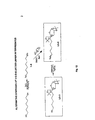
- Figure 3 shows an exemplary synthesis 1,2:5,6-di-O-isopropylidene-3-O-(6'-hydroxy)-hexyl-alpha-D-glucofuranose (LG-3) using the following reagents: LG-2; Ethanol(96%); PPTS and Acetone.
- LG-2 2.0 g, 4.49 mM
- PPTS PPTS (245 mg, 0.90 mM) were dissolved in ethanol (100 ml) and the reaction mixture was heated for 5 hours at 55°C. Ethanol was then evaporated. The residual material was dissolved in acetone (100 ml) and stirred at room temperature for the next 4 hours.
- LG-3 1.0 g, 2.77 mM
- PDCh (2.13 g, 5.65 mM
- KMnO 4 (0.89 g, 5.65 mM)
- acetone 50 ml
- Figure 3 also shows an exemplary synthesis of 1,2:5,6-Di-O-isopropylidene-3-O-(6'-p-toluenesulfonyloxy)-hexyl-alpha-D-glucofuranose (LG-6) using the following reagents: LG-3; TsCl; Py; and CH 2 Cl 2 .
- LG-3 (1.40 g, 3.884 mM) was dissolved in a mixture of pyridine (5 ml) and CH 2 Cl 2 (10 ml). The reaction mixture was cooled to 0°C and TsCI (0.89 g, 4.668 mM) was added. The reaction mixture was kept for 5 hours at 4°C and then neutralized with aq.
- LG-6 (oil); Yield: 1.8 g (90%); TLC: 33% Ethyl acetate, 67% Hexane; 1 H-NMR-spectrum (CDCl 3 ) confirms the purity and structure of LG-6.
- Thymidine 100 mg, 0.413 mM
- LG-5 233mg, 0.620 mM
- DCC 128 mg, 0.620 mM
- DMAP (15.1 mg, 0.124 mM
- Py was evaporated in vacuum and residual material was chromatographed on a silica gel column (TLC solvent system).
- TFA Trifluoroacetic acid
- 30 mg, 0.05 mM was treated with TFA/Water (9/1, v/v) at room temperature for 5 minutes.
- the reaction mixture was then evaporated in vacuum, redissolved in 1 ml of water, filtrated and evaporated once again.
- TLC 10% methanol, 2% acetic Acid, 88% ethyl acetate; Rf: 0.17 (free 5'-OH) and 0.20 (free 3'-OH).
- 1 H-NMR-spectra in accordance with proposed structures.
- VirazoleTM 3.0 g, 12.28 mM
- acetone 40 ml
- DMP 2o ml
- perchloric acid 600ul
- the mixture was kept at room temperature for 3 hours and then at 5°C overnight.
- the resulting orange colored solution was neutralized with 2M aq.
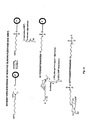
- Figure 5 also shows an exemplary synthesis of 2',3'-O-Isopropylidene-virazole-5'-O-ester with LG-5 (V-1-5'-O-LG-5) using the following reagents: V-1; LG-5; DCC; DMAP; Pyridine.
- V-1 236 mg, 0.796 mM
- LG-5 200 mg, 0.531 mM
- DCC 108 mg, 0.531 mM
- DMAP 13 mg, 0.106 mM
- Py Pyridine was removed in vacuum and the residue was purified by silica gel column chromatography.
- Figure 5 also shows an exemplary deprotection of V-1-5'-O-LG-5 and synthesis of V-5'-O-LG-7 using protected VirazoleTM ester from a previous experiment (V-1-ester) TFA.
- V-1 ester 50 mg, 0.076 mM
- TFA/water 9/1, v/v
- the reaction mixture was evaporated to dryness, redissolved in 1 ml of water, filtrated and evaporated once again. Yield: 35 mg (87%);
- TLC 10%methanol, 2% acetic acid, 88% ethyl acetate Rf: 0.19; 1 H-NMR-spectrum (D 2 O) confirms purity and structure of V-5'-O-LG-7.
- Figure 6 shows an exemplary syntheses of V-1-ETH-5'-O-: LG-8 and LG-9 using the following reagents: V-1; LG-6; NaH; and DMSO.
- V-1 250 mg, 0.843 mM
- NaH 118 mg, 2.95 mM
- the reaction mixture was heated for the next 30 minutes at 40°C and then LG-6 was added.
- the mixture was kept at room temperature overnight and then was diluted with 100 ml of ethyl acetate.
- the solution was washed with brine (3 x 30 ml), dried (Na 2 SO 4 ), evaporated and purified by silica gel column diromatography. Yield: 220 mg (49%); TLC:10% Hexane, 90% Ethyl acetate; Rf: 0.53; 1 H-NMR-spectrum (acetone-d6) supports the proposed structure.
- D-6a 500 mg, 1.92 mM
- NaH 96 mg, 2.40 mM
- Figure 8 shows the synthesis of 4-O- and 6-O-D-mannose-linker intermediates. The synthesis is carried out using chemistry similar to that described previously for galactose and glucose.
- Figure 9 shows the synthesis of 3-O-, 4-O- and 5-O-D-fructose-linker intermediates.
- the synthesis is carried out using chemistry similar to that described previously for galactose and glucose.
- LG-3 (1.00 g, 2.77 mM) and NaH (150 mg, 3.75 mM) in THF (10 ml) was stirred at 40°C for 1 hour followed by an addition of BnBr (1.3 ml, 11.08 mM). The reaction mixture was further stirred at 40°C until reaction was completed (6 hours). Ethyl acetate (100 ml) was then added and the obtained solution was washed with brine(3 x 50 ml).
- LG-3Bnf (1.00 g, 2.22 mM) was treated with a 4 ml TFA/Water (9:1, v/v) at room temperature for 7 minutes.
- the reaction mixture was evaporated in vacuum to dryness, redissolved in Ac2O/Py mixture (10 ml, 1:1, v/v) and left at room temperature overnight. After neutralization (5% aq. HCl, 50 ml) the product was extracted with ethyl acetate (3 x 50 ml).
- Figure 10 also shows an exemplary synthesis of LG-3pTA using the following reagents: LG-3BnpTA; 10% Pd/C; and Methanol.
- LG-3BnpTA (1.00 g, 1.86 mM) was dissolved in methanol (50 ml) and then the catalyst (Pd/C, 200 mg) was added. The reaction mixture was shaken in H2-atmosphere until the reaction was completed (18-24 hours). Catalyst was then removed by filtration and the methanolic solution was evaporated to dryness. The product was purified by flash chromatography on silica. Yield: 815 mg (98.1%); TLC: Ethyl acetate/Hexane (1/1) Rf: 0.21; 1 H-NMR-spectrum (CDCl 3 ) is in accordance with the proposed structure.
- LG-3pTA 300 mg, 0.669 mM
- CH 2 Cl 2 (3 ml) under argon.
- the resulting solution was cooled to 0°C and DIPEA (450 ul, 2.62 mM) was added.
- HD (4.00 g, 29.52 mM) was dissolved in Py/CH 2 Cl 2 (1:1, v/v) mixture (8.0 ml). The resulting solution was cooled to 0°C and DMT-Cl (2.50 g, 7.38 mM) was added. The obtained reaction mixture was kept at 4°C for 6 hours. Reaction solution was then carefully neutralized (pH8) with 5% aq HCl and the product was extracted with CH 2 Cl 2 (3 x 50 ml).
- Figure 11 also shows an exemplary synthesis of L-5 using the following reagents: L-4; PAP; and DIPEA.
- L-4 500 mg, 1.19 mM
- CH 2 Cl 2 5 ml
- DIPEA 800ul, 4.65 mM
- PAP 550ul, 2.46 mM
- the obtained reaction mixture was kept at room temperature for the next two hours, then cooled (0°C), diluted with cold CH 2 Cl 2 (100 ml), washed with cold 5%aq. NaHCO 3 , dried (Na 2 SO 4 , NaHCO 3 ) and evaporated in vacuum.
- 6-HD (70.9 g, 0.60 mol) was dissolved in 150 ml of Py and 250 ml of CH 2 Cl 2 . The resulting solution was cooled to 0°C, and TsCl (251.65 g, 1.32 mol) was added.
- DIPGF 11.68 g, 44.88 mM
- NaH 2.334 g, 58.34 mM
- the reaction mixture was kept at 40°C for 30 minutes and L-6 (67.0 g, 157.0 mM) dissolved in 150 ml of warm (40°C) DMSO was added.
- Figure 12 shows an alternative synthesis 1,2:5,6-di-O-isopropylidene-3-O-(6'-hydroxy)-hexyl- ⁇ -D-glucofuranose (LG-3) using the following reagents: LG-6; DMF; K 2 CO 3 ; H 2 O.
- LG-6 (16.0 g, 31.03 mM) and K 2 CO 3 were dissolved in DMF (200 ml) and water (20 ml) and reaction mixture was heated for 5 hours at 90°C.
- Figure 13 shows an exemplary synthesis of oligodeoxy nuclcotides (ODN) modified at 3' and 5' positions (ICN 16967) using an automatic DNA synthesizer (Applied Biosystems, model 394) and standard phosphoroamidite chemistry; ⁇ -Cyano ethyl phosphoroamidites, synthesis reagents and CPG polystyrene columns (1 ⁇ M and 10 ⁇ M T, 500 ⁇ pore size, ABI). After synthesis the oligonucleotide was deprotected with concentrated ammonium hydroxide for 8 hours at 55°C. Crude and final analysis was curried using analytical C8 HPLC column (Beckman; ultrasphere octyl).
- thermodynamic melting (Tm) experiments See methods in Fuglisi, 3. D.; Tinoco, 1. Jr. Methods EnzymoL 1989, 180 , 304.
- Tm thermodynamic melting
- the experiments were conducted on a Varian UV spectrometer equipped with an electronic temperature controller and a Cary hybridization software. As shown by the Figure 14 (a), this modified sequence exhibit almost identical hybridization to complementary RNA as compared with the unmodified sequence (b).
- Oligonucleotides (0.75 OD) were incubated with snake venom phosphodiesterase (1.2 units) in 1.5 ml of buffer (0.1 M Tris HCl, pH 7.5; 0.1 M NaCl; 14 mM MgCl 2 ) in a cuvette on a Varian UV spectrometer at 25°C, and the increase of absorbance at 260 nm during the degradation versus time was recorded. From these absorbance curves, the half-lives of oligonucleotides were calculated. At these conditions, ICN 16976 (glinkoside) oligonucleotide was approximately 20 times more stable than the corresponding unmodified ollgonucleotide.
- D-G-L-*Thy was synthesized using isotope dilution technique (1 part of Hot Thy : 100 parts of Cold Thy). Stock solution was prepared having a mean value of cpm: Thy: 481,660 and 5'-0-conjugate: 467,242 (CORR. FACTOR: 1.03).
- Human melanoma cells ATTC HTB140 (HS294T) were cultured in DMEM supplemented with 10% bovine serum (culture medium). For the experiment, these cells were trypsinized and collected in suspension in culture medium. After plating in 96-well plates at a density of approximately 10000 cell/well/200 ⁇ l of culture medium, cells were treated with 0.5 ⁇ M of oligonucleotides for 72 hours. After that time, cells were counted following trypsinization using a haemocytometer. Each counting was repeated three times for each experiment. The listed below are calculated as average inhibition of cell growth versus untreated cells (control) and they are based upon three independent experiments.
- Glinkosides can be used to enhance the absorption, distribution and cellular uptake of both existing and yet-to-be developed pharmaceutical formulations.
- glinkosides can be used for in vitro, in vivo , and ex vivo control and treatment of normal, senescent and pathological cell growth, induction/prevention of apoptosis, induction/ inhibition of cell differentiation, control of cell metabolism and behavior, virus propagation and activity in infected cells and functioning of virus-infected cells, and for treatment of neuro-degenerative diseases.
- the invention has particular relevance to transport to various monosaccharides and specifically to functioning of glucose transporters expressed in various tissues an cells.
- Glucose transporters are directly involved in transport of various monosaccharides into cells (glucose, mannose, galaclose and others). Some of these glucose transporters are characteristic of certain tissues (for example) or cell type (for example) or biological functioning (for example GLUT-1 ion fast growing normal and cancer cells).
- cell type for example
- biological functioning for example GLUT-1 ion fast growing normal and cancer cells.
- glinkosides may be adapted for administration to the body in a number of ways suitable for the selected method of and administration, including orally, intravenously, intramuscularly, intraperitoncally, and topically.
- the subject pharmaceutical formulations may comprise one or more non-biologically active compounds, i.e ., excipients, such as stabilizers (to promote long term storage), emulsifiers, binding agents, thickening agents, salts, and preservatives.
- Glinkosides can be employed in dosages and amounts which are conventional in the art for the underlying bio-active compound, but adjusted for more efficient absorption, transport and cellular uptake.
- the dosage of the corresponding glinkoside would include approximately 600 mg/day of Ribavirin, or less.
- the dosages may be administered all at once, or may be divided into a number of smaller doses which are then administered at varying intervals of time.
- the dosage regimen may be adapted to provide the optimum therapeutic response.
- the most preferred dosage will vary with the particular agent chosen, and during the course of administration the dose may be proportionally increased or reduced as indicated by the exigencies of the therapeutic situation.
- Glinkosides may be administered in any convenient manner, such as by oral, intravenous, intraperitoneal, intramuscular, or subcutancous or other known routes.
- glinkosides may be administered with an inert diluent or with an assimilable edible carrier, or glinkosides may be incorporated directly with the food of the diet.
- Orally administered glinkosides may be incorporated with excipients and used in the form of ingestible tablets, buccal tablets, troches, capsules, elixirs, suspension syrups, and wafers.
- the tablets, troches, pills, and capsules may also contain the following: a binder, such as gum tragacanth, acacia, comstarch, or gelatin; excipients, such as dicalcium phosphate; a disintegrating agent such as corn starch, potato starch, and alginic acid, a lubricant such as magnesium stearate; and a sweetening agents, such as sucrose, lactose or saccharin; a flavoring agent such as peppermint, oil of wintergreen, or cherry flavoring.
- a binder such as gum tragacanth, acacia, comstarch, or gelatin
- excipients such as dicalcium phosphate
- a disintegrating agent such as corn starch, potato starch, and alginic acid, a lubricant such as magnesium stearate
- a sweetening agents such as sucrose, lactose or saccharin
- a flavoring agent such as peppermint, oil of winter
- tablets, pills, or capsules may be coated with shellac, sugar or both.
- a syrup or elixir may contain sucrose as a sweetening agent, methyl and propylparabens as preservatives, a dye and flavoring such as cherry or orange flavor.
- sucrose as a sweetening agent
- methyl and propylparabens as preservatives
- a dye and flavoring such as cherry or orange flavor.
- Such additional materials should be substantially non-toxic in the amounts employed.
- the glinkosides may be incorporated into sustained-release preparations and formulations.
- Formulations for parenteral administration may include sterile aqueous solutions or dispersions, and sterile powders for the extemporancous preparation of sterile, injectable solutions or dispersions.
- the solutions or dispersions may also contain buffers, diluents, and other suitable additives, and may be designed to promote the cellular uptake of the glinkosides in the composition, e.g ., the glinkosides may be encapsulated in suitable liposomes.
- the solutions and dispersions for parenteral administration are sterile and sufficiently fluid for proper administration, sufficiently stable for manufacture and use, and preserved against the contaminating action of microorganisms such as bacteria and fungi.
- the carrier can be a solvent or dispersion medium containing, for example, water, ethanol, polyol (for example, glycerol, propylene glycol, and liquid polyethylene glycol, ), suitable mixtures thereof, and vegetable oils.
- the proper fluidity can be maintained, for example, by the use of a coating such as lecithin, by maintenance of the required particle size in the case of dispersion and by the use of surfactants.
- Sterile injectable solutions are prepared by incorporating the active compounds in the required amount in the appropriate solvent with one or more of the various other ingredients described above, followed by sterilization.
- Dispersions may generally be prepared by incorporating the various sterilized active ingredients into a sterile vehicle which contains the basic dispersion medium and the required other ingredients from those listed above.
- the preferred methods of preparation are vacuum-drying and freeze-drying techniques which yield a powder of the active ingredient plus any additional desired ingredient from previously sterile-filtered solutions.
- compositions for topical administration may be especially useful with certain bio-active compounds for localized treatment.
- Formulations for topical treatment included ointments, sprays, gels, suspensions, lotions, and creams.
- Formulations for topical administration may include, in addition to the subject glinkosides, known carrier materials such as isopropanol, glycerol, paraffin, slearyl alcohol, polyethylene glycol, etc.
- the pharmaceutically acceptable carrier may also include a known chemical absorption promoter. Examples of absorption promoters arc e.g., dimethylacetamide (United States Patent No. 3,472,931), trichloro-ethanol or trifluoroethanol (United States Patent No. 3,891,757), certain alcohols and mixtures thereof (British Patent No. 1,001,949), and British patent specification No. 1,464,975.
- Solutions of the glinkosides may be stored and/or administered as free base or pharmacologically acceptable salts, and may advantageously be prepared in water suitably mixed with a surfactant such as hydroxypropylcellulose. Dispersions can also be prepared in glycerol, liquid polyethylene glycols, and mixtures thereof and in oils. These compositions and preparations may advantageously contain a preservative to prevent the growth of microorganisms.
- microorganisms can be brought about by various antibacterial and antifungal agents, for example, parabens, chlorobulanol, phenol, sorbic acid, thimerosal. In many cases, it will be preferable to include isotonic agents such as sodium chloride. Prolonged delivery of injectable compositions can be brought about by the use of agents which delay absorption, such as aluminum monostearate and gelatin.
- compositions and preparations described preferably contain at least 0.1% of active glinkoside.
- the percentage of the compositions and preparations may, of course, be varied, and may contain between about 2% and 60% of the weight of the amount administered.
- the amount of active compounds in such therapeutically useful compositions and preparations is such that a suitable dosage will be obtained.
- pharmaceutically acceptable carrier includes any and all solvents, dispersion media, coatings, antibacterial and antifungal agents, isotonic and absorption delaying agents and the like.
- the use of such media and agents for pharmaceutical active substances is well known in the art. Except insofar as any conventional media or agent is incompatible with the therapeutic active ingredients, its use in the therapeutic compositions and preparations is contemplated. Supplementary active ingredients can also be incorporated into the compositions and preparations.
- the glinkosides may also be used as a laboratory tool for the study of absorption, distribution, cellular uptake, and efficacy.
Landscapes
- Chemical & Material Sciences (AREA)
- Health & Medical Sciences (AREA)
- Organic Chemistry (AREA)
- Life Sciences & Earth Sciences (AREA)
- General Health & Medical Sciences (AREA)
- Engineering & Computer Science (AREA)
- Biochemistry (AREA)
- Molecular Biology (AREA)
- Biotechnology (AREA)
- Genetics & Genomics (AREA)
- Veterinary Medicine (AREA)
- Public Health (AREA)
- Pharmacology & Pharmacy (AREA)
- Medicinal Chemistry (AREA)
- Animal Behavior & Ethology (AREA)
- General Chemical & Material Sciences (AREA)
- Chemical Kinetics & Catalysis (AREA)
- Bioinformatics & Cheminformatics (AREA)
- Nuclear Medicine, Radiotherapy & Molecular Imaging (AREA)
- Epidemiology (AREA)
- Communicable Diseases (AREA)
- Neurosurgery (AREA)
- Neurology (AREA)
- Virology (AREA)
- Biomedical Technology (AREA)
- Oncology (AREA)
- Saccharide Compounds (AREA)
- Pharmaceuticals Containing Other Organic And Inorganic Compounds (AREA)
- Medicinal Preparation (AREA)
- Polysaccharides And Polysaccharide Derivatives (AREA)
- Compounds Of Unknown Constitution (AREA)
- Silicon Polymers (AREA)
- Other Investigation Or Analysis Of Materials By Electrical Means (AREA)
Abstract
Description
Acetone; and PPTS (prepared from TsOH and Py). In this procedure a mixture of LG-1a (500 mg, 1.233 mM), PPTS (67 mg, 0.247 mM) and acetone was stirred at room temperature until the reaction was completed (6 hours). Acetone was evaporated and residual material was chromatographed. LG-2 (oil). Yield: 490 mg (91%).
TLC: 15% ethyl acetate, 5% triethyl amine, hexane 80%
Rf: 0.66. 1H-NMR-spectrum (CDCl3) confirms the purity and structure of LG-2.
Rf: 0.66.
Acetone. In this procedure LG-2 (2.0 g, 4.49 mM) and PPTS (245 mg, 0.90 mM) were dissolved in ethanol (100 ml) and the reaction mixture was heated for 5 hours at 55°C. Ethanol was then evaporated. The residual material was dissolved in acetone (100 ml) and stirred at room temperature for the next 4 hours. After removal of acetone in vacuum, the residue was dissolved in ethyl acetate (50 ml), washed with brine (3 x 50 ml), dried (Na2SO4) and evaporated. The product was finally purified by flash chromatography on silica. LG-3 (oil); Yield: 1.52 g (94%). TLC: Ethyl acetate/Hexane (1:1); Rf: 0.48; 1H-NMR-spectrum confirms purity and structure of LG-3.
TLC: 25% Hexane, 75% Ethyl acetate; Rf(5): 0.40 and Rf(3): 0.25. 1H-NMR-spectra (CDCl3) of both isomers are in accordance with the proposed structures.
Rf: 0.19; 1H-NMR-spectrum (D2O) confirms purity and structure of V-5'-O-LG-7.
1,2:3,4-Di-O-isopropylidene-alpha-D-galactopyranose = D-Ga;
NaH; and DMSO. In this procedure D-6a (500 mg, 1.92 mM) was dissolved in anhydrous DMSO (5ml) and NaH (96 mg, 2.40 mM) was added in small portions at room temperature. The reaction mixture was heated at 40°C for 0.5 hour and L-3 (660 mg, 2.11 mM)was added at room temperature. The-mixture was kept at room temperature overnight and then poured into 100 ml of ethyl acetate. Organic layer was washed with brine (3 x 25 ml), dried (Na2SO4) and evaporated. The product was purified by flash chromatography on silica (solvent system: 10% ethyl acetate, 2.5% triethyl amine, 87.5% Hexane). Yield: 500 mg (62%); TLC: 15% ethyl acetate, 2.5%triethyl amine, 82.5% hexane; Rf: 0.44. 1H-NMR-spectrum (CDCl3) confirms the purity and structure of LGa. LGa-1 was obtained in a similar procedure as LG-3 (See Figure 3).
| Media | Thy | 5'-0-conjugate | 5'-0-conjugate/Thy |
| SSM (4hr) | 2,945.0 | 4,089.4 | 1.39 |
| SFM (4hr) | 1,119.6 | 2,022.4 | 1.39 |
| SSM (24hr) | 12,395.7 | 16,063.9 | 1.34 |
| SFM (24hr) | 5,869.8 | 8,230.7 | 1.44 |
- The glinkoside uptake is very high, and most probably much higher than Thymidine uptake itself).
- Intracellular hydrolysis of the prodrug is fast enough to liberate a sufficient quantity of free drug intracellularly.
- This represents a good sign for a possible uptake of the glinkoside via the GLUT system.
| Oligonucleotide | $ of Control Growth | Standard Deviation |
| Unmodified | 64.59 | 18.80 |
| Modified | 54.32 | 11.10 |
Claims (9)
- A compound having the general form MS-LINK-BAM, where MS is a monosaccharide, LINK is a linker, BAM is a drug, MS is covalently bound to LINK via a non-glycosidic bond at a position other than the MS C1, carbon, and LINK is covalently linked to BAM, wherein LINK comprises a straight chain alkane having between 4 and 16 carbons, inclusive, and reduces steric hindrance of the compound when compared to the same compound without LINK, and BAM is selected fromgastrointestinal and liver drugshematologic drugscardiovascular drugsrespiratory drugssympathomimetic drugscholinomimetic drugsadrenergic and adrenergic neuron blocking drugsantimuscarinic and antispasmodic drugsskeletal muscle relaxantsuterine and antimigraine drugshormonesgeneral and local anesthetic drugssedative and hypnotic drugsantiepileptic drugspsychopharmacologic agentsantiinflammatoriesCNS stimulants.
- The compound of claim 1 wherein MS comprises a hexose, a ribose, or a pentose.
- The compound of claim 2 wherein the compound is V-5'-O-LG-7, V-1 or V-1-5'-O-LG-5.
- The compound of claim 1 wherein BAM comprises Ribavirin.
- The compound of claim 1 wherein the MS-LINK bond is differentially cleavable from the LINK-BAM bond.
- The compound of claim 1 wherein BAM is cleavable by a target cell.
- A method of synthesizing a compound according to claim 1 comprising the following steps:providing a monosaccharide, a linker having a first functional group on a first end and a second functional group on a second end, and a bioactive material;protecting the second functional group of the linker;forming a non-glycosidic chemical bond between the monosaccharide and the first functional group of the linker;deprotecting the second functional group of the linker;forming a chemical bond between the second functional group of the linker and the bioactive material.
- A method of covalently bonding the bioactive material BAM to a linker, LINK and covalently bonding the linker to a monosaccharide MS via a non-glycosidic bond at one of the sugar's C2, C3, C4 and C6 carbons to form a compound, wherein the linker reduces steric hindrance of the compound when compared to the same compound without the linker, wherein BAM LINK and MS have the meaning as defined in claim 1.
- Use of a compound according to claim 1 for preparing a medicament for treating a disease in a patient, such medicament comprising an effective amount of the glinkoside in a pharmaceutically acceptable form.
Applications Claiming Priority (3)
| Application Number | Priority Date | Filing Date | Title |
|---|---|---|---|
| US08/576,817 US5723589A (en) | 1995-12-21 | 1995-12-21 | Carbohydrate conjugated bio-active compounds |
| US576817 | 1995-12-21 | ||
| PCT/US1996/019838 WO1997023494A1 (en) | 1995-12-21 | 1996-12-12 | Carbohydrate conjugated bio-active compounds |
Publications (3)
| Publication Number | Publication Date |
|---|---|
| EP0811011A1 EP0811011A1 (en) | 1997-12-10 |
| EP0811011A4 EP0811011A4 (en) | 1998-11-04 |
| EP0811011B1 true EP0811011B1 (en) | 2003-07-23 |
Family
ID=24306125
Family Applications (1)
| Application Number | Title | Priority Date | Filing Date |
|---|---|---|---|
| EP96944345A Expired - Lifetime EP0811011B1 (en) | 1995-12-21 | 1996-12-12 | Carbohydrate conjugated bio-active compounds |
Country Status (15)
| Country | Link |
|---|---|
| US (1) | US5723589A (en) |
| EP (1) | EP0811011B1 (en) |
| JP (1) | JP3516959B2 (en) |
| KR (1) | KR19980702383A (en) |
| CN (1) | CN1182430A (en) |
| AT (1) | ATE245656T1 (en) |
| AU (1) | AU705363B2 (en) |
| CA (1) | CA2213489A1 (en) |
| CZ (1) | CZ264497A3 (en) |
| DE (1) | DE69629177T2 (en) |
| HU (1) | HUP9801919A3 (en) |
| PL (1) | PL321901A1 (en) |
| RU (1) | RU2141963C1 (en) |
| SK (1) | SK113797A3 (en) |
| WO (1) | WO1997023494A1 (en) |
Families Citing this family (41)
| Publication number | Priority date | Publication date | Assignee | Title |
|---|---|---|---|---|
| US7033765B1 (en) | 1997-02-20 | 2006-04-25 | Toronto Research Chemicals, Inc. | Site-specific drug delivery |
| EP0966304B1 (en) * | 1997-02-20 | 2005-05-25 | David S. Dime | Site-specific drug delivery |
| EP1014996B1 (en) * | 1997-08-28 | 2003-05-28 | University of Washington | Saccharide-containing compositions for treating alzheimer's disease and other amyloidoses |
| HUP0100433A3 (en) * | 1997-12-22 | 2003-01-28 | Schering Corp | Orally administrable solid ribavirin dosage forms and process for producing them |
| US6767898B2 (en) * | 1998-08-28 | 2004-07-27 | University Of Washington | Methods for using specific saccharides for treating alzheimer's disease and other amyloidoses |
| DE19916108C1 (en) * | 1999-04-09 | 2001-01-11 | Aventis Pharma Gmbh | 1,4-Benzothiazepine-1,1-dioxide derivatives substituted with sugar residues, process for their preparation and their use |
| DE10112825A1 (en) * | 2001-03-16 | 2002-10-02 | Fresenius Kabi De Gmbh | HESylation of active ingredients in aqueous solution |
| RU2197499C2 (en) * | 2001-08-23 | 2003-01-27 | Бокованов Владимир Евгеньевич | Metallocene derivatives of sugars and agent comprising thereof for activation of killing intracellularly localized microorganisms |
| DE10209822A1 (en) * | 2002-03-06 | 2003-09-25 | Biotechnologie Ges Mittelhesse | Coupling of low molecular weight substances to a modified polysaccharide |
| DE10209821A1 (en) | 2002-03-06 | 2003-09-25 | Biotechnologie Ges Mittelhesse | Coupling of proteins to a modified polysaccharide |
| MXPA05002594A (en) * | 2002-09-11 | 2005-05-27 | Fresenius Kabi Gmbh | Hasylated polypeptides, especially hasylated erythropoietin. |
| DE10242763A1 (en) * | 2002-09-14 | 2004-03-18 | Aventis Pharma Deutschland Gmbh | New polynucleotide encoding mutant human glucose transporter, useful for identifying antidiabetic agents that can be used to treat diabetes types I or II |
| ATE409048T1 (en) * | 2002-10-08 | 2008-10-15 | Fresenius Kabi De Gmbh | PHARMACEUTICALLY ACTIVE OLIGOSACCHARIDE CONJUGATES |
| RU2228757C1 (en) * | 2002-11-13 | 2004-05-20 | Общество с ограниченной ответственностью "Арсентех" | Antitumor remedy |
| EP1462116A1 (en) * | 2003-03-29 | 2004-09-29 | Villitech SARL | Composition for treating the gastrointestinal tract |
| WO2005014024A2 (en) * | 2003-08-08 | 2005-02-17 | Fresenius Kabi Deutschland Gmbh | Conjugates of a polymer and a protein linked by an oxime linking group |
| WO2005014655A2 (en) * | 2003-08-08 | 2005-02-17 | Fresenius Kabi Deutschland Gmbh | Conjugates of hydroxyalkyl starch and a protein |
| SG145746A1 (en) * | 2003-08-08 | 2008-09-29 | Fresenius Kabi De Gmbh | Conjugates of hydroxyalkyl starch and g-csf |
| US20050148534A1 (en) * | 2003-09-22 | 2005-07-07 | Castellino Angelo J. | Small molecule compositions and methods for increasing drug efficiency using compositions thereof |
| EP1689439A2 (en) * | 2003-09-22 | 2006-08-16 | Acidophil LLC | Small molecule compositions and methods for increasing drug efficiency using compositions thereof |
| ES2390885T3 (en) * | 2004-03-11 | 2012-11-19 | Fresenius Kabi Deutschland Gmbh | Conjugates of hydroxyalkylamidone and a protein |
| AR048035A1 (en) * | 2004-03-11 | 2006-03-22 | Fresenius Kabi De Gmbh | CONJUGADOS DE ALMIDON DE HIDROXIALQUILO AND A PROTEIN, PREPARED BY REDUCING AMINATION |
| AU2006222187A1 (en) * | 2005-03-11 | 2006-09-14 | Fresenius Kabi Deutschland Gmbh | Production of bioactive glycoproteins from inactive starting material by conjugation with hydroxyalkylstarch |
| EP1762250A1 (en) * | 2005-09-12 | 2007-03-14 | Fresenius Kabi Deutschland GmbH | Conjugates of hydroxyalkyl starch and an active substance, prepared by chemical ligation via thiazolidine |
| GB0614034D0 (en) * | 2006-07-14 | 2006-08-23 | Iqur Ltd | Antiviral compounds |
| EP2070951A1 (en) * | 2007-12-14 | 2009-06-17 | Fresenius Kabi Deutschland GmbH | Method for producing a hydroxyalkyl starch derivatives with two linkers |
| EP2070950A1 (en) * | 2007-12-14 | 2009-06-17 | Fresenius Kabi Deutschland GmbH | Hydroxyalkyl starch derivatives and process for their preparation |
| BRPI1007457A2 (en) | 2009-01-28 | 2015-08-25 | Smartcells Inc | Conjugate, extended release formulation, and pump distribution system. |
| CA2750223A1 (en) | 2009-01-28 | 2010-08-05 | Smartcells, Inc. | Exogenously triggered controlled release materials and uses thereof |
| JP2012516342A (en) | 2009-01-28 | 2012-07-19 | スマートセルズ・インコーポレイテツド | Crystalline insulin complex |
| WO2010088286A1 (en) | 2009-01-28 | 2010-08-05 | Smartcells, Inc. | Synthetic conjugates and uses thereof |
| CA2754950A1 (en) | 2009-03-20 | 2010-09-23 | Smartcells, Inc. | Terminally-functionalized conjugates and uses thereof |
| EP2408470A4 (en) | 2009-03-20 | 2012-08-29 | Smartcells Inc | Soluble non-soluble insulin conjugates and their uses |
| US9074015B2 (en) | 2010-07-28 | 2015-07-07 | Smartcells, Inc. | Recombinantly expressed insulin polypeptides and uses thereof |
| EP2598170A4 (en) | 2010-07-28 | 2016-07-06 | Smartcells Inc | MEDICAMENT-LIGAND CONJUGATES, THEIR SYNTHESIS AND CORRESPONDING INTERMEDIATES |
| US9068013B2 (en) | 2010-07-28 | 2015-06-30 | Smart Cells, Inc. | Recombinant lectins, binding-site modified lectins and uses thereof |
| AU2014329567B2 (en) | 2013-10-04 | 2019-07-25 | Merck Sharp & Dohme Corp. | Glucose-responsive insulin conjugates |
| RU2575925C1 (en) * | 2014-11-06 | 2016-02-27 | Федеральное государственное бюджетное образовательное учреждение высшего профессионального образования "Московский государственный университет тонких химических технологий имени М.В. Ломоносова" (МИТХТ им. М.В. Ломоносова) | Tetravalent neoglycoconjugates with carbohydrate branching core and method for obtaining thereof |
| US12508320B2 (en) * | 2023-06-29 | 2025-12-30 | SeeCure Taiwan Co., Ltd. | Drug conjugate, pharmaceutical composition and method of treating hepatitis |
| CN119431480B (en) * | 2024-10-25 | 2025-11-25 | 武汉大学 | A glucosylated ribavirin compound, its preparation method and application |
| CN119409746B (en) * | 2025-01-07 | 2026-04-10 | 成都施贝康生物医药科技有限公司 | Trichloroethanol derivative and application thereof |
Family Cites Families (4)
| Publication number | Priority date | Publication date | Assignee | Title |
|---|---|---|---|---|
| US3965262A (en) * | 1973-03-01 | 1976-06-22 | Strategic Medical Research Corporation | Method of enhancing learning and/or memory in warm blooded animals |
| US4016261A (en) * | 1973-03-01 | 1977-04-05 | Strategic Medical Research Corporation | Therapeutic composition and method of therapeutically treating warm blooded animals therewith |
| US5154951A (en) * | 1990-03-26 | 1992-10-13 | Eastman Kodak Company | Method and apparatus for use in bead coating a web with liquid composition |
| US5571902A (en) * | 1993-07-29 | 1996-11-05 | Isis Pharmaceuticals, Inc. | Synthesis of oligonucleotides |
-
1995
- 1995-12-21 US US08/576,817 patent/US5723589A/en not_active Expired - Lifetime
-
1996
- 1996-12-12 CZ CZ972644A patent/CZ264497A3/en unknown
- 1996-12-12 CN CN96193415A patent/CN1182430A/en active Pending
- 1996-12-12 PL PL96321901A patent/PL321901A1/en unknown
- 1996-12-12 KR KR1019970705782A patent/KR19980702383A/en not_active Ceased
- 1996-12-12 EP EP96944345A patent/EP0811011B1/en not_active Expired - Lifetime
- 1996-12-12 RU RU97115878A patent/RU2141963C1/en not_active IP Right Cessation
- 1996-12-12 SK SK1137-97A patent/SK113797A3/en unknown
- 1996-12-12 AU AU14176/97A patent/AU705363B2/en not_active Ceased
- 1996-12-12 AT AT96944345T patent/ATE245656T1/en not_active IP Right Cessation
- 1996-12-12 WO PCT/US1996/019838 patent/WO1997023494A1/en not_active Ceased
- 1996-12-12 JP JP52371097A patent/JP3516959B2/en not_active Expired - Fee Related
- 1996-12-12 DE DE69629177T patent/DE69629177T2/en not_active Expired - Fee Related
- 1996-12-12 HU HU9801919A patent/HUP9801919A3/en unknown
- 1996-12-12 CA CA002213489A patent/CA2213489A1/en not_active Abandoned
Non-Patent Citations (1)
| Title |
|---|
| MOLEMA ET AL: "Targeting of antiviral drugs to T4-lymphocytes", BIOCHEMICAL PHARMACOLOGY, vol. 40, no. 12, 1990, pages 2603 - 2610, XP025530161, DOI: doi:10.1016/0006-2952(90)90577-8 * |
Also Published As
| Publication number | Publication date |
|---|---|
| JPH10506413A (en) | 1998-06-23 |
| RU2141963C1 (en) | 1999-11-27 |
| ATE245656T1 (en) | 2003-08-15 |
| HUP9801919A2 (en) | 1998-12-28 |
| PL321901A1 (en) | 1998-01-05 |
| DE69629177T2 (en) | 2004-04-15 |
| CN1182430A (en) | 1998-05-20 |
| AU1417697A (en) | 1997-07-17 |
| AU705363B2 (en) | 1999-05-20 |
| CA2213489A1 (en) | 1997-07-03 |
| JP3516959B2 (en) | 2004-04-05 |
| HUP9801919A3 (en) | 1999-11-29 |
| DE69629177D1 (en) | 2003-08-28 |
| EP0811011A1 (en) | 1997-12-10 |
| EP0811011A4 (en) | 1998-11-04 |
| SK113797A3 (en) | 1998-02-04 |
| CZ264497A3 (en) | 1997-12-17 |
| US5723589A (en) | 1998-03-03 |
| WO1997023494A1 (en) | 1997-07-03 |
| KR19980702383A (en) | 1998-07-15 |
Similar Documents
| Publication | Publication Date | Title |
|---|---|---|
| AU705363B2 (en) | Carbohydrate conjugated bio-active compounds | |
| US5614505A (en) | Method of treating cancer with homo-oligonuleotides of 5-FU 5'-monophosphate | |
| EP1968612B1 (en) | Dinucleotide prodrugs | |
| US5550111A (en) | Dual action 2',5'-oligoadenylate antiviral derivatives and uses thereof | |
| AU668873B2 (en) | Antiviral liponucleosides: treatment of hepatitis B | |
| CA1145742A (en) | Cytotoxic nucleoside-corticosteroid phosphodiesters | |
| US5693769A (en) | Glycosylated steroid derivatives for transport across biological membranes and process for making and using same | |
| US5627270A (en) | Glycosylated steroid derivatives for transport across biological membranes and process for making and using same | |
| US20040002596A1 (en) | Nucleoside compounds and uses thereof | |
| US6252060B1 (en) | Antiviral liponucleosides: treatment of hepatitis B | |
| DE69529680T2 (en) | 2 ', 5'-PHOSPHORTHIOAT / PHOSPHODIESTER OLIGOADENYLATE AND THEIR ANTIVIRAL USE | |
| EP0630249B1 (en) | Dual action 2',5'-oligoadenylate antiviral derivatives and uses thereof | |
| MXPA97006373A (en) | Conjugated bioactive compounds of carbohydr | |
| CA2129986C (en) | Amphiphile nucleosidphosphatanaloga | |
| Chen et al. | Glycoconjugates of adefovir and tenofovir as asialoglycoprotein-mediated Anti-HBV prodrugs with enhanced liver targeting | |
| HK1230522B (en) | Compositions comprising nucleotide and oligonucleotide prodrugs | |
| HK1122469B (en) | Dinucleotide prodrugs |
Legal Events
| Date | Code | Title | Description |
|---|---|---|---|
| PUAI | Public reference made under article 153(3) epc to a published international application that has entered the european phase |
Free format text: ORIGINAL CODE: 0009012 |
|
| AK | Designated contracting states |
Kind code of ref document: A1 Designated state(s): AT BE CH DE DK ES FI FR GB GR IE IT LI LU MC NL PT SE |
|
| AX | Request for extension of the european patent |
Free format text: SI PAYMENT 970919 |
|
| 17P | Request for examination filed |
Effective date: 19980102 |
|
| RHK1 | Main classification (correction) |
Ipc: C07H 19/056 |
|
| A4 | Supplementary search report drawn up and despatched |
Effective date: 19980922 |
|
| AK | Designated contracting states |
Kind code of ref document: A4 Designated state(s): AT BE CH DE DK ES FI FR GB GR IE IT LI LU MC NL PT SE |
|
| 17Q | First examination report despatched |
Effective date: 20010316 |
|
| ET | Fr: translation filed | ||
| GRAH | Despatch of communication of intention to grant a patent |
Free format text: ORIGINAL CODE: EPIDOS IGRA |
|
| RIN1 | Information on inventor provided before grant (corrected) |
Inventor name: FISH, ROBERT, D. Inventor name: SEIFERT, WILFRIED Inventor name: GUNIC, ESMIR Inventor name: PIETRZKOWSKI, ZBIGNIEW Inventor name: MILJKOVIC, DUSAN |
|
| RIN1 | Information on inventor provided before grant (corrected) |
Inventor name: SEIFERT, WILFRIED Inventor name: GUNIC, ESMIR Inventor name: PIETRZKOWSKI, ZBIGNIEW Inventor name: MILJKOVIC, DUSAN |
|
| GRAH | Despatch of communication of intention to grant a patent |
Free format text: ORIGINAL CODE: EPIDOS IGRA |
|
| GRAA | (expected) grant |
Free format text: ORIGINAL CODE: 0009210 |
|
| AK | Designated contracting states |
Designated state(s): AT BE CH DE DK ES FI FR GB GR IE IT LI LU MC NL PT SE |
|
| AX | Request for extension of the european patent |
Extension state: SI |
|
| PG25 | Lapsed in a contracting state [announced via postgrant information from national office to epo] |
Ref country code: NL Free format text: LAPSE BECAUSE OF FAILURE TO SUBMIT A TRANSLATION OF THE DESCRIPTION OR TO PAY THE FEE WITHIN THE PRESCRIBED TIME-LIMIT Effective date: 20030723 Ref country code: LI Free format text: LAPSE BECAUSE OF FAILURE TO SUBMIT A TRANSLATION OF THE DESCRIPTION OR TO PAY THE FEE WITHIN THE PRESCRIBED TIME-LIMIT Effective date: 20030723 Ref country code: IT Free format text: LAPSE BECAUSE OF FAILURE TO SUBMIT A TRANSLATION OF THE DESCRIPTION OR TO PAY THE FEE WITHIN THE PRE;WARNING: LAPSES OF ITALIAN PATENTS WITH EFFECTIVE DATE BEFORE 2007 MAY HAVE OCCURRED AT ANY TIME BEFORE 2007. THE CORRECT EFFECTIVE DATE MAY BE DIFFERENT FROM THE ONE RECORDED.SCRIBED TIME-LIMIT Effective date: 20030723 Ref country code: FI Free format text: LAPSE BECAUSE OF FAILURE TO SUBMIT A TRANSLATION OF THE DESCRIPTION OR TO PAY THE FEE WITHIN THE PRESCRIBED TIME-LIMIT Effective date: 20030723 Ref country code: CH Free format text: LAPSE BECAUSE OF FAILURE TO SUBMIT A TRANSLATION OF THE DESCRIPTION OR TO PAY THE FEE WITHIN THE PRESCRIBED TIME-LIMIT Effective date: 20030723 Ref country code: BE Free format text: LAPSE BECAUSE OF FAILURE TO SUBMIT A TRANSLATION OF THE DESCRIPTION OR TO PAY THE FEE WITHIN THE PRESCRIBED TIME-LIMIT Effective date: 20030723 Ref country code: AT Free format text: LAPSE BECAUSE OF FAILURE TO SUBMIT A TRANSLATION OF THE DESCRIPTION OR TO PAY THE FEE WITHIN THE PRESCRIBED TIME-LIMIT Effective date: 20030723 |
|
| REG | Reference to a national code |
Ref country code: GB Ref legal event code: FG4D |
|
| REG | Reference to a national code |
Ref country code: CH Ref legal event code: EP |
|
| RAP2 | Party data changed (patent owner data changed or rights of a patent transferred) |
Owner name: RIBAPHARM, INC. |
|
| REG | Reference to a national code |
Ref country code: IE Ref legal event code: FG4D |
|
| REF | Corresponds to: |
Ref document number: 69629177 Country of ref document: DE Date of ref document: 20030828 Kind code of ref document: P |
|
| NLT2 | Nl: modifications (of names), taken from the european patent patent bulletin |
Owner name: RIBAPHARM, INC. |
|
| PG25 | Lapsed in a contracting state [announced via postgrant information from national office to epo] |
Ref country code: SE Free format text: LAPSE BECAUSE OF FAILURE TO SUBMIT A TRANSLATION OF THE DESCRIPTION OR TO PAY THE FEE WITHIN THE PRESCRIBED TIME-LIMIT Effective date: 20031023 Ref country code: GR Free format text: LAPSE BECAUSE OF FAILURE TO SUBMIT A TRANSLATION OF THE DESCRIPTION OR TO PAY THE FEE WITHIN THE PRESCRIBED TIME-LIMIT Effective date: 20031023 Ref country code: DK Free format text: LAPSE BECAUSE OF FAILURE TO SUBMIT A TRANSLATION OF THE DESCRIPTION OR TO PAY THE FEE WITHIN THE PRESCRIBED TIME-LIMIT Effective date: 20031023 |
|
| PG25 | Lapsed in a contracting state [announced via postgrant information from national office to epo] |
Ref country code: ES Free format text: LAPSE BECAUSE OF FAILURE TO SUBMIT A TRANSLATION OF THE DESCRIPTION OR TO PAY THE FEE WITHIN THE PRESCRIBED TIME-LIMIT Effective date: 20031103 |
|
| NLV1 | Nl: lapsed or annulled due to failure to fulfill the requirements of art. 29p and 29m of the patents act | ||
| PG25 | Lapsed in a contracting state [announced via postgrant information from national office to epo] |
Ref country code: LU Free format text: LAPSE BECAUSE OF NON-PAYMENT OF DUE FEES Effective date: 20031212 Ref country code: IE Free format text: LAPSE BECAUSE OF NON-PAYMENT OF DUE FEES Effective date: 20031212 |
|
| PG25 | Lapsed in a contracting state [announced via postgrant information from national office to epo] |
Ref country code: PT Free format text: LAPSE BECAUSE OF FAILURE TO SUBMIT A TRANSLATION OF THE DESCRIPTION OR TO PAY THE FEE WITHIN THE PRESCRIBED TIME-LIMIT Effective date: 20031223 |
|
| PG25 | Lapsed in a contracting state [announced via postgrant information from national office to epo] |
Ref country code: MC Free format text: LAPSE BECAUSE OF NON-PAYMENT OF DUE FEES Effective date: 20031231 |
|
| REG | Reference to a national code |
Ref country code: CH Ref legal event code: PL |
|
| ET | Fr: translation filed | ||
| PLBE | No opposition filed within time limit |
Free format text: ORIGINAL CODE: 0009261 |
|
| STAA | Information on the status of an ep patent application or granted ep patent |
Free format text: STATUS: NO OPPOSITION FILED WITHIN TIME LIMIT |
|
| 26N | No opposition filed |
Effective date: 20040426 |
|
| REG | Reference to a national code |
Ref country code: IE Ref legal event code: MM4A |
|
| REG | Reference to a national code |
Ref country code: GB Ref legal event code: 711B |
|
| REG | Reference to a national code |
Ref country code: GB Ref legal event code: 711G |
|
| REG | Reference to a national code |
Ref country code: GB Ref legal event code: 732E |
|
| PGFP | Annual fee paid to national office [announced via postgrant information from national office to epo] |
Ref country code: GB Payment date: 20051207 Year of fee payment: 10 |
|
| PGFP | Annual fee paid to national office [announced via postgrant information from national office to epo] |
Ref country code: FR Payment date: 20051208 Year of fee payment: 10 |
|
| PGFP | Annual fee paid to national office [announced via postgrant information from national office to epo] |
Ref country code: DE Payment date: 20051209 Year of fee payment: 10 |
|
| PG25 | Lapsed in a contracting state [announced via postgrant information from national office to epo] |
Ref country code: DE Free format text: LAPSE BECAUSE OF NON-PAYMENT OF DUE FEES Effective date: 20070703 |
|
| GBPC | Gb: european patent ceased through non-payment of renewal fee |
Effective date: 20061212 |
|
| REG | Reference to a national code |
Ref country code: FR Ref legal event code: ST Effective date: 20070831 |
|
| PG25 | Lapsed in a contracting state [announced via postgrant information from national office to epo] |
Ref country code: GB Free format text: LAPSE BECAUSE OF NON-PAYMENT OF DUE FEES Effective date: 20061212 |
|
| PG25 | Lapsed in a contracting state [announced via postgrant information from national office to epo] |
Ref country code: FR Free format text: LAPSE BECAUSE OF NON-PAYMENT OF DUE FEES Effective date: 20070102 |