EP0810879B1 - Preparation and use of a specific gaba-aalpha5 receptor ligand for treatment of alzheimer's disease - Google Patents
Preparation and use of a specific gaba-aalpha5 receptor ligand for treatment of alzheimer's disease Download PDFInfo
- Publication number
- EP0810879B1 EP0810879B1 EP96903108A EP96903108A EP0810879B1 EP 0810879 B1 EP0810879 B1 EP 0810879B1 EP 96903108 A EP96903108 A EP 96903108A EP 96903108 A EP96903108 A EP 96903108A EP 0810879 B1 EP0810879 B1 EP 0810879B1
- Authority
- EP
- European Patent Office
- Prior art keywords
- gaba
- receptor
- compound
- receptors
- agonist
- Prior art date
- Legal status (The legal status is an assumption and is not a legal conclusion. Google has not performed a legal analysis and makes no representation as to the accuracy of the status listed.)
- Expired - Lifetime
Links
- 208000024827 Alzheimer disease Diseases 0.000 title claims abstract description 7
- 239000003446 ligand Substances 0.000 title abstract description 5
- 238000002360 preparation method Methods 0.000 title description 3
- 238000000034 method Methods 0.000 claims abstract description 25
- 230000019771 cognition Effects 0.000 claims abstract description 23
- 230000002708 enhancing effect Effects 0.000 claims abstract description 16
- 150000001875 compounds Chemical class 0.000 claims description 60
- 230000027455 binding Effects 0.000 claims description 40
- 239000002469 receptor inverse agonist Substances 0.000 claims description 26
- 206010010904 Convulsion Diseases 0.000 claims description 18
- 229940125425 inverse agonist Drugs 0.000 claims description 17
- 239000003814 drug Substances 0.000 claims description 14
- 239000000018 receptor agonist Substances 0.000 claims description 13
- 229940044601 receptor agonist Drugs 0.000 claims description 13
- 230000036461 convulsion Effects 0.000 claims description 9
- 239000008194 pharmaceutical composition Substances 0.000 claims description 9
- 239000000556 agonist Substances 0.000 claims description 7
- 241000282414 Homo sapiens Species 0.000 claims description 5
- 239000003937 drug carrier Substances 0.000 claims description 5
- 238000004519 manufacturing process Methods 0.000 claims description 3
- 230000008499 blood brain barrier function Effects 0.000 claims description 2
- 210000001218 blood-brain barrier Anatomy 0.000 claims description 2
- 102000005962 receptors Human genes 0.000 description 107
- 108020003175 receptors Proteins 0.000 description 107
- 230000000694 effects Effects 0.000 description 36
- 241000700159 Rattus Species 0.000 description 34
- 210000004556 brain Anatomy 0.000 description 20
- OFBIFZUFASYYRE-UHFFFAOYSA-N flumazenil Chemical compound C1N(C)C(=O)C2=CC(F)=CC=C2N2C=NC(C(=O)OCC)=C21 OFBIFZUFASYYRE-UHFFFAOYSA-N 0.000 description 20
- 239000003981 vehicle Substances 0.000 description 18
- 238000012549 training Methods 0.000 description 15
- 241001465754 Metazoa Species 0.000 description 12
- 238000002474 experimental method Methods 0.000 description 12
- 230000000216 proconvulsive effect Effects 0.000 description 11
- CWRVKFFCRWGWCS-UHFFFAOYSA-N Pentrazole Chemical compound C1CCCCC2=NN=NN21 CWRVKFFCRWGWCS-UHFFFAOYSA-N 0.000 description 9
- 229940079593 drug Drugs 0.000 description 9
- 229960003692 gamma aminobutyric acid Drugs 0.000 description 9
- BTCSSZJGUNDROE-UHFFFAOYSA-N gamma-aminobutyric acid Chemical compound NCCCC(O)=O BTCSSZJGUNDROE-UHFFFAOYSA-N 0.000 description 9
- 230000001149 cognitive effect Effects 0.000 description 8
- 238000001727 in vivo Methods 0.000 description 8
- HQKMJHAJHXVSDF-UHFFFAOYSA-L magnesium stearate Chemical compound [Mg+2].CCCCCCCCCCCCCCCCCC([O-])=O.CCCCCCCCCCCCCCCCCC([O-])=O HQKMJHAJHXVSDF-UHFFFAOYSA-L 0.000 description 8
- 238000012360 testing method Methods 0.000 description 8
- XLYOFNOQVPJJNP-UHFFFAOYSA-N water Substances O XLYOFNOQVPJJNP-UHFFFAOYSA-N 0.000 description 8
- 229920002261 Corn starch Polymers 0.000 description 7
- 238000000540 analysis of variance Methods 0.000 description 7
- 239000008120 corn starch Substances 0.000 description 7
- 210000000287 oocyte Anatomy 0.000 description 7
- 230000004044 response Effects 0.000 description 7
- 210000004027 cell Anatomy 0.000 description 6
- 230000002566 clonic effect Effects 0.000 description 6
- 102000004300 GABA-A Receptors Human genes 0.000 description 5
- 108090000839 GABA-A Receptors Proteins 0.000 description 5
- GUBGYTABKSRVRQ-QKKXKWKRSA-N Lactose Natural products OC[C@H]1O[C@@H](O[C@H]2[C@H](O)[C@@H](O)C(O)O[C@@H]2CO)[C@H](O)[C@@H](O)[C@H]1O GUBGYTABKSRVRQ-QKKXKWKRSA-N 0.000 description 5
- 239000000872 buffer Substances 0.000 description 5
- 210000001638 cerebellum Anatomy 0.000 description 5
- 239000008101 lactose Substances 0.000 description 5
- 230000013016 learning Effects 0.000 description 5
- 239000000203 mixture Substances 0.000 description 5
- 239000002664 nootropic agent Substances 0.000 description 5
- 239000000523 sample Substances 0.000 description 5
- 210000000278 spinal cord Anatomy 0.000 description 5
- FAPWRFPIFSIZLT-UHFFFAOYSA-M Sodium chloride Chemical compound [Na+].[Cl-] FAPWRFPIFSIZLT-UHFFFAOYSA-M 0.000 description 4
- 238000003639 Student–Newman–Keuls (SNK) method Methods 0.000 description 4
- 230000001684 chronic effect Effects 0.000 description 4
- 235000013305 food Nutrition 0.000 description 4
- 230000005764 inhibitory process Effects 0.000 description 4
- 238000001990 intravenous administration Methods 0.000 description 4
- 235000019359 magnesium stearate Nutrition 0.000 description 4
- 230000015654 memory Effects 0.000 description 4
- 239000008188 pellet Substances 0.000 description 4
- 210000004129 prosencephalon Anatomy 0.000 description 4
- 239000002287 radioligand Substances 0.000 description 4
- 239000000243 solution Substances 0.000 description 4
- 230000001256 tonic effect Effects 0.000 description 4
- QKNYBSVHEMOAJP-UHFFFAOYSA-N 2-amino-2-(hydroxymethyl)propane-1,3-diol;hydron;chloride Chemical compound Cl.OCC(N)(CO)CO QKNYBSVHEMOAJP-UHFFFAOYSA-N 0.000 description 3
- CFSOJZTUTOQNIA-UHFFFAOYSA-N 8-azido-5-methyl-6-oxo-4H-imidazo[1,5-a][1,4]benzodiazepine-3-carboxylic acid ethyl ester Chemical compound C1N(C)C(=O)C2=CC(N=[N+]=[N-])=CC=C2N2C=NC(C(=O)OCC)=C21 CFSOJZTUTOQNIA-UHFFFAOYSA-N 0.000 description 3
- 229920002134 Carboxymethyl cellulose Polymers 0.000 description 3
- KCXVZYZYPLLWCC-UHFFFAOYSA-N EDTA Chemical compound OC(=O)CN(CC(O)=O)CCN(CC(O)=O)CC(O)=O KCXVZYZYPLLWCC-UHFFFAOYSA-N 0.000 description 3
- 238000012347 Morris Water Maze Methods 0.000 description 3
- 241000699666 Mus <mouse, genus> Species 0.000 description 3
- 241000699670 Mus sp. Species 0.000 description 3
- PPTYJKAXVCCBDU-UHFFFAOYSA-N Rohypnol Chemical compound N=1CC(=O)N(C)C2=CC=C([N+]([O-])=O)C=C2C=1C1=CC=CC=C1F PPTYJKAXVCCBDU-UHFFFAOYSA-N 0.000 description 3
- 206010043994 Tonic convulsion Diseases 0.000 description 3
- 239000005557 antagonist Substances 0.000 description 3
- 230000037396 body weight Effects 0.000 description 3
- 239000002775 capsule Substances 0.000 description 3
- XTYGFVVANLMBHE-UHFFFAOYSA-N cgs-8216 Chemical compound N1C(C2=CC=CC=C2N=C2)=C2C(=O)N1C1=CC=CC=C1 XTYGFVVANLMBHE-UHFFFAOYSA-N 0.000 description 3
- 239000003179 convulsant agent Substances 0.000 description 3
- 229960002200 flunitrazepam Drugs 0.000 description 3
- 230000003993 interaction Effects 0.000 description 3
- 238000007918 intramuscular administration Methods 0.000 description 3
- 239000012528 membrane Substances 0.000 description 3
- 239000004031 partial agonist Substances 0.000 description 3
- 230000036961 partial effect Effects 0.000 description 3
- 230000000717 retained effect Effects 0.000 description 3
- 235000002639 sodium chloride Nutrition 0.000 description 3
- 230000006886 spatial memory Effects 0.000 description 3
- 238000007920 subcutaneous administration Methods 0.000 description 3
- 230000009182 swimming Effects 0.000 description 3
- 230000000007 visual effect Effects 0.000 description 3
- SVUOLADPCWQTTE-UHFFFAOYSA-N 1h-1,2-benzodiazepine Chemical compound N1N=CC=CC2=CC=CC=C12 SVUOLADPCWQTTE-UHFFFAOYSA-N 0.000 description 2
- WRMNZCZEMHIOCP-UHFFFAOYSA-N 2-phenylethanol Chemical compound OCCC1=CC=CC=C1 WRMNZCZEMHIOCP-UHFFFAOYSA-N 0.000 description 2
- UKHFPVCOXBJPIN-UHFFFAOYSA-N 9H-pyrido[3,4-b]indole-3-carboxylic acid methyl ester Chemical compound N1C2=CC=CC=C2C2=C1C=NC(C(=O)OC)=C2 UKHFPVCOXBJPIN-UHFFFAOYSA-N 0.000 description 2
- 229940084657 Benzodiazepine receptor inverse agonist Drugs 0.000 description 2
- 241000282412 Homo Species 0.000 description 2
- 229920000168 Microcrystalline cellulose Polymers 0.000 description 2
- 230000009471 action Effects 0.000 description 2
- 239000004480 active ingredient Substances 0.000 description 2
- 230000001154 acute effect Effects 0.000 description 2
- 230000000338 anxiogenic effect Effects 0.000 description 2
- 239000007900 aqueous suspension Substances 0.000 description 2
- 230000008901 benefit Effects 0.000 description 2
- 229940049706 benzodiazepine Drugs 0.000 description 2
- 239000001768 carboxy methyl cellulose Substances 0.000 description 2
- 235000010948 carboxy methyl cellulose Nutrition 0.000 description 2
- 239000008112 carboxymethyl-cellulose Substances 0.000 description 2
- 229940105329 carboxymethylcellulose Drugs 0.000 description 2
- 239000003795 chemical substances by application Substances 0.000 description 2
- 230000006735 deficit Effects 0.000 description 2
- 238000001514 detection method Methods 0.000 description 2
- 229960003529 diazepam Drugs 0.000 description 2
- AAOVKJBEBIDNHE-UHFFFAOYSA-N diazepam Chemical compound N=1CC(=O)N(C)C2=CC=C(Cl)C=C2C=1C1=CC=CC=C1 AAOVKJBEBIDNHE-UHFFFAOYSA-N 0.000 description 2
- 239000003085 diluting agent Substances 0.000 description 2
- 238000006073 displacement reaction Methods 0.000 description 2
- 230000001804 emulsifying effect Effects 0.000 description 2
- -1 for example Substances 0.000 description 2
- 238000005469 granulation Methods 0.000 description 2
- 230000003179 granulation Effects 0.000 description 2
- 238000011534 incubation Methods 0.000 description 2
- 238000001802 infusion Methods 0.000 description 2
- 239000004615 ingredient Substances 0.000 description 2
- 238000007912 intraperitoneal administration Methods 0.000 description 2
- GADIKQPUNWAMEB-UHFFFAOYSA-N methyl 4-ethyl-6,7-dimethoxy-9H-pyrido[5,4-b]indole-3-carboxylate Chemical compound N1C2=CC(OC)=C(OC)C=C2C2=C1C=NC(C(=O)OC)=C2CC GADIKQPUNWAMEB-UHFFFAOYSA-N 0.000 description 2
- 235000019813 microcrystalline cellulose Nutrition 0.000 description 2
- 239000008108 microcrystalline cellulose Substances 0.000 description 2
- 229940016286 microcrystalline cellulose Drugs 0.000 description 2
- 230000001095 motoneuron effect Effects 0.000 description 2
- 230000009871 nonspecific binding Effects 0.000 description 2
- 229960005152 pentetrazol Drugs 0.000 description 2
- 229920001223 polyethylene glycol Polymers 0.000 description 2
- 238000010149 post-hoc-test Methods 0.000 description 2
- 238000012545 processing Methods 0.000 description 2
- QELSKZZBTMNZEB-UHFFFAOYSA-N propylparaben Chemical compound CCCOC(=O)C1=CC=C(O)C=C1 QELSKZZBTMNZEB-UHFFFAOYSA-N 0.000 description 2
- 239000011780 sodium chloride Substances 0.000 description 2
- 210000003462 vein Anatomy 0.000 description 2
- DYIOSHGVFJTOAR-JGWLITMVSA-N (2r,3r,4s,5r)-6-sulfanylhexane-1,2,3,4,5-pentol Chemical compound OC[C@@H](O)[C@@H](O)[C@H](O)[C@@H](O)CS DYIOSHGVFJTOAR-JGWLITMVSA-N 0.000 description 1
- CDOUZKKFHVEKRI-UHFFFAOYSA-N 3-bromo-n-[(prop-2-enoylamino)methyl]propanamide Chemical compound BrCCC(=O)NCNC(=O)C=C CDOUZKKFHVEKRI-UHFFFAOYSA-N 0.000 description 1
- XZIIFPSPUDAGJM-UHFFFAOYSA-N 6-chloro-2-n,2-n-diethylpyrimidine-2,4-diamine Chemical compound CCN(CC)C1=NC(N)=CC(Cl)=N1 XZIIFPSPUDAGJM-UHFFFAOYSA-N 0.000 description 1
- 208000000044 Amnesia Diseases 0.000 description 1
- 208000031091 Amnestic disease Diseases 0.000 description 1
- ZJKTUNPAOPSBPR-UHFFFAOYSA-N C1C2=CC=CC=C2N2C=NC(C(=O)O)=C2C2=CC=CN21 Chemical compound C1C2=CC=CC=C2N2C=NC(C(=O)O)=C2C2=CC=CN21 ZJKTUNPAOPSBPR-UHFFFAOYSA-N 0.000 description 1
- 108010062745 Chloride Channels Proteins 0.000 description 1
- 102000011045 Chloride Channels Human genes 0.000 description 1
- 206010053398 Clonic convulsion Diseases 0.000 description 1
- 108020004635 Complementary DNA Proteins 0.000 description 1
- RGHNJXZEOKUKBD-SQOUGZDYSA-M D-gluconate Chemical compound OC[C@@H](O)[C@@H](O)[C@H](O)[C@@H](O)C([O-])=O RGHNJXZEOKUKBD-SQOUGZDYSA-M 0.000 description 1
- 241000124008 Mammalia Species 0.000 description 1
- 102000018697 Membrane Proteins Human genes 0.000 description 1
- 108010052285 Membrane Proteins Proteins 0.000 description 1
- 241000276489 Merlangius merlangus Species 0.000 description 1
- 208000012902 Nervous system disease Diseases 0.000 description 1
- 208000025966 Neurological disease Diseases 0.000 description 1
- 229920001214 Polysorbate 60 Polymers 0.000 description 1
- 206010039897 Sedation Diseases 0.000 description 1
- VMHLLURERBWHNL-UHFFFAOYSA-M Sodium acetate Chemical class [Na+].CC([O-])=O VMHLLURERBWHNL-UHFFFAOYSA-M 0.000 description 1
- GSEJCLTVZPLZKY-UHFFFAOYSA-N Triethanolamine Chemical compound OCCN(CCO)CCO GSEJCLTVZPLZKY-UHFFFAOYSA-N 0.000 description 1
- 206010047513 Vision blurred Diseases 0.000 description 1
- 241000269370 Xenopus <genus> Species 0.000 description 1
- 239000002671 adjuvant Substances 0.000 description 1
- 230000002411 adverse Effects 0.000 description 1
- 229940037003 alum Drugs 0.000 description 1
- 230000006986 amnesia Effects 0.000 description 1
- 230000000844 anti-bacterial effect Effects 0.000 description 1
- 230000001773 anti-convulsant effect Effects 0.000 description 1
- 239000002249 anxiolytic agent Substances 0.000 description 1
- 230000000949 anxiolytic effect Effects 0.000 description 1
- 239000007864 aqueous solution Substances 0.000 description 1
- 238000003556 assay Methods 0.000 description 1
- 230000002238 attenuated effect Effects 0.000 description 1
- 238000003287 bathing Methods 0.000 description 1
- 230000009286 beneficial effect Effects 0.000 description 1
- 239000000755 benzodiazepine receptor inverse stimulating agent Substances 0.000 description 1
- 230000036765 blood level Effects 0.000 description 1
- 229910021538 borax Inorganic materials 0.000 description 1
- 230000003139 buffering effect Effects 0.000 description 1
- 239000000969 carrier Substances 0.000 description 1
- 239000001913 cellulose Substances 0.000 description 1
- 229920002678 cellulose Polymers 0.000 description 1
- 235000010980 cellulose Nutrition 0.000 description 1
- 208000028502 clonic seizure Diseases 0.000 description 1
- 238000012411 cloning technique Methods 0.000 description 1
- 239000006071 cream Substances 0.000 description 1
- 230000001419 dependent effect Effects 0.000 description 1
- 230000006866 deterioration Effects 0.000 description 1
- 235000019329 dioctyl sodium sulphosuccinate Nutrition 0.000 description 1
- 238000001647 drug administration Methods 0.000 description 1
- 239000003995 emulsifying agent Substances 0.000 description 1
- 125000004494 ethyl ester group Chemical group 0.000 description 1
- 239000013604 expression vector Substances 0.000 description 1
- 239000011152 fibreglass Substances 0.000 description 1
- 238000001914 filtration Methods 0.000 description 1
- 239000000796 flavoring agent Substances 0.000 description 1
- 235000013355 food flavoring agent Nutrition 0.000 description 1
- 235000003599 food sweetener Nutrition 0.000 description 1
- 238000007429 general method Methods 0.000 description 1
- 229940050410 gluconate Drugs 0.000 description 1
- 230000000971 hippocampal effect Effects 0.000 description 1
- 210000001320 hippocampus Anatomy 0.000 description 1
- 239000001866 hydroxypropyl methyl cellulose Substances 0.000 description 1
- 235000010979 hydroxypropyl methyl cellulose Nutrition 0.000 description 1
- 229920003088 hydroxypropyl methyl cellulose Polymers 0.000 description 1
- UFVKGYZPFZQRLF-UHFFFAOYSA-N hydroxypropyl methyl cellulose Chemical compound OC1C(O)C(OC)OC(CO)C1OC1C(O)C(O)C(OC2C(C(O)C(OC3C(C(O)C(O)C(CO)O3)O)C(CO)O2)O)C(CO)O1 UFVKGYZPFZQRLF-UHFFFAOYSA-N 0.000 description 1
- 230000001771 impaired effect Effects 0.000 description 1
- 230000001939 inductive effect Effects 0.000 description 1
- 229940102223 injectable solution Drugs 0.000 description 1
- 230000000266 injurious effect Effects 0.000 description 1
- 238000007689 inspection Methods 0.000 description 1
- 239000007788 liquid Substances 0.000 description 1
- 239000006210 lotion Substances 0.000 description 1
- 239000000314 lubricant Substances 0.000 description 1
- 210000005171 mammalian brain Anatomy 0.000 description 1
- 125000002496 methyl group Chemical group [H]C([H])([H])* 0.000 description 1
- 235000010270 methyl p-hydroxybenzoate Nutrition 0.000 description 1
- 239000004292 methyl p-hydroxybenzoate Substances 0.000 description 1
- 229960002216 methylparaben Drugs 0.000 description 1
- 230000000897 modulatory effect Effects 0.000 description 1
- PJUIMOJAAPLTRJ-UHFFFAOYSA-N monothioglycerol Chemical compound OCC(O)CS PJUIMOJAAPLTRJ-UHFFFAOYSA-N 0.000 description 1
- 230000010807 negative regulation of binding Effects 0.000 description 1
- 231100000252 nontoxic Toxicity 0.000 description 1
- 230000003000 nontoxic effect Effects 0.000 description 1
- 239000002674 ointment Substances 0.000 description 1
- 229940049964 oleate Drugs 0.000 description 1
- ZQPPMHVWECSIRJ-KTKRTIGZSA-N oleic acid Chemical compound CCCCCCCC\C=C/CCCCCCCC(O)=O ZQPPMHVWECSIRJ-KTKRTIGZSA-N 0.000 description 1
- 238000001543 one-way ANOVA Methods 0.000 description 1
- LXCFILQKKLGQFO-UHFFFAOYSA-N p-hydroxybenzoic acid methyl ester Natural products COC(=O)C1=CC=C(O)C=C1 LXCFILQKKLGQFO-UHFFFAOYSA-N 0.000 description 1
- 239000000825 pharmaceutical preparation Substances 0.000 description 1
- 230000000144 pharmacologic effect Effects 0.000 description 1
- WVDDGKGOMKODPV-ZQBYOMGUSA-N phenyl(114C)methanol Chemical compound O[14CH2]C1=CC=CC=C1 WVDDGKGOMKODPV-ZQBYOMGUSA-N 0.000 description 1
- 239000004033 plastic Substances 0.000 description 1
- 229920003023 plastic Polymers 0.000 description 1
- 229920001515 polyalkylene glycol Polymers 0.000 description 1
- 230000008569 process Effects 0.000 description 1
- 230000000750 progressive effect Effects 0.000 description 1
- 235000010232 propyl p-hydroxybenzoate Nutrition 0.000 description 1
- 239000004405 propyl p-hydroxybenzoate Substances 0.000 description 1
- 229960003415 propylparaben Drugs 0.000 description 1
- 150000003856 quaternary ammonium compounds Chemical class 0.000 description 1
- 229940044551 receptor antagonist Drugs 0.000 description 1
- 239000002464 receptor antagonist Substances 0.000 description 1
- 238000011160 research Methods 0.000 description 1
- 150000003839 salts Chemical class 0.000 description 1
- 238000003345 scintillation counting Methods 0.000 description 1
- 238000012216 screening Methods 0.000 description 1
- 230000036280 sedation Effects 0.000 description 1
- 230000035945 sensitivity Effects 0.000 description 1
- 230000001953 sensory effect Effects 0.000 description 1
- 235000011091 sodium acetates Nutrition 0.000 description 1
- 235000010339 sodium tetraborate Nutrition 0.000 description 1
- 239000002904 solvent Substances 0.000 description 1
- 229940035044 sorbitan monolaurate Drugs 0.000 description 1
- 238000004611 spectroscopical analysis Methods 0.000 description 1
- 238000013222 sprague-dawley male rat Methods 0.000 description 1
- 239000008174 sterile solution Substances 0.000 description 1
- 230000001954 sterilising effect Effects 0.000 description 1
- 239000000126 substance Substances 0.000 description 1
- 239000000375 suspending agent Substances 0.000 description 1
- 239000000725 suspension Substances 0.000 description 1
- 239000003765 sweetening agent Substances 0.000 description 1
- 208000024891 symptom Diseases 0.000 description 1
- RTKIYNMVFMVABJ-UHFFFAOYSA-L thimerosal Chemical compound [Na+].CC[Hg]SC1=CC=CC=C1C([O-])=O RTKIYNMVFMVABJ-UHFFFAOYSA-L 0.000 description 1
- 229940033663 thimerosal Drugs 0.000 description 1
- 208000028500 tonic seizure Diseases 0.000 description 1
- 238000011200 topical administration Methods 0.000 description 1
- BSVBQGMMJUBVOD-UHFFFAOYSA-N trisodium borate Chemical compound [Na+].[Na+].[Na+].[O-]B([O-])[O-] BSVBQGMMJUBVOD-UHFFFAOYSA-N 0.000 description 1
- 229960004418 trolamine Drugs 0.000 description 1
- 235000015112 vegetable and seed oil Nutrition 0.000 description 1
- 239000008158 vegetable oil Substances 0.000 description 1
- 230000031836 visual learning Effects 0.000 description 1
- 239000000080 wetting agent Substances 0.000 description 1
- 229960001475 zolpidem Drugs 0.000 description 1
- ZAFYATHCZYHLPB-UHFFFAOYSA-N zolpidem Chemical compound N1=C2C=CC(C)=CN2C(CC(=O)N(C)C)=C1C1=CC=C(C)C=C1 ZAFYATHCZYHLPB-UHFFFAOYSA-N 0.000 description 1
- 239000002478 γ-tocopherol Substances 0.000 description 1
Images


Classifications
-
- G—PHYSICS
- G01—MEASURING; TESTING
- G01N—INVESTIGATING OR ANALYSING MATERIALS BY DETERMINING THEIR CHEMICAL OR PHYSICAL PROPERTIES
- G01N33/00—Investigating or analysing materials by specific methods not covered by groups G01N1/00 - G01N31/00
- G01N33/48—Biological material, e.g. blood, urine; Haemocytometers
- G01N33/50—Chemical analysis of biological material, e.g. blood, urine; Testing involving biospecific ligand binding methods; Immunological testing
- G01N33/94—Chemical analysis of biological material, e.g. blood, urine; Testing involving biospecific ligand binding methods; Immunological testing involving narcotics or drugs or pharmaceuticals, neurotransmitters or associated receptors
- G01N33/9406—Neurotransmitters
- G01N33/9426—GABA, i.e. gamma-amino-butyrate
-
- A—HUMAN NECESSITIES
- A61—MEDICAL OR VETERINARY SCIENCE; HYGIENE
- A61K—PREPARATIONS FOR MEDICAL, DENTAL OR TOILETRY PURPOSES
- A61K31/00—Medicinal preparations containing organic active ingredients
-
- A—HUMAN NECESSITIES
- A61—MEDICAL OR VETERINARY SCIENCE; HYGIENE
- A61K—PREPARATIONS FOR MEDICAL, DENTAL OR TOILETRY PURPOSES
- A61K31/00—Medicinal preparations containing organic active ingredients
- A61K31/33—Heterocyclic compounds
- A61K31/395—Heterocyclic compounds having nitrogen as a ring hetero atom, e.g. guanethidine or rifamycins
- A61K31/55—Heterocyclic compounds having nitrogen as a ring hetero atom, e.g. guanethidine or rifamycins having seven-membered rings, e.g. azelastine, pentylenetetrazole
- A61K31/551—Heterocyclic compounds having nitrogen as a ring hetero atom, e.g. guanethidine or rifamycins having seven-membered rings, e.g. azelastine, pentylenetetrazole having two nitrogen atoms, e.g. dilazep
- A61K31/5513—1,4-Benzodiazepines, e.g. diazepam or clozapine
- A61K31/5517—1,4-Benzodiazepines, e.g. diazepam or clozapine condensed with five-membered rings having nitrogen as a ring hetero atom, e.g. imidazobenzodiazepines, triazolam
-
- A—HUMAN NECESSITIES
- A61—MEDICAL OR VETERINARY SCIENCE; HYGIENE
- A61P—SPECIFIC THERAPEUTIC ACTIVITY OF CHEMICAL COMPOUNDS OR MEDICINAL PREPARATIONS
- A61P25/00—Drugs for disorders of the nervous system
- A61P25/28—Drugs for disorders of the nervous system for treating neurodegenerative disorders of the central nervous system, e.g. nootropic agents, cognition enhancers, drugs for treating Alzheimer's disease or other forms of dementia
-
- C—CHEMISTRY; METALLURGY
- C07—ORGANIC CHEMISTRY
- C07K—PEPTIDES
- C07K14/00—Peptides having more than 20 amino acids; Gastrins; Somatostatins; Melanotropins; Derivatives thereof
- C07K14/435—Peptides having more than 20 amino acids; Gastrins; Somatostatins; Melanotropins; Derivatives thereof from animals; from humans
- C07K14/705—Receptors; Cell surface antigens; Cell surface determinants
- C07K14/70571—Receptors; Cell surface antigens; Cell surface determinants for neuromediators, e.g. serotonin receptor, dopamine receptor
-
- G—PHYSICS
- G01—MEASURING; TESTING
- G01N—INVESTIGATING OR ANALYSING MATERIALS BY DETERMINING THEIR CHEMICAL OR PHYSICAL PROPERTIES
- G01N33/00—Investigating or analysing materials by specific methods not covered by groups G01N1/00 - G01N31/00
- G01N33/48—Biological material, e.g. blood, urine; Haemocytometers
- G01N33/50—Chemical analysis of biological material, e.g. blood, urine; Testing involving biospecific ligand binding methods; Immunological testing
- G01N33/68—Chemical analysis of biological material, e.g. blood, urine; Testing involving biospecific ligand binding methods; Immunological testing involving proteins, peptides or amino acids
- G01N33/6893—Chemical analysis of biological material, e.g. blood, urine; Testing involving biospecific ligand binding methods; Immunological testing involving proteins, peptides or amino acids related to diseases not provided for elsewhere
- G01N33/6896—Neurological disorders, e.g. Alzheimer's disease
-
- G—PHYSICS
- G01—MEASURING; TESTING
- G01N—INVESTIGATING OR ANALYSING MATERIALS BY DETERMINING THEIR CHEMICAL OR PHYSICAL PROPERTIES
- G01N2333/00—Assays involving biological materials from specific organisms or of a specific nature
- G01N2333/435—Assays involving biological materials from specific organisms or of a specific nature from animals; from humans
- G01N2333/46—Assays involving biological materials from specific organisms or of a specific nature from animals; from humans from vertebrates
- G01N2333/47—Assays involving proteins of known structure or function as defined in the subgroups
- G01N2333/4701—Details
- G01N2333/4709—Amyloid plaque core protein
-
- G—PHYSICS
- G01—MEASURING; TESTING
- G01N—INVESTIGATING OR ANALYSING MATERIALS BY DETERMINING THEIR CHEMICAL OR PHYSICAL PROPERTIES
- G01N2500/00—Screening for compounds of potential therapeutic value
-
- G—PHYSICS
- G01—MEASURING; TESTING
- G01N—INVESTIGATING OR ANALYSING MATERIALS BY DETERMINING THEIR CHEMICAL OR PHYSICAL PROPERTIES
- G01N2800/00—Detection or diagnosis of diseases
- G01N2800/28—Neurological disorders
- G01N2800/2814—Dementia; Cognitive disorders
- G01N2800/2821—Alzheimer
Definitions
- the present invention provides the use of a compound for manufacturing medicaments for enhancing cognition (for example in the treatment of dementing illnesses such as Alzheimer's disease), compositions useful in such a method.
- a number of dementing illnesses such as Alzheimer's disease are characterised by a progressive deterioration in cognition in the sufferer. It would clearly be desirable to enhance cognition in subjects desirous of such treatment, for example for subjects suffering from a dementing illness.
- the benzodiazepine receptor site is in the GABA A receptor, a structure that is generally accepted to be pentameric, with an integral chloride ion channel being formed by the second transmembrane domain of each of the five subunits.
- GABA A receptor a structure that is generally accepted to be pentameric, with an integral chloride ion channel being formed by the second transmembrane domain of each of the five subunits.
- a family of 14 GABA A receptor subunits have been identified in mammalian brain using modern molecule cloning techniques, namely the ⁇ 1 , ⁇ 2 , ⁇ 3 , ⁇ 4 , ⁇ 5 , ⁇ 6 , ⁇ 1 , ⁇ 2 , ⁇ 3 , ⁇ 1 , ⁇ 2 , ⁇ 3 , ⁇ and ⁇ subunits.
- ⁇ 5 receptor inverse agonist which is relatively free of certain activity at ⁇ 1 and/or ⁇ 2 and/or ⁇ 3 receptor binding sites can be used to provide a medicament which is useful for enhancing cognition but which is not proconvulsant.
- the present invention provides the use of a compound for the manufacture of a medicament for enhancing cognition in a subject without producing convulsions wherein the compound is an ⁇ 5 receptor inverse agonist which is not a receptor agonist or receptor inverse agonist at ⁇ 1 and/or ⁇ 2 and/or ⁇ 3 receptors.
- the subject will be a mammal, most aptly a human and preferably a human suffering from a dementing illness such as Alzheimer's disease.
- the compound employed will bind as an inverse agonist to ⁇ 5 receptors at concentrations at which no significant agonist or inverse agonist binding occurs to ⁇ 1 receptors. More suitably the compound will bind as an inverse agonist to ⁇ 5 receptors at concentrations at which no significant agonist or inverse agonist binding occurs to ⁇ 1 and ⁇ 2 receptors. And most suitably the compound will bind as an inverse agonist to ⁇ 5 receptors at concentrations at which no significant agonist or inverse agonist binding occurs to ⁇ 1 , ⁇ 2 , and ⁇ 3 receptors.
- the inverse agonist binding at ⁇ 5 may be partial (ie the compound may be a partial agonist) but a full inverse agonist at ⁇ 5 is preferred. Similarly the compound should not be a full or partial agonist or inverse agonist at the other receptors.
- the compounds employed may have antagonist binding at ⁇ 1 , ⁇ 2 , ⁇ 3 and at ⁇ 6 if desired as such binding will not adversely effect the operation of the method of this invention.
- relative binding to the various receptors it is only the inverse agonist or agonist binding that is considered.
- such compounds will bind at least 10 fold better to ⁇ 5 receptors than ⁇ 1 receptors, that is the compound will be at least 10 fold selective for ⁇ 5 containing receptors over ⁇ 1 containing receptors.
- the compound for use in the invention at least 10 fold selective for ⁇ 5 containing receptors over ⁇ 1 and ⁇ 2 containing receptors, more aptly at least 10 fold selective for ⁇ 5 containing receptors over ⁇ 1 , ⁇ 2 and ⁇ 3 containing receptors and most aptly at least 10 fold selective for ⁇ 5 containing receptors over ⁇ 1 , ⁇ 2 , ⁇ 3 and ⁇ 6 containing receptors.
- the compound for use in the invention at least 25 fold selective for ⁇ 5 containing receptors over ⁇ 1 containing receptors, for example 25 fold selective for ⁇ 5 containing receptors over ⁇ 1 and ⁇ 2 containing receptors, more aptly at least 25 fold selective for ⁇ 5 containing receptors over ⁇ 1 , ⁇ 2 and ⁇ 3 containing receptors and most aptly at least 25 fold selective for ⁇ 5 containing receptors over ⁇ 1 , ⁇ 2 , ⁇ 3 and ⁇ 6 containing receptors.
- the compound for use in the invention at least 50 fold selective for ⁇ 5 containing receptors over ⁇ 1 containing receptors, for example ⁇ 1 and ⁇ 2 containing receptors, more aptly at least 50 fold selective for ⁇ 5 containing receptors over ⁇ 1 , ⁇ 2 and ⁇ 3 containing receptors and most aptly at least 50 fold selective for ⁇ 5 containing receptors over ⁇ 1 , ⁇ 2 , ⁇ 3 and ⁇ 6 containing receptors.
- the compound for use in the invention will be at least 100 fold selective for ⁇ 5 containing receptors over ⁇ 1 receptors.
- the favoured use of this invention has the additional advantage of being able to enhance cognition without inducing unwanted anxiogenic effects.
- a favoured receptor for determining ⁇ 5 binding is the ⁇ 5 ⁇ 3 ⁇ 2 receptor.
- a favoured receptor for determining the ⁇ 1 binding is the ⁇ 1 ⁇ 3 ⁇ 2 receptor.
- a favoured receptor for determining ⁇ 2 binding is the ⁇ 2 ⁇ 3 ⁇ 2 receptor.
- a favoured receptor for determining ⁇ 3 binding is the ⁇ 3 ⁇ 3 ⁇ 2 receptor.
- a favoured receptor for determining the ⁇ 6 binding is the ⁇ 6 ⁇ 3 ⁇ 2 receptor.
- the compounds for use in this invention may be identified by screening against the above identified receptors using techniques known in the art. Favoured techniques include those described in Goeders et al (see hereinafter).
- the determination of whether the compounds are receptor agonists, receptor partial agonists or receptor inverse agonists can likewise be determined using techniques known in the art. Favoured techniques include those described in Wafford et al (see hereinafter).
- Particularly suitable compounds for use in this invention will have a Ki value (nM) against the ⁇ 5 ⁇ 3 ⁇ 2 receptor of less than 5, more suitably less than 2 and most suitably less than 1, for example about 0.5.
- Particularly suitable compounds for use in this invention will have a Ki value (nM) against the ⁇ 1 ⁇ 3 ⁇ 2 receptor of greater than 10, more suitably greater than 20, most suitably greater than 40, for example about 50.
- Particularly suitable compounds for use in this invention will have a Ki value (nM) against the ⁇ 2 ⁇ 3 ⁇ 2 receptor of greater than 5, more suitably greater than 10, most suitably greater than 20, for example about 25.
- Particularly suitable compounds for use in this invention will have a Ki value (nM) against the ⁇ 3 ⁇ 3 ⁇ 2 receptor of greater than 5, more suitably greater than 10, most suitably greater than 20, for example about 25.
- Particularly suitable compounds for use in this invention will have a Ki value (nM) against the ⁇ 6 ⁇ 3 ⁇ 2 receptor of greater than 10, more suitably greater than 20, most suitably greater than 40, for example about 80.
- the compounds for use in this invention are most preferably able to cross the blood brain barrier after oral administration.
- a compound which possesses the desirable properties outlined above which illustrates the usefulness of possessing those properties is FG 8094.
- the present invention also provides a pharmaceutical composition for use in the enhancement of cognition without producing convulsions which comprises a compound which is an ⁇ 5 receptor inverse agonist which is not a receptor agonist or receptor inverse agonist at ⁇ 1 and/or ⁇ 2 and/or ⁇ 3 receptors and a pharmaceutically acceptable carrier therefor.
- compositions are most aptly adapted for oral administration to humans although parenteral modes of administration are also envisaged, for example by intravenous, intramuscular or subcutaneous administration or topically or rectally.
- the selected compound may be administered for example in the form of a tablet or a pharmaceutically acceptable carriers or diluents, optionally with known adjuvants, such as alum, in a pharmaceutical composition, according to standard pharmaceutical practice.
- the compounds can be administered orally, parenterally, including by intravenous, intramuscular, intraperitoneal or subcutaneous administration, or topically.
- cognition enhancer may be administered, for example, in the form of tablets or capsules, or as an aqueous solution or suspension.
- carriers which are commonly used include lactose and corn starch, and lubricating agents, such as magnesium stearate, are commonly added.
- useful diluents include lactose and dried corn starch.
- aqueous suspensions are required for oral use, the active ingredient is combined with emulsifying and suspending agents. If desired, certain sweetening and/or flavouring agents may be added.
- sterile solutions of the active ingredient are usually prepared, and the pH of the solutions should be suitably adjusted and buffered.
- the total concentration of solutes should be controlled in order to render the preparation isotonic.
- the cognition enhancer may be formulated as, for example, a suspension, lotion, cream or ointment employing a pharmaceutically acceptable carrier such as, for example, water, mixtures of water and water-miscible solvents such as lower alkanols, vegetable oils and polyalkylene glycols.
- a pharmaceutically acceptable carrier such as, for example, water, mixtures of water and water-miscible solvents such as lower alkanols, vegetable oils and polyalkylene glycols.
- the pharmaceutical preparation may also contain non-toxic auxiliary substances such as emulsifying, preserving, wetting agents, bodying agents and the like, as for example, polyethylene glycols 200, 300, 400 and 600, carbowaxes 1,000, 1,500, 4,000, 6,000 and 10,000, antibacterial components such as quaternary ammonium compounds, phenylmercuric salts known to have cold sterilizing properties and which are non-injurious in use, thimerosal, methyl and propyl paraben, benzyl alcohol, phenyl ethanol, buffering ingredients such as sodium chloride, sodium borate, sodium acetates, gluconate buffers, and other conventional ingredients such as sorbitan monolaurate, triethanolamine, oleate, polyoxyethylene sorbitan monopalmitylate, dioctyl sodium sulfosuccinate, monothioglycerol, thiosorbitol and ethylenediamine tetraacetic acid.
- auxiliary substances such as
- the daily dosage will normally be determined by the prescribing physician with the dosage generally varying according to the age, weight, and response of the individual patient, as well as the severity of the patient's symptoms.
- an effective daily dosage will be in the range from about 0.005mg/kg to about 100mg/kg of body weight, and preferably, of from 0.05mg/kg to about 50mg/kg, such as from about 0.5mg/kg to about 20mg/kg of body weight, administered in single or divided doses. In some cases, however, dosage outside these limits may be used.
- unit dose forms for oral administration will contain from 1 to 800 mg, more usually 2.5 to 250 mg, preferably 5 to 100 mg, for example 10, 20 or 50 mg.
- a favoured cognition enhancer for use in this invention is 9H-imidazo[1,5-a]pyrrolo[2,1-C][1,4]benzodiazepine-1-carboxylic acid, 11, 12, 13, 13a-tetrahydro-7-methoxy-9-oxo-, ethyl ester, (S)-(9CI).
- the preparation of said compound is described in Canadian CA 1266671 A2 900313 (Division of Canadian Patent Application No 503 329). This compound is sometimes known as FG 8094.
- compositions according to this invention may be prepared in any suitable manner, for example by conventional tabulating or capsule filling techniques .
- This invention also provides a method of identifying a compound capable of enhancing cognition without causing convulsions which method comprises employing ⁇ 5 and ⁇ 1 and/or ⁇ 2 and/or ⁇ 3 and/or ⁇ 6 receptors to detemine whether said compound is a ligand at ⁇ 5 but not ⁇ 1 and/or ⁇ 2 and/or ⁇ 3 and/or ⁇ 6 receptors and determining whether the binding at ⁇ 5 receptors is an inverse agonist and determining whether binding at the ⁇ 1 and/or ⁇ 2 and/or ⁇ 3 and/or ⁇ 6 receptors is agonist or inverse agonist.
- This invention provides a method of detecting a compound capable of enhancing cognition without causing convulsions which method comprises employing GABA A binding receptor to determine that said compound is an ⁇ 5 inverse agonist and is not an agonist or inverse agonist at ⁇ 1 and/or ⁇ 2 and/or ⁇ 3 .
- This invention also provides a ligand previously unknown to be able to enhance cognition without causing convulsions which has been identified by a method of detection of this invention.
- This invention further provides a pharmaceutical composition comprising a compound identified by the method of this invention.
- FG 8094 was suspended in 0.5% carboxymethylcellulose solution to provide an injectable solution.
- FG 8094, cellulose, lactose and a portion of the corn starch are mixed and granulated with 10% corn starch paste.
- the resulting granulation is sieved, dried and blended with the remainder of the corn starch and the magnesium stearate.
- the resulting granulation is then compressed into tablets containing 1.0mg, 2.0mg, 25.0mg, 26.0mg, 50.0mg and 100mg of the active compound per tablet.
- Example FG 8094 (1.5 mg) was combined with hydroxy propylmethylcellulose (58.5mg) to form a small pellet. The pellets were implanted subcutaneously in rats. The resulting blood levels of FG 8094 were greater than 100 ng/ml for more than 6 hours.
- Radioligand binding studies were carried out using membranes prepared from cells stably transfected with the following subunit combinations: ⁇ 1 ⁇ 3 ⁇ 2, ⁇ 2 ⁇ 3 ⁇ 2, ⁇ 3 ⁇ 3 ⁇ 2, ⁇ 5 ⁇ 3 ⁇ 2, ⁇ 6 ⁇ 3 ⁇ 2. Incubations were carried out using 20-100 mg of membrane protein in a total volume of 0.5ml in 10mM Tris-HCl, 1mM EDTA pH 7.4 for one hour at room temperature prior to termination through Whatman GF/C filters followed by 3 x 3ml washes with 5 mM Tris-HCl pH 7.5 and scintillation counting.
- [ 3 H]Ro15-1788 was used as a radioligand to label GABA A receptors with the exception of cells expressing ⁇ 6 ⁇ 3 ⁇ 2 where [ 3 H]Ro15-4513 was used because this receptor type does not bind [ 3 H]Ro 15-1788 with high affinity.
- Non-specific binding was determined using 10 ⁇ M Ro15-4513 and radioligands were used at concentrations equivalent to twice their Kd values for each subtype. Ki values were calculated according to the Cheng-Prussof equation.
- Each forebrain was homogenised in 4.0 ml of buffer (approximately 14 ml/g wet weight of tissue)
- each cerebellum was homogenised in 1.0 ml of buffer (approximately 14 ml/g wet weight of tissue)
- each spinal cord in 1.0 ml of buffer (approximately 20.0 mg/g wet weight of tissue).
- Volumes (3 x 200 ml) of homogenate were filtered rapidly through GF/B filters, washed with 2 x 5.0 ml volumes of ice-cold buffer and the residual radioactivity was counted by liquid scintillation spectroscopy.
- Binding studies on transfected cells containing ⁇ 1 ⁇ 3 ⁇ 2S, ⁇ 2 ⁇ 3 ⁇ 2S, and ⁇ 5 ⁇ 3 ⁇ 2S have identified compounds with ⁇ 5 selectivity. These compounds were studied using electrophysiological techniques (Wafford et al, 1993) to determine their functional effects on ⁇ 1 ⁇ 2 ⁇ 2S, ⁇ 2 ⁇ 2 ⁇ 2S, ⁇ 3 ⁇ 2 ⁇ 2S, ⁇ 5 ⁇ 2 ⁇ 2S and ⁇ 6 ⁇ 2 ⁇ 2S GABA A receptors expressed in Xenopus oocytes. Oocyte nuclei were directly injected with 10.0 - 20.0 nl of the relevant cDNAs (6.0 ng/ ⁇ l) engineered into the expression vector pCDM8.
- oocytes were placed in a 50 ml bath and perfused with saline.
- GABA activated currents could be measured by bathing the cell in a solution containing GABA.
- a reproducible current response was established using a GABA concentration which gave approximately 20% of the maximal GABA response that could be elicited (EC 20 ).
- Coapplication of the test compound with this EC 20 concentration of GABA resulted in a modulation of the response via action at the BZ binding site.
- the response could be potentiated by a BZ receptor agonist or inhibited by BZ receptor inverse agonist
- FG 8094 was synthesised by the Merck, Sharp and Dohme Neuroscience Research Centre's medicinal chemistry group and was suspended in 0.5% CMC. Vehicle or FG 8094 was administered IP 30 mins before the beginning of the first training trial.
- Threshold dose infusion rate (ml/s) x PTZ (mg/ml) x (1000/rats weight) x latency (s).
- the rats used in this study received chronic treatment with FG 8094 during a MWM experiment.
- the rats were dosed IP once per day (Monday to Friday) and received a total of 24 doses.
- rats were tested in a MWM and received the final dose of drug 48 h prior to convulsant testing.
- mice Male PVG hooded rats (Bantin & Kingman, Hull U.K.), weighting approximately 300g, were housed in groups of four with free access to food and water. The animals were maintained on a 12/12 h light-dark cycle, with the lights on at 07:00 h.
- the Morris watermaze consists of a white, fibre-glass circular pool, of diameter 2 m, filled with an opaque mixture of water and white dye (E308, Morton International) maintained at 26-28° C.
- the pool was located in the centre of a sound attenuated room, around the walls of which high contrast black and white patterned pictures were displayed as spatial 'extra maze' cues.
- 'North' was arbitrarily determined and the pool was divided up into four equal quadrants 'Northeast', 'Southeast', 'Southwest' and 'Northwest'.
- a hidden platform (13 x 13 cm) submerged 2 cm below the water surface was placed in the middle of the NE quadrant.
- the software package provided the following measures: latency to reach the platform, length of path taken, average swimming speed, the time spent and the total distance travelled in the target quadrant.
- the experimenter placed the rat on the platform and an escape latency of 60 s was recorded.
- the rat remained on the platform for 30 s and was then removed to a high-sided opaque plastic container for a further 30 s, (inter-trial interval, ITI).
- ITI inter-trial interval
- the escape latency declines over several days of training from 60 s to around 20 s.
- a 'probe trial' assess the rat's spatial memory for the location of the hidden platform. During this trial the platform was removed from the watermaze and the rat was allowed to search the pool for 60 s before it was removed from the pool. If the treatment improves the rat's memory for the location of the platform, it will spend longer searching the quadrant in which the platform had previously been hidden (NE) than a rat given vehicle treatment.
- FG 8094 is selective for receptors which contain the ⁇ 5-subunit (see Table 1).
- FG 8094 was 107 fold selective for ⁇ 5-containing receptors over ⁇ 1, 60 fold selective over ⁇ 2, 53 fold selective over ⁇ 3 and 184 fold selective over ⁇ 6. This represents a novel pharmacological profile since most selective BZs, such as zolpidem or CL 218,872 have greater affinity for ⁇ 1 than for ⁇ 5-containing receptors (Pritchett and Seeberg, 1990).
- FG 8094 has the greatest preference for ⁇ 5-containing receptors over ⁇ 1-containing receptors than any other compound reported to date.
- FG 8094 is occupying predominantly ⁇ 2 and ⁇ 3-containing receptors (for which it has higher affinity than at ⁇ 1-containing receptors).
- the receptors not displaced by FG 8094 at 10.0 mg/kg are most likely receptors containing an ⁇ 1-subunit that comprise 40-50% of all GABA A receptors in the brain and for which FG 8094 has the lowest affinity.
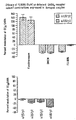
- Fig. 1 The modulatory effect on the GABA EC 20 is shown in Fig. 1 for FG 8094 at 1 ⁇ M, which would be near maximal for all the receptor subtypes studied, and two standard compounds flunitrazepam (1 ⁇ M, a full receptor agonist) and DMCM (1 ⁇ M, a full receptor inverse agonist) at concentrations which would be maximal in binding studies on ⁇ 1 ⁇ 2 ⁇ 2S, showing that FG 8094 is a full receptor inverse agonist on ⁇ 5 ⁇ 2 ⁇ 2.
- Fig. 2 compares the effects of FG 8094 on other ⁇ -subunit containing receptors, demonstrating that it has much lower efficacy at other a-subunit combinations.
- Fig. 3a illustrates the mean escape latencies during the nine day training period.
- the mean escape latencies of groups given 0.3 and 1.0 mg/kg of FG 8094 appear to be shorter than the vehicle control group or the 0.1 mg/kg group, the observation was not confirmed by Newman Keul post hoc tests.
- BZ receptor inverse agonists have anxiogenic and pro-convulsant effects, however they have cognition enhancing effects in animals.
- BZ receptor antagonists are without intrinsic effect, but they block the effects of both BZ receptor agonists and receptor inverse agonists.
- the present studies show that the selective ⁇ 5 BZ receptor inverse agonist, FG 8094 is devoid of pro-convulsant effects, but has cognition enhancing effects in animals.
- FG 8094 occupies virtually all ⁇ 5-containing receptors at 1.0 mg/kg, whereas less than 35% and 15% of ⁇ 2/3 and ⁇ 1 receptors respectively are occupied. Therefore, at 1.0 mg/kg FG 8094 is selective for ⁇ 5-containing receptors. At 10.0 mg/kg FG 8094 significantly occupies ⁇ 1, ⁇ 2 and ⁇ 3 containing receptors and, as a consequence, FG 8094 is not selective for ⁇ 5-containing receptors at doses above 1.0 mg/kg.
- FG 8094 was demonstrated to be a full receptor inverse agonist on the ⁇ 5 ⁇ 2 ⁇ 2 receptor subtype, a low partial receptor inverse agonist at receptor subtypes containing ⁇ 2 or ⁇ 3, and an antagonist on ⁇ 1 ⁇ 2 ⁇ 2, the major subunit combination in the brain. These data suggests that the major in vivo effects of FG 8094 are exerted at the ⁇ 5 containing subtype, which is predominantly located in the hippocampus.
- FG 8094 is a selective ⁇ 5 BZ receptor inverse agonist that is devoid of pro-convulsant effects.
- MWM a hippocampal dependent spatial memory test
- FG 8094 significantly enhanced the ability of rats to retain spatial information, suggesting that it enhances cognitive processing.
- FG 8094 48.5 ⁇ 6 27.4 ⁇ 2.5 24.5 ⁇ 2 0.45 ⁇ 0.15 83.2 ⁇ 4.5 Table 1.
- Ki values for benzodiazepine sites on stably transfected cells were carried out using receptors labeled with [ 3 H]Ro15-1788 at a concentration of twice the Kd. Ki values were calculated according to the Cheng-Prussof equation. Data shown are mean ⁇ SEM values for 3-6 determinations. Inhibition of in vivo [ 3 H]Ro 15-1788 binding in three brain regions after FG 8094. Tissue FG 8094 (mg/kg) 10 1 Forebrain (all ⁇ ) 53.3 ⁇ 4.2 8.3 ⁇ 3.2 Cerebellum ( ⁇ 1) 55 ⁇ 6.9 13.8 ⁇ 4.9 Spinal cord ( ⁇ 2/3) 74.2 ⁇ 3.8 33.8 ⁇ 7.4
- mice were injected intraperitoneally with FG 8094, 10mg/kg or 1mg/kg, 30 minutes prior to sacrifice and [ 3 H]Ro15-1788 (0.1mCi/g). Brain regions were dissected, homogenised and filtered as described in methods. Data are expressed as the percentage inhibition of binding relative to control (vehicle treated) animals and are the mean ⁇ SEM of 5 (10mg/kg) or 10 (1mg/kg) determinations.
Landscapes
- Health & Medical Sciences (AREA)
- Life Sciences & Earth Sciences (AREA)
- Engineering & Computer Science (AREA)
- Chemical & Material Sciences (AREA)
- Biomedical Technology (AREA)
- Molecular Biology (AREA)
- General Health & Medical Sciences (AREA)
- Medicinal Chemistry (AREA)
- Immunology (AREA)
- Hematology (AREA)
- Urology & Nephrology (AREA)
- Pharmacology & Pharmacy (AREA)
- Neurology (AREA)
- Cell Biology (AREA)
- Biochemistry (AREA)
- Animal Behavior & Ethology (AREA)
- Organic Chemistry (AREA)
- Veterinary Medicine (AREA)
- Public Health (AREA)
- Neurosurgery (AREA)
- Microbiology (AREA)
- Pathology (AREA)
- Physics & Mathematics (AREA)
- Biotechnology (AREA)
- Proteomics, Peptides & Aminoacids (AREA)
- Epidemiology (AREA)
- Analytical Chemistry (AREA)
- Food Science & Technology (AREA)
- Bioinformatics & Cheminformatics (AREA)
- General Physics & Mathematics (AREA)
- Zoology (AREA)
- Gastroenterology & Hepatology (AREA)
- Biophysics (AREA)
- Genetics & Genomics (AREA)
- Toxicology (AREA)
- Hospice & Palliative Care (AREA)
- Nuclear Medicine, Radiotherapy & Molecular Imaging (AREA)
- General Chemical & Material Sciences (AREA)
- Chemical Kinetics & Catalysis (AREA)
- Psychiatry (AREA)
Abstract
Description
- The present invention provides the use of a compound for manufacturing medicaments for enhancing cognition (for example in the treatment of dementing illnesses such as Alzheimer's disease), compositions useful in such a method.
- A number of dementing illnesses such as Alzheimer's disease are characterised by a progressive deterioration in cognition in the sufferer. It would clearly be desirable to enhance cognition in subjects desirous of such treatment, for example for subjects suffering from a dementing illness.
- It has been reported by McNamara and Skelton in Psychobiology, 21:101-108, that the benzodiazepine receptor inverse agonist β-CCM enhanced spatial learning in the Morris watermaze. However, β-CCM and other conventional benzodiazepine receptor inverse agonists are proconvulsant which makes it clear that they cannot be used as cognition enhancing agents in humans.
- However, we have now discovered that it is possible to obtain medicaments which have cognition enhancing effects, but which do not possess proconvulsant effects previously described with benzodiazapine receptor inverse agonists.
- The benzodiazepine receptor site is in the GABAA receptor, a structure that is generally accepted to be pentameric, with an integral chloride ion channel being formed by the second transmembrane domain of each of the five subunits. A family of 14 GABAA receptor subunits have been identified in mammalian brain using modern molecule cloning techniques, namely the α1, α2, α3, α4, α5, α6, β1, β2, β3, γ1, γ2, γ3, δ and subunits. Selection of five subunits from a possible repertoire of 14 allows for a multiplicity of possible combinations but the number of subtypes which occur and the extent of GABAA receptor heterogeneity remains unknown. When referred to hereinafter as a α1, α2, α3, α5 or α6 receptor, reference is of course made to the GABAAα1, GABAAα2, GABAAα3, GABAAα5 and GABAAα6
- It has now been discovered that use of an α5 receptor inverse agonist which is relatively free of certain activity at α1 and/or α2 and/or α3 receptor binding sites can be used to provide a medicament which is useful for enhancing cognition but which is not proconvulsant.
- Accordingly the present invention provides the use of a compound for the manufacture of a medicament for enhancing cognition in a subject without producing convulsions wherein the compound is an α5 receptor inverse agonist which is not a receptor agonist or receptor inverse agonist at α1 and/or α2 and/or α3 receptors.
- The subject will be a mammal, most aptly a human and preferably a human suffering from a dementing illness such as Alzheimer's disease.
- Thus the compound employed will bind as an inverse agonist to α5 receptors at concentrations at which no significant agonist or inverse agonist binding occurs to α1 receptors. More suitably the compound will bind as an inverse agonist to α5 receptors at concentrations at which no significant agonist or inverse agonist binding occurs to α1 and α2 receptors. And most suitably the compound will bind as an inverse agonist to α5 receptors at concentrations at which no significant agonist or inverse agonist binding occurs to α1, α2, and α3 receptors.
- The inverse agonist binding at α5 may be partial (ie the compound may be a partial agonist) but a full inverse agonist at α5 is preferred. Similarly the compound should not be a full or partial agonist or inverse agonist at the other receptors.
- The compounds employed may have antagonist binding at α1, α2, α3 and at α6 if desired as such binding will not adversely effect the operation of the method of this invention. When relative binding to the various receptors is concerned it is only the inverse agonist or agonist binding that is considered.
- In general such compounds will bind at least 10 fold better to α5 receptors than α1 receptors, that is the compound will be at least 10 fold selective for α5 containing receptors over α1 containing receptors.
- Aptly the compound for use in the invention at least 10 fold selective for α5 containing receptors over α1 and α2 containing receptors, more aptly at least 10 fold selective for α5 containing receptors over α1, α2 and α3 containing receptors and most aptly at least 10 fold selective for α5 containing receptors over α1, α2, α3 and α6 containing receptors.
- Favourably the compound for use in the invention at least 25 fold selective for α5 containing receptors over α1 containing receptors, for example 25 fold selective for α5 containing receptors over α1 and α2 containing receptors, more aptly at least 25 fold selective for α5 containing receptors over α1, α2 and α3 containing receptors and most aptly at least 25 fold selective for α5 containing receptors over α1, α2, α3 and α6 containing receptors.
- Preferably the compound for use in the invention at least 50 fold selective for α5 containing receptors over α1 containing receptors, for example α1 and α2 containing receptors, more aptly at least 50 fold selective for α5 containing receptors over α1, α2 and α3 containing receptors and most aptly at least 50 fold selective for α5 containing receptors over α1, α2, α3 and α6 containing receptors.
- With advantage, the compound for use in the invention will be at least 100 fold selective for α5 containing receptors over α1 receptors.
- The favoured use of this invention has the additional advantage of being able to enhance cognition without inducing unwanted anxiogenic effects.
- A favoured receptor for determining α5 binding is the α5 β3 γ2 receptor. A favoured receptor for determining the α1 binding is the α1 β3 γ2 receptor. A favoured receptor for determining α2 binding is the α2 β3 γ2 receptor. A favoured receptor for determining α3 binding is the α3 β3 γ2 receptor. A favoured receptor for determining the α6 binding is the α6 β3 γ2 receptor.
- Receptors are described in International Patent Application No WO 92/22652 and WO94/13799.
- The compounds for use in this invention may be identified by screening against the above identified receptors using techniques known in the art. Favoured techniques include those described in Goeders et al (see hereinafter).
- The determination of whether the compounds are receptor agonists, receptor partial agonists or receptor inverse agonists can likewise be determined using techniques known in the art. Favoured techniques include those described in Wafford et al (see hereinafter).
- Particularly suitable compounds for use in this invention will have a Ki value (nM) against the α5 β3 γ2 receptor of less than 5, more suitably less than 2 and most suitably less than 1, for example about 0.5.
- Particularly suitable compounds for use in this invention will have a Ki value (nM) against the α1 β3 γ2 receptor of greater than 10, more suitably greater than 20, most suitably greater than 40, for example about 50.
- Particularly suitable compounds for use in this invention will have a Ki value (nM) against the α2 β3 γ2 receptor of greater than 5, more suitably greater than 10, most suitably greater than 20, for example about 25.
- Particularly suitable compounds for use in this invention will have a Ki value (nM) against the α3 β3 γ2 receptor of greater than 5, more suitably greater than 10, most suitably greater than 20, for example about 25.
- Particularly suitable compounds for use in this invention will have a Ki value (nM) against the α6 β3 γ2 receptor of greater than 10, more suitably greater than 20, most suitably greater than 40, for example about 80.
- In order to exhibit their activity without having to administer the compounds intravenously, the compounds for use in this invention are most preferably able to cross the blood brain barrier after oral administration.
- A compound which possesses the desirable properties outlined above which illustrates the usefulness of possessing those properties is FG 8094.
- The present invention also provides a pharmaceutical composition for use in the enhancement of cognition without producing convulsions which comprises a compound which is an α5 receptor inverse agonist which is not a receptor agonist or receptor inverse agonist at α1 and/or α2 and/or α3 receptors and a pharmaceutically acceptable carrier therefor.
- The compositions are most aptly adapted for oral administration to humans although parenteral modes of administration are also envisaged, for example by intravenous, intramuscular or subcutaneous administration or topically or rectally.
- For oral use of the cognition enhancer the selected compound may be administered for example in the form of a tablet or a pharmaceutically acceptable carriers or diluents, optionally with known adjuvants, such as alum, in a pharmaceutical composition, according to standard pharmaceutical practice. The compounds can be administered orally, parenterally, including by intravenous, intramuscular, intraperitoneal or subcutaneous administration, or topically.
- For oral use the cognition enhancer may be administered, for example, in the form of tablets or capsules, or as an aqueous solution or suspension. In the case of tablets for oral use, carriers which are commonly used include lactose and corn starch, and lubricating agents, such as magnesium stearate, are commonly added. For oral administration in capsule form, useful diluents include lactose and dried corn starch. When aqueous suspensions are required for oral use, the active ingredient is combined with emulsifying and suspending agents. If desired, certain sweetening and/or flavouring agents may be added.
- For intramuscular, intraperitoneal, subcutaneous and intravenous use, sterile solutions of the active ingredient are usually prepared, and the pH of the solutions should be suitably adjusted and buffered. For intravenous use, the total concentration of solutes should be controlled in order to render the preparation isotonic.
- For topical administration, the cognition enhancer may be formulated as, for example, a suspension, lotion, cream or ointment employing a pharmaceutically acceptable carrier such as, for example, water, mixtures of water and water-miscible solvents such as lower alkanols, vegetable oils and polyalkylene glycols.
- The pharmaceutical preparation may also contain non-toxic auxiliary substances such as emulsifying, preserving, wetting agents, bodying agents and the like, as for example, polyethylene glycols 200, 300, 400 and 600, carbowaxes 1,000, 1,500, 4,000, 6,000 and 10,000, antibacterial components such as quaternary ammonium compounds, phenylmercuric salts known to have cold sterilizing properties and which are non-injurious in use, thimerosal, methyl and propyl paraben, benzyl alcohol, phenyl ethanol, buffering ingredients such as sodium chloride, sodium borate, sodium acetates, gluconate buffers, and other conventional ingredients such as sorbitan monolaurate, triethanolamine, oleate, polyoxyethylene sorbitan monopalmitylate, dioctyl sodium sulfosuccinate, monothioglycerol, thiosorbitol and ethylenediamine tetraacetic acid.
- When a cognition enhancer is used in a human subject, the daily dosage will normally be determined by the prescribing physician with the dosage generally varying according to the age, weight, and response of the individual patient, as well as the severity of the patient's symptoms. However, in most instances, an effective daily dosage will be in the range from about 0.005mg/kg to about 100mg/kg of body weight, and preferably, of from 0.05mg/kg to about 50mg/kg, such as from about 0.5mg/kg to about 20mg/kg of body weight, administered in single or divided doses. In some cases, however, dosage outside these limits may be used.
- Generally unit dose forms for oral administration will contain from 1 to 800 mg, more usually 2.5 to 250 mg, preferably 5 to 100 mg, for example 10, 20 or 50 mg.
- A favoured cognition enhancer for use in this invention is 9H-imidazo[1,5-a]pyrrolo[2,1-C][1,4]benzodiazepine-1-carboxylic acid, 11, 12, 13, 13a-tetrahydro-7-methoxy-9-oxo-, ethyl ester, (S)-(9CI). The preparation of said compound is described in Canadian CA 1266671 A2 900313 (Division of Canadian Patent Application No 503 329). This compound is sometimes known as FG 8094.
- The compositions according to this invention may be prepared in any suitable manner, for example by conventional tabulating or capsule filling techniques .
- This invention also provides a method of identifying a compound capable of enhancing cognition without causing convulsions which method comprises employing α5 and α1 and/or α2 and/or α3 and/or α6 receptors to detemine whether said compound is a ligand at α5 but not α1 and/or α2 and/or α3 and/or α6 receptors and determining whether the binding at α5 receptors is an inverse agonist and determining whether binding at the α1 and/or α2 and/or α3 and/or α6 receptors is agonist or inverse agonist.
- This invention provides a method of detecting a compound capable of enhancing cognition without causing convulsions which method comprises employing GABAA binding receptor to determine that said compound is an α5 inverse agonist and is not an agonist or inverse agonist at α1 and/or α2 and/or α3.
- This invention also provides a ligand previously unknown to be able to enhance cognition without causing convulsions which has been identified by a method of detection of this invention.
- This invention further provides a pharmaceutical composition comprising a compound identified by the method of this invention.
- The following references provide useful background information:
- Goeders NE and Kuhar MJ (1985) Benzodiazepine binding in vivo with [3H]Ro 15-1788. Life Sci 37:345-355.
- McKernan RM. Quirk K, Prince R, Cox PA, Gillard NP Ragan CI and Whiting PJ (1991) GABAA receptors immunopurified from rat brain with α-subunit specific antibodies have unique pharmacological properties. Neurone 7:667-676.
- Quirk K, Gillard NP, Ragan CI, Whiting PJ and McKernan RM (1994) ϒ- Aminobutyric acid Type A receptors in the rat brain can contain both ϒ2 and ϒ3 subunits but ϒ1 does not exist in combination with another ϒ-subunit. Mol Pharmacol 45:1061-1070.
- Wafford KA, Whiting PJ and Kemp JA (1993) Differences in affinity and efficacy of benzodiazepine receptor ligands on recombinant GABAA receptor subtypes. Mol. Pharmacol 43:240-244.
- Whiting PW, Wafford K and McKernan RM (1996) GABAA receptors in the central nervous system. International Reviews in Neurobiology.
- Wisden W, Herb A., Wieland H., Keinanen K, Luddens H and Seeberg PH (1991) Febs Lett 289, 227-230.
-
-
FG 8094 was suspended in 0.5% carboxymethylcellulose solution to provide an injectable solution. - The following examples illustrate pharmaceutical compositions according to the invention.
Tablets containing 1-25mg of FG 8094Amount mg Compound of formula (I) 5.0 25.0 Microcrystalline cellulose 20.0 20.0 Modified food corn starch 20.0 20.0 Lactose 54.5 34.5 Magnesium Stearate 0.5 0.5 Tablets containing 26-100mg of FG 8094Amount mg Compound 50.0 100.0 Microcrystalline cellulose 80.0 80.0 Modified food corn starch 80.0 80.0 Lactose 189.5 139.5 Magnesium Stearate 0.5 0.5 -
FG 8094, cellulose, lactose and a portion of the corn starch are mixed and granulated with 10% corn starch paste. The resulting granulation is sieved, dried and blended with the remainder of the corn starch and the magnesium stearate. The resulting granulation is then compressed into tablets containing 1.0mg, 2.0mg, 25.0mg, 26.0mg, 50.0mg and 100mg of the active compound per tablet. - Example FG 8094 (1.5 mg) was combined with hydroxy propylmethylcellulose (58.5mg) to form a small pellet. The pellets were implanted subcutaneously in rats. The resulting blood levels of
FG 8094 were greater than 100 ng/ml for more than 6 hours. - Radioligand binding studies were carried out using membranes prepared from cells stably transfected with the following subunit combinations: α1β3γ2, α2β3γ2, α3β3γ2, α5β3γ2, α6β3γ2. Incubations were carried out using 20-100 mg of membrane protein in a total volume of 0.5ml in 10mM Tris-HCl, 1mM EDTA pH 7.4 for one hour at room temperature prior to termination through Whatman GF/C filters followed by 3 x 3ml washes with 5 mM Tris-HCl pH 7.5 and scintillation counting. [3H]Ro15-1788 was used as a radioligand to label GABAA receptors with the exception of cells expressing α6β3γ2 where [3H]Ro15-4513 was used because this receptor type does not bind [3H]Ro 15-1788 with high affinity. Non-specific binding was determined using 10 µM Ro15-4513 and radioligands were used at concentrations equivalent to twice their Kd values for each subtype. Ki values were calculated according to the Cheng-Prussof equation.
- The in vivo binding of [3H]Ro 15-1788 to mouse brain was performed essentially as described by Goeders and Kuhar (1985). Male Swiss-Webster mice received a 0.9% NaCl solution containing 50 mCi/kg of [3H]Ro 15-1788 (0.05 ml/10g of body weight) via the tail vein. Animals were sacrificed by decapitation three minutes later, at which time peak amounts of [3H]Ro 15-1788 were measurable in the brain (data not shown). Thirty minutes prior to sacrifice, FG 8094 (0.3, 1.0, 3.0 and 10.0 mg/kg) or diazepam (30.0 mg/kg to define non-specific binding) was given intraperitoneally in 0.5% carboxy methyl cellulose (CMC). Each mouse brain was then rapidly removed, homogenised in 5.0 ml of 50 mM Tris HCl, 5.0 mM EDTA, pH 7.4 at 4°C using an ultra-turrax homogeniser for 10 s at setting 5. In a separate series of experiments different brain regions, selected for their preferential expression of particular GABA subtypes were also examined. Binding of [3H]Ro 15-1788 to cerebellum is almost exclusively α1-like (Quirk et al, 1994), whereas binding to spinal cord is indicative of binding to receptors containing α2 or α3-subtypes, α1, α4 and α5 are rare or absent in this region (Wisden et al, 1992). Brains were rapidly dissected into forebrain and cerebellum and the spinal cord was also removed. Each forebrain was homogenised in 4.0 ml of buffer (approximately 14 ml/g wet weight of tissue), each cerebellum was homogenised in 1.0 ml of buffer (approximately 14 ml/g wet weight of tissue) and each spinal cord in 1.0 ml of buffer (approximately 20.0 mg/g wet weight of tissue). Volumes (3 x 200 ml) of homogenate were filtered rapidly through GF/B filters, washed with 2 x 5.0 ml volumes of ice-cold buffer and the residual radioactivity was counted by liquid scintillation spectroscopy.
- Binding studies on transfected cells containing α1β3γ2S, α2β3γ2S, and α5β3γ2S have identified compounds with α5 selectivity. These compounds were studied using electrophysiological techniques (Wafford et al, 1993) to determine their functional effects on α1β2γ2S, α2β2γ2S, α3β2γ2S, α5β2γ2S and α6β2γ2S GABAA receptors expressed in Xenopus oocytes. Oocyte nuclei were directly injected with 10.0 - 20.0 nl of the relevant cDNAs (6.0 ng/µl) engineered into the expression vector pCDM8. Following incubation for 24 h, oocytes were placed in a 50 ml bath and perfused with saline. By using the two electrode voltage-clamp recording method, GABA activated currents could be measured by bathing the cell in a solution containing GABA. Firstly a reproducible current response was established using a GABA concentration which gave approximately 20% of the maximal GABA response that could be elicited (EC20). Coapplication of the test compound with this EC20 concentration of GABA resulted in a modulation of the response via action at the BZ binding site. The response could be potentiated by a BZ receptor agonist or inhibited by BZ receptor inverse agonist
-
FG 8094 was synthesised by the Merck, Sharp and Dohme Neuroscience Research Centre's medicinal chemistry group and was suspended in 0.5% CMC. Vehicle orFG 8094 was administeredIP 30 mins before the beginning of the first training trial. - Sixty naive male Sprague Dawley rats (225-265g) housed in groups of four with food and water freely available, served as subjects. The rats were assigned to one of six groups and given: Vehicle or 0.5, 1.0, 2.0, 4.0 mg/kg of FG 8904 or 10.0 mg/kg of the non-selective receptor inverse agonist, CGS 8216, a known pro-convulsant agent. Vehicle,
FG 8094 or CGS 8216 was administeredIP 30 min prior to an infusion of the convulsant, pentylenetetrazole (PTZ, 40 mg/ml). PTZ was infused into the tail vein of the rat at the rate of 1.0 ml/min. The latency to clonic and tonic seizure were recorded and the threshold to each was calculated using the equation: Threshold dose = infusion rate (ml/s) x PTZ (mg/ml) x (1000/rats weight) x latency (s). - The rats used in this study received chronic treatment with
FG 8094 during a MWM experiment. The rats were dosed IP once per day (Monday to Friday) and received a total of 24 doses. Following each drug administration rats were tested in a MWM and received the final dose of drug 48 h prior to convulsant testing. The subjects were assigned to one of four treatment groups (n=8) and given either Vehicle, 0.1, 0.3, or 1.0 mg/kg ofFG 8094. - On the day of proconvulsant testing, the rats were restrained and pentylenetetrazole (PTZ, 40.0 mg/ml) was infused as described above. The latency (s) to both clonic and tonic (full extension) convulsion was recorded. Latency data were transformed to yield the dose of PTZ needed to reach the threshold of both clonic and tonic seizures.
- Male PVG hooded rats (Bantin & Kingman, Hull U.K.), weighting approximately 300g, were housed in groups of four with free access to food and water.. The animals were maintained on a 12/12 h light-dark cycle, with the lights on at 07:00 h.
- The Morris watermaze consists of a white, fibre-glass circular pool, of diameter 2 m, filled with an opaque mixture of water and white dye (E308, Morton International) maintained at 26-28° C. The pool was located in the centre of a sound attenuated room, around the walls of which high contrast black and white patterned pictures were displayed as spatial 'extra maze' cues. 'North' was arbitrarily determined and the pool was divided up into four equal quadrants 'Northeast', 'Southeast', 'Southwest' and 'Northwest'. A hidden platform (13 x 13 cm) submerged 2 cm below the water surface was placed in the middle of the NE quadrant.
- A closed-circuit video camera, fitted with a wide-angle lens, was mounted directly above the centre of the pool and connected to an image analyser which digitised the image. The digital information was relay to an Archimedes microcomputer running 'Watermaze' a software package supplied by Paul Fray LTD (Cambridge, UK). The software package provided the following measures: latency to reach the platform, length of path taken, average swimming speed, the time spent and the total distance travelled in the target quadrant.
- The rats were assigned to four treatment groups (n=8): Vehicle, 0.1, 0.3, 1.0 mg/
kg FG 8094. During the acquisition phase of the experiment all the groups were given four trials per day. During this time the hidden platform was submerged in the NE quadrant of the watermaze. The rat was taken from the home cage and placed into the watermaze at one of four quasi-randomly determined locations ('North', 'East', 'South', or 'West') with its head facing, and almost touching, the pool wall. Trials began when the rat was released by the experimenter and ended when the rat climbed onto the platform and the mean escape latency was recorded. The maximum trial length was 60 s. If by that time the rat had not climbed on to the platform the trial ended automatically, the experimenter placed the rat on the platform and an escape latency of 60 s was recorded. The rat remained on the platform for 30 s and was then removed to a high-sided opaque plastic container for a further 30 s, (inter-trial interval, ITI). At the end of the ITI the rat was placed into the pool again, but at a different location and upon release the next trial began. This procedure was repeated until four trials had been completed. - Normally, the escape latency declines over several days of training from 60 s to around 20 s. A 'probe trial' assess the rat's spatial memory for the location of the hidden platform. During this trial the platform was removed from the watermaze and the rat was allowed to search the pool for 60 s before it was removed from the pool. If the treatment improves the rat's memory for the location of the platform, it will spend longer searching the quadrant in which the platform had previously been hidden (NE) than a rat given vehicle treatment.
- Deficits in performance that might be due to drug-induced side-effects (such as blurred vision or motoric deficits resulting in an impaired ability to swim) were assessed using cued recall. In this procedure, the platform was also placed in the NE quadrant, but was raised 3 cm above the water level and thus visible to the rat. If the treatment has no effects on the mean escape latencies to the visible platform, then any group differences in mean escape latencies to an invisible platform can be attributed to an effect on cognitive process. The training schedule was identical to the training schedule used for acquisition training, and continued until the mean escape latencies did not significantly differ between groups.
- Six days following the probe trial, during which time the rats were not expose to the watermaze or administered FG 8094, the rats were again tested with the platform submerged in the NE quadrant using the acquisition protocol.
- Reversal training was identical to the acquisition phase of the experiment with the exception that the platform was submerged in the middle of the SW quadrant.
- Competition curves at each of the cell lines show that
FG 8094 is selective for receptors which contain the α5-subunit (see Table 1).FG 8094 was 107 fold selective for α5-containing receptors over α1, 60 fold selective over α2, 53 fold selective over α3 and 184 fold selective over α6. This represents a novel pharmacological profile since most selective BZs, such as zolpidem or CL 218,872 have greater affinity for α1 than for α5-containing receptors (Pritchett and Seeberg, 1990).FG 8094 has the greatest preference for α5-containing receptors over α1-containing receptors than any other compound reported to date. - Three minutes after [3H]Ro 15-1788 was administered intravenously into mice significant levels of radioactivity were present in the brain. It was estimated that greater than 95% of [3H]Ro 15-1788 was associated with membranes as greater than 95% of the radioactivity was retained after filtration of the homogenates (data not shown). Diazepam (30.0 mg/kg) displaced 90% of the [3H]Ro 15-1788 binding in the brain indicating that ligand present in the membranes was bound to GABAA receptors. When given intraperitoneally at doses of up to 3.0 mg/kg, FG 8094 did not significantly displace specific [3H]Ro 15-1788 binding (data not shown). This implies that the number of any other GABAA receptor subtype occupied at these doses would have to be small and below the limit of detection in this assay. Since
FG 8094 has highest affinity for α5-containing receptors (Table 1) and these represent less than 5% of the total GABAA receptor population, it is possible that doses ≤ 3.0 mg/kg ofFG 8094 are occupying this subtype. At 10.0 mg/kg FG 8094 significantly displaced [3H]Ro 15-1788 binding (p<0.05). Receptors containing α1, α2 and α3 subunits form the three largest subtypes in the brain and account for approximately 90% of GABAA receptors (McKernan et al, 1991, Whiting et al, 1994). At this dose it is likely thatFG 8094 is occupying predominantly α2 and α3-containing receptors (for which it has higher affinity than at α1-containing receptors). The receptors not displaced byFG 8094 at 10.0 mg/kg are most likely receptors containing an α1-subunit that comprise 40-50% of all GABAA receptors in the brain and for whichFG 8094 has the lowest affinity. - The occupancy of α2, α3 and α1-containing
receptors 30 min after administration of FG 8094 (1.0 mg/kg) was investigated more directly by assessing displacement of [3H]Ro 15-1788 binding in brain region enriched in these subtypes. The cerebellum was used as an α1-selective tissue and the spinal cord as an α2/α3-selective tissue. The forebrain, which contains most subtypes of GABAA receptors was also included. Inhibition of in vivo binding of [3H]Ro 15-1788 30 min after administration of FG 8094 (1.0 mg/kg) is shown in Table 2. - If it is assumed that the percentage inhibition of in vivo [3H]Ro 15-1788 binding is a measure of receptor occupancy then the concentration at the receptor site in brain can be calculated according to Clarke's equation (occupancy=[drug]/[drug]+Ki). Substituting the occupancy determined at α1 and α2/3-containing receptors, the concentration of
FG 8094 available at BZ binding sites in rat brain is 7.8 nM and 13.2 nM respectively. Occupancy at α5-containing receptors cannot be measured directly because of the low abundance of the receptor, but it can be calculated using the concentration of drug and binding affinity using Clarke's equation. This predicts 95-97 % occupancy of α5-containingreceptors 30 min after administration of FG 8094 (1mg/kg). - The modulatory effect on the GABA EC20 is shown in Fig. 1 for
FG 8094 at 1µM, which would be near maximal for all the receptor subtypes studied, and two standard compounds flunitrazepam (1µM, a full receptor agonist) and DMCM (1µM, a full receptor inverse agonist) at concentrations which would be maximal in binding studies on α1β2γ2S, showing thatFG 8094 is a full receptor inverse agonist on α5β2γ2. Fig. 2 compares the effects ofFG 8094 on other α-subunit containing receptors, demonstrating that it has much lower efficacy at other a-subunit combinations. It has no intrinsic effect on α1β2γ2 suggesting it to be a low affinity antagonist, and it is a partial receptor inverse agonist on α2β2γ2 and α3β2γ2, receptors. A comparison of efficacy using a standard concentration of drug on α1β2γ2S demonstrated thatFG 8094 is functionally selective for α5-containing receptors, exerting it's actions primarily via this subtype. -
- (I) Acute Treatment - A one-way analysis of variance of the mean threshold doses for tonic and clonic revealed a main effect of tonic [F(5,49)=3.70; p=0.007], but not clonic [F(5,48)=2.01; p=0.09] seizures. Post hoc tests reveal that only CGS 8216 significantly lowered the threshold doses to tonic seizures, showing that it had a pro-convulsant effect.
- (I) Chronic Treatment - An analysis of variance revealed no significant effect of treatment on the threshold dose of PTZ to either clonic [F(3,25)=0.23; p=0.87] or tonic [F(3,25)=0.06; p=0.98] seizure. These results demonstrate that the chronic treatment protocol used in the study does not result in an increased sensitivity to the proconvulsant PTZ.
-
- Fig. 3a illustrates the mean escape latencies during the nine day training period. An analysis of variance of the mean swimming speed during escape to the hidden platform revealed no significant effect of dose [F(3,28)=0.87], no significant effect of day [F(8,216)=1.44, p>0.1] and no dose by day interaction [F(24,216)=1.04, p>0.4]. An analysis of variance of the mean escape latencies with factors of treatment and day revealed a main effect of treatment [F(3,28)=3.01, p<0.05], a significant effect of day [F(8,216)=34.67, p<0.001], but no dose by day interaction [F(24,216)=0.75, p>0.5]. Although the mean escape latencies of groups given 0.3 and 1.0 mg/kg of
FG 8094 appear to be shorter than the vehicle control group or the 0.1 mg/kg group, the observation was not confirmed by Newman Keul post hoc tests. - An analysis of variance of the percentage time spent swimming in the Northeast quadrant revealed no significant effect of dose [F(3,28)=0.18] (see Fig. 3b for details) which implies that the strength of the memory or the efficiency of acquisition did not differ between groups.
- An analysis of variance of the mean escape latency to reach the visible platform showed no significant effect of dose [F(3,28)=0.54]. There was, however, a significant effect of dose on mean path length [F(3,28)=4.27, p<0.05]. Post hoc Newman-Keuls tests showed that the vehicle group traversed a significantly longer path than all the groups given FG 8094 (Fig. 3c)
- Analysis of variance of mean escape latency revealed a significant effect of dose [F(3,28)=3.53, p<0.05]. Post hoc Newman-Keuls test showed that the mean escape latency of the vehicle group was longer than any of the
FG 8094 groups (p<0.05). These data suggest that the groups given FG 8094 retained the spatial information regarding the location of the hidden platform better than the vehicle control group (see Fig. 3d). - During reversal learning the platform was moved to the middle of the Southwest quadrant. An analysis of variance of the mean escape latencies revealed a significant effect of dose (F(3,28)=3.31, p <0.05], a significant effect of trial [F(3,84)=9.53, p<0.001], but no significant interaction [F(9,84)=1.66, p>0.1]. Post hoc Newman-Keuls test indicated that the mean escape latency of the vehicle group was significantly longer than all of the
FG 8094 groups (p<0.05). On subsequent reversal learning days dose had no effect on the mean escape latencies. Thus, these data suggestFG 8094 enhanced the ability of the rats to learn a new spatial location for the hidden platform. - Benzodiazepine receptor agonists, have anxiolytic and anti-convulsant effects in man and animals, but they also induce amnesia. Conversely, BZ receptor inverse agonists have anxiogenic and pro-convulsant effects, however they have cognition enhancing effects in animals. BZ receptor antagonists are without intrinsic effect, but they block the effects of both BZ receptor agonists and receptor inverse agonists. In contrast to full BZ receptor agonists, the present studies show that the selective α5 BZ receptor inverse agonist,
FG 8094 is devoid of pro-convulsant effects, but has cognition enhancing effects in animals. - The results of the in vivo binding experiments showed that
FG 8094 occupies virtually all α5-containing receptors at 1.0 mg/kg, whereas less than 35% and 15% of α2/3 and α1 receptors respectively are occupied. Therefore, at 1.0 mg/kg FG 8094 is selective for α5-containing receptors. At 10.0 mg/kg FG 8094 significantly occupies α1, α2 and α3 containing receptors and, as a consequence,FG 8094 is not selective for α5-containing receptors at doses above 1.0 mg/kg. - In electrophysiological experiments,
FG 8094 was demonstrated to be a full receptor inverse agonist on the α5β2γ2 receptor subtype, a low partial receptor inverse agonist at receptor subtypes containing α2 or α3, and an antagonist on α1β2γ2, the major subunit combination in the brain. These data suggests that the major in vivo effects ofFG 8094 are exerted at the α5 containing subtype, which is predominantly located in the hippocampus. - In the MWM rats are trained to find a submerged platform in a pool of opaque water. It is assumed that the animals use the various visual cues placed around the walls of the room to guide their search strategy. Such a process assumes flexible cognitive processing as the animal must first form a 'map' of the room (i.e. the spatial relationship between the stationary visual cues and the hidden platform) and then use the map to guide its path to the hidden platform. A well-trained rat, placed in to the pool at random locations, swims more or less directly to the hidden platform suggesting that it has detailed knowledge of the local area or a 'cognitive map', and it can plan a novel route to the hidden platform on each new trial.
- In the present experiment inspection of Fig 3a, which shows the mean latency (s) to find the hidden platform on successive days of training, suggests that the rats given 0.3 and 1.0 mg/kg consistently found the platform in less time than the vehicle or 0.1 mg/kg groups, although this effect failed to reach statistical significance. During the probe trial, there was no difference in the amount of time the control and drug groups spent searching the quadrant in which the submerged platform had been placed during training trials, suggesting that there was no difference in the ability of the various groups to form and make use of a cognitive map. Similarly, there was no difference between the groups in their mean latencies (s) to find a visible platform indicating that
FG 8094 was devoid of effects on motoric or sensory systems. However, on the first day of normal training, six days after the final visible-platform trial, the mean latency to find the hidden platform was significantly shorter in all the groups givenFG 8094. These data imply that the spatial relationship between the location of the platform and the visual cues was retained and/or retrieved better by the rats given FG 8094 than those given vehicle. Moreover, when the hidden platform was move to a new location in the middle of the southwest quadrant, rats give 1.0 mg/kg ofFG 8094 were quicker to learn about this new location than rats given vehicle. - In conclusion,
FG 8094 is a selective α5 BZ receptor inverse agonist that is devoid of pro-convulsant effects. In MWM, a hippocampal dependent spatial memory test,FG 8094 significantly enhanced the ability of rats to retain spatial information, suggesting that it enhances cognitive processing.Drug α1β3γ2 α2β3γ2 α3β3γ2 α5β3γ2 α6β3γ2 Flunitrazepam 5.2±0.2 2.5±0.2 4.8±1 2.11±0.23 >10.000 Ro 15-4513 2.6±0.11 2.6±0.7 1.28±0.06 0.24±0.05 6.5±0.6 FG 8094 48.5±6 27.4±2.5 24.5±2 0.45±0.15 83.2±4.5 Inhibition of in vivo [3H]Ro 15-1788 binding in three brain regions after FG 8094.Tissue FG 8094 (mg/kg) 10 1 Forebrain (all α) 53.3±4.2 8.3±3.2 Cerebellum (α1) 55±6.9 13.8±4.9 Spinal cord (α2/3) 74.2±3.8 33.8±7.4 - Mice were injected intraperitoneally with
FG 8094, 10mg/kg or 1mg/kg, 30 minutes prior to sacrifice and [3H]Ro15-1788 (0.1mCi/g). Brain regions were dissected, homogenised and filtered as described in methods. Data are expressed as the percentage inhibition of binding relative to control (vehicle treated) animals and are the mean ± SEM of 5 (10mg/kg) or 10 (1mg/kg) determinations. -
- Figure 1
Effects of flunitrazepam (1µM), DMCM (1µM) and FG 8094 (1µM) on the GABA EC20 current response in oocytes expressing α1β2γ2 and α5β2γ2. Data is expressed as the mean ± standard error of at least 4 separate oocytes. - Figure 2
Effects of FG 8094 (1µM) on the GABA EC20 current response in oocytes expressing different a-subunit containing receptors togethter with β2γ2. Data is expressed as the mean ± standard error of at least 4 separate oocytes. - Figure 3
The mean latency (s) to find a submerged platform in the northeast quadrant of the Morris watermaze on each day of training (a), the time spent searching the northeast quadrant expressed as a percentage of the total trial length (60s) (b), the mean latency (s) to find a visible platform in the northeast quadrant of the watermaze on the last day of visible-platform training (c) the mean latency (s) to reach a submerged platform in the northeast quadrant six days after the final training day (d) is shown for each treatment group following a 30 min pretreatment IP of vehicle or FG 8094 (doses as shown). '*' above a indicates that the mean for that group is significant different from the mean of the vehicle control group (post hoc Newman-Keuls tests, p<0.05 assumed). -
- A subsequent watermaze experiment similar to that described above with the exception that a pellet of
FG 8094 was implantedSC 2 hrs before the experiment began and all the training was conducted on one day, showed thatFG 8094 again improved performace. In a second experiment the vehicle or FG pellets were implanted into rats exactly as described above. However, after the first four swim trials the animals were injected (IV) with [3H]FG 8094 and three mins later the brains of the animals were rapidly removed. In vio binding showed thatFG 8094 occurpied approximately 85% of α5 subtype containing GABA-A receptors in the brain. A third experiment identical to the second experiment with the exception that the animals were injected with [3H]Ro 15-1788, showed thatFG 8094 did not significantly occupy non-α5 subtype containing GABA-A receptors. This shows that (i) FG 8094 improved performance in the watermaze test of spatial memory (ii) that the dosing protocol used ensured that the brain levels ofFG 8094 were sufficinet to occupy 85% of the α5 containing GABA-A receptors, without significantly occupying receptors containing other subtypes. These data demonstrate that the α5 receptor inverse agonist is beneficial in neurological disorders with an associated cognitive deficity and did not cause convulsions or sedation.
Claims (17)
- The use of a compound which is a GABAA α5 receptor inverse agonist which is not a receptor agonist or receptor inverse agonist at GABAA α1 and/or GABAA α2 and/or GABAA α3 receptors in the manufacture of a medicament for the enhancement of cognition in a subject without producing convulsions.
- The use according to claim 1 wherein the compound is not a receptor agonist or receptor inverse agonist at GABAA α1 and GABAA α2 and GABAA α3 receptors.
- The use acording to claim 1 or 2 wherein the subject is a human with Alzheimer's disease.
- The use according to claim 1, 2 or 3 wherein the cognition enhancing compound is at least 25 fold selective for α5 receptors over α1 receptors.
- The use according to claim 1, 2, 3 or 4 wherein the cognition enhancing compound is at least 50 fold selective for α5 containing receptors over α1, α2 and α3 containing receptors.
- The use according to any one of claims 1 to 5 wherein the cognition enhancing compound has a Ki(nM) value against the α5β3γ2 receptor of less than 2, against the α1β3γ2 receptor of greater than 20.
- The use according to any one of claims 1 to 6 wherein the cognition enhancing compound has a Ki(nM) value against the α2β3γ2 receptor of greater than 20.
- The use according to any preceding claim wherein the cognition enhancing compound crosses the blood brain barrier after oral administration.
- A pharmaceutical composition which comprises a compound and a pharmaceutically acceptable carrier therefor said compound being a GABAA α5 receptor inverse agonist which is not a receptor agonist or inverse agonist at GABAA α1 and/or GABAA α2 and/or GABAA α3 receptors.
- A pharmaceutical composition according to claim 9 wherein the compound is not a receptor agonist or receptor inverse agonist at GABAA α1 and GABAA α2 and GABAA α3 receptors.
- A pharmaceutical composition according to claim 9 or 10 suitable for the treatment at Alzheimer's Disease which comprises an effective amount of a compound having the properties set forth in any of claims 2 to 8.
- A method of detecting a compound capable of enhancing cognition without causing convulsions which method comprises employing GABAA binding receptor to determine that said compound is an α5 inverse agonist and is not an agonist or inverse agonist at α1 and/or α2 and/or α3.
- A method according to claim 12 wherein the compound is not a receptor agonist or receptor inverse agonist at GABAA α1 and GABAA α2 and GABAA α3 receptors.
- A method according to claim 12 or 13 wherein the compound has the properties set forth in any of claims 2 to 8.
- A pharmaceutical composition comprising a compound detected by a method of claims 12, 13 or 14 and a pharmaceutically acceptable carrier therefor.
- A pharmaceutical composition according to claims 9, 10, 11 or 15 adapted for oral administration.
- A compound detected according to claim 12, 13 or 14 for use for the enhancement of congition.
Applications Claiming Priority (3)
| Application Number | Priority Date | Filing Date | Title |
|---|---|---|---|
| GBGB9503601.8A GB9503601D0 (en) | 1995-02-23 | 1995-02-23 | Method of treatment and method of manufacture of medicament |
| GB9503601 | 1995-02-23 | ||
| PCT/GB1996/000377 WO1996025948A1 (en) | 1995-02-23 | 1996-02-20 | PREPARATION AND USE OF A SPECIFIC GABA-Aα5 RECEPTOR LIGAND FOR TREATMENT OF ALZHEIMER'S DISEASE |
Publications (2)
| Publication Number | Publication Date |
|---|---|
| EP0810879A1 EP0810879A1 (en) | 1997-12-10 |
| EP0810879B1 true EP0810879B1 (en) | 2003-07-02 |
Family
ID=10770108
Family Applications (1)
| Application Number | Title | Priority Date | Filing Date |
|---|---|---|---|
| EP96903108A Expired - Lifetime EP0810879B1 (en) | 1995-02-23 | 1996-02-20 | Preparation and use of a specific gaba-aalpha5 receptor ligand for treatment of alzheimer's disease |
Country Status (10)
| Country | Link |
|---|---|
| US (2) | US6426343B1 (en) |
| EP (1) | EP0810879B1 (en) |
| JP (1) | JPH11501302A (en) |
| AT (1) | ATE244018T1 (en) |
| AU (1) | AU706515B2 (en) |
| CA (1) | CA2212058C (en) |
| DE (1) | DE69628912T2 (en) |
| ES (1) | ES2201169T3 (en) |
| GB (1) | GB9503601D0 (en) |
| WO (1) | WO1996025948A1 (en) |
Families Citing this family (33)
| Publication number | Priority date | Publication date | Assignee | Title |
|---|---|---|---|---|
| ES2179490T3 (en) | 1997-05-08 | 2003-01-16 | Merck Sharp & Dohme | DERIVATIVES OF 1,2,4-TRIAZOLO (3,4-A) FTALAZINA SUBSTITUTED AS LIGANDOS DE GABA ALFA 5. |
| GB9716344D0 (en) * | 1997-08-01 | 1997-10-08 | Merck Sharp & Dohme | Therapeutic compounds |
| KR20010041234A (en) | 1998-02-25 | 2001-05-15 | 더블유. 지. 콜 | Substituted 1,2,4-triazolo[3,4-a]pyridazine |
| GB9805561D0 (en) * | 1998-03-16 | 1998-05-13 | Merck Sharp & Dohme | A combination of therapeutic agents |
| GB9805557D0 (en) | 1998-03-16 | 1998-05-13 | Merck Sharp & Dohme | A combination of therapeutic agents |
| GB9805559D0 (en) * | 1998-03-16 | 1998-05-13 | Merck Sharp & Dohme | A combination of therapeutic agents |
| WO2000027849A2 (en) | 1998-11-12 | 2000-05-18 | Merck & Co., Inc. | Therapeutic polymorphs of a gaba-a alpha-5 inverse agonist and pamoate formulations of the same |
| JP2002529406A (en) * | 1998-11-12 | 2002-09-10 | メルク エンド カムパニー インコーポレーテッド | Combination of GABAAα5 inverse activator with COX-2 inhibitor, NSAID, estrogen or vitamin E |
| GB9824897D0 (en) * | 1998-11-12 | 1999-01-06 | Merck Sharp & Dohme | Therapeutic compounds |
| US6737242B1 (en) | 1999-05-07 | 2004-05-18 | Neurogen Corporation | Methods for screening GABA-modulatory compounds for specified pharmacological activities |
| ATE366934T1 (en) * | 1999-05-07 | 2007-08-15 | Neurogen Corp | SCREENING METHOD OF GABA-MODULATING COMPOUNDS FOR CERTAIN PHARMACOLOGICAL ACTIONS |
| GB9911802D0 (en) * | 1999-05-20 | 1999-07-21 | Merck Sharp & Dohme | Therapeutic combination |
| GB9911803D0 (en) * | 1999-05-20 | 1999-07-21 | Merck Sharp & Dohme | Therapeutic combination |
| GB9911804D0 (en) * | 1999-05-20 | 1999-07-21 | Merck Sharp & Dohme | Therapeutic combination |
| IL145209A0 (en) | 2000-09-06 | 2002-06-30 | Pfizer Prod Inc | Pharmaceutical combinations for the treatment of stroke and traumatic brain injury |
| GB0028583D0 (en) | 2000-11-23 | 2001-01-10 | Merck Sharp & Dohme | Therapeutic compounds |
| US20040023952A1 (en) * | 2001-06-20 | 2004-02-05 | Leventhal Audie G. | Enhanced brain function by gaba-ergic stimulation |
| GB0128499D0 (en) * | 2001-11-28 | 2002-01-23 | Merck Sharp & Dohme | Therapeutic agents |
| EP2258359A3 (en) | 2005-08-26 | 2011-04-06 | Braincells, Inc. | Neurogenesis by muscarinic receptor modulation with sabcomelin |
| JP2009506069A (en) | 2005-08-26 | 2009-02-12 | ブレインセルス,インコーポレイティド | Neurogenesis through modulation of muscarinic receptors |
| US7985756B2 (en) | 2005-10-21 | 2011-07-26 | Braincells Inc. | Modulation of neurogenesis by PDE inhibition |
| WO2007053596A1 (en) | 2005-10-31 | 2007-05-10 | Braincells, Inc. | Gaba receptor mediated modulation of neurogenesis |
| US20100216734A1 (en) | 2006-03-08 | 2010-08-26 | Braincells, Inc. | Modulation of neurogenesis by nootropic agents |
| WO2007134077A2 (en) | 2006-05-09 | 2007-11-22 | Braincells, Inc. | 5 ht receptor mediated neurogenesis |
| WO2007134136A2 (en) | 2006-05-09 | 2007-11-22 | Braincells, Inc. | Neurogenesis by modulating angiotensin |
| WO2007139818A2 (en) | 2006-05-22 | 2007-12-06 | The Board Of Trustees Of The Leland Stanford Junior University | Pharmacological treatment of cognitive impairment |
| EP2068872A1 (en) | 2006-09-08 | 2009-06-17 | Braincells, Inc. | Combinations containing a 4-acylaminopyridine derivative |
| WO2010099217A1 (en) | 2009-02-25 | 2010-09-02 | Braincells, Inc. | Modulation of neurogenesis using d-cycloserine combinations |
| EP2298296A1 (en) | 2009-08-25 | 2011-03-23 | CNRS Centre National De La Recherche Scientifique | Composition and method for treating cognitive impairments in down syndrome subjects |
| US8946206B2 (en) | 2010-12-17 | 2015-02-03 | The Board Of Trustees Of The Leland Stanford Junior University | Methods for improving cognitive function |
| WO2012114342A1 (en) | 2011-02-23 | 2012-08-30 | Coeruleus Ltd. | Flumazenil complexes, compositions comprising same and uses thereof |
| US20150374705A1 (en) | 2012-02-14 | 2015-12-31 | Shanghai Institues for Biological Sciences | Substances for treatment or relief of pain |
| KR101743960B1 (en) * | 2015-07-06 | 2017-06-08 | 서울대학교산학협력단 | G 19 Pharmaceutical composition for preventing treating or retarding Alzheimers disease or dementia comprising G protein-Coupled Receptor19 agonist as an active ingredient |
Family Cites Families (5)
| Publication number | Priority date | Publication date | Assignee | Title |
|---|---|---|---|---|
| AU587802B2 (en) * | 1985-03-08 | 1989-08-31 | Ferrosan A/S | Novel oxadiazolyl imidazobenzodiazepine derivatives and methods of preparing such compounds |
| FR2672602B1 (en) * | 1991-02-12 | 1993-06-04 | Centre Nat Rech Scient | COMPOUNDS DERIVED FROM BENZODIAZEPINE RECEPTOR LIGAND BETA-CARBOLINS HAVING AN INVERSE AGONIST AND ANTAGONIST EFFECT AGAINST BENZODIAZEPINES AND MEDICAMENTS CONTAINING THEM. |
| US5182290A (en) | 1991-08-27 | 1993-01-26 | Neurogen Corporation | Certain oxazoloquinolinones; a new class of GABA brain receptor ligands |
| US5212310A (en) | 1991-12-19 | 1993-05-18 | Neurogen Corporation | Certain aryl fused imidazopyrimidines; a new class of GABA brain receptor ligands |
| ES2296064T3 (en) * | 1992-12-10 | 2008-04-16 | MERCK SHARP & DOHME LIMITED | STABLE TRANSFECTED CELLULAR LINES THAT EXPRESS GABA-A HUMAN RECEPTORS WITH A COMBINATION OF ALFA-2, BETA-3 AND GAMMA-2 SUBUNITIES. |
-
1995
- 1995-02-23 GB GBGB9503601.8A patent/GB9503601D0/en active Pending
-
1996
- 1996-02-20 DE DE69628912T patent/DE69628912T2/en not_active Expired - Fee Related
- 1996-02-20 AT AT96903108T patent/ATE244018T1/en not_active IP Right Cessation
- 1996-02-20 EP EP96903108A patent/EP0810879B1/en not_active Expired - Lifetime
- 1996-02-20 US US08/894,031 patent/US6426343B1/en not_active Expired - Fee Related
- 1996-02-20 CA CA002212058A patent/CA2212058C/en not_active Expired - Fee Related
- 1996-02-20 AU AU47257/96A patent/AU706515B2/en not_active Ceased
- 1996-02-20 ES ES96903108T patent/ES2201169T3/en not_active Expired - Lifetime
- 1996-02-20 WO PCT/GB1996/000377 patent/WO1996025948A1/en not_active Ceased
- 1996-02-20 JP JP8525484A patent/JPH11501302A/en not_active Withdrawn
-
2000
- 2000-07-20 US US09/621,319 patent/US6323198B1/en not_active Expired - Lifetime
Also Published As
| Publication number | Publication date |
|---|---|
| US6426343B1 (en) | 2002-07-30 |
| AU706515B2 (en) | 1999-06-17 |
| CA2212058A1 (en) | 1996-08-29 |
| DE69628912D1 (en) | 2003-08-07 |
| JPH11501302A (en) | 1999-02-02 |
| DE69628912T2 (en) | 2004-06-03 |
| ATE244018T1 (en) | 2003-07-15 |
| WO1996025948A1 (en) | 1996-08-29 |
| ES2201169T3 (en) | 2004-03-16 |
| AU4725796A (en) | 1996-09-11 |
| CA2212058C (en) | 2008-05-13 |
| US6323198B1 (en) | 2001-11-27 |
| EP0810879A1 (en) | 1997-12-10 |
| GB9503601D0 (en) | 1995-04-12 |
Similar Documents
| Publication | Publication Date | Title |
|---|---|---|
| US6426343B1 (en) | Preparation and use of a specific GABA-Aα5 receptor ligand for treatment of Alzheimer's disease | |
| Neiman et al. | Neurological complications of drug abuse: pathophysiological mechanisms | |
| Whitwam et al. | Pharmacology of flumazenil | |
| Kralic et al. | GABAA receptor alpha-1 subunit deletion alters receptor subtype assembly, pharmacological and behavioral responses to benzodiazepines and zolpidem | |
| Sieghart | Pharmacology of benzodiazepine receptors: an update | |
| CN101489591B (en) | Peptide compounds for the treatment of hyperexcitability disorders and diseases associated with ion channel dysfunction | |
| Cohen et al. | Evidence for the involvement of dopamine receptors in ethanol-induced hyperactivity in mice | |
| Anderson et al. | Clomipramine enhances prolactin and growth hormone responses to L-tryptophan | |
| Sacchetti et al. | Chronic treatment with desipramine facilitates its effect on extracellular noradrenaline in the rat hippocampus: studies on the role of presynaptic α2-adrenoceptors | |
| Welzl et al. | The formation of a new gustatory memory trace in rats is prevented by the noncompetitive NMDA antagonist ketamine | |
| Massotti et al. | gamma-Aminobutyric acidA receptor heterogeneity in rat central nervous system: studies with clonazepam and other benzodiazepine ligands. | |
| US8552152B2 (en) | Compositions and methods for modulating dopamine neurotransmission | |
| Koreen et al. | The behavioral effect of m-chlorophenylpiperazine (mCPP) and methylphenidate in first-episode schizophrenia and normal controls | |
| Reid et al. | Substance abuse disorders | |
| Williamson et al. | Levels of benzodiazepine receptor subtypes and GABAA receptor α‐subunit mRNA do not correlate during development | |
| Hwang et al. | Norepinephrine Uptake Sites in the Locus Coeruleus of Rat Lines Selectively Bred for High and Low Alcohol Preference: A Quantitative Autoradiographic Binding Study Using [3H]‐Tomoxetine | |
| Zheng et al. | Pharmacological characterization of 17-cyclopropylmethyl-3, 14-dihydroxy-4, 5-epoxy-6-[(3′-fluoro-4′-pyridyl) acetamido] morphinan (NFP) as a dual selective MOR/KOR ligand with potential applications in treating opioid use disorder | |
| Li et al. | Evaluation of native GABAA receptors containing an α5 subunit | |
| Berek et al. | Ampullosporin A, a peptaibol from Sepedonium ampullosporum HKI-0053 with neuroleptic-like activity | |
| US6747029B2 (en) | Dopamine D4 receptor antagonists as treatment for attention deficit-hyperactivity disorder | |
| Ubhi et al. | Is there a therapeutic range for monitoring plasma cyclosporin in renal allograft recipients? | |
| Maguire et al. | Binding of 1, 4-benzodiazepines to a novel [3H] Ro15-4513 binding site in the rat spinal cord | |
| Stasiak et al. | HIGH VOLUNTARY ALCOHOL CONSUMPTION | |
| Silverstone et al. | Naloxone-precipitated release of noradrenaline, but not serotonin or dopamine, is increased in brain during withdrawal in morphine dependent rats: an in vivo microdialysis study | |
| Dackis et al. | Neurobiology of alcoholism |
Legal Events
| Date | Code | Title | Description |
|---|---|---|---|
| PUAI | Public reference made under article 153(3) epc to a published international application that has entered the european phase |
Free format text: ORIGINAL CODE: 0009012 |
|
| 17P | Request for examination filed |
Effective date: 19970923 |
|
| AK | Designated contracting states |
Kind code of ref document: A1 Designated state(s): AT BE CH DE DK ES FR GB GR IE IT LI LU NL PT SE |
|
| 17Q | First examination report despatched |
Effective date: 20000714 |
|
| RIC1 | Information provided on ipc code assigned before grant |
Free format text: 7A 61K 45/00 A, 7G 01N 33/68 B, 7A 61K 31/55 B, 7A 61P 25/28 B |
|
| GRAH | Despatch of communication of intention to grant a patent |
Free format text: ORIGINAL CODE: EPIDOS IGRA |
|
| GRAH | Despatch of communication of intention to grant a patent |
Free format text: ORIGINAL CODE: EPIDOS IGRA |
|
| GRAA | (expected) grant |
Free format text: ORIGINAL CODE: 0009210 |
|
| AK | Designated contracting states |
Designated state(s): AT BE CH DE DK ES FR GB GR IE IT LI LU NL PT SE |
|
| PG25 | Lapsed in a contracting state [announced via postgrant information from national office to epo] |
Ref country code: NL Free format text: LAPSE BECAUSE OF FAILURE TO SUBMIT A TRANSLATION OF THE DESCRIPTION OR TO PAY THE FEE WITHIN THE PRESCRIBED TIME-LIMIT Effective date: 20030702 Ref country code: LI Free format text: LAPSE BECAUSE OF FAILURE TO SUBMIT A TRANSLATION OF THE DESCRIPTION OR TO PAY THE FEE WITHIN THE PRESCRIBED TIME-LIMIT Effective date: 20030702 Ref country code: CH Free format text: LAPSE BECAUSE OF FAILURE TO SUBMIT A TRANSLATION OF THE DESCRIPTION OR TO PAY THE FEE WITHIN THE PRESCRIBED TIME-LIMIT Effective date: 20030702 Ref country code: BE Free format text: LAPSE BECAUSE OF FAILURE TO SUBMIT A TRANSLATION OF THE DESCRIPTION OR TO PAY THE FEE WITHIN THE PRESCRIBED TIME-LIMIT Effective date: 20030702 Ref country code: AT Free format text: LAPSE BECAUSE OF FAILURE TO SUBMIT A TRANSLATION OF THE DESCRIPTION OR TO PAY THE FEE WITHIN THE PRESCRIBED TIME-LIMIT Effective date: 20030702 |
|
| REG | Reference to a national code |
Ref country code: GB Ref legal event code: FG4D |
|
| REG | Reference to a national code |
Ref country code: CH Ref legal event code: EP |
|
| REG | Reference to a national code |
Ref country code: IE Ref legal event code: FG4D |
|
| REF | Corresponds to: |
Ref document number: 69628912 Country of ref document: DE Date of ref document: 20030807 Kind code of ref document: P |
|
| PG25 | Lapsed in a contracting state [announced via postgrant information from national office to epo] |
Ref country code: SE Free format text: LAPSE BECAUSE OF FAILURE TO SUBMIT A TRANSLATION OF THE DESCRIPTION OR TO PAY THE FEE WITHIN THE PRESCRIBED TIME-LIMIT Effective date: 20031002 Ref country code: PT Free format text: LAPSE BECAUSE OF FAILURE TO SUBMIT A TRANSLATION OF THE DESCRIPTION OR TO PAY THE FEE WITHIN THE PRESCRIBED TIME-LIMIT Effective date: 20031002 Ref country code: GR Free format text: LAPSE BECAUSE OF FAILURE TO SUBMIT A TRANSLATION OF THE DESCRIPTION OR TO PAY THE FEE WITHIN THE PRESCRIBED TIME-LIMIT Effective date: 20031002 Ref country code: DK Free format text: LAPSE BECAUSE OF FAILURE TO SUBMIT A TRANSLATION OF THE DESCRIPTION OR TO PAY THE FEE WITHIN THE PRESCRIBED TIME-LIMIT Effective date: 20031002 |
|
| NLV1 | Nl: lapsed or annulled due to failure to fulfill the requirements of art. 29p and 29m of the patents act | ||
| REG | Reference to a national code |
Ref country code: CH Ref legal event code: PL |
|
| PG25 | Lapsed in a contracting state [announced via postgrant information from national office to epo] |
Ref country code: LU Free format text: LAPSE BECAUSE OF NON-PAYMENT OF DUE FEES Effective date: 20040220 Ref country code: IE Free format text: LAPSE BECAUSE OF NON-PAYMENT OF DUE FEES Effective date: 20040220 |
|
| REG | Reference to a national code |
Ref country code: ES Ref legal event code: FG2A Ref document number: 2201169 Country of ref document: ES Kind code of ref document: T3 |
|
| ET | Fr: translation filed | ||
| PLBE | No opposition filed within time limit |
Free format text: ORIGINAL CODE: 0009261 |
|
| STAA | Information on the status of an ep patent application or granted ep patent |
Free format text: STATUS: NO OPPOSITION FILED WITHIN TIME LIMIT |
|
| 26N | No opposition filed |
Effective date: 20040405 |
|
| REG | Reference to a national code |
Ref country code: IE Ref legal event code: MM4A |
|
| PGFP | Annual fee paid to national office [announced via postgrant information from national office to epo] |
Ref country code: ES Payment date: 20090317 Year of fee payment: 14 |
|
| PGFP | Annual fee paid to national office [announced via postgrant information from national office to epo] |
Ref country code: DE Payment date: 20090213 Year of fee payment: 14 |
|
| PGFP | Annual fee paid to national office [announced via postgrant information from national office to epo] |
Ref country code: GB Payment date: 20081229 Year of fee payment: 14 |
|
| PGFP | Annual fee paid to national office [announced via postgrant information from national office to epo] |
Ref country code: IT Payment date: 20090217 Year of fee payment: 14 |
|
| PGFP | Annual fee paid to national office [announced via postgrant information from national office to epo] |
Ref country code: FR Payment date: 20090213 Year of fee payment: 14 |
|
| GBPC | Gb: european patent ceased through non-payment of renewal fee |
Effective date: 20100220 |
|
| REG | Reference to a national code |
Ref country code: FR Ref legal event code: ST Effective date: 20101029 |
|
| PG25 | Lapsed in a contracting state [announced via postgrant information from national office to epo] |
Ref country code: FR Free format text: LAPSE BECAUSE OF NON-PAYMENT OF DUE FEES Effective date: 20100301 |
|
| PG25 | Lapsed in a contracting state [announced via postgrant information from national office to epo] |
Ref country code: DE Free format text: LAPSE BECAUSE OF NON-PAYMENT OF DUE FEES Effective date: 20100901 |
|
| REG | Reference to a national code |
Ref country code: ES Ref legal event code: FD2A Effective date: 20110324 |
|
| PG25 | Lapsed in a contracting state [announced via postgrant information from national office to epo] |
Ref country code: GB Free format text: LAPSE BECAUSE OF NON-PAYMENT OF DUE FEES Effective date: 20100220 Ref country code: IT Free format text: LAPSE BECAUSE OF NON-PAYMENT OF DUE FEES Effective date: 20100220 |
|
| PG25 | Lapsed in a contracting state [announced via postgrant information from national office to epo] |
Ref country code: ES Free format text: LAPSE BECAUSE OF NON-PAYMENT OF DUE FEES Effective date: 20110310 |
|
| PG25 | Lapsed in a contracting state [announced via postgrant information from national office to epo] |
Ref country code: ES Free format text: LAPSE BECAUSE OF NON-PAYMENT OF DUE FEES Effective date: 20100221 |