EP0794772B1 - Medicaments for enhancing outflow of aqueous humor in treatment of glaucoma - Google Patents
Medicaments for enhancing outflow of aqueous humor in treatment of glaucoma Download PDFInfo
- Publication number
- EP0794772B1 EP0794772B1 EP95943756A EP95943756A EP0794772B1 EP 0794772 B1 EP0794772 B1 EP 0794772B1 EP 95943756 A EP95943756 A EP 95943756A EP 95943756 A EP95943756 A EP 95943756A EP 0794772 B1 EP0794772 B1 EP 0794772B1
- Authority
- EP
- European Patent Office
- Prior art keywords
- compound
- cells
- use according
- eye
- trabecular meshwork
- Prior art date
- Legal status (The legal status is an assumption and is not a legal conclusion. Google has not performed a legal analysis and makes no representation as to the accuracy of the status listed.)
- Expired - Lifetime
Links
- 208000010412 Glaucoma Diseases 0.000 title claims abstract description 21
- 239000003814 drug Substances 0.000 title claims description 50
- 210000001742 aqueous humor Anatomy 0.000 title claims description 25
- 230000002708 enhancing effect Effects 0.000 title description 2
- 210000001585 trabecular meshwork Anatomy 0.000 claims abstract description 108
- 108020003264 Cotransporters Proteins 0.000 claims abstract description 44
- 102000034534 Cotransporters Human genes 0.000 claims abstract description 44
- 230000007246 mechanism Effects 0.000 claims abstract description 17
- UCNWQTMKAPAUHU-UHFFFAOYSA-N 3-(benzylamino)-4-phenoxy-5-sulfamoylbenzoic acid Chemical compound C=1C=CC=CC=1OC=1C(S(=O)(=O)N)=CC(C(O)=O)=CC=1NCC1=CC=CC=C1 UCNWQTMKAPAUHU-UHFFFAOYSA-N 0.000 claims abstract description 15
- 210000004027 cell Anatomy 0.000 claims description 187
- 150000001875 compounds Chemical class 0.000 claims description 72
- 230000004410 intraocular pressure Effects 0.000 claims description 56
- MAEIEVLCKWDQJH-UHFFFAOYSA-N bumetanide Chemical compound CCCCNC1=CC(C(O)=O)=CC(S(N)(=O)=O)=C1OC1=CC=CC=C1 MAEIEVLCKWDQJH-UHFFFAOYSA-N 0.000 claims description 42
- 229960004064 bumetanide Drugs 0.000 claims description 42
- 238000000034 method Methods 0.000 claims description 23
- XLYOFNOQVPJJNP-UHFFFAOYSA-N water Substances O XLYOFNOQVPJJNP-UHFFFAOYSA-N 0.000 claims description 22
- ZZUFCTLCJUWOSV-UHFFFAOYSA-N furosemide Chemical compound C1=C(Cl)C(S(=O)(=O)N)=CC(C(O)=O)=C1NCC1=CC=CO1 ZZUFCTLCJUWOSV-UHFFFAOYSA-N 0.000 claims description 18
- 230000001965 increasing effect Effects 0.000 claims description 17
- KBPLFHHGFOOTCA-UHFFFAOYSA-N 1-Octanol Chemical compound CCCCCCCCO KBPLFHHGFOOTCA-UHFFFAOYSA-N 0.000 claims description 16
- NGBFQHCMQULJNZ-UHFFFAOYSA-N Torsemide Chemical compound CC(C)NC(=O)NS(=O)(=O)C1=CN=CC=C1NC1=CC=CC(C)=C1 NGBFQHCMQULJNZ-UHFFFAOYSA-N 0.000 claims description 15
- 229960003883 furosemide Drugs 0.000 claims description 15
- 241000283690 Bos taurus Species 0.000 claims description 14
- 230000005764 inhibitory process Effects 0.000 claims description 14
- 239000007924 injection Substances 0.000 claims description 13
- 238000002347 injection Methods 0.000 claims description 13
- 238000000520 microinjection Methods 0.000 claims description 13
- 230000001174 ascending effect Effects 0.000 claims description 11
- 238000004519 manufacturing process Methods 0.000 claims description 11
- 229960005461 torasemide Drugs 0.000 claims description 11
- 239000012528 membrane Substances 0.000 claims description 9
- 210000000210 loop of henle Anatomy 0.000 claims description 8
- 241000283973 Oryctolagus cuniculus Species 0.000 claims description 7
- 230000035515 penetration Effects 0.000 claims description 7
- UJEWTUDSLQGTOA-UHFFFAOYSA-N Piretanide Chemical compound C=1C=CC=CC=1OC=1C(S(=O)(=O)N)=CC(C(O)=O)=CC=1N1CCCC1 UJEWTUDSLQGTOA-UHFFFAOYSA-N 0.000 claims description 6
- 230000002401 inhibitory effect Effects 0.000 claims description 6
- 229960001085 piretanide Drugs 0.000 claims description 6
- 150000003839 salts Chemical class 0.000 claims description 6
- 239000002171 loop diuretic Substances 0.000 claims description 5
- 238000012216 screening Methods 0.000 claims description 4
- 239000000243 solution Substances 0.000 claims description 4
- 239000003937 drug carrier Substances 0.000 claims description 3
- 239000003889 eye drop Substances 0.000 claims description 3
- 229940012356 eye drops Drugs 0.000 claims description 3
- 102000003673 Symporters Human genes 0.000 claims description 2
- 108090000088 Symporters Proteins 0.000 claims description 2
- 229960000686 benzalkonium chloride Drugs 0.000 claims description 2
- CADWTSSKOVRVJC-UHFFFAOYSA-N benzyl(dimethyl)azanium;chloride Chemical compound [Cl-].C[NH+](C)CC1=CC=CC=C1 CADWTSSKOVRVJC-UHFFFAOYSA-N 0.000 claims description 2
- 230000001054 cortical effect Effects 0.000 claims 2
- 208000037265 diseases, disorders, signs and symptoms Diseases 0.000 abstract description 9
- 201000010099 disease Diseases 0.000 abstract description 8
- 206010030043 Ocular hypertension Diseases 0.000 abstract description 7
- 230000004406 elevated intraocular pressure Effects 0.000 abstract description 5
- 230000002829 reductive effect Effects 0.000 abstract description 3
- 230000000694 effects Effects 0.000 description 73
- 239000011734 sodium Substances 0.000 description 67
- 229940079593 drug Drugs 0.000 description 35
- 239000002609 medium Substances 0.000 description 32
- IAZDPXIOMUYVGZ-UHFFFAOYSA-N Dimethylsulphoxide Chemical compound CS(C)=O IAZDPXIOMUYVGZ-UHFFFAOYSA-N 0.000 description 27
- 230000003834 intracellular effect Effects 0.000 description 22
- 230000007423 decrease Effects 0.000 description 21
- 230000003805 potassium influx Effects 0.000 description 18
- 239000003795 chemical substances by application Substances 0.000 description 17
- 229910052700 potassium Inorganic materials 0.000 description 16
- 230000033228 biological regulation Effects 0.000 description 15
- 229960003199 etacrynic acid Drugs 0.000 description 15
- AVOLMBLBETYQHX-UHFFFAOYSA-N etacrynic acid Chemical compound CCC(=C)C(=O)C1=CC=C(OCC(O)=O)C(Cl)=C1Cl AVOLMBLBETYQHX-UHFFFAOYSA-N 0.000 description 15
- 238000002474 experimental method Methods 0.000 description 15
- 229910052708 sodium Inorganic materials 0.000 description 15
- 239000005720 sucrose Substances 0.000 description 15
- 241001465754 Metazoa Species 0.000 description 12
- 229910052801 chlorine Inorganic materials 0.000 description 12
- 150000002500 ions Chemical class 0.000 description 12
- PHEDXBVPIONUQT-RGYGYFBISA-N phorbol 13-acetate 12-myristate Chemical compound C([C@]1(O)C(=O)C(C)=C[C@H]1[C@@]1(O)[C@H](C)[C@H]2OC(=O)CCCCCCCCCCCCC)C(CO)=C[C@H]1[C@H]1[C@]2(OC(C)=O)C1(C)C PHEDXBVPIONUQT-RGYGYFBISA-N 0.000 description 12
- 230000032258 transport Effects 0.000 description 12
- JKMHFZQWWAIEOD-UHFFFAOYSA-N 2-[4-(2-hydroxyethyl)piperazin-1-yl]ethanesulfonic acid Chemical compound OCC[NH+]1CCN(CCS([O-])(=O)=O)CC1 JKMHFZQWWAIEOD-UHFFFAOYSA-N 0.000 description 11
- 101000763316 Bos taurus Thrombomodulin Proteins 0.000 description 11
- 238000005259 measurement Methods 0.000 description 11
- 230000035699 permeability Effects 0.000 description 11
- 239000003981 vehicle Substances 0.000 description 11
- 206010020852 Hypertonia Diseases 0.000 description 10
- 238000003556 assay Methods 0.000 description 10
- 239000011575 calcium Substances 0.000 description 10
- 239000013553 cell monolayer Substances 0.000 description 10
- 239000005556 hormone Substances 0.000 description 10
- 229940088597 hormone Drugs 0.000 description 10
- 108090000623 proteins and genes Proteins 0.000 description 10
- 102000004169 proteins and genes Human genes 0.000 description 10
- 230000001404 mediated effect Effects 0.000 description 9
- 239000002858 neurotransmitter agent Substances 0.000 description 9
- 230000001105 regulatory effect Effects 0.000 description 9
- ZOOGRGPOEVQQDX-UUOKFMHZSA-N 3',5'-cyclic GMP Chemical compound C([C@H]1O2)OP(O)(=O)O[C@H]1[C@@H](O)[C@@H]2N1C(N=C(NC2=O)N)=C2N=C1 ZOOGRGPOEVQQDX-UUOKFMHZSA-N 0.000 description 8
- PHEDXBVPIONUQT-UHFFFAOYSA-N Cocarcinogen A1 Natural products CCCCCCCCCCCCCC(=O)OC1C(C)C2(O)C3C=C(C)C(=O)C3(O)CC(CO)=CC2C2C1(OC(C)=O)C2(C)C PHEDXBVPIONUQT-UHFFFAOYSA-N 0.000 description 8
- FAPWRFPIFSIZLT-UHFFFAOYSA-M Sodium chloride Chemical compound [Na+].[Cl-] FAPWRFPIFSIZLT-UHFFFAOYSA-M 0.000 description 8
- ZOOGRGPOEVQQDX-UHFFFAOYSA-N cyclic GMP Natural products O1C2COP(O)(=O)OC2C(O)C1N1C=NC2=C1NC(N)=NC2=O ZOOGRGPOEVQQDX-UHFFFAOYSA-N 0.000 description 8
- 230000006870 function Effects 0.000 description 8
- 230000037361 pathway Effects 0.000 description 8
- 101000763314 Homo sapiens Thrombomodulin Proteins 0.000 description 7
- 101000938391 Homo sapiens Transmembrane protein Proteins 0.000 description 7
- 230000004075 alteration Effects 0.000 description 7
- 210000002159 anterior chamber Anatomy 0.000 description 7
- 229940095074 cyclic amp Drugs 0.000 description 7
- LOKCTEFSRHRXRJ-UHFFFAOYSA-I dipotassium trisodium dihydrogen phosphate hydrogen phosphate dichloride Chemical compound P(=O)(O)(O)[O-].[K+].P(=O)(O)([O-])[O-].[Na+].[Na+].[Cl-].[K+].[Cl-].[Na+] LOKCTEFSRHRXRJ-UHFFFAOYSA-I 0.000 description 7
- 239000002953 phosphate buffered saline Substances 0.000 description 7
- 230000009467 reduction Effects 0.000 description 7
- LPMXVESGRSUGHW-UHFFFAOYSA-N Acolongiflorosid K Natural products OC1C(O)C(O)C(C)OC1OC1CC2(O)CCC3C4(O)CCC(C=5COC(=O)C=5)C4(C)CC(O)C3C2(CO)C(O)C1 LPMXVESGRSUGHW-UHFFFAOYSA-N 0.000 description 6
- IVOMOUWHDPKRLL-KQYNXXCUSA-N Cyclic adenosine monophosphate Chemical compound C([C@H]1O2)OP(O)(=O)O[C@H]1[C@@H](O)[C@@H]2N1C(N=CN=C2N)=C2N=C1 IVOMOUWHDPKRLL-KQYNXXCUSA-N 0.000 description 6
- TWRXJAOTZQYOKJ-UHFFFAOYSA-L Magnesium chloride Chemical compound [Mg+2].[Cl-].[Cl-] TWRXJAOTZQYOKJ-UHFFFAOYSA-L 0.000 description 6
- LPMXVESGRSUGHW-GHYGWZAOSA-N Ouabain Natural products O([C@@H]1[C@@H](O)[C@@H](O)[C@@H](O)[C@H](C)O1)[C@H]1C[C@@H](O)[C@@]2(CO)[C@@](O)(C1)CC[C@H]1[C@]3(O)[C@@](C)([C@H](C4=CC(=O)OC4)CC3)C[C@@H](O)[C@H]21 LPMXVESGRSUGHW-GHYGWZAOSA-N 0.000 description 6
- 102000003923 Protein Kinase C Human genes 0.000 description 6
- 108090000315 Protein Kinase C Proteins 0.000 description 6
- 244000166550 Strophanthus gratus Species 0.000 description 6
- IVOMOUWHDPKRLL-UHFFFAOYSA-N UNPD107823 Natural products O1C2COP(O)(=O)OC2C(O)C1N1C(N=CN=C2N)=C2N=C1 IVOMOUWHDPKRLL-UHFFFAOYSA-N 0.000 description 6
- 230000004888 barrier function Effects 0.000 description 6
- 239000012530 fluid Substances 0.000 description 6
- 230000004907 flux Effects 0.000 description 6
- 238000001727 in vivo Methods 0.000 description 6
- 229960003343 ouabain Drugs 0.000 description 6
- LPMXVESGRSUGHW-HBYQJFLCSA-N ouabain Chemical compound O[C@@H]1[C@H](O)[C@@H](O)[C@H](C)O[C@H]1O[C@@H]1C[C@@]2(O)CC[C@H]3[C@@]4(O)CC[C@H](C=5COC(=O)C=5)[C@@]4(C)C[C@@H](O)[C@@H]3[C@@]2(CO)[C@H](O)C1 LPMXVESGRSUGHW-HBYQJFLCSA-N 0.000 description 6
- 239000000126 substance Substances 0.000 description 6
- 210000001519 tissue Anatomy 0.000 description 6
- SFLSHLFXELFNJZ-QMMMGPOBSA-N (-)-norepinephrine Chemical compound NC[C@H](O)C1=CC=C(O)C(O)=C1 SFLSHLFXELFNJZ-QMMMGPOBSA-N 0.000 description 5
- 108091006146 Channels Proteins 0.000 description 5
- 229930006000 Sucrose Natural products 0.000 description 5
- CZMRCDWAGMRECN-UGDNZRGBSA-N Sucrose Chemical compound O[C@H]1[C@H](O)[C@@H](CO)O[C@@]1(CO)O[C@@H]1[C@H](O)[C@@H](O)[C@H](O)[C@@H](CO)O1 CZMRCDWAGMRECN-UGDNZRGBSA-N 0.000 description 5
- XSQUKJJJFZCRTK-NJFSPNSNSA-N UREA C 14 Chemical compound N[14C](N)=O XSQUKJJJFZCRTK-NJFSPNSNSA-N 0.000 description 5
- 230000004509 aqueous humor production Effects 0.000 description 5
- 210000004240 ciliary body Anatomy 0.000 description 5
- 239000002934 diuretic Substances 0.000 description 5
- 239000006196 drop Substances 0.000 description 5
- 239000007788 liquid Substances 0.000 description 5
- -1 m-substituted phenyl Chemical group 0.000 description 5
- 229960002748 norepinephrine Drugs 0.000 description 5
- SFLSHLFXELFNJZ-UHFFFAOYSA-N norepinephrine Natural products NCC(O)C1=CC=C(O)C(O)=C1 SFLSHLFXELFNJZ-UHFFFAOYSA-N 0.000 description 5
- 239000002644 phorbol ester Substances 0.000 description 5
- 230000035479 physiological effects, processes and functions Effects 0.000 description 5
- 238000004513 sizing Methods 0.000 description 5
- 238000012360 testing method Methods 0.000 description 5
- 238000011200 topical administration Methods 0.000 description 5
- YJIYWYAMZFVECX-UHFFFAOYSA-N 2-[N-[2-(acetyloxymethoxy)-2-oxoethyl]-2-[2-[2-[bis[2-(acetyloxymethoxy)-2-oxoethyl]amino]phenoxy]ethoxy]anilino]acetic acid acetyloxymethyl ester Chemical compound CC(=O)OCOC(=O)CN(CC(=O)OCOC(C)=O)C1=CC=CC=C1OCCOC1=CC=CC=C1N(CC(=O)OCOC(C)=O)CC(=O)OCOC(C)=O YJIYWYAMZFVECX-UHFFFAOYSA-N 0.000 description 4
- 201000004569 Blindness Diseases 0.000 description 4
- 102000008186 Collagen Human genes 0.000 description 4
- 108010035532 Collagen Proteins 0.000 description 4
- 206010030348 Open-Angle Glaucoma Diseases 0.000 description 4
- ZLMJMSJWJFRBEC-UHFFFAOYSA-N Potassium Chemical compound [K] ZLMJMSJWJFRBEC-UHFFFAOYSA-N 0.000 description 4
- GXBMIBRIOWHPDT-UHFFFAOYSA-N Vasopressin Natural products N1C(=O)C(CC=2C=C(O)C=CC=2)NC(=O)C(N)CSSCC(C(=O)N2C(CCC2)C(=O)NC(CCCN=C(N)N)C(=O)NCC(N)=O)NC(=O)C(CC(N)=O)NC(=O)C(CCC(N)=O)NC(=O)C1CC1=CC=CC=C1 GXBMIBRIOWHPDT-UHFFFAOYSA-N 0.000 description 4
- 108010004977 Vasopressins Proteins 0.000 description 4
- 102000002852 Vasopressins Human genes 0.000 description 4
- OIPILFWXSMYKGL-UHFFFAOYSA-N acetylcholine Chemical compound CC(=O)OCC[N+](C)(C)C OIPILFWXSMYKGL-UHFFFAOYSA-N 0.000 description 4
- 125000000129 anionic group Chemical group 0.000 description 4
- KBZOIRJILGZLEJ-LGYYRGKSSA-N argipressin Chemical compound C([C@H]1C(=O)N[C@@H](CCC(N)=O)C(=O)N[C@@H](CC(N)=O)C(=O)N[C@@H](CSSC[C@@H](C(N[C@@H](CC=2C=CC(O)=CC=2)C(=O)N1)=O)N)C(=O)N1[C@@H](CCC1)C(=O)N[C@@H](CCCN=C(N)N)C(=O)NCC(N)=O)C1=CC=CC=C1 KBZOIRJILGZLEJ-LGYYRGKSSA-N 0.000 description 4
- 230000004071 biological effect Effects 0.000 description 4
- 229920001436 collagen Polymers 0.000 description 4
- 229940030606 diuretics Drugs 0.000 description 4
- 210000002889 endothelial cell Anatomy 0.000 description 4
- 210000003743 erythrocyte Anatomy 0.000 description 4
- 238000011156 evaluation Methods 0.000 description 4
- 210000001723 extracellular space Anatomy 0.000 description 4
- 230000004941 influx Effects 0.000 description 4
- 238000012423 maintenance Methods 0.000 description 4
- 230000000144 pharmacologic effect Effects 0.000 description 4
- 239000011591 potassium Substances 0.000 description 4
- 238000011160 research Methods 0.000 description 4
- 230000004044 response Effects 0.000 description 4
- 239000011780 sodium chloride Substances 0.000 description 4
- 230000004936 stimulating effect Effects 0.000 description 4
- 210000003556 vascular endothelial cell Anatomy 0.000 description 4
- 229960003726 vasopressin Drugs 0.000 description 4
- YUFCOOWNNHGGOD-UMMCILCDSA-N 8-bromo-3',5'-cyclic GMP Chemical compound C([C@H]1O2)OP(O)(=O)O[C@H]1[C@@H](O)[C@@H]2N1C(N=C(NC2=O)N)=C2N=C1Br YUFCOOWNNHGGOD-UMMCILCDSA-N 0.000 description 3
- 201000002862 Angle-Closure Glaucoma Diseases 0.000 description 3
- 241000271566 Aves Species 0.000 description 3
- 108010078791 Carrier Proteins Proteins 0.000 description 3
- 241000282693 Cercopithecidae Species 0.000 description 3
- 102000010834 Extracellular Matrix Proteins Human genes 0.000 description 3
- 108010037362 Extracellular Matrix Proteins Proteins 0.000 description 3
- 239000002202 Polyethylene glycol Substances 0.000 description 3
- DBMJMQXJHONAFJ-UHFFFAOYSA-M Sodium laurylsulphate Chemical compound [Na+].CCCCCCCCCCCCOS([O-])(=O)=O DBMJMQXJHONAFJ-UHFFFAOYSA-M 0.000 description 3
- 239000007983 Tris buffer Substances 0.000 description 3
- 230000009471 action Effects 0.000 description 3
- 230000004913 activation Effects 0.000 description 3
- 239000012911 assay medium Substances 0.000 description 3
- HIYAVKIYRIFSCZ-UHFFFAOYSA-N calcium ionophore A23187 Natural products N=1C2=C(C(O)=O)C(NC)=CC=C2OC=1CC(C(CC1)C)OC1(C(CC1C)C)OC1C(C)C(=O)C1=CC=CN1 HIYAVKIYRIFSCZ-UHFFFAOYSA-N 0.000 description 3
- 210000000170 cell membrane Anatomy 0.000 description 3
- 125000004122 cyclic group Chemical group 0.000 description 3
- 125000000753 cycloalkyl group Chemical group 0.000 description 3
- 210000002919 epithelial cell Anatomy 0.000 description 3
- 210000002744 extracellular matrix Anatomy 0.000 description 3
- 239000001963 growth medium Substances 0.000 description 3
- 230000003993 interaction Effects 0.000 description 3
- 239000002502 liposome Substances 0.000 description 3
- 229910001629 magnesium chloride Inorganic materials 0.000 description 3
- 230000003547 miosis Effects 0.000 description 3
- 239000003604 miotic agent Substances 0.000 description 3
- IJGRMHOSHXDMSA-UHFFFAOYSA-N nitrogen Substances N#N IJGRMHOSHXDMSA-UHFFFAOYSA-N 0.000 description 3
- 239000008194 pharmaceutical composition Substances 0.000 description 3
- 229920001223 polyethylene glycol Polymers 0.000 description 3
- 201000006366 primary open angle glaucoma Diseases 0.000 description 3
- 239000002356 single layer Substances 0.000 description 3
- 241000894007 species Species 0.000 description 3
- 230000000638 stimulation Effects 0.000 description 3
- 239000000725 suspension Substances 0.000 description 3
- 230000000699 topical effect Effects 0.000 description 3
- LENZDBCJOHFCAS-UHFFFAOYSA-N tris Chemical compound OCC(N)(CO)CO LENZDBCJOHFCAS-UHFFFAOYSA-N 0.000 description 3
- UCTWMZQNUQWSLP-VIFPVBQESA-N (R)-adrenaline Chemical compound CNC[C@H](O)C1=CC=C(O)C(O)=C1 UCTWMZQNUQWSLP-VIFPVBQESA-N 0.000 description 2
- 229930182837 (R)-adrenaline Natural products 0.000 description 2
- DVKQVRZMKBDMDH-UUOKFMHZSA-N 8-Br-cAMP Chemical compound C([C@H]1O2)OP(O)(=O)O[C@H]1[C@@H](O)[C@@H]2N1C(N=CN=C2N)=C2N=C1Br DVKQVRZMKBDMDH-UUOKFMHZSA-N 0.000 description 2
- 108091006112 ATPases Proteins 0.000 description 2
- 102000057290 Adenosine Triphosphatases Human genes 0.000 description 2
- BVKZGUZCCUSVTD-UHFFFAOYSA-M Bicarbonate Chemical group OC([O-])=O BVKZGUZCCUSVTD-UHFFFAOYSA-M 0.000 description 2
- 102000034573 Channels Human genes 0.000 description 2
- 239000006145 Eagle's minimal essential medium Substances 0.000 description 2
- 208000003468 Ehrlich Tumor Carcinoma Diseases 0.000 description 2
- 241000223783 Glaucoma Species 0.000 description 2
- 108090000301 Membrane transport proteins Proteins 0.000 description 2
- 102000003939 Membrane transport proteins Human genes 0.000 description 2
- 241000283977 Oryctolagus Species 0.000 description 2
- 102000008145 Sodium-Potassium-Chloride Symporters Human genes 0.000 description 2
- 108010074941 Sodium-Potassium-Chloride Symporters Proteins 0.000 description 2
- 230000007488 abnormal function Effects 0.000 description 2
- 229960004373 acetylcholine Drugs 0.000 description 2
- 239000000048 adrenergic agonist Substances 0.000 description 2
- 230000002411 adverse Effects 0.000 description 2
- 239000000427 antigen Substances 0.000 description 2
- 108091007433 antigens Proteins 0.000 description 2
- 102000036639 antigens Human genes 0.000 description 2
- ZSIQJIWKELUFRJ-UHFFFAOYSA-N azepane Chemical compound C1CCCNCC1 ZSIQJIWKELUFRJ-UHFFFAOYSA-N 0.000 description 2
- 230000008901 benefit Effects 0.000 description 2
- 230000002457 bidirectional effect Effects 0.000 description 2
- 208000002352 blister Diseases 0.000 description 2
- 230000000903 blocking effect Effects 0.000 description 2
- 238000011088 calibration curve Methods 0.000 description 2
- 238000004113 cell culture Methods 0.000 description 2
- 239000006285 cell suspension Substances 0.000 description 2
- 230000001413 cellular effect Effects 0.000 description 2
- 230000008859 change Effects 0.000 description 2
- 230000001684 chronic effect Effects 0.000 description 2
- 230000001886 ciliary effect Effects 0.000 description 2
- 230000001447 compensatory effect Effects 0.000 description 2
- 210000004087 cornea Anatomy 0.000 description 2
- 230000003247 decreasing effect Effects 0.000 description 2
- 230000002950 deficient Effects 0.000 description 2
- 230000001419 dependent effect Effects 0.000 description 2
- 238000007865 diluting Methods 0.000 description 2
- 229960005139 epinephrine Drugs 0.000 description 2
- 238000009472 formulation Methods 0.000 description 2
- 229940097243 high-ceiling diuretic Drugs 0.000 description 2
- 230000003284 homeostatic effect Effects 0.000 description 2
- 239000003112 inhibitor Substances 0.000 description 2
- 238000001990 intravenous administration Methods 0.000 description 2
- 230000037427 ion transport Effects 0.000 description 2
- 238000002955 isolation Methods 0.000 description 2
- 239000010410 layer Substances 0.000 description 2
- 230000033001 locomotion Effects 0.000 description 2
- 230000014759 maintenance of location Effects 0.000 description 2
- 239000003550 marker Substances 0.000 description 2
- 230000028161 membrane depolarization Effects 0.000 description 2
- 230000009061 membrane transport Effects 0.000 description 2
- 229920000609 methyl cellulose Polymers 0.000 description 2
- 239000001923 methylcellulose Substances 0.000 description 2
- 235000010981 methylcellulose Nutrition 0.000 description 2
- 125000000325 methylidene group Chemical group [H]C([H])=* 0.000 description 2
- 239000000203 mixture Substances 0.000 description 2
- 229910052757 nitrogen Inorganic materials 0.000 description 2
- 210000001328 optic nerve Anatomy 0.000 description 2
- 239000000734 parasympathomimetic agent Substances 0.000 description 2
- 239000008363 phosphate buffer Substances 0.000 description 2
- FGIUAXJPYTZDNR-UHFFFAOYSA-N potassium nitrate Chemical compound [K+].[O-][N+]([O-])=O FGIUAXJPYTZDNR-UHFFFAOYSA-N 0.000 description 2
- 238000011533 pre-incubation Methods 0.000 description 2
- BDERNNFJNOPAEC-UHFFFAOYSA-N propan-1-ol Chemical compound CCCO BDERNNFJNOPAEC-UHFFFAOYSA-N 0.000 description 2
- 230000002285 radioactive effect Effects 0.000 description 2
- 238000012552 review Methods 0.000 description 2
- 239000000031 sodium potassium chloride symporter inhibitor Substances 0.000 description 2
- UCSJYZPVAKXKNQ-HZYVHMACSA-N streptomycin Chemical compound CN[C@H]1[C@H](O)[C@@H](O)[C@H](CO)O[C@H]1O[C@@H]1[C@](C=O)(O)[C@H](C)O[C@H]1O[C@@H]1[C@@H](NC(N)=N)[C@H](O)[C@@H](NC(N)=N)[C@H](O)[C@H]1O UCSJYZPVAKXKNQ-HZYVHMACSA-N 0.000 description 2
- YROXIXLRRCOBKF-UHFFFAOYSA-N sulfonylurea Chemical group OC(=N)N=S(=O)=O YROXIXLRRCOBKF-UHFFFAOYSA-N 0.000 description 2
- 238000001356 surgical procedure Methods 0.000 description 2
- 238000013268 sustained release Methods 0.000 description 2
- 239000012730 sustained-release form Substances 0.000 description 2
- 230000009885 systemic effect Effects 0.000 description 2
- 230000001225 therapeutic effect Effects 0.000 description 2
- 210000004881 tumor cell Anatomy 0.000 description 2
- 238000005406 washing Methods 0.000 description 2
- QCHFTSOMWOSFHM-WPRPVWTQSA-N (+)-Pilocarpine Chemical compound C1OC(=O)[C@@H](CC)[C@H]1CC1=CN=CN1C QCHFTSOMWOSFHM-WPRPVWTQSA-N 0.000 description 1
- WWTBZEKOSBFBEM-SPWPXUSOSA-N (2s)-2-[[2-benzyl-3-[hydroxy-[(1r)-2-phenyl-1-(phenylmethoxycarbonylamino)ethyl]phosphoryl]propanoyl]amino]-3-(1h-indol-3-yl)propanoic acid Chemical compound N([C@@H](CC=1C2=CC=CC=C2NC=1)C(=O)O)C(=O)C(CP(O)(=O)[C@H](CC=1C=CC=CC=1)NC(=O)OCC=1C=CC=CC=1)CC1=CC=CC=C1 WWTBZEKOSBFBEM-SPWPXUSOSA-N 0.000 description 1
- CUKWUWBLQQDQAC-VEQWQPCFSA-N (3s)-3-amino-4-[[(2s)-1-[[(2s)-1-[[(2s)-1-[[(2s,3s)-1-[[(2s)-1-[(2s)-2-[[(1s)-1-carboxyethyl]carbamoyl]pyrrolidin-1-yl]-3-(1h-imidazol-5-yl)-1-oxopropan-2-yl]amino]-3-methyl-1-oxopentan-2-yl]amino]-3-(4-hydroxyphenyl)-1-oxopropan-2-yl]amino]-3-methyl-1-ox Chemical compound C([C@@H](C(=O)N[C@@H]([C@@H](C)CC)C(=O)N[C@@H](CC=1NC=NC=1)C(=O)N1[C@@H](CCC1)C(=O)N[C@@H](C)C(O)=O)NC(=O)[C@@H](NC(=O)[C@H](CCCN=C(N)N)NC(=O)[C@@H](N)CC(O)=O)C(C)C)C1=CC=C(O)C=C1 CUKWUWBLQQDQAC-VEQWQPCFSA-N 0.000 description 1
- UUUHXMGGBIUAPW-UHFFFAOYSA-N 1-[1-[2-[[5-amino-2-[[1-[5-(diaminomethylideneamino)-2-[[1-[3-(1h-indol-3-yl)-2-[(5-oxopyrrolidine-2-carbonyl)amino]propanoyl]pyrrolidine-2-carbonyl]amino]pentanoyl]pyrrolidine-2-carbonyl]amino]-5-oxopentanoyl]amino]-3-methylpentanoyl]pyrrolidine-2-carbon Chemical compound C1CCC(C(=O)N2C(CCC2)C(O)=O)N1C(=O)C(C(C)CC)NC(=O)C(CCC(N)=O)NC(=O)C1CCCN1C(=O)C(CCCN=C(N)N)NC(=O)C1CCCN1C(=O)C(CC=1C2=CC=CC=C2NC=1)NC(=O)C1CCC(=O)N1 UUUHXMGGBIUAPW-UHFFFAOYSA-N 0.000 description 1
- HYZJCKYKOHLVJF-UHFFFAOYSA-N 1H-benzimidazole Chemical compound C1=CC=C2NC=NC2=C1 HYZJCKYKOHLVJF-UHFFFAOYSA-N 0.000 description 1
- BFUUJUGQJUTPAF-UHFFFAOYSA-N 2-(3-amino-4-propoxybenzoyl)oxyethyl-diethylazanium;chloride Chemical compound [Cl-].CCCOC1=CC=C(C(=O)OCC[NH+](CC)CC)C=C1N BFUUJUGQJUTPAF-UHFFFAOYSA-N 0.000 description 1
- 125000006180 3-methyl benzyl group Chemical group [H]C1=C([H])C(=C([H])C(=C1[H])C([H])([H])[H])C([H])([H])* 0.000 description 1
- 230000002407 ATP formation Effects 0.000 description 1
- 102000007469 Actins Human genes 0.000 description 1
- 108010085238 Actins Proteins 0.000 description 1
- 206010002091 Anaesthesia Diseases 0.000 description 1
- 241000272525 Anas platyrhynchos Species 0.000 description 1
- 102000005862 Angiotensin II Human genes 0.000 description 1
- 101800000733 Angiotensin-2 Proteins 0.000 description 1
- 102100030988 Angiotensin-converting enzyme Human genes 0.000 description 1
- 102000002723 Atrial Natriuretic Factor Human genes 0.000 description 1
- 101800001288 Atrial natriuretic factor Proteins 0.000 description 1
- 101800001890 Atrial natriuretic peptide Proteins 0.000 description 1
- 206010003694 Atrophy Diseases 0.000 description 1
- 108091003079 Bovine Serum Albumin Proteins 0.000 description 1
- HIYAVKIYRIFSCZ-CVXKHCKVSA-N Calcimycin Chemical compound CC([C@H]1OC2([C@@H](C[C@H]1C)C)O[C@H]([C@H](CC2)C)CC=1OC2=CC=C(C(=C2N=1)C(O)=O)NC)C(=O)C1=CC=CN1 HIYAVKIYRIFSCZ-CVXKHCKVSA-N 0.000 description 1
- 102000003846 Carbonic anhydrases Human genes 0.000 description 1
- 108090000209 Carbonic anhydrases Proteins 0.000 description 1
- 241000238366 Cephalopoda Species 0.000 description 1
- 102000011045 Chloride Channels Human genes 0.000 description 1
- 108010062745 Chloride Channels Proteins 0.000 description 1
- 102000012422 Collagen Type I Human genes 0.000 description 1
- 108010022452 Collagen Type I Proteins 0.000 description 1
- RGHNJXZEOKUKBD-SQOUGZDYSA-M D-gluconate Chemical compound OC[C@@H](O)[C@@H](O)[C@H](O)[C@@H](O)C([O-])=O RGHNJXZEOKUKBD-SQOUGZDYSA-M 0.000 description 1
- 108050009340 Endothelin Proteins 0.000 description 1
- 102000002045 Endothelin Human genes 0.000 description 1
- 206010016717 Fistula Diseases 0.000 description 1
- 206010018307 Glaucoma and ocular hypertension Diseases 0.000 description 1
- WQZGKKKJIJFFOK-GASJEMHNSA-N Glucose Natural products OC[C@H]1OC(O)[C@H](O)[C@@H](O)[C@@H]1O WQZGKKKJIJFFOK-GASJEMHNSA-N 0.000 description 1
- 206010022998 Irritability Diseases 0.000 description 1
- ZDXPYRJPNDTMRX-VKHMYHEASA-N L-glutamine Chemical compound OC(=O)[C@@H](N)CCC(N)=O ZDXPYRJPNDTMRX-VKHMYHEASA-N 0.000 description 1
- 241000124008 Mammalia Species 0.000 description 1
- 206010027646 Miosis Diseases 0.000 description 1
- 102000003505 Myosin Human genes 0.000 description 1
- 108060008487 Myosin Proteins 0.000 description 1
- 206010028980 Neoplasm Diseases 0.000 description 1
- 229910019142 PO4 Inorganic materials 0.000 description 1
- 241000282320 Panthera leo Species 0.000 description 1
- 229930182555 Penicillin Natural products 0.000 description 1
- JGSARLDLIJGVTE-MBNYWOFBSA-N Penicillin G Chemical compound N([C@H]1[C@H]2SC([C@@H](N2C1=O)C(O)=O)(C)C)C(=O)CC1=CC=CC=C1 JGSARLDLIJGVTE-MBNYWOFBSA-N 0.000 description 1
- 108090000882 Peptidyl-Dipeptidase A Proteins 0.000 description 1
- 239000004793 Polystyrene Substances 0.000 description 1
- LOUPRKONTZGTKE-WZBLMQSHSA-N Quinine Chemical class C([C@H]([C@H](C1)C=C)C2)C[N@@]1[C@@H]2[C@H](O)C1=CC=NC2=CC=C(OC)C=C21 LOUPRKONTZGTKE-WZBLMQSHSA-N 0.000 description 1
- 206010038848 Retinal detachment Diseases 0.000 description 1
- 201000000582 Retinoblastoma Diseases 0.000 description 1
- QCHFTSOMWOSFHM-UHFFFAOYSA-N SJ000285536 Natural products C1OC(=O)C(CC)C1CC1=CN=CN1C QCHFTSOMWOSFHM-UHFFFAOYSA-N 0.000 description 1
- 206010039897 Sedation Diseases 0.000 description 1
- 208000005392 Spasm Diseases 0.000 description 1
- 229940100389 Sulfonylurea Drugs 0.000 description 1
- 101710162629 Trypsin inhibitor Proteins 0.000 description 1
- 229940122618 Trypsin inhibitor Drugs 0.000 description 1
- LNUFLCYMSVYYNW-ZPJMAFJPSA-N [(2r,3r,4s,5r,6r)-2-[(2r,3r,4s,5r,6r)-6-[(2r,3r,4s,5r,6r)-6-[(2r,3r,4s,5r,6r)-6-[[(3s,5s,8r,9s,10s,13r,14s,17r)-10,13-dimethyl-17-[(2r)-6-methylheptan-2-yl]-2,3,4,5,6,7,8,9,11,12,14,15,16,17-tetradecahydro-1h-cyclopenta[a]phenanthren-3-yl]oxy]-4,5-disulfo Chemical compound O([C@@H]1[C@@H](COS(O)(=O)=O)O[C@@H]([C@@H]([C@H]1OS(O)(=O)=O)OS(O)(=O)=O)O[C@@H]1[C@@H](COS(O)(=O)=O)O[C@@H]([C@@H]([C@H]1OS(O)(=O)=O)OS(O)(=O)=O)O[C@@H]1[C@@H](COS(O)(=O)=O)O[C@H]([C@@H]([C@H]1OS(O)(=O)=O)OS(O)(=O)=O)O[C@@H]1C[C@@H]2CC[C@H]3[C@@H]4CC[C@@H]([C@]4(CC[C@@H]3[C@@]2(C)CC1)C)[C@H](C)CCCC(C)C)[C@H]1O[C@H](COS(O)(=O)=O)[C@@H](OS(O)(=O)=O)[C@H](OS(O)(=O)=O)[C@H]1OS(O)(=O)=O LNUFLCYMSVYYNW-ZPJMAFJPSA-N 0.000 description 1
- 230000005856 abnormality Effects 0.000 description 1
- 230000009102 absorption Effects 0.000 description 1
- 238000010521 absorption reaction Methods 0.000 description 1
- 238000009825 accumulation Methods 0.000 description 1
- 229960000571 acetazolamide Drugs 0.000 description 1
- BZKPWHYZMXOIDC-UHFFFAOYSA-N acetazolamide Chemical compound CC(=O)NC1=NN=C(S(N)(=O)=O)S1 BZKPWHYZMXOIDC-UHFFFAOYSA-N 0.000 description 1
- 239000012190 activator Substances 0.000 description 1
- 239000004480 active ingredient Substances 0.000 description 1
- 230000001154 acute effect Effects 0.000 description 1
- 239000000695 adrenergic alpha-agonist Substances 0.000 description 1
- XSDQTOBWRPYKKA-UHFFFAOYSA-N amiloride Chemical compound NC(=N)NC(=O)C1=NC(Cl)=C(N)N=C1N XSDQTOBWRPYKKA-UHFFFAOYSA-N 0.000 description 1
- 229960002576 amiloride Drugs 0.000 description 1
- 150000001412 amines Chemical class 0.000 description 1
- 125000003277 amino group Chemical class 0.000 description 1
- 125000005124 aminocycloalkyl group Chemical group 0.000 description 1
- 230000037005 anaesthesia Effects 0.000 description 1
- 230000003444 anaesthetic effect Effects 0.000 description 1
- 238000000540 analysis of variance Methods 0.000 description 1
- 229950006323 angiotensin ii Drugs 0.000 description 1
- 210000000612 antigen-presenting cell Anatomy 0.000 description 1
- 229960002610 apraclonidine Drugs 0.000 description 1
- IEJXVRYNEISIKR-UHFFFAOYSA-N apraclonidine Chemical compound ClC1=CC(N)=CC(Cl)=C1NC1=NCCN1 IEJXVRYNEISIKR-UHFFFAOYSA-N 0.000 description 1
- XRWSZZJLZRKHHD-WVWIJVSJSA-N asunaprevir Chemical compound O=C([C@@H]1C[C@H](CN1C(=O)[C@@H](NC(=O)OC(C)(C)C)C(C)(C)C)OC1=NC=C(C2=CC=C(Cl)C=C21)OC)N[C@]1(C(=O)NS(=O)(=O)C2CC2)C[C@H]1C=C XRWSZZJLZRKHHD-WVWIJVSJSA-N 0.000 description 1
- 239000012298 atmosphere Substances 0.000 description 1
- 238000003321 atomic absorption spectrophotometry Methods 0.000 description 1
- 230000037444 atrophy Effects 0.000 description 1
- 230000002238 attenuated effect Effects 0.000 description 1
- 210000003050 axon Anatomy 0.000 description 1
- 230000003385 bacteriostatic effect Effects 0.000 description 1
- 210000004082 barrier epithelial cell Anatomy 0.000 description 1
- 239000011324 bead Substances 0.000 description 1
- 239000002876 beta blocker Substances 0.000 description 1
- 230000031018 biological processes and functions Effects 0.000 description 1
- 230000015572 biosynthetic process Effects 0.000 description 1
- 210000004369 blood Anatomy 0.000 description 1
- 239000008280 blood Substances 0.000 description 1
- 230000002213 calciumantagonistic effect Effects 0.000 description 1
- AIXAANGOTKPUOY-UHFFFAOYSA-N carbachol Chemical compound [Cl-].C[N+](C)(C)CCOC(N)=O AIXAANGOTKPUOY-UHFFFAOYSA-N 0.000 description 1
- 229960004484 carbachol Drugs 0.000 description 1
- 150000007942 carboxylates Chemical class 0.000 description 1
- NSQLIUXCMFBZME-MPVJKSABSA-N carperitide Chemical compound C([C@H]1C(=O)NCC(=O)NCC(=O)N[C@@H](CCCNC(N)=N)C(=O)N[C@@H](CCSC)C(=O)N[C@@H](CC(O)=O)C(=O)N[C@@H](CCCNC(N)=N)C(=O)N[C@H](C(NCC(=O)N[C@@H](C)C(=O)N[C@@H](CCC(N)=O)C(=O)N[C@@H](CO)C(=O)NCC(=O)N[C@@H](CC(C)C)C(=O)NCC(=O)N[C@@H](CSSC[C@@H](C(=O)N1)NC(=O)[C@H](CO)NC(=O)[C@H](CO)NC(=O)[C@H](CCCNC(N)=N)NC(=O)[C@H](CCCNC(N)=N)NC(=O)[C@H](CC(C)C)NC(=O)[C@@H](N)CO)C(=O)N[C@@H](CC(N)=O)C(=O)N[C@@H](CO)C(=O)N[C@@H](CC=1C=CC=CC=1)C(=O)N[C@@H](CCCNC(N)=N)C(=O)N[C@@H](CC=1C=CC(O)=CC=1)C(O)=O)=O)[C@@H](C)CC)C1=CC=CC=C1 NSQLIUXCMFBZME-MPVJKSABSA-N 0.000 description 1
- 150000003943 catecholamines Chemical class 0.000 description 1
- 150000001768 cations Chemical class 0.000 description 1
- 230000003915 cell function Effects 0.000 description 1
- 230000007248 cellular mechanism Effects 0.000 description 1
- 230000033077 cellular process Effects 0.000 description 1
- 239000002738 chelating agent Substances 0.000 description 1
- 229960001231 choline Drugs 0.000 description 1
- OEYIOHPDSNJKLS-UHFFFAOYSA-N choline Chemical compound C[N+](C)(C)CCO OEYIOHPDSNJKLS-UHFFFAOYSA-N 0.000 description 1
- 230000007012 clinical effect Effects 0.000 description 1
- 229940096422 collagen type i Drugs 0.000 description 1
- 229940126208 compound 22 Drugs 0.000 description 1
- 229940125961 compound 24 Drugs 0.000 description 1
- 238000007906 compression Methods 0.000 description 1
- 230000006835 compression Effects 0.000 description 1
- 230000001276 controlling effect Effects 0.000 description 1
- 125000000640 cyclooctyl group Chemical group [H]C1([H])C([H])([H])C([H])([H])C([H])([H])C([H])(*)C([H])([H])C([H])([H])C1([H])[H] 0.000 description 1
- 230000000093 cytochemical effect Effects 0.000 description 1
- 210000004292 cytoskeleton Anatomy 0.000 description 1
- 230000006378 damage Effects 0.000 description 1
- UREBDLICKHMUKA-CXSFZGCWSA-N dexamethasone Chemical compound C1CC2=CC(=O)C=C[C@]2(C)[C@]2(F)[C@@H]1[C@@H]1C[C@@H](C)[C@@](C(=O)CO)(O)[C@@]1(C)C[C@@H]2O UREBDLICKHMUKA-CXSFZGCWSA-N 0.000 description 1
- 229960003957 dexamethasone Drugs 0.000 description 1
- 238000010586 diagram Methods 0.000 description 1
- 238000009792 diffusion process Methods 0.000 description 1
- 238000010790 dilution Methods 0.000 description 1
- 239000012895 dilution Substances 0.000 description 1
- OCUJLLGVOUDECM-UHFFFAOYSA-N dipivefrin Chemical compound CNCC(O)C1=CC=C(OC(=O)C(C)(C)C)C(OC(=O)C(C)(C)C)=C1 OCUJLLGVOUDECM-UHFFFAOYSA-N 0.000 description 1
- 229960000966 dipivefrine Drugs 0.000 description 1
- 208000035475 disorder Diseases 0.000 description 1
- 238000009826 distribution Methods 0.000 description 1
- 230000001882 diuretic effect Effects 0.000 description 1
- 238000012377 drug delivery Methods 0.000 description 1
- 230000000857 drug effect Effects 0.000 description 1
- 238000002651 drug therapy Methods 0.000 description 1
- 230000009977 dual effect Effects 0.000 description 1
- 150000002066 eicosanoids Chemical class 0.000 description 1
- 239000003792 electrolyte Substances 0.000 description 1
- ZUBDGKVDJUIMQQ-UBFCDGJISA-N endothelin-1 Chemical compound C([C@@H](C(=O)N[C@@H](CC(C)C)C(=O)N[C@@H](CC(O)=O)C(=O)N[C@@H]([C@@H](C)CC)C(=O)N[C@@H]([C@@H](C)CC)C(=O)N[C@@H](CC=1C2=CC=CC=C2NC=1)C(O)=O)NC(=O)[C@H]1NC(=O)[C@H](CC=2C=CC=CC=2)NC(=O)[C@@H](CC=2C=CC(O)=CC=2)NC(=O)[C@H](C(C)C)NC(=O)[C@H]2CSSC[C@@H](C(N[C@H](CO)C(=O)N[C@@H](CO)C(=O)N[C@H](CC(C)C)C(=O)N[C@@H](CCSC)C(=O)N[C@H](CC(O)=O)C(=O)N[C@@H](CCCCN)C(=O)N[C@@H](CCC(O)=O)C(=O)N2)=O)NC(=O)[C@@H](CO)NC(=O)[C@H](N)CSSC1)C1=CNC=N1 ZUBDGKVDJUIMQQ-UBFCDGJISA-N 0.000 description 1
- 210000003989 endothelium vascular Anatomy 0.000 description 1
- 230000004890 epithelial barrier function Effects 0.000 description 1
- 210000000981 epithelium Anatomy 0.000 description 1
- 239000003797 essential amino acid Substances 0.000 description 1
- 235000020776 essential amino acid Nutrition 0.000 description 1
- 230000000763 evoking effect Effects 0.000 description 1
- 239000000284 extract Substances 0.000 description 1
- 208000030533 eye disease Diseases 0.000 description 1
- 239000012091 fetal bovine serum Substances 0.000 description 1
- 239000000835 fiber Substances 0.000 description 1
- 210000002950 fibroblast Anatomy 0.000 description 1
- 230000003890 fistula Effects 0.000 description 1
- 239000000499 gel Substances 0.000 description 1
- 239000003862 glucocorticoid Substances 0.000 description 1
- 229940050410 gluconate Drugs 0.000 description 1
- 239000008103 glucose Substances 0.000 description 1
- ZDXPYRJPNDTMRX-UHFFFAOYSA-N glutamine Natural products OC(=O)C(N)CCC(N)=O ZDXPYRJPNDTMRX-UHFFFAOYSA-N 0.000 description 1
- 150000004676 glycans Chemical class 0.000 description 1
- 230000036541 health Effects 0.000 description 1
- 210000002064 heart cell Anatomy 0.000 description 1
- 230000013632 homeostatic process Effects 0.000 description 1
- 230000036737 immune function Effects 0.000 description 1
- 238000000099 in vitro assay Methods 0.000 description 1
- 238000011065 in-situ storage Methods 0.000 description 1
- 238000010348 incorporation Methods 0.000 description 1
- 238000011534 incubation Methods 0.000 description 1
- 230000002452 interceptive effect Effects 0.000 description 1
- 230000012105 intracellular pH reduction Effects 0.000 description 1
- 210000003093 intracellular space Anatomy 0.000 description 1
- 210000003292 kidney cell Anatomy 0.000 description 1
- 239000004816 latex Substances 0.000 description 1
- 229920000126 latex Polymers 0.000 description 1
- 230000036210 malignancy Effects 0.000 description 1
- 238000007726 management method Methods 0.000 description 1
- 239000000463 material Substances 0.000 description 1
- 201000001441 melanoma Diseases 0.000 description 1
- FLOSMHQXBMRNHR-DAXSKMNVSA-N methazolamide Chemical compound CC(=O)\N=C1/SC(S(N)(=O)=O)=NN1C FLOSMHQXBMRNHR-DAXSKMNVSA-N 0.000 description 1
- 229960004083 methazolamide Drugs 0.000 description 1
- 210000004088 microvessel Anatomy 0.000 description 1
- 230000002438 mitochondrial effect Effects 0.000 description 1
- 238000002156 mixing Methods 0.000 description 1
- 150000002772 monosaccharides Chemical class 0.000 description 1
- 210000003205 muscle Anatomy 0.000 description 1
- TVMXDCGIABBOFY-UHFFFAOYSA-N n-Octanol Natural products CCCCCCCC TVMXDCGIABBOFY-UHFFFAOYSA-N 0.000 description 1
- 230000007383 nerve stimulation Effects 0.000 description 1
- HYIMSNHJOBLJNT-UHFFFAOYSA-N nifedipine Chemical compound COC(=O)C1=C(C)NC(C)=C(C(=O)OC)C1C1=CC=CC=C1[N+]([O-])=O HYIMSNHJOBLJNT-UHFFFAOYSA-N 0.000 description 1
- 229960001597 nifedipine Drugs 0.000 description 1
- QJGQUHMNIGDVPM-UHFFFAOYSA-N nitrogen group Chemical group [N] QJGQUHMNIGDVPM-UHFFFAOYSA-N 0.000 description 1
- 230000004493 normal intraocular pressure Effects 0.000 description 1
- 239000003960 organic solvent Substances 0.000 description 1
- 238000002103 osmometry Methods 0.000 description 1
- 229940094443 oxytocics prostaglandins Drugs 0.000 description 1
- 230000036961 partial effect Effects 0.000 description 1
- 238000005192 partition Methods 0.000 description 1
- 230000001991 pathophysiological effect Effects 0.000 description 1
- 230000007310 pathophysiology Effects 0.000 description 1
- 229940049954 penicillin Drugs 0.000 description 1
- 230000010412 perfusion Effects 0.000 description 1
- 230000000737 periodic effect Effects 0.000 description 1
- 230000002399 phagocytotic effect Effects 0.000 description 1
- 239000002831 pharmacologic agent Substances 0.000 description 1
- LCPDWSOZIOUXRV-UHFFFAOYSA-N phenoxyacetic acid Chemical class OC(=O)COC1=CC=CC=C1 LCPDWSOZIOUXRV-UHFFFAOYSA-N 0.000 description 1
- 150000004633 phorbol derivatives Chemical class 0.000 description 1
- 230000026731 phosphorylation Effects 0.000 description 1
- 238000006366 phosphorylation reaction Methods 0.000 description 1
- 230000035790 physiological processes and functions Effects 0.000 description 1
- 239000002504 physiological saline solution Substances 0.000 description 1
- 229960001416 pilocarpine Drugs 0.000 description 1
- 230000003114 pinocytic effect Effects 0.000 description 1
- 125000003386 piperidinyl group Chemical group 0.000 description 1
- 229920001282 polysaccharide Polymers 0.000 description 1
- 239000005017 polysaccharide Substances 0.000 description 1
- 229920002223 polystyrene Polymers 0.000 description 1
- 239000011148 porous material Substances 0.000 description 1
- 230000003389 potentiating effect Effects 0.000 description 1
- 239000000843 powder Substances 0.000 description 1
- 239000003755 preservative agent Substances 0.000 description 1
- 230000002335 preservative effect Effects 0.000 description 1
- 230000002265 prevention Effects 0.000 description 1
- 230000008569 process Effects 0.000 description 1
- 229960003981 proparacaine Drugs 0.000 description 1
- 150000003180 prostaglandins Chemical class 0.000 description 1
- 230000001179 pupillary effect Effects 0.000 description 1
- 238000000163 radioactive labelling Methods 0.000 description 1
- 239000000700 radioactive tracer Substances 0.000 description 1
- 230000009103 reabsorption Effects 0.000 description 1
- 238000011084 recovery Methods 0.000 description 1
- 230000008663 renal system process Effects 0.000 description 1
- 230000036454 renin-angiotensin system Effects 0.000 description 1
- 230000004264 retinal detachment Effects 0.000 description 1
- 230000002441 reversible effect Effects 0.000 description 1
- 229920006395 saturated elastomer Polymers 0.000 description 1
- 230000028327 secretion Effects 0.000 description 1
- 230000036280 sedation Effects 0.000 description 1
- 230000035945 sensitivity Effects 0.000 description 1
- 230000019491 signal transduction Effects 0.000 description 1
- 238000010561 standard procedure Methods 0.000 description 1
- 238000007619 statistical method Methods 0.000 description 1
- 201000005428 steroid-induced glaucoma Diseases 0.000 description 1
- 229960005322 streptomycin Drugs 0.000 description 1
- 238000005556 structure-activity relationship Methods 0.000 description 1
- 125000001424 substituent group Chemical group 0.000 description 1
- 125000000565 sulfonamide group Chemical group 0.000 description 1
- BDHFUVZGWQCTTF-UHFFFAOYSA-M sulfonate Chemical compound [O-]S(=O)=O BDHFUVZGWQCTTF-UHFFFAOYSA-M 0.000 description 1
- 230000002889 sympathetic effect Effects 0.000 description 1
- 238000003786 synthesis reaction Methods 0.000 description 1
- 230000001839 systemic circulation Effects 0.000 description 1
- 238000002560 therapeutic procedure Methods 0.000 description 1
- 238000002691 topical anesthesia Methods 0.000 description 1
- 230000001052 transient effect Effects 0.000 description 1
- YNJBWRMUSHSURL-UHFFFAOYSA-N trichloroacetic acid Chemical compound OC(=O)C(Cl)(Cl)Cl YNJBWRMUSHSURL-UHFFFAOYSA-N 0.000 description 1
- 239000002753 trypsin inhibitor Substances 0.000 description 1
- 238000007492 two-way ANOVA Methods 0.000 description 1
- 239000002550 vasoactive agent Substances 0.000 description 1
- 239000005526 vasoconstrictor agent Substances 0.000 description 1
- 230000004304 visual acuity Effects 0.000 description 1
- 230000004393 visual impairment Effects 0.000 description 1
- 239000011800 void material Substances 0.000 description 1
- 230000003442 weekly effect Effects 0.000 description 1
- 238000005303 weighing Methods 0.000 description 1
Images



Classifications
-
- A—HUMAN NECESSITIES
- A61—MEDICAL OR VETERINARY SCIENCE; HYGIENE
- A61K—PREPARATIONS FOR MEDICAL, DENTAL OR TOILETRY PURPOSES
- A61K31/00—Medicinal preparations containing organic active ingredients
-
- A—HUMAN NECESSITIES
- A61—MEDICAL OR VETERINARY SCIENCE; HYGIENE
- A61K—PREPARATIONS FOR MEDICAL, DENTAL OR TOILETRY PURPOSES
- A61K31/00—Medicinal preparations containing organic active ingredients
- A61K31/185—Acids; Anhydrides, halides or salts thereof, e.g. sulfur acids, imidic, hydrazonic or hydroximic acids
- A61K31/19—Carboxylic acids, e.g. valproic acid
- A61K31/195—Carboxylic acids, e.g. valproic acid having an amino group
- A61K31/196—Carboxylic acids, e.g. valproic acid having an amino group the amino group being directly attached to a ring, e.g. anthranilic acid, mefenamic acid, diclofenac, chlorambucil
-
- A—HUMAN NECESSITIES
- A61—MEDICAL OR VETERINARY SCIENCE; HYGIENE
- A61K—PREPARATIONS FOR MEDICAL, DENTAL OR TOILETRY PURPOSES
- A61K31/00—Medicinal preparations containing organic active ingredients
- A61K31/33—Heterocyclic compounds
- A61K31/335—Heterocyclic compounds having oxygen as the only ring hetero atom, e.g. fungichromin
- A61K31/34—Heterocyclic compounds having oxygen as the only ring hetero atom, e.g. fungichromin having five-membered rings with one oxygen as the only ring hetero atom, e.g. isosorbide
- A61K31/341—Heterocyclic compounds having oxygen as the only ring hetero atom, e.g. fungichromin having five-membered rings with one oxygen as the only ring hetero atom, e.g. isosorbide not condensed with another ring, e.g. ranitidine, furosemide, bufetolol, muscarine
-
- A—HUMAN NECESSITIES
- A61—MEDICAL OR VETERINARY SCIENCE; HYGIENE
- A61K—PREPARATIONS FOR MEDICAL, DENTAL OR TOILETRY PURPOSES
- A61K31/00—Medicinal preparations containing organic active ingredients
- A61K31/33—Heterocyclic compounds
- A61K31/395—Heterocyclic compounds having nitrogen as a ring hetero atom, e.g. guanethidine or rifamycins
- A61K31/40—Heterocyclic compounds having nitrogen as a ring hetero atom, e.g. guanethidine or rifamycins having five-membered rings with one nitrogen as the only ring hetero atom, e.g. sulpiride, succinimide, tolmetin, buflomedil
- A61K31/402—1-aryl substituted, e.g. piretanide
-
- A—HUMAN NECESSITIES
- A61—MEDICAL OR VETERINARY SCIENCE; HYGIENE
- A61K—PREPARATIONS FOR MEDICAL, DENTAL OR TOILETRY PURPOSES
- A61K31/00—Medicinal preparations containing organic active ingredients
- A61K31/33—Heterocyclic compounds
- A61K31/395—Heterocyclic compounds having nitrogen as a ring hetero atom, e.g. guanethidine or rifamycins
- A61K31/435—Heterocyclic compounds having nitrogen as a ring hetero atom, e.g. guanethidine or rifamycins having six-membered rings with one nitrogen as the only ring hetero atom
- A61K31/44—Non condensed pyridines; Hydrogenated derivatives thereof
-
- A—HUMAN NECESSITIES
- A61—MEDICAL OR VETERINARY SCIENCE; HYGIENE
- A61P—SPECIFIC THERAPEUTIC ACTIVITY OF CHEMICAL COMPOUNDS OR MEDICINAL PREPARATIONS
- A61P27/00—Drugs for disorders of the senses
-
- A—HUMAN NECESSITIES
- A61—MEDICAL OR VETERINARY SCIENCE; HYGIENE
- A61P—SPECIFIC THERAPEUTIC ACTIVITY OF CHEMICAL COMPOUNDS OR MEDICINAL PREPARATIONS
- A61P27/00—Drugs for disorders of the senses
- A61P27/02—Ophthalmic agents
- A61P27/06—Antiglaucoma agents or miotics
-
- A—HUMAN NECESSITIES
- A61—MEDICAL OR VETERINARY SCIENCE; HYGIENE
- A61P—SPECIFIC THERAPEUTIC ACTIVITY OF CHEMICAL COMPOUNDS OR MEDICINAL PREPARATIONS
- A61P43/00—Drugs for specific purposes, not provided for in groups A61P1/00-A61P41/00
Definitions
- This invention relates to the use of compounds in the manufacture of a medicament for administration to the trabecular meshwork via eyedrops or microinjection via subconjunctival injection for reducing the intra-ocular pressure of the eye by enhancing aqueous humor outflow, and to a method for screening compounds that reduce intra-ocular pressure.
- TM trabecular meshwork
- the anterior chamber of the eye is bathed with aqueous humor, formed continuously by the ciliary body.
- Aqueous humor moves by bulk flow from its site of production in the posterior chamber through the pupillary aperture and into the anterior chamber. It subsequently exits the anterior chamber via one of two routes.
- aqueous humor occurs along the surface of the ciliary processes ( pars plicata ), which is covered by a double layer of epithelial cells consisting of a pigmented and non-pigmented layer situated with their apical surfaces juxtaposed. These function in tandem to produce transepithelial secretion of NaCl and water in movement from the blood to the aqueous humor.
- Evidence has been provided that Na-K-Cl cotransport and the Na/K pump act in concert to bring about the vectorial transport (Dong, el al., Invest. Ophthalmol. Vis. Sci ., 35 :1660, 1994).
- aqueous humor production is quite high relative to other types of epithelia that function in vectorial transport of water and electrolytes.
- a drainage pathway that can accommodate this rate of fluid production is essential for maintenance of normal intra-ocular pressure.
- the aqueous humor production and drainage mechanisms work to replace the entire volume of aqueous every 100 minutes (Caprioli, J., supra ).
- Trabecular meshwork cells have been shown to possess actin and myosin filaments (Clark, et al., Invest. Ophthalmol. Vis. Sci ., 35 :281-294, 1994) and to contract in response to some agents (Coroneo, et al., Exp. Eye Res ., 52 :375-388, 1990; Lepple-Wienhues, et al., Exp. Eye Res ., 53 :33-38, 1991; Wiederholt, et al., Invest. Ophthalmol. Vis. Sci ., 35 :2515-2520, 1994).
- trabecular meshwork cells are thought to serve an immunologic function as they phagocytize antigens in the anterior chamber of the eye as they pass through the trabecular meshwork (Epstein, et al., Invest. Opthalmol. Vis. Sci ., 27 :387-395, 1986). It has been hypothesized that the cells then migrate out of the meshwork into the Canal of Schlemm to enter the systemic circulation and act as antigen presenting cells to trigger the production of antibodies to the phagocytized antigen.
- this phagocytotic function is thought to be overwhelmed, resulting in increased resistance to aqueous outflow (Epstein, et al., supra ).
- the endothelial cells lining the Canal of Schlemm also appear to contribute to the resistance to outflow in the normal eye (Davson, H., supra ; Hart, W.M., supra ).
- Atrial natriuretic peptide decreases intra-ocular pressure in monkey eyes and increases aqueous humor production (Samuelsson-Almen, et al., Exp. Eye Res., 53 :253-260, 1991).
- ethacrynic acid has been shown to increase aqueous outflow and decrease intra-ocular pressure by modulating aqueous inflow and outflow. Elevations of norepinephrine concentration in the aqueous humor resulting from cervical sympathetic nerve stimulation cause an increase in intra-ocular pressure of rabbit eye in situ by a mechanism that appears to involve an ⁇ -adrenergic effect (Gallar, et al., Invest. Ophthalmol.
- vasopressin topical administration of vasopressin to the eye has been shown to increase intra-ocular pressure and decrease facility of outflow in both normal and glaucomatous human eyes (Becker, et al., Arch. Ophthalmol ., 56 :1, 1956; Viggiano, et al., Am. J. Ophthalmol ., 115 :511-516, 1993).
- a local renin-angiotensin system resides in the eye, and inhibition of angiotensin converting enzyme causes a decrease of intra-ocular pressure (Abrahms, et al., J.
- TM cells have been examined for their ability to regulate intracellular pH (Chu, et al., Acta Ophthalmol ., 70 :772-779, 1992). These studies demonstrated that the cells possess a Na/H exchanger that is activated by intracellular acidification and inhibited by amiloride, as is Na/H exchange of other cell types. In other studies of cultured bovine TM cells, Coroneo, et al.,supra , have provided electrophysiological evidence that these cells also possess Na/K ATPase and K channels.
- Na-K-Cl cotransport is a plasma membrane ion transport system found in a wide variety of cell types, both epithelial and non-epithelial (Chipperfield, A., Clin. Sci ., 71 :465-476, 1986; Haas, M., Ann. Rev. Physiol ., 51 :443-457, 1989; Pewitt, et al., J. Biol. Chem., 265 (34):20747-20756, 1990). It is a bidirectional symport mechanism, indicating that each transport molecule binds to the three transported ion species (Na, K and Cl), and moves them together across the plasma membrane in the same direction.
- the transporter is bidirectional such that it can operate to move the ions into or out of the cell with the net direction of flux determined by the electrochemical gradients of Na, K and Cl.
- the inwardly directed Na gradient is the most prominent, and net movement of these tons is directed into the cell (Chipperfield, A., supra ; Haas, M., supra ; O'Grady, et al., Am. J. Physiol ., 253 :C177-C192, 1987).
- Na-K-Cl cotransport Other characteristic features include: 1) a high ion selectivity for Na, K and Cl; 2) an absolute requirement for the presence of all three ion species to operate; and 3) specific inhibition by "loop"diuretics (Palfrey, et al., supra ).
- Na-K-Cl cotransporters There are two types of Na-K-Cl cotransporters with different electroneutral stoichiometries. For most cells in which it has been studied (Ehrlich ascites tumor cells, rabbit kidney cells and duck red blood cells), the stoichiometry of cotransport is 1 Na + :1 K + :2 Cl - , but in Squid axon the stoichiometry is different, 2 Na + :1 K + :3 Cl - . Whereas the kinetic and pharmacological features of Na-K-Cl cotransport are quite constant among different cell types, the regulation of cotransport is heterogeneous. Elevation of intracellular cyclic AMP stimulates cotransport in some cells, while it inhibits cotransport in other cells.
- elevation of cyclic GMP can have either stimulatory or inhibitory effects, and cotransport can be regulated by Ca and by phorbol esters, activators of protein kinase C (Chipperfield, A., supra; O'Donnell, et al., Proc. Natl. Acad. Sci., USA, 83 :6132-6136. 1986; O'Donnell, et al., Am. J . Physiol ., 255 :C169-C180, 1988; Grady, et al., supra ).
- Na + -K + -2Cl - cotransport is inhibited by elevations of intracellular cyclic AMP and cyclic GMP, and by activation of protein kinase C.
- elevation of intracellular Ca stimulates endothelial cell Na + -K + -2Cl - cotransport (O'Donnell, M.E., Am. J. Physiol ., 257 :C36-C-44, 1989; O'Donnell, M.E., J. Biol. Chem., 266 :11559-11566, 1991).
- the cotransporter participates in vectorial transport of ions across some epithelia, working in conjunction with the Na/K pump and other transport systems for Na, K and Cl (O'Grady, et al., supra ). This function has been reported to occur in ciliary epithelial cells in the eye (Dong, et al., supra ).
- the cotransporter also functions to regulate cell volume in a number of cell types, both epithelial and non-epithelial, in response to varying extracellular osmolarity (Eveloff, et al., Am. J.
- the Na-K-Cl cotransport system performs this function in a number of cell types, including vascular endothelial cells, avian erythrocytes, Ehrlich ascites tumor cells, human fibroblasts, chick cardiac cells, and cells of rabbit renal thick ascending limb (Kregenow, F.M., Ann. Rev. Physiol ., 43 :493-505, 1981; MacKnight, A.D.C., supra; O'Donnell, M.E., supra, 1993). Trabecular meshwork and vascular endothelium both present highly regulated barriers to solute and water flux.
- a regulatory volume increase can also be mediated in some cell types by combined actions of the Na/H exchange Cl/HCO 3 exchange systems (Kregenow, F.M., supra ; MacKnight, A.D.C., supra ). Exposure of cells to hypotonic media causes cells to swell rapidly as water enters the intracellular space, followed by a compensatory decrease in cell volume. The regulatory volume decrease appears to be mediated by a net efflux of ions through transporters separate from the Na-K-Cl cotransporter, for example the K and Cl conductive pathways (Eveloff, et al., supra ; Kregenow, F.M., supra ; MacKnight, A.D.C., supra ).
- vasoactive agents have been shown to modulate the cell volume regulating system of avian erythrocytes. In these cells, the volume set point appears to be increased by catecholamines, such that the response of the Na-K-Cl cotransporter to extracellular tonicity is altered (Geck, et al., J. Memb. Biol ., 91 :97-105, 1986).
- the glaucomas comprise a heterogeneous group of eye diseases in which elevated IOP causes damage and atrophy of the optic nerve, resulting in vision loss.
- the underlying cause of the elevated IOP can be grossly divided into two pathophysiologic scenarios in which the drainage pathways are either physically closed off (as in the various forms of angle-closure glaucoma) or in which the drainage pathways appear anatomically normal but are physiologically dysfunctional (as in the various forms of open-angle glaucoma).
- Angle-closure glaucoma is nearly always a medical and/or surgical emergency, in which pharmacologic intervention is essential in controlling an acute attack, but in which the long-range management is usually surgical Primary Open Angle Glaucoma (POAG), on the other hand, has a gradual, symptomless onset and is usually treated with chronic drug therapy.
- POAG Primary Open Angle Glaucoma
- glaucoma comprises ⁇ 80% of newly-diagnosed cases in the USA, and is the leading cause of blindness among African Americans.
- Drugs currently used to treat glaucoma can be divided into those that reduce aqueous humor inflow and those that enhance aqueous humor outflow.
- the most commonly-prescribed drugs at present are the ⁇ -adrenergic antagonists, which reduce aqueous humor inflow through an unknown effect on the ciliary body.
- Other drugs that reduce aqueous inflow include inhibitors of carbonic anhydrase (e.g., acetazolamide and methazolamide) and the alpha-adrenergic agonist apraclonidine; both of these drug classes exert their clinical effects through a poorly-understood action on the ciliary body.
- Each of these drugs, although effective in many patients, is poorly tolerated in some because of profound and occasionally life-threatening systemic adverse effects.
- Drugs that enhance aqueous humor outflow from the eye include miotics and the adrenergic agonists.
- the miotics exert a mechanical effect on the longitudinal muscle of the ciliary body and thus pull open the trabecular meshwork; they comprise both direct-acting parasympathomimetic agents (e.g., pilocarpine and carbachol) and indirect-acting parasympathomimetic agents (e.g., echothiopate).
- Miotic agents are highly effective in lowering IOP but have significant adverse effects, including chronic miosis, decreased visual acuity, painful accomodative spasm and risk of retinal detachment.
- Adrenergic agonists e.g., epinephrine and dipivefrin
- epinephrine and dipivefrin act on the uveoscleral outflow tract to enhance outflow through a mechanism that remains poorly understood.
- These drugs have perhaps the best safety profile of the compounds presently used to treat glaucoma but are among the least effective in their IOP-lowering effect.
- WO 96/16647 describes pharmaceutical compositions for treating glaucoma and/or ocular hyper tension in the mammalian eye by administering to the mammalian eye a pharmaceutical composition which contains, as the active ingredient, one or more compounds having chloride channel blocking activity.
- DaRos et al. Bol. Ocul. 58 5-6 (1979), 335-347 discusses the pharmacological properties, biological action and effects on ocular tension of furosemide, and in particular its use in the treatment of acute glaucoma attacks.
- US-A-4895807 describes a channel protein having a molecular weight of approximately 280kD which is capable of affecting K + Cl - membrane transport. Furosemide and quinine derivatives, and polysaccharide or monosaccharide gels incorporating such derivatives, are useful in treating membrane transport, cellular volume and cellular pressure disorders and in producing the channel protein.
- EP-A-628313 describes a pharmaceutical composition for angio tensin II-mediated diseases which comprises a benzimidazole and a compound having diuretic activity or a compound having calcium antagonistic activity.
- the present invention provides the use in the manufacture of a medicament for reducing infra-ocular pressure of a new class of compounds hitherto used as high ceiling diuretics, also known as loop diuretics, due to their ability to completely inhibit sodium chloride transport in the thick ascending limb of the loop of Henle.
- high ceiling diuretics also known as loop diuretics
- the trabecular meshwork cells of the mammalian eye regulate cell volume and fluid transport by means of a Na + -K + -2Cl - cotransporter mechanism, such as that found in the renal thick ascending limb of the loop of Henle.
- Compounds that substantially inhibit operation of this mechanism also increase the outflow of ocular fluids, thus lowering intra-ocular pressure.
- Such compounds are useful in treatment of diseases of the eye associated with elevated intra-ocular pressure, such as ocular hypertension and glaucoma.
- Preferred compounds useful in the practice of this invention are furosemide, piretanide, benzmetanide, bumetanide, and torasemide, derivatives thereof with lipophilic and amphipathic characteristics designed to enhance penetration through the intact cornea, and pharmaceutically acceptable salts thereof.
- These outflow-increasing compounds are administered directly to the eye, either topically, by corneal iontophoresis, or by intracameral microinjection into the anterior chamber of the eye.
- the delivery of these compounds may be enhanced by the use of an erodible or sustained release ocular insert device. Lipophilic or amphipathic derivatives of these compounds are particularly preferred for topical administration.
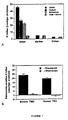
- FIGURE 1A is a bar graph comparing the rates of potassium influx in bovine trabecular meshwork (TM) cells preincubated and assayed in Hepes-buffered medium containing no drugs (control) or ouabain, bumetamide, or a combination of ouabain and bumetanide.
- K + influx was assessed as 86 Rb influx (Rb quantitatively substitutes for K in this system) and the amount of radioactive contents was determined by liquid scintillation.
- Assay media were identical to preincubation media except that they also contained 86 Rb (1 ⁇ Ci/ml). Data represent mean values ⁇ 4 SEM of quadruplicate determination from six experiments.
- FIGURE 1B is a bar graph comparing bumetanide-sensitive potassium influx of bovine and human TM cells, evaluated in the presence or absence of ethacrynic acid (1mM). Data represent means ⁇ SEM of quadruplicate determinations from six and two experiments (bovine and human TM cells, respectively).
- FIGURE 2B is a bar graph comparing the relative cell volumes of bovine TM cells as evaluated by radioisotopic determination of intracellular water space.
- FIGURE 3A is a schematic diagram of cell culture chambers with filter inserts.
- FIGURE 3B is a graph comparing the effect of isotonic (300 mOsm) or hypertonic (400 mOsm) medium upon the relative cell volume of confluent bovine TM cells in isotonic (300 mOsm) ( ⁇ ) or hypertonic (400 mOsm) ( ⁇ ) medium with the hypertonic medium containing bumetanide ( ⁇ ).
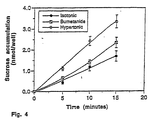
- FIGURE 4 is a graph comparing the effects of isotonic medium ( ⁇ ), hypertonic medium ( ⁇ ), and bumetanide ( ⁇ ) on permeability of trabecular meshwork cell monolayers grown on tissue culture filter inserts.
- the upper chamber also contained 1 ⁇ Ci/ml 14 C-sucrose. Aliquots were removed from the lower chamber at times indicated and evaluated for radioactivity to quantitate sucrose. Data represent mean values ⁇ SEM of six replicates from a representative experiment.
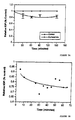
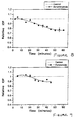
- FIGURE 5B is a graph showing the effect over time upon IOP of bumetanide instilled into the eye of a second rabbit.
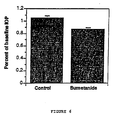
- FIGURE 6 is a bar graph comparing the average IOP-lowering effect of control and bumetanide calculated as the percent of baseline IOP.
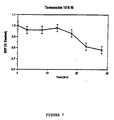
- FIGURE 7 is a graph showing the percent reduction of intra-ocular pressure over time upon in vivo administration of torasemide.
- FIGURE 8 is a graph showing the percent reduction of intra-ocular pressure over time upon in vivo administration of benzmetanide ( ⁇ ) as compared with control (-----).
- FIGURE 9 is a graph showing the percent reduction of intra-ocular pressure over time upon in vivo administration of furosemide ( ⁇ ) as compared with control (-----).
- FIGURE 10 is a graph comparing the percent reduction of intra-ocular pressure over time upon in vivo administration of benzmetanide ( ⁇ ) or furosemide ( ⁇ ) as compared with control (-----).
- the present invention provides the use of compounds in the manufacture of a medicament for increasing aqueous humor outflow in the eye of a human or other mammal by administration to the eye of an effective amount of a compound that substantially inhibits a Na + -K + -2Cl - cotransport mechanism, such as that found in the thick ascending limb of the loop of Henle.
- a compound that substantially inhibits a Na + -K + -2Cl - cotransport mechanism such as that found in the thick ascending limb of the loop of Henle.
- Na-K-Cl transporter refers generically to the cotransporter systems, but does not specify the particular stoichiometry of transport in the system described.
- Na + -K + -2Cl - cotransport system refers only to those cotransport systems having the indicated stoichiometry.
- the output-increasing compound can be administered to the eye either topically or by intracameral microinjection into the anterior chamber of the eye, and is therapeutically useful in reducing the intra-ocular pressure in prevention and/or treatment of diseases characterized by elevated intra-ocular pressure, such as ocular hypertension and glaucoma.
- TM cells mammalian trabecular meshwork (TM) cells, i.e., bovine and human, possess a prominent Na + -K + -2Cl - cotransport system comparable in activity to that observed in vascular endothelial cells and the one found in the thick ascending limb of the loop of Henle.
- bovine TM cells we have found that hormones and neurotransmitters shown by others to modulate outflow through the trabecular meshwork also alter the activity of the cotransporter in these cells.
- the inventors herein have employed a variety of drugs to increase aqueous outflow and thereby decrease intra-ocular pressure.
- ethacrynic acid was known to increase aqueous outflow in both monkey and human eye, the mechanism of its operation was unknown.
- the inventors herein have discovered that ethacrynic acid and a class of related drugs heretofore known to be useful as diuretics achieve their therapeutic effect in the eye by inhibition of a previously undiscovered Na + -K + -2Cl - cotransport system in bovine and human TM cells.
- TM cotransport is increased by cell shrinkage, as would be predicted if the cotransporter mediates a regulatory volume increase in the TM cells. Exposure of TM cells to elevated extracellular tonicity has been found to cause an immediate cell shrinkage and a slower increase in cell volume that is blocked by bumetamide. These results indicate that TM cells do indeed regulate volume upon exposure to altered extracellular tonicity, and that they do so via a Na + -K + -2Cl - cotransport-dependent mechanism.
- TM cell volume results in altered TM cell volume.
- agents such as the phorbol ester PMA that stimulate the cotransporter also increase TM cell volume.
- agents such as bumetanide, ethacrynic acid, cyclic AMP, and cyclic GMP that inhibit cotransport, decrease TM cell volume.
- the cotransporter system is shown to be important for maintenance of TM cell volume even in the absence of a tonicity challenge.
- cell shrinkage induces elevated cotransport activity, consistent with a role for the transporter in regulatory volume increase, but at the same time a change in cotransport activity drives a change in TM cell volume. This is a strong indicator that the Na-K-Cl cotransporter is of central importance for regulation of TM cell volume by hormones and pharmacologic agents.
- Abnormal function of the Na + -K + -2Cl - cotransporter in the eye can be modulated by administration directly to the eye of compounds that increase or decrease the biological activity of the Na-K-Cl cotransporter system in the TM cells.
- compounds are administered directly to the eye that substantially inhibit activity of the Na + -K + -Cl -2 cotransporter, and hence increase outflow of aqueous humor from the eye.
- the lipophilicity of a compound is expressed in terms of an octanol:water coefficient, determined by the standard technique of radiolabelling the compound and introducing a small amount into equal volumes of octanol and tris buffer (50mM, pH 7.4).
- the lipophilicity (log P') is expressed as the logarithm of the partition coefficient in n-octanol/phosphate buffer, pH 7.4 using the well known shake-flask method as described by Cloux, et al., J. Pharm. Belg ., 43 :141-151, 1973.
- the coefficient of lipophilicity (log P') of the compounds useful for topical application to decrease intra-ocular pressure is at least 0.005, and more preferably at least 0.01.
- the lipophilicity of the aqueous humor outflow-increasing compounds used in this invention can also be determined using a reversed phase, high performance liquid chromatograph (RP-HPLC) system for determination of the log P' of the drug as described in B. Masereel, et al . ( J. Pharm. Pharmacol . 44 :589-593, 1992). Briefly, a reversed phase column (RP-18) is equilibrated with n-propanol/phosphate buffer, pH 7.4 at a ratio of 30:70).
- RP-HPLC reversed phase, high performance liquid chromatograph
- the preferred outflow-increasing compounds used in this invention are lipophilic derivatives of torasemide, and biologically compatible salts thereof, which are potent blockers of the Na + 2Cl - K + co-transporter in the thick ascending limb of the loop of Henle (J. Delarge, Arzneim. Forsch. 38 :144-150, 1988). These compounds combine a high degree of lipophilicity and biological activity.
- the chemical structure of torasemide also known as DemodexTM and torsemide is represented by the following formula:
- R 1 is selected from the group consisting of 3-methyl benzyl and 6-12 membered substituted or unsubstitued cycloalkyls, preferably an unsubstituted cyclo-octyl or.a m-substituted phenyl, where the substituent is selected from -CH 3 , -CF 3 , or -Cl; and further wherein R 2 is selected from the group consisting of aminoisopropyl, 6-8 membered aminocycloalkyls and perhydroazepine.
- Additional compounds useful in the practice of this invention are a class of high ceiling diuretics, also known as loop diuretics, due to their ability to completely inhibit sodium chloride transport in the thick ascending limb of the loop of Henle at luminal concentrations of the drug in the range expected to occur in vivo .
- These drugs act at the luminal face of the epithelial cells to inhibit the Na + -K + -2Cl - cotransport mechanism ( Goodman and Gilman's The Pharmacological Basis of Therapeutics , 8th Ed., A.G. Gilman et al., Ed., Pergamon Press, New York, Elmsforth, N.Y., 1990, page 722).
- drugs of this class of diuretics are also useful for increasing outflow of aqueous humor from the eye when administered as disclosed herein. Hence, they are useful therapeutics for treatment of glaucoma and other conditions attributable to unnaturally high intra-ocular pressure.
- Three drugs of this class whose chemical structures are shown in Table 2 below, are in clinical use in the United States as diuretics: ethacrynic acid, furosemide, and bumetanide.
- ethacrynic acid ethacrynic acid
- furosemide furosemide
- bumetanide bumetanide
- an anionic group is mandatory - this group can be a tetrazolate, a sulfonate, a carboxylate, or a sulfonyl urea; (2) in ortho or meta position to the anionic group, a secondary (e.g., furosemide) or a tertiary (e.g. piretanide) amine is needed; (3) this amino group links the anionic moiety to an apolar residue, and (4) in meta position to the anionic group, a sulfonamide group (e.g. piretanide) or a pyridino nitrogen (e.g., torasemide) is necessary (R. Weger, et al., supra , p. 179).
- the outflow-increasing compounds disclosed herein which inhibit the Na + -K + -2Cl - cotransport mechanism, can be administered either topically or by microinjection into the trabecular meshwork.
- a pharmaceutically acceptable carrier substance e.g., physiological saline.
- additional pharmaceutically acceptable carrier substances can readily be supplied by one skilled in the art
- the liquid carrier medium can contain an organic solvent, for example, 3% methyl cellulose. Methyl cellulose provides, by its high viscosity, increased contact time between the compound and the surface of the eye, and therefore increases corneal penetration.
- Corneal penetration can also be increased by administering the compound mixed with an agent that slightly disrupts the corneal membrane, for example 0.025% benzalkonium chloride, which also serves as a bacteriostatic preservative in various commercial formulations). Corneal penetration may also be increased by delivering a suspension of liposomes that incorporate the therapeutic compound, as described by Davies et al. ("Advanced Corneal Delivery Systems: Liposomes" in Opthalmic Drug Delivery Systems , A.K. Mitra, Ed., Vol. 58, pages 289-306 in the series Drugs and the Pharmaceutical Sciences , 1993, Marcel Dekker, Inc., New York. The outflow-increasing compound is administered periodically (for example, one time per week to ten times per day).
- an agent that slightly disrupts the corneal membrane for example 0.025% benzalkonium chloride, which also serves as a bacteriostatic preservative in various commercial formulations.
- Corneal penetration may also be increased by delivering a suspension of liposomes that
- Administration is by applying drops of the compound in solution using an eye dropper, such that an effective amount of the compound is delivered through the cornea to the trabecular meshwork.
- Administration may also be by a sustained-release formulation, such as a liposome, or via an ocular insert designed to enhance the dwelling time of the compound in the tear film and improve patient compliance with therapy, such as those described by R. Bawa, in A.K. Mitra, Ed., supra, Chapter 11, pages 223-260.
- an “effective amount” of the compound to be delivered in one administration will depend on individual patient characteristics, e.g. the severity of the disease, as well as the characteristics of the administered compound, such as its lipophilicity and biological activity in stimulating the Na + -K + -Cl -2 cotransporter system in TM cells.
- an “effective amount” is that amount necessary to substantially inhibit the Na + -K + -Cl -2 cotransporter mechanism or establish homeostasis of the aqueous fluid in the eye as indicated by the intra-ocular pressure.
- Intra-ocular pressure reflects the balance between the production and outflow of aqueous humor, and the normal range is 2.09 ⁇ 0.33 kPa (15.8 ⁇ 2.5 mmHg) as measured by applanation tonometry (by planating the corneal surface) ( Harrison's Principles of Internal Medicine , 13th Ed., Isselbacher et al ., Ed., McGraw Hill, Inc., New York, p. 105).
- each drop contains 50-100 microliters of a 5-10 mM solution of the compound, so that 0.025 to 0.10 moles of the compound are delivered to each eye per day.
- Systemic absorption of the drug can be minimized by digital compression of the inner canthus of the eye during and for a short time following its instillation into the eye.
- Direct microinjection of the solubilized compound to a site near the trabecular meshwork offers the advantage of concentrating the compound in the location where it is needed, while avoiding the possibility of side effects resulting from generalized exposure of the eye to the compound.
- Microinjection may also provide the advantage of permitting infrequent periodic administration, for example every few weeks, months, or even years, in contrast to the more frequent administrations required in the case of topical administration.
- direct microinjection may promote the washing out of the trabecular meshwork of extracellular material interfering with fluid outflow.
- microinjection is administered via subconjunctival injection, most preferably into the superior aspect of the globe at the 12:00 o'clock position, from which point the drug reaches the intra-ocular space by diffusing passively across the scleral fibers, which offer essentially no barrier to penetration.
- Dosage for microinjection like that for topical administration, varies with the above-mentioned parameters.
- microinjection dosage is such that a final concentration of the compound within the trabecular meshwork of 0.01 to 1.0 mM is reached.
- Bovine trabecular meshwork (TM) cells (Department of Ophthalmology, Lions of Illinois Eye Research Institute, Chicago, IL) and human trabecular meshwork isolated by methods based on those of Polansky et al . ( Invest. Ophthalmol. Vis. Sci., 18 :1043-1049, 1979). Briefly, for isolation of bovine TM cells, eyes from healthy, freshly slaughtered young cows were enucleated. The TM was surgically excised, taking care not to include surrounding tissues. Explants were cut into small pieces ( ⁇ 1 mm 3 ), put in collagen-coated 175cm 2 tissue culture flasks without medium for 1 minute until adhering, then growth medium was added to the flask.
- TM Bovine trabecular meshwork
- the media used was Eagle's minimal essential medium (MEM) supplemented with 10% fetal bovine serum (Hyclone Laboratories, Logan, UT), essential and non-essential amino acids, glutamine, and penicillin/streptomycin.
- MEM Eagle's minimal essential medium
- the explants were maintained in a humidified CO 2 incubator at 37°C and 5% CO 2 . When cells growing out of the explant reached confluence, they were trypsinized and subcultured. Cultures that appeared to contain non-trabecular meshwork cells were discarded. Cultures were maintained by refeeding every 2 days and splitting weekly.
- human TM derived from three sources: 1) research donor eyes (presumed to be normal) from the eye bank of the University of California, Davis Medical Center; 2) otherwise healthy eyes enucleated because of life-threatening malignancies in the posterior pole (e.g., retinoblastoma or choroidal melanoma); and 3) trabeculectomy specimens.
- the surgeon created a partial thickness scleral flap, unroofing the TM at the surgical limbus. A small piece ( ⁇ 1 to 2 mm 3 ) was then excised to create the surgical fistula.
- TM cells Both types of TM cells were maintained in collagen-coated tissue culture flasks and were used between passages 8 and 12 for bovine and between passages 3 and 8 for human.
- cells were removed from the flasks by brief typsinization and were subcultured onto 24 well plates coated with collagen Type I (Collaborative Research, Inc., Bedford, MA) for radioisotopic transport and cell volume experiments or onto collagen-coated tissue culture filter inserts (BiocoatTM, 13 mm diameter, 0.45 ⁇ m pore size (Collaborative Research Inc.). Cells were used 5-7 days later as confluent monolayers and growth medium was replaced every 2 days.
- collagen Type I Collaborative Research, Inc., Bedford, MA
- BiocoatTM 13 mm diameter, 0.45 ⁇ m pore size
- Agents known to increase aqueous outflow should inhibit activity of the cotransporter, and agents which decrease aqueous outflow should stimulate the cotransporter. Further these agents should alter Na + -K + -2Cl - cotransport with a potency similar to that observed for their actions on trabecular meshwork function.
- Na-K-Cl cotransport was measured as ouabain-insensitive, bumetanide-sensitive potassium influx, using 86 Rb as a tracer for potassium. Details of this method have been published previously (O'Donnell, M.E., supra, 1989). Briefly, bovine or human TM cell monolayers on 24 well plates were equilibrated for 10 minutes at 37°C in a Hepes-buffered minimal essential medium (MEM) containing (in mM): 144 Na, 147 Cl, 5.8 K, 1.2 Ca, 4.2 HCO 3 , 0.4 HPO 4 , 0.4 H 2 PO 4 , 0.4 SO 4 , 5.6 glucose and 20 Hepes.
- MEM Hepes-buffered minimal essential medium
- the cells were then preincubated and assayed for 5 minutes each with Hepes-buffered MEM containing 1 or 0 mM ouabain (Boehringer-Mannheim Biochemicals, Indianapolis, IN), 10 or 0 ⁇ M bumetanide (Hoffinan-LaRoche, Nutley, NJ) and either 145 or 0 mM Na and Cl (Na isosmotically replaced by choline, Cl isosmotically replaced by gluconate).
- the assay medium also contained 86 Rb (1 ⁇ Ci/ml) (Dupont New England Nuclear, Boston, MA).
- the assay was terminated by rinsing the wells with ice-cold isotonic MgCl 2 , then extracting the contents with 0.2% sodium dodecyl sulfate (SDS), and determining the amount of radioactive contents by liquid scintillation. Osmolarities of all preincubation and assay media were verified by osmometry (Model 3W2, Advanced Instruments, Norwood, MA).
- Na-K-Cl cotransport of TM cells is important for regulation and maintenance of cell volume, then alteration of cotransport activity should lead to altered intracellular cell volume. Omission of either Na, K or Cl from the assay medium should also cause a decrease in cell volume because the Na-K-Cl cotransporter cannot operate if any one of the transported ion species is absent from the extracellular medium.
- second messengers e.g., cyclic AMP and cyclic GMP
- hormones and neurotransmitters found to be inhibitory to cotransport should cause a decrease in trabecular meshwork cell volume.
- second messengers e.g., Ca and protein kinase C
- second messengers e.g., Ca and protein kinase C
- second messengers e.g., Ca and protein kinase C
- a second messenger identified to be stimulatory to cotransport activity should cause an increase in trabecular meshwork cell volume, as should hormones and neurotransmitters identified to stimulate the cotransporter.
- blocking cotransport activity by bumetanide should prevent the elevation of cell volume induced by these agents.
- the potency with which each of these agents alters Na-K-Cl cotransport activity should be similar to the potency for alteration of intracellular volume.
- the intracellular volume of human and bovine TM cells was evaluated by two methods: 1) radioisotopic evaluation of TM monolayer intracellular water space using 14 C-urea and 14 C-sucrose as markers of total and extracellular space, respectively; and 2) electronic cell sizing of suspended TM cells, using a Coulter CounterTM assay (Coulter Electronics, Ltd., Hialeah, FL). Details of these methods have been described previously by O'Donnell (O'Donnell, M.E., supra , 1993).
- cell monolayers were preequilibrated for 30 minutes in Hepes MEM at 37°C in an air atmosphere, then incubated for 20 minutes in Hepes MEM containing 0 or 10 ⁇ M bumetanide, ethacrynic acid, or other agents to be tested, and finally incubated for 10 minutes in the same medium containing either 14 C-urea or 14 C-sucrose (both at 1 ⁇ Ci/ml). Monolayers were then rinsed with isotonic ice-cold MgCl 2 and radioactivity of SDS extracts determined by liquid scintillation.
- TM cells were trypsinized briefly in Ca-free medium, then rinsed with medium containing trypsin inhibitor and suspended in Hepes MEM. Mean cell volumes were then analyzed by electronic cell sizing on a Coulter CounterTM radioassay (Model ZM). with channelizer (C256), using at least 50,000 cells per data point and an orifice diameter of 140 ⁇ m. Aliquots of suspended cells were diluted into Hepes MEM containing the tonicity and/or agents to be evaluated. Mean cell volumes of each suspension aliquot were followed over time, starting at 1 minute after addition of cells to the assay media. Cell suspensions were maintained at 37°C throughout the assay period. Absolute volumes (picoliters/cell) were calculated from distribution curves of cell diameter, using a standard curve generated by polystyrene latex beads of known diameter.
- a role for Na + -K + -2Cl - cotransport in regulation of trabecular meshwork cell volume requires that changes in activity of the cotransporter result in net changes in cell content of Na, K and/or Cl. If the cotransporter is involved in maintaining intracellular volume under steady state conditions, then inhibiting activity of the cotransporter should cause a decrease in Na, K and/or Cl content of the cells, which would then cause a loss of water from the cells and shrinkage.
- EMEM Growth media
- Both upper and lower chambers of the multi-well cluster plates were equilibrated for 30 minutes in Hepes MEM at 37°C in a gyrotary water bath, shaking at 60 cycles per minute, to ensure adequate mixing. Aliquots of medium were sampled at various times from the lower chamber to determine sucrose content. The sample volume removed was replaced each time with an equal volume of isotonic or hypertonic sucrose-free medium. Sucrose content of the samples was determined by spectrofluorometric methods. The amount of solute was calculated from the radioactivity present in the sample and the specific activity (cpm/ ⁇ mol) of the 14 C-sucrose.
- Example 1 The effects of hormones, neurotransmitters and second messengers on Bumetanide-sensitive K influx of bovine trabecular meshwork cells were assessed using the procedures of Example 1. The cells were preincubated and assayed in the presence of vasopressin (100 nM) (Peninsula Laboratories, Belmont, CA); norepinephrine (NE) (10 ⁇ M) (Sigma Chemical, ST.
- vasopressin 100 nM
- NE norepinephrine
- acetylcholine Ach (1 ⁇ M) (Sigma), 8-bromo-cyclic AMP (cAMP) (50 ⁇ M) (Sigma); 8-bromo-cyclic GMP (cGMP, 50 ⁇ M) (Sigma); A23187 (1 ⁇ M) (Sigma); phorbol 12-myristate 13-acetate (PMA) (10 nM) (Sigma); or Ca-free medium plus 5 ⁇ M 1,2-bis (o-aminophenoxy)ethane-N,N,N',N-tetraacetic acid acetoxymethyl ester (BAPTA-AM), following a 30 minute pre-exposure of the cells to the membrane permeant Ca chelator BAPTA-AM.
- the control is the Hepes-buffered medium containing Na, K, Cl, CA and other ions as described in Example 1B.
- Table 3 below the results of these studies are shown as ⁇ mol/g protein/min.
- the data represent the mean values ⁇ SEM of quadruplicate determinations from two experiments.
- BUMETANIDE-SENSITIVE K INFLUX ( ⁇ mol/g protein/min) Control 25.6 ⁇ 0.71 NE 18.6 ⁇ 1.79 VP 40.4 ⁇ 1.05 Ach 20.2 ⁇ 1.26 A23187 33.4 ⁇ 5.33 cAMP 19.6 ⁇ 0.96 PMA 34.0 ⁇ 1.33 cGMP 19.7 ⁇ 0.74 Ca-free 4.9 ⁇ 1.06
- a role for Na-K-Cl cotransport in mediating cell shrinkage-induced regulatory volume increase also requires that cell shrinkage cause an increase in cell Na, K and Cl content by stimulating net uptake of these ions by the cotransporter following exposure of the cells to hypertonicity in the presence and absence of bumetanide.
- This model of Pneumatonometer provides a readout of standard deviation of each measurement; only measurements with a standard deviation of ⁇ 1 mmHg were accepted and most were less than 0.5 mmHg. Following sedation, IOP measurements were carried out over at least 30 minutes to assure that a stable baseline IOP was present.
- Drugs and/or vehicle was administered to one eye of each animal via subconjunctival injection in order to bypass any barriers to drug penetration, such as an intact corneal and conjunctival epithelium and to achieve rapid and high concentrations of drug, bypassing epithelial barriers.
- the contralateral eye treated only with vehicle served as a control for each animal.
- Two syringes were prepared for each experiment, one containing drug and vehicle, the other containing only vehicle.
- 0.1 cc from each syringe was injected subconjunctivally into the superior aspect of the globe at the 12:00 o'clock position. Injections raised a prominent bleb, confirming subconjunctival placement of the drug or vehicle. This bleb then smoothed out over about ten minutes, indicating diffusion of the drug or vehicle throughout the subconjunctival space.
- IOP in both eyes fluctuated over time reflecting the level of anesthesia.
- the animal handlers and investigators were masked as to which eye had received the drug or control injection.
- Figure 6 compare the average of two experiments (2 animals tested with bumetanide, 2 tested with torasemide) and reveals an average IOP lowering effect of over 20%.
- Example 4 Using the protocol described in Example 4 above with male albino New Zealand rabbits, one animal was treated by subconjunctival injection in one eye with 0.1 cc of 7.5 ⁇ M benzmetanide, prepared by diluting from a 5 mM stock solubilized in DMSO into phosphate-buffered saline with the final amount of DMSO present at 0.15%.
- the contralateral control eye was treated by subconjunctival injection of 0.1 cc of phosphate-buffered saline with the final amount of DMSO present at 0.15%.
- the control was treated with phosphate-buffered saline with 0.15% DMSO alone.
- benzmetanide caused a significant drop in intra-ocular pressure. Pressure in the presence of benzmetanide is plotted relative to pressure observed in the contralateral, control eye (as a percentage of the IOP measured in the control eye at the same time point). A significant reduction of IOP was observed after 15 minutes. A 24% decrease in IOP was observed after 50 minutes with IOP remaining at that level through the end of the experiment at 60 minutes.
- furosemide was the test drug.
- One animal was treated in the test eye by subconjunctival injection of 0.1 cc of 100 ⁇ M furosemide, prepared by diluting from a 0.1 M stock solubilized in DMSO into phosphate-buffered saline, with the final amount of DMSO present at 0.1%.
- the contralateral control eye received 0.1 cc of phosphate-buffered saline containing 0.1% DMSO alone by subconjunctival injection.
- furosemide caused a significant drop in relative IOP 25 minutes after injection. The maximal inhibition of 12.4% was observed in the furosemide-treated eye. The experiment was ended at 45 minutes.
- furosemide had a slower onset and a less pronounced effect on IOP than did benzmetanide. This is consistent with the relative differences in potency for furosemide and benzmetanide as inhibitors of Na + -K + -2Cl - cotransport activity (e.g. see S.M. O'Grady et al., supra ).
Landscapes
- Health & Medical Sciences (AREA)
- Life Sciences & Earth Sciences (AREA)
- Chemical & Material Sciences (AREA)
- Veterinary Medicine (AREA)
- Public Health (AREA)
- Medicinal Chemistry (AREA)
- General Health & Medical Sciences (AREA)
- Animal Behavior & Ethology (AREA)
- Pharmacology & Pharmacy (AREA)
- Epidemiology (AREA)
- General Chemical & Material Sciences (AREA)
- Organic Chemistry (AREA)
- Nuclear Medicine, Radiotherapy & Molecular Imaging (AREA)
- Engineering & Computer Science (AREA)
- Chemical Kinetics & Catalysis (AREA)
- Bioinformatics & Cheminformatics (AREA)
- Ophthalmology & Optometry (AREA)
- Pharmaceuticals Containing Other Organic And Inorganic Compounds (AREA)
- Medicines That Contain Protein Lipid Enzymes And Other Medicines (AREA)
- Acyclic And Carbocyclic Compounds In Medicinal Compositions (AREA)
Abstract
Description


| BUMETANIDE-SENSITIVE K INFLUX | |||
| (µmol/g protein/min) | |||
| Control | 25.6 ± 0.71 | NE | 18.6 ± 1.79 |
| VP | 40.4 ± 1.05 | Ach | 20.2 ± 1.26 |
| A23187 | 33.4 ± 5.33 | cAMP | 19.6 ± 0.96 |
| PMA | 34.0 ± 1.33 | cGMP | 19.7 ± 0.74 |
| Ca-free | 4.9 ± 1.06 |
Claims (23)
- Use of a compound having a coefficient of lipophilicity (log P') of at least 0.005 which compound inhibits the Na+-K+-2Cl- co-transporter in the trabecular meshwork of the eye, or a pharmaceutically acceptable salt thereof, for the manufacture of a medicament for administration to the trabecular meshwork via eye drops or micro injection via subconjunctival injection for increasing aqueous humor outflow in the eye of a mammalian patient to reduce the intra-ocular pressure therein.
- Use of a loop diuretic compound having a coefficient of lipophilicity of at least 0.005 (log P') for the manufacture of a medicament for administration to the trabecular meshwork of the eye via eye drops or microinjection via subconjunctival injection for increasing aqueous humor outflow in the eye of a mammalian patient to reduce the intra-ocular pressure therein.
- A use according to claim 1 or 2 wherein the compound is selected from bumetanide, furosemide, torasemide, piretanide and benzmetanide, and pharmaceutically acceptable salts thereof.
- A use according to claim 1 or 2 wherein the compound is furosemide, or a pharmaceutically acceptable salt thereof.
- A use according to claim 1 or 2 wherein the compound is benzmetanide, or a pharmaceutically acceptable salt thereof.
- A use according to claim 1 or 2 wherein the medicament is for administration by microinjection.
- A use according to claim 1 or 2 wherein the medicament further comprises a pharmaceutically acceptable carrier.
- A use according to claim 1 or 2 wherein the medicament is for administration topically.
- A use according to claim 8 wherein the medicament further comprises a compound that enhances corneal penetration.
- A use according to claim 8 wherein the medicament further comprises 0.025% benzalkonium chloride.
- A use according to claim 8 wherein the compound is selected from derivatives of furosemide, piretanide, benzmetanide, and torasemide having an octanol: water coefficient sufficient to penetrate the corneal membrane.
- A use according to claim 9 wherein the compound has an octanol: water coefficient of at least 0.005.
- A use according to claim 12 wherein the compound has an octanol: water coefficient of at least 0.01.
- A use according to claim 13 wherein the compound is a derivative of benzmetanide having an octanol: water coefficient sufficient to penetrate the corneal membrane.
- A use according to claim 13 wherein the compound is a lipophilic derivative of furosemide having an octanol: water coefficient sufficient to penetrate the corneal membrane.
- A use according to claim 1 or 2 wherein the medicament is for treating a human patient with glaucoma.
- A use according to claim 12 or 16 wherein the dosage of the compound is 50-100 microlitres of a 5-10 mM solution of the compound per day.
- A method for screening compounds for utility in inhibiting the Na+-K+-2Cl- co-transport system located in the trabecular meshwork of the eye comprising:a. determining the IC50 concentration of compounds in the cortical thick ascending limb of the loop of Henle;b. determining the inhibition of Na+-K+-2Cl- cotransport in mammalian trabecular meshwork cells;c. selecting compounds with an IC50 at or below 0.30 µM and an inhibition of Na+-K+-2Cl- cotransport of at least 50% and a coefficient of lipophilicity (log P') of at least 0.005.
- The method of claim 18 wherein the cortical thick ascending limb is in rabbit and the trabecular meshwork cells are bovine or human.
- The method of claim 18 wherein the Na+-K+-2Cl- cotransporter mechanism is in mammalian trabecular meshwork cells and the compound selected has an IC50 of about 0.30 µM or less.
- The method of claim 20 wherein the trabecular meshwork cells are human.
- The method of claim 20 wherein the trabecular meshwork cells are bovine.
- The method of claim 22 wherein the compound selected further has a coefficient of lipophilicity (log P') of at least 0.01.
Applications Claiming Priority (6)
| Application Number | Priority Date | Filing Date | Title |
|---|---|---|---|
| US08/353,442 US5585401A (en) | 1994-12-09 | 1994-12-09 | Method for enhancing outflow of aqueous humor in treatment of glaucoma |
| US353442 | 1994-12-09 | ||
| US568389 | 1995-12-06 | ||
| US08/568,389 US5763491A (en) | 1994-12-09 | 1995-12-06 | Method for enhancing outflow of aqueous humor in treatment of glaucoma |
| PCT/US1995/016117 WO1996017602A1 (en) | 1994-12-09 | 1995-12-08 | A method for enhancing outflow of aqueous humor in treatment of glaucoma |
| 2003-03-28 |
Publications (3)
| Publication Number | Publication Date |
|---|---|
| EP0794772A1 EP0794772A1 (en) | 1997-09-17 |
| EP0794772A4 EP0794772A4 (en) | 1999-06-02 |
| EP0794772B1 true EP0794772B1 (en) | 2002-08-14 |
Family
ID=26997937
Family Applications (1)
| Application Number | Title | Priority Date | Filing Date |
|---|---|---|---|
| EP95943756A Expired - Lifetime EP0794772B1 (en) | 1994-12-09 | 1995-12-08 | Medicaments for enhancing outflow of aqueous humor in treatment of glaucoma |
Country Status (7)
| Country | Link |
|---|---|
| US (1) | US5763491A (en) |
| EP (1) | EP0794772B1 (en) |
| JP (1) | JP2002515009A (en) |
| AT (1) | ATE222102T1 (en) |
| AU (1) | AU709014B2 (en) |
| CA (1) | CA2204994A1 (en) |
| DE (1) | DE69527799D1 (en) |
Families Citing this family (36)
| Publication number | Priority date | Publication date | Assignee | Title |
|---|---|---|---|---|
| US7214711B2 (en) * | 1998-12-23 | 2007-05-08 | Neurotherapeutics Pharma Llc | Method of treating migraine headache without aura |
| US8008283B2 (en) * | 1998-12-23 | 2011-08-30 | Neurotherapeutics Pharma, Inc. | Methods and compositions for the treatment of neuropsychiatric disorders |
| US8722668B2 (en) * | 1998-12-23 | 2014-05-13 | Daryl W. Hochman | Methods and compositions for the treatment of neuropathic pain and neuropsychiatric disorders |
| US6265435B1 (en) | 2000-03-07 | 2001-07-24 | Hans Rosenkoetter | Method for enhancing corneal penetration by water soluble ophthalmic drugs |
| US20020177625A1 (en) * | 2001-04-28 | 2002-11-28 | The Regents Of The University Of California, A California Corporation | Class of glaucoma drugs to enhance aqueous humor outflow and lower intra-ocular pressure |
| DE10223932A1 (en) * | 2002-05-29 | 2003-12-18 | Rudolf Wank | Use of diuretics to treat swelling |
| JP2009511629A (en) * | 2005-10-17 | 2009-03-19 | ニューロセラピューティクス ファーマ, インコーポレイテッド | Analogues of diuretic-like compounds useful in the regulation of central nervous system diseases |
| US8663303B2 (en) | 2010-11-15 | 2014-03-04 | Aquesys, Inc. | Methods for deploying an intraocular shunt from a deployment device and into an eye |
| US8852256B2 (en) | 2010-11-15 | 2014-10-07 | Aquesys, Inc. | Methods for intraocular shunt placement |
| WO2008005873A2 (en) | 2006-06-30 | 2008-01-10 | Aquesys Inc. | Methods, systems and apparatus for relieving pressure in an organ |
| US8974511B2 (en) | 2010-11-15 | 2015-03-10 | Aquesys, Inc. | Methods for treating closed angle glaucoma |
| US10085884B2 (en) | 2006-06-30 | 2018-10-02 | Aquesys, Inc. | Intraocular devices |
| US8308701B2 (en) | 2010-11-15 | 2012-11-13 | Aquesys, Inc. | Methods for deploying intraocular shunts |
| US8801766B2 (en) | 2010-11-15 | 2014-08-12 | Aquesys, Inc. | Devices for deploying intraocular shunts |
| US8852137B2 (en) | 2010-11-15 | 2014-10-07 | Aquesys, Inc. | Methods for implanting a soft gel shunt in the suprachoroidal space |
| US9095411B2 (en) | 2010-11-15 | 2015-08-04 | Aquesys, Inc. | Devices for deploying intraocular shunts |
| US8721702B2 (en) | 2010-11-15 | 2014-05-13 | Aquesys, Inc. | Intraocular shunt deployment devices |
| US20120123316A1 (en) | 2010-11-15 | 2012-05-17 | Aquesys, Inc. | Intraocular shunts for placement in the intra-tenon's space |
| US8758290B2 (en) | 2010-11-15 | 2014-06-24 | Aquesys, Inc. | Devices and methods for implanting a shunt in the suprachoroidal space |
| US8828070B2 (en) | 2010-11-15 | 2014-09-09 | Aquesys, Inc. | Devices for deploying intraocular shunts |
| US8585629B2 (en) | 2010-11-15 | 2013-11-19 | Aquesys, Inc. | Systems for deploying intraocular shunts |
| US20160256317A1 (en) | 2010-11-15 | 2016-09-08 | Aquesys, Inc. | Methods for implanting intraocular shunts |
| US10080682B2 (en) | 2011-12-08 | 2018-09-25 | Aquesys, Inc. | Intrascleral shunt placement |
| US8852136B2 (en) | 2011-12-08 | 2014-10-07 | Aquesys, Inc. | Methods for placing a shunt into the intra-scleral space |
| US8765210B2 (en) | 2011-12-08 | 2014-07-01 | Aquesys, Inc. | Systems and methods for making gelatin shunts |
| US9610195B2 (en) | 2013-02-27 | 2017-04-04 | Aquesys, Inc. | Intraocular shunt implantation methods and devices |
| US9808373B2 (en) | 2013-06-28 | 2017-11-07 | Aquesys, Inc. | Intraocular shunt implantation |
| US10159600B2 (en) | 2013-02-19 | 2018-12-25 | Aquesys, Inc. | Adjustable intraocular flow regulation |
| US9125723B2 (en) | 2013-02-19 | 2015-09-08 | Aquesys, Inc. | Adjustable glaucoma implant |
| US9585790B2 (en) | 2013-11-14 | 2017-03-07 | Aquesys, Inc. | Intraocular shunt inserter |
| JP6916742B2 (en) | 2015-06-03 | 2021-08-11 | アクエシス, インコーポレイテッド | Intraocular shunt placement of AB EXTERNO (from outside the eye to inside the eye) |
| AU2017274654A1 (en) | 2016-06-02 | 2018-12-20 | Aquesys, Inc. | Intraocular drug delivery |
| DE102017117657A1 (en) * | 2017-08-03 | 2019-02-07 | Carl Zeiss Meditec Ag | Device for influencing an intraocular pressure |
| US11246753B2 (en) | 2017-11-08 | 2022-02-15 | Aquesys, Inc. | Manually adjustable intraocular flow regulation |
| US11135089B2 (en) | 2018-03-09 | 2021-10-05 | Aquesys, Inc. | Intraocular shunt inserter |
| US10952898B2 (en) | 2018-03-09 | 2021-03-23 | Aquesys, Inc. | Intraocular shunt inserter |
Family Cites Families (6)
| Publication number | Priority date | Publication date | Assignee | Title |
|---|---|---|---|---|
| US4757089A (en) * | 1985-06-14 | 1988-07-12 | Massachusetts Eye And Ear Infirmary | Increasing aqueous humor outflow |
| DE3623620A1 (en) * | 1986-07-12 | 1988-01-21 | Boehringer Mannheim Gmbh | MOLDABLE, AQUEOUS, ALKALINE INJECTION SOLUTIONS FROM TORASEMID AND METHOD FOR THE PRODUCTION THEREOF |
| US4895807A (en) * | 1986-12-31 | 1990-01-23 | Cherksey Bruce D | Membrane channel protein and related therapeutic compounds |
| CA2125251C (en) * | 1993-06-07 | 2005-04-26 | Yoshiyuki Inada | A pharmaceutical composition for angiotensin ii-mediated diseases |
| GB2300636A (en) * | 1994-01-28 | 1996-11-13 | Cal Int Ltd | Pharmaceutical product comprising a salicylate of an esterifiable beta-blocker |
| US5559151A (en) * | 1994-11-30 | 1996-09-24 | Allergan | Method for reducing intraocular pressure in the mammalian eye by administration of chloride channel blockers |
-
1995
- 1995-12-06 US US08/568,389 patent/US5763491A/en not_active Expired - Fee Related
- 1995-12-08 AU AU45152/96A patent/AU709014B2/en not_active Ceased
- 1995-12-08 JP JP51781296A patent/JP2002515009A/en active Pending
- 1995-12-08 AT AT95943756T patent/ATE222102T1/en not_active IP Right Cessation
- 1995-12-08 EP EP95943756A patent/EP0794772B1/en not_active Expired - Lifetime
- 1995-12-08 DE DE69527799T patent/DE69527799D1/en not_active Expired - Lifetime
- 1995-12-08 CA CA002204994A patent/CA2204994A1/en not_active Abandoned
Also Published As
| Publication number | Publication date |
|---|---|
| DE69527799D1 (en) | 2002-09-19 |
| JP2002515009A (en) | 2002-05-21 |
| AU709014B2 (en) | 1999-08-19 |
| CA2204994A1 (en) | 1996-06-13 |
| US5763491A (en) | 1998-06-09 |
| AU4515296A (en) | 1996-06-26 |
| ATE222102T1 (en) | 2002-08-15 |
| EP0794772A4 (en) | 1999-06-02 |
| EP0794772A1 (en) | 1997-09-17 |
Similar Documents
| Publication | Publication Date | Title |
|---|---|---|
| US6228873B1 (en) | Method for enhancing outflow of aqueous humor in treatment of glaucoma | |
| US5763491A (en) | Method for enhancing outflow of aqueous humor in treatment of glaucoma | |
| US5585401A (en) | Method for enhancing outflow of aqueous humor in treatment of glaucoma | |
| US12503425B2 (en) | Methods of treating or controlling cytotoxic cerebral edema | |
| US7122579B2 (en) | Eye treatments using synthetic thyroid hormone compositions | |
| WO1998007435A9 (en) | Eye treatments using synthetic thyroid hormone compositions | |
| JP2006070039A (en) | Treatment of glaucoma | |
| US9949991B2 (en) | Methods of treating aquaporin-mediated conditions | |
| DE69533723T2 (en) | USE OF CHLORIDE CHANNEL BLOCKS TO REDUCE INTRAOCULAR PRESSURE | |
| US20130196995A1 (en) | Combination of brimonidine and timolol for topical ophthalmic use | |
| US20020177625A1 (en) | Class of glaucoma drugs to enhance aqueous humor outflow and lower intra-ocular pressure | |
| Crook et al. | Beta-adrenergic stimulation of Na+, K+, Cl-cotransport in fetal nonpigmented ciliary epithelial cells. | |
| US20040192699A1 (en) | Optic nerve protecting agents containing alpha1 receptor blocker as active ingredient | |
| Lacheretz et al. | Effect of SR121463, a selective non-peptide vasopressin V2 receptor antagonist, in a rabbit model of ocular hypertension | |
| US20030083227A1 (en) | Novel combination therapy to treat glaucoma | |
| KR100585299B1 (en) | Optic nerve papilla improver | |
| AU717608C (en) | Eye treatments using synthetic thyroid hormone compositions | |
| JPH04327540A (en) | Calcitonin-containing medicine | |
| AU2011340493A1 (en) | Dosages of arylsulfonamide derivatives | |
| HK1208363B (en) | Compounds for use in the treatment of aquaporin-mediated diseases |
Legal Events
| Date | Code | Title | Description |
|---|---|---|---|
| PUAI | Public reference made under article 153(3) epc to a published international application that has entered the european phase |
Free format text: ORIGINAL CODE: 0009012 |
|
| 17P | Request for examination filed |
Effective date: 19970708 |
|
| AK | Designated contracting states |
Kind code of ref document: A1 Designated state(s): AT BE CH DE DK ES FR GB GR IE IT LI LU MC NL PT SE |
|
| A4 | Supplementary search report drawn up and despatched |
Effective date: 19990420 |
|
| AK | Designated contracting states |
Kind code of ref document: A4 Designated state(s): AT BE CH DE DK ES FR GB GR IE IT LI LU MC NL PT SE |
|
| 17Q | First examination report despatched |
Effective date: 19990810 |
|
| RAP1 | Party data changed (applicant data changed or rights of an application transferred) |
Owner name: THE REGENTS OF THE UNIVERSITY OF CALIFORNIA |
|
| GRAG | Despatch of communication of intention to grant |
Free format text: ORIGINAL CODE: EPIDOS AGRA |
|
| RIC1 | Information provided on ipc code assigned before grant |
Free format text: 7A 61K 31/195 A, 7A 61K 31/34 B, 7A 61K 31/40 B, 7A 61K 31/44 B, 7A 61P 27/00 B, 7A 61P 27/06 B |
|
| RTI1 | Title (correction) |
Free format text: MEDICAMENTS FOR ENHANCING OUTFLOW OF AQUEOUS HUMOR IN TREATMENT OF GLAUCOMA |
|
| GRAG | Despatch of communication of intention to grant |
Free format text: ORIGINAL CODE: EPIDOS AGRA |
|
| GRAH | Despatch of communication of intention to grant a patent |
Free format text: ORIGINAL CODE: EPIDOS IGRA |
|
| GRAH | Despatch of communication of intention to grant a patent |
Free format text: ORIGINAL CODE: EPIDOS IGRA |
|
| GRAA | (expected) grant |
Free format text: ORIGINAL CODE: 0009210 |
|
| AK | Designated contracting states |
Kind code of ref document: B1 Designated state(s): AT BE CH DE DK ES FR GB GR IE IT LI LU MC NL PT SE |
|
| PG25 | Lapsed in a contracting state [announced via postgrant information from national office to epo] |
Ref country code: NL Free format text: LAPSE BECAUSE OF FAILURE TO SUBMIT A TRANSLATION OF THE DESCRIPTION OR TO PAY THE FEE WITHIN THE PRESCRIBED TIME-LIMIT Effective date: 20020814 Ref country code: LI Free format text: LAPSE BECAUSE OF FAILURE TO SUBMIT A TRANSLATION OF THE DESCRIPTION OR TO PAY THE FEE WITHIN THE PRESCRIBED TIME-LIMIT Effective date: 20020814 Ref country code: IT Free format text: LAPSE BECAUSE OF FAILURE TO SUBMIT A TRANSLATION OF THE DESCRIPTION OR TO PAY THE FEE WITHIN THE PRE;WARNING: LAPSES OF ITALIAN PATENTS WITH EFFECTIVE DATE BEFORE 2007 MAY HAVE OCCURRED AT ANY TIME BEFORE 2007. THE CORRECT EFFECTIVE DATE MAY BE DIFFERENT FROM THE ONE RECORDED.SCRIBED TIME-LIMIT Effective date: 20020814 Ref country code: GR Free format text: LAPSE BECAUSE OF FAILURE TO SUBMIT A TRANSLATION OF THE DESCRIPTION OR TO PAY THE FEE WITHIN THE PRESCRIBED TIME-LIMIT Effective date: 20020814 Ref country code: FR Free format text: LAPSE BECAUSE OF FAILURE TO SUBMIT A TRANSLATION OF THE DESCRIPTION OR TO PAY THE FEE WITHIN THE PRESCRIBED TIME-LIMIT Effective date: 20020814 Ref country code: CH Free format text: LAPSE BECAUSE OF FAILURE TO SUBMIT A TRANSLATION OF THE DESCRIPTION OR TO PAY THE FEE WITHIN THE PRESCRIBED TIME-LIMIT Effective date: 20020814 Ref country code: BE Free format text: LAPSE BECAUSE OF FAILURE TO SUBMIT A TRANSLATION OF THE DESCRIPTION OR TO PAY THE FEE WITHIN THE PRESCRIBED TIME-LIMIT Effective date: 20020814 Ref country code: AT Free format text: LAPSE BECAUSE OF FAILURE TO SUBMIT A TRANSLATION OF THE DESCRIPTION OR TO PAY THE FEE WITHIN THE PRESCRIBED TIME-LIMIT Effective date: 20020814 |
|
| REF | Corresponds to: |
Ref document number: 222102 Country of ref document: AT Date of ref document: 20020815 Kind code of ref document: T |
|
| REG | Reference to a national code |
Ref country code: GB Ref legal event code: FG4D |
|
| REG | Reference to a national code |
Ref country code: CH Ref legal event code: EP |
|
| REG | Reference to a national code |
Ref country code: IE Ref legal event code: FG4D |
|
| REF | Corresponds to: |
Ref document number: 69527799 Country of ref document: DE Date of ref document: 20020919 |
|
| PG25 | Lapsed in a contracting state [announced via postgrant information from national office to epo] |
Ref country code: SE Free format text: LAPSE BECAUSE OF FAILURE TO SUBMIT A TRANSLATION OF THE DESCRIPTION OR TO PAY THE FEE WITHIN THE PRESCRIBED TIME-LIMIT Effective date: 20021114 Ref country code: DK Free format text: LAPSE BECAUSE OF FAILURE TO SUBMIT A TRANSLATION OF THE DESCRIPTION OR TO PAY THE FEE WITHIN THE PRESCRIBED TIME-LIMIT Effective date: 20021114 |
|
| PG25 | Lapsed in a contracting state [announced via postgrant information from national office to epo] |
Ref country code: DE Free format text: LAPSE BECAUSE OF FAILURE TO SUBMIT A TRANSLATION OF THE DESCRIPTION OR TO PAY THE FEE WITHIN THE PRESCRIBED TIME-LIMIT Effective date: 20021115 |
|
| PG25 | Lapsed in a contracting state [announced via postgrant information from national office to epo] |
Ref country code: PT Free format text: LAPSE BECAUSE OF FAILURE TO SUBMIT A TRANSLATION OF THE DESCRIPTION OR TO PAY THE FEE WITHIN THE PRESCRIBED TIME-LIMIT Effective date: 20021129 |
|
| PG25 | Lapsed in a contracting state [announced via postgrant information from national office to epo] |
Ref country code: LU Free format text: LAPSE BECAUSE OF NON-PAYMENT OF DUE FEES Effective date: 20021208 Ref country code: GB Free format text: LAPSE BECAUSE OF NON-PAYMENT OF DUE FEES Effective date: 20021208 |
|
| PG25 | Lapsed in a contracting state [announced via postgrant information from national office to epo] |
Ref country code: IE Free format text: LAPSE BECAUSE OF NON-PAYMENT OF DUE FEES Effective date: 20021209 |
|
| NLV1 | Nl: lapsed or annulled due to failure to fulfill the requirements of art. 29p and 29m of the patents act | ||
| PG25 | Lapsed in a contracting state [announced via postgrant information from national office to epo] |
Ref country code: ES Free format text: LAPSE BECAUSE OF FAILURE TO SUBMIT A TRANSLATION OF THE DESCRIPTION OR TO PAY THE FEE WITHIN THE PRESCRIBED TIME-LIMIT Effective date: 20030228 |
|
| REG | Reference to a national code |
Ref country code: CH Ref legal event code: PL |
|
| PLBE | No opposition filed within time limit |
Free format text: ORIGINAL CODE: 0009261 |
|
| STAA | Information on the status of an ep patent application or granted ep patent |
Free format text: STATUS: NO OPPOSITION FILED WITHIN TIME LIMIT |
|
| PG25 | Lapsed in a contracting state [announced via postgrant information from national office to epo] |
Ref country code: MC Free format text: LAPSE BECAUSE OF NON-PAYMENT OF DUE FEES Effective date: 20030701 |
|
| GBPC | Gb: european patent ceased through non-payment of renewal fee | ||
| 26N | No opposition filed |
Effective date: 20030515 |
|
| REG | Reference to a national code |
Ref country code: IE Ref legal event code: MM4A |