EP0794177A1 - Process for the preparation of unsymmertical 4,6-Bis (aryloxy pyrimidine compounds - Google Patents
Process for the preparation of unsymmertical 4,6-Bis (aryloxy pyrimidine compounds Download PDFInfo
- Publication number
- EP0794177A1 EP0794177A1 EP97301471A EP97301471A EP0794177A1 EP 0794177 A1 EP0794177 A1 EP 0794177A1 EP 97301471 A EP97301471 A EP 97301471A EP 97301471 A EP97301471 A EP 97301471A EP 0794177 A1 EP0794177 A1 EP 0794177A1
- Authority
- EP
- European Patent Office
- Prior art keywords
- alkyl
- hydrogen
- halogen
- compound
- haloalkyl
- Prior art date
- Legal status (The legal status is an assumption and is not a legal conclusion. Google has not performed a legal analysis and makes no representation as to the accuracy of the status listed.)
- Granted
Links
- 0 C[N+]1=C(*)C([*+])=C(*)*1 Chemical compound C[N+]1=C(*)C([*+])=C(*)*1 0.000 description 1
Classifications
-
- C—CHEMISTRY; METALLURGY
- C07—ORGANIC CHEMISTRY
- C07D—HETEROCYCLIC COMPOUNDS
- C07D239/00—Heterocyclic compounds containing 1,3-diazine or hydrogenated 1,3-diazine rings
- C07D239/02—Heterocyclic compounds containing 1,3-diazine or hydrogenated 1,3-diazine rings not condensed with other rings
- C07D239/24—Heterocyclic compounds containing 1,3-diazine or hydrogenated 1,3-diazine rings not condensed with other rings having three or more double bonds between ring members or between ring members and non-ring members
- C07D239/28—Heterocyclic compounds containing 1,3-diazine or hydrogenated 1,3-diazine rings not condensed with other rings having three or more double bonds between ring members or between ring members and non-ring members with hetero atoms or with carbon atoms having three bonds to hetero atoms with at the most one bond to halogen, directly attached to ring carbon atoms
- C07D239/46—Two or more oxygen, sulphur or nitrogen atoms
- C07D239/52—Two oxygen atoms
-
- A—HUMAN NECESSITIES
- A01—AGRICULTURE; FORESTRY; ANIMAL HUSBANDRY; HUNTING; TRAPPING; FISHING
- A01N—PRESERVATION OF BODIES OF HUMANS OR ANIMALS OR PLANTS OR PARTS THEREOF; BIOCIDES, e.g. AS DISINFECTANTS, AS PESTICIDES OR AS HERBICIDES; PEST REPELLANTS OR ATTRACTANTS; PLANT GROWTH REGULATORS
- A01N43/00—Biocides, pest repellants or attractants, or plant growth regulators containing heterocyclic compounds
- A01N43/48—Biocides, pest repellants or attractants, or plant growth regulators containing heterocyclic compounds having rings with two nitrogen atoms as the only ring hetero atoms
- A01N43/54—1,3-Diazines; Hydrogenated 1,3-diazines
-
- C—CHEMISTRY; METALLURGY
- C07—ORGANIC CHEMISTRY
- C07D—HETEROCYCLIC COMPOUNDS
- C07D239/00—Heterocyclic compounds containing 1,3-diazine or hydrogenated 1,3-diazine rings
- C07D239/02—Heterocyclic compounds containing 1,3-diazine or hydrogenated 1,3-diazine rings not condensed with other rings
- C07D239/24—Heterocyclic compounds containing 1,3-diazine or hydrogenated 1,3-diazine rings not condensed with other rings having three or more double bonds between ring members or between ring members and non-ring members
- C07D239/28—Heterocyclic compounds containing 1,3-diazine or hydrogenated 1,3-diazine rings not condensed with other rings having three or more double bonds between ring members or between ring members and non-ring members with hetero atoms or with carbon atoms having three bonds to hetero atoms with at the most one bond to halogen, directly attached to ring carbon atoms
- C07D239/30—Halogen atoms or nitro radicals
-
- C—CHEMISTRY; METALLURGY
- C07—ORGANIC CHEMISTRY
- C07D—HETEROCYCLIC COMPOUNDS
- C07D239/00—Heterocyclic compounds containing 1,3-diazine or hydrogenated 1,3-diazine rings
- C07D239/02—Heterocyclic compounds containing 1,3-diazine or hydrogenated 1,3-diazine rings not condensed with other rings
- C07D239/24—Heterocyclic compounds containing 1,3-diazine or hydrogenated 1,3-diazine rings not condensed with other rings having three or more double bonds between ring members or between ring members and non-ring members
- C07D239/28—Heterocyclic compounds containing 1,3-diazine or hydrogenated 1,3-diazine rings not condensed with other rings having three or more double bonds between ring members or between ring members and non-ring members with hetero atoms or with carbon atoms having three bonds to hetero atoms with at the most one bond to halogen, directly attached to ring carbon atoms
- C07D239/32—One oxygen, sulfur or nitrogen atom
- C07D239/34—One oxygen atom
-
- C—CHEMISTRY; METALLURGY
- C07—ORGANIC CHEMISTRY
- C07D—HETEROCYCLIC COMPOUNDS
- C07D239/00—Heterocyclic compounds containing 1,3-diazine or hydrogenated 1,3-diazine rings
- C07D239/02—Heterocyclic compounds containing 1,3-diazine or hydrogenated 1,3-diazine rings not condensed with other rings
- C07D239/24—Heterocyclic compounds containing 1,3-diazine or hydrogenated 1,3-diazine rings not condensed with other rings having three or more double bonds between ring members or between ring members and non-ring members
- C07D239/28—Heterocyclic compounds containing 1,3-diazine or hydrogenated 1,3-diazine rings not condensed with other rings having three or more double bonds between ring members or between ring members and non-ring members with hetero atoms or with carbon atoms having three bonds to hetero atoms with at the most one bond to halogen, directly attached to ring carbon atoms
- C07D239/46—Two or more oxygen, sulphur or nitrogen atoms
- C07D239/47—One nitrogen atom and one oxygen or sulfur atom, e.g. cytosine
Definitions
- the present invention relates to a novel process for the preparation of unsymmetrical 4,6-bis(aryloxy)pyrimidine compounds which are useful as pesticidal agents and novel intermediate compounds which are useful in the said process.
- Symmetrical and unsymmetrical 4,6-bis (aryloxy) pyrimidine compounds which are useful as pesticidal agents are described in WO 94/02470.
- Symmetrical 4,6-bis(aryloxy) pyrimidine compounds are prepared in one step by reacting a 4,6-dihalopyrimidine compound with two molar equivalents of a phenol compound.
- unsymmetrical 4,6-bis (aryloxy)pyrimidine compounds are significantly more difficult to prepare because the aryloxy groups must be introduced by separate reactions.
- WO 94/02470 discloses that unsymmetrical 4,6-bis(aryloxy)pyrimidine compounds are prepared by reacting a 4,6-dihalopyrimidine compound with one molar equivalent of a first phenol compound in the presence of a base and then reacting the resulting compound with a second phenol compound in the presence of a base.
- that process is not entirely satisfactory for the commercial manufacture of unsymmetrical 4,6-bis(aryloxy) pyrimidine compounds.
- 4,6-dichloropyrimidine scrambling of the aryloxy groups occurs, producing symmetrical compounds which are difficult to separate from the desired unsymmetrical product, as shown in Flow Diagram I.
- 4,6-difluoropyrimidine has been used.
- 4,6-difluoropyrimidine is prepared from 4,6-dichloropyrimidine by a halogen exchange reaction which requires the use of costly reagents and consumes a large amount of energy.
- the present invention relates to a process for the preparation of an unsymmetrical 4,6-bis(aryloxy)pyrimidine compound having the structural formula I wherein
- the process of the present invention provides unsymmetrical bis(aryloxy)pyrimidine compounds in higher yield than the art processes, overcomes the scrambling problem associated with the 4,6-dichloropyrimidine art process and uses less costly reagents than the 4,6-difluoropyrimidine art process.
- the process preferably comprises reacting a formula II 4,6-dihalopyrimidine compound as described above with one molar equivalent of a formula III first phenol compound as described above and at least one molar equivalent of the first base in the presence of the first solvent preferably at a temperature range of about 0 °C to 100 °C to form a formula IV 4-halo-6-(aryloxy)pyrimidine compound as described above, reacting the formula IV compound with at least about one molar equivalent of the amine as described above in the presence of the second solvent preferably at a temperature of about 0 °C to 100 °C to form a formula V ammonium halide compound as described above, and reacting the formula V compound with one molar equivalent of a formula VI second phenol compound and at least about one molar equivalent of the second base in the presence of the third solvent preferably at a temperature of about 0 °C to 100 °C to form the desired unsymmetrical 4,6-bis(aryloxy)pyrimidine compound of formula I.
- the unsymmetrical 4,6-bis(aryloxy)pyrimidine compounds may be isolated by diluting the reaction mixture with water and filtering the formula I product from the aqueous mixture.
- the product formula I compounds may also be isolated by extracting the aqueous mixture with a suitable solvent.
- Suitable extraction solvents include substantially water-immiscible solvents such as diethyl ether, ethyl acetate, toluene, methylene chloride and the like.
- ammonium halide compounds are an especially important feature of the present invention.
- scrambling of the aryloxy groups does not occur.
- disadvantageous scrambling has been overcome by the process of the present invention without requiring the use of 4,6-difluoropyrimidine.
- the amines that may be used in the process of the invention to prepare the ammonium halide compounds are alkyl amines, 5- to 6-membered saturated and 5- to 14-membered unsaturated heterocyclic amines optionally substituted with one to three C 1 -C 4 alkyl groups or C 1 -C 4 alkoxy groups.
- the preferred amines are C 1 -C 4 trialkylamines, 5- or 6-membered saturated heterocyclic amines, and 5- 14-membered unsaturated heterocyclic amines wherein the heterocyclic ring system contains one to three nitrogen atoms and optionally include sulfur or oxygen in the ring system.
- the more preferred amines include trimethylamine, the saturated heterocyclic amines including pyridines, picolines, pyrazines, pyridazines, triazines, quinolines, isoquinolines, imidazoles, benzothiazoles and benzimidazoles, optionally substituted with one to three C 1 -C 4 alkyl groups or C 1 -C 4 alkoxy groups, and unsaturated heterocyclic amines such as pyrrolidines, piperidines, piperazines, morpholines, thiazolidines and thiamorpholines.
- First and second bases suitable for use in the process of the present invention include alkali metal carbonates such as sodium carbonate and potassium carbonate, alkaline earth metal carbonates such as calcium carbonate and magnesium carbonate, alkali metal hydrides such as sodium hydride and potassium hydride, alkali metal hydroxides such as sodium hydroxide and potassium hydroxide, and alkaline earth metal hydroxides such as calcium hydroxide and magnesium hydroxide, with alkali metal carbonates being preferred.
- First solvents suitable for use include ethers such as diethyl ether, tetrahydrofuran and dioxane, carboxylic acid amides such as N,N-dimethylformamide and N,N-dimethylacetamide, halogenated hydrocarbons such as 1,2-dichloroethane, carbon tetrachloride, methylene chloride and chloroform, sulfoxides such as dimethyl sulfoxide, ketones such as acetone and N-methylpyrrolidone, and mixtures thereof.
- ethers such as diethyl ether, tetrahydrofuran and dioxane
- carboxylic acid amides such as N,N-dimethylformamide and N,N-dimethylacetamide
- halogenated hydrocarbons such as 1,2-dichloroethane, carbon tetrachloride, methylene chloride and chloroform
- sulfoxides such as dimethyl sulfoxide
- Second solvents suitable for use in the process of this invention include aromatic hydrocarbons such as toluene, xylenes and benzene, halogenated aromatic hydrocarbons such as chlorobenzene and dichlorobenzenes, and mixtures thereof.
- Third solvents suitable for use in the invention process include carboxylic acid amides such as N,N-dimethylformamide and N,N-dimethylacetamide, sulfoxides such as dimethyl sulfoxide, and mixtures thereof.
- Preferred first solvents include carboxylic acid amides and ketones.
- Preferred second solvents include aromatic hydrocarbons.
- preferred third solvents include carboxylic acid amides.
- an alkyl group is suitably a straight chain or branched chain group containing up to 8 carbon atoms, for example up to 6 carbon atoms.
- an alkyl group contains up to 4 carbon atoms.
- An alkyl moiety which forms part of another group for example the alkyl of a haloalkyl group or each alkyl of an alkoxyalkyl group, suitably has up to 6 carbon atoms, preferably up to 4 carbon atoms.
- halogen is fluorine, chlorine, bromine or iodine.
- Haloalkyl and haloalkoxy are especially trifluoromethyl, pentafluoroethyl and trifluoromethoxy.
- the process of the present invention provides 4-[(4-chloro- ⁇ , ⁇ , ⁇ -trifluoro- m -tolyl)oxy]-6-[( ⁇ , ⁇ , ⁇ ,4-tetrafluoro- m -tolyl)oxy]pyrimidine in significantly higher yield than the art processes (55% vs. 40% and 30%).
- the process of the present invention provides the title product in 64% yield starting from 4,6-dichloropyrimidine.
- the process of the present invention provides 4-[( ⁇ , ⁇ , ⁇ -trifluoro-4-nitro- m -tolyl)oxy]-6-[( ⁇ , ⁇ , ⁇ -trifluoro- m -tolyl)oxy]pyrimidine in significantly higher yield than the art process (64% vs. 35%).
Landscapes
- Chemical & Material Sciences (AREA)
- Organic Chemistry (AREA)
- Life Sciences & Earth Sciences (AREA)
- Dentistry (AREA)
- Wood Science & Technology (AREA)
- Plant Pathology (AREA)
- Health & Medical Sciences (AREA)
- Engineering & Computer Science (AREA)
- Agronomy & Crop Science (AREA)
- General Health & Medical Sciences (AREA)
- Pest Control & Pesticides (AREA)
- Zoology (AREA)
- Environmental Sciences (AREA)
- Plural Heterocyclic Compounds (AREA)
- Organic Low-Molecular-Weight Compounds And Preparation Thereof (AREA)
- Low-Molecular Organic Synthesis Reactions Using Catalysts (AREA)
- Agricultural Chemicals And Associated Chemicals (AREA)
- Pharmaceuticals Containing Other Organic And Inorganic Compounds (AREA)
- Nitrogen Condensed Heterocyclic Rings (AREA)
Abstract
Description
- The present invention relates to a novel process for the preparation of unsymmetrical 4,6-bis(aryloxy)pyrimidine compounds which are useful as pesticidal agents and novel intermediate compounds which are useful in the said process.
- Symmetrical and unsymmetrical 4,6-bis (aryloxy) pyrimidine compounds which are useful as pesticidal agents are described in WO 94/02470. Symmetrical 4,6-bis(aryloxy) pyrimidine compounds are prepared in one step by reacting a 4,6-dihalopyrimidine compound with two molar equivalents of a phenol compound. In contrast, unsymmetrical 4,6-bis (aryloxy)pyrimidine compounds are significantly more difficult to prepare because the aryloxy groups must be introduced by separate reactions.
- WO 94/02470 discloses that unsymmetrical 4,6-bis(aryloxy)pyrimidine compounds are prepared by reacting a 4,6-dihalopyrimidine compound with one molar equivalent of a first phenol compound in the presence of a base and then reacting the resulting compound with a second phenol compound in the presence of a base. However, that process is not entirely satisfactory for the commercial manufacture of unsymmetrical 4,6-bis(aryloxy) pyrimidine compounds. When 4,6-dichloropyrimidine is used, scrambling of the aryloxy groups occurs, producing symmetrical compounds which are difficult to separate from the desired unsymmetrical product, as shown in Flow Diagram I.

- To overcome the scrambling problem associated with the use of 4,6-dichloropyrimidine, 4,6-difluoropyrimidine has been used. However, 4,6-difluoropyrimidine is prepared from 4,6-dichloropyrimidine by a halogen exchange reaction which requires the use of costly reagents and consumes a large amount of energy.
- It is therefore an object of the present invention to provide a process for the preparation of unsymmetrical 4,6-bis(aryloxy)pyrimidine compounds which overcomes the problems associated with the processes of the art.
- The present invention relates to a process for the preparation of an unsymmetrical 4,6-bis(aryloxy)pyrimidine compound having the structural formula I

- R and R8
- are each independently hydrogen or halogen;
- R1 and R7
- are each independently hydrogen, halogen, cyano, nitro, alkyl, haloalkyl, alkoxy, alkylthio, amino, alkylamino, dialkylamino, alkoxyalkyl, haloalkoxyalkyl or alkoxycarbonyl;
- R2 and R6
- are each independently hydrogen, halogen, alkyl, haloalkyl, haloalkoxy, haloalkylthio, haloalkenyl, haloalkynyl, haloalkoxyalkyl, alkoxycarbonyl, haloalkoxycarbonyl, haloalkylsulfinyl, haloalkylsulfonyl, nitro or cyano;
- R3 and R5
- are each independently hydrogen, halogen, alkyl or alkoxy; and
- R4
- is hydrogen, cyano, alkyl, haloalkyl, alkoxy, alkylthio, alkylsulfinyl or phenyl;
- R9, R10 and R11
- are each independently C1-C4alkyl, and when taken together, R9 and R10 may form a 5- or 6-membered ring in which R9R10 is represented by the structure: -(CH2)n-, optionally interrupted by O, S or NR14, where n is an integer of 3, 4 or 5, provided R11 is C1-C4alkyl;
- Z
- is O, S or NR14,
- R12 and R13
- are each independently hydrogen, C1-C4alkyl or C1-C4alkoxy, and when taken together, R12 and R13 may form a 5- or 6-membered saturated or unsaturated ring optionally interrupted by O, S or NR14 and optionally substituted with one to three C1-C4alkyl groups or C1-4alkoxy groups; and
- R14
- is C1-C4alkyl; and
- Advantageously, the process of the present invention provides unsymmetrical bis(aryloxy)pyrimidine compounds in higher yield than the art processes, overcomes the scrambling problem associated with the 4,6-dichloropyrimidine art process and uses less costly reagents than the 4,6-difluoropyrimidine art process.
- The process preferably comprises reacting a formula II 4,6-dihalopyrimidine compound as described above with one molar equivalent of a formula III first phenol compound as described above and at least one molar equivalent of the first base in the presence of the first solvent preferably at a temperature range of about 0 °C to 100 °C to form a formula IV 4-halo-6-(aryloxy)pyrimidine compound as described above, reacting the formula IV compound with at least about one molar equivalent of the amine as described above in the presence of the second solvent preferably at a temperature of about 0 °C to 100 °C to form a formula V ammonium halide compound as described above, and reacting the formula V compound with one molar equivalent of a formula VI second phenol compound and at least about one molar equivalent of the second base in the presence of the third solvent preferably at a temperature of about 0 °C to 100 °C to form the desired unsymmetrical 4,6-bis(aryloxy)pyrimidine compound of formula I. The reaction scheme is shown in Flow Diagram II.


- The unsymmetrical 4,6-bis(aryloxy)pyrimidine compounds may be isolated by diluting the reaction mixture with water and filtering the formula I product from the aqueous mixture. The product formula I compounds may also be isolated by extracting the aqueous mixture with a suitable solvent. Suitable extraction solvents include substantially water-immiscible solvents such as diethyl ether, ethyl acetate, toluene, methylene chloride and the like.
- The ammonium halide compounds are an especially important feature of the present invention. When an ammonium halide compound is reacted with a second phenol compound, scrambling of the aryloxy groups does not occur. Surprisingly, disadvantageous scrambling has been overcome by the process of the present invention without requiring the use of 4,6-difluoropyrimidine.
- The amines that may be used in the process of the invention to prepare the ammonium halide compounds are alkyl amines, 5- to 6-membered saturated and 5- to 14-membered unsaturated heterocyclic amines optionally substituted with one to three C1-C4alkyl groups or C1-C4alkoxy groups. The preferred amines are C1-C4trialkylamines, 5- or 6-membered saturated heterocyclic amines, and 5- 14-membered unsaturated heterocyclic amines wherein the heterocyclic ring system contains one to three nitrogen atoms and optionally include sulfur or oxygen in the ring system.
- The more preferred amines include trimethylamine, the saturated heterocyclic amines including pyridines, picolines, pyrazines, pyridazines, triazines, quinolines, isoquinolines, imidazoles, benzothiazoles and benzimidazoles, optionally substituted with one to three C1-C4alkyl groups or C1-C4alkoxy groups, and unsaturated heterocyclic amines such as pyrrolidines, piperidines, piperazines, morpholines, thiazolidines and thiamorpholines.
- First and second bases suitable for use in the process of the present invention include alkali metal carbonates such as sodium carbonate and potassium carbonate, alkaline earth metal carbonates such as calcium carbonate and magnesium carbonate, alkali metal hydrides such as sodium hydride and potassium hydride, alkali metal hydroxides such as sodium hydroxide and potassium hydroxide, and alkaline earth metal hydroxides such as calcium hydroxide and magnesium hydroxide, with alkali metal carbonates being preferred.
- First solvents suitable for use include ethers such as diethyl ether, tetrahydrofuran and dioxane, carboxylic acid amides such as N,N-dimethylformamide and N,N-dimethylacetamide, halogenated hydrocarbons such as 1,2-dichloroethane, carbon tetrachloride, methylene chloride and chloroform, sulfoxides such as dimethyl sulfoxide, ketones such as acetone and N-methylpyrrolidone, and mixtures thereof. Second solvents suitable for use in the process of this invention include aromatic hydrocarbons such as toluene, xylenes and benzene, halogenated aromatic hydrocarbons such as chlorobenzene and dichlorobenzenes, and mixtures thereof. Third solvents suitable for use in the invention process include carboxylic acid amides such as N,N-dimethylformamide and N,N-dimethylacetamide, sulfoxides such as dimethyl sulfoxide, and mixtures thereof.
- Preferred first solvents include carboxylic acid amides and ketones. Preferred second solvents include aromatic hydrocarbons. And preferred third solvents include carboxylic acid amides.
- In formula I above, an alkyl group is suitably a straight chain or branched chain group containing up to 8 carbon atoms, for example up to 6 carbon atoms. Preferably, an alkyl group contains up to 4 carbon atoms. An alkyl moiety which forms part of another group, for example the alkyl of a haloalkyl group or each alkyl of an alkoxyalkyl group, suitably has up to 6 carbon atoms, preferably up to 4 carbon atoms.
- In formula I above, halogen is fluorine, chlorine, bromine or iodine. Haloalkyl and haloalkoxy are especially trifluoromethyl, pentafluoroethyl and trifluoromethoxy.
- The process of the present invention is especially useful for the preparation of formula I unsymmetrical 4,6-bis(aryloxy)pyrimidine compounds wherein
- R and R8
- are the same and each represents hydrogen or fluorine;
- R1 and R7
- are each independently hydrogen, halogen, cyano, nitro or C1-C4alkyl;
- R2 and R6
- are each independently hydrogen, fluorine, chlorine, C1-C4alkyl, C1-C4haloalkyl, C1-C4haloalkoxy, C2-C4haloalkenyl, C1-C4alkoxycarbonyl or nitro;
- R3 and R5
- are each independently hydrogen, halogen or C1-C4alkyl; and
- R4
- is hydrogen, C1-C4haloalkyl, C1-C4alkylthio, C1-C4alkylsulfinyl or phenyl;
- In particular, the process of this invention is used to prepare unsymmetrical 4,6-bis(aryloxy)pyrimidine compounds of formula I wherein
- R, R3, R4, R5 and R8 are hydrogen;
- one of R1 and R7 is hydrogen, chlorine or cyano and the other is fluorine; and
- R2 and R6 are trifluoromethyl.
- In order to facilitate a further understanding of the invention, the following examples are presented to illustrate more specific details thereof. The invention is not to be limited thereby except as defined in the claims.
-
- a) Preparation of 4-Chloro-6-[(α,α,α,4-tetrafluoro-m-tolyl)oxy]pyrimidine

α,α,α,4-Tetrafluoro-m-cresol (1,208.9 g, 6.71 mol) is slowly added to a mixture of 4,6-dichloropyrimidine (1,000.0 g, 6.71 mol) and potassium carbonate (967.5 g, 7.00 mol) in N,N-dimethylformamide (10 L). The reaction mixture is stirred overnight at room temperature, stirred at 45 °C for 2 hours, stirred at 71°C for 2 hours, stirred overnight at room temperature and poured into water (20 L). The resultant aqueous mixture is extracted with methylene chloride. The organic extracts are combined, washed sequentially with water, 5% sodium hydroxide solution and brine, dried over anhydrous magnesium sulfate and concentrated in vacuo to obtain the title product as a brown oil (1,943.3 g, 99% yield). - b) Preparation of Trimethyl{6-[(α,α,α,4-tetrafluoro-m-tolyl)oxy]-4-pyrimidyl}ammonium chloride

Liquefied trimethylamine (1,255 g, 21.24 mol) is added to a solution of 4-chloro-6-[(α,α,α,4-tetrafluoro-m-tolyl)oxy]pyrimidine (2,038.8 g, 6.97 mol) in toluene (17 L). The reaction mixture is stirred overnight at room temperature and filtered. The resultant solid is washed sequentially with toluene and hexanes and dried overnight in a vacuum oven at 60-65 °C to obtain the title product as a white solid (1,962 g, 80% yield). - c) Preparation of 4-[(4-Chloro-α,α,α-trifluoro-m-tolyl)oxy]-6-[(α,α,α,4-tetrafluoro-m-tolyl)oxy]pyrimidine

α,α,α-Trifluoro-4-chloro-m-cresol (1,118.9 g, 5.69 mol) is added to a mixture of trimethyl{6-[(α,α,α,4-tetrafluoro-m-tolyl)oxy]-4-pyrimidyl}ammonium chloride (1,962.0 g, 5.58 mol) and potassium carbonate (793.2 g, 5.74 mol) in N,N-dimethylformamide (8.5 L). The reaction mixture is stirred overnight at room temperature, cooled to 5 °C and slowly diluted with water (2.27 L). The resultant aqueous mixture is filtered to give a solid. The solid is washed sequentially with water, hexanes and water, dried overnight in a vacuum oven at 40-45 °C and recrystallized from hexanes to obtain the title product as a yellow solid (1,731.5 g, 69% yield). - As can be seen from the data in Example 1, the title product is prepared in 55% yield starting from 4,6-dichloropyrimidine.
-
- a) Preparation of 4,6-Difluoropyrimidine

A mixture of 4,6-dichloropyrimidine (223.5 g, 1.5 mol), potassium fluoride (279.6 g, 4.8 mol) and tetrabutylammonium bromide (6.0 g, 0.0186 mol) in sulfolane (1 L) is heated at 180-190 °C for 3.5 hours and distilled to give the title product as a white liquid (115 g, 66% yield). - b) Preparation of 4-[(4-Chloro-α,α,α-trifluoro-m-tolyl)oxy]-6-fluoropyrimidine

A solution of sodium hydroxide (14.8 g, 0.37 mol) and tetramethylammonium chloride (0.928 g, 0.00847 mol) in water (140 mL) is slowly added to a solution of 4,6-difluoropyrimidine (44 g, 0.379 mol) and α,α,α-trifluoro-4-chloro-m-cresol (72.5 g, 0.369 mol) in methylene chloride (270 mL). The reaction mixture is stirred at room temperature for 2 hours and the phases are separated. The aqueous phase is extracted with methylene chloride and the organic extract is combined with the organic phase. The resultant organic solution is washed with 1N sodium hydroxide solution, dried over anhydrous sodium sulfate and concentrated in vacuo to obtain a solid. The solid is recrystallized from petroleum ether to give the title product as white crystals (73.7 g, 66% yield). - c) Preparation of 4-[(4-Chloro-α,α,α-trifluoro-m-tolyl)oxy]-6-[(α,α,α,4-tetrafluoro-m-tolyl)oxy]pyrimidine

A solution of α,α,α,4-tetrafluoro-m-cresol (59.7 g, 0.33 mol) in N,N-dimethylformamide (150 mL) is added to a mixture of 4-[(4-chloro-α,α,α-trifluoro-m-tolyl)oxy]-6-fluoropyrimidine (97 g, 0.33 mol) and potassium carbonate (91.5 g, 0.66 mol) in N,N-dimethylformamide (200 mL) over a 5 minute period. The reaction mixture is stirred at room temperature for 4.5 hours, treated with additional α,α,α,4-tetrafluoro-m-cresol (6 g), stirred at room temperature for one hour, treated with additional α,α,α,4-tetrafluoro-m-cresol (2 g), stirred overnight at room temperature, treated with additional α,α,α,4-tetrafluoro-m-cresol (1 g), stirred at room temperature for 1 hour and poured into an ice-water mixture (1,780 g). The resultant aqueous mixture is stirred for 2 hours and filtered to obtain a solid. The solid is dissolved in methylene chloride and the resultant organic solution is washed sequentially with 2N sodium hydroxide solution and brine, dried over anhydrous sodium sulfate and concentrated in vacuo to obtain a white solid. The white solid is recrystallized from hexanes to give the title product as white crystals (136 g, 91% yield). - As can be seen from the data in Example 2, the 4,6-difluoropyrimidine art process provides the title product in 40% yield starting from 4,6-dichloropyrimidine.
-
- a) Preparation of 4-Chloro-6-[(α,α,α,4-tetrafluoro-m-tolyl)oxy]pyrimidine

4-Chloro-6-[(α,α,α,4-tetrafluoro-m-tolyl)oxy]pyrimidine is obtained in 99% yield according to the procedure described in Example 1. - b) Preparation of 4-[(4-Chloro-α,α,α-trifluoro-m-tolyl)oxy]-6-[(α,α,α,4-tetrafluoro-m-tolyl)oxy]pyrimidine

A solution of 4-chloro-6-[(α,α,α,4-tetrafluoro-m-tolyl)oxy]pyrimidine (0.25 g, 0.6 mmol), α,α,α-trifluoro-4-chloro-m-cresol (0.12 g, 0.6 mmol) and potassium carbonate (0.25 g, 1.8 mmol) in N,N-dimethylformamide is heated to and stirred at 60 °C for 24 hours, cooled and poured into water. The aqueous mixture is extracted with ether and the organic extract is washed with brine, dried over anhydrous magnesium sulfate and concentrated in vacuo to obtain a solid (0.21 g). The solid is found to contain the desired product and the two symmetrical compounds identified above in a 4:2:1 ratio by NMR analyses. It is difficult to separate the title compound from the symmetrical compounds and even before a separation is attempted, the title compound is only produced in about 30% yield. - Advantageously, the process of the present invention provides 4-[(4-chloro-α,α,α-trifluoro-m-tolyl)oxy]-6-[(α,α,α,4-tetrafluoro-m-tolyl)oxy]pyrimidine in significantly higher yield than the art processes (55% vs. 40% and 30%).
-
- a) Preparation of 4-Chloro-6-[(α,α,α-trifluoro-m-tolyl)oxy]pyrimidine

4,6-Dichloropyrimidine (14.9 g, 0.1 mol) is added to a mixture of m-trifluoromethylphenol (16.2 g, 0.1 mol) and potassium carbonate (14.5 g, 0.105 mol) in acetone (200 mL). The reaction mixture is stirred at room temperature for 2 days, refluxed for 3 hours, cooled and poured into water. The resultant aqueous mixture is extracted with methylene chloride. The organic extracts are combined, washed sequentially with 5% sodium hydroxide solution and water, dried over anhydrous magnesium sulfate and concentrated in vacuo to give the title product as an oil (27.4 g, 99% yield). - b) Preparation of Trimethyl{6-[(α,α,α-trifluoro-m-tolyl)oxy]-4-pyrimidyl}ammonium chloride

A trimethylamine/toluene solution (previously prepared by adding 27.4 mL of liquefied trimethylamine to toluene (325 mL) at 0 °C) is added to a solution of 4-chloro-6-[(α,α,α-trifluoro-m-tolyl)oxy]pyrimidine (27.4 g, 0.1 mol) in toluene (50 mL) over a 10 minute period. The reaction mixture is stirred overnight and filtered to obtain a solid. The solid is washed with hexane and dried overnight in a vacuum oven at 45-50 °C to give the title product as an off-white solid (23.3 g, 70% yield). - c) Preparation of 4-[(α,α,α-Trifluoro-4-nitro-m-tolyl)oxy]-6-[(α,α,α-trifluoro-m-tolyl)oxy]pyrimidine

Trimethyl{6-[(α,α,α-trifluoro-m-tolyl)oxy]-4- pyrimidyl}ammonium chloride (22.8 g, 0.068 mol) is added to a mixture of α,α,α-trifluoro-4-nitro-m-cresol (15.1 g, 0.073 mol) and potassium carbonate (11.3 g, 0.082 mol) in N,N-dimethylformamide (125 mL). The reaction mixture is stirred at room temperature overnight and poured into water. The resultant aqueous mixture is extracted with methylene chloride. The organic extracts are combined, washed sequentially with 5% sodium hydroxide solution, water, 6N hydrochloric acid and water, dried over anhydrous magnesium sulfate and concentrated in vacuo to obtain a yellow solid. The solid is recrystallized from a 20:1 heptane/ethyl acetate solution to give the title product as an off-white solid (28.2 g, 93% yield). - As can be seen from the data in Example 4, the process of the present invention provides the title product in 64% yield starting from 4,6-dichloropyrimidine.
-
- a) Preparation of 4,6-Difluoropyrimidine

A mixture of 4,6-dichloropyrimidine (223.5 g, 1.5 mol), potassium fluoride (279.6 g, 4.8 mol) and tetrabutylammonium bromide (6.0 g, 0.0186 mol) in sulfolane (1 L) is heated at 180-190 °C for 3.5 hours and distilled to give the title product as a white liquid (115 g, 66% yield). - b) Preparation of 4-Fluoro-6-[(α,α,α-trifluoro-m-tolyl)oxy]pyrimidine

A solution of m-trifluoromethylphenol (74.5 g, 0.46 mol) in tetrahydrofuran (300 mL) is added dropwise to a mixture of 4,6-difluoropyrimidine (53.8 g, 0.46 mol) and potassium carbonate (60 g, 0.43 mol) in tetrahydrofuran (700 mL). The reaction mixture is stirred at room temperature for 3 days and poured into water. The resultant aqueous mixture is washed with 2N sodium hydroxide solution and extracted with ethyl acetate. The organic extract is dried over anhydrous magnesium sulfate and concentrated in vacuo to obtain a liquid. the liquid is vacuum distilled to give the title product as an oil (87.4 g, 74% yield). - c) Preparation of 4-[(α,α,α-Trifluoro-4-nitro-m-tolyl)oxy]-6-[(α,α,α-trifluoro-m-tolyl)oxy]pyrimidine

A mixture of 4-fluoro-6-[(α,α,α-trifluoro-m-tolyl)oxy]pyrimidine (87.4 g, 0.34 mol), α,α,α-trifluoro-4-nitro-m-cresol (84.9 g, 0.41 mol) and potassium carbonate (55 g, 0.40 mol) in N,N-dimethylformamide (1 L) is stirred at room temperature until the reaction is complete by thin layer chromatography analysis (8:1 hexanes/ethyl acetate). The reaction mixture is then poured into water and the resultant aqueous mixture is extracted with diethyl ether. The organic extract is dried over anhydrous magnesium sulfate and concentrated in vacuo to obtain a solid. The solid is recrystallized from an ethyl acetate/heptane solution to give the title product as a white solid (108 g, 71% yield). - As can be seen from the data in Example 5, the 4,6-difluoropyrimidine art process provides the title product in 35% yield starting from 4,6-dichloropyrimidine.
- Advantageously, the process of the present invention provides 4-[(α,α,α-trifluoro-4-nitro-m-tolyl)oxy]-6-[(α,α,α-trifluoro-m-tolyl)oxy]pyrimidine in significantly higher yield than the art process (64% vs. 35%).


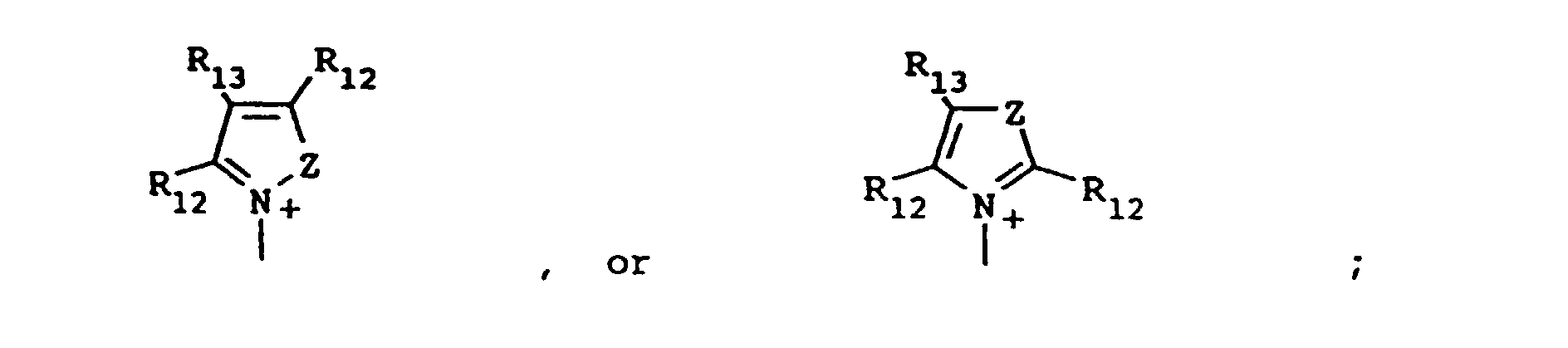

Claims (11)


X is Cl.
Q+ is


Applications Claiming Priority (2)
| Application Number | Priority Date | Filing Date | Title |
|---|---|---|---|
| US61196696A | 1996-03-07 | 1996-03-07 | |
| US611966 | 1996-03-07 |
Publications (2)
| Publication Number | Publication Date |
|---|---|
| EP0794177A1 true EP0794177A1 (en) | 1997-09-10 |
| EP0794177B1 EP0794177B1 (en) | 2001-10-10 |
Family
ID=24451132
Family Applications (1)
| Application Number | Title | Priority Date | Filing Date |
|---|---|---|---|
| EP97301471A Expired - Lifetime EP0794177B1 (en) | 1996-03-07 | 1997-03-05 | Process for the preparation of unsymmertical 4,6-Bis (aryloxy pyrimidine compounds |
Country Status (25)
| Country | Link |
|---|---|
| EP (1) | EP0794177B1 (en) |
| JP (1) | JP4028021B2 (en) |
| KR (1) | KR100470862B1 (en) |
| CN (1) | CN1103336C (en) |
| AR (1) | AR006133A1 (en) |
| AT (1) | ATE206705T1 (en) |
| AU (1) | AU725751B2 (en) |
| BR (1) | BR9701203A (en) |
| CA (1) | CA2199226C (en) |
| CO (1) | CO4770926A1 (en) |
| CZ (1) | CZ294275B6 (en) |
| DE (1) | DE69707175T2 (en) |
| ES (1) | ES2166045T3 (en) |
| HU (1) | HU219853B (en) |
| IL (1) | IL120371A (en) |
| NZ (1) | NZ314347A (en) |
| PL (1) | PL189494B1 (en) |
| PT (1) | PT794177E (en) |
| RU (1) | RU2180334C2 (en) |
| SG (1) | SG63694A1 (en) |
| SK (1) | SK283775B6 (en) |
| TR (1) | TR199700174A2 (en) |
| UA (1) | UA53611C2 (en) |
| YU (1) | YU8597A (en) |
| ZA (1) | ZA971948B (en) |
Cited By (5)
| Publication number | Priority date | Publication date | Assignee | Title |
|---|---|---|---|---|
| EP0883991A1 (en) * | 1997-06-12 | 1998-12-16 | American Cyanamid Company | Methods for improving the residual control of mites and prolonging the protection of plants from mite infestations |
| EP0902020A1 (en) * | 1997-09-05 | 1999-03-17 | American Cyanamid Company | Improved process for the preparation of unsymmetrical 4,6-bis (aryloxy) pyrimidine compounds |
| WO2000071536A1 (en) * | 1999-05-20 | 2000-11-30 | E.I. Du Pont De Nemours And Company | Heteroaryloxypyrimidine insecticides and acaricides |
| WO2001072719A1 (en) * | 2000-03-24 | 2001-10-04 | Bayer Aktiengesellschaft | Method for producing asymmetrical 4,6-bis(aryloxy)pyrimidine derivatives |
| US10189793B1 (en) | 2017-10-31 | 2019-01-29 | Cac Nantong Chemical Co., Ltd | Method for preparing azoxystrobin |
Families Citing this family (3)
| Publication number | Priority date | Publication date | Assignee | Title |
|---|---|---|---|---|
| DE102004033525A1 (en) * | 2004-07-08 | 2006-02-02 | Lanxess Deutschland Gmbh | Improved process for the production of ring-fluorinated aromatics |
| ES2367820T3 (en) * | 2006-07-21 | 2011-11-08 | Novartis Ag | DERIVATIVES OF PYRIMIDINE AND ITS USES AS PESTICIDES. |
| CN109721545B (en) * | 2017-10-31 | 2020-09-11 | 南通泰禾化工股份有限公司 | Preparation method of azoxystrobin intermediate |
Citations (1)
| Publication number | Priority date | Publication date | Assignee | Title |
|---|---|---|---|---|
| WO1994002470A1 (en) * | 1992-07-17 | 1994-02-03 | Shell Internationale Research Maatschappij B.V. | Pesticidal pyrimidine compounds |
Family Cites Families (2)
| Publication number | Priority date | Publication date | Assignee | Title |
|---|---|---|---|---|
| DE3853622T2 (en) * | 1987-12-22 | 1996-01-11 | Ihara Chemical Ind Co | Pyrimidine derivatives, process for their preparation and herbicidal method and compositions. |
| GB8903019D0 (en) * | 1989-02-10 | 1989-03-30 | Ici Plc | Fungicides |
-
1997
- 1997-03-03 SG SG1997000628A patent/SG63694A1/en unknown
- 1997-03-03 UA UA97030898A patent/UA53611C2/en unknown
- 1997-03-04 IL IL12037197A patent/IL120371A/en not_active IP Right Cessation
- 1997-03-04 CZ CZ1997663A patent/CZ294275B6/en not_active IP Right Cessation
- 1997-03-04 JP JP06397997A patent/JP4028021B2/en not_active Expired - Fee Related
- 1997-03-05 NZ NZ314347A patent/NZ314347A/en unknown
- 1997-03-05 AU AU15120/97A patent/AU725751B2/en not_active Ceased
- 1997-03-05 EP EP97301471A patent/EP0794177B1/en not_active Expired - Lifetime
- 1997-03-05 DE DE69707175T patent/DE69707175T2/en not_active Expired - Fee Related
- 1997-03-05 ES ES97301471T patent/ES2166045T3/en not_active Expired - Lifetime
- 1997-03-05 PT PT97301471T patent/PT794177E/en unknown
- 1997-03-05 CA CA002199226A patent/CA2199226C/en not_active Expired - Fee Related
- 1997-03-05 BR BR9701203A patent/BR9701203A/en not_active IP Right Cessation
- 1997-03-05 AT AT97301471T patent/ATE206705T1/en not_active IP Right Cessation
- 1997-03-06 YU YU8597A patent/YU8597A/en unknown
- 1997-03-06 HU HU9700555A patent/HU219853B/en not_active IP Right Cessation
- 1997-03-06 ZA ZA971948A patent/ZA971948B/en unknown
- 1997-03-06 RU RU97103566/04A patent/RU2180334C2/en not_active IP Right Cessation
- 1997-03-06 CO CO97012221A patent/CO4770926A1/en unknown
- 1997-03-06 PL PL97318829A patent/PL189494B1/en not_active IP Right Cessation
- 1997-03-06 KR KR1019970007459A patent/KR100470862B1/en not_active Expired - Fee Related
- 1997-03-06 AR ARP970100903A patent/AR006133A1/en active IP Right Grant
- 1997-03-07 SK SK305-97A patent/SK283775B6/en unknown
- 1997-03-07 TR TR97/00174A patent/TR199700174A2/en unknown
- 1997-03-07 CN CN97103130A patent/CN1103336C/en not_active Expired - Fee Related
Patent Citations (1)
| Publication number | Priority date | Publication date | Assignee | Title |
|---|---|---|---|---|
| WO1994002470A1 (en) * | 1992-07-17 | 1994-02-03 | Shell Internationale Research Maatschappij B.V. | Pesticidal pyrimidine compounds |
Cited By (8)
| Publication number | Priority date | Publication date | Assignee | Title |
|---|---|---|---|---|
| EP0883991A1 (en) * | 1997-06-12 | 1998-12-16 | American Cyanamid Company | Methods for improving the residual control of mites and prolonging the protection of plants from mite infestations |
| EP0902020A1 (en) * | 1997-09-05 | 1999-03-17 | American Cyanamid Company | Improved process for the preparation of unsymmetrical 4,6-bis (aryloxy) pyrimidine compounds |
| WO2000071536A1 (en) * | 1999-05-20 | 2000-11-30 | E.I. Du Pont De Nemours And Company | Heteroaryloxypyrimidine insecticides and acaricides |
| WO2001072719A1 (en) * | 2000-03-24 | 2001-10-04 | Bayer Aktiengesellschaft | Method for producing asymmetrical 4,6-bis(aryloxy)pyrimidine derivatives |
| US6734304B2 (en) | 2000-03-24 | 2004-05-11 | Bayer Aktiengesellschaft | Method for producing asymmetrical 4,6-bis(aryloxy)pyrimidine derivatives |
| KR100758615B1 (en) | 2000-03-24 | 2007-09-13 | 바이엘 악티엔게젤샤프트 | Method for preparing asymmetric 4,6-bis (aryloxy) pyrimidine derivative |
| US10189793B1 (en) | 2017-10-31 | 2019-01-29 | Cac Nantong Chemical Co., Ltd | Method for preparing azoxystrobin |
| EP3476838A1 (en) | 2017-10-31 | 2019-05-01 | CAC Nantong Chemical Co., Ltd. | Method for preparing azoxystrobin |
Also Published As
Similar Documents
| Publication | Publication Date | Title |
|---|---|---|
| EP0107866B1 (en) | Trihalomethylpyridine compounds | |
| CZ281966B6 (en) | Process for preparing phenoxypyrimidine compound | |
| EP0794177B1 (en) | Process for the preparation of unsymmertical 4,6-Bis (aryloxy pyrimidine compounds | |
| RU2174978C2 (en) | Method of synthesis of pyrimidine derivative, intermediate compounds and method of their synthesis | |
| US5849910A (en) | Process for the preparation of unsymmetrical 4,6-bis aryloxy-pyrimidine compounds | |
| US6087498A (en) | Process for the preparation of unsymmetrical 4,6-bis(aryloxy) pyrimidine compounds | |
| US5977363A (en) | Process for the preparation of unsymmetrical 4,6-bis(aryloxy) pyrimidine compounds | |
| US5266697A (en) | Process for the production of 2-substituted 4,6-dialkoxypyrimidines | |
| US5106984A (en) | 2-hydrocarbyl-3,6-dichloropyridines and their preparation | |
| EP1165524B1 (en) | Method of producing thiobarbituric acid derivatives | |
| MXPA97001505A (en) | Procedure for the preparation of compounds of 4, 6-bis (ariloxi) pyrimidine asimetri | |
| EP0515464B1 (en) | Process for preparing uracil derivatives | |
| MXPA01007740A (en) | Method of producing thiobarbituric acid derivatives | |
| JPH05194417A (en) | 4,5-Dihalogeno-6- (α-halogenoethyl) pyrimidine and process for producing the same |
Legal Events
| Date | Code | Title | Description |
|---|---|---|---|
| PUAI | Public reference made under article 153(3) epc to a published international application that has entered the european phase |
Free format text: ORIGINAL CODE: 0009012 |
|
| AK | Designated contracting states |
Kind code of ref document: A1 Designated state(s): AT BE CH DE DK ES FI FR GB GR IE IT LI LU NL PT SE |
|
| 17P | Request for examination filed |
Effective date: 19980312 |
|
| 17Q | First examination report despatched |
Effective date: 19991130 |
|
| GRAG | Despatch of communication of intention to grant |
Free format text: ORIGINAL CODE: EPIDOS AGRA |
|
| GRAG | Despatch of communication of intention to grant |
Free format text: ORIGINAL CODE: EPIDOS AGRA |
|
| GRAH | Despatch of communication of intention to grant a patent |
Free format text: ORIGINAL CODE: EPIDOS IGRA |
|
| GRAH | Despatch of communication of intention to grant a patent |
Free format text: ORIGINAL CODE: EPIDOS IGRA |
|
| GRAA | (expected) grant |
Free format text: ORIGINAL CODE: 0009210 |
|
| AK | Designated contracting states |
Kind code of ref document: B1 Designated state(s): AT BE CH DE DK ES FI FR GB GR IE IT LI LU NL PT SE |
|
| REF | Corresponds to: |
Ref document number: 206705 Country of ref document: AT Date of ref document: 20011015 Kind code of ref document: T |
|
| REG | Reference to a national code |
Ref country code: CH Ref legal event code: EP |
|
| RAP2 | Party data changed (patent owner data changed or rights of a patent transferred) |
Owner name: BASF AKTIENGESELLSCHAFT |
|
| REG | Reference to a national code |
Ref country code: IE Ref legal event code: FG4D |
|
| REF | Corresponds to: |
Ref document number: 69707175 Country of ref document: DE Date of ref document: 20011115 |
|
| REG | Reference to a national code |
Ref country code: CH Ref legal event code: NV Representative=s name: SCHMAUDER & PARTNER AG PATENTANWALTSBUERO |
|
| REG | Reference to a national code |
Ref country code: GB Ref legal event code: IF02 |
|
| NLT2 | Nl: modifications (of names), taken from the european patent patent bulletin |
Owner name: BASF AKTIENGESELLSCHAFT |
|
| PG25 | Lapsed in a contracting state [announced via postgrant information from national office to epo] |
Ref country code: SE Free format text: LAPSE BECAUSE OF FAILURE TO SUBMIT A TRANSLATION OF THE DESCRIPTION OR TO PAY THE FEE WITHIN THE PRESCRIBED TIME-LIMIT Effective date: 20020110 Ref country code: DK Free format text: LAPSE BECAUSE OF FAILURE TO SUBMIT A TRANSLATION OF THE DESCRIPTION OR TO PAY THE FEE WITHIN THE PRESCRIBED TIME-LIMIT Effective date: 20020110 |
|
| PG25 | Lapsed in a contracting state [announced via postgrant information from national office to epo] |
Ref country code: GR Free format text: LAPSE BECAUSE OF FAILURE TO SUBMIT A TRANSLATION OF THE DESCRIPTION OR TO PAY THE FEE WITHIN THE PRESCRIBED TIME-LIMIT Effective date: 20020111 |
|
| PG25 | Lapsed in a contracting state [announced via postgrant information from national office to epo] |
Ref country code: LU Free format text: LAPSE BECAUSE OF NON-PAYMENT OF DUE FEES Effective date: 20020305 |
|
| ET | Fr: translation filed | ||
| REG | Reference to a national code |
Ref country code: ES Ref legal event code: FG2A Ref document number: 2166045 Country of ref document: ES Kind code of ref document: T3 |
|
| REG | Reference to a national code |
Ref country code: PT Ref legal event code: SC4A Free format text: AVAILABILITY OF NATIONAL TRANSLATION Effective date: 20020110 |
|
| PLBE | No opposition filed within time limit |
Free format text: ORIGINAL CODE: 0009261 |
|
| STAA | Information on the status of an ep patent application or granted ep patent |
Free format text: STATUS: NO OPPOSITION FILED WITHIN TIME LIMIT |
|
| 26N | No opposition filed | ||
| PGFP | Annual fee paid to national office [announced via postgrant information from national office to epo] |
Ref country code: CH Payment date: 20080228 Year of fee payment: 12 |
|
| PGFP | Annual fee paid to national office [announced via postgrant information from national office to epo] |
Ref country code: PT Payment date: 20080218 Year of fee payment: 12 Ref country code: NL Payment date: 20080303 Year of fee payment: 12 Ref country code: IE Payment date: 20080313 Year of fee payment: 12 Ref country code: GB Payment date: 20080305 Year of fee payment: 12 Ref country code: FI Payment date: 20080314 Year of fee payment: 12 |
|
| PGFP | Annual fee paid to national office [announced via postgrant information from national office to epo] |
Ref country code: AT Payment date: 20080313 Year of fee payment: 12 |
|
| PGFP | Annual fee paid to national office [announced via postgrant information from national office to epo] |
Ref country code: FR Payment date: 20080311 Year of fee payment: 12 Ref country code: ES Payment date: 20080418 Year of fee payment: 12 Ref country code: DE Payment date: 20080228 Year of fee payment: 12 |
|
| PGFP | Annual fee paid to national office [announced via postgrant information from national office to epo] |
Ref country code: IT Payment date: 20080328 Year of fee payment: 12 |
|
| PGFP | Annual fee paid to national office [announced via postgrant information from national office to epo] |
Ref country code: BE Payment date: 20080916 Year of fee payment: 12 |
|
| REG | Reference to a national code |
Ref country code: CH Ref legal event code: PCAR Free format text: SCHMAUDER & PARTNER AG PATENT- UND MARKENANWAELTE VSP;ZWAENGIWEG 7;8038 ZUERICH (CH) |
|
| REG | Reference to a national code |
Ref country code: PT Ref legal event code: MM4A Free format text: LAPSE DUE TO NON-PAYMENT OF FEES Effective date: 20090907 |
|
| BERE | Be: lapsed |
Owner name: *BASF A.G. Effective date: 20090331 |
|
| PG25 | Lapsed in a contracting state [announced via postgrant information from national office to epo] |
Ref country code: PT Free format text: LAPSE BECAUSE OF NON-PAYMENT OF DUE FEES Effective date: 20090907 Ref country code: FI Free format text: LAPSE BECAUSE OF NON-PAYMENT OF DUE FEES Effective date: 20090305 Ref country code: AT Free format text: LAPSE BECAUSE OF NON-PAYMENT OF DUE FEES Effective date: 20090305 |
|
| REG | Reference to a national code |
Ref country code: CH Ref legal event code: PL |
|
| GBPC | Gb: european patent ceased through non-payment of renewal fee |
Effective date: 20090305 |
|
| NLV4 | Nl: lapsed or anulled due to non-payment of the annual fee |
Effective date: 20091001 |
|
| REG | Reference to a national code |
Ref country code: FR Ref legal event code: ST Effective date: 20091130 |
|
| REG | Reference to a national code |
Ref country code: IE Ref legal event code: MM4A |
|
| PG25 | Lapsed in a contracting state [announced via postgrant information from national office to epo] |
Ref country code: LI Free format text: LAPSE BECAUSE OF NON-PAYMENT OF DUE FEES Effective date: 20090331 Ref country code: IE Free format text: LAPSE BECAUSE OF NON-PAYMENT OF DUE FEES Effective date: 20090305 Ref country code: DE Free format text: LAPSE BECAUSE OF NON-PAYMENT OF DUE FEES Effective date: 20091001 Ref country code: CH Free format text: LAPSE BECAUSE OF NON-PAYMENT OF DUE FEES Effective date: 20090331 |
|
| PG25 | Lapsed in a contracting state [announced via postgrant information from national office to epo] |
Ref country code: BE Free format text: LAPSE BECAUSE OF NON-PAYMENT OF DUE FEES Effective date: 20090331 Ref country code: NL Free format text: LAPSE BECAUSE OF NON-PAYMENT OF DUE FEES Effective date: 20091001 |
|
| PG25 | Lapsed in a contracting state [announced via postgrant information from national office to epo] |
Ref country code: GB Free format text: LAPSE BECAUSE OF NON-PAYMENT OF DUE FEES Effective date: 20090305 Ref country code: FR Free format text: LAPSE BECAUSE OF NON-PAYMENT OF DUE FEES Effective date: 20091123 |
|
| REG | Reference to a national code |
Ref country code: ES Ref legal event code: FD2A Effective date: 20090306 |
|
| PG25 | Lapsed in a contracting state [announced via postgrant information from national office to epo] |
Ref country code: ES Free format text: LAPSE BECAUSE OF NON-PAYMENT OF DUE FEES Effective date: 20090306 |
|
| PG25 | Lapsed in a contracting state [announced via postgrant information from national office to epo] |
Ref country code: IT Free format text: LAPSE BECAUSE OF NON-PAYMENT OF DUE FEES Effective date: 20090305 |