EP0787800A2 - Plasmid and plasmid vector from Lactobacillus helveticus - Google Patents
Plasmid and plasmid vector from Lactobacillus helveticus Download PDFInfo
- Publication number
- EP0787800A2 EP0787800A2 EP97300783A EP97300783A EP0787800A2 EP 0787800 A2 EP0787800 A2 EP 0787800A2 EP 97300783 A EP97300783 A EP 97300783A EP 97300783 A EP97300783 A EP 97300783A EP 0787800 A2 EP0787800 A2 EP 0787800A2
- Authority
- EP
- European Patent Office
- Prior art keywords
- plasmid
- replication origin
- vector
- pcp53
- origin region
- Prior art date
- Legal status (The legal status is an assumption and is not a legal conclusion. Google has not performed a legal analysis and makes no representation as to the accuracy of the status listed.)
- Withdrawn
Links
Images
Classifications
-
- C—CHEMISTRY; METALLURGY
- C12—BIOCHEMISTRY; BEER; SPIRITS; WINE; VINEGAR; MICROBIOLOGY; ENZYMOLOGY; MUTATION OR GENETIC ENGINEERING
- C12N—MICROORGANISMS OR ENZYMES; COMPOSITIONS THEREOF; PROPAGATING, PRESERVING, OR MAINTAINING MICROORGANISMS; MUTATION OR GENETIC ENGINEERING; CULTURE MEDIA
- C12N15/00—Mutation or genetic engineering; DNA or RNA concerning genetic engineering, vectors, e.g. plasmids, or their isolation, preparation or purification; Use of hosts therefor
- C12N15/09—Recombinant DNA-technology
- C12N15/63—Introduction of foreign genetic material using vectors; Vectors; Use of hosts therefor; Regulation of expression
- C12N15/74—Vectors or expression systems specially adapted for prokaryotic hosts other than E. coli, e.g. Lactobacillus, Micromonospora
- C12N15/746—Vectors or expression systems specially adapted for prokaryotic hosts other than E. coli, e.g. Lactobacillus, Micromonospora for lactic acid bacteria (Streptococcus; Lactococcus; Lactobacillus; Pediococcus; Enterococcus; Leuconostoc; Propionibacterium; Bifidobacterium; Sporolactobacillus)
-
- A—HUMAN NECESSITIES
- A61—MEDICAL OR VETERINARY SCIENCE; HYGIENE
- A61P—SPECIFIC THERAPEUTIC ACTIVITY OF CHEMICAL COMPOUNDS OR MEDICINAL PREPARATIONS
- A61P9/00—Drugs for disorders of the cardiovascular system
- A61P9/12—Antihypertensives
Definitions
- the present invention relates to a novel plasmid derived typically from Lactobacillus helveticus, and a novel plasmid vector which is prepared from the novel plasmid and which can be used for transformation of microorganisms, e.g. as a shuttle vector between Lactobacillus helveticus and other host.
- Lactobacillus helveticus has been used for a long time as a typical dairy lactic acid bacteria starter for production of a fermented milk. It is known that one of the properties of Lactobacillus helveticus is strong proteolytic activity (Yamamoto, N., et al., Biosci. Biotech. Biochem., 58, 776-778 (1994)). Also, it has been reported that the fermented milk by Lactobacillus helveticus contains bioactive peptides which exhibit inhibitory effect against angiotensin converting enzyme which plays an important role in elevating blood pressure (Nakamura, Y. et al., J.
- the object of the present invention is to provide a novel plasmid exhibiting high copy number derived from Lactobacillus lactic acid bacteria, typically Lactobacillus helveticus.
- Another object of the present invention is to provide a novel plasmid vector obtained by modification of the aforementioned plasmid, which can be used as a shuttle vector.
- the inventor of the present invention surveyed the presence of plasmids in strains of Lactobacillus helveticus and measured the molecular weights thereof. As a result, the inventor found out from Lactobacillus helveticus CP53 strain a novel plasmid which is held stably and which exhibits high copy number, and obtained a useful plasmid vector with which transformation can be performed efficiently, by modifying the novel plasmid.
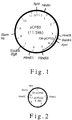
- a plasmid pCP53 having restriction sites as shown in Fig. 1 and having a length of about 11.5kb.
- a plasmid vector having a replication origin region of the plasmid pCP53, a replication origin region of a microorganism, and a marker gene.
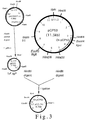
- a plasmid vector pCP53D having a replication origin region contained in a Hind III fragment of the aforementioned plasmid pCP53 having a length of about 2kb, a replication origin region of pAcYc177 derived from Escherichia coli , and a tetracycline resistance gene derived from Streptococcus faecalis; having restriction sites as shown in Fig. 2; and having a length of about 4.7kb.
- Fig. 1 is a restriction map of the plasmid pCP53 of the present invention.
- Fig. 2 is a restriction map of the plasmid vector pCP53D of the present invention.
- Fig. 3 illustrates a constructing process of the plasmid pCP53D of the present invention.
- the plasmid pCP53 of the present invention is a plasmid shown in Fig. 1 having a length of about 11.5kb, and may be isolated from, e.g., Lactobacillus helveticus CP53 strain.
- Lactobacillus helveticus CP53 strain belongs to Lactobacillus helveticus, and was deposited at National Institute of Bioscience and Human-Technology Agency of Industrial Science and Technology on January 11, 1996 and has been accorded accession number FERM BP-5770.
- FERM BP-5770 has been accepted for deposit under the Budapest Treaty on the International Recognition of the Deposit of Microorganisms for the Purposes of Patent Procedure. All restrictions on the availability to the public of FERM BP-5770 will be irrevocably removed upon the granting of a patent.
- the CP53 strain has been obtained from the applicant's collection of strains, and has mycological properties as follows:
- the plasmid pCP53 of the present invention may be replicated with high copy number in Lactobacillus helveticus, and collected with high yield.
- Lactobacillus helveticus CP53 strain having pCP53 is cultured overnight in MRS broth (manufactured by DIFCO LABORATORIES)
- about 1 ⁇ g of plasmid may be obtained per 1ml of the medium.
- the plasmid pCP53 of the present invention may be obtained by, e.g., culturing the aforementioned Lactobacillus helveticus CP53 strain, collecting cells after culturing, and isolating the plasmid by publicly known method such as agarose gel electrophoresis.
- the culturing may be performed in any mediums and conditions which are usually employed for culturing of this kind of microorganisms. Collecting of the cells may also be performed by publicly known procedures such as centrifugation. Cleavage by restriction enzymes and ligation by ligase of the plasmid pCP53 may be performed by the same procedures as those for publicly known plasmids.
- the plasmid vector of the present invention is a vector in which a replication origin region of a microorganism and a marker gene is connected to a replication origin region of the plasmid pCP53, and may include, e.g., a plasmid vector pCP53D having a replication origin region contained in a Hind III fragment of the aforementioned plasmid pCP53 having a length of about 2kb, a replication origin region of pACYC177 derived from Escherichia coli, and a tetracycline resistance gene derived from Streptococcus faecalis; having restriction sites as shown in Fig. 2; and having a length of about 4.7kb.
- the replication origin region of a microorganism may include, other than the replication origin region of pACYC177, a publicly known replication origin region of e.g. pBR322 and pBR329 derived from Escherichia coli. Further, replication origin regions such as pUB110, YEp24, pVA838 derived from Bacillus subtilis or yeast may also be used.
- the marker gene may include drug resistance genes such as an ampicillin resistance gene, a tetracycline resistance gene and a chloramphenicol resistance gene, and enzyme producing genes derived from lactic acid bacteria or Bacillus subtilis which produce ⁇ -galactosidase or extracellular protease.
- drug resistance genes such as an ampicillin resistance gene, a tetracycline resistance gene and a chloramphenicol resistance gene, and enzyme producing genes derived from lactic acid bacteria or Bacillus subtilis which produce ⁇ -galactosidase or extracellular protease.
- the aforementioned plasmid vector pCP53D may be obtained by connecting the replication origin region of a plasmid pACYC177 derived from Escherichia coli and a tetracycline resistance gene of a plasmid pAM ⁇ 1 derived from Streptococcus faecalis, to the plasmid pCP53 of the present invention, utilizing a plasmid pHY300PLK manufactured by TAKARA SHUZO CO., LTD, according to the procedure as shown in Fig. 3.
- Other plasmids shown in Fig. 3 than the plasmids of the present invention are publicly known and commercially available.
- the plasmid vector pCP53D may be used as a shuttle vector capable of being introduced into Escherichia coli and Lactobacillus lactic acid bacteria such as Lactobacillus helveticus and Lactobacillus paracasei.
- the plasmid pCP53 of the present invention is held stably in Lactobacillus helveticus and replicated with high copy number.
- the plasmid vector pCP53D of the present invention is a useful shuttle vector with which transformation of Lactobacillus helveticus can be performed efficiently. Therefore, these are useful for genetic engineering of Lactobacillus helveticus utilizing genetic recombination techniques.
- GAM medium manufactured by NISSUI PHARMACEUTICAL CO., LTD. was inoculated with Lactobacillus helveticus CP53 strain, and cultured overnight at 37° C. After finishing culturing, cells were collected by centrifugation (10,000rpm, 5 minutes). The cells were washed with 10mM phosphate buffer-150mM NaCl (pH 6.8), and the cells were collected by centrifugation under the above conditions.
- the collected cells were suspended in 0.2ml of 25% sucrose and 10mM tris-HCl buffer (pH 7.0) containing 10mg/ml of lysozyme manufactured by SIGMA CHEMICAL CO., lmg/ml of N-acetylmuramidase manufactured by SEIKAGAKU CORP., and incubated at 37° C for 30 minutes.
- the cell suspension was then admixed with 0.4ml of 3% SDS-0.2N NaOH solution and allowed to stand at room temperature for about 5 minutes.
- the suspension was then further admixed with 0.3ml of 3M sodium acetate (pH 4.8) solution, allowed to stand on ice for 5 minutes, and centrifuged (15, 000rpm, 5 minutes) for collecting the supernatant.
- the supernatant was admixed with ethanol of twice the volume of the supernatant, and allowed to stand at -80° C for 20 minutes. Subsequently, a precipitate was collected by centrifugation (15,000rpm, 15 minutes), washed with 70% ethanol, dried, and then dissolved in 0.1ml of 10mM tris-HCl buffer-1mM EDTA (pH 7.0), to obtain a roughly purified product of a plasmid.
- 1% agarose gel electrophoresis of the product was performed in order to confirm the presence of the plasmid and the molecular size thereof.
- Escherichia coli HB101 strain having a plasmid pBR322 was cultured in LB medium (10g of Bacto-tryptone, 5g of yeast extract, 10 of NaCl: pH 7.5), and the plasmid therefrom was purified and analyzed in the same manner as above, for comparing the collecting ratio.
- LB medium 10g of Bacto-tryptone, 5g of yeast extract, 10 of NaCl: pH 7.5
- the collecting amount of pCP53 was approximately 20% of that of the plasmid for Escherichia coli, pBR322 (1 ⁇ g/ml medium), which collecting ratio was very high for a Lactobacillus helveticus plasmid.
- pCP53 In order to locate restriction sites of pCP53, pCP53 was cleaved with nine sorts of six bases recognizing restriction enzymes, and fragments were analyzed by 1% agarose gel electrophoresis. As a result, it was confirmed that pCP53 has a molecular weight of 11.5kb and has restriction sites shown in Fig. 1. Restriction sites of PstI, BglII or SalI were not recognized.
- a plasmid vector having a replication origin region of the plasmid pCP53, a replication origin region of pACYC177 derived from Escherichia coli, and a tetracycline resistance gene derived from Streptococcus faecalis was constructed.
- plasmid pHY300PLK manufactured by TAKARA SHUZO CO., LTD, which has a replication origin region of pACYC177 derived from Escherichia coli (Ori-177), a replication origin region of a plasmid pAM ⁇ 1 derived from Streptococcus faecalis (Ori-pAM ⁇ 1), and an ampicillin resistance gene and a tetracycline resistance gene, was partially cleaved with HaeIII, and subjected to self-ligation by T4 DNA ligase.
- This DNA was transducted into Escherichia coli HB101 strain according to Maniatis' method (molecular cloning), and growable strain in LB agar medium containing 20 ⁇ g/ml of tetracycline was selected.
- the strain transformed with pHY300PLK without the replication origin for Gram positive bacteria should become ampicillin sensitive.
- the growability of the above selected strains in LB agar medium containing 50 ⁇ g/ml of ampicillin was examined. From some ampicillin sensitive strains, plasmids therein were isolated according to the aforementioned method, and the restriction sites therein were examined. As a result, it was confirmed that pHYD (2.7kb) shown in Fig. 3 had been constructed.
- Lactobacillus paracasei JCM-8130 was cultured in GAM medium containing 1.5mM of glycine at 37° C for 20 hours. The medium was diluted ten times with a fresh GAM medium containing 1.5mM of glycine, and culturing was further performed at 37° C until the turbidity became 1.0. The cells were collected and washed with a buffer for electroporation (7mM of HEPES, 272mM of sucrose, 1mM of Mgcl 2 ,: pH 7.4).
- the cells were suspended in the buffer one twentieth the volume of the initial medium. 0.1 ⁇ g of each of the aforementioned plasmids and 0.1ml of the suspended cells were mixed together, charged into a cuvette (0.1cm cuvette) for GENE PULSER manufactured by BIO-RAD LABORATORIES and incubated for 30 minutes on ice. Electroporation was then performed with GENE PULSER under the condition of 4.0kV/cm, 25 ⁇ F. The cells were diluted with GAM medium of 10 times the volume of the cells, incubated at 37° C for one hour, and positive clone was selected in GAM agar medium containing 4 ⁇ g/ml of tetracycline.
- the plasmid in the trasnformed clone thus obtained was analyzed by 1% agarose gel electrophoresis. As a result, the presence of a plasmid of a length of 4.7kb containing a 2kb fragment of pCP53 was confirmed, which means that the 2.0kb DNA fragment of pCP53 includes the replication origin region of pCP53 (Ori-pCP53).
- This vector being usable as a replicable shuttle vector for Escherichia coli or genus Lactobacillus was named pCP53D.
- tetracycline resistant transformed clone was not found among the cells having only pHYD (2.7kb) which does not contain the 2.0kb DNA fragment.
- Lactobacillus helveticus CP611 was deposited at National Institute of Bioscience and Human-Technology Agency of Industrial Science and Technology on February 1, 1996 and has been accorded accession number FERM BP-5771.
- FERM BP-5771 has been accepted for deposit under the Budapest Treaty on the International Recognition of the Deposit of Microorganisms for the Purposes of Patent Procedure. All restrictions on the availability to the public of FERM BP-5771 will be irrevocably removed upon the granting of a patent.
- Lactobacillus helveticus CP611 strain was cultured in GAM medium containing 1.5mM of glycine at 37° C for 20 hours. The medium was diluted ten times with a fresh GAM medium containing 1.5mM of glycine, and culturing was further performed at 37° C until the turbidity became 1.0. The cells were collected and washed with a buffer for electroporation (7mM of HEPES, 272mM of sucrose, 1mM of MgCl 2 , : PH 7.4). The cells were suspended in the buffer one twentieth the volume of the initial medium.
- a buffer for electroporation 7mM of HEPES, 272mM of sucrose, 1mM of MgCl 2 , : PH 7.4
- 0.1 ⁇ g of pCP53D and 0.1ml of the suspended cells were mixed together, and electroporation was then performed under the same conditions as above.
- the cells were diluted with GAM medium of 10 times the volume of the cells, incubated at 37° C for one hour, and positive clone was selected in GAM agar medium containing 4 ⁇ g/ml of tetracycline.
- GAM agar medium containing 4 ⁇ g/ml of tetracycline.
- transformed clones were obtained in the ratio of 500 cells/ ⁇ g DNA.
- the transformed clones showed growability of 50% at tetracycline concentration of 10 ⁇ g/ml.
- the plasmid in the transformed clone thus obtained was analyzed by 1% agarose gel electrophoresis. As a result, the presence of a plasmid of a length of 4.7kb containing a 2kb fragment of pCP53 was confirmed. Further, it is observed that the plasmid is held stably even after repeated passages.
- the vector was a useful shuttle vector for transformation of species Lactobacillus helveticus, and capable of transforming Lactobacillus helveticus CP611 efficiently.
Landscapes
- Health & Medical Sciences (AREA)
- Genetics & Genomics (AREA)
- Life Sciences & Earth Sciences (AREA)
- Engineering & Computer Science (AREA)
- Organic Chemistry (AREA)
- Chemical & Material Sciences (AREA)
- Bioinformatics & Cheminformatics (AREA)
- Wood Science & Technology (AREA)
- Biomedical Technology (AREA)
- Biotechnology (AREA)
- General Engineering & Computer Science (AREA)
- Zoology (AREA)
- General Health & Medical Sciences (AREA)
- Biochemistry (AREA)
- Microbiology (AREA)
- Plant Pathology (AREA)
- Molecular Biology (AREA)
- Biophysics (AREA)
- Physics & Mathematics (AREA)
- General Chemical & Material Sciences (AREA)
- Heart & Thoracic Surgery (AREA)
- Chemical Kinetics & Catalysis (AREA)
- Cardiology (AREA)
- Medicinal Chemistry (AREA)
- Nuclear Medicine, Radiotherapy & Molecular Imaging (AREA)
- Pharmacology & Pharmacy (AREA)
- Animal Behavior & Ethology (AREA)
- Public Health (AREA)
- Veterinary Medicine (AREA)
- Micro-Organisms Or Cultivation Processes Thereof (AREA)
- Saccharide Compounds (AREA)
- Medicines That Contain Protein Lipid Enzymes And Other Medicines (AREA)
Abstract
Description
- The present invention relates to a novel plasmid derived typically from Lactobacillus helveticus, and a novel plasmid vector which is prepared from the novel plasmid and which can be used for transformation of microorganisms, e.g. as a shuttle vector between Lactobacillus helveticus and other host.
- Lactobacillus helveticus has been used for a long time as a typical dairy lactic acid bacteria starter for production of a fermented milk. It is known that one of the properties of Lactobacillus helveticus is strong proteolytic activity (Yamamoto, N., et al., Biosci. Biotech. Biochem., 58, 776-778 (1994)). Also, it has been reported that the fermented milk by Lactobacillus helveticus contains bioactive peptides which exhibit inhibitory effect against angiotensin converting enzyme which plays an important role in elevating blood pressure (Nakamura, Y. et al., J. Dairy Sci., 78, 777-783 (1995)), and the fermented milk by Lactobacillus helveticus has strong hypotensive effect due to these peptides (Nakamura, Y., et al., J. Dairy Sci., 78, 1253-1257 (1995)). As a method for effective utilization of strains having such properties, methods of genetic engineering utilizing genetic recombination techniques have conventionally been known. Although many plasmids for lactic acid bacteria have been reported, there are few reports on plasmids for lactic acid rod bacteria, Lactobacillus helveticus. Thus, there are few reports on host-vector system of Lactobacillus helveticus.
- In order to perform genetic engineering by genetic recombination techniques, it is important to develop a vector suitable for an object strain, a transforming method having high transduction efficiency, and a host capable of holding the plasmid stably, i.e. a host-vector system. Particularly, if the copy number per host is insufficient, the productivity of effective substances becomes lower, which results in poor utility. In the case that the microorganisms themselves are ingested as a part of the fermented milk product, safety of the microorganisms employed for fermentation should be taken into account. However, safety of Lactobacillus helveticus, which has been used for fermented milk production for a long time, has been established by long eating experiences.
- The object of the present invention is to provide a novel plasmid exhibiting high copy number derived from Lactobacillus lactic acid bacteria, typically Lactobacillus helveticus.
- Another object of the present invention is to provide a novel plasmid vector obtained by modification of the aforementioned plasmid, which can be used as a shuttle vector.
- The above and other objects of the present invention will become apparent more fully from the following description.
- The inventor of the present invention surveyed the presence of plasmids in strains of Lactobacillus helveticus and measured the molecular weights thereof. As a result, the inventor found out from Lactobacillus helveticus CP53 strain a novel plasmid which is held stably and which exhibits high copy number, and obtained a useful plasmid vector with which transformation can be performed efficiently, by modifying the novel plasmid.
- According to the present invention, there is provided a plasmid pCP53 having restriction sites as shown in Fig. 1 and having a length of about 11.5kb.
- According to the present invention, there is also provided a plasmid vector having a replication origin region of the plasmid pCP53, a replication origin region of a microorganism, and a marker gene.
- According to the present invention, there is further provided a plasmid vector pCP53D having a replication origin region contained in a Hind III fragment of the aforementioned plasmid pCP53 having a length of about 2kb, a replication origin region of pAcYc177 derived from Escherichia coli, and a tetracycline resistance gene derived from Streptococcus faecalis; having restriction sites as shown in Fig. 2; and having a length of about 4.7kb.
- Fig. 1 is a restriction map of the plasmid pCP53 of the present invention.
- Fig. 2 is a restriction map of the plasmid vector pCP53D of the present invention.
- Fig. 3 illustrates a constructing process of the plasmid pCP53D of the present invention.
- The plasmid pCP53 of the present invention is a plasmid shown in Fig. 1 having a length of about 11.5kb, and may be isolated from, e.g., Lactobacillus helveticus CP53 strain. Lactobacillus helveticus CP53 strain belongs to Lactobacillus helveticus, and was deposited at National Institute of Bioscience and Human-Technology Agency of Industrial Science and Technology on January 11, 1996 and has been accorded accession number FERM BP-5770. FERM BP-5770 has been accepted for deposit under the Budapest Treaty on the International Recognition of the Deposit of Microorganisms for the Purposes of Patent Procedure. All restrictions on the availability to the public of FERM BP-5770 will be irrevocably removed upon the granting of a patent.
- The CP53 strain has been obtained from the applicant's collection of strains, and has mycological properties as follows:
- 1) Shape of Cell; rod, 2) Motility; none, 3) Spore Formation; none, 4) Gram Stain; positive
- 1) Catalase Production; negative, 2) Indole Production; negative, 3) Nitrate Reduction; negative, 4) Aerobic Growth; faculative anaerobic, 5) Formation of DL-lactic acid from glucose by homolactic fermentation without formation of gases 6) Carbohydrate degradation;
- glucose: +,
- maltose: -,
- lactose: +,
- cellobiose: -,
- mannose: +,
- trehalose: -,
- fructose: +,
- melibiose: -,
- galactose: +,
- raffinose: -,
- sucrose: -,
- stachyose: -,
- mannitol: -,
- arabinose:-,
- sorbitol: -,
- xylose: -,
- esculin: -,
- rhamnose: -,
- salicin: -
- The plasmid pCP53 of the present invention may be replicated with high copy number in Lactobacillus helveticus, and collected with high yield. For example, when Lactobacillus helveticus CP53 strain having pCP53 is cultured overnight in MRS broth (manufactured by DIFCO LABORATORIES), about 1 µ g of plasmid may be obtained per 1ml of the medium.
- The plasmid pCP53 of the present invention may be obtained by, e.g., culturing the aforementioned Lactobacillus helveticus CP53 strain, collecting cells after culturing, and isolating the plasmid by publicly known method such as agarose gel electrophoresis. The culturing may be performed in any mediums and conditions which are usually employed for culturing of this kind of microorganisms. Collecting of the cells may also be performed by publicly known procedures such as centrifugation. Cleavage by restriction enzymes and ligation by ligase of the plasmid pCP53 may be performed by the same procedures as those for publicly known plasmids.
- The plasmid vector of the present invention is a vector in which a replication origin region of a microorganism and a marker gene is connected to a replication origin region of the plasmid pCP53, and may include, e.g., a plasmid vector pCP53D having a replication origin region contained in a Hind III fragment of the aforementioned plasmid pCP53 having a length of about 2kb, a replication origin region of pACYC177 derived from Escherichia coli, and a tetracycline resistance gene derived from Streptococcus faecalis; having restriction sites as shown in Fig. 2; and having a length of about 4.7kb.
- The replication origin region of a microorganism may include, other than the replication origin region of pACYC177, a publicly known replication origin region of e.g. pBR322 and pBR329 derived from Escherichia coli. Further, replication origin regions such as pUB110, YEp24, pVA838 derived from Bacillus subtilis or yeast may also be used.
- The marker gene may include drug resistance genes such as an ampicillin resistance gene, a tetracycline resistance gene and a chloramphenicol resistance gene, and enzyme producing genes derived from lactic acid bacteria or Bacillus subtilis which produce β-galactosidase or extracellular protease.
- The aforementioned plasmid vector pCP53D may be obtained by connecting the replication origin region of a plasmid pACYC177 derived from Escherichia coli and a tetracycline resistance gene of a
plasmid pAM α 1 derived from Streptococcus faecalis, to the plasmid pCP53 of the present invention, utilizing a plasmid pHY300PLK manufactured by TAKARA SHUZO CO., LTD, according to the procedure as shown in Fig. 3. Other plasmids shown in Fig. 3 than the plasmids of the present invention are publicly known and commercially available. The plasmid vector pCP53D may be used as a shuttle vector capable of being introduced into Escherichia coli and Lactobacillus lactic acid bacteria such as Lactobacillus helveticus and Lactobacillus paracasei. - The plasmid pCP53 of the present invention is held stably in Lactobacillus helveticus and replicated with high copy number. The plasmid vector pCP53D of the present invention is a useful shuttle vector with which transformation of Lactobacillus helveticus can be performed efficiently. Therefore, these are useful for genetic engineering of Lactobacillus helveticus utilizing genetic recombination techniques.
- The present invention will now be illustrated in more detail by way of Examples, but it is to be construed that the present invention is not limited by these Examples.
- GAM medium manufactured by NISSUI PHARMACEUTICAL CO., LTD. was inoculated with Lactobacillus helveticus CP53 strain, and cultured overnight at 37° C. After finishing culturing, cells were collected by centrifugation (10,000rpm, 5 minutes). The cells were washed with 10mM phosphate buffer-150mM NaCl (pH 6.8), and the cells were collected by centrifugation under the above conditions.
- Subsequently, purification of the plasmid was performed according to the following procedure. The collected cells were suspended in 0.2ml of 25% sucrose and 10mM tris-HCl buffer (pH 7.0) containing 10mg/ml of lysozyme manufactured by SIGMA CHEMICAL CO., lmg/ml of N-acetylmuramidase manufactured by SEIKAGAKU CORP., and incubated at 37° C for 30 minutes. The cell suspension was then admixed with 0.4ml of 3% SDS-0.2N NaOH solution and allowed to stand at room temperature for about 5 minutes. The suspension was then further admixed with 0.3ml of 3M sodium acetate (pH 4.8) solution, allowed to stand on ice for 5 minutes, and centrifuged (15, 000rpm, 5 minutes) for collecting the supernatant. The supernatant was admixed with ethanol of twice the volume of the supernatant, and allowed to stand at -80° C for 20 minutes. Subsequently, a precipitate was collected by centrifugation (15,000rpm, 15 minutes), washed with 70% ethanol, dried, and then dissolved in 0.1ml of 10mM tris-HCl buffer-1mM EDTA (pH 7.0), to obtain a roughly purified product of a plasmid. 1% agarose gel electrophoresis of the product was performed in order to confirm the presence of the plasmid and the molecular size thereof. For comparison, Escherichia coli HB101 strain having a plasmid pBR322 was cultured in LB medium (10g of Bacto-tryptone, 5g of yeast extract, 10 of NaCl: pH 7.5), and the plasmid therefrom was purified and analyzed in the same manner as above, for comparing the collecting ratio. As a result, presence of the plasmid of Lactobacillus helveticus CP53 strain was confirmed with very high collecting ratio. The plasmid was named pCP53. The collecting amount of pCP53 was approximately 20% of that of the plasmid for Escherichia coli, pBR322 (1µ g/ml medium), which collecting ratio was very high for a Lactobacillus helveticus plasmid.
- In order to locate restriction sites of pCP53, pCP53 was cleaved with nine sorts of six bases recognizing restriction enzymes, and fragments were analyzed by 1% agarose gel electrophoresis. As a result, it was confirmed that pCP53 has a molecular weight of 11.5kb and has restriction sites shown in Fig. 1. Restriction sites of PstI, BglII or SalI were not recognized.
- According to the operation procedure shown in Fig. 3, a plasmid vector having a replication origin region of the plasmid pCP53, a replication origin region of pACYC177 derived from Escherichia coli, and a tetracycline resistance gene derived from Streptococcus faecalis was constructed.
- 1 µ g of plasmid pHY300PLK manufactured by TAKARA SHUZO CO., LTD, which has a replication origin region of pACYC177 derived from Escherichia coli (Ori-177), a replication origin region of a
plasmid pAM α 1 derived from Streptococcus faecalis (Ori-pAM α 1), and an ampicillin resistance gene and a tetracycline resistance gene, was partially cleaved with HaeIII, and subjected to self-ligation by T4 DNA ligase. This DNA was transducted into Escherichia coli HB101 strain according to Maniatis' method (molecular cloning), and growable strain in LB agar medium containing 20 µ g/ml of tetracycline was selected. As shown in Fig. 3, the strain transformed with pHY300PLK without the replication origin for Gram positive bacteria should become ampicillin sensitive. Thus, the growability of the above selected strains in LB agar medium containing 50 µ g/ml of ampicillin was examined. From some ampicillin sensitive strains, plasmids therein were isolated according to the aforementioned method, and the restriction sites therein were examined. As a result, it was confirmed that pHYD (2.7kb) shown in Fig. 3 had been constructed. - 1 µ g of the aforementioned pHYD, which is the vector for searching the Gram positive bacteria replication origin region, was cleaved with Hind III, whereas 1 µ g of pCP53 was also cleaved with Hind III. These cleaved plasmids were mixed, and connected by T4 DNA ligase. This DNA was transducted into Escherichia coli HB101, and growable strains were selected in LB agar medium containing 20 µ g/ml of tetracycline. The DNA obtained from the strain thus transformed was analyzed by 1% agarose gel electrophoresis. As a result, it was confirmed that various sizes of HindIII fragments which seemed to be derived from pCP53 were inserted into pHYD vector.
- Subsequently, these various plasmids were introduced into Lactobacillus paracasei, and growable strains were screened in GAM medium containing 4 µ g/ml of tetracycline. Lactobacillus paracasei JCM-8130 was cultured in GAM medium containing 1.5mM of glycine at 37° C for 20 hours. The medium was diluted ten times with a fresh GAM medium containing 1.5mM of glycine, and culturing was further performed at 37° C until the turbidity became 1.0. The cells were collected and washed with a buffer for electroporation (7mM of HEPES, 272mM of sucrose, 1mM of Mgcl2,: pH 7.4). The cells were suspended in the buffer one twentieth the volume of the initial medium. 0.1 µ g of each of the aforementioned plasmids and 0.1ml of the suspended cells were mixed together, charged into a cuvette (0.1cm cuvette) for GENE PULSER manufactured by BIO-RAD LABORATORIES and incubated for 30 minutes on ice. Electroporation was then performed with GENE PULSER under the condition of 4.0kV/cm, 25 µ F. The cells were diluted with GAM medium of 10 times the volume of the cells, incubated at 37° C for one hour, and positive clone was selected in GAM agar medium containing 4 µ g/ml of tetracycline. The plasmid in the trasnformed clone thus obtained was analyzed by 1% agarose gel electrophoresis. As a result, the presence of a plasmid of a length of 4.7kb containing a 2kb fragment of pCP53 was confirmed, which means that the 2.0kb DNA fragment of pCP53 includes the replication origin region of pCP53 (Ori-pCP53). This vector being usable as a replicable shuttle vector for Escherichia coli or genus Lactobacillus was named pCP53D. On the other hand, tetracycline resistant transformed clone was not found among the cells having only pHYD (2.7kb) which does not contain the 2.0kb DNA fragment.
- Transformation of Lactobacillus helveticus CP611 strain with the aforementioned pCP53D was studied. Lactobacillus helveticus CP611 was deposited at National Institute of Bioscience and Human-Technology Agency of Industrial Science and Technology on February 1, 1996 and has been accorded accession number FERM BP-5771. FERM BP-5771 has been accepted for deposit under the Budapest Treaty on the International Recognition of the Deposit of Microorganisms for the Purposes of Patent Procedure. All restrictions on the availability to the public of FERM BP-5771 will be irrevocably removed upon the granting of a patent.
- Lactobacillus helveticus CP611 strain was cultured in GAM medium containing 1.5mM of glycine at 37° C for 20 hours. The medium was diluted ten times with a fresh GAM medium containing 1.5mM of glycine, and culturing was further performed at 37° C until the turbidity became 1.0. The cells were collected and washed with a buffer for electroporation (7mM of HEPES, 272mM of sucrose, 1mM of MgCl2,: PH 7.4). The cells were suspended in the buffer one twentieth the volume of the initial medium. 0.1 µ g of pCP53D and 0.1ml of the suspended cells were mixed together, and electroporation was then performed under the same conditions as above. The cells were diluted with GAM medium of 10 times the volume of the cells, incubated at 37° C for one hour, and positive clone was selected in GAM agar medium containing 4 µ g/ml of tetracycline. About six days later, transformed clones were obtained in the ratio of 500 cells/µ g DNA. The transformed clones showed growability of 50% at tetracycline concentration of 10 µ g/ml.
- The plasmid in the transformed clone thus obtained was analyzed by 1% agarose gel electrophoresis. As a result, the presence of a plasmid of a length of 4.7kb containing a 2kb fragment of pCP53 was confirmed. Further, it is observed that the plasmid is held stably even after repeated passages. Thus, the vector was a useful shuttle vector for transformation of species Lactobacillus helveticus, and capable of transforming Lactobacillus helveticus CP611 efficiently.
Claims (7)
- A plasmid pCP53 having restriction sites as shown in Fig. 1 and having a length of about 11.5kb.
- The plasmid as claimed in claim 1 wherein said plasmid is isolated from Lactobacillus helveticus CP53 (FERM BP-5770) strain.
- The plasmid as claimed in claim 1 wherein said plasmid has mycological properties as follows:
(Morphological Properties)
1) Shape of Cell; rod, 2) Motility; none, 3) Spore Formation; none, 4) Gram Stain; positive (Physiological Properties)
1) Catalase Production; negative, 2) Indole Production; negative, 3) Nitrate Reduction; negative, 4) Aerobic Growth; faculative anaerobic, 5) Formation of DL-lactic acid from glucose by homolactic fermentation without formation of gases 6) Carbohydrate degradation;glucose: +,maltose: -,lactose: +,cellobiose: -,mannose: +,trehalose: -,fructose: +,melibiose: -,galactose: +,raffinose: -,sucrose: -,stachyose: -,mannitol: -,arabinose:-,sorbitol: -,xylose: -,esculin: -,rhamnose: -,salicin: - - A plasmid vector having a replication origin region of the plasmid pCP53 in claim 1, a replication origin region of a microorganism, and a marker gene.
- The plasmid vector as claimed in claim 4 wherein said vector has a replication origin region contained in a Hind III fragment of the plasmid pCP53 of claim 1 having a length of about 2kb, a replication origin region of pACYC177 derived from Escherichia coli, and a tetracycline resistance gene derived from Streptococcus faecalis; has restriction sites as shown in Fig. 2; and has a length of about 4.7kb.
- The plasmid vector as claimed in claim 4 wherein said replication origin region of the microorganism is selected from the group consisting of the replication origin regions of pACYC177, pBR322, pBR329, pUB110, YEp24 and pVA838.
- The plasmid vector as claimed in claim 4 wherein said marker gene is selected from the group consisting of an ampicillin resistance gene, a tetracycline resistance gene, a chloramphenicol resistance gene, a gene derived from lactic acid bacteria which produces β-galactosidase, a gene derived from lactic acid bacteria which produces extracellular protease, a gene derived from Bacillus subtilis which produces β-galactosidase, and a gene derived from Bacillus subtilis which produces extracellular protease.
Applications Claiming Priority (3)
| Application Number | Priority Date | Filing Date | Title |
|---|---|---|---|
| JP23651/96 | 1996-02-09 | ||
| JP02365196A JP3746556B2 (en) | 1996-02-09 | 1996-02-09 | Plasmids and plasmid vectors |
| JP2365196 | 1996-02-09 |
Publications (2)
| Publication Number | Publication Date |
|---|---|
| EP0787800A2 true EP0787800A2 (en) | 1997-08-06 |
| EP0787800A3 EP0787800A3 (en) | 1999-09-01 |
Family
ID=12116444
Family Applications (1)
| Application Number | Title | Priority Date | Filing Date |
|---|---|---|---|
| EP97300783A Withdrawn EP0787800A3 (en) | 1996-02-09 | 1997-02-07 | Plasmid and plasmid vector from Lactobacillus helveticus |
Country Status (3)
| Country | Link |
|---|---|
| US (1) | US5766940A (en) |
| EP (1) | EP0787800A3 (en) |
| JP (1) | JP3746556B2 (en) |
Cited By (1)
| Publication number | Priority date | Publication date | Assignee | Title |
|---|---|---|---|---|
| WO2002053163A1 (en) * | 2000-12-28 | 2002-07-11 | Calpis Co., Ltd. | Medicines for relieving intestinal disorders |
Families Citing this family (6)
| Publication number | Priority date | Publication date | Assignee | Title |
|---|---|---|---|---|
| ES2394458T3 (en) * | 1998-09-09 | 2013-01-31 | Genzyme Corporation | Methylation of plasmid vectors |
| EP1142481B2 (en) * | 1999-01-11 | 2009-09-02 | Calpis Co., Ltd. | Process for producing fermented milk containing angiotensin converting enzyme inhibitory peptide and process for producing milk serum |
| FI113741B (en) | 1999-11-01 | 2004-06-15 | Valio Oy | Process for the preparation of a product containing peptides with antihypertensive effect |
| AU2002322544A1 (en) * | 2001-07-18 | 2003-03-03 | Expressive Constructs, Inc. | A vector containing an enhanced p15a origin of replication |
| AU2007352618B2 (en) | 2007-05-02 | 2013-07-18 | Boehringer Ingelheim Animal Health USA Inc. | DNA plasmids having improved expression and stability |
| WO2010041619A1 (en) | 2008-10-06 | 2010-04-15 | メルシャン株式会社 | Expression vector for pseudonocardia autotrophica |
Family Cites Families (1)
| Publication number | Priority date | Publication date | Assignee | Title |
|---|---|---|---|---|
| EP0630969A1 (en) * | 1993-06-21 | 1994-12-28 | Communaute Economique Europeenne (Cee) | Vectors containing nucleotide sequences of a plasmid isolated from Lactobacillus curvatus, proteins coded by the genome of these vectors, and the use of such vectors in processes for the production of polypeptides |
-
1996
- 1996-02-09 JP JP02365196A patent/JP3746556B2/en not_active Expired - Fee Related
-
1997
- 1997-02-04 US US08/795,345 patent/US5766940A/en not_active Expired - Lifetime
- 1997-02-07 EP EP97300783A patent/EP0787800A3/en not_active Withdrawn
Cited By (1)
| Publication number | Priority date | Publication date | Assignee | Title |
|---|---|---|---|---|
| WO2002053163A1 (en) * | 2000-12-28 | 2002-07-11 | Calpis Co., Ltd. | Medicines for relieving intestinal disorders |
Also Published As
| Publication number | Publication date |
|---|---|
| JP3746556B2 (en) | 2006-02-15 |
| EP0787800A3 (en) | 1999-09-01 |
| US5766940A (en) | 1998-06-16 |
| JPH09206077A (en) | 1997-08-12 |
Similar Documents
| Publication | Publication Date | Title |
|---|---|---|
| CA1188236A (en) | Plasmids | |
| Cornet et al. | Characterization of two cel (cellulose degradation) genes of Clostridium thermocellum coding for endoglucanases | |
| FI106726B (en) | Transformation of high-alkaline proteases coding genes into Bacillus bacteria and the vectors, DNA sequences and probes used in the process | |
| EP0073062B1 (en) | Plasmid, process for its preparation and its use as vector | |
| Janse et al. | Reclassification of Pseudomonas syringae pv. avellanae as Pseudomonas avellanae (spec. nov, the Bacterium Causing Canker of Hazelnut (Corylus avellana L.) | |
| JPH11514219A (en) | Alkalinephilic and thermophilic microorganisms and enzymes derived therefrom. | |
| US5766940A (en) | Plasmid and plasmid vector | |
| EP0032238B1 (en) | Recombinant bacteriophage for heterologous cloning of bacillus microorganisms and method for its production | |
| CA1185197A (en) | Lysozyme-sensitive microorganism | |
| Heng et al. | Cloning and expression of an endo-1, 3-1, 4-beta-glucanase gene from Bacillus macerans in Lactobacillus reuteri | |
| US5580782A (en) | Acetic acid bacterium, plasmid derived from said bacterium and shuttle vectors constructed with said plasmid | |
| Park et al. | Cloning and expression of a Bacillus cellulase gene in Escherichia coli | |
| JPH0671428B2 (en) | Uricase DNA sequence and process | |
| JPH02502606A (en) | new substance | |
| KR100786514B1 (en) | Escherichia coli-Lactobacillus shuttle vector capable of replicating in lactic acid bacteria and its application | |
| US5084383A (en) | Bacillus subtilis strain whose extracellular protease activities are reduced, method for obtaining the strain and method for secreting proteins by using the strain | |
| FI91885B (en) | -amylase coding recombinant DNA and method for producing microorganisms containing them | |
| US6858408B2 (en) | Recombinant plasmid pDSBCm, microorganisms transformed therewith, and method for producing an alkaline protease VapK | |
| Hermans et al. | Transformation of Gram-positive microorganisms with the Gram-negative broad-host-range cosmid vector pJRD215 | |
| KR100377259B1 (en) | Recombinant plasmid pSP1, microorganisms transformed therewith, and method for producing an alkaline protease VapK | |
| US6770475B1 (en) | Promoters | |
| JP2000032988A5 (en) | ||
| JPH0576349A (en) | Restriction deletion mutant | |
| MATSUNO et al. | CLONING OF AGENE RESPONSIBLE FOR THE SPECIFIC PRODUCTION OF AN ANTIFUNGAL ANTIBIOTIC ITURIN WITH n-C16-β-AMINO ACID RESIDUE | |
| EP0221317B1 (en) | Plasmid autonomously replicating at high temperatures |
Legal Events
| Date | Code | Title | Description |
|---|---|---|---|
| PUAI | Public reference made under article 153(3) epc to a published international application that has entered the european phase |
Free format text: ORIGINAL CODE: 0009012 |
|
| AK | Designated contracting states |
Kind code of ref document: A2 Designated state(s): BE CH DE DK ES FR GB IT LI NL |
|
| RAP1 | Party data changed (applicant data changed or rights of an application transferred) |
Owner name: THE CALPIS CO., LTD. |
|
| RAP1 | Party data changed (applicant data changed or rights of an application transferred) |
Owner name: CALPIS CO., LTD. |
|
| PUAL | Search report despatched |
Free format text: ORIGINAL CODE: 0009013 |
|
| RAP1 | Party data changed (applicant data changed or rights of an application transferred) |
Owner name: CALPIS CO., LTD. |
|
| AK | Designated contracting states |
Kind code of ref document: A3 Designated state(s): BE CH DE DK ES FR GB IT LI NL |
|
| STAA | Information on the status of an ep patent application or granted ep patent |
Free format text: STATUS: THE APPLICATION IS DEEMED TO BE WITHDRAWN |
|
| 18D | Application deemed to be withdrawn |
Effective date: 20000302 |