EP0787302B1 - Method for determining term of pregnancy - Google Patents
Method for determining term of pregnancy Download PDFInfo
- Publication number
- EP0787302B1 EP0787302B1 EP95935750A EP95935750A EP0787302B1 EP 0787302 B1 EP0787302 B1 EP 0787302B1 EP 95935750 A EP95935750 A EP 95935750A EP 95935750 A EP95935750 A EP 95935750A EP 0787302 B1 EP0787302 B1 EP 0787302B1
- Authority
- EP
- European Patent Office
- Prior art keywords
- crh
- level
- pregnancy
- delivery
- human subject
- Prior art date
- Legal status (The legal status is an assumption and is not a legal conclusion. Google has not performed a legal analysis and makes no representation as to the accuracy of the status listed.)
- Expired - Lifetime
Links
- 230000035935 pregnancy Effects 0.000 title claims abstract description 62
- 238000000034 method Methods 0.000 title claims abstract description 37
- 238000012384 transportation and delivery Methods 0.000 claims abstract description 35
- 230000008774 maternal effect Effects 0.000 claims abstract description 22
- 241000282412 Homo Species 0.000 claims abstract description 9
- 238000001514 detection method Methods 0.000 claims abstract description 7
- 239000000275 Adrenocorticotropic Hormone Substances 0.000 claims abstract description 6
- 101800000414 Corticotropin Proteins 0.000 claims abstract description 6
- 229960000258 corticotropin Drugs 0.000 claims abstract description 6
- IDLFZVILOHSSID-OVLDLUHVSA-N corticotropin Chemical compound C([C@@H](C(=O)N[C@@H](CO)C(=O)N[C@@H](CCSC)C(=O)N[C@@H](CCC(O)=O)C(=O)N[C@@H](CC=1NC=NC=1)C(=O)N[C@@H](CC=1C=CC=CC=1)C(=O)N[C@@H](CCCNC(N)=N)C(=O)N[C@@H](CC=1C2=CC=CC=C2NC=1)C(=O)NCC(=O)N[C@@H](CCCCN)C(=O)N1[C@@H](CCC1)C(=O)N[C@@H](C(C)C)C(=O)NCC(=O)N[C@@H](CCCCN)C(=O)N[C@@H](CCCCN)C(=O)N[C@@H](CCCNC(N)=N)C(=O)N[C@@H](CCCNC(N)=N)C(=O)N1[C@@H](CCC1)C(=O)N[C@@H](C(C)C)C(=O)N[C@@H](CCCCN)C(=O)N[C@@H](C(C)C)C(=O)N[C@@H](CC=1C=CC(O)=CC=1)C(=O)N1[C@@H](CCC1)C(=O)N[C@@H](CC(N)=O)C(=O)NCC(=O)N[C@@H](C)C(=O)N[C@@H](CCC(O)=O)C(=O)N[C@@H](CC(O)=O)C(=O)N[C@@H](CCC(O)=O)C(=O)N[C@@H](CO)C(=O)N[C@@H](C)C(=O)N[C@@H](CCC(O)=O)C(=O)N[C@@H](C)C(=O)N[C@@H](CC=1C=CC=CC=1)C(=O)N1[C@@H](CCC1)C(=O)N[C@@H](CC(C)C)C(=O)N[C@@H](CCC(O)=O)C(=O)N[C@@H](CC=1C=CC=CC=1)C(O)=O)NC(=O)[C@@H](N)CO)C1=CC=C(O)C=C1 IDLFZVILOHSSID-OVLDLUHVSA-N 0.000 claims abstract description 6
- 239000003488 releasing hormone Substances 0.000 claims abstract description 6
- 206010036595 Premature delivery Diseases 0.000 claims description 6
- 238000003127 radioimmunoassay Methods 0.000 claims description 5
- 230000001900 immune effect Effects 0.000 claims description 4
- 208000036029 Uterine contractions during pregnancy Diseases 0.000 claims description 2
- 230000000994 depressogenic effect Effects 0.000 claims description 2
- 230000003169 placental effect Effects 0.000 abstract description 10
- 238000011161 development Methods 0.000 abstract description 4
- 241000894007 species Species 0.000 abstract description 4
- 239000003550 marker Substances 0.000 abstract description 3
- MWUXSHHQAYIFBG-UHFFFAOYSA-N Nitric oxide Chemical compound O=[N] MWUXSHHQAYIFBG-UHFFFAOYSA-N 0.000 description 26
- 230000032696 parturition Effects 0.000 description 14
- 238000011282 treatment Methods 0.000 description 11
- 230000002269 spontaneous effect Effects 0.000 description 8
- 238000007726 management method Methods 0.000 description 7
- 210000004072 lung Anatomy 0.000 description 5
- 230000002028 premature Effects 0.000 description 5
- NDAUXUAQIAJITI-UHFFFAOYSA-N albuterol Chemical compound CC(C)(C)NCC(O)C1=CC=C(O)C(CO)=C1 NDAUXUAQIAJITI-UHFFFAOYSA-N 0.000 description 4
- 229940079593 drug Drugs 0.000 description 4
- 239000003814 drug Substances 0.000 description 4
- 230000035800 maturation Effects 0.000 description 4
- 229960002052 salbutamol Drugs 0.000 description 4
- 230000028327 secretion Effects 0.000 description 4
- 238000002560 therapeutic procedure Methods 0.000 description 4
- 206010036590 Premature baby Diseases 0.000 description 3
- 238000004458 analytical method Methods 0.000 description 3
- 230000004087 circulation Effects 0.000 description 3
- 230000008602 contraction Effects 0.000 description 3
- 230000018109 developmental process Effects 0.000 description 3
- 210000002826 placenta Anatomy 0.000 description 3
- 230000003195 tocolytic effect Effects 0.000 description 3
- 102000014914 Carrier Proteins Human genes 0.000 description 2
- 108010056643 Corticotropin-Releasing Hormone Receptors Proteins 0.000 description 2
- 230000003466 anti-cipated effect Effects 0.000 description 2
- UREBDLICKHMUKA-DVTGEIKXSA-N betamethasone Chemical compound C1CC2=CC(=O)C=C[C@]2(C)[C@]2(F)[C@@H]1[C@@H]1C[C@H](C)[C@@](C(=O)CO)(O)[C@@]1(C)C[C@@H]2O UREBDLICKHMUKA-DVTGEIKXSA-N 0.000 description 2
- 108091008324 binding proteins Proteins 0.000 description 2
- 239000003795 chemical substances by application Substances 0.000 description 2
- 239000003862 glucocorticoid Substances 0.000 description 2
- 238000000338 in vitro Methods 0.000 description 2
- 230000006698 induction Effects 0.000 description 2
- 230000000977 initiatory effect Effects 0.000 description 2
- 238000005259 measurement Methods 0.000 description 2
- 210000004379 membrane Anatomy 0.000 description 2
- 239000012528 membrane Substances 0.000 description 2
- 210000000754 myometrium Anatomy 0.000 description 2
- 230000032633 organ maturation Effects 0.000 description 2
- 229940094443 oxytocics prostaglandins Drugs 0.000 description 2
- 150000003180 prostaglandins Chemical class 0.000 description 2
- 150000003431 steroids Chemical class 0.000 description 2
- 210000002993 trophoblast Anatomy 0.000 description 2
- 230000036266 weeks of gestation Effects 0.000 description 2
- 102000004127 Cytokines Human genes 0.000 description 1
- 108090000695 Cytokines Proteins 0.000 description 1
- 208000034826 Genetic Predisposition to Disease Diseases 0.000 description 1
- 208000036818 High risk pregnancy Diseases 0.000 description 1
- 102000008299 Nitric Oxide Synthase Human genes 0.000 description 1
- 108010021487 Nitric Oxide Synthase Proteins 0.000 description 1
- 102400000050 Oxytocin Human genes 0.000 description 1
- XNOPRXBHLZRZKH-UHFFFAOYSA-N Oxytocin Natural products N1C(=O)C(N)CSSCC(C(=O)N2C(CCC2)C(=O)NC(CC(C)C)C(=O)NCC(N)=O)NC(=O)C(CC(N)=O)NC(=O)C(CCC(N)=O)NC(=O)C(C(C)CC)NC(=O)C1CC1=CC=C(O)C=C1 XNOPRXBHLZRZKH-UHFFFAOYSA-N 0.000 description 1
- 101800000989 Oxytocin Proteins 0.000 description 1
- 206010036392 Postmature baby Diseases 0.000 description 1
- 238000000692 Student's t-test Methods 0.000 description 1
- 208000037063 Thinness Diseases 0.000 description 1
- 230000001594 aberrant effect Effects 0.000 description 1
- 230000001919 adrenal effect Effects 0.000 description 1
- 210000001691 amnion Anatomy 0.000 description 1
- 210000004381 amniotic fluid Anatomy 0.000 description 1
- 238000003556 assay Methods 0.000 description 1
- 230000033228 biological regulation Effects 0.000 description 1
- 239000008280 blood Substances 0.000 description 1
- 210000004369 blood Anatomy 0.000 description 1
- 230000006931 brain damage Effects 0.000 description 1
- 231100000874 brain damage Toxicity 0.000 description 1
- 208000029028 brain injury Diseases 0.000 description 1
- 210000003679 cervix uteri Anatomy 0.000 description 1
- 230000034994 death Effects 0.000 description 1
- 210000003785 decidua Anatomy 0.000 description 1
- 239000007933 dermal patch Substances 0.000 description 1
- 230000012010 growth Effects 0.000 description 1
- 230000003054 hormonal effect Effects 0.000 description 1
- 239000005556 hormone Substances 0.000 description 1
- 229940088597 hormone Drugs 0.000 description 1
- 230000001976 improved effect Effects 0.000 description 1
- 238000001727 in vivo Methods 0.000 description 1
- 230000001939 inductive effect Effects 0.000 description 1
- 230000002757 inflammatory effect Effects 0.000 description 1
- 238000012417 linear regression Methods 0.000 description 1
- 230000003821 menstrual periods Effects 0.000 description 1
- XNOPRXBHLZRZKH-DSZYJQQASA-N oxytocin Chemical compound C([C@H]1C(=O)N[C@H](C(N[C@@H](CCC(N)=O)C(=O)N[C@@H](CC(N)=O)C(=O)N[C@@H](CSSC[C@H](N)C(=O)N1)C(=O)N1[C@@H](CCC1)C(=O)N[C@@H](CC(C)C)C(=O)NCC(N)=O)=O)[C@@H](C)CC)C1=CC=C(O)C=C1 XNOPRXBHLZRZKH-DSZYJQQASA-N 0.000 description 1
- 229960001723 oxytocin Drugs 0.000 description 1
- 230000003076 paracrine Effects 0.000 description 1
- 230000007170 pathology Effects 0.000 description 1
- 230000036470 plasma concentration Effects 0.000 description 1
- 230000003389 potentiating effect Effects 0.000 description 1
- 230000002265 prevention Effects 0.000 description 1
- 230000001737 promoting effect Effects 0.000 description 1
- 238000000611 regression analysis Methods 0.000 description 1
- 230000000630 rising effect Effects 0.000 description 1
- 210000002966 serum Anatomy 0.000 description 1
- 230000004936 stimulating effect Effects 0.000 description 1
- 239000002438 stress hormone Substances 0.000 description 1
- 229940037128 systemic glucocorticoids Drugs 0.000 description 1
- 238000012353 t test Methods 0.000 description 1
- 238000012546 transfer Methods 0.000 description 1
- 238000002604 ultrasonography Methods 0.000 description 1
- 206010048828 underweight Diseases 0.000 description 1
- 230000013948 uterine smooth muscle contraction Effects 0.000 description 1
Images


Classifications
-
- G—PHYSICS
- G01—MEASURING; TESTING
- G01N—INVESTIGATING OR ANALYSING MATERIALS BY DETERMINING THEIR CHEMICAL OR PHYSICAL PROPERTIES
- G01N33/00—Investigating or analysing materials by specific methods not covered by groups G01N1/00 - G01N31/00
- G01N33/48—Biological material, e.g. blood, urine; Haemocytometers
- G01N33/50—Chemical analysis of biological material, e.g. blood, urine; Testing involving biospecific ligand binding methods; Immunological testing
- G01N33/68—Chemical analysis of biological material, e.g. blood, urine; Testing involving biospecific ligand binding methods; Immunological testing involving proteins, peptides or amino acids
- G01N33/689—Chemical analysis of biological material, e.g. blood, urine; Testing involving biospecific ligand binding methods; Immunological testing involving proteins, peptides or amino acids related to pregnancy or the gonads
-
- G—PHYSICS
- G01—MEASURING; TESTING
- G01N—INVESTIGATING OR ANALYSING MATERIALS BY DETERMINING THEIR CHEMICAL OR PHYSICAL PROPERTIES
- G01N33/00—Investigating or analysing materials by specific methods not covered by groups G01N1/00 - G01N31/00
- G01N33/48—Biological material, e.g. blood, urine; Haemocytometers
- G01N33/50—Chemical analysis of biological material, e.g. blood, urine; Testing involving biospecific ligand binding methods; Immunological testing
- G01N33/74—Chemical analysis of biological material, e.g. blood, urine; Testing involving biospecific ligand binding methods; Immunological testing involving hormones or other non-cytokine intercellular protein regulatory factors such as growth factors, including receptors to hormones and growth factors
-
- G—PHYSICS
- G01—MEASURING; TESTING
- G01N—INVESTIGATING OR ANALYSING MATERIALS BY DETERMINING THEIR CHEMICAL OR PHYSICAL PROPERTIES
- G01N2800/00—Detection or diagnosis of diseases
- G01N2800/36—Gynecology or obstetrics
- G01N2800/368—Pregnancy complicated by disease or abnormalities of pregnancy, e.g. preeclampsia, preterm labour
Definitions
- the present invention relates to a method of determining an anticipated time for parturition in a pregnant human subject and in particular relates to a method for the early detection of premature or post-mature delivery by the subject.
- Parturition is a transitional phase occupying the final three weeks of gestation in humans, characterised by a series of structural and functional changes in the myometrium, cervix and foetal membranes which culminate in the onset of labour and delivery of the baby. It has long been assumed that parturition is initiated by a hormonal event in late pregnancy, but no such event has yet been identified in human pregnancy (1) . Not all women undergo full term pregnancy and any given pregnancy may result in premature or post-mature delivery. A premature delivery may result in the birth of an underweight and immature baby that will require intensive medical management before the baby may return home with the mother. In severe cases, premature delivery may lead to brain damage and other severe complications or result in the death of the baby. Alternatively, a pregnancy may result in a post-mature delivery which may also have severe consequences to the mother and baby. It is therefore desirable to have a method of early detection or prediction that a given pregnancy may result in premature or post-mature delivery.
- CRH corticotrophin-releasing hormone
- CRH-BP CRH-binding protein
- the present inventor has shown that the timing of human parturition is influenced from an early stage in pregnancy by a longitudinal maturation process in the foetal-placental unit. Measurement of maternal CRH levels has been shown by the inventor to provide a marker for this process.
- the present invention consists in a method for detection or prediction of premature delivery in a pregnant human subject, the method comprising:
- the invention provides a method for determining whether a pregnant human patient experiencing preterm uterine contractions is at risk of delivering prematurely.
- the present invention consists in a method of early detection or prediction of post-mature delivery in a pregnant human subject comprising:
- transdermal nitric oxide donating agents may also provide effective treatment, permitting the pregnancy to progress to full term.
- the present inventor has shown in a randomised comparison of these two methods of treatment that some patients responded poorly to the administered therapy and delivered prematurely inspite of the therapy. In cases where this happened, the patient showed significantly elevated CRH levels, which indicates that labour was imminent.
- a significant problem for premature babies is lung immaturity. Foetal lungs can be matured by the administration of ⁇ methasone. However, if delivery is likely the ⁇ methasone needs to be administered quickly in order to permit lung maturation to occur prior to delivery.
- a method of determining that delivery is imminent and that consequently tocolytic therapy may not succeed can improve patient care by facilitating clinical decision making with regard to administration of agents such as steroids to mature foetal lungs. This treatment can be undertaken as a priority followed by a decision regarding persevering with tocolytic therapy.
- the levels of CRH can be measured in blood taken from the patient. Typically the levels are measured in the patient's plasma or serum.
- the measuring of CRH levels is by an immunological method.
- the immunological method is a radioimmunoassay.
- a premature or post-mature delivery in a pregnancy of a human subject is detected by the methods of the present invention, then it is possible to instigate medical management of the pregnancy so as to result in an improved outcome for the foetus.
- medical management could include the transdermal application of nitric oxide donating drugs, administration of salbutamol or the use of other drugs or treatments for the prevention of premature delivery.
- Other medical management may include transfer of the pregnant woman to specialist obstetric services and/or administration of steroid or other medication to promote foetal lung maturation.
- the present invention would also be useful to confirm that any given pregnancy, at the time of measuring the level of CRH of the woman, should proceed to full term if the level of CRH measured was within normal range.
- Maternal CRH levels can be measured in plasma samples via a radioimmunoassay method that has been described previously(2).
- Obstetric outcomes were obtained from a computerised database, and written case notes of all preterm deliveries were reviewed by two clinicians blinded to the CRH results. Women delivered by Caesarean section or after induction of labour are excluded from the analysis, except those already post-term at the time of delivery. Analysis of parallelism and shift of the regression curves was performed using the method of Kleinbaum et al (3) .
- CRH-BP was measured by radioimmunoassay as previously described (4) .
- Each point represents the mean ( ⁇ sem) of samples grouped by 10 day intervals calculated retrospectively from the day of delivery (mean of 59 samples at each point).
- This analysis includes all samples from the 308 women with spontaneous term delivery prospectively sampled for the present study, and additional samples (collected using identical methodology) from 124 women sampled throughout late pregnancy and parturition for a previously reported study (3)
- CRH and CRH-BP were measured in duplicate aliquots.
- CRH and CRH-BP concentrations are significantly different (t-test, p less than 0.002) at all points except at the intersection of the 2 curves, 20 days before delivery.
- Table 1 Patient No Gestation (weeks) Treatment Length of Treatment Basal CRH (pmol/L) Gestation extended 1 32 NO(1) 1 12 hrs 93.53 4 days 2 33 NO(1) 12 hrs 7.40 8 weeks 3 32 NO(1) 12 hrs 16.76 10 weeks 4 30 NO(2) Sal Failed 15 hrs 8.79 11 weeks 5 29 Sal 12 hrs 8.34 10 weeks 6 33 NO(2) 48 hrs 8.80 9 weeks 7 26 Sal 12 hrs 3.19 15 weeks 8 26 Sal 12 hrs 4.88 14 weeks 9 28 Sal 12 hrs 4.72 12 weeks 10 29 Sal 12 hrs 28.45 1 day 11 32 NO(2) 48 hrs 12.44 6 weeks 1 Numbers in parenthesis indicate the number of skin patches used. If after 1 hour the first patch had not caused contractions to stop, a second patch was applied. If after a further hour contractions had still not ceased the treatment was recorded as having failed. After failure of NO treatment salbutamol was administered.
- the present inventor has shown that the timing of human parturition is influenced from an early stage in pregnancy by a longitudinal maturation process in the foetal-placental unit.
- the measurement of the maternal plasma CRH concentration (a placental trophoblast product) was utilised as a marker of this process.
- Plasma samples were obtained prospectively from 485 women during the second and third trimester and the relationship between maternal plasma CRH and the subsequent gestational age at the time of onset of labour was determined.
- the maternal plasma CRH concentration rose exponentially as pregnancy advanced ( Figures 1 and 2 ), as previously described (5,6) . Women delivering prematurely had elevated CRH levels from the earliest stage in pregnancy at which CRH can be measured by the assay used by the inventor.
- CRH may act directly as a trigger for the initiation of parturition. Any hypothesis about the action of CRH in pregnancy, however, must include consideration of the recently identified CRH-BP (4) .
- CRH-BP binds to the hormone in an equimolar ratio and prevents its recognition at the CRH receptor. It is known to be present in the maternal plasma during pregnancy (9) but the relative concentrations of CRH and CRH-BP have not been reported and the bioactivity of placental CRH is therefore unknown.
- the CRH and CRH-BP concentrations were measured in duplicate aliquots of plasma obtained throughout pregnancy and parturition ( Figure 3 ). CRH-BP was present greatly in excess of CRH until approximately 20 days before spontaneous term delivery.
- CRH receptors have been demonstrated in the myometrium (11) and foetal membranes (12) , and CRH has been shown to stimulate the release of prostaglandins from human decidua and amnion in-vitro (13) and to potentiate the action of oxytocin in inducing myometrial contraction in-vitro (14) and in-vivo (15) .
- CRH is also present in the amniotic fluid and the foetal circulation where it is capable of stimulating the foetal pituitary-adrenal axis to increase foetal adrenal glucocorticoid secretion, promoting foetal organ maturation (16) .
- prostaglandins and glucocorticoids induced by CRH in turn stimulate further placental CRH secretion (17-19) , creating positive feedback loops in the maternal, foetal and amniotic compartments to promote parturition and drive the onset of labour.
- a critical event in the initiation of human parturition occurs when the maternal plasma CRH level, controlled by the "placental clock", rises to a level sufficient to fully saturate its binding-protein, thereby unmasking CRH bioactivity. This phenomenon is unique to the human species. In no other species does the placenta secrete large amounts of CRH near term and none other than humans have been shown to possess a circulating CRH-BP (20) .
- the trophoblast is strategically situated at the interface between the maternal and foetal circulations where its function can be influenced by humoral factors originating from either side.
- Placental CRH secretion is stimulated by inflammatory mediators, cytokines and stress hormones (19-21) and inhibited by the nitric oxide (NO) donors (22) . Since NO synthase has been demonstrated in the placenta (23) , NO may participate in paracrine regulation of placental CRH expression.
- the ability to determine at an early stage in pregnancy that the pregnancy may result in preterm or post-term delivery will allow the possibility to initiate medical management of the pregnancy so that a full term delivery may result.
- the present invention may also be useful to monitor the management of a high risk pregnancy.
- the life expectancy of a given individual may be directly related to the speed of development of the foetus during gestation. Preterm delivery that results from the quicker development of a foetus during pregnancy may result in a shorter life expectancy of the person. Similarly, post-term delivery that results from the slower development of a foetus may result in a longer life expectancy of the person.
- the method of the present invention may also be used to indirectly determine the life expectancy of an individual at an early stage in pregnancy. High levels of CRH indicate the likelihood of premature delivery and thus resulting in a shorter life expectancy. Conversely, low levels of CRH indicate the likelihood of post-mature delivery and thus resulting in a longer life expectancy.
- the methods of the present invention have application in the management and care of pregnant patients.
Landscapes
- Life Sciences & Earth Sciences (AREA)
- Health & Medical Sciences (AREA)
- Engineering & Computer Science (AREA)
- Molecular Biology (AREA)
- Immunology (AREA)
- Biomedical Technology (AREA)
- Chemical & Material Sciences (AREA)
- Urology & Nephrology (AREA)
- Hematology (AREA)
- Medicinal Chemistry (AREA)
- Pathology (AREA)
- Cell Biology (AREA)
- Biotechnology (AREA)
- Food Science & Technology (AREA)
- Microbiology (AREA)
- Physics & Mathematics (AREA)
- Analytical Chemistry (AREA)
- Biochemistry (AREA)
- General Health & Medical Sciences (AREA)
- General Physics & Mathematics (AREA)
- Endocrinology (AREA)
- Gynecology & Obstetrics (AREA)
- Pregnancy & Childbirth (AREA)
- Reproductive Health (AREA)
- Proteomics, Peptides & Aminoacids (AREA)
- Investigating Or Analysing Biological Materials (AREA)
- Steroid Compounds (AREA)
- Mechanical Treatment Of Semiconductor (AREA)
Abstract
Description
- The present invention relates to a method of determining an anticipated time for parturition in a pregnant human subject and in particular relates to a method for the early detection of premature or post-mature delivery by the subject.
- Parturition is a transitional phase occupying the final three weeks of gestation in humans, characterised by a series of structural and functional changes in the myometrium, cervix and foetal membranes which culminate in the onset of labour and delivery of the baby. It has long been assumed that parturition is initiated by a hormonal event in late pregnancy, but no such event has yet been identified in human pregnancy(1). Not all women undergo full term pregnancy and any given pregnancy may result in premature or post-mature delivery. A premature delivery may result in the birth of an underweight and immature baby that will require intensive medical management before the baby may return home with the mother. In severe cases, premature delivery may lead to brain damage and other severe complications or result in the death of the baby. Alternatively, a pregnancy may result in a post-mature delivery which may also have severe consequences to the mother and baby. It is therefore desirable to have a method of early detection or prediction that a given pregnancy may result in premature or post-mature delivery.
- During the study of levels of corticotrophin-releasing hormone (CRH) and CRH-binding protein (CRH-BP) in pregnant humans, the present inventor has developed a method of determining an anticipated time for parturition in humans.
- The present inventor has shown that the timing of human parturition is influenced from an early stage in pregnancy by a longitudinal maturation process in the foetal-placental unit. Measurement of maternal CRH levels has been shown by the inventor to provide a marker for this process.
- Accordingly, in a first aspect the present invention consists in a method for detection or prediction of premature delivery in a pregnant human subject, the method comprising:
- measuring during the first or second trimester of that pregnancy the maternal level of corticotrophin-releasing hormone (CRH);
- comparing the level so obtained with the normal level of CRH, found in humans having a full term pregnancy and at the same stage of gestation as the pregnant human subject; and
- determining that the delivery will occur sooner than full term if the level of CRH is elevated relative to the normal level of CRH.
- In a preferred embodiment the invention provides a method for determining whether a pregnant human patient experiencing preterm uterine contractions is at risk of delivering prematurely.
- In a second aspect, the present invention consists in a method of early detection or prediction of post-mature delivery in a pregnant human subject comprising:
- measuring during the first or second trimester of that pregnancy the maternal level of corticotrophin-releasing hormone (CRH); comparing the level so obtained with the normal level of CRH found in humans having a full term pregnancy and at the same stage of gestation as the pregnant human subject; and
- determining that the delivery will occur later than full term if the level of CRH is depressed relative to the normal level of CRH.
- Current practice when pregnant women present in apparent preterm labour is to commence treatment with salbutamol to try to stop the contractions. Recently, a group of researchers (22) have demonstrated that transdermal nitric oxide donating agents may also provide effective treatment, permitting the pregnancy to progress to full term.
- The present inventor has shown in a randomised comparison of these two methods of treatment that some patients responded poorly to the administered therapy and delivered prematurely inspite of the therapy. In cases where this happened, the patient showed significantly elevated CRH levels, which indicates that labour was imminent.
- A significant problem for premature babies is lung immaturity. Foetal lungs can be matured by the administration of β methasone. However, if delivery is likely the β methasone needs to be administered quickly in order to permit lung maturation to occur prior to delivery.
- A method of determining that delivery is imminent and that consequently tocolytic therapy may not succeed can improve patient care by facilitating clinical decision making with regard to administration of agents such as steroids to mature foetal lungs. This treatment can be undertaken as a priority followed by a decision regarding persevering with tocolytic therapy.
- The levels of CRH can be measured in blood taken from the patient. Typically the levels are measured in the patient's plasma or serum.
- It will be understood that the levels of CRH can be measured directly or indirectly by a variety of techniques available to the skilled addressee.
- In a preferred embodiment of the first and second aspects, the measuring of CRH levels is by an immunological method. Preferably the immunological method is a radioimmunoassay.
- If a premature or post-mature delivery in a pregnancy of a human subject is detected by the methods of the present invention, then it is possible to instigate medical management of the pregnancy so as to result in an improved outcome for the foetus. Such medical management could include the transdermal application of nitric oxide donating drugs, administration of salbutamol or the use of other drugs or treatments for the prevention of premature delivery. Other medical management may include transfer of the pregnant woman to specialist obstetric services and/or administration of steroid or other medication to promote foetal lung maturation.
- The present invention would also be useful to confirm that any given pregnancy, at the time of measuring the level of CRH of the woman, should proceed to full term if the level of CRH measured was within normal range.
- In order that the nature of the present invention may be more clearly understood, preferred forms thereof will be described with reference to the following examples and drawings:
-
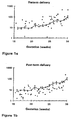
Figures 1 a and b shows maternal plasma CRH concentrations throughout midgestation in women whose pregnancies ended in spontaneous preterm labour (n=24), spontaneous term labour (n=308), or post-term delivery (n=29). InFigure 1a , mean (± s.e.m.) plasma CRH in women delivering at term (points with error bars) was compared with individual samples taken from women delivering preterm (■) or in b, postterm (■); -
Figures 2 a and b provide a graphical representation of regression analysis of the levels shown inFigure 1 .Figure 2a shows log linear regression curves fitted to plasma CRH results from the three subject groups.Figure 2b is a non-logarithmic representation of the three regression curves demonstrating the exponential increase of plasma CRH with advancing gestation; and -
Figure 3 is a comparison of molar concentrations of CRH and CRH-BP in maternal plasma during the final 180 days of gestation in pregnancies ending in spontaneous term labour (37-42 weeks gestation). - Maternal CRH levels can be measured in plasma samples via a radioimmunoassay method that has been described previously(2).
- The maternal plasma levels of CRH in pregnant women were measured throughout gestation by radioimmunoassay in extracted plasma as previously described(2) and these levels were related to stage of gestation. The results are shown in
Figures 1 and2 . Maternal plasma CRH concentrations were measured throughout mid-gestation in women whose pregnancies ended in spontaneous preterm labour (less than 37 weeks gestation, n = 24), full term labour (37-42 weeks, n = 308), or post-term delivery (induction of labour greater than 41.5 weeks or spontaneous labour greater than 42 weeks, n = 29). InFigures 2a and b the three curves are parallel and the CRH curve is shifted significantly to the left (by 6 weeks) in pregnancies delivering preterm (p 0.05), and significantly to the right (by 2 weeks) in pregnancies delivering post-term (p = 0.02). The median gestational age at delivery was 34 weeks in the preterm group, 40 weeks in the term group and 42 weeks in the post-term group. Each subject provided 1-4 samples (median = 2) which were collected at routine antenatal clinic visits at 4 to 6 week intervals. Gestational age was estimated by ultrasonography in 95% of subjects and by date of the last menstrual period in the remainder. Obstetric outcomes were obtained from a computerised database, and written case notes of all preterm deliveries were reviewed by two clinicians blinded to the CRH results. Women delivered by Caesarean section or after induction of labour are excluded from the analysis, except those already post-term at the time of delivery. Analysis of parallelism and shift of the regression curves was performed using the method of Kleinbaum et al (3). - Comparison of the molar concentrations of CRH and CRH-BP in maternal plasma during the final 180 days of gestation in pregnancies ending in spontaneous term labour (37 to 42 weeks gestation) is shown in
Figure 3 . CRH-BP was measured by radioimmunoassay as previously described(4). Each point represents the mean (± sem) of samples grouped by 10 day intervals calculated retrospectively from the day of delivery (mean of 59 samples at each point). This analysis includes all samples from the 308 women with spontaneous term delivery prospectively sampled for the present study, and additional samples (collected using identical methodology) from 124 women sampled throughout late pregnancy and parturition for a previously reported study(3) CRH and CRH-BP were measured in duplicate aliquots. CRH and CRH-BP concentrations are significantly different (t-test, p less than 0.002) at all points except at the intersection of the 2 curves, 20 days before delivery. - In a randomised trial of tocolytic treatment of patients presenting in apparent preterm labour, maternal plasma CRH levels were measured by radioimmunossay in extracted plasma as previously described (2). The patients were treated with transdermal nitric oxide donating drugs or salbutamol. The results are shown in Table 1.
Table 1 Patient No Gestation (weeks) Treatment Length of Treatment Basal CRH (pmol/L) Gestation extended 1 32 NO(1)1 12 hrs 93.53 4 days 2 33 NO(1) 12 hrs 7.40 8 weeks 3 32 NO(1) 12 hrs 16.76 10 weeks 4 30 NO(2) Sal Failed 15 hrs 8.79 11 weeks 5 29 Sal 12 hrs 8.34 10 weeks 6 33 NO(2) 48 hrs 8.80 9 weeks 7 26 Sal 12 hrs 3.19 15 weeks 8 26 Sal 12 hrs 4.88 14 weeks 9 28 Sal 12 hrs 4.72 12 weeks 10 29 Sal 12 hrs 28.45 1 day 11 32 NO(2) 48 hrs 12.44 6 weeks 1 Numbers in parenthesis indicate the number of skin patches used. If after 1 hour the first patch had not caused contractions to stop, a second patch was applied. If after a further hour contractions had still not ceased the treatment was recorded as having failed. After failure of NO treatment salbutamol was administered. - Patients with significantly elevated CRH (1 and 10) delivered within the next few days inspite of treatment. Patients with lower levels of CRH did not deliver for a number of weeks.
- The present inventor has shown that the timing of human parturition is influenced from an early stage in pregnancy by a longitudinal maturation process in the foetal-placental unit. The measurement of the maternal plasma CRH concentration (a placental trophoblast product) was utilised as a marker of this process. Plasma samples were obtained prospectively from 485 women during the second and third trimester and the relationship between maternal plasma CRH and the subsequent gestational age at the time of onset of labour was determined. The maternal plasma CRH concentration rose exponentially as pregnancy advanced (
Figures 1 and2 ), as previously described(5,6). Women delivering prematurely had elevated CRH levels from the earliest stage in pregnancy at which CRH can be measured by the assay used by the inventor. In this group the regression curve of plasma CRH versus gestational age was parallel to that observed in normal pregnancies but was significantly shifted to the left by a magnitude equivalent to the degree of prematurity at the time of delivery. Conversely, in women whose pregnancies continued beyond term the CRH curve was significantly shifted to the right with the magnitude of the shift again corresponding to the extent of post-maturity observed. Previous cross-sectional studies have reported elevated maternal plasma CRH levels at the time of preterm labour(7,8). The present inventor has now shown that the patterns of plasma CRH that are associated with aberrant timing of delivery are established by the end of the first trimester and persist throughout gestation. These data demonstrate the existence of a longitudinal process occurring in the placenta which influences the subsequent timing of delivery. This process may be analogous to a "placental clock" which triggers the onset of parturition at a predetermined time, and that the maternal plasma CRH level is an indicator of the rate of progress towards this event. - CRH may act directly as a trigger for the initiation of parturition. Any hypothesis about the action of CRH in pregnancy, however, must include consideration of the recently identified CRH-BP(4). CRH-BP binds to the hormone in an equimolar ratio and prevents its recognition at the CRH receptor. It is known to be present in the maternal plasma during pregnancy(9) but the relative concentrations of CRH and CRH-BP have not been reported and the bioactivity of placental CRH is therefore unknown. The CRH and CRH-BP concentrations were measured in duplicate aliquots of plasma obtained throughout pregnancy and parturition (
Figure 3 ). CRH-BP was present greatly in excess of CRH until approximately 20 days before spontaneous term delivery. At this time the CRH-BP concentration fell while placental CRH secretion continued to rise exponentially, causing a rapid increase in the bioavailability of free circulating CRH in the final 3 weeks of gestation. There was no detectable difference in plasma CRH-BP levels between the groups of women delivering preterm, at term or post-term (data not shown). The fall in CRH-BP levels at term is likely to be a consequence of the rising CRH concentration since CRH has been shown to promote rapid clearance of CRH-BP from the circulation(10). - There is a striking association between the timing of the increase in CRH bioavailability in late pregnancy and the onset of parturition. Although this does not prove that CRH directly initiates parturition, several lines of evidence suggest that this is likely. CRH receptors have been demonstrated in the myometrium(11) and foetal membranes(12), and CRH has been shown to stimulate the release of prostaglandins from human decidua and amnion in-vitro(13) and to potentiate the action of oxytocin in inducing myometrial contraction in-vitro(14) and in-vivo(15). CRH is also present in the amniotic fluid and the foetal circulation where it is capable of stimulating the foetal pituitary-adrenal axis to increase foetal adrenal glucocorticoid secretion, promoting foetal organ maturation(16). Finally, prostaglandins and glucocorticoids induced by CRH in turn stimulate further placental CRH secretion(17-19), creating positive feedback loops in the maternal, foetal and amniotic compartments to promote parturition and drive the onset of labour.
- A critical event in the initiation of human parturition occurs when the maternal plasma CRH level, controlled by the "placental clock", rises to a level sufficient to fully saturate its binding-protein, thereby unmasking CRH bioactivity. This phenomenon is unique to the human species. In no other species does the placenta secrete large amounts of CRH near term and none other than humans have been shown to possess a circulating CRH-BP(20).
- Many factors could affect the speed of the placental clock in an individual pregnancy; including genetic predisposition (some women experience repeated premature or post-mature deliveries), the rate of foetal organ maturation, and pathology in the mother or foetus. The trophoblast is strategically situated at the interface between the maternal and foetal circulations where its function can be influenced by humoral factors originating from either side. Placental CRH secretion is stimulated by inflammatory mediators, cytokines and stress hormones(19-21) and inhibited by the nitric oxide (NO) donors(22). Since NO synthase has been demonstrated in the placenta(23), NO may participate in paracrine regulation of placental CRH expression.
- The ability to determine at an early stage in pregnancy that the pregnancy may result in preterm or post-term delivery will allow the possibility to initiate medical management of the pregnancy so that a full term delivery may result. The present invention may also be useful to monitor the management of a high risk pregnancy.
- It has recently been reported that the life expectancy of a given individual may be directly related to the speed of development of the foetus during gestation. Preterm delivery that results from the quicker development of a foetus during pregnancy may result in a shorter life expectancy of the person. Similarly, post-term delivery that results from the slower development of a foetus may result in a longer life expectancy of the person. As the growth of a foetus is affected by the level of CRH during pregnancy, the method of the present invention may also be used to indirectly determine the life expectancy of an individual at an early stage in pregnancy. High levels of CRH indicate the likelihood of premature delivery and thus resulting in a shorter life expectancy. Conversely, low levels of CRH indicate the likelihood of post-mature delivery and thus resulting in a longer life expectancy.
- The methods of the present invention have application in the management and care of pregnant patients.
-
- (1) In Williams' Obstetrics (eds Cunningham, F G, MacDonald P C, Gant N F, Leveno K J & Gilstrap L C) Vol 19th, 297-361 (Prentice-Hall International, 1993).
- (2) Smith R, Cubis J, Brinsmead M W, et al. Psychosomatic Research 4(1), 53-69 (1990).
- (3) Kleinbaum D G, Kupper L L and Muller K E in Applied regression analysis and other multivariable methods (eds Kleinbaum D G, Kupper L L and Muller K E) Vol 2nd, 263-271 (PWS-Kent, Boston, 1988).
- (4) Potter E, Behan D P, Fischer W H, Linton E A, Lowry P J and Vale W W. Nature 349, 423-426 (1991).
- (5) Campbell E A, Linton E A, Wolfe C D A, Scraggs P R, Jones M T and Lowry P J, J. Clin. Endocrinol. Metab. 64, 1054-1059 (1987).
- (6) Sasaki A, Shinkawa O, Margioris A N, et al. J, Clin. Endocrinol. Metab. 64, 224-229 (1987).
- (7) Wolfe C D A, Patel S P, Linton E A, et al. Br. J. Obstet. Gynecol. 95, 1003-1006 (1988).
- (8) Kurki T, Laatikainen T, Salminen-Lappalainen K and Ylikorkala O. Br. J. Obstet. Gynecol. 98, 685-691 (1991).
- (9) Linton E A, Perkins A V, Woods R J, et al. J. Clin. Endocrinol. Metab. 76, 260-262 (1993).
- (10) Woods R J, Grossman A, Saphier P, et al. J. Clin. Endocrinol. Metab. 78, 73-76 (1994).
- (11) Hillhouse E W, Grammatopoulos D, Milton N G N and Quartero H W P. J. Clin. Endocrinol. Metab. 76, 736-741 (1993).
- (12) Petraglia F, Giardino M, Coukos G, Calza L, Vale W and Genazzani A R. Obstet. Gynecol. 75, 784-789 (1990).
- (13) Jones S A and Challis J R G. Biochem. Biophys. Res. Commun. 159, 192-194 (1989).
- (14) Quartero H W P & Fry ).
- (15) McLean M, Thompson D, Zhang H, Brinsmead M and Smith R. Eur. J Endocrinol 131, 167-172 (1994).
- (16) Challis J R G and Hooper S. Bailliere's Clinical Endocrinology and Metabolism 3 No3, 781-793 (1989).
- (17) Robinson B G, Emanuel R L, Frim D M & Majzoub J A. Proc. Natl. Acad. Sci. USA 85, 5244-5248 (1988).
- (18) Jones S A, Brooks A N and Challis J R. J. Clin. Endocrinol. Metab. 68, 825-830 (1989).
- (19) Petraglia F, Sutton S & Vale W. Am. J. Obstet. Gynecol. 160, 247-251 (1989).
- (20) Smith R, Chan E C, Bowman M E, Harewood W J and Phippard A F. J. Clin. Endocrinol. Metab. 76, 1063-1068 (1993).
- (21) Petraglia F, Garuti G C, De Ramundo B, Angioni S, Genazzani A R and Bilezikjian L M. Am. J. Obstet. Gynecol. 163, 1307-1312 (1990).
- (22) Sun K, Smith R & Robinson P J. Basal and KC1 stimulated Corticotropin Releasing Hormone release from human syncytiotrophoblasts is inhibited by sodium nitroprusside. J. Clin. Endocrinol. Metab. in press 1994.
- (23) Conrad K P, Vill M, McGuire P G, Dail W G and Davis A K. FASEB J. 7,(13):1269-1276 (1993).
Claims (5)
- A method for detection or prediction of premature delivery in a pregnant human subject, the method comprising:measuring during the first or second trimester of that pregnancy the maternal level of corticotrophin-releasing hormone (CRH);comparing the level so obtained with the normal level of CRH, found in humans having a full term pregnancy and at the same stage of gestation as the pregnant human subject; anddetermining that the delivery will occur sooner than full term if the level of CRH is elevated relative to the normal level of CRH.
- A method as claimed in claim 1 wherein the pregnant human subject is experiencing preterm uterine contractions.
- A method of early detection or prediction of post-mature delivery in a pregnant human subject comprising:measuring during the first or second trimester of that pregnancy the maternal level of corticotrophin-releasing hormone (CRH);comparing the level so obtained with the normal level of CRH found in humans having a full term pregnancy and at the same stage of gestation as the pregnant human subject; anddetermining that the delivery will occur later than full term if the level of CRH is depressed relative to the normal level of CRH.
- A method according to any one of claims 1 to 3 wherein the measuring of the CRH level is by an immunological method.
- A method according to claim 4 wherein the immunological method is a radioimmunoassay.
Applications Claiming Priority (3)
| Application Number | Priority Date | Filing Date | Title |
|---|---|---|---|
| AUPM8979A AUPM897994A0 (en) | 1994-10-21 | 1994-10-21 | Method for determining term of pregnancy |
| AUPM8979/94 | 1994-10-21 | ||
| PCT/AU1995/000710 WO1996012967A1 (en) | 1994-10-21 | 1995-10-23 | Method for determining term of pregnancy |
Publications (3)
| Publication Number | Publication Date |
|---|---|
| EP0787302A1 EP0787302A1 (en) | 1997-08-06 |
| EP0787302A4 EP0787302A4 (en) | 1999-09-22 |
| EP0787302B1 true EP0787302B1 (en) | 2009-02-11 |
Family
ID=3783497
Family Applications (1)
| Application Number | Title | Priority Date | Filing Date |
|---|---|---|---|
| EP95935750A Expired - Lifetime EP0787302B1 (en) | 1994-10-21 | 1995-10-23 | Method for determining term of pregnancy |
Country Status (6)
| Country | Link |
|---|---|
| EP (1) | EP0787302B1 (en) |
| JP (1) | JPH10508097A (en) |
| AT (1) | ATE422675T1 (en) |
| AU (1) | AUPM897994A0 (en) |
| DE (1) | DE69535915D1 (en) |
| WO (1) | WO1996012967A1 (en) |
Families Citing this family (1)
| Publication number | Priority date | Publication date | Assignee | Title |
|---|---|---|---|---|
| CA2771560A1 (en) * | 2009-08-20 | 2011-02-24 | University Of Utah Research Foundation | Identification and quantification of biomarkers for evaluating the risk of preterm birth |
Family Cites Families (2)
| Publication number | Priority date | Publication date | Assignee | Title |
|---|---|---|---|---|
| WO1993024838A1 (en) * | 1992-05-29 | 1993-12-09 | Adeza Biomedical Corporation | Screening method for identifying women at increased risk for preterm delivery |
| WO1993024836A1 (en) * | 1992-05-29 | 1993-12-09 | Adeza Biomedical Corporation | Screening method for identifying women at increased risk for preterm delivery |
-
1994
- 1994-10-21 AU AUPM8979A patent/AUPM897994A0/en not_active Abandoned
-
1995
- 1995-10-23 WO PCT/AU1995/000710 patent/WO1996012967A1/en not_active Ceased
- 1995-10-23 AT AT95935750T patent/ATE422675T1/en not_active IP Right Cessation
- 1995-10-23 EP EP95935750A patent/EP0787302B1/en not_active Expired - Lifetime
- 1995-10-23 DE DE69535915T patent/DE69535915D1/en not_active Expired - Fee Related
- 1995-10-23 JP JP8513545A patent/JPH10508097A/en active Pending
Non-Patent Citations (1)
| Title |
|---|
| CHIEN ET AL: "The diagnostic accuracy of cervico-vaginal foetal fibronectin in predicting preterm delivery: an overview", BR.J.OBSTET GYNAECOL., vol. 104, 1997, pages 436 - 444 * |
Also Published As
| Publication number | Publication date |
|---|---|
| DE69535915D1 (en) | 2009-03-26 |
| EP0787302A4 (en) | 1999-09-22 |
| ATE422675T1 (en) | 2009-02-15 |
| EP0787302A1 (en) | 1997-08-06 |
| JPH10508097A (en) | 1998-08-04 |
| AUPM897994A0 (en) | 1994-11-17 |
| WO1996012967A1 (en) | 1996-05-02 |
Similar Documents
| Publication | Publication Date | Title |
|---|---|---|
| Pereira et al. | Secretory products of the corpus luteum and preeclampsia | |
| Kousta et al. | Modern use of clomiphene citrate in induction of ovulation | |
| Tulchinsky et al. | Plasma human chorionic gonadotropin, estrone, estradiol, estriol, progesterone, and 17α-hydroxyprogesterone in human pregnancy: III. Early normal pregnancy | |
| Rozenberg et al. | Prevention of preterm delivery after successful tocolysis in preterm labor by 17 alpha-hydroxyprogesterone caproate: a randomized controlled trial | |
| Desforges-Bullet et al. | Increased anti-Müllerian hormone and decreased FSH levels in follicular fluid obtained in women with polycystic ovaries at the time of follicle puncture for in vitro fertilization | |
| Vila et al. | Pregnancy outcomes in women with growth hormone deficiency | |
| Norwitz et al. | A systematic approach to the management of preterm labor | |
| Hofmann et al. | Recurrent pregnancy loss and diminished ovarian reserve | |
| Patacchioli et al. | Maternal plasma and milk free cortisol during the first 3 days of breast-feeding following spontaneous delivery or elective cesarean section | |
| Chico et al. | Cushing's disease and pregnancy: report of six cases | |
| Homburg | Ovulation induction and controlled ovarian stimulation | |
| Warren et al. | Corticotropin-releasing hormone and pituitary-adrenal hormones in pregnancies complicated by chronic hypertension | |
| Leung et al. | Rate of rise in maternal plasma corticotrophin-releasing hormone and its relation to gestational length | |
| Mushayandebvu et al. | Elevated maternal serum relaxin concentrations throughout pregnancy in singleton gestations after superovulation | |
| Stamatelou et al. | Abnormal progesterone and corticotropin releasing hormone levels are associated with preterm labour | |
| AU714174B2 (en) | Method for determining term of pregnancy | |
| McGrath et al. | Prediction of preterm delivery using plasma corticotrophin-releasing hormone and other biochemical variables | |
| Gennser et al. | Cortisol in amniotic fluid and cord blood in relation to prenatal betamethasone load and delivery | |
| Neumann et al. | Strong variation in progesterone production of the placenta in early pregnancy–what are the clinical implications? | |
| EP0787302A1 (en) | Method for determining term of pregnancy | |
| Fujimoto et al. | The anterior pituitary response to a gonadotropin-releasing hormone challenge test in normal older reproductive-age women | |
| Fuma et al. | Antenatal corticosteroids‐to‐delivery interval associates cord blood S100B levels | |
| Bedaiwy et al. | Letrozole co-treatment in infertile women 40 years old and older receiving controlled ovarian stimulation and intrauterine insemination | |
| Ledger | Measurement of inhibin A and activin A in pregnancy–possible diagnostic applications | |
| Carlsen et al. | Nausea and vomiting associate with increasing maternal androgen levels in otherwise uncomplicated pregnancies |
Legal Events
| Date | Code | Title | Description |
|---|---|---|---|
| PUAI | Public reference made under article 153(3) epc to a published international application that has entered the european phase |
Free format text: ORIGINAL CODE: 0009012 |
|
| 17P | Request for examination filed |
Effective date: 19970428 |
|
| AK | Designated contracting states |
Kind code of ref document: A1 Designated state(s): AT BE CH DE DK ES FR GB GR IE IT LI LU MC NL PT SE |
|
| RIC1 | Information provided on ipc code assigned before grant |
Free format text: 6G 01N 33/74 A, 6G 01N 33/53 B |
|
| A4 | Supplementary search report drawn up and despatched |
Effective date: 19990810 |
|
| AK | Designated contracting states |
Kind code of ref document: A4 Designated state(s): AT BE CH DE DK ES FR GB GR IE IT LI LU MC NL PT SE |
|
| 17Q | First examination report despatched |
Effective date: 20041104 |
|
| 17Q | First examination report despatched |
Effective date: 20041104 |
|
| GRAP | Despatch of communication of intention to grant a patent |
Free format text: ORIGINAL CODE: EPIDOSNIGR1 |
|
| GRAS | Grant fee paid |
Free format text: ORIGINAL CODE: EPIDOSNIGR3 |
|
| GRAA | (expected) grant |
Free format text: ORIGINAL CODE: 0009210 |
|
| AK | Designated contracting states |
Kind code of ref document: B1 Designated state(s): AT BE CH DE DK ES FR GB GR IE IT LI LU MC NL PT SE |
|
| REG | Reference to a national code |
Ref country code: GB Ref legal event code: FG4D |
|
| REG | Reference to a national code |
Ref country code: CH Ref legal event code: EP |
|
| REG | Reference to a national code |
Ref country code: IE Ref legal event code: FG4D |
|
| REF | Corresponds to: |
Ref document number: 69535915 Country of ref document: DE Date of ref document: 20090326 Kind code of ref document: P |
|
| PG25 | Lapsed in a contracting state [announced via postgrant information from national office to epo] |
Ref country code: NL Free format text: LAPSE BECAUSE OF FAILURE TO SUBMIT A TRANSLATION OF THE DESCRIPTION OR TO PAY THE FEE WITHIN THE PRESCRIBED TIME-LIMIT Effective date: 20090211 Ref country code: ES Free format text: LAPSE BECAUSE OF FAILURE TO SUBMIT A TRANSLATION OF THE DESCRIPTION OR TO PAY THE FEE WITHIN THE PRESCRIBED TIME-LIMIT Effective date: 20090522 |
|
| NLV1 | Nl: lapsed or annulled due to failure to fulfill the requirements of art. 29p and 29m of the patents act | ||
| PG25 | Lapsed in a contracting state [announced via postgrant information from national office to epo] |
Ref country code: SE Free format text: LAPSE BECAUSE OF FAILURE TO SUBMIT A TRANSLATION OF THE DESCRIPTION OR TO PAY THE FEE WITHIN THE PRESCRIBED TIME-LIMIT Effective date: 20090511 Ref country code: AT Free format text: LAPSE BECAUSE OF FAILURE TO SUBMIT A TRANSLATION OF THE DESCRIPTION OR TO PAY THE FEE WITHIN THE PRESCRIBED TIME-LIMIT Effective date: 20090211 |
|
| PG25 | Lapsed in a contracting state [announced via postgrant information from national office to epo] |
Ref country code: BE Free format text: LAPSE BECAUSE OF FAILURE TO SUBMIT A TRANSLATION OF THE DESCRIPTION OR TO PAY THE FEE WITHIN THE PRESCRIBED TIME-LIMIT Effective date: 20090211 |
|
| PG25 | Lapsed in a contracting state [announced via postgrant information from national office to epo] |
Ref country code: PT Free format text: LAPSE BECAUSE OF FAILURE TO SUBMIT A TRANSLATION OF THE DESCRIPTION OR TO PAY THE FEE WITHIN THE PRESCRIBED TIME-LIMIT Effective date: 20090713 Ref country code: DK Free format text: LAPSE BECAUSE OF FAILURE TO SUBMIT A TRANSLATION OF THE DESCRIPTION OR TO PAY THE FEE WITHIN THE PRESCRIBED TIME-LIMIT Effective date: 20090211 |
|
| PLBE | No opposition filed within time limit |
Free format text: ORIGINAL CODE: 0009261 |
|
| STAA | Information on the status of an ep patent application or granted ep patent |
Free format text: STATUS: NO OPPOSITION FILED WITHIN TIME LIMIT |
|
| 26N | No opposition filed |
Effective date: 20091112 |
|
| PG25 | Lapsed in a contracting state [announced via postgrant information from national office to epo] |
Ref country code: MC Free format text: LAPSE BECAUSE OF NON-PAYMENT OF DUE FEES Effective date: 20091031 |
|
| REG | Reference to a national code |
Ref country code: CH Ref legal event code: PL |
|
| REG | Reference to a national code |
Ref country code: FR Ref legal event code: ST Effective date: 20100630 |
|
| PG25 | Lapsed in a contracting state [announced via postgrant information from national office to epo] |
Ref country code: FR Free format text: LAPSE BECAUSE OF NON-PAYMENT OF DUE FEES Effective date: 20091102 Ref country code: DE Free format text: LAPSE BECAUSE OF NON-PAYMENT OF DUE FEES Effective date: 20100501 |
|
| PG25 | Lapsed in a contracting state [announced via postgrant information from national office to epo] |
Ref country code: LI Free format text: LAPSE BECAUSE OF NON-PAYMENT OF DUE FEES Effective date: 20091031 Ref country code: IE Free format text: LAPSE BECAUSE OF NON-PAYMENT OF DUE FEES Effective date: 20091023 Ref country code: GR Free format text: LAPSE BECAUSE OF FAILURE TO SUBMIT A TRANSLATION OF THE DESCRIPTION OR TO PAY THE FEE WITHIN THE PRESCRIBED TIME-LIMIT Effective date: 20090512 Ref country code: CH Free format text: LAPSE BECAUSE OF NON-PAYMENT OF DUE FEES Effective date: 20091031 |
|
| PG25 | Lapsed in a contracting state [announced via postgrant information from national office to epo] |
Ref country code: IT Free format text: LAPSE BECAUSE OF FAILURE TO SUBMIT A TRANSLATION OF THE DESCRIPTION OR TO PAY THE FEE WITHIN THE PRESCRIBED TIME-LIMIT Effective date: 20090211 |
|
| PGFP | Annual fee paid to national office [announced via postgrant information from national office to epo] |
Ref country code: GB Payment date: 20101020 Year of fee payment: 16 |
|
| PG25 | Lapsed in a contracting state [announced via postgrant information from national office to epo] |
Ref country code: LU Free format text: LAPSE BECAUSE OF NON-PAYMENT OF DUE FEES Effective date: 20091023 |
|
| REG | Reference to a national code |
Ref country code: GB Ref legal event code: 732E Free format text: REGISTERED BETWEEN 20111124 AND 20111129 |
|
| GBPC | Gb: european patent ceased through non-payment of renewal fee |
Effective date: 20111023 |
|
| PG25 | Lapsed in a contracting state [announced via postgrant information from national office to epo] |
Ref country code: GB Free format text: LAPSE BECAUSE OF NON-PAYMENT OF DUE FEES Effective date: 20111023 |