EP0784486B1 - Interleukin-12 as an adjuvant for paramyxoviridae vaccines - Google Patents
Interleukin-12 as an adjuvant for paramyxoviridae vaccines Download PDFInfo
- Publication number
- EP0784486B1 EP0784486B1 EP95938133A EP95938133A EP0784486B1 EP 0784486 B1 EP0784486 B1 EP 0784486B1 EP 95938133 A EP95938133 A EP 95938133A EP 95938133 A EP95938133 A EP 95938133A EP 0784486 B1 EP0784486 B1 EP 0784486B1
- Authority
- EP
- European Patent Office
- Prior art keywords
- virus
- rsv
- antigen
- host
- interleukin
- Prior art date
- Legal status (The legal status is an assumption and is not a legal conclusion. Google has not performed a legal analysis and makes no representation as to the accuracy of the status listed.)
- Expired - Lifetime
Links
Images
Classifications
-
- C—CHEMISTRY; METALLURGY
- C07—ORGANIC CHEMISTRY
- C07K—PEPTIDES
- C07K16/00—Immunoglobulins [IG], e.g. monoclonal or polyclonal antibodies
- C07K16/08—Immunoglobulins [IG], e.g. monoclonal or polyclonal antibodies against material from viruses
- C07K16/10—RNA viruses
- C07K16/11—Paramyxoviridae (F); Pneumoviridae (F), e.g. respiratory syncytial virus [RSV]
-
- A—HUMAN NECESSITIES
- A61—MEDICAL OR VETERINARY SCIENCE; HYGIENE
- A61K—PREPARATIONS FOR MEDICAL, DENTAL OR TOILETRY PURPOSES
- A61K39/00—Medicinal preparations containing antigens or antibodies
- A61K39/12—Viral antigens
-
- A—HUMAN NECESSITIES
- A61—MEDICAL OR VETERINARY SCIENCE; HYGIENE
- A61K—PREPARATIONS FOR MEDICAL, DENTAL OR TOILETRY PURPOSES
- A61K39/00—Medicinal preparations containing antigens or antibodies
- A61K39/12—Viral antigens
- A61K39/155—Paramyxoviridae, e.g. parainfluenza virus
-
- A—HUMAN NECESSITIES
- A61—MEDICAL OR VETERINARY SCIENCE; HYGIENE
- A61K—PREPARATIONS FOR MEDICAL, DENTAL OR TOILETRY PURPOSES
- A61K39/00—Medicinal preparations containing antigens or antibodies
- A61K39/39—Medicinal preparations containing antigens or antibodies characterised by the immunostimulating additives, e.g. chemical adjuvants
-
- A—HUMAN NECESSITIES
- A61—MEDICAL OR VETERINARY SCIENCE; HYGIENE
- A61P—SPECIFIC THERAPEUTIC ACTIVITY OF CHEMICAL COMPOUNDS OR MEDICINAL PREPARATIONS
- A61P31/00—Antiinfectives, i.e. antibiotics, antiseptics, chemotherapeutics
- A61P31/12—Antivirals
- A61P31/14—Antivirals for RNA viruses
-
- A—HUMAN NECESSITIES
- A61—MEDICAL OR VETERINARY SCIENCE; HYGIENE
- A61K—PREPARATIONS FOR MEDICAL, DENTAL OR TOILETRY PURPOSES
- A61K39/00—Medicinal preparations containing antigens or antibodies
- A61K2039/51—Medicinal preparations containing antigens or antibodies comprising whole cells, viruses or DNA/RNA
- A61K2039/525—Virus
- A61K2039/5252—Virus inactivated (killed)
-
- A—HUMAN NECESSITIES
- A61—MEDICAL OR VETERINARY SCIENCE; HYGIENE
- A61K—PREPARATIONS FOR MEDICAL, DENTAL OR TOILETRY PURPOSES
- A61K39/00—Medicinal preparations containing antigens or antibodies
- A61K2039/555—Medicinal preparations containing antigens or antibodies characterised by a specific combination antigen/adjuvant
- A61K2039/55511—Organic adjuvants
- A61K2039/55522—Cytokines; Lymphokines; Interferons
- A61K2039/55527—Interleukins
- A61K2039/55538—IL-12
-
- A—HUMAN NECESSITIES
- A61—MEDICAL OR VETERINARY SCIENCE; HYGIENE
- A61K—PREPARATIONS FOR MEDICAL, DENTAL OR TOILETRY PURPOSES
- A61K39/00—Medicinal preparations containing antigens or antibodies
- A61K2039/57—Medicinal preparations containing antigens or antibodies characterised by the type of response, e.g. Th1, Th2
-
- C—CHEMISTRY; METALLURGY
- C07—ORGANIC CHEMISTRY
- C07K—PEPTIDES
- C07K2317/00—Immunoglobulins specific features
- C07K2317/50—Immunoglobulins specific features characterized by immunoglobulin fragments
- C07K2317/52—Constant or Fc region; Isotype
-
- C—CHEMISTRY; METALLURGY
- C12—BIOCHEMISTRY; BEER; SPIRITS; WINE; VINEGAR; MICROBIOLOGY; ENZYMOLOGY; MUTATION OR GENETIC ENGINEERING
- C12N—MICROORGANISMS OR ENZYMES; COMPOSITIONS THEREOF; PROPAGATING, PRESERVING, OR MAINTAINING MICROORGANISMS; MUTATION OR GENETIC ENGINEERING; CULTURE MEDIA
- C12N2760/00—MICROORGANISMS OR ENZYMES; COMPOSITIONS THEREOF; PROPAGATING, PRESERVING, OR MAINTAINING MICROORGANISMS; MUTATION OR GENETIC ENGINEERING; CULTURE MEDIA ssRNA viruses negative-sense
- C12N2760/00011—Details
- C12N2760/18011—Paramyxoviridae
- C12N2760/18511—Pneumovirus, e.g. human respiratory syncytial virus
- C12N2760/18534—Use of virus or viral component as vaccine, e.g. live-attenuated or inactivated virus, VLP, viral protein
Definitions
- Respiratory syncytial virus a member of the Pneumovirus genus of the Paramyxoviridae family, is an important cause of respiratory disease in infants and children (Connors, M., et al ., J. of Virol., 66 :7444-7451 (1992).
- the present invention is based on the discovery that IL-12 has a potent adjuvant effect for immunizing against Paramyxoviridae virus infection.
- the invention comprises a method of reducing viral replication of a virus of the paramyxoviridae family in a host (e.g., mammalian, including human, and avian) comprising administering to the host an antigen of the virus in combination with an effective adjuvant amount of interleukin-12 (IL-12).
- a host e.g., mammalian, including human, and avian
- Human viruses of the Paramyxoviridae family include paramyxoviruses (e.g., parainfluenza virus 1, parainfluenza virus 2, parainfluenza virus 3, parainfluenza virus 4 and mumps virus), morbilliviruses (e.g., measles virus) and pneumoviruses (e.g., respiratory syncytial virus); other non-human viruses of the Paramyxoviridae family include canine distemper virus, bovine RSV, Newcastle disease virus and rhinderpest virus.
- the invention relates to a method of reducing replication of the respiratory syncytial virus (RSV) in a host comprising administering to the host an antigen of RSV in combination with an effective adjuvant amount of IL-12.
- RSV respiratory syncytial virus
- the present invention also relates to a method of eliciting an immune response against viruses of the Paramyxoviridae family in a host, comprising administering to the host an antigen of a virus of the Paramyxoviridae family in combination with an effective adjuvant amount of IL-12.
- the present invention also relates to a method of immunizing a host against RSV comprising administering to the host a mixture comprising an antigen of respiratory syncytial virus in combination with an effective adjuvant amount of interleukin-12.
- the present invention relates to a composition
- a composition comprising a mixture of an antigen of a virus of the Paramyxoviridae family and an effective adjuvant amount of interleukin-12 (IL-12).
- the invention relates to a composition comprising an antigen of the respiratory syncytial virus and IL-12.
- exogenous IL-12 treatment administered at the time of immunization with RSV antigen diminishes RSV replication and increases endogenous IL-12 mRNA expression at the time of subsequent RSV challenge. This results in a shift from a Th2 to a Th1-like pattern of cytokine expression and a consequent shift in antibody isotype utilization.
- the present invention relates to a method of reducing viral replication of a virus of the Paramyxoviridae family in a host (e.g., mammal, including human, avian) comprising, administering to the host, a mixture of an antigen of the virus and an effective adjuvant amount of interleukin-12 (IL-12).
- a host e.g., mammal, including human, avian
- IL-12 interleukin-12
- the method of the present invention is exemplified using RSV
- the method can be used to reduce viral replication of a variety of viruses from the Paramyxoviridae family which include human paramyxoviridae viruses, such as paramyxoviruses (e.g., parainfluenza virus 1, parainfluenza virus 2, parainfluenza virus 3, parainfluenza virus 4 and mumps virus), morbilliviruses (e.g., measles virus) and pneumoviruses (e.g., respiratory syncytial virus).
- Other non-human viruses of the Paramyxoviridae family include canine distemper virus, bovine RSV, Newcastle disease virus and rhinderpest virus.
- the method of the present invention is used to reduce viral replication of respiratory syncytial virus (RSV) in a host, and comprises administering to the host an RSV antigen and an effective adjuvant amount of IL-12.
- RSV respiratory syncytial virus
- the method of the present invention is used to elicit an immune response against a virus of the Paramyxoviridae family in a host, comprising administering to the host an antigen of the virus and an effective adjuvant amount of IL-12.
- the present invention relates to a method of immunizing a host against RSV comprising administering to the host a mixture comprising an RSV antigen and an effective adjuvant amount of IL-12.
- An antigen of a virus of the Paramyxoviridae family includes use of the whole virus (e.g., inactivated or live, attenuated whole virus), an antigenic portion of the virus, and recombinantly produced virus or portions thereof or fusion proteins.
- antigens of the present invention include nucleic acid sequences which encode an antigen of a virus of the Paramyxoviridae family.
- Antigenic portions of the viruses of the Paramyxoviridae family include the fusion glycoprotein (F protein) and the hemagglutinin-neuraminidase of the parainfluenza viruses 1, 2, 3, 4; the F protein and the hemagglutinin-neuraminidase of the mumps virus; the F protein and the hemagglutinin-neuraminidase of the measles virus; and the F protein and the G glycoprotein of the RSV.
- F protein fusion glycoprotein
- antigenic portions of the Paramyxoviridae family of viruses which can be used in the methods and compositions of the present invention, can be determined by those of ordinary skill in the art.
- the IL-12 of the present invention can be obtained from a suitable source for use in the present method.
- IL-12 can be purified from natural sources (e.g., human, animal), produced by chemical synthesis or produced by recombinant DNA techniques as described in Example 1.
- the IL-12 of the present invention includes nucleic acid sequences encoding IL-12, as well as the RNAs encoded by such nucleic acid sequences.
- interleukin-12 and IL-12 refer to interleukin 12, its individual subunits, fragments thereof which exhibit IL-12 adjuvant activity and functional equivalents of "interleukin-12" and "IL-12".
- Functional equivalents of "interleuKin-12” and “IL-12” include modified IL-12 protein such that the resulting IL-12 product has the same adjuvant activity as the IL-12 described herein, and nucleic acid sequences which through the degeneracy of the genetic code encode the same peptide gene product as IL-12 and having the IL-12 adjuvant activity described herein.
- a functional equivalent of "interleukin-12” and “IL-12” can contain a "silent" codon or amino acid substitution (e.g., substitution of one acidic amino acid for another acidic amino acid; or substitution of one codon encoding a hydrophobic amino acid to another codon encoding a hydrophobic amino acid).
- IL-12 a heterodimeric cytokine predominantly excreted by the macrophage cells, has been reported to enhance NK cell and CTL activity, to stimulate the differentiation of Th1 cells, and to induce production of cytokines, such as IFN- ⁇ (Gately, M.K., et al , Cell. Immunol. 143: 127 (1992); Naume, B., et al , J. Immunol. 148:2 429 (1992); Hsieh, C.S., et al Science 260 :547 (1993); Manetti, R., et al J. Exp. Med. 177 :1199 (1993); Chan, S.H., et al, J. Exp. Med.
- IL-12 formerly referred to as natural killer cell stimulatory factor or cytotoxic lymphocyte maturation factor functions to activate and to link the innate and acquired immune responses (Kobayashi, M., et al J. Exp. Med. 170 :827 (1989); Stern, A. S., et al Proc. Natl. Acad.
- IL-12 promotes differentiation of uncommitted T helper cells towards the Type 1 (Th1) phenotype (Hsieh, C.S., et al Science 260 :547 (1993); Manetti, R., et al J. Exp. Med. 177 :1199 (1993)).
- Th1 Type 1
- cytokines such as IFN- ⁇
- IL-12 has been demonstrated to enhance the immune response and to improve protective immunity in several infectious disease models, including Listeriosis, Leishmaniasis, Toxoplasmosis and lymphocytic choriomeningitis virus infection (Tripp, C.S., et al , Proc. Natl. Acad . Sci. USA 90 :3725 (1993); Heinzel, F.P., et al J. Exp. Med. 177 :1505 (1993); Sypek, J.P., et al J. Exp. Med. 177 :1797 (1993); Afonso, L.
- Cytokines or cytokine inhibitors
- the cytokine or cytokine inhibitor can be administered concurrently with or subsequently to the vaccine, and can be recombinantly produced or isolated from cell culture.
- Interleukin-12 or IL-12 is a mammalian cytokine which exhibits numerous immunologic effects, including modulation of T cell response to antigens (see, for example, PCT publication nos. WO 92/05256 and W0 90/05147, wherein IL-12 is identified as "NKSF"). It has also been suggested generally that IL-12 might have some application as a vaccine adjuvant (Scott, P., Science, 260 :496-497(1993); Trichieri, G., Immunology Today, 14 :335-338(1993)).
- an effective adjuvant amount of IL-12 is administered in combination with an antigen of a virus of the Paramyxoviridae family. That is, the IL-12 is administered at a time closely related to immunization of the host with the viral antigen, so that an enhanced immune response in the host is produced relative to the immunization of a host in which IL-12 is not administered.
- the IL-12 can be administered prior to, preferably just prior to, immunization, at the time of immunization (i.e., simultaneously) or after immunization (i.e. subsequently).
- the IL-12 can be administered prior to immunization with the viral antigen of the Paramyxoviridae family, followed by subsequent injections of IL-12 after immunization with the antigen.
- the IL-12 and the antigen can be administered to a host in a variety of ways.
- the routes of administration include intradermal, transdermal (e.g., slow release polymers), intramuscular, intraperitoneal, intravenous, subcutaneous, oral, epidural and intranasal routes. Any other convenient route of administration can be used, for example, infusion or bolus injection, or absorption through epithelial or mucocutaneous linings.
- the IL-12 and the antigen of the Paramyxoviridae virus can be administered together with other components or biologically active agents, such as other known adjuvants (e.g., alum, MPL, QS21), pharmaceutically acceptable surfactants (e.g., glycerides), excipients (e.g., lactose), carriers, diluents and vehicles. If desired, certain sweetening, flavoring and/or coloring agents can also be added.
- adjuvants e.g., alum, MPL, QS21
- pharmaceutically acceptable surfactants e.g., glycerides
- excipients e.g., lactose
- carriers e.g., lactose
- diluents and vehicles e.g., diluents and vehicles.
- sweetening, flavoring and/or coloring agents can also be added.
- the IL-12 and the antigen can be administered as a prophylactic vaccine to hosts which are either infected or uninfected with the virus.
- the IL-12 and the antigen can also be administered as a therapeutic vaccine to infected hosts and can result in amelioration or elimination of the disease state caused by the infecting virus.
- the antigen and/or IL-12 can be administered by in vivo expression of polynucleotides encoding such into a mammalian subject.
- the IL-12 or the Paramyxoviridae antigen can be administered to a host using live vectors, wherein the live vectors containing IL-12 and/or antigen nucleic acid sequences are administered under conditions in which the antigen and/or IL-12 are expressed in vivo .
- a host can be injected with a vector which encodes and expresses an antigen of a virus of the Paramyxoviridae family in vivo in combination with IL-12 protein or peptide, or in combination with a vector which encodes and expresses the IL-12 protein in vivo.
- a host can be injected with a vector which encodes and expresses IL-12 in vivo in combination with a Paramyxoviridae antigen in peptide or protein form, or in combination with a vector which encodes and expresses a Paramyxoviridae antigen in vivo.
- a single vector containing the sequences encoding a Paramyxoviridae antigen and the IL-12 protein are also useful in the methods and compositions of the present invention.
- vector systems are available commercially or can be reproduced according to recombinant DNA and cell culture techniques.
- vector systems such as the yeast or vaccinia virus expression systems, or virus vectors can be used in the methods and compositions of the present invention (Kaufman, R.J., A J. of Meth . in Cell and Molec. Biol., 2 :221-236 (1990)).
- the amount of antigen used in the methods and compositions of the present invention is an amount which produces an effective immunostimulatory response in the host.
- An effective adjuvant amount of IL-12 is an amount such that when administered, it results in an enhanced immune response relative to the immune response when an effective adjuvant amount of IL-12 is not administered.
- the amount of antigen from a virus of the Paramyxoviridae family and IL-12 used to immunize the host will vary depending on a variety of factors, including the antigen employed, the size, age, body weight, general health, sex and diet of the host, and the time of administration, duration or particular qualities of the Paramyxoviridae virus being vaccinated against. Adjustment and manipulation of established dosage ranges are well within the ability of those skilled in the art.
- T helper lymphocyte subsets The formulation and route of delivery of vaccine products can influence the induction of T helper lymphocyte subsets and may thereby affect disease expression after viral challenge (Graham, B.S., et al , Immunol. 151 :2032 (1993)).
- Depletion of IL-4 at the time of immunization by neutralizing monoclonal antibody induces a Th2 to Th1-like immune response shift, accompanied by an improved clinical outcome and an increased CD8+ cytotoxic T lymphocyte (CTL) activity (Tang, Y.-W., et al, J . Clin. Invest. (1994)). This was associated with an increased expression of endogenous IL-12 message at the time of challenge in the anti-IL-4 treated mice.
- CTL cytotoxic T lymphocyte
- IL-12 as an adjuvant in a composition comprised of an antigen from RSV and IL-12 also induced a shift from a Th2 to a Th1-like immune response in mice after RSV challenge. While the IL-12 adjuvant effect was potent for reduction of RSV replication, it is more important for use as a vaccine adjuvant to decrease illness following challenge by RSV.
- cytokines as adjuvants can allow one to control the immune parameters induced by immunization to improve protective effects and decrease the negative effects of a vaccine for RSV.
- IL-12 acts as a potent adjuvant and is a useful product to include in RSV vaccines.
- mice were immunized with inactivated whole virus intramuscularly, and murine recombinant IL-12 was administered intraperitoneally for 5 successive days starting at one day before immunization or challenge.
- the mice were challenged with live virus 4 weeks later.
- the viral replication in lungs 4 days after challenge was assessed.
- IL-12 administered at the time of immunization had a marked effect on the reduction of viral replication.
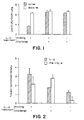
- Log 10 pfu per lung was reduced from 6.9 in RSV-immunized control mice without IL-12 administration to 3.8 in immunized mice with IL-12 administration ( Figure 1).
- IL-12 administration at the time of challenge did not have significant effect on the viral replication ( Figure 1).
- Example 2 The effects of different delivery routes for IL-12 is described in Example 2.
- IL-12 was administered either intraperitoneally as described in Example 1, or intramuscularly mixed with the RSV immunogen.
- Table 1 shows the effect of either intraperitoneal or intramuscular delivery of IL-12 on the reduction of viral replication.
- a single dosage of IL-12 given simultaneously with immunogen had the same effect on the reduction of viral replication compared to the 5-dosage intraperitoneal regimen.
- IL-12 as a specific immunomodulator only worked in RSV immunized mice, having no effects on the unprimed mice ( Figure 1, Table 1). These data demonstrate that IL-12 exerts a potent adjuvant effect on the inactivated RSV immunogen.
- the patterns of immunoglobulin isotypes produced in response to immunization are indirect indicators of the types of cytokines produced in vivo .
- IgG2a is produced in mice as a consequence of Th1 cell activation, whereas IL-4 promotes the production of IgG1 (Burstein, H.J. et al , J. Immunol . 147 :2950 (1991); Finkelman, F.D., et al, Annu Rev . Immunol . 8 :303 (1990); Morris, S.C., et al, J. Immunol. 152 :1047 (1994)).
- the pattern of antibody isotype utilization induced by IL-12 suggests that in vivo IL-12 administration can promote the differentiation of antigen-specific CD4+ Th1 cells and inhibit the development of Th2 cells in response to the inactivated RSV intramuscular immunization.
- the pattern of cytokine mRNA expression in lungs was directly examined as described in Example 4. Lung tissues from immunized mice, with or without IL-12 treatment, were harvested at 4 days after live virus challenge. The cytokine mRNAs for IFN- ⁇ , IL-4, IL-6, IL-10, and IL-12, were measured by Northern blot analysis. There were no obvious differences in IL-6 and IL-10 mRNA levels among mice with different treatments.
- mice treated with IL-12 at the time of either immunization or challenge contained more IFN- ⁇ relative to IL-4 compared to control mice that did not receive IL-12 ( Figure 2).
- Increased IL-12 MRNA expression occurred in the mice treated with IL-12 at the time of immunization, while IL-12 administration at challenge did not increase IL-12 mRNA expression ( Figure 2).
- CTL cytotoxic T lymphocyte
- mice treated with anti-IL-4 at the time of immunization also had increased IFN- ⁇ expression in lungs at the time of challenge.
- the anti-IL-4 treatment resulted in diminished illness that was associated with increased CD8+ CTL activity (Tang, Y.-W., et al, J. Clin. Invest. (1994)).
- the IFN- ⁇ was a product of CD8+ T cells, whereas in IL-12 treated mice, CD4+ T cells are a more likely source.
- IL-12 can alter its properties.
- a recent study of IL-12 on immune responses to lymphocytic choriomeningitis (LCMV) infection showed that low doses of IL-12 enhanced immunicity to LCMV infection as demonstrated by increased splenic CD8+ T cell numbers and decreased LCMV replication.
- high doses of IL-12 equivalent to those used in the examples, impaired resistance against LCMV infection as demonstrated by reduced virus-specific CTL activity and increased viral replication (Orange, J.S. et al, J. Immunol. 152: 1253 (1994)). It may therefore be possible to adjust the dose of IL-12 or its method of delivery to maintain the effect on viral inhibition, but to also impact illness.
- mice Pathogen-free female BALB/c mice, 8 to 10 months old, were purchased from Charles River Laboratories (Raleigh, North Carolina) and cared for according to the "Guide for the Care and Use of Laboratory Animals" as previously described (Graham, B.S., et al , J . Med. Virol. 26 :153 (1988)).
- RSV Immunogen and Virus Preparation of the formalin-inactivated alum-precipitated RSV and preparation of stock of the A2 strain of RSV have been previously reported (Graham, B.S., et al , Immunol . 151 :2032 (1993)). Both the vaccine preparation and the challenge stock were derived from the A2 strain of RSV.
- Murine cytokine IL-12 was expressed from cloned cDNAs (Schoenhaut, D.S., et al, J . Immunol. 148 :3433 (1992)). The lot used in this paper was MRB021693-1.2 (Genetics Institute, Cambridge, Massachusetts) with a specific activity of 5.6 ⁇ 10 6 units/mg as determined by PHA blast assay (Wolf, S.F., et al , J. Exp. Med . 146 :3074 (1991)). Concentrated aliquots of IL-12 were stored at -70°C and diluted in phosphate-buffered saline with 1% normal mouse serum (1% PBS).
- mice were immunized with formalin-inactivated alum-precipitated RSV containing 2.2 X 10 6 pfu equivalents of virus antigen intramuscularly, and challenged with 10 7 pfu of live RSV intranasally 4 weeks later as previously described (Graham, B.S., et al , Immunol. 151 :2032 (1993)); Tang, Y.-W., et al , J . Clin. Invest. (1994)).
- IL-12 was administered intraperitoneally for 5 successive days, starting at one day before immunization at a dose of 1 ⁇ g/mouse.
- Control mice received 1% phosphate buffered saline (PBS) on the same schedule.
- PBS phosphate buffered saline
- Plaque Assays and Neutralization Tests Two-day old HEp-2 monolayers, 80% confluent in Costar 12-well plates, were used for plaque assay and neutralization tests. The assays were performed as described previously (Graham, B.S., et al, J . Med. Virol. 26 :153 (1988)).
- IL-12 administered at the time of immunization has a marked effect on the reduction of viral replication.
- Log 10 pfu per lung was reduced from 6.9 in RSV-immunized control mice without IL-12 administration to 3.8 in immunized mice with IL-12 administration.
- IL-12 administration at the time of challenge did not have significant effect on the viral replication. See Figure 1. (Log 10pfu/gram lung is shown as arithmetic means ⁇ S.D.; KV denotes killed virus)
- IL-12 was administered intraperitoneally as described in Example 1 to one group of mice.
- IL-12 was administered intramuscularly mixed with the RSV antigen.
- the control mice were either mock immunized or treated with IL-12 alone without antigen.
- Table 1 summarizes the results of the experiment which show that a single dosage of IL-12 given simultaneously with immunogen had the same effect on the reduction of viral replication compared to the 5-dosage intraperitoneal regimen.
- IL-12 as a specific immunomodulator only worked in RSV immunized mice, having no effects on the unprimed mice. See Figure 1 and Table 1.
- RNA from whole lungs was extracted and polyA RNA isolated, electrophoretically separated and transferred to membrane as previously described (Graham, B.S., et al, Immunol. 151 :2032 (1993); Tang, Y.-W., et al , J. Clin. Invest. (1994)).
- Hybridization with 32 P oligonucleotide probes were performed as previously described (Graham, B.S., et al , Immunol . 151 :2032 (1933)). After washing, membranes were exposed to Kodak® X-omat® film at -70°C.
- Oligonucleotide probes for murine IL-4, IL-10, IFN- ⁇ , IL-6 were purchased from R & D Systems (Minneapolis, Minnesota) or Clontech Laboratory Inc. (Palo Alto, California).
- a cocktail of oligonucleotides designed for detecting IL-12 was based on the murine IL-12 sequence spanning predicted splice sites based on those identified in the human IL-12 sequence. (Schoenhaut, D.S., et al, J . Immunol. 148 :3433 (1992)). From 5' to 3': p-40: and p-35: and
- RSV-specific CTL activity in lungs of immunized mice was assessed to evaluate whether IL-12 administration enhanced cell-mediated immunity as a positive modulatory effector.
- a direct CTL assay using lung lymphocytes was employed which does not include in vitro stimulation (Tang, Y.-W., et al , J . Clin . Invest. (1994)).
- Cytotoxicit y T Cell Assays Whole lung lymphocytes were isolated by Ficoll®-Hypaque (1.09 specific gravity) cushion centrifugation.
- BCH4 and BC target cells labeled with 51 Cr were incubated with effector cells for 4 hours at 37°C in 96-well microtiter plates as described (Tang, Y.-W., et al, J. Clin. Invest. (1994)).
- the spontaneous and total release were obtained by treating the target cells with 10% RPMI and 5% Triton® X-100 detergent, respectively. Each point was the mean from three replicate wells.
- the specific release of 51 Cr from target cells was defined as 100 X (sample cpm - background cpm)/(total cpm - background cpm).
- mice treated with anti-IL-4 at the time of immunization also had increased IFN- ⁇ expression in lungs at the time of challenge.
- the anti-IL-4 treatment resulted in diminished illness that was associated with increased CD8+ CTL activity (Tang, Y.-W., et al, J. clin . Invest . (1994)).
- the IFN- ⁇ was a product of CD8+ T cells, whereas in IL-12 treated mice, CD4+ T cells were a more likely source.
Landscapes
- Health & Medical Sciences (AREA)
- Life Sciences & Earth Sciences (AREA)
- Chemical & Material Sciences (AREA)
- Virology (AREA)
- General Health & Medical Sciences (AREA)
- Medicinal Chemistry (AREA)
- Immunology (AREA)
- Veterinary Medicine (AREA)
- Pharmacology & Pharmacy (AREA)
- Public Health (AREA)
- Animal Behavior & Ethology (AREA)
- Microbiology (AREA)
- Epidemiology (AREA)
- Mycology (AREA)
- Organic Chemistry (AREA)
- Chemical Kinetics & Catalysis (AREA)
- General Chemical & Material Sciences (AREA)
- Molecular Biology (AREA)
- Genetics & Genomics (AREA)
- Pulmonology (AREA)
- Biochemistry (AREA)
- Biophysics (AREA)
- Proteomics, Peptides & Aminoacids (AREA)
- Oncology (AREA)
- Nuclear Medicine, Radiotherapy & Molecular Imaging (AREA)
- Communicable Diseases (AREA)
- Medicines Containing Antibodies Or Antigens For Use As Internal Diagnostic Agents (AREA)
- Medicines Containing Material From Animals Or Micro-Organisms (AREA)
- Medicines That Contain Protein Lipid Enzymes And Other Medicines (AREA)
- Peptides Or Proteins (AREA)
Abstract
Description
- Respiratory syncytial virus (RSV), a member of the Pneumovirus genus of the Paramyxoviridae family, is an important cause of respiratory disease in infants and children (Connors, M., et al., J. of Virol., 66:7444-7451 (1992). The immunological basis for the differing susceptibility among individuals, and for the limited age range at which severe illness occurs, remains unclear.
- The major impediment to advancing new candidate vaccines directed against RSV to clinical trials is an incomplete understanding of the vaccine-enhanced illness caused by formalin-inactivated RSV vaccines in the 1960's. Clinical trials of a formalin-activated alum-precipitated RSV vaccine in the 1960's showed that the vaccine elicited complement-binding antibodies but failed to protect against infection in children. In addition, the illness after subsequent infection was unusually severe with some deaths, and an increased rate of hospitalization (Kapikian, A.Z., et al. Amer. J. Epidem., 89:405 (1969); Fulginti, V.A., et al, Amer. J. Epidem., 89:435 (1969); Kim, W.H., Amer. J. Epidemol., 89:422 (1969); Chin, J.R., et al.Amer. J. Epidem., 89:449 (1969)). A similar enhanced illness can be induced in mice previously immunized with the formalin-inactivated vaccine upon RSV infection, but not in mice immunized with live RSV (Conners, M., et al., J. Virol. 66:7441 (1992); Graham, B.S., et al., Immunol. 151:2032 (1993); Alwan, W.H., et al., J. Exp. Med. 179:81 (1994)). Clinical trials of live attenuated RSV vaccine products have not been associated with enhanced illness. Although the live RSV vaccines did not result in enhanced pulmonary disease upon natural infection, the vaccines were, in other respects, as equally unsuccessful as the formalin-inactivated alum-precipitated RSV vaccines (Kim, W.H., et al., Pediatrics, 48:745 (1971); Kim, W.H., et al., Pediatrics, 52:56 (1973); Belshe, R.B., et al., J. Infect. Dis., 145:311 (1982); Wright, R.B., et al., Infect. Immun., 37:397 (1982) . Temperature-sensitive mutants of RSV, cold-adapted RSV or live RSV given parenterally have been considered unsuccessful as vaccines because of high rates of reversion to wild-type, unacceptable virulence or lack of immunogenicity in the appropriate age group (Graham, B.S., et al., J. of Immun., 151:2032-2040 (1993).
- Thus, a need exists for development of efficacious methods of vaccination against RSV and for vaccine compositions.
- The present invention is based on the discovery that IL-12 has a potent adjuvant effect for immunizing against Paramyxoviridae virus infection. In one embodiment, the invention comprises a method of reducing viral replication of a virus of the paramyxoviridae family in a host (e.g., mammalian, including human, and avian) comprising administering to the host an antigen of the virus in combination with an effective adjuvant amount of interleukin-12 (IL-12). Human viruses of the Paramyxoviridae family include paramyxoviruses (e.g., parainfluenza virus 1,
parainfluenza virus 2,parainfluenza virus 3,parainfluenza virus 4 and mumps virus), morbilliviruses (e.g., measles virus) and pneumoviruses (e.g., respiratory syncytial virus); other non-human viruses of the Paramyxoviridae family include canine distemper virus, bovine RSV, Newcastle disease virus and rhinderpest virus. In one embodiment, the invention relates to a method of reducing replication of the respiratory syncytial virus (RSV) in a host comprising administering to the host an antigen of RSV in combination with an effective adjuvant amount of IL-12. Thus, the present invention also relates to a method of eliciting an immune response against viruses of the Paramyxoviridae family in a host, comprising administering to the host an antigen of a virus of the Paramyxoviridae family in combination with an effective adjuvant amount of IL-12. The present invention also relates to a method of immunizing a host against RSV comprising administering to the host a mixture comprising an antigen of respiratory syncytial virus in combination with an effective adjuvant amount of interleukin-12. - In addition, the present invention relates to a composition comprising a mixture of an antigen of a virus of the Paramyxoviridae family and an effective adjuvant amount of interleukin-12 (IL-12). In one embodiment, the invention relates to a composition comprising an antigen of the respiratory syncytial virus and IL-12.
- As shown herein, exogenous IL-12 treatment administered at the time of immunization with RSV antigen, diminishes RSV replication and increases endogenous IL-12 mRNA expression at the time of subsequent RSV challenge. This results in a shift from a Th2 to a Th1-like pattern of cytokine expression and a consequent shift in antibody isotype utilization. These results demonstrate that IL-12 is a potent adjuvant for Paramyxoviridae vaccines.
-
- Figure 1 is a bar graph of IL-12 treatment versus log 10 plaque forming units (pfu)/ gram lung from the plaque assay illustrating that IL-12 administered at the time of immunization has a marked effect on the reduction of viral replication.
- Figure 2 is a bar graph of IL-12 treatment versus averaged α-tubulin-normalized density from the mRNA Northern blots illustrating that IL-12 enhanced Th1 cell differentiation and produced a shift from a Th2 to a Th1-like response in mice immunized with inactivated RSV immunogen.
- The present invention relates to a method of reducing viral replication of a virus of the Paramyxoviridae family in a host (e.g., mammal, including human, avian) comprising, administering to the host, a mixture of an antigen of the virus and an effective adjuvant amount of interleukin-12 (IL-12). Although the method of the present invention is exemplified using RSV, the method can be used to reduce viral replication of a variety of viruses from the Paramyxoviridae family which include human paramyxoviridae viruses, such as paramyxoviruses (e.g., parainfluenza virus 1,
parainfluenza virus 2,parainfluenza virus 3,parainfluenza virus 4 and mumps virus), morbilliviruses (e.g., measles virus) and pneumoviruses (e.g., respiratory syncytial virus). Other non-human viruses of the Paramyxoviridae family include canine distemper virus, bovine RSV, Newcastle disease virus and rhinderpest virus. In one embodiment, the method of the present invention is used to reduce viral replication of respiratory syncytial virus (RSV) in a host, and comprises administering to the host an RSV antigen and an effective adjuvant amount of IL-12. - In another embodiment, the method of the present invention is used to elicit an immune response against a virus of the Paramyxoviridae family in a host, comprising administering to the host an antigen of the virus and an effective adjuvant amount of IL-12. In addition, the present invention relates to a method of immunizing a host against RSV comprising administering to the host a mixture comprising an RSV antigen and an effective adjuvant amount of IL-12.
- An antigen of a virus of the Paramyxoviridae family includes use of the whole virus (e.g., inactivated or live, attenuated whole virus), an antigenic portion of the virus, and recombinantly produced virus or portions thereof or fusion proteins. In addition, antigens of the present invention include nucleic acid sequences which encode an antigen of a virus of the Paramyxoviridae family. Antigenic portions of the viruses of the Paramyxoviridae family include the fusion glycoprotein (F protein) and the hemagglutinin-neuraminidase of the
parainfluenza viruses - The IL-12 of the present invention can be obtained from a suitable source for use in the present method. For example, IL-12 can be purified from natural sources (e.g., human, animal), produced by chemical synthesis or produced by recombinant DNA techniques as described in Example 1. In addition, the IL-12 of the present invention includes nucleic acid sequences encoding IL-12, as well as the RNAs encoded by such nucleic acid sequences. As used herein, "interleukin-12" and "IL-12" refer to
interleukin 12, its individual subunits, fragments thereof which exhibit IL-12 adjuvant activity and functional equivalents of "interleukin-12" and "IL-12". Functional equivalents of "interleuKin-12" and "IL-12" include modified IL-12 protein such that the resulting IL-12 product has the same adjuvant activity as the IL-12 described herein, and nucleic acid sequences which through the degeneracy of the genetic code encode the same peptide gene product as IL-12 and having the IL-12 adjuvant activity described herein. For example, a functional equivalent of "interleukin-12" and "IL-12" can contain a "silent" codon or amino acid substitution (e.g., substitution of one acidic amino acid for another acidic amino acid; or substitution of one codon encoding a hydrophobic amino acid to another codon encoding a hydrophobic amino acid). - IL-12, a heterodimeric cytokine predominantly excreted by the macrophage cells, has been reported to enhance NK cell and CTL activity, to stimulate the differentiation of Th1 cells, and to induce production of cytokines, such as IFN-γ (Gately, M.K., et al, Cell. Immunol. 143:127 (1992); Naume, B., et al, J. Immunol. 148:2429 (1992); Hsieh, C.S., et al Science 260:547 (1993); Manetti, R., et al J. Exp. Med. 177:1199 (1993); Chan, S.H., et al, J. Exp. Med. 173:869 (1991); D'Andrea,. A., et al, J. Exp. Med. 176:1387 (1992); Macatonia, S.E., et al, Int. Immunol. 5:1119 (1993); Tripp, C.S., et al; Proc. Natl. Acad. Sci. USA 90:3725 (1993)). IL-12 formerly referred to as natural killer cell stimulatory factor or cytotoxic lymphocyte maturation factor functions to activate and to link the innate and acquired immune responses (Kobayashi, M., et al J. Exp. Med. 170:827 (1989); Stern, A. S., et al Proc. Natl. Acad. Sci. USA 87:6808 (1990); Locksley, R.M., et al Proc. Natl. Acad. Sci. USA 90:5879 (1993)). IL-12 promotes differentiation of uncommitted T helper cells towards the Type 1 (Th1) phenotype (Hsieh, C.S., et al Science 260:547 (1993); Manetti, R., et al J. Exp. Med. 177:1199 (1993)). This results in a characteristic constellation of cytokines, such as IFN-γ, and generally promotes cell-mediated immunity (Chan, S.H., et al, J. Exp. Med. 173:869 (1991) ; D'Andrea, A., et al, J. Exp. Med. 176:1387 (1992) Macatonia, S.E., et al, Int. Immunol. 5:1119 (1993) ; Gately, M.K., et al, Cell. Immunol. 143:127 (1992) Naume, B., et al, J. Immunol. 148:2429 (1992)). IL-12 has been demonstrated to enhance the immune response and to improve protective immunity in several infectious disease models, including Listeriosis, Leishmaniasis, Toxoplasmosis and lymphocytic choriomeningitis virus infection (Tripp, C.S., et al, Proc. Natl. Acad. Sci. USA 90:3725 (1993); Heinzel, F.P., et al J. Exp. Med. 177:1505 (1993); Sypek, J.P., et al J. Exp. Med. 177:1797 (1993); Afonso, L. C., et al, Science 263:235 (1994); Gazzinelli, R.T., et al, Proc. Natl. Acad. Sci. USA 90:6115 (1993); Khan, I.A., et al Infect. Immun. 62:1639 (1994); Orange, J.S. et al, J. Immunol. 152:1253 (1994)). The purification and cloning of IL-12 are disclosed in PCT publication nos. WO 92/05256 and WO 90/05147, and in European patent publication no. 322,827 (identified as "CLMF").
- We are aware of European Patent Application EP 0 609 739 (American Cyanimid Company) which describes a method of reversing immunosuppression in vaccines. Cytokines, or cytokine inhibitors, are administered in conjunction with the combination vaccine. The cytokine or cytokine inhibitor can be administered concurrently with or subsequently to the vaccine, and can be recombinantly produced or isolated from cell culture.
- Interleukin-12 or IL-12 is a mammalian cytokine which exhibits numerous immunologic effects, including modulation of T cell response to antigens (see, for example, PCT publication nos. WO 92/05256 and W0 90/05147, wherein IL-12 is identified as "NKSF"). It has also been suggested generally that IL-12 might have some application as a vaccine adjuvant (Scott, P., Science, 260:496-497(1993); Trichieri, G., Immunology Today, 14:335-338(1993)).
- In the method of the present invention, an effective adjuvant amount of IL-12 is administered in combination with an antigen of a virus of the Paramyxoviridae family. That is, the IL-12 is administered at a time closely related to immunization of the host with the viral antigen, so that an enhanced immune response in the host is produced relative to the immunization of a host in which IL-12 is not administered. Thus, the IL-12 can be administered prior to, preferably just prior to, immunization, at the time of immunization (i.e., simultaneously) or after immunization (i.e. subsequently). In addition, the IL-12 can be administered prior to immunization with the viral antigen of the Paramyxoviridae family, followed by subsequent injections of IL-12 after immunization with the antigen.
- The IL-12 and the antigen can be administered to a host in a variety of ways. The routes of administration include intradermal, transdermal (e.g., slow release polymers), intramuscular, intraperitoneal, intravenous, subcutaneous, oral, epidural and intranasal routes. Any other convenient route of administration can be used, for example, infusion or bolus injection, or absorption through epithelial or mucocutaneous linings. In addition, the IL-12 and the antigen of the Paramyxoviridae virus can be administered together with other components or biologically active agents, such as other known adjuvants (e.g., alum, MPL, QS21), pharmaceutically acceptable surfactants (e.g., glycerides), excipients (e.g., lactose), carriers, diluents and vehicles. If desired, certain sweetening, flavoring and/or coloring agents can also be added.
- The IL-12 and the antigen can be administered as a prophylactic vaccine to hosts which are either infected or uninfected with the virus. The IL-12 and the antigen can also be administered as a therapeutic vaccine to infected hosts and can result in amelioration or elimination of the disease state caused by the infecting virus.
- Further, the antigen and/or IL-12 can be administered by in vivo expression of polynucleotides encoding such into a mammalian subject. For example, the IL-12 or the Paramyxoviridae antigen can be administered to a host using live vectors, wherein the live vectors containing IL-12 and/or antigen nucleic acid sequences are administered under conditions in which the antigen and/or IL-12 are expressed in vivo. For example, a host can be injected with a vector which encodes and expresses an antigen of a virus of the Paramyxoviridae family in vivo in combination with IL-12 protein or peptide, or in combination with a vector which encodes and expresses the IL-12 protein in vivo. Alternatively, a host can be injected with a vector which encodes and expresses IL-12 in vivo in combination with a Paramyxoviridae antigen in peptide or protein form, or in combination with a vector which encodes and expresses a Paramyxoviridae antigen in vivo. A single vector containing the sequences encoding a Paramyxoviridae antigen and the IL-12 protein are also useful in the methods and compositions of the present invention.
- Several expression vector systems are available commercially or can be reproduced according to recombinant DNA and cell culture techniques. For example, vector systems such as the yeast or vaccinia virus expression systems, or virus vectors can be used in the methods and compositions of the present invention (Kaufman, R.J., A J. of Meth. in Cell and Molec. Biol., 2:221-236 (1990)). Other techniques using naked plasmids or DNA, and cloned genes encapsidated in targeted liposomes or in erythrocytes ghosts, can be used to introduce the IL-12 and/or Paramyxoviridae antigen polynucleotides into the host (Freidman, T., Science, 244:1275-1281 (199); Rabinovich, N.R., et al., Science, 265:1401-1404 (1994)). The construction of expression vectors and the transfer of vectors and nucleic acids into various host cells can be accomplished using genetic engineering techniques, as described in manuals like Molecular Cloning and Current Protocols in Molecular Biology or by using commercially available kits (Sambrook, J., et al., Molecular Cloning, Cold Spring Harbor Press, 1989; Ausubel, F.M., et al., Current Protocols in Molecular Biology, Greene Publishing Associates and Wiley-Interscience, 1989).
- The amount of antigen used in the methods and compositions of the present invention is an amount which produces an effective immunostimulatory response in the host. An effective adjuvant amount of IL-12 is an amount such that when administered, it results in an enhanced immune response relative to the immune response when an effective adjuvant amount of IL-12 is not administered. In addition, the amount of antigen from a virus of the Paramyxoviridae family and IL-12 used to immunize the host will vary depending on a variety of factors, including the antigen employed, the size, age, body weight, general health, sex and diet of the host, and the time of administration, duration or particular qualities of the Paramyxoviridae virus being vaccinated against. Adjustment and manipulation of established dosage ranges are well within the ability of those skilled in the art.
- The formulation and route of delivery of vaccine products can influence the induction of T helper lymphocyte subsets and may thereby affect disease expression after viral challenge (Graham, B.S., et al, Immunol. 151:2032 (1993)). Depletion of IL-4 at the time of immunization by neutralizing monoclonal antibody induces a Th2 to Th1-like immune response shift, accompanied by an improved clinical outcome and an increased CD8+ cytotoxic T lymphocyte (CTL) activity (Tang, Y.-W., et al, J. Clin. Invest. (1994)). This was associated with an increased expression of endogenous IL-12 message at the time of challenge in the anti-IL-4 treated mice. These findings suggest that selective activation of the Th2-like cell subset may be responsible for RSV vaccine induced immunopotentiation of disease and that IL-12 may be associated with shifting the response away from Th2 to a more Th1-like response.
- Replication of RSV is markedly reduced after live RSV challenge in mice given IL-12. Use of IL-12 as an adjuvant in a composition comprised of an antigen from RSV and IL-12 also induced a shift from a Th2 to a Th1-like immune response in mice after RSV challenge. While the IL-12 adjuvant effect was potent for reduction of RSV replication, it is more important for use as a vaccine adjuvant to decrease illness following challenge by RSV. The use of cytokines as adjuvants can allow one to control the immune parameters induced by immunization to improve protective effects and decrease the negative effects of a vaccine for RSV. The effects of IL-12 on the immune responses to RSV vaccination as measured after live virus challenge in the BALB/c mouse model are described in the Examples. The results indicate that IL-12 acts as a potent adjuvant and is a useful product to include in RSV vaccines.
- As described in Example 1, BALB/c mice were immunized with inactivated whole virus intramuscularly, and murine recombinant IL-12 was administered intraperitoneally for 5 successive days starting at one day before immunization or challenge. The mice were challenged with
live virus 4 weeks later. The viral replication inlungs 4 days after challenge was assessed. IL-12 administered at the time of immunization had a marked effect on the reduction of viral replication. Log 10 pfu per lung was reduced from 6.9 in RSV-immunized control mice without IL-12 administration to 3.8 in immunized mice with IL-12 administration (Figure 1). In contrast, IL-12 administration at the time of challenge did not have significant effect on the viral replication (Figure 1). - The effects of different delivery routes for IL-12 is described in Example 2. IL-12 was administered either intraperitoneally as described in Example 1, or intramuscularly mixed with the RSV immunogen. Table 1 shows the effect of either intraperitoneal or intramuscular delivery of IL-12 on the reduction of viral replication. A single dosage of IL-12 given simultaneously with immunogen had the same effect on the reduction of viral replication compared to the 5-dosage intraperitoneal regimen. IL-12 as a specific immunomodulator only worked in RSV immunized mice, having no effects on the unprimed mice (Figure 1, Table 1). These data demonstrate that IL-12 exerts a potent adjuvant effect on the inactivated RSV immunogen.
- The patterns of immunoglobulin isotypes produced in response to immunization are indirect indicators of the types of cytokines produced in vivo. IgG2a is produced in mice as a consequence of Th1 cell activation, whereas IL-4 promotes the production of IgG1 (Burstein, H.J. et al, J. Immunol. 147:2950 (1991); Finkelman, F.D., et al, Annu Rev. Immunol. 8:303 (1990); Morris, S.C., et al, J. Immunol. 152:1047 (1994)). As described in Example 3, blinded assays of serum RSV-specific immunoglobulin isotype titers in RSV-immunized mice receiving IL-12 showed that IL-12 induced significantly more RSV-specific IgG2a antibody and significantly less IgG1 antibody compared to immunized mice not given IL-12. The pattern of IgG2a and IgG1 RSV-specific antibody response was similar whether IL-12 was given intramuscularly or intraperitoneally (Table 2).
- The pattern of antibody isotype utilization induced by IL-12 suggests that in vivo IL-12 administration can promote the differentiation of antigen-specific CD4+ Th1 cells and inhibit the development of Th2 cells in response to the inactivated RSV intramuscular immunization. The pattern of cytokine mRNA expression in lungs was directly examined as described in Example 4. Lung tissues from immunized mice, with or without IL-12 treatment, were harvested at 4 days after live virus challenge. The cytokine mRNAs for IFN-γ, IL-4, IL-6, IL-10, and IL-12, were measured by Northern blot analysis. There were no obvious differences in IL-6 and IL-10 mRNA levels among mice with different treatments. However, the lungs from mice treated with IL-12 at the time of either immunization or challenge contained more IFN-γ relative to IL-4 compared to control mice that did not receive IL-12 (Figure 2). Increased IL-12 MRNA expression occurred in the mice treated with IL-12 at the time of immunization, while IL-12 administration at challenge did not increase IL-12 mRNA expression (Figure 2). These data suggest that IL-12 enhanced Th1 cell differentiation and produced a shift from a Th2 to a Th1-like response in mice immunized with the inactivated RSV immunogen.
- RSV-specific cytotoxic T lymphocyte (CTL) activity in lungs of immunized mice was assessed to evaluate whether IL-12 administration enhanced cell-mediated immunity as a positive modulatory effector. As described in Example 5, a direct CTL assay using lung lymphocytes was employed which does not include in vitro stimulation (Tang, Y.-W., et al, J. Clin. Invest. (1994)). There was no difference in CTL activity between groups that received or did not receive IL-12 treatment at the time of immunization. This result, which was repeated in two consecutive experiments, further suggests the Th1-like cytokine pattern was a product of CD4+ T cells. It is reasonable to expect that altering the dose of IL-12 would induce a greater CD8+ response which would alter the illness pattern.
- As described in Example 5, even though IL-12 has a dramatic effect on the reduction of RSV replication in lungs, there was not significant difference in the clinical outcome, including weight loss and illness score between groups. The simple shift in the pattern of cytokine expression was therefore not predictive of a change in illness. This suggests that the cell populations responsible for cytokine production can be key determinants of illness and not cytokines themselves. For example, mice treated with anti-IL-4 at the time of immunization also had increased IFN-γ expression in lungs at the time of challenge. However, the anti-IL-4 treatment resulted in diminished illness that was associated with increased CD8+ CTL activity (Tang, Y.-W., et al, J. Clin. Invest. (1994)). In the case of anti-IL-4 treated mice, it may be that the IFN-γ was a product of CD8+ T cells, whereas in IL-12 treated mice, CD4+ T cells are a more likely source.
- Adjusting the dose of IL-12 can alter its properties. A recent study of IL-12 on immune responses to lymphocytic choriomeningitis (LCMV) infection showed that low doses of IL-12 enhanced immunicity to LCMV infection as demonstrated by increased splenic CD8+ T cell numbers and decreased LCMV replication. However, high doses of IL-12, equivalent to those used in the examples, impaired resistance against LCMV infection as demonstrated by reduced virus-specific CTL activity and increased viral replication (Orange, J.S. et al, J. Immunol. 152:1253 (1994)). It may therefore be possible to adjust the dose of IL-12 or its method of delivery to maintain the effect on viral inhibition, but to also impact illness.
- The invention is further illustrated in the following examples.
- Mice: Pathogen-free female BALB/c mice, 8 to 10 months old, were purchased from Charles River Laboratories (Raleigh, North Carolina) and cared for according to the "Guide for the Care and Use of Laboratory Animals" as previously described (Graham, B.S., et al, J. Med. Virol. 26:153 (1988)).
- RSV Immunogen and Virus: Preparation of the formalin-inactivated alum-precipitated RSV and preparation of stock of the A2 strain of RSV have been previously reported (Graham, B.S., et al, Immunol. 151:2032 (1993)). Both the vaccine preparation and the challenge stock were derived from the A2 strain of RSV.
- Murine cytokine IL-12: Murine recombinant IL-12 was expressed from cloned cDNAs (Schoenhaut, D.S., et al, J.Immunol. 148:3433 (1992)). The lot used in this paper was MRB021693-1.2 (Genetics Institute, Cambridge, Massachusetts) with a specific activity of 5.6×10⁶ units/mg as determined by PHA blast assay (Wolf, S.F., et al, J. Exp. Med. 146:3074 (1991)). Concentrated aliquots of IL-12 were stored at -70°C and diluted in phosphate-buffered saline with 1% normal mouse serum (1% PBS).
- Immunization: Mice were immunized with formalin-inactivated alum-precipitated RSV containing 2.2 X 10⁶ pfu equivalents of virus antigen intramuscularly, and challenged with 107 pfu of live RSV intranasally 4 weeks later as previously described (Graham, B.S., et al, Immunol. 151:2032 (1993)); Tang, Y.-W., et al, J. Clin. Invest. (1994)). IL-12 was administered intraperitoneally for 5 successive days, starting at one day before immunization at a dose of 1 µg/mouse. Control mice received 1% phosphate buffered saline (PBS) on the same schedule.
- The viral replication in
lungs 4 days after challenge was assessed by plaque assay. Mouse serum samples were collected on the day of and two weeks after live RSV challenge.
Plaque Assays and Neutralization Tests: Two-day old HEp-2 monolayers, 80% confluent in Costar 12-well plates, were used for plaque assay and neutralization tests. The assays were performed as described previously (Graham, B.S., et al, J. Med. Virol. 26:153 (1988)). - IL-12 administered at the time of immunization has a marked effect on the reduction of viral replication. Log 10 pfu per lung was reduced from 6.9 in RSV-immunized control mice without IL-12 administration to 3.8 in immunized mice with IL-12 administration. In contrast, IL-12 administration at the time of challenge did not have significant effect on the viral replication. See Figure 1. (Log 10pfu/gram lung is shown as arithmetic means ± S.D.; KV denotes killed virus)
- The effect of a different delivery route of the adjuvant IL-12 was assessed. IL-12 was administered intraperitoneally as described in Example 1 to one group of mice. To another group of mice, IL-12 was administered intramuscularly mixed with the RSV antigen. The control mice were either mock immunized or treated with IL-12 alone without antigen. Table 1 summarizes the results of the experiment which show that a single dosage of IL-12 given simultaneously with immunogen had the same effect on the reduction of viral replication compared to the 5-dosage intraperitoneal regimen. IL-12 as a specific immunomodulator only worked in RSV immunized mice, having no effects on the unprimed mice. See Figure 1 and Table 1. These data demonstrate that IL-12 exerted a potent adjuvant effect on the inactivated RSV immunogen.
- The patterns of immunoglobulin isotypes produced in RSV-immunized mice receiving IL-12 was examined. Mouse serum samples were collected on the day of and two weeks after live RSV challenge.
RSV-Specific Immunoglobulin Isotype ELISA: All serologic assays were performed by a person blinded to the experimental groups. BCH4 and BC cells were bound to the solid phase on Immulon II 96-well plates (NUNC®, Denmark). Serial diluted mouse serum samples were added to each well. Plates were incubated, washed, and goat anti-murine IgG1 or IgG2a conjugated to alkaline phosphatase (Southern Biotechnology, Birmingham, Alabama) diluted 1:1000 was added, respectively. After another incubation, plates were washed and substrate was added for 30 minutes at room temperature and OD405 was determined (Graham, B.S., et al, Immunol. 151:2032 (1993); Tang, Y.-W., et al, J. Clin. Invest. (1994)). A serum dilution was considered positive if the mean optical density of two BCH4 cell wells was greater than twice that of BC-coated wells and greater than 0.1. - The results demonstrate that IL-12 induced significantly more RSV-specific IgG2a antibody and significantly less IgG1 antibody compared to immunized mice not given IL-12. The pattern of IgG2a and IgGl RSV-specific antibody response was similar whether IL-12 was given intramuscularly or intraperitoneally. See Table 2.
- Lung tissues from immunized mice, with and without IL-12 treatment, were harvested at 4 days after live virus challenge. The cytokine mRNAs for IFN-γ, IL-4, IL-6, IL-10 and IL-12 were measured by Northern blot analysis.
- Detection: The total RNA from whole lungs was extracted and polyA RNA isolated, electrophoretically separated and transferred to membrane as previously described (Graham, B.S., et al, Immunol. 151:2032 (1993); Tang, Y.-W., et al, J. Clin. Invest. (1994)). Hybridization with 32P oligonucleotide probes were performed as previously described (Graham, B.S., et al, Immunol. 151:2032 (1933)). After washing, membranes were exposed to Kodak® X-omat® film at -70°C. Laser densitometry was performed with an LKB UltroScan XL using GelScan XL software (Pharmacia Fine Chemicals, Piscataway, New Jersey). Oligonucleotide probes for murine IL-4, IL-10, IFN-γ, IL-6 were purchased from R & D Systems (Minneapolis, Minnesota) or Clontech Laboratory Inc. (Palo Alto, California). A cocktail of oligonucleotides designed for detecting IL-12 was based on the murine IL-12 sequence spanning predicted splice sites based on those identified in the human IL-12 sequence. (Schoenhaut, D.S., et al, J. Immunol. 148:3433 (1992)). From 5' to 3':
p-40: and
and p-35:
p-35: and
and

- Cytokine mRNA Northern blots (2 samples per group) with averaged α-tubulin-normalized densities are shown in Figure 2. There were no obvious differences in IL-6 and IL-10 mRNA levels among mice with different treatments. However, the lungs from mice treated with IL-12 at the time of either immunization or challenge contained more IFN-γ relative to IL-4 compared to control mice that did not receive IL-12 (Figure 2). An increased IL-12 mRNA expression occurred in the mice treated with IL-12 at the time of immunization, while IL-12 administration at challenge did not increase IL-12 mRNA expression (Figure 2). These data suggested that IL-12 enhanced Th1 cell differentiation and produced a shift from a Th2 to a Th1-like response in mice immunized with the inactivated RSV immunogen.
- RSV-specific CTL activity in lungs of immunized mice was assessed to evaluate whether IL-12 administration enhanced cell-mediated immunity as a positive modulatory effector. A direct CTL assay using lung lymphocytes was employed which does not include in vitro stimulation (Tang, Y.-W., et al, J. Clin. Invest. (1994)).
Cytotoxicity T Cell Assays: Whole lung lymphocytes were isolated by Ficoll®-Hypaque (1.09 specific gravity) cushion centrifugation. BCH4 and BC target cells labeled with 51Cr (Dupont-New England Nuclear, Boston, Massachusetts) were incubated with effector cells for 4 hours at 37°C in 96-well microtiter plates as described (Tang, Y.-W., et al, J. Clin. Invest. (1994)). The spontaneous and total release were obtained by treating the target cells with 10% RPMI and 5% Triton® X-100 detergent, respectively. Each point was the mean from three replicate wells. The specific release of 51Cr from target cells was defined as 100 X (sample cpm - background cpm)/(total cpm - background cpm). - There was no difference in CTL activity between groups that received or did not receive IL-12 treatment at the time of immunization. This result was repeated in two consecutive experiments and further suggests the Th1-like cytokine pattern was a product of CD4+ T cells. Even though IL-12 has a dramatic effect on the reduction of RSV replication in lungs, there was no significant difference in the clinical outcome, including weight loss and illness score between groups. Illness assessment, including weight loss and clinical scores were performed as previously described (Tang, Y.-W., et al, J. Clin. Invest. (1994)). The simple shift in the pattern of cytokine expression was therefore not predictive of a change in illness. This suggests that the cell population responsible for cytokine production may be a key determinant of illness and not cytokines themselves. For example, mice treated with anti-IL-4 at the time of immunization also had increased IFN-γ expression in lungs at the time of challenge. However, the anti-IL-4 treatment resulted in diminished illness that was associated with increased CD8+ CTL activity (Tang, Y.-W., et al, J. clin. Invest. (1994)). In the case of anti-IL-4 treated mice, it may be that the IFN-γ was a product of CD8+ T cells, whereas in IL-12 treated mice, CD4+ T cells were a more likely source.
TABLE 1 IL-12 Administered Either Intraperitoneally or Intramuscularly Reduces Virus Replication in Lungs and Noses Group N Immunogen IL-12 Route Log 10pfu/gram Lung* Log 10pfu/ Nose* 1 5 KV -- 6.56 ± 0.44 3.73 ± 0.15 2 5 KV IP 4.75 ± 0.25† 2.61 ± 0.23‡ 3 5 KV IM 4.44 ± 0.55† 2.80 ± 0.34‡ 4 5 Mock -- 6.55 ± 0.32 3.73 ± 0.29 5 5 Mock IP 6.51 ± 0.34 3.21 ± 0.27 * Mean ± S.D. † p <0.001 compared to Log 10pfu/gram lung in group 1 ‡ p <0.001 compared to log 10pfu/nose in group 1 KV killed virus IP intraperitoneal IM intramuscularly 
-
- (1) GENERAL INFORMATION:
- (i) APPLICANT:
- (A) NAME: Vanderbilt University
- (B) STREET: 405 Kirkland Hall
- (C) CITY: Nashville
- (D) STATE/PROVINCE: TN
- (E) COUNTRY: US
- (F) POSTAL CODE/ZIP: 37240
- (G) TELEPHONE: (615) 322-8333
- (I) TELEFAX: (615) 343-3930
- (ii) TITLE OF INVENTION: INTERLEUKIN-12 AS AN ADJUVANT FOR PARAMYXOVIRIDAE VACCINES
- (iii) NUMBER OF SEQUENCES: 5
- (iv) CORRESPONDENCE ADDRESS:
- (A) ADDRESSEE: Hamilton, Brook, Smith & Reynolds, P.c.
- (B) STREET: Two Militia Drive
- (C) CITY: Lexington
- (D) STATE: MA
- (E) COUNTRY: US
- (F) ZIP: 02173
- (v) COMPUTER READABLE FORM:
- (A) MEDIUM TYPE: Floppy disk
- (B) COMPUTER: IBM PC compatible
- (C) OPERATING SYSTEM: PC-DOS/MS-DOS
- (D) SOFTWARE: PatentIn Release #1.0, Version #1.25
- (vi) CURRENT APPLICATION DATA:
- (A) APPLICATION NUMBER:
- (B) FILING DATE:
- (C) CLASSIFICATION:
- (vii) PRIOR APPLICATION DATA:
- (A) APPLICATION NUMBER: 08/318,480
- (B) FILING DATE: October 5, 1994
- (C) CLASSIFICATION:
- (viii) ATTORNEY/AGENT INFORMATION:
- (A) NAME: Brook Esq., David E.
- (B) REGISTRATION NUMBER: 22,592
- (C) REFERENCE/DOCKET NUMBER: VDB94-01 PCT
- (ix) TELECOMMUNICATION INFORMATION:
- (A) TELEPHONE: (617) 861-6240
- (B) TELEFAX: (617) 861-9540
- (i) APPLICANT:
- (2) INFORMATION FOR SEQ ID NO:1:
- (i) SEQUENCE CHARACTERISTICS:
- (A) LENGTH: 30 base pairs
- (B) TYPE: nucleic acid
- (C) STRANDEDNESS: single
- (D) TOPOLOGY: linear
- (ii) MOLECULE TYPE: DNA (genomic)
- (xi) SEQUENCE DESCRIPTION: SEQ ID NO:1:

- (i) SEQUENCE CHARACTERISTICS:
- (2) INFORMATION FOR SEQ ID NO:2:
- (i) SEQUENCE CHARACTERISTICS:
- (A) LENGTH: 29 base pairs
- (B) TYPE: nucleic acid
- (C) STRANDEDNESS: single
- (D) TOPOLOGY: linear
- (ii) MOLECULE TYPE: DNA (genomic)
- (xi) SEQUENCE DESCRIPTION: SEQ ID NO:2:

- (i) SEQUENCE CHARACTERISTICS:
- (2) INFORMATION FOR SEQ ID NO:3:
- (i) SEQUENCE CHARACTERISTICS:
- (A) LENGTH: 30 base pairs
- (B) TYPE: nucleic acid
- (C) STRANDEDNESS: single
- (D) TOPOLOGY: linear
- (ii) MOLECULE TYPE: DNA (genomic)
- (xi) SEQUENCE DESCRIPTION: SEQ ID NO:3:

- (i) SEQUENCE CHARACTERISTICS:
- (2) INFORMATION FOR SEQ ID NO:4:
- (i) SEQUENCE CHARACTERISTICS:
- (A) LENGTH: 30 base pairs
- (B) TYPE: nucleic acid
- (C) STRANDEDNESS: single
- (D) TOPOLOGY: linear
- (ii) MOLECULE TYPE: DNA (genomic)
- (xi) SEQUENCE DESCRIPTION: SEQ ID NO:4:

- (i) SEQUENCE CHARACTERISTICS:
- (2) INFORMATION FOR SEQ ID NO:5:
- (i) SEQUENCE CHARACTERISTICS:
- (A) LENGTH: 30 base pairs
- (B) TYPE: nucleic acid
- (C) STRANDEDNESS: single
- (D) TOPOLOGY: linear
- (ii) MOLECULE TYPE: DNA (genomic)
- (xi) SEQUENCE DESCRIPTION: SEQ ID NO:5:

- (i) SEQUENCE CHARACTERISTICS:
Claims (11)
- A composition comprising a mixture of an antigen of a virus of the Paramyxoviridae family and an effective adjuvant amount of interleukin-12.
- A composition according to claim 1 for use in therapy.
- The composition according to claim 2, wherein the use is in reducing viral replication of the virus in a host.
- The composition according to claim 2, wherein the use is in eliciting an immune response against the virus in a host.
- A composition according to any one of the preceding claims wherein the reduction in viral replication or the immune response is relative to the viral replication or immune response in the absence of the composition.
- A composition according to any one of the preceding claims, wherein the virus of the Paramyxoviridae family is selected from: parainfluenza virus 1, parainfluenza virus 2, parainfluenza virus 3, parainfluenza virus 4, mumps virus, measles virus, respiratory syncytial virus, canine distemper virus, bovine respiratory syncytial virus, Newcastle disease virus and rhinderpest virus.
- A composition according to any one of the preceding claims, wherein the antigen is selected from: the fusion glycoprotein, the hemagglutinin-neuraminidase and the G glycoprotein.
- A combined preparation for the simultaneous or sequential use in therapy, the combined preparation comprising an antigen of a virus of the Paramyxoviridae family and an effective adjuvant amount of interleukin-12.
- Use of an antigen of a virus of the Paramyxoviridae family and an effective adjuvant amount of interleukin-12 for the manufacture of a composition for use in reducing viral replication of the virus in a host.
- Use of an antigen of a virus of the Paramyxoviridae family and an effective adjuvant amount of interleukin-12 for the manufacture of a composition for use in eliciting an immune response against the virus in a host.
- The use of claim 9 or claim 10, wherein the composition is according to any one of claims 1 to 7 or the combined preparation of claim 8.
Applications Claiming Priority (3)
| Application Number | Priority Date | Filing Date | Title |
|---|---|---|---|
| US31848094A | 1994-10-05 | 1994-10-05 | |
| PCT/US1995/012656 WO1996011019A1 (en) | 1994-10-05 | 1995-10-02 | Interleukin-12 as an adjuvant for paramyxoviridae vaccines |
| US318480 | 2002-12-13 |
Publications (2)
| Publication Number | Publication Date |
|---|---|
| EP0784486A1 EP0784486A1 (en) | 1997-07-23 |
| EP0784486B1 true EP0784486B1 (en) | 2006-04-05 |
Family
ID=23238354
Family Applications (1)
| Application Number | Title | Priority Date | Filing Date |
|---|---|---|---|
| EP95938133A Expired - Lifetime EP0784486B1 (en) | 1994-10-05 | 1995-10-02 | Interleukin-12 as an adjuvant for paramyxoviridae vaccines |
Country Status (11)
| Country | Link |
|---|---|
| US (2) | US6071893A (en) |
| EP (1) | EP0784486B1 (en) |
| JP (1) | JP3939752B2 (en) |
| AT (1) | ATE322289T1 (en) |
| AU (1) | AU701753B2 (en) |
| DE (1) | DE69534922T2 (en) |
| DK (1) | DK0784486T3 (en) |
| ES (1) | ES2257744T3 (en) |
| MX (1) | MX9702396A (en) |
| PT (1) | PT784486E (en) |
| WO (1) | WO1996011019A1 (en) |
Families Citing this family (11)
| Publication number | Priority date | Publication date | Assignee | Title |
|---|---|---|---|---|
| ATE325621T1 (en) * | 1996-05-31 | 2006-06-15 | Nat Univ Ireland Maynooth | IL-12 AS AN ADJUVANCE FOR BORDETELLA PERTUSSIS VACCINES |
| GB9712347D0 (en) * | 1997-06-14 | 1997-08-13 | Smithkline Beecham Biolog | Vaccine |
| EP1053015A2 (en) * | 1998-02-12 | 2000-11-22 | American Cyanamid Company | Pneumococcal and meningococcal vaccines formulated with interleukin-12 |
| JP2002502883A (en) * | 1998-02-12 | 2002-01-29 | アメリカン・サイアナミド・カンパニー | Vaccine comprising interleukin-12 and respiratory legal virus antigen |
| US6814968B1 (en) * | 1998-06-04 | 2004-11-09 | Vanderbilt University | Inhibition of viral infection and spread with viral and RhoA-derived peptides |
| US7611721B1 (en) | 1999-05-13 | 2009-11-03 | Wyeth Holdings Corporation | Adjuvant combination formulations |
| CN1437481A (en) * | 2000-06-22 | 2003-08-20 | 美国氰胺公司 | QS-21 and IL-12 as an adjuvant combination |
| PE20020530A1 (en) * | 2000-11-10 | 2002-06-18 | Wyeth Corp | ADJUVANT COMBINATION FORMULATIONS |
| US20030129161A1 (en) * | 2001-09-17 | 2003-07-10 | Hsien-Jue Chu | Interleukin-12 as a veterinary vaccine adjuvant |
| US20090227025A1 (en) * | 2003-06-06 | 2009-09-10 | The Board Of Regents Of The University Of Texas System | Ex vivo human lung/immune system model using tissue engineering for studying microbial pathogens with lung tropism |
| CN113304158B (en) * | 2021-06-10 | 2022-10-28 | 山东省农业科学院畜牧兽医研究所 | Application of sulfamethoxypyrazine in preparation of product for preventing and/or treating bovine parainfluenza virus |
Family Cites Families (9)
| Publication number | Priority date | Publication date | Assignee | Title |
|---|---|---|---|---|
| US5223254A (en) * | 1987-09-29 | 1993-06-29 | Praxis Biologics, Inc. | Respiratory syncytial virus: vaccines |
| GB8914968D0 (en) * | 1989-06-29 | 1989-08-23 | Connaught Lab | Production of virus and purification of viral envelope proteins for vaccine use |
| TW275632B (en) * | 1992-04-21 | 1996-05-11 | American Cyanamid Co | |
| EP0604727A1 (en) * | 1992-12-31 | 1994-07-06 | American Cyanamid Company | Improved immunogenicity of a vaccine by incorporation of a cytokine within an immune-stimulating complex containing an antigen |
| ATE196737T1 (en) * | 1993-05-25 | 2000-10-15 | American Cyanamid Co | ADJUVANTS FOR VACCINES AGAINST RESPIRATORY SYNCITIAL VIRUS |
| US5830463A (en) * | 1993-07-07 | 1998-11-03 | University Technology Corporation | Yeast-based delivery vehicles |
| US7223410B1 (en) * | 1994-08-05 | 2007-05-29 | Sanofi Pasteur Limited | Inactivated respiratory syncytial viral vaccines |
| US5571515A (en) * | 1994-04-18 | 1996-11-05 | The Wistar Institute Of Anatomy & Biology | Compositions and methods for use of IL-12 as an adjuvant |
| WO1995030437A1 (en) * | 1994-05-10 | 1995-11-16 | American Home Products Corporation | Improved modified live brsv vaccine |
-
1995
- 1995-10-02 JP JP51263596A patent/JP3939752B2/en not_active Expired - Fee Related
- 1995-10-02 AT AT95938133T patent/ATE322289T1/en not_active IP Right Cessation
- 1995-10-02 PT PT95938133T patent/PT784486E/en unknown
- 1995-10-02 DE DE69534922T patent/DE69534922T2/en not_active Expired - Lifetime
- 1995-10-02 EP EP95938133A patent/EP0784486B1/en not_active Expired - Lifetime
- 1995-10-02 MX MX9702396A patent/MX9702396A/en not_active IP Right Cessation
- 1995-10-02 AU AU38876/95A patent/AU701753B2/en not_active Ceased
- 1995-10-02 ES ES95938133T patent/ES2257744T3/en not_active Expired - Lifetime
- 1995-10-02 WO PCT/US1995/012656 patent/WO1996011019A1/en not_active Ceased
- 1995-10-02 DK DK95938133T patent/DK0784486T3/en active
-
1997
- 1997-11-26 US US08/980,160 patent/US6071893A/en not_active Expired - Fee Related
-
2006
- 2006-12-01 US US11/607,073 patent/US20070087016A1/en not_active Abandoned
Non-Patent Citations (2)
| Title |
|---|
| MANAVALAN ET AL: "Sequence and structural relationships in the cytokine family", J.PROTEIN CHEMISTRY, vol. 11, no. 3, 1992, pages 321 - 331 * |
| STROBER ET AL: "The Interleukins", PEDIATRIC RESEARCH., vol. 24, 1988, USA, pages 549 - 557 * |
Also Published As
| Publication number | Publication date |
|---|---|
| DE69534922T2 (en) | 2006-11-23 |
| JPH10507175A (en) | 1998-07-14 |
| DK0784486T3 (en) | 2006-08-14 |
| MX9702396A (en) | 1997-12-31 |
| ES2257744T3 (en) | 2006-08-01 |
| AU3887695A (en) | 1996-05-02 |
| EP0784486A1 (en) | 1997-07-23 |
| PT784486E (en) | 2006-07-31 |
| DE69534922D1 (en) | 2006-05-18 |
| WO1996011019A1 (en) | 1996-04-18 |
| US6071893A (en) | 2000-06-06 |
| ATE322289T1 (en) | 2006-04-15 |
| AU701753B2 (en) | 1999-02-04 |
| US20070087016A1 (en) | 2007-04-19 |
| JP3939752B2 (en) | 2007-07-04 |
Similar Documents
| Publication | Publication Date | Title |
|---|---|---|
| KR100659803B1 (en) | Mutant Cholera Holotoxin As Adjuvant | |
| EP0832253B9 (en) | Nucleic acid respiratory syncytial virus vaccines | |
| JP3602448B2 (en) | Nucleic acid respiratory syncytial virus vaccine | |
| Tang et al. | Interleukin-12 treatment during immunization elicits a T helper cell type 1-like immune response in mice challenged with respiratory syncytial virus and improves vaccine immunogenicity | |
| JP2007505033A (en) | Subunit vaccine against respiratory syncytial virus infection | |
| Tang et al. | T cell source of type 1 cytokines determines illness patterns in respiratory syncytial virus-infected mice. | |
| AU701753B2 (en) | Interleukin-12 as an adjuvant for paramyxoviridae vaccines | |
| JP2023526309A (en) | Recombinant Vaccine Against COVID-19 Based on Paramyxovirus Virus Vector | |
| Pertmer et al. | Studies on antibody responses following neonatal immunization with influenza hemagglutinin DNA or protein | |
| WO1998043668A9 (en) | Attenuated respiratory syncytial virus | |
| US20250375515A1 (en) | Recombinant vaccine against covid-19 to produce cellular response in individuals with pre-existing immunity | |
| US20060110740A1 (en) | Use of sendai virus as a human parainfluenza vaccine | |
| KR20010080863A (en) | Mutations responsible for attenuation in measles virus or human respiratory syncytial virus subgroup b | |
| US20230279362A1 (en) | Live attenuated respiratory syncytial virus | |
| WO1998017283A1 (en) | Method of vaccinating infants against infections | |
| JP2002502883A (en) | Vaccine comprising interleukin-12 and respiratory legal virus antigen | |
| WO1997038138A1 (en) | Attenuated respiratory syncytial virus | |
| WO1997028265A1 (en) | Measles immunization by dna transcription unit inoculation | |
| WO1997028265A9 (en) | Measles immunization by dna transcription unit inoculation | |
| WO2002011761A2 (en) | Vaccine against rsv | |
| HK1039064A1 (en) | Immunogenic liposome compositions |
Legal Events
| Date | Code | Title | Description |
|---|---|---|---|
| PUAI | Public reference made under article 153(3) epc to a published international application that has entered the european phase |
Free format text: ORIGINAL CODE: 0009012 |
|
| 17P | Request for examination filed |
Effective date: 19970401 |
|
| AK | Designated contracting states |
Kind code of ref document: A1 Designated state(s): AT BE CH DE DK ES FR GB GR IE IT LI LU MC NL PT SE |
|
| 17Q | First examination report despatched |
Effective date: 19991221 |
|
| GRAP | Despatch of communication of intention to grant a patent |
Free format text: ORIGINAL CODE: EPIDOSNIGR1 |
|
| GRAS | Grant fee paid |
Free format text: ORIGINAL CODE: EPIDOSNIGR3 |
|
| GRAA | (expected) grant |
Free format text: ORIGINAL CODE: 0009210 |
|
| AK | Designated contracting states |
Kind code of ref document: B1 Designated state(s): AT BE CH DE DK ES FR GB GR IE IT LI LU MC NL PT SE |
|
| PG25 | Lapsed in a contracting state [announced via postgrant information from national office to epo] |
Ref country code: IT Free format text: LAPSE BECAUSE OF FAILURE TO SUBMIT A TRANSLATION OF THE DESCRIPTION OR TO PAY THE FEE WITHIN THE PRE;WARNING: LAPSES OF ITALIAN PATENTS WITH EFFECTIVE DATE BEFORE 2007 MAY HAVE OCCURRED AT ANY TIME BEFORE 2007. THE CORRECT EFFECTIVE DATE MAY BE DIFFERENT FROM THE ONE RECORDED.SCRIBED TIME-LIMIT Effective date: 20060405 |
|
| REG | Reference to a national code |
Ref country code: GB Ref legal event code: FG4D |
|
| REG | Reference to a national code |
Ref country code: CH Ref legal event code: EP |
|
| REG | Reference to a national code |
Ref country code: IE Ref legal event code: FG4D |
|
| REF | Corresponds to: |
Ref document number: 69534922 Country of ref document: DE Date of ref document: 20060518 Kind code of ref document: P |
|
| REG | Reference to a national code |
Ref country code: SE Ref legal event code: TRGR |
|
| REG | Reference to a national code |
Ref country code: PT Ref legal event code: SC4A Effective date: 20060530 Ref country code: CH Ref legal event code: NV Representative=s name: PATENTANWAELTE SCHAAD, BALASS, MENZL & PARTNER AG |
|
| REG | Reference to a national code |
Ref country code: ES Ref legal event code: FG2A Ref document number: 2257744 Country of ref document: ES Kind code of ref document: T3 |
|
| REG | Reference to a national code |
Ref country code: GR Ref legal event code: EP Ref document number: 20060402103 Country of ref document: GR |
|
| REG | Reference to a national code |
Ref country code: DK Ref legal event code: T3 |
|
| PG25 | Lapsed in a contracting state [announced via postgrant information from national office to epo] |
Ref country code: MC Free format text: LAPSE BECAUSE OF NON-PAYMENT OF DUE FEES Effective date: 20061031 |
|
| ET | Fr: translation filed | ||
| PLBE | No opposition filed within time limit |
Free format text: ORIGINAL CODE: 0009261 |
|
| STAA | Information on the status of an ep patent application or granted ep patent |
Free format text: STATUS: NO OPPOSITION FILED WITHIN TIME LIMIT |
|
| 26N | No opposition filed |
Effective date: 20070108 |
|
| PGFP | Annual fee paid to national office [announced via postgrant information from national office to epo] |
Ref country code: PT Payment date: 20080925 Year of fee payment: 14 Ref country code: DK Payment date: 20080916 Year of fee payment: 14 |
|
| PGFP | Annual fee paid to national office [announced via postgrant information from national office to epo] |
Ref country code: LU Payment date: 20081021 Year of fee payment: 14 Ref country code: IE Payment date: 20081016 Year of fee payment: 14 |
|
| PGFP | Annual fee paid to national office [announced via postgrant information from national office to epo] |
Ref country code: ES Payment date: 20081023 Year of fee payment: 14 Ref country code: AT Payment date: 20080915 Year of fee payment: 14 |
|
| PGFP | Annual fee paid to national office [announced via postgrant information from national office to epo] |
Ref country code: BE Payment date: 20081031 Year of fee payment: 14 Ref country code: SE Payment date: 20081007 Year of fee payment: 14 Ref country code: IT Payment date: 20081018 Year of fee payment: 14 |
|
| PGFP | Annual fee paid to national office [announced via postgrant information from national office to epo] |
Ref country code: GR Payment date: 20081014 Year of fee payment: 14 |
|
| PGFP | Annual fee paid to national office [announced via postgrant information from national office to epo] |
Ref country code: DE Payment date: 20091008 Year of fee payment: 15 Ref country code: CH Payment date: 20091113 Year of fee payment: 15 |
|
| PGFP | Annual fee paid to national office [announced via postgrant information from national office to epo] |
Ref country code: NL Payment date: 20090928 Year of fee payment: 15 |
|
| REG | Reference to a national code |
Ref country code: PT Ref legal event code: MM4A Free format text: LAPSE DUE TO NON-PAYMENT OF FEES Effective date: 20100405 |
|
| BERE | Be: lapsed |
Owner name: *VANDERBILT UNIVERSITY Effective date: 20091031 |
|
| PGFP | Annual fee paid to national office [announced via postgrant information from national office to epo] |
Ref country code: GB Payment date: 20091007 Year of fee payment: 15 Ref country code: FR Payment date: 20091029 Year of fee payment: 15 |
|
| EUG | Se: european patent has lapsed | ||
| REG | Reference to a national code |
Ref country code: DK Ref legal event code: EBP |
|
| PG25 | Lapsed in a contracting state [announced via postgrant information from national office to epo] |
Ref country code: PT Free format text: LAPSE BECAUSE OF NON-PAYMENT OF DUE FEES Effective date: 20100405 |
|
| PG25 | Lapsed in a contracting state [announced via postgrant information from national office to epo] |
Ref country code: AT Free format text: LAPSE BECAUSE OF NON-PAYMENT OF DUE FEES Effective date: 20091002 |
|
| PG25 | Lapsed in a contracting state [announced via postgrant information from national office to epo] |
Ref country code: IE Free format text: LAPSE BECAUSE OF NON-PAYMENT OF DUE FEES Effective date: 20091002 Ref country code: GR Free format text: LAPSE BECAUSE OF NON-PAYMENT OF DUE FEES Effective date: 20100504 Ref country code: BE Free format text: LAPSE BECAUSE OF NON-PAYMENT OF DUE FEES Effective date: 20091031 |
|
| PG25 | Lapsed in a contracting state [announced via postgrant information from national office to epo] |
Ref country code: DK Free format text: LAPSE BECAUSE OF NON-PAYMENT OF DUE FEES Effective date: 20091031 |
|
| REG | Reference to a national code |
Ref country code: ES Ref legal event code: FD2A Effective date: 20110329 |
|
| PG25 | Lapsed in a contracting state [announced via postgrant information from national office to epo] |
Ref country code: IT Free format text: LAPSE BECAUSE OF NON-PAYMENT OF DUE FEES Effective date: 20091002 |
|
| PG25 | Lapsed in a contracting state [announced via postgrant information from national office to epo] |
Ref country code: LU Free format text: LAPSE BECAUSE OF NON-PAYMENT OF DUE FEES Effective date: 20091002 |
|
| REG | Reference to a national code |
Ref country code: NL Ref legal event code: V1 Effective date: 20110501 |
|
| PG25 | Lapsed in a contracting state [announced via postgrant information from national office to epo] |
Ref country code: SE Free format text: LAPSE BECAUSE OF NON-PAYMENT OF DUE FEES Effective date: 20091003 |
|
| REG | Reference to a national code |
Ref country code: CH Ref legal event code: PL |
|
| GBPC | Gb: european patent ceased through non-payment of renewal fee |
Effective date: 20101002 |
|
| PG25 | Lapsed in a contracting state [announced via postgrant information from national office to epo] |
Ref country code: LI Free format text: LAPSE BECAUSE OF NON-PAYMENT OF DUE FEES Effective date: 20101031 Ref country code: CH Free format text: LAPSE BECAUSE OF NON-PAYMENT OF DUE FEES Effective date: 20101031 Ref country code: ES Free format text: LAPSE BECAUSE OF NON-PAYMENT OF DUE FEES Effective date: 20110316 Ref country code: FR Free format text: LAPSE BECAUSE OF NON-PAYMENT OF DUE FEES Effective date: 20101102 |
|
| REG | Reference to a national code |
Ref country code: FR Ref legal event code: ST Effective date: 20110630 |
|
| REG | Reference to a national code |
Ref country code: DE Ref legal event code: R119 Ref document number: 69534922 Country of ref document: DE Effective date: 20110502 |
|
| PG25 | Lapsed in a contracting state [announced via postgrant information from national office to epo] |
Ref country code: GB Free format text: LAPSE BECAUSE OF NON-PAYMENT OF DUE FEES Effective date: 20101002 Ref country code: NL Free format text: LAPSE BECAUSE OF NON-PAYMENT OF DUE FEES Effective date: 20110501 |
|
| PG25 | Lapsed in a contracting state [announced via postgrant information from national office to epo] |
Ref country code: ES Free format text: LAPSE BECAUSE OF NON-PAYMENT OF DUE FEES Effective date: 20091003 |
|
| PG25 | Lapsed in a contracting state [announced via postgrant information from national office to epo] |
Ref country code: DE Free format text: LAPSE BECAUSE OF NON-PAYMENT OF DUE FEES Effective date: 20110502 |