EP0781340B1 - Vaccine against group A Streptococcal infection - Google Patents
Vaccine against group A Streptococcal infection Download PDFInfo
- Publication number
- EP0781340B1 EP0781340B1 EP95932518A EP95932518A EP0781340B1 EP 0781340 B1 EP0781340 B1 EP 0781340B1 EP 95932518 A EP95932518 A EP 95932518A EP 95932518 A EP95932518 A EP 95932518A EP 0781340 B1 EP0781340 B1 EP 0781340B1
- Authority
- EP
- European Patent Office
- Prior art keywords
- vaccine
- seq
- streptococcal
- cysteine protease
- protease
- Prior art date
- Legal status (The legal status is an assumption and is not a legal conclusion. Google has not performed a legal analysis and makes no representation as to the accuracy of the status listed.)
- Expired - Lifetime
Links
- 229960005486 vaccine Drugs 0.000 title claims description 43
- 206010061372 Streptococcal infection Diseases 0.000 title claims description 18
- 208000015181 infectious disease Diseases 0.000 claims abstract description 10
- 108090000623 proteins and genes Proteins 0.000 claims description 43
- 102000004169 proteins and genes Human genes 0.000 claims description 35
- 108010022946 erythrogenic toxin Proteins 0.000 claims description 26
- 238000006467 substitution reaction Methods 0.000 claims description 19
- 125000003275 alpha amino acid group Chemical group 0.000 claims description 15
- 230000036039 immunity Effects 0.000 claims description 13
- 230000002797 proteolythic effect Effects 0.000 claims description 11
- 238000007920 subcutaneous administration Methods 0.000 claims description 11
- 238000004519 manufacturing process Methods 0.000 claims description 9
- 241000124008 Mammalia Species 0.000 claims description 8
- 206010039587 Scarlet Fever Diseases 0.000 claims description 8
- 231100000650 Toxic shock syndrome Toxicity 0.000 claims description 8
- 239000000427 antigen Substances 0.000 claims description 8
- 108091007433 antigens Proteins 0.000 claims description 8
- 102000036639 antigens Human genes 0.000 claims description 8
- 201000003068 rheumatic fever Diseases 0.000 claims description 8
- 201000007100 Pharyngitis Diseases 0.000 claims description 7
- 206010036303 Post streptococcal glomerulonephritis Diseases 0.000 claims description 6
- 201000005638 acute proliferative glomerulonephritis Diseases 0.000 claims description 6
- 108010010318 streptococcal M protein Proteins 0.000 claims description 6
- 206010040872 skin infection Diseases 0.000 claims description 5
- 206010044008 tonsillitis Diseases 0.000 claims description 5
- 206010040047 Sepsis Diseases 0.000 claims description 4
- 238000007918 intramuscular administration Methods 0.000 claims description 4
- 238000007911 parenteral administration Methods 0.000 claims description 3
- 231100000252 nontoxic Toxicity 0.000 claims 1
- 230000003000 nontoxic effect Effects 0.000 claims 1
- 108010005843 Cysteine Proteases Proteins 0.000 abstract description 91
- 102000005927 Cysteine Proteases Human genes 0.000 abstract description 91
- 241000193996 Streptococcus pyogenes Species 0.000 abstract description 87
- 150000007523 nucleic acids Chemical class 0.000 abstract description 54
- 108020004707 nucleic acids Proteins 0.000 abstract description 53
- 102000039446 nucleic acids Human genes 0.000 abstract description 53
- 238000000034 method Methods 0.000 abstract description 21
- 239000012634 fragment Substances 0.000 abstract description 19
- 241001505901 Streptococcus sp. 'group A' Species 0.000 abstract description 8
- 239000000463 material Substances 0.000 abstract description 7
- 239000000203 mixture Substances 0.000 abstract description 7
- 230000001681 protective effect Effects 0.000 abstract description 5
- 101710097670 Extracellular cysteine protease Proteins 0.000 abstract description 4
- 210000003296 saliva Anatomy 0.000 abstract description 4
- 238000001574 biopsy Methods 0.000 abstract description 2
- 230000028993 immune response Effects 0.000 abstract description 2
- 239000008280 blood Substances 0.000 abstract 1
- 210000004369 blood Anatomy 0.000 abstract 1
- 210000001175 cerebrospinal fluid Anatomy 0.000 abstract 1
- 210000003800 pharynx Anatomy 0.000 abstract 1
- MWUXSHHQAYIFBG-UHFFFAOYSA-N Nitric oxide Chemical compound O=[N] MWUXSHHQAYIFBG-UHFFFAOYSA-N 0.000 description 472
- 230000000692 anti-sense effect Effects 0.000 description 58
- 235000001014 amino acid Nutrition 0.000 description 53
- 239000004365 Protease Substances 0.000 description 50
- 108091005804 Peptidases Proteins 0.000 description 47
- 102000035195 Peptidases Human genes 0.000 description 46
- 229940024606 amino acid Drugs 0.000 description 45
- 150000001413 amino acids Chemical class 0.000 description 45
- 235000019419 proteases Nutrition 0.000 description 45
- 108020004414 DNA Proteins 0.000 description 44
- 101150101115 speB gene Proteins 0.000 description 44
- 241000699670 Mus sp. Species 0.000 description 36
- 235000018102 proteins Nutrition 0.000 description 32
- 108700028369 Alleles Proteins 0.000 description 28
- 230000000694 effects Effects 0.000 description 24
- 101710085938 Matrix protein Proteins 0.000 description 23
- 101710127721 Membrane protein Proteins 0.000 description 23
- 238000003776 cleavage reaction Methods 0.000 description 20
- 230000007017 scission Effects 0.000 description 20
- 210000004027 cell Anatomy 0.000 description 19
- 230000003053 immunization Effects 0.000 description 18
- 108090000765 processed proteins & peptides Proteins 0.000 description 18
- 102000010911 Enzyme Precursors Human genes 0.000 description 17
- 108010062466 Enzyme Precursors Proteins 0.000 description 17
- 230000001580 bacterial effect Effects 0.000 description 17
- 238000002649 immunization Methods 0.000 description 17
- 108010067306 Fibronectins Proteins 0.000 description 15
- 102000016359 Fibronectins Human genes 0.000 description 15
- 239000000047 product Substances 0.000 description 13
- 238000002703 mutagenesis Methods 0.000 description 12
- 230000035772 mutation Effects 0.000 description 12
- 239000002773 nucleotide Substances 0.000 description 12
- 125000003729 nucleotide group Chemical group 0.000 description 12
- 102000004190 Enzymes Human genes 0.000 description 11
- 108090000790 Enzymes Proteins 0.000 description 11
- 241001465754 Metazoa Species 0.000 description 11
- 108091034117 Oligonucleotide Proteins 0.000 description 11
- 230000027455 binding Effects 0.000 description 11
- 229940088598 enzyme Drugs 0.000 description 11
- 238000012217 deletion Methods 0.000 description 10
- 230000037430 deletion Effects 0.000 description 10
- 201000010099 disease Diseases 0.000 description 10
- 208000037265 diseases, disorders, signs and symptoms Diseases 0.000 description 10
- 231100000350 mutagenesis Toxicity 0.000 description 10
- 210000001519 tissue Anatomy 0.000 description 10
- 238000003752 polymerase chain reaction Methods 0.000 description 9
- 239000000758 substrate Substances 0.000 description 9
- 241000588724 Escherichia coli Species 0.000 description 8
- 239000013615 primer Substances 0.000 description 8
- 238000012545 processing Methods 0.000 description 8
- 238000012163 sequencing technique Methods 0.000 description 8
- 108091026890 Coding region Proteins 0.000 description 7
- 108010031318 Vitronectin Proteins 0.000 description 7
- 102100035140 Vitronectin Human genes 0.000 description 7
- 239000002609 medium Substances 0.000 description 7
- 102000010834 Extracellular Matrix Proteins Human genes 0.000 description 6
- 108010037362 Extracellular Matrix Proteins Proteins 0.000 description 6
- 101710089384 Extracellular protease Proteins 0.000 description 6
- 101100096361 Synechocystis sp. (strain PCC 6803 / Kazusa) speB2 gene Proteins 0.000 description 6
- 235000004279 alanine Nutrition 0.000 description 6
- 238000003556 assay Methods 0.000 description 6
- 239000000872 buffer Substances 0.000 description 6
- 238000003119 immunoblot Methods 0.000 description 6
- 229940023143 protein vaccine Drugs 0.000 description 6
- 238000002741 site-directed mutagenesis Methods 0.000 description 6
- 239000013598 vector Substances 0.000 description 6
- 108010085895 Laminin Proteins 0.000 description 5
- 102000007547 Laminin Human genes 0.000 description 5
- 102100032965 Myomesin-2 Human genes 0.000 description 5
- 125000003295 alanine group Chemical group N[C@@H](C)C(=O)* 0.000 description 5
- 238000004458 analytical method Methods 0.000 description 5
- 230000000120 cytopathologic effect Effects 0.000 description 5
- 238000007912 intraperitoneal administration Methods 0.000 description 5
- 231100000518 lethal Toxicity 0.000 description 5
- 230000001665 lethal effect Effects 0.000 description 5
- 239000002243 precursor Substances 0.000 description 5
- 238000012216 screening Methods 0.000 description 5
- 238000002415 sodium dodecyl sulfate polyacrylamide gel electrophoresis Methods 0.000 description 5
- 238000011144 upstream manufacturing Methods 0.000 description 5
- 108010035532 Collagen Proteins 0.000 description 4
- 102000008186 Collagen Human genes 0.000 description 4
- QNAYBMKLOCPYGJ-REOHCLBHSA-N L-alanine Chemical compound C[C@H](N)C(O)=O QNAYBMKLOCPYGJ-REOHCLBHSA-N 0.000 description 4
- CKLJMWTZIZZHCS-REOHCLBHSA-N L-aspartic acid Chemical compound OC(=O)[C@@H](N)CC(O)=O CKLJMWTZIZZHCS-REOHCLBHSA-N 0.000 description 4
- TWRXJAOTZQYOKJ-UHFFFAOYSA-L Magnesium chloride Chemical compound [Mg+2].[Cl-].[Cl-] TWRXJAOTZQYOKJ-UHFFFAOYSA-L 0.000 description 4
- 241000699666 Mus <mouse, genus> Species 0.000 description 4
- 108010021466 Mutant Proteins Proteins 0.000 description 4
- 102000008300 Mutant Proteins Human genes 0.000 description 4
- IOVCWXUNBOPUCH-UHFFFAOYSA-M Nitrite anion Chemical compound [O-]N=O IOVCWXUNBOPUCH-UHFFFAOYSA-M 0.000 description 4
- 108090000526 Papain Proteins 0.000 description 4
- FAPWRFPIFSIZLT-UHFFFAOYSA-M Sodium chloride Chemical compound [Na+].[Cl-] FAPWRFPIFSIZLT-UHFFFAOYSA-M 0.000 description 4
- 108090000794 Streptopain Proteins 0.000 description 4
- 101100096359 Synechocystis sp. (strain PCC 6803 / Kazusa) speB1 gene Proteins 0.000 description 4
- ISAKRJDGNUQOIC-UHFFFAOYSA-N Uracil Chemical compound O=C1C=CNC(=O)N1 ISAKRJDGNUQOIC-UHFFFAOYSA-N 0.000 description 4
- JLCPHMBAVCMARE-UHFFFAOYSA-N [3-[[3-[[3-[[3-[[3-[[3-[[3-[[3-[[3-[[3-[[3-[[5-(2-amino-6-oxo-1H-purin-9-yl)-3-[[3-[[3-[[3-[[3-[[3-[[5-(2-amino-6-oxo-1H-purin-9-yl)-3-[[5-(2-amino-6-oxo-1H-purin-9-yl)-3-hydroxyoxolan-2-yl]methoxy-hydroxyphosphoryl]oxyoxolan-2-yl]methoxy-hydroxyphosphoryl]oxy-5-(5-methyl-2,4-dioxopyrimidin-1-yl)oxolan-2-yl]methoxy-hydroxyphosphoryl]oxy-5-(6-aminopurin-9-yl)oxolan-2-yl]methoxy-hydroxyphosphoryl]oxy-5-(6-aminopurin-9-yl)oxolan-2-yl]methoxy-hydroxyphosphoryl]oxy-5-(6-aminopurin-9-yl)oxolan-2-yl]methoxy-hydroxyphosphoryl]oxy-5-(6-aminopurin-9-yl)oxolan-2-yl]methoxy-hydroxyphosphoryl]oxyoxolan-2-yl]methoxy-hydroxyphosphoryl]oxy-5-(5-methyl-2,4-dioxopyrimidin-1-yl)oxolan-2-yl]methoxy-hydroxyphosphoryl]oxy-5-(4-amino-2-oxopyrimidin-1-yl)oxolan-2-yl]methoxy-hydroxyphosphoryl]oxy-5-(5-methyl-2,4-dioxopyrimidin-1-yl)oxolan-2-yl]methoxy-hydroxyphosphoryl]oxy-5-(5-methyl-2,4-dioxopyrimidin-1-yl)oxolan-2-yl]methoxy-hydroxyphosphoryl]oxy-5-(6-aminopurin-9-yl)oxolan-2-yl]methoxy-hydroxyphosphoryl]oxy-5-(6-aminopurin-9-yl)oxolan-2-yl]methoxy-hydroxyphosphoryl]oxy-5-(4-amino-2-oxopyrimidin-1-yl)oxolan-2-yl]methoxy-hydroxyphosphoryl]oxy-5-(4-amino-2-oxopyrimidin-1-yl)oxolan-2-yl]methoxy-hydroxyphosphoryl]oxy-5-(4-amino-2-oxopyrimidin-1-yl)oxolan-2-yl]methoxy-hydroxyphosphoryl]oxy-5-(6-aminopurin-9-yl)oxolan-2-yl]methoxy-hydroxyphosphoryl]oxy-5-(4-amino-2-oxopyrimidin-1-yl)oxolan-2-yl]methyl [5-(6-aminopurin-9-yl)-2-(hydroxymethyl)oxolan-3-yl] hydrogen phosphate Polymers Cc1cn(C2CC(OP(O)(=O)OCC3OC(CC3OP(O)(=O)OCC3OC(CC3O)n3cnc4c3nc(N)[nH]c4=O)n3cnc4c3nc(N)[nH]c4=O)C(COP(O)(=O)OC3CC(OC3COP(O)(=O)OC3CC(OC3COP(O)(=O)OC3CC(OC3COP(O)(=O)OC3CC(OC3COP(O)(=O)OC3CC(OC3COP(O)(=O)OC3CC(OC3COP(O)(=O)OC3CC(OC3COP(O)(=O)OC3CC(OC3COP(O)(=O)OC3CC(OC3COP(O)(=O)OC3CC(OC3COP(O)(=O)OC3CC(OC3COP(O)(=O)OC3CC(OC3COP(O)(=O)OC3CC(OC3COP(O)(=O)OC3CC(OC3COP(O)(=O)OC3CC(OC3COP(O)(=O)OC3CC(OC3COP(O)(=O)OC3CC(OC3CO)n3cnc4c(N)ncnc34)n3ccc(N)nc3=O)n3cnc4c(N)ncnc34)n3ccc(N)nc3=O)n3ccc(N)nc3=O)n3ccc(N)nc3=O)n3cnc4c(N)ncnc34)n3cnc4c(N)ncnc34)n3cc(C)c(=O)[nH]c3=O)n3cc(C)c(=O)[nH]c3=O)n3ccc(N)nc3=O)n3cc(C)c(=O)[nH]c3=O)n3cnc4c3nc(N)[nH]c4=O)n3cnc4c(N)ncnc34)n3cnc4c(N)ncnc34)n3cnc4c(N)ncnc34)n3cnc4c(N)ncnc34)O2)c(=O)[nH]c1=O JLCPHMBAVCMARE-UHFFFAOYSA-N 0.000 description 4
- 230000000890 antigenic effect Effects 0.000 description 4
- 230000015556 catabolic process Effects 0.000 description 4
- 229920001436 collagen Polymers 0.000 description 4
- 238000006731 degradation reaction Methods 0.000 description 4
- 210000002889 endothelial cell Anatomy 0.000 description 4
- 210000002744 extracellular matrix Anatomy 0.000 description 4
- 238000011534 incubation Methods 0.000 description 4
- 239000000411 inducer Substances 0.000 description 4
- 238000003780 insertion Methods 0.000 description 4
- 230000037431 insertion Effects 0.000 description 4
- 238000013507 mapping Methods 0.000 description 4
- 239000011159 matrix material Substances 0.000 description 4
- 235000019834 papain Nutrition 0.000 description 4
- 229940055729 papain Drugs 0.000 description 4
- 239000002953 phosphate buffered saline Substances 0.000 description 4
- 238000002708 random mutagenesis Methods 0.000 description 4
- 210000002966 serum Anatomy 0.000 description 4
- UCSJYZPVAKXKNQ-HZYVHMACSA-N streptomycin Chemical compound CN[C@H]1[C@H](O)[C@@H](O)[C@H](CO)O[C@H]1O[C@@H]1[C@](C=O)(O)[C@H](C)O[C@H]1O[C@@H]1[C@@H](NC(N)=N)[C@H](O)[C@@H](NC(N)=N)[C@H](O)[C@H]1O UCSJYZPVAKXKNQ-HZYVHMACSA-N 0.000 description 4
- QKNYBSVHEMOAJP-UHFFFAOYSA-N 2-amino-2-(hydroxymethyl)propane-1,3-diol;hydron;chloride Chemical compound Cl.OCC(N)(CO)CO QKNYBSVHEMOAJP-UHFFFAOYSA-N 0.000 description 3
- 229920001817 Agar Polymers 0.000 description 3
- 238000002965 ELISA Methods 0.000 description 3
- LFQSCWFLJHTTHZ-UHFFFAOYSA-N Ethanol Chemical compound CCO LFQSCWFLJHTTHZ-UHFFFAOYSA-N 0.000 description 3
- 241000282412 Homo Species 0.000 description 3
- 102000008299 Nitric Oxide Synthase Human genes 0.000 description 3
- 108010021487 Nitric Oxide Synthase Proteins 0.000 description 3
- 108091092724 Noncoding DNA Proteins 0.000 description 3
- 241000283973 Oryctolagus cuniculus Species 0.000 description 3
- 241000194017 Streptococcus Species 0.000 description 3
- 239000008272 agar Substances 0.000 description 3
- 125000000539 amino acid group Chemical group 0.000 description 3
- 238000000137 annealing Methods 0.000 description 3
- 125000000151 cysteine group Chemical group N[C@@H](CS)C(=O)* 0.000 description 3
- 238000004925 denaturation Methods 0.000 description 3
- 230000036425 denaturation Effects 0.000 description 3
- 238000001514 detection method Methods 0.000 description 3
- 238000002474 experimental method Methods 0.000 description 3
- 230000001939 inductive effect Effects 0.000 description 3
- 230000003902 lesion Effects 0.000 description 3
- 108010089741 opacity factor Proteins 0.000 description 3
- 238000000746 purification Methods 0.000 description 3
- 210000001995 reticulocyte Anatomy 0.000 description 3
- 239000011780 sodium chloride Substances 0.000 description 3
- 239000000725 suspension Substances 0.000 description 3
- 238000011282 treatment Methods 0.000 description 3
- 210000003606 umbilical vein Anatomy 0.000 description 3
- 239000000304 virulence factor Substances 0.000 description 3
- 230000007923 virulence factor Effects 0.000 description 3
- XLYOFNOQVPJJNP-UHFFFAOYSA-N water Chemical compound O XLYOFNOQVPJJNP-UHFFFAOYSA-N 0.000 description 3
- 238000001262 western blot Methods 0.000 description 3
- 208000004881 Amebiasis Diseases 0.000 description 2
- 206010001935 American trypanosomiasis Diseases 0.000 description 2
- 206010001980 Amoebiasis Diseases 0.000 description 2
- 239000004475 Arginine Substances 0.000 description 2
- 241000894006 Bacteria Species 0.000 description 2
- 108020004705 Codon Proteins 0.000 description 2
- 102000053602 DNA Human genes 0.000 description 2
- 241000224432 Entamoeba histolytica Species 0.000 description 2
- 108060002716 Exonuclease Proteins 0.000 description 2
- ZHNUHDYFZUAESO-UHFFFAOYSA-N Formamide Chemical compound NC=O ZHNUHDYFZUAESO-UHFFFAOYSA-N 0.000 description 2
- 101001033249 Homo sapiens Interleukin-1 beta Proteins 0.000 description 2
- FFEARJCKVFRZRR-BYPYZUCNSA-N L-methionine Chemical compound CSCC[C@H](N)C(O)=O FFEARJCKVFRZRR-BYPYZUCNSA-N 0.000 description 2
- 239000004472 Lysine Substances 0.000 description 2
- KDXKERNSBIXSRK-UHFFFAOYSA-N Lysine Natural products NCCCCC(N)C(O)=O KDXKERNSBIXSRK-UHFFFAOYSA-N 0.000 description 2
- 108091028043 Nucleic acid sequence Proteins 0.000 description 2
- 108020004682 Single-Stranded DNA Proteins 0.000 description 2
- UIIMBOGNXHQVGW-UHFFFAOYSA-M Sodium bicarbonate Chemical compound [Na+].OC([O-])=O UIIMBOGNXHQVGW-UHFFFAOYSA-M 0.000 description 2
- 241001415395 Spea Species 0.000 description 2
- 206010000269 abscess Diseases 0.000 description 2
- 238000012867 alanine scanning Methods 0.000 description 2
- 238000000540 analysis of variance Methods 0.000 description 2
- 238000013459 approach Methods 0.000 description 2
- ODKSFYDXXFIFQN-UHFFFAOYSA-N arginine Natural products OC(=O)C(N)CCCNC(N)=N ODKSFYDXXFIFQN-UHFFFAOYSA-N 0.000 description 2
- 229940009098 aspartate Drugs 0.000 description 2
- 230000001363 autoimmune Effects 0.000 description 2
- 239000011324 bead Substances 0.000 description 2
- 230000008901 benefit Effects 0.000 description 2
- 238000012742 biochemical analysis Methods 0.000 description 2
- 239000006161 blood agar Substances 0.000 description 2
- 125000003178 carboxy group Chemical group [H]OC(*)=O 0.000 description 2
- 239000005018 casein Substances 0.000 description 2
- BECPQYXYKAMYBN-UHFFFAOYSA-N casein, tech. Chemical compound NCCCCC(C(O)=O)N=C(O)C(CC(O)=O)N=C(O)C(CCC(O)=N)N=C(O)C(CC(C)C)N=C(O)C(CCC(O)=O)N=C(O)C(CC(O)=O)N=C(O)C(CCC(O)=O)N=C(O)C(C(C)O)N=C(O)C(CCC(O)=N)N=C(O)C(CCC(O)=N)N=C(O)C(CCC(O)=N)N=C(O)C(CCC(O)=O)N=C(O)C(CCC(O)=O)N=C(O)C(COP(O)(O)=O)N=C(O)C(CCC(O)=N)N=C(O)C(N)CC1=CC=CC=C1 BECPQYXYKAMYBN-UHFFFAOYSA-N 0.000 description 2
- 235000021240 caseins Nutrition 0.000 description 2
- 230000003197 catalytic effect Effects 0.000 description 2
- 210000002421 cell wall Anatomy 0.000 description 2
- 238000005119 centrifugation Methods 0.000 description 2
- 238000006243 chemical reaction Methods 0.000 description 2
- 239000003795 chemical substances by application Substances 0.000 description 2
- 239000013611 chromosomal DNA Substances 0.000 description 2
- 238000010367 cloning Methods 0.000 description 2
- 239000002299 complementary DNA Substances 0.000 description 2
- 238000002447 crystallographic data Methods 0.000 description 2
- 238000012866 crystallographic experiment Methods 0.000 description 2
- 239000012228 culture supernatant Substances 0.000 description 2
- XUJNEKJLAYXESH-UHFFFAOYSA-N cysteine Natural products SCC(N)C(O)=O XUJNEKJLAYXESH-UHFFFAOYSA-N 0.000 description 2
- 230000002950 deficient Effects 0.000 description 2
- 239000007857 degradation product Substances 0.000 description 2
- 238000011161 development Methods 0.000 description 2
- 230000002922 epistatic effect Effects 0.000 description 2
- 102000013165 exonuclease Human genes 0.000 description 2
- 239000000284 extract Substances 0.000 description 2
- 230000002068 genetic effect Effects 0.000 description 2
- WHUUTDBJXJRKMK-VKHMYHEASA-L glutamate group Chemical group N[C@@H](CCC(=O)[O-])C(=O)[O-] WHUUTDBJXJRKMK-VKHMYHEASA-L 0.000 description 2
- 230000036541 health Effects 0.000 description 2
- 230000006698 induction Effects 0.000 description 2
- 238000002347 injection Methods 0.000 description 2
- 239000007924 injection Substances 0.000 description 2
- 238000011081 inoculation Methods 0.000 description 2
- BPHPUYQFMNQIOC-NXRLNHOXSA-N isopropyl beta-D-thiogalactopyranoside Chemical compound CC(C)S[C@@H]1O[C@H](CO)[C@H](O)[C@H](O)[C@H]1O BPHPUYQFMNQIOC-NXRLNHOXSA-N 0.000 description 2
- 238000001325 log-rank test Methods 0.000 description 2
- 239000006166 lysate Substances 0.000 description 2
- 229910001629 magnesium chloride Inorganic materials 0.000 description 2
- 244000005700 microbiome Species 0.000 description 2
- 238000012986 modification Methods 0.000 description 2
- 230000004048 modification Effects 0.000 description 2
- 238000003032 molecular docking Methods 0.000 description 2
- 231100000219 mutagenic Toxicity 0.000 description 2
- 230000003505 mutagenic effect Effects 0.000 description 2
- 230000003204 osmotic effect Effects 0.000 description 2
- 230000008506 pathogenesis Effects 0.000 description 2
- 239000000137 peptide hydrolase inhibitor Substances 0.000 description 2
- 210000001322 periplasm Anatomy 0.000 description 2
- 239000013612 plasmid Substances 0.000 description 2
- 230000002265 prevention Effects 0.000 description 2
- 230000001105 regulatory effect Effects 0.000 description 2
- 230000010076 replication Effects 0.000 description 2
- 238000011160 research Methods 0.000 description 2
- 230000028327 secretion Effects 0.000 description 2
- 239000012679 serum free medium Substances 0.000 description 2
- 210000000329 smooth muscle myocyte Anatomy 0.000 description 2
- LPXPTNMVRIOKMN-UHFFFAOYSA-M sodium nitrite Chemical compound [Na+].[O-]N=O LPXPTNMVRIOKMN-UHFFFAOYSA-M 0.000 description 2
- 230000000638 stimulation Effects 0.000 description 2
- 229960005322 streptomycin Drugs 0.000 description 2
- 238000000108 ultra-filtration Methods 0.000 description 2
- 229940035893 uracil Drugs 0.000 description 2
- QCHFTSOMWOSFHM-WPRPVWTQSA-N (+)-Pilocarpine Chemical compound C1OC(=O)[C@@H](CC)[C@H]1CC1=CN=CN1C QCHFTSOMWOSFHM-WPRPVWTQSA-N 0.000 description 1
- OTLLEIBWKHEHGU-UHFFFAOYSA-N 2-[5-[[5-(6-aminopurin-9-yl)-3,4-dihydroxyoxolan-2-yl]methoxy]-3,4-dihydroxy-6-(hydroxymethyl)oxan-2-yl]oxy-3,5-dihydroxy-4-phosphonooxyhexanedioic acid Chemical compound C1=NC=2C(N)=NC=NC=2N1C(C(C1O)O)OC1COC1C(CO)OC(OC(C(O)C(OP(O)(O)=O)C(O)C(O)=O)C(O)=O)C(O)C1O OTLLEIBWKHEHGU-UHFFFAOYSA-N 0.000 description 1
- 108010001478 Bacitracin Proteins 0.000 description 1
- 208000034309 Bacterial disease carrier Diseases 0.000 description 1
- 238000009631 Broth culture Methods 0.000 description 1
- OBMZMSLWNNWEJA-XNCRXQDQSA-N C1=CC=2C(C[C@@H]3NC(=O)[C@@H](NC(=O)[C@H](NC(=O)N(CC#CCN(CCCC[C@H](NC(=O)[C@@H](CC4=CC=CC=C4)NC3=O)C(=O)N)CC=C)NC(=O)[C@@H](N)C)CC3=CNC4=C3C=CC=C4)C)=CNC=2C=C1 Chemical compound C1=CC=2C(C[C@@H]3NC(=O)[C@@H](NC(=O)[C@H](NC(=O)N(CC#CCN(CCCC[C@H](NC(=O)[C@@H](CC4=CC=CC=C4)NC3=O)C(=O)N)CC=C)NC(=O)[C@@H](N)C)CC3=CNC4=C3C=CC=C4)C)=CNC=2C=C1 OBMZMSLWNNWEJA-XNCRXQDQSA-N 0.000 description 1
- 108010059574 C5a peptidase Proteins 0.000 description 1
- 206010007882 Cellulitis Diseases 0.000 description 1
- 208000024699 Chagas disease Diseases 0.000 description 1
- 241001478240 Coccus Species 0.000 description 1
- 108010022452 Collagen Type I Proteins 0.000 description 1
- 102000012422 Collagen Type I Human genes 0.000 description 1
- 208000035473 Communicable disease Diseases 0.000 description 1
- 238000011537 Coomassie blue staining Methods 0.000 description 1
- 108090000695 Cytokines Proteins 0.000 description 1
- 102000004127 Cytokines Human genes 0.000 description 1
- 239000003155 DNA primer Substances 0.000 description 1
- 238000001712 DNA sequencing Methods 0.000 description 1
- 108010014303 DNA-directed DNA polymerase Proteins 0.000 description 1
- 102000016928 DNA-directed DNA polymerase Human genes 0.000 description 1
- 229920002307 Dextran Polymers 0.000 description 1
- KCXVZYZYPLLWCC-UHFFFAOYSA-N EDTA Chemical compound OC(=O)CN(CC(O)=O)CCN(CC(O)=O)CC(O)=O KCXVZYZYPLLWCC-UHFFFAOYSA-N 0.000 description 1
- 201000000297 Erysipelas Diseases 0.000 description 1
- 101000867232 Escherichia coli Heat-stable enterotoxin II Proteins 0.000 description 1
- 101710082714 Exotoxin A Proteins 0.000 description 1
- 108050001049 Extracellular proteins Proteins 0.000 description 1
- 108010010803 Gelatin Proteins 0.000 description 1
- 101001027128 Homo sapiens Fibronectin Proteins 0.000 description 1
- 101000803709 Homo sapiens Vitronectin Proteins 0.000 description 1
- 108060003951 Immunoglobulin Proteins 0.000 description 1
- 102000018071 Immunoglobulin Fc Fragments Human genes 0.000 description 1
- 108010091135 Immunoglobulin Fc Fragments Proteins 0.000 description 1
- 206010021531 Impetigo Diseases 0.000 description 1
- 206010061218 Inflammation Diseases 0.000 description 1
- 101710175243 Major antigen Proteins 0.000 description 1
- 108010006035 Metalloproteases Proteins 0.000 description 1
- 102000005741 Metalloproteases Human genes 0.000 description 1
- MSFSPUZXLOGKHJ-UHFFFAOYSA-N Muraminsaeure Natural products OC(=O)C(C)OC1C(N)C(O)OC(CO)C1O MSFSPUZXLOGKHJ-UHFFFAOYSA-N 0.000 description 1
- 241000772415 Neovison vison Species 0.000 description 1
- 239000000020 Nitrocellulose Substances 0.000 description 1
- 206010068319 Oropharyngeal pain Diseases 0.000 description 1
- 238000012408 PCR amplification Methods 0.000 description 1
- 101710176384 Peptide 1 Proteins 0.000 description 1
- 108010013639 Peptidoglycan Proteins 0.000 description 1
- 206010034839 Pharyngitis streptococcal Diseases 0.000 description 1
- 241000605894 Porphyromonas Species 0.000 description 1
- 108010076504 Protein Sorting Signals Proteins 0.000 description 1
- 241000589517 Pseudomonas aeruginosa Species 0.000 description 1
- 208000006311 Pyoderma Diseases 0.000 description 1
- 101100344526 Rattus norvegicus Matk gene Proteins 0.000 description 1
- 108020004511 Recombinant DNA Proteins 0.000 description 1
- QCHFTSOMWOSFHM-UHFFFAOYSA-N SJ000285536 Natural products C1OC(=O)C(CC)C1CC1=CN=CN1C QCHFTSOMWOSFHM-UHFFFAOYSA-N 0.000 description 1
- 101100203319 Schizosaccharomyces pombe (strain 972 / ATCC 24843) skh1 gene Proteins 0.000 description 1
- 241000191967 Staphylococcus aureus Species 0.000 description 1
- 108700005078 Synthetic Genes Proteins 0.000 description 1
- 108091008874 T cell receptors Proteins 0.000 description 1
- 102000016266 T-Cell Antigen Receptors Human genes 0.000 description 1
- 108010006785 Taq Polymerase Proteins 0.000 description 1
- 241000223109 Trypanosoma cruzi Species 0.000 description 1
- 108090000631 Trypsin Proteins 0.000 description 1
- 102000004142 Trypsin Human genes 0.000 description 1
- 238000002679 ablation Methods 0.000 description 1
- 238000009825 accumulation Methods 0.000 description 1
- 239000002253 acid Substances 0.000 description 1
- 230000001154 acute effect Effects 0.000 description 1
- GFFGJBXGBJISGV-UHFFFAOYSA-N adenyl group Chemical group N1=CN=C2N=CNC2=C1N GFFGJBXGBJISGV-UHFFFAOYSA-N 0.000 description 1
- 239000002671 adjuvant Substances 0.000 description 1
- 230000002411 adverse Effects 0.000 description 1
- 238000001042 affinity chromatography Methods 0.000 description 1
- 229940024546 aluminum hydroxide gel Drugs 0.000 description 1
- SMYKVLBUSSNXMV-UHFFFAOYSA-K aluminum;trihydroxide;hydrate Chemical compound O.[OH-].[OH-].[OH-].[Al+3] SMYKVLBUSSNXMV-UHFFFAOYSA-K 0.000 description 1
- 239000005557 antagonist Substances 0.000 description 1
- 210000003433 aortic smooth muscle cell Anatomy 0.000 description 1
- 230000002238 attenuated effect Effects 0.000 description 1
- 229960003071 bacitracin Drugs 0.000 description 1
- 229930184125 bacitracin Natural products 0.000 description 1
- CLKOFPXJLQSYAH-ABRJDSQDSA-N bacitracin A Chemical compound C1SC([C@@H](N)[C@@H](C)CC)=N[C@@H]1C(=O)N[C@@H](CC(C)C)C(=O)N[C@H](CCC(O)=O)C(=O)N[C@@H]([C@@H](C)CC)C(=O)N[C@@H]1C(=O)N[C@H](CCCN)C(=O)N[C@@H]([C@@H](C)CC)C(=O)N[C@H](CC=2C=CC=CC=2)C(=O)N[C@@H](CC=2N=CNC=2)C(=O)N[C@H](CC(O)=O)C(=O)N[C@@H](CC(N)=O)C(=O)NCCCC1 CLKOFPXJLQSYAH-ABRJDSQDSA-N 0.000 description 1
- 244000000007 bacterial human pathogen Species 0.000 description 1
- 201000005008 bacterial sepsis Diseases 0.000 description 1
- 108010058966 bacteriophage T7 induced DNA polymerase Proteins 0.000 description 1
- 230000003115 biocidal effect Effects 0.000 description 1
- 230000004071 biological effect Effects 0.000 description 1
- 230000015572 biosynthetic process Effects 0.000 description 1
- 230000000740 bleeding effect Effects 0.000 description 1
- 210000000988 bone and bone Anatomy 0.000 description 1
- 239000000969 carrier Substances 0.000 description 1
- 238000004113 cell culture Methods 0.000 description 1
- 230000005779 cell damage Effects 0.000 description 1
- 208000037887 cell injury Diseases 0.000 description 1
- 239000013553 cell monolayer Substances 0.000 description 1
- 238000012512 characterization method Methods 0.000 description 1
- 238000004140 cleaning Methods 0.000 description 1
- 230000007012 clinical effect Effects 0.000 description 1
- 230000000295 complement effect Effects 0.000 description 1
- 150000001875 compounds Chemical class 0.000 description 1
- 239000003636 conditioned culture medium Substances 0.000 description 1
- 108090000711 cruzipain Proteins 0.000 description 1
- 239000013078 crystal Substances 0.000 description 1
- 235000018417 cysteine Nutrition 0.000 description 1
- SUYVUBYJARFZHO-RRKCRQDMSA-N dATP Chemical compound C1=NC=2C(N)=NC=NC=2N1[C@H]1C[C@H](O)[C@@H](COP(O)(=O)OP(O)(=O)OP(O)(O)=O)O1 SUYVUBYJARFZHO-RRKCRQDMSA-N 0.000 description 1
- SUYVUBYJARFZHO-UHFFFAOYSA-N dATP Natural products C1=NC=2C(N)=NC=NC=2N1C1CC(O)C(COP(O)(=O)OP(O)(=O)OP(O)(O)=O)O1 SUYVUBYJARFZHO-UHFFFAOYSA-N 0.000 description 1
- RGWHQCVHVJXOKC-SHYZEUOFSA-J dCTP(4-) Chemical compound O=C1N=C(N)C=CN1[C@@H]1O[C@H](COP([O-])(=O)OP([O-])(=O)OP([O-])([O-])=O)[C@@H](O)C1 RGWHQCVHVJXOKC-SHYZEUOFSA-J 0.000 description 1
- HAAZLUGHYHWQIW-KVQBGUIXSA-N dGTP Chemical compound C1=NC=2C(=O)NC(N)=NC=2N1[C@H]1C[C@H](O)[C@@H](COP(O)(=O)OP(O)(=O)OP(O)(O)=O)O1 HAAZLUGHYHWQIW-KVQBGUIXSA-N 0.000 description 1
- NHVNXKFIZYSCEB-XLPZGREQSA-N dTTP Chemical compound O=C1NC(=O)C(C)=CN1[C@@H]1O[C@H](COP(O)(=O)OP(O)(=O)OP(O)(O)=O)[C@@H](O)C1 NHVNXKFIZYSCEB-XLPZGREQSA-N 0.000 description 1
- 230000006378 damage Effects 0.000 description 1
- 238000007405 data analysis Methods 0.000 description 1
- 230000034994 death Effects 0.000 description 1
- 230000000593 degrading effect Effects 0.000 description 1
- 238000011026 diafiltration Methods 0.000 description 1
- 230000004069 differentiation Effects 0.000 description 1
- 230000029087 digestion Effects 0.000 description 1
- 238000010790 dilution Methods 0.000 description 1
- 239000012895 dilution Substances 0.000 description 1
- LOKCTEFSRHRXRJ-UHFFFAOYSA-I dipotassium trisodium dihydrogen phosphate hydrogen phosphate dichloride Chemical compound P(=O)(O)(O)[O-].[K+].P(=O)(O)([O-])[O-].[Na+].[Na+].[Cl-].[K+].[Cl-].[Na+] LOKCTEFSRHRXRJ-UHFFFAOYSA-I 0.000 description 1
- 229940042399 direct acting antivirals protease inhibitors Drugs 0.000 description 1
- 238000001962 electrophoresis Methods 0.000 description 1
- 238000005516 engineering process Methods 0.000 description 1
- 229940007078 entamoeba histolytica Drugs 0.000 description 1
- 239000002095 exotoxin Substances 0.000 description 1
- 231100000776 exotoxin Toxicity 0.000 description 1
- 239000013604 expression vector Substances 0.000 description 1
- 238000000855 fermentation Methods 0.000 description 1
- 230000004151 fermentation Effects 0.000 description 1
- 230000003480 fibrinolytic effect Effects 0.000 description 1
- 238000011049 filling Methods 0.000 description 1
- 238000001914 filtration Methods 0.000 description 1
- 238000009472 formulation Methods 0.000 description 1
- 239000000499 gel Substances 0.000 description 1
- 238000001641 gel filtration chromatography Methods 0.000 description 1
- 239000008273 gelatin Substances 0.000 description 1
- 229920000159 gelatin Polymers 0.000 description 1
- 235000019322 gelatine Nutrition 0.000 description 1
- 235000011852 gelatine desserts Nutrition 0.000 description 1
- JGBUYEVOKHLFID-UHFFFAOYSA-N gelred Chemical compound [I-].[I-].C=1C(N)=CC=C(C2=CC=C(N)C=C2[N+]=2CCCCCC(=O)NCCCOCCOCCOCCCNC(=O)CCCCC[N+]=3C4=CC(N)=CC=C4C4=CC=C(N)C=C4C=3C=3C=CC=CC=3)C=1C=2C1=CC=CC=C1 JGBUYEVOKHLFID-UHFFFAOYSA-N 0.000 description 1
- 239000001963 growth medium Substances 0.000 description 1
- 208000019622 heart disease Diseases 0.000 description 1
- 244000052637 human pathogen Species 0.000 description 1
- 230000001900 immune effect Effects 0.000 description 1
- 102000018358 immunoglobulin Human genes 0.000 description 1
- 229940027941 immunoglobulin g Drugs 0.000 description 1
- 238000010324 immunological assay Methods 0.000 description 1
- 230000001759 immunoprophylactic effect Effects 0.000 description 1
- 238000000338 in vitro Methods 0.000 description 1
- 230000004054 inflammatory process Effects 0.000 description 1
- 238000001802 infusion Methods 0.000 description 1
- 230000003993 interaction Effects 0.000 description 1
- 239000003446 ligand Substances 0.000 description 1
- 239000007788 liquid Substances 0.000 description 1
- 239000012160 loading buffer Substances 0.000 description 1
- 238000011068 loading method Methods 0.000 description 1
- 238000005259 measurement Methods 0.000 description 1
- 230000001404 mediated effect Effects 0.000 description 1
- 230000004784 molecular pathogenesis Effects 0.000 description 1
- 238000010172 mouse model Methods 0.000 description 1
- 229940031348 multivalent vaccine Drugs 0.000 description 1
- 230000017074 necrotic cell death Effects 0.000 description 1
- 239000013642 negative control Substances 0.000 description 1
- 230000001537 neural effect Effects 0.000 description 1
- 230000007935 neutral effect Effects 0.000 description 1
- 230000003472 neutralizing effect Effects 0.000 description 1
- 229920001220 nitrocellulos Polymers 0.000 description 1
- 230000009871 nonspecific binding Effects 0.000 description 1
- 230000001662 opsonic effect Effects 0.000 description 1
- 230000003071 parasitic effect Effects 0.000 description 1
- 244000052769 pathogen Species 0.000 description 1
- 230000001717 pathogenic effect Effects 0.000 description 1
- 210000003819 peripheral blood mononuclear cell Anatomy 0.000 description 1
- 229960001416 pilocarpine Drugs 0.000 description 1
- 229920001184 polypeptide Polymers 0.000 description 1
- 230000003389 potentiating effect Effects 0.000 description 1
- 238000002360 preparation method Methods 0.000 description 1
- 239000002987 primer (paints) Substances 0.000 description 1
- 102000004196 processed proteins & peptides Human genes 0.000 description 1
- 230000000069 prophylactic effect Effects 0.000 description 1
- 239000013014 purified material Substances 0.000 description 1
- 230000001698 pyrogenic effect Effects 0.000 description 1
- 238000011552 rat model Methods 0.000 description 1
- 230000009257 reactivity Effects 0.000 description 1
- 238000011084 recovery Methods 0.000 description 1
- 230000000717 retained effect Effects 0.000 description 1
- 208000004124 rheumatic heart disease Diseases 0.000 description 1
- 231100000241 scar Toxicity 0.000 description 1
- 238000007423 screening assay Methods 0.000 description 1
- 238000000926 separation method Methods 0.000 description 1
- 230000000405 serological effect Effects 0.000 description 1
- 230000035939 shock Effects 0.000 description 1
- 235000017557 sodium bicarbonate Nutrition 0.000 description 1
- 229910000030 sodium bicarbonate Inorganic materials 0.000 description 1
- 235000010288 sodium nitrite Nutrition 0.000 description 1
- 239000000243 solution Substances 0.000 description 1
- 238000001179 sorption measurement Methods 0.000 description 1
- 241000894007 species Species 0.000 description 1
- 239000008223 sterile water Substances 0.000 description 1
- 238000003860 storage Methods 0.000 description 1
- 239000006228 supernatant Substances 0.000 description 1
- 230000000153 supplemental effect Effects 0.000 description 1
- 230000004083 survival effect Effects 0.000 description 1
- 208000024891 symptom Diseases 0.000 description 1
- 230000009885 systemic effect Effects 0.000 description 1
- 230000002123 temporal effect Effects 0.000 description 1
- 125000003396 thiol group Chemical group [H]S* 0.000 description 1
- 230000036962 time dependent Effects 0.000 description 1
- 239000003053 toxin Substances 0.000 description 1
- 231100000765 toxin Toxicity 0.000 description 1
- 238000012546 transfer Methods 0.000 description 1
- 238000013519 translation Methods 0.000 description 1
- 239000012588 trypsin Substances 0.000 description 1
- 229960001005 tuberculin Drugs 0.000 description 1
- 238000002255 vaccination Methods 0.000 description 1
- 210000004509 vascular smooth muscle cell Anatomy 0.000 description 1
- 210000003462 vein Anatomy 0.000 description 1
- 230000001018 virulence Effects 0.000 description 1
Images


Classifications
-
- G—PHYSICS
- G01—MEASURING; TESTING
- G01N—INVESTIGATING OR ANALYSING MATERIALS BY DETERMINING THEIR CHEMICAL OR PHYSICAL PROPERTIES
- G01N33/00—Investigating or analysing materials by specific methods not covered by groups G01N1/00 - G01N31/00
- G01N33/48—Biological material, e.g. blood, urine; Haemocytometers
- G01N33/50—Chemical analysis of biological material, e.g. blood, urine; Testing involving biospecific ligand binding methods; Immunological testing
- G01N33/53—Immunoassay; Biospecific binding assay; Materials therefor
- G01N33/569—Immunoassay; Biospecific binding assay; Materials therefor for microorganisms, e.g. protozoa, bacteria, viruses
- G01N33/56911—Bacteria
- G01N33/56944—Streptococcus
-
- A—HUMAN NECESSITIES
- A61—MEDICAL OR VETERINARY SCIENCE; HYGIENE
- A61P—SPECIFIC THERAPEUTIC ACTIVITY OF CHEMICAL COMPOUNDS OR MEDICINAL PREPARATIONS
- A61P11/00—Drugs for disorders of the respiratory system
- A61P11/04—Drugs for disorders of the respiratory system for throat disorders
-
- A—HUMAN NECESSITIES
- A61—MEDICAL OR VETERINARY SCIENCE; HYGIENE
- A61P—SPECIFIC THERAPEUTIC ACTIVITY OF CHEMICAL COMPOUNDS OR MEDICINAL PREPARATIONS
- A61P13/00—Drugs for disorders of the urinary system
- A61P13/12—Drugs for disorders of the urinary system of the kidneys
-
- A—HUMAN NECESSITIES
- A61—MEDICAL OR VETERINARY SCIENCE; HYGIENE
- A61P—SPECIFIC THERAPEUTIC ACTIVITY OF CHEMICAL COMPOUNDS OR MEDICINAL PREPARATIONS
- A61P17/00—Drugs for dermatological disorders
-
- A—HUMAN NECESSITIES
- A61—MEDICAL OR VETERINARY SCIENCE; HYGIENE
- A61P—SPECIFIC THERAPEUTIC ACTIVITY OF CHEMICAL COMPOUNDS OR MEDICINAL PREPARATIONS
- A61P29/00—Non-central analgesic, antipyretic or antiinflammatory agents, e.g. antirheumatic agents; Non-steroidal antiinflammatory drugs [NSAID]
-
- A—HUMAN NECESSITIES
- A61—MEDICAL OR VETERINARY SCIENCE; HYGIENE
- A61P—SPECIFIC THERAPEUTIC ACTIVITY OF CHEMICAL COMPOUNDS OR MEDICINAL PREPARATIONS
- A61P31/00—Antiinfectives, i.e. antibiotics, antiseptics, chemotherapeutics
- A61P31/04—Antibacterial agents
-
- A—HUMAN NECESSITIES
- A61—MEDICAL OR VETERINARY SCIENCE; HYGIENE
- A61P—SPECIFIC THERAPEUTIC ACTIVITY OF CHEMICAL COMPOUNDS OR MEDICINAL PREPARATIONS
- A61P7/00—Drugs for disorders of the blood or the extracellular fluid
-
- C—CHEMISTRY; METALLURGY
- C12—BIOCHEMISTRY; BEER; SPIRITS; WINE; VINEGAR; MICROBIOLOGY; ENZYMOLOGY; MUTATION OR GENETIC ENGINEERING
- C12N—MICROORGANISMS OR ENZYMES; COMPOSITIONS THEREOF; PROPAGATING, PRESERVING, OR MAINTAINING MICROORGANISMS; MUTATION OR GENETIC ENGINEERING; CULTURE MEDIA
- C12N9/00—Enzymes; Proenzymes; Compositions thereof; Processes for preparing, activating, inhibiting, separating or purifying enzymes
- C12N9/14—Hydrolases (3)
- C12N9/48—Hydrolases (3) acting on peptide bonds (3.4)
- C12N9/50—Proteinases, e.g. Endopeptidases (3.4.21-3.4.25)
- C12N9/52—Proteinases, e.g. Endopeptidases (3.4.21-3.4.25) derived from bacteria or Archaea
Definitions
- the present invention relates generally to the fields of molecular bacteriology and infectious disease. More specifically, the present invention relates to vaccines for protecting against Group A Streptococcal infection, non-proteolytic streptococcal exotoxin B (SPEB) proteins, and the use of such proteins for the manufacture of vaccines.
- SPEB non-proteolytic streptococcal exotoxin B
- Streptococcus pyogenes is a Gram-positive bacterium that is the etiological agent of several diseases in humans, including pharyngitis and/or tonsillitis, skin infections (impetigo, erysipelas, and other forms of pyoderma), acute rheumatic fever (ARF), scarlet fever (SF), poststreptococcal glomerulonephritis (PSGN), and a toxic-shock-like syndrome (TSLS).
- ARF is the most common cause of pediatric heart disease. For example, it is estimated that in India more than six million school-aged children suffer from rheumatic heart disease.
- SPEA pyrogenic exotoxin A
- S. pyogenes synthesizes an extracellular zymogen of 371 amino acids (40,314 kDa) that can be transformed into an enzymatically active protease of 253 amino acids (27,588 kDa) by autocatalytic conversion.
- the zymogen contains one or more epitopes not associated with the truncated enzyme. Both the zymogen and active protease contain a single half-cysteine per molecule that is susceptible to sulfhydryl antagonists.
- inactive precursor accumulates extracellularly during bacterial multiplication and reaches a maximum concentration at the end of logarithmic growth.
- streptococcal cysteine protease resembles many secreted bacterial extracellular protease virulence factors in having a specific signal peptide and a pro-sequence that is removed in an autocatalytic fashion to generate a fully active enzyme.
- M proteins contain epitopes that cross-react with heart and other human tissue. This fact, in concert with the presumed autoimmune aspects of several streptococcal diseases, has also slowed M protein vaccine development. Detection of Group A streptococcal infections has been hampered by the fact that currently available assays have relied upon detection of the Group A streptococcal M protein antigen. It therefore would be of interest to develop an effective vaccine for the immune prophylactic prevention of Group A streptococcal infection based upon other than the M protein and an efficient method of immunizing a human against Group A streptococcal infections.
- the extracellular protease, and antibodies generated against it, can provide the basis of screening assays.
- PCR-based assays can be used for detection of nucleic acid sequences which encode the extracellular protease. It therefore is of interest to identify conserved epitopes, particularly immunodominant conserved epitopes in the cysteine protease molecule, for the development of compositions and methods which can be used for screening for Group A streptococcus organisms.
- Antibodies to molecules other than M proteins have been reported to provide protection against S. pyogenes infection as disclosed in the following references. Chappell and Stuart (Vaccine (1993) 11 :643-8) found that intraperitoneal inoculation of washed bacterial cultures of an M-negative isolate protected mice against lethal challenge with S. pyogenes strains expressing M3, M18, or type 28 surface molecules. The non-type-specific immunity was attributed to the presence of antibodies against three proteins of M r 32, 43 and 46 kDa. Stjernquist-Desatnik et al . ( Vaccine (1990) 8 :150-2) showed that intranasal vaccination with heat-killed isolates of M negative strains of S.
- S. pyogenes culture supernatants contain a protease that has fibrinolytic activity.
- the enzyme was purified, shown to be a cysteine protease (Liu et al . (1963) 238:251-6) and found to be identical to or an allelic variant of streptococcal pyrogenic exotoxin B (SPEB). (Gerlach et al . (1983) Zbl . Batk . Hyg . 255:221-3; Krasr and Schlievert (1990) J . Bacteriol. 172:4536-42).
- Vaccines for protecting against Group A streptococcal infection are provided.
- the vaccines inhibit replication of the Streptococcus and thus prevent or lessen the adverse clinical effects caused by streptococcal infections.
- the vaccines include a purified non-proteolytic streptococcal pyrogenic exotoxin B (SPEB) which confers immunity to a mammal against Group A streptococcal infection, wherein the SPEB comprises at least one amino acid substitution at Cys192 or His340.
- SPEB non-proteolytic streptococcal pyrogenic exotoxin B
- the vaccine may further comprise a streptococcal M-protein antigen.
- the invention also provides a purified non-proteolytic streptococcal pyrogenic exotoxin B (SPEB) protein which comprises at least one amino acid substitution at Cys 192 or His340.
- SPEB non-proteolytic streptococcal pyrogenic exotoxin B
- the invention further provides the use of a purified non-proteolytic streptococcal pyrogenic exotoxin B (SPEB) protein which comprises at least one amino acid substitution at Cys192 or His340 for the manufacture of a vaccine for conferring immunity to a mammal against Group A streptococcal infection.
- a mammal can be immunized against Group A streptococcal infection by administration of a vaccine of the invention to the mammal in an amount sufficient to confer immunity to Group A streptococcal infection.
- the immunization methods will inhibit replication of Streptococcus species in the mammal and decrease symptoms that are associated with the disease.
- the vaccine may be adapted to confer immunity against phyaryngitis, tonsillitis, skin infections, acute rheumatic fever, scarlet fever, poststreptococcal glomerulonephritis, sepsis or toxic-shock-like syndrome.
- the vaccine may be adapted to be given by parenteral administration.
- the vaccine may be adapted for subcutaneous or intramuscular administration, or to be administered orally.
- the vaccine may be adapted to be administered in multiple doses, and may further be adapted to be administered to a human.
- a vaccine based upon the spe B gene product offers several advantages over those which are M-protein based.
- antibodies to M-proteins are known to cross react with various host tissues, and there is considerable concern that an M-protein vaccine may evoke human autoimmune-mediated disease due to this sharing of epitopes.
- the greater than 100 identified M protein types elicit a predominantly type-specific immunity.
- an effective M-protein based vaccine would need to be highly polyvalent or directed against as yet unidentified conserved pan-protective M-protein epitopes.
- the vaccine of the present invention is not type-specific and therefore is useful in the prevention of any Group A streptococcal infections.
- Antibodies to the cysteine protease or its zymogen are not known to cross-react with host tissues.
- Streptococcus pyogenes is a gram positive coccus which is ⁇ -hemolytic, expresses group A antigen and is susceptible to bacitracin.
- a microorganism is considered to be the same as or equivalent to Streptococcus pyogenes if in its genome is a coding sequence for an extracellular protease which is involved in the pathogenesis of the microorganism.
- adjustments for conservative substitutions and selection among the alternatives where non-conservative substitutions are involved may be made.
- the protein encoded by the spe B gene encodes a zymogen and extracellular cysteine protease that cleaves human interleukin 1 ⁇ precursor to form biologically active 1L-1 ⁇ , a major cytokine mediating inflammation and shock.
- the purified protease cleaves fibronectin and rapidly degrades vitronectin.
- the protein has no substantial activity against laminin.
- the cysteine protease also cleaves fibronectin from human umbilical vein endothelial cells grown in vitro .
- Other organisms which produce extracellular proteases which are involved in pathogenesis of the host organism may also be used as a source of the enzyme or fragments thereof, and of genetic material for use in the subject invention.
- Trypanosoma cruzi the parasitic flagellate which causes American trypanosomiasis (Chagas' disease), expresses a cell-surface cysteine protease that is a major antigen in humans, (Gazzinelli et al , Infect Immun 1990; 58:1437-44; and Murta ACM et al , Molec Biochem Parasitol 1990; 43:27-38) and is thought to be an important virulence factor. (Eakin AE et al , J. Biol. Chem. 1992; 267: 7411-20).
- the enzyme cleaves immunoglobulin G molecules and hydrolyzes the Fc fragment, (Murta ACM et al , Molec Biochem Parasitol 1990; 43:27-38) thereby assisting the organism to evade the immunological consequences of antibody binding.
- Entamoeba histolytica the cause of amebiasis, also produces an extracellular cysteine protease that is widely believed to be a major virulence factor. (Keene WE et al , J. Exp. Med. 1986; 163:536-49).
- the streptococcal cysteine protease the E .
- histolytica enzyme degrades several ECM proteins, including type I collagen, fibronectin and laminin. (Keene WE et al J. Exp. Med. 1986: 163:536-49). The protease also causes cytopathic effect on cell culture monolayers (Keene WE et al , Exp. Parasitol 1990; 71: 199-206) and is involved with production of tissue necrosis in rat models of acute amebiasis (Becker I et al . Exp. Parasitol 1988; 67:268-80).
- FIG. 8 shows the processing sites, locations of amino acid variations found in the proteins made by the spe B2 and spe B4 alleles, and amino acids that are targets for mutation. Targets for functional amino acid replacement are based on biochemical analysis of cysteine protease (Tai, et al., J . Biol Chem. (1976) 251:1955-91) and by analogy with similar residues in the eukaryotic cysteine protease.
- mutant forms of the cysteine protease protein are made and characterized.
- a targeted mutagenesis scheme creates changes that: (i) disrupt protease activity; (ii) prevent zymogen processing; (iii) prevent substrate binding; and (iv) alter immunoreactivity.
- Amino acids are changed to structurally neutral alanine.
- a mutant protein that lacks protease activity, but which retains antigenicity can be generated by mutagenesis of the single cysteine residue (Cys-192-> Ala-192) at the catalytic site of the molecule.
- Trp-357 thought to be involved in substrate binding and similarly positioned within papain, is also to be targeted.
- a stable zymogen precursor is also created by mutating residues surrounding the protease cleavage site at Lys-2145.
- mutagenesis of Cys-192 may prevent autoproteolysis, as occurred for a Cys-> Ser mutant of papain, the prototype cysteine protease.
- Other mutagenesis targets include a putative nucleotide binding domain (GVGKVG) (SEQ ID NO: 6) and a potential collagen docking region [( GXX ) 3 ] within the carboxy terminal portion of the protein.
- Site-directed mutagenesis is used, by the charged-to-alanine-scanning method, to substitute positively and negatively charged amino acids (often involved in recognition and activity) with alanine.
- the invention provides a purified non-proteolytic streptococcal pyrogenic exotoxin B (SPEB) protein which comprises at least one amino acid substitution at Cys192 or His340.
- the amino acid substitution may be Cys192 ⁇ Ala192, Cys192 ⁇ Ser192 or His340 ⁇ Ala340.
- the spe B gene is amplified from a S . pyogenes strain, with PCR, and the product is cloned into a multicopy filamid vector such as pBluescript (Stratagene, La Jolla, CA). This vector is chosen because it carries the regulated lac promoter and can be replicated as a single-stranded molecule for site-directed mutagenesis.
- pBluescript Stratagene, La Jolla, CA
- Cloning is designed to place the promoter, ribosome binding site and spe B reading frame 3' to an inducible promoter, such as a lac promoter, on the vector so that the protein can be conditionally over-expressed in a bacterial host such as an inducer of the inducible promoter is added to the culture broth.
- an inducible promoter such as a lac promoter
- the E. coli when the lac inducer, IPTG can be added.
- the spe B promoter is included requiring expression in S . pyogenes .
- coli cells carrying this primary spe B clone are examined for the presence of the cysteine protease protein by SDS-PAGE and by Western blotting with anti-cysteine protease antibody.
- the resulting plasmid is the target for mutagenesis.
- Oligonucleotide-directed mutations such as substitutions, deletions and small insertions, are created on uracil-containing single-stranded templates by the method of Kunkel (Kunkel, 1985).
- Kunkel Kunkel, 1985
- mutagenic primers are designed to incorporate a unique restriction site into the spe B gene for mapping and mutant selection. Both single and multiple alanine substitutions are created at the residues indicated above. Once residues critical to function are identified, small regions surrounding them are deleted or substituted, by using the same methods, to further characterize the region and to preclude reversion. When crystallographic data is available, additional amino acids are mutated.
- a random mutagenesis scheme also can be employed. Variant proteins created by this method are most useful for epitope screening, although molecules with altered kinetics and substrate recognition also may be recovered. Regions of the spe B sequence are randomized with mixed oligonucleotides in the primed-mutagenesis protocol, or short, in-frame deletions within the gene are created with a modification of the DNAse I-linker insertion/deletion protocol of Palzkill and Bostein (Palzkill and Bostein, 1991).
- protease minus mutations bacterial host cells producing potential mutant proteins are first screened for protease activity on casein agar plates. Since secretion of cysteine protease to the periplasm is expected, protease activity can be observed on plates. If this screening strategy is successful, thousands of colonies are rapidly examined for functional mutations in cysteine protease. If cysteine protease must be completely secreted from E . coli to exhibit activity, then osmotic shockates of each presumptive mutant strain are assayed for protease activity.
- hybrid-DNA technology may be employed where a synthetic gene may be prepared by employing single strands which code for the polypeptide or substantially complementary strands thereof, where the single strands overlap and can be brought together in an annealing medium so as to hybridize. The hybridized strands may then be ligated to form the complete gene and by choice of appropriate termini, the gene may be inserted into an expression vectors.
- the region of the bacterial genome coding for the peptide may be cloned by conventional recombinant DNA techniques and expressed.
- An example of a DNA coding sequence which may be used for expressing the cysteine protease is as follows (SEQ ID NO:7):
- the mutant SPEB proteins of the invention may be used to generate a protective immune response, and in vaccines, particularly for humans, but also in commercially valuable animals such as mink which are susceptible to group A streptococci infection, or other animals such as mice. Accordingly, the invention provides the use of a purified non-proteolytic streptococcal pyrogenic exotoxin B (SPEB) protein which comprises at least one amino acid substitution at Cys192 or His340 for the manufacture of a vaccine for conferring immunity to a mammal against Group A streptococcal infection.
- SPEB non-proteolytic streptococcal pyrogenic exotoxin B
- the vaccine may be adapted to confer immunity against an infection selected from pharyngitis, tonsillitis, skin infections, acute rheumatic fever, scarlet fever, post-streptococcal glomerulonephritis, sepsis and toxic-shock-like syndrome.
- the vaccine may also be adapted to be administered to a human.
- the proteins are formulated in a convenient manner, generally at concentrations in the range of 1 ⁇ g to 20 mg-kg.
- Physiologically acceptable media may be used as carriers, such as sterile water, saline, phosphate buffered saline, and the like.
- Adjuvants may be employed, such as aluminum hydroxide gel, and the like.
- Administration may be by injection, for example intramuscularly, intraperitoneally, subcutaneously, intravenously, etc. Accordingly, the vaccine may be adapted to be given by parenteral, subcutaneous, intramuscular or oral administration. Administration may be one or a plurality of times, usually at one to four week intervals. Thus, the vaccine may be adapted to be administered in multiple doses.
- the efficacy of the vaccine may be enhanced by the addition of a streptococcal M protein antigen.
- the conserved domain of the streptococcal M protein is combined with the cysteine protease.
- the M protein that is used does not cross-react immunologically with host tissues. Production of antibodies may be used as a protection against group A Streptococcus, where protection may delay onset of death or prevent mortality due to infection.
- Purified cysteine protease has several uses including use as a replacement for trypsin or other proteases in obtaining isolated cells, particularly those which are within a protein matrix, e.g., a collagen matrix, such as biopsy specimen, or adhered to a tissue culture plate or petri dish, or bound to an affinity column via a protein arm.
- the protease also finds use in the removal of excess scar tissue and for cleaning tissue from a biological substrate such as bone.
- Table 1 shows the 68 strains of S. pyogenes studied.
- MGAS 1719 is identical to strain B220, the designation assigned by Dr. R. Lancefield to strain 5797.
- the strain expresses type 8 T antigen but is serologically nontypeable for M protein.
- Bacteria were grown overnight at 37°C in 5% CO 2 on brain-heart infusion (BHI) agar.
- the overnight culture was used to inoculate 200 ml of BHI liquid medium, and the culture was incubated for 12-14 hours at 37°C in 5% CO 2 .
- a 50 ml aliquot of the overnight growth was added to 2 liters of chemically defined medium (JRH Bioscience, Lenexa, KS), pH 6.0, and the culture was incubated at 37°C in 5% CO 2 .
- the broth was maintained at pH 5.5 - 6.0 by the addition of sterile sodium bicarbonate (10% w/v).
- the cells were removed by centrifugation and the supernatant was concentrated to 250 ml by passage through a 10 kDa cutoff spiral ultrafiltration cartridge (Amicon).
- Buffer exchange > 99% by diafiltration was conducted with 1.5 liters of 20% ethanol - 20 mM Tris-HCl, pH 7.0 (buffer A) at 4°C, and the material was stored overnight at 4°C.
- the diafiltered solution was passed through a matrix gel red A (Amicon) column (1.5 cm x 15 cm) equilibrated with buffer A. The column was washed with buffer A until the adsorption (280 nm) returned to baseline, and the protein was eluted with buffer A containing 2M NaCl.
- the eluted material was collected as one fraction, and concentrated to 3 ml by ultrafiltration (Centriprep 10, Amicon), and the buffer was exchanged with PBS, pH 7.2, by gel-filtration chromatography (BioRad).
- the published amino acid sequence for cysteine proteinase is incorrect.
- the predicted amino acid sequence encoded by this sequence is not cognate with the published cysteine protease sequence. Instead, the nucleotide sequence resembles, but is distinct from, the allele described by Hauser and Schlievert.
- the configuration of amino acids around the active cysteine residue is identical in strain B220 and all strains characterized thus far. Therefore, the proposition of Hauser and Schlievert (1990) that the lack of protease activity associated with SPEB purified from their Ml2 strain 86-858 is a consequence of the difference in amino acid sequence around the Cys residue is incorrect.
- cysteine protease cleaved a human pIL-1 ⁇ mutant (Asp 116-> Ala 116, creating an Ala 116 - Ala 117 linkage) that is not degraded by ICE.
- cysteine protease cleaved the mutant substrate to form a product with an apparent molecular weight of ⁇ 18 kDa ( Figure 2A).
- Figure 2A the primary cleavage site for the cysteine protease was not the ICE proteolytic site.
- cysteine protease cleaved pIL-1 the aminoterminal 10 amino acid residues of the ⁇ 18 kDa product made by degradation of recombinant pIL-1 ⁇ was sequenced.
- the cysteine protease cleaved pIL-1 ⁇ between His 115 - Asp 116 to create a molecule one amino acid residue longer than mIL-1 ⁇ .
- mIL-1 ⁇ is a potent inducer of nitric oxide synthase (NOS) activity in vascular smooth muscle cells (SMC).
- NOS nitric oxide synthase
- SMC vascular smooth muscle cells
- IL-1 ⁇ generated by cysteine protease cleavage of pIL-1 ⁇ was also found to be active in the A375 cell line assay.
- a cysteine protease digest of this material yielded 6.1 x 10 4 units/ml of activity; 500 ng/ml of authentic IL-1 ⁇ corresponded to 1.1 x 10 5 units in this assay.
- SPE B2 and SPE B11 Two additional naturally occurring cysteine protease allelic variants (SPE B2 and SPE B11) also produced an IL-1 ⁇ fragment with an apparent molecular weight identical to that made by SPE B7 purified from MGAS 1719 ( Figure 4).
- the spe B gene was amplified by the polymerase chain reaction (PCR), with synthetic oligonucleotide.
- the DNA fragment studied (1.437 bp) represents the entire coding region (1,197 bp) and 160 bp of upstream and 80 bp of downstream sequence.
- single-stranded DNA was prepared by the lambda exonuclease method and sequenced in both orientations with Sequenase version 2.0. Variant alleles were sequenced again to confirm the nucleotide changes.
- the sequencing of the cysteine protease structural gene was as follows.
- the cysteine protease structural gene was amplified by the polymerase chain reaction (PCR), with synthetic oligonucleotides.
- the oligonucleotide primers used to amplify spe B and flanking regions were as follows: and The following four oligonucleotides were used as internal sequencing primers: and PCR amplification of 1 ⁇ l of chromosomal DNA was performed in 100 ⁇ l of a mixture containing 50 mM KCl, 10 mM Tris-HCl, pH 8.3, 1.5 mM MgCl 2 , 0.001 % gelatin, 200 ⁇ M each of dATP, dCTP, dGTP, and dTTP, 200 nM each of SPEB-X and SPEB-2, and 2.5 units of AmpliTaq DNA polymerase.
- the thermocycling parameters were denaturation at 94°C for 1 minute, annealing at
- the DNA fragment (1,437 bp) represents the entire coding region (1,197 bp) and 160 bp of upstream and 80 bp of downstream sequence.
- single-stranded DNA was prepared by the lambda exonuclease method and sequenced in both orientations with Sequencase version 2.0. Variant alleles were sequenced again to confirm the nucleotide changes.
- the protease gene in approximately two-thirds of the strains was characterized by automated DNA sequencing with an Applied Biosystems, Inc., Model 373A instrument.
- the gene was amplified with PCR (10 mM Tris-HCl, pH 8.3; 50 mM KCl; 1.5 mM MgCl 2 ; 2.5 units of Taq polymerase; 20 picomoles of each primer; 1 ⁇ L of chromosomal DNA template), with the following thermocycler parameters: denaturation at 94°C for 4 minutes, 30 cycles of denaturation at 94°C for 1 minute, primer annealing at 55°C for 2 minutes, extension at 72°C for 2 minutes, and a final extension at 72°C for 5 minutes.
- the unincorporated nucleotides and primers were removed by filtration through Microcon 100 microconcentrators (Amicon Inc., MA). Sequencing reactions with the Taq DyeDeoxy terminator cycle sequencing kit (Applied Biosystems, Inc., CA) were performed with 7 ⁇ L of PCR amplified DNA as template and 3.2 picomoles of primer. The unincorporated dye terminators and primers were separated from the extension products by spin column purification (Centri-Sep, Princeton Separations, Inc., NJ). The sample was dried in a vacuum centrifuge.
- sample loading buffer 5:1 deionized formamide; 50 mM EDTA, pH 8.0
- sample loading buffer 5:1 deionized formamide; 50 mM EDTA, pH 8.0
- heat denatured for 2 minutes at 90°C.
- the data were assembled and edited with EDITSEQ, ALIGN, and SEQMAN programs (DNASTAR, WI).
- spe B7 The spe B gene ( spe B7 ) in strain MGAs 1719 does not encode a protein with the amino acid sequence presented previously. There are discrepancies between the protein sequence from strain B220 and a spe B allele (herein designated spe B1) in a serotype M12 strain (86-858).
- the present invention demonstrates that streptococcal clones with-the same spe B allele, and spe B allele - M protein combination are associated with several different diseases.
- strains of ET 1 - M1 - spe B2 were cultured from patients with pharyngitis, scarlet fever, cellulitis, and TSLS; and ET 2 -M3 - spe B3 organisms were recovered from cases of pharyngitis, scarlet fever, and TSLS.
- strains cultured from individuals with acute rheumatic fever had six distinct spe B alleles. Hence, there was no apparent preferential association of spe B allele and disease type.
- spe B allele - multilocus enzyme genotype - M protein associations made by a contributing factor in temporal changes in streptococcal disease frequency and severity.
- the present invention found no compelling evidence for an analogous differentiation of spe B allelic variants.
- Strains assigned to either of two distinct classes based on reactivity with a panel of monoclonal antibodies to M protein did not have consistent sequence differences, and in several instances the identical spe B allele was found in strains of two M protein classes.
- the spe B3 allele occurred in strains of both class I (M3 and M12) and class II (M2), and similarly, the spe B5 allele was identified in strains expressing M1 and M4 assigned to class I and class II, respectively (Table I).
- spe B allele occurred in strains of both class I (M3 and M12) and class II (M2)
- M2, M3, and M12 strains all had the spe B3 allele, but, M3 and M123 are opacity factor-negative and M2 is opacity factor-positive.
- M serotype class and spe B phylogeny could also be caused by relatively frequent lateral transfer events involving part or all of the emm and spe B genes.
- Streptococcal cysteine protease rapidly degrades purified vitronectin (VN) ( Figure 5). After five minutes of protease incubation with VN, degradation products could not be identified by either Coomassie blue staining or immunoblotting with polyclonal anti-VN antibodies. Similarly, the streptococcal protease cleaved fibronectin (FN) immediately, as shown by the rapid appearance of lower molecular weight products ( Figure 5). However, in contrast to VN degradation, FN cleavage apparently occurred at a limited number of specific sites ( Figure 5) of manuscript). Incubation of FN with the protease for up to 12 hours did not result in formation of additional degradation products.
- the immunoprophylactic protection of cysteine protease is seen by the use of two models.
- Figure 8 shows the processing sites, locations of amino acid variations found in the proteins made by the spe B2 and spe B4 alleles, and amino acids that are targets for mutation. Both site-directed and random mutagenesis schemes are employed to identify residues that disrupt cysteine protease function and zymogen processing, and to map regions that constitute antigenic domains of the protein. Targets for functional amino acid replacement are based on biochemical analysis of cysteine protease (Tai, et al., 1976) and by analogy with similar residues in eukaryotic cysteine protease.
- mutant forms of the cysteine protease protein are made and characterized.
- a target mutagenesis scheme creates changes that: (i) disrupt protease activity; (ii) prevent zymogen processing; (iii) prevent substrate binding; and (iv) alter immunoreactivity.
- Amino acids are changed to structurally neural alanine.
- a mutant protein that lacks protease activity, but which retains antigenicity, is generated by mutagenesis of the single cysteine residue (Cys-192->Ala-192) at the catalytic site of the molecule.
- His-340 and Gin-185 and Asn-356 are mutagenized. These three changes are epistatic to the Cys-192 mutation, but may alone exhibit altered activity. Trp-357, thought to be involved in substrate binding and similarly positions within papain, is also to be targeted. A stable zymogen precursor is also created by mutating residues surrounding the protease cleavage site at Lys-145. In addition, mutagenesis of Cys-192 may prevent autoproteolysis, as occurred for a Cys->Ser mutant of papain, the prototype cysteine protease.
- mutagenesis targets include a putative nucleotide binding domain (GVGKVG) and a potential collagen docking region [(GXX) 3 ] within carboxy terminal portion of the protein.
- Site-directed mutagenesis is used, by the charged-to-alanine-scanning method, to substitute positively and negatively charged amino acids (often involved in recognition and activity) with alanine.
- Many of the charged residues (14 lysine, 7 arginine, 12 aspartate, and 76 glutamate residues in the mature peptide) are expected to lie on the surface of the cysteine protease structure, and some are expected to define epitopes on the molecule.
- the spe B gene is amplified from an ET1/M1 S. pyogenes strain, with PCR, and the product is cloned into a multicopy filamid vector such as pBluescript (strategene, La Jolla, Ca).
- pBluescript substrategene, La Jolla, Ca
- This vector is chosen because it carries the regulated lac promoter and can be replicated as a single-stranded molecule for site-directed mutagenesis.
- Cloning is designed to place the promoter, ribosome binding site and spe B reading frame 3' to the inducible lac promoter on the vector so that the protein can be conditionally over-expressed in E. coli when the lac inducer, IPTG, is added.
- the spe B promoter is included requiring expressing in S. pyogenes.
- Oligonucleotide-directed mutations such as substitutions, deletions and small insertions, are created on uracil-containing single-stranded templates by the method of Kunkel (Kunkel, 1985).
- Kunkel Kunkel, 1985
- mutagenic primers are designed to incorporate a unique restriction site into the spe B gene for mapping and mutant selection. Both single and multiple alanine substitutions are created at the residues indicated above. Once residues critical to function are identified, small regions surrounding them are deleted or substituted, by using the same methods, to further characterize the region and to preclude reversion. When crystallographic data is available, additional amino acids are mutated.
- a random mutagenesis scheme is also employed. Variant proteins created by this method are most useful for epitope screening, although molecules with altered kinetics and substrate recognitions may also be recovered. Regions of the spe B sequence are randomized with mixed oligonucleotides in the primed-mutagenesis protocol, or short, in-frame deletions within the gene are created with a modification of the DNAse 1-linker insertion/deletion protocol of Palzkill and Bostein (Palzkill and Bostein, 1991).
- synthetic "excision linkers" are first ligated to randomly linearized target DNA, then excised with flanking nyucleotides to create small substitutions or deletions.
- a linker with two copies of the recognition sequence for the enzyme SapI (GCTCTTC) is used to create six base deletions (three bases on each end of the linker), or random two amino acid deletions, across the spe B gene, as illustrated in Figure 9. Flanking bases are also randomized by filling the ends of the target sequence after linker excision, then inserting a second blunt end linker that includes a random sequence in place of the Ns. The second linker is then removed by digestion with SapI and the target sequence is ligated to generate substitutions.
- GTCTTC recognition sequence for the enzyme SapI
- E . coli cells producing potential mutant proteins are first screened for protease activity on casein agar plates. Since secretion of cysteine protease to the periplasm is expected, it is possible that protease activity can be observed on plates. If this screening strategy is successful, then thousands of colonies are rapidly examined for functional mutations in cysteine protease. If cysteine protease must be completed secreted from E . coli to exhibit activity, then osmotic shockates of each presumptive mutant strain is assayed for proteolytic activity.
- mice are immunized intranasally (i.n.) with 0 or 20 to 100 ⁇ g of zymogen, mature, active protease or synthetic peptide.
- the mice are immunized once each on days 1, 3, and 5 are rested for 3 weeks and boosted i.n. with a single dose of antigen (20 or 40 g).
- the initial group of 20 immunized are randomized to two subgroups of 10 animals.
- Each subgroup is challenged with either the cysteine protease source strain (homologous challenge) or a strain expressing a distinct cysteine protease variant (heterologous challenge).
- Mice are given 10 ul of the bacterial suspension per nostril at 10 days after the cysteine protease boost.
- the vaccine is delivered i.n to unanesthetized mice (10 ul per nostril) through a model 750 Hamilton syringe equipped with a repeating dispenser and blunt-end needle.
- Throats are swabbed beginning 24 hours after challenge and at 24- and 48 hour intervals thereafter until day 11. Additional throat cultures are taken on day 15.
- Throat swabs are cultured on blood agar plates overnight at 37°C in a CO 2 incubator and betahemolytic colonies are counted the following day.
- the initial group of 24 immunized mice is randomized to two subgroups of 12 animals. Each subgroup is then challenged with either the SPEB source strain (homologous challenge) or a strain expressing a distinct SPEB variant (heterologous challenge). Strains used for challenge are selected for resistance to 200 ⁇ g/ml of streptomycin to facilitate recovery after challenge and if necessary are serially passaged by repeated i.p. injections in mice to increase ability to colonize and infect mice. A single stock of each challenge organism expressing SPEB is prepared from an overnight culture, concentrated 10-fold and stored at -80°C.
- Stocks are diluted 1:500 and grown overnight at 37°C in BHI broth, diluted 1:20 in fresh growth medium and cultured to an O.D.650 of 0.5.
- the cells are harvested by centrifugation and suspended in saline to about 2.5 x 10 5 CFU/ml.
- a challenge dose is used that reproducibly colonizes greater than 25% of a nonimmune mouse population.
- Animals are housed six per cage by cohort. Mice are given 10 ⁇ l of the bacterial suspension per nostril at 10 days after the cysteine protease boost.
- Throats are swabbed beginning 24 hours after challenge and at 24- to 48-hour intervals thereafter until day 11. Additional throat cultures are taken on day 15. Throat swabs are cultured on blood agar plates with 200 ⁇ g/ml of streptomycin, cultured overnight at 37°C in a CO 2 incubator and beta-hemolytic colonies are counted the following day.
- mice Immunization experiments are conducted in 4 to 5 week old outbred, immunocompetent, hairless mice (strain Cr1:SKH1 (hrhr)Br; Charles River) of the same gender. These mice are used because lesion size and character is easily cored and animals do not need to be shaved. Groups of 24 mice are immunized subcutaneously (s.c.) with 0, 20, or 40 ⁇ g of zymogen or mature, active protease. The mice are immunized once each on days 1, 7, 14, and 21, rested for 3 weeks and boosted with a single dose of protease (20 or 50 ⁇ g). The mice are checked for seroconversion by a cysteine protease-specific ELISA.
- mice are randomized to two groups of 12 animals. Each group is then challenged with either the cysteine protease source strain (homologous challenge) or a strain expressing a distinct cysteine protease variant (heterologous challenge).
- a single stock of each challenge organism expressing cysteine protease is prepared from an overnight culture and adjusted to 10 6 CFU/ml.
- Mice (housed six per cage by cohort) are given 100 ⁇ L of the bacterial suspension mixed with an equal volume of sterile detran beads. The animals are inoculated s.c. on the right flank with a tuberculin syringe. Bacterial dilutions are prepared at the time of challenge to determine the exact number of CFU used.
- Negative control animals consist of a group of 12 mice sham immunizations. These mice are "challenged" with only sterile medium plus dextran beads.
- Saliva and serum are collected from all immunized and control mice. Whole saliva is collected by pilocarpine stimulation 920 ⁇ g/mouse, subcutaneous) and centrifuged at 15,000 x g for 20 minutes. The material is divided and protease inhibitors are added to one of the aliquots. Storage is at -80°C. Serum is collected by bleeding from the tail vein. Individual and pooled saliva and serum from mice assigned to each cohort, and control mice, are assayed for specific antibody to cysteine protease by ELISA.
- FIG. 11 show that interperitoneal immunization with purified streptococcal cysteine protease also conferred significant protection (log rank test; X 2 ; P ⁇ 0.01) against lethal challenge with the highly virulent S . pyogenes isolate MGAS 315. It is noteworthy that immunization with the cysteine protease also conferred significant protection against S . pyogenes -induced early mortality in mice. For example, all 10 mice in the control group were dead by 28 h post challenge, but only 4 of 9 mice died in the protease immunized group (difference in proportions; z; P ⁇ 0.003).
Landscapes
- Health & Medical Sciences (AREA)
- Life Sciences & Earth Sciences (AREA)
- Chemical & Material Sciences (AREA)
- Engineering & Computer Science (AREA)
- Medicinal Chemistry (AREA)
- General Health & Medical Sciences (AREA)
- Organic Chemistry (AREA)
- Bioinformatics & Cheminformatics (AREA)
- Biomedical Technology (AREA)
- Immunology (AREA)
- General Chemical & Material Sciences (AREA)
- Pharmacology & Pharmacy (AREA)
- Chemical Kinetics & Catalysis (AREA)
- Animal Behavior & Ethology (AREA)
- Public Health (AREA)
- Veterinary Medicine (AREA)
- Nuclear Medicine, Radiotherapy & Molecular Imaging (AREA)
- Molecular Biology (AREA)
- Hematology (AREA)
- Urology & Nephrology (AREA)
- Genetics & Genomics (AREA)
- Biotechnology (AREA)
- Zoology (AREA)
- Wood Science & Technology (AREA)
- Biochemistry (AREA)
- Microbiology (AREA)
- General Physics & Mathematics (AREA)
- General Engineering & Computer Science (AREA)
- Cell Biology (AREA)
- Tropical Medicine & Parasitology (AREA)
- Virology (AREA)
- Food Science & Technology (AREA)
- Physics & Mathematics (AREA)
- Analytical Chemistry (AREA)
- Pulmonology (AREA)
- Pathology (AREA)
- Diabetes (AREA)
- Dermatology (AREA)
- Rheumatology (AREA)
- Communicable Diseases (AREA)
Abstract
Description

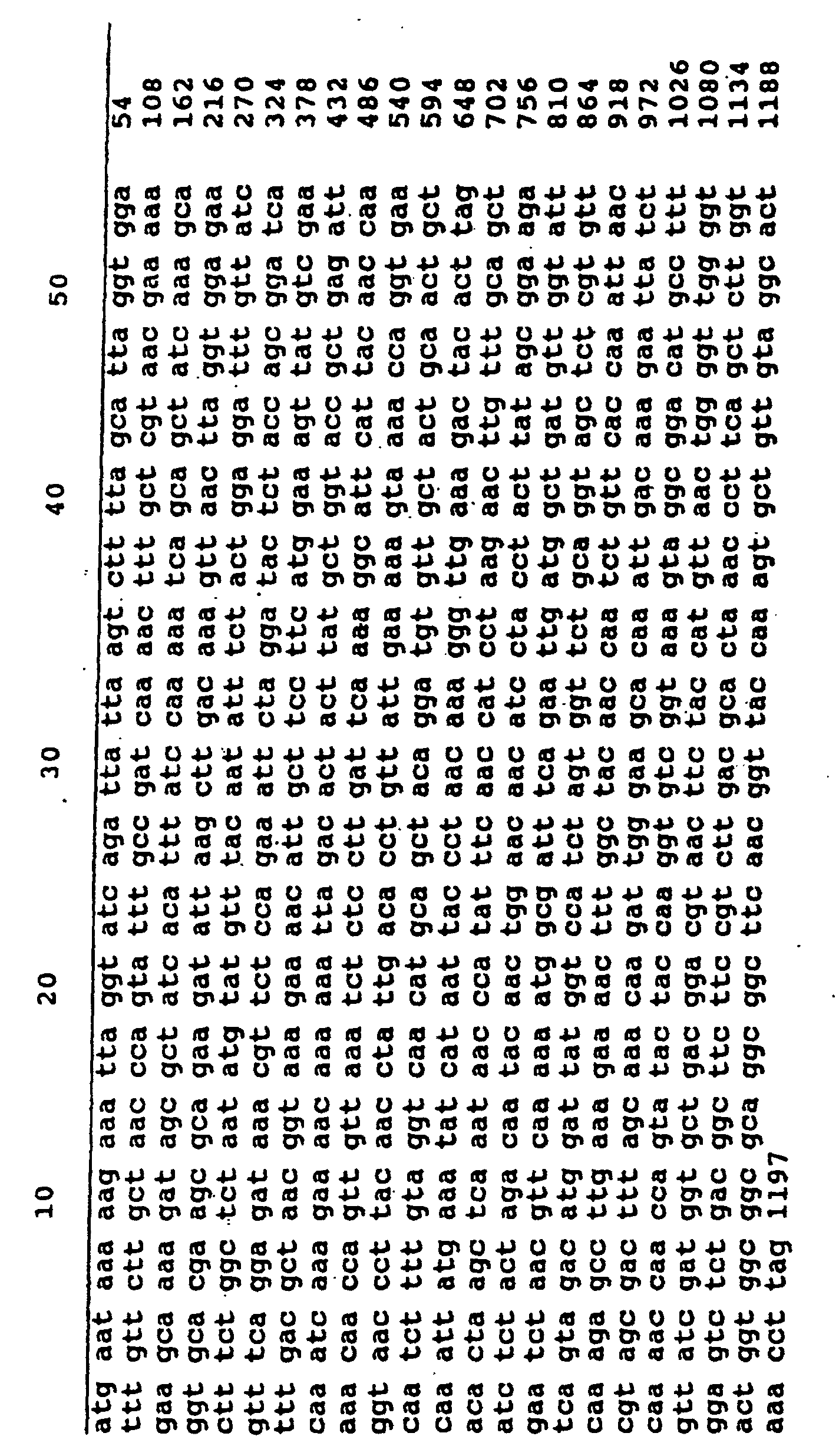

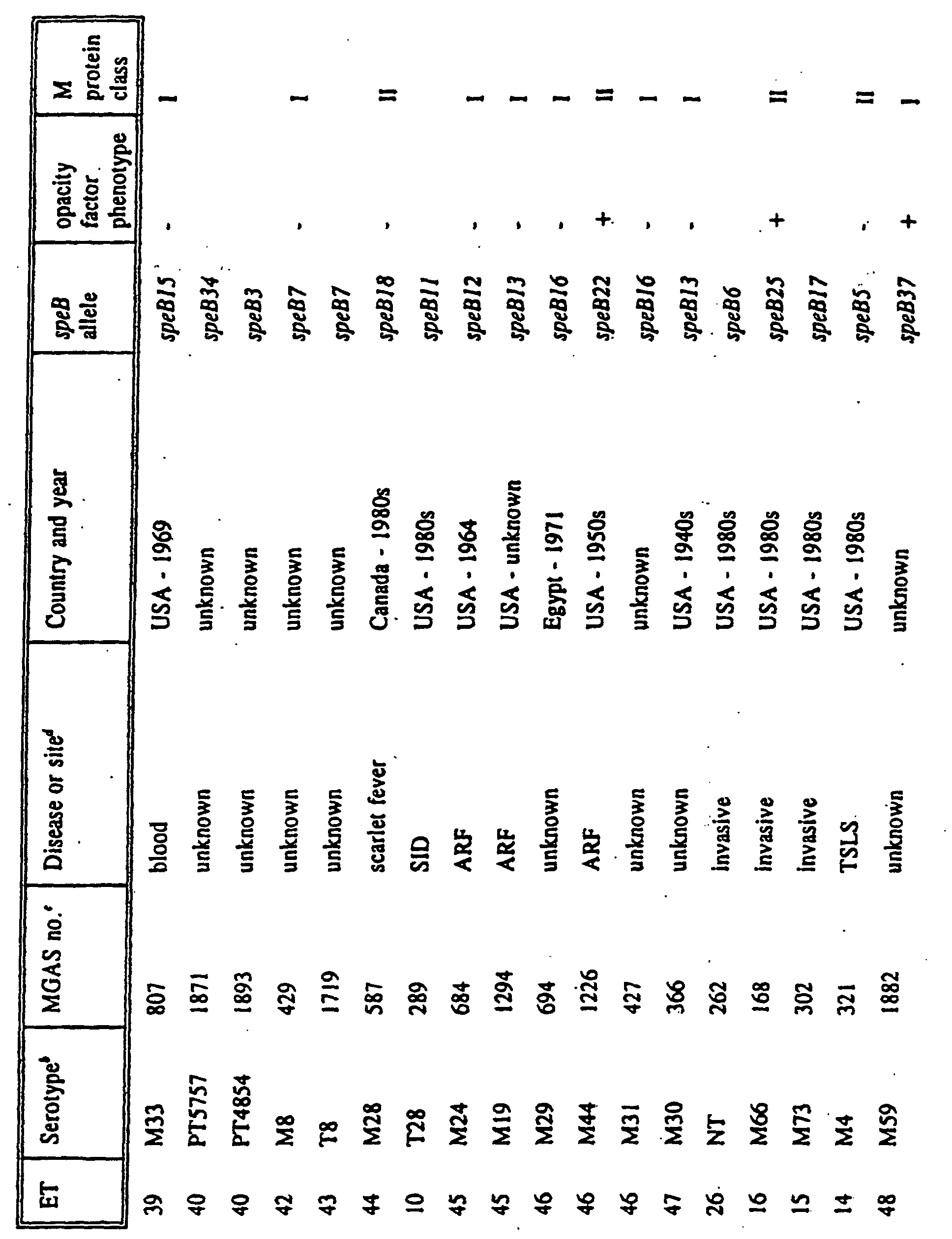


However, the configuration of amino acids around the active cysteine residue is identical in strain B220 and all strains characterized thus far. Therefore, the proposition of Hauser and Schlievert (1990) that the lack of protease activity associated with SPEB purified from their Ml2 strain 86-858 is a consequence of the difference in amino acid sequence around the Cys residue is incorrect.





Kapur M.D., Vivek




Topouzis, S.
Majesky, M. W.
Li, L.- L.
Hamrick, M. R.
Hamill, R. J.
Patti, J. M.
Musser, J. M.
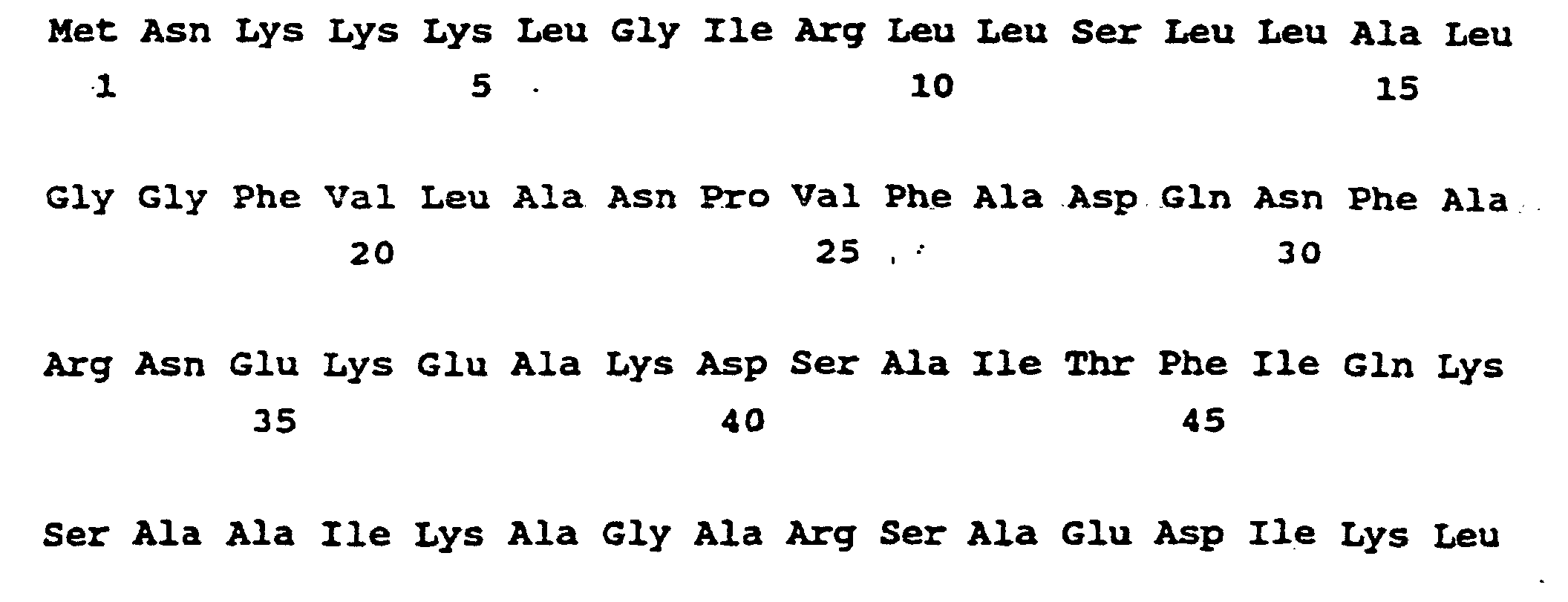













































Claims (16)
- A vaccine comprising a physiologically acceptable non-toxic vehicle containing a purified non-proteolytic streptococcal pyrogenic exotoxin B (SPEB) which confers immunity to a mammal against Group A streptococcal infection, wherein the SPEB comprises at least one amino acid substitution at Cys192 or His340.
- A vaccine as claimed in claim 1, when adapted to confer immunity against an infection selected from pharyngitis, tonsillitis, skin infections, acute rheumatic fever, scarlet fever, post-streptococcal glomerulonephritis, sepsis and toxic-shock-like syndrome.
- A vaccine as claimed in claim 1 or claim 2 further comprising a purified streptococcal M protein antigen.
- A vaccine as claimed in any one of the preceding claims when adapted to be given by parenteral administration.
- A vaccine as claimed in any one of the preceding claims when adapted for parenteral administration by subcutaneous administration or intramuscular administration.
- A vaccine as claimed in any one of claims 1 to 3 when adapted to be administered orally.
- A vaccine as claimed in any one of the preceding claims when adapted to be administered in multiple doses.
- A vaccine as claimed in any one of the preceding claims when adapted to be administered to a human.
- A purified non-proteolytic streptococcal pyrogenic exotoxin B (SPEB) protein which comprises at least one amino acid substitution at Cys192 or His340.
- A protein as claimed in claim 9 wherein the amino acid substitution is Cys192→Ala192, Cys192→Ser192 or His340→Ala340.
- The use of a purified non-proteolytic streptococcal pyrogenic exotoxin B (SPEB) as defined in claim 9 or 10 for the manufacture of a vaccine for conferring immunity to a mammal against Group A streptococcal infection.
- Use as claimed in claim 11, wherein the vaccine is adapted to confer immunity against an infection selected from pharyngitis, tonsillitis, skin infections, acute rheumatic fever, scarlet fever, post-streptococcal glomerulonephritis, sepsis and toxic-shock-like syndrome.
- Use as claimed in claim 11 or 12, wherein the vaccine further comprises a purified streptococcal M protein antigen
- Use as claimed in any one of claims 11 to 13, wherein the vaccine is adapted to be given by parenteral, subcutaneous, intramuscular or oral administration.
- Use as claimed in any one of claims 11 to 14, wherein the vaccine is adapted to be administered in multiple doses.
- Use as claimed in any one of claims 11 to 15, wherein the vaccine is adapted to be administered to a human.
Applications Claiming Priority (3)
| Application Number | Priority Date | Filing Date | Title |
|---|---|---|---|
| US30654294A | 1994-09-14 | 1994-09-14 | |
| PCT/US1995/011723 WO1996008569A2 (en) | 1994-09-14 | 1995-09-13 | Methods and compositions for identifying streptococcus containing a cysteine protease or fragment thereof |
| US306542 | 1999-05-05 |
Publications (2)
| Publication Number | Publication Date |
|---|---|
| EP0781340A1 EP0781340A1 (en) | 1997-07-02 |
| EP0781340B1 true EP0781340B1 (en) | 2005-05-04 |
Family
ID=23185762
Family Applications (1)
| Application Number | Title | Priority Date | Filing Date |
|---|---|---|---|
| EP95932518A Expired - Lifetime EP0781340B1 (en) | 1994-09-14 | 1995-09-13 | Vaccine against group A Streptococcal infection |
Country Status (9)
| Country | Link |
|---|---|
| US (1) | US6030835A (en) |
| EP (1) | EP0781340B1 (en) |
| JP (2) | JPH10505752A (en) |
| AT (1) | ATE294868T1 (en) |
| AU (1) | AU714435B2 (en) |
| CA (1) | CA2199867A1 (en) |
| DE (1) | DE69534186T2 (en) |
| ES (1) | ES2242191T3 (en) |
| WO (1) | WO1996008569A2 (en) |
Cited By (1)
| Publication number | Priority date | Publication date | Assignee | Title |
|---|---|---|---|---|
| US10098940B2 (en) | 2014-06-20 | 2018-10-16 | University Of Saskatchewan | Exotoxin/thermolysin compositions and methods and uses for treating or preventing laminitis |
Families Citing this family (12)
| Publication number | Priority date | Publication date | Assignee | Title |
|---|---|---|---|---|
| SE9601901D0 (en) * | 1996-05-20 | 1996-05-20 | Lars Bjoerck | Quinine antagonists for use as a pharmaceutical |
| US6242210B1 (en) | 1997-05-20 | 2001-06-05 | Actinova Limited | Treatment of bacterial infections |
| US7087235B2 (en) * | 1997-06-25 | 2006-08-08 | The United States Of America As Represented By The Secretary Of The Army | Fusion protein of streptococcal pyrogenic exotoxins |
| WO2000067037A2 (en) | 1999-04-29 | 2000-11-09 | Dade Microscan Inc. | A combined rapid anti-microbial susceptibility assay and microorganism identification system |
| US7939087B2 (en) * | 2000-10-27 | 2011-05-10 | Novartis Vaccines And Diagnostics, Inc. | Nucleic acids and proteins from Streptococcus groups A & B |
| AU2004204751A1 (en) * | 2003-01-09 | 2004-07-29 | The Trustees Of The University Of Pennsylvania | Compositions, methods and kits for enhancing the immunogenicity of a bacterial vaccine vector |
| ATE525478T1 (en) * | 2003-12-05 | 2011-10-15 | Univ Mcgill | SERUM BIOMARKER FOR CHAGAS DISEASE |
| US9115382B2 (en) * | 2004-06-03 | 2015-08-25 | Leroy E. Mosher | Kit for detection of hemolytic Streptococcus |
| US7316910B2 (en) * | 2004-06-03 | 2008-01-08 | Kinase Scientific, Llc | Rapid test for hemolytic streptococcus |
| WO2012040434A2 (en) * | 2010-09-23 | 2012-03-29 | Eci Biotech, Inc. | Ultrasensitive detection of beta hemolytic streptococcus |
| WO2013020090A2 (en) | 2011-08-04 | 2013-02-07 | The Regents Of The University Of California | STREPTOCOCCAL GLcNAc-LACKING GLYCOPOLYPEPTIDES, CELL WALL CARBOHYDRATES, STREPTOCOCCUS VACCINES, AND METHODS FOR MAKING AND USING THEM |
| US11376588B2 (en) | 2020-06-10 | 2022-07-05 | Checkable Medical Incorporated | In vitro diagnostic device |
Family Cites Families (4)
| Publication number | Priority date | Publication date | Assignee | Title |
|---|---|---|---|---|
| US4454121A (en) * | 1982-07-27 | 1984-06-12 | The University Of Tennessee Research Corporation | Synthetic peptides corresponding to antigenic determinants of the M protein of Streptococcus pyogenes |
| ZA883975B (en) * | 1987-06-05 | 1989-04-26 | Commw Scient Ind Res Org | Treatment and diagnosis of footrot using the basic protease of b.nodosus |
| FR2685334B1 (en) * | 1991-12-23 | 1995-05-05 | Bio Merieux | POLYPEPTIDES CONTAINING CHARACTERISTIC SEQUENCES OF PYRROLIDONE CARBOXYLYL PEPTIDASES, POLYNUCLEOTIDES CONTAINING A SEQUENCE ENCODING SUCH POLYPEPTIDES, AND THEIR USE. |
| DE4240056A1 (en) * | 1992-11-28 | 1994-06-01 | Boehringer Mannheim Gmbh | Streptolysin O peptide antigens and method for the determination of streptolysin antibodies |
-
1995
- 1995-09-13 JP JP8510364A patent/JPH10505752A/en not_active Ceased
- 1995-09-13 CA CA002199867A patent/CA2199867A1/en not_active Abandoned
- 1995-09-13 EP EP95932518A patent/EP0781340B1/en not_active Expired - Lifetime
- 1995-09-13 WO PCT/US1995/011723 patent/WO1996008569A2/en not_active Ceased
- 1995-09-13 ES ES95932518T patent/ES2242191T3/en not_active Expired - Lifetime
- 1995-09-13 AU AU35538/95A patent/AU714435B2/en not_active Ceased
- 1995-09-13 DE DE69534186T patent/DE69534186T2/en not_active Expired - Fee Related
- 1995-09-13 AT AT95932518T patent/ATE294868T1/en not_active IP Right Cessation
-
1997
- 1997-09-16 US US08/931,220 patent/US6030835A/en not_active Expired - Fee Related
-
2004
- 2004-02-06 JP JP2004030434A patent/JP3920271B2/en not_active Expired - Fee Related
Cited By (1)
| Publication number | Priority date | Publication date | Assignee | Title |
|---|---|---|---|---|
| US10098940B2 (en) | 2014-06-20 | 2018-10-16 | University Of Saskatchewan | Exotoxin/thermolysin compositions and methods and uses for treating or preventing laminitis |
Also Published As
| Publication number | Publication date |
|---|---|
| ES2242191T3 (en) | 2005-11-01 |
| CA2199867A1 (en) | 1996-03-21 |
| ATE294868T1 (en) | 2005-05-15 |
| DE69534186T2 (en) | 2006-03-09 |
| JP3920271B2 (en) | 2007-05-30 |
| AU714435B2 (en) | 2000-01-06 |
| US6030835A (en) | 2000-02-29 |
| EP0781340A1 (en) | 1997-07-02 |
| JPH10505752A (en) | 1998-06-09 |
| JP2004187688A (en) | 2004-07-08 |
| WO1996008569A3 (en) | 1996-07-18 |
| WO1996008569A2 (en) | 1996-03-21 |
| AU3553895A (en) | 1996-03-29 |
| DE69534186D1 (en) | 2005-06-09 |
Similar Documents
| Publication | Publication Date | Title |
|---|---|---|
| JP5122703B2 (en) | Streptococcus C5a peptidase vaccine | |
| US8728490B2 (en) | Streptococcus suis vaccines and diagnostic tests | |
| JP3581352B2 (en) | Helicobacter pylori genes required for urease regulation and maturation and uses thereof | |
| US6291654B1 (en) | Method for isolating a C3 binding protein of streptococcus pneumoniae | |
| US8071111B2 (en) | Virulence of Streptococci | |
| WO1998021337A9 (en) | C3 BINDING PROTEIN OF $i(STREPTOCOCCUS PNEUMONIAE) | |
| ES2303723T3 (en) | PROTEIN THAT CONFERSES A RESISTANCE OF INDUCIBLE TYPE AGAINST GLICOPEPTIDES, ESPECIALLY IN GRAM-POSITIVE BACTERIA. | |
| WO1997034629A1 (en) | Immunogenic compositions comprising porphyromonas gingivalis peptides and methods | |
| KR20010089280A (en) | Human complement c3-degrading polypeptide from streptococcus pneumoniae | |
| EP0871733A2 (en) | Cloned porphyromonas gingivalis genes and probes for the detection of periodontal disease | |
| ES2242191T3 (en) | VACCINE AGAINST INFECTION BY STREPTOCOCES OF GROUP A. | |
| CA2049984A1 (en) | Immunoglobulin al proteases (iga1 proteases), method of gene-technologically producing this type of enzyme and vaccines containing the enzymes and fragments thereof for immunizingagainst bacterial meningitis and other diseases caused by iga1 protease-producing bacteria | |
| Gilbert et al. | Cloning of the gene encoding streptococcal immunoglobulin A protease and its expression in Escherichia coli | |
| US6676943B1 (en) | Human complement C3-degrading protein from Streptococcus pneumoniae | |
| AU2002318786B2 (en) | Vaccine based on a cysteine protease or fragment thereof | |
| JPH07504166A (en) | Streptokinase-based vaccines | |
| WO1996034941A1 (en) | Use of extracellular cysteine protease to inhibit cell proliferation | |
| WO2001016172A1 (en) | Vaccine antigens of moraxella | |
| JPH11332580A (en) | New AmpS | |
| Park | A study of a membrane-associated protease of porphyromonas gigngivalis W83 |
Legal Events
| Date | Code | Title | Description |
|---|---|---|---|
| PUAI | Public reference made under article 153(3) epc to a published international application that has entered the european phase |
Free format text: ORIGINAL CODE: 0009012 |
|
| 17P | Request for examination filed |
Effective date: 19970327 |
|
| AK | Designated contracting states |
Kind code of ref document: A1 Designated state(s): AT CH DE ES FR GB IT LI NL SE |
|
| 17Q | First examination report despatched |
Effective date: 20010321 |
|
| RIC1 | Information provided on ipc code assigned before grant |
Free format text: 7C 12N 15/57 A, 7C 12N 9/52 B, 7A 61K 39/09 B, 7C 12N 5/02 B, 7C 07K 16/40 B |
|
| GRAP | Despatch of communication of intention to grant a patent |
Free format text: ORIGINAL CODE: EPIDOSNIGR1 |
|
| RIC1 | Information provided on ipc code assigned before grant |
Ipc: 7C 12N 1/21 B Ipc: 7C 12Q 1/68 B Ipc: 7G 01N 33/573 B Ipc: 7G 01N 33/569 B Ipc: 7C 12Q 1/37 B Ipc: 7C 12Q 1/14 B Ipc: 7C 07K 16/40 B Ipc: 7C 12N 5/02 B Ipc: 7A 61K 39/09 B Ipc: 7C 12N 9/52 B Ipc: 7C 12N 15/57 A |
|
| RTI1 | Title (correction) |
Free format text: VACCINE AGAINST GROUP A STREPTOCOCCAL INFECTION |
|
| GRAS | Grant fee paid |
Free format text: ORIGINAL CODE: EPIDOSNIGR3 |
|
| GRAA | (expected) grant |
Free format text: ORIGINAL CODE: 0009210 |
|
| AK | Designated contracting states |
Kind code of ref document: B1 Designated state(s): AT CH DE ES FR GB IT LI NL SE |
|
| REG | Reference to a national code |
Ref country code: GB Ref legal event code: FG4D |
|
| REG | Reference to a national code |
Ref country code: CH Ref legal event code: EP |
|
| REG | Reference to a national code |
Ref country code: SE Ref legal event code: TRGR |
|
| REF | Corresponds to: |
Ref document number: 69534186 Country of ref document: DE Date of ref document: 20050609 Kind code of ref document: P |
|
| REG | Reference to a national code |
Ref country code: CH Ref legal event code: NV Representative=s name: R. A. EGLI & CO. PATENTANWAELTE |
|
| REG | Reference to a national code |
Ref country code: ES Ref legal event code: FG2A Ref document number: 2242191 Country of ref document: ES Kind code of ref document: T3 |
|
| PLBE | No opposition filed within time limit |
Free format text: ORIGINAL CODE: 0009261 |
|
| STAA | Information on the status of an ep patent application or granted ep patent |
Free format text: STATUS: NO OPPOSITION FILED WITHIN TIME LIMIT |
|
| ET | Fr: translation filed | ||
| 26N | No opposition filed |
Effective date: 20060207 |
|
| PGFP | Annual fee paid to national office [announced via postgrant information from national office to epo] |
Ref country code: NL Payment date: 20060903 Year of fee payment: 12 |
|
| PGFP | Annual fee paid to national office [announced via postgrant information from national office to epo] |
Ref country code: DE Payment date: 20060907 Year of fee payment: 12 |
|
| PGFP | Annual fee paid to national office [announced via postgrant information from national office to epo] |
Ref country code: FR Payment date: 20060908 Year of fee payment: 12 |
|
| PGFP | Annual fee paid to national office [announced via postgrant information from national office to epo] |
Ref country code: GB Payment date: 20060913 Year of fee payment: 12 Ref country code: CH Payment date: 20060913 Year of fee payment: 12 Ref country code: AT Payment date: 20060913 Year of fee payment: 12 |
|
| PGFP | Annual fee paid to national office [announced via postgrant information from national office to epo] |
Ref country code: IT Payment date: 20060930 Year of fee payment: 12 |
|
| PGFP | Annual fee paid to national office [announced via postgrant information from national office to epo] |
Ref country code: ES Payment date: 20061023 Year of fee payment: 12 |
|
| PGFP | Annual fee paid to national office [announced via postgrant information from national office to epo] |
Ref country code: SE Payment date: 20060906 Year of fee payment: 12 |
|
| PG25 | Lapsed in a contracting state [announced via postgrant information from national office to epo] |
Ref country code: SE Free format text: LAPSE BECAUSE OF NON-PAYMENT OF DUE FEES Effective date: 20070914 |
|
| REG | Reference to a national code |
Ref country code: CH Ref legal event code: PL |
|
| EUG | Se: european patent has lapsed | ||
| GBPC | Gb: european patent ceased through non-payment of renewal fee |
Effective date: 20070913 |
|
| PG25 | Lapsed in a contracting state [announced via postgrant information from national office to epo] |
Ref country code: NL Free format text: LAPSE BECAUSE OF NON-PAYMENT OF DUE FEES Effective date: 20080401 |
|
| NLV4 | Nl: lapsed or anulled due to non-payment of the annual fee |
Effective date: 20080401 |
|
| PG25 | Lapsed in a contracting state [announced via postgrant information from national office to epo] |
Ref country code: AT Free format text: LAPSE BECAUSE OF NON-PAYMENT OF DUE FEES Effective date: 20070913 |
|
| PG25 | Lapsed in a contracting state [announced via postgrant information from national office to epo] |
Ref country code: LI Free format text: LAPSE BECAUSE OF NON-PAYMENT OF DUE FEES Effective date: 20070930 Ref country code: DE Free format text: LAPSE BECAUSE OF NON-PAYMENT OF DUE FEES Effective date: 20080401 Ref country code: CH Free format text: LAPSE BECAUSE OF NON-PAYMENT OF DUE FEES Effective date: 20070930 |
|
| REG | Reference to a national code |
Ref country code: FR Ref legal event code: ST Effective date: 20080531 |
|
| PG25 | Lapsed in a contracting state [announced via postgrant information from national office to epo] |
Ref country code: FR Free format text: LAPSE BECAUSE OF NON-PAYMENT OF DUE FEES Effective date: 20071001 |
|
| PG25 | Lapsed in a contracting state [announced via postgrant information from national office to epo] |
Ref country code: GB Free format text: LAPSE BECAUSE OF NON-PAYMENT OF DUE FEES Effective date: 20070913 |
|
| REG | Reference to a national code |
Ref country code: ES Ref legal event code: FD2A Effective date: 20070914 |
|
| PG25 | Lapsed in a contracting state [announced via postgrant information from national office to epo] |
Ref country code: ES Free format text: LAPSE BECAUSE OF NON-PAYMENT OF DUE FEES Effective date: 20070914 |
|
| PG25 | Lapsed in a contracting state [announced via postgrant information from national office to epo] |
Ref country code: IT Free format text: LAPSE BECAUSE OF NON-PAYMENT OF DUE FEES Effective date: 20070913 |