EP0779363A2 - Improvements in or relating to soluble starch synthase - Google Patents
Improvements in or relating to soluble starch synthase Download PDFInfo
- Publication number
- EP0779363A2 EP0779363A2 EP96309004A EP96309004A EP0779363A2 EP 0779363 A2 EP0779363 A2 EP 0779363A2 EP 96309004 A EP96309004 A EP 96309004A EP 96309004 A EP96309004 A EP 96309004A EP 0779363 A2 EP0779363 A2 EP 0779363A2
- Authority
- EP
- European Patent Office
- Prior art keywords
- starch
- plant
- extracted
- sequence
- potato
- Prior art date
- Legal status (The legal status is an assumption and is not a legal conclusion. Google has not performed a legal analysis and makes no representation as to the accuracy of the status listed.)
- Withdrawn
Links
- 108010039811 Starch synthase Proteins 0.000 title claims description 167
- 241000196324 Embryophyta Species 0.000 claims abstract description 94
- 229920002472 Starch Polymers 0.000 claims abstract description 80
- 235000019698 starch Nutrition 0.000 claims abstract description 80
- 239000008107 starch Substances 0.000 claims abstract description 79
- 244000061456 Solanum tuberosum Species 0.000 claims abstract description 58
- 108091028043 Nucleic acid sequence Proteins 0.000 claims abstract description 27
- 150000007523 nucleic acids Chemical group 0.000 claims abstract description 27
- 230000000692 anti-sense effect Effects 0.000 claims abstract description 21
- 238000000113 differential scanning calorimetry Methods 0.000 claims abstract description 11
- 230000001747 exhibiting effect Effects 0.000 claims abstract description 5
- 230000000694 effects Effects 0.000 claims description 101
- 235000002595 Solanum tuberosum Nutrition 0.000 claims description 45
- 239000000284 extract Substances 0.000 claims description 43
- 108090000765 processed proteins & peptides Proteins 0.000 claims description 25
- 102000004196 processed proteins & peptides Human genes 0.000 claims description 24
- 229920001184 polypeptide Polymers 0.000 claims description 23
- 238000000034 method Methods 0.000 claims description 20
- 238000002415 sodium dodecyl sulfate polyacrylamide gel electrophoresis Methods 0.000 claims description 14
- 229920000856 Amylose Polymers 0.000 claims description 7
- 240000008042 Zea mays Species 0.000 claims description 5
- 235000016383 Zea mays subsp huehuetenangensis Nutrition 0.000 claims description 5
- 235000002017 Zea mays subsp mays Nutrition 0.000 claims description 5
- 235000009973 maize Nutrition 0.000 claims description 5
- 235000021307 Triticum Nutrition 0.000 claims description 4
- 108020004707 nucleic acids Proteins 0.000 claims description 4
- 102000039446 nucleic acids Human genes 0.000 claims description 4
- 240000007594 Oryza sativa Species 0.000 claims description 3
- 235000007164 Oryza sativa Nutrition 0.000 claims description 3
- 235000009566 rice Nutrition 0.000 claims description 3
- 244000075850 Avena orientalis Species 0.000 claims description 2
- 235000007319 Avena orientalis Nutrition 0.000 claims description 2
- 235000007558 Avena sp Nutrition 0.000 claims description 2
- 235000007340 Hordeum vulgare Nutrition 0.000 claims description 2
- 240000005979 Hordeum vulgare Species 0.000 claims description 2
- 244000017020 Ipomoea batatas Species 0.000 claims description 2
- 235000002678 Ipomoea batatas Nutrition 0.000 claims description 2
- 235000007688 Lycopersicon esculentum Nutrition 0.000 claims description 2
- 240000003183 Manihot esculenta Species 0.000 claims description 2
- 235000016735 Manihot esculenta subsp esculenta Nutrition 0.000 claims description 2
- 240000003768 Solanum lycopersicum Species 0.000 claims description 2
- 108091036066 Three prime untranslated region Proteins 0.000 claims description 2
- 244000098338 Triticum aestivum Species 0.000 claims 1
- 125000003275 alpha amino acid group Chemical group 0.000 claims 1
- 108090000623 proteins and genes Proteins 0.000 description 75
- 102000004169 proteins and genes Human genes 0.000 description 64
- 239000008187 granular material Substances 0.000 description 31
- PEDCQBHIVMGVHV-UHFFFAOYSA-N Glycerine Chemical compound OCC(O)CO PEDCQBHIVMGVHV-UHFFFAOYSA-N 0.000 description 27
- 239000000499 gel Substances 0.000 description 25
- RJKFOVLPORLFTN-LEKSSAKUSA-N Progesterone Chemical compound C1CC2=CC(=O)CC[C@]2(C)[C@@H]2[C@@H]1[C@@H]1CC[C@H](C(=O)C)[C@@]1(C)CC2 RJKFOVLPORLFTN-LEKSSAKUSA-N 0.000 description 23
- 241000219843 Pisum Species 0.000 description 22
- 235000010582 Pisum sativum Nutrition 0.000 description 22
- 102000001708 Protein Isoforms Human genes 0.000 description 18
- 108010029485 Protein Isoforms Proteins 0.000 description 18
- 150000001413 amino acids Chemical group 0.000 description 18
- 238000000746 purification Methods 0.000 description 17
- 210000002966 serum Anatomy 0.000 description 16
- 239000002299 complementary DNA Substances 0.000 description 14
- 239000006228 supernatant Substances 0.000 description 14
- 230000009467 reduction Effects 0.000 description 13
- 210000004027 cell Anatomy 0.000 description 12
- 238000002474 experimental method Methods 0.000 description 12
- 210000001161 mammalian embryo Anatomy 0.000 description 12
- 238000001114 immunoprecipitation Methods 0.000 description 10
- 238000002360 preparation method Methods 0.000 description 10
- LOKCTEFSRHRXRJ-UHFFFAOYSA-I dipotassium trisodium dihydrogen phosphate hydrogen phosphate dichloride Chemical compound P(=O)(O)(O)[O-].[K+].P(=O)(O)([O-])[O-].[Na+].[Na+].[Cl-].[K+].[Cl-].[Na+] LOKCTEFSRHRXRJ-UHFFFAOYSA-I 0.000 description 9
- 238000003119 immunoblot Methods 0.000 description 9
- 229920002684 Sepharose Polymers 0.000 description 8
- 238000010790 dilution Methods 0.000 description 8
- 239000012895 dilution Substances 0.000 description 8
- 108010004047 granule-bound starch synthase I Proteins 0.000 description 8
- 239000002773 nucleotide Substances 0.000 description 8
- 125000003729 nucleotide group Chemical group 0.000 description 8
- 239000013612 plasmid Substances 0.000 description 8
- 239000000047 product Substances 0.000 description 8
- QKNYBSVHEMOAJP-UHFFFAOYSA-N 2-amino-2-(hydroxymethyl)propane-1,3-diol;hydron;chloride Chemical compound Cl.OCC(N)(CO)CO QKNYBSVHEMOAJP-UHFFFAOYSA-N 0.000 description 7
- 230000015572 biosynthetic process Effects 0.000 description 7
- 238000005119 centrifugation Methods 0.000 description 7
- 239000012634 fragment Substances 0.000 description 7
- 210000000056 organ Anatomy 0.000 description 7
- 239000002953 phosphate buffered saline Substances 0.000 description 7
- HRPVXLWXLXDGHG-UHFFFAOYSA-N Acrylamide Chemical compound NC(=O)C=C HRPVXLWXLXDGHG-UHFFFAOYSA-N 0.000 description 6
- 229920002271 DEAE-Sepharose Polymers 0.000 description 6
- KCXVZYZYPLLWCC-UHFFFAOYSA-N EDTA Chemical compound OC(=O)CN(CC(O)=O)CCN(CC(O)=O)CC(O)=O KCXVZYZYPLLWCC-UHFFFAOYSA-N 0.000 description 6
- 102000004190 Enzymes Human genes 0.000 description 6
- 108090000790 Enzymes Proteins 0.000 description 6
- 238000004458 analytical method Methods 0.000 description 6
- VHJLVAABSRFDPM-QWWZWVQMSA-N dithiothreitol Chemical compound SC[C@@H](O)[C@H](O)CS VHJLVAABSRFDPM-QWWZWVQMSA-N 0.000 description 6
- 229960001484 edetic acid Drugs 0.000 description 6
- 239000001509 sodium citrate Substances 0.000 description 6
- NLJMYIDDQXHKNR-UHFFFAOYSA-K sodium citrate Chemical compound O.O.[Na+].[Na+].[Na+].[O-]C(=O)CC(O)(CC([O-])=O)C([O-])=O NLJMYIDDQXHKNR-UHFFFAOYSA-K 0.000 description 6
- 238000003786 synthesis reaction Methods 0.000 description 6
- 108091032973 (ribonucleotides)n+m Proteins 0.000 description 5
- 101710173353 Cytotoxicity-associated immunodominant antigen Proteins 0.000 description 5
- 108060003951 Immunoglobulin Proteins 0.000 description 5
- DBMJMQXJHONAFJ-UHFFFAOYSA-M Sodium laurylsulphate Chemical compound [Na+].CCCCCCCCCCCCOS([O-])(=O)=O DBMJMQXJHONAFJ-UHFFFAOYSA-M 0.000 description 5
- 229930092411 Swietenocoumarin D Natural products 0.000 description 5
- HFHDHCJBZVLPGP-RWMJIURBSA-N alpha-cyclodextrin Chemical compound OC[C@H]([C@H]([C@@H]([C@H]1O)O)O[C@H]2O[C@@H]([C@@H](O[C@H]3O[C@H](CO)[C@H]([C@@H]([C@H]3O)O)O[C@H]3O[C@H](CO)[C@H]([C@@H]([C@H]3O)O)O[C@H]3O[C@H](CO)[C@H]([C@@H]([C@H]3O)O)O3)[C@H](O)[C@H]2O)CO)O[C@@H]1O[C@H]1[C@H](O)[C@@H](O)[C@@H]3O[C@@H]1CO HFHDHCJBZVLPGP-RWMJIURBSA-N 0.000 description 5
- 230000004075 alteration Effects 0.000 description 5
- 230000015556 catabolic process Effects 0.000 description 5
- 102000018358 immunoglobulin Human genes 0.000 description 5
- 230000005764 inhibitory process Effects 0.000 description 5
- 239000000463 material Substances 0.000 description 5
- 238000001426 native polyacrylamide gel electrophoresis Methods 0.000 description 5
- 235000019333 sodium laurylsulphate Nutrition 0.000 description 5
- 230000009466 transformation Effects 0.000 description 5
- 230000009261 transgenic effect Effects 0.000 description 5
- 239000013598 vector Substances 0.000 description 5
- WFPZSXYXPSUOPY-ROYWQJLOSA-N ADP alpha-D-glucoside Chemical compound C([C@H]1O[C@H]([C@@H]([C@@H]1O)O)N1C=2N=CN=C(C=2N=C1)N)OP(O)(=O)OP(O)(=O)O[C@H]1O[C@H](CO)[C@@H](O)[C@H](O)[C@H]1O WFPZSXYXPSUOPY-ROYWQJLOSA-N 0.000 description 4
- GDBQQVLCIARPGH-UHFFFAOYSA-N Leupeptin Natural products CC(C)CC(NC(C)=O)C(=O)NC(CC(C)C)C(=O)NC(C=O)CCCN=C(N)N GDBQQVLCIARPGH-UHFFFAOYSA-N 0.000 description 4
- 241000283973 Oryctolagus cuniculus Species 0.000 description 4
- 210000004899 c-terminal region Anatomy 0.000 description 4
- 238000004587 chromatography analysis Methods 0.000 description 4
- GDBQQVLCIARPGH-ULQDDVLXSA-N leupeptin Chemical compound CC(C)C[C@H](NC(C)=O)C(=O)N[C@@H](CC(C)C)C(=O)N[C@H](C=O)CCCN=C(N)N GDBQQVLCIARPGH-ULQDDVLXSA-N 0.000 description 4
- 108010052968 leupeptin Proteins 0.000 description 4
- 108010091212 pepstatin Proteins 0.000 description 4
- FAXGPCHRFPCXOO-LXTPJMTPSA-N pepstatin A Chemical compound OC(=O)C[C@H](O)[C@H](CC(C)C)NC(=O)[C@H](C)NC(=O)C[C@H](O)[C@H](CC(C)C)NC(=O)[C@H](C(C)C)NC(=O)[C@H](C(C)C)NC(=O)CC(C)C FAXGPCHRFPCXOO-LXTPJMTPSA-N 0.000 description 4
- 239000000523 sample Substances 0.000 description 4
- 238000003860 storage Methods 0.000 description 4
- 230000001629 suppression Effects 0.000 description 4
- 108090000344 1,4-alpha-Glucan Branching Enzyme Proteins 0.000 description 3
- 102000003925 1,4-alpha-Glucan Branching Enzyme Human genes 0.000 description 3
- WFPZSXYXPSUOPY-UHFFFAOYSA-N ADP-mannose Natural products C1=NC=2C(N)=NC=NC=2N1C(C(C1O)O)OC1COP(O)(=O)OP(O)(=O)OC1OC(CO)C(O)C(O)C1O WFPZSXYXPSUOPY-UHFFFAOYSA-N 0.000 description 3
- QTBSBXVTEAMEQO-UHFFFAOYSA-N Acetic acid Chemical compound CC(O)=O QTBSBXVTEAMEQO-UHFFFAOYSA-N 0.000 description 3
- 229920000945 Amylopectin Polymers 0.000 description 3
- 108010001483 Glycogen Synthase Proteins 0.000 description 3
- 101000687323 Homo sapiens Rabenosyn-5 Proteins 0.000 description 3
- KWYHDKDOAIKMQN-UHFFFAOYSA-N N,N,N',N'-tetramethylethylenediamine Chemical compound CN(C)CCN(C)C KWYHDKDOAIKMQN-UHFFFAOYSA-N 0.000 description 3
- 102100024910 Rabenosyn-5 Human genes 0.000 description 3
- 241000209140 Triticum Species 0.000 description 3
- BFNBIHQBYMNNAN-UHFFFAOYSA-N ammonium sulfate Chemical compound N.N.OS(O)(=O)=O BFNBIHQBYMNNAN-UHFFFAOYSA-N 0.000 description 3
- 229910052921 ammonium sulfate Inorganic materials 0.000 description 3
- 238000009826 distribution Methods 0.000 description 3
- 239000000706 filtrate Substances 0.000 description 3
- 238000011534 incubation Methods 0.000 description 3
- 238000012986 modification Methods 0.000 description 3
- 230000004048 modification Effects 0.000 description 3
- ZIUHHBKFKCYYJD-UHFFFAOYSA-N n,n'-methylenebisacrylamide Chemical compound C=CC(=O)NCNC(=O)C=C ZIUHHBKFKCYYJD-UHFFFAOYSA-N 0.000 description 3
- 235000012015 potatoes Nutrition 0.000 description 3
- 239000002244 precipitate Substances 0.000 description 3
- 230000008569 process Effects 0.000 description 3
- XLYOFNOQVPJJNP-UHFFFAOYSA-N water Substances O XLYOFNOQVPJJNP-UHFFFAOYSA-N 0.000 description 3
- 239000004160 Ammonium persulphate Substances 0.000 description 2
- 108091003079 Bovine Serum Albumin Proteins 0.000 description 2
- 241000283707 Capra Species 0.000 description 2
- 241000701489 Cauliflower mosaic virus Species 0.000 description 2
- KRKNYBCHXYNGOX-UHFFFAOYSA-K Citrate Chemical compound [O-]C(=O)CC(O)(CC([O-])=O)C([O-])=O KRKNYBCHXYNGOX-UHFFFAOYSA-K 0.000 description 2
- 108020004414 DNA Proteins 0.000 description 2
- WQZGKKKJIJFFOK-GASJEMHNSA-N Glucose Natural products OC[C@H]1OC(O)[C@H](O)[C@@H](O)[C@@H]1O WQZGKKKJIJFFOK-GASJEMHNSA-N 0.000 description 2
- DHMQDGOQFOQNFH-UHFFFAOYSA-N Glycine Chemical compound NCC(O)=O DHMQDGOQFOQNFH-UHFFFAOYSA-N 0.000 description 2
- 101710091688 Patatin Proteins 0.000 description 2
- 239000002202 Polyethylene glycol Substances 0.000 description 2
- 108091034057 RNA (poly(A)) Proteins 0.000 description 2
- MTCFGRXMJLQNBG-UHFFFAOYSA-N Serine Natural products OCC(N)C(O)=O MTCFGRXMJLQNBG-UHFFFAOYSA-N 0.000 description 2
- FAPWRFPIFSIZLT-UHFFFAOYSA-M Sodium chloride Chemical compound [Na+].[Cl-] FAPWRFPIFSIZLT-UHFFFAOYSA-M 0.000 description 2
- 239000002253 acid Substances 0.000 description 2
- 150000007513 acids Chemical class 0.000 description 2
- 239000002671 adjuvant Substances 0.000 description 2
- ROOXNKNUYICQNP-UHFFFAOYSA-N ammonium persulfate Chemical compound [NH4+].[NH4+].[O-]S(=O)(=O)OOS([O-])(=O)=O ROOXNKNUYICQNP-UHFFFAOYSA-N 0.000 description 2
- 235000019395 ammonium persulphate Nutrition 0.000 description 2
- 230000001580 bacterial effect Effects 0.000 description 2
- 230000008901 benefit Effects 0.000 description 2
- 229940098773 bovine serum albumin Drugs 0.000 description 2
- UDSAIICHUKSCKT-UHFFFAOYSA-N bromophenol blue Chemical compound C1=C(Br)C(O)=C(Br)C=C1C1(C=2C=C(Br)C(O)=C(Br)C=2)C2=CC=CC=C2S(=O)(=O)O1 UDSAIICHUKSCKT-UHFFFAOYSA-N 0.000 description 2
- 239000000872 buffer Substances 0.000 description 2
- 230000003197 catalytic effect Effects 0.000 description 2
- 235000013339 cereals Nutrition 0.000 description 2
- 238000003776 cleavage reaction Methods 0.000 description 2
- 239000002361 compost Substances 0.000 description 2
- 238000004590 computer program Methods 0.000 description 2
- 239000000287 crude extract Substances 0.000 description 2
- 238000011161 development Methods 0.000 description 2
- 230000018109 developmental process Effects 0.000 description 2
- 238000010828 elution Methods 0.000 description 2
- 210000002257 embryonic structure Anatomy 0.000 description 2
- 239000008103 glucose Substances 0.000 description 2
- 238000001727 in vivo Methods 0.000 description 2
- 238000002347 injection Methods 0.000 description 2
- 239000007924 injection Substances 0.000 description 2
- 238000002955 isolation Methods 0.000 description 2
- 239000000203 mixture Substances 0.000 description 2
- 230000000704 physical effect Effects 0.000 description 2
- 229920001223 polyethylene glycol Polymers 0.000 description 2
- 125000001500 prolyl group Chemical group [H]N1C([H])(C(=O)[*])C([H])([H])C([H])([H])C1([H])[H] 0.000 description 2
- 238000012552 review Methods 0.000 description 2
- 239000012723 sample buffer Substances 0.000 description 2
- 230000007017 scission Effects 0.000 description 2
- HRZFUMHJMZEROT-UHFFFAOYSA-L sodium disulfite Chemical compound [Na+].[Na+].[O-]S(=O)S([O-])(=O)=O HRZFUMHJMZEROT-UHFFFAOYSA-L 0.000 description 2
- 239000004296 sodium metabisulphite Substances 0.000 description 2
- 235000010262 sodium metabisulphite Nutrition 0.000 description 2
- 239000002689 soil Substances 0.000 description 2
- 239000000725 suspension Substances 0.000 description 2
- 241000589158 Agrobacterium Species 0.000 description 1
- 241000589155 Agrobacterium tumefaciens Species 0.000 description 1
- 102000002260 Alkaline Phosphatase Human genes 0.000 description 1
- 108020004774 Alkaline Phosphatase Proteins 0.000 description 1
- 108020005544 Antisense RNA Proteins 0.000 description 1
- 241000894006 Bacteria Species 0.000 description 1
- 101710096830 DNA-3-methyladenine glycosylase Proteins 0.000 description 1
- 102100039128 DNA-3-methyladenine glycosylase Human genes 0.000 description 1
- 239000004471 Glycine Substances 0.000 description 1
- 229920002527 Glycogen Polymers 0.000 description 1
- 108010001336 Horseradish Peroxidase Proteins 0.000 description 1
- DKNPRRRKHAEUMW-UHFFFAOYSA-N Iodine aqueous Chemical compound [K+].I[I-]I DKNPRRRKHAEUMW-UHFFFAOYSA-N 0.000 description 1
- FSVCELGFZIQNCK-UHFFFAOYSA-N N,N-bis(2-hydroxyethyl)glycine Chemical compound OCCN(CCO)CC(O)=O FSVCELGFZIQNCK-UHFFFAOYSA-N 0.000 description 1
- 125000001429 N-terminal alpha-amino-acid group Chemical group 0.000 description 1
- 239000000020 Nitrocellulose Substances 0.000 description 1
- 108010030544 Peptidyl-Lys metalloendopeptidase Proteins 0.000 description 1
- 229920002584 Polyethylene Glycol 6000 Polymers 0.000 description 1
- 108091081021 Sense strand Proteins 0.000 description 1
- 101710106714 Shutoff protein Proteins 0.000 description 1
- BQCADISMDOOEFD-UHFFFAOYSA-N Silver Chemical compound [Ag] BQCADISMDOOEFD-UHFFFAOYSA-N 0.000 description 1
- 239000007983 Tris buffer Substances 0.000 description 1
- MZVQCMJNVPIDEA-UHFFFAOYSA-N [CH2]CN(CC)CC Chemical group [CH2]CN(CC)CC MZVQCMJNVPIDEA-UHFFFAOYSA-N 0.000 description 1
- 238000002835 absorbance Methods 0.000 description 1
- 230000002378 acidificating effect Effects 0.000 description 1
- 238000007792 addition Methods 0.000 description 1
- 238000005349 anion exchange Methods 0.000 description 1
- 238000013459 approach Methods 0.000 description 1
- 239000007900 aqueous suspension Substances 0.000 description 1
- 238000003556 assay Methods 0.000 description 1
- 239000007998 bicine buffer Substances 0.000 description 1
- 230000023852 carbohydrate metabolic process Effects 0.000 description 1
- 235000021256 carbohydrate metabolism Nutrition 0.000 description 1
- 238000012512 characterization method Methods 0.000 description 1
- 238000010382 chemical cross-linking Methods 0.000 description 1
- 239000003153 chemical reaction reagent Substances 0.000 description 1
- 108010031100 chloroplast transit peptides Proteins 0.000 description 1
- 239000002131 composite material Substances 0.000 description 1
- 238000010276 construction Methods 0.000 description 1
- 230000037029 cross reaction Effects 0.000 description 1
- 238000012217 deletion Methods 0.000 description 1
- 230000037430 deletion Effects 0.000 description 1
- 238000001212 derivatisation Methods 0.000 description 1
- 230000029087 digestion Effects 0.000 description 1
- 229940042399 direct acting antivirals protease inhibitors Drugs 0.000 description 1
- 239000012153 distilled water Substances 0.000 description 1
- 239000013604 expression vector Substances 0.000 description 1
- 238000000605 extraction Methods 0.000 description 1
- 230000037433 frameshift Effects 0.000 description 1
- 230000002068 genetic effect Effects 0.000 description 1
- 238000010353 genetic engineering Methods 0.000 description 1
- 229940096919 glycogen Drugs 0.000 description 1
- 238000009396 hybridization Methods 0.000 description 1
- 230000007062 hydrolysis Effects 0.000 description 1
- 238000006460 hydrolysis reaction Methods 0.000 description 1
- 238000011081 inoculation Methods 0.000 description 1
- 239000002054 inoculum Substances 0.000 description 1
- 230000003993 interaction Effects 0.000 description 1
- 238000005304 joining Methods 0.000 description 1
- 238000011068 loading method Methods 0.000 description 1
- 238000004519 manufacturing process Methods 0.000 description 1
- 238000005259 measurement Methods 0.000 description 1
- 230000007246 mechanism Effects 0.000 description 1
- 229920001220 nitrocellulos Polymers 0.000 description 1
- 239000000137 peptide hydrolase inhibitor Substances 0.000 description 1
- 230000037039 plant physiology Effects 0.000 description 1
- 229920002401 polyacrylamide Polymers 0.000 description 1
- 238000002264 polyacrylamide gel electrophoresis Methods 0.000 description 1
- 229920000642 polymer Polymers 0.000 description 1
- 229920001592 potato starch Polymers 0.000 description 1
- 238000002731 protein assay Methods 0.000 description 1
- 238000000734 protein sequencing Methods 0.000 description 1
- 230000008929 regeneration Effects 0.000 description 1
- 238000011069 regeneration method Methods 0.000 description 1
- 239000011347 resin Substances 0.000 description 1
- 229920005989 resin Polymers 0.000 description 1
- 230000009291 secondary effect Effects 0.000 description 1
- 238000002864 sequence alignment Methods 0.000 description 1
- 239000002002 slurry Substances 0.000 description 1
- 239000011780 sodium chloride Substances 0.000 description 1
- 239000000243 solution Substances 0.000 description 1
- 241000894007 species Species 0.000 description 1
- 238000006467 substitution reaction Methods 0.000 description 1
- 238000013519 translation Methods 0.000 description 1
- LENZDBCJOHFCAS-UHFFFAOYSA-N tris Chemical compound OCC(N)(CO)CO LENZDBCJOHFCAS-UHFFFAOYSA-N 0.000 description 1
Images





Classifications
-
- C—CHEMISTRY; METALLURGY
- C12—BIOCHEMISTRY; BEER; SPIRITS; WINE; VINEGAR; MICROBIOLOGY; ENZYMOLOGY; MUTATION OR GENETIC ENGINEERING
- C12N—MICROORGANISMS OR ENZYMES; COMPOSITIONS THEREOF; PROPAGATING, PRESERVING, OR MAINTAINING MICROORGANISMS; MUTATION OR GENETIC ENGINEERING; CULTURE MEDIA
- C12N9/00—Enzymes; Proenzymes; Compositions thereof; Processes for preparing, activating, inhibiting, separating or purifying enzymes
- C12N9/10—Transferases (2.)
- C12N9/1048—Glycosyltransferases (2.4)
- C12N9/1051—Hexosyltransferases (2.4.1)
-
- C—CHEMISTRY; METALLURGY
- C12—BIOCHEMISTRY; BEER; SPIRITS; WINE; VINEGAR; MICROBIOLOGY; ENZYMOLOGY; MUTATION OR GENETIC ENGINEERING
- C12N—MICROORGANISMS OR ENZYMES; COMPOSITIONS THEREOF; PROPAGATING, PRESERVING, OR MAINTAINING MICROORGANISMS; MUTATION OR GENETIC ENGINEERING; CULTURE MEDIA
- C12N15/00—Mutation or genetic engineering; DNA or RNA concerning genetic engineering, vectors, e.g. plasmids, or their isolation, preparation or purification; Use of hosts therefor
- C12N15/09—Recombinant DNA-technology
- C12N15/63—Introduction of foreign genetic material using vectors; Vectors; Use of hosts therefor; Regulation of expression
- C12N15/79—Vectors or expression systems specially adapted for eukaryotic hosts
- C12N15/82—Vectors or expression systems specially adapted for eukaryotic hosts for plant cells, e.g. plant artificial chromosomes (PACs)
- C12N15/8241—Phenotypically and genetically modified plants via recombinant DNA technology
- C12N15/8242—Phenotypically and genetically modified plants via recombinant DNA technology with non-agronomic quality (output) traits, e.g. for industrial processing; Value added, non-agronomic traits
- C12N15/8243—Phenotypically and genetically modified plants via recombinant DNA technology with non-agronomic quality (output) traits, e.g. for industrial processing; Value added, non-agronomic traits involving biosynthetic or metabolic pathways, i.e. metabolic engineering, e.g. nicotine, caffeine
- C12N15/8245—Phenotypically and genetically modified plants via recombinant DNA technology with non-agronomic quality (output) traits, e.g. for industrial processing; Value added, non-agronomic traits involving biosynthetic or metabolic pathways, i.e. metabolic engineering, e.g. nicotine, caffeine involving modified carbohydrate or sugar alcohol metabolism, e.g. starch biosynthesis
Definitions
- WO 96/15248 discloses the nucleotide sequence of a full length cDNA clone ("SSSA”) said to encode an isoform of soluble starch synthase enzyme from potato, together with the predicted amino acid sequence of the enzyme.
- SSSA full length cDNA clone
- the application further discloses the use of a 1.2kb portion of the cDNA clone, operably linked in the antisense orientation to the CaMV 35S promoter, to transform potato plants.
- WO 96/15248 discloses the sequence of a cDNA clone ("SSSB”) said to encode a second isoform of the potato soluble starch synthase. Similarly, a portion (1.8kb) of this sequence was introduced into potato plants in the antisense orientation.
- nucleotide sequence disclosed in WO 96/15248 contains an error, causing a frame shift, such that most of the predicted amino acid sequence is incorrect.
- the invention provides a polypeptide obtainable from a soluble extract of potato tubers and having starch synthase activity, in substantially isolated form.
- the polypeptide will have an apparent molecular weight, as judged by SDS-PAGE, in the range 100-140 kDa, or will be a functional equivalent of such a polypeptide. More particularly, the polypeptide may have an apparent molecular weight of 140, 120 or 110 kDa. Particular functional equivalents envisaged are breakdown products of the polypeptide, which seem to occur naturally. Another particular functional equivalent is the polypeptide obtainable from developing tubers of the Desiree cultivar, which polypeptide has an apparent molecular weight, as judged by SDS-PAGE, of 100 kDa. Typically the polypeptide will comprise the amino acid sequence shown in Figure 6.
- the invention provides a nucleic acid sequence directing the expression of at least a portion of one of the polypeptides defined above.
- the sequence comprises at least 200-300bp, more preferably at least 300-600bp, and most preferably in excess of 600bp.
- the nucleic acid sequence will comprise the nucleotide sequence shown in Figure 6, although those skilled in the art will appreciate that, due to the degeneracy of the genetic code, a nucleotide sequence substantially different to that shown in Figure 6 may encode a polypeptide having substantially the same amino acid sequence as that shown in Figure 6.
- Such nucleic acid sequences are to be considered as functional equivalents and thus fall within the scope of the present invention.
- Other functional equivalents are those nucleic acid sequences which are not substantially different and which may hybridise, under standard laboratory hybridisation conditions, to either strand of the nucleotide sequence shown in Figure 6.
- such functional equivalents will possess at least 80% sequence identity, preferably at least 85% sequence identity, and more preferably at least 90% sequence identity with the nucleotide sequence shown in Figure 6.
- the nucleotide sequence of the invention, or a functional equivalent sequence will, when introduced into a suitable plant in a suitable manner (known to those skilled in the art), alter the synthesis of starch in the plant.
- sequences encoding polypeptides with starch synthase activity, or portions of such sequences, disclosed in WO 96/15248 are not considered as functional equivalents of the sequence shown in Figure 6.
- the invention provides a nucleic acid sequence comprising at least 200 bp and exhibiting at least 80% sequence identity with the corresponding region of the DNA sequence shown in Figure 6, operably linked in the sense or antisense orientation to a promoter operable in a plant.
- the % identity of the two sequences is to be compared in those regions which are aligned by readily available computer programs (e.g. MegAlign), which align corresponding regions of sequences.
- the % identity between the two sequences will be at least 85%, preferably at least 90%, and the corresponding region of the sequence shown in Figure 6 may comprise a 5' and/or a 3' untranslated region ("UTR") and/or a translated region.
- the invention provides a nucleic acid construct (typically DNA) comprising the nucleic acid sequence of the invention in operable linkage to a promoter active in a plant.
- the nucleic acid sequence may be operably linked to the promoter in either the sense or the anti-sense orientation.
- Anti-sense methods are well known in altering one or more characteristics of a plant into which the anti-sense sequence is inserted (see for example EP-A-0 458 367, EP-B-0 240 208 and US 5, 107, 065).
- “sense suppression” is a method which is becoming increasingly widely adopted and documented (for a review, see Matzke & Matzke 1995 Plant Physiology 107, 679-685).
- nucleic acid sequence of the invention could be used with the nucleic acid sequence of the invention, so as to alter one or more characteristics of a plant into which the sequence was introduced.
- anti-sense inhibition or sense suppression may be achieved by the use of 5' or 3'non-translated portions of the relevant gene, or use of coding portions of the gene, or any combination thereof.
- antisense methods are mainly operable by the production of antisense mRNA which hybridises to the sense mRNA, preventing its translation into functional polypeptide, possibly by causing the hybrid RNA to be degraded (e.g. Sheehy et al., 1988 PNAS 85, 8805-8809; Van der Krol et al., Mol. Gen. Genet. 220, 204-212).
- Sense suppression also requires homology between the introduced sequence and the target gene, but the exact mechanism is unclear. It is apparent however that, in relation to both antisense and sense suppression, neither a full length nucleotide sequence, nor a "native" sequence is essential.
- the nucleic acid sequence used in the method will comprise at least 200-300bp, more preferably at least 300-600bp, of the full length sequence, but by simple trial and error other fragments (smaller or larger) may be found which are functional in altering the characteristics of the plant. It is also known that untranslated portions of sequence can suffice to inhibit expression of the homologous gene - coding portions may be present within the introduced sequence, but they do not appear to be essential under all circumstances.
- the invention further provides a host cell into which has been introduced a nucleic acid sequence in accordance with the invention defined above.
- the host cell will be a plant cell, and conveniently the sequence is introduced in a nucleic acid construct and subsequently integrated into the host cell genome.
- the invention provides altered starch extracted from a plant into which has been introduced the nucleic acid sequence of the invention, or altered starch extracted from the progeny of such a plant.
- the invention also provides a method of altering one or more characteristics of a plant, comprising introducing into the plant a nucleic acid sequence in accordance with the invention.
- the starch defined above will typically also exhibit (as extracted) a reduced endotherm peak temperature, as determined by differential scanning calorimetry, compared to starch extracted from equivalent, non-transformed plants. Desirably the endotherm peak temperature will be reduced by at least 5°C and/or will be less than 59°C.
- the inventors have found that such properties as those defined above may be embodied in potato starch having a substantially normal amylose content (i.e. around 25 - 30% amylose).
- Starch can be modified in various ways (e.g. chemical cross-linking, derivatisation, partial hydrolysis) after it has been extracted from a plant source, which modifications can affect the physical properties, especially the pasting properties, of the starch.
- modifications can affect the physical properties, especially the pasting properties, of the starch.
- use of the term "as extracted” is intended to signify that the starch is analysed without undergoing such modifications as can alter the pasting properties thereof.
- “Equivalent, non-transformed” plants are those plants which have substantially identical genotypes to the plants of the invention, with the exception of the introduced nucleic acid sequence present in the transformed plants of the invention.
- Potato tubers Solanum tuberosum L. of cultivars Desiree (developing) or Estima (mature) were used. Desirée tubers were grown in pots of soil based compost (25 cm diameter) in a greenhouse with minimum temperature of 12°C and supplementary lighting in winter, and were freshly harvested prior to experiments from actively-growing plants. Estima tubers were bought locally.
- the homogenate was passed through two layers of muslin and the filtrate was centrifuged at 10,000g for 10 min. The supernatant was brought to 40% saturation with powdered (NH 4 ) 2 SO 4 . The precipitate was collected by centrifugation (15,000g for 15 min), re-dissolved in a minimal volume of medium A and dialysed twice, each time against 1L of medium A for 1 h.
- the dialysed extract was applied, at a flow rate of 4 ml.min -1 , to a column (5 cm internal diameter "i.d.”, 10 cm long) of diethylaminoethyl (DEAE)-Sepharose Fast FlowTM (Pharmacia, Uppsala, Sweden), equilibrated with medium A.
- the column was washed with 500 ml of medium A followed by a 250-ml gradient of 0-1 M KCl in the same medium. Fractions of 10 ml were collected and assayed for starch synthase activity.
- the eight to ten fractions containing the highest activity were pooled and dialysed twice, each time against 1 L of medium B containing 50 mM Tris-HCl (pH 7.5), 1 mM EDTA, 1 mM DTT, 0.5 mg.L -1 leupeptin, 0.7 mg.L -1 pepstatin A and 50 ml.L -1 glycerol for 1 h.
- the dialysed extract was applied, at a flow rate of 1 ml.min -1 , to a column (1.6 cm i.d., 16 cm long), of Blue Sepharose, equilibrated with medium B.
- the column was washed with 100 ml medium B followed by a 100ml gradient of 0-1 M KCl in the same medium.
- Fractions of 0.5 ml were collected and assayed for starch synthase activity.
- the ten fractions with the highest activity were pooled and dialysed twice, each time against 1 L of medium B for 1 h.
- the dialysed extract was applied, at a flow rate of 0.5 ml.min -1 , to a first 1-ml Mono QTM column (Pharmacia), equilibrated with medium B. The column was washed with 25 ml of medium B, followed by a 25-ml gradient of 0-450 mM KCl in the same medium. Fractions of 0.5 ml were collected and assayed for starch synthase activity. The fractions from each of two peaks of starch synthase activity were pooled and purified separately as follows:
- Fractions of 1 ml were collected and assayed for starch synthase activity.
- the fractions with starch synthase activity were pooled and dialysed overnight against 5 L of medium C containing 50 mM Tris-HCl (pH 8.0), 1 mM EDTA, 1 mM DTT, 0.5 mg.L -1 Leupeptin, 0.7 mg.L -1 pepstatin A and 50 ml.L -1 glycerol.
- the extract was mixed gently for 1 h with 900ml slurry of DEAE-Sepharose which had been equilibrated with medium A, then filtered and the filtrate discarded.
- the DEAE-Sepharose was washed with 2 L medium A then incubated for 1 hr in 500 ml medium A containing 400 mM KCl, filtered and washed with a further 500 ml medium A containing 400 mM KCl.
- the filtrates were combined and brought to 50% saturation with powdered (NH 4 ) 2 SO 4 .
- the precipitated proteins were collected by centrifugation (15,000g for 15 min), re-dissolved in a minimal volume of medium B and dialysed overnight against 5 L of medium B.
- the dialysed eluate was applied to a first 1ml Mono QTM column, equilibrated with medium B, as described above, except that all the fractions containing starch synthase activity were pooled together.
- the Mono QTM eluate was applied to a CHA-Sepharose column as described above, except that the column was 1.0 cm i.d., 20 cm long.
- the column was washed with 50 ml medium B containing 0.5 M sodium citrate and eluted with 80 ml medium B without citrate.
- the fractions with starch synthase activity were pooled and dialysed ovemight against 5 L of medium C.
- the dialysed extract was applied to a second 1ml Mono QTM column equilibrated with medium C, as described above. Fractions containing starch synthase activity were stored at -20°C.
- the fractions containing starch synthase activity from 5 large-scale purifications were run on preparative sodium dodecyl sulphate (SDS)-polyacrylamide gels (as described below).
- SDS sodium dodecyl sulphate
- the gel slices containing starch synthase proteins were electroeluted and the proteins dialysed against water, then freeze-dried.
- Protein (50 ⁇ g) was re-dissolved in 250 ⁇ l of phosphate-buffered saline (PBS), mixed with 250 ⁇ l Freund's complete adjuvant, and injected intramuscularly into a rat. Subsequent injections were of 75 ⁇ g protein dissolved in 250 ⁇ l PBS mixed with 250 ⁇ l Freund's incomplete adjuvant and were repeated at 14-day intervals. Serum was collected from 14 days after the third injection.
- PBS phosphate-buffered saline
- Soluble starch synthase activity was measured using the resin method as described in Jenner et al. (1994).
- Samples (0.5-2.0 g fresh weight) from either developing Desiree or mature Estima potato tuber were homogenised in 4 volumes of 50 mM Tris-HCl (pH 7.5), 1 mM EDTA, 1 mM DTT, 1 g.L -1 sodium metabisulphite, 0.5 mg.L -1 leupeptin, 0.7 mg.L -1 pepstatin A and 50 ml.L -1 glycerol, then centrifuged at 10,000g for 10 min. The supernatant is referred to as "soluble extract”.
- nitrocellulose filters were either incubated with crude rat serum followed by alkaline phosphatase-congugated goat anti-rat antiserum (Sigma, Poole, Dorset, UK) or the immunoglobulin fraction of rabbit serum to GBSS II from pea embryo (Smith (1990) Planta 182, 599-604), followed by alkaline phosphatase-conjugated goat anti-rabbit antiserum (Sigma).
- Soluble extracts were mixed 5:1 with 2 g.L -1 bromophenol blue in 500 ml.L -1 glycerol immediately prior to loading. Gels were run at 4°C, at 175 mV in 190 mM glycine, 25 mM Tris.
- the gel was assayed for starch synthase activity as follows. The gel was washed twice, each time for 10 min in 20 ml 100 mM Bicine, 0.5 M sodium citrate (pH 8.5), 0.5 M EDTA and 100 ml.L -1 glycerol at 4°C. The gel was incubated at room temperature for 20 hrs by gently shaking in wash medium containing 12 mM ADPG and 2 mM DTT. The buffer was removed and 1 ml of Lugol's iodine solution (3.3 g.L -1 I 2 and 6.7 g.L -1 KI, acidified with a few drops of 2M HCl) was added. After colour development, the gel was washed and stored in 70 ml.L -1 acetic acid.
- Lugol's iodine solution 3.3 g.L -1 I 2 and 6.7 g.L -1 KI, acidified with a few drops of 2M HCl
- Soluble extracts (100 ⁇ l) were incubated with 0-20 ⁇ l rat serum or 20 ⁇ l of the immunoglobulin fraction of rabbit serum to GBSS II from pea embryo (Smith (1990) Planta 182, 599-604) for 1.5 h at room temperature on a rotating table.
- 20 ⁇ l polyclonal antiserum to rat IgG at 2.5 g.L -1 specific antibody (Sigma) was added and incubated for a further 0.5 h.
- Purified starch was prepared from potato tubers as described by Edwards et al. (1995).
- peak I The specific activity of peak I was 5.1 ⁇ mol.(mg protein) -1 .min -1 , a purification of 400-fold relative to the initial supernatant.
- peak II The specific activity of peak II was 8.8 ⁇ mol.(mg protein) 1 .min -1 , a purification of 700-fold relative to the initial supernatant (Table 1).
- Table 1 shows the purification of soluble starch synthase from developing potato tubers of Desiree. Fractions were prepared as described above. The values shown in the table are from a typical purification.
- TABLE 1 FRACTION TOTAL ACTIVITY ( ⁇ mol glucose incorporated min -1 ) ACTIVITY RECOVERED (%) TOTAL PROTEIN (mg) SPECIFIC ACTIVITY ( ⁇ mol glucose incorporated min -1 .mg protein -1 )
- Table 2 shows the immunoprecipitation of starch synthase activity in soluble extract from developing Desiree tubers. Soluble extract was incubated in the presence of antiserum (1/10 dilution of rat antiserum; or 1/5 dilution of the immunoglobulin fraction of rabbit serum to GBSS II from pea embryo; or 1/10 dilution of rat antiserum plus 1/5 dilution of the immunoglobulin fraction of rabbit serum to GBSS II), as described in Material and Methods. After centrifugation the supernatant was assayed for starch synthase activity. Values are percentage inhibition relative to controls in which BSA at 20 g.l -1 in PBS was substituted for serum. The values are the mean of four experiments ⁇ standard error.
- Antibodies raised to the 59 kDa starch-granule-bound protein (the GBSS I isoform) from pea embryo did not recognise any proteins from either peak I or peak II.
- Antibodies raised to the 77 kD GBSS II from pea embryo very weakly recognised the 120 and 110 kDa proteins from peak I and II respectively (data not shown).
- peaks I and II from mature Estima tubers were combined and purified together in large-scale preparations (referred to as "soluble starch synthase", SSS). Both the 120- and 110 kDa proteins were excised and eluted from gels of the purified preparations and were injected into the same rat.
- the antiserum to the SSS was used to probe blots of extracts from mature Estima and developing Desiree tubers (Figure 3). On all of the immunoblots, the pre-immune serum did not cross-react with any of the proteins. On immunoblots of the gels of the purified preparation of soluble starch synthase from mature Estima tubers, the antiserum recognised strongly the two proteins to which it was raised. The antiserum also recognised a minor protein of 140 kDa. On immunoblots of gels of partially purified soluble starch synthase from mature Estima tubers, the antiserum recognised proteins of 140 kDa and 120 kDa.
- the antiserum was used in immunoprecipitation experiments with soluble extracts from developing Desiree tubers.
- the inventors have purified two proteins with starch synthase activity from the soluble fraction from mature Estima tubers, with molecular weights of 110 and 120 kDa respectively. Immunoblots show that the antiserum raised to these purified proteins (soluble starch synthases, SSS) recognises the proteins to which it was raised, and that it also recognises a higher molecular weight protein of 140 kDa in the purified preparation ( Figure 3).
- the 140 kDa protein is in soluble extracts and on starch granules of both mature Estima and developing Desiree tubers, whereas the 120 kDa protein is either barely or not detectable in tubers, and the 110 kDa protein is not detectable at all.
- the two starch synthase proteins to which antibodies have been raised may both be active breakdown products of the larger 140 kDa protein, although the 140 kDa polypeptide might simply be an immunologically cross-reactive entity. Although most of the breakdown undoubtedly occurs during purification (despite the purification being carried out at 4°C and with the inclusion of PVPP and protease inhibitors), some of the breakdown may also occur in vivo. Breakdown of enzymes in vivo has been observed during the purification of starch branching enzyme from potato tubers.
- Specific activities of the purified soluble starch synthases from potato tuber are comparable with or greater than these of soluble starch synthases from other storage organs.
- Purification to homogeneity of isoforms of soluble starch synthase resulted in specific activities of 16 ⁇ mol.(mg protein) -1 .min -1 from pea embryo (Denyer & Smith 1992 cited previously), 14 ⁇ mol.(mg protein) -1 min -1 from wheat (Denyer et al., 1995 cited previously) and 9 ⁇ mol.(mg protein) -1 .min from maize (Mu et al. (1994) Plant J. 6, 151-159).
- the specific activity of the soluble starch synthase reported in this application is 7- to 300-fold higher than that of the partial purifications of soluble starch synthase activity from potato tuber reported by Hawker et al., 1972 Phytochem. 11 , 1278-1293: 0.64 ⁇ mol.(mg protein) -1 .min -1 ), Baba et al. (1990) Phytochem. 29, 719-723: 0.03 ⁇ mol.(mg protein) -1 .min -1 ) and Ponstein (1.35 and 0.91 ⁇ mol.(mg protein) -1 .min -1 ).
- the immunoprecipitation experiments also suggest that the purified proteins are the major soluble starch synthases in potato tuber, or are products directly derived from such synthases.
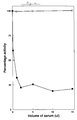
- the antiserum raised against the soluble starch synthase from potato precipitates 75 % of the total soluble starch synthase activity in crude extract ( Figure 5).
- the remainder of the activity is partly due to GBSS II (Table 2), but the possibility of further minor isoforms cannot be ruled out.
- the purified soluble starch synthase is likely to represent a novel class of starch synthase. It is not related to the major soluble starch synthase in pea embryo (GBSS II), which is clearly related to the minor, soluble 92 kDa GBSS II in potato.
- the soluble starch synthase is only very weakly recognised by the antibody raised to GBSS II from pea. It is not related to the GBSS I proteins either: the starch synthase from potato tuber is not recognised by the antibody raised to GBSS I from pea embryo.
- the antiserum raised to the purified starch synthase protein from Estima tubers was used for immunoscreening of a ⁇ gt 11 library (provided by C Grierson, John Innes Centre, Norwich) containing cDNA inserts with Eco RI linkers, constructed from developing Estima tuber poly[A] RNA.
- plaque-forming units were probed with the antiserum at a dilution of 1/1000.
- the second antibody was an anti-rat immunoglobulin linked to horseradish peroxidase (Amersham International, Amersham, UK).
- Two positive clones were isolated. These were both 1.1 kb in length and contained poly(A) tracts at their 3' ends.
- One of these was cloned into the EcoRI site of pBluescript SK + to give plasmid pRAT2.
- a 5' Eco Rl -ECOR V fragment from this clone was used as a probe on the ⁇ gt11 library.
- Filters were washed in 0.1 x SSC (1 x SSC is 0.15 M NaCl, 0.015 M sodium citrate), 0.5 g L -1 SDS at 65°C. Seven clones of 1.3, 1.53, 1.75, 1.88, 2.15, 2.21, and 2.4 kb were isolated. The longest clone was subcloned as an Eco RI fragment into pBluescript SK+ to give plasmid pRAT20. A 600-bp 5' fragment from pRAT20 was used to probe a random primed ⁇ gt11 library prepared from cDNA of developing tubers. Three positive clones were isolated. The longest was 2.3 kb and was subcloned as an Eco RI fragment into pBluescript SK+ to give pRAT24.
- the amino acid sequence it predicted was compared with amino acid sequences of two peptides obtained by digestion with endoproteinase Lys-C of the 110-kD protein purified from tubers of cultivar Estima.
- the peptide sequences FIPIPYTSENVVEGK (Seq. ID No. 1) and HIPVFGG (Seq. ID No. 2) corresponded precisely to predicted sequences from the clone. Attempts to obtain N-terminal amino acid sequence of the purified proteins for comparison with the sequence predicted from the cDNA clone were unsuccessful.
- RNA gel blots of poly(A) + RNA from developing tubers On RNA gel blots of poly(A) + RNA from developing tubers, a partial cDNA clone recognised a single transcript of ⁇ 4 kb. This size is considerably greater than those of the transcripts for GBSSI and GBSSII and is consistent with the transcript encoding a protein in the range of 110 to 140 kD.
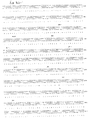
- the deduced amino acid sequence of the soluble starch synthase revealed a protein of 1230 amino acids and a predicted size of 139 kD (Figure 6).
- Figure 6 At the N terminus was a sequence of ⁇ 60 amino acids rich in serine and basic residues and low in acidic residues, which is typical of a chloroplast transit peptide.
- the most likely cleavage site would be between amino acids 60 (Cys) and 61 (Ala), because the serine-rich region ends before this point. Cleavage in this region would give a mature protein of ⁇ 132 kD.
- the structure is somewhat similar to that of GBSSII in that it contains a C-terminal region homologous with starch synthases and bacterial glycogen synthases and an N-terminal extension.
- the N-terminal extension shows little sequence similarity to the N-terminal extensions of GBSSII from pea or potato (in turn, they show little similarity to each other; Edwards et al., (1995) Plant J. 8, 283-294) or to any other sequence in the data bases.
- the N-terminal domain resembles those of pea and potato GBSSII in that it shows considerable predicted flexibility (Chou-Fasman algorithm; see Dry et al., (1992) Plant J. 2, 193-202); all these extensions may therefore serve similar roles.
- N-terminal extensions are not known, but it seems likely that they are involved in determining properties such as interaction with starch polymers rather than contributing to basic catalytic properties.
- the C-terminal region from amino acid 780 to the end shows greatest similarity to glycogen synthases from bacteria, although there is also similarity to other starch synthases from plants.
- the KTGG motif close to the N terminus of this region beginning with position 794 is conserved (KVGGL). This domain is thought to be involved in ADP/ADP-glucose binding (Furukawa et al., 1990 J. Biol. Chem. 265 , 2086-2090).
- a second domain with a similar structure is also conserved in the C termini of all bacterial glycogen synthases and starch synthases (including the motif beginning at position 1143, T/V GGLXDT I/V); this may represent a second domain involved in ADP/ADP-glucose binding.
- the whole region around this second domain is widely conserved among ⁇ -1,4-glucosyltransferases, indicating close involvement with the catalytic process.
- soluble starch synthase protein Over the rest of the soluble starch synthase protein, there are several other domains showing conservation between different starch synthases. However, it also shows some notable gaps in its sequence when aligned with GBSSI and GBSII, for example, between amino acids 828 to 829 (13 amino acids), 894 to 895 (10 amino acids), and 944 to 945 (35 amino acids). These regions may confer specific properties on GBSSI and GBSII compared with the soluble synthase.
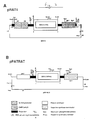
- the 1.1-kb Pst-Eco RV fragment from pRAT2 encoding the 3' end of the soluble starch synthase was subcloned in an antisense orientation between the cauliflower mosaic virus double 35S promoter and cauliflower mosaic virus terminator (Pst I -Sma I ) in pJIT60 (Guerineau and Mullineaux, 1993 "Plant transformation and expression vectors". In Plant Molecular Biology Labfax R.R.D. Croy, Ed. (Oxford, UK BIOS Scientific Publishers) p121-148), producing pRAT3.
- Binary plasmid pRAT4 was introduced into Agrobacterium tumefaciens by the freeze-thaw method of An et al., (1988 Binary Vectors. In Plant Molecular Biology Manual A3. Eds, Gelvin S.B. and Schilperoort R.A. ppl-19). Preparation of Agrobacterium inoculum carrying the antisense construct, inoculation of tuber discs of potato cultivar Desiree, regeneration of shoots, and rooting of shoots were as described by Edwards et al. (1995 Plant J. 8, 283-294).
- Tubers of the transformants with unaltered levels of SSS transcript had soluble starch synthase activities that were indistinguishable from those of the control plants and from values typical of those obtained from developing Desiree tubers in general (Edwards et al. (1995) Plant J. 8, 283-294 1995).
- Tubers of the seven transformants with reduced or undetectable levels of SSS transcript had significantly reduced activities, and three plants displayed activities that were 30% or less of the average value of the control plants.
- Table 3 shows that the observed reductions in soluble starch synthase activity were reproducible from one tuber to another. They were also reproducible through tuber development.
- Loss of starch synthase activity from the soluble fraction in transgenic tubers was accompanied by dramatic reductions in the amount of the 140-kD protein recognised by the antiserum in soluble and granule-bound fractions of the tuber.
- the protein was not detected, or detected only very weakly relative to controls, on immunoblots of these fractions from tubers of the six transgenic lines with the largest reductions in starch synthase activity.
- the soluble protein of 105 kD also recognised by the antiserum was present in equal amounts in all lines examined (data shown in Marshall et al ., 1996).
- tubers of transformants with reduced activity of SSS were indistinguishable from control tubers with respect to total starch content. This was true of both developing tubers and tubers of mature plants on which the haulm was senescent. The starch of these plants also displayed no significant alteration in amylose content (Table 3).
- GBSSII was visualised on native gels of crude, soluble extracts stained for starch synthase activity. Again, there were no marked or consistent differences between control plants and those in which SSS was reduced.
- the activity attributable to GBSSII is 7.3 nmol min -1 g -1 fresh weight in line 9 and 8.8 nmol min -1 g -1 fresh weight in control tubers. This indicates that the reduction in SSS has little effect on the soluble activity of GBSSII.
Landscapes
- Health & Medical Sciences (AREA)
- Life Sciences & Earth Sciences (AREA)
- Genetics & Genomics (AREA)
- Engineering & Computer Science (AREA)
- Chemical & Material Sciences (AREA)
- Zoology (AREA)
- Biotechnology (AREA)
- Molecular Biology (AREA)
- Bioinformatics & Cheminformatics (AREA)
- Wood Science & Technology (AREA)
- Organic Chemistry (AREA)
- General Engineering & Computer Science (AREA)
- Biomedical Technology (AREA)
- Microbiology (AREA)
- Biochemistry (AREA)
- General Health & Medical Sciences (AREA)
- Nutrition Science (AREA)
- Medicinal Chemistry (AREA)
- Cell Biology (AREA)
- Physics & Mathematics (AREA)
- Biophysics (AREA)
- Plant Pathology (AREA)
- Breeding Of Plants And Reproduction By Means Of Culturing (AREA)
- Micro-Organisms Or Cultivation Processes Thereof (AREA)
- Enzymes And Modification Thereof (AREA)
Abstract
Description
- This invention relates, inter alia, to a soluble enzyme, obtainable from potato tubers, having starch synthase activity, to nucleic acid sequences encoding the same, to constructs and transgenic plants comprising the nucleic acid sequences, to a method of altering the starch composition of a plant, and to altered starch obtainable from a transgenic plant.
- In the storage organs of most species of plants multiple forms of both granule-bound and soluble starch synthases have been found (for review, see Smith & Martin 1993, In: Biosynthesis and manipulation of plant products (D. Grierson, Ed.) Blackie Academic and Professional (Glasgow), pp1-54). In most cases it is not known whether these forms are distinct gene products and, for the most part, what their detailed functions are. The exception to this is in the case of a widely-distributed and highly conserved class of granule-bound starch synthases of approximately 60 kDa, which are collectively referred to as granule-bound starch synthase I (GBSS I; Martin & Smith, 1995 Plant Cell 7. 971-985). Experiments with the waxy and amf mutants of cereals and potatoes respectively (Macdonald & Preiss, 1985 Plant Physiol. 78, 849-852 1985; Hovenkamp-Hermelink et al., 1987 Theor. Appl. Genet. 7, 217-221) and antisense potato plants (Visser et al., 1991 Mol. Gen. Genet. 22, 289-296, Kuipers et al., 1994 Plant Cell 6, 43-52) have shown that when the level of GBSS I protein is reduced, the ratio of amylose to amylopectin in the starch is also reduced. Where GBSS I is absent, the starch contains only amylopectin. This suggests that GBSS I is responsible for amylose synthesis.
- However, the detailed functions of other isoforms of starch synthase are as yet unknown. In general, in conjunction with starch branching enzyme, they must be responsible for amylopectin synthesis but it is unknown whether different isoforms make different contributions to its structure. The first step in trying to understand the functions of these starch synthases is to characterise all of the isoforms in one organ. A few isoforms of starch synthase, other than GBSS I, have been identified at a detailed biochemical and molecular level in pea (Smith, 1990 Planta 182, 599-604; Denyer & Smith 1992 Planta 186, 609-617, Dry et al. 1992 Planta 186, 609-617) and rice (Baba et al., 1993 Plant Physiol. 103, 565-573), and at a detailed biochemical level in maize (Mu et al., 1994 Plant J. 6, 151-159) and wheat (Denyer et al., 1995 Planta 196, 256-265). However only in the case of pea and maize has the quantitative importance of the isoforms been estimated. A complete picture of the role and importance of all the isoforms of starch synthase is not available for any other storage organ.
- Carbohydrate metabolism and starch synthesis has been extensively studied in potato tuber (Hajirezaei et al., 1993 Planta 192, 16-30; Geigenberger & Stitt 1993 Planta 189, 329-339; Geigenberger et al., 1994 Planta 193, 486-493; Sonnewald et al., 1994 Plant Cell Environ. 17, 649-658) and this organ has great potential as a source of commercially important starches created through genetic manipulation (Shewmaker & Stalker 1992 Plant Physiol. 100, 1083-1086; Visser & Jacobsen 1993 Trends Biotech. 11, 63-68; Muller-Rober & Koßmann, 1994 Plant Cell Environ. 17, 601-613). One of the major gaps in understanding starch synthesis in this organ and hence in the ability to manipulate its starch in useful ways, is the nature of its starch synthases.
- In potato, until recently, only two starch synthases have been characterised in any great detail; GBSS I and GBSS II. GBSS I is exclusively granule-bound, it has a molecular weight of 59 kDa. The gene has been cloned and its predicted amino acid sequence is very similar to that of the waxy gene product in cereals (Vos-Scheperkeuter et al., 1986 Plant Physiol. 82, 411 4 16; van der Leij et al., 1991 Mol. Gen. Genet. 228, 240-248). GBSS II has an apparent molecular weight, as judged by SDS-PAGE, of 92 kDa and it is both bound into the starch granule and present as a soluble form. Its predicted amino acid sequence (having an expected molecular weight of 80kDa) is similar to GBSS II in pea embryos, an isoform which accounts for 60-70 % of the soluble starch synthase activity of the pea embryo (Denyer & Smith 1992 cited above). However, GBSS II accounts for only approximately 10-15% of the total soluble starch synthase activity in potato tubers (Edwards et al., 1995 Plant J. 8, 283-294).
- There have been several reported characterisations of the starch synthases found in the soluble fraction of potato tubers (Frydman & Cardini 1966 Arch. Biochem. Biophys. 116, 9-18; Catz et al., 1989 An. Asoc. Quim. Argent. 77, 47-51) and a few attempts have been made to purify the major soluble starch synthases (Hawker et al., 1972. Phytochem. 11, 1278- 1293; Baba et al., 1990 Phytochem. 29, 719-723; Ponstein 1990. Starch synthesis in potato tubers. Ph. D. Thesis, State University Groningen, The Netherlands). These reports disagree on both the number of soluble starch synthases and their molecular weights. The quantitative contribution of the putative forms is not known, and where multiple forms are postulated, it is not known whether they are independent gene products.
- After the priority date of the present application, two publications have been made which provide information about a further starch synthase found in potato. One of these publications is by the present inventors (Marshall et al., 1996 The Plant Cell 8, 1121-1135). The other publication is PCT patent application WO 96/15248 (published 23rd May 1996), in the name of Institut Für Genbiologische Forschung Berlin GMBH. The PCT application includes the European Patent Office in the list of designated territories.
- WO 96/15248 discloses the nucleotide sequence of a full length cDNA clone ("SSSA") said to encode an isoform of soluble starch synthase enzyme from potato, together with the predicted amino acid sequence of the enzyme. The application further discloses the use of a 1.2kb portion of the cDNA clone, operably linked in the antisense orientation to the
CaMV 35S promoter, to transform potato plants. In addition WO 96/15248 discloses the sequence of a cDNA clone ("SSSB") said to encode a second isoform of the potato soluble starch synthase. Similarly, a portion (1.8kb) of this sequence was introduced into potato plants in the antisense orientation. - In fact, the present inventors have found that the nucleotide sequence disclosed in WO 96/15248 contains an error, causing a frame shift, such that most of the predicted amino acid sequence is incorrect.
- It was found that the transformed plants disclosed in WO 96/15248 had reduced enzyme activity. Starch obtained from the tubers of the transformed plants was found to have altered properties compared to starch obtained from control wild type plants. It was stated that the starch from the transformed plants exhibited a lower viscosity onset temperature than starch from control plants. (By way of explanation, when aqueous suspensions of starch granules are heated, the granules swell and absorb water, in a process known as gelatinisation. A number of techniques are available for the analysis of gelatinisation, a particularly convenient method being differential scanning calorimetry or the viscoamylograph, in which the viscosity of a stirred starch suspension is monitored under a defined temperature/time regime. Such analysis typically shows a particular temperature, the "viscosity onset temperature", at which the process of gelatinisation begins and which causes a marked increase in viscosity of the starch suspension).
- In a few instances, the transformed plants disclosed in WO 96/15248 gave rise to starch in which the "Verkleisterungstemperatur" (equivalent to the viscosity onset temperature, V) was 2 to 3°C lower compared to starch from equivalent, but untransformed, plants. However, it is apparent that the results of subsequent experiments (described in example 13 in the document) gave a value of V for starch from control plants which was lower than that found for starch from transformed plants in previous experiments. Accordingly, the person skilled in the art is not able to deduce that starch from the transformed plants described in WO 96/15248 displayed a viscosity onset temperature which was consistently significantly lower than that of control plants.
- In a first aspect the invention provides a polypeptide obtainable from a soluble extract of potato tubers and having starch synthase activity, in substantially isolated form.
- Typically the polypeptide will have an apparent molecular weight, as judged by SDS-PAGE, in the range 100-140 kDa, or will be a functional equivalent of such a polypeptide. More particularly, the polypeptide may have an apparent molecular weight of 140, 120 or 110 kDa. Particular functional equivalents envisaged are breakdown products of the polypeptide, which seem to occur naturally. Another particular functional equivalent is the polypeptide obtainable from developing tubers of the Desiree cultivar, which polypeptide has an apparent molecular weight, as judged by SDS-PAGE, of 100 kDa. Typically the polypeptide will comprise the amino acid sequence shown in Figure 6.
- In another aspect the invention provides a nucleic acid sequence directing the expression of at least a portion of one of the polypeptides defined above. Preferably the sequence comprises at least 200-300bp, more preferably at least 300-600bp, and most preferably in excess of 600bp. Typically the nucleic acid sequence will comprise the nucleotide sequence shown in Figure 6, although those skilled in the art will appreciate that, due to the degeneracy of the genetic code, a nucleotide sequence substantially different to that shown in Figure 6 may encode a polypeptide having substantially the same amino acid sequence as that shown in Figure 6. Such nucleic acid sequences are to be considered as functional equivalents and thus fall within the scope of the present invention. Other functional equivalents are those nucleic acid sequences which are not substantially different and which may hybridise, under standard laboratory hybridisation conditions, to either strand of the nucleotide sequence shown in Figure 6.
- Comparison with known starch synthase sequences, with the benefit of the disclosure herein, will enable those skilled in the art to identify regions of the sequence shown in Figure 6 which are not evolutionarily conserved, and so more amenable to alteration (e.g. addition, deletion or substitutions), whilst retaining functional equivalence.
- Desirably such functional equivalents will possess at least 80% sequence identity, preferably at least 85% sequence identity, and more preferably at least 90% sequence identity with the nucleotide sequence shown in Figure 6. Desirably the nucleotide sequence of the invention, or a functional equivalent sequence will, when introduced into a suitable plant in a suitable manner (known to those skilled in the art), alter the synthesis of starch in the plant.
- For the purposes of the present specification, the sequences encoding polypeptides with starch synthase activity, or portions of such sequences, disclosed in WO 96/15248 are not considered as functional equivalents of the sequence shown in Figure 6.
- In a particular embodiment, the invention provides a nucleic acid sequence comprising at least 200 bp and exhibiting at least 80% sequence identity with the corresponding region of the DNA sequence shown in Figure 6, operably linked in the sense or antisense orientation to a promoter operable in a plant.
- Those skilled in the art will readily be able to conduct a sequence alignment between the other sequence and that detailed in Figure 6. The % identity of the two sequences is to be compared in those regions which are aligned by readily available computer programs (e.g. MegAlign), which align corresponding regions of sequences. Advantageously the % identity between the two sequences will be at least 85%, preferably at least 90%, and the corresponding region of the sequence shown in Figure 6 may comprise a 5' and/or a 3' untranslated region ("UTR") and/or a translated region.
- Thus, in another aspect the invention provides a nucleic acid construct (typically DNA) comprising the nucleic acid sequence of the invention in operable linkage to a promoter active in a plant. The nucleic acid sequence may be operably linked to the promoter in either the sense or the anti-sense orientation. Anti-sense methods are well known in altering one or more characteristics of a plant into which the anti-sense sequence is inserted (see for example EP-A-0 458 367, EP-B-0 240 208 and
US 5, 107, 065). Similarly, "sense suppression" is a method which is becoming increasingly widely adopted and documented (for a review, see Matzke & Matzke 1995 Plant Physiology 107, 679-685). Either approach could be used with the nucleic acid sequence of the invention, so as to alter one or more characteristics of a plant into which the sequence was introduced. Those skilled in the art wil be aware that anti-sense inhibition or sense suppression may be achieved by the use of 5' or 3'non-translated portions of the relevant gene, or use of coding portions of the gene, or any combination thereof. - It is believed that antisense methods are mainly operable by the production of antisense mRNA which hybridises to the sense mRNA, preventing its translation into functional polypeptide, possibly by causing the hybrid RNA to be degraded (e.g. Sheehy et al., 1988 PNAS 85, 8805-8809; Van der Krol et al., Mol. Gen. Genet. 220, 204-212). Sense suppression also requires homology between the introduced sequence and the target gene, but the exact mechanism is unclear. It is apparent however that, in relation to both antisense and sense suppression, neither a full length nucleotide sequence, nor a "native" sequence is essential. Preferably the nucleic acid sequence used in the method will comprise at least 200-300bp, more preferably at least 300-600bp, of the full length sequence, but by simple trial and error other fragments (smaller or larger) may be found which are functional in altering the characteristics of the plant. It is also known that untranslated portions of sequence can suffice to inhibit expression of the homologous gene - coding portions may be present within the introduced sequence, but they do not appear to be essential under all circumstances.
- The invention further provides a host cell into which has been introduced a nucleic acid sequence in accordance with the invention defined above. Typically the host cell will be a plant cell, and conveniently the sequence is introduced in a nucleic acid construct and subsequently integrated into the host cell genome.
- In a further aspect the invention provides a plant or part thereof (e.g. plant cell), into which has been introduced a sequence in accordance with the invention, or the progeny of such a plant or part thereof. Desirably the plant or part thereof into which the sequence is introduced, will comprise a natural gene which shares sequence homology with the introduced sequence. In preferred embodiments the introduced sequence will exhibit at least 70% homology with a starch synthase gene naturally present in the plant or part thereof, although the level of homology may be increased with advantage, such that the expression of the gene product of the naturally present gene in the plant is substantially inhibited. Conveniently the sequence of the invention will be introduced as part of a nucleic acid construct, as described above. Typically the plant will be one of commercial significance, such as one of the following: potato, tomato, rice, wheat, pea, cassava, sweet potato, barley, oat and maize.
- Those skilled in the art will appreciate that introduction of the nucleic acid sequence of the invention into a plant might alter the starch composition thereof. In another aspect therefore the invention provides altered starch extracted from a plant into which has been introduced the nucleic acid sequence of the invention, or altered starch extracted from the progeny of such a plant. The invention also provides a method of altering one or more characteristics of a plant, comprising introducing into the plant a nucleic acid sequence in accordance with the invention.
- In particular the invention provides altered starch extracted from a transformed potato plant or the progeny thereof, which starch, as extracted, has a viscosity onset temperature as determined by differential scanning calorimetry which is reduced by at least 5°C compared to starch extracted from equivalent, non-transformed plants. Preferably the viscosity onset temperature is reduced by at least 7°C. In another embodiment the invention provides altered starch extracted from a transformed potato plant or the progeny thereof, which starch, as extracted, has a viscosity onset temperature as determined by differential scanning calorimetry, of less than 60°C, preferably less than 55°C.
- The starch defined above will typically also exhibit (as extracted) a reduced endotherm peak temperature, as determined by differential scanning calorimetry, compared to starch extracted from equivalent, non-transformed plants. Desirably the endotherm peak temperature will be reduced by at least 5°C and/or will be less than 59°C. The inventors have found that such properties as those defined above may be embodied in potato starch having a substantially normal amylose content (i.e. around 25 - 30% amylose).
- Starch can be modified in various ways (e.g. chemical cross-linking, derivatisation, partial hydrolysis) after it has been extracted from a plant source, which modifications can affect the physical properties, especially the pasting properties, of the starch. Hence, use of the term "as extracted" is intended to signify that the starch is analysed without undergoing such modifications as can alter the pasting properties thereof.
- "Equivalent, non-transformed" plants are those plants which have substantially identical genotypes to the plants of the invention, with the exception of the introduced nucleic acid sequence present in the transformed plants of the invention.
- The invention will now be further described by way of illustrative example and with reference to the accompanying drawings, in which;
- Figure 1 shows the elution profile of starch synthase from developing Desiree potato tubers on a first Mono Q™ anion-exchange column. Partially purified starch synthase, after DEAE-Sepharose and Blue Sepharose chromatography, was applied to a 1ml Mono Q™ column at pH 7.5. The enzyme was eluted with a 25ml gradient of 0-450 mM KCI at 0.5 ml.min-1. Samples (20 µl) of each 1 ml fraction were assayed for starch synthase activity ( -●- ), and absorbance at 280 nm ( - );
- Figure 2 shows the activity and protein in fractions of purified starch synthase from a second Mono Q™ column of peak I and peak II. Top panels show SDS-PAGE of fractions containing starch synthase activity. Each track contains 10 µl of fraction. Bottom panels show starch synthase activity in 20 µl samples from each 0.5 ml fraction;
- Figure 3 shows the cross-reaction of antiserum to SSS to the purified starch synthases from mature Estima tubers and to extracts, soluble and granule-bound, from mature Estima and developing Desiree tubers. Samples (10 µl of purified soluble starch synthase, 20 µl of partially purified soluble starch synthase, 20 µl soluble extract and 20 µl of supernatant from granule-bound proteins) were subjected to SDS-PAGE and blotted, and then the blots were probed with antiserum to SSS, 1/2500 dilution. (1) purified preparation of starch synthase proteins from mature Estima. (2) Partially purified soluble starch synthase from mature Estima tubers. (3) Starch-granule-bound proteins from mature Estima tubers. (4) Soluble extract from developing Desiree tubers. (5) Starch-granule-bound proteins from developing Desiree tubers. Sizes of proteins were estimated from molecular weight standards on the same gels, and are indicated in kDa;
- Figure 4 shows the immunoprecipitation of starch synthase activity in soluble extract from developing Desiree tubers with antiserum to SSS. Soluble extract was incubated with increasing volumes of pre-immune serum (○) and antiserum (●), as described in Materials and Methods (below). After centrifugation the supernatant was assayed for starch synthase activity. Starch synthase activity is expressed as a percentage of activity of incubations containing 20 g.L-1 BSA in PBS. Values are from two separate experiments with the line joining the means;
- Figure 5 shows native polyacrylamide gel electrophoresis of soluble extract from developing Desiree tubers stained for starch synthase activity. Soluble extract was incubated (as described in Materials and Methods) in the presence of (1) 20 g.L-1 BSA in PBS; (2) pre-immune serum, 1/1000 dilution; (3) antiserum to SSS, 1/1000 dilution; and (4) antiserum to the GBSS II from pea embryo. After centrifugation, the supernatant was mixed 5:1 with 2 g.L-1 bromophenol blue in 500 ml.L-1 glycerol and 40 µl was loaded onto the gel. The bands of starch synthase activity are indicated by arrows;
- Figure 6 shows the DNA sequence of a cDNA clone for potato soluble starch synthase. The amino acid sequence of the encoded polypeptide is shown below in the single letter code. The ADP-glucose binding domain is boxed and the sequences identified by protein sequencing are underlined; and
- Figure 7 shows a schematic representation of A) plasmid pRAT4 and B) plasmid pPATRAT.
- In this example are presented data on the identification and purification to homogeneity of the major isoform of soluble starch synthase from potato tuber.
- Potato tubers (Solanum tuberosum L.) of cultivars Desiree (developing) or Estima (mature) were used. Desirée tubers were grown in pots of soil based compost (25 cm diameter) in a greenhouse with minimum temperature of 12°C and supplementary lighting in winter, and were freshly harvested prior to experiments from actively-growing plants. Estima tubers were bought locally.
- (A) Small scale. The extraction and subsequent purification were carried out at 4°C. Approximately 500g of Desiree potato tubers were chopped into small pieces and homogenised in an electric blender with 25g polyvinylpolypyrolidone (PVPP) and 500 ml of ice-cold medium A containing 100 mM Tris-HCl (pH 7.5), 10 mM ethylenediamine-tetraacetic acid (EDTA), 5 mM dithiothreitol (DTT), 1 g.L-1 sodium metabisulphite, 0.5 mg.L-1 leupeptin, 0.7 mg.L-1 pepstatin A and 50 ml.L-1 glycerol. The homogenate was passed through two layers of muslin and the filtrate was centrifuged at 10,000g for 10 min. The supernatant was brought to 40% saturation with powdered (NH4)2SO4. The precipitate was collected by centrifugation (15,000g for 15 min), re-dissolved in a minimal volume of medium A and dialysed twice, each time against 1L of medium A for 1 h.
- The dialysed extract was applied, at a flow rate of 4 ml.min-1, to a column (5 cm internal diameter "i.d.", 10 cm long) of diethylaminoethyl (DEAE)-Sepharose Fast Flow™ (Pharmacia, Uppsala, Sweden), equilibrated with medium A. The column was washed with 500 ml of medium A followed by a 250-ml gradient of 0-1 M KCl in the same medium. Fractions of 10 ml were collected and assayed for starch synthase activity. The eight to ten fractions containing the highest activity were pooled and dialysed twice, each time against 1 L of medium B containing 50 mM Tris-HCl (pH 7.5), 1 mM EDTA, 1 mM DTT, 0.5 mg.L-1 leupeptin, 0.7 mg.L-1 pepstatin A and 50 ml.L-1 glycerol for 1 h.
- The dialysed extract was applied, at a flow rate of 1 ml.min-1, to a column (1.6 cm i.d., 16 cm long), of Blue Sepharose, equilibrated with medium B. The column was washed with 100 ml medium B followed by a 100ml gradient of 0-1 M KCl in the same medium. Fractions of 0.5 ml were collected and assayed for starch synthase activity. The ten fractions with the highest activity were pooled and dialysed twice, each time against 1 L of medium B for 1 h.
- The dialysed extract was applied, at a flow rate of 0.5 ml.min-1, to a first 1-ml Mono Q™ column (Pharmacia), equilibrated with medium B. The column was washed with 25 ml of medium B, followed by a 25-ml gradient of 0-450 mM KCl in the same medium. Fractions of 0.5 ml were collected and assayed for starch synthase activity. The fractions from each of two peaks of starch synthase activity were pooled and purified separately as follows:
- To the eluate of the first Mono Q™ column, an equal volume of 1 M sodium citrate in medium B was added. This was then applied, at a flow rate of 0.5 ml.min-1, to a column (1.0 cm i.d., 4 cm long) of cyclohexa-amylose (CHA)-Sepharose (prepared according to Vretblad, 1974 FEBS Lett. 47, 86-89), equilibrated with 0.5 M sodium citrate in medium B. The column was washed with 20 ml medium B containing 0.5 M sodium citrate and the protein was eluted from the column with 30 ml of medium B containing no citrate. Fractions of 1 ml were collected and assayed for starch synthase activity. The fractions with starch synthase activity were pooled and dialysed overnight against 5 L of medium C containing 50 mM Tris-HCl (pH 8.0), 1 mM EDTA, 1 mM DTT, 0.5 mg.L-1 Leupeptin, 0.7 mg.L-1 pepstatin A and 50 ml.L-1 glycerol.
- The dialysed extract was applied, at a flow rate of 0.5 ml.min-1, to a second 1ml Mono Q™ column equilibrated with medium C. The column was washed with 25 ml of medium C followed by a 25ml gradient of 0-450 mM KCl in the same medium. Fractions of 0.5 ml were collected and assayed for starch synthase activity.
- The procedures were as described above, with the following modifications. Five kg of Estima potato tubers were homogenised in 5 L medium A containing 250g PVPP, filtered through two layers of muslin and centrifuged at 10,000g for 10 min. Polyethylene glycol (PEG) 6000 at a concentration of 500 g.L-1 in medium A was slowly added to the supernatant until the concentration of PEG was 100 g.L-1. The precipitate was collected by centrifugation (15,000g for 20 min) and re-dissolved in a minimal volume of medium A.
- The extract was mixed gently for 1 h with 900ml slurry of DEAE-Sepharose which had been equilibrated with medium A, then filtered and the filtrate discarded. The DEAE-Sepharose was washed with 2 L medium A then incubated for 1 hr in 500 ml medium A containing 400 mM KCl, filtered and washed with a further 500 ml medium A containing 400 mM KCl. The filtrates were combined and brought to 50% saturation with powdered (NH4)2SO4. The precipitated proteins were collected by centrifugation (15,000g for 15 min), re-dissolved in a minimal volume of medium B and dialysed overnight against 5 L of medium B.
- The dialysed sample was applied, at a flow rate of 2 ml.min-1, to a Blue Sepharose column (5 cm i.d., 15 cm long) which had been equilibrated with medium B. The column was washed with 300 ml medium B followed by a 600ml gradient of 0-1 M KCl in the same medium, at a flow rate of 5 ml.min-1. Fractions of 15 ml were collected and assayed for starch synthase activity. The ten fractions with the highest starch synthase activity were pooled and dialysed ovemight against 5 L medium B.
- The dialysed eluate was applied to a first 1ml Mono Q™ column, equilibrated with medium B, as described above, except that all the fractions containing starch synthase activity were pooled together.
- The Mono Q™ eluate was applied to a CHA-Sepharose column as described above, except that the column was 1.0 cm i.d., 20 cm long. The column was washed with 50 ml medium B containing 0.5 M sodium citrate and eluted with 80 ml medium B without citrate. The fractions with starch synthase activity were pooled and dialysed ovemight against 5 L of medium C.
- The dialysed extract was applied to a second 1ml Mono Q™ column equilibrated with medium C, as described above. Fractions containing starch synthase activity were stored at -20°C.
- The fractions containing starch synthase activity from 5 large-scale purifications were run on preparative sodium dodecyl sulphate (SDS)-polyacrylamide gels (as described below). The gel slices containing starch synthase proteins were electroeluted and the proteins dialysed against water, then freeze-dried. Protein (50 µg) was re-dissolved in 250 µl of phosphate-buffered saline (PBS), mixed with 250 µl Freund's complete adjuvant, and injected intramuscularly into a rat. Subsequent injections were of 75 µg protein dissolved in 250 µl PBS mixed with 250 µl Freund's incomplete adjuvant and were repeated at 14-day intervals. Serum was collected from 14 days after the third injection.
- Soluble starch synthase activity was measured using the resin method as described in Jenner et al. (1994).
- Samples (0.5-2.0 g fresh weight) from either developing Desiree or mature Estima potato tuber were homogenised in 4 volumes of 50 mM Tris-HCl (pH 7.5), 1 mM EDTA, 1 mM DTT, 1 g.L-1 sodium metabisulphite, 0.5 mg.L-1 leupeptin, 0.7 mg.L-1 pepstatin A and 50 ml.L-1 glycerol, then centrifuged at 10,000g for 10 min. The supernatant is referred to as "soluble extract".
- Crude soluble potato extract from mature Estima tubers (5-10 g fresh weight) was dialysed twice, each time against 1 L of buffer B for 1 hr. The dialysed extract was applied to a lml Mono Q™ column, equilibrated with medium B, as described above and the peak fraction of starch synthase activity (referred to as "partially purified soluble starch synthase") was stored at -20°C.
- Protein samples were dialysed against distilled water then mixed 1:1 with double-strength sample buffer (Laemmli, U.K. (1970). Nature 227, 680-685) and boiled for 2 min immediately prior to application to gels. For granule-bound proteins, starch granules were washed twice in 20 g.L-1 SDS at room temperature, boiled for 3 min at 100 mg.ml-1 in sample buffer (Laemmli, U.K. (1970). Nature 227, 680-685) and then centrifuged at 10,000g for 10 min. The supernatant was applied to the gel.
- Gels (10.2 cm long, 7.3 cm wide, 0.75 mm thick) were 75 g.L-1 acrylamide (37.5:1 w/w acrylamide:bis-acrylamide) and 1 g.L-1 SDS and were run according to Laemmli (1970). Immunoblots were prepared and developed according to Bhattacharyya et al., (1990) Cell 60, 115-122. The nitrocellulose filters were either incubated with crude rat serum followed by alkaline phosphatase-congugated goat anti-rat antiserum (Sigma, Poole, Dorset, UK) or the immunoglobulin fraction of rabbit serum to GBSS II from pea embryo (Smith (1990) Planta 182, 599-604), followed by alkaline phosphatase-conjugated goat anti-rabbit antiserum (Sigma).
- Gels (dimension as above, except lmm thick) of 90 g.L-1 acrylamide (37.5:1 w/w acrylamide:bis-acrylamide) were cast in 400 mM Tris-HCl (pH 8.6), 100 ml.L-1 glycerol, 8 g.L-1 glycogen and polymerised with 0.4 g.L-1 ammonium persulphate and 0.2 ml.L-1 N,N,N',N'-tetramethylethylenediamine (TEMED) and were overlaid with a stacking gel of 53 g.L-1 acrylamide (37.5:1 w/w acrylamide:bis-acrylamide) cast in 155 mM Tris-HCl (pH 6.8), 98 ml.L-1 glycerol, polymerised with 0.5 g.L-1 ammonium persulphate and 0.2 ml.L-1 TEMED. Soluble extracts were mixed 5:1 with 2 g.L-1 bromophenol blue in 500 ml.L-1 glycerol immediately prior to loading. Gels were run at 4°C, at 175 mV in 190 mM glycine, 25 mM Tris.
- The gel was assayed for starch synthase activity as follows. The gel was washed twice, each time for 10 min in 20
ml 100 mM Bicine, 0.5 M sodium citrate (pH 8.5), 0.5 M EDTA and 100 ml.L-1 glycerol at 4°C. The gel was incubated at room temperature for 20 hrs by gently shaking in wash medium containing 12 mM ADPG and 2 mM DTT. The buffer was removed and 1 ml of Lugol's iodine solution (3.3 g.L-1 I2 and 6.7 g.L-1 KI, acidified with a few drops of 2M HCl) was added. After colour development, the gel was washed and stored in 70 ml.L-1 acetic acid. - Soluble extracts (100µl) were incubated with 0-20µl rat serum or 20µl of the immunoglobulin fraction of rabbit serum to GBSS II from pea embryo (Smith (1990) Planta 182, 599-604) for 1.5 h at room temperature on a rotating table. To the extract containing rat serum, 20µl polyclonal antiserum to rat IgG at 2.5 g.L-1 specific antibody (Sigma) was added and incubated for a further 0.5 h. To both extracts, 50 µl Protein A-Sepharose at 60 g.L-1 in 50 mM Tris-HCl (pH 7.5) was added and then incubated for 0.5 h, followed by centrifugation at 10,000g for 10 min. The supernatants were assayed for starch synthase activity. Controls contained bovine serum albumin at 20 g.L-1 in PBS in place of serum.
- Purified starch was prepared from potato tubers as described by Edwards et al. (1995).
- Protein was assayed using the BioRad Protein Assay Dye Reagent (BioRad Munchen, Germany) with a standard curve of bovine serum albumin.
- The soluble starch synthase activity from developing tubers of Desirée and mature tubers of Estima eluted from both DEAE-Sepharose and Blue Sepharose columns as a single peak of activity. However, subsequent chromatography on a Mono Q™ column at pH 7.5 separated two major peaks of starch synthase activity, designated peak I and peak II according to their elution order from the column (Figure 1). These two peaks of starch synthase activity were then purified separately by cyclohexa-amylose and Mono Q™ chromatography. A typical purification from developing Desiree tubers is shown in Table 1. The specific activity of peak I was 5.1 µmol.(mg protein)-1.min-1, a purification of 400-fold relative to the initial supernatant. The specific activity of peak II was 8.8 µmol.(mg protein)1.min-1, a purification of 700-fold relative to the initial supernatant (Table 1).
- Table 1 shows the purification of soluble starch synthase from developing potato tubers of Desiree. Fractions were prepared as described above. The values shown in the table are from a typical purification.
TABLE 1 FRACTION TOTAL ACTIVITY (µmol glucose incorporated min-1) ACTIVITY RECOVERED (%) TOTAL PROTEIN (mg) SPECIFIC ACTIVITY (µmol glucose incorporated min-1.mg protein-1) Initial Supernatant 28.9 100 2210.6 0.013 0 to 40% (NH4)2SO4 17.1 61.0 1018.6 0.017 DEAE-Sepharose 7.51 26.8 45.1 0.166 Blue-Sepharose 4.59 16.4 10.4 0.441 Peak I Mono Q (pH 7.5) 0.95 3.4 1.70 0.56 Cyclohexa-amylose 0.53 1.9 0.20 2.65 Mono Q (pH 8.0) 0.15 0.5 0.03 5.13 Peak II Mono Q (pH 7.5) 2.45 8.8 2.90 0.85 Cyclohexa-amylose 2.27 8.1 0.40 5.67 Mono Q (pH 8.0) 0.26 0.9 0.03 0.84 TABLE 2 INCUBATION INHIBITION OF STARCH SYNTHASE ACTIVITY (%) Pre-immune serum 0.3 ± 0.9 Antiserum to potato SSS 74 ± 4 Antiserum to pea GBSS II 9 ± 4 Antiserum to potato SSS + pea GBSS II 80 ± 8 - Table 2 shows the immunoprecipitation of starch synthase activity in soluble extract from developing Desiree tubers. Soluble extract was incubated in the presence of antiserum (1/10 dilution of rat antiserum; or 1/5 dilution of the immunoglobulin fraction of rabbit serum to GBSS II from pea embryo; or 1/10 dilution of rat antiserum plus 1/5 dilution of the immunoglobulin fraction of rabbit serum to GBSS II), as described in Material and Methods. After centrifugation the supernatant was assayed for starch synthase activity. Values are percentage inhibition relative to controls in which BSA at 20 g.l-1 in PBS was substituted for serum. The values are the mean of four experiments ± standard error.
- Sodium dodecyl sulphate polyacrylamide gel electrophoresis (SDS-PAGE) of the fractions from the second Mono Q™ column for peak I showed that the distribution of a protein of 120 kDa matched the distribution of the starch synthase activity (Figure 2). Further chromatography on Mono Q™ did not eliminate contaminating proteins. SDS-PAGE of the fractions from the final Mono Q™ column for peak II showed that the distribution of the major protein of 110 kDa matched the starch synthase activity (Figure 2).
- Antibodies raised to the 59 kDa starch-granule-bound protein (the GBSS I isoform) from pea embryo did not recognise any proteins from either peak I or peak II. Antibodies raised to the 77 kD GBSS II from pea embryo very weakly recognised the 120 and 110 kDa proteins from peak I and II respectively (data not shown).
- In order to obtain sufficient protein for preparation of an antibody, peaks I and II from mature Estima tubers were combined and purified together in large-scale preparations (referred to as "soluble starch synthase", SSS). Both the 120- and 110 kDa proteins were excised and eluted from gels of the purified preparations and were injected into the same rat.
- The antiserum to the SSS was used to probe blots of extracts from mature Estima and developing Desiree tubers (Figure 3). On all of the immunoblots, the pre-immune serum did not cross-react with any of the proteins. On immunoblots of the gels of the purified preparation of soluble starch synthase from mature Estima tubers, the antiserum recognised strongly the two proteins to which it was raised. The antiserum also recognised a minor protein of 140 kDa. On immunoblots of gels of partially purified soluble starch synthase from mature Estima tubers, the antiserum recognised proteins of 140 kDa and 120 kDa. On immunoblots of gels of starch-granule-bound proteins from mature Estima tubers, the antiserum recognised a protein of 140 kDa. There were some faint indications that a 120 kDa protein on the starch was also recognised. A protein of 140 kDa was recognised by the antiserum both in the soluble extracts and on starch granules of developing tubers of Desiree. The 120 kDa protein was very weakly detectable in soluble extracts from these tubers, which also contained a lower molecular weight protein (approximately 100 kDa) recognised by the antiserum. This protein is not GBSS II since the rat antiserum did not recognise GBSS II on starch granules (data not shown).
- To discover whether the proteins recognised by the antiserum to SSS represent the major soluble starch synthases, the antiserum was used in immunoprecipitation experiments with soluble extracts from developing Desiree tubers.
- Incubation of soluble extract with pre-immune serum from the rat did not affect soluble starch synthase activity, but the antiserum to SSS precipitated starch synthase activity (Figure 4). The maximum inhibition of starch synthase activity was approximately 75 % which was achieved by incubating with volumes greater than 2µl of antiserum. A small proportion of the remaining starch synthase activity can be accounted for by GBSS II (Table 2). When soluble extract is incubated with antiserum raised to GBSS II from pea embryo (which recognises GBSS II in potato, Edwards et al., 1995), approximately 9% of the starch synthase activity is inhibited. When the potato extract is mixed with both antibodies, the starch synthase activity is reduced by approximately 80%.
- Native polyacrylamide gel electrophoresis of soluble extracts of developing Desirée tubers revealed two major groups of bands which had starch synthase activity (Figure 5). We have previously shown through antisense and immunoprecipitation experiments that the lower group of bands is attributable to GBSS II. Tubers in which GBSS II protein has been severely reduced by antisense transformation lack the lower group of bands. When the soluble extract was immunoprecipitated with antiserum to GBSS II from pea embryo and the supernatant subjected to native PAGE, the lower bands were missing (Edwards et al., 1995 cited previously). Immunoprecipitation of soluble extract from developing Desiree tubers with rat antiserum to SSS shows that the upper group of bands is attributable to these starch synthases. When the supernatant from the immunoprecipitation experiment was subjected to native PAGE, the upper group of bands was missing but the lower group was unaffected. The pre-immune serum from rat had no effect on the bands of starch synthase activity.
- The inventors have purified two proteins with starch synthase activity from the soluble fraction from mature Estima tubers, with molecular weights of 110 and 120 kDa respectively. Immunoblots show that the antiserum raised to these purified proteins (soluble starch synthases, SSS) recognises the proteins to which it was raised, and that it also recognises a higher molecular weight protein of 140 kDa in the purified preparation (Figure 3). The 140 kDa protein is in soluble extracts and on starch granules of both mature Estima and developing Desiree tubers, whereas the 120 kDa protein is either barely or not detectable in tubers, and the 110 kDa protein is not detectable at all. This strongly suggests that the two starch synthase proteins to which antibodies have been raised may both be active breakdown products of the larger 140 kDa protein, although the 140 kDa polypeptide might simply be an immunologically cross-reactive entity. Although most of the breakdown undoubtedly occurs during purification (despite the purification being carried out at 4°C and with the inclusion of PVPP and protease inhibitors), some of the breakdown may also occur in vivo. Breakdown of enzymes in vivo has been observed during the purification of starch branching enzyme from potato tubers. Using fresh harvested tubers for the purification resulted in a predominately high molecular weight starch branching enzyme being isolated, but when stored tubers were used, a wide range of molecular weight proteins were isolated (Blennow & Johansson, 1991 Phytochem. 30, 437-444).
- The fact that the antiserum to SSS recognises the 140 kDa protein in both Estima and Desiree tubers suggests that there is no difference between the two cultivars in their major starch synthases, and vindicates the use of these two different cultivars in the work reported herein. The occurrence of a 100 kDa protein antigenically related to the 140 kDa protein in Desiree tubers is interesting, and at present it is not known what that protein may be. Its absence from Estima tubers could reflect the fact that these cultivars were stored rather than developing tubers, or could represent a difference between cultivars.
- Specific activities of the purified soluble starch synthases from potato tuber are comparable with or greater than these of soluble starch synthases from other storage organs. Purification to homogeneity of isoforms of soluble starch synthase resulted in specific activities of 16 µmol.(mg protein)-1.min-1 from pea embryo (Denyer & Smith 1992 cited previously), 14 µmol.(mg protein)-1 min-1 from wheat (Denyer et al., 1995 cited previously) and 9 µmol.(mg protein)-1.min from maize (Mu et al. (1994) Plant J. 6, 151-159). The specific activity of the soluble starch synthase reported in this application is 7- to 300-fold higher than that of the partial purifications of soluble starch synthase activity from potato tuber reported by Hawker et al., 1972 Phytochem. 11, 1278-1293: 0.64 µmol.(mg protein)-1.min-1), Baba et al.(1990) Phytochem. 29, 719-723: 0.03 µmol.(mg protein)-1.min-1) and Ponstein (1.35 and 0.91 µmol.(mg protein)-1.min-1).
- The immunoprecipitation experiments also suggest that the purified proteins are the major soluble starch synthases in potato tuber, or are products directly derived from such synthases. The antiserum raised against the soluble starch synthase from potato precipitates 75 % of the total soluble starch synthase activity in crude extract (Figure 5). The remainder of the activity is partly due to GBSS II (Table 2), but the possibility of further minor isoforms cannot be ruled out.
- The purified soluble starch synthase is likely to represent a novel class of starch synthase. It is not related to the major soluble starch synthase in pea embryo (GBSS II), which is clearly related to the minor, soluble 92 kDa GBSS II in potato. The soluble starch synthase is only very weakly recognised by the antibody raised to GBSS II from pea. It is not related to the GBSS I proteins either: the starch synthase from potato tuber is not recognised by the antibody raised to GBSS I from pea embryo. These results reinforce the view that storage organs differ profoundly in the nature and number of active isoforms of starch synthase (Smith et al., 1995 Plant Physiol. 107, 1; Edwards et al., and Denyer et al., both cited previously).
- The antiserum raised to the purified starch synthase protein from Estima tubers was used for immunoscreening of a λgt 11 library (provided by C Grierson, John Innes Centre, Norwich) containing cDNA inserts with EcoRI linkers, constructed from developing Estima tuber poly[A] RNA.
- Approximately 1.5 x 10⁶ plaque-forming units were probed with the antiserum at a dilution of 1/1000. The second antibody was an anti-rat immunoglobulin linked to horseradish peroxidase (Amersham International, Amersham, UK). Two positive clones were isolated. These were both 1.1 kb in length and contained poly(A) tracts at their 3' ends. One of these was cloned into the EcoRI site of pBluescript SK + to give plasmid pRAT2. A 5' EcoRl-ECORV fragment from this clone was used as a probe on the λgt11 library. Filters were washed in 0.1 x SSC (1 x SSC is 0.15 M NaCl, 0.015 M sodium citrate), 0.5 g L-1 SDS at 65°C. Seven clones of 1.3, 1.53, 1.75, 1.88, 2.15, 2.21, and 2.4 kb were isolated. The longest clone was subcloned as an EcoRI fragment into pBluescript SK+ to give plasmid pRAT20. A 600-bp 5' fragment from pRAT20 was used to probe a random primed λgt11 library prepared from cDNA of developing tubers. Three positive clones were isolated. The longest was 2.3 kb and was subcloned as an EcoRI fragment into pBluescript SK+ to give pRAT24.
- The 2.3 and 2.4kb partial clones overlapped. The full-length composite cDNA was 4.127kb. The DNA sequence of the full length cDNA, and the predicted polypeptide sequence, are shown in Figure 6. DNA sequences were determined according to Sanger et al. (1977) by using Sequenase™ (United States Biochemical). Sequence data were analysed using the Genetics Computer Group (Madison, WI) computer program (Devereux et al. 1984 Nucl. Acids Res. 12, 387-395).
- To check the identity of the cDNA, the amino acid sequence it predicted was compared with amino acid sequences of two peptides obtained by digestion with endoproteinase Lys-C of the 110-kD protein purified from tubers of cultivar Estima. The peptide sequences FIPIPYTSENVVEGK (Seq. ID No. 1) and HIPVFGG (Seq. ID No. 2) corresponded precisely to predicted sequences from the clone. Attempts to obtain N-terminal amino acid sequence of the purified proteins for comparison with the sequence predicted from the cDNA clone were unsuccessful.
- On RNA gel blots of poly(A)+RNA from developing tubers, a partial cDNA clone recognised a single transcript of ∼4 kb. This size is considerably greater than those of the transcripts for GBSSI and GBSSII and is consistent with the transcript encoding a protein in the range of 110 to 140 kD.
- The deduced amino acid sequence of the soluble starch synthase revealed a protein of 1230 amino acids and a predicted size of 139 kD (Figure 6). At the N terminus was a sequence of ∼60 amino acids rich in serine and basic residues and low in acidic residues, which is typical of a chloroplast transit peptide. Based on the consensus of Gavel and von Heinje (1990 FEBS Lett. 261, 455-458), the most likely cleavage site would be between amino acids 60 (Cys) and 61 (Ala), because the serine-rich region ends before this point. Cleavage in this region would give a mature protein of ∼132 kD. The structure is somewhat similar to that of GBSSII in that it contains a C-terminal region homologous with starch synthases and bacterial glycogen synthases and an N-terminal extension. The N-terminal extension shows little sequence similarity to the N-terminal extensions of GBSSII from pea or potato (in turn, they show little similarity to each other; Edwards et al., (1995) Plant J. 8, 283-294) or to any other sequence in the data bases. The N-terminal domain resembles those of pea and potato GBSSII in that it shows considerable predicted flexibility (Chou-Fasman algorithm; see Dry et al., (1992) Plant J. 2, 193-202); all these extensions may therefore serve similar roles. At the C-terminal end of the N-terminal extension of the soluble starch synthase are two proline residues; multiple proline residues have been noted previously at the C-terminal ends of N-terminal extensions of both starch synthases and starch-branching enzymes (Dry et al., (1992) Plant J. 2, 193-202; Burton et al., 1995).
- The roles of these N-terminal extensions are not known, but it seems likely that they are involved in determining properties such as interaction with starch polymers rather than contributing to basic catalytic properties. The C-terminal region from amino acid 780 to the end shows greatest similarity to glycogen synthases from bacteria, although there is also similarity to other starch synthases from plants. The KTGG motif close to the N terminus of this region beginning with position 794 is conserved (KVGGL). This domain is thought to be involved in ADP/ADP-glucose binding (Furukawa et al., 1990 J. Biol. Chem. 265, 2086-2090). Interestingly, a second domain with a similar structure is also conserved in the C termini of all bacterial glycogen synthases and starch synthases (including the motif beginning at position 1143, T/V GGLXDT I/V); this may represent a second domain involved in ADP/ADP-glucose binding. The whole region around this second domain is widely conserved among α-1,4-glucosyltransferases, indicating close involvement with the catalytic process.
- Over the rest of the soluble starch synthase protein, there are several other domains showing conservation between different starch synthases. However, it also shows some notable gaps in its sequence when aligned with GBSSI and GBSII, for example, between amino acids 828 to 829 (13 amino acids), 894 to 895 (10 amino acids), and 944 to 945 (35 amino acids). These regions may confer specific properties on GBSSI and GBSII compared with the soluble synthase.
- Binary vectors containing a partial cDNA for soluble starch synthase ("SSS") in the antisense orientation, under the control of a) the double 35S promoter or b) the patatin promoter have been constructed. The 2 x 35S construct is detailed below.
- The 1.1-kb Pst-EcoRV fragment from pRAT2 encoding the 3' end of the soluble starch synthase was subcloned in an antisense orientation between the cauliflower mosaic virus double 35S promoter and cauliflower mosaic virus terminator (PstI-SmaI) in pJIT60 (Guerineau and Mullineaux, 1993 "Plant transformation and expression vectors". In Plant Molecular Biology Labfax R.R.D. Croy, Ed. (Oxford, UK BIOS Scientific Publishers) p121-148), producing pRAT3. The XhoI-partial SstI fragment from pRAT3, encompassing the promoter, antisense cDNA, and terminator, was ligated between the Sall-Sstl sites of the plant transformation vector pBIN19 (Bevan, 1984 Nucl. Acids Res. 12, 8711-8721), resulting in plasmid pRAT4. This plasmid is illustrated schematically in Figure 7, which Figure also shows the plasmid pPATRAT comprising the patatin promoter.
- Binary plasmid pRAT4 was introduced into Agrobacterium tumefaciens by the freeze-thaw method of An et al., (1988 Binary Vectors. In Plant Molecular Biology Manual A3. Eds, Gelvin S.B. and Schilperoort R.A. ppl-19). Preparation of Agrobacterium inoculum carrying the antisense construct, inoculation of tuber discs of potato cultivar Desiree, regeneration of shoots, and rooting of shoots were as described by Edwards et al. (1995 Plant J. 8, 283-294).
- Thirteen independently transformed plants and four independent control plants (transformed with the vector alone) were transferred to a soil-based compost and allowed to develop tubers. The presence of the SSS antisense construct was confirmed by DNA gel blotting (data not shown). Six of the transgenic plants had levels of SSS transcript indistinguishable from those of the control plants on RNA gel blots. However, seven independent transformants (named 1, 2, 9, 18, 19, 25 and 26) had strongly reduced or undetectable levels of SSS transcript. The loss or reduction of detectable transcript was specific for SSS, and there was little variation in the level of transcript for GBSSI among the plants studied (data shown in Marshall et al., 1996 The
Plant Cell 8, 1121-1135). - Tubers of the transformants with unaltered levels of SSS transcript had soluble starch synthase activities that were indistinguishable from those of the control plants and from values typical of those obtained from developing Desiree tubers in general (Edwards et al. (1995) Plant J. 8, 283-294 1995). Tubers of the seven transformants with reduced or undetectable levels of SSS transcript had significantly reduced activities, and three plants displayed activities that were 30% or less of the average value of the control plants. Table 3 shows that the observed reductions in soluble starch synthase activity were reproducible from one tuber to another. They were also reproducible through tuber development.


- To discover whether the reductions in activity were specifically attributable to loss of SSS, two sorts of experiments were undertaken. First, isoforms were visualised on native gels of crude, soluble extracts of transformed tubers. The group of bands attributable to SSS was present in extracts from control plants and from all six of the transformants with soluble starch synthase activities comparable with control activities. It was absent from extracts of all seven transformants with reduced starch synthase activities. Other groups of bands on the gels, including those attributable to GBSSII, were present in all extracts (data shown in Marshall et al., 1996).
- Second, crude, soluble extracts from a plant with strongly reduced activity were incubated with the antiserum raised against SSS. The antiserum inhibited activity by 16%, compared with 75 % inhibition in extracts of untransformed tubers of cultivar Desiree (Table 2).
- Loss of starch synthase activity from the soluble fraction in transgenic tubers was accompanied by dramatic reductions in the amount of the 140-kD protein recognised by the antiserum in soluble and granule-bound fractions of the tuber. The protein was not detected, or detected only very weakly relative to controls, on immunoblots of these fractions from tubers of the six transgenic lines with the largest reductions in starch synthase activity. In contrast, the soluble protein of 105 kD also recognised by the antiserum was present in equal amounts in all lines examined (data shown in Marshall et al., 1996).
- Tubers of the seven transformants with reduced activities of soluble starch synthase had starch granules with strikingly altered morphology. Two types of granule were present: simple granules with deep, often T-shaped cracks centered on the hilum, and granules that appeared to be large clusters of tiny, spherical granules. A range of different sizes of both types of granule was present in tubers at various developmental stages (data not shown).
- In spite of the alteration in granule morphology, tubers of transformants with reduced activity of SSS were indistinguishable from control tubers with respect to total starch content. This was true of both developing tubers and tubers of mature plants on which the haulm was senescent. The starch of these plants also displayed no significant alteration in amylose content (Table 3).
- It was thought possible that the reduction in SSS in transformed tubers may have secondary effects on other isoforms of starch synthase. Any alterations in other isoforms could seriously affect deductions about the importance and role of SSS and might prevent alteration of starch properties in transformed plants. Effects of the reduction in SSS on GBSSI were assessed by measuring granule-bound starch synthase activity in crude extracts of tubers and examining gels of granule-bound proteins. There was no difference in granule-bound activity between control plants and those in which soluble starch synthase acitivity was reduced (Table 3). More than 95 % of the starch synthase activity of intact starch granules of wild-type potatoes is attributable to GBSSI (Edwards et al. (1995) Plant J. 8, 283-294 1995). Reductions in SSS also had no obvious effect on the amount of GBSSI protein bound to starch granules (data not shown).
- Effects of reductions in SSS on GBSSII were assessed in three ways. First, amounts of GBSSII protein in the soluble and granule-bound fractions of the tuber were visualised by immunoblotting. There were no obvious differences between control plants and those in which SSS was reduced.
- Second, as described above, GBSSII was visualised on native gels of crude, soluble extracts stained for starch synthase activity. Again, there were no marked or consistent differences between control plants and those in which SSS was reduced.
- Third, immunoprecipitation experiments were used to assess the proportion of the residual activity attributable to GBSSII in tubers in which SSS was reduced. The antiserum raised against GBSSII of pea embryos, which recognises GBSSII of potatoes (Edwards et al. 1995 cited above), inhibited ∼40% of the activity in tubers in which soluble starch synthase activity was reduced by ∼80% (line 9) compared with 9% in control and wild-type tubers (Table 2). Using these figures and starch synthase activities from Table 3, the activity attributable to GBSSII is 7.3 nmol min-1g-1 fresh weight in line 9 and 8.8 nmol min-1g-1 fresh weight in control tubers. This indicates that the reduction in SSS has little effect on the soluble activity of GBSSII.
- Despite the results of crude analysis described in Example 3, indicating that the starch from transformed plants was essentially unaltered, it was decided to perform more detailed analysis of the starch, by Differential Scanning Calorimetry and Viscoamylograph. Analysis was performed as described in WO 95/26407 and WO 96/34968.
- Surprisingly it was found that certain physical properties of the starch were consistently significantly altered. In particular, it was found that the viscosity onset temperature was significantly reduced compared to starch obtained from equivalent control plants which did not contain the SSS antisense construct. The results are shown in Table 4.
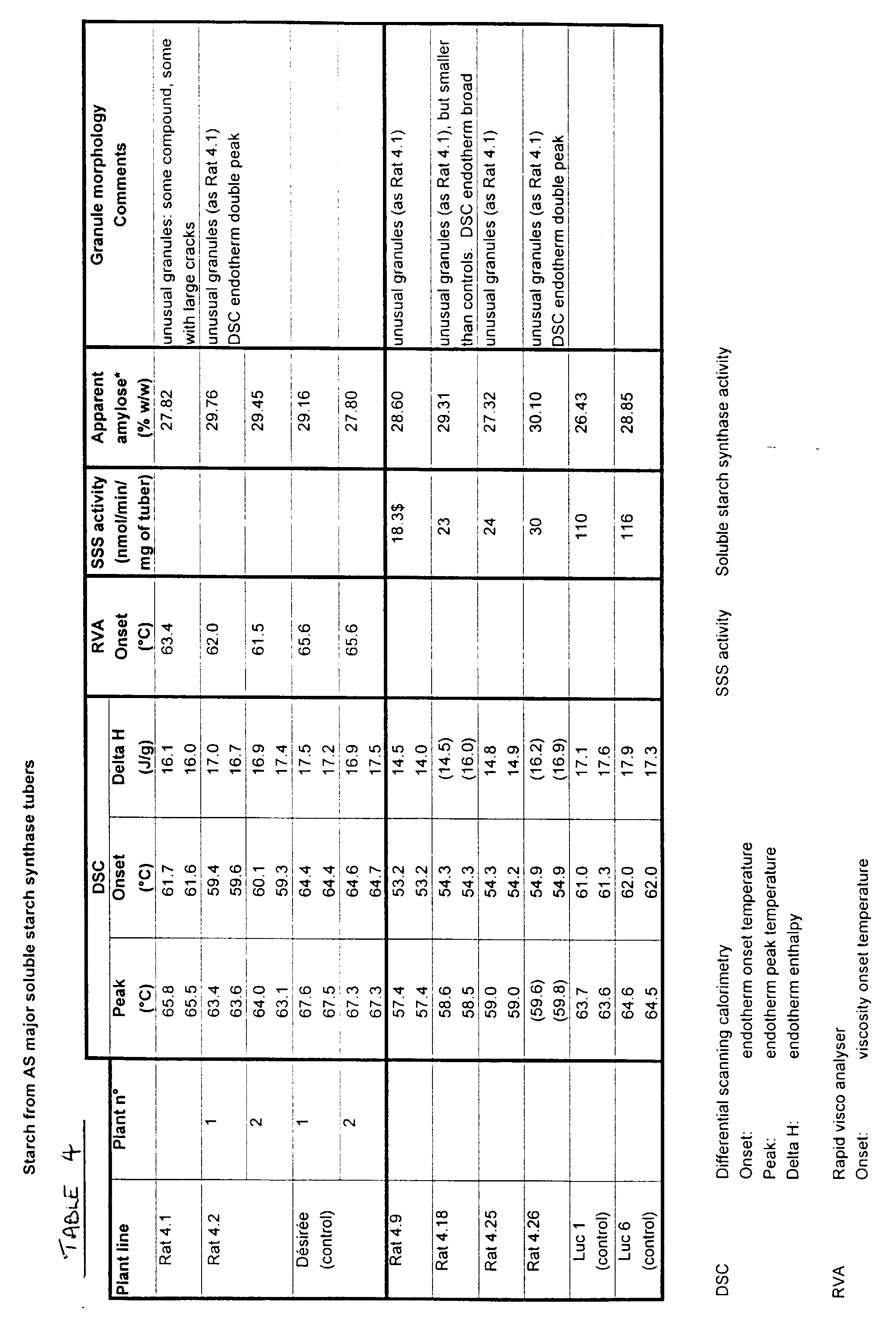


Claims (34)
- Altered starch extracted from a transformed potato plant or the progeny thereof, which starch, as extracted, has a viscosity onset temperature as determined by differential scanning calorimetry which is reduced by at least 5°C compared to starch extracted from equivalent, non-transformed plants.
- Altered starch according to claim 1, wherein the viscosity onset temperature is reduced by at least 7°C compared to starch extracted from equivalent, non-transformed plants.
- Altered starch extracted from a transformed potato plant or the progeny thereof, which starch, as extracted, has a viscosity onset temperature as determined by differential scanning calorimetry, of less than 60°C.
- Altered starch according to claim 3 which, as extracted, has a viscosity onset temperature of less than 55°C.
- Altered starch according to any one of claims 1-4 which, as extracted, has a reduced endotherm peak temperature (as extracted) as determined by differential scanning calorimetry compared to starch extracted from equivalent, non-transformed plants.
- Altered starch according to any one of claims 1-5 which, as extracted, has an endotherm peak temperature as determined by differential scanning calorimetry which is reduced by at least 5°C compared to starch extracted from equivalent, non-transformed plants.
- Altered starch according to any one of claims 1-6 which, as extracted, has an endotherm peak temperature as determined by differential scanning calorimetry, of less than 59°C.
- Altered starch according to any one of the preceding claims, having a substantially normal amylose content.
- A polypeptide obtainable from a soluble extract of potato tubers and having starch synthase activity, in substantially isolated form.
- A polypeptide according to claim 9, having an apparent molecular weight, as judged by SDS-PAGE, in the range of 100-140 kDa, or a functional equivalent thereof.
- A polypeptide according to claim 9 or 10, having an apparent molecular weight, as judged by SDS-PAGE, of 140 kDa.
- A polypeptide according to claim 9 or 10, having an apparent molecular weight, as judged by SDS-PAGE, of 120 kDa.
- A polypeptide according to claim 9 or 10, having an apparent molecular weight, as judged by SDS-PAGE, of 110 kDa.
- A polypeptide according to claim 9 or 10, obtainable from developing tubers of S. tuberosum cultivar Desirée, having an apparent molecular weight, as judged by SDS-PAGE, of 100 kDa.
- A polypeptide according to any one of claims 9-14, comprising the amino acid sequence shown in Figure 6.
- A nucleic acid sequence comprising at least 200bp and exhibiting at least 80% sequence identity with the corresponding region of the DNA sequence shown in Figure 6, operably linked in the sense or antisense orientation to a promoter operable in a plant.
- A sequence according to claim 16 comprising at least 300-600bp.
- A sequence according to claim 16 or 17, exhibiting at least 85% sequence identity with the corresponding region of the DNA sequence shown in Figure 6.
- A sequence according to any one of claims 16, 17 or 18 exhibiting at least 90% sequence identity with the corresponding region of the DNA sequence shown in Figure 6.
- A sequence according to any one of claims 16-19, comprising a 5' and/or a 3' untranslated region.
- A sequence according to any one of claims 16-20, encoding at least a portion of a polypeptide in accordance with any one of claims 9-15.
- A sequence according to any one of claims 16-21, excluding sequences disclosed in WO 96/15248.
- A nucleic acid construct comprising the nucleic acid sequence of any one of claims 16-22.
- A host cell into which has been introduced a nucleic acid sequence according to any one of claims 16-22.
- A host cell according to claim 24, wherein the nucleic acid sequence is introduced in a construct according to claim 23.
- A host cell according to claim 24 or 25, wherein the introduced sequence is integrated into the host cell genome.
- A plant host cell according to any one of claims 24, 25 or 26.
- A plant or part thereof, into which has been introduced a nucleic acid sequence according to any one of claims 16-22, or the progeny of such a plant or part thereof.
- A plant or part thereof according to claim 28, wherein the plant is selected from the group consisting of : potato, tomato, rice, wheat, peal cassava, sweet potato, barley, oat and maize.
- A plant according to claim 28 or 29, comprising starch in accordance with any one of claims 1-8.
- Starch extracted from a plant according to claim 28 or 29.
- Starch according to claim 31, having altered properties, as extracted, relative to starch extracted from equivalent but untransformed plants.
- Starch according to claim 31 or 32, and in accordance with any one of claims 1-8.
- A method of producing altered starch from transformed potato plants or their progeny, the method comprising extracting starch from a potato plant, at least the tubers of which comprise a nucleic acid sequence in accordance with any one of claims 16-22, said sequence having been artificially introduced into the potato plant or a predecessor thereof.
Applications Claiming Priority (2)
| Application Number | Priority Date | Filing Date | Title |
|---|---|---|---|
| GB9525353 | 1995-12-12 | ||
| GBGB9525353.0A GB9525353D0 (en) | 1995-12-12 | 1995-12-12 | Potato soluble starch synthase |
Publications (2)
| Publication Number | Publication Date |
|---|---|
| EP0779363A2 true EP0779363A2 (en) | 1997-06-18 |
| EP0779363A3 EP0779363A3 (en) | 1998-05-20 |
Family
ID=10785276
Family Applications (1)
| Application Number | Title | Priority Date | Filing Date |
|---|---|---|---|
| EP96309004A Withdrawn EP0779363A3 (en) | 1995-12-12 | 1996-12-11 | Improvements in or relating to soluble starch synthase |
Country Status (3)
| Country | Link |
|---|---|
| EP (1) | EP0779363A3 (en) |
| AU (1) | AU723475B2 (en) |
| GB (1) | GB9525353D0 (en) |
Cited By (13)
| Publication number | Priority date | Publication date | Assignee | Title |
|---|---|---|---|---|
| WO1999066050A1 (en) * | 1998-06-15 | 1999-12-23 | National Starch And Chemical Investment Holding Corporation | Improvements in or relating to plants and plant products |
| WO2000008175A3 (en) * | 1998-07-31 | 2000-06-08 | Aventis Cropscience Gmbh | Nucleic acid module coding for alpha glucosidase, plants that synthesize modified starch, methods for the production and use of said plants, and modified starch |
| WO2001012826A3 (en) * | 1999-08-11 | 2001-06-14 | Aventis Cropscience Gmbh | Nucleic acid molecules derived from plants which code for enzymes which are involved in the synthesis of starch |
| EP1179074A4 (en) * | 1999-04-29 | 2003-01-08 | Commw Scient Ind Res Org | NOVEL GENES ENCODING WHEAT STARCH SYNTHASES AND USES THEREOF |
| US6639125B1 (en) * | 1997-11-12 | 2003-10-28 | Iowa State University Research Foundation, Inc. | Dull1 coding for a starch synthase and uses thereof |
| AU780523B2 (en) * | 1999-04-29 | 2005-03-24 | Biogemma Sas | Novel genes encoding wheat starch synthases and uses therefor |
| US7012171B2 (en) | 1989-12-21 | 2006-03-14 | Advanced Technologies Cambridge Limited | Modification of plant metabolism |
| US7247769B2 (en) | 1998-07-31 | 2007-07-24 | Bayer Cropscience Gmbh | Plants synthesizing a modified starch, a process for the generation of the plants, their use, and the modified starch |
| US7563944B2 (en) | 2003-01-20 | 2009-07-21 | Sungene Gmbh & Co. Kgaa | Expression cassette for nucleic acids in plant tissue containing starch |
| US8067670B2 (en) | 2004-06-21 | 2011-11-29 | Bayer Cropscience Ag | Plants that produce amylopectin starch with novel properties |
| EP2099905B1 (en) * | 2006-12-29 | 2017-06-14 | Bayer Intellectual Property GmbH | Process for modifying the thermal and/or digestion properties of corn starches and corn flours |
| WO2017192095A1 (en) | 2016-05-03 | 2017-11-09 | Lyckeby Starch Ab | Amylopectin potato starch with improved stability against retrogradation and improved freeze and thaw stability |
| WO2019145544A1 (en) | 2018-01-26 | 2019-08-01 | Böhm-Nordkartoffel Agrarproduktion Gmbh & Co. Ohg | Altered starch producing plants |
Families Citing this family (2)
| Publication number | Priority date | Publication date | Assignee | Title |
|---|---|---|---|---|
| DE19601365A1 (en) | 1996-01-16 | 1997-07-17 | Planttec Biotechnologie Gmbh | Nucleic acid molecules from plants encoding enzymes involved in starch synthesis |
| DE19619918A1 (en) | 1996-05-17 | 1997-11-20 | Planttec Biotechnologie Gmbh | Nucleic acid molecules encoding soluble starch synthases from maize |
Citations (5)
| Publication number | Priority date | Publication date | Assignee | Title |
|---|---|---|---|---|
| EP0458367A1 (en) | 1986-03-28 | 1991-11-27 | Calgene, Inc. | Anti-sense regulation of gene expression in plant cells |
| US5107065A (en) | 1986-03-28 | 1992-04-21 | Calgene, Inc. | Anti-sense regulation of gene expression in plant cells |
| WO1995026407A1 (en) | 1994-03-25 | 1995-10-05 | National Starch And Chemical Investment Holding Corporation | Method for producing altered starch from potato plants |
| WO1996015248A1 (en) | 1994-11-10 | 1996-05-23 | Hoechst Schering Agrevo Gmbh | Dna molecules that code for enzymes involved in starch synthesis, vectors, bacteria, transgenic plant cells and plants containing said molecules |
| WO1996034968A2 (en) | 1995-05-05 | 1996-11-07 | National Starch And Chemical Investment Holding Corporation | Improvements in or relating to plant starch composition |
-
1995
- 1995-12-12 GB GBGB9525353.0A patent/GB9525353D0/en active Pending
-
1996
- 1996-12-11 EP EP96309004A patent/EP0779363A3/en not_active Withdrawn
- 1996-12-11 AU AU74268/96A patent/AU723475B2/en not_active Ceased
Patent Citations (6)
| Publication number | Priority date | Publication date | Assignee | Title |
|---|---|---|---|---|
| EP0458367A1 (en) | 1986-03-28 | 1991-11-27 | Calgene, Inc. | Anti-sense regulation of gene expression in plant cells |
| US5107065A (en) | 1986-03-28 | 1992-04-21 | Calgene, Inc. | Anti-sense regulation of gene expression in plant cells |
| EP0240208B1 (en) | 1986-03-28 | 1994-11-17 | Calgene, Inc. | Anti-sense regulation of gene expression in plant cells |
| WO1995026407A1 (en) | 1994-03-25 | 1995-10-05 | National Starch And Chemical Investment Holding Corporation | Method for producing altered starch from potato plants |
| WO1996015248A1 (en) | 1994-11-10 | 1996-05-23 | Hoechst Schering Agrevo Gmbh | Dna molecules that code for enzymes involved in starch synthesis, vectors, bacteria, transgenic plant cells and plants containing said molecules |
| WO1996034968A2 (en) | 1995-05-05 | 1996-11-07 | National Starch And Chemical Investment Holding Corporation | Improvements in or relating to plant starch composition |
Non-Patent Citations (29)
| Title |
|---|
| BABA ET AL., PHYTOCHEM., vol. 29, 1990, pages 719 - 723 |
| BABA ET AL., PLANT PHYSIOL., vol. 103, 1993, pages 565 - 573 |
| CATZ ET AL., AN. ASOC. QUIM. ARGENT., vol. 77, 1989, pages 47 - 51 |
| DENYER ET AL., PLANTA., vol. 196, 1995, pages 256 - 265 |
| DRY ET AL., PLANTA., vol. 186, 1992, pages 609 - 617 |
| EDWARDS ET AL., PLANT J., vol. 8, 1995, pages 283 - 294 |
| FRYDMAN & CARDINI., ARCH. BIOCHEM. BIOPHYS., vol. 116, 1966, pages 9 - 18 |
| GEIGENBERGER & STITT., PLANTA., vol. 189, 1993, pages 329 - 339 |
| GEIGENBERGER ET AL., PLANTA., vol. 193, 1994, pages 486 - 493 |
| HAJIREZAEI ET AL., PLANTA., vol. 192, 1993, pages 16 - 30 |
| HAWKER ET AL., PHYTOCHEM., vol. 11, 1972, pages 1278 - 1293 |
| HOVENKAMP-HERMELINK ET AL., THEOR. APPL. GENET., vol. 7, 1987, pages 217 - 221 |
| KUIPERS ET AL., PLANT CELL., vol. 6, 1994, pages 43 - 52 |
| MACDONALD & PREISS., PLANT PHYSIOL., vol. 78, 1985, pages 849 - 852 |
| MARSHALL ET AL., THE PLANT CELL., vol. 8, 1996, pages 1121 - 1135 |
| MARTIN & SMITH., PLANT CELL., vol. 7, 1995, pages 971 - 985 |
| MATZKE & MATZKE., PLANT PHYSIOLOGY., vol. 107, 1995, pages 679 - 685 |
| MU ET AL., PLANT J., vol. 6, 1994, pages 151 - 159 |
| MUELLER-ROBER & KOSSMANN., PLANT CELL ENVIRON., vol. 17, 1994, pages 601 - 613 |
| PONSTEIN.: "Starch Synthesis in Potato Tubers.", 1990, STATE UNIVERSITY GRONINGEN., THE NETHERLANDS. |
| SHEEHY ET AL., PNAS., vol. 85, 1988, pages 8805 - 8809 |
| SHEWMAKER & STALKER., PLANT PHYSIOL., vol. 100, 1992, pages 1083 - 1086 |
| SMITH., PLANTA., vol. 182, 1990, pages 599 - 604 |
| SONNEWALD ET AL., PLANT CELL ENVIRON., vol. 17, 1994, pages 649 - 658 |
| VAN DER KROL ET AL., MOL. GEN. GENET., vol. 220, pages 204 - 212 |
| VAN DER LEIJ ET AL., MOL. GEN. GENET., vol. 228, 1991, pages 240 - 248 |
| VISSER & JACOBSEN., TRENDS BIOTECH., vol. 11, 1993, pages 63 - 68 |
| VISSER ET AL., MOL. GEN. GENET., vol. 22, 1991, pages 289 - 296 |
| VOS-SCHEPERKEUTER ET AL., PLANT PHYSIOL., vol. 82, 1986, pages 411 - 416 |
Cited By (20)
| Publication number | Priority date | Publication date | Assignee | Title |
|---|---|---|---|---|
| US7012171B2 (en) | 1989-12-21 | 2006-03-14 | Advanced Technologies Cambridge Limited | Modification of plant metabolism |
| US6639125B1 (en) * | 1997-11-12 | 2003-10-28 | Iowa State University Research Foundation, Inc. | Dull1 coding for a starch synthase and uses thereof |
| US7534931B2 (en) | 1998-06-15 | 2009-05-19 | Brunob Ii B.V. | Method for producing modified starch |
| US6635756B1 (en) * | 1998-06-15 | 2003-10-21 | National Starch And Chemical Investment Holding Corporation | Starch obtainable from modified plants |
| WO1999066050A1 (en) * | 1998-06-15 | 1999-12-23 | National Starch And Chemical Investment Holding Corporation | Improvements in or relating to plants and plant products |
| WO2000008175A3 (en) * | 1998-07-31 | 2000-06-08 | Aventis Cropscience Gmbh | Nucleic acid module coding for alpha glucosidase, plants that synthesize modified starch, methods for the production and use of said plants, and modified starch |
| US7385104B2 (en) | 1998-07-31 | 2008-06-10 | Bayer Cropscience Ag | Plants synthesizing a modified starch, a process for the generation of the plants, their use, and the modified starch |
| US7247769B2 (en) | 1998-07-31 | 2007-07-24 | Bayer Cropscience Gmbh | Plants synthesizing a modified starch, a process for the generation of the plants, their use, and the modified starch |
| US6794558B1 (en) | 1998-07-31 | 2004-09-21 | Aventis Cropscience Gmbh | Nucleic acid module coding for αglucosidase, plants that synthesize modified starch, methods for the production and use of said plants, and modified starch |
| EP1179074A4 (en) * | 1999-04-29 | 2003-01-08 | Commw Scient Ind Res Org | NOVEL GENES ENCODING WHEAT STARCH SYNTHASES AND USES THEREOF |
| AU780523B2 (en) * | 1999-04-29 | 2005-03-24 | Biogemma Sas | Novel genes encoding wheat starch synthases and uses therefor |
| AU780737B2 (en) * | 1999-08-11 | 2005-04-14 | Bayer Intellectual Property Gmbh | Nucleic acid molecules from plants encoding enzymes which participate in starch synthesis |
| US6590141B1 (en) | 1999-08-11 | 2003-07-08 | Aventis Cropscience Gmbh | Nucleic acid molecules from plants encoding enzymes which participate in starch synthesis |
| JP2003507020A (en) * | 1999-08-11 | 2003-02-25 | アべンティス・クロップサイエンス・ゲー・エム・ベー・ハー | Plant-derived nucleic acid molecule encoding an enzyme involved in starch synthesis |
| WO2001012826A3 (en) * | 1999-08-11 | 2001-06-14 | Aventis Cropscience Gmbh | Nucleic acid molecules derived from plants which code for enzymes which are involved in the synthesis of starch |
| US7563944B2 (en) | 2003-01-20 | 2009-07-21 | Sungene Gmbh & Co. Kgaa | Expression cassette for nucleic acids in plant tissue containing starch |
| US8067670B2 (en) | 2004-06-21 | 2011-11-29 | Bayer Cropscience Ag | Plants that produce amylopectin starch with novel properties |
| EP2099905B1 (en) * | 2006-12-29 | 2017-06-14 | Bayer Intellectual Property GmbH | Process for modifying the thermal and/or digestion properties of corn starches and corn flours |
| WO2017192095A1 (en) | 2016-05-03 | 2017-11-09 | Lyckeby Starch Ab | Amylopectin potato starch with improved stability against retrogradation and improved freeze and thaw stability |
| WO2019145544A1 (en) | 2018-01-26 | 2019-08-01 | Böhm-Nordkartoffel Agrarproduktion Gmbh & Co. Ohg | Altered starch producing plants |
Also Published As
| Publication number | Publication date |
|---|---|
| EP0779363A3 (en) | 1998-05-20 |
| AU723475B2 (en) | 2000-08-24 |
| GB9525353D0 (en) | 1996-02-14 |
| AU7426896A (en) | 1997-07-03 |
Similar Documents
| Publication | Publication Date | Title |
|---|---|---|
| Marshall et al. | Identification of the major starch synthase in the soluble fraction of potato tubers. | |
| Edwards et al. | Biochemical and molecular characterization of a novel starch synthase from potato tubers | |
| Shani et al. | Growth enhancement of transgenic poplar plants by overexpression of Arabidopsis thaliana endo-1, 4–β-glucanase (cel 1) | |
| Salehuzzaman et al. | Isolation and characterization of a cDNA encoding granule-bound starch synthase in cassava (Manihot esculenta Crantz) and its antisense expression in potato | |
| Greiner et al. | Cloning of a tobacco apoplasmic invertase inhibitor: proof of function of the recombinant protein and expression analysis during plant development | |
| ES2294797T3 (en) | HANDLING OF CELLULOSE. | |
| AU694448B2 (en) | Combination of dna sequences which enable the formation of modified starch in plant cells and plants, processes for theproduction of these plants and the modified starch obtainable therefrom | |
| Ainsworth et al. | Expression, organisation and structure of the genes encoding the waxy protein (granule-bound starch synthase) in wheat | |
| Ji et al. | Microbial starch-binding domains as a tool for targeting proteins to granules during starch biosynthesis | |
| AU724942B2 (en) | Transgenic potatoes having reduced levels of alpha glucan L- or H-type tuber phosphorylase activity with reduced cold-sweetening | |
| JP4148964B2 (en) | DNA molecules encoding enzymes involved in starch synthesis, and vectors, bacteria, transgenic plant cells and transgenic plants containing the DNA molecules | |
| AU723475B2 (en) | Potato soluble starch synthase | |
| Wang et al. | Characterization of ADG1, an Arabidopsis locus encoding for ADPG pyrophosphorylase small subunit, demonstrates that the presence of the small subunit is required for large subunit stability | |
| Harpster et al. | Suppression of a ripening-related endo-1, 4-β-glucanase in transgenic pepper fruit does not prevent depolymerization of cell wall polysaccharides during ripening | |
| PT950107E (en) | NEW MOLECULES OF CORE FROM NUCLEIC ACID AND ITS USE FOR THE PRODUCTION OF MODIFIED STARCH | |
| Coughlan et al. | Cloning and characterization of the calreticulin gene from Ricinus communis L. | |
| Harpster et al. | Constitutive overexpression of a ripening-related pepper endo-1, 4-β-glucanase in transgenic tomato fruit does not increase xyloglucan depolymerization or fruit softening | |
| Edwards et al. | Evidence that a 77-kilodalton protein from the starch of pea embryos is an isoform of starch synthase that is both soluble and granule bound | |
| WO1995007355A1 (en) | Combination of dna sequences which enable the formation of modified starch in plant cells and plants, processes for the production of these plants and the modified starch obtainable therefrom | |
| US7041484B1 (en) | Starch branching enzymes | |
| US5767364A (en) | Endo-1,4-beta-D-glucanase | |
| Wang et al. | adg2‐1 represents a missense mutation in the ADPG pyrophosphorylase large subunit gene of Arabidopsis thaliana | |
| Bustos et al. | Differential accumulation of four phaseolin glycoforms in transgenic tobacco | |
| CZ136196A3 (en) | Polypeptide nucleotide chain, dna vector, process for preparing such polypeptide and a plant obtained by genetic engineering method | |
| Willingham et al. | Molecular cloning of the Arabidopsis thaliana sedoheptulose-1, 7-biphosphatase gene and expression studies in wheat and Arabidopsis thaliana |
Legal Events
| Date | Code | Title | Description |
|---|---|---|---|
| PUAI | Public reference made under article 153(3) epc to a published international application that has entered the european phase |
Free format text: ORIGINAL CODE: 0009012 |
|
| AK | Designated contracting states |
Kind code of ref document: A2 Designated state(s): AT BE CH DE DK ES FI FR GB GR IE IT LI LU MC NL PT SE |
|
| PUAL | Search report despatched |
Free format text: ORIGINAL CODE: 0009013 |
|
| AK | Designated contracting states |
Kind code of ref document: A3 Designated state(s): AT BE CH DE DK ES FI FR GB GR IE IT LI LU MC NL PT SE |
|
| 17P | Request for examination filed |
Effective date: 19980716 |
|
| 17Q | First examination report despatched |
Effective date: 20020219 |
|
| STAA | Information on the status of an ep patent application or granted ep patent |
Free format text: STATUS: THE APPLICATION IS DEEMED TO BE WITHDRAWN |
|
| 18D | Application deemed to be withdrawn |
Effective date: 20041201 |