EP0776506B1 - Interactive report generation system and method of operation - Google Patents
Interactive report generation system and method of operation Download PDFInfo
- Publication number
- EP0776506B1 EP0776506B1 EP96918428A EP96918428A EP0776506B1 EP 0776506 B1 EP0776506 B1 EP 0776506B1 EP 96918428 A EP96918428 A EP 96918428A EP 96918428 A EP96918428 A EP 96918428A EP 0776506 B1 EP0776506 B1 EP 0776506B1
- Authority
- EP
- European Patent Office
- Prior art keywords
- worksheet
- layout
- cell
- model
- definition
- Prior art date
- Legal status (The legal status is an assumption and is not a legal conclusion. Google has not performed a legal analysis and makes no representation as to the accuracy of the status listed.)
- Expired - Lifetime
Links
Images

Classifications
-
- G—PHYSICS
- G06—COMPUTING OR CALCULATING; COUNTING
- G06Q—INFORMATION AND COMMUNICATION TECHNOLOGY [ICT] SPECIALLY ADAPTED FOR ADMINISTRATIVE, COMMERCIAL, FINANCIAL, MANAGERIAL OR SUPERVISORY PURPOSES; SYSTEMS OR METHODS SPECIALLY ADAPTED FOR ADMINISTRATIVE, COMMERCIAL, FINANCIAL, MANAGERIAL OR SUPERVISORY PURPOSES, NOT OTHERWISE PROVIDED FOR
- G06Q10/00—Administration; Management
- G06Q10/06—Resources, workflows, human or project management; Enterprise or organisation planning; Enterprise or organisation modelling
-
- G—PHYSICS
- G06—COMPUTING OR CALCULATING; COUNTING
- G06F—ELECTRIC DIGITAL DATA PROCESSING
- G06F40/00—Handling natural language data
- G06F40/10—Text processing
- G06F40/166—Editing, e.g. inserting or deleting
- G06F40/177—Editing, e.g. inserting or deleting of tables; using ruled lines
-
- G—PHYSICS
- G06—COMPUTING OR CALCULATING; COUNTING
- G06Q—INFORMATION AND COMMUNICATION TECHNOLOGY [ICT] SPECIALLY ADAPTED FOR ADMINISTRATIVE, COMMERCIAL, FINANCIAL, MANAGERIAL OR SUPERVISORY PURPOSES; SYSTEMS OR METHODS SPECIALLY ADAPTED FOR ADMINISTRATIVE, COMMERCIAL, FINANCIAL, MANAGERIAL OR SUPERVISORY PURPOSES, NOT OTHERWISE PROVIDED FOR
- G06Q10/00—Administration; Management
- G06Q10/10—Office automation; Time management
Definitions
- This invention relates in general to the field of electronic systems, and more particularly to an interactive report generation system and a method of operation.
- Planning software applications are used in a wide variety of industries to accomplish various planning purposes. These planning software applications generally utilize a model of the user's environment for which planning is desired. In the manufacturing context, personnel could use planning software to develop solutions to problems and to react and compete intelligently in a given market. Planning software is needed that can be programmed by users to answer the questions that need to be answered in a format useful to the user.
- the productivity impact of manufacturing planning software may be limited by the capabilities of the software, itself.
- Conventional planning software can be incapable of generating needed reports, performing needed analysis, allowing the needed modifications to a model, or modeling the problem needed to be solved. Consequently, users have limited options because many helpful planning tasks cannot reasonably be done manually and planning software is unable to do them automatically.
- One fundamental need of manufacturing personnel is to generate custom reports that display desired information in formats, terms, and units that are used in daily manufacturing operations.
- Users of planning software should not be required to manually search a large quantity of data to find desired information and complete a desired analysis. Users also should not be required to convert data mentally from one set of units into units used on the factory floor. All searching, sorting, filtering, converting and translation is work that it is advantageous for planning software applications to handle.
- the programming mechanism that is most widely used by non-programming professionals is the conventional spreadsheet, such as LOTUS 1-2-3 and MICROSOFT EXCEL. Often planners, purchasers, sales professionals and others, faced with inadequate planning software applications, develop sophisticated analyses and reports using conventional spreadsheet tools.
- a planning software application be directly programmable by the personnel that need planning tools. It is problematic for a user to be required to turn to a local system maintainer or programmer or the software vendor to initiate a new analysis or to make minor adjustments. It is also problematic if a user is unable to experiment with different options and possibilities in order to develop an analysis of and interface with the modeled environment whether manufacturing, distribution, supply or other planning environment. It also is advantageous that a user be enabled to accomplish planning analysis through direct interaction with a reporting system.
- United States Patent US-A-5,189,608 discloses a financial reporting system in which the data is stored in a predefined format and then user definable reports may be generated from this data set.
- United States Patent US-A-5,361,393 discloses a system for uploading data from a terminal computer to a host computer whereby it is loaded into a single-row, multi-column form within a spreadsheet.
- United States Patent US-A-5,423,033 discloses a system for generating a secondary report from a primary report.
- EP-A-0,067,303 discloses a system for generating reports in which a report template is produced and used to generate code for producing a report conforming to that template.
- an interactive report generation system and a method of operation are provided that substantially eliminate or reduce disadvantages and problems associated with conventional planning and spreadsheet software applications.
- Preferred embodiments of the present invention allow interactive access to a model of a user's environment through report functions where the functions are parameterized and are independent of the model.
- the cells provided in a worksheet of a report have "set” expressions in addition to “get” expressions such that editing the cell can result in changes to data in the user's model as opposed to changes simply in the cell.
- the values returned by the worksheet and model access functions have a well-defined type.
- the type allows type-sensitive interaction and help. Further, the type allows overloaded functions which are functions with the same name that take different types of arguments and can have different behavior for each.
- a preferred feature of the present invention is the provision of different classes of worksheets within reports such as normal (one cell formula results in one value) and replicating (one cell formula is replicated into many cell values) worksheets.
- a further preferred feature of the present invention is the provision of different classes of layouts associated with each class of worksheets in reports such as tabular, bar chart, Gantt chart, and menu layouts. Further, the present invention allows different tabular layouts, and in particular, provides the flexible axis-cross layout for replicating worksheets in reports.
- a further preferred feature is the ability of layouts to utilize different controls for display of and interaction with the cells in the worksheet of a report.
- Examples of the different controls provided include different classes of controls for display and interaction including text, slider, Gantt chart and bar chart controls.
- GUI graphical user interface
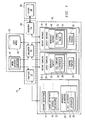
- FIGURE 1 is a block diagram of a report generation system, indicated generally at 10, constructed according to the teachings of the present invention.
- Report generation system 10 includes a compiler 12. Compiler 12 receives a report definition 14 and model interface functions 16.
- Report definition 14 refers by name to at least one layout definition 18.
- Layout definition 18 refers by name to a worksheet definition 20 and at least one control definition 22.
- Worksheet definition 20 includes at least one cell definition 24 that includes at least one expression 26.
- One control definition can be associated with zero or more cell definitions, and one cell definition can be associated with zero or more control definitions.
- the embodiment of FIGURE 1 is not intended nor should be construed to limit the scope of the present invention. More than one report definition 14 can use the same layout definition 18, and more than one layout definition 18 can use the same worksheet definition 20.
- Compiler 12 generates a report template 28 from a report definition 14 and model interface functions 16.
- Report template 28 includes a layout template 30 for each layout definition 18 in report definition 14.
- Layout template 30 includes a worksheet template 32 corresponding to worksheet definition 20.
- Layout template 30 also includes a control template 34 for each control definition 22 in report definition 14.
- Worksheet template 32 includes a cell template 36 for each cell definition 24 in report definition 14.
- Cell template 36 includes an expression 38 for each expression 26 in cell definition 24.
- An evaluator 40 receives report template 28 and model interface functions 16. Evaluator 40 also accesses a user model 42.
- User model 42 comprises a model of a user environment such as a manufacturing environment.
- Evaluator 40 generates a report instance 44.
- Report instance 44 includes a layout instance 46 corresponding to layout template 30.
- Layout instance 46 includes a worksheet instance 48 and control instance 50 corresponding to worksheet template 32 and control template 34.
- Worksheet instance 48 includes at least one cell instance 52 corresponding to an evaluation of cell template 36.
- Cell instance 52 includes a value 54.
- a renderer 56 is coupled to report instance 44. Renderer 56 generates a report 58 and manages interaction with report 58.
- report generation system 10 comprises a computer software system executed by a general purpose digital computer.
- a data storage device 60 is operable to hold model interface functions 16 and user model 42.
- a data storage device 62 is operable to hold report definition 14, report template 28 and report instance 44.
- Data storage devices 60 and 62 can comprise magnetic storage devices, memory devices or other such data storage devices. Further, data storage devices 60 and 62 can be separate or can comprise parts of a single device.
- An execution memory 64 is operable to hold compiler 12, evaluator 40 and renderer 56 such that each can be executed by a processor in the general purpose digital computer. Execution memory 64 is also operable to hold executable code associated with model interface functions 16. Execution memory 64 can comprise a memory device or other such data storage device.
- a display device 66 is operable to display report 48 for viewing and interaction by a user of report generation system 10.
- a printer is an example of a display device 66 that can display the report but can not support interaction with the report.
- compiler 12 In operation, compiler 12 generates report template 28 from report definition 14 utilizing model interface functions 16. Report template 28 is provided to evaluator 40. Evaluator 40 generates report instance 44 from report template 28 utilizing model interface functions 16 and data from user model 42. Report instance 44 is provided to renderer 56. Renderer 56 generates report 58 from report instance 44 and manages use interaction with report 58. In this report generation mode, report generation system 10 processes report definition 14 to produce report 58 which displays and allows interaction with the desired report information incorporating data from user model 42.
- Report generation system 10 is user-programmable, model-independent, and interactive. Model independence arises from the fact that report definition 14 generically defines the desired report without regard for the data values contained in user model 42.
- Report definition 14 includes a layout definition 18 for each window segment desired in report 58.
- Layout definition 18 includes worksheet definition 20 and a control definition 22 for each independently defined window element desired in the window segment in report 58.
- Each window element for control is associated with, displays and provides interaction with, particular cells defined by worksheet definition 20.
- Worksheet definition 20 defines at least one cell definition 24 having at least one expression 26.
- Compiler 12 receives a report definition 14 as an input. Compiler 12 generates a corresponding report template 28 suitable for use by evaluator 40. Compilation of some of the functions used in expressions 26 are as dictated by model interface functions 16. The resulting expressions 38 refer to the corresponding executable function in the model interface functions 16 for use by evaluator 40.
- Evaluator 40 receives report template 28 as an input. Evaluator 40 accesses model interface functions 16 to obtain function implementations in order to evaluate each expression 38 in report template 28. Evaluator 40 accesses data in user model 42 according to the function implementation when evaluating each expression 38. Evaluator 40 generates report instance 44 in which each cell template 36 has been evaluated to one or more cell instance 52 each having a value 54. Value 54 is the result of evaluating expression 38 with data from user model 42. Evaluator 40 also converts each control template 34 to a control instance 50 appropriate for use by renderer 56 to display interactive controls reflecting cell values 54.
- Renderer 56 receives report instance 44 as an input. Renderer 56 processes each control instance 50 and worksheet instance 48 associated with each layout instance 46 to generate and display report 58. Renderer 56 may also manage interaction with the generated report 58 in the case of electronically rendered reports. Report 58 displays data from user model 16 according to the desired report analysis defined by report instance 44.
- Report generation system 10 can be interactive with respect to a user after report 58 is generated and displayed. In this interactive mode, a user can interact with report 58 to modify user model 42 and to modify report instance 44.
- report 58 is displayed through a graphical user interface (GUI) and interaction is driven by actions a user takes on controls in the GUI display.
- GUI graphical user interface
- report 58 provides information to renderer 56 describing actions taken by a user.
- Renderer 56 makes corresponding changes in report instance 44 such as changing value 54 for cell instance 52.
- Evaluator 40 receives the changes to report instance 44, accesses report template 28 if necessary, and makes appropriate changes to data values in user model 42.
- Evaluator 40 also re-evaluates report template 28, regenerating report instance 44, if any values of other cells should change due to a change of data values in user model 42.
- Modification of user model 42 and report instance 44 is accomplished through the use of "get" and "set” expressions for expression 38 in cell template 36.
- the get expression informs evaluator 40 what data to obtain as a value from user model 42 when evaluating an expression 38.
- the set expression informs evaluator 40 as to an appropriate response to a change in value 54 interactively caused by a user modifying report 58.
- evaluator 40 determines whether to modify data values within user model 42.
- a first cell may give a value for a queue time associated with a particular manufacturing resource.
- the get expression associated with the first cell could inform evaluator 40 what data to obtain for the queue time from user model 42.
- the set expression associated with the first cell could inform evaluator 40 that a change in the value of the first cell should result in changing the data in user model 42 to match the queue time value entered by the user.
- a second cell could display a sum of the queue time and a wait time associated with the same resource.
- a get expression associated with this second cell could inform evaluator 40 what data to get from user model 42 for the queue time and the wait time and to sum the two values.
- the set expression associated with the second cell could inform evaluator 40 that a change in the value of the second cell should result only in a change of the wait time in user model 42. Thus, if the queue time were 10, and the wait time were 5, and a user changed the value of the second cell from 15 to 20, evaluator 40 would change the data in user model 42 for the wait time from 5 to 10.
- Report generation system 10 is programmable in that report definition 14 is created and supplied by a user such as through a graphical or textual report tool.
- Report definition 14 refers to one or more layout definitions 18.
- Each layout definition 18 refers to a worksheet definition 20 and consists of a number of control definitions 22. Multiple report definitions 14 can share layout definitions 18.
- Layout definition 18 can share worksheet definitions 20.
- Each worksheet definition 20 consists of one or more cell definitions 24 which contain expression 26.
- Each control definition 22 is associated with zero or more cell definitions 24 of worksheet definition 20.
- Report definition 14 is compiled by compiler 12 into report template 28.
- Report template 28 has similar form and structure to report definition 14.
- Compiler 12 utilizes model interface functions 16 designed for accessing user model 42 to define function calls placed in expressions 38.
- Report template 28 is evaluated using implementations from model interface functions 16 and data from user model 42 by evaluator 40.
- Evaluator 40 evaluates report template 28 to generate report instance 44.
- Report instance 44 can drive a number of renderings including on-screen graphical user interfaces (GUI's) or paper reports. According to the teachings of the present invention, report instance 44 is not static. By interaction of a user with report 58, report instance 44 operates as an interactive tool giving a user the ability to manipulate data in user model 42 and change values in report instance 44.
- GUI's on-screen graphical user interfaces
- Report generation system 10 provides interaction with user model 42.
- User model 42 comprises a data structure for supporting desired report functionality such as manufacturing planning.
- Expressions 26 in report definition 14 support functions for accessing user visible data in user model 42. Those functions further support both getting and setting of values in user model 42, as described above. Editing a cell in report 58 can have two effects: the user can change what portion of user model 42 the cell accesses, or the user can change the value of a data field in user model 42 that is accessed to generate the cell value.
- the function implementations that pull information out of user model 42 are associated with a type such that the type of data (quantity, number, string, pathname, etc., or a user model type such as an operation, resource, buffer, etc.) pulled out by each function is known and checked. For example, if a function expects to be passed a quantity, but instead is passed a pathname, then the call to that function will not compile and compiler 12 can post an error.
- Parameters are passed to worksheet definitions 20 which are model independent.
- a worksheet definition 20 can be defined that will cause the display of fields related to a resource without specifying which resource.
- the desired resource can be passed as a parameter.
- Parameters of a worksheet or report define what additional information must be combined with the worksheet or report template so that it may become a worksheet or report instance.
- Worksheet instance 48 is a collection of cells that consists of evaluated expressions.
- the cells are named by row-column as with a conventional spreadsheet, but are not restricted by that naming as in conventional spreadsheets.
- Worksheets in which cells are defined can be one of several different classes of worksheets.
- One class of worksheets produces cells like a traditional spreadsheet such that for each cell in worksheet definition 20 there is one cell generated in worksheet instance 48. Cells are generated in the same row and column position as the cells are named.
- a menu worksheet class may produce cells such that each cell is a menu entry with a label, mnemonic, and keyboard accelerator.
- Another worksheet class is a replicating worksheet which may generate hundreds of cells in the instantiation of worksheet instance 48 for each cell in worksheet definition 20. The cells are replicated depending upon information in the data set of user model 42.
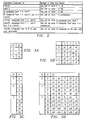
- FIGURE 2 illustrates a table showing expressions utilizing lists and the number of cells resulting in evaluation of the list expressions.
- One data type that can be returned by a worksheet expression is a "list of elements of type V" or "type LIST ⁇ V>.”
- a replicating worksheet can be evaluated such that one cell will be instantiated for each element in a list computed by a single cell expression. Cells that use a cell that computes a list see a type matching the type of elements that are in the list. The same number of cells generated for a list can be generated for each cell expression that computes from the list.
- the table of FIGURE 2 provides examples of expressions utilizing lists.
- a cell whose expression evaluates to List ⁇ V> can be instantiated with one cell for each V in the list.
- the number of cells depends on the size of the list which in turn depends upon the user model data set to which the worksheet is applied. For example, consider a cell A1 that accesses the model field "primes" returning a list of three numbers that are prime: 2, 3, and 5.
- a List ⁇ T> is treated the same as List ⁇ V>.
- a cell A2 that accesses another field "vowels” returning a list of five strings containing vowels: a, e, i, o, and u.
- a cell's expression may compute a value of type S using the cell that computes List ⁇ T>.
- the expression uses data of type T, and can be reevaluated for each T in List ⁇ T>.
- the expression can instantiate the same number of cells as elements in List ⁇ T>.
- the relationship between corresponding cells instantiated with T's and instantiated with S's is maintained according to the teachings of the present invention. For example, the cells can be displayed in the same row or column.
- another cell's expression may compute a value of type R using both a T and a V from List ⁇ T> and List ⁇ V>.
- an R can be computed for each combination of T and V computed in List ⁇ T> and List ⁇ V>. If List ⁇ T> results in ten T's, and List ⁇ V> results in seven V's, there will be 70 R's computed.
- the relationship between each R and the T and V from which it was computed can be maintained. For example, if the T's are in rows and the V's are in columns, and then the R's can be placed in the row-column intersection relative to the T and V from which each R was computed.
- a cell computes a List ⁇ Q> from each T in List ⁇ T>.
- the instantiation of the cell can include one cell for each Q in each List ⁇ Q> computed from each T in List ⁇ T>. If three T's were computed, for example, the first one may yield four Q's, the next one may yield two Q's, and the last one may yield five Q's. There would be eleven Q's, and each would be instantiated into a separate cell.
- the relationship between the Q's and the T's from which each Q was computed can be maintained as mentioned above. This relationship results in a hierarchy, where each parent T may have several children Q's.
- An expression could compute a List ⁇ P> from both a T and a V, which came from List ⁇ T> and List ⁇ V>, respectively, as shown in row six of FIGURE 2.
- the result can be one cell for each P in each List ⁇ P> generated from each combination of T and V.
- D1 could compute the next A1 number of letters following the letter in A2. Given A1 has value 2 and A2 has value "a”, the generated list for D1 would be "b” and "c” (the 2 letters following "a”). Given A1 has value 5 and A2 has value "u”, the list "v", "w”, "x", “y”, “z”.
- a cell could compute a list ⁇ N> obtained by referencing itself.
- Such a cell is recursive.
- a cell A1 could return the List[Item] that includes all Items required to build a particular Item.
- For each Item in that list we may want to find the List[Item] need to build that Item.
- the 'recurse' function supports such self-referencing cells.
- the initial list is passed into recurse along with an expression to be evaluated on each licensor, for example #.children.
- FIGURES 3A 3B, 3C and 3D illustrate examples of cells instantiated based upon lists.
- list A1 includes three elements: 2, 3 and 5.
- Cell B1 computes (A1+3). Evaluation of B1 is performed once for each element in the list of A1. Thus, the result for B1 is three cells having the values 5, 6, and 8, as shown.
- FIGURE 3B illustrates cells instantiated based upon two lists.
- Cell B2 computes A2 concatenated with a string representation of A1.
- A2 is a list of vowels: a, e, i, o, and u
- A1 is a list of prime numbers: 2, 3 and 5.
- B2 converts the prime number of A1 to a string and concatenates the vowel in A2.
- the expression of B2 is reevaluated for each combination of elements from A1 and A2.
- FIGURE 3B illustrates cells instantiated based upon two lists.
- FIGURE 3C illustrate a list generated from a list.
- Cell C1 computes the next A1 multiples of A1.
- A1 is a number.
- the expression of C1 evaluated from A1 is reevaluated for each number in A1.
- the result is a list of numbers for each C1 evaluated from A1.
- ten cells are instantiated.
- FIGURE 3D illustrates cells based upon a second list that itself is based upon a first list.
- C2 has the same formula as B2, but is computed from C1 and A2 rather than B1 and A2.
- C2 generates one cell for each combination of A2 and C1.
- fifty cells are instantiated for C2 as shown in FIGURE 3D.
- the examples of FIGURES 3A through 3D are not intended and should not be construed to limit the scope of the present invention.
- a layout specifies how cells instantiated from a worksheet should be arranged for presentation to and interaction with a user.
- Each worksheet can have many layouts, and each layout can present the same information in a different way.
- An example layout for replicating worksheets is the axis-cross layout which allows the generated cells to be organized hierarchically in two different axes and in the intersection, or the "cross". This allows cells computed from multiple other cells to be arranged meaningfully, showing the relationships between the cells.
- the same replicating worksheet could be presented with a bar chart layout presenting the information as bars in a histogram. The information could be organized into side by side bars, stacked bars, and nested bars.
- An axis-cross layout organizes cells of a replicating worksheet into three sections: the X axis, the Y axis and the cross (the intersection of the two axes). In one embodiment of the present invention, each cell may appear in zero or one of the sections.
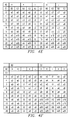
- FIGURE 4A illustrates a dependency diagram
- FIGURES 4A, 4B, 4C, 4D, 4E, 4F and 4G illustrate examples of axis-cross layouts.
- a cell in the X or Y axis cannot appear in a different axis than any cell from which it computes. Therefore, a cell that is computed from cells in both axes can only appear in the cross.
- each cell nests within other cells it is dependent upon and nests within any cells to the left of it.
- the cells nest within any of the cells in the axis, but do not nest within other cells in the cross.
- the elements of FIGURES 4A through 4G are based upon the cells and expressions used as examples in FIGURES 3A through 3D as described above.
- FIGURE 4A illustrates a dependency diagram.
- A1 and A2 are independent (not dependent on other cells).
- B1 and C1 depend upon A1.
- B2 depends upon both A1 and A2.
- C2 is dependent on A2 and C1, and is thus indirectly dependent upon A1.
- FIGURE 4B illustrates a layout where the Y axis includes A1, B1 and C1. Elements in the Y axis are displayed in columns, where as elements in the X axis (empty in this example) would be displayed in rows.
- FIGURE 4C illustrates an axis-cross layout where the Y axis includes A1, B1, and C1.
- the X axis includes A2 and the cross, where the cross is defined as B2.
- the elements of A1, B1, and C1 are arranged in columns, and the elements of A2 are arranged in a row.
- the cells of B2 are located in the cross, as shown.
- FIGURE 4D illustrates an axis-cross layout where the Y axis includes A1, B1, and C1, and the X axis includes A2 and the cross, where the cross is defined as C2. Similar to FIGURE 4C, the cells of A1, B1, and C1 are located in columns, and the cells of A2 are located in a row. The cells of C2 are located in the cross, as shown.
- FIGURE 4E illustrates an axis-cross layout where the cross is defined to include two lists.
- the Y axis is defined to include C1.
- the X axis includes A2 and the cross, where the cross is defined as B2 and C2.
- the cross nests within A2.
- the cells of the cross are grouped under the cells of A2.
- the cells of C1 are arranged in a column, and the cells of A2 are arranged in a row.
- the cells of the cross are arranged according to the B2 and C2 corresponding to each element of A2.
- FIGURE 4F is similar to FIGURE 4E except the nesting of the X axis is switched.
- the X axis is defined as the cross and A2, where the cross includes B2 and C2.
- the Y axis is again defined as C1.
- A2 nests within the cross.
- the cells of the cross are separated according to B2 and C2, as shown.
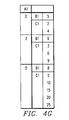
- FIGURE 4G illustrates an example of grouping.
- the layout is defined such that B1 and C1 are grouped under A1. For each value under A1, all of the titles in the group will nest. In this case, the titles B1 and C1 nest in rows for each value of A1. In a second column, the values of the group nest with and under the corresponding group title. So, the C1 values are put on the rows with the C1 title.
- Dependent groups can also be defined which nest like groups, but do not display a column of titles. Rather, the values display dependent upon which independent group member is displayed on the current row. Finally, if a group member has no values, then no row needs to be generated for the value or the title.
- a bar chart layout may allow a user to specify a series of cells.
- the first cell on an axis is the deepest, the second is in front of the first, and so on.
- a group of cells of that axis indicates that those cells are at the same depth, positioned side-by-side.
- the first cell in the group is the left most, the next is to the right of that and so on.
- a group within a group on an axis can indicate that those cells have the same depth and same left to right position, positioned side-by-side and stacked.
- the first cell in the group within the group can be on the bottom, the next is on the top of that, and so on.
- an axis-bar chart layout could be setup like one axis of the axis-cross layout, allowing arbitrary nesting in the axis labels, and inclusion of arbitrary information, just as if it was an axis of axis-cross. Effectively, the last one or few cells in the nesting would be specified to use the bar control, resulting in them being displayed as bars.
- a multi-line line chart can be done similarly.
- One axis of axis-cross is given. All cells that are not given one of several line controls are displayed just like axis-cross. The cells that are specified to have line control are replaced in the axis cross with just a legend indicator (the shape of the points used for that line) and the data is drawn as a line.
- Gantt chart Another class of layout is a Gantt chart.
- a cell is specified to delineate the rows. Then a dependent cell that computes a list is defined that generates the blocks and their labels for the Gantt chart. Then two cells that are dependent upon the second cell define the start and end positions of each block.
- the result is a generic specification of a Gantt chart.
- a Gantt chart could be specified in other ways, and given various features, duality, flexibility, and ease of use.
- a further layout class is a menu layout.
- the menu layout provides a series of cells containing "buttons" or menu items.
- the layout can result in a platform and window system conforming menu that includes look and feel, mnemonic handling, and accelerator handling as appropriate for the platform.
- the menu layout and controls can be compiled directly into menus of the native window system, giving efficiency and consistency
- Controls are individual display elements of a layout.
- a pie slice in a pie chart layout can be a separate control.
- Each bar in a Gantt chart layout can be a separate control, and each cell of a tabular layout could contain a different control.
- a slider control could be placed in a cell if the cell were numeric.
- the slider provides a graphic handle that slides in a groove indexed with the range of possible values for the cell.
- a user can change the value of the cell by sliding the handle using interaction with a mouse or other input device.
- a logical valued cell may have a check box control that is checked if true and empty if false. Changing the value is accomplished by clicking the mouse on the box.
- Each class of layout determines the type of controls that are meaningful. Some layouts may not need different controls to be selected. However, the more controls accepted by a layout, the more flexible that layout because the more options that are available.
- the line control takes an 'x' and a 'y', draws a point at that position, and connects a straight line from the previous position to this new point's position.
- the line-step control also takes an 'x' and a 'y' and draws a point at that position, but it connects with the previous point by drawing horizontally from the previous point to the 'x' of the new point and 'y' of the previous point, and then drawing vertically to the new point.
- the line-rate control takes a third value in addition to 'x' and 'y': a 'rate'. It draws the point at 'x' and 'y' like the other, but draws a line from the previous point with a slope of 'rate' until it reaches the 'x' of the new point, at which point it draws vertically.
- a pie slice control would generally be useful only in a pie chart layout, and pie chart layouts may only allow pie slice controls. Some pie slice controls may allow edges to be dragged in order to change the value displayed. Other pie slice controls may allow the slice to be pulled out of the pie in order to highlight the slice. Other controls may display text in the slice. Similarly, Gantt charts may only allow Gantt bar controls. In contrast, a text control may be usable in many layouts. Some text controls may allow any text to be inserted. Other text controls may restrict what text can be input or may invoke validation rules. In addition to the behaviors provided by a control, additional commands can be attached to a control to be invoked for particular events. For example, a command "bring up help menu" could be associated with event "right button” for a particular control in a given layout.
- the report generation system of the present invention can comprise a software system executable on a general purpose digital computer.
- the report generation system operates in two modes.
- the first mode is that of generating a report.
- the report generation system processes a report definition by compiling it to a report template and evaluating the report template to a report instance.
- the report instance is then rendered to display the report to a user.
- the report generating system can enter into the second mode.
- This second mode is an interactive mode.
- a user is enabled to interact with the report display in a number of ways.
- the report is analogous to a traditional GUI environment.
- the analogies are as follows: GUI event handlers are commands and bindings on controls; GUI widgets are controls in layouts; GUI windows segments are layouts; GUI menus are layouts; GUI dialogues are layouts; and GUI windows are reports.
- a report is a window displaying information to a user.
- a user performing an action in a report constitutes an event on a control.
- the controls in the layouts, once activated, are serviced.
- a user is enabled to perform various functions including editing the values in the report and editing associated values in the user model. The user interacts with the report based upon the graphical user interface.
- One technical advantage of the present invention is allowing interactive access to a model of a user's environment through report functions where the functions are parameterized and are independent of the model.
- the cells provided in a worksheet of a report that have "set” expressions in addition to “get” expressions such that editing the cell can result in changes to data in the user's model as opposed to changes simply in the cell.
- report information types are used that are identical to information types in the user's model, supporting and allowing type sensitive expressions, functions, menus and help features.
- Another technical advantage of the present invention is the provision of different classes of worksheets within reports such as a spreadsheet worksheet and replicating worksheets.
- a further technical advantage of the present invention is the provision of different classes of layouts associated with each class of worksheets in reports such as tabular, bar chart, Gantt chart, pie chart and menu layouts. Further, the present invention allows different tabular layouts, and in particular provides the flexible axis-cross layout for replicating worksheets in reports.
- a further technical advantage of the present invention is the capability of layouts to utilize different controls for display of and interaction with the cells in the worksheets of a report.
- Examples of the different controls provided include different classes of controls for display and interaction including text, slider, Gantt chart and bar chart controls.
- An additional technical advantage of the present invention is the power of a graphical user interface (GUI) specification in the report specification where commands and bindings on controls equate to GUI event handlers, controls in layouts equate to GUI widgets, layouts in reports equate to GUI window segments, menus and dialogue boxes, and a report equates to a GUI window.
- GUI graphical user interface
- the report generation system of the present invention provides a powerful reporting system allowing a user to create reports, analyze data, and engage in hypothetical evaluations of a user model.
Landscapes
- Engineering & Computer Science (AREA)
- Business, Economics & Management (AREA)
- Theoretical Computer Science (AREA)
- Entrepreneurship & Innovation (AREA)
- Human Resources & Organizations (AREA)
- Strategic Management (AREA)
- Physics & Mathematics (AREA)
- Economics (AREA)
- General Physics & Mathematics (AREA)
- General Business, Economics & Management (AREA)
- Operations Research (AREA)
- Quality & Reliability (AREA)
- Tourism & Hospitality (AREA)
- Marketing (AREA)
- Artificial Intelligence (AREA)
- General Health & Medical Sciences (AREA)
- Development Economics (AREA)
- Health & Medical Sciences (AREA)
- Game Theory and Decision Science (AREA)
- Audiology, Speech & Language Pathology (AREA)
- Computational Linguistics (AREA)
- Educational Administration (AREA)
- General Engineering & Computer Science (AREA)
- Data Mining & Analysis (AREA)
- Stored Programmes (AREA)
- Debugging And Monitoring (AREA)
- User Interface Of Digital Computer (AREA)
- Investigating Or Analysing Biological Materials (AREA)
- Input From Keyboards Or The Like (AREA)
Abstract
Description
Claims (20)
- A computer implemented interactive report generation system (10) comprising:means for storing a worksheet definition (20), the worksheet definition being named and parameterized and comprising a plurality of cell definitions each defining a model-independent expression;means for storing a user model (42) that models a user environment;means for storing a plurality of model interface functions (16) associated with the user model;a compiler (12) operable to receive the worksheet definition and to access the plurality of model interface functions, the compiler being further operable:to generate, based on the worksheet definition and the model interface functions, a worksheet template (32) comprising a plurality of cell templates (36) each defining a model-dependent expression (38); andan evaluator (40) operable to receive the worksheet template and to access the plurality of model interface functions and the user model, the evaluator being further operable:to evaluate the model-dependent expressions in the worksheet template, using the model interface functions and data from the user model, andto generate a worksheet instance (48) containing a plurality of cell instances (52) defining model-specific values (54), the model-specific values resulting from evaluation of the model-dependent expressions with data from the user model.
- The system of Claim 1, further comprising a renderer (56) operable to receive a layout instance (46) and to visually display controls to a user, and wherein:
the compiler is further operable:to receive a layout definition (18), the layout definition being named and parameterized and comprising a plurality of control definitions (22) that specify display of cell values, specifying the worksheet definition by name and passing specific parameter expressions to the worksheet definition, the compiler being further operable to generate a layout template (30); and whereinthe evaluator is further operable to receive the layout template and to generate a layout instance specifying a precise relative layout of control instances, the control instances specifying a precise display of worksheet values;the layout definition, template and instance comprise a layout type; andthe controls comprise a plurality of control types appropriate for the layout type. - The system of Claim 2, wherein:the compiler and the evaluator are operable to process one of a plurality of worksheet types including a replicating worksheet for which a cell that evaluates to a list of values is evaluated into replicated cells in the worksheet instance, and a cell that evaluates from such list-valued cells also evaluates into replicated cells, one for each replicated cell from which it is evaluated;the compiler is further operable to receive an axis-cross type of layout definition and generate an axis-cross layout template;the evaluator is further operable to layout controls nested along each axis relative according to how cells were evaluated in the worksheet template and generate a layout instance that can display multi-dimensional data nested into a two-dimensional table; andthe renderer (56) is operable to display the two-dimensional table.
- The system of Claim 3, wherein:a model-independent and a model-dependent expression comprise a recursive expression that allows a cell to generate a list from itself, resulting in nested replications generated from each replication of the same cell, continuing until the nested replications result in lists of zero values;a depth of nested evaluations of each cell are available to layout controls; andan indented-text type of control is available which is operable to indent displayed text according to the depth of the nested evaluation that produced the value in the control.
- The system of Claim 2, wherein:the compiler and the evaluator are operable to process one of a plurality of worksheet types including a replicating worksheet for which a cell that evaluates to a list of values is evaluated into replicated cells in the worksheet instance, and a cell that evaluates from such list-valued cells also evaluates into replicated cells, one for each replicated cell from which it is evaluated;the compiler is further operable to receive an axis-bar type of layout definition and generate an axis-bar layout template;the evaluator is further operable to layout controls nested along an axis relative according to how cells were evaluated in the worksheet template and to generate a layout instance that can display multi-dimensional data nested into a row of headings and bars, the bars positioned side-by-side, stacked, and nested according to the nesting of worksheet evaluations; andthe renderer is operable to display the row of bars.
- The system of Claim 2, wherein:the compiler and the evaluator are operable to process one of a plurality of worksheet types including a replicating worksheet for which a cell that evaluates to a list of values is evaluated into replicated cells in the worksheet instance, and a cell that evaluates from such list-valued cells also evaluates into replicated cells, one for each replicated cell from which it is evaluated;the compiler is further operable to receive a map type of layout definition and generate a map layout template;the evaluator is further operable to generate a layout instance that can display map data;the renderer is operable to display the layout instance;the replicated cells are taken together by the map layout to indicate an x-y position in a two-dimensional space and are drawn as boxes; andcells nested within other cells specify an x-y position that is relative to the parent such that the net result is that a two-dimensional map of rectangles is placed down.
- The system of Claim 2, wherein:the compiler and the evaluator are operable to process one of a plurality of worksheet types including a replicating worksheet for which a cell that evaluates to a list of values is evaluated into replicated cells in the worksheet instance, and a cell that evaluates from such list-valued cells also evaluates into replicated cells, one for each replicated cell from which it is evaluated;the compiler is further operable to receive a Gantt type of layout definition and generate a Gantt layout template;the evaluator is further operable to generate a layout instance that can display Gantt chart data; andthe renderer is operable to display the layout instance; andone replicated cells are taken together by the Gantt layout to indicate start and end points of bars nested into rows of a Gantt chart.
- The system of Claim 7,wherein the edges of the Gantt bars can be dragged to cause values to be set.
- The system of Claim 8,wherein defined named commands are attached to controls of a specific type and controls associated with a specific cell value type, and the commands are operable to be invoked by user interactions specified by event definitions specifying a command performed when specified interactions occur.
- The system of Claim 9, wherein:a menu layout type and menu control types which are formed together to specify a traditional menu system; andthe compiler is operable to translate into a native window system menu system including mnemonic and accelerator key interactions consistent with the native window system.
- The system of Claim 10, wherein:the compiler is further operable to receive a named parameterized report definition and to generate a report template, the report definition comprising of a plurality of specifications of layout definitions using layout names and parameter expressions for layout parameters;the evaluator further operable to receive the report template and a parameter expression and to generate a report instance comprising layout instances arranged according to a type of report definition, template, and instance; andthe renderer further operable to display the report instance in a window of a native window system.
- The system of any one of Claims 2 to 11, wherein;the compiler is further operable to receive an additional set-expression for each cell definition of the worksheet definition; andthe evaluator is further operable to define interaction of each control to edit the cell values of the worksheet instance and change the user model specified by the set expression recorded by the compiler in the worksheet template; andthe renderer (56) is further operable to support user interaction with displayed controls.
- The system of any one of Claims 1 to 12 in the form of a computer software system.
- A system as claimed in Claim 1, comprisingan execution memory operable to store data representing a computer software system;a display operable to display a report to a user of the computer system;a processor coupled to the data storage device, the data memory, the execution memory and the display, the processor executing the computer software system.
- The system of any preceding Claim, wherein:the compiler is further operable to receive a set-expression for each cell definition of the worksheet definition and to record the set-expression in the worksheet template; andthe evaluator is further operable to receive edits to the values of the worksheet instance and change the user model as specified by the set-expression recorded by the compiler in the worksheet template.
- The system of any preceding Claim, wherein the compiler and the evaluator are operable to process one of a plurality of worksheet types, including a replicating worksheet for which:a cell that evaluates to a list of values is evaluated into replicated cells in the worksheet instance,and a cell that evaluates from such list-valued cells also evaluates into replicated cells, one for each replicated cell from which it is evaluated.
- The system of Claim 16, wherein a model-independent and a model-dependent expression comprise a recursive expression that allows a cell to generate a list from itself, resulting in nested replications generated from each replication of the same cell, continuing until the nested replications result in lists of zero values.
- The system of Claim 17, wherein:the compiler is further operable to receive an additional set-expression for each cell definition of the worksheet definition; andthe evaluator is further operable to receive edits to the values of the worksheet instance and to change the user model as specified by a set-expression recorded by the compiler in the worksheet template.
- The system of Claim 17, further comprising a renderer (56) operable to receive the layout instance (46) and to visually display controls to a user, and wherein:the compiler is further operable to receive a layout definition, (18) the layout definition being named and parameterized and comprising a plurality of control definitions (22) that specify display of cell values, specifying the worksheet definition by name and passing specific parameter expressions to the worksheet definition, the compiler further operable to generate a layout template (30); and whereinthe evaluator is further operable to receive the layout template and to generate a layout instance specifying a precise relative layout of control instances, the control instances specifying a precise display of worksheet values;the layout definition, template and instance comprise a layout type; andthe controls comprise a plurality of control types appropriate for the layout type.
- A method of operating a computer system to allow interactive report generation for a user of the computer system, comprising:providing a plurality of model interface functions associated with a user model;providing the user model defining data set describing a user environment;providing a worksheet definition, the worksheet definition being named and parameterized and comprising a plurality of cell definitions each defining a model-dependent expression;receiving the worksheet definition and accessing the plurality of model interface functions;generating, based upon the worksheet definition and the model interface functions, a worksheet template comprising a plurality of cell templates each defining a model-dependent expression;receiving the worksheet template and accessing the plurality of model interface functions and the user model data set;evaluating the model-dependent expressions in the worksheet template, using the model interface functions and the user model data set;generating a worksheet instance containing a plurality of cell instances defining model-specific values, the model-specific values resulting from evaluation of the model-dependent expression with the user model data set; anddisplaying a report to a user based upon the worksheet instance.
Applications Claiming Priority (3)
| Application Number | Priority Date | Filing Date | Title |
|---|---|---|---|
| US08/491,121 US5832532A (en) | 1995-06-16 | 1995-06-16 | Model-independent and interactive report generation system and method of operation |
| US491121 | 1995-06-16 | ||
| PCT/US1996/009908 WO1997000487A1 (en) | 1995-06-16 | 1996-06-10 | Interactive report generation system and method of operation |
Publications (2)
| Publication Number | Publication Date |
|---|---|
| EP0776506A1 EP0776506A1 (en) | 1997-06-04 |
| EP0776506B1 true EP0776506B1 (en) | 1998-12-16 |
Family
ID=23950879
Family Applications (1)
| Application Number | Title | Priority Date | Filing Date |
|---|---|---|---|
| EP96918428A Expired - Lifetime EP0776506B1 (en) | 1995-06-16 | 1996-06-10 | Interactive report generation system and method of operation |
Country Status (11)
| Country | Link |
|---|---|
| US (2) | US5832532A (en) |
| EP (1) | EP0776506B1 (en) |
| JP (1) | JPH0962759A (en) |
| AT (1) | ATE174704T1 (en) |
| AU (1) | AU708311B2 (en) |
| BR (1) | BR9608597A (en) |
| CA (1) | CA2176524C (en) |
| DE (1) | DE69601151T2 (en) |
| GB (1) | GB2302424A (en) |
| TW (1) | TW442755B (en) |
| WO (1) | WO1997000487A1 (en) |
Families Citing this family (54)
| Publication number | Priority date | Publication date | Assignee | Title |
|---|---|---|---|---|
| US6157934A (en) * | 1995-10-24 | 2000-12-05 | Ultimus, L.L.C. | Method and apparatus for using distributed spreadsheets in a client/server architecture for workflow automation |
| US6041303A (en) * | 1996-06-07 | 2000-03-21 | Mathews; Edward Henry | Method of assisting the conducting of a research project |
| US6006240A (en) * | 1997-03-31 | 1999-12-21 | Xerox Corporation | Cell identification in table analysis |
| US5987481A (en) * | 1997-07-01 | 1999-11-16 | Microsoft Corporation | Method and apparatus for using label references in spreadsheet formulas |
| US6947905B1 (en) * | 1998-09-18 | 2005-09-20 | I2 Technologies Us, Inc. | System and method for displaying planning information associated with a supply chain |
| US6715130B1 (en) * | 1998-10-05 | 2004-03-30 | Lockheed Martin Corporation | Software requirements metrics and evaluation process |
| US7308416B2 (en) * | 1999-01-04 | 2007-12-11 | International Business Machines Corporation | Single level bill of material available to promise |
| US6651219B1 (en) * | 1999-01-11 | 2003-11-18 | Multex Systems, Inc. | System and method for generation of text reports |
| WO2000058891A1 (en) | 1999-03-26 | 2000-10-05 | The Retail Pipeline Integration Group, Inc. | Method and system for determining time-phased sales forecasts and projected replenishment shipments in a supply chain |
| US7480623B1 (en) * | 2000-03-25 | 2009-01-20 | The Retail Pipeline Integration Group, Inc. | Method and system for determining time-phased product sales forecasts and projected replenishment shipments for a retail store supply chain |
| AU2001277855A1 (en) * | 2000-06-30 | 2002-01-14 | Information Bionics, Inc. | System for linking data cells through permutation |
| US6980869B1 (en) * | 2000-11-20 | 2005-12-27 | National Instruments Corporation | System and method for user controllable PID autotuning and associated graphical user interface |
| US6937992B1 (en) * | 2000-12-29 | 2005-08-30 | Arrowstream, Inc. | Transport vehicle capacity maximization logistics system and method of same |
| CA2337607A1 (en) * | 2001-02-19 | 2002-08-19 | Cognos Incorporated | Business intelligence monitor |
| US6948133B2 (en) * | 2001-03-23 | 2005-09-20 | Siemens Medical Solutions Health Services Corporation | System for dynamically configuring a user interface display |
| US6950831B2 (en) * | 2001-03-23 | 2005-09-27 | Siemens Medical Solutions Health Services Corporation | Processing system for use with a user interface display |
| US20020194186A1 (en) * | 2001-03-27 | 2002-12-19 | Foundation Software, Inc. | Report design and data manipulation system and method of operation |
| US6999193B2 (en) * | 2001-03-29 | 2006-02-14 | International Business Machines Corporation | Computer generated report printing method and system |
| US6792145B2 (en) * | 2001-04-20 | 2004-09-14 | Robert W. Gay | Pattern recognition process for text document interpretation |
| US7073133B2 (en) * | 2001-05-16 | 2006-07-04 | William Hughes | Objects and methods for accessing a data source and enhancing an application |
| US7552066B1 (en) | 2001-07-05 | 2009-06-23 | The Retail Pipeline Integration Group, Inc. | Method and system for retail store supply chain sales forecasting and replenishment shipment determination |
| US7251776B2 (en) * | 2001-07-13 | 2007-07-31 | Netview Technologies, Inc. | System and method for efficiently and flexibly utilizing spreadsheet information |
| CH701481B1 (en) * | 2001-09-25 | 2011-01-31 | Roland Pulfer | Process management. |
| US20030187849A1 (en) * | 2002-03-19 | 2003-10-02 | Ocwen Technology Xchange, Inc. | Management and reporting system and process for use with multiple disparate data bases |
| US20040107010A1 (en) * | 2002-08-12 | 2004-06-03 | King William A. | Planning support system and method |
| US7370271B2 (en) * | 2002-10-30 | 2008-05-06 | Actuate Corporation | Methods and apparatus for generating a spreadsheet report template |
| CH703073B1 (en) * | 2003-03-19 | 2011-11-15 | Roland Pulfer | Comparing models a complex system. |
| CH703081B1 (en) * | 2003-03-19 | 2011-11-15 | Roland Pulfer | Analysis of a model of a complex system. |
| CH698890B1 (en) * | 2003-03-19 | 2009-11-30 | Roland Pulfer | Modeling a complex system. |
| US7331015B2 (en) * | 2003-03-27 | 2008-02-12 | Microsoft Corporation | Defining a report based on data regions and including custom data in a report definition |
| US7305621B2 (en) * | 2003-03-27 | 2007-12-04 | Microsoft Corporation | Defining a report based on data regions and including custom data in a report definition |
| US7707490B2 (en) * | 2004-06-23 | 2010-04-27 | Microsoft Corporation | Systems and methods for flexible report designs including table, matrix and hybrid designs |
| US7333995B2 (en) * | 2004-07-02 | 2008-02-19 | Cognos, Incorporated | Very large dataset representation system and method |
| US7818282B2 (en) * | 2004-07-02 | 2010-10-19 | International Business Machines Corporation | System and method for the support of multilingual applications |
| US8904273B2 (en) * | 2004-07-02 | 2014-12-02 | International Business Machines Corporation | System and method of format specification |
| US20060005112A1 (en) * | 2004-07-02 | 2006-01-05 | David Lilly | System and method of report layout |
| US7991804B2 (en) * | 2004-07-30 | 2011-08-02 | Microsoft Corporation | Method, system, and apparatus for exposing workbooks as data sources |
| US8578399B2 (en) | 2004-07-30 | 2013-11-05 | Microsoft Corporation | Method, system, and apparatus for providing access to workbook models through remote function cells |
| US20060031821A1 (en) * | 2004-08-04 | 2006-02-09 | Rutter Budd J Ii | Divided compiling program application functionality for software development |
| US7559023B2 (en) | 2004-08-27 | 2009-07-07 | Microsoft Corporation | Systems and methods for declaratively controlling the visual state of items in a report |
| US20070074112A1 (en) * | 2005-09-23 | 2007-03-29 | Business Objects | Apparatus and method for consolidating reporting formulas |
| US7966346B1 (en) * | 2006-01-23 | 2011-06-21 | Coverity, Inc. | Updating groups of items |
| US8024650B2 (en) * | 2006-03-31 | 2011-09-20 | Microsoft Corporation | Drilling on elements in arbitrary ad-hoc reports |
| US8484554B2 (en) * | 2006-08-31 | 2013-07-09 | Sap Ag | Producing a chart |
| US20080082908A1 (en) * | 2006-09-29 | 2008-04-03 | Business Objects, S.A. | Apparatus and method for data charting with adaptive learning |
| US8965922B2 (en) * | 2007-10-30 | 2015-02-24 | International Business Machines Corporation | Intelligent content assistance |
| US8484560B2 (en) * | 2009-04-24 | 2013-07-09 | Apple Inc. | Interactive sub-summaries in database applications |
| US20110004839A1 (en) * | 2009-07-02 | 2011-01-06 | Derek Cha | User-customized computer display method |
| US20120016911A1 (en) * | 2010-04-15 | 2012-01-19 | Michael Schmidt | Child impact statement reporting system |
| US9152740B1 (en) | 2012-01-18 | 2015-10-06 | Msc.Software Corporation | Interactive simulation and solver for mechanical, fluid, and electro-mechanical systems |
| US9459859B2 (en) * | 2014-01-31 | 2016-10-04 | Dell Products L.P. | Template derivation for configuration object management |
| US9710446B2 (en) * | 2014-08-05 | 2017-07-18 | Shahbaz Anwar | Enhanced internally linked electronic paper format report generation system and process |
| US12061601B2 (en) * | 2020-02-10 | 2024-08-13 | Sigma Computing, Inc. | Tracking errors in data set lineage |
| US20240201672A1 (en) * | 2022-12-20 | 2024-06-20 | Honeywell International Inc. | Apparatuses, computer-implemented methods, and computer program products for implementing automatically selected reporting protocols |
Family Cites Families (28)
| Publication number | Priority date | Publication date | Assignee | Title |
|---|---|---|---|---|
| DE67303C (en) * | G. E. CASSEL und F. A. KjELLIN in Stockholm | Electrolytic extraction of metallic zinc from zinc blende | ||
| US4209845A (en) * | 1977-01-25 | 1980-06-24 | International Business Machines Corporation | File qualifying and sorting system |
| US4454576A (en) * | 1981-05-18 | 1984-06-12 | International Business Machines Corporation | Report preparation |
| US4417322A (en) * | 1981-06-16 | 1983-11-22 | International Business Machines Corporation | Report generation control system for text processing machines |
| US4611310A (en) * | 1982-08-23 | 1986-09-09 | Canevari Timber Co. | Method and system for rearranging data records in accordance with keyfield values |
| US4611280A (en) * | 1984-03-12 | 1986-09-09 | At&T Bell Laboratories | Sorting method |
| US4742467A (en) * | 1984-05-04 | 1988-05-03 | Analysts International Corporation | Automated programming system for machine creation of applications program source code from non-procedural terminal input |
| NL8600028A (en) * | 1986-01-09 | 1987-08-03 | Philips Nv | METHOD AND APPARATUS FOR SORTING OBJECTS INCLUDING A PARAMETER ACCORDING TO THE VALUE OF THIS PARAMETER |
| US4827423A (en) * | 1987-01-20 | 1989-05-02 | R. J. Reynolds Tobacco Company | Computer integrated manufacturing system |
| US5189608A (en) * | 1987-06-01 | 1993-02-23 | Imrs Operations, Inc. | Method and apparatus for storing and generating financial information employing user specified input and output formats |
| US5148370A (en) * | 1987-06-17 | 1992-09-15 | The Standard Oil Company | Expert system and method for batch production scheduling and planning |
| JPH02178730A (en) * | 1988-12-28 | 1990-07-11 | Toshiba Corp | Internal sorting system using dividing method |
| US5089970A (en) * | 1989-10-05 | 1992-02-18 | Combustion Engineering, Inc. | Integrated manufacturing system |
| JPH03180963A (en) * | 1989-12-08 | 1991-08-06 | Hitachi Ltd | Plan formation supporting system and scheduling system based upon the supporting system |
| US5233533A (en) * | 1989-12-19 | 1993-08-03 | Symmetrix, Inc. | Scheduling method and apparatus |
| US5218700A (en) * | 1990-01-30 | 1993-06-08 | Allen Beechick | Apparatus and method for sorting a list of items |
| JPH0825128B2 (en) * | 1990-07-10 | 1996-03-13 | 富士通株式会社 | Production supply processing method by distributed production bases |
| JPH0469139A (en) * | 1990-07-10 | 1992-03-04 | Fujitsu Ltd | Dispersed production center utilizing production system |
| US5216612A (en) * | 1990-07-16 | 1993-06-01 | R. J. Reynolds Tobacco Company | Intelligent computer integrated maintenance system and method |
| US5280425A (en) * | 1990-07-26 | 1994-01-18 | Texas Instruments Incorporated | Apparatus and method for production planning |
| US5293615A (en) * | 1990-11-16 | 1994-03-08 | Amada Carlos A | Point and shoot interface for linking database records to spreadsheets whereby data of a record is automatically reformatted and loaded upon issuance of a recalculation command |
| US5369570A (en) * | 1991-11-14 | 1994-11-29 | Parad; Harvey A. | Method and system for continuous integrated resource management |
| US5361393A (en) * | 1992-01-28 | 1994-11-01 | Prodigy Services Company | Method for improving interactive-screen uploading of accounting data |
| US5426781A (en) * | 1992-04-30 | 1995-06-20 | International Business Machines Corporation | Computerized report-based interactive database query interface |
| US5371675A (en) * | 1992-06-03 | 1994-12-06 | Lotus Development Corporation | Spreadsheet program which implements alternative range references |
| US5600584A (en) * | 1992-09-15 | 1997-02-04 | Schlafly; Roger | Interactive formula compiler and range estimator |
| US5423033A (en) * | 1992-09-30 | 1995-06-06 | Intuit, Inc. | Report generation system and method |
| US5604854A (en) * | 1994-04-22 | 1997-02-18 | Borland International, Inc. | System and methods for reformatting multi-dimensional spreadsheet information |
-
1995
- 1995-06-16 US US08/491,121 patent/US5832532A/en not_active Expired - Lifetime
-
1996
- 1996-05-14 CA CA002176524A patent/CA2176524C/en not_active Expired - Fee Related
- 1996-05-21 TW TW085105990A patent/TW442755B/en not_active IP Right Cessation
- 1996-06-05 GB GB9611746A patent/GB2302424A/en not_active Withdrawn
- 1996-06-10 EP EP96918428A patent/EP0776506B1/en not_active Expired - Lifetime
- 1996-06-10 AT AT96918428T patent/ATE174704T1/en not_active IP Right Cessation
- 1996-06-10 DE DE69601151T patent/DE69601151T2/en not_active Expired - Lifetime
- 1996-06-10 WO PCT/US1996/009908 patent/WO1997000487A1/en not_active Ceased
- 1996-06-10 BR BR9608597A patent/BR9608597A/en unknown
- 1996-06-14 AU AU55991/96A patent/AU708311B2/en not_active Ceased
- 1996-06-17 JP JP8175422A patent/JPH0962759A/en active Pending
-
1998
- 1998-04-13 US US09/059,223 patent/US5937155A/en not_active Expired - Lifetime
Also Published As
| Publication number | Publication date |
|---|---|
| ATE174704T1 (en) | 1999-01-15 |
| GB2302424A (en) | 1997-01-15 |
| CA2176524A1 (en) | 1996-12-17 |
| WO1997000487A1 (en) | 1997-01-03 |
| GB9611746D0 (en) | 1996-08-07 |
| US5937155A (en) | 1999-08-10 |
| AU708311B2 (en) | 1999-07-29 |
| JPH0962759A (en) | 1997-03-07 |
| DE69601151T2 (en) | 1999-08-12 |
| MX9710160A (en) | 1998-07-31 |
| AU5599196A (en) | 1997-01-02 |
| CA2176524C (en) | 2001-12-04 |
| EP0776506A1 (en) | 1997-06-04 |
| BR9608597A (en) | 1999-01-05 |
| DE69601151D1 (en) | 1999-01-28 |
| TW442755B (en) | 2001-06-23 |
| US5832532A (en) | 1998-11-03 |
Similar Documents
| Publication | Publication Date | Title |
|---|---|---|
| US5832532A (en) | Model-independent and interactive report generation system and method of operation | |
| US5768158A (en) | Computer-based system and method for data processing | |
| US6138130A (en) | System and method for processing data in an electronic spreadsheet in accordance with a data type | |
| US5293615A (en) | Point and shoot interface for linking database records to spreadsheets whereby data of a record is automatically reformatted and loaded upon issuance of a recalculation command | |
| Szekely et al. | Beyond interface builders: Model-based interface tools | |
| EP0569133B1 (en) | System and methods for computer interfaces | |
| De Baar et al. | Coupling application design and user interface design | |
| US5557730A (en) | Symbol browsing and filter switches in an object-oriented development system | |
| US5119475A (en) | Object-oriented framework for menu definition | |
| US5581677A (en) | Creating charts and visualizations by demonstration | |
| US5033009A (en) | System for generating worksheet files for electronic spreadsheets | |
| US9465787B2 (en) | Electronic mathematical model builder | |
| US9582288B1 (en) | Method for integrating software components into a spreadsheet application | |
| CN100414496C (en) | Methods and tools for generating and displaying descriptive annotations for selected application data | |
| EP1211624A2 (en) | Methods and apparatus for automatically producing spreadsheet-based models | |
| JPH07134765A (en) | Method of graphic display of data | |
| Vanderdonckt | Knowledge-based systems for automated user interface generation: the trident experience | |
| Myers et al. | Environment for rapidly creating interactive design tools | |
| Myers | Tools for creating user interfaces: An introduction and survey | |
| EP0377273A2 (en) | Space management system incorporating a software-operating environment | |
| Lee et al. | User-interface development tools | |
| MXPA97010160A (en) | System of generation of interactive report and operating method | |
| Ibrahim | Diagrammatic representation of data types and data manipulations in a combined data-and control-flow language | |
| Ziegler | Direct manipulation techniques for the human-computer interface | |
| Huang et al. | Business graphics interface to databases |
Legal Events
| Date | Code | Title | Description |
|---|---|---|---|
| PUAI | Public reference made under article 153(3) epc to a published international application that has entered the european phase |
Free format text: ORIGINAL CODE: 0009012 |
|
| 17P | Request for examination filed |
Effective date: 19970228 |
|
| AK | Designated contracting states |
Kind code of ref document: A1 Designated state(s): AT BE CH DE DK ES FI FR GB GR IE IT LI LU MC NL PT SE |
|
| 17Q | First examination report despatched |
Effective date: 19970603 |
|
| GRAG | Despatch of communication of intention to grant |
Free format text: ORIGINAL CODE: EPIDOS AGRA |
|
| GRAG | Despatch of communication of intention to grant |
Free format text: ORIGINAL CODE: EPIDOS AGRA |
|
| GRAH | Despatch of communication of intention to grant a patent |
Free format text: ORIGINAL CODE: EPIDOS IGRA |
|
| GRAH | Despatch of communication of intention to grant a patent |
Free format text: ORIGINAL CODE: EPIDOS IGRA |
|
| GRAA | (expected) grant |
Free format text: ORIGINAL CODE: 0009210 |
|
| AK | Designated contracting states |
Kind code of ref document: B1 Designated state(s): AT BE CH DE DK ES FI FR GB GR IE IT LI LU MC NL PT SE |
|
| PG25 | Lapsed in a contracting state [announced via postgrant information from national office to epo] |
Ref country code: LI Free format text: LAPSE BECAUSE OF FAILURE TO SUBMIT A TRANSLATION OF THE DESCRIPTION OR TO PAY THE FEE WITHIN THE PRESCRIBED TIME-LIMIT Effective date: 19981216 Ref country code: IT Free format text: LAPSE BECAUSE OF FAILURE TO SUBMIT A TRANSLATION OF THE DESCRIPTION OR TO PAY THE FEE WITHIN THE PRE;WARNING: LAPSES OF ITALIAN PATENTS WITH EFFECTIVE DATE BEFORE 2007 MAY HAVE OCCURRED AT ANY TIME BEFORE 2007. THE CORRECT EFFECTIVE DATE MAY BE DIFFERENT FROM THE ONE RECORDED.SCRIBED TIME-LIMIT Effective date: 19981216 Ref country code: GR Free format text: LAPSE BECAUSE OF NON-PAYMENT OF DUE FEES Effective date: 19981216 Ref country code: FI Free format text: LAPSE BECAUSE OF NON-PAYMENT OF DUE FEES Effective date: 19981216 Ref country code: ES Free format text: THE PATENT HAS BEEN ANNULLED BY A DECISION OF A NATIONAL AUTHORITY Effective date: 19981216 Ref country code: CH Free format text: LAPSE BECAUSE OF FAILURE TO SUBMIT A TRANSLATION OF THE DESCRIPTION OR TO PAY THE FEE WITHIN THE PRESCRIBED TIME-LIMIT Effective date: 19981216 Ref country code: AT Free format text: LAPSE BECAUSE OF FAILURE TO SUBMIT A TRANSLATION OF THE DESCRIPTION OR TO PAY THE FEE WITHIN THE PRESCRIBED TIME-LIMIT Effective date: 19981216 |
|
| REF | Corresponds to: |
Ref document number: 174704 Country of ref document: AT Date of ref document: 19990115 Kind code of ref document: T |
|
| REG | Reference to a national code |
Ref country code: CH Ref legal event code: EP |
|
| REF | Corresponds to: |
Ref document number: 69601151 Country of ref document: DE Date of ref document: 19990128 |
|
| REG | Reference to a national code |
Ref country code: IE Ref legal event code: FG4D |
|
| PG25 | Lapsed in a contracting state [announced via postgrant information from national office to epo] |
Ref country code: PT Free format text: LAPSE BECAUSE OF FAILURE TO SUBMIT A TRANSLATION OF THE DESCRIPTION OR TO PAY THE FEE WITHIN THE PRESCRIBED TIME-LIMIT Effective date: 19990316 Ref country code: DK Free format text: LAPSE BECAUSE OF FAILURE TO SUBMIT A TRANSLATION OF THE DESCRIPTION OR TO PAY THE FEE WITHIN THE PRESCRIBED TIME-LIMIT Effective date: 19990316 |
|
| ET | Fr: translation filed | ||
| PGFP | Annual fee paid to national office [announced via postgrant information from national office to epo] |
Ref country code: LU Payment date: 19990610 Year of fee payment: 4 |
|
| PGFP | Annual fee paid to national office [announced via postgrant information from national office to epo] |
Ref country code: DK Payment date: 19990614 Year of fee payment: 4 |
|
| PGFP | Annual fee paid to national office [announced via postgrant information from national office to epo] |
Ref country code: MC Payment date: 19990629 Year of fee payment: 4 |
|
| REG | Reference to a national code |
Ref country code: CH Ref legal event code: PL |
|
| PLBE | No opposition filed within time limit |
Free format text: ORIGINAL CODE: 0009261 |
|
| STAA | Information on the status of an ep patent application or granted ep patent |
Free format text: STATUS: NO OPPOSITION FILED WITHIN TIME LIMIT |
|
| 26N | No opposition filed | ||
| PG25 | Lapsed in a contracting state [announced via postgrant information from national office to epo] |
Ref country code: LU Free format text: LAPSE BECAUSE OF NON-PAYMENT OF DUE FEES Effective date: 20000610 |
|
| PG25 | Lapsed in a contracting state [announced via postgrant information from national office to epo] |
Ref country code: MC Free format text: THE PATENT HAS BEEN ANNULLED BY A DECISION OF A NATIONAL AUTHORITY Effective date: 20000630 |
|
| PGFP | Annual fee paid to national office [announced via postgrant information from national office to epo] |
Ref country code: SE Payment date: 20010417 Year of fee payment: 6 |
|
| PGFP | Annual fee paid to national office [announced via postgrant information from national office to epo] |
Ref country code: FR Payment date: 20010611 Year of fee payment: 6 |
|
| PGFP | Annual fee paid to national office [announced via postgrant information from national office to epo] |
Ref country code: IE Payment date: 20010622 Year of fee payment: 6 |
|
| PGFP | Annual fee paid to national office [announced via postgrant information from national office to epo] |
Ref country code: BE Payment date: 20010816 Year of fee payment: 6 |
|
| REG | Reference to a national code |
Ref country code: GB Ref legal event code: IF02 |
|
| PGFP | Annual fee paid to national office [announced via postgrant information from national office to epo] |
Ref country code: GB Payment date: 20020605 Year of fee payment: 7 |
|
| PG25 | Lapsed in a contracting state [announced via postgrant information from national office to epo] |
Ref country code: IE Free format text: LAPSE BECAUSE OF NON-PAYMENT OF DUE FEES Effective date: 20020610 |
|
| PG25 | Lapsed in a contracting state [announced via postgrant information from national office to epo] |
Ref country code: SE Free format text: LAPSE BECAUSE OF NON-PAYMENT OF DUE FEES Effective date: 20020611 |
|
| PGFP | Annual fee paid to national office [announced via postgrant information from national office to epo] |
Ref country code: NL Payment date: 20020628 Year of fee payment: 7 |
|
| PG25 | Lapsed in a contracting state [announced via postgrant information from national office to epo] |
Ref country code: BE Free format text: LAPSE BECAUSE OF NON-PAYMENT OF DUE FEES Effective date: 20020630 |
|
| BERE | Be: lapsed |
Owner name: *I2 TECHNOLOGIES INC. Effective date: 20020630 |
|
| EUG | Se: european patent has lapsed | ||
| PG25 | Lapsed in a contracting state [announced via postgrant information from national office to epo] |
Ref country code: FR Free format text: LAPSE BECAUSE OF NON-PAYMENT OF DUE FEES Effective date: 20030228 |
|
| REG | Reference to a national code |
Ref country code: IE Ref legal event code: MM4A |
|
| REG | Reference to a national code |
Ref country code: FR Ref legal event code: ST |
|
| PG25 | Lapsed in a contracting state [announced via postgrant information from national office to epo] |
Ref country code: GB Free format text: LAPSE BECAUSE OF NON-PAYMENT OF DUE FEES Effective date: 20030610 |
|
| PG25 | Lapsed in a contracting state [announced via postgrant information from national office to epo] |
Ref country code: NL Free format text: LAPSE BECAUSE OF NON-PAYMENT OF DUE FEES Effective date: 20040101 |
|
| GBPC | Gb: european patent ceased through non-payment of renewal fee |
Effective date: 20030610 |
|
| NLV4 | Nl: lapsed or anulled due to non-payment of the annual fee |
Effective date: 20040101 |
|
| REG | Reference to a national code |
Ref country code: DE Ref legal event code: R082 Ref document number: 69601151 Country of ref document: DE Representative=s name: DF-MP, DE |
|
| REG | Reference to a national code |
Ref country code: DE Ref legal event code: R082 Ref document number: 69601151 Country of ref document: DE Representative=s name: DF-MP DOERRIES FRANK-MOLNIA & POHLMAN PATENTAN, DE Effective date: 20120119 Ref country code: DE Ref legal event code: R081 Ref document number: 69601151 Country of ref document: DE Owner name: JDA SOFTWARE GROUP, INC., SCOTTSDALE, US Free format text: FORMER OWNER: I2 TECHNOLOGIES, INC., IRVING, TEX., US Effective date: 20120119 |
|
| PGFP | Annual fee paid to national office [announced via postgrant information from national office to epo] |
Ref country code: DE Payment date: 20130612 Year of fee payment: 18 |
|
| REG | Reference to a national code |
Ref country code: DE Ref legal event code: R119 Ref document number: 69601151 Country of ref document: DE |
|
| REG | Reference to a national code |
Ref country code: DE Ref legal event code: R079 Ref document number: 69601151 Country of ref document: DE Free format text: PREVIOUS MAIN CLASS: G06F0017600000 Ipc: G06Q0010000000 |
|
| REG | Reference to a national code |
Ref country code: DE Ref legal event code: R119 Ref document number: 69601151 Country of ref document: DE Effective date: 20150101 Ref country code: DE Ref legal event code: R079 Ref document number: 69601151 Country of ref document: DE Free format text: PREVIOUS MAIN CLASS: G06F0017600000 Ipc: G06Q0010000000 Effective date: 20150304 |
|
| PG25 | Lapsed in a contracting state [announced via postgrant information from national office to epo] |
Ref country code: DE Free format text: LAPSE BECAUSE OF NON-PAYMENT OF DUE FEES Effective date: 20150101 |