EP0770610A1 - Biospecific binding reactants labelled with luminescent lanthanide chelates and their use - Google Patents
Biospecific binding reactants labelled with luminescent lanthanide chelates and their use Download PDFInfo
- Publication number
- EP0770610A1 EP0770610A1 EP96660056A EP96660056A EP0770610A1 EP 0770610 A1 EP0770610 A1 EP 0770610A1 EP 96660056 A EP96660056 A EP 96660056A EP 96660056 A EP96660056 A EP 96660056A EP 0770610 A1 EP0770610 A1 EP 0770610A1
- Authority
- EP
- European Patent Office
- Prior art keywords
- bis
- diyl
- iii
- terbium
- pyridine
- Prior art date
- Legal status (The legal status is an assumption and is not a legal conclusion. Google has not performed a legal analysis and makes no representation as to the accuracy of the status listed.)
- Granted
Links
- 230000027455 binding Effects 0.000 title claims abstract description 26
- 239000000376 reactant Substances 0.000 title claims abstract description 26
- 229910052747 lanthanoid Inorganic materials 0.000 title claims abstract description 22
- 150000002602 lanthanoids Chemical class 0.000 title claims abstract description 22
- 239000013522 chelant Substances 0.000 claims abstract description 27
- 239000003446 ligand Substances 0.000 claims abstract description 19
- 229910021644 lanthanide ion Inorganic materials 0.000 claims abstract description 14
- 238000005859 coupling reaction Methods 0.000 claims abstract description 11
- 230000008878 coupling Effects 0.000 claims abstract description 10
- 238000010168 coupling process Methods 0.000 claims abstract description 10
- HKCRVXUAKWXBLE-UHFFFAOYSA-N terbium(3+) Chemical compound [Tb+3] HKCRVXUAKWXBLE-UHFFFAOYSA-N 0.000 claims abstract description 9
- LNBHUCHAFZUEGJ-UHFFFAOYSA-N europium(3+) Chemical compound [Eu+3] LNBHUCHAFZUEGJ-UHFFFAOYSA-N 0.000 claims abstract description 7
- 125000003118 aryl group Chemical group 0.000 claims abstract description 6
- IOIFRTZBJMZZFO-UHFFFAOYSA-N dysprosium(3+) Chemical compound [Dy+3] IOIFRTZBJMZZFO-UHFFFAOYSA-N 0.000 claims abstract description 6
- DOSGOCSVHPUUIA-UHFFFAOYSA-N samarium(3+) Chemical compound [Sm+3] DOSGOCSVHPUUIA-UHFFFAOYSA-N 0.000 claims abstract description 6
- -1 chloro, bromo, iodo, cyano, phenyl Chemical group 0.000 claims description 81
- JUJWROOIHBZHMG-UHFFFAOYSA-N pyridine Substances C1=CC=NC=C1 JUJWROOIHBZHMG-UHFFFAOYSA-N 0.000 claims description 37
- UMJSCPRVCHMLSP-UHFFFAOYSA-N pyridine Natural products COC1=CC=CN=C1 UMJSCPRVCHMLSP-UHFFFAOYSA-N 0.000 claims description 36
- RTZKZFJDLAIYFH-UHFFFAOYSA-N Diethyl ether Chemical compound CCOCC RTZKZFJDLAIYFH-UHFFFAOYSA-N 0.000 claims description 32
- 229910052771 Terbium Inorganic materials 0.000 claims description 31
- GZCRRIHWUXGPOV-UHFFFAOYSA-N terbium atom Chemical compound [Tb] GZCRRIHWUXGPOV-UHFFFAOYSA-N 0.000 claims description 30
- 238000000034 method Methods 0.000 claims description 28
- 125000004108 n-butyl group Chemical group [H]C([H])([H])C([H])([H])C([H])([H])C([H])([H])* 0.000 claims description 21
- 125000002924 primary amino group Chemical group [H]N([H])* 0.000 claims description 14
- 125000000217 alkyl group Chemical group 0.000 claims description 11
- 125000004432 carbon atom Chemical group C* 0.000 claims description 10
- 150000001408 amides Chemical class 0.000 claims description 8
- 125000000043 benzamido group Chemical group [H]N([*])C(=O)C1=C([H])C([H])=C([H])C([H])=C1[H] 0.000 claims description 8
- 125000001495 ethyl group Chemical group [H]C([H])([H])C([H])([H])* 0.000 claims description 8
- 125000003545 alkoxy group Chemical group 0.000 claims description 6
- 229910052739 hydrogen Inorganic materials 0.000 claims description 6
- 239000001257 hydrogen Substances 0.000 claims description 6
- 125000004435 hydrogen atom Chemical class [H]* 0.000 claims description 6
- 238000000159 protein binding assay Methods 0.000 claims description 6
- 150000003568 thioethers Chemical class 0.000 claims description 6
- UMGDCJDMYOKAJW-UHFFFAOYSA-N thiourea Chemical compound NC(N)=S UMGDCJDMYOKAJW-UHFFFAOYSA-N 0.000 claims description 6
- 125000002947 alkylene group Chemical group 0.000 claims description 5
- 125000000843 phenylene group Chemical group C1(=C(C=CC=C1)*)* 0.000 claims description 5
- 230000009870 specific binding Effects 0.000 claims description 4
- 102000014914 Carrier Proteins Human genes 0.000 claims description 3
- BWGNESOTFCXPMA-UHFFFAOYSA-N Dihydrogen disulfide Chemical compound SS BWGNESOTFCXPMA-UHFFFAOYSA-N 0.000 claims description 3
- 108020004518 RNA Probes Proteins 0.000 claims description 3
- 239000003391 RNA probe Substances 0.000 claims description 3
- XSQUKJJJFZCRTK-UHFFFAOYSA-N Urea Natural products NC(N)=O XSQUKJJJFZCRTK-UHFFFAOYSA-N 0.000 claims description 3
- 239000000427 antigen Substances 0.000 claims description 3
- 102000036639 antigens Human genes 0.000 claims description 3
- 108091007433 antigens Proteins 0.000 claims description 3
- 108091008324 binding proteins Proteins 0.000 claims description 3
- BEBCJVAWIBVWNZ-UHFFFAOYSA-N glycinamide Chemical compound NCC(N)=O BEBCJVAWIBVWNZ-UHFFFAOYSA-N 0.000 claims description 3
- 102000005962 receptors Human genes 0.000 claims description 3
- 125000001424 substituent group Chemical group 0.000 claims description 3
- ROTOYGOPKKIDHE-UHFFFAOYSA-N N#[N+]N=C=[S+]N=C=O Chemical compound N#[N+]N=C=[S+]N=C=O ROTOYGOPKKIDHE-UHFFFAOYSA-N 0.000 claims description 2
- 150000002148 esters Chemical class 0.000 claims description 2
- 125000002485 formyl group Chemical class [H]C(*)=O 0.000 claims description 2
- NFHFRUOZVGFOOS-UHFFFAOYSA-N palladium;triphenylphosphane Chemical compound [Pd].C1=CC=CC=C1P(C=1C=CC=CC=1)C1=CC=CC=C1.C1=CC=CC=C1P(C=1C=CC=CC=1)C1=CC=CC=C1.C1=CC=CC=C1P(C=1C=CC=CC=1)C1=CC=CC=C1.C1=CC=CC=C1P(C=1C=CC=CC=1)C1=CC=CC=C1 NFHFRUOZVGFOOS-UHFFFAOYSA-N 0.000 claims description 2
- 125000003396 thiol group Chemical group [H]S* 0.000 claims description 2
- 230000015572 biosynthetic process Effects 0.000 description 81
- 238000003786 synthesis reaction Methods 0.000 description 80
- HEDRZPFGACZZDS-MICDWDOJSA-N Trichloro(2H)methane Chemical compound [2H]C(Cl)(Cl)Cl HEDRZPFGACZZDS-MICDWDOJSA-N 0.000 description 60
- XLYOFNOQVPJJNP-UHFFFAOYSA-N water Chemical compound O XLYOFNOQVPJJNP-UHFFFAOYSA-N 0.000 description 48
- LFQSCWFLJHTTHZ-UHFFFAOYSA-N Ethanol Chemical compound CCO LFQSCWFLJHTTHZ-UHFFFAOYSA-N 0.000 description 44
- 239000000203 mixture Substances 0.000 description 42
- 150000001875 compounds Chemical class 0.000 description 40
- 238000005160 1H NMR spectroscopy Methods 0.000 description 31
- CSCPPACGZOOCGX-UHFFFAOYSA-N Acetone Chemical compound CC(C)=O CSCPPACGZOOCGX-UHFFFAOYSA-N 0.000 description 28
- OKKJLVBELUTLKV-UHFFFAOYSA-N Methanol Chemical compound OC OKKJLVBELUTLKV-UHFFFAOYSA-N 0.000 description 27
- HEDRZPFGACZZDS-UHFFFAOYSA-N Chloroform Chemical compound ClC(Cl)Cl HEDRZPFGACZZDS-UHFFFAOYSA-N 0.000 description 26
- 238000004020 luminiscence type Methods 0.000 description 21
- HEMHJVSKTPXQMS-UHFFFAOYSA-M Sodium hydroxide Chemical compound [OH-].[Na+] HEMHJVSKTPXQMS-UHFFFAOYSA-M 0.000 description 18
- 238000003756 stirring Methods 0.000 description 16
- VYPSYNLAJGMNEJ-UHFFFAOYSA-N Silicium dioxide Chemical compound O=[Si]=O VYPSYNLAJGMNEJ-UHFFFAOYSA-N 0.000 description 15
- UIIMBOGNXHQVGW-UHFFFAOYSA-M Sodium bicarbonate Chemical compound [Na+].OC([O-])=O UIIMBOGNXHQVGW-UHFFFAOYSA-M 0.000 description 15
- QTBSBXVTEAMEQO-UHFFFAOYSA-N Acetic acid Chemical compound CC(O)=O QTBSBXVTEAMEQO-UHFFFAOYSA-N 0.000 description 14
- 239000000741 silica gel Substances 0.000 description 14
- 229910002027 silica gel Inorganic materials 0.000 description 14
- 235000018102 proteins Nutrition 0.000 description 13
- 102000004169 proteins and genes Human genes 0.000 description 13
- 108090000623 proteins and genes Proteins 0.000 description 13
- 239000000047 product Substances 0.000 description 12
- YMWUJEATGCHHMB-UHFFFAOYSA-N Dichloromethane Chemical compound ClCCl YMWUJEATGCHHMB-UHFFFAOYSA-N 0.000 description 10
- 238000001704 evaporation Methods 0.000 description 10
- 230000008020 evaporation Effects 0.000 description 10
- BWHMMNNQKKPAPP-UHFFFAOYSA-L potassium carbonate Chemical compound [K+].[K+].[O-]C([O-])=O BWHMMNNQKKPAPP-UHFFFAOYSA-L 0.000 description 10
- DRGAZIDRYFYHIJ-UHFFFAOYSA-N 2,2':6',2''-terpyridine Chemical compound N1=CC=CC=C1C1=CC=CC(C=2N=CC=CC=2)=N1 DRGAZIDRYFYHIJ-UHFFFAOYSA-N 0.000 description 9
- QTBSBXVTEAMEQO-UHFFFAOYSA-M Acetate Chemical compound CC([O-])=O QTBSBXVTEAMEQO-UHFFFAOYSA-M 0.000 description 9
- 239000003208 petroleum Substances 0.000 description 9
- IAZDPXIOMUYVGZ-UHFFFAOYSA-N Dimethylsulphoxide Chemical compound CS(C)=O IAZDPXIOMUYVGZ-UHFFFAOYSA-N 0.000 description 8
- XEKOWRVHYACXOJ-UHFFFAOYSA-N Ethyl acetate Chemical compound CCOC(C)=O XEKOWRVHYACXOJ-UHFFFAOYSA-N 0.000 description 8
- 239000002244 precipitate Substances 0.000 description 8
- WEVYAHXRMPXWCK-UHFFFAOYSA-N Acetonitrile Chemical compound CC#N WEVYAHXRMPXWCK-UHFFFAOYSA-N 0.000 description 7
- 239000007832 Na2SO4 Substances 0.000 description 7
- PMZURENOXWZQFD-UHFFFAOYSA-L Sodium Sulfate Chemical compound [Na+].[Na+].[O-]S([O-])(=O)=O PMZURENOXWZQFD-UHFFFAOYSA-L 0.000 description 7
- 238000005119 centrifugation Methods 0.000 description 7
- 239000000706 filtrate Substances 0.000 description 7
- 239000012071 phase Substances 0.000 description 7
- 229910000030 sodium bicarbonate Inorganic materials 0.000 description 7
- 229910052938 sodium sulfate Inorganic materials 0.000 description 7
- YXFVVABEGXRONW-UHFFFAOYSA-N Toluene Chemical compound CC1=CC=CC=C1 YXFVVABEGXRONW-UHFFFAOYSA-N 0.000 description 6
- ZMANZCXQSJIPKH-UHFFFAOYSA-N Triethylamine Chemical compound CCN(CC)CC ZMANZCXQSJIPKH-UHFFFAOYSA-N 0.000 description 6
- 150000002500 ions Chemical class 0.000 description 6
- 238000003556 assay Methods 0.000 description 5
- 230000005284 excitation Effects 0.000 description 5
- 229910000027 potassium carbonate Inorganic materials 0.000 description 5
- 125000000999 tert-butyl group Chemical group [H]C([H])([H])C(*)(C([H])([H])[H])C([H])([H])[H] 0.000 description 5
- 238000005481 NMR spectroscopy Methods 0.000 description 4
- KDLHZDBZIXYQEI-UHFFFAOYSA-N Palladium Chemical compound [Pd] KDLHZDBZIXYQEI-UHFFFAOYSA-N 0.000 description 4
- CDBYLPFSWZWCQE-UHFFFAOYSA-L Sodium Carbonate Chemical compound [Na+].[Na+].[O-]C([O-])=O CDBYLPFSWZWCQE-UHFFFAOYSA-L 0.000 description 4
- 239000000872 buffer Substances 0.000 description 4
- 238000005259 measurement Methods 0.000 description 4
- 238000010992 reflux Methods 0.000 description 4
- 239000007787 solid Substances 0.000 description 4
- 239000011343 solid material Substances 0.000 description 4
- 125000003698 tetramethyl group Chemical group [H]C([H])([H])* 0.000 description 4
- FYSNRJHAOHDILO-UHFFFAOYSA-N thionyl chloride Chemical compound ClS(Cl)=O FYSNRJHAOHDILO-UHFFFAOYSA-N 0.000 description 4
- QFLWZFQWSBQYPS-AWRAUJHKSA-N (3S)-3-[[(2S)-2-[[(2S)-2-[5-[(3aS,6aR)-2-oxo-1,3,3a,4,6,6a-hexahydrothieno[3,4-d]imidazol-4-yl]pentanoylamino]-3-methylbutanoyl]amino]-3-(4-hydroxyphenyl)propanoyl]amino]-4-[1-bis(4-chlorophenoxy)phosphorylbutylamino]-4-oxobutanoic acid Chemical compound CCCC(NC(=O)[C@H](CC(O)=O)NC(=O)[C@H](Cc1ccc(O)cc1)NC(=O)[C@@H](NC(=O)CCCCC1SC[C@@H]2NC(=O)N[C@H]12)C(C)C)P(=O)(Oc1ccc(Cl)cc1)Oc1ccc(Cl)cc1 QFLWZFQWSBQYPS-AWRAUJHKSA-N 0.000 description 3
- UNILWMWFPHPYOR-KXEYIPSPSA-M 1-[6-[2-[3-[3-[3-[2-[2-[3-[[2-[2-[[(2r)-1-[[2-[[(2r)-1-[3-[2-[2-[3-[[2-(2-amino-2-oxoethoxy)acetyl]amino]propoxy]ethoxy]ethoxy]propylamino]-3-hydroxy-1-oxopropan-2-yl]amino]-2-oxoethyl]amino]-3-[(2r)-2,3-di(hexadecanoyloxy)propyl]sulfanyl-1-oxopropan-2-yl Chemical compound O=C1C(SCCC(=O)NCCCOCCOCCOCCCNC(=O)COCC(=O)N[C@@H](CSC[C@@H](COC(=O)CCCCCCCCCCCCCCC)OC(=O)CCCCCCCCCCCCCCC)C(=O)NCC(=O)N[C@H](CO)C(=O)NCCCOCCOCCOCCCNC(=O)COCC(N)=O)CC(=O)N1CCNC(=O)CCCCCN\1C2=CC=C(S([O-])(=O)=O)C=C2CC/1=C/C=C/C=C/C1=[N+](CC)C2=CC=C(S([O-])(=O)=O)C=C2C1 UNILWMWFPHPYOR-KXEYIPSPSA-M 0.000 description 3
- 238000001644 13C nuclear magnetic resonance spectroscopy Methods 0.000 description 3
- WFDIJRYMOXRFFG-UHFFFAOYSA-N Acetic anhydride Chemical compound CC(=O)OC(C)=O WFDIJRYMOXRFFG-UHFFFAOYSA-N 0.000 description 3
- 235000019439 ethyl acetate Nutrition 0.000 description 3
- 238000009396 hybridization Methods 0.000 description 3
- 238000003018 immunoassay Methods 0.000 description 3
- 238000002372 labelling Methods 0.000 description 3
- VLKZOEOYAKHREP-UHFFFAOYSA-N n-Hexane Chemical compound CCCCCC VLKZOEOYAKHREP-UHFFFAOYSA-N 0.000 description 3
- 239000011541 reaction mixture Substances 0.000 description 3
- 239000000243 solution Substances 0.000 description 3
- GFISHBQNVWAVFU-UHFFFAOYSA-K terbium(iii) chloride Chemical compound Cl[Tb](Cl)Cl GFISHBQNVWAVFU-UHFFFAOYSA-K 0.000 description 3
- HUWSZNZAROKDRZ-RRLWZMAJSA-N (3r,4r)-3-azaniumyl-5-[[(2s,3r)-1-[(2s)-2,3-dicarboxypyrrolidin-1-yl]-3-methyl-1-oxopentan-2-yl]amino]-5-oxo-4-sulfanylpentane-1-sulfonate Chemical compound OS(=O)(=O)CC[C@@H](N)[C@@H](S)C(=O)N[C@@H]([C@H](C)CC)C(=O)N1CCC(C(O)=O)[C@H]1C(O)=O HUWSZNZAROKDRZ-RRLWZMAJSA-N 0.000 description 2
- YQOLEILXOBUDMU-KRWDZBQOSA-N (4R)-5-[(6-bromo-3-methyl-2-pyrrolidin-1-ylquinoline-4-carbonyl)amino]-4-(2-chlorophenyl)pentanoic acid Chemical compound CC1=C(C2=C(C=CC(=C2)Br)N=C1N3CCCC3)C(=O)NC[C@H](CCC(=O)O)C4=CC=CC=C4Cl YQOLEILXOBUDMU-KRWDZBQOSA-N 0.000 description 2
- TYHMKJWOGASESG-UHFFFAOYSA-N 2-(1-pyridin-2-ylpyrazol-3-yl)pyridine Chemical compound C1=CN(C=2N=CC=CC=2)N=C1C1=CC=CC=N1 TYHMKJWOGASESG-UHFFFAOYSA-N 0.000 description 2
- XQLOSVNCLWRMFM-UHFFFAOYSA-N 2-amino-6-[(4-nitrobenzoyl)amino]hexanoic acid Chemical compound OC(=O)C(N)CCCCNC(=O)C1=CC=C([N+]([O-])=O)C=C1 XQLOSVNCLWRMFM-UHFFFAOYSA-N 0.000 description 2
- YSUIQYOGTINQIN-UZFYAQMZSA-N 2-amino-9-[(1S,6R,8R,9S,10R,15R,17R,18R)-8-(6-aminopurin-9-yl)-9,18-difluoro-3,12-dihydroxy-3,12-bis(sulfanylidene)-2,4,7,11,13,16-hexaoxa-3lambda5,12lambda5-diphosphatricyclo[13.2.1.06,10]octadecan-17-yl]-1H-purin-6-one Chemical compound NC1=NC2=C(N=CN2[C@@H]2O[C@@H]3COP(S)(=O)O[C@@H]4[C@@H](COP(S)(=O)O[C@@H]2[C@@H]3F)O[C@H]([C@H]4F)N2C=NC3=C2N=CN=C3N)C(=O)N1 YSUIQYOGTINQIN-UZFYAQMZSA-N 0.000 description 2
- IMRWILPUOVGIMU-UHFFFAOYSA-N 2-bromopyridine Chemical compound BrC1=CC=CC=N1 IMRWILPUOVGIMU-UHFFFAOYSA-N 0.000 description 2
- BQXUPNKLZNSUMC-YUQWMIPFSA-N CCN(CCCCCOCC(=O)N[C@H](C(=O)N1C[C@H](O)C[C@H]1C(=O)N[C@@H](C)c1ccc(cc1)-c1scnc1C)C(C)(C)C)CCOc1ccc(cc1)C(=O)c1c(sc2cc(O)ccc12)-c1ccc(O)cc1 Chemical compound CCN(CCCCCOCC(=O)N[C@H](C(=O)N1C[C@H](O)C[C@H]1C(=O)N[C@@H](C)c1ccc(cc1)-c1scnc1C)C(C)(C)C)CCOc1ccc(cc1)C(=O)c1c(sc2cc(O)ccc12)-c1ccc(O)cc1 BQXUPNKLZNSUMC-YUQWMIPFSA-N 0.000 description 2
- KDXKERNSBIXSRK-YFKPBYRVSA-N L-lysine Chemical compound NCCCC[C@H](N)C(O)=O KDXKERNSBIXSRK-YFKPBYRVSA-N 0.000 description 2
- VNYJDSJLCWDYJK-UHFFFAOYSA-N Methyl 2-[(2-methoxy-2-oxoethyl)amino]acetate Chemical compound COC(=O)CNCC(=O)OC VNYJDSJLCWDYJK-UHFFFAOYSA-N 0.000 description 2
- ISWSIDIOOBJBQZ-UHFFFAOYSA-N Phenol Chemical compound OC1=CC=CC=C1 ISWSIDIOOBJBQZ-UHFFFAOYSA-N 0.000 description 2
- 229910006124 SOCl2 Inorganic materials 0.000 description 2
- PXIPVTKHYLBLMZ-UHFFFAOYSA-N Sodium azide Chemical compound [Na+].[N-]=[N+]=[N-] PXIPVTKHYLBLMZ-UHFFFAOYSA-N 0.000 description 2
- FAPWRFPIFSIZLT-UHFFFAOYSA-M Sodium chloride Chemical compound [Na+].[Cl-] FAPWRFPIFSIZLT-UHFFFAOYSA-M 0.000 description 2
- 230000009102 absorption Effects 0.000 description 2
- 238000010521 absorption reaction Methods 0.000 description 2
- 238000009835 boiling Methods 0.000 description 2
- 239000002738 chelating agent Substances 0.000 description 2
- 229940126208 compound 22 Drugs 0.000 description 2
- 229940125844 compound 46 Drugs 0.000 description 2
- 125000000118 dimethyl group Chemical group [H]C([H])([H])* 0.000 description 2
- 238000001914 filtration Methods 0.000 description 2
- 125000000524 functional group Chemical group 0.000 description 2
- XLYOFNOQVPJJNP-ZSJDYOACSA-N heavy water Substances [2H]O[2H] XLYOFNOQVPJJNP-ZSJDYOACSA-N 0.000 description 2
- 239000000463 material Substances 0.000 description 2
- VQSRKMNBWMHJKY-YTEVENLXSA-N n-[3-[(4ar,7as)-2-amino-6-(5-fluoropyrimidin-2-yl)-4,4a,5,7-tetrahydropyrrolo[3,4-d][1,3]thiazin-7a-yl]-4-fluorophenyl]-5-methoxypyrazine-2-carboxamide Chemical compound C1=NC(OC)=CN=C1C(=O)NC1=CC=C(F)C([C@@]23[C@@H](CN(C2)C=2N=CC(F)=CN=2)CSC(N)=N3)=C1 VQSRKMNBWMHJKY-YTEVENLXSA-N 0.000 description 2
- 230000009871 nonspecific binding Effects 0.000 description 2
- 238000002360 preparation method Methods 0.000 description 2
- 238000006862 quantum yield reaction Methods 0.000 description 2
- 238000001525 receptor binding assay Methods 0.000 description 2
- 229910000029 sodium carbonate Inorganic materials 0.000 description 2
- 239000000725 suspension Substances 0.000 description 2
- VZGDMQKNWNREIO-UHFFFAOYSA-N tetrachloromethane Chemical compound ClC(Cl)(Cl)Cl VZGDMQKNWNREIO-UHFFFAOYSA-N 0.000 description 2
- UAOUIVVJBYDFKD-XKCDOFEDSA-N (1R,9R,10S,11R,12R,15S,18S,21R)-10,11,21-trihydroxy-8,8-dimethyl-14-methylidene-4-(prop-2-enylamino)-20-oxa-5-thia-3-azahexacyclo[9.7.2.112,15.01,9.02,6.012,18]henicosa-2(6),3-dien-13-one Chemical compound C([C@@H]1[C@@H](O)[C@@]23C(C1=C)=O)C[C@H]2[C@]12C(N=C(NCC=C)S4)=C4CC(C)(C)[C@H]1[C@H](O)[C@]3(O)OC2 UAOUIVVJBYDFKD-XKCDOFEDSA-N 0.000 description 1
- AOSZTAHDEDLTLQ-AZKQZHLXSA-N (1S,2S,4R,8S,9S,11S,12R,13S,19S)-6-[(3-chlorophenyl)methyl]-12,19-difluoro-11-hydroxy-8-(2-hydroxyacetyl)-9,13-dimethyl-6-azapentacyclo[10.8.0.02,9.04,8.013,18]icosa-14,17-dien-16-one Chemical compound C([C@@H]1C[C@H]2[C@H]3[C@]([C@]4(C=CC(=O)C=C4[C@@H](F)C3)C)(F)[C@@H](O)C[C@@]2([C@@]1(C1)C(=O)CO)C)N1CC1=CC=CC(Cl)=C1 AOSZTAHDEDLTLQ-AZKQZHLXSA-N 0.000 description 1
- SZUVGFMDDVSKSI-WIFOCOSTSA-N (1s,2s,3s,5r)-1-(carboxymethyl)-3,5-bis[(4-phenoxyphenyl)methyl-propylcarbamoyl]cyclopentane-1,2-dicarboxylic acid Chemical compound O=C([C@@H]1[C@@H]([C@](CC(O)=O)([C@H](C(=O)N(CCC)CC=2C=CC(OC=3C=CC=CC=3)=CC=2)C1)C(O)=O)C(O)=O)N(CCC)CC(C=C1)=CC=C1OC1=CC=CC=C1 SZUVGFMDDVSKSI-WIFOCOSTSA-N 0.000 description 1
- IUSARDYWEPUTPN-OZBXUNDUSA-N (2r)-n-[(2s,3r)-4-[[(4s)-6-(2,2-dimethylpropyl)spiro[3,4-dihydropyrano[2,3-b]pyridine-2,1'-cyclobutane]-4-yl]amino]-3-hydroxy-1-[3-(1,3-thiazol-2-yl)phenyl]butan-2-yl]-2-methoxypropanamide Chemical compound C([C@H](NC(=O)[C@@H](C)OC)[C@H](O)CN[C@@H]1C2=CC(CC(C)(C)C)=CN=C2OC2(CCC2)C1)C(C=1)=CC=CC=1C1=NC=CS1 IUSARDYWEPUTPN-OZBXUNDUSA-N 0.000 description 1
- GTVVZTAFGPQSPC-QMMMGPOBSA-N (2s)-2-azaniumyl-3-(4-nitrophenyl)propanoate Chemical compound OC(=O)[C@@H](N)CC1=CC=C([N+]([O-])=O)C=C1 GTVVZTAFGPQSPC-QMMMGPOBSA-N 0.000 description 1
- RYHBNJHYFVUHQT-UHFFFAOYSA-N 1,4-Dioxane Chemical compound C1COCCO1 RYHBNJHYFVUHQT-UHFFFAOYSA-N 0.000 description 1
- WZZBNLYBHUDSHF-DHLKQENFSA-N 1-[(3s,4s)-4-[8-(2-chloro-4-pyrimidin-2-yloxyphenyl)-7-fluoro-2-methylimidazo[4,5-c]quinolin-1-yl]-3-fluoropiperidin-1-yl]-2-hydroxyethanone Chemical compound CC1=NC2=CN=C3C=C(F)C(C=4C(=CC(OC=5N=CC=CN=5)=CC=4)Cl)=CC3=C2N1[C@H]1CCN(C(=O)CO)C[C@@H]1F WZZBNLYBHUDSHF-DHLKQENFSA-N 0.000 description 1
- ONBQEOIKXPHGMB-VBSBHUPXSA-N 1-[2-[(2s,3r,4s,5r)-3,4-dihydroxy-5-(hydroxymethyl)oxolan-2-yl]oxy-4,6-dihydroxyphenyl]-3-(4-hydroxyphenyl)propan-1-one Chemical compound O[C@@H]1[C@H](O)[C@@H](CO)O[C@H]1OC1=CC(O)=CC(O)=C1C(=O)CCC1=CC=C(O)C=C1 ONBQEOIKXPHGMB-VBSBHUPXSA-N 0.000 description 1
- YXVHUSTZHNRICD-UHFFFAOYSA-N 2-(1-pyridin-2-ylpyrazol-3-yl)pyridine;hydrobromide Chemical compound Br.C1=CN(C=2N=CC=CC=2)N=C1C1=CC=CC=N1 YXVHUSTZHNRICD-UHFFFAOYSA-N 0.000 description 1
- HKEWOTUTAYJWQJ-UHFFFAOYSA-N 2-(1h-pyrazol-5-yl)pyridine Chemical compound N1N=CC=C1C1=CC=CC=N1 HKEWOTUTAYJWQJ-UHFFFAOYSA-N 0.000 description 1
- IEZUJFULEIATCO-UHFFFAOYSA-N 2-(4-bromo-1-pyridin-2-ylpyrazol-3-yl)pyridine Chemical compound BrC1=CN(C=2N=CC=CC=2)N=C1C1=CC=CC=N1 IEZUJFULEIATCO-UHFFFAOYSA-N 0.000 description 1
- PXVFAYRXZUHSGG-UHFFFAOYSA-N 2-(bromomethyl)-6-[1-[6-(bromomethyl)pyridin-2-yl]pyrazol-3-yl]pyridine Chemical compound BrCC1=CC=CC(C2=NN(C=C2)C=2N=C(CBr)C=CC=2)=N1 PXVFAYRXZUHSGG-UHFFFAOYSA-N 0.000 description 1
- AJKVQEKCUACUMD-UHFFFAOYSA-N 2-Acetylpyridine Chemical compound CC(=O)C1=CC=CC=N1 AJKVQEKCUACUMD-UHFFFAOYSA-N 0.000 description 1
- WPMYMRYROBHKAV-UHFFFAOYSA-N 2-[4-bromo-1-[6-(bromomethyl)pyridin-2-yl]pyrazol-3-yl]-6-(bromomethyl)pyridine Chemical compound BrCC1=CC=CC(C=2C(=CN(N=2)C=2N=C(CBr)C=CC=2)Br)=N1 WPMYMRYROBHKAV-UHFFFAOYSA-N 0.000 description 1
- QKNYBSVHEMOAJP-UHFFFAOYSA-N 2-amino-2-(hydroxymethyl)propane-1,3-diol;hydron;chloride Chemical compound Cl.OCC(N)(CO)CO QKNYBSVHEMOAJP-UHFFFAOYSA-N 0.000 description 1
- TVTJUIAKQFIXCE-HUKYDQBMSA-N 2-amino-9-[(2R,3S,4S,5R)-4-fluoro-3-hydroxy-5-(hydroxymethyl)oxolan-2-yl]-7-prop-2-ynyl-1H-purine-6,8-dione Chemical compound NC=1NC(C=2N(C(N(C=2N=1)[C@@H]1O[C@@H]([C@H]([C@H]1O)F)CO)=O)CC#C)=O TVTJUIAKQFIXCE-HUKYDQBMSA-N 0.000 description 1
- 125000004105 2-pyridyl group Chemical group N1=C([*])C([H])=C([H])C([H])=C1[H] 0.000 description 1
- BWERGHWJEBQNQV-UHFFFAOYSA-N 3-(dimethylamino)-1-pyridin-2-ylprop-2-en-1-one Chemical compound CN(C)C=CC(=O)C1=CC=CC=N1 BWERGHWJEBQNQV-UHFFFAOYSA-N 0.000 description 1
- NHQDETIJWKXCTC-UHFFFAOYSA-N 3-chloroperbenzoic acid Chemical compound OOC(=O)C1=CC=CC(Cl)=C1 NHQDETIJWKXCTC-UHFFFAOYSA-N 0.000 description 1
- JXYITCJMBRETQX-UHFFFAOYSA-N 4-ethynylaniline Chemical group NC1=CC=C(C#C)C=C1 JXYITCJMBRETQX-UHFFFAOYSA-N 0.000 description 1
- SKDHHIUENRGTHK-UHFFFAOYSA-N 4-nitrobenzoyl chloride Chemical compound [O-][N+](=O)C1=CC=C(C(Cl)=O)C=C1 SKDHHIUENRGTHK-UHFFFAOYSA-N 0.000 description 1
- ADGPNERRODNLDJ-UHFFFAOYSA-N 6-[1-(6-cyanopyridin-2-yl)pyrazol-3-yl]pyridine-2-carbonitrile Chemical compound N#CC1=CC=CC(C2=NN(C=C2)C=2N=C(C=CC=2)C#N)=N1 ADGPNERRODNLDJ-UHFFFAOYSA-N 0.000 description 1
- WFHANORIMYQALE-UHFFFAOYSA-N 6-[4-bromo-1-(6-cyanopyridin-2-yl)pyrazol-3-yl]pyridine-2-carbonitrile Chemical compound BrC1=CN(C=2N=C(C=CC=2)C#N)N=C1C1=CC=CC(C#N)=N1 WFHANORIMYQALE-UHFFFAOYSA-N 0.000 description 1
- OMPJBNCRMGITSC-UHFFFAOYSA-N Benzoylperoxide Chemical compound C=1C=CC=CC=1C(=O)OOC(=O)C1=CC=CC=C1 OMPJBNCRMGITSC-UHFFFAOYSA-N 0.000 description 1
- BTBUEUYNUDRHOZ-UHFFFAOYSA-N Borate Chemical compound [O-]B([O-])[O-] BTBUEUYNUDRHOZ-UHFFFAOYSA-N 0.000 description 1
- 101100175010 Caenorhabditis elegans gbf-1 gene Proteins 0.000 description 1
- BVKZGUZCCUSVTD-UHFFFAOYSA-L Carbonate Chemical compound [O-]C([O-])=O BVKZGUZCCUSVTD-UHFFFAOYSA-L 0.000 description 1
- QZLDNAXOYITMIO-UHFFFAOYSA-N Cc1nc(-c(cc2)n[n]2-c2nc(C)ccc2)ccc1 Chemical compound Cc1nc(-c(cc2)n[n]2-c2nc(C)ccc2)ccc1 QZLDNAXOYITMIO-UHFFFAOYSA-N 0.000 description 1
- 229940126657 Compound 17 Drugs 0.000 description 1
- JPVYNHNXODAKFH-UHFFFAOYSA-N Cu2+ Chemical compound [Cu+2] JPVYNHNXODAKFH-UHFFFAOYSA-N 0.000 description 1
- QXNVGIXVLWOKEQ-UHFFFAOYSA-N Disodium Chemical class [Na][Na] QXNVGIXVLWOKEQ-UHFFFAOYSA-N 0.000 description 1
- KCXVZYZYPLLWCC-UHFFFAOYSA-N EDTA Chemical compound OC(=O)CN(CC(O)=O)CCN(CC(O)=O)CC(O)=O KCXVZYZYPLLWCC-UHFFFAOYSA-N 0.000 description 1
- OAKJQQAXSVQMHS-UHFFFAOYSA-N Hydrazine Chemical compound NN OAKJQQAXSVQMHS-UHFFFAOYSA-N 0.000 description 1
- VEXZGXHMUGYJMC-UHFFFAOYSA-N Hydrochloric acid Chemical compound Cl VEXZGXHMUGYJMC-UHFFFAOYSA-N 0.000 description 1
- 235000019766 L-Lysine Nutrition 0.000 description 1
- 239000004472 Lysine Substances 0.000 description 1
- JGFZNNIVVJXRND-UHFFFAOYSA-N N,N-Diisopropylethylamine (DIPEA) Chemical compound CCN(C(C)C)C(C)C JGFZNNIVVJXRND-UHFFFAOYSA-N 0.000 description 1
- ZMXDDKWLCZADIW-UHFFFAOYSA-N N,N-dimethylformamide Substances CN(C)C=O ZMXDDKWLCZADIW-UHFFFAOYSA-N 0.000 description 1
- ZSXGLVDWWRXATF-UHFFFAOYSA-N N,N-dimethylformamide dimethyl acetal Chemical compound COC(OC)N(C)C ZSXGLVDWWRXATF-UHFFFAOYSA-N 0.000 description 1
- NUGPIZCTELGDOS-QHCPKHFHSA-N N-[(1S)-3-[4-(3-methyl-5-propan-2-yl-1,2,4-triazol-4-yl)piperidin-1-yl]-1-pyridin-3-ylpropyl]cyclopentanecarboxamide Chemical compound C(C)(C)C1=NN=C(N1C1CCN(CC1)CC[C@@H](C=1C=NC=CC=1)NC(=O)C1CCCC1)C NUGPIZCTELGDOS-QHCPKHFHSA-N 0.000 description 1
- 229910017852 NH2NH2 Inorganic materials 0.000 description 1
- 229910020667 PBr3 Inorganic materials 0.000 description 1
- 239000002262 Schiff base Substances 0.000 description 1
- 150000004753 Schiff bases Chemical class 0.000 description 1
- QAOWNCQODCNURD-UHFFFAOYSA-N Sulfuric acid Chemical compound OS(O)(=O)=O QAOWNCQODCNURD-UHFFFAOYSA-N 0.000 description 1
- 239000012505 Superdex™ Substances 0.000 description 1
- DTQVDTLACAAQTR-UHFFFAOYSA-N Trifluoroacetic acid Chemical compound OC(=O)C(F)(F)F DTQVDTLACAAQTR-UHFFFAOYSA-N 0.000 description 1
- LNUFLCYMSVYYNW-ZPJMAFJPSA-N [(2r,3r,4s,5r,6r)-2-[(2r,3r,4s,5r,6r)-6-[(2r,3r,4s,5r,6r)-6-[(2r,3r,4s,5r,6r)-6-[[(3s,5s,8r,9s,10s,13r,14s,17r)-10,13-dimethyl-17-[(2r)-6-methylheptan-2-yl]-2,3,4,5,6,7,8,9,11,12,14,15,16,17-tetradecahydro-1h-cyclopenta[a]phenanthren-3-yl]oxy]-4,5-disulfo Chemical compound O([C@@H]1[C@@H](COS(O)(=O)=O)O[C@@H]([C@@H]([C@H]1OS(O)(=O)=O)OS(O)(=O)=O)O[C@@H]1[C@@H](COS(O)(=O)=O)O[C@@H]([C@@H]([C@H]1OS(O)(=O)=O)OS(O)(=O)=O)O[C@@H]1[C@@H](COS(O)(=O)=O)O[C@H]([C@@H]([C@H]1OS(O)(=O)=O)OS(O)(=O)=O)O[C@@H]1C[C@@H]2CC[C@H]3[C@@H]4CC[C@@H]([C@]4(CC[C@@H]3[C@@]2(C)CC1)C)[C@H](C)CCCC(C)C)[C@H]1O[C@H](COS(O)(=O)=O)[C@@H](OS(O)(=O)=O)[C@H](OS(O)(=O)=O)[C@H]1OS(O)(=O)=O LNUFLCYMSVYYNW-ZPJMAFJPSA-N 0.000 description 1
- PSLUFJFHTBIXMW-WYEYVKMPSA-N [(3r,4ar,5s,6s,6as,10s,10ar,10bs)-3-ethenyl-10,10b-dihydroxy-3,4a,7,7,10a-pentamethyl-1-oxo-6-(2-pyridin-2-ylethylcarbamoyloxy)-5,6,6a,8,9,10-hexahydro-2h-benzo[f]chromen-5-yl] acetate Chemical compound O([C@@H]1[C@@H]([C@]2(O[C@](C)(CC(=O)[C@]2(O)[C@@]2(C)[C@@H](O)CCC(C)(C)[C@@H]21)C=C)C)OC(=O)C)C(=O)NCCC1=CC=CC=N1 PSLUFJFHTBIXMW-WYEYVKMPSA-N 0.000 description 1
- 238000002835 absorbance Methods 0.000 description 1
- 239000002253 acid Substances 0.000 description 1
- 150000007513 acids Chemical class 0.000 description 1
- 239000000956 alloy Substances 0.000 description 1
- 229910045601 alloy Inorganic materials 0.000 description 1
- HSFWRNGVRCDJHI-UHFFFAOYSA-N alpha-acetylene Natural products C#C HSFWRNGVRCDJHI-UHFFFAOYSA-N 0.000 description 1
- 238000004458 analytical method Methods 0.000 description 1
- 125000004104 aryloxy group Chemical group 0.000 description 1
- XRWSZZJLZRKHHD-WVWIJVSJSA-N asunaprevir Chemical compound O=C([C@@H]1C[C@H](CN1C(=O)[C@@H](NC(=O)OC(C)(C)C)C(C)(C)C)OC1=NC=C(C2=CC=C(Cl)C=C21)OC)N[C@]1(C(=O)NS(=O)(=O)C2CC2)C[C@H]1C=C XRWSZZJLZRKHHD-WVWIJVSJSA-N 0.000 description 1
- 125000004429 atom Chemical group 0.000 description 1
- PASDCCFISLVPSO-UHFFFAOYSA-N benzoyl chloride Chemical compound ClC(=O)C1=CC=CC=C1 PASDCCFISLVPSO-UHFFFAOYSA-N 0.000 description 1
- 235000019400 benzoyl peroxide Nutrition 0.000 description 1
- YNHIGQDRGKUECZ-UHFFFAOYSA-L bis(triphenylphosphine)palladium(ii) dichloride Chemical compound [Cl-].[Cl-].[Pd+2].C1=CC=CC=C1P(C=1C=CC=CC=1)C1=CC=CC=C1.C1=CC=CC=C1P(C=1C=CC=CC=1)C1=CC=CC=C1 YNHIGQDRGKUECZ-UHFFFAOYSA-L 0.000 description 1
- UWTDFICHZKXYAC-UHFFFAOYSA-N boron;oxolane Chemical compound [B].C1CCOC1 UWTDFICHZKXYAC-UHFFFAOYSA-N 0.000 description 1
- 230000001413 cellular effect Effects 0.000 description 1
- 125000003636 chemical group Chemical group 0.000 description 1
- 238000006243 chemical reaction Methods 0.000 description 1
- 238000013375 chromatographic separation Methods 0.000 description 1
- 229940125904 compound 1 Drugs 0.000 description 1
- 229940125773 compound 10 Drugs 0.000 description 1
- 229940126543 compound 14 Drugs 0.000 description 1
- 229940126142 compound 16 Drugs 0.000 description 1
- 229940125782 compound 2 Drugs 0.000 description 1
- 229940125810 compound 20 Drugs 0.000 description 1
- 229940125961 compound 24 Drugs 0.000 description 1
- 229940126214 compound 3 Drugs 0.000 description 1
- 229940125807 compound 37 Drugs 0.000 description 1
- 229940127573 compound 38 Drugs 0.000 description 1
- 238000001816 cooling Methods 0.000 description 1
- ARUVKPQLZAKDPS-UHFFFAOYSA-L copper(II) sulfate Chemical compound [Cu+2].[O-][S+2]([O-])([O-])[O-] ARUVKPQLZAKDPS-UHFFFAOYSA-L 0.000 description 1
- 229910000366 copper(II) sulfate Inorganic materials 0.000 description 1
- MGNCLNQXLYJVJD-UHFFFAOYSA-N cyanuric chloride Chemical compound ClC1=NC(Cl)=NC(Cl)=N1 MGNCLNQXLYJVJD-UHFFFAOYSA-N 0.000 description 1
- UKJLNMAFNRKWGR-UHFFFAOYSA-N cyclohexatrienamine Chemical group NC1=CC=C=C[CH]1 UKJLNMAFNRKWGR-UHFFFAOYSA-N 0.000 description 1
- 238000004163 cytometry Methods 0.000 description 1
- 230000009849 deactivation Effects 0.000 description 1
- 230000003247 decreasing effect Effects 0.000 description 1
- 238000010790 dilution Methods 0.000 description 1
- 239000012895 dilution Substances 0.000 description 1
- 238000005516 engineering process Methods 0.000 description 1
- 125000004185 ester group Chemical group 0.000 description 1
- 125000002534 ethynyl group Chemical group [H]C#C* 0.000 description 1
- 230000005281 excited state Effects 0.000 description 1
- 238000000799 fluorescence microscopy Methods 0.000 description 1
- JAXFJECJQZDFJS-XHEPKHHKSA-N gtpl8555 Chemical compound OC(=O)C[C@H](N)C(=O)N[C@@H](CCC(O)=O)C(=O)N[C@@H](C(C)C)C(=O)N[C@@H](C(C)C)C(=O)N1CCC[C@@H]1C(=O)N[C@H](B1O[C@@]2(C)[C@H]3C[C@H](C3(C)C)C[C@H]2O1)CCC1=CC=C(F)C=C1 JAXFJECJQZDFJS-XHEPKHHKSA-N 0.000 description 1
- 229910052736 halogen Inorganic materials 0.000 description 1
- 150000002367 halogens Chemical class 0.000 description 1
- QJPWUUJVYOJNMH-UHFFFAOYSA-N homoserine lactone Chemical compound NC1CCOC1=O QJPWUUJVYOJNMH-UHFFFAOYSA-N 0.000 description 1
- 230000007062 hydrolysis Effects 0.000 description 1
- 238000006460 hydrolysis reaction Methods 0.000 description 1
- 230000002055 immunohistochemical effect Effects 0.000 description 1
- 239000000543 intermediate Substances 0.000 description 1
- ZLVXBBHTMQJRSX-VMGNSXQWSA-N jdtic Chemical compound C1([C@]2(C)CCN(C[C@@H]2C)C[C@H](C(C)C)NC(=O)[C@@H]2NCC3=CC(O)=CC=C3C2)=CC=CC(O)=C1 ZLVXBBHTMQJRSX-VMGNSXQWSA-N 0.000 description 1
- 238000000504 luminescence detection Methods 0.000 description 1
- 229910021645 metal ion Inorganic materials 0.000 description 1
- AFIUVPHKBHPILT-UHFFFAOYSA-N methyl 2-[(2-methoxy-2-oxoethyl)amino]-3-(4-nitrophenyl)propanoate Chemical compound COC(=O)CNC(C(=O)OC)CC1=CC=C([N+]([O-])=O)C=C1 AFIUVPHKBHPILT-UHFFFAOYSA-N 0.000 description 1
- NWLPMOJPBKGWHV-UHFFFAOYSA-N methyl 2-[(2-methoxy-2-oxoethyl)amino]-6-(phenylmethoxycarbonylamino)hexanoate Chemical compound COC(=O)CNC(C(=O)OC)CCCCNC(=O)OCC1=CC=CC=C1 NWLPMOJPBKGWHV-UHFFFAOYSA-N 0.000 description 1
- RIUZZDIAJOLGGY-UHFFFAOYSA-N methyl 2-[(2-methoxy-2-oxoethyl)amino]-6-[(4-nitrobenzoyl)amino]hexanoate Chemical compound COC(=O)CNC(C(=O)OC)CCCCNC(=O)C1=CC=C([N+]([O-])=O)C=C1 RIUZZDIAJOLGGY-UHFFFAOYSA-N 0.000 description 1
- PEDCCCRYGJMELW-UHFFFAOYSA-N methyl 2-[(2-oxooxolan-3-yl)amino]acetate Chemical compound COC(=O)CNC1CCOC1=O PEDCCCRYGJMELW-UHFFFAOYSA-N 0.000 description 1
- FWFLBFGVFJOMIY-UHFFFAOYSA-N methyl 2-amino-6-[(4-nitrobenzoyl)amino]hexanoate Chemical compound COC(=O)C(N)CCCCNC(=O)C1=CC=C([N+]([O-])=O)C=C1 FWFLBFGVFJOMIY-UHFFFAOYSA-N 0.000 description 1
- YDCHPLOFQATIDS-UHFFFAOYSA-N methyl 2-bromoacetate Chemical compound COC(=O)CBr YDCHPLOFQATIDS-UHFFFAOYSA-N 0.000 description 1
- FUFUQQWIXMPZFU-UHFFFAOYSA-N methyl 4-nitrophenylalaninate Chemical compound COC(=O)C(N)CC1=CC=C([N+]([O-])=O)C=C1 FUFUQQWIXMPZFU-UHFFFAOYSA-N 0.000 description 1
- OLAPPGSPBNVTRF-UHFFFAOYSA-N naphthalene-1,4,5,8-tetracarboxylic acid Chemical class C1=CC(C(O)=O)=C2C(C(=O)O)=CC=C(C(O)=O)C2=C1C(O)=O OLAPPGSPBNVTRF-UHFFFAOYSA-N 0.000 description 1
- 238000006386 neutralization reaction Methods 0.000 description 1
- PIDFDZJZLOTZTM-KHVQSSSXSA-N ombitasvir Chemical compound COC(=O)N[C@@H](C(C)C)C(=O)N1CCC[C@H]1C(=O)NC1=CC=C([C@H]2N([C@@H](CC2)C=2C=CC(NC(=O)[C@H]3N(CCC3)C(=O)[C@@H](NC(=O)OC)C(C)C)=CC=2)C=2C=CC(=CC=2)C(C)(C)C)C=C1 PIDFDZJZLOTZTM-KHVQSSSXSA-N 0.000 description 1
- 239000012074 organic phase Substances 0.000 description 1
- VLTRZXGMWDSKGL-UHFFFAOYSA-M perchlorate Inorganic materials [O-]Cl(=O)(=O)=O VLTRZXGMWDSKGL-UHFFFAOYSA-M 0.000 description 1
- VLTRZXGMWDSKGL-UHFFFAOYSA-N perchloric acid Chemical compound OCl(=O)(=O)=O VLTRZXGMWDSKGL-UHFFFAOYSA-N 0.000 description 1
- 150000002989 phenols Chemical class 0.000 description 1
- 238000001296 phosphorescence spectrum Methods 0.000 description 1
- IPNPIHIZVLFAFP-UHFFFAOYSA-N phosphorus tribromide Chemical compound BrP(Br)Br IPNPIHIZVLFAFP-UHFFFAOYSA-N 0.000 description 1
- 238000001556 precipitation Methods 0.000 description 1
- 150000003222 pyridines Chemical class 0.000 description 1
- 239000010453 quartz Substances 0.000 description 1
- 108020003175 receptors Proteins 0.000 description 1
- 229920006395 saturated elastomer Polymers 0.000 description 1
- 230000035945 sensitivity Effects 0.000 description 1
- 239000012279 sodium borohydride Substances 0.000 description 1
- 229910000033 sodium borohydride Inorganic materials 0.000 description 1
- 239000011780 sodium chloride Substances 0.000 description 1
- 159000000000 sodium salts Chemical class 0.000 description 1
- SMXMBXPLRFTROI-UHFFFAOYSA-N tert-butyl 2-[[2-[(2-methylpropan-2-yl)oxy]-2-oxoethyl]amino]acetate Chemical compound CC(C)(C)OC(=O)CNCC(=O)OC(C)(C)C SMXMBXPLRFTROI-UHFFFAOYSA-N 0.000 description 1
- ZWZVWGITAAIFPS-UHFFFAOYSA-N thiophosgene Chemical compound ClC(Cl)=S ZWZVWGITAAIFPS-UHFFFAOYSA-N 0.000 description 1
- LEIMLDGFXIOXMT-UHFFFAOYSA-N trimethylsilyl cyanide Chemical compound C[Si](C)(C)C#N LEIMLDGFXIOXMT-UHFFFAOYSA-N 0.000 description 1
- LENZDBCJOHFCAS-UHFFFAOYSA-N tris Chemical compound OCC(N)(CO)CO LENZDBCJOHFCAS-UHFFFAOYSA-N 0.000 description 1
Images

Classifications
-
- C—CHEMISTRY; METALLURGY
- C07—ORGANIC CHEMISTRY
- C07D—HETEROCYCLIC COMPOUNDS
- C07D401/00—Heterocyclic compounds containing two or more hetero rings, having nitrogen atoms as the only ring hetero atoms, at least one ring being a six-membered ring with only one nitrogen atom
- C07D401/14—Heterocyclic compounds containing two or more hetero rings, having nitrogen atoms as the only ring hetero atoms, at least one ring being a six-membered ring with only one nitrogen atom containing three or more hetero rings
-
- G—PHYSICS
- G01—MEASURING; TESTING
- G01N—INVESTIGATING OR ANALYSING MATERIALS BY DETERMINING THEIR CHEMICAL OR PHYSICAL PROPERTIES
- G01N33/00—Investigating or analysing materials by specific methods not covered by groups G01N1/00 - G01N31/00
- G01N33/48—Biological material, e.g. blood, urine; Haemocytometers
- G01N33/50—Chemical analysis of biological material, e.g. blood, urine; Testing involving biospecific ligand binding methods; Immunological testing
- G01N33/53—Immunoassay; Biospecific binding assay; Materials therefor
- G01N33/531—Production of immunochemical test materials
- G01N33/532—Production of labelled immunochemicals
- G01N33/533—Production of labelled immunochemicals with fluorescent label
Definitions
- the present invention relates to detectables molecules comprising lanthanide chelates attached to a biospecific binding reactant and a use of the said detectable molecules in bioaffinity based binding assays.
- the invention further relates to novel luminescent lanthanide chelates useful in the preparation of said detectable molecules.
- the analytes to be measured are present at very low concentration. Therefore various labelling compounds have been developed that allow the labelled reactant to be detected and quantitated at high sensitivity.
- time-resolved luminescence spectroscopy using lanthanide chelates is well known (e.g. I. Hemmilä, T. St ⁇ hlberg, and P. Mottram (eds.), "Bioanalytical Applications of Labelling Technologies", Wallac, Turku, 1994).
- Stable photoluminescent (referred in the context of this simply as luminescent) lanthanide chelates also have other applications, e.g. fluorescence microscopy and cytometry. Therefore, a number of attempts have been made to develop new highly luminescent chelate labels suitable for those types of time-resolved fluorometric applications. These include e.g. stable chelates composed of derivatives of pyridines (US 4,920,195, US 4,801,722, US 4,761,481, PCT WO FI-91/00373, U.S. Pat. Appl. S.N. 08/135,525, Remui ⁇ án, M.J., Román, H., Alonso, M.T.
- thermodynamic and kinetic chelate stability high thermodynamic and kinetic chelate stability, hydrophilicity, high absorptivity at a suitable excitation wavelength, appropriate triplet state to enable efficient energy transfer, high luminescence intensity, presence of a functional group, allowing the formation of a covalent linkage between the chelate and the target molecule, and the affinity and nonspecific binding properties of the used biomolecules must retain.
- Tb III the energy gap between the excitation state of the donor ligand and the emitting level of the Tb III ion should be high enough to prevent energy back transfer (Sabbatini, N., Mecati, A., Guardigli, M., Balzani, V., Lehn, J.-M., Zeissel, R.
- the problem of Tb III chelate labels can be solved and the development of more luminescent Tb III chelates is made possible.
- the energy back transfer from the donor ligand to the emitting level of the Tb III ion i.e. the excited state deactivation route can be eliminated, and at the same time, all other important features of labels and labelled biomolecules can be retain.
- One object of this invention is to provide a detectable molecule comprising a biospecific binding reactant attached to a luminescent lanthanide chelate according to this invention.
- Another object of the present invention is to provide a luminescent lanthanide chelate.
- Yet another object of the present invention is to provide the use of a detectable molecule comprising a biospecific binding reactant attached to the luminescent chelate according to this invention.
- a further objective of this invention is to provide a chelating agent which has high luminescence intensity with several lanthanides, particularly with Tb III and Eu III , with an exactly same chelating structure.
- the aim of the present invention is to provide means to obtain improved lanthanide chelate labels to be used in specific bioaffinity based binding assays, such as immunoassays, DNA hybridization assays, receptor binding assays, immunocytochemical or immunohistochemical assays utilizing fluorometric or time-resolved fluorometric determination of the specific luminescence.
- specific bioaffinity based binding assays such as immunoassays, DNA hybridization assays, receptor binding assays, immunocytochemical or immunohistochemical assays utilizing fluorometric or time-resolved fluorometric determination of the specific luminescence.
- the chelates of this invention have to combine several important features in the single label, such as:
- the chelate has to be highly hydrophilic and possess low nonspecific binding affinity to proteins or surfaces used in the analysis.
- the present invention provides a detectable molecule comprising a biospecific binding reactant attached to a luminescent lanthanide chelate comprising a lanthanide ion and a chelating ligand of the formula wherein
- this invention relates to the use of a detectable molecule as defined above in biospecific binding assays.
- the biospecific binding reactant is selected from a group consisting of an antibody, an antigen, a receptor ligand, a specific binding protein, a DNA- or RNA-probe.
- this invention provides a luminescent lanthanide chelate comprising a lanthanide ion and a chelating ligand of the formula wherein
- the substituents in 6-substituted-1,3,5-triazine-2,4-diamine and 6-substituted 4-chloro-1,3,5-triazin-2-ylamino can be selected from the group consisting of hydrogen, halogen, alkoxy, aryloxy, amino, lower alkyl substituted amino or thioethers, preferable chloro, fluoro, ethoxy, 2-methoxyethoxy, 2-cyanoethoxy, 2,2,2-trifluoroethoxy, thiophenoxy or ethoxycarbonylthiomethoxy.
- bivalent shall be understood to mean a chemical group with two exactly known binding sites for two covalent bonds to two neigbour atoms.
- the lanthanide ion is either europium (III) or terbium (III).
- the invention is exemplified also with the following examples describing the dependence of the luminescence intensity on the triplet state of ligands and demonstrating importance of the triplet state of the labels on the luminescence intensity also after coupling the labels to biospecific binding molecules (e.g antibody). Also an example of chelate coupling to protein and standard curve of labelled antibody is given.
- biospecific binding molecules e.g antibody
- Scheme 1 illustrates the synthesis of compounds 1 to 4 exemplified by Examples 1 to 4.
- Scheme 2 illustrates the synthesis of compounds 5, 7 and 8 exemplified by Examples 5 to 7.
- Scheme 3 illustrates the synthesis of compound 9 exemplified by Example 8.
- Scheme 4 illustrates the synthesis of compounds 10 to 19 examplified by Examples 9 to 18.
- Scheme 5 illustrates the synthesis of compounds 20 to 27 starting from one of the compounds 18 or 19 as described in Examples 19-26.
- Scheme 6 illustrates the synthesis of compounds 28 to 31 starting from one of the compounds 22 or 23 and 4 according to Examples 27-30.
- Scheme 7 illustrates the synthesis of chelates 32 to 36 starting from one of the compounds 30 or 31 as described in Examples 31-35.
- Scheme 8 illustrates the synthesis of compounds 39 and 40 exemplified by Examples 36 and 37.
- Scheme 9 illustrates the synthesis of chelates 41-43 starting from compound 40 as described in Examples 38-40.
- Scheme 10 illustrates the synthesis of compounds 15, 25 and 44-46 starting from compound 13 as described in Examples 41-45.
- Scheme 11 illustrates the synthesis of chelates 47-49 starting from compound 46 according to Examples 46-48.
- This compound ( 5 ) was synthesized from 4-nitro-L-phenylalanine x H 2 O using a method analogous to the synthesis described in Example 3. Yield: 82 %.
- IR (KBr): 3384, 3314 (N-H), 1737 (C O), 1518, 1347 (NO 2 ), 1200 (C-O).
- This compound ( 8 ) was synthesized from 6 using a method analogous to the synthesis described in Example 4.
- FC sica gel, petroleum ether (40-60°)/EtOAc first 5:3, then 2:5). Yield: 48 %.
- This compound ( 9 ) was synthesized from ( ⁇ )- ⁇ -amino- ⁇ -butyrolactone x HBr using a method analogous to the synthesis described in Example 4.
- FC sica gel, CHCl 3 ). Yield: 31 %.
- This compound ( 15 ) was synthesized from 12 using a method analogous to the synthesis described in Example 13. Yield: 30 %.
- This compound ( 17 ) was synthesized from 15 using a method analogous to the synthesis described in Example 15. Yield: 56 %.
- This compound ( 19 ) was synthesized from 17 using a method analogous to the synthesis described in Example 17. Yield: 57 %.
- IR (film): 1739 (C O), 1588 (arom), 1250, 1141 (C-O).
- This compound ( 23 ) was synthesized from 21 using a method analogous to the synthesis described in Example 21. Yield: 48 %.
- This compound ( 25 ) was synthesized from 23 using a method analogous to the synthesis described in Example 23. Yield: 79 %.
- IR (film): 1732 (C O), 1144 (C-O).
- This compound ( 27 ) was synthesized from 25 using a method analogous to the synthesis described in Example 25.
- IR (KBr): 1734 (C O), 1202 (C-O).
- the product was purified by FC (silica gel, petroleum ether (40-60°)/EtOAC/Et 3 N 5/1/1): 150 mg (38 %).
- IR (film): 3349, 1732, 1651 (C O), 1530, 1348 (NO 2 ), 1204 (C-O).
- This compound ( 29 ) was synthesized from 23 using a method analogous to the synthesis described in Example 27. Yield: 30 %.
- IR (film): 3317 (N-H), 1737, 1659 (C O), 1525, 1347 (NO 2) , 1210 (C-O).
- This compound ( 31 ) was synthesized from 29 using a method analogous to the synthesis described in Example 29. Yield: 65 %.
- IR (film): 3360, 3267 (N-H), 1738, 1627 (C O), 1209 (C-O).
- This compound ( 33 ) was synthesized from 31 using a method analogous to the synthesis described in Example 31.
- IR (KBr): 1602 (C O), 1407 (C-O).
- This compound ( 35 ) was synthesized from 33 using a method analogous to the synthesis described in Example 33. Yield: 82 %.
- This compound ( 40 ) was synthesized from 39 using a method analogous to the synthesis described in Example 29. Anal. calcd for C 40 H 53 N 9 O 9 : C 59.76; H 6.65; N 15.68. Found: C 60.02; H 6.63; N 15.45.
- This compound ( 42 ) was synthesized from 41 using a method analogous to the synthesis described in Example 33.
- This compound ( 43 ) was synthesized from 41 using a method analogous to the synthesis described in Example 35.
- IR (KBr): 1608 (C O), 1394 (C-O).
- This compound ( 15 ) was synthesized from 44 using a method analogous to the synthesis described in Example 13. Yield: 49 %.
- This compound ( 48 ) was synthesized from 47 using a method analogous to the synthesis described in Example 33.
- This compound ( 49 ) was synthesized from 47 using a method analogous to the synthesis described in Example 35.
- IR (KBr): 1608 (C O), 1390 (C-O).
- the luminescence parameters for the Eu III and Tb III chelates were measured in borate buffer, pH 8.5.
- the ligand concentrations were kept at 10 ⁇ M, and the lanthanide-ion concentrations varied between 0.1 and 1 ⁇ M depending on the luminescence intensities.
- the measurements were standardized using 0.1 ⁇ M Eu III in the Wallac Delfia enhancement soln. (molar absortivity 37600, quantum yield 70 % and luminescence yield 26320).
- the emission intensities of the lanthanide chelates were measured using the most intense emission line, at ca . 545 nm for Tb III and 613 for Eu III .
- the Tb III luminescence was corrected for photomultiplier quantum-yield difference (1.39-fold at 545 nm as compared to the value at 613 nm).
- the phosphorescence spectra were measured in 5:4 mixtures of glyserol (purified) and water (quartz dist.) buffered by tris (hydroxymethyl )aminomethane and HCl (TRIS-HCl buffer). Concentration of Gd III (added as perchlorate) was 10 ⁇ M and ligand 30 ⁇ M.
- Table 1 The triplet state energy levels (E) of Gd III chelates of compounds 26, 27 and TERPY, and the excitation maxima ( ⁇ exc ), luminescence decay times ( ⁇ ) and luminescence yields ( ⁇ . ⁇ ) of the Eu III chelates of compounds 26, 27 and TERPY.
- E triplet state energy levels
- ⁇ exc excitation maxima
- ⁇ luminescence decay times
- ⁇ luminescence yields
- Example 50 Coupling of the chelates to Protein.
- the activated chelates were coupled to a model protein (PSA-antibody, clone H50) by incubating the chelate with IgG (1 mg/ml) in carbonate buffer (500 ⁇ l, pH 9.8) overnight using a 30-fold molar reactant-to-protein ratio. After the coupling reaction, the protein was purified on a column of Superdex 200 prep grade by eluting with 50 mM Tris- HCI buffer (pH 7.75) containing 0.15 M NaCl and 0.05 % NaN 3 soln. The fractions corresponding labelled monomeric IgG were collected.
- a model protein PSA-antibody, clone H50
- the chelate concentrations in the protein fractions were measured from both the absorptions of the conjucated chelate at 330 nm and the total Tb III ion concentration measured by the dissociative fluorescence enhancement system.
- the purified protein conjugate and the labelling ratio (chelates per protein) were quantitated by calculating the protein yield or by measuring the absor-bance at 280 nm and subtracting the absorption caused by the added chelate.
- the luminescence measurements of chelate-labelled antibodies were measured similarly as in Example 49 using appropriate dilutions of the conjucated proteins analyzed above.
- Table 3 The excitation maxima ( ⁇ exc ), luminescence decay times ( ⁇ ) and luminescence yields ( ⁇ . ⁇ ) of the Tb III chelates 34, 42, 43 and TERPY in protein Chelate ⁇ exc [nm] ⁇ [ ⁇ s] ⁇ . ⁇ 34 328 1350 3860 42 315 2930 3770 43 310 2670 4050 Tb III (TERPY) in protein 333 330 1170 Tb III TERPY in protein: see Mukkala, V.-M., Takalo, H., Liitti, P. and Hemmilä, I., 1995, J. Alloys and Compounds 225, 507-510: compound 11 a.
Landscapes
- Health & Medical Sciences (AREA)
- Immunology (AREA)
- Chemical & Material Sciences (AREA)
- Life Sciences & Earth Sciences (AREA)
- Engineering & Computer Science (AREA)
- Organic Chemistry (AREA)
- Urology & Nephrology (AREA)
- Biomedical Technology (AREA)
- Hematology (AREA)
- Molecular Biology (AREA)
- Biotechnology (AREA)
- Microbiology (AREA)
- Food Science & Technology (AREA)
- Medicinal Chemistry (AREA)
- Physics & Mathematics (AREA)
- Analytical Chemistry (AREA)
- Biochemistry (AREA)
- General Health & Medical Sciences (AREA)
- General Physics & Mathematics (AREA)
- Pathology (AREA)
- Cell Biology (AREA)
- Plural Heterocyclic Compounds (AREA)
- Pyridine Compounds (AREA)
Abstract

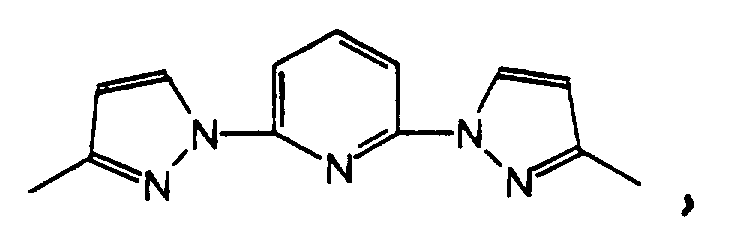
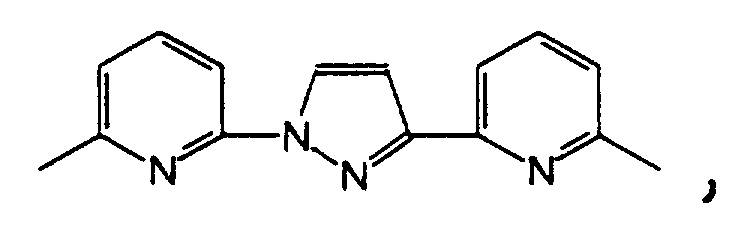
-A- is a bivalent aromatic structure selected from the group consisting of

Description
- The present invention relates to detectables molecules comprising lanthanide chelates attached to a biospecific binding reactant and a use of the said detectable molecules in bioaffinity based binding assays. The invention further relates to novel luminescent lanthanide chelates useful in the preparation of said detectable molecules.
- The publications and other materials used herein to illuminate the background of the invention, and in particular, cases to provide additional details respecting the practice, are incorporated by reference.
- In the specific binding assays, such as e.g. immunoassays, DNA hybridization assays, receptor-binding assays, and cellular binding assays, generally the analytes to be measured are present at very low concentration. Therefore various labelling compounds have been developed that allow the labelled reactant to be detected and quantitated at high sensitivity. In immunoassays and DNA hybridization assays time-resolved luminescence spectroscopy using lanthanide chelates is well known (e.g. I. Hemmilä, T. Ståhlberg, and P. Mottram (eds.), "Bioanalytical Applications of Labelling Technologies", Wallac, Turku, 1994). Stable photoluminescent (referred in the context of this simply as luminescent) lanthanide chelates also have other applications, e.g. fluorescence microscopy and cytometry. Therefore, a number of attempts have been made to develop new highly luminescent chelate labels suitable for those types of time-resolved fluorometric applications. These include e.g. stable chelates composed of derivatives of pyridines (US 4,920,195, US 4,801,722, US 4,761,481, PCT WO FI-91/00373, U.S. Pat. Appl. S.N. 08/135,525, Remuiñán, M.J., Román, H., Alonso, M.T. and Rodríguez-Ubis, J.C., 1993, J. Chem. Soc., Perkin Trans.2, 1099), bipyridines (US 5,216,134), terpyridines (US 4,859,777, US 5,202,423, US 5,324,825) or various phenolic compounds (US 4,670,572, US 4,794,191, Ital. Pat. 42508 A/89) at the energy mediating groups and polycarboxylic acids as chelating parts. In addition various dicarboxylate derivatives (US 5,032,677, US 5,055,578, US 4,772,563), macrocyclic cryptates (US 4,927,923, PCT WO 93/5049, EP-A493,745) and macrocyclic Schiff bases (EP-A369,000) have been patented. None of these terbium chelates do not fulfill all the required features to be used as labels for bioaffinity assays. These requirements are high thermodynamic and kinetic chelate stability, hydrophilicity, high absorptivity at a suitable excitation wavelength, appropriate triplet state to enable efficient energy transfer, high luminescence intensity, presence of a functional group, allowing the formation of a covalent linkage between the chelate and the target molecule, and the affinity and nonspecific binding properties of the used biomolecules must retain. In case of TbIII, the energy gap between the excitation state of the donor ligand and the emitting level of the TbIII ion should be high enough to prevent energy back transfer (Sabbatini, N., Mecati, A., Guardigli, M., Balzani, V., Lehn, J.-M., Zeissel, R. and Ungaro, R., 1991, J. Luminescence 48 & 49; 463-468). Moreover, with an exactly same ligand structure, none of those labels has enough high luminescence intensities with both EuIII and TbIII. In some applications, which contain various chromatographic separation steps, it would be preferable that the label structures differ from each other only with respect to the lanthanide used. Besides, the same key intermediates can be used in the preparations of several lanthanide labels, e.g. EuIII and TbIII labels.
- According to the present invention, the problem of TbIII chelate labels can be solved and the development of more luminescent TbIII chelates is made possible. By preparing suitable ligand structures the energy back transfer from the donor ligand to the emitting level of the TbIII ion i.e. the excited state deactivation route can be eliminated, and at the same time, all other important features of labels and labelled biomolecules can be retain.
- One object of this invention is to provide a detectable molecule comprising a biospecific binding reactant attached to a luminescent lanthanide chelate according to this invention.
- Another object of the present invention is to provide a luminescent lanthanide chelate.
- Yet another object of the present invention is to provide the use of a detectable molecule comprising a biospecific binding reactant attached to the luminescent chelate according to this invention.
- A further objective of this invention is to provide a chelating agent which has high luminescence intensity with several lanthanides, particularly with TbIII and EuIII, with an exactly same chelating structure.
- The aim of the present invention is to provide means to obtain improved lanthanide chelate labels to be used in specific bioaffinity based binding assays, such as immunoassays, DNA hybridization assays, receptor binding assays, immunocytochemical or immunohistochemical assays utilizing fluorometric or time-resolved fluorometric determination of the specific luminescence.
- The chelates of this invention have to combine several important features in the single label, such as:
- 1. high absorptivity at suitable wavelength (preferable over 300 nm),
- 2. efficient energy transfer from UV absorbing part (triplet sensitizer) to the chelated lanthanide(III) ion,
- 3. enough high the energy gap (preferable over 2000 cm-1) between the triplet state of the donor ligand and the emitting level of the TbIII ion (5D4 ca. 20500 cm-1) to prevent energy back transfer,
- 4. strongly chelating part to create a) the termodynamic stability required for storing the labelled reactants for extended periods of time, and b) high kinetic stability to allow the use of reactants in conditions where competing metal ions or chelating agents may be present,
- 5. chelating part forming as complete protection of the chelated ion as possible, preferable nine-dentate ligand,
- 6. functional group allowing efficient coupling of the chelate to be used binding reactant (e.g. antibody) without destroying its binding properties and decreasing the luminescence properties of the label.
- In addition, the chelate has to be highly hydrophilic and possess low nonspecific binding affinity to proteins or surfaces used in the analysis.
- In one aspect therefore, the present invention provides a detectable molecule comprising a biospecific binding reactant attached to a luminescent lanthanide chelate comprising a lanthanide ion and a chelating ligand of the formula

- a) -A- is a bivalent aromatic structure selected from the group consisting of


- b) one of the groups G1 or G2 is selected from a group consisting of hydrogen, chloro, bromo, iodo, cyano, phenyl, alkyl and alkoxy, with the proviso that alkyls contain 1-6 carbon atoms; and the other group G1 or G2 is a bridge which is not participating in the chelating process and which is formed of one to four moieties, each moiety being selected from the group consisting of phenylene, alkylene containing 1-8 carbon atoms, ethynediyl (-C≡C-), ether (-O-), thioether (-S-) and amide (-CO-NH- and -NH-CO-);
- c) one of the two groups G1 or G2 is used for coupling to a biospecific binding reactant wherein the group G1 or G2 selected for this purpose is coupled to biospecific binding reactant via thiourea (-NH-CS-NH-), aminoacetamide (-NH-CO-CH2-NH-), amide (-NH-CO- and -CO-NH-), aliphatic thioether (-S-), disulfide (-S-S-) or 6-substituted-1,3,5-triazine-2,4-diamine; and
- d) the lanthanide ion is europium(III), terbium(III), dysprosium (III) or samarium (III).
- In another aspect, this invention relates to the use of a detectable molecule as defined above in biospecific binding assays.
- The biospecific binding reactant is selected from a group consisting of an antibody, an antigen, a receptor ligand, a specific binding protein, a DNA- or RNA-probe.
- In yet another aspect, this invention provides a luminescent lanthanide chelate comprising a lanthanide ion and a chelating ligand of the formula

- a) -A- is a bivalent aromatic structure selected from the group consisting of


- b) one of the groups G1 or G2 is selected from a group consisting of hydrogen, chloro, bromo, iodo, cyano, phenyl, alkyl and alkoxy, with the proviso that alkyls contain 1-6 carbon atoms; and the other group G1 or G2 is a substituent which is not participating in the chelating process and which is formed of one to four moieties, each moiety being selected from the group consisting of phenylene, alkylene containing 1-8 carbon atoms, ethynediyl (-C≡C-), ether (-O-), thioether (-S-) and amide (-CO-NH- and -NH-CO-) and additionally contains one moiety selected from a group containing hydroxy, nitro, amino, aminooxy, carboxyl, aldehyde or mercapto groups or an activated form made from them such as isocyanato, isothiocyanato, diazonium, bromoacetamido, iodoacetamido, reactive esters, pyridyl-2-dithio or 6-substituted 4-chloro-1,3,5-triazon-2-ylamino;
- c) one of the two groups G1 or G2 is used for coupling to a biospecific binding reactant; and
- d) the lanthanide ion is europium(III), terbium(III), dysprosium (III) or samarium (III).
- The substituents in 6-substituted-1,3,5-triazine-2,4-diamine and 6-substituted 4-chloro-1,3,5-triazin-2-ylamino can be selected from the group consisting of hydrogen, halogen, alkoxy, aryloxy, amino, lower alkyl substituted amino or thioethers, preferable chloro, fluoro, ethoxy, 2-methoxyethoxy, 2-cyanoethoxy, 2,2,2-trifluoroethoxy, thiophenoxy or ethoxycarbonylthiomethoxy.
- The term "luminescent" shall in this invention be understood to mean "photoluminescent" as already stated above.
- The term "bivalent" shall be understood to mean a chemical group with two exactly known binding sites for two covalent bonds to two neigbour atoms.
- According to a preferable embodiment of the invention the lanthanide ion is either europium (III) or terbium (III).
- The invention is exemplified also with the following examples describing the dependence of the luminescence intensity on the triplet state of ligands and demonstrating importance of the triplet state of the labels on the luminescence intensity also after coupling the labels to biospecific binding molecules (e.g antibody). Also an example of chelate coupling to protein and standard curve of labelled antibody is given.
- The structures and the synthetic routes employed in the experimental part are shown in
reaction schemes 1 to 11.Scheme 1 illustrates the synthesis ofcompounds 1 to 4 exemplified by Examples 1 to 4.Scheme 2 illustrates the synthesis ofcompounds compounds 10 to 19 examplified by Examples 9 to 18.Scheme 5 illustrates the synthesis ofcompounds 20 to 27 starting from one of thecompounds 18 or 19 as described in Examples 19-26.Scheme 6 illustrates the synthesis of compounds 28 to 31 starting from one of the compounds 22 or 23 and 4 according to Examples 27-30.Scheme 7 illustrates the synthesis of chelates 32 to 36 starting from one of the compounds 30 or 31 as described in Examples 31-35. Scheme 8 illustrates the synthesis of compounds 39 and 40 exemplified by Examples 36 and 37. Scheme 9 illustrates the synthesis of chelates 41-43 starting from compound 40 as described in Examples 38-40.Scheme 10 illustrates the synthesis of compounds 15, 25 and 44-46 starting from compound 13 as described in Examples 41-45. Scheme 11 illustrates the synthesis of chelates 47-49 starting from compound 46 according to Examples 46-48. - An aq. soln. (170 ml) of CuSO4 x 5H2O (12.5 g, 50 mmol) was added to a soln. of L-lysine x HCl (18.3 g, 100 mmol), NaOH (4.0 g, 100 mmol) and H2O (170 ml). After stirring for 0.5 h at r.t., NaOH (4.0 g, 100 mmol) was added, and the reaction mixture was cooled at ice bath. A soln. of 4-nitrobenzoylchloride (37.1 g, 200 mmol) and 1,4-dioxane (250 ml) was added within 5 min, and the mixture was maintained basic with 1 M NaOH. After stirring for 0.5 h at ice bath, the basic mixture was stirred for 14 h at r.t., filtered, washed with cold H2O and EtOH. Yield: 31.2 g (96 %). IR (KBr): 3412, 3279, 3151 (N-H), 1640, 1620, 1605 (C=O), 1528 (NO2), 1349 (NO2).
- . A mixture of compound 1 (31.2 g, 47.8 mmol), disodium salt of (ethylenedinitrilo)tetra(acetic acid) x 2H2O (21.9 g, 58.8 mmol) and H2O (410 ml) was stirred for 3 h at 80°. The cold mixture was filtered, washed with cold H2O and EtOH. Yield: 19.1 g (63 %). IR (KBr): 3422, 3334 (N-H), 1639, 1603 (C=O), 1522, 1352 (NO2). 1H-NMR (D2O, (D6)DMSO): 1.33-1.47 (m, 2 H); 1.55-1.64 (m, 2 H); 1.68-1.87 (m, 2 H); 3.33 (t, J = 7.0, 2 H); 3.42 (t, J = 5.8, 1 H); 8.01 (d, J = 8.8, 2 H); 8.34 (d, J = 8.8, 2 H).
- SOCl2 (12.4 ml, 0.17 mmol) was dropped slowly to cooled MeOH (250 ml). After stirring for 0.5 h at r.t., compound 2 (13.5 g, 42.5 mmol; twice co-evaporated with toluene (200 ml)) was added and the mixture refluxed for 3 h. After evaporation, the residue was dissolved to CHCl3 (150 ml), neutralized with sat. NaHCO3 and dried (Na2SO4). The product was purified by FC (silica gel, first CHCl3, then 5 % MeOH): 8.54 g (65 %). IR (film): 3380, 3299 (N-H), 1732, 1650 (C=O), 1524, 1347 (NO2), 1200 (C-O). 1H-NMR (CDCl3): 1.46-1.57 (m, 2 H); 1.58-1.89 (m, 4 H); 3.46-3.53 (m, 3 H); 3.73 (s, 3 H); 6.64 (t, J = 5.4, 1 H); 7.95 (d, J = 8.5, 2 H); 8.24 (d, J = 8.5, 2 H).
- A mixture of compound 3 (4.27 g, 13.8 mmol), methyl bromoacetate (1.31 ml, 13.8 mmol), dry K2CO3 (9.53g, 69.0 mmol) and dry MeCN (80 ml) was refluxed for 4 h, filtered and evaporated. The product was purified by FC (silica gel, petroleum ether (40-60°)/EtOAc 2:5, then 0:1): 4.52 (86 %). IR (fim): 3333 (N-H), 1738, 1651 (C=O), 1526, 1348 (NO2), 1207 (C-O). 1H-NMR (CDCl3): 1.42-1.60 (m, 2 H); 1.60-1.81 (m, 4 H); 2.18 (bs, 1 H); 3.31 (dd, J = 5.6, 7.1, 1 H); 3.35 (d, J = 17.4, 1 H); 3.44-3.50 (m, 2 H); 3.47 (d, J = 17.4); 3.71 (s, 3 H); 3.73 (s, 3 H); 7.00 (t, J = 5.4, 1 H); 7.99 (d, J = 8.5, 2 H); 8.25 (d, J = 8.5, 2 H).
- This compound (5) was synthesized from 4-nitro-L-phenylalanine x H2O using a method analogous to the synthesis described in Example 3. Yield: 82 %. IR (KBr): 3384, 3314 (N-H), 1737 (C=O), 1518, 1347 (NO2), 1200 (C-O). 1H-NMR (CDCl3): 2.98 (dd, J = 7.8, 13.7, 1 H); 3.18 (dd, J = 5.4, 13.7, 1 H); 3.69-3.81 (m, 1 H); 3.73 (s, 3 H); 7.40 (d, J = 8.8, 2 H); 8.17 (d, J = 8.8, 2 H).
- This compound (7) was synthesized from 5 using a method analogous to the synthesis described in Example 4. FC (silica gel, first CH2Cl2, then 5 % MeOH/CH2Cl2). Yield: 36 %. IR (KBr): 3342 (N-H), 1740 (C=O), 1519,1347 (NO2), 1203 (C-O). 1N-NMR (CDCl3): 3.04 (dd, J = 7.3, 13.7, 1 H); 3.13 (dd, J = 6.3, 13.7, 1 H); 3.36 (d, J = 17.3, 1 H); 3.42 (d, J = 17.3, 1 H); 3.63 (dd, J = 6.3, 7.3, 1 H); 3. 69 ( s, 3 H); 3.70 (s, 3 H); 7.39 (d, J = 8.8, 2 H); 8.16 (d, J = 8.8, 2 H).
- This compound (8) was synthesized from 6 using a method analogous to the synthesis described in Example 4. FC (silica gel, petroleum ether (40-60°)/EtOAc first 5:3, then 2:5). Yield: 48 %. IR (KBr): 3343 (N-H), 1736 (C=O), 1244 (C-O). 1N-NMR (CDCl3): 1.35-1.90 (m, 6 H); 3.19 (q, J= 6.3, 2 H); 3.28 (t, J = 6.5, 1 H); 3.34 (d, J = 17.6, 1 H); 3.44 (d, J = 17.6, 1 H); 3.71 (s, 3 H); 3.72 (s, 3 H); 5.09 (s, 2 H); 7.28-7.40 (m, 5 H).
- This compound (9) was synthesized from (±)-α-amino-γ-butyrolactone x HBr using a method analogous to the synthesis described in Example 4. FC (silica gel, CHCl3). Yield: 31 %. IR (KBr): 3333 (N-H), 1770, 1740 (C=O), 1216, 1165 (C-O). 1H-NMR (CDCl3): 2.05-2.18 (m, 1 H); 2.47-2.57 (m, 1 H); 3.57 (d, J = 17.6, 1 H); 3.63 (d, J = 17.6, 1 H); 3.64 (dd, J = 8.1, 9.8, 1 H); 3.75 (s, 3 H); 4.21 (dt, J = 6.3, 9.8, 1 H); 4.42 (dt, J = 2.3, 8.8, 1 H).
- A mixture of N,N-dimethylformamide dimethyl acetal (6.65 g, 55.8 mmol) and 2-acetylpyridine (5.63 g, 46.5 mmol) was heated at 100°C for 4 hours. After evaporation, petroleum ether (40-60°, 50 ml) was added, the solid material was filtered, and washed with petroleum ether (40-60°). Yield: 6.76 g (83 %). UV (EtOH): 357, 245. IR (film): 1637 (C=O). 1H-NMR (CDCl3): 3.00 (s, 3 H); 3.18 (s, 3 H); 6.45 (bd, J = 12.6, 1 H); 7.36 (ddd, J = 1.2, 4.9, 7.8, 1 H); 7.80 (dt, J = 1.7, 7.8, 1 H); 7.91 (d, J = 12.6, 1 H); 8.15 (bd, J = 7.8, 1 H); 8.63 (ddd, J = 1.0, 1.7, 4.9, 1 H).
- A mixture of compound 10 (6.66 g, 37.8 mmol), NH2NH2 x H2O (7.57 g, 151 mmol) and EtOH was stirred for 2 h at r.t., and was evaporated. Yield: 5.33 g (97 %). UV (EtOH): 281, 248. IR (film): 3156 (N-H), 1594 (arom). 1H-NMR (CDCl3): 6.81 (d, J = 1.9, 1 H); 7.23-7.26 (m, 1 H); 7.67 (d, J = 1.9, 1 H); 7.74-7.76 (m, 2 H); 8.67 (dd, J = 1.2, 4.9, 1 H).
- A mixture of compound 11 (3.29 g, 22.7 mmol) and 2-bromopyridine (6.37 g, 40.3 mmol) was heated for 20 h at 185°C. The mixture was triturated with acetone (50 ml) and filtered. The product was purified with FC (silica gel, CHCl3): 6.10 g (89 %). UV (EtOH): 296, 220 (sh). IR (KBr): . 1H-NMR (CDCl3): 17.32 (ddd, J = 0.9, 4.9, 7.3, 1 H); 7.88 (ddd, J = 1.5, 6.1, 7.3, 1 H); 7.94 (dt, J = 1.8, 8.1, 1 H); 7.97 (d, J = 2.8, 1 H); 8.30 (d, J = 8.1, 1 H); 8.46-8.50 (m, 2 H); 8.54 (bd, J = 8.1, 1 H); 8.73 (d, J = 2.8, 1 H); 9.00 (bd, J = 4.9, 1 H). 13C-NMR (CDCl3): 106.6, 112.6, 120.4, 121.5, 122.9, 128.4, 136.6, 138.6, 148.0, 149.5, 151.5, 151.8, 153.9.
- A mixture of compound 11 (22.2 g, 153 mmol) and 2-bromopyridine (42.3 g, 268 mmol) was heated for 20 h at 190°C. The cooled mixture was dissolved in hot H2O (200 ml) and the pH was adjusted to basic with solid Na2CO3. After cooling, the precipitate was filtered and washed with cold H2O. Yield: 32.9 g (97 %). UV (EtOH): 294, 283, 224. IR (KBr): 1593, 1578 (arom). 1H-NMR (CDCl3): 7.14 (d, J = 2.6, 1 H); 7.21 (ddd, J = 1.0, 4.9, 7.3, 1 H); 7.27 (ddd, J = 1.1, 4.9, 7.3, 1 H); 7.79 (dt, J = 1.7, 7.3, 1 H); 7.85 (dt, J = 1.7, 7.3, 1 H); 8.12-8.16 (m, 2 H); 8.44 (dd, J = 1.7, 4.9, 1 H); 8.64 (d, J = 2.6, 1 H); 8.68 (bd, J = 4.9, 1 H).
- The 3-chloroperbenzoic acid (251 g, 50-55 %, ~730 mmol) was added in 7 portions to a solution of compound 13 (10.0 g, 45.0 mmol) in CH2Cl2 (1700 ml), and the mixture was stirred for 18 days at r.t.. H2O (1400 ml) was added and the pH was adjusted to 10 with solid Na2CO3. The phases were separated and the water phase was extracted with CHCl3/EtOH (3:1, 5 x 400 ml, 6 x 200 ml). The combined organic phase was dried with Na2SO4 and evaporated to dryness. The product was purified with FC (silica gel, MeOH /CHCl3 1:9): 7.25 g (63 %). UV (EtOH): 307, 278, 257, 220. IR (film): 1228 (N→O). 1H-NMR (CDCl3): 7.23-7.27 (m, 1 H); 7.27-7.31 (m, 1 H); 7.36-7.41 (m, 1 H); 7.44-7.48 (m, 1 H); 7.84 (d, J = 2.7, 1 H); 8.20 (dd, J = 2.0, 8.3, 1 H); 8.29 (dd, J = 2.0, 8.1, 1 H); 8.39-8.43 (m, 2 H); 9.42 (d, J = 2.7, 1 H). 13C-NMR (CDCl3): 110.7, 120.3, 122.6, 124.9, 125.6, 126.2, 127.3, 128.0, 129.6, 130.0, 133.8, 140.8, 141.0.
- This compound (15) was synthesized from 12 using a method analogous to the synthesis described in Example 13. Yield: 30 %. UV (EtOH): 295 (sh), 278, 259, 240 (sh). IR (film): 1256 (N→O). 1H-NMR (CDCl3): 7.23-7.27 (m, 1 H); 7.32-7.43 (m, 3 H); 7.52-7.55 (m, 1 H); 8.08-8.10 (m, 1 H); 8.34-8.36 (m, 1 H); 8.39-8.40 (m, 1 H); 9.48 (s, 1 H).
- A mixture of compound 14 (7.20 g, 28.3 mmol), CH2Cl2 ( 250 ml) and Me3SiCN (28.08 g, 283 mmol) was stirred at r.t. for 15 min. Benzoyl chloride (15.88 g, 113 mmol) was added and stirring was continued overnight. After evaporation to half a volume, 10 % K2CO3 (350 ml) was added, the mixture was stirred for 2 h and filtered. Yield: 5.59 g (73 %). UV (EtOH): 279 (sh), 275. IR (KBr): 2238 (C≡N), 1592, 1575 (arom). 1H-NMR ((D6)-DMSO): 7.25 (d, J = 2.7, 1 H); 8.08 (d, J = 7.9, 2 H); 8.21 (t, J = 7.9, 1 H); 8.31 (t, J = 7.9, 1 H); 8.40 (d, J = 7.9, 1 H); 8.44 (d, J = 7.9, 1 H); 8.80 (d, J = 2.7, 1 H).
- This compound (17) was synthesized from 15 using a method analogous to the synthesis described in Example 15. Yield: 56 %. IR (KBr): 2237 (C≡N), 1590, 1574 (arom). 1H-NMR (CDCl3): 7.67 (d, J = 8.0, 1 H); 7.74 (d, J = 8.0, 1 H); 7.96 (t, J = 8.0, 1 H); 8.03 (t, J = 8.0, 1 H); 8.29 (d, J = 8.0, 1 H); 8.34 (d, J = 8.0, 1 H); 8.74 (s, 1 H).
- A mixture of compound 16 (1.99 g, 7.3 mmol), sat. CH3COOH (31 ml) and conc. H2SO4 (31 ml) was refluxed for 2 h, poured into ice H2O (400 ml), filtered, treated with acetone, and the precipitate removed by centrifugation. SOCl2 (1.8 ml, 24.3 mmol) was dropped slowly to cooled MeOH (130 ml). After stirring for 15 min at r.t., the above precipitate was added, and the mixture was refluxed for 4.5 h. After evaporation to a half volume, CHCl3 (100 ml) was added, the mixture was neutralized with sat. NaHCO3. The aq. phase was extracted with CHCl3 (2 x 50 ml), the org. phase dried with Na2SO4, and evaporated. Yield: 1.77 g (66 %). UV (EtOH): 293, 220 (sh). IR (KBr): 1741 (C=O), 1588 (arom), 1234, 1141 (C-O). 1H-NMR (CDCl3): 4.03 (s, 3 H); 4.04 (s, 3 H); 7.28 (d, J=2.7, 1 H); 7.94 (t, J = 7.8, 1 H); 8.00 (t, J = 7.6, 1 H); 8.04 (dd, J = 1.5, 7.6, 1 H); 8.11 (dd, J = 1.0, 7.8, 1 H); 8.32 (dd, J = 1.0, 7.8, 1 H); 8.34 (dd, J = 1.5, 7.6, 1 H); 8.79 (d, J = 2.7, 1 H).
- This compound (19) was synthesized from 17 using a method analogous to the synthesis described in Example 17. Yield: 57 %. UV (EtOH): 299. IR (film): 1739 (C=O), 1588 (arom), 1250, 1141 (C-O). 1H-NMR (CDCl3): 4.04 (s, 3 H); 4.05 (s, 3 H); 7.98 (t, J = 7.9, 1 H); 8.01 (t, J = 7.9, 1 H); 8.07 (d, J = 7.9, 1 H); 8.19 (d, J = 7.9, 1 H); 8.27 (d, J = 7.9, 1 H); 8.34 (d, J = 7.9, 1 H); 8.87 (s, 1 H).
- NaBH4 (0.82 g, 21.6 mmol) was added to a suspension of compound 18 (1.76 g, 5.2 mmol) and abs. EtOH (35 ml). After stirring for 3 h at r.t., the mixture was refluxed for 1 h. The soln. was evaporated, sat. NaHCO3 ( 40 ml) was added, the mixture brought to boiling. The cold mixture was filtered and washed with cold H2O. Yield: 1.47 g (86 %). UV (EtOH): 299, 225(sh). IR (KBr): 1600, 1582 (arom). 1H-NMR ((D6)-DMSO): 4.62 (s, 2 H); 4.64 (s, 2 H); 5.50 (bs, 1 H); 5.56 (bs, 1 H); 7.09 (d, J = 2.4, 1 H); 7.46 (d, J = 7.8, 1 H); 7.47 (d, J = 7.8, 1 H), 7.90 (d, J = 7.8, 1 H); 7.91 (t, J = 7.8, 1 H); 7.98 (d, J = 7.8, 1 H); 8.04 (t, J = 7.8, 1 H); 8.68 (d, J = 2.4, 1 H).
- This compound (21) was synthesized from 19 using a method analogous to the synthesis described in Example 19. UV (EtOH): 301. IR (KBr): 1600, 1575 (arom). 1H-NMR (CDCl3): 3.05 (t, J = 5.1, 1 H); 4.48 (t, J = 5.1, 1 H); 4.82 (d, J = 5.1, 1 H); 7.20 (d, J = 7.6, 1 H); 7.24 (d, J = 7.6, 1 H); 7.80 (t, J = 7.6, 1 H); 7.88 (t, J = 7.6, 1 H); 7.99 (d, J = 7.6, 1 H); 8.04 (d, J = 7.6, 1 H); 8.71 (s, 1 H).
- A mixture of dry DMF (20 ml) and PBr3 (0.83 ml, 8.80 mmol) was stirred at r.t. for 15 min. Compound 20 (1.24 g, 4.40 mmol) was added in small portions, and the stirring was continued overnight. After neutralization with saturated NaHCO3 solution, the precipitation was filtered, washed with cold H2O and MeCN. The product was purified by FC (silica gel, CH2Cl2): 0.71 g (40 %). UV (EtOH): 302, 225 (sh). IR (KBr): 1598, 1577 (arom). 1H-NMR (CDCl3): 4.56 (s, 2 H); 4.63 (s, 2 H); 7.16 (d, J = 2.7, 1 H); 7.34 (d, J = 7.7, 1 H); 7.43 (d, J = 7.7, 1 H); 7.78 (t, J = 7.7, 1 H); 7.84 (t, J = 7.7, 1 H); 8.04 (d, J = 7.7, 2 H); 8.67 (d, J = 2.7, 1 H). 13C-NMR (CDCl3): 33.2, 34.1, 107.0, 111.8, 119.6, 121.0, 122.7, 128.6, 130.3, 137.6, 139.7, 151.5, 153.9, 155.5, 156.6.
- This compound (23) was synthesized from 21 using a method analogous to the synthesis described in Example 21. Yield: 48 %. UV (EtOH): 302, 298, 230 (sh). IR (KBr): 1598, 1577 (arom). 1H-NMR (CDCl3): 4.54 (s, 2 H); 4.68 (s, 2 H); 7.37 (dd, J = 0.7, 7.6, 1 H); 7.52 (dd, J = 0.7, 7.6); 7.82 (t, J = 7.6, 1 H); 7.85 (t, J = 7.6, 1 H); 7.95 (dd, J = 0.7, 7.6, 1 H); 8.01 (dd, J = 0.7, 7.6, 1 H); 8.75 (s, 1 H).
- A mixture of compound 22 (15 mg, 37 µmol), di(tert-butyl) iminobis(acetate) (18 mg, 74 µmol), dry K2CO3 (50 mg, 370 µmol) and dry MeCN (300 µl) was refluxed 4.5 h. After evaporation, the residue was taken into CHCl3 (10 ml), washed with H2O (2 x 5 ml) and dried Na2SO4. Yield: 27 mg (100 %). UV (EtOH): 301, 215 (sh). IR (film): 1734 (C=O), 1143 (C-O). 1H-NMR (CDCl3): 1.47 (s, 36 H); 3.53 (s, 4 H); 3.57 (s, 4 H); 4.07 (s, 2 H); 4.15 (s, 2 H); 7.12 (d, J = 2.4, 1 H); 7.52 (d, J = 7.7, 1 H); 7.61 (d, J = 7.7, 1 H); 7.76 (t, J = 7.7, 1 H); 7.82 (t, J = 7.7, 1 H); 7.98 (d, J = 7.7, 1 H); 8.01 (d, J = 7.7, 1 H); 8.63 (d, J = 2.4, 1 H).
- This compound (25) was synthesized from 23 using a method analogous to the synthesis described in Example 23. Yield: 79 %. UV (EtOH): 300, 225. IR (film): 1732 (C=O), 1144 (C-O). 1H-NMR (CDCl3): 1.47 (s, 18 H); 1.48 (s, 18 H); 3.53 (s, 4 H); 3.57 (s, 8 H); 4.06 (s, 2 H); 4.15 (s, 2 H); 7.54 (d, J = 7.6, 1 H); 7.72 (d, J = 8.0, 1 H); 7.79 (t, J = 7.6, 1 H); 7.82 (t, J = 8.0, 1 H); 7.91 (d, J = 7.6, 1 H); 7.95 (d, J = 8.0, 1 H); 8.70 (s, 1 H).
- A solution of compound 24 (63 mg, 65 µmol) in CF3COOH (1.2 ml) was stirred at r.t. for 2 h. After evaporation to dryness, the residue was triturated with Et2O, filtered and washed with Et2O. UV (H2O): 302, 224. UV ([EuIII (26)], H2O): 330, 320, 287, 279, 250 (sh). IR (KBr): 1734 (C=O), 1204 (C-O). 1H-NMR ((D6)-DMSO): 3.62 (s, 4 H); 3.67 (s, 4 H); 4.10 (s, 2 H); 4.16 (s, 2 H); 7.13 (d, J = 2.2, 1 H); 7.52-7.55 (m, 2 H); 7.93-7.95 (m, 2 H); 8.03-8.05 (m, 2 H); 8.68 (d, J = 2.2, 1 H).
- This compound (27) was synthesized from 25 using a method analogous to the synthesis described in Example 25. UV (H2O): 301, 226. UV ([EuIII(27)], H2O): 335 (sh), 323, 287, 280, 250 (sh). IR (KBr): 1734 (C=O), 1202 (C-O). 1H-NMR ((D6)-DMSO): 3.67 (s, 4 H); 3.73 (s, 4 H); 4.15 (s, 2 H); 4.18 (s, 2 H); 7.56 (d, J = 7.6, 1 H); 7.63 (d, J = 7.6, 1 H); 7.91-8.00 (m, 3 H); 8.07 (t, J = 7.6, 1 H); 8.86 (s, 1 H).
- Compound 4 (190 mg, 0.5 mmol) was added in two portions within 2 h to a mixture of compound 22 (204 mg, 0.5 mmol), dry K2CO3 (207 mg, 1.5 mmol) and dry MeCN (10 ml). After refluxing for 4 h, dimethyl iminobis(acetate) (81 mg, 0.5 mmol) was added. The mixture was refluxed overnight, filtered, the filtrate evaporated, and the residue was dissolved in dry pyridine (4 ml). After an addition of acetic anhydride (189 mg, 2 mmol), the soln. was stirred for 4 h at r.t., evaporated and the residue co-evaporated twice with toluene. The product was purified by FC (silica gel, petroleum ether (40-60°)/EtOAC/Et3N 5/1/1): 150 mg (38 %). IR (film): 3349, 1732, 1651 (C=O), 1530, 1348 (NO2), 1204 (C-O). 1H-NMR (CDCl3): 1.55-1.75 (m, 4 + 4 H); 1.75-1.90 (m, 2 + 2 H); 3.43-3.51 (m, 2 + 2 H); 3.55-3.75 (m, 3 + 3 H); 3.61 (s, 3 H); 3.62 (s, 3 H); 3.69 (s, 4 H); 3.70 (s, 4 H); 3.71 (s, 6 H); 3.72 (s, 6 H); 3.73 (s, 3 + 3 H); 3.95 (d, J = 14.6, 1 H); 3.99 (d, J = 14.6, 1 H); 4.05 (d, J = 14.6, 1 H); 4.08 (s, 2 H); 4.09 (d, J = 14.6, 1 H); 4.13 (s, 2 H); 6.83 (bs, 1 H); 6.96 (bs, 1 H); 7.06 (d, J = 2.4, 1 H); 7.07 (d, J = 2.4, 1 H); 7.35 (d, J = 7.8, 1 H); 7.40 (d, J= 7.8, 1 H); 7.45 (d, J= 7.8, 1 H); 7.52 (d, J = 7.8, 1 H); 7.59 (t, J = 7.8, 1 H); 7.68 (t, J = 7.8, 1 H); 7.76 (t, J = 7.8, 1 H); 7.82 (t, J = 7.8, 1 H); 7.88-7.98 (m, 2 + 2 H); 7.90 (d, J = 8.9. 2 H); 7.92 (d, J = 8.9, 2 H); 8.15 (d, J = 8.9, 2 H); 8.18 (d, J = 8.9, 2 H); 8.56 (d, J = 2.4, 1 H); 8.57 (d, J = 2.4, 1 H). It was impossible to assign signals to certain isomers. The isomeric ratio was according to NMR 56:44.
- This compound (29) was synthesized from 23 using a method analogous to the synthesis described in Example 27. Yield: 30 %. IR (film): 3317 (N-H), 1737, 1659 (C=O), 1525, 1347 (NO2), 1210 (C-O). 1H-NMR CDCl3 : 1.55-1.70 (m, 4 + 4 H); 1.75-1.88 (m, 2 + 2 H); 3.43-3.50 (m, 2 + 2 H); 3.50-3.75 (m, 3 + 3 H); 3.63 (s, 3 H); 3.65 (s, 3 H); 3.68 (s, 4 H); 3.72 (s, 4 + 6 H); 3.73 (s, 6 H); 3.73 (s, 3 + 3 H); 3.95 (d, J = 14.6, 1 H); 4.05 (d, J = 14.6, 1 H); 4.08 (s, 2 H); 4.09 (d, J = 14.6, 1 H); 4.13 (d, J = 14.6, 1 H); 4.17 (s, 2 H); 6.82 (bs, 1H); 6.94 (bs, 1 H); 7.41 (d, J= 7.6, 1 H); 7.49 (d, J = 7.6, 1 H); 7.53 (d, J = 7.6, 1 H); 7.63 (d, J= 7.6, 1 H); 7.64 (t, J= 7.6, H); 7.70 (t, J = 7.6, 1 H); 7.80 (t, J= 7.6, 1 H); 7.83 (t, J= 7.6, 1 H); 7.88-7.98 (m, 2 + 2 H); 7.93 (d, J = 8.8, 2 H); 7.96 (d, J = 8.8, 2 H); 8.17 (d, J = 8.8, 2 H); 8.20 (d, J= 8.8, 2 H); 8.65 (s, 1 H); 8.66 (s, 1 H). It was impossible to assign signals to certain isomers. The isomeric ratio was according to NMR 51:49.
-
- A mixture of compound 28 (100 mg, 12 mmol), 10 % Pd/C (25 mg) and MeOH (20 ml) was stirred under H2 (3.4 atm) for 0.5 h. After filtration, the filtrate was evaporated, and the product purified by FC (silica gel, petroleum ether (40-60°)/
EtOAC 2/5): 58 mg (60 %). IR (film): 3348, 3244 (N-H), 1732, 1633 (C=O), 1180 (C-O). 1H-NMR (CDCl3): 1.53-1.72 (m, 4 + 4 H); 1.75-1.88 (m, 2 + 2 H); 3.43-3.50 (m, 2 + 2 H); 3.50-3.76 (m, 3 + 3 H); 3.65 (s, 3 + 3 H); 3.69 (s, 4 H); 3.70 (s, 4 H); 3.72 (s, 6 H); 3.73 (s, 6 + 3 H); 3.74 (s, 3 H); 4.03 (d, J = 14.6, 1 + 1 H); 4.09 (s, 2 H); 4.10 (d, J = 14.6, 1 + 1 H); 4.20 (s, 2 H); 6.60 (d, J = 8.5, 2 H); 6.61 (d, J = 8.5, 2 H); 7.08 (d, J = 2.4, 1 + 1 H); 7.42 (d, J= 7.6, 1 H); 7.44 (d, J= 7.6, 1 H); 7.59 (d, J= 8.5, 2 H); 7.61 (d, J= 8.5, 2 H); 7.62 (t, J= 7.6, 1 H); 7.67 (t, J = 7.6, 1 H); 7.76 (t, J= 7.6, 1 H); 7.82 (t, J = 7.6, 1 H); 7.90 (d, J = 7.6, 1 H); 7.94 (d, J = 7.6, 1 H); 7.97 (d, J = 7.6, 1 H); 7.98 (d, J = 7.6, 1 H); 8.59 (d, J = 2.4, 1 + 1 H). It was impossible to assign signals to certain isomers. - This compound (31) was synthesized from 29 using a method analogous to the synthesis described in Example 29. Yield: 65 %. IR (film): 3360, 3267 (N-H), 1738, 1627 (C=O), 1209 (C-O). 1H-NMR (CDCl3): 1.50-1.70 (m, 4 H); 1.75-1.85 (m, 2 H); 3.38-3.43 (m, 2 H); 3.50-3.76 (m, 3 H); 3.57 (s, 3 H); 3.69 (s, 4 H); 3.72 (s, 3 H); 3.75 (s, 6 H); 3.97 (d, J = 14.6, 1 H); 4.08 (d, J = 14.6, 1 H); 4.09 (s, 2 H); 6.63 (d, J = 8.5, 2 H); 7.47 (d, J = 8.0, 1 H); 7.50 (d, J = 8.0, 1 H); 7.58 (d, J = 8.5, 2 H); 7.70 (t, J = 8.0, 1 H); 7.85 (t, J = 8.0, 1 H); 8.01 (d, J = 8.0, 1 H); 8.04 (d, J = 8.0, 1 H); 8.65 (s, 1 H). Only one isomer shown.
- A mixture of compound 30 (67 mg, 88 µmol) and 0.5 M KOH in EtOH (2.5 ml) was stirred for 1 h at r.t.. Some H2O (0.58 ml) was added and the stirring was continued for 3 h. After evaporation, the residue was dissolved in H2O (1.2 ml) and the pH was adjusted to 6.5 with 5 M HCl. An aq. soln. (0.6 ml) of TbCl3 (36 mg, 97 µmol) was added within 15 min and the pH was maintained at 5.0-6.5 with solid NaHCO3. After stirring for 1.5 h at r.t. the pH was adjusted to 8.5 with 1 M NaOH. The precipitate was removed by centrifugation, the filtrate triturated with acetone, and the solid material removed by centrifugation and washed with acetone. The solid material was dissolved in H2O (1.0 ml), extracted with phenol, and the phenol phase was treated with H2O (1.0 ml) and Et2O (10 ml). The H2O phase was washed with Et2O (2 x 10 ml), treated with acetone, and the product removed by centrifugation and washed with acetone. Yield: 30 mg (40 %). UV (H2O): 331, 320, 287, 279, 263. IR (KBr): 1617 (C=O), 1388 (C-O).
- This compound (33) was synthesized from 31 using a method analogous to the synthesis described in Example 31. UV (H2O): 328, 317, 285, 277, 267. IR (KBr): 1602 (C=O), 1407 (C-O).
- An aq. (0.454 ml) soln. of compound 32 (14 mg, 16 µmol) was added within 15 min to a mixture of thiophosgene (5.0 µl, 64 µmol), NaHCO3 (6.7 mg, 80 µmol) and CHCl3 (0.454 ml). After stirring for 30 min, the aq. phase was washed with CHCl3 (3 x 1 ml), acetone was added to aq. soln. and the product removed by centrifugation and washed with acetone. Yield: 13 mg (87 %). UV (H2O): 330, 320, 287, 280, 263. IR (KBr): 2099 (S=C=N), 1613 (C=O), 1366 (C-O).
- This compound (35) was synthesized from 33 using a method analogous to the synthesis described in Example 33. Yield: 82 %. UV (H2O): 328, 318, 286, 280, 264 (sh). IR (KBr): 2105 (S=C=N), 1603 (C=O), 1404 (C-O).
- A mixture of 2,4,6-trichloro-1,3,5-triazine (45 mg, 0.25 mmol), acetone (0.25 ml) and H2O (0.25 ml) was added to a soln. of compound 32 (21 mg, 25 µmol) and 0.1 M NaOAC (0.375 ml, pH 4.9). After stirring for 15 min, acetone was added to the mixture, and the precipitate removed by centrifugation and washed with acetone. UV (H2O): 330, 318, 287, 279, 262. IR (KBr): 1609 (C=O), 1388 (C-O).
- Compound 37 (EP 298939 B1) (198 mg, 0.5 mmol) was added in two portions to a soln. of compound 38 (Remuiñán, M.J., Román, H., Alonso, M.T. and Rodríguez-Ubis, J.C., 1993, J. Chem. Soc., Perkin Trans.2, 1099) (200 mg, 0.5 mmol), dry K2CO3 (207 mg, 1.5 mmol) and dry MeCN (25 ml). After refluxing for 9 h, a soln. of dimethyl iminobis(acetate) (94.5 mg, 0.5 mmol) and dry MeCN (4 ml) was added in two portions. After refluxing for 7 h, the mixture was filtered, the filtrate evaporated and the product purified by FC (silica gel, EtOAc/hexane 3:2): 52 %. Anal. calcd for C40H51N9S11: C 57.61; H 6.16; N 15.12. Found: C 57.87; H 6.00; N 14.87.
- This compound (40) was synthesized from 39 using a method analogous to the synthesis described in Example 29. Anal. calcd for C40H53N9O9: C 59.76; H 6.65; N 15.68. Found: C 60.02; H 6.63; N 15.45.
- A mixture of compound 40 (270 mg, 0.36 mmol) and 0.5 M KOH in EtOH (16 ml) was stirred for 2 h at r.t.. Some H2O (1.6 ml) was added to the reaction mixture and the stirring was continued for 2 h. After evaporation, the residue was dissolved in H2O (6 ml) and the pH was adjusted to 6.5 with 5 M HCl. An aq. soln. of TbCl3 (134 mg, 0.36 mmol) was slowly added and the pH was maintained at 5.0-6.5 with 2 M NaOH. After stirring for 1 h, the precipitate was removed by centrifugation and washed with acetone. Yield: 60 %. UV (H2O): 309, 276, 270. IR (KBr): 1616 (C=O), 1400 (C-O). Anal. calcd for C32H33N9O9TbK: C 43.40; H 3.76; N 14.23. Found: C 42.98; H 4.18; N 13.96.
- This compound (42) was synthesized from 41 using a method analogous to the synthesis described in Example 33. UV (H2O): 313 (sh), 293, 277, 270 (sh), 253 (sh), 228. IR (KBr): 2077 (S=C=N), 1617 (C=O), 1381 (C-O).
- This compound (43) was synthesized from 41 using a method analogous to the synthesis described in Example 35. UV (H2O): 307, 276, 269, 242, 243 (sh). IR (KBr): 1608 (C=O), 1394 (C-O).
- NBS (26.7 g, 150 mmol) and dibenzoylperoxide (1.20 g, 4.95 mmol) was added in 3 portions during 3 d to a boiling soln. of compound 13 (11.1 g, 50.0 mmol) and CCl4 (220 ml). After refluxing additional 24 h, the cold mixture was filtered and the filtrate washed with sat. NaHCO3 (100 ml), H2O (100ml), dried (Na2SO4) and evaporated. Yield: 14.8 g (98 %). IR (KBr): 1598, 1588 (arom). 1H-NMR (CDCl3): 7.23-7.26 (m, 1 H); 7.32-7.35 (m, 1 H); 7.80-7.87 (m, 2 H); 8.09 (d, J = 7.8, 1 H); 8.14 (d, J = 8.3, 1 H); 8.43 (d, J = 4.1, 1 H); 8.72 (s, 1 H); 8.80 (d, J = 3.4, 1 H). MS: 300 (100, M+), 302 (98, [M + 2]+).
- This compound (15) was synthesized from 44 using a method analogous to the synthesis described in Example 13. Yield: 49 %.
- A suspension of compound 17 (3.79 g, 10.8 mmol) and dry THF (100 ml) was deaerated with N2. BH3.THF (1 M, 110 ml) was added within 10 min into the cold reaction mixture. After stirring for 2 h in ice bath and 3 h at r.t., excess BH3 was distroyed by addition of MeOH, the mixture evaporated and the residue dissolved in MeOH saturated with dry HCl (200 ml). After stirring for 1 h, the mixture was evaporated, and the residue treated with THF (150 ml). The cooled mixture was filtered and the solid material washed with THF. A mixture of this material, BrCH2COOC(CH3)3 (2.91 ml, 18.0 mmol), dry (i-Pr)2EtN (12.0 ml, 67.5 mmol) and dry MeCN (90 ml) was refluxed for 24 h. After evaporation, the residue was dissolved in CHCl3 (100 ml), washed with H2O (3 x 50 ml) and dried (Na2SO4). The product was purified by FC (silica gel, petroleum ether (40-60°)/ACOEt/Et3N 10:1:1): 0.97 g (26 %).
- A mixture of compound 26 (0.49 g, 0.59 mmol), 4-amino-phenylacetylene (83 mg, 0.71 mmol; Takalo, H, Kankare, J. and Hänninen, E., 1988, Acta Chem. Scand. B 42, 448), dry Et3N (3 ml) and dry THF (3 ml) was deaerated with N2. Bis(triphenylphosphine)palladium(II) chloride (8.5 mg, 12 µmol) and CuI (4.6 mg, 24 µmol) was added and the mixture was stirred for 40 h at 55-60°. After evaporation, the residue was dissolved in CHCl3 (20 ml), washed with H2O (3 x 10 ml) and dried (Na2SO4). The product was purified by FC (silica gel, petroleum ether (40-60°)/AcOEt first 5:3 then 2:5): 0.12 g (24 %). IR (film): 3466, 3372 (N-H), 2215 (C≡C), 1737 (C=O), 1146 (C-O). 1H NMR (CDCl3): 1.45 (s, 18 H); 1.48 (s, 18 H); 3.54 (s, 4 H); 3.55 (s, 4 H); 4.06 (s, 2 H); 4.21 (s, 2 H); 6.66 (d, J = 8.4, 2 H); 7.35 (d, J = 8.4, 2 H); 7.53 (d, J = 7.3, 1 H); 7.76 (d, J = 7.3, 1 H); 7.80 (t, J = 7.3, 1 H); 7.82 (t, J = 7.3, 1 H); 8.03 (d, J = 7.3, 1 H); 8.18 (d, J = 7.3, 1 H); 8.83 (s, 1 H).
- A mixture of compound 46 (115 mg, 0.135 mmol), 10 % Pd/C (20 mg) and MeOH (20 ml) was stirred under N2 (0.69 MPa) for 2.5 h. After filtration, the filtrate was evaporated and the residue was purified by FC (silica gel, petroleum ether (40-60°)/AcOEt 5:3): 87 mg (75 %). IR (film): 3444, 3372 (N-H), 1733 (C=O), 1145 (C-O). 1H NMR (CDCl3): 1.44 (s, 18 H); 1.47 (s, 18 H); 2.84-2.89 (m, 2 H); 3.19-3.23 (m, 2 H); 3.52 (s, 4 H); 3.53 (s, 4 H); 4.05 (s, 2 H); 4.11 (s, 2H); 6.63 (d, J = 7.9, 2 H); 7.03 (d, J = 7.9, 2 H); 7.48 (d, J = 7.9, 1 H); 7.62 (d, J = 7.9, 1 H); 7.74 (t, J = 7.9, 1 H); 7.78 (t, J = 7.9, 1 H); 7.92 (d, J = 7.9, 1 H); 7.93 (d, J = 7.9, 1 H); 8.38 (s, 1 H).
- First, the ester group hydrolysis of compound 45 using a method analogous to the synthesis described in Example 25 gave 2,2',2'',2'''-{{6,6"-{4"-[2-(4-aminophenyl)ethyl]py-razole-1",3'-diyl}bis(pyridine)-2,2'-diyl}bis(methylene-nitrilo)}tetrakis(acetic acid). UV (H2O): 335 (sh), 304, 226 (sh). UV([EUIII (46)], H2O): 325, 289, 279 (sh), 238 (sh). IR (KBr): 1734, 1676, 1636 (C=O), 1376, 1202 (C-O). 1H NMR ((D6)-DMSO): 2.96 (t, J = 7.7, 2 H); 3.22 (t, J = 7.7, 2 H); 3.59 (s, 4 H); 3.60 (s, 4 H); 4.07 (s, 2 H); 4.11 (s, 2 H); 7.15 (d, J = 7.7, 2); 7.33 (d, J = 7.7, 2 H); 7.50 (d, J = 7.7, 1 H); 7.57 (d, J = 7.7, 1 H); 7.89 (d, J = 7.7, 1 H); 7.92 (t, J = 7.7, 1 H); 7.97 (d, J = 7.7, 1 H); 8.01 (t, J = 7.7, 1 H); 8.48 (s, 1 H). This tetraacid (43 mg, 40 µmol) was dissolved in H2O (0.75 ml) and the pH was adjusted to 6.5 with solid NaHCO3. An aq. soln. (0.25 ml) of TbCl3 (16 mg, 44 µmol) was added within 15 min and the pH was maintained at 5-7. After stirring for 2 h, the pH was raised to 8.5-9.0 with 1 M NaOH, the precipitate removed by centrification, the filtrate treated with acetone, and the precipitate removed by centrification and washed with acetone. Yield: 27 mg (84 %). UV (H2O): 338 (sh), 327, 290, 283 (sh), 239. IR (KBr): 1608 (C=O), 1396 (C-O).
-
- This compound (48) was synthesized from 47 using a method analogous to the synthesis described in Example 33. UV (H2O): 337 (sh), 326, 289 (sh), 281, 270, 254. IR (KBr): 2115 (S=C=N), 1609 (C=O), 1397 (C-O).
- This compound (49) was synthesized from 47 using a method analogous to the synthesis described in Example 35. UV (H2O): 321, 290, 251. IR (KBr): 1608 (C=O), 1390 (C-O).
- The luminescence parameters for the EuIII and TbIII chelates were measured in borate buffer, pH 8.5. The ligand concentrations were kept at 10 µM, and the lanthanide-ion concentrations varied between 0.1 and 1 µM depending on the luminescence intensities. The measurements were standardized using 0.1 µM EuIII in the Wallac Delfia enhancement soln. (molar absortivity 37600, quantum yield 70 % and luminescence yield 26320). The emission intensities of the lanthanide chelates were measured using the most intense emission line, at ca. 545 nm for TbIII and 613 for EuIII. The TbIII luminescence was corrected for photomultiplier quantum-yield difference (1.39-fold at 545 nm as compared to the value at 613 nm). The phosphorescence spectra were measured in 5:4 mixtures of glyserol (purified) and water (quartz dist.) buffered by tris (hydroxymethyl )aminomethane and HCl (TRIS-HCl buffer). Concentration of GdIII (added as perchlorate) was 10 µM and ligand 30 µM.
Table 1 The triplet state energy levels (E) of GdIII chelates of compounds 26, 27 and TERPY, and the excitation maxima (λexc), luminescence decay times (τ) and luminescence yields (ε.Φ) of the EuIII chelates of compounds 26, 27 and TERPY. Compound λexc[nm] τ[µs] ε.Φ E[cm-1] EuIII(26) 327 1000 1550 23000 EuIII(27) 329 1020 1630 23100 EuIII(TERPY) 334 1310 2100 22400 TERPY is 2,2',2'',2'''-[(2,2':6',2"-terpyridine-6,6''-diyl)bis(methylenenitrilo)]tetrakis(acetic acid) Table 2 The triplet state energy levels (E) of GdIII chelates of compounds 26, 27 and TERPY, and the excitation maxima (λexc), luminescence decay times (τ) and luminescence yields (ε.Φ) of the TbIII chelates of compounds 26, 27 and TERPY. Compound λexc[nm] τ[µs] ε.Φ E[cm-1] TbIII(26) 327 2810 8810 23000 TbIII(27) 331 2550 8900 23100 TbIII(TERPY) 333 1100 3800 22400 - The activated chelates were coupled to a model protein (PSA-antibody, clone H50) by incubating the chelate with IgG (1 mg/ml) in carbonate buffer (500 µl, pH 9.8) overnight using a 30-fold molar reactant-to-protein ratio. After the coupling reaction, the protein was purified on a column of
Superdex 200 prep grade by eluting with 50 mM Tris-HCI buffer (pH 7.75) containing 0.15 M NaCl and 0.05 % NaN3 soln. The fractions corresponding labelled monomeric IgG were collected. The chelate concentrations in the protein fractions were measured from both the absorptions of the conjucated chelate at 330 nm and the total TbIII ion concentration measured by the dissociative fluorescence enhancement system. The purified protein conjugate and the labelling ratio (chelates per protein) were quantitated by calculating the protein yield or by measuring the absor-bance at 280 nm and subtracting the absorption caused by the added chelate. - The luminescence measurements of chelate-labelled antibodies were measured similarly as in Example 49 using appropriate dilutions of the conjucated proteins analyzed above.
Table 3 The excitation maxima (λexc), luminescence decay times (τ) and luminescence yields (ε.Φ) of the TbIII chelates 34, 42, 43 and TERPY in protein Chelate λexc[nm] τ[µs] ε.Φ 34 328 1350 3860 42 315 2930 3770 43 310 2670 4050 TbIII(TERPY) in protein 333 330 1170 TbIIITERPY in protein: see Mukkala, V.-M., Takalo, H., Liitti, P. and Hemmilä, I., 1995, J. Alloys and Compounds 225, 507-510: compound 11 a. - A PSA standard curve where a PSA-antibody labelled with chelate 42 is used as a label. The curve is shown in Figure 1.
- It will be appreciated that the methods and compositions of the present invention can be incorporated in the form of a variety of embodiments, only a few of which are disclosed herein. It will be apparent to the skilled person that other embodiments exist and do not depart from the spirit of the invention. Thus, the described embodiments are illustrative and should not be construed as restrictive.

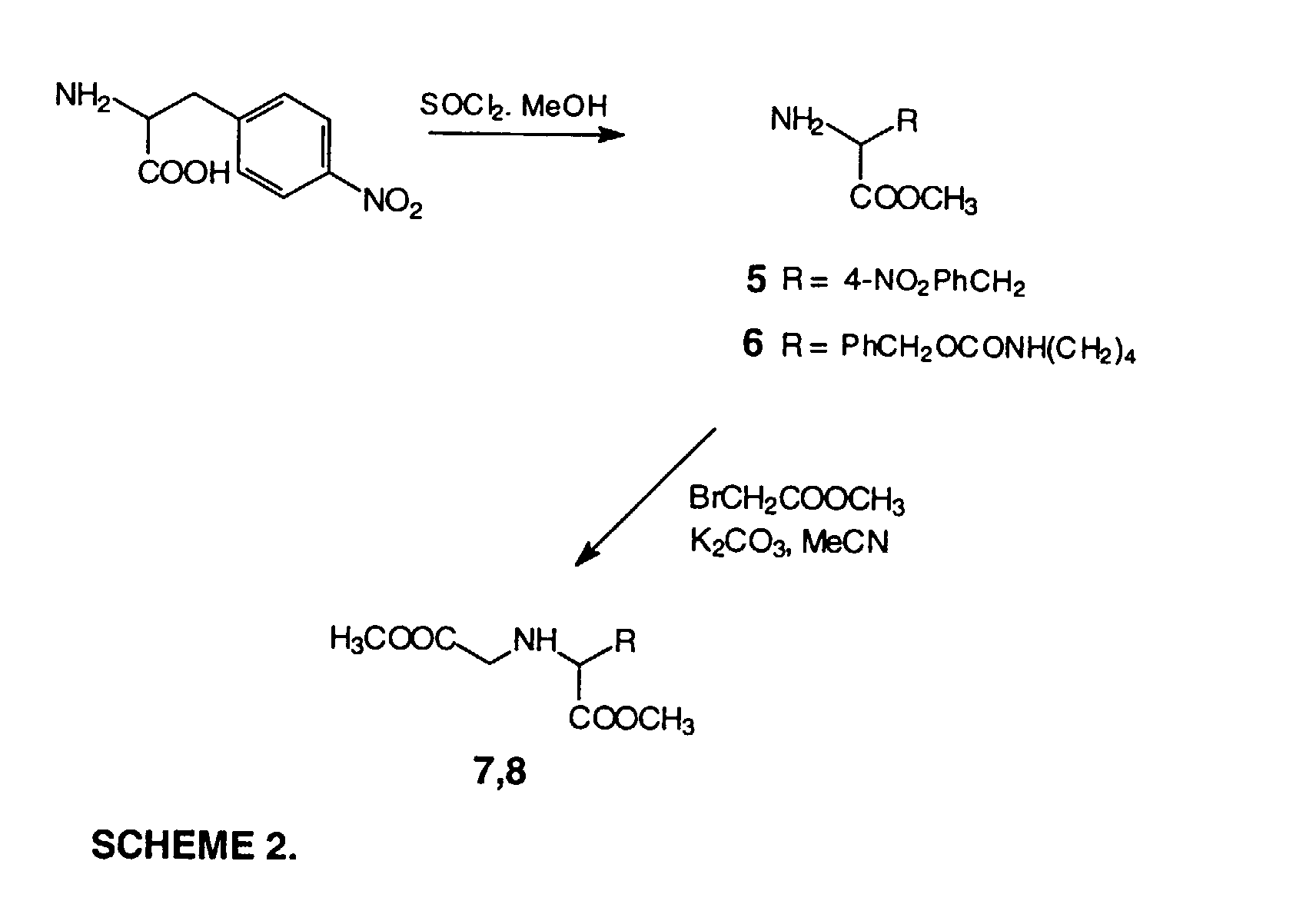


Claims (8)
- A detectable molecule comprising a biospecific binding reactant attached to a luminescent lanthanide chelate comprising a lanthanide ion and a chelating ligand of the formula
 a) -A- is a bivalent aromatic structure selected from the group consisting of

 b) one of the groups G1 or G2 is selected from a group consisting of hydrogen, chloro, bromo, iodo, cyano, phenyl, alkyl and alkoxy, with the proviso that alkyls contain 1-6 carbon atoms; and the other group G1 or G2 is a bridge which is not participating in the chelating process and which is formed of one to four moieties, each moiety being selected from the group consisting of phenylene, alkylene containing 1-8 carbon atoms, ethynediyl (-C≡C-), ether (-O-), thioether (-S-) and amide (-CO-NH- and -NH-CO-);c) one of the two groups G1 or G2 is used for coupling to a biospecific binding reactant wherein the group G1 or G2 selected for this purpose is coupled to biospecific binding reactant via thiourea (-NH-CS-NH-), aminoacetamide (-NH-CO-CH2-NH-), amide (-NH-CO- and -CO-NH-), aliphatic thioether (-S-), disulfide (-S-S-) or 6-substituted-1,3,5-triazine-2,4-diamine; andd) the lanthanide ion is europium(III), terbium(III), dysprosium (III) or samarium (III).
 - The detectable molecule according to claim 1 characterized in that the biospecific binding reactant is selected from the group consisting of an antibody, an antigen, a receptor ligand, a specific binding protein, a DNA- or RNA-probe.
- The detectable molecule according to claim 1 characterized in that the lanthanide chelate attached to a biospecific binding reactant is selected from the group consisting of- 2- and 2''-[4-(4-isothiocyanatobenzamido)but-1-yl]-2,2',2'',2'''-{[6,6'-(pyrazole-1'',3''-diyl)bis(pyridine)-2,2'-diyl]bis(methylenenitrilo)}tetrakis(acetato) terbium(III) (34),- 2- and 2''-[4-(4-isothiocyanatobenzamido)but-1-yl]-2,2',2'',2'''-{[6,6'-(4''-bromopyrazole-1'',3''-diyl)bis(pyridine)-2,2'-diyl]bis(methyl-enenitrilo)}tetrakis(acetato)terbium(III) (35),- 2- and 2''-{4-{4-[(4,6-dichloro-1,3,5-triazin-2-yl)amino]benzamido}but-l-yl}-2,2',2'',2'''-{[6,6'-(pyrazole-1'',3''-diyl)bis(pyridine)-2,2'-diyl]bis(methyl-enenitrilo)}tetrakis(acetato)terbium(III) (36),- 2-[4-(4-isothiocyanatobenzamido)but-1-yl]-2,2',2',2''-{[1,1'-(pyridine-2'',6''-diyl)bis(pyrazole)-3,3'-diyl]-bis(methylenenitrilo)}tetrakis(acetato)terbium(III) (42),- 2-{4-{4-[(4,6-dichloro-1,3,5-triazin-2-yl)amino]benz-amido}but-1-yl}-2,2',2",2"'-{[1,1"-(pyridine-2'' ,6''-diyl)bis(pyrazole)-3,3'-diyl]bis(methylenenitrilo))tetra-kis(acetato)terbium(III) (43),- 2,2',2'',2'''-{{6,6'-{4''-[2-(4-isothiocyanatophenyl)-ethyl]pyrazole-1'',3''-diyl)bis(pyridine)-2,2'-diyl}bis(methylenenitrilo)}tetrakis(acetato)terbium(III) (48), and- 2,2',2'',2'''-{{6,6'-{4''-{2-[(4,6-dichloro-1,3,5-triazin-2-yl)amino]ethyl}pyrazole-1'',3''-diyl)bis-(pyridine)-2,2'-diyl}bis(methylenenitrilo)}tetrakis-(acetato)terbium(III) (49).
- A luminescent lanthanide chelate comprising a lanthanide ion and a chelating ligand of the formula
 a) -A- is a bivalent aromatic structure selected from the group consisting of

 b) one of the groups G1 or G2 is selected from a group consisting of hydrogen, chloro, bromo, iodo, cyano, phenyl, alkyl and alkoxy, with the proviso that alkyls contain 1-6 carbon atoms; and the other group G1 or G2 is a substituent which is not participating in the chelating process and which is formed of one to four moieties, each moiety being selected from the group consisting of phenylene, alkylene containing 1-8 carbon atoms, ethynediyl (-C≡C-), ether (-O-), thioether (-S-) and amide (-CO-NH- and -NH-CO-) and additionally contains one moiety selected from a group containing hydroxy, nitro, amino, aminooxy, carboxyl, aldehyde or mercapto groups or an activated form made from them such as isocyanato, isothiocyanato, diazonium, bromoacetamido, iodoacetamido, reactive esters, pyridyl-2-dithio or 6-substituted 4-chloro-1,3,5-triazon-2-ylamino;c) one of the two groups G1 or G2 is used for coupling to a biospecific binding reactant; andd) the lanthanide ion is europium(III), terbium(III), dysprosium (III) or samarium (III).
 - The lanthanide chelate according to claim 4 characterized in that the chelating ligand is selected from the group consisting of- 2- and 2''-[4-(4-isothiocyanatobenzamido)but-1-yl]-2,2',2'',2'''-{[6,6'-(pyrazole-1'',3''-diyl)bis(pyridine)-2,2'-diyl]bis(methylenenitrilo)}tetrakis(acetato) terbium(III) (34),- 2- and 2''-[4-(4-isothiocyanatobenzamido)but-1-yl]-2,2',2'',2'''-{[6,6'-(4''-bromopyrazole-1'',3''-diyl)bis(pyridine)-2,2'-diyl]bis(methylene-nitrilo)}tetrakis(acetato)terbium(III) (35),- 2- and 2''-{4-{4-[(4,6-dichloro-1,3,5-triazin-2-yl)amino]benzamido}but-1-yl)-2,2',2'',2'''-{[6,6'-(pyrazole-1'',3''-diyl)bis(pyridine)-2,2'-diyl]bis(methyl-enenitrilo)}tetrakis(acetato)terbium(III) (36),- 2-[4-(4-isothiocyanatobenzamido)but-1-yl]-2,2',2'',2'''-{[1,1'-(pyridine-2'',6''-diyl)bis(pyrazole)-3,3'-diyl]-bis(methylenenitrilo)}tetrakis(acetato)terbium(III) (42),- 2-{4-{4-[(4,6-dichloro-1,3,5-triazin-2-yl)amino]benz-amido}but-1-yl)-2,2',2'',2'''-{[1,1"-(pyridine-2'' ,6''-diyl)bis(pyrazole)-3,3'-diyl]bis(methylenenitrilo)}tetra-kis(acetato)terbium(III) (43),- 2,2',2'',2'''-{{6,6'-{4''-[2-(4-isothiocyanatophenyl)-ethyl]pyrazole-1'',3''-diyl}bis(pyridine)-2,2'-diyl}bis(methylenenitrilo)}tetrakis(acetato)terbium(III) (48), and- 2,2',2'',2'''-{{6,6'-{4''-{2-[(4,6-dichloro-1,3,5-triazin-2-yl)amino]ethyl}pyrazole-1'',3''-diyl}bis-(pyridine)-2,2'-diyl}bis(methylenenitrilo)}tetrakis-(acetato)terbium(III) (49).
- The use of a detectable molecule in biospecific binding assays, said detectable molecule comprising a biospecific binding reactant attached to a luminescent lanthanide chelate comprising a lanthanide ion and a chelating ligand of the formula
 a) -A- is a bivalent aromatic structure selected from the group consisting of

 b) one of the groups G1 or G2 is selected from a group consisting of hydrogen, chloro, bromo, iodo, cyano, phenyl, alkyl and alkoxy, with the proviso that alkyls contain 1-6 carbon atoms; and the other group G1 or G2 is a bridge which is not participating in the chelating process and which is formed of one to four moieties, each moiety being selected from the group consisting of phenylene, alkylene containing 1-8 carbon atoms, ethynediyl (-C≡C-), ether (-O-), thioether (-S-) and amide (-CO-NH- and -NH-CO-);c) one of the two groups G1 or G2 is used for coupling to a biospecific binding reactant wherein the group G1 or G2 selected for this purpose is coupled to biospecific binding reactant via thiourea (-NH-CS-NH-), aminoacetamide (-NH-CO-CH2-NH-), amide (-NH-CO- and -CO-NH-), aliphatic thioether (-S-), disulfide (-S-S-) or 6-substituted-1,3,5-triazine-2,4-diamine; andd) the lanthanide ion is europium(III), terbium(III), dysprosium (III) or samarium (III).
 - The use according to claim 6 characterized in that the biospecific binding reactant is selected from the group consisting of an antibody, antigen, receptor ligand, a specific binding protein, a DNA- or RNA-probe.
- The use according to claim 6 characterized in that the lanthanide chelate attached to a biospecific binding reactant is selected from the group consisting of- 2- and 2''-[4-(4-isothiocyanatobenzamido)but-1-yl]-2,2',2'',2'''-{[6,6'-(pyrazole-1'',3''-diyl)bis(pyridine)-2,2'-diyl]bis(methylenenitrilo)}tetrakis(acetato) terbium(III) (34),- 2- and 2''-[4-(4-isothiocyanatobenzamido)but-1-yl]-2,2',2'',2'''-{[6,6'-(4''-bromopyrazole-1'',3''-diyl)bis(pyridine)-2,2'-diyl]bis(methylene-nitrilo)}tetrakis(acetato)terbium(III) (35),- 2- and 2''-{4-{4-[(4,6-dichloro-1,3,5-triazin-2-yl)amino]benzamido}but-1-yl)-2,2',2',2''-j[6,6'-(pyrazole-1'',3''-diyl)bis(pyridine)-2,2'-diyl]bis(methy-lenenitrilo)}tetrakis(acetato)terbium(III) (36),- 2-[4-(4-isothiocyanatobenzamido)but-1-yl]-2,2',2',2''-{[1,1'-(pyridine-2'',6''-diyl)bis(pyrazole)-3,3'-diyl]-bis(methylenenitrilo)}tetrakis(acetato)terbium(III) (42),- 2-{4-{4-[(4,6-dichloro-1,3,5-triazin-2-yl)amino]benz-amido}but-1-yl}-2,2',2'',2'''-{[1,1'-(pyridine-2'' ,6''-diyl)bis(pyrazole)-3,3'-diyl]bis(methylenenitrilo)}tetra-kis(acetato)terbium(III) (43),- 2,2',2'',2'''-{{6,6'-{4''-[2-(4-isothiocyanatophenyl)-ethyl]pyrazole-1'',3''-diyl)bis(pyridine)-2,2'-diyl}bis(methylenenitrilo)}tetrakis(acetato)terbium(III) (48), and- 2,2',2'',2'''-{{6,6'-{4''-{2-[(4,6-dichloro-1,3,5-triazin-2-yl)amino]ethyl}pyrazole-1'',3''-diyl)bis-(pyridine)-2,2'-diyl}bis(methylenenitrilo)}tetrakis-(acetato)terbium(III) (49).
Applications Claiming Priority (2)
| Application Number | Priority Date | Filing Date | Title |
|---|---|---|---|
| US548174 | 1983-11-02 | ||
| US08/548,174 US5859215A (en) | 1995-10-25 | 1995-10-25 | Biospecific binding reactants labelled with luminescent lanthanide chelates and their use |
Publications (2)
| Publication Number | Publication Date |
|---|---|
| EP0770610A1 true EP0770610A1 (en) | 1997-05-02 |
| EP0770610B1 EP0770610B1 (en) | 2005-07-06 |
Family
ID=24187726
Family Applications (1)
| Application Number | Title | Priority Date | Filing Date |
|---|---|---|---|
| EP96660056A Expired - Lifetime EP0770610B1 (en) | 1995-10-25 | 1996-09-09 | Biospecific binding reactants labelled with luminescent lanthanide chelates and their use |
Country Status (3)
| Country | Link |
|---|---|
| US (1) | US5859215A (en) |
| EP (1) | EP0770610B1 (en) |
| DE (1) | DE69634909T2 (en) |
Cited By (20)
| Publication number | Priority date | Publication date | Assignee | Title |
|---|---|---|---|---|
| EP0967205A1 (en) * | 1998-06-25 | 1999-12-29 | Wallac Oy | Labeling reactants and their use |
| EP1049780A1 (en) * | 1998-11-03 | 2000-11-08 | Mitokor | Adenine nucleotide translocator (ant) fusion proteins and uses thereof |
| WO2002020692A1 (en) * | 2000-09-08 | 2002-03-14 | Isis Innovation Limited | Pyrazolone lanthanide complexes |
| WO2001085944A3 (en) * | 2000-05-11 | 2002-08-29 | Mitokor | Production of adenine nucleotide translocator (ant), novel ant ligands and screening assays therefor |
| EP1406089A1 (en) * | 2002-10-02 | 2004-04-07 | Taiwan Unison Biotechnology Co. Ltd. | A method for selectively staining water soluble protein using reactive dye |
| EP1447666A3 (en) * | 2003-02-13 | 2004-09-29 | Innotrac Diagnostics Oy | Biospecific binding reactants labeled with new luminescent lanthanide chelates and their use |
| FR2857967A1 (en) * | 2003-07-25 | 2005-01-28 | Centre Nat Rech Scient | LANTHANIDE COMPLEXES, THEIR PREPARATION AND USES THEREOF |
| EP1458383A4 (en) * | 2001-12-18 | 2005-05-25 | Merck & Co Inc | HETEROARYL SUBSTITUTED PYRAZOLE MODULATORS OF METABOTROPIC GLUTAMATE RECEPTOR 5 |
| US6906173B2 (en) | 1998-11-03 | 2005-06-14 | Migenix Corp. | Production of adenine nucleotide translocator (ANT), novel ANT ligands and screening assays therefor |
| SG117423A1 (en) * | 2002-10-04 | 2005-12-29 | Taiwan Unison Biotechnology Co | Methods for selectively staining water soluble protein using reactive dye and its applications thereof |
| US7371544B2 (en) | 2000-02-16 | 2008-05-13 | Jussi Nurmi | Homogenous method for the detection of a polynucleotide, with e.g. cleavable lanthanide chelate label |
| WO2009000965A1 (en) * | 2007-06-27 | 2008-12-31 | Yliopisto Turun | Homogeneous assay for kinase and phosphatase activity |
| FR2935973A1 (en) * | 2008-09-18 | 2010-03-19 | Centre Nat Rech Scient | New dipyrazol-1-yl-pyridine compounds useful for preparing complex, which is useful for e.g. the detection of metal cations in solutions, as a luminescent marker for the absorption of two-photons, and the recognition of e.g. neuravidin |
| WO2010106222A2 (en) | 2009-03-16 | 2010-09-23 | Wallac Oy | Biotinidase assay |
| EP2133331A4 (en) * | 2007-04-11 | 2011-06-22 | Kissei Pharmaceutical | 5-membered heterocyclic derivative and use thereof for medical purposes |
| WO2013041811A1 (en) | 2011-09-22 | 2013-03-28 | Centre National De La Recherche Scientifique | Luminescent probes for biological marking and imagery, and preparation method thereof |
| WO2013054046A1 (en) | 2011-10-12 | 2013-04-18 | Centre National De La Recherche Scientifique | Luminescent probe for biological labelling and imaging, method for preparing same |
| ES2534922A1 (en) * | 2013-10-29 | 2015-04-30 | Universidad Autónoma de Madrid | Organic compounds for the sensitization of lanthanide luminescence in on-off devices with bioanalytical applications (Machine-translation by Google Translate, not legally binding) |
| CN105541802A (en) * | 2016-02-05 | 2016-05-04 | 聊城大学 | Synthesis method of 1,3-di(pyridyl-2-yl)pyrazole |
| FR3092115A1 (en) | 2019-01-30 | 2020-07-31 | Cisbio Bioassays | fluorescent GTP analogues and use |
Families Citing this family (13)
| Publication number | Priority date | Publication date | Assignee | Title |
|---|---|---|---|---|
| US7070921B2 (en) | 2000-04-28 | 2006-07-04 | Molecular Devices Corporation | Molecular modification assays |
| US20050227294A1 (en) * | 1997-09-15 | 2005-10-13 | Molecular Devices Corporation | Molecular modification assays involving lipids |
| US7745142B2 (en) * | 1997-09-15 | 2010-06-29 | Molecular Devices Corporation | Molecular modification assays |
| US7632651B2 (en) * | 1997-09-15 | 2009-12-15 | Mds Analytical Technologies (Us) Inc. | Molecular modification assays |
| CN104076143B (en) * | 2003-05-02 | 2017-06-13 | 安克塞斯生物公司 | Chromatographic assay system |
| US20110282031A1 (en) * | 2003-06-06 | 2011-11-17 | Wilson Constance N | A1 adenosine receptor diagnostic probes |
| CA2581639C (en) | 2004-09-30 | 2016-07-26 | Molecular Devices Corporation | Luminescent lanthanide complexes |
| US7482444B2 (en) * | 2006-03-13 | 2009-01-27 | Wallac Oy | Terminating substrates for DNA polymerases |
| EP2052252B1 (en) | 2006-08-18 | 2010-11-10 | Abacus Diagnostica OY | Luminescent lanthanide labelling reagents and their use |
| US20080269065A1 (en) * | 2007-04-30 | 2008-10-30 | Syntrix Biosystems, Inc. | Conformationally Constrained Analytical Probes |
| CN102124346B (en) * | 2008-07-16 | 2014-01-15 | 雷迪奥米特医学公司 | Thrombin substrate and assay for determining the level of bioactive thrombin in a sample |
| CN108779100B (en) * | 2016-11-14 | 2021-11-16 | 江苏恒瑞医药股份有限公司 | 3, 4-dipyridyl pyrazole derivatives, preparation method and medical application thereof |
| CN115286618A (en) * | 2022-07-25 | 2022-11-04 | 常州福洛森医疗科技有限公司 | Lanthanide complex, preparation method thereof, fluorescent labeling reagent and fluorescent labeling method |
Citations (1)
| Publication number | Priority date | Publication date | Assignee | Title |
|---|---|---|---|---|
| WO1993011433A1 (en) * | 1991-12-05 | 1993-06-10 | Wallac Oy | Luminescent lanthanide chelates |
Family Cites Families (7)
| Publication number | Priority date | Publication date | Assignee | Title |
|---|---|---|---|---|
| US5162508A (en) * | 1987-12-18 | 1992-11-10 | Compagnie Oris Industrie | Rare earth cryptates, processes for their preparation, synthesis intermediates and application as fluorescent tracers |
| US5202423A (en) * | 1988-07-08 | 1993-04-13 | Wallac Oy | Terpyridine derivatives |
| US5216134A (en) * | 1989-10-23 | 1993-06-01 | Wallac Oy | Spectrofluorometric method and compounds that are of value for the method |
| FR2680787B1 (en) * | 1991-08-30 | 1994-11-04 | Cis Bio Int | MACROCYCLIC RARE EARTH COMPLEXES AND THEIR USE FOR REDUCING INTERFERENCE IN FLUORESCENCE ASSAY. |
| ES2105332T3 (en) * | 1992-10-14 | 1997-10-16 | Nycomed Imaging As | CHELATING POLYMERS. |
| US5559214A (en) * | 1993-05-28 | 1996-09-24 | Sterling Winthrop Inc. | Unsymmetrical complexing agents and targeting immunoreagents useful in thearpeutic and diagnostic compositions and methods |
| US5457186A (en) * | 1993-10-13 | 1995-10-10 | Wallac Oy | Luminescent lanthanide chelates with decreased non-radiative energy loss |
-
1995
- 1995-10-25 US US08/548,174 patent/US5859215A/en not_active Expired - Lifetime
-
1996
- 1996-09-09 EP EP96660056A patent/EP0770610B1/en not_active Expired - Lifetime
- 1996-09-09 DE DE69634909T patent/DE69634909T2/en not_active Expired - Lifetime
Patent Citations (1)
| Publication number | Priority date | Publication date | Assignee | Title |
|---|---|---|---|---|
| WO1993011433A1 (en) * | 1991-12-05 | 1993-06-10 | Wallac Oy | Luminescent lanthanide chelates |
Cited By (37)
| Publication number | Priority date | Publication date | Assignee | Title |
|---|---|---|---|---|
| EP0967205A1 (en) * | 1998-06-25 | 1999-12-29 | Wallac Oy | Labeling reactants and their use |
| US7001729B2 (en) | 1998-11-03 | 2006-02-21 | Migenix Corp. | Production of adenine nucleotide translocator (ANT), novel ANT ligands and screening assays therefor |
| EP1049780A1 (en) * | 1998-11-03 | 2000-11-08 | Mitokor | Adenine nucleotide translocator (ant) fusion proteins and uses thereof |
| WO2000026370A3 (en) * | 1998-11-03 | 2000-11-16 | Mitokor | Adenine nucleotide translocator (ant) fusion proteins and uses thereof |
| US6906175B2 (en) | 1998-11-03 | 2005-06-14 | Migenix Corp. | Production of adenine nucleotide translocator (ANT), novel ANT ligands and screening assays therefor. |
| US6906174B2 (en) | 1998-11-03 | 2005-06-14 | Migenix Corp. | Production of adenine nucleotide translocator (ANT), novel ANT ligands and screening assays therefor |
| US6906173B2 (en) | 1998-11-03 | 2005-06-14 | Migenix Corp. | Production of adenine nucleotide translocator (ANT), novel ANT ligands and screening assays therefor |
| US6902908B2 (en) | 1998-11-03 | 2005-06-07 | Migenix Corp. | Production of adenine nucleotide translocator (ANT), novel ANT ligands and screening assays therefor |
| US6887670B2 (en) | 1998-11-03 | 2005-05-03 | Migenix Corp. | Production of adenine nucleotide translocator (ANT), novel ANT ligands and screening assays therefor |
| US7371544B2 (en) | 2000-02-16 | 2008-05-13 | Jussi Nurmi | Homogenous method for the detection of a polynucleotide, with e.g. cleavable lanthanide chelate label |
| WO2001085944A3 (en) * | 2000-05-11 | 2002-08-29 | Mitokor | Production of adenine nucleotide translocator (ant), novel ant ligands and screening assays therefor |
| GB2384000B (en) * | 2000-09-08 | 2004-07-28 | Isis Innovation | Pyrazolone lanthanide complexes |
| GB2384000A (en) * | 2000-09-08 | 2003-07-16 | Isis Innovation | Pyrazolone lanthanide complexes |
| WO2002020692A1 (en) * | 2000-09-08 | 2002-03-14 | Isis Innovation Limited | Pyrazolone lanthanide complexes |
| EP1458383A4 (en) * | 2001-12-18 | 2005-05-25 | Merck & Co Inc | HETEROARYL SUBSTITUTED PYRAZOLE MODULATORS OF METABOTROPIC GLUTAMATE RECEPTOR 5 |
| EP1406089A1 (en) * | 2002-10-02 | 2004-04-07 | Taiwan Unison Biotechnology Co. Ltd. | A method for selectively staining water soluble protein using reactive dye |
| SG117423A1 (en) * | 2002-10-04 | 2005-12-29 | Taiwan Unison Biotechnology Co | Methods for selectively staining water soluble protein using reactive dye and its applications thereof |
| EP2367001A1 (en) | 2003-02-13 | 2011-09-21 | DHR Finland Oy | Biospecific binding reactants labeled with new luminescent lanthanide chelates and their use |
| EP1447666A3 (en) * | 2003-02-13 | 2004-09-29 | Innotrac Diagnostics Oy | Biospecific binding reactants labeled with new luminescent lanthanide chelates and their use |
| JP2006528934A (en) * | 2003-07-25 | 2006-12-28 | サントル・ナショナル・ドゥ・ラ・ルシェルシュ・シャンティフィク | Lanthanide complexes, preparation and methods of use thereof |
| FR2857967A1 (en) * | 2003-07-25 | 2005-01-28 | Centre Nat Rech Scient | LANTHANIDE COMPLEXES, THEIR PREPARATION AND USES THEREOF |
| WO2005014581A3 (en) * | 2003-07-25 | 2005-03-31 | Centre Nat Rech Scient | Lanthanide complexes preparation and uses thereof |
| US7709263B2 (en) | 2003-07-25 | 2010-05-04 | Centre National De La Recherche Scientifique | Lanthanide complexes preparation and uses thereof |
| US7838299B2 (en) | 2003-07-25 | 2010-11-23 | Centre National De La Recherche Scientifique | Lanthanide complexes, preparation and uses thereof |
| US9023882B2 (en) | 2007-04-11 | 2015-05-05 | Kissei Pharmaceutical Co., Ltd. | 5-membered nitrogen containing heterocyclic derivatives and pharmaceutical compositions comprising the same |
| EP2133331A4 (en) * | 2007-04-11 | 2011-06-22 | Kissei Pharmaceutical | 5-membered heterocyclic derivative and use thereof for medical purposes |
| WO2009000965A1 (en) * | 2007-06-27 | 2008-12-31 | Yliopisto Turun | Homogeneous assay for kinase and phosphatase activity |
| FR2935973A1 (en) * | 2008-09-18 | 2010-03-19 | Centre Nat Rech Scient | New dipyrazol-1-yl-pyridine compounds useful for preparing complex, which is useful for e.g. the detection of metal cations in solutions, as a luminescent marker for the absorption of two-photons, and the recognition of e.g. neuravidin |
| WO2010106222A2 (en) | 2009-03-16 | 2010-09-23 | Wallac Oy | Biotinidase assay |
| WO2013041811A1 (en) | 2011-09-22 | 2013-03-28 | Centre National De La Recherche Scientifique | Luminescent probes for biological marking and imagery, and preparation method thereof |
| WO2013054046A1 (en) | 2011-10-12 | 2013-04-18 | Centre National De La Recherche Scientifique | Luminescent probe for biological labelling and imaging, method for preparing same |
| FR2981349A1 (en) * | 2011-10-12 | 2013-04-19 | Centre Nat Rech Scient | LUMINESCENT PROBES FOR BIOLOGICAL MARKING AND IMAGING, PROCESS FOR THEIR PREPARATION |
| US9388202B2 (en) | 2011-10-12 | 2016-07-12 | Centre National De La Rechrche Scientifique | Luminescent probes for biological labeling and imaging, method for preparing same |
| ES2534922A1 (en) * | 2013-10-29 | 2015-04-30 | Universidad Autónoma de Madrid | Organic compounds for the sensitization of lanthanide luminescence in on-off devices with bioanalytical applications (Machine-translation by Google Translate, not legally binding) |
| CN105541802A (en) * | 2016-02-05 | 2016-05-04 | 聊城大学 | Synthesis method of 1,3-di(pyridyl-2-yl)pyrazole |
| FR3092115A1 (en) | 2019-01-30 | 2020-07-31 | Cisbio Bioassays | fluorescent GTP analogues and use |
| WO2020157439A1 (en) | 2019-01-30 | 2020-08-06 | Cisbio Bioassays | Fluorescent gtp analogues and use |
Also Published As
| Publication number | Publication date |
|---|---|
| EP0770610B1 (en) | 2005-07-06 |
| US5859215A (en) | 1999-01-12 |
| DE69634909T2 (en) | 2006-05-18 |
| DE69634909D1 (en) | 2005-08-11 |
Similar Documents
| Publication | Publication Date | Title |
|---|---|---|
| EP0770610B1 (en) | Biospecific binding reactants labelled with luminescent lanthanide chelates and their use | |
| US5457186A (en) | Luminescent lanthanide chelates with decreased non-radiative energy loss | |
| US5216134A (en) | Spectrofluorometric method and compounds that are of value for the method | |
| EP0626068B1 (en) | Luminescent lanthanide chelates | |
| EP2753674B1 (en) | Luminescent lanthanide chelates having three chromophores and their use | |
| US9518186B2 (en) | Luminescent lanthanide chelates with enhanced excitation properties | |
| EP3137573B1 (en) | New chromophoric structures for lanthanide chelates field of the invention | |
| US20050084451A1 (en) | Novel chelating agents and chelates and their use | |
| JP2002519404A (en) | New fluorescent lanthanide chelate | |
| US7018851B2 (en) | Biospecific binding reactants labeled with new luminescent lanthanide chelates and their use | |
| EP0357731B1 (en) | A novel spectrofluorometric method and compounds that are of value for the method | |
| US20130210165A1 (en) | Luminescent Lanthanide Chelates Having Three Chromophores and Their Use | |
| US9416150B2 (en) | Iridium-based complexes for ECL | |
| US20100204442A1 (en) | Luminescent lanthanide (III) chelates, chelating agents and conjugates derived thereof | |
| Leygue et al. | Design of novel tripyridinophane-based Eu (iii) complexes as efficient luminescent labels for bioassay applications | |
| WO2014147288A1 (en) | Luminescent triazacyclononane-based lanthanide chelate complexes as labelling reagents | |
| US6740756B1 (en) | Fluorescent lanthanide chelates | |
| US20170313936A1 (en) | New chromophoric structures for macrocyclic lanthanide chelates | |
| US20150140682A1 (en) | Iridium-based complexes for ecl | |
| Deslandes et al. | Synthesis and optical properties of macrocyclic lanthanide (III) chelates as new reagents for luminescent biolabeling | |
| US7838299B2 (en) | Lanthanide complexes, preparation and uses thereof | |
| WO2009115644A1 (en) | Lanthanide(iii) chelates comprising beta-diketones and conjugates derived thereof |
Legal Events
| Date | Code | Title | Description |
|---|---|---|---|
| PUAI | Public reference made under article 153(3) epc to a published international application that has entered the european phase |
Free format text: ORIGINAL CODE: 0009012 |
|
| AK | Designated contracting states |
Kind code of ref document: A1 Designated state(s): DE FR GB |
|
| 17P | Request for examination filed |
Effective date: 19970625 |
|
| 17Q | First examination report despatched |
Effective date: 19991011 |
|
| GRAP | Despatch of communication of intention to grant a patent |
Free format text: ORIGINAL CODE: EPIDOSNIGR1 |
|
| GRAS | Grant fee paid |
Free format text: ORIGINAL CODE: EPIDOSNIGR3 |
|
| GRAA | (expected) grant |
Free format text: ORIGINAL CODE: 0009210 |
|
| AK | Designated contracting states |
Kind code of ref document: B1 Designated state(s): DE FR GB |
|
| REG | Reference to a national code |
Ref country code: GB Ref legal event code: FG4D |
|
| REF | Corresponds to: |
Ref document number: 69634909 Country of ref document: DE Date of ref document: 20050811 Kind code of ref document: P |
|
| ET | Fr: translation filed | ||
| PLBE | No opposition filed within time limit |
Free format text: ORIGINAL CODE: 0009261 |
|
| STAA | Information on the status of an ep patent application or granted ep patent |
Free format text: STATUS: NO OPPOSITION FILED WITHIN TIME LIMIT |
|
| 26N | No opposition filed |
Effective date: 20060407 |
|
| PGFP | Annual fee paid to national office [announced via postgrant information from national office to epo] |
Ref country code: FR Payment date: 20140917 Year of fee payment: 19 Ref country code: GB Payment date: 20140929 Year of fee payment: 19 |
|
| PGFP | Annual fee paid to national office [announced via postgrant information from national office to epo] |
Ref country code: DE Payment date: 20140929 Year of fee payment: 19 |
|
| REG | Reference to a national code |
Ref country code: DE Ref legal event code: R119 Ref document number: 69634909 Country of ref document: DE |
|
| GBPC | Gb: european patent ceased through non-payment of renewal fee |
Effective date: 20150909 |
|
| REG | Reference to a national code |
Ref country code: FR Ref legal event code: ST Effective date: 20160531 |
|
| PG25 | Lapsed in a contracting state [announced via postgrant information from national office to epo] |
Ref country code: DE Free format text: LAPSE BECAUSE OF NON-PAYMENT OF DUE FEES Effective date: 20160401 Ref country code: GB Free format text: LAPSE BECAUSE OF NON-PAYMENT OF DUE FEES Effective date: 20150909 |
|
| PG25 | Lapsed in a contracting state [announced via postgrant information from national office to epo] |
Ref country code: FR Free format text: LAPSE BECAUSE OF NON-PAYMENT OF DUE FEES Effective date: 20150930 |