EP0767793B1 - N-substituted-(dihydroxyboryl)alkyl purine, indole and pyrimidine derivatives, useful as inhibitors of inflammatory cytokines - Google Patents
N-substituted-(dihydroxyboryl)alkyl purine, indole and pyrimidine derivatives, useful as inhibitors of inflammatory cytokinesInfo
- Publication number
- EP0767793B1 EP0767793B1 EP95924657A EP95924657A EP0767793B1 EP 0767793 B1 EP0767793 B1 EP 0767793B1 EP 95924657 A EP95924657 A EP 95924657A EP 95924657 A EP95924657 A EP 95924657A EP 0767793 B1 EP0767793 B1 EP 0767793B1
- Authority
- EP
- European Patent Office
- Prior art keywords
- compound
- purine
- tnf
- indole
- cells
- Prior art date
- Legal status (The legal status is an assumption and is not a legal conclusion. Google has not performed a legal analysis and makes no representation as to the accuracy of the status listed.)
- Expired - Lifetime
Links
- XSLOTDQGVQZOLO-UHFFFAOYSA-N CC1NC=NC=C1 Chemical compound CC1NC=NC=C1 XSLOTDQGVQZOLO-UHFFFAOYSA-N 0.000 description 1
Classifications
-
- C—CHEMISTRY; METALLURGY
- C07—ORGANIC CHEMISTRY
- C07F—ACYCLIC, CARBOCYCLIC OR HETEROCYCLIC COMPOUNDS CONTAINING ELEMENTS OTHER THAN CARBON, HYDROGEN, HALOGEN, OXYGEN, NITROGEN, SULFUR, SELENIUM OR TELLURIUM
- C07F5/00—Compounds containing elements of Groups 3 or 13 of the Periodic Table
- C07F5/02—Boron compounds
-
- C—CHEMISTRY; METALLURGY
- C07—ORGANIC CHEMISTRY
- C07F—ACYCLIC, CARBOCYCLIC OR HETEROCYCLIC COMPOUNDS CONTAINING ELEMENTS OTHER THAN CARBON, HYDROGEN, HALOGEN, OXYGEN, NITROGEN, SULFUR, SELENIUM OR TELLURIUM
- C07F5/00—Compounds containing elements of Groups 3 or 13 of the Periodic Table
- C07F5/02—Boron compounds
- C07F5/025—Boronic and borinic acid compounds
-
- A—HUMAN NECESSITIES
- A61—MEDICAL OR VETERINARY SCIENCE; HYGIENE
- A61P—SPECIFIC THERAPEUTIC ACTIVITY OF CHEMICAL COMPOUNDS OR MEDICINAL PREPARATIONS
- A61P1/00—Drugs for disorders of the alimentary tract or the digestive system
-
- A—HUMAN NECESSITIES
- A61—MEDICAL OR VETERINARY SCIENCE; HYGIENE
- A61P—SPECIFIC THERAPEUTIC ACTIVITY OF CHEMICAL COMPOUNDS OR MEDICINAL PREPARATIONS
- A61P25/00—Drugs for disorders of the nervous system
- A61P25/28—Drugs for disorders of the nervous system for treating neurodegenerative disorders of the central nervous system, e.g. nootropic agents, cognition enhancers, drugs for treating Alzheimer's disease or other forms of dementia
-
- A—HUMAN NECESSITIES
- A61—MEDICAL OR VETERINARY SCIENCE; HYGIENE
- A61P—SPECIFIC THERAPEUTIC ACTIVITY OF CHEMICAL COMPOUNDS OR MEDICINAL PREPARATIONS
- A61P29/00—Non-central analgesic, antipyretic or antiinflammatory agents, e.g. antirheumatic agents; Non-steroidal antiinflammatory drugs [NSAID]
-
- A—HUMAN NECESSITIES
- A61—MEDICAL OR VETERINARY SCIENCE; HYGIENE
- A61P—SPECIFIC THERAPEUTIC ACTIVITY OF CHEMICAL COMPOUNDS OR MEDICINAL PREPARATIONS
- A61P31/00—Antiinfectives, i.e. antibiotics, antiseptics, chemotherapeutics
- A61P31/12—Antivirals
-
- A—HUMAN NECESSITIES
- A61—MEDICAL OR VETERINARY SCIENCE; HYGIENE
- A61P—SPECIFIC THERAPEUTIC ACTIVITY OF CHEMICAL COMPOUNDS OR MEDICINAL PREPARATIONS
- A61P37/00—Drugs for immunological or allergic disorders
- A61P37/02—Immunomodulators
- A61P37/06—Immunosuppressants, e.g. drugs for graft rejection
-
- A—HUMAN NECESSITIES
- A61—MEDICAL OR VETERINARY SCIENCE; HYGIENE
- A61P—SPECIFIC THERAPEUTIC ACTIVITY OF CHEMICAL COMPOUNDS OR MEDICINAL PREPARATIONS
- A61P43/00—Drugs for specific purposes, not provided for in groups A61P1/00-A61P41/00
Definitions
- Tumor necrosis factor alpha also known as cachectin
- Tumor necrosis factor alpha is a 17 kDa protein produced by neutrophils, activated lymphocytes, macrophages, NK cells, LAK cells, astrocytes, endothelial cells, smooth muscle cells, and some transformed cells.
- TNF- ⁇ is produced principally by macrophages and that it may be produced in vitro as well as in vivo.
- This cytokine mediates a wide variety of biological activities, including: cytotoxic effects against tumor cells, activation of neutrophils, growth proliferation of normal cells, and immunoinflammatory, immunoregulatory, and antiviral responses.
- TNF- ⁇ also induces the secretion of interleukin-1 (IL-1) and is a primary mediator of inflammation and endotoxin-induced shock.
- IL-1 interleukin-1
- a 26 kDa membrane form of TNF- ⁇ has been described on the surface of monocytes and activated T cells. This molecule may be involved in intracellular communication, as well as cytotoxic activity, and is a surface marker for lymphocyte activation.
- TNF has been shown to exist as a trimer in aqueous solutions; only a small fraction of human TNF molecules occur as monomers at physiological ionic pH.
- TNF- ⁇ receptors Two distinct TNF- ⁇ receptors have been identified: a 75 kDa receptor and a 55 kDa receptor, TNFR- ⁇ and TNFR- ⁇ respectively.
- the intracellular domains of the two TNF receptor types are apparently unrelated, suggesting that they employ different signal transduction pathways. While both receptors are capable of binding TNF and activating the transcription factor NFkB, it appears that the expression of each receptor is independently and differentially regulated.
- Human TNF- ⁇ will bind to both types of receptors with equal affinity on human cells.
- TNF has been found to be an important mediator of the pathophysiological effects of a diverse array of invasive diseases, infections, and inflammatory states. As a consequence of its production (or overproduction) in tissues, and the presence of other cytokines in the cellular environment, TNF may ultimately benefit or injure the host. For instance, when produced acutely and released in large quantities into the circulation during a serious bacterial infection, it triggers a state of shock and tissue injury (septic shock syndrome) that carries an extremely high mortality rate (30 to 90%).
- TNF plays a central role in the development of septic shock: (1) administration of the cytokine to mammals induces a state of shock and tissue injury that is nearly indistinguishable from septic shock; (2) inhibiting TNF in septic shock prevents the development of both shock and tissue injury and confers a significant survival advantage; and (3) TNF is produced in animals and humans during experimental and clinical septic shock syndrome.
- TNF When produced during chronic disease states, TNF mediates cachexia, a syndrome characterized by anorexia, accelerated catabolism, weight loss, anemia, and depletion of body tissues. Weight loss frequently develops during chronic illness and, if not reversed, may kill the host before the underlying disease can be eradicated. For instance, it is not unusual for the patient afflicted with cancer of AIDS to lose 50% of body weight and to succumb to complications of malnutrition. By contrast to starvation, during which protein-conserving adaptive responses are maximally operative, the cachectic host tends to catabolize body energy stores in the face of suppressed intake, thus hastening its own demise.
- TNF has been implicated in the pathophysiology of rheumatoid arthritis (RA), inflammatory bowel disease (IBD), multiple sclerosis (MS) and AIDS and has been suggested to perhaps play a role in the development of Alzheimer's disease (AD) and/or the weight loss associated with AD patients.
- RA rheumatoid arthritis
- IBD inflammatory bowel disease
- MS multiple sclerosis
- AD Alzheimer's disease
- TNF- ⁇ an inducer of IL-1
- RA synovial fluid leukocyte count
- ESR erythrocyte sedimentation rate
- TNF is an important mediator of immunity and inflammation and because of its biologic activities (activation of neutrophils, release of arachidonic acid metabolites from synovial cells, induction of cartilage resorption and inhibition of proteoglycan release in cartilage, induction of macrophage chemotactic activating protein ([MCAP]) is one of the potential mediators in chronic arthritis.
- MCAP macrophage chemotactic activating protein
- anti-TNF administered prior to the onset of disease significantly reduced paw swelling and histological severity of arthritis without reducing the incidence of arthritis or the level of circulating anti-type II collagen IgG. More relevant to human disease was the ability of the antibody to reduce the clinical score, paw swelling, and the histological severity of disease even when injected after the onset of clinical arthritis.
- MS Multiple sclerosis
- CNS central nervous system
- IL-1 and TNF in the CSF are detected at higher levels and more frequently in patients with active multiple sclerosis than in patients with inactive MS or with other neurological diseases.
- EAE Experimental allergic encephalomyelitis
- TNF- ⁇ levels were measured in serum samples from 73 HIV-1 seropositive patients and in samples from two control groups. All clinical groups of HIV-1-infected patients, regardless of concurrent illness, had significantly elevated levels of both types of soluble TNF receptors (sTNFRs) and immunoreactive TNF- ⁇ , with the highest concentrations among the AIDS patients. These TNF parameters were significantly correlated with reduced CD4+ lymphocyte counts. The raised levels of immunoreactive TNF and sTNFRs strongly indicate activation of the TNF- ⁇ system during HIV-1 infection. Levels increase with disease progression and degree of immunodeficiency. Thalidomide, a selective inhibitor of TNF- ⁇ synthesis, has been shown to suppress the activation of latent HIV-1 in a monocytoid (U1) cell line.
- U1 monocytoid
- HIV-1 inhibition Associated with HIV-1 inhibition was a reduction in agonist-induced TNF- ⁇ protein and mRNA production. The presence of thalidomide was also shown to inhibit the activation of virus in the peripheral blood mononuclear cells of 16 out of 17 patients with advanced HIV-1 infection and AIDS.
- a recent study used reverse transcriptase-polymerase chain reaction on homogenized brain tissue to correlate the relative expression of mRNA for TNF- ⁇ with cognitive impairment and with neuropathologic changes in HIV infected patients. Levels of mRNA for TNF- ⁇ from frontal subcortical white matter were significantly greater in patients with HIVD (HIV associated dementia) than in AIDS patients without dementia or in seronegative controls.
- PTX Pentoxifylline
- ZDV zidovudine
- Crohn's disease and ulcerative colitis are chronic inflammatory bowel diseases of unknown etiology but there is circumstantial evidence that immune mechanisms play an important role in the pathogenesis of the intestinal lesion and that cytokines produced by lymphoid cells may be critical for the extraintestinal sequelae of the disease.
- activation of macrophages seems to be a key feature and increased production of the macrophage-derived cytokines TNF- ⁇ , IL-1 and IL-6 have been reported in both diseases.
- a recent study determined the location and tissue density of cells immunoreactive for TNF- ⁇ in intestinal specimens from 24 patients with chronic inflammatory bowel disease (15 with Crohn's, 9 with ulcerative colitis) and 11 controls (14).
- TNF- ⁇ immunoreactive cells There was significantly increased density of TNF- ⁇ immunoreactive cells in the lamina limbal tissue of both ulcerative colitis and Crohn's disease specimens suggesting that this degree of TNF- ⁇ production probably contributes significantly to the pathogenesis of both Crohn's disease and ulcerative colitis by impairing the integrity of epithelial and endothelial membranes, increasing inflammatory cell recruitment, and by prothrombotic effects on the vascular endothelium.
- the present invention relates to novel N-substituted-(dihydroxyboryl) alkyl purine, indole and pyrimidine derivatives, 9-purinylalkyl-2-bora-1,3-dioxane derivatives, 1-indolylalkyl-2-bora-1,3-dioxane derivatives and 1-pyrimidinylalkyl-2-bora-1,3-dioxane derivatives which are useful as inhibitors of inflammatory cytokines such as IL-lb, IL-6, IL-8, TNF- ⁇ and tissue factor.
- inflammatory cytokines such as IL-lb, IL-6, IL-8, TNF- ⁇ and tissue factor.
- the present invention relates to novel inhibitors of inflammatory cytokines which are compounds of the Formula I wherein R 1 and R 2 are both hydrogen atoms or together are a propylene chain bridging the two oxygen atoms; n is 2 - 6; and P is a purine, indole or pyrimidine base residue bonded via the N 9 in the case of a purine base, or via the N 1 in the case of an indole or pyrimidine base; and the pharmaceutically acceptable salts thereof.
- the present invention further provides an agent which is an inhibitor of inflammatory cytokines, namely an N-substituted-(dihydroxyboryl) alkyl purine, an N-substituted-(dihydroxyboryl) alkyl indole, an N-substituted-(dihydroxyboryl) alkyl pyrimidine, a 9-purinylalkyl-2-bora-1,3-dioxane, a 1-indolylalkyl-2-bora-1,3-dioxane or a 1-pyrimidinylalkyl-2-bora-1,3-dioxane for use in therapy.
- the therapy is the treatment of septic shock, cachexia, rheumatoid arthritis, inflammatory bowel disease, multiple sclerosis, AIDS and Alzheimer's disease.
- a therapeutic agent namely an N-substituted-(dihydroxyboryl) alkyl purine, indole or pyrimidine or a 9-purinylalkyl-2-bora-1,3-dioxane, a 1-indolylalkyl-2-bora-1,3-dioxane or a 1-
- Yet another aspect of the present invention provides a pharmaceutical formulation comprising a compound of Formula I and one or more pharmaceutically acceptable carriers, excipients or diluents.
- the pyrimidine base portion of the compounds of formula I is bonded to the remainder of the structure through the nitrogen atom at the one-position (N 1 ).
- the purine base portion of the compounds of formula I is bonded to the remainder of the structure through the nitrogen atom at the nine-position (N 9 ).
- the indole base portion of the compounds of formula I is bonded to the remainder of the structure through the nitrogen atom (the one-position).
- the pyrimidine, purine or indole base residue can be derived from the naturally occurring pyrimidine bases, i.e., uracil, thymine, or cytosine, the naturally occurring purine bases, adenine and guanine, or commercially available indole bases.
- the term "purine, indole or pyrimidine bases” refers to these bases, as well as purine and pyrimidine, and analogs thereof, such as derivatives comprising alkyl, aralkyl, halogen, acetyl, hydroxymethyl, amido, and/or carbamate substituents.
- the dihydroxyboryl bases of the invention may be derived from a naturally occurring base, such as adenine, thymine, cytosine, guanine, uracil, xanthine, or hypoxanthine (the latter two being natural degradation products), indole or from various chemically synthesized analogs thereof known in the art.
- a naturally occurring base such as adenine, thymine, cytosine, guanine, uracil, xanthine, or hypoxanthine (the latter two being natural degradation products)
- Certain illustrative 6- and 2,6-disubstituted purine derivatives are those described as starting materials for the final products described in U.S. Patent 4,199,574, the disclosure of which is incorporated by reference.
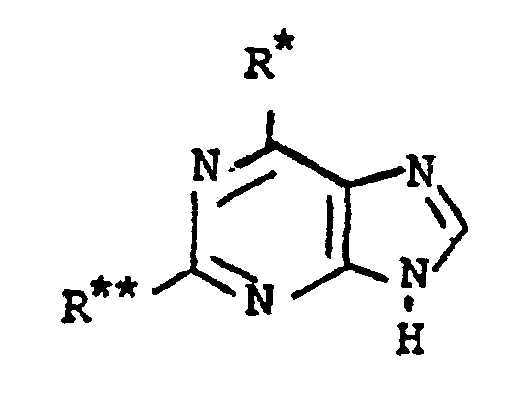
- These purines have the formula wherein R* is hydrogen, halogen, hydroxy, alkoxy, azide, thio, alkylthio, amino, alkylamino or dialkylamino; and R** is hydrogen, halogen, alkylthio, acylamino, amino or azide.
- halogen includes fluorine, chlorine, bromine and iodine
- alkyl groups contain 1-6 carbon atoms
- acyl groups contain 2-7 carbon atoms.
- preferred purine or pyrimidine bases are selected from the group consisting of cytosine, thymine, uracil, 6-chloropurine, 2-amino-6-chloropurine, adenine, guanine, xanthine and hypoxanthine.
- 2-amino-6-chloropurine is a highly preferred purine base for use in preparing compounds of the instant invention.
- the group -(CH 2 )- n wherein n is an integer from 2 to 6 represents an alkylene group of 2 to 6 carbon atoms.
- Representatives of such groups are ethyl, propyl, butyl, pentyl, hexyl, and their corresponding branched chained isomers.
- preferred compounds of formula I are the dihydroxyboryl-purine, indole or pyrimidine derivatives wherein the pyrimidine base portion is derived from cytosine, thymine, uracil, the purine base portion is derived from 6-chloropurine, 2-amino-6-chloropurine, adenine, guanine, xanthine or hypoxanthine, or the indole base portion is derived from indole.
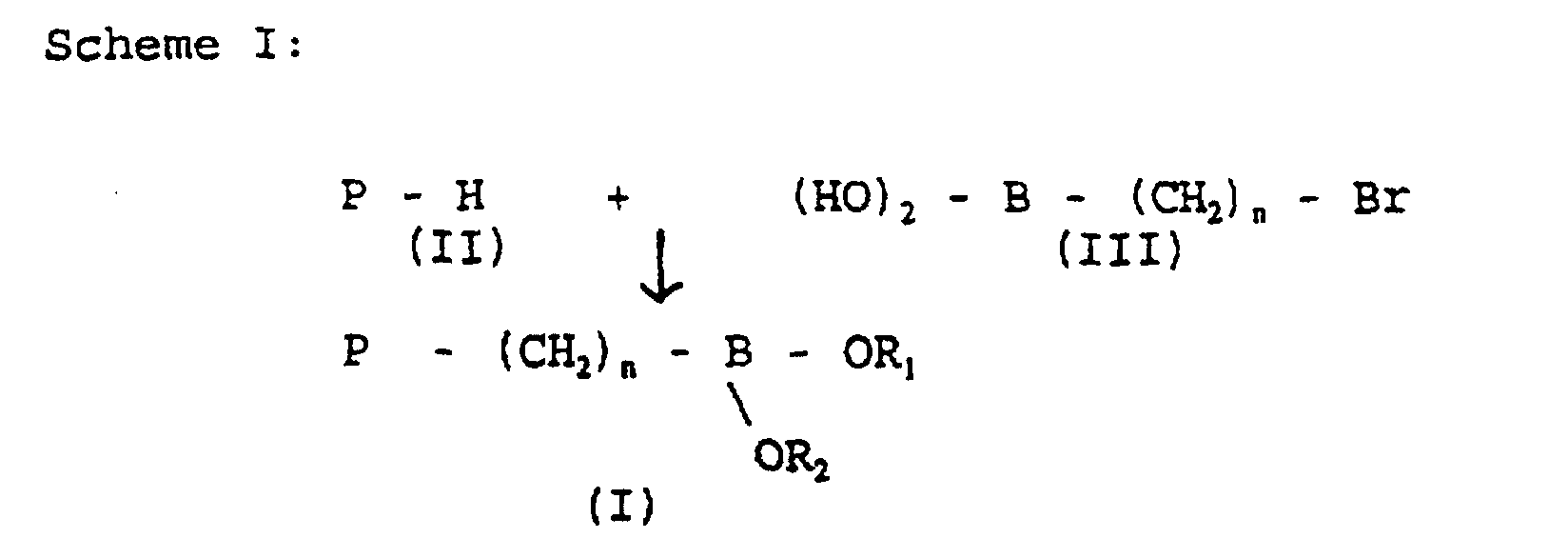
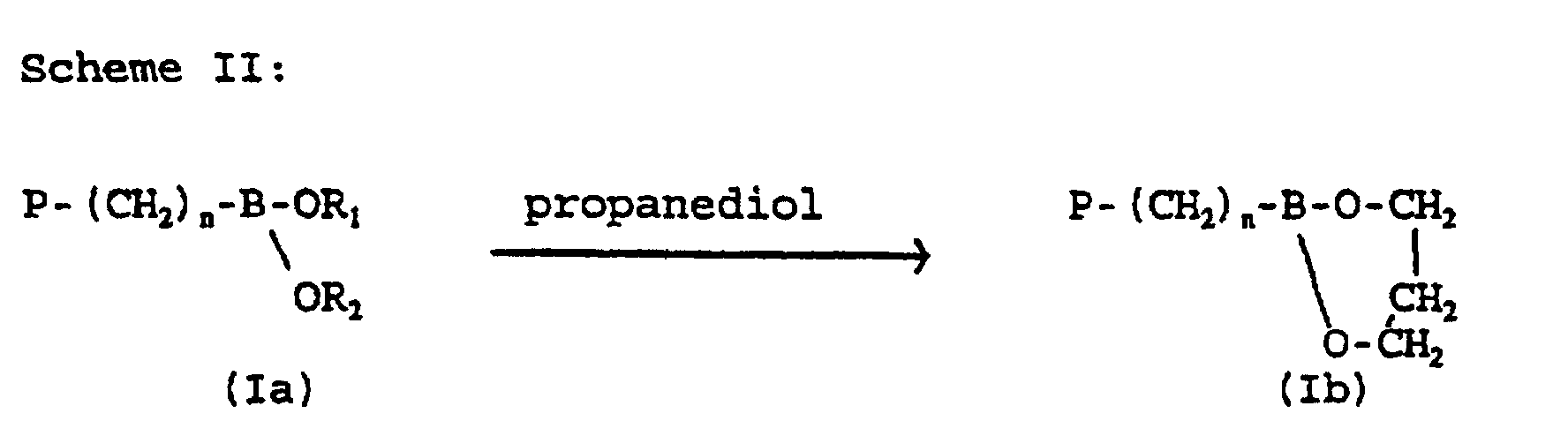
- novel compounds of Formula I can be produced by the synthetic pathways shown in Schemes I and II below.
- reaction Scheme I the purine, indole or pyrimidine base of formula II is reacted with the dihydroxyborylalkyl bromide of formula III to afford the compounds of formula I wherein R 1 and R 2 are both hydrogen atoms, in the presence of a base and an acid acceptor.
- the base is an inorganic base, such as potassium carbonate or sodium hydride, with the acid acceptor being potassium carbonate. Reaction times vary from 12 to 48 hours, and usual reaction temperatures are at room temperature.
- reaction Scheme II a compound of formula I wherein both R 1 and R 2 are hydrogens, and P and n are as hereinbefore defined, is reacted with propanediol in a polar, anhydrous solvent, such as tetrahydrofuran, in order to provide the desired compounds of formula I wherein R 1 and R 2 are together a propylene chain bridging the two oxygen atoms.
- a polar, anhydrous solvent such as tetrahydrofuran
- the starting dihydroxyboryl alkyl bromide of formula III is conveniently prepared by reaction of a gamma-bromo-1-alkene with catecholborane. Typically, this reaction is conducted under a nitrogen atmosphere for a period of time of about 2 to 6 hours and temperatures of about 80 to 100°C., followed by aqueous hydrolysis to obtain the desired product. If desired, this starting dihydroxyboryl alkyl bromide of formula III can be recrystallized from chloroform.
- the medium for human cell culture assays is defined as follows: RPMI-1640 is supplemented with 100U/ml penicillin, 100 ⁇ g/ml streptomycin, 2 mM L-glutamine; 1 mM Na pyruvate; 1% MEM non-essential amino acids and 25 mM HEPES; (all from GIBCO, Gaithersburg, MD). Complete medium is defined as medium supplemented with 5% pooled, heat-inactivated (56°C, 30 minutes) human AB serum (Pel-freeze, Brown Deer, WI).
- Citrated venous blood was obtained from phlebotomized normal donors and aliquoted into 1 ml volumes in 1.5 ml Eppendorf® microcentrifuge tubes (Brinkman Instruments, Westbury, NY).
- Test compound was prepared by making a 100 mM stock solution in 100% DMSO with all subsequent 1/10 dilutions also made in 100% DMSO.
- Test compound (1.0 ⁇ l) or DMSO alone was then added to 1 ml whole blood so that the final DMSO content was 0.1%.
- the samples were then rotated at 37°C for 1 hour whereupon LPS ( S . typhosa , SIGMA, St. Louis, MO) was added to the appropriate samples to a final concentration of 10 ng/ml.
- LPS S . typhosa , SIGMA, St. Louis, MO
- PBMC Human Peripheral Blood Mononuclear Cell
- Venous blood is obtained from healthy volunteers and mixed with an equal volume of sterile isotonic saline/10 mM HEPES and placed into 50 ml conical polypropylene tubes in 30 ml aliquots. Each aliquot of diluted blood is underlaid with 20-25 ml of sterile Lymphocyte Separation Medium (LSM; Organon-Technika, Durham, NC). The tubes are centrifuged at 400g for 40 minutes at room temperature. The mononuclear cells at the interface are removed and washed twice in sterile isotonic saline/10 mM HEPES followed by a wash in Hank's Balanced Salt Solution (HBSS) or RPMI without serum, depending on their intended use. Cell concentrations for each donor are determined by counting in an haematology analyser (Serono-Baker).
- PBMC are adjusted to 4 X 10 6 /ml in complete medium.
- Test materials diluted in complete medium to 2X the desired final concentration
- All samples are tested in quadruplicate at four concentrations (spanning 3 logs 10 ).
- Control wells receive complete medium alone.
- Background response wells receive an additional 50 ⁇ l of complete medium, while all other wells receive 50 ⁇ l mitogen (diluted in complete medium to 4X the desired final concentration).
- Dexamethasone 50 ⁇ l
- 10 nM is included in each assay as an internal standard for inhibition.
- the mitogens used and their final concentrations are: OKT3 (anti-CD3 antibody; 100ng/ml; Ortho) and PHA (phytohaemagglutinin A; 1.0 ⁇ g/ml; Sigma).
- OKT3 anti-CD3 antibody; 100ng/ml; Ortho
- PHA phytohaemagglutinin A; 1.0 ⁇ g/ml; Sigma.
- the plates are then incubated for 3 days at 37°C in humidified 5% CO 2 , pulsed for the final 6 hours with 0.5 ⁇ Ci/well of 3 H-thymidine (6.7 Ci/mmole; Amersham, Arlington Heights, IL) in 50 ⁇ l complete medium.
- the contents of the wells are harvested onto glass fibre filters using a multiple automated sample harvester (Tomtec), and the incorporated 3 H-thymidine determined by liquid scintillation spectrophotometry and represented an cpm (counts per minute) incorporated per well.
- Tomtec multiple automated sample harvester
- MLR Two-Way Mixed Lymphocyte Reaction
- PBMC peripheral blood mononuclear cells
- PBMC peripheral blood mononuclear cells
- Fifty ⁇ l of cell suspension from two different individuals is then added to each well of a 96-well flat bottom tissue culture plate.
- An additional 100 ⁇ l of complete medium, dexamethasone or test compounds are then added to each well, the plates are incubated for 6 days at 37°C, and then pulsed with 3 H-thymidine and harvested as previously described.
- Monocytes are prepared by centrifugal counterflow elutriation from peripheral blood mononuclear cells obtained from leukophoresis of normal volunteers (leukopaks) at the Phoresis laboratory located at Duke Hospital, Durham, NC.
- PBMC peripheral blood mononuclear cells
- LPS lipopolysaccharide
- Total cells are taken from leukopaks before elutriation and used to carry out in vitro assays measuring human PBMC responses to mitogens and antigens.
- PBMC obtained by separation on a LSM gradient (as described above) are resuspended in PBS and separated, using a Beckman elutriator, into lymphocytes and monocytes. Yields of 10 9 monocytes with greater than 90% purity are routinely obtained.
- Purified monocytes prepared as described above are suspended at 4 X 10 6 cells/ml in complete medium.
- To each well of a 48-well flat bottomed tissue culture plate is added 0.125 ml of cell suspension.
- Test materials (diluted in complete medium at 2X the desired final concentration) are added in 250 ⁇ l volumes to each well.
- Control wells receive 250 ⁇ l of complete medium or 250 ⁇ l of IL-4 (diluted to X 2 the desired final concentration of 50 ng/ml). All samples are tested at four concentrations in the presence or absence of 100 ng/ml LPS (125 ⁇ l of 4X desired final concentration added) and incubated at 37°C in humidified 5% CO 2 , for 16 hours.
- culture supernatants are aspirated off, and the unattached cells and cell debris are removed by a 2 minute spin in a microcentrifuge at 10,000 g.l
- the release of cytokines and growth factors is determined in the cell-free supernatants using ELISA capture assays. In this way, testing for IL-1 ⁇ , TNF- ⁇ , IL-1 receptor antagonist, IL-6, IL-8, GM-CSF and PDGF is conducted.
- the adhered monocytes remaining on the 48-well tissue culture plates after removal of the supernatants above, are used to measure levels of Tissue Factor production.
- the cells are solubilized overnight at 4°C in 10% Triton-X100® in PBS, diluted to 1% Triton-X100® with PBS then assayed by ELISA for Tissue Factor.
- SPA specific scintillation proximity assays
- Monocytes are prepared as described above and resuspended to 5 X.10 6 /ml in HBSS containing 10 Mm HEPES, 2 g/l glucose, 0.1% BSA, Ph 7.2.
- tissue culture plate is added 100 ⁇ l of cell suspension and 100 ⁇ l of buffer or test materials. Samples are run in quadruplicate. The plate is incubated for 60 minutes at 37°C followed by the addition of 50 ⁇ l of buffer containing cytochrome C (5 mg/ml; type VI, horse heart, Sigma) and bovine liver catalase (1500 U/ml; Sigma) in the presence of zymosan A (ZYM); 750 ⁇ g/ml; Sigma). The plate is incubated an additional 120 minutes at 37°C during which the absorbance at 550 nm is monitored using a microplate reader incorporating dedicated software for kinetic analysis (Molecular Devices; Menlo Park, CA).
- Monocytes are prepared as previously described, and resuspended at 5 X 10 6 cells/ml in HBSS, 0.1% BSA (HBSS-BSA). Fluorophore labeling of the cells is carried out by adding calcein-AM to the above cells at a final concentration of 2 ⁇ M. Following a 30 minute incubation at 37°C in humidified 5% CO 2 , the labeled monocytes are washed twice and incubated in a range of dilutions of the test materials for 60 minutes at 37°C in humidified 5% CO 2 .
- the pre-treated, calcein-AM loaded cells are then added in triplicate to the wells of the top compartment of a NeuroProbe (Cabin, John, M.D.) 96-well chemotaxis chamber (2 X 10 5 cells/well) and permitted to migrate through a 10 ⁇ m thick bonded polycarbonate membrane (5 ⁇ m porosity; NeuroProbe Inc; Cabin, John, M.D.) towards the wells of the lower compartment containing the chemoattractant (FMLP) at 5 X 10 -9 M.
- a NeuroProbe Cabin, John, M.D.
- 96-well chemotaxis chamber (2 X 10 5 cells/well) and permitted to migrate through a 10 ⁇ m thick bonded polycarbonate membrane (5 ⁇ m porosity; NeuroProbe Inc; Cabin, John, M.D.) towards the wells of the lower compartment containing the chemoattractant (FMLP) at 5 X 10 -9 M.
- FMLP chemoattractant
- the wells of the upper chambers are aspirated, the monocyte-associated membrane removed, non-migrating cells wiped off and the filters permitted to air dry to 15 minutes.
- the number of cells migrating through the membranes are quantified by measuring the fluorescent intensity of the migrating cells in a fluorescent microplate reader (CytoFluor 2300, Millipore Corp., Bedford, MA)
- Human umbilical vein endothelial cells are obtained from Clonetics (San Diego, CA). Confluent layers of epithelial cells are prepared by seeding 96-well plates with 2 X 10 4 cells/well and incubating at 37°C in humidified 5% CO 2 for 24 hours. TNF ⁇ (50 ⁇ g) was then added to each well (10 ⁇ l of a 5 ng/ml stock solution) prior to the addition of monocytes.
- Monocytes are fluorescently labelled and pre-treated with test materials as described above, resuspended in complete medium to a final concentration of 2 X 10 6 cells/ml and incubated in triplicate in wells (100 ⁇ l/well) for 60 minutes at 37°C in humidified 5% CO 2 . Plates are then sealed and centrifuged at 250g for 5 minutes to remove non-adhered monocytes and the number of adhered cells determined by reading plates on a fluorescent microplate reader.
- the ability of the compounds of formula I to inhibit the action of various inflammatory cytokines make them useful in a wide variety of therapeutic methods. Specifically, their ability to mediate or inhibit the actions of TNF-a makes these compounds useful in the treatment of various invasive diseases, infections, and inflammatory states. Particularly important is the inhibition of the large amount of TNF produced during serious bacterial infections, which can trigger a state of shock and tissue injury (septic shock syndrome).
- a further important use of the compounds of formula I is to inhibit the TNF which is known to mediate cachexia produced during chronic disease states.
- these compounds are particularly useful in adjunctive therapy for AIDS and cancer patients to reduce and/or ameliorate the consequences of cachexia produced during these chronic disease states.
- the compounds of the instant invention are particularly useful for the treatment of rheumatoid arthritis wherein increased amounts of the inflammatory cytokines, TNF-a and IL-1 are present. By virtue of their ability to mediate and/or inhibit the action of these cytokines, inflammation and the severity of the disease state can be reduced or eliminated.
- the compounds of the instant invention can also be utilized in the treatment of multiple sclerosis (MS), Crohn's disease and ulcerative colitis by inhibiting and the activity of the inflammatory cytokines which underlie these disease states.
- MS multiple sclerosis
- Crohn's disease Crohn's disease
- ulcerative colitis by inhibiting and the activity of the inflammatory cytokines which underlie these disease states.
- the compounds of the present invention are likewise useful in the therapeutic methods described in U.S.
- Patent 5,306,732 by virtue of their ability to act as antagonist of tumor necrosis factor.
- the compounds of the present invention can be, and are preferably, administered as medicaments, i.e., pharmaceutical compositions.
- compositions of this invention for administration to animals and humans comprise the compounds of Formula I in combination with a pharmaceutical carrier or excipient.
- the medicament can be in the form of tablets (including lozenges and granules), dragees, capsules, pills, ampoules or suppositories comprising the compound of the invention.
- “Medicament” as used herein means physically discrete coherent portions suitable for medical administration.
- “Medicament in dosage unit form” as used herein means physically discrete coherent units suitable for medical administration, each containing a daily does or a multiple (up to four times) or a sub-multiple (down to a fortieth) of a daily dose of the active compound of the invention in association with a carrier and/or enclosed within an envelope. Whether the medicament contains a daily dose or, for example, a half, a third or a quarter of a daily dose will depend on whether the medicament is to be administered once or, for example, twice, three times a day, respectively.
- compositions are formulated as dosage units, each unit being adapted to supply a fixed dose of active ingredients.
- Tablets, coated tablets, capsules, ampoules and suppositories are examples of preferred dosage forms according to the invention. It is only necessary that the active ingredient constitute an effective amount, i.e., such that a suitable effective dosage will be consistent with the dosage form employed in single or multiple unit doses. The exact individual dosages, as well as daily dosages, will, of course, be determined according to standard medical principles under the direction of a physician or veterinarian.
- the compounds of Formula I can also be administered as suspensions, solutions and emulsions of the active compound in aqueous or non-aqueous diluents, syrups, granulates or powders.
- Diluents that can be used in pharmaceutical compositions (e.g., granulates) containing the active compound adapted to be formed into tablets, dragees, capsules and pills include the following: (a) fillers and extenders, e.g., starch, sugars, mannitol and silicic acid; (b) binding agents, e.g., carboxymethyl cellulose and other cellulose derivatives, alginates, gelatine and polyvinyl pyrrolidone; (c) moisturizing agents, e.g., glycerol; (d) disintegrating agents, e.g., agar-agar, calcium carbonate and sodium bicarbonate; (e) agents for retarding dissolution, e.g., paraffin; (f) resorption accelerators, e.g., quaternary ammonium compounds; (g) surface active agents, e.g., cetyl alcohol, glycerol monostearate; (g) adsorptive carriers,
- the tablets, dragees, capsules and pills comprising the active compound can have the customary coatings, envelopes and protective matrices, which may contain opacifiers. They can be so constituted that they release the active ingredient only or preferably in a particular part of the intestinal tract, possibly over a period of time.
- the coatings, envelopes and protective matrices may be made, for example, from polymeric substances or waxes.
- the compounds of Formula I can also be made up in microencapsulated form together with one or several of the above-mentioned diluents.
- the diluents to be used in pharmaceutical compositions adapted to be formed into suppositories can, for example, be the usual water-soluble diluents, such as polyethylene glycols and fats (e.g., cocoa oil and high esters, [e.g., C 14 -alcohol with C 16 -fatty acid]) or mixtures of these diluents.
- water-soluble diluents such as polyethylene glycols and fats (e.g., cocoa oil and high esters, [e.g., C 14 -alcohol with C 16 -fatty acid]) or mixtures of these diluents.
- compositions which are solutions and emulsions can, for example, contain the customary diluents (with, of course, the above-mentioned exclusion of solvents having a molecular weight below 200, except in the presence of a surface-active agent), such as solvents, dissolving agents and emulsifiers.
- customary diluents with, of course, the above-mentioned exclusion of solvents having a molecular weight below 200, except in the presence of a surface-active agent
- solvents, dissolving agents and emulsifiers such as solvents, dissolving agents and emulsifiers.
- diluents are water, ethyl alcohol, isopropyl alcohol, ethyl carbonate, ethyl acetate, benzyl alcohol, benzyl benzoate, propylene glycol, 1,3-butylene glycol, dimethylformamide, oils (for example, ground nut oil, glycerol, tetrahydrofurfuryl alcohol, polyethylene glycols and fatty acid esters of sorbitol or mixtures thereof.
- oils for example, ground nut oil, glycerol, tetrahydrofurfuryl alcohol, polyethylene glycols and fatty acid esters of sorbitol or mixtures thereof.
- solutions and suspensions should be sterile, e.g., water or arachis oil contained in ampoules and, if appropriate, blood-isotonic.
- compositions which are suspensions can contain the usual diluents, such as liquid diluents, e.g., water, ethyl alcohol, propylene glycol, surface active agents (e.g., ethoxylated isostearyl alcohols, polyoxyethylene sorbitols and sorbitan esters), microcrystalline cellulose, aluminum metahydroxide, bentonite, agar-agar and tragacanth, or mixtures thereof.
- liquid diluents e.g., water, ethyl alcohol, propylene glycol
- surface active agents e.g., ethoxylated isostearyl alcohols, polyoxyethylene sorbitols and sorbitan esters
- microcrystalline cellulose aluminum metahydroxide
- bentonite agar-agar and tragacanth, or mixtures thereof.
- compositions can also contain coloring agents and preservatives, as well as perfumes and flavoring additions (e.g., peppermint oil and eucalyptus oil), and sweetening agents, (e.g., saccharin and aspartame).
- perfumes and flavoring additions e.g., peppermint oil and eucalyptus oil
- sweetening agents e.g., saccharin and aspartame
- compositions will generally contain from 0.5 to 90% of the active ingredient by weight of the total composition.
- compositions and medicaments can also contain other pharmaceutically active compounds.
- Any diluent in the medicaments of the present invention may be any of those mentioned above in relation to the pharmaceutical compositions.
- Such medicaments may include solvents of molecular weight less than 200 as the sole diluent.
- the compounds of Formula I will be administered perorally, parenterally (for example, intramuscularly, intraperitoneally, subcutaneously, transdermally or intravenously,), rectally or locally, preferably orally or parenterally, especially perlingually, or intravenously.
- the dosage rate e.g., 0.05 to 20 mg/kg of body weight
- the dosage rate will be a function of the nature and body weight of the human or animal subject to be treated, the individual reaction of this subject to the treatment, type of formulation in which the active ingredient is administered, the mode in which the administration is carried out and the point in the progress of the disease or interval at which it is to be administered.
- TLC plates were visualized by UV light, iodine vapor, or charring following sulfuric acid spray.
- Silica gel 70-230 mesh
- Reagents were purchased from Aldrich. Solvents, including acetonitrile, N,N-dimethylformamide (DMF), methylene chloride, and tetrahydrofuran (THF), were dried by placement over molecular sieves (4 ⁇ ) for 2 weeks before use.
- 6-Chloro-9- (4-dihydroxyborylbutyl) purine (as prepared in Example 2) (70 mg, 0.28 mmol) and 1,3-propanediol (22 mg, 0.28 mmol) were dissolved in tetrahydrofuran (10 mL) and stirred at room temperature overnight. The tetrahydrofuran was evaporated by influx of nitrogen. Hexane and ether (95:5) was used to dissolve the product. The solid residue was discarded and pure product (60 mg) was obtained after the evaporation of the solvents. Yield 74%; Wt.
- the compound of formula I, a portion of the starch and the lactose are combined and wet granulated with starch paste.
- the wet granulation is placed on trays and allowed to dry overnight at a temperature of 45 degrees Celsius.
- the dried granulation is comminuted in a comminutor to a particle size of approximately 20 mesh.
- Magnesium stearate, stearic acid and the balance of the starch are added and the entire mix blended prior to compression on a suitable tablet press.
- the tablets are compressed at a weight of 232 mg. using a 11/32" punch with a hardness of 4 kg.
Landscapes
- Health & Medical Sciences (AREA)
- Organic Chemistry (AREA)
- Chemical & Material Sciences (AREA)
- Life Sciences & Earth Sciences (AREA)
- Veterinary Medicine (AREA)
- General Chemical & Material Sciences (AREA)
- Medicinal Chemistry (AREA)
- Nuclear Medicine, Radiotherapy & Molecular Imaging (AREA)
- Chemical Kinetics & Catalysis (AREA)
- Pharmacology & Pharmacy (AREA)
- Bioinformatics & Cheminformatics (AREA)
- Animal Behavior & Ethology (AREA)
- General Health & Medical Sciences (AREA)
- Public Health (AREA)
- Engineering & Computer Science (AREA)
- Immunology (AREA)
- Neurosurgery (AREA)
- Biomedical Technology (AREA)
- Neurology (AREA)
- Virology (AREA)
- Communicable Diseases (AREA)
- Oncology (AREA)
- Hospice & Palliative Care (AREA)
- Transplantation (AREA)
- Psychiatry (AREA)
- Pain & Pain Management (AREA)
- Rheumatology (AREA)
- Pharmaceuticals Containing Other Organic And Inorganic Compounds (AREA)
- Indole Compounds (AREA)
Abstract
Description
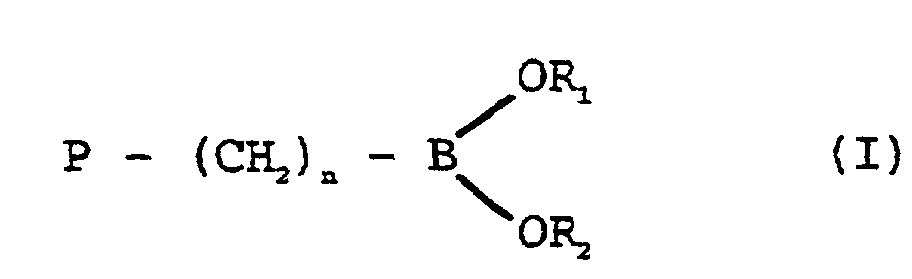
n is 2 - 6; and
P is a purine, indole or pyrimidine base residue bonded via the N9 in the case of a purine base, or via the N1 in the case of an indole or pyrimidine base; and the pharmaceutically acceptable salts thereof.



The compounds of the present invention can be, and are preferably, administered as medicaments, i.e., pharmaceutical compositions.
The compounds of Formula I can also be administered as suspensions, solutions and emulsions of the active compound in aqueous or non-aqueous diluents, syrups, granulates or powders.
Electrospray Mass Spectrum (MH)+ (low resolution);
Calcd. 270.09 (C9H13O2N5BCl); Found 270.10 (37ppm).
Calcd. 236.11 (C9H1303N4B); Found 236.10 (42 ppm).
| Tablet Formulation | |
| Ingredient | mg/tablet |
| Compound of formula I | 50 |
| Starch | 50 |
| Mannitol | 75 |
| Magnesium stearate | 2 |
| Stearic acid | 5 |
Claims (8)
- A compound of the formulawherein R1 and R2 are both hydrogen atoms, or together are a propylene chain bridging the two oxygen atoms;

n is 2-6; and
P is a purine, indole or pyrimidine base residue bonded via the N9 in the case of a purine base or via the N1 in the case of an indole or pyrimidine base;
and the pharmaceutically acceptable salts thereof. - The compound of claim 1 wherein R1 and R2 are both hydrogen.
- The compound of claim 1 or claim 2 wherein n is 4.
- The compound of any one of claims 1 to 3 wherein the pyrimidine base residue is derived from thymine.
- The compound of any one of claims 1 to 3 wherein the purine base residue is derived from guanine, hypoxanthine, 6-chloropurine or 2-amino-6-chloropurine.
- A pharmaceutical composition which comprises a therapeutically effective amount of the compound of any one of claims 1 to 5 and a carrier therefor.
- The compound of any one of claims 1 to 5 or the composition of claim 6 for use in inhibiting inflammatory cytokines, such as tumor necrosis factor (TNF), in a mammal in need of such treatment.
- The compound of any one of claims 1 to 5 or the composition of claim 6 for use in treating septic shock, cachexia, rheumatoid arthritis, inflammatory bowel disease, multiple sclerosis, AIDS, and Alzheimer's Disease.
Applications Claiming Priority (3)
| Application Number | Priority Date | Filing Date | Title |
|---|---|---|---|
| US264039 | 1994-06-22 | ||
| US08/264,039 US5643893A (en) | 1994-06-22 | 1994-06-22 | N-substituted-(Dihydroxyboryl)alkyl purine, indole and pyrimidine derivatives, useful as inhibitors of inflammatory cytokines |
| PCT/US1995/007936 WO1995035300A1 (en) | 1994-06-22 | 1995-06-21 | N-substituted-(dihydroxyboryl)alkyl purine, indole and pyrimidine derivatives, useful as inhibitors of inflammatory cytokines |
Publications (2)
| Publication Number | Publication Date |
|---|---|
| EP0767793A1 EP0767793A1 (en) | 1997-04-16 |
| EP0767793B1 true EP0767793B1 (en) | 2002-09-18 |
Family
ID=23004300
Family Applications (1)
| Application Number | Title | Priority Date | Filing Date |
|---|---|---|---|
| EP95924657A Expired - Lifetime EP0767793B1 (en) | 1994-06-22 | 1995-06-21 | N-substituted-(dihydroxyboryl)alkyl purine, indole and pyrimidine derivatives, useful as inhibitors of inflammatory cytokines |
Country Status (16)
| Country | Link |
|---|---|
| US (1) | US5643893A (en) |
| EP (1) | EP0767793B1 (en) |
| JP (1) | JP3805789B2 (en) |
| KR (1) | KR970703975A (en) |
| AT (1) | ATE224396T1 (en) |
| AU (1) | AU2907795A (en) |
| CA (1) | CA2193644A1 (en) |
| DE (1) | DE69528267T2 (en) |
| DK (1) | DK0767793T3 (en) |
| ES (1) | ES2183877T3 (en) |
| FI (1) | FI965141L (en) |
| HU (1) | HUT76298A (en) |
| NO (1) | NO965521L (en) |
| NZ (1) | NZ289286A (en) |
| PT (1) | PT767793E (en) |
| WO (1) | WO1995035300A1 (en) |
Families Citing this family (35)
| Publication number | Priority date | Publication date | Assignee | Title |
|---|---|---|---|---|
| WO1999003858A1 (en) * | 1997-07-15 | 1999-01-28 | Japan Energy Corporation | Novel purine derivatives and medicinal use thereof |
| US7462605B2 (en) * | 1998-01-23 | 2008-12-09 | Celmed Oncology (Usa), Inc. | Phosphoramidate compounds and methods of use |
| US6911462B2 (en) * | 1998-05-22 | 2005-06-28 | Avanir Pharmaceuticals | Benzimidazole compounds for regulating IgE |
| US6919366B2 (en) * | 1998-05-22 | 2005-07-19 | Avanir Pharmaceuticals | Benzimidazole derivatives as modulators of IgE |
| BR0012676A (en) | 1999-07-22 | 2003-07-01 | Newbiotics Inc | Methods for treating therapy resistant tumors |
| US6586429B2 (en) | 2000-11-29 | 2003-07-01 | Cell Therapeutics, Inc. | Tricyclic fused xanthine compounds and their uses |
| EP1359921A4 (en) * | 2001-01-19 | 2006-09-06 | Newbiotics Inc | METHOD FOR THE TREATMENT OF AUTOIMMUNE DISEASES AND INFLAMMATORY DISEASES |
| ES2291455T3 (en) * | 2001-03-12 | 2008-03-01 | Avanir Pharmaceuticals | BENCIMIDAZOL COMPOUNDS TO MODULATE IGE AND INHIBIT THE CELL PROLIFERATION. |
| US20030022864A1 (en) * | 2001-04-24 | 2003-01-30 | Ishaq Khalid S. | 9-[(5-dihydroxyboryl)-pentyl] purines, useful as an inhibitor of inflammatory cytokines |
| TW200304820A (en) * | 2002-03-25 | 2003-10-16 | Avanir Pharmaceuticals | Use of benzimidazole analogs in the treatment of cell proliferation |
| WO2004024655A2 (en) * | 2002-09-12 | 2004-03-25 | Avanir Pharmaceuticals | Phenyl-indole compounds for modulating ige and inhibiting cellular proliferation |
| TWI276631B (en) * | 2002-09-12 | 2007-03-21 | Avanir Pharmaceuticals | Phenyl-aza-benzimidazole compounds for modulating IgE and inhibiting cellular proliferation |
| EP1592422A2 (en) * | 2003-02-11 | 2005-11-09 | Boehringer Ingelheim International Gmbh | New pharmaceutical compositions based on anticholinergics and inhibitors of tnf alpha synthesis or action |
| AU2004263190A1 (en) * | 2003-08-08 | 2005-02-17 | Avanir Pharmaceuticals | Selective pharmacologic inhibition of protein trafficking and related methods of treating human diseases |
| MY146066A (en) * | 2004-07-01 | 2012-06-29 | Microlin L C | Device employing gas generating cell for facilitating controlled release of fluid into ambient environment |
| US20080269204A1 (en) * | 2004-11-01 | 2008-10-30 | Tatyana Dyakonov | Compounds and Methods of Use Thereof |
| EP1812451A4 (en) * | 2004-11-01 | 2009-10-21 | Nuada Llc | Compounds and methods of use thereof |
| US20080319044A1 (en) * | 2004-11-01 | 2008-12-25 | Nuada, Llc | Compounds and Methods of Use Thereof |
| US20090264384A1 (en) * | 2004-11-01 | 2009-10-22 | Nuada, Inc. | Indole, benzimidazole, and benzolactam boronic acid compounds, analogs thereof and methods of use thereof |
| WO2007134169A2 (en) * | 2006-05-10 | 2007-11-22 | Nuada, Llc | Indole, benzimidazole, and benzolactam boronic acid compounds, analogs thereof and methods of use thereof |
| JO3598B1 (en) * | 2006-10-10 | 2020-07-05 | Infinity Discovery Inc | Boronic acids and esters as inhibitors of fatty acid amide hydrolase |
| AU2009233711B2 (en) * | 2008-04-09 | 2015-02-12 | Infinity Pharmaceuticals, Inc | Inhibitors of fatty acid amide hydrolase |
| US8853185B2 (en) * | 2008-04-09 | 2014-10-07 | Cornell University | Coferons and methods of making and using them |
| EP2416660B1 (en) | 2009-04-07 | 2014-07-02 | Infinity Pharmaceuticals, Inc. | Inhibitors of fatty acid amide hydrolase |
| WO2010118159A1 (en) | 2009-04-07 | 2010-10-14 | Infinity Pharmaceuticals, Inc. | Inhibitors of fatty acid amide hydrolase |
| WO2010129351A1 (en) | 2009-04-28 | 2010-11-11 | Schepens Eye Research Institute | Method to identify and treat age-related macular degeneration |
| CA2774476A1 (en) | 2009-10-07 | 2011-04-14 | Francis Barany | Coferons and methods of making and using them |
| EP2531511A1 (en) * | 2010-02-03 | 2012-12-12 | Infinity Pharmaceuticals, Inc. | Fatty acid amide hydrolase inhibitors |
| EP2647639A1 (en) * | 2012-04-06 | 2013-10-09 | LEK Pharmaceuticals d.d. | ß-boration of alkene and alkyne intermediates |
| DK3362462T3 (en) | 2015-10-12 | 2021-10-11 | Advanced Cell Diagnostics Inc | IN SITUATION DETECTION OF NUCLEOTID VARIANTS IN HIGH NOISE SAMPLES, AND COMPOSITIONS AND PROCEDURES RELATED THEREOF |
| JP2025531789A (en) | 2022-09-07 | 2025-09-25 | エムディーエックス マネージメント エルエルシー | SHP-1 inhibitors for cancer treatment |
| JP2025542076A (en) | 2022-11-02 | 2025-12-25 | エムディーエックス マネージメント エルエルシー | Combining tyrosine kinase inhibitors with pro-inflammatory agents for cancer treatment |
| JP2026509526A (en) | 2023-03-17 | 2026-03-19 | エムディーエックス マネージメント エルエルシー | Compositions and methods for mitigating adverse effects of therapy |
| WO2025038745A1 (en) | 2023-08-16 | 2025-02-20 | Mdx Management Llc | Compositions and methods for activating immune cells |
| WO2025188909A1 (en) | 2024-03-06 | 2025-09-12 | Mdx Management Llc | Shp-1 inhibitor conjugates with pro-inflammatory compounds |
Family Cites Families (7)
| Publication number | Priority date | Publication date | Assignee | Title |
|---|---|---|---|---|
| US4199574A (en) * | 1974-09-02 | 1980-04-22 | Burroughs Wellcome Co. | Methods and compositions for treating viral infections and guanine acyclic nucleosides |
| US4537773A (en) * | 1983-12-05 | 1985-08-27 | E. I. Du Pont De Nemours And Company | α-Aminoboronic acid derivatives |
| GB8926611D0 (en) * | 1989-11-24 | 1990-01-17 | Xenova Ltd | Compound and its use |
| US5130302A (en) * | 1989-12-20 | 1992-07-14 | Boron Bilogicals, Inc. | Boronated nucleoside, nucleotide and oligonucleotide compounds, compositions and methods for using same |
| US5362732A (en) * | 1989-12-20 | 1994-11-08 | University Of North Carolina At Chapel Hill | Boronated compounds |
| ATE230990T1 (en) * | 1992-03-04 | 2003-02-15 | Cell Therapeutics Inc | ENANTIOMERIC HYDROXYLATED XANTHINE COMPOUNDS |
| US5306722A (en) * | 1992-09-02 | 1994-04-26 | Bristol-Myers Squibb Company | Thymidine derivatives and therapeutic method of use |
-
1994
- 1994-06-22 US US08/264,039 patent/US5643893A/en not_active Expired - Lifetime
-
1995
- 1995-06-21 AU AU29077/95A patent/AU2907795A/en not_active Abandoned
- 1995-06-21 PT PT95924657T patent/PT767793E/en unknown
- 1995-06-21 FI FI965141A patent/FI965141L/en not_active Application Discontinuation
- 1995-06-21 HU HU9603536A patent/HUT76298A/en unknown
- 1995-06-21 NZ NZ289286A patent/NZ289286A/en unknown
- 1995-06-21 EP EP95924657A patent/EP0767793B1/en not_active Expired - Lifetime
- 1995-06-21 DE DE69528267T patent/DE69528267T2/en not_active Expired - Fee Related
- 1995-06-21 ES ES95924657T patent/ES2183877T3/en not_active Expired - Lifetime
- 1995-06-21 KR KR1019960707314A patent/KR970703975A/en not_active Ceased
- 1995-06-21 JP JP50259796A patent/JP3805789B2/en not_active Expired - Fee Related
- 1995-06-21 CA CA002193644A patent/CA2193644A1/en not_active Abandoned
- 1995-06-21 DK DK95924657T patent/DK0767793T3/en active
- 1995-06-21 AT AT95924657T patent/ATE224396T1/en not_active IP Right Cessation
- 1995-06-21 WO PCT/US1995/007936 patent/WO1995035300A1/en not_active Ceased
-
1996
- 1996-12-20 NO NO965521A patent/NO965521L/en unknown
Also Published As
| Publication number | Publication date |
|---|---|
| NO965521L (en) | 1997-02-21 |
| ES2183877T3 (en) | 2003-04-01 |
| PT767793E (en) | 2003-02-28 |
| WO1995035300A1 (en) | 1995-12-28 |
| KR970703975A (en) | 1997-08-09 |
| AU2907795A (en) | 1996-01-15 |
| NO965521D0 (en) | 1996-12-20 |
| DK0767793T3 (en) | 2002-10-14 |
| EP0767793A1 (en) | 1997-04-16 |
| FI965141A7 (en) | 1996-12-20 |
| FI965141A0 (en) | 1996-12-20 |
| FI965141L (en) | 1996-12-20 |
| JP3805789B2 (en) | 2006-08-09 |
| HU9603536D0 (en) | 1997-02-28 |
| US5643893A (en) | 1997-07-01 |
| ATE224396T1 (en) | 2002-10-15 |
| HUT76298A (en) | 1997-07-28 |
| CA2193644A1 (en) | 1995-12-28 |
| JPH10507739A (en) | 1998-07-28 |
| DE69528267D1 (en) | 2002-10-24 |
| NZ289286A (en) | 1998-09-24 |
| DE69528267T2 (en) | 2003-04-17 |
Similar Documents
| Publication | Publication Date | Title |
|---|---|---|
| US5643893A (en) | N-substituted-(Dihydroxyboryl)alkyl purine, indole and pyrimidine derivatives, useful as inhibitors of inflammatory cytokines | |
| EP0766691B1 (en) | Hydroxyalkylammonium-pyrimidines or purines and nucleoside derivatives, useful as inhibitors of inflammatory cytokines | |
| US5629315A (en) | Treatment of diseases using enantiomerically pure hydroxylated xanthine compounds | |
| JP2003519232A (en) | Purine derivatives, their production and their use | |
| US5648357A (en) | Enatiomerically pure hydroxylated xanthine compounds | |
| CA2001898A1 (en) | Inhibition of human retroviruses | |
| JPS63297381A (en) | 9-(2-(hydroxymethyl)cycloalkylmethyl)guanines | |
| EP0031128B1 (en) | (e)-5-(2-halogenovinyl)-arabinofuranosyluracil, process for preparation thereof, and uses thereof | |
| US6958345B2 (en) | 2-hydroxymethylcyclopropylidene methylpurines and -pyrimidines as antiviral agents | |
| US5567704A (en) | R-enatiomerically pure hydroxylated xanthine compounds to treat baldness | |
| JPH0818986B2 (en) | Process for producing 2 ', 3'-dideoxycytidine-2'-ene (2', 3'-dideoxy-2 ', 3'-didehydrocytidine) for treating patients infected with retrovirus | |
| AU604105B2 (en) | Anti-viral compounds, dosage forms and methods | |
| US4778806A (en) | Inhibition of interleukin-1 production by monocytes and/or macrophages | |
| US6001871A (en) | Hypoestoxides, derivatives and agonists thereof for use as antiviral agents | |
| JP3817273B2 (en) | Pharmaceutical composition for immunosuppressive treatment, anticancer treatment and antiviral treatment | |
| WO1993002044A1 (en) | Acyclic 6-phenylselenenyl pyrimidine nucleosides | |
| US5126347A (en) | Isomeric dideoxynuclesides | |
| EP0617046A1 (en) | Nucleoside derivatives and antiherpes composition | |
| JPH06172349A (en) | Inhibitor against simple herpes virus thymidine kinase | |
| JPH0413676A (en) | Agent for suppressing liberation of tumor necrosis factor |
Legal Events
| Date | Code | Title | Description |
|---|---|---|---|
| PUAI | Public reference made under article 153(3) epc to a published international application that has entered the european phase |
Free format text: ORIGINAL CODE: 0009012 |
|
| 17P | Request for examination filed |
Effective date: 19970121 |
|
| AK | Designated contracting states |
Kind code of ref document: A1 Designated state(s): AT BE CH DE DK ES FR GB GR IE IT LI LU MC NL PT SE |
|
| AX | Request for extension of the european patent |
Free format text: LV PAYMENT 970121 |
|
| 17Q | First examination report despatched |
Effective date: 19990928 |
|
| RAP1 | Party data changed (applicant data changed or rights of an application transferred) |
Owner name: THE UNIVERSITY OF NORTH CAROLINA |
|
| GRAG | Despatch of communication of intention to grant |
Free format text: ORIGINAL CODE: EPIDOS AGRA |
|
| GRAG | Despatch of communication of intention to grant |
Free format text: ORIGINAL CODE: EPIDOS AGRA |
|
| GRAH | Despatch of communication of intention to grant a patent |
Free format text: ORIGINAL CODE: EPIDOS IGRA |
|
| GRAH | Despatch of communication of intention to grant a patent |
Free format text: ORIGINAL CODE: EPIDOS IGRA |
|
| GRAA | (expected) grant |
Free format text: ORIGINAL CODE: 0009210 |
|
| RAP1 | Party data changed (applicant data changed or rights of an application transferred) |
Owner name: UNIVERSITY OF NORTH CAROLINA |
|
| AK | Designated contracting states |
Kind code of ref document: B1 Designated state(s): AT BE CH DE DK ES FR GB GR IE IT LI LU MC NL PT SE |
|
| AX | Request for extension of the european patent |
Free format text: LV PAYMENT 19970121 |
|
| REF | Corresponds to: |
Ref document number: 224396 Country of ref document: AT Date of ref document: 20021015 Kind code of ref document: T |
|
| REG | Reference to a national code |
Ref country code: GB Ref legal event code: FG4D |
|
| REG | Reference to a national code |
Ref country code: CH Ref legal event code: EP |
|
| REG | Reference to a national code |
Ref country code: DK Ref legal event code: T3 |
|
| REG | Reference to a national code |
Ref country code: CH Ref legal event code: NV Representative=s name: PATENTANWAELTE SCHAAD, BALASS, MENZL & PARTNER AG |
|
| REG | Reference to a national code |
Ref country code: IE Ref legal event code: FG4D |
|
| REF | Corresponds to: |
Ref document number: 69528267 Country of ref document: DE Date of ref document: 20021024 |
|
| RAP2 | Party data changed (patent owner data changed or rights of a patent transferred) |
Owner name: THE UNIVERSITY OF NORTH CAROLINA AT CHAPEL HILL |
|
| NLT2 | Nl: modifications (of names), taken from the european patent patent bulletin |
Owner name: THE UNIVERSITY OF NORTH CAROLINA AT CHAPEL HILL |
|
| REG | Reference to a national code |
Ref country code: GR Ref legal event code: EP Ref document number: 20020404237 Country of ref document: GR |
|
| ET | Fr: translation filed | ||
| REG | Reference to a national code |
Ref country code: PT Ref legal event code: SC4A Free format text: AVAILABILITY OF NATIONAL TRANSLATION Effective date: 20021216 |
|
| REG | Reference to a national code |
Ref country code: ES Ref legal event code: FG2A Ref document number: 2183877 Country of ref document: ES Kind code of ref document: T3 |
|
| PG25 | Lapsed in a contracting state [announced via postgrant information from national office to epo] |
Ref country code: LU Free format text: LAPSE BECAUSE OF NON-PAYMENT OF DUE FEES Effective date: 20030621 Ref country code: AT Free format text: LAPSE BECAUSE OF NON-PAYMENT OF DUE FEES Effective date: 20030621 |
|
| PG25 | Lapsed in a contracting state [announced via postgrant information from national office to epo] |
Ref country code: SE Free format text: LAPSE BECAUSE OF NON-PAYMENT OF DUE FEES Effective date: 20030622 |
|
| PG25 | Lapsed in a contracting state [announced via postgrant information from national office to epo] |
Ref country code: IE Free format text: LAPSE BECAUSE OF NON-PAYMENT OF DUE FEES Effective date: 20030623 Ref country code: ES Free format text: LAPSE BECAUSE OF NON-PAYMENT OF DUE FEES Effective date: 20030623 |
|
| PG25 | Lapsed in a contracting state [announced via postgrant information from national office to epo] |
Ref country code: MC Free format text: LAPSE BECAUSE OF NON-PAYMENT OF DUE FEES Effective date: 20030630 Ref country code: DK Free format text: LAPSE BECAUSE OF NON-PAYMENT OF DUE FEES Effective date: 20030630 |
|
| PLBE | No opposition filed within time limit |
Free format text: ORIGINAL CODE: 0009261 |
|
| STAA | Information on the status of an ep patent application or granted ep patent |
Free format text: STATUS: NO OPPOSITION FILED WITHIN TIME LIMIT |
|
| 26N | No opposition filed |
Effective date: 20030619 |
|
| PGFP | Annual fee paid to national office [announced via postgrant information from national office to epo] |
Ref country code: BE Payment date: 20031219 Year of fee payment: 9 |
|
| PG25 | Lapsed in a contracting state [announced via postgrant information from national office to epo] |
Ref country code: PT Free format text: LAPSE BECAUSE OF NON-PAYMENT OF DUE FEES Effective date: 20031231 |
|
| PG25 | Lapsed in a contracting state [announced via postgrant information from national office to epo] |
Ref country code: NL Free format text: LAPSE BECAUSE OF NON-PAYMENT OF DUE FEES Effective date: 20040101 |
|
| PG25 | Lapsed in a contracting state [announced via postgrant information from national office to epo] |
Ref country code: GR Free format text: LAPSE BECAUSE OF NON-PAYMENT OF DUE FEES Effective date: 20040107 |
|
| REG | Reference to a national code |
Ref country code: DK Ref legal event code: EBP |
|
| EUG | Se: european patent has lapsed | ||
| NLV4 | Nl: lapsed or anulled due to non-payment of the annual fee |
Effective date: 20040101 |
|
| REG | Reference to a national code |
Ref country code: PT Ref legal event code: MM4A Free format text: LAPSE DUE TO NON-PAYMENT OF FEES Effective date: 20031231 |
|
| REG | Reference to a national code |
Ref country code: IE Ref legal event code: MM4A |
|
| PG25 | Lapsed in a contracting state [announced via postgrant information from national office to epo] |
Ref country code: BE Free format text: LAPSE BECAUSE OF NON-PAYMENT OF DUE FEES Effective date: 20040630 |
|
| REG | Reference to a national code |
Ref country code: ES Ref legal event code: FD2A Effective date: 20030623 |
|
| BERE | Be: lapsed |
Owner name: THE *UNIVERSITY OF NORTH CAROLINA AT CHAPEL HILL Effective date: 20040630 |
|
| PG25 | Lapsed in a contracting state [announced via postgrant information from national office to epo] |
Ref country code: IT Free format text: LAPSE BECAUSE OF NON-PAYMENT OF DUE FEES Effective date: 20050621 |
|
| PGFP | Annual fee paid to national office [announced via postgrant information from national office to epo] |
Ref country code: GB Payment date: 20060621 Year of fee payment: 12 |
|
| PGFP | Annual fee paid to national office [announced via postgrant information from national office to epo] |
Ref country code: FR Payment date: 20060627 Year of fee payment: 12 |
|
| PGFP | Annual fee paid to national office [announced via postgrant information from national office to epo] |
Ref country code: CH Payment date: 20060628 Year of fee payment: 12 |
|
| PGFP | Annual fee paid to national office [announced via postgrant information from national office to epo] |
Ref country code: DE Payment date: 20060629 Year of fee payment: 12 |
|
| REG | Reference to a national code |
Ref country code: CH Ref legal event code: PL |
|
| GBPC | Gb: european patent ceased through non-payment of renewal fee |
Effective date: 20070621 |
|
| REG | Reference to a national code |
Ref country code: FR Ref legal event code: ST Effective date: 20080229 |
|
| PG25 | Lapsed in a contracting state [announced via postgrant information from national office to epo] |
Ref country code: LI Free format text: LAPSE BECAUSE OF NON-PAYMENT OF DUE FEES Effective date: 20070630 Ref country code: DE Free format text: LAPSE BECAUSE OF NON-PAYMENT OF DUE FEES Effective date: 20080101 Ref country code: CH Free format text: LAPSE BECAUSE OF NON-PAYMENT OF DUE FEES Effective date: 20070630 |
|
| PG25 | Lapsed in a contracting state [announced via postgrant information from national office to epo] |
Ref country code: GB Free format text: LAPSE BECAUSE OF NON-PAYMENT OF DUE FEES Effective date: 20070621 |
|
| PG25 | Lapsed in a contracting state [announced via postgrant information from national office to epo] |
Ref country code: FR Free format text: LAPSE BECAUSE OF NON-PAYMENT OF DUE FEES Effective date: 20070702 |